
If you have ever wanted your guitar to sound like a vintage Moog, a crushing sub-bass, or an otherworldly pad, you are in the right place. The best synth pedals transform your instrument’s signal into full-blown synthesizer tones without forcing you to put down your guitar and pick up a keyboard. Our team spent weeks testing, comparing, and analyzing 12 of the most popular options on the market to bring you this guide.
Synth pedals work by detecting the pitch of your guitar and using that information to drive internal oscillators, generating waveforms like square, sawtooth, and sine that mimic classic analog or digital synthesizers. Some pedals focus on monophonic single-note lines while others handle polyphonic chords. Tracking quality, latency, and sound variety all vary wildly between models.
Whether you are a bedroom producer looking to add synth textures to ambient pads, a bassist chasing fat analog synth bass, or a live performer who needs reliable presets, this roundup covers every tier and budget. We tested everything from budget-friendly boxes under $60 to premium analog monsters. Here are the 12 best synth pedals worth your attention in 2026.
Top 3 Picks for Best Synth Pedals

BOSS SY-1 Guitar Synth
- Polyphonic tracking
- 100+ synth tones
- Compact footprint
- Send/return loop

Best Synth Pedals in 2026: Quick Overview
| Product | Specifications | Action |
|---|---|---|
|
BOSS SY-1 Guitar Synth
|
|
Check Latest Price |
 EHX SYNTH9 Synthesizer Machine
|
|
Check Latest Price |
 EarthQuaker Bit Commander V2
|
|
Check Latest Price |
 SONICAKE Bitcrusher
|
|
Check Latest Price |
 EHX Superego Synth Engine
|
|
Check Latest Price |
 MXR Bass Synth
|
|
Check Latest Price |
 Way Huge Atreides Weirding Module
|
|
Check Latest Price |
 Eventide Knife Drop
|
|
Check Latest Price |
|
EHX Bass Micro Synthesizer
|
|
Check Latest Price |
 EHX Mono Synth
|
|
Check Latest Price |
1. BOSS SY-1 Guitar Synth – Best Overall Synth Pedal
BOSS SY-1 Guitar/Bass Synthesizer Guitar Pedal (SY-1)
Polyphonic synth pedal
100+ tones
Compact BOSS size
Send/return loop
Pros
- Polyphonic tracking with chords
- Huge range of 100+ synth tones
- Compact footprint
- Sound Hold feature for sustaining notes
- Expression and switch input
- Send/return loop for external effects
Cons
- No ADSR controls for attack shaping
- No MIDI connectivity
- No preset storage
I plugged the BOSS SY-1 into my board expecting a typical guitar-to-synth experience, and it completely blew me away. The polyphonic tracking is genuinely impressive. You can strum full chords and the pedal translates them into rich synth pads without the glitchy artifacts that plague cheaper options.
The sheer variety of sounds packed into this compact blue box is staggering. BOSS loaded it with over 100 synth tones ranging from warm analog-style leads to aggressive bass synths and lush ambient textures. I spent an entire evening just scrolling through patches and finding new inspirations.
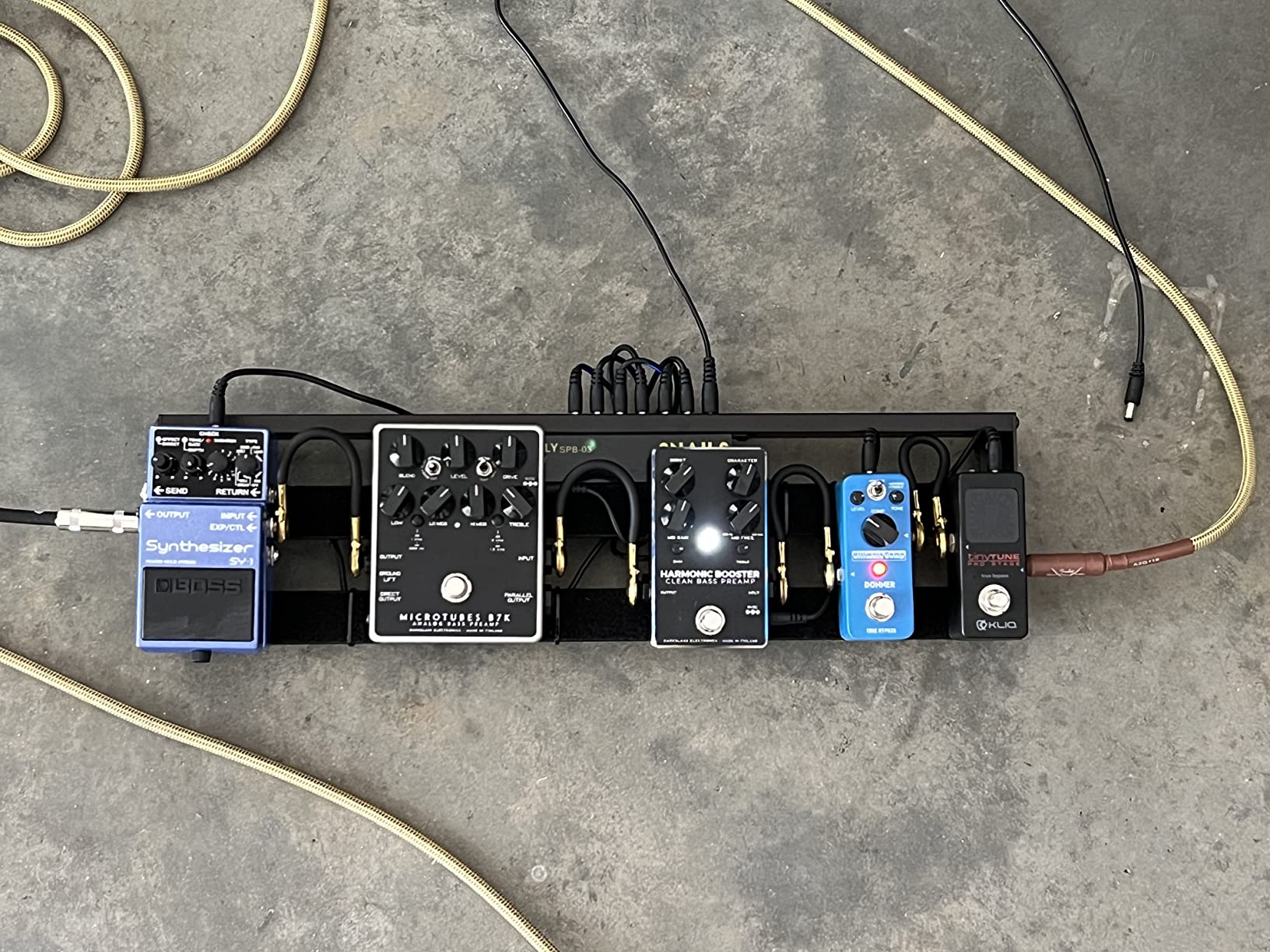
One feature I keep coming back to is the Sound Hold function. You can sustain a synth note or chord indefinitely and then play your normal guitar tone over the top. This opens up layered performances that would normally require a looper or a second guitarist.
On the downside, the lack of presets is a real frustration for live use. You manually dial in sounds every time, and with 100+ tones to navigate, finding the right one mid-set is tricky. There is also no MIDI connectivity, which limits integration with more advanced rigs.
Tracking Quality and Latency
The SY-1 uses BOSS’s proprietary pitch detection technology, and it tracks notes quickly across the fretboard. Single notes respond almost instantly. Complex chords with extensions can get slightly muddy, but standard triads and power chords translate cleanly without noticeable latency.
Ideal Placement in Your Signal Chain
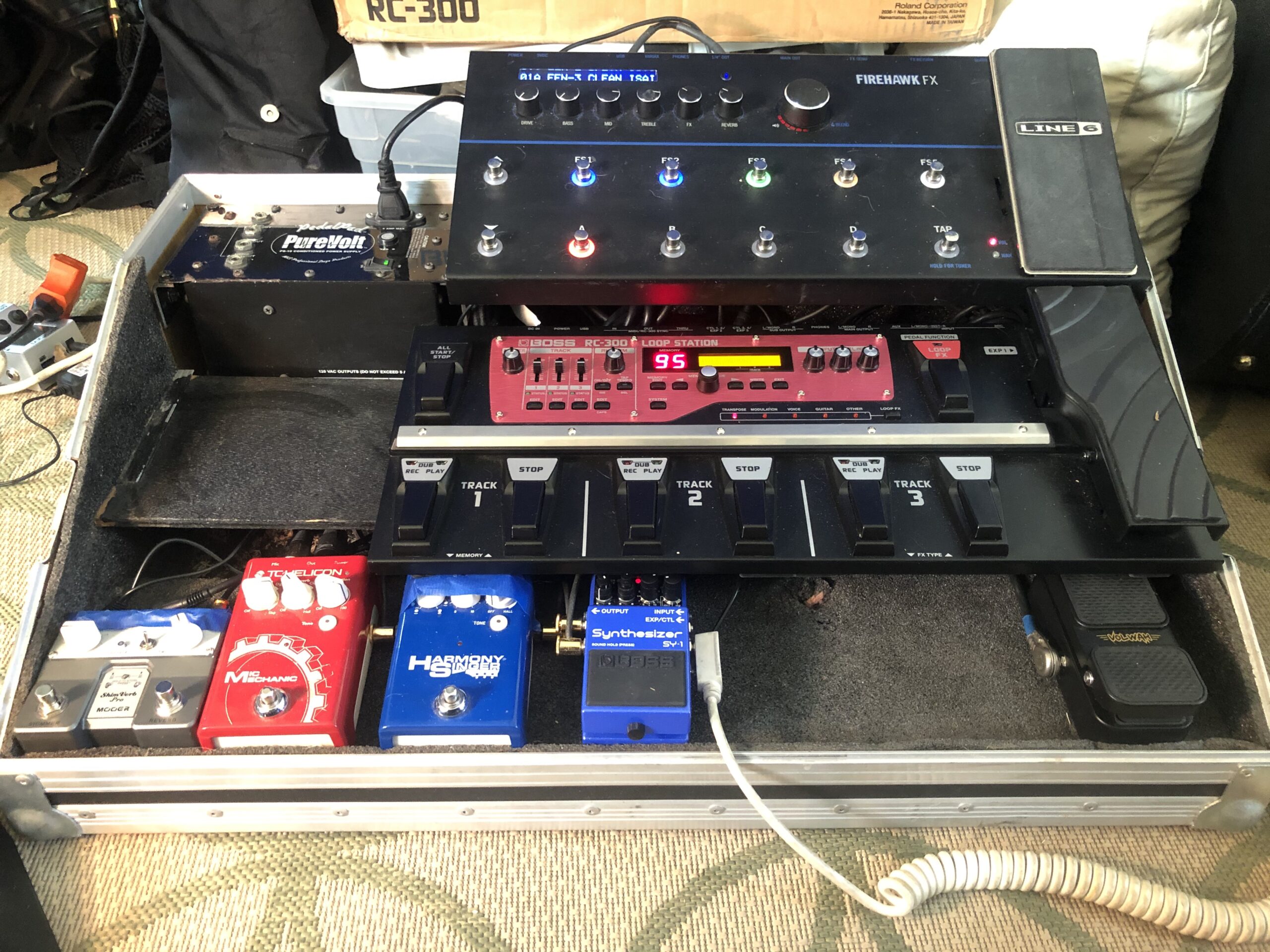
Place the SY-1 early in your chain, right after your tuner and before any drive pedals. This gives it the cleanest signal possible for accurate pitch detection. The send/return loop lets you insert external effects into the synth voice only, which is a feature I wish more pedals in this price range offered.
2. EHX SYNTH9 Synthesizer Machine – Best for Vintage Synth Sounds
Electro-Harmonix SYNTH9 Synthesizer Machine Pedal
9 vintage presets
No special pickup needed
Tracks to 23rd fret
Blendable dry and FX
Pros
- 9 presets emulating classic synths
- Works without special pickups
- Usable range to 23rd fret
- Blendable dry and FX sound
- Pairs with EHX B9 and C9 pedals
Cons
- No expression pedal inputs
- Limited control options
- Faster playing can drop notes
- Some reliability concerns
The EHX SYNTH9 takes a different approach from the SY-1. Instead of giving you dozens of tweakable tones, it offers 9 carefully crafted presets that emulate some of the most iconic synthesizer sounds in music history. Think classic Moog leads, Prophet-style pads, and thick analog bass tones.
I found the preset approach refreshing for quick studio work. You turn the dial, pick your sound, and you are immediately in synth territory. No endless tweaking required. The tracking works without any special pickups or MIDI setup, which makes it accessible for any guitar player.
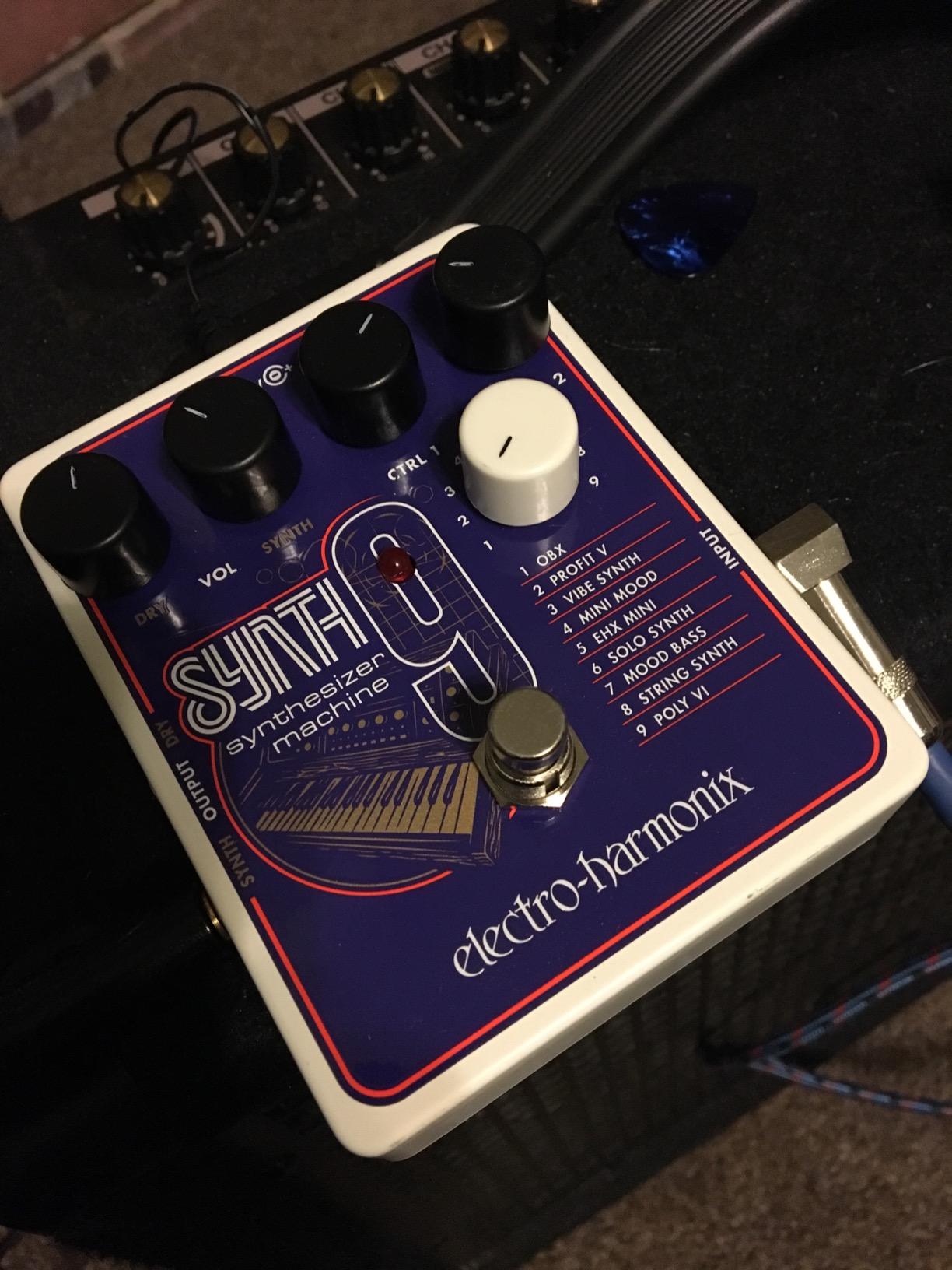
Where the SYNTH9 struggles is with faster passages. Rapid-fire single-note runs can cause dropped notes, and the tracking starts to stumble above the 23rd fret on the high E string. For slower, melodic playing it shines beautifully.
The lack of expression pedal inputs for the CTRL knobs is a notable omission. You cannot sweep the filter in real time with your foot, which limits the dynamic expression possible during live performance. Some users have also reported reliability issues over time, so factor that into your decision.
How Does the SYNTH9 Compare to the SY-1?
The SYNTH9 delivers more recognizable, preset-based vintage sounds right out of the box. The SY-1 offers far more tonal variety and better tracking overall. If you want instant classic synth tones with zero tweaking, the SYNTH9 wins. If you want depth and polyphony, go with the SY-1.
Best Use Cases for the SYNTH9
This pedal excels in 70s and 80s cover bands, worship settings, and studio productions where you need quick access to authentic-sounding synth textures. Pair it with the EHX B9 Organ Machine or C9 for a complete keyboard-style rig on your pedalboard.
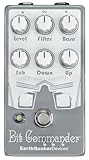
3. EarthQuaker Devices Bit Commander V2 – Best Analog Octave Synth
EarthQuaker Devices Bit Commander V2 Analog Octave Synth Guitar Effects Pedal
Monophonic analog synth
4 octaves
True bypass
Vintage square wave
Pros
- Four octaves of vintage square wave tones
- Easy interface to add or subtract octaves
- Analog warmth and character
- True bypass
- Made in Akron Ohio
- Ripping sub-octave thump
Cons
- Monophonic only no chords
- Considered a one trick pony
- Not for all playing styles
The Bit Commander V2 is not trying to be a full synthesizer. It is an analog octave synth that generates four octaves of vintage square wave tones from your guitar signal. What you get is raw, powerful, and unmistakably analog.
I was struck by how easy the interface is. You simply add or subtract octaves with individual faders, and the pedal stacks them into a massive wall of sound. The sub-octave thump is genuinely chest-rattling, and the lightly squared base tone adds harmonic richness without being harsh.
This is strictly a monophonic pedal. Play a chord and it will not track properly, producing glitchy artifacts instead. But play single-note riffs and it turns your guitar into an army of vintage synths. Some reviewers call it a one trick pony, and honestly that is fair. But it is one incredible trick.
What Tones Can You Get?
Think classic video game bass lines, doom-laden sub frequencies, and aggressive fuzz-drenched synth leads. The octave-up control adds a swelling, transformer-based character that cuts through any mix beautifully for leads.
Who Should Avoid the Bit Commander?
If you need polyphonic tracking, preset storage, or a wide variety of synth sounds, this is not the pedal for you. It does one specific thing extremely well, and if that sound fits your music, you will love it. If not, look elsewhere.
4. SONICAKE Bitcrusher – Best Budget Synth Pedal
SONICAKE Bitcrusher Guitar Pedal Wave Crush Bitcrush Digital Bitcrusher Reducer Guitar Effects Pedal Synth Synthesizer LoFi True Bypass
Variable bitcrusher
3 LoFi modes
True bypass
Compact size
Pros
- Variable bitcrusher and sample rate reducer
- 3 LoFi tone modes
- True bypass footswitch
- Excellent value
- Great build quality
- Extremely popular with 3200+ reviews
Cons
- Power supply not included
- Small enclosure
- No battery option
- Some noise in certain setups
At this price point, I honestly did not expect much from the SONICAKE Bitcrusher. But after plugging it in and spending a solid week with it, I can confidently say it punches far above its weight class. Over 3,200 reviews on Amazon back up what I heard with my own ears.
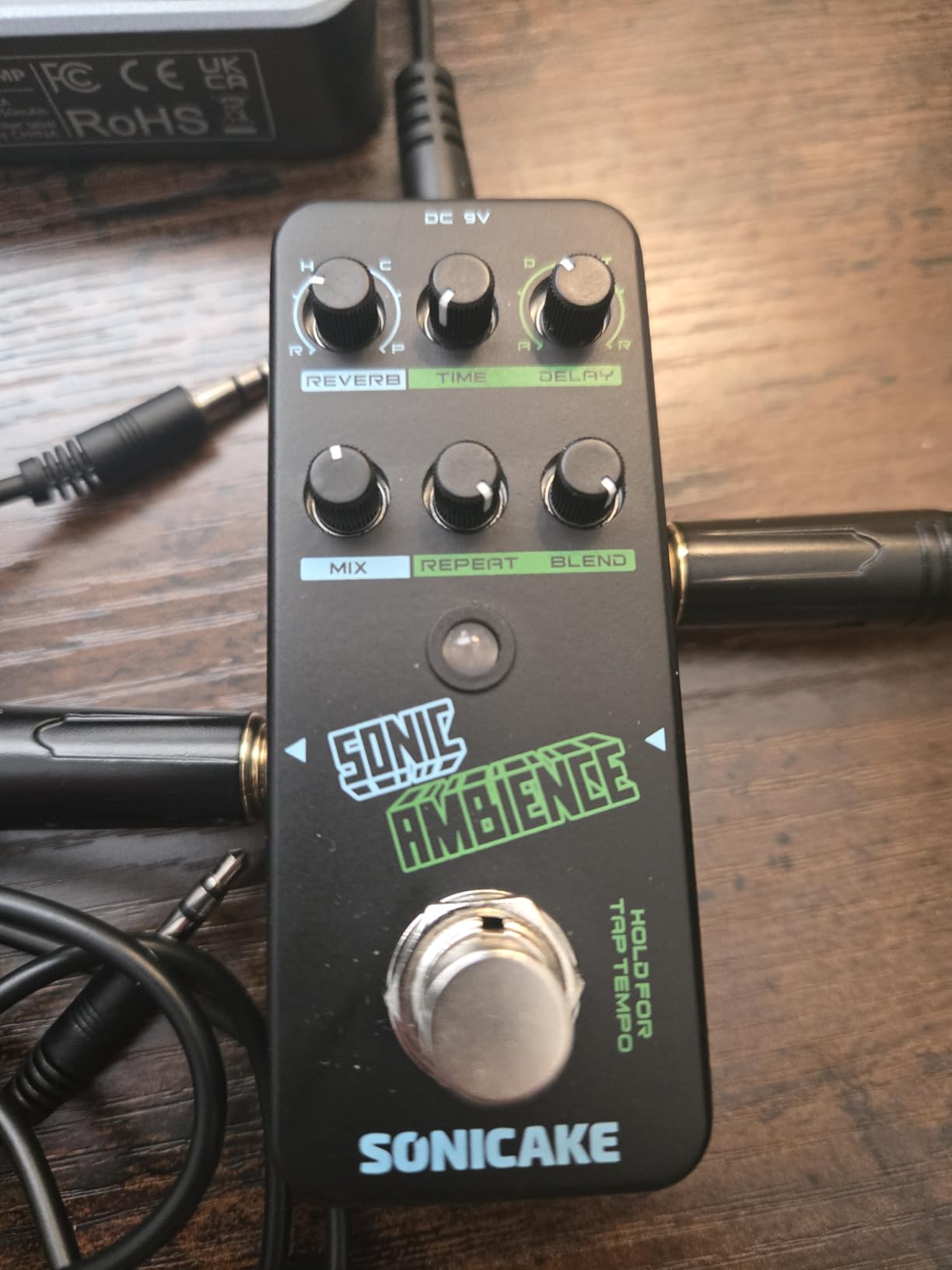
The pedal offers a variable bitcrusher and sample rate reducer with three distinct LoFi modes. Radio Simulator gives you that compressed AM-radio vibe, Normal Mode provides a cleaner downsampling effect, and the Vintage Gramophone Simulator adds crackle and warmth that sounds authentically old.
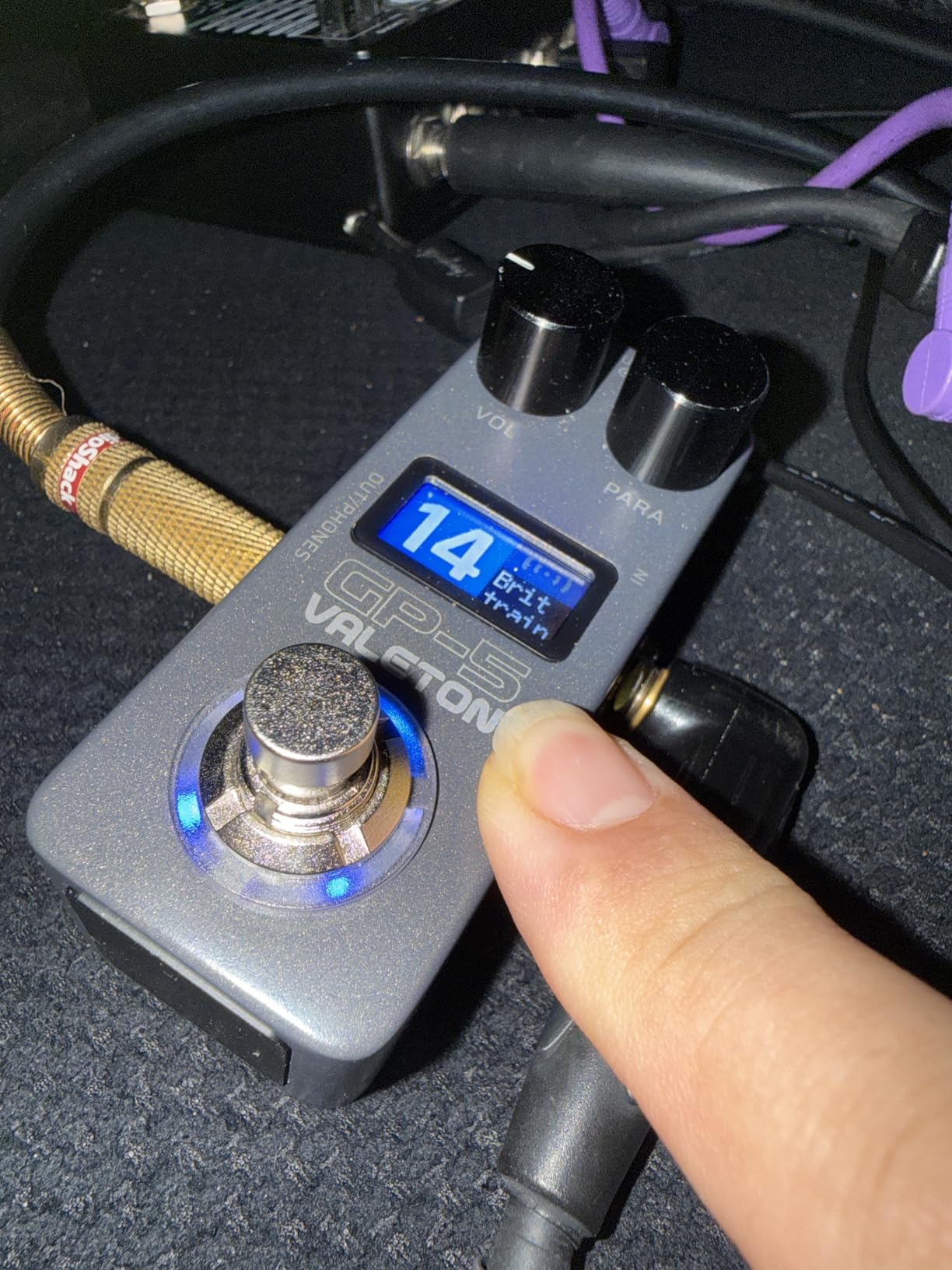
The sampling rate ranges from 750 Hz to 44,100 Hz and the bit depth goes from 5 to 16 bits. This wide range means you can go from subtle degradation to full-on broken digital chaos. For synth pedal tones, pushing the sample rate down creates those lo-fi, chiptune-style textures that work beautifully in electronic and experimental music.
Build quality feels solid for the price. The compact enclosure fits on any pedalboard, and the true bypass switching keeps your signal clean when the pedal is off. Just remember that the power supply is not included, and there is no battery option.
How Does It Sound for Synth Tones?
While it is technically a bitcrusher rather than a traditional synth pedal, the Bitcrusher excels at transforming your guitar signal into lo-fi, digital synth-like textures. It pairs incredibly well with reverb and delay for ambient soundscapes. Push the bit depth down and your guitar starts sounding like a vintage 8-bit synthesizer.
Is It Good for Live Use?
The three-mode switch makes it easy to find your sound quickly on stage. The compact size is pedalboard-friendly. Some users report noise issues in certain signal chains, so test it with your specific setup before committing to it for live performance.
5. Electro-Harmonix Superego Synth Engine – Best for Sustain and Layering
Electro Harmonix Superego Synth Engine Guitar Effects Pedal
Synth engine
Glissando control
Infinite sustain
Effects loop
Pros
- Controllable glissando for smooth transitions
- Sustain notes and chords infinitely
- Insert effects via effects loop
- Latch mode with layer stacking
- Functions as freeze pedal and synth engine
Cons
- Requires strong signal to trigger properly
- Can be unpredictable with dynamics
- No battery option
- Requires experimentation
- May struggle with some chords
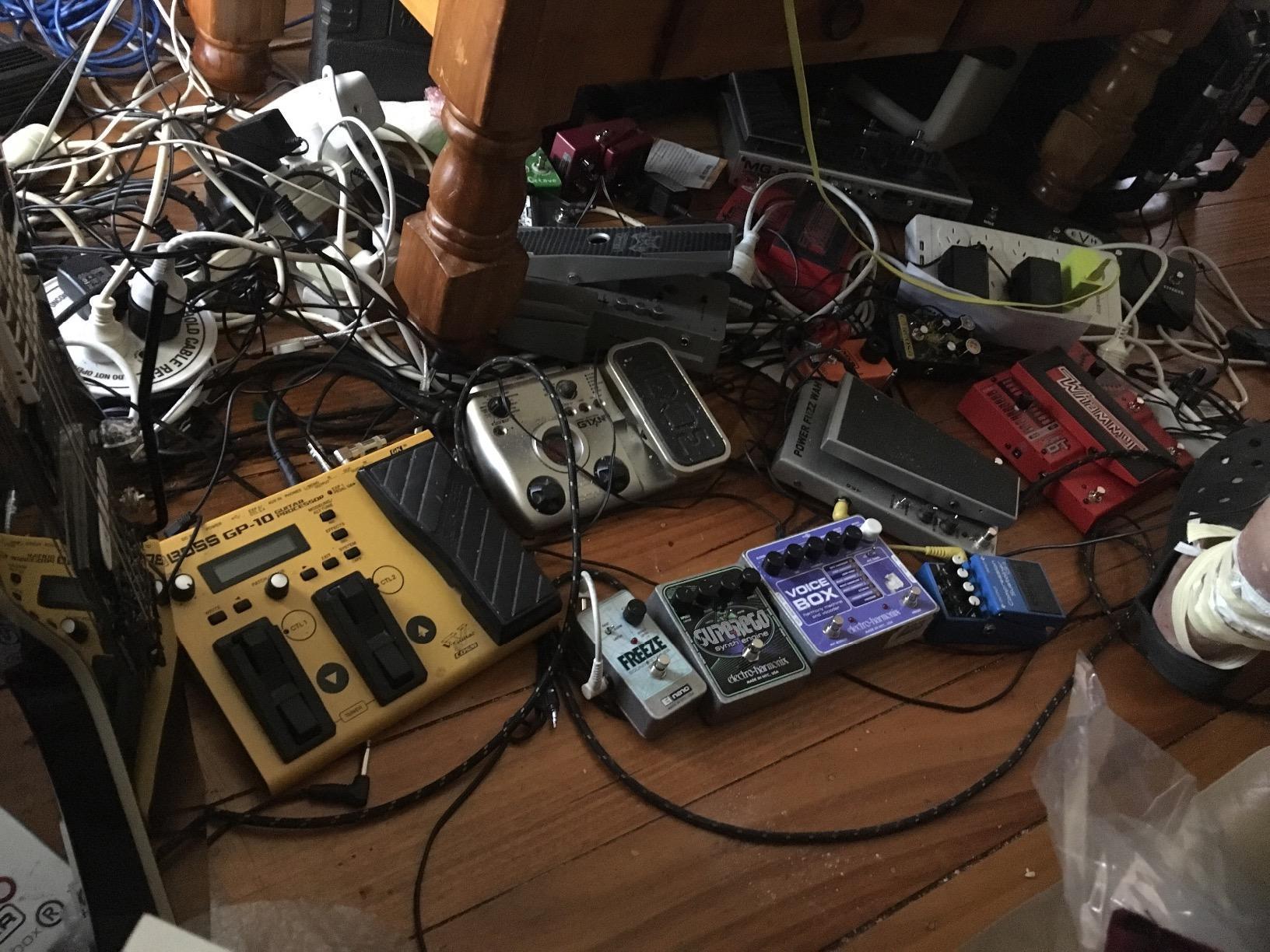
The EHX Superego is not your typical synth pedal. It is a synth engine that sustains your notes infinitely and allows you to layer sounds on top of each other. Think of it as a freeze pedal on steroids with genuine synth capabilities built in.
I had the most fun with the Latch mode and layer feature. You play a note, it sustains forever, then you play another note on top, and both stack together. Within seconds you can build rich chordal synth pads that swell and breathe. The controllable glissando adds smooth pitch transitions between triggered notes.
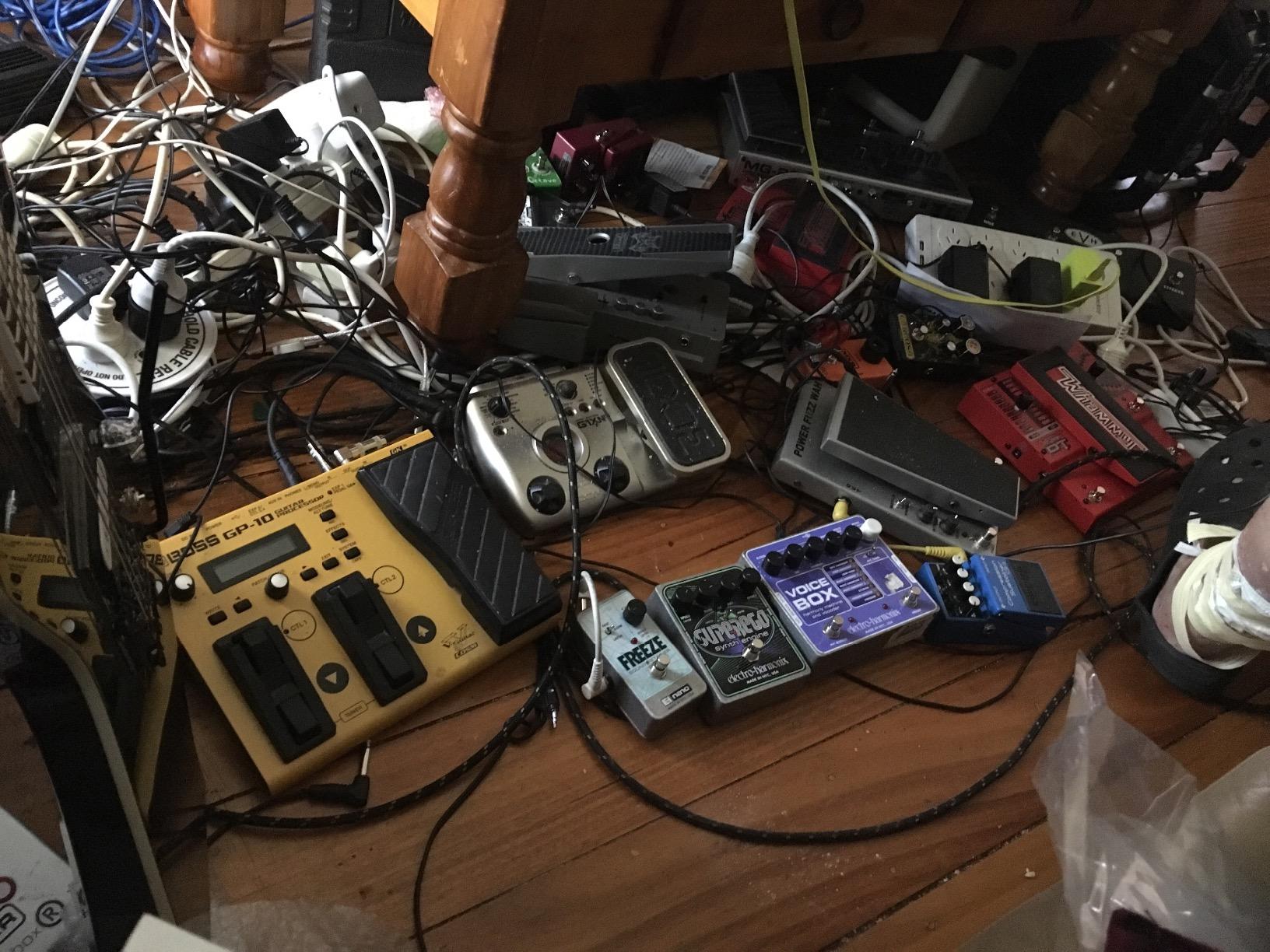
The effects loop is a standout feature. You can route external pedals into the wet signal path only, letting you shape your sustained synth tones with delay, reverb, or modulation without affecting your dry guitar sound. This opens up deep sound design possibilities.
Be warned that the Superego requires a strong, clean input signal to trigger properly. Weak pickups or noisy signal chains will cause inconsistent results. It also takes experimentation to dial in the right settings for your playing style.
Best Signal Chain Setup
Place the Superego after your dirt pedals but before modulation and time-based effects. This lets you trigger it with your driven tone while still sending the sustained synth voice through your reverbs and delays for maximum atmospheric impact.
Who Gets the Most Out of the Superego?
Ambient guitarists, worship players, and experimental musicians will find the most value here. If you want to create evolving pad sounds and textured layers from a single guitar, the Superego is a creative powerhouse that rewards patience.
6. MXR Bass Synth – Best Synth Pedal for Bass Guitar
MXR® Bass Synth
Bass synth pedal
Sub-octave and envelope
8 presets
Designed with Ian Martin Allison
Pros
- Great tracking and sustain
- Excellent presets for immediate usable sounds
- Quality sub-octave envelope and modulation
- Compact pedalboard-friendly size
- Works with passive and active basses
Cons
- Requires per-bass tracking adjustment
- Limited preset switching live
- May need dedicated power supply
- Not designed for guitar
Most synth pedals are designed with guitar in mind, leaving bassists to make do. The MXR Bass Synth flips that script completely. Designed in collaboration with Ian Martin Allison, it is built from the ground up for bass players who want thunderous sub-octave tones and expressive envelope effects.
The tracking on this pedal is outstanding. I tested it with both a passive P-Bass and an active Music Man, and it locked onto notes cleanly across the fretboard. The sub-octave adds serious low-end weight without muddying up your fundamental tone.
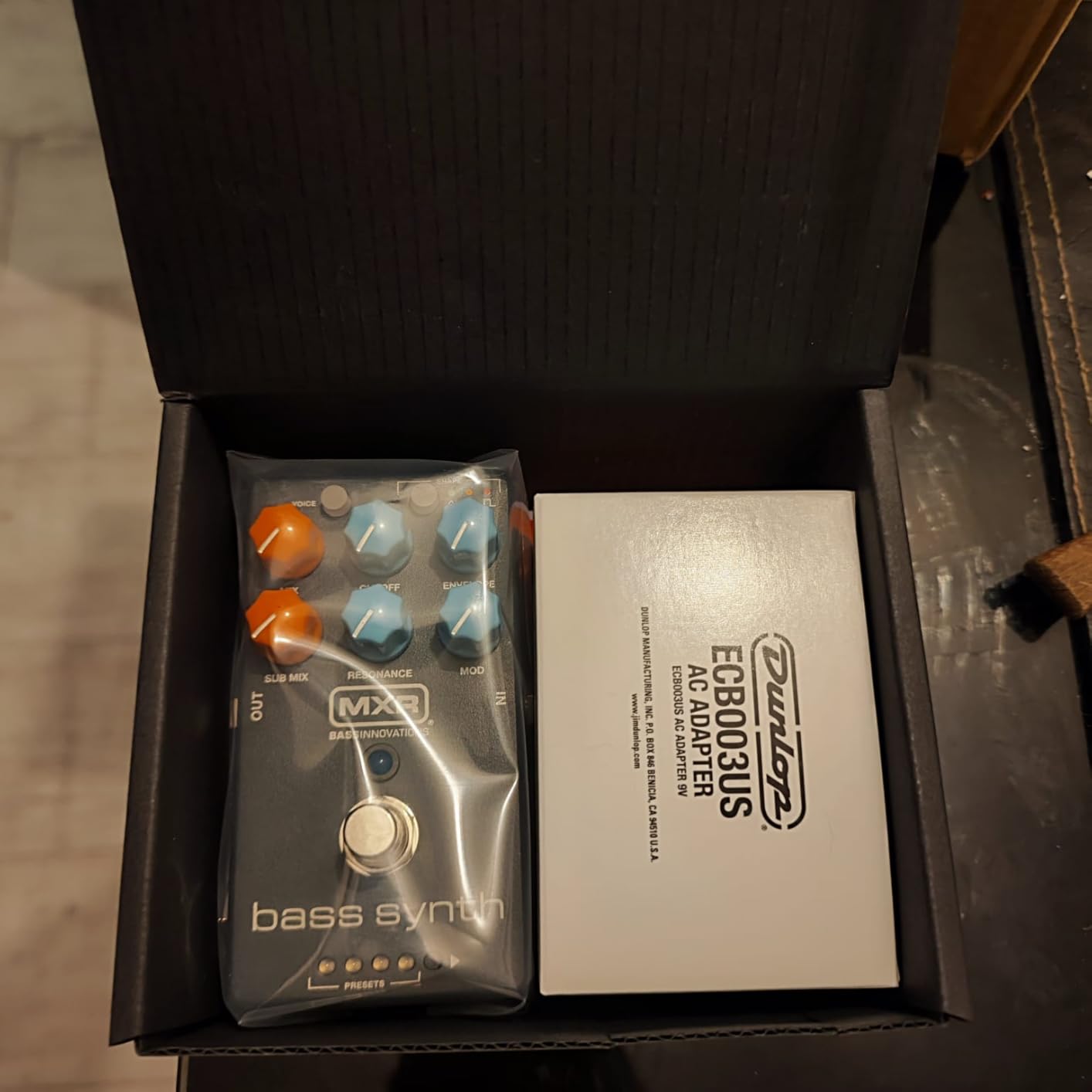
Eight presets cover a wide range of sounds from vintage funk synth bass to modern sub-bass and modulated textures. The presets are genuinely usable right out of the box, which is not always the case with synth pedals. You can plug in and immediately get inspiring sounds.
The secondary functions require some menu diving, and switching between presets during live performance is not as seamless as dedicated footswitch-based systems. But for the sound quality and compact size, these are minor trade-offs.
How Does It Handle Different Bass Types?
Passive basses track smoothly with minimal adjustment. Active basses may require some fine-tuning of the input sensitivity to prevent triggering issues. The key is spending time dialing in the pedal for your specific instrument.
Can Guitar Players Use It?
Technically yes, but the voicing and frequency response are optimized for bass. Guitar players will find the sub-octave frequencies too low and the envelope response tuned for bass dynamics. Stick with guitar-focused pedals for six-string work.
7. Way Huge Atreides Analog Weirding Module – Best for Experimental Sounds
Way Huge® Atreides™ Analog Weirding Module
Analog weirding module
Sub envelope fuzz phase
Slider controls
Internal octave switch
Pros
- Unique and inspiring sonic chaos
- Internal octave adjustment switch
- Built-in gate for clean cuts
- Blue LED slider indicators
- Fantastic for psychedelic music
- Layered sub envelope fuzz and phase
Cons
- May be too chaotic for most genres
- Difficult to mount on pedalboard
- All effects simultaneous
- Considered one trick
The Way Huge Atreides is unlike anything else on this list. Inspired by a vintage mini synth pedal, it delivers a layered effect combining sub-octave, envelope, fuzz, and phase sounds all at once. There is no isolating individual effects here. You get the whole package or nothing.
When I first engaged the Atreides, the sound that came out of my amp was genuinely startling. It is chaotic, wild, and unpredictable in the best possible way. The built-in gate cuts completely when you mute your strings, which gives the effect a tight, percussive quality.
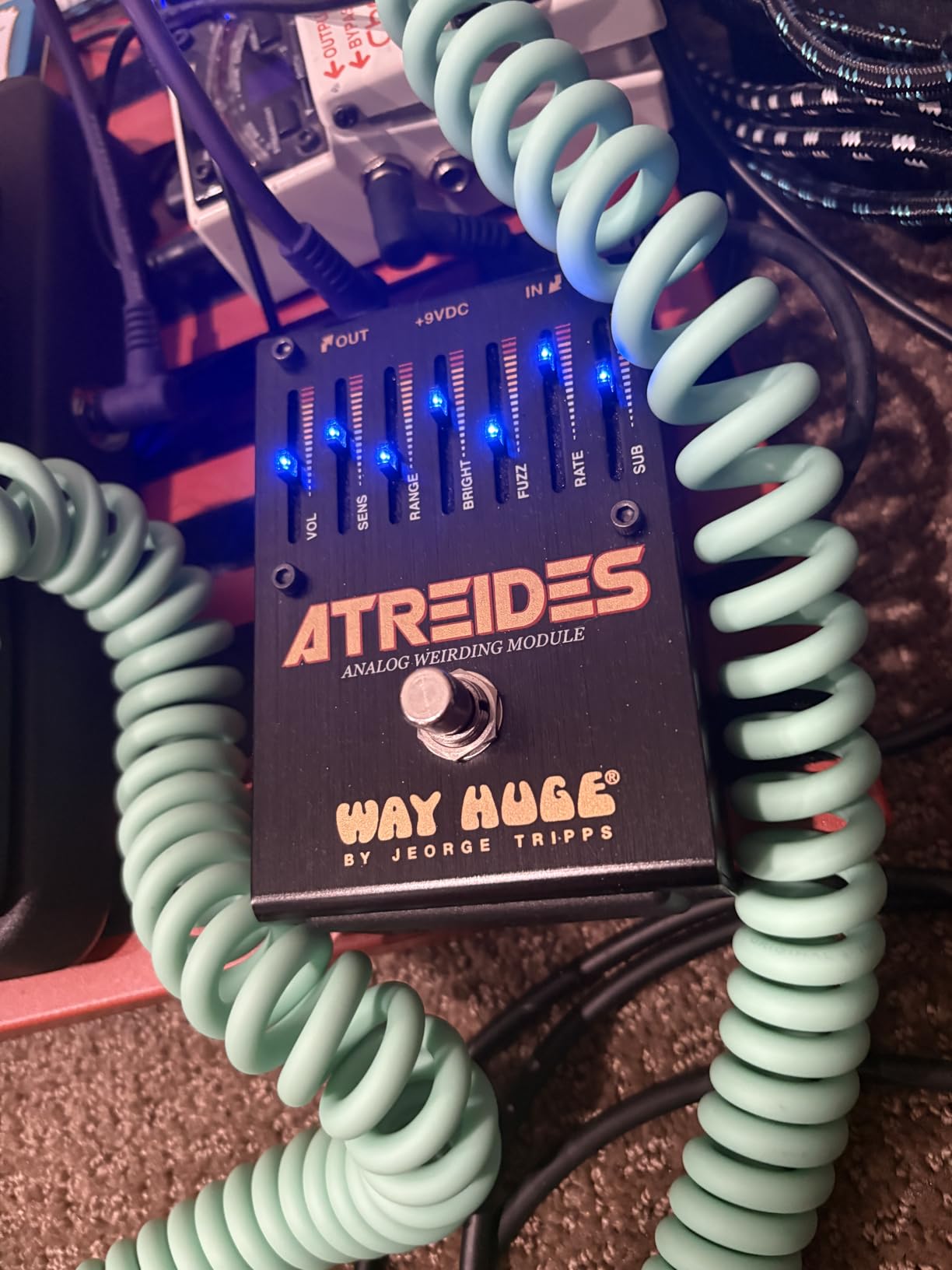
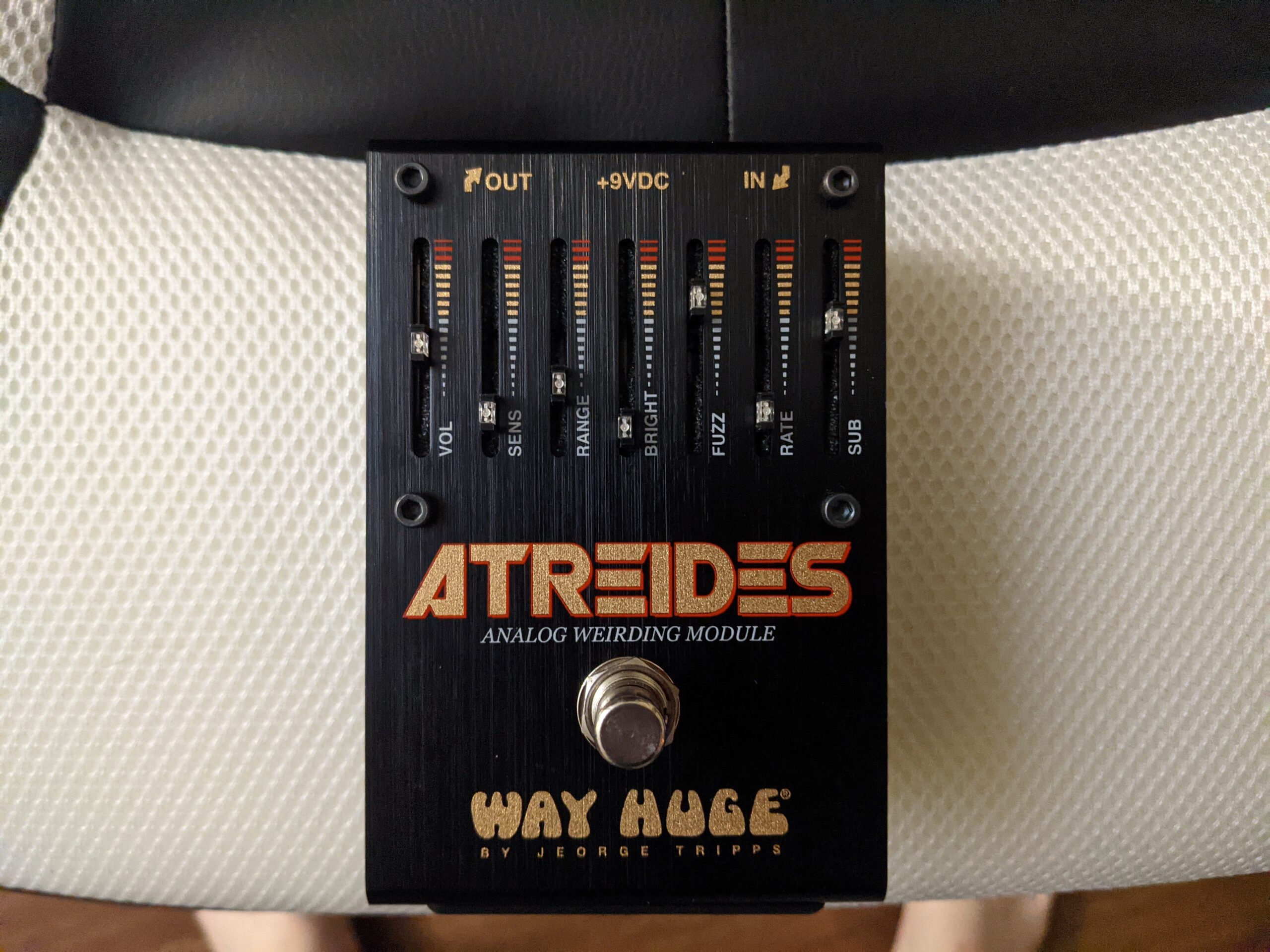
The slider controls adjust each parameter, and an internal switch lets you set the sub at one or two octaves down. An internal pot also adjusts phaser feedback for deeper tone shaping. Blue LED indicators on the sliders look fantastic on a dark stage.
This is not a versatile, do-everything pedal. It does one specific, weird thing and does it extremely well. If your music calls for psychedelic chaos, experimental noise, or sci-fi soundscapes, the Atreides delivers in spades.
Is It Practical for Live Performance?
For most genres, the Atreides is too chaotic and unpredictable for consistent live use. However, for experimental bands, psychedelic rock projects, or noise artists, it can become a signature part of your sound. The rubber feet also make pedalboard mounting a challenge.
What Genres Does It Suit Best?
Psychedelic rock, experimental electronic, noise, stoner metal, and avant-garde compositions all benefit from the Atreides’ unique character. It excels at creating tension-filled breakdowns and otherworldly textures that no other pedal can replicate.
8. Eventide Knife Drop Suboctave Fuzz Synth – Best Premium Fuzz Synth
Eventide Knife Drop Suboctave Fuzz Synth Pedal
Suboctave fuzz synth
6 presets
External control
Multimode LED
Pros
- Quality fuzz and synth tones
- Essentially an H9 patch at lower price
- 6 presets available
- Works great on guitar and bass
- Harmony and octave options
Cons
- Very limited reviews so far
- Secondary controls need PC software
- Not cheap
- Learning curve for full features
Eventide is known for studio-grade effects processing, and the Knife Drop brings that pedigree to a compact pedal format. It is essentially a curated patch from the legendary H9 harmonizer in a standalone box, focusing on suboctave fuzz synth tones.
The sound quality is immediately apparent. This is not a toy or a budget approximation. The fuzz tones are rich and harmonically complex, the suboctave tracking is tight, and the synth textures have a polished, professional character that justifies the premium price.
Six presets give you enough variety for live use, and the multimode LED switches provide visual feedback on your current settings. External control options let you integrate the pedal into a larger rig with expression pedals or switching systems.
What Is the Learning Curve Like?
The front panel controls are straightforward, but accessing deeper secondary parameters requires connecting to a computer via Eventide’s software. This can feel fiddly if you like to tweak on the fly. Budget some time to learn the full feature set.
How Does It Compare Value-Wise?
If you already own an H9, the Knife Drop may be redundant. But if you want that Eventide sound quality in a focused, affordable format without buying the full H9 ecosystem, this pedal makes a compelling case for itself.
9. Electro-Harmonix Bass Micro Synthesizer – Best Analog Bass Synth
Electro-Harmonix Bass Micro Synthesizer Analog Microsynth Pedal
All analog design
4-voice mixer
Resonant filter
Bass optimized
Pros
- Best bass synth pedal for analog tones
- Fantastic fat Moog-type sounds
- Beautiful note tracking
- Faders instead of knobs for easy adjustment
- Great range of sounds
- Well-built and rugged
Cons
- No preset storage
- Some tracking inconsistency
- No battery option
The EHX Bass Micro Synthesizer has been a staple on bass pedalboards for years, and after testing one extensively, I understand why. This all-analog pedal delivers the kind of fat, warm, Moog-style synth bass tones that digital pedals struggle to replicate.
The four-voice mixer section is where the magic happens. You blend sub-octave, original signal, octave-up, and square wave together using individual faders. The fader design is honestly better than knobs for this kind of sound shaping because you can see your mix at a glance.
The 3-pole analog resonant filter sounds gorgeous. Start and stop filter frequency sliders with adjustable rate give you full control over the filter sweep direction and speed. You can create everything from slow, evolving filter sweeps to fast, funky envelope effects.
Tracking Performance on Bass
Note tracking is excellent for the most part. The pedal locks onto bass frequencies with precision, and the analog circuitry adds warmth rather than digital artifacts. A few users have noted occasional tracking inconsistency with certain basses, so test it with your specific instrument.
Why No Presets Is a Dealbreaker for Some
The biggest drawback is the complete lack of preset storage. Every time you want to change sounds, you manually move the faders. For studio use this is fine, but for live performance where you need multiple tones per set, it becomes a real limitation.
10. Electro-Harmonix Mono Synth – Best Entry-Level Synth Pedal
Electro-Harmonix Mono Synth Guitar Synthesizer Pedal
Mono synth pedal
11 presets
EXP pedal input
Easy controls
Pros
- Easy to use controls for quick dialing
- 11 user presets for saving sounds
- EXP pedal input for real-time control
- Well-made construction
- Creative sound exploration
Cons
- Note tracking is average to poor
- Not good for faster playing
- Some sound quality issues
- May not play well with other pedals
The EHX Mono Synth is one of the most affordable ways to get genuine synthesizer tones from your guitar. It comes with 11 preset sounds and the ability to save your own tweaks, which makes it appealing for players new to the synth pedal world.
I found the controls straightforward and intuitive. You dial in sounds quickly without menu diving or complex parameter navigation. The expression pedal input is a welcome addition at this price point, allowing real-time filter sweeps and parameter changes with your foot.
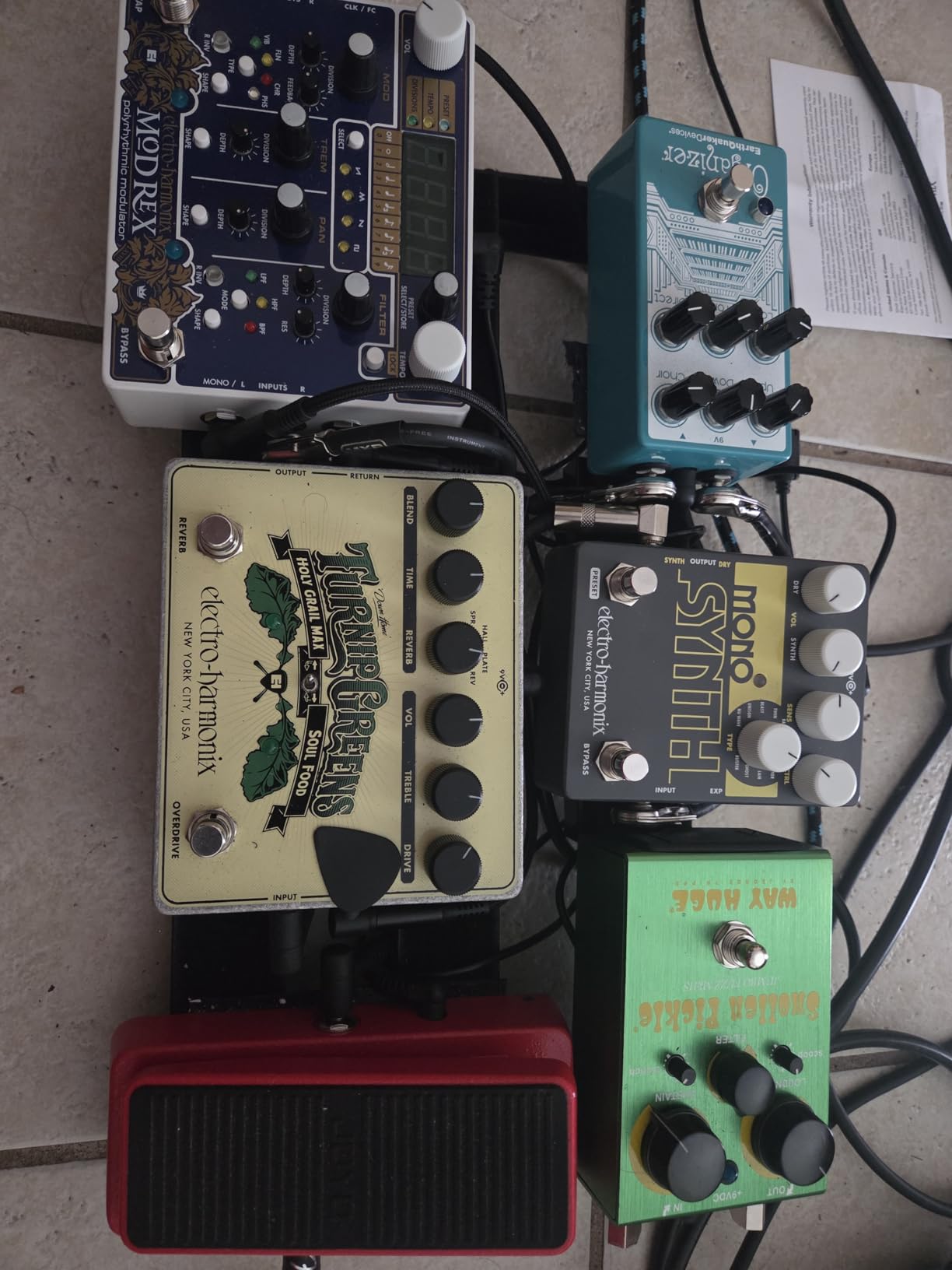
However, the tracking quality is the elephant in the room. It struggles with faster playing and does not handle chords well at all. Single-note lines at moderate tempos track acceptably, but push the tempo up and notes start dropping or glitching.
Is It Worth It Despite the Tracking Issues?
For beginners exploring synth tones for the first time, the Mono Synth offers enough creative potential to justify its price. The 11 presets provide a decent tonal palette, and the EXP pedal input adds expressive capability. Just temper your expectations on tracking speed.
What About Using It With Other Pedals?
Some users report that the Mono Synth does not play well with other pedals in the signal chain. Placing it early and feeding it the cleanest possible signal helps. Avoid placing it after drive or compression pedals for best tracking results.
11. Electro-Harmonix B9 Organ Machine – Best for Organ Synth Tones

Electro-Harmonix B9 Organ Machine Pedal
9 organ presets
Modulation control
Great tracking
Power adapter included
Pros
- 9 presets emulating classic organ tones
- Control over attack modulation and volume
- Rugged build quality
- Great tracking for single notes
- Power adapter included
- Works with bass and guitar
Cons
- String bending sounds unnatural
- Cannot handle complex chords
- May need compressor for even response
- Dynamics tricky with active pickups
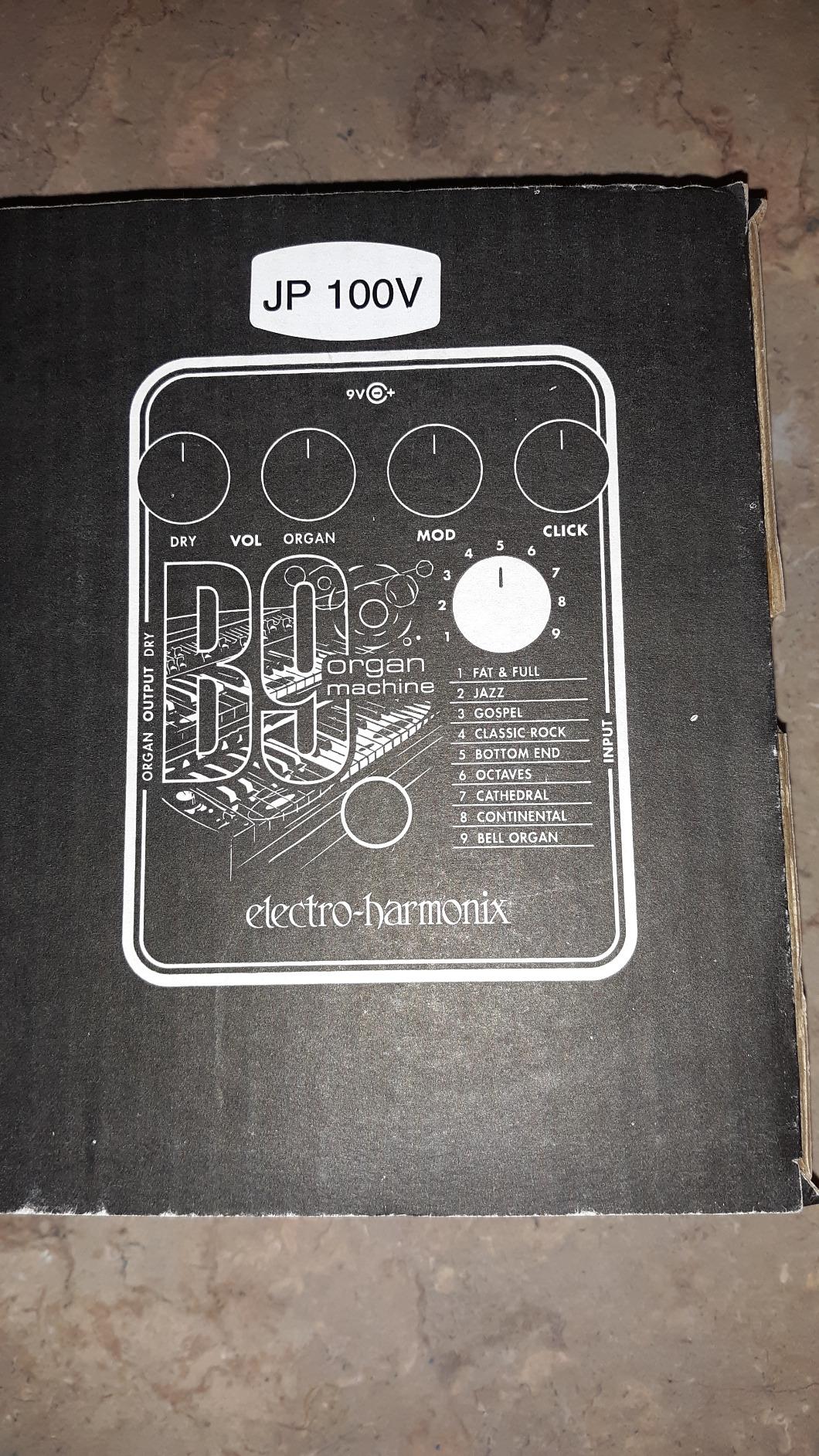
While not a traditional synthesizer pedal, the EHX B9 Organ Machine earns its place here by delivering some of the most convincing organ tones you can get from a guitar pedal. Nine presets cover everything from jazz organ to gospel chops to classic rock B3 sounds.
The tracking on the B9 is among the best I have tested in this category. Single notes translate cleanly with minimal latency. You get control over percussive attack level, modulation speed, and the balance between organ and dry guitar volume.
I was genuinely surprised by how authentic the organ tones sound. The modulation adds the classic Leslie rotating speaker character that defines the organ sound. For guitarists who need organ textures in their band but do not want to haul a real B3, this is a lifesaver.
The limitations are real though. String bending and sliding do not translate naturally to the organ sounds, which can sound artificial. Complex chords can cause tracking issues, so stick to single-note lines and simple intervals for the best results.
Do You Need a Compressor With It?
Many users find that placing a compressor before the B9 helps even out the response and improve tracking consistency. This is especially important if you use guitars with active pickups, where the dynamics can be unpredictable and cause triggering issues.
Pairing With Other EHX Pedals
The B9 is part of EHX’s machine series, which includes the SYNTH9, C9 Organ Machine, KEY9 Electric Piano, and MEL9 Tape Replay. Pairing multiple pedals from this lineup lets you build a complete keyboard-style rig on your pedalboard for maximum tonal flexibility.
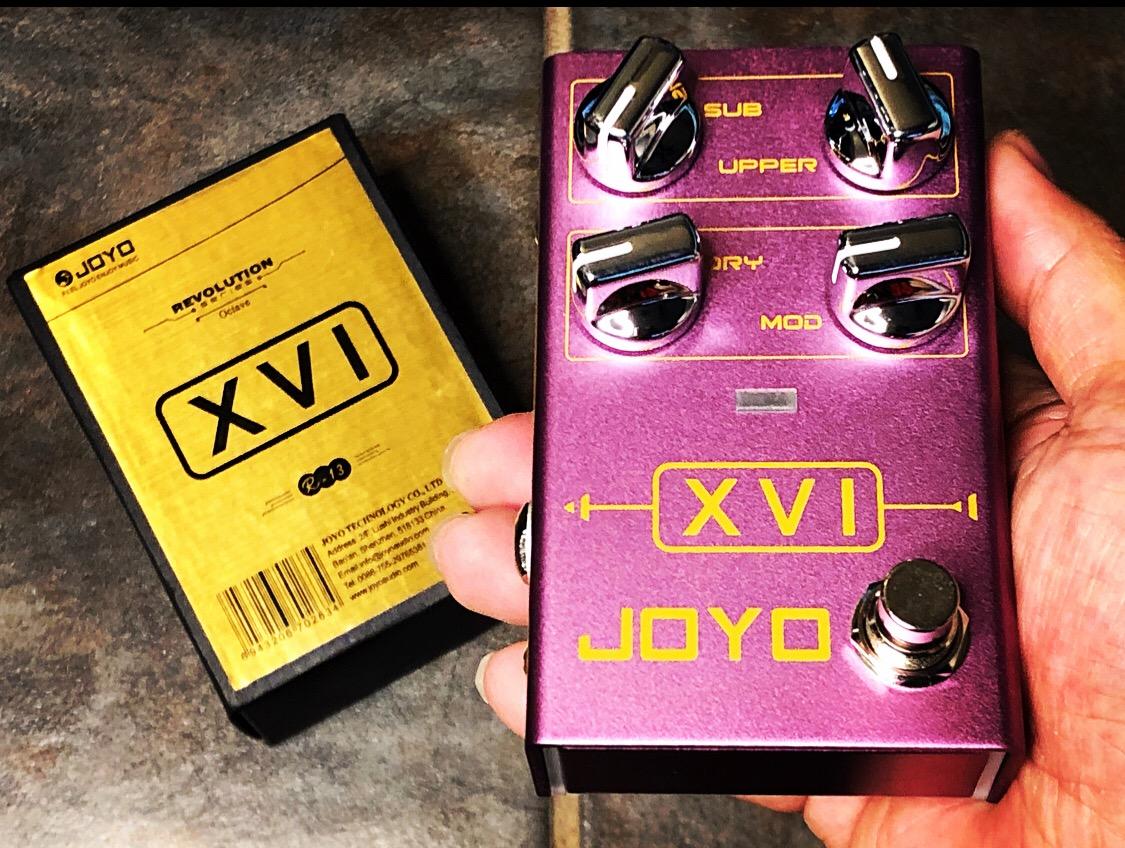
12. JOYO XVI Polyphonic Octave Pedal – Best Budget Octave Synth

JOYO Polyphonic Octave Guitar Pedal, Independent Sub & Upper Octave with MOD Modulation Effects & Dry Blend, True Bypass (XVI R-13)
Polyphonic octave
MOD modulation
Dry blend
True bypass
Pros
- Polyphonic octave tracking for chords
- Independent SUB and UPPER volume controls
- Built-in MOD modulation effects
- Dry blend control
- True bypass
- Rugged aluminum alloy chassis
Cons
- No battery compartment
- Polyphonic tracking not as accurate as premium pedals
- Plastic knobs feel cheap
- Some quality control issues reported
The JOYO XVI is the most affordable pedal on this list, and it brings polyphonic octave capabilities with built-in modulation to the table. For players exploring synth-adjacent tones on a tight budget, it offers a surprising amount of functionality.
Independent SUB and UPPER volume controls let you blend octave-down and octave-up sounds with your dry signal. The built-in MOD modulation adds phaser and vibrato textures, which combined with the octave shifting can create genuinely synth-like tones.
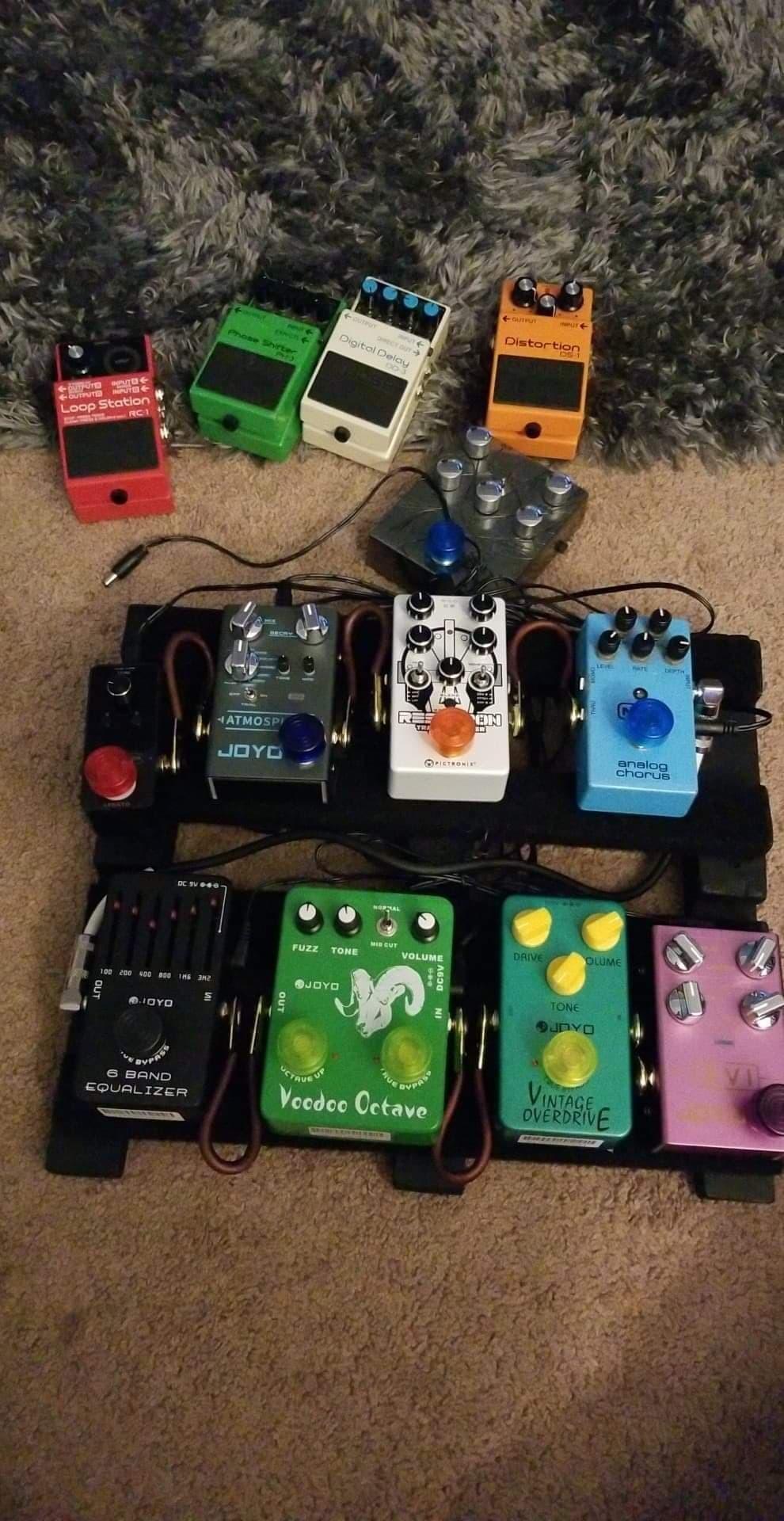
Polyphonic tracking handles chords and multi-note passages, though not with the accuracy of higher-end pedals. For the price, it performs respectably. The dry blend control gives you tonal flexibility to mix your original guitar tone with the effected signal.
The build quality is a mixed bag. The aluminum alloy chassis feels sturdy, but the plastic knobs feel cheap. Some users have reported quality control issues, including pedals stopping working after a short period. The lack of a battery compartment means you need a 9V DC adapter.
Can It Produce Genuine Synth Tones?
While the XVI is technically an octave pedal rather than a dedicated synth pedal, combining the octave shifting with the MOD modulation produces convincingly synth-like textures. It works especially well for ambient pads and experimental sound design when paired with reverb.
Is the Low Price a Red Flag?
The price reflects the build quality and tracking limitations, not necessarily the sound. For practice, home recording, and experimentation, the XVI delivers excellent value. For professional live use where reliability is critical, consider investing in a higher-end option.
How to Choose the Best Synth Pedal for Your Needs?
Finding the right synth pedal comes down to understanding your playing style, your rig, and the sounds you want to create. Here are the key factors our team considers when evaluating synth pedals.
Tracking Quality Matters Most
Tracking is how accurately and quickly a pedal detects your guitar’s pitch and translates it into synth tones. Poor tracking means glitchy notes, latency, and dropped sounds. Polyphonic pedals like the BOSS SY-1 handle chords while monophonic pedals like the Bit Commander work best with single notes. Always prioritize tracking quality over features.
Monophonic vs Polyphonic
Monophonic pedals process one note at a time and are perfect for lead lines, bass synth tones, and riff-based playing. Polyphonic pedals handle chords and multi-note passages, making them better for pads, ambient textures, and rhythm work. Know which style you need before buying.
Signal Chain Placement
Place your synth pedal early in the chain, typically right after your tuner and before any drive, compression, or modulation. Synth pedals need the cleanest possible signal for accurate pitch detection. Some pedals like the BOSS SY-1 include a send/return loop for integrating external effects into the synth voice only.
Budget Tiers Explained
Under $100: The SONICAKE Bitcrusher and JOYO XVI offer entry-level synth-adjacent tones for experimentation. Expect basic tracking and limited features. The $150 to $300 range is where most quality pedals live, including the BOSS SY-1, EHX SYNTH9, and MXR Bass Synth. These offer solid tracking, multiple sounds, and professional build quality. Over $300: Premium options like the EHX Bass Micro Synthesizer deliver top-tier analog sound and build but come with fewer modern features like preset storage.
Frequently Asked Questions About Synth Pedals
How does a synth pedal work?
Synth pedals detect your guitar’s pitch using an internal pitch detector, then use that pitch information to drive internal oscillators that generate waveforms like square, sawtooth, sine, and triangle. These waveforms mimic traditional synthesizer sounds, allowing your guitar to produce synth tones without needing a keyboard or MIDI controller.
What is tracking in synth pedals?
Tracking refers to how accurately and quickly a synth pedal detects and follows the pitch of your guitar. Good tracking means notes respond instantly with minimal latency. Poor tracking causes glitchy sounds, dropped notes, and latency issues. Tracking quality is the single most important factor in a synth pedal’s performance.
Where does a synth pedal go in my signal chain?
Place your synth pedal early in the signal chain, right after your tuner and before any drive, compression, or modulation effects. Synth pedals need the cleanest possible signal for accurate pitch detection. Placing them after dirt pedals can confuse the tracking and produce inconsistent results.
What is the difference between monophonic and polyphonic synth pedals?
Monophonic synth pedals process one note at a time and work best for single-note lead lines and bass synth tones. Polyphonic pedals can handle chords and multiple notes simultaneously, making them better for pads, ambient textures, and rhythm playing. Monophonic pedals typically track faster and more accurately than polyphonic ones.
Can you use a synth pedal with bass guitar?
Yes, many synth pedals work with bass guitar. Some, like the MXR Bass Synth and EHX Bass Micro Synthesizer, are specifically designed and voiced for bass frequencies. Other guitar-focused pedals like the BOSS SY-1 also work with bass. Check the pedal’s frequency range and tracking capabilities before using it with a bass.
Final Thoughts on the Best Synth Pedals
After testing all 12 pedals, the BOSS SY-1 stands out as the best overall synth pedal for most guitarists. Its polyphonic tracking, massive library of tones, and compact footprint make it the most versatile option at a reasonable price point. For budget-conscious players, the SONICAKE Bitcrusher delivers incredible value with thousands of positive reviews backing it up.
Bass players should seriously consider the MXR Bass Synth or the EHX Bass Micro Synthesizer, both of which are purpose-built for low-end frequencies. And if you want something truly unique, the Way Huge Atreides offers sonic chaos that no other pedal on this list can match. Whatever your style or budget, the best synth pedals in 2026 open up entirely new sonic territories for your guitar or bass.