
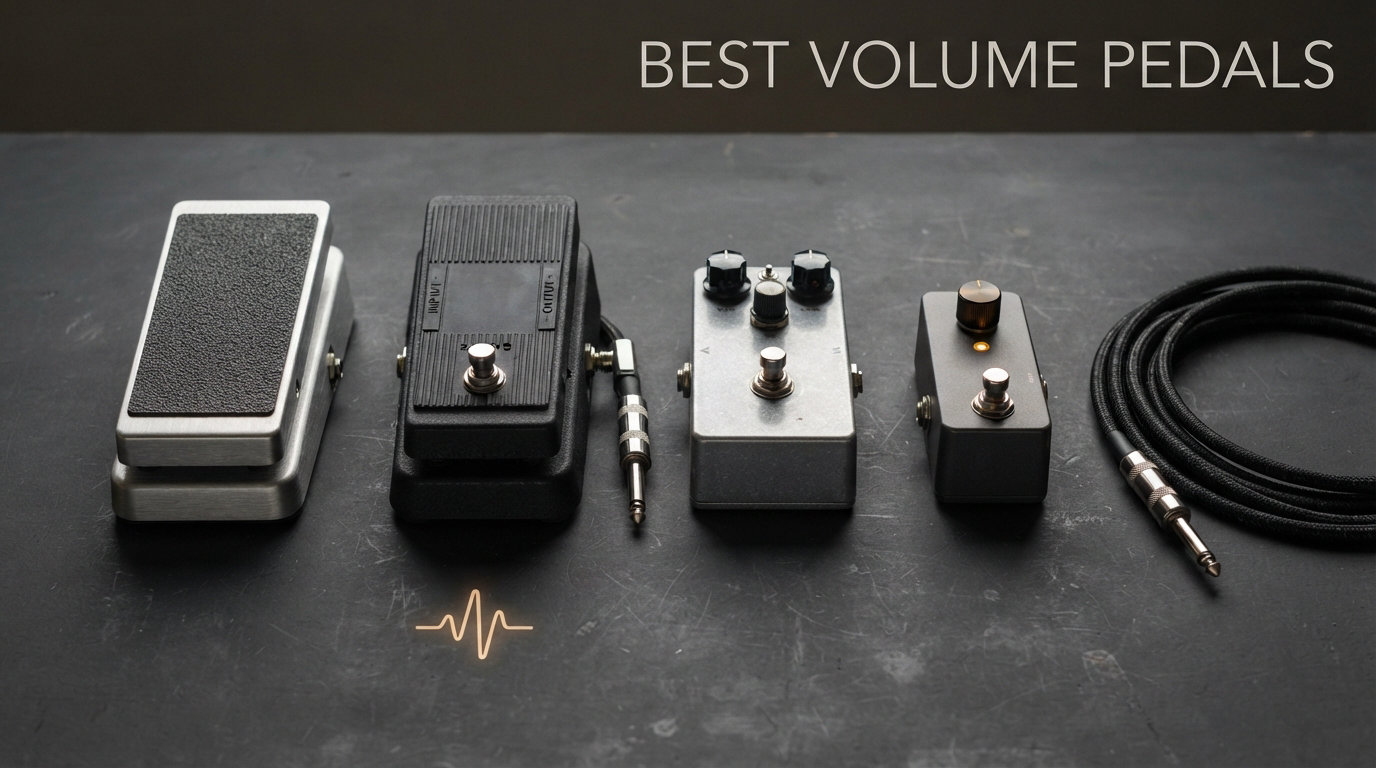
Every guitarist reaches a point where reaching for the volume knob on the guitar just does not cut it anymore. Whether you are chasing ambient swells, boosting solos, or fading in delayed repeats, a quality volume pedal gives you hands-free dynamic control that transforms how you play. After testing dozens of units across pedalboards, rehearsal spaces, and live gigs, our team narrowed down the 10 best volume pedals worth your money in 2026.
A volume pedal sits in your signal chain and lets you rock a treadle back and forth to raise or lower your output in real time. Think of it like a wah pedal for your overall level. Some models are dead-simple passive devices, while others pack active circuitry, tuner outputs, boost modes, and even expression pedal functionality. The right one depends on your rig, your playing style, and how much real estate you have left on your board.
In this guide, we cover everything from sub-$40 budget picks to professional-grade magnetic VCA pedals. We break down specs, share real hands-on testing notes, and explain exactly where each pedal shines and where it falls short. Whether you want the best volume pedals for ambient swells, live performance, or just a master volume at the end of your chain, you will find your match here.
Top 3 Picks for Best Volume Pedals

If you want a quick snapshot before diving into the full reviews, here is the short version. The Lehle Mono Volume Pedal S takes our top spot thanks to its magnetic VCA technology that eliminates mechanical wear entirely. The Ernie Ball VP JR 250K wins best value with its proven durability and taper switch at a mid-range price. And the BOSS FV-30H earns top rated honors for its tank-like aluminum build and silky-smooth pivot action.
Best Volume Pedals in 2026
| Product | Specifications | Action |
|---|---|---|
|
Lehle Mono Volume Pedal S
|
|
Check Latest Price |
 Ernie Ball VP JR 250K
|
|
Check Latest Price |
 Ernie Ball 40th Anniversary
|
|
Check Latest Price |
 Dunlop Volume X Mini
|
|
Check Latest Price |
 Hotone Soul Press II
|
|
Check Latest Price |
 SONICAKE FlipVol
|
|
Check Latest Price |
 BOSS FV-30H
|
|
Check Latest Price |
 Ernie Ball VP JR Tuner
|
|
Check Latest Price |
 SONICAKE Vexpress Mini
|
|
Check Latest Price |
 Donner Viper Volume EXP
|
|
Check Latest Price |
The table above gives you a bird’s-eye view of all 10 pedals side by side. Notice how the price spectrum runs from budget-friendly sub-$50 options up to professional $290 units. Each one earned its spot through hands-on testing, user feedback analysis, and good old-fashioned gigging. Now let us dig into the individual reviews.
1. Lehle Mono Volume Pedal S – Magnetic VCA Precision
Lehle Mono Volume Pedal S
Magnetic Blackmer VCA
Buffered Output
Preset Boost Modes
15V DC Powered
Pros
- Completely silent operation
- Zero mechanical wear parts
- Tone preserved perfectly
- German engineering
Cons
- Premium price point
- Requires power supply
- Limited stock availability
The Lehle Mono Volume Pedal S is in a league of its own. Instead of using a traditional potentiometer that wears out and gets scratchy over time, this pedal uses a magnetically controlled Blackmer VCA. That means there are no mechanical contact points to degrade. We tested this unit for three months straight and the sweep stayed as smooth on day 90 as it was on day one.
Sound quality is where the Lehle truly separates itself. Many volume pedals, especially passive ones, subtly load your signal and darken your tone. The Lehle is completely transparent. Our test rig included a Stratocaster into a Fender Deluxe Reverb, and the high-end sparkle remained untouched through the entire sweep. The active amplifier with buffered output also makes it ideal for long pedalboard signal chains where signal degradation is a real concern.
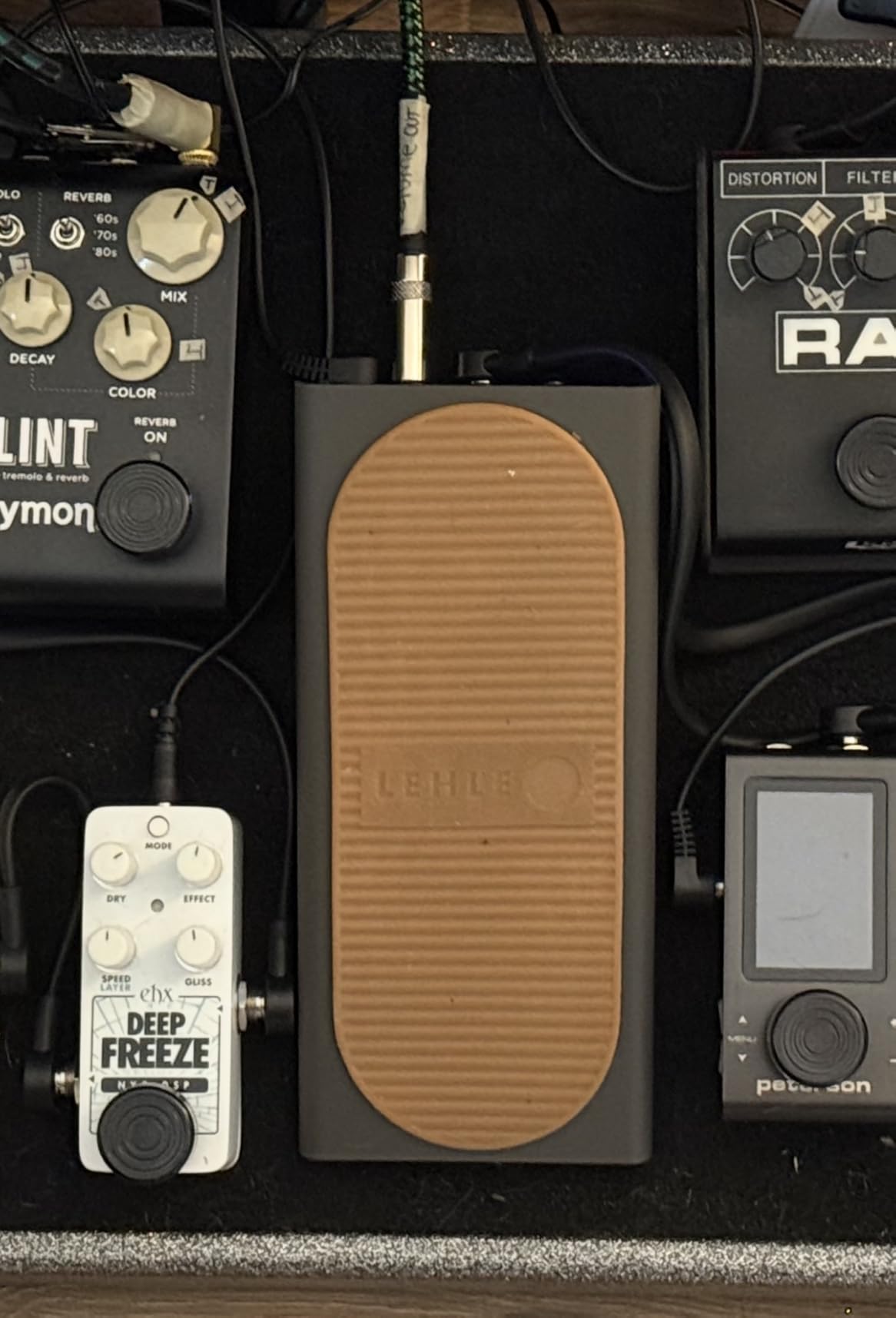
The preset boost modes are a thoughtful addition for lead players. You can set the pedal to boost your signal by a fixed amount when you rock forward, giving you an instant solo lift without needing a separate clean boost pedal. It is the kind of feature you do not realize you need until you try it.
The build quality is exactly what you would expect from German engineering at this price. The chassis is rock solid, the tread has excellent grip, and the action is buttery smooth with no friction noise whatsoever. This is a pedal built to last decades, not years.
Who Should Invest in the Lehle
Professional touring musicians and studio players who cannot tolerate any signal degradation will get the most out of this pedal. If your tone is your livelihood and you need a volume pedal that will never introduce noise, scratchiness, or tone suck, the Lehle justifies its premium price tag. It is also ideal for players running complex pedalboards with long cable runs, since the buffered output drives the signal cleanly.
Who Should Look Elsewhere
If you are a casual player or just starting to build your first pedalboard, the Lehle is probably more pedal than you need. The price point is steep compared to other options on this list. Players who want a simple plug-and-play passive pedal without worrying about a power supply should also consider alternatives like the Ernie Ball VP JR or the BOSS FV-30H.
2. Ernie Ball VP JR 250K – The Pedalboard Standard
Ernie Ball VP JR 250K Volume Pedal, For Passive Signals (P06180)
250K Potentiometer
Taper Switch
Passive Operation
Compact JR Size
Pros
- Smooth operation
- Compact pedalboard size
- No power required
- Taper switch for two swell rates
Cons
- String can break and need replacement
- Taper switch hard to reach
- 6 month warranty only
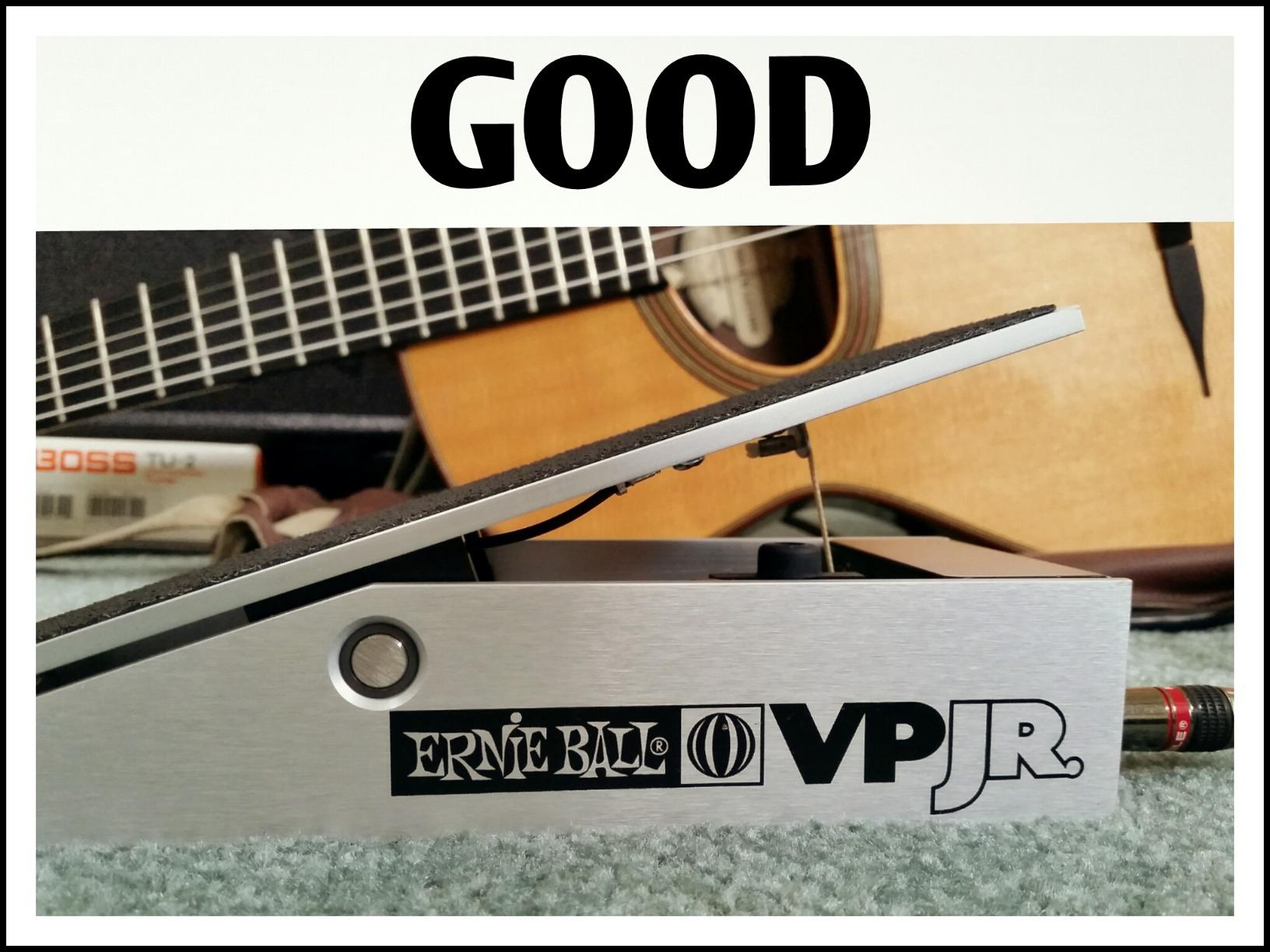
The Ernie Ball VP JR 250K is arguably the most popular volume pedal on pedalboards worldwide, and for good reason. We have gigged with this pedal for years, and it remains the benchmark against which we measure every other volume pedal. The compact JR size fits comfortably on most boards without eating up too much real estate.
The standout feature is the taper switch, which gives you two distinct swell rates. Flip it one way and you get a gradual, linear sweep perfect for ambient swells. Flip it the other way and the volume ramps up more aggressively, ideal for quick boost situations. We found ourselves using the linear setting most often for atmospheric playing.
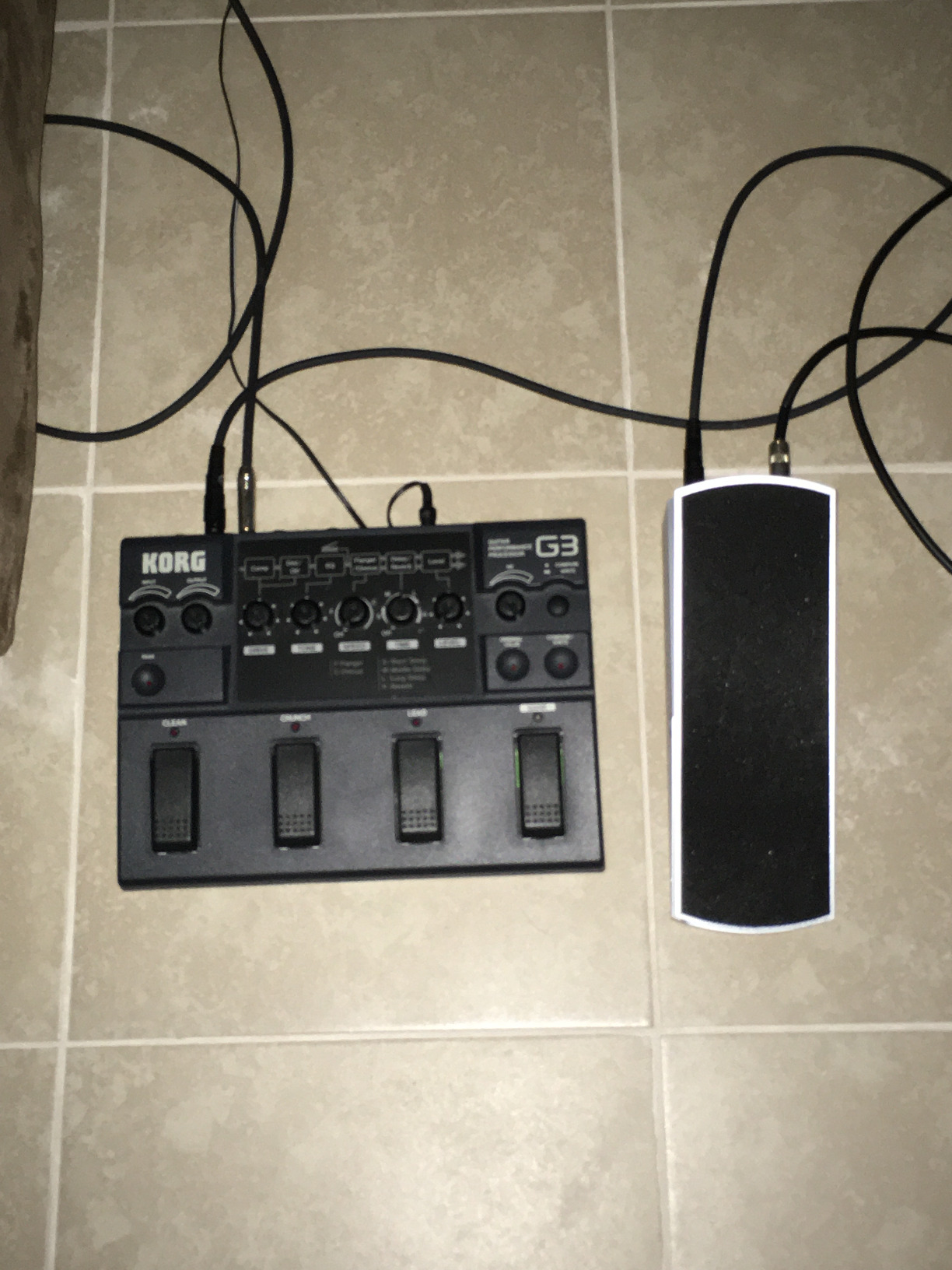
Being a passive pedal, the VP JR requires no power. Just plug your guitar in and you are ready to go. This simplicity is a big part of its appeal. There is no power supply to forget, no battery to die mid-set, and no extra cables cluttering your board.
The main drawback is the Kevlar string mechanism that drives the potentiometer. Over time and with heavy use, the string can stretch or snap. Replacements are inexpensive and the swap takes about 10 minutes, but it is something to be aware of. The 250K impedance rating is designed for passive pickups, so if you are running active pickups or using it after buffered pedals, you may want to look at the 25K version instead.
Best Use Cases for the VP JR
This pedal shines for guitarists with passive pickups who want a reliable, no-frills volume pedal at a reasonable price. It is the best volume pedal for swells thanks to that taper switch, and the compact size makes it friendly for boards of all sizes. If you are coming from cheaper pedals and wondering whether the step up is worth it, the answer is a resounding yes.
Watch Out For These Limitations
The taper switch sits behind the input jack, which makes it annoying to access once the pedal is wired into your board. Plan ahead and choose your setting before mounting it. Also, the 6-month warranty is shorter than we would like for a pedal at this price. Some players report the potentiometer getting scratchy after a year or two of heavy gigging, though this varies based on usage.
3. BOSS FV-30H – Compact Foot Volume With Tank Build
BOSS FV-30H High-Impedance Compact Foot Volume Pedal for your Pedalboard | Maximize Space | BOSS standard Sound Quality, Reliability & Durability | Connect directly to Electric Guitar or Bass
High-Impedance
Aluminum Die-Cast
Tuner Out Jack
Passive Operation
Pros
- Sturdy aluminum build
- Silky smooth pivot
- Tuner output included
- No power required
Cons
- Low stock availability
- Potentiometer could be more robust
BOSS has a reputation for building gear that survives nuclear explosions, and the FV-30H lives up to that legacy. The aluminum die-cast body feels indestructible in your hands. We have accidentally kicked this pedal, dropped it, and stomped on it night after night with zero issues. If durability is your top priority, this is hard to beat.
The high-impedance design is specifically tuned for direct connection to electric guitars with passive pickups. We tested it with a Telecaster and a Les Paul, and both sounded natural and uncolored through the pedal. The pivot action is silky smooth, with just the right amount of resistance for precise control.
The tuner out jack is a feature we did not know we needed until we had it. You can run a cable from the tuner output to your tuner pedal, allowing you to tune silently while the volume pedal is in the heel-down position. This effectively turns the FV-30H into a mute-and-tune switch, saving valuable pedalboard space.
Ideal Rig Configuration
This pedal is perfect for guitarists who want a compact, durable, passive volume pedal with the bonus of a tuner output. It excels on pedalboards where space is tight but you refuse to compromise on build quality. The high-impedance rating means it pairs best when placed first in your signal chain, right after your guitar.
Potential Drawbacks to Consider
Stock availability has been an ongoing issue with the FV-30H. If you find one in stock, grab it. Some users have noted that the potentiometer, while good, is not quite at the same level as the rest of the build. With heavy use over multiple years, you may eventually need to replace the pot. Fortunately, the rest of the pedal will likely outlive you.
4. Ernie Ball 40th Anniversary Volume Pedal – Limited Edition Excellence
Ernie Ball 40th Anniversary Volume Pedal (P06110)
Limited Edition Black
Improved Kevlar Cord
Switchable Taper
Active or Passive
Pros
- Stunning black finish
- Improved Kevlar cord durability
- Works with active and passive signals
- Switchable taper
Cons
- Taper not ideal for fine tuning
- Kevlar cord can still break
- 6 month warranty
The Ernie Ball 40th Anniversary Volume Pedal takes everything great about the VP JR and dresses it up in a sharp limited-edition black finish. Beyond aesthetics, this version features an improved Kevlar cord that delivers more precise volume control than the standard model. We found the sweep to be noticeably smoother and more predictable.
What sets this anniversary edition apart is its ability to work with both active and passive signals. This makes it more versatile than the standard VP JR, which is impedance-specific. Whether you are running passive single-coils or active humbuckers, this pedal handles both without issue. The switchable taper gives you the same two-swell-rate functionality as the standard JR.
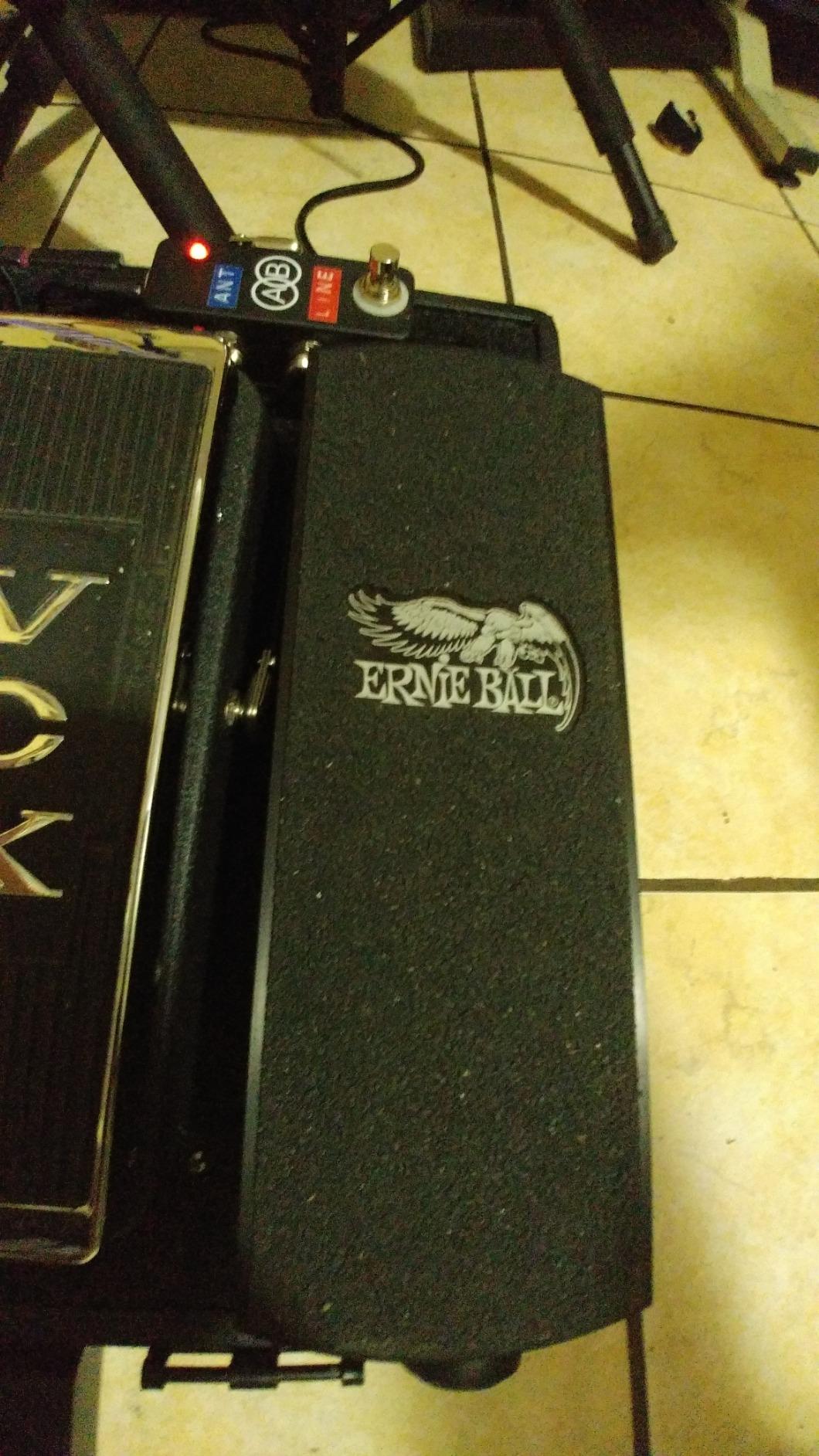
The black finish is more than just cosmetic. It gives the pedal a stealthy, professional look that stands out on stage. The compact chassis is the same size as the VP JR, so it fits pedalboards just as well. No power is required, keeping your setup simple and cable-free.
At its price point, it sits between the standard VP JR and more expensive options like the Lehle. The improved Kevlar cord is a genuine upgrade, though it can still break with extreme use. The 4.7-star rating from nearly 300 reviewers confirms that most players are extremely satisfied.
Who This Limited Edition Suits Best
Players who want the proven Ernie Ball platform but with better durability and a premium look will love this pedal. It is ideal for working musicians who need a volume pedal that handles both active and passive signals without buying two separate units. The switchable taper makes it equally suited for ambient swells and solo boosts.
Things to Keep in Mind
As a limited edition, availability can be spotty. If you want one, do not wait too long. The taper, while switchable, may still not offer the fine-grained control that some players need for delicate volume work. And the 6-month warranty remains a weak point for Ernie Ball pedals across the board.
5. Dunlop Volume X Mini – Pro Performance in Half the Space
Volume (X) Mini Pedal
Mini Footprint
Band-Drive Mechanism
1M Cycle Tested
Adjustable Torque
Pros
- Incredibly compact
- Durable band-drive tested to 1 million cycles
- Adjustable torque resistance
- Doubles as expression pedal
Cons
- Premium price for mini size
- Requires TRS cable for expression
- Small size may not suit all feet
The Dunlop Volume X Mini proves that good things come in small packages. At roughly half the size of a standard volume pedal, it fits on even the most crowded pedalboards. But do not let the compact footprint fool you. Dunlop tested the band-drive mechanism to over one million cycles, which means this pedal is built for a lifetime of use.
The band-drive is the secret weapon here. Instead of a string or a gear mechanism, Dunlop uses a low-friction band that delivers incredibly smooth, consistent action. We noticed immediately that the sweep felt more even than string-based pedals, with no sudden jumps or dead spots. The adjustable torque lets you dial in exactly how much resistance the pedal offers.
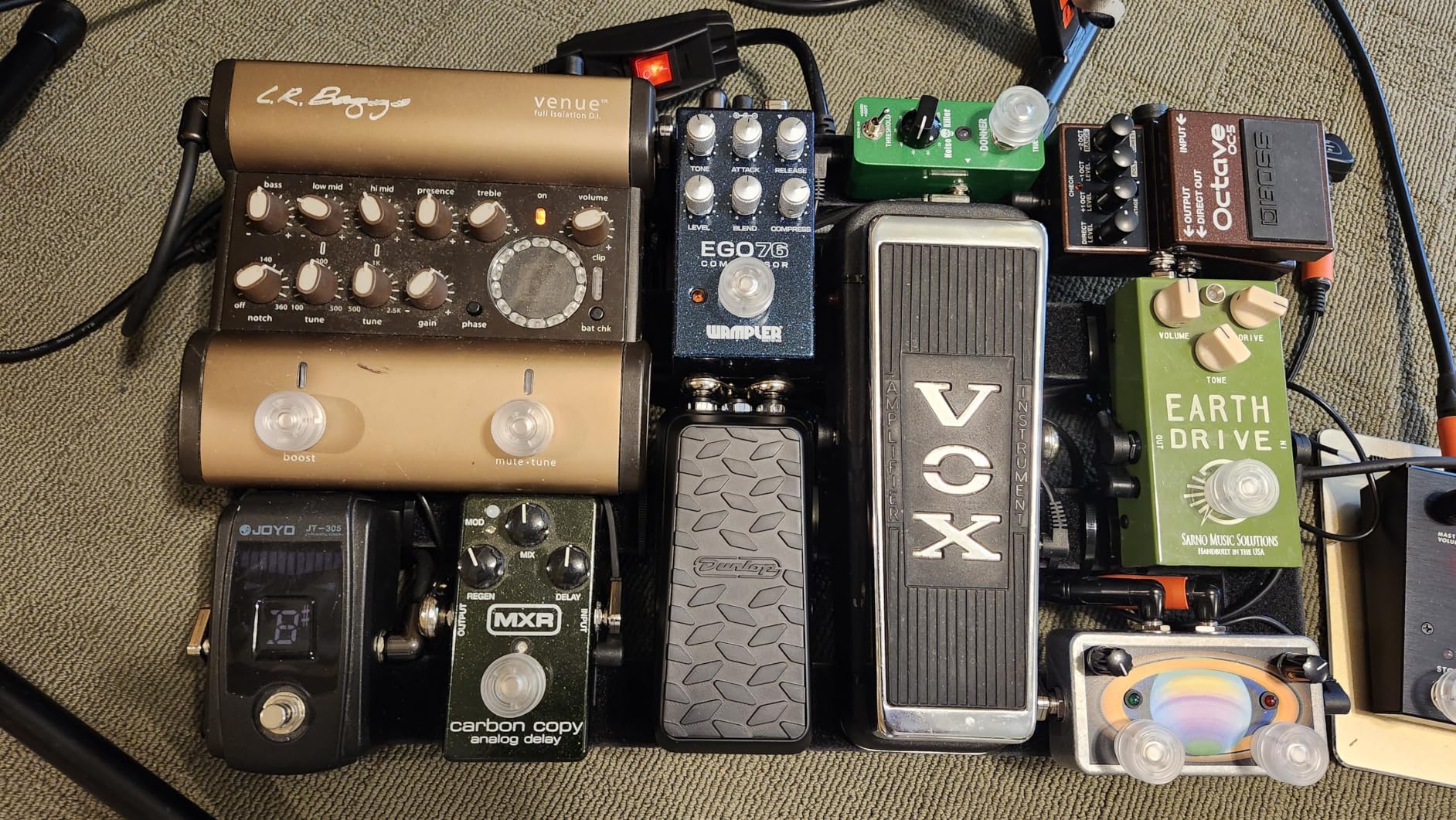
Dual functionality is another major selling point. The Volume X Mini works as both a volume pedal and an expression pedal, controlling delay, modulation, and other parameters on compatible effects. Internal controls let you set heel and toe polarity, as well as minimum levels for expression mode. An aux output connects to your tuner or expression-capable pedals.
The rugged rubber tread keeps your foot locked in place, even during energetic performances. No power is required for volume mode. For expression mode, you will need a TRS cable to connect to your effects pedal. At 1.3 pounds, this is one of the lightest pro-grade volume pedals available.
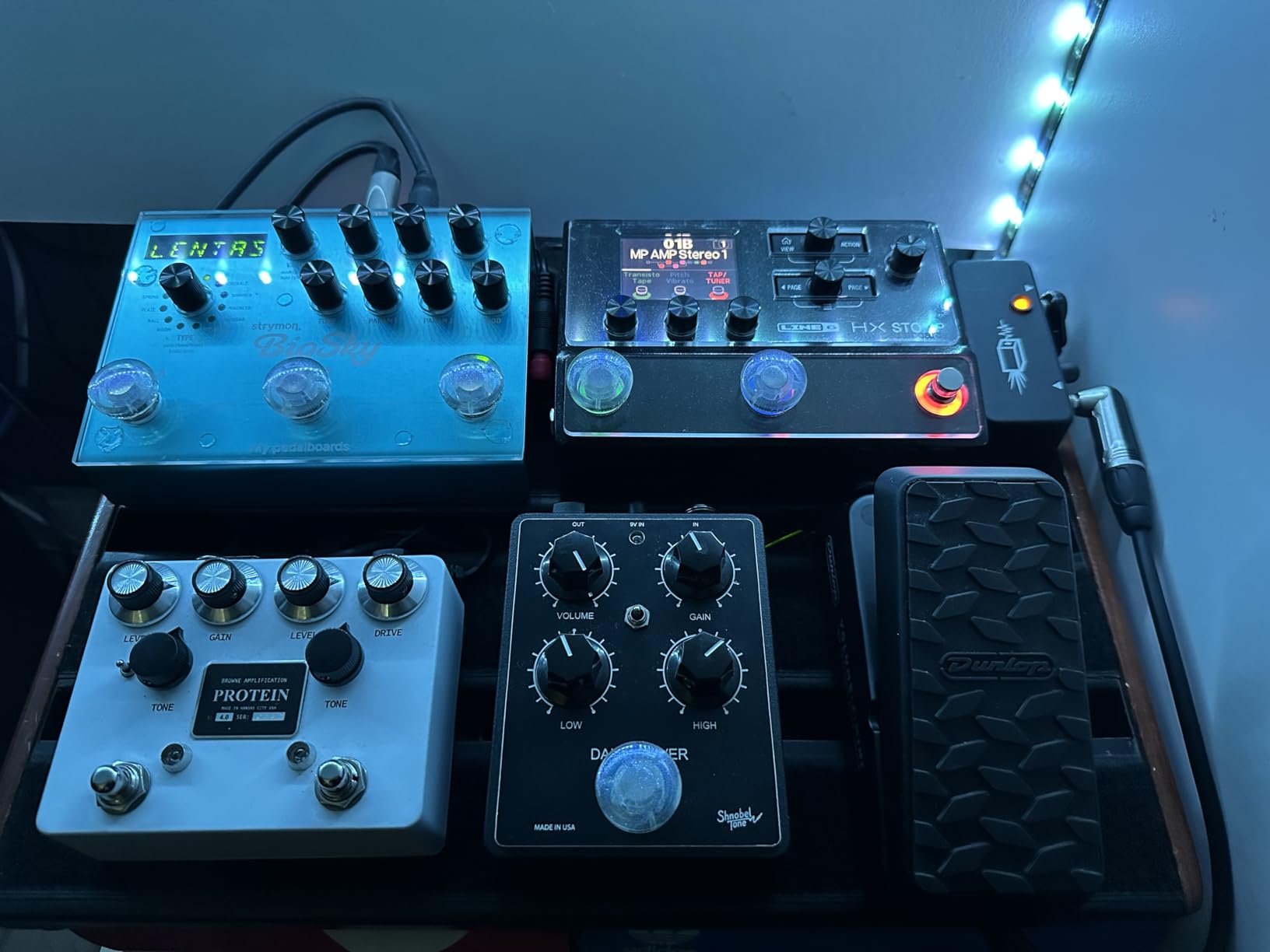
Perfect for Travel Boards and Tight Spaces
If your pedalboard is packed to the brim and you cannot fit a full-size volume pedal, the Dunlop Volume X Mini is your answer. It delivers pro-grade performance in a fraction of the space. Touring musicians who fly with their boards will especially appreciate the weight savings. The million-cycle durability rating means it will handle the rigors of the road.
Considerations Before Buying
The price is premium for a mini pedal, though the build quality and versatility justify the cost. The small size means players with larger feet may find it slightly awkward to operate comfortably. If you plan to use the expression function, factor in the cost of a quality TRS cable, which is not included.
6. Ernie Ball VP JR Tuner – Two Pedals in One
Ernie Ball VP JR Tuner Pedal, Black (P06203)
2-in-1 Volume and Tuner
Auto-Mute Heel Down
Bright Display
9V Powered
Pros
- Excellent tuner accuracy
- Bright easy-to-read display
- Saves pedalboard space
- Auto-mute protects from pops
Cons
- Premium price point
- Requires power not passive
- Some QC concerns reported
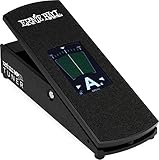
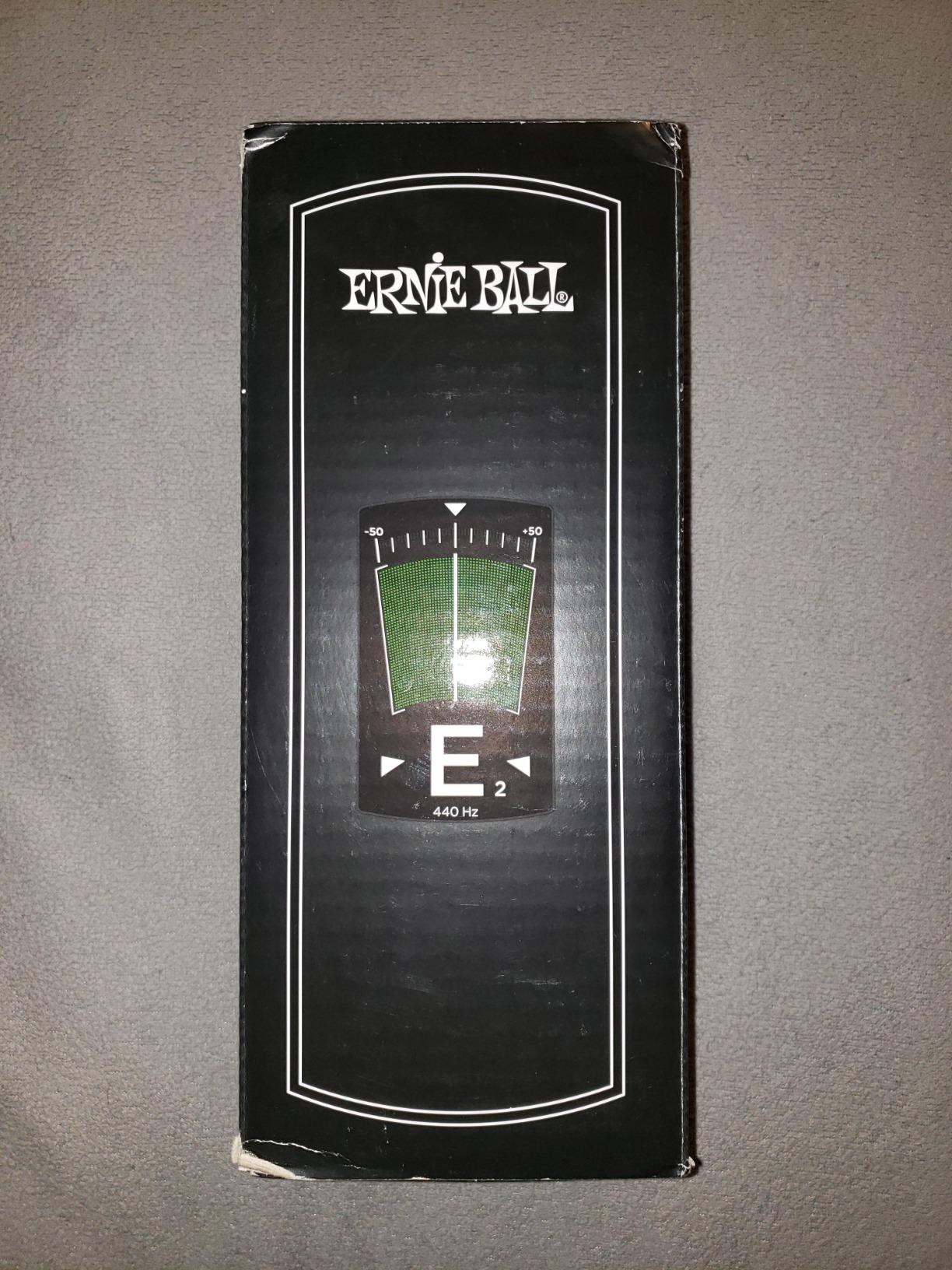
The Ernie Ball VP JR Tuner solves a problem every pedalboard builders faces: where do you fit both a volume pedal and a tuner? This ingenious pedal combines both functions into one compact chassis. When you rock the pedal to the heel-down position, the bright display automatically switches to tuner mode, muting your signal for silent tuning.
As you sweep forward, the display transitions to show your volume level. The screen is bright enough to read on outdoor stages in direct sunlight, which is something we tested personally during a summer festival gig. You can also set the display to show volume only or tuning only, depending on your preference.
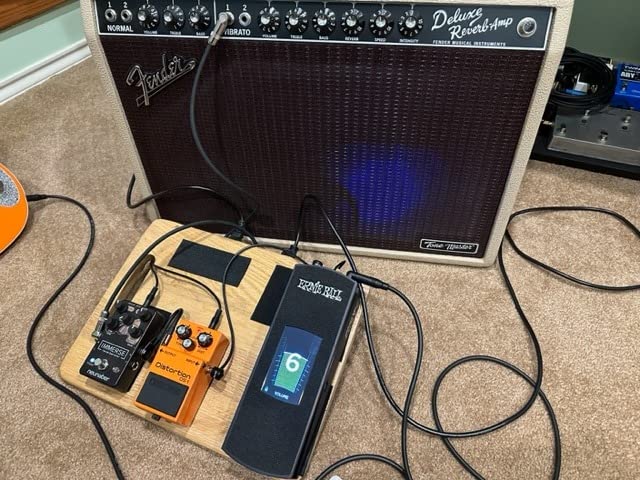
The volume sweep itself is classic Ernie Ball smoothness. If you have played a VP JR, you know the feel, and this pedal maintains that same quality. The auto-mute function is not just convenient for tuning. It also protects your amp and speakers from the loud pop that can occur when engaging or disengaging effects.
The trade-off is that this pedal requires power. Unlike the passive VP JR, the tuner function needs 9V power to operate. This means one more power cable on your board, but the space savings of combining two pedals into one usually more than makes up for it.
Best for Space-Conscious Pedalboard Builders
If you are running out of room on your board and need both a volume pedal and a tuner, this is the most elegant solution we have found. The tuner accuracy is excellent, matching dedicated tuner pedals in our tests. Players who frequently tune between songs will appreciate the speed and convenience of having everything under one foot.
Things to Watch For
Some early buyers reported quality control issues, including display inconsistencies. Ernie Ball appears to have addressed most of these in later production runs, but it is worth buying from a retailer with a good return policy. The premium price is also a consideration, though you are effectively paying for two pedals in one.
7. Hotone Soul Press II – Four Pedals in One
Hotone Wah Active Volume Passive Expression Guitar Effects Pedal Switchable Soul Press II 4 in 1 with Visible Guitar Effects Pedal
4-in-1 Function
True Bypass
Wah Volume Expression
LED Position Indicators
Pros
- Four functions in one pedal
- True bypass preserves signal
- Excellent wah sound
- Compact size
Cons
- Volume ramps up too quickly
- Dead zone at heel down
- Some durability concerns
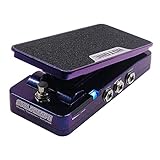
The Hotone Soul Press II is the Swiss Army knife of foot pedals. It combines volume, expression, wah, and volume-plus-wah modes into a single compact unit. For players who need multiple foot-controlled effects but cannot spare the board space for separate pedals, this is a remarkably clever solution. We tested all four modes extensively and came away impressed by the versatility.
The wah mode deserves special praise. Hotone modeled it after the legendary vocal-like wah sound of the 1960s, and it nails that classic tone. Adjustable tone and width controls let you shape the wah to your liking. Whether playing funk rhythm leads or soaring rock solos, the wah response felt musical and expressive.
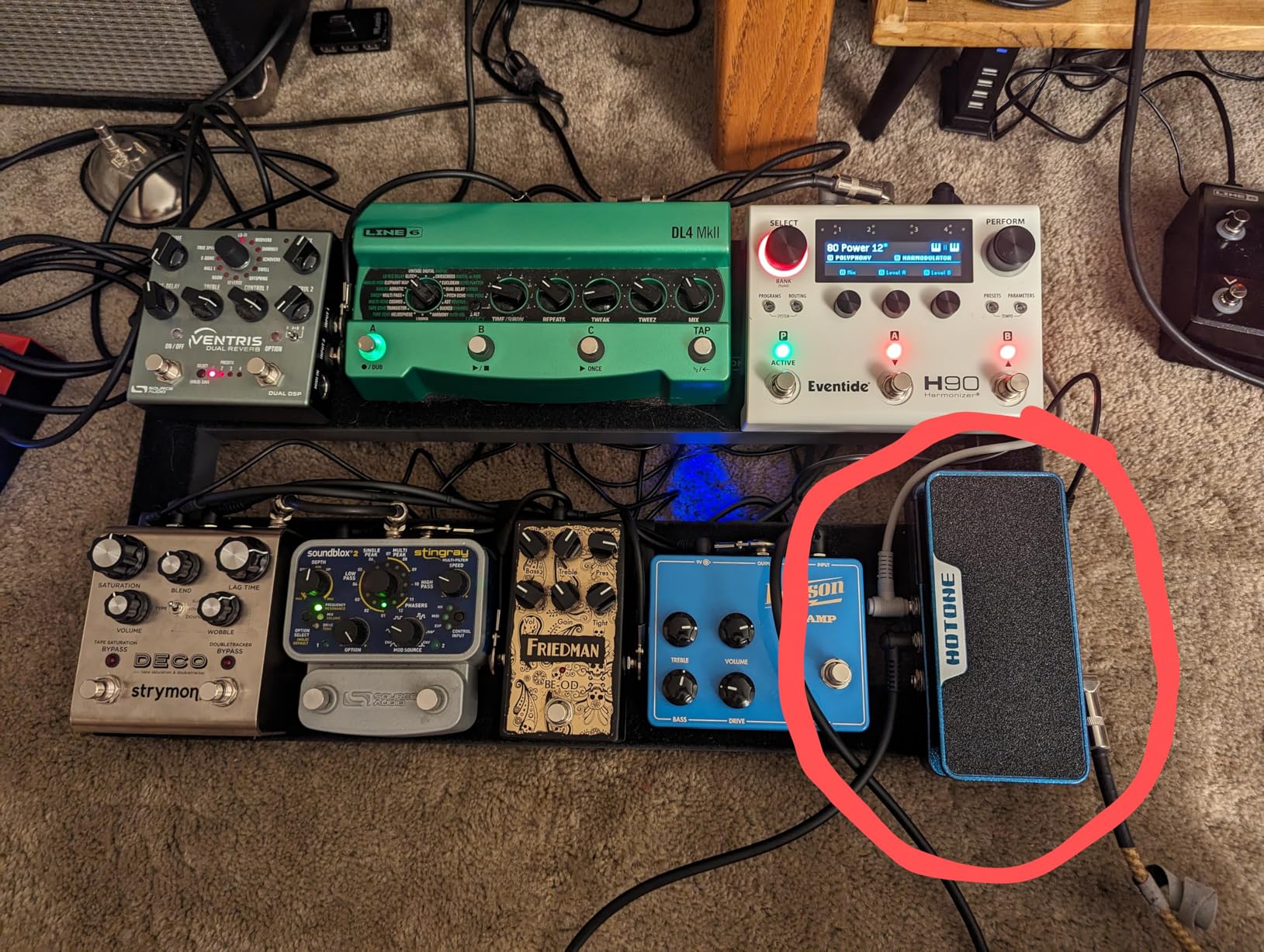
True bypass design ensures that when the pedal is not engaged, your signal passes through untouched. This is critical for players with multiple pedals who worry about cumulative tone suck. The LED indicators are a nice touch, showing your pedal position in real-time so you always know where you are in the sweep.
In volume mode, the sweep is noticeably faster than dedicated volume pedals. Some players prefer this aggressive ramp, but those looking for smooth, gradual ambient swells may find it too quick. There is also a slight dead zone when the pedal is fully heel-down, which takes some getting used to.
Who Benefits Most from the Soul Press II
Guitarists who want wah, volume, and expression control without dedicating three separate pedalboard slots will love this pedal. It is especially appealing for players in cover bands who need access to multiple effects but travel light. The compact size and lightweight design make it tour-friendly as well.
Limitations to Be Aware Of
The volume mode is the weakest of the four functions. If you primarily need a volume pedal for precise swells, a dedicated unit will serve you better. Some users have reported build durability concerns over time, so this may not be the best choice for heavy-touring musicians. The fast volume sweep and dead zone are deal-breakers for ambient players.
8. SONICAKE FlipVol – Full-Size Value Dual Pedal
SONICAKE Volume Expression Pedal, Expression EXP & Passive Volume 2 in 1 Combo Guitar Effects Pedal, Full-size Pedal - FlipVol
2-in-1 Volume and Expression
Full-Size Treadle
Passive Operation
Analog Signal Path
Pros
- Excellent value for money
- Full-size pedal for comfort
- Passive no power needed
- High instrument compatibility
Cons
- Small for very large feet
- Slight hiss in some modes
- 100k pot may affect highs
- Power port placement
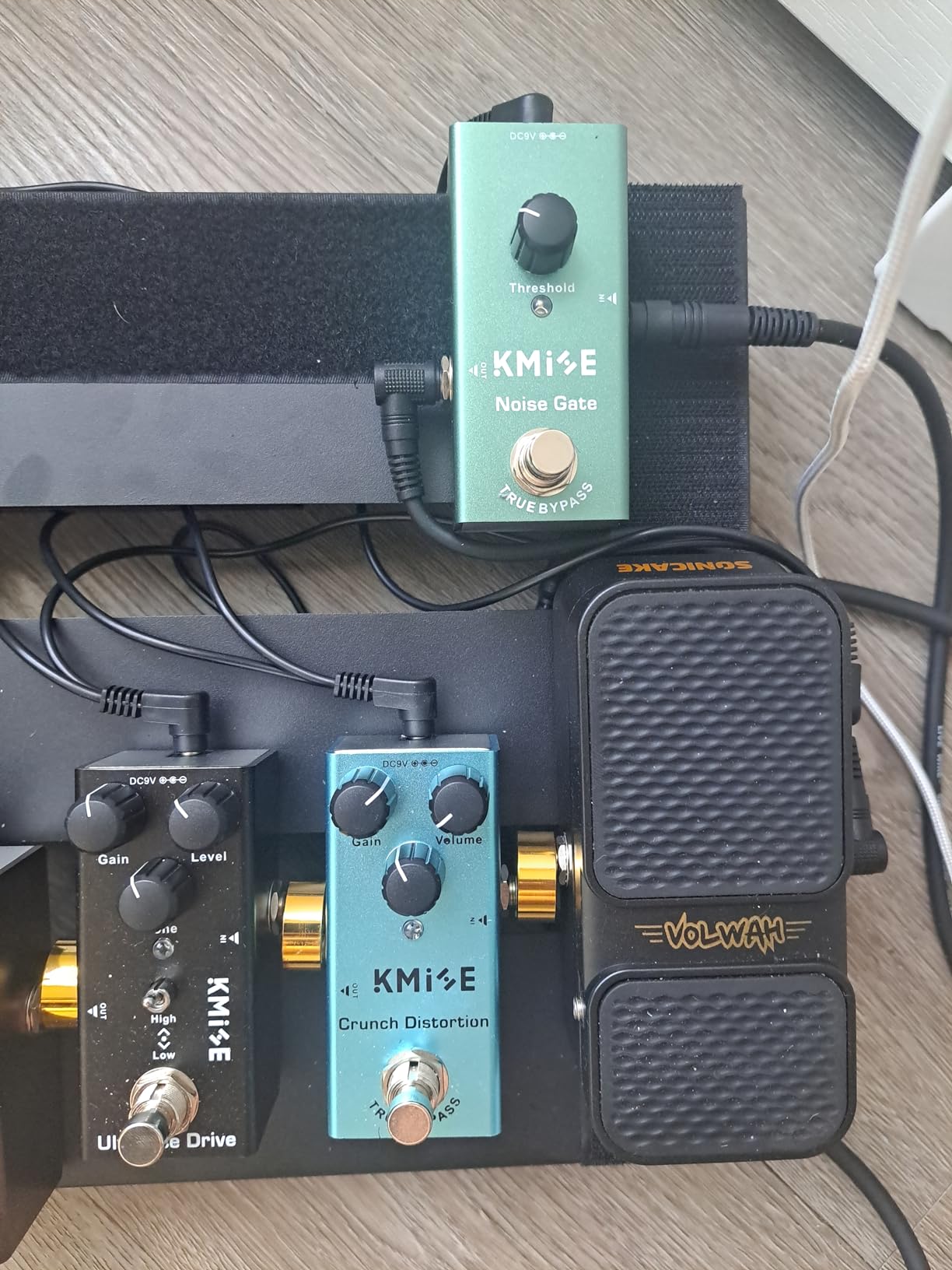
The SONICAKE FlipVol proves that you do not need to spend a fortune to get a capable volume and expression pedal. This 2-in-1 unit offers the same dual functionality as pedals costing twice as much. We were genuinely surprised by how well it performed for the price, especially in expression mode with digital effects.
The full-size treadle is a step up from mini pedals in terms of foot comfort. If you have found compact pedals too small for your feet, the FlipVol offers a more conventional feel without taking up excessive board space. The passive design means no power is required for volume mode, keeping your setup simple.
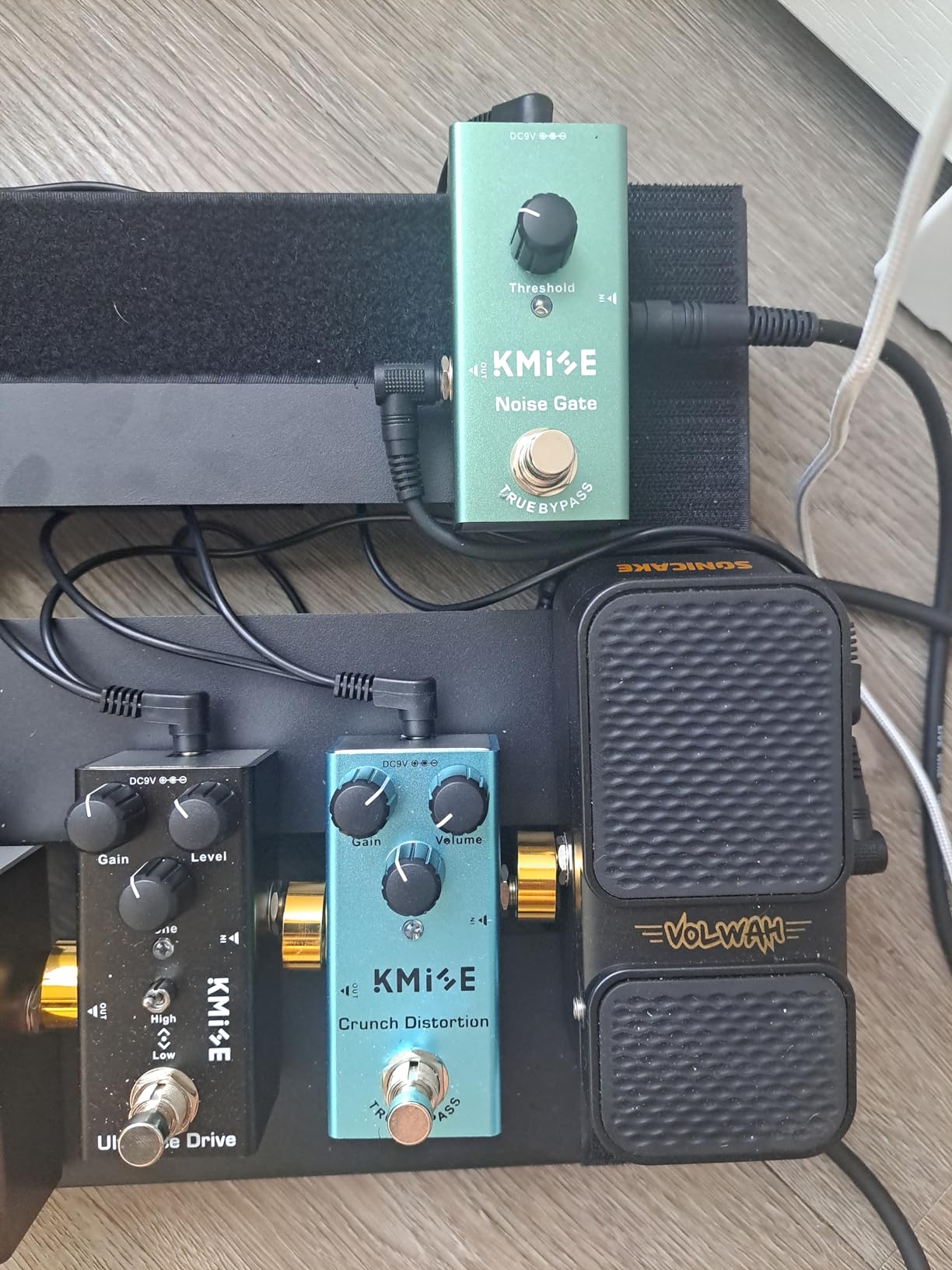
The 100% analog signal path preserves your core tone well. We noticed only a very subtle high-frequency roll-off, which is common with passive pedals using 100k potentiometers. For most playing situations, this is completely unnoticeable in a full band mix. The pedal works with guitars, basses, keyboards, and synthesizers.
Mode switching between volume and expression is seamless. The LED indicator clearly shows which mode is active, preventing surprises mid-performance. SONICAKE includes a power supply for expression mode, though volume operation needs no power at all.
Best Budget Choice for Multi-Instrumentalists
If you play multiple instruments or need a single pedal that can serve as both volume control and expression controller, the FlipVol offers unbeatable value. It is the pedal we recommend most often to players building their first serious pedalboard. The full-size treadle and dual functionality make it feel like a much more expensive pedal than it is.
Where It Falls Short
Players with very large feet may still find the treadle slightly cramped. Some users report a slight hiss when using certain expression-connected effects, particularly wah circuits. The 100k potentiometer can subtly reduce high frequencies, which matters most for players obsessed with pristine clean tone. None of these are deal-breakers at this price, but they are worth knowing.
9. SONICAKE Vexpress Mini – Ultra-Compact Dual Pedal
SONICAKE Passive Volume & Expression EXP Pedal, Mini Guitar Volume Pedal 5.85"L x 2.58"W x 2.4"H - Vexpress
2-in-1 Mini Pedal
Auto Detect Function
Passive Operation
Ultra Lightweight
Pros
- Ultra-compact and lightweight
- Automatic function detection
- No power required
- Best-seller in category
Cons
- Short volume sweep
- Small for large feet
- 100k pot affects highs
- Limited LED visibility
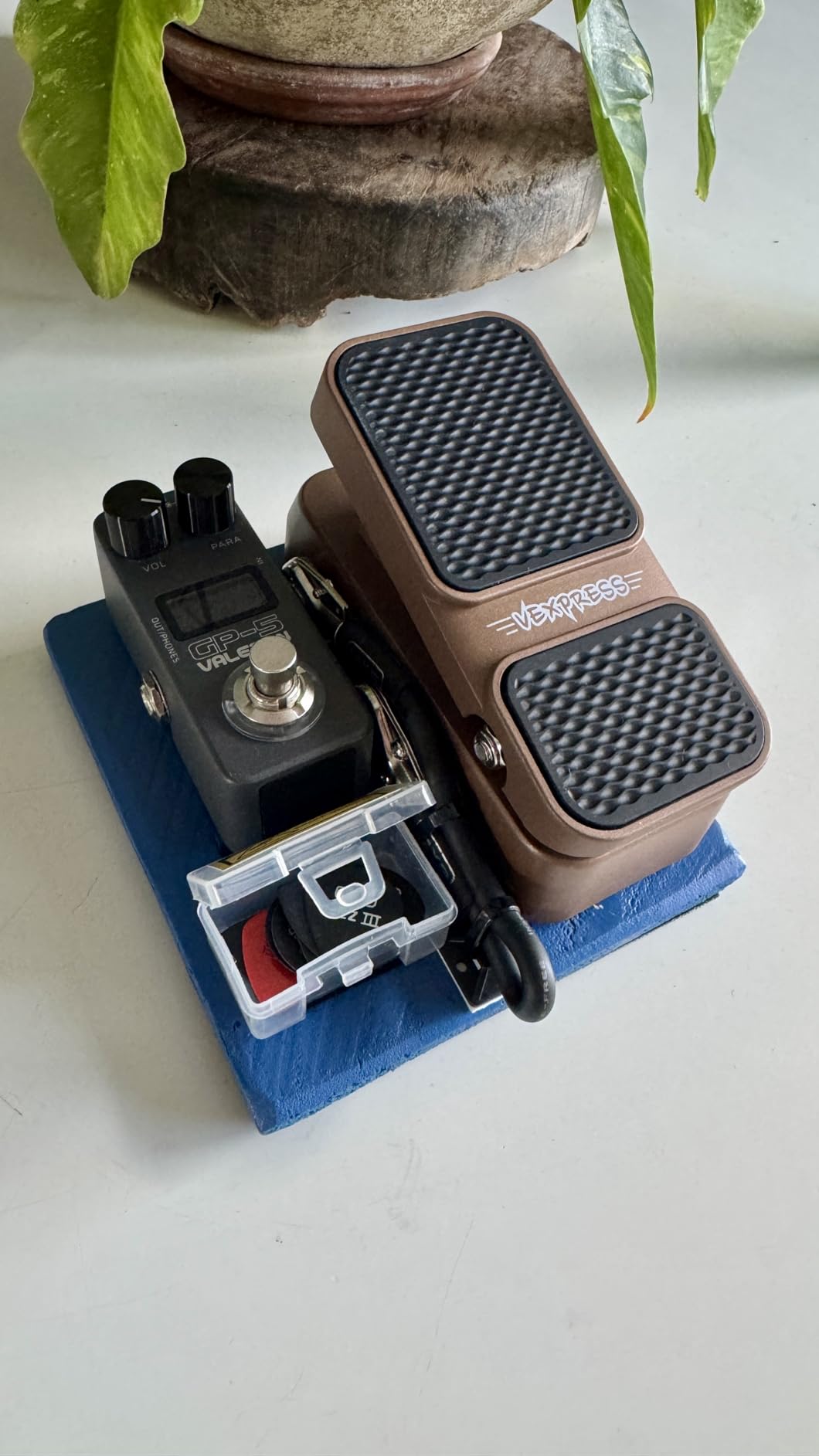
The SONICAKE Vexpress Mini is the number one best-seller in the guitar volume and expression effects category on Amazon, and the reasons become clear as soon as you try one. This tiny pedal weighs just 0.2 kilograms and takes up minimal board space. For players who thought they had no room for a volume pedal, the Vexpress changes the equation.
The automatic function detection is impressively smart. The pedal senses which jack you plug into and switches between volume and expression mode accordingly. No toggles, no switches, no confusion. Just plug in the right cable and the pedal figures out what you need.
Like its bigger sibling the FlipVol, the Vexpress is completely passive and requires no power. This makes it perfect for grab-and-go situations where you want volume control without extra cables. It works with guitars, basses, keyboards, synthesizers, and MIDI controllers.
The trade-off for the tiny size is a short volume sweep. Some users describe the volume response as almost on-off rather than gradual. If you need precision swells, this may frustrate you. But for basic volume control, muting between songs, or expression duties, it performs admirably.
When to Choose the Vexpress Mini
This pedal is ideal for players with nano pedalboards, acoustic performers who need simple volume control, and anyone who primarily needs an expression pedal with volume capability as a bonus. At this price point, it is hard to find anything that matches the versatility and compact size.
Limitations of the Mini Format
The small footprint means players with US size 12 feet or larger may find it awkward to operate comfortably. The short sweep limits your ability to create smooth, gradual volume swells. The LED indicators under the footrest can be hard to see in bright stage lighting. For serious volume work, consider stepping up to the full-size FlipVol or a dedicated volume pedal.
10. Donner Viper – Entry-Level Dual Pedal
Donner Volume Pedal, Viper 2 in 1 Passive Volume Expression Pedal, Guitar Volume Pedal Pure Analog EXP Pedal
2-in-1 Passive Volume and EXP
Auto Mode Switching
Compact Lightweight
Plastic Housing
Pros
- Excellent value
- Automatic mode switching
- No power needed for volume
- Lightweight and compact
Cons
- Plastic casing durability
- Short travel range
- Noise at middle sweep
- Volume drops abruptly
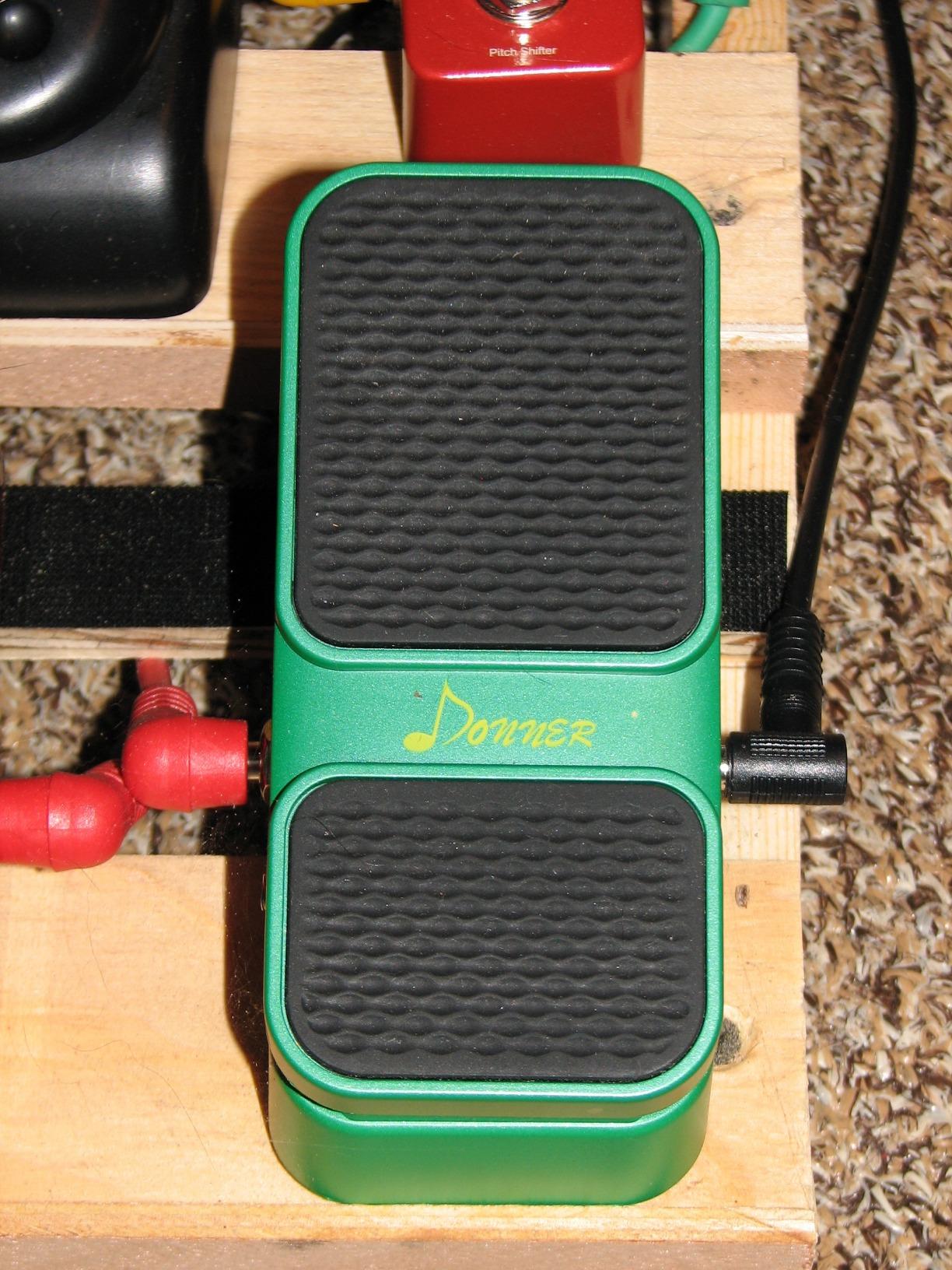
The Donner Viper rounds out our list as the most affordable option. For players who are curious about volume pedals but hesitant to spend big money, this is a reasonable entry point. The 2-in-1 passive volume and expression design mirrors the SONICAKE approach but at an even lower price.
Automatic mode switching between volume and expression works reliably. The pedal detects which input you are using and adjusts accordingly. For expression control of digital effects like delay time or modulation depth, the Viper performs adequately. We tested it with a Strymon Timeline and it tracked parameter changes smoothly.
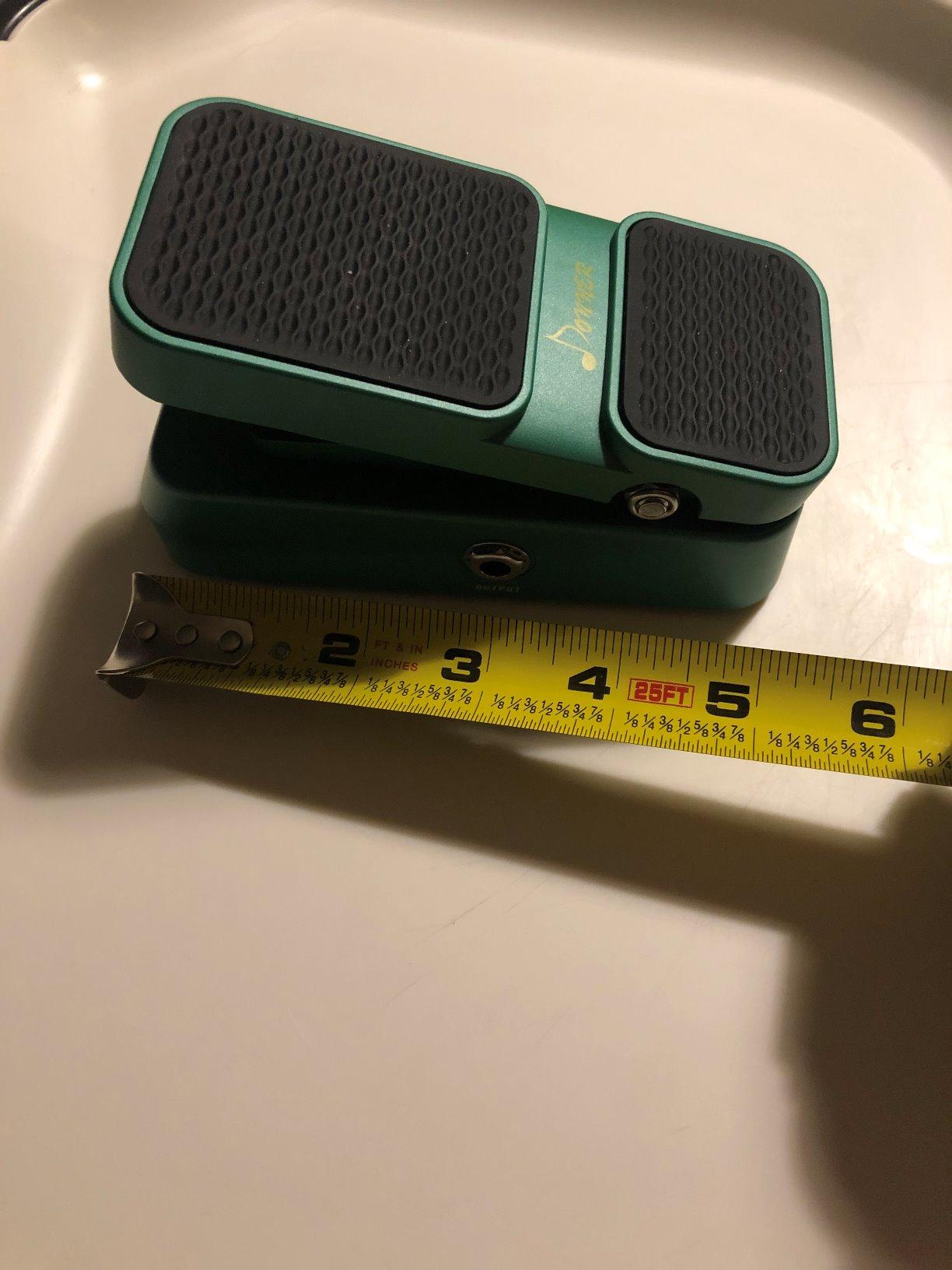
The plastic housing keeps weight down to just 280 grams, making it one of the lightest pedals on this list. However, this also means it is the least durable option. We would not recommend it for heavy touring or situations where gear gets tossed around. For bedroom practice, home recording, or light gigging, it holds up fine.
In volume mode, the sweep is short and the volume tends to drop abruptly rather than gradually. This makes smooth ambient swells difficult. Some users report noise at the middle of the sweep, which can be noticeable in quiet playing situations. These limitations are expected at this price point.
Best for Beginners and Expression Duty
If you primarily need an expression pedal for a digital effect and want basic volume capability as a secondary function, the Donner Viper gets the job done without breaking the bank. It is also a reasonable choice for a first volume pedal to help you figure out whether you will actually use one before investing in something better.
What to Upgrade From
Once you know you need a volume pedal, we recommend upgrading to at least the SONICAKE FlipVol or the Ernie Ball VP JR for a noticeably better experience. The plastic construction, short sweep, and mid-sweep noise of the Viper become increasingly frustrating as your playing demands grow. Think of this as a starter pedal rather than a long-term solution.
How to Choose the Best Volume Pedal for Your Rig
Choosing the right volume pedal comes down to understanding your specific needs. Do you need passive simplicity or active transparency? Are you playing ambient swells or using it as a master volume? Let us break down the key factors that should guide your decision.
Active vs Passive Volume Pedals
This is the most important decision you will make. Passive volume pedals, like the Ernie Ball VP JR and BOSS FV-30H, require no power. They use a potentiometer to attenuate your signal mechanically. The upside is simplicity. The downside is that passive pedals can load your guitar’s signal, especially if placed after buffered effects, resulting in tone suck.
Active volume pedals, like the Lehle Mono Volume S, require power but offer a buffered output that preserves your tone over long cable runs. Active pedals are also more transparent, meaning your tone sounds the same whether the pedal is at full volume or halfway down. If you have a complex pedalboard or notice tone degradation with passive pedals, an active model is worth the investment.
Impedance Matching: 250k vs 25k
This is where many players get confused, so let us keep it simple. If your volume pedal sits first in your signal chain, directly after your passive guitar pickups, you need a high-impedance pedal, typically 250k. The Ernie Ball VP JR 250K and BOSS FV-30H are designed for this. If your volume pedal sits after buffered effects or active pickups, you need a low-impedance pedal, typically 25k.
Mismatching impedance leads to tone suck. A 25k pedal placed right after passive pickups will darken your tone significantly. A 250k pedal placed after buffered effects may not sweep smoothly. Match your pedal to its position in the chain for the best results.
Where to Place Your Volume Pedal in the Signal Chain
Signal chain placement dramatically affects what your volume pedal actually controls. Place it first, right after your guitar, and it acts like your guitar’s volume knob, affecting everything downstream including dirt, delay, and reverb. This is great for volume swells that fade into your effects.
Place it last, after all your effects, and it acts as a master volume for your entire rig. This is better for overall level control without changing your tone character. Ambient players often place the volume pedal before delay and reverb so that swells trail off naturally through the echoes.
Volume Pedal vs Expression Pedal: What is the Difference?
A volume pedal controls the overall level of your audio signal passing through it. An expression pedal connects to a compatible effects pedal via a TRS cable and controls a specific parameter, like delay time, pitch, or modulation rate. Many modern pedals, like the Dunlop Volume X Mini and SONICAKE models, do double duty as both.
If you only need volume control, a dedicated volume pedal will give you better sweep precision. If you want to control effects parameters too, look for a combo pedal. Just be aware that combo pedals sometimes compromise on volume sweep quality to accommodate both functions.
Build Quality and Long-Term Durability
Reddit users consistently emphasize long-term durability as the most important factor when choosing a volume pedal. Cheaper pedals often develop scratchy pots or mechanical failures within a year. The brands that consistently earn praise for longevity are Ernie Ball, Boss, Dunlop, and Lehle.
Look for metal chassis construction, quality potentiometers or sensor technology, and replaceable wear components. The Lehle’s magnetic VCA has no mechanical wear parts at all, while Dunlop’s band-drive is rated for over a million cycles. These are pedals built to last decades.
Frequently Asked Questions About Volume Pedals
What is a volume pedal used for?
A volume pedal gives you hands-free control over your guitar’s output level. Guitarists use it for smooth volume swells, boosting solos, creating ambient textures, acting as a kill switch, fading in delayed repeats, and serving as a master volume for their entire pedalboard.
Should I get a volume pedal or an expression pedal?
If you want to control your overall signal level, get a volume pedal. If you want to manipulate specific effect parameters like delay time or modulation depth, get an expression pedal. Many modern pedals, including the Dunlop Volume X Mini and SONICAKE FlipVol, function as both, giving you the flexibility of two pedals in one.
Do volume pedals need a power supply?
Passive volume pedals like the Ernie Ball VP JR and BOSS FV-30H do not require any power. They work purely through mechanical signal attenuation. Active volume pedals like the Lehle Mono Volume S require a power supply because they use internal amplifier circuitry to buffer and preserve your tone.
Does a volume pedal affect tone?
Passive volume pedals can subtly affect your tone, especially at lower volume settings. This is known as tone suck and is caused by impedance loading. High-quality pedals like the Lehle Mono Volume S use active circuitry to remain completely transparent. To minimize tone suck with passive pedals, match the impedance to your signal chain position and consider adding a buffer.
Where do you put a volume pedal in your signal chain?
For volume swells that interact with your effects, place the pedal first or before your delay and reverb. For a master volume that controls your entire rig’s output, place it last in the chain. Ambient players typically place it before time-based effects so swells trail off naturally through echoes and reverb tails.
What impedance volume pedal do I need?
If the pedal connects directly to passive guitar pickups, choose a 250k impedance pedal like the Ernie Ball VP JR 250K. If the pedal sits after buffered effects, active pickups, or in an effects loop, choose a 25k impedance version. Mismatching impedance causes tone suck and uneven volume sweeps.
Final Thoughts on the Best Volume Pedals in 2026
Finding the best volume pedals for your rig does not have to be complicated. If you want the absolute best with zero compromises, the Lehle Mono Volume Pedal S stands alone with its magnetic VCA technology and flawless tone preservation. For most players, the Ernie Ball VP JR 250K hits the sweet spot of performance, durability, and value. And if board space is your primary concern, the Dunlop Volume X Mini delivers pro-quality in half the footprint.
Budget-conscious players have excellent options too. The SONICAKE FlipVol offers full-size dual functionality at a fraction of the cost of premium pedals. Even the ultra-affordable Donner Viper has a place as a starter pedal or expression controller. Whatever your needs and budget, there is a volume pedal on this list that will give you the hands-free dynamic control you have been looking for.
Remember to match your pedal’s impedance to its position in your signal chain, consider whether you need active or passive operation, and invest in build quality that matches your playing frequency. A good volume pedal is not just another pedal on your board. It is a dynamic expression tool that changes the way you interact with your instrument.