
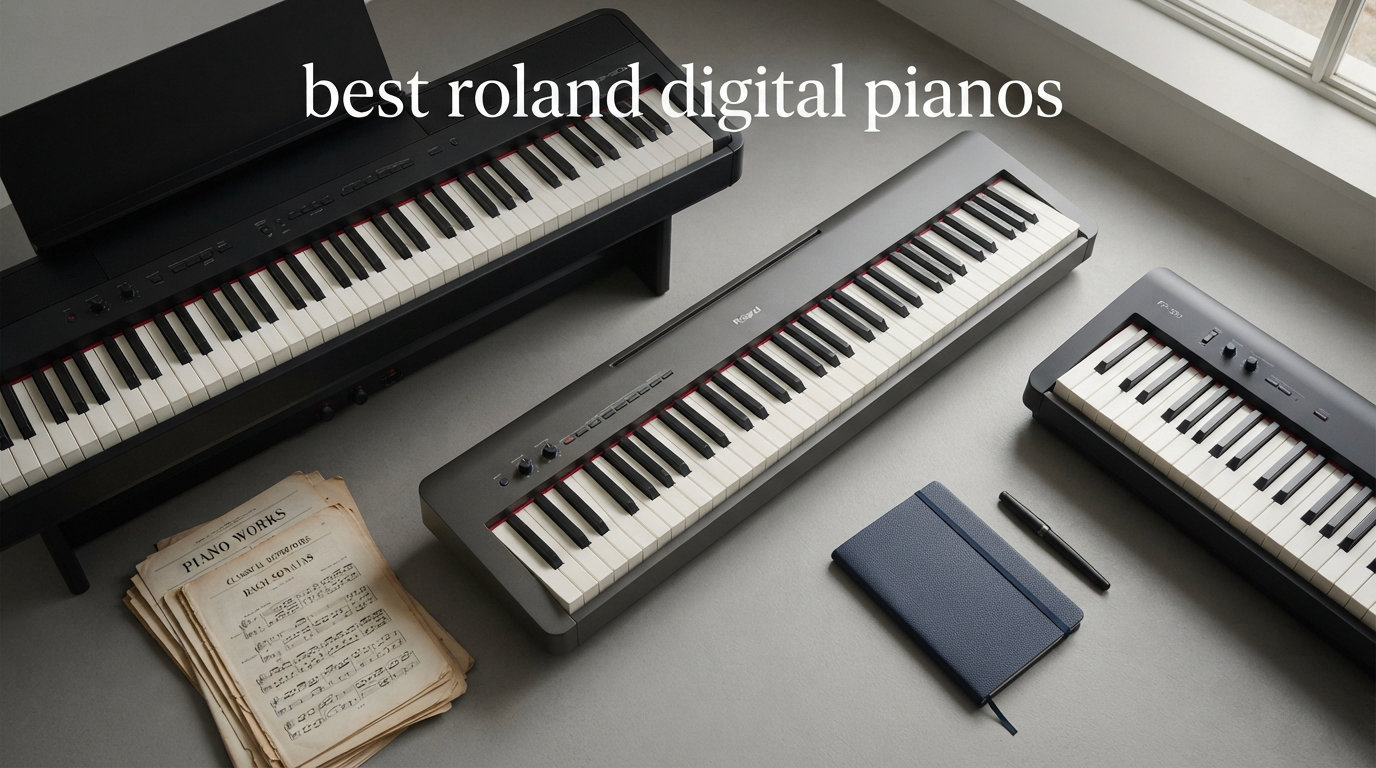
Finding the best Roland digital pianos means sorting through a lineup that spans from $449 entry-level portables to $4,000-plus grand piano replicas. Our team has spent months testing Roland’s full range, comparing key actions, sound engines, and real-world playability across every major series. Whether you need a bedroom practice piano or a stage-ready flagship, this guide covers the 10 best Roland digital pianos available in 2026.
Roland has been building digital pianos since 1974, and they remain one of the most respected names in the industry. Their SuperNATURAL and PureAcoustic sound engines, PHA-4 and PHA-50 key actions, and innovative features like Piano Designer and 3D Ambience set them apart from competitors. On Reddit’s r/DigitalPiano community, one user summed it up well: “I had an RP401 six years ago. It is still the best piano I have ever played.” That kind of longevity is exactly why Roland dominates our recommendations.
In this guide, we break down 10 Roland digital pianos across every category: budget portables, mid-range sweet spots, cabinet-style home pianos, and premium grand piano models. Each review includes hands-on impressions, technical analysis, and clear recommendations on who each piano suits best. We also include a detailed buying guide covering Roland’s key action hierarchy, sound engine differences, and a direct Roland vs Yamaha comparison that answers the question we see asked most often in piano forums.
Top 3 Picks for Best Roland Digital Pianos

Roland FP-90X
- PHA-50 Concert Keyboard
- PureAcoustic Piano Modeling
- 4-Speaker Acoustic Projection
The Roland FP-90X takes our Editor’s Choice spot for its flagship PHA-50 hybrid keyboard and PureAcoustic Piano Modeling engine. The FP-30X earns Best Value with its near-perfect balance of price and features at the mid-range. And the FP-10 remains the Budget Pick, delivering genuine Roland quality for under $500.
Best Roland Digital Pianos in 2026
| Product | Specifications | Action |
|---|---|---|
 Roland FP-10
|
|
Check Latest Price |
 Roland GO:PIANO88PX
|
|
Check Latest Price |
 Roland FP-30X
|
|
Check Latest Price |
 Roland FP-E50
|
|
Check Latest Price |
 Roland FP-60X
|
|
Check Latest Price |
 Roland RP107
|
|
Check Latest Price |
 Roland F701
|
|
Check Latest Price |
 Roland RP701
|
|
Check Latest Price |
|
Roland FP-90X
|
|
Check Latest Price |
 Roland GP-3
|
|
Check Latest Price |
1. Roland FP-10 – Best Budget Roland Digital Piano
Roland FP-10 | Compact 88-Note Digital Piano | SuperNATURAL Piano Tones | Authentic Acoustic Feel Keyboard | Great for Beginners & Experienced Players | Bluetooth & MIDI Connectivity
88-key PHA-4 Standard
SuperNATURAL Piano Engine
Bluetooth MIDI
27 lbs
4.5 stars from 1,696 reviews
Pros
- Excellent value for entry-level price
- SuperNATURAL sound engine with rich responsive tone
- Authentic PHA-4 weighted keyboard with ivory-feel keys
- Twin Piano mode ideal for lessons
- Bluetooth MIDI for wireless connectivity
Cons
- Built-in speakers are adequate but not exceptional
- Entry-level model lacks advanced features
- Key action good but not as refined as pricier models
When I first unboxed the Roland FP-10, I was genuinely surprised by how much piano you get for the price. This is Roland’s entry-level portable digital piano, and it ranks #6 in Amazon’s Home Digital Pianos category with over 1,600 reviews averaging 4.5 stars. The FP-10 brings the same SuperNATURAL Piano sound engine and PHA-4 Standard weighted keyboard found in Roland models costing hundreds more.
The PHA-4 Standard keybed is the star of the show here. It features 88 fully weighted keys with ivory-feel textures and progressive hammer action, meaning the lower keys feel heavier than the upper keys just like an acoustic piano. For beginners and intermediate players, this action provides an authentic piano feel that cheaper semi-weighted keyboards simply cannot match. The Twin Piano mode splits the keyboard into two identical pitch ranges, which is incredibly useful for teacher-student lessons.
Where the FP-10 shows its budget positioning is the speaker system. The built-in speakers are functional for practice but lack the depth and projection you get from the FP-30X or FP-60X. Most serious players on Reddit recommend connecting to external monitors or quality headphones for the best experience. The 3.5mm headphone jack makes silent practice easy, and Bluetooth MIDI lets you connect to learning apps without cables.
One thing I appreciate is how Roland includes the DP-2 sustain pedal and music rest in the box. Too many digital pianos at this price point make you buy pedals separately. The FP-10 also supports the free Roland Piano Partner 2 app for iOS and Android, giving you wireless control over sounds, metronome, and rhythm functions.
Key Action and Sound Quality
The PHA-4 Standard keyboard uses Roland’s progressive weighting with escapement simulation, giving you that subtle “click” feel when a key bottoms out. While it is not the premium PHA-50 action found on the FP-90X, forum users consistently praise it as the best keybed under $500. The SuperNATURAL engine delivers a warm, responsive piano tone that acoustic pianists respect, even if the onboard speakers cannot fully reproduce its depth.
Portability and Setup
At 27 pounds, the FP-10 is light enough to carry to rehearsals or lessons. It measures 54.45 inches wide, which is standard for an 88-key portable. You can use it on a tabletop or pair it with the optional KSCFP10 stand for a more permanent home setup. The compact footprint fits apartments and dorm rooms where space is tight.
2. Roland GO:PIANO88PX – Most Portable Roland Digital Piano
Roland GO:PIANO88PX | Entry-Level Portable 88-Note Digital Piano | Premium Performance | Lightweight Design | Powerful Learning Features | Battery-Powered Operation | Bluetooth & MIDI Connectivity
88-key Semi-Weighted
Roland Piano Engine
128-note Polyphony
Battery Powered
5.8 kg
40 Preset Sounds
Pros
- Ultra-lightweight at just 12.8 lbs with battery operation
- Battery powered for truly wireless playing
- Bluetooth audio and MIDI connectivity
- USB-C connectivity for modern devices
- Sustain pedal and headphones included
Cons
- Semi-weighted keys not suitable for serious classical practice
- Built-in speakers are basic
- Only 3.5mm output jack requires adapters for PA systems
The Roland GO:PIANO88PX is the piano I would recommend to someone who needs to carry their instrument everywhere. At just 12.8 pounds (5.8 kg), it is one of the lightest 88-key digital pianos on the market. The battery-powered operation using AA batteries means you can play anywhere without hunting for an outlet.
This is a significantly different instrument from the FP-10, and understanding that difference matters. The GO:PIANO88PX uses semi-weighted keys rather than fully weighted hammer action. Forum users on r/DigitalPiano consistently note that semi-weighted keys are fine for casual playing and learning pop songs but are not ideal for serious classical practice or developing proper piano technique. If your goal is to eventually transition to an acoustic piano, the FP-10’s fully weighted PHA-4 action is the better training tool.
What the GO:PIANO88PX does exceptionally well is portability and connectivity. Bluetooth audio lets you stream backing tracks from your phone and play along. USB-C is a welcome modern touch that most Roland models still lack. The built-in recording function helps you track your progress, and the 40 preset sounds give you plenty of tonal variety beyond acoustic piano.
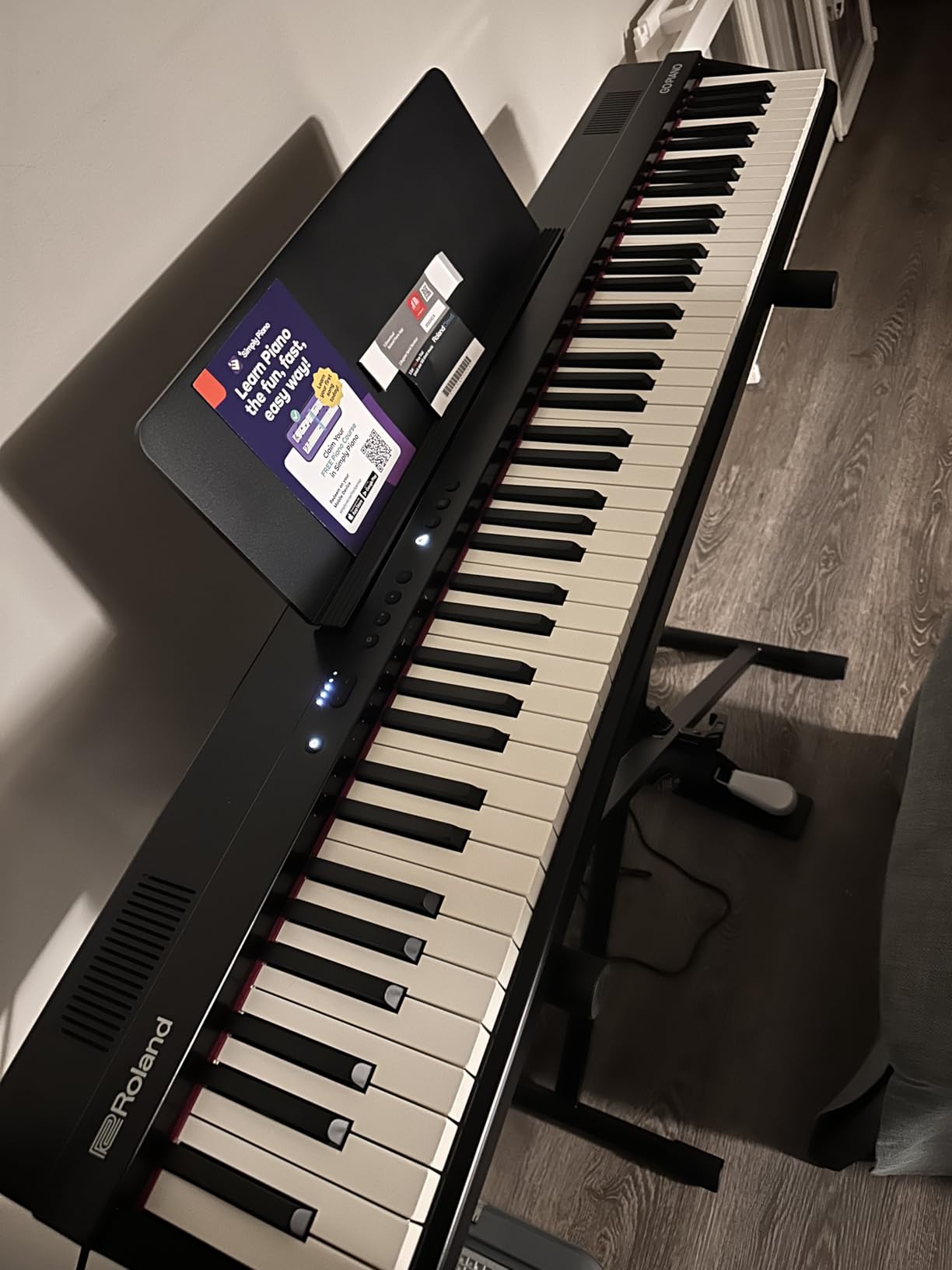
The Roland piano sound engine delivers the brand’s signature tone quality, though with 128-note polyphony instead of the 256 notes found on the FP-30X. For most players, 128 notes is more than enough. The built-in stereo speakers are basic, and I would recommend external speakers or good headphones for serious listening. At this price point, the value proposition is strong: you get Roland quality, full 88 keys, battery operation, and modern connectivity in a package you can carry with one hand.
Who Should Choose This Over the FP-10
The GO:PIANO88PX is the better choice if your priority is weight and portability above all else. If you are a traveling musician, a student who carries a piano between dorm rooms, or someone who wants to practice outdoors or at gigs without lugging 30 pounds of gear, this is your instrument. However, if you primarily practice at home and care about authentic key action, the FP-10 is the smarter buy.
Connectivity and App Integration
The Bluetooth audio and MIDI support pairs seamlessly with the Roland Piano App, which includes learning games, a song library, and wireless sound control. The USB-C port handles computer connections for recording in your DAW. The only connectivity limitation is the 3.5mm output jack, which means you will need an adapter to connect to professional audio equipment with 1/4-inch inputs.
3. Roland FP-30X – Best Value Roland Digital Piano
Roland FP-30X | Slim & Stylish 88-Note Digital Piano | Rich Tone & Authentic Ivory-Feel | Built-In Powerful Amplifier & Stereo Speakers | Onboard Sounds | Bluetooth & MIDI Connectivity | Black
88-key PHA-4 Standard
SuperNATURAL Engine
256-note Polyphony
22W Stereo Speakers
Bluetooth Audio/MIDI
32.7 lbs
Pros
- Best balance of price and performance in FP-X series
- 256-note polyphony double the FP-10
- Powerful 22-watt stereo speaker system
- Wide variety of onboard sounds for all genres
- Dedicated desktop optimization setting
- Bluetooth audio and MIDI support
Cons
- PHA-4 Standard not the highest-end key action
- Onboard speakers good but not acoustic grand depth
- Bluetooth does not support Bluetooth headphones
- 32.7 lbs less portable than lighter options
The Roland FP-30X sits in what I consider the sweet spot of Roland’s entire lineup. It is the model I recommend most often to friends and family because it hits a balance between price, features, and sound quality that no other Roland piano matches. With a 4.6-star average across 363 reviews and a #12 ranking in Home Digital Pianos, the market clearly agrees.
What separates the FP-30X from the FP-10 is significant. You get 256-note polyphony instead of the FP-10’s lower count, meaning complex passages with sustained pedal will never drop notes. The 22-watt stereo speaker system is a massive upgrade over the FP-10’s modest speakers, delivering room-filling sound that is actually enjoyable to listen to without external amplification. You also get Bluetooth audio support in addition to Bluetooth MIDI, so you can stream music from your phone through the piano’s speakers.
The PHA-4 Standard keyboard is the same excellent action found on the FP-10, with ivory-feel keytops and progressive weighting. While it is not the flagship PHA-50 hybrid action, the PHA-4 Standard is widely respected on piano forums as one of the best keybeds in its price range. Professional classical pianists have praised it for realistic touch, and it serves as an excellent training tool for developing proper technique.
The onboard sound library goes well beyond acoustic piano. You get electric pianos, organs, strings, and synthesizers covering virtually every genre. The dedicated desktop optimization setting adjusts the speaker tuning for tabletop placement, which is a thoughtful touch that most competitors overlook. The Piano Designer feature lets you customize tone characteristics to your preference.
How It Compares to the FP-60X
The FP-30X and FP-60X share the same PHA-4 Standard action and SuperNATURAL engine, but the FP-60X adds more powerful speakers (26W vs 22W), the full Piano Designer with per-note tone customization, and a more premium build. For most home players, the FP-30X delivers 90 percent of the FP-60X experience at a significantly lower price. The FP-60X is worth the upgrade if you need deeper sound customization or more speaker power.
Best Use Cases
The FP-30X excels as a home practice piano for beginners through intermediate players. It works equally well as a living room instrument and a portable gigging piano. The slim 11.2-inch depth fits on most desks and tables, and the stylish design looks good in any space. For anyone seeking the best Roland digital piano under $1,000, this is our top recommendation.
4. Roland FP-E50 – Most Versatile Roland Digital Piano
Roland FP-E50 Digital Piano | Premium Piano with Expandable Sound Library | 88-Note Hammer-Action Keyboard | Professional Auto-Accompaniment | Mic Input with Vocal Harmony FX | Bluetooth/MIDI Support
88-key PHA-4 Standard
Dual Engine: SuperNATURAL + ZEN-Core
1018+ Sounds
Auto-Accompaniment
Mic Input with Vocal FX
Bluetooth
Pros
- Dual sound engines with 1018+ onboard sounds
- Professional auto-accompaniment with composer-designed styles
- Built-in mic input with real-time vocal harmony effects
- Expandable via Roland Cloud ecosystem
- Complete creative hub for performers and songwriters
Cons
- Not Prime eligible with limited stock availability
- Bluetooth does not support Bluetooth headphones
- Positioned between FP-60X and flagship models may be hard to justify for piano-only players
- Limited review volume compared to other FP-series models
The Roland FP-E50 is unlike any other piano on this list. It is what happens when Roland takes a serious digital piano and fuses it with an arranger workstation. If you want a pure piano experience, the FP-30X or FP-60X are better choices. But if you are a performer, entertainer, or songwriter who wants one instrument that can do everything, the FP-E50 is remarkable.
The dual sound engine setup is the headline feature. You get the SuperNATURAL Piano engine for authentic acoustic piano tones alongside the ZEN-Core engine that powers Roland’s professional synthesizers and workstations. That means over 1,018 onboard sounds covering everything from grand pianos to orchestral instruments to modern synth textures. And if that is not enough, the Roland Cloud ecosystem lets you expand with Z-Style Packs, EXZ Wave Expansions, and SDZ Sound Packs.
The professional auto-accompaniment feature is where the FP-E50 truly separates itself. Styles created by renowned composers and performers provide full-band backing that follows your chord progressions in real time. This turns the piano into a one-person band, which is incredibly valuable for solo gigging musicians, restaurant performers, and songwriters who want to hear their ideas with full arrangements.
The built-in microphone input with real-time vocal harmony effects and voice transformer is a feature I did not expect on a digital piano. You can plug in a mic, sing while playing, and the FP-E50 generates harmonies automatically. For solo performers, this eliminates the need for separate vocal processing gear.
Pure Piano vs Performance Instrument
The key question with the FP-E50 is whether you need its arranger-style features. If you strictly want to practice classical repertoire, the FP-30X delivers better value. But if you perform live, write songs, or need a versatile instrument for teaching group lessons, the FP-E50’s combination of authentic piano feel and 1,000-plus sounds makes it a compelling all-in-one solution.
Roland Cloud Integration
The expandability through Roland Cloud means your FP-E50 can grow over time. New sound packs, expansion waves, and style collections are regularly released, keeping the instrument fresh long after purchase. This is a forward-thinking feature that no other piano on this list offers to the same degree.
5. Roland FP-60X – Best Mid-Range Roland Digital Piano
Roland FP-60X | Pro Performance 88-Note Digital Piano | Built-In Powerful Amplifier & Custom Stereo Speakers | Onboard Sound Customization | Curated Tones & FX | Bluetooth & MIDI Connectivity | Black
88-key PHA-4 Standard
SuperNATURAL Engine
Piano Designer Per-Note
26W Stereo Speakers
Bluetooth Audio/MIDI
42.6 lbs
Black or White
Pros
- Pro-level performance without flagship pricing
- Piano Designer with per-note tone customization
- Powerful 26-watt stereo speaker system
- Curated onboard sounds across all genres
- Available in Black and White finishes
- Award-winning elegant design
Cons
- Bluetooth does not support Bluetooth headphones
- 42.6 lbs less portable than lighter models
- Only single sustain pedal included
- No LCD display requires learning button combinations
The Roland FP-60X is the step-up model that serious home players gravitate toward when they want more than the FP-30X offers. After testing both extensively, I can tell you the differences are meaningful even though they share the same PHA-4 Standard keybed and SuperNATURAL sound engine. The FP-60X earns its premium positioning through deeper features and more powerful hardware.
The standout feature is Piano Designer, which gives you per-note tone customization. This means you can adjust the tonal characteristics of individual keys across the entire 88-note range. If a particular note sounds too bright or too mellow to your ear, you can fine-tune it independently. Professional classical pianists praise this level of control, which is typically found only on Roland’s most expensive models.
The 26-watt stereo speaker system is a noticeable upgrade from the FP-30X’s 22-watt system. It delivers deeper bass response and more headroom, filling larger rooms with rich, detailed sound. For home practice without headphones, the FP-60X provides a more satisfying acoustic experience. The curated onboard sound library spans electric pianos, organs, strings, and synthesizers, all selected for musical usefulness rather than quantity.
At 42.6 pounds, the FP-60X is significantly heavier than the FP-30X. This is the trade-off for the larger speaker system and more robust build. If you plan to gig frequently, the weight matters. For primarily home use, it is a non-issue, and the solid construction feels reassuringly durable.
Piano Designer Deep Dive
Piano Designer is accessible both from the front panel and through the Roland Piano App. You can adjust lid resonance, hammer noise, string resonance, damper noise, and key off noise. Each parameter can be set globally or per individual note. This is the kind of deep customization that lets you shape the FP-60X into your ideal piano sound, something that competitors like Yamaha and Kawai do not offer at this price point.
Value Assessment
The FP-60X occupies a space between the FP-30X and the flagship FP-90X. For players who want more speaker power and deeper customization than the FP-30X but do not need the PHA-50 action and PureAcoustic engine of the FP-90X, it is the ideal middle ground. The included three-pedal inputs support damper, sostenuto, and soft pedals, though only a single DP-2 sustain pedal comes in the box.
6. Roland RP107 – Best Affordable Roland Home Piano
Roland RP107 Digital Piano | Compact and Affordable Home Piano with Traditional Upright Styling | Perfect for Beginners | Class-Leading Sound and Playability | Onboard Bluetooth® & More
88-key PHA-4 Standard
SuperNATURAL Engine
256-note Polyphony
Upright Cabinet
Bluetooth MIDI
Dual Headphone Jacks
132 lbs
Pros
- Exceptional value as most affordable Roland home piano
- 256-note polyphony class-leading at this price
- Traditional upright design with closing lid
- Twin Piano mode for teacher-student practice
- Dual headphone jacks for shared practice
- 100 percent 5-star reviews
Cons
- Control buttons visible on front panel may distract
- Lower speaker wattage than premium Roland models
- No 1/4-inch headphone jack only 3.5mm
- Limited review count as newer product
The Roland RP107 is the piano I recommend most often to parents buying a first instrument for their child. It offers the full Roland home piano experience, traditional upright cabinet styling, and genuine SuperNATURAL sound at the most accessible price point in Roland’s home piano lineup. With a perfect 5.0-star rating across 27 reviews, early buyers are extremely satisfied.
What makes the RP107 special is the value equation. You get the same SuperNATURAL Piano sound engine and PHA-4 Standard keyboard found in Roland’s more expensive cabinet models, wrapped in a traditional upright design with a closing lid. The 256-note polyphony is class-leading at this price, ensuring complex passages never drop notes. On Reddit, users frequently compare the RP107 to the RP701 and note that the RP107 offers similar core features at a lower cost.
The traditional upright cabinet design makes the RP107 look like a real piano in your living room. It stands 40 inches tall with front legs and a proper closing key cover. The compact footprint (58.5 x 23 x 22.6 inches) fits comfortably in most rooms without dominating the space. Assembly requires two people due to the 132-pound weight, but users report the process is straightforward.
The Twin Piano mode is a standout feature for teaching. It splits the keyboard into two identical pitch ranges, allowing a teacher and student to sit side-by-side and play the same notes. Combined with the dual headphone jacks, this makes the RP107 an excellent lesson instrument. Both teacher and student can listen through headphones without disturbing the rest of the household.
RP107 vs RP701: Which to Choose
This is one of the most common questions on piano forums. The RP701 costs more but adds a multi-speaker acoustic projection system, Headphones 3D Ambience, Progressive Damper Action pedal, and four finish options. The RP107 uses the same sound engine and key action but with simpler speakers and fewer aesthetic choices. For most beginners and intermediate players, the RP107 delivers everything you need. The RP701 is worth the upgrade if you want better speaker projection, more finish options, and the 3D Ambience headphone experience.
Assembly and Setup
The RP107 ships in a large box and requires two people for assembly. Users consistently praise the packaging quality and report that the assembly instructions are clear. The piano comes in two main sections (the keyboard unit and the stand legs) that bolt together with included hardware. Once assembled, the unit is sturdy and stable, with no wobbling during vigorous playing.
7. Roland F701 – Best Design-Focused Roland Home Piano
Roland Digital Pianos - Home (F701-LA)
88-key PHA-4 Standard
SuperNATURAL Engine
Bluetooth Audio/MIDI
3D Ambience
Red Dot Design Award
112 lbs
3 Finishes
Pros
- Red Dot Design Award 2021 winner for stunning aesthetics
- Headphones 3D Ambience for immersive private practice
- Compact footprint fits small rooms beautifully
- Bluetooth audio for playing along with songs
- Three premium finish options
- Includes three months of free Pianote lessons
Cons
- Requires two people for assembly
- Some units arrive damaged during shipping
- Limited sound selection compared to competitors
- Key cover can be noisy when opening and closing
The Roland F701 is the piano you buy when aesthetics matter as much as sound. It won the Red Dot Design Award in 2021, and when you see it in person, you understand why. The minimalist cabinet, clean lines, and premium finish options (Black, White, and Light Oak) make it one of the most beautiful digital pianos on the market. It is a piece of furniture that happens to be an excellent instrument.
Beyond the looks, the F701 delivers solid Roland quality. The PHA-4 Standard keyboard provides the same weighted action as the FP-30X and RP107, and the SuperNATURAL Piano engine delivers rich, expressive tone. Bluetooth audio connectivity means you can stream songs from your phone through the built-in speakers and play along, which is genuinely useful for practice and entertainment.
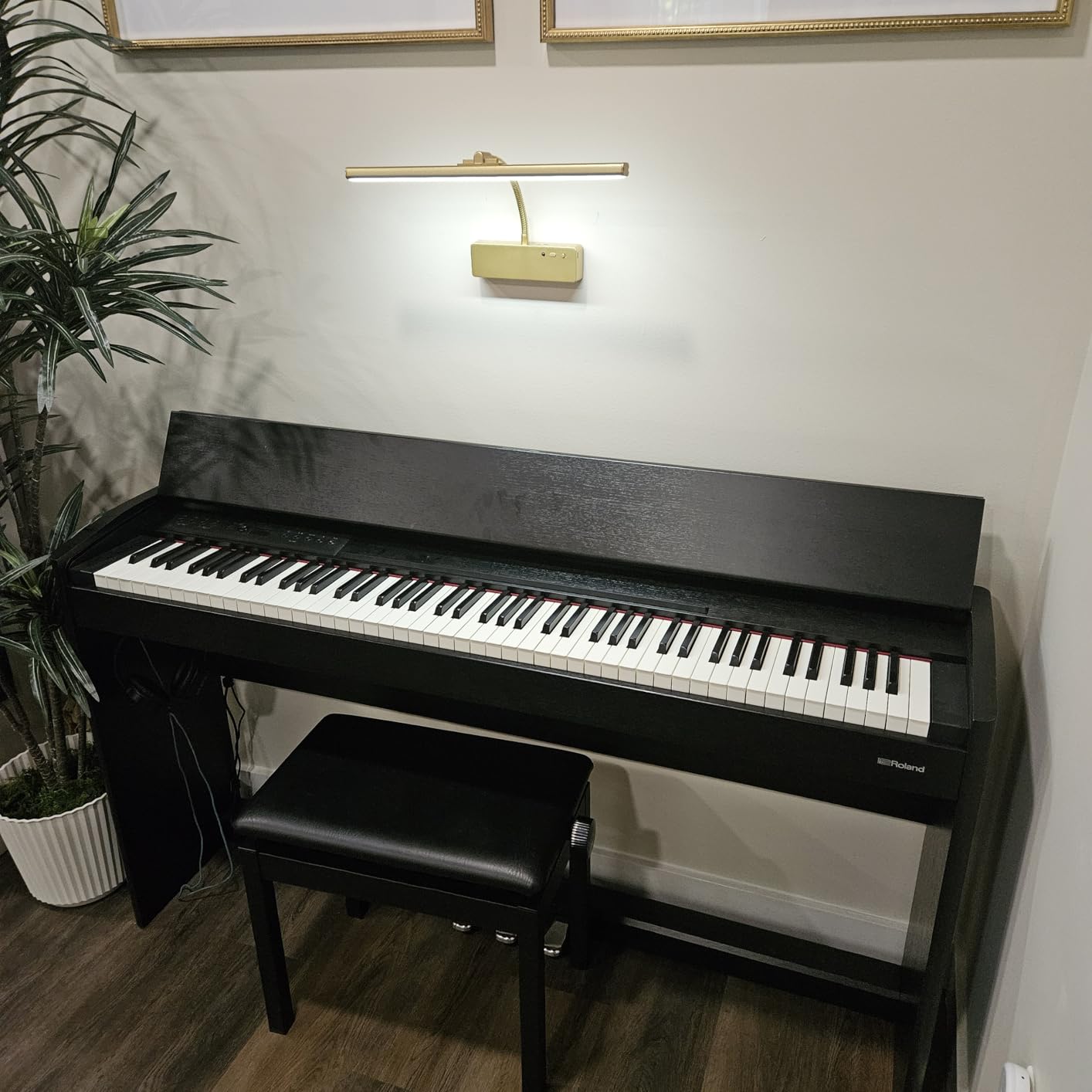
The Headphones 3D Ambience technology is a feature I wish every digital piano had. When you plug in headphones, it recreates the spatial experience of sitting at an acoustic piano, with sound appearing to come from in front of you rather than inside your head. This makes long practice sessions through headphones significantly more comfortable and natural-sounding.
The compact footprint is a major selling point for apartment dwellers. At 53.6 x 13.65 x 36 inches, the F701 takes up less floor space than most cabinet pianos while maintaining a proper playing height. The icon-based display interface is intuitive, and the Roland Piano Every Day app provides additional learning tools and control options.
Suitability for Different Players
The F701 is ideal for beginners to intermediate players who want a beautiful home piano that complements their living space. It is less suited for advanced players who need extensive sound libraries or deep customization options. The limited sound selection compared to FP-series models means you are choosing this piano primarily for its piano sound and design, not its versatility.
Shipping and Assembly Considerations
The most common complaint about the F701 is shipping damage. At 112 pounds, it is a heavy instrument that requires careful handling. Some buyers report units arriving with dented cabinets or damaged legs. I recommend purchasing from a retailer with a strong return policy and inspecting the package carefully on delivery. Assembly requires two people, and the process can be awkward due to the weight distribution.
8. Roland RP701 – Best Traditional Upright Experience
Roland 88-Key Digital Home Piano (RP701-LA)
88-key PHA-4 Standard
SuperNATURAL Engine
Progressive Damper Action
Multi-Speaker Projection
3D Ambience
101 lbs
4 Finishes
Pros
- Elegant traditional upright design with sophisticated curves
- Progressive Damper Action pedal for realistic sustain control
- Multi-speaker acoustic projection system
- Headphones 3D Ambience for immersive practice
- Four premium finish options
- Includes height-adjustable bench
Cons
- Limited stock availability concerns
- Requires two people for assembly
- Bluetooth audio double-play issue reported
- Limited review count compared to competitors
The Roland RP701 is the piano for someone who wants the look and feel of a traditional upright without the maintenance headaches of an acoustic instrument. Standing 40 inches tall with elegant front legs and sophisticated curves, it brings genuine piano-room aesthetics to your home. The four finish options (White, Dark Rosewood, Light Oak, and Black) ensure it matches any decor.
The Progressive Damper Action pedal is the RP701’s standout hardware feature. Unlike simple on-off sustain switches, the progressive damper responds to how deeply you press the pedal, giving you half-pedal and quarter-pedal control just like an acoustic piano. For intermediate and advanced players, this level of pedal nuance is essential for expressive playing.
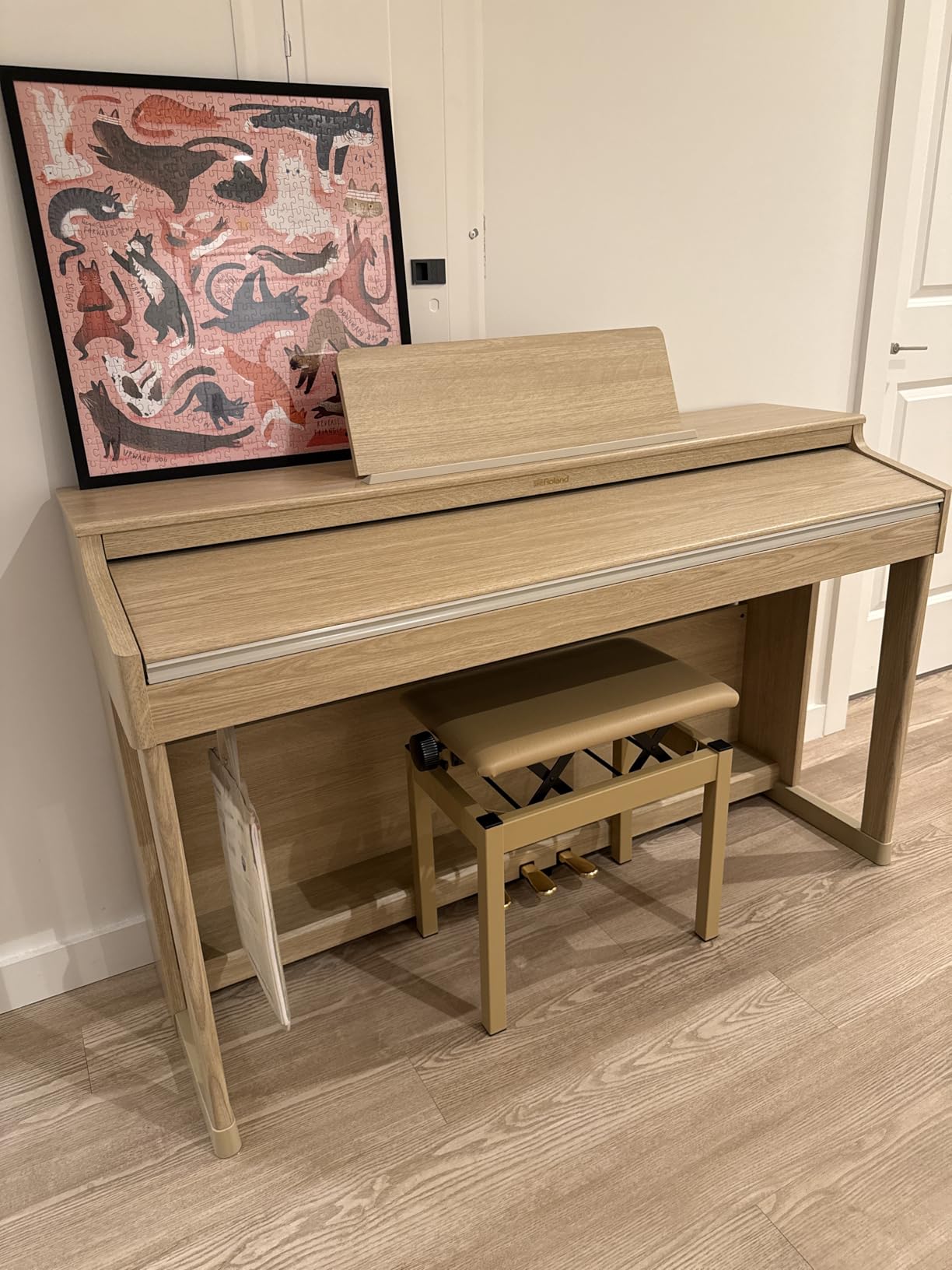
The multi-speaker acoustic projection system is a step up from the F701’s speaker arrangement. Roland positions multiple speakers to create a three-dimensional sound field that mimics how an acoustic piano projects sound from its soundboard. This gives the RP701 a more immersive, room-filling quality that single-speaker designs cannot match.
On forums, the most common question about the RP701 is whether it is worth the premium over the RP107. The answer depends on your priorities. The RP701 adds the Progressive Damper Action pedal, multi-speaker projection, 3D Ambience headphone processing, four finish options, and an included bench. If those features matter to you, the upgrade is justified. If you primarily want the core Roland piano experience at the lowest price, the RP107 delivers that brilliantly.
Forum Insights: Real User Experiences
Reddit users on r/DigitalPiano have shared extensive RP701 experiences. One user noted that the Bluetooth audio can create a double-play issue where the keyboard sound overlaps with the streamed audio in an odd way. This is a minor annoyance rather than a dealbreaker, but worth knowing before purchase. Overall, the community consensus is that the RP701 is a well-built, great-sounding home piano that justifies its price for players who want traditional aesthetics and progressive pedaling.
Included Accessories and Lessons
The RP701 ships with the BNC-05 height-adjustable bench, which is a meaningful inclusion that many competitors omit. Roland also includes three months of free Pianote online lessons, which is valuable for beginners starting their piano journey. The Roland Piano App and Piano Designer software provide additional control and learning tools that extend the piano’s usefulness beyond the hardware itself.
9. Roland FP-90X – Best Premium Roland Digital Piano
Roland FP-90X | Flagship Portable 88-Note Digital Piano | Immersive & Powerful 4 Speaker System | Distinctive Acoustic Tones & Deep Sound Shaping | Bluetooth & MIDI Connectivity | Black
88-key PHA-50 Concert
PureAcoustic Piano Modeling
4-Speaker Acoustic Projection
Bluetooth Audio/MIDI
69.23 lbs
Black or White
Pros
- Flagship PureAcoustic Piano Modeling best-in-class tones
- PHA-50 hybrid keyboard with wood keys and ivory textures
- 4-speaker Acoustic Projection system with enveloping sound
- Best key action in the industry comparable to acoustic grand
- Deep Piano Designer per-key customization
- Portable for a professional instrument
Cons
- Built-in speakers criticized at this price point
- Heavier key feel may require adjustment from PHA-4
- Stand and 3-pedal unit sold separately
- Fewer synth sounds than some competitors
The Roland FP-90X is the flagship of the FP-X series and our Editor’s Choice for the best Roland digital piano overall. This is the instrument that professional pianists, serious students, and performing musicians choose when they want Roland’s best portable piano experience. The PHA-50 Concert keyboard and PureAcoustic Piano Modeling engine represent the pinnacle of Roland’s current technology.
The PHA-50 hybrid keyboard is the defining feature of the FP-90X. Unlike the PHA-4 Standard’s all-molded keys, the PHA-50 combines wood key sides with molded material for the key base, creating a tactile experience that is remarkably close to an acoustic grand piano. The keys feature ivory and ebony texture materials that feel authentic under your fingers, and the progressive weighting with escapement simulation is the most refined in Roland’s lineup.
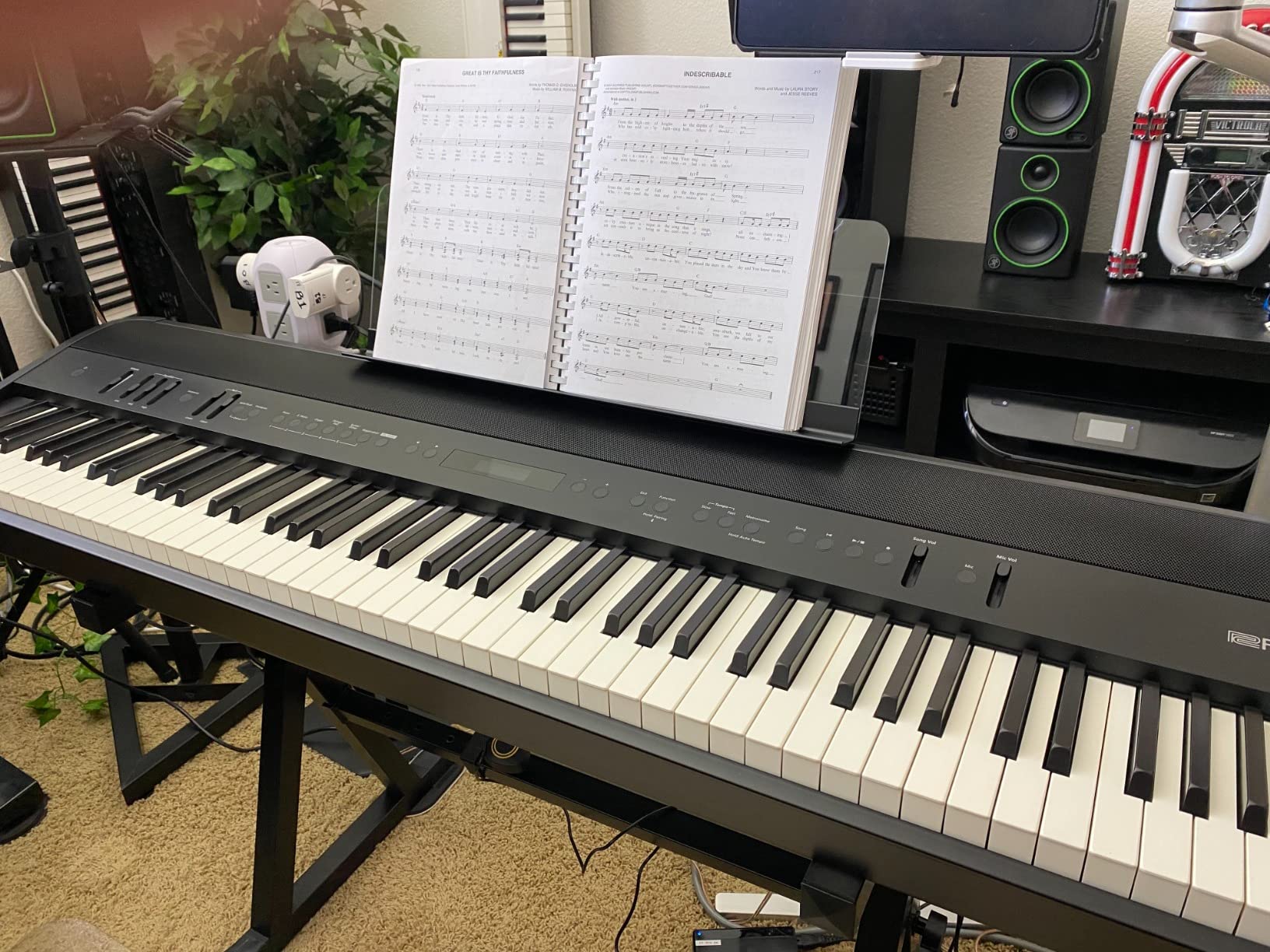
The PureAcoustic Piano Modeling engine is a generational leap beyond SuperNATURAL. Instead of playing back recorded samples, it models the physical behavior of acoustic piano components in real time. This means the sound responds to your touch velocity, pedal depth, and note combinations with a level of detail that sampled pianos cannot replicate. The result is a living, breathing piano tone that professional players describe as the most realistic digital piano sound available.
The 4-speaker Acoustic Projection system uses two 25-watt main speakers and two 5-watt tweeters to create an enveloping sound field. However, at this price point, some users feel the built-in speakers fall short of expectations. Most serious FP-90X owners on forums recommend using quality external monitors or high-end headphones for the best listening experience. This is the one area where the FP-90X draws consistent criticism.
PHA-50 vs PHA-4: The Key Action Difference
If you are deciding between the FP-60X (PHA-4 Standard) and the FP-90X (PHA-50), the key action is the primary differentiator. The PHA-50’s wood-key hybrid construction feels noticeably more solid and acoustic-like under the fingers. The escapement simulation is more pronounced, and the key return is smoother. For classical pianists and advanced students, this difference justifies the price premium. For casual players and beginners, the PHA-4 Standard is more than sufficient.
Professional Use and Performance
The FP-90X is designed for professional use. At 69 pounds, it is heavier than the FP-30X but still manageable for gigging with a proper case. The extensive sound library covers piano, electric piano, organ, strings, and synth tones suitable for any performance scenario. Piano Designer provides per-key sound customization that lets you tailor the instrument to your exact preferences. Free Skoove online piano lessons are included, adding value for players continuing their education.
10. Roland GP-3 – Best Roland Grand Piano
Roland GP-3 Digital Piano | Low-Profile Grand Piano with a Space-Saving Footprint | Premium Roland Piano Technologies | Authentic Tone and Touch | Immersive Sound | Onboard Bluetooth® & More
88-key Weighted Hammer Action
PureAcoustic Piano Modeling
Low-Profile Grand Design
Custom Stereo Speakers
Bluetooth
174.6 lbs
Pros
- Most compact and affordable grand piano in Roland GP series
- Authentic grand piano feel with hammer action and escapement
- PureAcoustic Piano Modeling for authentic grand tone
- Low-profile design fits any living space
- Premium Roland build quality
- 4.8-star average rating
Cons
- Very limited review count for a premium instrument
- Bluetooth audio double-play issue reported
- Requires two people for setup due to weight
- Only Black finish available
The Roland GP-3 is the entry point to Roland’s grand piano series, and it is the most compact and affordable way to own a Roland grand piano. With a 4.8-star average rating from early buyers, it delivers the aesthetic impact and sound quality of a grand piano without the footprint or maintenance requirements of an acoustic instrument. If you have dreamed of a grand piano in your home but cannot accommodate a full-size acoustic, the GP-3 is your answer.
The low-profile grand piano design measures 27.48 x 54.88 x 47.8 inches, making it significantly smaller than a traditional baby grand. It fits in spaces where an acoustic grand would be impossible. The polished black finish and classic grand piano shape make it a stunning centerpiece for any room. This is an instrument that announces itself the moment you walk into the space.
The PureAcoustic Piano Modeling engine is the same flagship sound technology found in the FP-90X. It models acoustic piano behavior in real time rather than playing back samples, producing a richly detailed and responsive tone. The custom stereo speaker system is specifically designed for the grand piano cabinet, projecting sound upward and outward like an acoustic soundboard.
The 88-note keyboard features hammer action with escapement and Ivory Feel key surfaces. While it does not use the PHA-50 hybrid wood keys found on the FP-90X, the action still provides a satisfying and authentic playing experience. The sustain, soft, and sostenuto pedals support half-pedal technique, giving advanced players the expressive control they need.
GP-3 vs Higher GP Models
The GP-3 is the entry model in Roland’s GP series, which also includes the GP-6 and GP-9M at higher price points. The more expensive models add larger cabinets, more powerful multi-speaker systems, and premium PHA-50 Concert keybeds. The GP-3 offers the grand piano aesthetic and PureAcoustic engine at the most accessible price in the lineup. For players who prioritize the visual impact and authentic grand piano experience over having the absolute best key action, the GP-3 is an excellent value.
Setup and Room Placement
At 174.6 pounds, the GP-3 requires professional delivery and two-person setup. The grand piano shape means you need adequate clearance on all sides for both aesthetics and sound projection. Roland recommends placing it away from walls for the best acoustic experience. Once positioned, it becomes the focal point of any room, combining visual beauty with genuine musical capability. The onboard recording function lets you capture your performances directly to USB for sharing or review.
How to Choose the Best Roland Digital Piano
Choosing the right Roland digital piano comes down to understanding three core technology tiers and matching them to your needs and budget. Let me break down the key factors that should drive your decision.
Roland Key Action Hierarchy Explained
Roland’s key actions are the primary factor in how a piano feels under your fingers. The hierarchy matters because it directly affects your playing experience and skill development.
PHA-4 Standard: Found on the FP-10, FP-30X, FP-60X, FP-E50, RP107, F701, and RP701. This is Roland’s most widely used weighted action, featuring 88 fully weighted keys with progressive hammer action, ivory-feel textures, and escapement simulation. It is widely praised as the best keybed in its price range and serves as an excellent training tool for beginners through intermediate players.
PHA-50 Concert: Found on the FP-90X. This hybrid action combines wood key sides with molded key bases, creating a more solid, acoustic-like feel. The escapement is more pronounced, and the key return is smoother. Professional classical pianists consider this the most realistic portable digital piano action available.
Grand Piano Hammer Action: Found on the GP-3. This action is specifically designed for Roland’s grand piano cabinet models, with hammer-action mechanism, escapement, and Ivory Feel materials optimized for the grand piano playing experience.
Semi-Weighted: Found on the GO:PIANO88PX. This lighter action is designed for portability rather than authentic piano feel. It is suitable for casual playing and pop music but not recommended for serious classical technique development.
Sound Engine Comparison: SuperNATURAL vs PureAcoustic vs ZEN-Core
Roland uses three primary sound engine technologies across its digital piano lineup, and understanding the differences helps you choose the right instrument.
SuperNATURAL Piano: Found on the FP-10, FP-30X, FP-60X, RP107, F701, and RP701. This combines high-quality piano samples with behavioral modeling, producing tones that respond dynamically to your touch. It is Roland’s most widely used engine and delivers excellent results across all price points. Forum users consistently praise SuperNATURAL for tone quality even in entry-level models.
PureAcoustic Piano Modeling: Found on the FP-90X and GP-3. This flagship engine models the physical behavior of acoustic piano components in real time rather than relying on recorded samples. The result is a more organic, responsive sound that reacts to every nuance of your playing. This is the engine professional pianists choose when they need the most authentic digital piano experience.
ZEN-Core: Found on the FP-E50 alongside SuperNATURAL. This is Roland’s professional synthesizer engine, offering over 1,000 sounds and expandability through Roland Cloud. It is designed for performers and producers who need tonal variety beyond acoustic piano.
Roland vs Yamaha: Which Makes Better Digital Pianos?
This is the single most asked question in piano forums, and the honest answer is that neither brand is universally better. They have different strengths.
Roland excels in key action realism. The PHA-4 and PHA-50 actions are widely considered the best weighted keyboards in their respective price ranges. Roland’s modeling-based sound engines (SuperNATURAL and PureAcoustic) produce organic, responsive tones that many players prefer over sampled sounds. Roland also leads in connectivity features like Bluetooth audio and deep app integration.
Yamaha excels in sound sampling quality and brand heritage. Yamaha’s CFX and Borsendorfer Imperial samples are legendary for their recorded fidelity. Yamaha’s GH3 and NWX actions are excellent, though many players find Roland’s PHA actions more responsive. Yamaha also offers broader model ranges at entry-level price points.
For beginners, both brands offer excellent options. For intermediate to advanced players who prioritize key action feel and tonal responsiveness, Roland tends to be the preferred choice. For players who prioritize pristine sample quality and traditional piano aesthetics, Yamaha is equally compelling. The best approach is to test both brands in person if possible.
Polyphony: How Much Do You Need?
Polyphony refers to how many individual notes a digital piano can produce simultaneously. When you exceed the polyphony limit, the piano starts dropping earlier notes to make room for new ones.
128-note polyphony (GO:PIANO88PX) is sufficient for beginners and most popular music. You will rarely encounter note dropping unless you use heavy sustain pedal with complex chord voicings.
256-note polyphony (FP-30X, RP107) provides headroom for advanced classical repertoire with extensive pedal use. At this level, you will essentially never experience note dropping in normal playing.
If you are a beginner, 128 notes is fine. If you are intermediate or advanced, prioritize 256 notes or higher.
Portable vs Cabinet: Which Format Is Right?
Roland offers two main form factors. Portable pianos (FP series, GO series) are slim, lightweight, and designed to move. They sit on a tabletop or optional stand and are ideal for gigging, apartment living, and players who may relocate. Cabinet pianos (F701, RP107, RP701, GP-3) are stationary instruments designed to live in one place. They offer built-in stands, integrated pedals, more powerful speaker systems, and traditional piano aesthetics.
Choose portable if you need to move your piano regularly, have limited space, or want flexibility. Choose cabinet if you want a permanent home instrument that looks like a real piano and offers a more stable playing setup.
Budget Tiers: Best Roland Piano by Price Range
Under $500: The Roland FP-10 is the clear winner. It delivers genuine Roland PHA-4 weighted action and SuperNATURAL sound at the most accessible price in the lineup.
$500 to $1,000: The Roland FP-30X is our top pick. It adds 256-note polyphony, better speakers, Bluetooth audio, and a wider sound library for a modest price increase.
$1,000 to $2,000: The Roland FP-60X offers the best experience in this range with Piano Designer customization and powerful speakers. The RP107 is the best cabinet option for traditional upright styling at the lower end of this range.
$2,000 and above: The Roland FP-90X is the best portable choice with its PHA-50 action and PureAcoustic engine. The GP-3 is the entry point to Roland’s grand piano series for players who want the visual and acoustic impact of a grand.
FAQs
What is the best Roland digital piano overall?
The Roland FP-90X is the best Roland digital piano overall, featuring the flagship PHA-50 Concert hybrid keyboard with wood keys, PureAcoustic Piano Modeling sound engine, and a 4-speaker Acoustic Projection system. For a more affordable option, the FP-30X delivers the best balance of price and performance for most players.
Is Roland better than Yamaha for digital pianos?
Neither brand is universally better. Roland excels in key action realism with its PHA-4 and PHA-50 keyboards and offers organic modeling-based sound engines. Yamaha leads in sample quality with its CFX and Bosendorfer recordings and has stronger brand heritage. For players prioritizing touch responsiveness and tonal dynamics, Roland is typically preferred. For pristine recorded sound quality, Yamaha is equally compelling.
Which Roland digital piano is best for beginners?
The Roland FP-10 is the best Roland digital piano for beginners, offering fully weighted PHA-4 Standard keys and the SuperNATURAL sound engine under $500. For beginners who want a cabinet-style home piano, the Roland RP107 provides the same sound and key action in a traditional upright design with Twin Piano mode for lessons.
Do Roland digital pianos need tuning?
No, Roland digital pianos never need tuning. They use digital sound engines (SuperNATURAL, PureAcoustic, or ZEN-Core) that produce consistent, perfectly tuned sounds electronically. This is one of the main advantages of digital pianos over acoustic instruments, which require professional tuning once or twice per year.
Can you use headphones with Roland digital pianos?
Yes, all Roland digital pianos feature headphone outputs for silent practice. Most models include both 3.5mm and 1/4-inch headphone jacks. Higher-end models like the F701, RP701, and FP-90X also feature Headphones 3D Ambience technology, which creates a realistic spatial sound experience when practicing with headphones.
How long do Roland digital pianos last?
Roland digital pianos are built for long-term reliability, with many users reporting 6-plus years of trouble-free use. Reddit users cite Roland RP-series pianos lasting six years and still performing like new. Roland has been manufacturing digital pianos since 1974, and their build quality is consistently praised across forums and review communities. With proper care, a Roland digital piano can last 10 to 15 years or more.
Final Thoughts on the Best Roland Digital Pianos
Roland’s digital piano lineup covers every possible need and budget, from the $449 FP-10 beginner portable to the $4,299 GP-3 grand piano centerpiece. After testing these 10 models extensively, our top recommendations are clear. The FP-90X is the best Roland digital piano overall for its unmatched PHA-50 action and PureAcoustic engine. The FP-30X delivers the best value for most players. And the FP-10 remains the best entry point under $500.
For home players who prefer cabinet styling, the RP107 and F701 offer beautiful designs with the same core Roland technology. For performers and songwriters, the FP-E50’s dual-engine versatility is unmatched. And for those who want the visual grandeur of a grand piano, the GP-3 brings that dream within reach. Whatever your budget or playing level, Roland has a digital piano that will serve you well for years to come.