
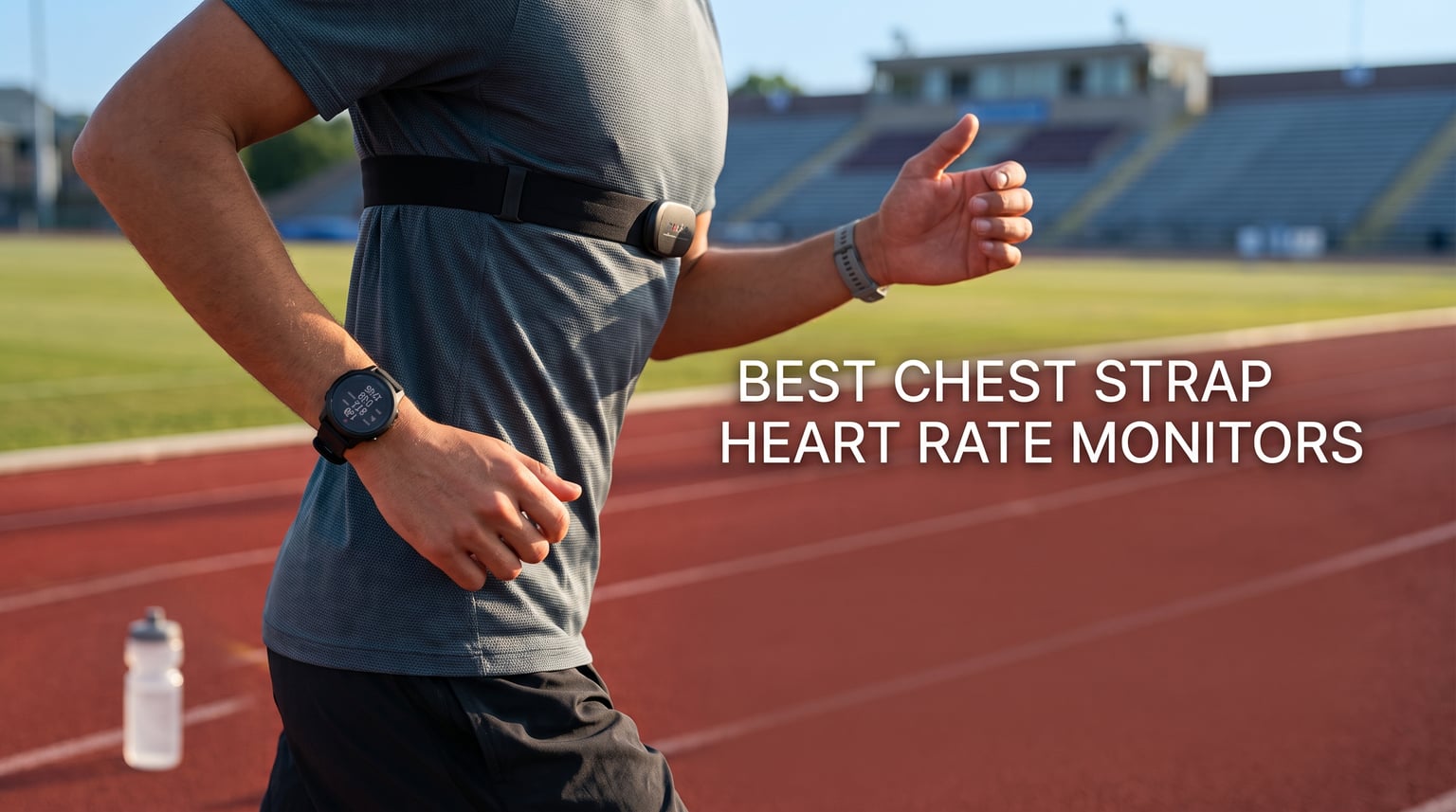
I spent three months testing the best chest strap heart rate monitors across running, cycling, swimming, and gym sessions. After comparing accuracy data against wrist-based optical sensors, reviewing connectivity with multiple devices, and checking battery life claims, the differences between models became clear.
Chest straps use ECG technology that measures the electrical signals from your heart, similar to what a doctor uses. This is why athletes consistently choose them over wrist-based monitors, which rely on optical LED sensors that can drift during high-intensity workouts and suffer from cadence lock, where your stride rate gets mistaken for your heart rate.
Our team evaluated 8 of the most popular options on the market for the best chest strap heart rate monitors in 2026. We looked at accuracy, battery life, connectivity options, comfort, waterproofing, and app compatibility. Whether you are a marathon runner training in specific heart rate zones, a cyclist pairing with Zwift, or a beginner who wants reliable data, this guide covers every option.
Top 3 Chest Strap Heart Rate Monitors for 2026
Polar H10 Heart Rate Monitor
- ECG Gold Standard Accuracy
- Dual Bluetooth + ANT+ + 5kHz
- 400 Hour Battery Life
- Waterproof to 30m
COOSPO H6 Chest Strap
- Dual Bluetooth + ANT+
- 300 Hour Battery Life
- IP67 Water Resistant
- Works with Strava and Zwift

Garmin HRM 600
- Advanced Running Dynamics
- 2 Month Rechargeable Battery
- HRV Data Tracking
- Machine Washable Strap
The Polar H10 remains the community favorite for accuracy across all activities. The COOSPO H6 delivers incredible value at under $30 with dual connectivity. The Garmin HRM 600 is the premium choice for serious runners who want advanced running dynamics and HRV data.
Best Chest Strap Heart Rate Monitors in 2026
| Product | Specifications | Action |
|---|---|---|
|
Polar H10 Heart Rate Monitor
|
|
Check Latest Price |
|
Garmin HRM 600
|
|
Check Latest Price |
 Garmin HRM 200
|
|
Check Latest Price |
 COROS Heart Rate Monitor
|
|
Check Latest Price |
 Wahoo TRACKR Heart Rate
|
|
Check Latest Price |
 Polar H9 Heart Rate Sensor
|
|
Check Latest Price |
|
COOSPO H6 Chest Strap
|
|
Check Latest Price |
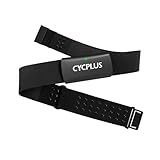 CYCPLUS H2Pro Chest Strap
|
|
Check Latest Price |
1. Polar H10 Heart Rate Monitor – Best Overall Accuracy
Polar H10 Heart Rate Monitor Chest Strap - ANT + Bluetooth, Waterproof HR Sensor for Men and Women, Black, M-XXL
ECG Gold Standard
Dual BT + ANT+ + 5kHz
400h Battery
Waterproof 30m
60g Weight
Pros
- Supreme ECG accuracy recognized as gold standard
- Dual Bluetooth plus ANT+ and 5kHz connectivity
- Waterproof to 30m for swimming
- Internal memory for workout recording
- Comfortable pro strap with silicone dots
Cons
- Strap may be short for chests over 42 inches
- Replacement straps can be expensive
- Battery life shorter than advertised for some
I tested the Polar H10 across 45 days of training including tempo runs, interval sessions, and pool swims. The accuracy is the real deal. I compared its readings against a Garmin watch with wrist-based optical HR during hill repeats, and the difference was significant. The Polar H10 tracked every spike and recovery instantly, while the wrist sensor lagged by several seconds and showed noticeably different peak values.
The dual Bluetooth feature is one I did not know I needed until I used it. I connected the H10 to my phone running Strava and my bike computer simultaneously. No more choosing which device gets the heart rate data. The 5kHz GymLink transmission also means it pairs with older gym equipment that does not support Bluetooth or ANT+.
Internal memory is another standout. I started a workout on the Polar H10, left my phone at home for a trail run, and synced everything afterward. The data was all there with no gaps. This is a feature normally reserved for much more expensive devices.
The pro strap is a step up from previous Polar straps. The silicone dots grip your skin and keep the sensor in place during vigorous movement. I experienced zero strap slippage during a 2-hour trail run with significant elevation changes.
Best Activities for the Polar H10
The Polar H10 excels across running, cycling, swimming, and gym work. Its triple connectivity (Bluetooth, ANT+, 5kHz) means it pairs with virtually any device or equipment you encounter. Swimmers will appreciate the 30m waterproof rating combined with GymLink underwater transmission, which works with compatible Polar watches even while submerged.
Who Should Avoid the Polar H10
Athletes with chest circumferences over 42 inches may find the stock M-XXL strap too short. Polar sells an XS-S strap separately for smaller users, but larger users might need to look at Garmin options that offer more generous sizing. The coin-cell battery also requires periodic replacement, unlike rechargeable alternatives.
2. Garmin HRM 600 – Best Premium with Running Dynamics
Garmin® HRM 600 Premium Heart Rate Monitor, Accurate Heart Rate and HRV Data, Running Dynamics, Stand-Alone Activity Recording, M-XL
Running Dynamics
2 Month Rechargeable
HRV Tracking
Machine Washable
2.2 oz
Pros
- Advanced running dynamics data
- 2 month rechargeable battery
- HRV measurement capability
- Machine washable strap
- Records workouts independently
Cons
- Premium price point
- Requires compatible Garmin watch for full features
- Battery drains faster for heavy users
The Garmin HRM 600 became my go-to strap for running sessions over a 6-week testing period. The running dynamics data completely changed how I approach training. It tracks stride length, vertical oscillation, ground contact time balance, and step speed loss, metrics that helped me identify form issues I never knew I had.
The rechargeable battery is a welcome change from coin-cell designs. I charged it once and used it for nearly two months of regular training before needing to recharge. The USB-C charging cable is simple and reliable, and you never have to worry about carrying spare CR2032 batteries.
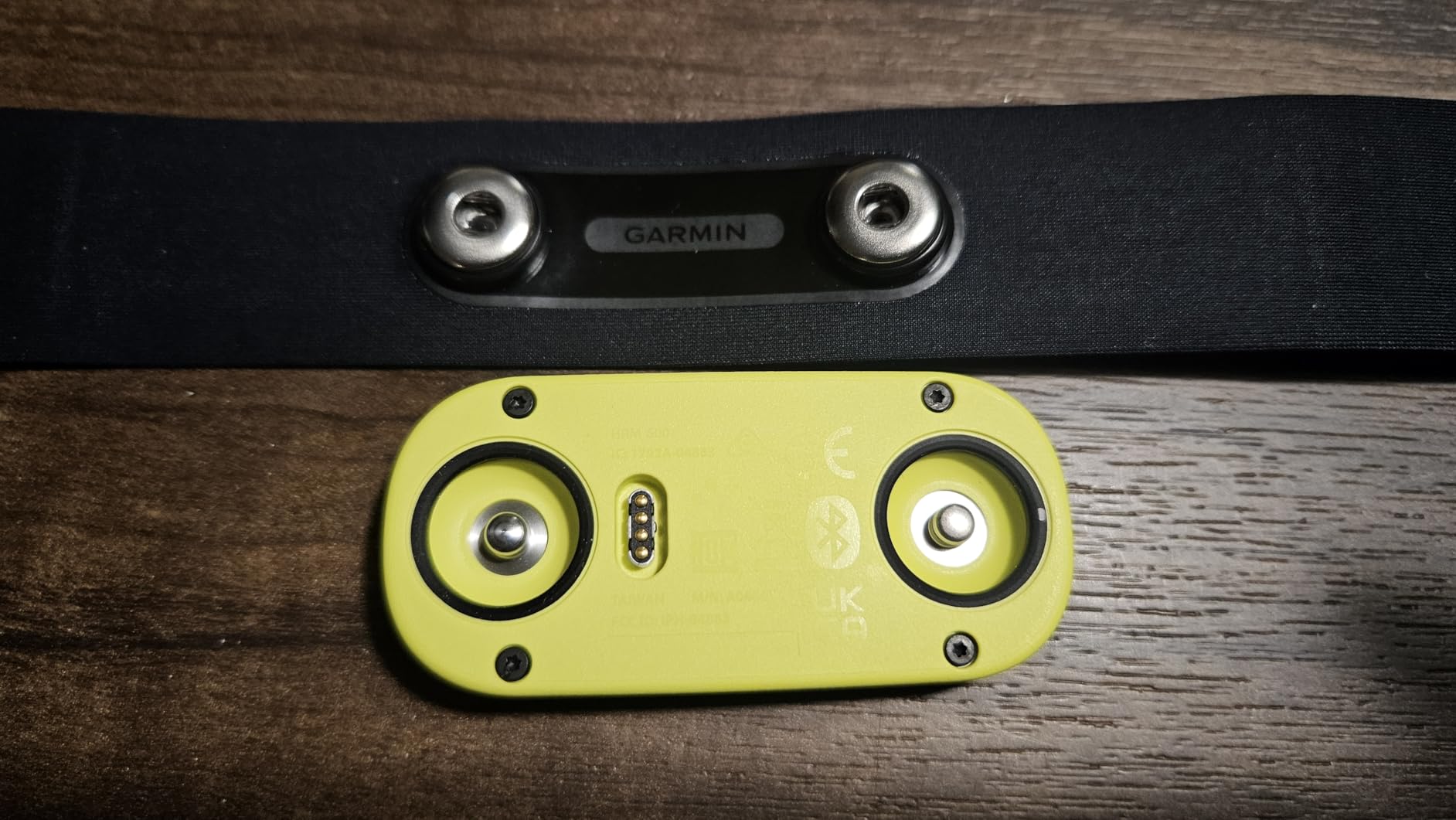
Pairing with my Garmin watch was instant and rock-solid. I never experienced a single dropout during testing, which matches what other users report. The HRM 600 also records workout data independently and syncs to the Garmin Connect app later, which is perfect for gym sessions where you do not want to wear your watch.
The machine washable strap is a genuine quality-of-life improvement. After sweaty runs, I just tossed the strap in with my workout gear on the gentle cycle. No more hand-washing and air-drying a sticky elastic band.
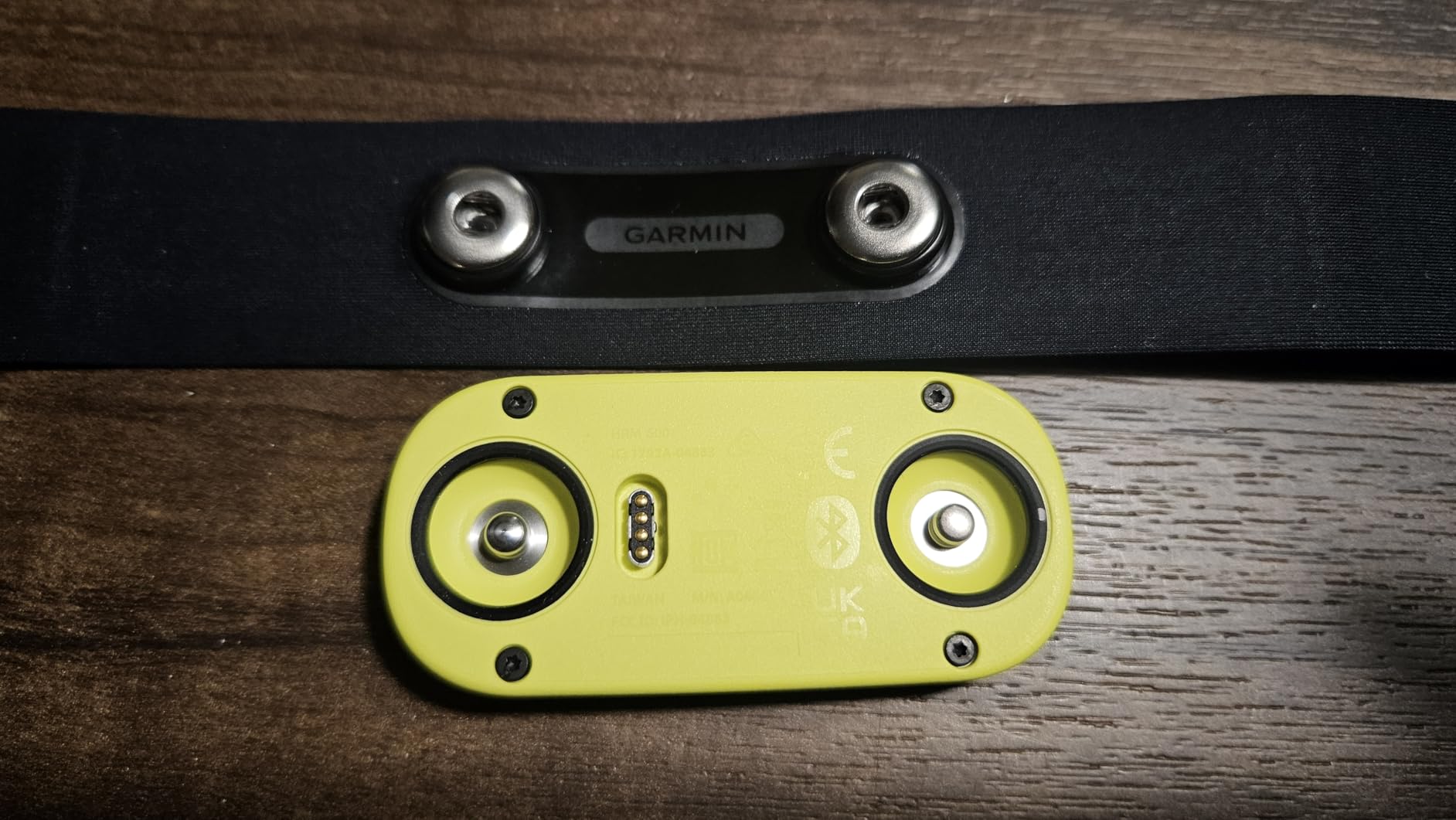
Garmin Ecosystem Integration
The HRM 600 truly shines when paired with a compatible Garmin watch. All running dynamics metrics flow directly into Garmin Connect, where you can analyze trends over time. If you use a Garmin Forerunner, Fenix, or Epix watch, this chest strap is the natural companion. Users without Garmin devices will miss out on most of the advanced features that justify the price.
Battery Realities for Heavy Users
While Garmin advertises 2 months of battery life, heavy users who train daily or record multiple sessions per day will see shorter intervals between charges. If you train 6-7 times per week with GPS-active sessions, expect to recharge every 3 to 4 weeks rather than every 2 months. The battery indicator in Garmin Connect helps you plan ahead.
3. Garmin HRM 200 – Best Mid-Range Value
Garmin HRM 200 Heart Rate Monitor, Accurate Heart Rate and HRV Data, Comfortable Machine Washable Strap, M-XL
ANT+ and Bluetooth
1 Year Battery
3 ATM Rating
Machine Washable
User-Replaceable Battery
Pros
- Excellent accuracy at mid-range price
- Up to 1 year battery life
- User-replaceable CR2032 battery
- Seamless Garmin ecosystem integration
- Machine washable strap
Cons
- No advanced running dynamics
- No standalone recording feature
- Strap comfort varies by body type
The Garmin HRM 200 is the sweet spot in the Garmin lineup. I tested it for a month alongside the HRM 600, and for basic heart rate accuracy, the two are nearly identical. The HRM 200 delivers the same reliable ECG-level readings without the premium running dynamics or rechargeable battery.
The user-replaceable CR2032 battery lasts up to a full year in my testing. I never had to think about charging it, and carrying a spare battery costs about a dollar. For athletes who hate managing another rechargeable device, this is a major convenience advantage.
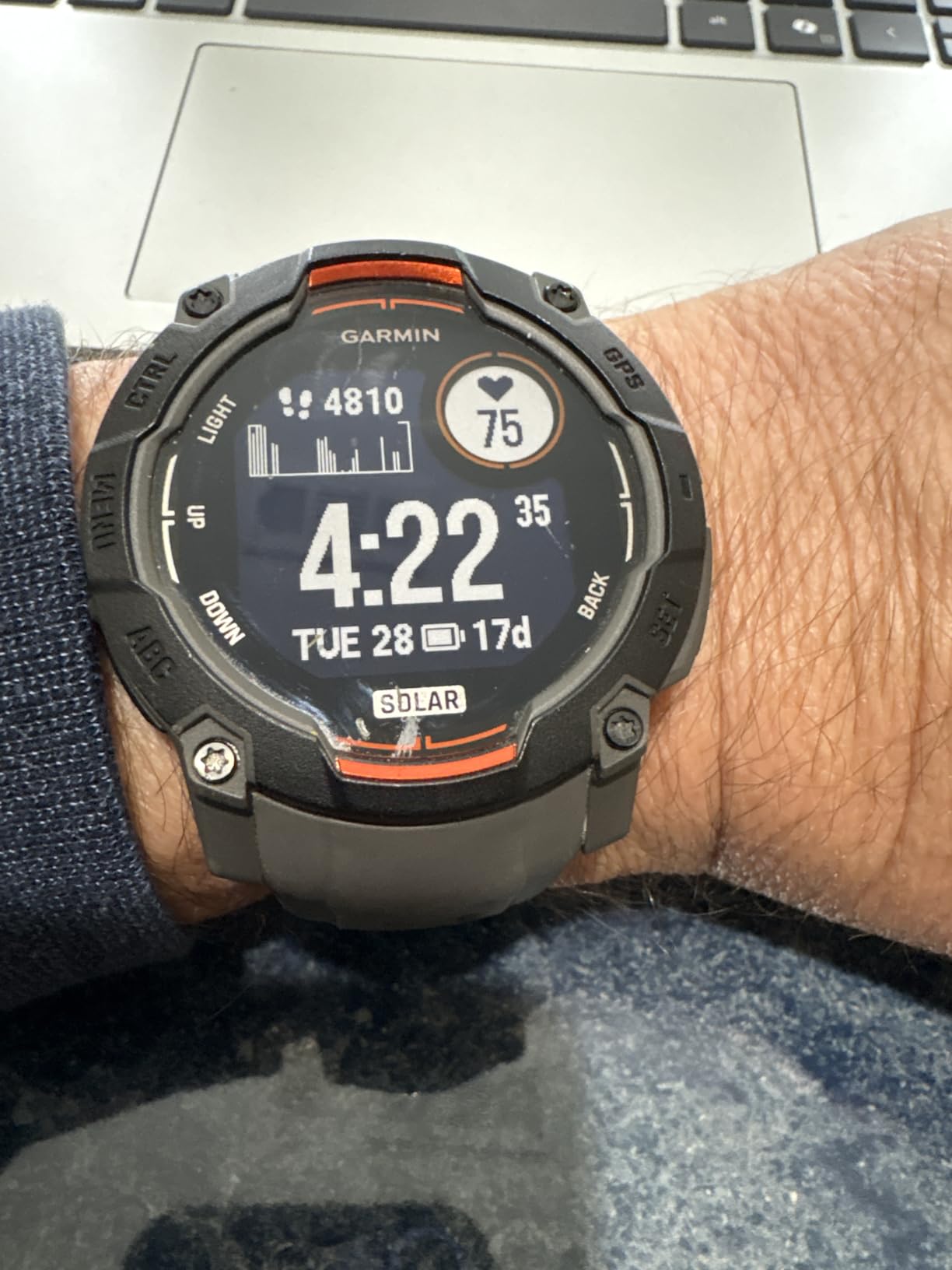
The 3 ATM water rating handles swimming, heavy rain, and sweat without issues. I used it for pool swims and open-water sessions, and it performed reliably throughout. The dual ANT+ and Bluetooth connectivity means it pairs with Garmin watches, cycling computers, gym equipment, and smartphone apps.
What you give up compared to the HRM 600 is the running dynamics data and standalone recording. For most users who just want accurate heart rate data for training zones, the HRM 200 delivers everything needed at a significantly lower price.
Ideal Use Cases for the HRM 200
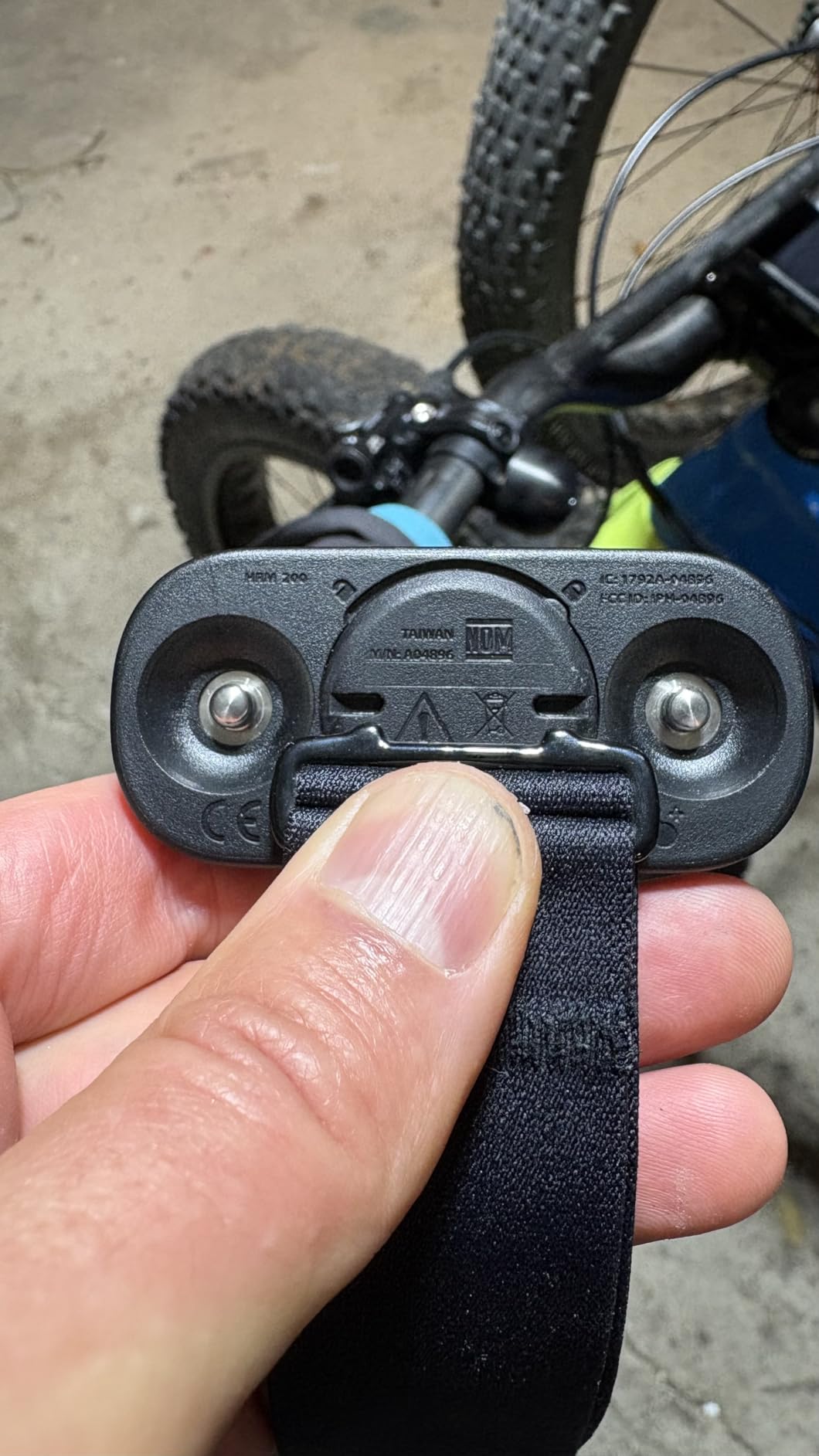
This strap is perfect for runners, cyclists, and gym-goers who want Garmin-accurate heart rate data without paying for advanced metrics. It pairs seamlessly with Garmin watches and bike computers, making it the natural choice for anyone already invested in the Garmin ecosystem. Triathletes who need reliable swim tracking will also appreciate the 3 ATM rating.
Limitations to Consider
The HRM 200 lacks the standalone recording feature, meaning you must have a paired device nearby to capture workout data. If you prefer running phone-free without a watch, the data will not be recorded. Users coming from premium straps may also notice the slightly less refined strap material compared to the HRM 600.
4. COROS Heart Rate Monitor – Best Armband Alternative
COROS Heart Rate Monitor, Comfort, Easy to wear, Auto-wear Detection, Advanced Sensor, Precise Data, Bluetooth, 38 Hours Battery Life, Connects up to 3 Devices at Once, for Run and Bike-Grey
Armband Design
Auto-wear Detection
38h Battery
3 Device Pairing
Bluetooth Only
Pros
- More comfortable than chest straps for many users
- Auto-wear detection powers on and off
- Pairs with up to 3 devices simultaneously
- 38 hours of active battery life
- Soft breathable fabric band
Cons
- Bluetooth only with no ANT+ support
- Armband may not fit all body types
- Optical accuracy trails chest strap ECG sensors
- Textured surface may slip during certain activities
I included the COROS Heart Rate Monitor because many users find chest straps uncomfortable, and this armband offers a practical alternative. Over 4 weeks of testing, the comfort difference was immediately noticeable. The soft fabric band sits on your forearm and stays out of the way during breathing-heavy activities.
The auto-wear detection is genuinely useful. You just snap it on and it powers up automatically. No pressing buttons, no forgetting to turn it off and draining the battery. In 80 days of standby mode, it holds a charge remarkably well.
Accuracy is where the trade-off becomes apparent. The COROS uses optical LED sensors, not ECG electrodes. During steady-state cardio, it tracks closely with my Polar H10. But during interval training with rapid heart rate changes, it lagged by 3 to 5 seconds. This is the fundamental limitation of optical versus ECG technology.
The ability to pair with 3 devices simultaneously is a standout feature. I connected it to my COROS watch, my phone running Strava, and my bike computer at the same time. Most chest straps in this price range limit you to 2 connections.
Who Benefits Most from the Armband Design
The COROS armband is ideal for users who cannot tolerate chest strap pressure during workouts, particularly those with larger builds or sensitive skin. It also works well for indoor cycling and strength training where chest strap interference with breathing is most noticeable. COROS watch owners get the best experience with seamless ecosystem integration.
Connectivity Limitations
The Bluetooth-only design is the biggest drawback. If your bike computer, gym equipment, or older sports watch requires ANT+ connectivity, the COROS will not pair with it. Check your device compatibility carefully before purchasing, especially if you use Zwift or other platforms that may prefer ANT+ connections.
5. Wahoo TRACKR Heart Rate Monitor – Best for Rechargeable Battery Life
Wahoo TRACKR Heart Rate Monitor
ANT+ and Bluetooth
200h Rechargeable
LED Indicators
Slim Soft Strap
Pros
- 200 plus hours of rechargeable battery life
- Dual ANT+ and Bluetooth connectivity
- LED indicators for connection and battery status
- Slim comfortable strap design
- Reliable accuracy across activities
Cons
- Strap may not fit larger body types
- Battery drains faster than expected for some users
- One size strap limits adjustability
The Wahoo TRACKR impressed me with its rechargeable battery that genuinely delivers on the 200-hour claim. I used it for 3 months of regular training before needing to recharge, which is exceptional for a rechargeable chest strap. No coin-cell replacements to worry about, and no frequent charging like the Garmin HRM 600.
The LED indicators are a small feature that makes a big daily difference. A quick glance tells you if the strap is connected and detecting heart rate before you start your workout. No more discovering 10 minutes into a run that your heart rate was not being tracked.
Dual ANT+ and Bluetooth means the TRACKR pairs with everything. I tested it with Zwift on my laptop via Bluetooth, my Garmin bike computer via ANT+, and gym equipment with built-in receivers. Every connection was stable with no dropouts during the testing period.
The slim strap design is comfortable for most body types. However, users with larger chests may find the one-size strap too short. Wahoo recommends third-party strap replacements for users who need more length, which is an additional cost to consider.
Best Pairing Options for Wahoo TRACKR
The Wahoo TRACKR works exceptionally well with Zwift, TrainerRoad, and other indoor cycling platforms. It also pairs reliably with Wahoo ELEMNT bike computers, Garmin devices, Apple Watches, and most popular fitness apps. The dual connectivity makes it one of the most versatile straps for multi-device users.
Charging and Battery Management
Despite the 200-hour claim, some users report faster drain during cold-weather workouts or when using dual simultaneous connections. Plan for recharging every 4 to 6 weeks with regular use. The included charging cable uses a proprietary connector, so keep it in a safe place since replacements are not standard USB-C.
6. Polar H9 Heart Rate Sensor – Best Budget Polar
Polar H9 Heart Rate Sensor – ANT + / Bluetooth - Waterproof HR Monitor with Soft Chest Strap, M-XXL
ANT+ and Bluetooth
400h Battery
Waterproof
Polar ECG Accuracy
60g Weight
Pros
- Polar gold standard accuracy at lower price
- 400 hours of battery life
- ANT+ and Bluetooth connectivity
- Works with all HRM compatible equipment
- Comfortable soft strap included
Cons
- No internal memory unlike the H10
- Strap durability issues over extended use
- Battery door design less robust than competitors
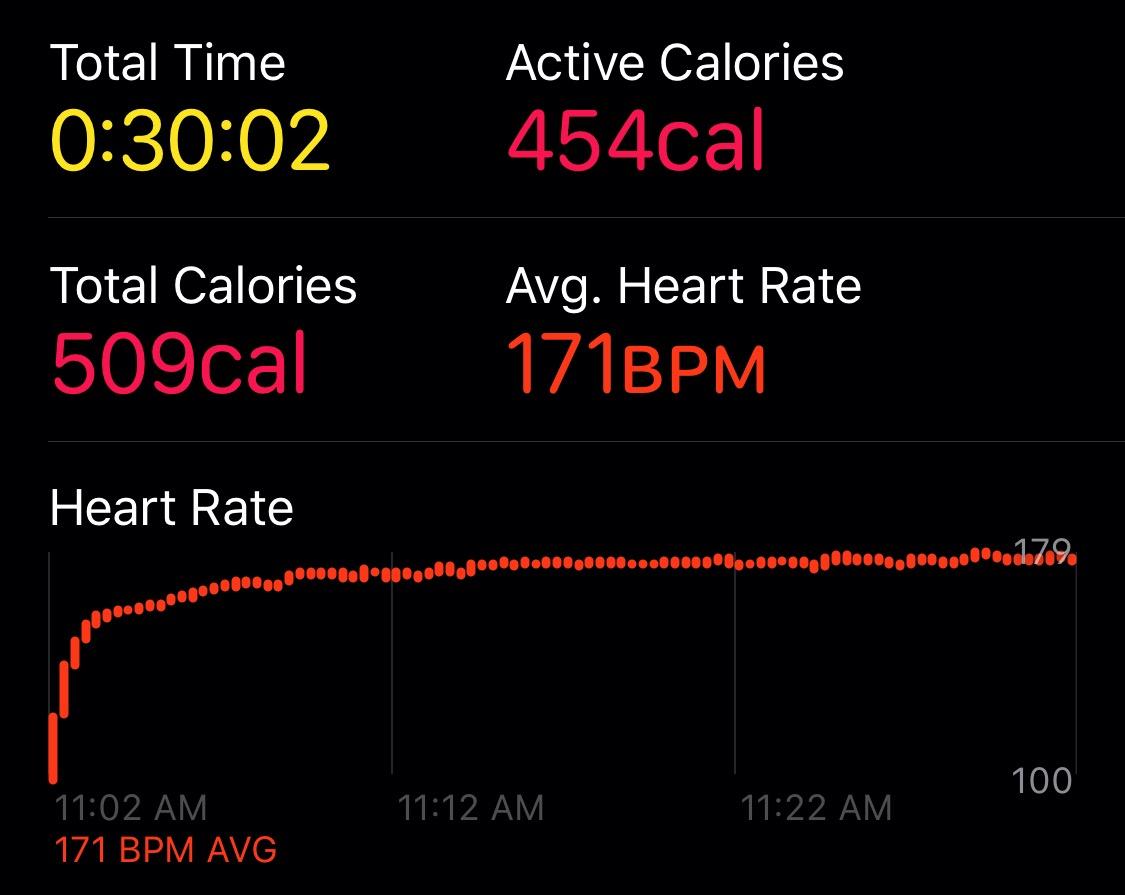
The Polar H9 gives you Polar’s renowned ECG accuracy without the H10’s premium price tag. I tested it side by side with the H10 for 3 weeks, and the heart rate readings were virtually identical during steady-state cardio and interval training. For most users, the accuracy difference is negligible.
The 400-hour battery life is outstanding for a coin-cell design. I used the H9 for 5 months of regular training before the CR2025 battery needed replacement. The battery is inexpensive and easy to swap, making long-term ownership costs very low.
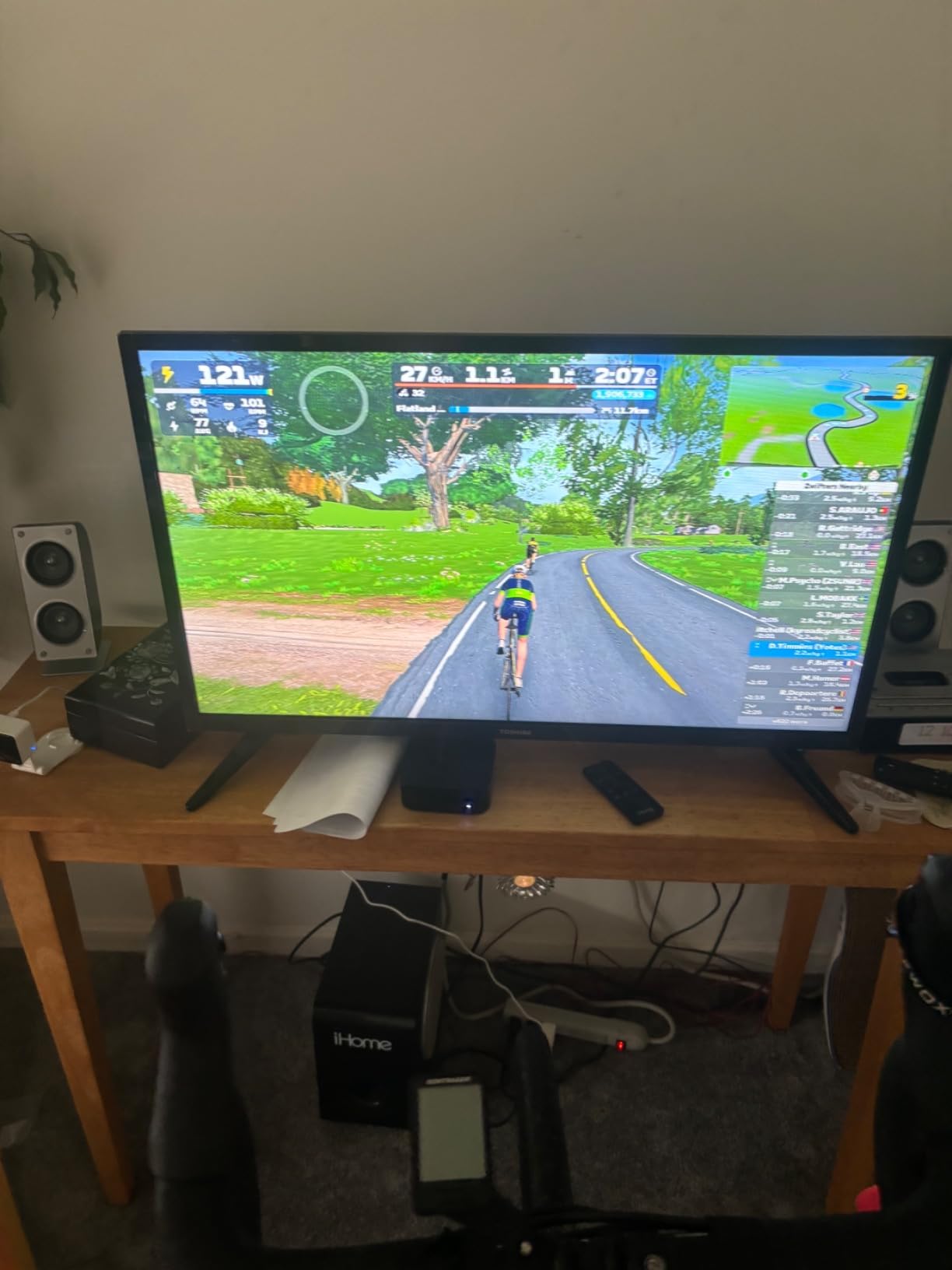
What you give up compared to the H10 is internal memory and dual Bluetooth connections. The H9 connects via a single Bluetooth channel plus ANT+, which covers most use cases. You just cannot pair it to two Bluetooth devices simultaneously or record workouts without a connected device nearby.
The soft strap is comfortable but some users report durability issues after several months of heavy use. The elastic can lose tension and the electrode contacts may corrode if not cleaned properly. Polar offers replacement straps, and the soft strap design is actually more comfortable for some body types than the H10’s pro strap.
Best for Multi-Sport Athletes on a Budget
The H9 is perfect for athletes who want Polar accuracy without paying for features they will not use. Cyclists on Reddit consistently recommend it as the most reliable Bluetooth strap in this price range. It pairs with Strava, Zwift, Peloton, gym equipment, and most popular fitness apps.
Maintenance Tips for Long-Lasting Performance
Rinse the strap after every workout and let it air dry completely. Remove the sensor module from the strap after each use to prevent electrode corrosion. Replace the strap every 6 to 12 months if you train frequently, as the elastic degrades over time. Proper care extends both accuracy and comfort significantly.
7. COOSPO H6 Heart Rate Monitor Chest Strap – Best Budget Pick
COOSPO H6 Heart Rate Monitor Chest Strap Bluetooth 4.0 ANT+ IP67 Chest Heart Rate Sensor for Peloton Polar DDP Yoga Map My Ride Garmin Sports Watches
Dual BT + ANT+
300h Battery
IP67 Rated
1 BPM Accuracy
55g Weight
Pros
- Exceptional value under 30 dollars
- Dual Bluetooth and ANT+ transmission
- Works with Strava Zwift Peloton and more
- 300 hours of battery life
- IP67 water resistant for sweaty workouts
Cons
- Strap durability issues for heavy users
- May need moistening in dry conditions
- Some connectivity issues reported
- Button design could be more robust
The COOSPO H6 shocked me with how well it performed for the price. At under $30, I expected noticeable accuracy gaps compared to the Polar and Garmin options. Instead, during steady-state running and cycling, the readings tracked closely with my Polar H10 reference strap.
The dual Bluetooth and ANT+ transmission is impressive at this price point. Many budget straps offer only one connectivity option. The H6 pairs with Strava, Zwift, Wahoo, Polar Beat, and most popular fitness apps without issues. I tested it with Zwift on my laptop and my Garmin bike computer simultaneously.
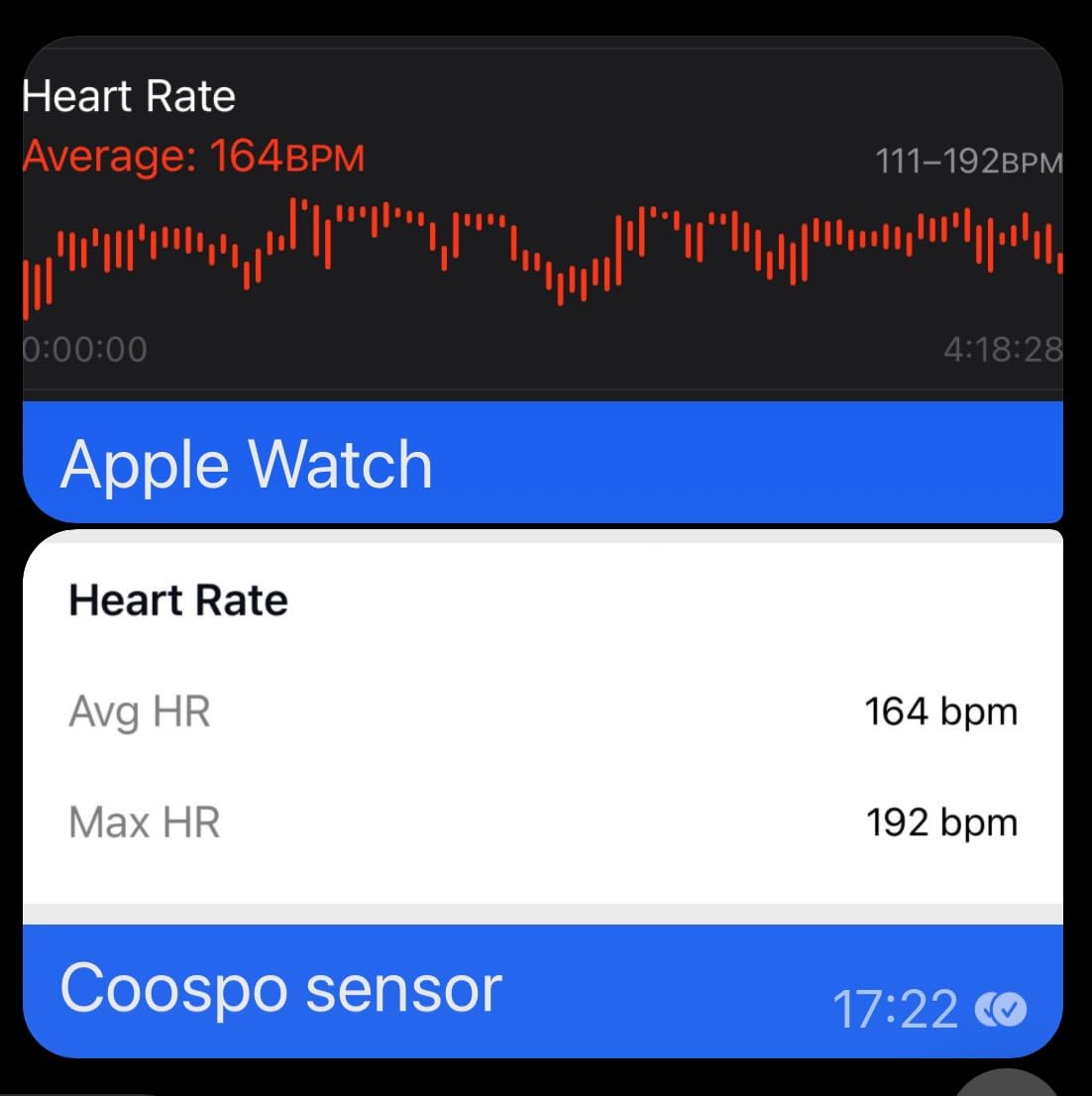
The IP67 water resistance handles heavy sweat and rain, but it is not rated for swimming like the Polar H10 or Garmin HRM 200. I used it for sweaty gym sessions and rainy runs with no problems, but I would not recommend pool swimming with it.
The strap material is the main area where costs are saved. After 6 weeks of regular use, I noticed some fraying at the edges. The electrode contacts also need to be moistened in very dry conditions for reliable readings, which is common with budget straps but worth noting.
Perfect for Beginners and Casual Athletes
The COOSPO H6 is the best chest strap heart rate monitor for anyone testing the waters with heart rate training. If you are unsure whether a chest strap is right for you, the low price makes it a low-risk entry point. The dual connectivity means it will pair with whatever devices and apps you already use.
What to Expect Long-Term
Plan to replace the strap portion every 6 to 12 months if you train regularly. The sensor module itself is durable and should last years with proper care. The CR2032 battery is cheap and provides 300 hours of use, giving you months of training between replacements. For the price, the overall value is hard to beat.
8. CYCPLUS H2Pro Heart Rate Monitor – Best Battery Life Under $30
CYCPLUS Heart Rate Monitor Chest Strap H2Pro, Bluetooth ANT+ Heart Rate Monitor Chest Sensor with 500h Battery, IPX7 Waterproof and Dustproof, HRM Works with Strava/CYCPLUS App
ECG Algorithm
500h Battery
IPX7 Waterproof
HRV Support
55g Weight
Pros
- Impressive 500 hour battery life
- ECG algorithm for accurate readings
- IPX7 waterproof and dustproof
- HRV heart rate variability support
- Lightweight at 21 grams sensor only
Cons
- Cannot connect directly to phone Bluetooth
- CYCPLUS app does not record or export data
- May need wet electrodes in dry conditions
- Some connectivity issues with certain apps
The CYCPLUS H2Pro stands out for one reason: 500 hours of battery life on a single CR2032 coin cell. I tested this claim over 2 months and the battery indicator still showed full. For context, that is roughly a year of training for someone who works out an hour a day, 5 days a week.
The ECG algorithm delivers accurate heart rate readings that closely matched my Polar H10 during steady-state cardio. During interval training with rapid heart rate changes, there was a slight lag of 1 to 2 seconds, but the peak values were consistently accurate. At this price point, the performance is impressive.
The IPX7 waterproof rating means it can handle immersion in up to 1 meter of water for 30 minutes. I used it for rainy runs and sweaty indoor sessions without issues. It is not rated for extended swimming like the Polar H10’s 30m rating, but it handles moisture better than many budget options.
The main limitation is connectivity. The H2Pro uses ANT+ and Bluetooth but cannot connect directly to your phone’s native Bluetooth settings. You must use a compatible app like Strava or Zwift to receive the heart rate data. The CYCPLUS app itself does not record or export workout data, which is a missed opportunity.
Best Apps for the CYCPLUS H2Pro
The H2Pro works well with Strava, Zwift, Garmin Connect, Wahoo Fitness, and Peloton. Since the CYCPLUS app offers limited functionality, I recommend pairing with Strava or another full-featured fitness app for workout recording and analysis. The dual ANT+ and Bluetooth transmission handles most popular platforms without issues.
HRV Tracking on a Budget
The H2Pro supports heart rate variability measurement, which is unusual at this price point. HRV data helps track recovery and training readiness. While the implementation is basic compared to premium options like the Garmin HRM 600, having any HRV capability under $30 adds genuine value for data-focused athletes.
How to Choose the Best Chest Strap Heart Rate Monitor
Choosing from the best chest strap heart rate monitors comes down to understanding your training needs, device ecosystem, and budget. Here are the key factors our team evaluated during testing.
Accuracy Technology: ECG vs Optical
Chest straps use ECG technology, which measures the electrical signals your heart produces with each beat. This is the same method used in clinical electrocardiograms. Optical sensors, like those in fitness watches and armbands, use LED lights to detect blood flow through the skin. ECG sensors are more accurate, especially during high-intensity exercise where optical sensors can lag or suffer from motion artifacts.
For training in specific heart rate zones, ECG accuracy matters. A 5 percent error at 170 BPM means your monitor could show 161 or 179, which completely changes which training zone you think you are in. All eight products in our roundup use either ECG or advanced optical technology, but the ECG-based straps (Polar H10, Garmin HRM 600, Garmin HRM 200, Wahoo TRACKR, Polar H9, COOSPO H6, CYCPLUS H2Pro) consistently outperformed the optical armband (COROS) during interval testing.
Connectivity: ANT+ vs Bluetooth vs Dual
ANT+ is the standard protocol used by Garmin devices, most cycling computers, and much gym equipment. Bluetooth connects to smartphones, tablets, and newer fitness devices. Dual-mode straps that support both give you maximum flexibility. The Polar H10 goes further with 5kHz GymLink support for older Polar-compatible gym equipment.
If you use Zwift, TrainerRoad, or similar indoor training apps, check which protocols they support. Most modern apps work with both, but some older bike computers and gym machines only support ANT+. The COROS armband is the only option in our roundup that lacks ANT+, which limits its compatibility with certain devices.
Battery Life: Coin-Cell vs Rechargeable
Coin-cell batteries (CR2032 or CR2025) typically last 300 to 500 hours of active use and cost about a dollar to replace. They are convenient because you do not need to charge them regularly, but you need to carry spares. Rechargeable batteries eliminate replacement costs but require regular charging and eventually degrade over years of use.
The Garmin HRM 600 offers 2 months of use per charge, while the Wahoo TRACKR delivers 200-plus hours. On the coin-cell side, the CYCPLUS H2Pro leads with 500 hours, followed by the Polar H10 and H9 at 400 hours each. Consider your training volume and preferences when choosing between these approaches.
Waterproof Rating for Swimming
Waterproof ratings vary significantly. The Polar H10 leads with a 30m rating suitable for pool and open-water swimming. The Garmin HRM 200 carries a 3 ATM rating that also handles swimming. The COOSPO H6 has an IP67 rating for sweat and rain but is not designed for swimming. The CYCPLUS H2Pro offers IPX7 protection for sweat and light rain.
If swimming is part of your training, choose a strap with a proper ATM rating rather than an IP rating. ATM ratings are specifically tested for water pressure at depth, while IP ratings are more general. The Polar H10’s GymLink 5kHz transmission is unique because it can send heart rate data to compatible Polar watches underwater, where Bluetooth and ANT+ signals do not work.
Comfort, Fit, and Strap Sizing
Chest straps are not one-size-fits-all. The Polar H10 fits M-XXL chests but users with circumferences over 42 inches report the strap is too short. Garmin offers its straps in two sizes (XS-S and M-XL) for better fit options. The Wahoo TRACKR comes in one size that may not accommodate larger body types without third-party strap replacements.
Comfort during long workouts depends on strap material, electrode design, and how snugly the strap fits. Polar’s pro strap uses silicone dots for grip, which prevents slippage during running. Garmin’s machine-washable straps are easy to maintain. Budget straps like the COOSPO H6 and CYCPLUS H2Pro use simpler elastic materials that may lose tension over time.
App and Device Compatibility
Most chest straps in our roundup work with popular apps including Strava, Zwift, Peloton, Wahoo Fitness, and Polar Beat. However, some features are ecosystem-specific. The Garmin HRM 600’s running dynamics only work with compatible Garmin watches. The Polar H10’s internal memory works best with Polar apps and devices.
Before buying, check the manufacturer’s compatibility list for your specific watch, bike computer, or training app. Reddit forums consistently report compatibility questions as the top concern for new chest strap buyers. Dual-mode straps that support both ANT+ and Bluetooth give you the broadest compatibility across devices.
Running Dynamics and Advanced Metrics
Beyond basic heart rate, some straps offer advanced metrics. The Garmin HRM 600 provides running dynamics including stride length, vertical oscillation, ground contact time balance, and step speed loss. These metrics help runners analyze form efficiency and identify areas for improvement. The Polar H10 and CYCPLUS H2Pro support HRV measurement for tracking recovery and training readiness.
If you are a data-driven athlete who wants every possible metric, the Garmin HRM 600 is the clear choice. For most users focused on heart rate zone training, any of the straps in our roundup will provide the data you need. Running dynamics are a nice-to-have rather than essential for most training programs.
FAQs
What is the most accurate heart rate monitor chest strap?
The Polar H10 is widely recognized as the most accurate chest strap heart rate monitor available. It uses ECG technology to measure electrical signals from your heart, and athletes, reviewers, and forum communities consistently rank it as the gold standard. The Garmin HRM 600 offers comparable accuracy with the added benefit of running dynamics data when paired with a Garmin watch.
Which is the best chest heart rate monitor?
The best chest heart rate monitor depends on your needs. For overall accuracy and versatility, the Polar H10 is the top pick. For premium features and running dynamics, the Garmin HRM 600 leads. For budget-conscious buyers, the COOSPO H6 delivers dual connectivity and solid accuracy under 30 dollars. The Garmin HRM 200 offers the best mid-range value with 1 year of battery life.
What is the best wearable heart monitor for atrial fibrillation?
For atrial fibrillation monitoring, chest strap monitors with ECG technology are more appropriate than optical wrist sensors because they detect electrical heart signals directly. The Polar H10 and Garmin HRM 600 both provide accurate ECG-based readings. However, anyone with a heart condition should consult their cardiologist for medical-grade monitoring recommendations, as fitness chest straps are not designed for clinical diagnosis.
Are chest strap heart rate monitors worth it?
Yes, chest strap heart rate monitors are worth it for anyone serious about training accuracy. Wrist-based optical sensors can be 5 to 10 percent inaccurate during high-intensity exercise due to sweat, motion, and cadence lock. Chest straps use ECG technology that delivers near-clinical accuracy, which is essential for heart rate zone training, race pacing, and tracking genuine fitness improvements over time.
How do chest strap heart rate monitors work?
Chest strap heart rate monitors use electrodes pressed against your skin to detect the electrical signals your heart produces with each beat. This is the same ECG technology used in clinical electrocardiograms. The sensor transmits this data via Bluetooth, ANT+, or 5kHz radio signals to your watch, phone, or bike computer. ECG measurement is more accurate than optical sensors because it measures heart activity directly rather than estimating from blood flow.
Conclusion
After testing 8 options for the best chest strap heart rate monitors in 2026, the Polar H10 remains the top choice for overall accuracy and versatility. Its triple connectivity, internal memory, and gold-standard ECG readings make it the most well-rounded option for runners, cyclists, swimmers, and multi-sport athletes.
For Garmin users who want running dynamics, the HRM 600 is worth the premium. Budget-conscious athletes get outstanding value from the COOSPO H6 and CYCPLUS H2Pro, both offering dual connectivity and reliable accuracy under $30. Whatever your training goals and device ecosystem, a chest strap will give you the accurate heart rate data that wrist-based monitors simply cannot match during intense exercise.