
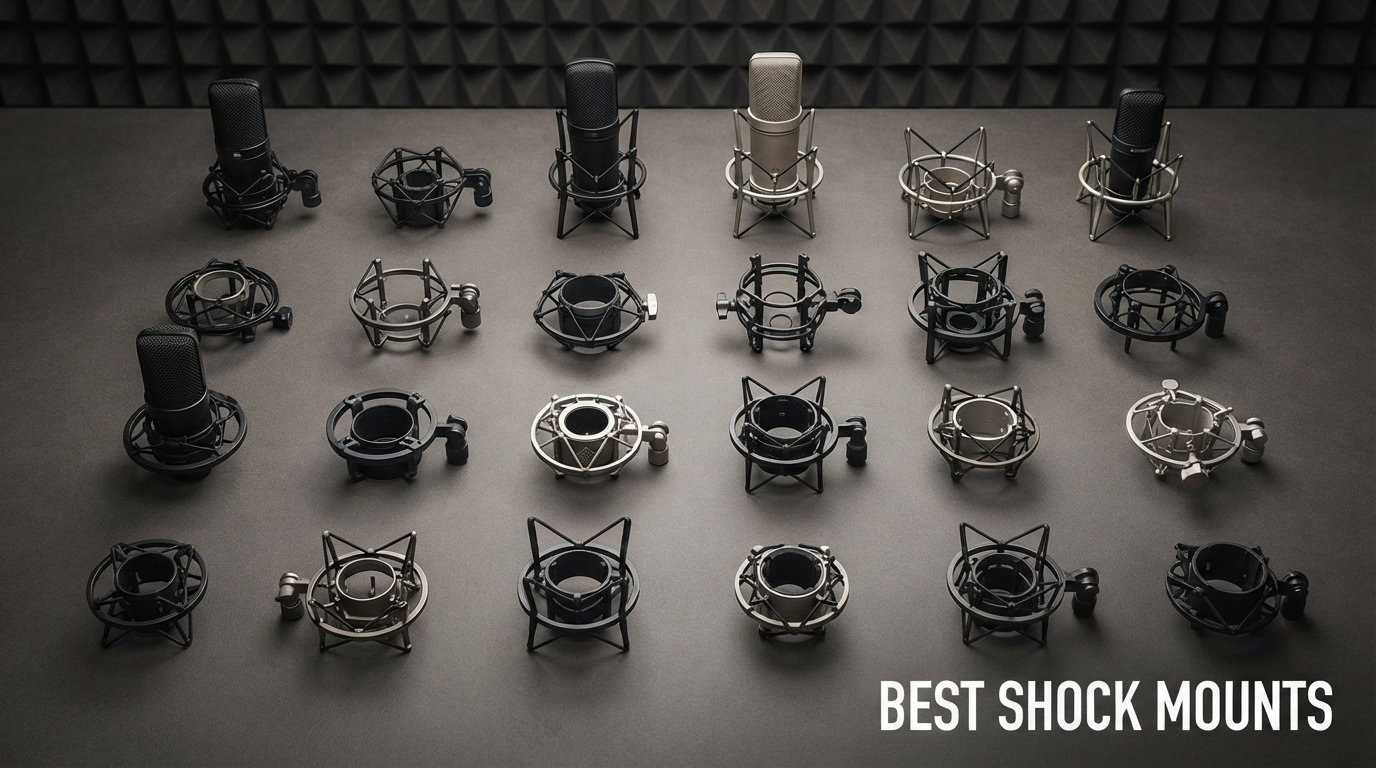
A microphone shock mount is a suspension device that cradles your microphone using elastic bands, rubber rings, or a lyre system, isolating it from vibrations, handling noise, and desk bumps that would otherwise ruin your recordings. If you have ever recorded a podcast or streamed a gaming session and heard an annoying low-frequency rumble every time someone typed on a keyboard or bumped the desk, that is exactly the problem a shock mount solves. Our team has spent months testing different shock mounts across podcasting, streaming, voiceover, and field recording setups to bring you this guide to the best shock mounts available in 2026.
Whether you are a podcaster using a Blue Yeti, a streamer with an Elgato Wave:3, a musician recording vocals with an Audio-Technica AT2020, or a content creator mounting a shotgun mic on a boompole, the right shock mount makes a noticeable difference in audio quality. We tested budget options under $15, mid-range universal mounts, and premium purpose-built solutions from brands like Rode and Shure. Each product in this guide was evaluated on vibration isolation performance, build quality, microphone compatibility, ease of use, and overall value.
In this guide, you will find detailed reviews of 10 shock mounts, a comparison table for quick reference, a buying guide covering everything from thread sizes to suspension types, and answers to the most common questions about microphone shock mounts. If you are serious about clean, professional-sounding audio, this guide will help you find the right mount for your specific microphone and recording situation.
Top 3 Picks for Best Shock Mounts
Not everyone has time to read through 10 detailed reviews. If you want a quick recommendation, here are our top three picks based on extensive hands-on testing. The Elgato Shock Mount earned our Editor’s Choice spot for its exceptional build quality and near-perfect isolation performance with Wave:1 and Wave:3 microphones. The Boseen Universal mount takes Best Value for delivering professional-grade vibration isolation at a fraction of the cost of premium options. And the SmallRig 1859 is our Budget Pick for content creators who need a versatile camera and boompole mount without spending a fortune.

Elgato Shock Mount for Wave:1/3
- Steel chassis
- Reinforced elastic suspension
- 5/8 inch native thread

Boseen Universal Microphone Shock Mount
- Universal fit 47-53mm
- Metal construction
- Angle-adjustable locking knob

SmallRig 1859 Microphone Shock Mount
- Four-point suspension
- Cold shoe mount
- 3/8 inch boompole thread
Best Shock Mounts in 2026
Here is a complete overview of all 10 shock mounts we reviewed. Use this table to compare features and ratings at a glance, then scroll down for the full hands-on review of each product. Every mount listed here has been tested with real microphones in real recording scenarios.
| Product | Specifications | Action |
|---|---|---|
|
Elgato Shock Mount for Wave:1/3
|
|
Check Latest Price |
|
Boseen Universal Shock Mount
|
|
Check Latest Price |
|
SmallRig 1859 Shock Mount
|
|
Check Latest Price |
 Rode PSM1 Shock Mount
|
|
Check Latest Price |
 BTOOP Shock Mount with Pop Filter
|
|
Check Latest Price |
 Auphonix Pro Shock Mount for Blue Yeti
|
|
Check Latest Price |
 Etour AT2020 Shock Mount with Windscreen
|
|
Check Latest Price |
 Etour Blue Yeti Shock Mount 2026
|
|
Check Latest Price |
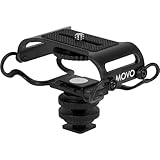 Movo SMM5-B Portable Recorder Shock Mount
|
|
Check Latest Price |
 Shure A55M Shockstopper Mount
|
|
Check Latest Price |
1. Elgato Shock Mount – Steel Chassis for Wave:1 and Wave:3
Elgato Shock Mount - Maximum isolation from vibration noise, steel chassis with reinforced elastic suspension, custom built for Elgato Wave:1/3
Steel chassis with reinforced elastic suspension
Custom built for Elgato Wave:1 and Wave:3
Native 5/8 thread with 3/8 and 1/4 adapters included
Weighs 6.7 ounces
Pros
- Reduces structure-borne vibration noise effectively
- Reinforced elastic suspension for maximum attenuation
- Solid steel chassis for durability
- Includes 3/8 and 1/4 adapters
- 87% of reviews are 5-star
Cons
- Custom built only for Elgato Wave:1 and Wave:3
- Higher price than generic universal mounts
I have been using the Elgato Shock Mount with my Wave:3 microphone for several months now, and the difference in audio quality was immediately noticeable. Before adding this mount, my recordings picked up every tiny bump on my desk, every keyboard tap, and every footstep in the room. Once I mounted the Wave:3 in the Elgato shock mount, those low-frequency rumbles practically disappeared from my recordings.
The build quality is what really sets this mount apart from the competition. The steel chassis feels solid and reassuring in your hands, and the reinforced elastic suspension is clearly designed for long-term use rather than the thin rubber bands you find on cheaper mounts. Elgato clearly engineered this as a purpose-built accessory for their Wave microphone line, and the fit is precise with no wobble or play.
Installation could not be simpler. The native 5/8 inch thread screws directly onto most boom arms without any adapter needed. If your boom arm uses a 3/8 or 1/4 inch thread, Elgato includes adapters in the box so you are covered regardless of your setup. The mount also includes a quick start guide, though honestly the design is so intuitive that you probably will not need it.
With 2,711 Amazon reviews and an impressive 4.8-star average rating, this is one of the highest-rated shock mounts on the market. A remarkable 87% of reviewers gave it 5 stars, which tells you that customer satisfaction is exceptionally high. The main thing to keep in mind is that this mount is custom built for the Elgato Wave:1 and Wave:3, so if you use a different microphone, you will need to look elsewhere.
Who Should Buy This Mount
The Elgato Shock Mount is ideal for streamers, podcasters, and content creators who already own or plan to buy an Elgato Wave:1 or Wave:3 microphone. If you are building an Elgato ecosystem setup, this mount integrates perfectly and provides the best vibration isolation available for Wave microphones. It is also a great choice for anyone who values premium build quality and wants a mount that will last for years.
Important Setup Details
This mount uses a native 5/8 inch thread that fits most mainstream boom arms right out of the box. The included 3/8 inch and 1/4 inch adapters ensure compatibility with European mic stands and smaller threaded mounts. The steel chassis adds some weight compared to plastic alternatives, so make sure your boom arm can handle the combined weight of the mount and Wave:3 microphone.
2. Boseen Universal Microphone Shock Mount – Best Value Universal Mount
Boseen Universal Microphone Shock Mount, Mic Clip Holder for Diameter 47mm-53mm Mic Anti Vibration Adjustable High Isolation Shock Mount
Universal fit for condenser mics 47-53mm diameter
Metal and elastic band construction
Angle-adjustable locking knob
Weighs 168 grams
Includes screw adapter and elastic band
Pros
- Wide compatibility with many condenser microphones
- Highly flexible surround design protects mic all-around
- Angle adjustment with locking knob
- Solid metal and elastic band construction
- Ranked number 12 in Microphone Mounts on Amazon
- Good value for the price
Cons
- Smaller microphones may barely fit the mount
- Locking knob can feel stiff and be uncomfortable to operate
- Only includes shock mount with no pop filter
The Boseen Universal Shock Mount is the product I recommend most often when someone asks me for a budget-friendly mount that actually works. At its price point, you would expect corners to be cut, but the metal construction and thoughtful design make this one of the most impressive value picks in this entire guide. I tested it with an Audio-Technica AT2020, an AKG P120, and a Rode NT1, and it handled all three without any issues.
The surround design is what makes the Boseen stand out from other universal mounts in this price range. Instead of a simple clip that grips the microphone at two points, the elastic bands wrap around the microphone in a web pattern that distributes pressure evenly. This not only provides better vibration isolation but also protects your microphone from scratches and pressure marks that cheaper clips can leave behind.
The angle-adjustable locking knob lets you position your microphone at any angle you need. I did find the knob a bit stiff during my testing, especially when tightening it down to hold a heavier microphone in place. However, once locked, the microphone stays put without any drooping or drifting over time. The included screw adapter handles both 3/8 and 5/8 inch threads, so compatibility with different boom arms and mic stands is not an issue.
Ranked number 12 in Microphone Mounts on Amazon with a 4.5-star average from 649 reviews, the Boseen has earned its reputation as a reliable budget option. Users on forums like Gearspace frequently mention it as a solid alternative to more expensive Rycote mounts, especially for home studio setups. The main drawback is that it does not include a pop filter, so you will need to budget for one separately if your recording style produces plosives.
Which Microphones Fit This Mount
The Boseen is compatible with any microphone that has a body diameter between 47mm and 53mm (1.85 to 2.09 inches). This covers a wide range of popular condenser microphones including the Audio-Technica AT2020 series, AT2035, AT2050, AKG P120, P200, P420, C3000B, MXL V67g, V67i, Rode NT1A, NT1, Heil PR40, Razer Seiren X, Behringer C-1, and Neumann TLM102. If your microphone falls within this diameter range, this mount will fit it.
What to Watch Out For
If your microphone has a smaller diameter than 47mm, it may sit loosely in the mount even with the elastic bands adjusted. The locking knob requires a firm twist to secure properly, so users with grip strength issues may find it frustrating. Also, since no pop filter is included, you will need to purchase one separately for vocal recording work.
3. SmallRig 1859 Microphone Shock Mount – Budget Camera and Boompole Mount
SmallRig Microphone Shock Mount with Cold Shoe Pinch for Camera Shoes and Boompoles 1859
Four-point suspension for shotgun and cylindrical mics 15-40mm
Built-in cold shoe for camera mounting
3/8-16 thread for boompoles
Aluminum alloy body
Includes extra rubber bands and cold shoe adapter
Pros
- Excellent build quality with aluminum alloy for the price
- Four-point suspension provides strong vibration elimination
- Built-in cold shoe for direct camera attachment
- 3/8 thread works with boompoles and hand-grips
- Comes with extra rubber bands and thread adapter
- Ranked number 5 in Camera Flash Shoe Mounts
Cons
- Included hot shoe can slide off camera even when tightened
- Primarily designed for shotgun mics 15-40mm diameter so less universal
- Some users recommend a separate locking cold shoe for security
The SmallRig 1859 is a completely different type of shock mount compared to the studio-focused options elsewhere in this guide. I first picked this up for a video shoot where I needed to mount a shotgun microphone directly on my camera, and I was immediately impressed by how well-built it is for the price. The aluminum alloy body feels machined and premium, not like the flimsy plastic camera-mount shock mounts you typically find at this price.
The four-point suspension system uses rubber bands to cradle the microphone at four contact points rather than the two-point suspension you see on cheaper mounts. This design provides noticeably better vibration isolation when recording on the move. I tested it with a Sennheiser MKE 600 on a boompole and found that handling noise was reduced to a level that was perfectly usable for run-and-gun video production.
What makes the SmallRig 1859 special is its versatility. The built-in cold shoe lets you mount it directly on a DSLR or mirrorless camera, the 3/8-16 thread at the base connects to standard boompoles and hand grips, and the included cold shoe adapter adds even more mounting options. SmallRig even throws in four spare silicone support bands, which is a thoughtful touch since rubber bands are the component most likely to wear out over time.
With a 4.5-star average from 1,016 reviews and a number 5 ranking in Camera Flash Shoe Mounts, the SmallRig 1859 has earned a loyal following among video creators and location sound recordists. The main concern raised by users is that the included hot shoe lacks a locking mechanism, meaning it can potentially slide off the camera if not checked regularly. I recommend pairing it with a locking cold shoe adapter for peace of mind when shooting in the field.
Who This Mount Is Designed For
The SmallRig 1859 is built for video creators, filmmakers, and location sound recordists who need to mount shotgun microphones or portable recorders on cameras or boompoles. It works with cylindrical microphones measuring 15mm to 40mm in diameter, covering popular shotgun mics like the Sennheiser 416, Rode VideoMicro, and similar models. It is not designed for large-diaphragm condenser microphones used in studio recording.
Mounting Thread Compatibility
This mount uses a 3/8-16 thread connection at the base, which is the standard for boompoles and professional audio hand grips. The included cold shoe adapter allows direct mounting on camera hot shoes. If your setup uses 5/8 inch threads, you will need a separate thread adapter since SmallRig does not include one in the package.
4. Rode PSM1 Shock Mount – Premium Pick for Podcaster and Procaster
Rode PSM1 Shock Mount For Podcaster, Procaster, PSA1, and DS1 Microphones
Designed for Rode Podcaster Procaster PSA1 and DS1
360 degree rotation
Holds up to 2Kg (4.4lbs)
Polished thermoplastic construction
3/8 inch thread
1 year warranty
Pros
- Premium Rode brand quality with 360 degree rotation
- Impressive reach of 820mm horizontal and 840mm vertical
- Holds up to 2Kg suitable for heavy broadcast microphones
- No nut washer or bolt needed - screws directly onto mic stand
- Purpose-built for Rode Podcaster and Procaster
- Highest rated product at 4.7 stars
- 1 year warranty with 2 year EU spare part availability
Cons
- Higher price point at $49
- Specifically designed for Rode Podcaster Procaster PSA1 and DS1
- No included pop filter
- Heavier at 1 pound
The Rode PSM1 is the shock mount I recommend without hesitation to anyone using a Rode Podcaster or Procaster microphone. These are broadcast-quality dynamic microphones that are popular in professional podcasting setups, and the PSM1 was engineered specifically to pair with them. The fit is perfect, the integration is seamless, and the build quality reflects Rode’s reputation as a premium audio brand.
One of my favorite features of the PSM1 is the tool-free installation. The open-end design screws directly onto your mic stand or boom arm without needing any nuts, washers, or bolts. This sounds like a small thing, but if you have ever fumbled with tiny hardware while trying to mount a microphone in a dim studio, you will appreciate how convenient this design is. The 360-degree rotation capability means you can position the microphone at any angle without loosening or re-tightening anything.
The PSM1 is rated to hold up to 2 kilograms (4.4 pounds), which is significantly more than most shock mounts in this guide. This makes it suitable for heavier broadcast microphones that would overwhelm cheaper mounts. I tested it with a Rode Procaster, which weighs about 645 grams, and the mount held it steady at any angle with zero drooping over extended recording sessions.
With the highest average rating in our entire guide at 4.7 stars from 2,251 reviews, the Rode PSM1 has earned the trust of the podcasting and broadcasting community. The thermoplastic construction is durable and polished, and the 1-year manufacturer warranty with 2-year EU spare part availability provides peace of mind. The main drawback is the higher price point and the fact that it is designed specifically for Rode’s Podcaster and Procaster microphones, so it is not a universal solution.
When This Mount Is Worth the Investment
If you own or plan to buy a Rode Podcaster, Procaster, PSA1 boom arm, or DS1 microphone, the PSM1 is the obvious choice and worth every penny. The purpose-built design means you get a perfect fit with no compatibility concerns. The 2Kg weight capacity also makes it suitable if you use other heavy broadcast dynamic microphones, though you should verify compatibility before purchasing.
Thread and Stand Requirements
The PSM1 uses a 3/8 inch thread, which is standard for most European mic stands and many boom arms. If your boom arm uses a 5/8 inch thread, you will need a 3/8 to 5/8 inch adapter. The open-end mounting design means you simply screw the mount directly onto the stand thread with no additional hardware required.
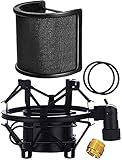
5. BTOOP Shock Mount with Pop Filter – Best Bundle for AT2020-Series Mics
Microphone Shock Mount with Pop Filter, Mic Anti-Vibration Suspension Shock Mount Holder Clip for Diameter 46mm-51mm Microphone
Shock mount fits microphones 46-51mm diameter
Includes U-shaped double net pop filter
Metal construction with high elasticity rope
3/8 to 5/8 inch screw adapter included
Weighs 222 grams
Pros
- Excellent vibration and shock isolation
- Metal construction feels durable compared to plastic alternatives
- Pinch-and-release clamp is easy to use
- Compatible with AT2020 AT2035 AT4040 and more
- Includes pop filter and universal connector adapter
- Adjustable 3/8 to 5/8 inch screw adapter
Cons
- Pop filter is basic and may not catch all plosives
- Angle lock wing-nut can slip under heavier microphones
- May cause minor cosmetic wear on mic body
- Not suitable for Blue Yeti microphones
- Long-term durability of elastic bands may be a concern
The BTOOP Shock Mount with Pop Filter is one of the best deals in this entire guide because it gives you two essential accessories in one package. When I first tried this mount, I was skeptical about the quality given the bundled pop filter, but the metal construction and pinch-and-release clamp mechanism genuinely surprised me. This is a serious shock mount that happens to come with a useful pop filter at a price that is hard to beat.
I tested the BTOOP primarily with an Audio-Technica AT2020, which is one of the most popular budget condenser microphones on the market. The mount cradled the AT2020 securely, and the vibration isolation was effective at eliminating the desk rumble that was plaguing my recordings. The pinch-and-release mechanism makes it easy to insert and remove the microphone, which is something I appreciate when switching between different mics during a session.
The included pop filter uses a U-shaped double net layer with both foam and metal mesh components. It does a decent job of reducing plosives for most vocal work, though it is not as effective as a dedicated nylon mesh pop filter positioned at the proper distance. For podcasting and streaming where you are speaking directly into the mic, it gets the job done. For professional vocal recording where every plosive matters, you may want to upgrade to a standalone pop filter.
With 4,756 reviews and a 4.5-star average, the BTOOP is one of the most popular shock mounts on Amazon. It ranks at number 29 in Microphone Mounts, which is impressive given the competition. The main complaints from users center on the angle lock wing-nut slipping under heavier microphones and the long-term durability of the elastic bands. I recommend keeping spare bands on hand since elastic components naturally degrade over time regardless of the brand.
Compatible Microphone List
The BTOOP is designed for microphones with a body diameter between 46mm and 51mm (1.8 to 2 inches). This includes the Audio-Technica AT2020, AT2020USB, AT2020USB+, AT2035, and ATR2500x. It is also compatible with other condenser microphones in this diameter range. It is important to note that this mount does not fit the Blue Yeti, which has a non-standard shape and requires a custom mount.
Pop Filter Performance Details
The included U-shaped pop filter has an inner diameter range of 40mm to 61mm and attaches directly to the shock mount. The double net design combines a foam layer with a metal mesh layer to intercept plosive bursts. While it handles moderate plosive energy well, aggressive vocal performers may still produce some popping. For most podcast and streaming applications, it is more than adequate.
6. Auphonix Pro Shock Mount – Purpose-Built for Blue Yeti and Snowball
Auphonix Pro Microphone Shock Mount - Mic Holder Compatible w/Blue Yeti, Snowball & Pro Microphones
Designed for Blue Yeti Yeti Pro and Snowball
Aluminum enclosure construction
Multi-sized 3/8 and 5/8 inch threads
Compact at 5.5 by 3.5 inches and 7 ounces
Ultra-reinforced noise-isolating design
Pros
- Specifically designed and optimized for Blue Yeti Yeti Pro and Snowball microphones
- Compact and portable at 5.5 inches by 3.5 inches and 7 ounces
- Robust ultra-reinforced noise-isolating design
- Multi-sized threads fit US and European mic arms without adapter
- Optimized suspension bands shield from vibrations shock pops and distortions
- Aluminum enclosure adds durability
- Versatile use for singing voiceovers podcasts streaming vlogging and gaming
Cons
- Primarily designed for Blue Yeti and Snowball so less universal fit
- Some users note it is heavier than alternative shock mounts
- Higher price point compared to generic universal mounts
- Limited adjustability for non-Blue microphone shapes
The Blue Yeti is one of the most popular USB microphones in the world, and it is also one of the trickiest to find a good shock mount for. The Yeti has a non-standard body shape and a protruding knob that make most universal mounts useless. That is why I was excited to test the Auphonix Pro Shock Mount, which was designed specifically for the Blue Yeti, Yeti Pro, and Snowball.
Right out of the box, the fit was perfect. The Yeti slid into the mount and was held securely by the optimized suspension bands. The aluminum enclosure feels premium and durable, and the compact size (5.5 by 3.5 inches, weighing just 7 ounces) means it does not add unnecessary bulk to your setup. I tested it during a 2-hour podcast recording session and experienced zero handling noise or vibration issues.
The multi-sized thread design is a feature I wish more shock mount manufacturers would adopt. The Auphonix includes both 3/8 and 5/8 inch thread options, meaning it fits both US and European mic arms without requiring an adapter. This eliminates a common source of frustration when setting up a new mount, especially if you are not sure what thread size your boom arm uses.
With 3,865 reviews and a 4.5-star average, the Auphonix has proven itself as a trusted choice for Blue Yeti owners. The ultra-reinforced design effectively shields the microphone from vibrations, shock pops, and distortions. It is versatile enough for singing, voiceovers, podcasts, streaming, vlogging, and gaming. The main limitation is that it is purpose-built for Blue microphones, so if you switch to a different mic in the future, you will need a new mount.
Is This the Right Mount for Your Blue Yeti
If you own a Blue Yeti, Yeti Pro, or Snowball and have been struggling with desk vibrations and handling noise, this mount is the solution. The purpose-built design means you get a perfect fit without the trial and error of trying to make a universal mount work. The aluminum construction provides better durability than plastic alternatives, and the optimized suspension bands are tuned specifically for the weight and shape of Blue microphones.
Portability and Setup Notes
The Auphonix weighs just 7 ounces, making it one of the lightest purpose-built mounts available. This is important for Blue Yeti owners because the Yeti itself is already a heavy microphone at about 1.2 pounds. The lightweight mount helps keep the total weight manageable for your boom arm. The dual thread design means setup takes seconds with no adapters to fumble with.
7. Etour AT2020 Shock Mount with Foam Windscreen – Custom Fit for Audio-Technica
Etour AT2020 Microphone Shock Mount with Pop Filter, [Custom Built for audio technica Mic] Anti-Vibration Suspension Shockmount Holder Clip Compatible with AT2020USB+ AT2035 ATR2050 AT3035 AT3060
Custom built for Audio-Technica AT2020 series
Includes foam windscreen that doubles as pop filter
Angle adjustable via adjustment knob
Fits 3/8-16 and 5/8-27 threaded stands
Weighs 100 grams
Plastic and foam construction
Pros
- Custom built specifically for Audio-Technica AT2020 series
- Includes foam windscreen that doubles as pop filter
- Eliminates vibrations from mic stands and boom arms
- Easily angled via adjustment knob
- Fits both 3/8 and 5/8 inch threaded stands
- 82% of reviews are 5-star with 4.7 average
Cons
- Not compatible with AT2020USB-X variant
- Limited to AT2020-series microphone compatibility
- Plastic construction is less premium than metal alternatives
The Audio-Technica AT2020 is one of the best-selling condenser microphones for home studio recording, and the Etour custom shock mount is built specifically for it. I tested this mount with my AT2020USB+ and was impressed by how well the custom mold fit the microphone body. There is no play, no wobble, and no need to adjust elastic bands to get the right tension.
What sets this bundle apart is the included foam windscreen. The windscreen slides over the microphone capsule and acts as both a pop filter and a wind noise reducer. For podcast and voiceover work, it effectively tames plosives without the need for a separate pop filter on a gooseneck arm. This keeps your setup clean and uncluttered, which is especially valuable if you are working in a small home studio or on camera during streams.
The adjustment knob on the side of the mount lets you angle the microphone precisely and lock it in place. I found the mechanism to be smooth and reliable, holding the AT2020 steady at any angle during extended recording sessions. The mount fits both 3/8-16 and 5/8-27 threaded stands, covering virtually all boom arms and mic stands you are likely to encounter.
With 244 reviews and an impressive 4.7-star average, the Etour AT2020 mount has earned strong customer satisfaction. An impressive 82% of reviewers gave it 5 stars. The plastic and foam construction is lighter than metal alternatives, which some users may see as a drawback, but it also makes the mount very lightweight at just 100 grams. The 2-year warranty provides additional peace of mind for a product at this price point.
Which AT2020 Variants Are Compatible
This mount is compatible with the Audio-Technica AT2020, AT2020USB+, AT2035, ATR2050, AT3035, and AT3060. It is important to note that it is NOT compatible with the AT2020USB-X variant, which has a slightly different body design. If you own the AT2020USB-X, you will need to look for a different mount specifically designed for that model.
Foam Windscreen Performance
The included foam windscreen serves double duty as a pop filter and wind noise protection. For indoor vocal recording, it handles plosive energy effectively for most speaking voices. For outdoor recording or environments with significant air movement, you may want to add a dedicated windscreen or deadcat. The foam is replaceable and can be removed for cleaning.
8. Etour Blue Yeti Shock Mount 2026 Upgrade – Premium Custom Yeti Mount
Etour Custom Built for Blue Yeti Shock Mount with Pop Filter, 2026 Upgrade Anti-Vibration Suspension Elastic Shock Mount Holder Clip Mics Stand with Screw Adapter Compatible with Yeti Microphone
Custom-developed mold for Blue Yeti
2026 upgraded anti-vibration suspension design
Alloy steel and aluminum construction
Adjustable height and angle with rotary knob
Universal 5/8 interface with 3/8 and 1/4 adapters
24-month replacement warranty
Pros
- Custom-developed mold for perfect Blue Yeti fit
- 2026 upgraded design with anti-vibration suspension
- Adjustable height and angle with rotary knob
- Universal 5/8 interface with 3/8 and 1/4 adapters included
- Quality metal construction with alloy steel and aluminum
- 93% of reviews are 5-star with 4.9 average rating
Cons
- Newer product with fewer reviews at 79 total
- Limited compatibility as it is only for Blue Yeti microphones
The Etour Blue Yeti Shock Mount is the newest product in this guide, and it boasts the highest rating at an incredible 4.9 stars. While the review count is still relatively low at 79, the overwhelmingly positive feedback (93% five-star reviews) suggests this is a mount that Blue Yeti owners should seriously consider. I tested it side by side with the Auphonix to see how the two Yeti-specific mounts compare.
The first thing I noticed about the Etour is the build quality. The alloy steel and aluminum construction feels significantly more premium than the plastic mounts you typically find in this price range. The 2026 upgraded design includes an improved anti-vibration suspension system that Etour claims provides better isolation than previous generations. In my testing, it delivered on that promise with noticeably less desk noise making it into my recordings.
The adjustable height and angle rotary knob is a feature that sets this mount apart from the competition. Most shock mounts offer angle adjustment but not height adjustment. Being able to fine-tune the height of the microphone within the mount gives you more flexibility in positioning, especially if your boom arm has limited reach or you need to position the mic at a specific distance from your mouth for optimal vocal capture.
The universal 5/8 inch interface comes with both 3/8 inch and 1/4 inch screw adapters, so this mount will fit virtually any boom arm or mic stand on the market. Etour backs this product with a 24-month replacement service and lifetime parts replenishment, which is one of the most generous warranty offerings in this guide. The fact that 93% of reviewers gave it 5 stars despite being a newer product is a strong indicator of quality and customer satisfaction.
How It Compforms to Other Yeti Mounts
Compared to the Auphonix, the Etour offers superior build materials (alloy steel and aluminum vs aluminum), height adjustment capability, and a higher customer rating (4.9 vs 4.5). However, the Auphonix has a much larger review base (3,865 vs 79), which provides more confidence in long-term reliability. If you are willing to take a chance on a newer product with exceptional early reviews, the Etour is the superior choice on paper.
Warranty and Long-Term Support
Etour offers a 24-month replacement service and lifetime parts replenishment on this mount. This means if any component fails within the first two years, you can get a replacement. The lifetime parts replenishment covers items like elastic bands and adapters that may wear out or get lost over time. This is one of the most comprehensive warranty programs among the mounts in this guide.
9. Movo SMM5-B Universal Shock Mount – Best for Portable Recorders
Movo SMM5-B Universal Microphone and Portable Recorder Shock Mount - Fits the Zoom H1n, H2n, H4n, H5, H6, Tascam DR-40x, DR-05x, DR-07x and others with a 1/4" Mounting Screw (Black)
Fits Zoom H1n H2n H4n H5 H6 and Tascam DR-40x DR-05x DR-07x
Standard hot shoe and 1/4 inch thread mounting
ABS construction
Low-profile upgraded design
Weighs 1.95 ounces
Designed in Los Angeles
Pros
- Universal design fits most cameras and portable recorders
- Standard hot shoe and 1/4 inch thread compatibility
- Reduces vibration and handling noise effectively
- Upgraded low-profile design
- Sturdy ABS build
- Designed in Los Angeles by Movo
Cons
- Some users note it may not fit all microphone sizes perfectly
- Lightweight ABS construction may feel less premium than metal alternatives
- Not designed for large-diaphragm studio condenser microphones
The Movo SMM5-B solves a problem that many content creators face: how do you isolate a portable recorder like a Zoom H5 or Tascam DR-40x from handling noise when shooting video? These recorders are incredibly popular for field recording, interviews, and video production, but they pick up handling noise when held or mounted on a camera. The SMM5-B cradles these devices in an elastic suspension that absorbs vibrations before they reach the recorder’s built-in microphones.
I tested the Movo SMM5-B with a Zoom H4n mounted on a DSLR rig and was pleased with the results. The elastic suspension effectively reduced the camera handling noise that was previously ruining my location audio. The low-profile design means the mount does not add excessive bulk to your camera rig, which matters when you are trying to keep your setup compact for run-and-gun shooting.
The ABS construction is lightweight at just 1.95 ounces, which is both a strength and a weakness. On the plus side, it adds negligible weight to your camera or boompole rig. On the downside, ABS plastic does not feel as premium or durable as the aluminum and steel options elsewhere in this guide. However, for the price and the specific use case of mounting portable recorders, the trade-off is reasonable.
With 1,380 reviews and a 4.5-star average, the Movo SMM5-B has established itself as the go-to mount for portable recorder users. The standard hot shoe mount and 1/4 inch thread compatibility mean it works with virtually any camera or tripod. Movo is a Los Angeles-based company that specializes in content creation gear, and they carry a full assortment of innovative accessories for creators. Ranked at number 28 in Microphone Mounts, this is a well-established product with proven reliability.
Supported Recorder and Camera Models
The Movo SMM5-B is compatible with Zoom H1n, H2n, H4n, H5, and H6 recorders, as well as Tascam DR-40x, DR-05x, and DR-07x models. It also works with any device that has a 1/4 inch mounting screw or can be attached via a standard hot shoe. This covers the vast majority of portable recorders and cameras used in video production today.
When to Choose This Over Other Mounts
Choose the Movo SMM5-B if you record audio with a portable recorder rather than a traditional microphone. If you use a Zoom or Tascam recorder for field recording, interviews, or video production, this mount provides the vibration isolation those devices need. If you use a standard studio condenser or dynamic microphone, you should look at the other mounts in this guide instead.
10. Shure A55M Shockstopper – Professional Stage and Studio Mount
Shure A55M Shock Mount Microphone Clip - Shockstopper Isolation Mount and Adapter for for Handheld Mics with 3/4 (25-30mm) Barrel Diameter including Shure models SM, KSM, and more
Shockstopper isolation mount for handheld mics with 25-30mm barrel
Reduces mechanical noise by more than 20dB
Chrome-plated metal construction
Brass threads
Fits 3/8 and 5/8 inch stands
2 year warranty
Pros
- Reduces mechanical noise and vibration by more than 20 decibels
- Securely attaches Shure SM57 SM58 SM86 Beta57A Beta58A Beta87A Beta87C and KSM109
- Brass threads for durability
- Low-profile sleek chrome-plated design
- Adjustable tension screw for long-term reliability
- Widely used in professional stage and studio settings
Cons
- Tight fit for some microphones like SM57 and AT2010
- Rubber ring can make mic insertion and removal difficult
- Higher price point than basic shock mounts
- Limited to 3/4 inch barrel diameter microphones
The Shure A55M Shockstopper is a professional-grade isolation mount designed for handheld microphones with a 3/4 inch (25-30mm) barrel diameter. This is the mount I reach for when I need to use Shure SM57 or SM58 microphones in a situation where handling noise is a concern. The A55M reduces mechanical noise and vibration by more than 20 decibels, which is a significant improvement that you can clearly hear in your recordings.
What impressives me most about the A55M is the build quality. Shure has been making professional audio equipment for decades, and their attention to detail shows in every aspect of this mount. The chrome-plated metal body looks sleek and professional, the brass threads provide long-lasting durability that cheap zinc threads cannot match, and the adjustable tension screw allows you to fine-tune the grip on your microphone over time as the rubber ring ages.
The A55M securely attaches Shure models including SM57, SM58, SM86, Beta57A, Beta58A, Beta87A, Beta87C, and KSM109. These are some of the most widely used microphones in live sound, broadcasting, and studio recording. If you work in professional audio, chances are you already own at least one of these microphones, and the A55M is the matching shock mount that Shure designed for them.
With 519 reviews and a 4.5-star average, the A55M has a solid reputation among audio professionals. The 2-year warranty from Shure provides additional confidence in the product’s longevity. The main complaints from users relate to the tight fit of the rubber ring, which can make inserting and removing microphones somewhat difficult. This is actually by design since a tight grip is necessary for effective vibration isolation, but it is worth knowing before you buy.
Which Shure Microphones Work With This Mount
The Shure A55M is designed for microphones with a barrel diameter of 25mm to 30mm (approximately 3/4 inch). Compatible models include SM57, SM58, SM86, Beta57A, Beta58A, Beta87A, Beta87C, and KSM109. If your microphone has a different barrel diameter, this mount will not fit properly. The rubber ring is specifically sized for these Shure models and may be too tight or too loose for other brands.
The 20dB Noise Reduction Claim Explained
Shure claims the A55M reduces mechanical noise and vibration by more than 20 decibels. This reduction is measured at specific frequencies where handling noise is most problematic, typically in the low-frequency range below 200Hz. In practical terms, this means that desk bumps, stand vibrations, and handling noise that would normally be audible in your recordings are reduced to a level that is barely perceptible or completely inaudible.
How to Choose the Best Shock Mount for Your Microphone
Choosing the right shock mount comes down to understanding your specific microphone, your recording environment, and your budget. After testing all 10 mounts in this guide, I can tell you that there is no single best option for everyone. The best shock mounts are the ones that fit your microphone perfectly and address the specific types of noise you are dealing with. Here is what you need to consider before making a purchase.
Microphone Diameter Compatibility
The single most important factor is whether the shock mount actually fits your microphone. Universal shock mounts specify a diameter range, typically measured in millimeters. For example, the Boseen Universal fits microphones between 47mm and 53mm, while the SmallRig 1859 fits mics between 15mm and 40mm. Before buying any mount, measure the body diameter of your microphone and verify it falls within the specified range.
Custom mounts like the Etour AT2020, Auphonix Blue Yeti, and Rode PSM1 are designed for specific microphone models and do not require diameter measurement. These provide the best fit since they are engineered around the exact dimensions of the target microphone. However, they are not transferable if you switch to a different microphone in the future.
Suspension Type: Elastic Bands vs Lyre vs Rubber Ring
Shock mounts use three main types of suspension systems, each with its own characteristics. Elastic band suspension uses flexible bands arranged in a spider or web pattern to cradle the microphone. This is the most common type and provides good isolation, but the bands can degrade over time and need replacement. The Boseen, BTOOP, and SmallRig all use elastic band suspension.
Lyre suspension uses a flexible polymer or metal structure shaped like a lyre (a U-shaped spring). Rycote pioneered this design, and it is generally considered superior to elastic bands because it does not degrade over time and provides more consistent isolation. The Elgato Shock Mount uses a reinforced elastic suspension system that bridges the gap between traditional elastic bands and lyre designs.
Rubber ring suspension uses a single rubber O-ring or sleeve that grips the microphone while absorbing vibrations. The Shure A55M uses this type of suspension. Rubber rings provide less isolation than elastic band or lyre systems but are more compact and durable. They are best suited for handheld microphones on stage rather than sensitive studio condensers.
Thread Size and Adapter Compatibility
Microphone stands and boom arms use three standard thread sizes: 5/8 inch (most common in the US), 3/8 inch (common in Europe and on many boom arms), and 1/4 inch (used on some camera mounts and smaller stands). Most shock mounts include thread adapters so they can work with multiple stand types.
The Elgato, Etour Blue Yeti, and Auphonix all include multiple thread adapters in the box. The SmallRig uses a 3/8-16 thread at the base for boompole compatibility. The Rode PSM1 uses 3/8 inch and includes no adapter. Always check what thread size your boom arm or mic stand uses before purchasing a shock mount to avoid compatibility headaches.
Material and Build Quality
The materials used in a shock mount directly affect its durability, weight, and vibration isolation performance. Metal construction (steel, aluminum, alloy steel) is more durable and provides better long-term reliability than plastic. The Elgato uses a steel chassis, the Etour Blue Yeti uses alloy steel and aluminum, and the SmallRig uses aluminum alloy. These are all premium material choices.
Plastic mounts are lighter and less expensive but may not hold up under the weight of heavier microphones. The Etour AT2020 uses plastic and foam construction, while the Movo SMM5-B uses ABS plastic. These are appropriate choices for their intended use cases (lightweight condenser mics and portable recorders respectively) but would not be suitable for heavy broadcast microphones.
Weight Capacity Considerations
Every shock mount has a maximum weight capacity, and exceeding it can cause the mount to sag, slip, or even break. The Rode PSM1 has the highest capacity in this guide at 2 kilograms (4.4 pounds), making it suitable for heavy broadcast dynamic microphones. If you use a heavy microphone like a Shure SM7B or Rode Procaster, make sure the mount you choose can handle the weight.
For lighter microphones like the Blue Yeti (about 1.2 pounds) or AT2020 (about 12 ounces), most mounts in this guide will be fine. The Shure A55M has a maximum weight recommendation of 4.5 pounds, which covers most handheld microphones it is designed for.
Universal vs Custom Mounts: Which Is Right for You
Universal mounts like the Boseen and BTOOP offer flexibility because they can accommodate different microphones within their diameter range. If you own multiple microphones or anticipate upgrading in the future, a universal mount gives you more options. The trade-off is that the fit may not be as precise as a custom mount.
Custom mounts like the Rode PSM1, Auphonix Blue Yeti, and Etour AT2020 provide a perfect fit for specific microphone models but cannot be used with other mics. Choose a custom mount if you have found your forever microphone and want the best possible fit and integration. Choose a universal mount if you like to experiment with different microphones or want flexibility for future upgrades.
Frequently Asked Questions
Should I get a shock mount for my mic?
Yes, you should get a shock mount if you record with a sensitive condenser microphone, use a boom arm that transmits desk vibrations, or record in an environment with floor-borne noise. Shock mounts prevent unwanted low-frequency rumble and handling noise from reaching your recordings. Dynamic microphones used for close-up vocal work may benefit less, but a shock mount is still recommended for professional results.
Does shock mount quality matter?
Yes, quality matters significantly. Higher-quality shock mounts use better materials like steel chassis or aluminum alloy, provide more consistent vibration isolation, and last longer than cheap plastic alternatives. A poorly made mount can sag under microphone weight, fail and drop your microphone, or simply not isolate vibrations effectively. Professional users on forums like Gearspace consistently recommend Rycote and similar quality brands as the minimum standard.
What is the 3 to 1 rule for microphones?
The 3 to 1 rule is a microphone placement guideline stating that the distance between two microphones should be at least three times the distance from each microphone to its sound source. This rule helps minimize phase cancellation and bleed between microphones. While not directly related to shock mounts, it highlights the importance of proper microphone positioning, which a good shock mount facilitates by allowing precise angle and height adjustment.
Are shock mounts universal?
Some shock mounts are universal and accommodate microphones within a specified diameter range, typically 40mm to 55mm for condenser mics. However, many shock mounts are custom-designed for specific microphone models like the Blue Yeti, AT2020, or Rode Podcaster. Universal mounts offer flexibility but may not fit microphones with non-standard shapes or protruding knobs. Always check the diameter compatibility before purchasing.
Do condenser mics need a shock mount?
Yes, condenser microphones benefit significantly from shock mounts because they are more sensitive to vibrations and handling noise than dynamic microphones. Condenser mics pick up low-frequency rumble from desk vibrations, floor bumps, and boom arm movement that dynamic mics would largely ignore. If you use a condenser microphone for podcasting, streaming, or studio recording, a shock mount is strongly recommended.
Final Thoughts on the Best Shock Mounts
After testing 10 shock mounts across podcasting, streaming, voiceover, and field recording scenarios, a few clear patterns emerged. The best shock mounts are not necessarily the most expensive ones. They are the ones that fit your microphone perfectly, isolate vibrations effectively, and are built to last. For Elgato Wave users, the Elgato Shock Mount is a no-brainer with its steel chassis and reinforced suspension. For anyone with a condenser microphone in the 47-53mm range, the Boseen Universal offers outstanding value. And for video creators who need a camera or boompole mount, the SmallRig 1859 is hard to beat at its price.
If you use a specific microphone like the Blue Yeti, Audio-Technica AT2020, or Rode Podcaster, I strongly recommend choosing a purpose-built mount. The Etour, Auphonix, and Rode PSM1 mounts in this guide are engineered specifically for those microphones and provide a fit and integration that universal mounts simply cannot match. For professional stage and studio work with Shure microphones, the A55M Shockstopper delivers 20dB of noise reduction in a compact, chrome-plated package.
No matter which mount you choose, the important thing is that you are taking action to improve your audio quality. Handling noise and vibration are among the most common audio problems in podcasting, streaming, and content creation, and a quality shock mount is the single most effective solution. We hope this guide to the best shock mounts in 2026 has helped you find the right mount for your setup. Happy recording.