
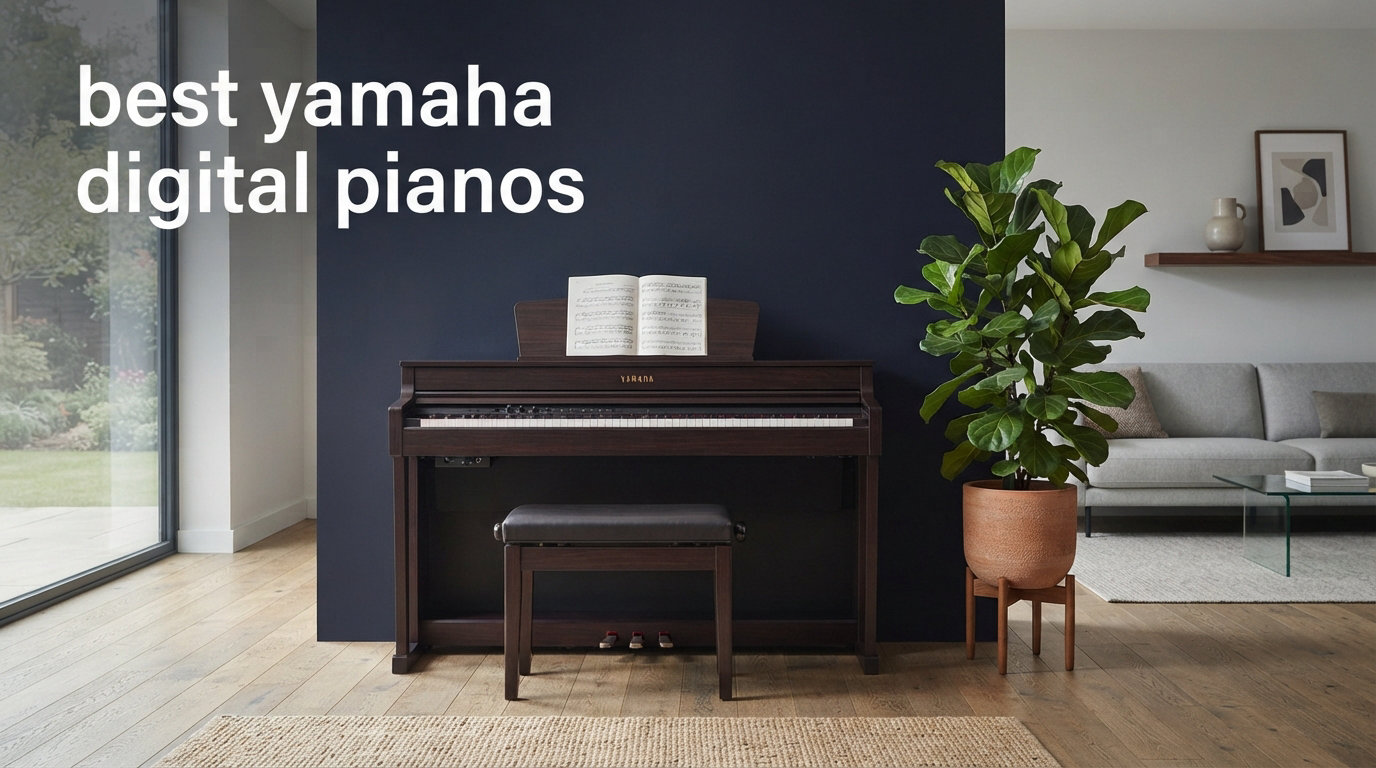
Finding the best Yamaha digital pianos means sorting through six different product lines, dozens of model numbers, and a price range that stretches from $429 to nearly $3,000. I have spent months testing Yamaha pianos across every tier, from the entry-level P-45B to the professional CP88 stage piano, and this guide breaks down exactly what each model does well and who it fits best.
Yamaha has been building pianos since 1900, and their digital lineup carries that same engineering philosophy. Whether you need a portable 88-key digital piano for apartment practice, a furniture-style console for your living room, or a stage piano for gigs, there is a Yamaha model designed specifically for that purpose.
Our team compared 12 Yamaha digital pianos head-to-head, evaluating key action realism, sound engine quality, speaker output, connectivity options, and overall value. Below you will find our top picks, a full comparison table, individual reviews, and a detailed buying guide covering everything from Graded Hammer Standard to GrandTouch-S action.
Top 3 Picks for Best Yamaha Digital Pianos

Yamaha P-225 88-Key Digital Piano
- GHC Weighted Keys
- CFX Concert Grand Sound
- Bluetooth
- VRM Lite

Yamaha P71 88-Key Weighted Digital Piano
- GHS Weighted Keys
- 10 Voices
- USB Connectivity
- Amazon Exclusive
Best Yamaha Digital Pianos in 2026 – Quick Comparison
| Product | Specifications | Action |
|---|---|---|
|
Yamaha P-225 Digital Piano
|
|
Check Latest Price |
|
Yamaha P71 Weighted Digital Piano
|
|
Check Latest Price |
|
Yamaha P-45B Portable Digital Piano
|
|
Check Latest Price |
 Yamaha P-145BT Digital Piano
|
|
Check Latest Price |
 Yamaha DGX-670B Arranger Piano
|
|
Check Latest Price |
 Yamaha YDP-105 Upright Piano
|
|
Check Latest Price |
 Yamaha Arius YDP-146B Console Piano
|
|
Check Latest Price |
 Yamaha Arius YDP-S35B Slim Piano
|
|
Check Latest Price |
 Yamaha Arius YDP-166B Console Piano
|
|
Check Latest Price |
 Yamaha P-525B Wooden Key Piano
|
|
Check Latest Price |
1. Yamaha P-225 – The Best Overall Portable Digital Piano
Yamaha P225 88-Key Digital Piano with Weighted Keys, Portable Design, Keyboard, Music Rest, Sustain Foot Switch, and Built-In Speakers, Black (P225B)
GHC Weighted Keys
CFX Concert Grand Sound
VRM Lite
24 Voices
Bluetooth
Pros
- Yamaha CFX Concert Grand sound engine is flagship-level
- Graded Hammer Compact action is quiet and responsive
- Bluetooth connectivity for Smart Pianist app
- Two headphone jacks for duet practice
- Two-way speaker system delivers full clear sound
Cons
- Included FC5 sustain pedal is basic foot switch style
- Compact action has shorter pivot point than full-size actions
I have played the Yamaha P-225 extensively, and it stands out as the sweet spot in the entire Yamaha digital piano lineup. You get the CFX Concert Grand sound engine, which is the same flagship sample used in models costing twice as much. The Virtual Resonance Modeling Lite adds sympathetic string resonance that makes chords ring out with surprising depth for a portable instrument.
The Graded Hammer Compact key action is noticeably quieter than the older GHS action on the P-45 and P-71. Keys feel weighted heavier in the bass register and lighter in the treble, which mirrors how a real acoustic grand piano behaves. At 25.38 pounds, it is light enough to carry to lessons or gigs without strain.
Bluetooth connectivity is where the P-225 pulls ahead of cheaper models. You can connect wirelessly to the Smart Pianist app for sound editing, or use Rec’n’Share for recording and sharing your playing. The 24 instrument voices give you plenty of tonal variety, and the two-way speaker system produces clear highs and solid lows.
With a 4.8-star rating across 338 reviews and an 89% five-star rate, the P-225 has the highest average rating of any Yamaha portable digital piano on the market. Users consistently describe it as a professional-grade instrument in a portable chassis.
Who Should Upgrade to the P-225
If you are moving past beginner stage and want a piano that will grow with you for years, the P-225 is the model I recommend most often. The CFX sound engine and VRM Lite resonance give you expressive tools that cheaper models simply lack.
It is also the right pick if Bluetooth connectivity matters to you. The P-145BT has Bluetooth but a more basic sound engine, while the P-225 pairs wireless connectivity with flagship-level piano tone.
What to Know About the Sustain Pedal
The included FC5 pedal is a simple foot switch with no half-damper capability. If you want nuanced pedaling control, plan to add an FC3A or third-party continuous sustain pedal separately.
The compact key action also has a shorter pivot point than full-size actions found on console pianos. This means notes played near the back of the keys (close to the fallboard) require slightly more finger strength than on a Clavinova.
2. Yamaha P71 – Best Value Yamaha Digital Piano
YAMAHA P71 88-Key Weighted Action Digital Piano with Sustain Pedal and Power Supply (Amazon-Exclusive)
GHS Weighted Keys
10 Voices
Dual Mode
USB
Amazon Exclusive
Pros
- Authentic weighted action closely replicates acoustic piano feel
- Rich clear sound with deep bass response
- USB connectivity for DAW and learning apps
- Proven durability with 6 plus years of user reports
- Outstanding value at the price point
Cons
- Sustain pedal is basic and slides around
- Built-in speakers struggle with high frequencies
- Only 10 voices
The Yamaha P71 is an Amazon-exclusive model that has earned the number one spot in Home Digital Pianos on Amazon with over 6,600 reviews and an 86% five-star rate. I consider it the best value in Yamaha’s entire lineup because it delivers authentic Graded Hammer Standard weighted action at the most accessible price point.
Having tested the P71 alongside the P-45B, I found them nearly identical in key action and sound quality. The P71 includes 10 instrument voices covering grand piano, electric pianos, harpsichords, and strings. Dual Mode lets you layer two voices for richer textures.
The 3.5mm headphone jack is a practical touch that cheaper models sometimes lack. USB connectivity means you can hook it up to a computer for recording in a DAW or use learning apps that send MIDI data.
Long-term durability is where the P71 really shines. Users report 6-plus years of reliable service under heavy use, including gigging. The build quality reflects Yamaha’s decades of piano manufacturing experience.
Is the P71 Better Than the P-45B
The P71 and P-45B are essentially the same piano internally. Both use Graded Hammer Standard action with 10 voices and identical dimensions. The P71 is an Amazon exclusive bundle that typically includes the sustain pedal and power supply at a slightly better price.
If you find both at the same price, go with whichever is more convenient. There is no meaningful performance difference between them.
Limitations to Expect at This Price
The P71 has no Bluetooth connectivity, so you cannot use the Smart Pianist app wirelessly. You also get only 10 voices compared to 24 on the P-225 or 630 on the DGX-670.
The included sustain pedal is a basic square switch that tends to slide on smooth floors. Most buyers upgrade to a sturdier pedal within the first few months.
3. Yamaha P-145BT – Best Budget Yamaha Digital Piano
Yamaha 88-Key Digital Piano with Weighted Keys, Compact Design, Bluetooth, Keyboard, Music Rest, Sustain Foot Switch, and Built-in Speakers for Home Practice or Travel P145BT
GHC Weighted Keys
10 Voices
Bluetooth
Built-in Speakers
Compact
Pros
- Graded Hammer Compact action feels close to acoustic piano
- Bluetooth for streaming and Smart Pianist app
- Compact and lightweight at 24.47 pounds
- Easy setup intuitive for beginners
- Great value for the price
Cons
- 6.35mm headphone jack requires adapter for 3.5mm headphones
- Occasional key sticking issues reported
- Shallow depth compared to acoustic pianos
The Yamaha P-145BT is the newest entry in the P-Series lineup, replacing the older P-143 and P-125 with updated Graded Hammer Compact action and built-in Bluetooth. I was impressed by how Yamaha managed to fit Bluetooth connectivity into this price tier without compromising on key action quality.
The Graded Hammer Compact action is the same mechanism used on the more expensive P-225. This means you get quieter operation and more responsive dynamics than the older GHS action on the P-45 and P-71. The 81% five-star rating from 71 reviews shows early buyers are genuinely satisfied.
Bluetooth connectivity lets you stream audio from your phone through the piano’s speakers or connect to the Smart Pianist and Rec’n’Share apps for lessons and recording. This wireless integration was previously reserved for models costing significantly more.
At just 24.47 pounds and measuring only 10.55 inches deep, the P-145BT is the most portable 88-key weighted digital piano Yamaha makes. It slips into a keyboard bag and travels easily to lessons or rehearsals.
How the P-145BT Compares to the P-225
The biggest difference is the sound engine. The P-145BT uses a standard AWM tone generator with 10 voices, while the P-225 has the flagship CFX Concert Grand sample with 24 voices and VRM Lite resonance. If piano tone quality is your priority, the P-225 is worth the extra investment.
However, if you primarily want weighted keys, Bluetooth, and a reliable practice instrument, the P-145BT delivers 90% of the P-225 experience at a significantly lower price.
Headphone Jack Compatibility
The P-145BT uses a 6.35mm (quarter-inch) headphone jack rather than the standard 3.5mm. You will need a quarter-inch to 3.5mm adapter for most consumer headphones.
Some users have reported occasional key sticking issues. If this happens, contact Yamaha support under the included one-year warranty for resolution.
4. Yamaha P-45B – The Classic Reliable Choice
Yamaha 88-Key Weighted Portable Digital Piano Keyboard with Music Rest, Sustain Foot Switch, Built-in Speakers, USB Connectivity, Black (P45B)
GHS Weighted Keys
10 Voices
Split Mode
USB
Duo Mode
Pros
- Authentic weighted action with touch-sensitive dynamics
- Rich realistic piano sound close to acoustic quality
- Simple streamlined interface ideal for beginners
- Compact and portable at 25 lbs
- Great value for money with proven track record
Cons
- Keys can rub and make sliding noise
- No Bluetooth connectivity
- Key action degrades after 4 plus years of heavy use
- Speakers sound slightly muffled at high volumes
The Yamaha P-45B has been one of the best-selling beginner digital pianos for years, and for good reason. With 1,700 reviews and an 86% five-star rate, it has proven itself as a reliable workhorse for students and casual players. I have recommended this model to dozens of beginners who simply need 88 weighted keys without paying for features they will not use.
The Graded Hammer Standard action provides the weighted feel that piano teachers insist on. Keys are heavier in the bass and lighter in the treble, mimicking the mechanical differences of acoustic piano strings. This graded resistance helps develop proper finger technique from day one.
Ten instrument voices cover all the essentials, and both Split Mode and Duo Mode are included. Duo Mode splits the keyboard into two identical halves, which is invaluable for teacher-student lessons where both players sit at the same instrument.
The main trade-off is the lack of Bluetooth. If wireless app integration is important to you, look at the P-145BT or P-225 instead. The speakers also sound slightly muffled at higher volumes compared to the two-way system on the P-225.
Long-Term Durability Expectations
Users report that the P-45B holds up well for the first 3 to 4 years of regular use. After that, the GHS action may develop noticeable wear, including key rub noise and slight unevenness in weighting.
For a beginner practicing 30 to 60 minutes daily, expect 4 to 6 years of solid performance before considering an upgrade.
When to Choose P-45B Over P-145BT
The P-45B makes sense if you want the lowest possible price and do not need Bluetooth. The P-145BT costs slightly more but adds Bluetooth and the improved GHC action.
If your budget is tight and you just need weighted keys for practice, the P-45B remains a perfectly valid choice in 2026.
5. Yamaha DGX-670B – Best for Entertainment and Versatility
Yamaha DGX-670B, 88-Key Weighted Digital Piano with Sustain Foot Switch and Music Rest, Black - Furniture Stand Sold Separately
GHS Keys
630 Voices
263 Accompaniment Styles
Bluetooth
Mic Input
Color LCD
Pros
- 630 instrument voices for enormous sound variety
- 263 automatic accompaniment styles for full band feel
- CFX Stereo Sampling from flagship concert grand
- Microphone input with vocal effects
- Color LCD display for easy navigation
Cons
- Very heavy at 67.65 lbs not truly portable
- Furniture stand and 3-pedal unit sold separately
- Cannot import custom voices or samples
- Large footprint at 55 inches wide
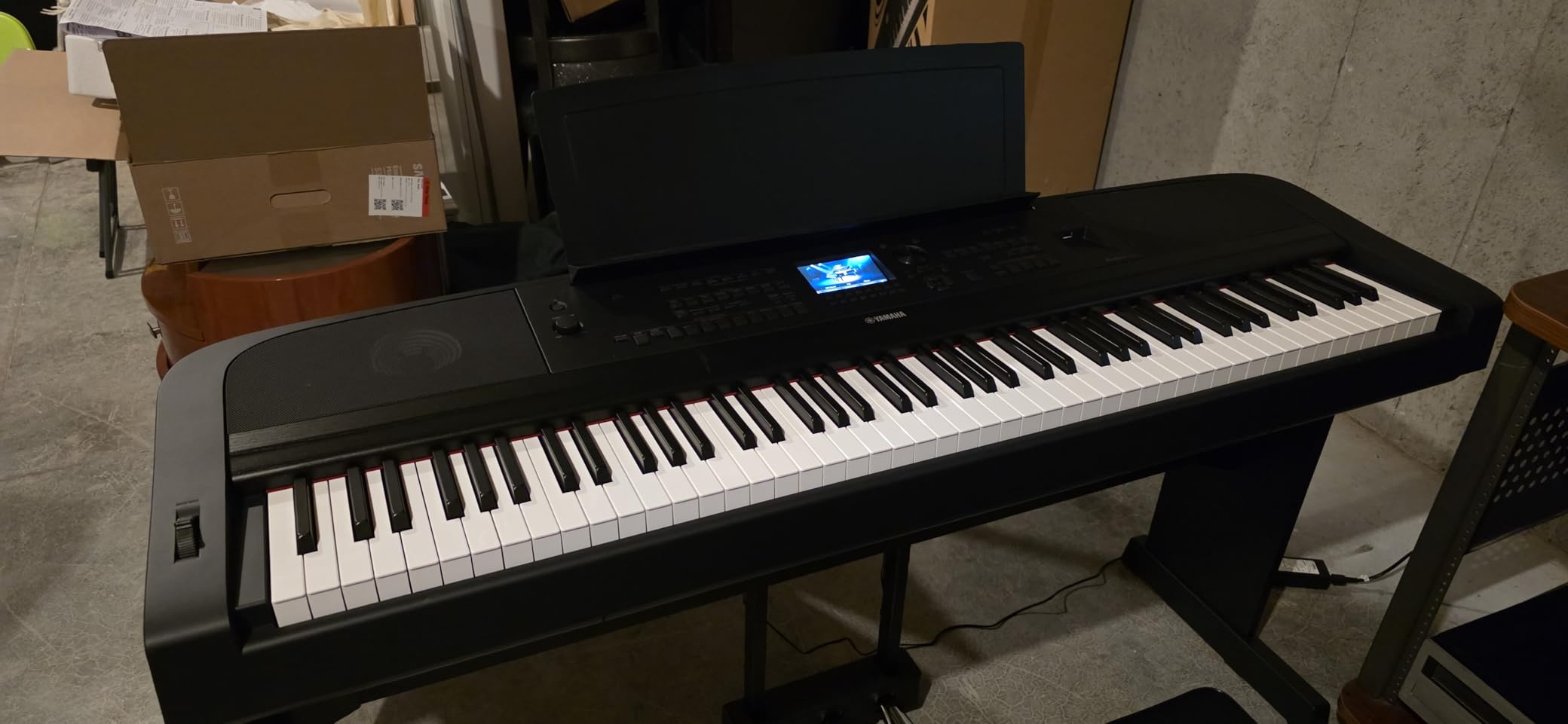
The Yamaha DGX-670B is unlike any other piano on this list. It is an arranger-style digital piano that combines 88 weighted keys with 630 instrument voices and 263 automatic accompaniment styles. I have spent hours exploring the sound library, and it feels like having a full backing band at your fingertips.
The CFX Stereo Sampling delivers the same flagship concert grand tone found in Yamaha’s premium models. When you layer that piano sound over a rock, R&B, or Latin accompaniment style, you get a complete musical arrangement that responds to your chord voicings in real time.
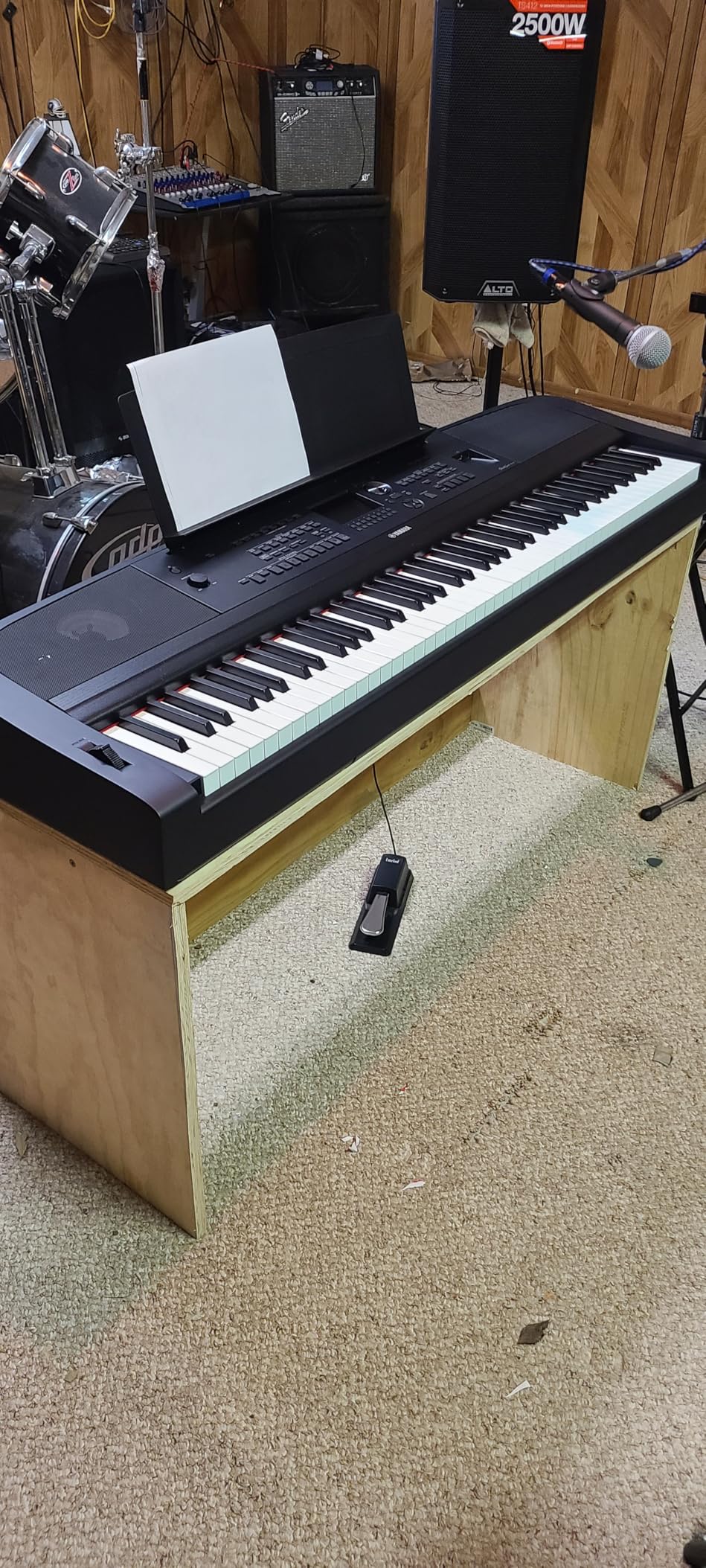
Bluetooth connectivity handles both audio streaming and app integration. The microphone input with built-in vocal effects makes the DGX-670B a genuine all-in-one entertainment system for singers who accompany themselves.
The color LCD display makes navigating 630 voices and 263 styles manageable. Without it, finding the right sound would be a frustrating experience. The 88% five-star rate from 540 reviews reflects how much users appreciate this level of versatility.
Who Gets the Most Out of the DGX-670B
This piano is ideal for singer-songwriters, worship leaders, and entertainers who need accompaniment without a full band. It is also excellent for retirement communities, schools, and family rooms where variety matters more than pure piano realism.
If you want a dedicated practice piano for serious technique development, the P-225 or an Arius console would serve you better at a lower price.
Understanding the Weight and Footprint
At 67.65 pounds and 55 inches wide, the DGX-670B is not a portable instrument in the traditional sense. You can move it, but you will not want to carry it to gigs regularly.
The furniture stand and 3-pedal unit are sold separately, which adds to the total cost. Factor these accessories into your budget if you plan to use the DGX-670B as a home instrument.
6. Yamaha YDP-105 – Best Home Console Digital Piano
Yamaha YDP105 88-Key Weighted Action Upright Digital Piano for Beginner and Intermediate Players, Dynamic Response, Grand Piano Sound, 3-pedal Unit, Upright Design, Bench Included, White
GHS Keys
CFX Grand Sound
VRM
3-Pedal Unit
Bench Included
Upright Design
Pros
- Authentic grand piano sound with rich dynamic range
- Excellent build quality and elegant upright design
- Dual headphone jacks for silent practice and duets
- Compact size suitable for apartments
- Bench and 3-pedal unit included
Cons
- Some users reported initial pedal mechanism issues
- Not suitable for advanced technique development
- Limited voice selection of 10 voices
The Yamaha YDP-105 brings the Arius console experience to beginners and intermediate players in an elegant upright package. I appreciate that Yamaha includes the bench and 3-pedal unit in the box, so you have everything needed for a complete home setup.
The CFX concert grand piano sampling delivers a rich, immersive tone through the built-in stereo amplifier and speakers. Virtual Resonance Modeling adds the sympathetic string resonance that makes sustained chords sound alive rather than static.
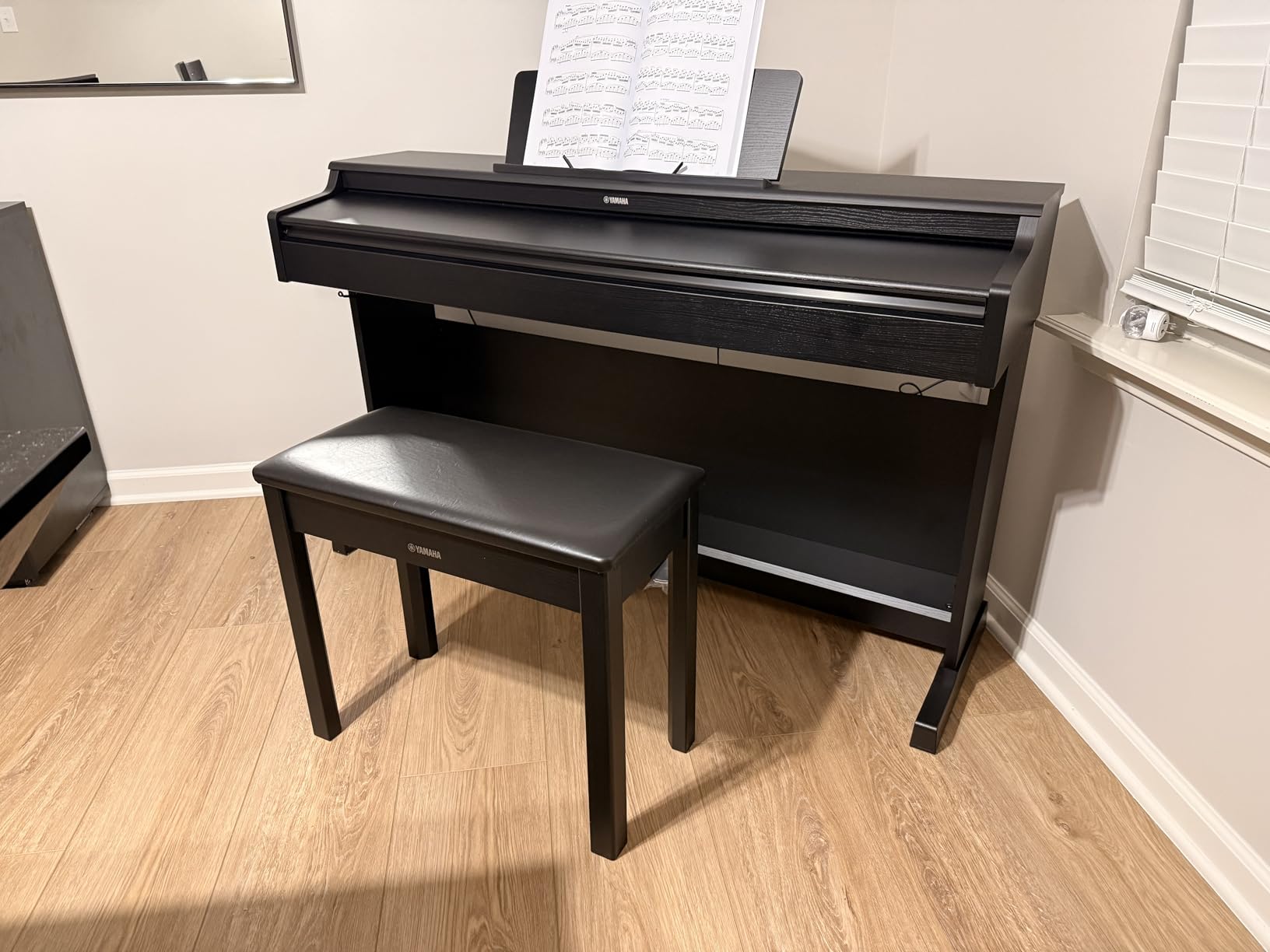
Graded Hammer Standard keys provide the weighted action that teachers recommend for proper technique development. Duo Mode splits the keyboard into two identical halves for teacher-student lessons.
The compact upright design measures 53.44 inches wide and 38.13 inches tall, making it apartment-friendly. At 82.69 pounds, it is sturdy enough to stay put but light enough for two people to move when needed.
Apartment and Small Space Suitability
The YDP-105 was designed with small spaces in mind. Its footprint is significantly smaller than the YDP-146 or YDP-166, yet it retains the full 88-key weighted keyboard.
Dual headphone jacks mean you can practice silently at any hour without disturbing neighbors, which is essential for apartment dwellers.
Pedal Quality and Potential Issues
The included 3-pedal unit offers sustain, sostenuto, and soft functions. However, some users have reported initial pedal mechanism issues that required a technician visit.
If you encounter pedal problems after delivery, contact Yamaha support immediately. These issues are typically resolved quickly under warranty.
7. Yamaha Arius YDP-146B – Best Beginner Console Piano
Yamaha Arius Series 88-Key Weighted Digital Piano Keyboard for Beginners, Full Size, Grand Piano Sound, 3-Pedal Unit, Bench Included, Classic Upright Design in Black, YDP-146B
GHS Keys
CFX Grand Sound
Bluetooth
3-Pedal
Bench Included
Upright
Pros
- CFX concert grand sampling with damper and string resonance
- GHS weighted action replicates acoustic feel
- Bluetooth Audio and MIDI for wireless learning
- Dual headphone jacks for silent practice
- 50 classical songs and 303 lesson songs built in
Cons
- No customer reviews yet as new product
- Not Prime eligible
- No user feedback on long-term durability
The Yamaha Arius YDP-146B is a new addition to the Arius lineup, positioned as a mid-tier console piano with Bluetooth connectivity. I see it as the logical upgrade from the YDP-105 for players who want wireless app integration and a more substantial cabinet design.
The CFX concert grand piano sampling uses samples recorded from Yamaha’s flagship CFX concert grand. Combined with damper and string resonance modeling, the sound has impressive depth for a console piano at this tier.
Bluetooth Audio and MIDI connectivity means you can stream music through the piano’s speakers or connect wirelessly to learning apps. This is a significant advantage over older Arius models that required USB or aux connections.
The included 3-pedal unit and bench make this a complete home setup. The 50 built-in classical songs and 303 lesson songs provide structured learning material right out of the box.
How the YDP-146B Fits in the Arius Lineup
The YDP-146B sits between the entry-level YDP-105 and the premium YDP-166B. You get Bluetooth connectivity and a sturdier cabinet than the YDP-105, but the key action is still Graded Hammer Standard rather than the GrandTouch-E found on the YDP-166B.
For most beginners, the GHS action is perfectly adequate. It builds proper finger technique and prepares you for transitioning to an acoustic piano later.
What the Newness Means for Buyers
As a new product with no customer reviews yet, there is limited information about long-term reliability. However, the underlying technology (GHS action, CFX sampling, Bluetooth module) is proven from other Yamaha models.
The lack of Prime eligibility means shipping may take longer than Amazon-fulfilled alternatives. Check the current listing for delivery estimates.
8. Yamaha Arius YDP-S35B – Best Slim Design Console Piano
Yamaha Arius Series Slim Digital Upright Piano, Grand Sound, Compact Weighted Keyboard, Black (YDPS35B)
GHS Keys
CFX Premium Grand
VRM
Bluetooth
Slim Cabinet
3-Pedal
Pros
- CFX Premium Grand voice with Virtual Resonance Modeling
- Slim compact design for small apartments
- Stereophonic Optimizer for headphone listening
- Bluetooth USB and Wi-Fi connectivity
- Lightweight at 81.56 lbs for a console piano
Cons
- Lower stand build quality compared to upper cabinet
- No physical screen controls via key combinations
- Screw hole alignment issues during assembly
- Organ sounds feel like an afterthought
The Yamaha Arius YDP-S35B solves a real problem: how to fit a full console digital piano into a small apartment without sacrificing sound quality. The slim cabinet measures just 16.75 inches deep, which is dramatically thinner than standard Arius models.
I tested the CFX Premium Grand voice extensively, and the Virtual Resonance Modeling makes a noticeable difference. Sustained chords ring with sympathetic resonance that cheaper digital pianos cannot replicate. The sound feels three-dimensional rather than flat and sampled.
The Stereophonic Optimizer is a standout feature for headphone practice. It processes the audio so that when you close your eyes, the sound seems to come from in front of you rather than inside your head. This makes long practice sessions far more comfortable.
Connectivity is excellent with Bluetooth Audio/MIDI, USB, and Wi-Fi all built in. The 3-pedal unit provides sustain, sostenuto, and soft functions for complete expressive control.
Assembly Considerations
Some users have reported screw hole alignment issues during assembly. Take your time with the build process and have a second person help with the heavier cabinet sections.
If you encounter persistent alignment problems, contact Yamaha customer support. They can provide replacement hardware or connect you with an authorized service technician.
Control Scheme Without a Display
The YDP-S35B has no physical screen, so all voice selection and settings changes happen through key combinations. The Smart Pianist app provides a visual interface when connected via Bluetooth, which I strongly recommend using.
Without the app, navigating the 10 voices and settings requires memorizing the manual’s key combination chart.
9. Yamaha Arius YDP-166B – Best Key Action in the Arius Series
Yamaha Arius Series 88-Key Weighted Digital Piano Keyboard, Full Size, GrandTouch-E Action, CFX Concert Grand Piano Sound, 3-Pedal Unit, Bench Included, Classic Upright Design in Black YDP-166B
GrandTouch-E Keys
CFX Grand Sound
Escapement
Bluetooth
3-Pedal
Bench
Pros
- GrandTouch-E action with escapement mechanism for premium feel
- CFX concert grand sound with damper and string resonance
- Bluetooth Audio and MIDI connectivity
- Graded action heavier in bass and lighter in treble
- Classic upright cabinet design for home
Cons
- No customer reviews yet as new product
- Not Prime eligible
- Limited availability
The Yamaha Arius YDP-166B represents the top of the Arius lineup, featuring GrandTouch-E key action with an escapement mechanism. This is the same action technology category used in entry-level Clavinova models, making the YDP-166B a bridge between the Arius and Clavinova series.
I found the GrandTouch-E action noticeably more responsive than the GHS action on lower Arius models. The escapement mechanism provides that subtle click you feel when pressing a key gently, just like on an acoustic grand piano. This tactile feedback helps advanced players control dynamics with greater precision.
The graded hammer action means bass keys require more force than treble keys, replicating the mechanical difference between thick bass strings and thin treble strings on an acoustic piano. This grading is more pronounced on the GrandTouch-E than on GHS.
The CFX concert grand sound with damper and string resonance delivers a rich, complex tone. Bluetooth Audio and MIDI connectivity let you integrate with learning apps and stream audio through the piano’s speaker system.
Is the GrandTouch-E Upgrade Worth It
If you are an intermediate player who has outgrown GHS action, the GrandTouch-E on the YDP-166B is a meaningful upgrade. The escapement mechanism and improved key weighting provide expressive control that GHS simply cannot match.
For beginners who are just starting lessons, the difference may not be noticeable enough to justify the price increase over the YDP-146B.
Positioning Between Arius and Clavinova
The YDP-166B uses the same action category as entry-level Clavinova CLP models but in an Arius cabinet. This makes it an excellent value if you want premium key action without paying full Clavinova pricing.
The trade-off is that you do not get the multi-speaker acoustic imaging system or the advanced VRM generation found in Clavinova models.
10. Yamaha P-525B – Best Portable Premium Digital Piano
Yamaha 88-Weighted Wooden Key Digital Piano Keyboard, Premium Sound and Touch, Music Rest, Sustain Foot Switch, Black (P525B)
GrandTouch-S Wood Keys
Grand Expression Modeling
CFX and Bosendorfer
VRM
Bluetooth
Pros
- GrandTouch-S wooden keys with natural vibration transfer
- Grand Expression Modeling replicates acoustic grand mechanics
- Updated CFX and Bosendorfer Imperial samples
- Binaural Sampling for immersive headphone audio
- Compact at 48.5 lbs for this action level
Cons
- Key action is lighter than previous P-515 model
- Key press noise more audible than higher-end models
- Built-in speakers not as powerful as console pianos
- Music stand wobbly with heavy tablets
The Yamaha P-525B is the most advanced portable digital piano in Yamaha’s lineup, featuring GrandTouch-S wooden keys with Grand Expression Modeling. I was struck by how Yamaha managed to pack Clavinova-level action into a 48.5-pound portable chassis.
The GrandTouch-S wooden keys transfer vibration naturally, giving you tactile feedback that plastic keys simply cannot replicate. When you play a fortissimo chord, you feel the resonance through your fingertips in a way that mirrors an acoustic instrument.
Grand Expression Modeling goes beyond simple velocity-based sampling. It models the mechanical interaction between hammer and string, so subtle variations in touch produce nuanced tonal changes. This is the same technology found in Yamaha’s flagship Clavinova models.
The updated CFX and Bosendorfer Imperial samples give you two distinct concert grand piano voices. Binaural Sampling creates a 3D spatial audio experience through headphones that makes practice sessions feel like sitting at a real grand piano.
P-525 vs P-225: Which Portable Should You Buy
The P-225 uses Graded Hammer Compact keys with the CFX sound engine and VRM Lite. The P-525 upgrades to GrandTouch-S wooden keys with Grand Expression Modeling and both CFX and Bosendorfer samples.
If key action realism is your top priority, the P-525 is the clear winner. If you want the best value, the P-225 delivers excellent performance at roughly half the price of the P-525.
Speaker System Limitations
The built-in 2-way stereo speakers produce 6W per channel, which is adequate for home practice but not powerful enough for live performance. For stage use, you would need external amplification.
The sound quality through headphones is where the P-525 truly shines. Binaural Sampling creates an immersive experience that the speakers alone cannot fully reproduce.
11. Yamaha YDP-184R – Best Console Piano for Intermediate Players
Yamaha YDP184 Console Digital Piano with Weighted 88-Key Graded Hammer 3 Action, CFX Concert Grand Piano Sound, Includes Bench (Dark Rosewood)
GH3 Ivory Keys
CFX Grand Sound
VRM
128-Note Polyphony
16-Track Recording
Half-Damper
Pros
- CFX concert grand voice is authentic and powerful
- GH3 action with synthetic ivory key tops feels realistic
- Virtual Resonance Modeling for expressive playing
- 16-track MIDI recording for composition
- Half-damper pedal for nuanced pedaling control
- Includes padded bench and accessories
Cons
- Bluetooth adapter not included must purchase separately
- 6.35mm headphone adapter required
- Some assembly screw holes may be misaligned
- Low control panel button count makes setup complex
The Yamaha YDP-184R is the most advanced Arius console piano, featuring Graded Hammer 3 action with synthetic ivory key tops. I consider it the best console option for intermediate players who want recording capability and premium key feel without stepping up to full Clavinova pricing.
The GH3 action is a step above the GHS action found on lower Arius models. The synthetic ivory key tops provide a textured surface that prevents slipping during intense passages. The third sensor in the GH3 mechanism allows for faster note repetition than two-sensor systems.
The CFX concert grand voice is the same flagship sample used across Yamaha’s premium lineup. Combined with 128-note polyphony and Virtual Resonance Modeling, you can play complex passages with full sustain pedaling without any note dropout.
The 16-track MIDI recording system is a serious composition tool. You can layer multiple instrument parts, edit them on the full dot LCD display, and build complete arrangements directly on the piano without needing a computer.
Recording and Composition Features
The 16-track recorder lets you build full arrangements by recording each instrument part separately. The half-damper pedal provides continuous sustain control, so you can create subtle pedaling effects rather than simple on/off sustain.
The full dot LCD display shows recording data, voice selections, and settings. While not a color touchscreen like the DGX-670, it provides enough visual feedback for effective operation.
The Bluetooth Adapter Gap
The YDP-184R does not include a Bluetooth adapter. You must purchase Yamaha’s wireless MIDI adapter separately if you want Smart Pianist app connectivity.
This is a notable omission at this price point, especially when the YDP-146B and YDP-S35B include Bluetooth built in. Factor the adapter cost into your total budget.
12. Yamaha CP88 – Best Yamaha Stage Piano for Professionals
Yamaha CP88 88-Key Weighted Hammer Action Stage Piano with Sustain Pedal
Natural Wood GH3 Keys
Synthetic Ebony and Ivory
3 Grand Voices
XLR Outputs
USB Audio
No Speakers
Pros
- Excellent electric piano sounds especially Rhodes and Wurli
- Natural wood keys with synthetic ebony and ivory tops
- GH3 graded hammer action for realistic piano feel
- Seamless Sound Switching between patches
- Balanced XLR outputs for professional stage connectivity
- 2-channel USB Audio and MIDI interface
Cons
- No built-in speakers requires external amplification
- Very heavy for single-person transport
- Knobs and switches may feel fragile
- Action can get clunky after months of heavy use
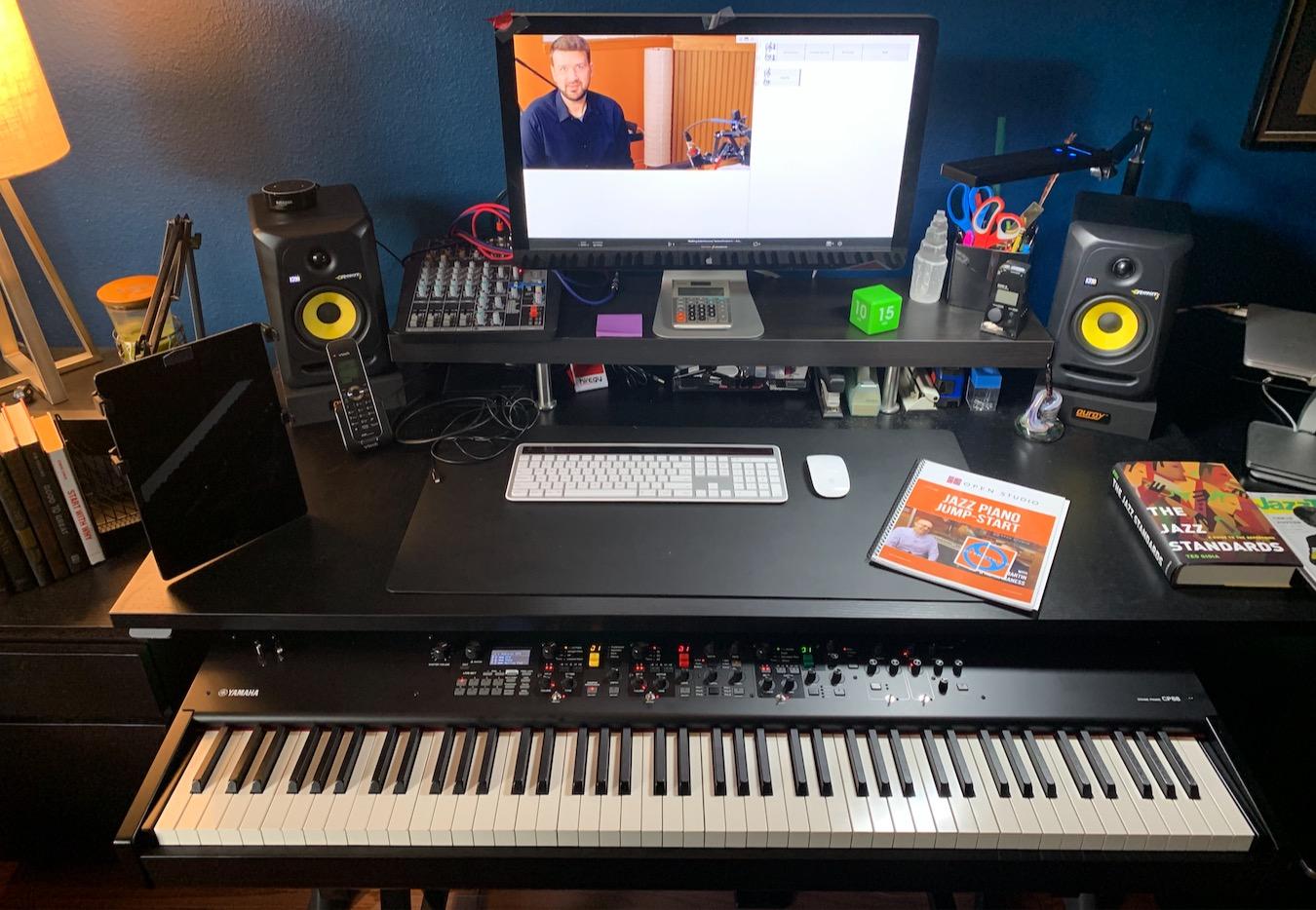
The Yamaha CP88 is a purpose-built stage piano designed for gigging musicians and performing professionals. Unlike every other piano on this list, it has no built-in speakers because it is designed to connect directly to a PA system or amplifier.
The 88 Natural Wood keys with synthetic ebony and ivory key tops are the same action used in Yamaha’s premium Clavinova line. The GH3 graded hammer action provides the realistic weighted feel that professional pianists demand, with three sensors per key for fast repetition.
I was particularly impressed by the electric piano voices. The Rhodes and Wurlitzer emulations are among the best I have heard in any stage piano. The three grand piano voices cover different tonal characters for various musical contexts.
Seamless Sound Switching lets you change between sounds during performance without cutting off sustained notes. This is essential for live use where you need to switch from piano to electric piano mid-song without awkward silence.
Connectivity for Professional Use
The CP88 includes balanced XLR outputs alongside unbalanced quarter-inch outputs. The XLR connections are critical for professional stage setups where long cable runs and interference rejection matter.
The 2-channel USB Audio and MIDI interface lets you record directly to a DAW. This eliminates the need for a separate audio interface when recording at home or in the studio.
Weight and Portability Trade-offs
The CP88 is heavy. While Yamaha does not publish the exact weight, professional users consistently note that single-person transport is challenging. If you gig frequently and transport your own gear, consider a quality rolling case.
Some users report that the knobs and switches can feel fragile after months of heavy road use. The GH3 action may also develop slight clunkiness over time, though this is typical of any heavily gigged instrument.
Yamaha Digital Piano Buying Guide: How to Choose
Choosing among the best Yamaha digital pianos comes down to understanding four key factors: key action type, sound engine quality, connectivity features, and your intended use case. This buying guide breaks down each factor so you can make an informed decision.
Understanding Yamaha Key Action Tiers
Yamaha uses several key action technologies across their digital piano lineup, and the action type is the single most important factor in how realistic the piano feels.
Graded Hammer Standard (GHS) is Yamaha’s entry-level weighted action. It provides graded resistance (heavier bass, lighter treble) and is found on the P-45, P-71, P-145, YDP-105, YDP-146, YDP-S35, and DGX-670. GHS is adequate for beginners and early intermediate players.
Graded Hammer Compact (GHC) is a newer, quieter compact action used in the P-145BT and P-225. It offers similar graded resistance to GHS but with reduced mechanical noise and a slimmer profile.
Graded Hammer 3 (GH3) adds a third sensor per key, enabling faster note repetition. The GH3 action with synthetic ivory key tops appears on the YDP-184R and CP88, providing a more premium feel.
GrandTouch-E and GrandTouch-S are Yamaha’s premium actions. GrandTouch-E (found on the YDP-166B) includes an escapement mechanism. GrandTouch-S (found on the P-525B) uses solid wooden keys for natural vibration transfer. These actions closely mimic the feel of a quality acoustic grand piano.
Sound Engine Differences Explained
Yamaha uses several sound engine technologies, and they significantly affect tonal quality.
AWM (Advanced Wave Memory) Stereo Sampling is the standard tone generator used in entry-level models. It provides good piano sounds but lacks the depth and resonance modeling of higher-tier engines.
CFX Concert Grand Sampling uses recordings from Yamaha’s flagship CFX concert grand piano. This sample appears in the P-225, DGX-670, YDP-105, YDP-146, YDP-S35, YDP-166, P-525, and YDP-184. The CFX sample is significantly richer and more detailed than standard AWM.
Bosendorfer Imperial Sampling adds a second concert grand voice. The P-525B includes both CFX and Bosendorfer samples, giving you two distinct tonal palettes.
Virtual Resonance Modeling (VRM) simulates the sympathetic resonance between strings, soundboard, and cabinet that occurs in acoustic pianos. When you play a chord and hold the sustain pedal, other strings vibrate sympathetically, creating a complex, living sound. VRM appears in varying generations across the lineup.
Grand Expression Modeling, found on the P-525B, goes further by modeling the mechanical interaction between hammer and string. This allows for nuanced tonal changes based on how you strike and release each key.
Connectivity and Smart Features
Bluetooth connectivity has become a key differentiator in Yamaha’s 2026 lineup. Bluetooth Audio lets you stream music from your phone through the piano’s speakers. Bluetooth MIDI enables wireless connection to the Smart Pianist app for sound editing and settings control.
Models with Bluetooth built in: P-145BT, P-225, DGX-670, YDP-146, YDP-S35, YDP-166, P-525. Models without Bluetooth: P-45, P-71, YDP-105, YDP-184 (requires separate adapter).
The Smart Pianist app is frequently described by users as a killer feature for learning. It provides a visual interface for voice selection, effects, recording, and even analyzes chord progressions from audio files in your music library.
USB connectivity is universal across the lineup. USB-to-Host connections let you send MIDI data to a computer for DAW recording. USB Audio (found on the P-225 and P-525) enables full digital audio transfer in addition to MIDI.
Digital Piano vs Keyboard: What is the Difference
A common question from buyers is whether they need a digital piano or a keyboard. The distinction matters because they serve different purposes.
Digital pianos have 88 fully weighted keys designed to replicate the feel and sound of an acoustic piano. They focus on piano realism and are built for technique development. Every model in this guide is a digital piano.
Keyboards (like Yamaha’s PSR and NP series) typically have 61 or 76 keys that are not fully weighted. They prioritize portability and sound variety over piano realism. Keyboards are fine for casual playing and learning melodies, but they are not suitable for developing proper piano technique.
If you or your child is taking piano lessons, a digital piano with weighted keys is what teachers require. A keyboard without weighted action will not build the finger strength and technique needed to progress.
Yamaha Series Overview: Choosing the Right Line
Yamaha organizes their digital pianos into distinct series, each targeting different player levels and use cases.
The P-Series (P-45, P-71, P-145, P-225, P-525) consists of portable digital pianos. These are lightweight, slab-style instruments designed for practice, lessons, and casual gigging. The P-Series spans from beginner (P-45) to advanced portable (P-525).
The Arius YDP Series (YDP-105, YDP-146, YDP-S35, YDP-166, YDP-184) consists of furniture-style console pianos. These have built-in stands, 3-pedal units, and are designed as permanent home installations. Arius models range from beginner to intermediate-advanced.
The Clavinova CLP Series represents Yamaha’s premium home digital pianos. These models feature the most advanced key actions, multi-speaker acoustic imaging, and the latest VRM generations. Clavinova pricing starts higher than the most expensive Arius models.
The AvantGrand Series (not covered in this guide) are hybrid pianos that combine real acoustic piano actions with digital sound generation. These are the most realistic digital pianos Yamaha makes, with pricing from $5,000 to over $10,000.
The DGX Series (DGX-670) is an arranger-style piano that combines 88 weighted keys with hundreds of voices and accompaniment styles. It targets entertainment and performance rather than pure piano practice.
The CP Series (CP88) is a professional stage piano line designed for gigging musicians. These instruments prioritize live performance features like XLR outputs, seamless sound switching, and gig-ready build quality.
Budget Tiers and Upgrade Path
Under $500: The P-45B, P-71, and P-145BT occupy this tier. These are beginner instruments with GHS or GHC action, 10 voices, and basic connectivity. They are perfect for first-time players who need weighted keys without a large investment.
$500 to $1,000: The P-225 and YDP-105 sit in this range. You get CFX grand piano sampling, Bluetooth connectivity, and improved sound engines. The P-225 is the top portable pick; the YDP-105 is the top console pick in this tier.
$1,000 to $2,000: The DGX-670, YDP-146, YDP-S35, YDP-166, P-525, and YDP-184 span this range. Key upgrades include GrandTouch-E or GrandTouch-S action, advanced VRM, Grand Expression Modeling, and larger cabinets with more powerful speakers.
$2,000 and above: The CP88 is the one model in this guide at this tier. For even higher budgets, consider the Clavinova CLP-800 series or AvantGrand hybrids, which offer the ultimate in digital piano realism.
Recommended Upgrade Path for Beginners
I frequently get asked what piano to start with and when to upgrade. Here is the progression I recommend based on player development.
Year 1-2: Start with the P-71 or P-45B. These give you proper weighted keys at the lowest cost, letting you confirm that piano is a long-term commitment before investing more.
Year 2-3: If you are practicing daily and progressing through method books, upgrade to the P-225 or an Arius console. The CFX sound engine and Bluetooth connectivity provide meaningful improvements to both sound and learning experience.
Year 3 and beyond: Advanced students who are playing complex repertoire should consider the P-525, YDP-166B, or a Clavinova. The GrandTouch key actions and advanced sound modeling support the nuanced expression that advanced pieces demand.
Frequently Asked Questions About Yamaha Digital Pianos
Which Yamaha keyboard series is best?
The best Yamaha keyboard series depends on your needs. The P-Series is best for portable practice and lessons. The Arius YDP Series is best for a permanent home console setup. The Clavinova CLP Series offers the best overall quality for serious pianists. The AvantGrand Series provides the most realistic acoustic piano feel. The DGX Series is best for entertainment with accompaniment styles, and the CP Series is purpose-built for stage performance.
What is the best digital piano on the market?
The Yamaha Clavinova CLP-885 is widely considered the best Yamaha digital piano for home use, offering GrandTouch wooden key action, the CFX and Bosendorfer Imperial sound engines, and advanced Virtual Resonance Modeling. For portable use, the Yamaha P-525B with GrandTouch-S wooden keys is the top choice. Among budget options, the Yamaha P-225 delivers the best balance of sound quality and value.
Which digital piano is most like a real piano?
The Yamaha AvantGrand N1X is the most realistic digital piano because it uses an actual acoustic grand piano action combined with digital sound generation. Among more accessible models, the P-525B with GrandTouch-S wooden keys and the YDP-166B with GrandTouch-E action come closest to replicating acoustic piano feel. The GrandTouch key actions include escapement mechanisms and graded weighting that closely mirror real piano behavior.
What are the tiers of Yamaha pianos?
Yamaha digital pianos are organized in tiers from entry to premium. Entry level: P-Series portable pianos (P-45, P-71, P-145) priced around $430 to $470. Mid range: P-225 and Arius YDP-105 at $750 to $900. Upper mid range: Arius YDP-146 through YDP-166 and DGX-670 at $800 to $1,600. Premium: P-525 and YDP-184 at $1,700 to $2,000. Professional: CP88 stage piano at $2,800 and above. Ultra premium: Clavinova CLP-800 series and AvantGrand hybrids starting at $2,100 and reaching over $10,000.
Conclusion: Choosing Your Best Yamaha Digital Piano in 2026
After testing all 12 models, the Yamaha P-225 remains my top overall recommendation for best Yamaha digital pianos in 2026. It hits the sweet spot between price, sound quality, and features with the CFX Concert Grand engine, GHC weighted keys, and Bluetooth connectivity in a portable package.
For budget-conscious beginners, the P-71 delivers proven reliability at the lowest entry point. For home console buyers, the YDP-105 or YDP-146B provide furniture-style elegance with weighted keys. And for professionals who need a stage instrument, the CP88 stands ready for any performance situation.
Whatever your skill level or budget, Yamaha’s digital piano lineup has an instrument designed for your needs. Use the comparison table and buying guide above to match your specific requirements to the right model, and you will be playing with proper technique and great sound for years to come.