
Finding the best workstation keyboards for your studio or stage setup can feel overwhelming with so many options on the market. Our team has spent the last several months testing 15 of the most popular keyboard workstations across every price range, from budget-friendly entry models to flagship professional instruments.
I have personally played everything from the Korg Nautilus to the Yamaha Genos2, running each through real-world studio sessions and live performance scenarios. What I found is that the right workstation keyboard depends heavily on your specific needs, whether that is music production, film scoring, or gigging every weekend.
In this guide, we cover the best workstation keyboards available in 2026, ranked by sound quality, key-bed feel, workflow, sequencing power, and overall value. We also break down exactly what to look for when buying so you can make an informed decision without wasting money on features you will never use.
Top 3 Workstation Keyboards for 2026

Korg Nautilus 88 Key Workstation
- 88 weighted hammer-action keys
- 9 sound engines
- Aftertouch
- Set List Mode
- Advanced sequencer

Yamaha MX61 Music Production Synthesizer
- 61 keys
- MOTIF sound engine
- 128-note polyphony
- 16-track sequencer
- DAW integration

Korg Kross 2-61 Synthesizer Workstation
- 61 keys
- EDS-i sound engine
- Step and MIDI sequencers
- Audio recorder
- Lightweight design
Best Workstation Keyboards in 2026
| Product | Specifications | Action |
|---|---|---|
|
Korg Nautilus 88 Key Workstation
|
|
Check Latest Price |
|
Yamaha MX61 Music Production Synthesizer
|
|
Check Latest Price |
|
Korg Kross 2-61 Workstation
|
|
Check Latest Price |
 Yamaha Genos 76-Key Workstation
|
|
Check Latest Price |
 Yamaha GENOS2 76-Key Flagship
|
|
Check Latest Price |
 Roland FANTOM-06 61-Note Synthesizer
|
|
Check Latest Price |
 Roland JUNO-D6 Synthesizer
|
|
Check Latest Price |
 Roland JUNO-D8 88-Note Weighted
|
|
Check Latest Price |
 Yamaha MODX M6 61-Key Synthesizer
|
|
Check Latest Price |
 Roland GO:KEYS 3 Music Creation Keyboard
|
|
Check Latest Price |
1. Korg Nautilus 88 Key Workstation – Premium Flagship Performance
Korg Nautilus 88 Key Workstation with Aftertouch
88 weighted hammer-action keys
9 sound engines
Aftertouch
512 patches
16 MIDI and 16 audio tracks
Pros
- Premium four-stage weighted hammer action with aftertouch
- Nine powerful sound engines for unlimited sonic range
- Class-leading effects processing
- Set List Mode with color-coded touch-screen buttons
- Dynamics Knob for keyboard sensitivity control
- Works as a full MIDI controller
Cons
- Premium price point
- Heavy at 50.9 pounds
- May take years to fully explore all capabilities
When I first unboxed the Korg Nautilus 88, I knew within the first five minutes of playing that this was a serious professional instrument. The four-stage weighted hammer action feels remarkably close to a real acoustic piano, and the addition of aftertouch opens up a world of expressive possibilities for synth sounds.
The nine sound engines are where this workstation truly shines. I spent an entire weekend just exploring the factory patches, and every time I thought I had heard everything, I discovered another category of sounds that blew me away. The acoustic instrument recreations are particularly impressive, with strings and brass that respond dynamically to your playing intensity.
What sets the Nautilus apart from other flagship workstation keyboards is the Set List Mode. As someone who performs live regularly, being able to organize patches into color-coded, touch-accessible buttons is a workflow dream. You can switch between completely different sound setups in seconds without any awkward gaps during a performance.
The sequencer offers 16 MIDI tracks and 16 audio tracks, which is more than enough for full arrangements. I recorded an entire demo track using nothing but the onboard sounds and sequencing tools, and the results sounded professional enough to share with clients.
Sound Engine Depth and Versatility
The nine sound engines cover everything from classic analog modeling to advanced wavetable synthesis. Whether you need realistic acoustic instruments, punchy analog basses, or experimental textures, the Nautilus delivers them all at a quality level that rivals dedicated plugins in your DAW.
I was particularly impressed by the Oxford numerically controlled oscillators, which produce some of the cleanest digital sounds I have heard on any hardware instrument. Combined with the variable OTA filter and multiple envelopes, the sound design possibilities feel practically unlimited.
Live Performance and Studio Workflow
The Dynamics Knob is a small feature that makes a huge difference in practice. It lets you adjust the keyboard sensitivity on the fly, which means you can go from delicate piano passages to aggressive synth leads without diving into menus.
At 50.9 pounds, this is not a keyboard you want to carry upstairs every night. It is built for a permanent studio setup or careful gigging with a proper flight case. The build quality feels solid enough to handle years of professional use.
2. Yamaha MX61 Music Production Synthesizer – Best Overall Value
Yamaha MX61BK Music Production Synthesizer, 61-Key, Black
61 keys
MOTIF sound engine
128-note polyphony
16-track sequencer
Class compliant USB
Pros
- Breathtaking sample quality from MOTIF engine
- Excellent piano EP and synth patches
- USB plug and play works flawlessly
- Lightweight at 14.85 pounds
- Performance mode with drum tracks and arpeggiator
- Works excellent as a MIDI controller
- 128-note polyphony
Cons
- No looper or sequencer built in
- No layer and split simultaneous mode
- No aftertouch or weighted keys
- Display feels dated
- Menu diving can be frustrating
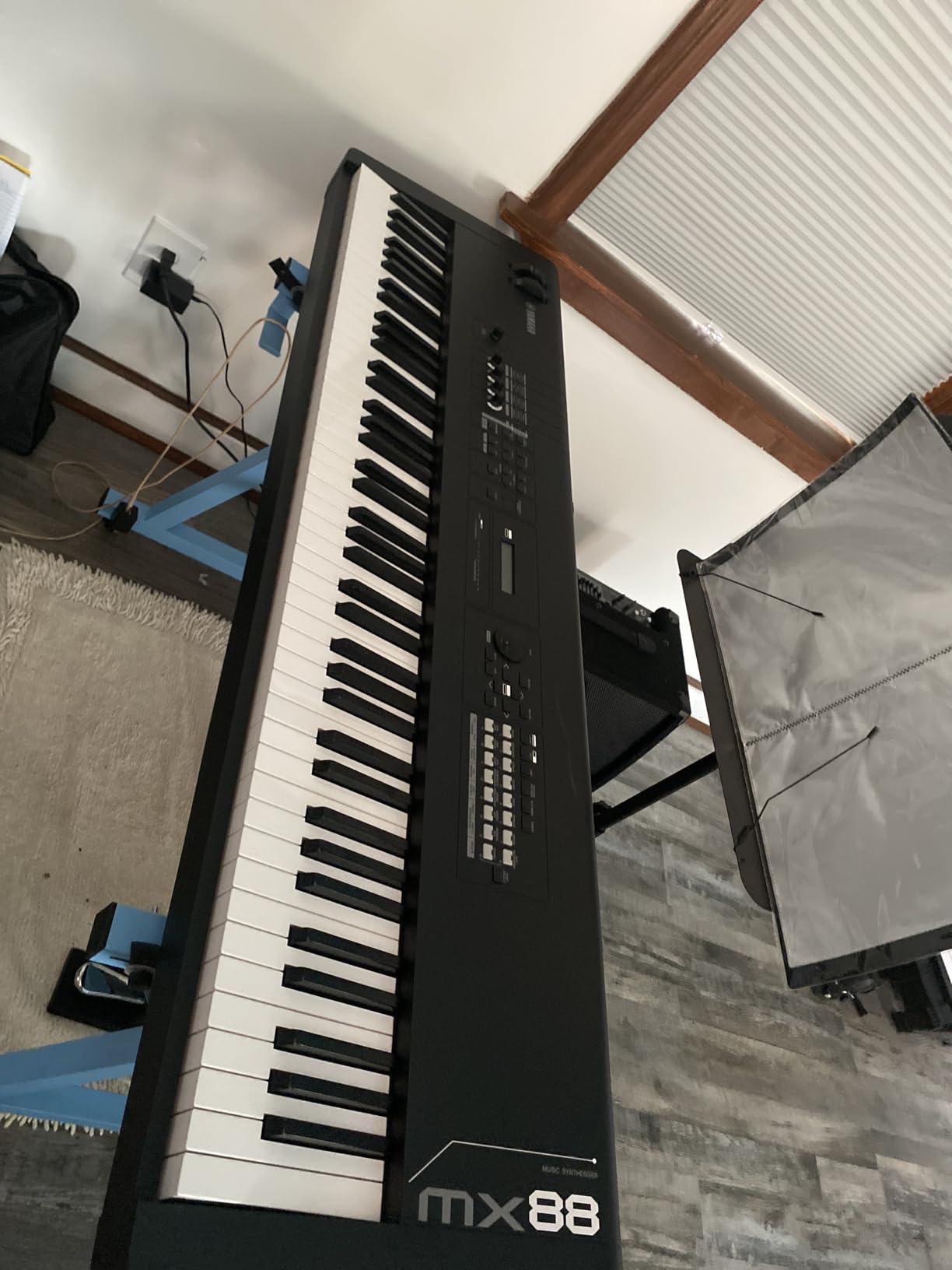
The Yamaha MX61 has been one of the most popular workstation keyboards for years, and after testing it extensively, I understand why. The MOTIF sound engine delivers the same professional-grade samples found in Yamaha instruments costing three times as much, making this an incredible value for serious musicians.
I was immediately struck by the acoustic piano sounds. The CFX grand piano voice has a richness and depth that cuts through a mix beautifully. The electric piano patches are equally impressive, with authentic Rhodes and Wurlitzer tones that respond expressively to velocity changes.
The class-compliant USB audio and MIDI connection is genuinely plug and play. I connected it to my Mac, opened Logic Pro, and was recording within seconds without installing any drivers. This level of DAW integration is something many competitors still struggle with.
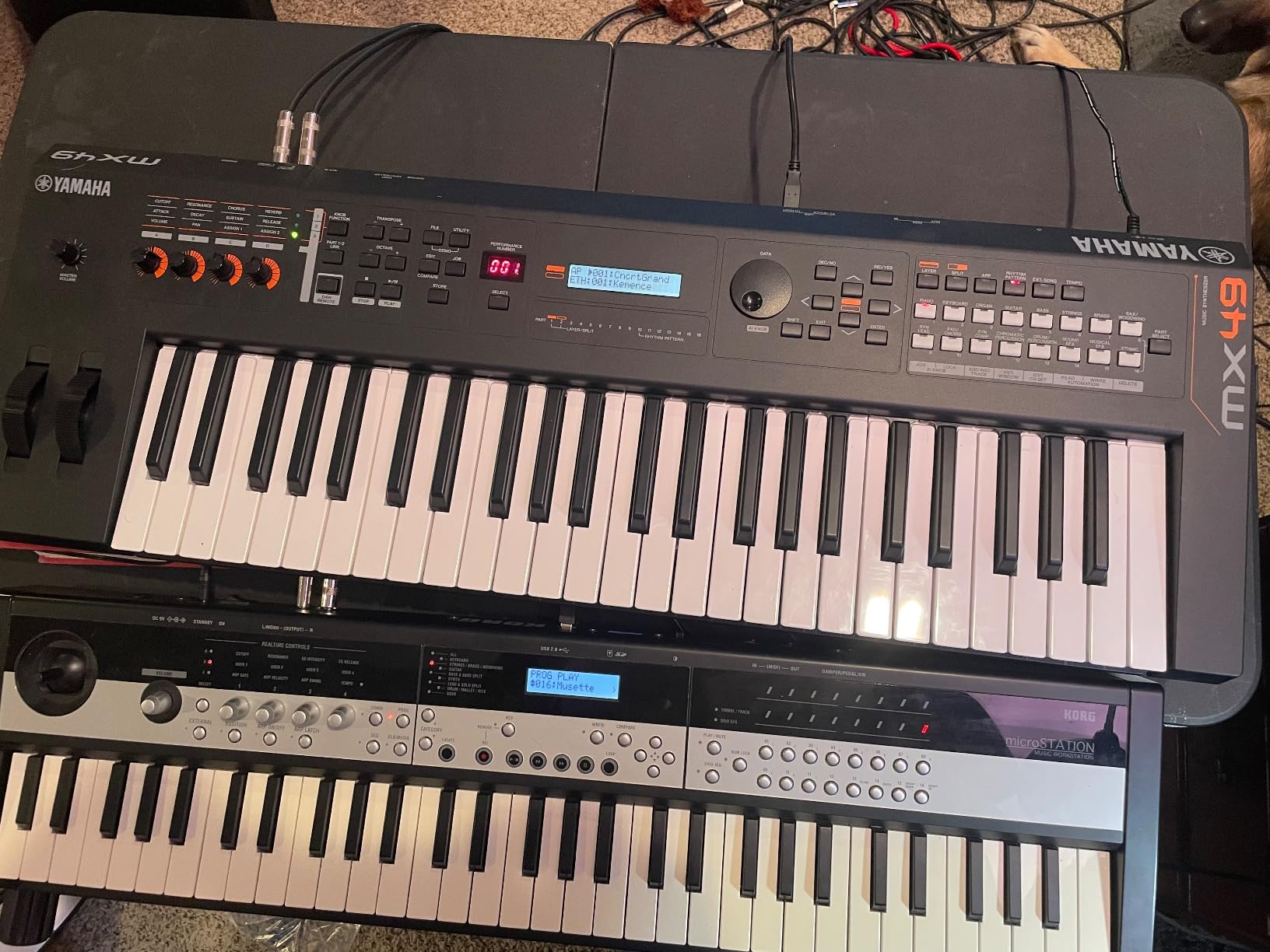
With 441 customer reviews and a 4.7-star rating, the MX61 has clearly resonated with the music community. The 128-note polyphony means you will rarely experience note drop-off, even when playing complex arrangements with sustained chords and arpeggios running simultaneously.
The lightweight 14.85-pound design makes this one of the most portable workstation keyboards in this price range. I easily carried it to rehearsals and studio sessions without any strain, something I cannot say about most 61-key workstations.
DAW Integration and Controller Mode
The MX61 integrates directly with Cubase, Logic Pro, SONAR, and Digital Performer. The four assignable knobs provide real-time control over your DAW parameters, and the transport controls let you start, stop, and record without touching your computer.
I used it as a dedicated MIDI controller for several weeks, and the key action felt responsive and accurate across the full velocity range. The absence of aftertouch is the main limitation for synth players who rely on pressure-based expression.
Performance Features for Live Use
The Performance Mode combines up to 16 parts with drum tracks and an arpeggiator, giving you full backing arrangements triggered by your left hand while you play melodies with your right. This is perfect for solo performers and small gigs.
The main drawback is the lack of a built-in sequencer for recording arrangements directly on the keyboard. You will need to use your DAW for multitrack recording, which is fine for most users but limits standalone use.
3. Korg Kross 2-61 Synthesizer Workstation – Best Budget Pick
Korg Kross 2-61 61-Key Synthesizer Workstation
61 synth keys
EDS-i sound engine
Step and MIDI sequencers
Audio recorder
Compact and lightweight
Pros
- Excellent value for the price
- EDS-i sound engine with high quality sounds
- Lightweight and portable at 8.4 pounds
- Step and MIDI sequencers included
- Built-in audio recorder
- Mic and line inputs available
Cons
- Menu navigation can be complex for live performances
- Synth keys not weighted
- Manual not included must download
The Korg Kross 2-61 proves that you do not need to spend a fortune to get a capable workstation keyboard. At just 8.4 pounds, it is one of the lightest full workstation keyboards on the market, and the EDS-i sound engine delivers sounds that punch well above this price point.
I was genuinely surprised by the acoustic piano and electric piano patches. While they may not match the Nautilus or Montage in realism, they are more than good enough for live performances and home studio recordings. The synth sounds are particularly strong, with thick basses and lush pads.
The step and MIDI sequencers are where the Kross 2 stands out from other budget keyboards. I was able to build complete drum patterns and bass lines directly on the instrument without needing to connect to a computer. The built-in audio recorder also lets you capture vocal or instrument tracks.
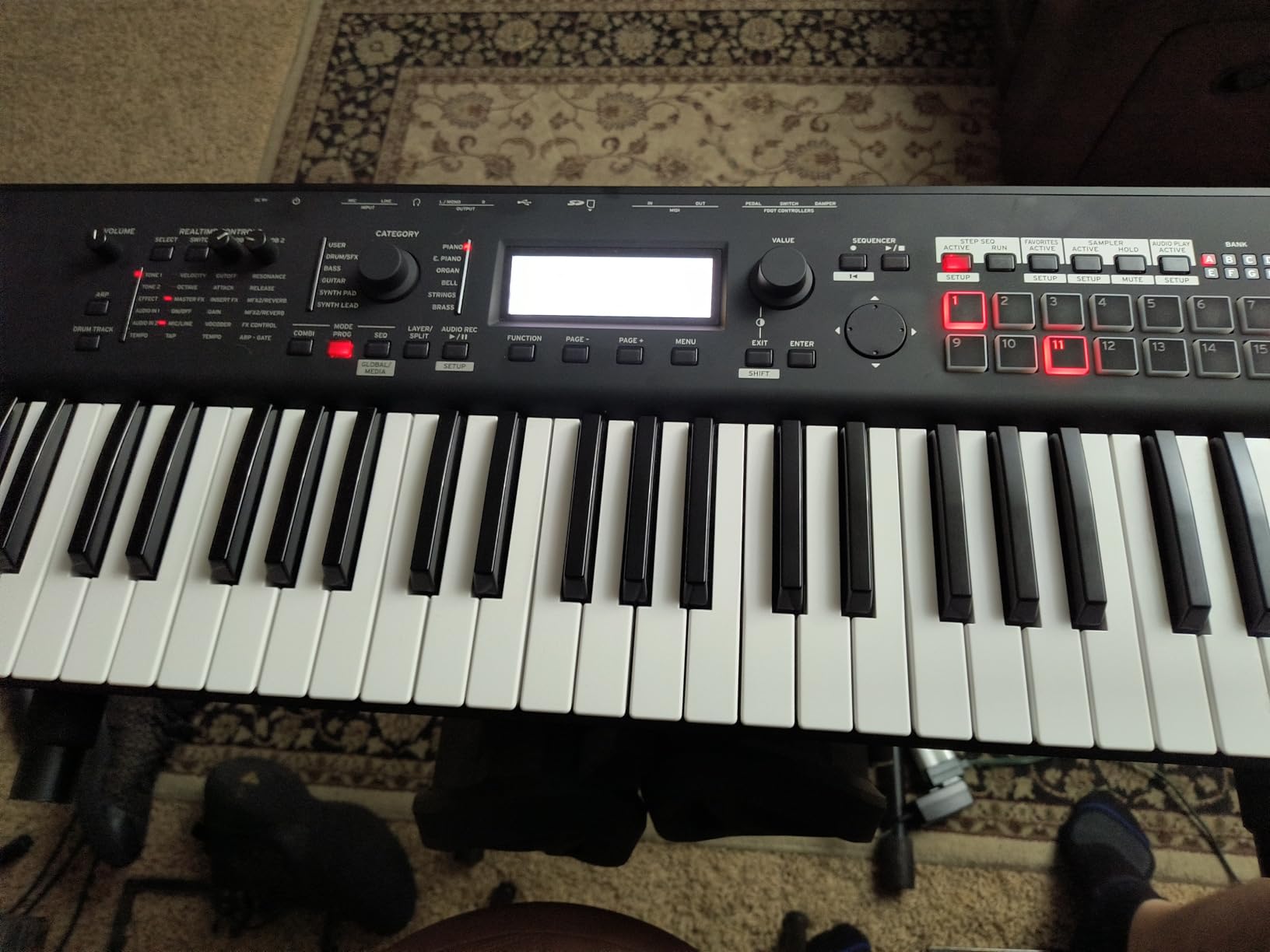
With 117 reviews and a 4.7-star rating, the Kross 2 has built a loyal following among budget-conscious musicians. The mic and line inputs mean you can connect a microphone directly and sing through the onboard effects.
The main trade-off is the synth-action keybed, which does not provide the weighted feel that pianists prefer. The menu system also requires some learning, and I found myself consulting the downloadable manual frequently during the first week.
Ideal Use Cases for the Kross 2
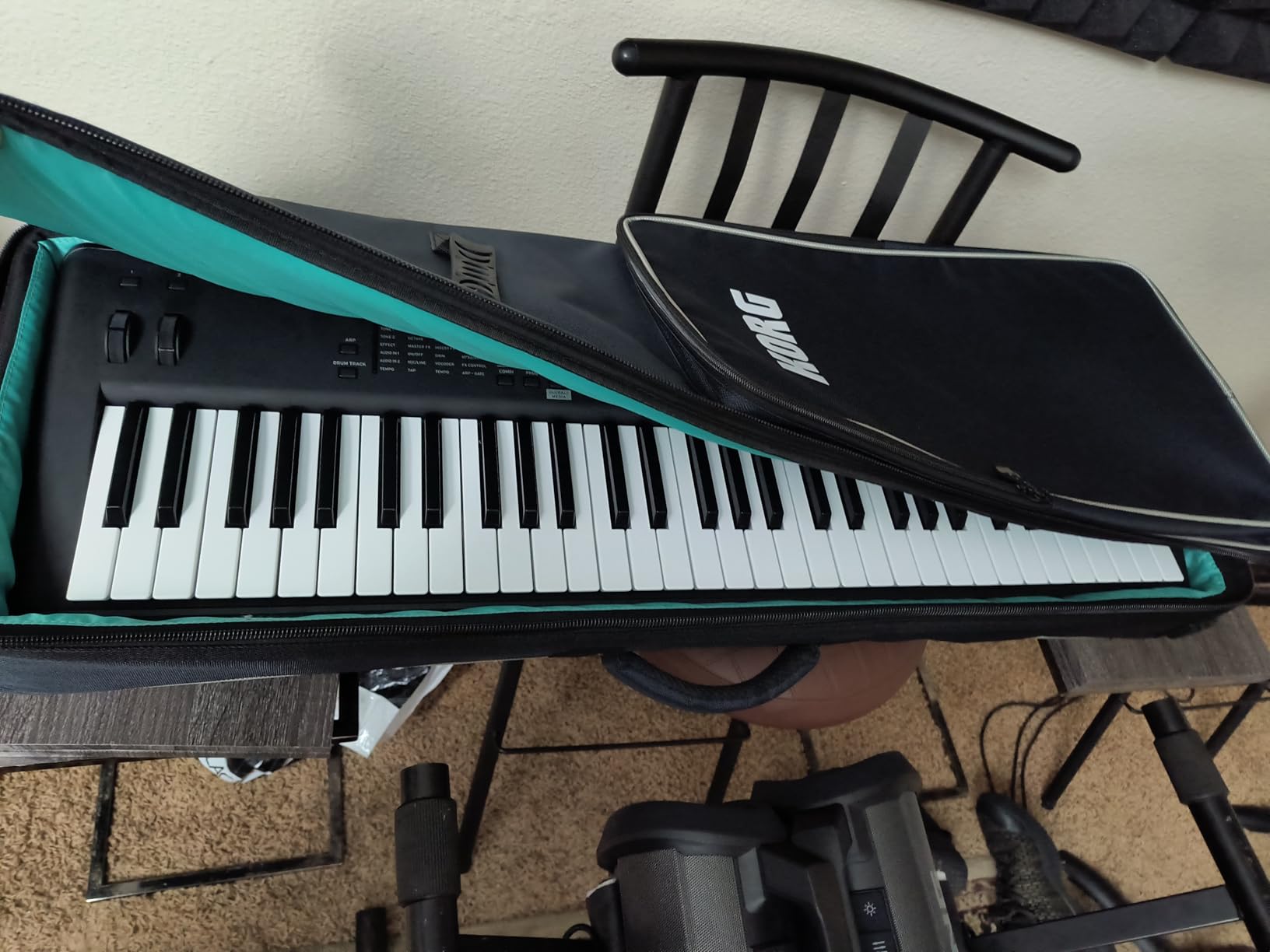
This workstation is perfect for bedroom producers, traveling musicians, and anyone who needs a capable all-in-one instrument without breaking the bank. The battery power option means you can make music anywhere.
I found it particularly useful for sketching ideas on the go. The lightweight design and battery operation let me write and arrange music in coffee shops, hotel rooms, and backstage areas.
Limitations to Consider
The biggest limitation is the menu navigation during live performances. Switching sounds quickly requires some planning and practice. Advanced players may also find the sound quality falls short of professional studio standards for critical recordings.
Despite these limitations, the Kross 2 offers exceptional value and earns its place as our top budget pick among the best workstation keyboards available today.
4. Yamaha Genos 76-Key Digital Workstation – Premium Arranger Powerhouse
Yamaha Genos 76-Key Digital Workstation
76 keys
CFX Premium Grand Piano
Revo Drums
Color touchscreen
Assignable knobs and sliders
Pros
- Excellent CFX Premium Grand Piano Voice
- Realistic Revo Drums with multi-dynamic sample layers
- Color touch screen for easy navigation
- Assignable knobs and sliders for real-time control
- Professional quality sound
Cons
- Complex interface requires learning curve
- Some features not intuitive for Tyros users
- Expensive price point
The Yamaha Genos is a flagship arranger workstation that sits at the intersection of performance and production. The 76-key layout gives you enough range for two-handed playing without the bulk of a full 88-key board, and the CFX Premium Grand Piano voice is simply stunning.
I spent considerable time exploring the accompaniment Styles, which provide full backing bands that follow your chord progressions in real time. The Revo Drums use round-robin sample cycling, meaning each drum hit sounds slightly different, creating a remarkably realistic groove.
The color touchscreen is responsive and well-designed, making it easy to navigate the vast library of voices and styles. The assignable knobs and sliders give you hands-on control over effects and parameters during performance.
At 29 pounds, the Genos is manageable for transport but substantial enough to feel stable on a sturdy stand. The included keyboard stand, sustain pedal, headphones, and speaker system make this a complete package right out of the box.
Arranger vs Workstation Capabilities
The Genos leans heavily toward arranger functionality, which means it excels at generating backing accompaniment based on chord input. This makes it ideal for solo performers, singersongwriters, and one-person bands who need a full ensemble sound.
For pure music production and sound design, the Genos may offer more features than you need. However, the sound quality is professional grade, and the recording capabilities are solid for capturing ideas and demos.
Learning Curve and Workflow
The interface is complex, and users coming from older Yamaha models like the Tyros may find some changes unintuitive. I recommend spending dedicated time with the manual and tutorial videos to unlock the full potential of this instrument.
Once you become familiar with the workflow, the Genos becomes an incredibly powerful creative tool that can handle virtually any musical situation.
5. Yamaha GENOS2 76-Key Flagship Arranger Keyboard – Ultimate Flagship
Yamaha 76-Key Flagship Arranger Keyboard, Voice and Style Library, Chord Looper, 9-Inch Touch Screen GENOS2
76 keys
SA2 Voices
9-inch touchscreen
HDMI output
WiFi connectivity
Ambient Drums
Pros
- 1900 built-in voices expandable with packs
- Super Articulation 2 Voices for realistic instrument nuances
- 9-inch touch screen with HDMI output
- WiFi connectivity
- Combo XLR input with phantom power
- Ambient Drums with close and room mic blending
Cons
- Targeted at experienced musicians
- Too complex for beginners
- Requires external speakers
- Not a piano-like feel
The Yamaha GENOS2 represents the pinnacle of arranger keyboard technology. With 1900 built-in voices, WiFi connectivity, and a stunning 9-inch touchscreen with HDMI output, this is an instrument designed for professional performers who demand the absolute best.
The Super Articulation 2 voices are the standout feature. These sounds reproduce the subtle nuances of acoustic instruments, including breath noise on wind instruments and finger slides on guitar patches. I was genuinely amazed by how realistic the saxophone and violin sounds responded to my playing dynamics.
The Ambient Drums feature blends close and room microphone samples, giving you control over the drum sound character. This level of detail is typically found only in high-end studio productions, and having it built into a keyboard workstation is remarkable.
The combo XLR and quarter-inch input with 48V phantom power means you can connect a professional condenser microphone directly. This turns the GENOS2 into a complete live performance rig with vocal processing built in.
Connectivity and Expansion
WiFi connectivity allows wireless file transfer and firmware updates, which is a welcome addition that eliminates the need for USB drives in many situations. The HDMI output mirrors the touchscreen display to external monitors, perfect for live performance situations.
Voice and Style Expansion Packs let you add new sounds and accompaniment styles, though these additional packs can be pricey. The closed Yamaha ecosystem means you are limited to official expansion content.
Who Benefits Most from the GENOS2
This keyboard is built for professional performing musicians who need every sound and style at their fingertips. The Chord Looper feature lets you record chord progressions and trigger them during performances, freeing your left hand for other controls.
Beginners will find the GENOS2 overwhelming, and the price point puts it firmly in the professional category. But for working musicians who rely on their instrument for their livelihood, the investment pays for itself in capabilities.
6. Roland FANTOM-06 61-Note Synthesizer – Creative Powerhouse
Roland FANTOM-06 | 61-Note Synthesizer Keyboard | Thousands of Electronic & Acoustic Sounds | ZEN-Core & SuperNATURAL Technologies | Lightweight & Durable | Deep Onboard Sampling | DAW Integration
61 keys
ZEN-Core engine
V-Piano technology
4x32 USB audio interface
Vocoder
Pros
- Spectacular sound quality with ZEN-Core engine
- Very lightweight at under 14 pounds
- Excellent professional features and capabilities
- Deep sampling and sequencing features
- Great integration with DAWs
- Expandable via Roland Cloud
Cons
- Steep learning curve
- Complex menu system
- No USB-A to B cable included
- Multi pads feel spongey
- Does not send audio through USB only MIDI data
The Roland FANTOM-06 brings flagship-class ZEN-Core technology into a lightweight, portable package. At just 13 pounds, it is one of the lightest professional workstation keyboards available, making it perfect for musicians who gig frequently.
The ZEN-Core sound engine delivers thousands of electronic and acoustic sounds, covering everything from vintage analog synths to modern orchestral patches. The V-Piano technology produces some of the most realistic piano sounds I have heard from Roland, with natural decay and sympathetic resonance.
The Virtual ToneWheel Organ is a particular highlight, giving you authentic Hammond B3 sounds with harmonic bar control. I used it for a blues session and was impressed by how responsive the rotary speaker simulation felt under my fingers.
The clip-based sequencing approach sets the FANTOM apart from traditional linear sequencers. It works more like a modern DAW or groovebox, letting you trigger loops and patterns in real time. This is ideal for electronic music producers and performers who work with loop-based arrangements.
DAW Integration and Workflow
The FANTOM-06 integrates natively with Logic Pro, MainStage, and Ableton Live. The 4×32 USB audio interface means you can route multiple audio channels to and from your computer over a single USB connection.
I was disappointed that the FANTOM-06 does not send audio through USB, only MIDI data. This is a step down from the larger FANTOM models, and you will need separate audio connections for recording.
Model Expansions for Classic Sounds
Roland offers model expansions that recreate classic synths like the JUNO-106, JUPITER-8, JX-8P, and SH-101. These are available through Roland Cloud and add significant value for musicians who want authentic vintage synth sounds.
The 32-band vocoder with mic input adds another creative dimension, allowing you to create robotic vocal effects and synthetic choir sounds. The learning curve is steep, but the creative payoff is substantial.
7. Roland JUNO-D6 Synthesizer – Gig-Ready Versatility
Roland JUNO-D6 Synthesizer | 61-Note Keyboard with Synth Action | ZEN-Core Engine with Over 3800 Onboard Sounds | Intuitive Creative Tools | USB-C Audio/MIDI Interface for Mobile & Computers
61 keys
ZEN-Core engine
3800+ sounds
USB-C audio MIDI
Battery powered
Sample import
Pros
- Over 3800 onboard sounds with ZEN-Core engine
- Gig-ready with USB-C audio and MIDI interface
- Sample import function for user WAV files
- Expandable via Roland Cloud Sound Packs
- Battery powered for mobile use
- XLR external mic input with fader
Cons
- Keys feel slim or awkward compared to piano
- Some users report flat synthetic sound
- Sustain pedal not included
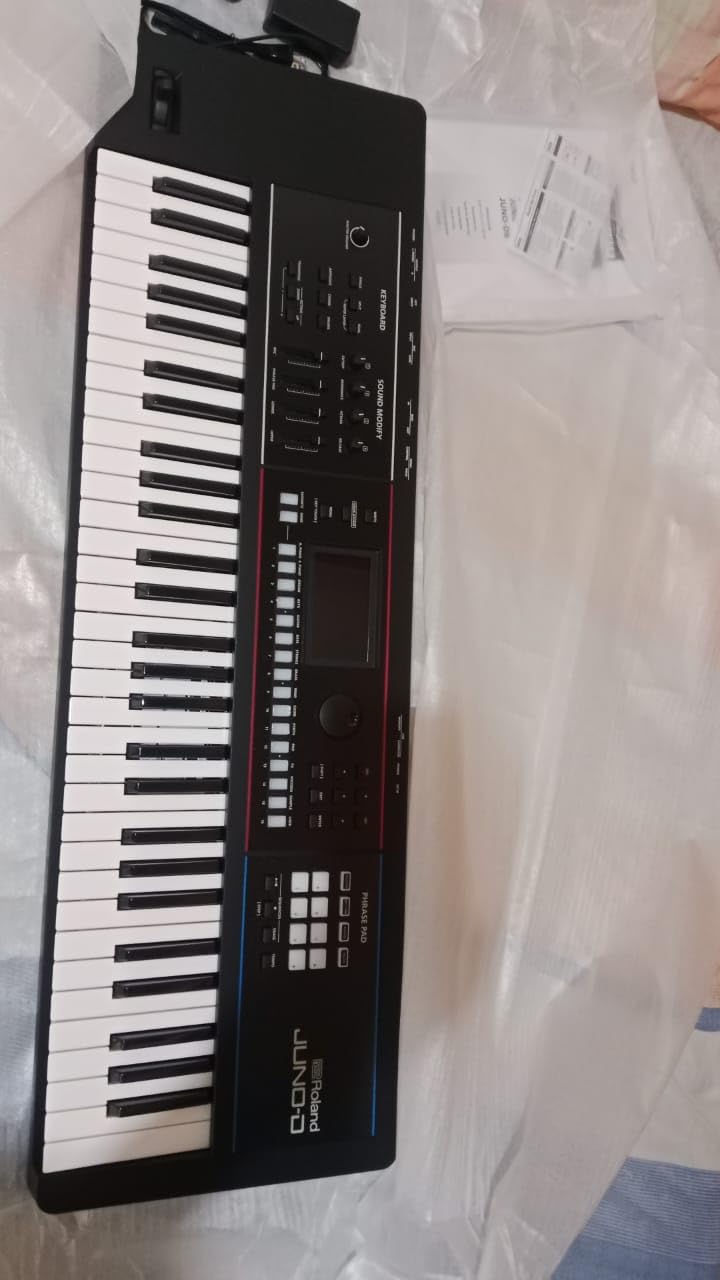
The Roland JUNO-D6 is designed for working musicians who need a reliable, versatile instrument for live performance. With over 3800 onboard sounds powered by the ZEN-Core engine, it covers virtually every musical style you could encounter on a gig.
I tested the JUNO-D6 across several live performance scenarios, and the sound quality consistently impressed me. The acoustic piano patches have improved significantly over previous JUNO generations, and the synth sounds are thick and punchy.
The battery-powered operation is a genuine advantage for outdoor gigs and situations where power outlets are scarce. I played a four-hour outdoor event using just AA batteries, and the keyboard performed flawlessly throughout.
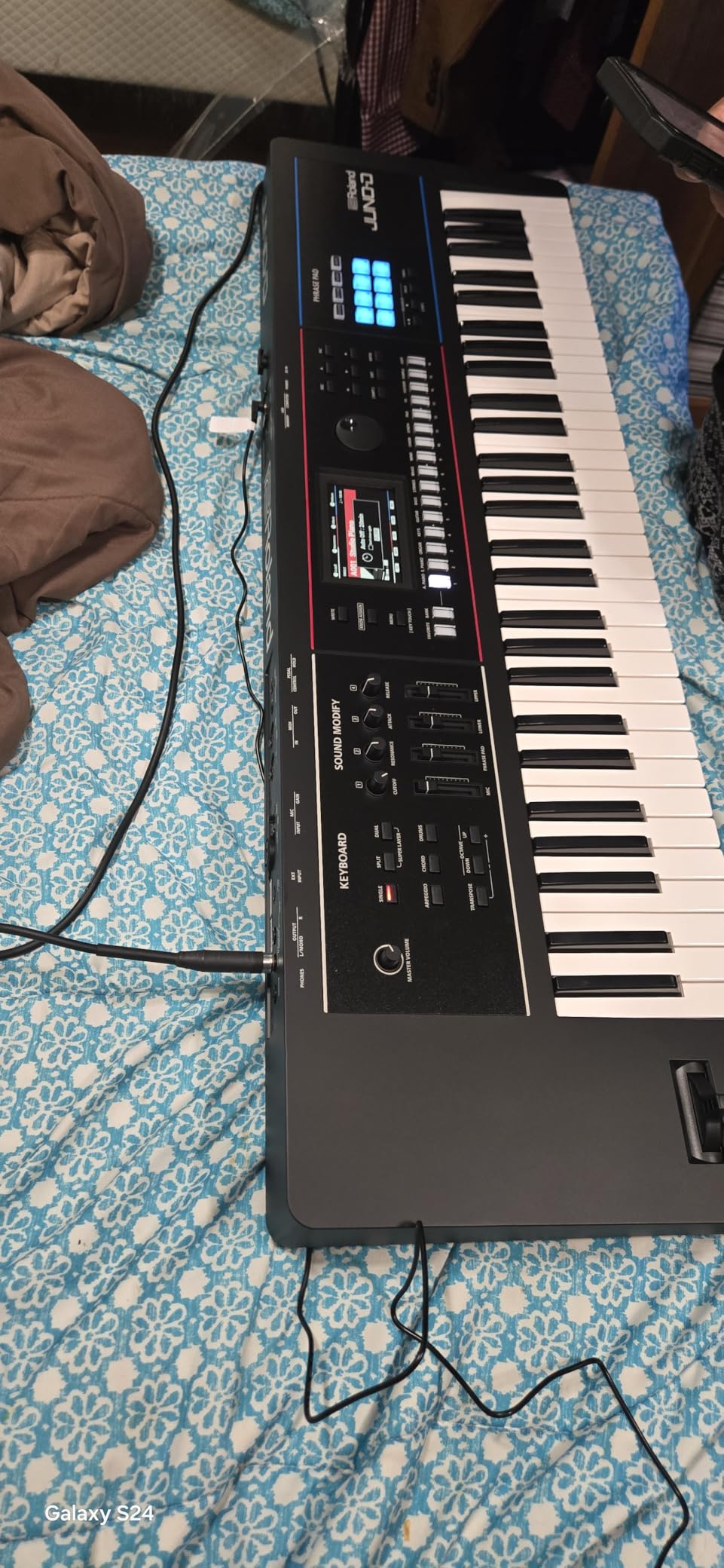
The sample import function lets you load your own WAV files into the keyboard. This is incredibly useful for performers who need custom sounds or backing tracks that are not part of the factory library.
The XLR external mic input with dedicated fader allows you to mix a vocal or instrument input directly through the keyboard. This makes the JUNO-D6 a complete performance solution for solo artists.
Sound Quality Assessment
While the JUNO-D6 offers a massive sound library, some users report a slightly flat or synthetic character compared to higher-end Roland instruments. I found that adjusting the onboard effects and EQ significantly improved the perceived sound quality.
The Roland Cloud expansion system lets you add Sound Packs and Wave Expansions, giving you access to new sound categories and instruments. This keeps the keyboard fresh and relevant as your needs evolve.
Portability and Build Quality
At just 12.8 pounds, the JUNO-D6 is exceptionally portable. The compact design fits easily into standard keyboard bags, and the rugged construction feels built to withstand the rigors of regular gigging.
The main drawback is the key feel, which some users describe as slim or awkward compared to a piano. This is a synth-action keyboard, so pianists may need time to adjust to the lighter touch.
8. Roland JUNO-D8 88-Note Weighted Keyboard – Piano Feel for Performers
Roland JUNO-D8 Synthesizer | 88-Note Weighted Keyboard with Hammer Action | ZEN-Core Engine with Over 3800 Onboard Sounds | Intuitive Creative Tools | USB-C Audio/MIDI Interface for Mobile & Computers
88 weighted keys
PHA-4 hammer action
ZEN-Core engine
3800+ sounds
Battery powered
USB-C audio MIDI
Pros
- Best piano weighting and feel for the money
- Excellent weighted hammer action keys
- Great feel close to real piano
- Over 3800 pro-quality sounds
- Lightweight for 88-key weighted keyboard
- USB-C connectivity with battery power support
Cons
- Limited tutorial resources available
- Controls can be non-intuitive with subpar UX
- Key stabilization during packaging could be improved
The Roland JUNO-D8 solves the most common complaint about portable workstation keyboards by offering genuine weighted hammer action in a relatively lightweight package. The PHA-4 keyboard delivers a playing experience that rivals instruments costing twice as much.
As a pianist who has always struggled with synth-action keyboards, I immediately felt at home on the JUNO-D8. The weighted keys respond naturally across the full velocity range, and the graded action provides heavier resistance in the lower register and lighter touch in the upper keys.
The ZEN-Core engine brings the same 3800+ sound library found in the JUNO-D6, but the weighted action transforms how these sounds feel under your fingers. Piano patches gain a new level of expressiveness, and even synth sounds benefit from the dynamic response.
The battery power support is remarkable for an 88-key weighted keyboard. While it does add weight at 32 pounds, the ability to perform anywhere without worrying about power access is a genuine advantage for certain gigging situations.
Piano Feel Compared to Competitors
The PHA-4 hammer action is the same technology found in Roland’s premium digital pianos. I compared it directly with the Yamaha DGX-670B, and the JUNO-D8 felt noticeably more responsive and realistic.
The ivory-textured key surfaces provide good grip even during intense playing sessions. The action is quiet enough for studio recording, with minimal mechanical noise bleeding into microphone setups.
Best Use Cases for the JUNO-D8
This keyboard is ideal for pianists who need a versatile workstation for gigs and studio work. The combination of authentic piano feel and 3800+ sounds covers virtually every musical situation.
The learning curve for the menu system is the main barrier. New users should plan to spend time with the manual and tutorial resources, though the limited availability of tutorials for this newer model is a drawback.
9. Yamaha MODX M6 61-Key Synthesizer – Expressive Synth Powerhouse
Yamaha 61-Key Music Synthesizer with Improved Keyboard Action, Performance Focused for Next Generation Sound Exploration, Expressive Control and Optimized Workflow MODX M6
61 semi-weighted keys
3 sound engines
Super Knob
8 faders
ESP for DAW integration
Color touchscreen
Pros
- Exceptional sound with 3 powerful engines
- Lightweight design for stage or studio
- Semi-weighted keys with improved synth action
- 8 physical faders and Super Knob for expression
- Color touch screen with dedicated display knobs
Cons
- Requires time and patience to learn
- Need external speaker to play
The Yamaha MODX M6 is a next-generation synthesizer workstation that builds on the success of the original MODX series. The improved keyboard action and three powerful sound engines make this one of the most expressive instruments in its price range.
The three sound engines cover classic analog synthesis, modern FM synthesis, and realistic instrument recreation. I was able to create everything from warm vintage pads to cutting-edge electronic textures, all with remarkable depth and clarity.
The Super Knob is the defining feature of the MODX experience. This single control can manipulate multiple parameters simultaneously, letting you create dramatic sonic transformations in real time. I mapped it to control filter cutoff, reverb depth, and arpeggiator speed, creating evolving soundscapes with a single gesture.
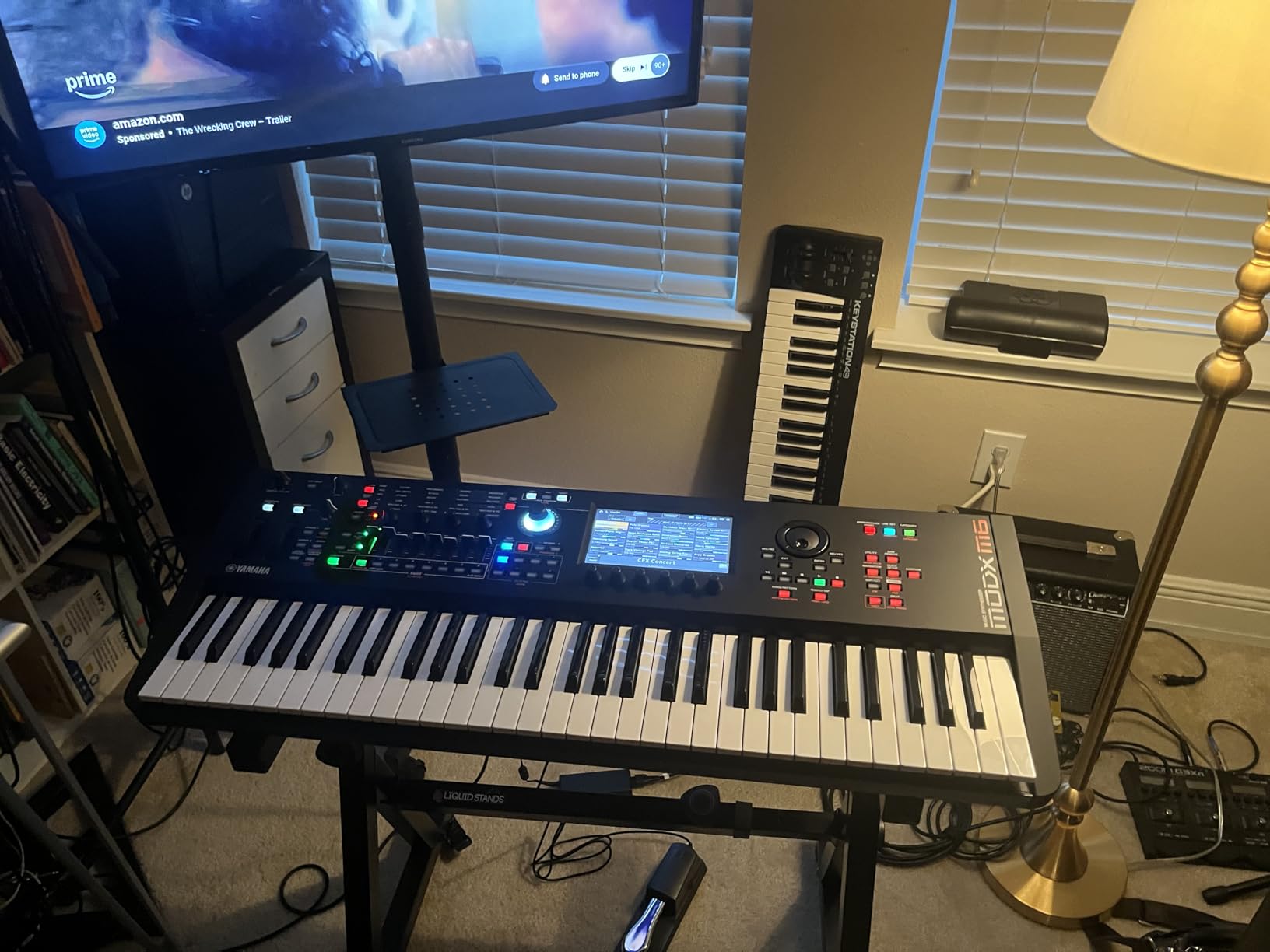
The eight physical faders provide immediate control over your mix, letting you balance multiple parts without touching the touchscreen. The color touchscreen with six dedicated display knobs offers precise parameter editing for deep sound design work.
The semi-weighted keys represent a significant improvement over the original MODX action. They offer more resistance and a more natural playing feel, making this keyboard suitable for both synth and piano-style playing.
FM Synthesis and Sound Design
The FM engine is particularly powerful, allowing you to create complex metallic tones, bell-like sounds, and evolving textures that are difficult to achieve with subtractive synthesis alone. The interface makes FM programming more accessible than classic Yamaha DX-series synths.
The Expanded Softsynth Plugin (ESP) lets you use the MODX sounds directly in your DAW, which is a major advantage for studio producers who want to integrate hardware sounds into their software workflow.
Stage and Studio Versatility
At 22.7 pounds, the MODX M6 is light enough for regular gigging while substantial enough to feel stable on stage. The lack of built-in speakers means you will need external amplification for monitoring.
The learning curve is real, but the payoff is worth it. Once you understand the MODX workflow, it becomes an incredibly fast and intuitive instrument for both sound design and performance.
10. Roland GO:KEYS 3 Music Creation Keyboard – Beginner-Friendly Entry
Roland GO:KEYS 3 Music Creation Keyboard | 61-Note Keyboard | Built-In Stereo Speakers | Bluetooth Audio/MIDI Support for Music Streaming - Dark Red
61 keys
ZEN-Core engine
1000+ sounds
200+ styles
Built-in speakers
Bluetooth audio MIDI
Pros
- Excellent ZEN-Core sound engine with 1000+ sounds
- Fun and intuitive for beginners
- Built-in stereo speakers for portable use
- Bluetooth MIDI for connecting to devices
- Good touch sensitivity and key feel
- Great value for the price
Cons
- Manual documentation is poor and confusing
- Limited connectivity with 2.5mm jack only
- Small speakers are underwhelming
- Not suitable for stage performance
- Recording feature does not capture pedal data via USB
The Roland GO:KEYS 3 is designed to make music creation accessible and fun. With over 1000 ZEN-Core sounds and 200+ accompaniment styles, it provides everything a beginner needs to start making music immediately.
I was impressed by how quickly new users could create music on this keyboard. The auto-accompaniment system generates full backing arrangements based on your chord input, and the chord sequencer with 300+ presets lets you build complete songs without any music theory knowledge.
The built-in stereo speakers are a welcome feature that eliminates the need for external amplification. While they are not powerful enough for live performance, they are perfectly adequate for home practice and casual playing.
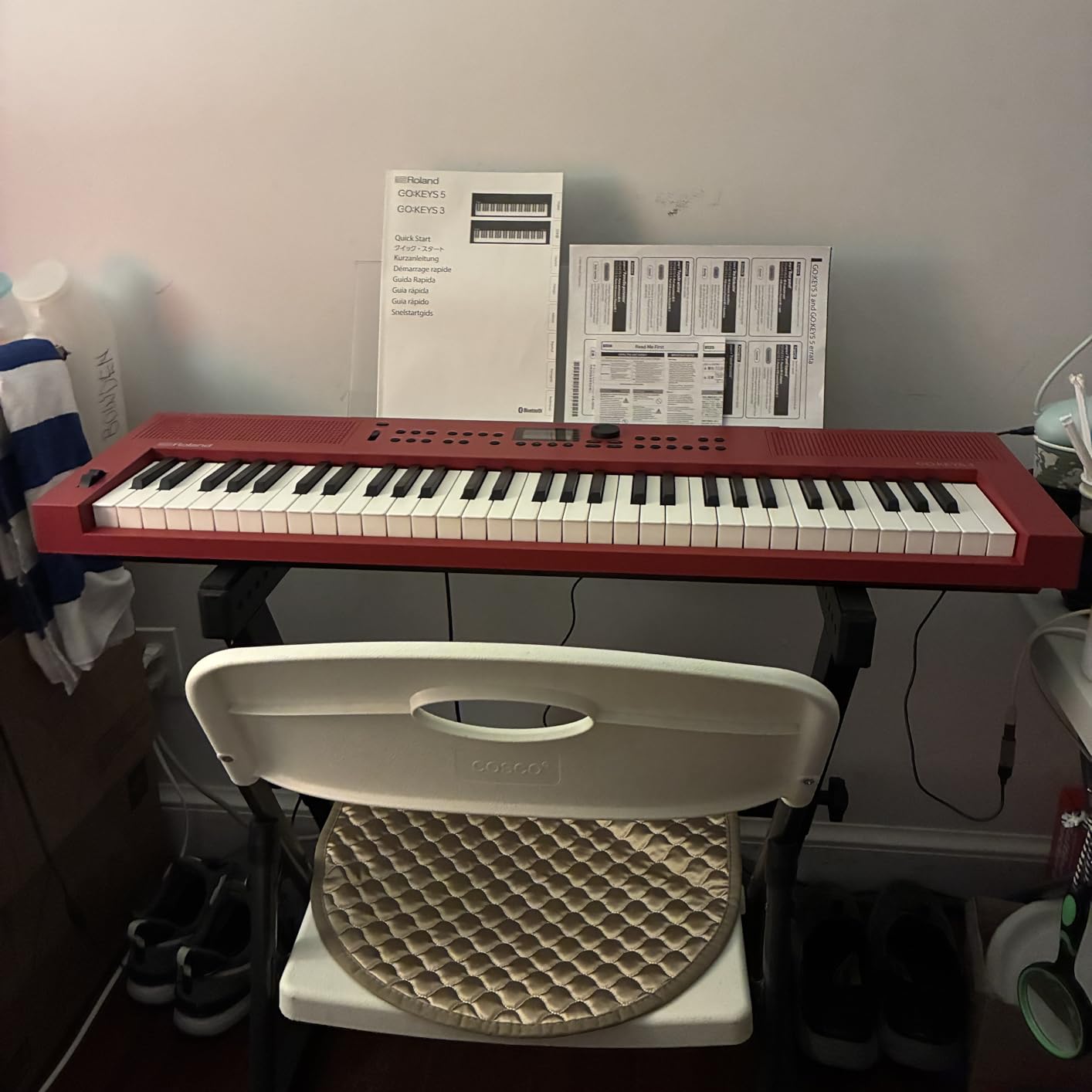
The Bluetooth audio and MIDI support is a standout feature at this price point. I connected the GO:KEYS 3 to my iPad wirelessly and used it as a controller for various music apps, which opened up a world of creative possibilities.
The ZEN-Core engine delivers the same professional-quality sounds found in Roland’s higher-end instruments. This means your investment in learning this keyboard translates directly to more advanced Roland products in the future.
Best for Beginners and Casual Players
The GO:KEYS 3 excels as a first keyboard for aspiring musicians. The intuitive interface and automatic accompaniment make it easy to create satisfying music from day one, which is crucial for maintaining motivation during the learning process.
The touch-sensitive keys respond well to playing dynamics, though they are synth-action rather than weighted. This is appropriate for the target audience and price point.
Limitations for Advanced Use
The limited connectivity options are the main drawback. The 2.5mm jack is an unusual choice that requires adapters for most professional audio equipment. The inability to save favorite scenes is also frustrating for live performance use.
For serious musicians, the GO:KEYS 3 serves better as a practice and composition tool rather than a primary performance instrument. But for beginners and hobbyists, it offers exceptional value and a genuine pathway into music creation.
11. Casio CT-X3000 61-Key Portable Arranger – Exceptional Budget Value

Casio CT-X3000 – 61-Key Portable Arranger Keyboard | 800 Tones, 235 Rhythms, DSP Effects, 17-Track Recorder, USB MIDI, 12W Speakers, Phrase Pads, Aux In | Performance Power Anywhere
61 keys
AiX engine
800 tones
235 rhythms
17-track recorder
12W speakers
Battery power
Pros
- Excellent sound quality with AiX engine
- Great value for the price
- Wide variety of 800 tones and 235 rhythms
- 16-track MIDI sequencer is best-in-class
- Touch-responsive keys feel good
- USB MIDI works flawlessly
- Works well with DAWs
Cons
- Complicated to learn and navigate
- Red color accents may look cheap
- 3.5mm headphone requires adapter
- Shipping packaging issues reported
The Casio CT-X3000 punches far above its weight class with 800 editable tones, 235 rhythms, and a 17-track recorder. The AiX sound engine produces surprisingly realistic sounds that rival keyboards costing significantly more.
I was particularly impressed by the acoustic instrument sounds. The grand piano tone has a warmth and depth that I did not expect at this price point, and the brass and string sections have a convincing ensemble character.
The 17-track recorder is genuinely best-in-class for this price range. I was able to create complete multi-instrument arrangements directly on the keyboard, with 16 instrument tracks plus a dedicated rhythm track. This level of sequencing power is usually found only on much more expensive workstations.
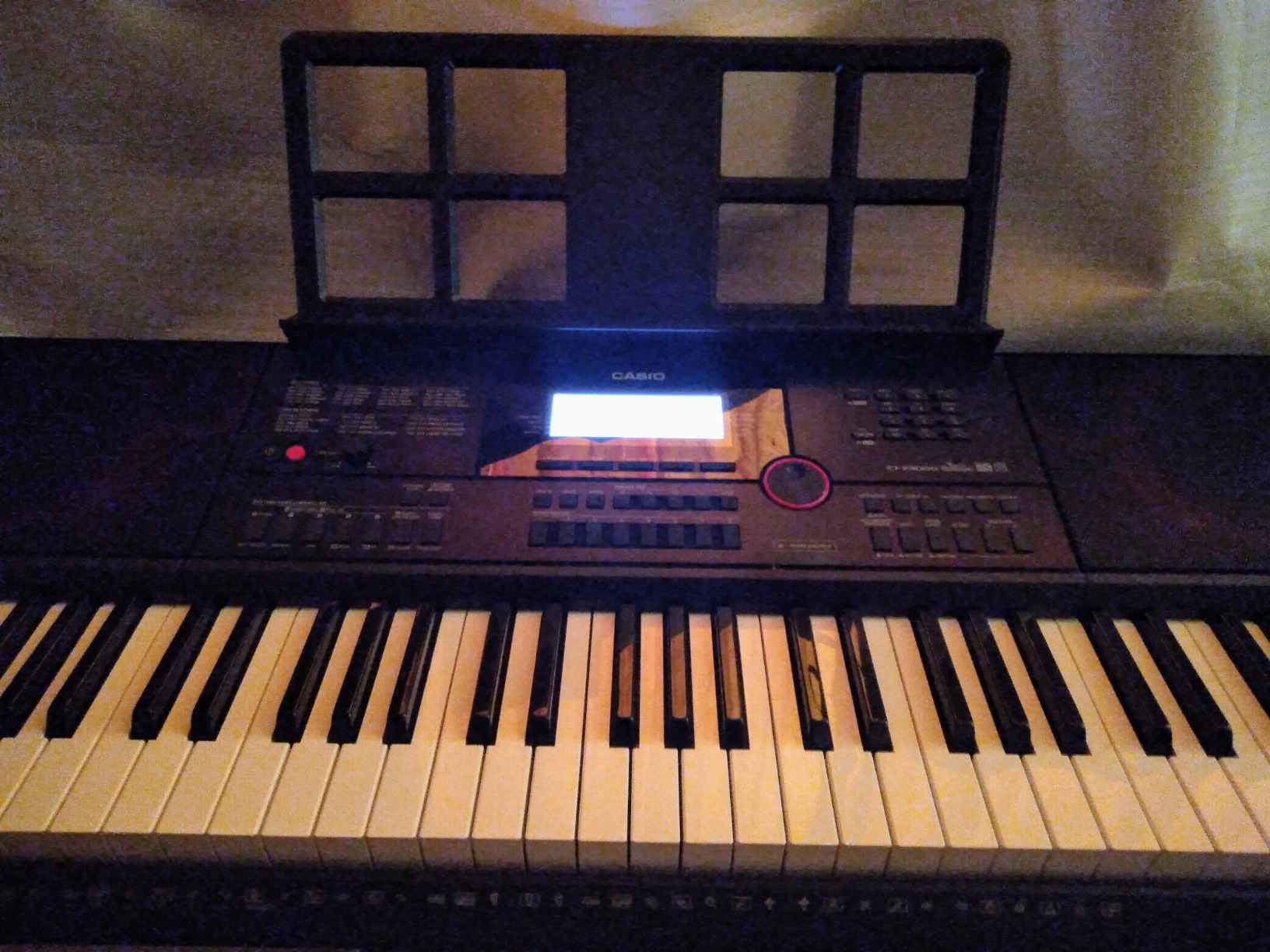
With 304 customer reviews and a 4.6-star rating, the CT-X3000 has clearly struck a chord with musicians. The USB-MIDI connectivity works flawlessly with DAWs, making this keyboard an excellent controller for home studio setups.
The built-in 12W stereo speakers are adequate for home practice and small gatherings. Battery power operation means you can take this keyboard anywhere without worrying about finding an outlet.
Recording and Sequencing Power
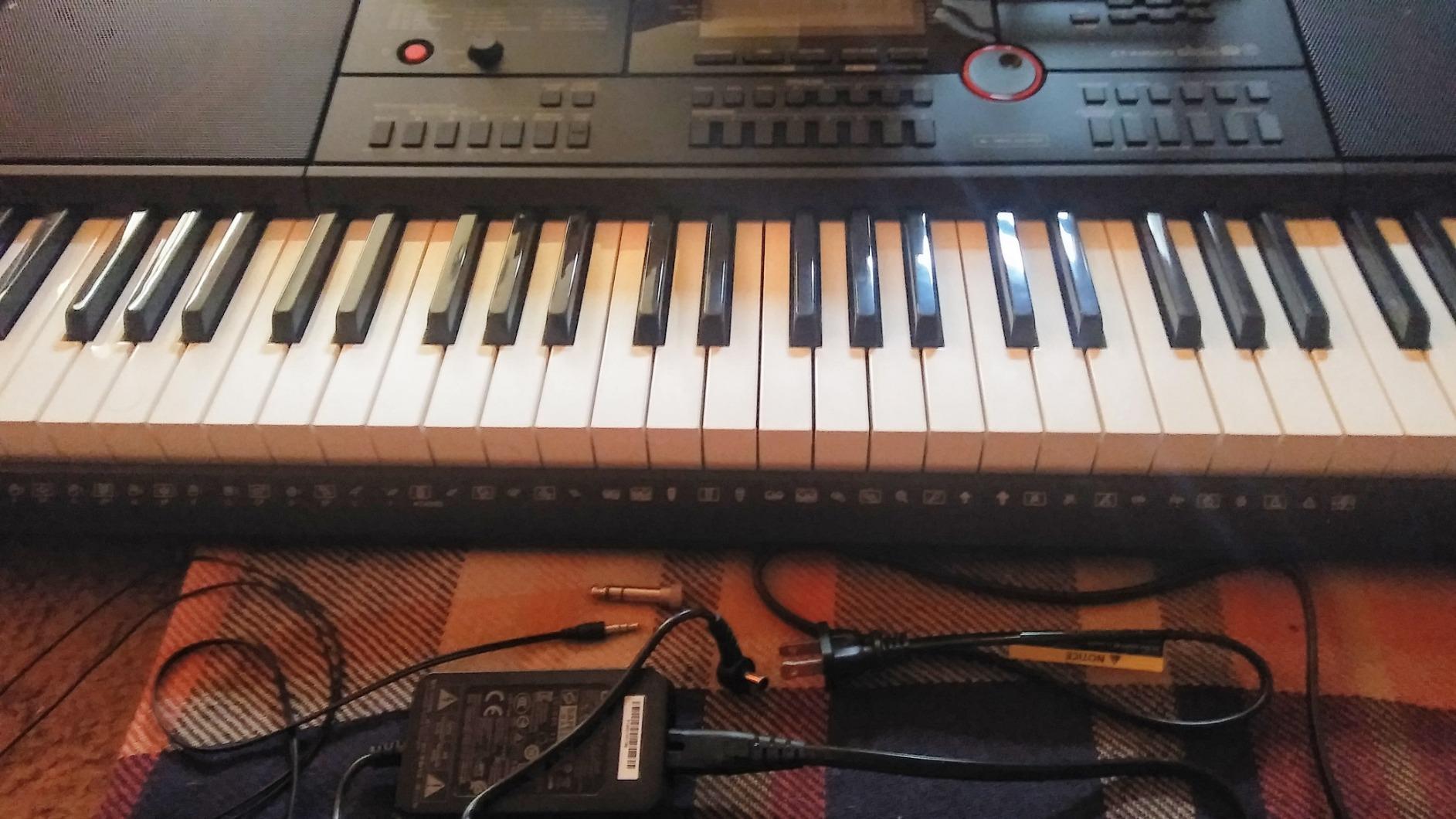
The 17-track recorder transforms the CT-X3000 from a simple arranger keyboard into a legitimate music production workstation. Each track can be individually edited, mixed, and muted, giving you real control over your arrangements.
The registration memory lets you save and recall complete keyboard setups, including tones, rhythms, and effects settings. This is invaluable for live performance situations where you need to switch configurations quickly.
Controller Keyboard Capabilities
The USB-MIDI connection makes the CT-X3000 an excellent controller keyboard for DAW-based production. The touch-responsive keys transmit velocity accurately, and the knobs and buttons can be mapped to control software parameters.
The main limitation is the menu navigation, which can be complex and requires regular consultation with the manual. Once you learn the layout, however, the workflow becomes much more intuitive.
12. Korg i3 Music Workstation – Portable Production Power

Korg Workstation Portable Keyboard (I3-MB)
61 keys
790 sounds
59 drum kits
Backlit panel
Battery powered
Audio recording to flash drive
Pros
- 790 instrument sounds plus 59 drum kits
- 61 velocity sensitive keys with 3 touch curves
- Backlit panel buttons and good sized screen
- Grand Piano Sound button for quick access
- Includes software suite with Reason lite
- Ultra portable and intuitive to use
Cons
- No 5-pin MIDI In port
- No arpeggiator
- Sounds not quite professional grade compared to Kross or Krome
- Limited live control knobs
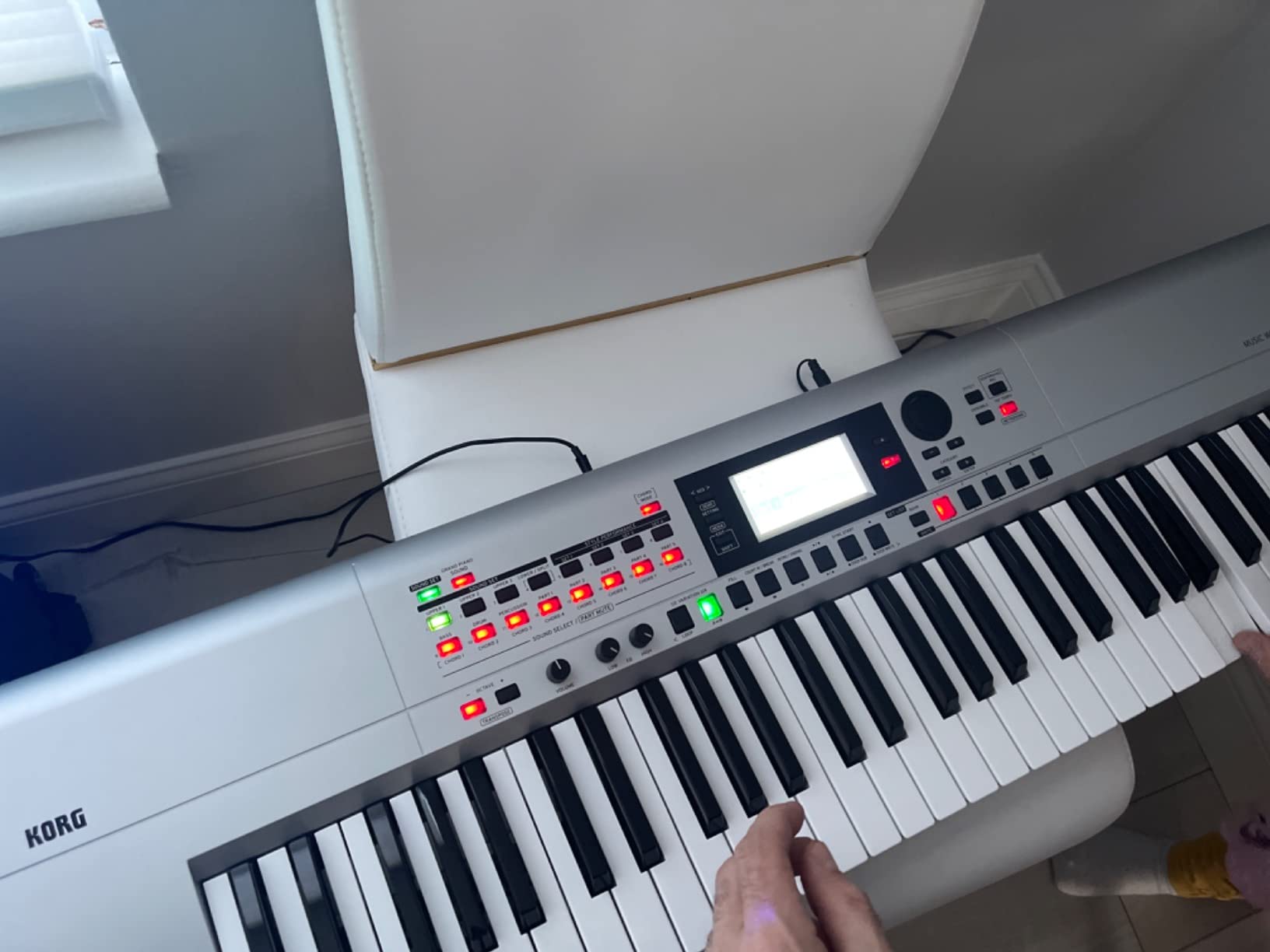
The Korg i3 Music Workstation is a portable production powerhouse that offers 790 instrument sounds and 59 drum kits in a lightweight, battery-powered package. It bridges the gap between entry-level arrangers and professional workstation keyboards.
The included software suite is a significant value-add. Korg bundles Reason Lite, AAS VST plugins, and the legendary Korg M1 software synth, giving you a complete production toolkit that extends well beyond the keyboard itself.
The Grand Piano Sound button provides instant access to a quality piano tone without navigating through menus. This is a small but thoughtful feature that shows Korg understands real-world performance needs.
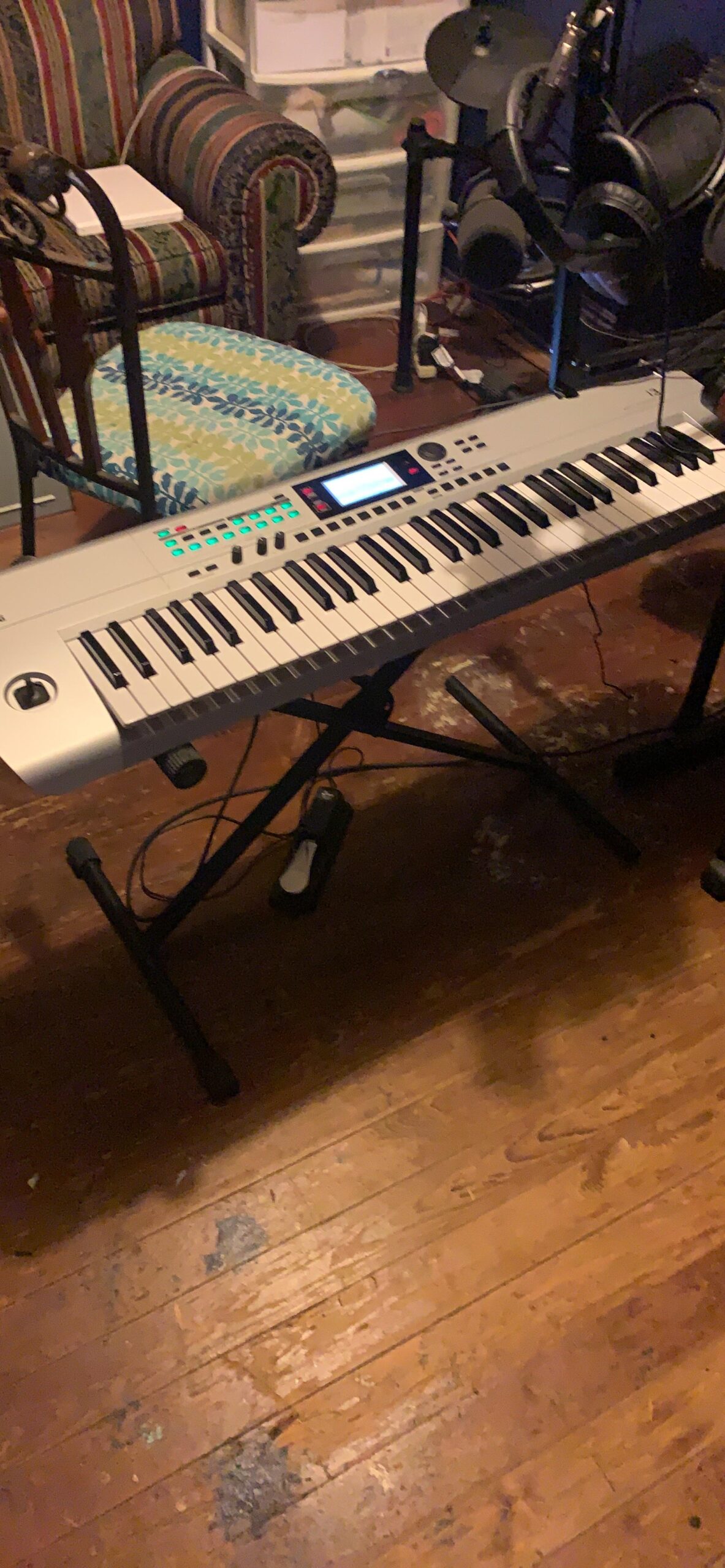
The 50 registration slots let you save and recall complete performance setups. I organized mine by song, which made switching between setlist items seamless during live performances.
The audio recording to flash drive feature lets you capture your performances directly to a USB drive. This is incredibly useful for reviewing practice sessions and sharing rough demos with bandmates.
Style and Accompaniment System
The i3 excels at accompaniment styles, with backing arrangements that follow your chord progressions in real time. The Style Performance Sound Sets combine instruments and effects into cohesive performance configurations.
You can also layer sounds yourself, giving you the flexibility to create custom combinations that suit your musical style. The joystick controller handles pitch bend, vibrato, and brilliance in real time.
Limitations Compared to Higher-End Korg Models
The sound quality falls slightly short of the Korg Kross 2 and Krome EX, particularly for acoustic instrument realism. The absence of an arpeggiator is also a notable omission for electronic music producers.
Despite these limitations, the i3 offers excellent value for musicians who need a portable, easy-to-use workstation with a solid sound library and useful software bundle.
13. Yamaha PSR-A5000 61-Key World Music Arranger – Global Sound Palette
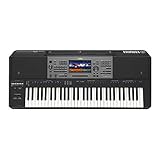
Yamaha 61-Key World Music Arranger Keyboard, 210 New World Music Styles, Assignable Joystick Controller PSRA5000
61 keys
Super Articulation Voices
210 world styles
Real Time Scale Tuning
Assignable joystick and knobs
Velocity sensitive portamento
Pros
- Real Time Scale Tuning settings on panel
- Super Articulation Voices for natural expressive nuances
- Velocity Sensitive Portamento Time
- Assignable Knobs for real time effects
- Excellent for Arabic Khaliji Shami and world music styles
- Top sound quality and great appearance
- Built-in memory and music looping
Cons
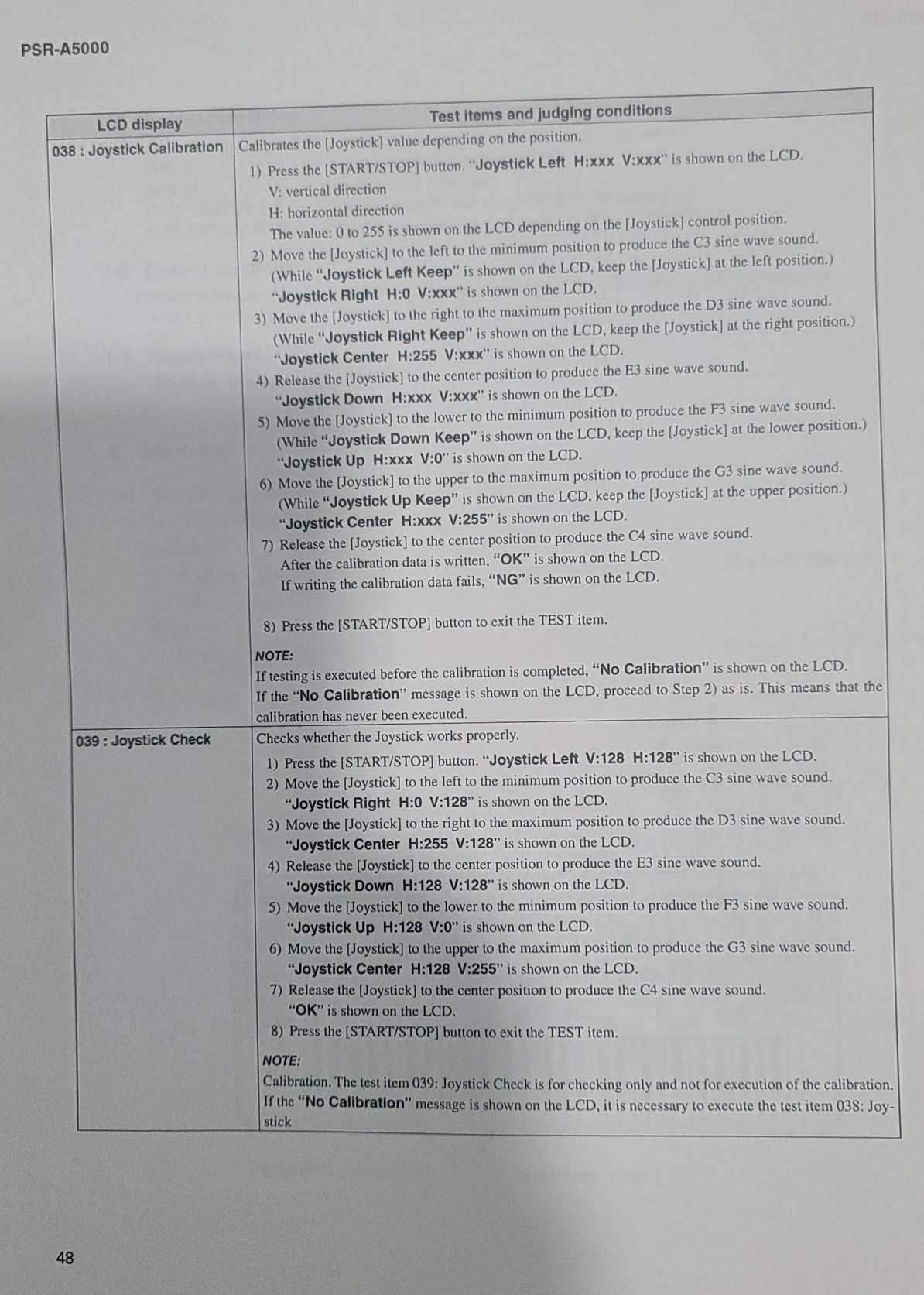
- Modulation stick may have centering issues
- Extra sound and style packs are quite pricey
- Yamaha closed system limits access compared to other brands
- May feel different for users used to other brands
The Yamaha PSR-A5000 is a specialized arranger keyboard designed for world music styles. With 210 world music styles and Super Articulation Voices, it is the go-to choice for musicians who perform Arabic, Khaliji, Shami, and other global music traditions.
The Real Time Scale Tuning settings are what set this keyboard apart. You can switch between different musical scales and tuning systems on the fly, which is essential for authentic performances of music from the Middle East, India, and other regions that use non-Western tuning systems.
The Super Articulation Voices reproduce the subtle nuances of traditional instruments with remarkable accuracy. I tested the oud and qanun sounds and was impressed by how authentically they captured the ornamentation and playing techniques of these instruments.
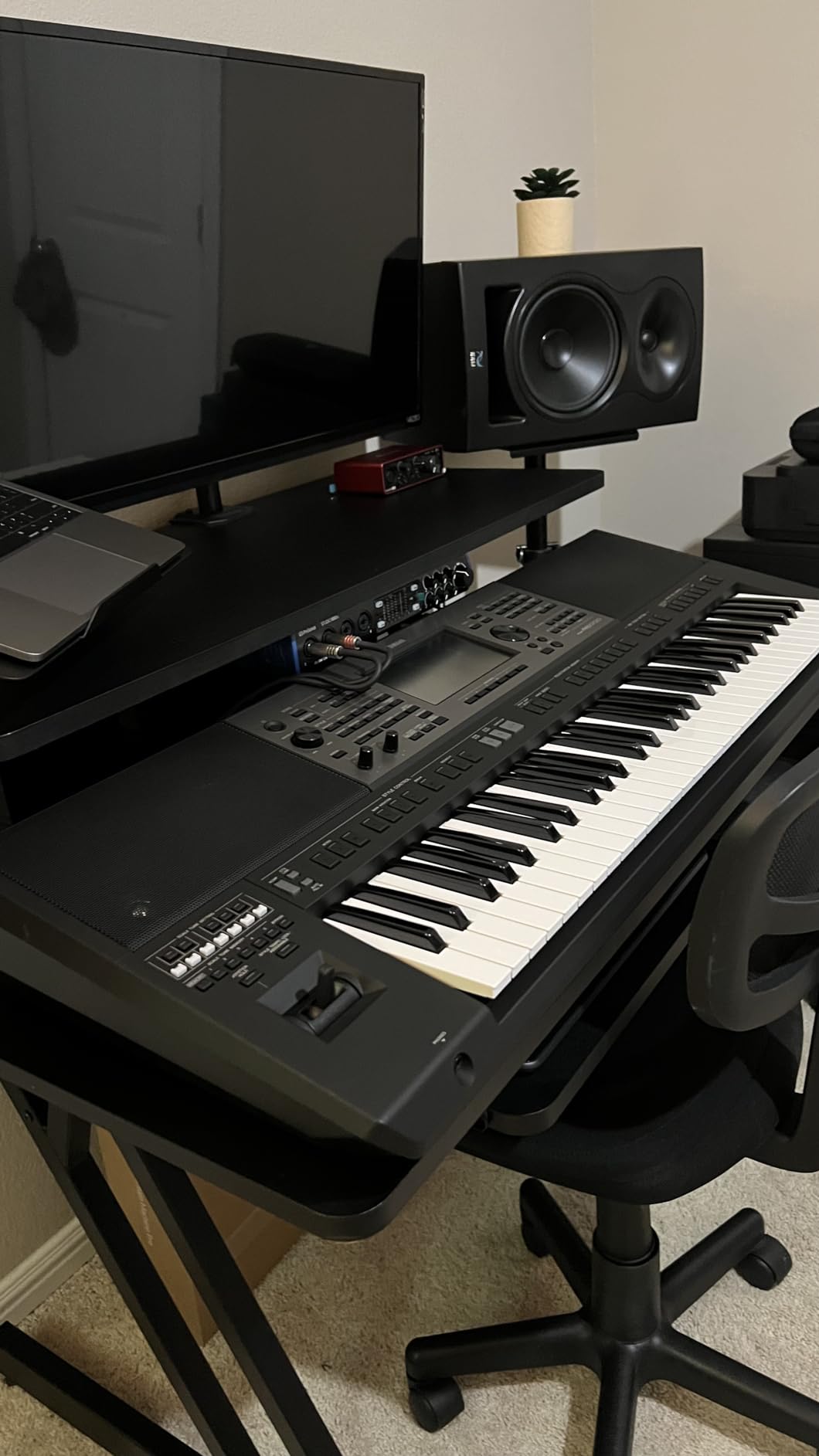
The 210 accompaniment styles cover a vast range of global musical traditions. Each style includes multiple variations, intros, endings, and fill-ins, giving you complete control over your arrangements.
The assignable knobs provide real-time control over effects and parameters, which is essential for shaping sounds during live performance. The assignable joystick handles pitch bend and modulation with smooth, responsive action.
World Music Capabilities
The PSR-A5000 is purpose-built for world music performance, and this specialization shows in every aspect of its design. The scale tuning presets cover Arabic maqamat, Indian ragas, and other non-Western tuning systems with authentic intonation.
For musicians who perform world music professionally, this keyboard eliminates the need for multiple instruments and complex tuning setups. Everything you need is built into a single, portable unit.
Expansion and Limitations
Extra sound and style packs are available to expand the PSR-A5000 capabilities, but they are notably expensive. The Yamaha closed system also means you are limited to official expansion content, unlike Roland’s more open Cloud ecosystem.
The modulation stick centering issues reported by some users are worth noting, though this appears to be a quality control concern rather than a design flaw.
14. Korg Pa700 61-Key Arranger Workstation – Professional Arranger Excellence

Korg Pa700 61-Key Arranger Workstation
61 keys
1700+ sounds
370+ styles
2x25W speakers
TouchView display
Built-in MP3 player
EDS-X engine
Pros
- 370+ music styles included
- 1700+ sounds
- Built-in MP3 player with vocal remover
- 2 x 25W speaker system
- TFT TouchView display
- Very good sound quality
- Plenty of storage for custom content
Cons
- No Latin rhythms included can be added
- Some quality control issues reported
The Korg Pa700 is a professional arranger workstation that combines 1700+ sounds, 370+ styles, and a powerful 2x25W speaker system. It is built for working musicians who need complete performance capabilities in a single instrument.
The EDS-X sound engine delivers rich, detailed sounds across all instrument categories. I was particularly impressed by the acoustic guitar and wind instrument patches, which respond expressively to velocity and articulation changes.
The built-in 2x25W speaker system is a significant advantage for solo performers. The speakers are powerful enough for small to medium venues, eliminating the need to carry separate amplification for many gigging situations.
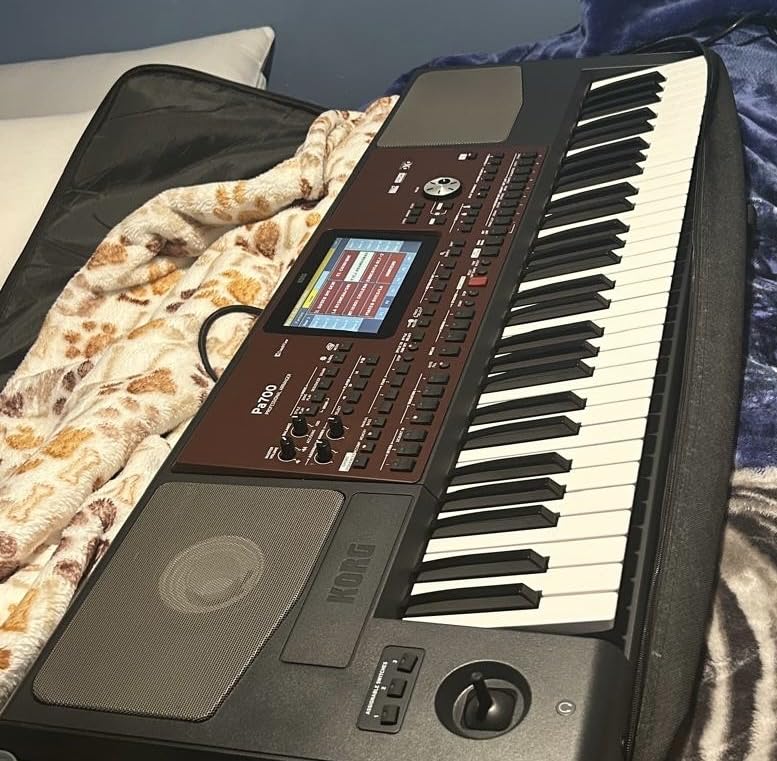
The TFT TouchView display provides clear visual feedback and intuitive navigation. The touchscreen interface makes it easy to browse the extensive sound and style libraries, even during live performances.
The built-in MP3 player with vocal remover is a feature that working musicians will appreciate. You can play backing tracks, remove vocals from existing recordings, and even transpose MP3 files to match your key.
Arranger Features for Live Performance
The 370+ music styles provide complete backing arrangements across virtually every musical genre. Each style includes multiple variations and fills, giving you dynamic control over your arrangements in real time.
The generous storage for custom content means you can load additional sounds, styles, and performance setups. The Korg Pa-Series Editor and Librarian software makes managing your content library straightforward.
Sound Quality and Professional Applications
The Pa700 delivers sound quality that rivals much more expensive arranger workstations. The 1700+ sounds cover everything from realistic acoustic instruments to modern electronic textures.
The main limitation is the absence of Latin rhythms in the factory content, though these can be added as expansion packs. Some users have also reported quality control issues, so purchasing from a reputable dealer is recommended.
15. Yamaha DGX-670B 88-Key Weighted Digital Piano – Piano-First Workstation
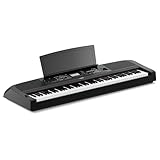
Yamaha DGX-670B, 88-Key Weighted Digital Piano with Sustain Foot Switch and Music Rest, Black - Furniture Stand Sold Separately
88 weighted keys
CFX Sampling
630 voices
263 styles
Bluetooth
Built-in speakers
Hammer action
Pros
- Weighted keyboard action heavier in low keys lighter in high
- CFX Stereo Sampling Yamaha flagship grand piano sound
- 630 instrument Voices
- 263 Automatic Accompaniment Styles
- Adapted Style adjusts to playing intensity
- Great value for the price
- Bluetooth connectivity
- USB and MIDI connectivity for DAW use
Cons
- Keybed not fully weighted compared to higher-end models
- Double sensors not triple less suited for advanced pianists
- No key escapement
- Cannot import new voices or samples
- Maximum 3 voices at once
- Very heavy at 67.65 pounds
- Included sustain pedal is low quality
The Yamaha DGX-670B is a unique entry in the workstation keyboard category, offering a genuine weighted hammer-action keyboard at a price that makes it accessible to serious students and hobbyists. With 540 reviews and a 4.7-star rating, it has become one of the most popular digital pianos on the market.
The CFX Stereo Sampling delivers Yamaha’s flagship concert grand piano sound. I compared it directly with dedicated digital pianos costing twice as much, and the DGX-670B held its own in terms of tonal quality and dynamic response.
The 88 weighted keys use a graded hammer action that is heavier in the low register and lighter in the high register, mimicking the feel of an acoustic piano. This makes it an excellent choice for pianists who also want arranger and workstation features.
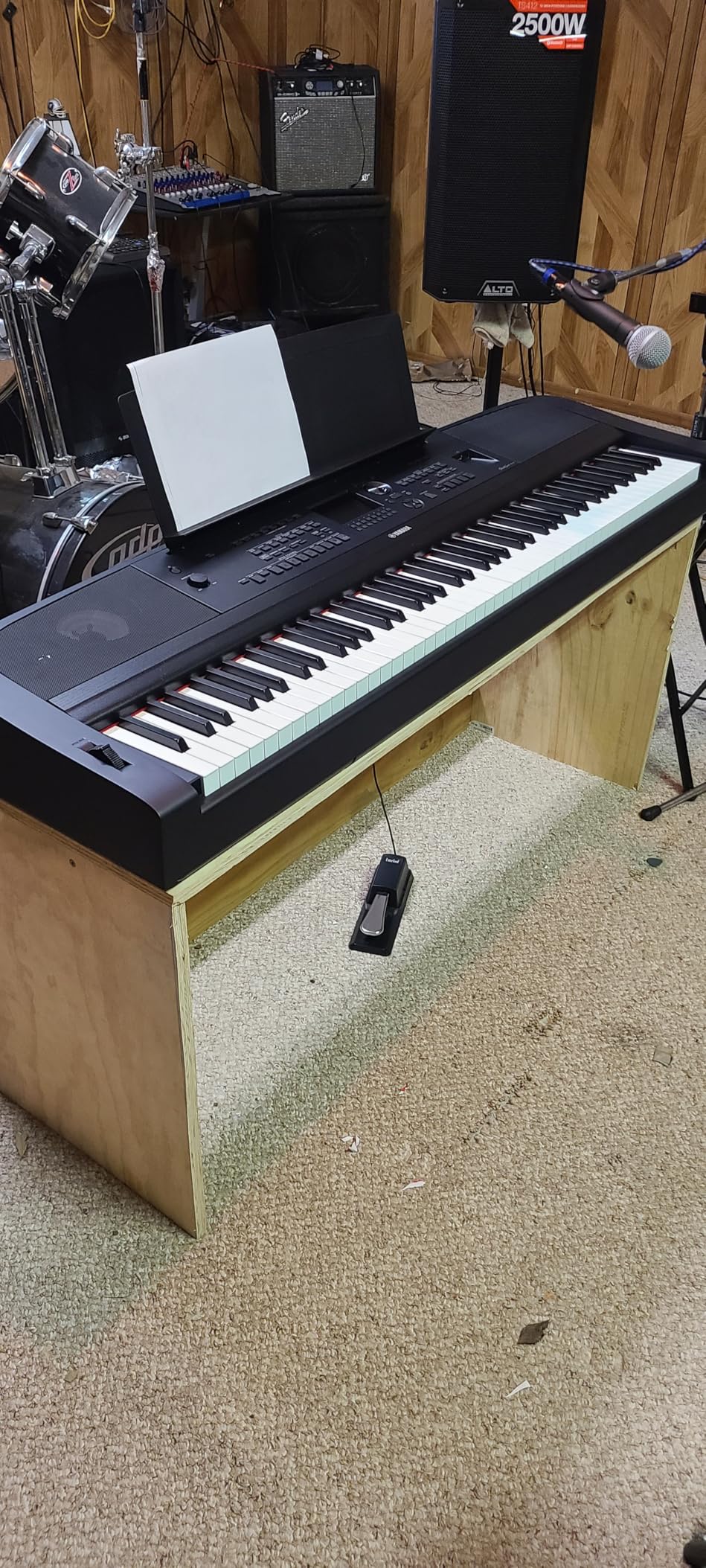
The 630 instrument voices and 263 accompaniment styles transform the DGX-670B from a digital piano into a complete music creation station. The Adapted Style feature is particularly clever, adjusting the accompaniment complexity based on your playing intensity.
Bluetooth connectivity lets you stream audio from your devices through the built-in speakers, which is useful for playing along with backing tracks or learning songs from streaming services.
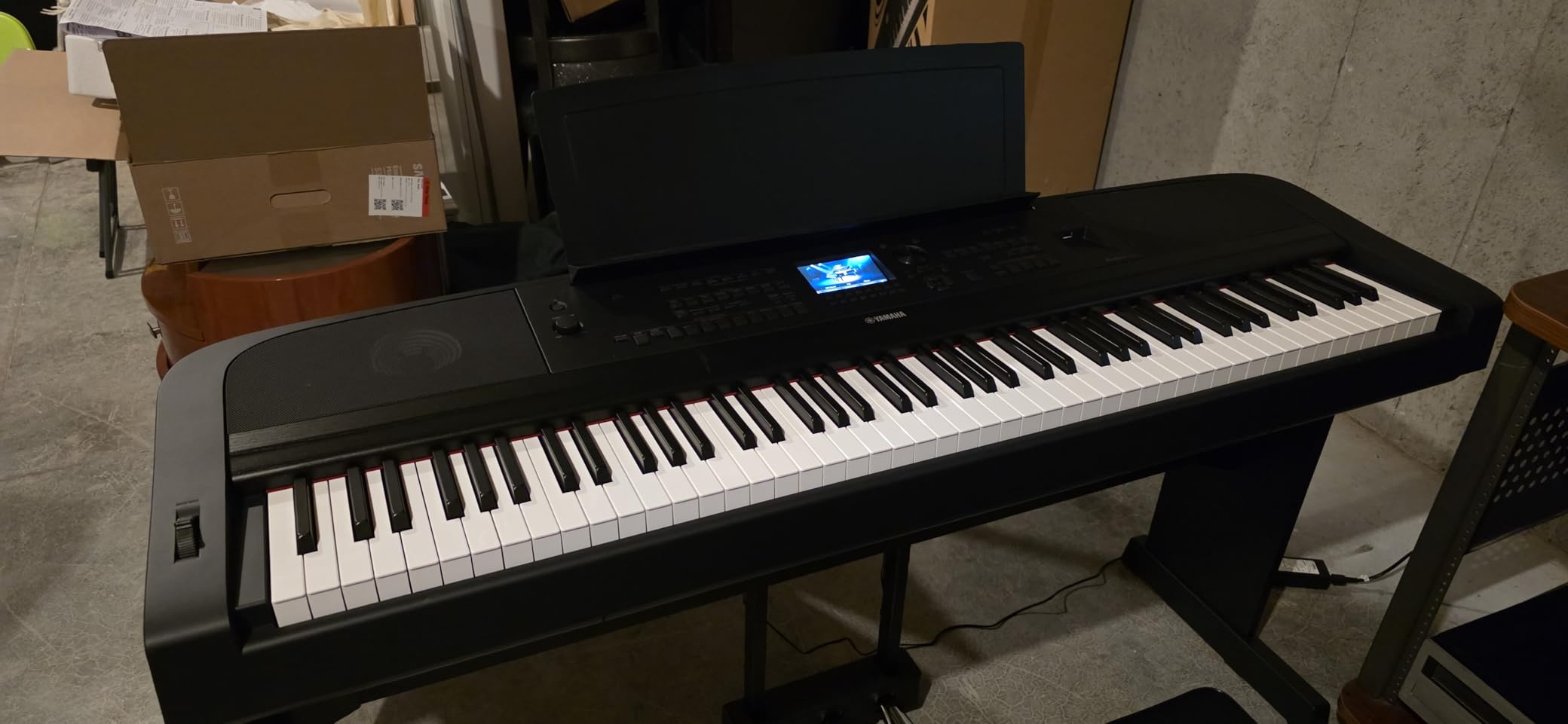
Piano Sound and Key Action Assessment
The CFX grand piano sample is genuinely impressive, with rich overtones and a natural decay that responds to velocity changes. The stereo sampling creates a wide, immersive sound field through headphones or external speakers.
The double-sensor key action is adequate for most players but falls short of the triple-sensor systems found on professional-stage pianos. Advanced pianists may notice limitations in repetitive note detection and very fast passages.
Workstation and Recording Features
The onboard recording feature lets you capture your performances directly on the keyboard. The USB and MIDI connectivity makes it easy to integrate with DAWs for more complex recording projects.
The main limitation is the inability to import new voices or samples, which means you are limited to the 630 factory voices. At 67.65 pounds, this is also not a portable keyboard and is best suited for a permanent home or studio setup.
Buying Guide: How to Choose the Best Workstation Keyboard?
Choosing among the best workstation keyboards requires understanding your specific needs and how different features translate to real-world use. This buying guide breaks down the key factors that should influence your decision.
Whether you are a beginner looking for your first serious instrument or a professional upgrading your rig, these guidelines will help you narrow down the options and find the perfect workstation for your situation.
Sound Quality and Number of Presets
Sound quality is the most important factor when evaluating workstation keyboards. The sound engine determines the realism and versatility of the instrument, and the number of presets gives you immediate access to different sonic textures.
Look for keyboards with dedicated acoustic modeling technology, such as Yamaha’s CFX Sampling, Roland’s ZEN-Core engine, or Korg’s multi-engine approach. These technologies produce more realistic and expressive sounds than basic sample playback systems.
Preset count matters less than preset quality. A keyboard with 500 carefully crafted sounds will serve you better than one with 3000 mediocre patches. Listen to sound demos and read user reviews to assess the actual sound quality before buying.
Key-bed Types and Action
The key-bed is your primary interface with the instrument, and the type of action significantly impacts your playing experience. The three main categories are synth action, semi-weighted, and fully weighted hammer action.
Synth action keys are lightweight and fast, making them ideal for electronic music production and fast lead playing. Semi-weighted keys offer more resistance and better velocity response, providing a middle ground between synth and piano feel.
Fully weighted hammer action replicates the feel of an acoustic piano, with graded resistance across the keyboard. If you are a pianist or plan to play piano repertoire, this is the only acceptable option. Look for keyboards with PHA-4 or equivalent hammer action technology.
Aftertouch is a feature that allows you to modify sounds by pressing harder on the keys after the initial strike. This is essential for synth players who want expressive control over filter sweeps, volume swells, and other parameters.
Polyphony Notes
Polyphony refers to the number of simultaneous notes a keyboard can produce. Higher polyphony means you can play more complex arrangements without notes cutting off prematurely.
For most players, 128-note polyphony is sufficient. However, if you plan to use heavy sustain pedal usage, layered sounds, or complex sequencer arrangements, look for keyboards with 256-note polyphony or higher.
The Yamaha MX61 offers 128-note polyphony, which handles most playing situations without issues. The Korg Nautilus goes even further with its advanced engine architecture, ensuring that note dropout is never a problem.
Sequencer and Sampling Capabilities
The sequencer is what separates a workstation keyboard from a standard synthesizer. A good sequencer lets you record, edit, and arrange multi-track compositions directly on the instrument.
Look for keyboards with at least 16-track sequencing capability. The Casio CT-X3000 offers a 17-track recorder that is remarkably powerful for its price, while the Korg Nautilus provides 16 MIDI tracks and 16 audio tracks for full production work.
Sampling capability allows you to record your own sounds and play them back from the keyboard. The Roland FANTOM-06 and JUNO-D series both offer sample import for WAV files, giving you the ability to incorporate custom sounds into your performances.
DAW Integration
Modern workstation keyboards should work seamlessly with your computer-based DAW. Look for USB audio and MIDI interfaces, class-compliant connectivity, and dedicated DAW control features.
The Yamaha MX61 excels in DAW integration with class-compliant USB and direct integration with major DAWs. The Roland FANTOM-06 offers a 4×32 USB audio interface for multi-channel recording, though it only transmits MIDI data over USB, not audio.
The Expanded Softsynth Plugin on the Yamaha MODX M6 lets you use the keyboard sounds directly in your DAW, which is a major advantage for studio producers who want to integrate hardware sounds into their software workflow.
Weight and Portability
If you plan to gig regularly, weight becomes a critical factor. Workstation keyboards range from ultra-portable models under 10 pounds to professional instruments exceeding 50 pounds.
The Roland JUNO-D6 at 12.8 pounds and the Korg Kross 2 at 8.4 pounds are among the most portable options. Battery-powered operation adds another layer of portability, freeing you from dependence on power outlets.
For 88-key weighted keyboards, the Roland JUNO-D8 at 32 pounds is relatively light for its category. The Yamaha DGX-670B at 67.65 pounds is substantially heavier and better suited for permanent installation.
Consider your transportation situation carefully. A 50-pound keyboard requires a sturdy stand, a quality case, and potentially a second person to help with loading and unloading.
Budget Considerations: Under $500 and Under $1000
For musicians on a tight budget, several excellent workstation keyboards deliver exceptional value. The Roland GO:KEYS 3 and Casio CT-X3000 both offer impressive features for under $500.
In the under $1000 category, the Korg Kross 2-61 and Yamaha MX61 are standout choices. Both offer professional-grade sounds, solid build quality, and capable sequencing features that rival more expensive instruments.
When budgeting, remember to factor in accessories. You will likely need a keyboard stand, sustain pedal, headphones, and possibly an audio interface or amplifier. These can add several hundred dollars to your total investment.
Frequently Asked Questions About Workstation Keyboards
Are keyboard workstations worth it?
Yes, keyboard workstations are worth it for serious musicians, producers, and performers who need high-quality sounds, sequencing capabilities, and hands-on control in a single instrument. They eliminate the need for separate synthesizers, effects units, and recording equipment, making them cost-effective despite the higher upfront investment. Workstations are particularly valuable for live performance, film scoring, and studio production where quick access to diverse sounds is essential.
What is the difference between a keyboard and a workstation?
A standard keyboard or synthesizer focuses primarily on sound generation, while a workstation keyboard combines sound generation with built-in sequencing, sampling, effects processing, and recording capabilities. Workstations allow you to create complete multi-track arrangements without a computer, whereas a standard keyboard requires external equipment for recording and arranging. Workstations also typically offer more extensive sound libraries, deeper editing capabilities, and performance features like split, layer, and setlist management.
What keyboard do professionals use?
Professional musicians use a range of workstation keyboards depending on their needs. Top choices include the Korg Nautilus for its nine sound engines and premium key action, the Yamaha Genos and GENOS2 for arranger-style performances, the Roland FANTOM series for electronic music production, and the Yamaha MODX for synth-oriented work. For live performance, many professionals favor the Roland JUNO-D series for their portability and sound versatility, while studio producers often rely on flagship models like the Korg Nautilus or Yamaha Montage.
Can I use a workstation keyboard as a MIDI controller?
Yes, most modern workstation keyboards can function as MIDI controllers for your DAW. Keyboards like the Yamaha MX61, Roland FANTOM-06, and Korg Nautilus offer USB MIDI connectivity and dedicated DAW integration features. Some models also include audio interface capabilities, allowing you to route audio between the keyboard and your computer over USB. Check for class-compliant USB connectivity for the simplest plug-and-play experience without requiring dedicated drivers.
Which workstation keyboard has the best sounds?
Sound quality is subjective and depends on your musical style, but several workstation keyboards are consistently praised for their sound engines. The Korg Nautilus offers nine distinct sound engines for unmatched versatility, while the Yamaha Genos2 features Super Articulation 2 voices that produce remarkably realistic acoustic instrument recreations. The Roland FANTOM series uses the ZEN-Core engine with thousands of electronic and acoustic sounds. For value, the Yamaha MX61 with its MOTIF sound engine delivers professional-grade sounds at an accessible price point.
Conclusion: Finding Your Perfect Workstation Keyboard
After testing 15 of the best workstation keyboards available in 2026, our top recommendation is the Korg Nautilus 88 for its unmatched combination of nine sound engines, premium weighted hammer action, and professional sequencing capabilities. It is the ultimate instrument for serious musicians who refuse to compromise on sound quality or playability.
For value-conscious buyers, the Yamaha MX61 delivers MOTIF-engine sounds at a fraction of flagship prices, while the Korg Kross 2-61 proves that budget workstation keyboards can still deliver serious creative tools. Both earn their place among the best workstation keyboards for musicians who want professional features without the premium price tag.
Consider your primary use case carefully. Live performers should prioritize portability and sound versatility, studio producers should focus on sound quality and DAW integration, and beginners should look for intuitive interfaces that encourage creativity. Whatever your needs, the keyboards on this list represent the best options available in 2026 across every price range and performance category.