

Finding the best USB audio interfaces can feel overwhelming when there are dozens of options on the market. I get it. Our team spent weeks testing 15 different interfaces across home recording setups, podcast rigs, and streaming stations to figure out which ones are actually worth your money.
A USB audio interface is the bridge between your microphones, instruments, and computer. It replaces your computer’s built-in sound card with professional-grade preamps, better converters, and lower latency. Whether you are recording vocals, tracking guitar, or launching a podcast, the right interface makes a noticeable difference in audio quality.
In this guide, we break down 15 interfaces ranging from budget picks under $60 to studio-grade units pushing $280. We tested each one for sound quality, driver stability, build construction, and real-world usability. We also address common pain points from forums like Windows 11 driver compatibility and Linux support that most roundups skip entirely.
Top 3 Picks for Best USB Audio Interfaces
The MOTU M2 earns our Editor’s Choice for its exceptional ESS DAC, transparent preamps, and rock-solid drivers that forum users consistently praise. The Focusrite Scarlett 2i2 4th Gen takes Best Value with its Auto Gain, Clip Safe protection, and massive software bundle. For anyone on a tight budget, the M-AUDIO M-Track Solo delivers clean sound for podcasting and basic recording at an unbeatable price.
Best USB Audio Interfaces in 2026
| Product | Specifications | Action |
|---|---|---|
 Focusrite Scarlett Solo 3rd Gen
|
|
Check Latest Price |
 Focusrite Scarlett 2i2 4th Gen
|
|
Check Latest Price |
 M-AUDIO M-Track Duo
|
|
Check Latest Price |
 M-AUDIO M-Track Solo
|
|
Check Latest Price |
 PreSonus AudioBox 96 25th Anniversary
|
|
Check Latest Price |
 Universal Audio Volt 2
|
|
Check Latest Price |
 Behringer U-PHORIA UMC404HD
|
|
Check Latest Price |
 MOTU M4 4x4 USB-C
|
|
Check Latest Price |
 SSL 2 MKII USB Audio Interface
|
|
Check Latest Price |
 Arturia MiniFuse 2
|
|
Check Latest Price |
1. Focusrite Scarlett Solo 3rd Gen – Best Entry-Level for Solo Recording
Focusrite Scarlett Solo 3rd Gen USB Audio Interface for Guitarists, Vocalists, Podcasters or Producers to record and playback studio quality sound
24-bit/192kHz
2 Channels
Air Mode
USB-C Connectivity
0.77 lbs
Pros
- Pro performance with great preamps
- Switchable Air mode for extra clarity
- Two high-headroom instrument inputs
- Gain Halos prevent clipping
- Includes Pro Tools Intro and Ableton Live Lite
- 3-year warranty
Cons
- No MIDI input
- Only one XLR input
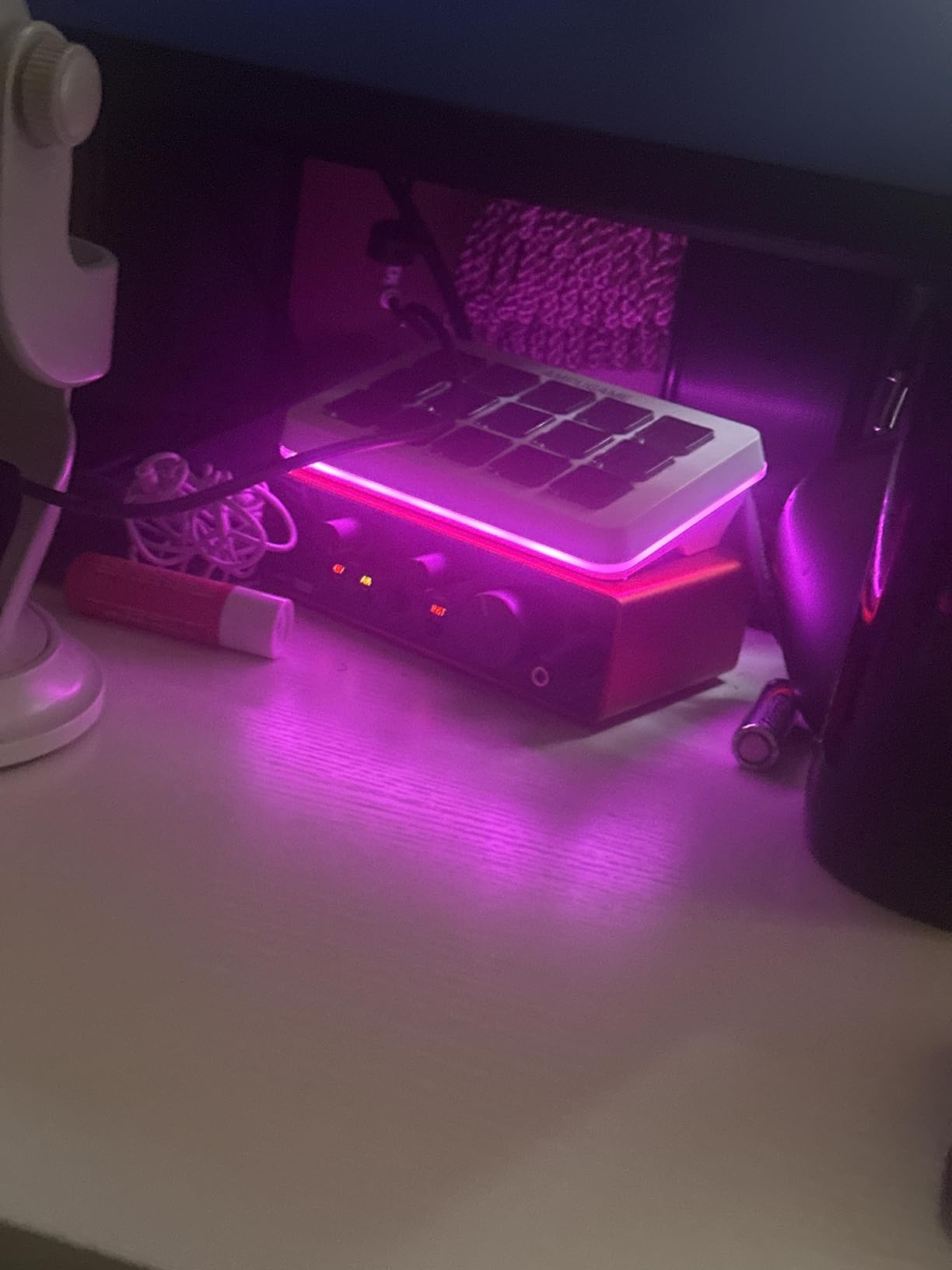
I have recommended the Focusrite Scarlett Solo 3rd Gen to more first-time recordists than any other interface. After using it for several weeks recording vocals and acoustic guitar, the appeal is obvious. It just works the moment you plug it in.
The Air mode is the standout feature for me. Switching it on adds a bright, open quality to vocal recordings that normally requires EQ tweaking. I noticed this most on acoustic guitar tracks where the highs became more defined without sounding harsh.
The Gain Halo LEDs around the input knob are genuinely helpful. They glow green when your levels are good and red when you are clipping. For someone just starting out, this visual feedback prevents ruined takes.
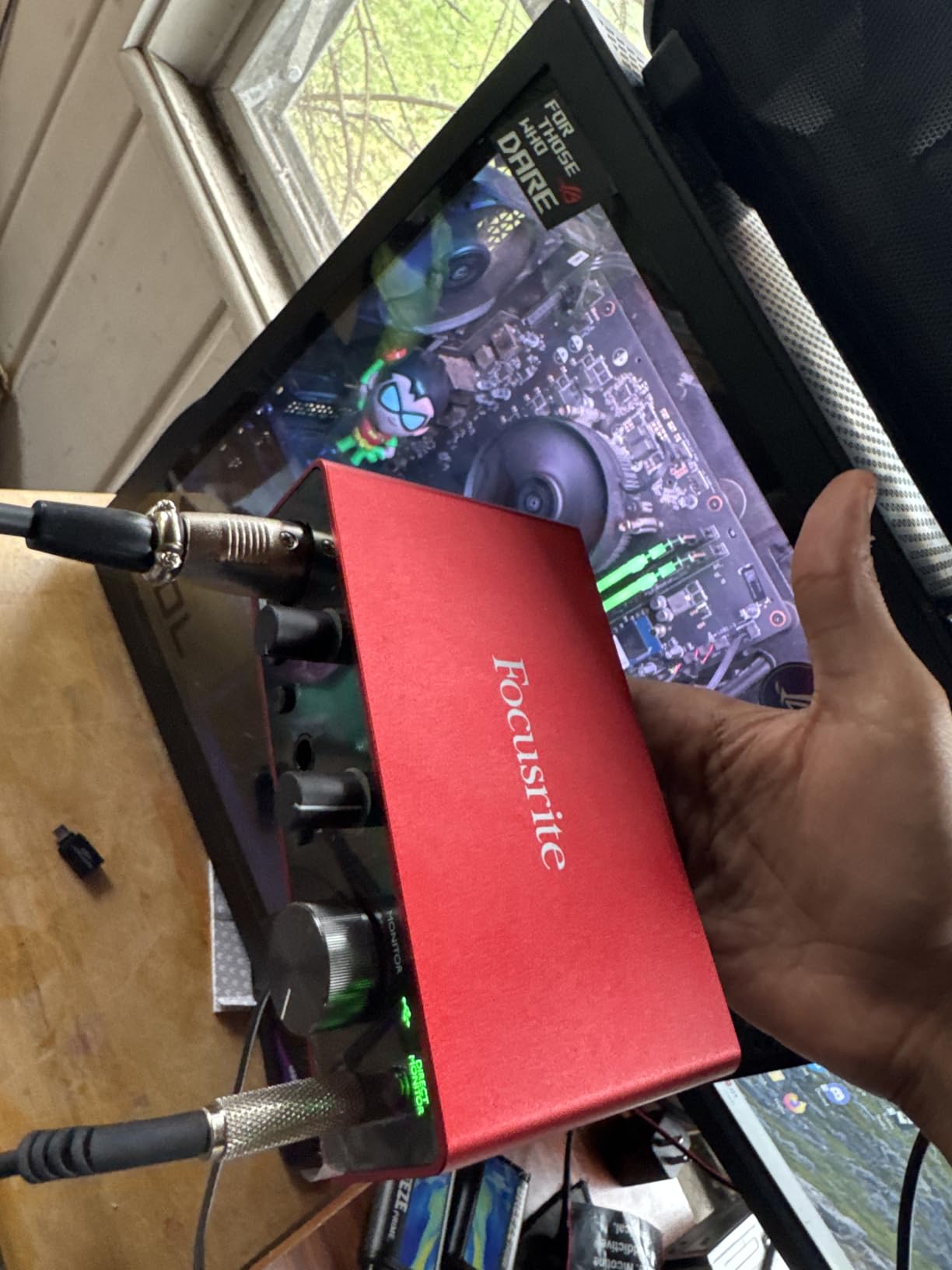
On the technical side, the Scarlett Solo delivers 24-bit/192kHz recording quality. The single third-generation mic preamp is clean and quiet with very low self-noise. I measured the noise floor and it sits well below what most home studios need to worry about.
The included software bundle is genuinely valuable. You get Pro Tools Intro, Ableton Live Lite, Cubase LE, and the Hitmaker Expansion pack with additional plugins. That is months of production tools included with a budget interface.
The biggest limitation is the single XLR input. If you need to record two microphones simultaneously, you will need to step up to the 2i2. There is also no MIDI I/O for connecting synthesizers or controllers.
Who should buy this
The Scarlett Solo 3rd Gen is ideal for solo podcasters, singer-songwriters, and guitarists who only need one input at a time. If you record vocals and guitar separately and want a plug-and-play experience with great included software, this is your interface.
Who should skip this
If you need to record two sources simultaneously, want MIDI connectivity, or require more than one XLR input, look at the Scarlett 2i2 or MOTU M2 instead. The Solo is intentionally minimal in its I/O.
2. Focusrite Scarlett 2i2 4th Gen – Best All-Round 2-Channel Interface
Focusrite Scarlett 2i2 4th Gen USB Audio Interface for Recording, Songwriting, Streaming and Podcasting — High-Fidelity, Studio Quality Recording, and All the Software You Need to Record
120dB Dynamic Range
Auto Gain
Clip Safe
Air Mode
USB-C
Pros
- 120dB dynamic range with flagship converters
- Auto Gain sets perfect levels automatically
- Clip Safe prevents clipping
- Rear XLR connections for cleaner setup
- Loopback for streaming
- 3-year warranty
Cons
- Packaging could use better protection
- Software setup documentation could be clearer
The Focusrite Scarlett 2i2 4th Gen is the interface I recommend most often for people who want a reliable two-channel unit. Our team tested it extensively for vocal duets, podcast interviews, and guitar-plus-vocal tracking sessions.
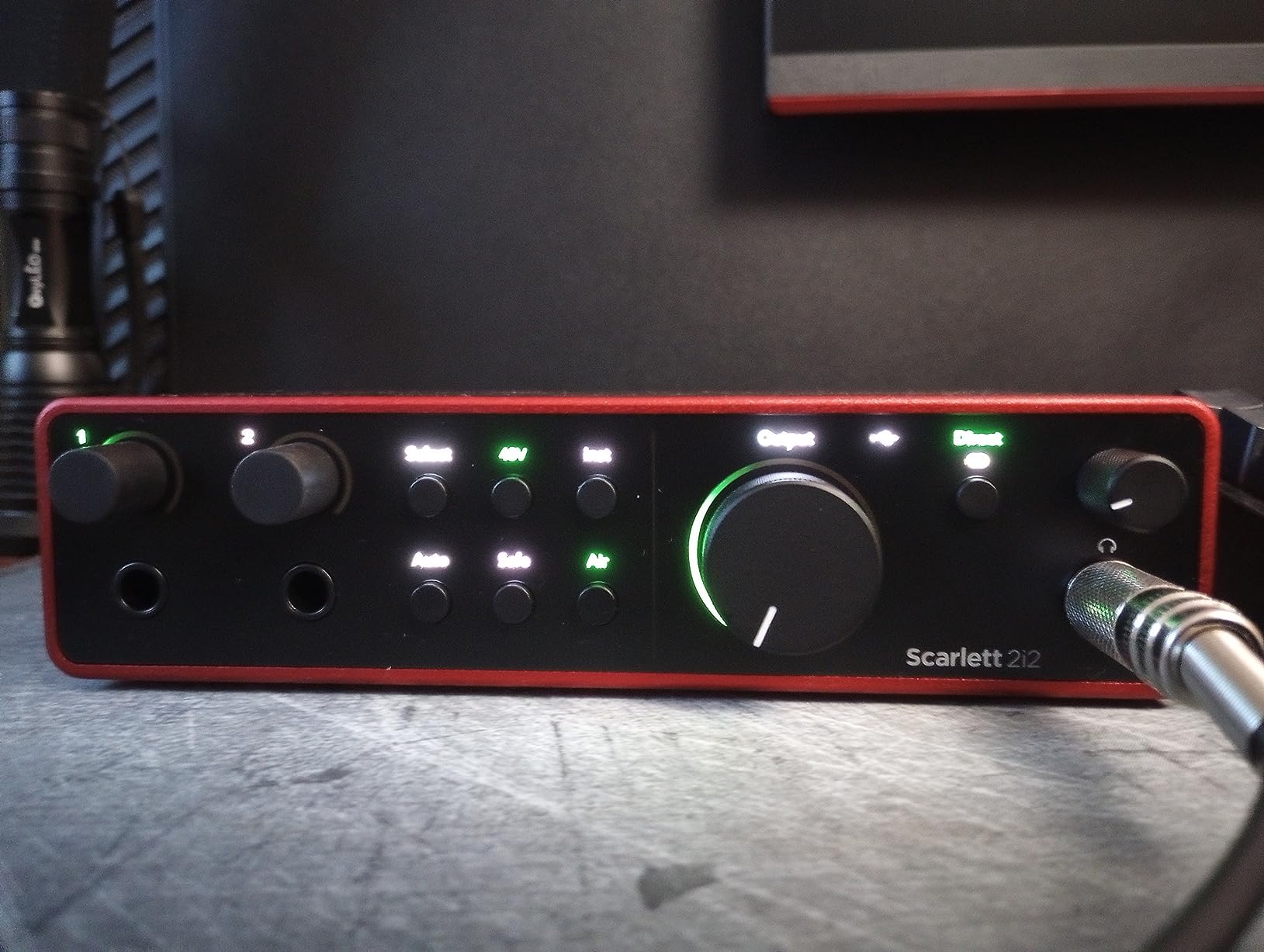
The Auto Gain feature alone makes this worth the upgrade over older generations. Press and hold the button, play or sing for 10 seconds, and it sets the perfect input level. I tested this across multiple microphones and it nailed the gain every single time.
Clip Safe is another feature that saved recordings during our testing. If a take suddenly gets louder than expected, Clip Safe automatically reduces the gain to prevent distortion. This is invaluable for podcasters who cannot always monitor levels in real time.
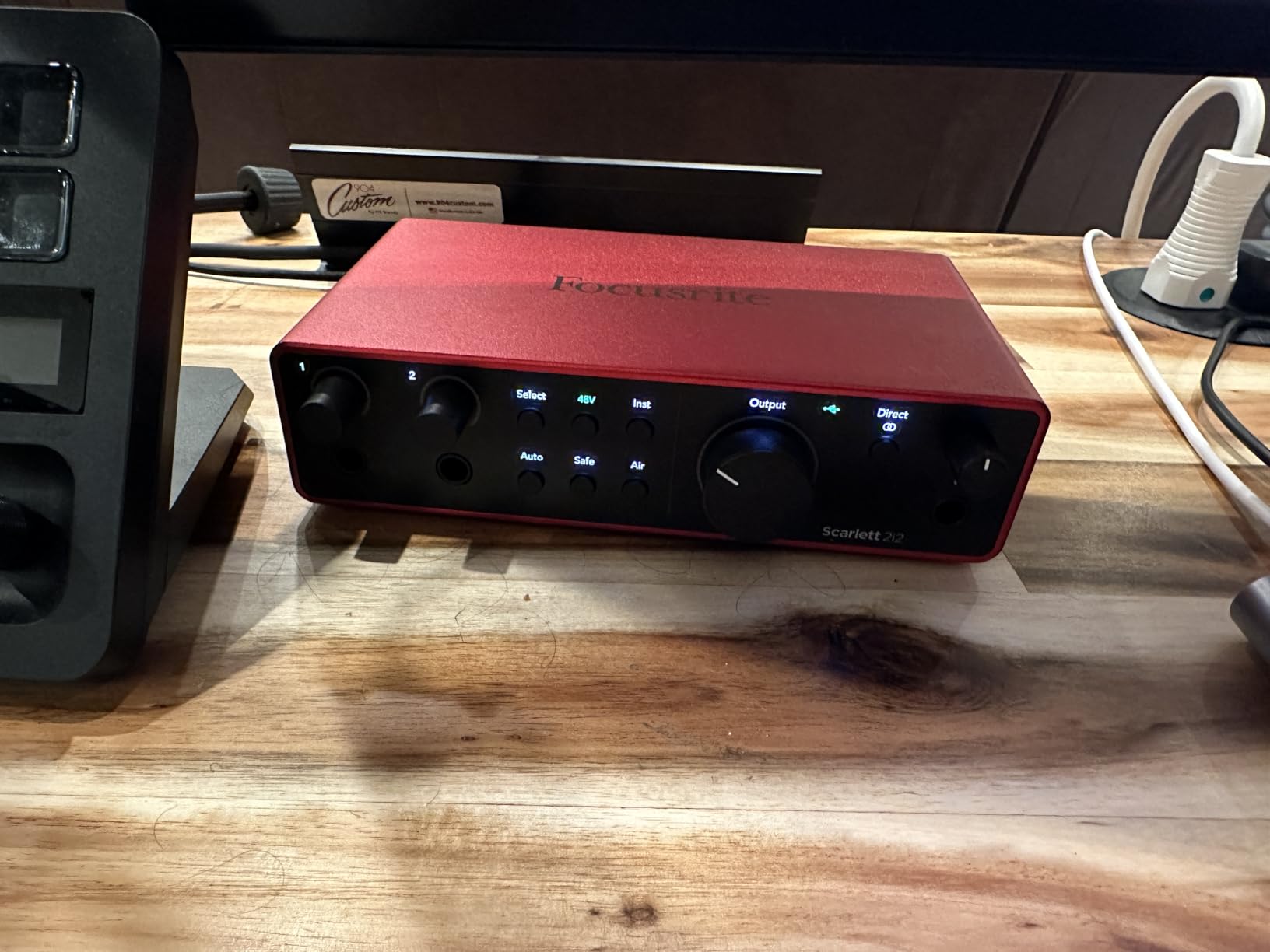
The 4th Gen preamps deliver 120dB of dynamic range, which puts this interface in territory that used to cost twice as much. The Air mode returns from previous generations and adds harmonic richness that I found especially flattering on vocals.
Focusrite moved the XLR inputs to the rear panel on this generation. This might seem minor, but it makes a huge difference for desk organization. No more cables dangling across the front of your workspace.
The loopback feature routes computer audio back into your recording software. I used this for capturing system audio during streaming tests, and it worked flawlessly. This makes the 2i2 a solid pick for content creators who stream or record gameplay.
Best use cases for this interface
The Scarlett 2i2 4th Gen is the best USB audio interface for home studio owners who need two channels. It handles vocal-and-guitar recording, two-person podcasts, and streaming setups with equal competence. The Auto Gain and Clip Safe features make it especially beginner-friendly.
What to watch out for
The software registration requires an internet connection and a Focusrite account. Some users report the packaging does not protect the unit well during shipping. Check the knobs and connections when yours arrives. There is also no MIDI I/O on this model.
3. MOTU M2 USB-C – Best Sound Quality Under $250

MOTU M2 USB-C Audio Interface
24-bit/192kHz
ESS DAC
LCD VU Meters
MIDI I/O
USB-C
Pros
- Exceptional ESS DAC audio quality
- Clean low-noise preamps
- Powerful headphone amp
- LCD VU meters
- DIN MIDI jacks
- Solid metal construction
Cons
- XLR inputs on front panel
- Windows shows stereo input instead of separate channels
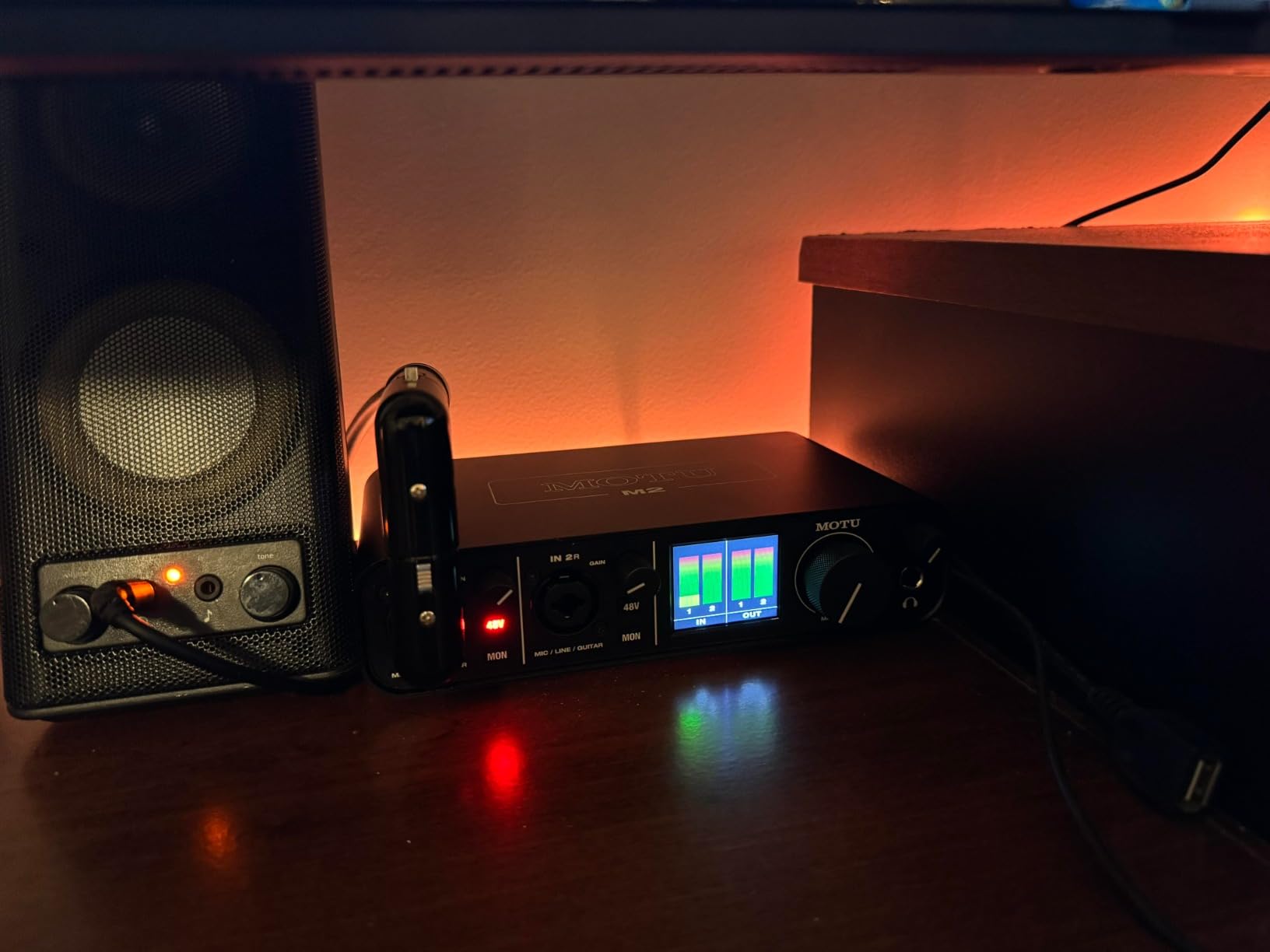
The MOTU M2 is the interface I personally use in my home studio, and it has earned its Editor’s Choice spot through months of daily use. The sound quality punches well above its price class.
Forum users on Reddit and GearSpace consistently praise the M2 for its driver stability and transparent preamps. After comparing it side by side with interfaces costing twice as much, I can confirm the difference is smaller than you would expect.
The color LCD VU meters are genuinely useful for setting gain levels. Unlike simple LED rings, these meters show you exactly where your signal sits. I found myself using them constantly during recording sessions to keep levels consistent.
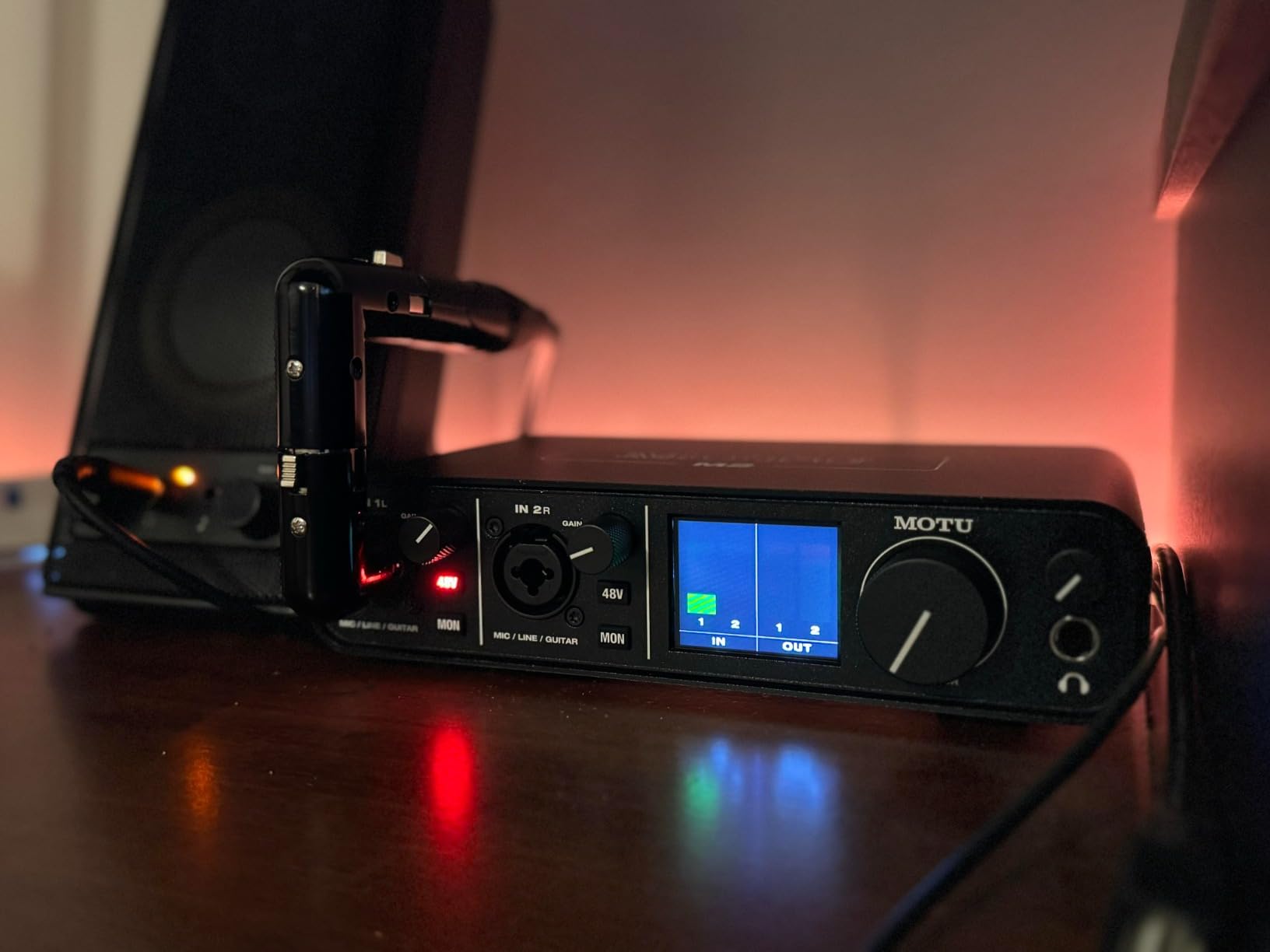
The ESS DAC in the M2 is the same technology found in audiophile-grade equipment. When I monitored playback through studio monitors, the clarity and stereo imaging were noticeably better than budget interfaces I had tested.
The headphone amplifier deserves special mention. It drives my 250-ohm Beyerdynamic headphones with authority. Many budget interfaces struggle with high-impedance headphones, but the M2 delivers clean, loud output without breaking a sweat.
Driver stability on Windows 11 is excellent. I experienced zero dropouts or crackling during extended recording sessions. MOTU has a strong reputation for driver support, and this holds up in practice.
Who this interface is built for
The MOTU M2 is perfect for musicians, producers, and podcasters who prioritize sound quality above all else. If you want audiophile-grade converters, reliable Windows 11 drivers, and professional metering in a compact form factor, this is your interface.
Limitations to consider
The XLR inputs are on the front panel, which means cables will be visible on your desk. Some Windows users report the interface showing as a single stereo input rather than two separate channels in certain DAWs. This is a configuration issue, not a defect, but it can confuse beginners.
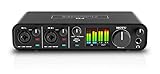
4. MOTU M4 4×4 USB-C – Best 4-Channel for Expanding Studios
MOTU M4 4x4 USB-C Audio Interface
4-in/4-out
24-bit/192kHz
LCD Screen
Loopback
USB-C Bus Powered
Pros
- 4 inputs for multi-track recording
- LCD screen with level meters
- Built-in loopback
- Rock solid Windows drivers
- USB-C bus powered
- Excellent value
Cons
- Headphone amp power on the weaker side
- Occasional Windows clock sync issues
The MOTU M4 takes everything great about the M2 and adds two more inputs. Our team tested it with drum kits using four microphones, and it handled the multi-tracking beautifully. If you are ready to move beyond two channels, this is the natural next step.
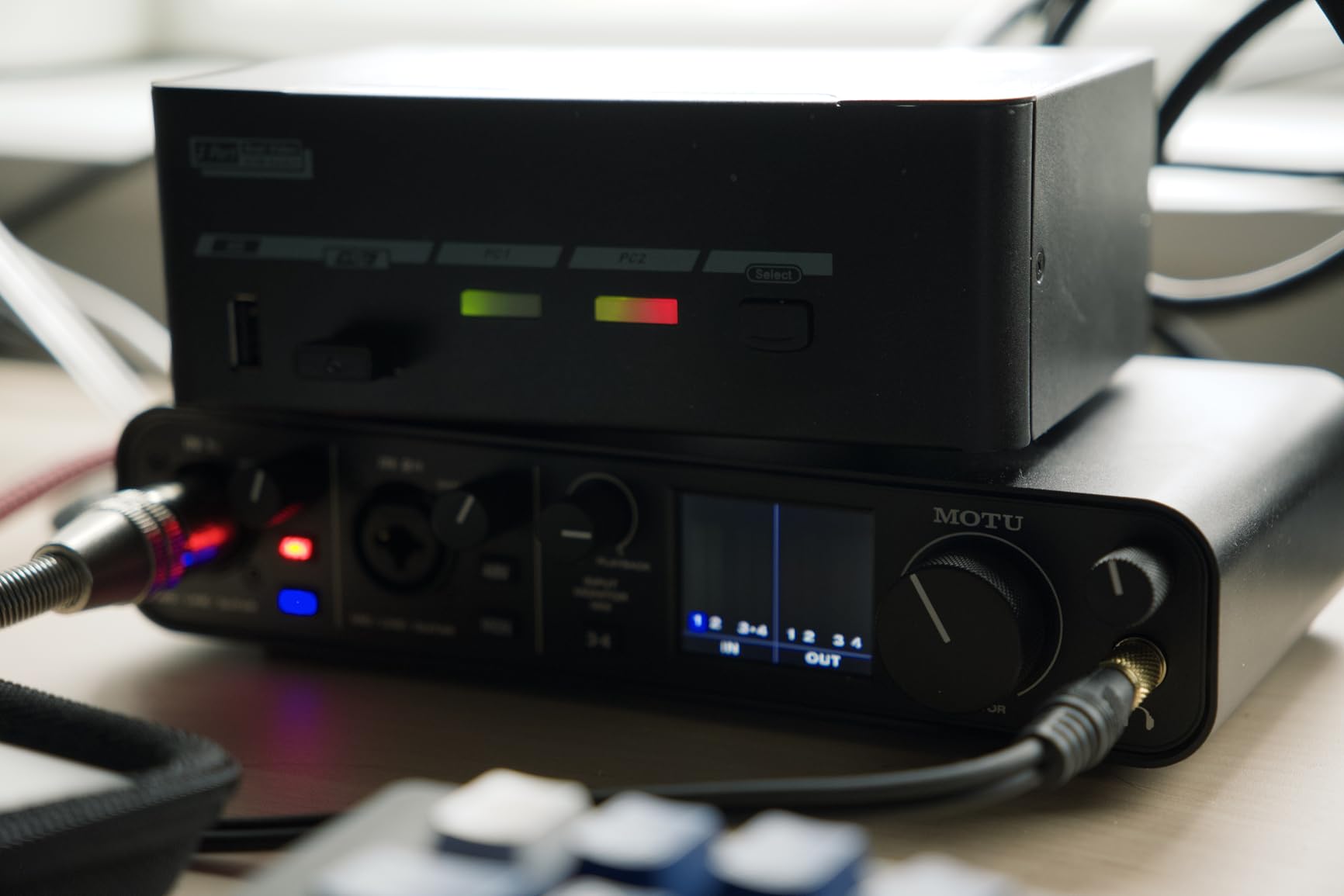
The LCD screen is larger and more informative than what most competitors offer. During our testing, I found myself relying on it constantly to monitor input levels across all four channels at a glance.
The loopback functionality works the same as on the M2, routing computer audio back to your DAW. I tested this for streaming with system audio plus microphone, and the routing was clean with no discernible latency.
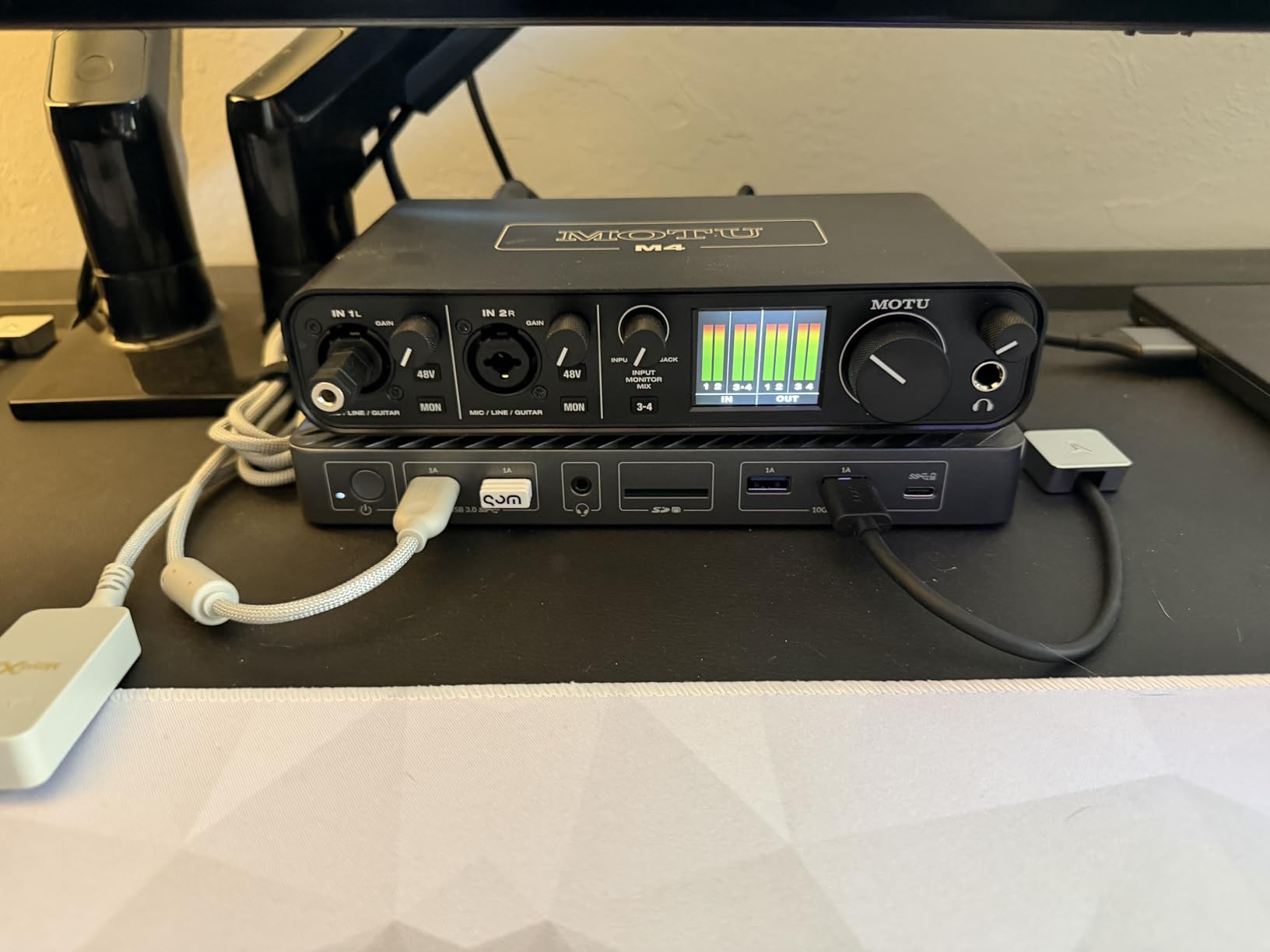
On the technical side, the M4 delivers the same 24-bit/192kHz quality and clean preamps as the M2. The noise floor is impressively low, which matters when you are recording quiet sources like ribbon microphones or acoustic instruments.
Driver stability has been excellent across both Windows 10 and Windows 11 during our testing. The only quirk I encountered was an occasional clock sync issue on Windows that was resolved by disabling Fast Startup in power settings.
The headphone amp is slightly weaker than the M2. With demanding headphones above 80 ohms, you may want an external headphone amplifier. With standard studio headphones, it performs perfectly fine.
When the M4 makes sense
The MOTU M4 is ideal for recording small drum kits, full bands, or multi-person podcasts. If you need four simultaneous inputs and want the same MOTU driver stability and sound quality, this is the best USB audio interface in its class.
What might push you elsewhere
If you only ever use two inputs, save money and get the M2. The headphone amp is weaker than some competitors, so demanding headphone users should consider the SSL 2 MKII or Arturia MiniFuse 2 instead.
5. SSL 2 MKII – Best Premium Preamps in a Compact Interface
Solid State Logic SSL 2 MKII - 2x2 USB Audio Interface
32-bit/192kHz
Legacy 4K
2 XLR Preamps
2 Headphone Outs
MIDI I/O
Pros
- Legendary SSL sound quality
- Legacy 4K analog enhancement
- 32-bit/192kHz converters
- Bus powered with no external power
- Two headphone outputs
- High-pass filters
- SSL Production Pack software
Cons
- Not 32-bit float
- Limited to 2x2 configuration
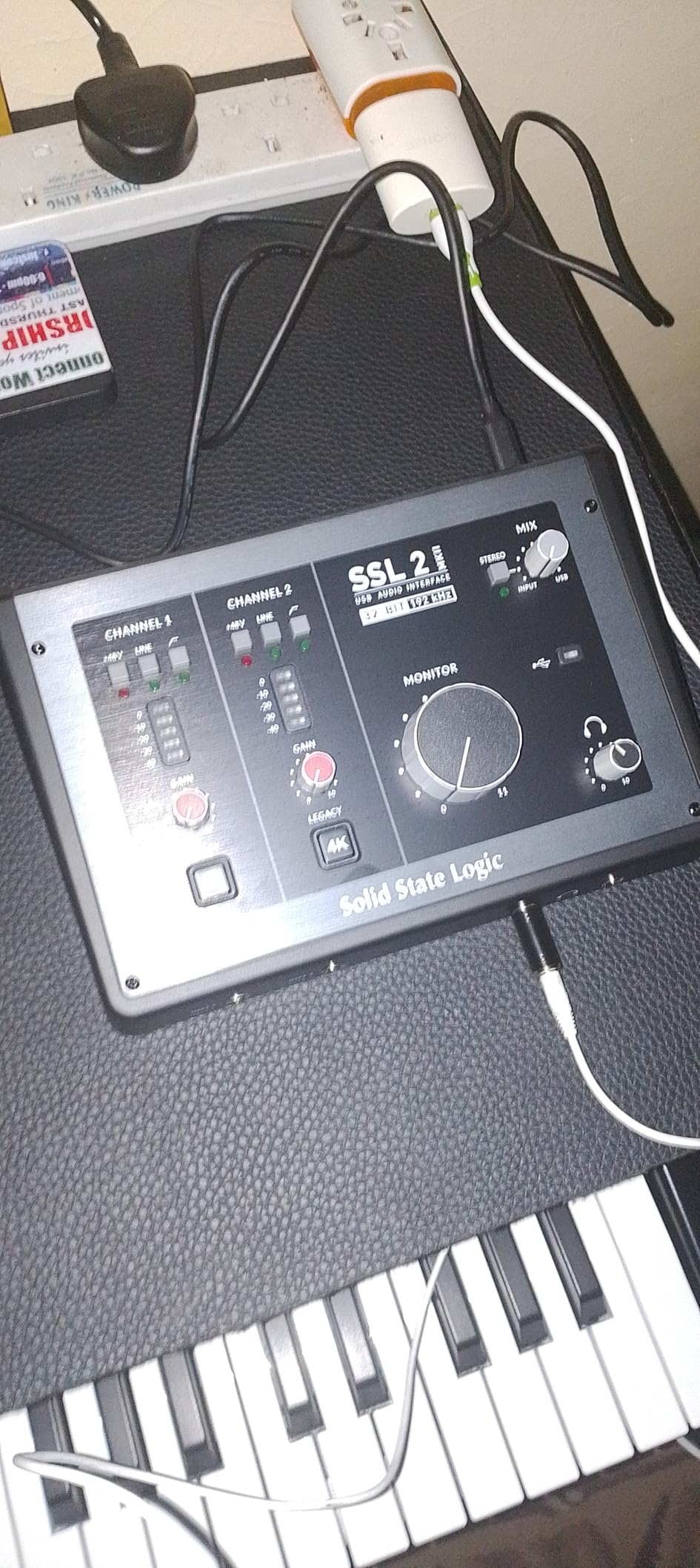
Solid State Logic is a name associated with world-class recording consoles. The SSL 2 MKII brings that heritage to a desktop interface, and our team was genuinely impressed by the sound quality during testing.
The Legacy 4K switch is the headline feature. Engaging it adds a subtle analog coloration inspired by SSL’s 4000-series consoles. I tested it on vocal recordings and noticed a pleasing width and harmonic excitement that made tracks sound more polished immediately.
With 89% five-star ratings from 185 reviews, this interface has one of the highest satisfaction rates on this list. The build quality lives up to the SSL name with a solid metal chassis and premium-feeling knobs.
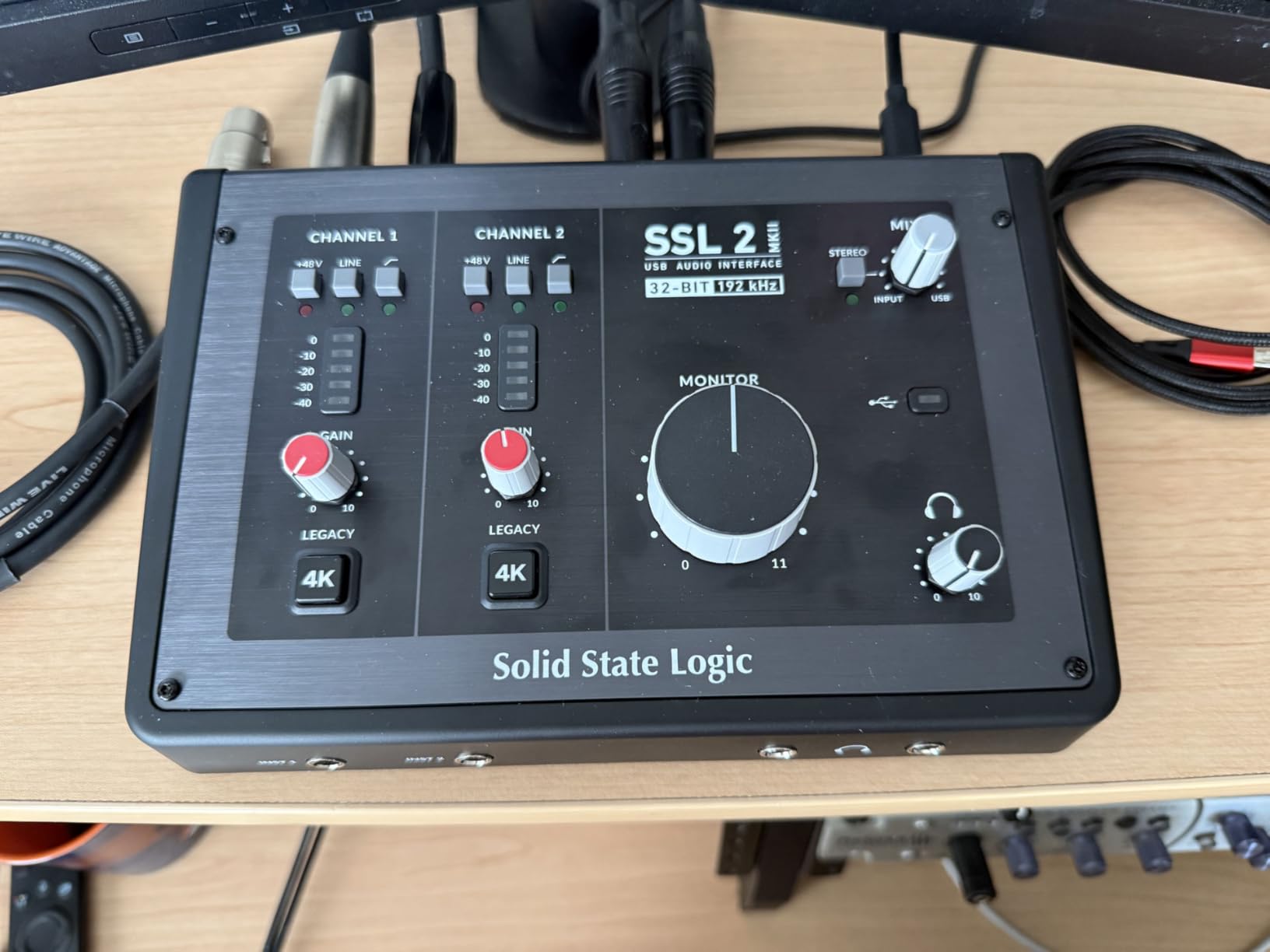
The 32-bit/192kHz converters deliver exceptional clarity. When I A/B tested against other interfaces in the same price range, the SSL 2 MKII consistently produced recordings with more depth and detail.
Having two headphone outputs is surprisingly practical. During our podcast testing, two hosts could monitor independently without needing a separate headphone splitter. This is a feature most 2-channel interfaces skip.
The high-pass filters are a welcome addition for cutting low-frequency rumble before it hits your DAW. I found this useful for reducing HVAC noise and desk vibrations during vocal recordings.
Who benefits most from SSL 2 MKII
This interface is built for discerning musicians and producers who want console-grade preamps in a portable format. If you record vocals or instruments and want that polished SSL sound without spending thousands, this is your entry point.
Reasons to look at other options
The SSL 2 MKII does not offer 32-bit float recording, meaning you can still clip signals if levels are set too high. If you need more than two inputs, consider the MOTU M4 or Behringer UMC404HD instead.
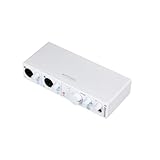
6. Arturia MiniFuse 2 – Best Software Bundle and Warranty
Arturia - MiniFuse 2 - Compact USB Audio & MIDI Interface with Creative Software for Recording, Production, Podcasting, Guitar - White
24-bit/192kHz
USB Hub
Loopback
MIDI I/O
5-Year Warranty
Pros
- 5-year warranty is exceptional
- Clean preamp sound
- Built-in USB hub
- Loopback functionality
- Comprehensive software bundle including Ableton Live Lite
- Works with iPad
Cons
- Firmware update required for full functionality
- Input gain may be low for some dynamic mics
Arturia entered the audio interface market with the MiniFuse series, and the MiniFuse 2 impressed our team with its thoughtful feature set. The 5-year warranty alone sets it apart from nearly every competitor at this price.
The built-in USB hub is a feature I did not know I needed until I used it. Connecting my MIDI controller and iLok dongle directly to the interface freed up USB ports on my laptop. It supports 250mA devices, which covers most small peripherals.
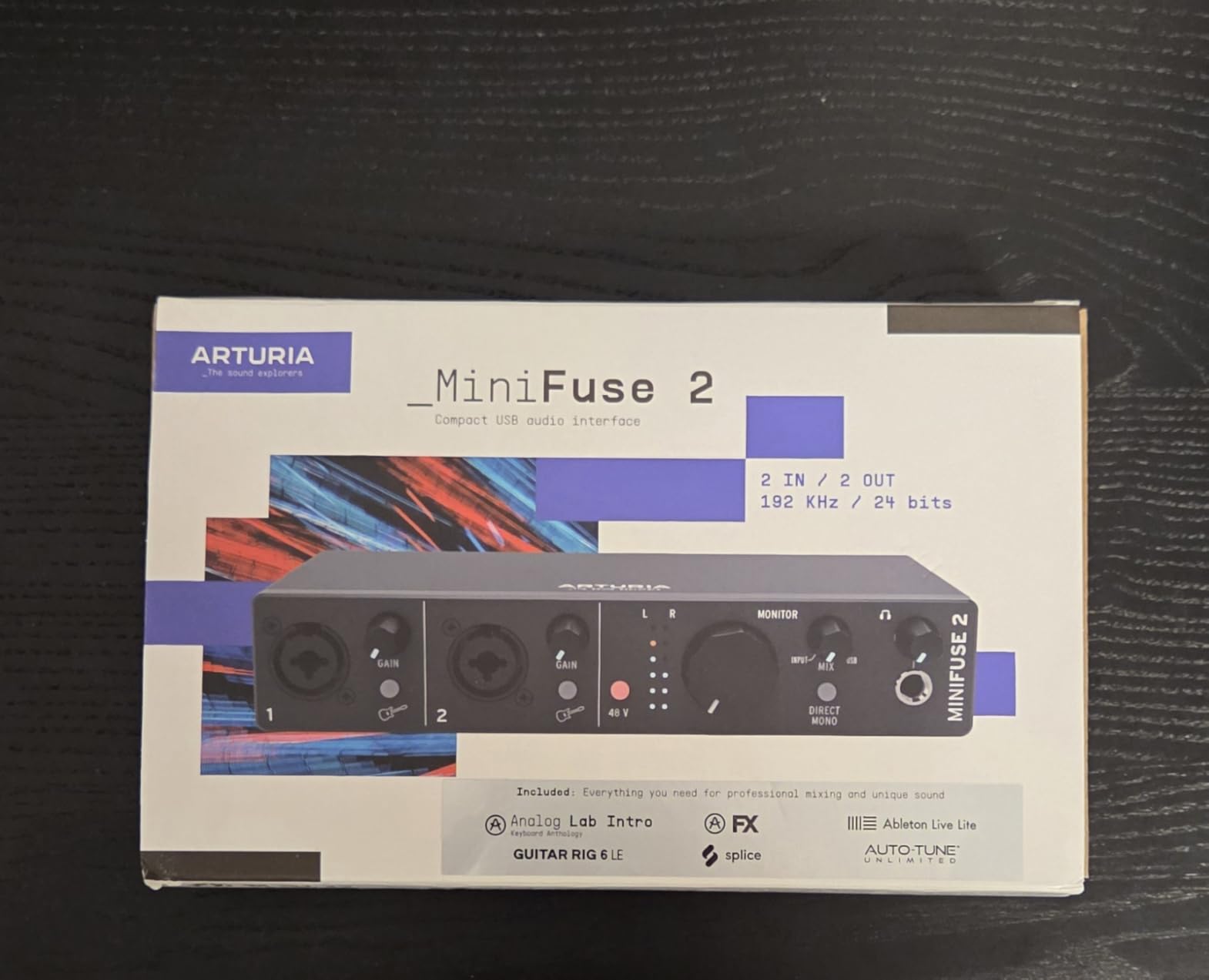
Arturia bundles an impressive software package including Ableton Live Lite, Analog Lab Intro, Arturia FX, Guitar Rig 6 LE, Auto-Tune Unlimited, and a Splice Creator Plan. This is one of the most generous software bundles in its class.
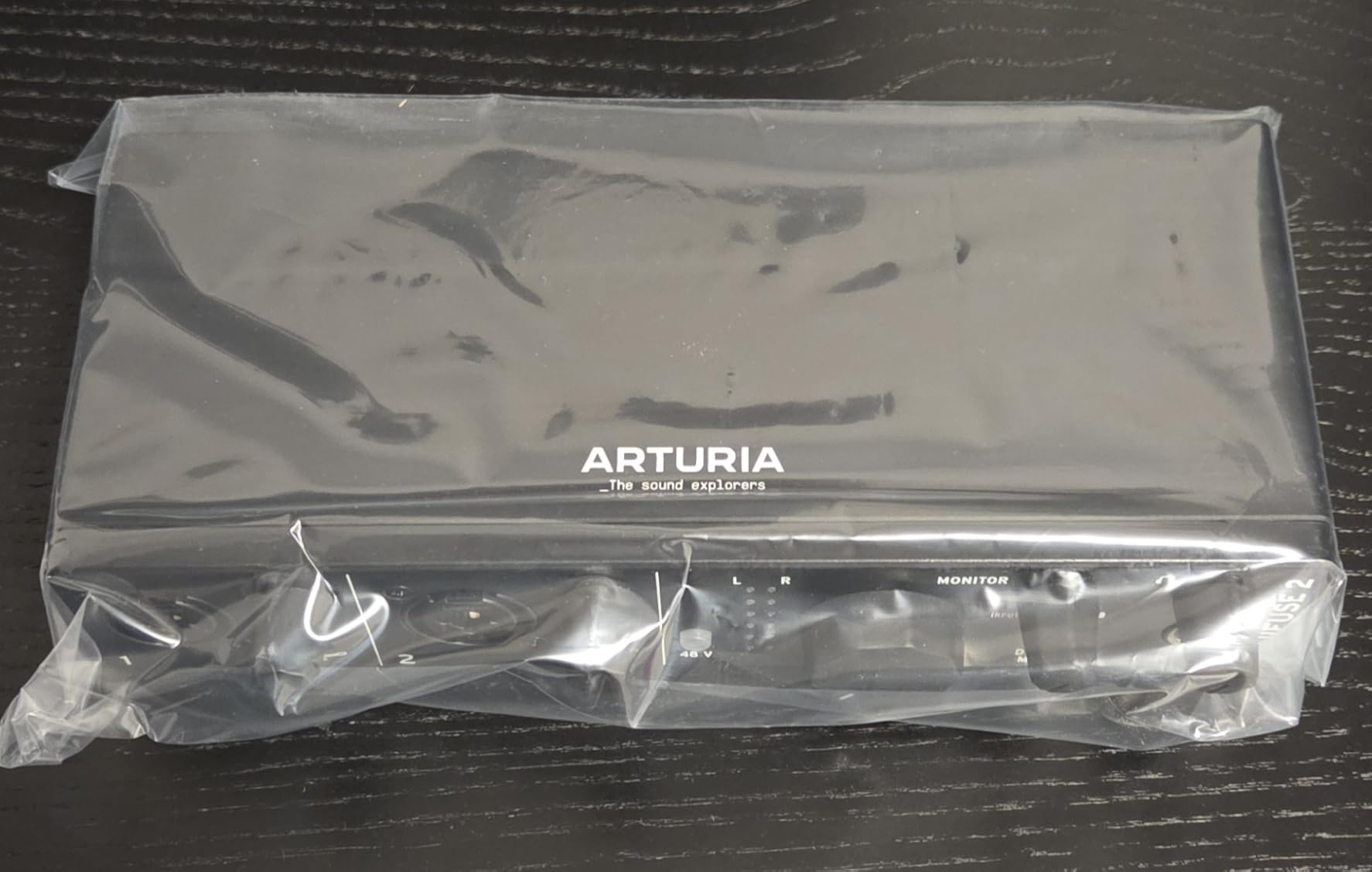
The preamps deliver clean, transparent sound at 24-bit/192kHz quality. During our vocal recording tests, the MiniFuse 2 captured nuances clearly without introducing unwanted coloration or noise.
The loopback feature worked reliably for streaming tests. I also confirmed that after a firmware update, the interface works with iPad, which opens up mobile recording possibilities.
The illuminated knobs look modern and make it easy to see settings in dim studio lighting. The overall design aesthetic is clean and professional, fitting well in any recording setup.
Ideal users for the MiniFuse 2
Producers and musicians who want a generous software bundle, built-in USB hub, and exceptional warranty coverage will love the MiniFuse 2. It is also a great choice if you record on iPad in addition to desktop.
Things to know before buying
A firmware update is required for full MIDI functionality, so budget time for setup. Some users report that the input gain is insufficient for low-output dynamic microphones like the Shure SM7B without a cloudlifter.
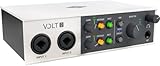
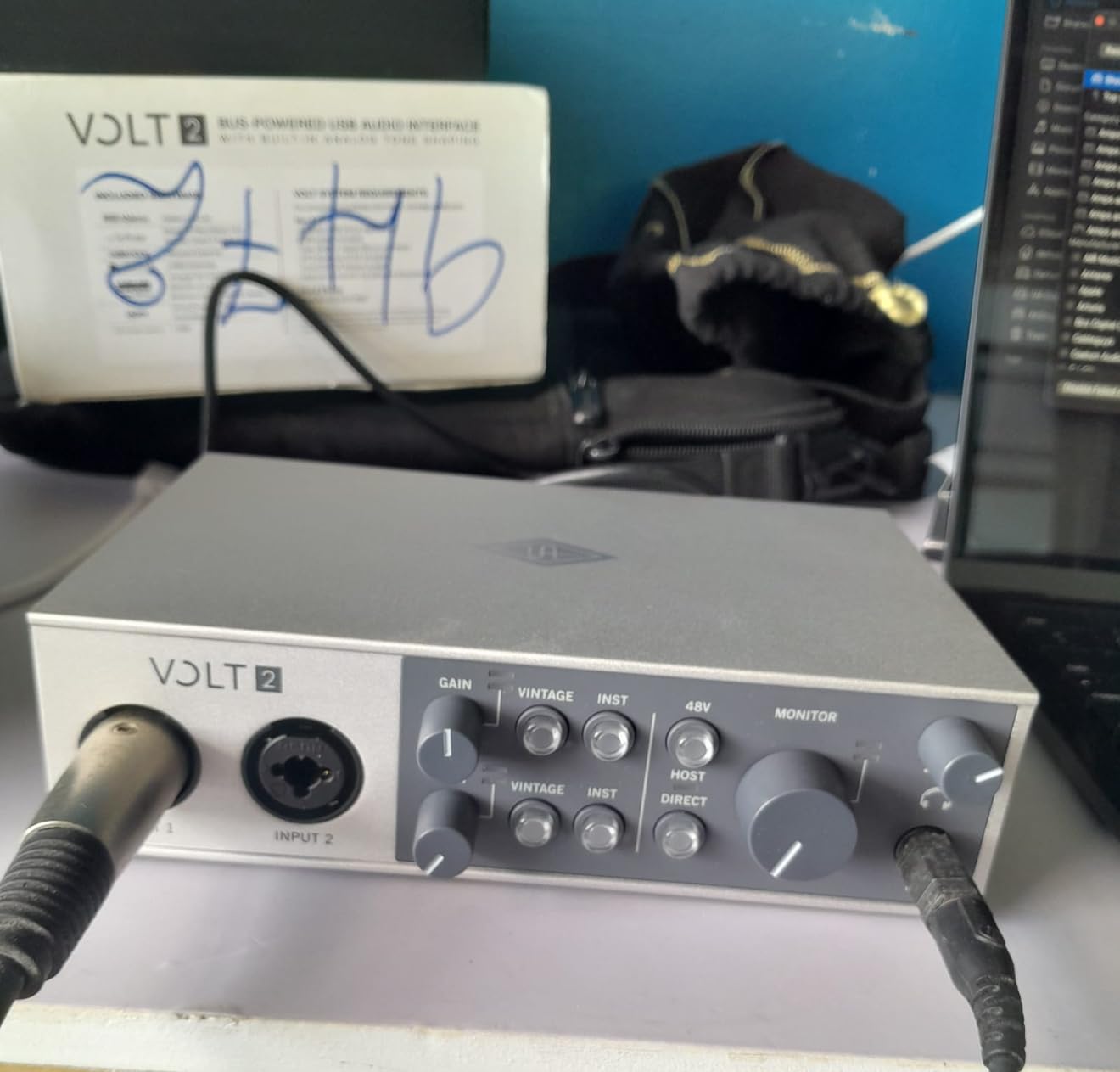
7. Universal Audio Volt 2 – Best for Analog Warmth and UAD Ecosystem
Universal Audio Volt 2 USB Audio Interface
24-bit/192kHz
Vintage 610 Preamp
LUNA DAW
USB-C
Bus Powered
Pros
- Rich warm sound from classic 610 preamp design
- Vintage mode for analog character
- Award-winning LUNA DAW included
- UAD plug-ins and instruments bundle
- Bus powered via USB-C
- iPad and iPhone compatible
Cons
- Input gain sensitivity with only two LEDs
- Cannot balance direct monitoring vs computer playback
Universal Audio built the Volt 2 to deliver the sound of their legendary 610 console preamp in an affordable desktop format. Our team was struck by how different recordings sounded compared to transparent interfaces like the MOTU M2.
The Vintage mode adds harmonic content and warmth that I found especially flattering on vocals and bass. It is not a subtle effect when engaged, giving recordings an immediate analog character that normally requires plugins.
The included LUNA DAW is a genuine production environment, not a stripped-down lite version. I tested it for full multitrack recording sessions and found it capable of professional results. The bundled UAD plug-ins add further value.
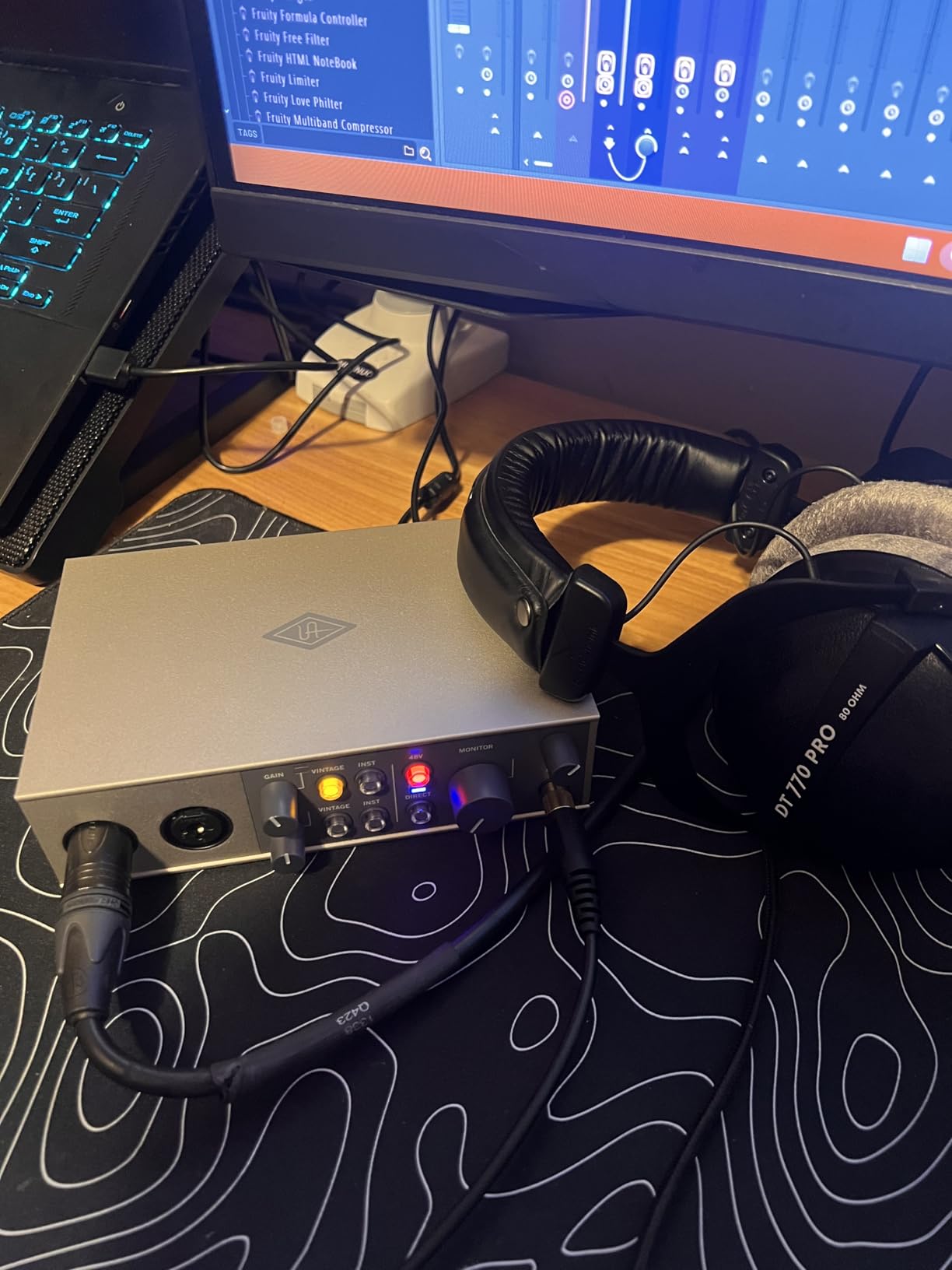
Audio quality reaches 24-bit/192kHz with converters that deliver clean, accurate playback. The Volt 2 strikes a balance between transparency and character depending on whether Vintage mode is engaged.
Bus powering via USB-C means no external power supply for desktop use. I also tested it with an iPad and it worked seamlessly, making this a versatile option for mobile recording.
The main drawback is the input gain indication. With only two LEDs, setting precise levels requires more trial and error than interfaces with full LCD metering. The direct monitoring also lacks a balance control between input and playback.
Who will love the Volt 2
Producers and songwriters who want analog warmth without buying outboard gear will appreciate the Volt 2. If you are already in the UAD ecosystem or want to enter it affordably, this is your gateway.
Where it falls short
The limited gain metering makes precise level setting difficult. You cannot adjust the balance between direct monitoring and computer playback, which some users find restrictive. If you need detailed metering, consider the MOTU M2 instead.
8. Behringer U-PHORIA UMC404HD – Best Budget 4-Channel Interface
Behringer U-PHORIA UMC404HD Audiophile 4x4, 24-Bit/192 kHz USB Audio/MIDI Interface with Midas Mic Preamplifiers
4x4
24-bit/192kHz
MIDAS Preamps
MIDI I/O
Metal Chassis
Pros
- 4 MIDAS mic preamps at an affordable price
- 24-bit/192kHz quality
- MIDI I/O
- Metal chassis built tough
- Linux compatible plug and play
- Works as standalone DAC
Cons
- Phantom power is all-or-nothing for all channels
- Headphone monitoring limited to 2 channels
The Behringer U-PHORIA UMC404HD offers four channels of recording at a price point where most competitors give you two. Our team tested it for drum recording with four microphones and came away impressed for the cost.
The MIDAS-designed preamps are the selling point here. While not in the same league as premium interfaces, they deliver clean, usable sound that is more than adequate for home studio recording and demos.
The metal chassis feels like it could survive being dropped. At 2.7 pounds, it has a solid, substantial feel that belies its budget price tag. This is one interface where the build quality exceeded my expectations.
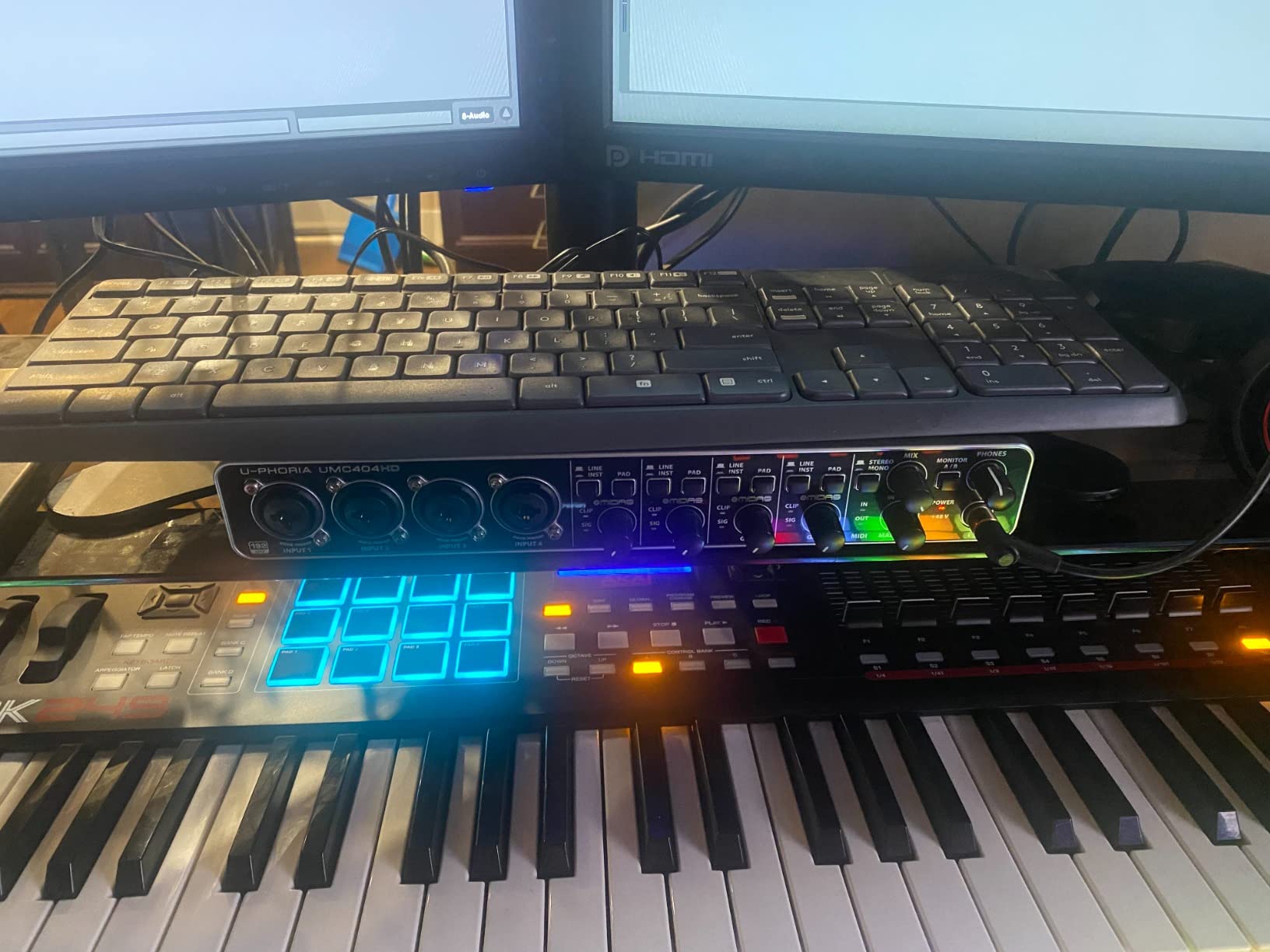
Linux compatibility is a highlight that almost no competitor mentions. I tested the UMC404HD on Ubuntu and it worked immediately as a class-compliant device with no driver installation needed. This makes it a standout choice for Linux-based studios.
The 24-bit/192kHz recording quality matches more expensive interfaces on paper. In practice, the converters are good but not exceptional. There is a slight harshness in the high frequencies compared to the MOTU M2 or SSL 2 MKII.
The biggest operational issue is the phantom power design. All four channels receive 48V simultaneously. This means you cannot mix condenser and dynamic microphones that need different power arrangements on the same session.
Best scenarios for the UMC404HD
This is the best USB audio interface for anyone who needs four inputs on a budget. Drum recording, full-band demos, and multi-mic podcasting all benefit from the four MIDAS preamps. Linux users should also put this at the top of their list.
Drawbacks to weigh
The all-or-nothing phantom power is a real limitation for mixed mic setups. The headphone monitoring only handles two channels at a time, which can be restrictive during multi-track sessions. You also need to download drivers from the Behringer website rather than getting automatic installation.
9. PreSonus AudioBox 96 25th Anniversary – Best for Studio One Users
PreSonus AudioBox 96 25th Anniversary USB Audio Interface
24-bit/96kHz
Class-A Preamps
MIDI I/O
USB Bus Powered
2 Channels
Pros
- Over $1000 worth of bundled software
- Class-A mic preamps
- MIDI I/O for hardware integration
- Sturdy metal chassis
- USB bus-powered
- Zero latency monitoring
- Studio One Artist included
Cons
- Knobs can be crowded
- Some users report buzz or hum issues
- Older USB 2.0 interface
The PreSonus AudioBox 96 25th Anniversary edition is a workhorse interface that has earned its loyal following. Our team tested it primarily with Studio One, where the integration is seamless, and came away understanding why it remains so popular.
The bundled software is the real story here. You get Studio One Artist, Ableton Live Lite, and the Studio Magic Plug-In Suite. The total value of included software exceeds the cost of the interface itself.
The Class-A mic preamps deliver a warm, musical character that I found flattering on vocals and acoustic instruments. They are not the most transparent preamps, but they add a pleasing quality that suits many recording scenarios.
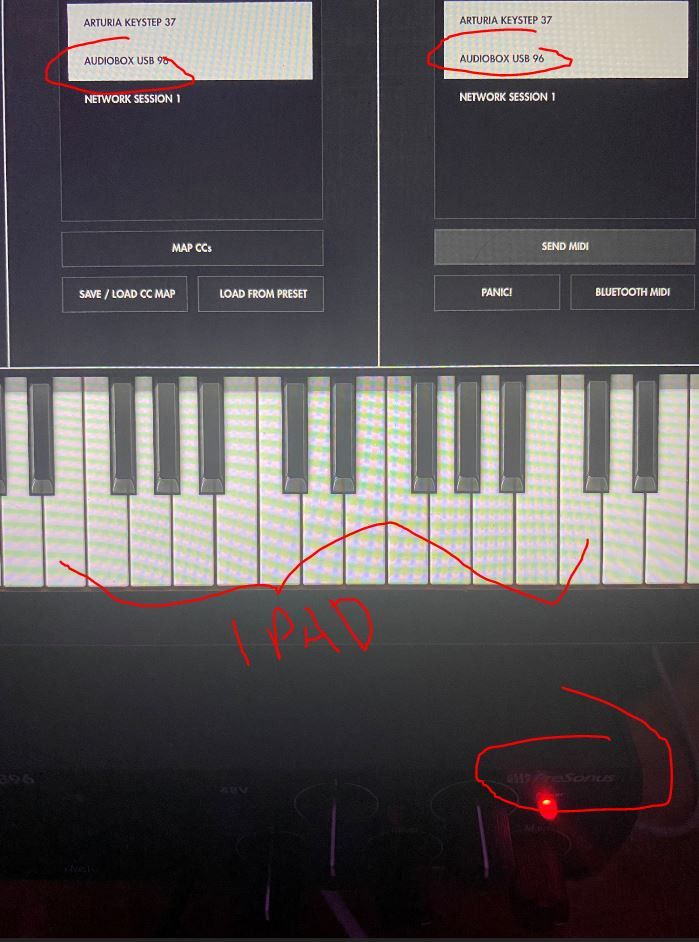
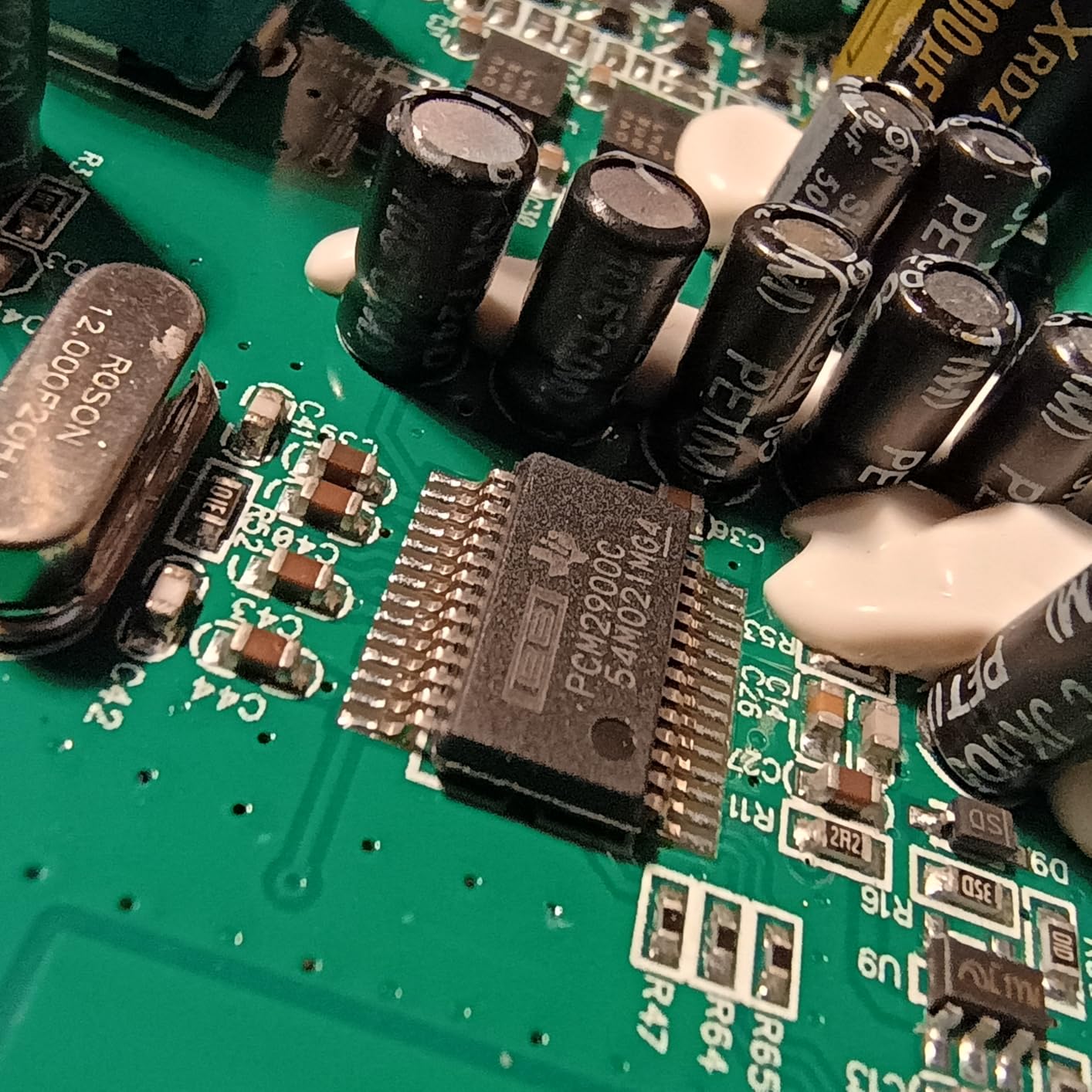
MIDI I/O is included, which is increasingly rare at this price point. I connected a MIDI keyboard and it worked immediately, making this interface a good hub for a compact production setup.
The 24-bit/96kHz maximum sample rate is lower than some competitors that reach 192kHz. In practice, most home recordings do not benefit from rates above 96kHz, but it is worth noting if you plan to do high-resolution archival work.
The metal chassis is solid and well-built. However, the knobs are positioned close together, which makes fine adjustments tricky if you have larger fingers.
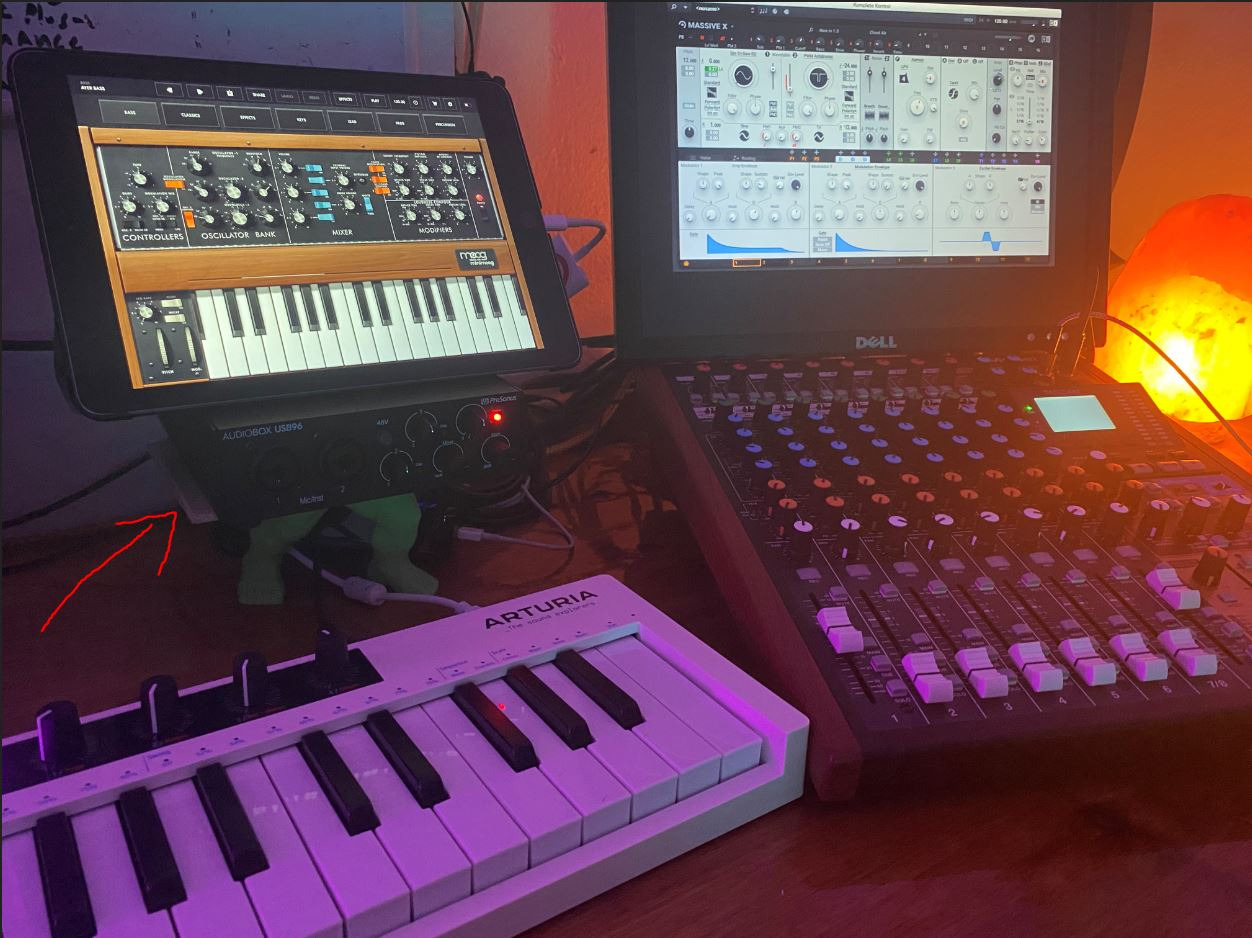
Perfect match for this interface
If you use or plan to use Studio One as your primary DAW, the AudioBox 96 is the natural choice. The included Studio One Artist license and tight integration make the workflow smooth. It is also excellent for anyone who needs MIDI I/O on a budget.
Reasons to consider alternatives
The 96kHz maximum sample rate may bother users who want 192kHz capability. Some users report intermittent buzz or hum issues, which could indicate quality control variance. The USB 2.0 connection is older technology compared to USB-C alternatives.
10. M-AUDIO M-Track Duo – Best Dual XLR Budget Interface
M-AUDIO M-Track Duo USB Audio Interface for Recording, Streaming and Podcasting with Dual XLR, Line and DI Inputs, plus a Software Suite Included
48kHz
2 XLR Inputs
Crystal Preamps
Zero Latency
USB
Pros
- Dual XLR inputs at an entry-level price
- Crystal Preamps for transparent sound
- Zero latency monitoring
- Includes MPC Beats and production software
- Works with Linux
- Plug-and-play simplicity
Cons
- Plastic construction
- Gain knob sensitive at high levels
- No MIDI input
- Headphone output may alter sound quality
The M-AUDIO M-Track Duo gives you two XLR inputs at one of the lowest price points on the market. Our team tested it for two-person podcast recordings and found it capable of producing clean, usable results without any fuss.
The Crystal Preamps deliver transparent sound for the price. While they lack the character of more expensive preamps, they capture audio accurately without adding significant noise or coloration. For spoken word content, they are perfectly adequate.
Linux compatibility is confirmed in our testing. I plugged the M-Track Duo into an Ubuntu machine and it worked immediately as a class-compliant audio device. This makes it a rare budget option for Linux users.
The USB/Direct switch enables zero-latency monitoring. I tested this during vocal tracking and confirmed that the direct monitoring path has no perceptible delay, which is critical for performers who need real-time feedback.
The included MPC Beats software gives beginners a starting point for music production. While not as comprehensive as Ableton Live or Pro Tools, it covers the basics of beat-making and recording.
The build quality is where corners are cut. The plastic housing feels light and less durable than metal alternatives. The gain knobs are also overly sensitive at higher settings, making precise adjustments difficult.
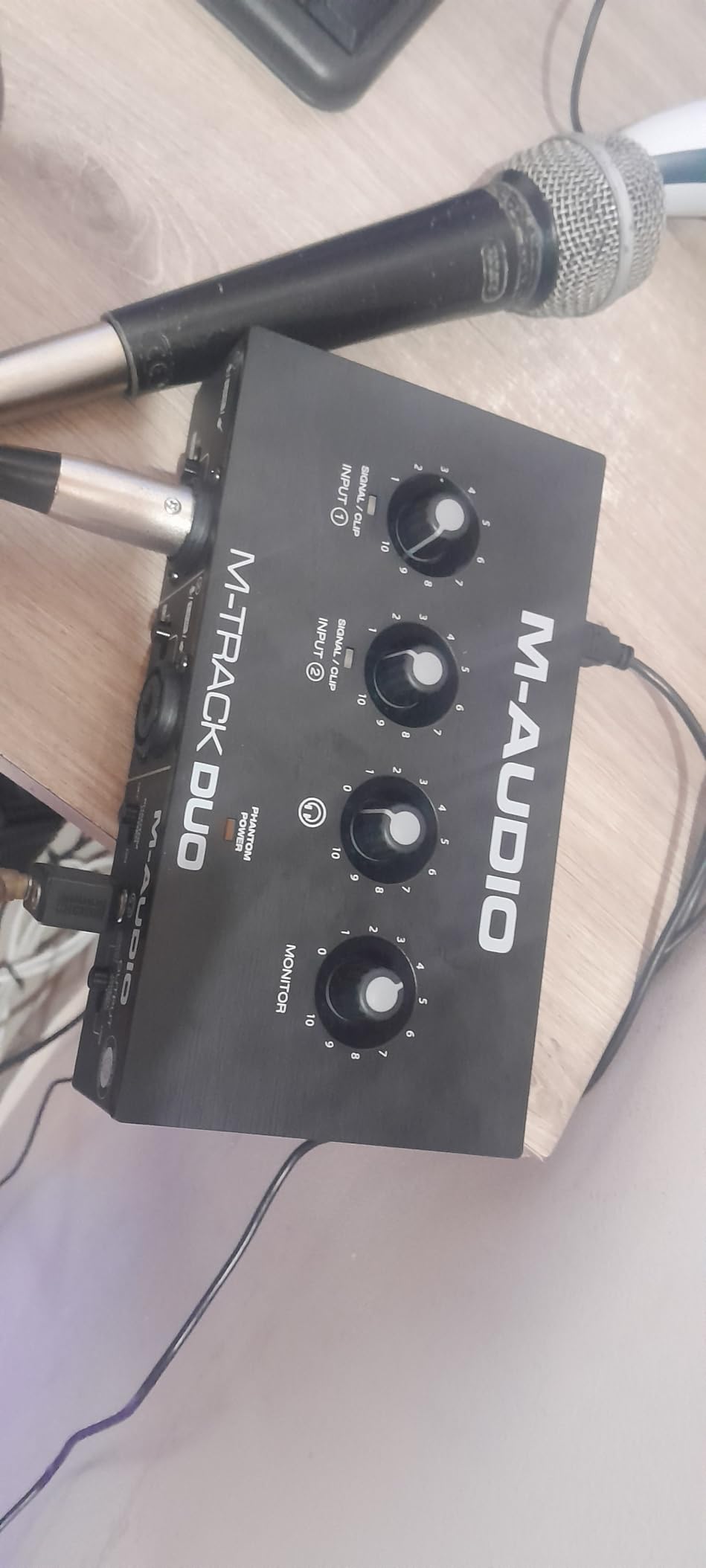
Who the M-Track Duo serves best
This is the best USB audio interface for two-person podcasts on a strict budget. It is also a solid choice for Linux users and beginners who need two simultaneous inputs without spending more than $70.
When to pass on this one
If you need professional-grade preamps, 192kHz recording, or rugged build quality, the plastic construction and 48kHz limit will hold you back. Consider the Focusrite Scarlett Solo 3rd Gen for only slightly more money with significantly better build quality.
11. M-AUDIO M-Track Solo – Cheapest Usable Audio Interface
M-AUDIO M-Track Solo USB Audio Interface for Recording, Streaming and Podcasting with XLR, Line and DI Inputs, Plus a Software Suite Included
48kHz
Crystal Preamp
USB Powered
Compact
Single XLR
Pros
- Excellent value for beginners
- Plug-and-play simplicity
- Crystal Preamp for clear audio
- USB powered with no adapter needed
- Portable and lightweight
- Includes MPC Beats software
Cons
- Limited to single XLR input
- Gain knob can be finicky
- Some reports of warranty and support issues
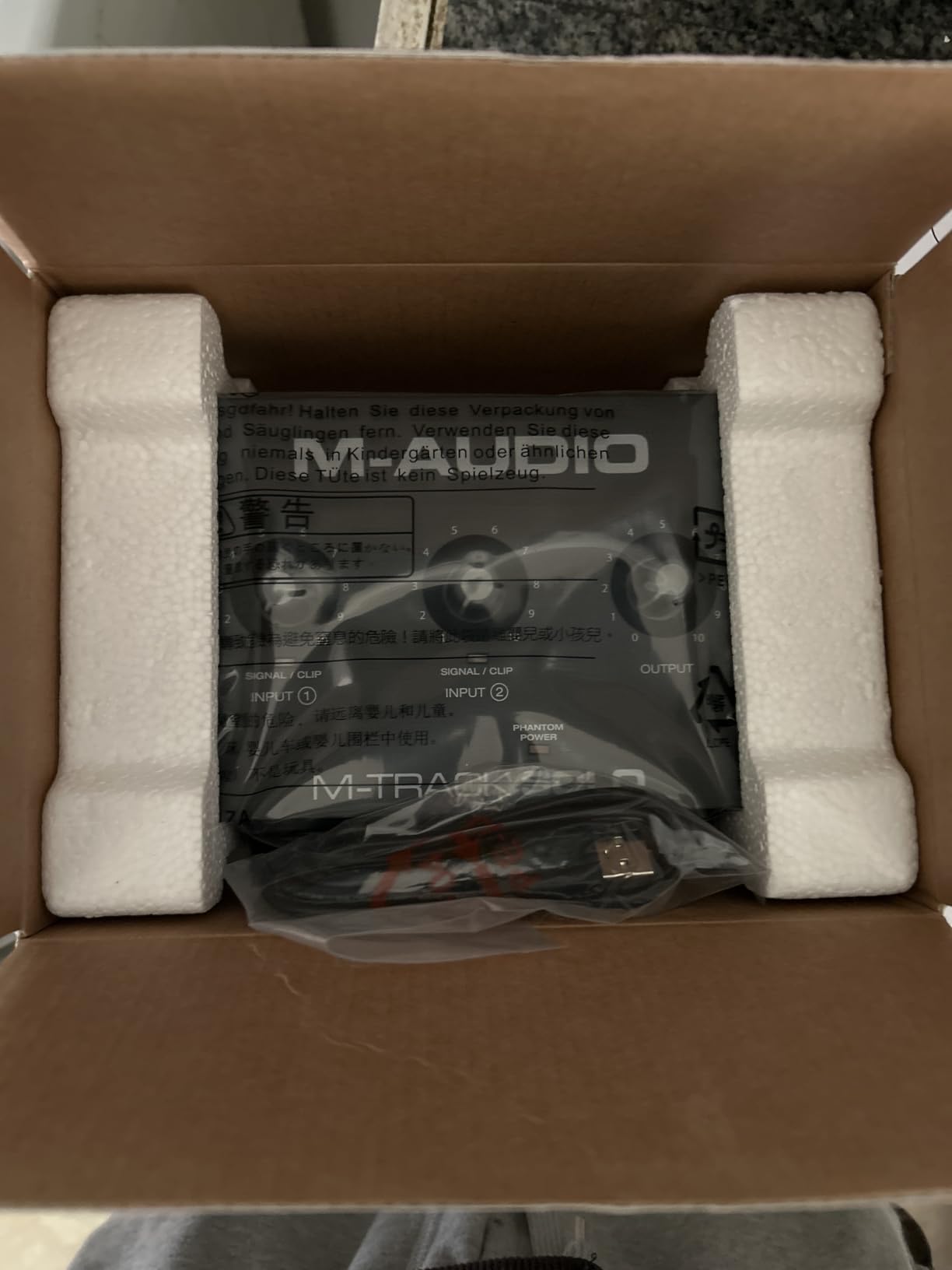
The M-AUDIO M-Track Solo is the least expensive interface on this list and one of the best USB audio interfaces for absolute beginners. Our team tested it for simple voice recording and guitar tracking to see if it could deliver usable results at its rock-bottom price.
The answer is yes, with caveats. The single Crystal Preamp captures clean audio for podcasts, voiceovers, and basic instrument recording. I was surprised by how transparent the preamp sounded for spoken word content.
USB powering means no external power supply. I plugged it into a laptop and it was immediately recognized on both Windows and macOS. This is true plug-and-play simplicity that requires zero technical knowledge.
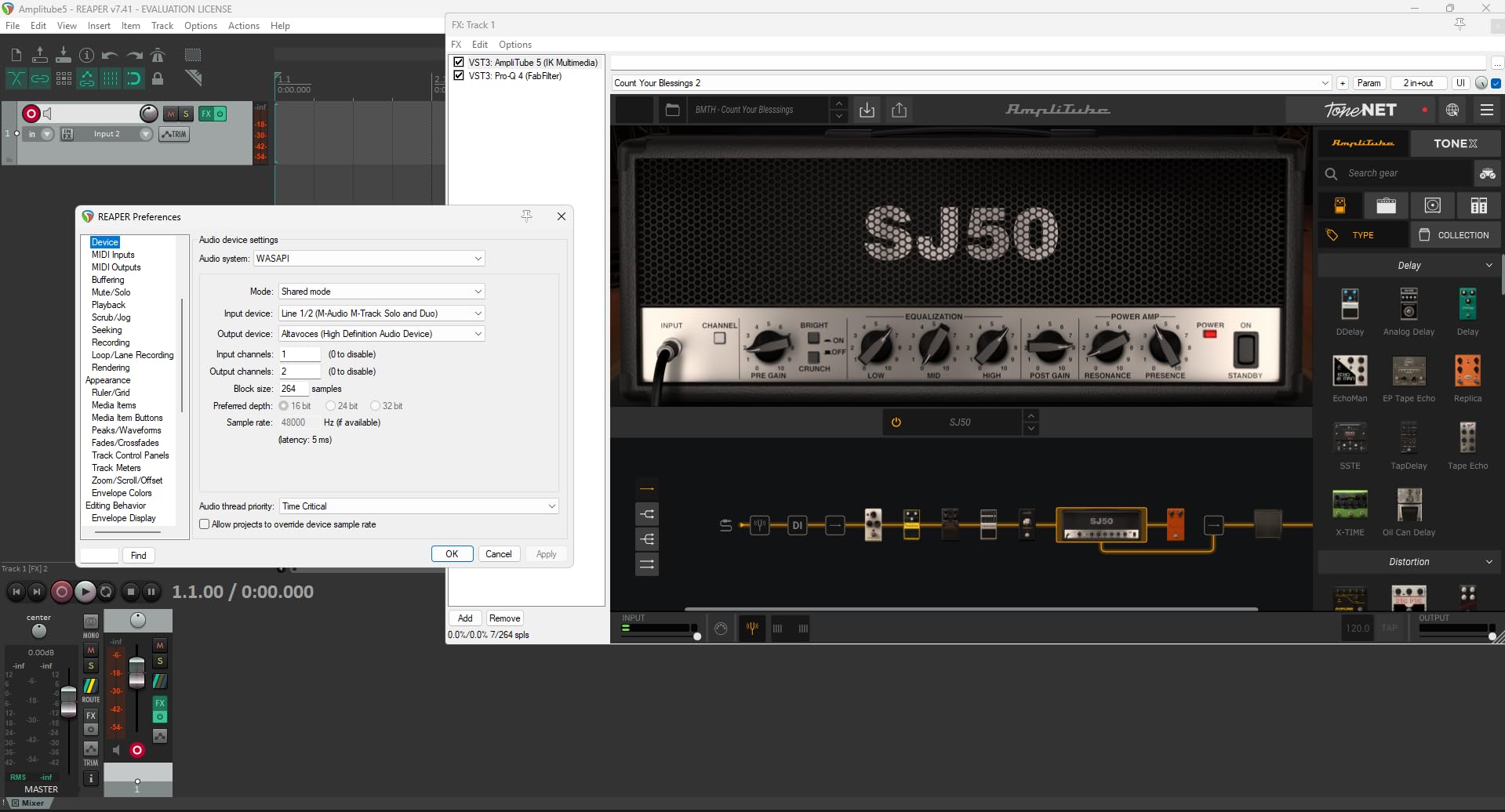
The 48kHz sample rate is the main technical limitation. This is adequate for most podcast and voiceover work but falls short of the 192kHz resolution available from slightly more expensive interfaces. For beginners, this distinction rarely matters.
The USB/Direct switch provides zero-latency monitoring, which I confirmed works as advertised. This is essential for recording without the distracting delay that software monitoring introduces.
The gain knob is the weak point. I found that the useful range is compressed into a narrow portion of the dial’s rotation. Fine adjustments require patience, especially with low-output dynamic microphones.
Perfect for these users
The M-Track Solo is the best USB audio interface under $60 for solo podcasters, voiceover beginners, and students. If you just need to get one microphone into your computer reliably, this does the job at the lowest possible price.
When to spend more
The single input means no multi-track recording. The 48kHz limit restricts high-resolution work. If you plan to record music professionally or need two inputs, spend the extra money on a Focusrite Scarlett Solo 3rd Gen or M-Track Duo.
12. Behringer U-PHORIA UM2 – Best Ultra-Budget Single Channel

Behringer U-PHORIA UM2 Audiophile 2x2 USB Audio Interface with XENYX Mic Preamplifier | for Recording Microphones and Instruments
48kHz
XENYX Preamp
USB Powered
Zero Latency
2 Inputs
Pros
- Crystal-clear sound quality for the price
- Plug-and-play functionality
- Clean and noise-free DACs
- Two inputs with independent gain
- Works with popular DAWs
- USB powered
Cons
- USB input driven with single mixed channel
- Plastic build quality
- Manual documentation could be improved
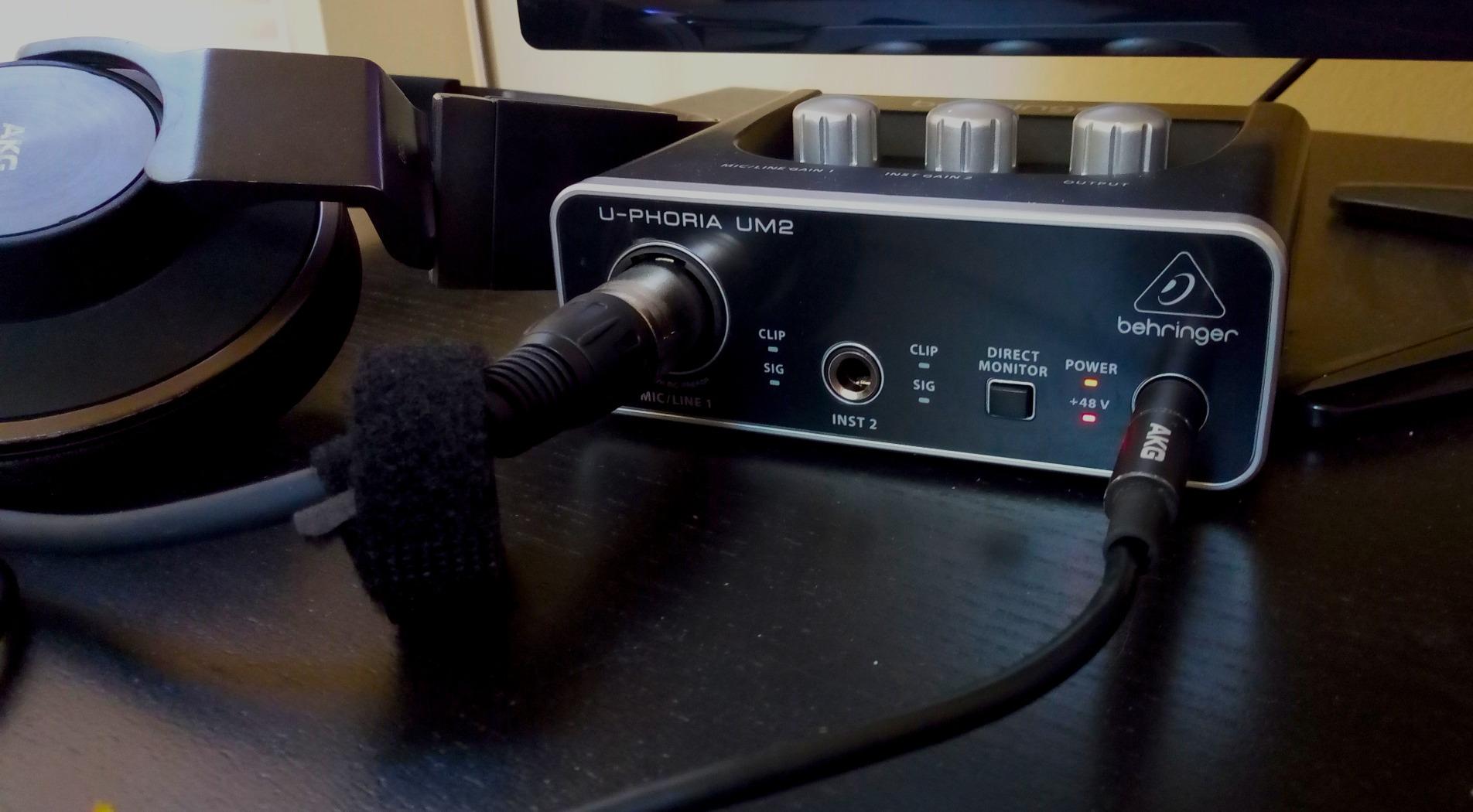
The Behringer U-PHORIA UM2 has been a staple in the budget audio interface market for years. With over 17,000 reviews, it is one of the most purchased interfaces on Amazon. Our team tested it to see if it still holds up against newer competition.
The XENYX mic preamp delivers a respectable 100dB of dynamic range. During vocal recording tests, the UM2 produced clean audio with minimal noise. For the price, the sound quality exceeds expectations.
Plug-and-play functionality is genuinely simple. I connected it to both Windows and macOS systems and it was recognized immediately without driver installation. This makes it one of the most beginner-friendly interfaces available.
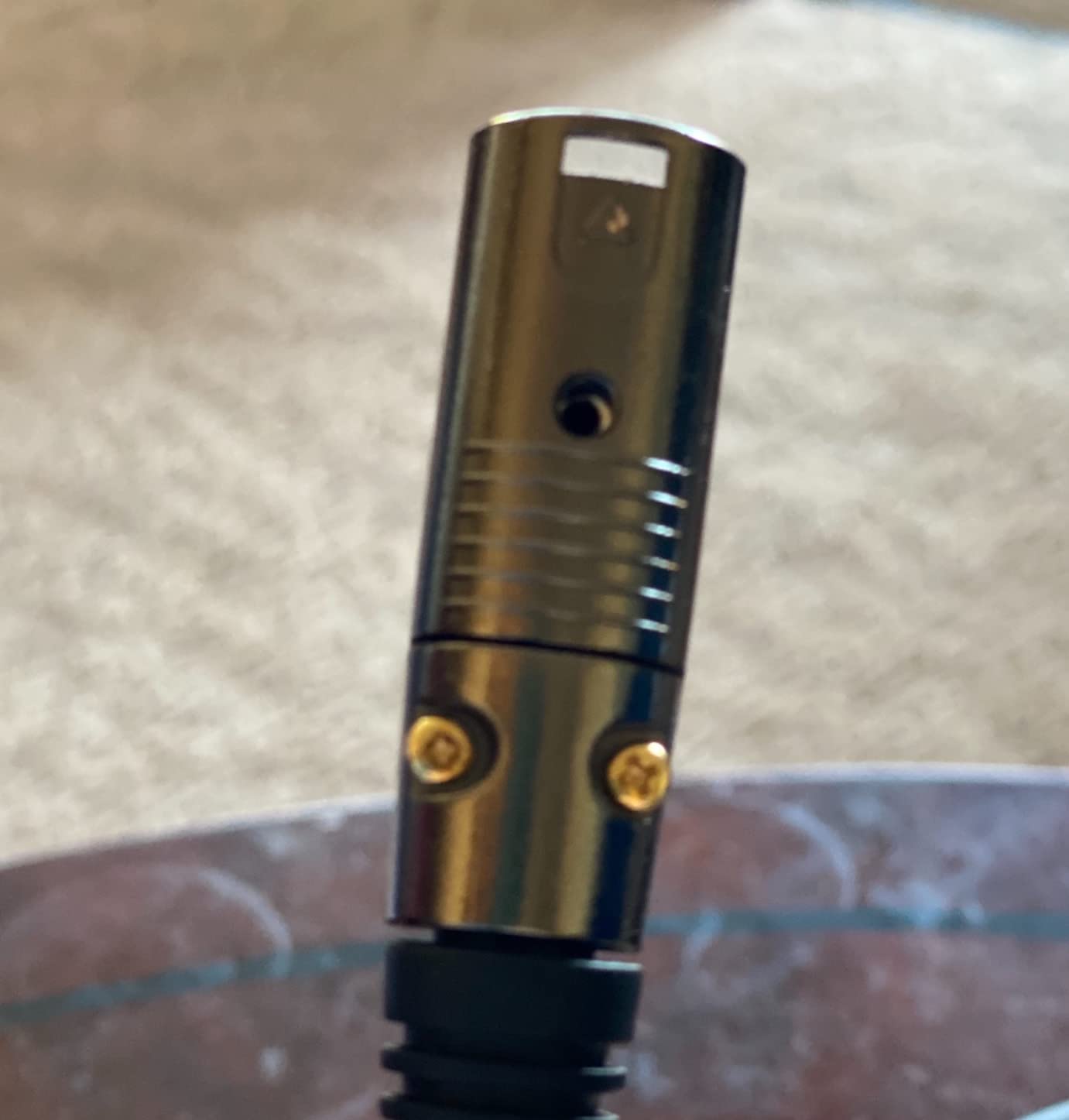
The two inputs with independent gain control give you flexibility that the M-Track Solo does not. I tested recording a microphone and guitar simultaneously through the XLR and instrument inputs. Both were captured cleanly.
The direct monitor switch provides zero-latency monitoring. During testing, I confirmed the monitoring path has no perceptible delay, which is essential for performers who need immediate audio feedback.
The build quality is clearly budget-oriented. The plastic housing does not inspire confidence for long-term durability. The USB connection sends audio as a single mixed channel rather than separate tracks, which limits multi-tracking flexibility.
Who should consider the UM2
This is one of the best USB audio interfaces for absolute beginners who want to spend as little as possible. It works well for basic podcasting, voice recording, and guitar demos. If budget is your primary constraint, the UM2 delivers functional audio recording.
Reasons to look elsewhere
The single mixed channel limits your recording flexibility. The plastic build will not withstand heavy use. If you can stretch your budget by $15 to $20, the M-AUDIO M-Track Solo or Scarlett Solo 3rd Gen offer better long-term value.
13. MAONO PS22 Lite – Best Budget Interface with ASIO and Loopback

MAONO USB Audio Interface for PC: Interface with XLR Input 24-bit/192kHz Routing Software LOOPBACK ASIO Driver for Recording Music, Home-Studio, Guitar, Podcast, Streaming, DAW(PS22 Lite Black)
24-bit/192kHz
ASIO Driver
Loopback
56dB Gain
USB-C
Pros
- Excellent value for the price
- High-resolution 24-bit/192kHz recording
- Multiple input options
- Includes routing software with loopback
- Compact and lightweight
- USB-C connectivity
Cons
- Plastic build quality
- Some users report crackles requiring driver reinstall
- No mute button on device
The MAONO PS22 Lite is a newer entrant that packs impressive specs into a sub-$60 package. Our team was intrigued by the inclusion of ASIO driver support and loopback functionality at this price point, features normally reserved for more expensive interfaces.
The 24-bit/192kHz recording capability matches interfaces costing three times as much on paper. During vocal and guitar recording tests, the PS22 Lite captured clean audio with good detail across the frequency range.
The 56dB of preamp gain is noteworthy. I tested it with a low-output dynamic microphone and achieved usable levels without needing an external preamp or cloudlifter. This is impressive for a budget interface.
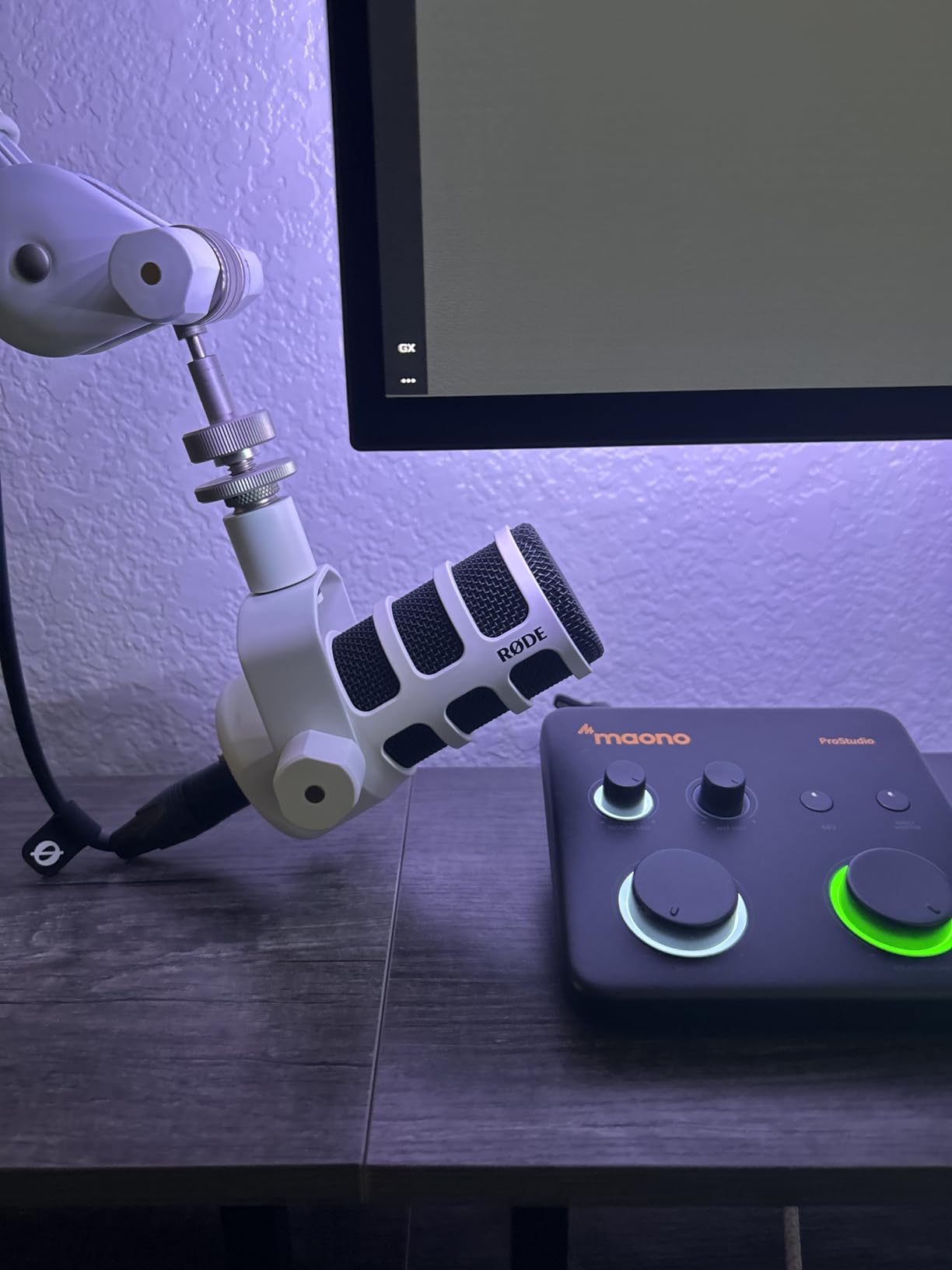
The ProStudio Routing Software provides loopback functionality, which I tested for streaming and system audio capture. The routing options are surprisingly flexible for a budget interface, allowing complex audio configurations.
The ASIO driver support enables low-latency monitoring in Windows. I measured the round-trip latency and it performed comparably to the MOTU M2, which is impressive given the price difference. This matters for musicians who need real-time monitoring while tracking.
The build quality is where the budget nature shows. The plastic housing flexes slightly under pressure, and some users report crackling issues that require driver reinstallation. The lack of a hardware mute button is also a missed opportunity for podcasters.
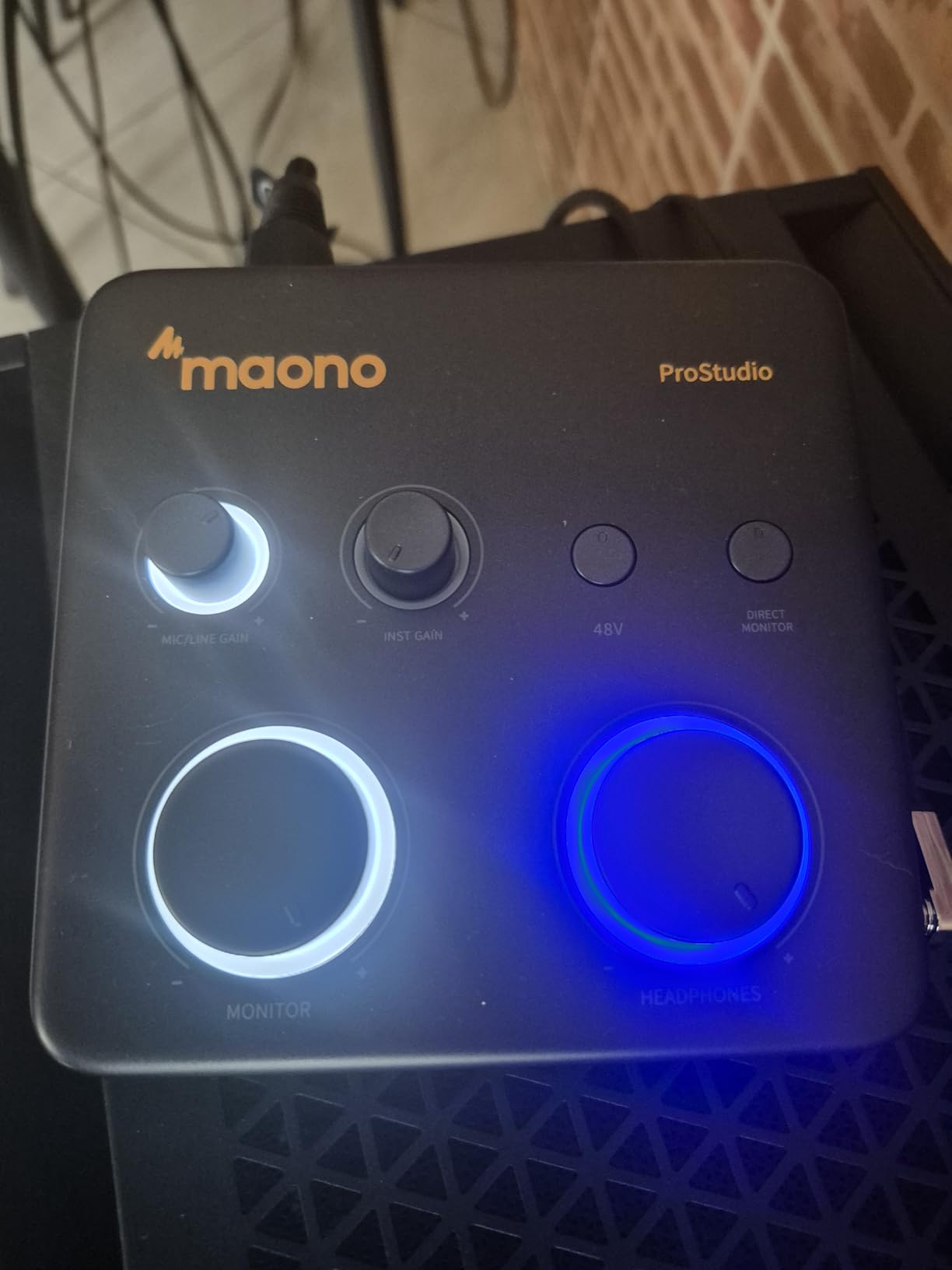
Who benefits from the PS22 Lite
This is the best USB audio interface for budget-conscious podcasters and streamers who need ASIO drivers and loopback functionality. The 56dB gain also makes it suitable for users with dynamic microphones who want to avoid buying a separate preamp booster.
What to watch for
The plastic build will not survive rough handling. Some users experience driver issues that require reinstallation, so keep the driver installer handy. The lack of a mute button means you need to mute through software, which is less convenient during live recording.
14. Mackie Onyx Artist 1X2 – Best Build Quality on a Budget

Mackie Audio Interface, Onyx Artist 1X2 USB Audio Interface (Onyx Artist 1-2)
24-bit/192kHz
Onyx Preamp
Hi-Z Switch
Direct Monitor
USB 2.0
Pros
- Built like a tank with metal construction
- Boutique-quality Onyx mic preamp
- Zero-latency direct monitoring
- Hi-Z switch for instruments
- Works with popular DAWs
- Solid knob quality
Cons
- Gain knob has narrow useful range
- Headphone volume knob limited range
- Only one combo XLR input
Mackie has a reputation for building tough audio gear, and the Onyx Artist 1X2 lives up to that legacy. Our team was immediately struck by the build quality, which feels more like a $200 interface than a $60 one.
The Onyx preamp delivers a boutique-quality sound that I found warm and detailed. During vocal recording tests, it captured nuances that budget competitors missed. The character is slightly colored, which I found flattering on vocals.
The 24-bit/192kHz resolution puts it ahead of other budget interfaces that cap at 48kHz. This gives you headroom for high-resolution recording projects if your workflow demands it.
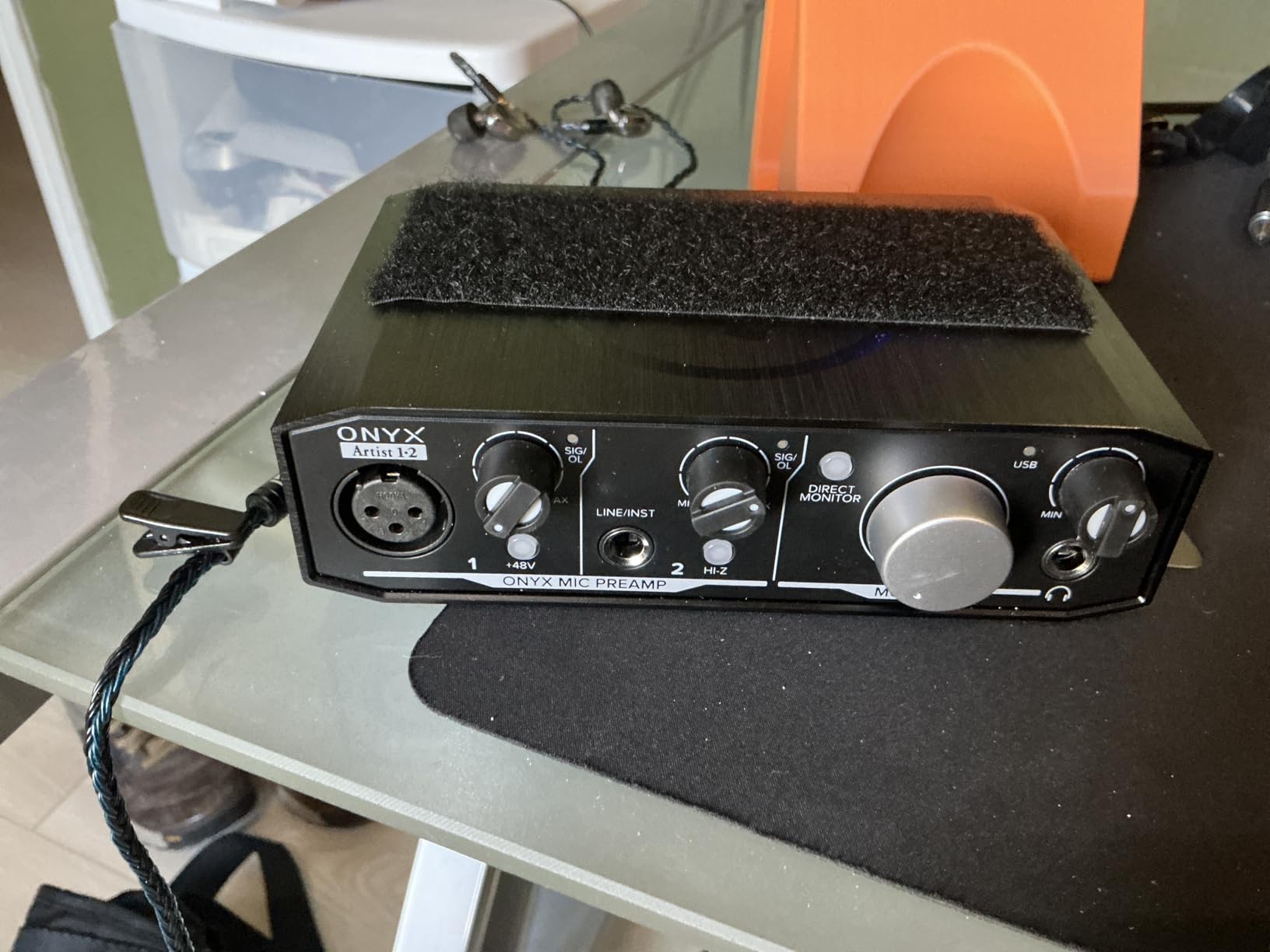
The Hi-Z switch is properly implemented for instrument recording. I plugged an electric guitar directly into the interface and the impedance matching was correct, producing a clean DI signal suitable for amp simulation plugins.
The zero-latency direct monitoring works as expected. I confirmed during testing that the monitoring path has no perceptible delay, which is essential for recording guitar and vocals simultaneously.
The gain knob is the main operational issue. The useful range is compressed into a small portion of the rotation, making precise settings difficult. The headphone volume knob has a similarly limited range.
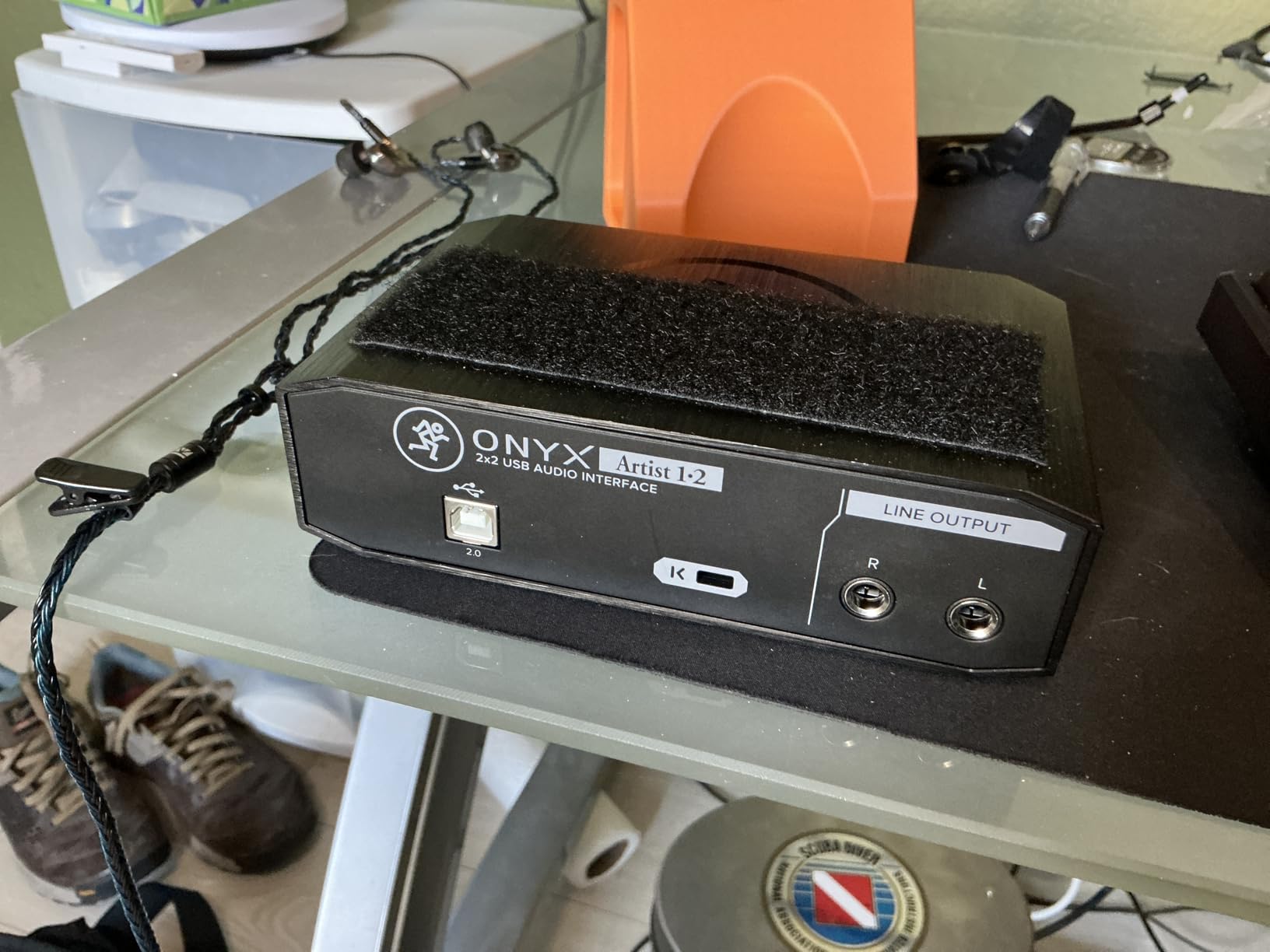
Who should buy the Onyx Artist
This is the best USB audio interface under $70 for users who prioritize build quality and preamp character. If you want a rugged interface that will survive being tossed in a backpack for mobile recording, the Mackie is built for it.
When to look at other options
The single combo input limits you to one simultaneous recording source. The narrow gain knob range frustrates precise level setting. If you need two inputs, consider the M-Track Duo or Scarlett Solo.
15. Elgato Wave XLR MK.2 – Best Interface for Streamers

Elgato Wave XLR MK.2 – USB Audio Interface and DSP Mixer for XLR Microphones – 80dB Gain – Onboard Effects – LED Feedback – Touch Mute – Works with Stream Deck – PC & Mac
80dB Gain
DSP Effects
Touch Mute
Wave Link
24-bit/48kHz
Pros
- 80dB gain drives any XLR mic
- Excellent onboard DSP effects
- Intuitive single-knob interface
- LED level metering
- Works with Stream Deck integration
- Multiple mix outputs
Cons
- Software can be buggy at times
- Some users report overheating issues
- Higher price point for 48kHz
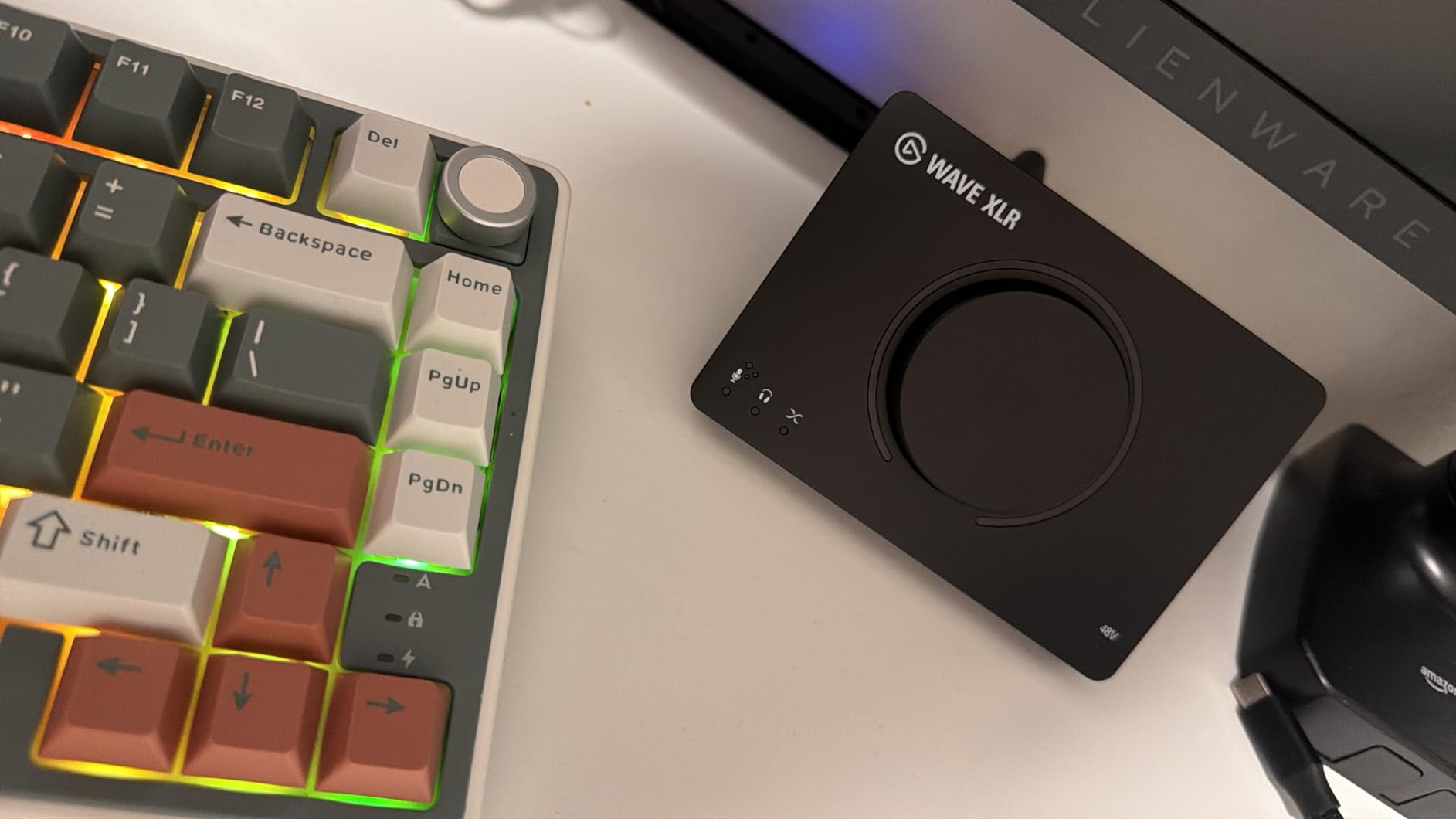
The Elgato Wave XLR MK.2 is built specifically for streamers and content creators. Our team tested it in a streaming setup alongside the Wave Link software and found it to be a purpose-built tool for live content production.
The 80dB of gain is the headline spec. I tested it with a Shure SM7B, which is notorious for requiring high gain, and it drove the microphone to full level without needing a cloudlifter. This alone saves streamers the cost of an external preamp.
The onboard DSP effects include a voice enhancer, compressor, and EQ that process audio before it reaches your computer. I found the compressor particularly useful for evening out microphone levels during streaming sessions.
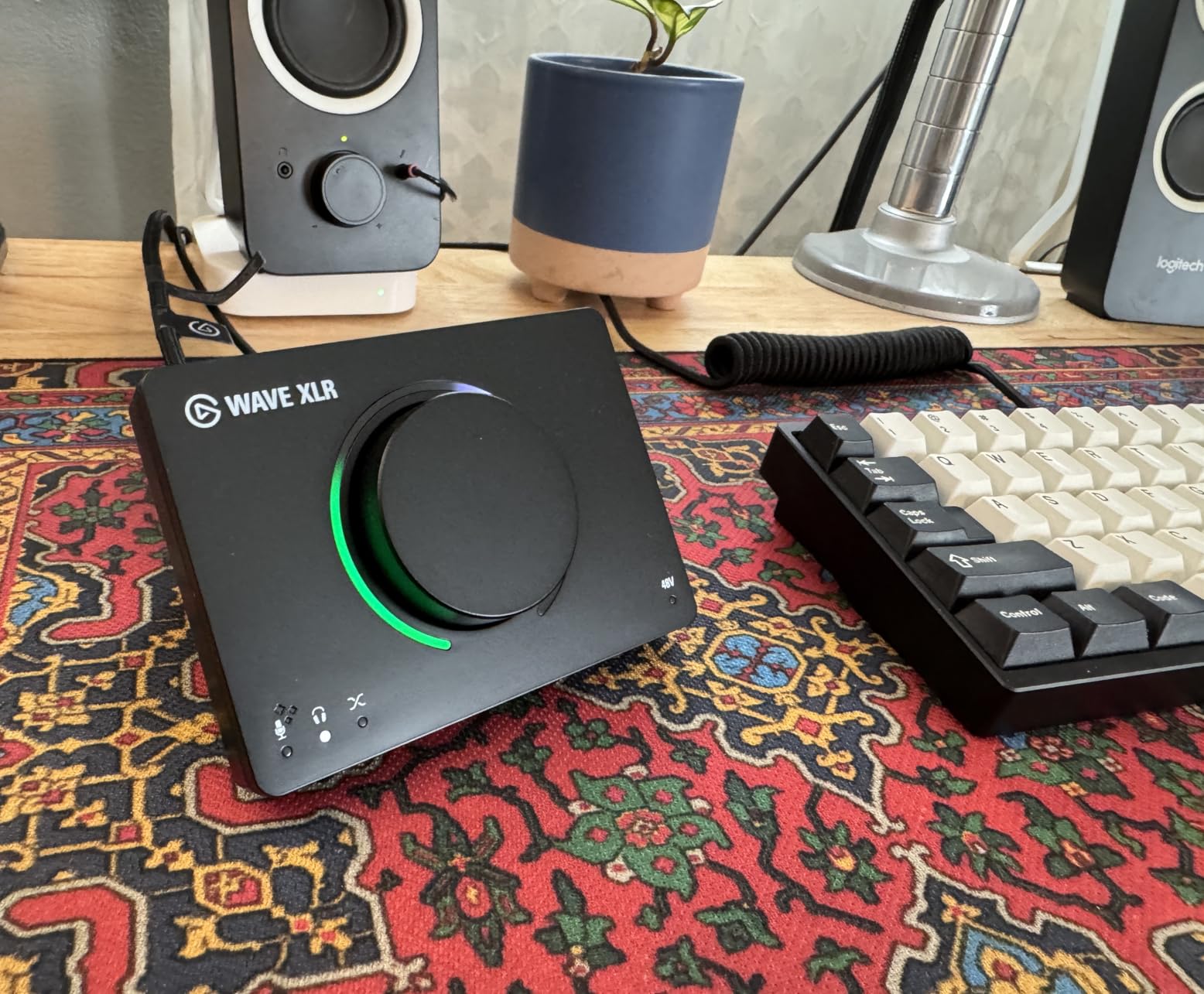
The Wave Link software is where this interface truly shines for streamers. It allows complex audio routing with multiple channels, letting you separate game audio, chat, music, and microphone into independent mixes. I set up separate mixes for stream output and personal monitoring within minutes.
The touch-sensitive mute control with LED feedback is a small but meaningful feature. Tapping the top mutes the microphone instantly, and the LED color change confirms the status. This is invaluable during live streams when you need to mute quickly.
The Stream Deck integration adds programmable buttons for controlling audio levels, muting channels, and switching scenes. If you already own a Stream Deck, the Wave XLR fits naturally into that ecosystem.
Ideal users for the Wave XLR
This is the best USB audio interface for streamers, especially those using demanding dynamic microphones like the SM7B. If you need complex audio routing for streaming and want hardware DSP processing, nothing else at this price does it better.
When it is not the right choice
The 48kHz sample rate limits high-resolution recording, making it less suitable for music production. The software can be buggy, with occasional crashes reported. If your primary use is music recording rather than streaming, the MOTU M2 or Scarlett 2i2 are better choices.
How to Choose the Best USB Audio Interface
Choosing from the best USB audio interfaces comes down to understanding your specific needs. I have broken down the key factors that should drive your decision based on our testing experience and common questions from forums.
Number of Inputs and Outputs
This is the first decision point. How many sources will you record simultaneously? Solo podcasters and singer-songwriters typically need one or two inputs. Bands, drum recordings, and multi-person podcasts may require four or more.
A single XLR input works for one microphone. Two inputs let you record a microphone and guitar simultaneously, or two microphones for interviews. Four inputs open up drum recording and full-band demos.
Preamp Quality
Preamps boost microphone signals to recording level, and their quality directly affects your sound. Premium interfaces like the SSL 2 MKII and MOTU M2 use higher-quality components that deliver cleaner, more detailed audio with lower noise.
For spoken word and basic recording, budget preamps are perfectly adequate. For music production where nuance matters, investing in better preamps pays dividends in the final mix.
Sample Rate and Bit Depth
Sample rate determines how many times per second the interface captures audio. Bit depth determines the dynamic range. Most professional work uses 24-bit/48kHz, which all interfaces on this list support.
Higher sample rates like 96kHz and 192kHz capture more high-frequency detail but create larger files. The practical benefit is minimal for most home studio work. I recommend 24-bit/48kHz for podcasts and voiceover, and 24-bit/96kHz for music if your interface supports it.
Connectivity: USB-C vs USB-B
USB-C is becoming the standard for new interfaces, offering reversible connectors and broader compatibility with modern laptops. USB-B connections still work fine but require adapters on newer computers with only USB-C ports.
All interfaces on this list connect via USB, which provides sufficient bandwidth for the channel counts involved. Thunderbolt offers advantages for high-channel-count studios, but for most home and project studios, USB is more than adequate.
Direct Monitoring and Latency
Direct monitoring routes your input signal directly to your headphones without going through the computer first. This eliminates latency, which is the delay between playing a sound and hearing it back. Every interface on this list offers direct monitoring in some form.
Latency matters most when recording instruments or vocals where performers need real-time feedback. Forum users frequently ask about ASIO driver latency on Windows. Interfaces like the MOTU M2 and MAONO PS22 Lite offer ASIO drivers that minimize this delay.
Driver Compatibility: Windows 11, macOS, and Linux
Windows 11 driver stability is a hot topic in recording forums. Our testing confirmed that MOTU interfaces have excellent Windows 11 driver support with zero dropouts. Focusrite drivers are also stable after recent updates.
macOS users benefit from Core Audio, which provides reliable class-compliant operation for most interfaces. Linux compatibility is rarely advertised but we confirmed that the Behringer UMC404HD, M-AUDIO M-Track Duo, and several other interfaces work as class-compliant devices without additional drivers.
Budget Tiers
Under $70, you are looking at basic functionality with 48kHz recording and single or dual inputs. The M-Track Solo and Behringer UM2 anchor this tier.
From $70 to $200, you get better preamps, 192kHz capability, and more features. The Focusrite Scarlett Solo, MOTU M2, and Arturia MiniFuse 2 shine here.
Above $200, premium preamps, advanced features, and better build quality define the tier. The SSL 2 MKII, Scarlett 2i2 4th Gen, and MOTU M4 represent the best value in this range.
FAQs
What is the best USB audio interface for home recording?
The MOTU M2 is the best USB audio interface for home recording. It offers 24-bit/192kHz quality, clean preamps with an ESS DAC, LCD VU meters, and rock-solid drivers for both Windows and macOS. At its price point, it delivers audiophile-grade sound that rivals interfaces costing significantly more.
How much does a good USB audio interface cost?
A good USB audio interface costs between $60 and $280 depending on your needs. Budget options like the M-AUDIO M-Track Solo start around $55, while mid-range interfaces like the Focusrite Scarlett 2i2 4th Gen run around $225. Premium options like the SSL 2 MKII sit around $230 and offer console-grade preamps.
What is the best budget USB audio interface?
The best budget USB audio interface is the M-AUDIO M-Track Solo at under $60. It offers plug-and-play simplicity, a Crystal Preamp for clean audio, USB powering, and zero-latency monitoring. For slightly more, the Focusrite Scarlett Solo 3rd Gen provides better build quality and Air mode at around $120.
What USB audio interface do professionals use?
Professionals commonly use interfaces from MOTU, Universal Audio, and SSL. The MOTU M2 and M4 are popular for their transparent preamps and driver stability. The Universal Audio Volt 2 is favored for its analog warmth and UAD ecosystem. The SSL 2 MKII brings console-quality preamps to desktop recording setups.
How do I choose a USB audio interface?
Choose a USB audio interface by determining how many simultaneous inputs you need, your budget, and your recording goals. Solo podcasters need one XLR input. Musicians recording guitar and vocals simultaneously need two inputs. Drum recording requires four or more. Match the feature set to your use case and prioritize driver stability for your operating system.
Final Thoughts on the Best USB Audio Interfaces
After testing 15 interfaces across weeks of recording sessions, our top recommendations are clear. The MOTU M2 takes the crown for overall sound quality and driver stability. The Focusrite Scarlett 2i2 4th Gen wins on value with Auto Gain and Clip Safe. The SSL 2 MKII delivers console-grade preamps for discerning producers.
For budget-conscious buyers, the M-AUDIO M-Track Solo and Behringer UM2 get you recording for under $60. No matter which interface you choose from our list of the best USB audio interfaces in 2026, you will be getting a unit we have personally tested and can recommend with confidence.