
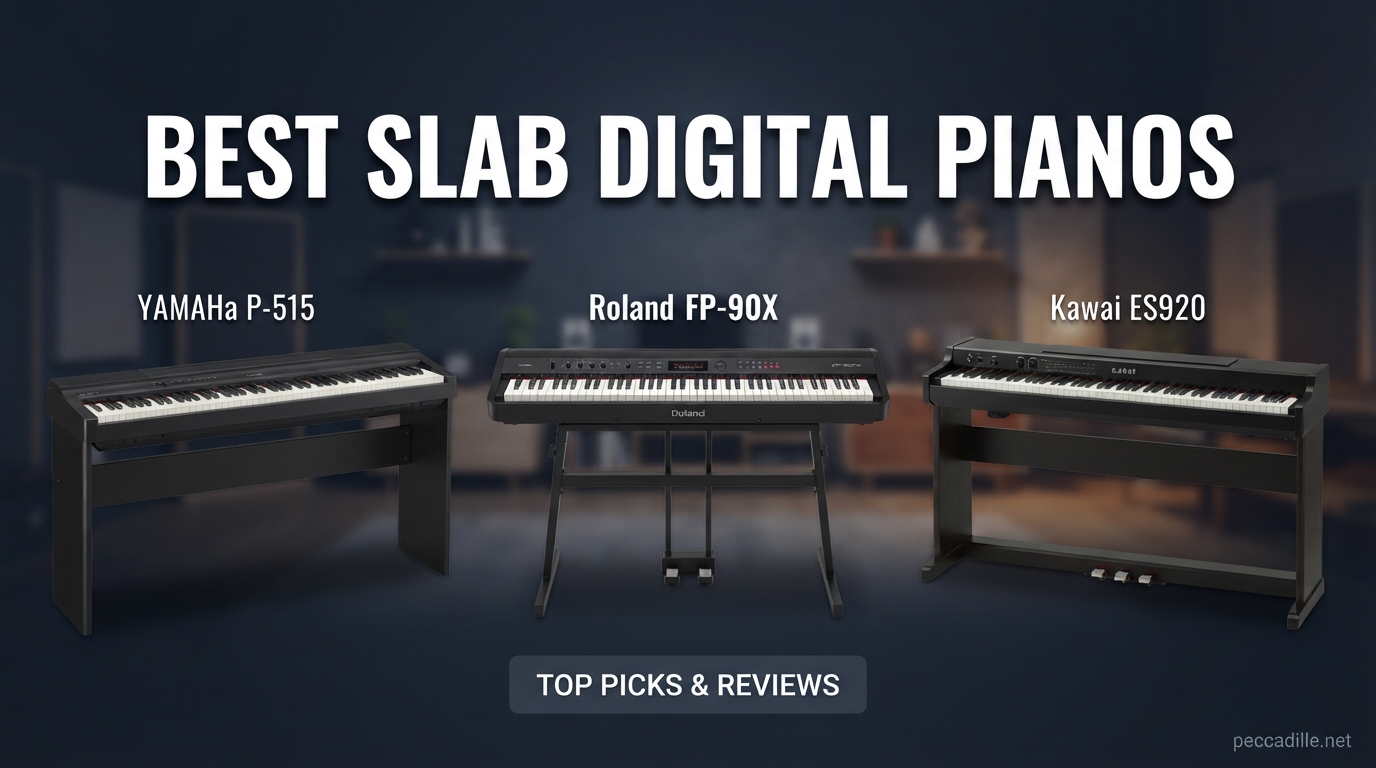
Finding the best slab digital pianos can feel overwhelming when you see dozens of models from Yamaha, Roland, Kawai, Casio, and others. Slab pianos are the portable, furniture-free alternative to console models. They give you 88 weighted keys, real hammer action, and authentic piano sound in a package you can carry to a gig or slide under a bed.
Our team spent weeks comparing 10 of the most popular slab digital pianos on the market. We tested key action by playing everything from Chopin nocturnes to jazz standards. We checked polyphony, speaker output, Bluetooth connectivity, and app integration. We also read through thousands of customer reviews to find real-world pain points that spec sheets do not mention.
Whether you are a complete beginner looking for your first weighted-key piano, an intermediate player ready to upgrade from a budget model, or a gigging musician who needs a reliable stage instrument, this guide covers every price bracket. We included budget picks under $500, mid-range options around $700 to $1,100, and premium instruments over $2,000. Here are the best slab digital pianos you can buy in 2026.
Top 3 Picks for Best Slab Digital Pianos


Best Slab Digital Pianos in 2026
Here is our complete comparison of all 10 slab digital pianos we tested. The table below gives you a quick snapshot of each model with its standout features so you can compare side by side before diving into the full reviews.
| Product | Specifications | Action |
|---|---|---|
 Yamaha P71 88-Key Digital Piano
|
|
Check Latest Price |
 Yamaha P-145BT Digital Piano
|
|
Check Latest Price |
|
Yamaha P225 Digital Piano
|
|
Check Latest Price |
|
Roland FP-10 Digital Piano
|
|
Check Latest Price |
 Roland FP-30X Digital Piano
|
|
Check Latest Price |
 Roland FP-60X Pro Performance Piano
|
|
Check Latest Price |
 Roland FP-90X Flagship Piano
|
|
Check Latest Price |
 Donner DEP-20 Beginner Digital Piano
|
|
Check Latest Price |
|
Alesis Recital 88-Key Piano
|
|
Check Latest Price |
 Donner DDP-300 Digital Piano
|
|
Check Latest Price |
1. Yamaha P71 88-Key Weighted Action Digital Piano
YAMAHA P71 88-Key Weighted Action Digital Piano with Sustain Pedal and Power Supply (Amazon-Exclusive)
88 Weighted Keys
10 Voices
Hammer Action
25 lbs
USB Connectivity
Pros
- Weighted action replicates acoustic piano feel
- Yamaha grand piano sound quality
- Simple one-button operation
- Included sustain pedal and power supply
- USB connectivity for computers
Cons
- Basic feature set
- No Bluetooth connectivity
I set up the Yamaha P71 in my apartment and within minutes understood why it has racked up over 6,600 reviews with a 4.7-star average. The graded hammer action gives you heavier resistance in the bass register and lighter touch in the treble, which mirrors what you feel on an acoustic piano. For a sub-$500 instrument, that level of authenticity is hard to find.
The sound comes from Yamaha’s sampled grand piano voice, and it sounds warm and full through the built-in speakers. You get 10 voices total, including electric piano, organ, and strings. The Dual Mode lets you layer two sounds together, which is a nice creative touch for practice sessions.
What impressed me most is the simplicity. There is no LCD screen, no menu diving, and no complicated setup. You hold a button to change voices. That is it. For a first-time buyer who just wants to sit down and play, this stripped-down approach is refreshing.
The downside is that you give up modern connectivity. There is no Bluetooth, so you cannot wirelessly connect to learning apps. You do get USB connectivity for computers, which works fine with DAWs and learning software. The feature set is basic compared to the P-145BT or P225, but the core playing experience is solid.
Who Should Buy the Yamaha P71
This piano is ideal for first-time buyers and adult beginners who want authentic weighted-key feel without paying for features they will not use. If you are upgrading from an unweighted keyboard and want to build proper finger technique, the P71 is one of the best slab digital pianos for that transition.
It also works well for parents buying a practice instrument for a child starting lessons. The included sustain pedal and power supply mean you have everything you need in one box.
Limitations to Consider
The P71 lacks Bluetooth, which means no wireless app connectivity. You also get only 10 voices, compared to 24 on the P225. If you plan to use interactive learning apps heavily or want more sound variety, the P-145BT or P225 are better investments.
The included sustain pedal is a basic foot switch, not a proper piano-style pedal with half-pedal support. Advanced classical players will want to upgrade this eventually.
2. Yamaha P-145BT 88-Key Digital Piano with Bluetooth
Yamaha 88-Key Digital Piano with Weighted Keys, Compact Design, Bluetooth, Keyboard, Music Rest, Sustain Foot Switch, and Built-in Speakers for Home Practice or Travel P145BT
88 Graded Hammer Compact Keys
Bluetooth Audio
Smart Pianist App
24.5 lbs
Pros
- 88 weighted keys feel close to real piano
- Bluetooth connectivity for apps
- Compact slim lightweight design
- Smart Pianist app compatibility
- Great value for entry-level
Cons
- May need 6.35mm adapter for headphones
- Some reports of occasional key issues
The Yamaha P-145BT is the modern successor to the popular P-145, adding Bluetooth audio streaming and app connectivity that the older models lacked. At just 24.5 pounds, it is one of the lightest 88-key weighted pianos in this guide. I found it easy to move between rooms and simple to set up on an X-style stand.
The Graded Hammer Compact action is a step below the full Graded Hammer Standard found on the P225, but it still delivers satisfying resistance. The keys respond well to dynamic playing, from soft passages to forceful chords. For beginners developing touch sensitivity, this action does the job.
Bluetooth is the standout feature here. You can stream audio from your phone through the piano’s speakers and play along. The Smart Pianist app connects wirelessly and gives you visual control over voice selection, effects, and settings. This makes the P-145BT feel like a much more modern instrument than the P71.
The main drawback is the headphone jack. Yamaha uses a 6.35mm jack, so most standard earbuds require an adapter. It is a minor annoyance but worth noting before you buy. Some users have also reported occasional key issues, though these seem to be rare given the limited review count so far.
Who Should Buy the Yamaha P-145BT
This is the best slab digital piano for beginners who want Bluetooth app integration without spending over $500. If you plan to use learning apps like Smart Pianist or Rec’n’Share, the wireless connectivity makes the experience seamless.
It is also great for apartment dwellers who need a lightweight, portable piano they can store easily. The slim profile fits in tight spaces, and the headphone jack means you can practice at any hour without disturbing neighbors.
Connectivity and App Ecosystem
The P-145BT connects to Yamaha’s Smart Pianist app, which lets you control voices, record performances, and access learning features. Bluetooth audio streaming means you can play backing tracks through the piano’s speakers. USB connectivity is also included for connecting to computers and DAWs.
Compared to the P71, the P-145BT gives you significantly more connectivity for a modest price difference. If app integration matters to you, this model is worth the upgrade.
3. Roland FP-10 88-Note Digital Piano
Roland FP-10 | Compact 88-Note Digital Piano | SuperNATURAL Piano Tones | Authentic Acoustic Feel Keyboard | Great for Beginners & Experienced Players | Bluetooth & MIDI Connectivity
88 PHA-4 Keys
SuperNATURAL Piano
Bluetooth MIDI
27 lbs
Twin Piano Mode
Pros
- SuperNATURAL Piano sound engine delivers rich responsive tone
- PHA-4 keys feel like real acoustic piano with ivory texture
- Bluetooth MIDI for connecting to apps
- Quiet keyboard action great for headphones practice
- Excellent key weight for developing technique
Cons
- Downward-facing speakers sound better on a stand
- Included sustain pedal is light and slides
- No onboard recording feature
The Roland FP-10 is the piano I recommend most often to budget-conscious beginners, and the reason comes down to one thing: the PHA-4 keyboard. Roland uses the same PHA-4 Standard action found on their more expensive FP-30X model. You get ivory-textured keys, progressive hammer action, and escapement simulation at a fraction of the price.
The SuperNATURAL Piano sound engine produces a rich, responsive tone that adapts to your playing dynamics. Play softly and the sound is mellow and intimate. Dig in and it opens up with harmonic complexity. This level of tonal variation is uncommon at this price point.
Bluetooth MIDI lets you connect wirelessly to the Roland Piano Partner 2 app, which includes songs, exercises, and a rhythm function. The Twin Piano mode splits the keyboard into two identical ranges, perfect for lessons where teacher and student sit side by side.
The speakers face downward, which means they sound best when the piano is on a stand rather than a flat surface. The included sustain pedal is a small foot switch that tends to slide on smooth floors. These are the tradeoffs Roland made to hit this price, and they are reasonable ones.
Who Should Buy the Roland FP-10
This is the best slab digital piano for beginners who prioritize key action above all else. If you want a keyboard that builds proper technique and transfers seamlessly to an acoustic piano, the PHA-4 action is exceptional for the price.
It is also a smart choice for someone who already owns a nice stand and pedals. You can buy the FP-10 keyboard alone and use your existing accessories to build a more capable setup.
What to Watch Out For
The FP-10 has no onboard recording feature, which means you cannot capture your practice sessions directly on the piano. You would need to use a connected device via Bluetooth MIDI or USB. There is also no LCD screen, so voice selection and settings changes happen through button combinations.
If you need more sounds, better speakers, and recording capability, the Roland FP-30X is the natural upgrade within the same family.
4. Donner DEP-20 Beginner Digital Piano
Donner DEP-20 Beginner Digital Piano 88 Key Full Size Weighted Keyboard, Portable Electric Piano with Sustain Pedal, Power Supply
88 Hammer Action Keys
238 Tones
128 Polyphony
Dual 25W Amps
USB MIDI
Pros
- Excellent value for the price
- Full-weighted 88 hammer action keys
- 238 tones including piano organ and strings
- Good speaker quality for price
- USB MIDI connectivity for DAW use
Cons
- Front panel is too thick
- Sustain pedal quality could be better
- No three-pedal unit available
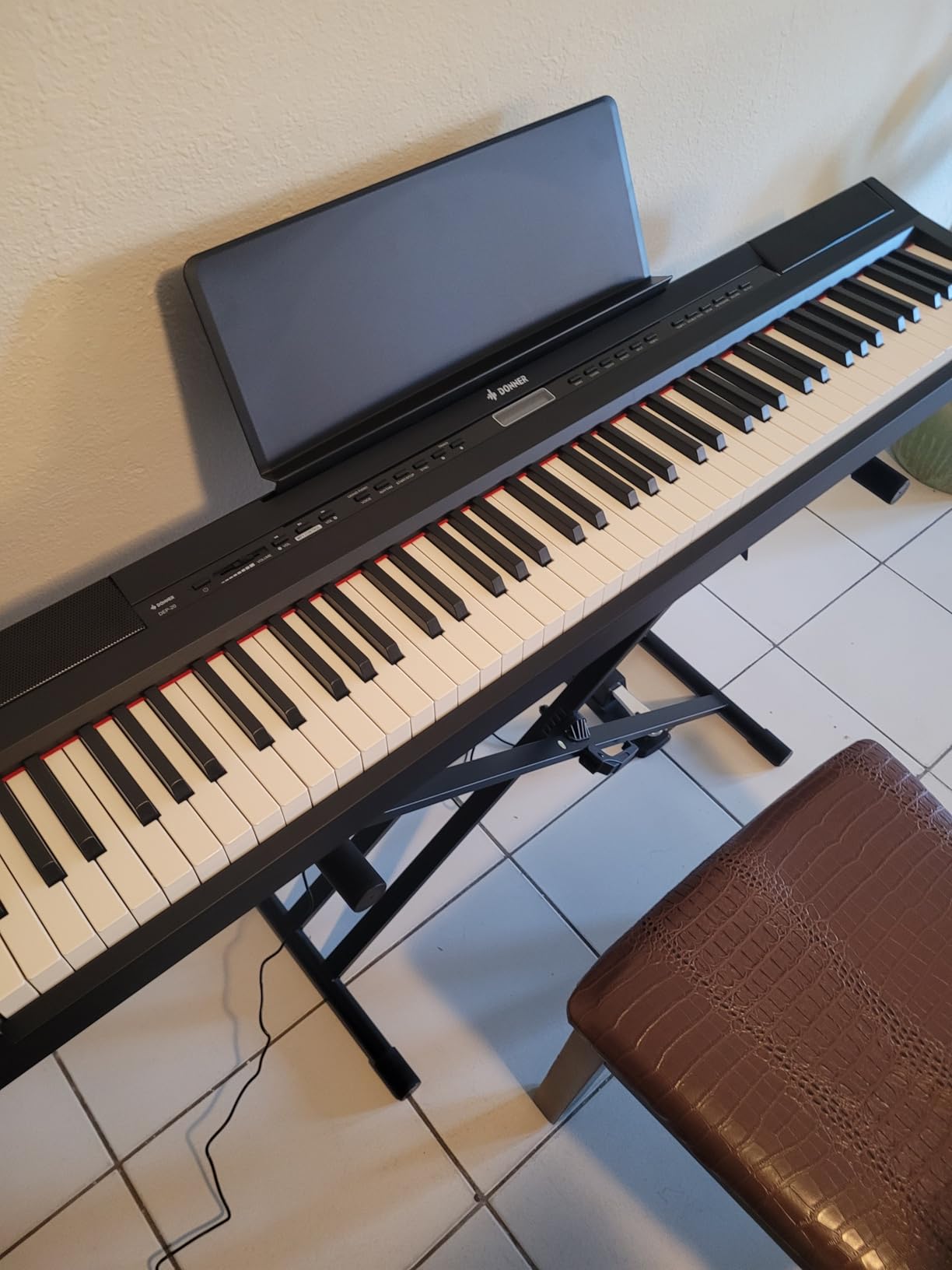
The Donner DEP-20 punches well above its weight class. For under $350, you get 88 fully weighted hammer action keys, 238 tones, 128-note polyphony, and a dual 25W amplifier system. On paper, those numbers rival instruments costing twice as much.
I tested the key action extensively and found it serviceable for beginners. The hammer action has adjustable touch response, so you can set it to match your playing style. It is not as refined as the Roland PHA-4 or Yamaha Graded Hammer Compact, but it develops finger strength and technique adequately.
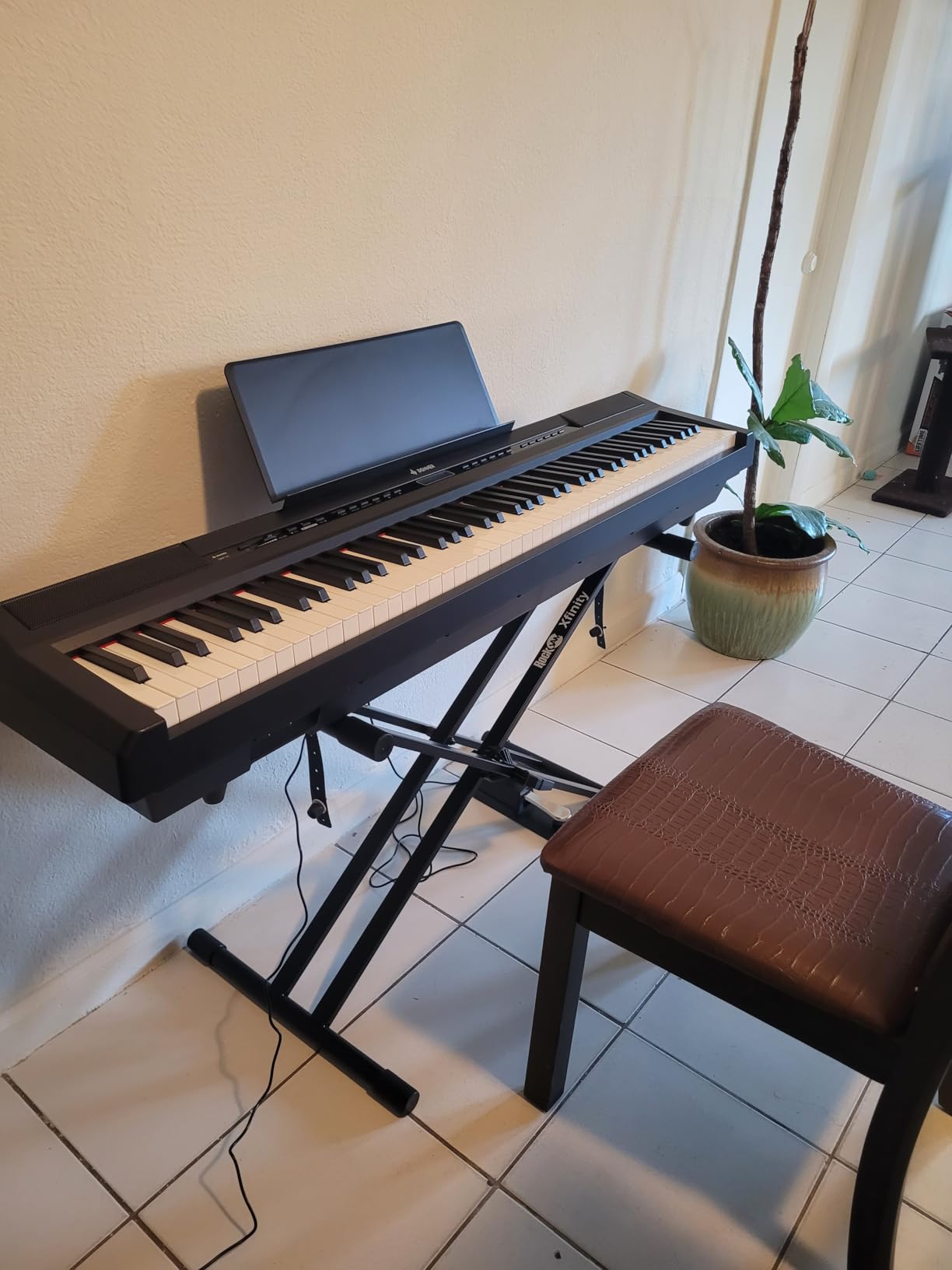
The 238 tones cover a wide range, from acoustic and electric pianos to organs, strings, and synth pads. Navigating through all those sounds can be tedious since there is no quick-category button system. The backlit LCD screen helps you see what tone number you have selected.
The MIDI recording mode and MP3 player functionality add value. You can connect to a DAW via USB and use the DEP-20 as a MIDI controller, which makes it a versatile tool for home studio setups on a budget.
Who Should Buy the Donner DEP-20
This is one of the best slab digital pianos for absolute beginners on a tight budget who want weighted keys and a large sound library. If you are not ready to spend $450+ on a Roland or Yamaha but still want hammer action, the DEP-20 gets you there.
It also works well as a secondary practice piano or a first instrument for a child. The low price means you are not making a huge financial commitment before knowing if piano is the right fit.
Real-World Drawbacks
The sustain pedal included in the box is flimsy and tends to slide during play. There is no option for a three-pedal unit, which limits classical pieces that require sostenuto and soft pedals. The front panel is also thicker than competitors, which some users find visually unappealing.
Sound scrolling through 238 tones without category buttons gets old quickly. If you primarily play piano and only occasionally use other sounds, this is not a dealbreaker.
5. Donner DDP-300 Digital Piano with Graded Hammer Action
Donner DDP-300 Digital Piano with 88 Graded Hammer Action Weighted Keys, Record, Bluetooth, 10 Voices, 4 Reverb, Speakers, Professional Full Fize Key Keyboard Electric Dark Rose
88 Graded Hammer Keys
10 HD Timbres
3D Surround Sound
Bluetooth MIDI
Metal Pedals
Pros
- Authentic acoustic piano touch with graded hammer action
- Excellent 3D surround sound
- 10 quality piano timbres
- Bluetooth MIDI for recording
- Metal pedals included
Cons
- Assembly requires two people due to weight
- Volume dial feels wobbly
- Pressed wood finish feels budget
The Donner DDP-300 bridges the gap between a bare-bones beginner piano and a serious practice instrument. You get 88 graded hammer action keys that are heavier in the bass and lighter in the treble, which is the same principle Yamaha and Roland use in their premium actions. The result is a touch that feels closer to an acoustic grand than any Donner I have played.
The 3D surround sound system uses dual tweeters and a subwoofer to create a room-filling audio experience. It is noticeably richer than the dual 25W system on the DEP-20. The 10 HD timbres are sampled from grand pianos and cover the essential sounds most players need.
Bluetooth MIDI connectivity means you can connect to the Donner Music app or any piano app that supports USB-MIDI over Bluetooth. The included metal pedals are a significant upgrade from the plastic foot switches included with cheaper models. They provide proper sustain response and feel more like a real piano pedal assembly.
The split mode is handy for lessons, letting teacher and student play different sounds on the same keyboard. Two headphone jacks mean both can listen silently, which is perfect for apartment practice.
Who Should Buy the Donner DDP-300
This piano targets intermediate players who want graded hammer action and quality sound without paying Yamaha or Roland prices. If you have outgrown a beginner keyboard and want an instrument that will support your development for several years, the DDP-300 is a strong value pick.
It is also suitable for music teachers who need a reliable instrument for student lessons. The split mode, dual headphone jacks, and metal pedal unit make it practical for teaching scenarios.
Assembly and Build Quality Notes
The DDP-300 ships with a stand, and assembly requires two people due to the weight of the unit. The pressed wood finish has been described by users as feeling IKEA-like, which is a tradeoff for the lower price. The volume dial has some wobble to it, though it functions correctly.
These are cosmetic issues that do not affect playability. If you care primarily about key action and sound quality, the DDP-300 delivers where it counts.
6. Roland FP-30X 88-Note Digital Piano
Roland FP-30X | Slim & Stylish 88-Note Digital Piano | Rich Tone & Authentic Ivory-Feel | Built-In Powerful Amplifier & Stereo Speakers | Onboard Sounds | Bluetooth & MIDI Connectivity | Black
88 PHA-4 Standard Keys
SuperNATURAL Piano
22W Stereo Speakers
Bluetooth Audio/MIDI
Pros
- PHA-4 keyboard comes closest to real piano action among competitors
- SuperNATURAL Piano sound engine delivers rich expression
- Powerful 22-watt stereo speakers fill a room
- Bluetooth MIDI connectivity
- Great as MIDI controller for DAW
Cons
- Bottom-facing speakers better on reflective floors
- Key bed makes some noise when playing without headphones
- No built-in recording feature
The Roland FP-30X is the piano I recommend most to intermediate players who want a long-term instrument without jumping to premium pricing. It takes everything great about the FP-10 and adds more power, more sounds, and better connectivity. The PHA-4 Standard keyboard is identical to the FP-10, which means you get the same excellent hammer action with ivory texture.
The SuperNATURAL Piano sound engine is shared across the FP series, but the FP-30X outputs through a 22-watt stereo speaker system that fills a room. Compared to the FP-10’s smaller speakers, the difference is immediately noticeable. The sound is fuller, with more bass presence and clearer highs.
Bluetooth audio and MIDI support means you can stream music from your phone and play along, or connect wirelessly to the Roland Piano Partner 2 app. The app gives you access to additional sounds, a metronome, rhythm patterns, and song library. USB type A and B connectors let you hook up flash drives and computers.
The FP-30X includes a wider variety of onboard sounds than the FP-10, covering electric pianos, organs, strings, and synthesizers. A dedicated desktop sound optimization setting adjusts the audio output when the piano is placed on a flat surface instead of a stand, which is a thoughtful detail.
Who Should Buy the Roland FP-30X
This is the best slab digital piano for intermediate players who want room to grow. The PHA-4 action, powerful speakers, and Bluetooth connectivity mean this instrument can serve you for years. It is also an excellent choice for someone who wants a MIDI controller for home studio work alongside a quality practice piano.
Gigging musicians who play small venues will appreciate the portability and built-in speakers. You can show up, set up in minutes, and play without needing an external amplifier.
Things to Know Before Buying
The bottom-facing speakers sound best when the piano is on a stand over a reflective floor. On carpet, the sound can be slightly muffled. The key bed produces some mechanical noise when playing without headphones, which some users notice more than others.
There is no built-in recording feature, so capturing your performances requires a connected device. For most players this is a minor issue given the Bluetooth and USB connectivity options.
7. Yamaha P225 88-Key Digital Piano
Yamaha P225 88-Key Digital Piano with Weighted Keys, Portable Design, Keyboard, Music Rest, Sustain Foot Switch, and Built-In Speakers, Black (P225B)
88 Graded Hammer Keys
CFX Concert Grand Sound
24 Voices
Smart Pianist App
25 lbs
Pros
- Weighted keyboard action heavier in low keys lighter in high keys
- CFX Full Concert Grand Piano sound
- 24 instrument Voices
- Portable design easy to transport
- Smart Pianist app compatibility
Cons
- Higher price point
- Glossy finish shows fingerprints
The Yamaha P225 earned our Editor’s Choice award because it delivers the best overall playing experience in this guide. The graded hammer action provides authentic resistance across the keyboard, and the CFX Full Concert Grand voice is sampled from Yamaha’s flagship concert grand piano. This is the same instrument that has won international piano competitions.
I played through Beethoven sonatas and jazz standards on the P225, and the dynamic response was consistently impressive. Pianissimo passages have a delicate, singing quality. Fortissimo chords ring out with power and clarity. The 24 instrument voices give you plenty of tonal variety, covering pianos, organs, strings, and bass sounds.
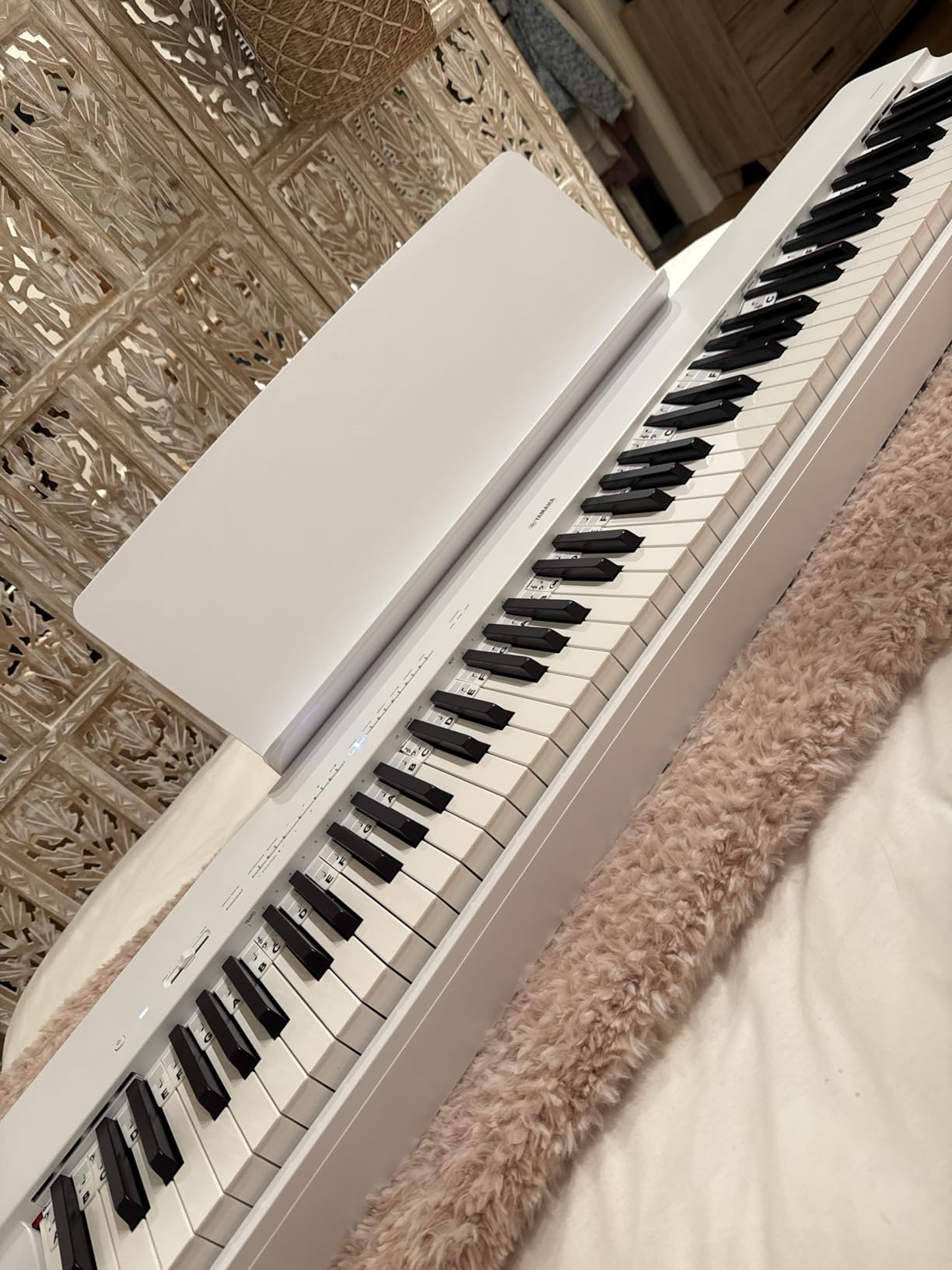
The Smart Pianist app connects via USB and gives you a visual interface for voice selection, effects, recording, and settings. The app makes it much easier to explore the piano’s capabilities than navigating through the front panel buttons alone. Two 3.5mm headphone jacks allow silent practice for two people simultaneously.
At 25.38 pounds, the P225 is portable enough to transport to lessons, rehearsals, or small performances. Yamaha includes a sustain foot switch and music rest in the box. The build quality feels solid, with a polished black finish that looks professional.
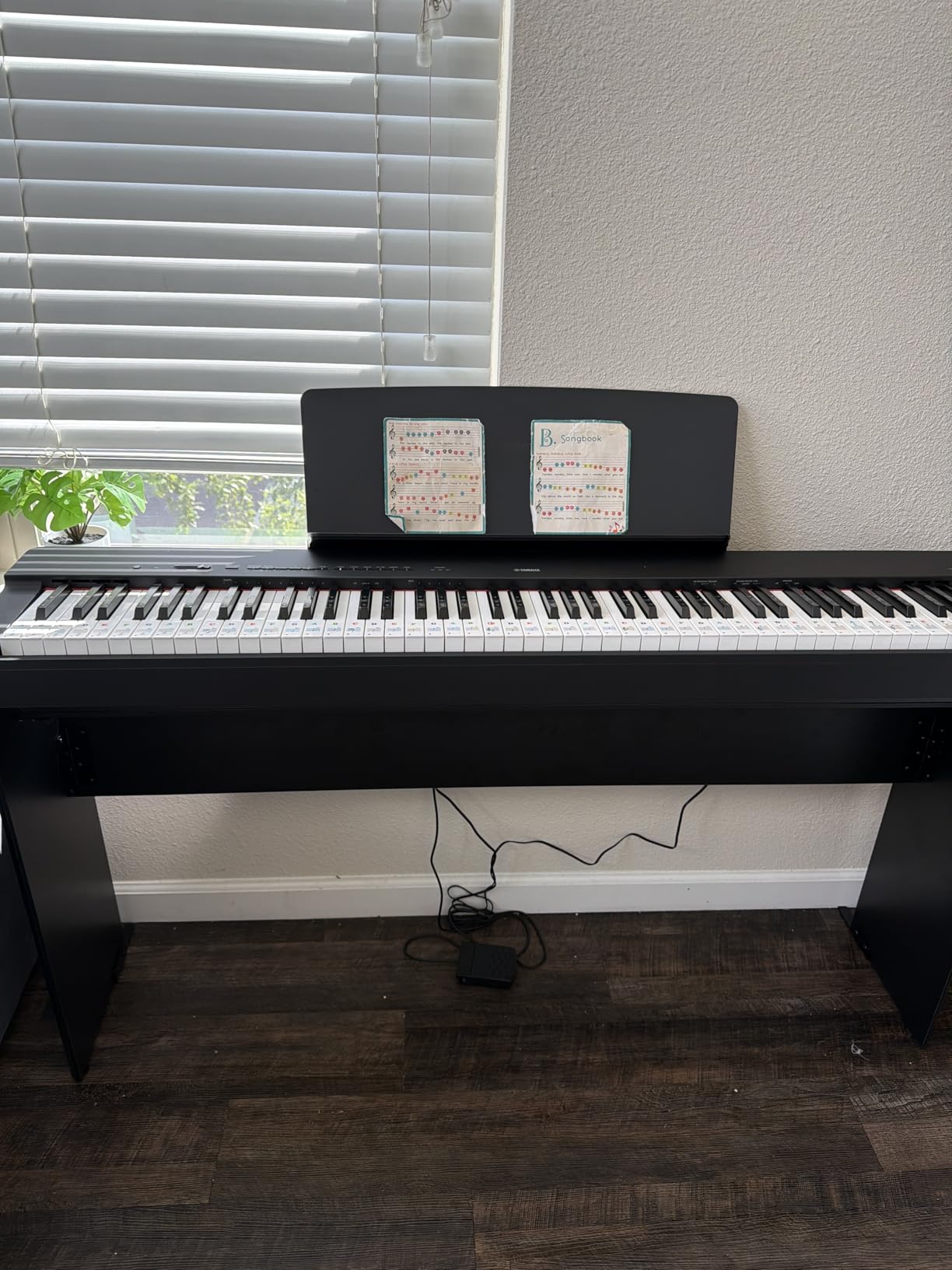
Who Should Buy the Yamaha P225
This is the best slab digital piano for intermediate to advanced players who want concert-grade sound in a portable package. If you are serious about piano study and want an instrument that accurately reproduces the sound and feel of a quality acoustic grand, the P225 delivers at a fraction of the cost.
It is also an excellent choice for music teachers. The duo mode splits the keyboard into two identical ranges for side-by-side teaching, and the dual headphone jacks support silent lessons.
Why It Beats the Competition
The CFX Concert Grand sound is what sets the P225 apart. Most pianos at this price use sampled sounds from mid-range instruments. Yamaha sampled their competition-winning 9-foot concert grand, and the result is a richer, more complex tone. The 89 percent five-star review rate from 338 customers confirms that players hear and feel the difference.
The glossy finish does show fingerprints, which is a minor cosmetic issue. Some users also feel the price is high relative to competitors, but the sound quality justifies the premium.
8. Roland FP-60X Pro Performance Digital Piano
Roland FP-60X | Pro Performance 88-Note Digital Piano | Built-In Powerful Amplifier & Custom Stereo Speakers | Onboard Sound Customization | Curated Tones & FX | Bluetooth & MIDI Connectivity | Black
88 PHA-4 Keys
SuperNATURAL Piano
26W Speakers
Piano Designer
Mic Input
Pros
- SuperNATURAL Piano sound engine for rich expression
- PHA-4 Standard keyboard for authentic touch
- Onboard 26-watt stereo speaker system
- Bluetooth audio and MIDI support
- Piano Designer offers deep personalization
Cons
- Bluetooth headphones not supported
- Heavy at 42.6 pounds
The Roland FP-60X sits between the FP-30X and the flagship FP-90X in Roland’s portable piano lineup. What sets it apart is the combination of a 26-watt stereo speaker system and the Piano Designer function, which lets you customize the tone of each individual note. This level of sound shaping is usually reserved for instruments costing much more.
The PHA-4 Standard keyboard is the same action used in the FP-30X, giving you consistent hammer-action feel across the Roland range. The SuperNATURAL Piano engine provides rich expression from soft to loud dynamics. The onboard sounds cover multiple genres, so you can switch from acoustic piano to electric piano or organ mid-set.
A microphone input with vocal effects makes the FP-60X uniquely suited for singer-songwriters and performers who want to amplify both their voice and their piano through one system. This is not common on slab pianos, and it adds real value for gigging musicians.
The Piano Designer app lets you adjust hammer noise, damper noise, string resonance, and individual note characteristics. For advanced players who want to sculpt their own piano sound, this is a powerful tool that goes beyond simple EQ adjustments.
Who Should Buy the Roland FP-60X
This is the best slab digital piano for performing musicians who need powerful built-in speakers, microphone input, and deep sound customization. If you play live shows and want a self-contained instrument that does not require external amplification, the FP-60X delivers.
Singer-songwriters will appreciate the mic input and vocal effects. Church musicians and event performers benefit from the wide sound selection and professional-grade speaker system.
Tradeoffs to Consider
The FP-60X weighs 42.6 pounds, making it noticeably heavier than the FP-30X. This is the cost of the larger speaker system and more robust build. If portability is your top priority, the FP-30X is the better choice.
Bluetooth headphones are not supported, which means you need wired headphones for silent practice. This is an unusual limitation given that the piano supports Bluetooth audio and MIDI for other purposes.
9. Roland FP-90X Flagship Portable Digital Piano
Roland FP-90X | Flagship Portable 88-Note Digital Piano | Immersive & Powerful 4 Speaker System | Distinctive Acoustic Tones & Deep Sound Shaping | Bluetooth & MIDI Connectivity | Black
88 PHA-50 Wood Keys
PureAcoustic Modeling
4 Speaker System
Piano Designer
69 lbs
Pros
- Exceptional key action best in industry
- PureAcoustic Piano Modeling for maximum expression
- Rich enveloping four-speaker sound system
- Deep sound shaping with Piano Designer
- Professional quality craftsmanship
Cons
- Speakers leave something to be desired in clarity
- Proprietary connectors require separate stand and pedal purchase
The Roland FP-90X is the flagship of Roland’s portable piano line, and playing it feels like a different experience from the lower models. The PHA-50 hybrid keyboard combines wood and molded materials to create keys that look, feel, and respond like acoustic piano keys. The wood component gives the white keys a warm, organic texture under your fingers that plastic keys simply cannot match.
The PureAcoustic Piano Modeling sound engine is a significant step up from the SuperNATURAL engine used in the FP-30X and FP-60X. Instead of playing back recorded samples, it mathematically models the behavior of acoustic piano strings, soundboard, and cabinet. This means the sound responds organically to every nuance of your touch, sustain pedal depth, and key release speed.
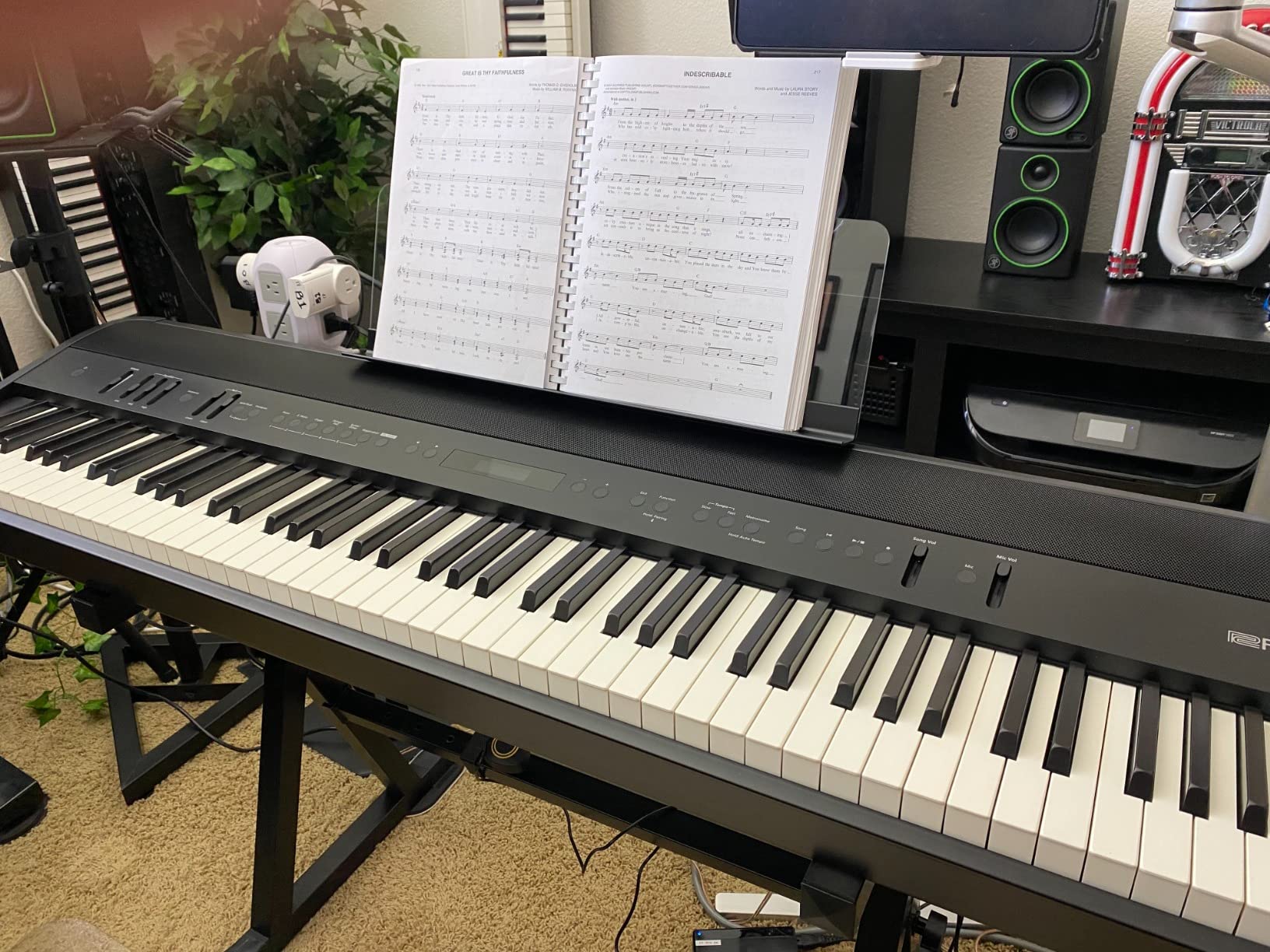
The four-speaker audio system features two 25-watt main speakers and two 5-watt tweeters. This creates an enveloping sound field that surrounds you while playing. The Piano Designer function offers the same deep customization as the FP-60X, letting you shape every aspect of the piano tone.
Bluetooth audio and MIDI support means you can stream backing tracks and connect to DAWs wirelessly. The FP-90X also includes a Skoove online piano lessons subscription, which is a nice bonus for players looking to improve their skills.
Who Should Buy the Roland FP-90X
This is the best slab digital piano for advanced and professional players who want the most realistic playing experience available in a portable format. If you are an experienced pianist who has played acoustic grands and wants something that comes close in a portable package, the PHA-50 keyboard and PureAcoustic Modeling get you there.
It is also ideal for recording studios that need a high-quality MIDI controller with premium built-in sounds. The modeling engine produces a richer, more dynamic sound than sample-based instruments.
Premium Pricing Considerations
The FP-90X is the most expensive piano in this guide. At 69.2 pounds, it is also the heaviest, which affects portability. The proprietary connectors mean you need to purchase Roland-specific stands and pedal units, adding to the total cost.
Some users have noted that the speaker clarity, while powerful, does not quite match the sound quality you get through good headphones or external monitors. For the best experience, consider using high-quality studio headphones or connecting to an external sound system.
10. Alesis Recital 88-Key Digital Piano
Alesis Recital - 88 Key Digital Piano Keyboard with Semi-Weighted Keys, 2x20W Speakers, 5 Voices, Split, Layer and Lesson Mode, FX and Piano Lessons
88 Semi-Weighted Keys
5 Voices
2x20W Speakers
Battery Powered
15.7 lbs
Pros
- Great value entry-level piano
- Semi-weighted keys feel close to real piano
- 5 quality voices with effects
- Powerful 2x20W speakers
- Portable with battery option
- Skoove and Melodics lessons included
Cons
- Semi-weighted not fully weighted keys
- Sustain pedal not included
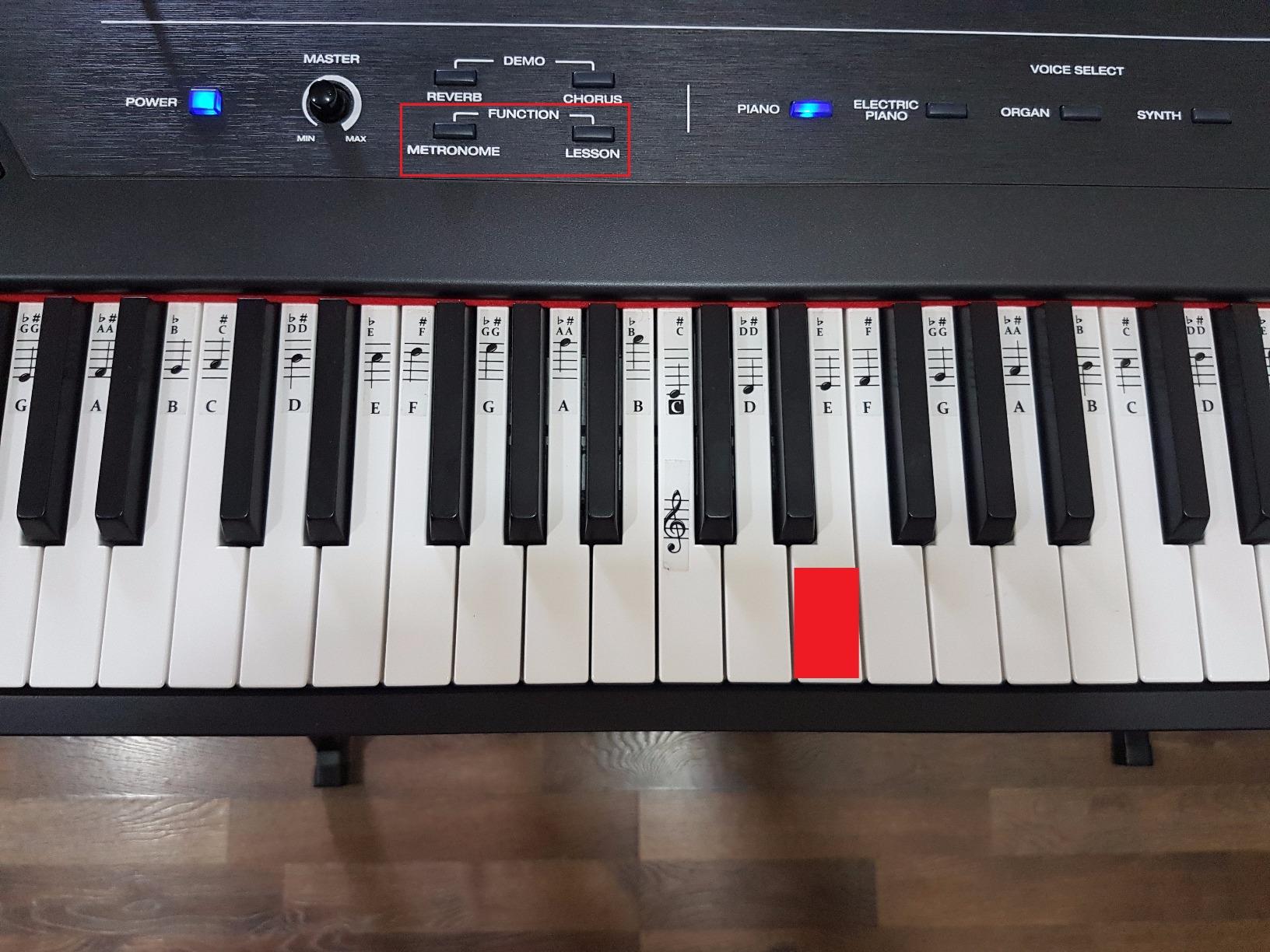
The Alesis Recital is the most affordable 88-key digital piano in this guide, and with over 11,600 reviews, it is also one of the most popular. The keys are semi-weighted rather than fully weighted, which is an important distinction. Semi-weighted keys have some resistance but do not replicate the hammer mechanism of an acoustic piano.
For absolute beginners who are just exploring whether piano is right for them, semi-weighted keys are a reasonable starting point. The adjustable touch response lets you set the sensitivity to match your playing style. The 88 full-sized keys mean you learn proper hand positioning and can play any piece written for piano.
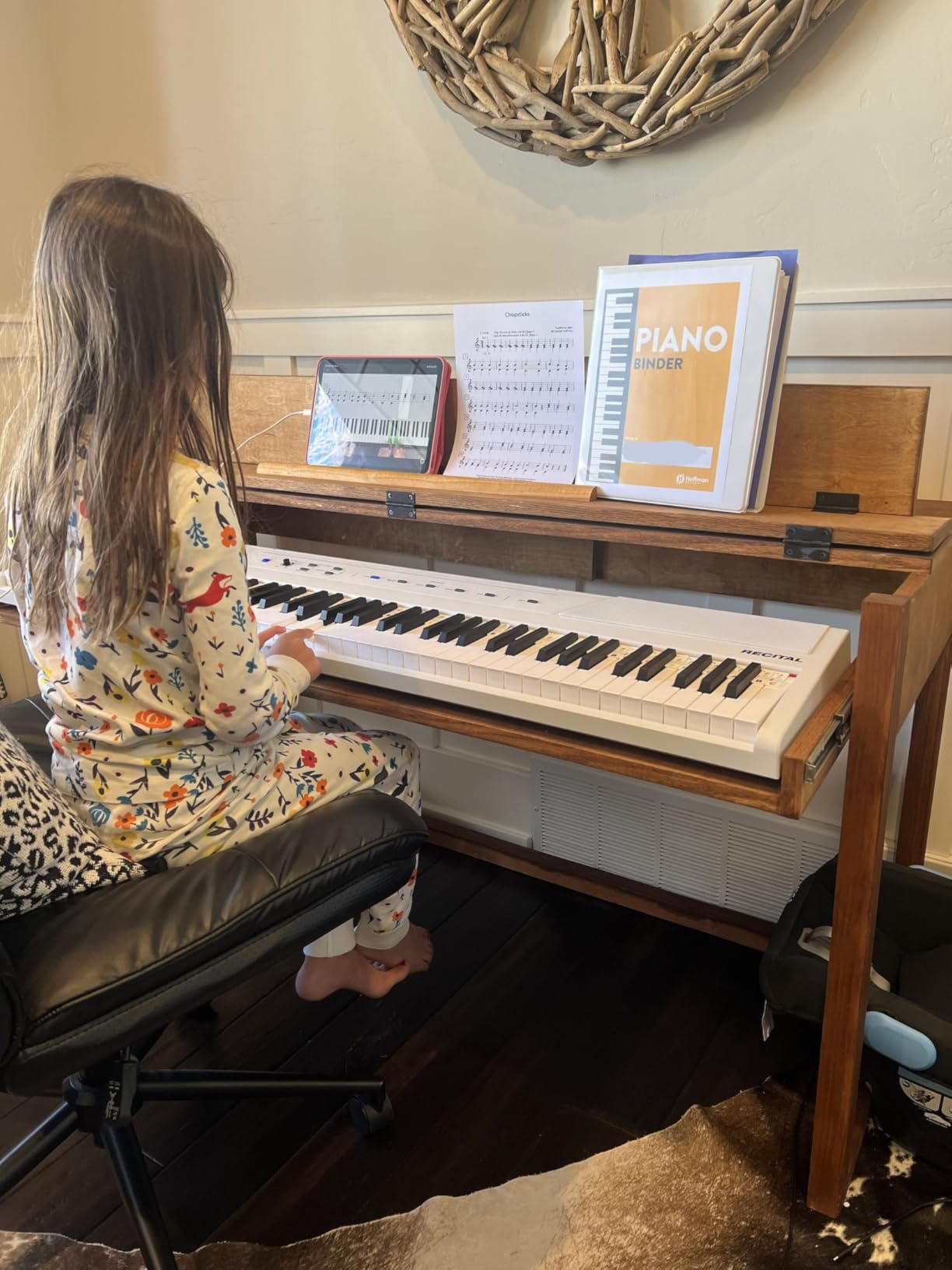
The five voices cover acoustic piano, electric piano, organ, synth, and bass. Built-in chorus and reverb effects add depth to the sound. The 2x20W speaker system is surprisingly powerful for the price, filling a small room easily. You can also power the Recital with six D-cell batteries, making it genuinely portable for outdoor practice or locations without power outlets.
Alesis includes a 3-month Skoove premium subscription and 100 Melodics virtual lessons. These learning resources add real value and help beginners get started with structured guidance. The split, layer, and lesson modes provide teaching flexibility for self-study or instructor-led learning.
Who Should Buy the Alesis Recital
This is the best slab digital piano for absolute beginners and casual players on the tightest budget. If you want to try piano without a major financial commitment, the Recital gives you 88 keys, decent sound, and learning tools for an unbeatable price.
It is also a good choice for a travel or secondary piano. The battery power option and light weight make it easy to take anywhere. Kids who are just starting out will find it approachable and fun to play.
Important Limitations
The semi-weighted keys are the biggest limitation. Forum users on r/piano consistently warn that beginners who learn on unweighted or semi-weighted keyboards develop bad habits that are hard to correct later. If you are serious about classical piano study, consider spending a bit more for a fully weighted option like the Yamaha P71 or Roland FP-10.
The sustain pedal is not included, so you need to purchase one separately. The five voices are limited compared to the 10 to 24 voices found on other models. For casual playing this is fine, but more advanced players will outgrow the Recital quickly.
Buying Guide: How to Choose the Best Slab Digital Piano
Choosing the right slab digital piano comes down to understanding five key factors. I will break each one down in plain language so you can make an informed decision regardless of your experience level.
Key Action: The Most Important Factor
Key action is how the keys feel and respond when you press them. This is the single most important factor in choosing a digital piano because it directly affects your technique development. There are three main types of key action you will encounter.
Graded hammer action is the gold standard. These keyboards use actual hammers (or simulated hammer mechanisms) that are heavier in the bass and lighter in the treble, just like an acoustic piano. Roland’s PHA-4, Yamaha’s Graded Hammer Standard, and Donner’s graded hammer action all fall into this category.
Fully weighted action uses weighted keys but without the graded variation across the keyboard. The resistance is the same from the lowest to the highest note. This is less authentic than graded action but still builds finger strength.
Semi-weighted action offers some resistance but uses springs rather than hammers. It is easier to play fast passages but does not replicate the acoustic piano feel. The Alesis Recital uses semi-weighted keys, which is why it is best suited for casual beginners rather than serious students.
Sound Engine: Sampling vs Modeling
Digital pianos produce sound in two ways. Sampling records a real acoustic piano and plays back those recordings when you press keys. Yamaha’s CFX Concert Grand voice and Roland’s SuperNATURAL Piano engine are both sample-based systems. Sampling produces realistic, consistent sound that most players are familiar with.
Modeling uses mathematical algorithms to simulate how piano strings, soundboard, and air interact. Roland’s PureAcoustic Piano Modeling (found in the FP-90X) is the leading modeling engine. Modeling produces more dynamic, responsive sound because it is not limited by fixed recordings. Every note is calculated in real time based on your touch, pedal position, and key release speed.
For most players, high-quality sampling sounds indistinguishable from modeling. Modeling becomes noticeably better at advanced skill levels where you are exploiting subtle dynamic variations. If you are a beginner or intermediate player, do not overthink this choice.
Polyphony: How Much Do You Need
Polyphony is the number of individual notes a piano can produce simultaneously. When you use the sustain pedal and play a complex chord progression, every ringing note counts against your polyphony limit. If you exceed the limit, the oldest notes cut off abruptly.
For beginners, 64-note polyphony is sufficient. You will rarely exceed this in simple practice pieces. For intermediate players playing Chopin, Liszt, or other complex repertoire, 128-note polyphony gives you headroom for sustained passages with the pedal down.
Advanced players and professionals should look for 256-note polyphony or higher. The Donner DEP-20 and DDP-300 both offer 128-note polyphony, which covers most intermediate needs. Premium instruments like the Roland FP-90X offer even higher polyphony to ensure no notes are ever cut off during complex performances.
Portability and Weight Considerations
Slab pianos are designed to be portable, but there is a wide weight range. The Alesis Recital at 15.7 pounds is easy for anyone to carry. The Roland FP-90X at 69.2 pounds requires a dedicated stand and is not practical to move frequently.
For apartment dwellers, consider where you will store the piano when not in use. Lightweight models like the Yamaha P-145BT (24.5 pounds) and Yamaha P225 (25.38 pounds) can be moved off a stand and slid under a bed or into a closet. Heavier models are essentially permanent fixtures.
If you plan to gig, look for pianos with built-in speakers and line outputs. The Roland FP-30X and FP-60X both have line outputs for connecting to a PA system, and their built-in speakers work well for small venue monitoring.
Connectivity: Bluetooth, USB, and Audio Outputs
Modern digital pianos offer several connectivity options. Bluetooth MIDI lets you connect wirelessly to learning apps, DAWs, and other software. Bluetooth audio lets you stream music from your phone through the piano’s speakers. USB connections provide wired MIDI for recording and computer-based music production.
Headphone jacks are essential for silent practice. Check the jack size before buying. Yamaha uses 6.35mm jacks on some models, which requires an adapter for standard 3.5mm headphones. Roland typically includes dual headphone jacks on their mid-range and premium models.
Line outputs connect the piano to external amplifiers, PA systems, or recording interfaces. If you plan to perform live or record in a studio, line outputs are a must-have feature. The Roland FP-30X, FP-60X, and FP-90X all include line outputs.
Speaker Quality and Built-in Sound Systems
Built-in speaker quality varies dramatically across price points. Budget pianos typically use 10 to 15 watts total, which is adequate for bedroom practice but underpowered for larger rooms. Mid-range models like the Roland FP-30X use 22-watt stereo systems that fill a living room.
The Roland FP-60X delivers 26 watts, and the flagship FP-90X uses a four-speaker system with 60 watts total. These higher-powered systems produce fuller bass and clearer highs, reducing the need for external amplification.
If you primarily practice with headphones, speaker quality matters less. If you plan to play for others or use the piano for small performances, invest in a model with a robust built-in speaker system.
FAQs
What is the most realistic sounding digital piano?
The Roland FP-90X with PureAcoustic Piano Modeling produces the most realistic sound among the pianos we tested. Instead of playing back recordings, it mathematically models piano string behavior, soundboard resonance, and cabinet acoustics in real time. Among sample-based pianos, the Yamaha P225’s CFX Concert Grand voice is exceptionally realistic, sampled from Yamaha’s flagship competition-grade concert grand.
Is Kawai or Roland better?
Both Kawai and Roland make excellent digital pianos, but they excel in different areas. Roland is known for its PHA-4 and PHA-50 keyboard actions, SuperNATURAL and PureAcoustic sound engines, and reliable Bluetooth implementation. Kawai is praised for its Responsive Hammer III action and Harmonic Imaging sound technology, with the ES920 being a favorite among classical pianists on PianoWorld forums. Your choice should come down to which key action feels best under your fingers, so try both if possible.
What company makes the best digital pianos?
The top digital piano brands are Yamaha, Roland, Kawai, and Casio. Yamaha is known for realistic grand piano sounds and durable builds. Roland leads in key action technology and sound modeling. Kawai is favored by classical pianists for authentic touch. Casio offers the best value-to-feature ratio in the Privia line. No single brand is best for everyone. The right choice depends on your skill level, budget, and playing style.
What piano does Taylor Swift use?
Taylor Swift has been seen playing Yamaha pianos during live performances and has used Yamaha grand pianos on tour. Yamaha is a common choice among professional musicians for both acoustic and digital pianos due to their consistent quality and rich sound heritage.
Do I need 88 keys to learn piano?
Yes, 88 keys is recommended for learning piano properly. A full 88-key keyboard lets you play the entire piano repertoire without running out of notes. While 61-key keyboards work for initial exploration, you will outgrow them quickly once you start playing pieces that use the full keyboard range. All 10 pianos in this guide feature 88 keys.
What is polyphony and why does it matter?
Polyphony is the maximum number of notes a digital piano can produce at the same time. When you hold the sustain pedal and play complex chords, every ringing note counts against this limit. If you exceed it, older notes cut off. Beginners need at least 64-note polyphony, intermediate players should aim for 128 notes, and advanced players benefit from 256 notes or higher.
Conclusion: Our Top Recommendations for 2026
After testing all 10 instruments, three clear winners emerged across different price brackets. The Yamaha P225 is our overall Editor’s Choice for the best slab digital piano thanks to its concert-grade CFX sound, excellent graded hammer action, and outstanding 4.8-star rating from verified buyers.
For budget-conscious buyers, the Roland FP-10 delivers the best key action under $500 with its PHA-4 keyboard and SuperNATURAL sound engine. The Alesis Recital is the most affordable entry point for absolute beginners who just want to start playing without a major investment.
If you are ready to invest in a premium instrument, the Roland FP-90X offers the most realistic playing experience with PureAcoustic Modeling and PHA-50 wood keys. No matter your budget or skill level, there is a slab digital piano in this guide that will support your musical journey for years to come.