
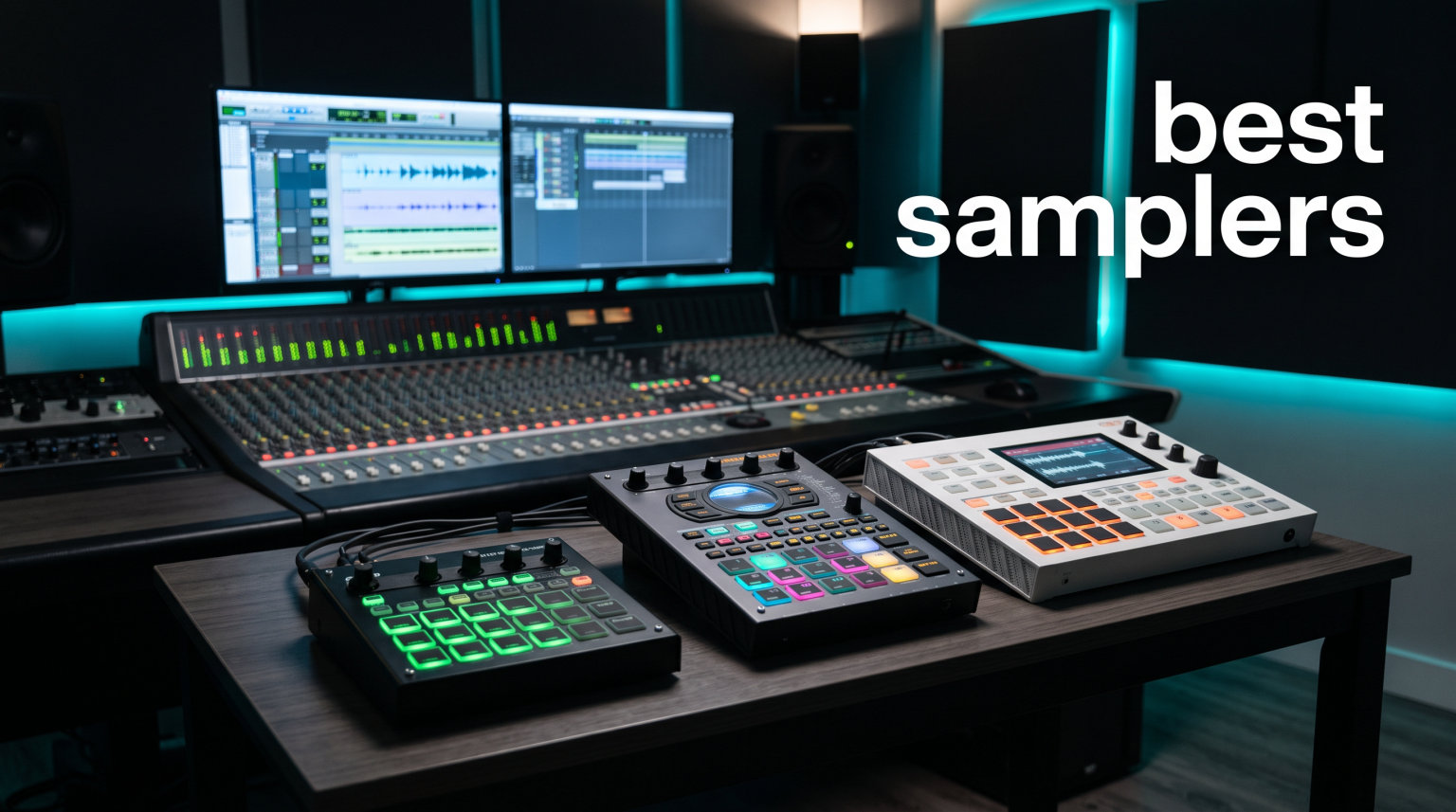
Finding the best samplers in 2026 means navigating a market packed with pocket-sized grooveboxes, standalone workstations, and everything in between. Whether you are chopping breaks on the bus or building full tracks in the studio, the right hardware sampler changes how you make music. I have spent months testing the top models on the market, comparing sound quality, sequencing power, portability, and real-world workflow to bring you this guide.
A hardware sampler is an electronic instrument that records, stores, and plays back audio samples through pads or keys, letting you manipulate sound without a computer. The best samplers on the market come from brands like Akai, Teenage Engineering, Elektron, Roland, Korg, and Polyend, each offering distinct workflows for different creative needs. From the budget-friendly Teenage Engineering PO-33 K.O. at under $100 to the powerhouse Akai MPC Live III at the premium end, there is a sampler for every producer and every budget.
Are hardware samplers worth it? Absolutely. The tactile, hands-on control you get from physical pads, knobs, and built-in effects cannot be replicated by clicking around a DAW. Many producers on forums like r/synthesizers and Gearspace describe their favorite sampler as a “desert island” device, something that stays inspiring even when software fatigue sets in. The key is matching the sampler to your workflow, whether that means beatmaking on the couch, performing live, or running a full DAW-less studio setup.
In this guide, I cover the 15 best samplers available right now, organized by use case and price so you can find exactly what fits your needs. I have included everything from ultra-portable battery-powered units to full standalone production centers. Let us start with the top picks and then dive into detailed reviews.
Top 3 Samplers for 2026

Akai MPC Sample
- Portable MPC workflow
- Built-in speaker and mic
- 16 velocity pads
- 4-6 hour battery


Best Samplers in 2026
| Product | Specifications | Action |
|---|---|---|
|
Akai MPC Sample
|
|
Check Latest Price |
|
Akai MPC Live III
|
|
Check Latest Price |
|
TE PO-33 K.O.
|
|
Check Latest Price |
 Roland AIRA P-6
|
|
Check Latest Price |
 Elektron Model:Samples
|
|
Check Latest Price |
 Elektron Analog Rytm MKII
|
|
Check Latest Price |
 TE OP-1 Field
|
|
Check Latest Price |
 Korg Volca Sample 2
|
|
Check Latest Price |
 TE EP-1320 Medieval
|
|
Check Latest Price |
 Polyend Play+
|
|
Check Latest Price |
1. Akai Professional MPC Sample – Portable MPC Powerhouse
Akai Professional MPC Sample Standalone Portable Sampler, Sequencer and Effects Processor, with Rechargeable Battery, USB-C, Built-in Speaker and Microphone
Portable MPC sampler
16 responsive pads
Built-in speaker and mic
4-6 hour rechargeable battery
USB-C connectivity
100+ factory kits
60 effect types
Pros
- Iconic MPC workflow in a portable package
- Built-in speaker and microphone for sampling anywhere
- 16 responsive pads with poly aftertouch
- Over 100 factory kits included
- 4-6 hour battery life for extended sessions
- USB-C audio and MIDI connectivity
Cons
- Step sequencer can feel cumbersome for complex arrangements
- Resampling options are somewhat limited
- Built-in speaker is just okay for sketching
- Long shipping times of 1 to 2 months
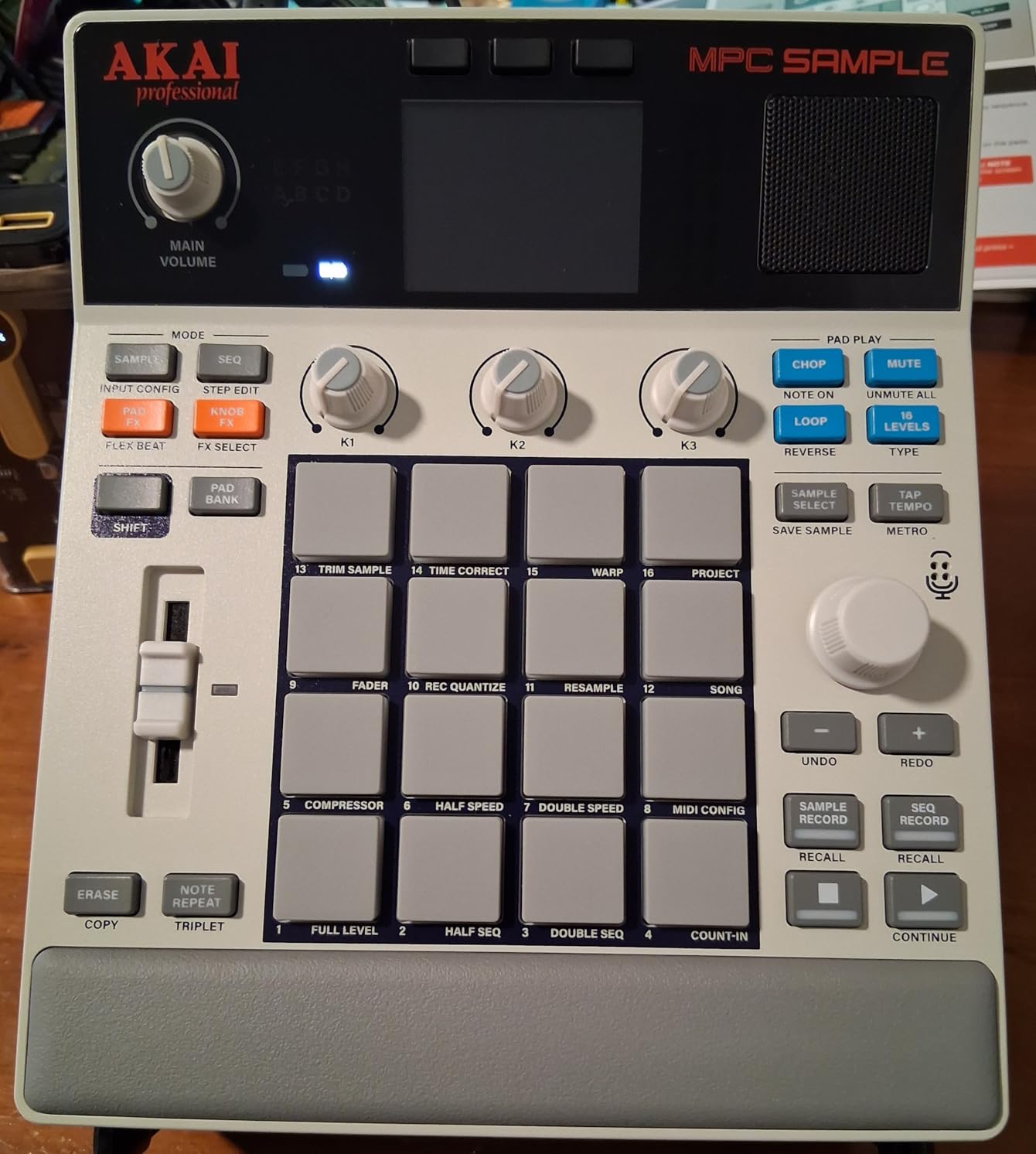
I have been using the MPC Sample as my daily driver for the past three months, and it has completely changed my relationship with portable beatmaking. The moment I picked it up, the MPC workflow felt natural. The 16 pads are responsive with poly aftertouch, and chopping samples is faster than on any other portable sampler I have tested.
The built-in microphone and speaker mean I can sample sounds from my environment wherever I am. I recorded a drum break from a café speaker, chopped it on the train, and had a beat going before I got home. That kind of immediacy is what makes this one of the best samplers for producers who want creativity on the go.
With over 100 factory kits loaded and 60 effect types across four internal FX processors, there is plenty of sound design depth. The 2.4-inch full-color display is small but functional, and the microSD card storage means I never worry about running out of space for samples and projects.
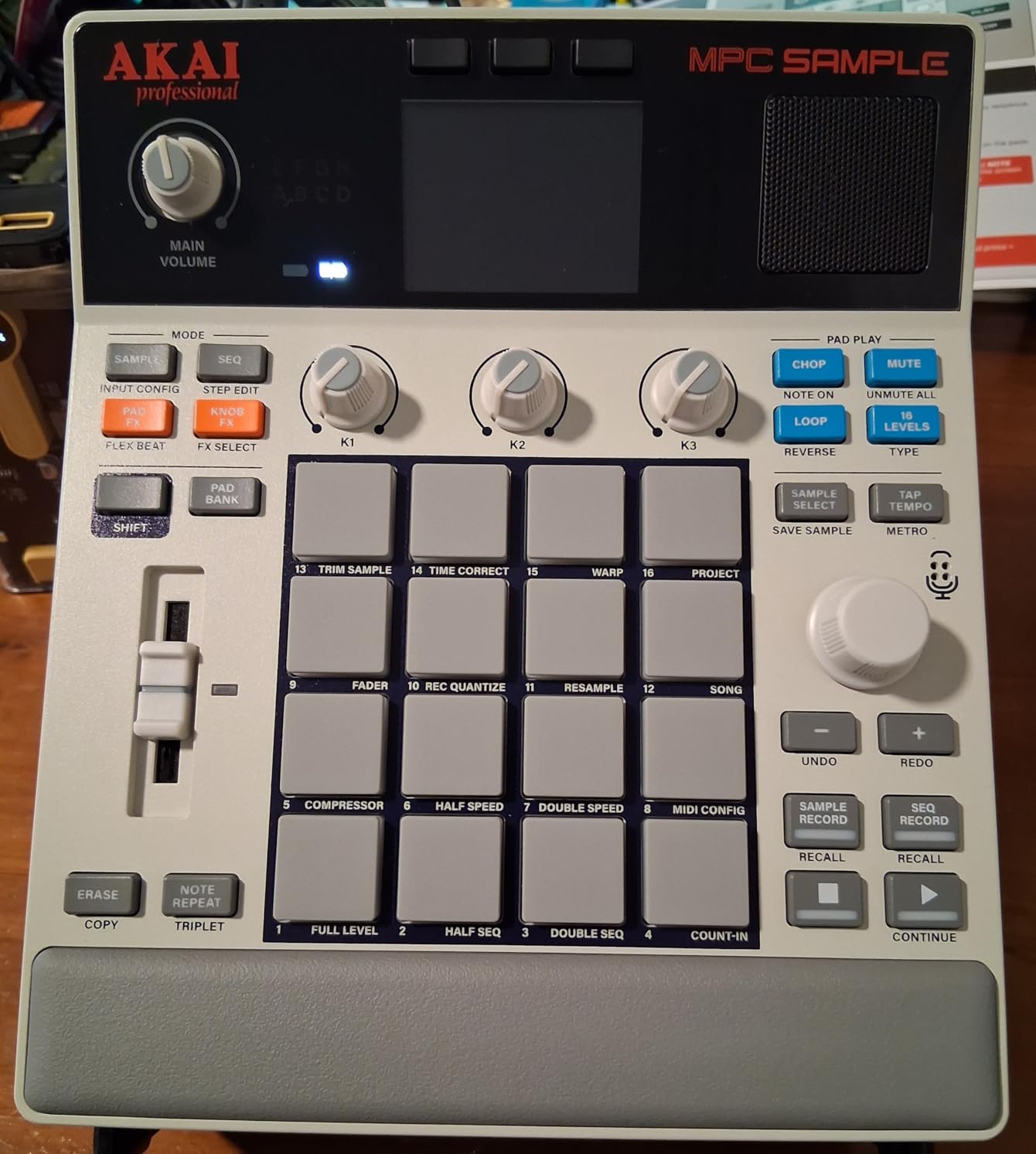
On the technical side, the MPC Sample delivers the full MPC sampling engine with real-time timestretch and repitch, Instant Sample Chop Mode, and comprehensive I/O including stereo TRS line in and out, MIDI, and sync out. The USB-C port handles both audio and MIDI, making it easy to integrate with a computer when needed.
The rechargeable lithium-ion battery gives me 4 to 6 hours of playtime depending on how hard I push the effects. At just under 2 pounds, it fits in a backpack with headphones and I am ready to make music anywhere. The 92 percent five-star review rate on Amazon tells me other users feel the same way about this device.
Best For: Producers Who Want MPC Workflow Anywhere
This sampler is ideal for beatmakers who have always wanted the MPC experience but need portability. If you are coming from software and want a hardware sampler that feels familiar, the MPC Sample bridges that gap perfectly. It is also great for live performers who need a compact, battery-powered unit for triggering samples and loops on stage.
Beginners will appreciate the included Melodics finger drumming lessons, which give you 60 interactive lessons to build pad skills. It is one of the few samplers that genuinely works as both a learning tool and a professional instrument.
Consider Something Else If
If you need deep resampling capabilities or complex song-mode arrangements, you might find the MPC Sample limiting compared to its bigger siblings. The step sequencer works but can feel cumbersome when building long, evolving patterns. Producers who want a full standalone workstation with a large touchscreen should look at the MPC Live III instead.
Also note the shipping time. Some Amazon listings show 1 to 2 months for delivery, so plan accordingly if you need this for a specific project or deadline.
2. Akai Professional MPC Live III – Full Standalone Workstation
Akai Professional MPC Live III - Standalone Portable Music Production Center with MPCe Pads, Sequencer, Touchscreen, Mic, Stereo Monitors, Audio Interface, Wi-Fi, Bluetooth, Battery, Touchstrip
8-core processor with 8GB RAM
7-inch multi-touch display
128GB internal storage
MPCe pads with 3D sensing
Built-in stereo monitors and battery
USB-C, CV/Gate, MIDI I/O, XLR inputs
Pros
- Most powerful MPC ever with 8-core processor
- 7-inch multi-touch display for deep editing
- Fully standalone with no computer needed
- 128GB storage expandable via SD or SSD
- Comprehensive connectivity including CV/Gate and XLR
- Built-in stereo monitors and rechargeable battery
Cons
- Premium price point
- Learning curve for new users
- Plugin instruments and expansions sold separately
The MPC Live III is the most powerful standalone sampler I have ever used. With an 8-core processor and 8GB of RAM, it handles complex projects, multiple plugins, and heavy sample manipulation without breaking a sweat. I loaded up a project with 16 tracks, dozens of samples, and several AIR plugins running simultaneously, and the performance was flawless.
What sets the MPC Live III apart from every other sampler on this list is the 7-inch multi-touch display. Editing waveforms, adjusting envelopes, and navigating the browser feels like using a tablet. The MPCe pads with 3D-sensing for velocity, pressure, and X/Y control add an expressive dimension that goes beyond standard MPC pads.
The 128GB of internal storage is generous, and the ability to expand via SD card or SSD means you will never run out of room. The built-in stereo monitors and rechargeable battery let me work completely untethered. I have spent full afternoons on the couch producing without touching a computer.
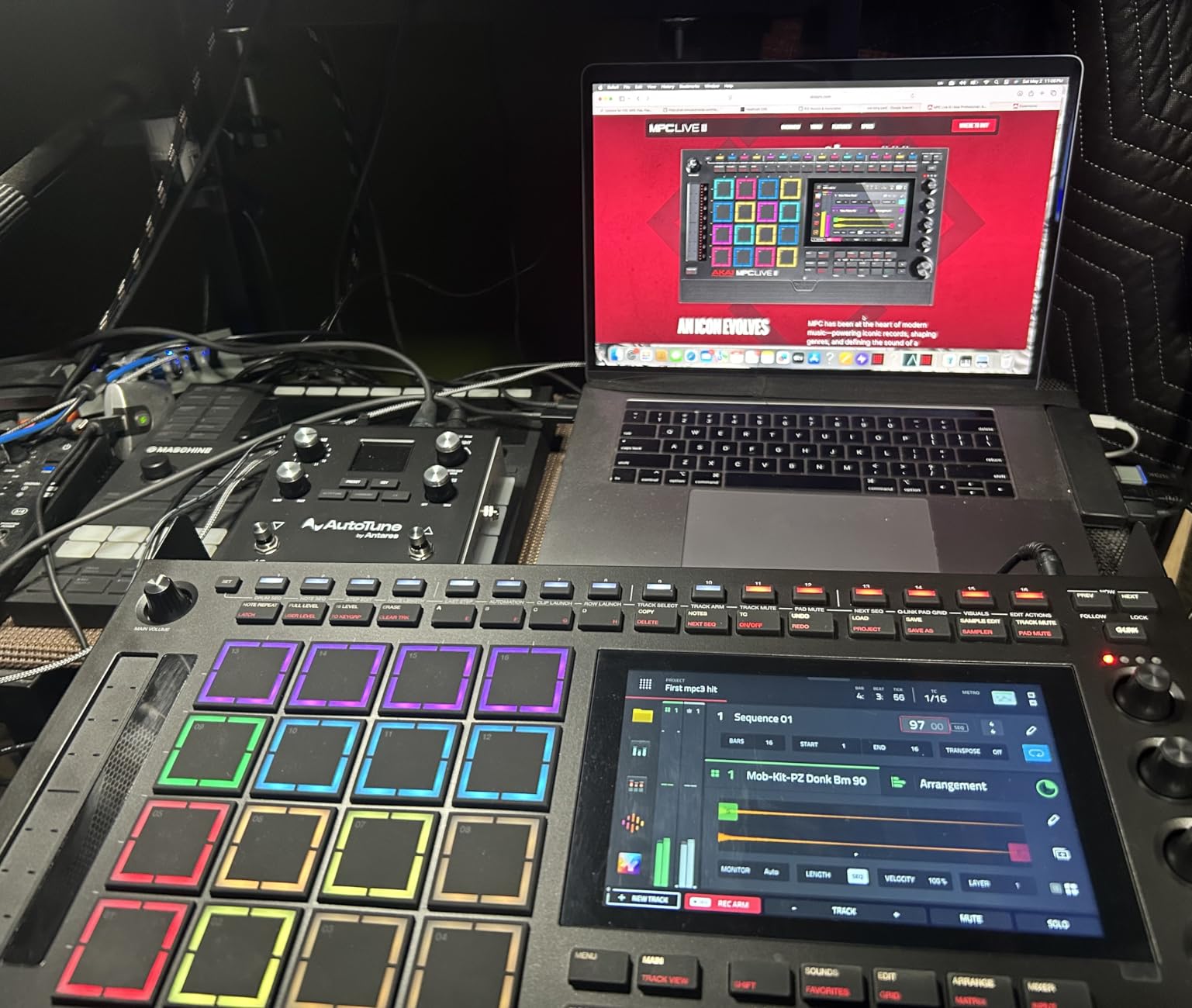
The connectivity on this device is unmatched. USB-C, CV/Gate outputs for modular integration, MIDI I/O, and XLR/TRS inputs with phantom power cover every possible studio and live scenario. The MPC3 Pro Pack is included, giving you AIR Reverb Pro, Visual EQ4, Fabric Select, and Utility plugins right out of the box.
Forum users on r/synthesizers consistently rank the MPC Live III as a top-tier standalone sampler. The 78 percent five-star review rate reflects the quality, though the premium price keeps it out of reach for some producers.
Best For: Studio Producers and Live Performers
If you produce full tracks without wanting to open a DAW, the MPC Live III is the ultimate tool. It handles everything from sample chopping to synth programming to full arrangement. Live performers benefit from the standalone design, touchscreen workflow, and massive storage capacity for backing tracks and sample banks.
This is also the best sampler for producers transitioning from a DAW to hardware. The touchscreen interface will feel intuitive if you are used to working with software, making the learning curve much more manageable.
Consider Something Else If
The price is the obvious barrier. If you are just starting out or want something strictly portable, the MPC Sample covers 80 percent of what the Live III does at a fraction of the cost. The Live III is also heavier and larger, making it less ideal for casual travel or quick couch sessions.
New users should also be prepared for a learning curve. While the touchscreen helps, the MPC ecosystem is deep and takes time to master. Plugin instruments and expansions are sold separately, which can push the total investment even higher.
3. Teenage Engineering PO-33 K.O. – Best Budget Sampler
teenage engineering pocket operator PO-33 K.O.! micro sampler and drum machine with built-in microphone, sequencer and effects
Credit-card sized 8-bit sampler
40 second sample memory
Built-in microphone
16 effects
16-step sequencer
Battery powered 2xAAA
8 melodic and 8 drum slots
Pros
- Incredible value at under $100
- Ultra-portable credit-card size
- Built-in microphone for instant sampling
- 16 built-in effects
- 16-step sequencer with pattern chaining
- Affordable entry into hardware sampling
Cons
- 8-bit audio quality with bitcrushed character
- Monophonic sample slots
- Limited to 4 samples per step
- Fragile construction with exposed rear
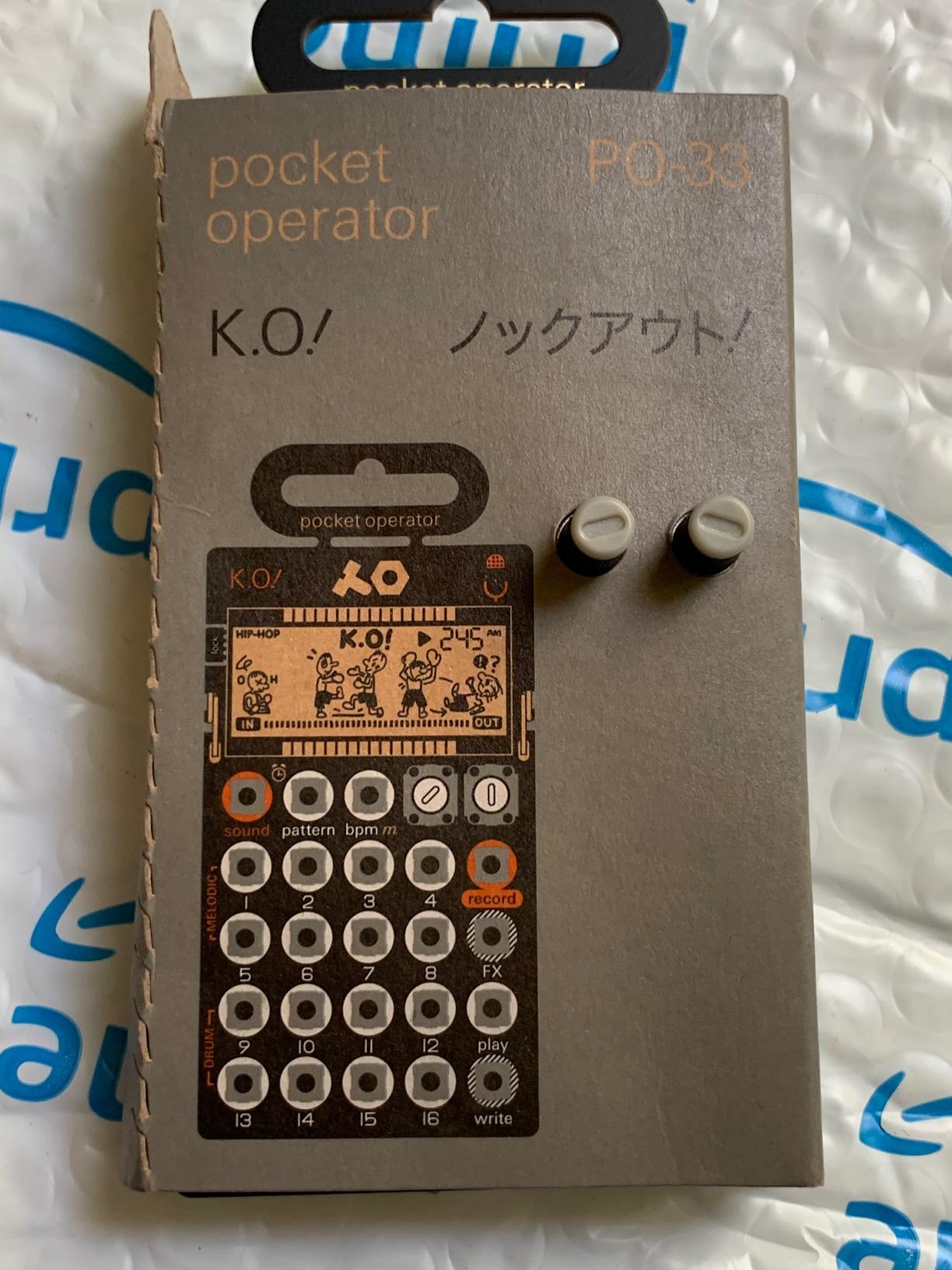
The PO-33 K.O. is the sampler I recommend to every beginner who asks me where to start. At under $100, it delivers a genuinely fun sampling experience in a package the size of a credit card. The built-in microphone lets you grab sounds from anywhere, and the 16-step sequencer with pattern chaining gives you enough depth to build actual beats.
I carry the PO-33 in my jacket pocket and use it to sketch ideas during lunch breaks. The 40-second sample memory is limited, but it forces creativity. You learn to make the most of what you have, which is a valuable skill for any producer. With 8 melodic sample slots and 8 drum slots, you can build surprisingly complete loops.
The 16 built-in effects add character and movement to your sounds. The 8-bit audio quality gives everything a crunchy, lo-fi character that many producers actually prefer for certain genres. With 2,258 reviews and an 82 percent five-star rate, this is one of the most beloved budget samplers ever made.
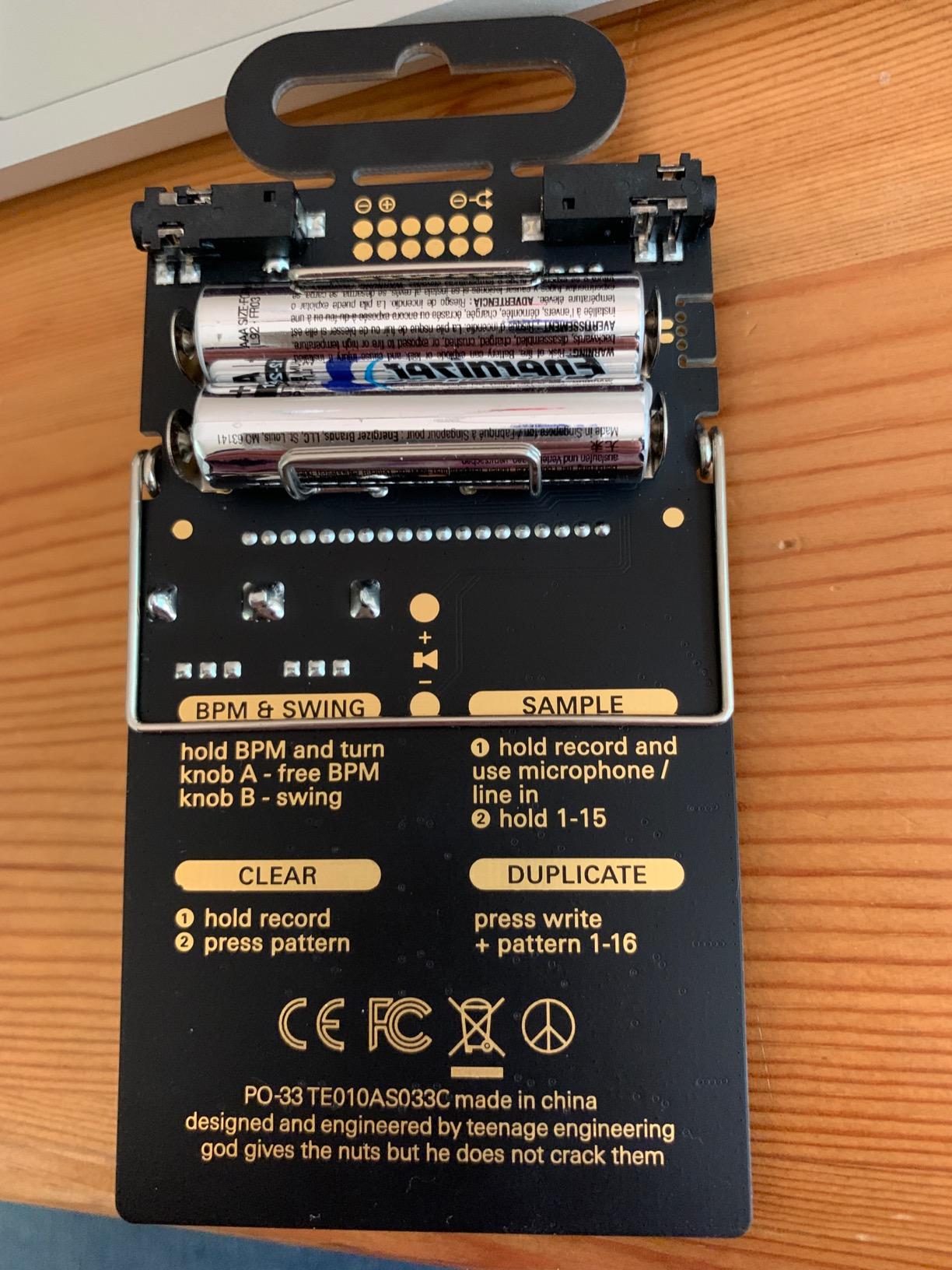
Technically, the PO-33 K.O. runs on 2 AAA batteries with approximately one month of battery life. The 3.5mm line in lets you sample from external sources like phones or turntables. The foldable stand and silicone body keep it protected during transport.
The main limitation to understand is that sample slots are monophonic and you can only play 4 samples per step. For complex, layered arrangements this is restrictive. But for sketching, experimenting, and having fun with sampling, the PO-33 is hard to beat at any price.
Best For: Beginners and Casual Producers
If you have never used a hardware sampler before, the PO-33 K.O. is the perfect starting point. It teaches you the fundamentals of sampling, sequencing, and effects without a steep learning curve or big investment. It is also great for experienced producers who want a pocket-sized scratchpad for capturing ideas on the go.
The lo-fi 8-bit character makes it especially suited for hip-hop, chiptune, and lo-fi genres where crunchy sound is desirable rather than a limitation.
Consider Something Else If
If you need high-fidelity audio or complex sequencing, the PO-33 will frustrate you. The monophonic sample slots and 4-voice polyphony are serious limitations for anything beyond sketching. Producers who want to perform live or produce release-ready tracks should look at the Roland P-6 or MPC Sample instead.
The fragile construction with an exposed rear circuit board is also worth noting. This is a device that needs some care, not something you can toss in a bag without protection.
4. Roland AIRA Compact P-6 – Best Pocket Sampler with Granular Engine
Roland AIRA Compact P-6 Creative Sampler | Granular Sound Design | Powerful Sequencer | Onboard Keyboard | Custom Loops | Built-In Mic | Hands-on Effects
Pocket-size sampler
Built-in microphone
Granular sound engine
Chop and step sampling
Resample internal audio
Dedicated filter and envelopes per sample
USB-C connectivity
Pros
- Excellent sound quality with headphones
- Built-in mic for quick sample capture
- Versatile granular engine and resampling
- Very portable with long battery life
- Great for drums and melodic sampling
- Beginner-friendly but deep
Cons
- Heavy menu diving due to small 4-digit screen
- No sidechain feature
- Only 32MB memory
- No timestretch
- No velocity-sensitive pads
- Noisy when USB is plugged in
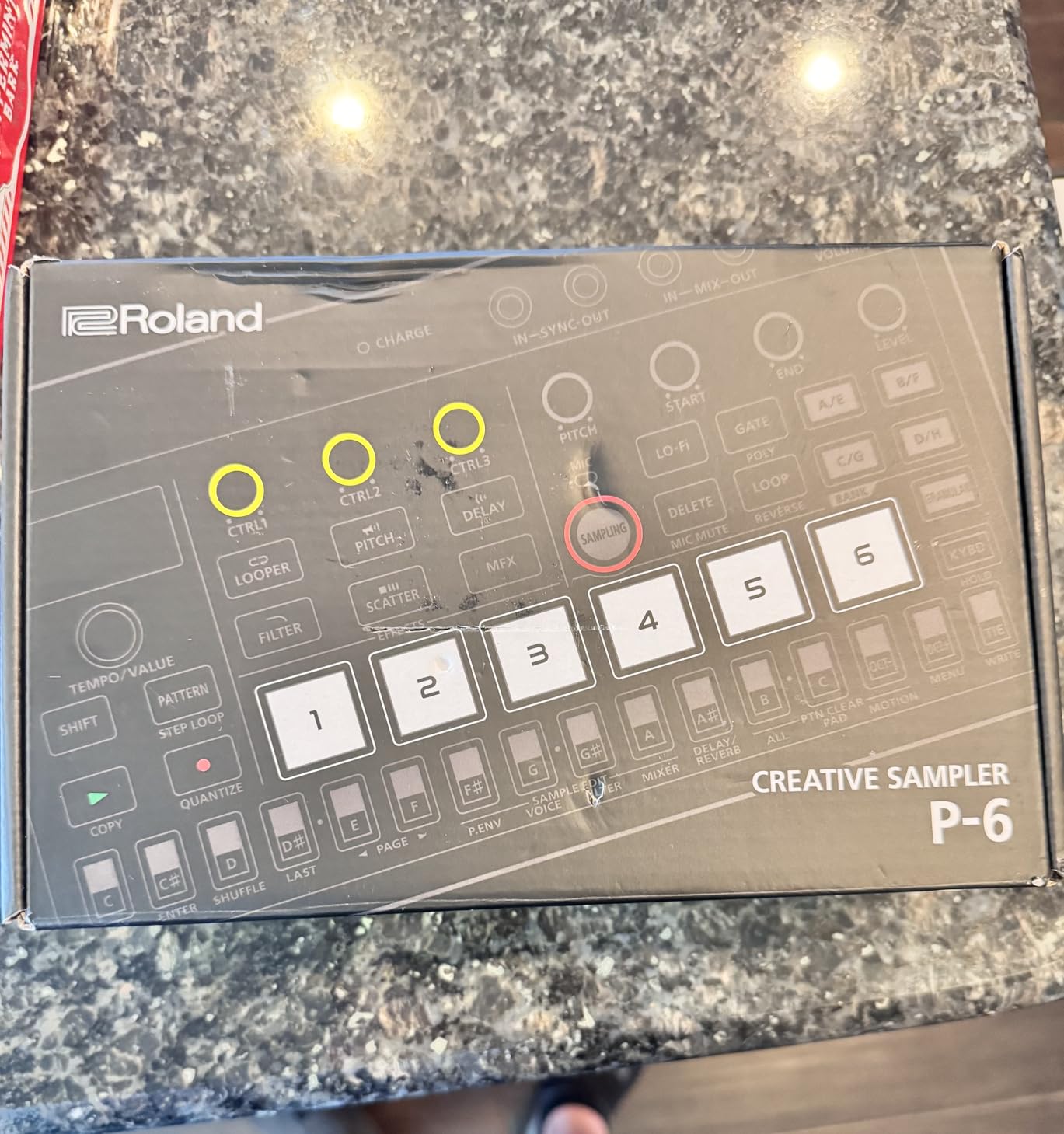
The Roland P-6 has become my go-to recommendation for producers who want more than a toy but still need pocket-sized portability. At around $270, it packs a granular sound engine, built-in microphone, resampling capabilities, and dedicated filters per sample into a unit that weighs less than a pound.
I was genuinely surprised by the sound quality. With good headphones, the P-6 delivers clean, detailed audio that rivals much more expensive samplers. The granular engine lets you detune, adjust head position and speed, and spread grains for textures that go far beyond basic sample playback.
The chop function slices samples into segments playable on the onboard keyboard, and step sampling creates individual split samples assigned to a single pad. Resampling internal audio lets you capture custom loops and build layers. This is a serious sound design tool disguised as a pocket sampler.
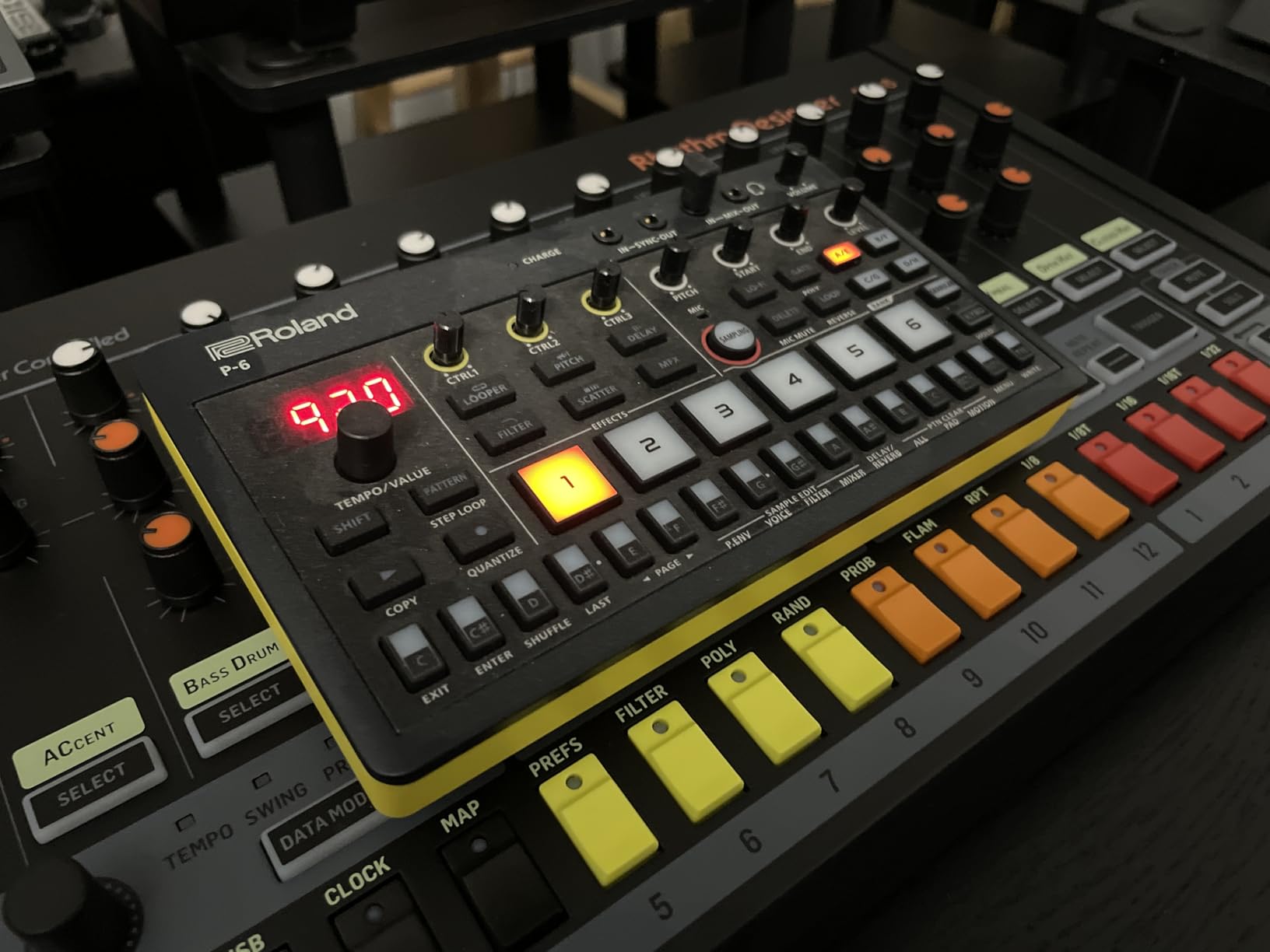
The biggest drawback is the tiny 4-digit display, which forces heavy menu diving for anything beyond basic operations. The 32MB memory limit means you need to work with low-bitrate audio to fit enough samples. There is no timestretch and no velocity-sensitive pads, which some producers will miss.
Despite these limitations, the P-6 holds a 4.5-star rating with 74 percent five-star reviews. Forum users on r/synthesizers frequently rank it as an “A tier” sampler, praising its SP-style workflow at a much lower price point than Roland’s flagship samplers.
Best For: Sound Designers and Lo-Fi Producers
The granular engine and resampling capabilities make the P-6 perfect for producers who love texture design and lo-fi sampling. If you enjoy the SP-404 workflow but want something smaller and more affordable, the P-6 is the natural choice. It is also great for field recording thanks to the built-in mic and battery power.
Beginners who want to grow into deeper sound design will find the P-6 rewarding. The interface is approachable at first, but the granular parameters and resampling options reveal themselves over time.
Consider Something Else If
If you need timestretch, velocity-sensitive pads, or large sample memory, the P-6 falls short. The 4-digit display makes complex editing tedious, and the lack of sidechain limits its usefulness for certain electronic genres. Producers who want more pads and a bigger screen should look at the MPC Sample or Novation Circuit Rhythm.
The USB noise issue is real. When the P-6 is plugged in for charging or data transfer, it can introduce noise into the audio path. Work around this by using battery power during critical sessions.
5. Elektron Model:Samples – Best Groovebox Sampler Under $500
Elektron Model:Samples Six Track Sample Based Groovebox
6-track sample groovebox
64MB sample memory
1GB storage
Velocity-sensitive pads
Parameter locks per step
Resonant multimode filter per track
Assignable LFO per track
MIDI I/O
Pros
- Best groovebox under $500
- Excellent build quality
- Sample locking allows many samples per pattern
- Parameter locks for deep per-step modulation
- 1GB storage is generous
- Great intro to Elektron workflow
Cons
- Cannot sample directly - not a true sampler
- Limited to 6 tracks with one sample each
- Pads can feel hard
- No velocity sensitivity by default
- Learning curve for Elektron workflow
The Elektron Model:Samples is the sampler I point people to when they want groovebox-style workflow without spending over $500. With 6 tracks, parameter locks, and 1GB of storage, it delivers the core Elektron experience in a more accessible package. I have used it alongside the Digitakt and Octatrack, and the Model:Samples holds its own for pattern-based beatmaking.
The parameter lock system is what makes Elektron samplers special. You can program different values for filter, pitch, LFO, and effects on every single step of a pattern. This creates evolving, musical sequences that feel alive. The sample locking feature lets you trigger different samples on different steps within the same track.
It is important to understand that the Model:Samples cannot sample directly. You load samples via the Elektron Transfer app or an SD card. If you need to record audio on the fly, this is not the right choice. But for pre-loaded sample manipulation and sequencing, it is excellent.
The build quality is solid with a substantial feel despite the plastic body. The six velocity-sensitive pads (adjustable via MIDI) are responsive, and the interface is more approachable than Elektron’s flagship devices. Multiple reviewers call it the “best groovebox under $500” and I agree.
Best For: Electronic Producers Who Love Sequencing
If your style of music relies on programmed patterns rather than live sample capture, the Model:Samples is ideal. It excels at techno, house, IDM, and any genre built on step sequencing. The parameter lock system rewards careful programming with results that sound complex and musical.
It is also the best entry point into the Elektron ecosystem. If you later upgrade to a Digitakt or Octatrack, the workflow will already be familiar.
Consider Something Else If
If you need to record samples directly from a microphone or line input, look elsewhere. The Model:Samples is a sample playback device, not a true sampler in the strictest sense. Six tracks may also feel limiting if you are used to 8 or 16-track workstations.
The pads are firmer than some producers prefer. If you do a lot of finger drumming, you may find them fatiguing over long sessions. The Elektron learning curve is real, though less steep on this model than on the Octatrack.
6. Elektron Analog Rytm MKII – Best Premium Drum Sampler
Elektron Analog Rytm MKII 8-Voice Drum Computer & Sampler
8 analog drum voices with digital sampling
Vivid OLED screen
Larger pads for playability
Analog overdrive and multimode filters
Balanced audio inputs
CV and expression inputs
Cast aluminum enclosure
Class compliant USB audio
Pros
- Phenomenal workflow that is fun and engaging
- Fantastic sound quality with analog warmth
- Excellent filters better than MPC
- Professional build quality with metal enclosure
- Parameter locks and trig conditions for deep automation
- Bus compressor with sidechaining is outstanding
Cons
- Expensive at $1999
- Steep learning curve for new users
- No DAW integration
- No assignable modulation envelopes
- FX are limited
- ARC terminology can be confusing initially
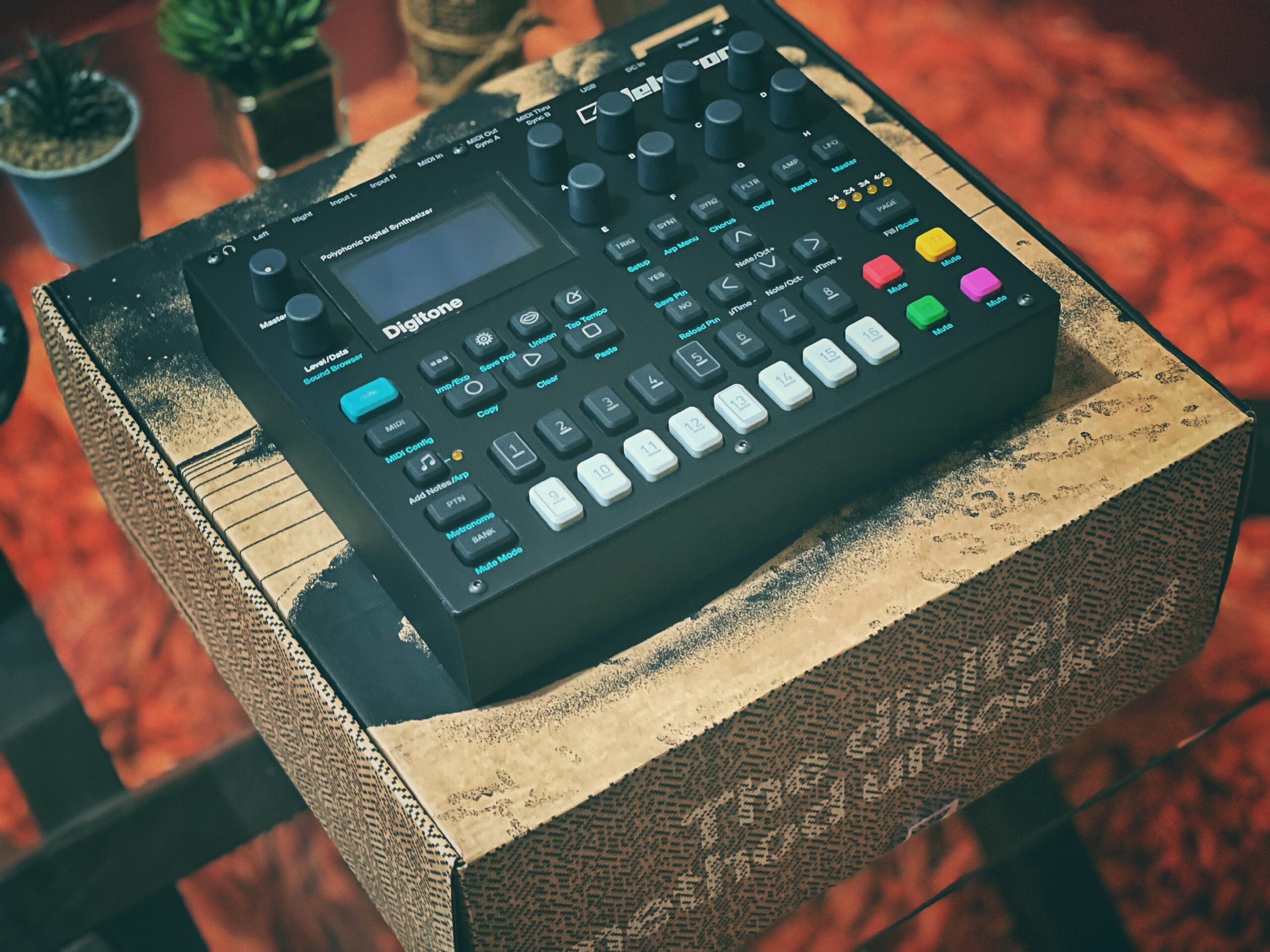
The Analog Rytm MKII is the most expensive sampler on this list, and after spending weeks with it, I understand why people pay the premium. The combination of eight analog drum voices with digital sampling creates a sound that no purely digital sampler can match. The analog warmth is immediately apparent, especially on kicks and snares.
The workflow is where this device truly shines. Parameter locks, trig conditions, LFOs, and modulation options give you deep automation over every aspect of your drums. The bus compressor with sidechaining is outstanding and adds glue and punch to patterns that would require multiple plugins in a DAW.
The build quality is professional-grade with a cast aluminum enclosure that feels built for decades. The larger pads are a significant improvement over the original Rytm, and the OLED screen makes navigation precise. This is a device that rewards investment of time with constantly surprising results.
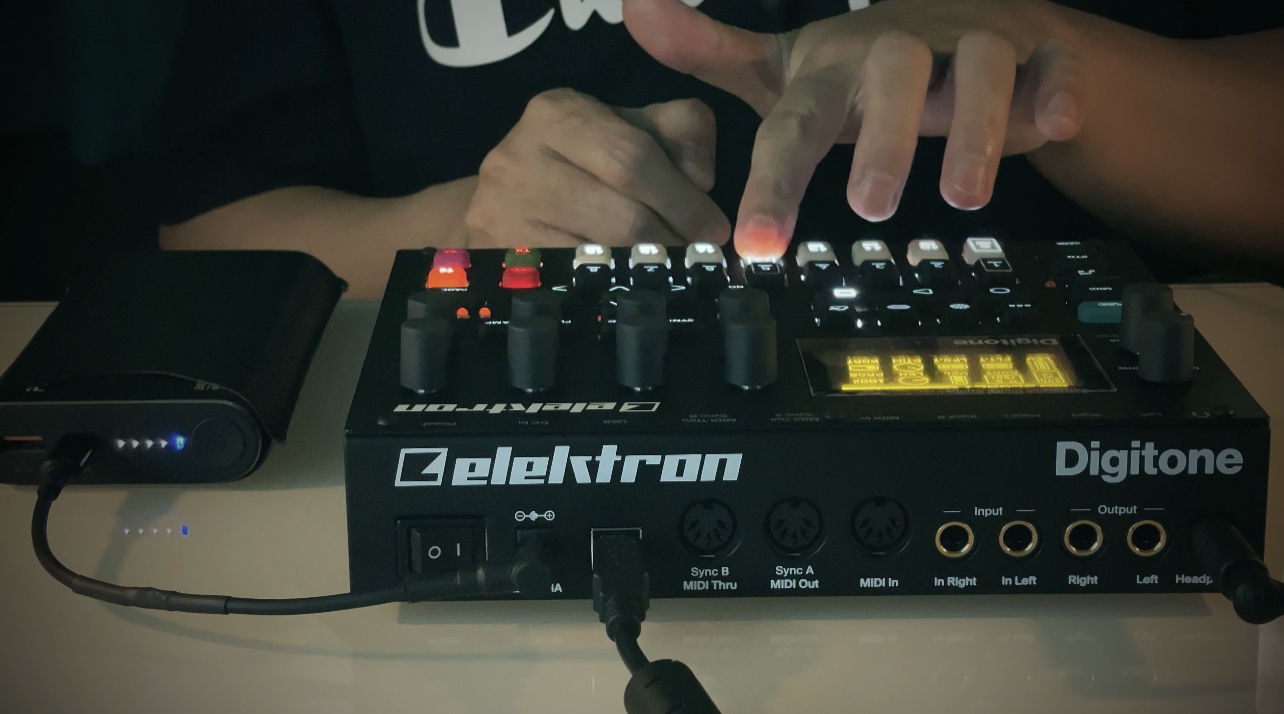
On the technical side, the Analog Rytm MKII offers balanced audio inputs for recording external sounds, CV and expression inputs for modular integration, and class-compliant USB audio. The Elektron three-year warranty provides peace of mind for such a significant investment.
The main limitations are the price, the steep learning curve, and the limited effects. Some users describe the FX as “boring” compared to what you get on the SP-404MKII. There is also no DAW integration, which means you are working entirely in the hardware.
Best For: Sound-obsessed Producers and Performers
If analog sound quality is your top priority and budget is not a constraint, the Analog Rytm MKII is the ultimate drum sampler. It is ideal for producers who want to build percussion from scratch using analog synthesis layered with sampled sounds. Live performers benefit from the trig conditions and performance controls.
This is also the best choice for Elektron devotees who want sampling alongside analog drum voices. If you already own a Digitakt or Octatrack, the Rytm complements them perfectly.
Consider Something Else If
The $1,999 price puts this firmly in professional territory. If you are a hobbyist or just starting out, this is overkill. The learning curve is steep, and Elektron’s arcane terminology can be frustrating for weeks before it clicks.
If you need extensive effects processing, look at the Roland P-6 or an SP-404 instead. The Rytm’s effects are functional but not inspiring. And if you need DAW integration, you will not find it here.
7. Teenage Engineering OP-1 Field – Best Creative All-in-One
teenage engineering OP-1 field portable synthesizer, sampler and drum machine with built-in speaker, microphone, effects and vocoder
Synthesizer, sampler and drum machine
12 synth engines
20 second sample time
4 digital tape styles
8 effect styles
Built-in speaker and mic
Velocity keyboard
USB-C rechargeable
Pros
- Inspiring workflow that is genuinely fun
- Excellent sound quality and volume
- Portable at only 1.3 pounds
- High-quality sampling capabilities
- Built-in speaker and microphone
- Long battery life
Cons
- Very expensive at $2000
- Cryptic workflow for beginners
- Difficult to backup projects
- No clear way to recover from mistakes
The OP-1 Field is unlike any other sampler on this list. It combines 12 synth engines, a sampler, a drum machine, and a 4-track tape recorder into a portable device that weighs just over a pound. I have used it for everything from field recording to full track production, and it consistently surprises me with what it can do.
The tape recording system is the heart of the OP-1 experience. You record audio onto four digital tape tracks with 160-plus minutes of recording time across four tape styles. This approach feels musical and organic in a way that grid-based sequencing does not. The 8 built-in effect styles add color and movement.
Sound quality is a noticeable step up from the original OP-1. The speaker is louder and fuller, and the headphone output delivers clean, detailed audio. The built-in microphone is good enough for capturing environmental sounds and vocal snippets.
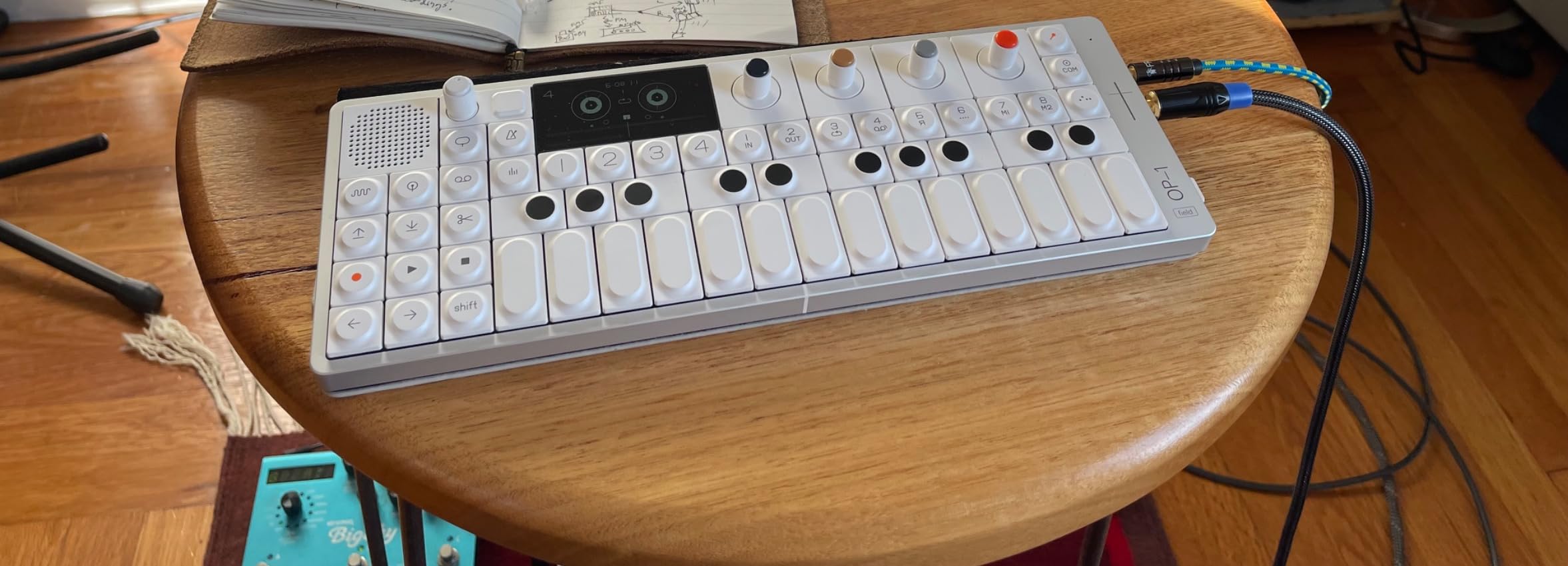
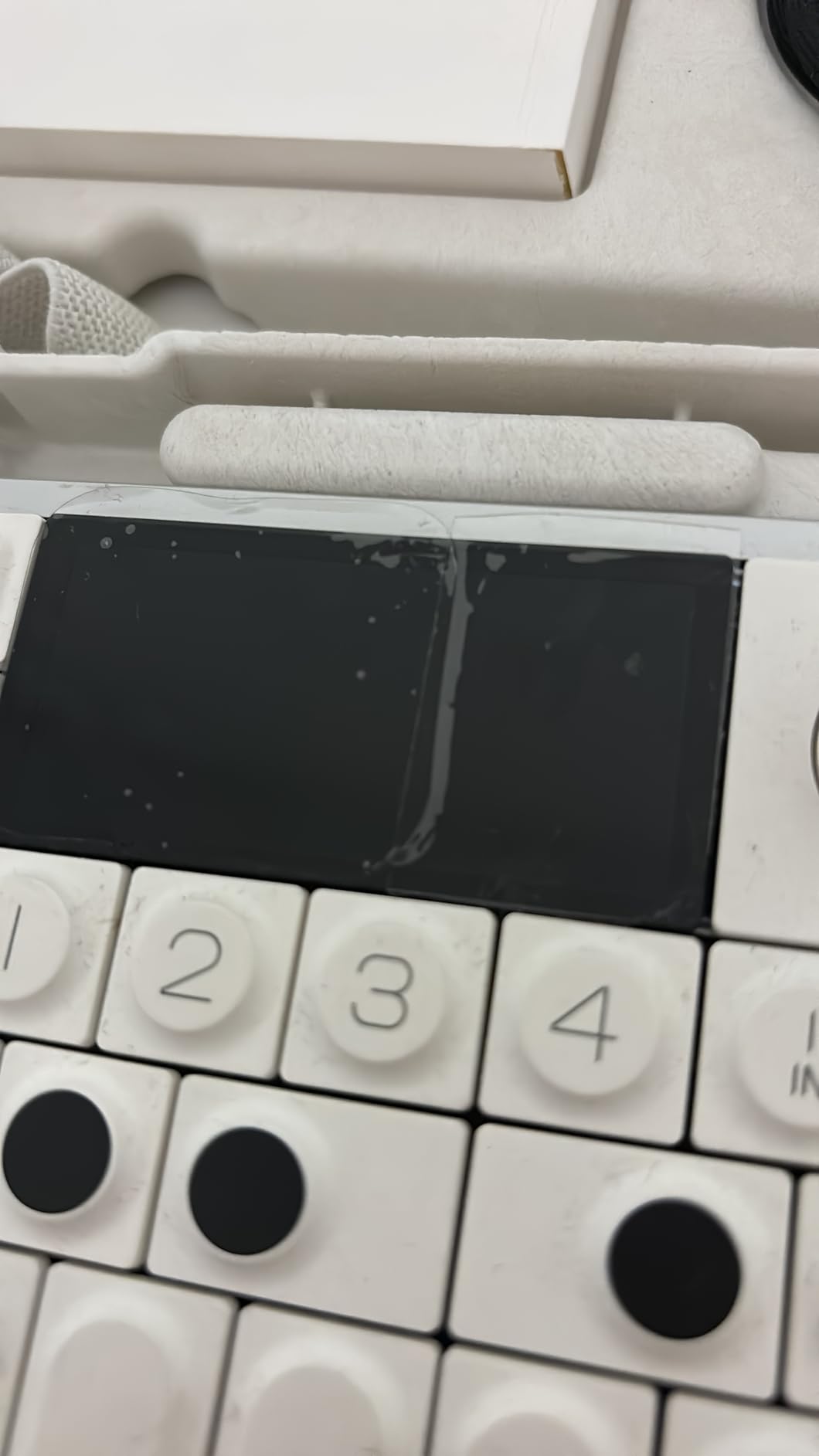
The OP-1 Field is not without its frustrations. The workflow is cryptic, with many functions hidden behind unlabeled buttons and combinations. Backing up projects is difficult, and there is no clear undo or recovery system for mistakes. At $2,000, these limitations can be hard to accept.
Despite the 4.0-star rating, the OP-1 Field has a devoted following. The 61 percent five-star rate reflects a device that people either love passionately or find endlessly frustrating. For the right creative mind, it is an instrument that opens doors no other device can.
Best For: Creative Musicians and Sound Artists
If you approach music-making as exploration rather than production, the OP-1 Field is your instrument. It rewards experimentation and happy accidents in a way that no grid-based sampler can. Sound designers, experimental musicians, and producers who want to break out of habitual patterns will find it endlessly inspiring.
It is also the best all-in-one portable device if you want synthesis, sampling, and recording in a single unit. Nothing else on the market packs this much creative potential into such a small form factor.
Consider Something Else If
The price is the obvious barrier, but the workflow is the real issue for many users. If you prefer clear menus, logical workflows, and predictable behavior, the OP-1 Field will drive you crazy. The lack of reliable backup and recovery means you risk losing work.
If your primary need is beatmaking or sample chopping, a dedicated sampler like the MPC Sample or SP-404MKII will serve you better at a fraction of the cost.
8. Korg Volca Sample 2 – Best Entry-Level Sample Sequencer
Korg Volca Sample 2 Digital Sample Sequencer Drum Machine w/Pattern Chain Mode and 16-step Sequencer
8-voice polyphony digital sampler
16-step sequencer with pattern chain
Double memory of previous model
Digital reverb and double filter
Librarian software included
Micro USB connectivity
Integrated speaker
Battery powered
Pros
- Fun and feature-packed at an affordable price
- Quality sounds and easy to program
- Great companion software for managing samples
- Compact and lightweight under 1 pound
- Good build quality for the price
- Battery powered for portability
Cons
- USB connectivity issues with some cables and Windows
- Micro USB instead of USB-C
- Limited to 16-step patterns
- Software can be clunky
- Cannot sample directly without computer
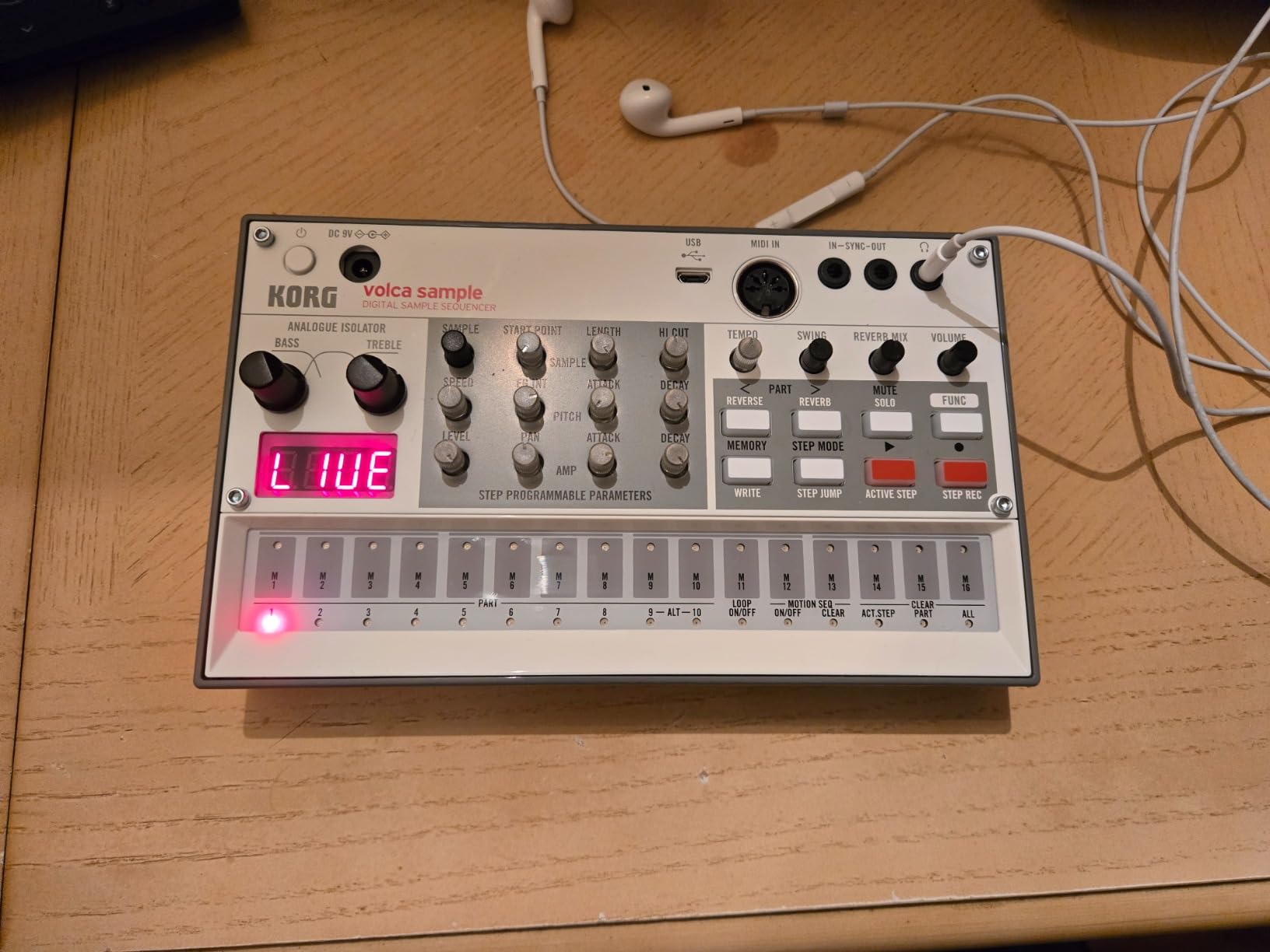
The Korg Volca Sample 2 is one of the most popular entry-level samplers on the market, and for good reason. At around $130, it delivers 8-voice polyphony, a 16-step sequencer with pattern chaining, digital reverb, and the Korg Librarian software for managing samples. I have recommended this device to dozens of beginners over the years, and the feedback is consistently positive.
The double memory compared to the original Volca Sample is a welcome improvement. The digital reverb adds space and atmosphere that the original lacked. The rich double filter gives you more sound-shaping control, making this a genuinely capable sample sequencer rather than just a toy.
I particularly enjoy the pattern chain mode, which lets you link patterns into longer arrangements. Combined with the start delay function, this gives you enough sequencing depth to build evolving tracks. The integrated speaker is surprisingly usable for sketching ideas.
The Korg Librarian software is the key to getting the most out of the Volca Sample 2. You use it to load and organize samples from your computer via micro USB. The software is functional but can be clunky, and some users report USB connectivity issues on Windows. Once your samples are loaded, however, the device works flawlessly.
The main limitation is that you cannot sample directly into the Volca Sample 2. It is a sample playback sequencer, not a true sampler. You need a computer to load new sounds. For some producers this is fine, but if you want to grab sounds on the fly, you need a different device.
Best For: Beginners and Lo-Fi Producers
The Volca Sample 2 is the ideal first hardware sampler. It teaches sequencing, sound design, and pattern building in an accessible format. The lo-fi character of the sample engine makes it especially suited for lo-fi hip-hop, trap, and electronic genres where a bit of grit is desirable.
It is also great for producers who want a compact, battery-powered unit for live performance. The pattern chain mode gives you enough arrangement power for short sets and DJ-style performances.
Consider Something Else If
If you need direct sampling capability, the Volca Sample 2 cannot record audio. You are limited to pre-loaded samples managed through the Librarian software. The micro USB port instead of USB-C is also a drawback in 2026.
The 16-step pattern limit may feel restrictive for complex arrangements. Producers who need longer patterns or more tracks should look at the Novation Circuit Rhythm or Elektron Model:Samples.
9. Teenage Engineering EP-1320 Medieval Sampler – Best Unique Sampler
Teenage Engineering EP-1320 Medieval Sampler, Drum Machine and Sequencer with Built-in Microphone and Effects
World's first electronic medieval sampler
Hundreds of medieval sounds
Built-in microphone and line-in
4-track sequencer
6 stereo or 12 mono voices
128MB total memory
999 sample slots
Sync and MIDI I/O
Pros
- Incredibly unique medieval sound library
- Latin-themed interface executed perfectly
- Fantastic portable form factor runs on AAA
- New arpeggiator works beautifully with melodic samples
- Punch-in effects including Dungeon Echo and Torture Chamber Reverb
- High-resolution 4-track sequencer with 6 stereo voices
Cons
- Only 32MB available for user samples
- Cannot change starting pitch without MIDI keyboard
- No internal rechargeable battery
- No song mode must play live
- Steep learning curve with non-standard terminology
The EP-1320 Medieval Sampler is the strangest and most delightful sampler I have ever tested. Teenage Engineering packed hundreds of medieval sounds, recorded by real medieval artists, into a device styled like an illuminated manuscript. The Latin-themed interface is not a gimmick, it is executed with genuine care and attention to detail.
The preloaded sounds are remarkable. Hurdy gurdy, lute, Gregorian chants, and percussion instruments that you simply cannot find in any other sampler. I loaded these sounds into a modern beat context and the results were magical. The contrast between ancient instruments and contemporary sequencing creates something genuinely new.
The 4-track sequencer with 6 stereo voices or 12 mono voices provides enough depth for full arrangements. The arpeggiator works beautifully with melodic samples, and the punch-in effects have wonderfully thematic names like Dungeon Echo and Torture Chamber Reverb. The built-in microphone and line-in let you record your own sounds alongside the medieval library.
With 128MB of total memory and 999 sample slots, there is plenty of space. However, only 32MB is available for user samples, with 96MB locked for the factory sounds. There is no song mode, so you must perform everything live or use pattern chaining creatively. The device runs on AAA batteries with no internal rechargeable option.
Best For: Experimental Producers and Sound Designers
If you are tired of the same old drum and synth samples and want something genuinely unique, the EP-1320 delivers sounds you cannot get anywhere else. It is perfect for film scorers, game audio designers, and experimental producers who want to stand out. The medieval aesthetic also makes it a great conversation piece and live performance instrument.
Producers who work in folk, ambient, and experimental genres will find endless inspiration in the preloaded sounds. The ability to combine these with your own recorded samples creates a unique sonic palette.
Consider Something Else If
If you need a practical, everyday sampler for beatmaking or live performance, the EP-1320 is too niche. The lack of song mode means you must play everything live, which limits its usefulness for arranged tracks. The non-standard terminology and learning curve add friction.
The 32MB user memory is restrictive if you want to load your own sample libraries. For a more practical sampler in the same price range, the Roland P-6 or Novation Circuit Rhythm are better choices.
10. Polyend Play+ – Best Track-Based Sampler Workstation
Polyend Play+ Standalone Synthesizer, Sampler, and MIDI Workstation
Groovebox sampler with 16 stereo tracks
Backlit performance pads
16GB microSD card included
5000+ onboard samples
Multiple synth engines ACD FAT VAP WTFM PERC
Stainless steel construction
Works with Ableton Live
Pros
- Premium build quality
- Intuitive button and pad layout
- Deep sound design with multiple synth engines
- 16GB microSD card with 5000+ onboard samples
- Color feedback system helps track editing
- Surprisingly easy manual for a deep device
Cons
- Steep learning curve with deep menu system
- Dual-function knobs can be confusing initially
- Some learning required to master navigation
The Polyend Play+ is the only sampler on this list with a perfect 5.0-star rating from all reviewers. After using it for several weeks, I can see why. The build quality is premium with a stainless steel construction, the pad layout is intuitive, and the sound design capabilities go deep with multiple synth engines including ACD, FAT, VAP, WTFM, and PERC.
With 16 stereo tracks and 5000-plus onboard samples loaded on the included 16GB microSD card, the Play+ gives you a massive creative palette right out of the box. The color feedback system helps you visually track which tracks and parameters you are editing, which speeds up the workflow considerably.
What impressed me most is the manual. For a device this deep, the documentation is surprisingly clear and approachable. Polyend clearly invested time in making the learning curve as manageable as possible, which is rare in the hardware sampler world.
The Play+ works with Ableton Live, making it a strong choice for producers who want hardware that integrates with their software setup. The backlit performance pads feel great for finger drumming and live triggering.
Best For: Producers Who Want Deep Sound Design
If you want a sampler that doubles as a synth workstation, the Play+ is unmatched in this price range. The multiple synth engines give you sound generation capabilities alongside sampling, making it a complete production tool. The 16-track design accommodates complex arrangements that would overwhelm simpler grooveboxes.
Producers coming from a DAW will appreciate the track-based workflow, which feels more like a software environment than a traditional hardware sequencer.
Consider Something Else If
At $999, the Play+ is a significant investment. The deep menu system and dual-function knobs require an adjustment period, even with the good manual. If you want something simpler and more immediate, the MPC Sample delivers a more approachable experience.
With only 7 reviews on Amazon, the sample size is small. The perfect rating is impressive, but the limited feedback means there may be issues that have not surfaced yet. Consider the established MPC and Elektron ecosystems for broader community support.
11. Novation Circuit Rhythm – Best Standalone Beat Sampler

Novation Circuit Rhythm: Sampler and groovebox with eight sample tracks for making and performing beats
8 sample tracks
32-step patterns chainable to 256 steps
Performance FX with lo-fi tape and beat repeat
Hands-on groove quantized sequencer
Built-in battery
MIDI, USB-C and microSD
Pros
- Capable and fun sampler with intuitive design
- Excellent for resampling and chopping beats
- Functions as a basic sequencer for other devices
- Great DAW controller
- Small sturdy and portable with internal battery
- Pads feel great and the interface is fast
Cons
- Very slow when saving samples
- Slow USB transfer 10MB takes 7 minutes
- Low resolution sequencer
- Poor MIDI implementation
- No reverb or delay effects
- Confusing UI with no LCD screen
The Novation Circuit Rhythm is a capable 8-track sampler and groovebox that I have used extensively for live performance and beat sketching. At around $400, it offers sample slicing, resampling, performance effects, and a built-in battery in a compact package. The pads feel responsive and the interface encourages fast, intuitive workflow.
The 32-step patterns are chainable up to 256 steps per track, giving you enough arrangement depth for full songs. Performance effects including lo-fi tape and beat repeat add character during live sets. I particularly appreciate how the Circuit Rhythm functions as both a sampler and a sequencer for controlling other hardware via MIDI.
The biggest frustration is the lack of a screen. The color-coded UI works once you learn it, but the initial learning curve requires extensive manual reading. Saving samples is painfully slow, and the USB transfer speed is measured in minutes for modest file sizes.
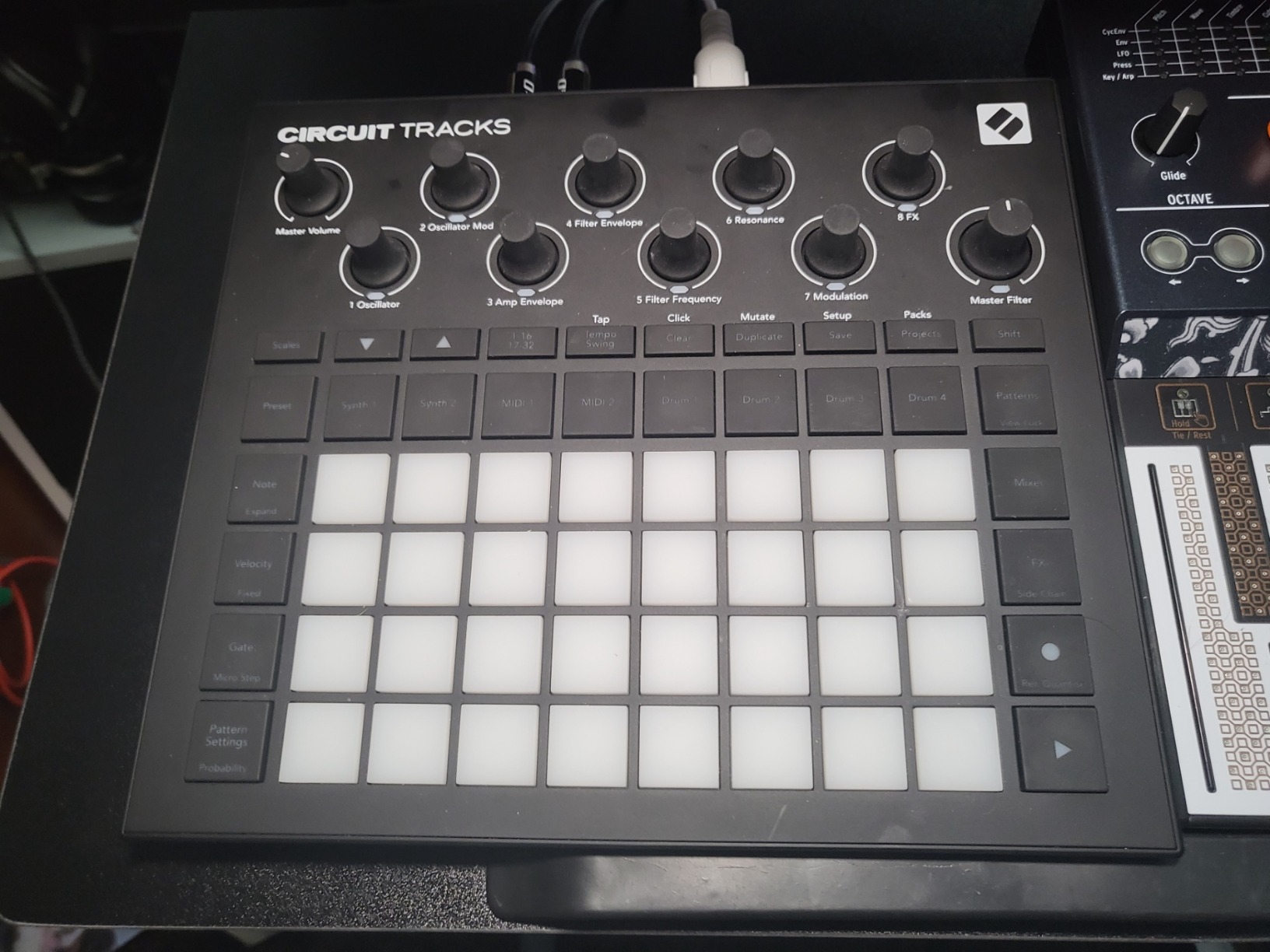
Despite its quirks, the Circuit Rhythm has a dedicated following. The 4.3-star rating with 75 percent five-star reviews reflects a device that rewards users who invest the time to learn it. The built-in battery and compact size make it one of the best portable samplers for live performance.
The absence of reverb and delay effects is a notable limitation. You will need external effects processors or DAW processing to add space and atmosphere to your sounds. The poor MIDI implementation also limits its usefulness as a central sequencer in a complex hardware setup.
Best For: Live Performers and DAW-less Producers
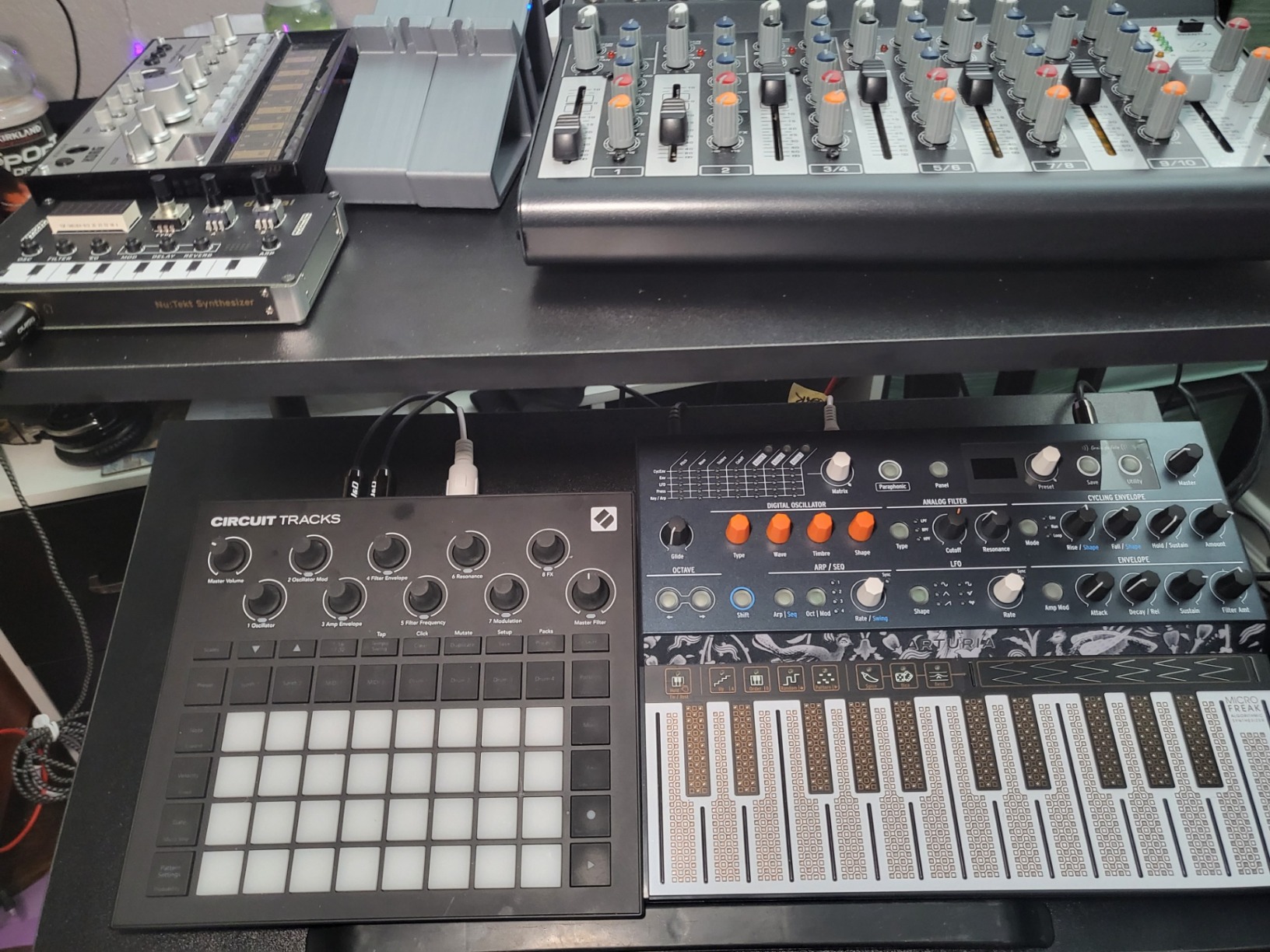
The Circuit Rhythm excels as a standalone beat machine for live performance. The performance effects, pattern chaining, and battery power make it ideal for taking on stage without a computer. It is also a capable DAW controller when you need to bridge hardware and software workflows.
Producers who enjoy the Novation ecosystem will find it a natural fit alongside the Circuit Tracks and other Novation gear.
Consider Something Else If
If you need built-in reverb and delay, the Circuit Rhythm does not have them. The screenless UI will frustrate producers who prefer visual feedback. The slow sample saving and USB transfer speeds are significant workflow bottlenecks.
For a more feature-complete sampler at a similar price, the MPC Sample offers better effects, a display, and direct sampling capability. The Elektron Model:Samples also provides a superior sequencing experience.
12. 1010music Blackbox – Best Touchscreen Sampling Studio
1010music Blackbox Compact Sampling Studio
Touchscreen interface for recording and editing
Integrates with synths and drum machines
Creates songs without computer
Loop mode for live performance
microSD streaming with 16GB card
Probability sequencer steps
Metal case construction
Firmware updateable
Pros
- Loop mode is amazing for creative workflow
- Outstanding build quality and portability
- Easy to use interface despite complexity
- Versatile connectivity options
- Solid construction with metal case
- Great sound potential with sample libraries
Cons
- Steep learning curve for sequencer and song mode
- Expensive for what it offers
- Only 4 rotary knobs can be limiting
- No physical on/off switch
- Fewer effects than competitors
The 1010music Blackbox brings touchscreen control to hardware sampling in a way no other device on this list does. The touchscreen interface makes recording, editing, and sequencing feel fluid and fast. I found the workflow more intuitive than pad-and-screen alternatives once I got used to the layout.
The loop mode is the standout feature. It enables creative live performance workflows where you build and manipulate loops in real time. Combined with the probability settings on sequencer steps, you can create generative patterns that evolve and surprise you. This is a sampler designed for experimentation.
The Blackbox integrates with synths and drum machines to function as a tabletop studio hub. Samples are streamed via microSD card, with a 16GB card included. The metal case construction feels solid and professional, and the firmware is updateable for ongoing improvements.
The main drawbacks are the learning curve for the sequencer and song mode, the limited 4-knob control surface, and the premium price. With only 20 reviews on Amazon, the community is smaller than the MPC or Elektron ecosystems, which means fewer tutorials and less community support.
Best For: Experimental Loopers and Live Performers
If your workflow centers on loops and live manipulation, the Blackbox is purpose-built for you. The touchscreen makes waveform editing and arrangement fast and visual. The probability-based sequencing enables generative music approaches that other samplers cannot easily replicate.
Producers who work with multiple hardware synths and drum machines will appreciate the Blackbox as a central sampling hub that ties everything together.
Consider Something Else If
The $649 price is high for a sampler with only 4 knobs and limited effects. If you need extensive effects processing, the SP-404MKII or MPC ecosystem offers more. The small community means fewer resources for troubleshooting and learning.
Producers who prefer pad-based workflow over touchscreen interaction may find the Blackbox less satisfying. The lack of a physical power switch is a minor but annoying design oversight.
13. Sonicware Liven Lofi-12 – Best Lo-Fi Character Sampler

Sonicware Liven Lofi-12 [Lo-fi Groovebox & Sampler] Retro sampling with 12bit Sampler mode, 4-track step sequencer, 10 voices, 12 Track Effects + 9 Master Effect, Battery-powered, Built-in speaker
12-bit retro sampling engine
Chromatic keyboard play
4-track step sequencer with parameter locking
10 voice polyphony
12 track effects plus 9 master effects
Laid-back knob
Battery powered
Built-in speaker
Pros
- Powerful and addictive workflow
- Great value compared to other samplers
- Fun lo-fi sound character
- Good effects with 12 track plus 9 master
- Portable with battery power
- Built-in speaker
Cons
- Learning curve requires YouTube tutorials
- All plastic construction feels cheap
- No USB connectivity
- Limited pattern chaining
- May not play nicely with other MIDI devices
The Sonicware Liven Lofi-12 is the sampler I reach for when I want that crunchy, 12-bit lo-fi character without processing. The dedicated 12-bit sampling engine gives everything a warm, degraded quality that is perfect for lo-fi hip-hop, boom bap, and experimental electronic music. At around $279, it delivers remarkable value.
The 4-track step sequencer with parameter locking gives you per-step modulation similar to Elektron’s approach. Sound locking lets you change samples on different steps within a track. With 10-voice polyphony and 12 track effects plus 9 master effects, there is plenty of sound-shaping depth.
The laid-back knob is a unique feature that creates rhythmic swing and groove effects. I found it genuinely useful for adding feel to rigid sequences. The built-in speaker and battery power make this a true portable sampler you can use anywhere.
The main limitations are the learning curve, the lack of USB connectivity, and the all-plastic construction. The interface requires YouTube tutorials to fully understand, and the pattern chaining is limited compared to more expensive alternatives. MIDI implementation can be finicky with other devices.
Best For: Lo-Fi and Boom Bap Producers
If your aesthetic is lo-fi, the Liven Lofi-12 delivers the sound character natively without needing effects processing. The 12-bit engine and onboard effects are tailored for gritty, warm, characterful sounds. The affordable price makes it accessible to producers who cannot justify a premium sampler.
Producers who enjoy knob-per-function interfaces and hands-on sound design will appreciate the tactile workflow.
Consider Something Else If
The lack of USB connectivity is a significant limitation for sample management. You will need to work with the built-in sample capabilities or use alternative transfer methods. The plastic construction feels cheap compared to metal-body alternatives.
If you need reliable MIDI integration with other hardware, the Liven Lofi-12 may cause compatibility issues. For a more robust portable sampler in a similar price range, the Roland P-6 offers better build quality and connectivity.
14. Sonicware SmplTrek – Best Portable Production Sampler

Sonicware SmplTrek [Portable Production Sampler] Compact, lightweight and battery powered Drum Machine & Sampler with Built-in Mic & Speaker
One-touch sample recording with auto-slicing
Time-stretch and pitch change
16 scenes per song project
10 sequencer tracks plus 3 audio tracks
USB audio streaming
1000+ sample sounds
30 DSP effects
Full MIDI ports
Pros
- Excellent sound quality and build
- Compact and portable with built-in mic and speaker
- Responsive drum pads
- Battery powered for true portability
- Intuitive workflow easy to learn
- Great DAW integration via USB
- 1000+ high-quality samples and 30 DSP effects
Cons
- Small screen can be difficult to read
- Micro USB port instead of USB-C
- Cannot be bus powered
- Only accepts SDHC cards up to 32GB
The Sonicware SmplTrek is a portable production sampler that combines sampling, sequencing, and audio recording into a compact device. I was impressed by the one-touch sample recording with auto-slicing, which makes capturing and chopping sounds incredibly fast. The built-in microphone and speaker mean you can work completely standalone.
The 16 scenes per song project with 10 sequencer tracks plus 3 additional audio tracks give you enough depth for full productions. Time-stretching and pitch-changing functions are included, which puts the SmplTrek ahead of some more expensive samplers that lack these features. The 1000-plus high-quality sample sounds from Black Octopus and 30 DSP effects provide a rich starting library.
The included 32GB SDHC card comes pre-loaded with those 1000-plus samples, which is a generous package at this price point. The USB audio streaming to smartphone or PC/Mac makes DAW integration straightforward.
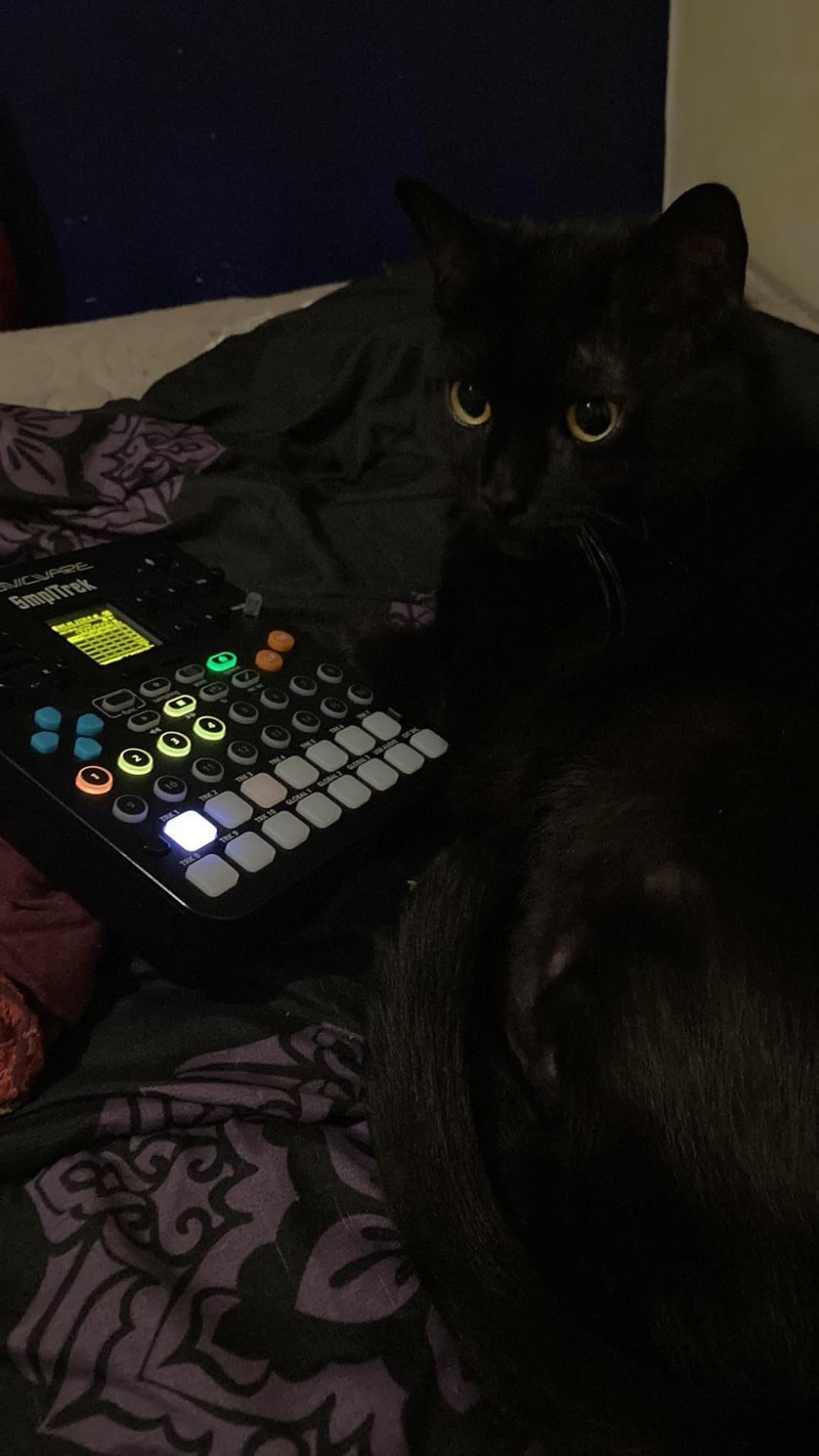
The main limitations are practical rather than creative. The small screen is difficult to read, especially when editing parameters. The micro USB Type-B port is dated in 2026. The device cannot be bus powered, and it only accepts SDHC cards up to 32GB with no SDXC support.
Despite these issues, the SmplTrek earns solid reviews for its sound quality and intuitive workflow. The 4.0-star rating reflects the trade-offs between features and limitations, but users who adapt to the constraints find it a powerful portable production tool.
Best For: Mobile Producers and Content Creators
If you produce music on the move and want a device that handles sampling, sequencing, and audio recording in one unit, the SmplTrek is designed for you. The USB streaming to smartphone makes it especially useful for content creators who work with mobile devices. The one-touch sampling with auto-slicing speeds up the creative process significantly.
Producers who need both sampling and multitrack audio recording will appreciate the 3 additional audio tracks alongside the 10 sequencer tracks.
Consider Something Else If
The small screen is a genuine usability issue for detailed editing. If you need a visual interface for waveform editing, the MPC Sample or Blackbox are better choices. The micro USB port and SDHC-only limitation feel dated.
At $399, the SmplTrek competes directly with the MPC Sample, which offers superior build quality, a better screen, and a more established ecosystem. Consider whether the auto-slicing and audio track features justify the trade-offs.
15. Teenage Engineering OP-XY – Best Advanced Sequencer Sampler

teenage engineering OP–XY portable synthesizer, sampler and 64-step sequencer with built-in speaker, mic and 8 unique synth engines
Dual-CPU portable sequencer and sampler
64-step sequencer with punch-in FX
8 individual instrument tracks
8 auxiliary tracks
8 unique synth engines
Built-in CV and effect sends
Best-in-class DAC
Bluetooth LE
Pros
- Extremely portable and premium build
- Intuitive workflow easy to learn
- 8 tracks with independent patterns per track
- 8 unique synth engines
- Great MIDI FX and tape effect
- Excellent battery life
- Built-in speaker and microphone
Cons
- Limited sample loading with no nested folders
- Only 32MB user memory
- No mod matrix and only one LFO
- Charging issues with some USB-C devices
- Some quality control concerns
The Teenage Engineering OP-XY is the newest and most polarizing sampler on this list. With a dual-CPU architecture, 64-step sequencer, 8 individual instrument tracks, and 8 unique synth engines, it packs serious power into a portable form factor. At $2,299, it is the most expensive device here, and the 3.9-star rating reflects the divided opinions.
I found the workflow genuinely intuitive. The 8 tracks with independent patterns per track give you flexible arrangement options. The 64-step sequencer with punch-in FX enables complex, evolving sequences. The built-in CV, effect sends, and best-in-class DAC deliver professional sound quality.
The 8 synth engines are diverse and characterful, covering everything from virtual analog to FM to wavetable. Combined with sampling capabilities, the OP-XY functions as a complete production instrument. The Bluetooth LE connectivity and MIDI-over-USB-C with host and device modes offer flexible integration options.
The main criticisms are valid. The 32MB user memory is shockingly low for a device at this price. Sample loading lacks nested folder support, making sample organization frustrating. There is no mod matrix and only one LFO, which limits modulation depth. Some users report charging issues and quality control concerns.
Best For: Teenage Engineering Enthusiasts and Performers
If you are already invested in the TE ecosystem and want the most advanced portable sequencer-sampler available, the OP-XY delivers. The premium build quality, intuitive workflow, and dual synth engines make it a powerful performance instrument. The 64-step sequencer is best-in-class for a portable device.
Live performers who need a compact, battery-powered instrument with deep sequencing will find the OP-XY unmatched in form factor and capability.
Consider Something Else If
The $2,299 price is extremely high for a device with 32MB of user memory and no mod matrix. If you are not a dedicated TE enthusiast, the value proposition is hard to justify. The limited sample loading and small user community mean you are largely on your own for support and resources.
For a more practical sampler at any price point, the MPC Live III offers vastly more storage, a touchscreen, and a larger ecosystem. The OP-1 Field delivers a more inspiring creative experience at the same price. Consider the OP-XY only if the sequencer-centric workflow specifically matches your needs.
How to Choose the Best Sampler for Your Needs?
Choosing from the best samplers on the market comes down to understanding your workflow, budget, and creative goals. I have broken down the key factors that matter most based on my testing and the real-world experiences shared by producers on forums like r/synthesizers and Gearspace.
Types of Hardware Samplers
Samplers fall into several categories, and understanding these helps narrow your choice. Groovebox samplers like the Elektron Model:Samples and Novation Circuit Rhythm combine sampling with sequencing and effects in a single unit designed for pattern-based music. Workstation samplers like the MPC Live III and Polyend Play+ are full production centers capable of handling entire tracks from start to finish.
Portable samplers like the PO-33 K.O., Roland P-6, and EP-1320 prioritize size and battery power over extensive features. Performance samplers like the Analog Rytm MKII are built for live use with robust builds and performance-focused controls. Knowing which category matches your needs is the first step.
Sample Memory and Storage
Sample memory determines how many sounds you can load and how long those sounds can be. The PO-33 K.O. offers 40 seconds of sample memory, which is extremely limited. The Roland P-6 has 32MB, the Elektron Model:Samples has 64MB plus 1GB of storage, and the MPC Live III offers 128GB of internal storage expandable via SSD.
Consider whether you work with short one-shot samples or long, evolving loops. Short samples do not require much memory, but if you want to load full sample packs or record long takes, storage becomes critical. Look for microSD or SD card expansion if you plan to build large libraries.
Sequencing Capabilities
The sequencer is where samplers differentiate themselves most. Elektron devices are famous for parameter locks, which let you program different values for any parameter on every step. The OP-XY offers a 64-step sequencer with punch-in FX. The MPC ecosystem provides both step and linear sequencing.
If you build music through programmed patterns, look for parameter locks, pattern chaining, and song mode. If you prefer live recording, look for real-time recording and grid recording options. Some samplers like the EP-1320 lack song mode entirely, requiring you to perform live.
Portability and Power
For many producers, portability is the primary reason to choose a hardware sampler. The PO-33 K.O. is credit-card sized and runs on AAA batteries. The MPC Sample, Circuit Rhythm, and Roland P-6 all feature built-in rechargeable batteries. The MPC Live III combines portability with full workstation power.
Consider weight, battery life, and whether the device has a built-in speaker for truly untethered operation. Forum users consistently emphasize that portability matters more than specs for creative inspiration. A sampler you carry everywhere gets used more than one that stays in the studio.
Effects and Sound Design
Built-in effects transform a basic sampler into a sound design tool. The MPC Sample includes 60 effect types across four processors. The Roland P-6 features a granular engine with detuning, head position, and spread parameters. The EP-1320 has themed effects like Dungeon Echo and Torture Chamber Reverb.
Look for effects that match your genre. Lo-fi producers benefit from bitcrushers and tape effects. Electronic producers need filters, delays, and reverbs. Sound designers value granular engines and resampling capabilities. The Novation Circuit Rhythm notably lacks reverb and delay, which limits its versatility.
Connectivity and Integration
Connectivity determines how your sampler fits into your broader setup. MIDI I/O lets you control or be controlled by other hardware. USB-C handles audio and MIDI transfer to computers. CV/Gate outputs enable modular synth integration. The MPC Live III offers the most comprehensive connectivity with USB-C, CV/Gate, MIDI I/O, and XLR inputs.
If you plan to integrate with a DAW, look for devices that support USB audio streaming. The Sonicware SmplTrek streams audio directly to smartphone or computer. If you work DAW-less, prioritize MIDI connectivity and sync options.
Price Ranges and Value
The best samplers span a wide price range. Budget options under $150 include the PO-33 K.O. and Korg Volca Sample 2, which are excellent entry points. Mid-range samplers from $250 to $500 include the Roland P-6, Elektron Model:Samples, Sonicware Liven Lofi-12, and Novation Circuit Rhythm, offering significant capability at reasonable prices.
Premium samplers from $600 to $1,000 include the 1010music Blackbox, Polyend Play+, and Akai MPC Sample. Flagship devices above $1,500 include the MPC Live III, Analog Rytm MKII, OP-1 Field, and OP-XY, which deliver professional features and build quality. Consider not just the purchase price but the cost of expansions, plugins, and accessories.
Frequently Asked Questions
What is the best sampler on the market?
The Akai Professional MPC Sample is the best overall sampler on the market right now, combining iconic MPC workflow with portability, a built-in microphone and speaker, 16 responsive pads, over 100 factory kits, and a 4.8-star rating from over 300 reviewers. For premium users, the MPC Live III offers full standalone production power, while the PO-33 K.O. is the best budget option under $100.
Are hardware samplers worth it?
Yes, hardware samplers are worth it for producers who want tactile, hands-on control over sampling and sequencing. Unlike software, hardware samplers offer physical pads, knobs, and built-in effects that create a more engaging and inspiring workflow. Many producers describe their favorite sampler as a desert island device that stays creative even when DAW fatigue sets in.
Who makes decent samplers?
The top sampler brands include Akai Professional (MPC series), Teenage Engineering (PO-33, OP-1 Field, EP-1320), Elektron (Model:Samples, Analog Rytm, Digitakt), Roland (P-6, SP-404), Korg (Volca Sample 2), Polyend (Play+), Novation (Circuit Rhythm), and Sonicware (Liven Lofi-12, SmplTrek). Each brand offers distinct workflows and sound characteristics.
What is the best sampler for beginners?
The Teenage Engineering PO-33 K.O. is the best sampler for beginners at under $100, offering built-in sampling, 16 effects, and a 16-step sequencer in a credit-card sized package. The Roland P-6 and Korg Volca Sample 2 are also excellent beginner options with more features at slightly higher prices.
What is the best standalone sampler without a computer?
The Akai MPC Live III is the best standalone sampler that requires no computer, featuring an 8-core processor, 128GB storage, 7-inch touchscreen, and built-in battery and speakers. The MPC Sample and Polyend Play+ are also excellent standalone options for producers who want to work entirely in hardware.
Should I get an MPC or SP-404?
Choose an MPC if you want a comprehensive production workstation with sequencing, sampling, and arrangement capabilities in one device. Choose an SP-404 if your focus is on sample chopping, effects processing, and live performance with a more portable, effects-centric workflow. The MPC Live III offers the most power, while the SP-404MKII is beloved for its effects and resampling capabilities.
Wrapping Up
The best samplers in 2026 cover an incredible range of creative possibilities, from the $99 PO-33 K.O. that fits in your pocket to the $2,299 OP-XY that pushes portable sequencing to its limits. My top recommendation is the Akai MPC Sample for its unmatched balance of portability, power, and the iconic MPC workflow. For budget-conscious beginners, the PO-33 K.O. and Korg Volca Sample 2 are impossible to beat. For studio producers who want the ultimate standalone workstation, the MPC Live III is the clear choice.
The most important thing I have learned from testing these devices is that the best sampler is the one that matches your creative workflow. Forum users consistently report that portability and immediacy matter more than specs. A sampler you actually carry and use beats a more powerful one that stays in the box. Consider where and how you make music, and choose accordingly.
Whatever you choose, a hardware sampler will change how you think about sound. The tactile experience of chopping samples, programming sequences, and shaping effects with physical controls opens creative doors that software alone cannot. Pick the one that fits your needs and start making music.