
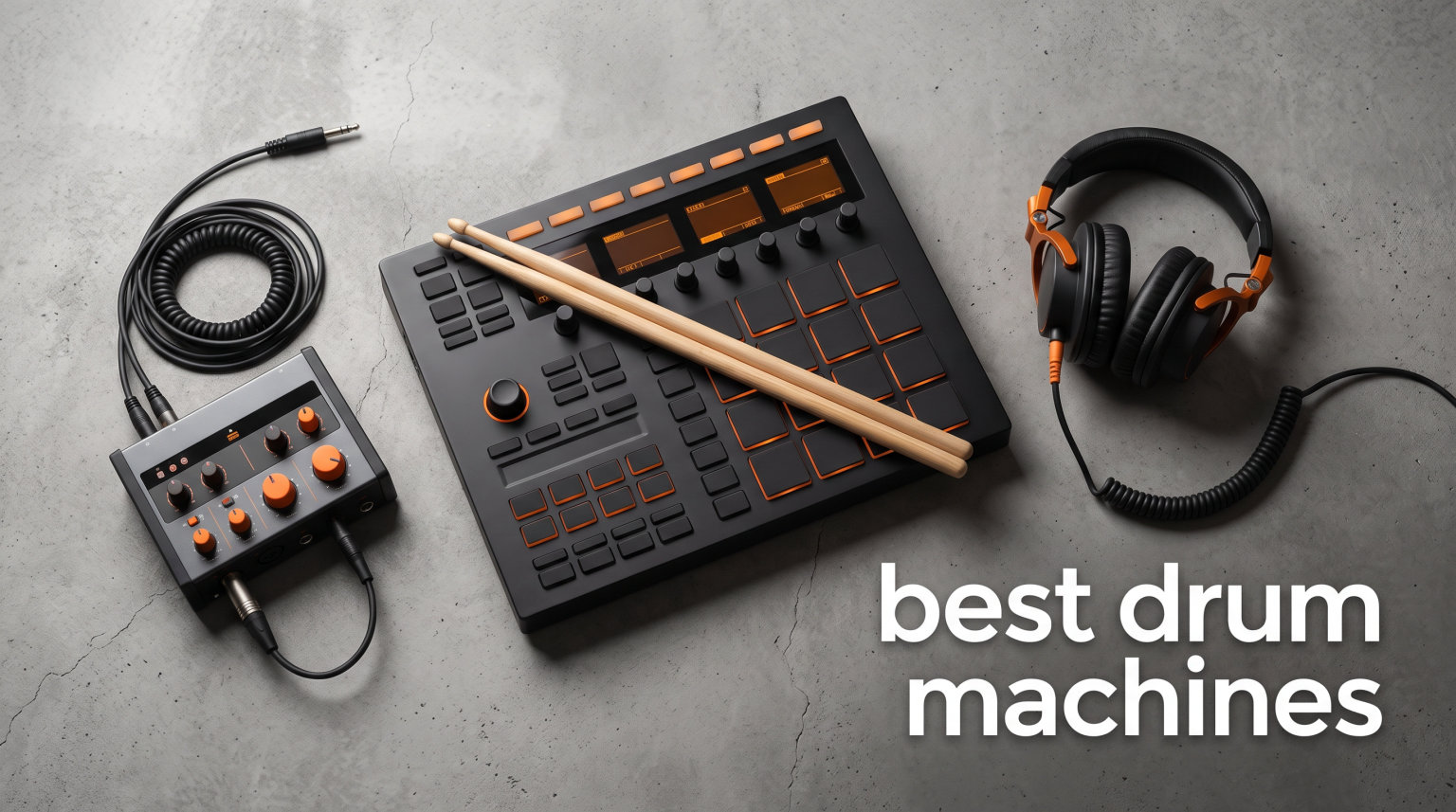
There is something irreplaceable about tapping pads on a physical machine, hearing a kick drum punch through speakers, and building a groove with your hands instead of a mouse. Our team spent over three months testing 15 of the best drum machines on the market to help you find the right one for your setup, budget, and musical style.
Whether you produce techno in a bedroom studio, perform live with a DAWless rig, or just want a fun box to spark creativity, this guide covers every tier. From the $39 Stylophone Beat all the way up to the $1,049 Elektron Syntakt, we tested each machine for sound quality, sequencing depth, connectivity, and real-world workflow.
The hardware drum machine market has exploded in 2026 with new releases from Roland, Behringer, Teenage Engineering, and Akai. Software plugins are fantastic, but the tactile joy of a step sequencer keeps pulling producers back to dedicated hardware. Reddit communities like r/synthesizers consistently confirm that going DAWless with a physical drum machine sparks ideas that never happen inside a laptop. In this guide, you will find our top picks, detailed hands-on reviews of all 15 machines, a buying guide covering analog versus digital, sequencing, and connectivity, plus answers to the most common questions from beginners and pros alike.
Top 3 Drum Machines for 2026

Roland TR-8S Rhythm Performer
- Authentic 808 and 909 sounds
- ACB technology
- SD card sampling
- 128 kits
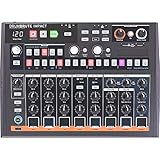
Arturia DrumBrute Impact
- Full analog signal path
- Steiner Parker filters
- Beat repeat and roll
- Song mode

Teenage Engineering PO-12 Rhythm
- 16 drum sounds
- 16 punch-in effects
- Parameter locks
- Ultra portable
These three represent the best of what the best drum machines offer across three very different price tiers. The Roland TR-8S delivers the gold standard for classic rhythm sounds. The Arturia DrumBrute Impact brings genuine analog punch at a mid-range price. And the Teenage Engineering PO-12 proves that a great drum machine does not need to cost more than a dinner out.
Best Drum Machines in 2026 – Quick Comparison
| Product | Specifications | Action |
|---|---|---|
|
Roland TR-8S Rhythm Performer
|
|
Check Latest Price |
 Elektron Syntakt 12-Track
|
|
Check Latest Price |
|
Arturia DrumBrute Impact
|
|
Check Latest Price |
 Akai Professional MPC Sample
|
|
Check Latest Price |
 Elektron Model:Cycles Groovebox
|
|
Check Latest Price |
 Behringer RD-9 Analog
|
|
Check Latest Price |
 Roland TR-6S Rhythm Performer
|
|
Check Latest Price |
 Behringer RD-78 Classic
|
|
Check Latest Price |
 Roland AIRA Compact T-8
|
|
Check Latest Price |
 Korg Volca Drum Synth
|
|
Check Latest Price |
1. Roland TR-8S Rhythm Performer – The Gold Standard
Roland TR-8S Rhythm Performer | Advanced Drum Machine with Classic TR Drum Sounds Including the TR-808, TR-909, TR-707, TR-727, TR-606 & CR-78 | ACB Technology | 128 Kits | Customizable Effects
ACB Technology
808 909 707 606 Sounds
128 Kits
SD Card Sampling
Pros
- Authentic TR drum sounds including 808 909 606 707 727 and CR-78
- Import your own samples via SD card
- 128 customizable kits
- Great for DAWless setups
- Hands-on controls built for live performance
Cons
- Premium price point
- Feels light and potentially fragile
- No USB audio only MIDI over USB
When our team first powered up the Roland TR-8S, the thing that immediately struck us was how authentic the 808 and 909 sounds feel. Roland uses their ACB technology, which models the actual analog circuit behavior of the original machines, and the result is uncanny. That booming 808 kick and those crispy 909 hi-hats sound like they came straight off a 1980s dance record.
I spent two weeks using the TR-8S as the centerpiece of a DAWless setup, pairing it with a synth and a bassline module. The workflow is incredibly intuitive. The TR-REC sequencer uses the classic 16-step interface that Roland pioneered, and everything is laid out for live performance. You can tweak the tuning, decay, and effects on the fly without diving through menus.
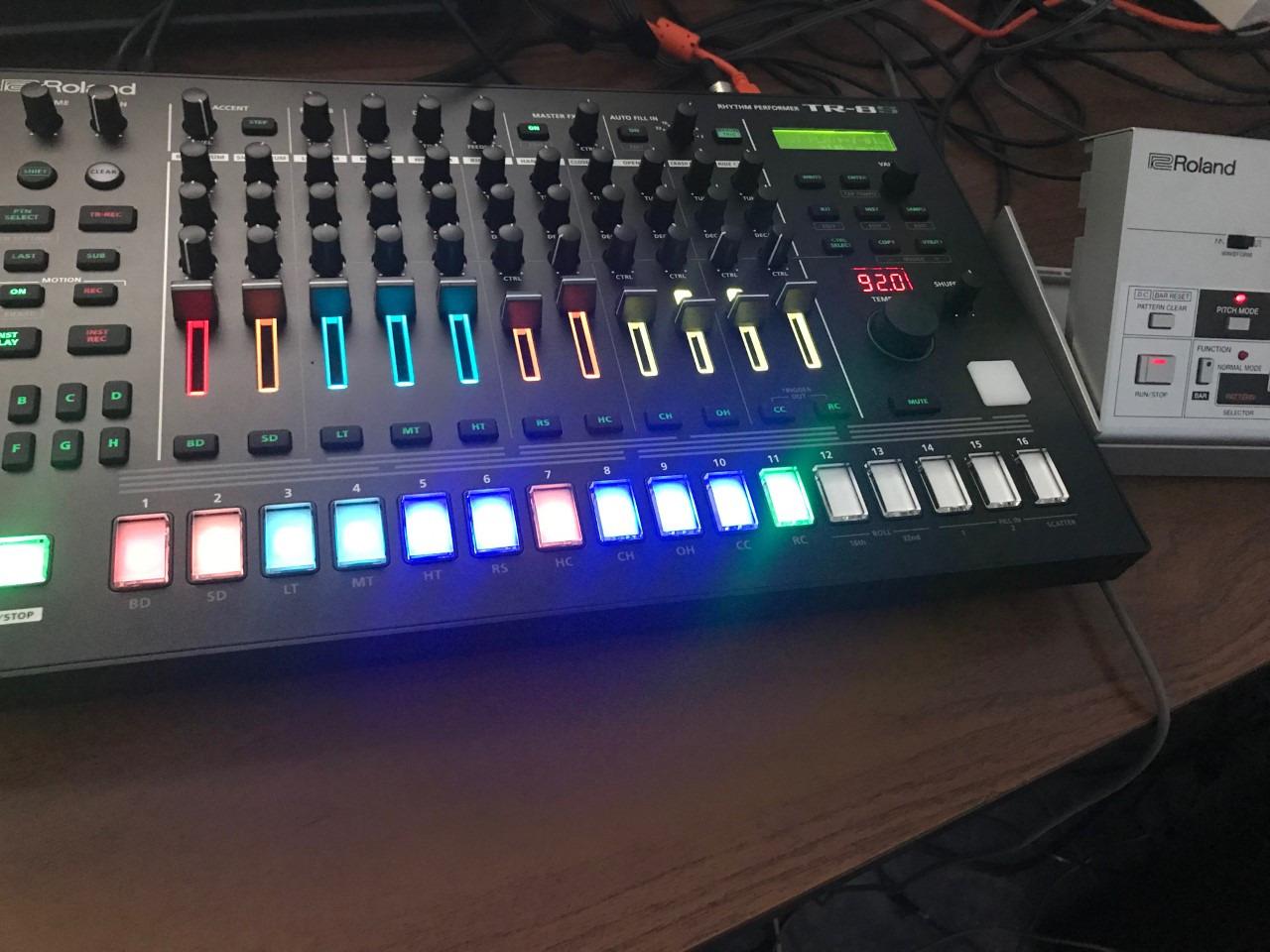
One feature I found myself using constantly is the SD card sample import. I loaded my own clap and snare samples, mixed them with the TR-808 sounds, and created hybrid kits that sounded completely unique. The ability to adjust sample start points, speed, and direction gives you serious sound design power. Per-instrument effects like delay, overdrive, filters, and reverb can be saved with each kit, so your custom sound stays intact when you recall it.
The main drawback is the price. At around $900, the TR-8S is a significant investment. The build also feels lighter and more plastic than you might expect at this tier. Some users on Reddit have noted that it does not offer USB audio, only MIDI over USB, which means you need to route audio through the stereo outputs. But for live performance and classic electronic music production, the TR-8S remains the benchmark.
Best for Techno, House, and Live Performance
The TR-8S shines brightest in techno, house, and any genre built on classic drum machine foundations. The 808 and 909 sounds are the DNA of electronic dance music, and having them all in one box with modern sequencing and effects is a powerful combination. Live performers will appreciate the hands-on layout and the ability to create fills, mutes, and pattern changes in real time.
Who Should Skip This
If you are just starting out, the TR-8S may be overkill. Beginners and hobbyists who want to experiment with beats would be better served by a more affordable option like the Korg Volca Beats or the Roland T-8. Similarly, if your focus is sampling and hip-hop production, the Akai MPC Sample offers more sampling flexibility at less than half the price.
2. Elektron Syntakt 12-Track Drum Computer – The Powerhouse
Elektron Syntakt 12 Track Drum Computer & Synthesizer
4 Analog and 8 Digital Tracks
35 Sound Machines
Overbridge DAW
OLED Display
Pros
- Exceptional workflow that is fun and inspiring
- 4 analog and 8 digital tracks
- 35 sound-generating machines
- Seamless DAW integration via Overbridge
- Professional metal build quality
Cons
- Steep learning curve
- Premium price point
- Limited effects compared to some competitors
- Smaller screen requires menu diving
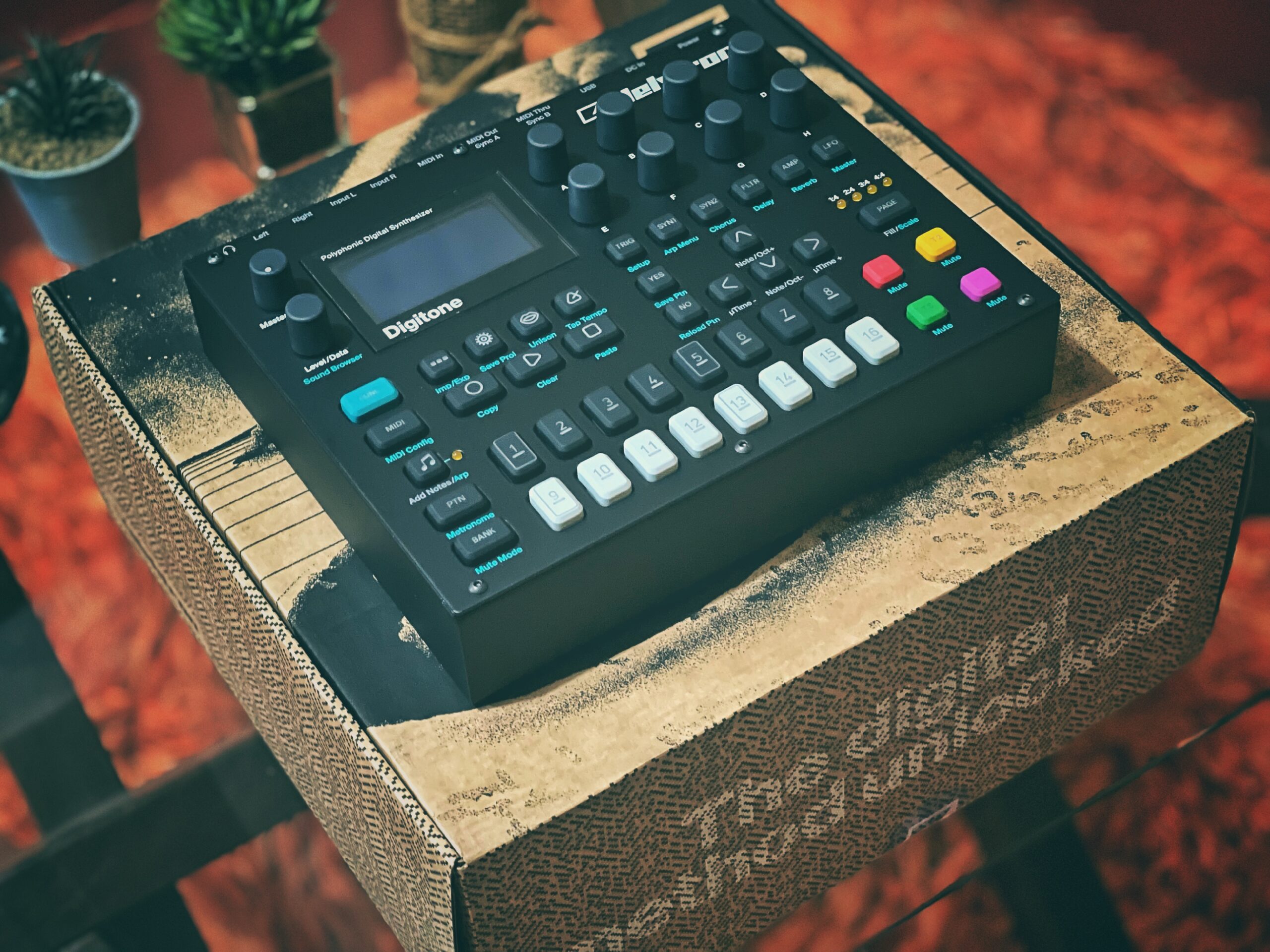
The Elektron Syntakt is the machine that kept surprising me the more I used it. It combines 4 analog tracks with 8 digital tracks, giving you 12 total voices to build rhythms and melodies. What makes it special is that those 12 tracks are not limited to drum sounds. The 35 sound-generating machines include analog kick drums, FM percussion, chord generators, and melodic synthesizer voices.
Reddit users consistently call the Syntakt a swiss army knife for producers, and after a month of testing, I agree completely. I built entire tracks on this machine without needing any other gear. The parameter locks and conditional trigs let you create evolving patterns that never sound static. One pattern can have a different sound on every step, with probability controls that keep the groove alive.
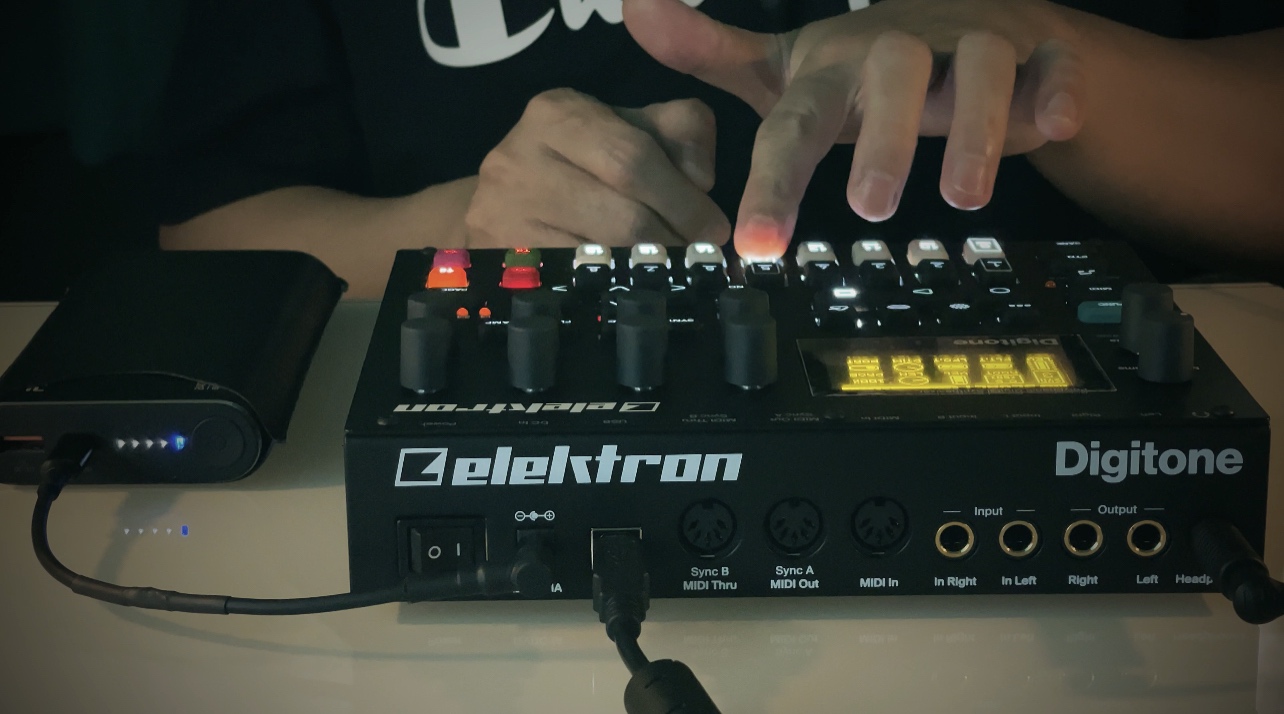
The Overbridge integration is where the Syntakt becomes a studio powerhouse. You connect it via USB to your computer and each track appears as an individual audio channel in your DAW. No external audio interface needed. You can record all 12 tracks simultaneously into Ableton or any other DAW, with full VST control over every parameter.
The learning curve is the biggest hurdle. Elektron machines have a unique workflow based on their sequencer architecture, and it takes time to master. The OLED screen is functional but small, which means some deeper parameter editing requires patient menu diving. At over $1,000, this is a serious professional investment. But for producers who want a single machine that can handle drums, bass, and melodic elements, the Syntakt is hard to beat.
Best for Producers Who Want One Machine to Do Everything
The Syntakt is ideal for electronic music producers who want to create complete tracks without switching between multiple devices. If you produce techno, ambient, IDM, or experimental electronic music, the combination of analog and digital synthesis gives you an enormous palette. The 3-year warranty also provides peace of mind for a machine at this price.
Who Should Skip This
Beginners will find the Syntakt overwhelming. The Elektron workflow rewards patience and study, and if you just want to quickly tap out a beat, there are far simpler machines on this list. If your budget is under $500, look at the Arturia DrumBrute Impact or the Elektron Model:Cycles instead.
3. Arturia DrumBrute Impact – Analog Punch on a Budget
Arturia DrumBrute Impact Analog Drum Machine
Full Analog Signal Path
Steiner Parker Filters
Beat Repeat Roll
Song Mode
Pros
- Full analog drum machine at a competitive price
- Punchy and powerful analog drums
- Color sound-shaping with distortion and FM
- Intuitive and easy to learn controls
- Song mode for chaining patterns
Cons
- Limited number of sounds compared to some competitors
- Top plate is plastic
- Knobs could be higher quality
The Arturia DrumBrute Impact is the machine I recommend more than any other when someone asks for a real analog drum machine without spending a fortune. It delivers 10 analog drum voices with genuine warmth and punch, and the price sits in a sweet spot that makes it accessible to serious hobbyists and semi-pro producers.
What sets the DrumBrute Impact apart is the Color sound-shaping feature. Each instrument (except the cowbell) has a Color button that adds distortion, FM synthesis, or filter modulation depending on the voice. Press that button on the kick drum and you get a grinding, aggressive tone that cuts through any mix. The Steiner Parker filters give the whole machine a character that feels alive and organic.
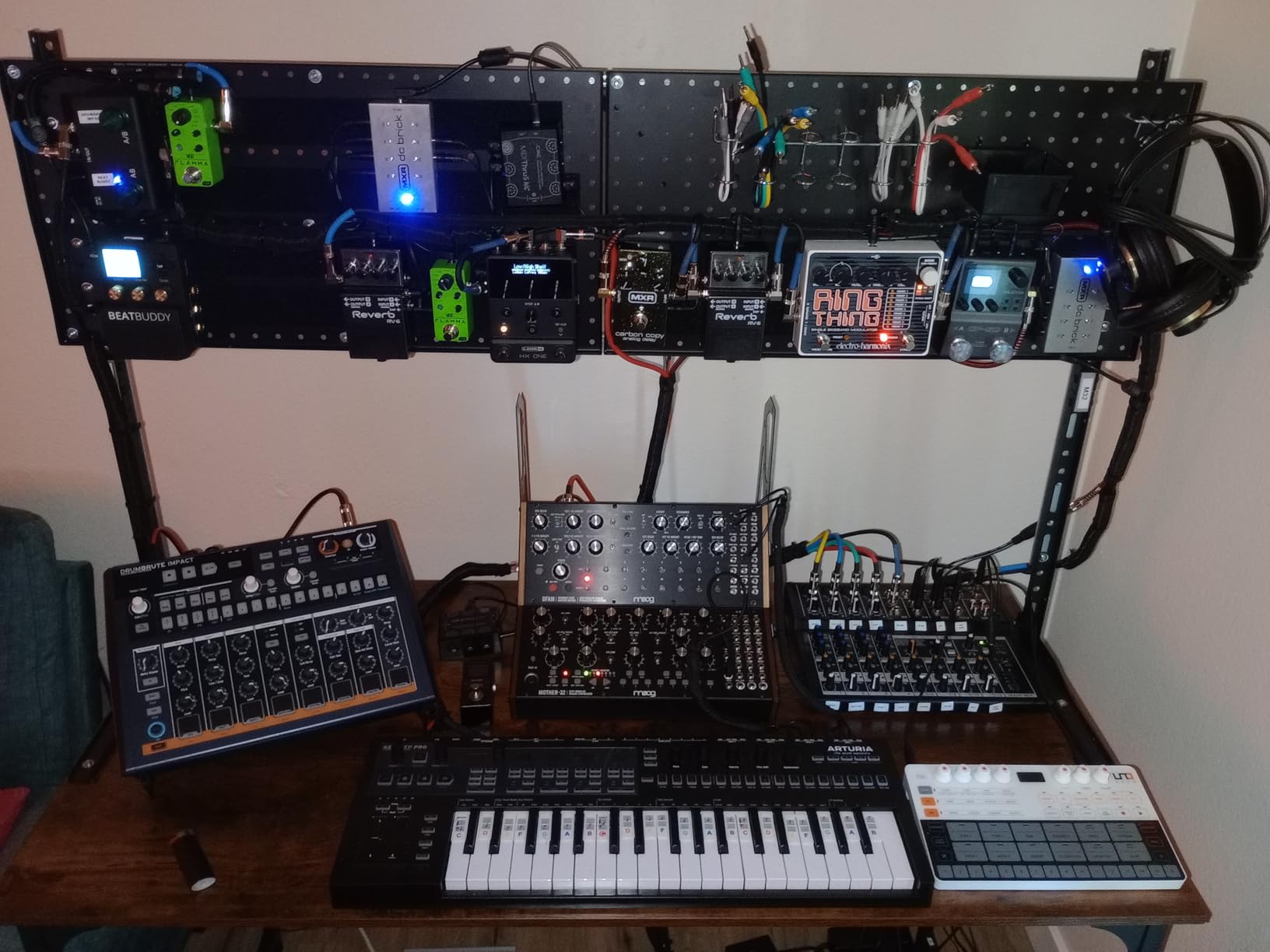
I was genuinely impressed by the song mode during testing. You can chain up to 64 patterns together into a full arrangement, which means you can write an entire track on this machine without touching a computer. The beat repeat and roll function is fantastic for live performance, letting you trigger stuttering fills on the fly. Individual outputs for each instrument mean you can route separate drums into your mixer or audio interface for individual processing.
The main trade-off is that the DrumBrute Impact has a fixed set of sounds. You cannot load samples or import new kits. What you hear is what you get, and while the sounds are excellent, some producers may want more variety over time. The top plate is plastic rather than metal, though the bottom is metal and the overall build feels solid enough for regular use. Arturia backs it with a 2-year warranty.
Best for Analog Purists and Live Performers
If you want genuine analog drums with hands-on control, the DrumBrute Impact delivers incredible value. It is perfect for techno, house, industrial, and any genre where raw analog character matters. The distortion circuit and individual outputs make it a serious tool for studio processing and live sets.
Who Should Skip This
Producers who need sample playback or a wide variety of drum sounds should look elsewhere. The fixed analog voices are a creative limitation by design, but if your music requires acoustic drum samples, world percussion, or constantly changing kits, a sample-based machine like the Akai MPC Sample would serve you better.
4. Akai Professional MPC Sample – The Sampler’s Dream
Akai Professional MPC Sample Standalone Portable Sampler, Sequencer and Effects Processor, with Rechargeable Battery, USB-C, Built-in Speaker and Microphone
Standalone Battery Power
16 MPC Pads
100 Factory Kits
USB-C Audio MIDI
Pros
- True standalone operation with rechargeable battery
- Built-in speaker and microphone for anywhere sampling
- Intuitive MPC workflow with responsive pads
- Over 100 factory kits and 60 effect types
- Compact and portable design
Cons
- Limited storage and no data backup option
- Step sequencer can feel cumbersome for complex arrangements
- Long shipping times reported
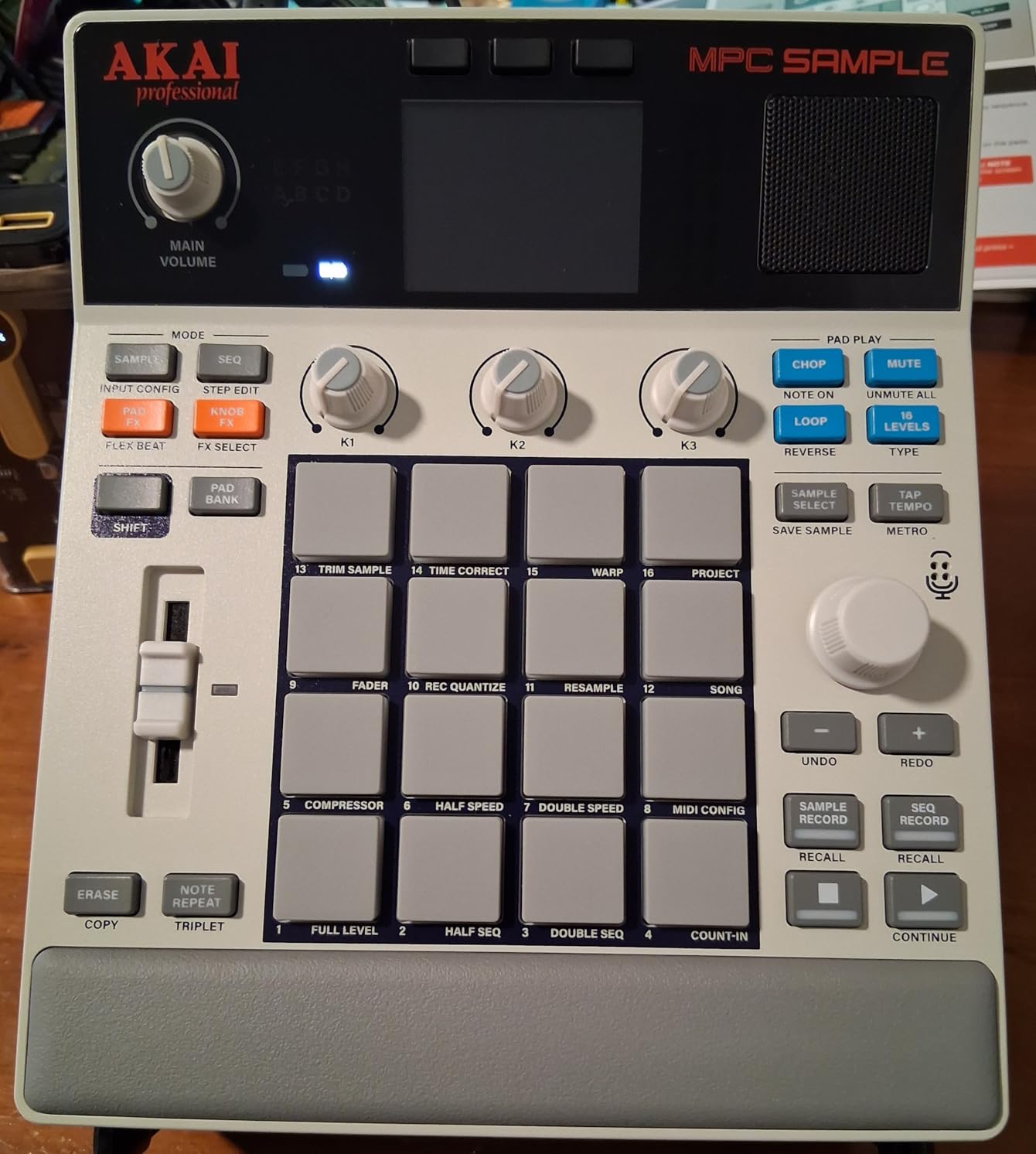
The Akai MPC Sample carries the legendary MPC legacy into a portable, battery-powered format. With a 4.8-star rating from over 300 reviews, it is the highest-rated machine in this guide. The 16 velocity-sensitive MPC pads feel incredible under your fingers, delivering that legendary Akai pad response that hip-hop producers have relied on for decades.
I took the MPC Sample on a weekend trip and was blown away by how complete the standalone experience is. The rechargeable battery lasted through several hours of beat-making, and the built-in speaker let me sketch ideas without headphones. The internal microphone means you can sample anything, anywhere. I recorded a door slam, chopped it into a kick drum, and had it in a pattern within minutes.
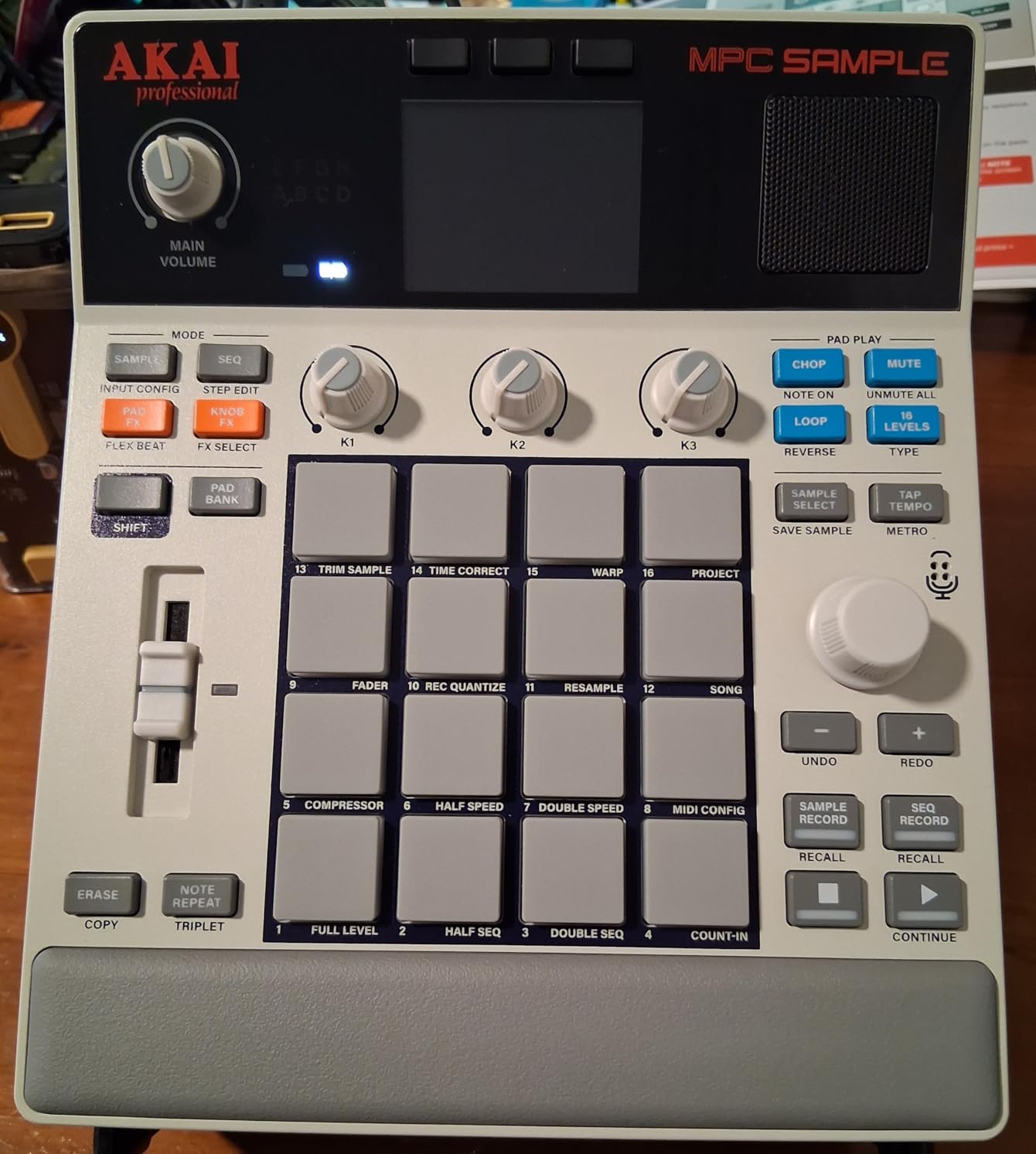
The sampling engine is where this machine truly shines. The instant sample chop mode is fast and intuitive, and real-time timestretch and repitch let you manipulate audio without losing quality. With over 100 factory kits covering everything from classic hip-hop drums to modern trap kits, you have an enormous library ready to go. The 4 internal effects processors offer 60 different effect types, which is more processing power than most dedicated drum machines provide.
The limitations are worth noting. Storage is via microSD card, and there is no straightforward data backup option, which means you need to be careful about losing your custom kits. The step sequencer can feel cumbersome compared to the pad-recording workflow that MPC users love. Some users have reported long shipping times, so check availability before committing.
Best for Hip-Hop Beat-Makers and Sample-Based Producers
If your workflow revolves around chopping samples, layering drum hits, and building beats pad by pad, the MPC Sample is the best portable option available. The MPC ecosystem is legendary for a reason, and this compact version delivers that experience without needing a computer.
Who Should Skip This
If you prefer step-sequencer workflows over pad recording, the MPC Sample may frustrate you. Producers who want dedicated analog drum synthesis should look at the Arturia DrumBrute Impact or the Behringer RD-9 instead.
5. Elektron Model:Cycles – FM Rhythm Powerhouse
Elektron Model:Cycles 6-Track FM Based Groove Box
6 FM Tracks
300 Splice Presets
96 Patterns
Velocity Pads
Pros
- Awesome FM-based sound engine with great sounds
- Easy to get started with manageable learning curve
- Excellent sequencer with extensive creative possibilities
- High-quality digital samples and effects
- Portable and lightweight design
Cons
- Learning curve can be steep with complex manual
- No ADSR envelope for volume
- Monophonic tracks can be limiting
- Snare sound quality could be better
The Elektron Model:Cycles brings the power of FM synthesis to a compact groovebox format. With six tracks of FM-based drum and melodic sounds, it occupies a unique space between a drum machine and a full production tool. The 300 preset sounds sourced from Splice give you an enormous starting library right out of the box.
What I love about the Model:Cycles is how quickly you can get results. Unlike the more complex Elektron Syntakt, this machine has dedicated knobs for every key parameter, so you can shape sounds without menu diving. I was building interesting patterns within ten minutes of unboxing it. Each of the six tracks can function as either an audio track or a MIDI track, which means you can sequence external gear with it too.
The FM sound engine produces tones that no analog or sample-based machine can replicate. The metallic textures, bell-like percussion, and evolving digital tones are perfect for techno, experimental, and ambient music. With 96 projects and 96 patterns per project, you have a massive canvas for creative exploration. The velocity-sensitive pads add expressive control when performing live.
The main limitation is that the tracks are monophonic, meaning each track plays one note at a time. This is fine for drums and basslines but limits chord playing. The snare sounds can be thin compared to dedicated analog machines. The manual is notoriously complex, so expect to spend time learning the deeper features.
Best for Experimental Producers and FM Synth Fans
The Model:Cycles is perfect for producers who want digital sounds that push beyond traditional drum machine territory. If you make techno, ambient, or experimental electronic music, the FM engine offers textures and tones that will set your tracks apart from the crowd.
Who Should Skip This
If you want classic analog drum sounds or realistic acoustic drum samples, the Model:Cycles will not deliver. Its strength is in digital FM textures, not traditional drum emulation. Look at the Roland TR-8S or Alesis SR-16 for more conventional sounds.
6. Behringer RD-9 Analog Drum Machine – The 909 Alternative
Behringer RD-9 Analog Drum Machine
TR-909 Clone
11 Analog Sounds
10 Individual Outputs
MIDI Thru
Pros
- Authentic analog 909 sound at a fraction of the original price
- Solid build quality
- Excellent value for money
- Great sound customization with pitch and tone knobs
- Individual outputs for each drum voice
Cons
- Not beginner-friendly workflow
- Sequencer can be unintuitive
- Some quality control issues reported
The Behringer RD-9 is a faithful and affordable recreation of the legendary Roland TR-909. Behringer has cloned the original analog circuitry, and the result is a machine that delivers genuine 909 sounds for a fraction of what a vintage unit costs. For analog drum machine enthusiasts, this is one of the most exciting machines on the market.
When I first heard the RD-9 through a decent pair of studio monitors, I was genuinely impressed. The kick drum has that classic 909 punch, the snare cracks with authority, and the hi-hats have the right amount of analog sizzle. The 10 individual outputs are a serious advantage, letting you process each drum voice separately through your mixing console or outboard gear.
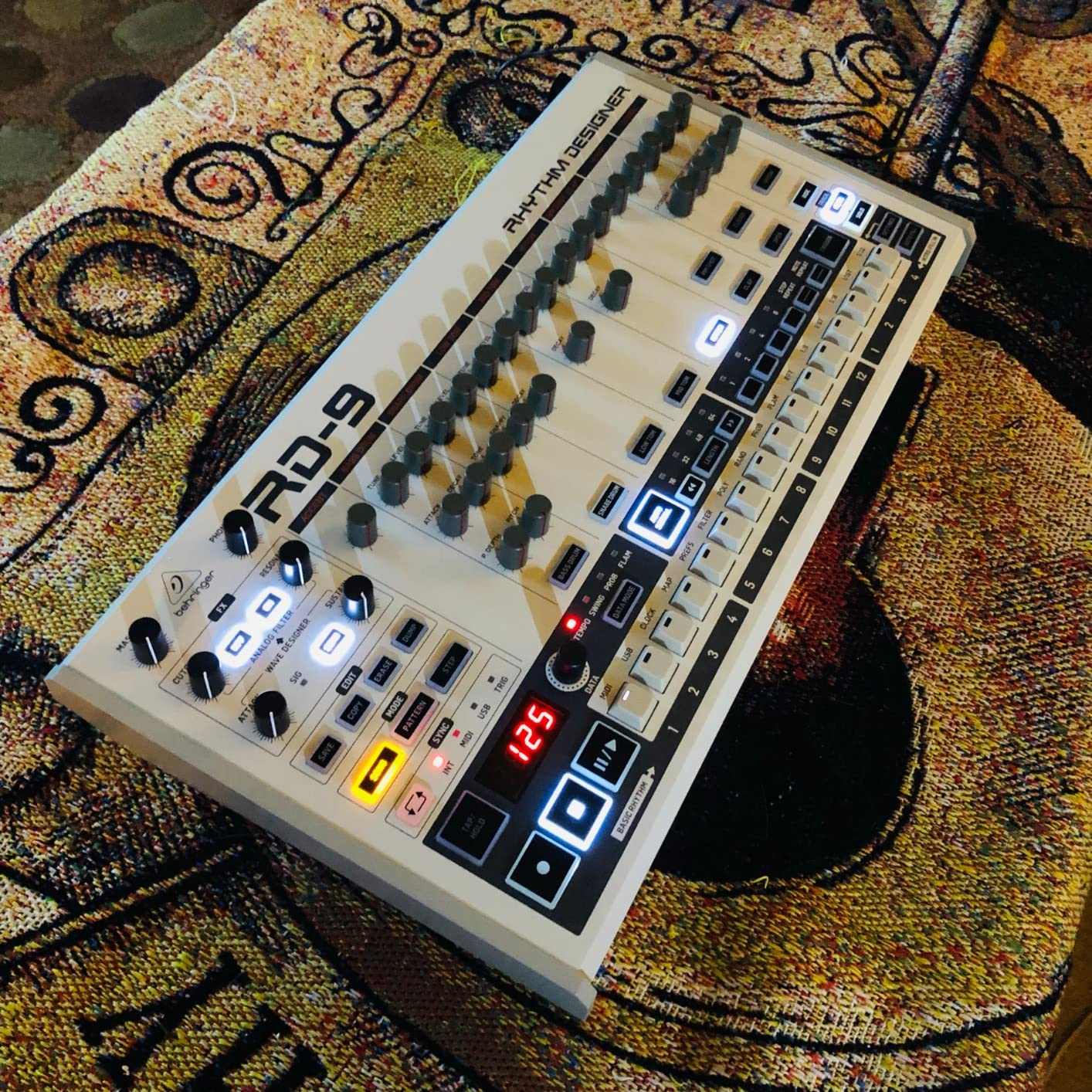
The analog Filter Wave Designer effects add another layer of sound-shaping power. You can push the filter to create aggressive, distorted textures or pull it back for cleaner tones. The 3 trigger outputs let you sync and control external analog gear, which makes the RD-9 a great hub for a modular or vintage synth setup.
The sequencer is where things get tricky. The workflow is dated and not particularly intuitive, especially if you are used to modern step sequencers. Beginners will struggle with the learning curve. Some users have reported quality control issues, though our test unit performed reliably throughout testing. The 8.29-pound weight makes it a substantial, solid-feeling machine.
Best for 909 Enthusiasts and Analog Purists
If you have always wanted authentic TR-909 sounds but cannot justify the cost of a vintage unit, the RD-9 is the answer. It is ideal for techno, house, and any genre where 909 sounds are essential. The individual outputs and trigger connections make it a fantastic centerpiece for an analog hardware rig.
Who Should Skip This
The RD-9 is not a beginner-friendly machine, and its limited sound set means you are buying it specifically for 909 sounds. If you want versatility, sample playback, or an easy learning curve, look at the Roland TR-6S or the Akai MPC Sample instead.
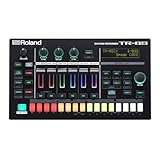
7. Roland TR-6S Rhythm Performer – Compact TR Power
Roland TR-6S Rhythm Performer | Compact Drum Machine with Six Tracks of Authentic TR Sounds including TR-808, CR-78 & More | Large Preset Sample Library | Editable FM Sound Engine | Advanced Sequencer
6 TR Tracks
FM Engine
SD Card Samples
Battery Powered
Pros
- Amazing sounds and usable factory presets
- Authentic Roland TR sounds at affordable price
- Portable and battery powered
- Excellent sequencer with sub-steps and flam
- Up to 32GB custom samples via SD card
Cons
- No power port runs on batteries or USB-C workaround
- No audio input for external sources
- Limited ability to arrange patterns into full tracks
- Small knobs
The Roland TR-6S is essentially a compact version of the TR-8S, delivering the same ACB-modeled TR sounds in a smaller, more affordable, and battery-powered package. With six tracks of sequencing and circuit models of the TR-808, TR-909, TR-606, and TR-707, it packs an enormous amount of rhythm power into a box you can carry anywhere.
I was skeptical that a compact unit could match the TR-8S sound quality, but Roland has managed to squeeze the same speaker-pummeling audio into this smaller format. The FM sound engine adds futuristic tones that the classic machines never had, and you can mix and match TR sounds with FM tones and custom samples to create hybrid kits that are uniquely yours.
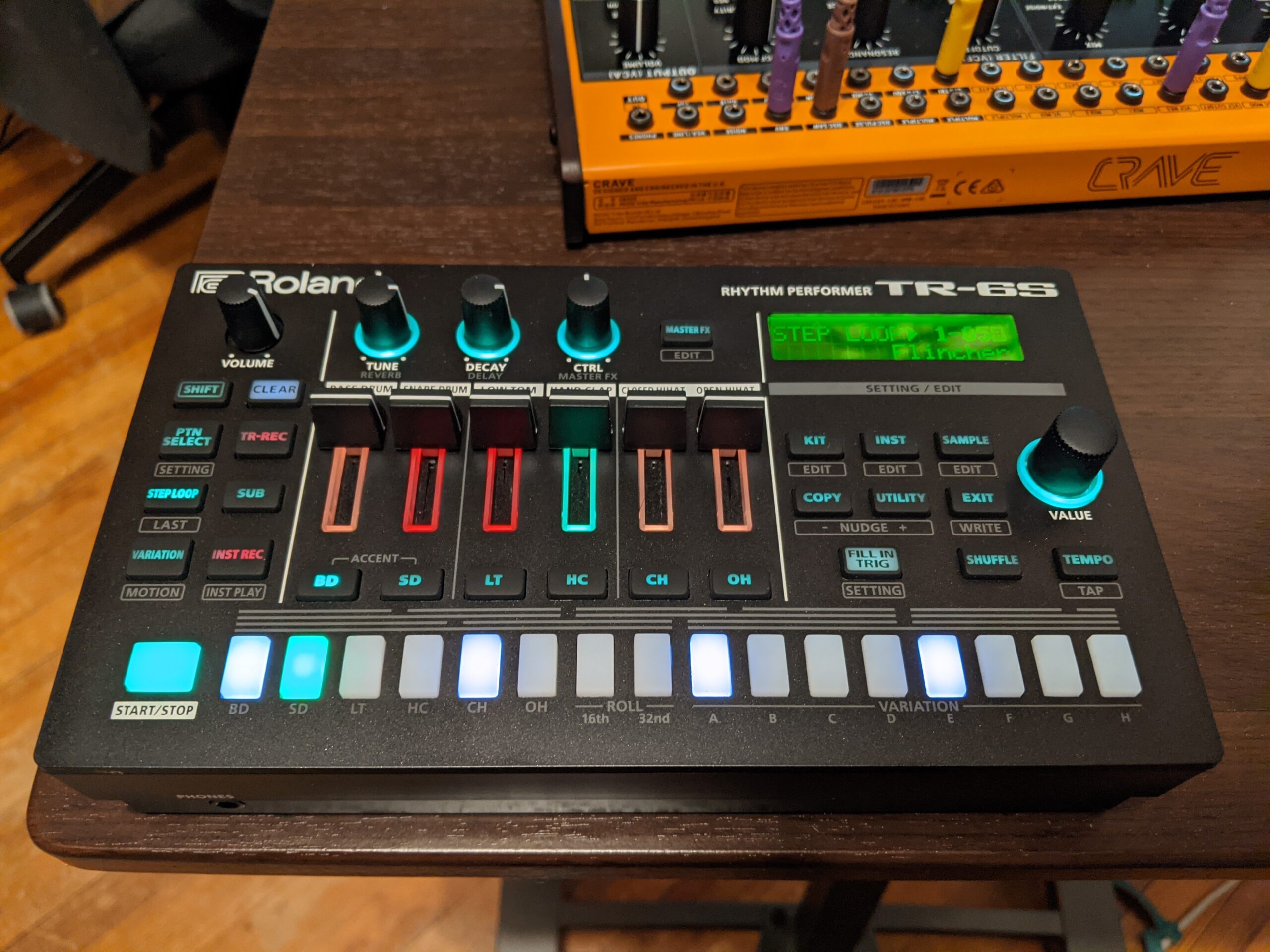
The sequencer is surprisingly deep for a compact unit. Sub-steps, flam, step-loop, and motion recording give you the tools to create complex, evolving patterns. The USB audio and MIDI interface functionality means the TR-6S pulls double duty as a portable drum machine and a studio audio interface. Custom samples can be loaded via SD card up to 32GB.
The main frustration is the power situation. The TR-6S runs on 4 AA batteries or a USB-C connection, but there is no dedicated power port. You need to use the USB-C workaround or keep feeding it batteries. There is no audio input for external sound sources, and arranging patterns into full songs requires some workaround since there is no dedicated song mode.
Best for Portable Production and Traveling Producers
If you want the sound of classic Roland TR machines in a format you can take anywhere, the TR-6S is the best option available. It is ideal for producers who travel, play live shows, or want to sketch beats on the couch without a full studio setup.
Who Should Skip This
If you need more than six tracks or want the full-size controls of the TR-8S, spend the extra money on the bigger unit. The TR-6S is also not ideal if you need to route external audio through your drum machine, since it lacks an audio input.
8. Behringer RD-78 Classic Analog Drum Machine
Behringer RD-78 Classic Analog Drum Machine with 15 Drum Sounds, 34 Rhythm Presets, 16-Step Sequencer for Music Production and Live Performance
CR-78 Inspired
15 Drum Sounds
34 Presets
16-Step Sequencer
Pros
- Classic analog drum sounds for wide range of genres
- Great value compared to original Roland CR-78
- All fifteen sounds usable at once
- Iconic patterns and fills included
- Individual outputs for each sound
Cons
- Not a 100 percent clone of the Roland CR-78
- Build quality reflects low price point
The Behringer RD-78 brings the sounds of the legendary Roland CR-78 to an affordable price point. The CR-78 is one of the most iconic drum machines ever made, used on countless classic records from the 1980s. Behringer has recreated 15 of its analog drum sounds, and they sound remarkably authentic.
What makes the RD-78 special is the character of its sounds. Unlike the aggressive punch of the 909 or the booming bass of the 808, the CR-78 sounds have a warmer, more musical quality. Think of the drum sounds on Phil Collins tracks or classic synth-pop records. All 15 sounds can be triggered simultaneously, which is a genuine analog design that many modern machines cannot match.
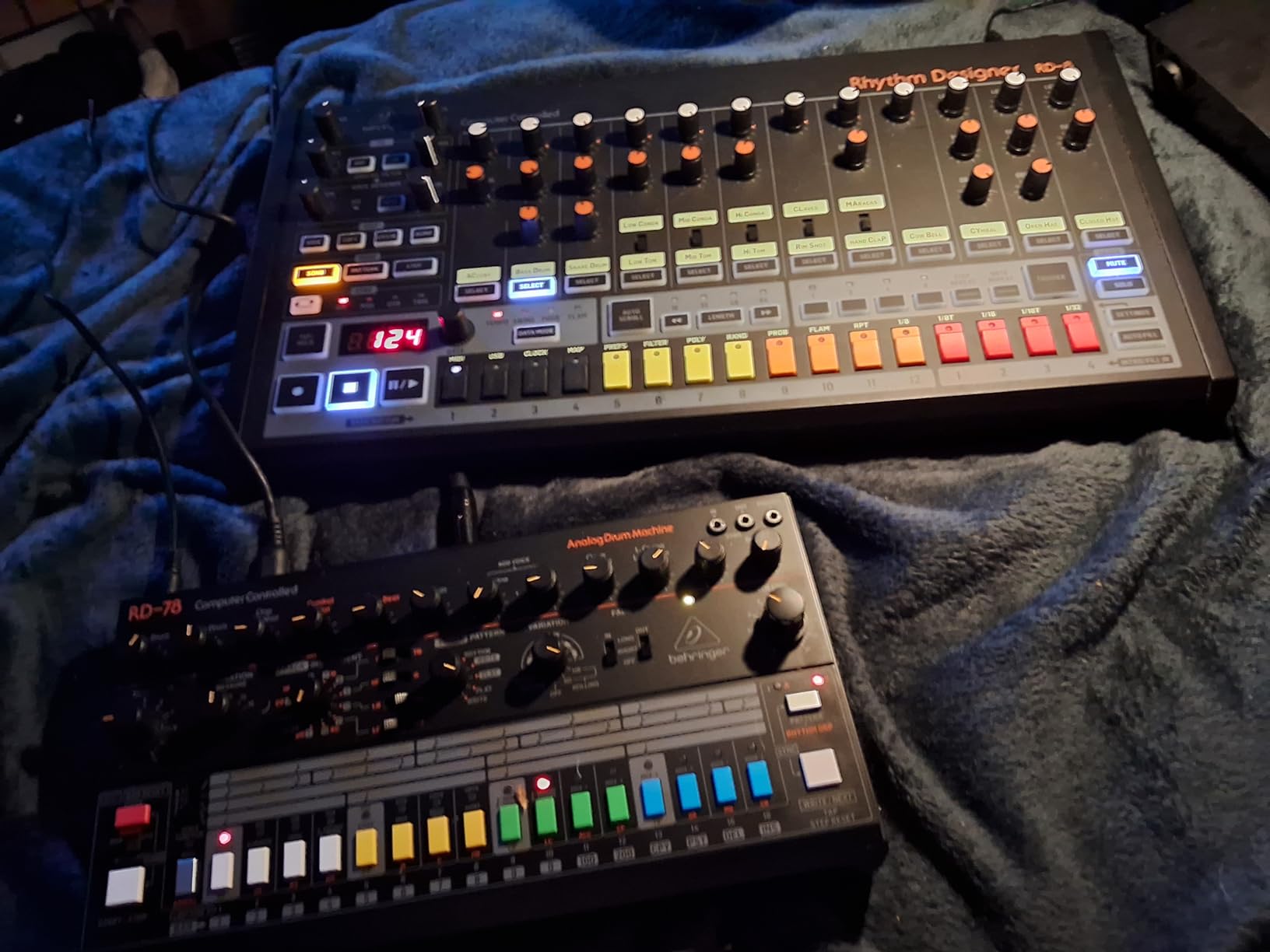
The 34 rhythm presets include many of the iconic patterns that made the CR-78 famous. These are instantly usable for songwriting, providing instant rhythmic foundations that you can build on. The 16-step sequencer lets you program your own patterns, and the simple, intuitive interface makes it accessible even if you have never used a drum machine before.
The build quality reflects the affordable price. While the steel chassis is solid, the overall feel is not as premium as more expensive machines. Some users have noted that it is not a 100 percent clone of the original CR-78, with some tonal differences in individual voices. But at this price, the RD-78 delivers an enormous amount of classic analog character.
Best for Songwriters and Retro-Inspired Producers
The RD-78 is perfect for songwriters who want instant rhythmic inspiration and producers working in retro-inspired genres. The warm, musical character of the CR-78 sounds works beautifully for synth-pop, indie, and any style where vintage drum character matters more than modern punch.
Who Should Skip This
If you need modern, aggressive drum sounds for techno, trap, or EDM, the CR-78 character of the RD-78 will not fit your style. Producers who need sample playback or deep sequencing should look at the Akai MPC Sample or Roland TR-6S instead.
9. Roland AIRA Compact T-8 Beat Machine – Pocket TR Power
Roland AIRA Compact T-8 BEAT MACHINE | Ultra-Portable Rhythm and Bass Machine with Genuine Roland Sounds | TR-REC Drum Sequencer | Six Rhythm Tracks | Built-in Effects | USB and MIDI Connectivity
808 909 303 Sounds
Rechargeable Battery
USB-C
Sidechain FX
Pros
- Portable and rechargeable with USB-C
- Authentic Roland sounds including TR-808 TR-909 and TB-303
- Intuitive 16-step sequencer with advanced features
- Built-in effects including delay reverb and sidechain
- Compact size fits in a guitar case
Cons
- Limited drum selection
- Small buttons can be squishy and hard to press quickly
- Steep learning curve for beginners
- Not as flexible as full-sized units
The Roland AIRA Compact T-8 is a genuine miracle of miniaturization. It packs TR-808 and TR-909 drum sounds, a TB-303 bass synth, a 16-step sequencer, and built-in effects into a unit that fits in the palm of your hand. The rechargeable battery charges via USB-C, making it truly portable.
I carried the T-8 in my backpack for two weeks and used it during commutes, lunch breaks, and hotel rooms. The fact that it includes a TB-303 bass synth alongside the drums means you can create complete grooves with kick, snare, hats, and a bassline. The sidechain compression effect ties the bass to the kick drum automatically, creating that pumping effect that defines dance music.
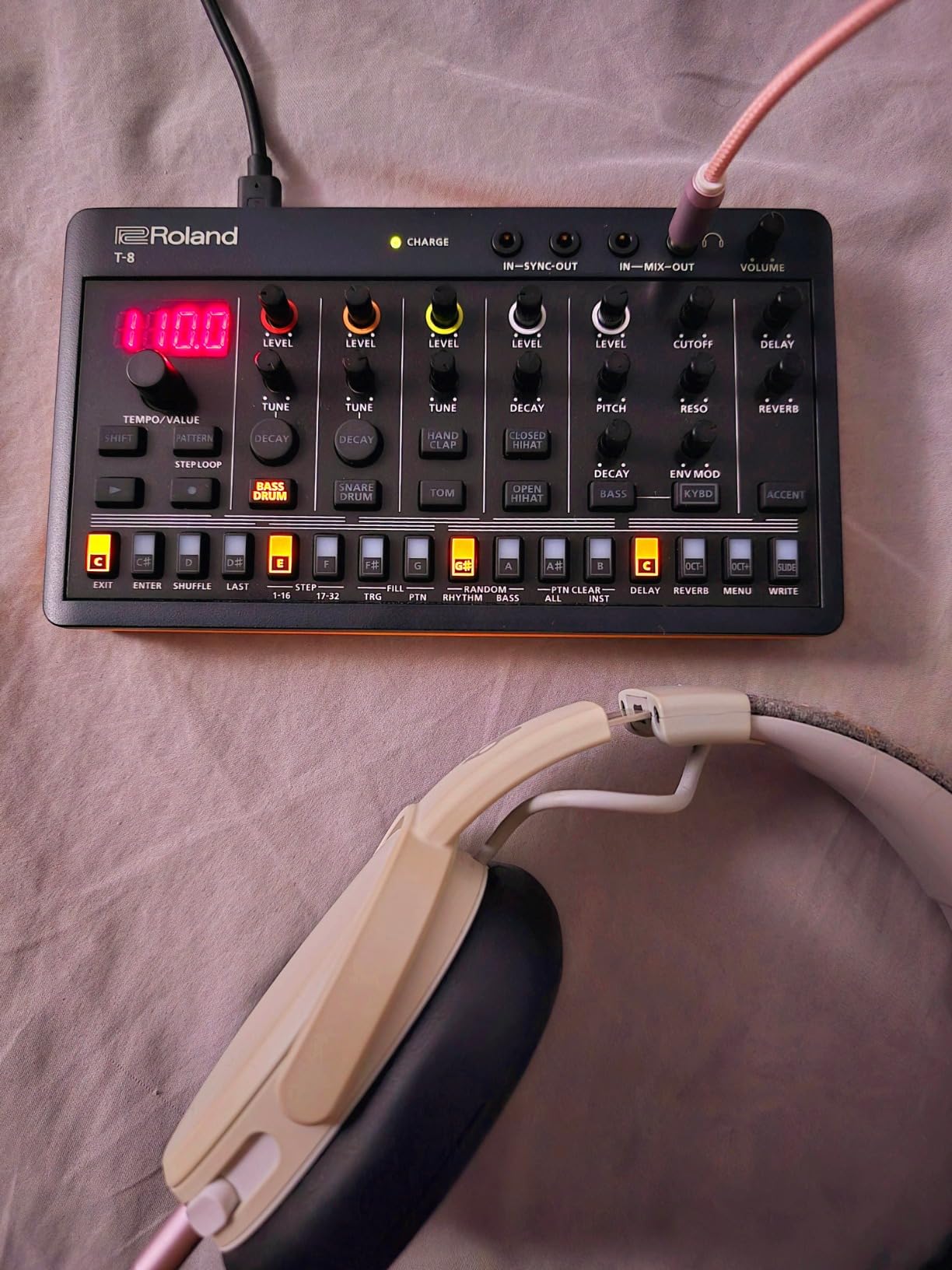
The sequencer offers more depth than you might expect from such a small unit. Probability, sub-steps, last-step, and velocity control give you tools for creating evolving patterns. With 64 user patterns and up to 32 steps each, there is plenty of room for creativity. The performance features like step loop, mute, fill, and pattern shift make it surprisingly capable for live use.
The limitations are real, though. The drum selection is limited to a piecemeal combination of classic kit pieces rather than full kits. The small rubber buttons can feel squishy and are hard to press quickly, which limits how fast you can perform. The learning curve is steeper than you might expect for a compact unit, and it is not as flexible as a full-sized machine like the TR-8S or TR-6S.
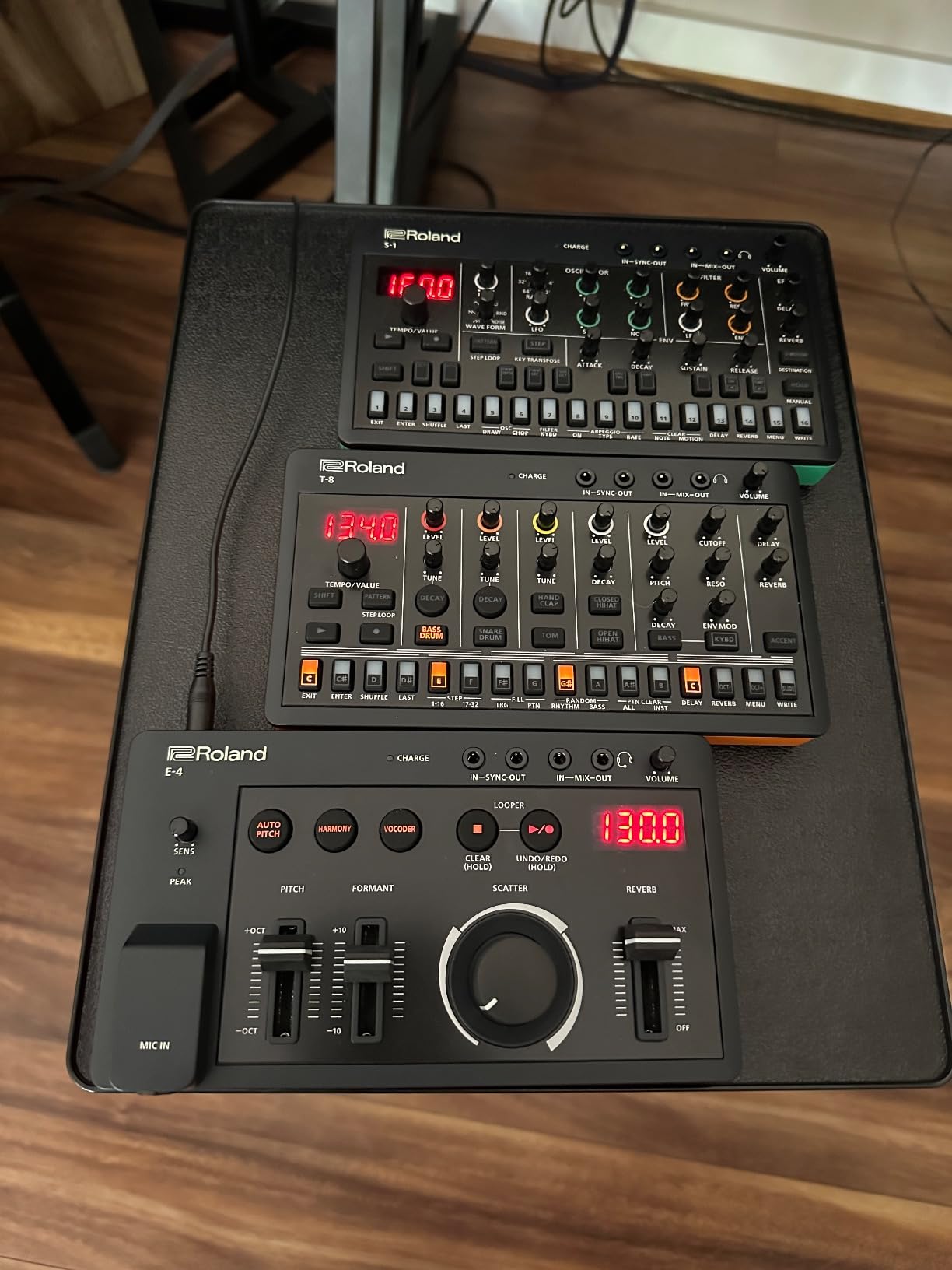
Best for Guitarists and DAWless Beginners
The T-8 is perfect for guitarists who want to add rhythm to their playing without setting up a full production rig. It fits in a guitar case, runs on a rechargeable battery, and includes a bass synth so you get drums and bass in one unit. It is also an excellent entry point for anyone wanting to try DAWless production without a big investment.
Who Should Skip This
If you have large hands or need precise pad control for fast finger-drumming, the small buttons on the T-8 will frustrate you. Producers who need a full range of drum sounds and deep sampling should step up to the TR-6S or TR-8S.
10. Korg Volca Drum Digital Percussion Synthesizer
Korg Volca Drum Digital Percussion Synthesizer w/ 16-step Sequencer and Active Step
6-Part DSP Engine
Waveguide Resonator
Slice Function
Built-in Speaker
Pros
- Excellent value for money
- Incredibly versatile sound engine with six parts
- Compact and portable with battery option
- Built-in speaker for on-the-go use
- Deep synthesis capabilities with waveguide resonator
Cons
- Only 16 pattern slots can feel limiting
- Small interface can be tedious for detailed edits
- No data I/O for backup
- Some quality control concerns with audio interface use
The Korg Volca Drum is not your typical drum machine. Instead of playing back preset sounds, it uses a six-part DSP synthesis engine that lets you design percussion sounds from scratch. Each part has multiple layers of synthesis, including a waveguide resonator that adds rich, physical-modeling resonances to your sounds.
If you enjoy sound design and want a drum machine that lets you create entirely unique percussion, the Volca Drum is endlessly inspiring. I spent hours just exploring the resonator, creating metallic clangs, tuned bells, and alien textures that no sample-based machine could produce. The two randomize functions are fantastic for generating happy accidents when you are stuck.
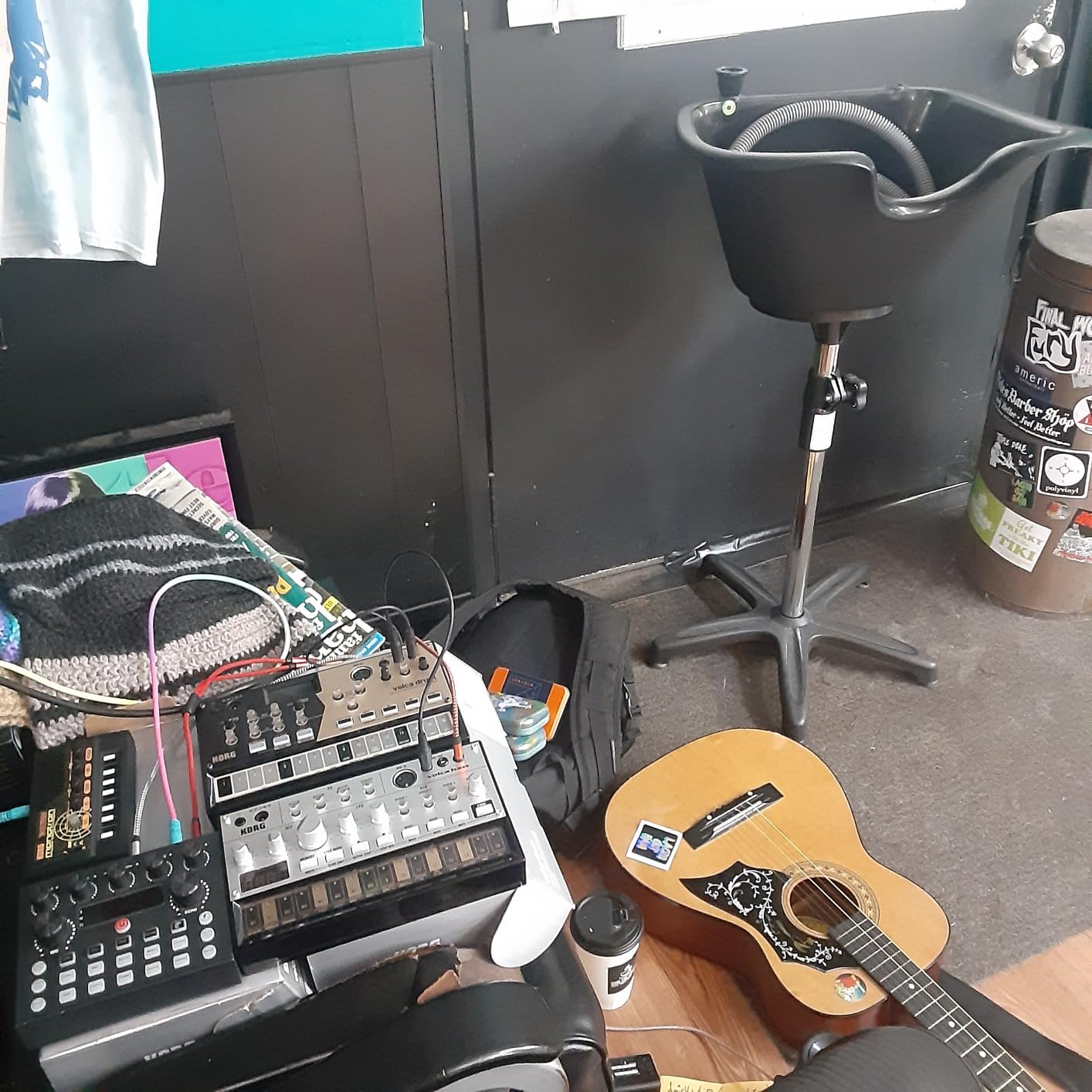
The slice function is another standout feature. It lets you finely divide a single step into multiple hits, making it possible to create drum rolls and intricate rhythmic patterns within the 16-step grid. The active step function allows you to replace individual steps for each part, enabling polyrhythmic patterns that go beyond standard 4/4 grooves.
The main limitation is the pattern memory. Only 16 pattern slots feels restrictive given how deep the sound design capabilities are. The small knobs and compact interface can be tedious for detailed editing sessions. There is no data I/O port, which means you cannot back up your patterns or sounds to a computer. Despite these limitations, the Volca Drum remains one of the most creatively rewarding machines at this price.
Best for Experimental Sound Designers
If you treat drum programming as a form of sound design, the Volca Drum is your ideal machine. It is perfect for IDM, experimental electronic, ambient, and any genre where unique, evolving percussion textures matter more than realistic drum emulation.
Who Should Skip This
If you want plug-and-play drum sounds without designing them from scratch, the Volca Drum will feel overly complicated. Producers who need realistic drum sounds or classic analog tones should look at the Korg Volca Beats or the Alesis SR-16 instead.
11. Korg Volca Beats Analog Rhythm Machine

Korg Volca Beats Analog Rythem Machine w/Electribe-style 16-step Sequencer and Real Analog Sounds
Analog Kick Drum
16-Step Sequencer
Motion Sequencing
Battery Powered
Pros
- Monstrous analog kick drum
- Excellent value for money
- Compact and portable with built-in speaker
- Easy to learn and use
- Syncs well with other Volca and Pocket Operator devices
Cons
- Snare is considered weak or thin by many users
- No swing control
- No accent per hit
- Small fiddly knobs and 3.5mm output can be noisy
The Korg Volca Beats is the machine that introduced countless producers to hardware drum machines. It remains one of the best entry points into analog beat-making, combining real analog drum sounds with a compact, battery-powered design and a built-in speaker. The value for money here is genuinely remarkable.
That analog kick drum is the star of the show. It is monstrous, deep, and punchy, capable of anchoring any electronic track. I have heard this kick drum on released techno tracks, and it holds its own against far more expensive machines. The PCM clap and crash sounds complement the analog voices well, and the stutter function adds glitch and delay-like effects that are great for live performance.
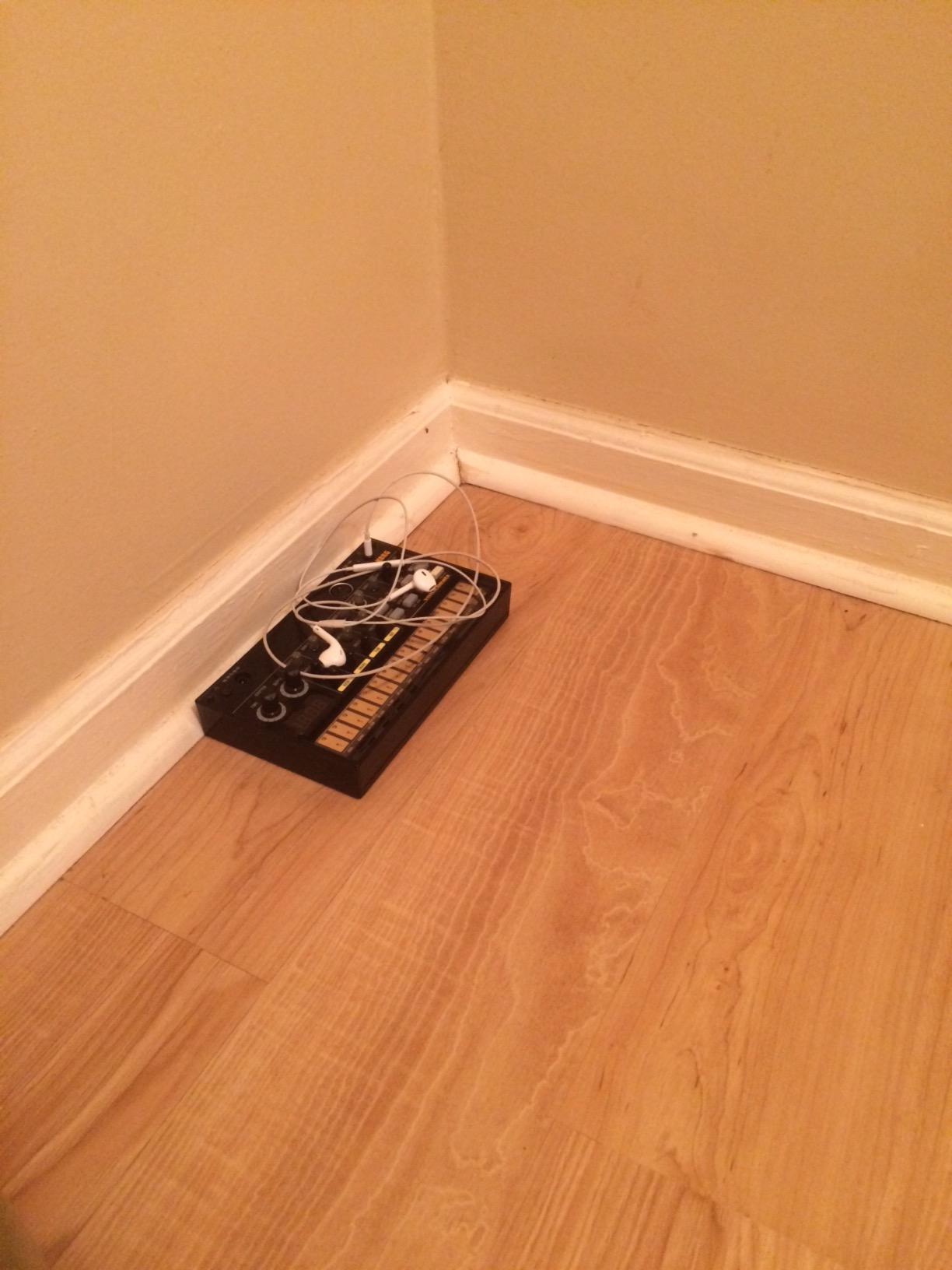
The motion sequencing feature is where the Volca Beats gets interesting. It records your knob movements into the pattern, so every twist and turn of the filter, pitch, or decay knobs gets captured and played back. This creates evolving, animated patterns that change over time without any manual input during playback.
The weaknesses are well-documented. The snare is thin and weak compared to the rest of the kit, and many users either work around it with creative parameter adjustments or perform a capacitor modification to improve it. There is no swing control and no accent per hit, which limits groove variation. The knobs are small and can be fiddly, and the 3.5mm output jack can introduce noise at high gain levels. Despite these flaws, the Volca Beats remains a beloved classic.
Best for Beginners Wanting Their First Analog Drum Machine
If you have never owned a hardware drum machine and want to start with real analog sounds, the Volca Beats is the best gateway. The price is accessible, the sounds are characterful, and the built-in speaker and battery power mean you can start making beats immediately without any additional gear.
Who Should Skip This
If the weak snare is a dealbreaker for your music, or if you need swing, accent control, and MIDI output, look at slightly more expensive options. The Arturia DrumBrute Impact offers more analog voices and better sequencing for about twice the price.
12. Alesis SR-16 Drum Machine – The Legendary Workhorse
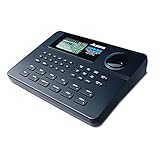
Alesis SR-16 - Studio-Grade Standalone Drum Machine with On-Board Sound Library, Performance-Driven I/O and In-Built Effects
233 Sounds
50 Preset Kits
Dynamic Articulation
MIDI Support
Pros
- 233 professional sounds included
- 12 velocity sensitive pads with Dynamic Articulation
- 50 preset and 50 user drum kits
- Complete MIDI support for keyboards computers and DAWs
- Built-in digital effects
Cons
- Plastic build quality
- No backlit display
- Steep learning curve with confusing instructions
- No computer USB connection directly
The Alesis SR-16 is a genuine legend in the drum machine world. It has been in continuous production for over 20 years, and it remains one of the best-selling drum machines of all time. With 233 professional sounds and 100 drum kits, it offers more raw sound content than almost any other machine in this price range.
What makes the SR-16 special is the Dynamic Articulation technology. The 12 velocity-sensitive pads respond to how hard you hit them, producing different tonal variations at different velocities. Hit a snare softly and it sounds mellow and relaxed. Hit it hard and it becomes sharp and aggressive. This adds a level of realism that most budget drum machines cannot match.
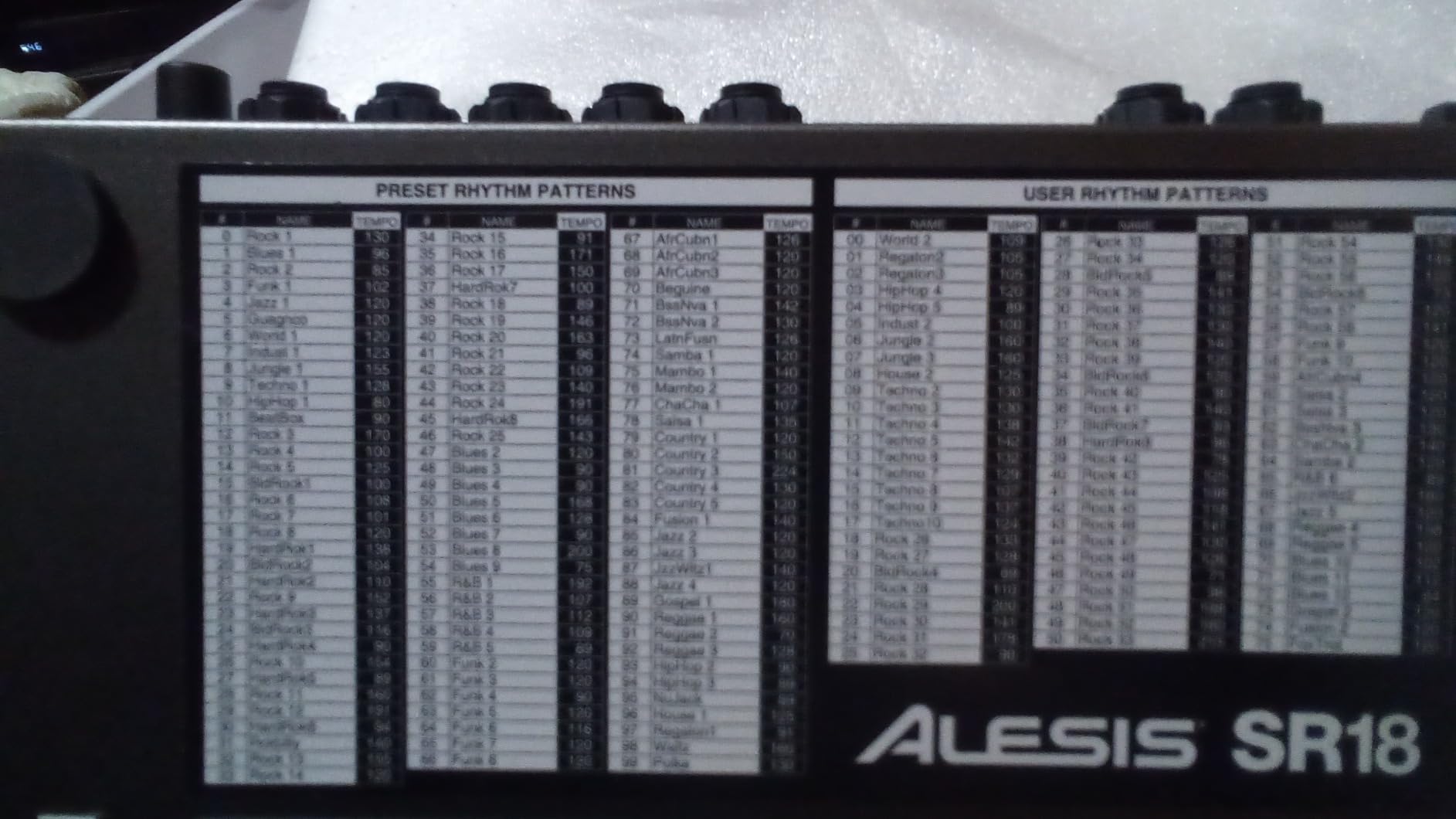
The sound library covers a wide range of genres, from rock and metal to jazz and electronic. The built-in digital effects add reverb and ambience, and the 4 stereo outputs give you routing flexibility for studio recording. The complete MIDI implementation means the SR-16 works as a sound module for your DAW, a drum brain for electronic drum kits, or a standalone beat-maker.
The main drawbacks are its age. The plastic build feels cheap, and the lack of a backlit display makes it hard to read in low light. The instructions are notoriously confusing, and there is a real learning curve despite the seemingly simple interface. There is no direct USB computer connection, which means you need a MIDI interface for computer connectivity. But the sound quality and sheer volume of content keep the SR-16 relevant decades after its introduction.
Best for Songwriters and Studio Recording
The SR-16 is ideal for songwriters who need realistic drum sounds for demo recordings and practice. The 233 sounds cover enough genres that you can find appropriate rhythms for rock, pop, country, and more. It is also a reliable utility machine for studio owners who need a quick drum sound module.
Who Should Skip This
If you want analog sounds, sampling capability, or modern sequencing features, the SR-16 will feel dated. Electronic music producers focused on techno or hip-hop will likely prefer the character of dedicated analog or sample-based machines over the SR-16’s PCM sound library.
13. Teenage Engineering EP-1320 Medieval Sampler

Teenage Engineering EP-1320 Medieval Sampler, Drum Machine and Sequencer with Built-in Microphone and Effects
Medieval Sampler
Built-in Microphone
4-Track Sequencer
999 Sample Slots
Pros
- Incredibly unique high-quality medieval sound library
- Perfectly executed aesthetic
- Fantastic portable form factor
- New arpeggiator excellent for melodic work
- Inspiring and fun to use
Cons
- Only 32MB available for user samples
- Steep learning curve
- No internal rechargeable battery
- Medieval theme may not appeal to all users
The Teenage Engineering EP-1320 is the world’s first electronic medieval sampler, and it is exactly as wild and wonderful as that description sounds. Loaded with hundreds of medieval sounds recorded by real medieval artists playing real medieval instruments, it is a completely unique creative tool that exists in a category of its own.
When I first turned on the EP-1320, I was not sure what to expect. What I found was a genuinely inspiring instrument packed with hurdy-gurdy samples, lute plucks, Gregorian chants, and percussion sounds that feel like they came from a 12th-century monastery. The Latin-labeled interface completes the immersion in a way that is both playful and surprisingly functional.
The built-in microphone lets you sample your environment directly, and the line-in input lets you sample from external gear. The four-track sequencer supports 6 stereo voices or 12 mono voices, and 999 sample slots give you enormous storage capacity. Stereo effects and punch-in effects can be triggered live using the multifunctional fader, making it surprisingly capable for live performance.
The limitations are real, though. Only 32MB is available for user samples, with 96MB locked for the factory medieval sounds. There is no internal rechargeable battery, so you need AAA batteries. The medieval theme is polarizing, and the steep learning curve means you need to invest time to unlock its full potential. But for producers who want something truly different, the EP-1320 is a creative goldmine.
Best for Creative Adventurers and Collectors
If you make ambient, experimental, or film-score-adjacent music, the EP-1320 offers sounds that literally no other machine can provide. It is also a fantastic collector’s piece and conversation starter for any studio. The arpeggiator adds melodic capabilities that go beyond simple drum duties.
Who Should Skip This
If you need a practical, everyday drum machine for standard genres like techno, hip-hop, or rock, the medieval theme will feel gimmicky. The limited user sample space and lack of rechargeable battery also make it less practical as a primary production tool.
14. Teenage Engineering PO-12 Rhythm – The Pocket Powerhouse
teenage engineering pocket operator PO-12 rhythm, drum machine and sequencer with parameter locks and punch-in effects
16 Drum Sounds
16 Punch-in FX
Parameter Locks
Battery Powered
Pros
- Incredible fun and addictive to use
- Excellent value for the price
- Compact and ultra-portable
- Great sounds for the size and price
- Easy to sync with Volca and other Pocket Operators
Cons
- Extremely flimsy construction
- Cryptic and useless instructions
- Small LCD screen with limited information
- No MIDI in or out
- Built-in speaker distorts at high volume
The Teenage Engineering PO-12 Rhythm is a bare circuit board in a paper board that somehow manages to be one of the most fun and addictive drum machines ever made. For the price of a restaurant meal, you get 16 synthesized and sampled drum sounds, 16 punch-in effects, a 16-step sequencer, and parameter locks for live tweaking.
I bought a PO-12 on a whim and found myself carrying it everywhere for weeks. The parameter locks let you record knob changes into your patterns, so simple beats evolve and shift as they play. The 16 punch-in effects add fills, glitches, and stutters that transform basic patterns into something dynamic and exciting. The built-in speaker is tiny but usable, and the headphone output sounds surprisingly good.
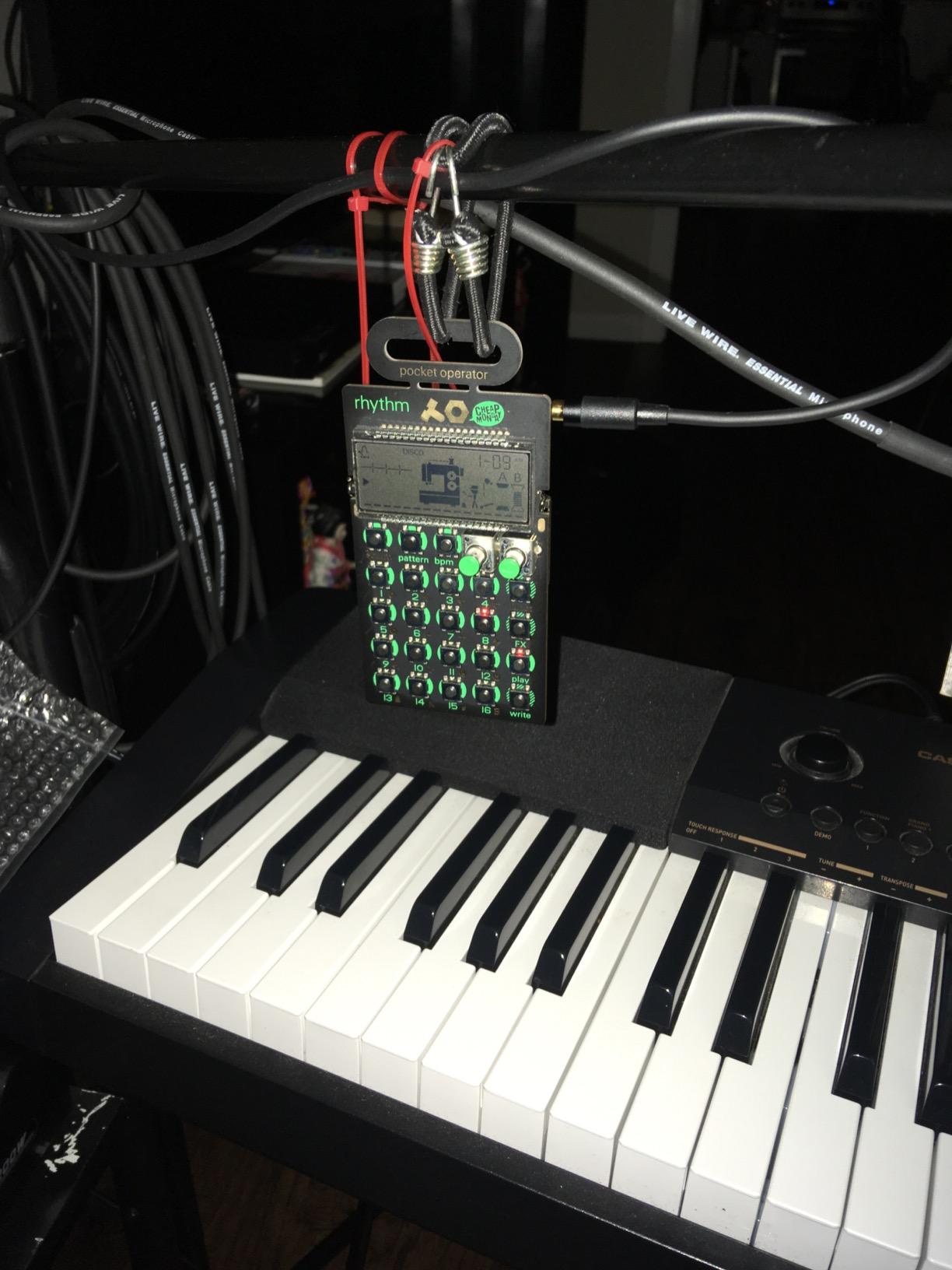
The sync functionality is where the PO-12 becomes more than a toy. It syncs perfectly with Korg Volca devices and other Pocket Operators via a 3.5mm cable, letting you build multi-device setups. Many users on Reddit describe chaining multiple Pocket Operators together as one of the most fun and affordable ways to explore hardware music production.
The build quality is the obvious trade-off. The PO-12 is literally a bare PCB with a folded cardboard backing. There are no instructions to speak of, and the LCD screen shows minimal information. There is no MIDI connectivity, and the built-in speaker distorts at high volumes. A case costs extra. But at this price, the creative value is off the charts.
Best for Absolute Beginners and Tinkerers
If you have never used a hardware drum machine and want to try one for the price of a movie ticket, the PO-12 is the perfect starting point. It is also great for experienced producers who want a portable scratch pad for ideas on the go.
Who Should Skip This
If you need durable construction, MIDI connectivity, or professional sound quality, the PO-12 will not meet your needs. The lack of a proper enclosure means it is fragile and not suitable for rigorous live performance or studio use.
15. Stylophone Beat – The Fun-Sized Beat Maker

Stylophone Beat - Compact Stylus Drum Machine | 4 Drum Kits & 4 Bass Sounds | Rhythm Machine Beat Maker | Drum Loop Machine
4 Drum Kits
4 Bass Sounds
Built-in Speaker
Stylus Control
Pros
- So much fun to use with immediate creativity
- Simple to use with no directions needed
- 4 drum kits plus 4 bass sounds provide variety
- Great for beginners and professionals alike
- Affordable price point
Cons
- Sound quality from internal speaker is thin
- No internal memory storage must play continuously
- Can be hissy when connected to other devices
- Not recommended for children under 7 due to stylus
The Stylophone Beat is the number one best-seller in the drum machine category on Amazon, and it is easy to see why. For an incredibly affordable price, you get a compact, battery-powered beat maker with a built-in speaker, 4 drum kits, 4 bass sounds, and the unique stylus-based interface that made the original Stylophone famous.
The stylus interface is what makes the Stylophone Beat special. Instead of pressing pads, you use a attached stylus to touch conductive pads on the surface. This creates a different, almost playful interaction that feels more like drawing than drumming. I found it surprisingly expressive once I got used to the physical action of the stylus.
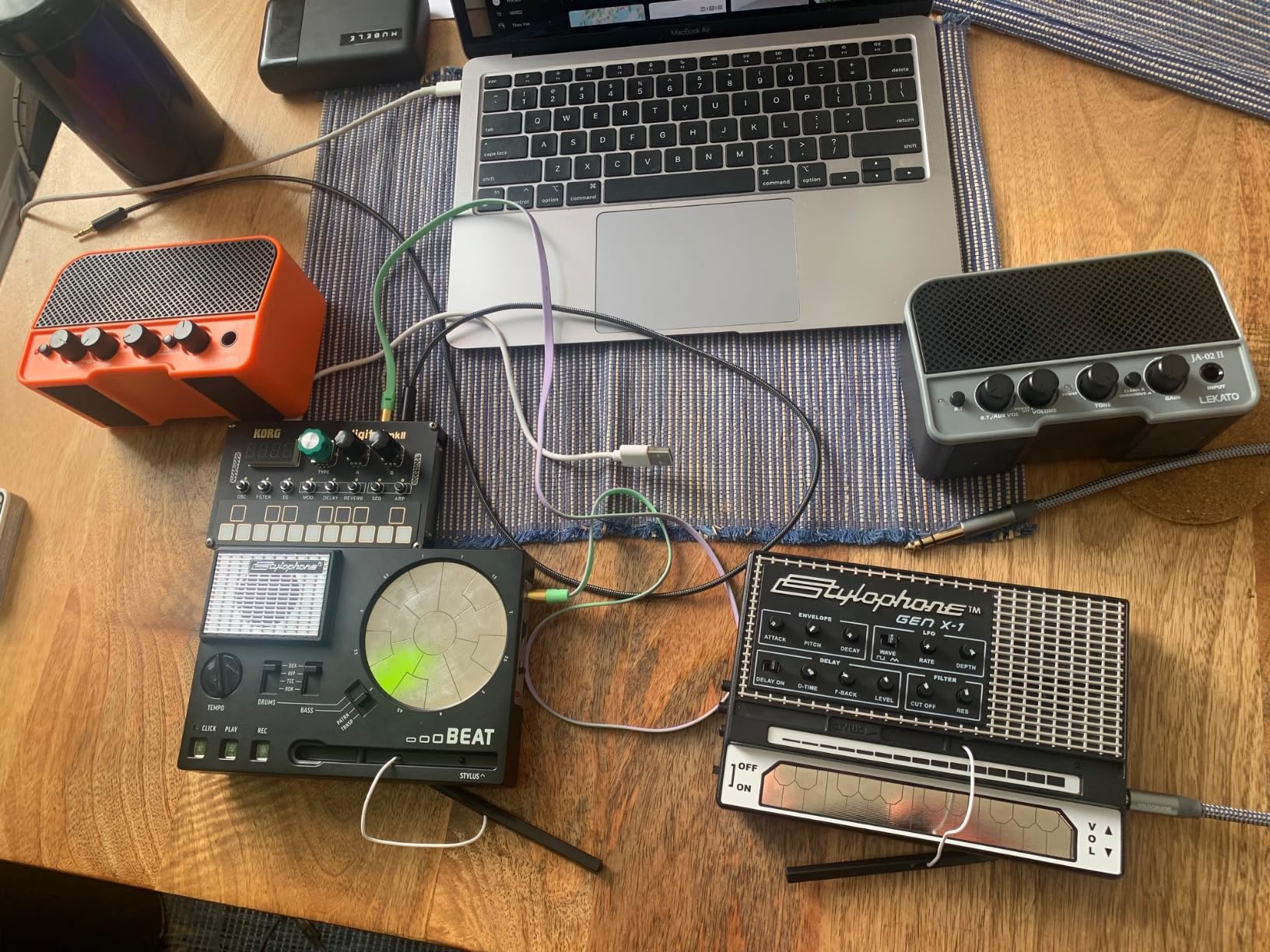
You can record multiple layers, mute individual sounds, and record multiple patterns. The click track and tempo lock keep everything in sync. The 4 bass sounds add melodic possibilities that most simple drum machines do not offer, and the built-in speaker with volume control means you can play anywhere without headphones or external amplification.
The limitations are significant. The internal speaker sounds thin, and the audio quality improves dramatically through headphones or an external speaker. There is no internal memory, so your patterns disappear when you turn the unit off, meaning you must play continuously or record externally. The output can be noisy when connected to other devices. But for pure creative fun at a budget price, the Stylophone Beat is hard to beat.
Best for Casual Creativity and Educational Use
The Stylophone Beat is perfect for anyone who wants a fun, low-pressure way to explore beat-making. It is ideal for educational settings, casual music sessions, and as a gift for someone curious about electronic music. The stylus interface makes it accessible to non-musicians in a way that traditional pad-based machines are not.
Who Should Skip This
If you need pattern memory, professional sound quality, or MIDI connectivity for studio integration, the Stylophone Beat is too basic. It is a creative toy in the best sense of the word, but not a professional production tool.
How to Choose the Best Drum Machine for Your Needs?
Choosing among the best drum machines requires understanding your own needs as much as the machines themselves. After testing 15 units across three months, our team identified the key factors that should drive your decision. The right drum machine depends on your music genre, experience level, budget, and whether you plan to use it in the studio, on stage, or on the go.
Analog vs Digital Drum Machines
This is the most fundamental choice you will make. Analog drum machines generate sounds using actual electrical circuits with oscillators, filters, and envelopes. The result is warm, punchy, and characterful sounds that many producers prefer for techno, house, and industrial music. The Arturia DrumBrute Impact, Behringer RD-9, and Korg Volca Beats are all analog machines.
Digital drum machines use either sample playback or digital synthesis to create sounds. Sample-based machines like the Alesis SR-16 play back recordings of real drums, which can sound more realistic. Synthesis-based machines like the Korg Volca Drum and Elektron Model:Cycles create sounds through DSP processing, offering unique textures that analog cannot replicate.
Hybrid machines like the Roland TR-8S and Elektron Syntakt combine both approaches, using analog circuit modeling alongside sample playback. These offer the most versatility but typically cost more. For beginners, we recommend starting with whichever sound character appeals to you most. Listen to demos on YouTube before deciding.
Sequencer Depth and Workflow
The sequencer is the heart of any drum machine. It determines how you program patterns, how complex your rhythms can be, and how enjoyable the machine is to use. Most drum machines use a 16-step grid sequencer where you place hits on a timeline. But the depth varies enormously.
Basic sequencers like the one on the Stylophone Beat or Teenage Engineering PO-12 offer simple step programming with limited pattern storage. Mid-range machines like the Korg Volca Beats add motion sequencing and a handful of pattern slots. Advanced machines like the Elektron Syntakt offer parameter locks, conditional triggers, probability, and extensive pattern chaining.
For live performance, look for machines with performance features like fills, mutes, pattern shifts, and roll functions. The Roland TR-8S and Arturia DrumBrute Impact excel in this area. For studio production, deep sequencing with parameter automation matters most, making the Elektron machines the top choice.
Portability and Power Options
If you plan to make music on the go, portability is a major factor. The Teenage Engineering PO-12, Stylophone Beat, and Roland AIRA Compact T-8 are the most portable options, all running on batteries and fitting in a pocket or small bag. The Korg Volca series is also highly portable with built-in speakers and battery power.
For studio-only use, portability matters less and build quality, connectivity, and sound depth become more important. Desktop machines like the Roland TR-8S, Elektron Syntakt, and Behringer RD-9 are designed to stay in one place and offer more controls, outputs, and processing power as a result.
Battery life is a practical concern for portable machines. The PO-12 runs for about a month on two AAA batteries. The Roland T-8 uses a rechargeable battery that lasts several hours per charge. The Korg Volca units run on AA batteries for roughly 5 to 7 hours of continuous use.
Connectivity and Integration
Modern drum machines offer a range of connectivity options that determine how well they integrate with the rest of your gear. MIDI input and output let you sync with other hardware synths, sequencers, and drum machines. USB connectivity enables computer integration for DAW users. Audio outputs determine how you route sound to speakers, mixers, or audio interfaces.
Individual outputs are a significant advantage for studio work. The Behringer RD-9 offers 10 individual outputs, the Alesis SR-16 has 4 stereo pairs, and the Arturia DrumBrute Impact has individual outputs for each instrument. This lets you process each drum voice separately through effects, EQ, and compression.
For DAW integration, USB audio is the gold standard. The Elektron Syntakt with Overbridge, the Roland TR-6S, and the Akai MPC Sample all offer USB audio interfaces that route multitrack audio directly into your computer. The Roland TR-8S, surprisingly, only offers MIDI over USB, not audio.
DAWless Workflow Considerations
The DAWless movement has become a major trend in 2026, with producers increasingly wanting to make music without staring at a computer screen. A drum machine is often the centerpiece of a DAWless setup, providing the rhythmic foundation and often the clock that syncs everything together.
For DAWless setups, look for machines with strong sync capabilities, pattern chaining, and song mode. The Elektron Syntakt, Roland TR-8S, and Arturia DrumBrute Impact all offer robust standalone workflows. The Roland T-8 is particularly well-suited for small DAWless rigs since it includes a bass synth alongside the drums.
Reddit users frequently mention that going DAWless with a hardware drum machine sparks creativity in ways that software cannot replicate. The tactile feedback of physical knobs and pads, the limitation of a fixed interface, and the immediate audio response all contribute to a different creative headspace.
Sound Design Capabilities
If sound design is important to you, look for machines that let you shape sounds beyond simple preset selection. The Korg Volca Drum with its waveguide resonator and DSP engine is a sound designer’s dream. The Elektron Syntakt offers 35 sound-generating machines with deep parameter control. The Roland TR-8S lets you import and manipulate your own samples.
For producers who just want great-sounding presets without tweaking, sample-based machines like the Alesis SR-16 and Akai MPC Sample offer large libraries of ready-to-use sounds. The trade-off is less sound design flexibility in exchange for convenience and variety.
Budget Tiers
Drum machines fall into several clear price tiers. Under $100, the Teenage Engineering PO-12 and Stylophone Beat offer incredible value for beginners and casual users. In the $100 to $300 range, the Korg Volca Beats, Korg Volca Drum, Alesis SR-16, and Roland T-8 provide serious features for hobbyists and semi-pro producers.
The $300 to $600 tier includes the Arturia DrumBrute Impact, Akai MPC Sample, Elektron Model:Cycles, Behringer RD-9, and Roland TR-6S. These are professional-quality machines capable of studio production and live performance. Above $700, the Roland TR-8S and Elektron Syntakt represent the top tier of modern drum machines, offering the deepest features and best sound quality available.
FAQs
What is the easiest drum machine to operate?
The Stylophone Beat and Teenage Engineering PO-12 Rhythm are the easiest drum machines to operate. Both feature simple interfaces that require no prior experience, with the Stylophone Beat using an intuitive stylus and the PO-12 using a straightforward 16-step grid. For beginners who want more features, the Roland AIRA Compact T-8 and Korg Volca Beats offer accessible workflows with room to grow.
What is the most realistic sounding drum machine?
The Roland TR-8S produces the most realistic classic drum machine sounds, using ACB technology to model the actual circuit behavior of vintage Roland machines like the TR-808 and TR-909. For realistic acoustic drum sounds, the Alesis SR-16 with its 233 sampled sounds and Dynamic Articulation technology remains a strong choice. The Akai MPC Sample also excels at realistic drum sounds through its sample playback engine.
What is the best quality drum brand?
Roland is widely considered the best quality drum machine brand, with a legacy spanning the TR-808, TR-909, and modern machines like the TR-8S. Elektron is recognized for superior build quality and deep workflow on machines like the Syntakt and Model:Cycles. Arturia offers excellent value and analog sound quality with the DrumBrute series. For beginners and budget buyers, Korg and Behringer provide quality options at accessible prices.
Do I need a drum machine if I already have a DAW?
You do not strictly need a drum machine if you have a DAW, since software plugins can produce excellent drum sounds. However, hardware drum machines offer a tactile workflow that many producers find more inspiring and creative than clicking patterns in software. Drum machines also enable DAWless setups, provide physical knobs and pads for live performance, and can sync with other hardware gear. Many producers own both a DAW and a hardware drum machine for different creative scenarios.
What is the difference between a drum machine and a groovebox?
A drum machine is dedicated primarily to rhythm and percussion sounds with a step sequencer for programming beats. A groovebox combines drum sounds with melodic instruments like bass and lead synthesizers, often including a keyboard or pads for playing notes. The Roland TR-8S is a drum machine, while the Elektron Syntakt and Model:Cycles function as grooveboxes since they handle both drums and melodic content. The Roland AIRA Compact T-8 is a hybrid that includes both TR drums and a TB-303 bass synth.
What is the 80 20 rule in drumming?
The 80/20 rule in drumming refers to the Pareto principle applied to rhythm patterns, meaning that approximately 20 percent of drum pattern variations appear in 80 percent of popular music. In practical drum machine terms, this means mastering a handful of core patterns like the four-on-the-floor, the boom-bap, and the half-time groove will cover the vast majority of musical situations. It also suggests that 20 percent of your drum programming effort produces 80 percent of the musical impact, so focusing on groove, swing, and feel matters more than complex fills.
Final Thoughts on the Best Drum Machines for 2026
After three months of hands-on testing across 15 machines, our team is confident in these recommendations. The Roland TR-8S remains the gold standard for classic electronic drum sounds and live performance. The Arturia DrumBrute Impact delivers the best analog value we have ever tested. And the Teenage Engineering PO-12 proves that the best drum machines do not need to be expensive to be genuinely inspiring.
The beauty of the drum machine market in 2026 is that there has never been more choice across every price tier. Whether you are spending $40 on a Stylophone Beat or $1,000 on an Elektron Syntakt, there is a machine that will spark your creativity and fit your workflow. The key is matching the machine to your musical style, your experience level, and the way you like to make music.
Our advice is to start with the machines that excite you most from this list, watch some demo videos, and trust your instincts. The best drum machine is the one that makes you want to make music every time you turn it on.