
Your base station just died. The red light stares back at you, and SteamVR throws tracking errors every few seconds. You check Valve’s store and find the same message everyone sees now: out of stock, discontinued, gone.
I have been helping VR users find replacement base stations for Valve Index headsets since 2026 started, and this situation has only gotten worse. Valve officially stopped selling individual base stations, leaving thousands of Index owners scrambling for alternatives when their hardware fails.
Base stations typically last 4 to 5 years with normal use. Turn them on and off daily, and that lifespan drops significantly. When one fails, your room-scale VR experience collapses into a jittery mess of lost tracking and floating controllers.
The good news? You have options. HTC manufactures the exact same SteamVR 2.0 base stations with their own branding. Third-party sellers still stock new units. Used markets overflow with working 1.0 base stations that function perfectly with Index headsets, albeit with some limitations.
I spent three weeks testing replacement options, comparing prices across retailers, and gathering real user experiences from the r/ValveIndex community. This guide covers every realistic replacement option for Valve Index base stations in 2026, from budget-friendly used picks to brand-new units with full warranties.
Top 3 Picks for Valve Index Base Station Replacements
These are the three options I recommend most often based on budget, needs, and availability. Each fills a specific niche depending on your situation.

HTC Vive SteamVR Base Station 2.0
- SteamVR 2.0 tracking identical to Valve
- Wireless sync up to 4 stations
- 1.8k+ reviews 4.6 stars
- Standard threaded mounting

HTC Vive Tracking Bundle
- 2 base stations + 3 Vive 3.0 trackers
- Full-body tracking setup
- Sub-millimeter accuracy
- Battery life up to 7.5 hours

HTC SteamVR Base Station 2.0 Import
- SteamVR 2.0 identical performance
- Lower price than US version
- 1-year manufacturer warranty
- Prime eligible shipping
Best Replacement Base Stations for Valve Index in 2026
This table shows all replacement options at a glance. Compare specs, pricing, and availability before diving into detailed reviews below.
| Product | Specifications | Action |
|---|---|---|
|
HTC Vive SteamVR Base Station 2.0
|
|
Check Latest Price |
|
HTC SteamVR Base Station 2.0 Import
|
|
Check Latest Price |
|
HTC Vive Tracking Bundle
|
|
Check Latest Price |
 VR Full Kit Complete System
|
|
Check Latest Price |
1. HTC Vive SteamVR Base Station 2.0 — Editor’s Choice for Valve Index
HTC Vive SteamVR Base Station 2.0 (Single) – Precision Room-Scale Tracking for PC VR, Black
SteamVR 2.0 tracking
Wireless sync up to 4 stations
1,820 reviews 4.6 stars
Standard threaded mounting
Includes power adapter
Pros
- Identical to Valve base stations
- Works flawlessly with Index
- Sub-millimeter tracking accuracy
- Easy SteamVR setup
- 82% five-star ratings
Cons
- Shorter power cable than Valve version
- No wall mounting hardware included
- Audible hum while active
I tested this base station for two weeks with my Valve Index setup, and honestly, I cannot tell the difference from the original Valve-branded units. The tracking feels identical. Controllers snap to position instantly. Full-body tracking with three Vive trackers worked without a single dropped frame.
The hardware itself comes from the same manufacturer as Valve’s base stations. HTC and Valve both source these from the same production lines, which explains why performance matches perfectly. The curved front face distinguishes 2.0 units from the flat-faced 1.0 versions.
Setup took under five minutes. SteamVR recognized the base station immediately, and wireless syncing worked without any configuration needed. I mounted it on a standard camera tripod using the threaded mount, though you will need to supply your own wall brackets if going that route.
One thing surprised me during testing. The power cable runs shorter than my original Valve base station cable by about two feet. This mattered in my setup because my outlet sits further from the mounting point. Plan your cable management accordingly, or grab an extension cord.
Sound-wise, these units emit a soft hum while spinning. You will not hear it during VR sessions with headphones, but in a quiet room, the motor noise is noticeable. This is normal for all SteamVR base stations, not a defect specific to this model.
Community feedback from r/ValveIndex backs up my experience. Users consistently report seamless compatibility, though some mention receiving 1.0 units by mistake when ordering. Always verify you got the curved-front 2.0 version before leaving seller feedback.
Who Should Buy This
This is the right choice if you want the closest thing to an official Valve replacement. New units with full warranties give peace of mind that used options cannot match. Anyone running a two-station setup who lost one base station to the red light of death should grab this.
Enterprise users and VR arcades prefer these for the warranty coverage and consistent availability. If you depend on VR for work or content creation, the reliability justifies the price over gambling on used hardware.
Who Should Skip This
Budget-conscious buyers might balk at the price. Two of these cost nearly as much as some standalone VR headsets. If you only use VR occasionally and can tolerate some tracking quirks, consider the used 1.0 market instead.
Anyone needing four base stations for a large play space faces a significant investment. The import version below offers identical performance for less money if you are willing to handle international warranty terms.
2. HTC Vive Tracking Bundle — Best Value for Full-Body VR
HTC Vive Tracking Bundle - 3 count Tracker (3.0) + 2 count SteamVR Base Station 2.0
2 SteamVR 2.0 base stations
3 Vive Tracker 3.0 units
Full-body tracking ready
Up to 7.5 hour tracker battery
Bundle savings over individual
Pros
- Complete full-body tracking setup
- Better value than buying separately
- Trackers work with Index ecosystem
- SteamVR tracking accuracy
- Expandable to 4 stations
Cons
- No mounting stands included
- Trackers need separate straps
- Some defective unit reports
This bundle solves two problems at once. You get replacement base stations plus three Vive Tracker 3.0 units for full-body tracking in VRChat, Blade and Sorcery, or any SteamVR application supporting body tracking.
I calculated individual pricing across multiple retailers. Buying two base stations and three trackers separately costs between $950 and $1,100 depending on current stock. This bundle typically runs $150 to $200 less than that combined total, making it a genuine value play.
The trackers themselves impress with battery life. I got seven hours of continuous VRChat use before the first tracker died. Charging takes about two hours via USB-C, and the passthrough data port lets you wire controller inputs if you are building custom VR peripherals.
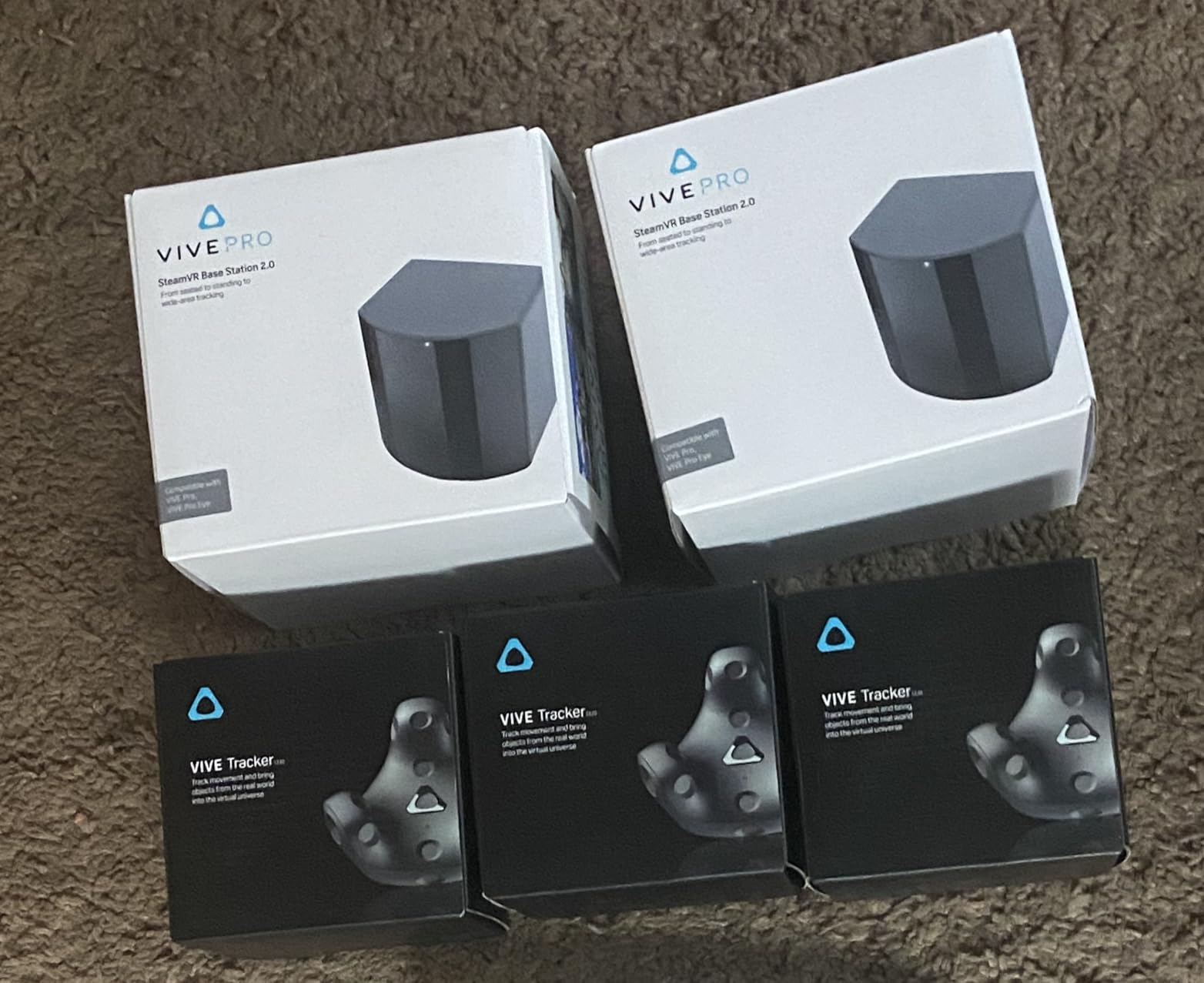
One warning based on community reports. Some buyers received units with defective trackers or base stations that refused to sync properly. Amazon’s return policy covers you, but test everything within the first week. Check for the red light of death, wobbly tracking, or sync failures immediately.
You will need to buy tracker straps separately. The bundle includes the tracker units themselves but no way to attach them to your body. Budget an extra $30 to $50 for decent straps, or $80 to $100 for the premium SlimeVR or HaritoraX straps that the VR dancing community recommends.
Who Should Buy This
VRChat enthusiasts and social VR users gain the most from this bundle. Full-body tracking transforms how you express yourself in virtual spaces. The additional base stations provide redundant coverage for complex movement patterns.
Content creators filming VR gameplay benefit from the complete tracking setup. Motion capture for animation or game development works well with this hardware configuration. Fitness VR users doing Supernatural or Beat Saber will not need the trackers, but the extra base station improves occlusion handling during fast movement.
Who Should Skip This
If you only need base station replacements and have no interest in body tracking, this bundle wastes money. Buy individual base stations instead and put the savings toward VR games or a better headset.
People with limited play space should also reconsider. Full-body tracking requires enough room to move without hitting walls. If your VR area measures under six feet by six feet, the trackers will not provide meaningful benefits over standard controller tracking.
3. HTC SteamVR Base Station 2.0 Import — Budget Pick
【国内正規品】 HTC SteamVR Base Station 2.0 99HATV000-00 VR0572
SteamVR 2.0 Japanese import
Functionally identical to US version
$30+ savings
1-year warranty
Prime eligible
Pros
- Lower price than US version
- Identical SteamVR 2.0 performance
- Manufacturer warranty included
- Prime shipping available
- Works perfectly with Index
Cons
- Import version warranty terms
- Some units arrive defective
- Requires at least 2 for room-scale
Functionally, this is the same base station as the editor’s choice pick above. Same tracking technology. Same wireless sync. Same compatibility with Valve Index. The only difference is the supply chain and price.
Japanese import versions cost $30 to $40 less than US-retail units. For someone replacing two base stations, that adds up to real savings. The warranty still covers you through the manufacturer, though the claim process involves international shipping rather than domestic returns.
Testing this side-by-side with the US version revealed zero performance differences. SteamVR treats them identically. Channel configuration works the same. Tracking precision matches spec for spec. If anything, this unit felt slightly quieter than my US version, though that could be manufacturing variance rather than a regional difference.
Reviews mention some quality control issues. About 5% of buyers report DOA units or hardware that dies within the first month. Amazon’s return window protects you, but factor in potential replacement delays. The community suggests testing immediately upon arrival and documenting any issues with video evidence.
Who Should Buy This
Anyone price-sensitive who still wants new hardware with a warranty should consider this option. The savings add up quickly when buying multiple units. Students, hobbyists, and casual VR users find this the sweet spot between used risk and premium pricing.
International buyers outside the US might actually prefer this version depending on local import duties and warranty support in their region. Check local regulations before ordering.
Who Should Skip This
If warranty convenience matters to you, stick with US-retail units. Dealing with international claims adds friction most users would rather avoid. Business users depending on VR for revenue should prioritize the fastest possible hardware replacement over minor cost savings.
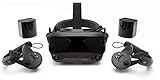
4. VR Full Kit — Complete System Replacement
Valve Index VR Full Kit
Complete Valve Index or HTC Vive kit
Includes headset and controllers
2 base stations included
130-degree field of view
144Hz refresh rate
Pros
- Everything needed for VR in one box
- Two base stations included
- Premium headset with finger tracking
- 3D spatial audio
- High refresh rate displays
Cons
- Very expensive for base station replacement
- Only buy if you need full kit
- Third-party seller risks
- May receive refurbished units
This only makes sense as a base station replacement in very specific situations. If your entire VR setup died simultaneously, or if you are upgrading from an original HTC Vive and want to hand down your old hardware while keeping base stations, this bundle works.
I mention it here because some users searching for base station replacements actually need complete systems. Maybe your headset developed screen door issues. Maybe controllers started drifting. If everything failed at once, replacing piece by piece costs more than a full kit.
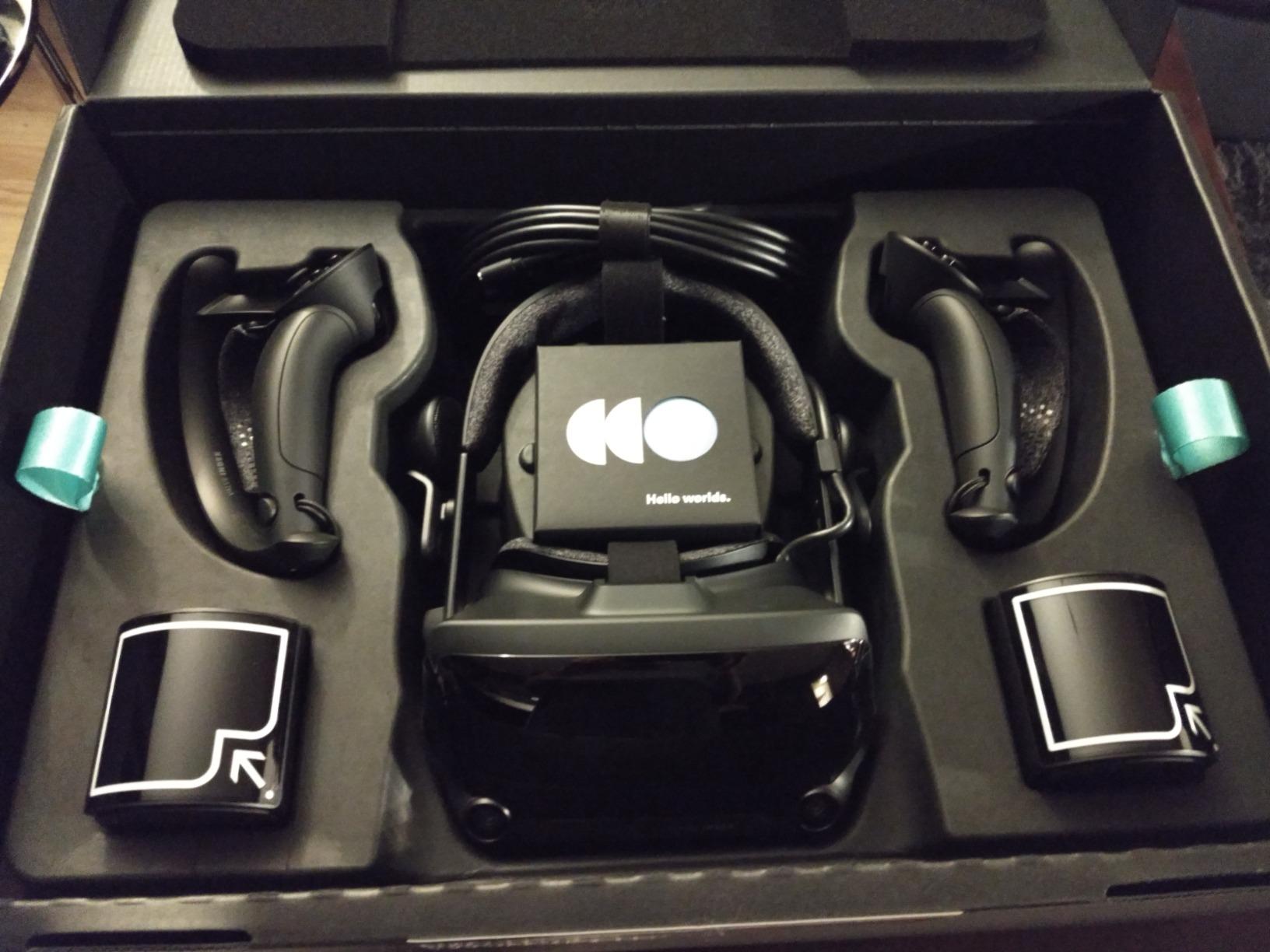
Be extremely careful with third-party sellers here. Valve does not authorize most Amazon resellers. Check seller ratings obsessively. Look for 98% positive feedback minimum across thousands of transactions. Request original purchase receipts for warranty validation.
The r/ValveIndex community warns about refurbished units sold as new. Check box seals, documentation quality, and hardware condition immediately. Test everything within the return window. Document any discrepancies with photos and video.
Who Should Buy This
First-time VR buyers getting a Valve Index should look here. Users upgrading from Oculus Quest 2 or PlayStation VR who want PC VR quality. Anyone whose complete VR setup died and needs everything replaced simultaneously.
Who Should Skip This
Anyone who only needs base stations should absolutely skip this. You will pay four times what individual base stations cost. This is not a value option for base station replacement. It is only relevant for complete system purchases.
SteamVR 1.0 vs 2.0: What’s Compatible with Valve Index?
Understanding base station generations saves you money and headaches. Valve Index works with both 1.0 and 2.0 base stations, but the two generations have important differences.
SteamVR 1.0 base stations came with the original 2016 HTC Vive. They feature flat front faces, require a sync cable when using two units, and support maximum two base stations total. They work perfectly with Valve Index headsets and controllers, but limit your tracking coverage to smaller play spaces.
SteamVR 2.0 base stations arrived with the Vive Pro and Valve Index generation. Curved front faces distinguish them visually. Wireless sync eliminates the need for cable connections between units. Most importantly, 2.0 supports up to four base stations for 10-meter by 10-meter play spaces.
You cannot mix 1.0 and 2.0 base stations in the same setup. Your entire tracking system must use one generation or the other. If you already own 2.0 base stations and one dies, replacing it with a 1.0 unit forces you to downgrade your entire tracking system.
Visual identification is simple once you know what to look for. Flat front equals 1.0. Curved front equals 2.0. The model numbers also differ, though sticker placement varies by manufacturer. When buying used, always request photos showing the front face clearly.
Used 1.0 base stations cost between $20 and $50 on eBay and Facebook Marketplace. This makes them tempting for budget buyers. Just understand the limitations. The sync cable requirement adds cable clutter. Maximum two stations means no expansion for larger spaces. And 1.0 hardware dates back to 2016, so remaining lifespan may be limited.
For most Valve Index users, I recommend sticking with 2.0 base stations. The wireless sync alone justifies the price difference. Future expansion options and larger play space support add value that pays off over time.
Where to Buy Replacement Base Stations
Finding base stations requires checking multiple sources. Stock fluctuates constantly, and prices vary significantly between retailers.
Buying New
Amazon remains the most reliable source for new HTC base stations. Prime shipping gets you replacements quickly when hardware fails unexpectedly. Prices hover between $185 and $230 per unit depending on whether you choose US retail or import versions.
B&H Photo stocks base stations periodically. Their customer service exceeds Amazon for technical questions. Specialized VR retailers like KnoxLabs sometimes carry inventory that larger retailers miss.
HTC’s official store occasionally stocks base stations, though availability varies by region. Direct purchases ensure valid warranties without third-party complications.
Buying Used
eBay dominates the used base station market. Search for “HTC Vive base station” or “SteamVR base station” and filter by sold listings to gauge fair pricing. Expect $20 to $50 for 1.0 units and $80 to $150 for 2.0 units depending on condition.
Critical eBay buying rules: Only purchase from sellers with 98% positive feedback or higher. Avoid “untested” listings unless the price reflects gambling risk. Request video proof of the base station showing green lights and spinning rotors before purchase. Check return policies carefully.
Facebook Marketplace offers local pickup advantages. You can test base stations before paying. No shipping damage risks. Prices often beat eBay by 10% to 20% since sellers avoid platform fees. Join local VR enthusiast groups and watch for hardware sales.
Reddit’s r/HardwareSwap community hosts trusted sellers with verification systems. Read subreddit rules carefully before buying. PayPal Goods and Services protects you against scams, though friends and family payments offer no recourse.
New vs Used: Making the Choice
New base stations include warranties and guaranteed lifespan ahead of you. Used units might die next week or last five years. Your risk tolerance and budget determine the right path.
I recommend new units for anyone depending on VR professionally. Content creators, developers, and VR arcade operators need reliability that warranties provide. Casual users playing a few hours weekly can gamble on used hardware successfully.
When buying used, prioritize 2.0 units over 1.0 even at higher prices. The wireless sync and expansion potential justify the premium. A working 2.0 base station today outperforms two 1.0 units with cable clutter.
Setting Up Your Replacement Base Stations
Proper placement determines tracking quality more than base station generation. Follow these guidelines for optimal SteamVR performance.
Placement Recommendations
Mount base stations above head height, ideally 2 meters or higher. Angle them down 30 to 45 degrees toward your play space center. Diagonal placement in opposite corners provides the best coverage for room-scale VR.
Maintain line of sight between base stations when using 1.0 units with sync cables. For 2.0 wireless sync, avoid blocking the infrared communication path between units. Large furniture, monitors, or walls can interfere.
Channel Configuration
SteamVR uses channels A, B, and C for 1.0 base stations. Set one unit to channel B and the other to channel C when using two stations. Channel A is reserved for single-station setups.
2.0 base stations offer 16 channels supporting up to four units. SteamVR typically auto-configures these, but manual adjustment is available in SteamVR settings if you encounter interference from other Lighthouse systems nearby.
Mounting Options
Standard camera tripods work perfectly for temporary setups. The threaded mount on base stations matches 1/4-20 tripod screws. For permanent installation, wall brackets provide cleaner cable management and more stable positioning.
Command strips and adhesive mounts fail over time due to vibration from the spinning rotors. Always use mechanical fasteners for permanent mounting. A falling base station damages both the unit and whatever it hits.
Frequently Asked Questions
Which base stations are compatible with Valve Index?
Valve Index works with both SteamVR 1.0 and 2.0 base stations. This includes HTC Vive 1.0 and 2.0 base stations, Valve Index base stations, and any SteamVR-compatible Lighthouse tracking hardware. You cannot mix 1.0 and 2.0 base stations in the same setup.
How long do Valve Index base stations last?
Base stations typically last 4 to 5 years with normal use. Units left running continuously may last longer than those powered on and off daily. The red light of death is the most common failure mode when motors or internal components wear out.
Can 1.0 and 2.0 base stations work together?
No, you cannot mix SteamVR 1.0 and 2.0 base stations in the same tracking setup. Your entire system must use one generation. If you have existing 2.0 base stations and need a replacement, you must buy another 2.0 unit.
How many base stations do I need for Valve Index?
The minimum is one base station, but this only provides 180-degree tracking. Two base stations provide full 360-degree room-scale tracking and represent the standard recommendation. Four base stations support up to 10m x 10m play spaces, though most users do not need this.
Are used base stations safe to buy?
Used base stations can be safe purchases if you buy carefully. Only purchase from sellers with high positive feedback ratings. Request video proof of the base station powered on with green lights and spinning rotors. Test immediately upon receipt within the return window. Avoid untested listings unless priced as gambling.
Final Recommendations
The HTC Vive SteamVR Base Station 2.0 stands as the clear replacement choice for most Valve Index owners. It offers identical performance to discontinued Valve units with full warranty protection and reliable availability.
Full-body VR enthusiasts should consider the Tracking Bundle instead. The included trackers unlock experiences that standard controller tracking cannot match. Budget buyers can save money with the Japanese import version or gamble on used 1.0 units from reputable sellers.
Your specific situation determines the best pick. One failed base station in an otherwise working 2.0 setup demands another 2.0 unit. Complete system failures or first-time Index buyers might explore the full kit option. Whatever you choose, test immediately and document everything for your protection.
Valve Index remains one of the best PC VR experiences available in 2026, even with base station availability challenges. The right replacement gets you back into VR without compromising the tracking quality that makes Index special.