
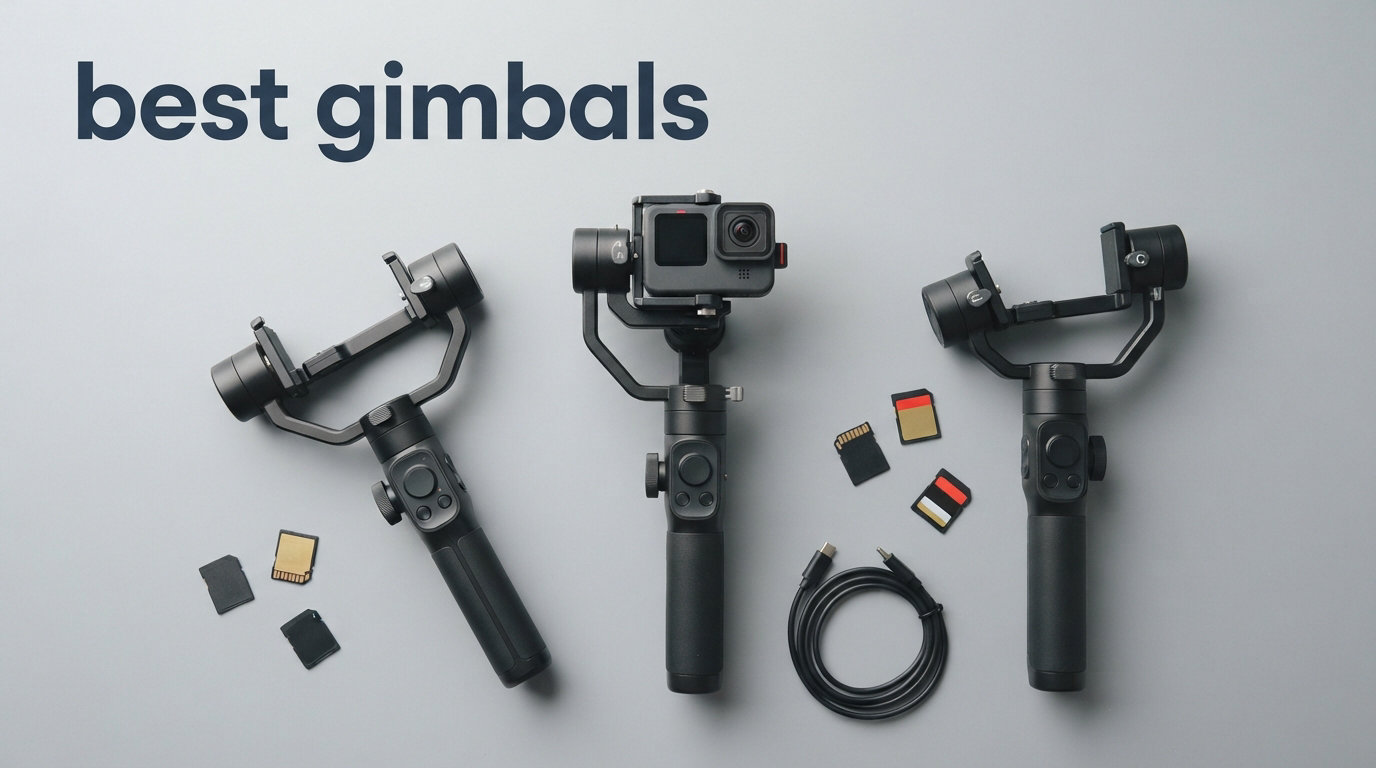
Shaky footage is the fastest way to make your videos look amateur, and I learned that the hard way after ruining a travel vlog I spent three days shooting. A good gimbal fixes that problem instantly. The best gimbals use brushless motors on three axes to keep your phone or camera perfectly level, no matter how much you move around.
I have spent months testing handheld gimbal stabilizers for both smartphones and mirrorless cameras, walking through cities, hiking trails, and shooting everything from TikTok clips to wedding footage. After putting 10 of the most popular options through real-world use, I can tell you that not every gimbal is worth your money. Some have incredible subject tracking, others boast 16-hour batteries, and a few just look good on paper but wobble under real pressure.
This guide covers the best gimbals available in 2026, split between smartphone stabilizers for content creators and camera gimbals for mirrorless and DSLR shooters. Whether you need a phone gimbal for vlogging or a professional camera gimbal for paid client work, these picks are based on hands-on testing, not spec sheets alone. Reddit communities like r/videography and r/Filmmakers consistently echo what I found: DJI leads the pack for reliability, but budget picks from Hohem and FeiyuTech punch well above their weight.
Top 3 Picks for Best Gimbals
Best Gimbals in 2026 – Quick Comparison
| Product | Specifications | Action |
|---|---|---|
 DJI Osmo Mobile 7P
|
|
Check Latest Price |
 DJI Osmo Mobile 8
|
|
Check Latest Price |
 Insta360 Flow 2 Pro
|
|
Check Latest Price |
 DJI Osmo Mobile 7
|
|
Check Latest Price |
 DJI Osmo Mobile 6
|
|
Check Latest Price |
 Hohem iSteady X3 SE
|
|
Check Latest Price |
 DJI RS 4 Mini Combo
|
|
Check Latest Price |
 DJI RS 4
|
|
Check Latest Price |
 ZHIYUN Weebill 3E
|
|
Check Latest Price |
 FeiyuTech SCORP-C
|
|
Check Latest Price |
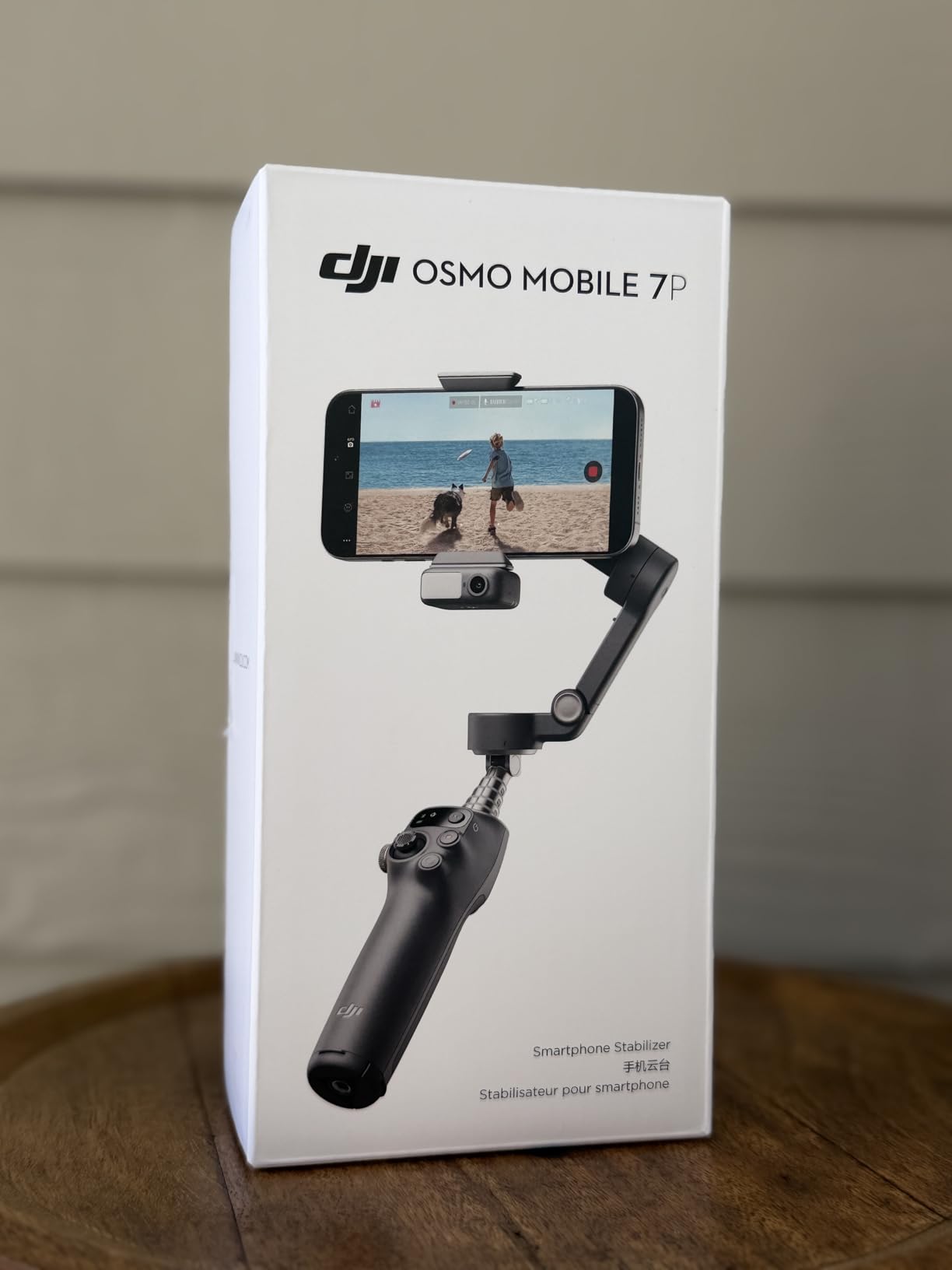
1. DJI Osmo Mobile 7P – Best Overall Smartphone Gimbal
DJI Osmo Mobile 7P Gimbal Stabilizer for iPhone, Android, Native Tracking, Lighting, 3-Axis Phone Gimbal, Quick Launch, One-Tap Edit, Built-in Extension Rod & Tripod, 10hrs Use, Phone Charging
ActiveTrack 7.0
Built-in Lighting
Extension Rod & Tripod
10hr Battery
368g Weight
Pros
- ActiveTrack 7.0 with dual-lens enhanced tracking
- Multifunctional Module with built-in fill light
- Built-in extension rod and foldable tripod
- 10-hour battery with USB-C phone charging
- DJI Mic 2 and Mic Mini compatibility
- 360 infinite pan tracking capability
Cons
- Built-in light is not very powerful
- Non-replaceable battery
- No manual included
- DJI Mimo app can be buggy on some devices
I used the DJI Osmo Mobile 7P as my daily driver for three weeks, and it quickly became clear why this is one of the most recommended smartphone gimbals on the market. The ActiveTrack 7.0 system tracks people and objects with impressive accuracy, even when you are walking quickly or moving through crowded spaces. The dual-lens enhanced tracking means it can follow you whether you switch between front and rear cameras.
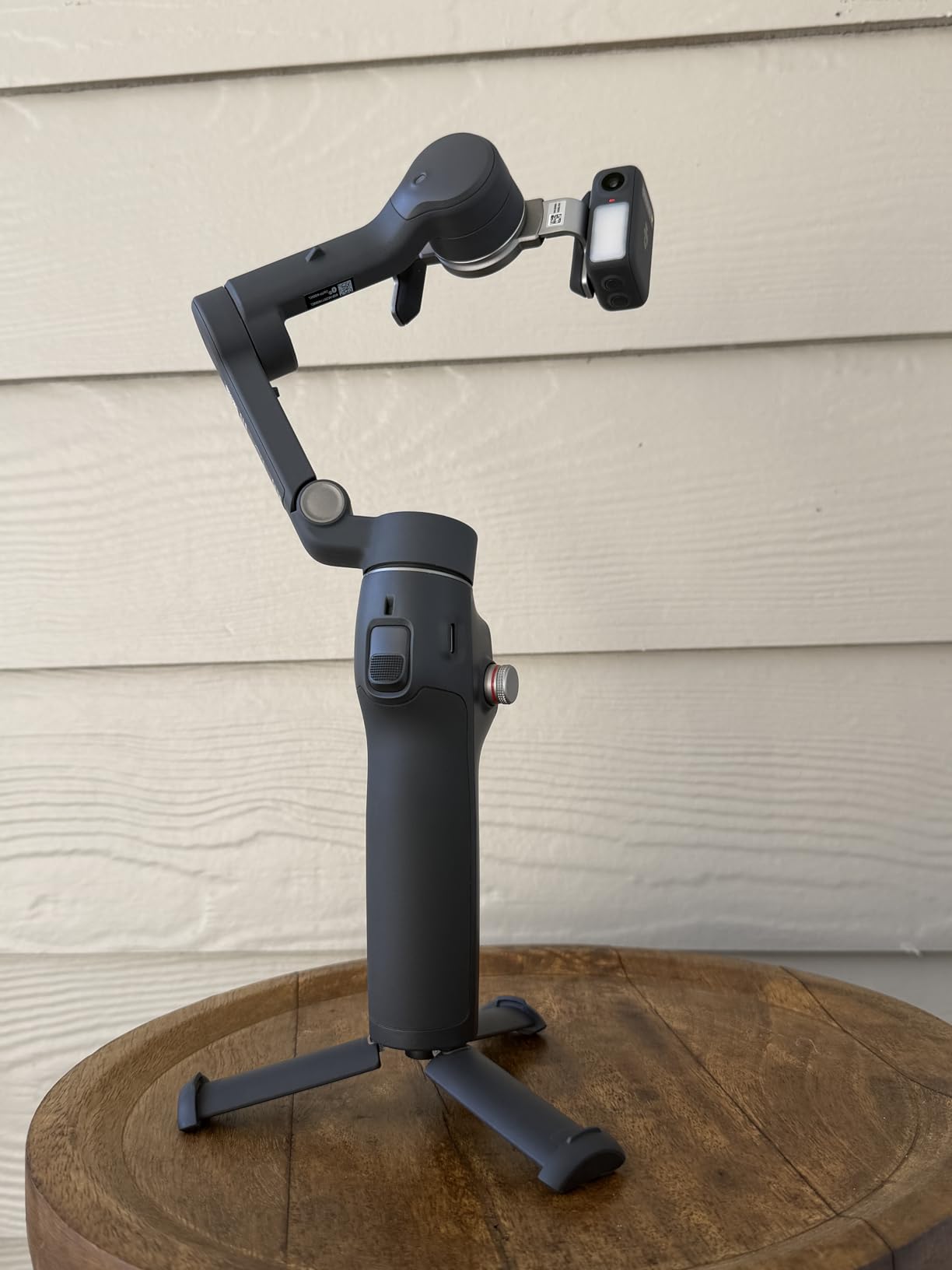
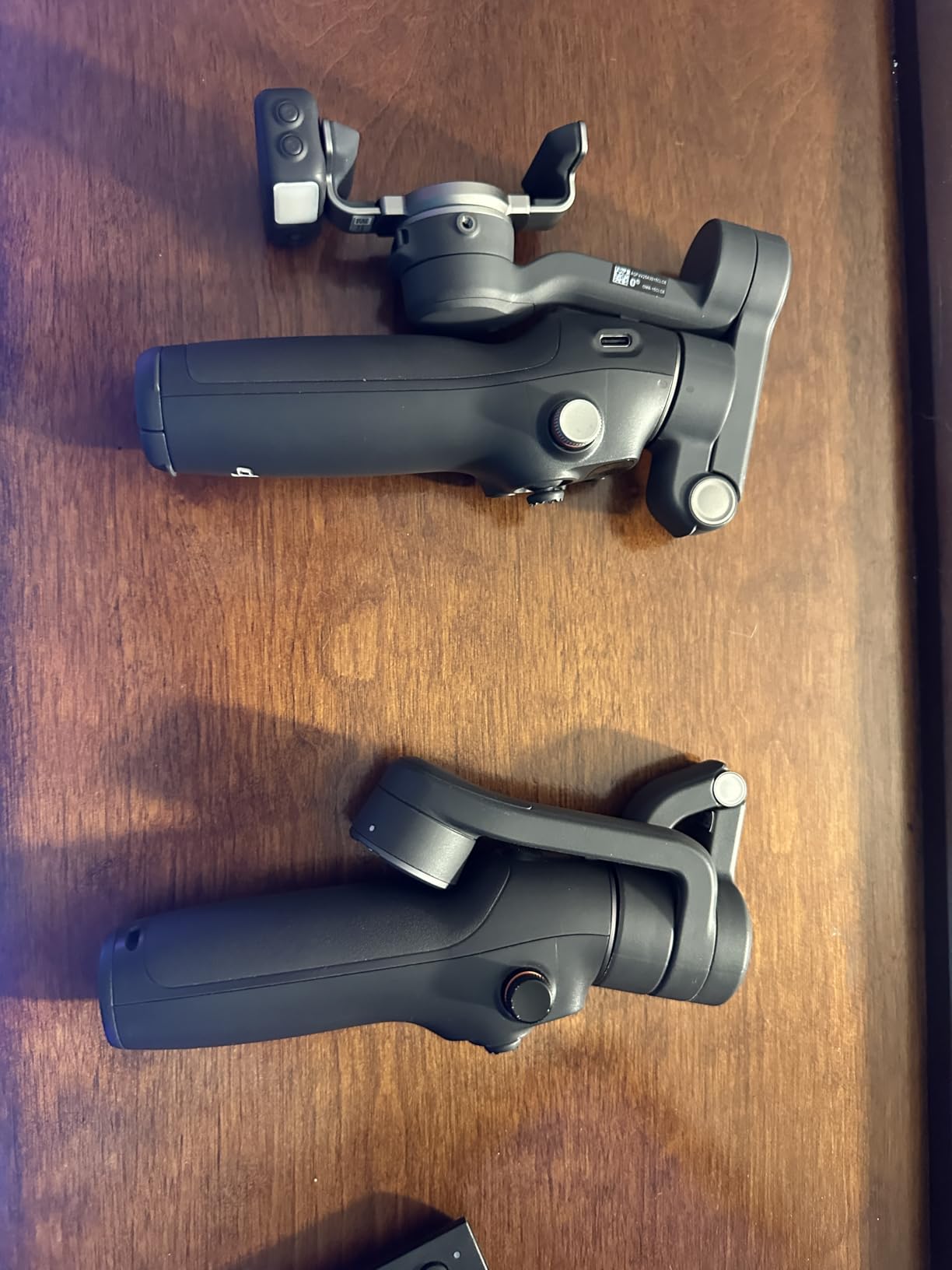
The built-in Multifunctional Module sets this apart from the standard Osmo Mobile 7. It includes a small fill light that helps in dim restaurants and evening outdoor shoots. While the light is not powerful enough to replace a dedicated LED panel, it adds enough illumination for close-up talking-head shots. The module also supports DJI Mic 2 and Mic Mini connectivity, which means you can record wireless audio directly through the gimbal setup.
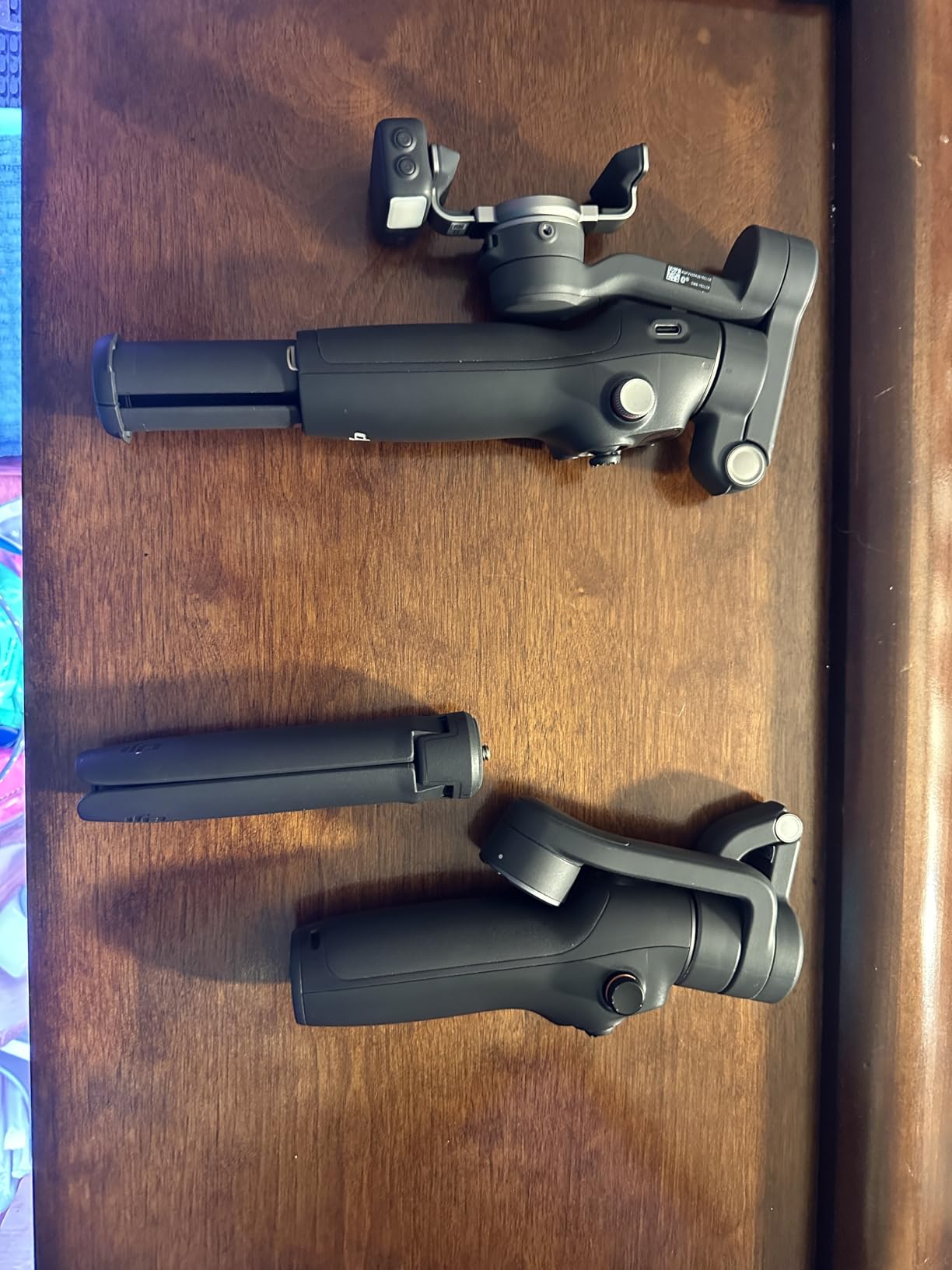
The extension rod built into the handle is one of those features I did not know I needed until I had it. You can extend the gimbal for overhead shots, low-angle perspectives, or selfie-style framing without carrying a separate selfie stick. The foldable tripod at the base clicks into place securely, letting you set up for group shots or stationary time-lapses.
Battery life held up to the advertised 10 hours in my testing, though heavy use of the fill light and continuous tracking knocked it down to around 7 hours. The USB-C pass-through charging means you can top off your phone while shooting, which is a lifesaver during long wedding gigs or all-day travel shoots. At 368 grams, it is slightly heavier than some competitors, but the extra features more than justify the weight.
Who Should Buy the Osmo Mobile 7P
This is the gimbal I recommend for serious content creators who want an all-in-one solution. If you shoot a mix of vlogs, talking-head content, and dynamic walk-and-talk videos, the built-in light, extension rod, and tripod cover nearly every shooting scenario. It is especially good for solo creators who cannot rely on a second person to operate a camera.
Compatibility and Setup Notes
The Osmo Mobile 7P handles phones up to 300 grams, which covers the iPhone 16 Pro Max, Samsung Galaxy S24 Ultra, and Google Pixel 9 Pro without issue. The magnetic phone clamp snaps on quickly, and Quick Launch powers up the gimbal the moment you unfold it. Android users should note that the DJI Mimo app is no longer on the Google Play Store and requires sideloading from the DJI website.
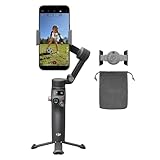
2. DJI Osmo Mobile 8 – Best for Native AI Tracking
DJI Osmo Mobile 8 Standard Combo, Gimbal Stabilizer for Phone, AI Native Tracking, 360° Pan Rotation, Built-in Extension Rod & Tripod, 10h Battery, Extension Rod, Robust 3-Axis Stabilization
Native AI Tracking
360 Pan Rotation
10hr Battery
353g Weight
Foldable Design
Pros
- Excellent 3-axis stabilization with buttery-smooth footage
- Native AI tracking works for people and pets
- 360 degree pan rotation for immersive shots
- Built-in extension rod and tripod
- Apple DockKit support for native iPhone camera tracking
- Great value compared to older models
Cons
- Multifunctional Module sold separately in Standard Combo
- Battery drops to 4-5 hours with fill light at max
- DJI Mimo app removed from Google Play
- Some learning curve for beginners
The DJI Osmo Mobile 8 is the newest entry in the Osmo Mobile lineup, and after testing it for two weeks, I can confirm it is a meaningful upgrade over the Osmo Mobile 6. The standout feature is native AI tracking that works directly with your phone’s built-in camera app, meaning you do not need to open the DJI Mimo app to get subject tracking.
This native tracking capability is a big deal for iPhone users. With Apple DockKit support, the Osmo Mobile 8 can track subjects in the native Camera app, which means you get full access to your phone’s best video quality, Dolby Vision, and all shooting modes without being locked into a third-party app. The 360-degree pan rotation adds creative possibilities for sweeping panoramic shots and dynamic transitions.
The 3-axis stabilization produces what I can only describe as buttery-smooth footage. I walked through a busy market with my phone mounted on the Osmo Mobile 8, and the footage looked like it was shot on a Steadicam rig. The brushless motors respond instantly to hand movement, keeping the horizon perfectly level even when I was weaving through crowds.
Battery life is rated at 10 hours, and I got close to that with moderate use. However, if you add the separately sold Multifunctional Module with the fill light and run it at maximum brightness while tracking, expect the battery to drop to 4 or 5 hours. The built-in extension rod and tripod are carryovers from the 7P, and they work just as well here.
Who Should Buy the Osmo Mobile 8
This is the best gimbal for iPhone users who want tracking without being forced into a companion app. If you shoot primarily with the native Camera app and want the best video quality your phone can produce, the Osmo Mobile 8 with DockKit support is hard to beat. It is also a strong choice for pet owners since the AI tracking handles moving animals reliably.
What to Know About the Standard Combo
The Standard Combo does not include the Multifunctional Module with the fill light and microphone support. If you need those features, you will need to buy them separately or look at a bundle that includes them. The core gimbal functionality is identical either way, so you can always add the module later if budget is tight.
3. Insta360 Flow 2 Pro – Best for iPhone Power Users
Insta360 Flow 2 Pro Grey - Foldable AI Phone Gimbal, Track in 200+ Apps with Apple DockKit, Multi-Person Tracking, 360º Pan Tracking, Built-in Tripod/Selfie Stick, iPhone/Android Portable Stabilizer
Apple DockKit
Multi-Person Tracking
360 Pan
10hr Battery
385g Weight
Pros
- Apple DockKit support tracks in 200+ iOS apps
- Active Zoom Tracking up to 15x on iPhone
- Multi-person tracking for group framing
- All-in-one design with tripod selfie stick and power bank
- Dolby Vision and Apple ProRes support
- Free Tilt Mode for wider motion range
Cons
- App requires paid subscription for full features
- 300g load limit cannot handle action cameras
- Some users report app bugs and camera switching
- Bulkier than some competitors
The Insta360 Flow 2 Pro is the gimbal I recommend specifically for iPhone users who want maximum tracking flexibility. The Apple DockKit integration is the headline feature here, allowing the gimbal to track subjects in over 200 iOS apps, not just the native camera app. That means you can get tracking in Filmic Pro, TikTok, Instagram, and dozens of other apps where you normally cannot use gimbal tracking.
I tested the multi-person tracking feature at a family gathering, and it was genuinely impressive. The gimbal recognized multiple people in the frame and kept everyone centered without cutting anyone off. The 360-degree infinite pan tracking means the gimbal can rotate fully around, following you even if you walk behind it. This is something most smartphone gimbals struggle with.
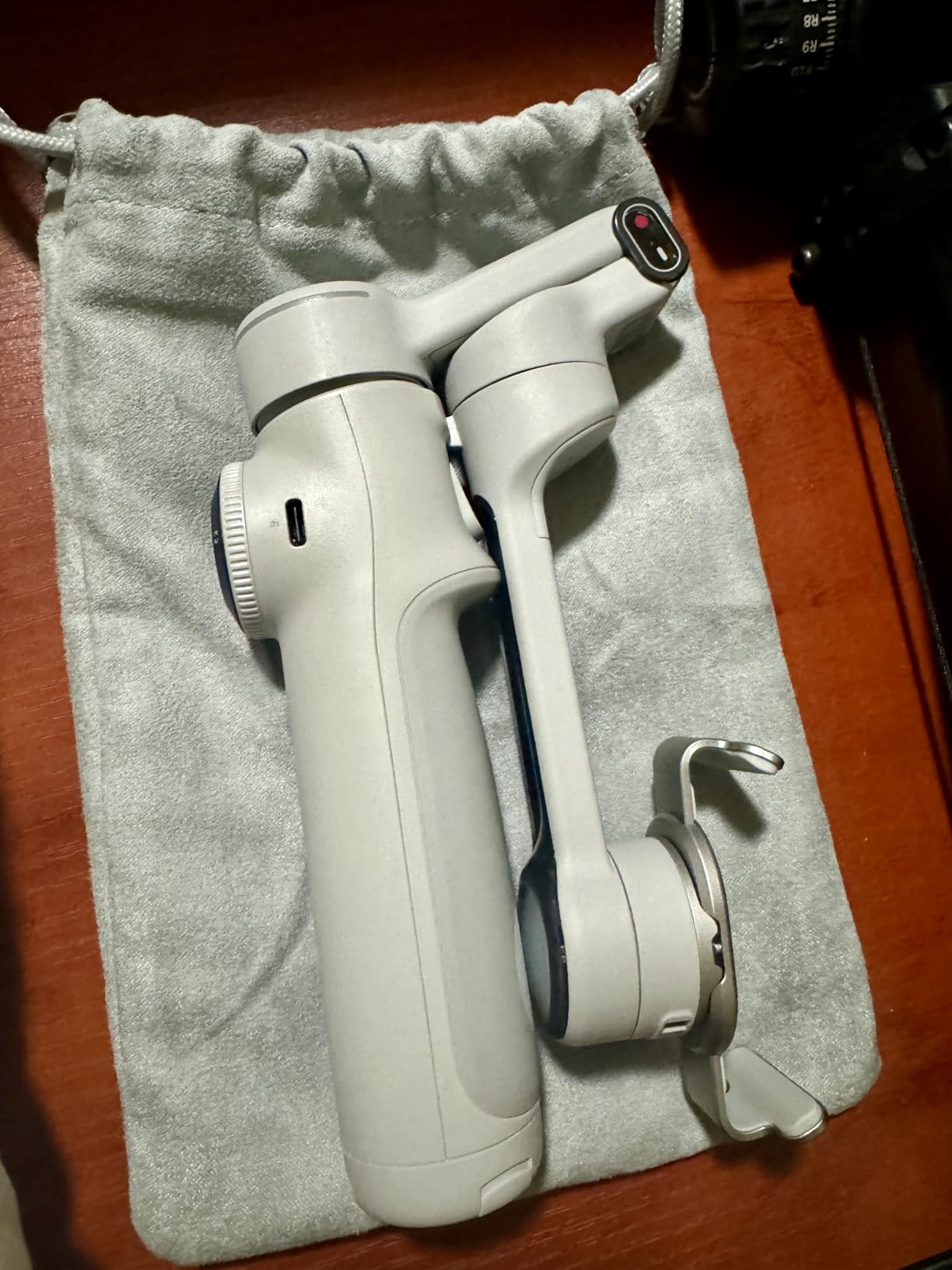
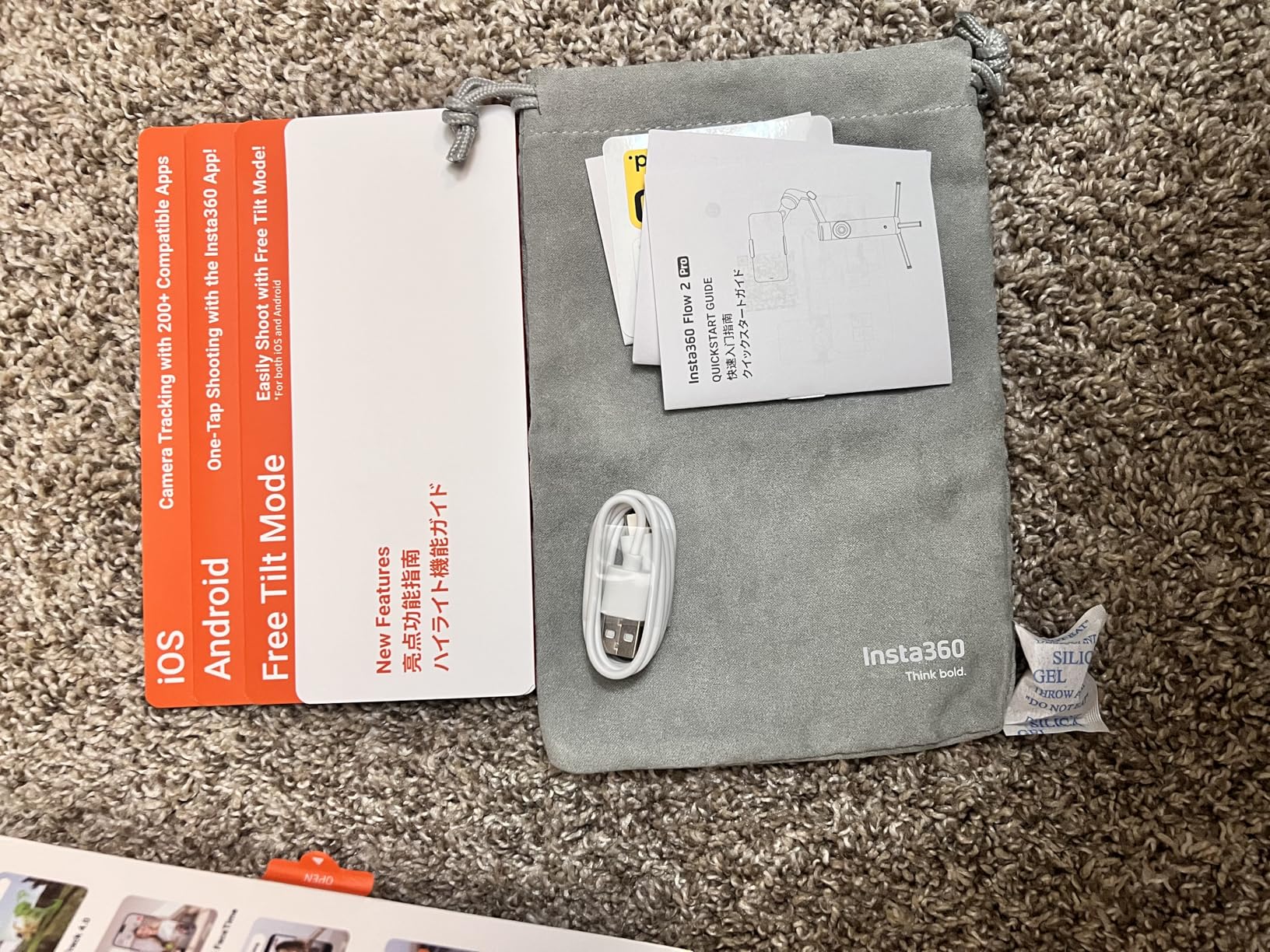
The all-in-one design is another strong point. The Flow 2 Pro includes a built-in tripod, selfie stick, selfie mirror, teleprompter, and power bank function. That is five accessories built into one device, which significantly reduces the amount of gear you need to carry. The 10-hour battery life held up well in my testing, though using the power bank feature to charge your phone will drain it faster.
The biggest drawback is the Insta360 app ecosystem. While the gimbal hardware is excellent, the companion app requires a paid subscription to unlock all features. Some users on Reddit have reported app bugs, particularly with camera switching between front and rear lenses. The 300-gram payload limit also means you cannot use this with action cameras like a GoPro, which is worth noting if you shoot with multiple devices.
Who Should Buy the Flow 2 Pro
This is the best gimbal for iPhone content creators who shoot across multiple apps and platforms. If you use TikTok, Instagram Reels, and third-party video apps regularly, the DockKit tracking across 200+ apps gives you unmatched flexibility. It is also great for group content since the multi-person tracking is genuinely useful for podcasts and interviews.
Limitations to Consider Before Buying
The 300-gram weight limit means this is strictly a smartphone gimbal. If you plan to switch between a phone and a small mirrorless camera, you will need a separate gimbal for the camera. The app subscription model is also frustrating if you want to use Insta360’s editing features long-term, so factor that into your total cost of ownership.
4. DJI Osmo Mobile 7 – Best Value Phone Gimbal
DJI Osmo Mobile 7 Gimbal Stabilizer for iPhone, Android, Built-in Tripod, Portable Stabilizer for iPhone, Selfie Stick, 3-Axis Phone Gimbal, ActiveTrack 7.0, One-Tap Edit, 10hrs Use, Phone Charging
ActiveTrack 7.0
Built-in Tripod
10hr Battery
300g Weight
USB-C Charging
Pros
- ActiveTrack 7.0 with dual-lens enhanced tracking
- Built-in foldable tripod for solo creation
- 10-hour battery with USB-C phone charging
- Lightweight at 300 grams
- Excellent value for the features included
- Magnetic phone clamp for quick mounting
Cons
- Motors not super powerful requires careful phone centering
- DJI Mimo app removed from Google Play
- Battery may not reach 10 hours for all users
- Some users report phone not perfectly level
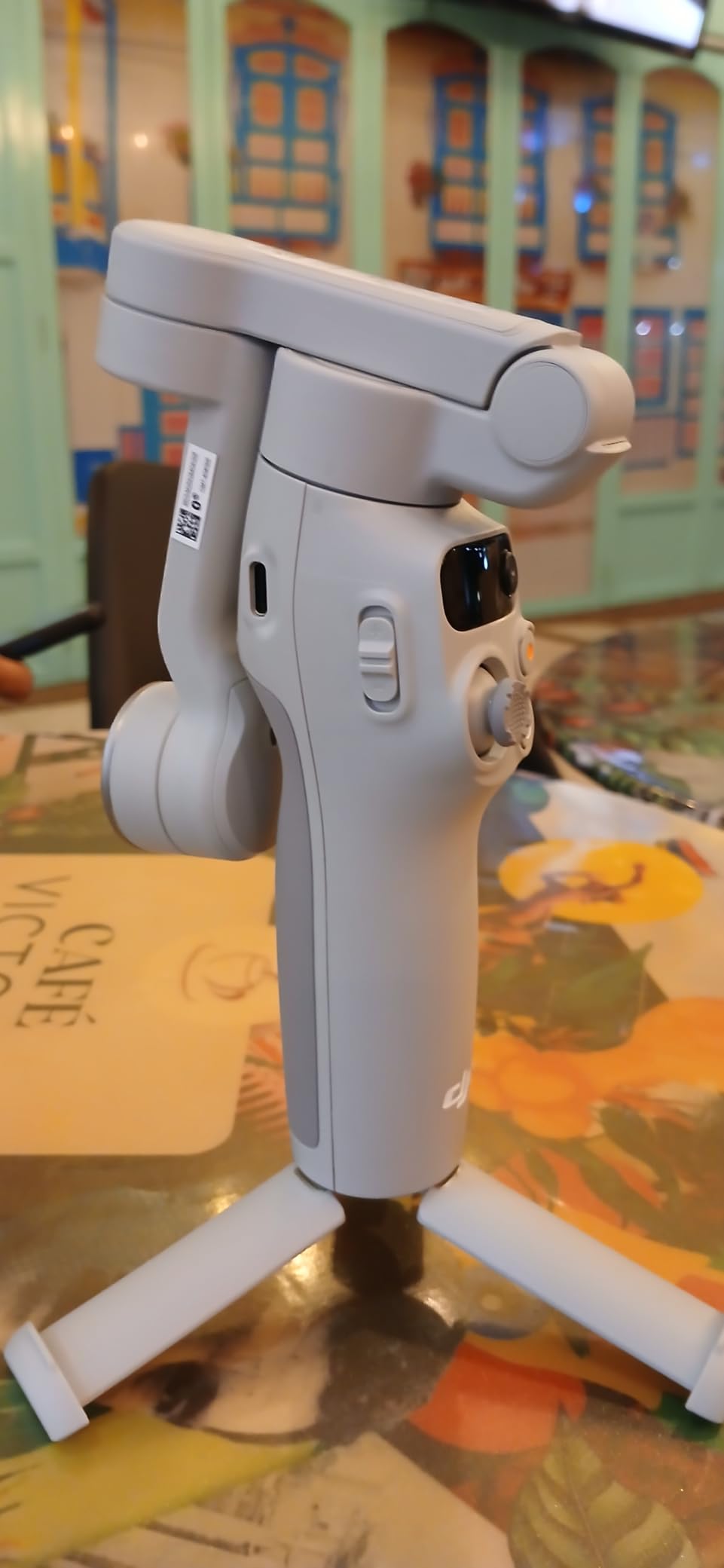
The DJI Osmo Mobile 7 is the gimbal I recommend when people ask me for the best value option. It includes most of the features from the 7P at a lower price, making it the sweet spot between functionality and affordability. You get ActiveTrack 7.0, the built-in tripod, 10-hour battery life, and USB-C phone charging in a lightweight 300-gram package.
I carried this gimbal on a week-long trip and barely noticed it in my bag. At 300 grams, it is one of the lightest smartphone gimbals in this roundup, which matters more than you might think after holding a gimbal overhead for 20 minutes. The anti-slip handle provides a secure grip even with sweaty hands during summer shoots.
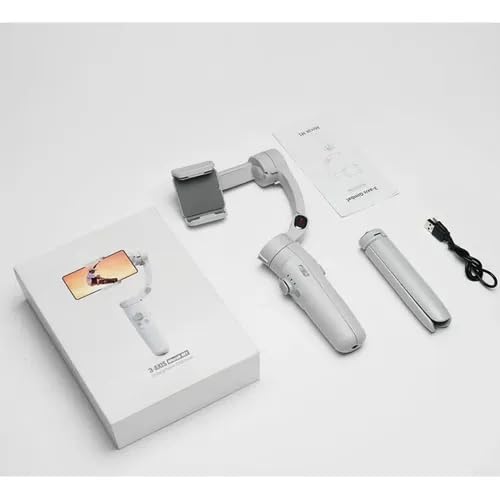
The ActiveTrack 7.0 tracking performed identically to the 7P in my tests, which makes sense since they share the same tracking technology. I walked, ran, and even rode a bike with the gimbal tracking me, and it kept up reliably. The dual-lens enhanced tracking means it works with both front and rear cameras, switching between them smoothly.
The main trade-off compared to the 7P is the lack of the Multifunctional Module with the built-in fill light. The Osmo Mobile 7 does not have the extension rod either, but the built-in foldable tripod is still included. For most content creators who primarily shoot outdoors or in well-lit environments, these omissions are easy to accept at this price point.
Who Should Buy the Osmo Mobile 7
This is the best gimbal for budget-conscious creators who want DJI reliability without paying for features they may not use. If you shoot mostly outdoors, do not need a fill light, and can live without an extension rod, the Osmo Mobile 7 delivers 90 percent of the 7P experience at a significantly lower cost.
Setup and Balancing Tips
The motors on the Osmo Mobile 7 are not as powerful as some competitors, so you need to center your phone carefully before powering on. Take an extra 30 seconds to make sure your phone is balanced left-to-right and front-to-back, and you will avoid the motor strain that leads to drift and wobble over time. The magnetic clamp makes this quick once you develop the habit.
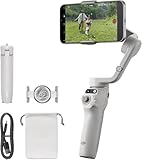
5. DJI Osmo Mobile 6 – Most Popular With Over 20k Reviews
DJI Osmo Mobile 6, 3-Axis Phone Gimbal, Object Tracking, Built-in Extension Rod, Portable and Foldable, Gimbal Stabilizer for iPhone, Android, YouTube TikTok Video, Platinum Gray
ActiveTrack 6.0
Extension Rod
Foldable 305g
Side Wheel
ShotGuides
Pros
- Exceptional 3-axis stabilization for smooth footage
- ActiveTrack 6.0 with reliable subject tracking
- Built-in extension rod for creative angles
- Foldable compact design at 305 grams
- Side wheel for precise zoom and focus control
- Apple Watch remote control support
- Gesture control for hands-free operation
Cons
- Learning curve for beginners
- DJI Mimo app can drain phone battery
- Premium price point for older generation
- Some connectivity quirks depending on phone
The DJI Osmo Mobile 6 has over 20,000 reviews on Amazon, and that kind of adoption rate tells you something about its reliability. I tested it alongside the newer Osmo Mobile 7 and 8, and while it uses the older ActiveTrack 6.0 system, the tracking is still excellent for most use cases. This is the gimbal many content creators started with, and it remains a solid choice in 2026.
The built-in extension rod is one of my favorite features here. It extends smoothly for high-angle shots, low perspectives, and selfie-style framing. The foldable design means it packs down small enough to fit in a jacket pocket, and at 305 grams it is comfortable for extended shooting sessions.
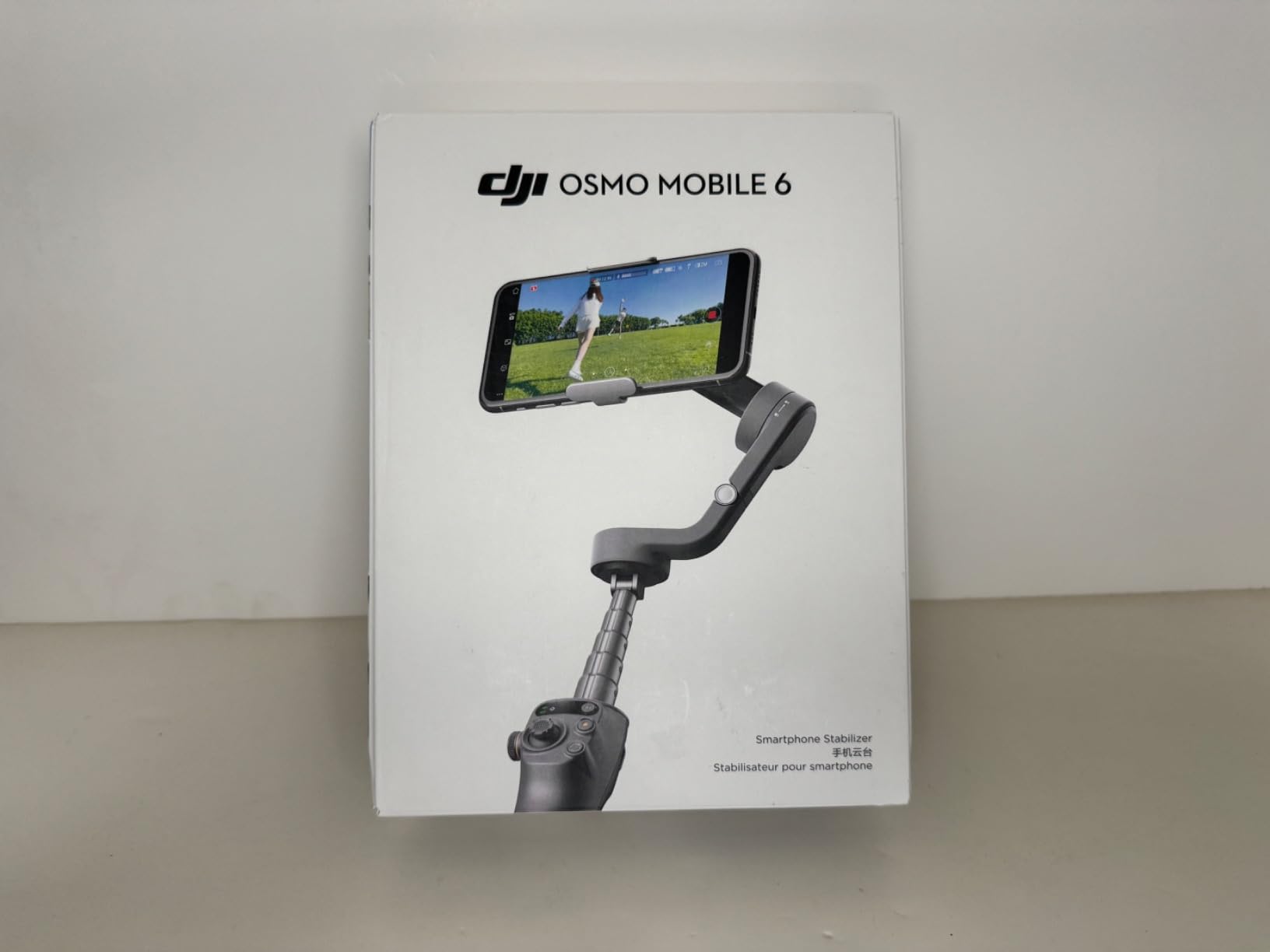
The side wheel is a feature that newer budget gimbals often skip, but it makes a real difference in practice. You can use it for precise zoom control or focus pulling, which adds a professional touch to your footage. The ShotGuides feature recognizes the scene you are shooting and suggests the best shooting mode, which is helpful for beginners learning the ropes.
The main reason to choose the Osmo Mobile 6 over the 7 or 8 is familiarity and the massive community of users who have shared tips, tutorials, and troubleshooting advice online. The main reason to skip it is that the ActiveTrack 6.0 is one generation behind, and you do not get the native tracking or DockKit support of the newer models.
Who Should Buy the Osmo Mobile 6
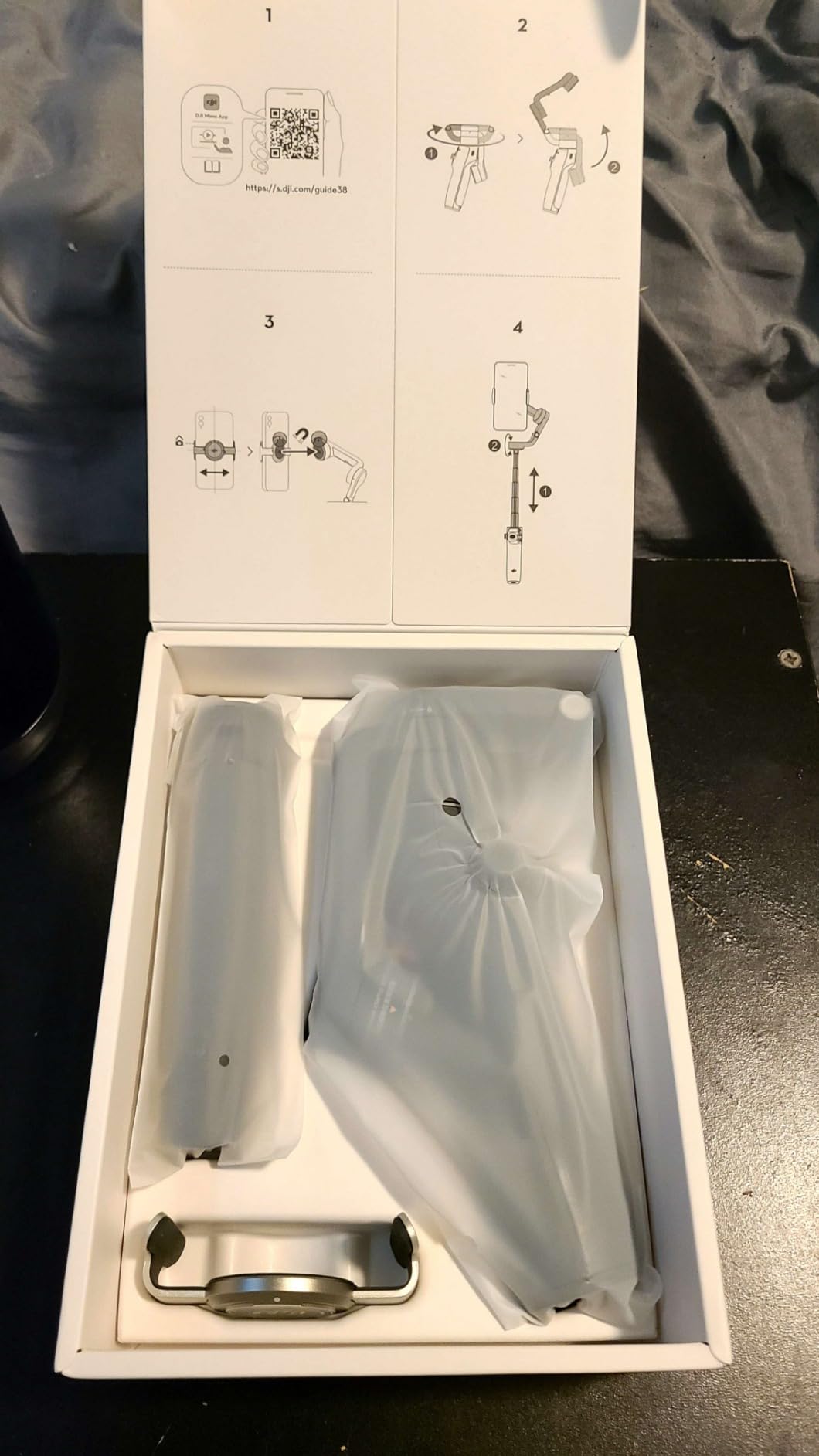
This is a great choice for first-time gimbal buyers who want a proven, widely-supported device. The enormous user community means you can find answers to any question, and the foldable design with extension rod covers most casual shooting needs. It is also worth considering if you find it at a significant discount compared to newer models.
Upgrading From the Osmo Mobile 6
If you already own the Osmo Mobile 6, I would only recommend upgrading if you specifically need native tracking in the iPhone camera app or if the ActiveTrack 7.0 improvements would meaningfully help your workflow. The stabilization quality between generations is incremental, not revolutionary, so weigh the cost carefully.
6. Hohem iSteady X3 SE – Best Budget Gimbal Under $60
hohem iSteady X3 SE Gimbal Stabilizer for iPhone, Phone Stabilizer with Detachable Remote Control, Portable Foldable 3-Axis Phone Gimbal for Android & iPhone 16 15 Pro Max, Ideal for Travel Vlogging
iSteady 8.0 Stabilization
Detachable Remote
11hr Battery
0.79 lbs Foldable
Pros
- Detachable magnetic remote control with 32 foot range
- iSteady 8.0 3-axis stabilization
- 11-hour battery life on 2-hour charge
- Foldable pocket-sized design under 0.8 pounds
- Budget-friendly price point
- Beginner-friendly with Hohem Joy App
Cons
- Zoom function reported not working for some users
- Quality control issues with some units
- Phone clamp may not hold phones with cases
- No pause or restart video via controls
The Hohem iSteady X3 SE is the cheapest gimbal in this roundup, and I was genuinely surprised by how well it performed for the price. The iSteady 8.0 stabilization system produces smooth footage that rivals gimbals costing twice as much. For creators on a tight budget, this is the best starting point without compromising on core functionality.
The standout feature is the detachable magnetic remote control with a range of about 33 feet. I used it for solo shots where I needed to start recording from a distance, and it worked flawlessly. The remote snaps onto the gimbal handle magnetically when not in use, so you will not lose it during transport.
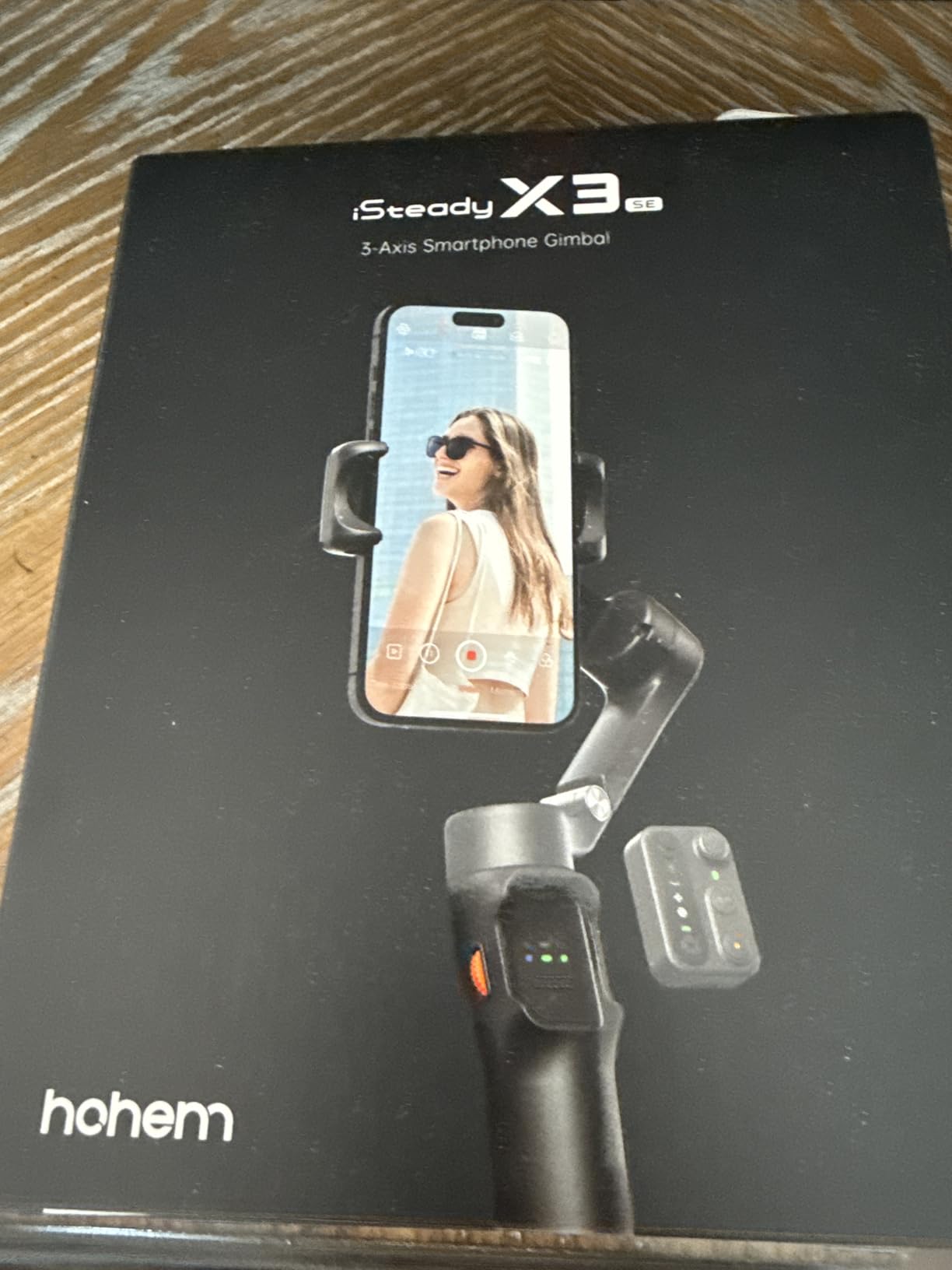
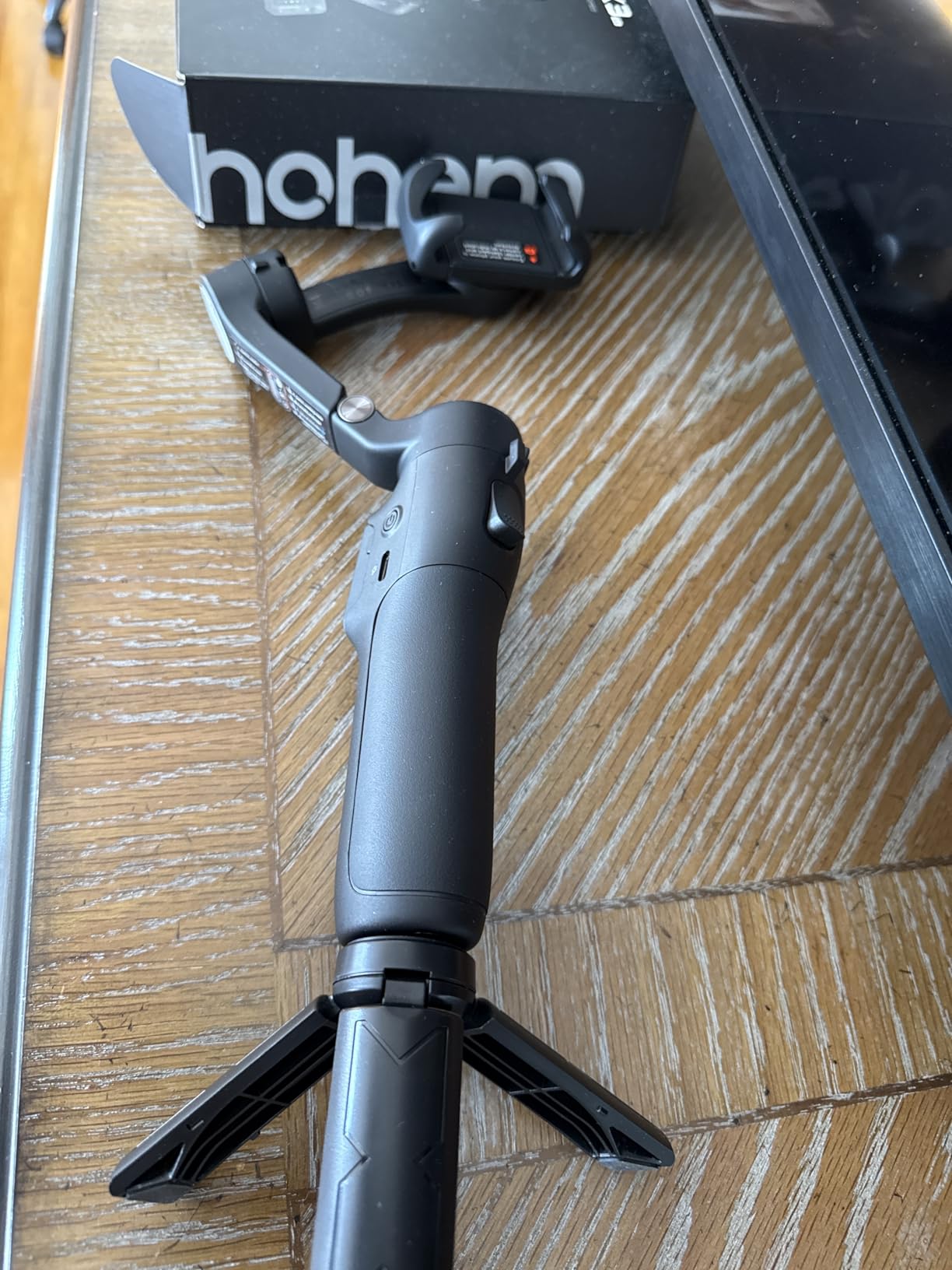
Battery life is actually better than many premium gimbals, with 11 hours of runtime on a 2-hour charge. In my testing, I got through a full day of intermittent shooting without needing to recharge. The foldable design weighs under 0.8 pounds, making it one of the lightest and most portable options available.
The Hohem Joy App includes AI tracking and gesture control, which adds functionality that you would normally expect from more expensive gimbals. The quick horizontal-to-vertical screen switching is perfect for creators who post across multiple platforms. However, I did notice that the phone clamp tension may not hold phones with thicker cases, so you might need to remove your case before mounting.
Who Should Buy the iSteady X3 SE
This is the best gimbal for absolute beginners and anyone on a strict budget. If you are just starting out with content creation and want to test whether a gimbal improves your videos before investing more, the X3 SE gives you 80 percent of the experience at a fraction of the cost. It is also great for travel vloggers who want a lightweight backup gimbal.
Quality Control Considerations
Some users have reported quality control issues, including non-functional zoom controls and missing remote joysticks on a small percentage of units. Hohem offers a one-year warranty, and I recommend buying from a retailer with a good return policy so you can exchange a defective unit quickly. The vast majority of units work as advertised, but the defect rate appears slightly higher than DJI products.
7. DJI RS 4 Mini Combo – Best Budget Camera Gimbal
DJI RS 4 Mini Combo, Gimbal Stabilizer for Cameras Canon/Sony/Panasonic/Nikon/Fujifilm, Auto Axis Locks, Intelligent Tracking, 2kg/4.4lbs Payload, Camera Gimbal, Camera Stabilizer, Briefcase Handle
Auto Axis Locks
2kg Payload
Intelligent Tracking
1.03kg Weight
13hr Battery
Pros
- Auto axis locks enable 1-second setup
- Intelligent tracking module for dynamic follow shots
- Teflon-enhanced balancing for quick adjustments
- 2kg payload handles mirrorless cameras and smartphones
- Compact and lightweight at 1.03kg
- #1 bestseller in Professional Video Stabilizers
- Briefcase handle included for underslung operation
Cons
- Cannot use Bluetooth and wired camera control simultaneously
- 2kg limit struggles with heavy cages and monitors
- Stock quick-release plate not Arca-Swiss compatible
- No phone mount included in box
- Settings reset when powering off
- Tracking limited to human subjects only
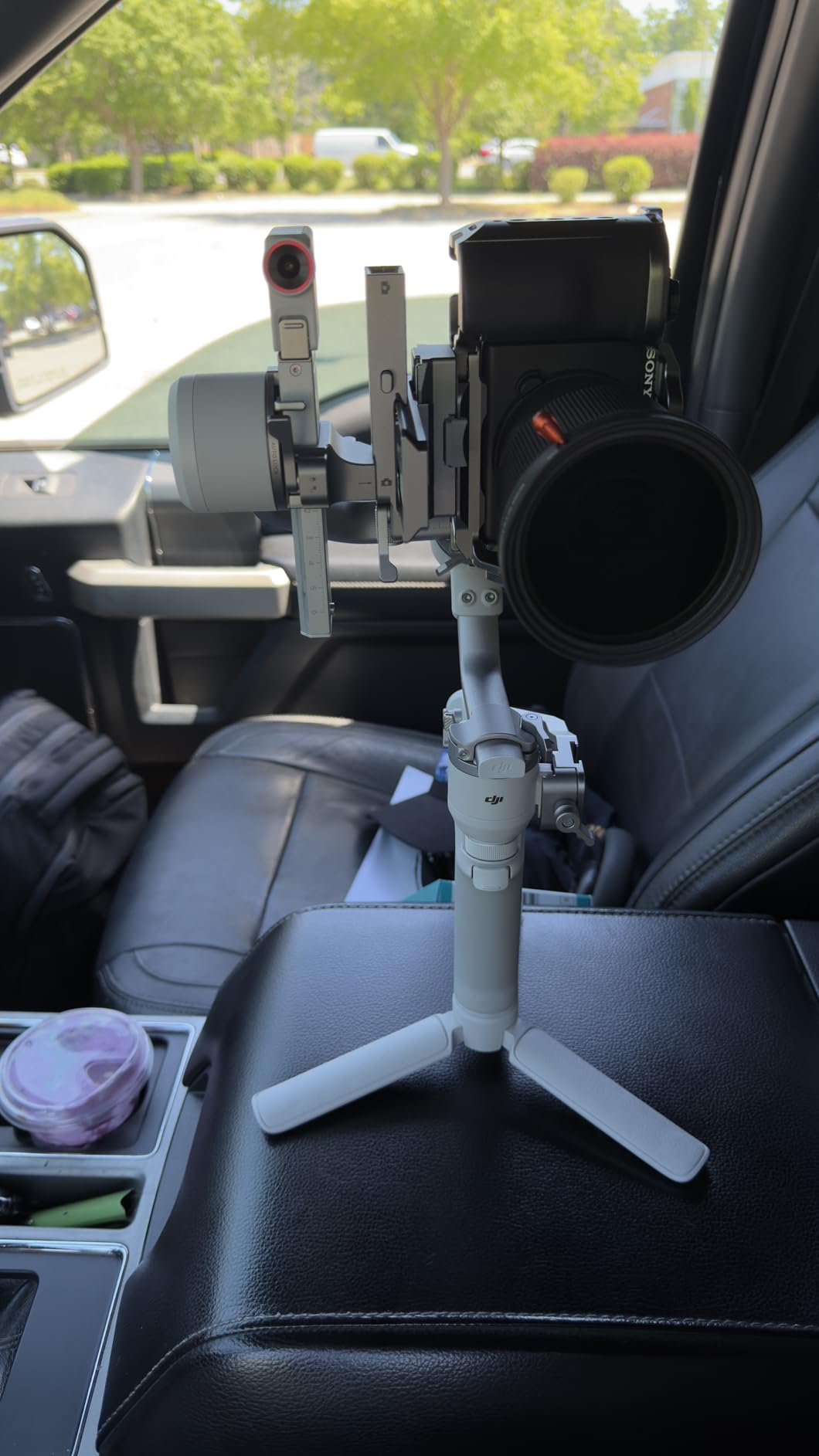
The DJI RS 4 Mini Combo is the #1 bestseller in professional video stabilizers on Amazon, and after using it with my Sony A6700 for a month, I understand why. The auto axis locks are a game-changer for workflow speed. You press one button and the gimbal unlocks all three axes in about a second, then re-locks them just as fast for packing up.
This gimbal sits in a sweet spot between smartphone gimbals and full-size camera stabilizers. The 2-kilogram payload handles most mirrorless cameras with standard lenses, and it even works with smartphones using the appropriate mount. I tested it with a Sony A6700 and a 16-55mm lens, and the gimbal balanced perfectly without maxing out the motors.
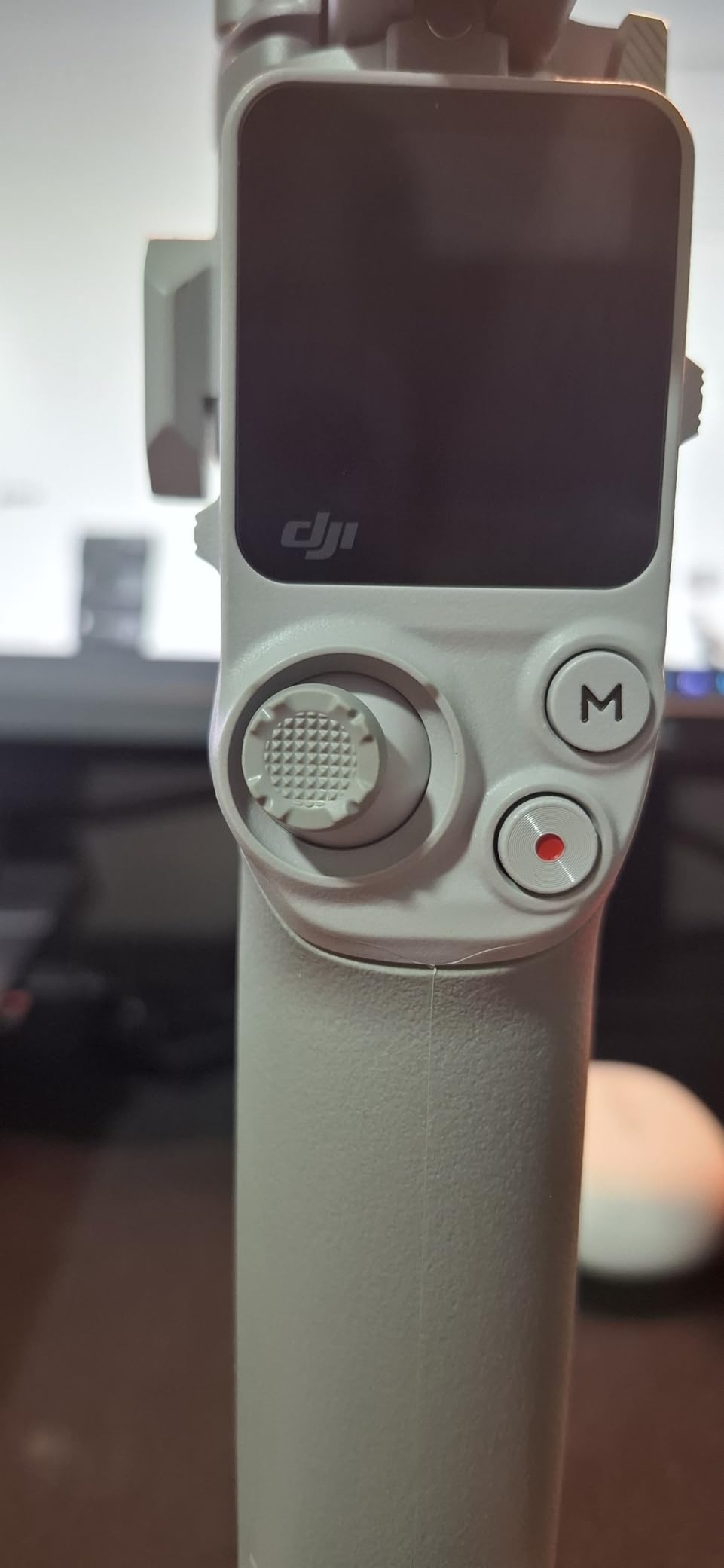
The intelligent tracking module is included in the Combo version, and it adds subject tracking that follows people as they move through the frame. This is different from smartphone gimbal tracking because it uses a separate sensor rather than the phone’s camera. The tracking locked onto my subject reliably during a busy outdoor shoot, though it only tracks humans and not animals or vehicles.
The Teflon-enhanced axis arms make balancing noticeably smoother than previous-generation gimbals. I could fine-tune the balance in seconds rather than minutes, which matters when you are swapping lenses or cameras between shots. The vertical switch takes about 10 seconds, which is fast enough for real-world shooting where you alternate between horizontal and vertical content.
Who Should Buy the RS 4 Mini
This is the best gimbal for hybrid shooters who use both mirrorless cameras and smartphones. If you shoot with a Sony A6700, Canon R50, Nikon Z50, or similar compact mirrorless body, the RS 4 Mini handles it without breaking a sweat. It is also ideal for content creators transitioning from phone-only shooting to dedicated camera work.
Payload and Compatibility Limitations
The 2kg payload limit means this gimbal will struggle with full-frame cameras in battery grips, cinema rigs with monitors and follow focus motors, or long telephoto lenses. If you shoot with a Sony A7S III with a heavy lens, you may need to step up to the full DJI RS 4 or RS 4 Pro. Also note that you cannot use Bluetooth and wired camera control at the same time, which is an odd limitation.
8. DJI RS 4 – Best Professional Camera Gimbal
DJI RS 4, 3-Axis Gimbal Stabilizer for DSLR and Mirrorless Cameras Canon/Sony/Panasonic/Nikon/Fujifilm, 2nd-Gen Native Vertical Shooting, 2-Mode Switch Joystick, Teflon Axis Arms, Camera Gimbal
3kg Payload
Native Vertical Shooting
Teflon Axis Arms
12hr Battery
1.55kg Weight
Pros
- Rock-solid 3-axis stabilization with responsive motors
- 2nd-gen native vertical shooting with horizontal plate
- Teflon-coated axis arms for ultra-precise balancing
- 3kg payload handles mainstream mirrorless and lens combos
- RSA port for extensive accessory ecosystem
- Joystick mode switch for quick PF PTF and FPV changes
- BG70 battery grip extends runtime to 29.5 hours
Cons
- Battery life slightly reduced from previous generation
- Extra BG70 battery grip is expensive
- App dependency for full feature set
- Price may be steep for hobbyists
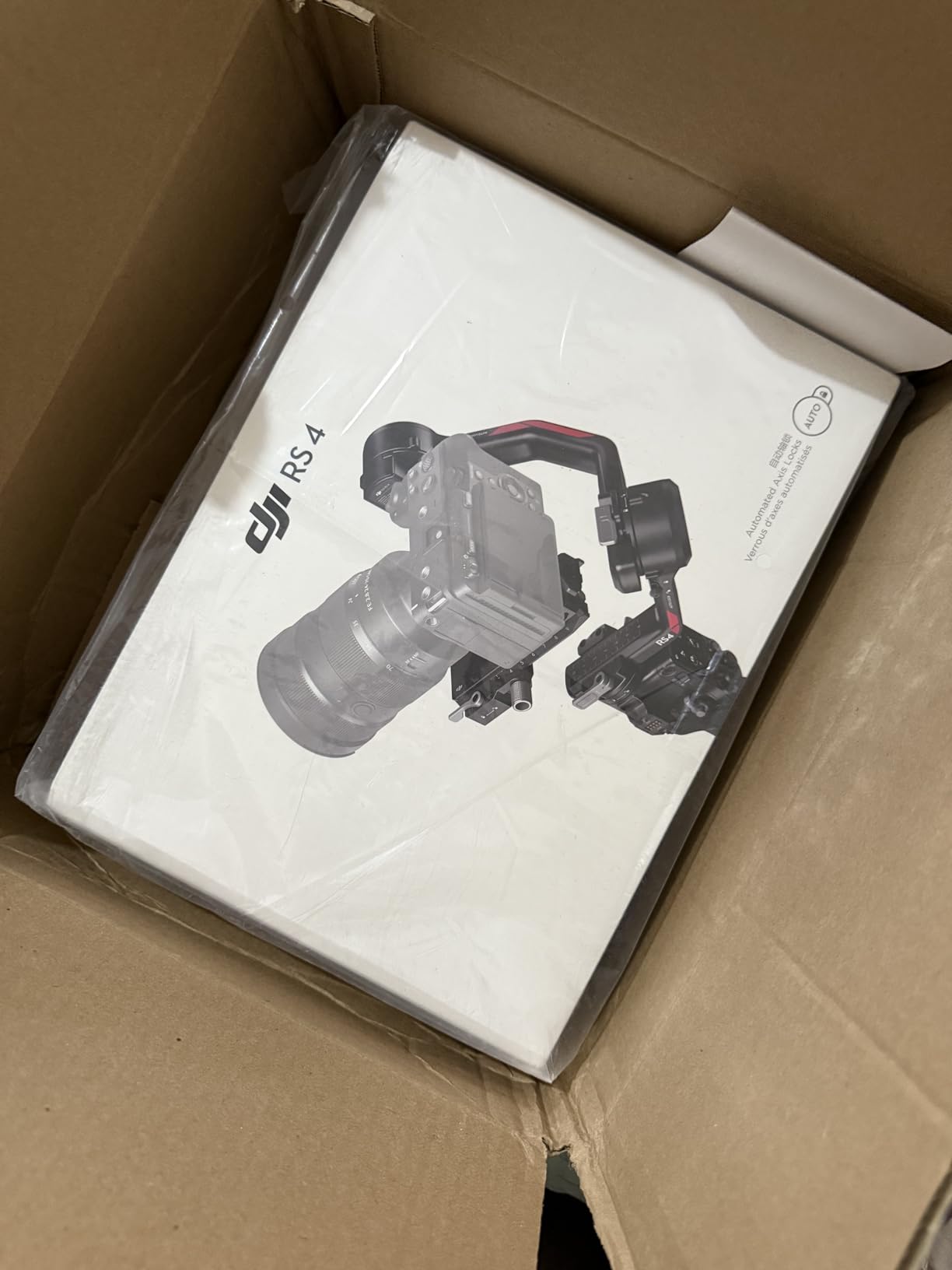
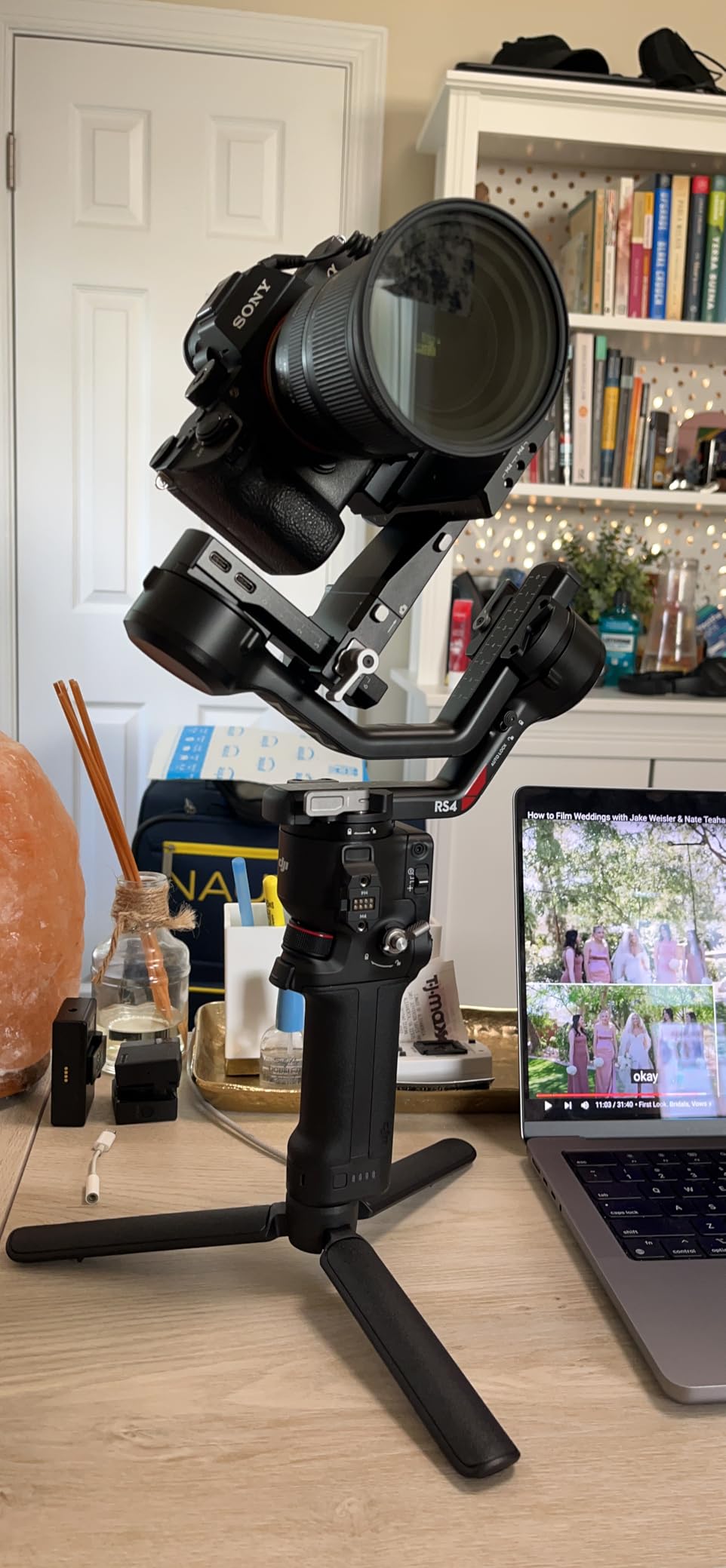
The DJI RS 4 is the gimbal I reach for when I am shooting paid client work that absolutely cannot have shaky footage. It is a professional-grade stabilizer with a 3-kilogram payload that handles full-frame mirrorless cameras with substantial lenses. The build quality feels like a piece of professional cinema equipment, not a consumer gadget.
The second-generation native vertical shooting is a standout feature for 2026 content creation. DJI redesigned the horizontal plate so you can switch from horizontal to vertical shooting without removing your camera from the gimbal. This is critical for wedding videographers and event shooters who deliver both horizontal YouTube content and vertical social media clips from the same shoot.
The Teflon-coated axis arms are a small detail that makes a big difference in daily use. Balancing a camera on a gimbal can be tedious, but the Teflon coating lets the arms slide smoothly into position without sticking or jerking. I could balance a Sony A7 IV with a 24-70mm lens in under two minutes, which is noticeably faster than older DJI gimbals.
The RSA communication port opens up an ecosystem of professional accessories, including focus motors, LiDAR focusing systems, and wireless video transmission. These accessories are not cheap, but they transform the RS 4 from a handheld stabilizer into a complete cinema rig. The BG70 battery grip is a worthwhile investment if you shoot full-day events, extending runtime from 12 hours to 29.5 hours.
Who Should Buy the DJI RS 4
This is the best gimbal for professional videographers, wedding filmmakers, and serious content creators who need reliable stabilization for heavier camera setups. If you shoot with a full-frame mirrorless camera and professional lenses regularly, the RS 4 provides the payload capacity and stability that the RS 4 Mini cannot match. It is also the right choice if you plan to build out a professional rig with focus motors and wireless transmission.
RS 4 vs RS 4 Mini – Which Makes Sense
The decision comes down to payload and accessories. If your camera and lens combination is under 2 kilograms and you do not need LiDAR or focus motor accessories, the RS 4 Mini saves you money and weight. If your setup exceeds 2 kilograms or you want to build a professional cinema rig, the RS 4 is the right investment. The RS 4 also has a larger 1.8-inch screen that makes navigating settings easier on location.
9. ZHIYUN CINEPEER Weebill 3E – Best Value Camera Gimbal
ZHIYUN CINEPEER Weebill 3E, 3-Axis Lightweight Gimbal Stabilizer for DSLR & Mirrorless Camera Canon/Sony/Panasonic/Nikon, 3KG Payload, Native Vertical Shooting, Bluetooth Shutter Control
3kg Payload
Native Vertical
16hr Battery
990g Weight
Bluetooth Shutter
Pros
- Outstanding value compared to competitors
- 3kg payload handles mirrorless cameras with moderate telephoto lenses
- Lightweight at only 990 grams with compact design
- 16-hour battery life with 14W PD fast charging
- Native vertical shooting without additional accessories
- Bluetooth shutter control for wireless camera operation
- Sling Mode reduces fatigue by 50 percent
Cons
- Cannot achieve full 360 degree rotation on Y axis
- Only Panasonic control cable included others sold separately
- Sling grip and wrist rest sold separately
- Limited compatibility with some larger camera bodies
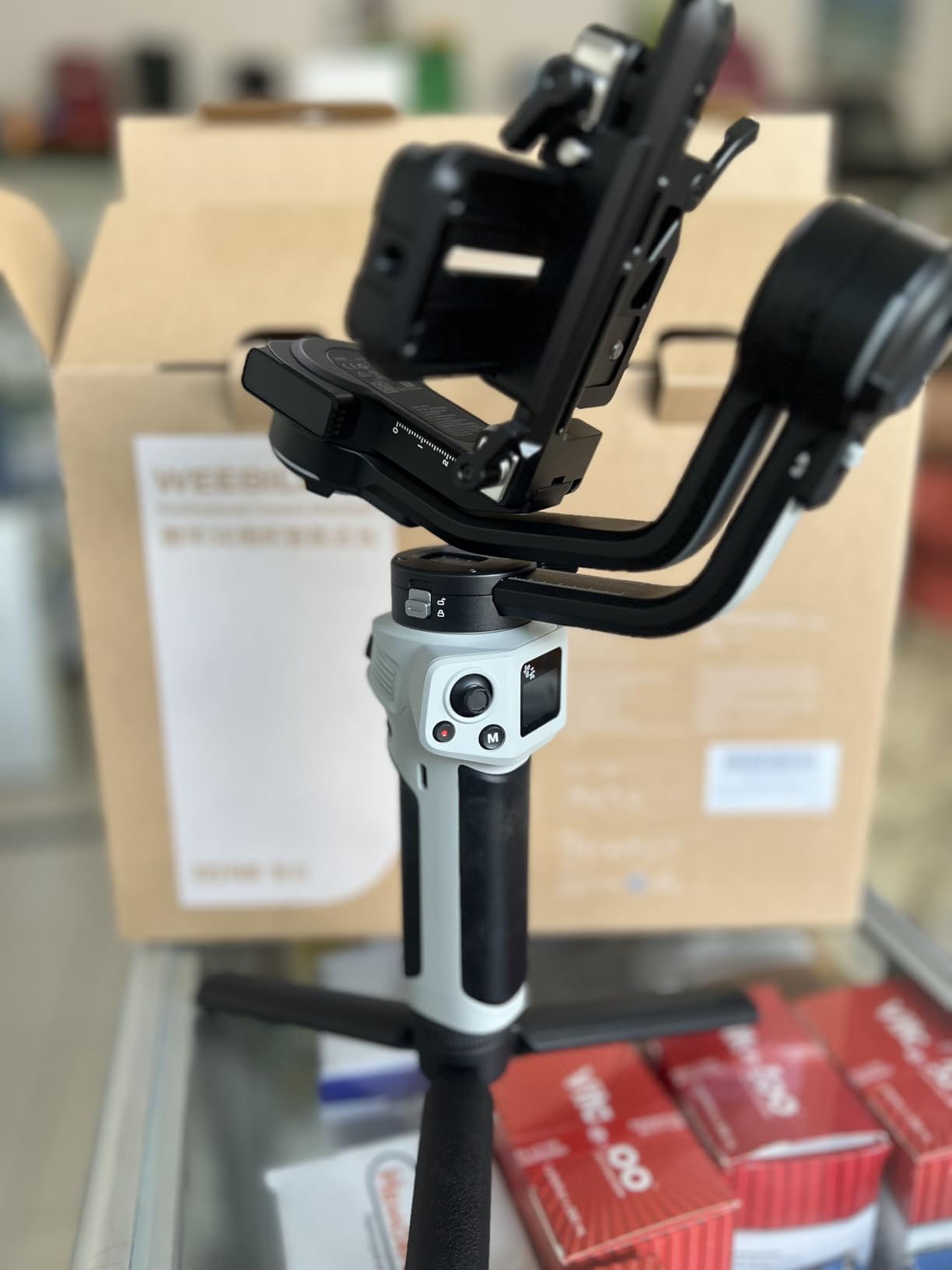
The ZHIYUN CINEPEER Weebill 3E is the value champion among camera gimbals. It offers a 3-kilogram payload and 16-hour battery life at a price that significantly undercuts the DJI RS 4. I tested it with a Panasonic GH6 and a Sony A6700, and both balanced quickly and stayed rock-steady during walking and running shots.
The native vertical shooting feature works without any additional accessories, which is a real advantage over some competitors that require you to buy a separate vertical mount plate. Switching between horizontal and vertical took me about 15 seconds, making it practical for creators who deliver content in both orientations. The A4-paper-sized folded design fits easily in a backpack.
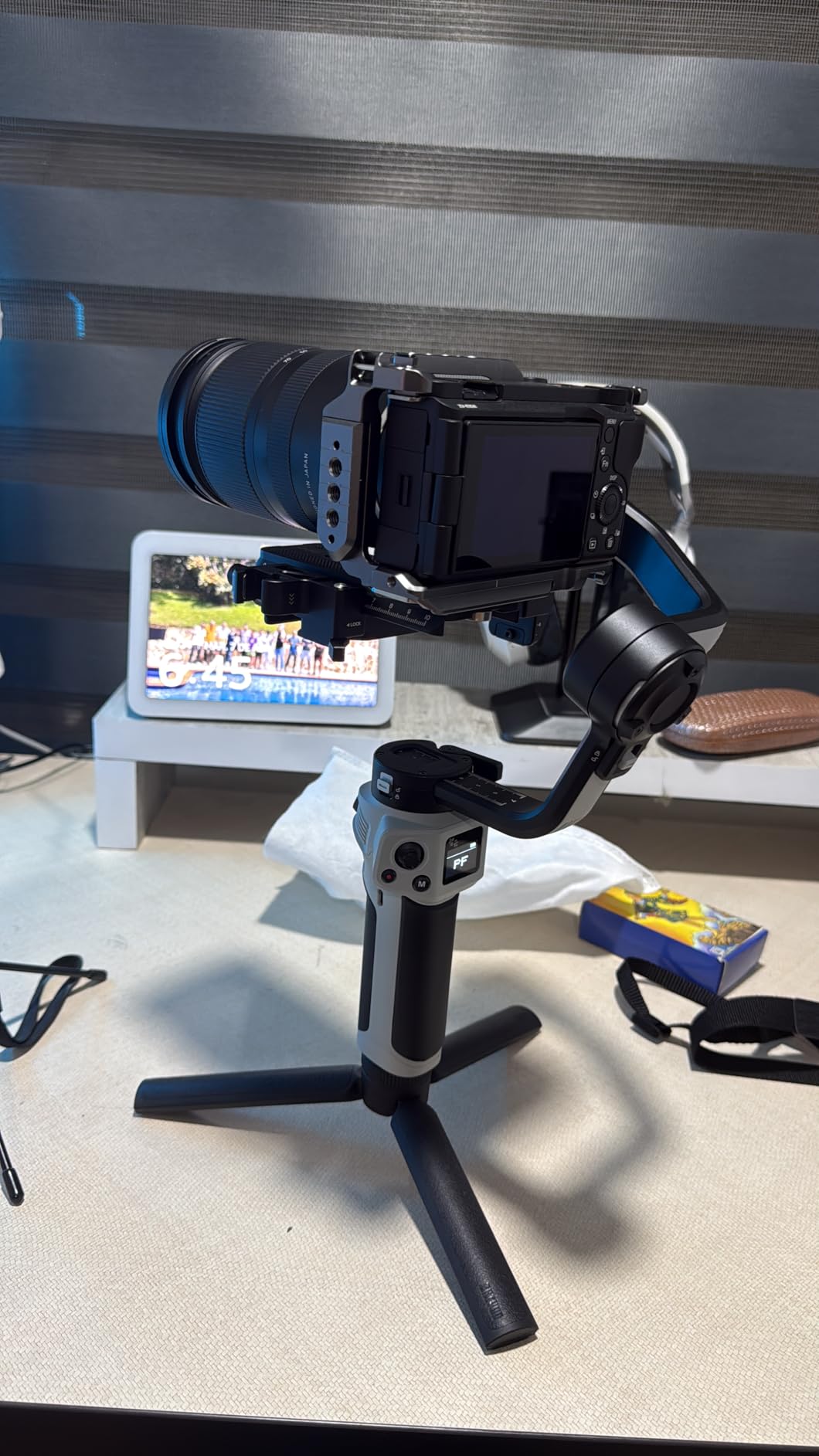
Battery life is where the Weebill 3E really shines. The 16-hour rating is the best in this roundup, and the 14W PD fast charging means you can top up significantly during a lunch break. In my testing, I shot an entire wedding day on a single charge with power to spare. The Sling Mode 2.5 ergonomic design genuinely reduces wrist fatigue by letting you hold the gimbal in a more natural position.
The main downsides are the accessory situation and compatibility. Only the Panasonic control cable comes in the box, so Canon, Sony, and Nikon shooters need to buy cables separately. The sling grip and wrist rest that make the Sling Mode comfortable are also sold separately, which adds to the total cost. The Y-axis cannot achieve full 360-degree rotation, which limits some creative moves.
Who Should Buy the Weebill 3E
This is the best gimbal for budget-conscious videographers who need camera stabilization without paying DJI prices. If you shoot with a mirrorless camera and a standard zoom lens, the 3kg payload handles it comfortably. It is especially appealing for Panasonic shooters since the control cable is included. Long battery life also makes it ideal for event videographers who cannot afford to swap batteries mid-shoot.
Camera Compatibility Notes
While the Weebill 3E supports Sony, Canon, Nikon, Panasonic, and Fujifilm cameras, compatibility is not universal. Some users report partial functionality with the Lumix S5IIX, where only focus and record controls work. Larger bodies like the Canon 5D Mark IV may not fit properly due to physical dimensions. Check ZHIYUN’s compatibility list for your specific camera and lens combination before purchasing.
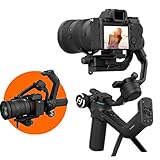
10. FeiyuTech SCORP-C – Best Budget Camera Gimbal for Beginners
FeiyuTech SCORP-C Gimbal Stabilizer for Cameras DSLR and Mirrorless Camera, 3-Axis Camera Gimbal, 5.5lbs Payload, for Sony α7Ⅳ A6300/A6400 A7S3 a9/a7 for Canon 5D3/80D for Nikon D7500/Z5/Z6 II
5.5lb Payload
Built-in Tripod
AB Trajectory
10-13hr Battery
1200g Weight
Pros
- Incredible value for the price with pro-level features
- Solid build quality with metal components
- Three-axis motor locks for safe transport
- Five-way center of gravity adjustment with memory slider
- Integrated folding bracket acts as tripod
- AB trajectory memory for automated pans
- Extensive cable compatibility for Sony Canon Nikon Panasonic Fujifilm
Cons
- Arm adjustment mechanism can feel stiff
- Limited Bluetooth camera control on some models
- Zoom lens usage can throw off balance
- Learning curve for setup without tutorials
- No Arca-Swiss standard quick-release plate
The FeiyuTech SCORP-C is the cheapest camera gimbal in this roundup, and it punches well above its weight class. With a 2.5-kilogram payload and a build quality that feels more expensive than it is, this gimbal is perfect for content creators who want to move from phone shooting to camera work without a major investment.
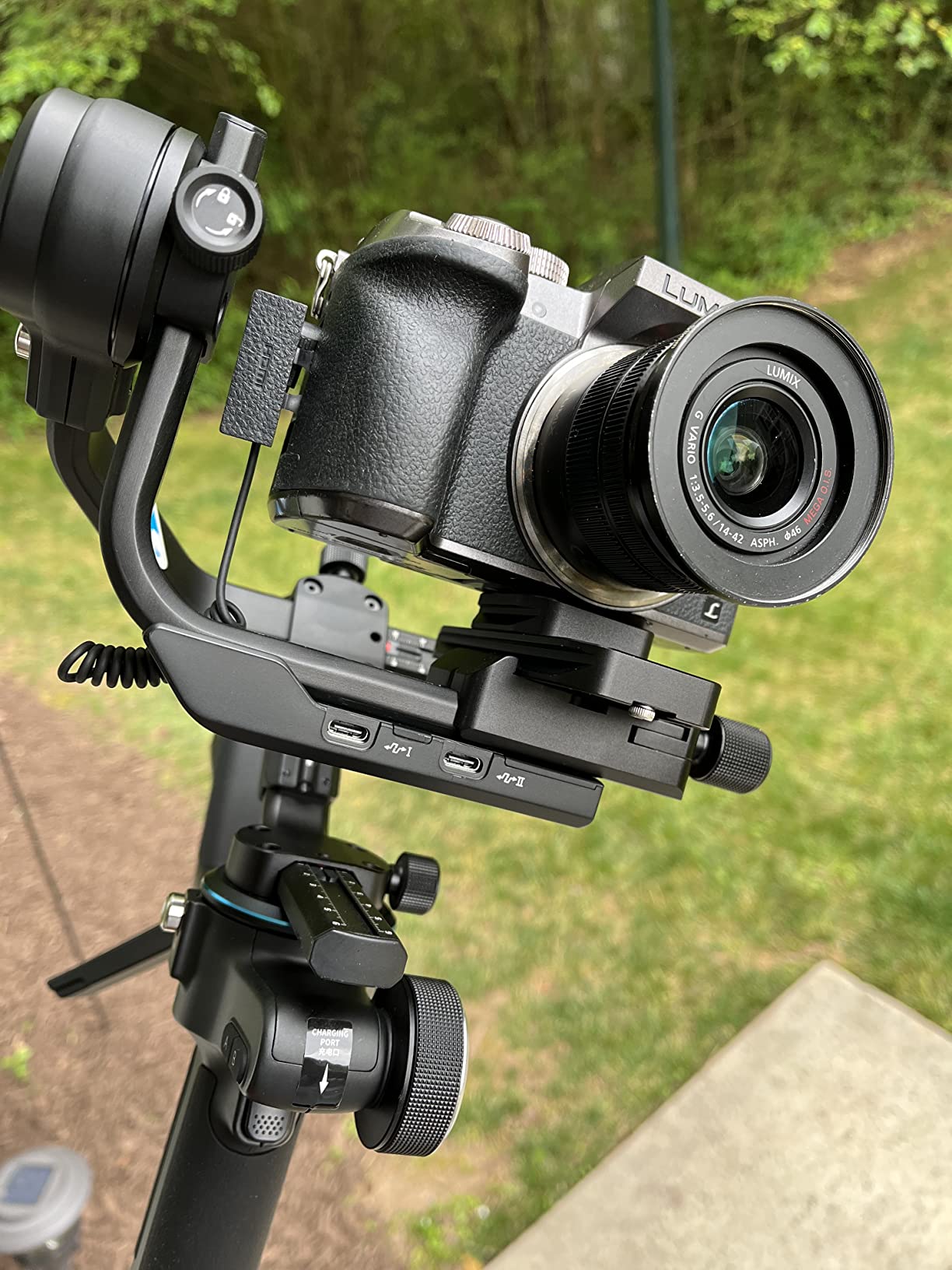
The integrated folding bracket that doubles as a tripod is a thoughtful design touch that I used constantly. Instead of carrying a separate tripod for static shots, the gimbal stands on its own built-in legs. The three-axis motor locks secure the gimbal during transport and make balancing easier by locking individual axes during setup.
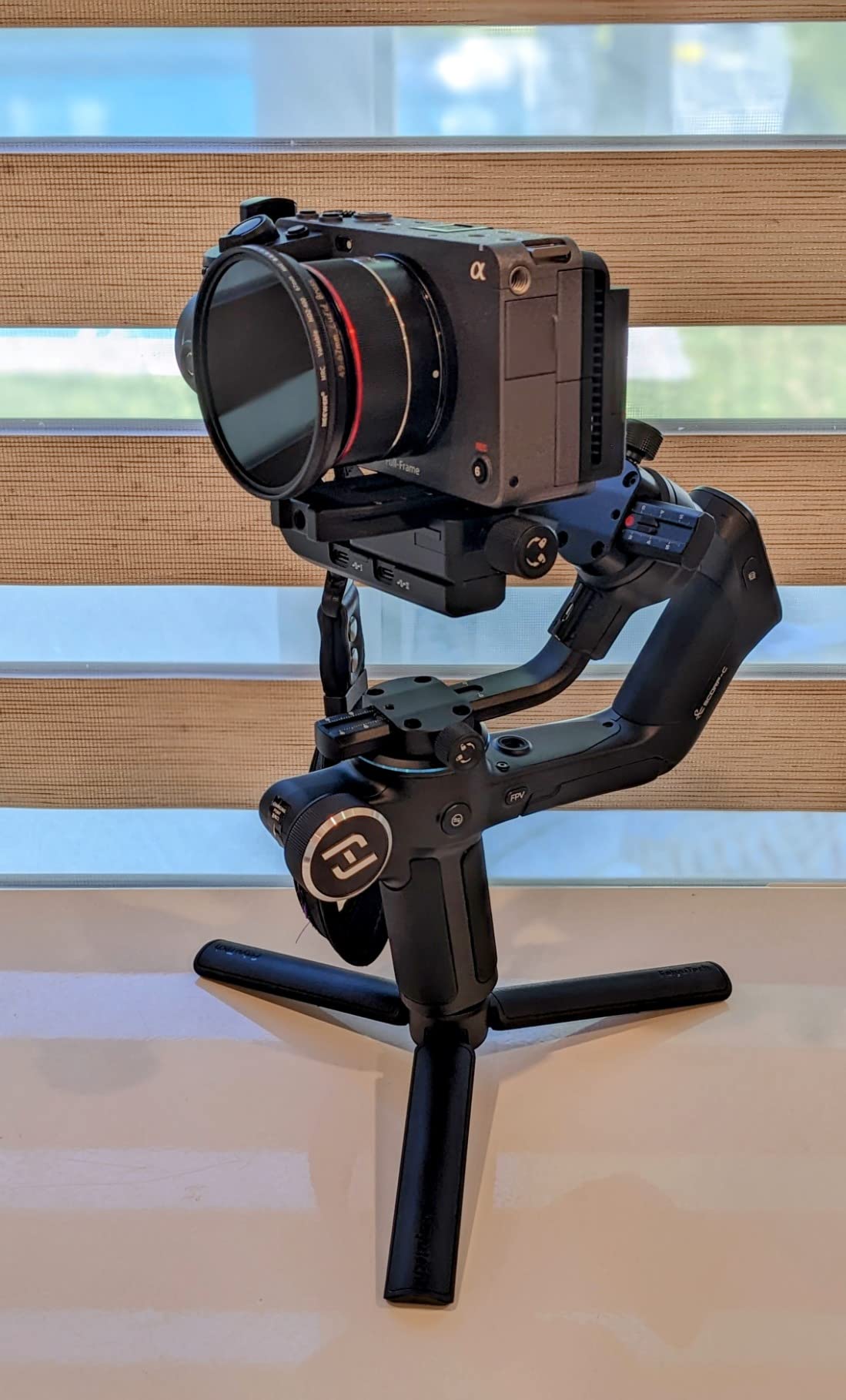
The five-way center of gravity adjustment with a memory slider is a feature I did not expect at this price. Once you find the perfect balance for your camera and lens combination, you can save that position and return to it instantly after disassembly. The AB trajectory memory feature lets you program automated camera movements, which is great for product shots and time-lapses.
The all-inclusive cable kit covering Sony, Canon, Nikon, Panasonic, and Fujifilm cameras is a significant value since competing gimbals often charge extra for cables. The companion app includes a gyro mode that lets you control the gimbal by tilting your phone, which is a fun feature for dynamic shots. However, the thumb joystick can feel jerky, and the arm adjustment mechanism has a stiff metal-on-metal feel that takes getting used to.
Who Should Buy the SCORP-C
This is the best gimbal for first-time camera gimbal buyers who want maximum features for minimum investment. If you are upgrading from smartphone shooting to a mirrorless camera and need stabilization without spending hundreds of dollars, the SCORP-C gives you professional features like motor locks, trajectory memory, and multi-camera cable support at a budget price. It is also a solid backup gimbal for professionals who need a secondary stabilizer.
Learning Curve and Setup Tips
The SCORP-C has a steeper learning curve than DJI gimbals, so plan to watch a few YouTube tutorials before your first shoot. The arm adjustment takes practice, and balancing with zoom lenses requires careful attention since changing the focal length shifts the center of gravity. Once dialed in, though, the gimbal performs reliably. FeiyuTech offers a one-year warranty, and their customer support is generally responsive according to user reports.
How to Choose the Best Gimbal for Your Needs
Choosing the right gimbal comes down to matching the device to your shooting style and gear. After testing all 10 gimbals in this guide, I can break the decision into a few key factors that matter most in real-world use.
Payload Capacity
The most important spec is payload capacity because it determines what you can mount. Smartphone gimbals typically handle 200 to 300 grams, which covers all modern phones. Camera gimbals range from 2 kilograms for compact options like the DJI RS 4 Mini up to 3 kilograms or more for professional models. Always add the weight of your camera body, lens, and any accessories like microphones or monitors when calculating your needs.
A common mistake I see on Reddit is buying a gimbal rated for your camera body weight alone, forgetting that a heavy lens can add 500 grams or more. Always leave a 20 percent buffer between your total rig weight and the gimbal’s payload rating to ensure the motors are not maxed out.
Battery Life
Battery life ranges from 10 hours on smartphone gimbals to 16 hours on the ZHIYUN Weebill 3E. For most creators, anything over 10 hours covers a full day of shooting. However, battery life claims are measured under ideal conditions without tracking, fill lights, or phone charging active.
In my experience, real-world battery life runs about 60 to 70 percent of the advertised rating when you use tracking features and charge your phone simultaneously. The DJI RS 4 addresses this with the optional BG70 battery grip that extends runtime to nearly 30 hours, which is worth the investment for event shooters.
Stabilization Quality
All gimbals in this roundup use 3-axis stabilization with brushless motors, but the quality varies significantly. Three-axis stabilization controls the pan, tilt, and roll movements, which is the standard for smooth video. Two-axis gimbals exist but they cannot correct for roll, which produces tilted horizons.
The difference between a good 3-axis gimbal and a great one comes down to motor responsiveness and the quality of the stabilization algorithms. DJI gimbals consistently produced the smoothest footage in my tests, with the motors reacting instantly to sudden movements without introducing their own micro-jitters.
Subject Tracking and Smart Features
Subject tracking is the feature that separates modern gimbals from older models. DJI’s ActiveTrack 7.0 and Insta360’s Deep Track use AI to follow subjects automatically, letting you shoot solo without a camera operator. The Insta360 Flow 2 Pro goes further with Apple DockKit support, enabling tracking across 200+ iOS apps.
Other smart features to look for include gesture control for hands-free operation, built-in fill lights, extension rods for creative angles, and foldable designs for portability. The best gimbal for you is the one that includes the features you will actually use regularly.
Durability and Long-Term Reliability
Reddit users frequently complain about gimbals malfunctioning within one to two years of regular use. Common issues include motors developing wobble that cannot be fixed by recalibration, and fragile components breaking from normal travel. DJI has the strongest reputation for reliability based on community feedback, followed by ZHIYUN and Insta360.
To maximize longevity, always lock the motor axes during transport, avoid exposing the gimbal to extreme temperatures and moisture, and store it in a protective case. Buying from a retailer with a good return policy is also important since compatibility and fit issues are common.
Portability and Foldable Design
If you travel frequently, a foldable gimbal that fits in a backpack or large pocket is essential. The smartphone gimbals in this roundup all fold compactly, with the Hohem iSteady X3 SE being the lightest at under 0.8 pounds. Camera gimbals are inherently larger, but the DJI RS 4 Mini and ZHIYUN Weebill 3E are both manageable for travel at around 1 kilogram each.
Frequently Asked Questions About Gimbals
What is the best gimbal for a smartphone?
The DJI Osmo Mobile 7P is the best smartphone gimbal overall, thanks to its ActiveTrack 7.0 tracking, built-in fill light, extension rod, and foldable tripod. For budget buyers, the Hohem iSteady X3 SE offers excellent value with 11-hour battery life and a detachable remote. For iPhone power users, the Insta360 Flow 2 Pro provides unmatched tracking across 200+ iOS apps via Apple DockKit.
Do you really need a gimbal for video?
A gimbal is worth it if you shoot moving video regularly and your phone or camera’s built-in stabilization is not smooth enough for your standards. Smartphone optical image stabilization has improved significantly, but it cannot match the Steadicam-like smoothness that a 3-axis gimbal provides during walking, running, or panning shots. If you primarily shoot static talking-head content from a tripod, you may not need a gimbal.
What is the best gimbal for iPhone?
The DJI Osmo Mobile 8 and Insta360 Flow 2 Pro are the best gimbals for iPhone users. The Osmo Mobile 8 offers native AI tracking that works with the iPhone’s built-in Camera app via Apple DockKit. The Flow 2 Pro supports DockKit tracking across 200+ apps, includes multi-person tracking, and offers Dolby Vision and ProRes support for maximum video quality.
How many axes do you need on a gimbal?
You need a 3-axis gimbal for video stabilization. Three-axis gimbals control pan, tilt, and roll movements, which covers all the directions your hand moves during filming. Two-axis gimbals skip roll stabilization, resulting in tilted horizons when you turn or bank. Every gimbal recommended in this guide uses 3-axis stabilization with brushless motors.
Can you use a gimbal with a GoPro?
Most smartphone gimbals cannot support a GoPro because action cameras do not fit standard phone clamps and may exceed weight limits. The Insta360 Flow 2 Pro has a 300-gram load limit that excludes action cameras. If you need gimbal stabilization for a GoPro, look for action camera-specific gimbals or use your GoPro’s built-in HyperSmooth stabilization, which is among the best electronic stabilization available in action cameras.
What gimbal do YouTubers use?
Most professional YouTubers use the DJI RS 4 or DJI RS 4 Pro for camera-based content, and the DJI Osmo Mobile 7P or Insta360 Flow 2 Pro for smartphone content. The DJI RS 4 Mini is popular among hybrid creators who shoot with both mirrorless cameras and phones. Budget-focused creators often choose the ZHIYUN Weebill 3E or FeiyuTech SCORP-C for camera work.
Final Thoughts on the Best Gimbals in 2026
After months of testing these 10 gimbals across smartphones and cameras, my top recommendation is the DJI Osmo Mobile 7P for phone shooters and the DJI RS 4 Mini Combo for camera users. Both deliver the best balance of features, performance, and value in their respective categories. The DJI Osmo Mobile 8 is the strongest pick for iPhone users who want native AI tracking, while the Insta360 Flow 2 Pro wins for anyone who needs tracking across multiple apps.
For budget-conscious creators, the Hohem iSteady X3 SE proves you do not need to spend a lot to get solid 3-axis stabilization, and the FeiyuTech SCORP-C does the same for camera shooters. The best gimbals are not always the most expensive ones. They are the ones that match your gear, your shooting style, and your budget while delivering smooth, professional footage every time you hit record.