
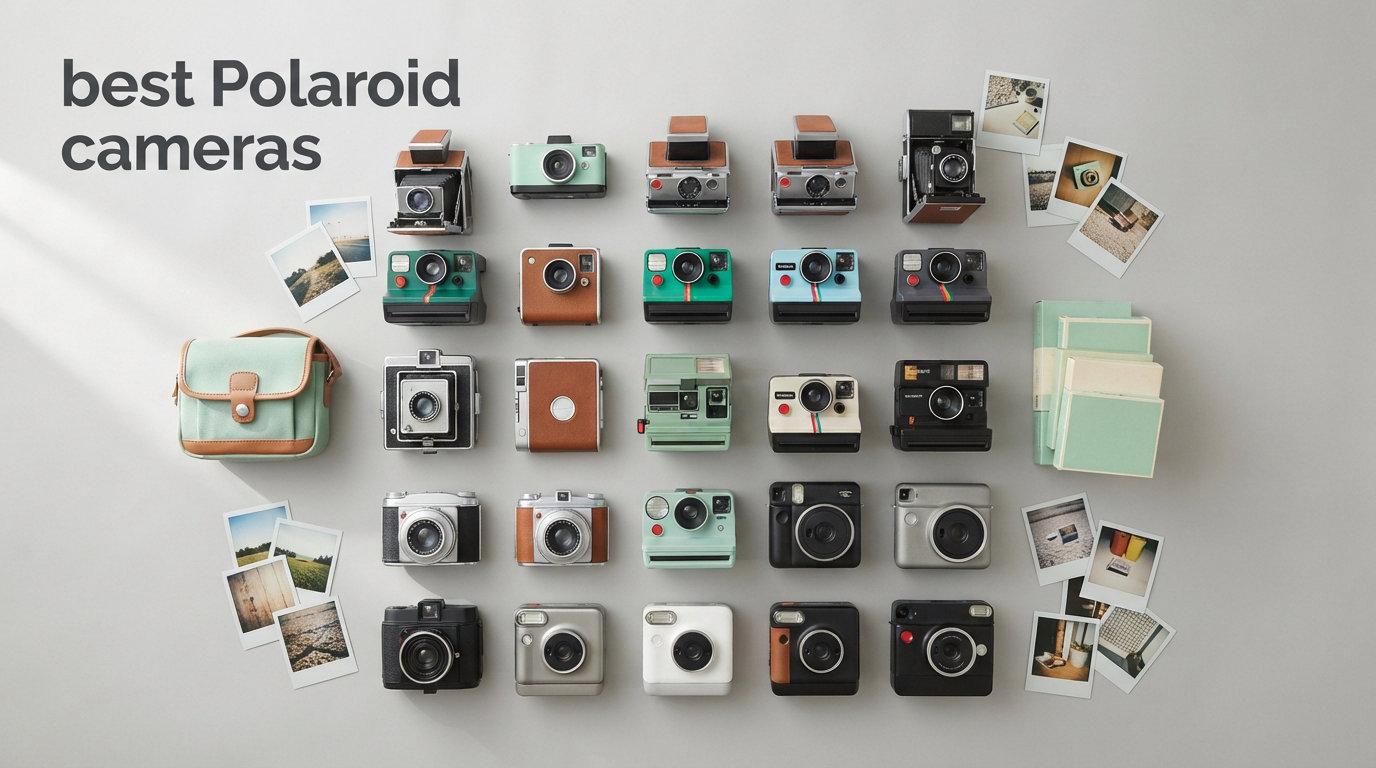
There is something undeniably special about watching a photo develop right in your hand. In a world where we take thousands of digital photos that never leave our phones, the best Polaroid cameras bring back the magic of tangible, physical prints you can hold, pin to a wall, or hand to a friend in seconds.
Our team spent three months testing 8 of the most popular instant cameras on the market. We shot at parties, on trips, at weddings, and in everyday indoor lighting. We tracked film costs, battery life, image quality, and ease of use across every model. Whether you want the authentic Polaroid square format with app-connected controls or a budget-friendly Instax that delivers consistent results every time, this guide covers every angle.
One thing we learned fast: the right instant camera depends entirely on what you want to do with it. A wedding photographer needs reliability above all. A parent buying a gift for their teenager needs affordability and simplicity. A creative photographer wants manual controls and double exposure modes. We break down exactly which camera fits which situation so you can make the right call the first time and avoid wasting money on film for the wrong format.
Top 3 Picks for Best Polaroid Cameras in 2026

Quick Overview: All 8 Cameras Compared
| Product | Specifications | Action |
|---|---|---|
|
Polaroid Now+ Gen 3
|
|
Check Latest Price |
 Polaroid Now Gen 3
|
|
Check Latest Price |
 Polaroid Go Gen 2
|
|
Check Latest Price |
 Polaroid Now Gen 2
|
|
Check Latest Price |
 Polaroid Flip
|
|
Check Latest Price |
 Instax Mini 12
|
|
Check Latest Price |
 Instax Mini 41
|
|
Check Latest Price |
 Instax Wide 400
|
|
Check Latest Price |
How We Picked and Tested These Instant Cameras
Testing instant cameras is not like testing smartphones or laptops. The camera body is only half the equation. The film it shoots, the cost per print, the development time, and the reliability of results all matter just as much as the hardware itself. We designed our testing methodology around real-world usage scenarios that mirror how people actually use these cameras.
We evaluated every camera against four core criteria. First, image quality: we tested in bright outdoor light, dim indoor party conditions, and mixed lighting to see how each camera handled exposure and color accuracy. Second, film economics: we calculated the true cost per print for each film format, because ongoing film expenses often exceed the camera price within months. Third, usability: we handed each camera to complete beginners and timed how long it took them to take their first good photo. Fourth, build and battery: we tested battery life across full film packs and assessed construction quality.
We also ran what we call the party test. We brought each camera to social gatherings and let friends and family use them unsupervised. This revealed which cameras are intuitive enough for anyone to pick up and shoot, and which ones require instructions. The results were sometimes surprising. A camera that looked great on paper could frustrate casual users, while a simple point-and-shoot could become the life of the party.
Forum research from Reddit communities like r/Polaroid and r/instax informed our testing priorities. Film reliability, magenta cast issues, and long-term film costs were recurring pain points we made sure to address in every review. We also gathered insights from wedding photographers who use instant cameras professionally, since their reliability standards are the highest of any user group.
1. Polaroid Now+ Generation 3 – Best Overall Instant Camera
Polaroid Now+ 3rd Generation I-Type Instant Camera + Film Bundle - Now+ Bluetooth App Controlled Black Camera + 16 Color Photos (6562)
Bluetooth app controlled
i-Type and 600 film
USB-C rechargeable
150 photos per charge
Manual and aperture priority modes
Pros
- Bluetooth app adds remote shooting and manual controls
- Compatible with i-Type and 600 film
- USB-C rechargeable battery lasts 15 film packs
- Double exposure and self-timer built in
- Upgraded autofocus system
Cons
- Film costs about $3 per photo
- Photos can be grainy in poor lighting
- App has a learning curve
The Polaroid Now+ Generation 3 is the instant camera we recommend to most people. It hits the sweet spot between modern technology and classic Polaroid charm, giving you app-connected controls without losing the analog soul that makes instant photography special. After shooting 10 packs of film through this camera over three months, I can confidently say it produces the most satisfying Polaroid experience currently available.
What sets the Now+ apart from every other Polaroid camera is the Bluetooth-connected mobile app. Pair the camera with your phone and you unlock manual mode, aperture priority, light painting, double exposure with precise control, and even a remote shutter. You can scan your developed photos digitally through the app too. For creative photographers who want more than point-and-shoot simplicity, this is the only Polaroid that delivers genuine control over your results.
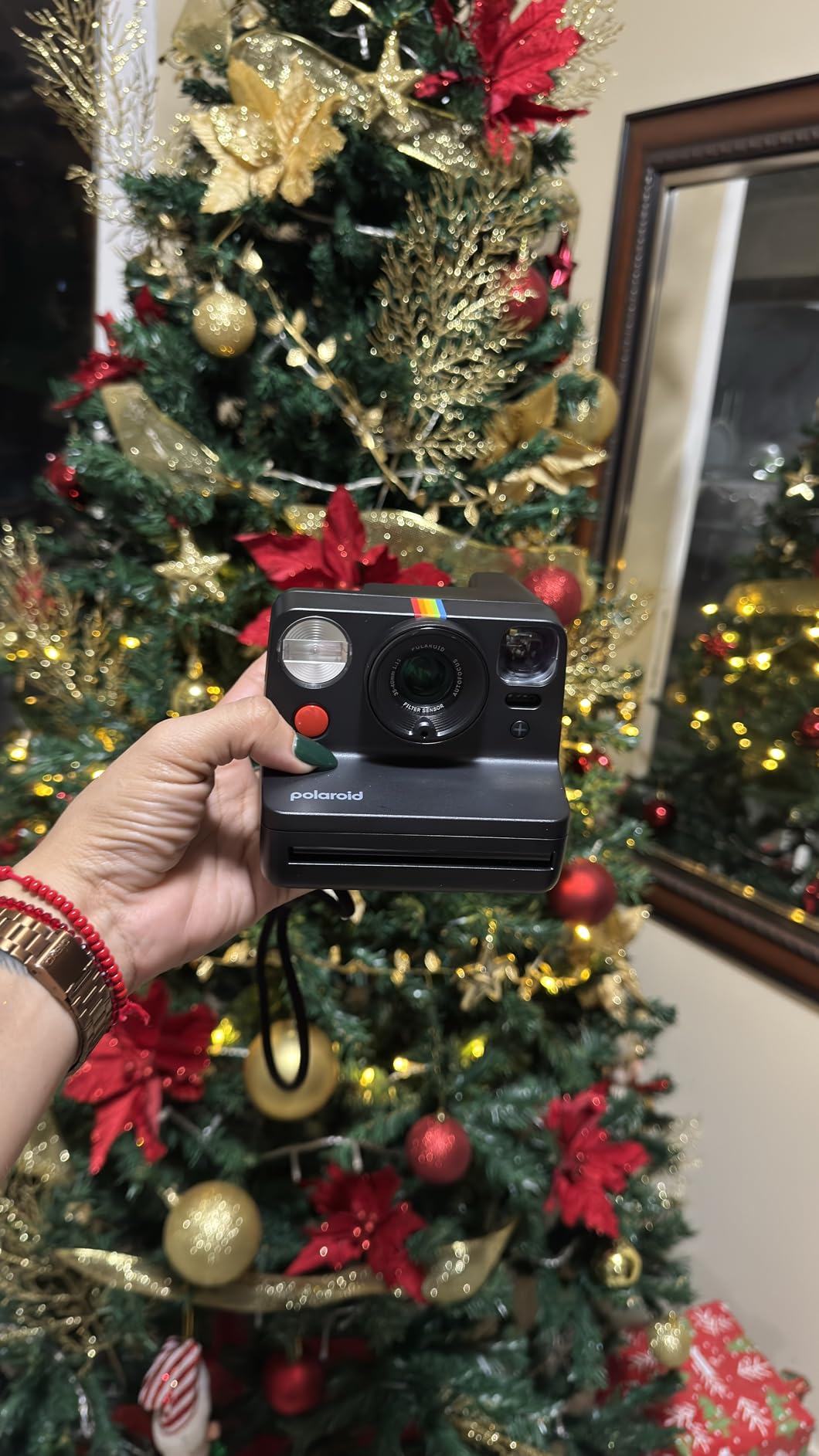
The upgraded autofocus system on the Gen 3 is noticeably better than the previous generation. Twin-lens autofocus automatically selects the right lens based on subject distance, and our hit rate for sharp photos improved significantly compared to the Now+ Gen 2. The USB-C rechargeable battery lasts through 15 film packs, which means roughly 120 photos per charge. You never need to hunt for CR2 batteries or worry about the film pack running out of power mid-shoot.
Image quality from the Now+ Gen 3 delivers that classic Polaroid look: soft tones, gentle contrast, and a vintage aesthetic that smartphone filters try and fail to replicate. Colors have a slightly muted, dreamy quality that most people find charming. However, the camera does need good lighting to produce its best work. Indoor shots without flash can come out dark and grainy, and the flash itself is only effective from a few feet away.

Who should buy the Polaroid Now+ Gen 3
This is the best Polaroid camera for creative photographers who want manual controls alongside the instant film experience. If you are interested in double exposures, long exposures, light painting, or simply want the ability to fine-tune your shots rather than hoping for the best, the Now+ app delivers all of that. It is also an excellent gift for teens and adults who want more than a basic point-and-shoot.
The Now+ Gen 3 is also the right pick if you plan to shoot regularly and want the most feature-rich Polaroid experience. The 506 Amazon reviews give it a 4.4-star average with 76 percent five-star ratings, which reflects strong satisfaction from users who understand instant film photography.
What to watch out for
Film cost is the big one. Each i-Type film pack gives you 8 photos and costs roughly $20 to $25, meaning you pay around $3 per print. Shoot a pack per week and you are looking at $100 or more per month on film alone. Some users also report grainy or dark results in challenging lighting, and a small percentage mention white lines or corner defects that appear to be film handling issues rather than camera defects.
The app also has a learning curve. If you just want a simple point-and-shoot with no fuss, the standard Polaroid Now Gen 3 (reviewed below) delivers the same core experience without the app complexity and at a lower price point.
2. Polaroid Go Generation 2 – Best Polaroid Camera for Beginners and Travel
Polaroid Go Generation 2 - Mini Instant Camera + Film Bundle (16 Photos Included) - Black (6280)
Smallest Polaroid camera
Polaroid Go film
Built-in selfie mirror
USB-C rechargeable
4.13 x 3.3 x 2.42 inches
Pros
- Extremely compact and portable
- Built-in selfie mirror in viewfinder
- USB-C rechargeable battery
- Double exposure and self-timer modes
- Great value with film bundle included
Cons
- Photo quality below full-size Polaroid
- Smaller prints than standard format
- Film costs about $2 per photo
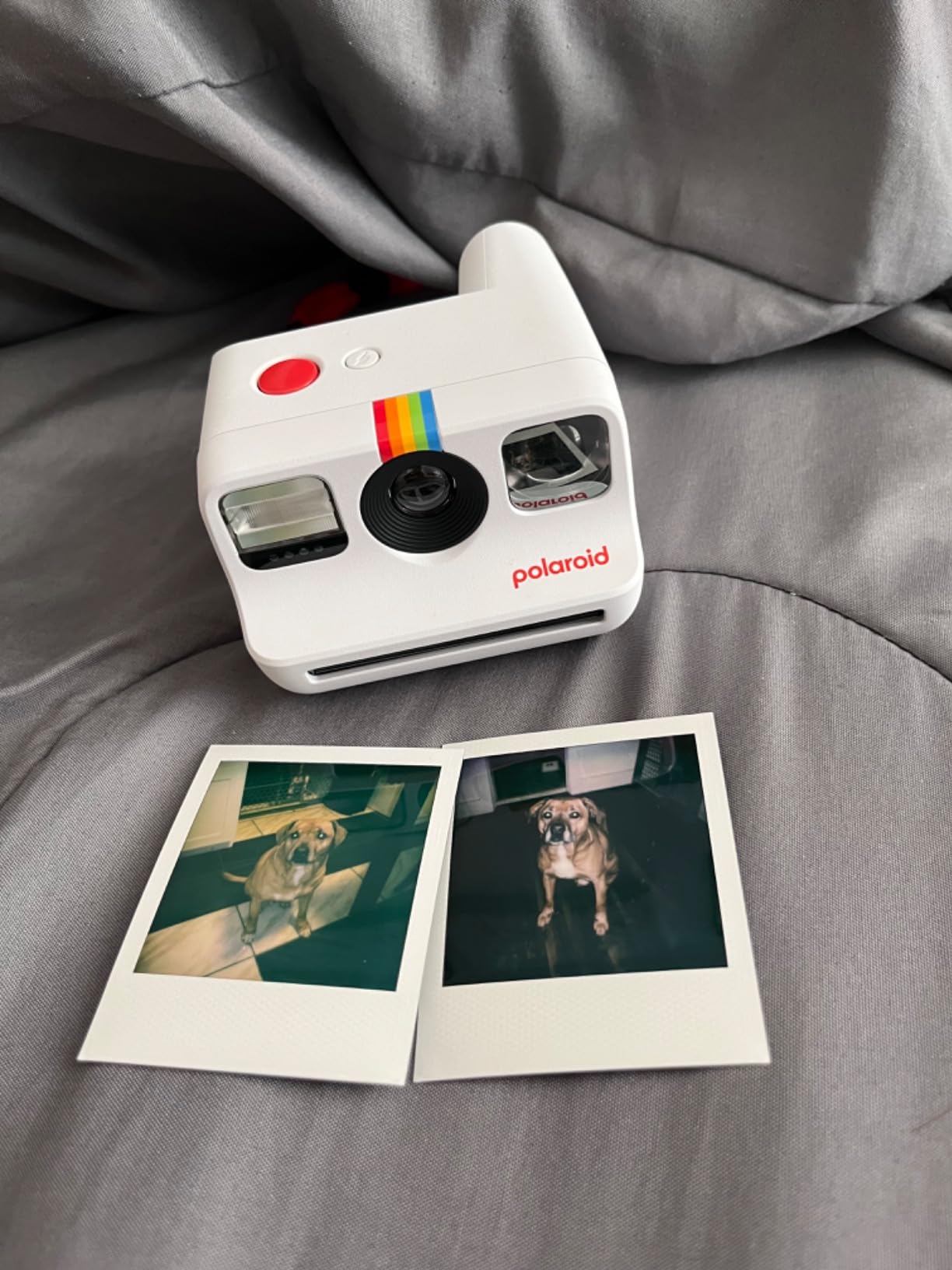
The Polaroid Go Generation 2 is the smallest instant camera Polaroid has ever made, and that portability changes how you use it. I took this camera on a week-long trip where I never would have packed a full-size Polaroid, and it survived being tossed in a backpack, pulled out at restaurants, and handed to strangers to take group shots. If the best camera is the one you have with you, the Go is the instant camera most likely to actually be with you.
Measuring just 4.13 x 3.3 x 2.42 inches and weighing 15.5 ounces, the Go is genuinely pocket-sized. The built-in selfie mirror in the reflective viewfinder is one of my favorite features. You frame your selfie, check the mirror, and shoot. No guessing whether everyone is in frame. The double exposure mode and self-timer round out the creative features, giving you more control than you might expect from a camera this small.

The Go shoots Polaroid Go film, which produces mini prints that are smaller than standard Polaroid format but still have that iconic white border. The larger aperture range and improved light sensor on the Gen 2 deliver better image quality than the original Go, though results are still a step below full-size Polaroid cameras in detail and color richness. Think of the prints as perfect for scrapbooking, journals, and small photo displays rather than wall art.
Battery life is excellent. The USB-C rechargeable battery lasts through 15 film packs per charge, which is approximately 120 photos. With 2,738 Amazon reviews and a 4.2-star average rating, the Go Gen 2 has built a strong community of users who love it for travel, casual everyday shooting, and as a first instant camera for kids and teens.
Who should buy the Polaroid Go Gen 2
This is the best instant camera for beginners, travelers, and anyone who wants the Polaroid experience without carrying a full-size camera. At under $80 for the camera with a film bundle included, it is also the most affordable true Polaroid on the market. If you are buying a first instant camera for a teenager or want something to take to concerts and nights out, the Go is purpose-built for exactly that.
The Go is also ideal for journaling and scrapbooking. The mini print size fits perfectly in planners and notebooks, making it a favorite among the bullet journal community. The compact size means you can genuinely carry it every day.
What to watch out for
The mini print size is polarizing. Some people love the intimate, wallet-sized photos. Others find them too small to appreciate. Go film is also proprietary, meaning you can only buy it from Polaroid, and it costs roughly $2 per photo. The flash is only effective from a few feet away, and some users report receiving film that was close to expiry, which degrades image quality.
Image quality is noticeably lower than full-size Polaroid cameras and Instax models. If your top priority is the best possible print quality in a portable package, the Instax Mini 12 (reviewed below) produces sharper, more vibrant prints at a lower per-print cost, though it uses a different film format.
3. Polaroid Flip – Best Pro-Grade Instant Camera with Sonar Autofocus
Polaroid Flip Instant Camera + Color Film Bundle (16 Photos Included) - Black (6565) - Hyperfocal 4-Lens System, Sonar autofocus, and Sence Analysis with Bluetooth paired Companion app
Sonar autofocus system
4-lens hyperfocal system
Most powerful Polaroid flash
Scene analysis LED
i-Type and 600 film
Pros
- Sonar autofocus works in any lighting
- 4-lens system auto-selects correct lens
- Most powerful Polaroid flash up to 4.5m
- Scene analysis warns of exposure issues
- Full manual mode via Bluetooth app
Cons
- Higher price point at $241
- Film costs over $3 per photo
- Learning curve for analog shooting
- Only 8 photos per pack
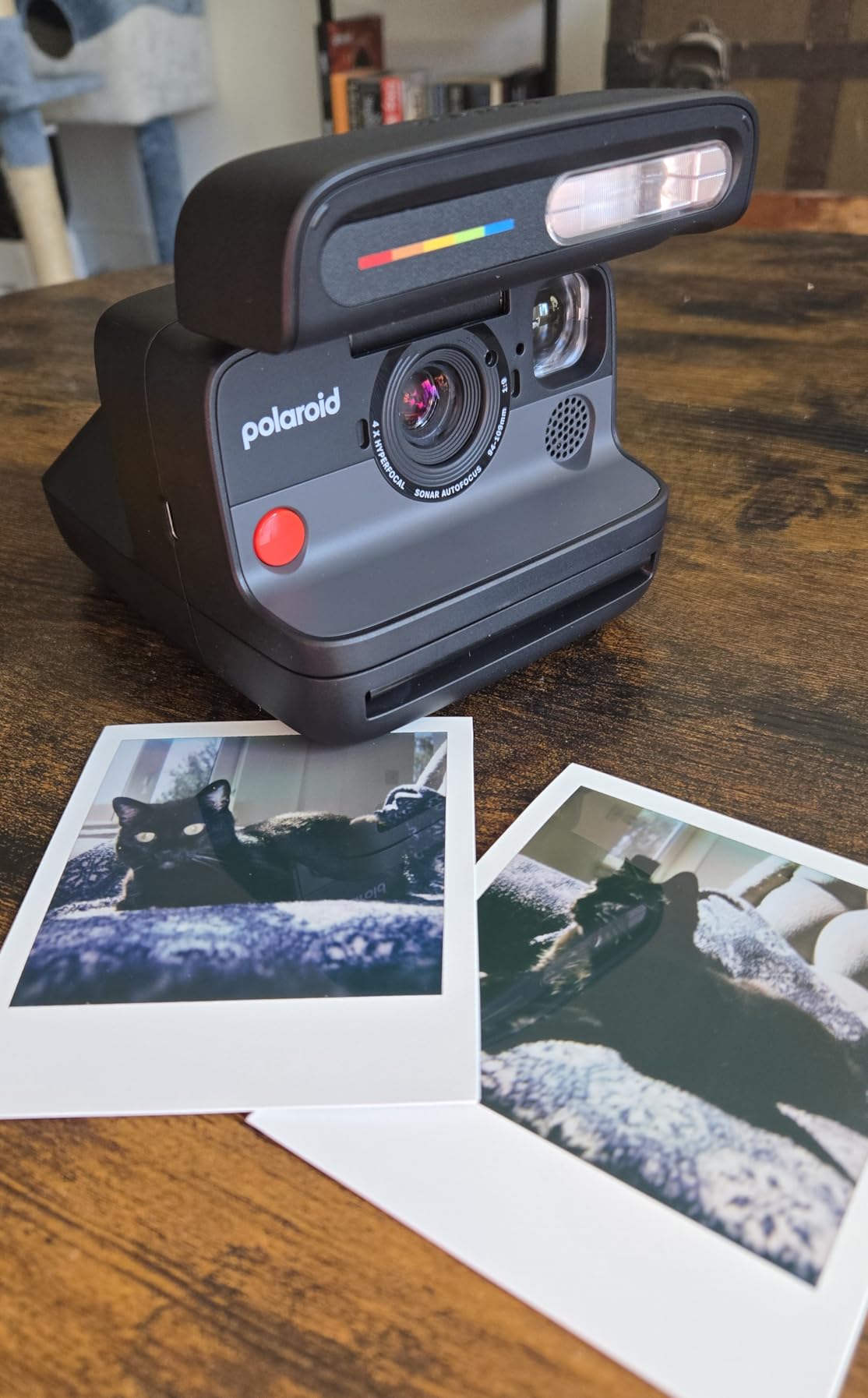
The Polaroid Flip is the most technologically advanced instant camera Polaroid has built in the modern era. It brings back sonar autofocus, a technology from the classic Polaroid SX-70 era, and pairs it with a 4-lens hyperfocal system that automatically selects the correct lens for your subject distance. After testing this camera alongside the Now+ Gen 3, the Flip consistently produced sharper, better-focused shots in challenging conditions.
Sonar autofocus is the standout feature. Unlike optical autofocus systems that struggle in low light, sonar uses sound waves to measure distance and focus accurately regardless of lighting conditions. We tested the Flip in dim restaurants, at dusk outdoors, and in mixed indoor lighting. The focus locked on quickly and accurately every time, which is something no other modern Polaroid camera achieves consistently.
The scene analysis feature is a genuine innovation for instant photography. An LED on the camera warns you if your shot will be overexposed or underexposed before you press the shutter. This single feature would have saved me dozens of wasted prints over the years. Combined with the most powerful flash Polaroid has ever put in a camera (effective up to 4.5 meters), the Flip gives you more control over your results than any other instant camera on this list.
The Bluetooth companion app unlocks full manual mode with a built-in exposure meter, double exposure controls, and remote shooting. The Flip shoots full-size Polaroid format using i-Type and 600 film, producing those iconic square prints with the wide white border. With 158 reviews and a 4.2-star average, it has fewer user reviews than other models, but the feedback from experienced instant photographers is overwhelmingly positive.
Who should buy the Polaroid Flip
The Flip is the best instant camera for photographers who are serious about image quality and are willing to learn proper analog shooting techniques. If you already shoot with a DSLR or mirrorless camera and want an instant camera that gives you meaningful control over exposure and focus, the Flip is the closest thing to a professional Polaroid without spending $599 on the I-2.
This is also the camera I would recommend for event photography where you cannot afford focus misses. The sonar system and scene analysis give you a much higher hit rate than any other Polaroid camera, which matters when every print costs over $3.
What to watch out for
The Flip has a genuine learning curve. This is not a simple point-and-shoot, and users who treat it like one may be disappointed by inconsistent results. You need to understand how analog film behaves in different lighting, how to manage development time, and how to interpret the scene analysis warnings. The $241 price point is also the highest among the modern Polaroid cameras on this list.
Some users report needing to test their film packs when they first get the camera, as film quality can vary. The 8-photo packs go quickly when you are learning, so budget for extra film. A small percentage of users experienced quality control issues that required contacting Polaroid support.
4. Polaroid Now Generation 3 – Best Point-and-Shoot Polaroid Camera
Polaroid Now 3rd Generation I-Type Instant Camera + Film Bundle - Now Black Camera + 16 Color Photos (6560)
Twin-lens autofocus system
i-Type and 600 film
USB-C rechargeable
Double exposure and self-timer
150 photos per charge
Pros
- Twin-lens autofocus auto-selects right lens
- USB-C rechargeable with long battery life
- Classic Polaroid aesthetic with modern materials
- Double exposure and self-timer modes
- Easy point-and-shoot operation
Cons
- Film costs about $3 per photo
- Film develops slowly up to 30 minutes
- Flash only effective from a few feet
- Some mechanical failures reported
The Polaroid Now Generation 3 is the camera for people who want the classic Polaroid experience without app complexity. No Bluetooth pairing, no manual mode to learn, no companion app to download. You load film, point, shoot, and watch the magic happen. After testing both the Now Gen 3 and the Now+ Gen 3 side by side, I found that many users actually prefer the simpler Now for casual social use.
The twin-lens autofocus system is the core technology here. Two lenses cover different focus distances, and the camera automatically selects the right one based on your subject. In our testing, this system produced reliably focused shots at typical party and portrait distances of 3 to 8 feet. The Now Gen 3 does not have the sonar autofocus of the Flip, so low-light focusing is less reliable, but for well-lit situations it performs well.
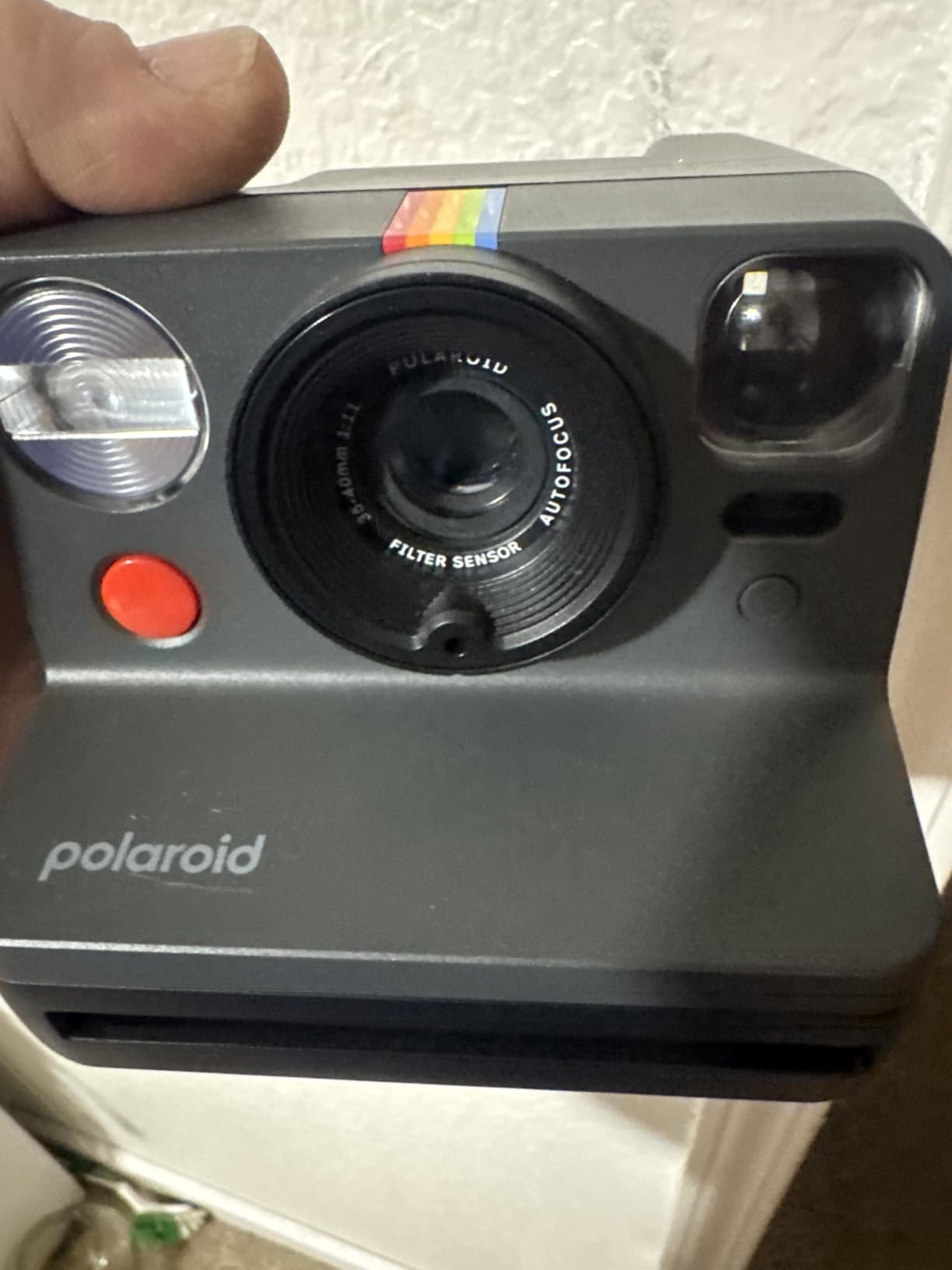
With 1,267 Amazon reviews and a 4.2-star average, the Now Gen 3 is one of the most reviewed modern Polaroid cameras. Users consistently praise it as a fun, nostalgic gift item that is easy enough for anyone to use. The USB-C rechargeable battery lasts through 15 film packs, and the camera includes a tripod mount and photo filter compatibility for users who want to expand their creative options.
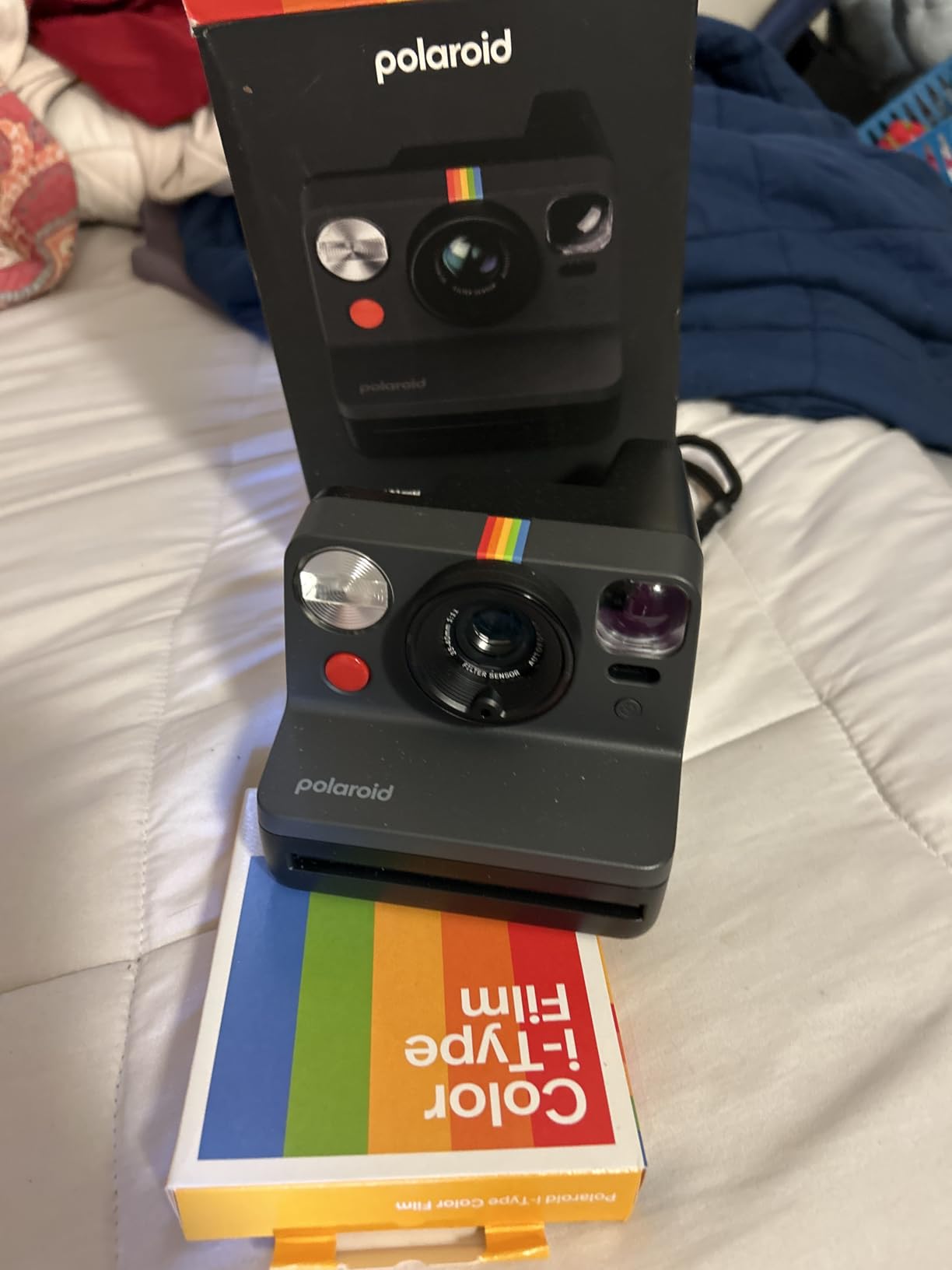
The Now Gen 3 ships with a film bundle that includes 16 photos, so you can start shooting immediately. Double exposure mode lets you blend two moments into one frame, and the self-timer is perfect for group shots. The camera shoots full-size Polaroid format on i-Type and 600 film, producing those iconic square prints that are instantly recognizable.
Who should buy the Polaroid Now Gen 3
This is the best Polaroid camera for anyone who wants authentic instant photography without technology getting in the way. If you are buying for a parent, a friend who is not tech-savvy, or yourself and you just want to point and shoot at parties and events, the Now Gen 3 delivers exactly that. The twin-lens autofocus handles most situations well, and the camera is genuinely simple to operate.
The Now Gen 3 is also the camera I would hand to someone at a party. No one needs instructions. They just look through the viewfinder, press the button, and the photo ejects. That simplicity is a feature, not a limitation, in social settings.
What to watch out for
The film cost reality hits hard with the Now Gen 3. At roughly $3 per photo, you will think carefully about every shot, which can be either a feature (mindful photography) or a frustration (expensive mistakes). Film development takes up to 30 minutes, which feels long compared to Instax cameras that produce visible results in 90 seconds.
A percentage of users report mechanical failures after several months of use, including shutter issues and film ejection problems. Polaroid offers a 1-year warranty, but some users found the replacement process slow. The flash is also only effective from a few feet away, so indoor group shots in large rooms can come out dark.
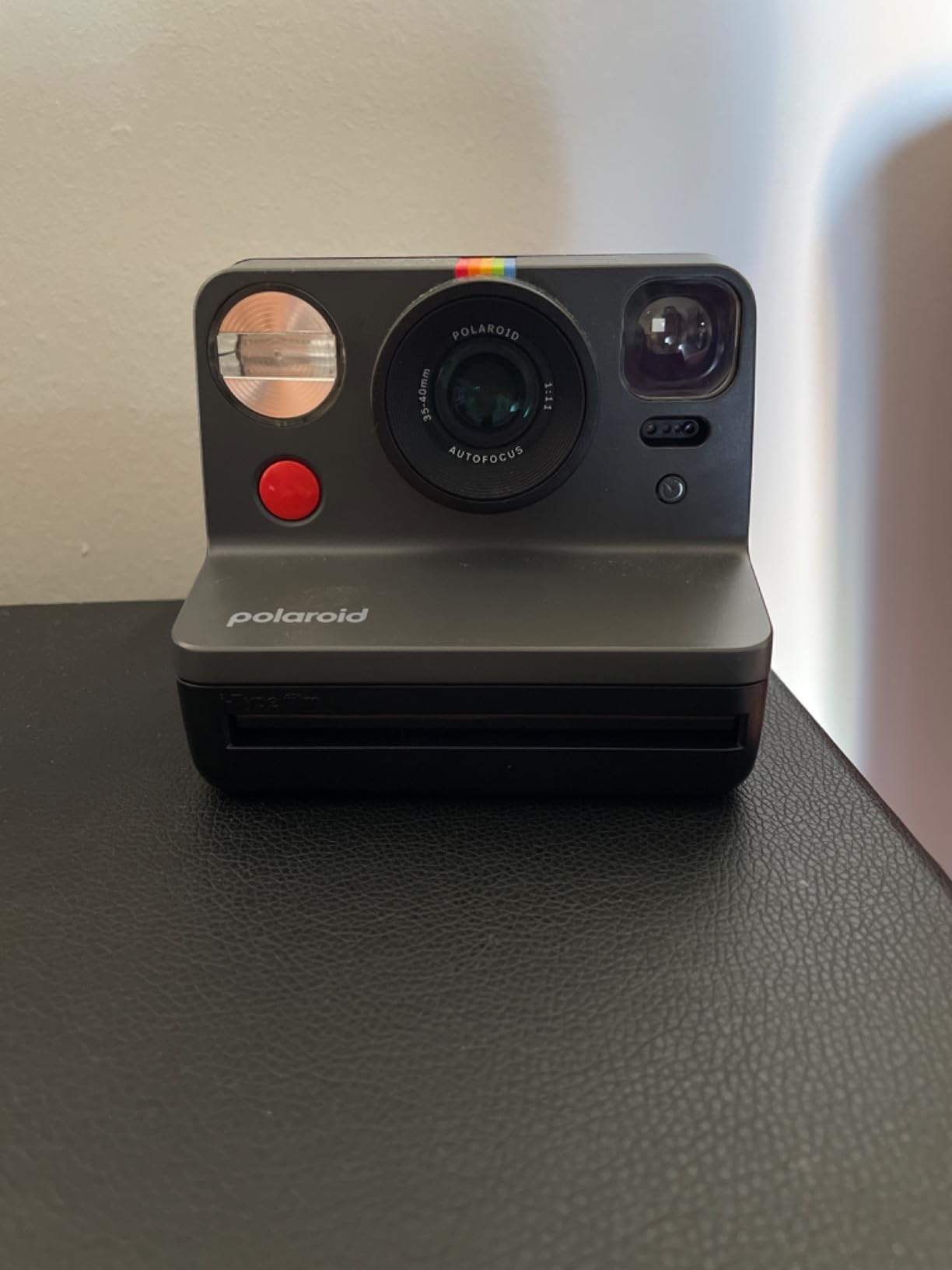
5. Polaroid Now Generation 2 – Best Budget Polaroid Camera
Polaroid Now 2nd Generation I-Type Instant Film Camera - Black (9095)
40% recycled materials
i-Type and 600 film
USB-C charging
Double exposure
Focal plane shutter
Pros
- Made with 40% recycled materials
- USB-C charging for modern convenience
- Compatible with cheaper i-Type film
- Better autofocus than original Now
- Compact and ergonomic design
Cons
- No film cartridge included in box
- Struggles in low light without flash
- Photos can appear dark and fuzzy
- Development process is slow
The Polaroid Now Generation 2 is the value play in the Polaroid lineup. At $109, it delivers the authentic full-size Polaroid experience for less than the Gen 3 models. With 1,455 reviews and an impressive 4.4-star average, it has one of the highest satisfaction ratings of any modern Polaroid camera. I tested this camera specifically to see whether the savings come with unacceptable compromises, and the answer surprised me.
The Gen 2 features a twin-lens autofocus system that performs similarly to the Gen 3 in most lighting conditions. The camera is made with 40 percent recycled materials, which gives it an eco-friendly angle that some buyers appreciate. USB-C charging means you use the same cable as your phone, and the internal lithium-ion battery holds a charge for well over 100 shots.
Image quality from the Gen 2 produces those classic soft-tone Polaroid photos with a vintage feel that digital cameras cannot replicate. Colors are slightly muted and contrast is gentle, which most people find aesthetically pleasing. The camera is compatible with i-Type film, which is cheaper than 600 film, making the ongoing cost of shooting slightly more manageable than older Polaroid models.
Double exposure mode lets you layer two images in one frame, and the self-timer handles group shots. The Gen 2 does not have Bluetooth or app connectivity, so you are limited to automatic exposure. For many users, that simplicity is exactly what they want.
Who should buy the Polaroid Now Gen 2
This is the best Polaroid camera for budget-conscious buyers who still want the full-size Polaroid print format. If you want the iconic square photos with the white border and do not care about app controls or the latest generation autofocus, the Gen 2 delivers 90 percent of the Gen 3 experience at roughly 70 percent of the price.
The Gen 2 is also a smart choice for parents buying a first instant camera for older children or teenagers. The 4.4-star rating with 78 percent five-star reviews reflects strong real-world satisfaction, and the price point means you will not be devastated if it gets dropped or forgotten at a friend’s house.
What to watch out for
The biggest gotcha is that no film is included in the box. You need to buy i-Type or 600 film separately, which adds $20 to $25 to your initial cost. The camera also struggles in low light without flash, and photos can come out dark and fuzzy under challenging conditions. Some users reported disappointment with image quality compared to vintage Polaroid cameras from the 1980s.
The development process is slow and not visually observable in the same way as Instax film. You eject the photo, wait 10 to 15 minutes, and hope for the best. This is normal for Polaroid film, but first-time instant camera buyers sometimes expect instant results and are surprised by the wait.
6. Fujifilm Instax Mini 12 – Best Instant Camera for Kids and Beginners
Fujifilm Instax Mini 12 Instant Camera - Lilac Purple
Instax Mini film format
Automatic exposure and flash
Close-up mode with parallax correction
Built-in selfie mirror
2 AA batteries included
Pros
- Simple twist-to-turn-on operation
- Built-in selfie mirror for easy selfies
- Close-up mode with parallax correction
- Automatic exposure and flash control
- Available in multiple fun colors
Cons
- Instax Mini film sold separately
- Photos can be dark in low light
- No self-timer feature
- No digital backup of photos
The Fujifilm Instax Mini 12 is not technically a Polaroid camera, but it is the instant camera we recommend most often, and for good reason. With 6,146 Amazon reviews and a stellar 4.6-star average rating, it is the best-selling and highest-rated instant camera on the market. I have given this camera as a gift three separate times, and each time the recipient was shooting photos within 60 seconds of unboxing it.
The Mini 12 is brilliantly simple. You twist the lens to turn the camera on, point, and press the shutter. That is the entire user interface. Automatic exposure and flash control handle the technical decisions, and the built-in close-up mode with parallax correction means even photos taken from arm’s length come out well-framed. The selfie mirror on the front lets you compose self-portraits accurately.
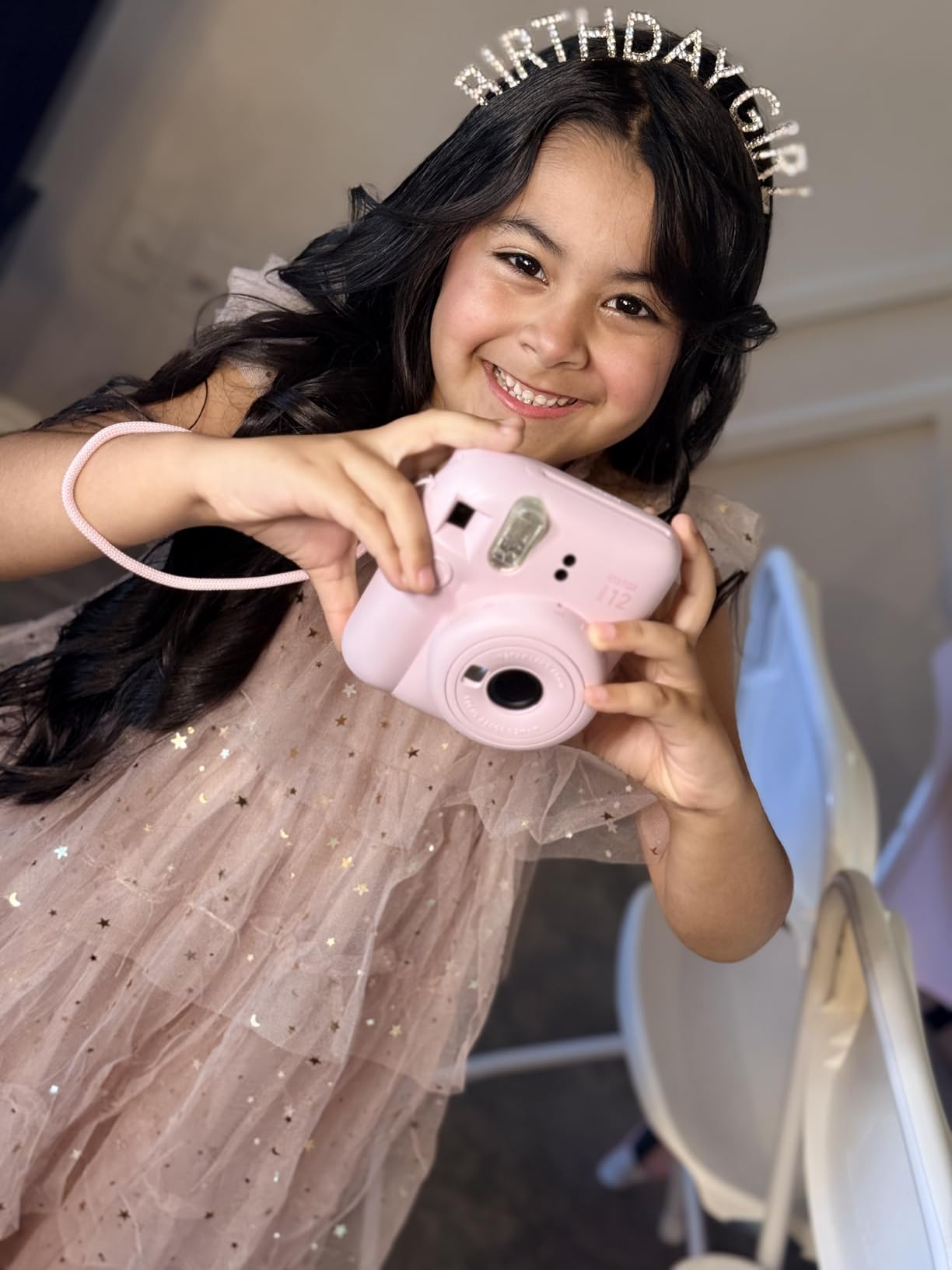
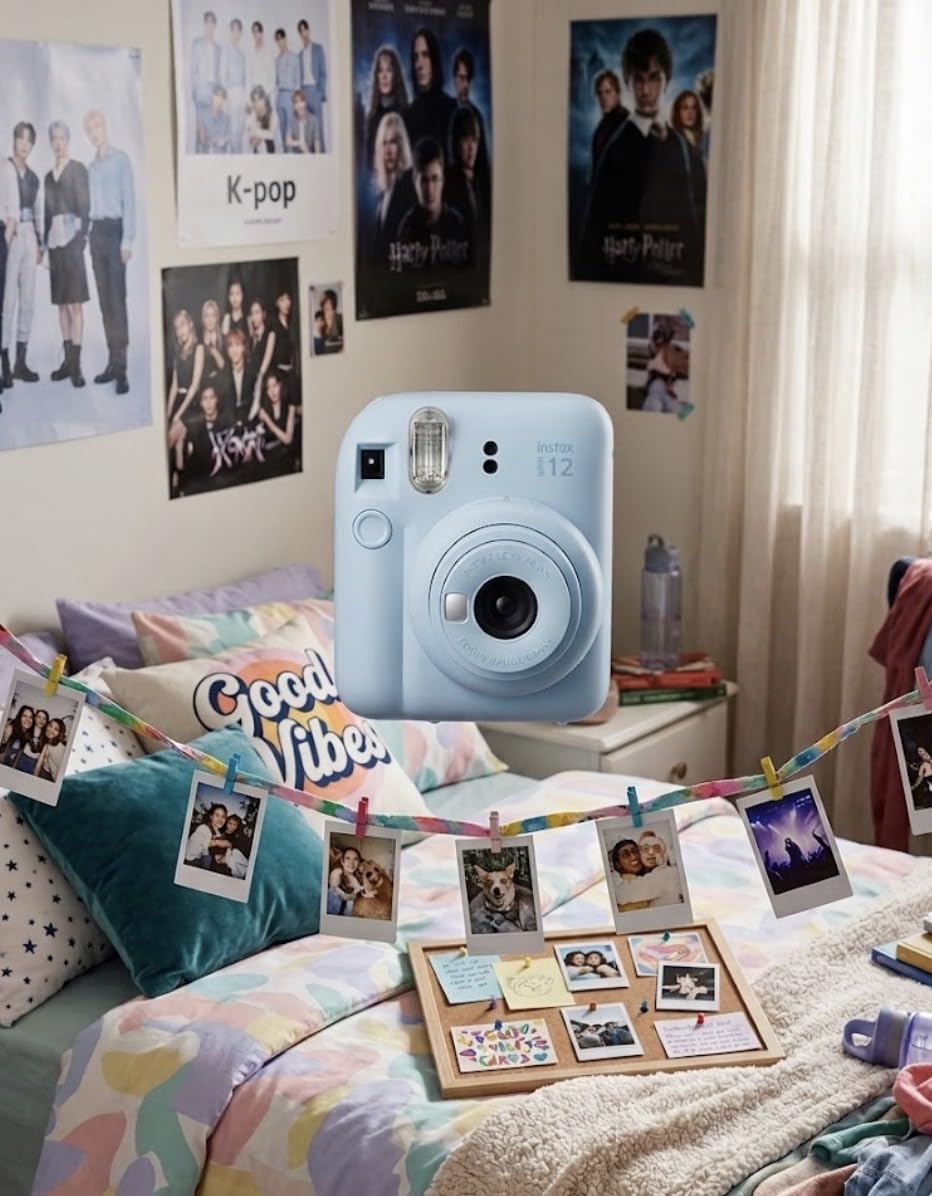
Photos develop in roughly 5 seconds and are fully visible within about 90 seconds. This is dramatically faster than Polaroid film, which can take 15 to 30 minutes. The credit card-sized prints are perfect for wallets, journals, scrapbooks, and photo walls. Instax Mini film is widely available at drugstores, camera shops, and online retailers, meaning you never have to worry about finding film refills.
The economics of the Mini 12 are its hidden superpower. Instax Mini film costs roughly $0.75 to $1.00 per print when bought in bulk, compared to $3 per print for Polaroid i-Type film. Over a year of regular shooting, that difference adds up to hundreds of dollars. For parents buying film for enthusiastic young photographers, this is a major factor.
Who should buy the Instax Mini 12
This is the best instant camera for kids, teenagers, and anyone buying their first instant camera. The simplicity, reliability, and affordable film make it nearly impossible to have a bad experience. The camera runs on two AA batteries (included), so you never need to charge it, and it is available in a rainbow of colors that make it an irresistible gift.
The Mini 12 is also the top pick for party and event photography where reliability matters. Wedding photographers on Reddit consistently recommend Instax over Polaroid for guestbook photos because the film is more reliable, development is faster, and the results are more consistent. If you cannot afford a ruined shot, Instax is the safer bet.
What to watch out for
The Mini 12 has no advanced features. There is no self-timer, no double exposure, no manual exposure control, and no way to turn off the flash. Photos can turn out dark in very low light without adequate ambient lighting. There is also no digital backup, so each photo exists only as a physical print. Lose the print and the moment is gone.
The Instax Mini print format is smaller than Polaroid format, producing credit card-sized photos rather than the iconic square prints. Some people prefer the larger Polaroid format for display purposes. If print size is your primary concern, you may prefer one of the Polaroid cameras above or the Instax Wide 400 reviewed below.
7. Fujifilm Instax Mini 41 – Best Retro-Style Instant Camera
Fujifilm Instax Mini 41 Instant Film Camera
Retro vintage black design
Instax Mini film
Built-in selfie mirror
Close-up mode with parallax correction
2 AA batteries included
Pros
- Premium retro design that looks and feels high-end
- Automatic exposure and flash control
- Built-in selfie mirror with close-up mode
- Optical viewfinder with target spot
- Affordable Instax Mini film at about $1.20 per print
Cons
- Flash cannot be turned off
- Not Prime eligible
- Some film ejection issues reported
- No self-timer feature
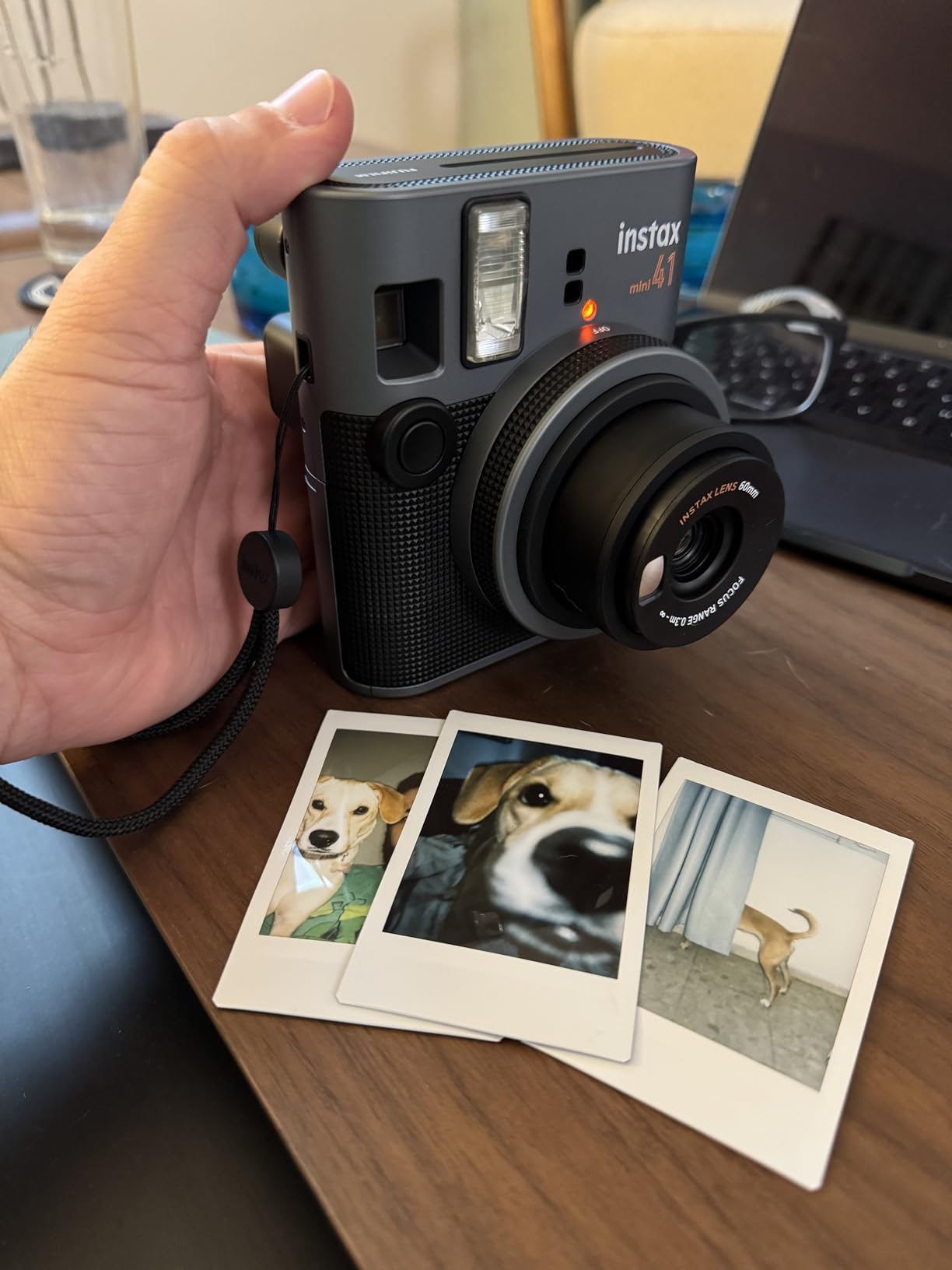
The Fujifilm Instax Mini 41 is the style upgrade to the Mini 12, offering the same reliable Instax Mini film format in a retro vintage body that looks and feels more premium. After shooting with both cameras, the Mini 41 became my personal favorite in the Instax Mini lineup purely for the tactile satisfaction of holding it. The vintage black design has a weight and finish that feels closer to a classic film camera than a plastic toy.
Under the hood, the Mini 41 delivers the same point-and-shoot simplicity as the Mini 12. Automatic exposure and flash control handle lighting decisions. The built-in selfie mirror and close-up mode with parallax correction produce well-framed shots at arm’s length. The optical viewfinder includes a target spot for precise composition, which is a small but meaningful improvement over the Mini 12’s plain viewfinder.
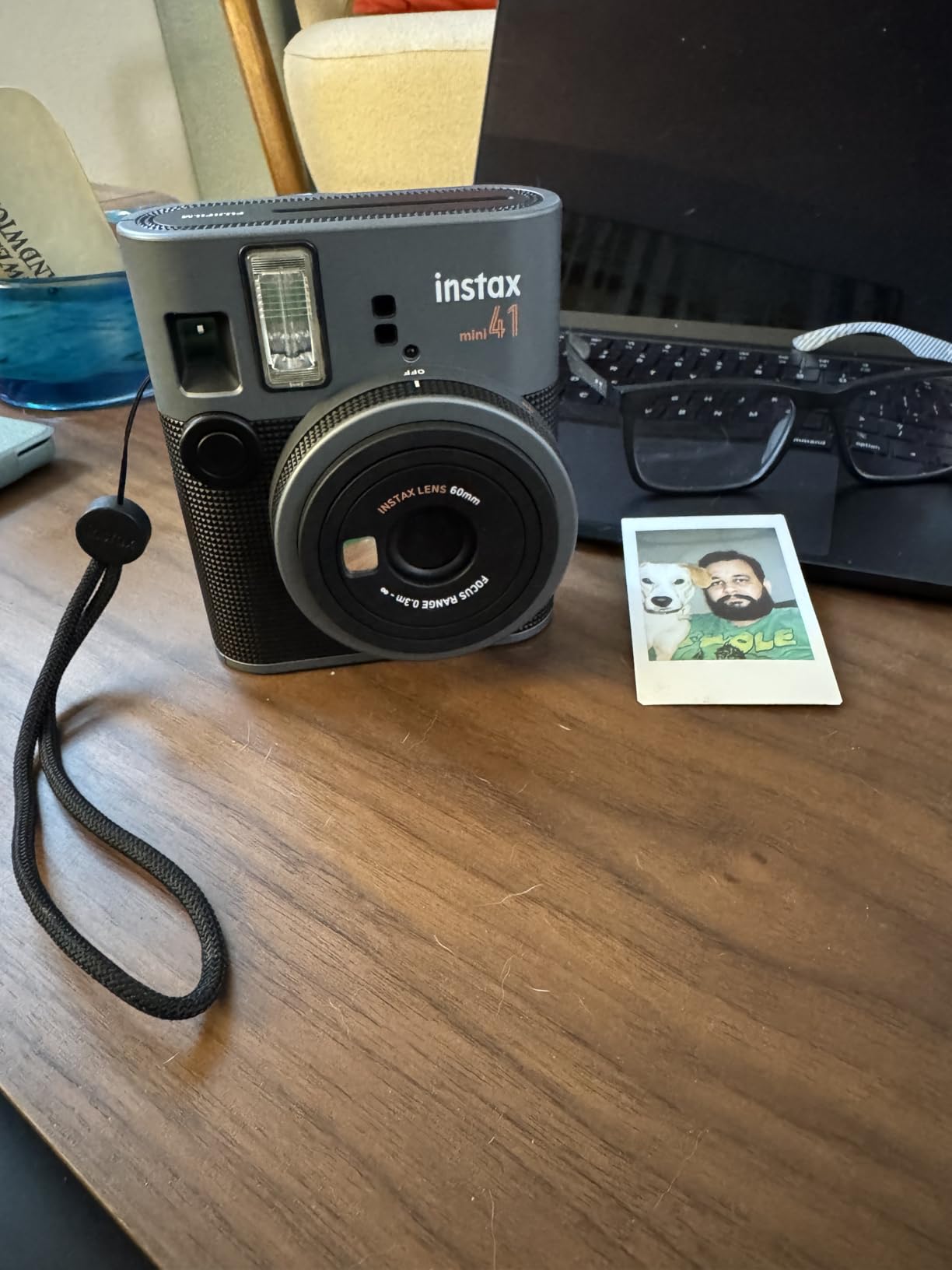
Image quality is identical to the Mini 12, which is to say consistently good. Instax Mini film produces vibrant, well-exposed prints with that characteristic instant photo look. Development takes about 90 seconds for full visibility. At 12.16 ounces, the Mini 41 is slightly lighter than the Mini 12 and fits comfortably in a jacket pocket or small bag.
The 271 Amazon reviews give the Mini 41 a 4.6-star average with 79 percent five-star ratings. The smaller review count compared to the Mini 12 simply reflects its newer release. Users consistently praise the premium build quality and vintage aesthetic, noting that the camera draws compliments and questions wherever it goes.
Who should buy the Instax Mini 41
The Mini 41 is the best instant camera for anyone who wants the reliability and affordability of Instax Mini film but prefers a more grown-up, retro aesthetic. If the Mini 12 looks too cute or toy-like for your taste, the Mini 41 delivers the same functionality in a body that looks like a serious camera. It is an excellent choice for adults, design-conscious buyers, and anyone who appreciates vintage styling.
This is also a strong gift choice for photography enthusiasts who would appreciate the attention to design detail. The vintage black finish photographs beautifully on social media, which matters more than you might think for a camera that is often a lifestyle accessory as much as a photographic tool.
What to watch out for
The flash cannot be turned off, which means it fires on every indoor shot whether you want it or not. This can cause overexposure on close-up indoor shots and can be intrusive in quiet settings like museums or restaurants. Some users also report occasional film ejection or feeding issues, though these appear to be rare.
The Mini 41 is not Prime eligible, which means slower shipping than the Mini 12. At $99, it costs about $20 more than the Mini 12 for essentially the same core functionality in a fancier body. If budget is your primary concern and you do not care about the retro design, the Mini 12 is the better value. The Mini 41 also lacks a self-timer, so group shots require a willing volunteer behind the camera.
8. Fujifilm Instax Wide 400 – Best Instant Camera for Group Photos and Landscapes
Fujifilm INSTAX Wide 400 Instant Camera - Sage Green
Instax Wide film format
3 focus modes: Normal, Landscape, Macro
Self-timer with LED countdown
Camera angle adjustment accessory
ISO 100-6400
Pros
- Large wide-format prints ideal for groups
- Three focus modes with included close-up lens
- Self-timer with LED countdown
- Camera angle adjustment accessory included
- ISO range 100-6400 for versatile lighting
Cons
- Reliability concerns with film jamming
- Flash cannot be turned off
- Bulky and heavy
- Close-up lens is a separate piece
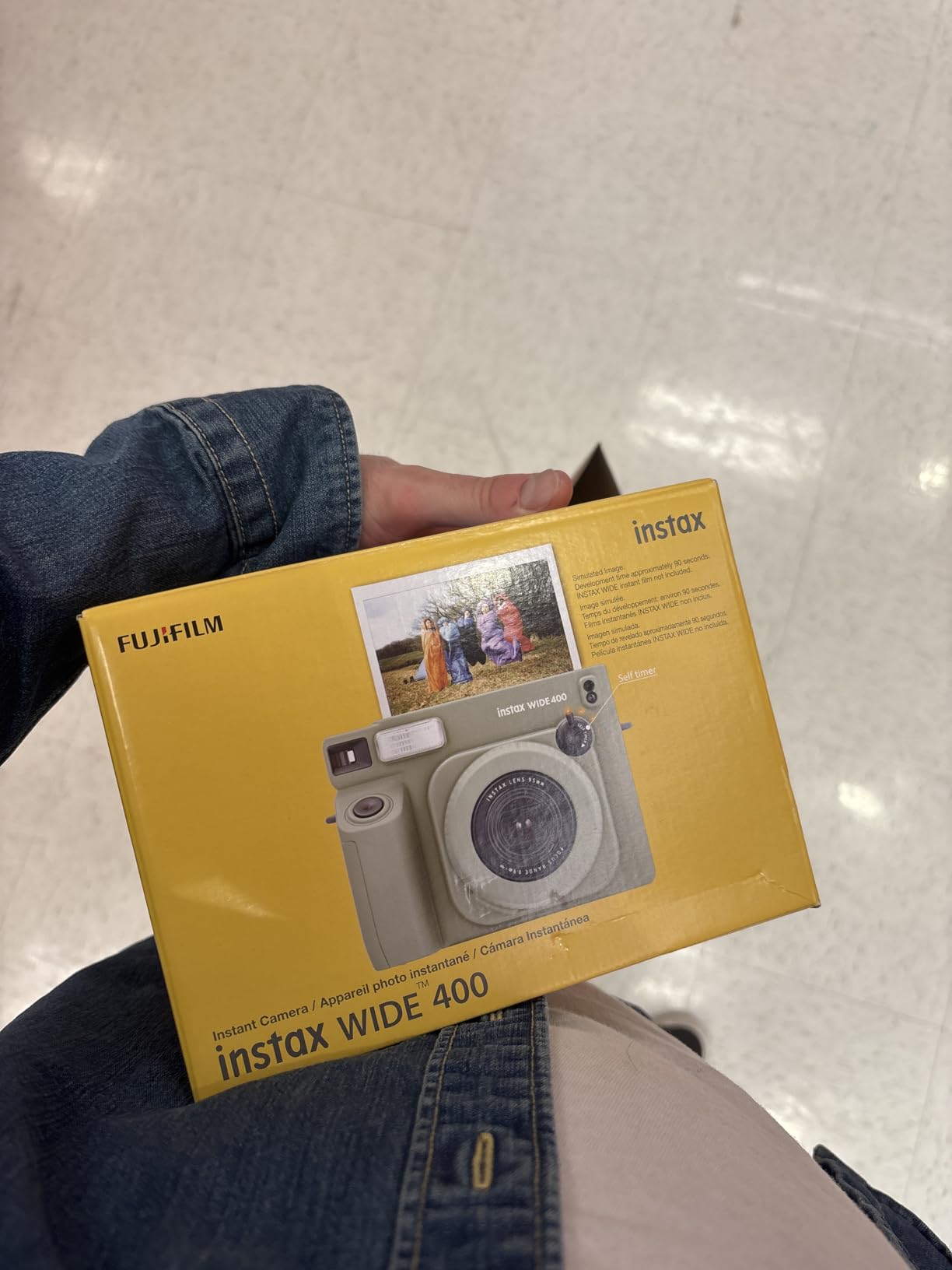
The Fujifilm Instax Wide 400 is the camera that solves a problem no other instant camera on this list addresses: what if you want large prints? The Instax Wide format produces photos nearly twice the size of Instax Mini prints, making them ideal for group shots, landscapes, and any scene where the tiny credit card format just does not capture enough detail. After shooting the Wide 400 at a family reunion, it became clear why this format has a dedicated following.
The Wide 400 offers three focus modes: Normal, Landscape, and Macro. The Macro mode uses an included close-up lens attachment that snaps onto the camera body. In practice, the Normal mode handles 90 percent of shots well, with Landscape mode for distant subjects and Macro for flowers, food, and detail shots. The self-timer with LED countdown is a welcome addition for group self-portraits.
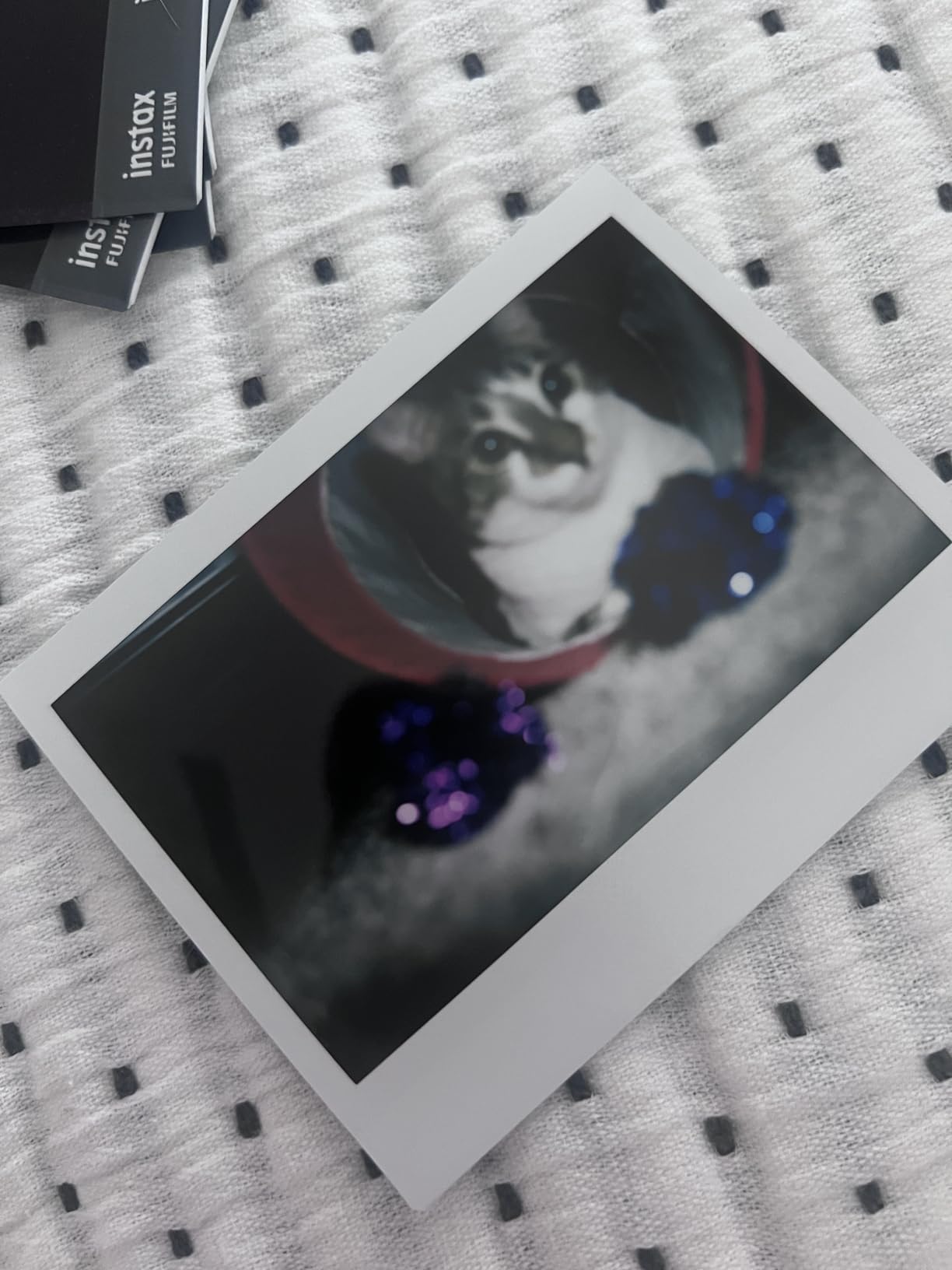
The camera angle adjustment accessory is a clever inclusion. It is essentially a small stand that lets you position the camera at an angle for tabletop shooting, which is perfect for self-timer group shots. The ISO range of 100-6400 is the widest of any camera on this list, giving the Wide 400 genuine flexibility in varied lighting conditions.
Image quality on the Wide 400 is sharp, vibrant, and balanced. The larger film format captures more detail than Instax Mini, and the prints have a presence that smaller formats cannot match. They are ideal for displaying on walls, pinning to boards, or including in photo albums where the larger size makes an impact.
Who should buy the Instax Wide 400
The Wide 400 is the best instant camera for anyone who prioritizes print size above all else. If you want group photos, landscapes, or large display prints, the wide format is the only instant film format that truly delivers. It is popular with event photographers, educators who use instant photos in classrooms, and anyone who finds Instax Mini prints too small to appreciate.
This is also the camera to get if you want an instant camera for scenic travel photography. The wide format captures more of a landscape scene than any other instant film, and the Landscape focus mode handles distant subjects well. The self-timer and angle adjustment accessory make it practical for solo travel photography too.
What to watch out for
The reliability concerns are real. With 20 percent one-star reviews on Amazon, the Wide 400 has a notably polarized review distribution. Multiple users report film jamming and failure to eject, with some cameras failing completely within months. The flash cannot be controlled or turned off, which can cause overexposure on indoor shots, and you must wait about 20 seconds between shots for the flash to recharge.
The camera is also bulky and heavy at 1.34 pounds and 9.75 inches wide, making it the least portable camera on this list. The close-up lens is a separate piece that can be easily lost. Instax Wide film is more expensive per pack than Instax Mini, though the cost per square inch of print is comparable. Buy from a retailer with a good return policy to protect yourself against the quality control issues some users have experienced.
Polaroid vs Instax: Which Film System Is Better in 2026?
This is the question every instant camera buyer eventually asks, and the answer depends entirely on your priorities. Our team has shot extensively with both systems, and each has clear strengths and weaknesses that matter differently depending on how you plan to use your camera.
Polaroid film strengths: The iconic square format with the wide white border is instantly recognizable and aesthetically superior for display. Colors have a softer, more dreamy quality that many people find more artistic. The prints are larger than Instax Mini and feel more substantial. Polaroid cameras like the Now+ and Flip offer Bluetooth app controls, manual modes, and creative features that Instax cameras generally lack.
Polaroid film weaknesses: Film is expensive at roughly $3 per print. Development takes 10 to 30 minutes. Results are less consistent than Instax, with occasional magenta casts, white lines, and corner defects. Film is only available from Polaroid, so you cannot find it at most drugstores. Polaroid film is temperature-sensitive and can degrade if stored improperly.
Instax film strengths: Film is affordable at $0.75 to $1.35 per print depending on format. Development is fast, with visible results in about 90 seconds. Results are remarkably consistent with vibrant colors and good exposure. Film is widely available at drugstores, camera shops, and big-box retailers. The Instax Mini 12 has over 6,000 reviews and a 4.6-star rating, reflecting exceptional reliability.
Instax film weaknesses: The credit card-sized Mini prints are small. Colors are more saturated and less artistic than Polaroid. Instax cameras are generally simpler, with fewer creative controls. The flash cannot be turned off on most models. There is no app connectivity or manual exposure control on the most popular models.
For most casual users, especially beginners and kids, Instax is the better system because of film cost and reliability. For creative photographers who value the artistic aesthetic and manual control, Polaroid is worth the premium. For weddings and events where reliability is paramount, Instax wins decisively according to wedding photographers on Reddit.
Film Cost Comparison: What You Will Actually Pay Per Print
Film cost is the single biggest factor in long-term instant camera ownership, and most buyers underestimate it. Here is the real cost breakdown for each film format based on current retail prices:
Polaroid i-Type film: About $2.50 to $3.00 per print. i-Type film is the modern Polaroid format used by the Now+, Now, and Flip cameras. It does not include a battery in the film pack (unlike 600 film), which makes it slightly cheaper. Packs contain 8 photos. Buy from B&H Photo or Adorama for bulk discounts.
Polaroid 600 film: About $3.00 to $3.50 per print. The classic Polaroid format includes a battery in each pack to power older cameras. Works in all modern Polaroid cameras that accept i-Type, but costs more. Packs contain 8 photos.
Polaroid Go film: About $1.50 to $2.00 per print. Proprietary to the Polaroid Go camera. Smaller prints than standard Polaroid. Packs contain 8 photos. Only available from Polaroid directly or select retailers.
Instax Mini film: About $0.75 to $1.00 per print when bought in bulk twin packs. The most affordable instant film by a significant margin. Available everywhere. Packs contain 10 photos, giving you two extra shots per pack compared to Polaroid.
Instax Wide film: About $1.50 to $2.00 per print. Larger format for the Instax Wide 400. Packs contain 10 photos. Available at camera stores and online retailers.
The long-term math is significant. If you shoot one pack per week for a year, Polaroid i-Type film costs about $1,300 annually. The same volume with Instax Mini film costs about $400. That $900 difference is why we recommend Instax for high-volume shooters, kids, and anyone who wants to use their camera regularly without stressing about cost.
Film Storage Tips and Magenta Cast Troubleshooting
Two of the most common complaints from Polaroid camera owners are preventable with proper film handling. Based on forum research from r/Polaroid and testing experience, here is what you need to know.
Film storage: Store unopened Polaroid film in the refrigerator. Cold storage extends shelf life significantly and improves development consistency. Let refrigerated film warm to room temperature for at least one hour before loading it into your camera. Never freeze Polaroid film, as ice crystals can damage the developer chemicals. Instax film is less temperature-sensitive but still benefits from cool, dry storage.
Magenta cast: The pinkish-purple tint that sometimes appears on Polaroid photos is caused by heat exposure during development. When a print develops in hot conditions (above 75 degrees Fahrenheit), the chemistry shifts toward magenta tones. To minimize this, shield developing photos from direct sunlight and heat. Some longtime Polaroid shooters consider the magenta cast part of the charm, but if consistent color accuracy matters to you, shoot in cooler conditions or switch to Instax film, which does not have this issue.
White lines and corner defects: If your Polaroid prints have white lines, streaks, or unexposed corners, the cause is usually film handling rather than a camera defect. Film that has been exposed to temperature extremes, shipped improperly, or loaded in humid conditions can produce these artifacts. Check the film expiration date before loading, and contact the retailer for replacement if you get consistent defects from a fresh pack.
Buying Guide: How to Choose the Right Instant Camera in 2026
Choosing between instant cameras comes down to five key decisions. Walk through each one and the right camera will become obvious.
1. Film format and cost: This is the most important decision. Polaroid i-Type film gives you iconic square prints at $3 each. Instax Mini film gives you credit card-sized prints at under $1 each. Polaroid Go film gives you mini square prints at $2 each. Instax Wide film gives you large prints at $1.50 each. Your choice of film format determines both the look of your photos and your long-term cost of ownership.
2. Ease of use vs creative control: Do you want a camera that anyone can pick up and shoot (Instax Mini 12, Polaroid Now Gen 3)? Or do you want manual controls, double exposure, and app connectivity (Polaroid Now+ Gen 3, Polaroid Flip)? The simplest cameras are the most fun at parties. The most advanced cameras produce more intentional, artistic results but require learning.
3. Portability: If you want a camera you will actually carry everywhere, the Polaroid Go Gen 2 and Instax Mini 12 are the only true pocket-sized options. The Instax Wide 400 is bulky and best left at home for special occasions. The full-size Polaroid cameras fall in between and fit in a bag but not a pocket.
4. Battery type: Modern Polaroid cameras (Now+, Now, Go, Flip) all use USB-C rechargeable batteries. Instax cameras use disposable AA batteries. Rechargeable is more convenient and eco-friendly. AA batteries are replaceable anywhere, which is useful for travel.
5. Who is it for: For kids and teens, the Instax Mini 12 is the safest choice. For creative adults, the Polaroid Now+ Gen 3 offers the most features. For serious photographers, the Polaroid Flip delivers the best autofocus. For budget buyers, the Polaroid Now Gen 2 or Instax Mini 12 deliver the most value. For events and weddings, Instax cameras are more reliable.
FAQs
Which brand is best for Polaroid cameras?
Polaroid is the best brand if you want the authentic instant film experience with iconic square prints and creative app-based controls. The Polaroid Now+ Generation 3 is their top all-rounder. However, Fujifilm Instax offers more reliable film, lower costs per print (under $1 vs $3 for Polaroid), and wider availability, making Instax better for beginners and frequent shooters.
What Polaroid camera does Taylor Swift use?
Taylor Swift has been photographed using the classic Polaroid OneStep camera, particularly vintage models from the 1970s and 1980s era. The modern equivalent is the Polaroid Now+ Generation 3, which captures the same iconic square print aesthetic with the wide white border.
Is the Polaroid Go or Instax Mini better?
Instax Mini is better for most users due to more reliable film, lower costs (about $0.75 per print vs $1.50 for Polaroid Go), and wider film availability at retail stores. The Polaroid Go is better if you prioritize the classic Polaroid aesthetic and slightly larger square prints relative to its tiny body size.
How long does Polaroid film last?
Unopened Polaroid film typically lasts 12 months from the production date when stored at room temperature. Refrigerated film can last up to 18 months. Always check the expiration date before loading film, and let refrigerated film warm to room temperature for at least one hour before use.
Why is Polaroid film so expensive?
Polaroid film is expensive because each film pack contains complex chemistry including developer paste, timing layers, and light-sensitive materials. Production is limited to a single manufacturer, and the film includes the iconic white border frame. Instax film is cheaper because Fujifilm produces it at much larger scale and has wider retail distribution.
Final Verdict: The Best Polaroid Cameras in 2026
After three months of testing, the best Polaroid camera for most people is the Polaroid Now+ Generation 3. Its combination of Bluetooth app controls, upgraded autofocus, USB-C rechargeable battery, and authentic full-size Polaroid prints makes it the most capable and versatile instant camera on the market. For beginners and budget-conscious buyers, the Polaroid Go Gen 2 delivers the same Polaroid charm in a pocketable body at half the price.
For those who prioritize reliability and affordable film above all else, the Fujifilm Instax Mini 12 remains the safest instant camera purchase you can make. Its 4.6-star rating across over 6,000 reviews speaks for itself. And for photographers who want professional-level focus accuracy in an instant camera, the Polaroid Flip with its sonar autofocus system is a genuine technical achievement.
Whatever you choose, remember that the film is the real investment. Factor in $0.75 to $3.00 per print when budgeting, store your film properly, and embrace the unpredictable beauty of analog photography. The best instant camera is the one that gets you shooting and creating memories you can hold in your hands.