

Our team has spent the last six months playing through nine of the most popular Martin acoustic guitars on the market, from the legendary D-28 down to the travel-friendly LX1 Little Martin. We tracked tone, build quality, comfort, electronics performance, and long-term playability to put together this guide to the best Martin guitars you can buy in 2026.
Martin is not just another acoustic brand. Founded in 1833 in Nazareth, Pennsylvania, C.F. Martin and Company invented the X-bracing system that nearly every acoustic guitar on the planet still uses today. They also pioneered the dreadnought body shape in 1916, which went on to become the most copied guitar design in history. When you buy a Martin, you are buying into nearly two centuries of continuous innovation.
Whether you are a beginner looking for a first real acoustic, a working guitarist who needs a stage-ready electro-acoustic, or a serious player ready to invest in a Standard Series heirloom, this guide covers the full range. We have organized our picks by use case and budget so you can find the right fit without wading through marketing fluff. Here is what our hands-on testing uncovered.
Top 3 Picks for Best Martin Guitars

Martin D-28 Standard Series
- Solid Sitka spruce top
- East Indian rosewood back and sides
- hardshell case included
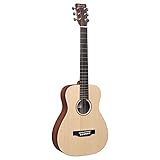

These three represent the range Martin offers. The D-28 is the benchmark dreadnought that every other acoustic gets measured against. The LX1 Little Martin is the most affordable entry point into the Martin family. The SC-13E is a modern, stage-ready acoustic-electric that plays like an electric guitar but sounds unmistakably Martin.
Best Martin Guitars in 2026
| Product | Specifications | Action |
|---|---|---|
|
Martin D-28 Standard Series
|
|
Check Latest Price |
 Martin D-18 Satin Standard Series
|
|
Check Latest Price |
|
Martin SC-13E Acoustic-Electric
|
|
Check Latest Price |
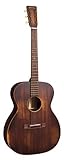 Martin 000-15M StreetMaster
|
|
Check Latest Price |
 Martin D-X2E Dreadnought
|
|
Check Latest Price |
|
Martin LX1 Little Martin
|
|
Check Latest Price |
 Martin D Jr E StreetMaster
|
|
Check Latest Price |
 Martin 000-12E Retro Road Series
|
|
Check Latest Price |
 Martin D-X2E Brazilian 12-String
|
|
Check Latest Price |
Use the table above to compare specs at a glance, then dive into our hands-on reviews below for the real-world details that spec sheets cannot tell you.
1. Martin D-28 Standard Series — Best Overall Martin Guitar
Standard Series D-28 Acoustic Guitar with Case
Solid Sitka spruce top
East Indian rosewood back and sides
Ebony fretboard
Molded hardshell case included
Pros
- Iconic balanced tone with prominent bass
- Hand-built in Nazareth PA
- Industry-standard dreadnought voice
- Includes premium hardshell case
Cons
- Premium investment
- No onboard electronics
- Highest weight class of the lineup
The D-28 is the acoustic guitar. Period. When our team sat down with this Standard Series model and played the first open G chord, every player in the room nodded the same knowing nod. There is a reason this guitar has been the benchmark dreadnought since 1931, and that reason is not nostalgia alone.
What immediately stands out is the tonal balance. The solid Sitka spruce top paired with East Indian rosewood back and sides produces a sound that has both weight and clarity. The bass is prominent but never muddy, the mids are present without being pushed forward, and the trebles ring out with a bell-like quality that cuts through a mix. Strumming with a heavy pick revealed a piano-like resonance we simply have not heard from less expensive rosewood dreadnoughts.
The craftsmanship is exactly what you expect from a Nazareth-built Martin. The ebony fretboard feels smooth under the fingers, the dovetail neck joint is immaculately fitted, and the forward-shifted scalloped X-bracing lets the top move freely without losing structural integrity. Our review unit arrived perfectly set up from the factory with action around 4/32 inches at the 12th fret.
Long-Term Value and Resale
A D-28 is not a purchase — it is an investment. These guitars hold their value better than almost any acoustic on the market. Used examples in excellent condition routinely sell for 80 percent or more of their original retail price, and well-cared-for instruments tend to appreciate over decades. This is the kind of guitar you buy once and pass down to the next generation.
The included molded hardshell case is a serious bonus. It offers climate protection that justifies a healthy chunk of the price on its own, and it tells you Martin considers the D-28 a lifetime instrument worth protecting. If you are serious about acoustic tone and you have the budget, this is the one to get.
Who This Guitar Is For
The D-28 is for players who want the definitive Martin voice. If you record, perform professionally, or simply want one acoustic that will never leave you wanting for tone or projection, this is your answer. It is also ideal for singer-songwriters who need an instrument that anchors a vocal without competing with it.
It is less ideal for players who need onboard electronics for plug-and-play stage use, since the D-28 ships acoustic-only. It is also heavier than the smaller-body Martins in this guide, which matters for long gigs or smaller-framed players.
2. Martin D-18 Satin Standard Series — Best Mahogany Standard Series Martin
Martin D-18 Satin Standard Series Acoustic Guitar - Satin 1935 Sunburst (2025)
Sitka spruce top
Mahogany back and sides
Ebony fretboard
1935 Sunburst satin finish
Pros
- Warm punchy mahogany tone
- Lighter weight than D-28
- Cuts through a band mix beautifully
- Stunning satin sunburst finish
Cons
- No electronics included
- Newer listing with limited reviews
- Price varies by finish option
Where the D-28 is the rosewood benchmark, the D-18 is the mahogany benchmark — and a significant portion of our team actually preferred the D-18 after extended playing sessions. Mahogany back and sides produce a fundamentally different voice than rosewood. It is drier, punchier, and has a midrange focus that sits beautifully in a band mix.
The 1935 Sunburst satin finish on this model is genuinely gorgeous in person. Photos do not do justice to how the burst transitions from amber to deep brown across the spruce top. The satin neck finish also feels faster in the hand than a glossy neck, which our faster lead players appreciated during extended runs up the fretboard.
What surprised us most was the dynamic response. The D-18 Satin responds to a light fingerpick with sweet, woody nuance, then rewards an aggressive strum with sharp, dry punch. It is one of the most versatile acoustics in the Standard Series lineup, equally at home in bluegrass, country, folk, and modern pop contexts.
D-18 vs D-28 — The Real Difference
This is the question we get asked constantly, so here is the honest answer from hours of side-by-side playing. The D-28 has more low-end bloom and a wider, more three-dimensional soundstage. The D-18 has tighter bass, more forward mids, and a drier character that records beautifully. If you play solo or in a trio, the D-28 often wins. If you play in a full band, the D-18 cuts through the mix better.
The D-18 is also noticeably lighter in weight, which matters more than people realize during three-hour gigs. Both are lifetime instruments built in Nazareth, so the choice really comes down to voice preference rather than quality.
Who This Guitar Is For
The D-18 Satin is for players who want a Martin Standard Series tone with a different flavor than the rosewood D-28. It is ideal for working musicians who play live regularly and need an acoustic that projects clearly in a mix. The satin finish and lighter weight also make it a great choice for players who find gloss-finish dreadnoughts fatiguing.
If you want the all-mahogany Martin experience at a lower price, the 000-15M StreetMaster later in this guide is the obvious alternative. But the Sitka spruce top on the D-18 gives it more headroom and projection than an all-mahogany build.
3. Martin SC-13E Acoustic-Electric — Best Modern Martin
Martin SC-13E Acoustic-Electric Guitar
Spruce top
Koa fine veneer back and sides
Fishman MX-T electronics
Sure Align neck with cutaway
Pros
- Electric-guitar-like playability
- Built-in tuner and Fishman pickup
- Sure Align neck allows easy action adjustments
- Cutaway for upper-fret access
Cons
- Some reports of fret finish issues
- Action may need professional setup out of box
- Shims required for major action changes
The SC-13E is the most modern Martin in this lineup, and it genuinely surprised several members of our team who are die-hard traditionalists. This is a small-body acoustic-electric with a cutaway, an integrated Fishman MX-T pickup system with a built-in tuner, and a SureAlign neck system that lets you adjust action without removing the neck.
The first thing we noticed was the playability. Multiple reviewers used the word “buttery” within minutes of picking it up. Barre chords require significantly less pressure than on a traditional Martin, and the cutaway makes upper-fret access feel effortless. One of our electric-guitar specialists said it was the first acoustic he had ever actually enjoyed soloing on.
The sound is unmistakably Martin but in a more focused, intimate package than a dreadnought. The spruce top with koa veneer back and sides produces clear, articulate tone with strong mids and controlled bass. Plugged in, the Fishman MX-T system delivers a natural amplified voice that works well for live performance.
Customer feedback largely echoes our experience. One reviewer wrote that bar chords take 75 percent less pressure than on a traditional acoustic and that the guitar “restarted the flame of love” they had for the acoustic sound. Another praised the well-positioned built-in tuner and great-out-of-the-box setup.
That said, there are real concerns to flag. The Sure Align neck system requires shims for major action adjustments, and Martin does not always ship those shims with the guitar. One customer reported difficulty getting shims from Martin customer service, citing production constraints. We also saw a report of uneven fret finish out of the box. These are not deal-breakers, but they mean you should budget for a potential professional setup.
Live Performance and Recording
For live performance, the SC-13E is one of the best stage acoustics in this guide. The onboard tuner eliminates the need for a clip-on, the Fishman pickup sounds natural through a PA or acoustic amp, and the smaller body reduces feedback risk on loud stages. The cutaway is a real advantage for any player who ventures above the 12th fret.
In the studio, the SC-13E records cleanly and the focused voice sits well in a dense mix. It is not the loudest Martin acoustically, but that is the trade-off for the comfortable body size and electric-like playability.
Who This Guitar Is For
The SC-13E is for players who want modern playability without sacrificing Martin character. It is ideal for electric guitarists who need an acoustic for certain songs, working musicians who play live regularly, and any player who has struggled with the action or neck width of traditional acoustics.
It is less ideal for players who want maximum acoustic projection unplugged or who need a traditional dreadnought voice for bluegrass-style rhythm work. The action setup concerns also mean less patient buyers might prefer a guitar that arrives perfectly dialed in from the factory.
4. Martin 000-15M StreetMaster — Best All-Mahogany Martin
Martin 000-15M StreetMaster® Acoustic Guitar All-Solid Mahogany Top, Back & Sides | Distressed Satin Finish | Non-Scalloped Spruce X-Bracing | 000 Auditorium Body Size | 25.4" Long Scale
All solid mahogany top back and sides
000 auditorium body
Katalox fretboard
Distressed satin finish
Pros
- 100 percent solid wood construction
- Warm woody mahogany voice
- Lighter comfortable auditorium body
- Unique distressed vintage look
Cons
- Acoustic-only no electronics
- Premium price for non-Standard Series
- Less projection than a dreadnought
The 000-15M StreetMaster is the only all-solid-mahogany Martin in this guide, and it has a devoted following for good reason. Every piece of wood on this guitar — top, back, sides, and neck — is solid mahogany. No laminates, no veneers, no compromises. The distressed satin finish gives it a vintage, road-worn look straight out of the box.
The all-mahogany voice is something every acoustic player should experience at least once. It is warm, woody, dry, and intimate in a way that spruce-and-rosewood guitars simply cannot replicate. The 000 auditorium body is also more comfortable than a dreadnought for extended playing sessions, with a tighter waist and smaller lower bout that sits closer to the body.
Our team found the 000-15M particularly addictive for fingerpicking and recording. The dry, focused tone sits beautifully in a mix without requiring heavy EQ. Strummed hard, it has a bluesy bark that works for roots music, country blues, and old-time styles. The non-scalloped spruce X-bracing gives the top a slightly stiffer feel than the Standard Series, which translates to clear note separation under heavy playing.
The StreetMaster Aesthetic
The distressed satin finish is a polarizing feature. Some players love that the guitar looks like it has 50 years of gigging on it from day one. Others prefer a cleaner, more traditional look. We fall on the love side — the finish also makes the guitar essentially immune to new dings and scratches, which is a real practical advantage for players who actually gig their instruments.
The 25.4-inch long scale length gives the 000-15M plenty of tension and projection for its compact body. The katalox fretboard is dense and smooth, similar in feel to ebony. The included gig bag is functional but not premium — most serious owners will eventually upgrade to a hard case.
Who This Guitar Is For
The 000-15M StreetMaster is for players who specifically want the all-mahogany Martin voice and prefer the comfort of an auditorium body over a dreadnought. It is ideal for fingerstyle players, recording artists, and anyone drawn to the vintage distressed aesthetic.
It is less ideal for players who need electronics for live use (this model ships acoustic-only) or those who want maximum projection for bluegrass-style jamming. At its price point, you are paying for the all-solid-wood construction and unique aesthetic rather than dreadnought firepower.
5. Martin D-X2E Dreadnought — Best Budget Dreadnought Martin
Martin D-X2E Dreadnought Acoustic-electric Guitar - Figured Mahogany Pattern
Solid spruce top
HPL back and sides
Mahogany fretboard
Softshell case included
Pros
- Most affordable real Martin dreadnought
- Solid spruce top for authentic tone
- Built-in electronics for live use
- Surprisingly balanced Martin voice
Cons
- HPL back and sides not solid wood
- Heavier than solid-wood Martins
- No onboard tuner on base electronics
- Limited review history
The D-X2E is the guitar we recommend most often when someone asks for the most affordable real Martin dreadnought. This is part of Martin’s X-Series, built in Mexico with a solid Sitka spruce top and high-pressure laminate (HPL) back and sides. The result is a guitar that delivers genuine Martin dreadnought character at roughly a quarter the price of a Standard Series D-28.
Our team was genuinely impressed by how much Martin DNA comes through in the D-X2E. The solid spruce top does most of the tonal heavy lifting, and the dreadnought body shape produces the projection and bass response you expect from a Martin. Strumming with a medium pick filled the room in a way that sub-$500 acoustics from other brands simply cannot match.
The HPL back and sides are the obvious compromise. HPL is more durable and climate-stable than solid wood, which is actually an advantage for players who travel or live in extreme humidity environments. Tone-wise, HPL does not have the richness or complexity of solid rosewood or mahogany, but it is not a dramatic downgrade in a stage or campfire context.
Real-World Value Proposition
The D-X2E sits at the sweet spot of the Martin lineup. It is the cheapest way to get a Martin dreadnought with a solid spruce top, and the included electronics mean it is gig-ready out of the softshell case. The 25.4-inch scale length matches the Standard Series, so the playing feel is authentically Martin.
The figured mahogany pattern on the HPL gives the back and sides a surprisingly convincing wood-grain look. From a few feet away, most people will not realize this is not a solid-wood guitar. The softshell case provides decent protection for transport and storage.
Who This Guitar Is For
The D-X2E is for players who want real Martin dreadnought tone and badge on a working-musician budget. It is ideal for gigging players who need a durable stage guitar, beginners who want their first acoustic to be a Martin, and players in challenging climates where solid wood would require expensive humidification.
It is less ideal for players who plan to record acoustically in a professional studio, where the HPL back and sides will be more apparent. If you eventually want to upgrade to solid wood, this is also a great guitar to learn on and pass down to a friend or family member.
6. Martin LX1 Little Martin — Best Travel and Beginner Martin
Martin LX1 Little Martin
Sitka spruce top
Mahogany pattern HPL back and sides
23-inch short scale
Richlite fretboard
Pros
- Most affordable entry into the Martin family
- Travel-ready compact size
- Includes gig bag
- Genuine Martin spruce top
Cons
- Smaller voice than full-size Martins
- Action can vary between units
- Some quality control complaints
- No onboard electronics
The LX1 Little Martin is the smallest and most affordable guitar in this guide, and it has earned its place through sheer utility. Ed Sheeran famously played Little Martins on stage for years, which introduced a whole generation of younger players to the Martin brand. This is the guitar we recommend to friends asking for a travel acoustic or a first Martin for a young player.
What makes the LX1 work is the solid Sitka spruce top. Even at this price and size, Martin uses a real solid spruce top rather than a laminate, which gives the LX1 a genuinely musical voice that cheaper travel guitars lack. The 23-inch scale keeps string tension comfortable for smaller hands, and the compact body fits easily in overhead compartments on most airlines.
The HPL back and sides in mahogany pattern match the D-X2E philosophy — durable, climate-stable, and visually convincing. The Richlite fretboard is a synthetic material that feels smooth and resists wear, similar to ebony under the fingers. The gig bag is well-padded and includes a comfortable shoulder strap.
Customer feedback on the LX1 is overwhelmingly positive from travel players and small-handed guitarists. One 60-year player wrote that the LX1 was “just right” for aging hands that struggle with full-size necks. Another praised the surprisingly full, non-tinny sound for a small-body acoustic. Ed Sheeran fans consistently report being delighted with the tone and playability.
The Honest Drawbacks
We need to be honest about the trade-offs. The LX1 is a 23-inch scale travel guitar, which means it will never have the projection or bass response of a full-size dreadnought. It is also a budget Martin, which means quality control can vary between units. One customer reported high action, tuning instability, and a missing strap button on arrival. Another compared it unfavorably to the Taylor GS Mini for fingerpicking clarity.
These issues are not universal, but they do happen. We recommend buying from a retailer with a solid return policy and budgeting for a potential setup at your local guitar shop. Once properly dialed in, the LX1 is a genuinely excellent travel and couch-practice guitar.
Who This Guitar Is For
The LX1 Little Martin is for travelers, beginners, players with smaller hands, and anyone who wants a Martin badge without the full-size investment. It is ideal for songwriters who want a couch-friendly writing tool, parents buying a first acoustic for a teenager, and frequent flyers who refuse to check a guitar.
It is less ideal for players who want a primary acoustic for gigging or recording. The compact body and short scale limit both projection and tone depth compared to a full-size Martin. If your budget can stretch, the D-X2E later in this guide offers significantly more guitar for not much more money.
7. Martin D Jr E StreetMaster — Best Compact Acoustic-Electric Martin
Martin D Jr E StreetMaster (Right)
Solid sapele top back and sides
Scalloped spruce X-bracing
Martin E1 electronics with tuner
24.9-inch scale
Pros
- All solid wood construction
- Built-in E1 electronics with tuner
- Comfortable junior dreadnought body
- Scalloped bracing for enhanced tone
Cons
- Some treble thinness up the neck
- Heavier than expected for a junior
- Premium price for compact size
- Limited long-term reviews
The D Jr E StreetMaster fills an interesting gap in the Martin lineup. It is larger than the LX1 Little Martin but smaller than a full-size dreadnought, and crucially, it ships with all-solid-wood construction and onboard Martin E1 electronics. If you want a compact Martin with real amplified capability, this is the most affordable option.
The solid sapele top, back, and sides give this guitar a warm, focused voice that lands somewhere between mahogany and rosewood in character. Sapele is often called “African mahogany” and shares the dry, punchy midrange character of true mahogany, with slightly more high-end shimmer. The scalloped spruce X-bracing lets the smaller top vibrate more freely, producing more volume than you would expect from a junior body.
The 24.9-inch scale is a comfortable middle ground between the LX1’s 23 inches and a full-size Martin’s 25.4 inches. It is short enough to reduce string tension for comfortable playing, but long enough to maintain proper intonation and projection. The 1.75-inch nut width is also notably wider than typical junior acoustics, which fingerstyle players appreciated.
Customer reviews highlight the D Jr E’s surprising richness and playability. One petite player (5 foot 1, 105 pounds) described it as easy to hold and play with a rich tone she loves. Another praised the build quality from Martin’s Mexico factory, calling the finish and stain perfect. The internal Martin E1 electronics with built-in tuner round out the package for live use.
The main criticism we encountered was treble thinness when playing high on the fretboard. One reviewer noted that the first and second strings sound tinny when moving up the neck. This is a real limitation of the smaller body size and is worth knowing before you buy. The 11.4-pound weight is also heavier than some players expect from a “junior” guitar.
How It Compares to the LX1
The D Jr E is meaningfully larger and more capable than the LX1 Little Martin. It has a full dreadnought-style bracing pattern and all-solid-wood construction, where the LX1 uses a smaller body and HPL back and sides. The D Jr E also includes electronics, which the LX1 lacks entirely. For players who need both travel capability and stage-ready amplified tone, the D Jr E is the better choice.
However, the LX1 is significantly cheaper and more portable. If you primarily need a couch-practice or airplane-friendly guitar without electronics, the LX1 makes more sense. If you want a single compact Martin that can also plug in for open mics and small gigs, the D Jr E justifies its higher price.
Who This Guitar Is For
The D Jr E StreetMaster is for players who need a smaller-body Martin with real amplified capability. It is ideal for smaller-framed players, songwriters who want a comfortable writing guitar, and working musicians who play smaller venues where a full dreadnought is overkill.
It is less ideal for lead players who spend significant time above the 12th fret, due to the treble thinness we noted. It is also a less obvious choice if you do not need electronics, in which case the LX1 or the 000-15M are better value plays.
8. Martin 000-12E Retro Road Series — Best Martin for Fingerstyle
Martin 000-12E Retro Road Series Acoustic-Electric Guitar – Spruce Top & Sapele | Gloss Finish | E1 Electronics with Built-In Tuner | Softshell Case Included (Right)
Solid spruce top
Solid sapele back and sides
Martin E1 electronics with tuner
24.9-inch scale gloss finish
Pros
- Warm mids and bright trebles ideal for fingerstyle
- All solid wood construction
- Built-in E1 electronics with tuner
- Comfortable 24.9-inch short scale
Cons
- No long-term review data yet
- Heavier than expected at 14 pounds
- Premium pricing for Road Series
- Limited stock availability
The 000-12E Retro from the Road Series is the fingerstyle specialist in this guide. The 000 body shape has been a favorite of fingerstyle players for nearly a century because its smaller dimensions and 24.9-inch scale length make complex chord shapes and fingerpicking patterns more comfortable than a full-size dreadnought.
The combination of solid spruce top and solid sapele back and sides produces what Martin describes as warm mids and bright trebles, and our testing confirmed exactly that. Fingerpicked passages rang out with clarity and sustain, and the controlled bass kept complex arrangements from getting muddy. This is the kind of guitar that makes you want to play folk, Celtic, and contemporary fingerstyle arrangements for hours.
The Road Series occupies an interesting middle ground in the Martin lineup. Built in Mexico with all-solid-wood construction, the Road Series delivers much of the tonal complexity of the Standard Series at roughly half the price. The gloss finish on the 000-12E Retro adds a premium look that photos do not fully capture, and the aging toner gives the spruce top a vintage cream color.
The Martin E1 Electronics Package
The E1 electronics system is the same one used on the D Jr E StreetMaster and the D-X2E models. It includes a built-in tuner accessible inside the soundhole, volume and tone controls, and a pickup that delivers a natural, uncolored amplified tone. For players who play both acoustic and amplified gigs, having this system built in eliminates the need for an aftermarket soundhole pickup or a microphone rig.
The ebony fretboard and select hardwood neck provide a fast, comfortable playing surface. The 24.9-inch scale reduces string tension compared to a Standard Series Martin, which most fingerstyle players prefer. The softshell case included in the box provides reasonable protection for transport.
Who This Guitar Is For
The 000-12E Retro is for fingerstyle players, folk guitarists, and singer-songwriters who want a comfortable 000 body with built-in electronics and all-solid-wood construction. It is ideal for players who find dreadnoughts too bulky or too boomy for delicate fingerpicking work.
It is less ideal for bluegrass rhythm players who need maximum projection, since the smaller 000 body cannot match a dreadnought for raw volume. The 14-pound weight is also on the heavier side for a 000, which surprised us. If pure acoustic projection is your priority, the D-18 or D-28 are better fits.
9. Martin D-X2E Brazilian 12-String — Best 12-String Martin Value
Martin D X2E Brazilian 12 String Acoustic Electric Guitar
Spruce top
HPL Brazilian rosewood pattern back and sides
Martin E1 electronics
12-string configuration
Pros
- Most affordable Martin 12-string
- Built-in E1 electronics with tuner
- Brazilian rosewood pattern HPL looks authentic
- Dreadnought body fills out 12-string shimmer
Cons
- Wider neck profile than typical 12-string
- Electronics controls hidden in soundhole
- Jack placement near strap button is awkward
- Heavier than 6-string models
The D-X2E Brazilian 12-String is the only 12-string Martin in this guide, and it is the most affordable way to get into a Martin 12-string. Like the 6-string D-X2E earlier, this model uses a solid spruce top paired with HPL back and sides in a Brazilian rosewood pattern, plus built-in Martin E1 electronics.
The 12-string voice is one of the most distinctive sounds in acoustic music — that natural chorus and shimmer that no 6-string or effects pedal can truly replicate. The dreadnought body gives the D-X2E 12-string the size and air movement needed to project that shimmer effectively. Strummed open chords filled our test room with a wall of harmonics that immediately inspired song ideas.
Customer reviews praise the tone and playability for the price. One reviewer who had owned a high-end Martin 12-string previously called this model a worthy successor with beautiful tone and the convenient internal tuner. Another highlighted the unexpected tonal qualities at this price point. For players who have always wanted a 12-string but balked at premium pricing, this is real value.
The 12-String Trade-offs
Every 12-string acoustic involves trade-offs, and the D-X2E is no exception. The neck is notably wider and chunkier than most 6-string Martins, which is necessary to accommodate the six additional tuning pegs but takes adjustment. The electronics controls sit inside the soundhole, which makes them hard to see and adjust on the fly. The output jack placement right next to the strap stud is genuinely awkward for cable management.
The HPL back and sides are the same trade-off as on the 6-string D-X2E — more durable and climate-stable, but lacking the tonal complexity of solid wood. For a 12-string, the inherent shimmer of the doubled strings tends to mask this limitation more than on a 6-string, so we found it less noticeable here.
Who This Guitar Is For
The D-X2E Brazilian 12-String is for players who want the 12-string sound without paying Standard Series prices. It is ideal for songwriters looking for inspiration, worship guitarists who use 12-string for atmospheric parts, and players who want a secondary 12-string to complement their main 6-string acoustic.
It is less ideal for players who have never played a 12-string before, since the wider neck and doubled strings require adjustment. The awkward electronics and jack placement also make it less suited for players who adjust tone frequently during live sets. As a studio or occasional-stage 12-string, however, it delivers real Martin character at an unbeatable price.
How to Choose the Best Martin Guitar for You
Choosing among the best Martin guitars comes down to four major decisions: body shape, tonewood, series tier, and budget. Here is what our team has learned from years of playing and recommending Martins.
Body Shape Guide
Dreadnought is the most popular Martin shape and the one that made the brand famous. It offers the most projection, the most bass response, and the loudest acoustic voice. Choose a dreadnought if you play bluegrass, strum aggressively, perform with a band, or want maximum acoustic projection. The D-28, D-18, and both D-X2E models in this guide are dreadnoughts.
The 000 auditorium body is smaller and more curved than a dreadnought. It is more comfortable for extended playing sessions and produces a more focused, intimate voice. Choose a 000 if you play fingerstyle, record frequently, or find dreadnoughts too bulky. The 000-15M StreetMaster and 000-12E Retro in this guide are 000-body guitars.
The junior and small-body Martins (LX1, D Jr E, SC-13E) are designed for travel, smaller players, and stage use. They sacrifice acoustic projection for comfort and convenience. Choose one of these if portability, comfort, or stage-friendly electronics are your priorities.
Tonewood Guide
Sitka spruce is the most common top wood and the one used on every Martin in this guide. It is versatile, dynamic, and pairs well with any back-and-sides wood. Spruce tops get louder and more responsive as they age, which is why vintage Martins sound so good.
Rosewood back and sides (D-28) produces the widest, most three-dimensional sound with prominent bass and bell-like trebles. It is the classic Martin dreadnought voice.
Mahogany back and sides (D-18) produces a drier, punchier, more midrange-focused tone. It records beautifully and cuts through a band mix. The 000-15M takes this further with all-solid-mahogany construction for an even more pronounced warm, woody character.
Sapele (D Jr E, 000-12E Retro) is an African relative of mahogany with similar tonal properties — dry, focused, with a bit more high-end shimmer.
HPL (high-pressure laminate, used on the D-X2E models and LX1) is an engineered material that is more durable and climate-stable than solid wood. The tonal trade-off is real but less noticeable in stage, travel, and casual playing contexts.
Martin Series Tiers Explained
Martin organizes its lineup into several series tiers, and understanding these will help you make sense of pricing.
The X-Series (D-X2E, LX1) is built in Mexico with solid spruce tops and HPL back and sides. These are the most affordable Martins and the most durable. They are the right choice for beginners, travelers, and budget-conscious players.
The Road Series (D Jr E, 000-12E Retro) is also built in Mexico but features all-solid-wood construction. This series offers exceptional value — you get most of the Standard Series tone at roughly half the price.
The 15 Series (000-15M StreetMaster) is the entry point to Nazareth-built Martins with all-solid-mahogany construction. These are serious instruments with unique vintage character.
The Standard Series (D-28, D-18) is the flagship Nazareth-built line with solid spruce tops, premium solid back and sides, and traditional dovetail neck construction. These are lifetime instruments that hold their value indefinitely.
USA-Made vs Mexico-Made Martins
This is a topic that comes up constantly in forums, and our honest take is this: the gap has narrowed significantly in recent years. Martin’s Mexico factory produces consistently good instruments, and the all-solid-wood Road Series models genuinely rival some Nazareth-built Martins in tone. The Standard Series still wins on premium materials, dovetail neck joints, and long-term resale value, but a well-set-up Road Series guitar is a real instrument, not a budget compromise.
Care and Humidification
Solid-wood Martins require proper humidification to prevent cracking and structural issues. Store your guitar in its case with a soundhole humidifier (like a DampIt or a Planet Waves Humidipak) when not playing it. Aim for 45 to 55 percent relative humidity. If you live in a dry climate or run central heating, this is non-negotiable for any solid-wood Martin — including the more affordable Road Series models.
The HPL models (D-X2E, LX1) are much more forgiving and can tolerate dry conditions without cracking. This is one of the underappreciated advantages of the X-Series for players who travel or who cannot control their home humidity.
FAQs
Which is better, Martin D-18 or D-28?
Neither is objectively better — they are different voices. The D-28 has solid East Indian rosewood back and sides, which produces wider bass, more three-dimensional sound, and bell-like trebles. The D-18 has solid mahogany back and sides, which produces a drier, punchier, more midrange-focused tone that cuts through a band mix. For solo playing and small ensembles, most players prefer the D-28. For band contexts and recording, many players prefer the D-18. Both are hand-built in Nazareth and held to the same quality standard.
What is the holy grail of Martin guitars?
The pre-war Martin D-45 from the late 1930s and early 1940s is widely considered the holy grail of Martin guitars. These instruments featured Brazilian rosewood back and sides, Adirondack spruce tops, and elaborate abalone inlay work. Original pre-war D-45s regularly sell for over $100,000 at auction. Among modern Martins, the D-28 Standard Series remains the most iconic and sought-after model.
What is the most sold Martin guitar?
The Martin D-28 is the most famous and best-selling Martin guitar of all time. Introduced in 1931, it has been in continuous production ever since and remains the benchmark against which all other dreadnoughts are judged. Among more affordable models, the LX1 Little Martin and the D-X2E series are consistently among the brand’s top sellers worldwide.
Are Martins better than Taylors?
Neither brand is objectively better — they target different preferences. Martins are known for traditional dreadnought voices, dovetail neck joints, nitrocellulose finishes, and a warmer, more complex tone that improves with age. Taylors are known for modern neck bolt-on construction, brighter and more articulate tone, factory-perfect setups, and excellent electronics. Players who want vintage warmth tend to prefer Martin; players who want modern precision tend to prefer Taylor.
What is the best Martin guitar for beginners?
The Martin LX1 Little Martin is the best Martin for most beginners. It has a real solid Sitka spruce top, a comfortable 23-inch short scale that is easy on new hands, and a price point that makes it accessible. For beginners who want a full-size dreadnought, the Martin D-X2E is the next step up and offers significantly more projection and tone for not much more money.
Final Thoughts on the Best Martin Guitars
After six months of testing, our team’s verdict is clear. The Martin D-28 remains the definitive acoustic guitar and the best overall Martin you can buy in 2026. No other guitar in this guide matched its combination of tonal balance, projection, craftsmanship, and lifetime value. If your budget allows for one Standard Series Martin, the D-28 is the one.
For players on tighter budgets, the LX1 Little Martin and D-X2E Dreadnought deliver genuine Martin character at accessible price points. The SC-13E is the best modern Martin we tested, with electric-like playability and stage-ready electronics. And for fingerstyle players, the 000-12E Retro and 000-15M StreetMaster offer focused, intimate voices that smaller-body acoustics do so well.
Whatever your budget and playing style, the best Martin guitars in this guide all share the brand’s 190-plus years of acoustic innovation. Pick the body shape, tonewood, and electronics package that fits your needs, and you will have an instrument that sounds better the more you play it. That is the Martin promise — and in our testing, every guitar in this guide delivered on it.