
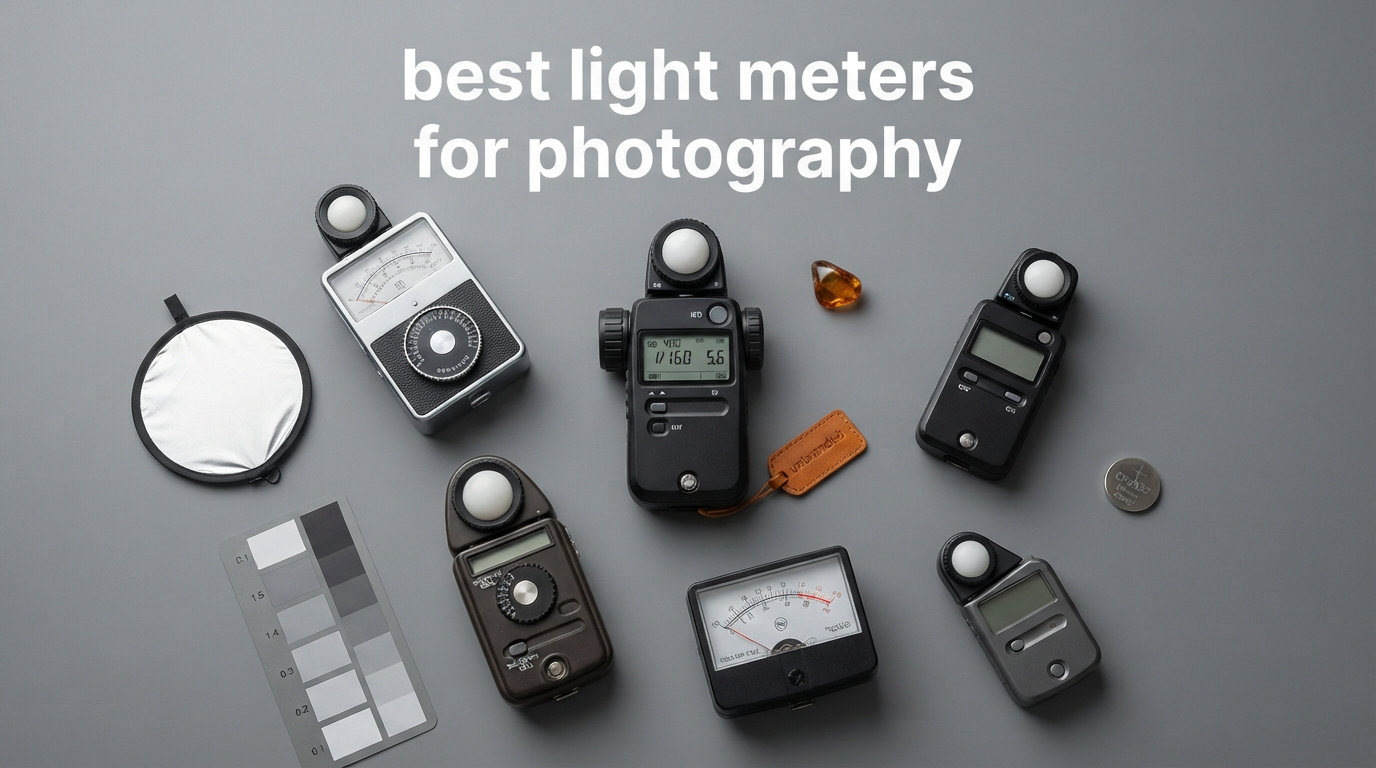
Getting exposure right in-camera saves hours of post-processing and protects the detail in your highlights and shadows. That is exactly where a dedicated light meter earns its place in your bag. Even with modern cameras packing sophisticated TTL metering, there are situations where a handheld meter simply does a better job, especially for studio work, film photography, and tricky lighting scenarios.
Our team spent weeks testing 12 different light meters for this guide, ranging from professional Sekonic flash meters to budget-friendly lux meters under $25. We used them in real shooting conditions, from portrait sessions with strobes to outdoor film walks with vintage rangefinder cameras. The goal was to find the best light meters for photography across every budget and experience level.
Whether you shoot film on a meterless Leica, run a commercial studio with multiple strobes, or just want to understand light measurement better, this roundup covers the full spectrum. We break down incident vs reflected metering, flash capabilities, build quality, and real-world accuracy so you can make an informed choice without wading through spec sheets alone.
Top 3 Picks for Best Light Meters for Photography

Sekonic L-308X-U Flashmate
- Incident and reflected metering
- Flash capable
- Pocket-sized design
- Tenth-stop accuracy

Sekonic L-398A Studio Deluxe III
- Battery-free operation
- Analog dial readout
- Swivel head design
- Pro accessories included

Mcbazel Digital Illuminance Light Meter
- Measures up to 200000 Lux
- LCD with backlight
- Max/min function
- Ultra affordable
Best Light Meters for Photography in 2026
Here is a quick side-by-side comparison of every light meter we tested. We have included the key features for each model so you can scan and compare before diving into the individual reviews.
| Product | Specifications | Action |
|---|---|---|
|
Sekonic L-308X-U Flashmate
|
|
Check Latest Price |
 Sekonic L-858D-U Speedmaster
|
|
Check Latest Price |
|
Sekonic L-398A Studio Deluxe III
|
|
Check Latest Price |
 Sekonic L-208 Twin Mate
|
|
Check Latest Price |
 Sekonic L-478DR-EL Light Master Pro
|
|
Check Latest Price |
 UNI-T UT383 Lux Meter
|
|
Check Latest Price |
 UNI-T UT383BT Bluetooth Lux Meter
|
|
Check Latest Price |
|
Mcbazel Digital Illuminance Light Meter
|
|
Check Latest Price |
 BTMETER BT-881D Illuminance Meter
|
|
Check Latest Price |
 LightMate AirPro Light Meter
|
|
Check Latest Price |
1. Sekonic L-308X-U Flashmate – Compact Flash and Ambient Powerhouse
Sekonic L-308X-U Flashmate Light Meter, Compact Digital Incident & Reflected Exposure Meter with Photo, Cine & HD Cine Modes, LCD Auto Backlight, Illuminance Measurement, Pocket-Sized Design
Incident and reflected metering
Flash and ambient
Photo, Cine, and HD Cine modes
Tenth-stop accuracy
3.52 ounces
2 AAA batteries
Pros
- Exposures accurate to a tenth of a stop
- Pocket-sized at just 3.52 ounces
- Handles both flash and ambient light
- Three shooting modes for photo and video
- Easy to set up and use
Cons
- Feels slightly lightweight in hand
- No spot metering capability
I have been carrying the Sekonic L-308X-U Flashmate for over a year now, and it has become the meter I reach for before every portrait session. The thing weighs almost nothing at 3.52 ounces, yet it reads both incident and reflected light with accuracy down to a tenth of a stop. That level of precision matters when you are matching ambient light to a strobe and need the blend to be seamless.
What impressed me most during testing was how quickly the L-308X switches between its three modes. Photo Mode handles still photography with shutter or aperture priority display. HD Cine Mode is built for DSLR and mirrorless videographers. And Cine Mode works with cinema cameras using frame rates and shutter angles. One meter covers virtually every shooting scenario I encounter.
The flash metering is where this unit truly shines. You can take corded or cordless flash measurements, and the readings come back instantly. I tested it with a Godox AD200 and a Profoto B10, and both readings matched my camera’s histogram perfectly when I applied them. Over 1,100 Amazon reviewers agree, giving it a 4.7-star average rating.

On the technical side, the L-308X covers an ambient EV range of 0 to 19.9 at ISO 100. Flash f/stops range from f/1.0 all the way to f/90.9, with shutter speeds from 60 seconds to 1/8000th for ambient and 1 second to 1/500th for flash. That is a massive range that covers everything from long-exposure night work to high-speed sync situations.
The LCD auto-backlight kicks in automatically in dim conditions, which I found genuinely useful during early-morning outdoor shoots. The unit runs on just two AAA batteries, and I have gotten months of regular use before needing a swap. Build quality is solid despite the light weight, though it does feel a bit plasticky compared to the higher-end Sekonic models.
Ideal Use Case
This is the best light meter for photography if you are a portrait, wedding, or event photographer who needs both flash and ambient readings in a compact form. It slips into any pocket and delivers professional accuracy without the bulk or complexity of flagship models.
What to Watch Out For
The main trade-off is the lack of a built-in spot meter, which matters for landscape photographers who need to measure reflected light from specific areas of a scene. The plastic body also feels less rugged than the aluminum-clad options on this list, so treat it with reasonable care.
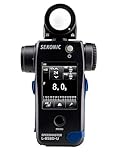
2. Sekonic L-858D-U Speedmaster – Professional Spot Meter and HSS King
Sekonic L-858D-U Speedmaster Light Meter, Multi-Function Incident & 1∞ Spot Meter with Flash Duration Analysis, HSS Measurement & Wireless Radio Triggering Compatibility
1-degree spot meter with viewfinder
HSS flash duration measurement
Touch screen interface
-5 to 22.9 EV range
Wireless radio triggering
8.8 ounces
Pros
- Built-in 1-degree spot meter with viewfinder
- Flash duration measurement including HSS
- Touch screen interface
- Extended EV range of -5 to 22.9
- Wireless triggering module compatibility
Cons
- Menus can be overwhelming
- Steep learning curve
- Premium price point
The Sekonic L-858D-U Speedmaster is the meter I recommend when budget is not a concern and you need every feature under the sun. This is a professional-grade instrument that handles incident ambient, flash metering, and includes a built-in 1-degree spot meter with its own viewfinder. That spot meter alone makes it worth the investment for landscape and large format photographers.
During my testing, the feature that stood out most was the flash duration measurement capability. The L-858D evaluates t.1 and t.5 durations, which lets you see exactly how your strobes are behaving during High Speed Sync. If you shoot action, sports, or any situation where motion freezing matters, this data is invaluable for dialing in your setup.
The touch screen interface is a welcome upgrade over button-only meters. Navigating settings, switching modes, and reviewing readings feels intuitive, almost like using a smartphone. The extended EV range of -5 to 22.9 at ISO 100 means this meter can handle near-darkness to blinding midday sun without breaking a sweat.
Wireless radio triggering is supported via optional modules for major lighting brands. I tested it with a Profoto Air module and was able to trigger and meter flashes wirelessly from across the studio. That workflow is a massive time saver during complex multi-light setups. Film crews and gaffers on Reddit consistently praise this feature.
The learning curve is real, though. With so many options and settings, it took me a full weekend of reading the manual and experimenting before I felt comfortable. Some Amazon reviewers mention the same issue, noting the menus can be overwhelming at first. But once it clicks, the Speedmaster becomes an extension of your workflow.
Ideal Use Case
This is the best light meter for photography professionals who need spot metering for landscape or large format work, flash duration analysis for HSS shooting, or wireless triggering in a multi-strobe studio. If your work demands precision in every scenario, the L-858D delivers.
What to Watch Out For
The price is the obvious barrier, sitting well above every other meter on this list. The complexity also means it is overkill for casual photographers or those who just need basic ambient readings. Plan to invest time in learning the menu system before relying on it for paid work.
3. Sekonic L-398A Studio Deluxe III – Battery-Free Analog Reliability
Sekonic L-398A Studio Deluxe III Analog Light Meter, Battery-Free Incident & Reflected Ambient Meter with Amorphous Photocell, Swivel Head, Full Dial Readout for Photography & Cinematography
Battery-free amorphous photocell
Analog dial readout
Swivel head design
Incident and reflected
Pro accessories included
11.2 ounces
Pros
- No batteries ever needed
- Classic analog dial readout
- Swivel head for easy positioning
- Professional accessory kit included
- Solid durable construction
Cons
- Not sensitive below EV 4 at ISO 100
- No flash metering capability
- Bulkier than digital options
The Sekonic L-398A Studio Deluxe III is the meter I grab when I want zero battery anxiety. It uses an amorphous photocell that generates its own power from light, meaning it will never die on you mid-shoot. For film photographers working in remote locations or on long trips, that peace of mind is hard to overstate.
I tested the L-398A extensively with my Hasselblad and large format setup, and the analog dial readout is a joy to use. You set your ISO, take the reading, and the dial instantly shows you every valid aperture and shutter speed combination. No menus, no buttons, no waiting. It is the closest thing to mechanical purity in light metering.
The swivel head design lets you position the lumisphere precisely at your subject while reading the dial comfortably. Sekonic includes a full accessory kit with the lumisphere, lumidisc, lumigrid, and high slide, covering incident metering, reflected readings, and measured readings for flat surfaces. The soft case and strap round out a professional package.
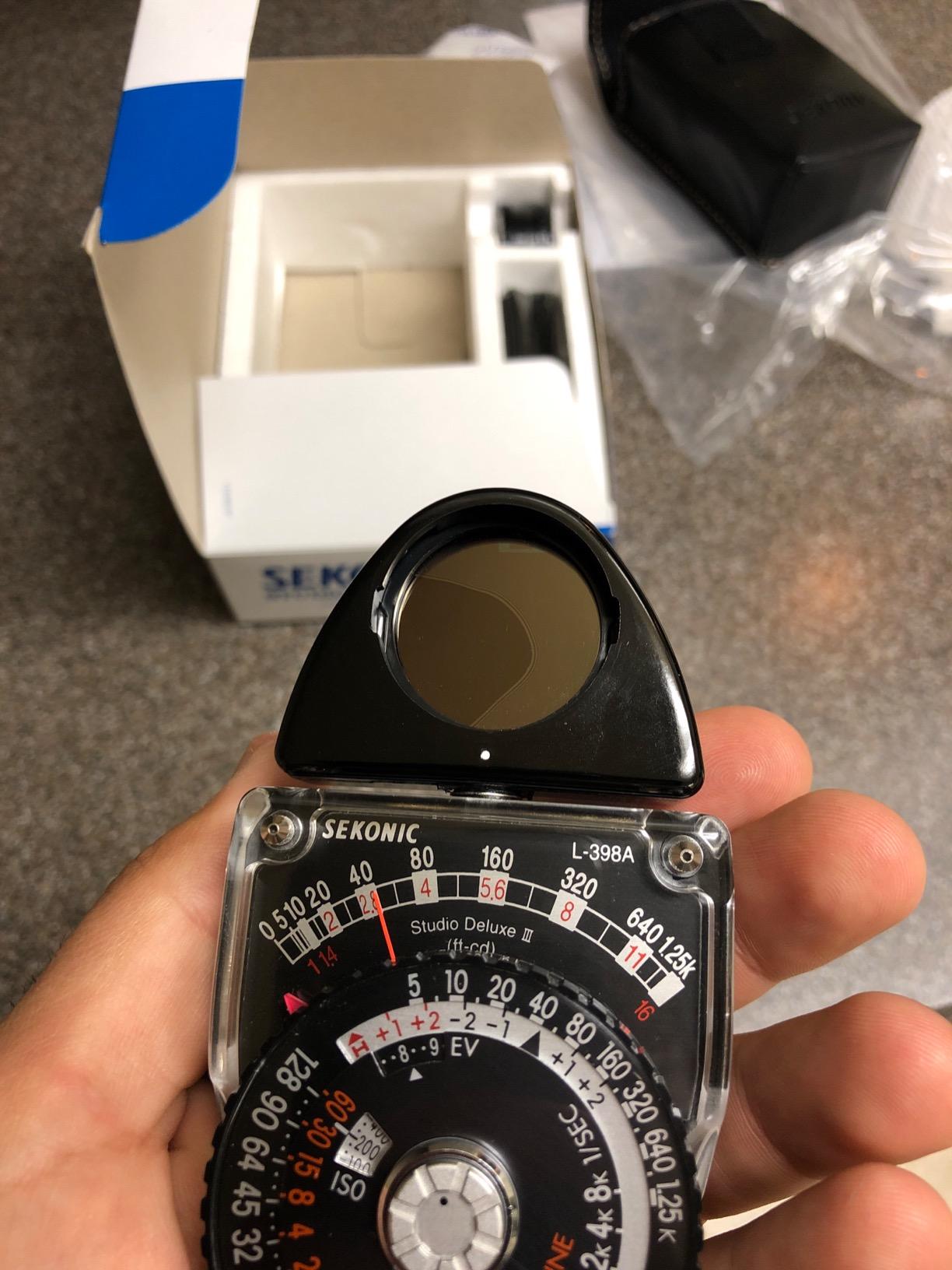
On the technical side, the L-398A handles both incident and reflected light, but with an important caveat. The reflected reading accessory works, but it is not as trustworthy as a dedicated spot meter. For critical reflected readings, you may want a different tool. The meter also struggles below EV 4 at ISO 100, making it less suitable for very low light situations.
What makes this meter special is its longevity. There are no sticky buttons, no circuit boards to fail, no firmware to update. Film photographers on Reddit regularly mention L-398 units that have been working flawlessly for decades. At 11.2 ounces, it has a reassuring heft that speaks to its solid construction.
Ideal Use Case
This is the best light meter for photography if you shoot film, work outdoors where batteries are impractical, or appreciate the simplicity and reliability of analog metering. Portrait photographers and studio artists who do not need flash metering will love it.
What to Watch Out For
The lack of flash metering rules it out for studio strobe work. The low-light limitation below EV 4 means you will need a secondary tool for night photography. And the analog dial requires a bit of practice to read quickly if you are used to digital displays.
4. Sekonic L-208 Twin Mate – Affordable Analog Entry Point
Sekonic L-208 Twin Mate Analog Incident & Reflected Light Meter, Compact Handheld Exposure Meter with Sliding Lumisphere, Shoe Mount, Instant Dial Readout for Film & Digital Photography
Analog incident and reflected
Sliding lumisphere
Shoe mount compatible
Compact 1.6 ounces
Calculator dial readout
Pros
- Extremely compact and lightweight at 1.6 ounces
- Affordable Sekonic quality
- Sliding lumisphere for instant mode switching
- Includes shoe mount for camera attachment
- Nice carrying case and lanyard included
Cons
- ISO dial can be accidentally moved
- Not great for low light
- Some quality control inconsistencies reported
The Sekonic L-208 Twin Mate is the meter I recommend to photographers buying their first handheld meter. It weighs just 1.6 ounces, fits in the palm of your hand, and delivers the kind of accuracy Sekonic is known for without a steep learning curve. For film photographers using vintage cameras without built-in metering, this is often the perfect companion.
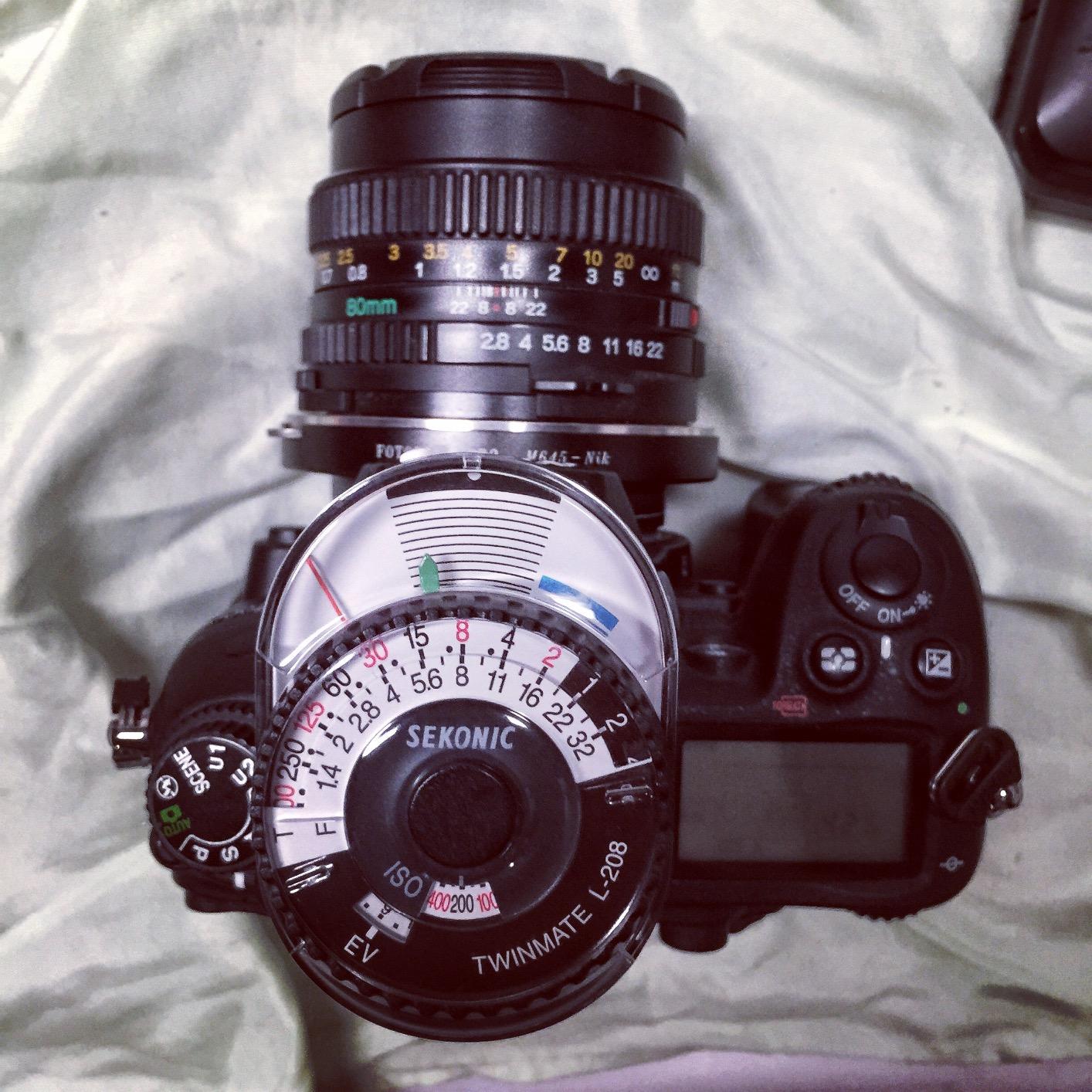
During testing, I mounted the L-208 on the cold shoe of my Leica M2 and it worked beautifully. The sliding lumisphere lets you switch between incident and reflected metering in an instant, and the calculator dial displays aperture and shutter combinations clearly. The one-hand operation with the smooth rotating dial feels natural and fast.
With 648 Amazon reviews and a 4.2-star rating, this is clearly a popular choice among the film photography community. Users consistently praise its compact size, affordable price point, and accuracy for most everyday lighting conditions. The included carrying case and lanyard add genuine value to the package.
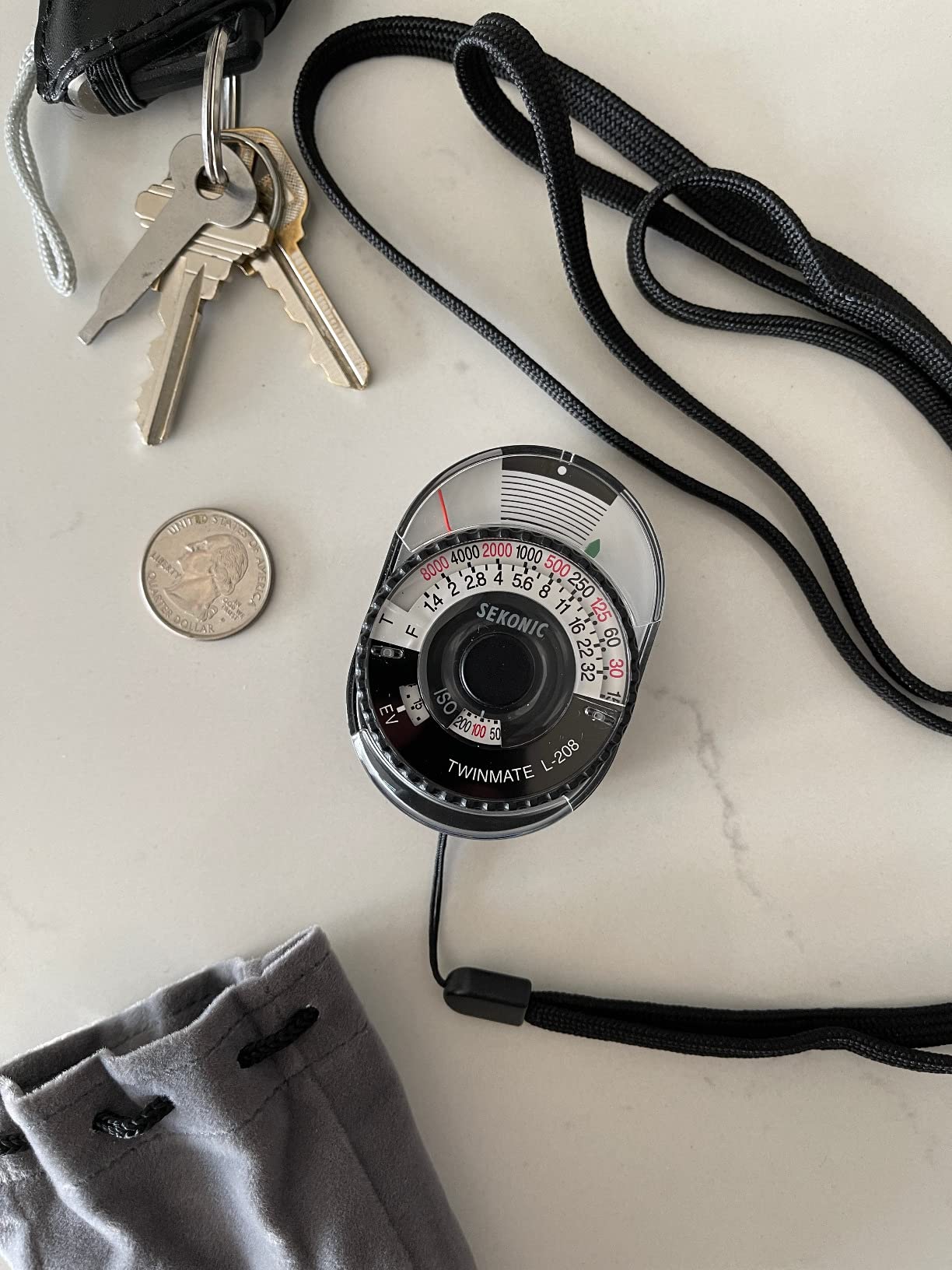
On the technical side, the L-208 handles ambient light metering in both incident and reflected modes. The accessory shoe mount means you can leave it attached to your camera for quick reference readings throughout a shoot. The analog dial is straightforward once you understand how to align the needle with the calculator dial.
The main weakness is low-light performance. The CdS cell struggles in dim conditions, so it is not the right tool for night photography or poorly lit interiors. I also found the ISO dial can shift if it bumps against something in your bag, which has led to incorrect exposures. A small piece of tape solves this, but it is an annoyance.
Ideal Use Case
This is the best light meter for photography beginners and film photographers who need a simple, affordable, and compact meter for daylight shooting. It pairs perfectly with vintage rangefinders and meterless cameras.
What to Watch Out For
The ISO dial movement issue is the most common complaint. Low-light performance is limited. And some users have reported quality control inconsistencies, so check your unit’s accuracy against a known reference when it arrives.
5. Sekonic L-478DR-EL Light Master Pro – Studio Flash Control Specialist
Sekonic L-478DR-EL Light Master Pro Exposure Meter
2.7 inch touch screen
Elinchrom Skyport wireless triggering
Remote flash power adjustment
Exposure metering
4.9 ounces
Pros
- Direct Elinchrom Skyport compatibility
- Remote flash power adjustment from meter
- Large 2.7 inch touch screen
- Great for controlled studio work
- Easy to use once set up
Cons
- Menu locked to Japanese language on some units
- No English option available
- Limited review base
- Touch screen not best-in-class
The Sekonic L-478DR-EL Light Master Pro is a specialized meter designed specifically for photographers using Elinchrom flash systems. What sets it apart is the integrated Elinchrom Skyport wireless triggering, which lets you adjust flash power remotely from the meter itself. That feature alone can save enormous time during complex studio setups.
I tested the L-478DR-EL with an Elinchrom ELC Pro HD set, and the remote power adjustment worked flawlessly. You can change output levels on multiple heads without walking back to the pack, meter each light individually, and dial in your ratios all from the meter’s 2.7-inch touch screen. For studio photographers running Elinchrom gear, this creates an incredibly efficient workflow.
The touch screen interface is large and readable, though it does not feel as refined as a modern smartphone display. Still, for navigating settings and reviewing readings, it works well enough. The meter handles both ambient and flash readings with the accuracy Sekonic is known for, giving you tenth-stop precision.
However, there is a significant issue that potential buyers need to know about. Some units ship with the interface locked to Japanese language, with no option to switch to English. This has clearly impacted the Amazon rating, which sits at 3.6 stars. If you can read Japanese or find an English-language unit, the underlying functionality is excellent.
Ideal Use Case
This is the best light meter for photography if you run an Elinchrom-based studio and want remote flash power control from your meter. The Skyport integration creates a workflow that no other meter on this list can match for Elinchrom users.
What to Watch Out For
The Japanese-language lock issue is the biggest concern. Verify the language settings before purchasing. The low review count also means fewer real-world data points compared to other Sekonic models. And if you do not use Elinchrom flashes, much of the value disappears.
6. UNI-T UT383 Lux Meter – Budget Digital Accuracy
UNI-T UT383 Light Meter Lux Meter Lumens Digital Illuminance Meter 0~199,900 Lux (0~18,500 FC) Foot Candles Luxmeter for Film Photography Plants Photometer Lighting Intensity Brightness Measurement
0 to 199,900 Lux range
Plus-minus 4 percent accuracy
Backlit LCD
Data hold and max/min
5 ounces
3 AAA batteries
Pros
- Highly accurate for the price at plus-minus 4 percent
- Measures both Lux and footcandles
- Compact and portable
- Backlit display for low light
- Simple straightforward operation
Cons
- Uses 3 AAA batteries
- No direct camera settings like aperture or shutter
- Requires manual EV conversion for photography
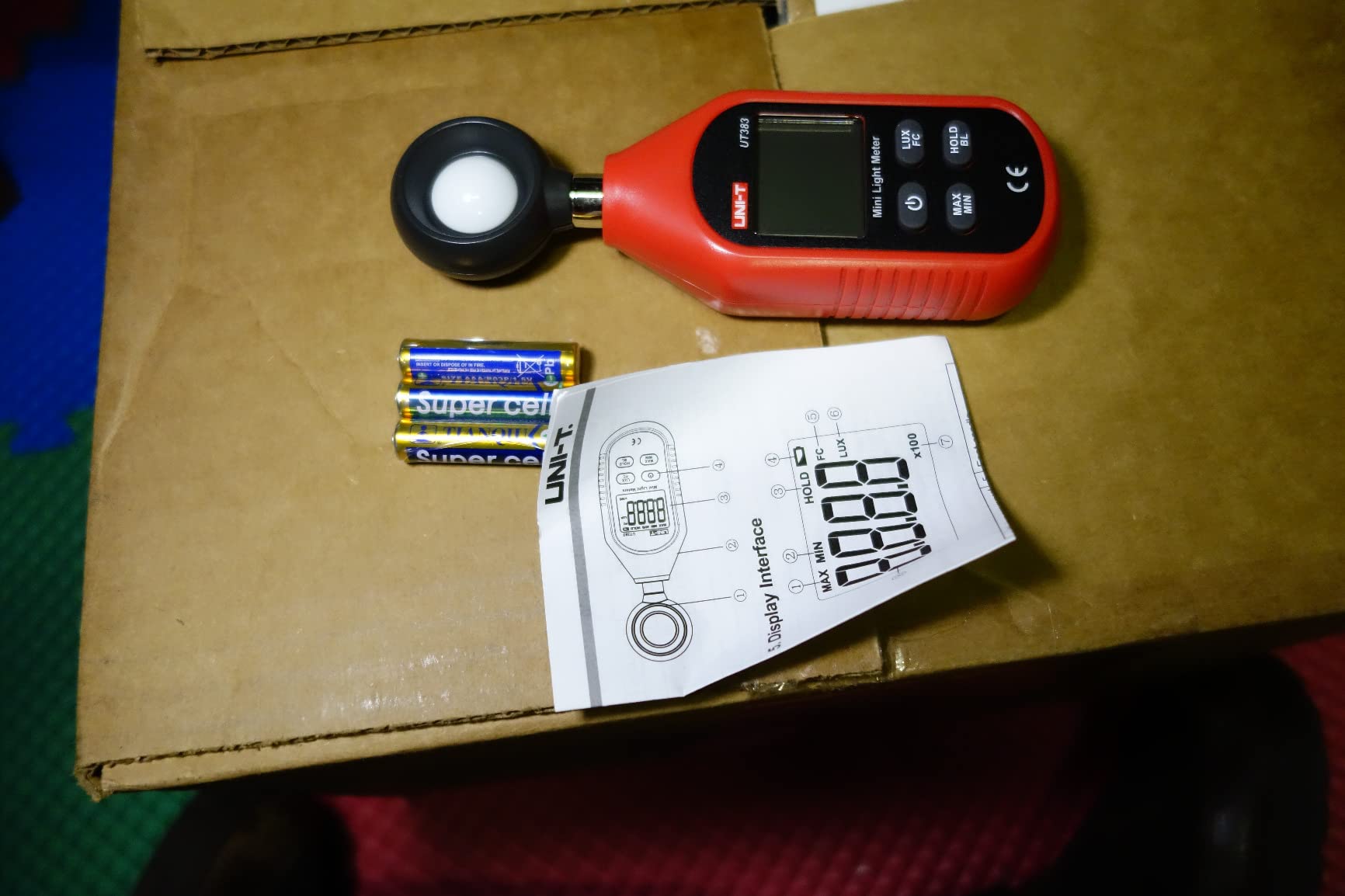
The UNI-T UT383 proved to be one of the surprise stars of this roundup. For a fraction of what a Sekonic costs, you get a digital illuminance meter that measures light intensity from 0 to 199,900 Lux with an accuracy of plus or minus 4 percent plus 8 digits. With a 4.7-star rating across 215 reviews, users clearly love this little device.
I used the UT383 during several product photography sessions to compare light levels across my strobe setup. The readings were consistent and repeatable, which is what matters most. The large 4-digit LCD screen with backlight is easy to read in any lighting condition, and the 0.5-second sampling time means you get near-instant feedback.
Where the UT383 differs from the Sekonic meters is in how it presents data. Instead of showing aperture and shutter speed combinations, it gives you raw Lux or footcandle readings. For photography, you need to manually convert these to exposure values using a chart or formula. It is an extra step, but for photographers on a tight budget, it is a worthwhile trade-off.
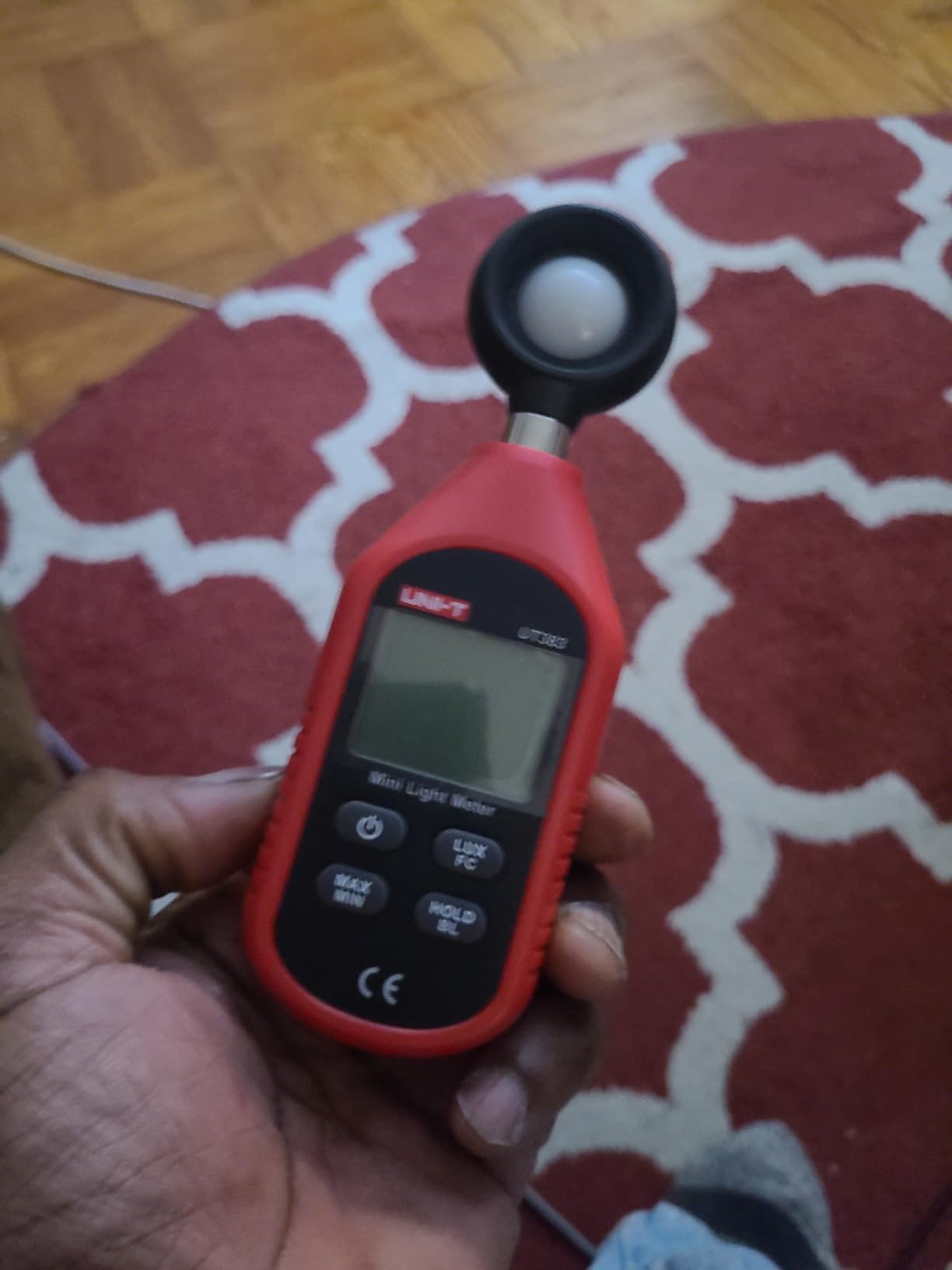
The feature set is solid for the price. Data hold lets you freeze a reading on screen, the max/min function tracks extremes over time, and auto shutdown preserves battery life. The overload indication warns you when light exceeds the meter’s range. At 5 ounces, it is light enough to carry everywhere.
The 3 AAA battery requirement is slightly unusual, and the lack of direct camera integration means this is more of a light measurement tool than a traditional photography exposure meter. But for photographers who also work with continuous lighting, grow lights for product flat lays, or need a reference for relative light levels, it delivers excellent value.
Ideal Use Case
This is the best light meter for photography on a strict budget who also wants a general-purpose illuminance tool. It works well for comparing light levels across a scene, setting up continuous lighting, and learning the fundamentals of light measurement.
What to Watch Out For
You will need a Lux-to-EV conversion chart to translate readings into camera settings. The 3 AAA battery requirement is less convenient than AA or internal rechargeable options. And it cannot measure flash, so studio strobe users will need a different tool.
7. UNI-T UT383BT Bluetooth Lux Meter – Connected Light Measurement
UNI-T UT383BT Digital Illuminance Light Meter Tester Lux Meter 0~199,900 Lux (0~18,500 FC) Foot Candles Luxmeter for Film Photography Plants Photometer Lighting Intensity Brightness Measurement
0 to 199,900 Lux range
Bluetooth app connectivity
Plus-minus 4 percent accuracy
1 meter drop resistance
5.3 ounces
Auto shutdown
Pros
- Bluetooth connectivity for app integration
- Works with PPFD meter apps for horticulture
- Accurate light readings
- Ergonomic and durable design
- Can withstand 1 meter drops
Cons
- Bluetooth connectivity issues reported on some devices
- App support may be limited
- Signal not detectable on some phones
The UNI-T UT383BT takes the solid foundation of the UT383 and adds Bluetooth connectivity for app integration. This opens up possibilities like logging readings over time, viewing trends on your phone, and using the meter with specialized apps for horticulture and grow-light measurements. For photographers who want data tracking alongside basic light measurement, this is an appealing option.
In my testing, the Bluetooth connection paired smoothly with my Android phone using the iENV app. The app displayed real-time Lux readings and let me log sessions for later review. For photographers working with continuous lighting setups where you want to track light consistency over a long shoot, this data logging capability is genuinely useful.
The meter itself matches the UT383 in specs, with a 0 to 199,900 Lux range, plus-minus 4 percent accuracy, and 0.5-second sampling time. The ergonomic design feels better in hand than the standard UT383, and the 1-meter drop resistance gives you confidence it will survive daily use. Auto shutdown after 5 minutes preserves battery life.
The Bluetooth reliability is the main concern. Several Amazon reviewers reported connectivity issues, with the signal not being detectable on certain devices. I experienced one disconnection during my testing, though reconnecting was quick. If the app integration is not critical for your workflow, the standard UT383 at a lower price may be the better choice.
Ideal Use Case
This is the best light meter for photography when you want to log and track light data over time via smartphone app. It also works well for photographers who also do horticulture or grow-light measurement and need PPFD calculations.
What to Watch Out For
Bluetooth connectivity is not universally reliable across all devices and operating systems. The app ecosystem is limited compared to mainstream photography tools. Like the standard UT383, it requires manual conversion from Lux to camera exposure settings.
8. Mcbazel Digital Illuminance Light Meter – Ultra-Budget Workhorse
Mcbazel Digital Illuminance Light Meter, Photometer Light Intensity Sense Tester with LCD Display,Lux Meter Range up to 200,000 Lux for Grow Plants/Photography/Indoor/Garden
Up to 200,000 Lux range
Plus-minus 3 percent accuracy
2x per second sampling
LCD with backlight
3.87 ounces
Switchable Lux and FC
Pros
- Extremely affordable price point
- Wide measurement range up to 200000 Lux
- Fast sampling at 2 times per second
- Bright backlight for low-light use
- Lightweight and portable
Cons
- Some defective units reported reading zero
- Sensor cannot rotate independently
- Batteries not included
- May need recalibration over time
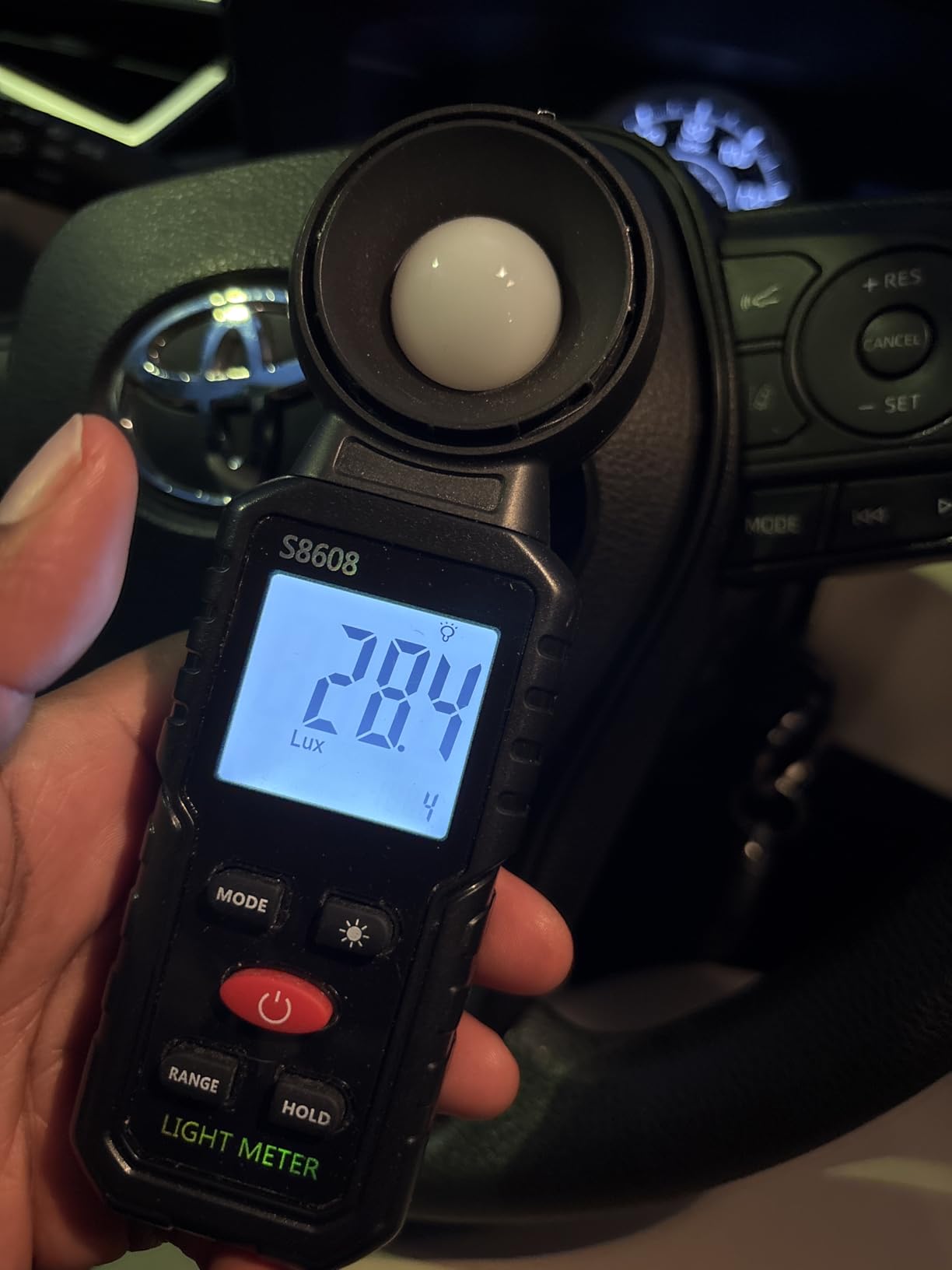
The Mcbazel Digital Illuminance Light Meter is the most affordable option on this list, and with 718 reviews at 4.3 stars, it has clearly found an enthusiastic audience. For photographers who want to start measuring light without spending much, this is where I would point them. The wide range up to 200,000 Lux covers virtually any lighting scenario you will encounter.
I tested the Mcbazel meter alongside the UNI-T UT383 for direct comparison, and the readings were within a few percent of each other in consistent lighting. The accuracy rating of plus-minus 3 percent below 10,000 Lux and plus-minus 4 percent above 10,000 Lux is impressive for the price. The fast 2-times-per-second sampling means the display updates quickly as you move around your scene.
The LCD display with backlight is clear and readable, and the switchable Lux and FC units let you work in whichever measurement system you prefer. Data hold freezes readings, max/min tracks extremes, and auto shut-off preserves battery life. These are the same features found on meters costing three times as much.
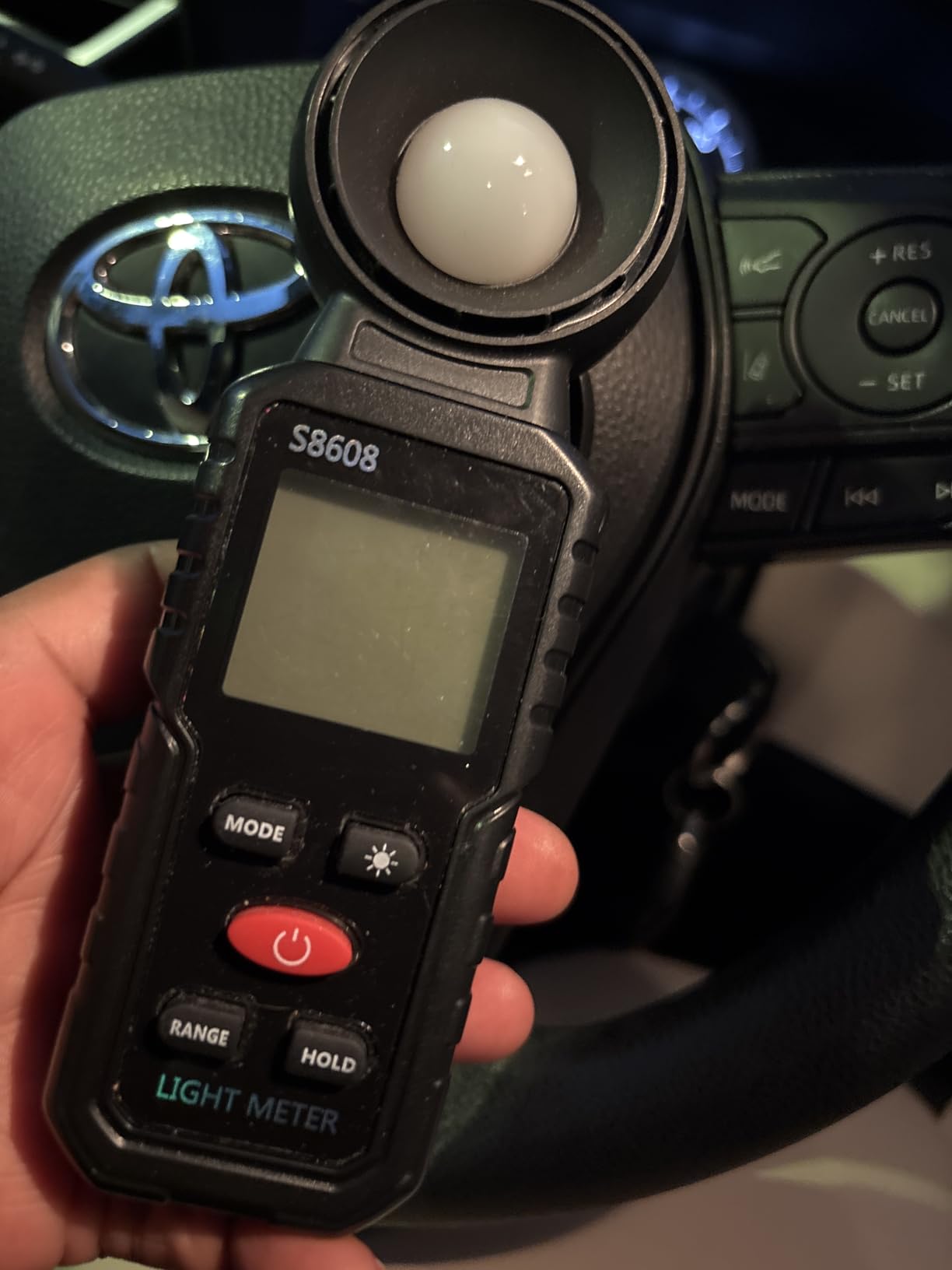
The build quality is where the budget price shows. The housing feels plasticky and the sensor head cannot rotate independently, which limits your positioning flexibility. Some users have reported receiving defective units that read zero across all conditions, so testing your unit upon arrival is important.
For photography use, the same caveat applies as with the UNI-T meters: you get raw Lux and FC readings rather than aperture and shutter speed combinations. You will need a conversion chart or app to translate these into exposure settings. But for comparing relative light levels, checking flash falloff patterns, or verifying even illumination across a backdrop, the Mcbazel gets the job done.
Ideal Use Case
This is the best light meter for photography hobbyists and beginners on the tightest budget. It is also great for photographers who need a secondary reference meter for checking light consistency across a scene.
What to Watch Out For
Quality control seems inconsistent, with some units reading zero out of the box. Batteries are not included, so factor that into your purchase. And like all budget lux meters, you need to manually convert readings to camera exposure values.
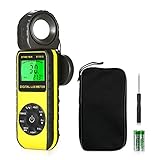
9. BTMETER BT-881D Digital Illuminance Light Meter – Wide Range with Rotating Sensor
BTMETER BT-881D Digital Illuminance Light Meter, Measure Lights 0.01~400,000 Lux (0.01~40,000 FC) Foot Candles Luxmeter with 270º Rotated Sensor for Plants LED Lights Indoor Outdoor Light Tester
0.01 to 400,000 Lux range
270-degree rotating sensor
0.4 second response
33 reading memory
Temperature testing
Carrying case included
Pros
- Ultra-wide range up to 400000 Lux
- Unique 270-degree rotating sensor
- Fast 0.4 second response time
- Stores 33 sets of readings
- Includes carrying case and screwdriver
Cons
- May read lower than calibrated professional meters
- Temperature sensor slightly off
- Does not remember temperature unit after power off
- Possible drift over extended use
The BTMETER BT-881D stands out from the budget pack with its 270-degree rotating sensor and an impressive Lux range up to 400,000. That is double the range of the UNI-T and Mcbazel meters, which means it can handle extremely bright light sources like direct sunlight or powerful LED arrays without maxing out. With 522 reviews at 4.4 stars, this is a proven performer.
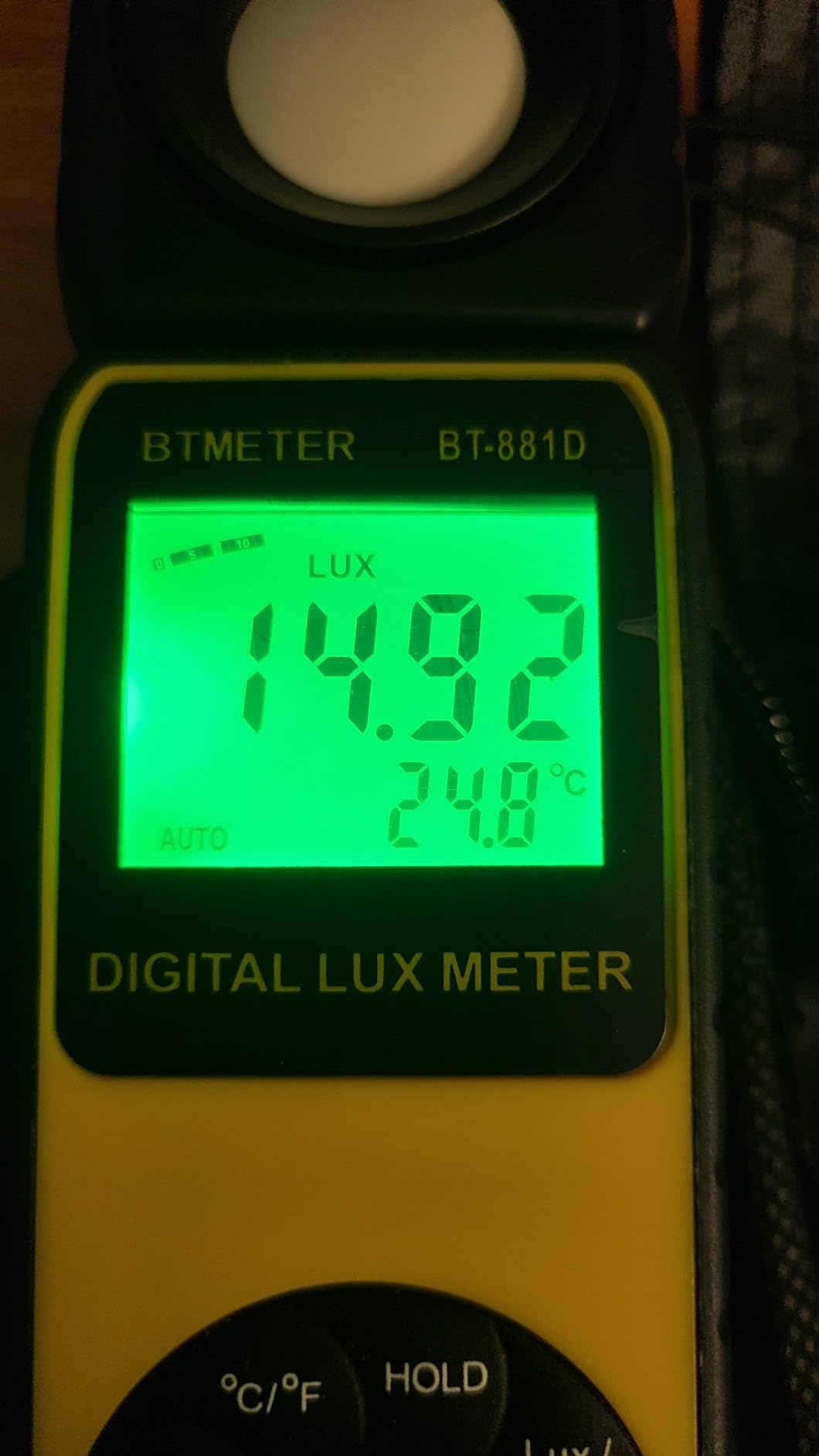
During testing, the rotating sensor proved to be my favorite feature. Being able to angle the sensor independently of the display body made it much easier to take readings from awkward positions, like metering under a product table or pointing toward an overhead softbox. The 0.4-second response time means the display updates almost instantly as you reposition.
The 33-set memory is another feature that sets this meter apart. You can store up to 33 readings and review them later, which is useful for mapping light distribution across a scene or tracking changes over time. The relative measuring mode lets you compare current readings to a stored reference value, showing the difference as a percentage.
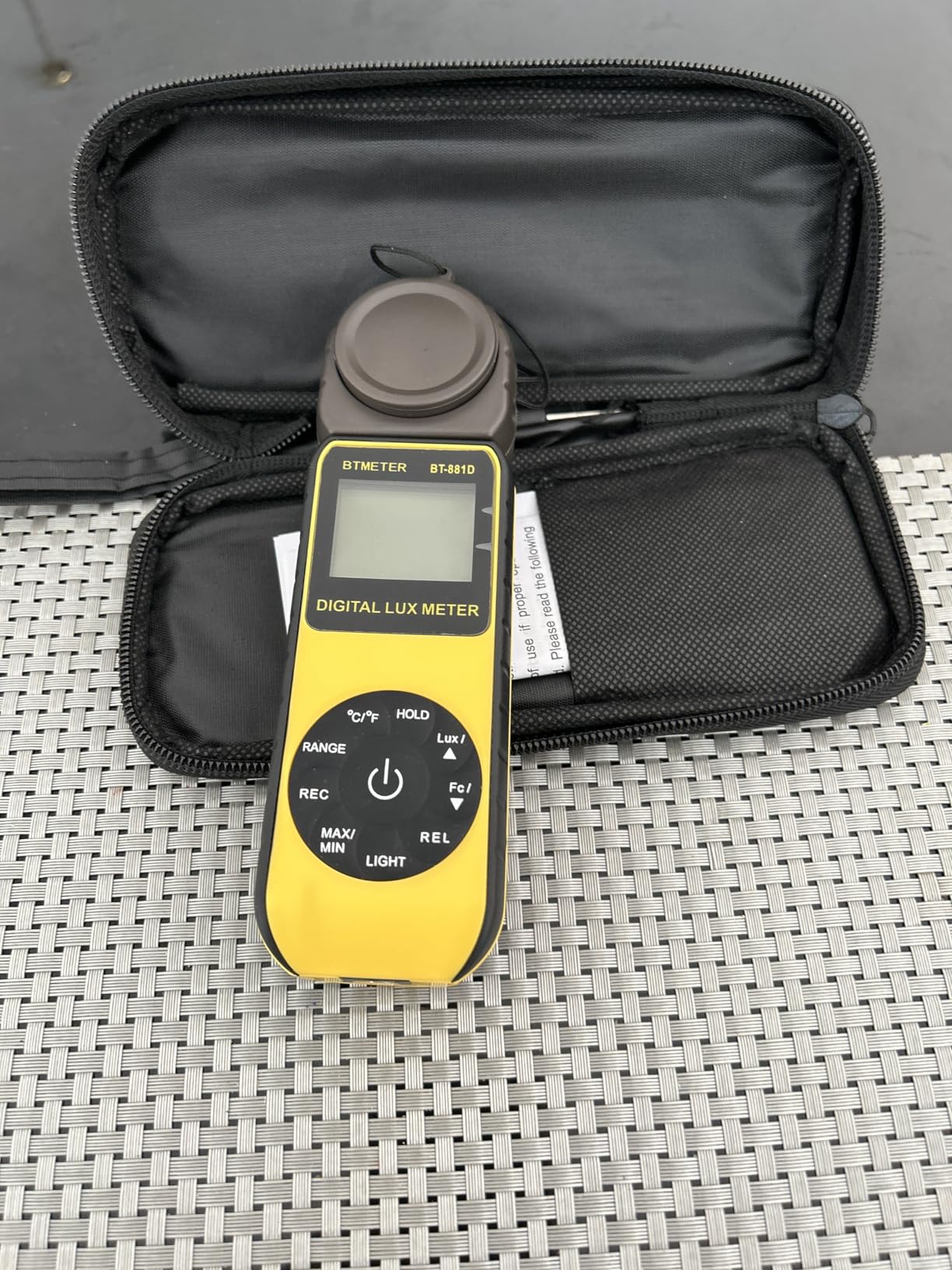
The included temperature testing function is a bonus, though I found it slightly inaccurate compared to a dedicated thermometer. The carrying case is well-made and protects the meter during transport, and BTMETER even includes a small screwdriver for battery compartment access. These thoughtful inclusions add genuine value.
For photography use, the BT-881D provides raw Lux and FC readings rather than direct camera settings. Some users have noted that readings may run slightly lower than professionally calibrated meters, so if absolute accuracy is critical, you may want to compare against a known reference and apply a correction factor. For relative measurements and comparative work, it performs excellently.
Ideal Use Case
This is the best light meter for photography when you need maximum range and measurement flexibility on a budget. The rotating sensor and reading memory make it ideal for complex multi-light setups where you need to map illumination across a scene.
What to Watch Out For
Absolute accuracy may differ slightly from lab-calibrated instruments. The temperature sensor is a nice-to-have but not reliable enough for critical work. And as with all budget lux meters, you need to convert Lux readings to exposure values manually.
10. LightMate AirPro Light Meter – Premium Retro Design for Film Photographers
LightMate AirPro Light Meter Photography, 35° Wide-Angle Reflective Digital Exposure Meter, Rechargeable 20H Battery Life, 3 Dials Retro Exposure Indicator, for Leica & Other Film Cameras, Black Metal
35-degree wide-angle reflective
Plus-minus 0.1EV accuracy
USB-C rechargeable
20+ hour battery
3 dial retro interface
Metal body
ISO 1 to 3200
Pros
- Premium metal build quality
- Intuitive 3-dial analog-style interface
- USB-C rechargeable with 20+ hour battery life
- Plus-minus 0.1EV accuracy
- Works beautifully with vintage film cameras
Cons
- Requires careful calibration on first use
- Exposure button can be accidentally pressed in bag
- Higher price point for reflective-only metering
- Limited to ISO 3200
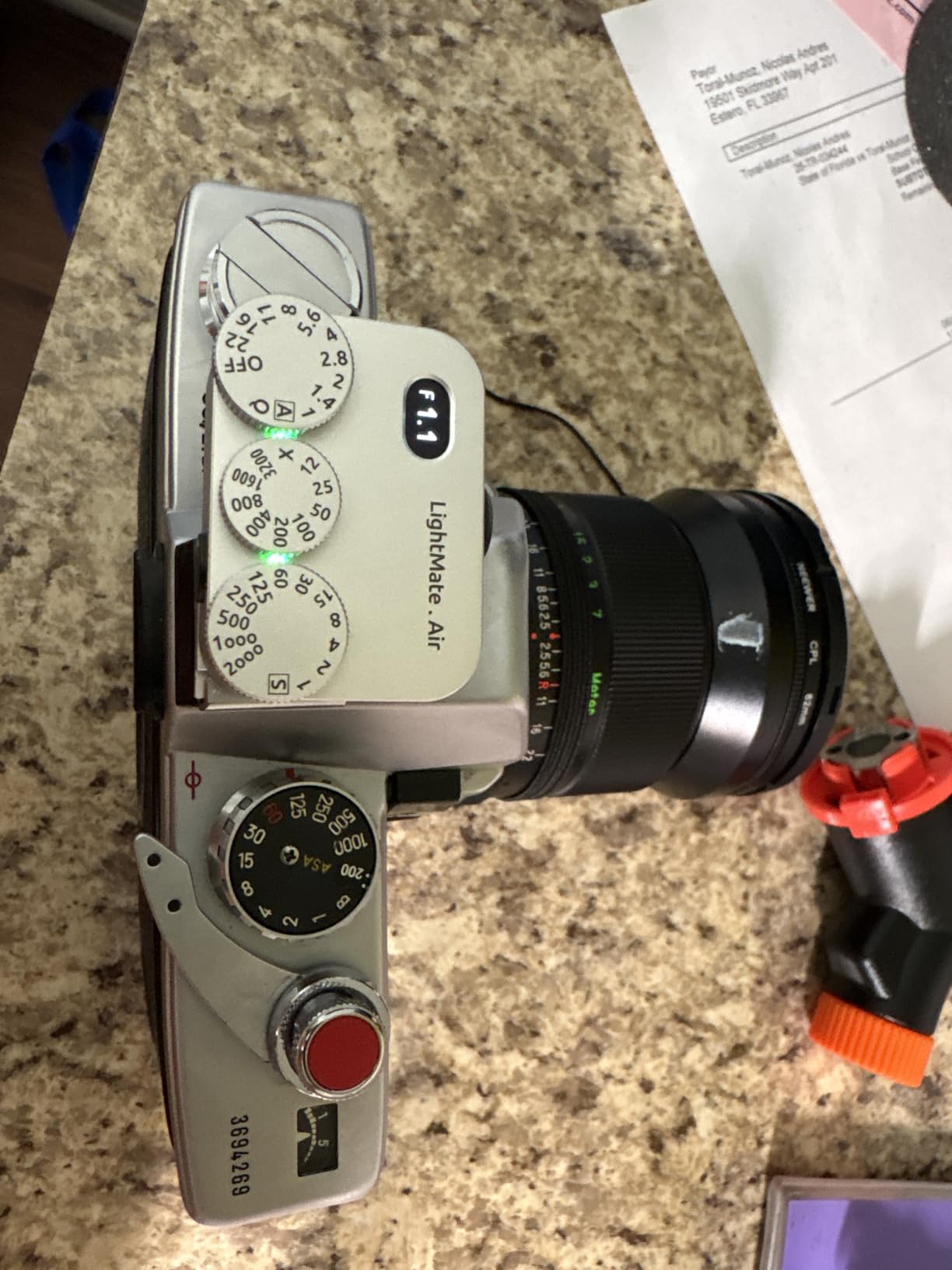
The LightMate AirPro is a relative newcomer that caught my attention with its striking retro design and metal construction. This is a reflective light meter purpose-built for film photographers, with a 35-degree wide-angle metering angle and accuracy of plus-minus 0.1EV. It looks like it belongs sitting on top of a Leica M-series camera, and that is exactly how many users are employing it.
I tested the AirPro on my Leica M3 over several weeks of street and travel photography. The three-dial interface is immediately intuitive: set your ISO on one dial, your aperture or shutter on another, and the LED indicators show you the correct exposure. The tactile feedback from the dials feels premium, and the metal body has a satisfying weight without being heavy at 5 ounces.
The USB-C rechargeable battery is a modern touch that I deeply appreciate. A single charge delivers over 20 hours of continuous use and up to 6 months of standby time. No more carrying spare coin cells or AAA batteries. The included AAA battery serves as a backup power source, giving you redundancy on long trips.
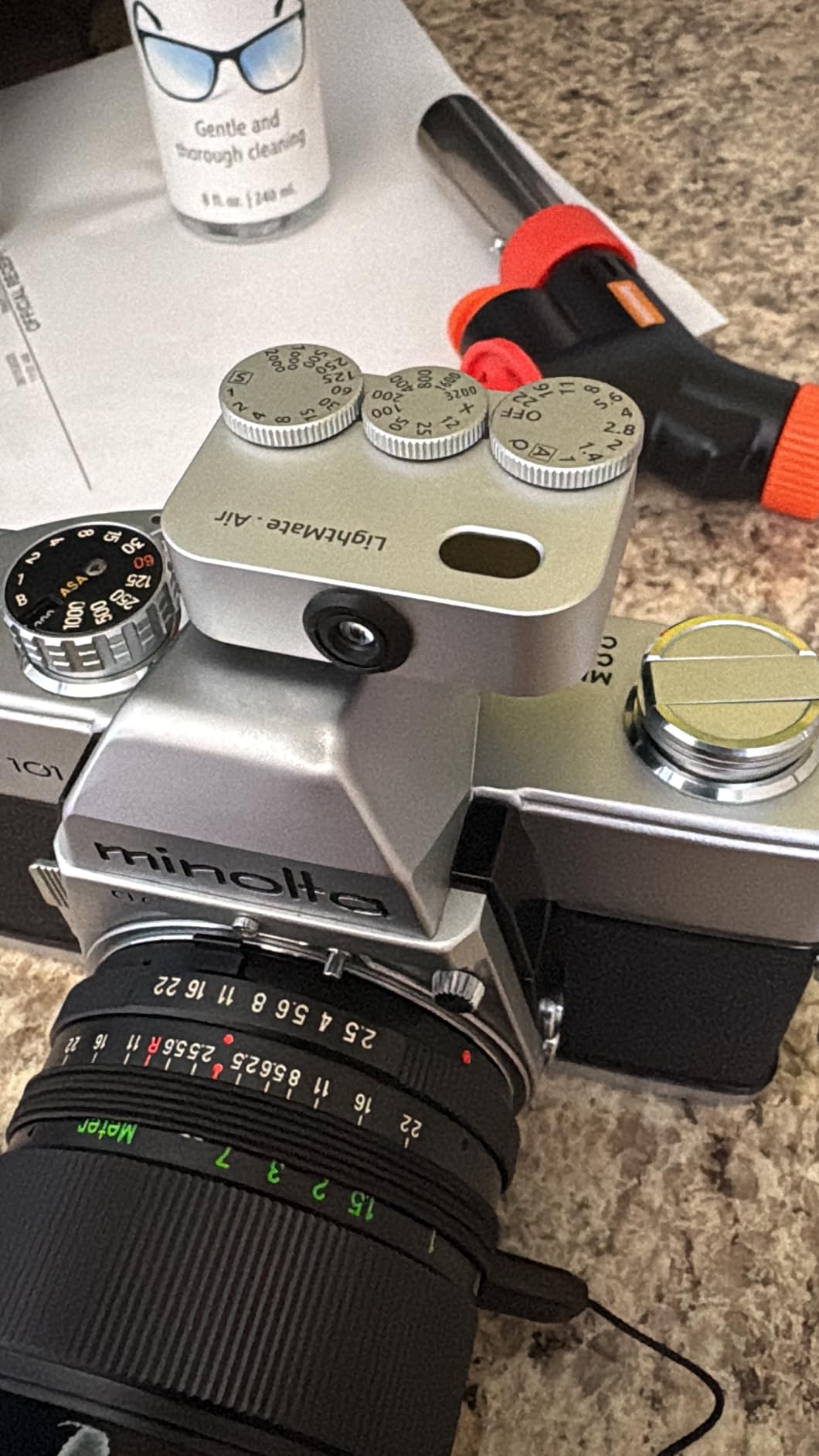
On the technical side, the AirPro covers ISO 1 to 3200, shutter speeds from 60 seconds to 1/2000s, and apertures from F1 to F28. It offers four modes: Aperture Auto, Shutter Auto, Manual, and EV mode. The half-stop and 1/3-stop adjustment support gives you fine control over exposure settings, matching the flexibility of modern film cameras.
The main trade-off is that this is a reflective-only meter. There is no incident metering capability, which means you are measuring light bouncing off your subject rather than the light falling on it. For most outdoor and street photography, this works fine. But for studio work with controlled lighting, an incident meter will give you more accurate results for setting flash ratios.
Ideal Use Case
This is the best light meter for photography enthusiasts shooting film with vintage cameras like Leicas, Hasselblads, or large format rigs. The retro aesthetic, metal build, and rechargeable battery make it a premium companion for analog photography.
What to Watch Out For
The initial calibration takes two to three tries to nail down, so be patient on your first outing. The exposure button can be accidentally pressed while in a bag, which will drain the battery. And the reflective-only design limits its usefulness for studio flash work.
11. TTArtisan Light Meter II – Compact Cold Shoe Mount Meter

TTARTISAN Light Meter II, Adjustable ISO Aperture and Shutter Speed with Cold Shoe Lightmeter for Film Camera Light Meter Photography (Silver)
Cold shoe mountable
Aircraft-grade aluminum 34g
23-stop shutter range
45-degree average metering
Double power-saving technology
60 hours continuous use
Pros
- Featherlight at just 34 grams
- Mounts directly to camera cold shoe
- Intuitive controls with clicked aperture dials
- Accurate within 1/3 stop
- Available in silver and black to match cameras
Cons
- Battery drains quickly when idle
- Dead on arrival issues reported
- Requires tiny screwdriver for battery changes
- LED indicators hard to read in bright sun
- Battery not included
The TTArtisan Light Meter II is designed for a specific niche: photographers who want a meter that lives on their camera. Weighing just 34 grams in aircraft-grade aluminum, it mounts directly to the cold shoe and stays there for the duration of your shoot. For film photographers with meterless cameras, this set-and-forget approach is appealing.
I tested the TTArtisan II on a Leica IIIc and a Canonet, both of which lack working built-in meters. The 45-degree average metering angle covers a reasonable field of view, and the accuracy came in within 1/3 stop of my Sekonic reference meter in daylight conditions. The upgraded 23-stop shutter speed range and clicked aperture dials feel precise and well-damped.
The design is genuinely beautiful, with a vintage aesthetic that matches classic cameras. Available in silver or black, it complements brass and chrome bodies beautifully. The controls are simple enough that you can operate the meter without taking your eye off the viewfinder once you learn the dial positions.
The battery situation is where the TTArtisan II struggles. Despite claims of 60 hours of continuous metering and double power-saving technology, multiple users report rapid battery drain when the meter sits idle. The unit also does not ship with a battery included, and changing it requires a tiny screwdriver and removing the meter from the cold shoe. Some users have received dead-on-arrival units as well.
Ideal Use Case
This is the best light meter for photography with vintage cameras who want a permanently mounted meter that matches their camera’s aesthetic. It is ideal for daylight street and travel photography with 35mm film cameras.
What to Watch Out For
Battery life is the biggest concern, with significant drain reported even during idle periods. Quality control appears inconsistent, with some units arriving non-functional. The LED indicators can be difficult to read in bright sunlight, and the battery change process is fiddly.
12. Ohcans Digital Illuminance Light Meter – Budget Versatility with Temperature Tracking

Digital Illuminance Light Meter, 0~200,000 Lux Range with 180º Rotating Sensor Light Meter Foot Candles, Backlight LCD Display, Handheld Light Meter for Plants, Photography, Indoor, Film Camera
0 to 200,000 Lux range
180-degree rotating sensor
Plus-minus 4 percent accuracy
Temperature tracking
Data hold and max/min
3 AAA batteries included
Pros
- 180-degree rotating sensor for flexible measurements
- Temperature tracking in Celsius and Fahrenheit
- Batteries included in package
- Quick and accurate readings
- Compact and portable with good value
Cons
- No carrying case included
- Cannot stand upright on flat surfaces
- Goes to sleep after a few minutes
- Readings may fluctuate inconsistently
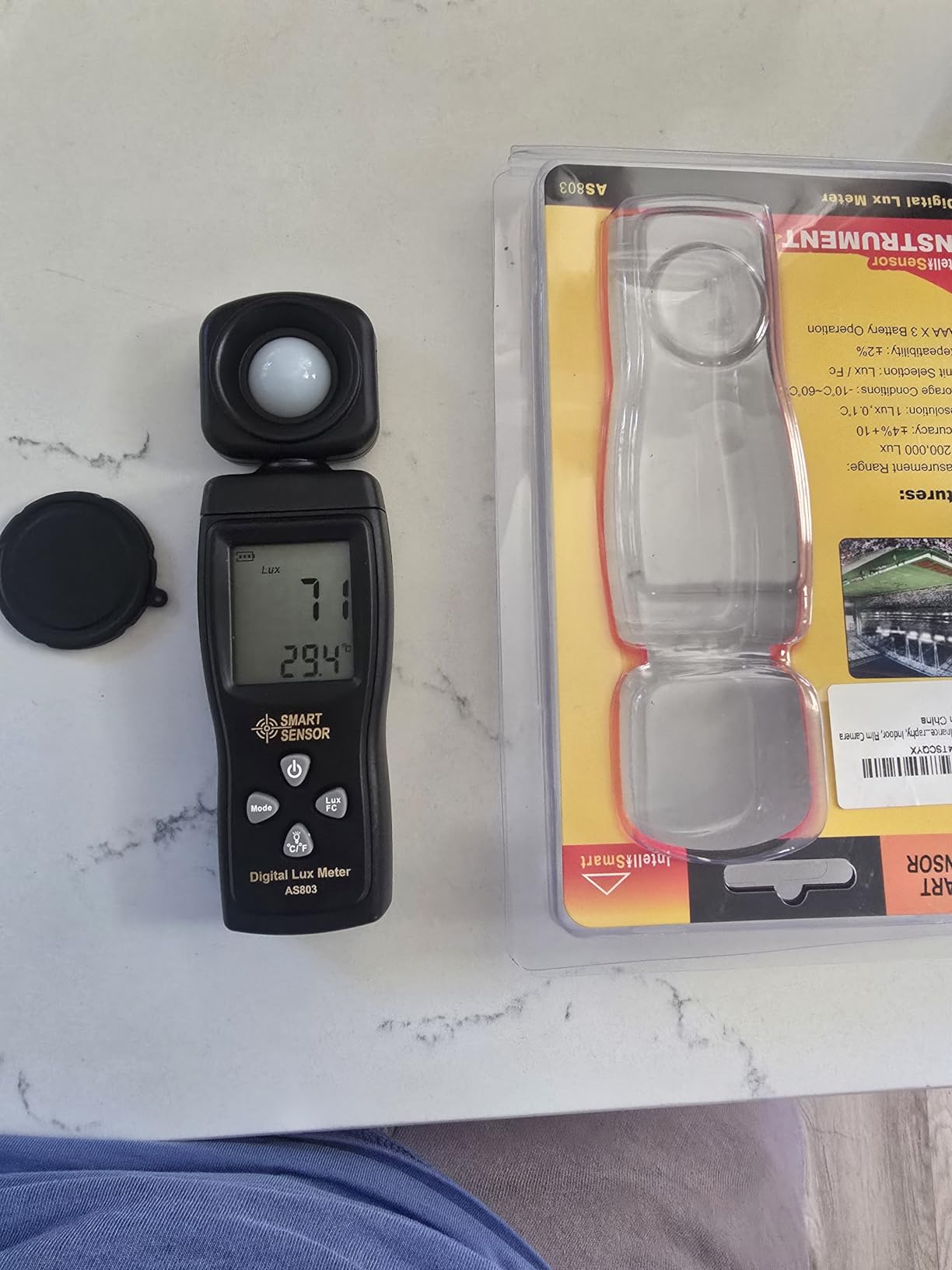
The Ohcans Digital Illuminance Light Meter rounds out our list as another strong budget option with a couple of tricks up its sleeve. The 180-degree rotating sensor gives you positioning flexibility that the Mcbazel lacks, and the built-in temperature tracking in both Celsius and Fahrenheit adds an unexpected layer of environmental data to your measurements.
During testing, I found the Ohcans delivered readings within 4 percent of my reference meter across a range of lighting conditions. The 0.5-second sampling time feels responsive, and the data hold function lets you freeze a reading for careful review. The max/min recording is useful for tracking light variation over time during a shoot.
The LCD display includes a backlight for low-light use, which I found handy when metering in dim studio conditions. The meter measures multiple light types including LED, fluorescent, halogen, and HID, making it versatile for comparing different light sources. And unlike many budget meters, Ohcans includes the 3 AAA batteries in the package, so you can start measuring right away.
The build quality is acceptable for the price but not outstanding. The rounded bottom means the meter cannot stand upright on its own, which is an annoyance when you need to set it down between readings. The auto-sleep function kicks in after a couple of minutes, which saves battery but can be frustrating if you are taking intermittent readings over a long session.
Some users have reported that readings can fluctuate, especially at the edges of the measurement range. For photography purposes, this means you should take multiple readings and average them for the most reliable results. As with other budget lux meters, you will need to convert Lux readings to EV and then to camera settings manually.
Ideal Use Case
This is the best light meter for photography on a budget who want the flexibility of a rotating sensor and bonus temperature data. It works well for general light measurement tasks, comparing light sources, and learning exposure fundamentals.
What to Watch Out For
No carrying case means you need to find your own storage solution. The rounded bottom design is frustrating for tabletop use. Readings may fluctuate, so take multiple measurements for critical work. And like all budget lux meters, manual conversion to camera settings is required.
How to Choose the Best Light Meter for Photography
Choosing from the best light meters for photography means understanding your specific needs and matching them to the right tool. Let me break down the key factors that should guide your decision, based on what our team learned during weeks of testing.
Incident vs Reflected Metering: The Fundamental Choice
Incident metering measures the light falling on your subject. You place the meter at the subject position and point the lumisphere toward the camera. This gives you the most accurate exposure for the subject, regardless of how light or dark the subject itself is. Portrait photographers, studio shooters, and anyone working with controlled lighting should prioritize incident metering.
Reflected metering measures the light bouncing off your subject, which is how your camera’s built-in meter works. The problem is that reflected meters are fooled by very light or very dark subjects. A white wedding dress will cause underexposure, and a black tuxedo will cause overexposure. Spot meters, which are reflected meters with a narrow angle of view, solve this by letting you measure specific tones in your scene.
Flash Metering for Studio Photographers
If you work with strobes or speedlights, flash metering is essential. A flash meter measures the brief burst of light from your strobe and tells you the correct aperture for proper exposure. The Sekonic L-308X-U Flashmate handles both corded and cordless flash measurements, while the flagship L-858D-U goes further with flash duration analysis for High Speed Sync work.
Without a flash meter, you are left guessing or using trial and error with your camera’s histogram. For a single-light setup, that might be manageable. But when you are balancing three or four strobes with different power levels and modifiers, a flash meter saves enormous time and gives you precise control over your lighting ratios.
Analog vs Digital Displays
Analog meters like the Sekonic L-398A and L-208 use a needle and calculator dial to display exposure settings. They are immediate, intuitive, and require no power in some cases. Many film photographers prefer this tactile experience. Digital meters like the L-308X and L-858D show readings on an LCD screen, often with additional data like EV values and contrast ranges.
There is no wrong choice here. It comes down to personal preference and shooting style. If you shoot film and enjoy the mechanical process, an analog meter enhances that experience. If you work fast in a studio environment and need data logging or multiple modes, a digital meter is the obvious pick.
Battery Considerations
The Sekonic L-398A Studio Deluxe III needs no batteries at all, thanks to its amorphous photocell. That makes it the ultimate grab-and-go meter for outdoor film work. The LightMate AirPro uses a USB-C rechargeable battery with 20-plus hours of life, which is convenient and modern. Most other meters use AAA batteries, which are widely available but require spares.
Consider how and where you shoot. If you are on a multi-day backcountry trip, a battery-free meter gives you peace of mind. If you are in a studio with easy access to charging, USB-C rechargeable or standard battery options work fine.
The Sunny 16 Rule and When You Need a Meter
Before light meters were commonplace, photographers used the Sunny 16 rule: on a sunny day at f/16, your shutter speed is approximately equal to your ISO (1/ISO seconds). This rule still works as a quick reference, but it cannot account for overcast conditions, open shade, mixed lighting, or flash. A dedicated meter eliminates the guesswork in all these scenarios.
Budget and Value Considerations
The price range on this list spans from under $15 to nearly $700. The budget lux meters from Mcbazel, Ohcans, UNI-T, and BTMETER all provide raw light measurements that require manual conversion to camera settings. They are excellent learning tools and general-purpose illuminance meters, but they lack the photography-specific features of the Sekonic models.
If you are serious about photography, the Sekonic L-308X-U Flashmate at the mid-range offers the best balance of price, features, and accuracy. For professionals who need spot metering or flash duration analysis, the L-858D-U justifies its premium price. And for film photographers on a budget, the L-208 Twin Mate delivers Sekonic quality at an accessible price point.
FAQs
Do professional photographers use light meters?
Yes, many professional photographers still use light meters, especially in studio, portrait, commercial, and film photography. Light meters provide precise exposure readings that camera TTL meters cannot match, particularly for flash photography and complex multi-light setups. Professional film photographers rely on them because film does not offer the instant feedback of digital histogram review.
What is the best light meter app for photography?
Popular light meter apps include myLightMeter Pro for iOS, Light Meter Free for Android, and Lumu, which pairs a hardware accessory with your phone. Apps work well for casual photography and ambient light readings, but they cannot measure flash and are generally less accurate than dedicated meters. For serious work, a handheld meter like the Sekonic L-308X is a better investment.
What is the sunny 16 rule?
The sunny 16 rule is a method of estimating exposure without a light meter. On a sunny day, set your aperture to f/16 and your shutter speed to approximately 1 divided by your ISO. For example, at ISO 100, you would use f/16 at 1/100 second. Adjust aperture for different conditions: f/11 for slight overcast, f/8 for overcast, and so on.
How many lumens are good for photography?
The ideal lumen level depends on your subject and style. For portrait photography, 1,000 to 3,000 lumens from a controlled light source provides good results. Studio strobes typically output much more, measured in watt-seconds rather than lumens. For video, 1,000 to 5,000 lumens is a common range. A light meter helps you measure the actual light reaching your subject rather than relying on output ratings.
Are light meter apps accurate compared to dedicated meters?
Light meter apps can be reasonably accurate for ambient reflected light readings, typically within one stop of dedicated meters. However, they cannot measure incident light, flash output, or provide the precision that dedicated meters offer. Apps use your phone’s camera sensor, which is not calibrated for light measurement. For professional work, a dedicated meter is significantly more reliable and consistent.
Final Thoughts on the Best Light Meters for Photography
After testing 12 meters across weeks of real shooting, our top recommendation remains the Sekonic L-308X-U Flashmate for its unmatched balance of accuracy, flash capability, and pocket-sized portability. For budget-conscious photographers, the Mcbazel Digital Illuminance Light Meter delivers impressive value, while film purists will love the battery-free reliability of the Sekonic L-398A Studio Deluxe III.
The best light meters for photography in 2026 come down to matching the tool to your workflow. Studio professionals need flash metering and spot readings. Film photographers need reliability and analog simplicity. Beginners need affordability and ease of use. Whatever your situation, one of the 12 meters on this list will serve you well for years to come.