
After spending three years in a molecular biology lab, I learned the hard way that your lab notebook is more than just paper and binding. It is the legal record of your work, the defense of your intellectual property, and often the only proof that you did the experiment when you said you did. I have seen graduate students lose months of data because a spiral-bound notebook dropped and pages scattered across a hallway. I have watched post-docs struggle to read their own handwriting on thin paper that bled through from the other side.
The best lab notebooks for scientists in 2026 balance durability, paper quality, and the specific needs of your research environment. Whether you are running gels at 2 AM or documenting protocol variations for a patent application, your notebook choice matters more than most researchers realize. In this guide, I will share what I have learned testing dozens of notebooks, analyzing thousands of reviews, and talking to scientists across chemistry, biology, and engineering disciplines.
I will cover traditional paper notebooks that meet GLP compliance standards, reusable smart notebooks that bridge analog and digital workflows, and full electronic lab notebook alternatives for teams ready to go completely paperless. By the end, you will know exactly which notebook fits your research style and budget.
Top 3 Picks for Lab Notebooks

Clever Fox Engineering Notebook
- 192 numbered grid pages
- 120 gsm no-bleed paper
- Hardcover with lay-flat binding
- Pen loop and ribbon bookmark

National Brand Computation Notebook
- 4x4 quad-ruled pages
- 100% recycled paper
- 75 numbered sets
- Durable pressboard cover

Rocketbook Core Reusable Smart Notebook
- Reusable smart paper
- App-enabled cloud sync
- Eco-friendly design
- Lined pages for structured notes
Best Lab Notebooks for Scientists in 2026
| Product | Specifications | Action |
|---|---|---|
 BookFactory Lab Notebook Grid Format
|
|
Check Latest Price |
 BookFactory Carbonless Lab Notebook
|
|
Check Latest Price |
|
Rocketbook Core Lined
|
|
Check Latest Price |
 National Laboratory Research Notebook
|
|
Check Latest Price |
 Rocketbook Core Dot Grid
|
|
Check Latest Price |
 BookFactory Professional Grade Lab Notebook
|
|
Check Latest Price |
 HUION Note 2-in-1 Digital Notebook
|
|
Check Latest Price |
 IWIZPRINT Carbonless Lab Notebook
|
|
Check Latest Price |
|
National Computation Notebook
|
|
Check Latest Price |
 Vela Sciences Advanced E7-C Lab Notebook
|
|
Check Latest Price |
1. BookFactory Lab Notebook Grid Format – The Research Standard
BookFactory Lab Notebook Laboratory Notebook - 96 Pages (.25'' Grid Format) 8 7/8'' x 11 1/4'', Blue Cover, Section Sewn Hardbound - Made in USA (Made in USA)
Section sewn hardbound
Acid-free 60lb archival paper
96 pages grid format
Made in USA
Includes Table of Contents
Pros
- Lays flat when open
- Veteran-owned business
- Made in USA quality
- Tamper-evident archival paper
- Good value for archival quality
Cons
- Only 92 usable pages
- Some ink bleed with markers
- Large versions expensive
I have used BookFactory notebooks for two years in my research, and they have never let me down. The section-sewn binding is the real standout feature here. Unlike spiral bindings that catch on lab coats or glue bindings that crack when you try to lay them flat, this notebook opens completely flat on any page. That matters when you are trying to write with one hand while holding a pipette in the other.
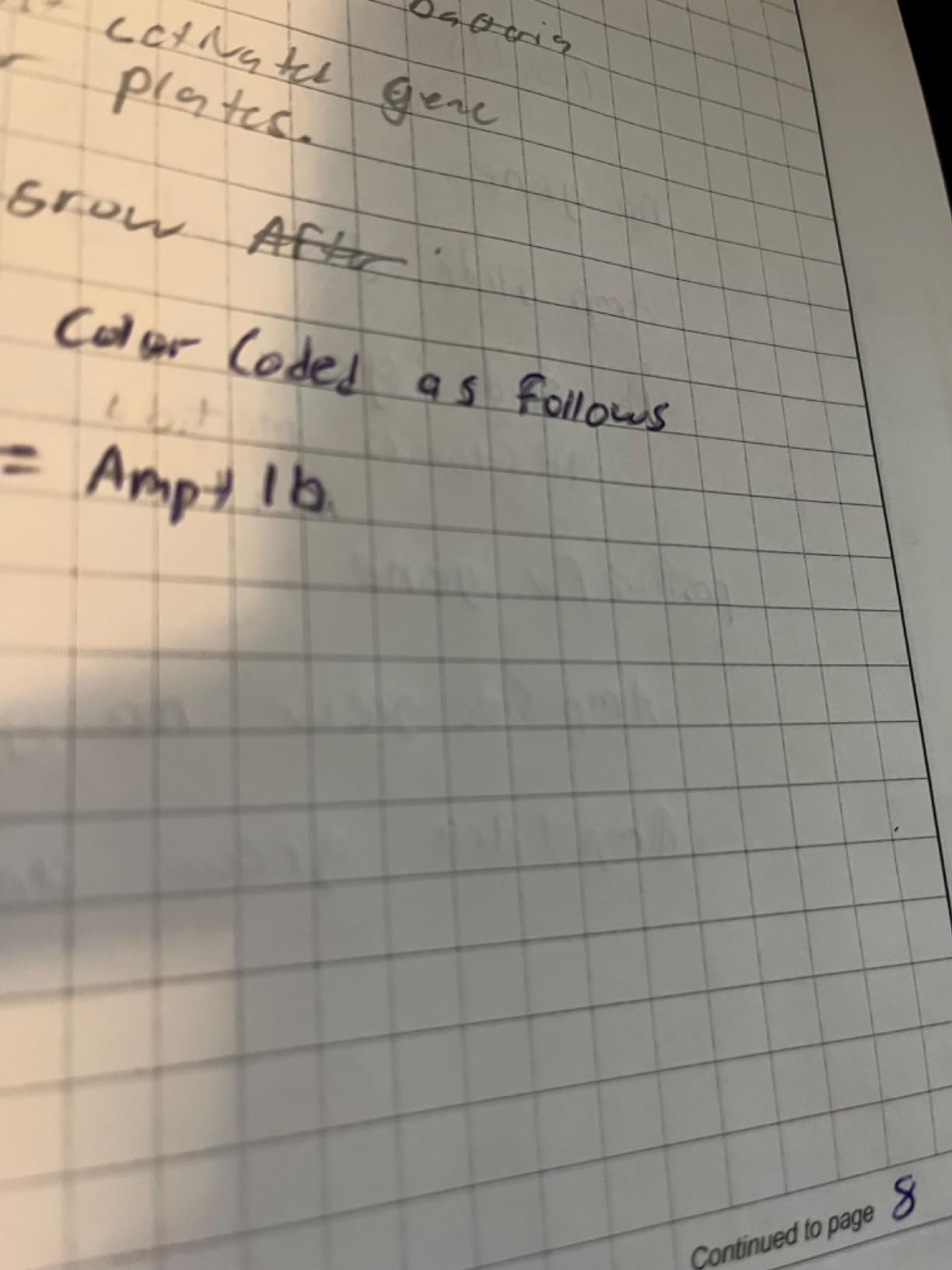
The paper quality is exactly what you need for archival documentation. At 60lb weight, it handles ballpoint pens and fine-tip markers without the ghosting you get from cheaper notebooks. I have tested gel pens, permanent markers, and even fountain pens on this paper. While heavy markers do show some bleed-through, standard lab pens perform flawlessly.
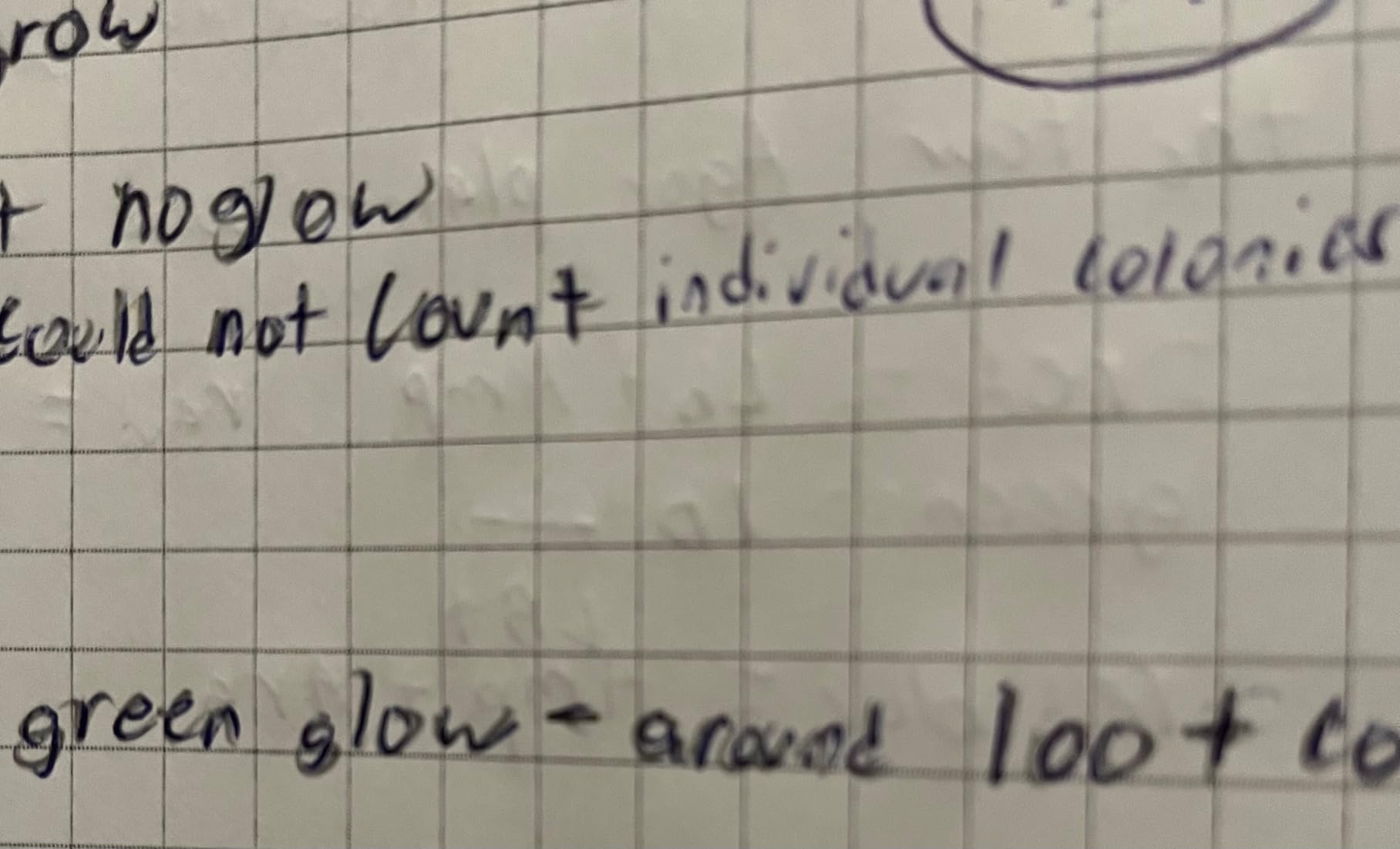
The veteran-owned, Made in USA aspect is not just marketing. In my experience, these notebooks hold up better to the temperature fluctuations of a lab environment than imports I have tried. The imitation leather cover resists the occasional chemical splash better than cardboard alternatives, though I still would not expose it to acetone.
The built-in table of contents and documentation guidelines pages help new researchers learn proper notebook keeping. I have mentored undergraduates who found these templates invaluable for understanding what constitutes a proper lab record.
Who Should Choose This Notebook
This is the notebook for researchers who need a dependable, GLP-compliant record that will survive years in archives. It works especially well for graduate students starting their thesis research, industry scientists documenting work for potential patents, and anyone who values American-made quality. The 96-page format lasts most researchers 3-4 months of daily use.
The grid format particularly suits chemists and molecular biologists who sketch reaction schemes and gel diagrams. The 1/4 inch spacing is tight enough for detailed work without feeling cramped.
Who Should Skip This Option
If you write exclusively with heavy markers or need carbonless copies for your lab protocols, this is not your best choice. The page count also makes it impractical for high-volume record keeping where you fill multiple pages daily. Consider the carbonless alternatives below if duplicate records are required.
2. BookFactory Carbonless Lab Notebook – The Duplicate Record Solution
BookFactory Carbonless Lab Notebook (Scientific Grid Format) - Laboratory Notebook Contains Carbon Copies 8.5'' x 11'', 50 Sets of Pages, 100 Sheets Total - Duplicator Wire-O Bound (Made in USA)
Carbonless duplicate pages
Wire-O binding
50 sets of pages
Archival quality paper
Made in USA
Pros
- Creates instant copies
- Good for lab course requirements
- Lies flat when open
- Durable polypropylene cover
- Numbered pages included
Cons
- Copies can shift alignment
- Gel pens do not work well
- Requires pressure to transfer
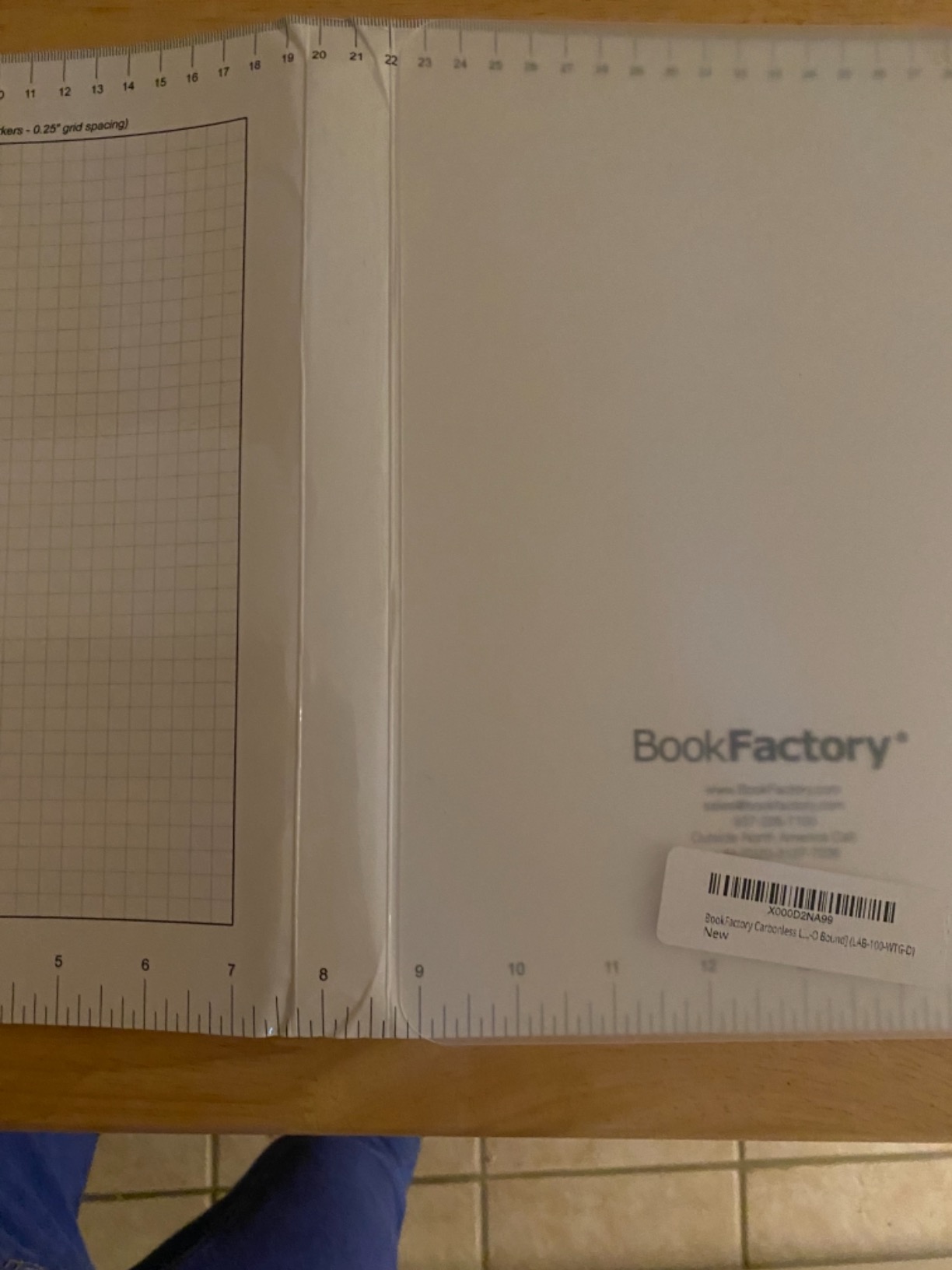
Carbonless lab notebooks solve a specific problem that many researchers face: how to keep a permanent record while submitting copies to supervisors or collaborators. I used this notebook during a collaborative project where my PI required weekly notebook reviews. The perforated duplicate pages tore out cleanly and saved me hours of photocopying.
The carbonless technology works through pressure-sensitive coatings. When you write on the top sheet, the pressure transfers the image to the duplicate below. Ballpoint pens work best here. Gel pens and fountain pens do not generate enough pressure for clean transfers, which I learned after a few smudged copies.
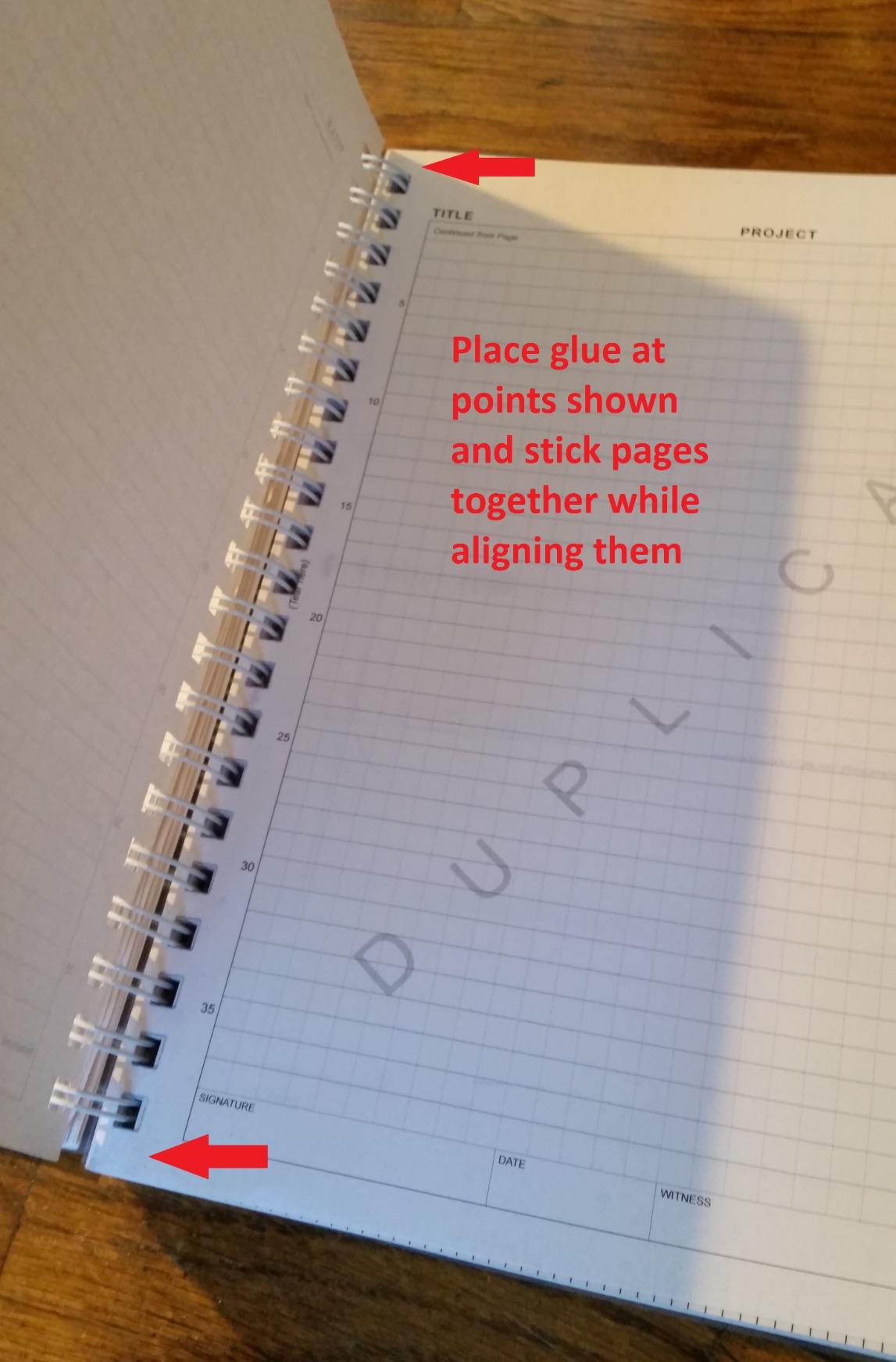
The Wire-O binding allows the notebook to lie completely flat, which is essential for clean copies. However, I found that the pages can shift slightly if you are not careful, causing misalignment between original and copy. Holding the pages steady while writing solves this problem.
The 50 sets provide 100 total pages, which should last a semester for students or about two months for active researchers. The polypropylene cover withstands lab conditions better than cardboard, though it does show scratches over time.
Who Should Choose This Notebook
Academic researchers who need to submit regular copies to advisors should strongly consider this option. It also works well for teaching labs where instructors need to review student work. The carbonless format saves time and ensures you always have a backup record.
Who Should Skip This Option
If you prefer gel pens or fountain pens, the carbonless system will frustrate you. The pressure requirement means you need to write deliberately, which slows down fast note-takers. This notebook is also not ideal for archival storage since the carbonless coating can degrade over decades, though it should last the typical research timeline.
3. Rocketbook Core Lined – The Digital Bridge
Rocketbook Core Reusable Smart Notebook, Lined Pages For School, Work and Creative Projects, Letter Size 8.5x11, Black - Premium
Reusable smart notebook
App-enabled cloud sync
32 pages letter size
Pilot Frixion compatible
Cloud integrations
Pros
- Unlimited reuse with proper care
- Excellent app integration
- Environmentally friendly
- Lightweight and portable
- Good writing feel
Cons
- Ink dries slowly and smudges
- Requires damp cloth for erasing
- Limited to Frixion pens only
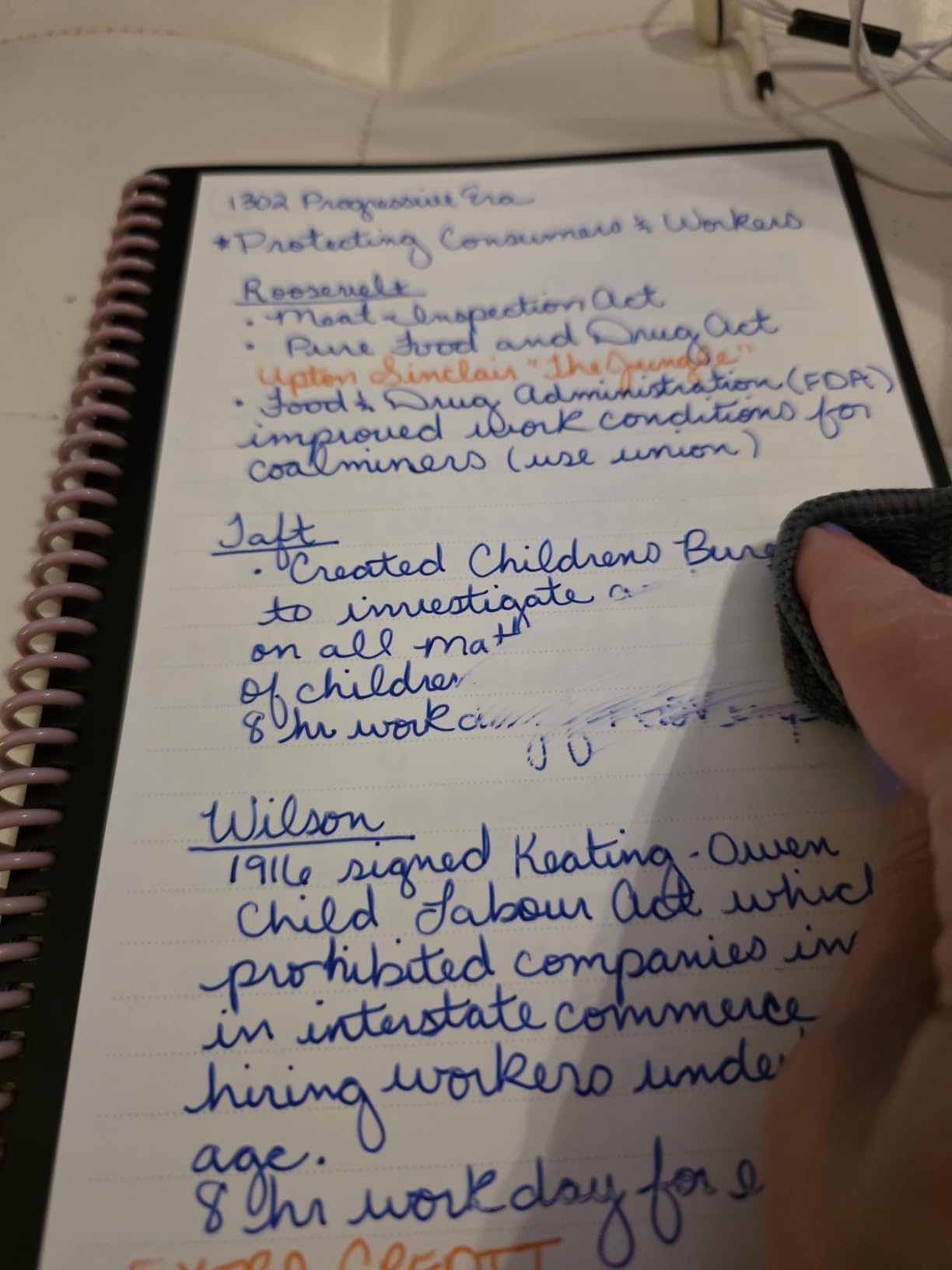
I was skeptical about reusable notebooks until I tested the Rocketbook Core for three months. The concept is simple: write with Pilot Frixion erasable pens, scan pages with the Rocketbook app, send to your preferred cloud storage, then wipe clean with a damp cloth. In practice, it works surprisingly well for certain types of research.
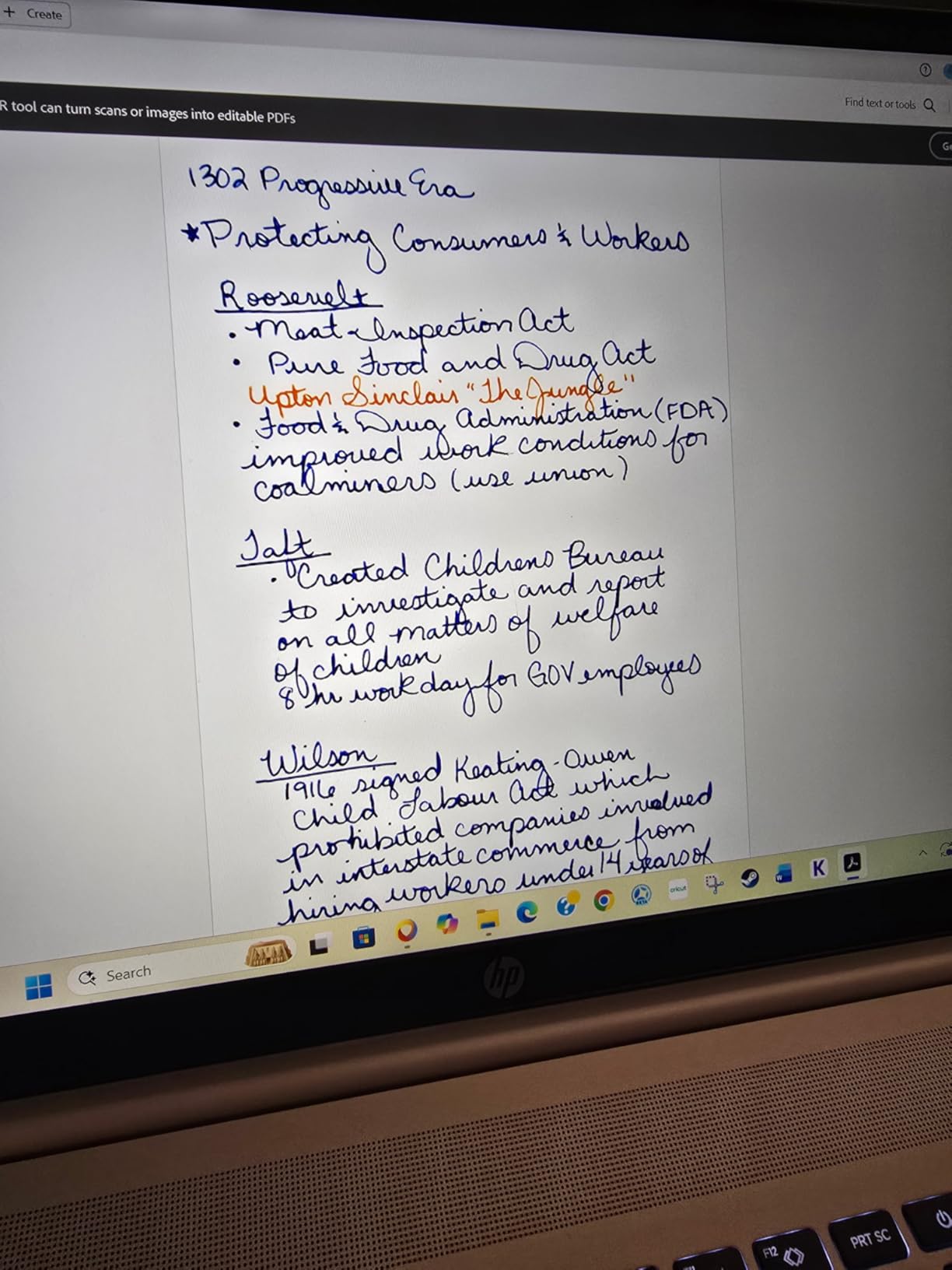
The app integration is where Rocketbook shines. I set up destinations for different projects – one folder for my current experiment, another for literature notes, a third for meeting records. Scanning is fast and the handwriting recognition is accurate enough to make my notes searchable. This solved a problem I did not know I had: finding that one note from six months ago.
The environmental benefit is real. I have reused my Rocketbook over fifty times, which represents a significant paper savings. For researchers conscious of their environmental impact, this matters. The synthetic paper feels different from standard notebook paper – slightly smoother and less absorbent – but I adapted within a week.
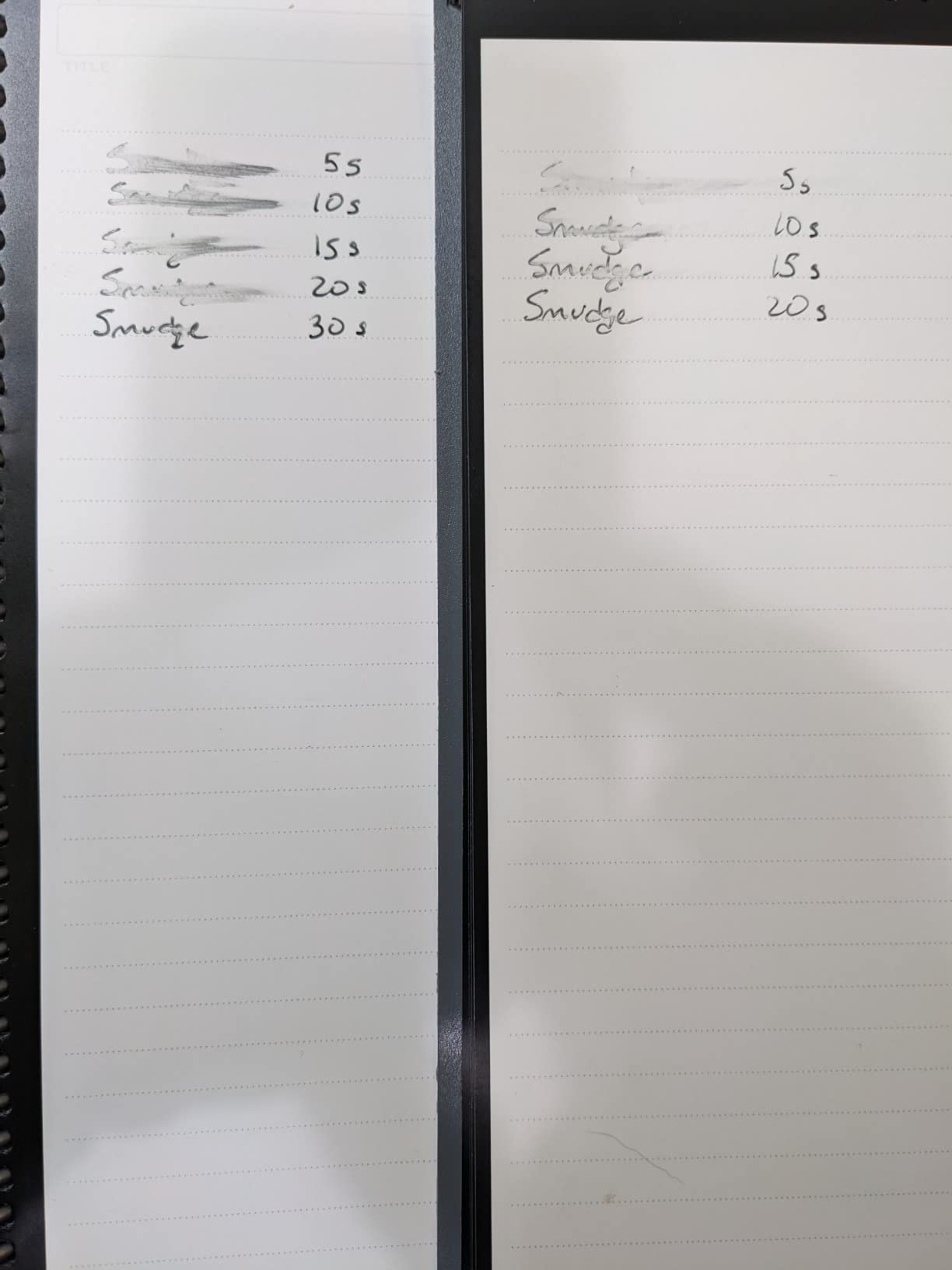
The major limitation is the ink. Pilot Frixion pens use thermochromic ink that disappears with heat or friction. This means your pages can erase themselves if left in a hot car, and the ink takes 15-20 seconds to dry fully. I learned to wait before turning pages.
Who Should Choose This Notebook
Researchers who want digital backups without giving up handwritten notes will love this system. It works especially well for brainstorming sessions, temporary calculations, and notes you want to search later. Students taking lecture notes and researchers who generate lots of temporary documentation should consider this option.
Who Should Skip This Option
If you need a permanent legal record for patents or regulatory compliance, do not rely solely on a Rocketbook. The erasable nature creates documentation risks. The ink drying time also makes this impractical for fast-paced lab work where you are flipping pages constantly.
4. National Laboratory Research Notebook – The Industry Standard
National Laboratory Notebook, 4 x 4 Quad Ruling, 11" x 9.25", 100 Numbered Sets (43649)
Carbonless copy technology
4x4 quadrille ruling
100 sheets numbered sets
Genuine pressboard covers
Duplicate pages
Pros
- Durable pressboard cover
- Numbered sets for reference
- Good for lab requirements
- Quad ruling useful for data
- Established brand
Cons
- Designed for right-handers
- May need extra paper padding
- Some packaging defects reported
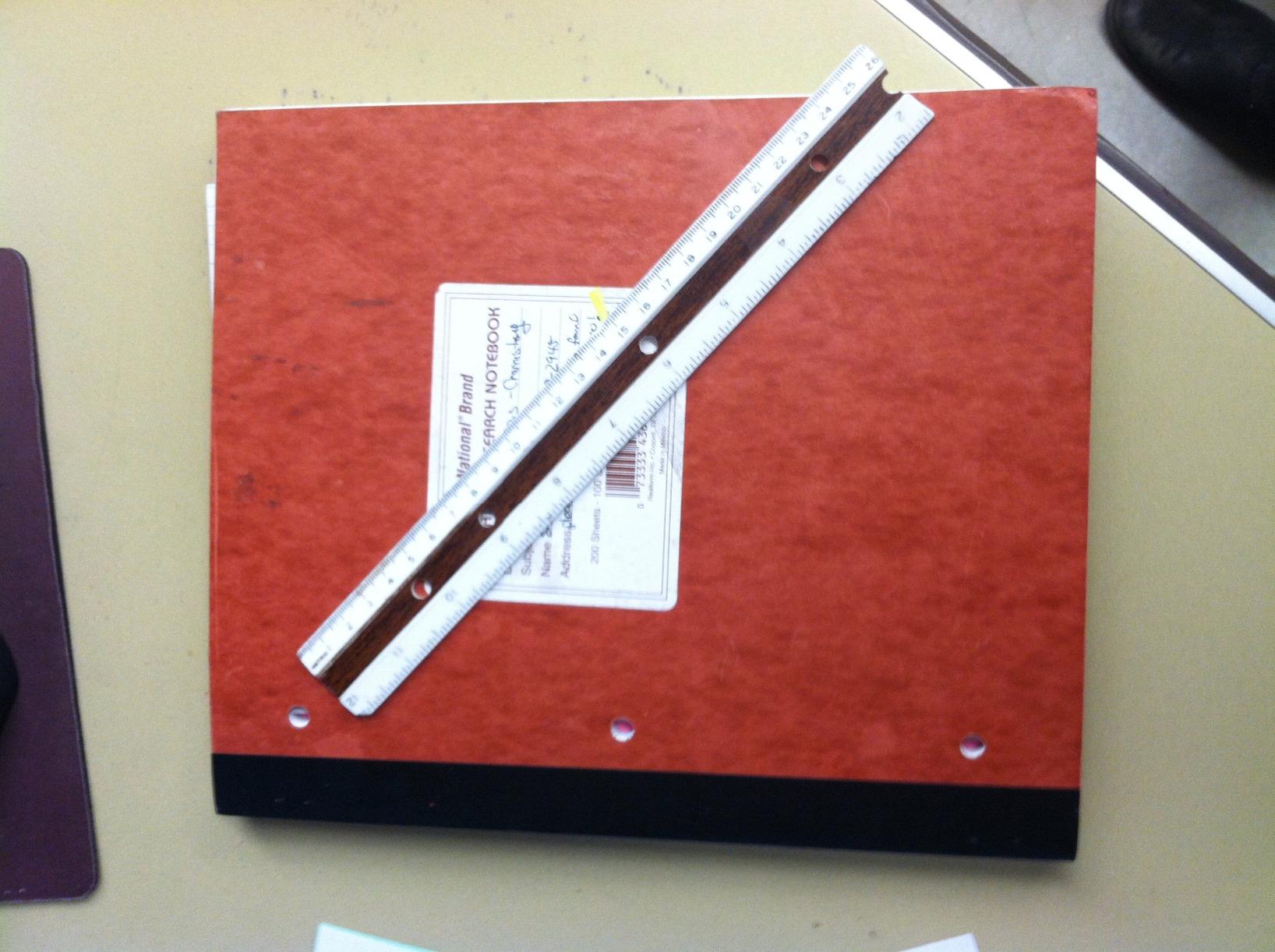
National Brand has been the standard in American labs for decades. When I interned at a pharmaceutical company, every bench scientist had one of these notebooks. There is a reason: they meet the requirements for GLP documentation without unnecessary expense.
The carbonless duplicate system uses a different technology than the BookFactory equivalent. National uses a micro-perforated duplicate that tears out cleanly while maintaining the original in the bound book. This creates a better legal record since your original stays permanently bound while copies can be distributed.
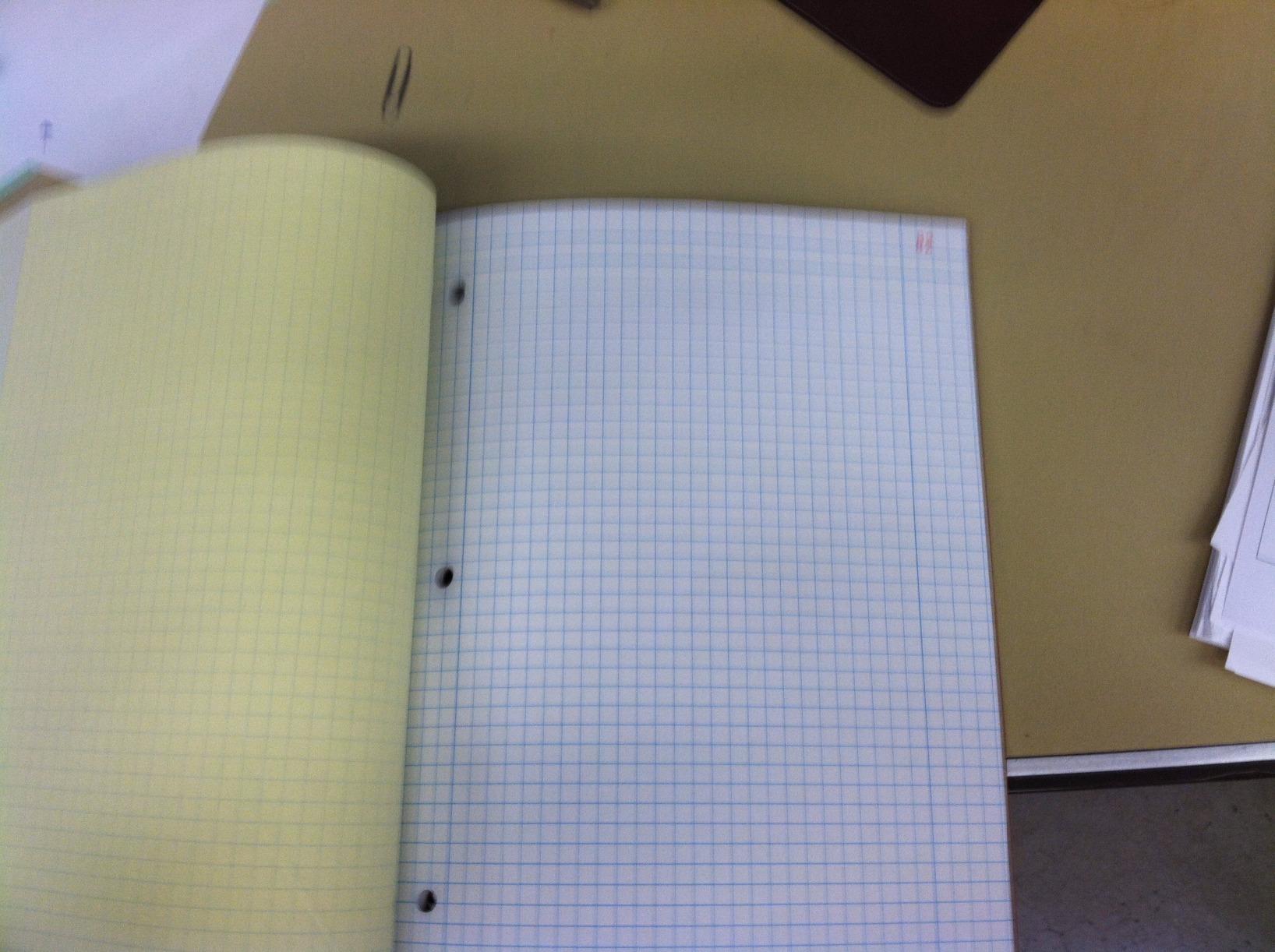
The 4×4 quadrille ruling provides enough grid for data tables and sketches without feeling confining. I prefer this to tighter grids for general lab work. The green-tinted paper reduces eye strain during long documentation sessions, a subtle feature I appreciate during late-night experiments.
The pressboard cover withstands daily abuse. I have carried these notebooks in backpacks, left them on lab benches, and even spilled coffee on one. The cover survived with minimal damage.
Who Should Choose This Notebook
Industry researchers and anyone working in regulated environments should consider this notebook first. The established reputation means compliance officers recognize and accept it. The 100-sheet capacity works well for projects lasting 3-6 months.
Who Should Skip This Option
Left-handed writers may find the layout awkward since the duplicate perforation is positioned for right-handed page turning. The paper quality is adequate but not exceptional – fountain pen users will see some feathering and bleed-through.
5. Rocketbook Core Dot Grid – The Flexible Digital Option
Rocketbook Core Reusable Smart Notebook, Dot Grid Pages For School, Work and Creative Projects, Letter Size 8.5x11, Black - Premium
Reusable smart technology
Dot grid layout
Premium scratch-resistant cover
App-enabled organization
Cloud platform sync
Pros
- Excellent app integration
- Environmentally friendly
- Flexible dot grid format
- Good writing experience
- OCR capability
Cons
- Pages stain if not cleaned
- Requires Frixion pens only
- Ink takes 15+ seconds to dry
- Damp cloth needed for erasing
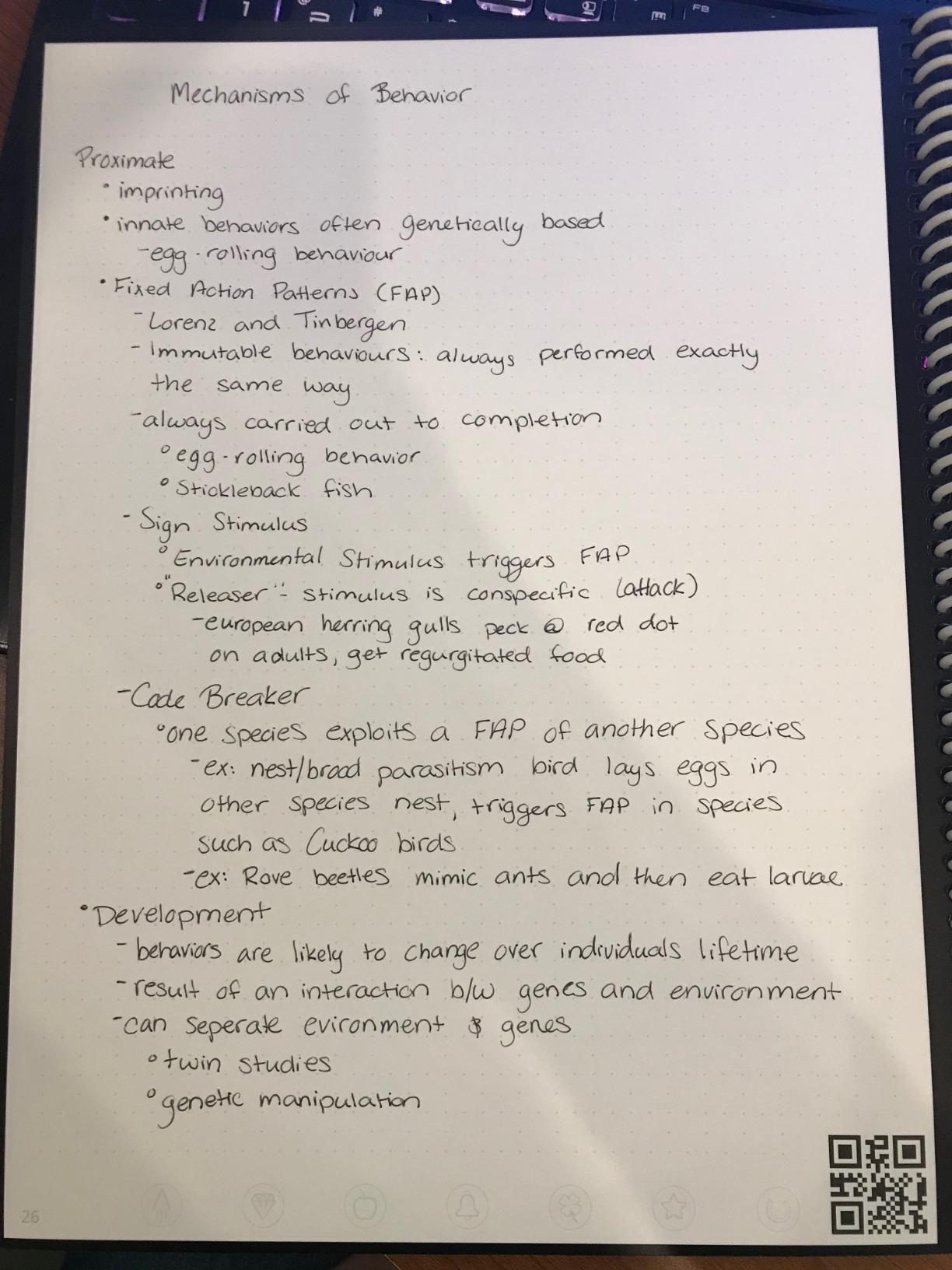
The dot grid version of the Rocketbook Core offers the same reusability with a more flexible page layout. I switched from the lined version to this dot grid after realizing I needed more freedom for diagrams alongside my text notes. The subtle dot pattern provides guidance without the visual clutter of full grid lines.
With over 66,000 reviews, this is one of the most tested reusable notebooks on the market. The feedback shows in the product refinement. The current version has better paper texture and improved app recognition compared to earlier models I tested.
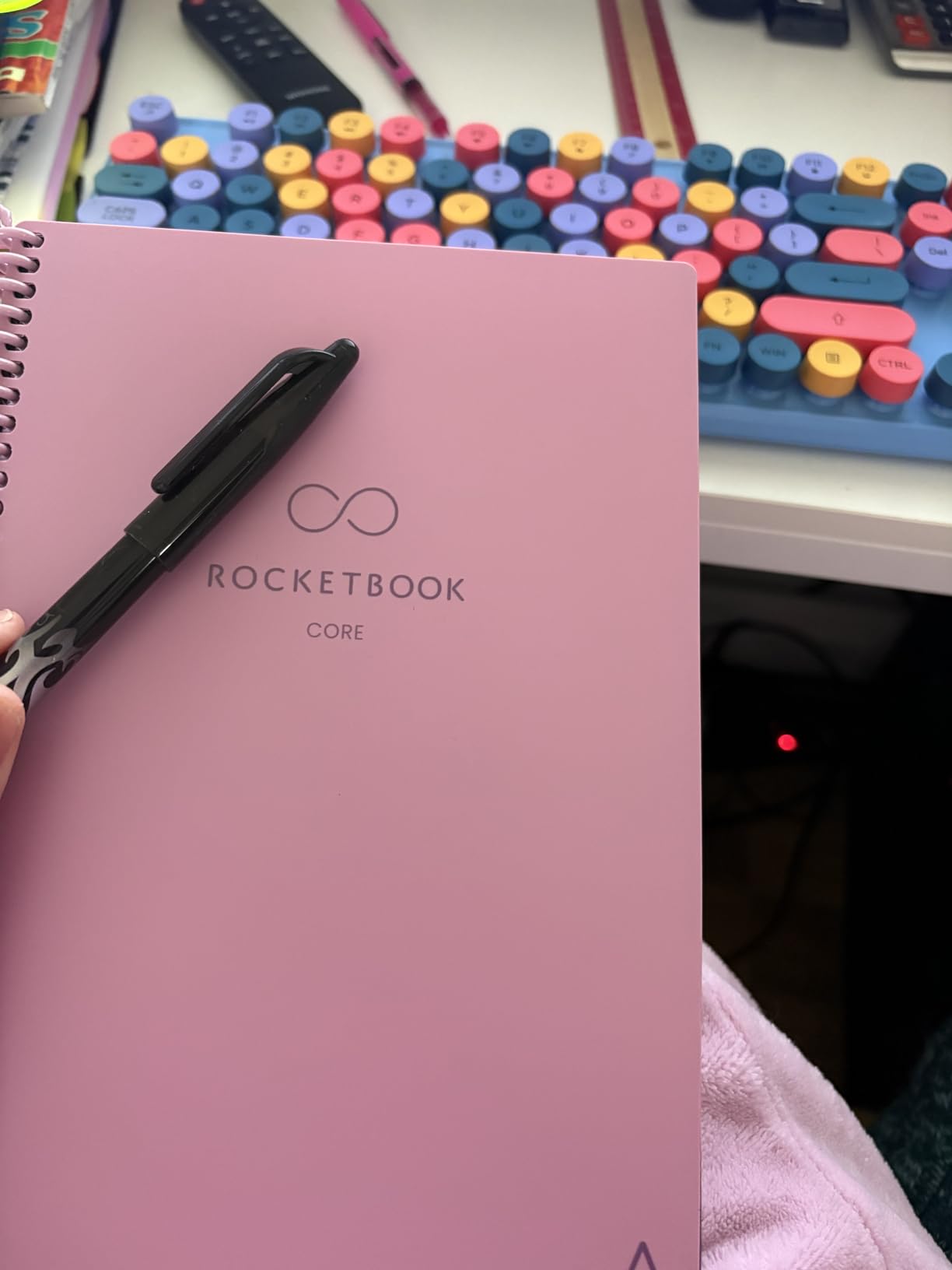
The Smart Titles feature deserves mention. By writing hashtags at the top of pages, the app automatically files scans into appropriate folders. I use #experiment, #meeting, and #idea tags that sort my notes without manual intervention. This small feature saves significant organizational time.
The dot grid particularly suits researchers who alternate between writing and sketching. Engineers, computational biologists, and anyone who draws diagrams will appreciate the flexibility.
Who Should Choose This Notebook
Researchers who want the flexibility of blank pages with the guidance of grid lines should choose this option. It works especially well for design work, system diagrams, and brainstorming sessions. The dot grid is less confining than lined or full grid alternatives.
Who Should Skip This Option
The same limitations apply as the lined version: do not use this for legal records, and avoid it if you need instant-drying ink. The ghosting issue can develop with extended use, though proper cleaning with the included cloth minimizes this.
6. BookFactory Professional Grade Lab Notebook – Premium Build
BookFactory Lab Notebook Laboratory Notebook - Professional Grade - 96 Pages, 8'' x 10'' (Ruled Format) Black and Burgundy Imitation Leather Cover, Section Sewn Hardbound (Made in USA)
Section sewn hardbound
FSC certified acid-free paper
96 pages ruled format
Black/Burgundy imitation leather
Made in USA
Pros
- Professional leather cover
- Excellent paper quality
- Lays flat when open
- FSC certified materials
- Made in USA
Cons
- Limited color options
- No custom numbering
- No embossing available
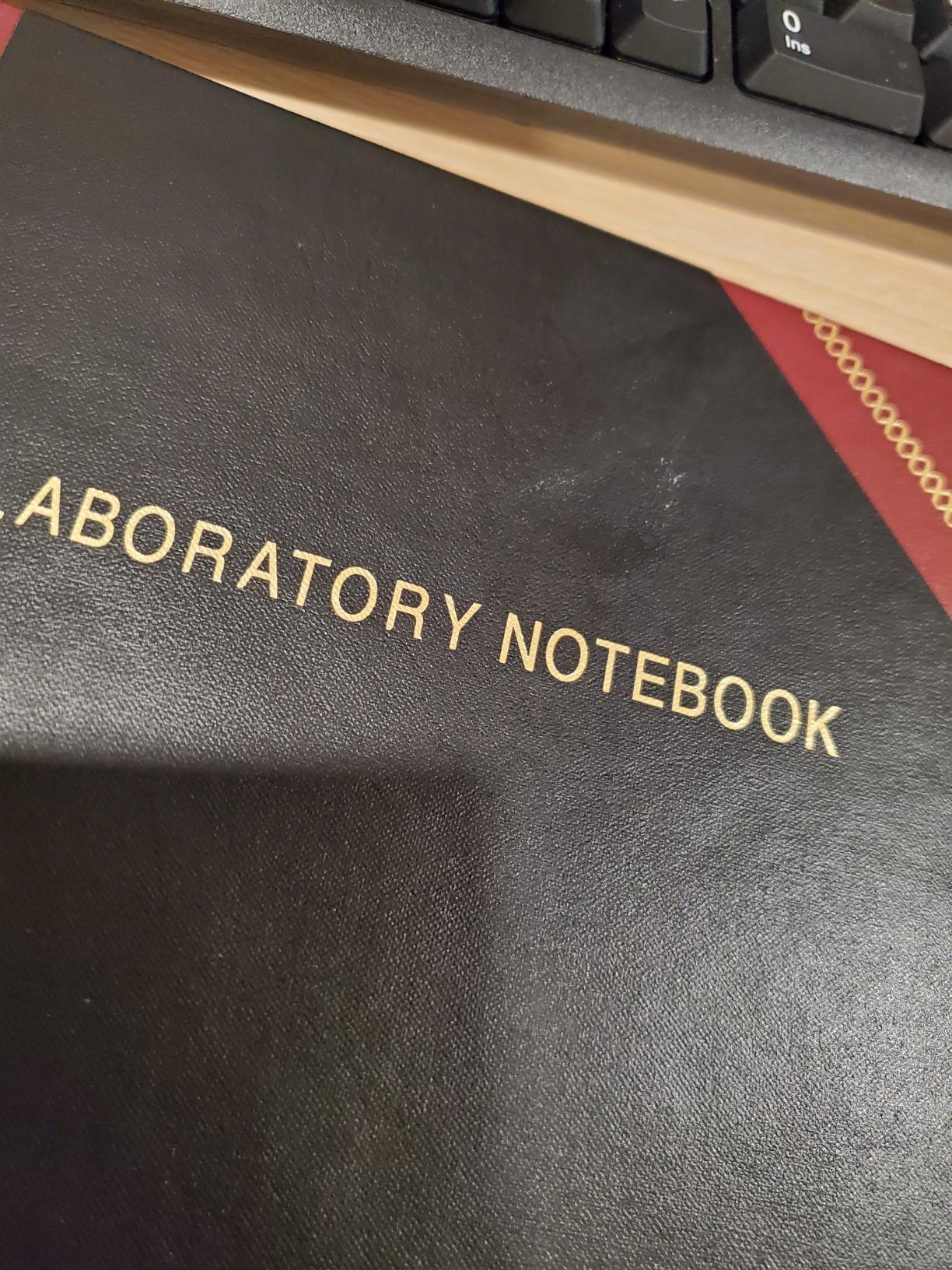
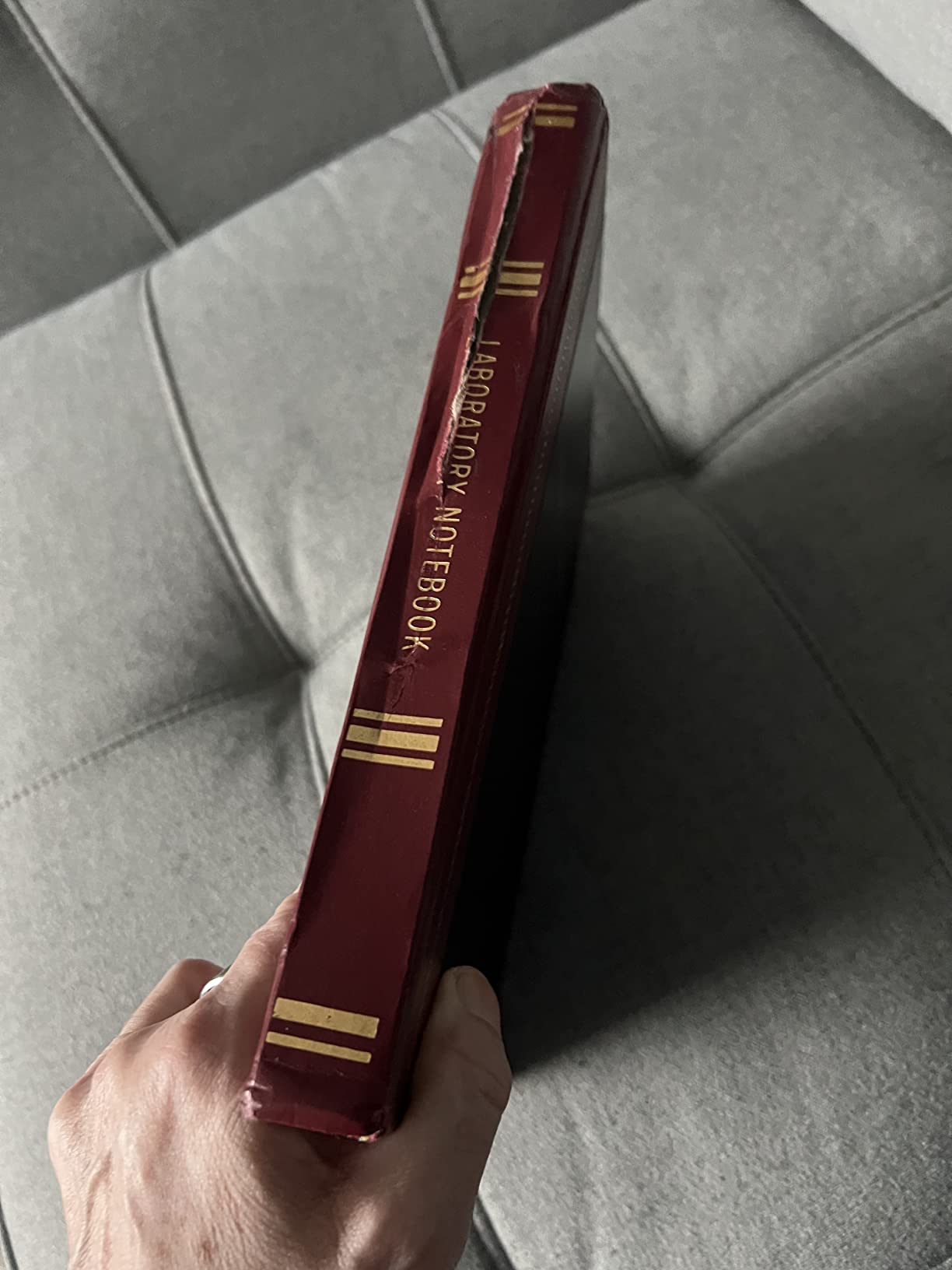
This is BookFactory step up from their standard lab notebook. The professional grade uses heavier materials throughout, starting with the imitation leather cover that looks and feels more expensive than the standard blue version. I have used this for presentations where my notebook might be visible to collaborators, and it projects professionalism.
The FSC certification matters for environmentally conscious researchers. Knowing the paper comes from responsibly managed forests adds peace of mind. The acid-free archival quality means this notebook will preserve your records for decades, assuming proper storage conditions.
The ruled format works better for narrative lab notes than grid pages. If you write long-form descriptions of experimental procedures, the lines provide helpful guidance. I found the 1/4 inch spacing comfortable for my handwriting size.
The two-tone black and burgundy cover is distinctive without being flashy. In a lab environment where notebooks can be misplaced, having a distinctive color helps.
Who Should Choose This Notebook
Researchers who want a premium feel without premium pricing should consider this option. It works well for PIs who need to maintain professional appearances and for anyone who appreciates quality materials. The ruled format particularly suits word-heavy documentation over diagram-heavy work.
Who Should Skip This Option
The lack of customization options may frustrate labs that want embossed covers or specific starting page numbers. The ruled format is less versatile than grid for technical sketching. If you need carbonless copies, look elsewhere.
7. HUION Note 2-in-1 Digital Notebook – The Paper-Digital Hybrid
HUION Note 2-in-1 Digital Notebook Drawing Tablet With Battery-free Pen, Bluetooth Wireless Paper Tablet Electronic Writing Pad for Note-taking, Digital Art & Meeting, Refillable A5 Notepad, 9.5x7inch
Battery-free pen technology
Bluetooth 5.0 wireless
18-hour battery life
8192 pressure sensitivity levels
A5 notepad size
Pros
- Works with any A5 paper
- Real-time digital capture
- Excellent battery life
- Dual tablet and notebook mode
- Good app organization
Cons
- Paper affected by humidity
- Proprietary pen required
- Small pen tips may wear
- Weak pen case magnet
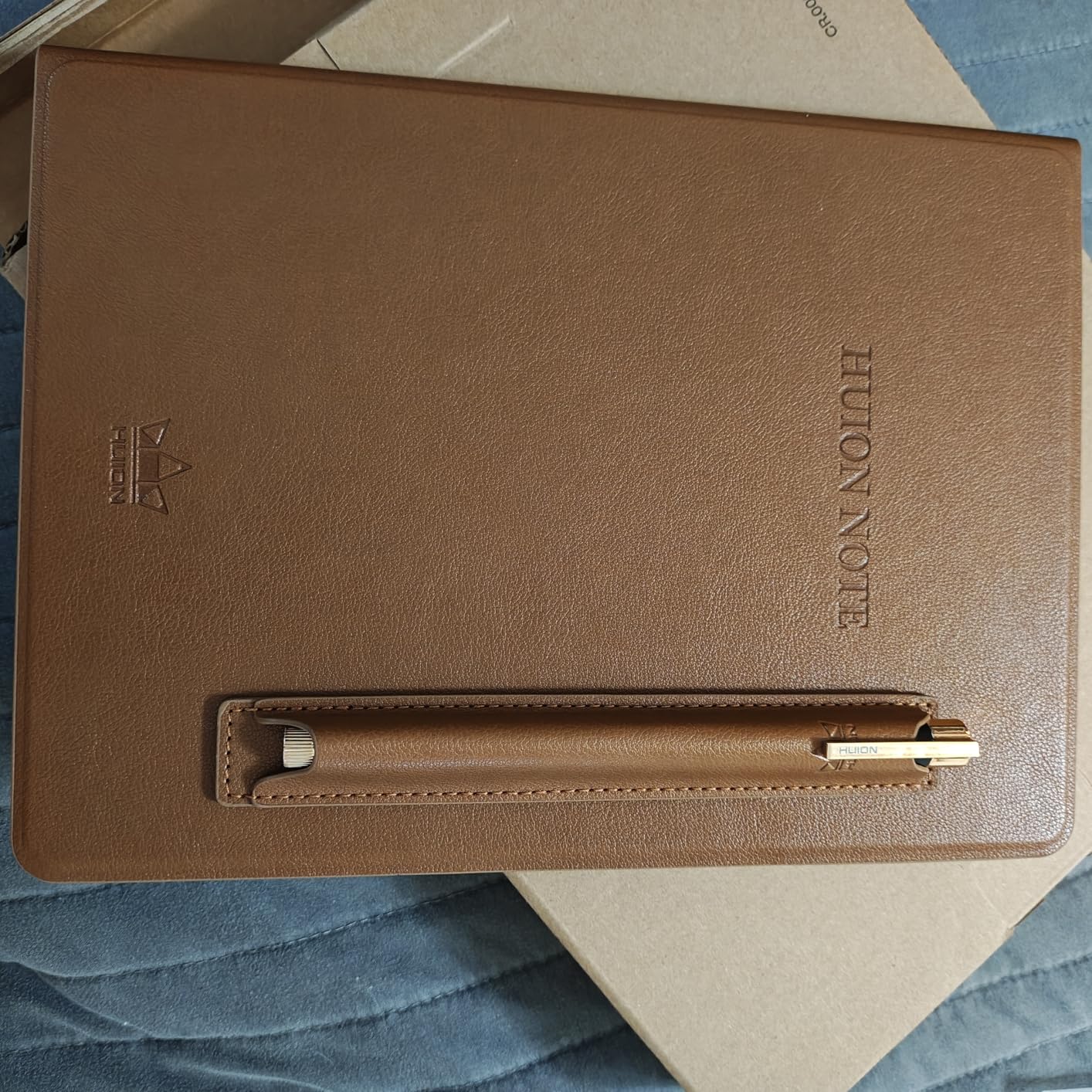
The HUION Note represents a different approach to digital notebooks. Rather than replacing paper, it enhances it. You write on standard A5 paper placed over the digital pad, and the pen captures your strokes in real-time via Bluetooth. I found this the most natural digital transition for paper-preferring researchers.
The battery-free pen technology uses electromagnetic resonance, similar to professional graphics tablets. This means no charging the pen, ever. The 8192 pressure sensitivity levels capture subtle writing nuances, though for note-taking this matters less than for artistic work.
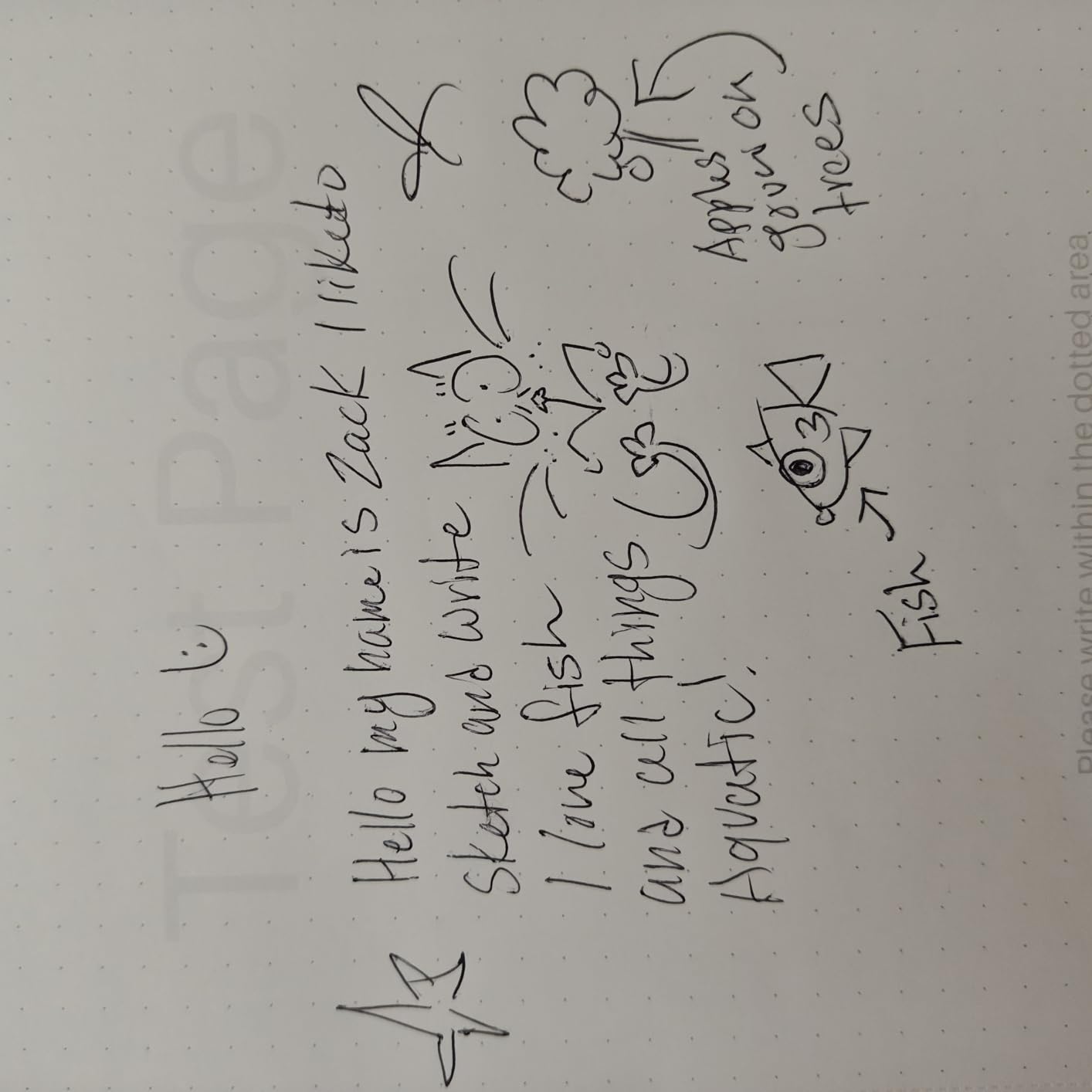
The dual-mode functionality is genuinely useful. When connected to a computer, the device works as a graphics tablet for annotation and drawing. When mobile, it stores notes internally for later sync. The 18-hour battery life means I can use it for multiple days without charging.
The ability to use any A5 paper is liberating. I can use my preferred notebook and still capture digitally. This solves the primary limitation of locked-system digital notebooks.
Who Should Choose This Notebook
Researchers who want digital backups without giving up their favorite paper notebook should strongly consider this option. It bridges the gap perfectly. The audio recording feature, which syncs recordings to your written notes, is invaluable for meetings and seminars.
Who Should Skip This Option
The price point makes this a significant investment. If you are happy with phone photos of notebook pages, this may not justify the cost. The proprietary pen is also a vulnerability – lose it and you lose functionality until a replacement arrives.
8. IWIZPRINT Carbonless Lab Notebook – The Budget Carbonless Option
Carbonless Lab Notebook (Scientific Grid Format), 8.5'' x 11'', 50 Sets of Pages, Duplicator Wire-O Bound, Laboratory Notebook Containing Carbon Copies, Durable Translucent Cover, Transparent Ruler
Carbonless duplicate design
Translucent protective cover
Scientific grid ruling
50 sets of pages
Clear plastic ruler included
Pros
- Clean permanent records
- Wire-O binding lays flat
- Good grid for data plotting
- Included ruler is handy
- Back pocket for loose papers
Cons
- Writing too hard transfers through
- Only 50 sets
- Newer brand with fewer reviews
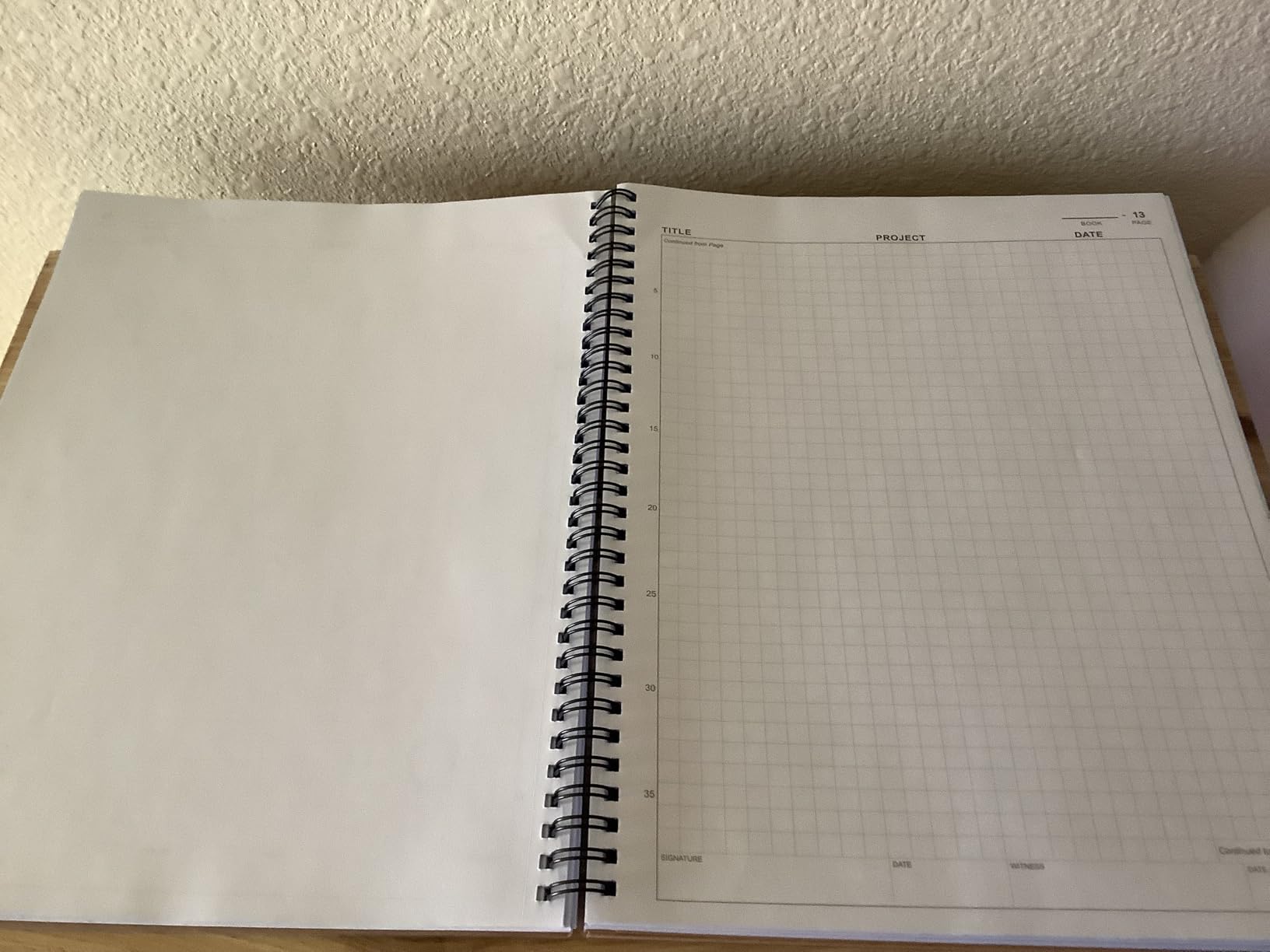
This newer entrant to the lab notebook market offers carbonless functionality at a lower price point than established competitors. I tested this notebook for comparison and found the carbonless system works as advertised, though with the same pressure requirements as other carbonless options.
The translucent cover provides good protection while allowing quick identification of notebook contents. The included ruler is a small but welcome addition for researchers who frequently measure gel bands or sketch to scale. The back pocket holds protocols and printouts that accumulate during experiments.
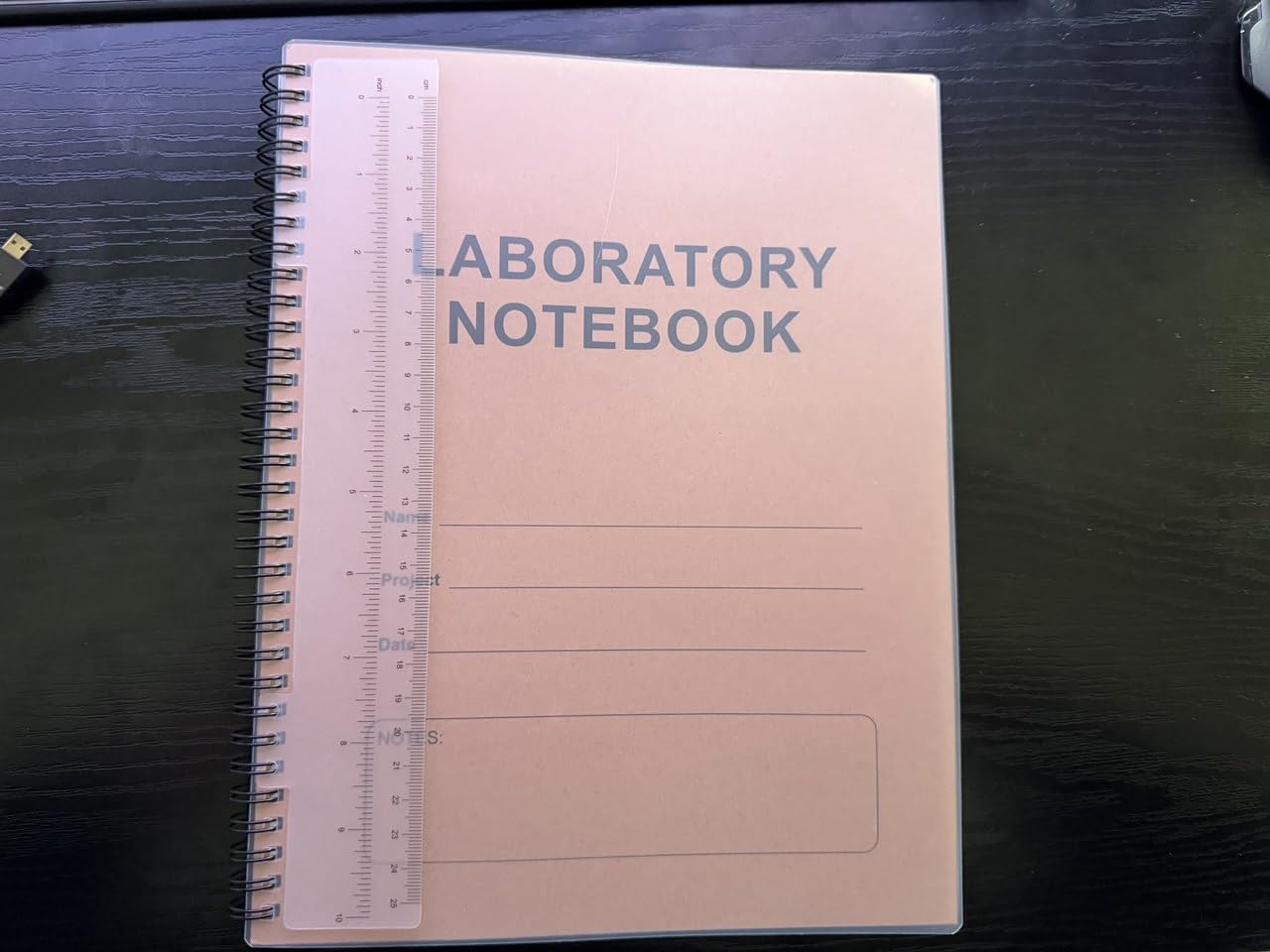
The 1/4 inch scientific grid matches industry standards for data plotting. I found the alignment between original and copy consistent when writing carefully. The wire binding allows complete flat opening, essential for clean copies.
With only 17 reviews but a 4.9 rating, this is an emerging option worth considering for budget-conscious labs.
Who Should Choose This Notebook
Budget-conscious researchers who need carbonless duplicates should evaluate this option. It offers the core functionality of more expensive brands at lower cost. The included ruler and back pocket add value for lab work specifically.
Who Should Skip This Option
The limited review history means long-term durability is unproven. If you need guaranteed archival stability for patent documentation, stick with established brands like National or BookFactory. The 50-set capacity is also smaller than some competitors.
9. National Computation Notebook – The Engineering Classic
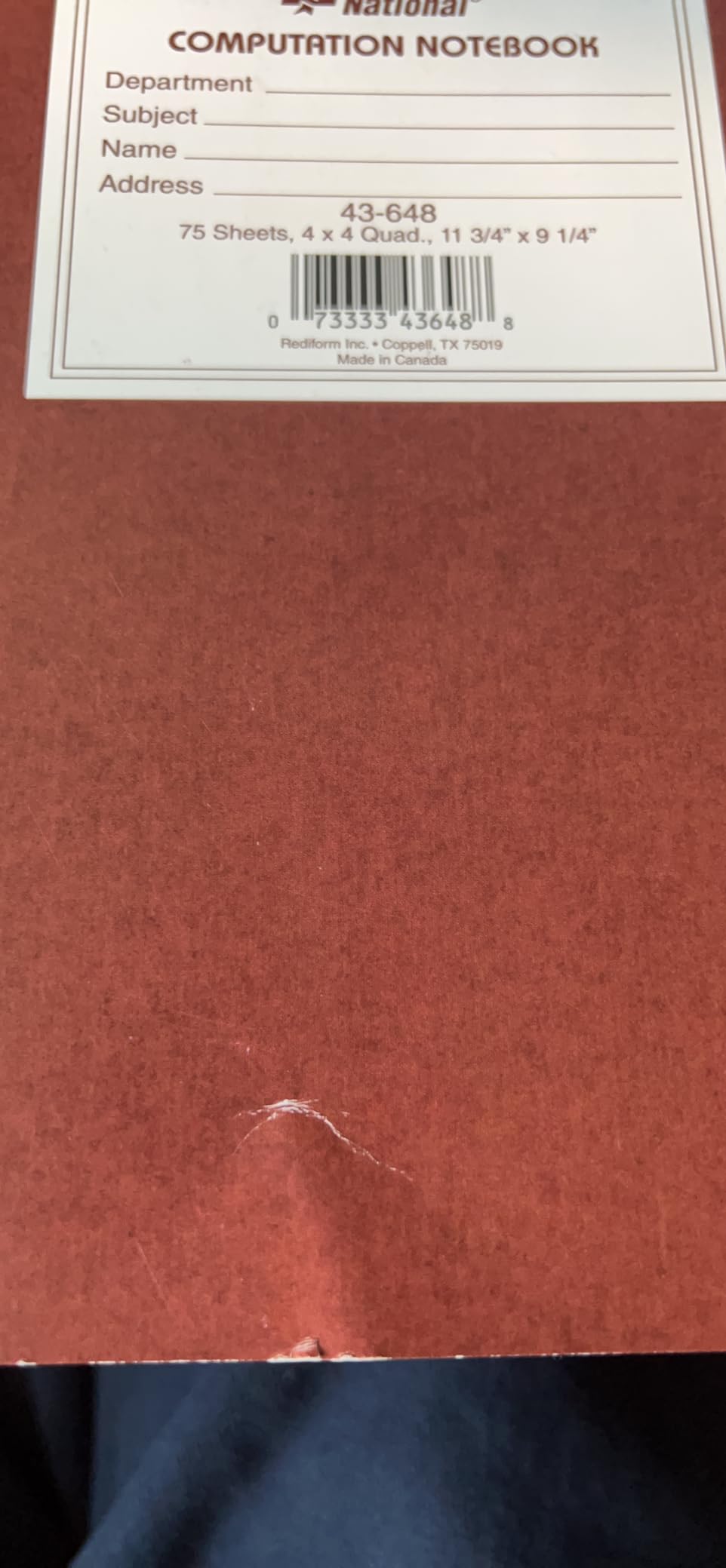
National Brand Computation Notebook, 4 X 4 Quad, Brown, Green Paper, 11.75 x 9.25 Inches, 75 Sheets (43648)
4x4 quad-ruled pages
75 numbered sets
100% post-consumer recycled paper
24lb green eye-ease paper
Brown pressboard covers
Pros
- Perfect for engineering and math
- Larger than standard size
- Durable pressboard covers
- 4x4 grid ideal for schematics
- 100% recycled content
Cons
- Soft cover can fold/stain
- Grid lines may interfere
- Some ink bleed-through
The National Computation Notebook is a classic for good reason. I first encountered these in undergraduate engineering labs, and they remain popular decades later. The 11.75 x 9.25 inch size provides more workspace than standard letter notebooks, which matters when sketching large system diagrams.
The 4×4 grid (four squares per inch) hits a sweet spot for technical work. It is tight enough for precise drawings but open enough for comfortable writing. I have used these for circuit diagrams, process flow charts, and mathematical derivations. The grid provides just enough structure without constraining creativity.
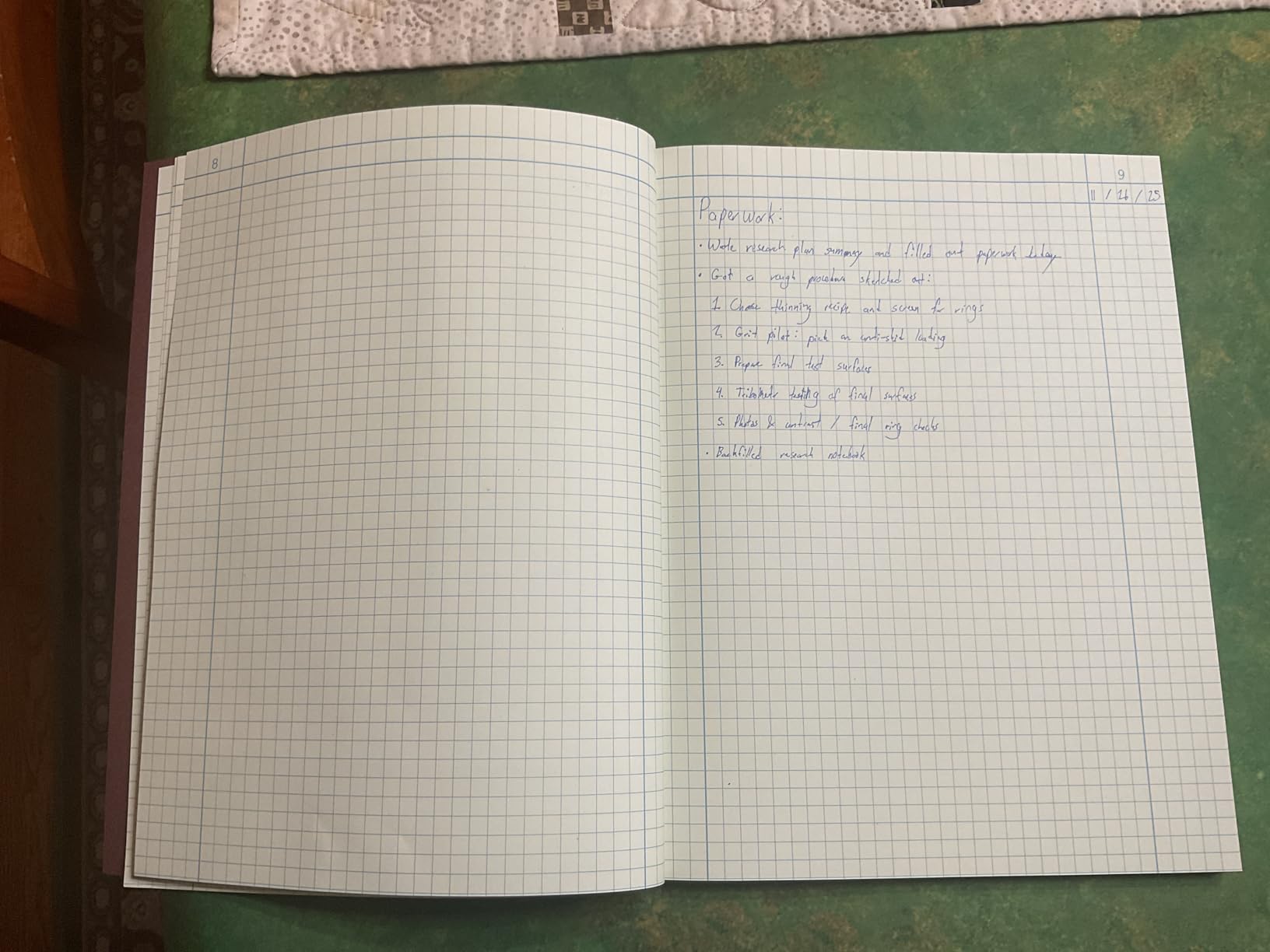
The 100% post-consumer recycled content matters for environmentally conscious researchers. The green-tinted eye-ease paper genuinely reduces fatigue during long calculation sessions. I can confirm this from many late nights problem-solving in these notebooks.
The 75 numbered sets provide substantial capacity. Most researchers get 4-6 months of daily use from one notebook. The headlining and margin lines help organize complex calculations.
Who Should Choose This Notebook
Engineers, computational scientists, and anyone who works with diagrams and calculations should consider this the default option. The larger format and specific grid size are optimized for technical work. The recycled content appeals to sustainability-minded researchers.
Who Should Skip This Option
The larger size makes this less portable than standard notebooks. If you carry your notebook everywhere, the extra bulk may annoy you. The soft pressboard cover also provides less protection than hardbound alternatives for field work.
10. Vela Sciences Advanced E7-C – The Professional Premium
Vela Sciences Advanced E7-C Expanded Hardcover Lab Notebook, 9.25 x 11.75 in (23.5 x 30 cm), 144 Pages, Permanent Bound, 70lb Heavyweight Paper (1-Pack, Grid+)
Permanent sewn hardcover
70lb heavyweight paper
144 pages expanded
Grid+ format
FSC certified sustainable
Pros
- Heavyweight paper minimal showthrough
- Professional hardcover quality
- Pre-numbered with signature blocks
- Reference charts included
- Fountain pen friendly
Cons
- Large format may be too big
- Some versions missing conversion page
- Higher price point
Vela Sciences produces some of the highest quality lab notebooks I have encountered. The 70lb paper weight is noticeably heavier than standard 60lb options, which translates to minimal ink showthrough even with fountain pens. For researchers who value paper quality, this is worth the premium.
The expanded 144-page format lasts longer than standard 96-page notebooks, reducing how often you switch books mid-project. The pre-numbered index and signature/date blocks on every page facilitate proper documentation practices. I appreciate the built-in reference charts for unit conversions and common abbreviations.
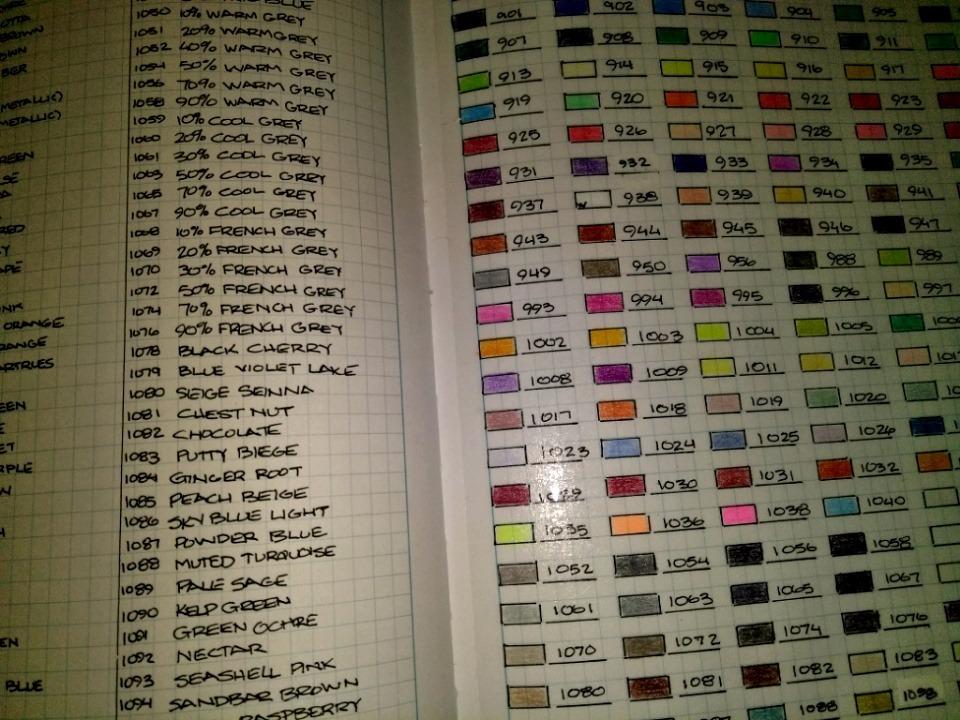
The scuff-resistant matte laminated cover holds up to daily lab use. The reinforced flat-back spine allows the notebook to stand upright on a shelf when not in use, which helps with organization. The FSC, SFI, and ECF certifications ensure responsible sourcing.
The Grid+ format offers slightly larger grid spacing than standard 1/4 inch, which I prefer for handwriting legibility.

Who Should Choose This Notebook
Researchers who prioritize paper quality and are willing to pay for it should choose this notebook. It is particularly well-suited for fountain pen users and anyone who needs extended archival storage. The professional appearance also suits PIs and industry researchers.
Who Should Skip This Option
The 9.25 x 11.75 inch size is larger than many lab coat pockets. If portability matters, the standard letter size may be more practical. The price is also significantly higher than basic options, though justified by quality.
11. Ophayapen Smart Sync Pen System – The Digital Pen Solution

Ophayapen Smart Pen for Note Taking with Digital Smart Notebook and Writing Board, Real-time Sync for Digitizing,Convert to Text,Storing,Sharing Paper Notes via APP on Smartphone(Android and iOS)
Real-time sync to devices
OCR handwriting recognition
Audio recording with sync
Multiple file format export
Offline storage capability
Pros
- Accurate handwriting digitization
- Searchable notes by keyword
- Audio synced to writing
- Works offline then syncs
- Customizable pen settings
Cons
- App UX can be difficult
- Audio captures phone notifications
- No playback speed adjustment
- Dim writing board in early versions
The Ophayapen system takes a different approach from smart notebooks. Instead of a special notebook, you use a smart pen on standard paper placed on a writing board. The pen captures your strokes in real-time while the board tracks position. I found this system more flexible than locked-format alternatives.
The OCR recognition converts handwriting to searchable text with reasonable accuracy. My handwriting is mediocre at best, but the system recognized about 85% of words correctly. The searchable feature proves valuable when reviewing months of notes for specific terms.
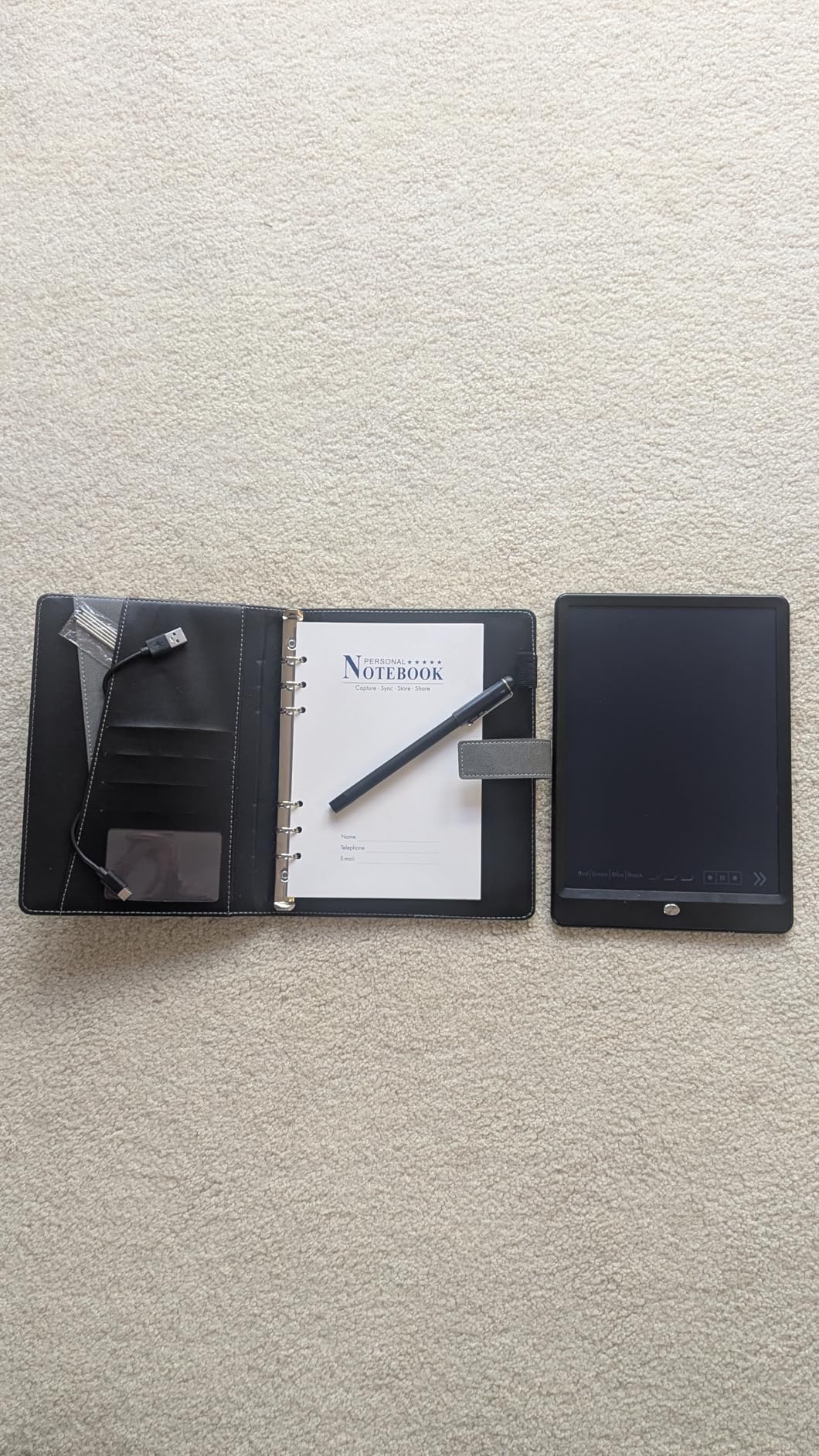
The audio recording feature, which syncs recordings to the exact point in your written notes where you started recording, is genuinely useful. I use this for seminars and meetings, allowing me to review both my notes and the full audio context later.
The multiple export formats (PDF, Word, PNG, GIF, MP4) provide flexibility for sharing and archiving. The MP4 option creates videos showing your writing process, which I have used for teaching demonstrations.
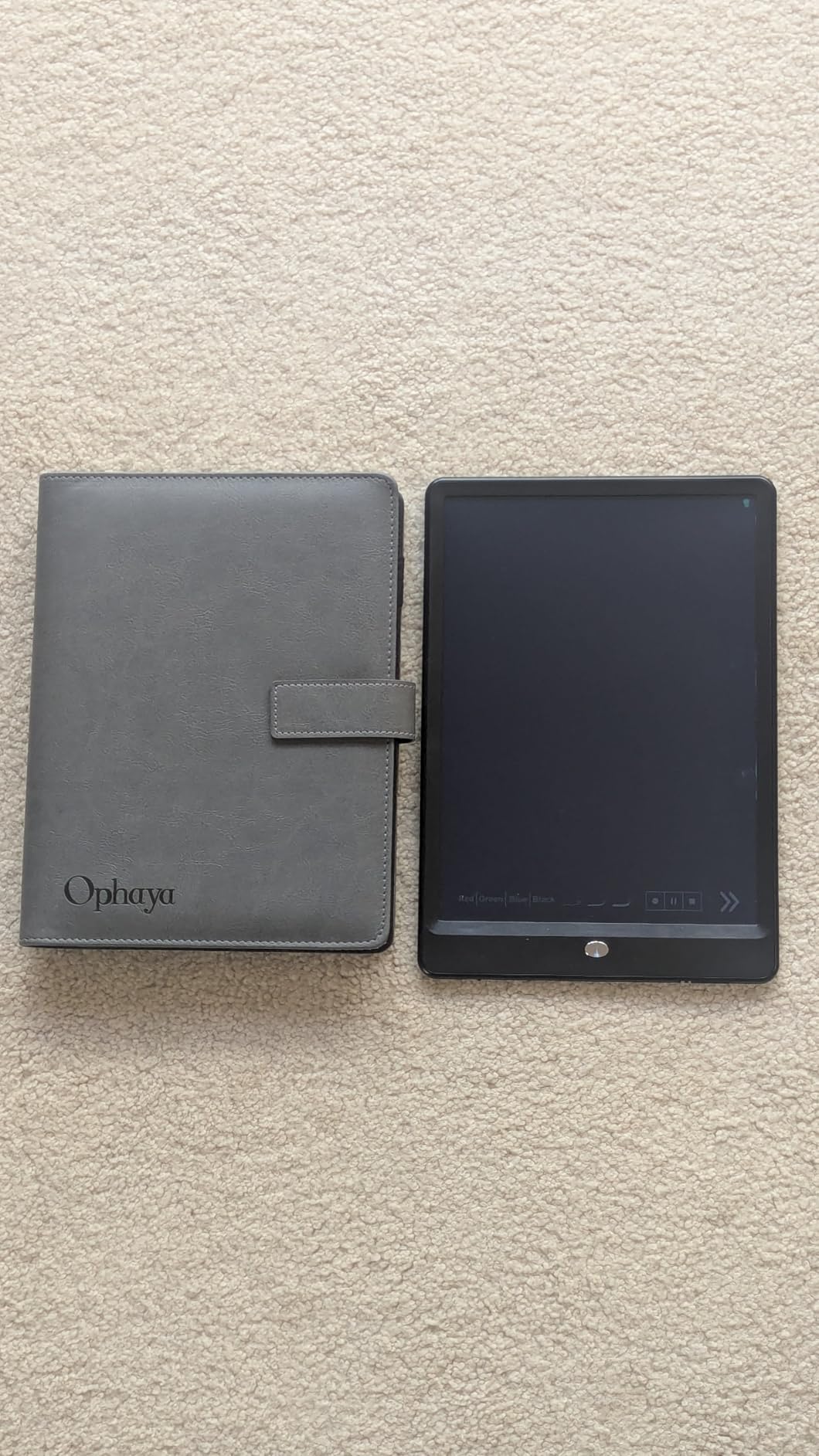
Who Should Choose This Notebook
Researchers who want digital capture without changing their paper habits should consider this system. The flexibility to use any paper is liberating. The audio sync feature particularly benefits researchers who attend many seminars and meetings.
Who Should Skip This Option
The mixed reviews and app limitations suggest this is not yet a mature technology. If you need reliable documentation without technical hassles, traditional notebooks remain safer. The price is also significant for a system with reported usability issues.
12. National Laboratory Notebook 5×5 Quad – The Compact Option
National Laboratory Notebook, 5 x 5 Quad Ruling, Flexible Cover, Sewn Binding, 10.125" x 7.875", 96 Sheets (53110)
5x5 quad ruling (5 squares per inch)
Green marble flexible cover
Center-sewn binding
96 sheets (192 pages)
50% recycled content
Pros
- Classic marble aesthetic
- Compact size for field work
- Quality center-sewn binding
- Fine grid for detailed work
- Good value
Cons
- Thin pages may bleed
- Small grid not for everyone
- No built-in table of contents
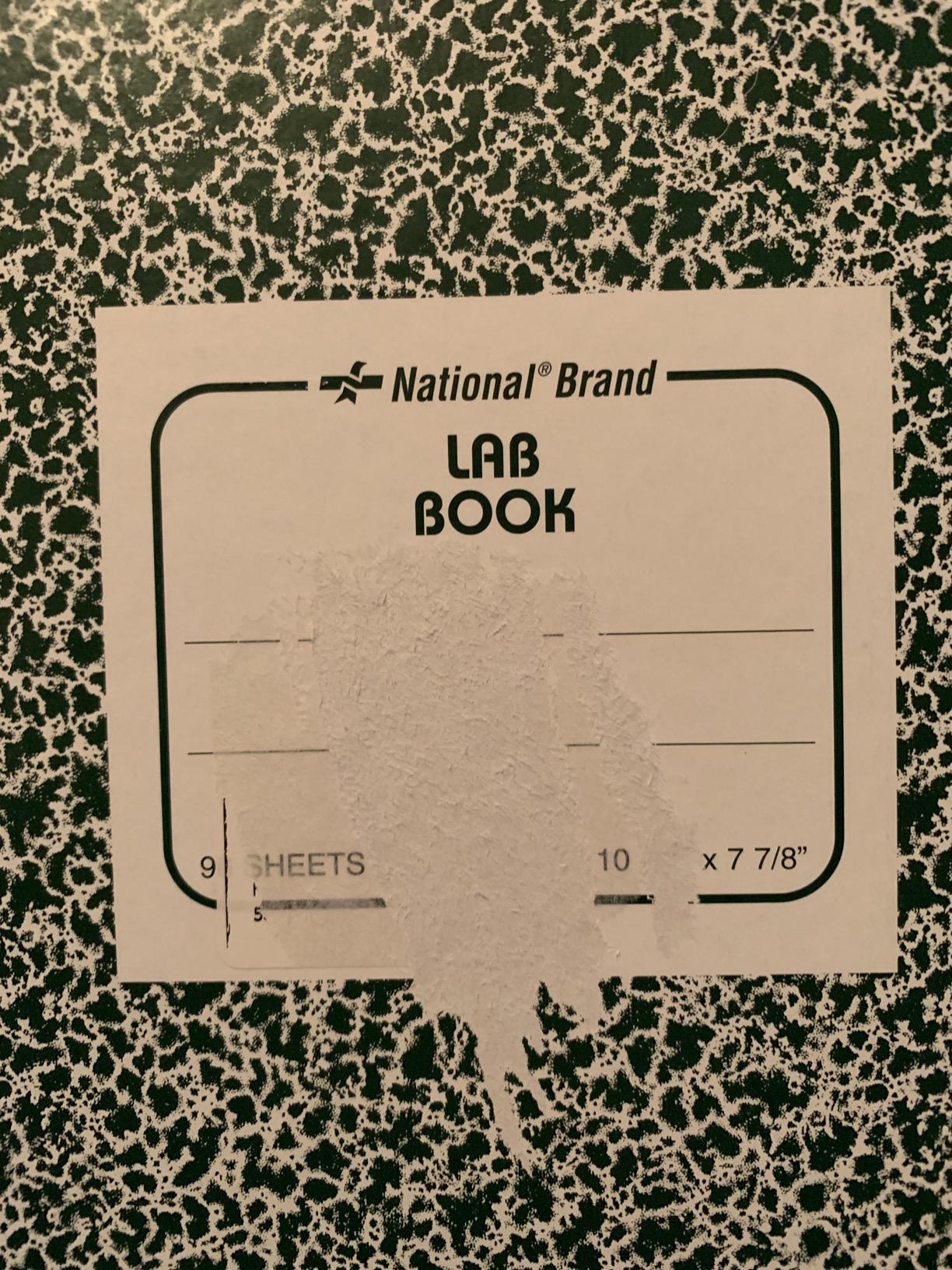
This smaller National notebook offers the classic green marble cover in a more portable format. The 5×5 grid provides finer guidance than 4×4 alternatives, which suits detailed sketching and small handwriting. I have used these for field notes where carrying a full-size notebook was impractical.
The center-sewn binding is durable despite the flexible cover. Unlike glue-bound notebooks that crack, this binding flexes without failing. The 192 pages provide substantial capacity for the size.
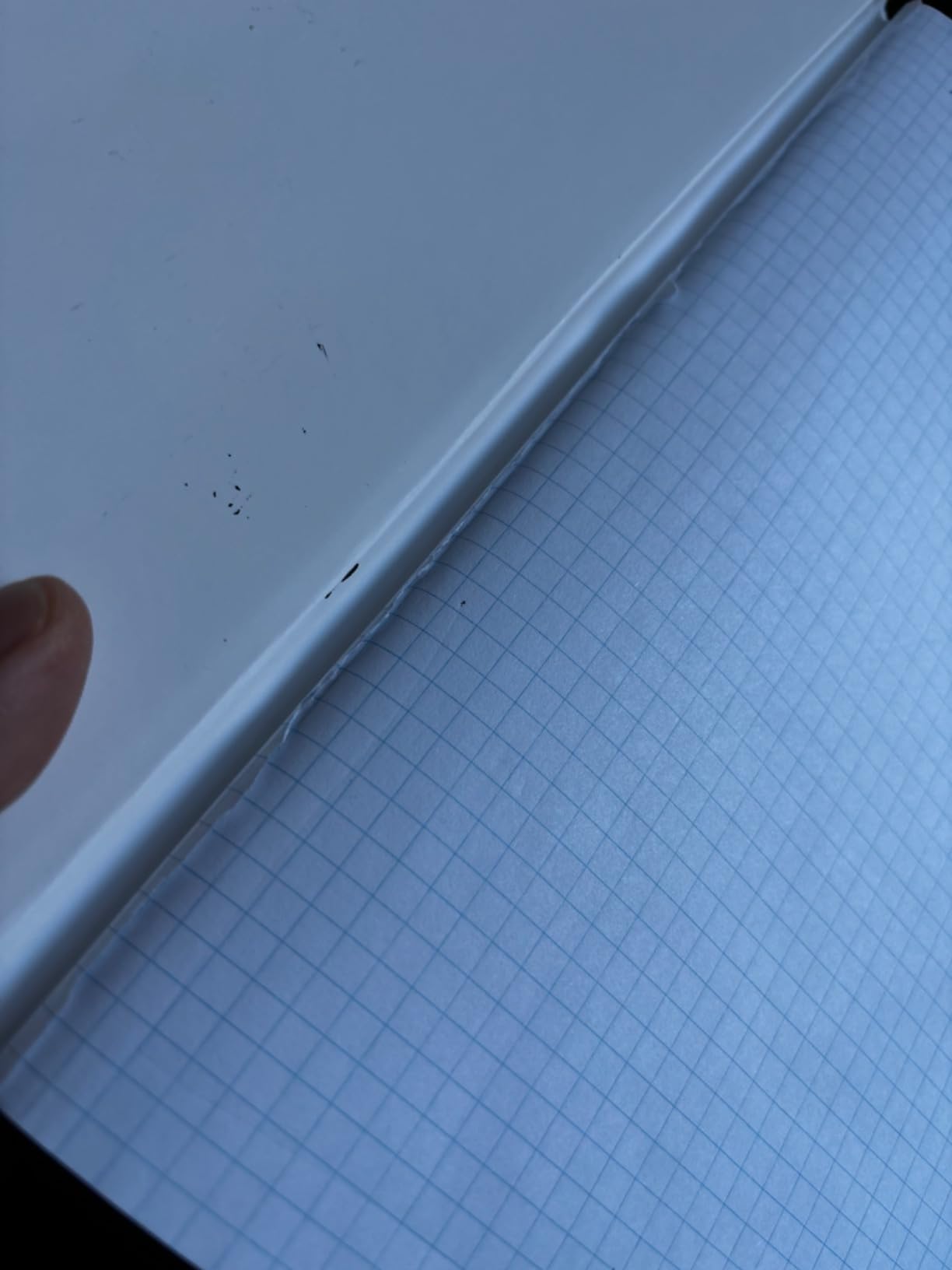
The 50% recycled content is a reasonable compromise between environmental concern and functionality. The paper works well with ballpoint pens, though gel pens show more bleed-through than heavier paper options.
The compact 10.125 x 7.875 inch size fits in smaller bags and lab coat pockets. For researchers who move between labs or work in the field, this portability matters.
Who Should Choose This Notebook
Researchers who need a portable option without sacrificing grid guidance should consider this notebook. It works well for field work, travel between labs, and situations where a full-size notebook is cumbersome. The fine grid particularly suits detailed technical sketching.
Who Should Skip This Option
The thin paper limits ink options, and the small grid can feel cramped for those with larger handwriting. The flexible cover provides less protection than hardbound alternatives. If you primarily work at a bench and never travel, larger options offer more workspace.
13. Rocketbook Matrix Graph – The Reusable Technical Notebook

Rocketbook Matrix Smart Reusable Graph Paper Notebook, Digitally Connected, Isometric Notebook, Letter Size 8.5x11, Black
Reusable smart graph paper
0.25 inch precise grid
30 graph pages
Cloud sync capability
Built-in rulers included
Pros
- Reusable graph paper
- Cloud sync to multiple services
- Precise grid for technical work
- Pages show no wear after months
- Good for calculations and diagrams
Cons
- No OCR for graph paper
- Frixion ink smudges when wet
- Not ideal for left-handers
- No hardcover option
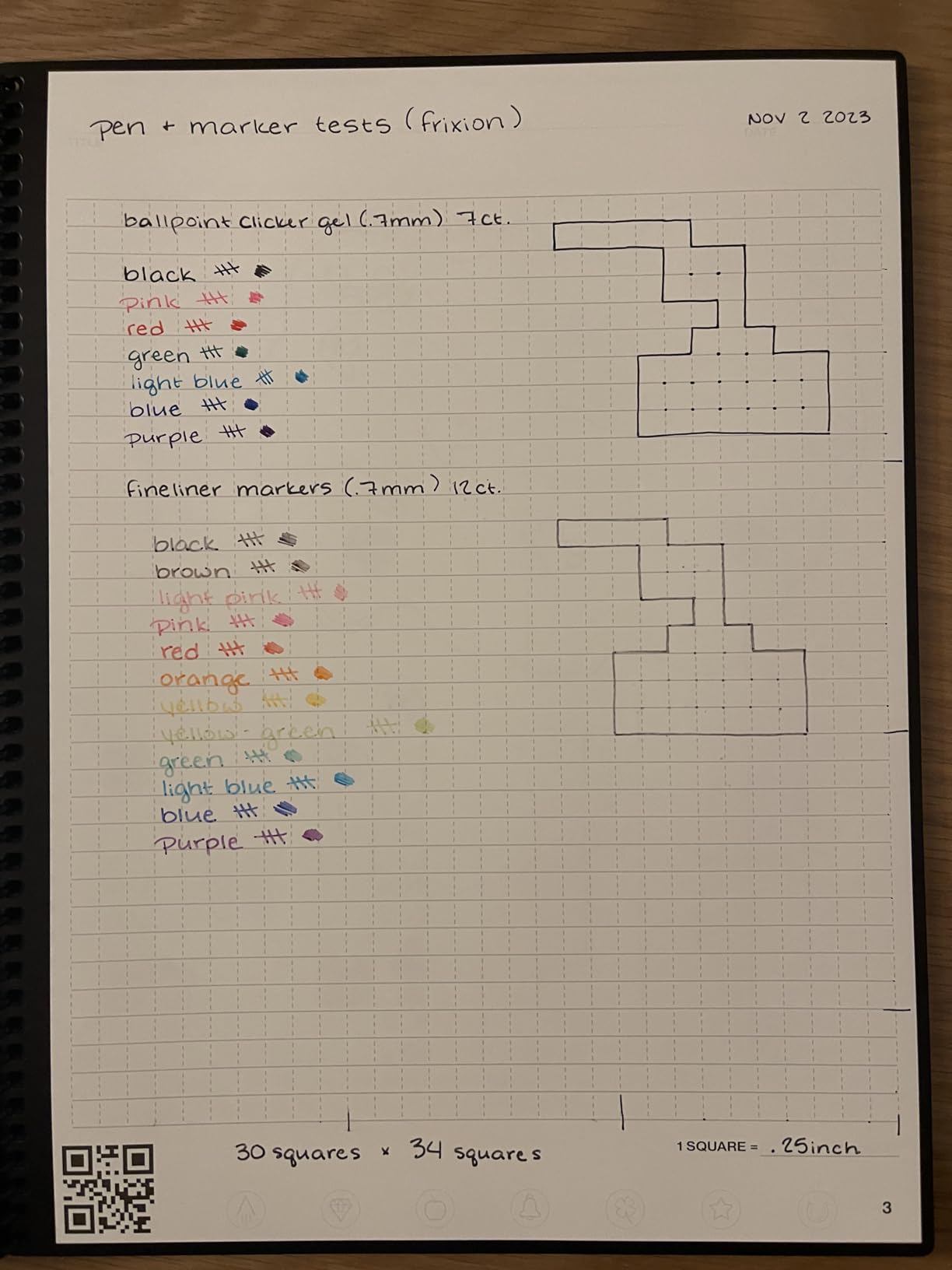
The Rocketbook Matrix adapts the reusable notebook concept specifically for technical work. The 0.25 inch grid provides precise guidance for calculations, diagrams, and schematics. I have used this for temporary calculations I need to save digitally but do not need permanently.
The built-in rulers on the cover and inside pages are genuinely useful for quick measurements. When sketching gel results or plotting data points, having millimeter and inch scales readily available speeds up work.
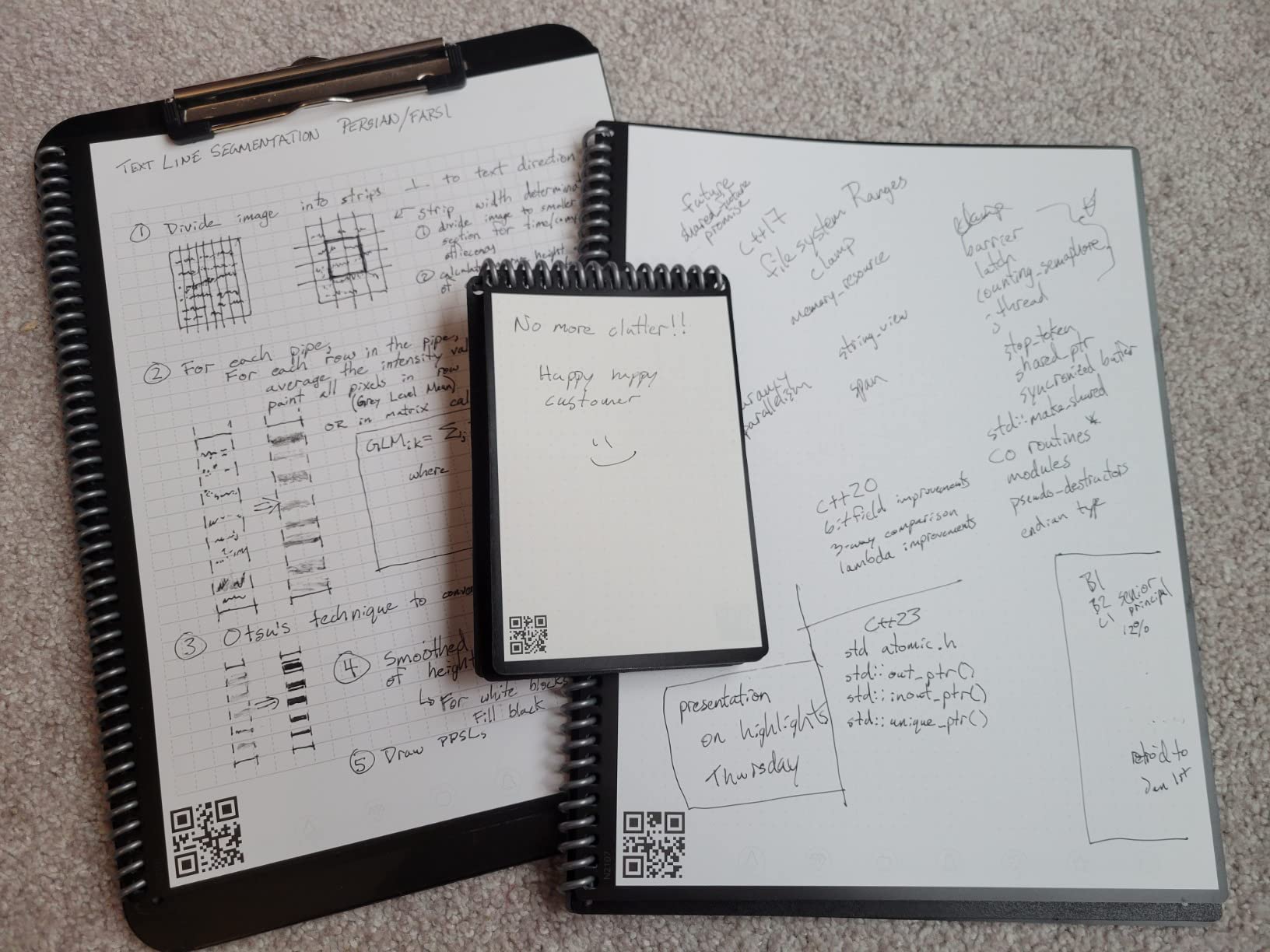
The lack of OCR for graph paper is a limitation worth noting. While the app can scan and save graph pages, it cannot convert them to searchable text like it can with lined or dot pages. For my technical sketches, this is not a problem, but text-heavy users should consider the lined or dot versions.
The 30-page capacity is smaller than other Rocketbook models, reflecting that this is designed for temporary technical work rather than extensive documentation.
Who Should Choose This Notebook
Engineers, computational scientists, and anyone who does lots of temporary calculations should consider this option. The reusable format saves paper for work that does not need permanent archiving. The precise grid specifically suits technical sketching over narrative writing.
Who Should Skip This Option
Left-handed writers may struggle with the smudging as Frixion ink dries slowly. The lack of OCR for graph pages limits searchability. If you need permanent legal records, reusable technology is inappropriate regardless of format.
14. BookFactory Carbonless Chemistry Notebook – Field-Specific Design

BookFactory Carbonless Chemistry Lab Notebook - 50 Sets of Pages (8.5'' X 11'') (Duplicator) - Scientific Grid Pages, Durable Translucent Cover, Wire-O Binding (Made in USA)
Chemistry-specific layout
Periodic table reference page
Carbonless duplicate pages
Wire-O binding
Durable translucent cover
Pros
- Chemistry-specific features
- Periodic table always available
- Carbonless duplicates
- Campus bookstore alternative
- Made in USA
Cons
- Copy quality can vary
- Edges may show wear
- Requires ballpoint for best transfer
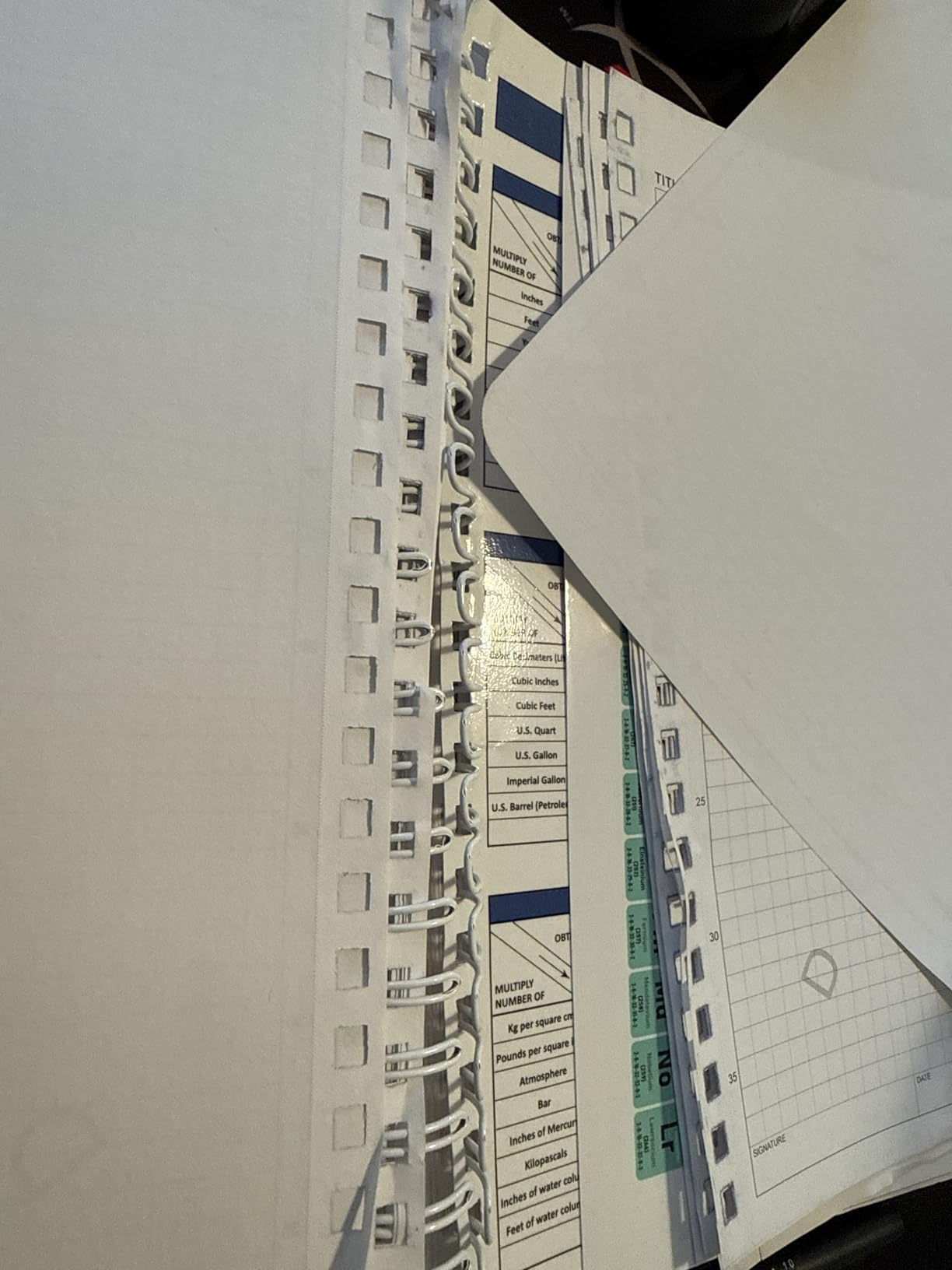
This BookFactory notebook includes chemistry-specific features that general lab notebooks lack. The periodic table reference page inside the cover saves time during formula calculations and reaction planning. I have found this surprisingly useful when working out stoichiometry away from my computer.
The carbonless duplicate system uses the same pressure-transfer technology as other BookFactory carbonless notebooks. The chemistry-specific layout includes spaces for reaction conditions and safety notes that encourage proper documentation practices.
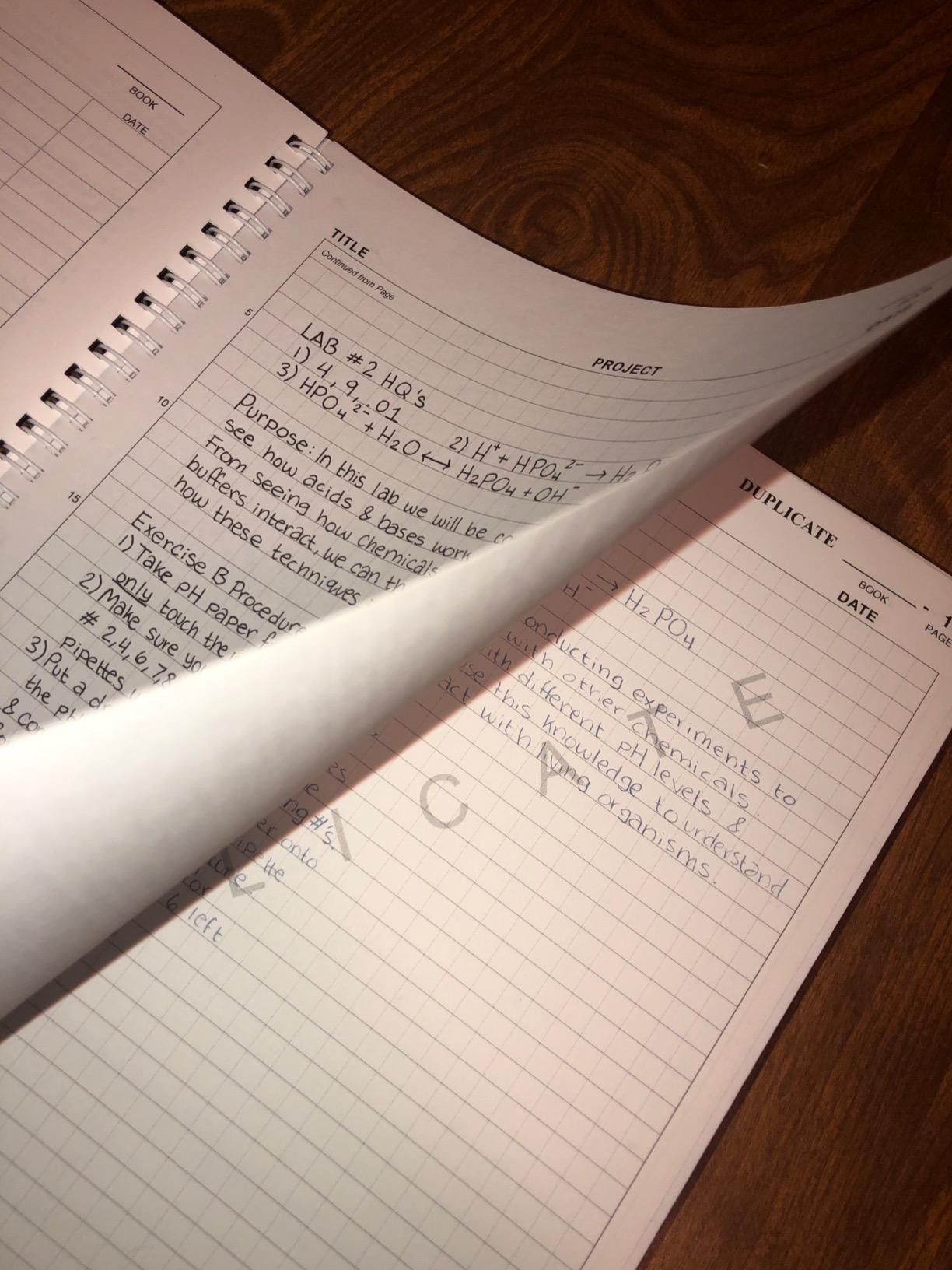
The wire-O binding allows the notebook to lie flat, which matters when writing reaction schemes that span pages. The translucent polypropylene cover resists chemical splashes better than cardboard, though you should still avoid direct exposure to solvents.
The 50-set capacity is appropriate for semester-long courses or shorter research projects. The value compared to campus bookstore pricing is significant, which matters for students.
Who Should Choose This Notebook
Chemistry students and researchers who want field-specific features should consider this option. The periodic table reference and reaction-focused layout streamline chemical documentation. The carbonless duplicates work well for labs requiring copy submission.
Who Should Skip This Option
Researchers outside chemistry will not benefit from the specialized features. The carbonless system has the same limitations as other pressure-transfer notebooks – gel pens do not work well, and copies require careful handling. If you do not need duplicates, the standard BookFactory hardbound is more durable.
15. Clever Fox Engineering Notebook – The Premium Organizer
Clever Fox Engineering Notebook – Hardcover Grid Notebook with Numbered Pages, Table of Contents – Patent, Lab & Invention Journal for Engineers & STEM (Black)
192 numbered grid pages
120 gsm no-bleed paper
Hardcover with lay-flat binding
Pen loop and ribbon bookmark
7mm grid layout
Pros
- Thick paper prevents bleed
- Numbered pages with index
- Lay-flat binding works well
- Elastic band closure
- Storage pocket included
Cons
- Non-standard grid spacing
- Hardcover adds bulk
- Limited color options
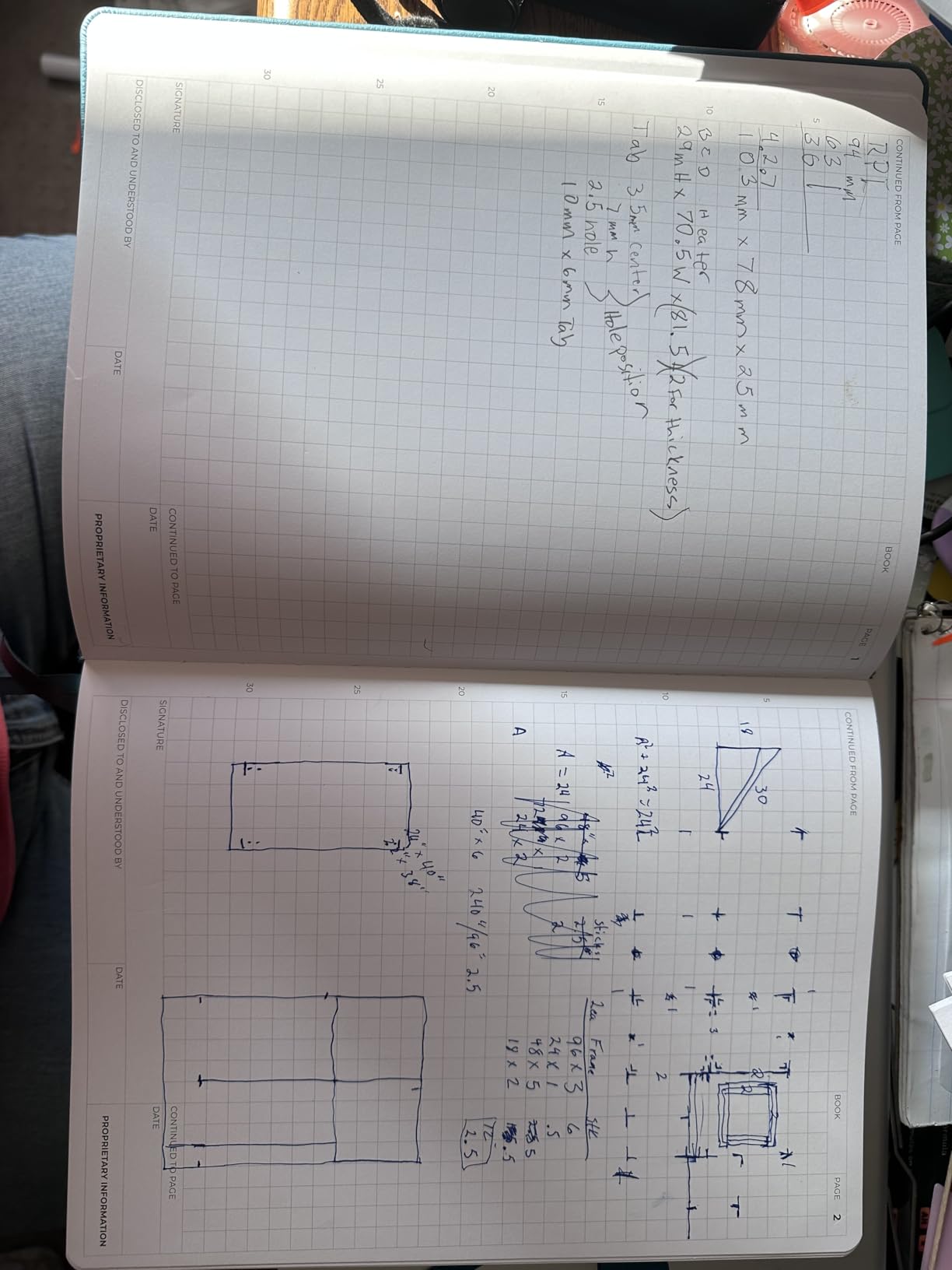
The Clever Fox Engineering Notebook brings bullet journaling features to technical documentation. The 120 gsm paper is noticeably thicker than standard lab notebook paper, eliminating bleed-through concerns with any pen type. I have tested fountain pens, gel pens, and markers on this paper with excellent results.
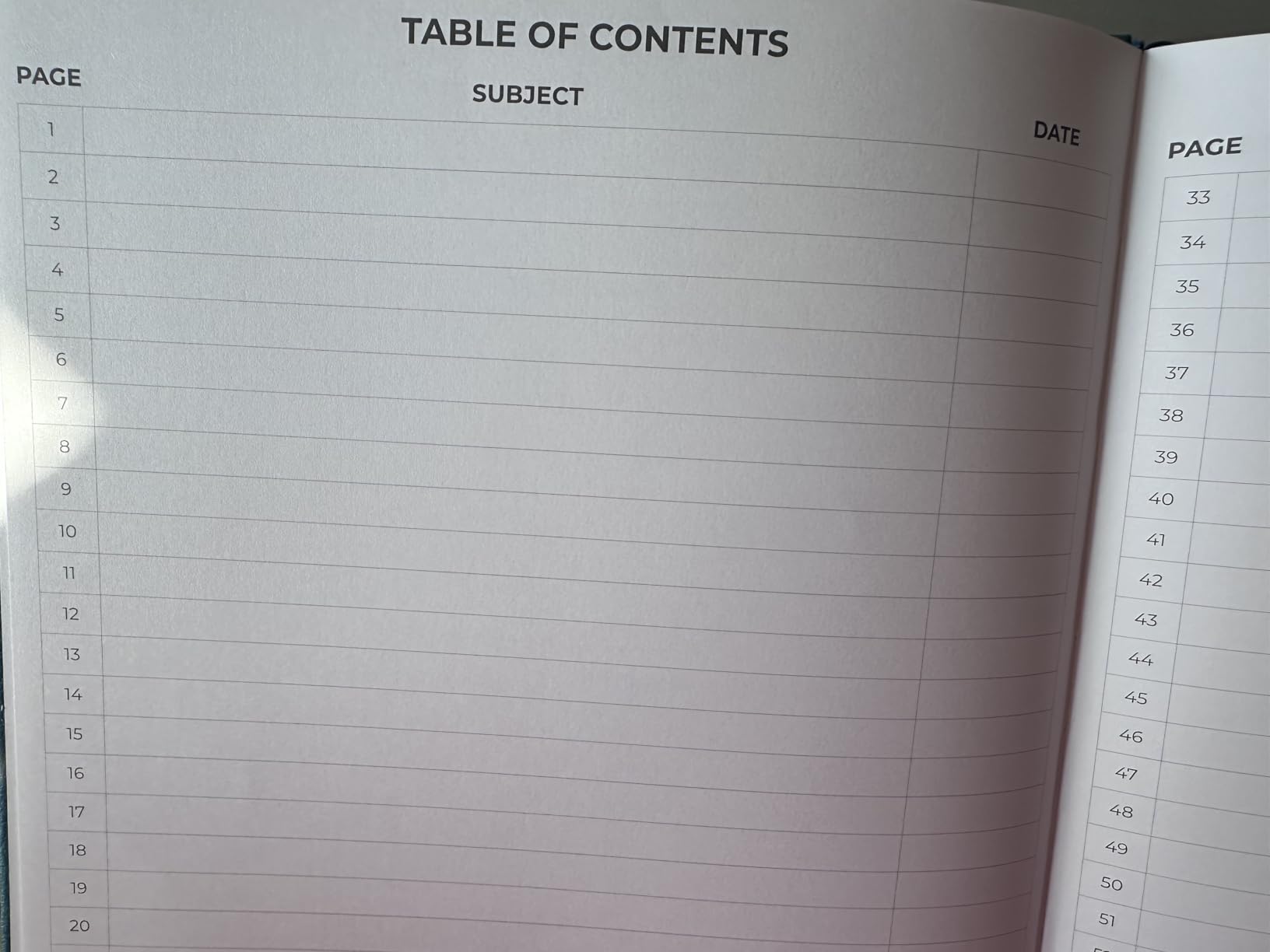
The 192 numbered pages with a fillable table of contents encourage organization. I use the index to track experiment locations, making it easy to find specific entries months later. The ribbon bookmark and elastic band closure are small touches that improve daily use.
The 7mm grid spacing is slightly larger than standard 5mm, which I find more comfortable for extended writing. The included pen loop means I always have a writing instrument attached. The back pocket holds protocols and notes that accumulate during projects.
The lay-flat binding uses a smyth-sewn technique that holds up to repeated opening. After three months of daily use, my copy still opens completely flat.
Who Should Choose This Notebook
Engineers and researchers who value organization features should strongly consider this option. The thick paper, numbered pages, and included organizational tools make this ideal for complex projects spanning many entries. The premium build quality justifies the higher price for daily use.
Who Should Skip This Option
The non-standard grid spacing may frustrate those accustomed to standard 5mm or 1/4 inch grids. The hardcover adds weight that makes this less portable than flexible alternatives. If you need carbonless copies or have specific formatting requirements, check those features first.
16. Geniatech Kloudnote E Ink Tablet – The Digital Purist

Geniatech Kloudnote Slim 10.3" Digital Notebook, E Ink Tablet and ePaper Notepad for ebook Reading and Writing, 227ppi ereader Device in 2025, 5.3mm Ultra-Thin (Grey)
10.3 inch E Ink display
227ppi resolution
4096 pressure sensitivity
Android OS with apps
40-hour battery life
Pros
- Paper-like E Ink display
- Open Android system
- Excellent battery life
- Lightweight and thin
- OCR and ASR included
Cons
- No backlight for night use
- Kindle app unavailable
- Pen triggers from distance
- Large PDFs can struggle
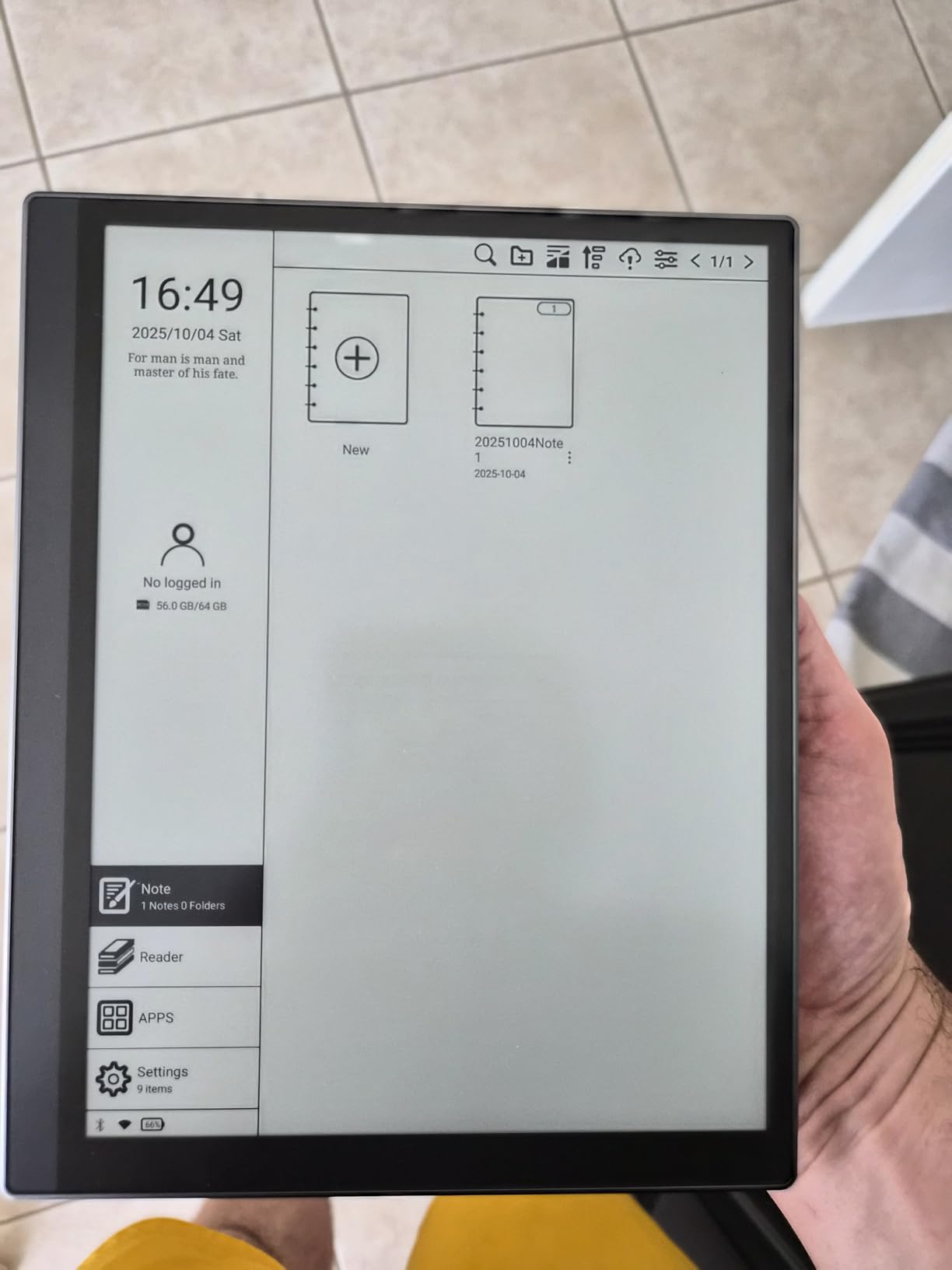
The Kloudnote offers a full digital replacement for paper notebooks using E Ink technology. Unlike LCD tablets, the E Ink display is easy on the eyes during extended use and remains readable in bright light. I have used this for literature review sessions lasting several hours without the eye strain I get from traditional screens.
The Android OS provides flexibility that closed systems lack. You can install apps from the included store, though the selection is limited compared to Google Play. The 4096 pressure sensitivity levels create natural handwriting feel, though this matters more for artists than for note-taking.
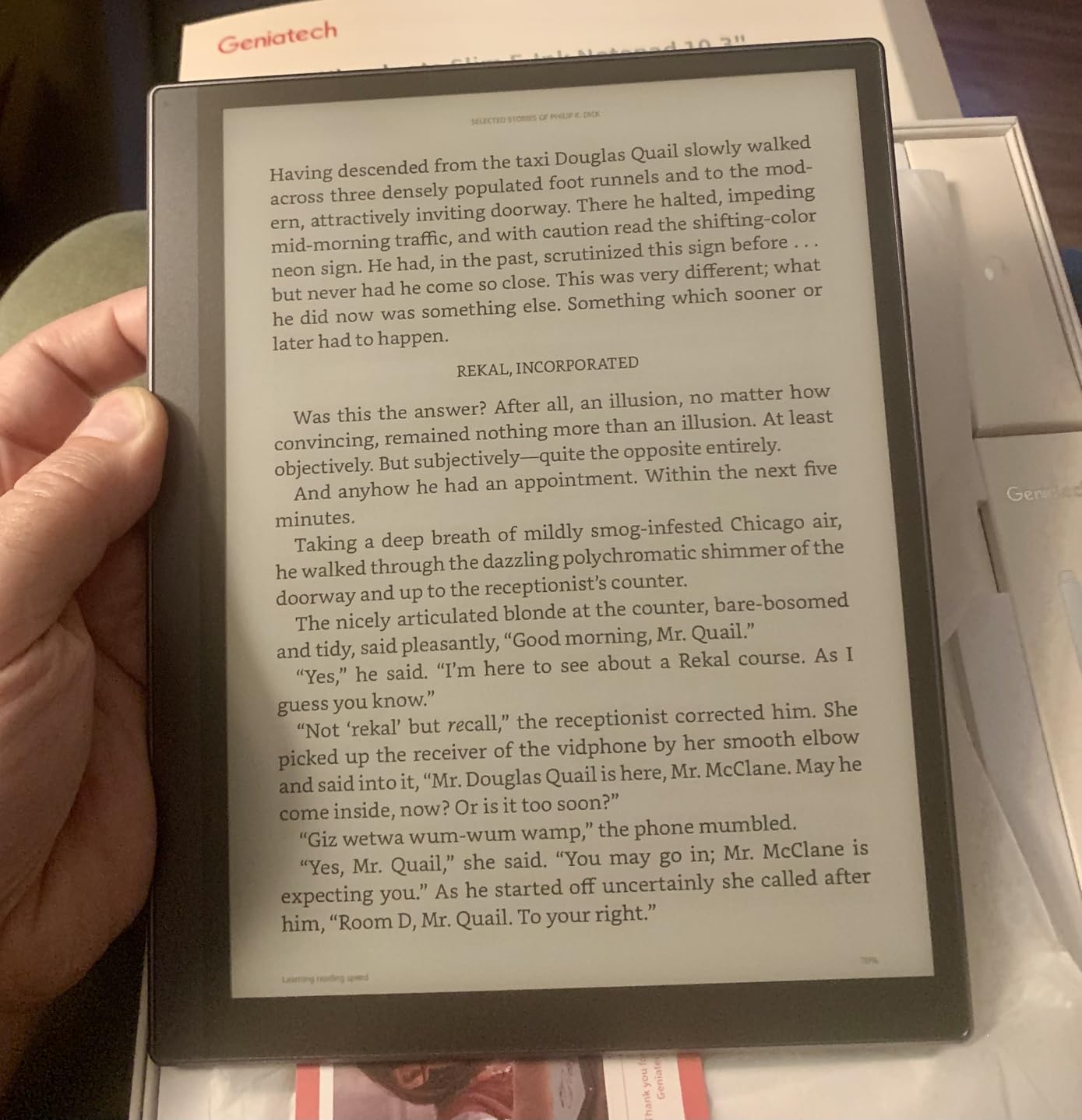
The 40-hour battery life means you can work for days without charging. The 5.3mm thickness and 390-gram weight make this genuinely portable. The 39 note templates include options for lined, grid, and blank pages.
The OCR and ASR features convert handwriting and speech to searchable text. The cloud sync works with major services, though you need to use the built-in app store versions.
Who Should Choose This Notebook
Researchers ready to go fully digital should consider this option. The E Ink display solves the eye strain problem of LCD tablets while providing digital benefits like searchability and cloud backup. The open Android system offers more flexibility than closed competitors.
Who Should Skip This Option
The lack of a backlight limits night use. The limited app ecosystem means you may not have access to your preferred tools. If you need physical notebooks for legal or compliance reasons, this is not a substitute. The learning curve for digital-only documentation is also significant for paper-native researchers.
17. Rocketbook Multi-Subject Notebook – The Organizer

Rocketbook Multi-Subject Reusable Smart Notebook, Notebook For School and Work, 70 Lined Pages Multi-Subject, 4 Adjustable Dividers, Letter Size 8.5x11, Black
70 reusable pages
4 adjustable dividers
5 section organization
Smart titles for searchability
Cloud sync included
Pros
- True multi-subject organization
- Reusable pages save money
- Dividers work well
- Good app functionality
- OCR relatively accurate
Cons
- Highlighters smudge badly
- Ghosting develops over time
- Ink heat sensitive
- Microfiber cloth awkward
The Multi-Subject Rocketbook addresses a limitation of other reusable notebooks: organization. The four adjustable dividers create five sections that you can dedicate to different projects or courses. I have used this for teaching, with sections for lecture notes, lab prep, student meetings, and research.
The 70-page capacity divided among five sections means each section gets about 14 pages. This encourages regular scanning and clearing, which is good practice for reusable notebooks. The dividers are sturdy enough to survive repeated reconfiguration.
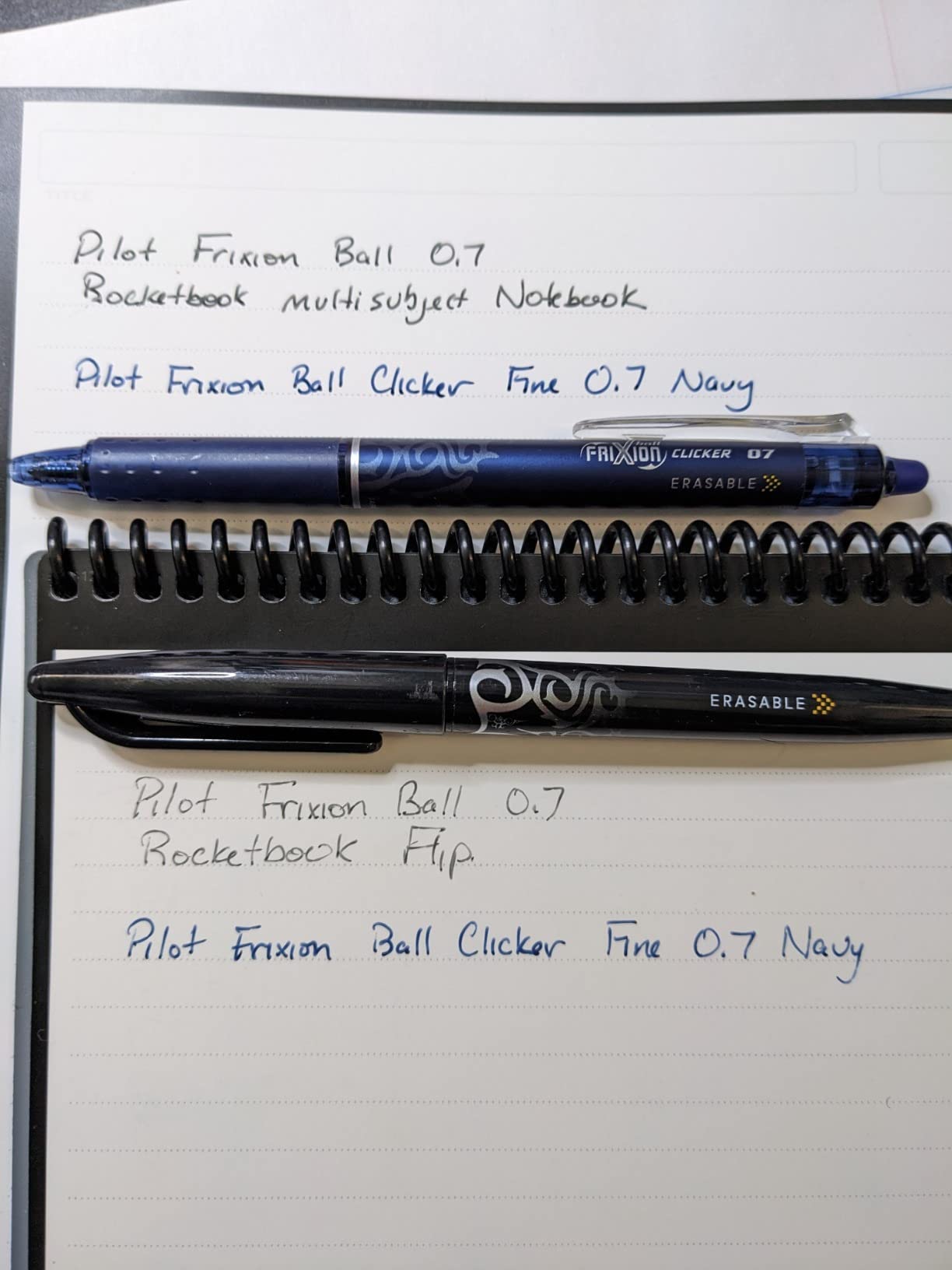
The Smart Titles feature works well with the multi-subject format. By writing subject-specific hashtags, scans automatically file into appropriate cloud folders. This automation saves significant organizational time over manual sorting.
The included Pilot Frixion pen and microfiber cloth mean you can start using the system immediately. The matte lined pages feel more like real paper than glossy alternatives I have tested.
Who Should Choose This Notebook
Researchers juggling multiple projects or courses should consider this option. The organization system genuinely works for keeping different work streams separate. Students taking multiple science courses particularly benefit from the section dividers.
Who Should Skip This Option
The same reusable limitations apply: no permanent legal records, ink drying time, and heat sensitivity. Highlighters smudge badly on this paper, which may frustrate researchers who color-code extensively. If you primarily work on one project at a time, the dividers add unnecessary complexity.
18. JSJGETYI LCD Writing Tablet – The Temporary Notepad

10 inch LCD Writing Tablet Electronic Writing Notebook with PU Protective Cover Erasable Drawing Pad Gift for Adults at Home Business Office(Black
10 inch LCD screen
Monochrome blue-green display
PU leather protective cover
One-key delete with lock
Pressure-sensitive writing
Pros
- Very affordable
- No batteries needed for tablet
- Good for checklists and tasks
- Screen lock prevents accidents
- Durable after drops
Cons
- Cannot save notes permanently
- Hard to see in low light
- Cover feels flimsy
- Not for permanent records
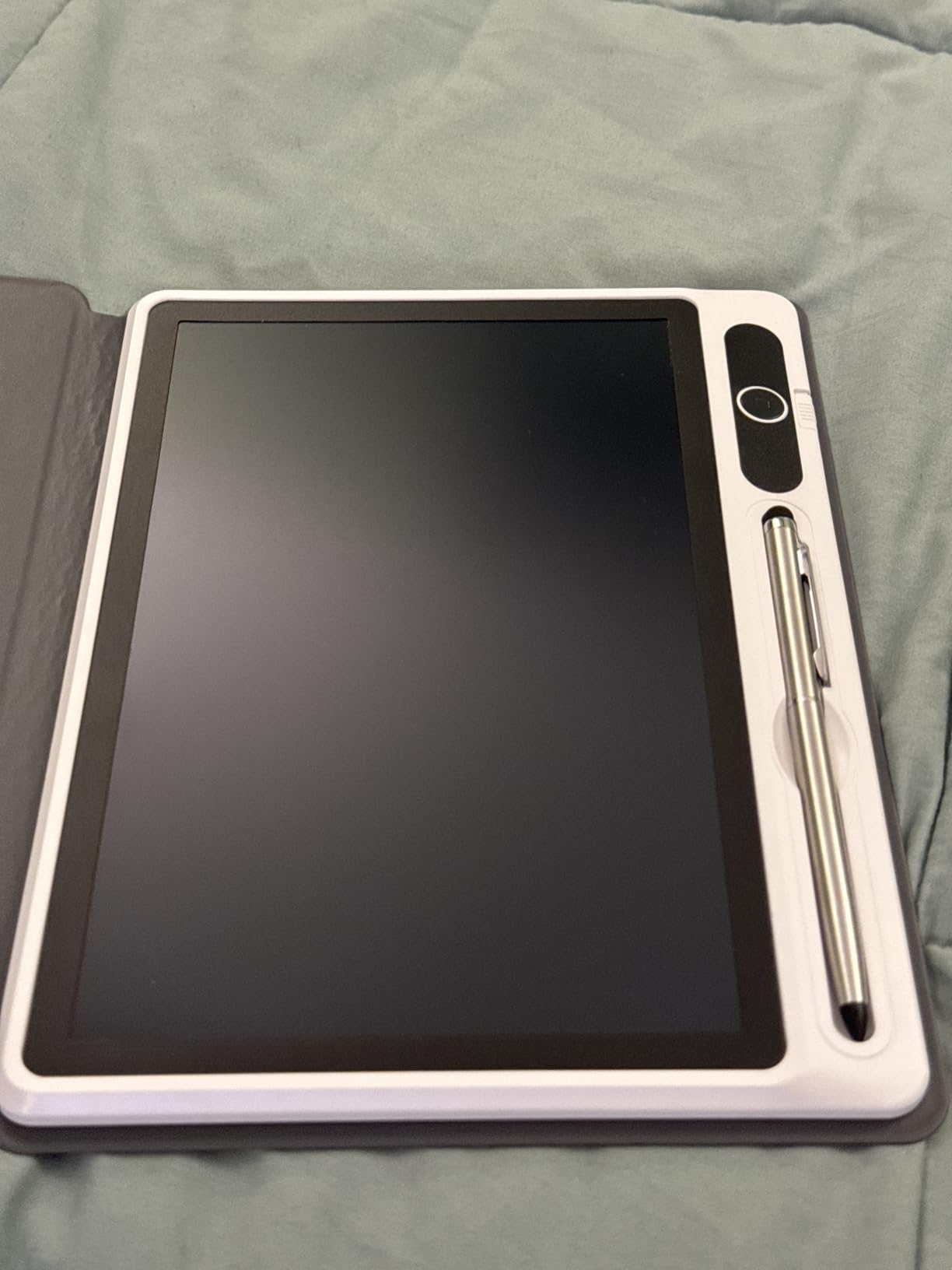
This LCD writing tablet serves a different purpose than other options on this list. It is designed for temporary notes, checklists, and quick calculations that do not need preservation. I keep one on my desk for daily task lists and rough calculations.
The pressure-sensitive screen creates lines of varying thickness based on pressure, which allows some expression in writing. The one-key delete clears the entire screen instantly, while the lock function prevents accidental erasure. The PU cover with stand function holds the tablet at a comfortable writing angle.
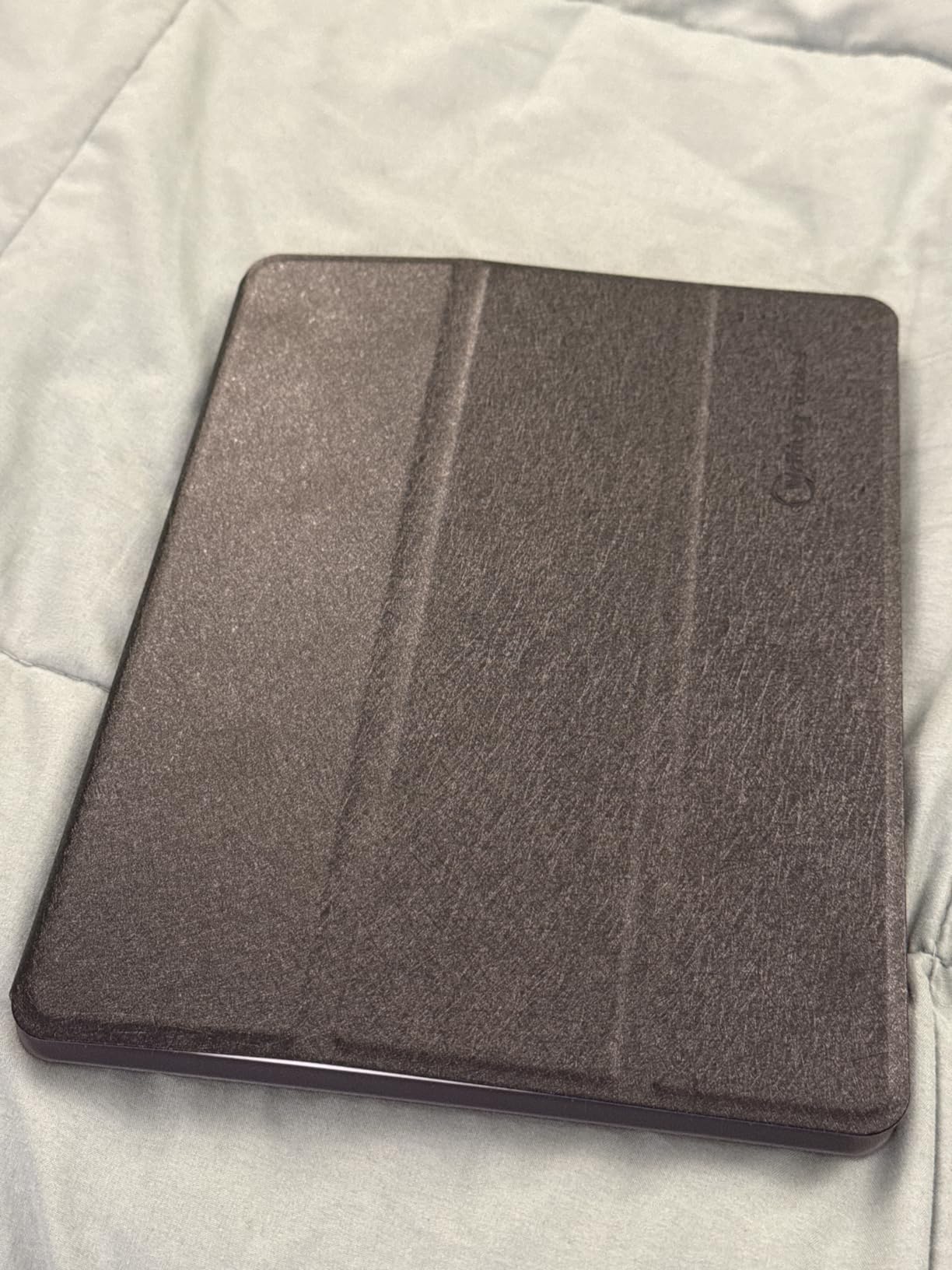
The battery-free operation is a genuine advantage. The tablet uses minimal power from a small cell battery that lasts years. You never need to charge it or worry about running out of battery mid-note.
The monochrome blue-green display is easy on the eyes but requires good lighting. In dim labs, you may struggle to read your notes. The lack of save functionality means you must photograph anything you want to keep.
Who Should Choose This Notebook
Researchers who need a scratchpad for temporary notes should consider this budget option. It works well for daily checklists, quick calculations, and situations where you want to avoid paper waste. The low price makes this an easy addition to your workflow without significant investment.
Who Should Skip This Option
This is not a notebook in the traditional sense. You cannot save, search, or archive notes. It serves a completely different purpose than documentation notebooks. If you need permanent records or detailed documentation, this is inappropriate.
19. Vela Sciences DuraCover Lab Notebook – The Heavy-Duty Option

Vela Sciences Advanced N7-B Expanded DuraCover Lab Notebook, 9.25 x 11.75 in (23.5 x 30 cm), 144 Pages, Gray Saturated Weave, Permanent Bound, 70lb Heavyweight Paper (1-Pack, Grid)
DuraCover scuff-resistant coating
144 pages 70lb paper
Reinforced wire binding
Grid pattern 5mm
Reference charts included
Pros
- Excellent paper quality
- Durable cover coating
- Reinforced binding lasts
- Pre-numbered pages useful
- Professional appearance
Cons
- Bookmark ribbon can tear out
- Large size not portable
- Fountain pen performance varies
The DuraCover line from Vela Sciences emphasizes durability. The scuff-resistant matte laminated coating protects against the daily abuse of lab work. I have dragged this across benches, spilled water on it, and generally mistreated it – the cover still looks presentable.
The 70lb paper weight is the same as the Advanced E7-C, providing minimal showthrough with all pen types. The grid pattern uses standard 5mm spacing that aligns with standard graph paper. The pre-numbered pages and index facilitate organization.
The reinforced wire binding uses double loops that resist catching and breaking. Unlike cheaper wire bindings that deform with use, this holds its shape through repeated opening. The extra heavyweight backboard provides a firm writing surface.
The reference charts inside the cover include conversion factors, equations, and equipment tables that speed up calculations. The FSC, SFI, and ECF certifications ensure responsible paper sourcing.
Who Should Choose This Notebook
Researchers in rough environments or those who need maximum durability should consider this option. The DuraCover coating provides protection that standard covers lack. The heavy-duty construction justifies the slightly higher price for heavy users.
Who Should Skip This Option
The 9.25 x 11.75 inch size is larger than standard and may not fit in all lab coat pockets. If portability matters, the smaller National or BookFactory options are more practical. The wire binding, while durable, is not as archive-friendly as sewn bindings for long-term legal records.
20. Noteorius Smart Notebook with Pen – The Always-On Display

Noteorius Smart Notebook with Pen & Folio – Reusable Digital Writing Pad with Smart Pen, App Sync, Cloud Storage, Productivity Notebook for Work, School & Meetings
Always-On Dark Mode LCD
Tap-to-Save Smart Pen
Cloud sync capability
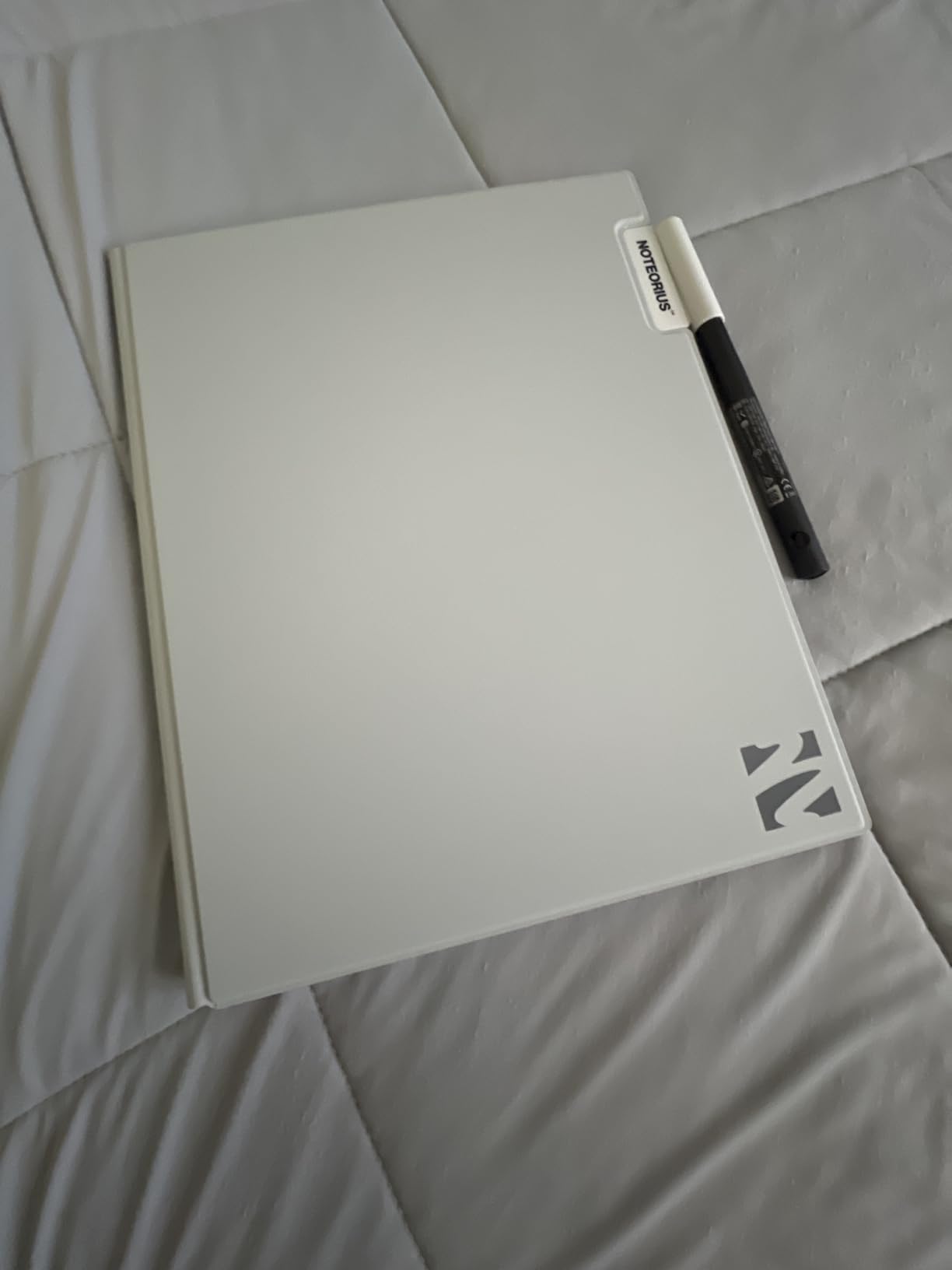
Magnetic protective folio
No-lag writing
Pros
- Always ready to write
- Natural pen feel
- Good cloud integration
- Sleek design
- Hand palm rejection works
Cons
- Some units missing charger
- App sync limitations
- No brightness adjustment
- Limited stylus options
The Noteorius system features an always-on LCD display that eliminates the power-up delay of other digital notebooks. When inspiration strikes, you open the cover and write immediately. I found this immediacy valuable for capturing ideas before they fade.
The Tap-to-Save pen transfers notes to the app with a button press. The Bluetooth connection is reliable, and the cloud sync works with major services including Evernote, OneNote, Google Drive, and Dropbox. The magnetic folio protects the screen while maintaining slim profile.
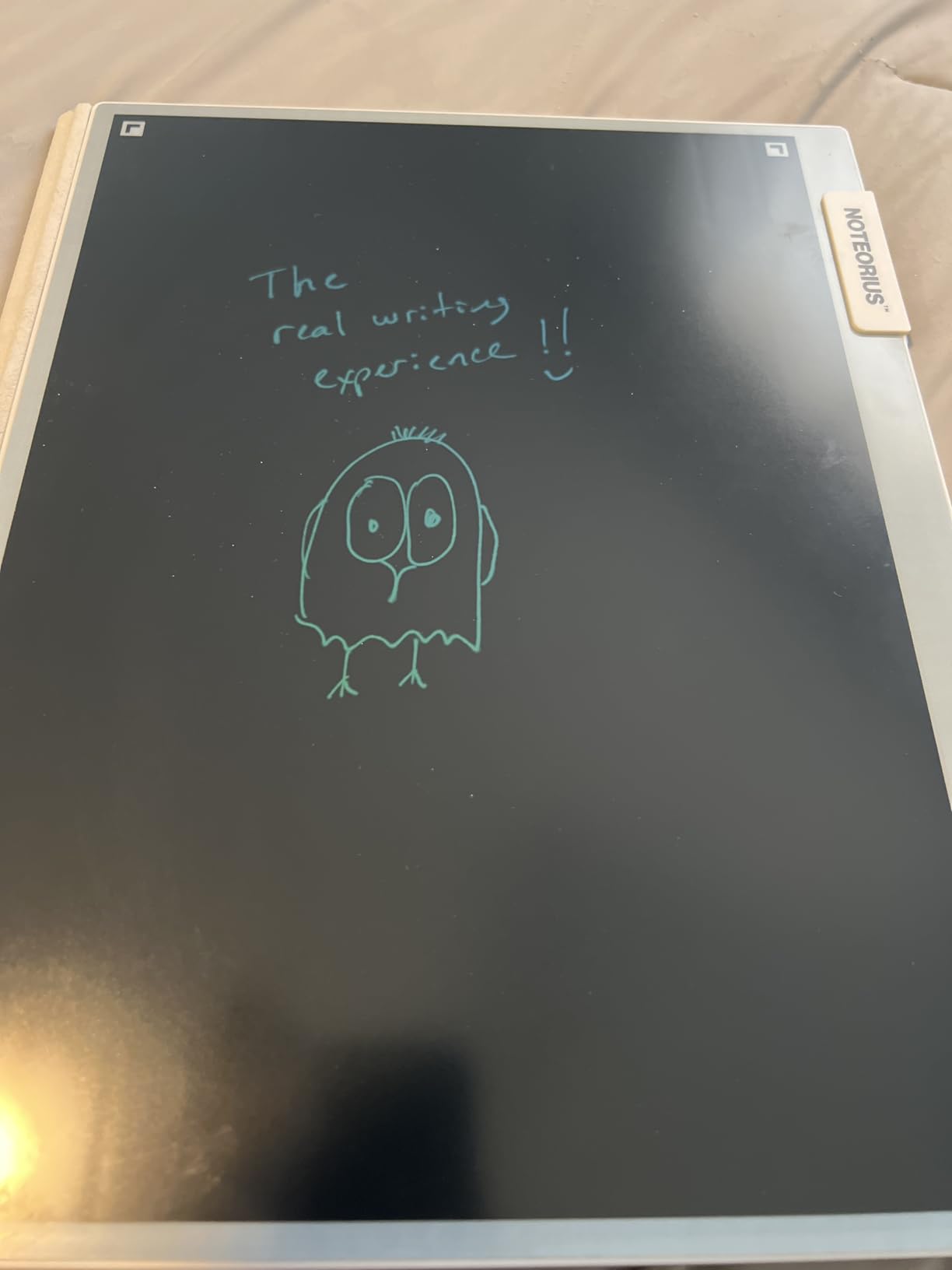
The pen-on-paper feel is surprisingly natural for a digital system. The hand palm rejection prevents accidental marks while writing, a feature some competing systems lack. The rechargeable stylus lasts through multiple days of heavy use.
The Dark Mode LCD reduces eye strain compared to backlit alternatives. The lack of brightness adjustment is a limitation in varying light conditions.
Who Should Choose This Notebook
Researchers who want digital convenience with immediate availability should consider this option. The always-on display eliminates the friction that causes missed notes. The cloud sync and professional appearance suit researchers who share notes digitally.
Who Should Skip This Option
The limited reviews and reported quality issues suggest caution. Some users received units with missing chargers, indicating potential fulfillment problems. The app limitations, particularly the single-folder sync, may frustrate power users. The price is significant for a system with reported limitations.
What to Look for in a Lab Notebook
After reviewing 20 options, I want to share what actually matters when choosing a lab notebook. These are the criteria I use when making recommendations to colleagues and students.
Binding Type Matters More Than You Think
The binding determines how your notebook ages and how usable it remains over time. Section-sewn bindings, found in BookFactory and Vela Sciences hardcovers, lie completely flat and resist page loss. This matters when you need to write near the margins or when your notebook will be referenced frequently over years.
Wire-O bindings allow flat opening but can catch on clothing and may deform with heavy use. They work well for carbonless notebooks where you need to press hard for transfers, but are less archive-friendly for long-term storage.
Spiral bindings are generally unacceptable for formal documentation. Pages can tear out accidentally, and the metal spirals damage adjacent books on shelves. Many labs explicitly forbid spiral-bound notebooks for GLP compliance.
Perfect-bound (glued) notebooks often crack at the spine with heavy use, causing pages to fall out. Avoid these for important work.
Paper Quality Specifications Explained
Paper weight determines bleed-through and durability. Standard copy paper is 20lb. Lab notebook paper typically ranges from 24lb to 70lb. Heavier paper costs more but provides better writing experience and longevity.
For fountain pen users, 60lb or heavier paper is essential. For ballpoint pens, 24-32lb works fine. Gel pens fall in between – I recommend 32lb minimum to prevent showthrough.
Acid-free archival paper resists yellowing and degradation over decades. For notebooks that will be stored for patent defense or regulatory compliance, this is mandatory. All major lab notebook brands use archival paper, but verify before buying unknown brands.
Digital Alternatives: When to Switch
Electronic lab notebooks (ELNs) offer searchability, collaboration, and integration with data systems. They make sense for teams, heavily computational work, and environments where data integrity systems are already in place.
However, paper notebooks remain superior for certain situations. Legal defensibility is better established for physical notebooks with handwritten signatures. Some funding agencies and patent offices still prefer physical documentation. Field work often lacks the power and connectivity for digital systems.
The hybrid approach – paper primary with digital backup – offers a middle path. Systems like Rocketbook, HUION Note, and smart pens provide digital capture while maintaining physical records. This is my current workflow, and it works well.
What to Avoid
Based on forum discussions and my own experience, here are the common mistakes to avoid:
Spiral-bound notebooks for formal documentation. They fail catastrophically at the worst moments. I have seen months of work scatter across hallways when spiral bindings catch and release.
Thin paper (under 24lb) for permanent records. It degrades faster and shows more bleed-through. The small upfront savings cost more in replacement and frustration.
Non-archival paper for important work. Regular notebook paper yellows and becomes brittle over decades. If your work might matter for patents or legal defense, use proper archival materials.
Relying solely on erasable systems for legal documentation. The erasable nature creates chain-of-custody problems. Use permanent records for anything that might be legally significant.
Frequently Asked Questions
What kind of notebooks do scientists use?
Scientists use laboratory notebooks designed for archival documentation, featuring numbered pages, sewn or wire-O bindings, and acid-free paper. The most trusted brands include National Brand, BookFactory, and Vela Sciences. Research-grade notebooks include features like pre-printed tables of contents, signature blocks, and documentation guidelines to ensure proper record keeping for potential patent and regulatory use.
What is an electronic lab notebook ELN?
An electronic lab notebook (ELN) is a digital system for documenting experiments, protocols, and research data. ELNs offer searchability, collaboration features, cloud backup, and integration with laboratory information management systems. Popular options include Benchling, LabArchives, and open-source alternatives. Many researchers use hybrid approaches combining paper notebooks with digital capture tools like Rocketbook or smart pen systems.
What is the best ELN for scientists?
The best ELN depends on your specific needs. Benchling is widely used in life sciences for its molecular biology tools. LabArchives offers strong collaboration features for academic labs. For researchers wanting to keep paper workflows, hybrid systems like HUION Note or Rocketbook provide digital benefits without full transition. Open-source options like eLabFTW work well for labs wanting self-hosted solutions.
Which digital notebook is best for research?
For full digital replacement, the Geniatech Kloudnote offers the best E Ink writing experience with Android flexibility. For hybrid paper-digital workflows, the HUION Note 2-in-1 captures handwriting from any paper. For reusable smart notebooks, Rocketbook Core provides excellent app integration and cloud sync. Choose based on whether you want full digital, paper backup, or reusable paper systems.
Final Recommendations
The best lab notebooks for scientists in 2026 depend on your specific needs and workflow. For traditional paper documentation, the Clever Fox Engineering Notebook offers the best combination of paper quality, features, and durability. The National Computation Notebook remains the value champion for technical work. For those ready to embrace digital workflows, the Rocketbook Core provides an excellent bridge between paper and digital.
Remember that your lab notebook is a legal record. Choose based on durability, paper quality, and the specific requirements of your research environment. The extra cost of a quality notebook is insignificant compared to the value of your research data.
Whichever option you choose, develop consistent documentation habits. The best notebook cannot save poor record keeping. Write legibly, date every entry, and never remove pages. Your future self – and potentially your lawyer – will thank you.