
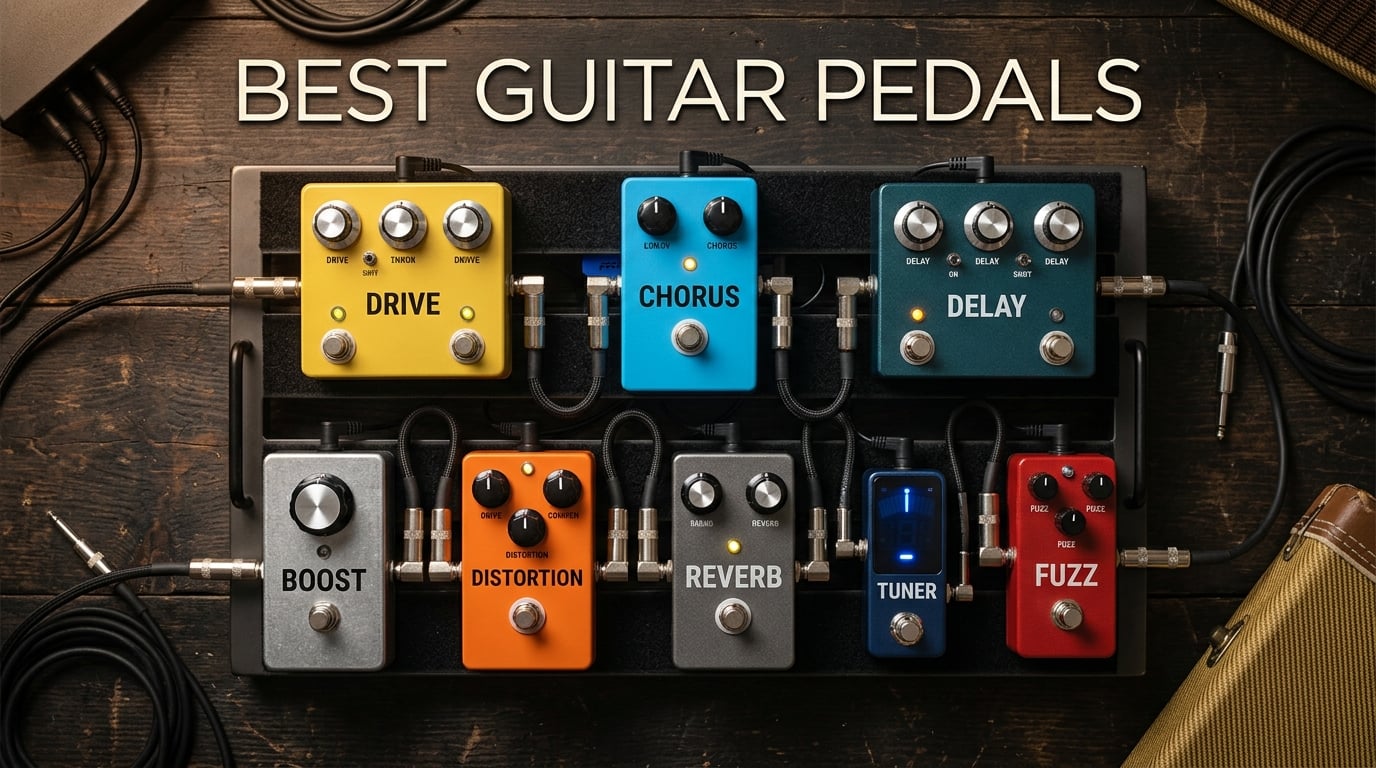
Finding the best guitar pedals can feel overwhelming when there are hundreds of options spanning every effect type, price range, and genre. I have spent years building pedalboards, testing stompboxes across tube amps and solid-state rigs, and comparing notes with gigging musicians and bedroom players alike. What I learned is that the right pedal does not just add an effect to your signal chain. It transforms your entire tone.
The best guitar pedals in 2026 cover everything from warm overdrive that pushes a tube amp into sweet breakup to lush ambient reverb that wraps your sound in cinematic space. Whether you play blues, rock, metal, shoegaze, or country, having the right stompboxes on your pedalboard is the difference between sounding good and sounding unforgettable.
In this guide, our team tested 12 pedals across five categories: overdrive and distortion, delay, reverb, modulation, and multi-effects. We focused on pedals that real players actually use and recommend on forums like Reddit’s r/guitarpedals, not just flashy demo units. Every product here has been evaluated for tone quality, build construction, versatility, and value. Let me walk you through the top picks and help you find the perfect match for your rig.
Top 3 Picks for Best Guitar Pedals

BOSS BD-2 Blues Driver
- Tube-like overdrive
- Touch sensitive
- Stacks beautifully
- 3 simple controls

BOSS SD-1 Super Overdrive
- Genre-defining tone
- Asymmetrical clipping
- Mid-forward cut
- Tank-like build
Best Guitar Pedals in 2026: Quick Overview
| Product | Specifications | Action |
|---|---|---|
|
BOSS BD-2 Blues Driver
|
|
Check Latest Price |
|
BOSS SD-1 Super Overdrive
|
|
Check Latest Price |
 Pro Co RAT2 Distortion
|
|
Check Latest Price |
 BOSS DS-1 Distortion
|
|
Check Latest Price |
 EHX Big Muff Pi
|
|
Check Latest Price |
 BOSS DD-8 Digital Delay
|
|
Check Latest Price |
 BOSS RV-6 Reverb
|
|
Check Latest Price |
 Strymon Cloudburst
|
|
Check Latest Price |
 EHX Small Clone Chorus
|
|
Check Latest Price |
 JHS 3 Series Reverb
|
|
Check Latest Price |
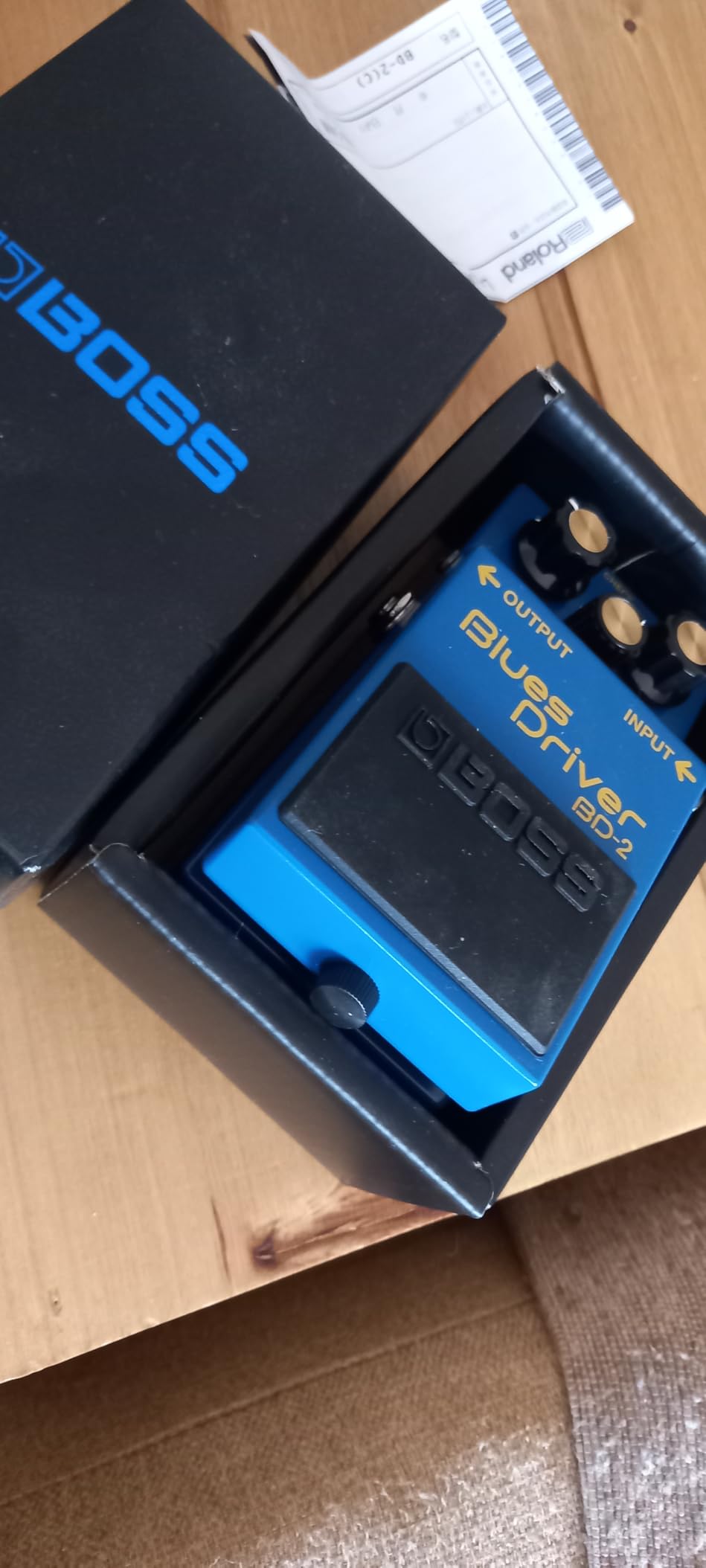
1. BOSS BD-2 Blues Driver – Tube-Like Overdrive Perfection
Boss BD-2 Blues Driver Guitar Effects Pedal
Overdrive Pedal
9V Powered
Analog Signal
BOSS 5-Year Warranty
3 Controls
Pros
- Tube amp-like overdrive with incredible touch sensitivity
- Responds beautifully to volume knob changes
- Stacks perfectly with other drive pedals
- Wide gain range from light breakup to near-fuzz
Cons
- Gain knob increases volume significantly
- Low gain settings may lack crunch for heavier styles
I plugged the BD-2 into my Fender Hot Rod Deluxe and was immediately struck by how organic it sounded. This is not a pedal that simply slaps distortion on top of your clean tone. It reacts to how hard you pick, cleans up when you roll back your guitar’s volume knob, and responds to nuance the way a pushed tube amp does. That touch sensitivity is what separates the Blues Driver from dozens of other overdrive pedals on the market.
The three controls (Level, Tone, Drive) are dead simple. I had a great tone dialed in within 30 seconds. With the Drive at 9 o’clock, you get a subtle grit that enhances your clean sound. Push it past noon and the pedal opens up into a thick, creamy crunch that works for blues, classic rock, and even indie alternative. The Tone knob is surprisingly musical, never getting harsh or thin.
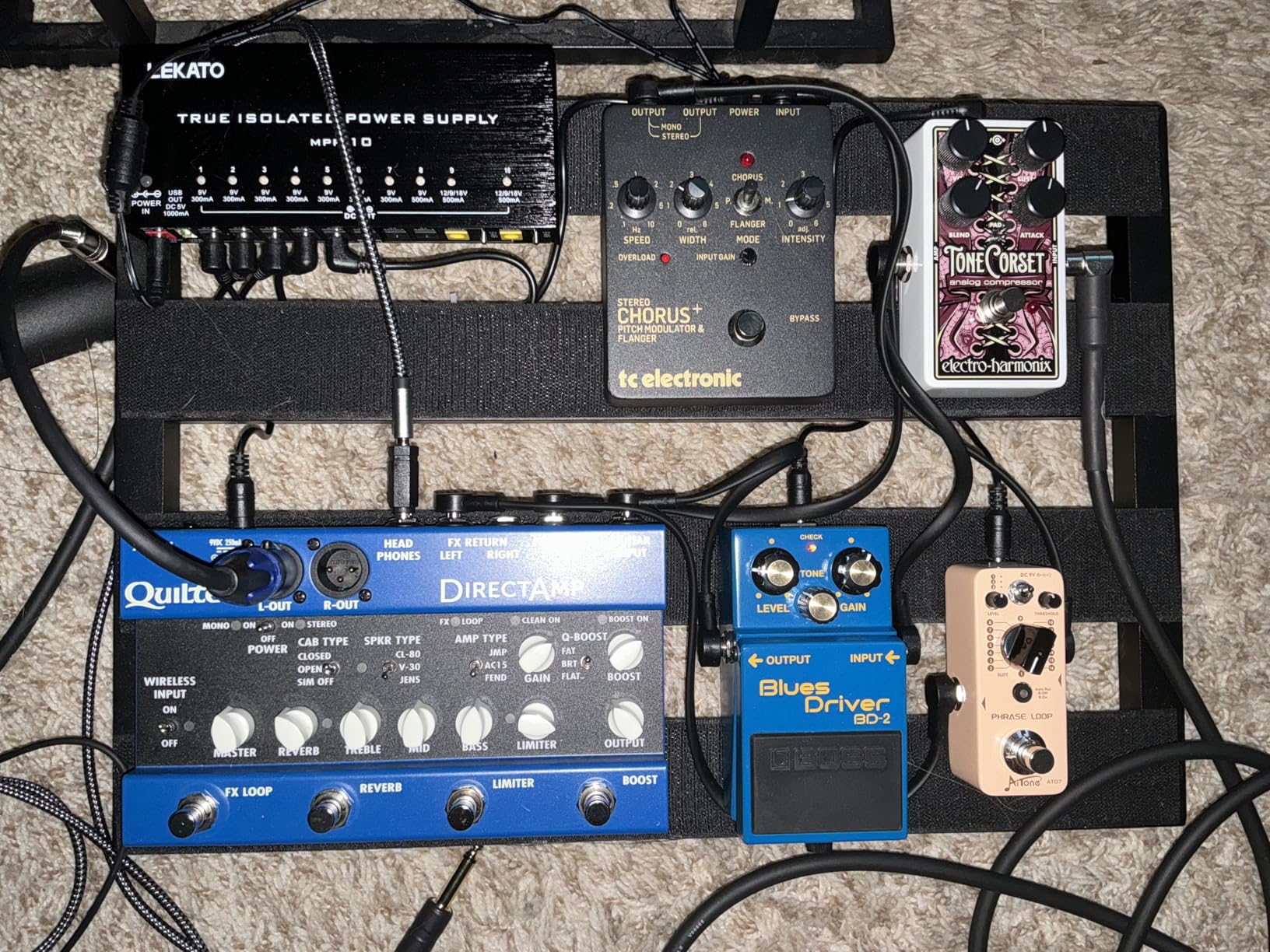
What impressed me most during long-term testing was how well this pedal stacks. I placed it after my SD-1 and before a delay, and the combination produced a lead tone that cut through the mix without sounding shrill. Many players on r/guitarpedals recommend the BD-2 as the first overdrive pedal for a reason. It is versatile enough for rock, responsive enough for blues, and characterful enough to define your signature sound.
The build quality is what you expect from BOSS. The compact housing is practically indestructible, and the five-year warranty backs that up. I have dropped this pedal, stepped on it hundreds of times, and it has never skipped a beat. The buffered bypass keeps your signal strong through long cable runs, which matters more than people realize.
Who This Pedal Is Perfect For
The BD-2 is ideal for blues and rock players who want an overdrive that feels alive under their fingers. If you play country chicken-pickin’ or need a transparent boost that preserves your core tone, this pedal handles both beautifully. It is also the best guitar pedal for someone building their first pedalboard because it covers so much sonic territory.
What to Watch Out For
The main thing to note is that the Drive knob also boosts volume noticeably. You will need to balance the Level control carefully when engaging the pedal mid-song. Also, if you play modern metal or need tight high-gain tones, the BD-2 alone will not get you there. You would want to pair it with a dedicated distortion or use it as a boost into an already driven amp.
2. BOSS SD-1 Super Overdrive – The Genre-Defining Workhorse
BOSS SD-1 SUPER Overdrive | Compact Overdrive Pedal | Genre-Defining Sound & Feel | Unique Clipping Circuitry Produces Tube-Like Characteristics | Dynamic Tone Options | Easy-To-Use Controls
Overdrive Pedal
9V Powered
Analog Signal
30mA Draw
BOSS 5-Year Warranty
Pros
- Legendary asymmetrical clipping for tube-like warmth
- Mid-forward tone that cuts through any mix
- Cleans up beautifully at lower gain settings
- Doubles as an excellent boost pedal
- Incredible value at under $70
Cons
- Can sound bright with certain amps
- Low end can lack depth
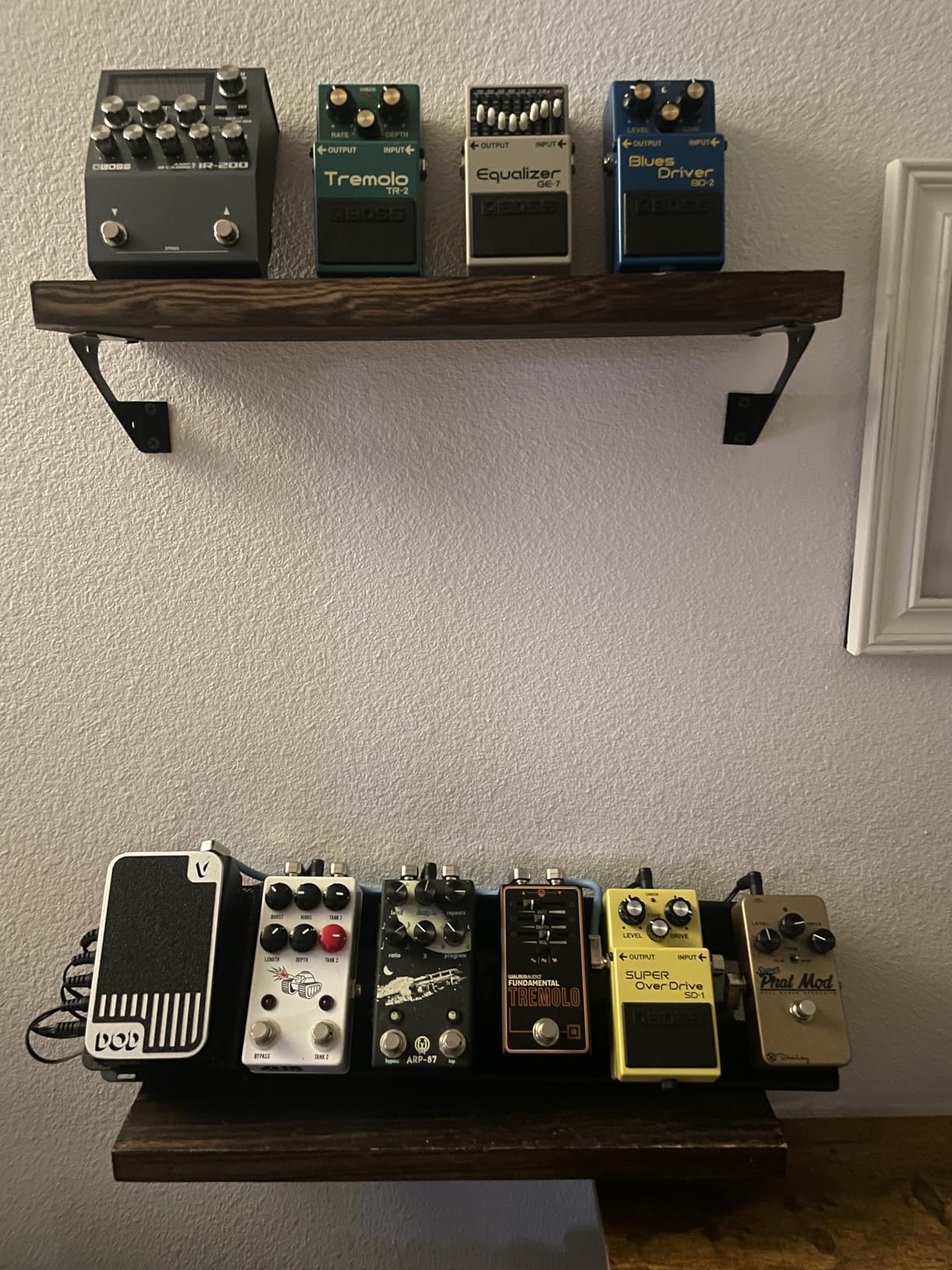
The SD-1 is one of those pedals that has earned legendary status for good reason. I ran it through a Vox AC15 and immediately understood why this has been a staple on professional pedalboards since the 1980s. The asymmetrical clipping circuit produces a warm, organic overdrive that sounds more like a naturally breaking tube amp than a stompbox effect.
What makes the SD-1 special is the mid-range hump in its EQ. Rather than giving you a flat frequency response, the pedal emphasizes the frequencies where the guitar naturally lives. This means your tone cuts through a dense band mix without fighting for space. I tested this at a rehearsal with bass, drums, and keyboards, and my guitar sat perfectly on top without any EQ tweaks.
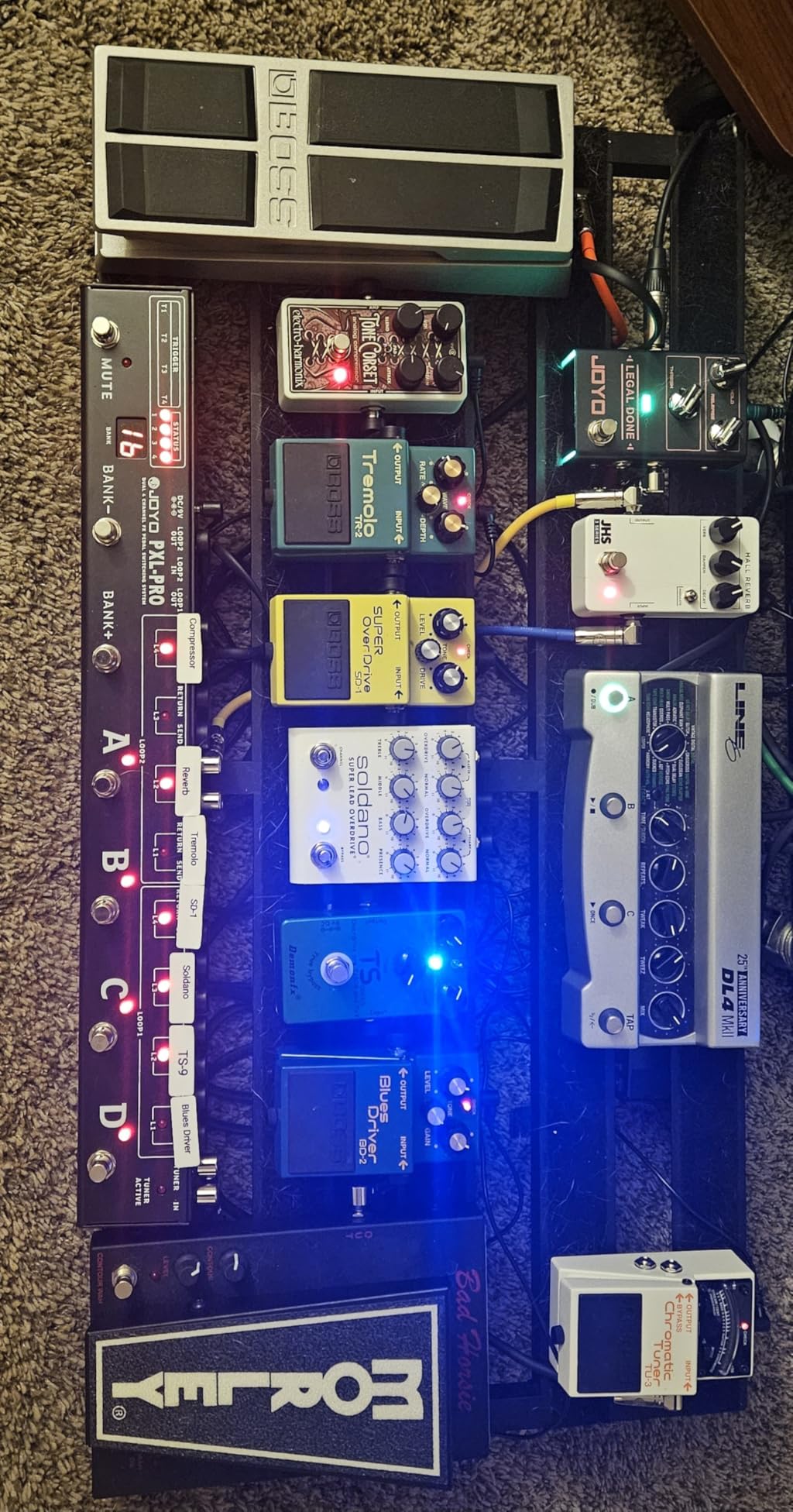
At lower gain settings, the SD-1 works as a phenomenal boost. I set the Drive to minimum, the Level to maximum, and used it to push my amp’s natural overdrive into sustain territory. This is a trick countless touring guitarists use. Stack it after a BD-2 or before a distortion pedal and you get a layered gain structure that sounds massive.
For under $70, this is arguably the best value pedal in existence. The build is the standard BOSS tank-like construction with a five-year warranty. Over 3,100 Amazon reviewers gave it a 4.7-star average, which tells you everything about long-term satisfaction. Whether you are a beginner buying your first pedal or a veteran adding another flavor to your board, the SD-1 delivers every time.
Best Genre Matches for This Pedal
The SD-1 excels in classic rock, blues rock, and punk. If you play a Stratocaster or Telecaster through a Fender or Vox amp, this pairing is magical. It also works as a always-on tone sweetener that adds grit and sustain without changing your fundamental sound.
Limitations to Consider
The mid-forward voicing means the SD-1 can sound slightly bright or thin with already-bright rigs. The low end is not its strongest suit, so bass-heavy players might want to pair it with an EQ pedal. It is also not a standalone distortion for metal or hard rock, though it excels as a boost into a high-gain amp.
3. Pro Co RAT2 – The Swiss Army Knife of Distortion
Pro Co RAT2 Distortion Pedal
Distortion Pedal
9V Powered
Analog Signal
Filter Control
2-Year Warranty
Pros
- Covers mild drive to full fuzz in one pedal
- Unique Filter control for precise tone shaping
- 100% silent switching with no hum
- Replaces multiple drive pedals on your board
- Transparent tone preserving guitar character
Cons
- Large footprint takes up pedalboard space
- Battery compartment difficult to access
- Uses less common AC adapter plug
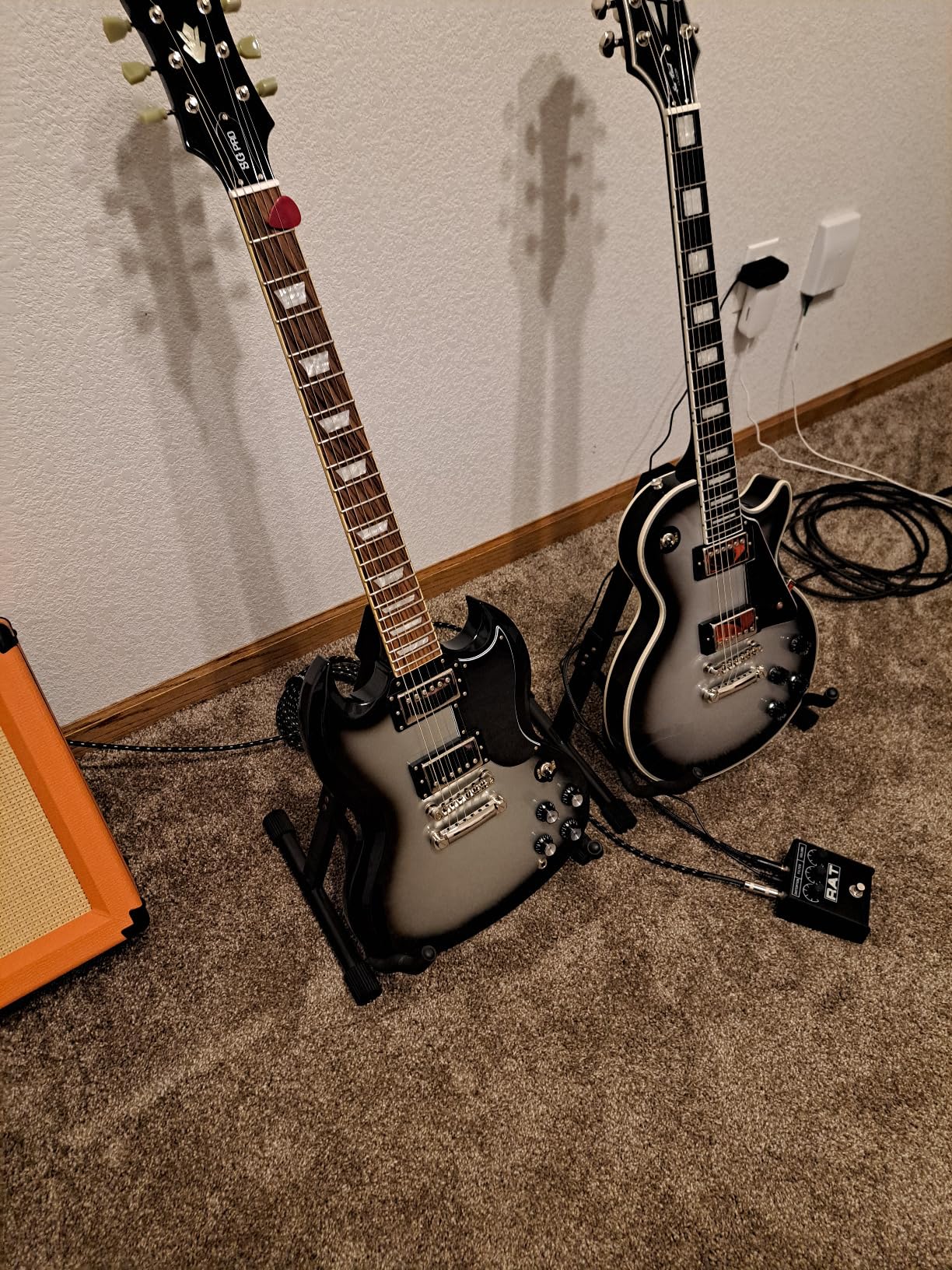
The RAT2 is the distortion pedal that many experienced players consider the only dirt box they need. I tested it across three weeks of gigs and studio sessions, and its versatility still surprises me. The three controls (Distortion, Filter, Volume) cover an enormous range of tones. At low gain settings, you get a smooth bluesy growl. Crank the Distortion knob and the RAT2 delivers thick, singing fuzz that would make a Big Muff jealous.
The standout feature is the Filter control. Instead of a standard tone knob, the RAT2 uses an inverted low-pass filter. Turn it clockwise for darker, warmer tones. Turn it counterclockwise and you get aggressive, cutting highs. I found myself using this control more than any other feature, sculpting everything from warm jazz tones to razor-sharp punk riffs. No other distortion pedal I have used offers this level of tone shaping.
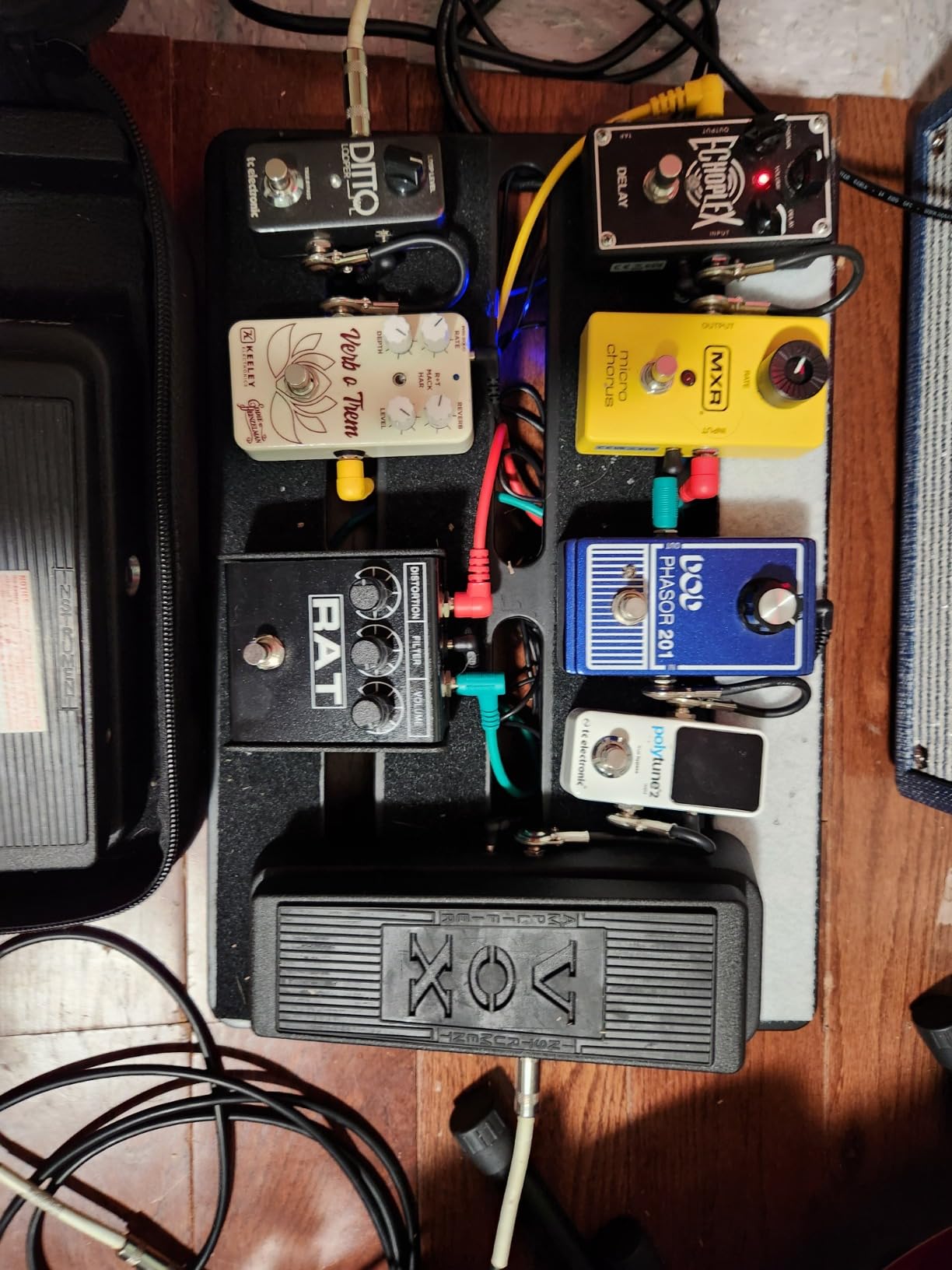
The build quality is exceptional. The RAT2 is housed in a heavy steel enclosure that feels like it could survive being run over by a van. The switching is completely silent, with no pops or clicks. After hundreds of stomps during testing, the footswitch remains as responsive as day one.
I compared the RAT2 directly with the BOSS DS-1 and the BD-2, and each has its personality. The RAT2 is the most aggressive and versatile of the three. It does not quite reach modern metal territory, but for rock, alternative, grunge, stoner, and indie, it nails the sound. Many players on rig-talk forums call it a rite of passage for guitarists.
Ideal Playing Styles and Setups
The RAT2 shines in alternative rock, grunge, punk, and stoner metal. It pairs exceptionally well with humbucker-equipped guitars through mid-powered tube amps. If you play in a three-piece band and need your guitar to fill more sonic space, this pedal delivers that wall of sound.
Space and Power Considerations
The RAT2 has a larger footprint than standard compact pedals, so plan your pedalboard layout accordingly. The battery compartment requires unscrewing the bottom plate, which is inconvenient. I recommend using a 9V power supply. The pedal uses a male AC adapter plug, which is less common than standard barrel connectors, so check your power supply compatibility.
4. BOSS DS-1 Distortion – The Benchmark Since 1978
BOSS DS-1 Distortion | Compact Distortion Pedal | The Benchmark in Guitar Distortion | Hard-edged Attack & Smooth Sustain | Wide Tone Range
Distortion Pedal
9V Powered
Analog Signal
20mA Draw
BOSS 5-Year Warranty
Pros
- Legendary tone used since 1978
- Hard-edged attack stays clear at max distortion
- Works great as booster at low settings
- Wide tone control range
- Preserves guitar and pickup character
- Cleans up with volume knob
Cons
- Tone can get very bright
- Not suited for modern high-gain metal
The DS-1 has been a gateway pedal for generations of guitarists, and testing it reminded me why. This pedal produces a hard-edged distortion that remains articulate even at maximum settings. I pushed the Distortion knob all the way up and chords still maintained clarity, which is rare at this price point. The attack is punchy and defined, making it ideal for aggressive rhythm playing.
What surprised me during testing was how well the DS-1 works at low settings. With the Distortion near zero and the Level cranked, the pedal functions as a clean boost that pushes your amp into natural breakup. This dual personality makes it incredibly useful on a pedalboard where space is limited.
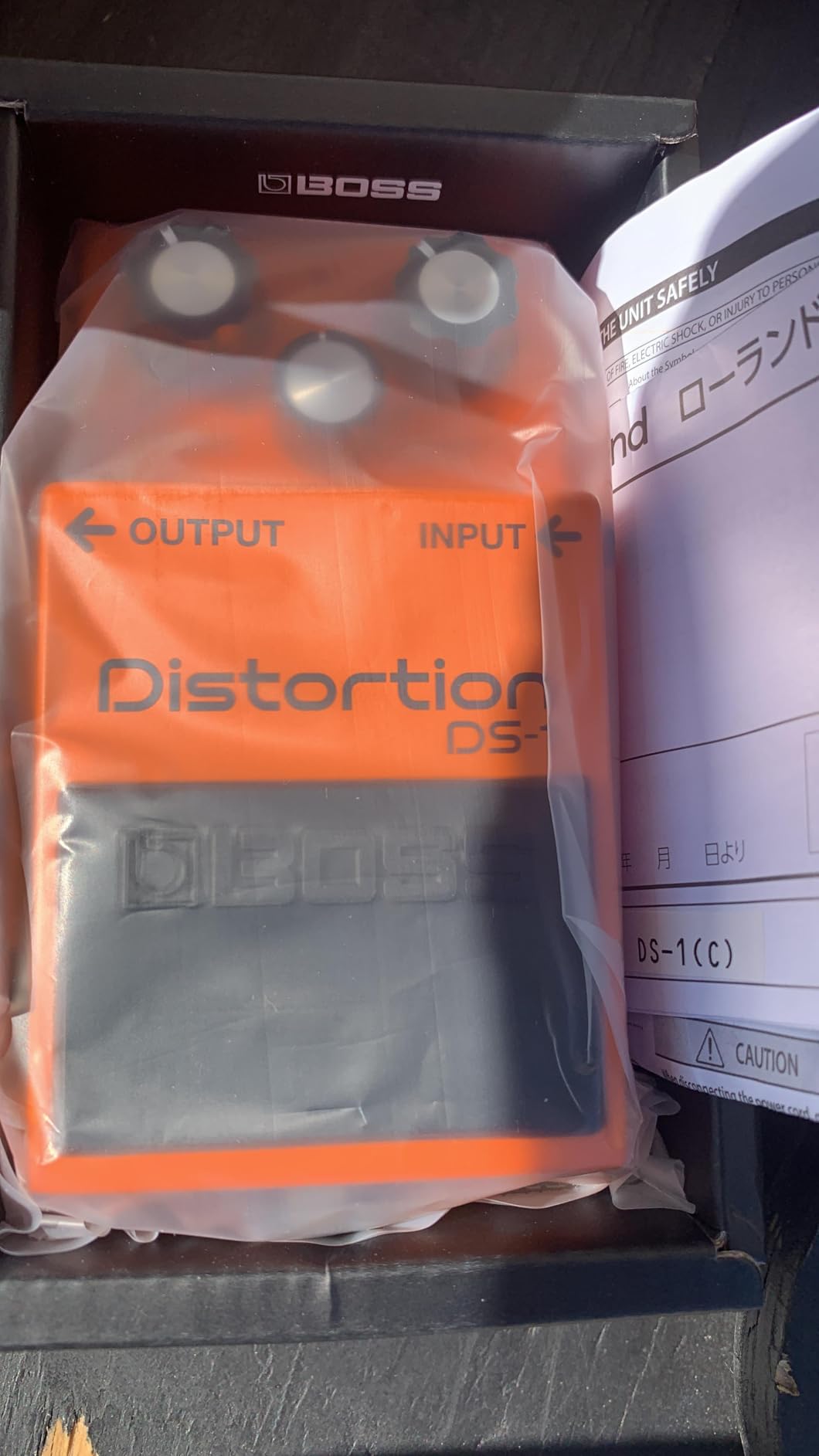
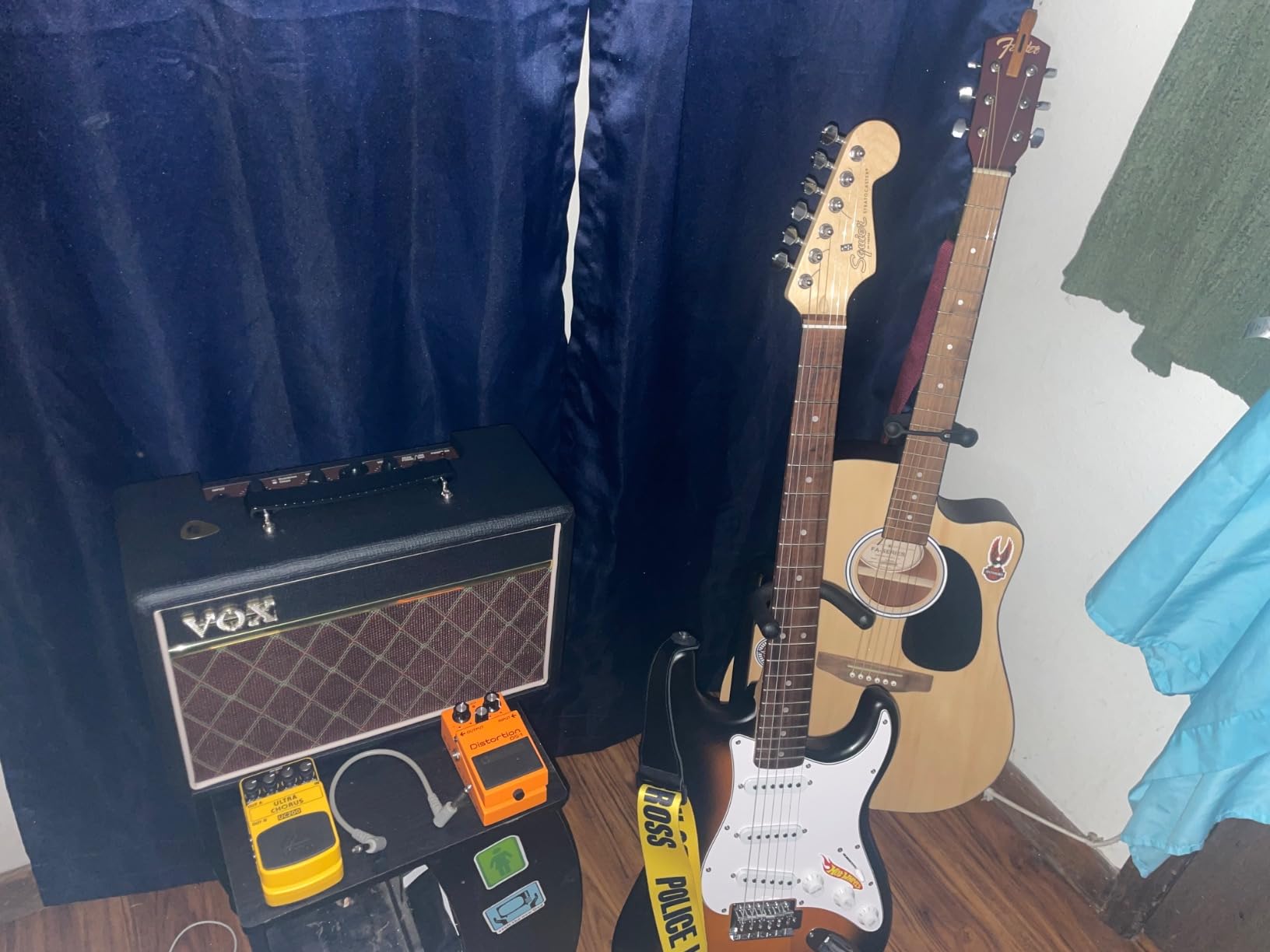
The Tone control on the DS-1 offers a wider range than most pedals in this category. I could go from dark and warm to cutting and aggressive with a single knob turn. The pedal also does an admirable job of preserving the character of different guitars. My Stratocaster still sounded like a Strat, and my Les Paul maintained its chunky midrange.
With over 4,300 reviews and a 4.6-star rating, the DS-1 is one of the most purchased distortion pedals ever made. It is the pedal that Kurt Cobain used, that countless punk and alternative guitarists have relied on, and that continues to find new fans every year. At its price point, it represents extraordinary value.
Best Applications for the DS-1
This pedal excels at punk rock, alternative, grunge, and classic hard rock. It pairs beautifully with single-coil guitars that need extra aggression. If you play through a clean amp and want one pedal to give you a convincing dirty tone, the DS-1 is a proven choice.
Tone Tips and Potential Drawbacks
The Tone knob can get very bright past the 2 o’clock position, so start at noon and adjust gradually. The DS-1 is not designed for modern metal or djent, where you need surgically tight low-end response. For everything else in the rock spectrum, it delivers consistently.
5. Electro-Harmonix Big Muff Pi – The Iconic Fuzz Legend
Electro-Harmonix Big Muff Pi Guitar Effects Pedal
Fuzz/Distortion Pedal
9V Battery Included
Analog Signal
True Bypass
3 Controls
Pros
- Iconic singing sustain for solos
- Crushing fuzz distortion tone
- True bypass preserves clean signal
- Legendary tone used by David Gilmour and Jack White
- Excellent value vs vintage models
- Works well with Fender and Gibson guitars
Cons
- Specialized for fuzz tones
- not versatile
- Large footprint on pedalboard
- Power adapter compatibility can be confusing
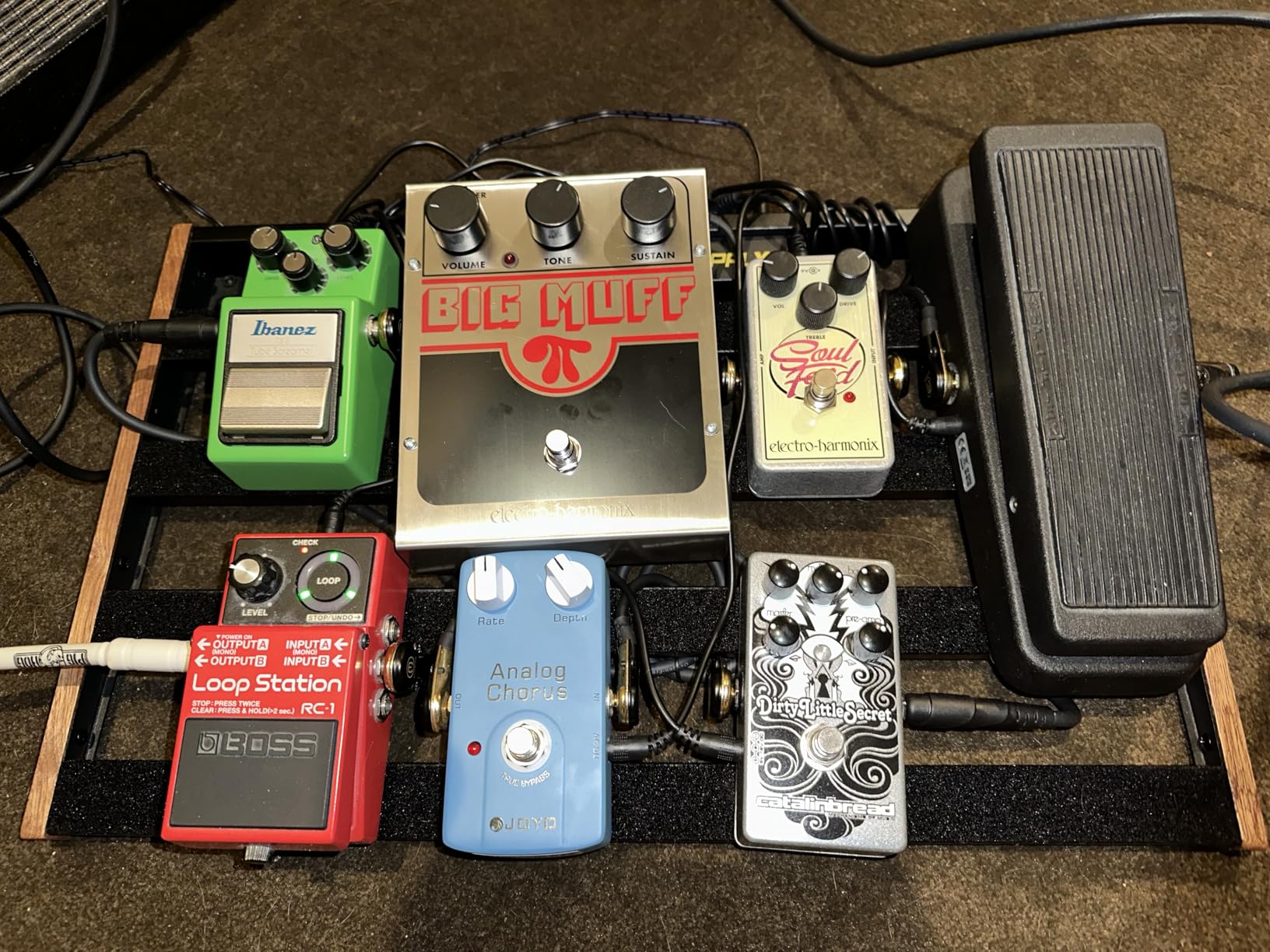
The Big Muff Pi is the sound of Pink Floyd’s soaring solos, The Smashing Pumpkins’ wall of fuzz, and Jack White’s raw blues explosion. When I engaged this pedal, I was immediately transported to those iconic recordings. The sustain is remarkable. I held a note for what felt like an eternity, and it sustained with a singing quality that only a Big Muff can produce.
The three controls (Volume, Sustain, Tone) are straightforward but offer more range than you might expect. With the Sustain at noon, you get a warm, woolly fuzz that works for rhythm parts. Push it to maximum and the pedal unleashes a thick, harmonically rich wall of sound that is perfect for leads and sonic exploration. The Tone control lets you move from dark and brooding to bright and cutting.
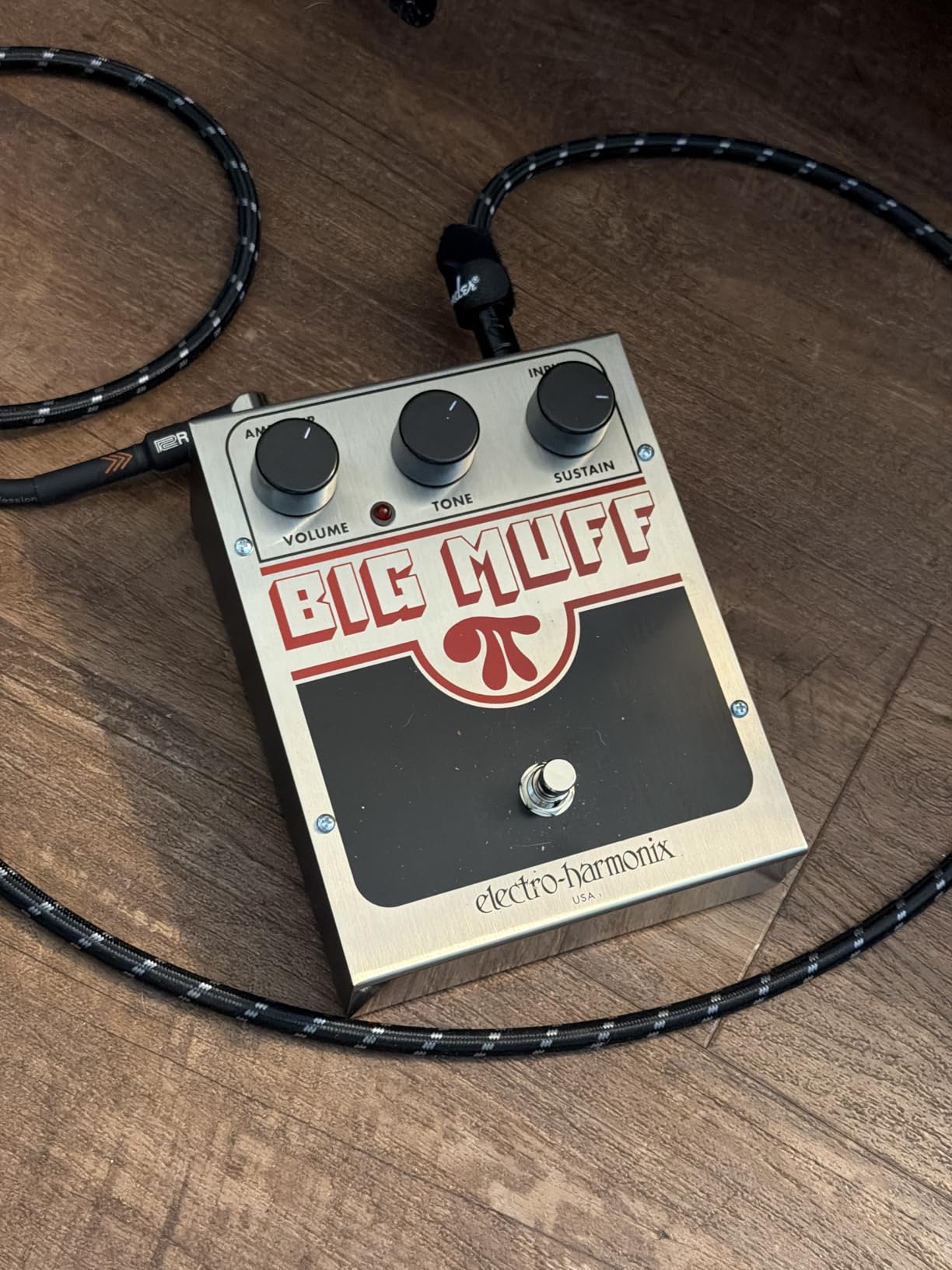
One thing I noticed during testing is how well the Big Muff handles chords. Many fuzz pedals turn chordal playing into an indistinct mess, but the Big Muff Pi maintains note separation even with complex voicings. This makes it useful for more than just soloing. Shoegaze players and post-rock guitarists rely on this pedal for creating those massive textural soundscapes.
The true bypass design means the pedal is completely transparent when disengaged, which is important for players running long signal chains. The build is solid, though the enclosure is larger than modern compact pedals. At its price point, you are getting a piece of guitar history that still sounds as relevant today as it did decades ago.
Genres Where the Big Muff Shines
This pedal is essential for shoegaze, post-rock, stoner metal, alternative rock, and psychedelic music. If you want to replicate David Gilmour’s lead tone or create a wall-of-sound mix, the Big Muff Pi is the foundation. It also works beautifully for blues players who want a thick, singing sustain for slow-hand style solos.
Power and Compatibility Notes
The Big Muff Pi requires a 2mm hollow plug power adapter with center negative polarity, which is not the standard barrel connector most pedal power supplies use. Plan for this if you are integrating it into a powered pedalboard. The large footprint also means you need to budget physical space accordingly.
6. BOSS DD-8 Digital Delay – Eleven Modes of Sonic Magic
BOSS Digital Delay Guitar Effects Pedal (DD-8)
Digital Delay Pedal
11 Modes
40s Looper
Stereo Output
9V Powered
Pros
- 11 versatile delay modes including shimmer and warm
- Built-in 40-second looper with overdub
- Stereo output for immersive soundscapes
- Up to 10 seconds delay with tap tempo
- Classic BOSS build quality
Cons
- Looper duration limited compared to dedicated loopers
- Tape mode not as authentic as dedicated tape delay pedals
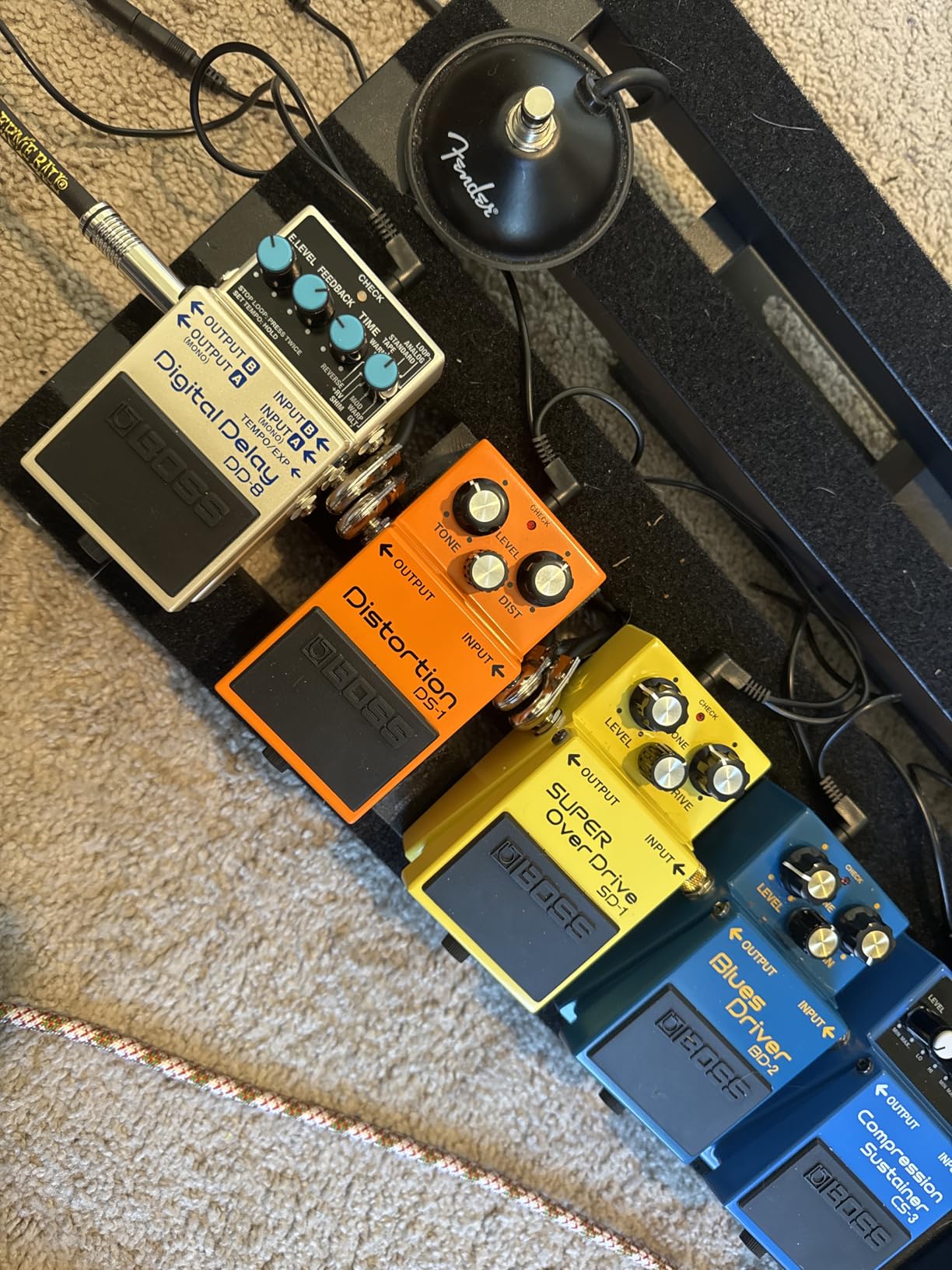
The DD-8 is the most advanced compact delay pedal BOSS has ever made, and after using it for a month, I can confirm it earns that title. The eleven modes cover everything from pristine digital delay to vintage analog warmth to shimmering ambient textures. I found myself exploring sounds I never knew I needed, which is exactly what a great pedal should do.
The standout modes for me were Warm, which adds a beautiful high-frequency rolloff that makes delays sit naturally in the mix, and GLT (glitch), which creates rhythmic stuttering patterns perfect for modern indie and electronic-influenced guitar. The shimmer mode produces lush octave-up repeats that sound like a piano cascading through a cathedral. For ambient players, this pedal alone can replace an entire effects chain.
The built-in looper offers 40 seconds of recording time with full overdub capability. While this is not enough for complex loop-based performances, it is perfect for practice, songwriting, and creating layers during live shows. I used it to build chord progressions and then solo over them, which transformed my practice sessions.
The stereo output is a game-changer if you have a two-amp setup or a stereo effects loop. I split the signal between two amps and the delay repeats bounced between them, creating a three-dimensional soundstage that was breathtaking. The tap tempo input lets you sync delay times to your band’s tempo in real time, which is essential for live performance.
Best Delay Modes and Use Cases
For U2-style dotted eighth rhythms, use the standard digital mode with tap tempo. For ambient soundscapes, the shimmer and mod modes create ethereal textures. For vintage warmth, the analog and tape modes deliver nostalgic echo. The DD-8 is one of the best guitar pedals for players who want maximum delay variety in a single enclosure.
Considerations Before Buying
The DD-8 draws 300mA of current, which is significantly more than standard pedals. Make sure your power supply can handle the demand. The 40-second looper limitation is worth noting if you plan to use the pedal primarily for looping. For most delay applications, this pedal is outstanding.
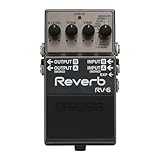
7. BOSS RV-6 Reverb – Eight Modes of Studio-Grade Space
BOSS RV-6 Reverb Guitar Pedal (RV-6)
Reverb Pedal
8 Modes
Stereo Operation
Expression Pedal Input
BOSS 5-Year Warranty
Pros
- 8 high-quality reverb modes including shimmer and dynamic
- Studio-grade algorithms rival boutique pedals
- Stereo operation for immersive soundscapes
- Expression pedal input for real-time control
- Excellent value vs boutique alternatives
Cons
- Buffered bypass instead of true bypass
- Dynamic mode can be inconsistent
- Shimmer less refined than dedicated shimmer pedals
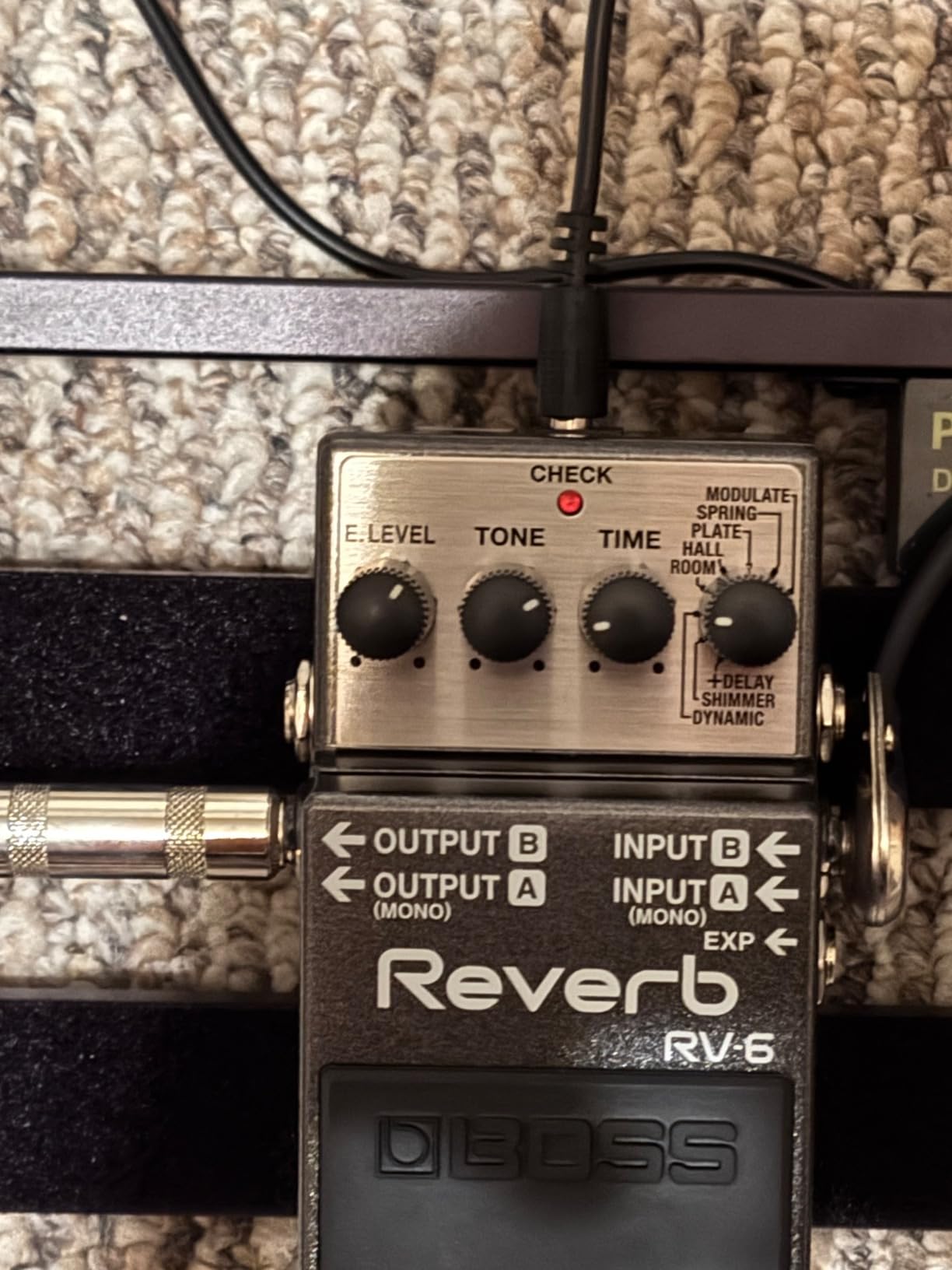
The RV-6 is widely considered one of the best compact reverb pedals available, and my testing confirmed why. The eight modes cover every reverb flavor you could need, from subtle room ambience to lush hall simulations to otherworldly shimmer. I was particularly impressed by the Modulate mode, which adds a gentle chorus to the reverb tail, creating a warm, swirling ambience that sounds gorgeous for clean passages.
The Shimmer mode on the RV-6 produces octave-up reverb tails that are perfect for ambient worship guitar and post-rock soundscapes. While it may not be as refined as a dedicated shimmer pedal, it is more than enough for most players. The Delay and Reverb combined mode lets you add a dotted-eighth delay underneath your reverb, which is a popular worship and ambient technique.
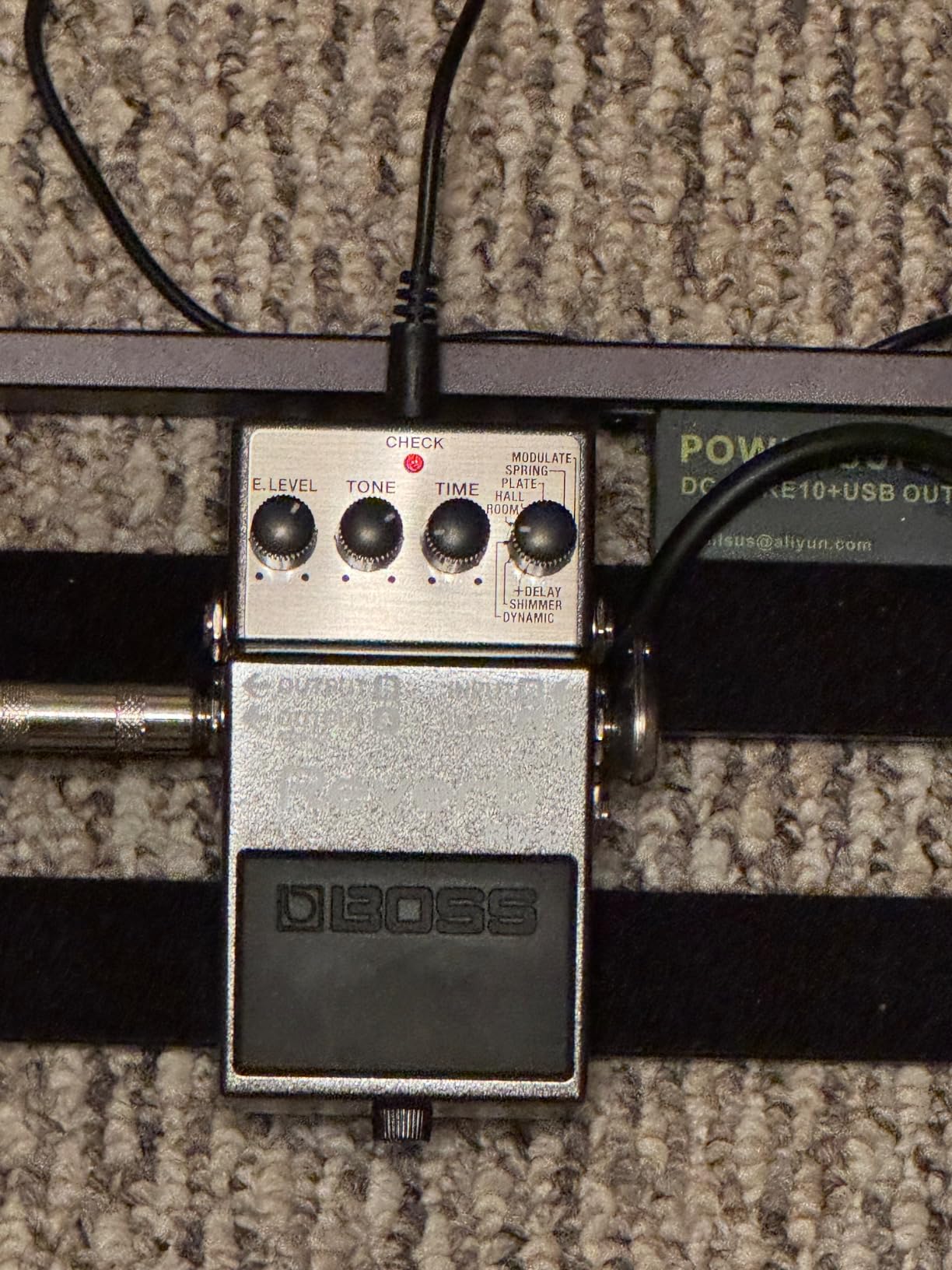
Stereo operation is where this pedal truly shines. I connected the RV-6 to two amplifiers and engaged the Hall mode with the Decay time at maximum. The resulting sound was enormous, filling the room with a lush, three-dimensional space that made my guitar sound like it was being played in a cathedral. For recording and live performance, this stereo capability is invaluable.
The expression pedal input is a thoughtful addition that lets you control the reverb level in real time. I connected a standard expression pedal and used it to swell the reverb during quiet passages and pull it back during solos. This level of control is usually found on pedals costing twice as much.
Ideal Reverb Styles for the RV-6
This pedal excels at ambient, worship, post-rock, and clean-tone styles. The Spring mode works well for surf and country, while the Hall and Plate modes are perfect for adding studio-quality space to any genre. If you need a single reverb pedal that covers all bases, the RV-6 is the one.
Bypass Type and Signal Chain Notes
The RV-6 uses buffered bypass rather than true bypass. This is actually advantageous for reverb pedals, as the buffer helps maintain signal integrity through long cable runs. Place the RV-6 in your effects loop or at the end of your pedalboard for best results. The 65mA current draw is moderate, so most isolated power supplies handle it easily.
8. Strymon Cloudburst – Ambient Reverb with Ensemble Magic
Strymon Cloudburst Ambient Reverb Pedal
Ambient Reverb Pedal
Ensemble Engine
USB-C Connectivity
Stereo
2-Year Warranty
Pros
- Unique Ensemble engine creates orchestral harmonic pads
- Beautiful ambient reverb tails from subtle to lush
- Compact Strymon design fits any pedalboard
- USB-C for MIDI and firmware updates
- External footswitch input for freeze sustain
Cons
- Premium price point
- Ensemble mode can overwhelm guitar signal
- Requires Y cable for stereo operation
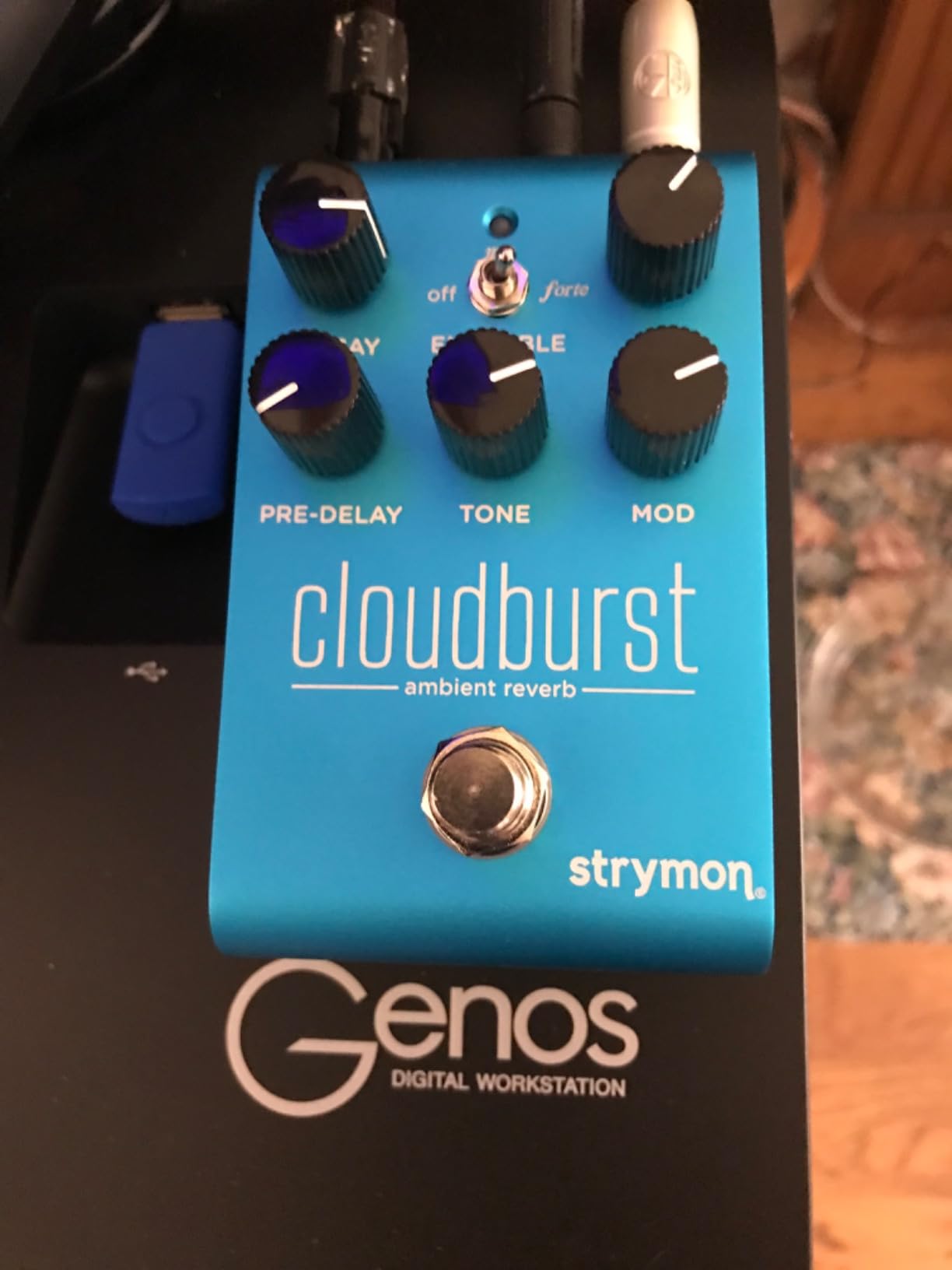
The Strymon Cloudburst is not just another reverb pedal. It is a creative tool that generates sounds I have not heard from any other compact pedal. The Ensemble engine is the star of the show, analyzing your guitar signal and generating organic, synth-like harmonic pads that follow your playing. When I first engaged the Ensemble switch, the room filled with a lush, orchestral texture that sounded like a string section had joined my performance.
Even without the Ensemble mode, the Cloudburst delivers beautiful reverb tones. The Decay control lets you move from tight room ambience to expansive, infinite hall simulations. The Mix knob is precise, allowing you to dial in anything from a barely perceptible touch of space to a fully wet ambient wash. The Pre-Delay control is essential for keeping your attack clear while the reverb tail blooms behind it.
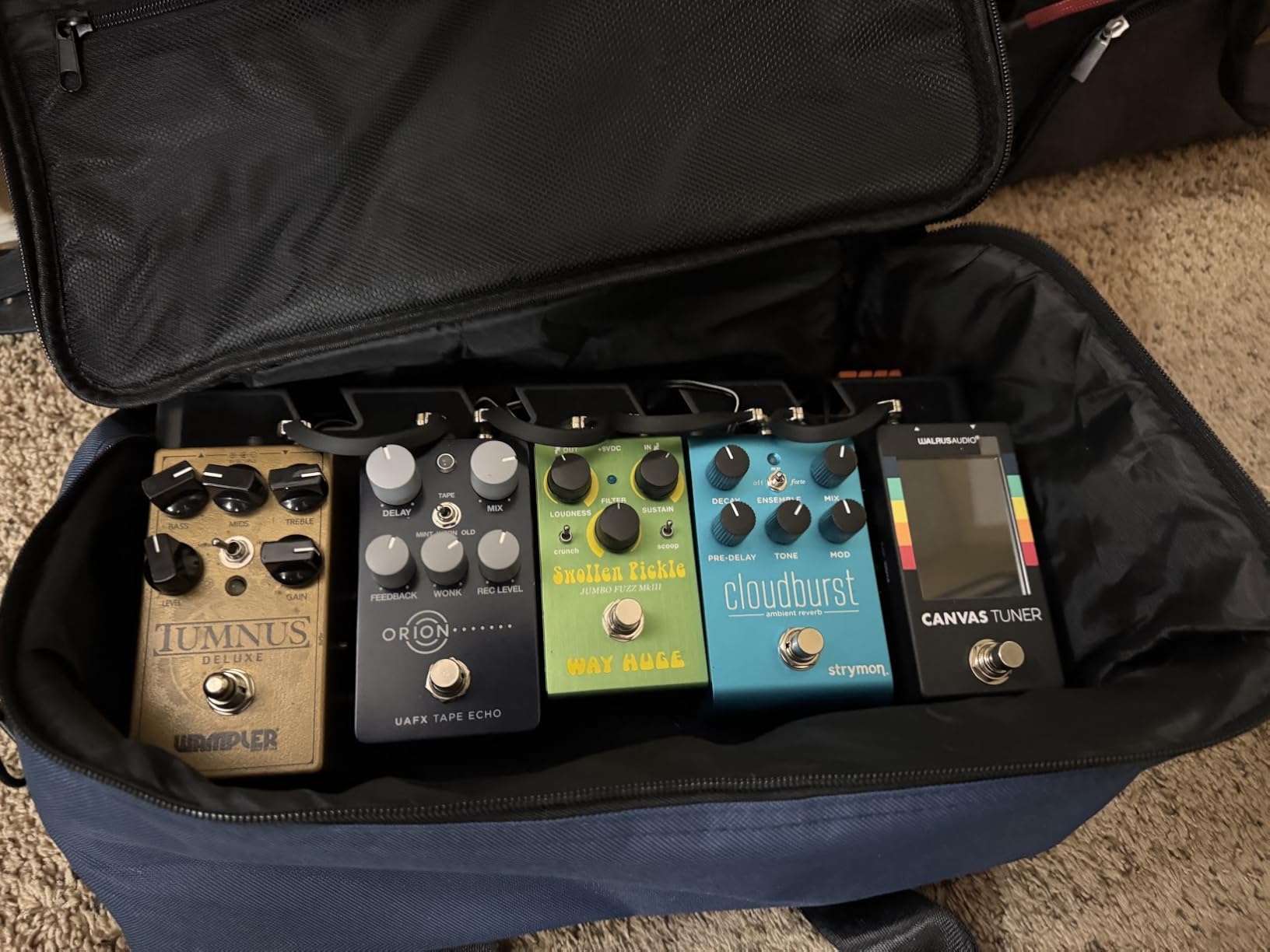
I tested the Cloudburst with both electric and acoustic-electric guitars, and it performed beautifully with both. With acoustic guitar, the Ensemble mode added a warm, pad-like layer that filled out sparse arrangements. With electric, the ambient reverb tails created cinematic soundscapes perfect for post-rock and ambient compositions.
The build quality is what you expect from Strymon: impeccable. The compact enclosure is the same width as a BOSS compact pedal, which means it fits on any pedalboard without space concerns. Top-mounted jacks keep your cable runs tidy. The USB-C port allows for MIDI control and firmware updates, future-proofing your investment.
Who Should Invest in the Cloudburst
This pedal is for ambient guitarists, worship leaders, post-rock players, and anyone who wants to create texturally rich soundscapes. If you have been considering a Strymon BigSky but want something more compact and affordable, the Cloudburst is the answer. It is also outstanding for acoustic-electric players who want to add depth to their live sound.
Understanding the Price Premium
At its price point, the Cloudburst is an investment. You are paying for the unique Ensemble engine and the Strymon build quality. The pedal requires a Y cable for full stereo operation, which is not included. If you primarily need basic reverb tones, the BOSS RV-6 offers similar core performance for less. The Cloudburst is for players who want that extra layer of sonic magic.
9. Electro-Harmonix Small Clone – The Iconic Chorus Sound
Electro-Harmonix Small Clone Chorus
Analog Chorus Pedal
True Bypass
9V Battery Included
Analog Circuit
Single Rate Knob
Pros
- Iconic Nirvana Come As You Are chorus tone
- True analog warmth and vintage character
- True bypass preserves clean signal
- 9V battery included
- Excellent value for a legendary effect
Cons
- Limited controls (rate and depth only)
- Battery-only power with no included AC adapter
- Lower review volume compared to competitors
The Small Clone is the sound of Nirvana’s “Come As You Are” and countless other iconic recordings. When I plugged this pedal in and strummed a clean chord, I was immediately greeted by that warm, warbling chorus that defined a generation of guitar tone. The analog circuit produces a richness and depth that digital chorus pedals struggle to replicate.
The simplicity of the Small Clone is part of its charm. With a single Rate knob (and a depth switch), the pedal forces you to focus on the quality of the effect rather than getting lost in parameters. I found that the sweet spot lives between 10 and 12 o’clock on the Rate knob, producing a lush, undulating chorus that enhances clean arpeggios and chordal work.
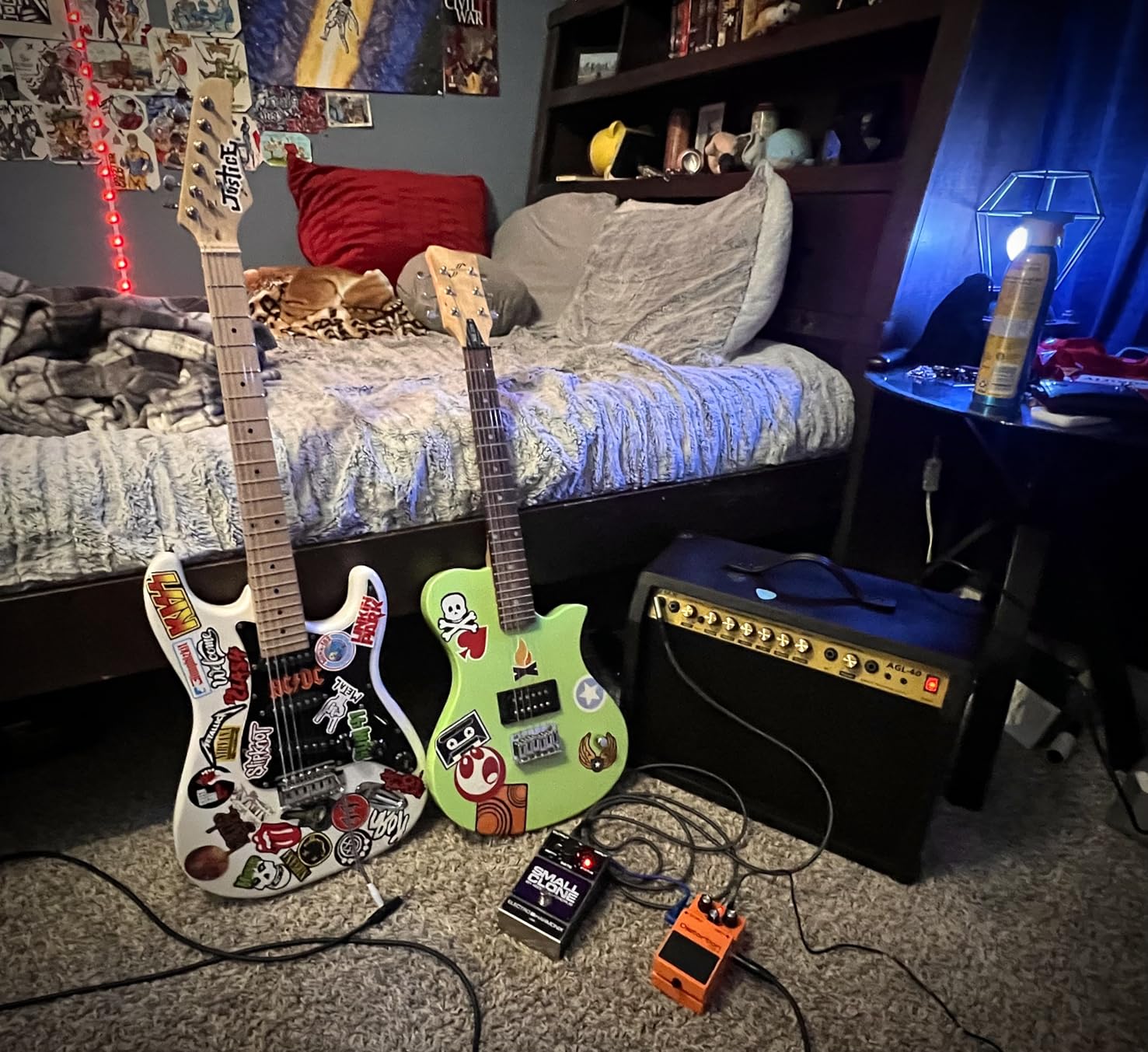
True bypass is a welcome feature that ensures zero tone coloration when the pedal is disengaged. I placed the Small Clone after my overdrive pedals and before my delay and reverb, which is the standard position for modulation effects in the signal chain. The chorus sat beautifully in the mix without muddying the low end.
Beyond the Nirvana association, the Small Clone works well for clean funk rhythms, ambient textural work, and 1980s-style clean tones. The analog warmth adds a dimensional quality to sterile digital rigs. If you have been using a digital multi-effects unit for chorus, this pedal will show you what a dedicated analog chorus sounds like.
Best Musical Applications for the Small Clone
This pedal is perfect for grunge, alternative rock, clean funk, ambient, and new wave styles. It pairs beautifully with single-coil guitars and clean amp settings. If you want that quintessential 1990s alternative chorus sound, the Small Clone is the definitive choice.
Practical Considerations
The Small Clone runs on a 9V battery, which is included. However, there is no AC adapter in the box, so you will want to pick up a compatible power supply for pedalboard integration. The limited controls might frustrate players who want fine-tuned depth adjustment, but the single-knob design is part of what makes this pedal so easy to use and consistently great sounding.
10. JHS Pedals 3 Series Reverb – Boutique Quality at a Fair Price
JHS Pedals 3 Series Reverb
Reverb Pedal
Made in Kansas City USA
EQ and Pre-Delay Controls
9V DC Powered
4-Year Warranty
Pros
- Made in USA with excellent build quality
- Versatile from room tone to endless ambience
- EQ knob for precise bright or dark shaping
- Pre-Delay knob for slap and spring-like effects
- Boutique quality at an affordable price
Cons
- Shimmer tone somewhat flat and not modifiable
- Limited control compared to more expensive reverb pedals
- Low octave setting can be hard to hear in mix
JHS Pedals has built a reputation for boutique-quality effects, and the 3 Series Reverb brings that quality to an accessible price point. I was immediately struck by how solid this pedal feels. Made in Kansas City, the construction is tank-like, and the four-year warranty (with registration) gives you serious peace of mind. This is a pedal built to last decades.
The three knobs (EQ, Pre-Delay, Mix) plus a toggle switch offer more tone shaping than the simple layout suggests. The EQ control is particularly useful, letting you move from dark and warm reverb to bright and shimmery with a single turn. I found the dark setting perfect for thick, atmospheric passages, while the bright setting added sparkle to clean arpeggios.
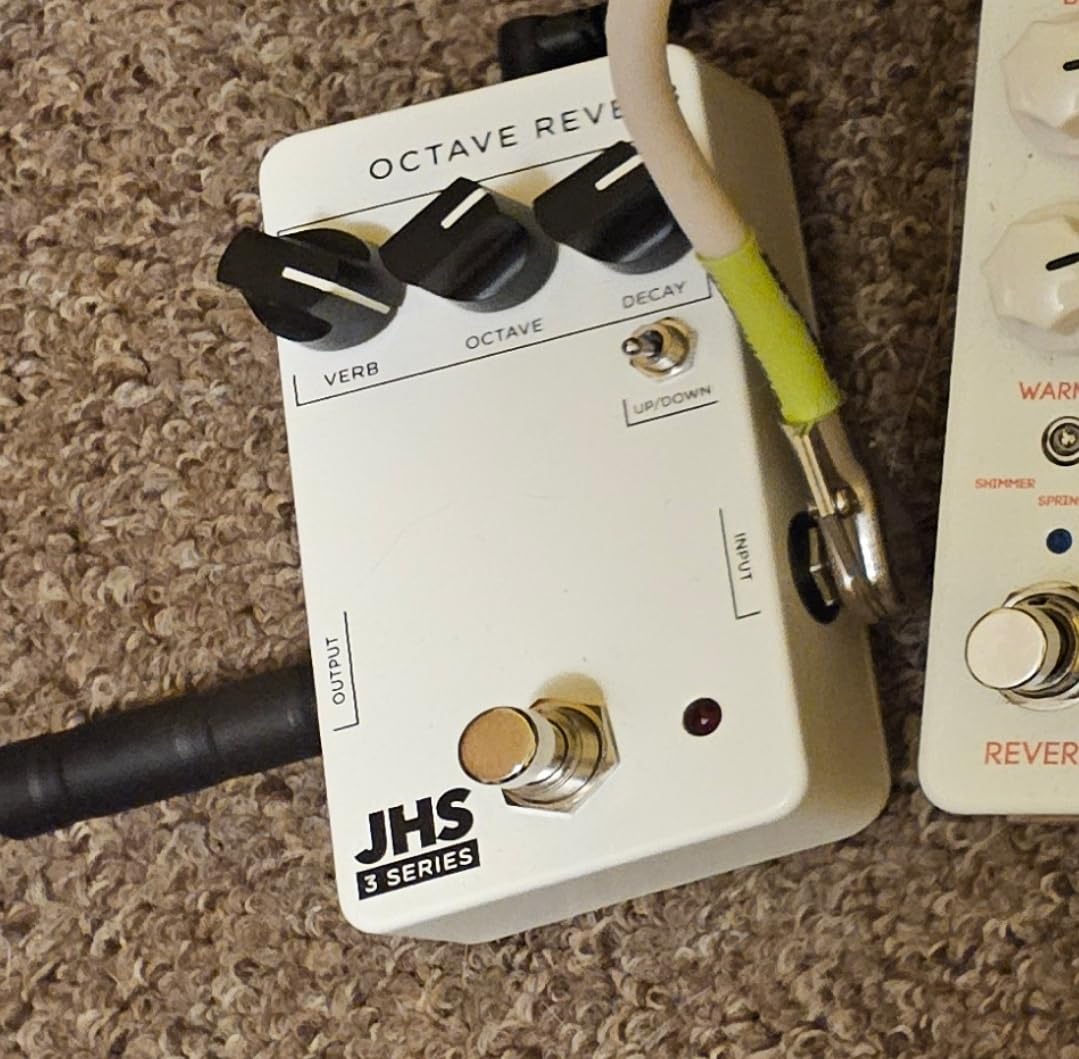
The Pre-Delay knob is a feature usually found on much more expensive reverb pedals. It allows you to separate the initial attack of your guitar from the reverb tail, which creates a sense of space without muddying your core tone. At shorter settings, you get slap-back and spring-like sounds. At longer settings, the reverb blooms after your note, creating a shower effect.
I compared the JHS 3 Series Reverb directly with the BOSS RV-6 and was impressed by how well it held its own. While it has fewer modes, the quality of the core reverb sound is excellent. The Octave Reverb variant adds low and high octave options to the decay, which creates unique textures for ambient and experimental players.
Why Choose This Over Other Reverb Pedals
The JHS 3 Series Reverb is ideal for players who want boutique build quality and thoughtful features without spending premium prices. If you value American craftsmanship, a straightforward interface, and a versatile reverb sound, this pedal checks all the boxes. It is also an excellent entry point into the broader JHS 3 Series lineup.
Understanding the Controls and Limitations
The toggle switch selects between different reverb voicings, and the base reverb has a slow-attack swell that some players love and others find limiting. The shimmer voicing is described by some users as somewhat flat compared to dedicated shimmer pedals. These are minor trade-offs for the overall quality and value this pedal offers.
11. Donner Verb Square – Budget Reverb with Surprising Range
Donner Reverb Guitar Pedal, Verb Square Digital Reverb 7 Modes Room, Hall, Church, Spring, Plate, Studio, Mod, True Bypass
Digital Reverb Pedal
7 Modes
True Bypass
Mini Compact Size
Aluminum Alloy
Pros
- Excellent value with 7 reverb modes in a mini pedal
- True bypass preserves clean tone
- Compact size is pedalboard friendly
- Durable aluminum-alloy construction
- Studio and Room modes sound particularly good
Cons
- Maximum decay time is quite short
- Small controls difficult to adjust precisely
- No power supply included
- Some digital artifacts at higher volumes
The Donner Verb Square proves that you do not need to spend a lot to get a usable reverb pedal. For under $40, you get seven reverb modes in a compact enclosure that takes up minimal pedalboard real estate. I tested all seven modes and was pleasantly surprised by the Studio and Room settings, which deliver natural-sounding ambience that works well for practice and small gigs.
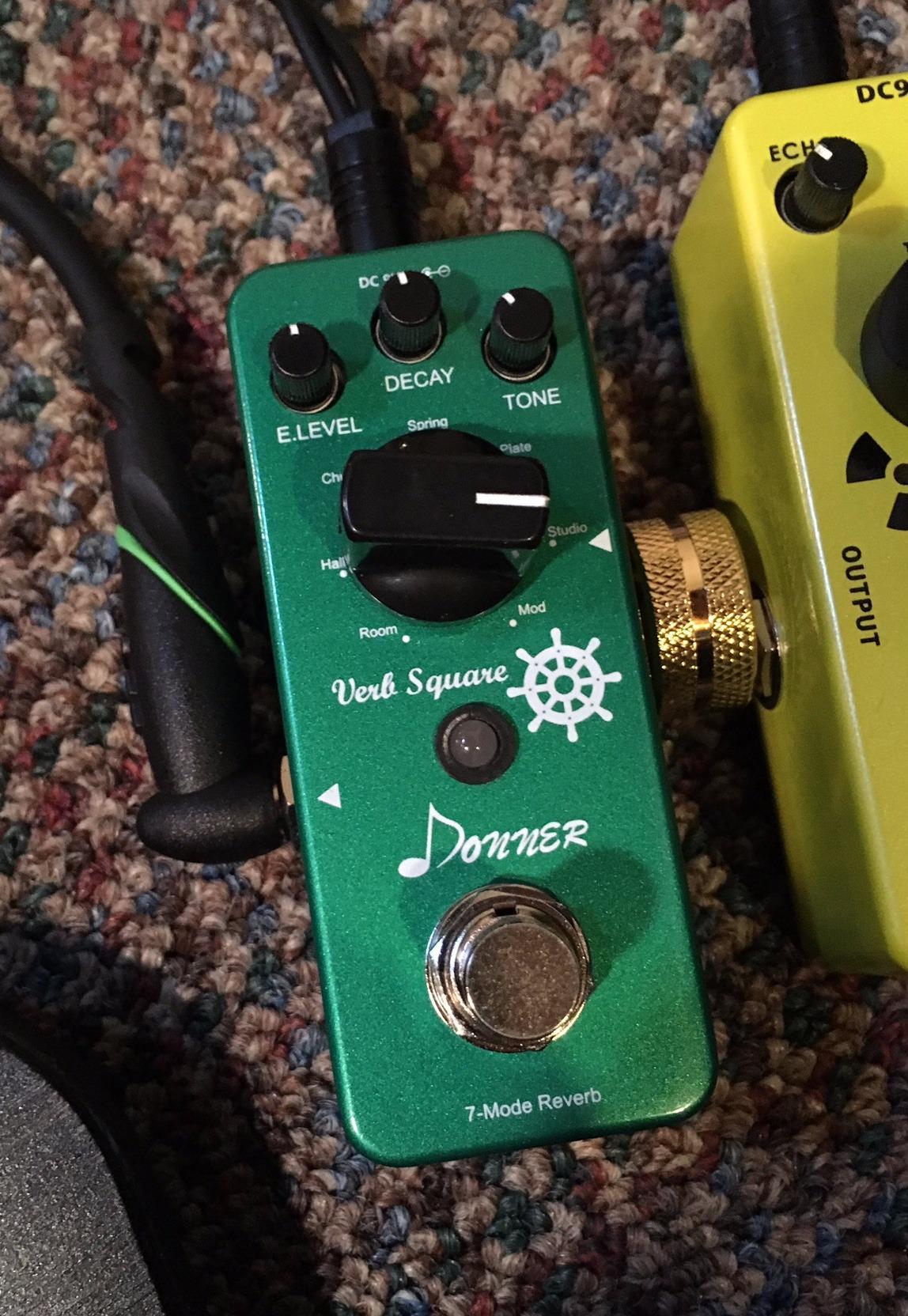
The seven modes (Room, Hall, Church, Spring, Plate, Studio, Mod) cover the essential reverb flavors. While none of them match the depth and realism of a Strymon or BOSS pedal, they are more than adequate for practice rigs, bedroom setups, and players just starting to explore reverb effects. The Church mode in particular offers a cavernous, atmospheric sound that is fun for ambient experimentation.
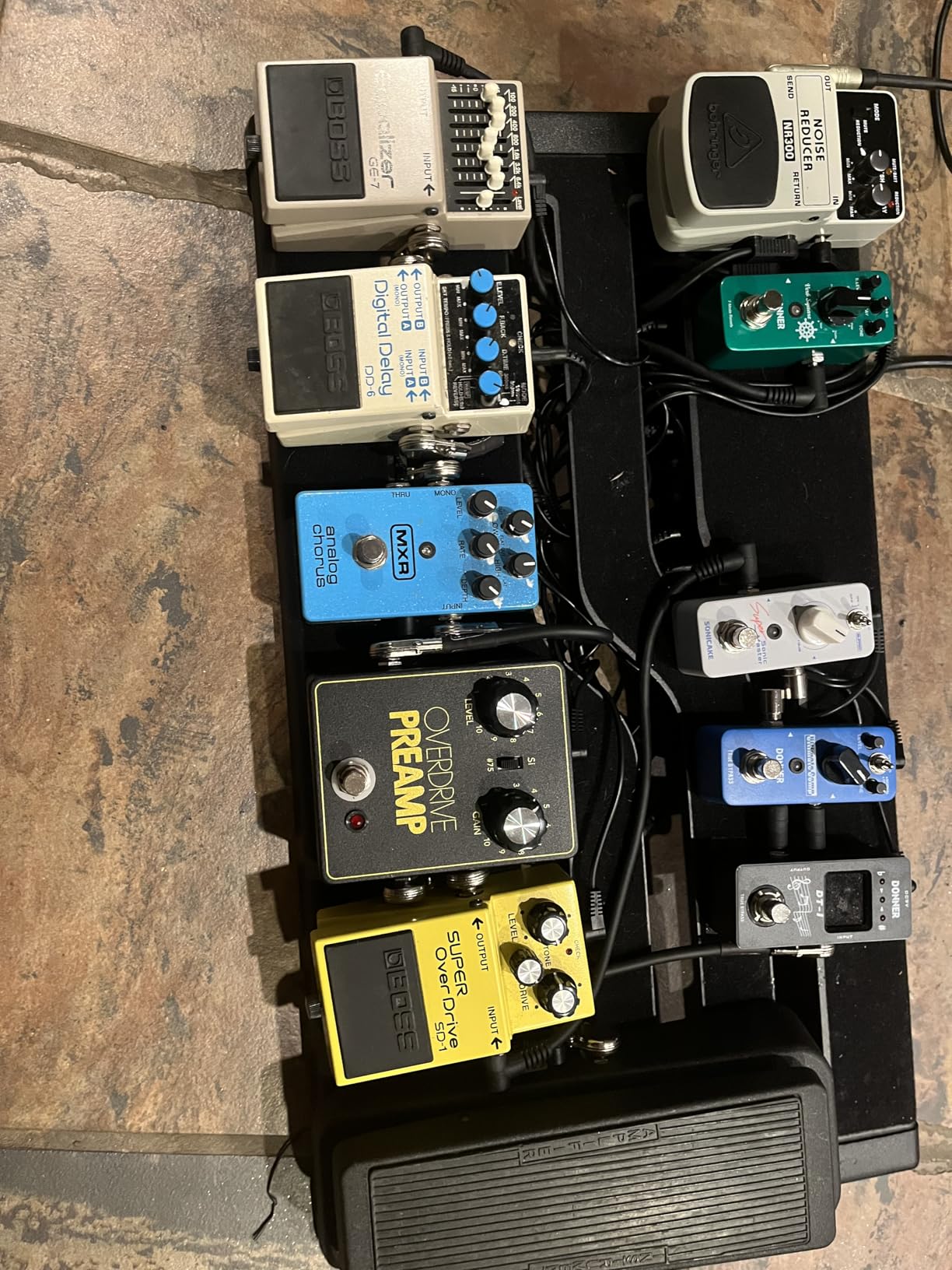
The true bypass design is a nice touch at this price point. When disengaged, the pedal does not color your tone at all. The aluminum-alloy construction feels solid and durable, and the mini size means you can squeeze it onto even the most crowded pedalboard. For players on a tight budget, this is one of the best guitar pedals under $50 you can buy.
I recommend using the Verb Square in your amp’s effects loop rather than in front of the amp. Reverb tends to sound more natural in the loop, and this placement helps mask some of the digital character that becomes apparent at higher volume settings. The pedal does not include a power supply, so factor that into your total cost.
Best Use Cases for the Verb Square
This pedal is perfect for beginners, bedroom players, and anyone building a budget pedalboard. If you need basic reverb for practice or small gigs, the Verb Square delivers. The compact size also makes it a great addition to a travel or fly rig where space is at a premium.
What to Expect at This Price
The maximum decay time is noticeably shorter than on premium reverb pedals, so you will not get those long, ambient reverb tails. The Spring mode lacks the metallic character of a real spring tank. Small knobs can be fiddly to adjust. These are expected trade-offs at this price point, and the Verb Square still offers solid value.
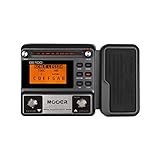
12. MOOER GE100 Multi-Effects – 66 Effects in One Unit
MOOER GE100 Multi-Effects Guitar Pedal with 80 Presets, 66 Effects, Loop and 40 Drum Rythm. Distortion, Expression Volume Wah Pedal, Tap Tempo, Headphone Out, LED Screen, Tuner
Multi-Effects Pedal
66 Effect Types
180s Looper
40 Drum Patterns
Expression Pedal
Built-in Tuner
Pros
- 66 effects across 8 modules for incredible variety
- 180-second looper with overdub and drum machine
- 80 preset and 80 user patches
- Built-in tuner and learning functions
- Expression pedal doubles as volume or wah
- Headphone output for silent practice
Cons
- Interface has a learning curve with many options
- Sound quality not professional level
- Some preset tones are underwhelming or harsh
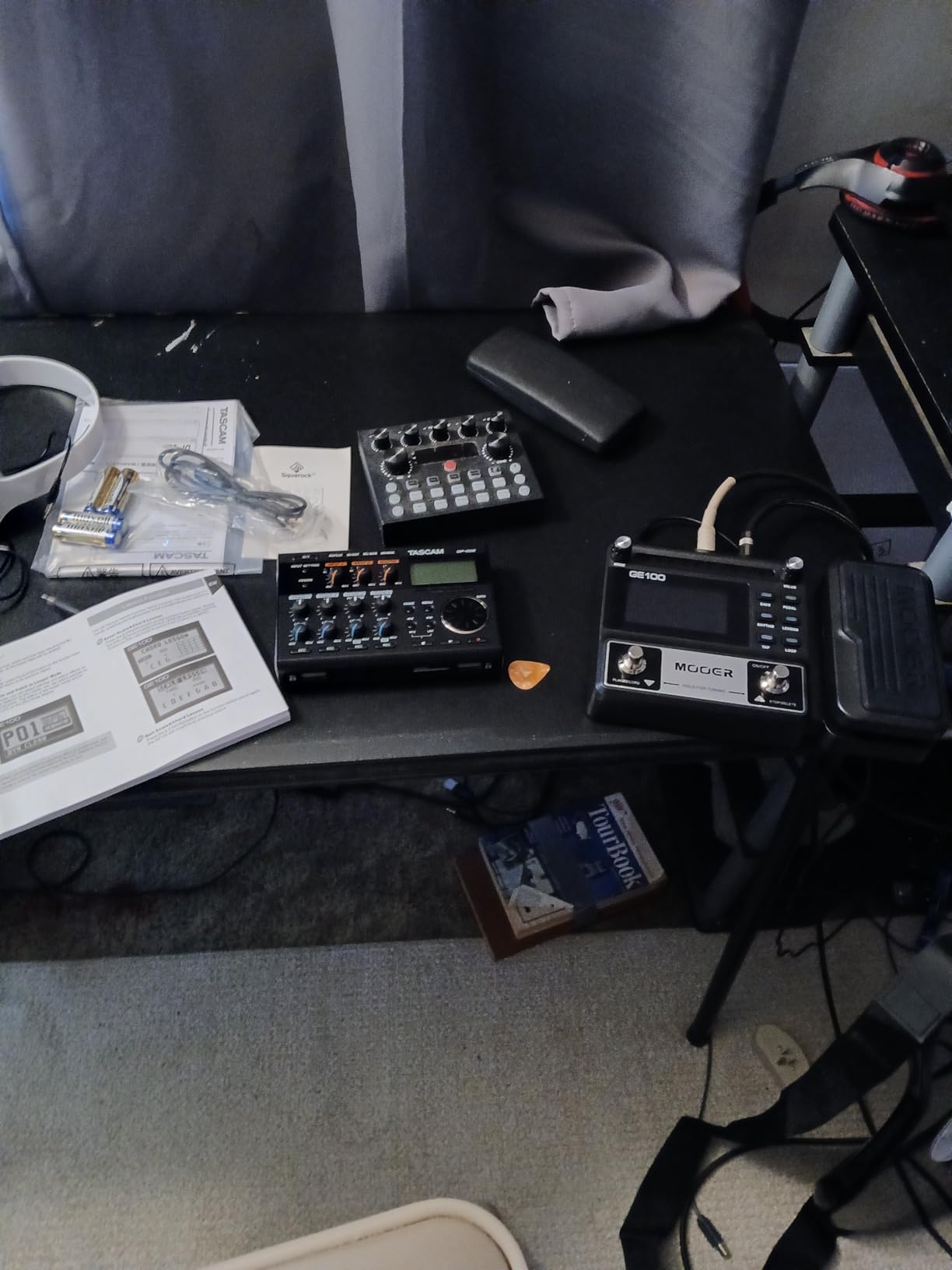
The MOOER GE100 is the ultimate all-in-one solution for beginners and players who want maximum effects variety without buying individual pedals. With 66 effect types across eight modules, this unit covers distortion, delay, reverb, modulation, compression, and more. I spent a weekend exploring the preset patches and was impressed by the sheer range of sounds available from a single unit.
The built-in expression pedal is a standout feature. It works as a volume pedal, a wah pedal, or can be assigned to control six different parameters. The 180-second looper with overdub capability is genuinely useful for practice and songwriting. Combine that with 40 drum machine patterns and you have a complete practice workstation.
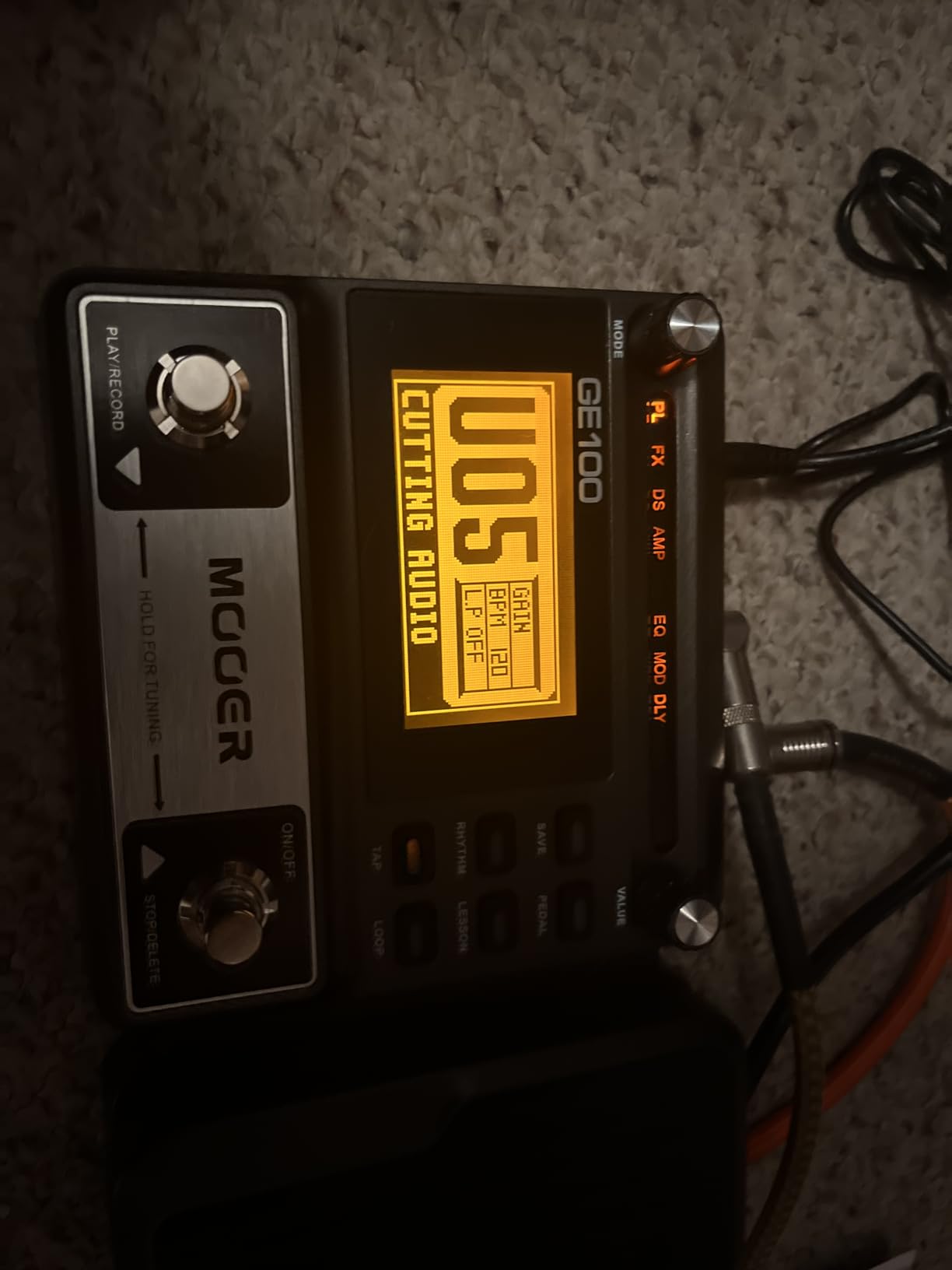
For players who are just starting out, the GE100 eliminates the need to choose individual pedals. You get a taste of every effect type, which helps you discover what sounds you gravitate toward before investing in dedicated stompboxes. The headphone output allows for silent practice, and the built-in tuner means you always have one essential tool at your feet.
The sound quality is where the budget nature of this unit shows. While many effects are usable and fun, the distortions can sound harsh and lack the warmth and responsiveness of dedicated analog pedals. The presets vary significantly in volume, so you will need to spend time leveling them out. For practice, teaching, and exploration, the GE100 is outstanding value. For professional recording and touring, you will eventually want dedicated pedals.
Who Gets the Most Value from the GE100
This pedal is perfect for beginners, teachers, practice-oriented players, and anyone who wants to explore effects without a massive investment. If you are unsure which effect types suit your playing style, the GE100 lets you try everything. It is also a capable backup unit for gigging musicians who need redundancy.
Setting Realistic Expectations
The interface requires patience because the small screen and limited buttons mean navigating through options takes time. Some factory presets are poorly designed and sound thin or harsh. The key is to spend time creating your own user patches rather than relying on the presets. Once dialed in, the GE100 delivers solid tones that are more than adequate for practice and casual performance.
How to Choose the Right Guitar Pedal: Complete Buying Guide
Choosing the best guitar pedals for your rig requires understanding what each effect type does, how pedals interact with your guitar and amp, and what factors separate great pedals from mediocre ones. Our team has broken down everything you need to know to make an informed decision.
Understand Pedal Types and What They Do
Overdrive pedals simulate the natural breakup of a pushed tube amp. They add warmth, grit, and sustain while preserving the character of your core tone. Overdrive is the foundation of blues, rock, and country guitar tone. The BOSS SD-1 and BD-2 are classic examples.
Distortion pedals produce a more aggressive, compressed sound than overdrive. They are essential for hard rock, punk, and metal. Distortion pedals like the BOSS DS-1 and Pro Co RAT2 generate their tone through clipping circuits that create harmonic content not present in the original signal.
Fuzz pedals take distortion to the extreme, producing a thick, woolly, sometimes gated tone. The Big Muff Pi is the most iconic fuzz pedal, used by everyone from David Gilmour to Jack White. Fuzz is essential for shoegaze, stoner rock, and psychedelic music.
Delay pedals repeat your signal at intervals, creating echoes that range from subtle doubling to complex rhythmic patterns. The BOSS DD-8 offers 11 delay modes covering analog, digital, tape, and shimmer styles. Delay is one of the most creative effects available.
Reverb pedals simulate the acoustic properties of different spaces, from small rooms to massive cathedrals. Reverb adds depth and dimension to your tone. The BOSS RV-6 and Strymon Cloudburst represent the best in compact reverb design.
Modulation pedals include chorus, flanger, phaser, and tremolo effects. The EHX Small Clone is a classic analog chorus. Modulation adds movement and dimension to your sound, making it essential for funk, new wave, and ambient styles.
Multi-effects pedals like the MOOER GE100 combine many effects into one unit. They are ideal for beginners and players who want maximum variety without buying individual pedals. While sound quality may not match dedicated stompboxes, the value is unbeatable.
Analog vs Digital: Which Is Right for You?
Analog pedals use physical electronic components to process your signal. They are prized for warmth, natural compression, and organic feel. The EHX Big Muff Pi and Small Clone are analog pedals. Analog pedals typically do one thing and do it exceptionally well.
Digital pedals use processors to create effects. They offer more features, presets, and flexibility than analog pedals. The BOSS DD-8 and Strymon Cloudburst are digital pedals. Modern digital processing has reached a point where many digital pedals are indistinguishable from their analog counterparts.
For drive effects, many players prefer analog for its warmth and touch sensitivity. For time-based effects like delay and reverb, digital pedals offer more versatility and control. There is no universally correct answer, and many professional pedalboards combine both.
True Bypass vs Buffered Bypass
True bypass means the pedal’s circuitry is completely removed from your signal chain when the pedal is off. This is preferred by tone purists running short signal chains. The Big Muff Pi and EHX Small Clone feature true bypass.
Buffered bypass means the pedal’s buffer remains active even when the effect is off. This helps maintain signal strength over long cable runs and large pedalboards. BOSS pedals use buffered bypass, which is why they work well in complex rigs.
As a general rule, if you have four or more pedals on your board or cable runs longer than 18 feet, you need a buffer somewhere in your chain. If you have a simple three-pedal setup with short cables, true bypass pedals are fine.
Signal Chain Order: How to Arrange Your Pedals
The order of pedals in your signal chain dramatically affects your tone. Here is the standard recommended order that our team uses and recommends.
First comes your tuner pedal, which should always be first so it receives the cleanest signal from your guitar. Next are filter and pitch effects like wah and octave pedals, which work best processing your raw guitar signal.
After filters come compression pedals, which even out your dynamics before the signal hits your drive pedals. Then come overdrive and distortion pedals, arranged from lowest to highest gain. Placing a low-gain overdrive before a high-gain distortion creates a layered tone that sounds natural and full.
Modulation pedals (chorus, phaser, flanger) go after drive pedals. Placing modulation before distortion can produce interesting sounds, but the standard position is after. Time-based effects (delay and reverb) go last in the chain, as they create the spatial environment that everything else sits within.
If your amp has an effects loop, place time-based and modulation effects in the loop for the best results. This allows the preamp to shape your tone before the spatial effects are applied.
Power Supply Considerations
Powering your pedals correctly prevents noise, hum, and tone degradation. Most pedals run on 9V DC with center-negative polarity, but there are exceptions. The Big Muff Pi uses a less common 2mm hollow plug. The BOSS DD-8 draws 300mA, which is significantly more than standard pedals.
Invest in an isolated power supply rather than daisy-chaining pedals from a single output. Isolated supplies prevent ground loops and reduce noise. Budget for a quality power supply when planning your pedalboard, as it affects the performance of every pedal connected to it.
Budget Planning for Your First Pedalboard
If you are building your first pedalboard, start with three essential pedals: a tuner, an overdrive, and a delay or reverb. The BOSS TU-3 tuner, BOSS SD-1 overdrive, and Donner Verb Square reverb would cost under $200 total and give you a functional, great-sounding rig.
As your budget grows, add a second drive pedal for stacking, a modulation effect for sonic variety, and upgraded versions of your core pedals. The beauty of building a pedalboard is that each addition opens new creative possibilities, and you can prioritize based on the genres you play most.
Boutique vs Mass-Market Pedals
Boutique pedals from brands like Strymon, JHS, and Chase Bliss offer premium build quality, unique features, and distinctive tones. The Strymon Cloudburst and JHS 3 Series Reverb demonstrate what boutique builders bring to the table. However, mass-market pedals from BOSS and EHX deliver professional performance at accessible prices.
The right choice depends on your budget, needs, and tonal preferences. Many professional guitarists use a mix of boutique and mass-market pedals on their boards. Start with proven mass-market options like BOSS, then add boutique pedals where you want something special.
FAQs
What 5 pedals should every guitarist have?
Every guitarist should have five essential pedals: a tuner pedal (like the BOSS TU-3) for accurate tuning, an overdrive pedal (like the BOSS SD-1 or BD-2) for core tone shaping, a delay pedal (like the BOSS DD-8) for rhythmic and atmospheric effects, a reverb pedal (like the BOSS RV-6) for spatial depth, and a modulation pedal like a chorus or wah for tonal variety. These five cover 90% of sounds most players need.
What brand makes the best guitar pedals?
BOSS is widely considered the best overall guitar pedal brand due to its legendary reliability, consistent quality, and massive product range. Electro-Harmonix is renowned for innovative fuzz and modulation effects. Strymon leads in premium digital delay and reverb. MXR and Ibanez are icons in the overdrive and distortion space. For beginners and value seekers, BOSS offers the best combination of quality and affordability.
What is the holy grail of guitar pedals?
The Klon Centaur is widely regarded as the holy grail of guitar pedals. This hand-built overdrive pedal, produced in limited numbers during the 1990s, has achieved near-mythical status among guitarists and collectors. Original units sell for thousands of dollars. Other holy grail pedals include the original Ibanez TS808 Tube Screamer, the vintage Dallas-Arbiter Fuzz Face, and the Electro-Harmonix Big Muff Pi from the 1970s.
What are the best guitar pedals of all time?
The best guitar pedals of all time include the Ibanez Tube Screamer (TS9 and TS808), BOSS SD-1 Super Overdrive, BOSS DS-1 Distortion, Electro-Harmonix Big Muff Pi, Pro Co RAT, BOSS DD-8 Digital Delay, Strymon BlueSky Reverberator, BOSS TU-3 Chromatic Tuner, Dallas-Arbiter Fuzz Face, and the Klon Centaur. These pedals have defined genres, shaped iconic recordings, and remain essential tools for guitarists worldwide.
Conclusion: Finding Your Perfect Guitar Pedal in 2026
The best guitar pedals are the ones that inspire you to play more and sound better every time you plug in. After testing 12 pedals across every major effect category, our top recommendation is the BOSS BD-2 Blues Driver for its unmatched touch sensitivity and tonal versatility. For players on a budget, the BOSS SD-1 Super Overdrive delivers legendary tone at an unbeatable price, while the MOOER GE100 offers an incredible all-in-one solution for beginners.
Building a pedalboard is a personal journey. Start with the essentials: a tuner, an overdrive, and a time-based effect like delay or reverb. Then expand based on the genres you play and the sounds that excite you. Whether you are chasing David Gilmour’s soaring fuzz leads, Nirvana’s watery chorus, or U2’s rhythmic delay textures, the right pedals will get you there.
Remember that pedals interact differently with every guitar and amplifier combination. What sounds perfect through a Fender Deluxe might need adjustment through a Vox AC30. Trust your ears, experiment with signal chain placement, and do not be afraid to try pedals outside your comfort zone. The best guitar pedals in 2026 are the ones that help you express your unique voice as a player.