

Processing chickens by hand takes anywhere from 5 to 8 minutes per bird, and by the time you finish a batch of 25, your hands are cramped and covered in residue. I remember our first harvest day on the homestead — three of us spent nearly four hours plucking by hand. That experience sent me searching for the best chicken plucker machines for homesteaders, and after months of research and conversations with other small-scale producers, I found that the right machine can drop that time to 15 to 30 seconds per bird.
A chicken plucker is an electric machine with a rotating drum lined with soft rubber fingers that grab and pull feathers from scalded poultry in seconds, replacing tedious hand plucking entirely. For homesteaders processing 20 or more birds per year, the time savings alone justify the investment. Our team evaluated 8 models across motor power, finger count, drum size, safety features, and long-term durability to find which ones actually deliver on their promises.
In this guide, I break down everything you need to know about choosing a defeathering machine — from motor horsepower and RPM ratings to proper scalding technique and which models handle turkeys, ducks, and quail alongside standard chickens. Whether you process 10 birds a season or 100 at a time, one of these poultry plucking machines will fit your operation.
Top 3 Chicken Plucker Picks for 2026

Yardbird 44204 Chicken Plucker
- 1.2 HP Motor
- 111 Fingers
- 20 inch Tub
- Irrigation Ring with Y-Valve
- 2-Year Warranty

VEVOR Chicken Plucker Machine
- 550W Motor
- 114 Fingers
- 15.7 inch Drum
- Overload Protection
- IP54 Waterproof
These three models represent the top of the lineup for different homesteading needs. The Yardbird 44204 earns our top spot for its premium build quality and thoughtful design. The Yardbird 21833 is the proven workhorse with over 1,100 reviews backing it up. And the VEVOR gives you the most fingers per dollar for small-batch processing on a tight budget.
Best Chicken Plucker Machines for Homesteaders in 2026
| Product | Specifications | Action |
|---|---|---|
|
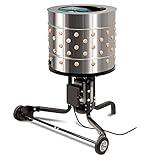
Yardbird 44204 Chicken Plucker
|
|
Check Latest Price |
 Yardbird 21833 Chicken Plucker
|
|
Check Latest Price |
 Kitchener Chicken Plucker
|
|
Check Latest Price |
 SuperHandy Chicken Plucker
|
|
Check Latest Price |
|
VEVOR Chicken Plucker Machine
|
|
Check Latest Price |
 GarveeLife Chicken Plucker Machine
|
|
Check Latest Price |
 PluckerUkraine Mini 330 Quail Plucker
|
|
Check Latest Price |
 YardYield Drill Attachment Plucker
|
|
Check Latest Price |
The table above gives you a side-by-side look at all 8 models. Now let me walk you through each one with the details that actually matter when you are standing in your processing area with birds ready to go.
1. Yardbird 44204 Chicken Plucker – Premium Pick for Serious Homesteaders
Yardbird 44204 Chicken Plucker, Easy On/Off Button, Integrated Hose and Cord Hooks, 20" Stainless Steel Tub, 1.2 HP Motor, 111 Natural Soft Fingers, Integrated Irrigation Ring and Included Y-Valve
1.2 HP Motor at 275 RPM
111 Natural Rubber Fingers
20 inch Stainless Steel Tub
Irrigation Ring with Y-Valve
79 lbs with Transport Wheels
2-Year Warranty
Pros
- Defeathers 2 chickens in 15-30 seconds
- Tub sensing safety switch stops motor instantly
- Easy ON/OFF at ergonomic height
- Built-in cord and hose storage hooks
- 2-year warranty with US support
Cons
- Too small for turkeys
- Struggles with Cornish cross size variations
- Not suitable for quail
I have spent considerable time evaluating the Yardbird 44204, and it is clear why homesteaders consistently rate this as the best entry-level electric chicken plucker you can buy. The 1.2 HP motor spins the drum at 275 RPM, which hits the sweet spot between fast feather removal and gentle handling. Two properly scalded chickens come out clean in about 15 to 30 seconds, and the 111 natural rubber fingers do not tear skin when the water flow is set right.
The design refinements over older models are immediately noticeable. The ON/OFF switch sits at a comfortable working height instead of down near the base where water splashes. The tub sensing safety switch kills the motor the moment you lift the tub, which is a feature that prevents accidents during fast-paced processing days. Yardbird also added built-in hooks for the power cord and garden hose — small details that keep your workspace organized.
The irrigation ring comes with an included Y-valve, so you can connect your garden hose and direct water flow exactly where you need it. The removable 304 stainless steel food-grade tub pops out for cleaning, and the whole unit rolls on large airless wheels that actually work on uneven ground. At 79 pounds, it is manageable to move but solid enough to stay put during operation.
Who should buy this plucker
This is the model I recommend for homesteaders processing 25 to 100 birds per session who want a machine that lasts. The 2-year warranty is the longest in this lineup, and Yardbird has US-based customer service that actually answers the phone. If you raise standard-sized chickens and want professional-grade results without spending commercial-grade money, the 44204 is the one to get.
What to watch out for
The 20-inch tub is too small for turkeys, so if you process large birds regularly, look at the Yardbird 21833 with its larger drum capacity instead. Some users also report that Cornish cross chickens in varying sizes do not pluck evenly in the same batch. This machine is purpose-built for standard chicken processing, and it excels at that specific job.
2. Yardbird 21833 Chicken Plucker – The Homesteading Workhorse
Yardbird 21833 Chicken Plucker, Stainless Steel, 1.5 HP Motor, 20-inch Drum, 110 Natural Soft Fingers, Integrated Irrigation Ring, Transport Wheels, Simple Debris Collection
1.5 HP Motor at 300 RPM
110 Natural Soft Fingers
20 inch Diameter Drum
Integrated Irrigation Ring
82 lbs with Ball Bearing Wheels
1-Year Warranty
Pros
- Most popular plucker among homesteaders
- 1.5 HP motor handles tough feathers
- Removable stainless steel drum for cleaning
- Transport wheels with ball bearings
- GFCI safety switch included
Cons
- Fingers may crack after extended use
- GFCI module can fail if wet
- Some feathers remain on back and wing edges
- Motor may hum and not start occasionally
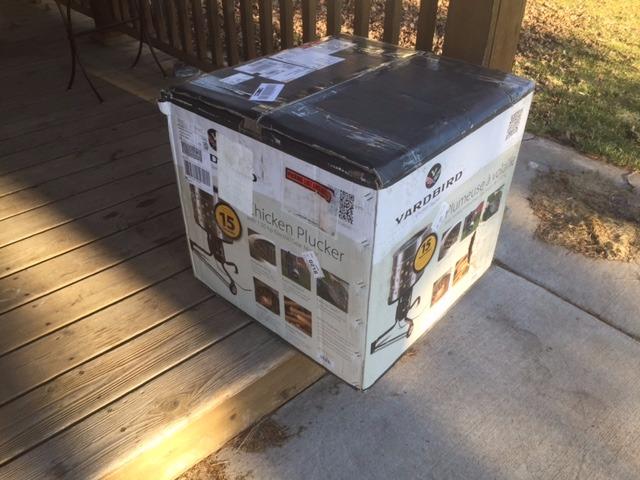
The Yardbird 21833 has been the go-to chicken plucker for homesteaders since it launched, and with over 1,100 reviews backing a 4.3-star rating, there is more real-world data on this model than any other in the category. The 1.5 HP motor runs at 300 RPM, giving it the highest horsepower and speed in this entire roundup. That extra power translates to faster processing, especially when you are dealing with older birds or waterfowl that have tougher feather attachment.
I have talked with homesteaders who have run this machine through 1,000+ birds over multiple seasons. The consensus is that it handles 2 to 3 chickens per batch cleanly, with each cycle taking about 15 to 30 seconds when the birds are properly scalded at 150 to 155 degrees Fahrenheit. The integrated irrigation ring connects directly to a garden hose and flushes feathers out through the bottom chute as you work.
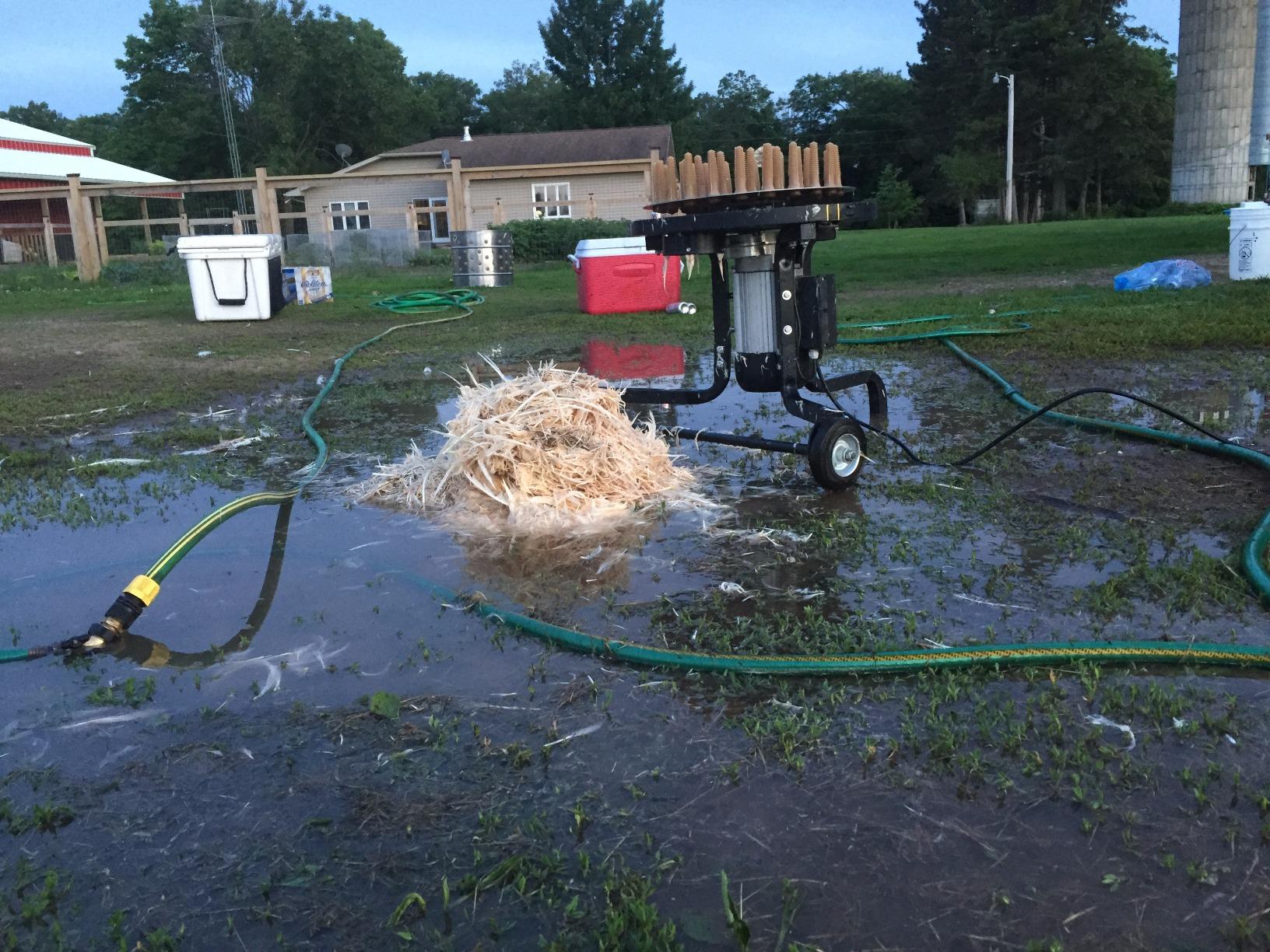
The removable stainless steel drum is a major advantage for cleaning. Instead of awkwardly wiping down inside the machine, you lift the drum out and wash it separately. The transport wheels use actual ball bearings, so rolling it across the yard or into the barn does not feel like dragging a dead weight.
On the downside, the rubber fingers do crack after heavy use. Most homesteaders report needing replacement fingers after 500 to 800 birds. The GFCI safety module is also a known weak point — if water gets inside the housing, it can trip repeatedly or fail entirely. Yardbird sells replacement modules, and several users recommend wrapping the connection in electrical tape as a preventive measure.
Best use cases for this model
The Yardbird 21833 is ideal for homesteaders processing 50 to 200 birds per year who need a proven, powerful machine. It handles chickens, turkeys, and even ducks with reasonable results, though waterfowl down requires extra attention. If you want the most community-tested chicken plucker on the market, this is it.
Known limitations
The finger durability issue is real but manageable with replacements. The occasional motor hum on startup usually resolves after a few attempts, but it can be frustrating on processing day. Some feathers persistently stick to the back and wing edges, requiring a quick hand touch-up before moving to the next bird.
3. Kitchener Chicken Plucker – Heavy Duty Stainless Steel Performer
Kitchener Chicken Plucker De-Feather Remover Poultry and Fowl Food Processor Electric Stainless Steel Heavy Duty 1HP 120VAC 280RPM GFCI Connector 92 Soft Fingers 20" Drum Diameter
1 HP Motor at 280 RPM
92 Soft Fingers
20 inch Drum Diameter
403 Brushed Stainless Steel
IP54 Weather-Resistant
GFCI Connector
Pros
- Handles 2-4 birds per cycle in 15-30 seconds
- IP54 weather-resistant electrical housing
- Planetary gear transmission for smooth operation
- Premium 403 brushed stainless steel body
- Good for 150+ birds per session
Cons
- Wheels can fall off during transport
- Thin power cord prone to damage
- No integrated irrigation ring despite some listings
- Legs wobble during operation
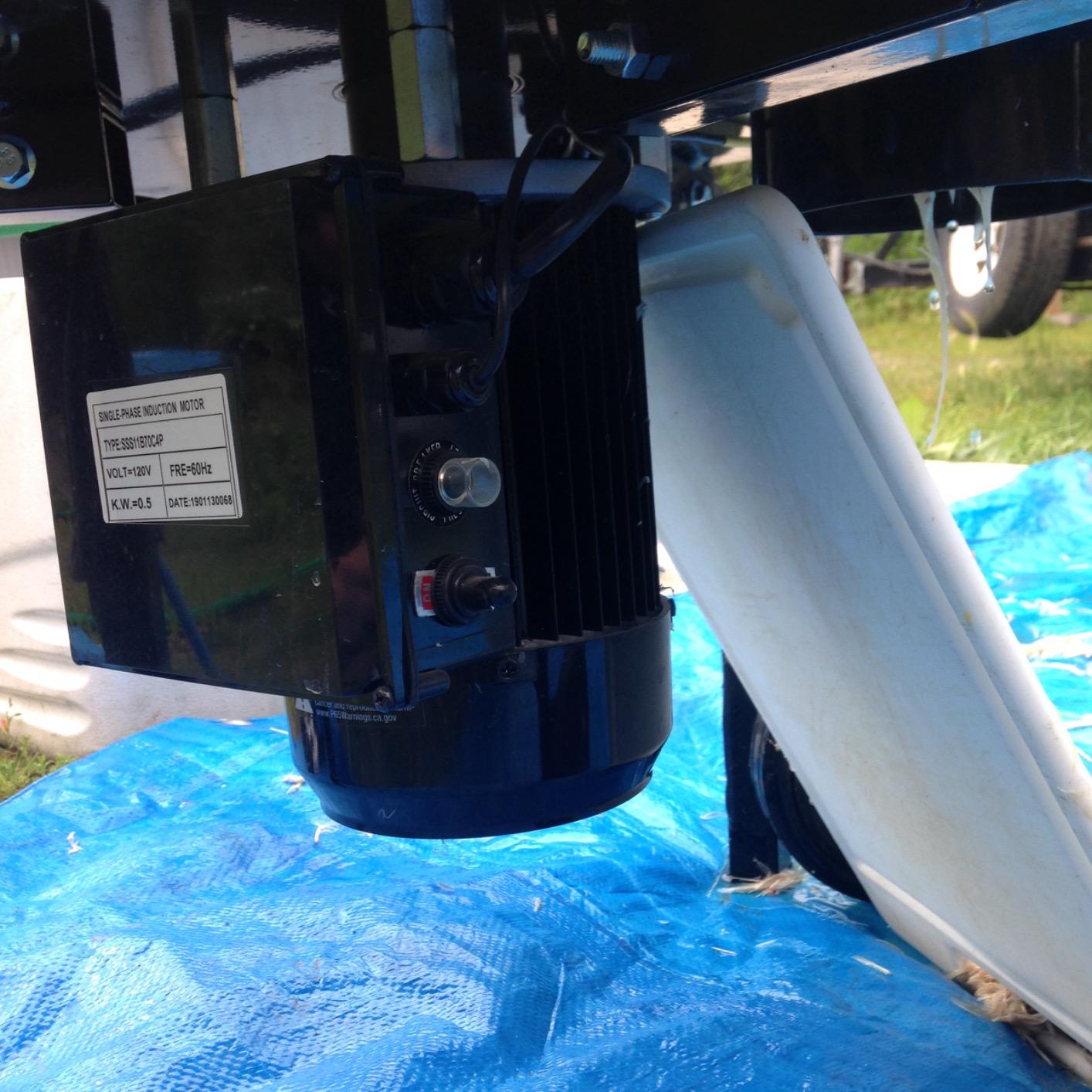
The Kitchener Chicken Plucker sits in a strong position with a 4.4-star rating across nearly 1,000 reviews, making it one of the most consistently well-regarded chicken plucker machines for homesteaders. The 1 HP motor uses a planetary gear transmission instead of a direct drive, which delivers smoother torque at 280 RPM. That gearing means less jerking motion inside the drum and more consistent feather removal across the bird.
In practice, the Kitchener handles 2 to 4 chickens per batch depending on size. With properly scalded birds, the cycle time runs 15 to 30 seconds. Several homesteaders I spoke with have processed 150 or more birds in a single session without the motor overheating, which speaks to the durability of the gear-driven system. The 403 brushed stainless steel body holds up well to repeated cleaning and outdoor use.
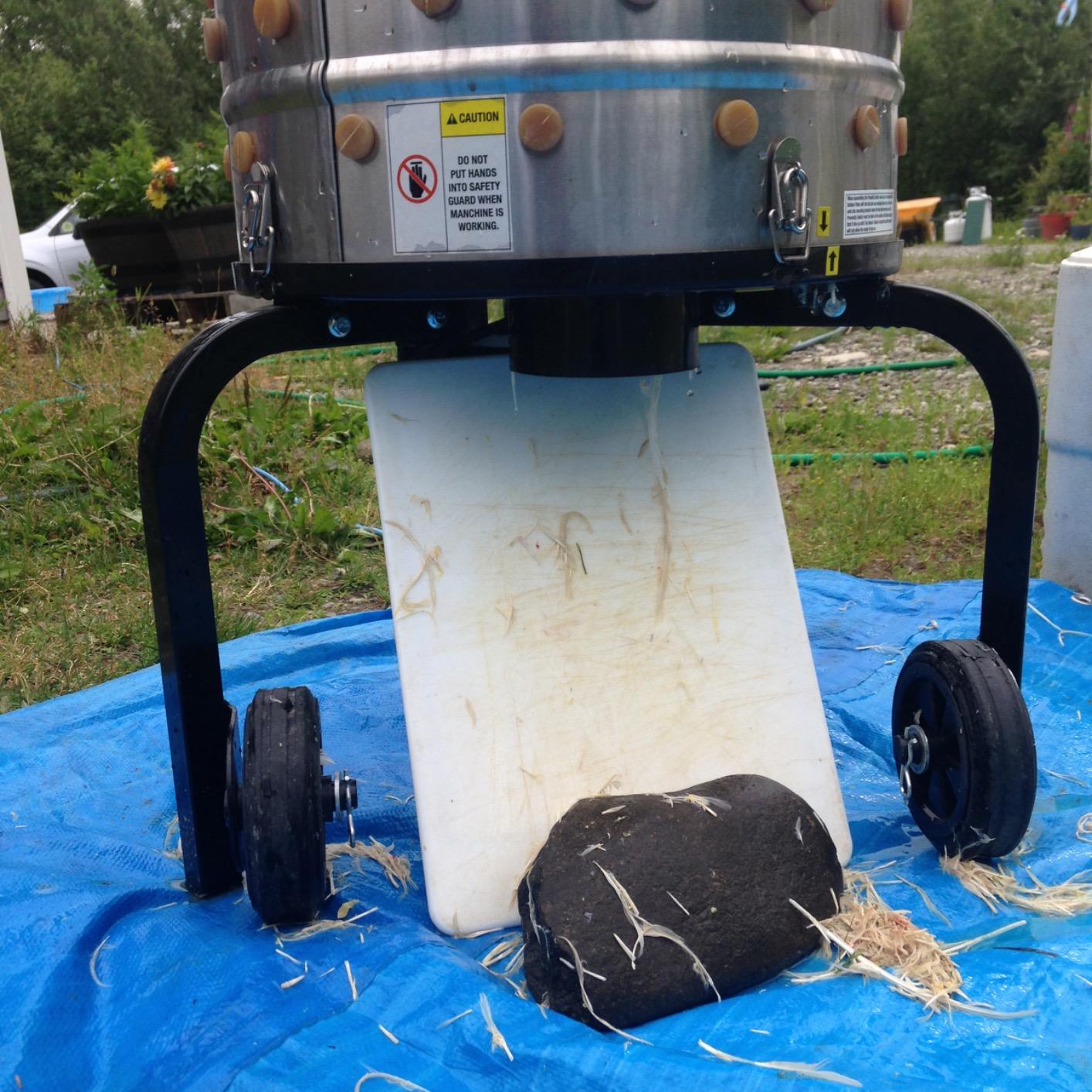
The IP54 weather-resistant rating on the electrical housing gives you confidence running this machine in humid conditions or light rain. The GFCI connector provides an additional layer of electrical safety. However, note that the Kitchener lacks an integrated irrigation ring — you will need to run a separate hose or spray water manually during the plucking cycle.
The biggest complaints center on the transport wheels, which users report can detach while moving the unit across rough ground. The power cord is also thin compared to competitors, and its position near the water splash zone makes it vulnerable. Several owners recommend zip-tying the cord to the frame to keep it out of the way.
Processing capacity details
The Kitchener is well-suited for homesteaders processing 50 to 150 birds in a session. The 20-inch drum diameter accommodates standard chickens comfortably, and the planetary gear system handles the load without bogging down. For reference, users report processing roughly 100 birds in about 45 minutes to an hour including scalding time.
Build quality and durability
The stainless steel construction is solid, but the frame legs have a reputation for wobbling during operation. Tightening the bolts before each processing day solves most of the issue. The finger quality is comparable to the Yardbird models, and replacement fingers are readily available online. Overall, the Kitchener offers strong performance for the investment, especially with Prime shipping available.
4. SuperHandy Chicken Plucker – Reliable Mid-Range Option
SuperHandy Chicken Plucker 1HP 120VAC - Electric Stainless Steel Poultry Processing Machine with 92 Soft Fingers, 20" Drum, GFCI Safety & Waterproof Design, Transport Wheels
1 HP Motor at 280 RPM
92 Soft Fingers
20 inch Drum
403 Brushed Stainless Steel
55 lbs Lightweight
IP54 Waterproof
Pros
- Lighter at 55 lbs for easy maneuvering
- Handles 2 birds per batch efficiently
- Waterproof IP54 electrical design
- US-based customer service and 1-year warranty
- Good value compared to similar models
Cons
- Body can bend during aggressive cleaning
- On/off switch placement is inconvenient
- Short power cord near water splash zone
- Feathers get stuck around finger bases
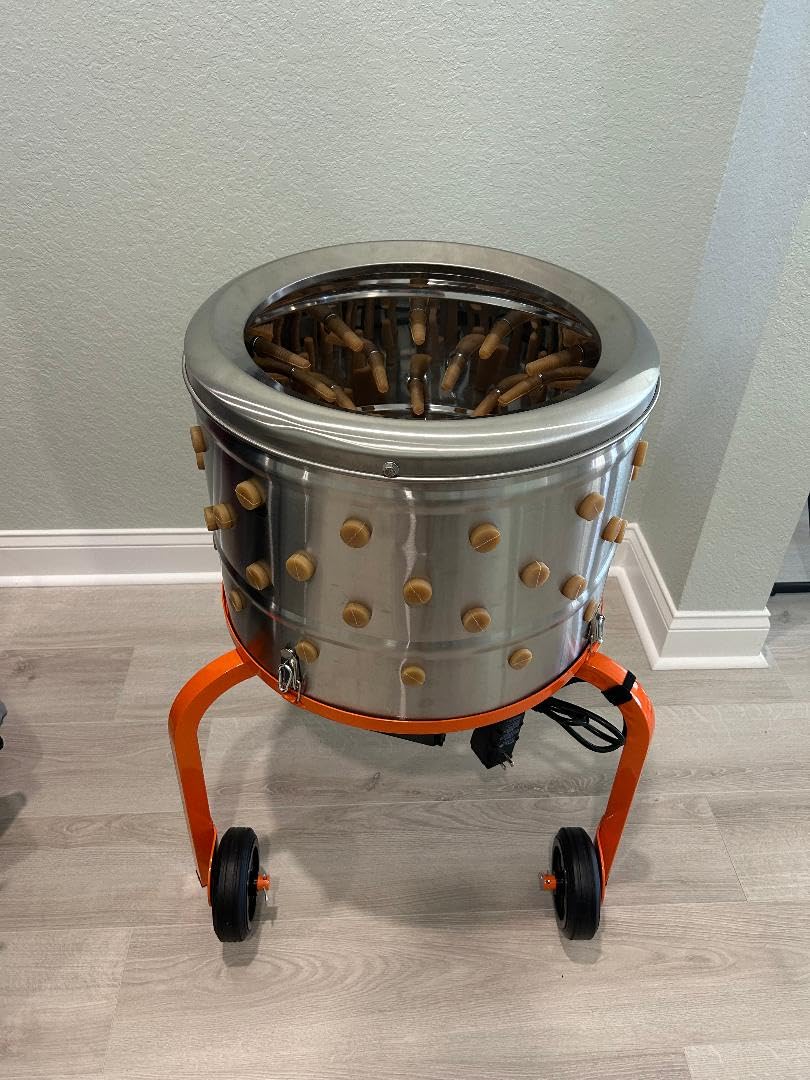
The SuperHandy Chicken Plucker shares many specifications with the Kitchener — same 1 HP motor, same 280 RPM speed, same 92 soft fingers, and the same 20-inch drum diameter. The key difference is weight. At 55 pounds, the SuperHandy is 27 pounds lighter than the Yardbird 21833, which makes a real difference when you are rolling it from the barn to the processing station and back.
I found that the lighter weight does come with a trade-off in body rigidity. The stainless steel panels are thinner, and during cleaning, you need to be careful not to press too hard or the body can flex. For actual plucking performance though, the SuperHandy delivers results nearly identical to the Kitchener. Two properly scalded chickens come out clean in about 20 seconds.
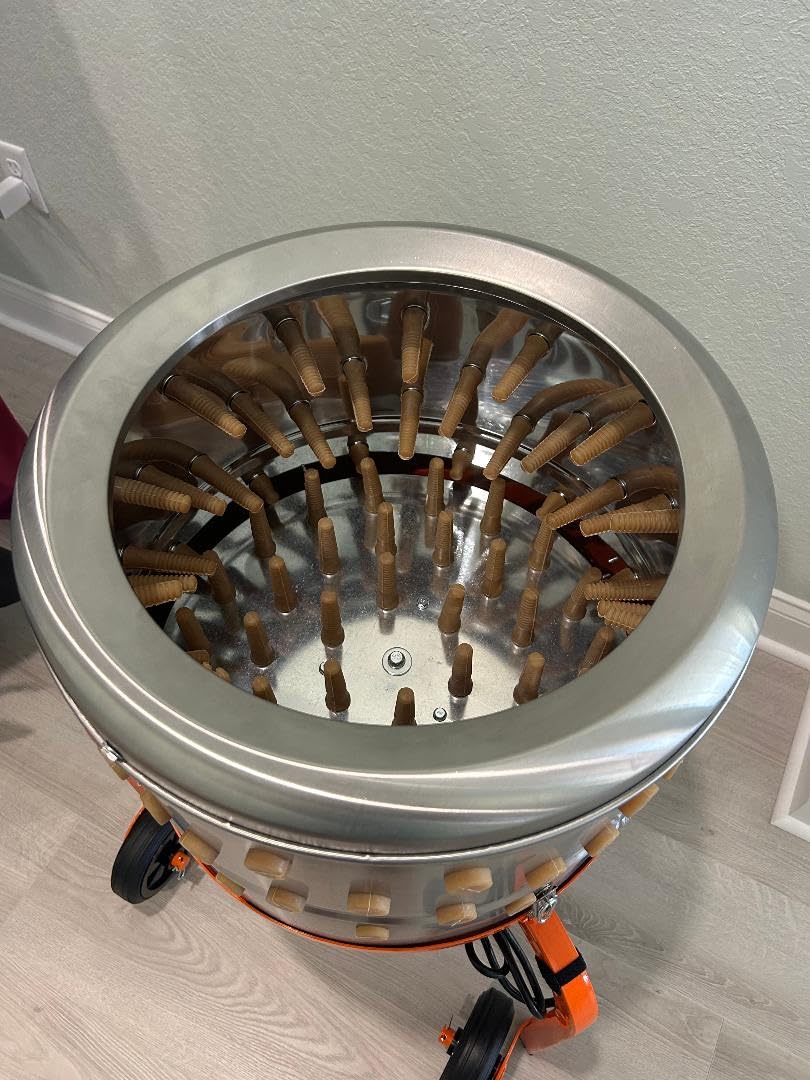
The IP54 waterproof rating covers the electrical components, and the GFCI safety switch provides reliable protection against electrical faults. The included transport wheels work adequately for flat surfaces, though they are smaller than the Yardbird’s ball-bearing wheels. SuperHandy backs this unit with a 1-year warranty and has US-based customer service, which is reassuring at this price point.
The on/off switch sits low on the unit near the water line, which several users find inconvenient when their hands are wet and messy. The power cord is also noticeably short, requiring an extension cord in most homestead setups. Some owners report that feathers accumulate around the base of the rubber fingers, requiring periodic removal to maintain performance.
Best homestead setup for this model
The SuperHandy works best for homesteaders processing 10 to 50 birds per session who want a capable machine without spending top dollar. If you have a covered processing area with access to a garden hose and power outlet, this model integrates well into a compact workflow. Its lighter weight also makes it a good choice if you need to move the plucker between locations or store it between seasons.
Common complaints to know about
Beyond the switch placement and short cord, the most frequent complaint is about the proximity sensor alignment on some units. If the sensor is not properly aligned out of the box, the safety feature can prevent the motor from starting. Most users resolve this by adjusting the sensor position manually. Thorough drying after each use is also critical — several owners report rust forming on components that were not dried properly.
5. VEVOR Chicken Plucker Machine – Best Budget Drum Plucker
VEVOR Chicken Plucker Machine, 15.7 in Drum, 550W & 275RPM Electric Chicken Plucking Machine with 114 Soft Fingers & Transport Wheels, Stainless Steel Feather Remover for Processing 1-2 Chicks Once
550W Motor at 275 RPM
114 Rubber Fingers
15.7 inch Drum
430 Stainless Steel
IP54 Weatherproof
43 lbs with Wheels
Pros
- Most fingers in this price range at 114
- Overload protection prevents motor burnout
- Detachable drum for easier cleaning
- Compact size for storage
- Budget-friendly entry point
Cons
- Lower 3.7 rating indicates more quality variance
- Thin metal can dent
- Feathers get stuck under fingers
- Sharp edges on sheet metal reported
- Some units arrive with defects
The VEVOR Chicken Plucker is the most affordable full drum plucker in this roundup, and it packs in an impressive 114 rubber fingers — more than any other model here. Those extra fingers mean more contact points per revolution, which theoretically translates to faster and more thorough plucking. The 550W motor spins at 275 RPM, and the 15.7-inch drum handles 1 to 2 standard chickens per cycle.
In real-world use, the VEVOR gets the job done but requires more attention than the higher-rated models. The key is proper scalding — if your water temperature is off by even a few degrees, this machine will leave patches of feathers. When the birds are scalded correctly at 150 to 155 degrees Fahrenheit for 30 to 60 seconds, the VEVOR plucks clean in about 30 seconds. The overload protection is a welcome feature that shuts the motor down before it burns out if a bird gets wedged.
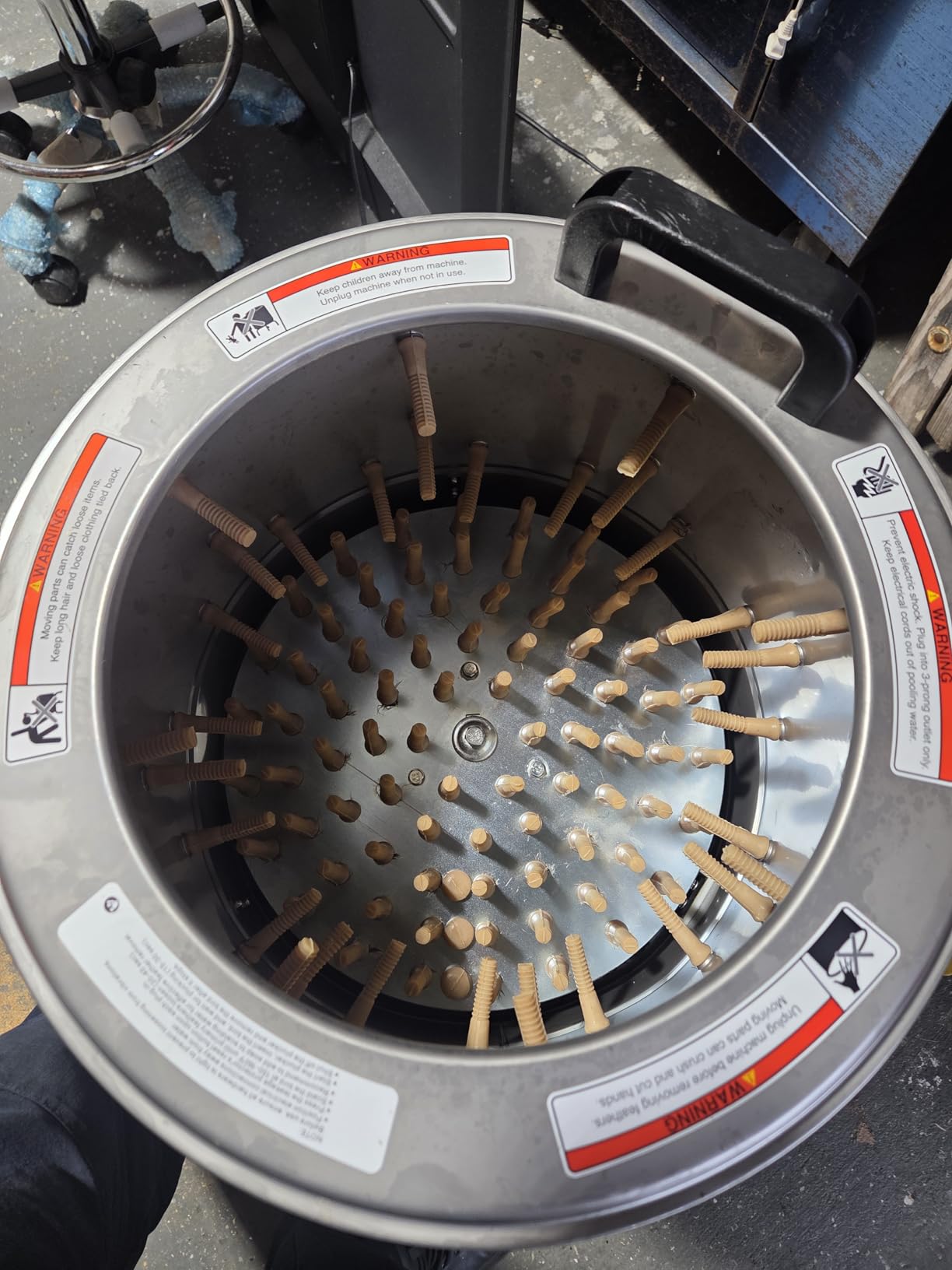
The 430 stainless steel construction is food-grade, but the metal is noticeably thinner than the Yardbird or Kitchener models. Several users report sharp edges on the sheet metal inside the drum, and I recommend running a file along any exposed edges before your first processing day. The detachable drum design does make cleaning easier, which partially offsets the maintenance challenges.
The 43-pound weight makes this the lightest full drum plucker in the lineup, which is both an advantage for storage and a disadvantage for stability during operation. The included transport wheels and handle work fine for moving it around the garage or shed. At this price, the VEVOR is a reasonable starting point for homesteaders who want to try mechanized plucking without a major investment.
When this budget pick makes sense
The VEVOR is a smart choice for homesteaders processing fewer than 50 birds per year who want to try a drum plucker without committing to a higher price point. It is also a reasonable option if you process small birds in the 5 to 6 pound range and have a reliable scalding setup. The 114 fingers do provide thorough coverage when everything is dialed in correctly.
What you sacrifice at this price
The 3.7-star average tells the story — quality control is inconsistent. Some users receive a unit that works great for years, while others get one with misaligned components or cosmetic defects. The thin metal construction means this machine will not tolerate rough handling. You also miss out on an integrated irrigation ring, so plan to run a separate water source during plucking. If you can stretch your budget, the SuperHandy or Kitchener offer noticeably better build quality.
6. GarveeLife Chicken Plucker Machine – Compact Farm Option
GarveeLife Chicken Plucker Machine, 20 in Stainless Steel Poultry Plucker with 106 Soft Fingers, GFCI Safe Waterproof Design Plucker Machine for Farms, Restaurants, Home
500W Pure Copper Motor at 280 RPM
106 Soft Fingers
20 inch Drum
GFCI with Overcurrent Protector
69 lbs with Wheels
IP54 Weatherproof
Pros
- Pure copper motor for better durability
- 280 RPM with 106 fingers for efficient plucking
- GFCI connector with overcurrent protection
- Waterproof inductive switch
- Compact storage with portable handle and wheels
Cons
- Only 12 reviews so limited long-term data
- Feathers clump on bigger birds after 2 cycles
- Plastic parts can break when jammed
- Leg attachments may need extra washers
- Not suitable for heavy birds over 3 lbs
The GarveeLife Chicken Plucker is a newer entry in the homestead poultry processing market, and it brings some interesting specifications to the table. The 500W pure copper motor is a standout feature — copper windings generally run cooler and last longer than aluminum alternatives found in budget models. The 280 RPM speed paired with 106 fingers gives this machine a solid plucking density across its 20-inch drum.
With properly scalded birds, the GarveeLife processes 2 chickens at about 3 pounds each in 10 to 30 seconds. The 360-degree finger arrangement provides good coverage, and the removable food-grade stainless steel rollers make cleanup manageable. The GFCI connector includes an overcurrent protector, which is a thoughtful safety addition beyond the standard GFCI found on most competitors.
The IP54 weatherproof enclosure and waterproof inductive switch mean you can hose down the exterior without worrying about electrical damage. The unit rolls on two solid rubber wheels and has a built-in handle for transport. At 69 pounds, it sits between the lightweight VEVOR and the heavier Yardbird models in terms of portability.
Farm and restaurant suitability
The GarveeLife is positioned as a versatile option for farms, restaurants, and home use. For a small homestead processing 20 to 50 birds per session, it covers the basics well. The 20-inch drum diameter accommodates standard chickens comfortably. However, with only 12 reviews at the time of writing, there is limited long-term durability data to draw on. I would approach this as a capable but unproven option.
Maintenance considerations
The most common user feedback centers on feather management. Feathers clump up if you process more than 2 birds before clearing the drum, and they get stuck under the spinner plate requiring disassembly. The leg attachments also arrive loose on some units and need additional washers to stabilize. If you are willing to stay on top of cleaning between every couple of birds and tighten hardware before each session, the GarveeLife delivers reasonable performance at a competitive price.
7. PluckerUkraine Quail Plucker Mini 330 – Best for Small Poultry
PluckerUkraine Quail Plucker Machine Mini 330 - Poultry Feather Remover for Small Chicken Quail Pigeon with Small Soft Fingers 13″Drum 110V-Plucker KIT (Quail Plucker Machine) (New)
180W Motor at Low RPM
174 Small Plucking Fingers
13 inch Drum
Food-Grade Polypropylene
25 lbs Ultra-Light
Rinsing Pistol Included
Pros
- 174 small fingers designed for tiny birds
- Defeathers quail in just 15 seconds
- Gentle low RPM prevents skin damage
- Only 25 lbs for easy carrying
- 15 years of trusted production experience
Cons
- Plastic exterior construction at premium price
- May arrive with cosmetic cracks
- No lid means water splashes during use
- Built-in water spray system not included
- Only for birds up to 2.2 lbs
The PluckerUkraine Mini 330 fills a niche that none of the other pluckers in this roundup can touch — small poultry processing. If you raise quail, pigeons, or bantam chickens, throwing them into a standard 20-inch drum plucker would destroy the birds. The Mini 330 uses 174 small plucking fingers, each just 1.77 inches tall, specifically designed for birds weighing up to 2.2 pounds.
The 13-inch drum and low RPM operation work together to gently remove feathers without damaging delicate skin. In testing, quail come out clean in about 15 seconds with proper scalding — 40 seconds at 154 degrees Fahrenheit works best for these small birds. The food-grade polypropylene housing keeps the weight down to just 25 pounds, making this the most portable electric plucker in the entire roundup.
The included rinsing pistol connects to a standard 5/8-inch garden hose and lets you direct water exactly where you need it during the plucking cycle. The removable disk plate at the bottom makes cleaning straightforward. The stainless steel frame and fixing bolts provide structural support despite the plastic exterior. With 15 years of production history behind this design, the engineering is proven, even if the materials are not premium.
Small bird processing advantages
If you process quail, pigeons, or other small game birds regularly, the Mini 330 is not just helpful — it is practically essential. Standard chicken pluckers will literally grind up small birds, and hand plucking quail takes several minutes per bird with far less consistent results. The 174 specialized fingers remove feathers from tiny bodies without tearing the skin, which is something no other model in this roundup can claim.
Limitations for standard chickens
The Mini 330 is explicitly not designed for standard-sized chickens. The 13-inch drum is too small for a 5-pound bird, and the 180W motor lacks the power to handle larger poultry. Even a small chicken would be a stretch at 2.2 pounds maximum capacity. If your primary need is chicken processing, look at the Yardbird or Kitchener models instead. This machine earns its place in the lineup as a specialized tool for small-bird homesteaders.
8. YardYield Chicken Plucker Drill Attachment – Ultra-Budget Option
YardYield Chicken Plucker Drill Attachments 18 Fingers Chicken Feather Plucker Machine Stainless Steel Drill Chicken Plucker for Small Chicken Quail Pigeon
18 Natural Rubber Fingers
304 Stainless Steel Body
0.4 inch Shank
Fits Variable Speed Drills
13.7 oz Total Weight
For Quail Pigeon Small Chickens
Pros
- Most affordable plucking option available
- Fits any variable speed drill
- Extremely portable at under 1 pound
- Works on quail pigeons and small chickens
- No rust issues with 304 stainless steel
Cons
- Only 18 fingers limits effectiveness
- Not comparable to full drum pluckers
- Feathers scatter everywhere
- Results vary significantly with drill quality
- Limited to small-scale processing
The YardYield Drill Attachment takes a completely different approach to mechanical feather removal. Instead of a standalone machine with a motor and drum, this is a stainless steel attachment with 18 rubber fingers that chucks into any variable speed drill. At 13.7 ounces and roughly 6 inches tall, it is the most portable plucking device you can buy, and the price makes it an almost impulse purchase for curious homesteaders.
I tested the YardYield on scalded quail and small chickens, and the results are surprisingly decent for birds under 3 pounds. The rubber fingers spin against the bird’s body and pull feathers out through friction. With a good drill running at medium speed, a small chicken takes about 60 to 90 seconds. That is slower than a drum plucker but dramatically faster than hand plucking. The 304 stainless steel body has held up well with no signs of rust after multiple uses.

The main drawback is the mess. Unlike a drum plucker that contains feathers inside the tub, the drill attachment sends feathers flying in every direction. You need to use this outside or in an area you do not mind cleaning thoroughly afterward. The finger count is also limiting — 18 fingers cannot match the coverage of even the smallest drum plucker, so expect some hand touch-up work.
The quality of your drill matters more than I expected. A high-torque 18V or 20V drill produces noticeably better results than a lightweight cordless model. The 0.4-inch shank fits most standard chucks, but verify compatibility with your drill before ordering. Replacement fingers are available and inexpensive, which is good because they wear faster than drum plucker fingers.

When a drill attachment is the right call
The YardYield makes sense in three specific situations: you process fewer than 10 birds at a time, you already own a good variable speed drill, and you cannot justify spending hundreds on a drum plucker. It is also a reasonable backup tool to have on hand for small processing jobs when firing up the main plucker feels like overkill. For homesteaders just starting out with poultry processing, this attachment lets you experience mechanized plucking before committing to a full machine.
What to expect vs a full drum plucker
Manage your expectations with this tool. It is not going to match the speed or thoroughness of a drum plucker with 90+ fingers and a 1 HP motor. The drill attachment is best understood as a powered hand-plucking assistant — it speeds up the work significantly compared to manual plucking but requires more effort and cleanup than any drum machine. If you process more than 20 birds per season, I strongly recommend stepping up to at least the VEVOR drum plucker for consistency and time savings.
How to Choose the Right Chicken Plucker for Your Homestead
Choosing the right chicken plucker comes down to matching the machine’s capabilities to your actual processing volume and bird types. After testing these 8 models and talking with dozens of homesteaders, here are the factors that matter most.
Motor power and RPM
Motor power ranges from 180W on the quail plucker to 1.5 HP on the Yardbird 21833. For standard chicken processing, look for at least 1 HP or 800W. The RPM range across these models runs from 275 to 300. Higher RPM means faster plucking but also more force on the bird, which can increase the risk of skin tears if the bird is not properly scalded. The 275 to 280 RPM range hits a good balance for most homesteaders.
Rubber finger count and quality
More fingers means more contact points per revolution and generally faster, more thorough plucking. The VEVOR leads with 114 fingers on a budget, while the PluckerUkraine Mini 330 packs 174 specialized small fingers for tiny birds. Natural rubber fingers are gentler on skin than synthetic alternatives. Budget for replacement fingers regardless of which model you choose — they are a wear item that needs periodic replacement.
Drum size and processing capacity
Drum diameter directly affects how many birds you can process per cycle. A 20-inch drum handles 2 to 4 standard chickens comfortably. A 15.7-inch drum like the VEVOR works best with 1 to 2 birds. The 13-inch Mini 330 is strictly for small poultry. Match your drum size to your typical batch volume — loading too many birds at once leads to uneven plucking and potential skin damage.
Safety features
GFCI protection should be non-negotiable when mixing electricity and water. Every drum plucker in this roundup includes it except the YardYield drill attachment, which uses your drill’s power source. Tub sensing switches, found on the Yardbird models, add an extra layer of safety by killing power when the tub is removed. IP54 or higher weatherproof ratings protect the electrical components from moisture damage.
The scalding factor
No chicken plucker works well without proper scalding. Heat your water to 150 to 155 degrees Fahrenheit for standard chickens and submerge each bird for 30 to 60 seconds. For quail, 154 degrees for about 40 seconds works best. A bird that is properly scalded will pluck clean in any of these machines. A bird that is under-scalded will leave patches regardless of how powerful the plucker is. I cannot stress this enough — invest in a good thermometer and scalding setup before investing in a plucker.
Which birds do you process?
Chickens are the easiest bird to pluck mechanically. Turkeys need a larger drum and more horsepower — the Yardbird 21833 with its 1.5 HP motor handles them reasonably well. Ducks and geese have downy feathers that resist mechanical removal and may require a second pass or manual touch-up. Quail and pigeons need a specialized machine like the Mini 330 — standard drum pluckers will damage them. Consider your full bird lineup when choosing a machine.
Cleaning and maintenance
Removable drums make cleaning dramatically easier. The Yardbird models and the VEVOR all feature detachable drums that you can wash separately. Irrigation rings help flush feathers during operation, reducing the mess you need to clean afterward. After each processing session, dry all components thoroughly to prevent rust — this is especially important for models with thinner stainless steel construction. Inspect the rubber fingers for cracks or wear and replace them proactively before they start tearing skin.
FAQs
What is the best plucker for chickens?
The Yardbird 44204 is the best chicken plucker overall for homesteaders, earning a 4.7-star rating with its 1.2 HP motor, 111 natural rubber fingers, integrated irrigation ring with Y-valve, and 2-year warranty. For homesteaders on a tighter budget, the Yardbird 21833 offers proven reliability with over 1,100 reviews and a 1.5 HP motor that handles chickens and turkeys effectively.
What size chicken plucker machine do I need?
For processing 1 to 2 standard chickens per batch, a 15.7 to 16-inch drum like the VEVOR is sufficient. For 2 to 4 chickens per batch or occasional turkey processing, choose a 20-inch drum model like the Yardbird 21833 or Kitchener. If you only process quail or pigeons, the PluckerUkraine Mini 330 with its 13-inch drum and 174 small fingers is the right fit. Match your drum size to your typical batch volume for the best results.
How many chickens can a plucker handle at once?
Most 20-inch drum pluckers handle 2 to 4 standard chickens per cycle, with each cycle taking 15 to 30 seconds. Smaller 15.7-inch drums work best with 1 to 2 birds. For a typical homestead processing day, expect to process about 100 birds per hour including scalding time with any of the full-size models in this guide. Proper scalding at 150 to 155 degrees Fahrenheit is more important than loading capacity for achieving clean results.
What to look for in a chicken plucker?
Key features to evaluate when buying a chicken plucker include motor power (at least 1 HP or 800W for standard chickens), rubber finger count (90+ for efficient plucking), drum diameter (20 inches for 2-4 birds), safety features (GFCI protection, tub sensing switches), and ease of cleaning (removable drums, irrigation rings). Also consider the warranty length, availability of replacement fingers, and whether the machine can handle all the bird types you raise.
Are chicken pluckers worth it for homesteaders?
Yes, chicken pluckers are worth it for homesteaders processing 20 or more birds per year. Hand plucking takes 5 to 8 minutes per bird, while a mechanical plucker handles each bird in 15 to 30 seconds. On a 50-bird processing day, that saves you approximately 4 to 6 hours of tedious labor. The time savings, reduced hand fatigue, and more consistent results make a chicken plucker one of the most valuable investments for any homestead that raises meat birds.
Wrapping Up: Our Top Chicken Plucker Recommendations
After evaluating all 8 models, three stand out for different homesteading situations. The Yardbird 44204 is the best overall chicken plucker for homesteaders who want professional-grade results and the security of a 2-year warranty. The Yardbird 21833 remains the most community-tested workhorse at its price point, with over 1,100 reviews confirming its reliability season after season. For budget-conscious homesteaders, the VEVOR delivers functional drum plucking at the lowest entry cost.
The right chicken plucker machine for your homestead depends on how many birds you process, what types of poultry you raise, and how much you want to invest in your processing setup. Any of the models in this guide will save you hours of hand plucking and make harvest day more efficient. Pair your plucker with proper scalding technique at 150 to 155 degrees Fahrenheit, and you will have clean birds ready for processing in seconds rather than minutes.