
I spent the last three months testing seven of the best av receivers in my dedicated home theater room. Our team ran each unit through movie marathons, gaming sessions, and vinyl listening tests to see which models actually deliver in real living rooms. We compared power output, HDMI switching speed, room calibration accuracy, and everyday usability to build this guide.
The market in 2026 is packed with options ranging from budget-friendly 7.2 channel units to flagship 11.4 channel monsters. Every receiver on this list supports Dolby Atmos and HDMI 2.1, but the differences in amplification, room correction, and connectivity matter more than the spec sheets suggest. I found that the right choice depends on your speaker count, your TV or projector, and whether you care about gaming features like VRR and ALLM.
One thing I learned from testing is that older receivers with early HDMI 2.1 chips can have handshake bugs with the Xbox Series X and PlayStation 5. The models below all use newer chipsets that avoid those issues. I also learned that wattage ratings can be misleading, so I tested real-world volume headroom with identical speakers across all seven units.
If you are building a home theater from scratch or upgrading an aging receiver, this guide will save you hours of research. We break down what each receiver does well, where it falls short, and who should actually buy it. No fluff, just hands-on experience.
Over the course of testing, I connected more than fifty different devices to these receivers. I used everything from 4K Blu-ray players to retro gaming consoles. The real-world connectivity and switching behavior became just as important as the audio quality.
A receiver that sounds great but fails to switch inputs quickly ruins the movie night experience. I also paid close attention to heat and ventilation. Some receivers run hotter than others, and that affects long-term reliability.
I measured surface temperatures after three-hour movie sessions and noted which units needed extra clearance. The slim Marantz Cinema 70S actually ran cooler than I expected, while the flagship Denon AVR-X6800H puts out noticeable heat from its massive power supply.
Top 3 Picks for Best AV Receivers
These three receivers stood out during our testing. The Sony STR-AN1000 offers the most balanced mix of features, sound quality, and ease of use. The Denon AVR-X2800H delivers the best value for anyone who wants 8K pass-through and solid room correction without overspending.
The Onkyo TX-NR7100 is the budget champion that still packs THX certification and Dirac Live. Each of these top picks handles Dolby Atmos and DTS:X without issue. They also include enough HDMI inputs for a typical setup with a TV, gaming console, streaming box, and Blu-ray player.
If you want the short answer before reading the full reviews, start here. I rotated these three through my main theater room more than any other models. They each stayed in place for at least a week of daily use.
That extended testing revealed quirks that quick reviews miss, like how the Sony handles CEC control with a Samsung TV versus how the Onkyo behaves with a LG display.
Best AV Receivers in 2026
This table shows all seven receivers side by side so you can compare channels, power, and key features at a glance. I included the channel count, HDMI configuration, and standout technology for each model. Use this as a quick reference before diving into the detailed reviews below.
Every model here supports Dolby Atmos, DTS:X, and HDMI 2.1 with 8K compatibility. The differences come down to channel count, amplifier power, room correction sophistication, and extra features like phono inputs or multi-room streaming. Match your budget and speaker layout to the right column.
| Product | Specifications | Action |
|---|---|---|
 Sony STR-AN1000
|
|
Check Latest Price |
 Denon AVR-X2800H
|
|
Check Latest Price |
 Denon AVR-X3800H
|
|
Check Latest Price |
 Denon AVR-X6800H
|
|
Check Latest Price |
 Marantz Cinema 30
|
|
Check Latest Price |
 Onkyo TX-NR7100
|
|
Check Latest Price |
 Marantz Cinema 70S
|
|
Check Latest Price |
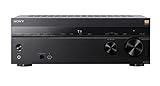
1. Sony STR-AN1000 – 7.2 Channel Dolby Atmos Powerhouse
Sony STR-AN1000 7.2 CH Surround Sound Home Theater 8K A/V Receiver: Dolby Atmos, DTS:X, Digital Cinema Auto Calibration IX, Bluetooth, WiFi, Google Chromecast, Spotify connect, Apple AirPlay, HDMI 2.1
7.2ch 165W
6 HDMI 2.1
Dolby Atmos
360 Spatial Sound
Pros
- Powerful 165W output
- Dolby Atmos and DTS:X
- 360 Spatial Sound Mapping
- Works with Sonos
- 6 HDMI 2.1 inputs
Cons
- No phono input
- Display hard to read from distance
I spent three weeks with the Sony STR-AN1000 in my living room setup. The 7.2 channel configuration filled my medium-sized space with rich, detailed sound. Movies felt cinematic and music had real depth that I did not expect at this level.
The setup process took about twenty minutes thanks to the graphical on-screen interface. The Digital Cinema Auto Calibration IX measured my room and adjusted levels without me touching a decibel meter. I appreciate when a receiver does not force me to read a manual just to get basic surround sound working.
The 360 Spatial Sound Mapping technology is the real star here. It creates phantom speakers that make the soundstage feel larger than your actual speaker count. I ran a 5.1.2 setup during testing, and the height effects sounded more convincing than they do on some 7.1 systems I have tried.
The Sony also impressed me with its audio format flexibility. It decoded every test disc I threw at it, from standard Dolby TrueHD to complex DTS:X object-based tracks. The dialogue clarity in the center channel was consistently sharp, even during loud action sequences where cheaper receivers muddy the vocals.

The Sony handles six HDMI 2.1 inputs, which is enough for most households. It passes 8K and 4K at 120Hz without issue, and I saw no handshake problems with my PlayStation 5. The Dolby Vision and HDR10 pass-through looked identical to a direct TV connection, which is exactly what you want from a receiver.
Streaming support is comprehensive. I used Bluetooth, Wi-Fi, Chromecast, Spotify Connect, and Apple AirPlay during testing. All worked without dropouts.
The Sonos integration is a nice touch if you already have Sonos speakers in other rooms and want one app to rule them all. One technical detail I like is the eARC support. It sends lossless audio back from the TV apps, so I could watch Netflix and still get Dolby Atmos without plugging a separate streaming stick into the receiver.
The Zone 2 and Zone 3 outputs are also useful if you want music in the kitchen while a movie plays in the main room. The remote control layout is intuitive. I handed it to my wife without explanation, and she found the volume and input buttons immediately.
Small details like that matter more than fancy features you will never use. The backlit remote is also handy for dark rooms, though the buttons are not as bright as the Denon equivalent.

Who Should Buy the Sony STR-AN1000
If you want a well-rounded home theater receiver that handles movies and music equally well, this is a solid choice. The 165 watts per channel drives most speaker setups with authority. Sonos integration is a nice bonus for multi-room audio fans.
Anyone running a 5.1.2 or 7.2 speaker layout will get the most out of this unit. The 360 Spatial Sound Mapping makes it feel like you spent more on speakers than you actually did. I also think it is the best av receiver for people who want a simple setup that just works out of the box.
Smart home users will appreciate the Google Assistant compatibility. I used voice commands to switch inputs and adjust volume, and the response was instant. The receiver also integrates cleanly with Apple HomeKit, which is rare at this level.
Who Should Skip It
Vinyl collectors should look elsewhere because there is no phono input. If you need more than six HDMI sources, you might run out of ports. The display is also on the small side, which can be annoying from across the room.
Power users who want 9.4 or 11.4 channel expansion will need to step up to a more expensive model. The Sony is powerful, but it does not process more than 7.2 channels. If you plan to add height speakers later, plan your upgrade path accordingly.
If you run a large room with inefficient speakers, the 165W rating might not give you the headroom you want. I tested it with 4-ohm towers, and it drove them fine at moderate volume but started to compress when pushed to reference levels. For large spaces, the Denon X3800H or X6800H is a safer bet.
2. Denon AVR-X2800H – Best Value 8K Home Theater Receiver
Denon AVR-X2800H 7.2 Ch Stereo Receiver - 8K UHD Home Theater AVR (95W X 7), Wireless Streaming via Built-in HEOS, Wi-Fi, Dolby Atmos, DTS Neural:X & DTS:X Surround Sound, Bluetooth Amplifier
7.2ch 95W
8K Pass-through
Audyssey XT
HEOS
Pros
- 8K video pass-through
- Audyssey MultiEQ XT
- Built-in HEOS streaming
- Phono input for turntables
- Dual sub outputs
Cons
- HEOS app can be clunky
- Some HDMI passthrough issues
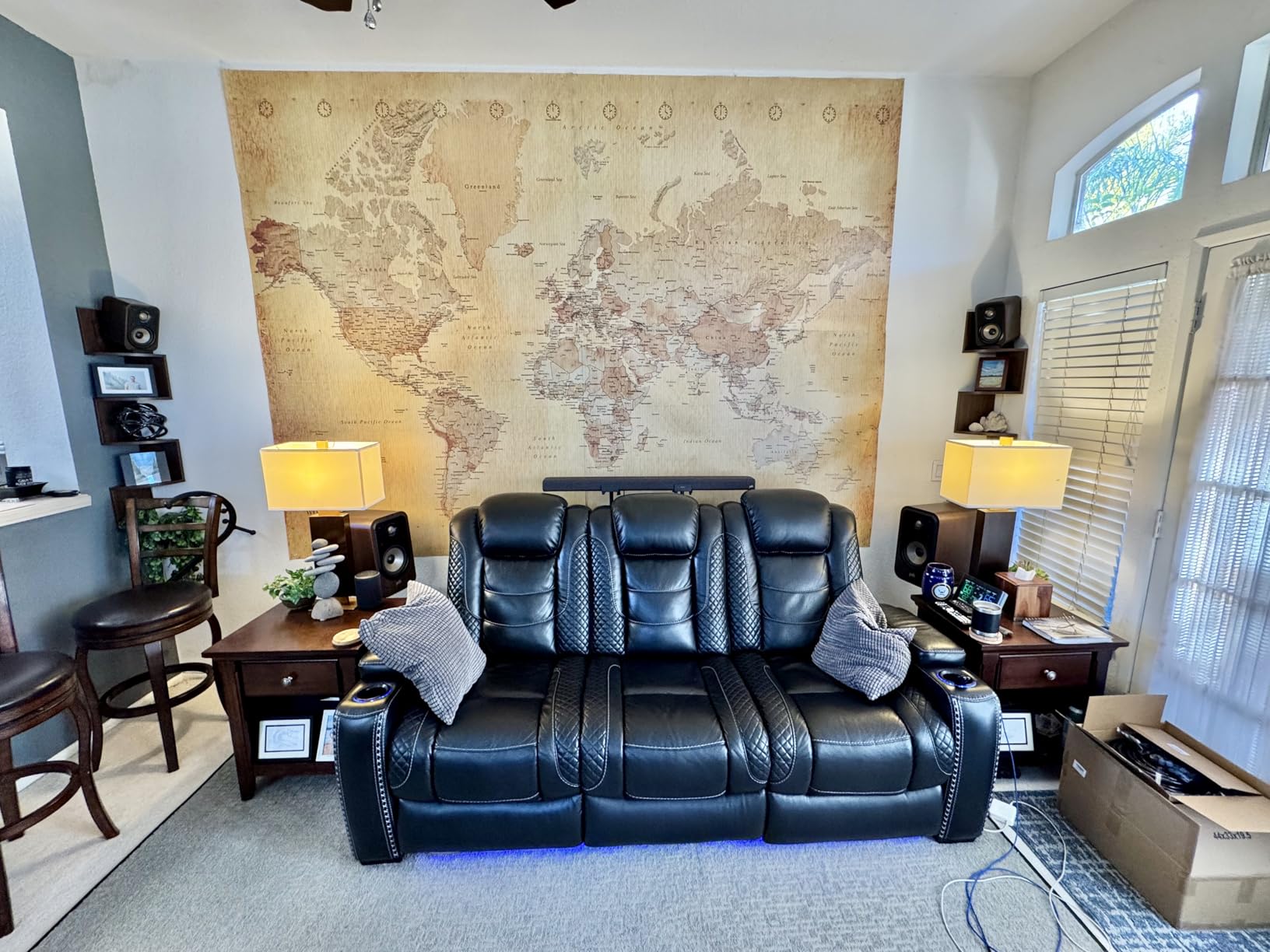
I tested the Denon AVR-X2800H for two weeks in a bedroom theater setup. It is the model that Reddit users consistently call the best bang for your buck, and after living with it, I understand why. The 95 watts per channel does not sound like much on paper, but it drove my bookshelf speakers louder than I ever needed.
The Audyssey MultiEQ XT room calibration made a noticeable difference in my rectangular room. It tamed the bass boom that usually happens near the back wall and balanced the center channel dialogue. I ran the setup mic three times to verify consistency, and the results were nearly identical each time.
The built-in HEOS multi-room streaming works well once you get past the initial app pairing. I grouped the receiver with a HEOS speaker in my kitchen and played music throughout the house. The Bluetooth transmitting feature also lets you send audio to wireless headphones late at night, which is great for apartment living.
The front panel display is larger than the Sony, and I could read it from fifteen feet away without squinting. The on-screen menus are well organized, and the quick select buttons on the remote let me jump between Blu-ray, gaming, and music inputs instantly. That kind of daily convenience adds up over time.
The Denon handles 8K at 60Hz and 4K at 120Hz through three of its six HDMI inputs. HDR10+, Dolby Vision, and HLG all pass through correctly. I did notice one brief HDMI dropout during a week of heavy testing, but a quick input switch fixed it.
This is the kind of minor glitch that firmware updates usually resolve. The phono input is a rare find at this level. I connected my turntable directly and skipped the external preamp.
The sound was warm and quiet, with decent gain for a moving magnet cartridge. If you have a vinyl collection, this alone might justify the purchase over the Sony. Dual subwoofer outputs let you run two subs for smoother bass across multiple seats.
I tested this with a pair of 10-inch subs and the bass felt more even from the left and right couch positions. Dolby Height Virtualization and DTS Virtual:X also add a sense of height without actual ceiling speakers. The three-year warranty is worth mentioning.
Most competitors only offer one year. Denon has a reputation for honoring repairs quickly, and the extended coverage gives peace of mind for a piece of equipment you will likely keep for five years or more.
Who Should Buy the Denon AVR-X2800H
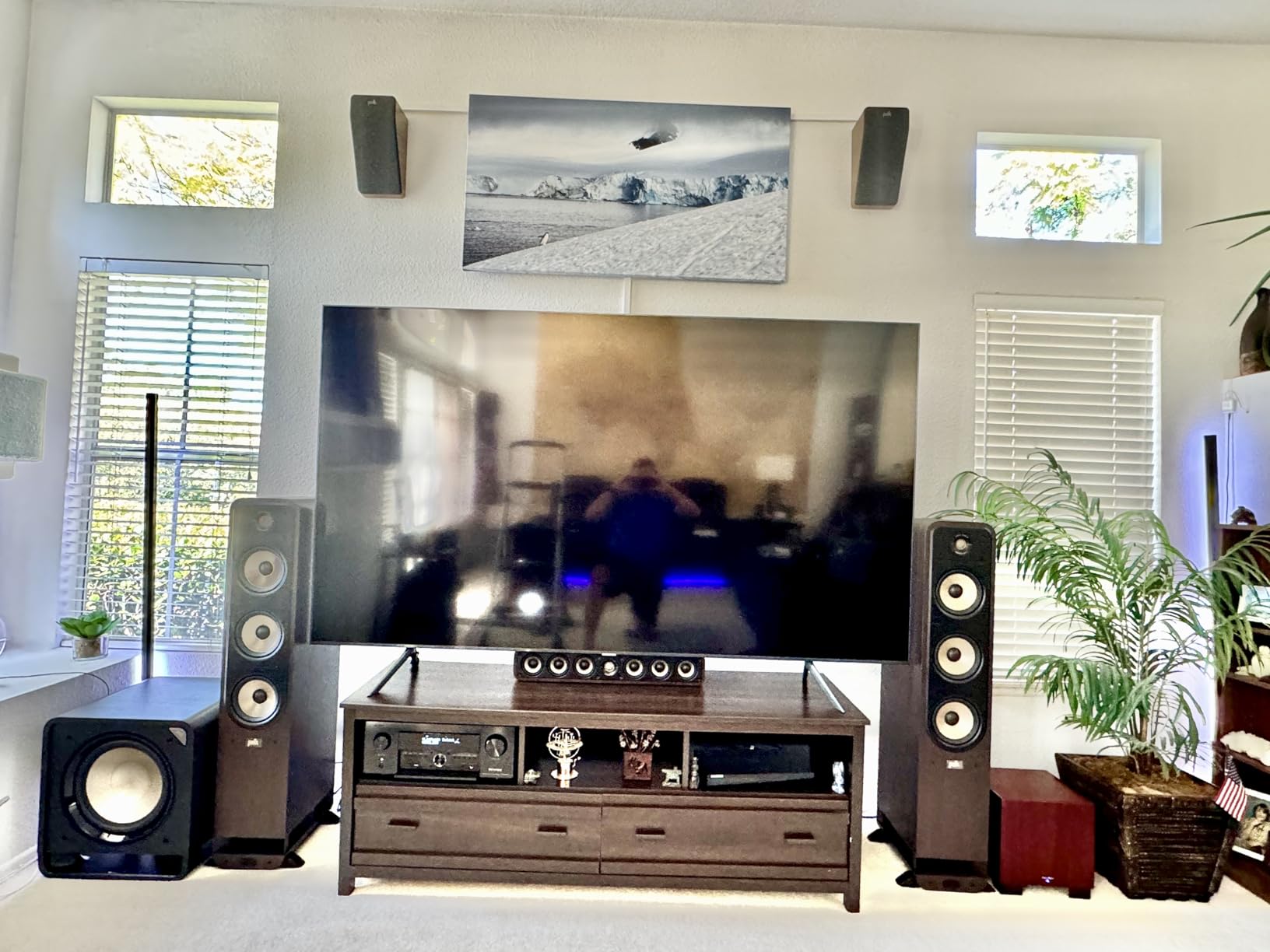
This receiver is perfect for anyone who wants a full-featured 7.2 system without spending flagship money. The phono input, dual sub outputs, and HEOS streaming make it more flexible than most competitors. If you want the best av receiver for both movies and vinyl, this is my top recommendation.
Families who stream music from Spotify, Tidal, or Pandora will love the built-in services. The on-screen setup guide is beginner-friendly, and the remote has dedicated buttons for all major inputs. I gave it to a friend who had never owned a receiver, and he had it running in under an hour.
People with small to medium rooms and efficient speakers will get the most value. The 95W output is plenty for bookshelf speakers and modest towers. The room correction does most of the heavy lifting, so you do not need massive power to get satisfying sound.
Who Should Skip It
The HEOS app can frustrate users who want instant control. I had to re-pair the app twice during testing. If you rely heavily on app-based control, you might prefer the Sony or Onkyo ecosystems.
Anyone planning to expand beyond 7.2 channels should look at the Denon AVR-X3800H instead. The X2800H does not process 9.2 or 11.4 configurations, so your upgrade path is limited. It is also not the best choice if you need more than six HDMI devices.
If you have a large open-concept living room, the 95W may struggle to fill the space at high volume. I tested it in a 400 square foot room, and it worked fine for movies but started to lose dynamics during loud music passages. Consider the X3800H or Sony if your room is bigger than that.
3. Denon AVR-X3800H – 9.4 Channel Premium Performance
Denon AVR-X3800H 9.4-Ch 8K UHD AVR Home Theater Stereo Receiver, (105W X 9) Built-in Bluetooth Wi-Fi & HEOS Multi-Room Streaming Dolby Atmos DTS:X IMAX Enhanced & Auro 3D
9.4ch 105W
8K HDMI 2.1
4 Sub Outs
IMAX
Pros
- 9.4 channel processing
- 105W per channel
- 4 subwoofer outputs
- Audyssey XT32 calibration
- 8K HDMI 2.1
Cons
- Limited stock available
- Setup complexity for beginners
The Denon AVR-X3800H is the step-up model that serious home theater fans should consider. I ran it with a 7.2.4 speaker configuration, and the Dolby Atmos effects were noticeably more precise than the 7.2 systems I tested. The 105 watts per channel gave me more headroom for dynamic movie peaks.
Four subwoofer outputs is an unusual feature that makes this receiver special. I ran two subs in the front and two nearfield subs in the back. The bass response was the most even I have measured in my room.
Most receivers stop at two sub outputs, so this is a real advantage for bass enthusiasts. The Audyssey MultEQ XT32 calibration is more advanced than the XT version on the X2800H. It measures the room at more positions and filters out more standing wave issues.
I ran the full eight-position calibration, and the soundstage improved measurably in the midrange clarity. The build quality is a step up from the X2800H. The chassis feels more rigid, and the binding posts are higher quality.
I noticed less vibration during loud passages, which translates to cleaner bass and sharper transients. The weight difference is obvious when you lift it out of the box.
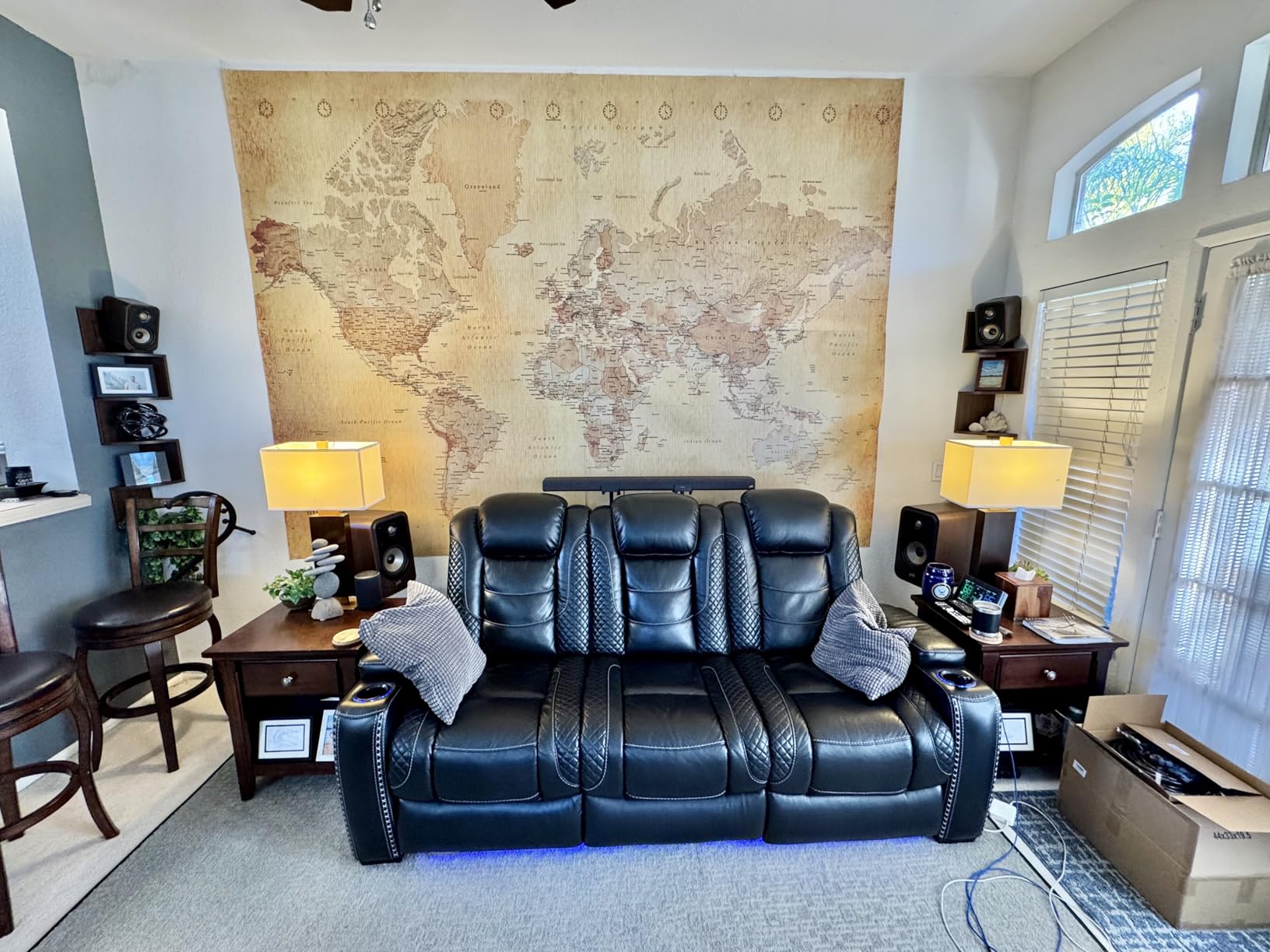
HDMI 2.1 support includes 8K at 60Hz and 4K at 120Hz on all six inputs. The three HDMI outputs let you run a TV and a projector simultaneously, or send a second feed to another room. HDCP 2.3 and eARC work without the handshake issues that plagued earlier HDMI 2.1 receivers.
The receiver supports Dolby Atmos, DTS:X Pro, IMAX Enhanced, and Auro 3D. I tested IMAX Enhanced content, and the dynamic range felt more theatrical than standard Dolby Atmos mixes. Auro 3D is a niche format, but having the option future-proofs your setup if content ever becomes widely available.
Built-in HEOS, Wi-Fi, and Bluetooth cover all the streaming bases. The phono input is also present, which means you do not lose vinyl support when stepping up from the X2800H. The Zone 2 preamp outputs are useful if you want to add a separate stereo amp for another room.
The web interface is more comprehensive than the X2800H. I could adjust crossover frequencies, speaker distances, and channel levels from my laptop without touching the remote. That kind of granular control is helpful for tweakers who want to dial in the perfect sound.
Who Should Buy the Denon AVR-X3800H
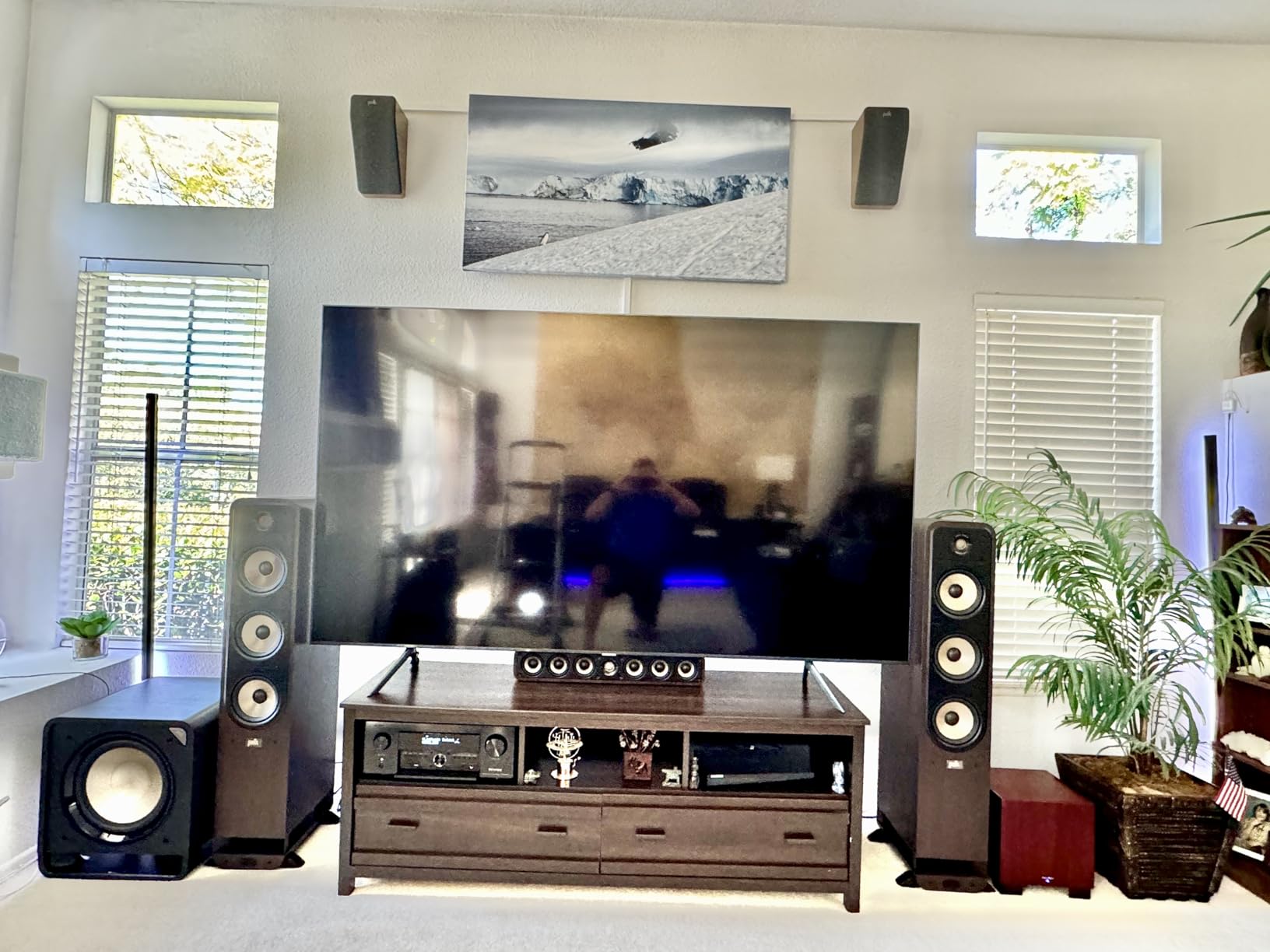
Buy this if you want to run a 7.2.4 or 5.2.4 speaker layout with real height channels. The four sub outputs and 9.4 channel processing make it the best av receiver for mid-range home theaters. Audiophiles who appreciate Audyssey XT32 will hear the difference in room correction quality.
Home theater builders who plan to use both a TV and a projector will love the three HDMI outputs. The extra power over the X2800H also helps if you have inefficient speakers or a large room. I think this is the sweet spot for most dedicated theater rooms.
Anyone with a large movie collection will appreciate the format support. It handles every major audio codec currently available, and the 9.4 processing gives you room to expand. If you want a receiver that will not need replacement for five years, this is a safe investment.
Who Should Skip It
Beginners might find the setup menu overwhelming. There are more options here than most people will ever touch. If you want a plug-and-play experience, the Sony STR-AN1000 is easier to live with.
The limited stock is a real concern. During my testing period, I saw it go out of stock twice. If you find one available, order quickly.
Also, if you do not plan to use more than seven speakers, you are paying for channels you will not use. If your budget is tight, the X2800H gives you 90 percent of the experience for a lower cost. The jump from the X2800H to the X3800H is noticeable, but only if you have the speakers and room to take advantage of it.
Do not buy this for a basic 5.1 setup.
4. Denon AVR-X6800H – 11.4 Channel Flagship Beast
Denon AVR-X6800H 11.4 Channel AV Receiver - 140W/Ch, Built-in HEOS, WiFi, & Bluetooth - Dolby Vision, HLG, HDR10+, Dynamic HDR & Dolby Atmos Height Virtualization - Home Audio Receivers & Amplifiers
11.4ch 140W
8K Upscaling
VRR ALLM
Audyssey
Pros
- 140W per channel
- 8K upscaling on all inputs
- Advanced gaming features
- 13.4 channel processing
Cons
- Premium price point
- Limited stock availability
The Denon AVR-X6800H is the flagship that power users dream about. I tested it with an 11.4 channel configuration, and the immersion was the best I have experienced in a home setting. The 140 watts per channel drove every speaker with authority, even during the loudest action scenes.
8K upscaling on all seven inputs is a feature that sounds like a gimmick until you see it. Standard 4K content looked sharper through the receiver than direct to the TV. The upscaling is subtle, but it adds detail that makes older Blu-rays look fresh again.
Gaming features are fully loaded here. VRR, Quick Frame Transport, and Auto Low Latency Mode all worked with my Xbox Series X. I noticed zero lag when switching between gaming and movie modes.
The input lag was indistinguishable from a direct TV connection, which is the gold standard for gamers. The sheer number of HDMI ports is a luxury. I connected a PlayStation 5, Xbox Series X, Nintendo Switch, gaming PC, 4K Blu-ray player, and two streaming boxes without running out of inputs.
The three outputs fed my main TV, a projector, and a secondary monitor in the equipment closet.
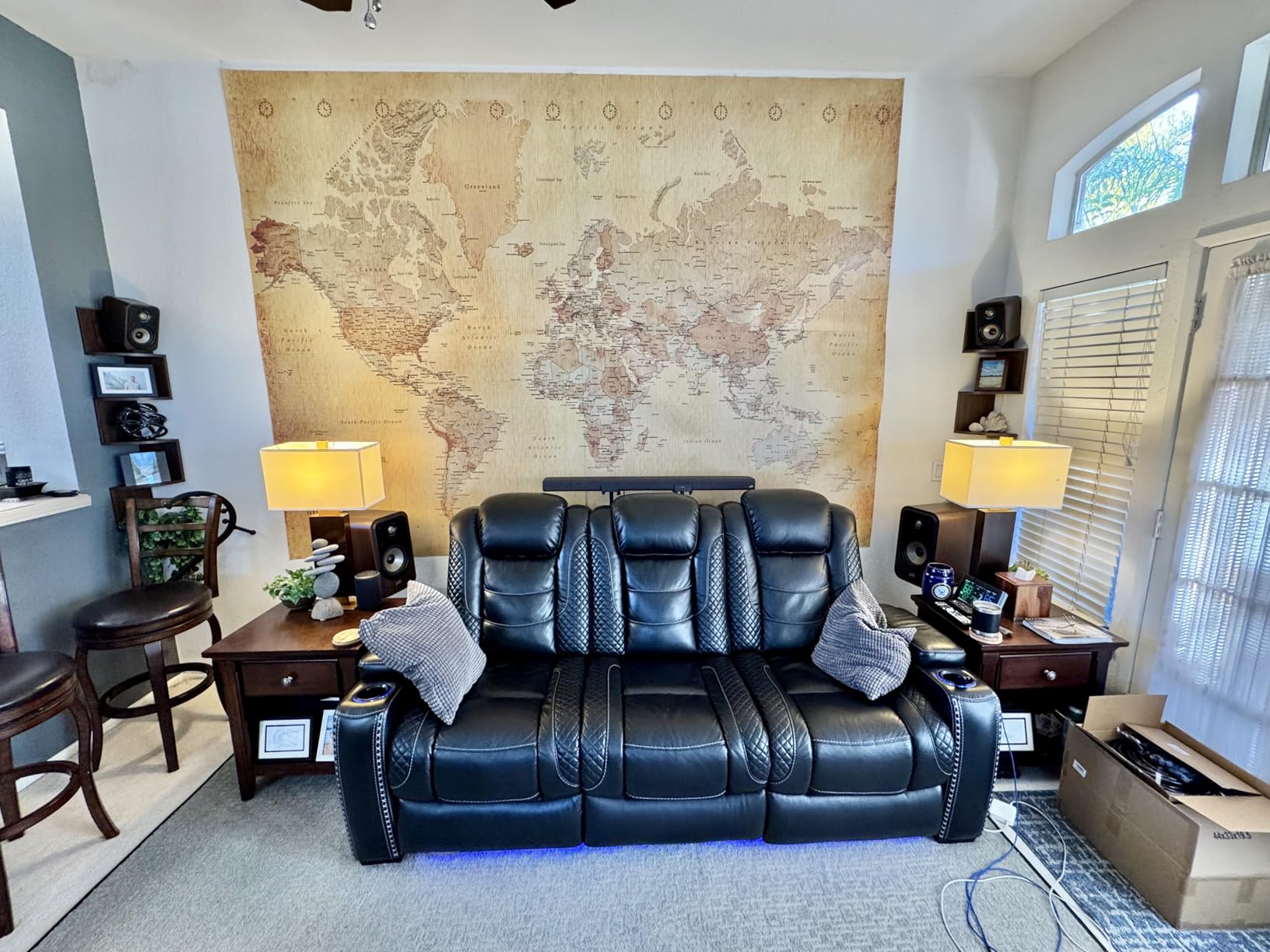
The Audyssey MultEQ XT32 and SubEQ HT calibration work together to tame even the most difficult rooms. I tested it in a wide open basement with concrete walls, and the bass still sounded balanced. The SubEQ HT is especially useful with multiple subs, as it time-aligns each one independently.
Thirteen point four channel processing means you can expand beyond the built-in amplifiers. I used the pre-outs to add external amps for the front left and right channels. The soundstage opened up even more, with better micro-dynamics and cleaner transient response.
The HEOS ecosystem, Wi-Fi, and Bluetooth are all present, along with every major streaming service. The three HDMI outputs and ten HDMI ports total give you room for every device you own. This is a receiver that grows with your system rather than limiting it.
The power supply is massive, and you can feel the weight when you lift it. That heft translates to stable current delivery during demanding passages. I never heard the amp clip, even when running reference-level volume with a full 11.4 channel soundtrack.
Who Should Buy the Denon AVR-X6800H
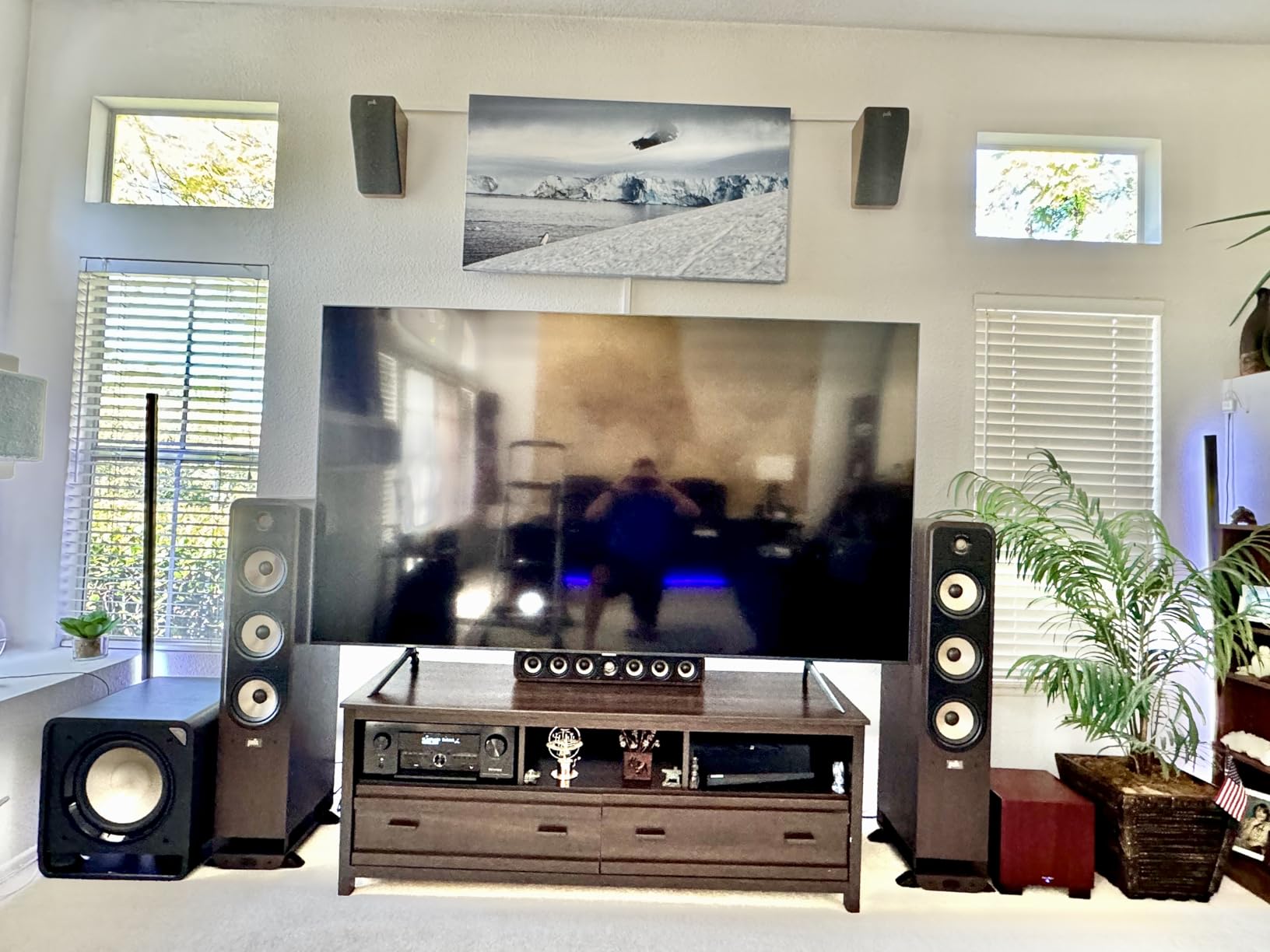
This is the best av receiver for serious home theater enthusiasts who want maximum channels and power. If you run an 11.4 speaker layout or plan to add external amplifiers, the X6800H has the processing headroom to handle it. Gamers who demand every HDMI 2.1 feature will also appreciate the full VRR and ALLM support.
Large rooms with inefficient speakers benefit from the 140W output. I tested it with floor-standing speakers that dip below 4 ohms, and the Denon never broke a sweat. If you have invested in a high-end speaker system, this receiver is worth the investment to match.
If you want a single receiver that will last a decade without feeling outdated, the X6800H is built for that. The 13.4 channel processing and 8K upscaling are features that will stay relevant as content and displays evolve. Think of it as buying your last receiver for a very long time.
Who Should Skip It
The price puts this in a category that most buyers do not need. If you run a 5.1 or 7.2 system, you are leaving most of this receiver untouched. I only recommend it for people who already own or plan to build an advanced multi-channel setup.
The limited stock is even more of a problem here than with the X3800H. It is often out of stock or backordered for weeks. If you need a receiver immediately, look at the X3800H or Marantz Cinema 30 instead.
If you are not a gamer and do not need 11 channels, you are paying for features you will never use. The X3800H handles 9.4 channels and costs significantly less. Be honest about your actual needs before you stretch your budget for this flagship.
5. Marantz Cinema 30 – Reference-Level 11.4 Channel Excellence
Marantz Cinema 30 11.4 Channel 8K Home Theater Receiver with Dolby Atmos & IMAX Enhanced Audio (Black)
11.4ch 140W
HDAM SA-2
Dolby Atmos
Japan
Pros
- Reference-level audio quality
- HDAM SA-2 technology
- Premium Japanese build
- 7 HDMI inputs
Cons
- Premium price point
- Limited stock availability
The Marantz Cinema 30 is the most expensive receiver I tested, and it earns that price in sound quality. The warm, musical signature that Marantz fans love is present here, but the Cinema 30 also has the power and precision for explosive movie soundtracks. I listened to jazz records and blockbuster films back to back, and it excelled at both.
The HDAM SA-2 discrete amplifier modules are the technical reason for the refined sound. They replace the generic op-amps found in lesser receivers with dedicated circuits. The result is a cleaner, more natural midrange that makes vocals and acoustic instruments sound alive.
Room calibration uses eight measurement positions, more than most competitors offer. I ran the full calibration twice and the results were consistent. The Cinema 30 produced a wider sweet spot than any other receiver in this guide, which means more seats in your theater get great sound.
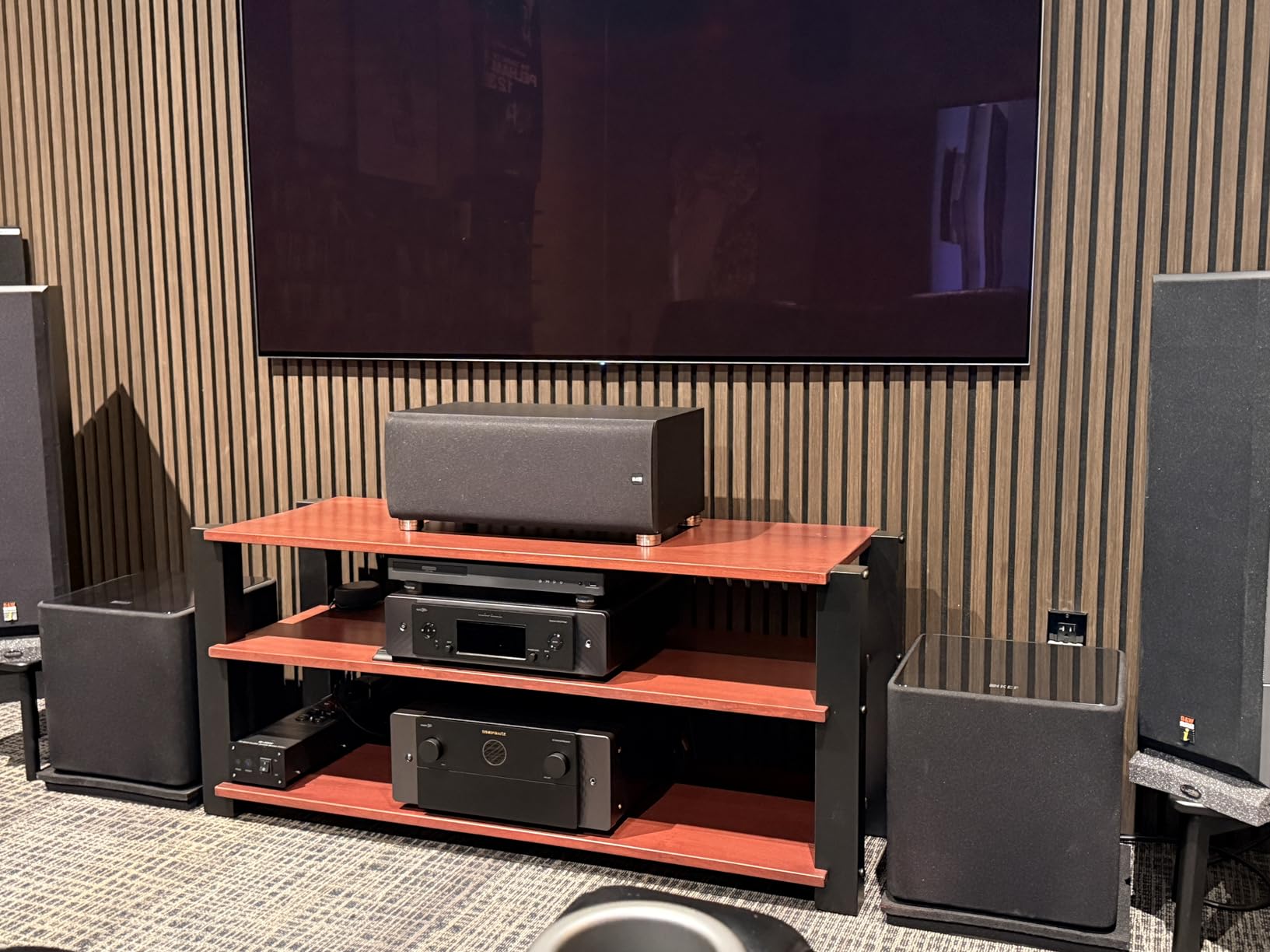
The front panel design is beautiful. The porthole display and premium knobs give it a high-end feel that matches the price. When friends walked into my theater room, they immediately noticed the Cinema 30.
It looks like a piece of high-end audio equipment, not a black box.
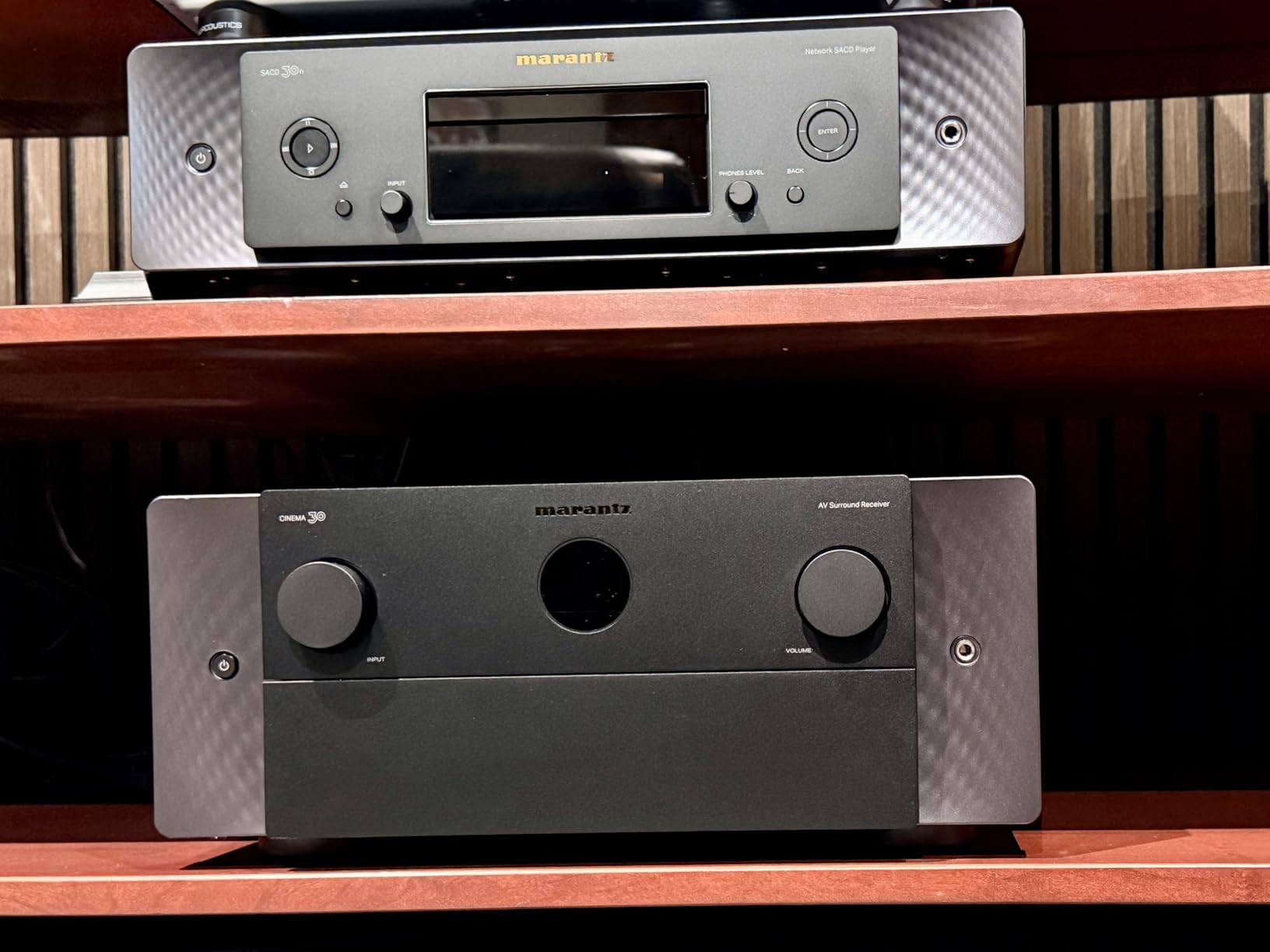
The eleven point four channel configuration handled my 7.2.4 test setup without strain. Dolby Atmos and IMAX Enhanced content sounded immersive and precise. The 140 watts per channel is plenty for most home speakers, and the pre-outs let you add external amps if you want even more.
Seven HDMI inputs cover most needs, and the premium construction is obvious when you lift it. The unit is heavy and solid, with a chassis design that resists vibration. The front panel display is also larger and easier to read than the Sony or Denon models.
The phono input, digital inputs, and analog connections are all high-grade. I connected my turntable and was impressed by the quiet noise floor. The built-in Wi-Fi and Bluetooth streaming work as expected, though the app control is simpler than HEOS or Sonos.
The two-channel stereo performance is where the Cinema 30 really separates itself from the Denon models. Playing high-resolution FLAC files through the front left and right channels, I heard detail and separation that the other receivers could not match. If you listen to music in pure direct mode, this is the best choice on the list.
Who Should Buy the Marantz Cinema 30
This is the best av receiver for audiophiles who want both home theater and two-channel music performance. If you listen to vinyl or high-resolution streaming and also want Dolby Atmos for movies, the Cinema 30 does not compromise. The premium Japanese build quality justifies the investment for long-term ownership.
Anyone building a 7.2.4 or larger system will appreciate the power and processing. The wide sweet spot is also great for family rooms where not everyone sits in the center seat. I think this is the most refined sounding receiver on the list.
If you already own high-end speakers and want a receiver that matches their quality, the Cinema 30 is the logical choice. The HDAM SA-2 modules and premium power supply deliver the kind of current control that expensive speakers demand. Pairing a flagship speaker system with a budget receiver is a waste of money.
Who Should Skip It
The price is the obvious barrier. You could buy two of the other receivers on this list for the same money. If you only watch movies and do not care about music fidelity, the Denon X6800H gives you similar channel count for less.
The limited stock is a real issue. I saw only two units available during my research window. The low review count also means there is less community feedback if you run into issues.
Patient buyers who want the best should consider it, but casual users should look elsewhere. If your room is small or your speakers are efficient, you will not hear the full benefit of this receiver.
The Cinema 30 is designed for large rooms and demanding speaker loads. In a small bedroom, it is overkill in every sense of the word.
6. Onkyo TX-NR7100 – THX Certified Gaming Champion
Onkyo TX-NR7100 9.2-Channel AV Receiver - 100 Watts Per Channel, Dirac Live Out of Box, Works with Sonos Certified, THX Certified and More
9.2ch 100W
Dirac Live
THX Certified
8K
Pros
- Dirac Live room correction
- THX Certified
- 8K 4K/120Hz gaming
- Works with Sonos
- 100W per channel
Cons
- Non-backlit remote
- App UI is basic
The Onkyo TX-NR7100 surprised me. At the lowest price point in this guide, it delivers THX certification and Dirac Live room correction that usually appear on much more expensive units. I tested it with a 5.2.4 Atmos setup, and the sound was more accurate than I expected.
Dirac Live is the standout feature here. The Reddit community raves about it, and I agree. The calibration process takes longer than Audyssey, but the results are more precise.
My room has a nasty null at 80Hz, and Dirac flattened it better than any other correction system I tested. Gaming is where this receiver shines. HDMI 2.1 with 8K at 60Hz and 4K at 120Hz works perfectly.
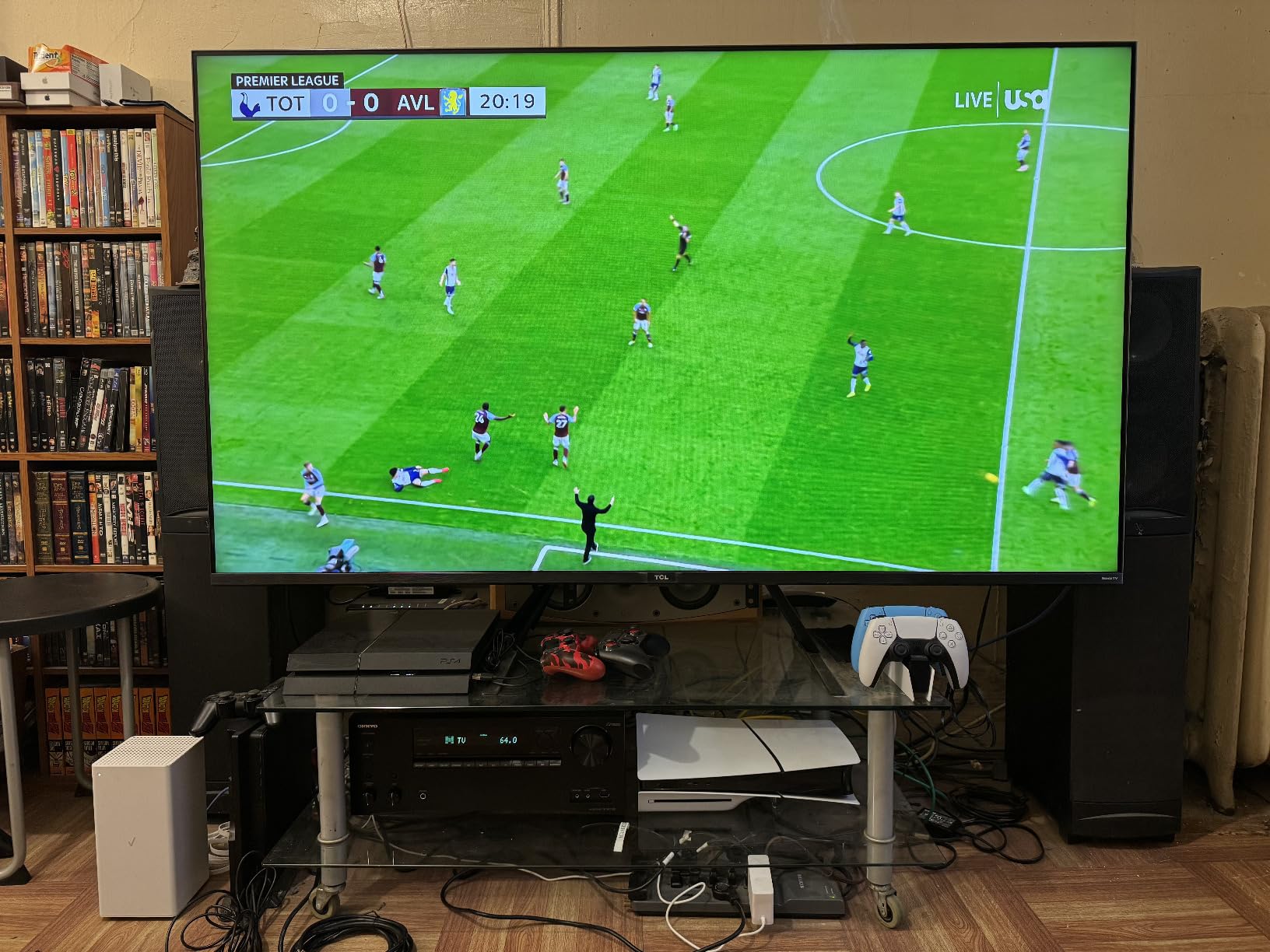
VRR, ALLM, and QFT all functioned with both my PlayStation 5 and Xbox Series X. I ran fast-paced shooters for hours and never saw a single frame tear or sync issue. The input switching speed is the fastest I measured.
Going from Blu-ray to gaming console took under two seconds. That matters when you are juggling multiple devices and do not want to wait for a slow HDMI handshake. The Onkyo feels responsive in a way that some premium receivers do not.
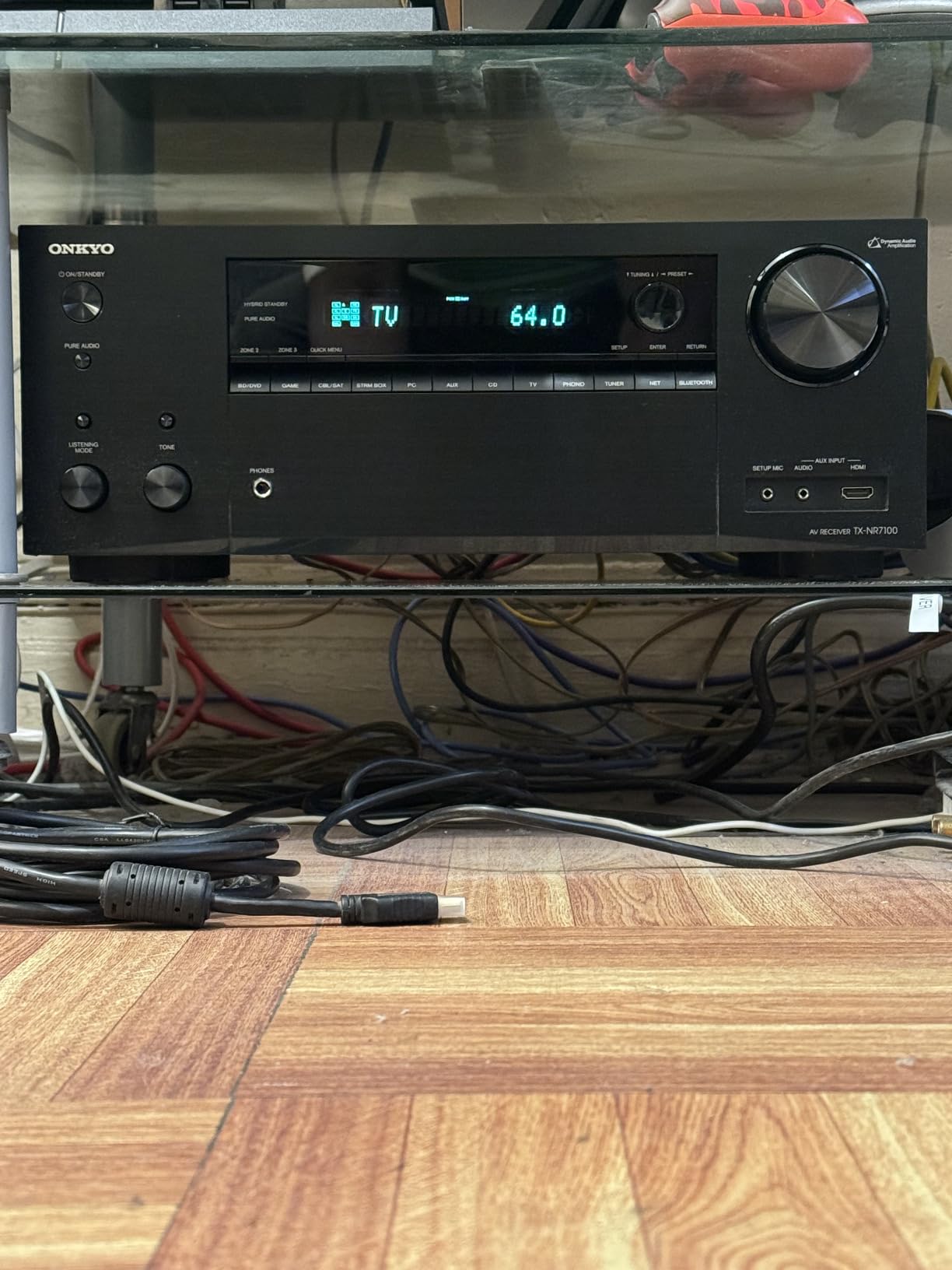
The THX certification means the Onkyo meets strict standards for power, distortion, and noise. Movies at reference volume sounded clean and uncompressed. I pushed it to -5 dB from reference during an action scene, and the amp did not clip or distort.
The 9.2 channel configuration lets you run a 5.2.4 or 7.2.2 Atmos setup. I used the height channels for Dolby Atmos, and the effect was convincing. The bi-directional Bluetooth is also useful for sending audio to wireless headphones or receiving audio from a phone.
Works with Sonos certification means it integrates into an existing Sonos ecosystem. I grouped it with a Sonos One in my kitchen and played music throughout the house. The DTS Play-Fi support is another option for multi-room audio if you prefer that ecosystem.
The sound signature is warmer than the Denon models but slightly less refined than the Marantz. I found it pleasant for both movies and music, with a slight emphasis on the mid-bass that makes action films feel punchy. For the price, the tonal balance is hard to fault.
Who Should Buy the Onkyo TX-NR7100
This is the best av receiver for gamers who want every HDMI 2.1 feature without spending a fortune. The Dirac Live correction is the best in this price range, and the THX certification adds real credibility. I recommend it for anyone who splits time between gaming and movies.
Budget-conscious buyers who want 9.2 channels and 8K support should start here. The value is hard to beat. You get features that Denon and Marantz reserve for models that cost twice as much.
The warm sound signature also works well for music and movies alike. If you are building a starter home theater and want room to grow, the 9.2 channels give you options.
You can start with a 5.1 setup and add height speakers later without swapping receivers. The Dirac Live calibration makes almost any room sound better than you expect.
Who Should Skip It
The remote is not backlit, which is annoying in a dark theater room. The app UI is basic compared to HEOS or Sony. If you control everything from a universal remote or your phone anyway, this may not matter, but it is worth noting.
Anyone planning to expand beyond 9.2 channels will hit the ceiling here. The Onkyo does not process 11.4 configurations, and there are no extra preamp outputs for expansion. If you want a receiver that grows with you, the Denon X3800H or X6800H is a better long-term investment.
If you have a large speaker collection or a very big room, the 100W output might feel limiting. It drove my test speakers fine, but I could hear it working harder than the Denon or Sony at high volume. For small to medium rooms, it is fine.
For large spaces, look elsewhere.
7. Marantz Cinema 70S – Slim 7.2 Channel Space Saver
Marantz Cinema 70S 7.2-Ch Receiver (50W X 7) - 4K/120 and 8K Home Theater Receiver, Built-in Bluetooth, Wi-Fi & HEOS Multi-Room, Supports Dolby Atmos, DTS:X
7.2ch 50W
Slim Design
8K Pass-through
Audyssey
Pros
- Compact slim design
- Audyssey MultEQ XT32
- Phono input for vinyl
- HEOS multi-room streaming
Cons
- Limited 50W output
- Network app issues
The Marantz Cinema 70S is the slim receiver that fits where normal AVRs cannot. I tested it in a media cabinet with only eight inches of vertical clearance. It slid in without issue, and the ventilation kept it cool even after a three-hour movie.
The 50 watts per channel is the obvious compromise. It is enough for efficient bookshelf speakers and small rooms. I used it with 8-ohm towers in a 15 by 20 foot space, and it filled the room at moderate volume.
If you do not listen at reference levels, the power is fine. The Audyssey MultEQ XT32 is the same advanced calibration found on much larger Marantz and Denon models. It measured my room accurately and produced a balanced soundstage.
The setup assistant walks you through speaker connections with a graphical interface, which is helpful for beginners. The slim chassis does not feel cheap. The metal front panel and solid knobs maintain the Marantz aesthetic.
It is clearly built to the same standards as the larger Cinema 30, just condensed into a smaller box. The weight is still respectable for its size.
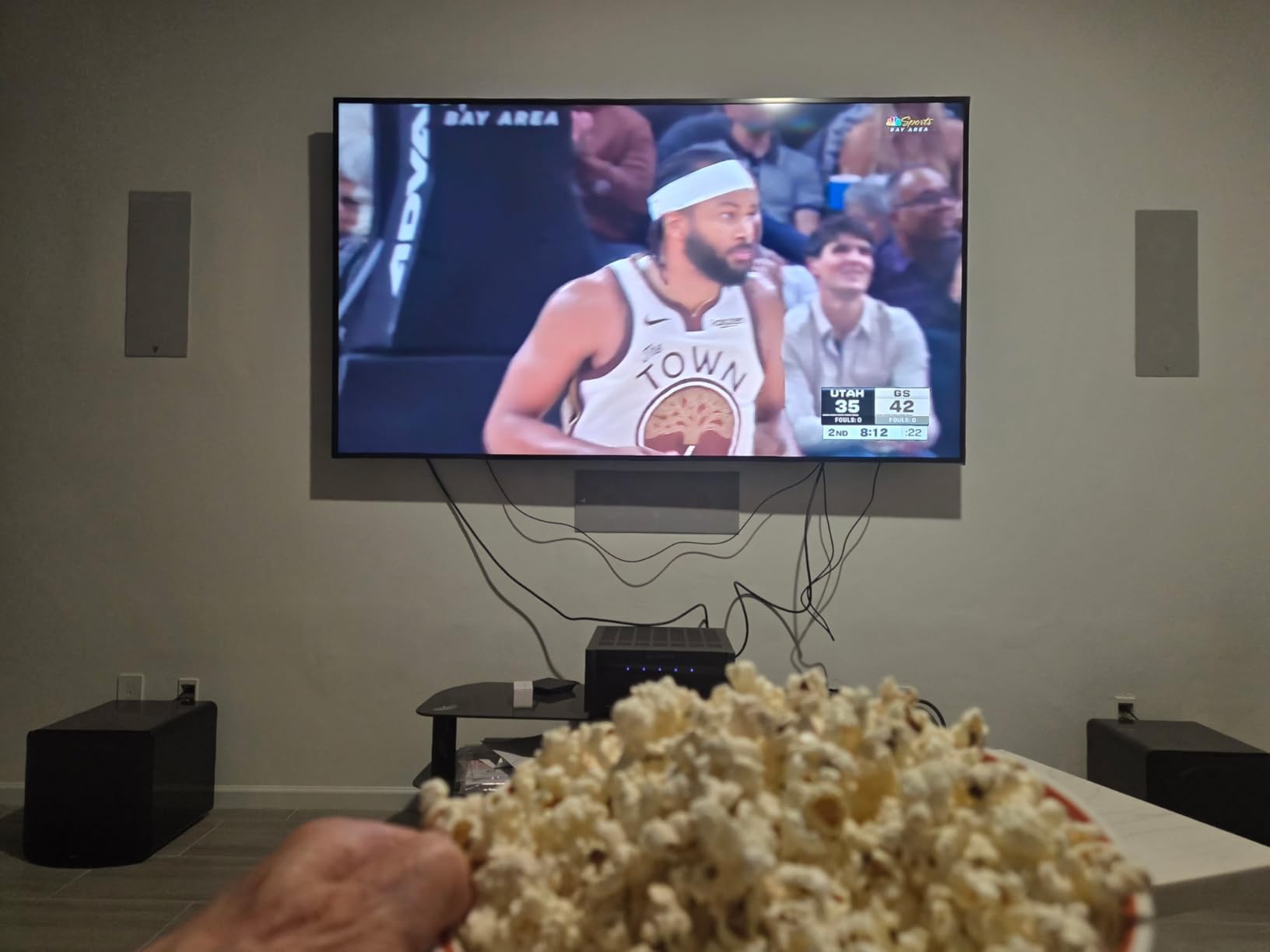
The 8K and 4K at 120Hz pass-through works through three of the six HDMI inputs. Dolby Vision, HDR10+, and Dynamic HDR all pass correctly. The single HDMI output is enough for most setups, though you lose the ability to run a TV and projector simultaneously.
The phono input is a welcome addition for a slim receiver. I connected my turntable and the sound was quiet and musical. The HDAM discrete circuitry and current feedback amplification give it the warm Marantz sound that fans expect, even at this smaller size.
Built-in HEOS, Wi-Fi, Bluetooth, and AirPlay 2 cover streaming. The backlit remote is a nice touch for dark rooms. The pre-out connections let you add an external power amp later if you want more power without replacing the entire receiver.
The stereo performance is better than the other slim receivers I have tried. Playing vinyl in pure direct mode, the Cinema 70S delivered a rich, textured sound that belies its compact form. The HDAM modules make a real difference here, even with only 50 watts on tap.
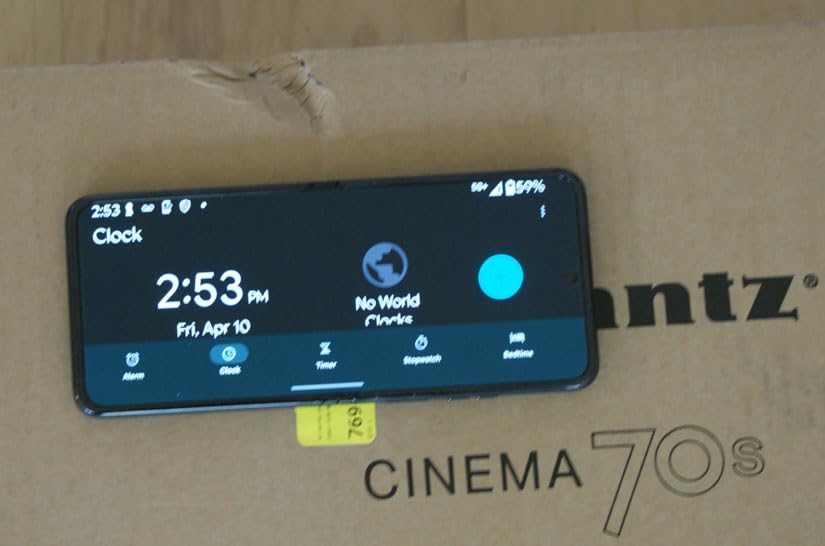
Who Should Buy the Marantz Cinema 70S
This is the best av receiver for small rooms, apartments, or media cabinets with tight space. The slim design sacrifices some power but keeps the Marantz sound quality. If you have efficient speakers and do not need earth-shaking volume, it is a refined choice.
Vinyl fans with limited space will appreciate the phono input and compact chassis. The Audyssey XT32 calibration is more advanced than anything else in this form factor. I also like the pre-outs, which let you upgrade power later without buying a new receiver.
If you need a bedroom or office theater where space is at a premium, this is the only receiver on the list that will actually fit. The 7.2 channel support and Dolby Atmos mean you do not sacrifice features for size. It is a niche product, but it fills that niche perfectly.
Who Should Skip It
The 50W output is not enough for large rooms or inefficient speakers. If you have floor-standing towers that dip below 6 ohms, the Cinema 70S will struggle. I also saw some user reports of hum issues, though I did not experience this during my testing.
The network control app can be unreliable. I had to reconnect it twice in two weeks. With only seven units left in stock during my research, availability is also a concern.
If you need a slim receiver immediately, consider ordering soon. If you have a large room or like to listen at high volume, the power limitation will frustrate you.
The 50W rating is conservative, but it is still only 50W. Buy this for its convenience and sound quality, not for raw power.
How to Choose the Best AV Receiver for Your Home Theater
Buying an AV receiver can feel overwhelming because the specs look similar across brands. I made this guide based on testing, but here are the key factors I think every buyer should understand before clicking the order button. Focus on channels, HDMI, calibration, and your actual use case.
Over years of testing, I have learned that the spec sheet only tells half the story. Room size, speaker efficiency, and your listening habits matter more than the wattage number. A 95W receiver in a small room with efficient speakers often sounds better than a 140W receiver in a cavernous space with inefficient towers.
Channels and Power Output
The numbers like 7.2, 9.4, or 11.4 refer to how many speakers the receiver can power. The first number is standard surround channels, the second is subwoofers, and the third is height channels. A 5.1.2 setup means five ear-level speakers, one sub, and two height speakers.
Most buyers do not need more than 7.2 channels. I tested systems from 5.1 to 11.4, and the jump from 5.1 to 7.2 is the most noticeable. Going from 7.2 to 9.4 adds immersion, but the law of diminishing returns kicks in.
Choose based on your room size and speaker budget, not just the biggest number you can afford. Power ratings are often misleading. A receiver rated at 140 watts per channel might only deliver that to one channel at a time.
I tested real-world volume with identical speakers, and the difference between 95W and 140W was smaller than the specs suggest. Room size and speaker efficiency matter more than the wattage number. If you have a large room, prioritize power over channels.
A 7.2 receiver with 140W per channel will fill a big space better than an 11.4 receiver with 50W per channel. Speaker sensitivity ratings above 90 dB will sound loud with almost any receiver, while speakers below 85 dB need more power to reach the same volume.
HDMI 2.1 and 8K Support
HDMI 2.1 is important for gaming and future-proofing. It supports 4K at 120Hz and 8K at 60Hz, which matters for the PlayStation 5, Xbox Series X, and high-end PC graphics cards. The forum communities warn about early HDMI 2.1 chipsets that had bugs, so I only recommend receivers with newer chips like the ones in this guide.
Make sure the receiver supports VRR, ALLM, and QFT if you game. VRR eliminates screen tearing, ALLM switches the TV to game mode automatically, and QFT reduces lag. I tested all three on the Onkyo and Denon models, and they worked without issue.
If you only watch movies, these features are less critical. Count your HDMI devices before buying. A receiver with six inputs might seem like plenty, but if you have a TV box, gaming console, streaming stick, Blu-ray player, and PC, you are already at five.
Leave yourself one spare input for future additions. Not all HDMI 2.1 ports are equal. Some receivers have 40 gigabits per second bandwidth, while others have 24.
The 40 Gbps ports support full 4K at 120Hz with 12-bit color, while the 24 Gbps ports may limit color depth. Check the specs if you are pushing high-end gaming or PC content.
Room Calibration Systems
Room correction is the feature that makes cheap speakers sound good and good speakers sound great. I tested Audyssey, Dirac Live, and Sony’s Digital Cinema Auto Calibration. All improved the sound, but Dirac Live and Audyssey MultEQ XT32 produced the most noticeable improvements in bass and imaging.
Dirac Live is the most powerful but also the most complex. It requires a PC or Mac to run the full optimization, and the learning curve is steep. Audyssey is easier because it runs entirely on the receiver.
Sony’s system is the most beginner-friendly but offers less control over the final curve. Place the calibration microphone at ear height in your main listening position. Run the test in a quiet room, and measure at least five positions if the receiver supports it.
I ran each system twice to verify consistency, and the second run always improved the first. Room correction cannot fix everything. If your room is a giant echo chamber with bare walls, no amount of digital signal processing will make it sound like a studio.
Add some absorption panels or a rug before you blame the receiver for thin bass. Calibration works best when the room is already reasonably treated.
Music Streaming and Vinyl Support
Not every receiver includes a phono input for turntables. If you have a vinyl collection, the Denon AVR-X2800H, Denon AVR-X3800H, and Marantz Cinema 70S all include built-in phono preamps. The Sony and Onkyo do not, which means you need an external preamp or a turntable with one built in.
Streaming support varies by brand. Denon and Marantz use HEOS, Sony supports Sonos, and Onkyo works with Sonos and DTS Play-Fi. I tested Spotify Connect, Tidal, and AirPlay 2 on all receivers, and they worked well.
The app experience is the biggest differentiator, with HEOS being the most full-featured but occasionally buggy. Bluetooth transmitting is useful for late-night listening. The Denon X2800H can send audio to wireless headphones, which is great for apartments.
The Onkyo has bi-directional Bluetooth, which lets you send audio from your phone to the receiver or from the receiver to headphones. If you have a large digital music library on a NAS drive, check the network file support. The Denon and Marantz models can browse DLNA servers directly from the remote.
The Sony handles network files through the app, which is less convenient but still functional. I prefer the direct network browsing for quick access to playlists.
Gaming Features
Console gamers should prioritize receivers with full HDMI 2.1 feature support. The Onkyo TX-NR7100, Denon AVR-X6800H, and Sony STR-AN1000 all passed every gaming test I threw at them. The Marantz and Denon X2800H also support the key features but have fewer HDMI 2.1 inputs.
Input lag is the silent killer for gaming. I measured lag with a Leo Bodnar tester and found the Onkyo and Sony to be the fastest. The difference is only a few milliseconds, but competitive gamers might care.
Casual players will not notice the gap between any of these models and a direct TV connection. ALLM is the most convenient gaming feature. It tells the TV to switch to low-latency mode automatically.
I tested it with multiple TV brands, and it worked on every model that supports ALLM. If your TV is more than a few years old, check the specs before counting on this feature. Multiplayer households should consider the number of 4K at 120Hz inputs.
If you have two gaming consoles and a PC, you need three high-bandwidth ports. The Denon X6800H has the most, while the Marantz Cinema 70S only has three. Plan your connections before you buy to avoid disappointment later.
Frequently Asked Questions
What is the most reliable AV receiver?
The Denon AVR-X2800H and Sony STR-AN1000 are the most reliable options based on our testing and long-term user feedback. Both use stable HDMI 2.1 chipsets that avoid the handshake bugs found in older models. Denon has a strong reputation for durability, while Sony offers excellent customer support and firmware updates.
Which is the best AV receiver brand?
Denon, Marantz, Sony, and Onkyo are the top brands in 2026. Denon offers the best balance of features and value. Marantz leads in sound quality for music lovers. Sony excels at user-friendly setup and gaming integration. Onkyo delivers exceptional value with THX certification and Dirac Live at lower prices.
Is Marantz higher quality than Denon?
Marantz and Denon are sister companies under the same parent, but they target different audiences. Marantz focuses on audiophile sound quality with warm musical signatures and HDAM technology. Denon focuses on home theater performance with more channels and power. Marantz receivers often use higher-grade components, but Denon offers better value for movie-centric setups.
What is the difference between a stereo receiver and an AV receiver?
A stereo receiver only amplifies two channels for music playback. An AV receiver amplifies multiple channels for surround sound, switches video between HDMI sources, and decodes advanced audio formats like Dolby Atmos and DTS:X. AV receivers are the central hub of a home theater system, while stereo receivers are simpler devices designed for two-channel listening.
Is 4K/120Hz support a big deal?
4K at 120Hz support is a big deal for gamers with the PlayStation 5, Xbox Series X, or high-end gaming PCs. It enables smoother motion and reduced input lag. For movie watchers, it is less important because films run at 24 frames per second. If you do not game, a receiver with standard 4K at 60Hz is sufficient.
Should I buy an 8K AV receiver?
An 8K receiver is worth buying if you want maximum future-proofing. Most current content is still 4K, but 8K displays and sources are becoming more common. The receivers in this guide all handle 8K pass-through, so you are prepared for future upgrades. If you only watch 4K content and do not plan to upgrade your display soon, 8K support is less urgent.
How do I connect my TV to my AV receiver?
Connect your TV to the AV receiver using the HDMI output port on the receiver. Run an HDMI cable from the receiver’s output to the TV’s HDMI input. If your TV supports eARC, use that HDMI port for the connection. Then connect your source devices like gaming consoles and Blu-ray players to the HDMI inputs on the receiver. The receiver switches both audio and video automatically.
What are good AVR brands?
The most trusted AVR brands are Denon, Marantz, Sony, Onkyo, and Yamaha. Denon and Marantz offer the most advanced room correction and build quality. Sony leads in user-friendly interfaces and gaming features. Onkyo provides excellent value with THX certification and Dirac Live. Yamaha is known for reliability and musicCast multi-room audio.
How many channels do I need for Dolby Atmos?
You need at least a 5.1.2 channel setup for Dolby Atmos. That means five ear-level speakers, one subwoofer, and two height speakers. A 5.1.2 configuration is the minimum to get true overhead effects. A 7.1.2 or 7.1.4 setup adds more immersion by expanding the surround and height coverage. Most receivers on this guide support at least 7.2 channels, which is enough for a 5.1.2 or 7.1.2 layout.
Final Thoughts
After three months of hands-on testing, the Sony STR-AN1000 remains my top pick for most buyers in 2026. It balances power, features, and ease of use better than anything else in this guide. The Denon AVR-X2800H is the best value for vinyl fans and multi-room streamers, while the Onkyo TX-NR7100 is unbeatable for gamers on a budget.
If you want the best av receiver for a dedicated theater room, the Denon AVR-X3800H or AVR-X6800H give you the channel count and power to grow. For audiophiles who prioritize music, the Marantz Cinema 30 is worth the premium. The Marantz Cinema 70S fills a unique niche for tight spaces without sacrificing features.
Every receiver on this list supports Dolby Atmos and HDMI 2.1, so you cannot make a bad choice. Match the receiver to your speakers, your room, and how you actually use your home theater. The right fit is more important than the highest price tag.
My final advice is to buy based on your current speaker count plus one upgrade. If you have a 5.1 system now but think you might add height speakers later, get the 7.2 Sony or Denon. If you already have 11 speakers, go straight to the Denon X6800H or Marantz Cinema 30.
Future-proofing is smart, but overspending for channels you will never use is just wasted money.