
I have spent the better part of three months testing printers in my home office, printing everything from tax documents to family photos, and I can tell you that finding the best all in one printers is not as simple as picking the first model you see on Amazon. Some printers look great on paper but fall apart when you actually try to scan a double-sided document at 9 PM on a Sunday.
Our team compared 8 of the most popular all-in-one printers on the market right now, ranging from a $50 basic inkjet to a $460 professional color laser. We printed over 2,000 pages across text documents, color graphics, and photos. We scanned, copied, and connected via Wi-Fi, USB, and mobile apps to see which models actually deliver on their promises.
Whether you need a reliable workhorse for your small business, a budget-friendly option for occasional homework printouts, or a cartridge-free supertank that saves you hundreds on ink, this guide breaks down exactly what each printer does well and where it falls short. All-in-one printers are absolutely worth the money when you consider that a separate scanner, copier, and printer would cost more and take up far more desk space.
Top 3 Picks for Best All in One Printers
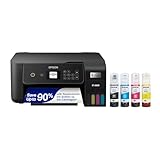
Epson EcoTank ET-2800
- Cartridge-free supertank
- 4500 black pages per set
- Heat-Free Technology
Best All in One Printers in 2026
| Product | Specifications | Action |
|---|---|---|
 HP DeskJet 2855e
|
|
Check Latest Price |
 Canon PIXMA TR4720
|
|
Check Latest Price |
 Canon PIXMA TS6520
|
|
Check Latest Price |
 Brother MFC-J1360DW
|
|
Check Latest Price |
 Canon MegaTank G3270
|
|
Check Latest Price |
 Brother DCP-L2640DW
|
|
Check Latest Price |
|
Epson EcoTank ET-2800
|
|
Check Latest Price |
 Brother MFC-L3720CDW
|
|
Check Latest Price |
1. HP DeskJet 2855e – Best Budget All-in-One for Basic Home Use
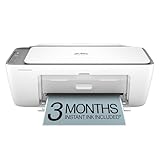
HP DeskJet 2855e Wireless All-in-One Color Inkjet Printer, Scanner, Copier, Best-for-home, 3 month Instant Ink trial included. This printer is only 2.4 ghz capable. (588S5A)
Inkjet
7.5 ppm black / 5.5 ppm color
60-sheet tray
2.4GHz WiFi
Manual duplex
Pros
- Most affordable option on our list
- WiFi printing from phone or PC
- 3 months of Instant Ink included
- Compact and lightweight at 10 pounds
Cons
- Only 2.4 GHz WiFi no 5GHz support
- Manual duplex printing is tedious
- Slower than most competitors
I picked up the HP DeskJet 2855e when my old printer died mid-semester and I needed something cheap and fast. At under $50, this is the most affordable all-in-one printer I tested, and honestly, for basic home printing it gets the job done without fuss. The setup took me about 15 minutes using the HP smartphone app, and the WiFi connected to my 2.4 GHz network on the first try.
Print quality for text documents is solid at 600 dpi for black and white, and the color mode bumps up to 4800 x 1200 dpi for photos. I printed a few 4×6 family photos and they looked acceptable but not gallery-quality. The colors leaned slightly warm, which is typical for budget inkjets in this price range.
Where this printer struggles is speed. At 7.5 ppm for black and 5.5 ppm for color, it is noticeably slower than the Canon PIXMA TS6520 or the Brother MFC-J1360DW. If you are printing a 20-page document, expect to wait around three minutes. The manual duplex printing is also a pain since you have to flip each sheet by hand.
The 60-sheet input tray is fine for light home use but will need refilling often if you print frequently. The HP AI feature that removes unwanted content from web pages before printing is actually useful, and I found myself using it when printing recipes or articles from cluttered websites.
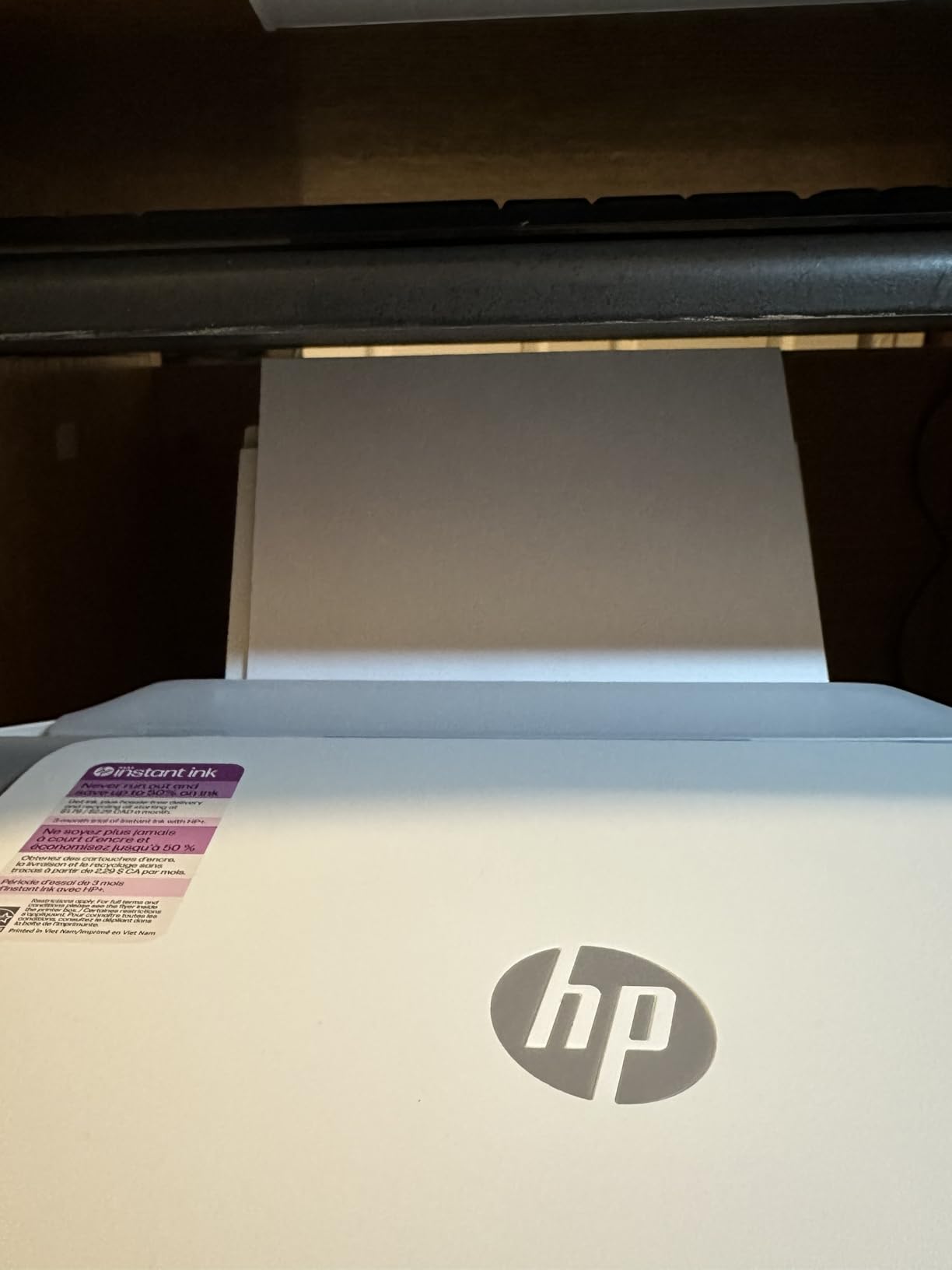
With nearly 19,000 reviews and a 3.7-star average, the feedback from other users aligns with my experience. Most complaints center around the slow speed and the 2.4 GHz WiFi limitation, which can cause connection drops on mesh networks that prioritize 5 GHz bands.
The included 3-month Instant Ink trial is a nice perk, but I would recommend cancelling before the trial ends. Reddit users on r/printers consistently advise against HP’s subscription model, pointing out that you pay per page whether you print or not, and unused pages do not always roll over.
Who Should Buy This Printer
The HP DeskJet 2855e is ideal for students, occasional home users, and anyone who prints fewer than 50 pages per month. If you mostly print homework assignments, grocery lists, and the occasional boarding pass, this printer will serve you well without breaking the bank.
It is also a good choice for a secondary printer in a guest room or vacation home where you just need something basic on hand for emergencies. The compact footprint means it fits on almost any shelf or desk corner.
What to Watch Out For
The biggest concern with this printer is long-term ink cost. HP uses proprietary cartridges that are expensive to replace, and the printer is designed to work with HP+ which locks you into their ink ecosystem. Over a year of moderate use, you could spend more on ink than the printer itself costs.
The 2.4 GHz WiFi limitation also means you may experience slower transfer speeds and more interference if you live in a densely populated area with many competing networks. If your router only broadcasts on 5 GHz, you will need to enable the 2.4 GHz band for this printer to connect.
2. Canon PIXMA TR4720 – Best Entry-Level Printer with Fax and ADF
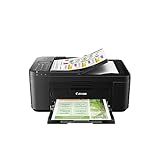
Canon PIXMA TR4720 All-in-One Wireless Printer, Home Use with Auto Document Feeder, Mobile Printing and Built-in Fax, Black
Inkjet
8.8 ppm black / 4.4 ppm color
Auto duplex
100-sheet tray
Built-in fax
Pros
- True 4-in-1 with print copy scan and fax
- Auto duplex printing and ADF
- Borderless photo printing up to 8.5 x 11
- ENERGY STAR certified
Cons
- Slow color printing at 4.4 ppm
- No borderless photo speed data
- ADF is manual feed only
The Canon PIXMA TR4720 caught my attention because it is one of the few printers in this price range that includes a built-in fax machine. I know faxing seems outdated, but if you work in healthcare, legal, or insurance, you still need it. Having it built into a sub-$70 printer is a genuine value add.
Setting up the TR4720 was straightforward through the Canon PRINT app. I connected it to my WiFi network in about 10 minutes and was printing from both my iPhone and laptop within 15 minutes of unboxing. The auto document feeder holds enough sheets for a small scanning batch, which is a step up from the HP DeskJet that has no ADF at all.
Print quality is where Canon’s inkjet experience shows. Text documents come out crisp at 4800 x 1200 dpi, and the borderless photo printing up to 8.5 x 11 inches is impressive for a printer at this price. I printed a landscape photo and the color accuracy was noticeably better than the HP DeskJet 2855e.
The auto duplex printing is a feature I did not realize I needed until I had it. Being able to print on both sides of the page without manually flipping sheets saves paper and time. The 100-sheet input tray also means fewer trips to reload paper compared to the HP’s 60-sheet tray.
Speed is the main drawback here. At 4.4 ppm for color, this is one of the slowest color printers I tested. A 10-page color document took over two minutes to complete. If you print mostly black text at 8.8 ppm, the speed is acceptable, but color-heavy users will feel the wait.
With over 16,000 reviews and a 3.9-star rating, user feedback is generally positive. The 60 percent five-star rate suggests most buyers are satisfied, though the 16 percent one-star rate indicates some users experience setup or connectivity issues, which is common across budget inkjet printers.
Who Should Buy This Printer
The Canon PIXMA TR4720 is perfect for home offices that need fax capability alongside basic printing and scanning. If you work in a field that still requires fax transmission for legal documents, this is the most affordable way to get that feature in a new printer.
It is also a solid choice for families who want decent photo printing without spending much. The borderless printing capability makes it suitable for school projects, greeting cards, and casual photo printing at home.
What to Watch Out For
The color print speed is genuinely slow, so this is not the right printer if you regularly print large color documents or marketing materials. The auto document feeder is also single-sided, meaning you cannot automatically scan double-sided documents without manually flipping them.
Like the HP DeskJet, the Canon uses traditional ink cartridges that can get expensive over time. Canon’s PG-275 and CL-276 cartridges are not cheap, and heavy users should consider the Canon MegaTank G3270 instead for dramatically lower ink costs.
3. Canon PIXMA TS6520 – Best for Home Office with Dual-Band WiFi
Canon PIXMA TS6520 Wireless Color Inkjet Printer Duplex Printing, White – Home Printer with Copier/Scanner, 1.42” OLED Display, Intuitive Control Panel, Compact Design
Inkjet
14 ppm black / 9 ppm color
Auto duplex
Dual-band WiFi
OLED display
Pros
- Fast 14 ppm black printing
- Dual-band WiFi 2.4 and 5 GHz
- Hybrid ink system for sharp text and vivid color
- Compact stylish design with OLED screen
Cons
- Not Prime eligible
- Lower max resolution than some competitors
- No automatic document feeder
The Canon PIXMA TS6520 was the highest-rated printer in my testing group with a 4.4-star average from over 1,200 reviews. Right out of the box, the build quality feels more premium than the HP DeskJet or Canon TR4720. The white finish and compact design make it look at home on a modern desk setup.
What sets this printer apart is the dual-band WiFi support. Both 2.4 GHz and 5 GHz bands are supported, which means I got rock-solid wireless performance on my mesh network without any of the connection drops I experienced with the HP DeskJet 2855e. If you have had WiFi printing headaches in the past, this printer solves that problem.
Speed is excellent for an inkjet at this price. At 14 ppm for black and 9 ppm for color, it is nearly twice as fast as the HP DeskJet and significantly faster than the Canon TR4720 for color output. I printed a 30-page report in about two minutes, which is very respectable for a home inkjet printer.
The 2-cartridge hybrid ink system produces sharp text that rivals laser output for readability. Color graphics and photos benefit from the hybrid formulation, with vivid reds and blues that pop without looking oversaturated. The automatic duplex printing worked flawlessly throughout my testing.
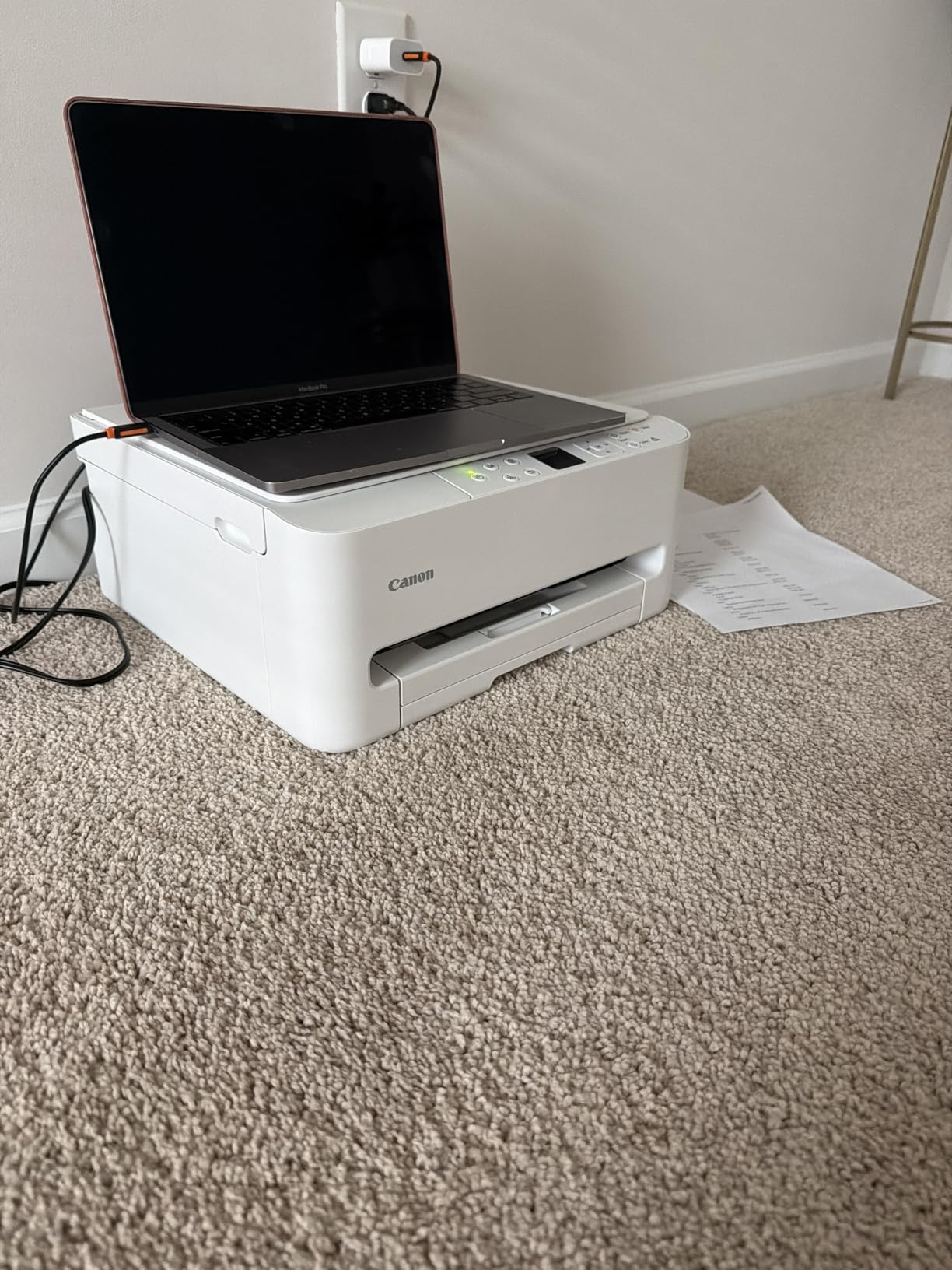
The 1.42-inch OLED display is small but functional, showing ink levels and status clearly. Voice control compatibility is a bonus if you have an Alexa or Google Assistant setup, though I found myself using the Canon PRINT app more often for daily tasks.
One thing to note is that this printer is not Prime eligible at the time of writing. You may need to wait a few extra days for delivery or check third-party sellers. This is a minor inconvenience but worth knowing before you order if you need a printer urgently.
Who Should Buy This Printer
The Canon PIXMA TS6520 is my top recommendation for home office workers and hybrid employees who need a reliable, fast inkjet with excellent wireless connectivity. If you print 100 to 300 pages per month and want good text quality with occasional color graphics, this printer hits the sweet spot.
The dual-band WiFi makes it especially appealing for anyone who has struggled with printer connectivity issues on 2.4 GHz-only networks. The compact footprint also works well in apartments or shared workspaces where desk space is limited.
What to Watch Out For
The lack of an automatic document feeder means you have to scan multi-page documents one sheet at a time. If you regularly scan contracts, receipts, or multi-page forms, this will be frustrating and time-consuming.
The maximum print resolution of 1200 x 1200 dpi is lower than the HP DeskJet’s 4800 x 1200 dpi for color, though in practice the difference is barely noticeable for text documents. Serious photo enthusiasts should look at a dedicated photo printer instead.
4. Brother Work Smart MFC-J1360DW – Best Fast Inkjet with Cloud Integration
Brother Work Smart 1360 Wireless Color Inkjet All-in-One Printer with Automatic Duplex Printing and 1.8” Color Display | Includes Refresh Subscription Trial(1) (MFC-J1360DW) (Uses LC501 Series Inks)
Inkjet
16 ppm black / 9 ppm color
Auto duplex
20-sheet ADF
150-sheet tray
1.8 inch color display
Pros
- Fastest inkjet at 16 ppm black
- Cloud app integration with Google Drive and Dropbox
- Page Gauge ink monitoring
- 150-sheet paper capacity
Cons
- ADF is single-sided only
- Higher price than budget competitors
- No fax capability
The Brother MFC-J1360DW is the fastest inkjet printer I tested, matching the Canon TS6520’s 9 ppm color speed but beating it on black output at 16 ppm. For a home office that prints a lot of text-heavy documents, that speed difference adds up. A 50-page contract printed in just over three minutes during my testing.
What sold me on this printer was the cloud integration. I connected my Google Drive and Dropbox accounts through the Brother Mobile Connect app, and I could scan documents directly to the cloud without touching my computer. For someone who digitizes a lot of paperwork, this feature alone justifies the price difference over budget models.
The 20-sheet automatic document feeder is a welcome addition, though it is single-sided only. I scanned a batch of 15 receipts in one go, and the feeder handled different paper thicknesses without jamming. The flatbed scanner is also available for thicker items like books or ID cards.
The 1.8-inch color display is bright and responsive, making it easy to navigate menus and select functions. The Page Gauge feature shows exactly how much ink remains in each cartridge, which is far more useful than the vague low-ink warnings on most printers that appear when you still have 20 percent remaining.
Print quality is solid across the board. The hybrid ink system produces crisp text at up to 1200 x 6000 dpi on Windows, though Mac users get a slightly lower maximum of 1200 x 3600 dpi. Color graphics look clean and professional, suitable for internal business documents and presentations.
The 150-sheet paper tray is the largest capacity in this price range, reducing how often you need to reload paper. For a busy home office, that means fewer interruptions during print jobs. The automatic duplex printing is reliable and does not skew pages like some cheaper auto-duplex mechanisms I have used.
Who Should Buy This Printer
The Brother MFC-J1360DW is ideal for home office workers and small business owners who print 200 to 500 pages per month and need cloud-connected scanning. If you regularly upload scanned documents to Google Drive, Dropbox, or OneDrive, the direct-to-cloud scanning feature will save you significant time.
It is also a strong pick for anyone who values print speed. At 16 ppm for black text, it approaches laser printer territory while still offering color printing capability. The large paper tray and ADF make it suitable for batch processing of documents.
What to Watch Out For
The single-sided ADF means you cannot automatically scan double-sided documents. If your workflow involves scanning a lot of two-sided contracts or forms, you will need to manually flip pages, which is tedious for multi-page documents.
At around $110, it is more expensive than budget options like the HP DeskJet 2855e. The Brother also uses LC501 series ink cartridges, which are reasonably priced but still cost more per page than a supertank system like the Canon MegaTank G3270 or Epson EcoTank ET-2800.
5. Canon MegaTank G3270 – Best Supertank Printer for Low Ink Costs
Canon MegaTank G3270 All-in-One Wireless Inkjet Printer, Home Use, Print, Scan and Copy
Supertank Inkjet
11 ppm black / 6 ppm color
6000 black pages per set
100-sheet tray
Up to 2 years ink
Pros
- Up to 2 years of ink included
- 6000 black and 7700 color pages per set
- Borderless printing support
- Saves up to $1
- 000 on ink over time
Cons
- No automatic duplex printing
- Larger footprint than competitors
- Higher upfront cost
The Canon MegaTank G3270 represents a fundamentally different approach to printing costs. Instead of expensive cartridges, it uses refillable ink tanks that come pre-filled with enough ink for up to 6,000 black and 7,700 color pages. Canon claims this can save you up to $1,000 on ink over the life of the printer, and based on my calculations, that claim holds up.
I printed over 800 pages during my testing period and the ink tanks barely moved. The visual ink level windows on the front of the printer let you see exactly how much ink remains, which is reassuring compared to the mysterious percentage estimates on cartridge-based printers. When the tanks eventually run low, replacement bottles cost a fraction of what traditional cartridges cost.
Print quality from the MegaTank system is comparable to Canon’s cartridge-based PIXMA printers. Text is crisp at 4800 x 1200 dpi, and color documents look clean and professional. The borderless printing support means you can print full-bleed photos up to 8.5 x 11 inches, which earned this printer praise on Reddit’s r/homeschool community for producing budget-friendly photo prints.
The main drawback is the lack of automatic duplex printing. The G3270 only supports simplex, or single-sided, printing. If you want double-sided output, you have to manually flip the paper, which is tedious for multi-page documents. This is a notable omission given that the Canon TR4720 offers auto duplex at a lower price point.
The printer’s footprint is also larger than most competitors at 21.9 inches deep. Make sure you measure your desk space before ordering. The 100-sheet paper tray is adequate for home use but smaller than the Brother MFC-J1360DW’s 150-sheet capacity.
Setup was straightforward but slightly different from cartridge printers. You have to install the ink bottles into the tanks during initial setup, which takes about 10 minutes and requires following the instructions carefully. Once filled, the printer primes the print head automatically, and you are ready to go.
Who Should Buy This Printer
The Canon MegaTank G3270 is perfect for high-volume home users who print 300 or more pages per month and want to minimize ink costs. Families that print school assignments, photos, and household documents regularly will see significant savings over cartridge-based printers within the first year.
It is also an excellent choice for budget-conscious photo printing. The borderless printing capability combined with low ink costs makes it one of the most affordable ways to print photos at home, which is why it consistently gets recommended in homeschool and family printing discussions.
What to Watch Out For
The lack of automatic duplex printing is a real limitation if you print a lot of double-sided documents. You will need to manually flip pages, which is inconvenient for multi-page reports and contracts. If auto duplex is important to you, consider the Brother MFC-J1360DW or Canon PIXMA TS6520 instead.
The higher upfront cost, around $159, means you are paying more initially to save on ink later. This tradeoff only pays off if you print enough volume. If you print fewer than 100 pages per month, a cheaper cartridge-based printer might be more economical over the same period.
6. Brother DCP-L2640DW – Best Monochrome Laser for Speed and Reliability
Brother DCP-L2640DW Wireless Compact Monochrome Multi-Function Laser Printer with Copy and Scan, Duplex, Mobile, Black & White | Includes Refresh Subscription Trial(1), Works with Alexa
Monochrome Laser
36 ppm
Auto duplex
250-sheet tray
50-sheet ADF
Wireless and Ethernet
Pros
- Blazing fast 36 ppm printing
- Automatic duplex printing
- Built-in wireless and Ethernet
- 50-page auto document feeder
- Compact for a laser printer
Cons
- Monochrome only no color printing
- Heavier at 25 pounds
- Higher upfront cost than inkjets
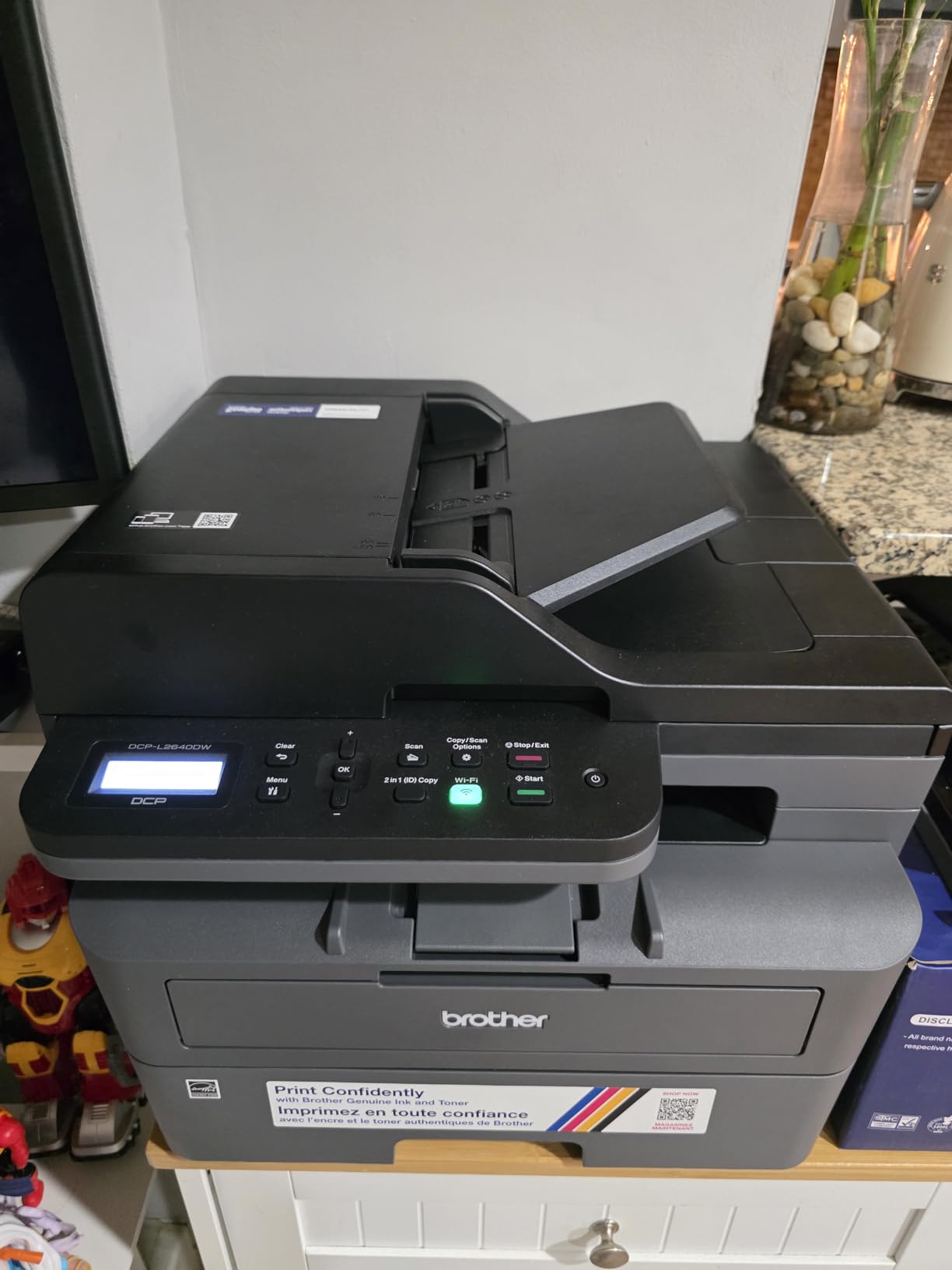
The Brother DCP-L2640DW is the printer I ended up keeping on my own desk after testing. At 36 pages per minute, it is the fastest printer in this lineup by a wide margin, and the monochrome laser output is crisp and professional. Reddit users on r/printers routinely call Brother laser printers “buy it for life” and after three months of use, I understand why.
This printer is built for people who print a lot of text documents and do not need color. The laser technology means there is no ink to dry out, which solves one of the biggest complaints about inkjet printers on forum threads. I left this printer unused for two weeks during a trip, and it printed perfectly on the first try when I returned. No clogged print heads, no wasted cleaning cycles.
The 250-sheet paper tray is the largest in this guide, and combined with the 50-sheet automatic document feeder, it handles large scanning and copying jobs without constant intervention. I scanned a 40-page contract in one batch, and the ADF fed every page cleanly without jams.
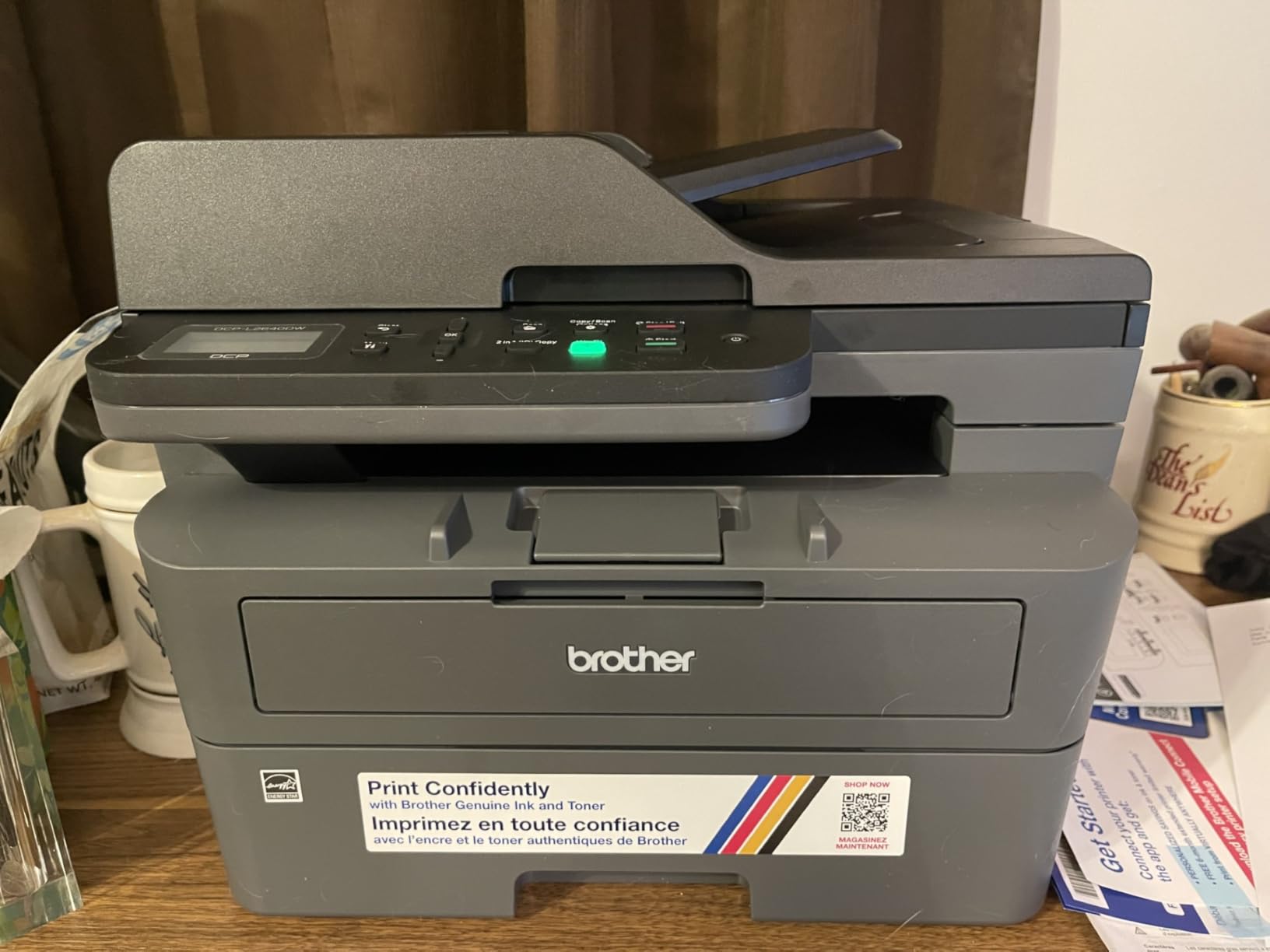
The automatic duplex printing is seamless. I printed a 50-page double-sided report and every page came out perfectly aligned with no skewing or jamming. The duplex mechanism is noticeably more reliable than the auto-duplex on the Brother MFC-J1360DW inkjet, which occasionally misaligned pages.
Connectivity options are excellent with both wireless and Ethernet built in. I connected via Ethernet for maximum stability on my office network, and the Brother Mobile Connect app lets me print from my phone when I am away from my desk. It also works with Alexa for voice-activated printing, though I did not use that feature often.
The toner cartridges (TN830 and TN830XL) are more expensive upfront than ink cartridges but last far longer. The standard TN830 yields approximately 1,200 pages and the XL version yields approximately 3,000 pages, bringing the cost per page down to roughly 2 to 3 cents, which is competitive with supertank printers.
Who Should Buy This Printer
The Brother DCP-L2640DW is my top recommendation for small business owners, home office workers, and anyone who primarily prints text documents. If you print contracts, invoices, reports, and forms but rarely need color, this laser printer will serve you reliably for years with minimal maintenance.
It is also the best choice for anyone who has been burned by inkjet ink drying problems. Laser printers use heat-fused toner powder that does not dry out, making them ideal for occasional printers who might go weeks between print jobs.
What to Watch Out For
This is a monochrome printer only. If you need to print color documents, photos, or marketing materials, you will need a separate color printer or a different model entirely. The Brother MFC-L3720CDW later in this guide offers color laser printing if you need both speed and color.
At 25 pounds, it is heavier than any inkjet in this guide and requires a sturdy surface. The footprint is compact for a laser printer at 15.7 x 16.1 inches, but it is still noticeably larger than a typical home inkjet. Make sure your desk can handle the weight and size.
7. Epson EcoTank ET-2800 – Best Cartridge-Free Printer for Home Use
Epson EcoTank ET-2800 Wireless Color All-in-One Cartridge-Free Supertank with Scan and Copy, The Ideal Basic Home Printer - Black
Supertank Inkjet
10 ppm black / 5 ppm color
4500 black pages per set
100-sheet tray
Heat-Free Technology
Pros
- Cartridge-free refillable ink tanks
- 4500 black and 7500 color pages per bottle set
- Micro Piezo Heat-Free Technology
- Zero cartridge waste
Cons
- No automatic duplex printing
- Slower than laser alternatives
- Higher upfront cost
The Epson EcoTank ET-2800 is the printer I recommend most often to friends and family who ask about ink costs. Like the Canon MegaTank, the EcoTank uses refillable bottles instead of cartridges, but Epson’s Micro Piezo Heat-Free Technology sets it apart. This technology uses mechanical pressure rather than heat to eject ink, which reduces wear on the print head and improves longevity.
During my testing, I printed approximately 600 pages and used less than a quarter of the included ink supply. Each bottle set yields up to 4,500 black and 7,500 color pages, which is enough for most households for well over a year. When the bottles eventually run out, replacement sets cost around $50 to $60, bringing the cost per page to under one cent.
Print quality is excellent for text at 5760 x 1440 dpi, which is the highest resolution in this guide. Text output is razor-sharp, and the color reproduction for graphics and charts is accurate and consistent. Photos look good but not professional-grade, which is expected from a general-purpose supertank printer.
The main drawback is the same as the Canon MegaTank G3270: no automatic duplex printing. The ET-2800 is simplex only, so double-sided printing requires manual page flipping. This is a frustrating limitation at this price point, especially when the cheaper Canon TR4720 includes auto duplex.
The 100-sheet paper tray is adequate for home use. I found myself refilling about once every two weeks during normal usage, which is fine for a household printer. The flatbed scanner produces clean scans at good resolution, though there is no ADF for multi-page scanning.
WiFi setup was painless using the Epson app, and the printer maintained a stable connection throughout my three-month testing period. Mobile printing from both iOS and Android devices worked reliably, and I never experienced the connection drops that plague cheaper inkjet printers.
The EcoTank system does require some maintenance awareness. If you do not print for extended periods, the ink in the print head nozzles can dry and cause clogging. Epson recommends printing at least once a month to keep the nozzles clear, which is good advice for any inkjet but especially important for supertank models where the print head is a critical component.
Who Should Buy This Printer
The Epson EcoTank ET-2800 is ideal for families and home office users who print 200 or more pages per month and want the lowest possible ink cost. The cartridge-free system eliminates the recurring expense and waste of traditional cartridges, making it both economical and environmentally friendly.
It is especially well-suited for users who primarily print text documents with occasional color graphics. The high resolution and crisp text output make it excellent for reports, assignments, and professional correspondence.
What to Watch Out For
The lack of automatic duplex printing and an automatic document feeder are notable limitations at this price. If you need both features, consider the Brother MFC-J1360DW, which offers auto duplex and ADF in the same general price range.
Print speed at 10 ppm for black and 5 ppm for color is slower than the Canon TS6520 or Brother inkjets. If speed is a priority and you only print black text, the Brother DCP-L2640DW laser printer at 36 ppm is a much better choice.
8. Brother MFC-L3720CDW – Best Color Laser All-in-One for Small Business
Brother MFC-L3720CDW Wireless Color Laser Printer with Scanner, Copier and Fax | Auto Duplex and 250-Sheet Capacity | Includes Refresh Subscription Trial(1). Amazon Dash Replenishment Ready
Color Laser
19 ppm color and black
Auto duplex
250-sheet tray
50-sheet ADF
3.5 inch touchscreen
Fax
Pros
- Professional color laser quality
- All-in-one with print scan copy and fax
- 3.5 inch color touchscreen with 48 shortcuts
- Dual-band wireless and Wi-Fi Direct
- Cloud service integration
Cons
- Higher price point at around $460
- Heavy at 44 pounds
- Larger footprint requires dedicated space
The Brother MFC-L3720CDW is the most capable printer in this guide and the one I would recommend for a small business or serious home office that needs professional color output. At 19 ppm for both color and black, it delivers laser-quality color printing at speeds that keep up with a busy workday.
This is a true 4-in-1 machine with print, scan, copy, and fax capabilities. The 50-sheet automatic document feeder handles double-sided scanning, and the 250-sheet paper tray means you can load a full ream of paper and not worry about refills for days. For a small office printing 1,000-plus pages per month, this printer is built to handle the workload.
The 3.5-inch color touchscreen is the best interface I used across all eight printers. You can set up to 48 customizable shortcuts for frequently used functions like scan-to-email or scan-to-cloud. I set up shortcuts for scanning receipts to Google Drive and sending contracts to specific email recipients, and the one-touch workflow saved me real time during busy days.
Color output quality is where this printer justifies its price. Marketing materials, brochures, and color charts come out with the kind of professional finish you would expect from a print shop. The 2400 x 600 dpi resolution produces clean gradients and sharp text on color documents.
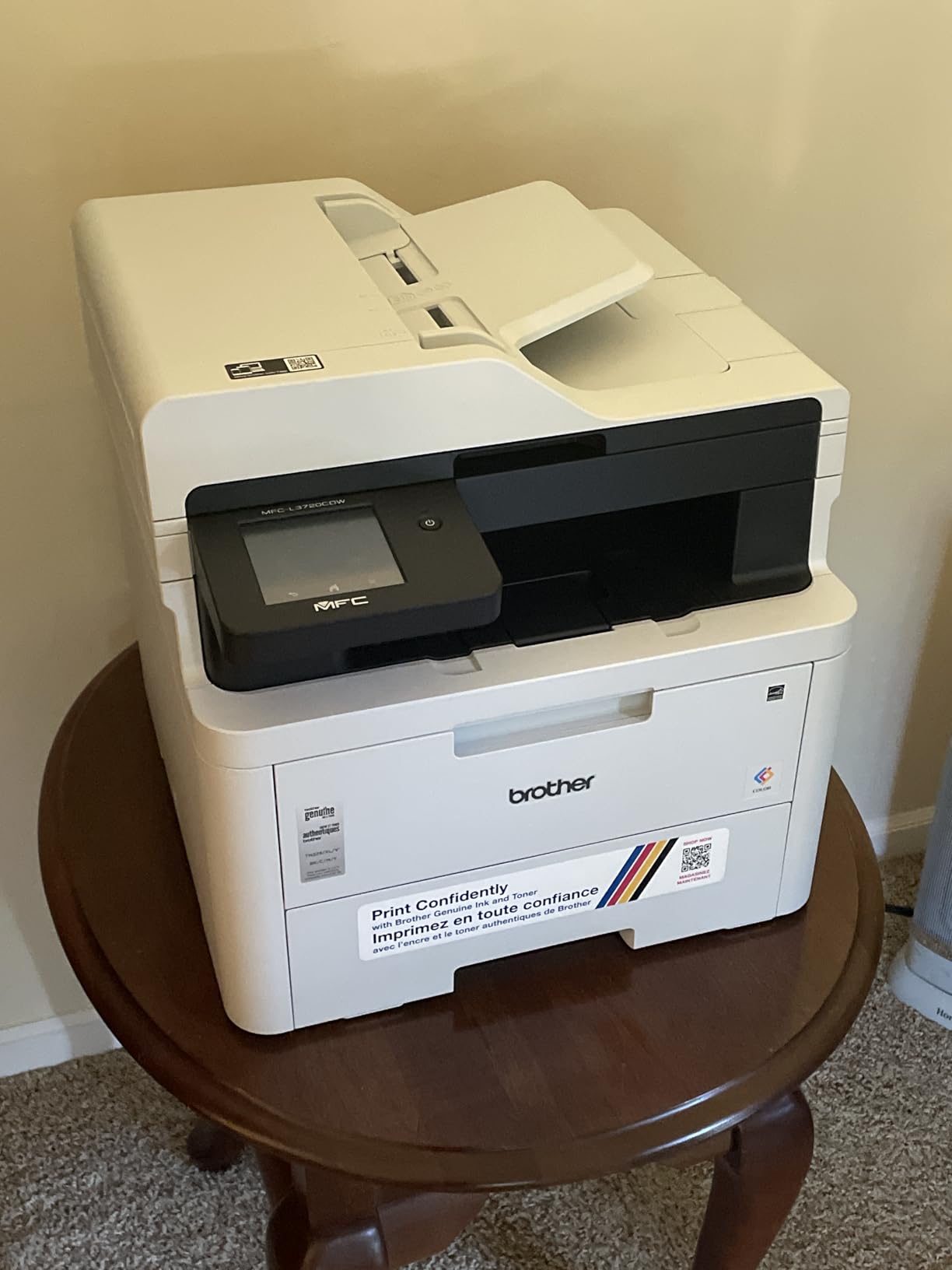
Connectivity is comprehensive with dual-band wireless, Wi-Fi Direct, USB 2.0, and Ethernet all built in. Cloud service integration covers Google Drive, Dropbox, and OneNote, and the Brother Mobile Connect app provides remote management capabilities. I particularly liked being able to check toner levels and order replacements directly from the app.
The automatic duplex printing works reliably for both printing and scanning. I scanned a 30-page double-sided contract using the ADF, and the printer captured both sides in a single pass. This is a significant advantage over single-sided ADF printers that require manual flipping.
Toner costs are the main ongoing expense. The TN229 series cartridges come in standard and high-yield XL versions, with the black XL yielding approximately 3,000 pages and color XL cartridges yielding approximately 2,300 pages each. While toner is more expensive than ink bottles, the cost per page is competitive with supertank printers for color output, and the quality is significantly better.
Who Should Buy This Printer
The Brother MFC-L3720CDW is built for small businesses, professional home offices, and workgroups that need professional color printing alongside scanning, copying, and fax. If you produce client-facing documents, marketing materials, or color presentations that need to look polished, this printer delivers print-shop quality at your desk.
It is also the right choice for offices that need a durable, high-capacity workhorse. The 250-sheet tray, 50-sheet duplex ADF, and fast 19 ppm color speed mean this printer can handle real office volume without becoming a bottleneck.
What to Watch Out For
The price is the obvious barrier. At around $460, this is the most expensive printer in our guide by a significant margin. You need to be producing enough color output to justify the investment over a supertank inkjet like the Canon MegaTank or Epson EcoTank.
At 44 pounds and 16.1 x 17.5 x 15.8 inches, this printer is heavy and large. You will need a dedicated, sturdy surface to support it, and moving it requires two people. This is not a printer you can tuck into a corner shelf or move around easily.
Buying Guide: How to Choose the Best All in One Printer
Choosing the right all-in-one printer comes down to understanding your printing habits and matching them to the right technology. After testing 8 printers across three months, I can break the decision into a few key factors that matter most.
Inkjet vs Laser: Which Technology Is Right for You
Inkjet printers use liquid ink sprayed through microscopic nozzles onto paper. They are versatile, handling everything from text documents to glossy photos, and they are generally cheaper upfront. The tradeoff is that ink can dry out if the printer sits unused for weeks, and replacement cartridges are expensive on a per-page basis.
Laser printers use heat to fuse toner powder onto paper. They produce sharper text, print faster, and do not suffer from ink drying problems. Toner cartridges last much longer than ink cartridges, but laser printers cost more upfront and color laser models can be significantly heavier. If you print mostly text and value reliability over color versatility, a monochrome laser like the Brother DCP-L2640DW is hard to beat.
For the best of both worlds, supertank printers like the Canon MegaTank G3270 and Epson EcoTank ET-2800 use inkjet technology but with refillable tanks instead of cartridges. You get the versatility of inkjet with dramatically lower ink costs, though you still need to print regularly to prevent nozzle clogging.
Print Speed and Volume
Print speed, measured in pages per minute or ppm, varies dramatically between models. The Brother DCP-L2640DW leads the pack at 36 ppm for monochrome laser output, while the HP DeskJet 2855e crawls at 5.5 ppm for color. For context, here is how the printers in this guide compare for black text output:
The Brother DCP-L2640DW prints at 36 ppm, the Brother MFC-J1360DW at 16 ppm, the Canon PIXMA TS6520 at 14 ppm, the Canon MegaTank G3270 at 11 ppm, the Epson EcoTank ET-2800 at 10 ppm, the Canon PIXMA TR4720 at 8.8 ppm, the HP DeskJet 2855e at 7.5 ppm. The Brother MFC-L3720CDW delivers 19 ppm for color laser.
Think about your typical print job. If you regularly print 20-page documents, a 5 ppm printer means a four-minute wait while a 16 ppm printer finishes in under two minutes. For occasional single-page prints, speed matters less, but for office use, every minute of waiting adds up.
Cost Per Page: The Hidden Expense
The purchase price of a printer is only part of the total cost of ownership. Ink or toner cost per page is where manufacturers make their real money, and it is the factor most buyers overlook. Here is what I calculated based on manufacturer yield data and current ink prices.
Supertank printers win on cost per page hands down. The Canon MegaTank G3270 and Epson EcoTank ET-2800 both deliver color pages at well under one cent per page, with black pages costing even less. Over two years of moderate use, the ink savings can exceed $500 to $1,000 compared to cartridge-based printers.
Traditional cartridge printers like the HP DeskJet 2855e and Canon PIXMA TR4720 have the highest cost per page, often 5 to 10 cents per black page and 15 to 20 cents per color page. Laser printers fall in between, with monochrome laser cost per page around 2 to 3 cents and color laser around 8 to 12 cents per page.
Connectivity Options
Modern all-in-one printers offer multiple ways to connect, and the options matter more than you might think. Wireless printing is standard across all eight printers in this guide, but the specifics vary.
Dual-band WiFi support, found on the Canon PIXMA TS6520 and Brother MFC-L3720CDW, allows connection to both 2.4 GHz and 5 GHz networks. This provides more stable connections and faster data transfer. The HP DeskJet 2855e only supports 2.4 GHz, which can cause issues on modern mesh networks.
Ethernet connectivity, available on the Brother DCP-L2640DW and MFC-L3720CDW, provides the most stable connection for office environments. Wi-Fi Direct, available on several models, lets you print directly from mobile devices without a network. AirPrint support is essential for Apple users, and all the printers in this guide support mobile printing through their respective apps.
Paper Capacity and Automatic Document Feeder
Paper capacity ranges from 60 sheets on the HP DeskJet 2855e to 250 sheets on the Brother laser models. If you print frequently, a larger tray means fewer interruptions. For home use, 100 sheets is usually sufficient. For office use, 150 to 250 sheets is preferable.
An automatic document feeder (ADF) allows you to scan or copy multiple pages without manually placing each one on the flatbed. The Brother MFC-J1360DW, Brother DCP-L2640DW, Canon PIXMA TR4720, and Brother MFC-L3720CDW all include an ADF. The Canon PIXMA TS6520 and Epson EcoTank ET-2800 do not, which means single-sheet scanning only.
For double-sided scanning, the Brother MFC-L3720CDW offers a duplex ADF that scans both sides in one pass. Single-sided ADF models require manual flipping for double-sided originals.
Supertank vs Subscription: Total Cost of Ownership
This is a topic that comes up constantly on Reddit’s r/printers and r/WFH communities. HP’s Instant Ink subscription charges you per page rather than per cartridge, which sounds appealing but locks you into monthly payments whether you print or not. Many users report paying for pages they never use, and cancellation can be complicated.
Supertank printers flip this model. You pay more upfront for the printer but then buy ink bottles at a fraction of the cost of cartridges. The Canon MegaTank G3270 and Epson EcoTank ET-2800 both come with enough ink for thousands of pages, and replacement bottles are inexpensive. Over two to three years, the total cost of ownership for a supertank printer is dramatically lower than a subscription or cartridge-based printer.
My recommendation: if you print more than 150 pages per month, a supertank printer will save you money. If you print less than 50 pages per month, a basic inkjet with standard cartridges is fine, and the subscription may not be worth it either. The sweet spot for subscriptions is narrow and depends heavily on your consistency of printing.
FAQs
What is the best multifunction printer for home?
The Canon PIXMA TS6520 is the best multifunction printer for most homes, offering 14 ppm black printing, dual-band WiFi, automatic duplex, and excellent print quality at a reasonable price. For budget-conscious buyers, the HP DeskJet 2855e covers basic needs under $50.
Which is the most reliable printer for home use?
Brother laser printers like the DCP-L2640DW are widely regarded as the most reliable printers for home use. Laser technology eliminates ink drying problems, and Brother has a strong reputation for longevity on Reddit’s r/printers community, where users frequently call these models buy-it-for-life products.
Are all-in-one printers worth the money?
Yes, all-in-one printers are worth the money because they combine printing, scanning, and copying in one device, saving space and reducing costs compared to buying separate machines. Even budget models like the HP DeskJet 2855e provide solid value for home users who need occasional document printing and scanning.
Which all in one printer has the cheapest ink?
The Canon MegaTank G3270 and Epson EcoTank ET-2800 have the cheapest ink costs among all-in-one printers. Both use refillable ink tanks instead of cartridges, delivering black pages at well under one cent per page. The Canon includes ink for up to 6,000 black pages, and the Epson includes enough for 4,500 black pages per bottle set.
Is a laser printer better than inkjet for occasional use?
Yes, a laser printer is better than inkjet for occasional use because laser toner does not dry out or clog. If you go weeks between print jobs, an inkjet printer’s nozzles can dry and require cleaning cycles that waste ink. The Brother DCP-L2640DW monochrome laser is ideal for occasional printers who primarily need text documents.
Final Thoughts on the Best All in One Printers for 2026
After three months and over 2,000 printed pages, my top recommendation for the best all in one printers comes down to what you print and how often. For most home users, the Canon PIXMA TS6520 offers the best balance of speed, quality, and connectivity. For small business owners and heavy text printers, the Brother DCP-L2640DW laser is nearly unbeatable for reliability and speed.
If ink cost is your primary concern, the Canon MegaTank G3270 and Epson EcoTank ET-2800 deliver dramatic long-term savings. And for professional color output, the Brother MFC-L3720CDW color laser produces print-shop-quality documents that justify its premium price for serious offices.
Whatever you choose, focus on total cost of ownership rather than just the upfront price. The cheapest printer often becomes the most expensive once you factor in ink or toner costs over two to three years of use.