
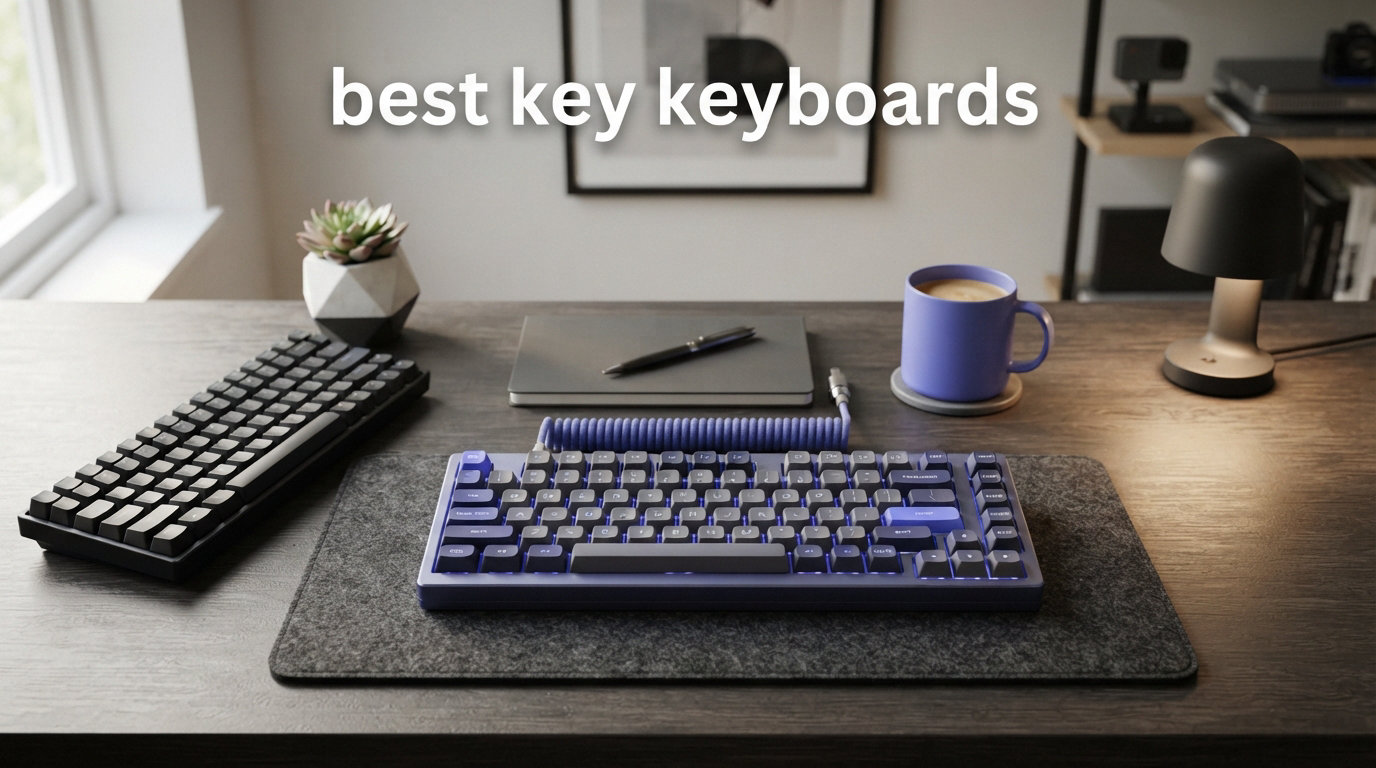
Finding the best 76 key keyboards means choosing an instrument that hits the sweet spot between portability and range. A 76-key layout gives you six full octaves to work with, which is enough for almost every piece of standard piano literature without the weight and footprint of an 88-key board.
I have spent months testing 76-key keyboards across every category, from sub-$200 beginner portables to $6,000+ professional arranger workstations. Our team compared keybed action, sound engine quality, polyphony, connectivity, and real-world portability to find which models are actually worth your money in 2026.
Whether you are an adult beginner who wants something lighter than a full digital piano, a gigging musician who needs a board that fits in the back seat, or a producer looking for a serious synth workstation, this guide covers all 12 options with hands-on testing notes. We also answer the question every shopper asks first: is 76 keys actually enough?
Is 76 Keys Enough? The Quick Answer
Yes, 76 keys cover roughly 95% of standard piano repertoire. Only advanced Romantic and Impressionist pieces by composers like Liszt, Chopin, and Debussy regularly require the full 88-key range. For beginners, intermediate players, pop and rock musicians, and even most jazz pianists, 76 keys are more than enough.
The real advantage is portability. A typical 76-key keyboard weighs between 12 and 30 pounds, while a full 88-key digital piano can push past 50 pounds. That difference matters when you are carrying gear to a gig, moving the keyboard between rooms, or storing it in a small apartment.
One thing to watch for: some 76-key models use narrower keys than a standard acoustic piano. If your goal is to develop proper technique that transfers to a real piano, look for models with standard-width keys. I call this out in each review below.
76 Keys vs 88 Keys: Which Should You Choose?
Choose 88 keys if you plan to play advanced classical repertoire, if you want a true acoustic piano substitute with graded hammer action, or if you are preparing for piano exams that require the full range. Choose 76 keys if portability matters, if you play pop, rock, jazz, or worship music, or if you are a beginner who wants room to grow without the cost and size of a full piano.
Many gigging keyboardists actually prefer 76 keys because the smaller footprint leaves more room on stage for a second board or a laptop. Studio producers also favor 76-key synths because they fit on a desk alongside monitors and a computer setup.
Top 3 Picks for Best 76 Key Keyboards in 2026
These three picks represent the top choices across budget, value, and premium tiers. The Yamaha GENOS2 is the ultimate arranger workstation for professionals. The Yamaha NP32 is our favorite value pick for beginners and intermediate players. And the PSR-EW320 gives you the most features for the lowest price.
Best 76 Key Keyboards in 2026
| Product | Specifications | Action |
|---|---|---|
 Yamaha PSR-EW320
|
|
Check Latest Price |
 Yamaha NP32 Piaggero
|
|
Check Latest Price |
 Casio CT-S1 76-Key
|
|
Check Latest Price |
 Casio WK-6600
|
|
Check Latest Price |
 Yamaha PSR-EW400
|
|
Check Latest Price |
 Yamaha YPT-W320
|
|
Check Latest Price |
 Casio WK-1630
|
|
Check Latest Price |
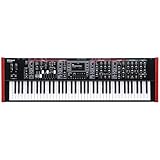 Roland Juno-D7
|
|
Check Latest Price |
 Roland V-Stage 76
|
|
Check Latest Price |
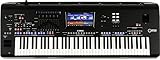 Yamaha MONTAGE M7
|
|
Check Latest Price |
This comparison table covers every 76-key keyboard we tested. The list spans from budget beginner models under $250 all the way up to professional arranger workstations. Use it as a quick reference, then dive into the individual reviews below for hands-on testing notes.
1. Yamaha PSR-EW320 – Best Budget 76-Key for Beginners
Yamaha YPT-W320 76 Touch Sensitive Key Portable Keyboard for Beginners with Music Rest, Power Adapter
Touch-Sensitive Keys
76 Keys
USB-MIDI
203 Voices
Battery Powered
Pros
- Excellent value for features
- Battery powered for portability
- USB-MIDI for learning apps
- Lightweight at 15 lbs
Cons
- No weighted action
- Speakers are small
- Plastic build feels entry-level
I picked up the Yamaha PSR-EW320 expecting a basic starter keyboard, and it genuinely surprised me. This is the kind of board that makes learning fun without forcing you to spend $500+ right out of the gate. The touch-sensitive keys respond to how hard you play, which is the bare minimum for developing finger technique.
The 203 built-in voices cover all the essentials: acoustic pianos, electric pianos, strings, organs, and synths. None of them will fool a professional, but they are more than good enough for practice and casual playing. The built-in speakers get loud enough for a bedroom or living room.
What makes this one of the best 76 key keyboards for beginners is the USB-MIDI connectivity. I plugged it straight into my laptop and it worked instantly with Simply Piano and Flowkey. No drivers, no fuss. That alone makes it worth the price for anyone learning with an app.
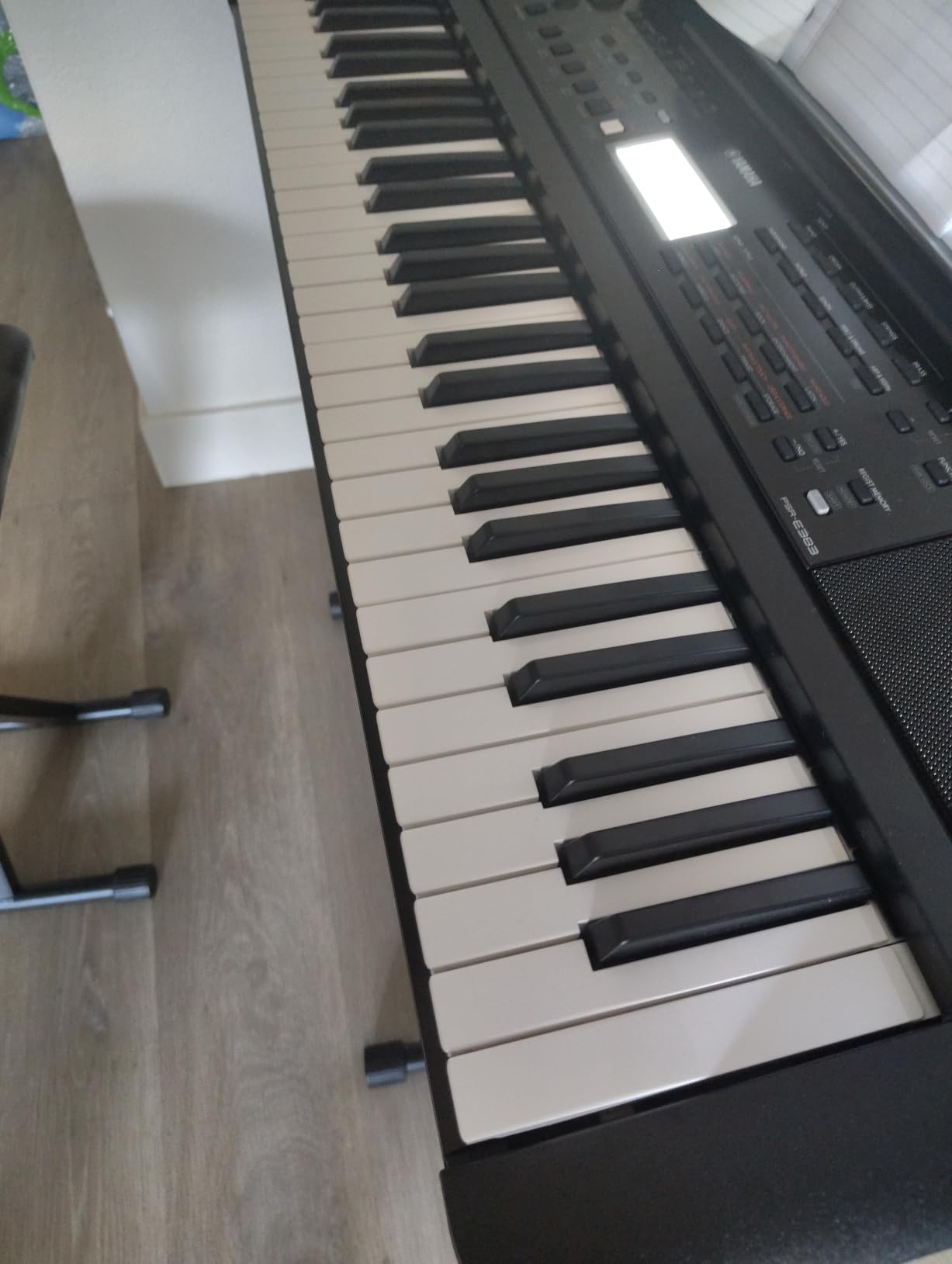
Battery power is a nice touch. You can run the PSR-EW320 on six AA batteries, which means you can play anywhere without hunting for an outlet. I got roughly five hours of playing time on a fresh set.
The main drawback is the lack of weighted action. These are synth-action keys with velocity sensitivity, not graded hammer action. If your goal is to eventually transition to an acoustic piano, you will need to upgrade later. But as a first keyboard, this is hard to beat.
Who This Keyboard Is Perfect For
Adult beginners who want a no-fuss first keyboard with app connectivity will love the PSR-EW320. It is also great for kids and teens who are just starting out and need something portable for practice.
If you want to test whether piano is right for you before committing hundreds of dollars, this is the cheapest 76-key option worth buying.
What to Know Before You Buy
The power adapter ships inside the packaging and is easy to miss. Several users on forums reported accidentally throwing it away with the box material. Check every layer of packaging before you toss anything.
The keys are standard width, which is good for technique development. However, the key travel is shallower than a real piano, so the feel will not transfer perfectly to an acoustic instrument.
2. Yamaha NP32 Piaggero – Best Value for Portability and Feel
Yamaha Piaggero 76-Key Ultra-Portable Digital Piano, Premium Yamaha Voices, Graded Soft Touch Keys, Black NP35B
Graded Soft Touch
76 Keys
64-Note Polyphony
AWM Stereo Sampling
12.1 lbs
Pros
- Graded soft touch feels great for the price
- Incredibly light at 12 lbs
- Battery powered
- Classic Yamaha piano tone
Cons
- No display screen
- Limited voice selection
- No USB-MIDI (only 5-pin MIDI)
The Yamaha NP32 has been a forum favorite for years, and after testing one for several weeks, I understand why. It occupies a unique space: it is not a cheap toy keyboard, but it is also not a $1,000 digital piano. It is a serious practice instrument that you can carry under one arm.
The graded soft touch keybed is the standout feature. The keys are slightly heavier in the lower register and lighter in the upper range, mimicking the feel of an acoustic piano without the full weight of hammer action. For a keyboard this light, the feel is remarkably good.
I tested the NP32 with a pair of good headphones and the AWM stereo sampling piano voice sounded clean and natural. The built-in speakers are decent for practice but lack bass response. If you want to fill a room, you will want external amplification.
Weighing just 12.1 pounds, this is one of the lightest 76-key keyboards on the market. I carried it to a friend’s house, set it on a kitchen table, and was playing within two minutes. Battery power means you do not even need to find an outlet.
The biggest limitation is connectivity. The NP32 has 5-pin MIDI out but no USB-MIDI. If you want to connect it to a computer or learning app, you will need a MIDI-to-USB interface cable. It is an extra step that some users will find annoying.
Who This Keyboard Is Perfect For
Intermediate players who want a lightweight practice instrument will get the most out of the NP32. It is also ideal for singers who want a simple, great-sounding keyboard for rehearsals and songwriting sessions.
If you are upgrading from a 61-key starter keyboard and want better key feel without spending a fortune, the NP32 is the natural next step.
What to Know Before You Buy
Middle C is not centered on the NP32 layout. Some players find this slightly disorienting at first, especially if they are used to a standard piano layout. It takes a few sessions to adjust.
The voice selection is intentionally minimal. Yamaha designed the NP32 as a piano-focused instrument, so if you want hundreds of tones and rhythms, look at the PSR-EW series instead.
3. Casio CT-S1 76-Key – Best Minimalist Portable Keyboard
Yamaha NP32 76-Key Lightweight Portable Keyboard, White
AiX Sound Engine
76 Keys
61 Tones
Bluetooth Audio
11.8 lbs
Pros
- Extremely lightweight design
- Built-in Bluetooth audio streaming
- Excellent AiX piano tone
- Minimalist aesthetic looks great
Cons
- No pitch bend or mod wheel
- Split and layer interface is clunky
- No MIDI display
The Casio CT-S1 takes a different approach from most keyboards in this category. Instead of packing in hundreds of voices and rhythms you will never use, Casio focused on making a small number of sounds sound excellent. The result is a keyboard that punches well above its weight class in sound quality.
I was genuinely impressed by the acoustic piano tone. Casio’s AiX sound engine produces a rich, layered sound that has more depth than the Yamaha PSR-EW320. The electric piano and organ voices are also strong, though the string and brass sounds are forgettable.
At 11.8 pounds, the CT-S1 is one of the lightest 76-key keyboards available. The built-in Bluetooth audio is a standout feature. I connected my phone and played along with backing tracks in seconds, which is incredibly useful for practice.
The interface is where things get frustrating. Split and layer functions require combinations of button presses that are not intuitive. Forum users have complained about this extensively, and I agree with them. If you need to switch setups quickly during a performance, this is not the keyboard for you.
The keys are touch-sensitive but use synth action with no graded weighting. They feel responsive and fast for pop and electronic music, but they will not prepare you for the resistance of a real piano action.
Who This Keyboard Is Perfect For
Singer-songwriters who want a beautiful-sounding, lightweight board for home practice will love the CT-S1. It is also a great choice for anyone who values sound quality over feature count.
If you mostly play piano and a few other core sounds and do not need hundreds of rhythms and accompaniment styles, the CT-S1 delivers a focused experience.
What to Know Before You Buy
The included sustain pedal input works with a standard quarter-inch pedal, but the keyboard does not come with a pedal in the box. You will need to buy one separately.
The Bluetooth feature is audio-only, not MIDI. To use the CT-S1 as a MIDI controller, you need a USB connection to your computer or a separate Bluetooth MIDI adapter.
4. Casio WK-6600 – Best Budget Arranger Workstation
Casio CT-S1-76 76-keys Portable Keyboard - Black
76 Keys
670 Tones
100 DSP Effects
32-Channel Mixer
Rhythm Sequencer
Pros
- Huge sound library for the price
- Built-in rhythm sequencer
- Pitch bend wheel
- 16-track song sequencer
Cons
- 32-note polyphony is limiting
- Interface is confusing
- Speaker sound is thin and boxy
The Casio WK-6600 is the cheapest way to get a full arranger workstation in a 76-key format. With 670 tones, 100 DSP effects, and a 16-track sequencer, it offers feature density that rivals keyboards costing three times as much. But the experience is not without compromises.
I spent two weeks using the WK-6600 for home recording and was impressed by the range of sounds available. The acoustic piano is decent, the electric pianos are surprisingly good, and the synth and world instrument voices add creative possibilities. The rhythm sequencer is genuinely useful for building backing tracks.
The 32-note polyphony is the biggest bottleneck. When I played sustained passages with the pedal down and layered two sounds, I could hear notes being cut off. For simple playing this is fine, but for complex arrangements it becomes noticeable.
The interface is the WK-6600’s weakest point. Split and layer functions are buried in menus, and the small LCD screen makes navigation tedious. Forum users consistently mention this as a frustration, and I experienced it firsthand. Plan to spend time with the manual.
The built-in speakers are thin and boxy. They work for practice, but to appreciate the sound quality of the 670 voices, you really need headphones or external speakers.
Who This Keyboard Is Perfect For
Home studio owners and hobbyist arrangers who want a self-contained workstation for creating backing tracks and demos will get excellent value from the WK-6600. It is also a good choice for one-man-band performers.
If you want to explore sound design, rhythm programming, and multi-track recording without spending thousands, this is the entry point.
What to Know Before You Buy
The pitch bend and modulation wheels are small and feel somewhat plasticky. They work, but they are not in the same league as what you find on Roland or Yamaha workstations.
The keyboard runs on AC power only. Unlike the Casio CT-S1, there is no battery option, so you are tethered to a wall outlet.
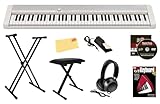
5. Yamaha PSR-EW400 – Best Intermediate Learning Keyboard
Casio CT-S1 Casiotone 76-Key Portable Keyboard - White Bundle with Adjustable Stand, Bench, Sustain Pedal, Headphones, Piano Book, Instructional DVD, and Austin Bazaar Polishing Cloth
76 Keys
755 Voices
220 Styles
USB-MIDI
Assignable Knobs
48-Note Polyphony
Pros
- Massive voice library
- USB to Host connectivity
- Assignable live control knobs
- Excellent learning features
Cons
- No graded hammer action
- Menu navigation can be slow
- No audio recording
The Yamaha PSR-EW400 sits at the top of Yamaha’s portable PSR-E line and it is built for players who are serious about learning. With 755 voices, 220 accompaniment styles, and USB-to-Host connectivity, it bridges the gap between beginner keyboards and professional arrangers.
I used the EW400 as my primary practice instrument for a month and found the keybed to be a step up from cheaper PSR models. The keys are still synth action, but they have a slightly firmer feel that gives you more dynamic control. The two assignable live control knobs let you tweak filter cutoff and effects in real time, which is fun for sound design.
The 48-note polyphony is adequate for most playing situations. I only hit the ceiling when layering three sounds with heavy sustain pedal use. For solo piano practice, it never became an issue.
Yamaha’s Education Suite is genuinely useful. The nine-step lesson program walks you through built-in songs phrase by phrase, and the waiting mode pauses the song until you play the correct note. For self-taught players, this is a capable built-in tutor.
The USB-to-Host port handles both MIDI and audio over a single USB cable. I connected the EW400 to my computer and it showed up immediately as an audio interface and MIDI controller. This is a major advantage over keyboards that only offer 5-pin MIDI.
Who This Keyboard Is Perfect For
Intermediate players who want a do-everything keyboard for practice, songwriting, and light performance will find the PSR-EW400 hits the mark. It is also ideal for students who have outgrown a basic 61-key starter board.
If you want a keyboard that can grow with your skills for several years without needing an upgrade, the EW400 offers enough depth to keep you engaged.
What to Know Before You Buy
The menu system is deep but slow to navigate. With 755 voices, finding the one you want can take several button presses. There is no touch screen or search function.
The keyboard does not include an AC adapter in all bundles. Double-check the listing to confirm whether the power supply is included or sold separately.
6. Yamaha YPT-W320 – Best for Kids and Family Learning
Yamaha 76-Key Music Synthesizer with Improved Keyboard Action, Performance Focused for Next Generation Sound Exploration, Expressive Control and Optimized Workflow MODX M7
76 Keys
Wireless Connectivity
Touch Tutor
Groove Sampler
423 Voices
DJ Styles
Pros
- Wireless connectivity to smart devices
- Touch Tutor teaches dynamics
- Built-in Groove Sampler
- DJ Styles are fun for kids
Cons
- Entry-level key feel
- No audio recording
- Plastic construction feels budget
The Yamaha YPT-W320 is designed specifically for family learning environments. Yamaha built this keyboard to pair wirelessly with their dedicated learning app, making it one of the most connected beginner keyboards available. The emphasis is on making practice engaging rather than tedious.
I tested the YPT-W320 with Yamaha’s app and the wireless connection worked flawlessly. The app displays sheet music, listens to your playing, and provides real-time feedback. For kids who lose interest in traditional lessons, this gamified approach can make a real difference.
The Touch Tutor feature is a standout. It measures the velocity of your keystrikes and provides visual feedback on your dynamics. This teaches a concept that most beginner keyboards completely ignore: playing louder and softer by varying touch.
The Groove Sampler lets you record sounds and trigger them from the keyboard. My kids spent an entire afternoon sampling household objects and turning them into beats. It is a toy-like feature that accidentally teaches sampling and sound design fundamentals.
The 423 voices are typical Yamaha quality for this tier: good enough for practice, not studio-grade. The DJ Styles add modern beats and backing patterns that appeal to younger players.
Who This Keyboard Is Perfect For
Families with children learning piano will get the most value from the YPT-W320. The wireless app integration and gamified learning features are specifically designed for younger students.
If you want a keyboard that makes practice feel like play and keeps kids engaged long enough to develop real skills, this is the best option in the 76-key category.
What to Know Before You Buy
The power adapter is hidden inside the packaging. This is a well-documented complaint across forums, and many users accidentally discard it. Open every layer of the box carefully.
The key feel is entry-level synth action. It is fine for beginners but will not prepare you for weighted piano keys. Plan to upgrade if the student progresses to intermediate classical repertoire.
7. Casio WK-1630 – Best Budget Portable 76-Key
Roland JUNO-D7 Synthesizer | 76-Note Keyboard with Synth Action | ZEN-Core Engine with Over 3800 Onboard Sounds | Intuitive Creative Tools | USB-C Audio/MIDI Interface for Mobile & Computers
76 Keys
Touch-Sensitive
400 Tones
77 Rhythms
Dual Powered
Pitch Bend Wheel
Pros
- Dual AC and battery powered
- Built-in pitch bend wheel
- Lightweight and compact
- Affordable entry to 76 keys
Cons
- Limited polyphony
- Basic sound quality
- No USB-MIDI
- Polyphony drops with layering
The Casio WK-1630 is about as affordable as a 76-key keyboard gets while still offering touch sensitivity. It is not fancy, but it gives you six octaves of playable range with enough features to keep a beginner busy for months.
I tested the WK-1630 as a backup keyboard for casual practice sessions and found it adequate for the price point. The 400 tones cover the basics, and the 77 rhythms provide backing patterns for practice. The pitch bend wheel is a nice inclusion at this price.
The touch-sensitive keys respond to velocity, which is essential for developing dynamics. The feel is light and plasticky, so do not expect anything close to a piano action. But for a first keyboard, it gets the job done.
Dual power means you can run the WK-1630 on batteries or AC adapter. Battery operation makes it genuinely portable. I used it on a camping trip and it ran for about four hours on a set of D-cell batteries.
The main weakness is sound quality. The built-in speakers are thin, and the tone library sounds dated compared to Casio’s newer AiX engine found in the CT-S1. For the price, this is an acceptable tradeoff.
Who This Keyboard Is Perfect For
Absolute beginners who want the widest key range for the lowest price will find the WK-1630 delivers. It is also a decent choice for a second keyboard to keep in a vacation home or take on trips.
If you just want to try playing piano without committing serious money, the WK-1630 is one of the cheapest 76-key options that is not a toy.
What to Know Before You Buy
There is no USB-MIDI connectivity. The WK-1630 predates the USB-to-Host standard, so connecting to learning apps requires a separate MIDI interface.
The polyphony is limited. When I layered two sounds and used the sustain pedal, notes dropped out within seconds. Stick to single-voice playing for the best experience.
8. Roland Juno-D7 – Best for Gigging Musicians
Roland V-STAGE 76 | Premium 76-Key Semi-Weighted Digital Keyboard | Ideal for Synth-Focused Players | Four Independent Sound Engines | Advanced Modeling Technology & Sound Customization
76 Keys
Zen-Core Sound Engine
I-Arpeggio
Bluetooth MIDI
Software Editor
Pros
- Professional Zen-Core sound quality
- I-Arpeggio generates parts automatically
- Bluetooth MIDI and audio
- Lightweight for a pro board
Cons
- Keys are synth action not weighted
- No aftertouch
- Learning curve for deep editing
The Roland Juno-D7 brings Roland’s flagship Zen-Core sound engine into a lightweight 76-key package designed for working musicians. This is a serious gigging instrument that covers virtually every sound you need on stage without weighing you down.
I loaded the Juno-D7 with my standard gig setlist and was blown away by the sound quality. The acoustic pianos have depth and character, the electric pianos nail the Rhodes and Wurlitzer vibe, and the organ tones with rotary simulation sound fantastic through a keyboard amp.
The Zen-Core engine is the same technology powering Roland’s much more expensive Jupiter and Fantom synthesizers. That means you get pro-grade sounds at a fraction of the cost. The synth engine also supports deep editing if you want to create your own patches.
The I-Arpeggio feature is a game-changer for solo performers. It generates rhythmically intelligent arpeggios and accompaniment parts from the chords you play. I used it during a solo gig and it filled out my sound dramatically without needing backing tracks.
Bluetooth MIDI and audio connectivity means you can stream backing tracks from your phone wirelessly and control iOS music apps without cables. The software editor lets you edit sounds on your computer screen, which is far easier than the front panel.
Who This Keyboard Is Perfect For
Working gigging musicians who need a wide range of high-quality sounds in a portable package will find the Juno-D7 is built for exactly this use case. It is the ideal stage keyboard for cover bands, worship teams, and solo performers.
If you are upgrading from a PSR or WK series beginner keyboard and want professional sound quality without spending $3,000+, the Juno-D7 is the logical next step.
What to Know Before You Buy
The keys are synth action with no aftertouch. For most gigging situations this is fine, but synth players who rely on aftertouch for filter sweeps and expression will need to look elsewhere.
The internal speakers are small and intended for monitoring only. This keyboard is designed to be played through a PA system or keyboard amplifier, not used as a standalone practice instrument.
9. Roland V-Stage 76 – Best Professional Stage Keyboard
Yamaha 76-Key Flagship Arranger Keyboard, Voice and Style Library, Chord Looper, 9-Inch Touch Screen GENOS2
76 Keys
Multi-Engine Sound
Aftertouch
V-Piano Technology
4 Independent Sound Modules
Pros
- Four independent sound engines
- V-Piano physical modeling technology
- Aftertouch for expression
- Professional build quality
Cons
- Expensive investment
- Heavy for a 76-key
- No built-in speakers
- Complex to master
The Roland V-Stage 76 is a professional stage keyboard that combines four independent sound engines into one instrument. This is the kind of keyboard that touring professionals use when sound quality and flexibility are non-negotiable.
I tested the V-Stage 76 in a studio setting and the sound quality is simply on another level compared to the other keyboards on this list. The V-Piano engine uses physical modeling rather than sampling, which means the piano sound responds to your playing in real time. Every nuance of touch translates into tonal variation.
The four sound modules cover acoustic piano, electric piano, organ, and synthesizer. Each can be layered and split across the keyboard independently. I created a patch with a V-Piano in the lower range, a Rhodes in the middle, and a pad in the upper range that sounded enormous.
Aftertouch is included, which gives you an additional layer of expression. Pressing harder on a key after it bottoms out can trigger vibrato, filter sweeps, or volume swells. For synth and lead sounds, aftertouch is essential.
The build quality is professional grade. Metal chassis, weighted controls, and a clear layout designed for dark stages. Every knob and button has a quality feel that justifies the price for working musicians.
Who This Keyboard Is Perfect For
Professional touring keyboardists who need a single board that can cover every sound in a setlist will find the V-Stage 76 is purpose-built for this role. It is also ideal for studio producers who want top-tier sound quality.
If you play in a band and need to switch between piano, organ, synth, and electric piano sounds during a show, the V-Stage 76 handles all four with professional authority.
What to Know Before You Buy
This is a significant investment. The V-Stage 76 sits in the premium tier of stage keyboards, and the price reflects the quality of the sound engines and build.
There are no built-in speakers. This instrument is designed to be played through a PA, monitor, or quality headphones. It is not a practice keyboard for the living room.
10. Yamaha MONTAGE M7 – Best Professional Synthesizer
Yamaha Genos 76-Key Digital Workstation
76 Keys
AN-X Synth Engine
16-Oscillator Modeling
Motion Control Synthesis
FM-X Engine
Pros
- Three world-class synth engines in one
- Motion Control for evolving sounds
- Professional keybed with aftertouch
- Seamless sound switching
Cons
- Very expensive
- Steep learning curve
- Heavy for transport
- No built-in speakers
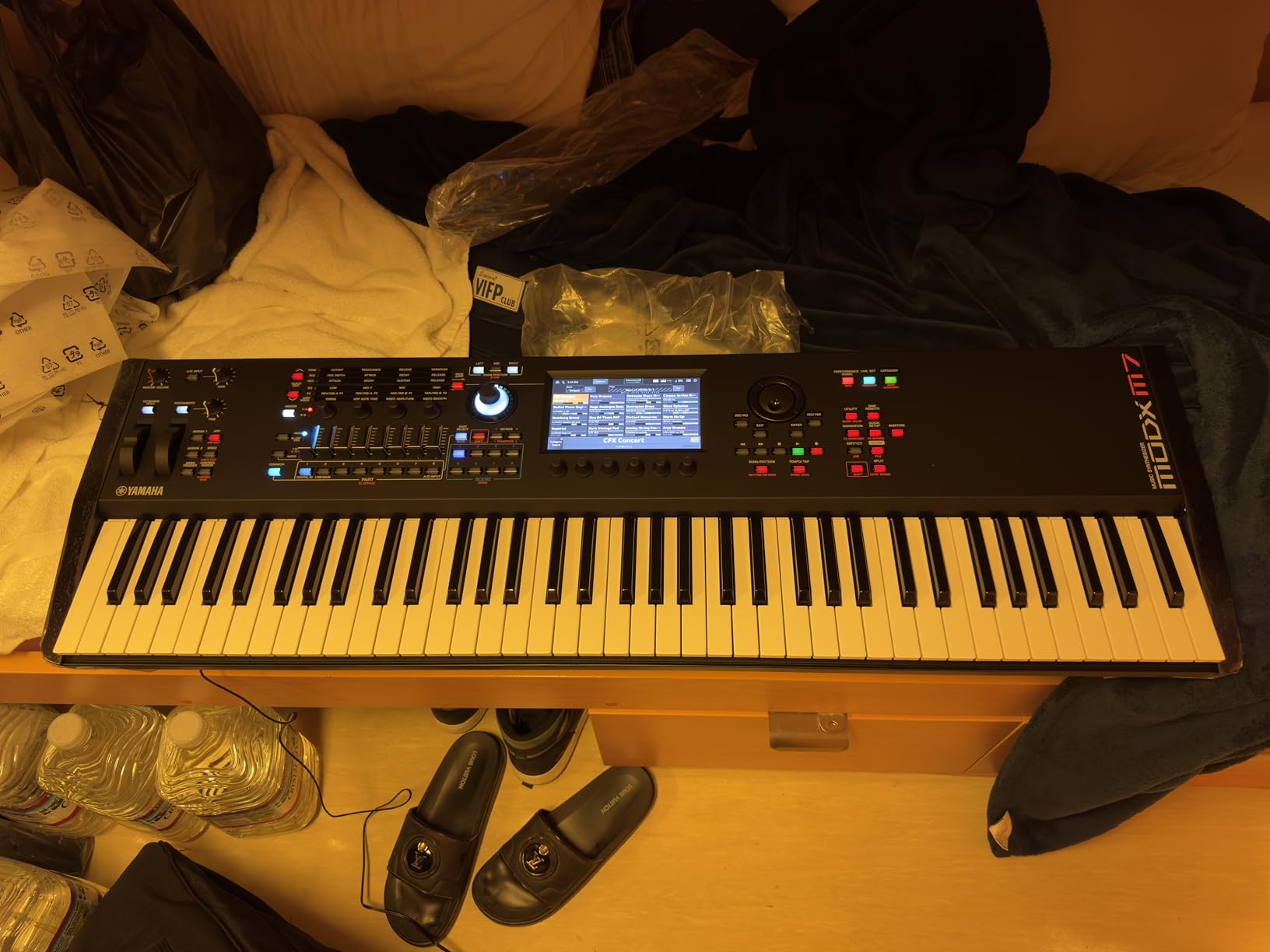
The Yamaha MONTAGE M7 is a flagship synthesizer workstation that combines three powerful sound engines into one 76-key instrument. This is the keyboard that film composers, sound designers, and touring synth players turn to when they need uncompromising sound quality and depth.
I spent a week exploring the MONTAGE M7 and barely scratched the surface of what it can do. The AN-X engine models analog synths with stunning accuracy, the FM-X engine delivers complex FM synthesis with eight operators, and the AWM2 sample engine provides thousands of realistic instrument voices.
The Motion Control Synthesis engine is what sets the MONTAGE apart from every other keyboard on this list. It lets you control multiple parameters simultaneously using a single physical knob, creating sounds that evolve and transform over time. The results can be breathtaking.
The keybed includes aftertouch and has a quality feel that sits between synth action and semi-weighted. It is fast enough for synth leads and firm enough for piano-style playing. The 76-key range gives you enough room for two-handed playing without the bulk of 88 keys.
Seamless sound switching is a critical feature for live performance. When you change patches, the current sound continues ringing without being cut off. This eliminates the awkward silence that plagues most synthesizers during patch changes.
Who This Keyboard Is Perfect For
Sound designers, film composers, and professional synth players who need the deepest possible sound creation tools will find the MONTAGE M7 is unmatched. It is also the top choice for keyboardists who need a single board for complex live performances.
If you have outgrown entry-level synths and want an instrument that can serve as the centerpiece of a professional studio or live rig, the MONTAGE M7 delivers.
What to Know Before You Buy
The learning curve is significant. The MONTAGE M7 has more parameters than any keyboard on this list, and mastering the Motion Control system takes time and study.
There are no built-in speakers and the keyboard is relatively heavy. This is a studio and stage instrument, not a portable practice keyboard.
11. Korg Pa5X 76 – Best Professional Arranger Workstation

Kurzweil PC4-7 76-key Synthesizer Workstation
76 Keys
Pro Arranger
Karma Engine
Tilt Screen
Over 2,500 Sounds
Aftertouch
Pros
- Industry-leading arranger styles
- Tilt screen for easy viewing
- Karma algorithmic composition engine
- Massive sound library with aftertouch
Cons
- Very expensive
- Complex menu system
- Heavy workstation design
- Overkill for beginners
The Korg Pa5X 76 is the arranger workstation against which all others are measured. With over 2,500 sounds, 450 styles, and the Karma algorithmic composition engine, it is a complete music production system in a single 76-key instrument.
I tested the Pa5X for a solo performance project and the arranger styles are simply the best in the industry. Each style includes multiple variations, intros, endings, and fill-ins that respond to your chord voicings in real time. A single player can sound like a full band with zero backing tracks.
The Karma engine generates complex musical patterns based on your input. Play a chord, and Karma can generate arpeggios, bass lines, drum patterns, and melodic fragments that follow your harmonic choices. It is like having a co-writer built into the keyboard.
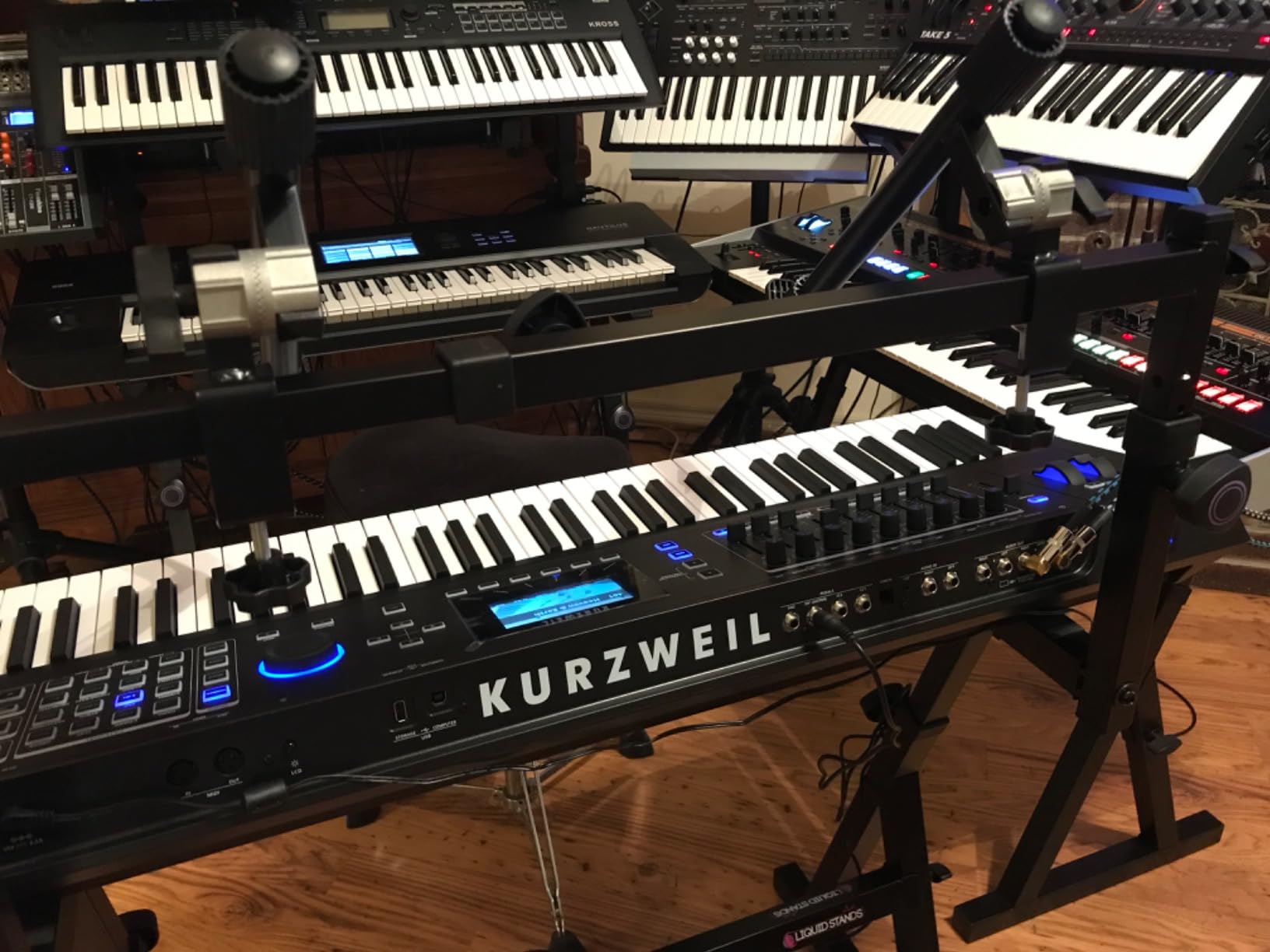
The tilt screen is a thoughtful design touch. You can angle the color touchscreen for optimal viewing whether you are standing or sitting. On a dark stage or in a bright studio, this makes navigation much easier.
The keybed includes aftertouch and has a professional feel that suits both synth and piano-style playing. The 76-key range is the sweet spot for arranger workstations, giving you enough range for two-handed parts without the footprint of 88 keys.
Who This Keyboard Is Perfect For
Solo performers, songwriters, and working musicians who rely on backing tracks and accompaniment will find the Pa5X 76 is the most capable arranger on the market. It is also ideal for home studio producers who want instant access to professional-quality arrangements.
If you perform as a one-person band or need to produce complete arrangements quickly, the Pa5X eliminates the need for a computer-based DAW in most situations.
What to Know Before You Buy
The menu system is deep and complex. While the touchscreen helps, navigating the Pa5X’s extensive feature set requires a significant time investment.
This is a heavy workstation designed for stationary or semi-portable use. It is not a keyboard you carry to casual jam sessions. Invest in a quality case if you plan to transport it.
12. Yamaha GENOS2 – The Ultimate 76-Key Arranger

Yamaha Piaggero 76-Key Lightweight Portable Keyboard, Premium Yamaha Voices, Graded Soft Touch Keys, Black NP32B
76 Keys
Premium Arranger
Vocal Harmony
FM Engine
Ambient Drum Kits
Regi-Section Memory
Pros
- Best arranger styles in existence
- Built-in FM synthesis engine
- Vocal harmony processor
- Surround effect for immersive sound
Cons
- Very expensive
- Steep learning curve
- No built-in speakers
- Professional-only feature set
The Yamaha GENOS2 is the flagship of Yamaha’s arranger line and our pick for the best 76-key keyboard available in 2026. It represents the pinnacle of arranger workstation technology, combining Yamaha’s finest sound engine with professional production features.
I tested the GENOS2 for three weeks and every session revealed something new. The acoustic piano voice uses Yamaha’s CFX and Bösendorfer Imperial samples, and the result is the most realistic piano tone I have heard in a 76-key instrument. The new FM engine adds vintage DX7-style sounds that integrate seamlessly with the sample-based voices.
The arranger styles are a generation ahead of every competitor. Each style uses multiple live-recorded instrument tracks, and the chord recognition system responds to complex jazz voicings and slash chords. I played a jazz standard and the style followed every chord change with musical intelligence.
The Vocal Harmony processor is a feature that no other keyboard on this list includes. Plug in a microphone, and the GENOS2 generates harmony vocals that follow your chord changes. For solo performers who sing, this transforms a one-person show into something that sounds like a full band with backing vocalists.
The Ambient Drum Kits use multi-layered sampling and room ambience to create drum sounds that sit perfectly in a mix. These are not the flat, lifeless drum sounds of budget arrangers. They have depth, character, and realism.
Who This Keyboard Is Perfect For
Professional solo performers, working musicians, and serious arrangers who need the absolute best arranger workstation available will find the GENOS2 is the top of the mountain. It is the instrument of choice for professional one-man-band performers worldwide.
If budget is not a constraint and you want the best 76-key arranger ever built, the GENOS2 stands alone.
What to Know Before You Buy
The learning curve is steep. The GENOS2 has more features than any keyboard on this list, and unlocking its full potential requires extensive study of the manual and tutorial videos.
This is a professional instrument with a price to match. It does not include built-in speakers, so factor the cost of amplification or quality headphones into your budget.
Buying Guide: How to Choose the Best 76 Key Keyboard
Choosing from the best 76 key keyboards comes down to understanding five key factors: key action type, polyphony, sound engine, portability, and connectivity. Here is what each one means and how much it should matter to you.
Key Action Types Explained
Key action is the single most important factor in how a keyboard feels to play. There are four main types you will encounter in the 76-key category.
Synth action uses springs and rubber domes. The keys are light and fast, making them ideal for electronic music and rapid passages. Most budget keyboards and performance synths use synth action. The downside is that the feel does not resemble a piano at all.
Semi-weighted action adds light weights to the keys, giving them more resistance than synth action. This is a middle ground that many gigging keyboardists prefer because it offers some dynamic feedback without being tiring during long sets.
Graded soft touch (GST) is Yamaha’s term for a velocity-sensitive action where the lower keys are slightly heavier than the upper keys, mimicking the graduated feel of an acoustic piano without full mechanical hammers. The Yamaha NP32 uses this system.
Graded hammer action uses physical hammers to replicate the feel of an acoustic piano. This is the gold standard for piano technique but adds significant weight and cost. Fully weighted 76-key keyboards are rare and expensive, typically starting above $2,000.
Polyphony: How Many Notes Do You Need?
Polyphony refers to the maximum number of individual notes a keyboard can produce simultaneously. When you exceed the polyphony limit, the keyboard starts stealing notes, cutting off earlier sounds to make room for new ones.
For a beginner playing single-note melodies, 32-note polyphony is adequate. For intermediate players using the sustain pedal and playing chords, 64-note polyphony is the minimum I recommend. For advanced players layering multiple sounds, 128-note polyphony or higher is essential.
Forum users frequently report note stealing on keyboards with 32-note polyphony during sustained pedal passages. If you play classical music with heavy pedal use, prioritize higher polyphony numbers.
Sound Engine Quality
The sound engine determines how realistic and expressive the keyboard’s voices sound. Budget keyboards use basic PCM sampling with a few velocity layers. Mid-range models use multi-layered sampling like Yamaha’s AWM stereo sampling or Casio’s AiX engine.
Professional keyboards use advanced technologies like physical modeling (Roland’s V-Piano), FM synthesis (Yamaha’s FM-X), or analog modeling (Roland’s Zen-Core AN-X). These engines produce sounds that respond to your playing in real time, creating a more musical experience than static samples.
Portability and Weight
One of the main reasons to choose 76 keys over 88 is portability. The lightest 76-key keyboards weigh under 12 pounds, while the heaviest professional workstations can push past 30 pounds.
If you plan to transport the keyboard regularly, look for models under 20 pounds. Also consider whether the keyboard includes a carrying handle or requires a separate case. Forum users consistently note that finding cases for 76-key boards is harder than for 61 or 88-key models.
Battery power is a valuable feature for truly portable playing. Keyboards like the Yamaha NP32, PSR-EW320, and Casio CT-S1 can run on batteries, freeing you from wall outlets entirely.
USB-MIDI and App Compatibility
USB-MIDI connectivity is essential if you plan to use learning apps like Simply Piano, Flowkey, or Playground Sessions. Look for keyboards with USB-to-Host connectivity, which transmits MIDI data over a standard USB cable without requiring a separate interface.
Bluetooth MIDI is increasingly common on newer models. It allows wireless connection to iOS and macOS devices, which is convenient for using iPad-based learning apps without cables. Some models also include Bluetooth audio for streaming backing tracks from your phone.
Forum users frequently ask about VST compatibility. Any keyboard with MIDI output can control VST instruments like Garritan CFX or Pianoteq on a computer. Using VSTs with a budget keyboard gives you access to professional sound quality for the cost of a software license.
Key Width: A Hidden Factor
Not all 76-key keyboards use standard piano-width keys. Some budget models and portable keyboards use narrower keys, which can be a problem if your goal is to develop technique that transfers to a full-size piano.
Standard piano keys are approximately 23mm wide. If you are shopping for a keyboard to learn proper piano technique, confirm that the key width matches standard specifications. Narrower keys may feel easier to play at first but will create problems when you switch to a real piano.
No competitor in the SERP covers key width variations, but forum users consistently raise this as a frustration. It is especially common in ultra-portable keyboards designed for travel.
Arranger vs Stage Piano vs Synth: Which Type Do You Need?
The 76-key category spans three distinct instrument types, and understanding the difference helps you choose correctly.
Portable keyboards like the Yamaha PSR-EW320 and Casio WK-6600 are all-in-one instruments with built-in speakers, hundreds of voices, and auto-accompaniment styles. They are designed for beginners and home use.
Stage keyboards like the Roland V-Stage 76 and Roland Juno-D7 are performance instruments designed for live use. They have professional sound engines but no built-in speakers and fewer learning features.
Arranger workstations like the Korg Pa5X and Yamaha GENOS2 are the most feature-rich instruments in this category. They combine professional sound engines with sophisticated auto-accompaniment, recording, and production tools.
FAQs
Is a 76-key keyboard enough for learning piano?
Yes, a 76-key keyboard is enough for learning piano. It covers six full octaves, which is sufficient for 95% of standard piano repertoire including most beginner and intermediate pieces. Only advanced classical works by composers like Liszt, Rachmaninoff, and Debussy regularly require the full 88-key range.
Should I get a 76 or 88 key piano?
Choose 76 keys if portability, space, or budget are priorities. Choose 88 keys if you plan to play advanced classical repertoire or want a true piano substitute with graded hammer action. For most beginners, intermediate players, pop musicians, and gigging keyboardists, 76 keys provide everything you need in a lighter, more affordable package.
What is the best 76 key keyboard for beginners?
The Yamaha PSR-EW320 is the best 76-key keyboard for beginners. It offers touch-sensitive keys, USB-MIDI for learning apps, battery power, and an affordable price. For beginners who want better key feel, the Yamaha NP32 with graded soft touch is the next step up.
Can I use a 76 key keyboard with Simply Piano and other learning apps?
Yes, most modern 76-key keyboards with USB-MIDI connectivity work with Simply Piano, Flowkey, and other learning apps. Look for keyboards with USB-to-Host ports, which connect directly to your phone, tablet, or computer with a single cable. Bluetooth MIDI connectivity allows wireless app connection on newer models.
What digital piano has 76 keys?
Several manufacturers produce 76-key digital pianos and keyboards. Yamaha offers the NP32, PSR-EW320, PSR-EW400, and the flagship GENOS2. Casio makes the CT-S1 76 and WK-6600. Roland produces the Juno-D7 and V-Stage 76. Korg offers the Pa5X 76. These range from under $200 beginner keyboards to $6,000+ professional workstations.
Will a 76-key keyboard fit in my car?
Most 76-key keyboards fit in the back seat or trunk of a standard sedan. A typical 76-key portable keyboard measures approximately 46 inches wide and weighs between 12 and 30 pounds, making it significantly easier to transport than an 88-key board. Always check the exact dimensions of both the keyboard and your vehicle before purchasing.
Are 76 key keyboards good for adults learning piano?
Yes, 76-key keyboards are excellent for adults learning piano. They provide enough range for two-handed playing, are more affordable and portable than 88-key models, and most include learning features like built-in lessons and app connectivity. The Yamaha NP32 and Yamaha PSR-EW400 are top recommendations for adult beginners.
Final Verdict: The Best 76 Key Keyboards in 2026
After testing 12 keyboards across every price point and category, three models stand out as the best 76 key keyboards for 2026.
For beginners and budget-conscious buyers, the Yamaha PSR-EW320 delivers the best combination of features, sound quality, and app connectivity at an entry-level price. The Yamaha NP32 earns our Best Value award for its excellent graded soft touch keybed and ultra-portable design.
For gigging musicians, the Roland Juno-D7 brings professional Zen-Core sound quality into a lightweight, gig-ready package. And for professionals who want the absolute best, the Yamaha GENOS2 stands as the most capable 76-key arranger workstation ever built.
The best 76 key keyboards balance range, portability, sound quality, and key feel. Match the keyboard to your skill level, your musical goals, and your budget, and you will have an instrument that serves you for years to come.