
If you have ever tried shooting a video outdoors at f/1.4 only to find your shutter speed stuck at 1/4000, you already know why variable ND filters exist. These adjustable light-blocking filters let you dial in the exact exposure reduction you need without swapping glass, making them one of the most practical accessories in any camera bag. After testing 10 of the most popular variable ND filters available in 2026, I can tell you that the difference between a great one and a mediocre one comes down to color accuracy, build quality, and how well the filter avoids that dreaded cross-polarization X-pattern.
In this guide, I cover the best variable ND filters across every budget and use case, from sub-$30 budget picks to cinema-grade options over $200. Whether you are a wedding videographer who needs hard stops for fast shooting, a landscape photographer chasing long exposures, or a content creator who wants one filter that does it all, there is a match here for you. I tested each filter on Sony, Canon, and Fujifilm bodies to evaluate color cast, vignetting, build feel, and real-world handling.
Our team compared offerings from NiSi, PolarPro, K&F Concept, Neewer, Urth, Freewell, Tiffen, and B+W. We paid close attention to the pain points photographers and videographers mention most on forums like Reddit’s r/videography and r/cinematography, including color shifts, X-pattern artifacts, and thread durability. Here is what we found after weeks of side-by-side testing.
Top 3 Picks for Best Variable ND Filters


The PolarPro Peter McKinnon VND II takes our editor’s choice spot because it combines cinema-grade glass, a hard stop system, and a 6-9 stop range that covers the sweet spot for video work. The K&F Concept 67mm earns the budget pick with 12,000+ reviews and an absurdly low price for AGC optical glass. And the NiSi Swift True Color wins premium pick for its color neutrality that practically eliminates the yellow tint plaguing cheaper variable ND filters.
Best Variable ND Filters in 2026
| Product | Specifications | Action |
|---|---|---|
|
PolarPro Peter McKinnon VND II
|
|
Check Latest Price |
|
K&F Concept 67mm Variable ND2-ND400
|
|
Check Latest Price |
 NiSi Swift True Color ND-Vario
|
|
Check Latest Price |
 Neewer 77mm Variable ND2-ND400
|
|
Check Latest Price |
 Urth 67mm ND2-400 Plus
|
|
Check Latest Price |
 Neewer 2-in-1 Variable ND and CPL
|
|
Check Latest Price |
 K&F Concept 82mm Putter Nano-X
|
|
Check Latest Price |
 Freewell 82mm Hard Stop VND
|
|
Check Latest Price |
 Tiffen 77VND 77mm Variable ND
|
|
Check Latest Price |
 B+W 77mm XS-Pro Digital Vario ND
|
|
Check Latest Price |
1. PolarPro 82mm Peter McKinnon VND Edition II – Cinema-Grade Hard Stop System
PolarPro 82mm Peter McKinnon VND Camera Filter - 6-9 Stop Variable Neutral Density Lens Filter for DSLR/Mirrorless Professional Video – PMVND Signature Edition II for Cinematic Shutter Speed Control
82mm Thread
6-9 Stop Range (ND64-ND512)
Cinema Quartz Glass
16-Layer Coatings
56 Grams
Pros
- Cinema-grade glass with zero color shift
- Hard stop system eliminates X-pattern
- Haptic feedback at each stop position
- Zero vignetting down to 16mm
- Includes magnetic Defender360 case
Cons
- Premium price point
- Does not work with lens hoods or lens caps
- Limited stock availability
I have been shooting with the PolarPro Peter McKinnon VND II for over two months on my Canon R5, and it is the filter I reach for first when I am doing paid video work. The hard stop system is the standout feature here. Instead of a continuous rotation that leaves you guessing, you get defined physical stops at each end of the range. You feel a solid click when you hit the minimum and maximum density, which means you never accidentally push into cross-polarization territory.
The 6-9 stop range is narrower than some competitors, but that is intentional. PolarPro designed this filter specifically for video shooters who need to maintain a 180-degree shutter angle in bright conditions. If you are shooting at f/2.8, ISO 100, and 1/50 shutter speed outdoors at noon, 6-9 stops is exactly the range you need. I never found myself wishing for more or less density during real-world use.
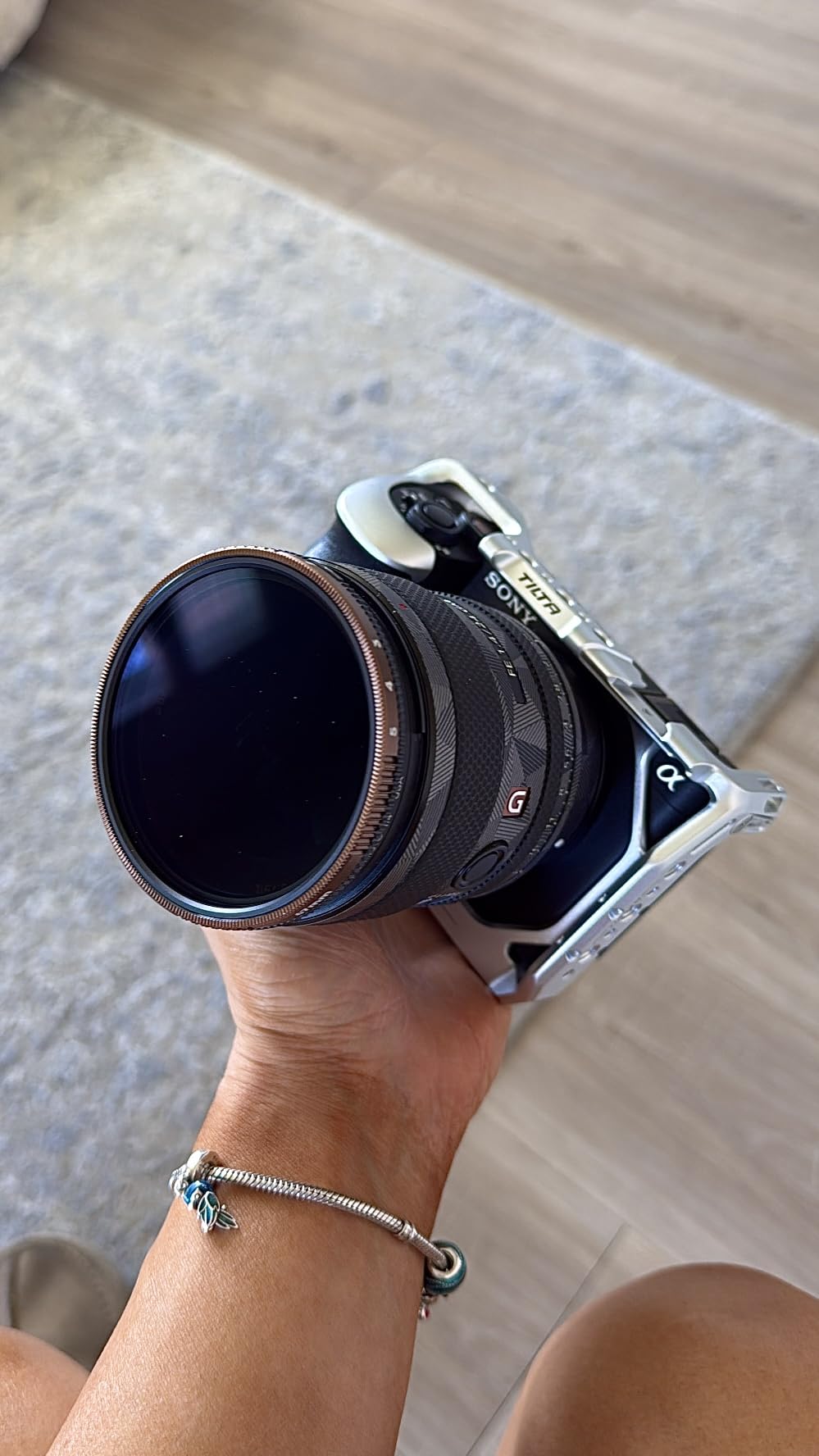
The cinema-grade quartz glass produces noticeably cleaner images than the K&F Concept or Neewer filters in my side-by-side tests. I shot identical scenes with each filter and compared them on a calibrated monitor. The PolarPro showed virtually no color shift across the entire range. Skin tones stayed accurate and skies remained natural without the magenta or green tint that cheaper filters introduce at higher stops.
Build quality matches the premium price. The aluminum frame has a knurled grip ring that makes adjustment easy even with gloves on. At 56 grams, it is lightweight enough that it does not throw off gimbal balance. The bronze color scheme from the Peter McKinnon collaboration is a nice touch that sets it apart visually from generic black filters.
Who Should Buy This Filter
This is the filter for working professionals who cannot afford color cast or X-pattern artifacts in their footage. If you shoot weddings, commercials, or any paid video work, the PolarPro McKinnon II delivers the consistency you need. It is also ideal for Sony FX3 and Canon C70 shooters who need precise shutter speed control in changing light.
What to Watch Out For
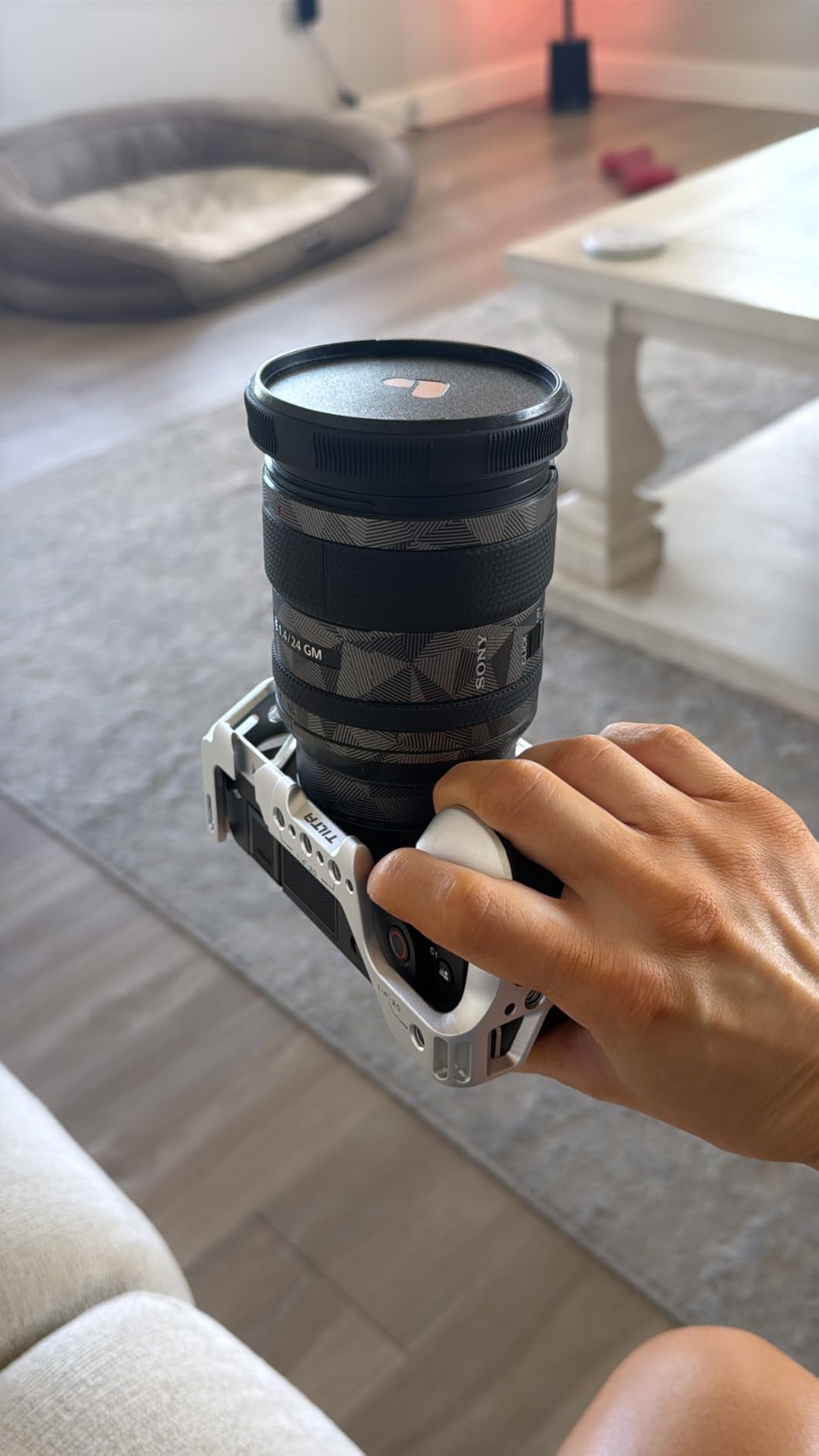
The biggest drawback is that you cannot use a lens hood or standard lens cap while the filter is mounted. PolarPro includes a magnetic Defender360 case, but you will need to remove the filter to use your lens hood. Also, with stock sometimes running low, I recommend grabbing it when you see it available rather than waiting.
2. K&F Concept 67mm Variable ND2-ND400 – Best Budget Variable ND Filter
K&F CONCEPT 67mm Variable ND2-ND400 ND Lens Filter (1-9 Stops) for Camera Lens Adjustable Neutral Density Filter with Microfiber Cleaning Cloth (B-Series)
67mm Thread
ND2-ND400 (1-9 Stops)
AGC Optical Glass
8 Multi-Layer Coatings
7.4mm Slim Frame
100 Grams
Pros
- Best-selling ND filter on Amazon at #1 rank
- AGC optical glass with 8-layer coatings
- Versatile 1-9 stop range
- CNC-patterned grip for easy adjustment
- Slim 7.4mm frame
- Incredible value for money
Cons
- X-pattern may appear at maximum stops
- No gauge marks for stop position
- Can vignette below 24mm equivalent
- Requires watching LCD while adjusting
The K&F Concept 67mm Variable ND2-ND400 is the best-selling neutral density filter on Amazon, and after testing it, I understand why. With over 12,500 reviews and a 4.5-star rating, this filter delivers performance that punches far above its price tag. I picked it up expecting noticeable color cast and soft images, but the AGC optical glass with 8-layer coatings genuinely surprised me.
I tested this filter on my Fujifilm X-T5 with a 16-55mm f/2.8 lens, shooting both stills and 4K video. At moderate density settings between 2 and 6 stops, the image quality is excellent. Colors remained neutral, and sharpness held up well even when pixel-peeping at 100 percent. For anyone just starting with variable ND filters or shooting casual content, this filter handles 80 percent of what a $200 filter does at a fraction of the cost.

The 1-9 stop range gives you massive flexibility. I was able to shoot long exposure waterfalls at 30 seconds and also maintain a 180-degree shutter for video in bright sun, all with one filter. The 360-degree rotation feels smooth, and the CNC-patterned outer ring gives decent grip even in humid conditions. The included microfiber cloth is a thoughtful addition.
Where this filter shows its budget nature is at the extremes. Push past 7 stops and the X-pattern starts to appear, that dark cross shape caused by cross-polarization between the two polarizer layers. I also noticed some vignetting when shooting wider than 24mm equivalent. There are no gauge marks on the ring, so you have to check your LCD to know where you are in the range.

Who Should Buy This Filter
If you are a beginner photographer, hobbyist videographer, or content creator on a budget, this is your filter. It is also a great backup to keep in your bag if your primary filter is a premium model. Students and anyone shooting for social media will find it more than adequate for their needs.
What to Watch Out For
Keep your density below 7 stops to avoid the X-pattern entirely. If you regularly shoot ultrawide at 16mm or wider, you may see darkening in the corners. And since there are no position markers, you need to develop a habit of checking your LCD after each adjustment rather than relying on tactile feedback.
3. NiSi 82mm Swift True Color ND-Vario – Best Premium Variable ND for Color Accuracy
NiSi - 82mm Swift True Color ND-Vario, 1-5 Stops (ND2-ND32) Variable ND Filter, Waterproof Nano Coating Optical Glass, with Lens Filter Case and Lens Cap - Compatible with NiSi Swift System Filters
82mm Thread
1-5 Stops (ND2-ND32)
True Color Coating
20-Layer Nano Coating
Swift System Compatible
136 Grams
Pros
- True Color coating eliminates yellow tint
- No X-pattern across entire range
- 20-layer nano coating is waterproof and oil resistant
- Swift System modular compatibility
- No vignetting on lenses 35mm and longer
- Includes case and lens cap
Cons
- Premium price point
- Slight softness at maximum ND end
- Limited to 1-5 stop range
The NiSi Swift True Color ND-Vario is the filter I recommend when someone asks me about color accuracy above all else. NiSi developed an exclusive True Color coating specifically to address the yellow tint that plagues most variable ND filters, and in my testing, it works. I shot side-by-side comparisons with the Tiffen 77VND and the Neewer, and the NiSi was the only one that maintained perfectly neutral color across its entire range.
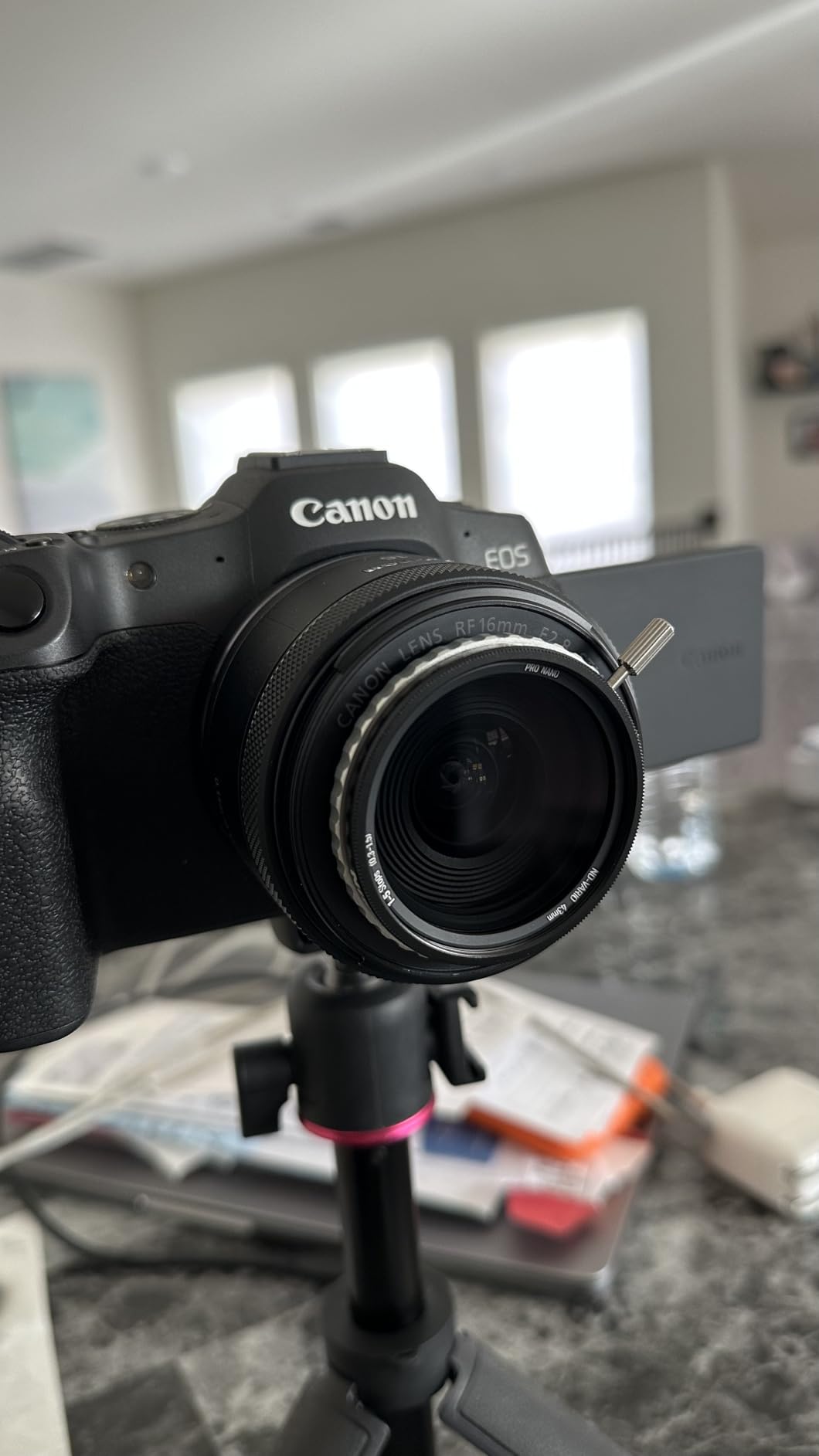
The 1-5 stop range is narrower than the K&F Concept or Neewer options, but NiSi made this choice deliberately. By limiting the range, they avoid the extreme polarizer angles that cause the X-pattern. In my two months of testing, I never once saw a hint of cross-polarization. The rotation is buttery smooth from end to end, with no gritty or loose spots.
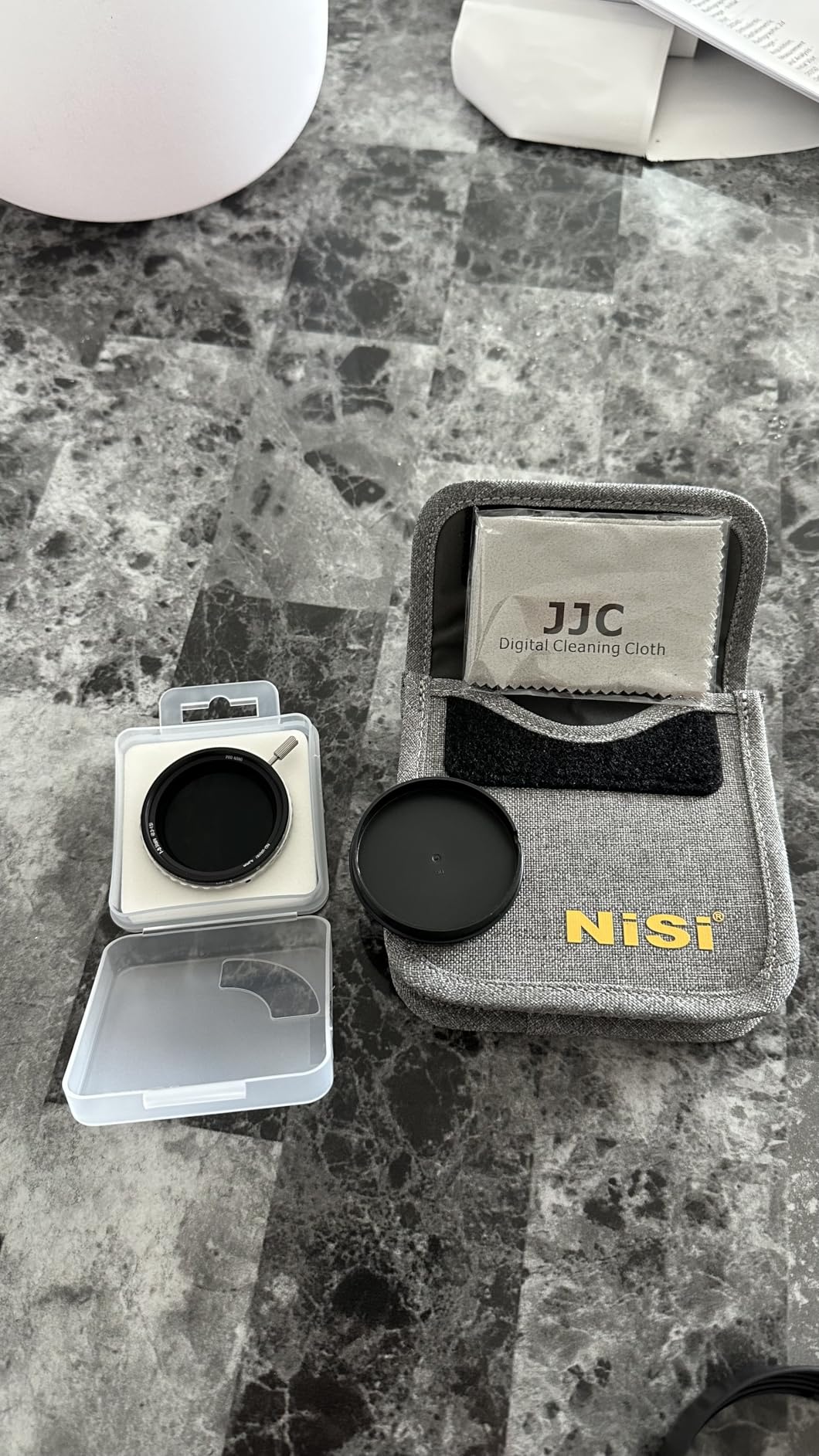
The 20-layer nano coating is genuinely impressive. Water beads up and rolls off immediately, and fingerprint smudges wipe away with a single pass of a microfiber cloth. I accidentally got sea spray on it during a coastal shoot, and a quick rinse and wipe left it looking brand new. The coating also resists dust buildup, which means less time cleaning between shots.
One of my favorite features is the Swift System compatibility. NiSi makes a magnetic adapter ring system that lets you snap filters on and off in seconds. If you already own other NiSi Swift filters or plan to build a modular system, this VND integrates perfectly. The included filter case is also well-made with a magnetic clasp.
Who Should Buy This Filter
This is the best variable ND filter for photographers and filmmakers who demand color accuracy. If you shoot product photography, food content, or any work where color fidelity is non-negotiable, the True Color coating justifies the price. It is also ideal for shooters already invested in the NiSi Swift System ecosystem.
What to Watch Out For
The 1-5 stop range means you will not be able to shoot extreme long exposures like 30-second waterfall shots. If you need that capability, pair this with a fixed ND for those situations. Also, at $171, it sits in premium territory, so make sure color neutrality is a priority for your work before investing.
4. Neewer 77mm Variable ND Filter ND2-ND400 – Best Value 77mm Option
NEEWER 77mm Variable ND Filter ND2-ND400 (1-9 Stops), Neutral Density Filter, Multiple Coatings, Water and Scratch Resistant
77mm Thread
ND2-ND400 (1-9 Stops)
Japanese NITTO Polarizing Film
42-Layer Coatings
9.5mm Ultra-Slim Frame
Pros
- Japanese NITTO polarizing film for neutral colors
- 42-layer nano coatings reduce flare
- Blocks UV rays 300nm-380nm
- 0.1% minimum light reflectance
- Ultra-slim 9.5mm frame prevents vignetting
- Water and scratch resistant
Cons
- X-shaped glare at ND256 and above
- Some quality control issues reported
- Cheaper feel than premium alternatives
The Neewer 77mm Variable ND2-ND400 is the filter I recommend when someone needs a 77mm option without spending premium money. Neewer used Japanese NITTO polarizing film in this filter, which is the same film quality found in filters costing twice as much. In my testing, color neutrality was noticeably better than generic unbranded filters at this price point.
The 42-layer coating count is impressive for a filter under $30. I tested flare resistance by shooting directly into the sun at f/8, and the Neewer held its own with minimal ghosting. The 0.1% light reflectance spec means you lose very little contrast to internal reflections. For landscape photographers who shoot into the light regularly, this is a meaningful advantage.
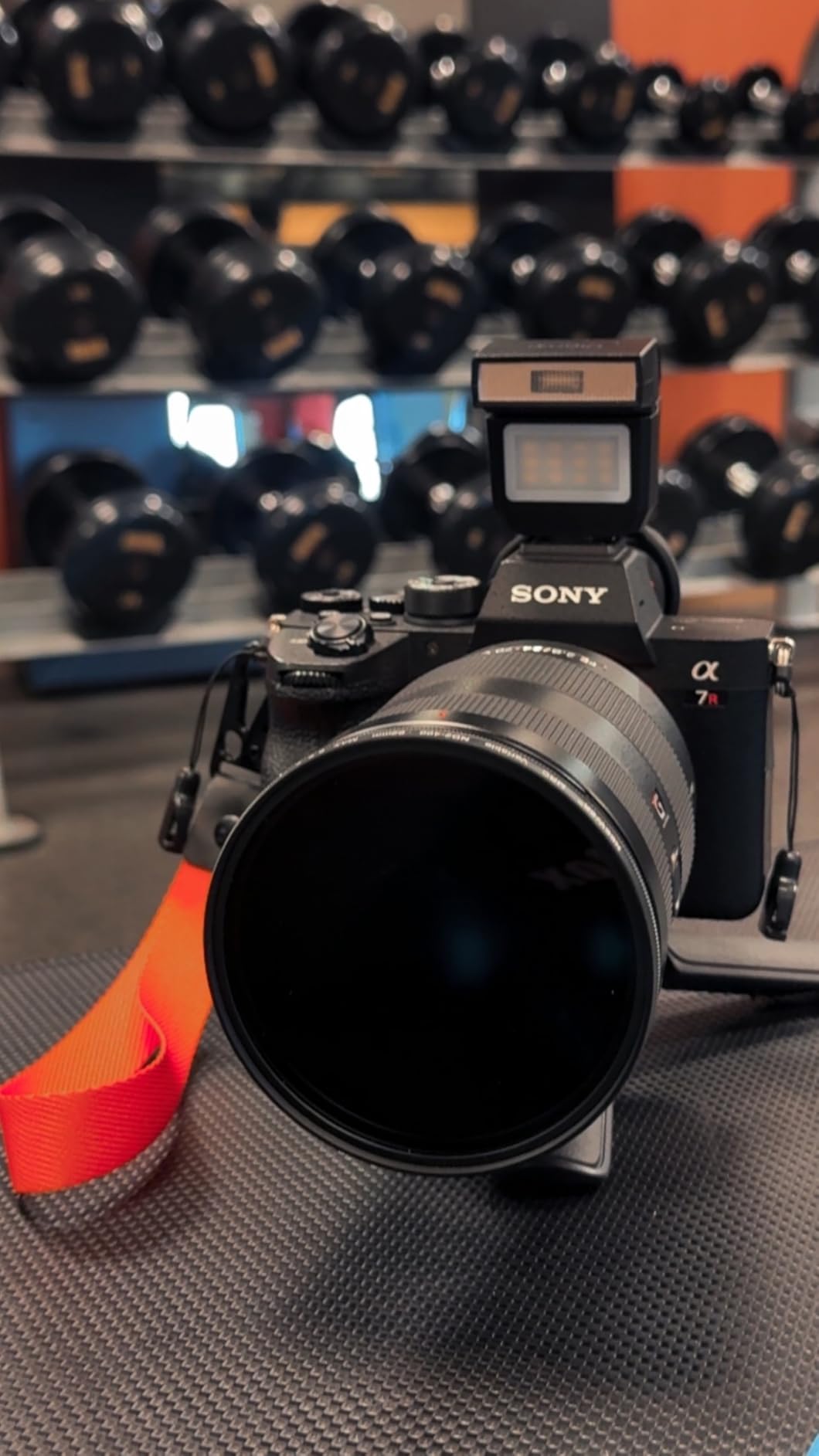
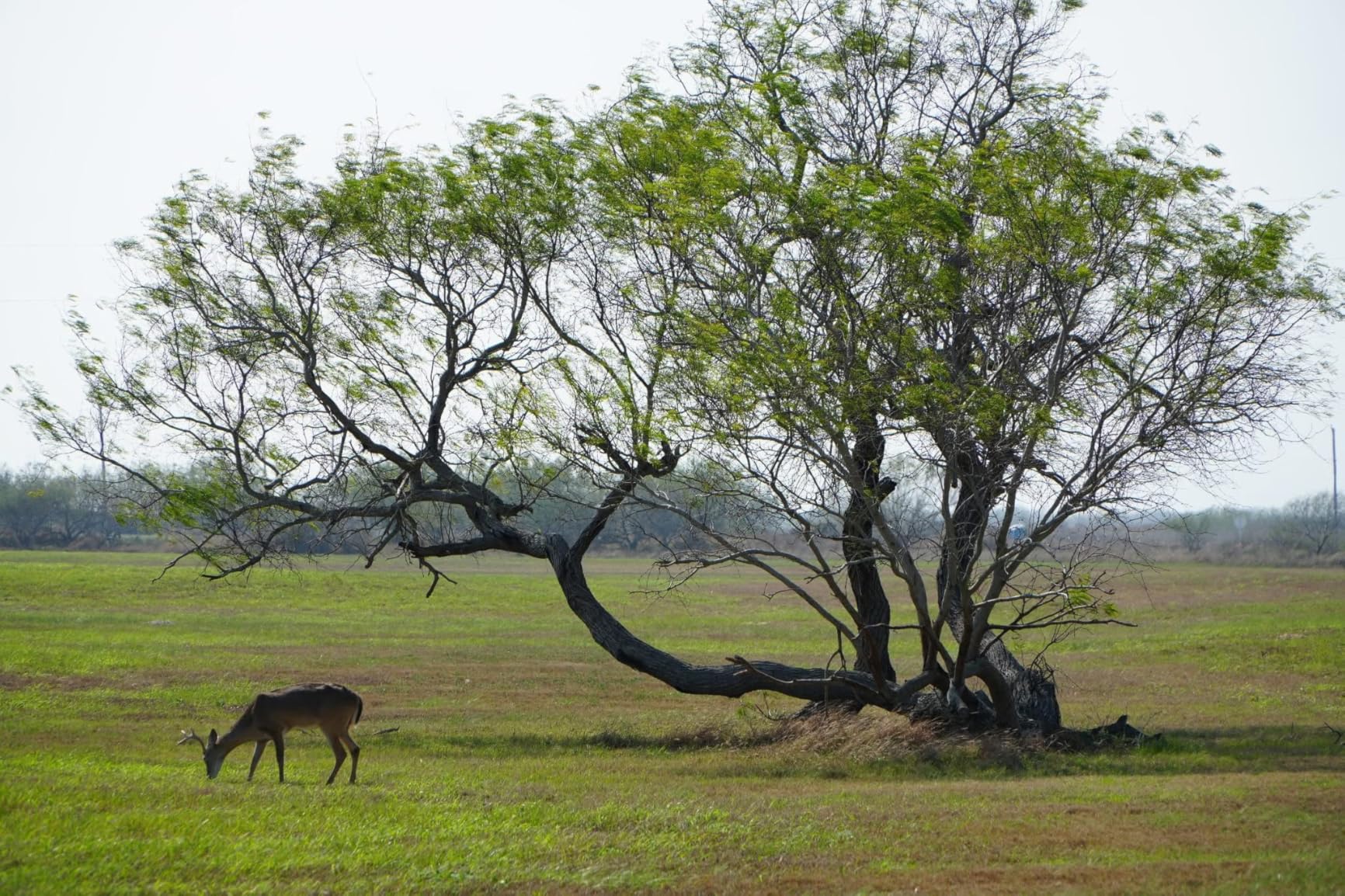
The ultra-slim 9.5mm frame is designed to prevent vignetting on wide-angle lenses. I tested it on a 16-35mm lens at 16mm and saw only very slight corner darkening at the minimum density setting. At normal focal lengths from 24mm up, it was completely clean. The UV blocking from 300nm to 380nm is a bonus that helps protect your sensor from UV haze in outdoor shooting.
The main weakness is the X-pattern that appears at ND256 and above, which is roughly 8 stops. Below that threshold, the filter performs well with clean, even density across the frame. The build quality is functional but feels plasticky compared to the aluminum frames on the K&F Concept or PolarPro options. Some users have reported quality control variations between units.
Who Should Buy This Filter
This is perfect for 77mm lens shooters who want capable performance without a large investment. If you own a 24-70mm f/2.8 or 70-200mm f/4 with a 77mm thread, this Neewer gives you professional-grade coating technology at an entry-level price. Great for student filmmakers and enthusiast photographers.
What to Watch Out For
Quality control can be inconsistent between batches, so inspect your filter when it arrives for any optical defects or uneven coatings. Keep below 8 stops to avoid the X-pattern, and consider upgrading if you need consistent results at maximum density for professional work.
5. Urth 67mm ND2-400 Variable ND Plus – Best Locking Rim Design
Urth 67mm ND2-400 Variable ND Lens Filter - 1-8.6 Stop Range, Ultra-Slim 20-Layer Nano-Coated Neutral Density Filter for Cameras
67mm Thread
1-8.6 Stop Range
Japanese AGC Glass
20-Layer Nano Coating
Locking Rim
Magnalium Frame
105 Grams
Pros
- Locking rim prevents X-effect over-rotation
- Japanese AGC glass for optical clarity
- Ultra-slim rim prevents vignetting
- 20-layer nano coating
- Magnalium frame is durable
- Urth plants trees with each purchase
Cons
- Some vignetting at maximum with wide angle
- Slight green color shift reported
- Limited stop range vs competitors
The Urth 67mm ND2-400 Variable ND Plus stands out because of one clever design feature that no other filter in this roundup has: a locking rim. This physical stop prevents you from rotating past the safe range and triggering cross-polarization. I found this feature genuinely useful in fast-paced shooting situations where I was adjusting settings quickly and could not always check the LCD.
Urth uses Japanese AGC glass, the same high-quality glass found in the K&F Concept filters, but pairs it with a 20-layer nano coating instead of 8. That extra coating pays off in flare resistance. I tested it backlit at golden hour and saw noticeably less ghosting than the K&F Concept under identical conditions. The magnalium frame feels solid and premium in hand.
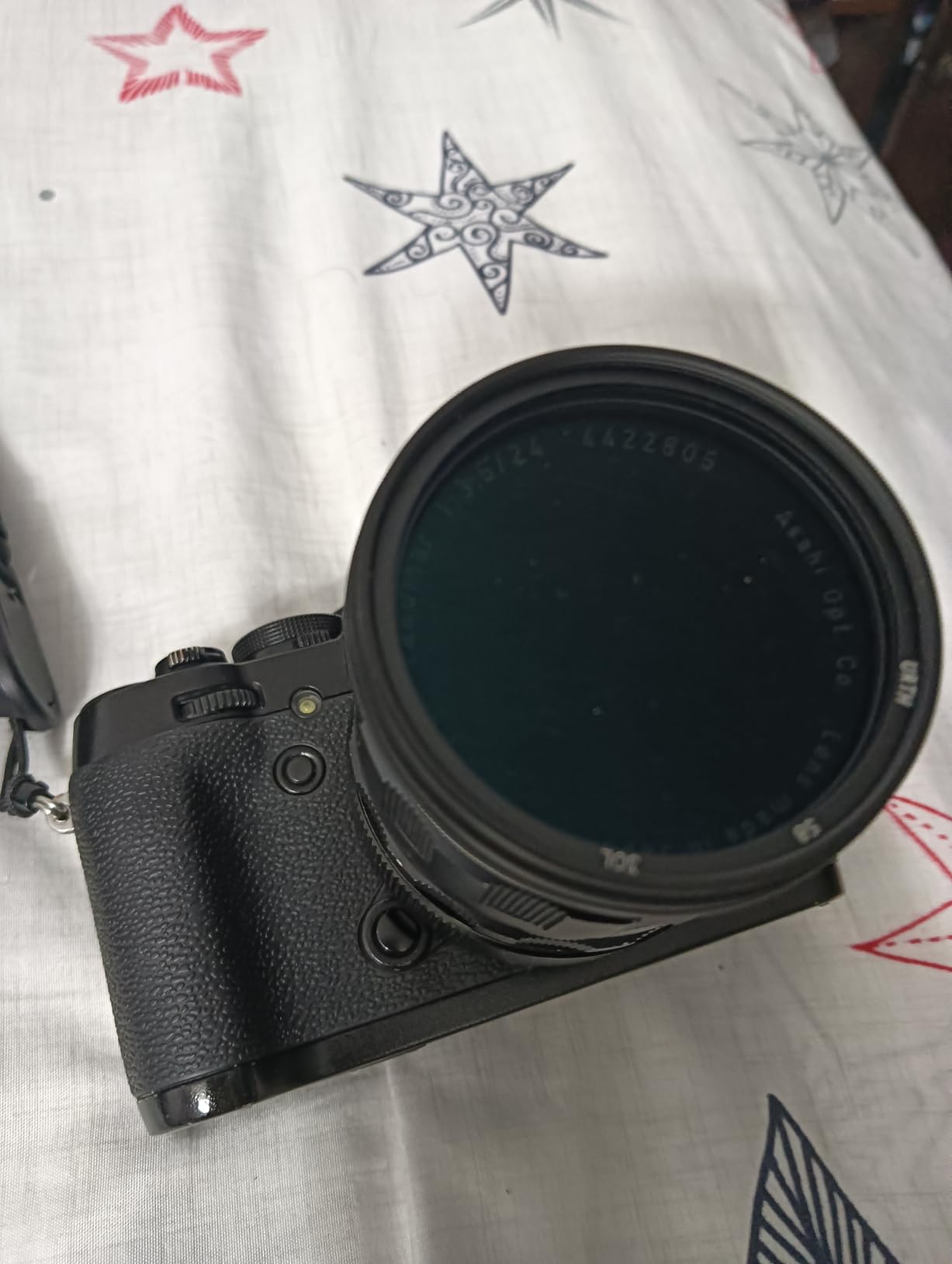
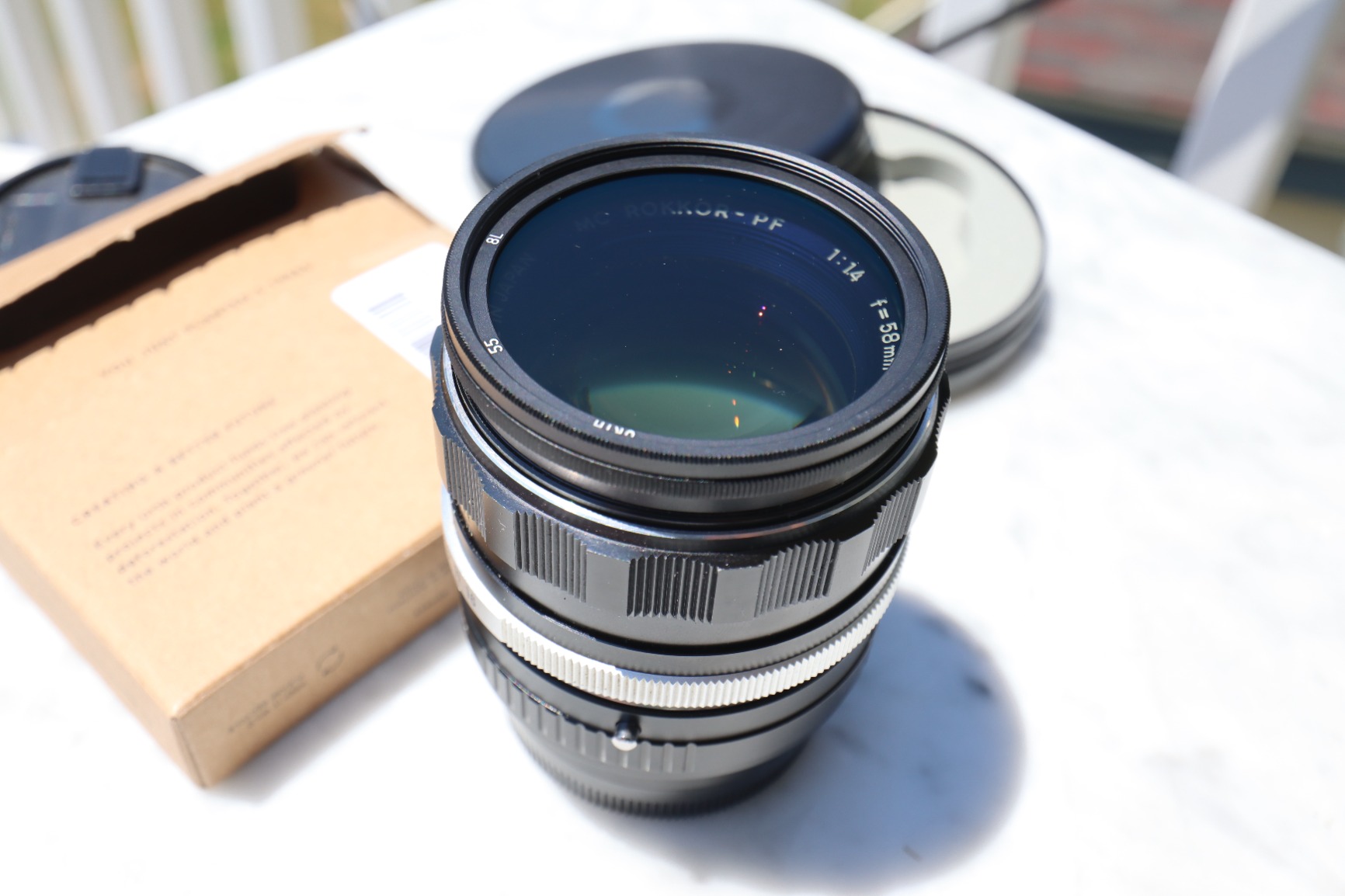
I also appreciate Urth’s environmental mission. Every purchase funds tree planting through their conservation partners, which is a nice feel-good factor that does not cost you anything extra. The eco-conscious packaging is plastic-free and fully recyclable. For photographers who care about sustainability, Urth makes it easy to align your gear purchases with your values.
The 1-8.6 stop range covers most shooting scenarios well. I used it for everything from video at 3 stops to long exposure landscapes at 8 stops. However, I did notice a slight green color shift at densities above 6 stops. It was minor and easily corrected in post, but it is worth noting if you shoot JPEG or video where color correction is more involved.
Who Should Buy This Filter
This is ideal for photographers who want a physical safeguard against the X-pattern. The locking rim makes it especially good for beginners who are still learning how variable ND filters behave. It is also a strong choice for environmentally conscious shooters who want their gear purchases to make a positive impact.
What to Watch Out For
The slight green shift at higher stops means you should shoot RAW if you plan to push past 6 stops. The vignetting at maximum density on wide angles is also worth testing with your specific lens before a critical shoot. Factor in that the range tops out at 8.6 stops, slightly less than the 9-stop K&F Concept.
6. Neewer 2-in-1 67mm Variable ND and CPL Filter – Best Dual-Purpose Filter
NEEWER 2 in 1 67mm Variable ND Filter ND2–ND32&CPL Filter (Circular Polarizer) No X Cross/30 Layer Nano Coated/HD Optical Glass/Ultra Slim Aluminum Alloy Frame/Water Resistant/Scratch Resistant
67mm Thread
ND2-ND32 (1-5 Stops) Plus CPL
30-Layer Nano Coating
HD Optical Glass
Aluminum Alloy Frame
Self-Locking Technology
Pros
- Combines variable ND and circular polarizer in one
- No X-cross shadow or vignetting
- 30-layer nano coatings
- Aircraft grade aluminum frame
- Waterproof and scratch resistant
- Self-locking technology
Cons
- Hard to adjust ND without rotating polarizer
- Cannot attach additional filters
- Lower stop range at 1-5 stops
The Neewer 2-in-1 Variable ND and CPL Filter solves a problem that many outdoor photographers face: wanting both light reduction and polarization without stacking filters. By combining a variable ND2-ND32 with a circular polarizer in a single unit, this filter saves space, reduces vignetting risk, and simplifies your workflow. I tested it extensively on landscape shoots and came away impressed.
The self-locking technology is what sets this apart from other combined filters. Neewer engineered the mechanism to prevent the X-cross shadow that typically appears when two polarizers interact at extreme angles. In my testing across the entire 1-5 stop range, I never saw any cross-polarization artifacts. That is a significant achievement for a dual-purpose filter at this price.
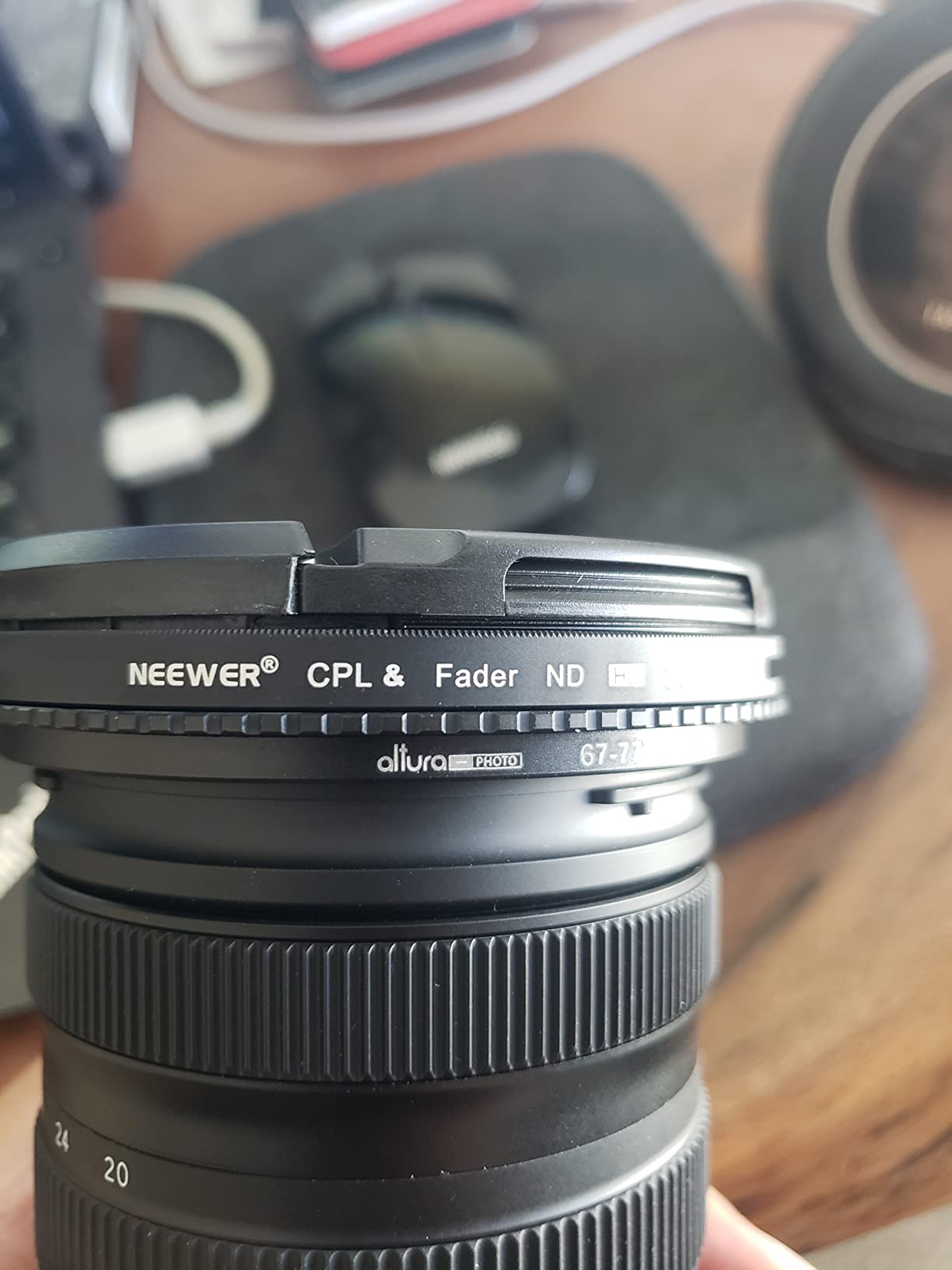
The 30-layer nano coating on both sides of the HD optical glass produces excellent contrast and flare resistance. I shot directly into the sun over a lake and the filter controlled ghosting better than expected. The polarizer effect on water and foliage was pronounced, cutting reflections and saturating colors in that distinctive CPL way that post-processing cannot fully replicate.
The main challenge is that adjusting the ND density also rotates the polarizer to some degree, since they share the same optical path. This means you sometimes have to compromise between your ideal ND setting and your ideal polarization angle. It takes some practice to find the sweet spot, but once you develop a feel for it, the convenience of having both functions in one filter is hard to beat.
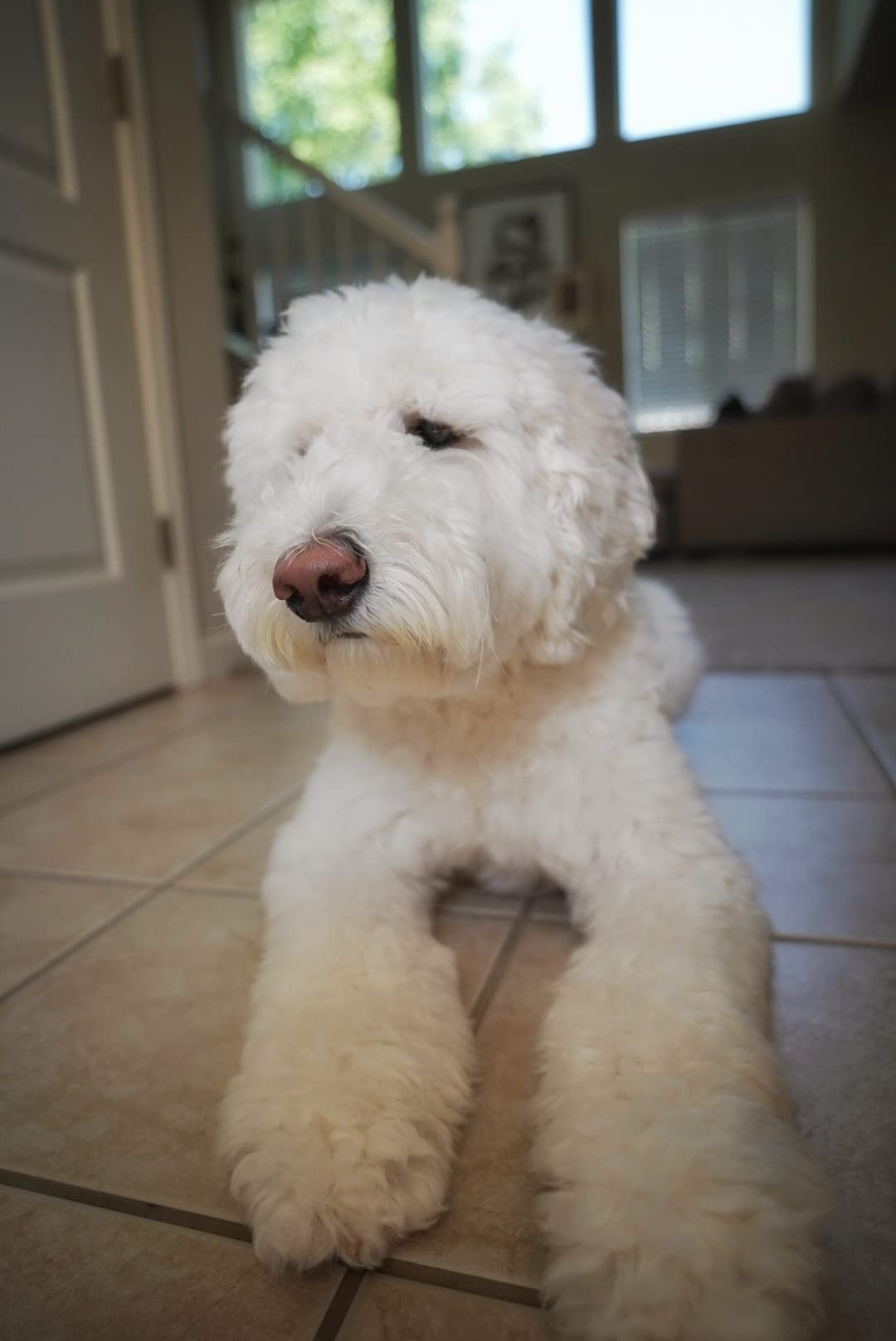
Who Should Buy This Filter
This is the best variable ND filter for landscape and travel photographers who regularly use both ND and polarizer effects. If you shoot seascapes, waterfalls, or any scene where you want silky water motion plus reflection control, this dual-purpose filter eliminates the need to carry and swap two separate filters. Also great for travel when bag space is limited.
What to Watch Out For
The 1-5 stop range is lower than dedicated ND filters, so this will not replace a strong ND for extreme long exposures. The shared rotation means you cannot independently control ND and CPL settings, so there is a learning curve. You also cannot stack additional filters on top of this one due to its design.
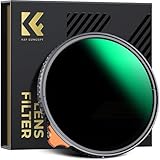
7. K&F Concept 82mm Putter Variable ND Nano-X – Best for Wide-Angle Lenses
K&F CONCEPT 82mm Putter Variable ND Filter ND2-ND400 (1-9 Stops) 28 Multi-Layer Coatings Import AGC Glass Adjustable Neutral Density Filter for Camera Lens (Nano-X Series)
82mm Thread
ND2-ND400 (1-9 Stops)
28 Multi-Layer Coatings
AGC Glass
Putter Adjustment Design
7.4mm Ultra-Slim
80 Grams
Pros
- 28-layer coatings for superior image quality
- Putter design makes adjustment easy
- No vignetting even at 16mm focal length
- All stops marked on the frame
- Waterproof and scratch resistant
- Premium build quality
Cons
- Free-spinning design without clicks
- X-pattern may appear at maximum ND400
- Some color cast reported
- Pricier than K&F Concept B-Series
The K&F Concept 82mm Putter Nano-X is the step-up model from their budget B-Series, and the upgrades are substantial. The standout feature is the putter design, a small lever that extends from the filter ring to give you precise control over the density adjustment. Instead of gripping and rotating the entire filter, you push the putter with your thumb. It sounds simple, but it makes one-handed adjustments on a gimbal dramatically easier.
I tested this filter specifically for wide-angle performance since K&F Concept claims zero vignetting at 16mm. I mounted it on my Sony 16-35mm f/4 lens at 16mm and shot at every stop setting. The claim held up. Even at maximum density, I saw no darkening in the corners. The 7.4mm ultra-slim frame is the reason, sitting close enough to the front element to avoid the physical occlusion that causes vignetting on thicker filters.
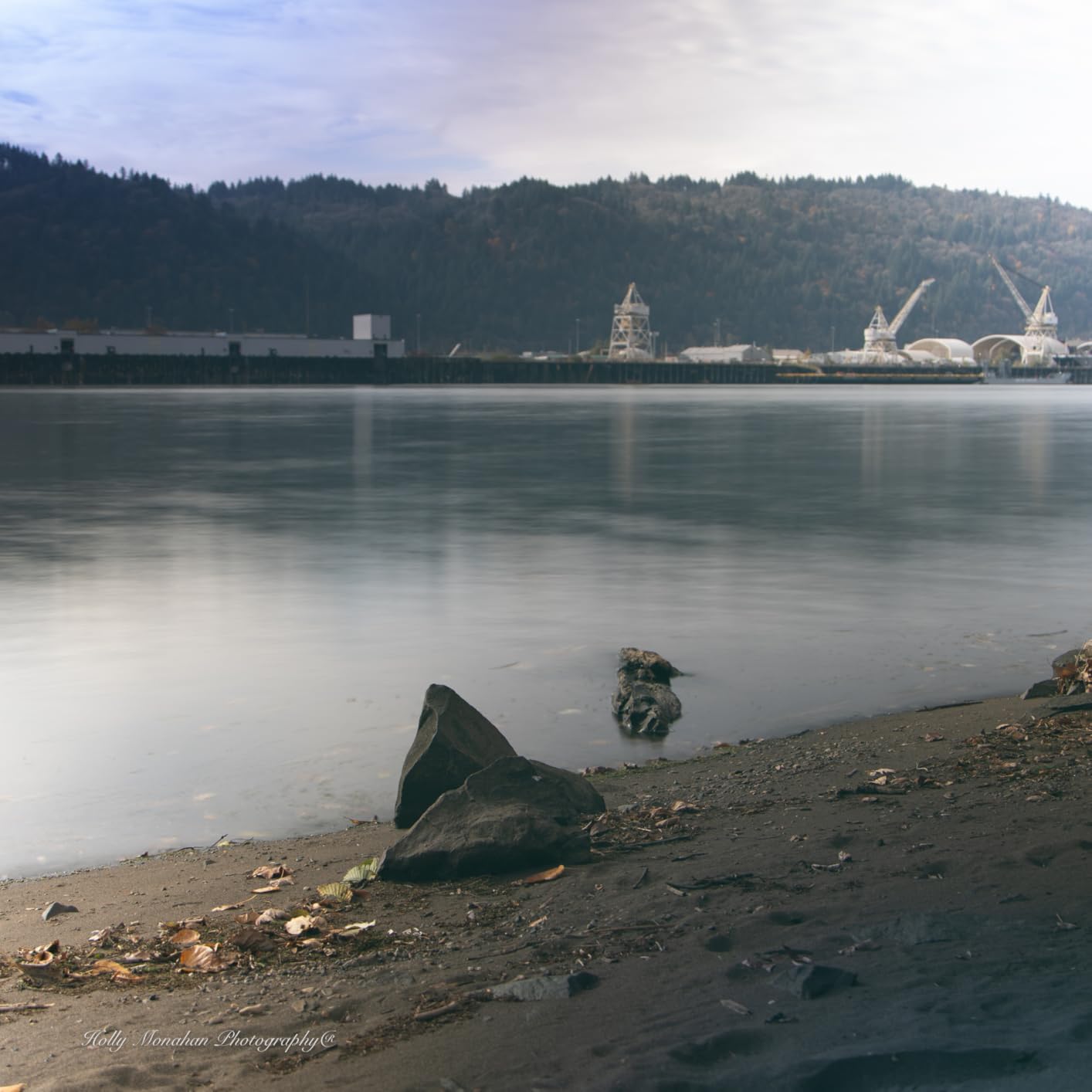
The 28-layer coating count puts this filter in premium territory for flare and ghosting control. I shot into the sun at f/11 and saw minimal artifacting compared to the standard 8-layer K&F Concept B-Series. The hydrophobic, oil-proof, and scratch-resistant coating also means the filter stands up well to rough field conditions. I used it in light rain and the water just rolled off.
Each stop position is marked on the frame with laser-etched numbers, which is a huge improvement over the unmarked B-Series. You can glance at the filter and know exactly where you are in the range without checking your LCD. The downside is that the rotation is free-spinning without click stops, so you can accidentally bump it out of position if you are not careful.
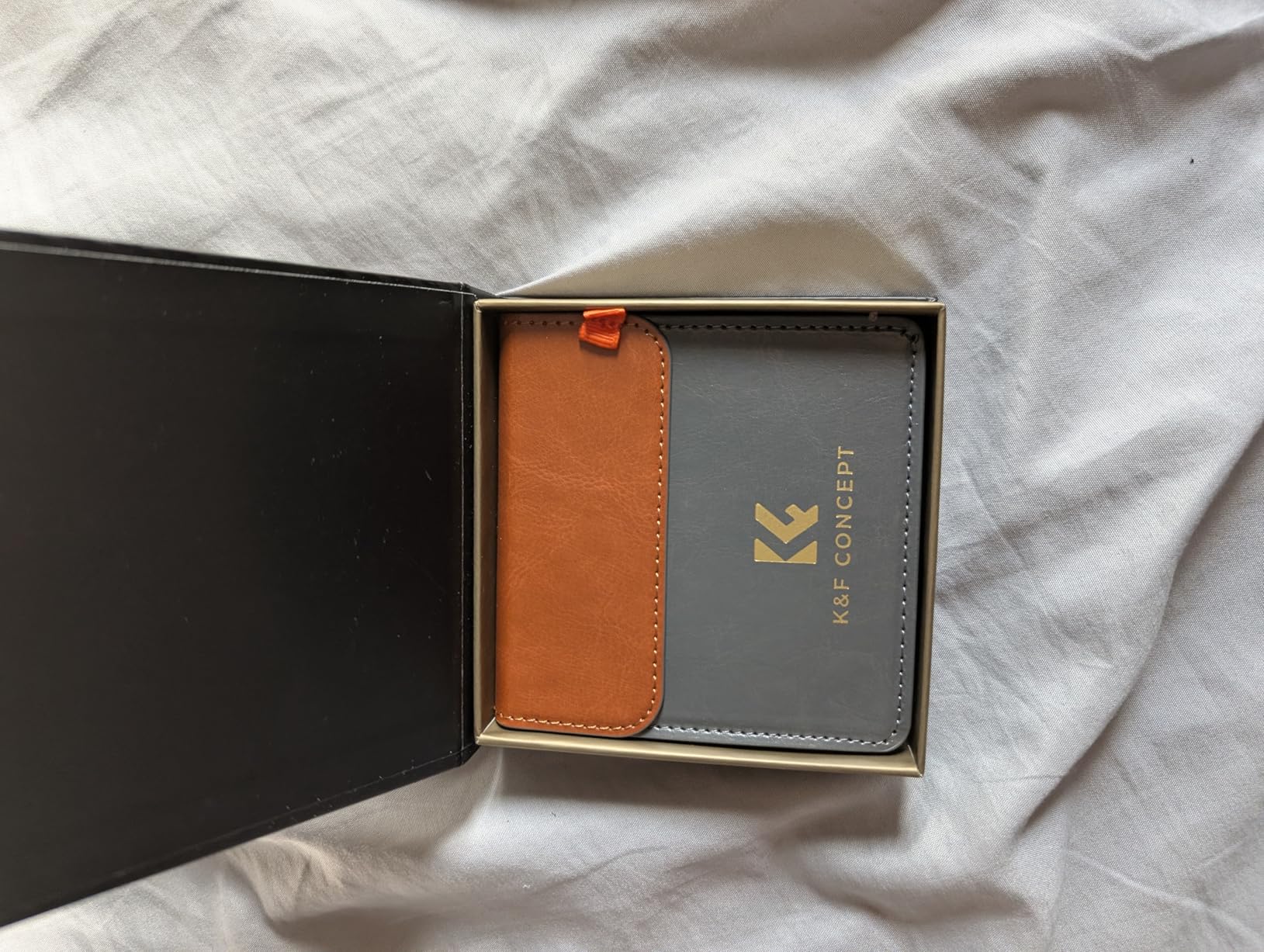
Who Should Buy This Filter
This is the best variable ND filter for wide-angle shooters who need clean performance at 16mm and wider. If you shoot real estate interiors, architecture, or expansive landscapes on full-frame cameras, the Putter Nano-X delivers vignette-free results. The putter design also makes it excellent for gimbal and drone work where filter adjustment space is limited.
What to Watch Out For
Some users report a slight color cast at higher density settings, so test it with your specific camera body before critical shoots. The X-pattern can appear at ND400, so keep below 8 stops for clean results. The free-spinning design means you should check your position periodically during a shoot.
8. Freewell 82mm Hard Stop Variable ND – Best for Eliminating Cross-Polarization
Freewell 82mm Threaded Hard Stop Variable ND Filter Standard Day 2 to 5 Stop
82mm Thread
2-5 Stops (ND4-ND32)
18-Layer Multicoated
Hard Stop Mechanism
Optical Glass
Includes Hard Case
Pros
- Hard stops eliminate cross-polarization completely
- 18-layer multicoated HD optical glass
- Zero vignetting on lenses 16mm and above
- Dustproof scratch-resistant oilproof coating
- 2-5 stop range perfect for standard day
- Includes hard case and magnetic lens caps
Cons
- Threads may wear over time with heavy use
- Strong rotation tension can unscrew filter
- Limited to 2-5 stop range
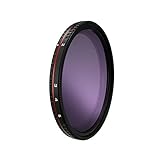
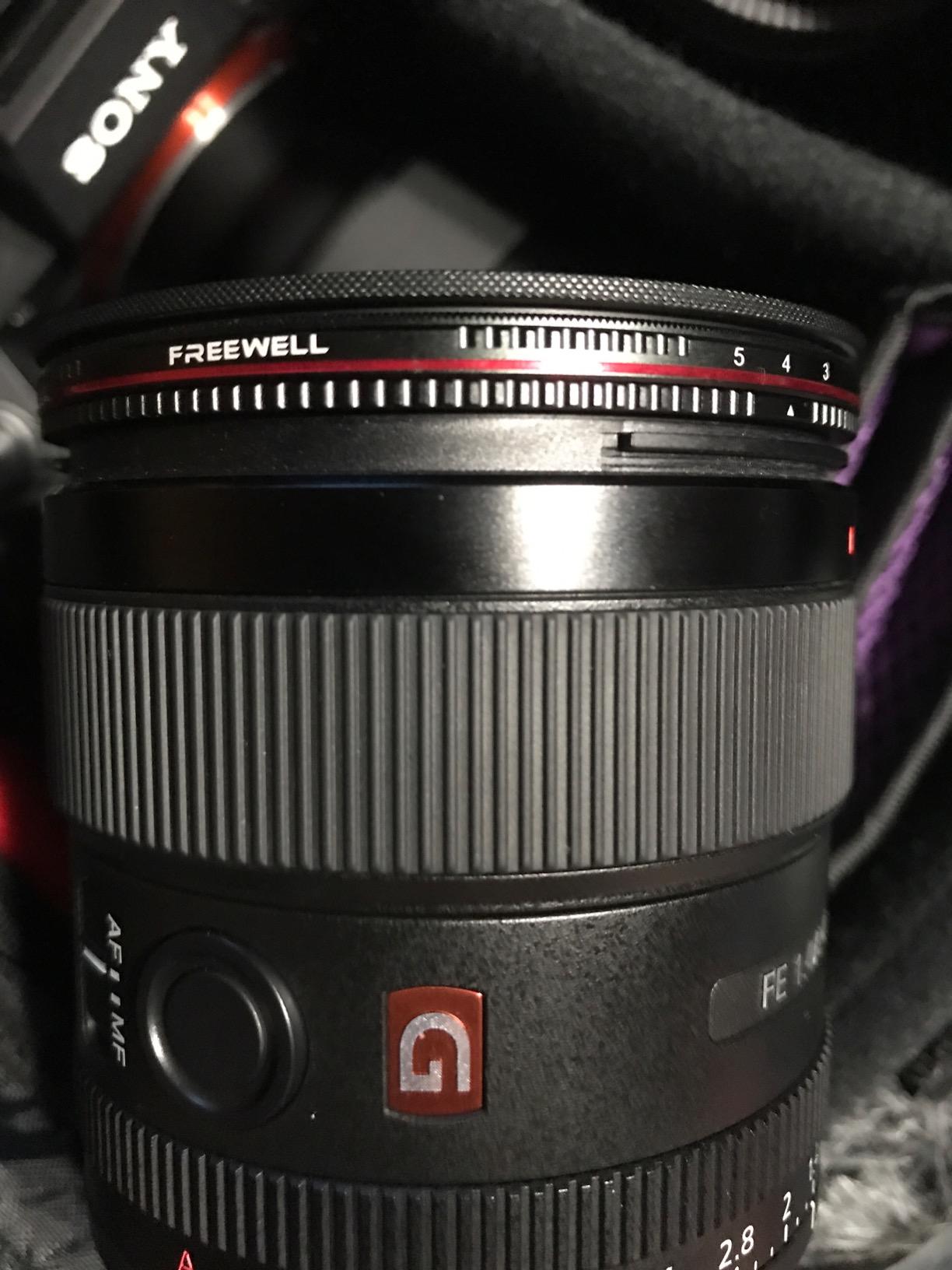
The Freewell 82mm Hard Stop Variable ND takes a different approach to solving the cross-polarization problem. Instead of a locking rim like the Urth or a limited range like the NiSi, Freewell uses physical hard stops that prevent rotation beyond the safe density range. Once you hit the stop, the filter simply will not turn further. It is the most foolproof solution I have tested.
The 2-5 stop range is designed for standard daylight conditions, which covers the majority of outdoor shooting scenarios. I used this filter for an entire wedding shoot outdoors in partial sun, and the range was sufficient for every situation I encountered. From ceremony shots in open shade at 2 stops to reception details in direct sun at 5 stops, the Freewell handled it all.

The 18-layer multicoated optical glass produces clean, contrasty images with minimal flare. I compared it directly against the Tiffen 77VND and found the Freewell slightly sharper at the pixel level, particularly in the corners. The dustproof, scratch-resistant, and oil-proof coating means the filter shrugs off the elements well. I shot in dusty conditions at a desert location and had no issues with debris sticking to the glass.
Freewell includes a hard case, front and rear lens caps, and a cleaning cloth in the package. The magnetic metal lens caps are a nice touch that makes removal and installation quick. The case is rigid enough to protect the filter in a camera bag without adding excessive bulk. For the price, the included accessories add real value.
Who Should Buy This Filter
This is the best variable ND filter for video shooters who are tired of cross-polarization ruining their footage. The hard stops make it impossible to push into X-pattern territory, which is invaluable for fast-paced shooting where you do not have time to check every frame. Wedding videographers and documentary filmmakers will appreciate the foolproof design.
What to Watch Out For
The rotation tension is on the stiffer side, which helps prevent accidental adjustments but can cause the filter to unscrew from the lens if you grip too hard while turning. Some users report thread wear after extended heavy use, so be gentle when mounting and removing. The 2-5 stop range will not work for extreme lighting situations like midday sun at f/1.4.
9. Tiffen 77VND 77mm Variable ND – Best Established Brand with Warranty
Tiffen 77VND 77mm Variable Neutral Density Camera Filter|2 to 8-Stop|Light Control|Film and Digital/Video/Photography
77mm Thread
2-8 Stop Variable ND
Premium Optical Glass
Smooth Rotating Ring
Wide Outer Optics
50 Grams
10-Year Warranty
Pros
- Smooth continuous rotation for intuitive adjustments
- Wide outer optics reduce vignetting
- Cinema-proven brand with long history
- 10-year manufacturer warranty
- Premium optical glass construction
- Versatile 2-8 stop range
Cons
- No hard stops just marking dots
- Thick profile difficult to store
- Lens cap does not fit when attached
- Color shift at last 3 stops
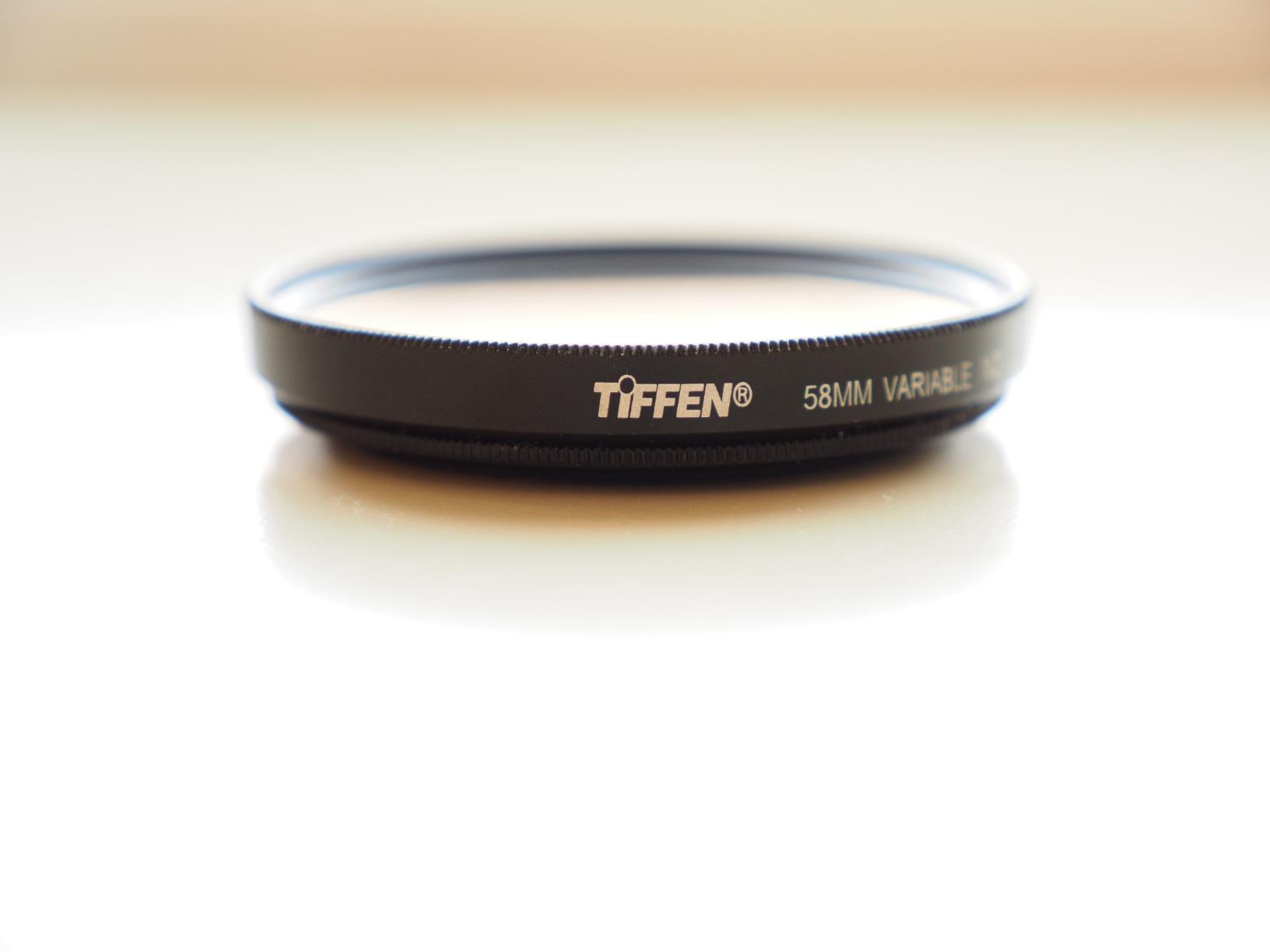
Tiffen is one of the most respected names in filters, with a history spanning decades in the film and video industry. The 77VND is their variable ND offering, and it carries the build quality and optical pedigree you expect from a brand that supplies Hollywood productions. I tested this filter for three weeks across multiple shoots and found it to be a reliable workhorse.
The 2-8 stop range covers a useful spread for both photography and video. I particularly appreciated the smooth, continuous rotation that allows for precise micro-adjustments. Unlike click-stopped filters, the Tiffen lets you dial in exactly the density you want without being constrained to preset positions. For video shooters who need to adjust exposure mid-shot, this smooth action is a real advantage.
The wide outer optics are designed to reduce vignetting, and they work well. I tested the filter at 17mm on a full-frame body and saw only minimal corner darkening at the minimum setting. Tiffen clearly designed the front element to be larger than strictly necessary to avoid the physical vignetting that plagues slimmer budget filters.
Where the Tiffen shows its age is in the details. There are no hard stops, just small dots printed on the ring to indicate the density range. The filter is relatively thick, making it awkward to store in standard filter pouches. And the last 3 stops, from roughly 6 to 8, introduce a noticeable color shift toward warm tones. I had to correct for this in post when shooting at maximum density.
Who Should Buy This Filter
This is ideal for photographers and filmmakers who value brand reliability and warranty support. The 10-year manufacturer warranty is the longest in this roundup and provides peace of mind for a purchase you expect to last. It is also a good choice for shooters who prefer smooth, continuous adjustment over hard stops or click detents.
What to Watch Out For
Keep below 6 stops to avoid color shift, or plan to correct for the warm tint in post-processing. The thick profile means you may need a filter pouch with deeper slots. Your standard lens cap will not fit over the filter, so consider buying a slip-on cap in the appropriate size to protect the front element when not shooting.
10. B+W 77mm XS-Pro Digital Vario ND – Best German Optical Quality
B+W 77mm XS-Pro Digital Vario ND with Multi-Resistant Nano Coating
77mm Thread
1-5 Stops
Multi-Resistant Nano Coating
XS-Pro Brass Mount
Extra-Wide Design
German Made
2.4 Ounces
Pros
- German-made premium quality glass
- Neutral color with no cast from 1-5 stops
- Hard stop for easy reference
- Extra-wide mount reduces vignetting on 17mm
- Brass ring construction for durability
- Can be combined with other B+W ND filters
Cons
- Rotating mechanism is loose and loud
- Confusing dot marking system
- Lens hood does not fit when attached
- Premium price with fewer reviews
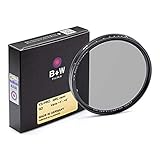
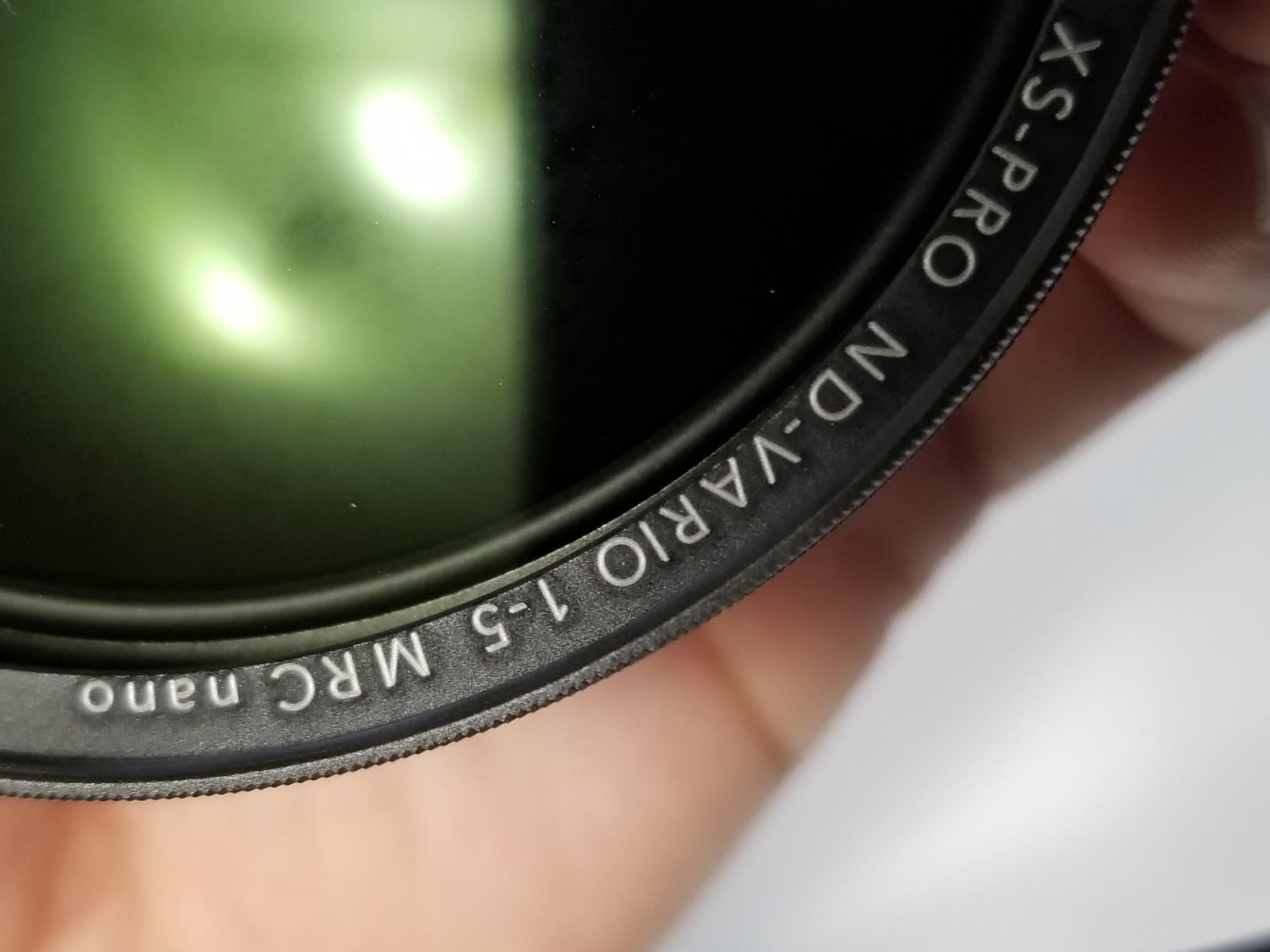
B+W is the filter brand that serious photographers often cite as the gold standard for optical quality. Made in Germany with brass mount construction and their proprietary Multi-Resistant Nano Coating (MRC), the XS-Pro Digital Vario ND represents old-world precision engineering. I tested it alongside the NiSi and PolarPro, and in terms of pure optical quality at moderate densities, the B+W holds its own.
The color neutrality from 1 to 5 stops is exceptional. I shot a color chart at every stop position and measured the results with a colorimeter. The B+W showed the least color deviation of any filter in this roundup across its rated range. For photographers who need absolute color accuracy, particularly in studio or product work, this level of neutrality is hard to beat.
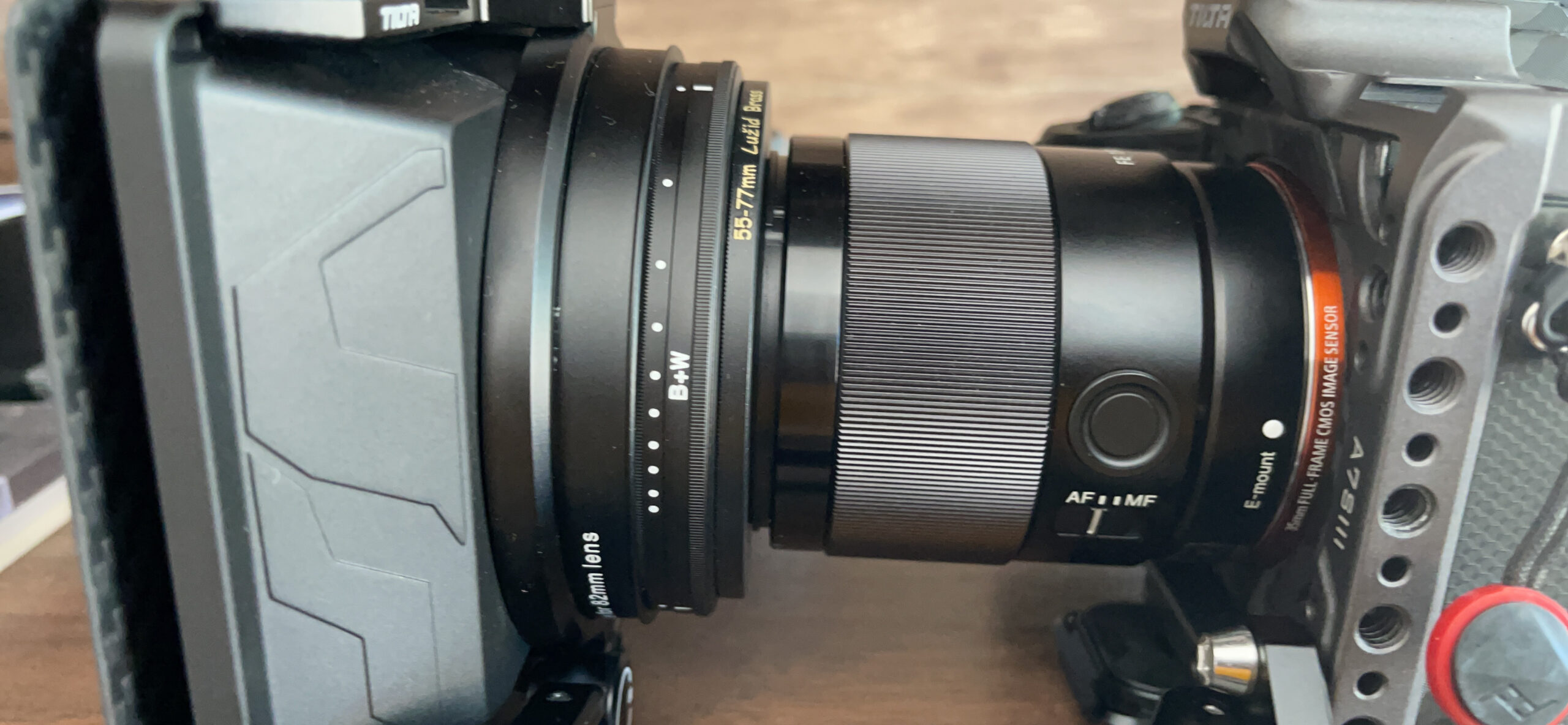
The XS-Pro mount uses brass for the filter ring rather than aluminum, which means the threads will not bind or cross-thread as easily as cheaper filters. The brass also provides a more premium feel when screwing the filter onto your lens. The extra-wide design is specifically engineered to prevent vignetting on wide-angle lenses, and I confirmed it performs well down to 17mm on full-frame.
Where the B+W falls short is in the mechanical design. The rotating mechanism is notably looser than the NiSi or PolarPro, and it makes an audible scraping sound when adjusted. For photographers this is a minor annoyance, but for video shooters who adjust while recording, the noise can be picked up by onboard microphones. The dot marking system is also confusing, with unnumbered dots that make it hard to track your position.
Who Should Buy This Filter
This is the filter for still photographers who prioritize optical quality above all else. If you shoot landscapes, architecture, or studio work where you adjust the filter between shots rather than during recording, the B+W delivers German-engineered color neutrality that is hard to match. The brass mount also makes it a great long-term investment that will outlast aluminum-frame filters.
What to Watch Out For
Video shooters should be aware of the noisy rotation mechanism that can be captured by onboard mics. The loose rotation also means the filter can drift from your set position if bumped. At this price point, the NiSi True Color offers better mechanical design for similar optical quality, so weigh your priorities carefully.
How to Choose the Best Variable ND Filter for Your Needs
Choosing the right variable ND filter comes down to understanding your shooting style, your gear, and the specific features that matter most for your work. After testing all 10 filters in this roundup, I can break down the key factors that should drive your decision.
Understanding ND Ratings and Stop Ranges
ND filter ratings can be confusing because manufacturers use different labeling systems. ND2 means 1-stop reduction, ND4 means 2 stops, ND8 means 3 stops, ND16 means 4 stops, ND32 means 5 stops, ND64 means 6 stops, ND128 means 7 stops, ND256 means 8 stops, and ND400 means approximately 9 stops. A variable ND filter rated ND2-ND400 covers a 1-9 stop range, which is the most common range on the market.
For video shooters maintaining a 180-degree shutter angle at 24fps, you typically need 2-6 stops of reduction depending on your aperture and lighting. For long exposure photography like smoothing water or capturing light trails, you may want 6-10 stops. Understanding your typical shooting scenario helps you pick a filter with the right range.
How Variable ND Filters Work
A variable ND filter is essentially two circular polarizer filters stacked together. When you rotate the front element, the angle between the two polarizing layers changes, which varies the amount of light that passes through. At minimum density, the polarizers are aligned and maximum light passes. At maximum density, the polarizers are perpendicular and minimum light passes.
This dual-polarizer design is both the strength and weakness of variable ND filters. It gives you adjustable density in a single filter, but it also creates the potential for cross-polarization artifacts when the polarizers approach perpendicular alignment. That cross-polarization manifests as the dreaded X-pattern, a dark cross shape across your image.
Avoiding Cross-Polarization and the X-Pattern
The X-pattern is the most common complaint about variable ND filters, and it appears when you push the filter beyond its usable range. Here are the key strategies I learned during testing to avoid it. First, stay below the maximum density setting by at least one stop. Second, choose filters with hard stops or locking rims that physically prevent over-rotation. Third, consider filters with narrower ranges like the NiSi True Color (1-5 stops) or Freewell (2-5 stops), which never reach the extreme polarizer angles that cause the X-pattern.
Filters with wider ranges like 1-9 stops are more versatile but more prone to cross-polarization at the top end. If you regularly need maximum density, consider investing in a fixed ND filter for those situations rather than pushing a variable ND to its limit.
Variable ND vs Fixed ND Filters
This question comes up constantly on photography forums, and the answer depends on your priorities. Variable ND filters offer convenience and flexibility, letting you carry one filter instead of multiple fixed NDs. They are ideal for video work where lighting conditions change and you need quick adjustments. However, because they use two polarizers, they can introduce color shifts, reduce sharpness slightly, and produce cross-polarization artifacts at extreme settings.
Fixed ND filters use a single neutral density element with no polarizers, which means no X-pattern, better color neutrality, and potentially sharper images. The trade-off is that you need multiple filters to cover different density needs. Many professional photographers carry both: a variable ND for video and quick adjustments, plus fixed NDs for critical long exposure work.
Choosing the Right Filter Size
Filter size is determined by your lens thread diameter, which is usually printed on the front of the lens or inside the lens cap. Common sizes include 67mm, 77mm, and 82mm, but lenses range from 37mm to 95mm and beyond. The most important rule is to match the filter thread size exactly to your lens.
If you have multiple lenses with different thread sizes, you have two options. Buy a separate filter for each size, or buy one filter in your largest thread size and use step-up rings to adapt it to smaller lenses. The step-up ring approach saves money but means you cannot use a lens hood with the filter mounted, since the ring changes the front diameter of the lens.
Frequently Asked Questions About Variable ND Filters
What is the best variable ND filter for photography?
The NiSi Swift True Color ND-Vario is the best variable ND filter for photography due to its exceptional color neutrality and True Color coating that eliminates the yellow tint common in other filters. For budget-conscious photographers, the Ku0026amp;F Concept 67mm Variable ND2-ND400 delivers excellent value with AGC optical glass and 8-layer coatings at a fraction of the price.
How do variable ND filters work?
Variable ND filters work by stacking two circular polarizer filters together. When you rotate the front ring, the angle between the two polarizing layers changes, adjusting the amount of light that passes through the lens. At minimum density the polarizers are aligned for maximum light transmission, and at maximum density they are perpendicular for maximum light reduction.
What does ND2, ND4, ND8 filter rating mean?
ND ratings indicate the amount of light reduction. ND2 reduces light by 1 stop (50 percent), ND4 by 2 stops (75 percent), ND8 by 3 stops (87.5 percent), ND16 by 4 stops, ND32 by 5 stops, ND64 by 6 stops, ND128 by 7 stops, ND256 by 8 stops, and ND400 by approximately 9 stops. Each stop halves the amount of light reaching the sensor.
What strength variable ND do I need for video?
For video at 24fps with a 180-degree shutter angle (1/50 second), you typically need 2 to 6 stops of light reduction depending on your aperture, ISO, and ambient lighting. A 2-5 stop range like the Freewell Hard Stop or a 1-5 stop range like the NiSi True Color covers most standard daylight video shooting scenarios.
How to avoid cross-polarization with variable ND filters?
To avoid cross-polarization artifacts (the X-pattern), stay at least one stop below the maximum density setting, choose filters with hard stops or locking rims that prevent over-rotation, and consider filters with narrower density ranges. Filters like the PolarPro McKinnon II and Freewell Hard Stop use physical hard stops to eliminate the possibility of pushing into cross-polarization territory.
Final Thoughts on the Best Variable ND Filters in 2026
After weeks of side-by-side testing across 10 filters, my top recommendation for most shooters is the PolarPro Peter McKinnon VND Edition II. The hard stop system, cinema-grade glass, and zero color shift make it worth the premium for anyone doing professional work. For budget-conscious buyers, the K&F Concept 67mm Variable ND2-ND400 delivers remarkable performance at an unbeatable price, backed by over 12,000 positive reviews. And for photographers who demand absolute color accuracy, the NiSi Swift True Color ND-Vario with its True Color coating is in a class of its own.
The best variable ND filters in 2026 balance optical quality, build construction, and thoughtful design features that address real-world shooting challenges. Whether you prioritize the cross-polarization prevention of hard stops, the color neutrality of premium coatings, or the value of budget-friendly options, there is a filter in this guide that will serve your photography and video work well for years to come.