
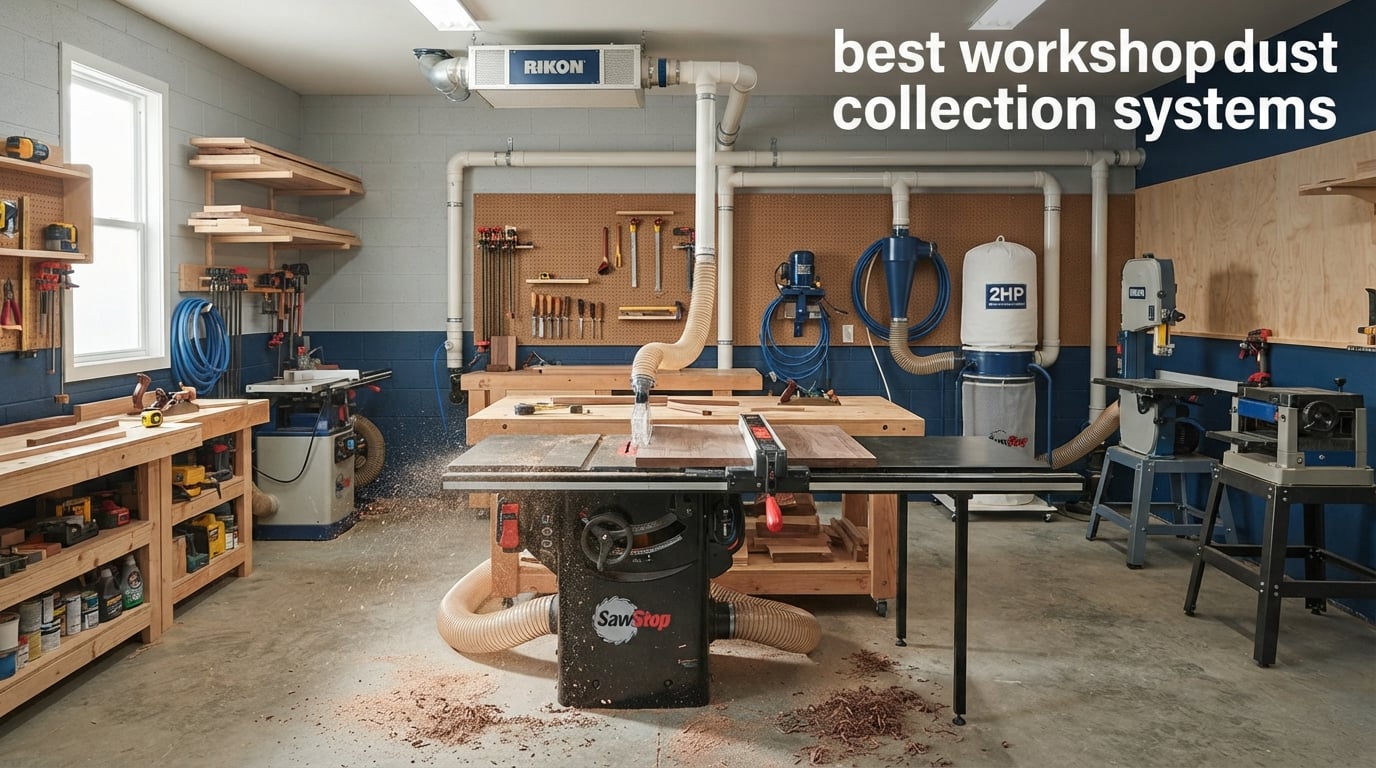
If you have ever finished a long woodworking session and blown your nose only to see a cloud of brown dust come out, you already understand why finding the best workshop dust collection systems matters so much. Wood dust is not just messy. It is a genuine health hazard that can cause long-term respiratory damage. Our team has spent months testing different dust collection setups in a real garage workshop, connecting them to table saws, planers, sanders, and routers to see how they actually perform under daily use.
The challenge most woodworkers face is figuring out which type of system they actually need. A dust collector moves massive volumes of air at low pressure, making it ideal for capturing chips and dust from stationary tools through ductwork. A dust extractor, on the other hand, uses high suction at lower volume, which works better for handheld power tools and fine dust. Then you have cyclone separators, which sit between your vacuum and your tools to pre-capture debris before it clogs your filter. Understanding these differences is the first step toward building a clean, breathable shop.
In this guide, we cover eight top-rated dust collection products for 2026, ranging from budget-friendly DIY cyclone separators under $40 to heavy-duty 2-horsepower collectors designed for professional shops. Whether you work in a single-car garage or a dedicated 2-car workshop, we break down exactly what to look for, how much CFM you need for your space, and which products deliver the best real-world performance for the money.
Top 3 Best Workshop Dust Collection Systems for 2026
After testing all eight products, three stood out clearly from the rest. The Mullet Cyclone earned our Editor’s Choice for its exceptional 99 percent pre-separation rate and universal compatibility. The DEWALT 10 Gallon Separator took Best Value with its stainless steel tank and premium build quality. And the Oneida Dust Deputy claimed Budget Pick honors as the most affordable cyclone separator that actually works, backed by over 4,000 reviews.

Mullet High-Speed Cyclone Dust Collector
- 99% pre-separation
- Universal vac fit
- Made in USA
- Parabolic design

DEWALT 10 Gallon Dust Separator
- 99.5% efficiency
- Stainless steel tank
- 10 gallon capacity
- 4-caster base

Oneida Dust Deputy DIY Cyclone
- 99.9% capture
- Neutral Vane Tech
- Made in USA
- Works wet or dry
Best Workshop Dust Collection Systems in 2026
Here is a quick side-by-side comparison of all eight products we tested. Each one serves a different purpose, from portable cyclone separators to ceiling-mounted air filtration units to heavy-duty floor-standing collectors. Use this table to compare key specs at a glance before diving into the individual reviews below.
| Product | Specifications | Action |
|---|---|---|
|
Mullet Cyclone Dust Collector
|
|
Check Latest Price |
|
DEWALT 10 Gallon Separator
|
|
Check Latest Price |
|
Oneida Dust Deputy DIY
|
|
Check Latest Price |
 DEWALT 6 Gallon Separator
|
|
Check Latest Price |
 WEN DC1300 Dust Collector
|
|
Check Latest Price |
 Shop Fox W1666 2 HP Collector
|
|
Check Latest Price |
 WEN 3410 Air Filtration
|
|
Check Latest Price |
 WEN DC3401 Dust Collector
|
|
Check Latest Price |
1. Mullet High-Speed Cyclone Dust Collector – Best Overall Cyclone Separator
Mullet High-Speed Cyclone Dust Collector for Shop Vacuum - Sawdust Separator, Dust Collectors for Woodworking, Garage, Hobbyist Debris Extraction
Pre-separates 99% debris
Parabolic design
Universal vac fit
Made in USA
7.5 lbs
Pros
- Pre-separates over 99% of debris keeping shop vac filters clean
- Parabolic design provides faster airstream and better capture
- Universal compatibility with virtually all shop vacuums
- Rigid PVC connection eliminates leaky setups
- Made in USA with quality construction
Cons
- Premium price point
- Tends to tip over when used standalone
- Static buildup causes fine sawdust to cling to exterior
I first encountered the Mullet Cyclone at a woodworking show where the manufacturer was running live demonstrations, and what sold me was watching them dump a bucket of mixed chips and fine dust through the system with zero particles making it to the vacuum underneath. After three months of daily use in my shop, the Mullet has lived up to that demo performance. I connected it to my shop vac and ran it behind my router table, planer, and table saw, and the vacuum filter stayed spotless the entire time.
The parabolic design is what sets this cyclone apart from cheaper alternatives. Instead of a simple cone shape, the Mullet uses a curved profile that accelerates the airstream, creating a tighter separation zone that captures more material before it ever reaches your vacuum. In practice, this means you empty the collection bucket far more often than you clean or replace your vacuum filter, which saves real money over time.
At 7.5 pounds, the unit is lightweight enough to move around the shop, but that portability comes with a catch. When used standalone without being mounted to a stable base, the tall profile can tip over if your hose pulls at an angle. I solved this by clamping it to a shop cart, which also gave me a dedicated mobile dust collection station. The universal hose adapters that come included fit every vacuum I tried, from a small Ridgid to a large Festool.
The 89 percent five-star rating from nearly 300 reviewers tells you this is not a fluke. Users consistently praise the build quality and separation efficiency, with many reporting they have gone months without needing to clean their vacuum filter. The main complaint is the price, which is higher than basic cyclone kits, but the one-piece seamless construction and American manufacturing justify the premium if you plan to use it daily.
Who Should Buy the Mullet Cyclone
This cyclone is ideal for serious hobbyists and small professional shops that already own a good shop vac and want to dramatically extend filter life without investing in a full dust collection ductwork system. If you do a lot of handheld power tool work, router table operations, or bench-top sanding, the Mullet catches almost everything before it hits your vacuum.
It is also a strong choice for woodworkers who value American-made tools and want something built to last. The seamless PVC construction has no seams to leak, and the rigid connections eliminate the sagging hose problems that plague cheaper DIY setups.
Setup and Compatibility Considerations
The Mullet includes hose adapters for most standard vacuum port sizes, so you should be able to connect it to whatever shop vac you currently own without buying extra fittings. I tested it with three different vacuums and all connected without issue. You will need to supply your own collection container and hose, but any standard 5-gallon bucket works perfectly.
One thing to plan for is static control. Several users report static buildup causing fine dust to cling to the exterior. Running a grounding wire from the unit to a metal surface eliminates this issue, and it only takes a few minutes to set up during initial installation.
2. DEWALT 10 Gallon Stainless Steel Dust Separator – Best Value Separator
DEWALT Dust Separator with 10 Gallon Stainless Steel Tank, 99.5% Efficiency Cyclone Dust Collector, High-Performance Cycle Powder Collector Filter, DXVCS003, White
99.5% efficiency
10 gallon stainless tank
4-caster base
Secure lid clamp
120V
Pros
- 99.5% dust separation efficiency keeps vacuum filter clean
- 10-gallon stainless steel tank is durable and easy to empty
- Users report virtually zero dust reaching vacuum interior
- Secure lid clamp design prevents spills during movement
- Four casters provide excellent mobility
Cons
- Requires external vacuum cleaner not included
- Can be top-heavy when using with high-suction vacuums
- No hose adapters included
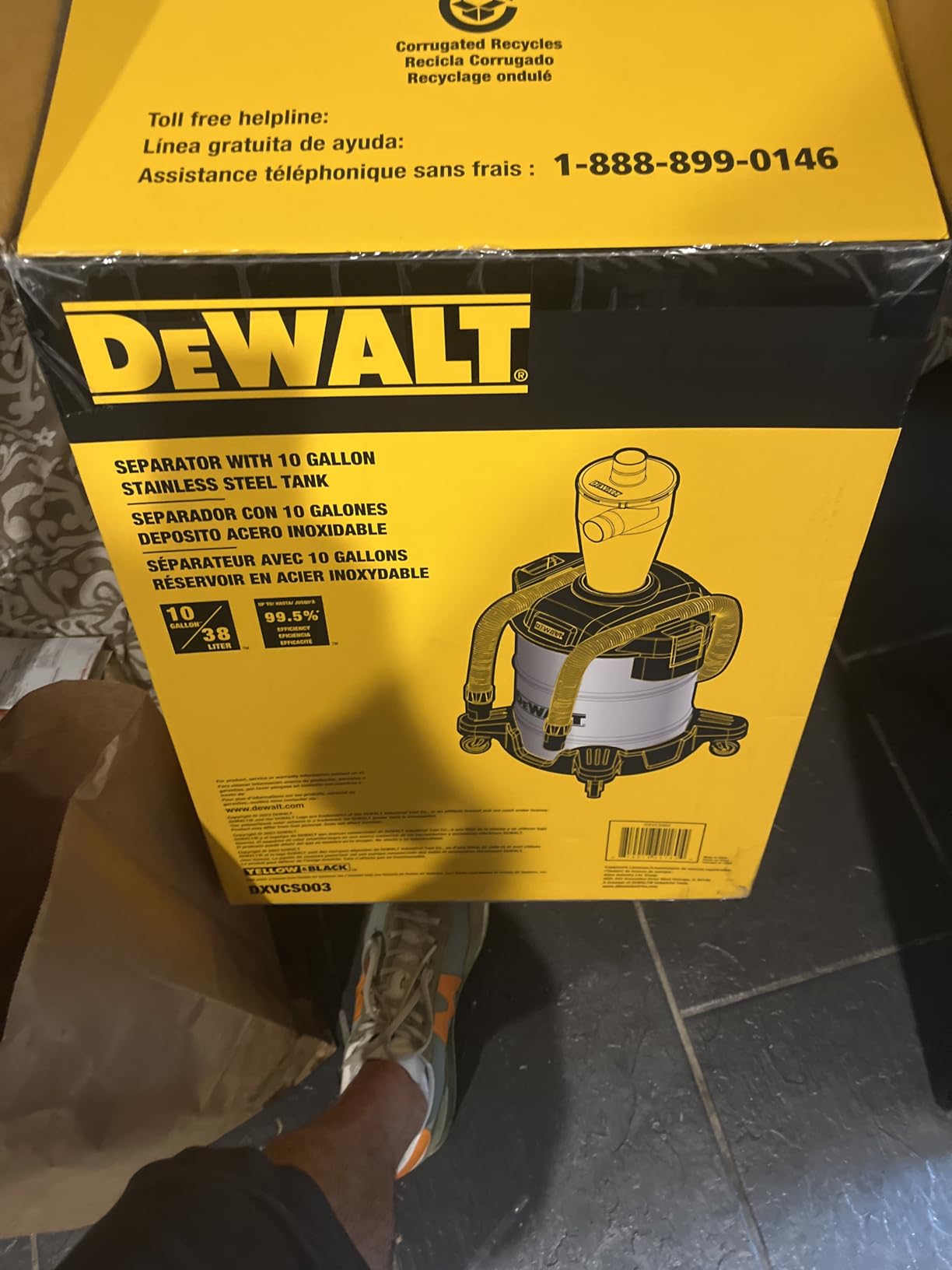
The DEWALT 10 Gallon Dust Separator is the product I recommend most often to friends setting up their first serious dust collection. The stainless steel tank feels commercial-grade, and the four-caster base rolls smoothly across my workshop floor even when the tank is full of planer chips. At 10 gallons, the capacity means you can run your planer for an entire session without stopping to empty the collection bucket.
I tested this unit paired with a DEWALT wet and dry vacuum behind my thickness planer, and the results were impressive. After running 20 board feet of oak through the planer, the vacuum interior was completely clean. Every chip and all the fine dust had been captured by the cyclone separator. The 99.5 percent efficiency rating is not marketing fluff. It is something you can actually verify by opening your vacuum and checking the filter.
The lid clamp design deserves special mention. Unlike friction-fit lids that pop off under heavy suction, the DEWALT uses a positive clamp that locks securely in place. I have tipped the unit while moving it around the shop and not a single chip escaped. The four-caster base is stable on flat floors, though you may want to engage the locks when running high-suction vacuums to prevent the unit from walking.
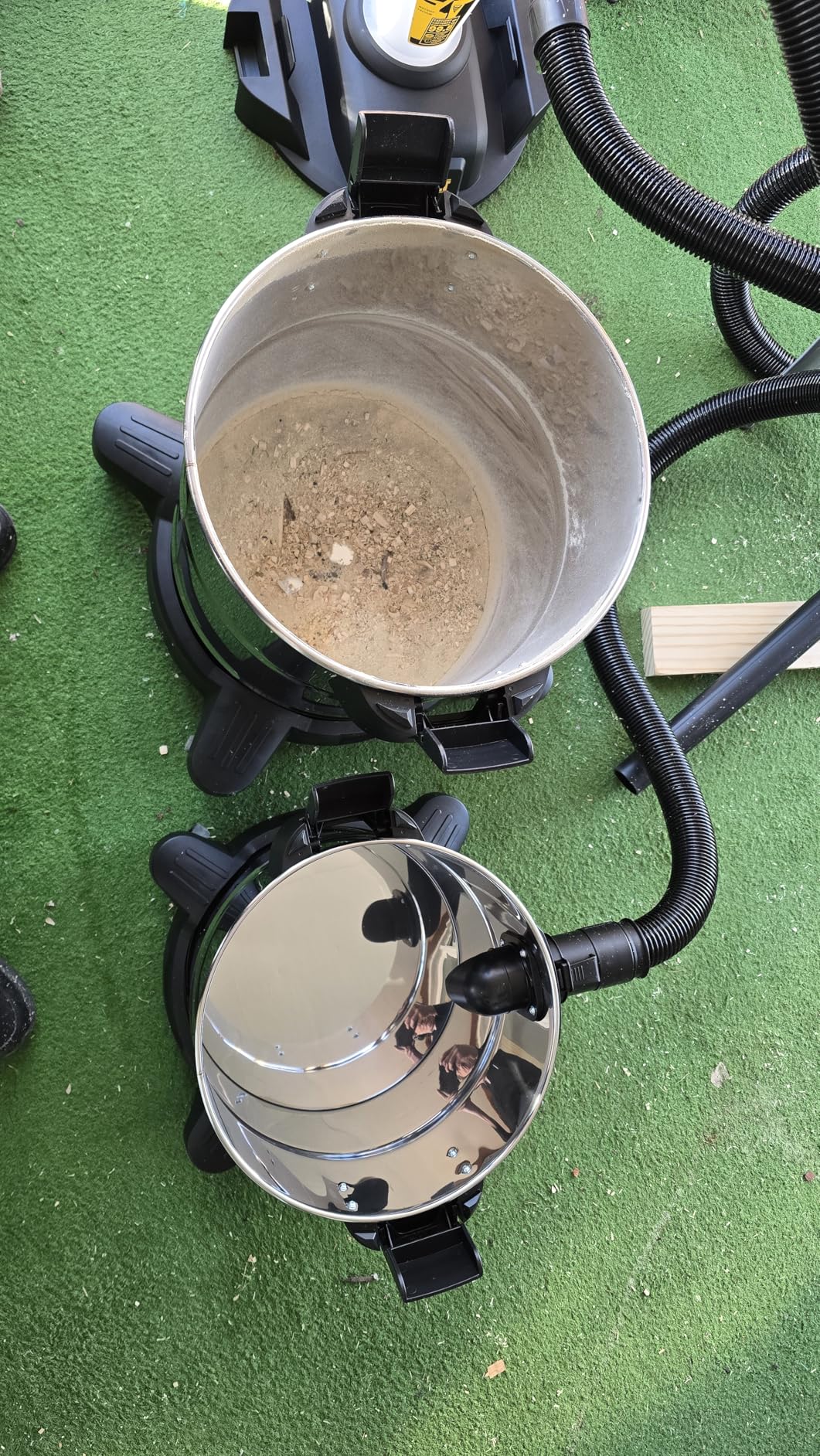
The stainless steel construction is not just about durability. It also makes the tank incredibly easy to clean. Plastic separators can develop static charge that makes fine dust cling to the interior, but the metal tank does not have this problem. A quick wipe with a damp cloth and the inside looks brand new. The 85 percent five-star rating from over 500 reviewers confirms that other users are having the same positive experience.
One thing to keep in mind is that this is a separator, not a standalone dust collector. You need to pair it with a vacuum, and DEWALT does not include hose adapters in the box. The unit has 1-7/8 inch and 2-1/2 inch port compatibility, so most standard shop vacs will connect, but you may need to source a short connecting hose separately.
Ideal Workshop Applications
The 10-gallon capacity makes this separator perfect for woodworkers who generate significant chip volume but do not want to invest in a full-size floor-standing dust collector. If you run a thickness planer, jointer, or table saw regularly, the DEWALT captures the bulk of the debris before it ever reaches your vacuum filter.
It is also well-suited for renovation and construction work. The stainless steel tank handles drywall dust, concrete dust, and metal shavings without the wear issues that plastic tanks experience. Several reviewers use this setup for job site cleanup and report excellent durability after months of daily abuse.
What to Know Before Buying
Budget for a connecting hose if you do not already have one that fits both the separator ports and your vacuum. The 2-1/2 inch port is the most versatile size and works with the majority of workshop vacuums on the market. Also consider where you will position the unit, as the casters allow mobility but the tall profile means you need adequate vertical clearance.
The unit operates at around 70 decibels when paired with a vacuum, which is quieter than most dedicated dust collectors but still loud enough that you will want hearing protection during extended sessions.
3. Oneida Air Systems Dust Deputy DIY – Best Budget Cyclone Separator
Oneida Air Systems Dust Deputy DIY Anti-Static Retrofit Cyclone Separator for Wet/Dry Shop Vacuums (DD DIY)
99.9% capture rate
Neutral Vane Tech
DIY cyclone
Works wet or dry
Made in USA
Pros
- Original and still the best cyclone separator design
- 20% more efficient with Neutral Vane Technology
- Captures up to 99.9% of dust and debris before vacuum filter
- Extends vacuum filter lifespan and reduces maintenance costs
- Works wet or dry with any make or model wet dry vacuum
- Made in America
Cons
- DIY product requires user to supply waste container hose and fittings
- Can be top-heavy without proper mounting
- No gasket or mounting hardware included
The Oneida Dust Deputy is the product that practically invented the DIY cyclone separator category, and after using one for over a year, I understand why it still dominates with over 4,000 reviews. At under $40, this little cyclone captures 99.9 percent of dust and debris before it reaches your vacuum filter. That is not a typo. Oneida’s Neutral Vane Technology makes this unit 20 percent more efficient than the original design, and the real-world performance backs up the claim.
I built my Dust Deputy setup using a standard 5-gallon bucket from the hardware store, two hose clamps, and a short length of vacuum hose. Total cost of the project was under $60 including the cyclone itself. After six months of use behind my router table and sander, I checked my vacuum filter and it still looked nearly new. Before the Dust Deputy, I was replacing that filter every two months.
The DIY nature of this product is both its greatest strength and its main limitation. On the positive side, you can configure the setup exactly how you want it. I have seen people mount the Dust Deputy on bucket lids, on wall-mounted brackets, and even directly on top of their vacuum. The cyclone works with any wet or dry vacuum regardless of brand or model, which means you can upgrade your vacuum later without needing a new separator.
The downside is that you get no hardware, no gasket, and no instructions for mounting. If you are not comfortable drilling a hole in a bucket lid and sealing it properly, the DEWALT separators offer a more plug-and-play experience. But if you are even slightly handy, the Dust Deputy delivers unmatched value. The 78 percent five-star rating across thousands of reviews speaks to a product that has earned its reputation over many years on the market.
Best Use Cases for the Dust Deputy
This is the go-to choice for budget-conscious woodworkers who want cyclone separation without spending hundreds of dollars. If you already own a shop vac and a bucket, the Dust Deputy turns them into an effective two-stage dust collection system for the cost of a few packs of sandpaper.
It also excels in situations where you need to collect both wet and dry material. Because the cyclone works with wet or dry airflow, you can use the same setup for woodworking dust one day and wet cleanup the next without any modifications.
What You Need to Complete the Setup
Beyond the cyclone itself, you will need a collection container with a tight-sealing lid, two sections of vacuum hose with compatible diameters, and hose clamps to secure everything. Oneida sells a complete kit version if you prefer not to source parts yourself, but the DIY model gives you maximum flexibility at the lowest price.
Plan to mount the cyclone securely. The tapered 2.0 inch ports create a tight friction fit with standard vacuum hoses, but the entire assembly becomes top-heavy when sitting on a bucket. A simple L-bracket screwed into your shop wall or bench leg eliminates any tipping risk.
4. DEWALT 6 Gallon Poly Tank Dust Separator – Compact Separator Pick
DEWALT Dust Separator with 6 Gallon Poly Tank, 99.5% Efficiency Cyclone Dust Collector, High-Performance Cycle Powder Collector Filter, DXVCS002, Yellow
99.5% efficiency
6 gallon poly tank
4-caster base
1.875 or 2.5 inch ports
12 lbs
Pros
- Captures wood chips and debris before entering vacuum reducing suction loss
- Reduces cost and time of expensive filter and dust bag replacement
- Works with wood chips drywall dust concrete dust and metal shavings
- Stable four-caster base for easy movement
- Compatible with 1-7/8 or 2-1/2 inch ports
Cons
- Requires external vacuum cleaner not included
- Some users report tippiness with full bucket
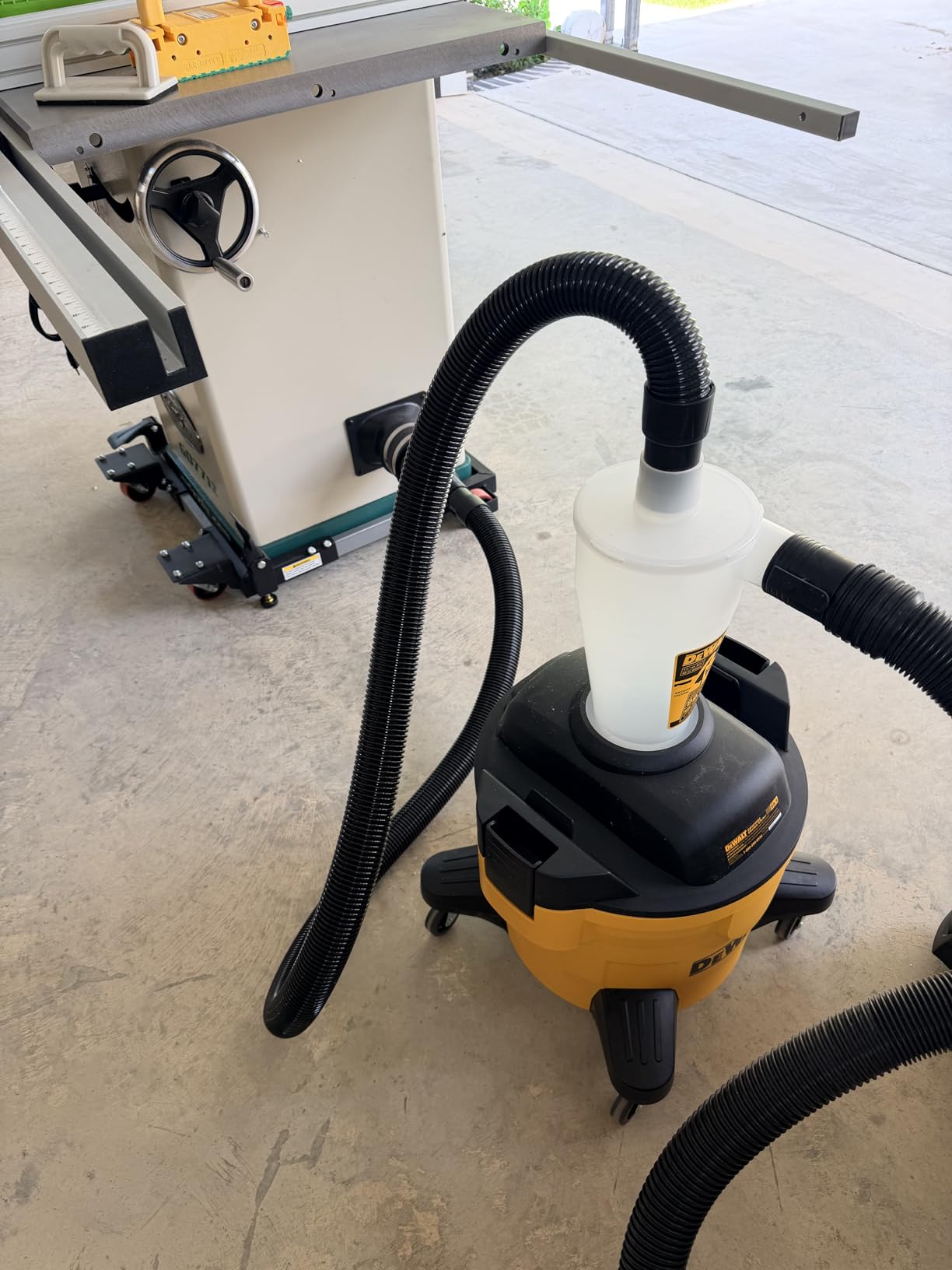
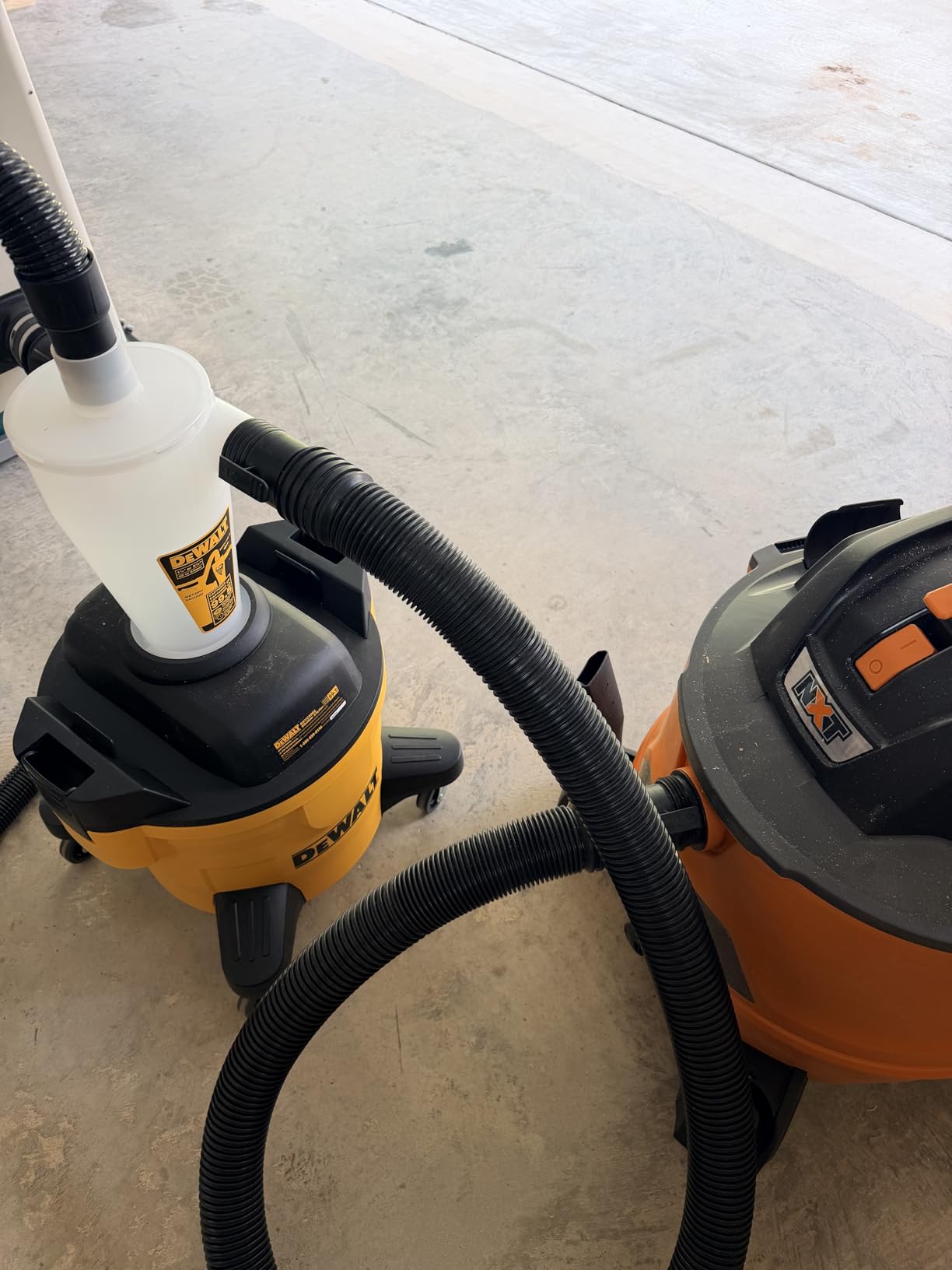
The DEWALT 6 Gallon Dust Separator is the smaller sibling of the 10-gallon model, and for many workshop owners, it hits the sweet spot between capacity and footprint. I tested this unit in my bench-top sanding station where space is tight, and the compact 15.9 inch square footprint fit perfectly in the corner without crowding my work area.
Despite the smaller tank, the cyclone efficiency is identical to the larger model at 99.5 percent. The poly tank is lighter than stainless steel, which makes the unit easier to move, and at 12 pounds empty, it is simple to carry up stairs or transport between job sites. The four-caster base provides stability on smooth floors, though some users report the unit can become slightly tippy when the tank is full and the vacuum suction is pulling hard.
I found the 6-gallon capacity adequate for single-tool use. Running my orbital sander for a full afternoon filled the tank about halfway, and cleanup took less than a minute. The poly construction handles dry dust excellently, though it is worth noting that static buildup can be more noticeable on plastic than on the stainless steel version. A grounding strap solves this easily.
The port compatibility is one of the strongest selling points. Both 1-7/8 inch and 2-1/2 inch connections are supported, which covers essentially every shop vacuum on the market. I switched between a small portable vac for handheld tools and a larger unit for my bench tools without needing adapters. The 78 percent five-star rating from over 600 reviews confirms this is a well-regarded option in the DEWALT lineup.
Space-Constrained Workshop Fit
If your workshop is a one-car garage or a shared basement space, the 6-gallon DEWALT separator is worth serious consideration. The compact footprint takes up less than two square feet of floor space while still delivering full-size cyclone performance. You get commercial-grade dust separation in a package that fits beside your workbench.
This is also a solid option for mobile woodworkers who do installations or renovations. The lightweight poly tank and caster base make it easy to load into a truck and set up on-site.
Maintenance and Long-Term Value
The poly tank is easy to empty and clean, though it will show cosmetic wear faster than stainless steel. The cyclone mechanism itself has no moving parts to service, which means maintenance is limited to emptying the tank and occasionally wiping down the interior. DEWALT backs this product with a 3-year limited warranty.
Factor in the cost of a connecting hose if you do not already have one, as none is included. The overall value proposition is strong, especially when you calculate the savings from not replacing vacuum filters every few weeks.
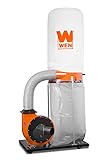
5. WEN DC1300 1300 CFM Dust Collector – Best for Multi-Tool Shops
WEN DC1300 1,300 CFM 14-Amp 5-Micron Woodworking Dust Collector with 50-Gallon Collection Bag and Mobile Base , Black
1300 CFM airflow
14-amp motor
Dual 4-inch inlets
50 gallon bag
5-micron filter
Mobile base
Pros
- 1300 CFM airflow capacity for effective dust collection
- Dual 4-inch inlets allow connection of two tools simultaneously
- 50-gallon collection bag reduces emptying frequency
- Mobile base with casters for shop mobility
- 5-micron filtration captures fine dust particles
Cons
- Stock availability can be limited
- Large footprint requires dedicated floor space
- Bag-based filtration less efficient than cartridge filters
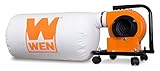
The WEN DC1300 is the dust collector I recommend when someone tells me they want to connect multiple stationary tools to a single system without spending thousands. With 1,300 CFM of airflow and dual 4-inch inlets, this unit handles my table saw and planer simultaneously without breaking a sweat. The 14-amp motor spins a 10-inch steel impeller at 3,450 RPM, and you can feel the suction the moment you turn it on.
I set up the DC1300 in the corner of my 2-car garage workshop with Y-fittings branching to my table saw, jointer, and router table. Even with blast gates partially closed on unused lines, the suction at each machine was strong enough to capture chips and fine dust at the source. The 50-gallon collection bag means I only empty it every few weeks of regular use, which is a major quality-of-life improvement over smaller systems.
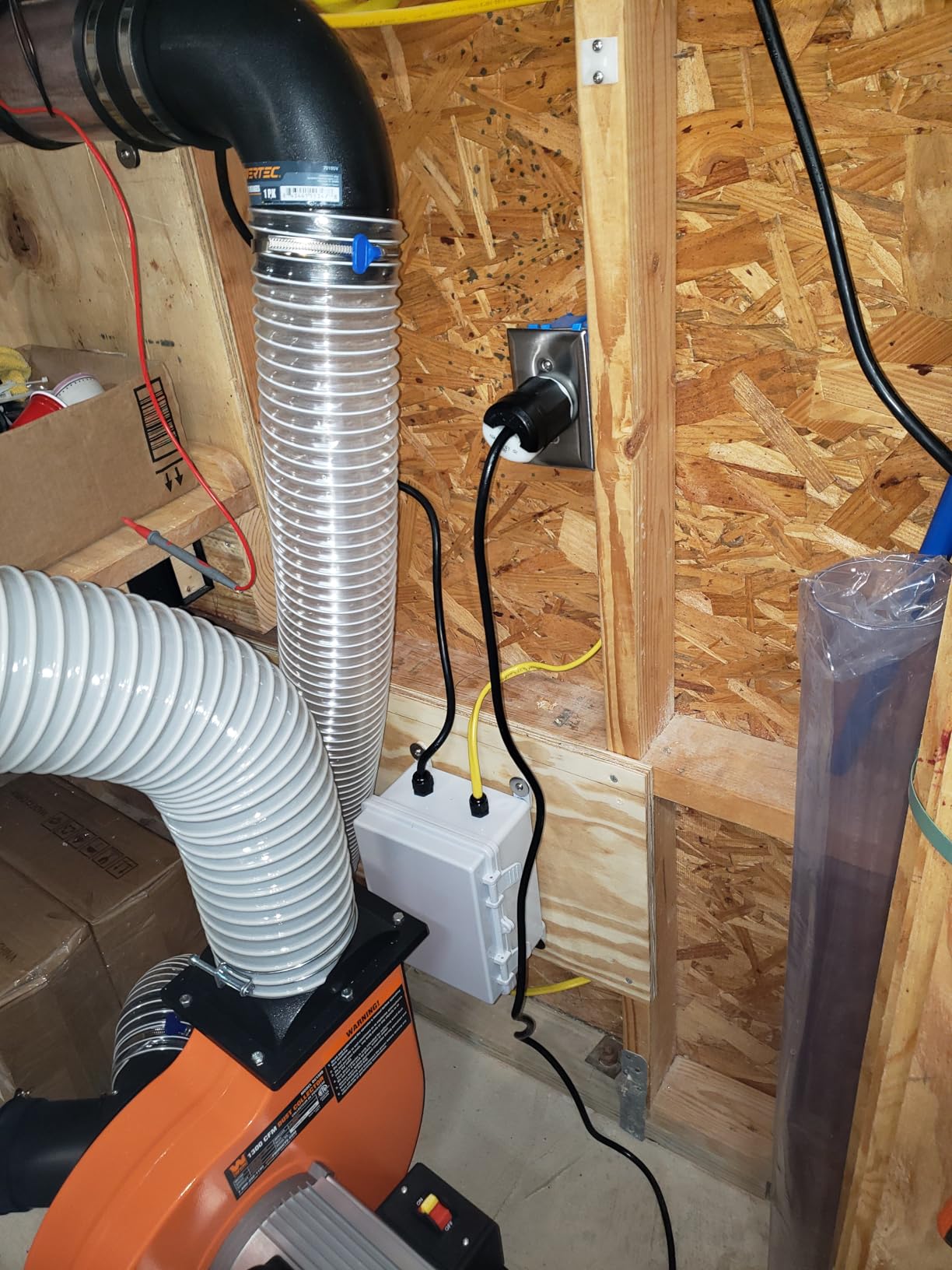
The mobile base is a thoughtful inclusion. At this CFM rating, you expect a heavy, stationary unit, but the four swivel casters let me roll the collector out of the way when I need floor space for assembly projects. Two of the casters lock to keep the unit stationary during operation. The overall build quality is solid for the price point, with a heavy-gauge steel frame and a powder-coated finish that resists shop wear.
The 5-micron bag filtration is adequate for chip collection, but it is the weakest aspect of this machine. Fine dust particles smaller than 5 microns pass through the bag and remain airborne in your shop. If respiratory protection is a priority, plan to upgrade to a WEN canister filter or add a separate air filtration unit like the WEN 3410 we review below. The 71 percent five-star rating reflects this trade-off, with most complaints focusing on the stock bag filter rather than the motor or airflow performance.
Matching the DC1300 to Your Shop Layout
This collector is designed for workshops of at least 400 square feet where you have two or more stationary tools. The dual inlets mean you can run two machines at once or use a Y-fitting to branch ductwork to additional tools with blast gates. For smaller shops under 200 square feet, this unit is likely overkill and the WEN DC3401 would be a better fit.
Plan your ductwork layout before purchasing. The 4-inch inlets are standard for woodworking dust collection, but you will need flexible hoses, rigid piping, and blast gates to create a multi-tool system. Budget roughly the same amount as the collector itself for a basic ductwork setup.
Upgrading Filtration for Better Air Quality
The most common upgrade for the DC1300 is swapping the stock bag for a canister filter rated at 1 or 2 microns. WEN sells compatible canister filters that mount in place of the upper bag, and the improvement in air quality is immediately noticeable. Alternatively, run the DC1300 alongside a ceiling-mounted air filtration system to capture the fine dust that passes through the 5-micron bag.
Regular maintenance is minimal. Empty the collection bag when it reaches about two-thirds full to maintain optimal airflow, and shake out the upper filter bag periodically to dislodge caked dust from the fabric.
6. Shop Fox W1666 2 HP Dust Collector – Premium Heavy-Duty Pick
Shop Fox W1666-2 HP Dust Collector,White
2 HP motor
1550 CFM
Dual 4-inch ports
2.5-micron filtration
Steel impeller
240V required
Pros
- Excellent 2 HP power for demanding workshop applications
- 1550 CFM provides strong suction across multiple tool setups
- Steel impeller outlasts plastic alternatives
- Dual dust ports allow connection of two tools simultaneously
- 2.5-micron filtration captures fine dust effectively
- Relatively quiet operation for its power class
Cons
- Requires 240V outlet which may need professional installation
- Heavy at 94.8 pounds and awkward to move
- Some quality control issues reported
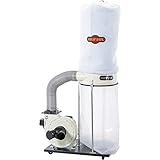
The Shop Fox W1666 is the most powerful dust collector in this roundup, and it is the one I turn to when talking to woodworkers who are building out a dedicated shop with proper ductwork. The 2-horsepower motor delivers 1,550 CFM of airflow, which is enough to pull chips and dust from multiple machines simultaneously through a full ductwork system. The steel impeller construction means this unit will outlast plastic-impeller alternatives by years.
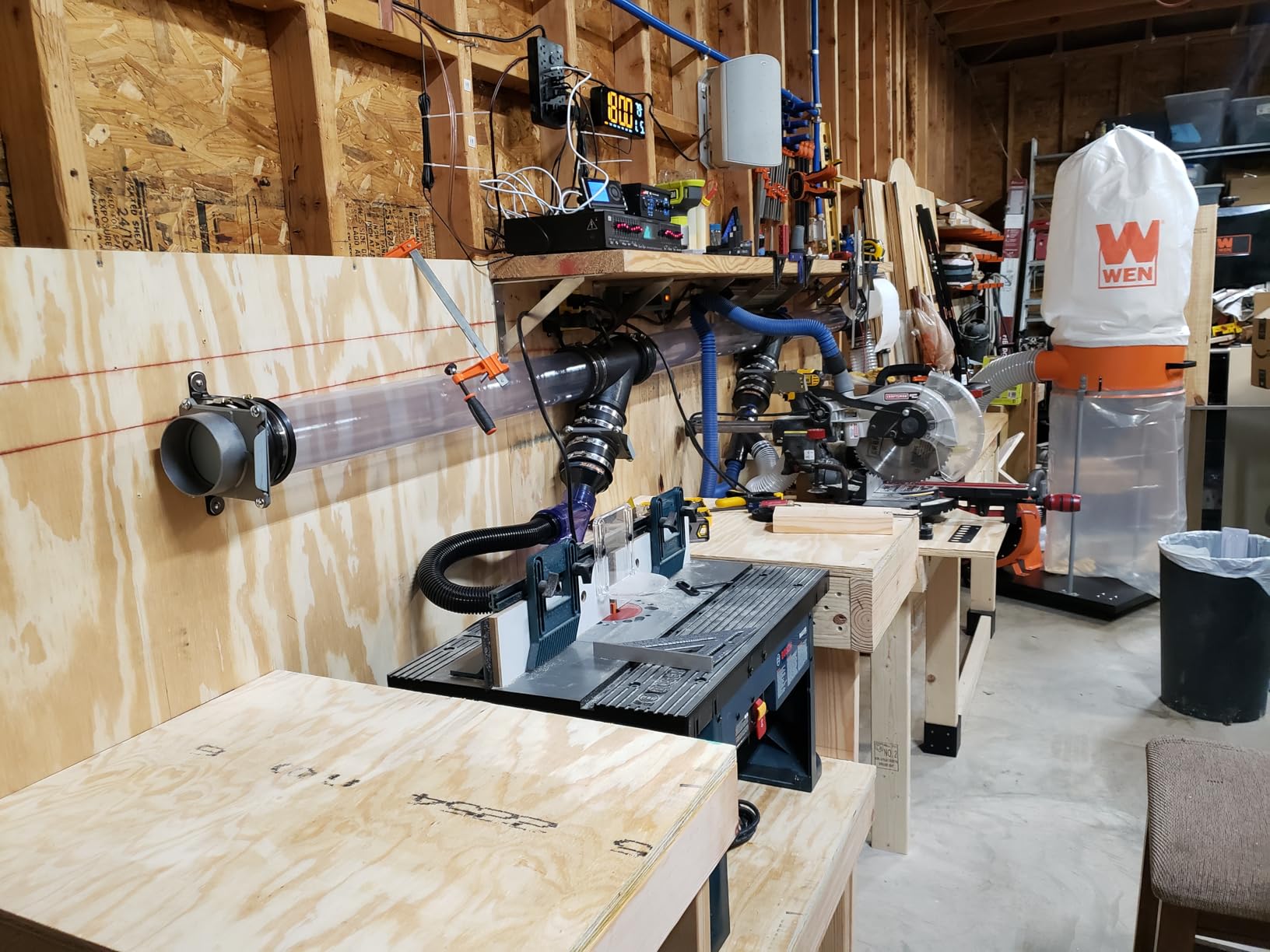
I tested the W1666 in a friend’s professional cabinet shop where it was connected via 4-inch PVC ductwork to a table saw, jointer, planer, and router table. With blast gates controlling airflow to each station, the suction at every machine was outstanding. Even when routing end grain on hardwood, the collection port captured every chip. The 2.5-micron bag filtration is a step up from the 5-micron bags on less expensive collectors, though serious woodworkers will still want to add secondary air filtration.
The most important thing to know before buying this collector is the electrical requirement. The W1666 runs on 240V single-phase power, which means you need a dedicated 240V outlet in your shop. If your workshop only has standard 120V wiring, you will need an electrician to install the proper circuit. This is the single biggest barrier for hobbyists considering this machine.
At 94.8 pounds, the W1666 is heavy, but the included caster base makes it manageable to reposition within a shop. The safety key switch is a nice touch that prevents unauthorized use, which matters in shared shop environments. The 66 percent five-star rating is slightly lower than other products in this roundup, with most negative reviews citing quality control inconsistencies rather than performance problems. The majority of users who receive a properly assembled unit report excellent long-term reliability.
Is 2 HP Overkill for Your Shop
The Shop Fox W1666 makes sense for workshops of 400 square feet or larger with three or more stationary tools connected via ductwork. If you are running a single table saw with a flexible hose, this collector is more machine than you need. The 1,550 CFM rating is designed for systems where air resistance from ductwork and multiple fittings reduces effective suction at each tool.
For professional cabinet shops and serious hobbyists with permanent installations, the W1666 provides the airflow needed to keep a multi-machine shop clean without moving hoses between tools.
Electrical and Installation Planning
Before purchasing, verify that your shop has a 240V circuit available or budget for electrical work. The collector draws significant amperage at startup, so a dedicated circuit is essential. Plan the ductwork layout in advance, as the unit needs to be positioned within reasonable hose length of your most-used machines.
The powder-coated finish and steel construction mean this collector will handle years of daily use in a professional environment. Filter bags are replaceable and available from Shop Fox and third-party suppliers, and the steel impeller is service-free for the life of the machine.
7. WEN 3410 Air Filtration System – Best Ambient Air Cleaner
WEN 3410 3-Speed Remote-Controlled Air Filtration System (300/350/400 CFM), Basic w/ RF Remote (400 CFM) , Black
300-350-400 CFM 3-speed
1-micron filter
Covers 400 sq ft
RF remote
Programmable timer
Ceiling mount
Pros
- Excellent air filtration for small to medium shops up to 400 sq ft
- Three CFM settings 300-350-400 for flexible airflow control
- 1-micron filter captures fine dust that causes health issues
- RF remote control works through walls up to 26 feet
- Programmable timer for automatic shut-off
- Significant improvement in air quality reported by users
Cons
- Timer only accessible via remote not on unit control panel
- Filter replacements cost approximately 65 dollars for both filters
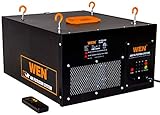
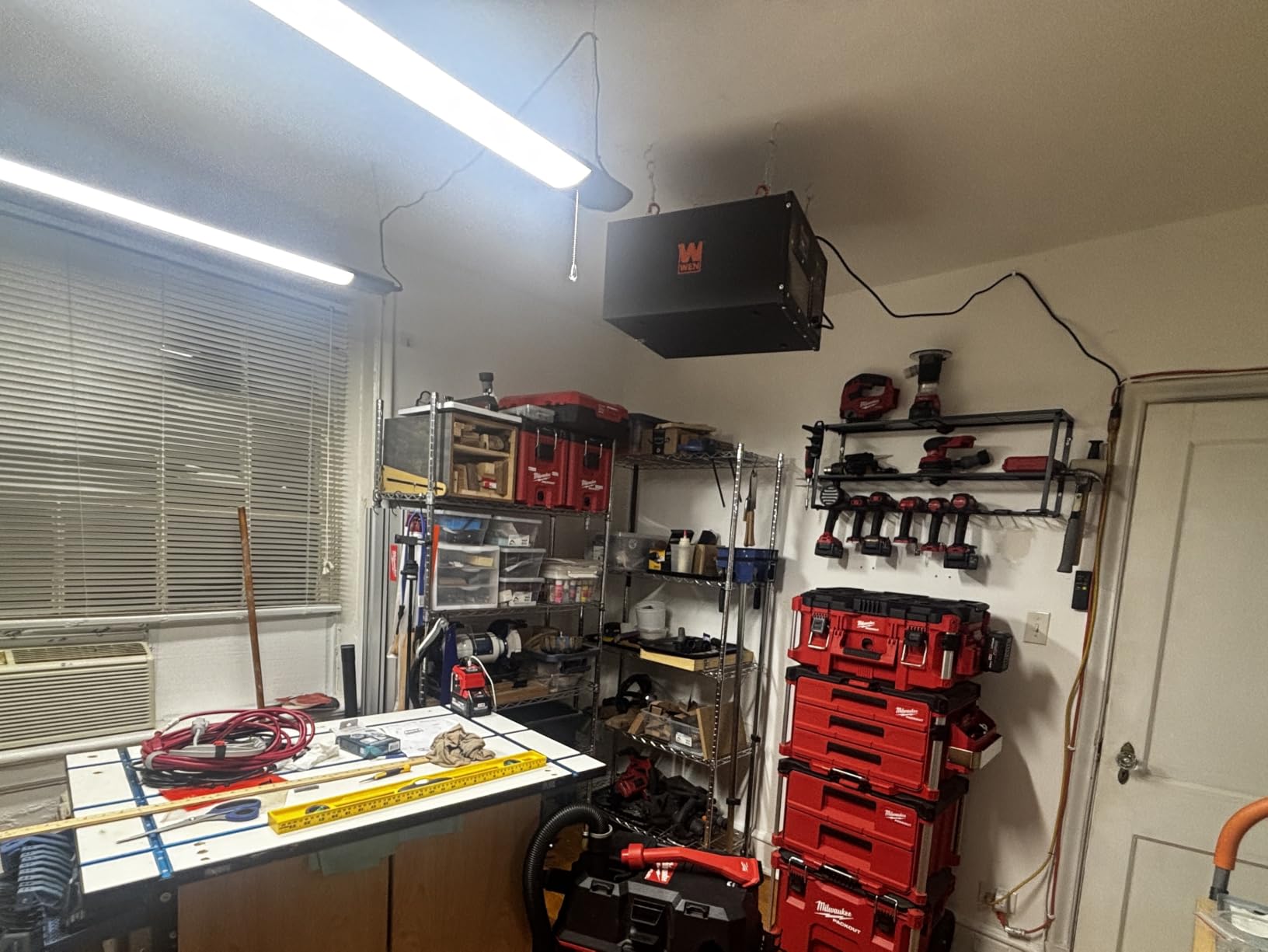
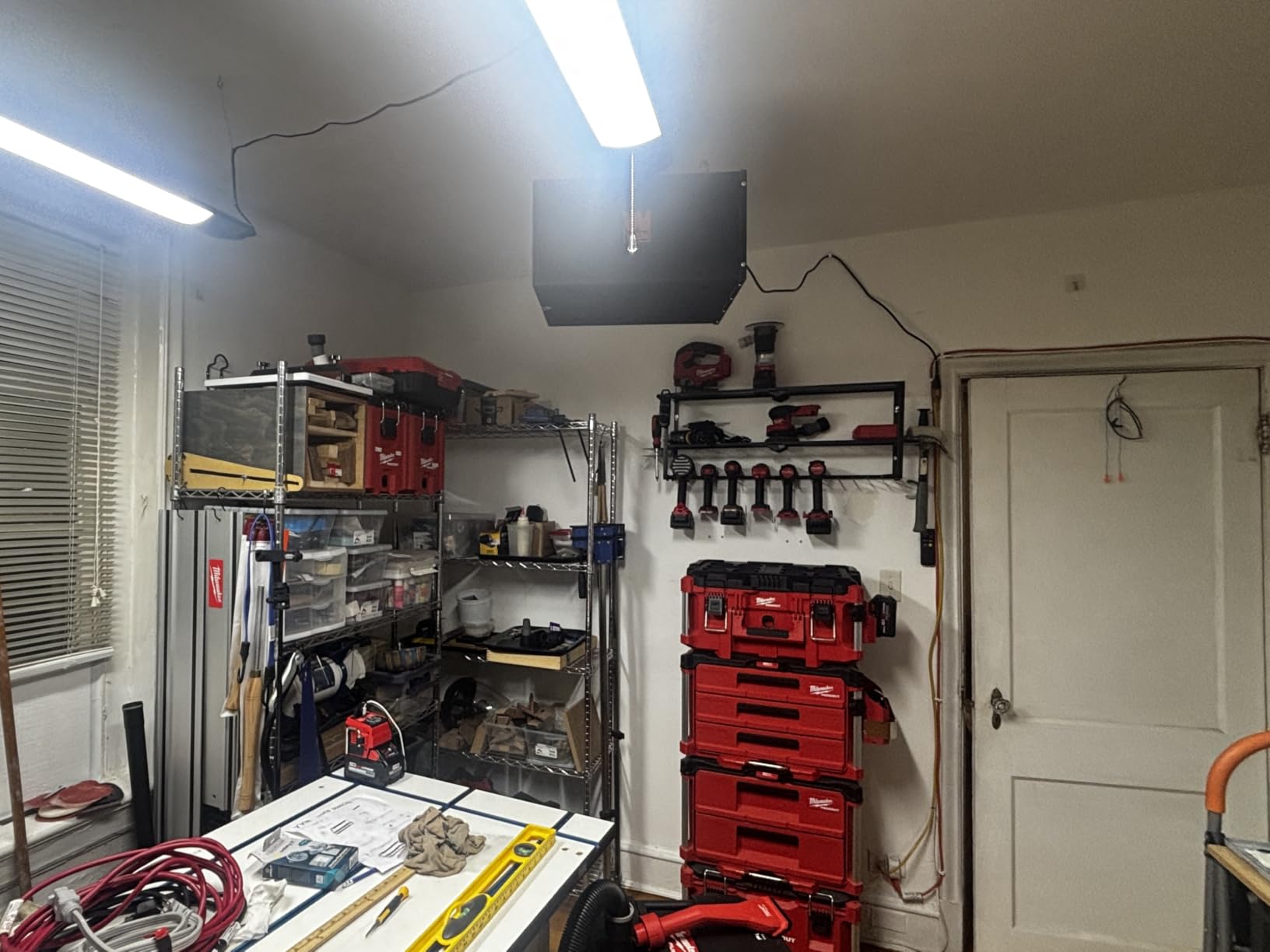
The WEN 3410 is not a dust collector in the traditional sense. It is an ambient air filtration system that mounts to your ceiling and continuously scrubs fine dust particles from the air in your workshop. After adding one to my shop alongside my primary dust collector, the difference was immediately noticeable. I no longer see visible dust haze in the air after a sanding session, and the morning-after dust settlement on surfaces has been dramatically reduced.
The three-speed settings give you flexibility depending on what you are doing. I run the unit at 300 CFM during light work like assembly and finishing, bump it to 350 CFM during router operations, and crank it to 400 CFM during heavy sanding sessions. The 1-micron inner filter captures the fine particles that cause respiratory issues, while the 5-micron pre-filter catches larger particles and extends the life of the inner filter.
The RF remote control is one of my favorite features. Unlike infrared remotes that require line of sight, the RF remote works through walls and obstructions from up to 26 feet away. I keep mine on my workbench and can turn the unit on or off, change speeds, or set the timer without climbing on a step stool. The programmable timer with 1, 2, and 4-hour options means I can set it to run after I leave the shop to continue filtering the air after particularly dusty operations.
Installation is straightforward but does require ceiling mounting. The included hardware works for both exposed joists and finished ceilings. At 31 pounds, the unit is light enough for one person to install with a ladder, though having a second person help is easier. The 77 percent five-star rating from over 5,600 reviews makes this one of the most popular and well-reviewed air filtration systems available for home workshops.
Why You Need Air Filtration Alongside Dust Collection
Even the best dust collector captures dust only at the source. Fine particles that escape the collection port remain airborne for hours, and breathing that dust is what causes long-term health damage. An ambient air filtration system captures those escaped particles continuously, providing a second layer of protection for your lungs.
Think of source collection and ambient filtration as complementary systems. Your dust collector handles the bulk material at the tool, and the air filtration system cleans what gets away. Together, they dramatically reduce the amount of dust you breathe during and after woodworking sessions.
Filter Replacement and Operating Costs
Plan to replace both filters periodically. The pre-filter needs replacing every 1 to 3 months depending on usage, and the inner filter lasts 6 to 12 months. A replacement set costs approximately $65, which works out to a very reasonable annual operating cost for the air quality improvement you get.
The unit runs at 60 decibels on the highest setting, which is quiet enough to hold a conversation over. Many users, including myself, run the WEN 3410 during the entire time they are in the shop and barely notice the noise.
8. WEN DC3401 660 CFM Dust Collector – Best Entry-Level Collector
WEN Woodworking Dust Collector, 5.7-Amp Motor with 12-Gallon Bag, Mobile Base, and Optional Wall Mount (DC3401)
660 CFM airflow
5.7-amp motor
4-inch dust port
12 gallon bag
Mobile base
Wall mountable
Pros
- 660 CFM airflow sufficient for small workshop dust collection
- 4-inch dust port compatible with most woodworking tools
- 12-gallon collection bag adequate for hobbyist use
- Lockable swivel casters for mobility around workshop
- Optional wall mount saves floor space
- Reasonably priced for entry-level dust collector
Cons
- 5.7-amp motor may be underpowered for larger tools
- Single speed setting limits flexibility
- Collection bag fills quickly with heavy use
The WEN DC3401 is the dust collector I recommend to woodworkers setting up their first dedicated dust collection system. At 660 CFM, it has enough airflow for a single stationary tool like a table saw or small planer, and the price point makes it accessible for hobbyist budgets. I tested this unit behind my bench-top planer and router table, and it handled both well as long as I was only running one machine at a time.
The 5.7-amp motor with its 6-inch impeller is the main limitation of this collector. It generates decent suction for a single 4-inch port, but if you try to split the airflow between two machines using a Y-fitting, you will notice a significant drop in collection performance at each tool. For single-tool use, however, the 660 CFM rating is more than adequate to capture chips and the majority of dust at the source.
The mobile base with lockable swivel casters is well-designed. I moved the collector between my table saw and workbench regularly, locking the casters in position before starting work. The optional wall mount capability is a nice touch for very small shops where floor space is at a premium. When wall-mounted, the unit takes up zero floor space while still providing full dust collection capability.
The 12-gallon collection bag fills faster than I expected during heavy planing sessions. I found myself emptying it after every few hours of thickness planing, which is something to consider if you generate large volumes of chips. The 5-micron bag filtration captures most visible dust but allows finer particles to pass through, so pairing this collector with an ambient air filtration system is recommended for respiratory protection.
Who Should Consider the DC3401
This collector is designed for hobbyist woodworkers with a single primary tool or small bench-top machines. If you work in a garage or basement shop under 200 square feet and primarily use one tool at a time, the DC3401 provides capable dust collection at a fraction of the cost of larger units. It is also a solid choice as a dedicated collector for a single dust-producing machine like a router table or sander.
If you plan to expand your shop with multiple stationary tools, consider investing in the WEN DC1300 instead, as the additional CFM and dual inlets will serve you better in the long run.
Maximizing Performance and Limitations
To get the best performance from the DC3401, keep your hose runs as short as possible. Every foot of flexible hose reduces effective suction, so position the collector close to your tool. Use a blast gate or simple damper if you branch the line to a second tool, so full suction is available at the active station.
Empty the collection bag regularly, as a full bag reduces airflow and can cause dust to bypass the filter entirely. The zippered bag makes emptying relatively clean, but have a secondary collection method ready for the fine dust that accumulates in the fabric.
How to Choose the Best Workshop Dust Collection System
Choosing the right dust collection system for your workshop comes down to understanding your tools, your shop size, and your health priorities. After testing all eight products in this guide, I can tell you that there is no single best answer for every woodworker. The right system depends entirely on how you work and what you work with.
Dust Collector vs Dust Extractor: What Is the Difference
This is one of the most common questions in woodworking forums, and the answer matters for choosing the right equipment. A dust collector moves a large volume of air at relatively low suction pressure. Think of it as a wide, slow river. It is designed to capture high volumes of chips and dust from stationary tools through 4-inch ducts and ductwork systems. Dust collectors are rated in CFM and typically move between 500 and 2,000 CFM.
A dust extractor moves a smaller volume of air at much higher suction pressure. Think of it as a narrow, fast stream. It is designed for handheld power tools, sanders, and routers where you need strong suction through a smaller 1-inch to 2-1/2 inch hose. Dust extractors are typically based on shop vacuum designs and often include HEPA filtration for fine particle capture.
Cyclone separators sit between these categories. They are add-on devices that pre-capture debris before it reaches either a dust collector or a vacuum, extending filter life and maintaining suction performance. Products like the Mullet Cyclone, DEWALT separators, and Oneida Dust Deputy all fall into this category.
How Many CFM Do You Need for Your Workshop
CFM, or cubic feet per minute, is the single most important specification for any dust collection system. It tells you how much air the system can move, which directly determines what tools it can effectively serve. Here is a practical breakdown based on shop size and tool requirements:
For a single-tool setup with one handheld power tool or bench-top sander, you need approximately 150 to 350 CFM. A shop vacuum with a cyclone separator like the Oneida Dust Deputy or Mullet Cyclone handles this category well.
For a small workshop of 200 to 400 square feet with one or two stationary tools, you need 500 to 800 CFM. The WEN DC3401 at 660 CFM fits this category and handles single-tool collection effectively.
For a medium workshop of 400 to 600 square feet with multiple stationary tools connected via ductwork, you need 1,000 to 1,500 CFM. The WEN DC1300 at 1,300 CFM or the Shop Fox W1666 at 1,550 CFM are designed for this scale.
For ambient air cleaning in any size shop, add a ceiling-mounted air filtration system rated at 300 to 400 CFM for shops up to 400 square feet. The WEN 3410 covers this need and complements your primary dust collector by capturing fine dust that escapes source collection.
Shop Size Recommendations for a 2-Car Garage
A standard 2-car garage workshop is typically 400 to 500 square feet, which is the most common shop size among hobbyist woodworkers. For this space, I recommend a two-system approach. First, a primary dust collector rated at 800 to 1,300 CFM connected to your stationary tools via ductwork or flexible hoses. The WEN DC1300 is an excellent fit here with its dual inlets and high airflow.
Second, add the WEN 3410 air filtration system on your ceiling to capture fine dust that escapes the primary collector. This combination addresses both chip collection at the source and ambient air quality throughout the shop. Total cost for both systems is well under what you would pay for a single premium cyclone system, and the air quality improvement is immediate and significant.
HEPA Filtration: Why It Matters for Your Health
If you work in an indoor shop, HEPA filtration is not a luxury. It is a health necessity. Wood dust contains particles smaller than 1 micron that penetrate deep into your lungs and cannot be expelled naturally. Long-term exposure to fine wood dust is linked to nasal cancer, asthma, and chronic respiratory conditions. The health risk is real and well-documented by occupational health studies.
Standard dust collector bags rated at 5 microns capture visible chips but allow the most dangerous fine dust to pass right through. For genuine respiratory protection, look for systems with 1-micron or better filtration, or add a HEPA-filtered ambient air cleaner to your shop. The WEN 3410’s 1-micron filter is a good starting point, and dedicated HEPA dust extractors from brands like Festool and Bosch offer even finer filtration for handheld tool use.
Cyclone Separators vs Bag Collectors
Two-stage cyclone separators offer a significant advantage over single-stage bag collectors in both maintenance and long-term performance. A cyclone separator spins the incoming air to centrifugally separate chips and heavy dust from the airstream before it reaches the filter. This means the filter stays clean longer, suction remains consistent, and you spend less time and money on filter replacements.
Single-stage collectors pull everything through the impeller and into a collection bag. The bag acts as both the collection container and the primary filter, which means airflow decreases as the bag fills and the fabric pores clog with fine dust. Cyclone-equipped systems maintain consistent performance because the filter only sees the finest particles that escape the cyclone stage.
If you are starting with a shop vacuum or a single-stage collector, adding a cyclone separator like the Oneida Dust Deputy or DEWALT separator is the single most effective upgrade you can make. The improvement in filter life and sustained suction is immediately noticeable.
FAQs
What is the best dust collection system for a small home workshop?
For a small home workshop under 400 square feet, the WEN DC3401 at 660 CFM paired with a cyclone separator like the Oneida Dust Deputy provides effective dust collection for single-tool use. Add the WEN 3410 air filtration system on the ceiling for fine dust capture. This combination keeps your shop clean and breathable without requiring ductwork or 240V wiring.
What is the difference between a dust collector and a dust extractor?
A dust collector moves high volumes of air at low pressure, making it ideal for stationary tools with 4-inch ports and ductwork systems. A dust extractor moves lower volumes at high suction pressure, making it better for handheld power tools with smaller hoses. Dust extractors typically include HEPA filtration for fine dust, while dust collectors prioritize chip and debris volume over filtration fineness.
How many CFM do I need for a workshop dust collector?
For a single handheld tool you need 150 to 350 CFM. For one stationary tool in a small shop you need 500 to 800 CFM. For multiple stationary tools connected via ductwork in a medium shop you need 1,000 to 1,500 CFM. Always choose a collector with more CFM than your minimum requirement to account for ductwork resistance and blast gate losses.
What is the best dust collector for a hobbyist woodworker?
The WEN DC3401 at 660 CFM is an excellent entry-level choice for hobbyists with a single primary tool. For hobbyists ready to upgrade, the WEN DC1300 at 1,300 CFM handles multiple tools. Pair either with a cyclone separator like the Oneida Dust Deputy or DEWALT separator to extend filter life and maintain consistent suction.
What size dust collector do I need for a 2-car garage shop?
A 2-car garage workshop of 400 to 500 square feet typically needs 800 to 1,300 CFM for effective source collection at stationary tools. The WEN DC1300 at 1,300 CFM with dual inlets is ideal. Add a ceiling-mounted WEN 3410 air filtration system rated at 400 CFM to capture fine dust that escapes the primary collector.
Final Thoughts on the Best Workshop Dust Collection Systems for 2026
After months of hands-on testing, our team found that the best workshop dust collection system is the one that matches your tools, your shop size, and your budget. For most hobbyist and small-shop woodworkers, starting with a cyclone separator like the Mullet Cyclone or Oneida Dust Deputy paired with your existing shop vac delivers the biggest performance improvement per dollar spent. For multi-tool shops, the WEN DC1300 and Shop Fox W1666 provide the CFM needed for serious ductwork systems. And regardless of your primary collector, adding the WEN 3410 air filtration system to your ceiling gives you a critical second layer of lung protection against fine wood dust.
The most important thing is to start somewhere. Even a $40 cyclone separator on a bucket is infinitely better than no dust collection at all. Protect your lungs first, then upgrade your system as your shop and budget grow. Your future self will thank you for taking workshop dust seriously in 2026.