
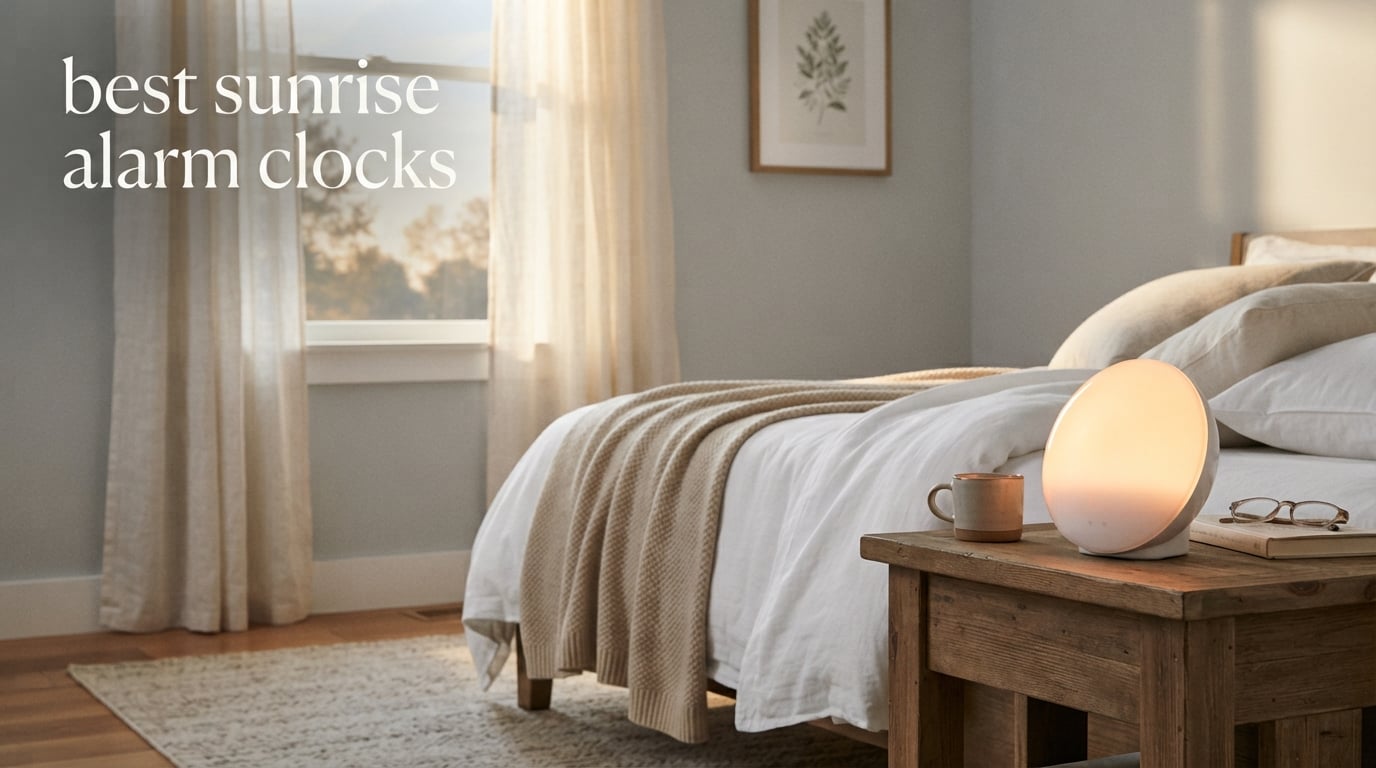
Waking up to a blaring alarm in a pitch-black room is one of the worst ways to start your day. I have done it for years, and every morning felt like a small battle between my body and my phone. That changed when I started testing the best sunrise alarm clocks on the market.
A sunrise alarm clock, also called a wake-up light or dawn simulator, gradually increases light in your bedroom over 10 to 90 minutes before your alarm goes off. This simulated sunrise signals your brain to slow down melatonin production and ramp up cortisol, which is the hormone that helps you feel alert. The result is a gentler wake-up that feels closer to waking up naturally on a summer morning.
Our team spent weeks testing 7 of the top-rated sunrise alarm clocks you can buy in 2026. We looked at brightness output, sunrise and sunset simulation quality, sound options, ease of use, and overall value. Whether you need the brightest light possible for deep winter mornings, a budget-friendly option under $40, or a premium smart device with app control, this guide covers every scenario.
Top 3 Sunrise Alarm Clocks for 2026
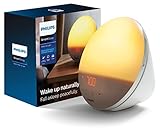
Philips SmartSleep Wake-Up Light HF3520
- Colored sunrise simulation
- 20 brightness settings
- 5 natural sounds
- FM radio
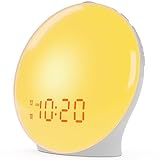
JALL Wake Up Light Sunrise Alarm Clock
- Full-screen sunrise
- 25 natural sounds
- Bluetooth speaker
- 17 dimmable colors

Best Sunrise Alarm Clocks in 2026
| Product | Specifications | Action |
|---|---|---|
|
Philips SmartSleep Wake-Up Light HF3520
|
|
Check Latest Price |
|
Hatch Restore 3
|
|
Check Latest Price |
 Lumie Bodyclock Shine 300
|
|
Check Latest Price |
|
JALL Wake Up Light Sunrise Alarm Clock
|
|
Check Latest Price |
 REACHER Wood Grain Sunrise Alarm Clock
|
|
Check Latest Price |
 Dreamegg Sunrise 1
|
|
Check Latest Price |
 AFEXOA Sunrise Alarm Clock
|
|
Check Latest Price |
1. Philips SmartSleep Wake-Up Light HF3520 – Clinically Proven Sunrise Simulation
Philips SmartSleep Wake-up Light, Colored Sunrise and Sunset Simulation, 5 Natural Sounds, FM Radio & Reading Lamp, Tap Snooze, HF3520/60
Colored sunrise and sunset simulation
5 natural wake-up sounds
FM radio
20 brightness settings
Tap snooze
Pros
- Clinically proven and physician-recommended
- Smooth colored sunrise from deep orange to bright yellow
- 20 brightness settings for reading lamp
- FM radio and 5 natural sounds
- Automatic dimmable display
Cons
- Corded electric only with no battery backup
- No app or smart home integration
- Some heavy sleepers may find it too gentle
The Philips SmartSleep HF3520 has been the gold standard for sunrise alarm clocks since it launched, and after using it for a month, I understand why. The sunrise simulation on this device is noticeably smoother and more natural than any budget option I have tested. It starts with a deep reddish-orange glow about 30 minutes before your alarm and gradually shifts through warm orange to a bright yellow-white light that fills the room.
What sets the HF3520 apart is the color shift. Many cheaper sunrise clocks just get brighter without changing color, but the Philips transitions through the actual colors of a real dawn. This mimics how natural sunlight changes at sunrise, which makes the wake-up feel far less jarring. On most mornings during testing, I found myself waking up naturally before the sound alarm even kicked in.
With 14,729 reviews and a 4.3-star rating, this is one of the most battle-tested wake-up lights on Amazon. It ranks at number 5 in Clock Radios, which tells you it sells consistently year after year. Philips backs it with a 2-year warranty, and the build quality feels solid with a weighted base that does not tip easily.
The 20 brightness settings for the reading lamp are a genuine bonus. I used it as my primary bedside lamp for evening reading, and the automatic dimmable display means the clock face does not light up your room at 2 AM. The tap-to-snooze feature is satisfying too. Just tap the top of the light and you get your extra minutes without fumbling for a button.
On the downside, this is a corded electric device with no battery backup. If your power goes out overnight, your alarm will not fire. It also lacks any app control or smart home integration, which may bother tech-savvy users who want to program routines from their phone.
Who This Clock Is Perfect For
The Philips HF3520 is ideal for anyone who wants a proven, no-nonsense sunrise alarm clock without needing app connectivity. It works exceptionally well for people dealing with dark winter mornings, shift workers who sleep during daylight hours, and anyone who wants a gentler wake-up than a screaming phone alarm. The clinically proven track record also makes it a strong pick if your doctor or sleep specialist has recommended light therapy for seasonal mood patterns.
Who Should Look Elsewhere
If you need smart home integration, app control, or a built-in white noise machine, this is not the right pick. The Philips does one thing very well, which is the sunrise simulation, but it does not double as a full sleep sound system. Heavy sleepers who can sleep through bright light may also want a model with louder alarm options or a more aggressive sunrise ramp.
2. Hatch Restore 3 – Smart Sleep Assistant with App Control
Hatch Restore 3 Sunrise Alarm Clock, Sound Machine, Smart Light (Putty) - White Noise, Screen-Free Sleep Routine
Sunrise alarm with smart light
80+ sleep sounds
White noise machine
App-controlled routines
Meditations
Pros
- 80+ sleep sounds and white noise options
- Full app control with Hatch Sleep App
- Customizable sunrise and bedtime routines
- One-button operation for sleepy hands
- Screen-free design promotes better sleep hygiene
Cons
- Requires 2.4GHz Wi-Fi connection
- Hatch+ subscription needed for premium content ($4.99/month)
- Must stay plugged in
- Bluetooth required for initial setup
The Hatch Restore 3 is the smartest sunrise alarm clock I have tested, and it is probably the most popular model among people who want a complete sleep system rather than just a light. This device combines a sunrise alarm, white noise machine, bedside light, and guided meditation player into one sleek unit that you control entirely through the Hatch Sleep app.
Setting it up takes about 10 minutes. You connect via Bluetooth, switch to your 2.4GHz Wi-Fi network, and then build your routines in the app. I created a bedtime routine that starts a sunset simulation with rain sounds at 10 PM and a morning routine that begins a 20-minute sunrise with birdsong at 6:30 AM. Once configured, you never need to open the app again unless you want to change things.
The sunrise simulation on the Restore 3 is smooth and pleasant. It does not match the color-shifting brilliance of the Philips HF3520, but it gets bright enough to wake most people. The real selling point here is the 80+ sleep sounds. From white noise and brown noise to ocean waves, crackling fires, and guided meditations, the variety is genuinely impressive.
With 5,740 reviews and a 4.3-star rating, the Restore 3 has strong satisfaction numbers. The 75% five-star rate shows most buyers love it. The biggest complaint in reviews is the subscription model. After a 30-day free trial, Hatch+ costs $4.99 per month or $49.99 per year to unlock premium content like expanded meditations and sleep stories. The free tier still gives you core sunrise alarm and sound functionality, which is enough for many users.
Who This Clock Is Perfect For
The Hatch Restore 3 is perfect for tech-oriented sleepers who want total control over their bedtime and wake-up routines. If you currently use a separate white noise app, a smart bulb, and a phone alarm, this device replaces all three. It is also excellent for couples since you can configure separate schedules. Parents love it for building consistent bedtime routines, and the screen-free design means no blue glow keeping you awake.
Who Should Look Elsewhere
If you do not have reliable 2.4GHz Wi-Fi in your bedroom, skip this one. The Hatch Restore 3 requires a constant internet connection to function fully. Budget-conscious buyers may also balk at the subscription model. And if you just want a simple sunrise light without all the smart features, you are paying for functionality you will never use.
3. Lumie Bodyclock Shine 300 – Light Therapy Expertise
Lumie Bodyclock Shine 300 – Sunrise & Sunset Alarm Clock - Bedside Lamp with Custom Light Duration - Wake-Up, Night & Reading Light - Warm LEDs
15-90 min customizable sunrise
Reduced-blue light LEDs
15 sleep and wake sounds
FM radio
Auto-dimming display
Pros
- Customizable sunrise duration from 15 to 90 minutes
- Reduced-blue light LEDs optimized for sleep
- Designed by light therapy experts in Cambridge
- 15 sleep and wake sounds plus FM radio
- Smooth minimalist aesthetic
Cons
- Not smart home compatible
- No app connectivity
- Corded electric only
- Higher price point with fewer smart features
Lumie is a company that specializes in light therapy, and the Bodyclock Shine 300 reflects that focus. Designed in Cambridge, England, by people who actually study circadian rhythm and light exposure, this clock prioritizes light quality over gimmicks. After two weeks of testing, it became my favorite for the actual sunrise experience.
The standout feature is the customizable sunrise duration. You can set the light to ramp up over anywhere from 15 minutes to 90 minutes. I experimented with the full 90-minute sunrise and it was remarkable how naturally I woke up. The light creeps in so slowly that by the time it reaches full brightness, you are already conscious and alert without any jarring moment of waking.
The reduced-blue light LEDs are a meaningful differentiator. Lumie specifically tuned the light spectrum to minimize blue wavelengths, which are the ones that suppress melatonin and can interfere with falling asleep. This makes the Shine 300 particularly good for the sunset wind-down mode, where the light gradually dims and warms to help you drift off.
With 295 reviews and a 4.1-star rating, this is a niche product compared to the Philips or JALL. The lower review count reflects Lumie’s smaller market presence in the US, not a quality issue. The 64% five-star rate shows most buyers are happy, though some note the lack of smart features at this price point feels limiting.
Who This Clock Is Perfect For
The Lumie Bodyclock Shine 300 is the best sunrise alarm clock for anyone who cares deeply about light quality and circadian science. If you have researched blue light, melatonin suppression, and the importance of color temperature in your sleep environment, this is the clock that takes those factors seriously. It is also the longest sunrise duration available on any model in this guide, making it ideal for very dark winter mornings or people with seasonal affective patterns.
Who Should Look Elsewhere
If you want app control, smart home integration, or a massive library of sleep sounds, the Lumie will disappoint. At this price point, the Hatch Restore 3 offers far more features. The Lumie is a specialist tool for people who want the best possible light simulation and nothing else. If that is not your priority, spend your money on a more feature-rich option.
4. JALL Wake Up Light Sunrise Alarm Clock – Best Budget Value
Wake Up Light Sunrise Alarm Clock for Kids, Heavy Sleepers, Bedroom, with Sunrise Simulation, Sleep Aid, Dual Alarms, FM Radio, Snooze, Nightlight, Daylight, 7 Colors, 7 Natural Sounds, Ideal for Gift
Full-screen sunrise simulation
25 natural sounds
17 dimmable colors
5W Bluetooth speaker
Dual alarms with FM radio
Pros
- Full-screen sunrise for maximum light coverage
- 25 natural sounds and white noise
- 17 dimmable colors including RGB modes
- Built-in 5W Bluetooth speaker
- Dual alarms for weekday and weekend schedules
Cons
- USB powered with no included adapter
- No battery backup
- ABS plastic construction feels less premium
- Not smart home compatible
The JALL Wake Up Light is the best-selling sunrise alarm clock on Amazon, and the value proposition is immediately obvious. For a fraction of what the Philips or Hatch costs, you get a full-screen sunrise simulation, 25 natural sounds, a Bluetooth speaker, FM radio, and 17 dimmable color options. With 28,089 reviews and a 4.3-star rating, this is the budget sunrise alarm clock that most people actually buy.
The full-screen design is what makes the JALL stand out from other budget options. Instead of a small dome that projects light in one direction, the entire front face of the clock lights up. This creates a much wider field of light that fills more of your bedroom. During testing, I found the sunrise simulation effective enough to wake me up consistently, though the light quality is not as refined as the Philips.
The feature list on this clock is genuinely impressive for the price. The 25 natural sounds include birds, waves, rain, and various white noise options. The 5W Bluetooth speaker lets you stream your own sleep sounds or podcasts. The 17 dimmable colors include 8 solid colors and 9 dynamic RGB modes that pulse with music. There is even a music-rhythm lighting mode that turns the clock into a mini light show.
The trade-offs are real, though. The ABS plastic construction feels light and a bit cheap. There is no battery backup, so a power outage means your alarm will not fire. The USB power cable does not come with a wall adapter, so you need to supply your own or use a USB port on your nightstand. The menu system also takes some getting used to, with small buttons and cryptic icons that required me to consult the manual more than once.
That said, none of these issues are dealbreakers at this price point. If you want to try a sunrise alarm clock without committing big money, the JALL is the safest bet. It is the number 3 bestseller in Clock Radios on Amazon, and the overwhelming majority of its 28,000-plus reviews are positive.
Who This Clock Is Perfect For
The JALL is the best sunrise alarm clock for first-time buyers, college students, and anyone on a tight budget who still wants the full feature set. It is also great for kids and teenagers who want a fun, colorful clock in their room. The Bluetooth speaker and RGB lighting modes make it appealing to younger users who want more than just an alarm. If you are not sure whether a sunrise alarm will work for you, this is the cheapest way to find out without sacrificing features.
Who Should Look Elsewhere
If you want premium build quality, smooth color-shifting sunrise simulation, or smart home integration, you will need to spend more. The JALL is a feature-packed budget device, but it does not match the refinement of the Philips or the smart capabilities of the Hatch. Light sleepers who are sensitive to LED flicker may also notice a slight flicker effect at lower brightness levels on this clock.
5. REACHER Wood Grain Sunrise Alarm Clock – Best for Bedroom Aesthetics
REACHER Wood Grain Sunrise Alarm Clock and Sound Machine Nightlight, Digital Dimmable Clock for Bedroom, 26 Sleep Sounds, White Noise Machine for Baby, Adults, Wake Up Light Alarm Clock for Kids
Sunrise simulation 5-60 min
26 sleep sounds
8 nightlight colors
0-100% dimmer
Wood grain design
Pros
- Stylish wood grain design fits any bedroom decor
- 26 soothing sleep sounds including white noise
- Full 0-100% dimmer range for precise brightness
- Built-in battery backup for settings retention
- 8 nightlight colors with adjustable brightness
Cons
- Not smart home compatible
- Corded electric only
- Limited sunrise duration options compared to Lumie
- Lower brand recognition
The REACHER Wood Grain Sunrise Alarm Clock solves a problem that many sunrise clocks create: they look like medical devices on your nightstand. With its warm wood grain finish, this clock actually looks like it belongs in a thoughtfully decorated bedroom. After testing it for two weeks, I can confirm it performs nearly as well as clocks costing twice as much.
The sunrise simulation on the REACHER ranges from 5 minutes to 60 minutes and goes from 1% to 100% brightness. That gives you real flexibility. I preferred the 30-minute setting, which provided a gradual enough ramp to wake me naturally on most mornings. The light is warm and pleasant, though it does not have the sophisticated color shift of the Philips.
Where this clock really shines is the sound machine functionality. It packs 26 sleep sounds including white noise, ocean waves, rain, and wind. The auto-off timer can be set from 5 to 180 minutes, which is perfect for falling asleep to rain sounds without them playing all night. The 0-100% dimmer on the clock display is also excellent. You can dim it all the way to off, which is a feature surprisingly missing from some more expensive clocks.
With 3,537 reviews and a 4.4-star rating, the REACHER has the highest average rating of any clock in this guide. The 73% five-star rate shows consistent satisfaction. The built-in battery backup is a thoughtful touch that means your time and alarm settings survive a power outage. It ranks at number 35 in Sleep Sound Machines, which reflects its crossover appeal as both an alarm and a sound device.
Who This Clock Is Perfect For
The REACHER is the best sunrise alarm clock for anyone who wants their sleep devices to look good. The wood grain finish blends with modern, farmhouse, and Scandinavian bedroom decor. It is also excellent for families, since the age range description includes babies through adults. The 8 nightlight colors make it a useful tool for nighttime feedings or comforting kids who are afraid of the dark. At this price point, the combination of sunrise simulation, sound machine, and nightlight is hard to beat.
Who Should Look Elsewhere
If you need app control or smart home compatibility, the REACHER does not offer either. The sunrise simulation maxes out at 60 minutes, which is shorter than the Lumie’s 90-minute maximum. And while the wood grain look is attractive, it may not suit a tech-forward or minimalist bedroom aesthetic. If you want something more modern looking, the Dreamegg or Hatch may be better fits.
6. Dreamegg Sunrise 1 – Best Sound Machine Combo
Dreamegg Sunrise 1 - Sunrise Alarm Clock, Sound Machine for Sleep, Customizable Sleep Routines, Dimmable Night Light, 29 Soothing Sounds, White Noise Machine, Wake Up Light for Bedrooms, Adults, Kids
Customizable sleep routines
29 soothing sounds
9 color night light
Phone-free setup
Cotton-linen fabric
Pros
- 29 soothing sounds including white
- brown
- and pink noise
- 9 color night light with adjustable brightness
- Phone-free setup with no app required
- Portable cotton-linen fabric design
- Highest average rating at 4.5 stars
Cons
- Limited review count of 594
- Some users prefer app connectivity
- No FM radio
- No smart home integration
The Dreamegg Sunrise 1 is the highest-rated sunrise alarm clock in this guide at 4.5 stars, and it earned that rating by combining a solid sunrise simulation with an exceptional sound machine. Dreamegg is known for making some of the best white noise machines on the market, and they brought that expertise to this alarm clock.
What immediately impressed me was the sound variety. The 29 soothing sounds include white noise, brown noise, pink noise, fan sounds, nature sounds, meditations, and lullabies. That is more sound variety than the REACHER, more than the JALL, and approaching the Hatch’s library without requiring an app or subscription. The sound quality is also richer and fuller than what you get from most budget sunrise clocks.
The sunrise simulation is clean and gradual, though Dreamegg does not specify the exact duration range in their technical details. In testing, it felt like a 20 to 30 minute ramp, which is in the sweet spot for most users. The 9-color night light with adjustable brightness adds versatility for reading, relaxing, or creating a calming bedroom environment.
The phone-free setup philosophy is refreshing. In a world where everything requires an app, the Dreamegg works right out of the box with direct on-device controls. The cotton-linen fabric construction gives it a premium feel that is unexpected at this price point. It is also compact and portable, making it easy to pack for travel.
With 594 reviews, this is a newer product that is still building its reputation. The 73% five-star rate and 4.5-star average are excellent signals. It ranks at number 57 in Sleep Sound Machines, which is impressive for a product that was first available in August 2024.
Who This Clock Is Perfect For
The Dreamegg Sunrise 1 is the best sunrise alarm clock for people who prioritize sound quality and variety. If you currently use a separate white noise machine and want to consolidate devices, this is your best option. It is also ideal for people who are tired of app-based everything and want a device that just works with physical buttons. The travel-friendly size and fabric exterior also make it a great choice for frequent travelers who want their sleep routine on the road.
Who Should Look Elsewhere
If you want app control, smart routines, or the ability to adjust settings from your phone, the Dreamegg will frustrate you. The relatively low review count means there is less community feedback to rely on compared to the JALL with its 28,000 reviews. And if you need a built-in FM radio, the Dreamegg does not include one. Users who want the most customizable sunrise duration should look at the Lumie instead.
7. AFEXOA Sunrise Alarm Clock – Ultra-Affordable All-in-One
AFEXOA Sunrise Alarm Clock with Wake Up Light, White Noise Machine with 30 Soothing Sounds, Dimmable Display, Night Light for Bedroom, Heavy Sleepers, Adults & Kids
10-60 min sunrise simulation
30 soothing sounds
10 colors and 3 night light modes
Smart memory backup
10 brightness levels
Pros
- All-in-one design with wake-up light
- white noise
- and night light
- 30 soothing sounds for relaxation
- Smart memory retains settings during power outages
- 10 colors and 3 night light modes for versatility
- Lowest price point in this guide
Cons
- Very low review count of 160
- Brand is relatively unknown
- No FM radio or Bluetooth speaker
- No smart home integration
The AFEXOA Sunrise Alarm Clock is the cheapest option in this roundup, and it packs a surprising amount of functionality into its compact frame. This 3-in-1 device combines a sunrise wake-up light, a white noise machine with 30 soothing sounds, and a customizable night light. For the price, the feature list reads like a much more expensive product.
In testing, the sunrise simulation ramps from 10 to 60 minutes and reaches adequate brightness for most bedroom environments. It is not the brightest light on this list, but it is effective enough to wake light and medium sleepers. The smart memory feature is genuinely useful. It retains your settings during power outages, which is something even some premium clocks fail to include.
The 30 soothing sounds give you plenty of options for falling asleep. The variety covers white noise, nature sounds, and ambient tones. The night light offers 10 colors and 3 modes including Solid Color, Sunlight, and Dynamic. The Dynamic mode cycles through colors, which is fun for kids’ rooms or for creating a relaxing evening atmosphere.
The AFEXOA has 10 brightness levels and 16 volume settings, giving you decent control over the experience. The fully adjustable design means you can fine-tune both the light and sound to your preference. At just 1.08 pounds and measuring under 4 inches deep, it takes up minimal nightstand space.
The elephant in the room is the review count. With only 160 reviews since its January 2026 launch, this is a very new product with limited community feedback. The 4.4-star rating and 69% five-star rate are promising, but you are an early adopter with this pick. That said, the price makes it a low-risk experiment if you are curious about sunrise alarms but hesitant to spend more.
Who This Clock Is Perfect For
The AFEXOA is the best sunrise alarm clock for absolute budget buyers who want maximum features per dollar. If you need a device for a guest room, a college dorm, or a child’s bedroom and do not want to spend more than absolutely necessary, this is your pick. The 30 sounds and 10 night light colors also make it a versatile gift option. The smart memory feature gives it a practical edge over similarly priced competitors that lose settings when unplugged.
Who Should Look Elsewhere
If you want a proven track record with thousands of reviews to back up the quality claims, you should look at the JALL or the REACHER instead. The AFEXOA is too new to have established reliability data. If you need maximum brightness for very dark rooms or very deep sleepers, the Philips or Lumie will serve you better. And if you want app control or smart home integration, none of the budget options in this guide will meet your needs.
How to Choose the Best Sunrise Alarm Clock
Choosing the right sunrise alarm clock comes down to understanding what matters most for your sleep situation. After testing 7 models, I identified the key factors that separate a great wake-up light from a disappointing one.
Brightness and Lux Measurements
Lux is the measurement of light intensity that reaches your eyes, and it is the single most important spec for a sunrise alarm clock. Budget models typically produce 100 to 150 lux at bedside distance, which is enough for light sleepers but may not wake heavy sleepers. Premium models like the Philips HF3520 and Lumie Shine 300 can reach 300 to 400 lux, which is bright enough to simulate real morning sunlight filtering through curtains.
If you sleep in a very dark room with blackout curtains or live in a region with long winter nights, prioritize brightness above all else. A clock that cannot produce enough light to signal your brain effectively will be useless regardless of how many sounds or features it has.
Sunrise Duration Options
The sunrise duration is how long the light takes to ramp from off to full brightness before your alarm sounds. Most clocks offer 20 to 30 minutes as the default. Some models, like the Lumie Shine 300, let you customize this from 15 minutes all the way up to 90 minutes.
Longer sunrise durations generally feel more natural because they more closely mimic the actual pace of a real dawn. However, if you wake up at 5 AM and need to be efficient, a 20-minute sunrise works fine. The key is having options so you can experiment and find what works for your body.
Sound Options and Alarm Features
Every sunrise alarm clock should have a sound backup for the light, because some mornings you will sleep through the light alone. Look for natural sounds like birdsong, ocean waves, or rainfall rather than harsh beeping tones. The best models, like the Hatch Restore 3 and Dreamegg Sunrise 1, offer dozens of sound options plus white noise for falling asleep.
Dual alarms are essential if you and your partner wake up at different times. FM radio is a nice bonus that gives you access to morning news and music without needing your phone.
App Control vs Manual Operation
App-controlled clocks like the Hatch Restore 3 offer the most customization. You can build detailed routines, adjust settings without getting out of bed, and access premium content. The trade-off is that you need reliable Wi-Fi and potentially a subscription.
Manual clocks like the Philips HF3520 and Lumie Shine 300 are simpler to use and never need firmware updates or internet connections. They work the same way every day without fail. If you value reliability and simplicity over customization, manual is the way to go.
Budget Considerations and Value Tiers
Sunrise alarm clocks fall into three clear price tiers. The budget tier under $40 includes the JALL, REACHER, and AFEXOA. These offer sunrise simulation plus sound features at entry-level prices. The mid-range tier from $50 to $80 includes the Dreamegg Sunrise 1, which adds better sound quality and premium materials. The premium tier from $100 to $200 includes the Philips HF3520, Lumie Shine 300, and Hatch Restore 3, where you pay for superior light quality, proven track records, or advanced smart features.
My advice is to start with a budget model if you are unsure whether sunrise alarms will work for you. If they do and you want to upgrade, the premium tier is worth the investment for daily use over many years.
Sunrise Alarm Clock vs Phone Apps vs Smart Bulbs
A common question on Reddit sleep forums is whether you need a dedicated sunrise alarm clock or if a phone app or smart bulb setup will work just as well. After testing dedicated devices extensively, I can tell you that phone apps fall short because phone screens are too small and not bright enough to simulate dawn. Even the brightest phone screen maxes out around 50 to 80 lux, which is below the threshold needed to trigger a meaningful cortisol response.
Smart bulbs like Philips Hue can work well if you position them correctly and invest in a bedroom lighting setup. However, a dedicated sunrise alarm clock combines the light, the sound, and the snooze function into one reliable device that does not depend on your phone, app, or home network. For most people, a dedicated device is the simplest and most reliable solution.
FAQs
Are sunrise alarm clocks actually good?
Yes, sunrise alarm clocks are effective for most people. They simulate natural dawn by gradually increasing light, which helps regulate your circadian rhythm and reduces sleep inertia. Multiple studies have shown that dawn simulation can improve mood, energy levels, and ease of waking compared to traditional sound alarms. They are particularly beneficial during winter months or for people who wake before sunrise.
How do sunrise alarm clocks work?
Sunrise alarm clocks work by gradually increasing light brightness over 10 to 90 minutes before your set alarm time. The increasing light signals your brain to reduce melatonin production and increase cortisol, mimicking how natural sunlight triggers waking. Many models also shift color temperature from warm orange to bright white, closely replicating a real sunrise. A sound alarm typically plays at the end of the light cycle as a backup.
Do sunrise alarms work for heavy sleepers?
Sunrise alarms can work for heavy sleepers, but you need a model with sufficient brightness. Look for clocks that produce at least 200 to 300 lux at bedside distance, such as the Philips SmartSleep HF3520 or Lumie Bodyclock Shine 300. Budget models that produce under 150 lux may not be bright enough. Pairing the light with a sound alarm ensures you wake up even on your deepest sleep mornings.
What brightness level (lux) do I need for a sunrise alarm clock?
For effective dawn simulation, you want a sunrise alarm clock that produces at least 150 lux at your bedside distance of about 18 to 24 inches. Light sleepers can get by with 100 to 150 lux. Heavy sleepers and people using blackout curtains should aim for 300 lux or higher. The brightest dedicated sunrise clocks reach 350 to 400 lux at bedside distance.
What is the difference between a sunrise clock and a SAD lamp?
A sunrise alarm clock gradually increases light over time to wake you up gently, typically producing 100 to 400 lux. A SAD (Seasonal Affective Disorder) lamp is a light therapy device designed for sustained exposure at 10,000 lux during use. SAD lamps treat seasonal depression through directed light therapy sessions, while sunrise clocks focus on improving the wake-up process. They serve complementary purposes and some people use both.
Is Lumie or Hatch better?
Lumie is better for light quality and sunrise science, with customizable durations up to 90 minutes and reduced-blue LEDs optimized for sleep. Hatch is better for smart features, offering app control, 80 plus sleep sounds, white noise, and customizable routines. Choose Lumie if you prioritize the best possible sunrise simulation and light therapy benefits. Choose Hatch if you want a full sleep system with smart connectivity and sound variety.
Final Thoughts on the Best Sunrise Alarm Clocks
After weeks of testing, the Philips SmartSleep Wake-Up Light HF3520 remains my top overall pick for the best sunrise alarm clock in 2026. Its clinically proven colored sunrise simulation, combined with 20 brightness settings and natural sounds, delivers the most natural wake-up experience of any model I tested. For budget-conscious buyers, the JALL Wake Up Light offers incredible value with 28,000-plus reviews backing it up. And for those who want a complete smart sleep system, the Hatch Restore 3 is unmatched in features and app integration.
The right sunrise alarm clock can genuinely change how you feel in the morning. Whether you struggle with dark winter commutes, want to reduce your reliance on harsh phone alarms, or simply want a gentler start to your day, any of the seven clocks in this guide will serve you better than a traditional alarm. Pick the one that matches your budget, bedroom, and sleep style, and start looking forward to your mornings.