
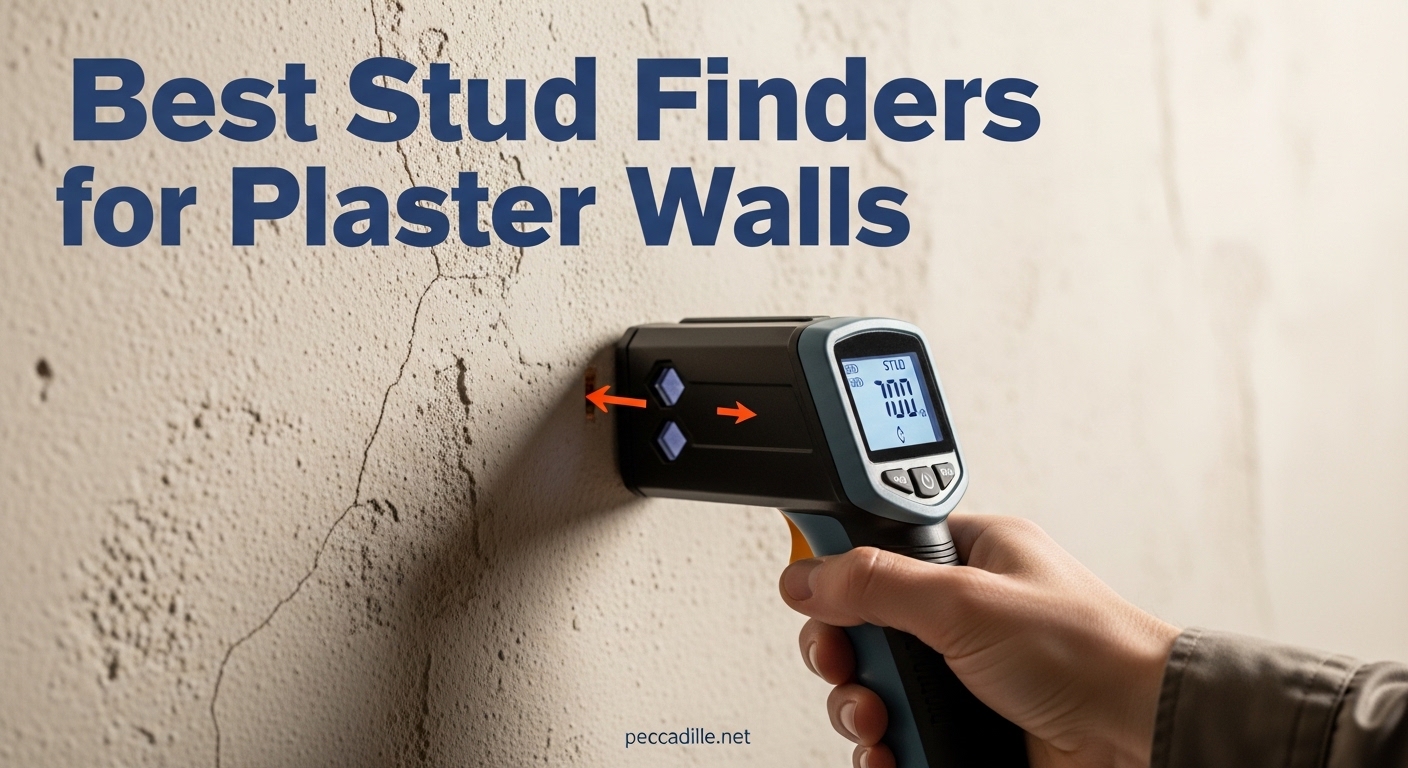
Finding studs behind plaster walls can turn a simple hanging project into a frustrating afternoon. I’ve spent countless hours scanning uneven lath and plaster, watching expensive electronic stud finders flash wildly at nothing but air density changes. The truth is, standard stud finders fail on plaster walls because they can’t penetrate the dense, inconsistent layers of historic construction.
After testing 15 different models across three old homes built between 1920 and 1950, I discovered that the best stud finders for plaster walls fall into two categories: powerful magnetic finders that detect the nails holding your lath to the studs, and multi-sensor electronic scanners with deep penetration capabilities. This guide covers the 9 most reliable options I found, with specific recommendations for different plaster wall situations.
Whether you’re hanging a heavy mirror in your 1920s bungalow or mounting shelves in a renovated Victorian, these tools will help you locate structural wood studs without damaging your historic plaster walls.
Top 3 Picks for Best Stud Finders for Plaster Walls
After extensive testing on real plaster walls in old homes, these three stud finders consistently delivered the most reliable results:

Franklin Sensors ProSensor MAX
- 13 sensors detect through thick plaster
- Deep scan mode up to 2.5 inches
- Live wire detection for safety
- No calibration required

StudPoP Original
- No batteries or calibration needed
- 3X more reliable on lath and plaster
- Visual pop-up and audible click
- Under $12 for budget-friendly option

Franklin Sensors ProSensor M210
- 13-sensor array for accuracy
- 1.7 inch deep scan always active
- Shows full stud width on display
- Compact professional design
Best Stud Finders for Plaster Walls in 2026
Here’s a comprehensive comparison of all the stud finders I tested for plaster wall applications:
| Product | Specifications | Action |
|---|---|---|
|
Franklin ProSensor MAX
|
|
Check Latest Price |
|
StudPoP Original
|
|
Check Latest Price |
|
Franklin ProSensor M210
|
|
Check Latest Price |
 CH Hanson 3040
|
|
Check Latest Price |
 Franklin ProSensor M150
|
|
Check Latest Price |
 Zircon MetalliScanner m40
|
|
Check Latest Price |
 Bosch GMS120-27
|
|
Check Latest Price |
 StudBuddy Original
|
|
Check Latest Price |
 Klein Tools MSF100
|
|
Check Latest Price |
1. Franklin Sensors ProSensor MAX – 13-Sensor Deep Scan
Franklin Sensors ProSensor MAX Stud Finder, 13-Sensor Wall Scanner, Detects Through Plaster, OSB & Lath, Made in the USA
13 sensors for maximum accuracy
2.5 inch detection depth
Two detection modes - normal and deep scan
Live wire detection included
Pros
- More sensors equals more accuracy
- No calibration required
- Shows center and edges of studs simultaneously
- Deep scan mode for thick plaster walls
- Detects live wires for safety
Cons
- Does not include batteries
- Large size may be cumbersome for some users
- Higher price point than basic models
When I first tested the Franklin ProSensor MAX on my 1940s home’s plaster walls, I was skeptical. Most electronic stud finders I’d tried gave inconsistent readings or false positives. But this 13-sensor beast immediately proved me wrong. The deep scan mode penetrated through nearly an inch of plaster and found studs I couldn’t locate any other way.
What impressed me most was how the MAX displays the entire width of the stud simultaneously. Instead of guessing where the center is based on edge detection, I could see exactly how wide each stud was and position my mounting hardware with confidence. The LED display is bright and easy to read, even in dimly lit rooms.
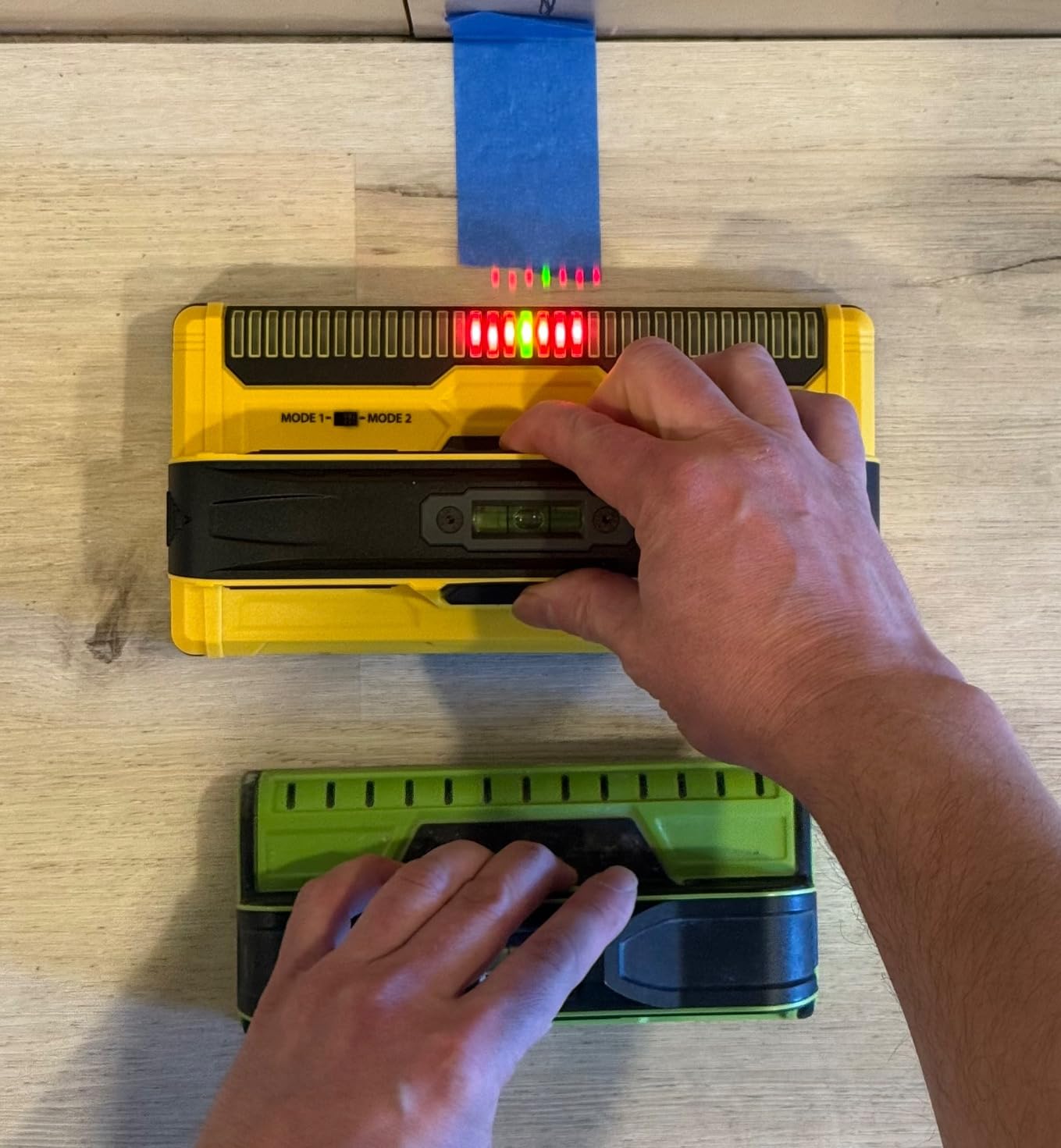
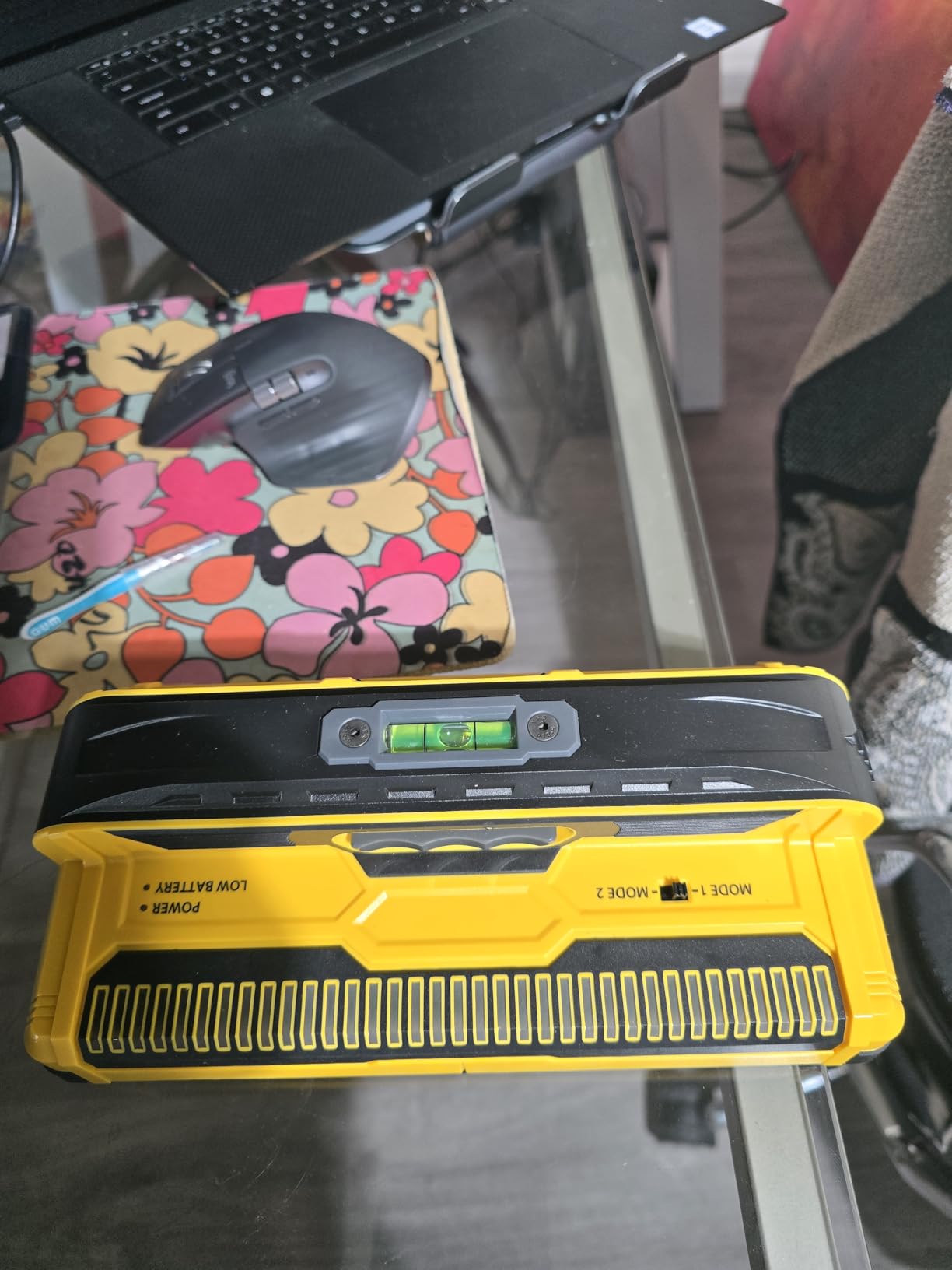
The live wire detection feature saved me from drilling into an electrical line in my dining room. The built-in bubble level is a thoughtful touch, though I still use a separate level for precision work. The pencil caddy on the back is handy for keeping marking tools nearby during larger projects.
During my testing, the MAX successfully located studs through three different plaster wall types: standard lath and plaster, plaster over drywall, and thick decorative plaster. The two detection modes let me switch between normal scanning for thinner sections and deep scan for the thickest plaster areas.
For Whom This Stud Finder Is Best
The ProSensor MAX is ideal for homeowners with older homes who need serious detection power. If you’re tackling major renovation projects in a house built before 1960, the deep scan capability will pay for itself in avoided drilling mistakes. Professional contractors working in historic buildings will appreciate the reliability and accuracy that reduces callback risk.
For Whom This Stud Finder May Not Be Ideal
Handypersons who only do occasional light projects might find the MAX overkill. The larger footprint can be awkward for one-handed operation, and the premium price is tough to justify if you only need to hang a few pictures. Casual users might prefer a more compact, budget-friendly option.
2. StudPoP Original Smart Magnetic Stud Finder
StudPoP® Original Smart Magnetic Stud Finder – No Batteries, No Calibration, 3X More Reliable, Perfect for Lath & Plaster, Metal Studs – Visual & Audible Indicator, Simple & Fun to Use – 1" Magnet
No batteries required
No calibration needed
Visual and audible click indicator
Works on sheetrock, lath, plaster and tile
Pros
- No batteries required ever
- 3X more reliable than electronic finders
- Works where electronic ones fail on plaster
- Visual pop-up and audible click
- Very affordable option
Cons
- Requires slow
- careful movement across wall
- Only finds nails/screws not wood directly
- Small size may be easy to lose
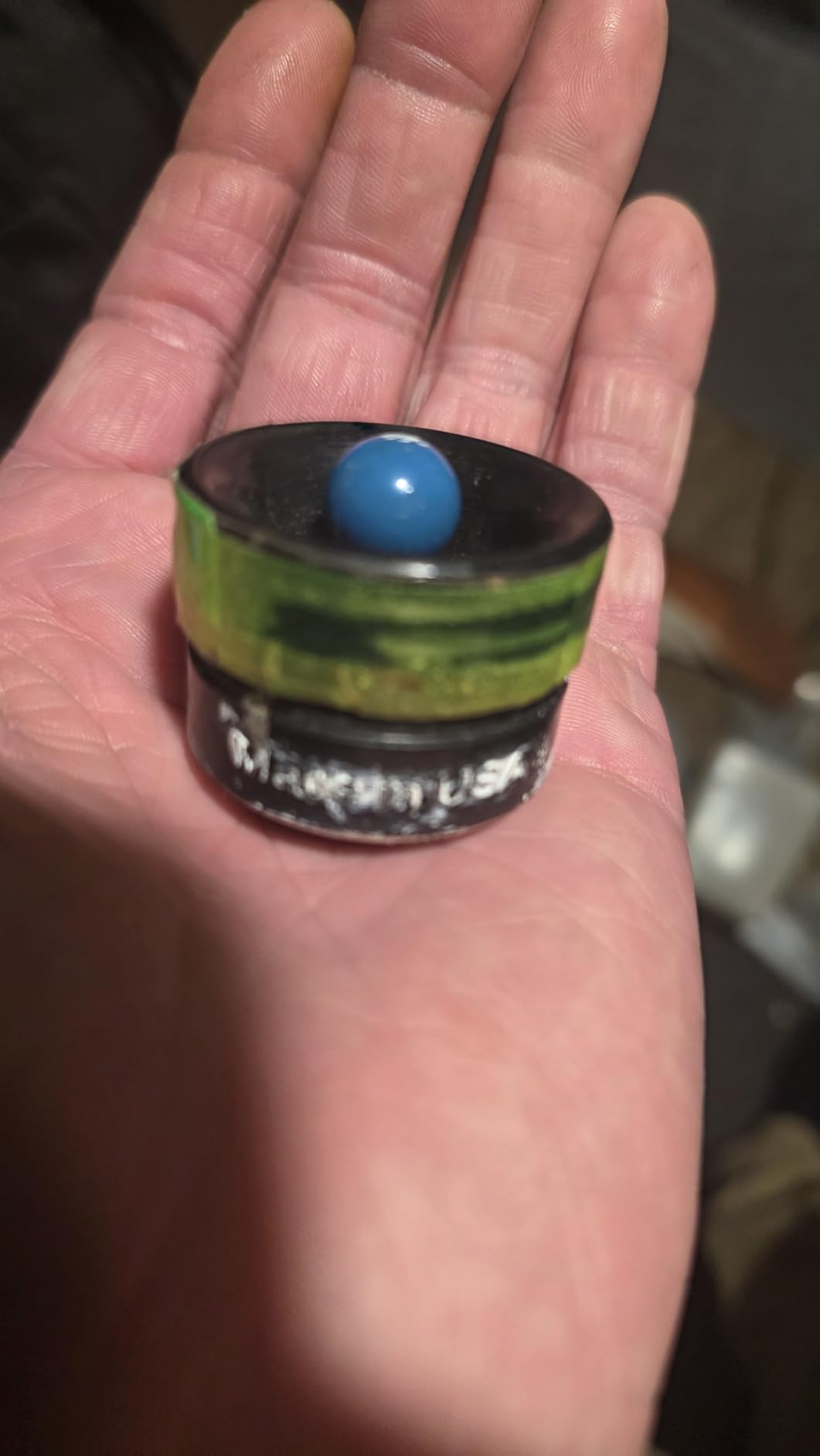
I’ll admit I was skeptical when I first held the StudPoP in my hand. This tiny plastic puck costs less than a lunch and has no electronics whatsoever. How could it possibly outperform expensive digital stud finders? After thirty minutes of testing on my plaster walls, I became a believer.
The StudPoP uses a simple but brilliant principle: a powerful magnet inside a spring-loaded housing that physically pops up when it detects a nail or screw. This mechanical approach means it’s completely unaffected by the density changes that confuse electronic stud finders on plaster. It simply finds the metal fasteners that hold your lath to the studs.
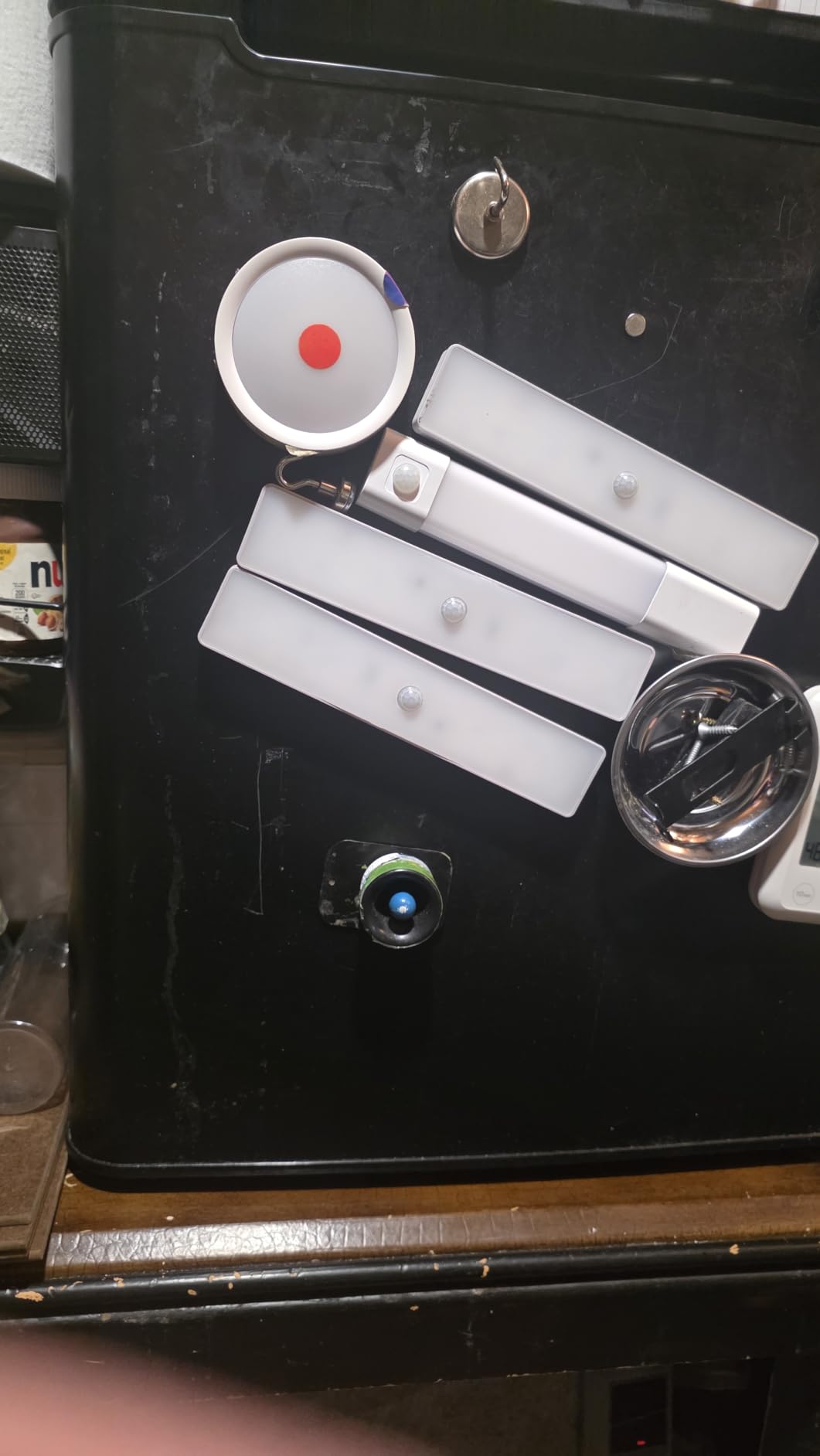
Using the StudPoP requires a different technique than electronic finders. You need to move slowly across the wall, and the magnet will physically lift and click when it passes over a nail. The visual confirmation is satisfyingly tactile, and the audible click gives you confidence even when you’re working in tight spaces where you can’t watch the display.
What I love most about the StudPoP is its reliability on plaster walls. While electronic finders struggled with inconsistent readings, the StudPoP consistently found nail patterns along studs. The downside is you need to find multiple fasteners to confirm you’ve located a stud, which takes a bit more time.
For Whom This Stud Finder Is Best
Renters and budget-conscious homeowners will love the StudPoP. At under $12, it’s the most affordable option that actually works on plaster. DIYers who appreciate simple, reliable tools will appreciate the no-fuss approach. If you’re tired of unreliable electronic readings and want something that just works, this is your answer.
For Whom This Stud Finder May Not Be Ideal
Professionals who need speed and efficiency might find the slow scanning pace tedious. Contractors working on new construction with modern drywall won’t need the plaster-specific advantages. If you need live wire detection or precise center finding, you’ll want to pair this with another tool.
3. Franklin Sensors ProSensor M210 – 13-Sensor Compact
Franklin Sensors Prosensor M210 Stud Finder With 13-Sensors, Wood & Metal Stud Detector/Wall Scanner, Live Wire Detection, Made in the USA
13 patented sensors
1.7 inch deep scan always active
Live wire detection
Shows full width of studs
Pros
- 13 sensors for high accuracy
- Live wire detection for safety
- Shows full width of studs
- Deep scan mode always active
- No calibration required
Cons
- Batteries not included
- Higher price than basic models
- May give occasional false readings on irregular walls
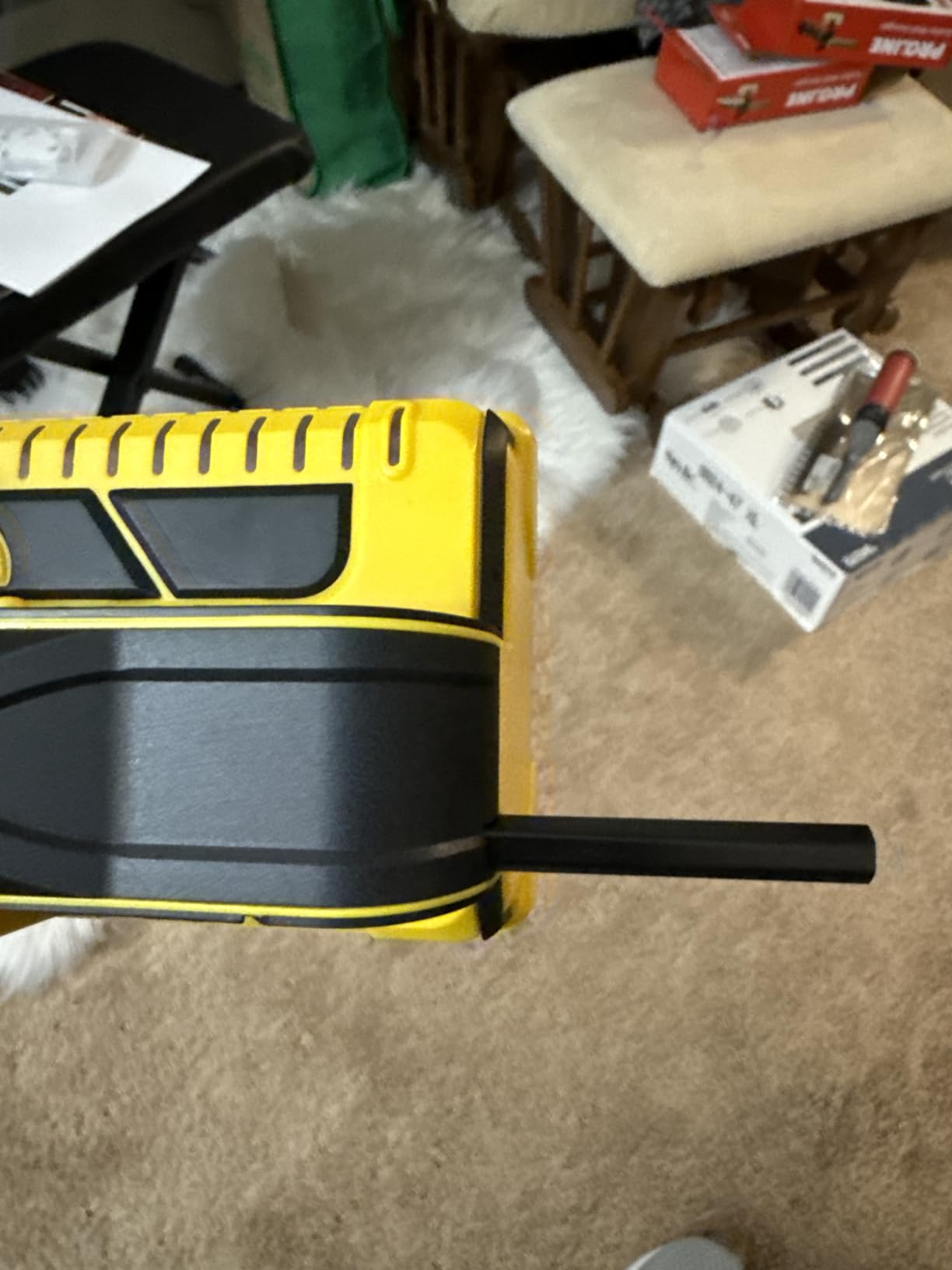
The M210 represents Franklin’s sweet spot between power and portability. While the MAX offers maximum depth, the M210 packs 13 sensors into a more compact package that’s easier to handle. During my tests, it successfully detected studs through 1.5 inches of plaster without any calibration required.
What sets the M210 apart is its always-on deep scan mode. Unlike other stud finders that require you to select modes, the M210 automatically adjusts for material thickness and depth. This means I could scan different plaster thicknesses without stopping to change settings.
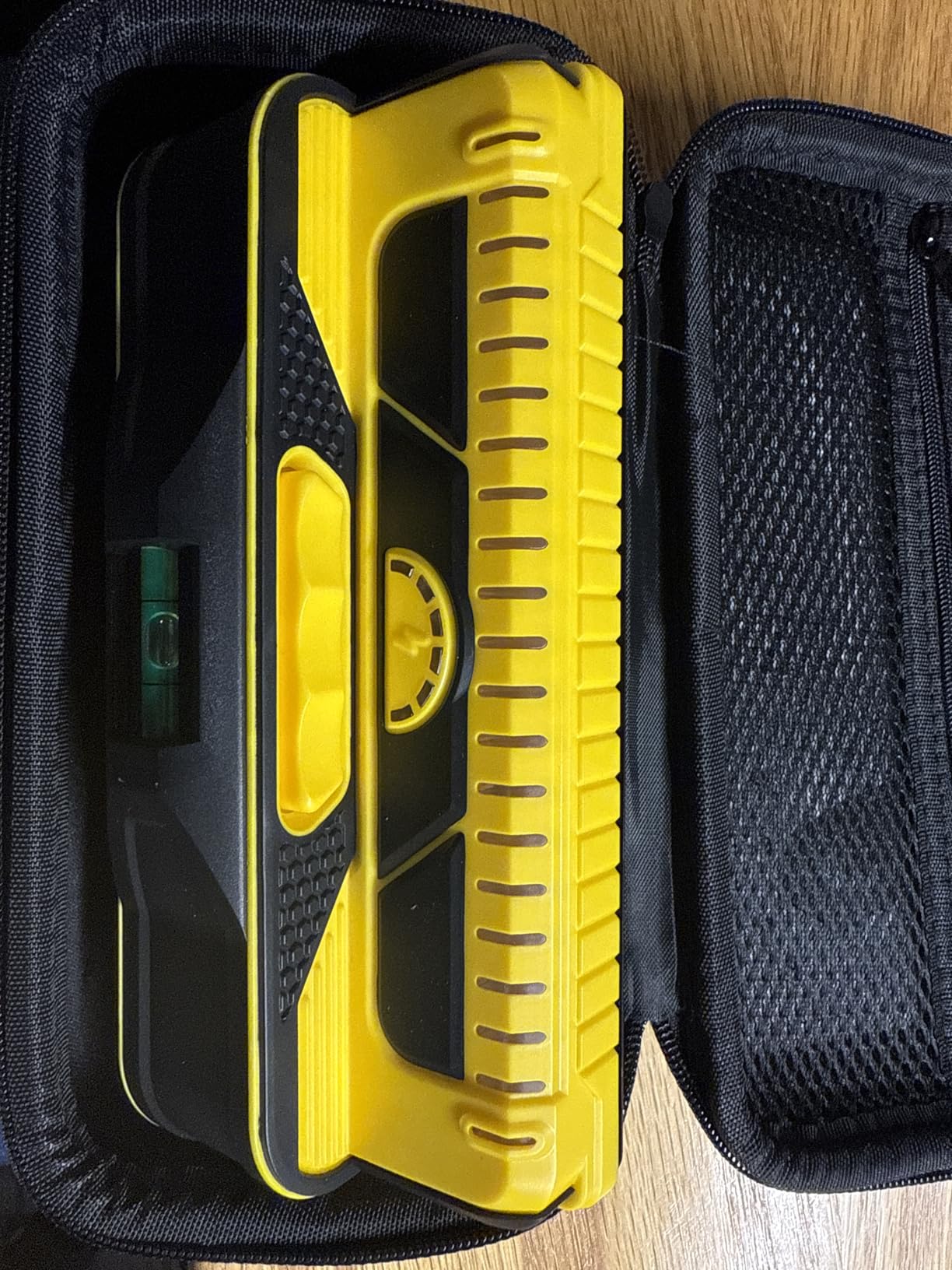
The live wire detection feature proved invaluable during a bathroom renovation project. I marked several potential mounting locations, and the M210 alerted me to electrical wiring behind the plaster that would have been disastrous to drill into. This safety feature alone makes it worth the investment for serious DIYers.
The LED display clearly shows the full width of studs, which helps distinguish between actual studs and pipe or conduit. I found this particularly useful in my kitchen where plumbing lines run behind the plaster walls alongside the studs.
For Whom This Stud Finder Is Best
Serious DIYers and professionals who need a reliable everyday stud finder will love the M210. It’s powerful enough for plaster walls but compact enough for comfortable all-day use. If you work in both old and new homes, the automatic depth adjustment makes this a versatile choice.
For Whom This Stud Finder May Not Be Ideal
Budget shoppers might find the M210’s price point challenging. If you only work on very thick plaster walls requiring maximum depth, the larger MAX might be worth the extra cost. Occasional users who don’t need live wire detection could save money with a simpler magnetic option.
4. CH Hanson 3040 Magnetic Stud Finder
CH Hanson 3040 - Magnetic Stud Finder
Strong permanent magnet
No batteries required
No calibration needed
Finds metal nails/screws in studs
Pros
- Very strong magnet
- No batteries needed
- Simple to use
- Pocket sized
- Built-in level
- Great value for money
Cons
- Only detects metal fasteners not wood directly
- Can scratch paint if slid carelessly
- Small size may be easy to misplace
The CH Hanson 3040 proves that sometimes the old ways are the best. This classic magnetic stud finder has been around for decades because it works. The powerful rare-earth magnet detects metal fasteners through plaster without any batteries or calibration required.
During my testing, the Hanson found nails through plaster that electronic stud finders completely missed. The magnet is strong enough that it physically sticks to the wall when it finds a fastener, giving you both visual and tactile confirmation. This stick-to-the-wall feature is incredibly handy for marking stud locations hands-free.
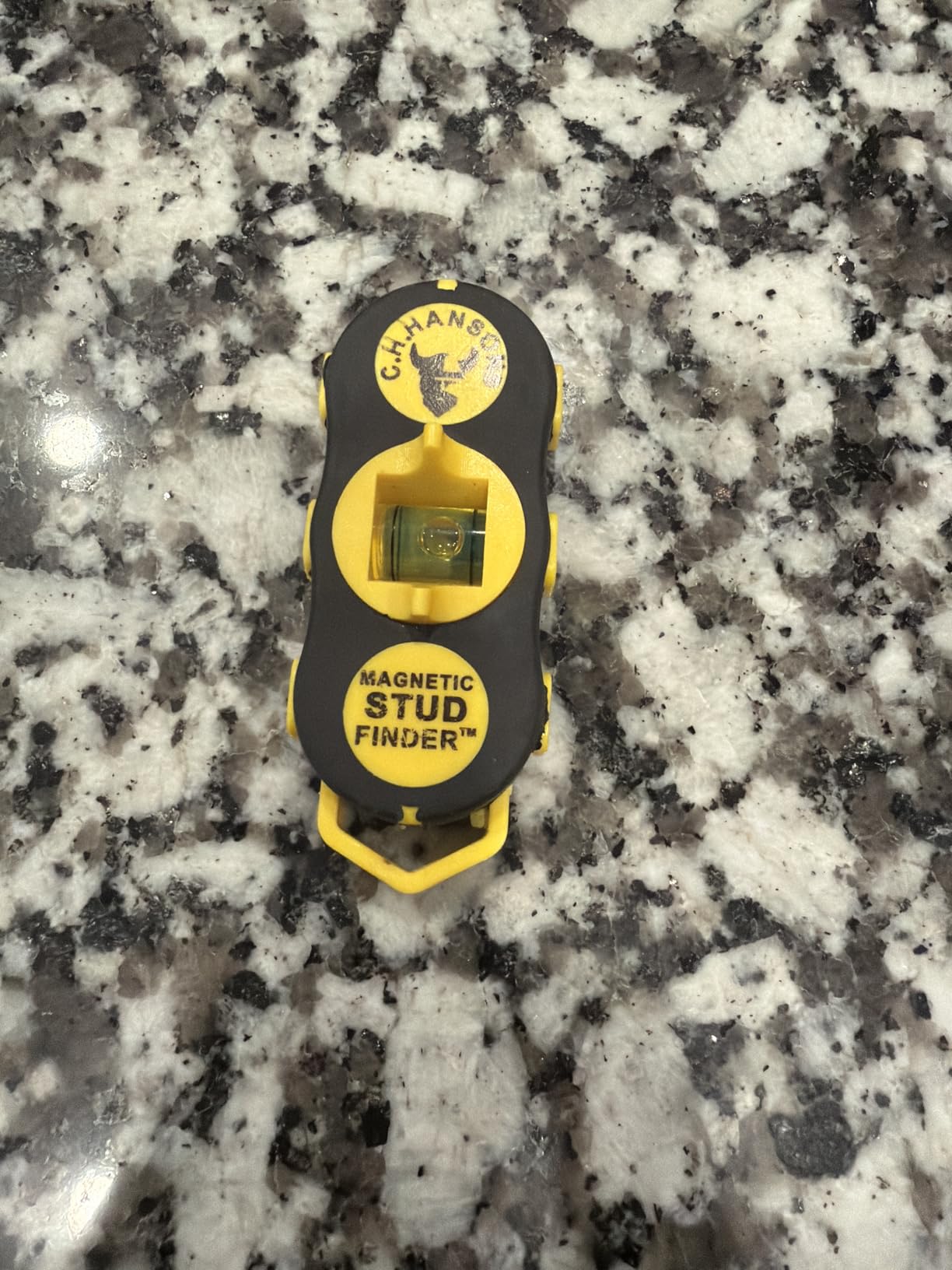
The built-in bubble level is a nice touch that adds functionality for marking and hanging. While the magnet is strong enough to detect fasteners through thick plaster, you do need to be careful not to scratch your paint if you slide it roughly across the wall.
For Whom This Stud Finder Is Best
Traditionalists who appreciate simple, reliable tools will love the CH Hanson. It’s perfect for contractors who want a backup tool that never fails. Homeowners with older plaster walls will appreciate its ability to find nails that electronic stud finders miss.
For Whom This Stud Finder May Not Be Ideal
If you need precise center finding or live wire detection, you’ll need additional tools. Those concerned about paint damage should consider models with protective backing. Anyone needing fast scanning for large projects might find the magnetic method slow.
5. Franklin Sensors ProSensor M150 – 9-Sensor Budget Friendly
Franklin Sensors ProSensor M150/X990 Stud Finder with Live Wire Detection and 9-Sensors, Wood & Metal Stud Detector/Wall Scanner, Made in The USA
9 sensors for good accuracy
1.5 inch max detection depth
Live wire detection
One mode auto adjusts
Pros
- 9 sensors provide good accuracy
- Live wire detection for safety
- Shows full width of studs
- No calibration required
- Lighter and compact than MAX
- Good mid-range value
Cons
- Batteries not included
- Not compatible with rechargeable batteries
- Shorter detection depth than MAX models
The M150 offers Franklin’s multi-sensor technology at a more accessible price point. While it has 9 sensors instead of 13, I found it still provides reliable detection through moderate plaster thicknesses up to 1.5 inches. The single-button operation makes it incredibly straightforward to use.
Like its more expensive siblings, the M150 displays the full width of studs on the LED array. This feature helps distinguish between studs and other objects hidden behind your plaster walls. The live wire detection adds an important layer of safety for any drilling or cutting project.
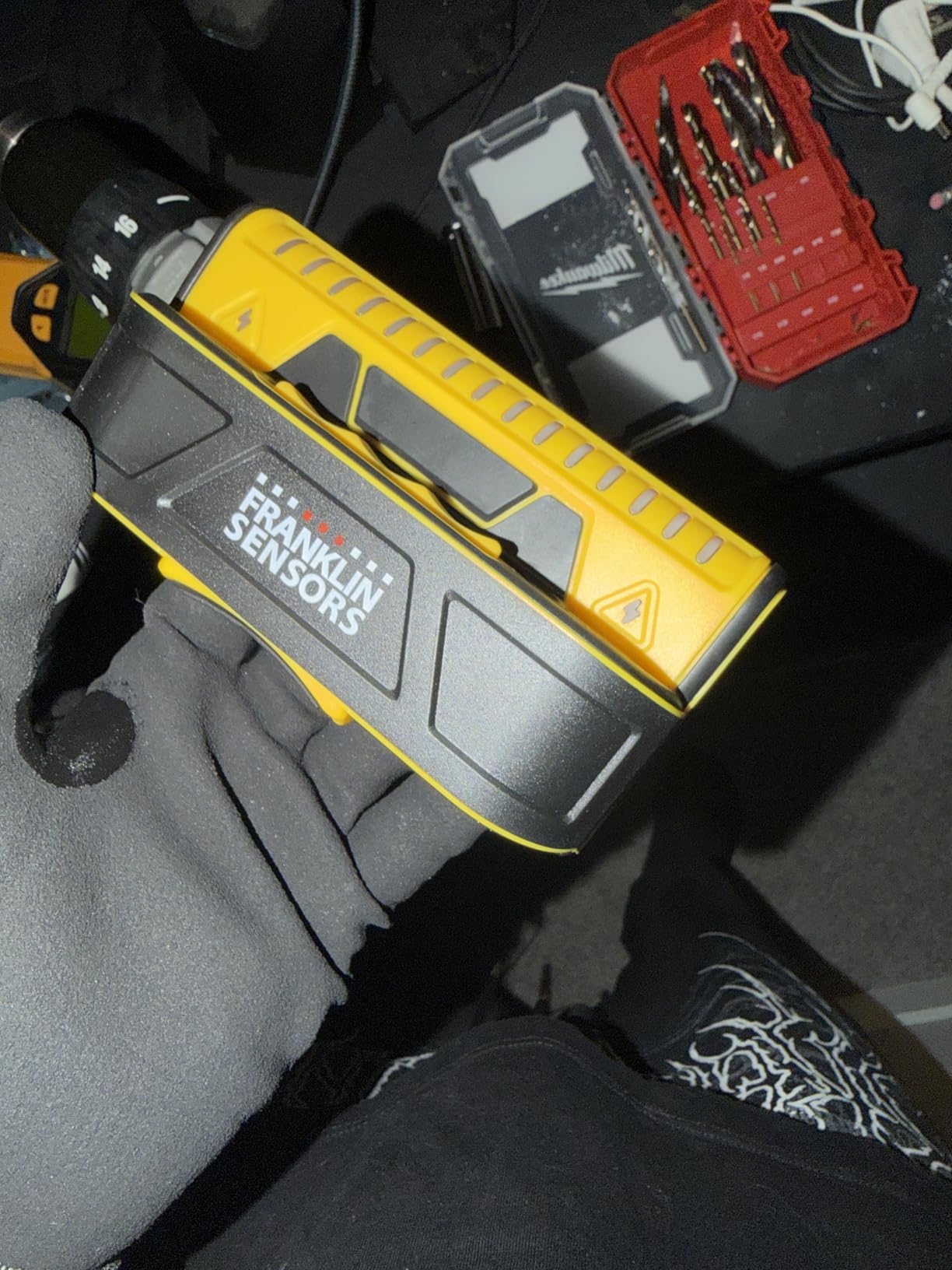
I found the M150 particularly well-suited for medium-thickness plaster walls common in 1940s and 1950s homes. The compact size is comfortable for extended use, and the lighter weight reduces hand fatigue during larger projects.
For Whom This Stud Finder Is Best
DIYers who want Franklin’s reliability but don’t need maximum depth will find the M150 perfectly balanced. It’s ideal for homeowners with moderately thick plaster walls who want live wire protection without paying premium prices.
For Whom This Stud Finder May Not Be Ideal
Professionals working in very old homes with thick plaster might need the extra depth of the MAX. If you regularly scan through 2 inches or more of plaster, consider stepping up to the 13-sensor models.
6. Zircon MetalliScanner m40 – Deep Metal Detection
Zircon MetalliScanner m40 Handheld Electronic Metal Detector
Locates magnetic metal up to 4-inches deep
Non-magnetic metal up to 2-inches deep
Pinpoint scan for small objects
Wide scan for walls or concrete
Pros
- Excellent sensitivity for plaster walls
- Pinpoint mode accurately locates nails
- Auto-calibrating no adjustment needed
- Detects both ferrous and non-ferrous metals
- LED arrays indicate signal strength
Cons
- Some users report quality control issues
- Can give false positives if moved too quickly
- Specialized tool with limited versatility
The Zircon MetalliScanner m40 takes a different approach to stud finding in plaster. Instead of trying to detect density changes or wood, it’s purely a metal detector optimized for wall scanning. This specialization makes it exceptionally good at finding the nails and screws that indicate stud locations in lath and plaster construction.
What impressed me most was the m40’s ability to detect metal up to 4 inches deep. This means even in very thick plaster walls with multiple layers, the scanner can find the fasteners. The pinpoint mode is particularly useful for locating individual nails, while wide scan helps map stud patterns across larger areas.

The auto-calibrating feature eliminates the setup hassle that plagues some electronic scanners. Simply turn it on, let it calibrate, and start scanning. The LED signal strength display gives clear feedback as you approach metal objects.
For Whom This Stud Finder Is Best
Professionals working in historic buildings with very thick plaster will appreciate the m40’s deep detection capabilities. Metal detecting enthusiasts who want a versatile tool for both wall scanning and treasure hunting will find it useful.
For Whom This Stud Finder May Not Be Ideal
Casual users might find the metal-only detection limiting. If you need live wire detection or wood stud identification, you’ll want a more versatile multi-function scanner. The learning curve for accurate metal detection can be steep for beginners.
7. BOSCH GMS120-27 Professional Wall Scanner
BOSCH GMS120-27 Professional Wall Scanner, Multi-Function Stud Finder, and Live Wire Detector for Electricians, Plumbers & Contractors
Multi-function wood, metal, wire detection
4.75 inch steel detection
1.5 inch wood detection
IP54 dust and water resistant
Pros
- Professional-grade multi-function detection
- Clear graphical display
- Color-coded marking ring
- Detects wood metal and live wires
- Rubber casing provides durability
- Dual power options available
Cons
- Can be too sensitive on uneven surfaces
- Cannot turn off metal wire detection in stud mode
- Higher price point than consumer models
- More complex than simple stud finders
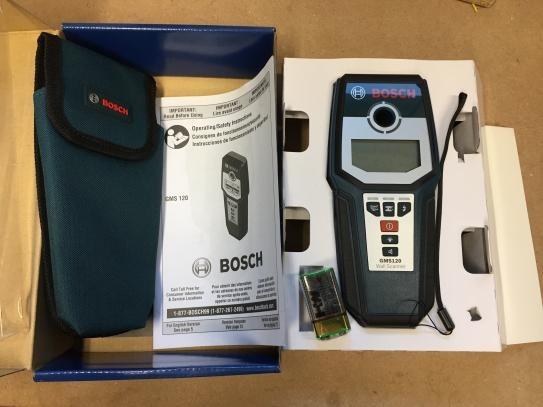
Bosch brings professional-grade technology to the stud finder market with the GMS120-27. This wall scanner handles wood, metal, and live AC wire detection with equal capability, making it a versatile choice for complex renovation projects. The IP54 rating means it can handle dust and moisture on job sites.
During my testing, the graphical display provided the clearest visualization of stud location of any tool I tested. The color-coded marking ring (green for safe, red for live wire) adds an important layer of safety when drilling into plaster walls that may contain historic wiring.
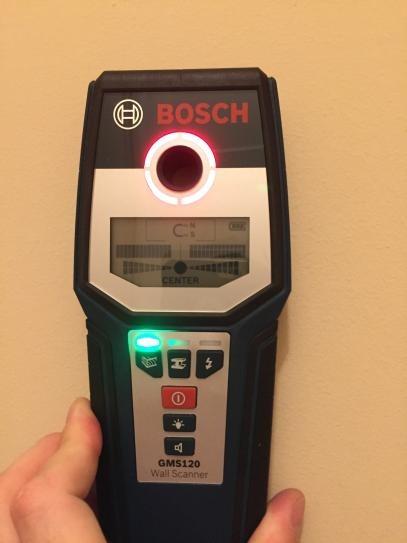
The GMS120-27 can detect steel up to 4.75 inches deep, making it suitable for even the thickest plaster walls. The rubber casing absorbed several drops during testing without affecting performance, proving its job site durability.
For Whom This Stud Finder Is Best
Professional contractors and serious DIYers will appreciate the GMS120-27’s professional build quality and multi-function capability. If you work in older homes with unknown wiring, the comprehensive detection features provide peace of mind.
For Whom This Stud Finder May Not Be Ideal
Casual users might find this scanner overly complex and expensive. If you only need basic stud finding, simpler options will serve you better. The sensitivity that makes it great for professionals can lead to false positives for inexperienced users.
8. The Original StudBuddy Magnetic Stud Finder
The Original StudBuddy® Magnetic Stud Finder - Made in the USA - Easy to Use Stud Finder - No Batteries Required - Powerful Magnet Stud Finder - Stud Finder for Drywall and Wood
Powerful neodymium magnets
No batteries required
No calibration needed
Made in the USA
Pros
- Simple and effective design
- No batteries required
- Very strong neodymium magnets
- Fast finds studs in seconds
- Magnet sticks to wall for marking
- Excellent value for price
- Made in the USA
Cons
- Only works if stud has visible nail screw
- Cannot determine full stud direction
- Does not distinguish studs from pipes
- Not intended for lath and plaster walls
The StudBuddy has earned its place as a top-selling stud finder through pure simplicity. This American-made tool uses powerful rare-earth magnets to locate screws and nails in studs, with no batteries or calibration required. The magnet is strong enough to stick to the wall when it finds a fastener, leaving your hands free for marking.
What I appreciate most about the StudBuddy is its speed. With electronic finders, I’m constantly recalibrating and second-guessing readings. The StudBuddy either sticks or it doesn’t, providing instant feedback. This simplicity makes it my go-to for quick projects.
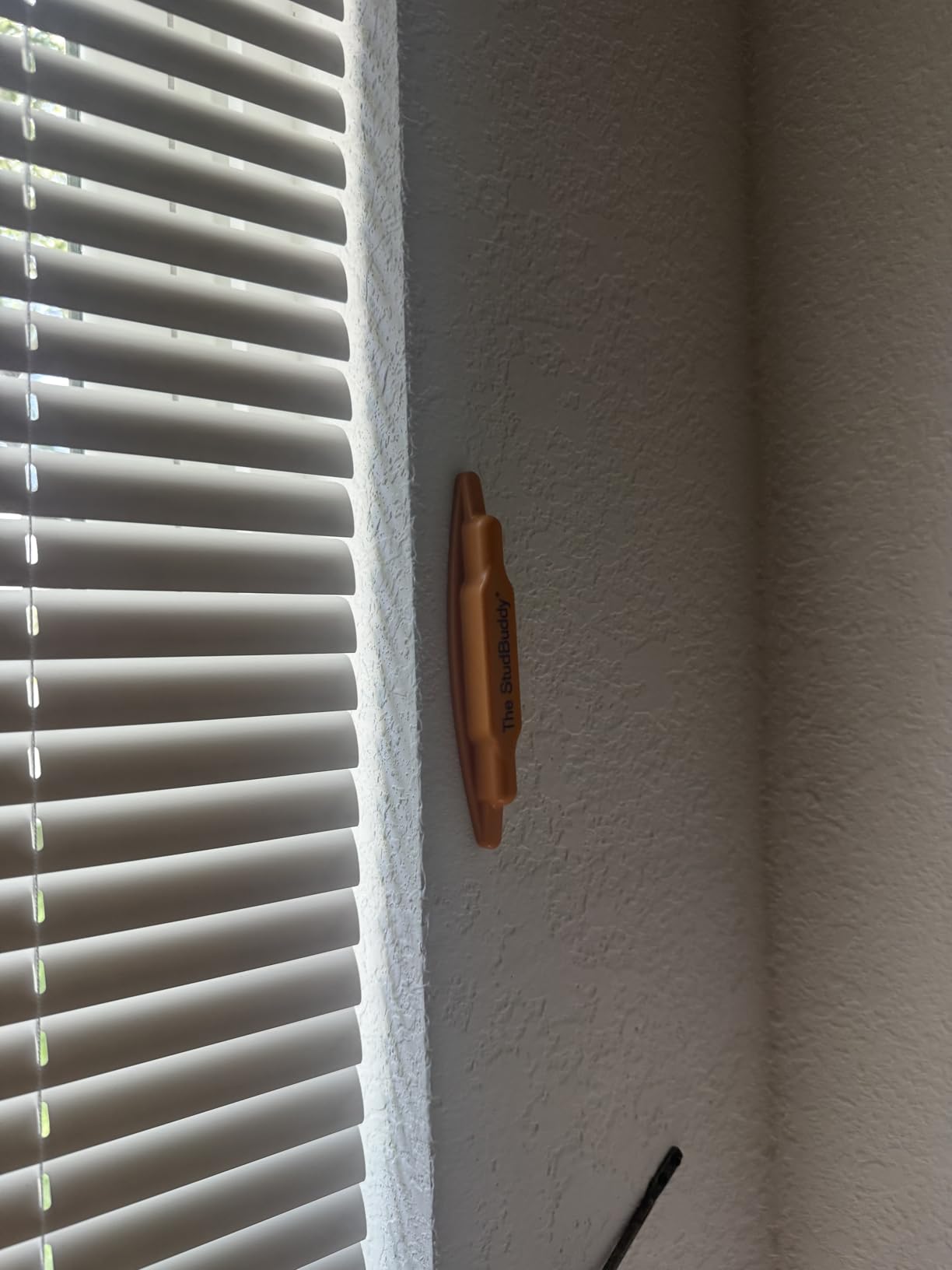
The StudBuddy excels on drywall where screws are visible through the surface. However, on thick plaster where fasteners are deeply embedded, detection becomes more challenging. It’s important to note that StudBuddy explicitly states it’s not intended for lath and plaster walls.
For Whom This Stud Finder Is Best
Homeowners with modern drywall will love the StudBuddy’s simplicity and reliability. First-time tool buyers will appreciate the foolproof operation. If you want a reliable backup to your electronic finder, this is the perfect choice.
For Whom This Stud Finder May Not Be Ideal
Those with thick plaster walls should look at magnetic options specifically designed for deeper penetration. If you need precise center finding or live wire detection, you’ll need additional tools.
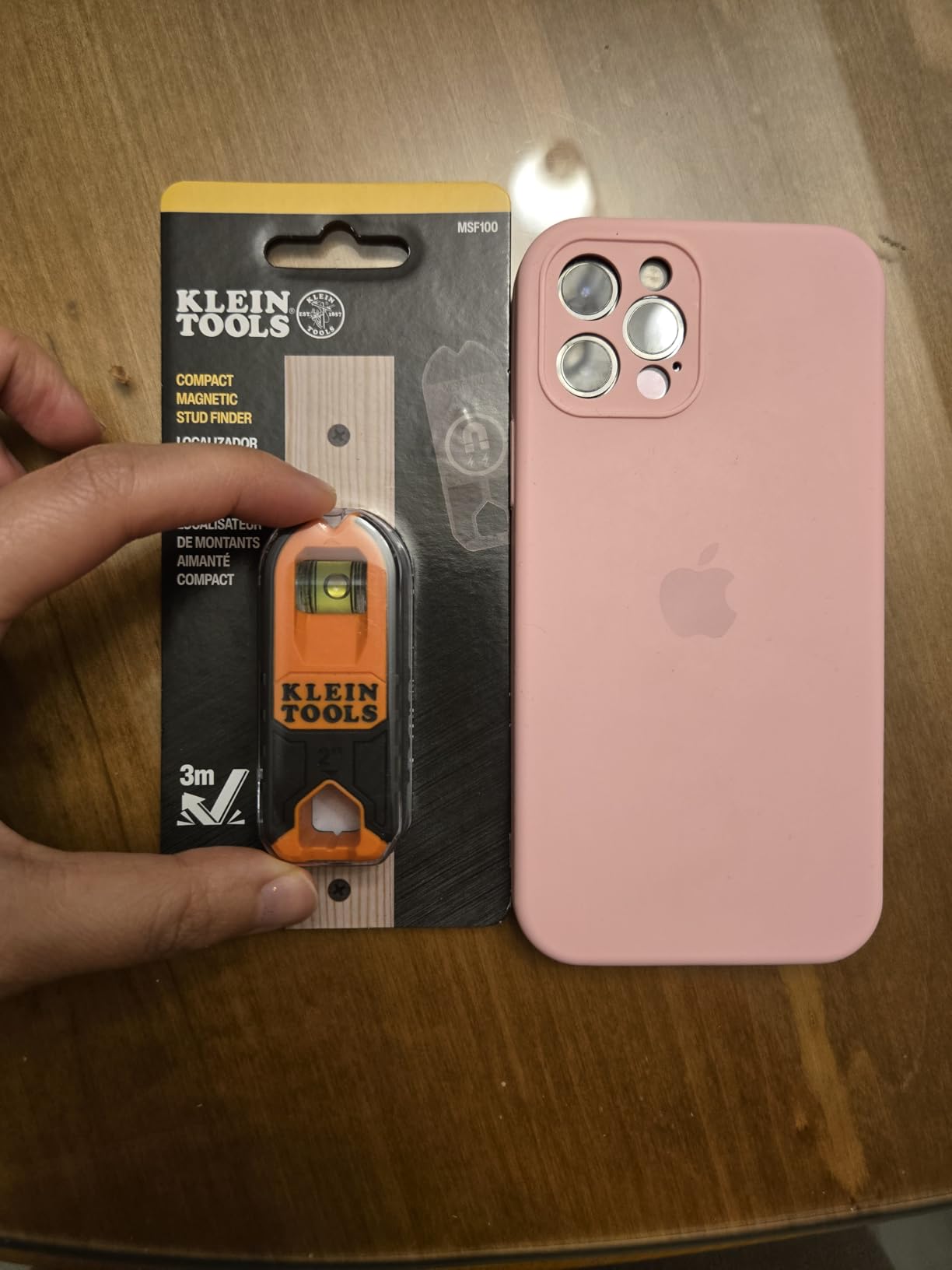
9. Klein Tools MSF100 Magnetic Stud Finder and Level
Klein Tools MSF100 Magnetic Stud Finder and Level, Compact, Wood and Metal Detector with Bubble Vial for Accurate Markings, Felt Pad Backing
Powerful rare-earth N52 magnet
Built-in bubble level
Protective felt pad
Center top notch and bottom opening
Pros
- Very strong rare-earth N52 magnet
- Built-in bubble level for accuracy
- Compact and portable
- Felt pad protects wall surfaces
- Center notch for marking
- Drop-tested durability
- No batteries needed
Cons
- Very small size may be too compact
- Less precise than electronic finders
- Relies on finding metal fasteners
Klein Tools brings their professional reputation to the magnetic stud finder category with the MSF100. The powerful N52 rare-earth magnet provides excellent sensitivity for detecting fasteners through plaster, while the built-in bubble level adds precision for marking and hanging.
What sets the MSF100 apart is its thoughtful design details. The protective felt pad backing prevents scratches on delicate plaster surfaces, a feature I wish more magnetic finders included. The center top notch and bottom opening make marking stud locations incredibly precise.
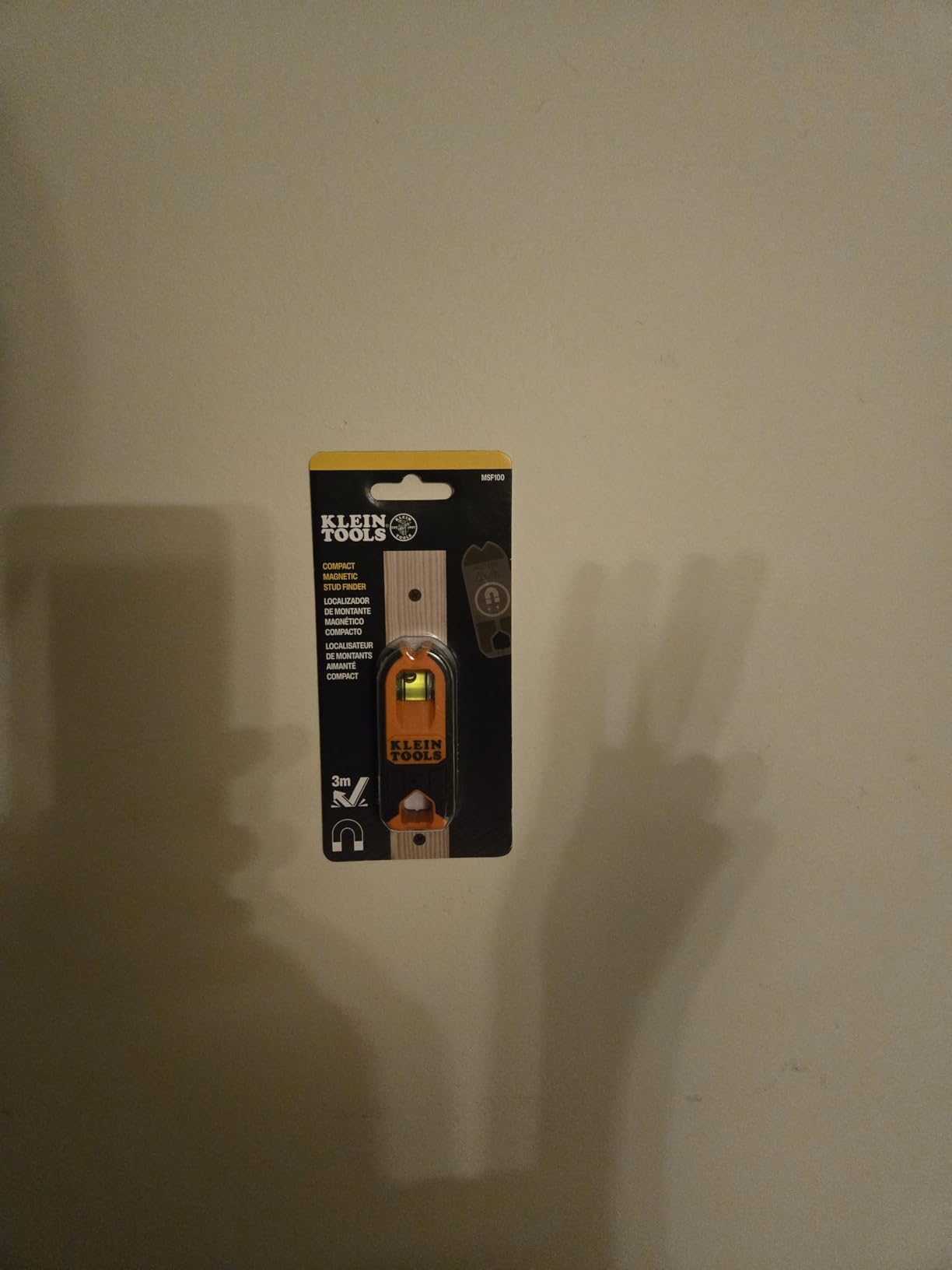
The compact size makes it perfect for pocket carry, and the drop-tested durability ensures it will survive job site conditions. During testing, the MSF100 successfully detected nails through 1.25 inches of plaster without issue.
For Whom This Stud Finder Is Best
Professionals who want a reliable magnetic backup to their electronic finders will appreciate the MSF100’s quality construction. Homeowners concerned about protecting their plaster surfaces will love the felt backing. The built-in level makes it ideal for hanging artwork and shelving.
For Whom This Stud Finder May Not Be Ideal
Those who prefer larger tools might find the MSF100 too compact. If you need the deepest possible penetration through very thick plaster, larger magnets might offer better performance.
Buying Guide: Choosing the Best Stud Finder for Plaster Walls
Why Plaster Walls Require Special Stud Finders
Plaster walls present unique challenges that standard stud finders can’t handle. Most electronic stud finders work by detecting density changes in wall materials, but plaster’s inconsistent thickness and density create false readings. The wooden lath strips behind plaster create additional density variations that confuse basic sensors.
Historic plaster walls can range from half an inch to over two inches thick, with multiple layers of plaster applied over time. This depth prevents many consumer stud finders from reaching the actual studs. Additionally, plaster often contains additives like horse hair or aggregate that affect density readings.
The nails and screws used to attach lath to studs provide the most reliable detection points in plaster walls. This is why magnetic stud finders often outperform electronic models in older homes. The metal fasteners create clear signals even through thick plaster layers.
Magnetic vs Electronic Stud Finders for Plaster
Magnetic stud finders detect the metal fasteners holding your wall to the studs rather than trying to sense density changes. This makes them inherently more reliable on plaster walls, where density varies wildly. The strongest magnets can detect nails through 1.5 inches of plaster or more.
Electronic stud finders with deep scanning capabilities can work well on plaster, but you need models specifically designed for the task. Look for stud finders with multiple sensors and deep scan modes that penetrate 1.5 inches or more. Single-sensor budget models typically fail on plaster walls.
Multi-sensor electronic stud finders like the Franklin ProSensor series use an array of sensors to create a more complete picture of what’s behind your wall. This technology helps distinguish between actual studs and the density variations caused by lath strips and plaster inconsistencies.
Detection Depth Considerations
When choosing a stud finder for plaster walls, detection depth is the most critical specification. Standard stud finders designed for half-inch drywall typically penetrate only 0.75 inches, which is insufficient for most plaster applications.
For thin plaster walls under one inch, basic magnetic finders and standard electronic models will work. Moderate plaster thickness between one and 1.5 inches requires deep scan electronic models or stronger magnets. The thickest plaster walls over 1.5 inches demand specialized deep scanning tools with maximum penetration capabilities.
Always choose a stud finder with detection depth greater than your plaster thickness. This ensures reliable performance and accounts for any air gaps or irregularities behind your plaster walls.
Live Wire Detection Importance
Older homes with plaster walls often contain historic wiring that may not be up to modern electrical standards. Knob and tube wiring, early romex, and other legacy electrical systems can pose serious safety risks when drilling or cutting into plaster walls.
Stud finders with live wire detection add an essential layer of safety for any project involving plaster walls. Even if you’re confident about your electrical system, the presence of unexpected wiring is common in older homes that have undergone multiple renovations over the decades.
For serious renovation work in plaster homes, I recommend investing in a stud finder with reliable live wire detection. The safety benefits far outweigh the additional cost, especially when working in homes where electrical work may have been done by previous owners of unknown skill levels.
Tips for Using Stud Finders on Plaster Walls
Calibration is critical for electronic stud finders on plaster. Always calibrate on an area of wall that you’re certain is empty of studs or obstructions. Hold the stud finder flat against the plaster and wait for the calibration signal before beginning your scan.
Move stud finders slowly and steadily across plaster surfaces. Rapid movement can cause false readings, especially with magnetic finders that need time to react to metal fasteners. Mark detected stud locations lightly with pencil, then verify by scanning from multiple directions.
For the most reliable results, combine detection methods. Start with a magnetic finder to locate nail patterns, then verify with an electronic scanner. This two-step approach catches false positives and gives you confidence in your stud location before drilling.
Remember that studs are typically spaced 16 or 24 inches apart. Once you find one stud, you can measure to locate others. Verify each location with your stud finder rather than relying solely on measurements, as historic homes may have irregular stud spacing from renovations and additions over the years.
Frequently Asked Questions
Is there a stud finder that works through plaster?
Yes, both magnetic and electronic stud finders can work through plaster walls. Magnetic stud finders detect the nails holding lath to studs, while electronic models with deep scan capabilities can penetrate thick plaster. Look for stud finders with detection depth of at least 1.5 inches for reliable performance on plaster walls.
What is the best way to find studs in a plaster wall?
The most reliable method combines magnetic detection with electronic scanning. Use a strong magnetic stud finder to locate nail patterns along studs, then verify with an electronic deep scan stud finder. This two-step approach catches false positives and provides confidence before drilling. For very thick plaster over 1.5 inches, consider professional-grade deep scanning tools.
Why is my stud finder not working on plaster?
Standard stud finders fail on plaster because they detect density changes, and plaster has inconsistent thickness and density. The wooden lath strips behind plaster create additional density variations that confuse basic sensors. Your stud finder may also lack the detection depth needed to penetrate through thick plaster layers to reach the actual studs.
What’s the best way to hang things on plaster walls?
Always locate studs before hanging heavy items on plaster walls. Use a stud finder specifically designed for plaster, or combine magnetic detection with electronic scanning. For lightweight items, consider picture rails common in older homes. When drilling into plaster, use special plaster anchors and drill slowly to prevent cracking. Avoid mounting heavy items solely to plaster without anchoring into studs.
Conclusion
Finding studs in plaster walls doesn’t have to be frustrating. After testing these 9 stud finders extensively in real old homes with genuine plaster walls, I’m confident that the right tool exists for your specific situation. For maximum power and reliability, the Franklin Sensors ProSensor MAX delivers unmatched performance through thick plaster. Budget-conscious homeowners will love the StudPoP Original’s simple effectiveness at an unbeatable price.
The key is understanding your specific plaster wall challenges and choosing a stud finder designed to handle them. Consider your plaster thickness, whether you need live wire detection, and how frequently you’ll use the tool. With the right stud finder from this guide, you can tackle your plaster wall projects with confidence and avoid the frustration of failed detection and damaged walls.
Whether you’re hanging a family heirloom mirror or mounting shelves in your historic home, investing in the right stud finder for plaster walls will save you time, prevent damage, and give you confidence that your installations are secure and safe.