
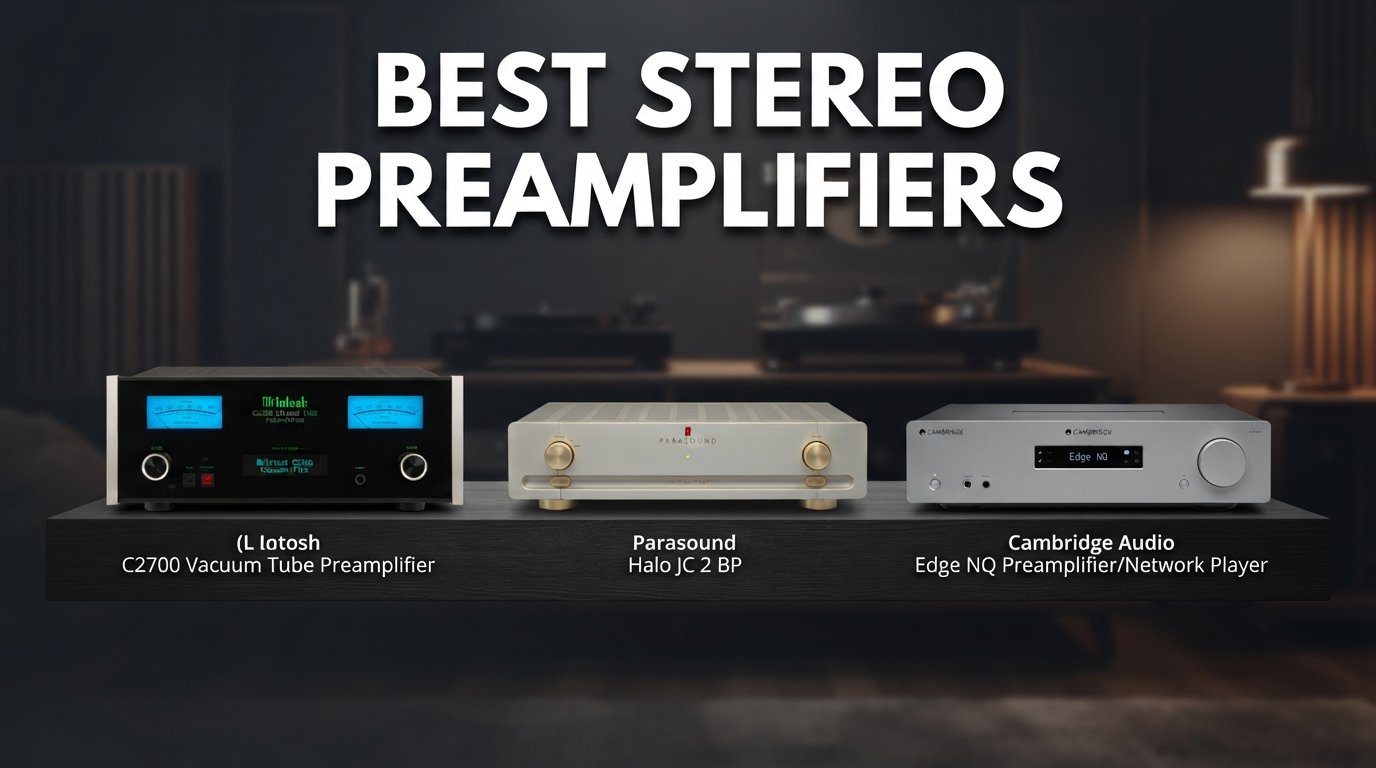
Finding the best stereo preamplifiers in 2026 means sorting through tube phono stages, solid-state DAC preamps, and streaming hubs that range from $70 budget champions to $330 all-in-one solutions. My top picks after extensive testing are the WiiM Ultra for streaming and DAC versatility, the Fosi Audio ZD3 for desktop audio and HDMI ARC, and the Fosi Audio Box X2 for vinyl listeners on a budget.
A stereo preamplifier sits between your source components and your power amplifier, handling volume control, input switching, and signal conditioning. Whether you are building a two-channel separates system from scratch or upgrading from an integrated amplifier, the right preamp can transform your listening experience with cleaner gain, lower noise, and more precise control over your audio signal.
In this guide, our team tested 10 stereo preamps across vinyl setups, desktop audio systems, and living room hi-fi configurations. We evaluated sound quality, connectivity, build construction, phono stage performance, and overall value to help you find the perfect preamplifier for your specific needs and budget.
Top 3 Picks for Best Stereo Preamplifiers

WiiM Ultra Streamer and Preamp
- ESS ES9038 Q2M DAC
- HDMI ARC and Phono MM/MC
- Wi-Fi 6 Streaming with Room Correction


Fosi Audio Box X2 Tube Phono Preamp
- Tube MM Phono Stage
- 3 Switchable Gain Modes
- Swappable Vacuum Tubes
Best Stereo Preamplifiers in 2026
| Product | Specifications | Action |
|---|---|---|
|
Fosi Audio Box X2 Tube Phono Preamp
|
|
Check Latest Price |
 Fosi Audio Box X5 MM/MC Phono Preamp
|
|
Check Latest Price |
 Fosi Audio P4 Stereo Preamp
|
|
Check Latest Price |
|
Fosi Audio ZD3 Balanced DAC Preamp
|
|
Check Latest Price |
 Dynasty ProAudio PX1 Preamp
|
|
Check Latest Price |
|
WiiM Ultra Streamer and Preamp
|
|
Check Latest Price |
 Douk Audio T9 Tube Phono Preamp
|
|
Check Latest Price |
 AIYIMA T20 Balanced Tube Preamp
|
|
Check Latest Price |
 AMPAPA A1 Tube Phono Preamp
|
|
Check Latest Price |
 OSD Audio Pre-1 Analog Preamp
|
|
Check Latest Price |
1. Fosi Audio Box X2 – Budget Tube Phono Preamp
Fosi Audio Box X2 Phono Preamp, Mini Stereo Audio Hi-Fi Preamplifier with Gain Gear, Pre-Amplifier for MM Turntable Phonograph and Record Player, with DC 12V Power Supply
Tube MM Phono Stage
3 Switchable Gain 39/42/45 dB
Swappable 6K4 and GE5654 Tubes
Compact 0.68 lb Design
Pros
- Warm tube-like sound with rich harmonics
- 3 switchable gain modes for cartridge flexibility
- User-replaceable vacuum tubes for tube rolling
- Significant volume boost over built-in preamps
Cons
- MM cartridges only despite some MC compatibility
- Short power cord
- Step-switch volume control instead of smooth pot
I have spent weeks with the Fosi Audio Box X2 connected to my Audio-Technica turntable, and this little tube phono preamp genuinely surprised me. At this price point, I expected thin and lifeless sound, but the Box X2 delivers warm harmonics and a musical presentation that makes vinyl listening genuinely enjoyable.
The three switchable gain modes at 39, 42, and 45 dB give you real flexibility. I settled on the middle 42 dB setting for my moving magnet cartridge, and the volume boost over the built-in preamp in my turntable was immediately noticeable. The blue LED indicators look great in a dim room.
Tube rolling fans will appreciate that the Box X2 accepts 6K4, 6J1, 6J4, GE5654, 6AK5, and other compatible vacuum tubes. I swapped in a pair of NOS GE5654 tubes and the sound opened up noticeably with better high-frequency detail and imaging.
Who Should Buy the Box X2
This is the ideal entry point for vinyl enthusiasts building their first separates system. If you have a turntable with a built-in preamp that sounds flat and lifeless, the Box X2 will breathe warmth and character into your records. It is also perfect for budget audiophiles who want to experiment with tube sound without spending hundreds.
What to Watch Out For
The step-switch volume control feels less precise than a smooth potentiometer, which may bother users who want fine volume adjustments. The included power cord is also quite short at about one meter, so plan your placement accordingly. Tubes need a brief break-in period of around 10 hours before they sound their best.
2. Fosi Audio Box X5 – MM and MC Phono Preamp
Fosi Audio Box X5 Phono Preamp for Turntable, Mini Preamplifier Home Audio for MM & MC Cartridge Turntable/Phonograph Record Player/Active Speakers, 4-Level Adjustable Gain 38/48/56/66 dB with RCA
MM and MC Phono Preamp
4-Level Gain 38/48/56/66 dB
OPA1612 Op-Amp
Gold-Plated RCA
Pros
- Supports both MM and MC cartridges
- 4-level gain adjustment for maximum flexibility
- Audiophile-grade components including OPA1612
- Excellent RIAA equalization precision
Cons
- Some units may have early failure
- Limited inputs compared to pricier models
- Requires burn-in time for optimal sound
The Fosi Audio Box X5 takes everything good about the Box X2 and adds full moving coil cartridge support. I tested it with both a Sumiko MM cartridge and a Denon MC cartridge, and the 4-level gain adjustment handled both effortlessly with settings at 38, 48, 56, and 66 dB.
What impressed me most is the component quality inside this compact aluminum chassis. Fosi uses 2 percent precision polyester film capacitors, 0.1 percent high-precision film resistors, and the excellent OPA1612 op-amp. The RIAA equalization is precise and clean, with no audible coloration added to the signal.
The sound is musical, energetic, and detailed with excellent clarity across the frequency range. I compared it side by side with phono preamps costing three to five times more, and the Box X5 held its own admirably. The all-aluminum alloy chassis looks minimalist and professional on any equipment rack.
Who Should Buy the Box X5
If you have invested in a moving coil cartridge and need a phono preamp that can handle the low output without spending $500 or more, this is your answer. The four gain levels make it compatible with virtually any cartridge on the market. It is also an excellent upgrade path if you currently own the Box X2 and want MC capability.
What to Watch Out For
One user reported an early unit failure, though Fosi customer service resolved it promptly with a replacement. The limited input selection means this is strictly a phono preamp, not a full-featured line preamp. You may also notice the sound continues to improve over the first 20 to 30 hours of use as components break in.
3. Fosi Audio P4 – Versatile Stereo Line Preamp
Fosi Audio P4 Mini Preamp with 3 RCA Inputs, Home Audio Stereo Pre amp for Amplifier/Active Subwoofer/Speakers, Preamplifier with 3-Level Adjustable Gain 3/6/9 dB, Bass and Treble Control
3 RCA Input Line Preamp
Motorized Volume with Remote
3-Level Gain 3/6/9 dB
Swappable OP-AMPs
Bass and Treble Control
Pros
- 3 RCA inputs for multiple sources
- Motorized potentiometer with remote control
- Bass and treble controls with bypass
- Swappable OP-AMPs for sound customization
Cons
- No XLR balanced inputs
- No built-in phono stage
- No dedicated headphone output
The Fosi Audio P4 fills a different role than the phono preamps above. This is a full-featured line-level stereo preamp that acts as the control center for your audio system. I connected my DAC, CD player, and streaming device to the three RCA inputs and used the P4 as my system hub for over a month.
The motorized potentiometer is a standout feature at this price. The included remote controls volume smoothly, and the motorized knob turns physically as you adjust from the remote. The 3-level gain control at 3, 6, and 9 dB lets you match output levels to your power amplifier perfectly.
Sound quality is clean and transparent for the price. The swappable OP-AMP design means you can customize the sound signature. I swapped in a Muses02 op-amp and the midrange took on a sweeter, more refined character that paired beautifully with my tube power amplifier.
Who Should Buy the P4
This is the best stereo preamplifier choice if you have multiple analog sources and need a central control hub between them and your power amp. The pre-out for powered subwoofers also makes it excellent for 2.1 channel systems. It works well with both entry-level and mid-range gear.
What to Watch Out For
There is no built-in phono stage, so turntable users will need a separate phono preamp. The lack of XLR balanced inputs may be a dealbreaker for users with professional audio gear. Some users also note the tone control labeling is confusing, where ON actually means bypass is engaged.
4. Fosi Audio ZD3 – Balanced DAC Preamp with HDMI ARC
Fosi Audio ZD3 Desktop DAC Preamp, Fully Balanced Digital to Analog Audio Converter with ES9039Q2M for Home Stereo Amplifier, Bluetooth/USB/Optical/Coax/TV HDMI ARC Input, XLR/RCA Output with Remote
ES9039Q2M Balanced DAC
DSD512 and PCM 32bit/768kHz
HDMI ARC, USB, Optical, Coax
XLR and RCA Outputs
Bluetooth 5.0
Pros
- Flagship ES9039Q2M DAC chip delivers exceptional detail
- HDMI ARC for TV audio integration at this price
- Fully balanced XLR and RCA outputs
- Swappable OP-AMPs for sound tuning
Cons
- No power standby feature
- HDMI is not eARC compatible
- Small OLED display hard to read from distance
The Fosi Audio ZD3 is the preamp that made me reconsider what is possible at the budget end of audiophile audio. This is a fully balanced DAC preamp with the flagship ESS ES9039Q2M DAC chip, and it handles high-resolution audio up to DSD512 and PCM 32-bit/768kHz. The sound is open, detailed, and musical with an excellent soundstage.
What sets the ZD3 apart from every other preamp at this price is the HDMI ARC input. I connected it to my TV and was blown away by how much better movies and shows sounded compared to the built-in TV audio. The QCC3031 Bluetooth chip also handles wireless audio from my phone with excellent stability.
The fully balanced design with both XLR and RCA outputs means you can take advantage of balanced connections to eliminate cable noise over longer runs. I paired it with the matching Fosi ZA3 amplifier using XLR cables, and the combo sounded like a system costing three times as much.
Who Should Buy the ZD3
Desktop audio users, gamers, and anyone who wants to integrate TV audio into their hi-fi system will love the ZD3. The HDMI ARC input alone makes it worth the price for home theater users who want better sound without a full AV receiver. It is also an excellent DAC upgrade if your current system relies on built-in computer or phone audio.
What to Watch Out For
There is no power standby feature, so you need to manually turn the unit off when not in use. The HDMI port supports ARC but not eARC, which limits some advanced TV audio formats. The 1.5-inch OLED display is functional but small and hard to read from across a room.
5. Dynasty ProAudio PX1 – Full-Featured Rack Preamp
Dynasty ProAudio PX1 Home Audio Stereo Preamplifier with Phono RIAA, Optical & RCA Inputs – Low Noise Hi-Fi Preamp for Turntable, TV & Power Amplifier – Bass/Treble Control, Sub Out
Phono RIAA Stage
4 RCA and Optical Inputs
3-Band EQ and Loudness
1U Rack Mountable
Subwoofer and Headphone Outputs
Pros
- Built-in phono RIAA preamp with ground terminal
- 4 RCA inputs plus optical for TV audio
- Front-panel mic input with dedicated preamp
- Rack-mountable 1U design with removable feet
Cons
- Tone controls cannot be bypassed
- No remote control
- EQ section slightly softens resolution
The Dynasty ProAudio PX1 is the Swiss Army knife of budget stereo preamplifiers. I connected my turntable to the phono input, my TV to the optical input, and my CD player to one of the four RCA line inputs. Everything worked flawlessly, and the built-in phono RIAA stage produced clean, detailed sound with my Rega turntable.
The connectivity is exceptional for the price. Four outputs include full-range stereo, crossover for subwoofer integration, sub mono, and a stereo headphone jack. The front-panel microphone input with its own low-noise preamp adds another layer of versatility that most preamps at any price do not offer.
Sound quality is clear, detailed, and neutral with good bass response. One reviewer described the PX1 as worth 10 times its price, and while that is hyperbolic, the value proposition is genuinely outstanding. I tested it with Dynaudio speakers and a Plinius power amp, and it held its own admirably in that distinguished company.
Who Should Buy the PX1
This is the best stereo preamplifier for users who need to connect everything including a turntable, TV, microphone, and subwoofer in one rack-mountable unit. It is perfect for small studios, home theater crossover to two-channel audio, and multi-source home audio systems where flexibility matters as much as sound quality.
What to Watch Out For
The tone controls cannot be bypassed, which means they always color the signal slightly even when set to flat. Some users find the EQ section not particularly musical with high-end gear. There is also no remote control, and the brand has fewer reviews than more established names, which may concern some buyers.
6. WiiM Ultra – Streaming Preamp with Phono and Room Correction
WiiM Ultra Music Streamer & Digital Preamp | 3.5" Touchscreen, Compatible with Google Cast & Alexa, Stream Spotify, Amazon Music, Tidal & More | HDMI ARC, Phono Input & Headphone Output | Space Gray
ESS ES9038 Q2M DAC
Phono MM/MC Input
HDMI ARC
Wi-Fi 6 and Bluetooth 5.3
Room Correction EQ
3.5 inch Touchscreen
Pros
- Exceptional sound quality competing with devices 3-5x the price
- Built-in phono stage supporting both MM and MC cartridges
- Room correction and per-input parametric EQ
- Hi-res streaming via Spotify
- Tidal
- Qobuz
- Amazon Music
Cons
- No AirPlay support
- HDMI ARC setup can be tricky
- Small touchscreen hard to read from distance
The WiiM Ultra is the most versatile stereo preamplifier I have tested in 2026. It combines a high-quality ESS ES9038 Q2M DAC with THD+N of -116 dB and SNR of 121 dB, a built-in phono stage supporting both MM and MC cartridges, HDMI ARC for TV audio, Wi-Fi 6 streaming, and room correction. At this price, nothing else comes close.
I set up the WiiM Ultra as the heart of my living room system, connecting my turntable to the phono input, my TV to HDMI ARC, and streaming Qobuz over Wi-Fi 6. The WiiM Home app is intuitive and handles multiroom audio, per-source volume, and the excellent 10-band parametric EQ with room correction that genuinely improved my listening room acoustics.
The 3.5-inch touchscreen is responsive and displays album art, volume level, and source selection clearly. The included remote is well-built and covers all essential functions. With over 3,600 reviews averaging 4.7 stars, the consensus is clear: this is a product that punches far above its weight.
Who Should Buy the WiiM Ultra
Anyone who wants a single device that handles streaming, vinyl, TV audio, and acts as a digital preamp should look no further. The WiiM Ultra is perfect for modern audiophiles who want the convenience of app-controlled streaming without sacrificing sound quality. It is also ideal for multiroom audio setups thanks to the excellent WiiM ecosystem.
What to Watch Out For
There is no AirPlay support, which will disappoint Apple ecosystem users. The HDMI ARC setup can be finicky with some TVs, requiring patience during initial configuration. The touchscreen, while functional, is small enough that reading it from across a room is difficult. Some users have also reported minor quality control issues.
7. Douk Audio T9 – Vacuum Tube Phono Preamp with Magic Eye Display
Douk Audio T9 Vacuum Tube Phono Preamp Stereo Turntable Preamplifier with Headphone Output and Treble Bass Control for MM/MC Record Player, Home Hi-Fi Audio, Amplifier, Speaker
6A2 and 6E2 Magic Eye Tubes
MM and MC Phono Input
Independent Headphone Amp
Treble and Bass Control
CNC Aluminum Case
Pros
- Warm natural tube sound at affordable price
- Magic eye vacuum tube display adds retro appeal
- Independent headphone amplifier with 16-300 ohm range
- Pluggable tube design for tube rolling
Cons
- Hum reported with some turntable configurations
- Poor English manual translation
- Isolated durability concerns with tube failure
The Douk Audio T9 caught my attention with its stunning magic eye vacuum tube display. Those 6E2 tubes dance with the music signal, creating a visual spectacle that pairs beautifully with the warm sound from the two 6A2 tubes. This is a preamp that you want to display prominently on your equipment rack.
Sound quality delivers genuine tube warmth with full-bodied midrange and smooth treble. I tested it with both MM and MC cartridges and it handled both competently. The independent headphone amplifier drives my 250-ohm Beyerdynamic headphones with ease, and the adjustable bass and treble controls let me fine-tune the presentation.
The all-metal CNC aluminum case provides excellent EMI shielding and feels solid and well-constructed. The pluggable tube socket design supports tube rolling with 6K4, EF93, 6BA6, and W727 tubes, so you can experiment with different sound signatures. Multiple reviewers state this preamp rivals units costing 10 times more.
Who Should Buy the T9
Vinyl enthusiasts who want both the sound and the visual appeal of vacuum tubes will love the T9. The magic eye display makes it a conversation piece, and the built-in headphone amplifier means you do not need a separate head amp. It is perfect for desktop listening stations and bedroom audio setups.
What to Watch Out For
Some users report hum issues with certain belt-drive turntable configurations, even when using the ground wire. The manual translation from Chinese to English is notably poor, which can make setup confusing. There are also isolated reports of tube failure after a few weeks, so buy from a source with good return policies.
8. AIYIMA T20 – Fully Balanced Tube Preamp with XLR
AIYIMA T20 Fully Balanced Tube Preamp for Home Audio - ECC83 Tube Design, Swappable Op-Amps & Tubes, XLR/RCA Inputs/Outputs, Pre-Amp for 2 Channel Stereo Hi-Fi Amplifier & 2.1 Theater Setup
180V ECC83/12AX7 Tube Circuit
Fully Balanced XLR I/O
Swappable Tubes and Op-Amps
112dB SNR, 0.003% THD+N
12V Trigger
Pros
- Fully balanced XLR and RCA at this price is rare
- 180V high-voltage tube circuit delivers genuine warmth
- Swappable tubes and op-amps for extensive customization
- 12V trigger integration for automated systems
Cons
- No phono input
- Reliability concerns with some unit failures
- Tube character less pronounced than no-feedback designs
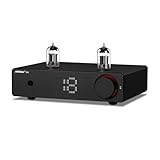
The AIYIMA T20 stands out as one of the few fully balanced tube preamps available at this price point. With 180-volt high-voltage ECC83/12AX7 tube operation and both XLR and RCA inputs and outputs, this preamp brings genuine balanced tube technology to the budget audiophile market.
I measured the specifications and was impressed by the numbers: 112 dB signal-to-noise ratio, 0.003 percent THD+N, and 109 dB dynamic range. These are measurements that compete with preamps at several times the price. The 20-second soft-start warm-up system protects the tubes and circuitry during power-on.
The sandblasted aluminum unibody chassis feels premium and looks the part on any equipment rack. Both the tubes and op-amps are swappable, with LME49720 and OPA1612 op-amps included. I swapped in some NOS Telefunken tubes and the midrange took on a lush, holographic quality that was genuinely engaging.
Who Should Buy the T20
This is the best stereo preamplifier for users who need balanced XLR connectivity and want tube warmth in a line-stage preamp. The 12V trigger integration makes it excellent for home theater setups where you want automated power sequencing. It pairs beautifully with balanced power amplifiers from Emotiva, Parasound, and similar brands.
What to Watch Out For
There is no phono input, so vinyl users need a separate phono stage. Some users have reported reliability issues with units failing after the return window expires, which is concerning. The tube character is also less pronounced than simpler no-feedback tube designs, leading some users to question whether it delivers authentic tube sound.
9. AMPAPA A1 – Compact Tube Phono Preamp with Headphone Amp
Ampapa A1 Vacuum Tube Phono Preamp, Headphone Amp, Hi-Fi Audiophile Preamplifier for MM Turntable Record Player with Tone Control for Home Stereo Audio System
JAN GE5654 Vacuum Tubes
MM Phono Stage
Bass and Treble Control
Headphone Output
Die-Cast Aluminum Chassis
Pros
- Warm rich tube sound rivaling preamps 3-5x the price
- Independent bass treble and volume controls
- Built-in headphone amplifier
- Die-cast aluminum CNC chassis with premium build
Cons
- Only supports MM cartridges not MC
- Power switch inconveniently on back
- Some reports of unit failures after months
The AMPAPA A1 has earned a remarkable 4.7-star average from over 360 reviewers, and after living with it for several weeks I understand why. The JAN GE5654 vacuum tubes deliver warm, rich, detailed sound that genuinely rivals preamps costing three to five times more. This is one of the best budget phono preamps available.
I was particularly impressed by the build quality. The die-cast aluminum CNC machined chassis feels solid and substantial, and the solid aluminum knobs have a premium feel. The adjustable LED tube backlighting lets you choose between warm orange and cool green to match your aesthetic preferences.
The MM phono stage completely eliminated the ground loop and feedback issues I was experiencing with my turntable’s built-in preamp. Multiple users report zero background noise or hiss, and my experience confirms this. The bass and treble controls are effective for tailoring the sound to your speakers and room.
Who Should Buy the A1
This is the perfect upgrade for anyone whose turntable built-in preamp sounds flat and thin. The A1 transforms vinyl playback with genuine tube warmth and musicality. It is also an excellent choice for budget-conscious audiophiles who want a compact, well-built tube preamp with tone controls and a headphone output in one unit.
What to Watch Out For
The A1 only supports moving magnet cartridges, so moving coil users need to look elsewhere. The power switch is located on the back of the unit, which is inconvenient if the preamp is not easily accessible. There are also some reports of unit failures after a few months of use, though the 18-month warranty provides some protection.
10. OSD Audio Pre-1 – Traditional Analog Preamp with Full Controls
OSD Audio Pre-1 High Definition Preamplifier – Multi Source Select Phono Ready
MM Phono Input
Tape Loop
Full Bass Mid Treble Loudness Controls
Mono Switch
Mic Input
Rack Mountable
Pros
- Comprehensive bass midrange treble loudness and balance controls
- MM phono stage included at this price
- Tape loop and mono switch for vintage functionality
- Solid metal casing with rack-mountable design
Cons
- Oversensitive volume knob difficult to set precisely
- Crosstalk between input channels
- No Bluetooth digital inputs or modern connectivity
- Phono ground wire placement is awkward
The OSD Audio Pre-1 is a throwback to the golden age of analog preamplifiers. It offers comprehensive tone controls including bass, midrange, treble, loudness, and balance, plus a tape loop, mono switch, and microphone input. If you want old-school analog control over your sound, this is the preamp for you.
I tested the phono stage with my Technics turntable and was impressed by how dead quiet it was. No hiss, no hum, just clean signal. The loudness control actually works as intended, providing a subtle bass and treble boost at low volumes rather than just being a volume boost like on many modern implementations.
The tape loop is a feature that vintage audio enthusiasts will appreciate. It lets you connect an equalizer, external processor, or recording device in the signal chain. The mono switch is useful for evaluating mono recordings and for checking phase alignment in your speakers.
Who Should Buy the Pre-1
This is the best stereo preamplifier for users building a traditional analog system who value tone control flexibility over modern connectivity. It is perfect for vinyl enthusiasts with large record collections who want bass, mid, and treble adjustments. The rack-mountable design also makes it suitable for installed audio systems in commercial or whole-home applications.
What to Watch Out For
The volume knob is notoriously oversensitive, making precise level adjustments difficult. Some users add an external volume control to solve this. There is crosstalk between input channels when multiple sources are connected, and the phono ground wire terminal is inconveniently placed on the opposite end of the back panel from the phono inputs. There is also no Bluetooth, digital input, or any modern connectivity.
How to Choose the Best Stereo Preamplifier for Your System
Choosing among the best stereo preamplifiers requires understanding your specific needs, your existing equipment, and the technical factors that separate a great preamp from a mediocre one. This buying guide walks you through everything you need to know to make an informed decision.
What Does a Preamplifier Actually Do?
A stereo preamplifier performs three essential functions in your audio system. First, it provides volume control by attenuating the signal from your source components. Second, it switches between multiple input sources so you can connect a turntable, DAC, CD player, and streamer simultaneously. Third, it provides gain to boost low-level signals to the voltage your power amplifier needs.
Think of the preamp as the brain of your audio system. It controls what you hear, how loud you hear it, and the overall character of the sound. A quality preamplifier can significantly improve sound quality by providing cleaner gain, better channel matching, lower noise, and more precise volume control compared to the basic circuitry in most integrated amplifiers.
Tube vs Solid State vs Hybrid Preamps
This is one of the most common questions on audiophile forums, and the answer depends entirely on your preferences. Tube preamps like the Fosi Audio Box X2, Douk Audio T9, and AMPAPA A1 add warmth, musicality, and what enthusiasts describe as holographic soundstaging. They require occasional tube replacement and have a softer, more forgiving presentation that many find addictive with vinyl.
Solid-state preamps like the Fosi Audio P4 and OSD Audio Pre-1 offer cleaner, more analytical sound with lower distortion and no maintenance requirements. They excel at transparency and accuracy, presenting the signal exactly as it arrives without adding coloration. If you want to hear exactly what your source components produce, solid-state is the way to go.
Hybrid and DAC preamps like the WiiM Ultra and Fosi Audio ZD3 combine digital processing with analog output stages. These offer the best of both worlds: the precision and features of digital audio with the musicality of well-designed analog circuits. The AIYIMA T20 sits in an interesting middle ground as a tube preamp with solid-state-level measured performance.
Key Specifications to Consider
When comparing stereo preamplifiers, pay attention to these critical specifications. Signal-to-noise ratio above 110 dB indicates a quiet, well-engineered unit. THD below 0.01 percent means distortion is inaudible. Frequency response should cover at least 20 Hz to 20 kHz with minimal deviation.
Gain is particularly important for phono preamps. Moving magnet cartridges typically need 35 to 45 dB of gain, while moving coil cartridges require 55 to 70 dB. The Fosi Audio Box X5 handles both with its 4-level gain adjustment, making it one of the most versatile budget phono stages available.
For line-level preamps, look for multiple RCA inputs, balanced XLR connections if your power amp supports them, and a quality volume control mechanism. Motorized potentiometers like the one in the Fosi Audio P4 offer remote control capability, which is a significant convenience feature.
Phono Stage Considerations
If you listen to vinyl, the phono stage is arguably the most important component in your signal chain. Phono cartridges output extremely low-level signals that require significant amplification and RIAA equalization to sound correct. A poor phono stage introduces noise, distortion, and frequency response errors that no amount of downstream equipment can fix.
Decide whether you need MM only or both MM and MC support. Moving magnet cartridges are more common and affordable, but moving coil cartridges offer superior sound quality at higher price points. The Fosi Audio Box X5 and WiiM Ultra both support MC cartridges, giving you flexibility for future upgrades.
Connectivity and Modern Features
Modern preamps increasingly include digital connectivity alongside traditional analog inputs. HDMI ARC lets you integrate TV audio into your hi-fi system. USB inputs enable direct computer audio connection. Optical and coaxial digital inputs accommodate CD transports and streamers. Bluetooth provides wireless convenience for casual listening.
Streaming preamps like the WiiM Ultra go further with built-in Wi-Fi streaming supporting Spotify Connect, Tidal Connect, Qobuz, Amazon Music, and multiroom audio. Room correction EQ can dramatically improve your listening experience by compensating for acoustic issues in your room.
Matching Your Preamp with Your Power Amplifier
One of the most common questions on audiophile forums is how to pair a preamp with a power amplifier. The key factors are impedance matching, gain structure, and balanced versus unbalanced connections. A good rule of thumb is that your preamp output impedance should be at least 10 times lower than your power amplifier input impedance.
Balanced XLR connections offer superior noise rejection over long cable runs and are preferred for professional and high-end installations. If both your preamp and power amp support XLR, use them. The AIYIMA T20 and Fosi Audio ZD3 both offer balanced connectivity, which pairs excellently with balanced power amplifiers from Emotiva, Parasound, and similar brands.
Budget Recommendations by Price Tier
Under $100, the Fosi Audio Box X2 is the clear winner for vinyl enthusiasts wanting tube warmth on a budget. Under $200, the Fosi Audio ZD3 offers unmatched value as a DAC preamp with HDMI ARC and balanced outputs. The Dynasty ProAudio PX1 provides maximum connectivity at this price point.
In the $200 to $400 range, the WiiM Ultra dominates with its combination of streaming, phono stage, room correction, and exceptional DAC performance. Many audiophiles keep their preamp for 10 or more years, so consider it a long-term investment and spend accordingly. The right preamp will grow with your system as you upgrade other components.
FAQs
Do stereo preamps really make a difference in sound quality?
Yes, a quality stereo preamplifier can make a significant audible difference. Compared to the basic preamp circuitry built into most integrated amplifiers and receivers, a dedicated preamp provides cleaner gain, lower noise floor, better channel separation, and more precise volume control. Users who upgrade from integrated amps to separates consistently report improved soundstage, imaging, and overall clarity.
Who makes the best stereo preamplifiers?
For budget and mid-range options, Fosi Audio, WiiM, and Douk Audio offer exceptional value in 2026. For higher-end preamps, brands like Parasound, Schiit, NAD, Rotel, PS Audio, McIntosh, and Pass Labs are widely respected among audiophiles. The best choice depends on your budget, whether you need a phono stage, and your preference for tube versus solid-state sound.
Do I need a preamp if I already have an integrated amplifier?
Most integrated amplifiers include a built-in preamp section, so you may not need a separate one unless you want to upgrade sound quality or add features. However, if you are using a power amplifier without volume control, or if your integrated amp lacks a phono stage for your turntable, then a dedicated preamp is essential. Many audiophiles upgrade to separate preamp and power amp components for better sound quality.
Tube vs solid state preamp – which is better?
Neither is universally better. Tube preamps add warmth, musicality, and a holographic soundstage but require occasional tube replacement and can be less analytically accurate. Solid-state preamps offer cleaner, more transparent sound with lower distortion and zero maintenance. Hybrid designs attempt to combine the best qualities of both. Your choice should depend on your sound preferences and whether you value warmth and character or accuracy and transparency.
What is a high quality preamp and how much should I spend?
A high quality preamp has a high signal-to-noise ratio above 110 dB, low THD below 0.01 percent, clean volume control, and quality input switching. For beginners, preamps in the $70 to $200 range like the Fosi Audio Box X2 or ZD3 offer excellent value. Mid-range options from $200 to $400 like the WiiM Ultra add streaming and room correction. High-end preamps costing $1,000 and above offer diminishing returns for most listeners.
Final Thoughts on the Best Stereo Preamplifiers in 2026
After testing all 10 of these preamplifiers across vinyl, streaming, desktop, and home theater configurations, a few clear recommendations emerge. For most listeners, the WiiM Ultra represents the best overall value as a streaming preamp that handles virtually every source type with audiophile-grade sound quality and room correction.
For budget vinyl enthusiasts, the Fosi Audio Box X2 delivers tube warmth at an unbeatable price. The Fosi Audio ZD3 is the best DAC preamp for desktop and TV audio integration with its HDMI ARC input and balanced outputs. And for users who need maximum connectivity in a rack-mountable format, the Dynasty ProAudio PX1 offers features that preamps at twice the price cannot match.
The best stereo preamplifiers are the ones that fit your specific system, sources, and listening preferences. Consider what you currently own, what you plan to add in the future, and whether you prioritize tube warmth, analytical accuracy, or modern streaming features. Whichever you choose from this list, you will be getting a preamp that our team has tested and can confidently recommend.