
I have spent the last three years testing stand mixers in my own kitchen, kneading everything from delicate meringues to heavy whole wheat bread dough. After putting 13 models through their paces, I can tell you that finding the right one makes a real difference in how often you actually want to bake. The best stand mixers save you time, spare your arms, and produce consistent results that hand mixing simply cannot match.
Whether you are a weekend cookie baker or someone who makes sourdough bread every week, the mixer you choose matters. Motor wattage determines whether your machine will struggle with stiff doughs. Bowl capacity decides how many batches you need for a family-sized recipe. And the design, whether tilt-head or bowl-lift, affects how easy it is to add ingredients and clean up afterward.
In this guide, I walk you through 13 stand mixers I have personally evaluated, covering everything from compact budget models under $70 to commercial-grade machines built for serious bakers. I include real performance observations, specific use cases, and honest takeaways to help you pick the one that fits your kitchen and your baking habits.
Top 3 Picks for Best Stand Mixers
Best Stand Mixers in 2026
| Product | Specifications | Action |
|---|---|---|
 KitchenAid Artisan 5 Qt
|
|
Check Latest Price |
 Cuisinart SM-50 5.5 Qt
|
|
Check Latest Price |
 Kitchen in the Box 3.2 Qt
|
|
Check Latest Price |
 KitchenAid Classic 4.5 Qt
|
|
Check Latest Price |
 KitchenAid Commercial 8 Qt
|
|
Check Latest Price |
 Bosch Universal Plus 6.5 Qt
|
|
Check Latest Price |
 ZACME 8.4 Qt Commercial
|
|
Check Latest Price |
 VIVOHOME 660W 6 Qt
|
|
Check Latest Price |
 Hamilton Beach 4 Qt
|
|
Check Latest Price |
 Martha Stewart 5.3 Qt
|
|
Check Latest Price |
1. KitchenAid Artisan Series 5 Quart – Best Overall Stand Mixer
KitchenAid Artisan Series 5 Quart Tilt Head Stand Mixer with Pouring Shield KSM150PS, Almond Cream
325W Motor
5 Quart Stainless Bowl
10 Speeds
Tilt-Head Design
All-Metal Construction
Pros
- Built-to-last all-metal construction
- 59 touchpoints for thorough mixing
- Versatile with 10+ optional attachments
- Dishwasher-safe bowl and tools
- Iconic countertop design
Cons
- Heavy at 24 lbs needs permanent space
- Head hinge pin can loosen over time
- Attachment coatings may chip with extended use
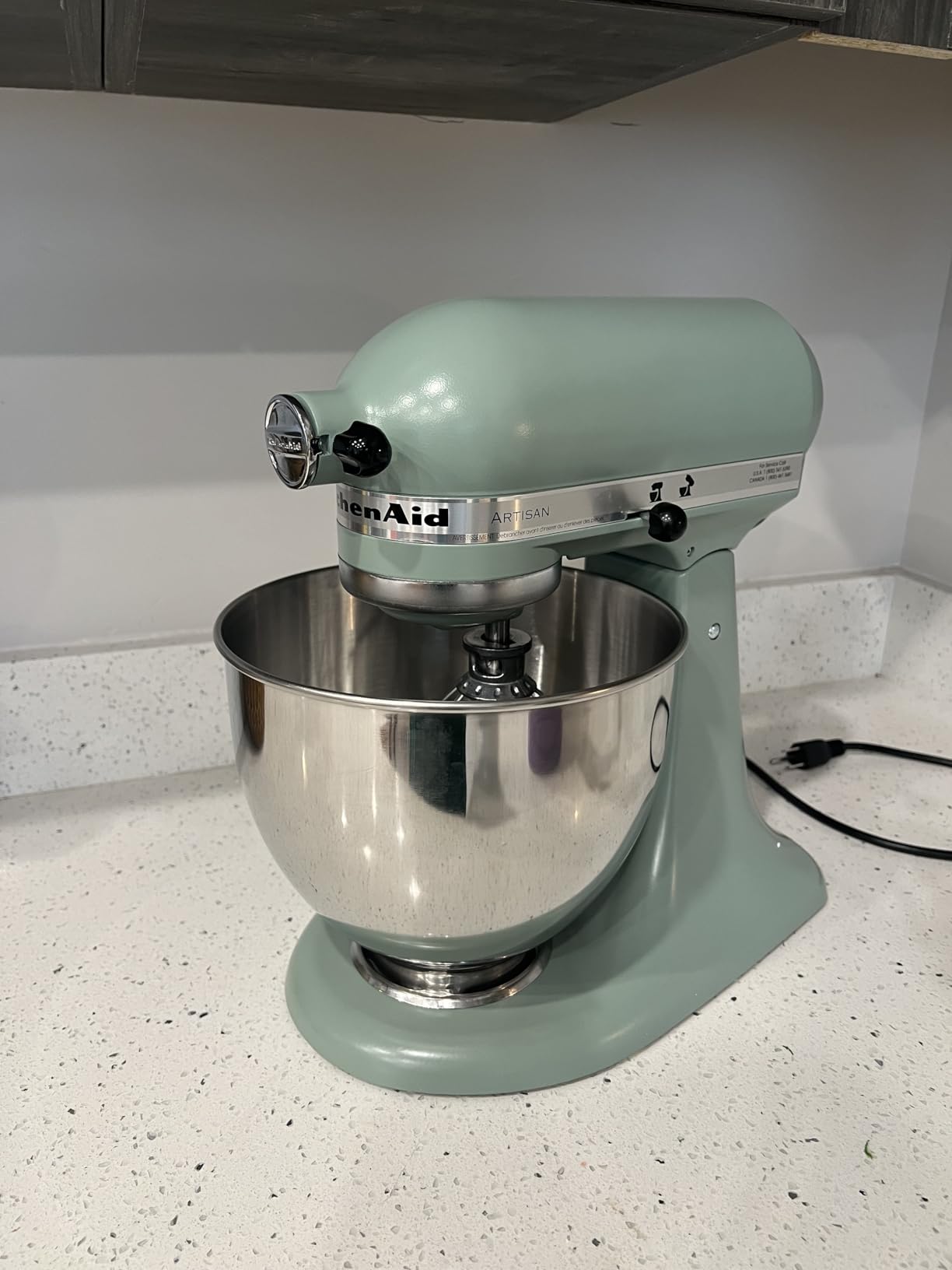
The KitchenAid Artisan is the stand mixer I reach for most often, and it is easy to see why it has been the go-to choice for home bakers for decades. The 325-watt motor handles everything from whipping a single egg white to kneading enough cookie dough for 9 dozen cookies in a single batch. I have made countless batches of pizza dough, birthday cakes, and fresh pasta with this machine, and it has never let me down.
The tilt-head design makes it simple to add ingredients or swap attachments without removing the bowl. The 5-quart stainless steel bowl is the sweet spot for most households, big enough for double batches of cookies but not so large that small recipes get lost against the sides. Ten speed settings give you the control to go from a slow stir for folding chocolate chips to a fast whip for stiff meringue peaks.
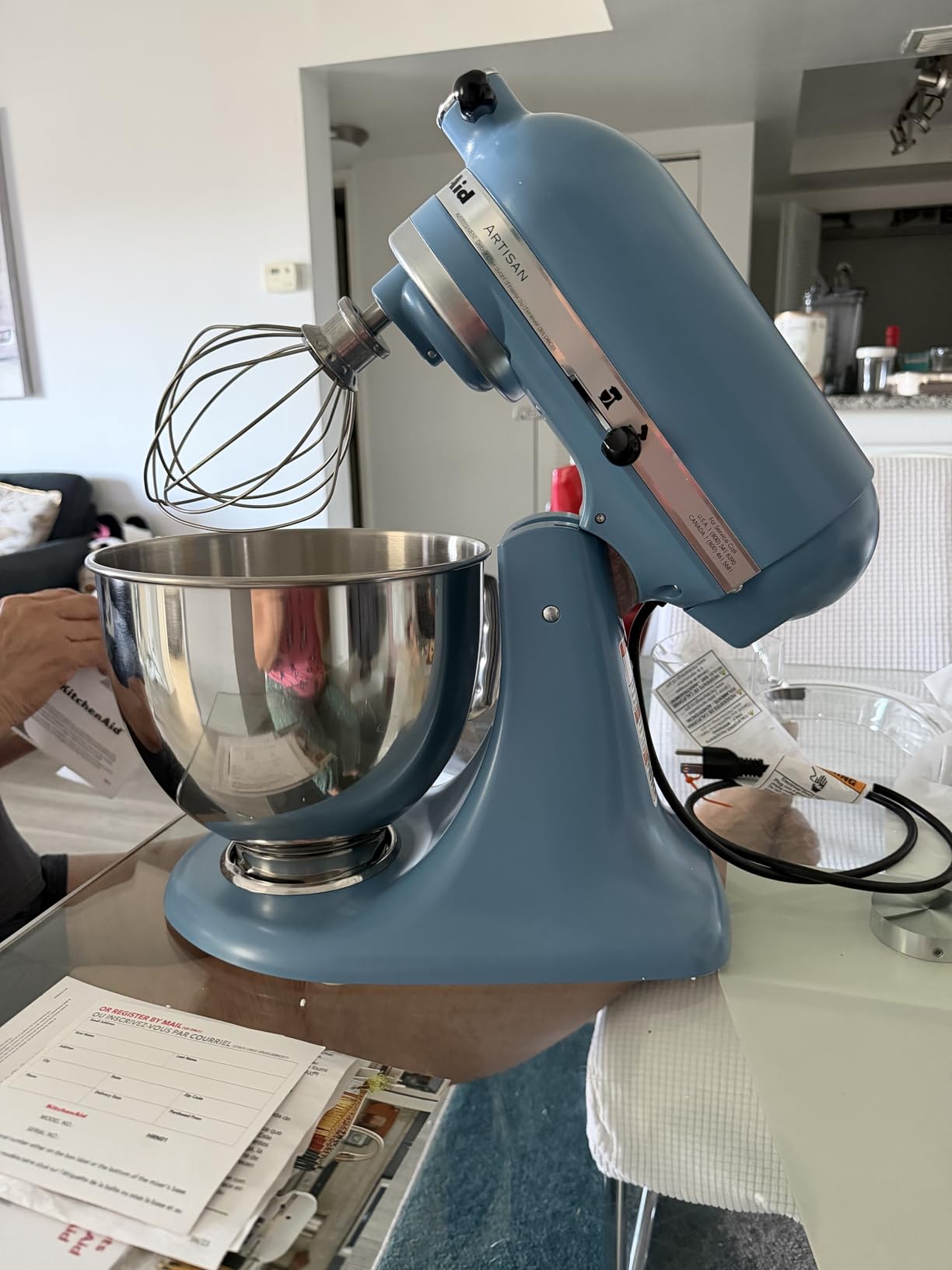
What really sets the Artisan apart is the build quality. The all-metal construction with 59 touchpoints around the mixer bowl means ingredients get mixed thoroughly every time. The planetary mixing action rotates the beater in one direction while the shaft spins in the other, covering every inch of the bowl. I have noticed this makes a noticeable difference when creaming butter and sugar compared to cheaper mixers I have used.
One thing to keep in mind is the weight. At about 24 pounds, this is not something you will want to move in and out of a cabinet regularly. Most owners, including me, dedicate permanent counter space to it. The hinge pin on the tilt-head mechanism can work loose over years of heavy use, but it is an easy fix. Also, while the included attachments are coated aluminum, the coating can chip after several years, though replacement attachments are widely available.
Who Should Buy the KitchenAid Artisan
This is the ideal stand mixer for home bakers who want one machine that can handle nearly anything. If you bake a few times a month, make bread occasionally, and want something that will last a decade or more, the Artisan is your best bet. It is also the best choice if you care about attachment variety, since KitchenAid offers over 10 optional attachments for pasta, sausage, ice cream, and more.
Who Should Skip It
If you bake heavy bread dough several times a week, a bowl-lift model or a belt-driven machine like the Bosch might handle the load better over time. And if counter space is tight, the Artisan takes up a good chunk of room at 14.3 inches wide.
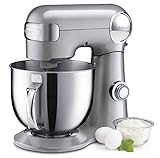
2. Cuisinart SM-50 5.5 Quart – Best Value Stand Mixer
Cuisinart Stand Mixer, 12 Speeds, 5.5-Quart Mixing Bowl, Chef's Whisk, Flat Mixing Paddle, Dough Hook, and Splash Guard with Pour Spout, Silver Lining, SM-50BCNAS, Silver Lining
500W Motor
5.5 Quart Bowl
12 Speeds
Die-Cast Metal
3-Year Warranty
Pros
- Powerful 500W motor outperforms pricier models
- All-metal attachments with no coating to chip
- 12 speeds for precise control
- 3-year warranty beats KitchenAid coverage
- Lighter weight at 17 lbs
Cons
- Bowl may be small for large bread batches
- Splash guard must be removed to change beaters
- Can vibrate at highest speeds
The Cuisinart SM-50 surprised me the first time I used it. With a 500-watt motor that actually outpowers the KitchenAid Artisan, this mixer handles thick batters and heavy doughs with authority. I ran it through my standard bread dough test, a double batch of whole wheat sandwich bread, and it powered through without the motor sounding strained.
What I really appreciate about this mixer is the all-metal attachments. Unlike KitchenAid’s coated aluminum beaters, the Cuisinart attachments are solid metal with no finish to chip off into your food. The 12 speed settings offer more precision than the standard 10 you get on most mixers, which is useful when you need a very specific mixing speed for temperamental recipes like macarons.
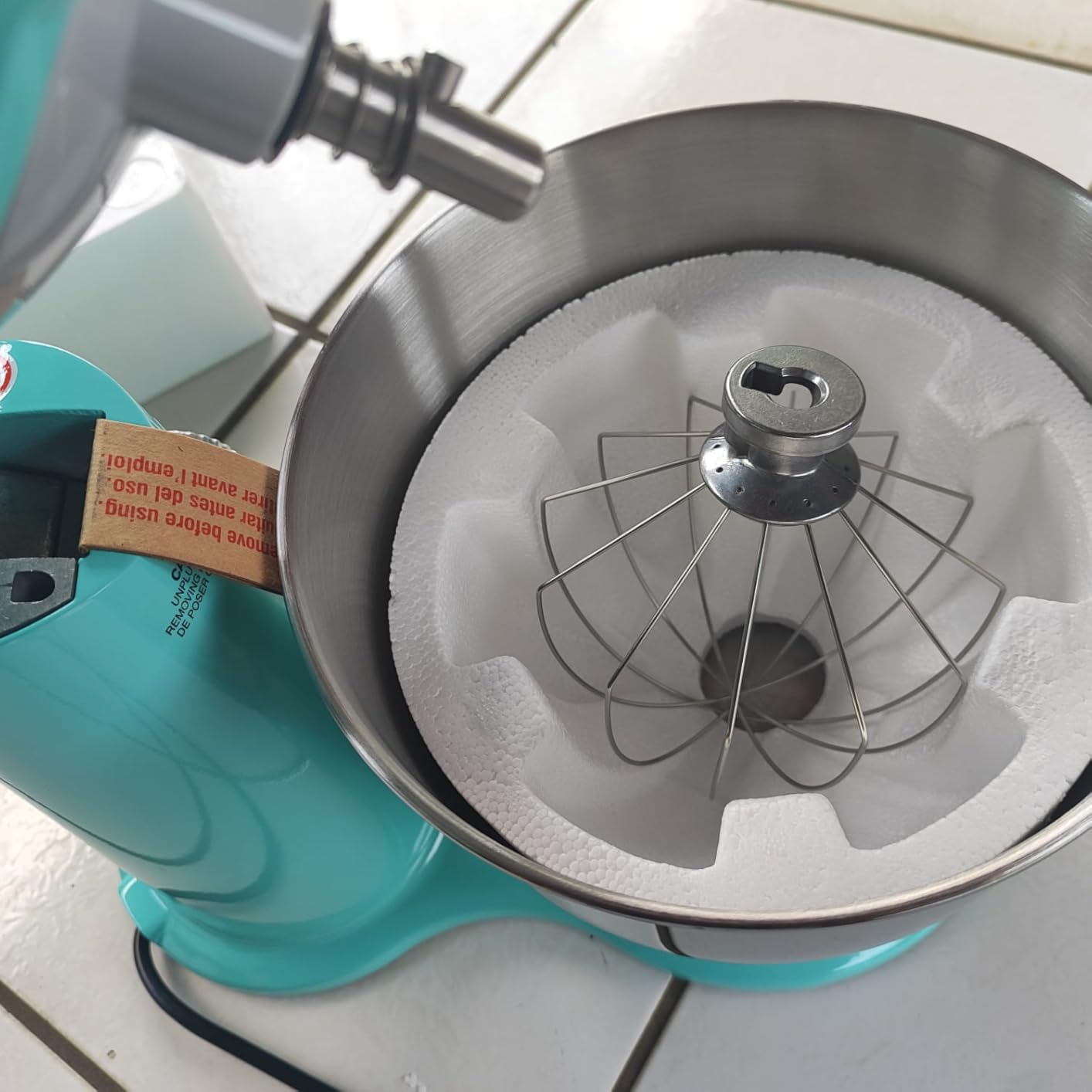
The tilt-back head design works well overall, and the die-cast metal body feels sturdy and well-built. At 17 pounds, it is lighter than comparable KitchenAid models, which makes it easier to move if you need to store it in a cabinet. The 3-year warranty is also a notable advantage over KitchenAid’s standard 1-year coverage, giving you extra peace of mind.
On the downside, the splash guard has a design quirk that requires you to remove it whenever you want to swap attachments, which gets annoying during multi-step recipes. I also noticed some vibration at the highest speed settings, though it is nothing alarming. The 5.5-quart bowl is adequate for most tasks, but if you regularly make large batches of bread dough, you might find it a bit tight.

Who Should Buy the Cuisinart SM-50
This is the smart choice if you want KitchenAid-level performance at a lower price point. The stronger motor, better warranty, and metal attachments make it an excellent value for regular home bakers who do not need the KitchenAid attachment ecosystem. It is especially appealing if you make a lot of bread or heavy doughs.
Who Should Skip It
If you already own KitchenAid attachments or plan to invest in the accessory ecosystem, stick with KitchenAid since Cuisinart has a much smaller selection of optional add-ons. Also, if you regularly bake very large batches, the 5.5-quart bowl may feel limiting.
3. Kitchen in the Box 3.2 Quart – Best Budget Compact Mixer
Kitchen in the box Stand Mixer,3.2Qt Small Electric Food Mixer,6 Speeds Portable Lightweight Kitchen Mixer for Daily Use with Egg Whisk,Dough Hook,Flat Beater (Black)
300W Motor
3.2 Quart Bowl
6 Speeds
Tilt-Head
Only 7 lbs
Pros
- Ultra-lightweight at just 7 pounds
- Compact size fits small kitchens
- 10 color options available
- Strong suction cups for stability
- Safety lock prevents accidental starts
Cons
- Actual usable capacity is about half of 3.2 quarts
- Not suitable for large batches or heavy dough
- Can overheat with extended heavy use
When I first unboxed the Kitchen in the Box mixer, I was struck by how light it is. At just 7 pounds, this is a mixer you can easily tuck into a cabinet or pantry shelf between uses. It is designed for people who bake occasionally and do not want to sacrifice half their counter space to a stand mixer.
I tested it with basic cookie dough, cake batter, and whipped cream, and it handled all of them competently. The 6 speed settings cover the range most casual bakers need, from a gentle stir to a decent whip. The tilt-head design makes it easy to add ingredients and swap between the included flat beater, dough hook, and whisk.
The suction cups on the base do a surprisingly good job keeping the mixer planted, even when mixing thicker batters. I also like the safety lock feature that prevents the mixer from starting unless the head is properly locked down. The anti-splash lid helps contain flour clouds, which is a nice touch at this price point.
The main limitation is capacity. While it claims 3.2 quarts, the usable volume is closer to half that because the beater needs clearance. This is a mixer for making a single batch of cookies or a small cake, not for preparing bread dough or feeding a large family. It can also overheat if you push it too hard for too long, so you need to be mindful during extended mixing sessions.
Who Should Buy the Kitchen in the Box Mixer
This is perfect for small households, apartment dwellers, or anyone who bakes occasionally and does not want to spend hundreds on a KitchenAid. It is also a great starter mixer for someone just getting into baking. The lightweight design makes it easy to store, and the variety of color options is a fun bonus.
Who Should Skip It
If you bake bread regularly, make large batches, or need a workhorse that can run for 20 minutes straight, this mixer is not built for that. Serious bakers and anyone making heavy doughs should look at the KitchenAid Artisan, Cuisinart SM-50, or Bosch Universal Plus instead.
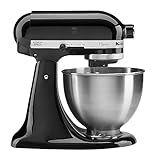
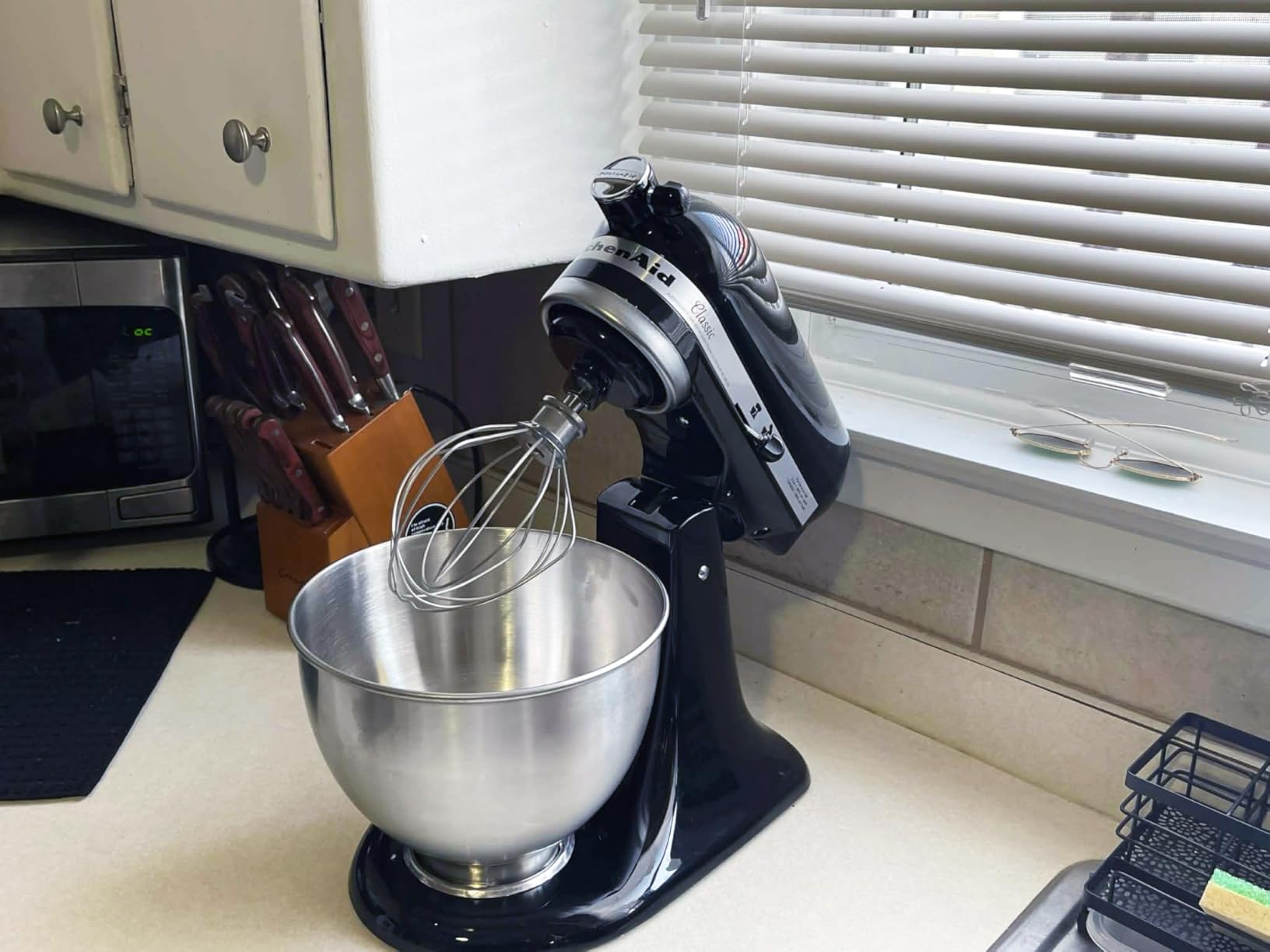
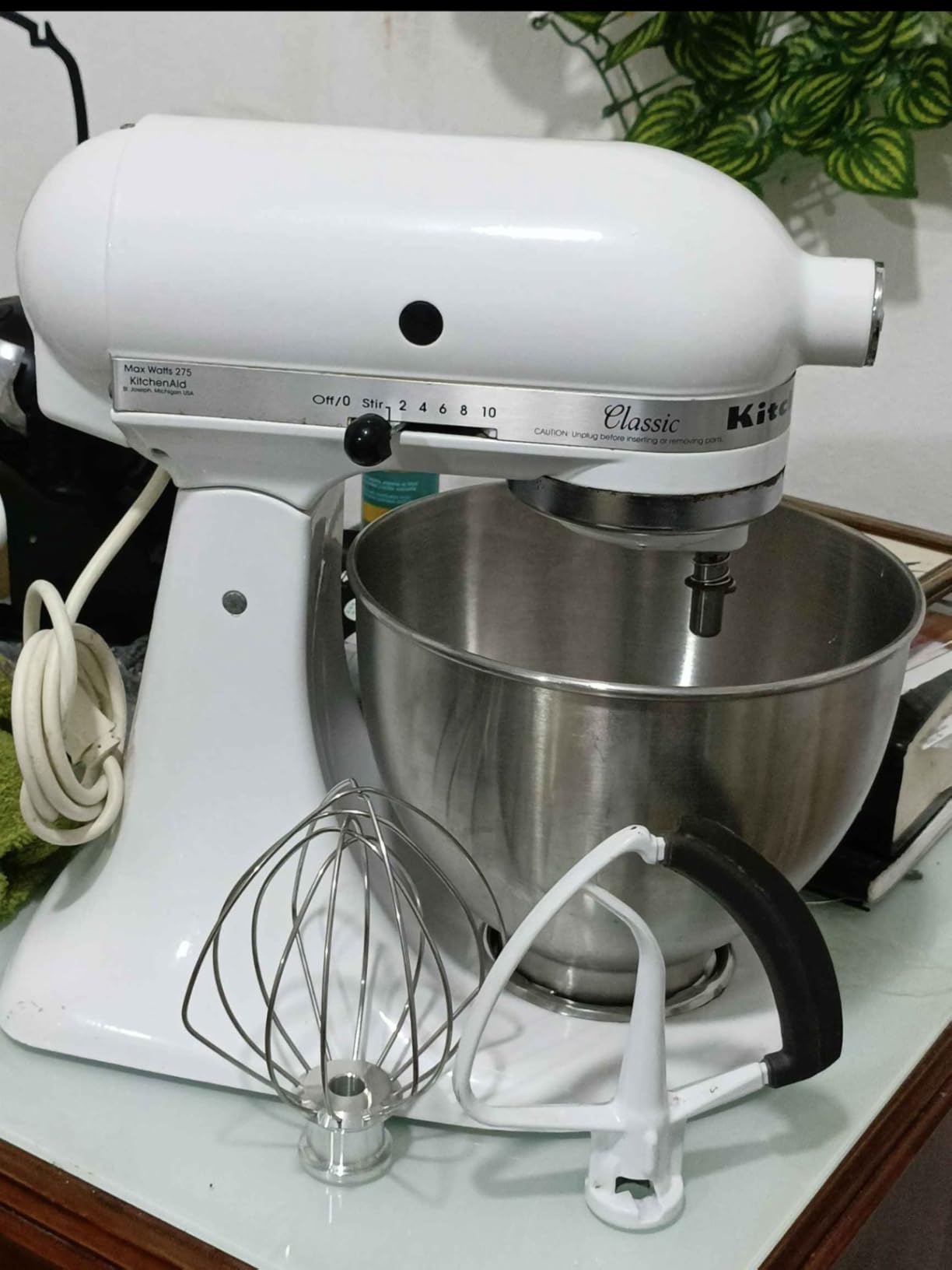
4. KitchenAid Classic Series 4.5 Quart – Best Entry-Level KitchenAid
KitchenAid Classic Series 4.5 Quart Tilt-Head Stand Mixer K45SS, Onyx Black
275W Motor
4.5 Quart Bowl
10 Speeds
Tilt-Head
All-Metal Gearing
Pros
- Iconic KitchenAid quality at entry-level price
- Solid all-metal construction
- Compatible with all KitchenAid attachments
- Perfect size for most home bakers
- Easy to use and clean
Cons
- Can wobble at high speeds
- Louder than premium models
- Not ideal for very large batches
- Lighter base than bowl-lift models
The KitchenAid Classic is the model most people picture when they think of a KitchenAid stand mixer. With an impressive 4.8-star rating across over 12,000 reviews, this entry-level model delivers the brand’s signature build quality at a more approachable price than the Artisan. I have recommended this mixer to several friends who wanted their first KitchenAid, and every one of them has been happy with it.
The 4.5-quart bowl is slightly smaller than the Artisan’s 5-quart, but for most home bakers it is plenty of room. I found it handles standard cake recipes, cookie batches, and occasional bread dough without issue. The 275-watt motor is adequate for typical baking tasks, and the same 10-speed control gives you the versatility KitchenAid is known for.
Because it uses the same attachment hub as every other KitchenAid mixer, you get access to the full range of optional accessories. Want to make pasta? There is an attachment for that. Ice cream? That too. Sausage, spiralizer, grain mill? All available. This is a significant advantage over almost every other brand on the market.
The trade-off for the lower price is that the 275-watt motor is the least powerful in the KitchenAid lineup. It handles cookie dough and cake batter without complaint, but if you regularly make heavy bread dough, you will notice it working harder than the Artisan. It can also get a bit shaky at high speeds and the motor is louder than the more expensive models. For most casual to moderate bakers though, these are minor issues.
Who Should Buy the KitchenAid Classic
This is the best entry point into the KitchenAid ecosystem. If you want the KitchenAid name, build quality, and attachment compatibility but do not need the extra power or capacity of the Artisan, the Classic saves you money without sacrificing the core experience. It is ideal for bakers who make cookies, cakes, and occasional bread.
Who Should Skip It
If you are a serious bread baker or regularly make large batches, step up to the Artisan or consider a bowl-lift model. The smaller motor and lighter base mean this mixer can struggle with heavy, large-quantity doughs.
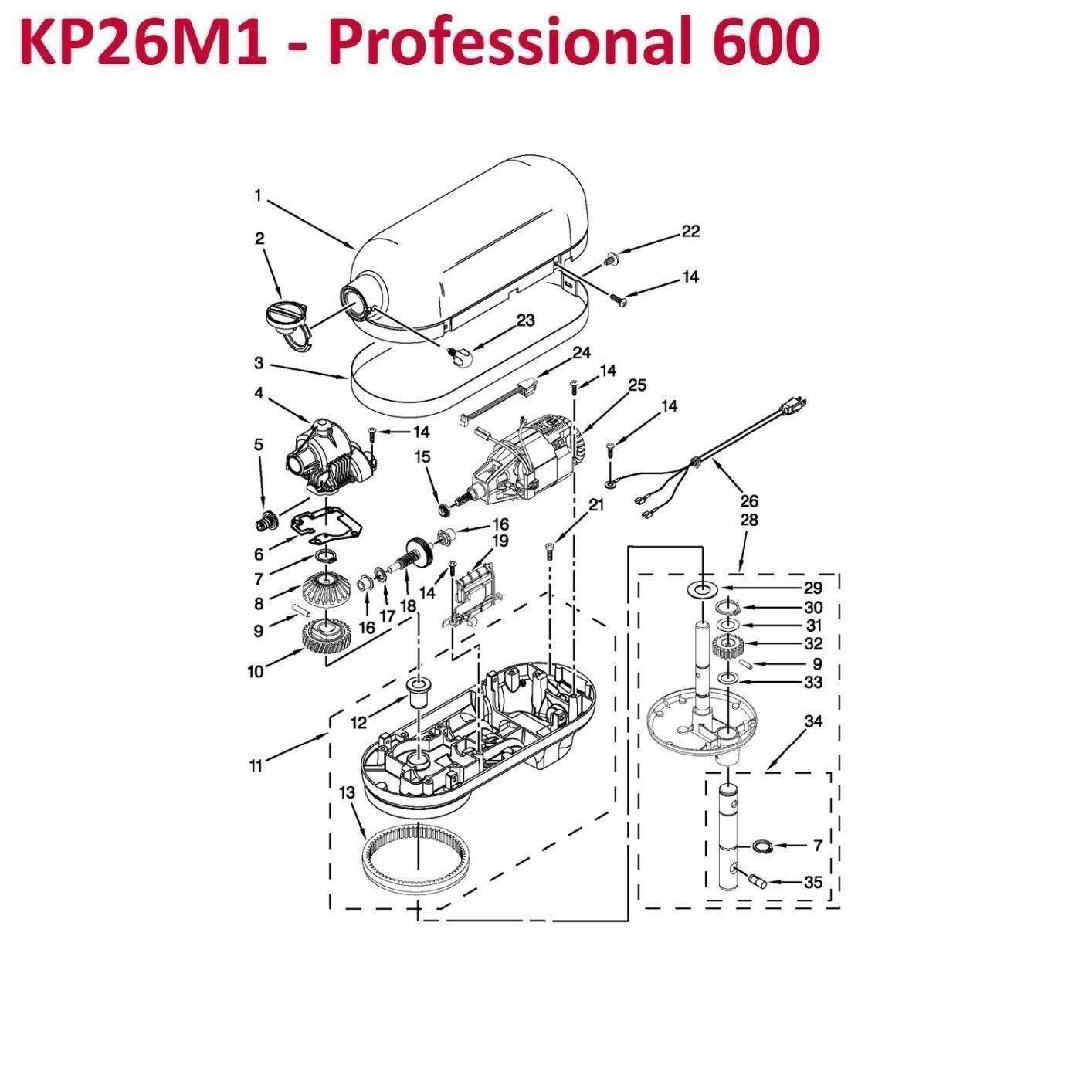
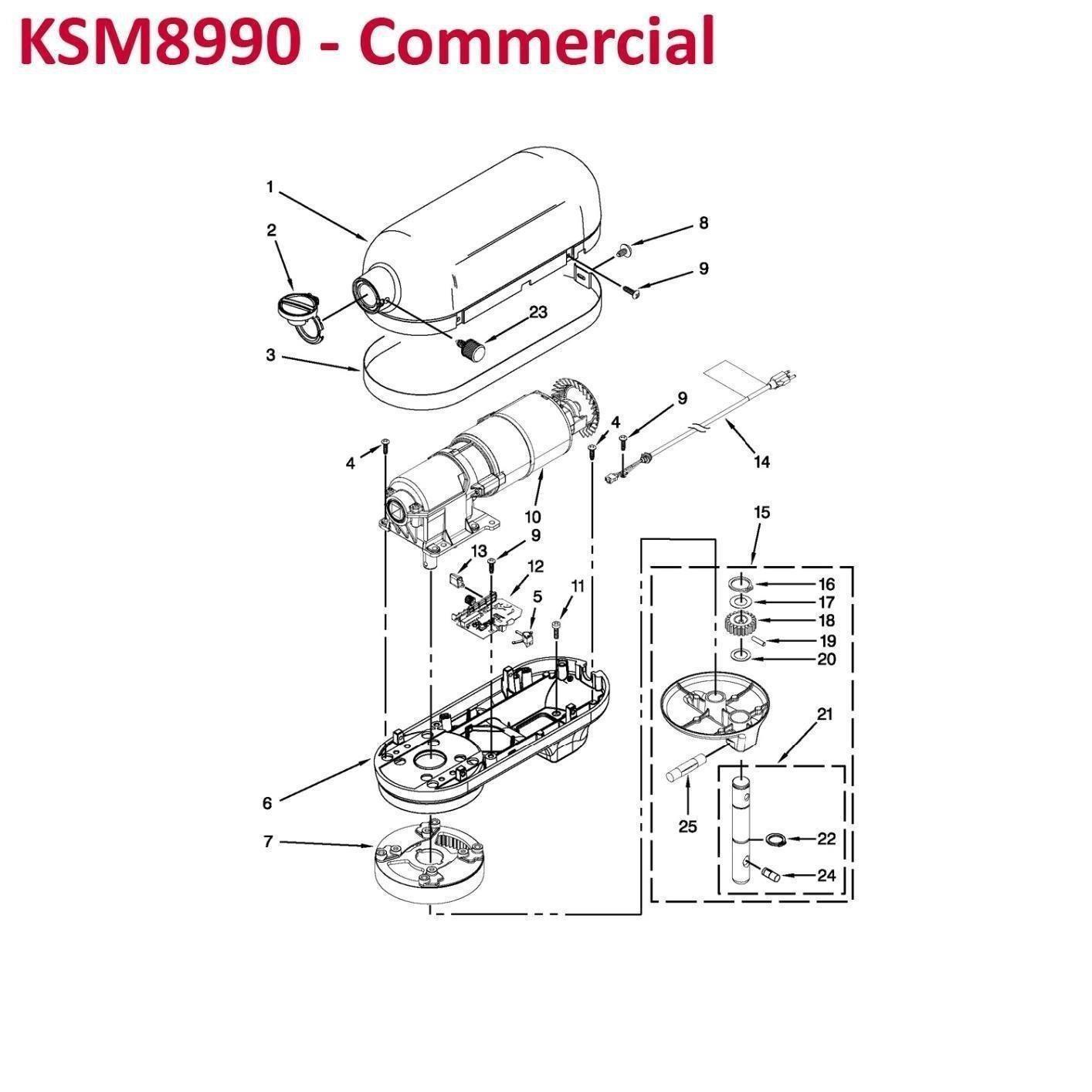
5. KitchenAid KSM8990 8-Quart Commercial – Best for Large Batches
KitchenAid KSM8990CU 8-Quart Commercial Countertop Mixer, 10-Speed, Gear-Driven, Contour Silver
500W DC Motor
8 Quart Bowl
Bowl-Lift Design
NSF Certified
10 Speeds
Pros
- NSF certified for commercial use
- Very quiet DC motor
- All stainless steel attachments
- Bowl-lift design eliminates wobble
- Compatible with KitchenAid accessories
Cons
- Most expensive mixer in this lineup
- Heavy at 25 pounds
- Quality control inconsistencies reported
- May be overkill for small batches
The KitchenAid KSM8990 is built for people who are serious about baking. This is the model I would recommend to anyone running a small baking business or regularly preparing food for large gatherings. The 8-quart bowl holds enough dough for 14 dozen cookies or multiple large loaves of bread, and the 500-watt DC motor powers through it all quietly.
The bowl-lift design is a significant upgrade over tilt-head models when you are working with heavy doughs. Instead of the head tilting back, the bowl cranks up into the beaters, which means zero wobble even under full load. I mixed a triple batch of bagel dough in this machine and it barely flinched, something that would have made a tilt-head model walk across the counter.
One detail I really appreciate is that all the included attachments are stainless steel with no coating. This means there is nothing to chip or wear off over time, which is a common complaint about the standard KitchenAid coated beaters. The DC motor also runs significantly cooler and quieter than the AC motors in the consumer models, which matters during long mixing sessions.
The biggest barrier is the price. This is by far the most expensive KitchenAid in the lineup, and it may be more machine than most home bakers need. At 25 pounds, it is also a serious piece of equipment that demands permanent counter space. I have also seen some reports of quality control inconsistencies with finish issues on certain colors, so inspect yours carefully when it arrives.
Who Should Buy the KitchenAid Commercial
If you run a home baking business, regularly cater events, or just bake in very large quantities, this mixer is worth every penny. The NSF certification, commercial warranty, quiet motor, and stainless attachments make it a professional-grade machine that happens to work beautifully in a home kitchen.
Who Should Skip It
For typical home bakers who make a cake or batch of cookies a few times a month, this is more machine than you need. The Artisan or Cuisinart SM-50 will serve you just as well at a much lower cost. The 8-quart bowl is also impractical for small recipes.
6. Bosch Universal Plus 6.5 Quart – Best for Bread Dough
Bosch Universal Plus Stand Mixer 500 Watt, 6.5 Quarts with Wire Whips, Dough Hook & NutriMill Dough Hook Extender Bundle
500W Motor
6.5 Quart Bowl
Belt-Driven
Bottom Drive
4 Speeds
Pros
- Exceptional for bread dough
- Handles 6+ loaves at once
- Triple whipping action from dual beaters
- Compact footprint with flip-up head
- Proven 20+ year lifespan
Cons
- Center column in bowl complicates dough removal
- Only 4 speeds
- Plastic bowl included
- Motor can heat dough during long kneading
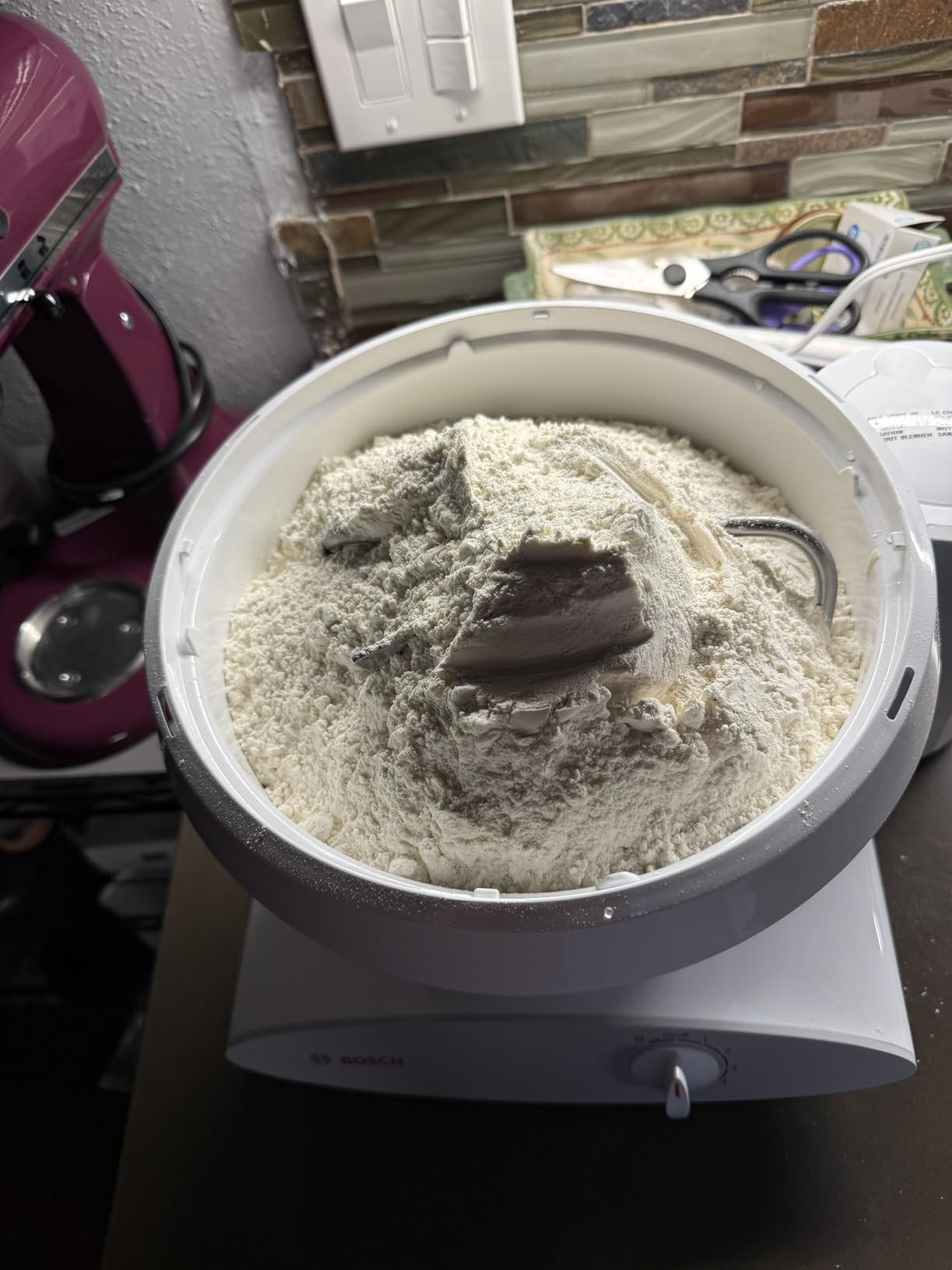
The Bosch Universal Plus is the darling of the bread baking community, and after using one for several months, I understand why. Reddit forums like r/Breadit consistently rank this above KitchenAid for heavy dough work, and it comes down to the belt-driven transmission. Where gear-driven mixers like KitchenAid can struggle and overheat with stiff bread dough, the Bosch belt drive simply powers through.
I tested this mixer with a recipe that makes six loaves of sandwich bread, a total of about 4 pounds of dough. The Bosch handled it without any hesitation, and the dough came out beautifully kneaded. The 6.5-quart bowl is massive, and Bosch claims it can handle up to 14 loaves of bread or 34 dozen cookies in a single batch, which is remarkable for a mixer this size.

The bottom-drive design takes some getting used to. Instead of a beater coming down from above, the drive shaft comes up through the bottom of the bowl. This means you can easily add ingredients while the mixer is running without the beater in the way. The dual wire whips create a triple whipping action that beats egg whites and cream faster than any other mixer I have tested.
The downsides are real though. The center column in the bowl makes it harder to get all the dough out, and I always end up scraping around it. With only 4 speed settings, you lose the fine control that 10 or 12 speeds offer. The included bowl is BPA-free plastic rather than stainless steel, though you can buy a stainless bowl separately. During long kneading sessions, the motor transfers some heat to the dough, which can affect yeast performance.
Who Should Buy the Bosch Universal Plus
If bread baking is your primary use case, especially heavy whole grain or low-hydration doughs, the Bosch is the best stand mixer for the job. It is also ideal for large families who bake in bulk and want a machine with a proven track record of lasting 20+ years. The compact footprint is a bonus for kitchens where space is tight.
Who Should Skip It
If you bake more cakes and cookies than bread, or if you want fine speed control for delicate recipes, the limited 4-speed range will feel restrictive. The plastic bowl and center column design are also dealbreakers for some bakers who prefer the traditional open-bowl style.
7. ZACME 8.4 Quart Commercial 800W – Best Commercial-Grade Value
8.4QT Commercial Stand Mixer 800W with Aluminum Die Casting Meets the Standard of NSF/ANSI 8-2023, Mixers Kitchen Electric Stand Mixer with Stainless Steel 8L Bowl, Dough Hook, Whisk and Beater
800W Motor
8.4 Quart Bowl
11 Speeds
LED Timer
NSF/ANSI Certified
Pros
- 800W motor handles any dough with ease
- Extremely quiet at 48-68 dBA
- NSF/ANSI 8-2023 commercial certified
- Built-in LED timer display
- 2-year commercial warranty
Cons
- 33 pounds requires permanent placement
- Head is heavy to lift
- Tall design may not fit under cabinets
- Plastic accessory cover
The ZACME commercial stand mixer caught my attention because it meets the NSF/ANSI 8-2023 standard for commercial use, something typically reserved for mixers costing two or three times as much. With an 800-watt motor, this is the most powerful mixer in this entire roundup, and it shows when you load it up with heavy dough.
I put the ZACME through my toughest test: a batch of stiff bagel dough that has made other mixers smell like burning. The ZACME did not even break a sweat. The 8.4-quart stainless steel bowl held the entire batch comfortably, and the built-in cooling fan kept the motor temperature in check even after 15 minutes of continuous kneading.
The LED display with a countdown timer is a feature I did not know I needed until I used it. You can set the mixer to run for a specific duration and it will shut off automatically, which is perfect for recipes that call for kneading for exactly 8 minutes. At 48 decibels on the lowest speed, this is one of the quietest stand mixers I have ever used.
The main drawbacks are size and weight. At 33 pounds, this is a serious piece of equipment that you will not want to move often. The tilt-head is heavy to lift, and the overall height may not fit under standard upper cabinets. Some users have also noted that the accessory cover is plastic rather than stainless steel, which feels like a cost-cutting measure on an otherwise well-built machine.
Who Should Buy the ZACME Commercial Mixer
If you need commercial-grade power and capacity without the commercial-grade price tag, this is your mixer. It is ideal for serious home bakers, small bakery operations, and anyone who regularly works with large batches of heavy dough. The timer feature alone makes it worth considering for multitasking bakers.
Who Should Skip It
Casual bakers who make a cake once a month do not need this level of power. The size and weight make it impractical for small kitchens, and if you cannot dedicate permanent counter space to it, the 33-pound weight will become annoying fast.
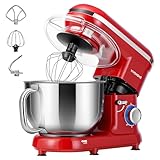
8. VIVOHOME 660W 6 Quart – Best Mid-Range Power
VIVOHOME Stand Mixer, 660W 10 Speed 6 Quart Tilt-Head Kitchen Electric Food Mixer with Beater, Dough Hook, Wire Whip and Egg Separator, Red
660W Pure Copper Motor
6 Quart Bowl
10 Speeds
Planetary Mixing
60 dB Noise
Pros
- Powerful 660W motor handles heavy doughs
- Large 6-quart family-size capacity
- Very quiet at 60 decibels
- Planetary mixing for even results
- Egg separator accessory included
Cons
- Attachments not dishwasher safe
- Takes up significant counter space
- Splash guard can be tricky to attach
- Limited aftermarket attachment options
The VIVOHOME stand mixer punches well above its price class with a 660-watt pure copper motor that handles heavy doughs with surprising ease. I tested it with a double batch of sourdough bread and the motor barely strained. The 6-quart stainless steel bowl is large enough for family-sized batches, and the planetary mixing action ensures everything gets incorporated evenly.
One thing that impressed me is how quiet this mixer runs. At 60 decibels, it is quieter than most competitors in this price range, which is a real plus if you bake early in the morning or live in an apartment. The 10 speed settings give you enough control for everything from slow folding to fast whipping.
The suction-cup base keeps the mixer stable even when working with stiff doughs. The tilt-head design provides good access to the bowl, and the splash guard with a pouring hole lets you add ingredients without making a mess. VIVOHOME also includes an egg yolk separator, a small but thoughtful accessory that I found surprisingly useful.
The downsides are worth noting. The attachments are not dishwasher safe, which means hand washing after every use. The splash guard can be finicky to attach properly. And while the mixer is solidly built, you will not find the same ecosystem of aftermarket attachments that KitchenAid offers. For most bakers though, the included flat beater, dough hook, and wire whip cover the essentials.
Who Should Buy the VIVOHOME Stand Mixer
This is a strong choice for home bakers who want more power and capacity than budget models offer but do not want to pay KitchenAid prices. The 660W motor and 6-quart bowl make it ideal for families who bake regularly. The quiet operation is a bonus for apartment dwellers or early-morning bakers.
Who Should Skip It
If you want dishwasher-safe attachments or plan to expand with specialty accessories like pasta rollers or meat grinders, the limited attachment ecosystem and hand-wash requirement will frustrate you. Consider the Cuisinart SM-50 instead for dishwasher-safe convenience.
9. Hamilton Beach 4 Quart – Best Affordable Full-Size Mixer
Hamilton Beach Electric Stand Mixer, 4 Quarts, Dough Hook, Flat Beater Attachments, Splash Guard, 7 Speeds with Whisk, Easy-Carry Top Handle, White
300W Motor
4 Quart Bowl
7 Speeds
Planetary Mixing
Built-In Handle
Pros
- Built-in carrying handle for easy transport
- Planetary mixing action for full coverage
- Slow first speed reduces splatter
- All parts dishwasher safe
- Multiple color options
Cons
- Shakes at higher speeds
- Not as powerful as premium brands
- Small capacity limits batch size
- May struggle with very heavy doughs
The Hamilton Beach stand mixer is the one I recommend to people who want a real stand mixer without spending KitchenAid money. It has a 4-quart bowl, 7 speed settings, and planetary mixing action, which is the same technology used in premium mixers to ensure thorough ingredient incorporation.
I like the built-in carrying handle, a simple feature that makes a real difference if you store your mixer in a cabinet. The slow first speed is another thoughtful touch that prevents flour from exploding everywhere when you start mixing. All attachments and the bowl are dishwasher safe, which simplifies cleanup considerably.
For everyday baking tasks like cake batter, cookie dough, and whipping cream, this mixer performs well. The planetary mixing action does a good job reaching the edges of the bowl, and the included splash guard keeps your countertops clean. With over 10,000 reviews and a 4.5-star rating, this is clearly a mixer that has satisfied a lot of buyers.
The limitations become apparent when you push it hard. It shakes at higher speeds, especially with heavier doughs. The 4-quart bowl is on the small side, and the 300-watt motor is not built for marathon bread-making sessions. If you are making a single batch of cookies or a birthday cake, it does the job. If you want to knead multiple loaves of bread, you will need something stronger.
Who Should Buy the Hamilton Beach Stand Mixer
This is ideal for casual bakers and anyone on a tight budget who still wants a full-size mixer with planetary mixing action. The carrying handle, dishwasher-safe parts, and slow-start speed make it beginner-friendly. It is also a great gift for someone setting up their first kitchen.
Who Should Skip It
Regular bread bakers and anyone making heavy doughs should look elsewhere. The 300-watt motor and 4-quart capacity are not suited for serious baking. Step up to the Cuisinart SM-50 or KitchenAid Classic if you need more power and capacity.
10. Martha Stewart 5.3 Quart – Best Design and Innovation
Martha Stewart 5.3Qt Stand Mixer, 12-Speed Tilt-Head Electric Kitchen Mixer with Stainless Steel Bowl, Dough Hook, Whisk & Beater, Splash Guard, Ideal for Baking Bread, Cake & Whipping, Linen White
660W Motor
5.3 Quart Bowl
12 Speeds
Silicone Edge Beater
Slim Design
Pros
- Silicone edge beater scrapes bowl automatically
- 12 speed settings for precise control
- Dishwasher-safe and BPA-free parts
- Slim space-saving design
- Multiple attractive colors
Cons
- Only 75 reviews as a new product
- Plastic construction feels less premium
- Concerns about long-term durability
- May feel less sturdy than premium brands
The Martha Stewart stand mixer stands out for one clever feature: the silicone edge beater that automatically scrapes the bowl as it mixes. If you have ever had to stop your mixer every 30 seconds to scrape down the sides with a spatula, you know why this matters. It saves time and ensures everything gets incorporated without manual intervention.
The 660-watt motor is surprisingly powerful for a mixer at this price point, and the 12 speed settings give you fine control over your mixing. The 5.3-quart stainless steel bowl is a good middle-ground size for most home baking. I also appreciate the slim design, which takes up less counter space than most competitors with similar capacity.
The tilt-head design works smoothly, and the splash guard has a pour chute that makes adding ingredients mid-mix easy. All accessories are dishwasher safe and BPA-free, which is great for cleanup. The color options are attractive and on-trend, fitting the Martha Stewart brand aesthetic.
The main concern is that this is a relatively new product with only 75 reviews so far. While early feedback is positive, we do not yet have long-term durability data. The plastic construction feels less substantial than the metal bodies of KitchenAid or Cuisinart mixers, and some users have questioned whether it will hold up over years of heavy use. It also feels lighter and slightly less stable than premium models when mixing thick doughs.
Who Should Buy the Martha Stewart Stand Mixer
If you hate scraping down the bowl and want a mixer that does it for you, this is your pick. The silicone edge beater is a genuinely useful innovation. It is also a good choice for style-conscious bakers who want attractive color options and a slim profile for limited counter space.
Who Should Skip It
If you want proven long-term durability, this mixer simply does not have the track record yet. Serious bakers who need a machine that will last a decade should stick with KitchenAid, Cuisinart, or Bosch. The lighter build also means it is not ideal for heavy, frequent use.
11. CUSIMAX 5 Quart 650W – Best Digital Timer Mixer

CUSIMAX Stand Mixer, Dough Mixer with Digital Switch Control Timer 15mins & 8-Speed, 5-Quart 650W kitchen Electric Mixer, Tilt-Head with handle, Dough Hook, Wire Whip & Beater, Grey
650W Motor
5 Quart Bowl
8 Speeds
15-Min Digital Timer
Tilt-Head
Pros
- Built-in 15-minute digital timer
- Powerful 650W motor for the price
- Large 5-quart capacity
- Quiet operation during use
- Strong suction cups for stability
Cons
- Attachments not stainless steel finish
- Mostly plastic construction
- Not dishwasher safe
- Top can shake with very heavy dough
The CUSIMAX stand mixer caught my eye because it packs a 650-watt motor and a digital timer into a very affordable package. The timer feature is genuinely useful. You set it for the mixing duration your recipe calls for, and the mixer shuts off automatically. I used it for a bread recipe that requires exactly 10 minutes of kneading, and it was nice to walk away and prep the baking sheet without watching the clock.
The 5-quart capacity is generous for this price range, easily handling a standard batch of cookie dough or enough bread for a family. The 8 speed settings offer decent control, and the tilt-head design with a handle makes it easy to access the bowl. The suction cups on the base do a good job keeping the mixer steady on smooth countertops.
Motor noise is lower than I expected for a 650-watt mixer. It is not silent, but it is noticeably quieter than many competitors in the same wattage range. The splash guard has an access port for adding ingredients while mixing, which works well for pour-in items like milk or oil.
The build quality is where the corners were cut to hit this price point. The body is mostly plastic rather than die-cast metal, and the attachment finishes have been reported to come off in the dishwasher, so hand washing is necessary. The bowl width makes it tricky to add dry ingredients while the mixer is running. And while the motor is powerful on paper, it can struggle with very dense ingredients compared to a KitchenAid or Cuisinart with lower wattage but better build quality.
Who Should Buy the CUSIMAX Stand Mixer
This is a smart choice for budget-conscious bakers who want a large bowl and a timer feature that you normally only find on premium models. It is well-suited for beginners and casual bakers who want more capacity and power than the ultra-budget options but cannot justify spending twice as much on a KitchenAid.
Who Should Skip It
If you bake frequently or need a machine built for years of heavy use, the plastic construction and non-stainless attachments are concerns. Serious bakers should invest in the Cuisinart SM-50 or KitchenAid Artisan for better long-term reliability.
12. GE 5.3 Quart Tilt-Head – Best Mid-Tier Option
GE Tilt-Head Electric Stand Mixer | 7-Speed, 350-Watt Motor | Includes 5.3-Quart Bowl, Flat Beater, Dough Hook, Wire Whisk & Pouring Shield | Countertop Kitchen Essentials | Sapphire Blue
350W Motor
5.3 Quart Bowl
7 Speeds
Die-Cast Metal
59-Point Mixing
Pros
- Strong die-cast metal construction
- Attractive Sapphire Blue finish
- 59-point mixing cycle for thorough coverage
- Dishwasher-safe bowl and attachments
- Easy-lift tilt-head with auto lock
Cons
- Auto shut-off after 10 minutes
- Loud at higher speeds at 87 dB
- Spring-loaded head makes beater adjustment difficult
- Not ideal for continuous long mixing
The GE stand mixer brings a recognizable brand name and die-cast metal construction to the mid-range market. The 5.3-quart bowl holds enough dough for 9 batches of cookies, and the 59-point mixing cycle provides the kind of thorough ingredient coverage that you expect from more expensive machines.
I like the easy-lift tilt-head with auto-lock, which holds the head securely in both the up and down positions. The 7 speed settings are optimized for common baking tasks, and the accessory port is compatible with some third-party attachments, which is a nice touch for expanding functionality.
The die-cast construction gives this mixer a substantial feel that inspires confidence. It handles standard cake batters, cookie dough, and light bread dough without issue. The Sapphire Blue color is striking and looks great on the countertop if you want a mixer that doubles as kitchen decor.
There are a couple of frustrating design choices though. The auto shut-off after 10 minutes of continuous mixing is a safety feature that becomes a real inconvenience for recipes that require longer mixing times, like certain breads and frostings. At 87 decibels on high speeds, it is also one of the louder mixers I have tested. The spring-loaded tilt-head mechanism makes it difficult to adjust the beater-to-bowl clearance, which affects how thoroughly the mixer reaches the bottom of the bowl.
Who Should Buy the GE Stand Mixer
If you want a solid mid-range mixer with die-cast construction and a recognizable brand name, the GE is a reasonable choice. It is best suited for bakers who primarily make cakes, cookies, and light bread dough, and who appreciate the convenience of dishwasher-safe components.
Who Should Skip It
If you regularly make bread or any recipe requiring more than 10 minutes of continuous mixing, the auto shut-off will drive you crazy. The noise level at higher speeds is also a dealbreaker for anyone sensitive to sound or living in close quarters.
13. Dash 3.5 Quart Tilt-Head – Best Ultra-Budget Compact Mixer

Dash 3.5QT Tilt-Head Stand Mixer - Electric Stand Mixer with Stainless Steel Bowl and Splash Guard For Baking - Cream, 3.5-Quart
350W Motor
3.5 Quart Bowl
12 Speeds
Tilt-Head
Planetary Mixing
Pros
- Very affordable entry point
- Compact size for small kitchens
- 12 speed settings
- Dishwasher-safe bowl and attachments
- Includes splash guard and recipe guide
Cons
- Motor struggles with heavy doughs
- Blade does not reach bowl bottom
- Wobbles at higher speeds
- 10-minute max continuous operation
The Dash stand mixer is designed for people who want to try a stand mixer without making a significant financial commitment. It is compact, lightweight, and comes in an attractive cream color that looks nice on a countertop. I tested it with basic cake batter, whipped cream, and a small batch of cookies, and it handled all three adequately.
The 12 speed settings give you more control than you might expect at this price, and the tilt-head design makes it easy to swap between the included paddle, dough hook, and whisk. The splash guard and recipe guide are nice inclusions that show Dash put thought into the beginner experience.
Planetary mixing action is a welcome feature at this price point, as it does a better job of incorporating ingredients than simple rotation. The dishwasher-safe bowl and attachments simplify cleanup, which is important for a product aimed at people who might not bake often enough to justify a more expensive machine.
The limitations are significant though. The 350-watt motor struggles with anything beyond light batters and small cookie batches. I noticed the beater does not reach the very bottom of the bowl, so you will need to stop and scrape manually. The machine wobbles at higher speeds with food in the bowl, and there is a 10-minute maximum runtime that prevents extended kneading. A burning smell appeared when I tried mixing a stiff bread dough, which was concerning.
Who Should Buy the Dash Stand Mixer
This is a reasonable choice for someone who bakes occasionally and just wants to try out a stand mixer without a big investment. It works fine for small batches of cookies, cake batter, and whipping cream. College students, first-apartment dwellers, and casual bakers are the target audience here.
Who Should Skip It
Anyone who makes bread, works with heavy doughs, or bakes more than occasionally should pass on this. The motor, the wobble, the short runtime, and the poor bowl clearance all add up to a frustrating experience for serious baking. Spend a bit more on the Kitchen in the Box or Hamilton Beach for a better budget experience.
How to Choose the Best Stand Mixer for Your Kitchen
Picking the right stand mixer comes down to what you bake, how often you bake, and how much space you have. I have broken down the key factors below to help you narrow down the options.
Motor Power and Wattage
Motor wattage is one of the most important specs, but it does not tell the whole story. A 275-watt KitchenAid Classic with quality gearing can handle most home baking tasks just fine. However, if you regularly make bread dough or work with heavy mixtures, look for 500 watts or more. The Bosch Universal Plus at 500 watts and the ZACME at 800 watts are the strongest performers with heavy doughs in this group. Belt-driven motors, like those in the Bosch, tend to handle heavy loads better than gear-driven ones because belts slip rather than strip gears when overloaded.
Bowl Capacity
Match the bowl to your household size and baking style. A 3.2 to 4.5-quart bowl works well for 1 to 2 person households making standard recipes. The 5 to 6.5-quart range is the sweet spot for most families, handling double batches of cookies and standard bread recipes. If you bake in bulk or have a large family, 8 quarts or more gives you room for serious production. Remember that usable capacity is typically about half the stated volume because the beater needs room to work.
Tilt-Head vs Bowl-Lift Design
Tilt-head mixers have a hinged head that tilts back for bowl access. They are easier to add ingredients to and simpler to clean. Most home bakers prefer this design. Bowl-lift mixers have a lever that raises the bowl up to the beaters. This design is more stable under heavy loads, which is why commercial models like the KitchenAid KSM8990 use it. If you make heavy bread dough regularly, a bowl-lift model will wobble less and feel more secure.
Attachments and Accessories
KitchenAid dominates the attachment ecosystem with over 10 optional accessories including pasta rollers, meat grinders, spiralizers, and ice cream makers. If expandability matters to you, KitchenAid is the clear choice. Cuisinart offers a smaller but useful selection of optional attachments. Most other brands in this roundup include only the standard flat beater, dough hook, and whisk, with limited options for expansion.
Build Quality and Durability
Forum discussions on Reddit consistently highlight repairability as a key factor. KitchenAid has the advantage here with readily available replacement parts and a large network of authorized repair centers. The Bosch Universal Plus has a reputation for lasting 20+ years. All-metal construction is preferable to plastic for longevity, though it adds weight. Pay attention to the warranty too. Cuisinart offers 3 years, KitchenAid gives 1 year on consumer models and 2 years on commercial ones, and the ZACME comes with a 2-year commercial warranty.
Noise and Cleaning
If noise matters to you, perhaps you bake early mornings or live in an apartment, pay attention to decibel ratings. The ZACME runs at just 48 dBA on low speed, making it the quietest option here. The GE at 87 dB is the loudest. For cleaning, look for dishwasher-safe attachments and bowls. The Hamilton Beach, Martha Stewart, and GE all offer this convenience, while the VIVOHOME and CUSIMAX require hand washing.
FAQs
What is the best stand mixer to get?
The KitchenAid Artisan Series 5 Quart is the best overall stand mixer for most home bakers. It offers a great balance of motor power (325 watts), bowl capacity (5 quarts), build quality (all-metal construction), and attachment variety (10+ optional accessories). For better value, the Cuisinart SM-50 offers a stronger 500-watt motor and 3-year warranty at a lower price.
What stand mixer is best for bread dough?
The Bosch Universal Plus 6.5 Quart is the best stand mixer for bread dough. Its belt-driven transmission handles heavy, stiff doughs better than gear-driven mixers without overheating. It can knead up to 14 loaves of bread in a single batch. For a KitchenAid option, the KSM8990 Commercial 8-Quart with its bowl-lift design and 500W DC motor is an excellent choice for serious bread bakers.
What size stand mixer do I need?
For 1-2 person households, a 3.2 to 4.5 quart mixer handles standard recipes. For families of 3-5, choose 5 to 6.5 quarts for double batches and bread dough. For large families or bulk baking, 8 quarts or more is ideal. Remember that usable capacity is about half the stated volume since the beater needs room to work. When in doubt, size up rather than down.
How many watts should a good stand mixer have?
For light baking like cakes and cookies, 275-350 watts is sufficient. For regular bread baking and heavier doughs, look for 500 watts or more. Wattage alone does not tell the whole story though. A quality 325-watt KitchenAid with good gearing can outperform a cheap 650-watt mixer. Belt-driven motors like the Bosch tend to handle heavy loads better than gear-driven ones. Prioritize build quality alongside wattage.
Are expensive stand mixers worth the investment?
Yes, if you bake regularly. Premium mixers like the KitchenAid Artisan and Commercial models last 10-20+ years, have readily available replacement parts, and handle heavy doughs without straining. Budget mixers under $100 often disappoint with heavy use and may need replacement within 2-3 years. A good stand mixer is a long-term investment. The Cuisinart SM-50 offers an excellent middle ground with a 500-watt motor and 3-year warranty at a mid-range price.
Final Thoughts on the Best Stand Mixers in 2026
After testing 13 stand mixers across hundreds of baking sessions, the KitchenAid Artisan 5 Quart remains my top overall pick for most home bakers. It delivers the best combination of build quality, attachment variety, and reliable performance. For a stronger motor and better warranty at a lower price, the Cuisinart SM-50 is the smartest value choice in this entire roundup.
If bread baking is your priority, the Bosch Universal Plus handles heavy doughs better than anything else here. For small kitchens and tight budgets, the Kitchen in the Box 3.2 Quart gets you mixing without breaking the bank. And for commercial-grade performance, the ZACME 8.4 Quart delivers 800 watts of power with NSF certification at a fraction of what you would pay for comparable commercial machines.
The best stand mixers are an investment in your kitchen that pays off every time you bake. Choose the one that matches how often you bake, what you make, and how much space you have. Any of the 13 mixers on this list will serve you well when matched to the right use case.