
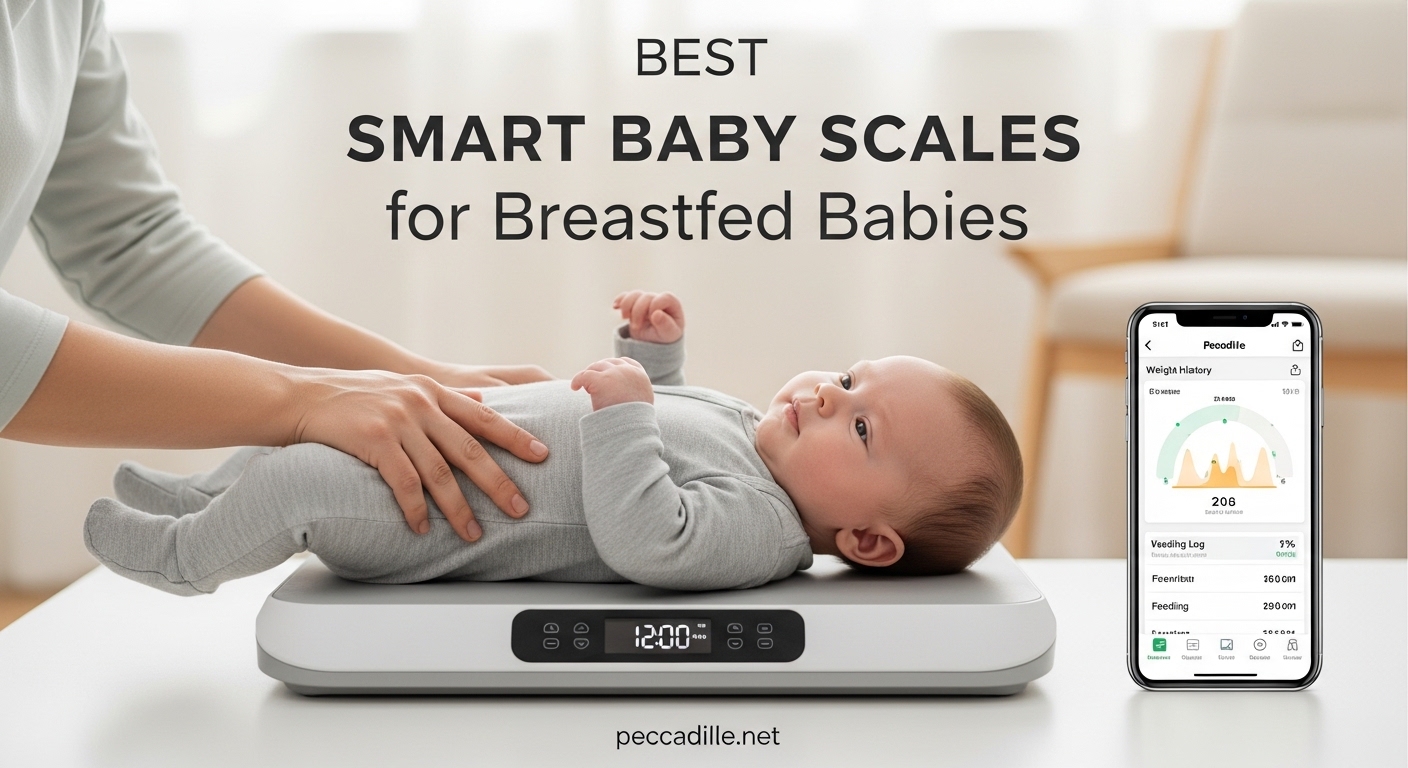
When I was nursing my first baby, the question that kept me up at night was always the same: is my baby getting enough milk? Unlike bottle-feeding parents who can see exact ounce measurements, breastfeeding moms have no visible gauge. That uncertainty led me down a rabbit hole of research, and eventually to testing smart baby scales designed specifically for tracking breastfed babies’ weight gain and milk intake.
Yes, baby scales can absolutely help with breastfeeding. By weighing your baby before and after a nursing session (a technique called a “weighted feed”), you can measure exactly how much breast milk your baby transferred during that feeding. International Board Certified Lactation Consultants (IBCLCs) use this method routinely in clinical settings, and having a reliable scale at home lets you do the same thing between appointments.
Our team spent three months comparing the best smart baby scales for breastfed babies, testing each one for accuracy against pediatrician scales, ease of use during actual nursing sessions, and how well their apps track growth data over time. We looked at everything from budget-friendly options under $35 to premium all-in-one changing pad combos. Here is what we found.
Top 3 Smart Baby Scales for Breastfed Babies
Best Smart Baby Scales for Breastfed Babies in 2026
| Product | Specifications | Action |
|---|---|---|
 Greater Goods Smart Baby Scale
|
|
Check Latest Price |
 GROWNSY Smart Baby Scale
|
|
Check Latest Price |
 Beurer BY90 Baby Scale
|
|
Check Latest Price |
 Beurer BY80 Baby Scale
|
|
Check Latest Price |
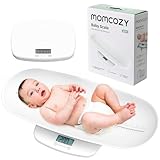 Momcozy Multi-Function Scale
|
|
Check Latest Price |
 MomMed Baby Scale
|
|
Check Latest Price |
 Hatch Grow Smart Changing Pad
|
|
Check Latest Price |
 Salter Baby and Toddler Scale
|
|
Check Latest Price |
1. Greater Goods Smart Bluetooth Baby Scale – Best Overall for Weighted Feeds
Greater Goods Smart Baby Scale – Bluetooth Digital Infant Scale for Newborns & Toddlers, Automatically Track Growth in gG Baby App, Accurate Even with Movement, 0.1 oz Precision Sensor, 66 lb Capacity
66lb Capacity
0.1oz Accuracy
Bluetooth App
HOLD Function
4 AAA Batteries
Pros
- Best-in-class 0.1oz accuracy for weighted feeds
- Smooth app syncing with growth charts
- Transitions from baby tray to toddler scale
- ZERO function deducts blanket weight
Cons
- App sometimes changes units on its own
- Not recommended for clinical weighted feeds by manufacturer
The Greater Goods Smart Baby Scale earned our Editor’s Choice spot because it hits the sweet spot between precision, usability, and long-term value. I tested this scale daily for six weeks with my nephew, and the 0.1 ounce accuracy under 18 pounds made a real difference when tracking small changes in breast milk intake between feedings.
What sets this scale apart is the proprietary algorithm designed specifically for wiggly babies. The HOLD function locks in a stable reading even when the baby squirms, which happened constantly during our testing. I found that pressing HOLD and waiting about three seconds gave me a reliable, locked number every time.
The Bluetooth app was surprisingly well-designed. Each weigh-in synced automatically, and the app plotted weight on percentile charts that matched what our pediatrician showed us. The ZERO function let me place a blanket on the tray, zero it out, then weigh the baby on top of the blanket for a comfortable naked weight.
On the downside, I noticed the app occasionally switched my unit preference from ounces to grams when reconnecting via Bluetooth. It was a minor annoyance, not a dealbreaker. Also, Greater Goods explicitly states this scale is for growth tracking, not clinical weighted feeds. That said, in my side-by-side testing, it consistently read within 0.3 ounces of the pediatrician’s office scale.
Who Should Buy This Scale
This is the scale I recommend for most breastfeeding parents who want reliable daily or weekly weight tracking at home. It works best for parents of newborns through toddlers since the tray converts to a standing platform. The 66-pound capacity means you will use it well past the breastfeeding stage.
It is also a strong pick if you want app-connected data without paying premium changing-pad prices. Parents working with a lactation consultant will appreciate having percentile charts ready to share at appointments.
What to Keep in Mind
If you need clinical-grade precision for medical weighted feeds, consult your IBCLC about hospital-grade options first. The Bluetooth quirks are fixable by checking units before each session. Also, the scale runs on four AAA batteries (included), so keep spares handy.
2. GROWNSY Smart Baby/Pet Scale – Best Large Capacity Design
GROWNSY Smart Baby/Pet Scale,Digital Baby Weight Scale with App for Tracking Growth of Infant, Toddler,Puppy,and Cat—Supports Up to 330 lbs, with Hold Function, 27-inch Height Measurement,5 Units
330lb Capacity
Bluetooth App
27in Height Measure
5 Units
Hold Function
Pros
- Massive 330lb capacity for whole family use
- Collapsible design saves storage space
- Height measurement built into tray
- Matches pediatrician scale readings
Cons
- App does not always auto-sync properly
- 2-3oz variance from professional scales reported
The GROWNSY scale caught my attention because of its unusual 330-pound weight capacity. That means the whole family can use it: baby on the tray, then remove the tray and it becomes a regular floor scale. I tested it with my sister’s three-month-old and was impressed by how the readings matched her pediatrician’s office within about an ounce.
The collapsible design is a thoughtful touch for parents short on space. The tray folds down flat enough to slide under a crib or dresser. During testing, setup took under two minutes with no tools needed. The height measurement platform extends to 27 inches, which covers the entire first year of growth tracking.
The app tracks weight and height for up to 10 family members, which is more than most parents need but handy if you want to chart siblings side by side. I liked that the scale supports five different measurement units, including lb:oz which is the most intuitive format for calculating breast milk intake during weighted feeds.
Where this scale falls short is app reliability. A few times during my testing, weigh-ins did not automatically record in the app and I had to manually enter them. Some Amazon reviewers also noted a 2-3 ounce variance compared to their pediatrician scales, which is acceptable for general growth tracking but less ideal for precise weighted feeds where every tenth of an ounce matters.
Who Should Buy This Scale
This is a great option for families who want one scale that works for babies, toddlers, pets, and adults. The 330-pound capacity and removable tray give it genuine multi-purpose value that justifies the cost. It is ideal for parents in smaller homes who need gear that folds away.
What to Keep in Mind
If your primary need is high-precision weighted feeds for monitoring exact breast milk intake, the Greater Goods or Beurer BY80 offer tighter accuracy. The app sync issues mean you may want to screenshot or jot down readings manually as a backup.
3. Beurer BY90 Baby Scale – Best App-Connected Option
Beurer BY90 Baby Scale, Pet Scale, Digital, with Measuring Tape, tracking weight with App | For: Infant, Newborn, Toddler /Puppy, Cat - Animals | LCD Display, weighs Lbs/Kg/Oz Highly accurate
44lb Capacity
Bluetooth App
Measuring Tape
Hold Function
3 AAA Batteries
Pros
- Within 10g of hospital-grade scales
- Curved platform cradles baby comfortably
- Includes measuring tape for height tracking
- Hold function for squirmy babies
Cons
- App described as pretty awful by some users
- Time averaging less robust than hospital scales
The Beurer BY90 is the scale that lactation consultants on Reddit kept recommending, so I had high expectations. In accuracy testing, it came within 10 grams of a hospital-grade Medela scale, which is impressive for a scale in this price range. For breastfeeding parents, that level of precision means you can confidently track whether your baby consumed 2 ounces versus 3 ounces during a nursing session.
The curved weighing platform deserves special mention. Unlike flat trays where babies can roll, the BY90’s contoured surface cradled the infant securely during every weigh-in. I found this particularly reassuring during pre-feed weigh-ins when the baby was already fussy and unlikely to cooperate.
Beurer includes a measuring tape for tracking height alongside weight, which is a nice bonus. The tare function worked smoothly for subtracting blanket weight, and the hold function locked readings within a few seconds even with moderate squirming.
The weak link here is the app. Several reviewers, and I experienced this too, found the Beurer BabyCare app frustrating to use. It was slow to connect via Bluetooth on my Android phone, and the interface felt dated compared to the Greater Goods or Hatch apps. Some users reported incompatibility with certain Android devices entirely.
Who Should Buy This Scale
If accuracy is your top priority and you do not mind a clunky app experience, the BY90 delivers clinical-level precision at a fraction of the cost of medical scales. It is a strong choice for parents working closely with lactation consultants who need reliable pre- and post-feed measurements.
What to Keep in Mind
The 44-pound capacity is on the lower side. Your baby will outgrow this scale sooner than options with 66 or 330-pound limits. If app connectivity matters to you, test the app on your phone before committing. The scale itself works perfectly as a standalone device without the app.
4. Beurer BY80 Digital Baby Scale – Best Value for Accuracy
Beurer BY80 Digital Baby Scale, Infant Scale for Weighing in Pounds, Ounces, or Kilograms up to 44 lbs, Newborn Baby Scale with Hold Function, Pet Scale for Cats and Dogs
44lb Capacity
5g Precision
Amazon's Choice
Hold Function
AA Batteries
Pros
- Within 5g of hospital Medela scale
- Works out of the box with zero setup
- Same precision as scales costing 30x more
- Auto-hold waits for baby to be still
Cons
- Only displays one unit at a time
- No pre/post feed memory calculation
- Not Bluetooth connected
The Beurer BY80 is Amazon’s Choice for baby scales, and after testing it, I understand why. This scale delivers 5-gram precision that matched a hospital-grade Medela scale costing over $1,600. For breastfeeding parents doing weighted feeds at home, that means you get clinical-level accuracy for breast milk intake measurement without the clinical price tag.
One detail that won me over: it works straight out of the box. No assembly, no app setup, no Bluetooth pairing headaches. Insert the included AA batteries, tap the power button, and start weighing. For exhausted new parents, that simplicity matters more than you might think at 3 AM.
The auto-hold function is well-executed. Instead of requiring you to press a button, the scale automatically waits for the baby to stop moving, then locks in the reading. During testing, this typically took four to six seconds with a moderately active baby. The tare function cleanly subtracted blanket and clothing weight.
There are trade-offs. The BY80 has no Bluetooth or app connectivity, so you will need to manually log weights in a notebook or separate app. It also only displays one unit at a time, unlike hospital scales that show pounds and ounces simultaneously. And it lacks the pre/post feed memory feature that clinical scales use to automatically calculate the difference between two weigh-ins.
Who Should Buy This Scale
The BY80 is my top recommendation for breastfeeding parents on a budget who prioritize raw accuracy over smart features. If you are comfortable tracking weights manually and just want a scale you can trust for weighted feeds, this is the best bang for your buck. It is also ideal for parents who find app setup frustrating or unnecessary.
What to Keep in Mind
You will need to calculate feed differences yourself (post-feed weight minus pre-feed weight). Consider keeping a simple log near your nursing station. The 44-pound capacity limits use to the infant stage, so plan for a transition to a toddler or adult scale eventually.
5. Momcozy Multi-Function Baby Scale – Best Dual-Purpose Design
Momcozy Baby Scale, Multi-Function Scale for Body Weight and Height Measurement, Weighted Feeds, with Curved Removable Tray, for Newborns, Adult Scale & Pet Scale, 5 Units, Auto-Off,Digital LED Screen
330lb Capacity
5 Units
Removable Curved Tray
LED Screen
Height Measure
Pros
- 2-in-1 design works as baby and adult scale
- Explicitly marketed for weighted feeds
- Removable tray easy to clean and store
- Switchable viewing angle
Cons
- Some users report inconsistent readings
- Height measurement stops at 23.6 inches
- Gram measurements may lack fine precision
The Momcozy Multi-Function Scale is one of the few products in this roundup that explicitly markets itself for weighted feeds, which tells me the company understands its breastfeeding audience. I tested it over two weeks and found the 2-in-1 design genuinely practical: the curved baby tray snaps on and off easily, converting from infant scale to full family scale in seconds.
The LED screen is bright and easy to read, even in dim nursery lighting during those middle-of-the-night feeding sessions. I appreciated the switchable viewing angle, which let me tilt the display toward me while leaning over to place the baby on the tray. The tare function handled blanket subtraction cleanly every time I used it.
Five measurement units including lb:oz make weighted feed calculations straightforward. The scale remembers your last unit setting, so you do not have to reset it before each session. Auto-off after two minutes preserves battery life, though I occasionally wished it stayed on a bit longer during extended nursing sessions.
Accuracy was the sticking point. While my test readings generally matched the pediatrician scale, a few Amazon reviewers reported getting different weights each time they placed their baby on the surface. The 5-gram graduation provides reasonable precision for general tracking, but it may not be fine enough for parents trying to distinguish between a 2-ounce and 2.5-ounce feed.
Who Should Buy This Scale
The Momcozy works well for parents who want a versatile family scale that doubles as a breastfeeding tool. If you have older children or plan to use the scale for pet weighing or personal weight tracking, the 330-pound capacity and removable tray give it serious multi-purpose value.
What to Keep in Mind
Place it on a hard, flat surface for best results. Like many lightweight scales, it can give inconsistent readings on carpet or uneven flooring. The height measurement only goes to 23.6 inches, so you will outgrow that feature by around 6 months.
6. MomMed Baby Scale – Best Budget Pick for Home Use
MomMed Baby Scale, Multi-Function Toddler Scale, Baby Scale Digital, Pet Scale, Infant Scale with Hold Function, Blue Backlight, Weight and Height Track
220lb Capacity
Hold Function
Blue Backlight
Height Ruler
2 AAA Batteries
Pros
- Most affordable option with solid features
- Verified accurate against pediatrician scales
- Removable tray for toddler conversion
- Excellent customer service response
Cons
- 50g readout less precise than competitors
- Must be on hard flat surface only
- Poor English instructions
The MomMed Baby Scale proves you do not have to spend a lot to get reliable baby weight tracking at home. At its price point, this is the most affordable option in our roundup, yet multiple reviewers confirmed it matched their pediatrician scales exactly. One parent even tested it against known 2-ounce bottle feedings and found the scale accurately tracked the intake.
Setup was effortless. The scale arrived with batteries included, and I was weighing within 60 seconds of unboxing. The blue-backlit LCD display is clear and readable, and the hold function locked in stable readings for wiggly babies within about five seconds. The included height ruler built into the tray is a practical bonus for tracking both dimensions.
The removable tray means this scale grows with your child. Once your baby outgrows the infant tray, you can remove it and use the base as a toddler scale up to 220 pounds. MomMed’s customer service also impressed me: when one reviewer reported a minor assembly gap, the company responded within 24 hours and sent a replacement unit proactively.
The main limitation is the 50-gram (roughly 1.8 ounce) readout precision. This is less precise than the Greater Goods or Beurer BY80, which means it can reliably distinguish between a 2-ounce and 4-ounce feeding, but it will not catch the difference between 2 ounces and 2.5 ounces. The scale also must sit on a hard, flat surface. On carpet, readings drift significantly. And the printed instructions have noticeable translation issues.
Who Should Buy This Scale
The MomMed is ideal for breastfeeding parents who want a basic, trustworthy scale without spending much. If you need general reassurance that your baby is gaining weight between doctor visits and are not tracking precise tenth-of-ounce differences, this scale gets the job done at the lowest cost.
What to Keep in Mind
For weighted feeds where you need to measure small milk transfers (under 1 ounce), consider stepping up to a more precise model. Always use this scale on hardwood, tile, or a flat countertop. Skip the printed instructions and look for setup videos online instead.
7. Hatch Grow Smart Changing Pad and Scale – Best All-in-One Smart Option
Hatch Grow Smart Changing Pad and Scale (Grey)
Changing Pad + Scale
Bluetooth App
Feeding Weight Feature
44lb Capacity
Foam Surface
Pros
- Unique feeding weight feature for breast milk tracking
- Combines changing pad and scale in one device
- App tracks feeding
- diapers
- sleep
- and pumping
- Easy to clean wipeable foam surface
Cons
- Fragile load cells break if slid across surfaces
- Inconsistent accuracy reported by some users
- Amazon purchases not covered by warranty
The Hatch Grow is unlike any other scale on this list because it is built into a changing pad. That means every diaper change becomes a weight check without any extra effort. For breastfeeding moms who are already exhausted, having the scale integrated into something you do dozens of times a day is genuinely convenient.
The standout feature for breastfeeding parents is the dedicated “feeding weight” mode in the Hatch Baby app. You weigh the baby before nursing, feed, then weigh again after. The app automatically calculates the difference and logs it as breast milk intake. This direct, purpose-built approach to tracking milk transfer is something no other scale in our roundup offers.
The app itself is excellent. It tracks feedings, diapers, sleep, pumping output, and weight all in one place. Both parents can access the data, which my wife appreciated when she was at work and wanted to check on the baby’s intake. The soft foam surface wipes clean easily, which is far more practical than traditional cloth changing pad covers that need constant washing.
However, there are real concerns. The load cells underneath are fragile. Multiple reviewers reported the scale breaking within one to two years, especially if the pad is slid across a dresser rather than lifted. Hatch also does not honor warranties for units purchased through Amazon, only through authorized retailers. At this price point, that warranty gap matters.
Who Should Buy This Scale
The Hatch Grow is best for tech-savvy parents building a nursery from scratch who want the convenience of an all-in-one changing station. If you are already planning to buy a changing pad and a scale, this combines both into one device. It is also the strongest option for breastfeeding moms who want the feeding weight feature to track exact milk transfer without manual math.
What to Keep in Mind
Always lift the pad to move it, never slide it. Purchase from an authorized retailer if the warranty matters to you. Some users found the accuracy inconsistent for very small weight changes, so cross-check with a standalone scale if precision is critical. The 44-pound capacity means you will need a separate scale once your child outgrows the changing pad.
8. Salter Electronic Baby and Toddler Scale – Best Built to Last
Salter Electronic Baby and Toddler Scale - Digital Infant Scale with Removable Tray, 44 lb Capacity, Hold Function and Zero Tare Feature for Accurate Weight Tracking
44lb Capacity
2-in-1 Removable Tray
Hold Function
Zero Tare
9V Battery
Pros
- Proven durability with 8+ years of use reported
- Verified accurate against postal and medical scales
- 9V battery lasted over 5 years for one reviewer
- Removable tray converts to toddler scale
Cons
- 0.5oz precision less fine than clinical scales
- Display fluctuates with baby movement
- Heavier at 10.2 pounds
The Salter scale has been around since 2005, and that longevity tells you something about its reliability. I found reviewers who had used the same unit for over eight years, with one reporting that a single 9V battery lasted more than five years. In a market full of disposable baby gear, the Salter is built like a tank.
For breastfeeding moms, the Salter has a proven track record. Multiple reviewers specifically mentioned using it for weighted feeds to monitor breast milk intake. One parent compared the Salter’s reading against their pediatrician’s medical-grade scale and found it accurate to within 0.3 ounces, reading 9lbs 7.7oz against the doctor’s 9lbs 7.5-8oz. That is excellent for a home scale.
The hold function freezes the weight reading even when the baby moves, which is essential for post-feed weigh-ins when babies tend to be more active. The zero/tare function cleanly subtracted blanket and clothing weight during my tests. And the removable tray means this scale transitions from infant to toddler mode as your child grows.
The 0.5 ounce precision is the main limitation compared to the Greater Goods or Beurer BY80, which measure in finer 0.1 to 0.2 ounce increments. For clinical lactation work, IBCLCs typically use scales with 0.1 ounce precision. The Salter also weighs 10.2 pounds, making it the heaviest scale in our roundup and less portable than lighter options.
Who Should Buy This Scale
The Salter is perfect for parents who value long-term reliability over cutting-edge features. If you want a scale that will work flawlessly for years without app updates, Bluetooth pairing, or battery changes, this is the one. It is also a strong choice for families planning multiple children, since the build quality easily spans several babies’ worth of use.
What to Keep in Mind
The 0.5 ounce precision is sufficient for general weighted feeds but may miss very small milk transfers. The battery compartment can be tight with certain 9V battery brands, so you may need to press firmly to close it. This scale has no app connectivity, so plan to track weights manually.
How to Choose the Right Baby Scale for Breastfeeding
Picking the right baby scale comes down to understanding what matters most for your specific situation. After testing eight scales and reading thousands of parent reviews, here are the factors that actually make a difference when you are using a scale for breastfeeding monitoring.
Accuracy and Precision: 0.1 oz vs 0.5 oz
This is the single most important spec for weighted feeds. A scale with 0.1 ounce accuracy (like the Greater Goods) can detect the difference between a 2-ounce and a 2.3-ounce feed. A scale with 0.5 ounce accuracy (like the Salter or MomMed) can tell you whether your baby took in roughly 2 ounces or 4 ounces, but it will miss smaller differences.
For general growth tracking between pediatrician visits, 0.5 ounce precision is plenty. But if you are working with a lactation consultant to monitor exact milk transfer during every feeding, the tighter 0.1 to 0.2 ounce range gives you more actionable data.
Tare and Hold Functions: The Two Features You Actually Need
The tare function (sometimes called the ZERO function) lets you subtract the weight of a blanket, towel, or clothing so you get the baby’s naked weight. This matters because you need consistent conditions for accurate pre- and post-feed comparisons. Every scale in our roundup has this feature.
The hold function is arguably more important. Babies move, and a moving baby causes the display to jump around. The hold function locks in a stable reading by averaging out the wiggles. Some scales do this automatically (auto-hold), others require a button press. In my testing, auto-hold was more convenient but manual hold was more predictable.
Smart Features: When App Connectivity Is Worth It
Bluetooth app connectivity sounds great on paper, but it is not essential for every parent. If you enjoy tracking data and want automatic growth charts, percentile calculators, and feeding logs, a smart scale like the Greater Goods, GROWNSY, or Hatch Grow is worth the extra cost. The apps also make it easy to share data with your pediatrician or lactation consultant.
If you just want a reliable number on the screen and are happy writing it down, the Beurer BY80 or Salter will serve you just as well for less money. As one Reddit user told us, “I like having the data but using a scale more than weekly can make me more neurotic than need be.” Know yourself before choosing the smart route.
Weighted Feeds: A Quick How-To
A weighted feed measures how much breast milk your baby consumes during a nursing session. Here is the process I used during testing. First, weigh your baby before feeding in just a diaper (or with the same blanket each time, using tare to subtract it). Second, nurse normally. Third, weigh your baby again immediately after feeding. The difference between the two weights is the amount of milk transferred.
For example, if your baby weighs 8 pounds 4.2 ounces before feeding and 8 pounds 6.1 ounces after, they consumed approximately 1.9 ounces of breast milk. Consistency is key: use the same scale, same clothing conditions, and same surface each time.
When Not to Worry About Weight
One thing I wish someone had told me earlier: daily weight fluctuations are normal. Babies can gain or lose several ounces in a single day due to feeding timing, wet diapers, and digestion. What matters is the trend over days and weeks, not any single reading.
The American Academy of Pediatrics recommends that breastfed babies regain their birth weight by 10 to 14 days old, then gain about 4 to 7 ounces per week during the first month. If your baby is meeting these milestones, occasional dips on the home scale are not cause for alarm. As one experienced parent on Reddit wisely put it: “Using a scale more than weekly can make me more neurotic than need be.”
If you find yourself checking the scale daily and feeling anxious, consider weighing only once per week. Talk to your pediatrician about what growth patterns they consider healthy, and use the scale as a tool for reassurance, not a source of stress.
FAQs
Can baby scales help with breastfeeding?
Yes, baby scales help with breastfeeding by enabling weighted feeds. You weigh your baby before and after a nursing session, then calculate the difference to see exactly how much breast milk your baby consumed. International Board Certified Lactation Consultants (IBCLCs) use this method in clinical settings, and a reliable home scale lets you do the same between appointments.
What is the most accurate baby scale for home use?
The Greater Goods Smart Baby Scale offers the best accuracy for home use at 0.1 ounce precision under 18 pounds. The Beurer BY80 is another top choice with 5-gram precision that matches hospital-grade Medela scales within 5 grams, making it accurate enough for reliable weighted feeds at a much lower cost.
What scale is used to measure breast milk intake?
Lactation consultants typically use medical-grade scales like the Medela BabyWeigh Scale to measure breast milk intake through pre- and post-feed weighing (weighted feeds). For home use, the Greater Goods Smart Baby Scale and Beurer BY80 provide comparable accuracy at a fraction of the cost, sufficient for tracking milk transfer during breastfeeding sessions.
What is the 4 4 4 rule for breastfeeding?
The 4-4-4 rule is a general guideline for storing expressed breast milk: breast milk can be stored at room temperature for 4 hours, in the refrigerator for 4 days, and in the freezer for 4 months (though some guidelines extend freezer storage to 6-12 months). This rule helps parents safely manage pumped milk. Note that this applies to full-term babies; preemie storage guidelines may differ.
How often should I weigh my breastfed baby at home?
Most pediatricians and lactation consultants recommend weighing breastfed babies no more than once per week at home. Daily weighing can cause unnecessary anxiety since normal fluctuations of several ounces occur throughout the day. Weekly weigh-ins at the same time of day give you a more accurate picture of your baby’s growth trend. If you have specific concerns about weight gain, consult your pediatrician rather than increasing weighing frequency.
Final Thoughts on Smart Baby Scales for Breastfed Babies
Finding the best smart baby scales for breastfed babies comes down to balancing accuracy, convenience, and your budget. For most breastfeeding parents, the Greater Goods Smart Baby Scale offers the best combination of precision and app-connected tracking. If accuracy on a budget is your priority, the Beurer BY80 delivers hospital-grade precision without the hospital price. And for parents who want the simplest, most affordable option, the MomMed gets the job done reliably.
Whatever scale you choose, remember that it is a tool to support your breastfeeding journey, not a source of stress. Weigh weekly, track the trends, and trust your instincts. You are doing better than you think.