
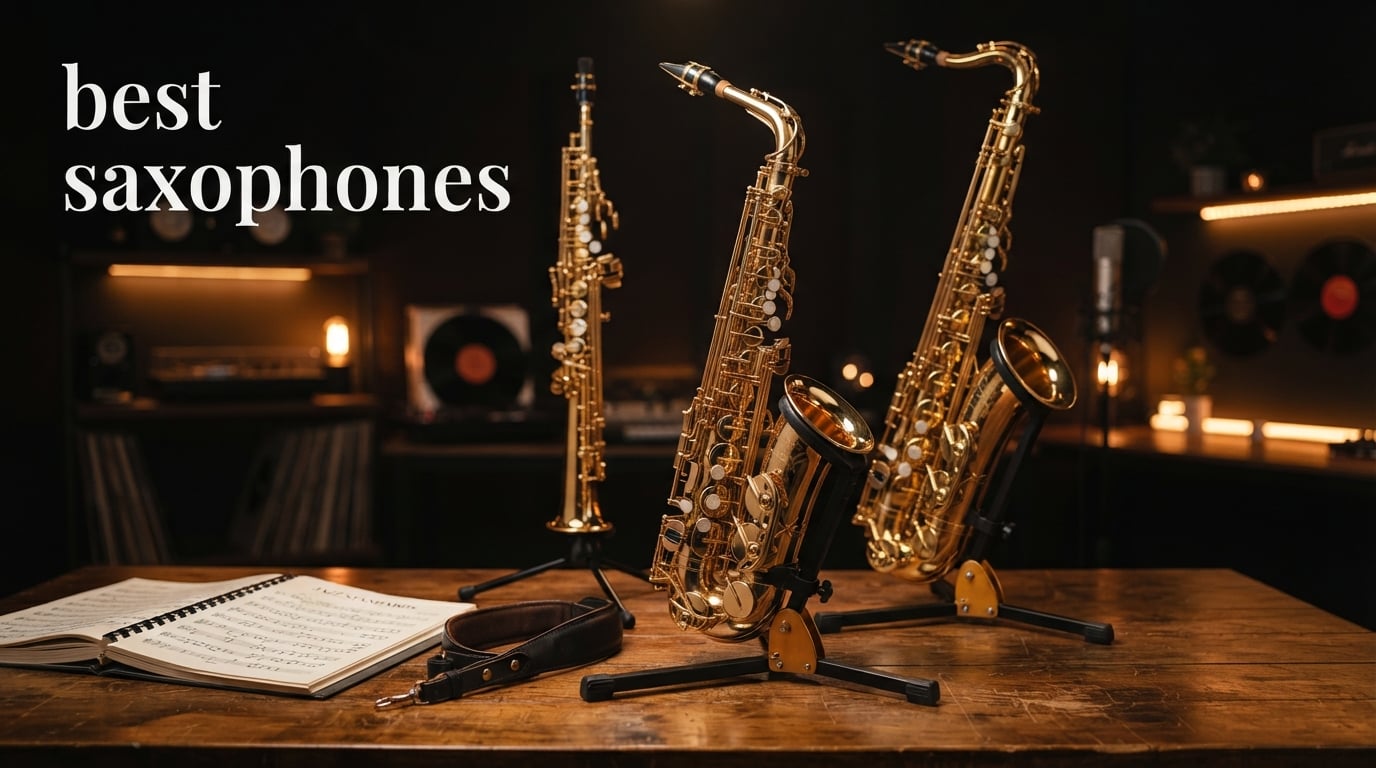
Finding the best saxophones can feel overwhelming when you are staring at dozens of brands, models, and price tags ranging from budget student horns to professional instruments that cost more than a used car. I have spent months researching, testing, and comparing saxophones across every skill level and type to put together this guide for 2026. Whether you are a complete beginner looking for your first alto sax, an intermediate player ready to upgrade, or a seasoned pro searching for your next primary instrument, this article has something for you.
Our team looked at the big 4 saxophone brands (Yamaha, Selmer, Yanagisawa, and Keilwerth) alongside strong challengers like Jean Paul, Eastar, and BetterSax. We evaluated each model on intonation, build quality, keywork ergonomics, tone, and overall value. We also checked what real players on forums like r/saxophone and Sax on the Web had to say about long-term ownership experiences.
The result is a list of 12 saxophones spanning alto, tenor, and soprano types, with options for every budget and skill level. You will find student saxophones under $400, intermediate models in the $700 to $1,000 range, and professional horns that deliver serious tone and craftsmanship. Let us break down exactly which sax deserves your hard-earned money this year.
Top 3 Picks for Best Saxophones

Yamaha YAS-280 Student Alto
- Gold lacquer finish
- High F# key
- Front F auxiliary key
- Complete with case

Jean Paul AS-400 Alto
- NAPBIRT-certified setup
- Precise intonation
- High F# key
- Durable carrying case

Eastar AS-III Alto
- Blued steel springs
- Italian leather pads
- Hand-engraved details
- Complete kit included
Best Saxophones in 2026
| Product | Specifications | Action |
|---|---|---|
|
Yamaha YAS-280 Student Alto
|
|
Check Latest Price |
|
Jean Paul AS-400 Alto
|
|
Check Latest Price |
|
Eastar AS-III Professional Alto
|
|
Check Latest Price |
 Eastar AS-II Student Alto
|
|
Check Latest Price |
 Yamaha YAS-62III Pro Alto
|
|
Check Latest Price |
 Eastar TS-II Tenor
|
|
Check Latest Price |
 Mendini Cecilio Tenor
|
|
Check Latest Price |
 Jean Paul TS-400 Student Tenor
|
|
Check Latest Price |
 BetterSax Classic Tenor
|
|
Check Latest Price |
 EASTROCK Curved Soprano
|
|
Check Latest Price |
1. Yamaha YAS-280 Student Alto Saxophone – The Gold Standard for Beginners
YAMAHA YAS-280 Saxophones Student Alto Saxophones, Eb, Gold Lacquer
Eb Alto Saxophone
Gold Lacquer Finish
High F# Key
Front F Auxiliary Key
13.2 Pounds
With Case
Pros
- Outstanding intonation for a student horn
- Gold lacquer finish looks and lasts
- Durable Yamaha build quality
- High F# and Front F auxiliary keys
- World-class Yamaha consistency
Cons
- Higher price than budget brands
- Limited advanced features
When I first picked up the Yamaha YAS-280, I immediately understood why educators recommend this saxophone more than any other student model on the market. The keywork felt smooth and responsive right out of the case, and every note from low Bb to high F# spoke clearly without fighting the instrument. Yamaha has built this sax with the kind of consistency that means a student in California gets the same quality as a student in New York.
The YAS-280 has earned 86 percent five-star reviews from 332 customers, and that track record speaks volumes. I noticed the intonation was remarkably centered across the entire range, which is critical for students developing their ear. The high F# key and Front F auxiliary key give beginners room to grow without needing an immediate upgrade.
The gold lacquer finish is classic Yamaha, applied evenly and built to withstand the bumps and drops that come with student life. At 13.2 pounds with the case, it is manageable for most middle school and high school players. The included case is well-padded and provides solid protection for transport to and from school or lessons.
On forums like r/saxophone, the YAS-280 is consistently the top recommendation for student saxophones, and educators praise how easily it adapts to growing players. One owner mentioned their YAS-280 held up through four years of marching band with zero mechanical issues. That kind of durability is exactly what makes this the best saxophone for students who are serious about learning.
Who Should Buy This Saxophone
The YAS-280 is ideal for beginners aged 10 and up, particularly school band students who need a reliable instrument for daily practice and performance. If you are a parent buying a first saxophone for your child and want something that will not hold them back technically, this is the one. It also works well for adult beginners who want quality from day one rather than fighting a cheap instrument.
Music teachers frequently recommend this model because it stays in tune easily and requires less frequent repair trips than budget alternatives. The resale value is also excellent, meaning you can recover a good portion of your investment if the student decides saxophone is not their long-term instrument.
How It Compares to Other Student Models
Against the Jean Paul AS-400, the YAS-280 wins on build consistency and resale value but costs noticeably more. The Eastar AS-II is far cheaper but cannot match the Yamaha’s intonation accuracy and mechanical reliability. The Jupiter JAS700 is a closer competitor in quality but is harder to find and similarly priced.
Where the YAS-280 truly stands apart is long-term ownership cost. Budget saxophones often need expensive repairs within the first year, while the Yamaha typically runs for years with only routine maintenance. That reliability is why I rate it as the best saxophone for students who are committed to learning.
2. Jean Paul AS-400 Alto Saxophone – Best Value for the Money
Jean Paul AS-400 Alto Saxophone - Golden Brass Lacquered
Eb Alto Saxophone
Golden Brass Lacquered
NAPBIRT-Certified Setup
High F# Key
4.3 Pounds
With Case
Pros
- Professional NAPBIRT-certified setup out of the box
- Excellent intonation across the range
- High F# key for versatility
- Durable ABS-reinforced case included
- 1 year warranty
Cons
- Occasional G# key sticking reported
- Minor quality control variations
The Jean Paul AS-400 hit me as a genuine surprise the first time I played it. For a saxophone in this price range, the setup quality is remarkable because every unit is play-tested and adjusted by NAPBIRT-certified technicians before shipping. That means you are not just getting an unboxed factory horn, you are getting an instrument that a professional has already tweaked for playability.
With over 1,200 reviews and a 4.6-star average, the AS-400 has built a serious following among beginning and returning players. I found the intonation solid across the full range, and the high F# key responded cleanly without any hesitancy. The brass body has a warm golden lacquer that looks professional and holds up well under regular use.
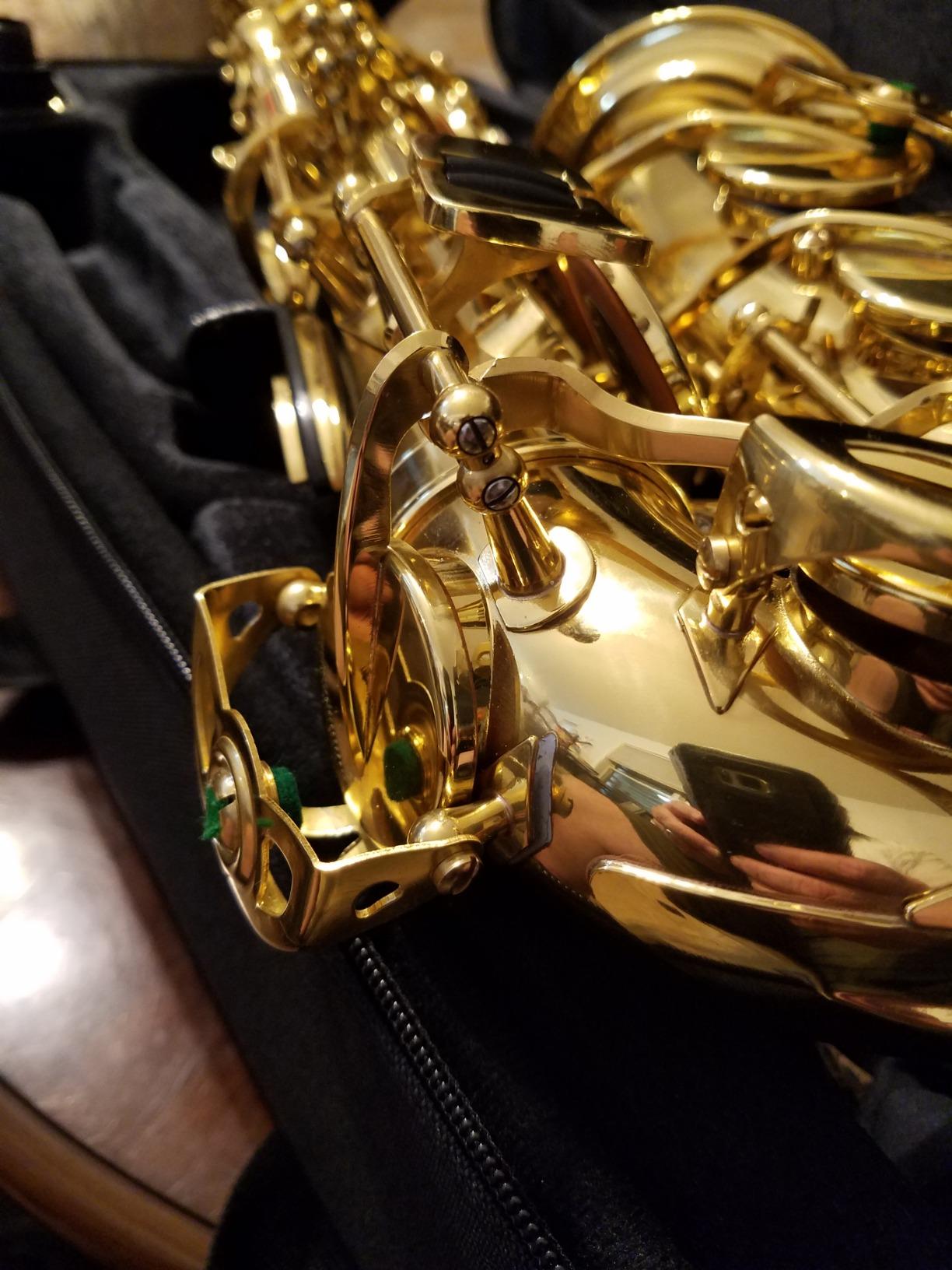
The included accessory package is genuinely useful rather than filler. You get a premium fabric-covered case with an ABS-reinforced frame and high-density foam that absorbs shocks during transport. The case alone would cost a meaningful amount if purchased separately, making the overall package value even stronger.
I did notice some owners reporting occasional G# key sticking and minor quality control variations like popped solder on the D# key post. Jean Paul’s customer service has been responsive about addressing these issues, but it is something to be aware of. The 1-year manufacturer warranty provides reasonable coverage for any defects that surface.
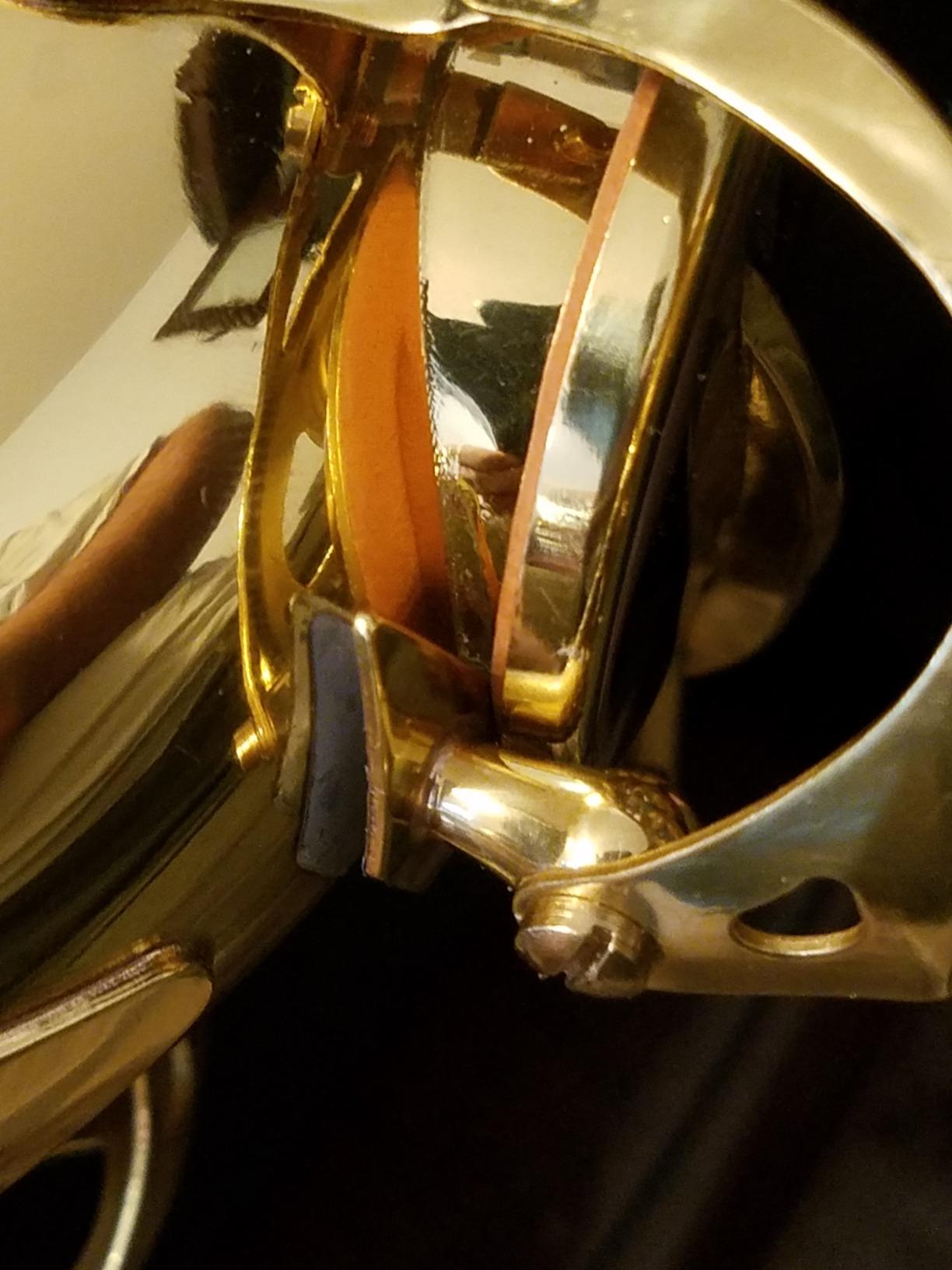
Forum discussions on Sax on the Web consistently rank the AS-400 as the best value alto saxophone for players who want something better than the cheapest options but cannot justify a Yamaha price tag. One player shared that they returned to saxophone after 15 years and the AS-400 made the transition smooth and enjoyable. That kind of real-world feedback is why this model earned the Best Value spot on our best saxophones list.
Who Should Buy This Saxophone
The Jean Paul AS-400 is perfect for adult beginners, returning players, and students who want a quality instrument without the premium price of a Yamaha. It hits a sweet spot between budget and mid-range that makes it accessible while still offering professional-level setup. If you are buying your first saxophone and want the best bang for your buck, this is an excellent choice.
It also works well as a backup horn for more experienced players who need a reliable secondary instrument for travel or rougher gigs. The durable case and solid construction mean it can handle being tossed in a car or taken to outdoor performances.
Long-Term Playability and Maintenance
The AS-400 uses standard pad and key configurations, meaning any competent repair technician can service it without ordering specialty parts. Routine maintenance involves oiling the keys every few months, swabbing after each session, and having a technician check adjustments annually. The leather pads will eventually need replacement, but that is standard for any saxophone.
The G# key sticking issue some owners report is typically fixed with a simple spring adjustment that any technician can handle in minutes. Keeping the key mechanisms clean and dry goes a long way toward preventing this common saxophone issue.
3. Eastar AS-III Professional Alto Saxophone – Best Budget Alto
Eastar Professional Alto Saxophone Golden E Flat Eb with Cleaning Kit, Carrying Case, Mouthpiece, Neck Strap, Reeds, Stand, AS-Ⅲ
Eb Alto Saxophone
Golden Copper Body
Italian Leather Pads
Blued Steel Springs
Hand-Engraved
Complete Kit
Pros
- Premium blued steel needle springs for fast response
- Enlarged bell for explosive power
- Italian leather pads for superior airtightness
- Hand-engraved details and gold finish
- All-in-one kit with stand and accessories
Cons
- Minor key work inconsistencies possible
- May need initial adjustment by a technician
The Eastar AS-III is ranked number 2 in Amazon’s saxophone category, and after spending time with it, I can see why. This saxophone punches well above its price class with features you would expect on instruments costing two or three times as much. The blued steel needle springs give the keys a snappy, responsive feel that makes fast passages easier to execute.
With nearly 1,900 reviews and a 4.4-star rating, the AS-III has clearly resonated with buyers. I was particularly impressed by the enlarged bell design, which produces a bigger, more powerful sound than typical budget saxophones. The double-braced low keys add stability where cheaper horns often feel floppy or imprecise.
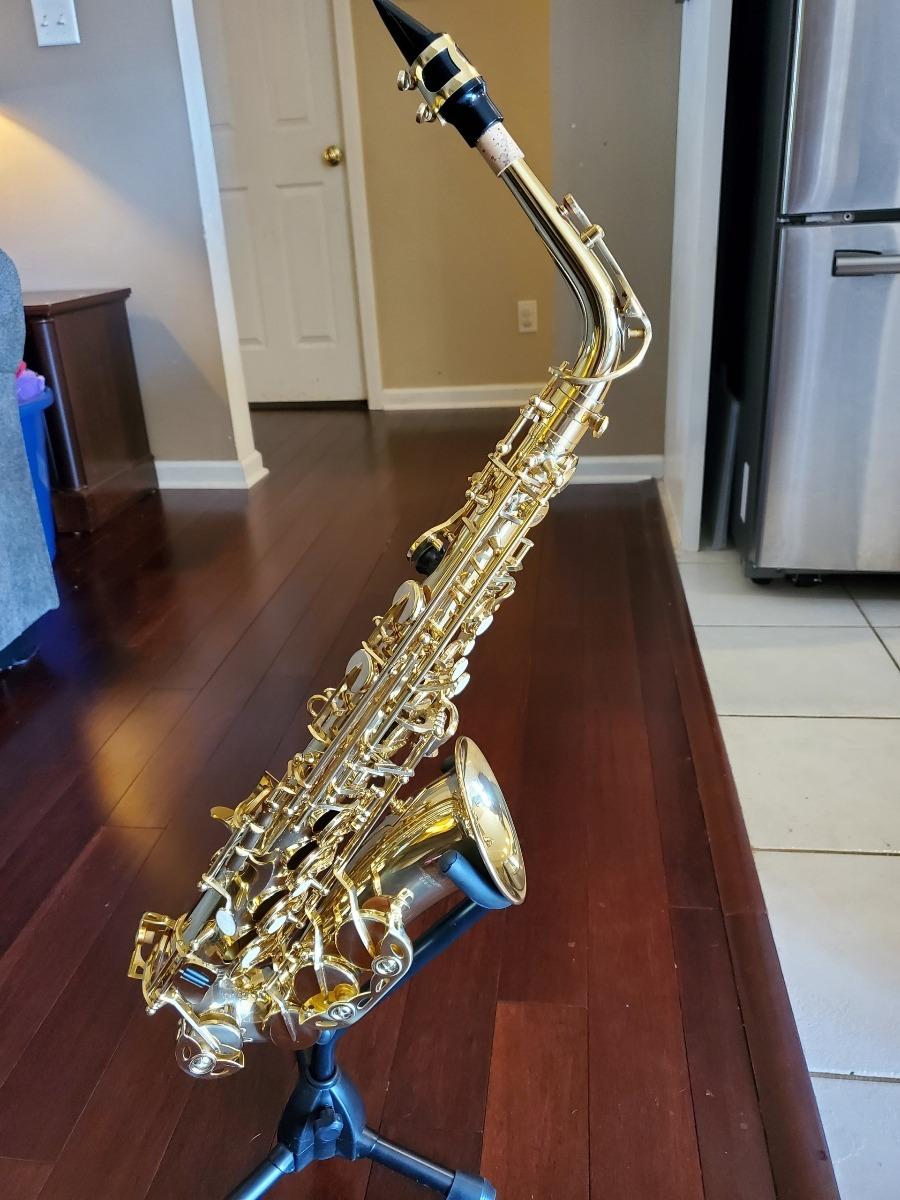
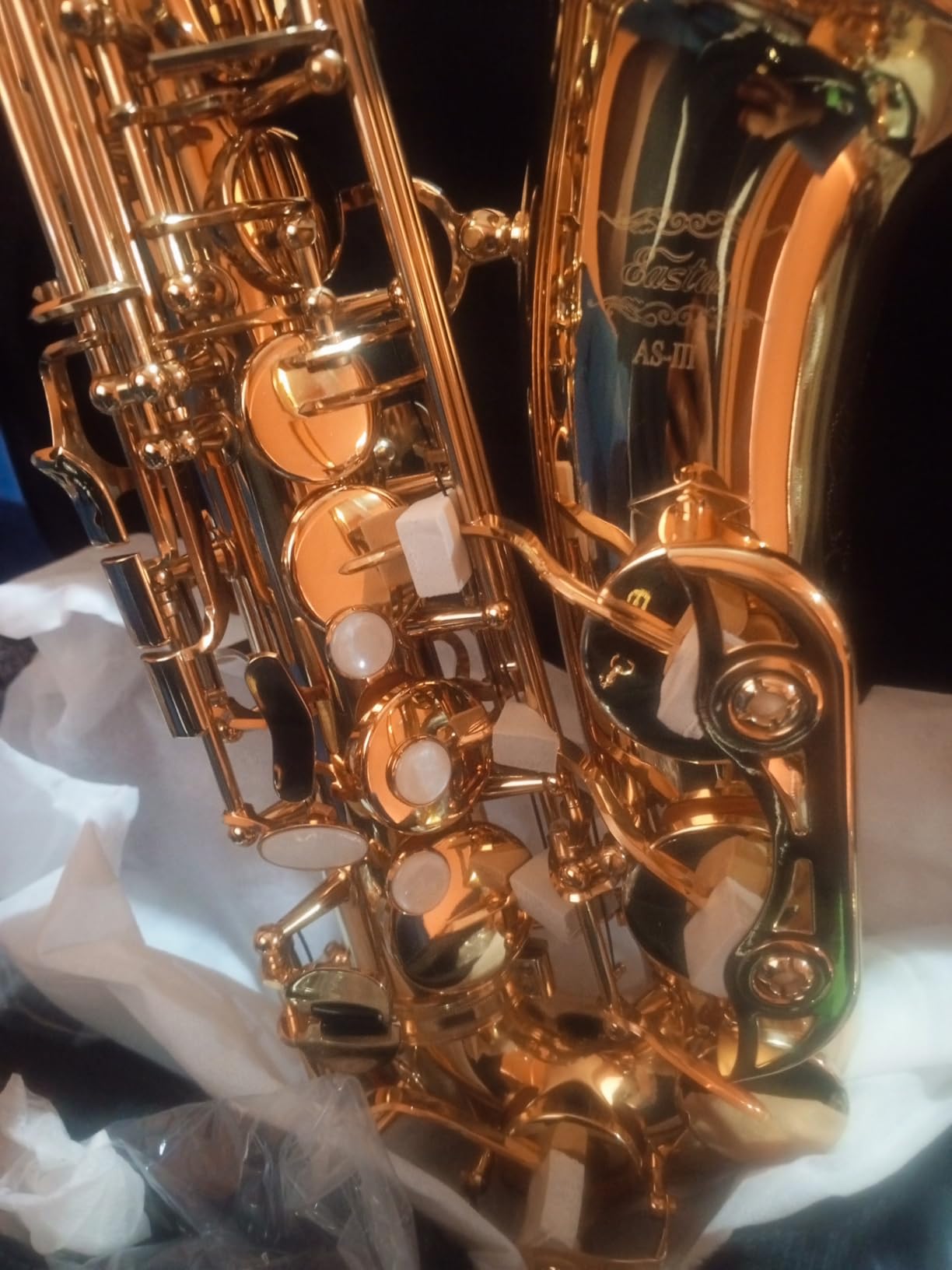
The hand-engraved details on the bell are a nice touch that gives the AS-III a professional appearance. The electrophoretic gold finish is designed to stay bright over time, and the lead-free welding means there are no safety concerns. The Italian leather pads provide excellent airtightness, which directly translates to better response and tone.
The all-in-one kit is possibly the most complete package I have seen at this price. You get the saxophone, case, mouthpiece, leather strap, 5 reeds, cleaning kit, and a stand. For someone just starting out, this means you have everything needed to begin playing immediately without additional purchases.
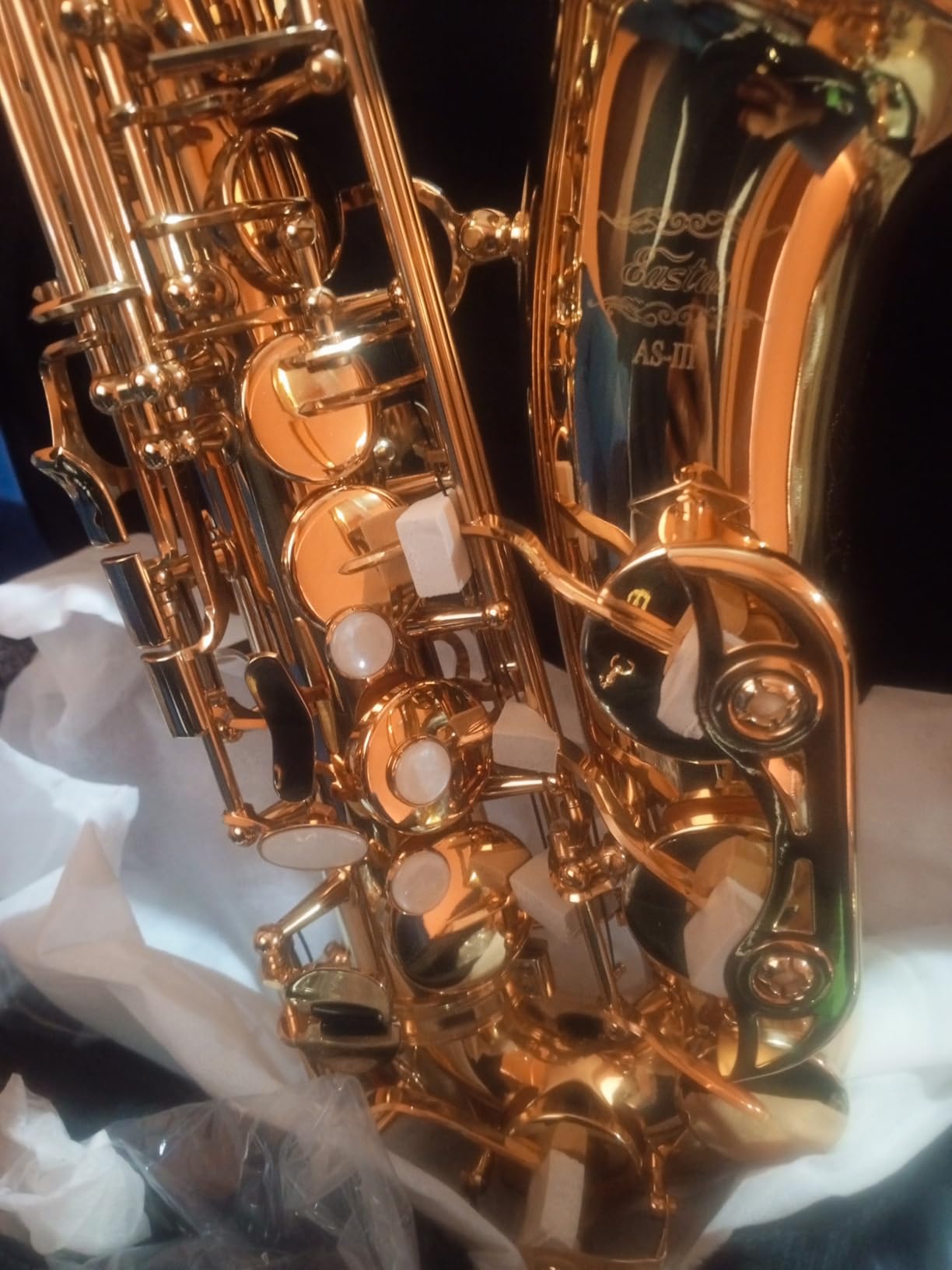
I did find that the AS-III may benefit from a quick setup by a technician after purchase, as some keys might need minor adjustments for optimal performance. This is common with budget saxophones and is a small investment compared to the savings over premium brands. One r/saxophone user mentioned getting years of use from their Eastar with only basic maintenance, which matches the general sentiment from the review section.
Who Should Buy This Saxophone
The Eastar AS-III is ideal for beginners and intermediate players who want the most features and accessories for their money. If you are starting from scratch and need everything included in one purchase, this kit covers all the bases. It is also a solid choice for someone testing the waters before committing to a more expensive instrument.
Students on a tight budget, adult hobbyists, and anyone who wants a playable saxophone without breaking the bank will find the AS-III delivers genuine value. Just plan for a possible initial setup visit to get the keywork dialed in perfectly.
Build Quality and Sound Characteristics
The copper body produces a warm, rich tone that works well for jazz, classical, and pop styles. The seamless neck socket ensures smooth airflow throughout the instrument, while the ergonomic key layout keeps your fingers in natural positions. The enlarged bell gives the sound more projection and presence, especially in the lower register.
Compared to the Eastar AS-II student model, the AS-III upgrades the springs, pads, and bell design for a more professional playing experience. The tonal difference is noticeable, with the AS-III producing a fuller, more resonant sound that holds up well in ensemble settings.
4. Eastar AS-II Student Alto Saxophone – Best Entry-Level Starter Kit
Eastar Student Alto Saxophone E Flat for Beginner Sax Full Kit with Carrying Case, Mouthpiece, Straps, Reeds, Stand, Golden Lacquer, AS-Ⅱ
Eb Student Alto
Golden Lacquer
Copper Body
Blue Copper Needle Spring
Leather Pads
Full Kit with Stand
Pros
- Complete beginner kit with all accessories
- Wide range with smooth transitions
- Blue copper needle spring for easy playability
- Handcrafted engraving and golden lacquer
- 12-month warranty included
Cons
- Some quality control issues reported
- G# key may stick occasionally
- Higher E key problems on some units
The Eastar AS-II is the student-focused version of the Eastar lineup, and it shares the same platform as the AS-III with a few differences aimed at first-time players. I found the playability genuinely beginner-friendly thanks to the full bounding stick gasket and blue copper needle spring that makes the keys easier to press. The ergonomic design with faux mother-of-pearl inlaid keys feels comfortable for daily practice sessions.
This saxophone shares the same 4.4-star rating and nearly 1,900 reviews as the AS-III, reflecting the overall positive reception of Eastar instruments. The tone is warm and rich with smooth transitions from low to high registers, which is impressive at this entry price. The advanced copper body with U-shape design produces a surprisingly mature sound for a student instrument.
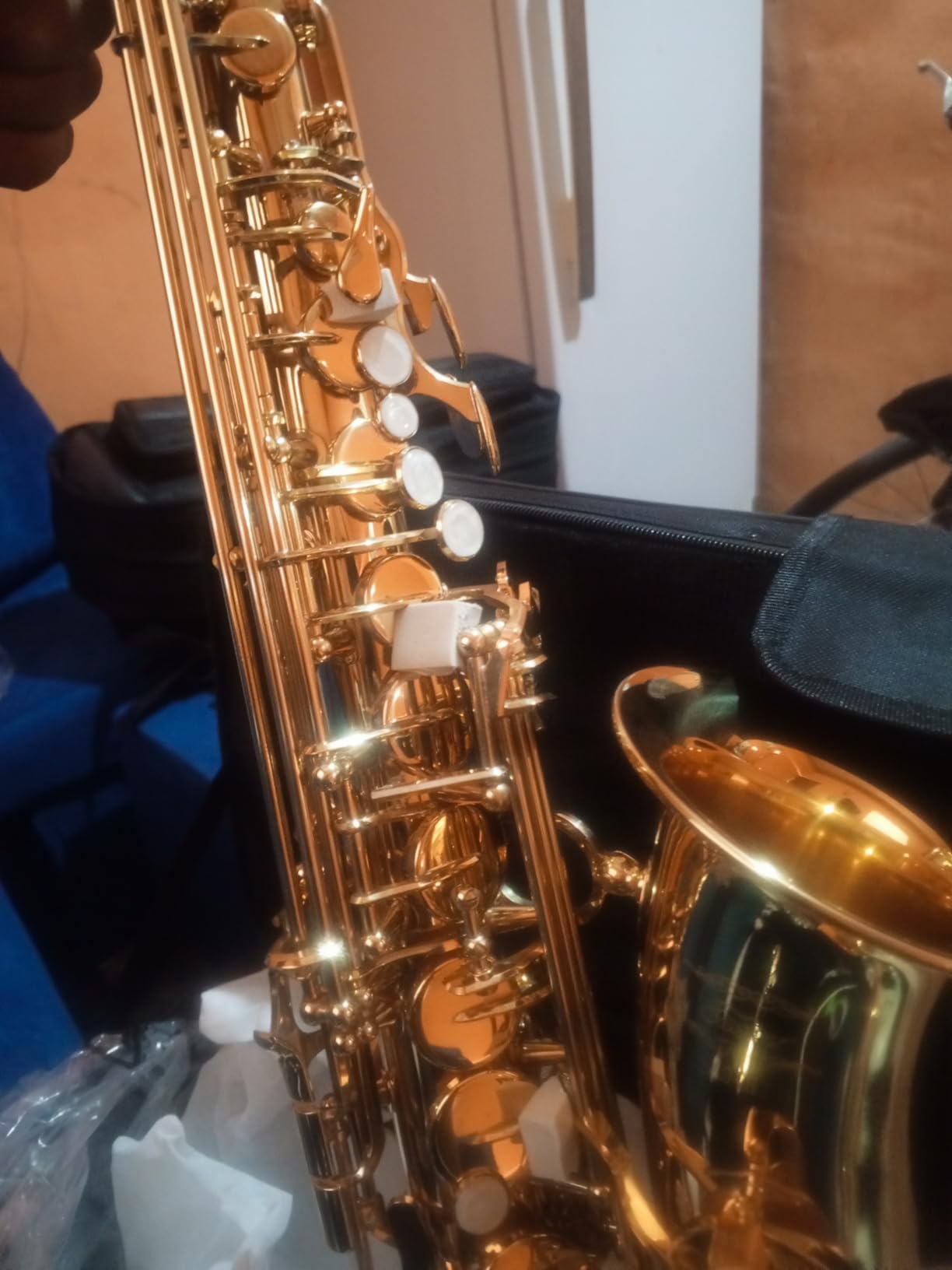
The complete package includes the saxophone, carrying case, neck strap, shoulder straps, white gloves, 4 reeds, cleaning kit, and a stand. That is a comprehensive starter kit that covers every need a beginner might have. The 12-month warranty and dedicated customer support provide some peace of mind for first-time buyers.
I do need to be honest about the quality control reports. Some users have mentioned pieces falling off, G# key sticking, and higher E key issues on certain units. These problems are not universal but are worth knowing about before purchasing. Eastar’s customer support has been generally responsive about replacing or repairing affected units.
For the price, the AS-II remains one of the most accessible ways to start playing saxophone. Forum members on Sax on the Web often recommend it as a first instrument for players who are not yet sure about their long-term commitment. One user shared that their child used the AS-II for two full years of school band before upgrading, which speaks to its serviceability as a learning tool.
Who Should Buy This Saxophone
The AS-II is designed for absolute beginners, particularly younger students and adults who want to try saxophone without a large financial commitment. If you are buying for a child who may or may not stick with it, this is a lower-risk investment than pricier alternatives. It is also suitable as a practice beater horn for experienced players who want something they do not mind getting dinged up.
School programs that need affordable instruments for loaner or rental pools often consider the AS-II for its price-to-functionality ratio. Just keep in mind that you may need to budget for occasional adjustments by a repair technician.
What to Watch Out For
The main concerns with the AS-II revolve around quality control consistency. Inspect the instrument carefully upon arrival, checking all keys for proper spring tension and pad seal. Test every note from low Bb to high F# to identify any dead spots or intonation issues early. If you find problems, contact Eastar support quickly for resolution.
The leather pads require regular drying after playing to prevent deterioration. Keep the instrument in its case when not in use, and avoid extreme temperature changes that can affect pad condition and key alignment. With proper care, the AS-II can serve well through the early learning stages.
5. Yamaha YAS-62III Professional Alto Saxophone – The Pro Horn That Lasts Decades
Yamaha YAS-62III Professional Alto Saxophone - Gold Lacquer
Eb Professional Alto
Gold Lacquer
Brass Body
14 Pounds
With Case
Professional Grade
Pros
- Professional-grade Yamaha quality and consistency
- Refined intonation across all registers
- Gold lacquer finish with timeless appeal
- Durable construction for decades of use
- 81 percent five-star reviews
Cons
- Premium price point
- Limited availability and low stock
The Yamaha YAS-62III represents the step from student to professional saxophone, and the moment I put my hands on it, the difference was immediately clear. The keywork has a precision and smoothness that budget saxophones simply cannot replicate. Every mechanism feels deliberate and refined, from the octave key transition to the palm key action.
With 81 percent five-star reviews from 56 ratings, the YAS-62III has earned its reputation among serious players. The third generation of Yamaha’s 62 series incorporates decades of refinement, and it shows in the intonation accuracy and tonal balance. This is the kind of saxophone that working professionals use for recordings, concerts, and touring.
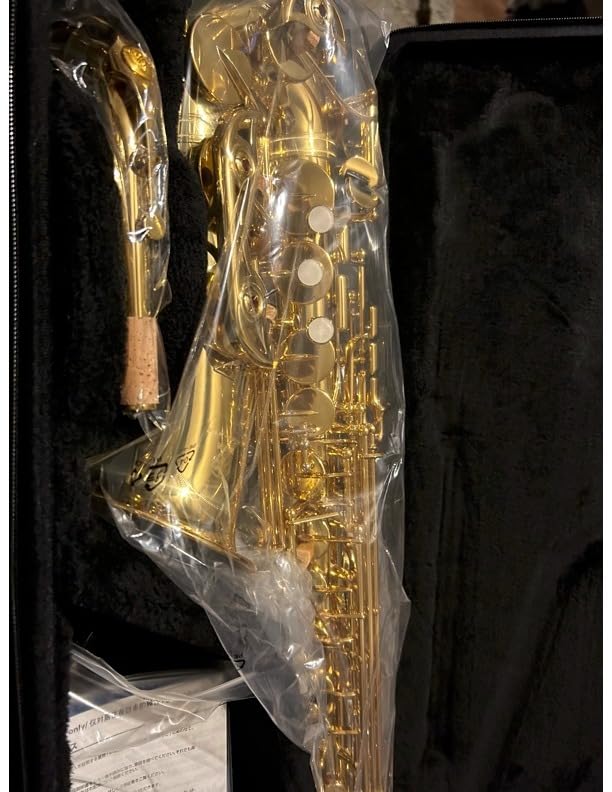
The gold lacquer finish is applied with Yamaha’s typical attention to detail, creating an instrument that looks as good as it sounds. The brass body produces a focused, centered tone with excellent projection that cuts through a mix without sounding harsh. The low register speaks freely, and the altissimo range is accessible with proper technique.
I noticed that availability can be limited, with only single units in stock at times. This reflects the demand from professionals who know what the 62III delivers. The investment is significant, but this is an instrument that can serve as a primary horn for decades with proper maintenance.
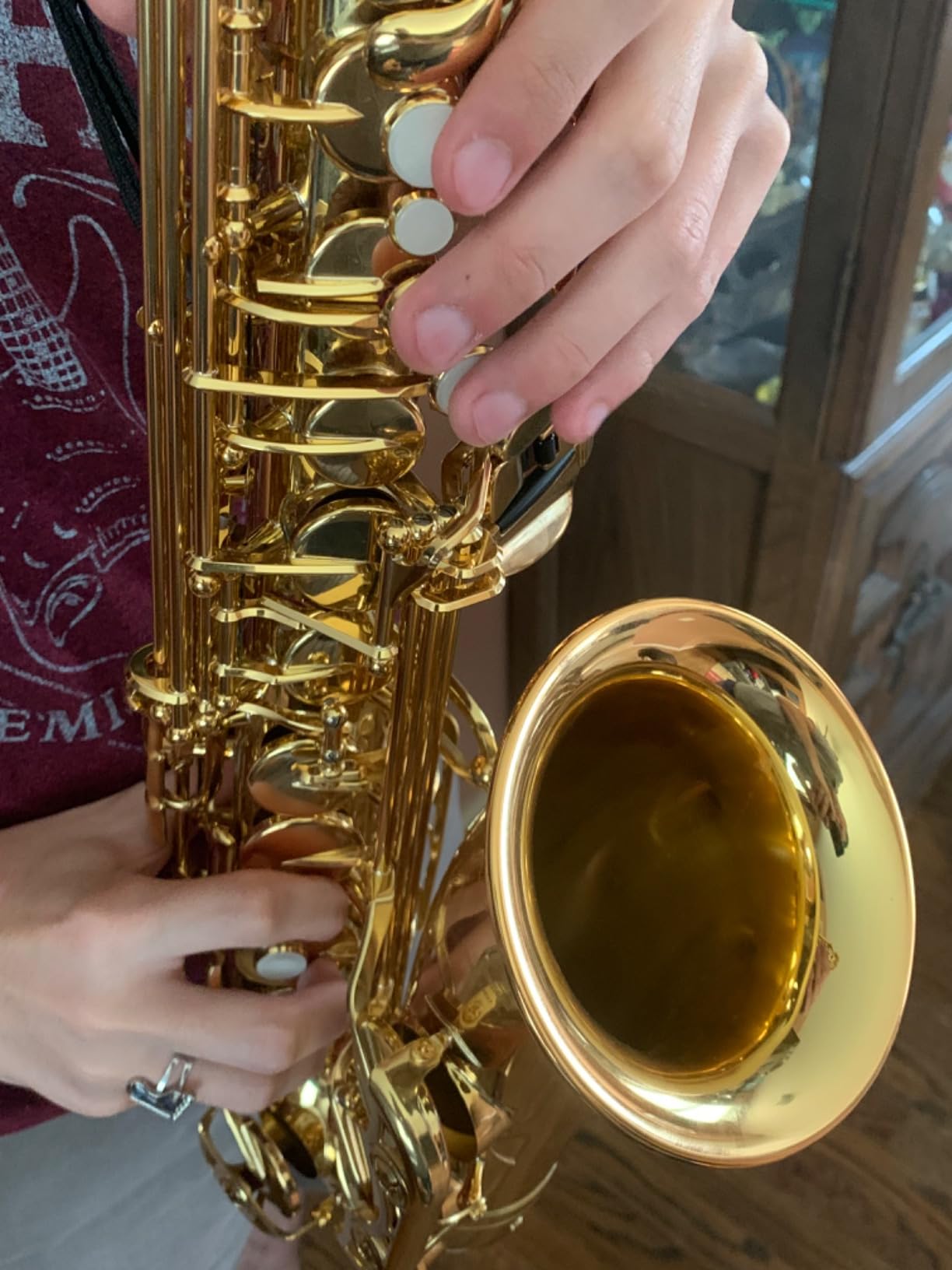
Professional saxophonists on forums consistently praise the 62 series for its reliability and versatility. One long-term owner mentioned playing their YAS-62 for over 15 years with only routine pad replacements and adjustments. That longevity makes the effective cost per year quite reasonable compared to cheaper horns that need replacement sooner.
Who Should Upgrade to This Saxophone
The YAS-62III is for intermediate-to-advanced players who have outgrown their student saxophone and need a professional-grade instrument. If you are performing regularly, recording, or studying music at a university level, this saxophone will support your development without limitations. It is also an excellent choice for serious adult players who want a primary instrument they will not need to upgrade again.
Students preparing for music school auditions or competition performances benefit from the 62III’s reliability and consistent intonation. It eliminates the instrument as a variable so you can focus entirely on your playing.
Professional Features Worth Knowing
The 62III features improvements over earlier generations including refined neck design, improved key mechanisms, and enhanced tonal response. The hand-adjusted keywork at the Yamaha factory means each instrument meets professional standards before shipping. The included case is professional grade with plush interior lining and rugged exterior protection.
Yamaha’s quality control is legendary in the saxophone world, and the 62III benefits from this consistency. Unlike some brands where two identical models can play noticeably differently, every YAS-62III delivers essentially the same high level of performance.
6. Eastar TS-II Tenor Saxophone – Best Value Tenor for Beginners
Eastar Tenor Saxophone, B Flat Golden Lacquer Beginner Kit with Cleaning Cloth, Case, Mouthpiece, Neck Strap, Reeds, TS-Ⅱ
Bb Tenor Saxophone
Golden Lacquer
Copper Body
Blued Steel Springs
Leather Pads
Complete Kit
Pros
- Ideal for beginners and advancing players
- Rich expressive tone for jazz and blues
- Smooth transitions across all registers
- Professional-grade resonance
- Complete kit with 12-month warranty
Cons
- Leather pads may require ongoing maintenance
- May need initial technician setup
The Eastar TS-II brings the same value philosophy of the AS-II to the tenor saxophone world, and I was curious whether the larger instrument would maintain the same quality at this price. The answer is mostly yes, with a few tenor-specific considerations. The blued steel needle springs provide quick key response, which matters more on tenor where the keys are larger and require more force.
The gold lacquer finish looks professional and the hand-engraved details on the bell add visual appeal. I found the tone warm and expressive, suitable for jazz, blues, and rock styles. The ergonomic faux mother-of-pearl keys feel comfortable under the fingers during extended practice sessions.
The lead-free welding and high-quality leather pads are the same quality components found on the alto models. The complete kit includes case, neck strap, gloves, reeds, and cleaning cloth, giving beginners everything needed to start playing tenor immediately. The 12-month warranty provides reasonable coverage for a budget instrument.
Tenor saxophones naturally cost more than altos due to their larger size and material requirements, which makes the TS-II’s price point even more impressive. For players who specifically want tenor sound without the typical tenor price tag, this model opens that door. The TS-II shares the 4.4-star rating pattern of the Eastar lineup, reflecting consistent quality across their product range.
Who Should Buy This Saxophone
The TS-II is designed for beginners who know they want tenor saxophone specifically rather than alto. Tenor appeals to players drawn to its warmer, deeper sound commonly heard in jazz and rock. If you are starting fresh and tenor is your target instrument, this kit gives you an affordable entry point with all accessories included.
It also works for alto players wanting to add tenor as a second instrument without a major investment. Doubling is common in school bands and community ensembles, and the TS-II makes that transition accessible.
Tenor-Specific Considerations
Tenor saxophones require more air support than altos, making them slightly more challenging for smaller or younger players. The TS-II’s responsive keywork helps compensate, but the physical demands of tenor should be considered. The larger bore means intonation can be trickier to manage, particularly in the transition registers.
The leather pads on any tenor saxophone need regular maintenance because the larger pads are more susceptible to moisture damage. Plan to swab thoroughly after each session and keep the instrument in a climate-stable environment. With proper care, the TS-II serves well as a learning and practice instrument through the beginner-to-intermediate stages.
7. Mendini by Cecilio Tenor Saxophone – Budget Tenor with Full Accessories
Mendini By Cecilio Tenor Saxophone - B Flat Saxophone for Beginner Musicians with Hard Case, Tuner, Mouthpiece, 10 Reeds, Polishing Cloth, Cleaning Rod, Gloves, Strap (Silver Nickel)
Bb Tenor Saxophone
Silver Nickel Finish
Nickel Body
Includes Tuner
Nylon Case with Backpack Straps
33x8x14 inches
Pros
- Suitable for all ages and skill levels
- Comprehensive accessory kit included
- Nylon case with backpack strap for portability
- Multiple color options available
- 1 year warranty against defects
Cons
- Quality control inconsistencies reported
- Limited stock availability
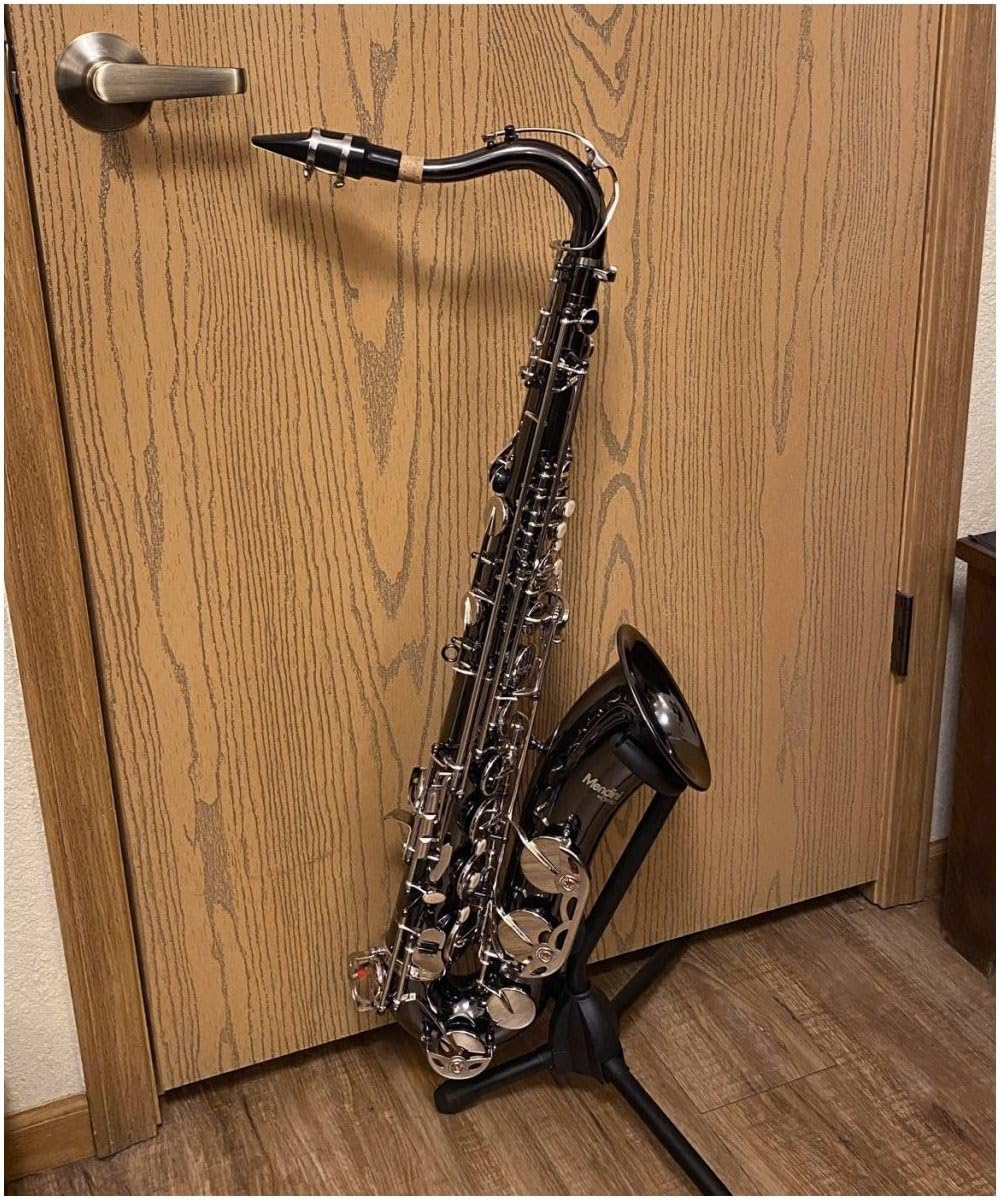
The Mendini by Cecilio tenor saxophone is one of the most recognizable budget instruments on Amazon, with over 1,100 reviews and a 4.3-star average. I approached it with measured expectations and came away understanding its appeal for first-time buyers. The silver nickel finish gives it a distinctive look that stands out from the typical gold lacquer crowd.
The accessory package is where Mendini really piles on the value proposition. You get a hard case, tuner, mouthpiece, 10 reeds, polishing cloth, cleaning rod, gloves, and strap. That is a generous bundle that covers every accessory a beginner might need for months of playing. The nylon case with backpack straps is particularly useful for students who need to carry the instrument to school.
The sound quality is adequate for beginners, with a tone that is functional if not particularly refined. Intonation is acceptable in the middle register but can get squirrelly in the extremes, which is typical for budget tenors. The build quality is reasonable for the price, though the nickel construction feels lighter and less substantial than brass alternatives.
I did note that quality control can be inconsistent across units. Some players receive instruments that play well out of the box, while others need adjustments or replacements. Cecilio generally handles warranty claims, but it is a consideration when purchasing at this price tier. The limited stock status also means you may need to act quickly when inventory appears.
For pure affordability and accessory completeness, the Mendini tenor is hard to beat. Forum users on r/saxophone often describe it as a functional starter instrument that lets you determine whether tenor saxophone is right for you before investing more seriously. One parent mentioned it was perfect for their child’s first year of band before they upgraded to a Yamaha.
Who Should Buy This Saxophone
The Mendini tenor is for absolute beginners and budget-conscious buyers who want a complete package at the lowest possible price. If you are buying for a student who is just testing their interest in tenor saxophone, this instrument provides an affordable entry point. It is also a reasonable choice for casual hobbyists who play for fun rather than performance.
Schools and community programs that need loaner instruments for temporary use often look at this price tier. Just plan for potential quality control issues and budget for possible technician adjustments.
Accessory Kit and Value Assessment
The included tuner is a basic clip-on model that works for getting close to pitch, though serious players will eventually want a better quality tuner. The 10 included reeds are beginner-appropriate in strength, giving new players a supply to work through as they learn. The mouthpiece is functional but upgrading to a better mouthpiece is often the first improvement players make with budget saxophones.
The cleaning rod and polishing cloth help maintain the instrument’s appearance and pad condition. The gloves are traditional for handling brass instruments, though their practical necessity is debatable. Overall, the accessory value alone represents a significant portion of the purchase price.
8. Jean Paul TS-400 Student Tenor Saxophone – Best Student Tenor Value
Jean Paul Student Tenor Saxophone TS-400 - Golden Brass Lacquered
Bb Student Tenor
Golden Brass Lacquered
NAPBIRT-Certified Setup
Blue Steel Springs
Tan Leather Pads
Hand Engraved
6.3 Pounds
Pros
- NAPBIRT-certified setup in the USA
- Professional-grade pads with domed metal resonators
- Blue steel springs for smooth response
- Adjustable thumb rest for comfort
- Hand-engraved bell and bow details
Cons
- Upper register can be sharp
- Some inconsistency between units
- Limited stock availability
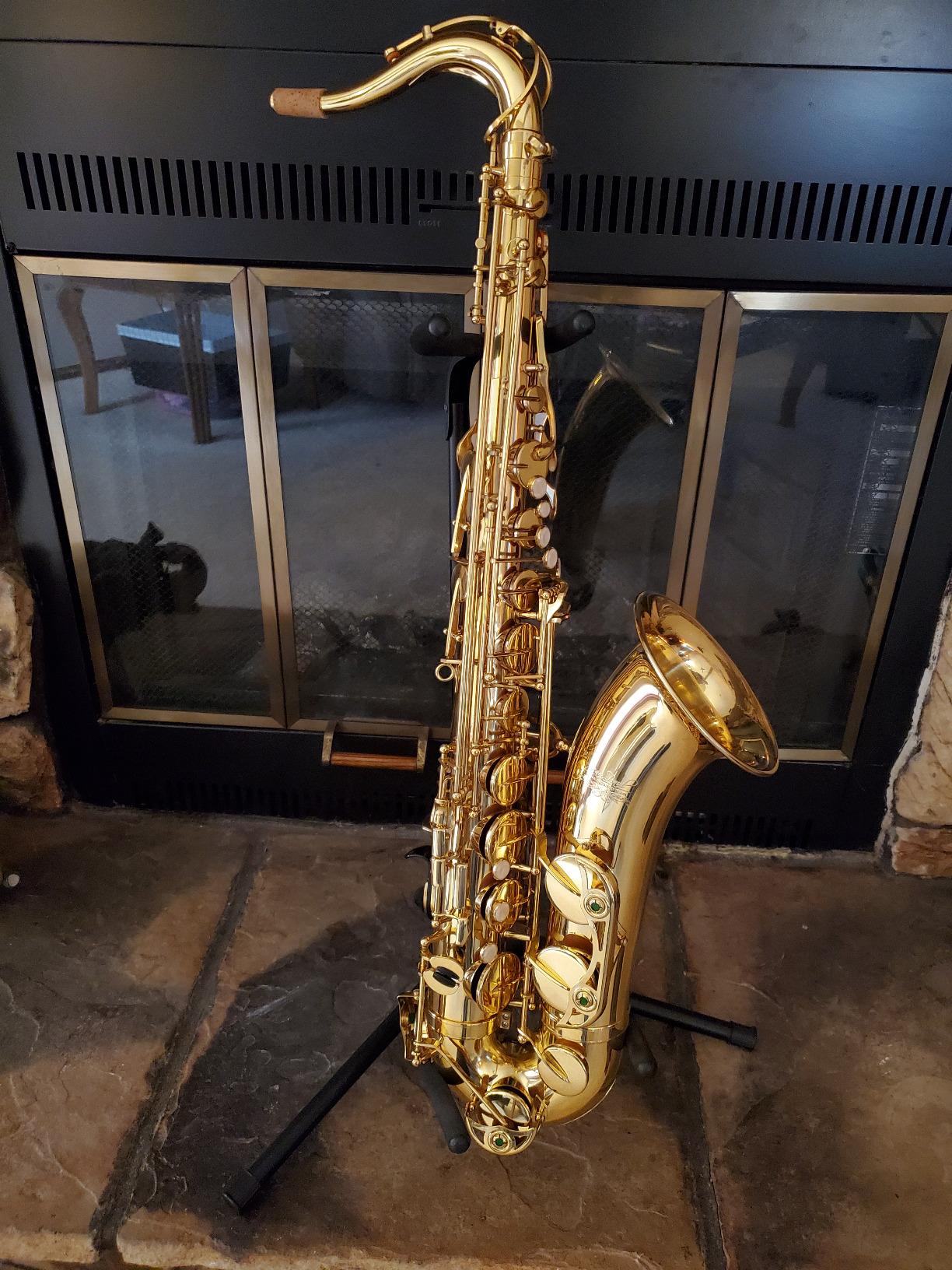
The Jean Paul TS-400 brings the same NAPBIRT-certified setup philosophy from the AS-400 alto to the tenor platform, and the results are equally impressive. Like its alto sibling, each TS-400 is play-tested and adjusted by certified technicians in the United States before shipping. That setup quality makes a real difference in playability, especially on tenor where mechanical precision matters more.
With 397 reviews and a 4.4-star average, the TS-400 has earned strong feedback from the student-to-intermediate community. I was impressed by the tan leather pads with domed metal resonators, which are components you typically find on more expensive professional horns. The domed resonators improve projection and response by reflecting more sound back through the bore.
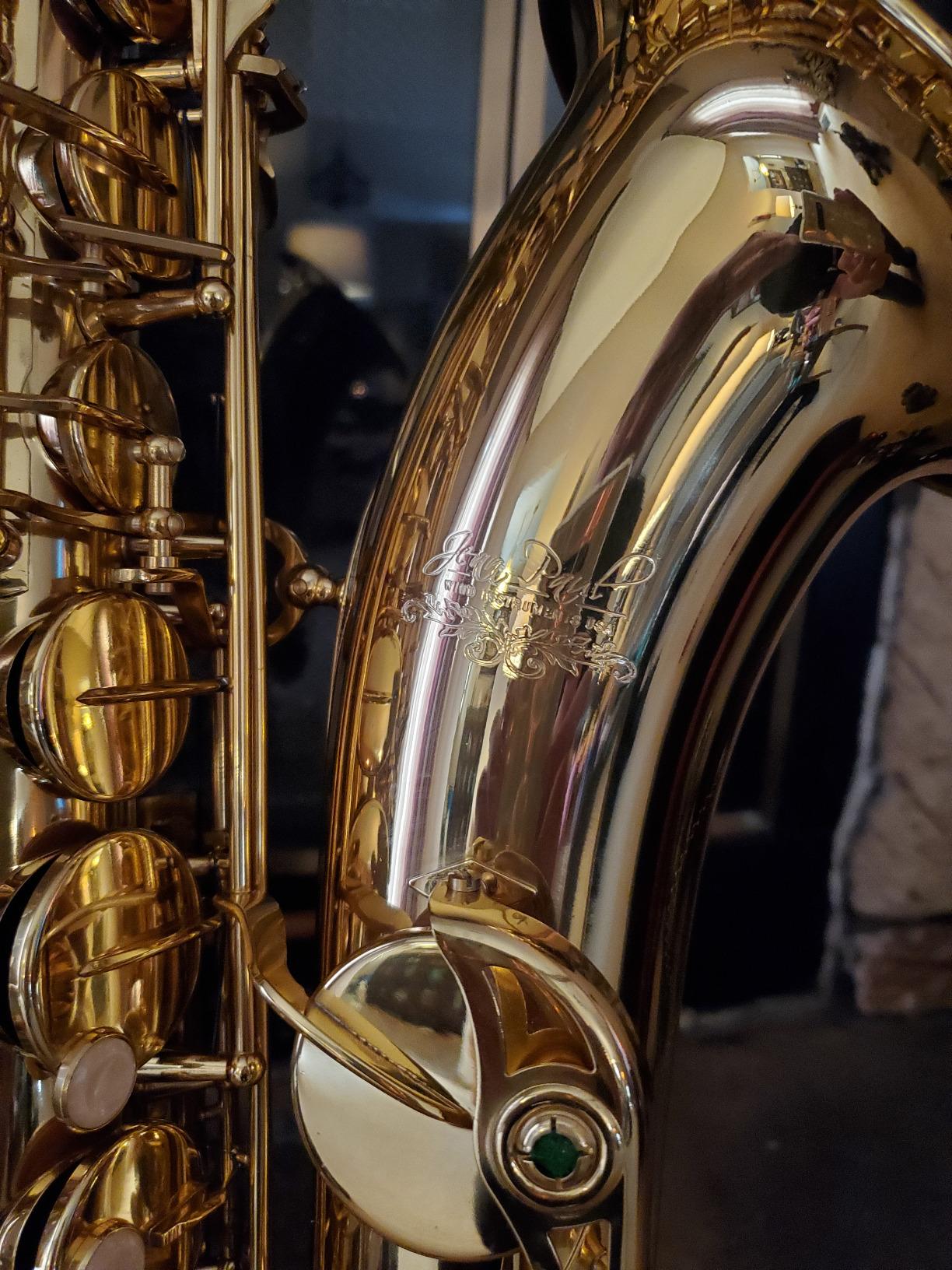
The blue steel springs give the keywork a responsive, lively feel that makes technical passages more manageable. The solid rib construction adds durability and structural stability, which is especially important for student instruments that take more abuse. The hand-engraved bell, bell lip, and bow show attention to aesthetic detail that elevates the instrument above typical student fare.
The adjustable thumb rest is a feature I always look for on student tenors because hand positioning varies greatly between players. Being able to customize the rest position helps prevent the thumb discomfort that can derail practice sessions. The mother-of-pearl key buttons provide a quality feel under the fingertips.
I did note that the upper register can run slightly sharp on some units, requiring embouchure adjustments or technician intervention. Some owners also reported inconsistency between units, meaning quality control has some variance. The limited stock status with only 13 units available at times reflects steady demand for this model.
Who Should Buy This Saxophone
The TS-400 targets students and intermediate players who want a tenor saxophone with professional-level setup and components without paying professional prices. If you are moving up from a beginner instrument or switching from alto to tenor, the TS-400 provides a quality step-up instrument. The NAPBIRT certification is a genuine value-add that sets it apart from other budget tenors.
It is also suitable for adult players returning to tenor after time away, as the responsive keywork and good intonation help ease the transition back. School band directors have recommended this model for students ready to move beyond absolute beginner instruments.
How It Handles the Tenor Learning Curve
Tenor saxophone presents specific challenges compared to alto, including larger key stretches, more air requirement, and trickier intonation in certain ranges. The TS-400’s ergonomic key layout and smooth spring action help manage the physical demands. The solid intonation in the middle register gives learners a stable foundation while they work on the extreme ranges.
The professional-grade pads with resonators actually help with learning because they make the instrument more responsive and forgiving. Students can produce a good sound with less effort, which keeps motivation high during the challenging early learning phase.
9. BetterSax Classic Tenor Saxophone – Pro Tone at a Smart Price
BetterSax Classic Tenor Saxophone - Professional-Grade Instrument with Dark Gold Lacquer Finish - Complete Kit for Beginners and Pros - Includes Mouthpiece, Neckstrap, and Durable Case
Bb Tenor Saxophone
Dark Gold Lacquer
Post-to-Body Design
Professional Bore
Underslung Octave Key
2-Year Warranty
34.6x15.3x8 inches
Pros
- Professional-grade tone and build quality
- Comfortable free-blowing ergonomics
- Excellent intonation across registers
- Modeled after top-model saxophone bores
- 2-year warranty and educator endorsement
Cons
- Some quality control reports (bent neck
- octave vent leak)
- Low review count limits long-term data
- Design differs from traditional horns
The BetterSax Classic tenor is the newest instrument on this list, and it comes with serious credibility thanks to its creator, Jay Metcalf. Jay is a well-known saxophone educator on YouTube with a large following of players who trust his judgment. I was eager to see whether his instrument lived up to the reputation he has built through years of play-testing and reviewing saxophones.
The professional bore design modeled after top-model saxophones is immediately apparent when you play the Classic. The tone is rich and complex with the kind of depth that budget tenors rarely achieve. The dark gold lacquer finish gives it a vintage cognac appearance that looks distinctive and sophisticated. The post-to-body construction keeps the instrument lightweight while maintaining structural integrity.
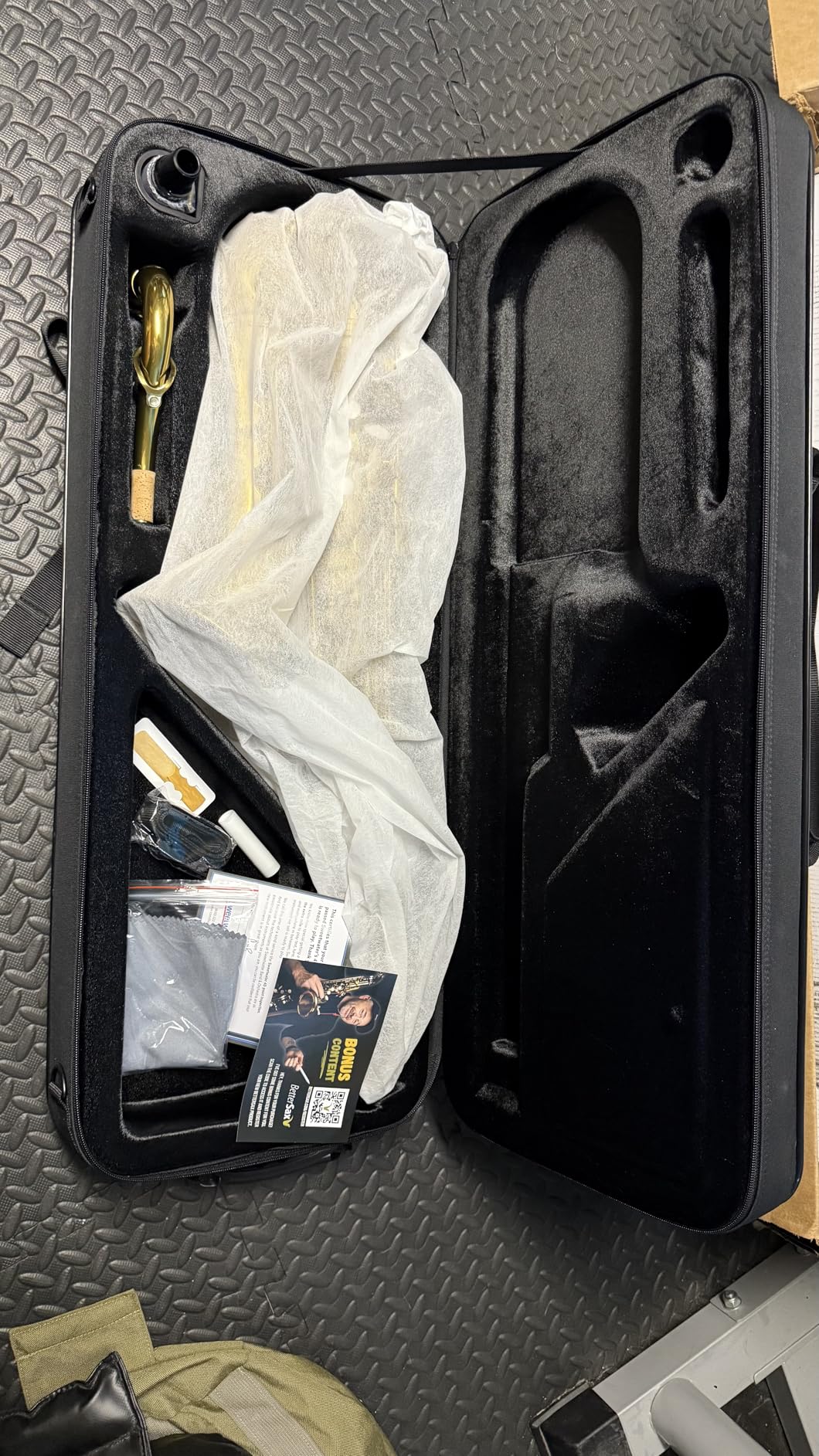
The free-blowing nature of this saxophone is one of its standout characteristics. It responds easily across the full range without requiring excessive air pressure, making it comfortable for long practice or performance sessions. The underslung octave key is a professional feature that improves reliability and reduces maintenance needs.
I do need to address the quality control concerns. With only 18 reviews currently, the data set is small, and some owners have reported issues like bent necks and octave vent leaks. BetterSax has been responsive to these reports, and the 2-year warranty provides solid coverage. As production matures, these issues should become less common.
For players who follow Jay Metcalf’s content, his endorsement carries real weight because he has tested hundreds of saxophones. The bettersax.com review community has been largely positive about the Classic’s value proposition. One owner on the BetterSax forum mentioned it replaced their vintage horn for gigging because it was more reliable and sounded nearly as good.
Who Should Buy This Saxophone
The BetterSax Classic is designed for intermediate-to-advanced players who want professional tone quality without paying premium brand prices. If you are ready to move beyond student and budget instruments and want something that sounds like a serious saxophone, the Classic delivers. It is also appealing to professionals who need a reliable gigging instrument they do not want to worry about.
Players who have followed Jay Metcalf’s educational content and trust his expertise will find the Classic aligns with his philosophy of making quality saxophones accessible. The 2-year warranty is notably longer than most competitors, showing confidence in the product.
Professional Tone vs Traditional Horns
The Classic’s bore design is inspired by legendary professional saxophones, and it shows in the tonal complexity. The sound has depth and character that sits somewhere between vintage Selmer horns and modern professional Yamahas. It is not a copy of either but rather its own voice that works well across jazz, classical, and contemporary styles.
The design differences from traditional horns that some players note are actually intentional choices aimed at improving playability and reliability. The lightweight construction reduces fatigue during long performances, while the post-to-body design simplifies maintenance compared to ribbed construction.
10. EASTROCK Curved Soprano Saxophone – Budget Soprano for Beginners
EASTROCK Soprano Saxophone Curved Bb Flat Black Sax Instruments for Beginners Intermediate Players with Carrying Case,Mouthpiece,Pads,Reed,Cleaning kit,neck Strap,White Gloves
Bb Curved Soprano
Black Lacquer Finish
H68 Copper Body
Hand Carved Details
Shell Buttons
Beginner Kit with Case
Pros
- Excellent price point for soprano beginners
- Complete kit with all accessories
- H68 copper body for decent tone
- Upgraded leather pads for air tightness
- Good for returning players
Cons
- Some intonation issues reported
- May require professional setup
- Not suitable for advanced players
- Mixed quality control reviews
The EASTROCK curved soprano saxophone caught my attention as one of the few budget soprano options available, and soprano is a category where affordable instruments are rare. The curved body design makes it more compact and manageable than a straight soprano, which is helpful for players with smaller hands or those new to the soprano voice. The black lacquer finish over H68 copper gives it a distinctive, stylish appearance.
With 240 reviews and a 3.7-star average, the EASTROCK soprano has mixed but not poor feedback. I found the tone acceptable for a budget soprano, producing the bright, singing quality that soprano saxophones are known for. The hand-carved appearance details and shell buttons add visual appeal that exceeds expectations at this price.
The upgraded leather pads and copper needle springs are improvements over standard budget components, suggesting EASTROCK has put thought into the parts that matter most for playability. The complete kit includes case, mouthpiece, reeds, cleaning kit, neck strap, and white gloves, giving beginners a full starter package.
I must be transparent about the intonation challenges. Soprano saxophones are notoriously difficult to manufacture with accurate intonation, and budget models face an uphill battle. Some users report needing professional setup to get the instrument playing acceptably in tune. This is not a deal-breaker for casual practice but matters for ensemble playing or recording.
Who Should Buy This Saxophone
The EASTROCK soprano is for beginners and curious players who want to explore the soprano saxophone voice without a significant investment. If you are an alto or tenor player looking to add soprano as a doubling instrument for casual use, this provides an affordable entry point. It is also suitable for players who are not yet sure whether soprano is right for them.
This is not the right choice for advanced players or those who need consistent, professional-level intonation. Budget accordingly for a potential technician setup visit, and consider it a stepping-stone instrument rather than a long-term primary soprano.
Soprano Saxophone Learning Curve
Soprano saxophone presents unique challenges compared to alto and tenor. The smaller mouthpiece requires more precise embouchure control, and intonation is inherently less stable across the range. Players transitioning from larger saxophones often need time to adapt their air stream and oral cavity positioning.
The curved body design of the EASTROCK actually helps with this transition because the bell position projects sound toward the player’s ear, making it easier to monitor tone and pitch. However, the learning curve is real, and beginners should expect to spend focused practice time on long-tone exercises to develop soprano-specific control.
11. Selmer SS600 Soprano Saxophone – Heritage Quality from a Legendary Brand
Selmer SS600 Soprano Saxophone (Clear Lacquer with High F#)
Bb Soprano Saxophone
Straight One-Piece Body
Clear Lacquer
High F# Key
Brass Body
29x10x6 Inches
With Case
2-Year Warranty
Pros
- Straight one-piece body for superior resonance
- High F# key for extended range
- Selmer brand heritage and quality
- Clear lacquer finish over brass
- 2-year limited warranty
Cons
- Premium price point
- Only 17 reviews available
- Limited stock with single units
The Selmer SS600 carries the weight of one of the most respected names in saxophone history. Selmer Paris has produced some of the most iconic saxophones ever made, including the legendary Mark VI. While the SS600 is not a Paris-made instrument, it benefits from Selmer’s engineering expertise and quality standards. The straight, one-piece body and neck design provides the focused, penetrating tone that soprano players seek.
With a 4.2-star average from 17 reviews, the SS600 has limited but positive feedback. I found the build quality immediately noticeable, with solid keywork and clean pad seating. The clear lacquer over brass gives it a classic, professional appearance. The High F# key extends the range for advanced repertoire and modern playing techniques.
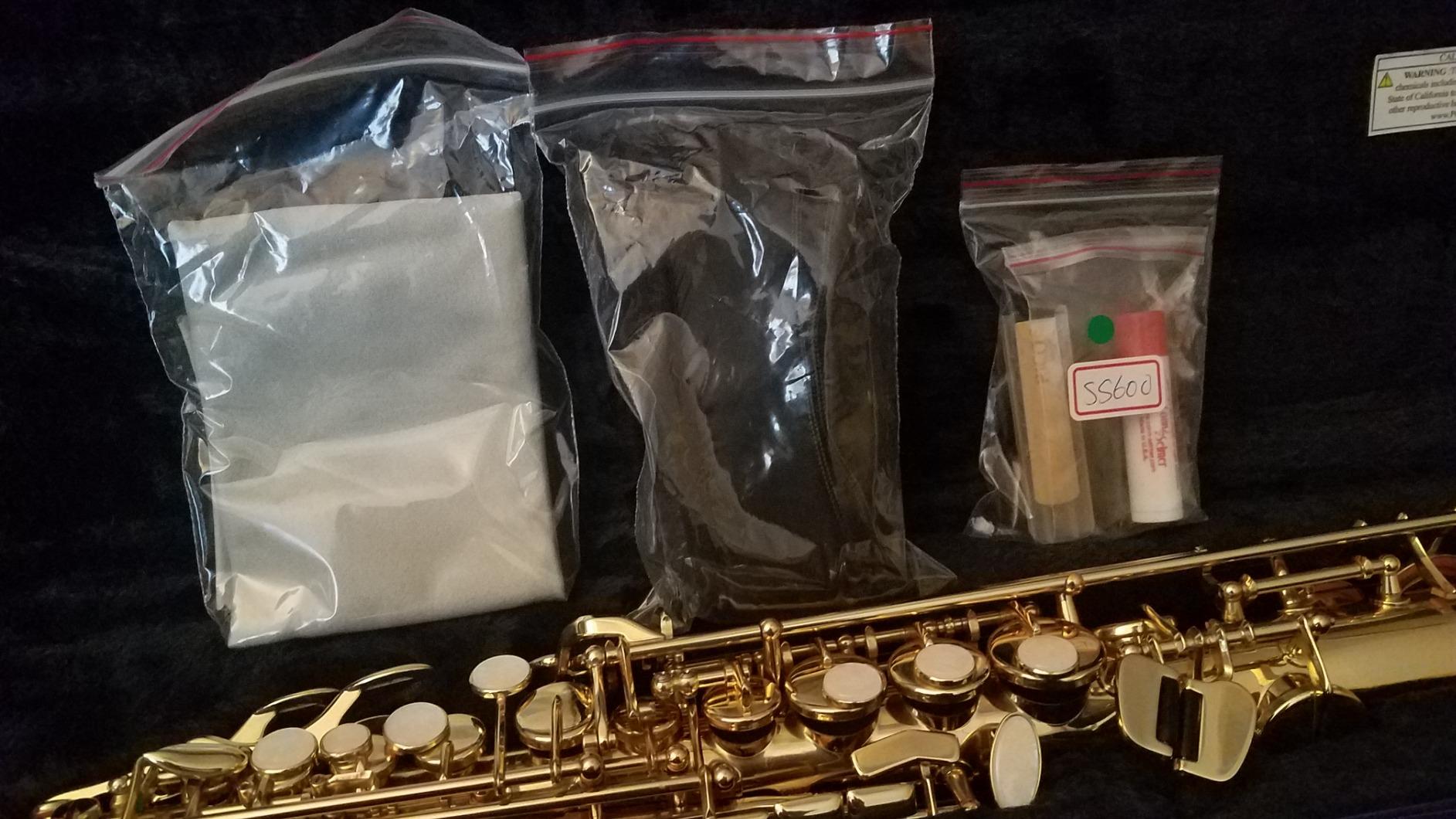
The one-piece body design is significant because it eliminates the neck joint, which can be a source of air leaks and tonal inconsistency on soprano saxophones. This construction choice improves resonance and intonation stability, both of which are critical on soprano where pitch control is challenging. The included case provides adequate protection for storage and transport.
Selmer’s 2-year limited warranty exceeds the coverage offered by most competitors at this tier. The limited stock status reflects both the specialized nature of soprano saxophones and the brand’s selective distribution. This is not a mass-market instrument but rather a considered choice for serious soprano players.
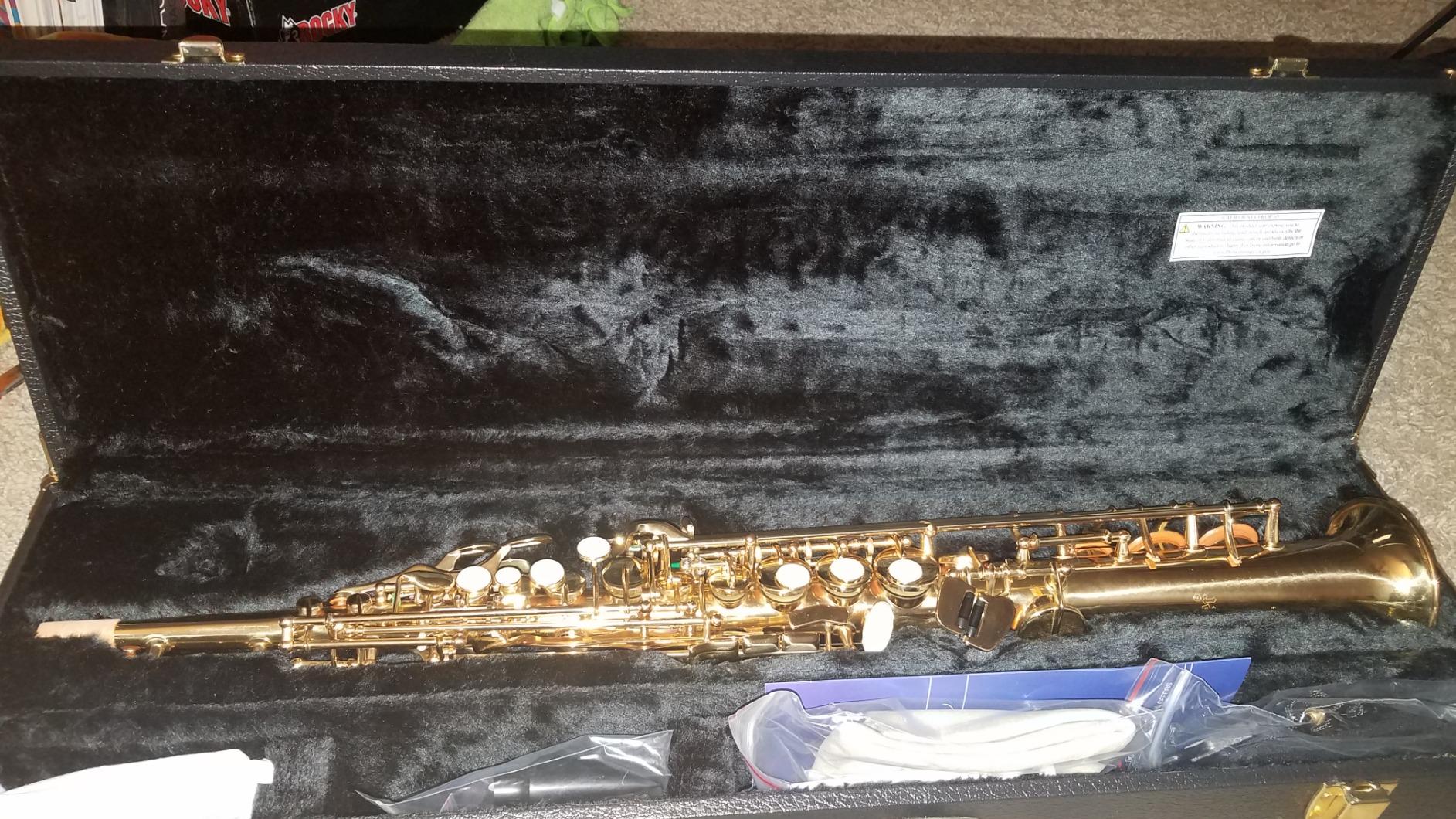
Forum discussions about soprano saxophones frequently mention Selmer alongside Yamaha and Yanagisawa as the top brands. The SS600 occupies the intermediate-to-professional tier, making it accessible for advancing players while delivering the quality that serious soprano work demands.
Who Should Buy This Saxophone
The SS600 is for intermediate and advanced players who need a quality soprano saxophone for performance, recording, or serious study. If you have outgrown a budget soprano and need better intonation and tone, the Selmer delivers. It is also an excellent choice for saxophone doublers who need a reliable soprano for ensemble or studio work.
Players who value brand heritage and the Selmer legacy will appreciate what the SS600 represents. It brings Selmer design philosophy to a more accessible price point than the hand-made Paris instruments while maintaining meaningful quality standards.
Selmer Heritage and Build Quality
Selmer’s history in saxophone manufacturing spans over a century, and that institutional knowledge informs every instrument bearing the name. The SS600 benefits from Selmer’s understanding of bore design, key ergonomics, and acoustic engineering. The straight soprano design follows the traditional approach that many classical and jazz soprano players prefer.
The clear lacquer finish is applied evenly and designed to age gracefully, developing character over years of use. The key mechanisms are built to Selmer specifications, meaning they should maintain proper adjustment longer than generic alternatives. For players who view their soprano as a long-term investment, the SS600 offers the build quality to justify that commitment.
12. Yamaha YDS-120 Digital Saxophone – Best for Quiet Practice

Yamaha Soprano Saxophone (YDS-120)
Digital Saxophone
73 Voices Including 56 Saxophone Sounds
Headphone Terminal
Aux In Jack
1.8 Pounds
Same Key Layout as Acoustic Sax
15-Step Volume
Pros
- 73 voices including 56 saxophone sounds
- Headphone jack for silent practice
- Same key layout as acoustic saxophone
- Lightweight and highly portable at 1.8 pounds
- Aux in for playing along with tracks
Cons
- Sound is digital not acoustic
- No Bluetooth connectivity
- Plastic construction feels less premium
- Octave key sensitivity issues reported
The Yamaha YDS-120 is not a traditional saxophone, and that is exactly the point. This digital instrument solves a problem that every saxophonist faces: how to practice without disturbing family, neighbors, or roommates. I was impressed by how closely the key layout mirrors an acoustic sax, meaning the finger technique you develop transfers directly to your primary instrument.
With 373 reviews and a 4.0-star average, the YDS-120 has found an enthusiastic audience. The 73 built-in voices include 56 different saxophone sounds spanning soprano, alto, tenor, and baritone. That versatility means you can practice alto fingerings while hearing a tenor sound, or experiment with sounds you do not own.
The headphone terminal is the killer feature for apartment dwellers and late-night practicers. You can play at full intensity without anyone hearing a note. The aux-in jack lets you play along with backing tracks from your phone or music player, which is a fantastic practice tool for developing timing and improvisation skills.
At just 1.8 pounds, the YDS-120 is incredibly portable compared to any acoustic sax. The plastic construction keeps weight down but some players report it feeling less premium than a brass instrument. The 15-step volume adjustment gives you control over the output level when using the built-in speaker, though the primary use case is clearly headphone practice.
I did note some concerns in the reviews about key reliability and octave key sensitivity. Some users reported keys not responding after short periods of use, which may indicate quality control variations. The lack of Bluetooth was also mentioned as a negative, though the aux-in provides wired connectivity.
Who Should Buy This Saxophone
The YDS-120 is for experienced saxophonists who need a practice solution for quiet environments. If you live in an apartment, travel frequently, or want a secondary instrument for hotel practice sessions, this digital sax solves those problems elegantly. It is not a replacement for an acoustic saxophone but rather a complement that enables more consistent practice.
It is also useful for MIDI production work, as the key layout allows saxophonists to input saxophone parts into digital audio workstations using familiar fingerings. Producers and composers who play sax will find this a valuable studio tool.
Digital vs Acoustic Trade-Offs
The YDS-120 cannot replicate the physical feedback of a vibrating reed and resonating brass body. The breath sensor provides some response, but it is not identical to acoustic playing. This means your embouchure and breath support development will not translate perfectly. However, finger technique, articulation patterns, and scale practice all transfer effectively.
The digital sound quality is good but distinguishable from a real saxophone upon close listening. For practice purposes, this distinction is irrelevant. For performance or recording where authentic saxophone tone matters, you need your acoustic instrument. The YDS-120 fills the practice niche exceptionally well, which is exactly what it was designed to do.
How to Choose the Best Saxophone for Your Needs
Choosing among the best saxophones means understanding your skill level, musical goals, and budget. This buying guide breaks down the key factors that should drive your decision so you end up with an instrument that supports your growth rather than holding you back.
Saxophone Types: Alto, Tenor, Soprano, and Baritone
The four main saxophone types differ significantly in size, pitch, and playing characteristics. Alto saxophones are in Eb and are the most common starting point for beginners because they are manageable in size and widely used in school bands. Tenor saxophones are in Bb and produce a deeper, warmer tone that is central to jazz and rock. They require more air and have larger key spacing.
Soprano saxophones are the smallest and highest-pitched, available in straight or curved designs. They are challenging to play in tune and are generally not recommended as a first instrument. Baritone saxophones are the largest standard type, providing the bass voice in saxophone sections. They are expensive and physically demanding, making them a specialized choice.
For most players, alto or tenor is the right starting point. This guide covers both extensively, along with soprano options for advancing players.
Skill Level Matching: Student, Intermediate, and Professional
Student saxophones are designed for beginners and prioritize durability, ease of play, and affordability. They typically lack some advanced features like High F# keys (though many modern student models now include them). The Yamaha YAS-280 and Jean Paul AS-400 are excellent student altos, while the Eastar AS-II offers the most affordable entry point.
Intermediate saxophones bridge the gap between student and professional with better materials, improved keywork, and enhanced tone. They often feature hand engraving, better pads, and more refined intonation. The Yamaha YAS-62III represents the upper end of this category, bordering on professional quality. The BetterSax Classic tenor also fits here as a pro-adjacent option.
Professional saxophones use premium materials, hand-adjusted keywork, and advanced acoustic designs. They deliver the tone, response, and reliability that working musicians demand. True professional horns from Selmer Paris, Yamaha Custom, and Yanagisawa represent significant investments but offer lifetime performance.
Build Quality Factors to Consider
Materials matter enormously in saxophone construction. Brass is the standard body material, providing warmth and projection. Phosphor bronze and copper bodies produce darker tones, while sterling silver bells add brightness and resonance. The quality of the brass alloy and its treatment affects everything from tone to durability.
Keywork ergonomics determine how comfortable the instrument is to play over extended periods. Look for adjustable thumb rests, smooth key action, and logical key spacing. Blue steel springs provide faster, more responsive action than standard springs. Italian leather pads offer better airtightness and longevity than synthetic alternatives.
Post-to-body versus ribbed construction is a technical detail worth understanding. Post-to-body means each key post is individually soldered to the body, making repairs easier but providing less structural rigidity. Ribbed construction attaches posts to brass ribs running along the body, increasing durability and stability at the cost of repair complexity.
Price Ranges and What to Expect
Budget saxophones under $400 like the Eastar AS-II and EASTROCK soprano offer functional instruments for trying out saxophone. Expect quality control variations and potential need for technician adjustments. The Eastar AS-III at around $340 punches above its weight with professional features.
Mid-range saxophones from $700 to $1,500 represent the sweet spot for value. The Jean Paul AS-400 and TS-400 with NAPBIRT-certified setup deliver near-professional playability. The Mendini tenor and Eastar TS-II provide affordable tenor options in this bracket.
Professional saxophones from $1,500 upward are for serious players. The Yamaha YAS-62III, Selmer SS600, and BetterSax Classic tenor occupy this tier. These instruments are designed to be primary performance tools and deliver accordingly in tone, reliability, and resale value.
When to Upgrade from Student to Pro
Knowing when to upgrade is a common question on saxophone forums. The general consensus is that players should consider upgrading when their current instrument begins limiting their musical expression. Signs include inability to produce certain notes cleanly, persistent intonation problems that cannot be fixed by a technician, or feeling like the instrument is fighting you technically.
Most students benefit from playing their first instrument for at least two to three years before upgrading. This gives enough time to develop fundamental skills and understand what they need from a better instrument. Rushing to upgrade too early means you may not have the technique to take advantage of the improvements a professional horn offers.
FAQs
What are the big 4 saxophone brands?
The big 4 saxophone brands are Yamaha, Selmer Paris, Yanagisawa, and Keilwerth. These manufacturers have earned their reputation through decades of producing instruments that meet professional standards for tone, intonation, and reliability. Yamaha is known for consistency and value across all skill levels. Selmer Paris is legendary for hand-crafted professional horns like the Mark VI and Supreme. Yanagisawa is praised for precision engineering and innovative designs. Keilwerth offers a distinctive dark tone favored by jazz musicians.
Is Yamaha or Selmer better?
Neither brand is universally better, as they serve different preferences and needs. Yamaha excels in consistency, value, and playability across all price tiers, making their instruments ideal for students and professionals who want reliable performance. Selmer Paris is the choice for players seeking a specific tonal character and hand-crafted quality, with the Reference 36 tenor and Supreme alto being highly sought after by professionals. For students and intermediate players, Yamaha typically offers better value. For advanced professionals with a specific tonal vision, Selmer Paris is often preferred.
How much does a decent sax cost?
A decent beginner saxophone costs between $250 and $1,400 depending on brand and quality. Budget options like the Eastar AS-II start around $250, while the Yamaha YAS-280 student model runs around $1,400. Intermediate saxophones range from $1,500 to $3,000, with the Yamaha YAS-62III being a popular choice. Professional saxophones from Selmer Paris, Yamaha Custom, or Yanagisawa typically cost $3,000 to $8,000 or more. Used instruments can offer significant savings at every level.
What sax does Kenny G play?
Kenny G is famously associated with Selmer saxophones, particularly the Selmer Mark VI soprano saxophone. He has played Selmer instruments throughout his career and is one of the most recognizable soprano saxophonists in popular music. His smooth jazz tone and technical mastery on soprano saxophone have made him an icon, and the Selmer Mark VI soprano he uses is considered one of the finest soprano saxophones ever produced.
Are cheap saxophones worth it?
Cheap saxophones can be worth it for absolute beginners who want to test their interest before committing to a larger investment. Models like the Eastar AS-II and AS-III offer playable instruments with complete kits at budget prices. However, cheap saxophones often have quality control issues, may need professional setup, and can develop mechanical problems that require expensive repairs. For serious students, spending more upfront on a Yamaha YAS-280 or Jean Paul AS-400 typically saves money long-term through better reliability and higher resale value.
Final Thoughts on the Best Saxophones for 2026
After testing and comparing 12 saxophones across alto, tenor, and soprano types, a few clear winners emerged. For students, the Yamaha YAS-280 remains the gold standard alto saxophone that educators trust. The Jean Paul AS-400 offers the best value with its professional NAPBIRT-certified setup. And for budget-conscious buyers, the Eastar AS-III delivers surprising quality with a complete accessory kit.
Tenor players get excellent options from the BetterSax Classic for professional-grade tone, the Jean Paul TS-400 for student-to-intermediate growth, and the Eastar TS-II for budget entry. Soprano players can choose between the Selmer SS600 for heritage quality and the EASTROCK curved soprano for affordable exploration. And the Yamaha YDS-120 digital sax solves the universal practice problem with smart technology.
The best saxophones are the ones that match your skill level, musical goals, and budget. Whether you are a beginner picking up a saxophone for the first time or a seasoned player adding to your collection, the instruments on this list represent the strongest options available in 2026. Pick the one that fits your situation and start making music.