
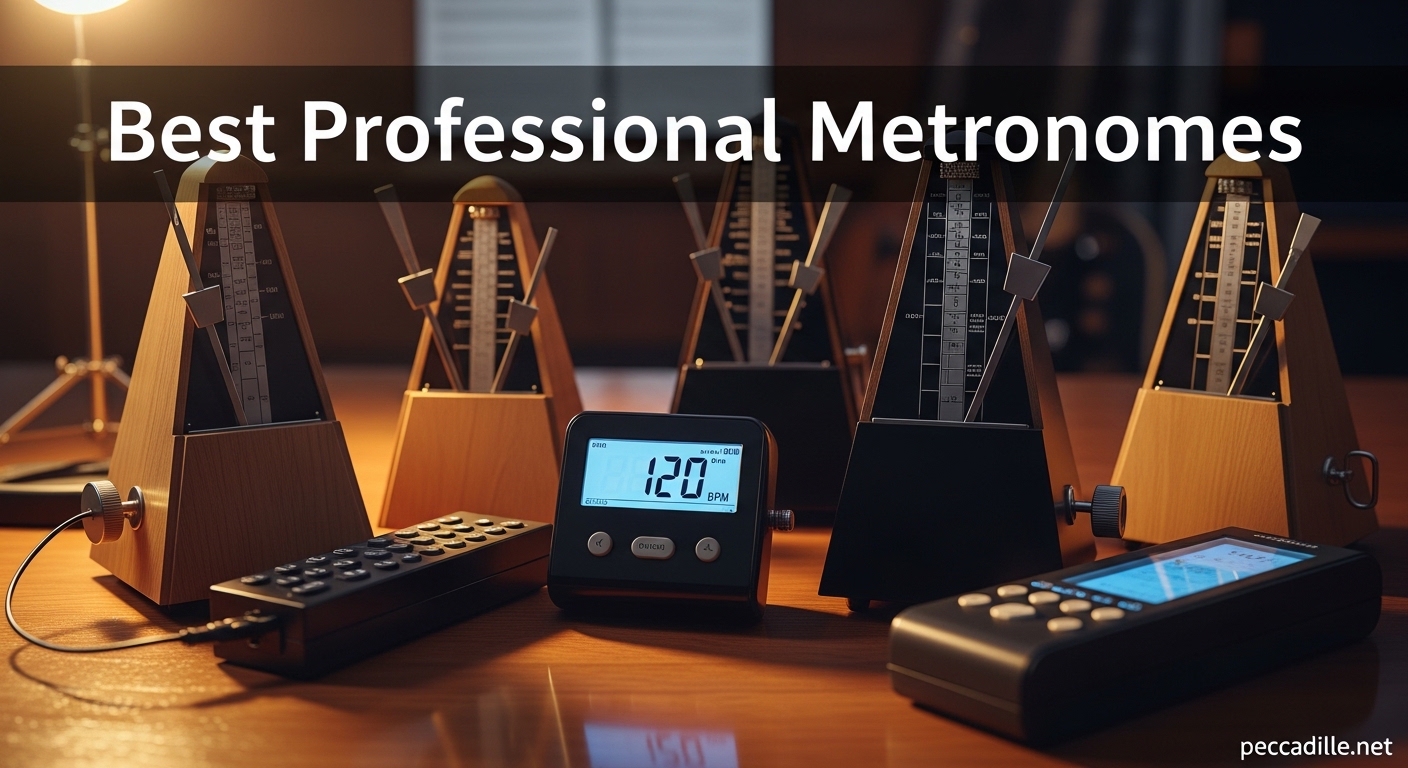
If you have ever recorded yourself practicing without a metronome and then listened back, you already know the uncomfortable truth. Your timing is not as solid as you think it is. That realization is exactly what pushes serious musicians to start searching for the best professional metronomes they can find. I have been there myself, after years of thinking my internal clock was reliable enough.
Professional metronomes are not the same as the free app on your phone. The difference is in consistency, sound quality, and the features that actually help you improve. A proper practice metronome gives you precise tempo control, multiple click sounds so you can find one that cuts through your instrument, and enough volume to hear over a drum kit or piano. Some even let you feel the beat through vibration, which solves the ear fatigue problem so many musicians bring up in forums.
Our team evaluated six of the most recommended professional metronomes on the market in 2026. We looked at what working musicians, teachers, and serious students actually say after months and years of daily use, not just the spec sheets. Whether you are a drummer who needs a click track that can sync with your DAW, a classical pianist who prefers the warmth of a mechanical pendulum, or a gigging musician dealing with ear fatigue after long sessions, we have a recommendation that fits your situation.
Top 3 Professional Metronomes for Serious Musicians
These three picks represent the best options across different needs and budgets. The Boss DB-90 is the one most professionals reach for, the Korg KDM-3 delivers outstanding value, and the Boss DB-30 gives you Boss quality at the lowest price point.


Boss DB-30 Dr. Beat
- Compact clip-on design
- Voice counting
- Odd time signatures
- Headphone jack
Best Professional Metronomes in 2026
Here is a side-by-side comparison of all six metronomes we reviewed, covering the key specifications that matter most for serious practice and performance.
| Product | Specifications | Action |
|---|---|---|
|
Boss DB-90 Dr. Beat
|
|
Check Latest Price |
 Wittner 811M Pyramid Mahogany
|
|
Check Latest Price |
|
Korg KDM-3 Digital
|
|
Check Latest Price |
 Soundbrenner Pulse Vibrating
|
|
Check Latest Price |
 Yamaha MP-90BK Mechanical
|
|
Check Latest Price |
|
Boss DB-30 Dr. Beat
|
|
Check Latest Price |
1. Boss DB-90 Dr. Beat – The Industry Standard Professional Metronome
BOSS DB-90 Dr. Beat Portable Metronome (DB-90), BLACK
Weight: 1 lb
Dimensions: 7.99 x 5.71 x 1.97 in
Tempo: Full Range
Memory: 50 Slots
Connector: 6.35mm Jack
Pros
- Voice counting for complex rhythms
- 50 programmable memory slots
- V-Pad Rhythm Coach connectivity
- Adjustable volume per beat voice
- Exceptional sound quality
Cons
- Kickstand feels fragile
- Battery drains after 2.5 months daily use
- Some plastic internal components
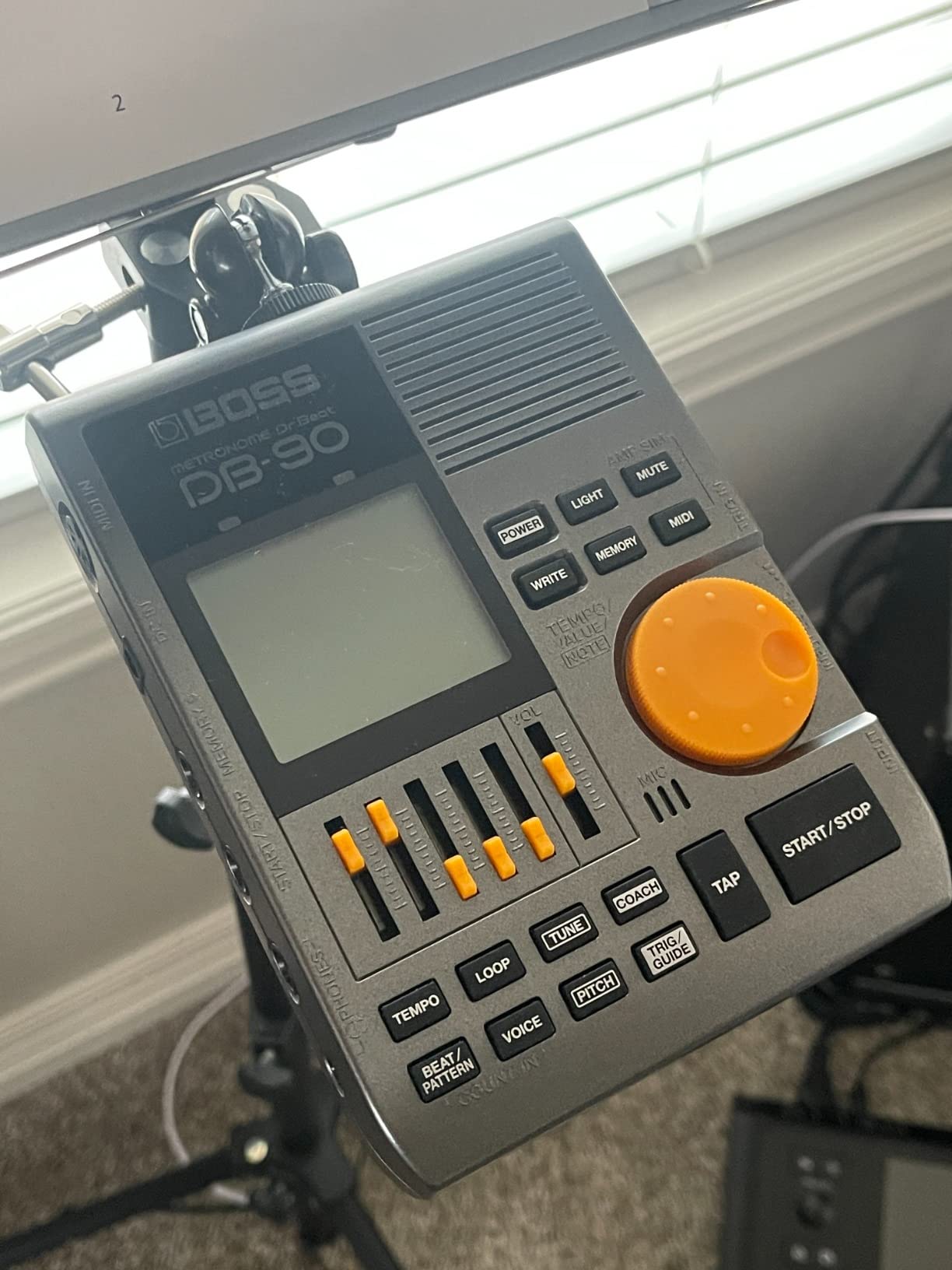
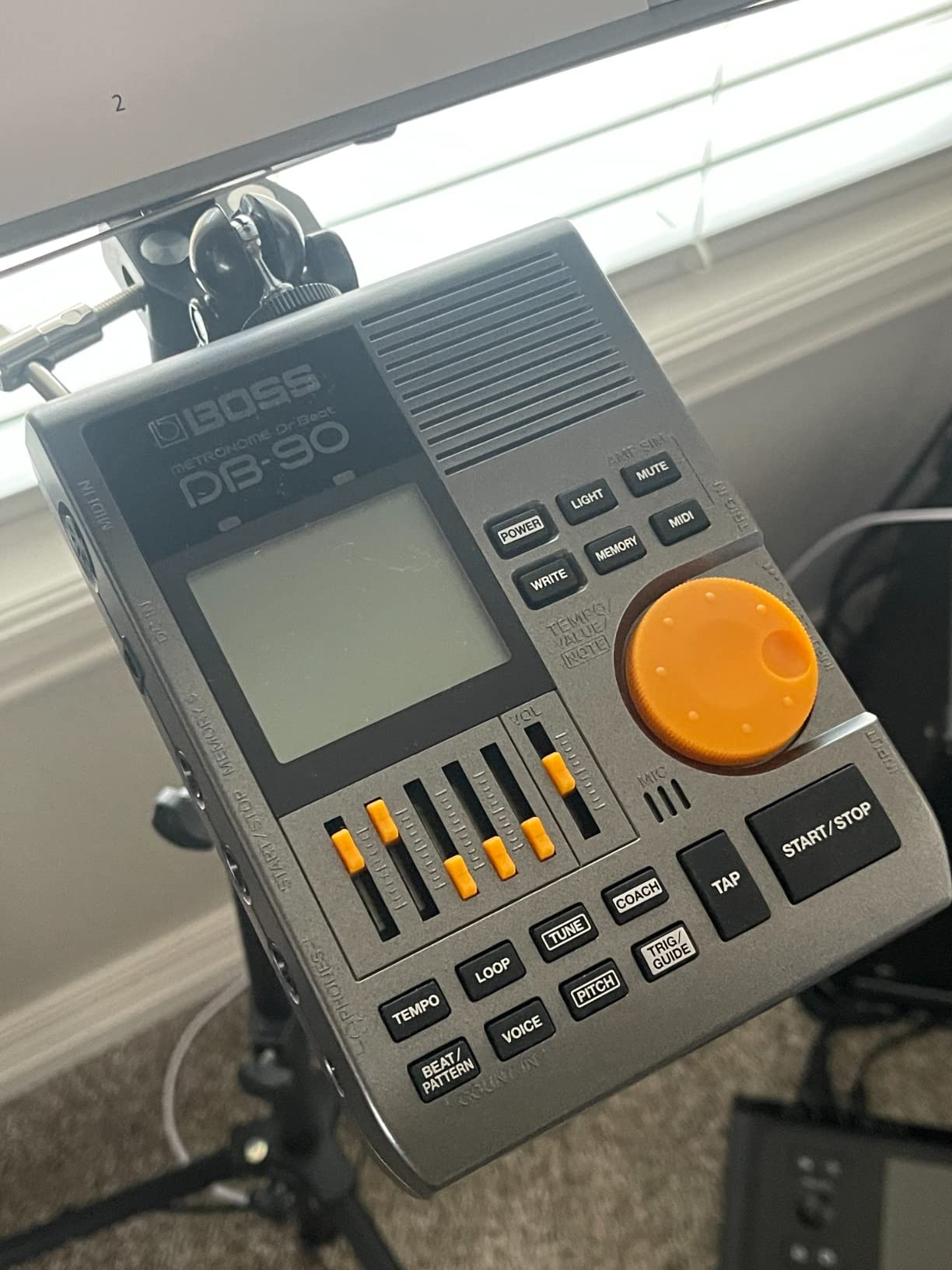
I have used the Boss DB-90 on and off for years, and it is the metronome I keep coming back to when I need something reliable. The first thing you notice is the sound quality. Boss uses a warm wooden tock sound instead of that harsh digital ping you get from cheaper units. It makes a real difference when you are practicing for hours. The click stays pleasant rather than becoming something you dread hearing.
The voice counting feature is what sets this apart from almost everything else. When you are working through odd time signatures or complex rhythmic passages, hearing “one-two-three-four-five-six-seven” is genuinely helpful. It keeps you grounded in the beat pattern without having to count in your head while also trying to focus on your playing. I found this especially useful when learning 7/8 and 5/4 patterns for jazz gigs.
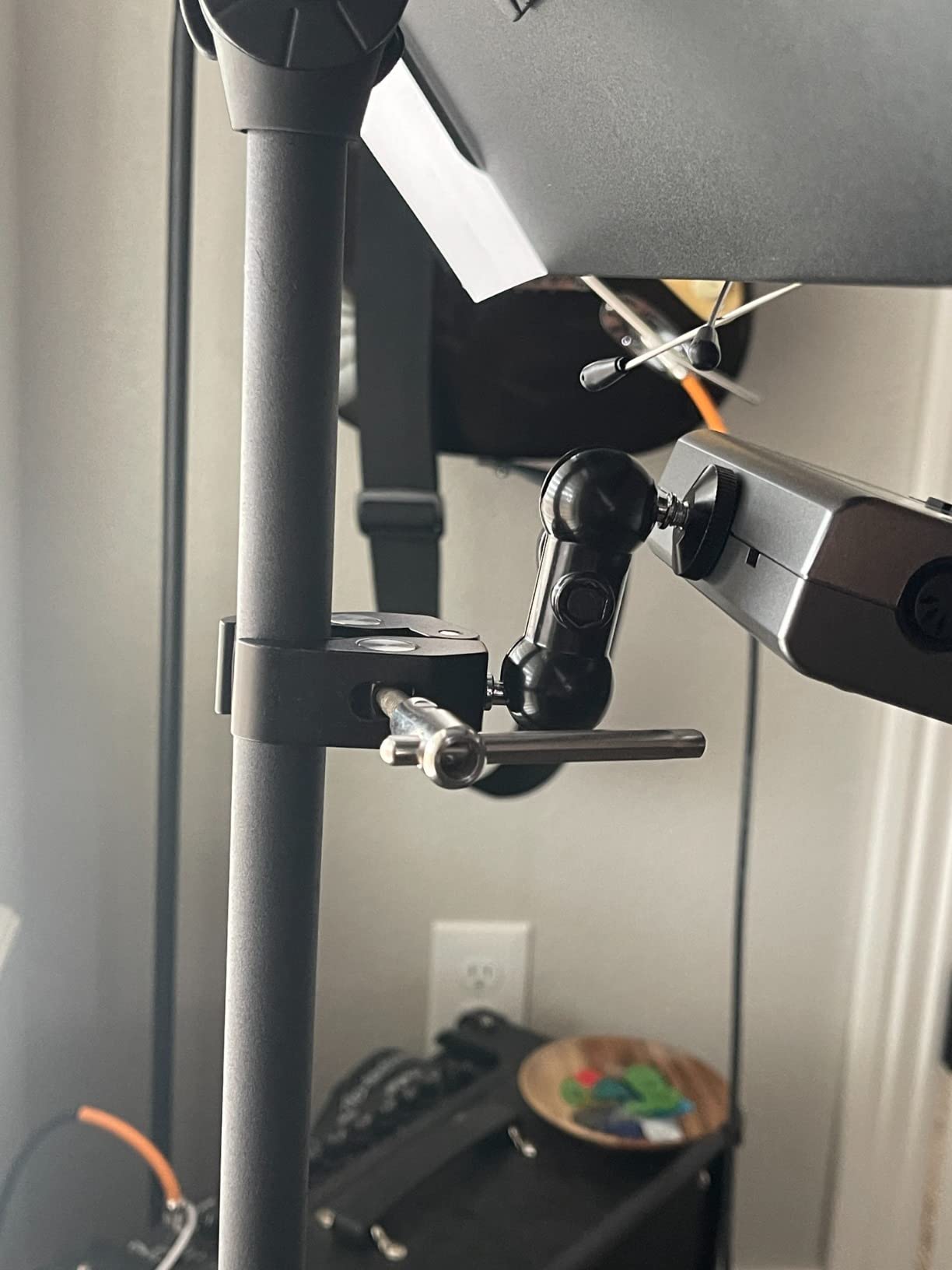
Having 50 memory slots sounds like overkill until you start using them. I store settings for different songs in my repertoire, each with its own tempo, time signature, and beat pattern. When I am running through a setlist for an upcoming gig, I just scroll to the right slot and go. That workflow alone saves several minutes per practice session, and it adds up over weeks and months of preparation.
The Rhythm Coach feature works with either the built-in microphone or an external V-Pad. It listens to your playing and grades your timing accuracy. I was skeptical at first, but it actually caught some subtle rushing I was doing on sixteenth-note passages that I never would have noticed otherwise. The headphone output also means you can route the click through an amp or in-ear monitor system during rehearsals.
Best Use Cases for the Boss DB-90
This is the metronome I recommend most often for drummers, gigging musicians, and anyone preparing for auditions or exams. The combination of voice counting, programmable memories, and the Rhythm Coach makes it a complete practice tool rather than just a timekeeping device. If you play in multiple bands or work through varied repertoire, those 50 slots will feel essential within a week.
It is also a strong choice for teachers. You can set up specific practice configurations for different students and save them, which keeps lessons flowing without fiddling with tempo dials between sessions. The loud, clear sound cuts through ensemble playing without needing to be positioned right next to anyone.
Battery Life and Portability
The main drawback is battery consumption. With daily use, you will be replacing batteries roughly every two and a half months. There is no AC adapter option, so keep spare batteries in your gig bag. The kickstand is functional but feels thin and fragile. Several users on forums mentioned concerns about it breaking over time, though I have not had that issue personally. At 1 pound, it is portable enough for a gig bag but not something you pocket like the DB-30.
Despite these minor issues, the DB-90 remains the benchmark that professional musicians and forum communities consistently recommend. It has earned that reputation through years of reliable service in practice rooms, studios, and stages around the world.
2. Wittner 811M Pyramid – The Classic Wooden Mechanical Metronome
Wittner wooden metronome with bell 811M mahogany finish
Weight: 1.05 lbs
Dimensions: 4.13 x 4.13 x 8.66 in
Tempo: 40-208 BPM
Power: Wind-up
Material: Mahogany Wood
Pros
- Beautiful mahogany finish
- Warm mechanical click sound
- Visual pendulum aids timing
- No batteries required
- Adjustable bell for downbeat
Cons
- Plastic internal components
- Calibration can drift
- Tempo limited to 40-208 BPM
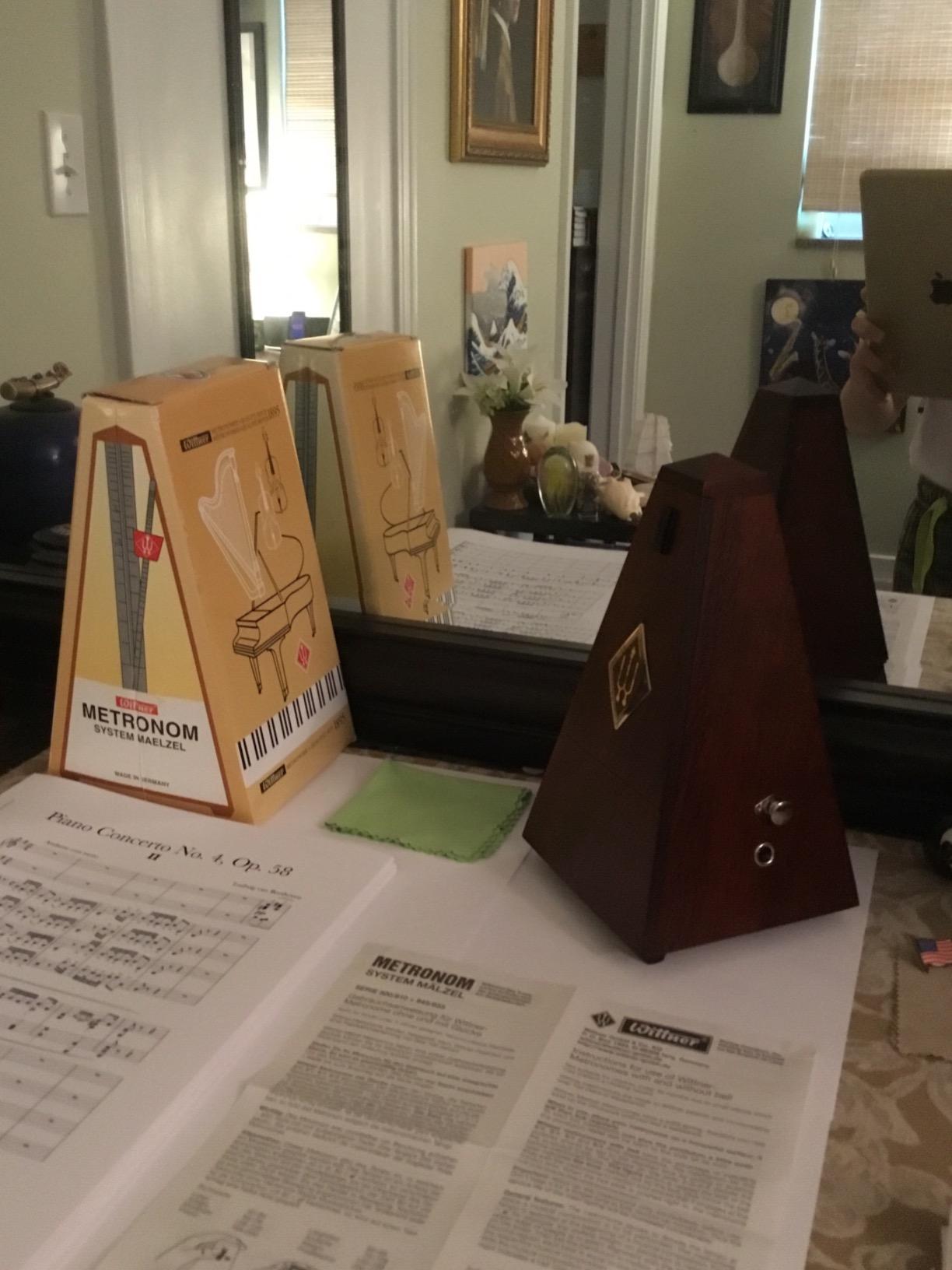
There is something about a mechanical metronome that a digital unit simply cannot replicate. When I set the Wittner 811M on my piano and wind it up, the experience feels different from tapping a button on a screen. The pendulum swings visibly, and that visual reference is a genuine timing aid. You can see the beat coming, which helps you anticipate and lock in. It is a subtle but real advantage for classical practice.
The sound is the main attraction. Instead of an electronic beep, you get a warm, wooden click that piano teachers on Reddit consistently describe as sounding like a grandfather clock. It sits beautifully alongside an acoustic piano without clashing. The mahogany case with its mat silk finish looks genuinely elegant on a music desk, and it doubles as an attractive studio piece when you are not practicing.
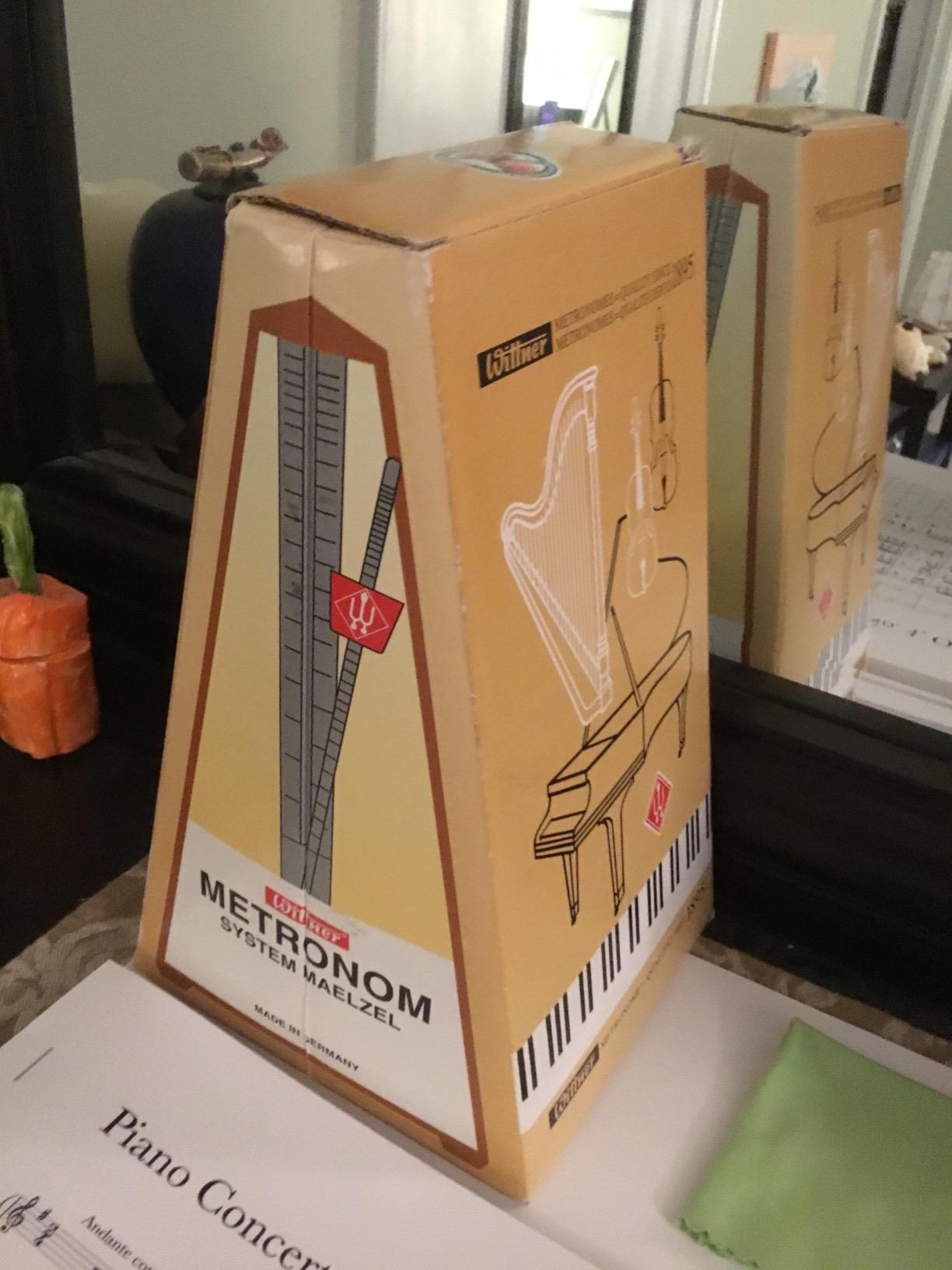
The adjustable bell is a practical feature for working on downbeat awareness. You can set it to ring every 2, 3, 4, or 6 beats, which covers most standard time signatures. I found it most useful when working on waltzes in 3/4 time and minuets in 6/8. The bell provides a clear accent that helps establish where “one” is in the measure, especially when you are sight-reading unfamiliar pieces.
Wind-up operation means zero battery anxiety. A full wind lasts through a typical practice session, and the winding key stores neatly in a compartment on the bottom. The German Maelzel mechanism has been the standard for mechanical metronomes for over a century, and Wittner has been refining it that entire time.
Ideal Instrument Pairings for the Wittner 811M
Classical pianists will get the most out of this metronome. The visual pendulum, the warm click, and the traditional aesthetic all align with classical study habits. Piano teachers frequently recommend Wittner specifically because the pendulum gives students a physical sense of tempo that a number on a screen cannot provide. It sits naturally on a piano’s music desk and looks like it belongs there.
String players and woodwind musicians who practice in quiet settings will also appreciate it. The click is loud enough to hear while playing but not so jarring that it disrupts concentration. If you play acoustic guitar in a practice room or violin in a studio apartment, the Wittner provides a gentle, musical time reference.
Calibration and Long-Term Reliability
This is where the Wittner shows its limitations. The internal mechanism uses some plastic components, which feels disappointing at this price point. Some users report calibration drift, particularly at sea level or in humid environments. The tempo range tops out at 208 BPM, which covers most classical repertoire but may fall short for metal guitarists or drummers working on blazing tempos.
It is also worth knowing that engaging the bell can briefly interrupt the pendulum’s motion. For most practice situations this is not a dealbreaker, but it does mean the timing is not laboratory-precise the way a quartz crystal is. If you need absolute accuracy for recording, pair this with a digital backup.
3. Korg KDM-3 – Best Value Digital Metronome for Serious Practice
Korg KDM-3 Digital Metronome w/ Memory Backup and Auto Power-Off Function - Black
Weight: 0.4 lbs
Dimensions: 3 x 2.5 x 4.5 in
Tempo: 30-252 BPM
Battery: CR2 included
Sounds: 8 options
Pros
- 8 different click sounds including voice
- 19 rhythm patterns
- Memory backup saves settings
- Tempo accuracy plus or minus 0.2%
- Loud volume on fresh batteries
Cons
- Battery only
- no AC adapter
- Battery life degrades after 12-20 hours
- Cannot disable accented first beat
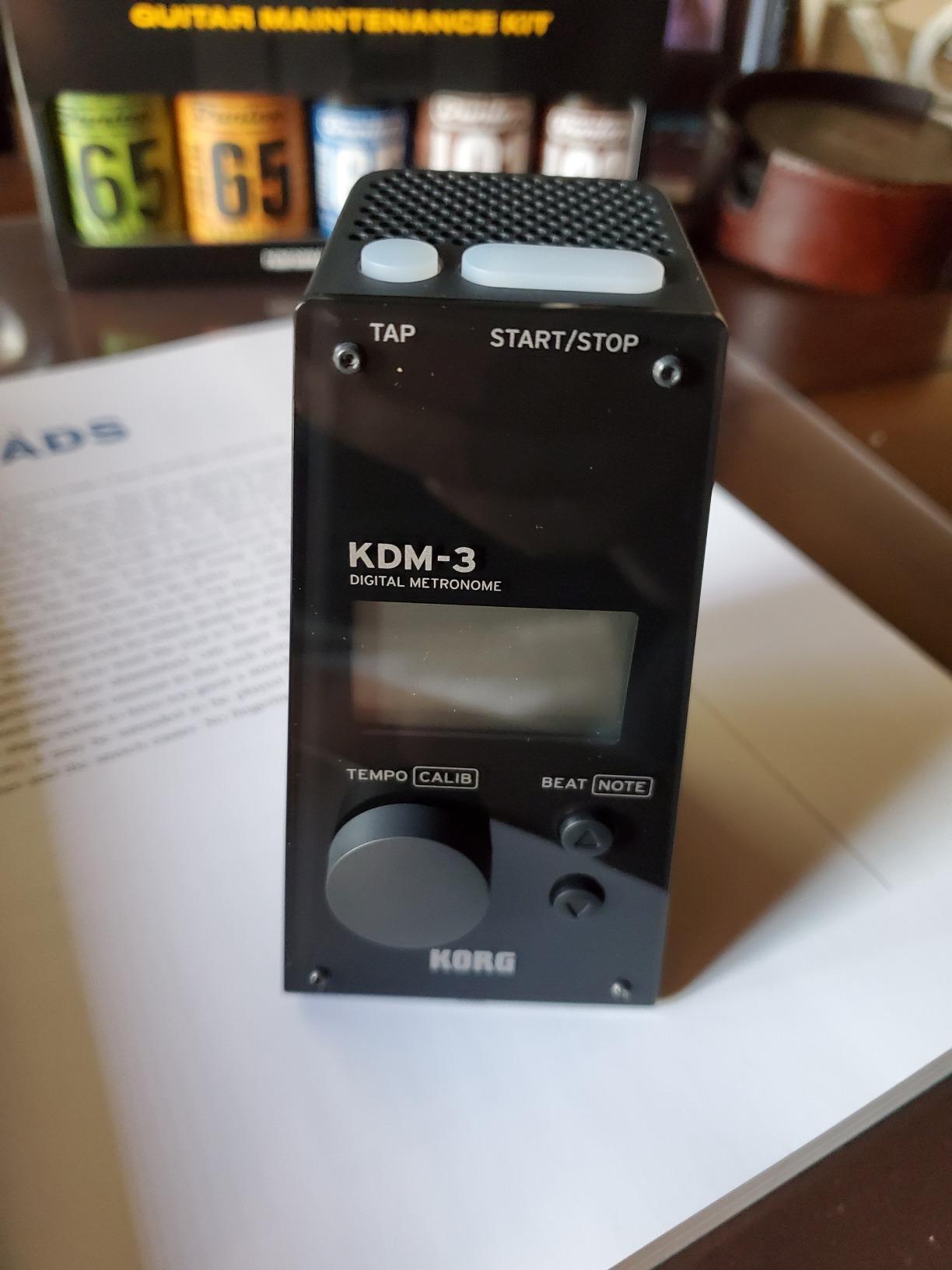
The Korg KDM-3 punches well above its weight class. I was not expecting this level of feature density from a metronome in this price range. It has eight distinct click sounds, nineteen rhythm patterns, voice counting, memory backup, and a tuning reference tone. That is a feature set that competes with metronomes costing three times as much.
What impressed me most in daily use is how intuitive the controls are. I did not need to read the manual to figure out how to change sounds, adjust tempo, or switch beat patterns. The interface is straightforward with dedicated buttons for each function. In a lesson setting, that simplicity matters. You do not want to spend five minutes of a thirty-minute lesson figuring out how to change the click sound.
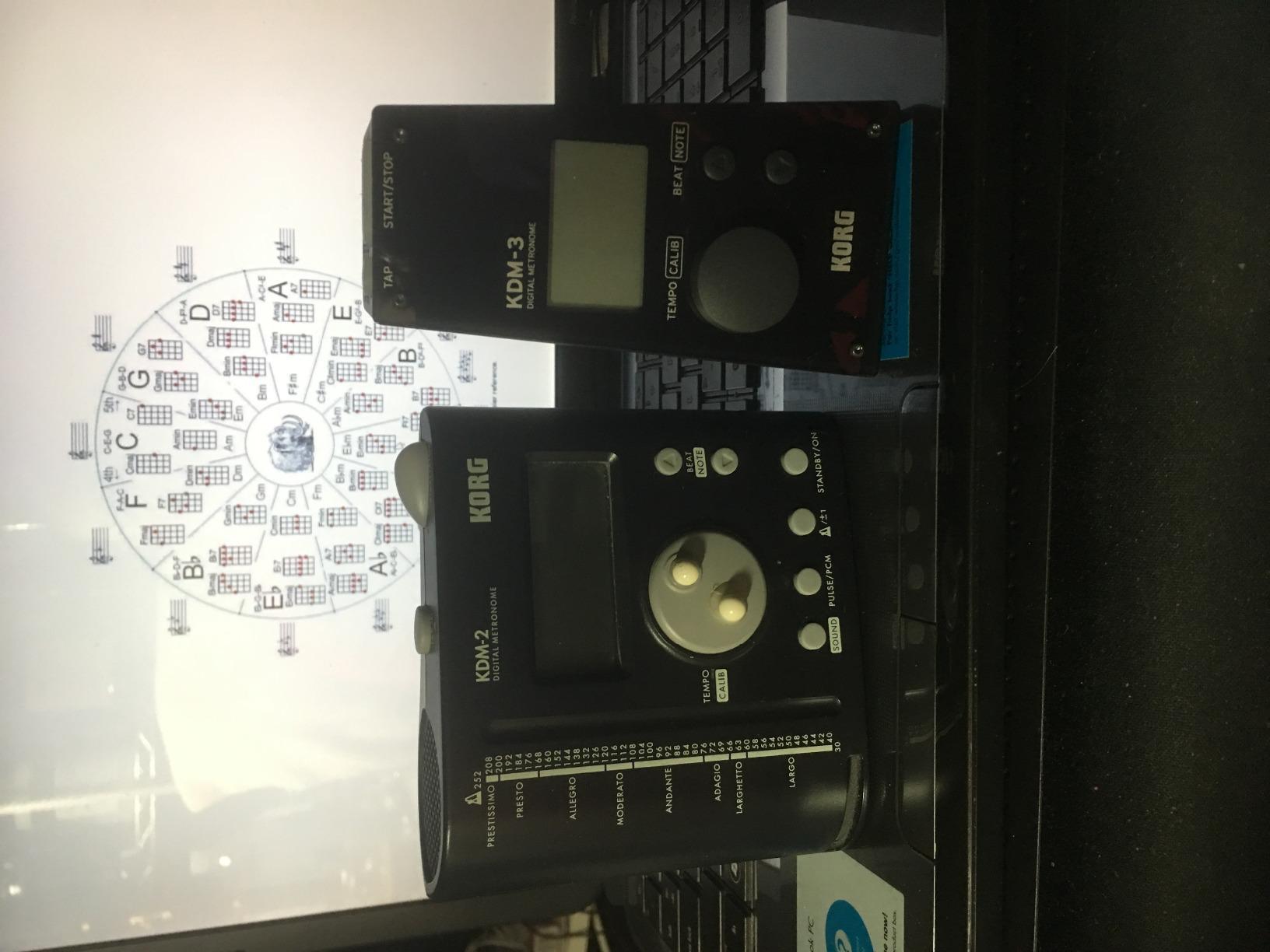
The voice counting option works the same way as on the Boss DB-90, and it is just as useful here. Hearing the beat counts spoken aloud helps enormously when you are learning unfamiliar rhythmic patterns or sight-reading complex passages. Korg also included patterns like claves, rumba, and triplets that are directly useful for Latin and jazz musicians, not just generic metronome clicks.
Tempo accuracy is listed at plus or minus 0.2 percent, which is more than precise enough for any practical musical application. The digital readout is clear and easy to read from a distance, which matters when the metronome is sitting across the room on a piano or music stand. Memory backup preserves your last settings even when the unit is off, a small convenience that saves repeated setup time.
Sound Options and Versatility
The eight sound options are where the KDM-3 really differentiates itself from budget competitors. You get mechanical click, cowbell, rimshot, wood block, claves, handclap, stick, and voice counting. Each one has a distinct character that works better or worse depending on your instrument. I found the mechanical click and wood block worked best for piano practice, while the cowbell and rimshot cut through better for drummers. The voice option is the standout for sight-reading practice.
Nineteen rhythm patterns cover standard time signatures along with triplets, claves patterns, and Latin rhythms. For a metronome at this price, having this many options is exceptional. It means you can practice a wide variety of musical styles without wishing you had bought something more capable.
Power and Battery Considerations
The KDM-3 runs on a single CR2 battery, which is included. Battery life is decent at around 120 hours total, but users report that volume drops noticeably as the battery depletes. There is no AC adapter option, so you are committed to battery power. The auto power-off feature helps conserve battery by shutting down after a set period of inactivity, which you can configure from one minute to two hours.
One specific frustration: you cannot disable the accented first beat without switching to a single-beat pattern. If you want all beats to sound identical, you are out of luck. For most practice this is fine, but some advanced players prefer unaccented clicks for specific exercises. It is a minor limitation on an otherwise outstanding value.
4. Soundbrenner Pulse – Best Vibrating Metronome for Ear Fatigue Relief
Soundbrenner Pulse, Vibrating Metronome for All Musicians and Instruments, Perfect for Drums, Guitar, Piano and More, Best in Show at NAMM
Weight: 0.03 kg
Battery: Li-Ion 6+ hours
Connectivity: Bluetooth, USB, MIDI
Sync: Up to 5 devices
App: iOS/Android
Pros
- Vibration eliminates ear fatigue
- NAMM Best in Show award
- Multi-player sync for ensembles
- Intuitive tap tempo and twist dial
- DAW connectivity via MIDI Clock
Cons
- Requires app for advanced features
- Not waterproof
- Magnetic charging cable awkward
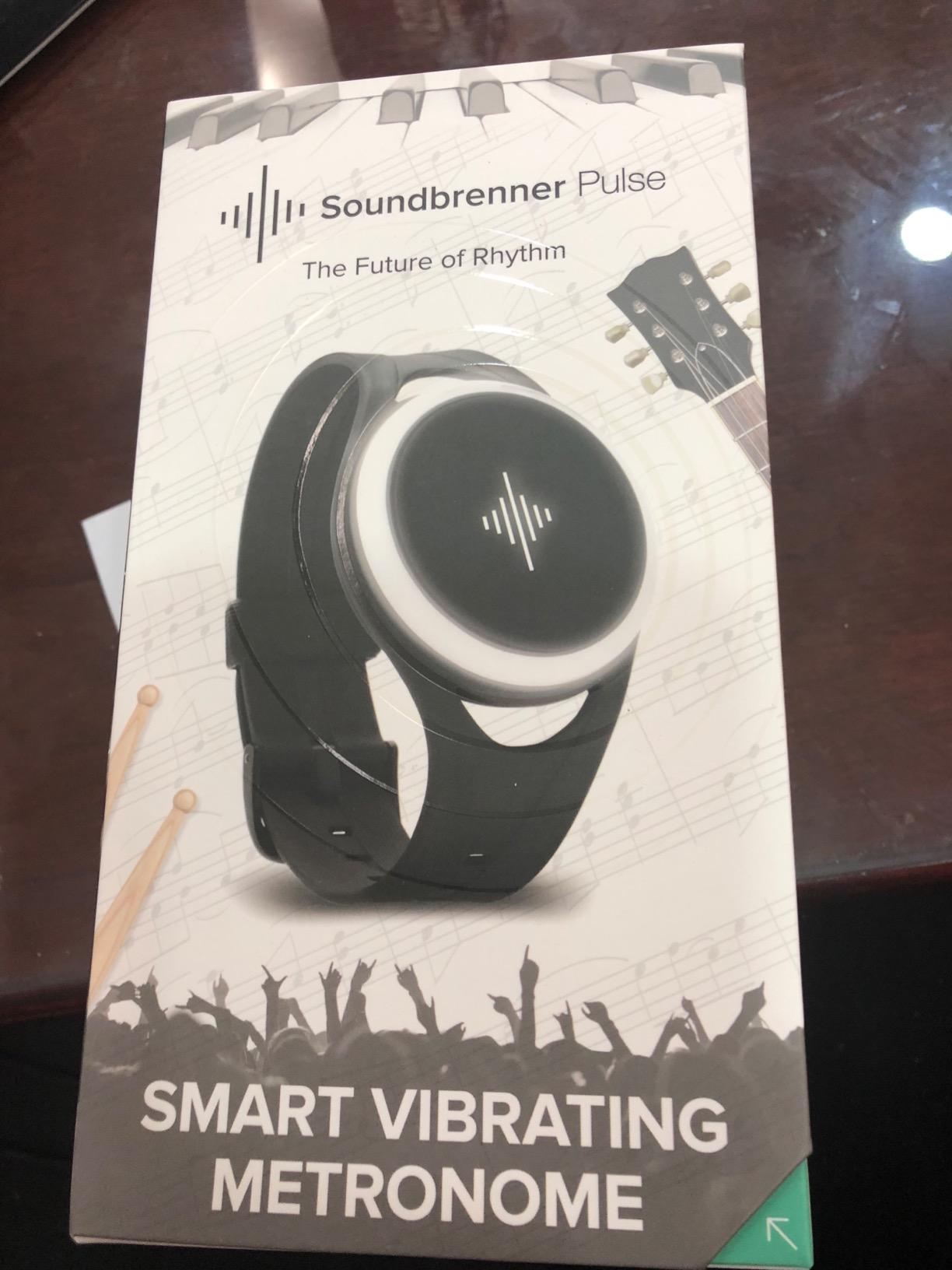
The Soundbrenner Pulse takes a fundamentally different approach to keeping time. Instead of clicking at you, it vibrates against your skin. At 7 times stronger than a smartphone vibration, the pulse is unmistakable. The first time I tried it during a two-hour guitar practice session, I understood immediately why this product won Best in Show at NAMM. Your ears are completely free to focus on your playing.
Ear fatigue is one of the most common complaints musicians raise in forum discussions about metronomes. After hours of listening to a click track, your ears get tired, your focus drifts, and the click becomes an irritant rather than a help. The Soundbrenner Pulse sidesteps this entirely. You feel the beat on your wrist, arm, or ankle, and your ears stay fresh for actually listening to your music. For drummers especially, this is a significant advantage.
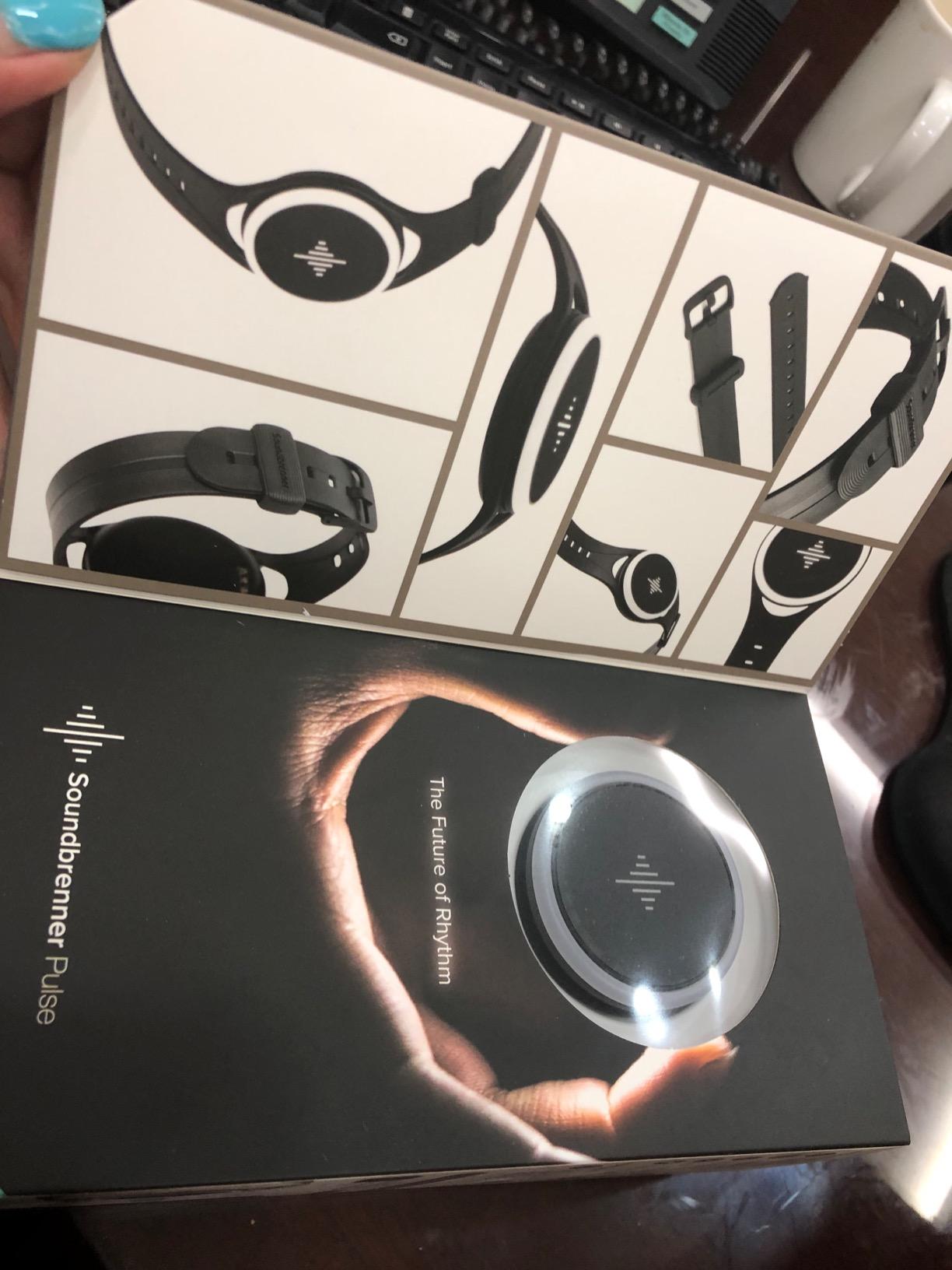
The companion app handles all the configuration: tempo, time signatures, subdivisions, accents, and setlists. The app is well-designed with a clean interface. You can also tap the Pulse twice to start or stop the beat, and twist the outer dial for fine tempo adjustments. These physical controls mean you do not need your phone in hand during practice, which is a thoughtful design choice.
Multi-player sync is a standout feature for ensemble work. You can sync up to five Pulse devices to the same tempo, which means your entire rhythm section can feel the same click without any audible metronome bleeding into the room. For orchestral rehearsals, band practice, or recording sessions where everyone needs a click but nobody wants to hear one, this is the solution.
Ear Fatigue Solution and Hearing Health
If you practice for more than an hour at a time, ear fatigue is a real problem. It affects your concentration, your musical judgment, and over time, your hearing health. The Soundbrenner Pulse is the only metronome I have tested that completely removes the audible component from the equation. You can practice at full volume, hear every nuance of your playing, and still maintain rock-solid timing through tactile feedback.
Musicians who play in loud environments will also benefit. If you are a drummer playing with a full band, hearing a click track over a crash cymbal requires either very high volume or in-ear monitors. The Pulse bypasses that problem entirely. You feel the beat through the vibration regardless of how loud your surroundings are.
App Integration and DAW Connectivity
The iOS and Android app is required for initial setup and advanced features like subdivisions and setlists. Bluetooth connectivity is stable in my experience, though some users have reported occasional drops that were resolved through firmware updates. The Pulse also supports MIDI Clock and Ableton Link connectivity, which means you can sync it with your DAW for recording sessions.
Battery life is rated at 6-plus hours, which covers most practice sessions but means you need to charge it regularly. The magnetic charging cable has a tricky connection that some users find frustrating. It is also important to note that the Pulse is not waterproof, so sweaty hands during intense practice sessions could be a concern over time.
5. Yamaha MP-90BK – Best Budget Mechanical Metronome for Teaching
YAMAHA metronome black MP-90BK
Weight: 14.3 oz
Dimensions: 4.37 x 7.95 x 3.54 in
Tempo: Marked positions
Power: Wind-up
Material: Plastic body
Pros
- Very loud mechanical click
- Classic pyramid aesthetic
- No batteries needed
- Stable rubber feet
- Simple and intuitive to use
Cons
- All plastic construction
- Not continuously variable tempo
- Runs off-beat after short time
- Power reserve only about 24 minutes
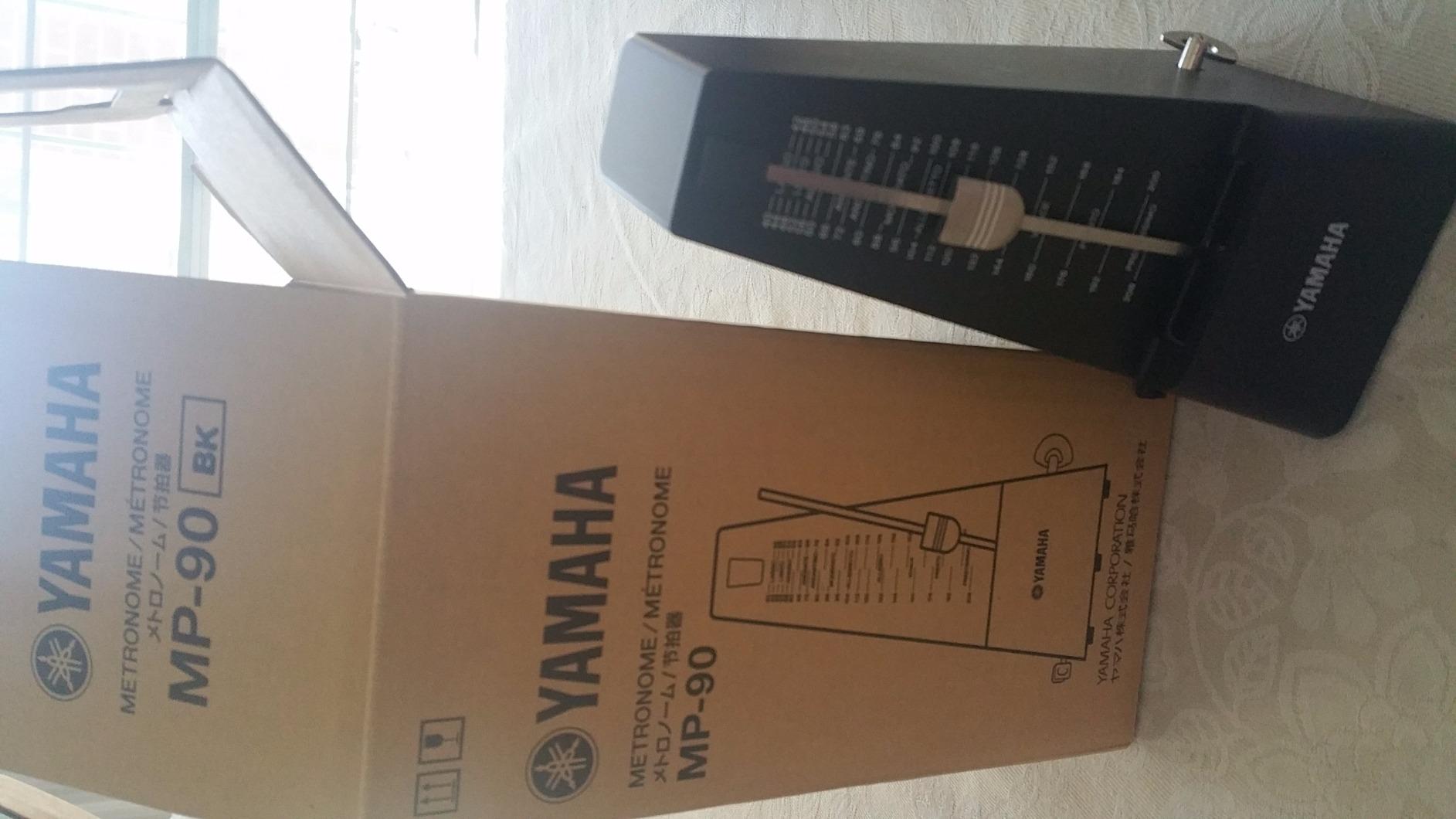
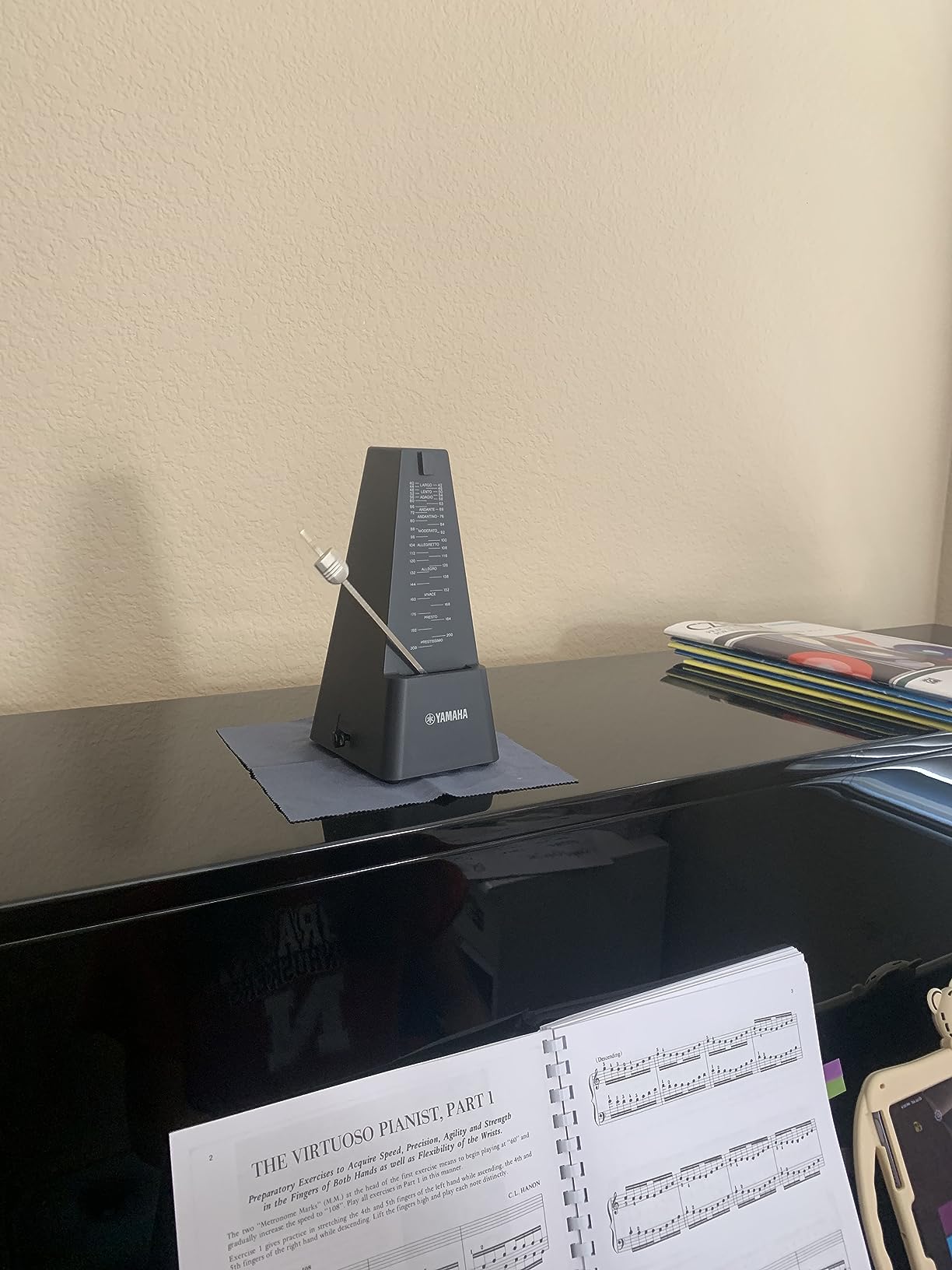
The Yamaha MP-90BK gives you the classic mechanical metronome experience without the premium price tag of the Wittner. The triangular pyramid design looks traditional on a piano desk, and the matte black finish resists fingerprints. When I first turned it on, I was surprised by how loud the click is. This thing cuts through piano playing, guitar strumming, and even small ensemble rehearsals without any trouble.
For music teachers, this is a practical workhorse. You set the tempo by sliding the weight on the pendulum, wind it up, and it goes. No menus, no batteries, no setup time. In a classroom with young students, that simplicity is an advantage. Kids can see the pendulum swing, which helps them understand beat and tempo in a physical way that a digital display does not convey.
The adjustable bell works the same way as the Wittner, providing a downbeat accent at selectable intervals. I found it useful for helping beginner students understand where the strong beat falls in different time signatures. The bell click is distinct enough from the regular beat that there is no confusion about which beat is the downbeat.
Yamaha reliability is a real factor here. The brand has a long history in musical instruments and accessories, and the MP-90BK reflects that pedigree. The rubber feet keep it stable on a piano or table surface, and the wind-up mechanism is straightforward. A full wind with about 18.5 turns gives you roughly 24 minutes of running time at 90 BPM, which is enough for focused practice blocks.
Teaching and Classroom Use
This is where the Yamaha MP-90BK shines. Music teachers on forums consistently recommend it as a classroom metronome because it is simple, loud, and visually engaging for students. The pendulum gives beginners a tangible sense of what tempo means, and the physical act of adjusting the weight teaches them about how tempo markings work in real sheet music.
For private lessons, it sits unobtrusively on a piano and provides clear timekeeping without any technological overhead. You do not need to worry about batteries dying mid-lesson or students getting distracted by digital features. It does one thing, and it does it well enough for educational purposes.
Precision Expectations and Limitations
Accuracy is the main compromise with any mechanical metronome, and the MP-90BK is no exception. The tempo is not continuously variable; you are limited to marked positions on the pendulum scale. In practice, this means you cannot set exactly 93 BPM or 137 BPM. You get approximate ranges. For most teaching and casual practice, this is acceptable, but it is not suitable for recording work or situations where precise BPM matters.
The mechanism also tends to drift slightly as the spring winds down, running a touch faster at the start and slower near the end. This is inherent to wind-up metronomes and not unique to Yamaha. If you need precise, consistent timing, a digital metronome like the Korg KDM-3 at a similar price point is the better choice.
6. Boss DB-30 Dr. Beat – Best Budget Digital Pick for Daily Practice
BOSS Dr. Beat Portable Metronome (DB-30), Black
Weight: 0.2 lbs
Dimensions: 5.2 x 3.45 x 1.35 in
Tempo: Full Range
Battery: 1 Lithium included
Connector: Headphone jack
Pros
- Excellent value under 40 dollars
- Durable build lasting 10+ years
- Compact clip-on design
- Same Boss sound quality as DB-90
- Voice counting feature
Cons
- Battery needs replacement every 2-3 months
- Fewer features than DB-90
- Kickstand feels fragile
The Boss DB-30 is proof that you do not need to spend a lot to get a professional-grade practice metronome. It shares the same warm wooden tock sound that makes the DB-90 so pleasant to use, wrapped in a compact body that costs a fraction of the price. I have recommended this to more students and friends than any other metronome because it delivers the essentials without any filler.
One user on a Buy It For Life forum reported their DB-30 lasting 12 years of daily use. That kind of durability from a compact, affordable unit is remarkable. The stainless steel body feels solid in your hand, and the clip-on design means you can attach it to a music stand, belt, or bag. It weighs just 0.2 pounds, so you genuinely forget you are carrying it.
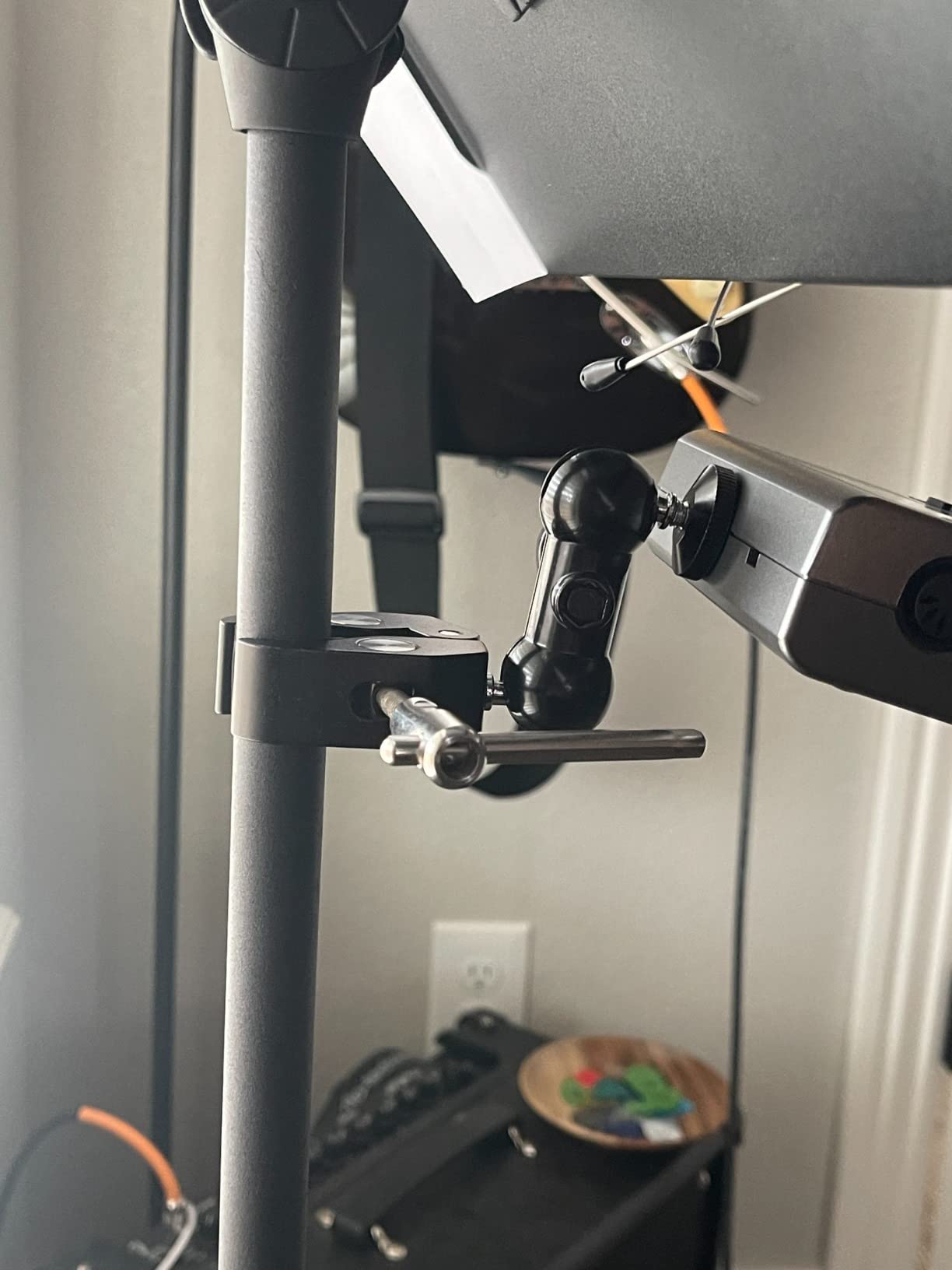
The feature set covers what most practicing musicians actually need. You get multiple click sounds including the signature wooden tock and voice counting, odd time signature support, play-along rhythm patterns, and a headphone jack for silent practice. The visual beat indicator light is a nice touch for situations where you want a visual reference in addition to the audio click.
What you do not get compared to the DB-90 is the 50 memory slots, the V-Pad Rhythm Coach, and the per-beat volume sliders. For many musicians, those features are nice-to-haves rather than essentials. If you primarily practice one or two instruments at consistent tempos, the DB-30 gives you everything you need without paying for features you will not use.
Portability and Form Factor
At 5.2 x 3.45 x 1.35 inches and under 3 ounces, the DB-30 is the most portable metronome in this lineup. The clip lets you attach it to a music stand while practicing, a belt loop while teaching, or toss it in a gig bag without adding noticeable weight. For musicians who commute to lessons or rehearsals, this form factor is a genuine advantage.
The compact size does mean a smaller display compared to the DB-90, but the readout is still clear enough to read at arm’s length. The controls are logically laid out, and you can operate the unit one-handed once you learn the button layout. It is the kind of device that becomes second nature after a few practice sessions.
How It Compares to the DB-90
The DB-30 uses the same core sound engine as the DB-90, which means you get that same pleasant wooden tock at a much lower price. The voice counting feature is carried over as well. Where the DB-30 falls short is memory capacity and the advanced Rhythm Coach functionality. If you are a working professional who needs to store settings for 50 different pieces, the DB-90 is worth the extra investment.
But for students, hobbyists, and working musicians who just need a reliable click at a specific tempo, the DB-30 is difficult to beat. It delivers Boss quality and reliability at the lowest entry point in the Boss metronome lineup. Battery life is similar to the DB-90 at roughly 2-3 months with daily use, so keep a spare handy.
How to Choose a Professional Metronome in 2026
Choosing the right professional metronome comes down to matching the type of device to how you practice. After testing these six options and reading hundreds of user reviews, here is a straightforward breakdown of what matters most for serious musicians making this decision.
Digital vs Mechanical vs Vibrating: Which Type is Right for You
Digital metronomes like the Boss DB-90, Korg KDM-3, and Boss DB-30 offer the highest accuracy, the most features, and the widest tempo ranges. They are the best choice for drummers, guitarists, and anyone who needs precise BPM control, multiple sound options, and programmable settings. If you practice in different time signatures regularly or need to store tempo presets for multiple pieces, digital is the way to go.
Mechanical metronomes like the Wittner 811M and Yamaha MP-90BK appeal to classical musicians, piano teachers, and anyone who values the visual pendulum and traditional feel. The pendulum provides a physical sense of tempo that many teachers find helps students develop better internal timing. The trade-off is less precision and limited tempo ranges compared to digital options.
Vibrating metronomes like the Soundbrenner Pulse represent a newer approach that solves a real problem. If you practice for extended hours and struggle with ear fatigue, or if you play in loud environments where hearing a click is difficult, vibration-based timing is genuinely effective. It is worth considering as a complement to a traditional metronome rather than a complete replacement.
Key Factors to Consider
Tempo range: Most professional metronomes cover 30-250 BPM, which handles standard repertoire. If you practice extreme tempos in metal or speed drills, check the maximum BPM carefully. The Korg KDM-3 reaches 252 BPM, while mechanical options like the Wittner top out at 208 BPM.
Sound options: Having multiple click sounds is more important than it seems. A sound that cuts through a drum kit will be annoying during quiet piano practice, and vice versa. The Korg KDM-3 with its eight options and the Boss DB-90 with its adjustable volumes give you the most flexibility here.
Power source: Digital metronomes run on batteries, which means ongoing cost and the risk of a dead battery mid-session. Mechanical metronomes need no power at all. The Soundbrenner Pulse requires regular USB charging. Think about where and how you practice to determine which power model works best for you.
Portability: If you practice at home exclusively, size does not matter. If you commute to lessons, rehearsals, or gigs, the Boss DB-30 at 0.2 pounds or the Soundbrenner Pulse at 0.06 pounds are far more practical than a full-size DB-90 or a delicate mechanical unit.
Connectivity: For studio musicians, MIDI connectivity and DAW sync are valuable. The Soundbrenner Pulse supports MIDI Clock and Ableton Link, and the Boss DB-90 has a headphone output that can route to an audio interface. If you only practice solo with sheet music, connectivity is less relevant.
Budget Considerations for Serious Musicians
Forum discussions among working musicians consistently recommend buying quality once rather than upgrading repeatedly. A professional metronome is a decades-long investment. The Boss DB-30 has documented cases of lasting over 12 years, and mechanical Wittner units can last generations with proper care. Spending more upfront on a unit that fits your workflow saves money and frustration over time.
Many serious musicians on forums recommend owning two metronomes: a digital unit for precision work and a mechanical unit for classical practice. The Korg KDM-3 paired with the Yamaha MP-90BK would cost roughly the same as a single DB-90 and cover both needs effectively.
FAQs
Do professional musicians use metronomes?
Yes, professional musicians use metronomes extensively. Orchestral musicians use them for individual practice to maintain consistent tempo. Studio musicians rely on click tracks during recording sessions. Jazz musicians use them to develop swing feel. Even musicians who perform without a metronome practice with one to build the internal timing that makes their performances sound natural and confident.
Who makes the best metronomes?
The top metronome brands for serious musicians are Boss, Korg, Wittner, Yamaha, and Soundbrenner. Boss is widely considered the industry standard for digital metronomes, with the DB-90 being the most recommended professional unit. Wittner makes the benchmark mechanical metronomes preferred by classical pianists. Soundbrenner leads in vibrating metronome technology.
Is a mechanical or digital metronome better for serious practice?
It depends on your instrument and goals. Digital metronomes offer superior accuracy, more features like programmable memory and multiple sounds, and wider tempo ranges. Mechanical metronomes provide a visual pendulum that many teachers find helps students develop better internal timing, plus they require no batteries. Many serious musicians own both types for different practice scenarios.
Is a Wittner metronome worth it?
A Wittner metronome is worth it if you value the traditional mechanical feel, visual pendulum, and warm wooden click sound. Piano teachers and classical musicians consistently recommend Wittner for its aesthetic appeal and the pedagogical value of the swinging pendulum. However, at its premium price, be aware that the internal mechanism uses some plastic components, and the tempo range is limited to 40-208 BPM compared to digital alternatives.
What is the best metronome for ear fatigue?
The Soundbrenner Pulse is the best metronome for musicians experiencing ear fatigue. It uses tactile vibration instead of audible clicks, so your ears stay completely free to focus on your playing. It is especially effective for drummers and musicians who practice for extended hours. The vibration is 7 times stronger than a smartphone and unmistakable during active playing.
Final Thoughts on the Best Professional Metronomes
After testing these six metronomes and digging through hundreds of user experiences, the Boss DB-90 remains the best professional metronome for most serious musicians. Its combination of voice counting, programmable memory, versatile sounds, and the Rhythm Coach feature makes it the most complete practice tool on the market. It is the unit that forum communities, teachers, and working pros recommend most consistently, and for good reason.
If budget is a primary concern, the Korg KDM-3 delivers an incredible feature set for the price, and the Boss DB-30 gives you Boss quality at the lowest entry point. For classical pianists who prefer a traditional feel, the Wittner 811M is beautiful and functional. And if ear fatigue is your main frustration, the Soundbrenner Pulse offers a genuinely innovative solution that no other metronome can match.
The right metronome is the one you will actually use every day. Any of these six options will serve a serious musician well through years of practice, rehearsal, and performance in 2026. Pick the one that matches your instrument, your practice style, and your budget, and start building the rock-solid timing that separates good musicians from great ones.