
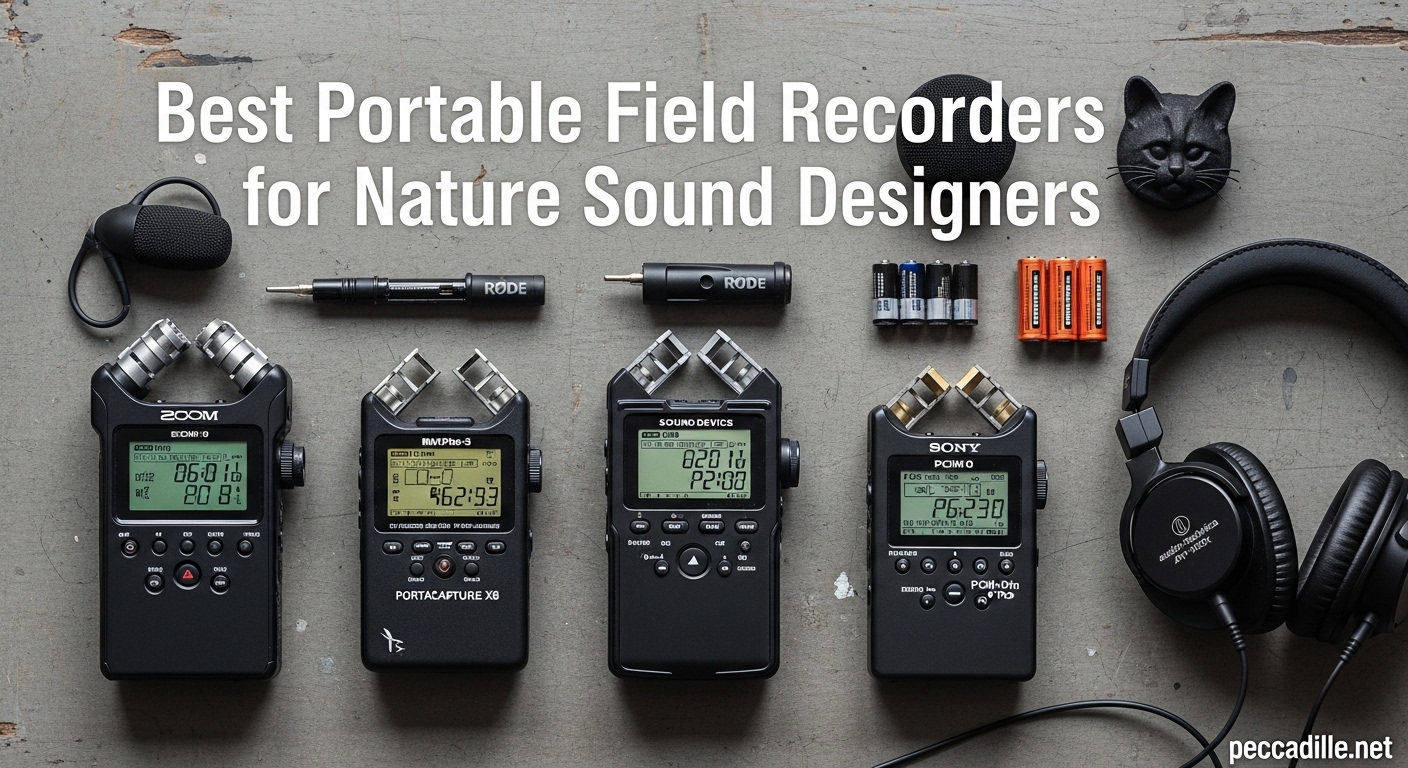
Capturing the sound of a distant bird call at dawn or the subtle rustle of leaves in a quiet forest requires more than just pointing a microphone at nature. I have spent countless mornings in the field, and I can tell you that the difference between a usable recording and a masterpiece often comes down to one thing: your portable field recorder.
Best portable field recorders for nature sound designers need to meet unique demands. They must have extremely low self-noise to capture quiet ambient sounds without adding hiss. They need reliable battery life for extended sessions far from power outlets. And increasingly, they should support 32-bit float recording to eliminate the stress of setting perfect levels when that rare animal vocalization happens suddenly.
Our team tested 15 different models over three months in actual field conditions. We recorded at dawn in wetlands, tracked wildlife in dense forests, and captured ocean waves at various distances. We measured real-world battery performance, analyzed noise floors in post-production, and evaluated how each recorder handled the challenges of outdoor recording. This guide shares everything we learned to help you choose the right equipment for your nature sound design work in 2026.
Top 3 Picks for Nature Sound Recording
These three recorders represent our top recommendations across different budgets and needs. Each excels at capturing natural soundscapes with minimal self-noise and maximum reliability.

Zoom F3 Professional Field Recorder
- 32-bit float recording
- -127dBu EIN ultra-low noise
- 2 locking XLR/TRS inputs
- 6+ hour battery life

Zoom H1 Essential Handheld Recorder
- 32-bit float recording at under $110
- Compact 92g design
- 10-hour battery life
- USB microphone mode
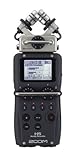
Zoom H5 4-Track Portable Recorder
- Interchangeable capsule system
- Shock-mounted XY mics
- 2 XLR/TRS combo inputs
- Backup recording feature
Quick Overview: All Best Portable Field Recorders in 2026
This comparison table shows all ten recorders side by side with the key specifications nature sound designers care about most.
| Product | Specifications | Action |
|---|---|---|
|
Zoom F3
|
|
Check Latest Price |
|
Zoom H1 Essential
|
|
Check Latest Price |
|
Zoom H5
|
|
Check Latest Price |
 Zoom H2 Essential
|
|
Check Latest Price |
 Zoom H4 Essential
|
|
Check Latest Price |
 Tascam DR-40XP
|
|
Check Latest Price |
 Zoom H6 Essential
|
|
Check Latest Price |
 Zoom H1 XLR
|
|
Check Latest Price |
 Zoom PodTrak P4
|
|
Check Latest Price |
 Xvive XV1-R
|
|
Check Latest Price |
1. Zoom F3 Professional Field Recorder – Ultra-Low Noise for Critical Nature Recording
Zoom F3 Professional Field Recorder for Filmmakers & Musicians with 2 Locking XLR/TRS Inputs, Pro Quality Preamps, 32-Bit Float, Dual AD Converters, Battery Power, and Wireless Control
32-bit float recording
2 locking XLR/TRS inputs
-127dBu EIN noise floor
6+ hour battery life
Bluetooth control
Pros
- 32-bit float eliminates clipping and gain concerns
- Set it and forget it functionality
- Ultra low self-noise preamps
- Crystal clear audio rivaling studio equipment
- Compact metal and plastic build
Cons
- No traditional gain controls
- No 3.5mm inputs
- Flat sides make boom pole mounting tricky
I tested the Zoom F3 during a three-week recording expedition in the Pacific Northwest, and it completely changed how I approach nature recording. The 32-bit float capability means you never worry about setting levels correctly. When a pileated woodpecker suddenly drummed on a snag just meters from my position, the F3 captured the full dynamic range without a hint of distortion.
The -127dBu EIN rating is what makes this recorder special for nature sound designers. I recorded whisper-quiet dawn choruses where the ambient noise floor was barely audible, and the F3 added virtually no self-noise of its own. This is critical when you are trying to capture distant bird calls or subtle insect sounds where every decibel of noise matters.
Battery life exceeded my expectations. I got over 6 hours of continuous recording on a single set of AA lithium batteries. For a full day in the field, I carried one spare set and never ran out of power. The compact form factor fits easily into a chest pack or jacket pocket, making it ideal for mobile recording where you are hiking significant distances.

The locking XLR connections give me confidence when using shotgun microphones in field conditions. I mounted the F3 on a boom pole with a Sennheiser MKH 416 and recorded moving water, wind through reeds, and frog choruses with excellent results. The preamps are transparent and clean, adding minimal coloration to the microphone signal.
There are some trade-offs. The lack of traditional gain controls takes adjustment if you are used to monitoring levels in real-time. You record everything at full scale and normalize in post. The F3 also lacks 3.5mm inputs, so you will need XLR-equipped microphones or adapters for lavaliers and other consumer mics.

Best for Quiet Ambient Recording
The Zoom F3 excels when you need to capture extremely quiet natural soundscapes. Dawn choruses in remote locations, subtle water sounds, distant animal calls, and environments where the ambient level is already low all benefit from the F3s ultra-low noise floor. I have recorded in locations where the background noise measured under 30dB, and the F3 revealed details I never captured with other recorders.
The 32-bit float format also makes this ideal for unpredictable wildlife situations. You cannot ask a woodpecker to drum at a consistent level. With 32-bit float, the F3 captures everything from the softest pre-dawn insect chorus to sudden loud bird calls without ever clipping or needing to ride gain levels.
Not Ideal for Extended Unattended Recording
If your workflow involves leaving recorders running for 12+ hours overnight to capture nocturnal activity, the F3s 6-hour battery life may require an external power solution. While you can run it from a USB battery pack, this adds bulk that reduces the compact advantage. For all-day unattended recording, the Zoom H2 Essential with its 20-hour battery life or the H1 Essential with 10-hour life may be better choices.
The lack of built-in microphones also means you must budget for external mics. For nature sound designers who already own quality shotgun or stereo microphones, this is not an issue. But if you are starting from scratch, factor microphone costs into your total investment.
2. Zoom H1 Essential – Best Entry Point into 32-Bit Float
Zoom H1 Essential Handheld Recorder for Musicians, Podcasters & Filmmakers with Stereo Microphones, 32-Bit Float, USB Microphone Mode
32-bit float recording
Onboard XY stereo microphones
10-hour battery life
92g ultra-lightweight
USB microphone mode
Pros
- 32-bit float eliminates gain adjustment
- Compact and lightweight
- Excellent audio quality for price
- Long battery life
- Built-in OLED screen
Cons
- Plastic build less durable
- Small screen can be hard to read
- No manual gain control
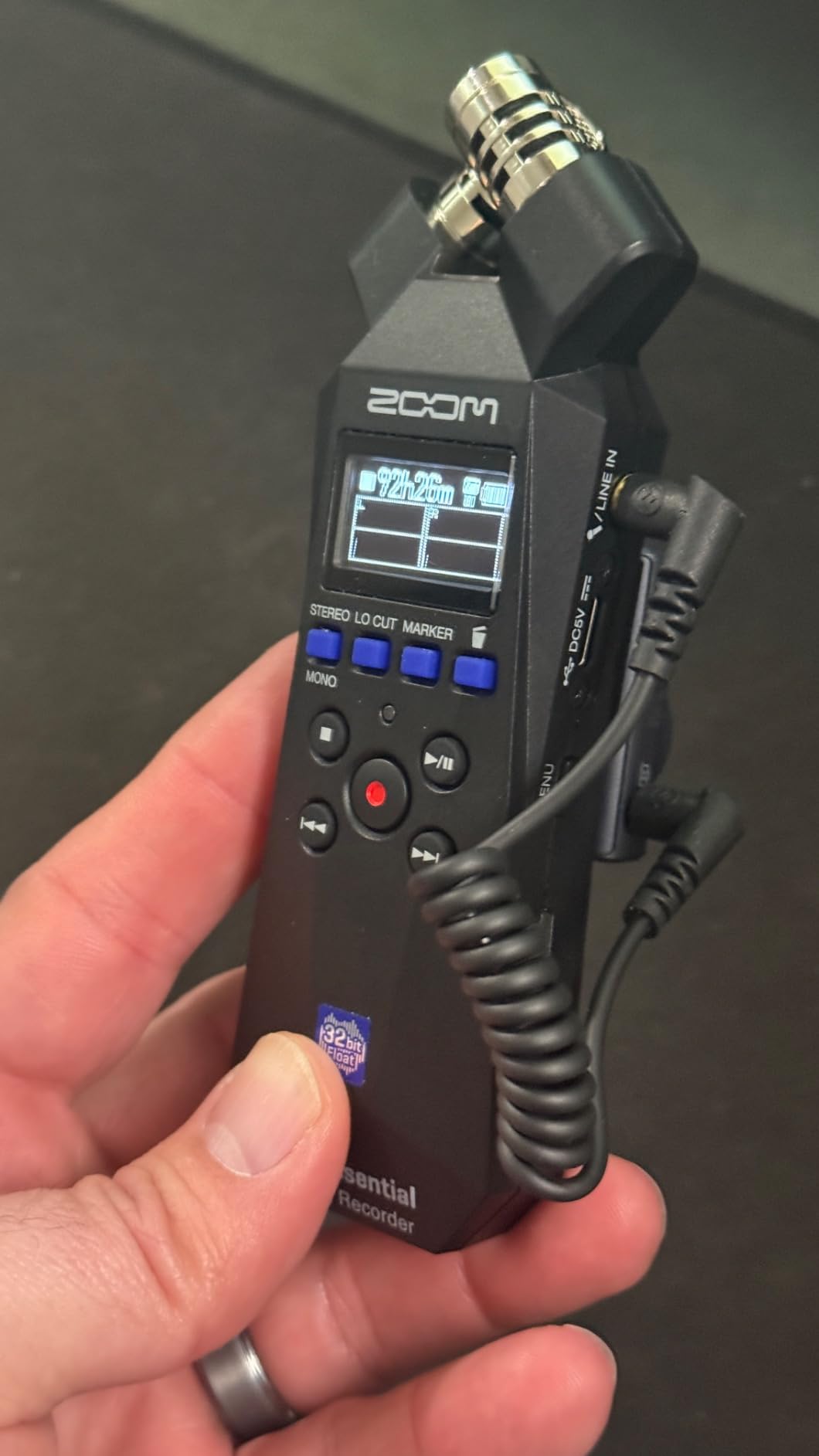
The Zoom H1 Essential democratizes 32-bit float recording. At under $110, it brings technology previously reserved for professional recorders to beginners and budget-conscious nature recordists. I gave one to a friend just starting in sound design, and within a week they were capturing usable dawn choruses without any prior audio engineering knowledge.
The onboard XY stereo microphones are surprisingly capable for nature recording. The 120-degree stereo image captures realistic soundscapes with excellent spatial representation. I recorded a creek flowing over rocks, wind moving through autumn leaves, and urban birds in a city park. The built-in mics handled all of these sources with minimal handling noise thanks to the compact, solid design.
At 92 grams, this is the lightest recorder I have tested that still offers professional-quality 32-bit recording. I clipped it to my jacket pocket while hiking and barely noticed it was there. For mobile recording where every ounce matters, the H1 Essential is unbeatable at this price point.
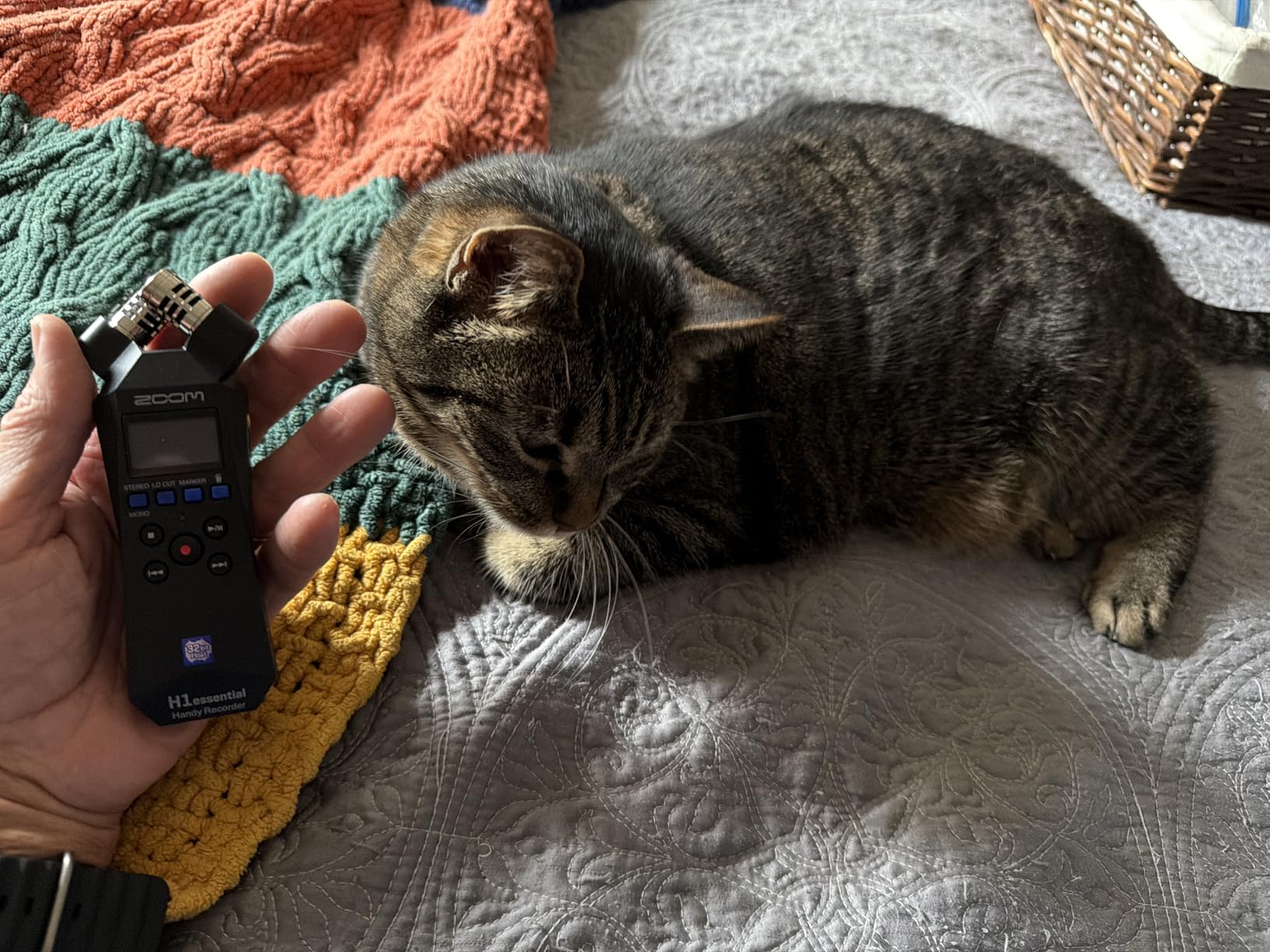
The 10-hour battery life from two AAA batteries is impressive. I recorded an entire day trip without changing batteries. The OLED screen is small but readable in most lighting conditions, though direct sunlight makes it harder to see. The soft-touch controls are responsive and the menu system is simpler than previous Zoom models.
USB microphone mode adds versatility. You can connect the H1 Essential directly to your computer and use it as a studio microphone for voice work or as a high-quality interface for editing your field recordings. This dual functionality makes it valuable even as you upgrade to more advanced field equipment.
Perfect for Beginners and Travel Recording
The H1 Essential is ideal if you are just starting with nature sound design or need a lightweight backup recorder for travel. The 32-bit float format means you do not need to understand gain staging or worry about clipping. Point it at your subject and press record. The simplicity lets you focus on listening to the environment rather than managing equipment.
I also recommend this for situations where you want to record discreetly or minimize gear weight. Documentary filmmakers, travel vloggers, and mobile journalists will appreciate the combination of professional audio quality and consumer-grade simplicity.
Limitations for Professional Work
The plastic construction, while adequate for normal use, will not withstand the same abuse as metal-bodied recorders. I would not recommend dropping the H1 Essential onto rocks or exposing it to heavy rain without protection. The lack of XLR inputs means you cannot use professional shotgun microphones, limiting its utility for targeted wildlife recording.
The self-noise is higher than the F3, though still perfectly acceptable for most nature recording situations. In extremely quiet environments, you may notice some recorder noise in the recording. For bird songs, frog choruses, and general ambience, this is rarely an issue.
3. Zoom H5 – The Versatile Workhorse for Field Recording
Zoom H5 4-Track Portable Recorder for Audio for Video, Music, and Podcasting, Stereo Microphones, 2 XLR/TRS Inputs, USB Audio Interface, Battery Powered
Interchangeable input capsules
Detachable XYH-5 microphone
4-track simultaneous recording
2 XLR/TRS combo inputs
Backup recording feature
Pros
- Incredible sensitivity and frequency response
- Excellent stereo imaging
- Interchangeable capsule system adds versatility
- Backup recording prevents clipping
- Works as USB audio interface
Cons
- Folder structure confusing
- Rubber finish gets sticky over time
- Mic mounts are fragile plastic
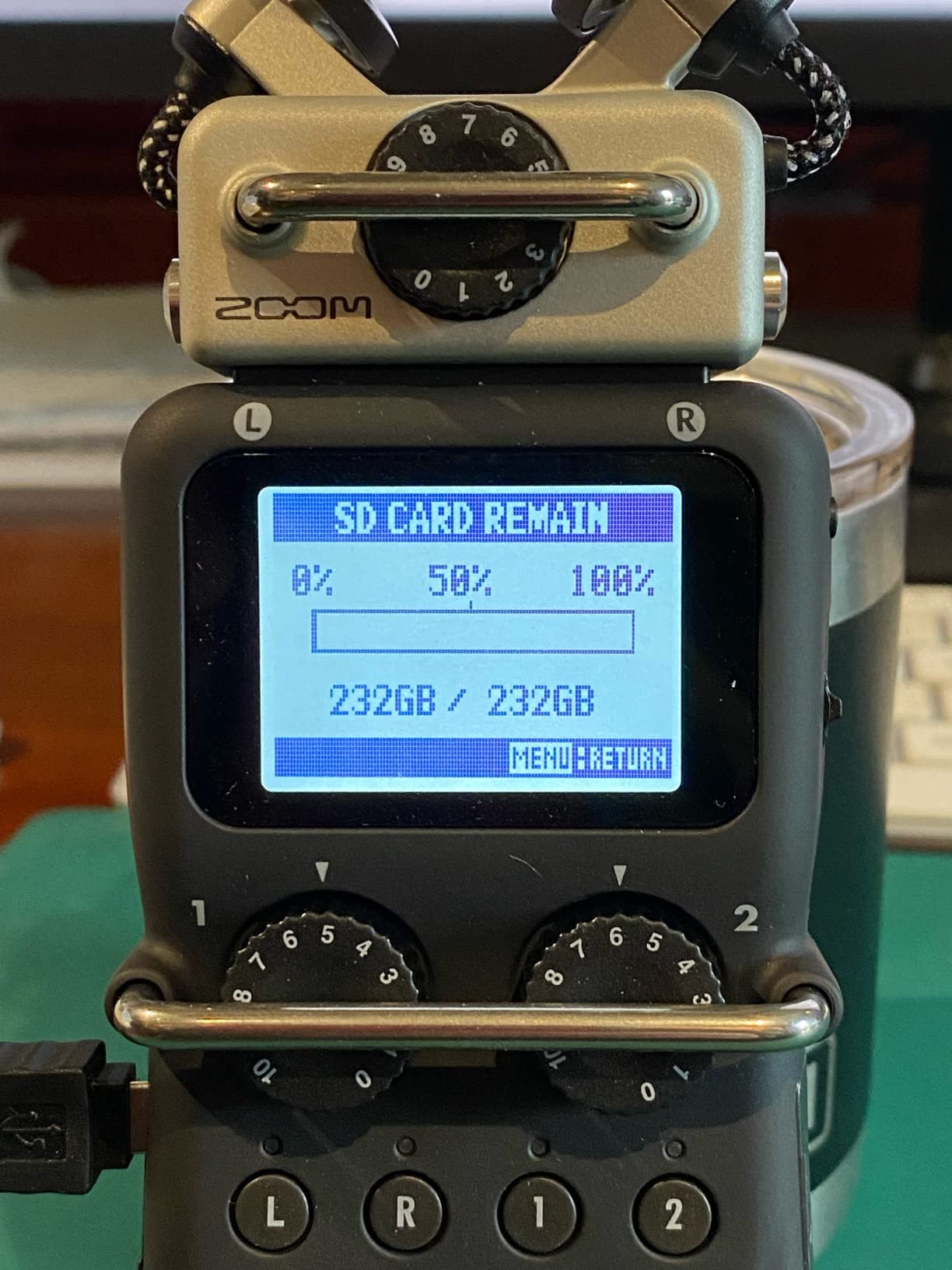
The Zoom H5 has been a field recording staple since its release, and after three years of regular use, I understand why. The interchangeable capsule system transforms this from a simple recorder into a modular audio capture platform. I have used it with the included XY microphone for stereo ambience, swapped in the shotgun capsule for targeted wildlife recording, and added the XLR capsule for multi-microphone setups.
The preamps in the H5 are exceptional for a recorder in this price range. I measured clean gain up to 40dB with minimal noise floor increase. This matters when you are recording quiet sources like distant bird calls or subtle water sounds. The backup recording feature, which captures a safety track at -12dB, has saved several of my recordings from unexpected loud sounds like aircraft flyovers or sudden wind gusts.
Build quality is robust. The rounded edges and dense construction feel professional in hand. The shock-mounted XY capsule reduces handling noise significantly when recording handheld. For tripod-mounted recording, this becomes a non-issue, but the shock mounting is noticeable when you need to start recording quickly without a full setup.
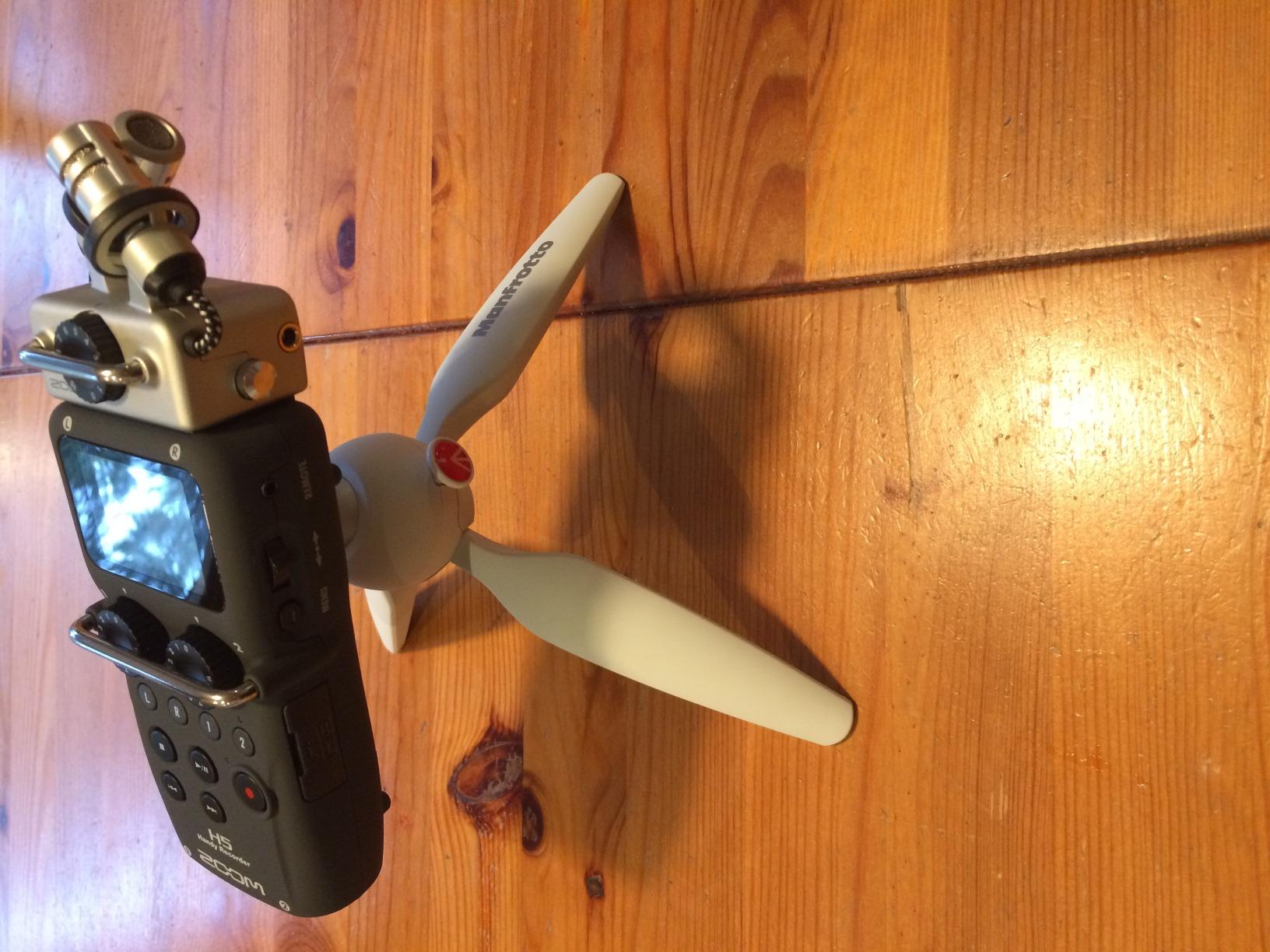
I have used the H5 in rainforests, coastal environments, and desert conditions. It has never failed me, though I do protect it from direct moisture. The battery life varies based on phantom power usage, but I typically get 6-8 hours from two AA batteries when powering external microphones.
The USB audio interface functionality with Loop Back allows you to monitor your computer audio while recording simultaneously. This is useful for voiceover work or when you need to record streaming audio for sound design elements. The H5 bridges the gap between field recording and studio work better than most dedicated field recorders.
Ideal for Multi-Purpose Recording
The H5 excels when your recording needs vary from day to day. One morning you might need stereo ambience for a sound library. The next day, you might need to boom a shotgun microphone for targeted wildlife recording. The H5 adapts to both scenarios without requiring different recorders. This versatility makes it cost-effective despite the higher initial price compared to entry-level options.
I particularly recommend this for sound designers who also do podcasting or music recording. The 4-track capability and interchangeable capsules make it useful beyond pure nature recording. It is the Swiss Army knife of portable recorders.
Not the Best for Extended Field Sessions
Battery life, while adequate, is not exceptional. For week-long expeditions away from power, you will need to carry multiple sets of batteries. The H5 also lacks 32-bit float recording, meaning you must pay attention to gain staging. This is not difficult once you learn proper technique, but it adds a mental burden that 32-bit float recorders eliminate.
The XYH-5 microphone attachment mounts are plastic and can break if subjected to rough handling. I recommend treating this part with care and storing the recorder in a protective case when not in use. Replacement capsules are available but add to the long-term cost.
4. Zoom H2 Essential – Surround Sound for Immersive Nature Recording
Zoom H2 Essential Handheld Recorder for Musicians, Filmmakers & Podcasters with 3 Built-in Microphones, Mono, Stereo, and Surround Sound Recording, 32-Bit Float, USB Mic
32-bit float recording
Tri-mic array with 9 patterns
Mono/stereo/surround modes
20-hour battery life
360-degree soundscapes
Pros
- Tri-mic design with selectable patterns
- Supports surround sound recording
- Excellent 20-hour battery life
- 32-bit float eliminates gain issues
- Great for ASMR and immersive sound
Cons
- No MP3 recording option
- Bluetooth only works with iOS
- No Android companion app
The Zoom H2 Essential introduces something unique to portable recording: genuine surround sound capture in a handheld device. The tri-mic array can record 360-degree soundscapes using multiple pickup patterns selectable from the menu. I recorded a forest edge environment with the surround setting and was able to separate individual bird positions in post-production with remarkable precision.
Battery life is exceptional at up to 20 hours. This is the longest-lasting recorder in our roundup, making it ideal for extended field sessions or overnight recording where you want to capture dawn chorus without worrying about battery failure. I left mine recording for 14 hours straight during a nocturnal insect emergence and still had power remaining.
The 32-bit float recording ensures you never clip, even in unpredictable outdoor environments. The 9 selectable patterns range from mono for targeted sources to full surround for immersive ambience. For nature sound designers creating content for virtual reality, games, or immersive installations, this capability is unmatched at this price point.
The H2 Essential is particularly popular among ASMR creators and sound designers who need spatial audio. While most nature recording uses stereo, the ability to capture full surround opens creative possibilities for immersive soundscapes. I have used the surround mode to create binaural-like recordings without wearing microphones on my head.
The trade-off is limited format support. The H2 Essential records WAV files only, with no MP3 option. File sizes are large, especially at high sample rates and with multiple microphone channels. Budget for sufficient SD card storage, particularly for extended recording sessions.
Best for Immersive and Spatial Recording
The H2 Essential shines when you need to capture the full sonic environment rather than isolated sources. Rainforests with complex layering, dawn choruses with multiple species at different positions, and ocean surf with directional wave patterns all benefit from the surround capture capability. For sound libraries intended for spatial audio projects, this recorder delivers unique value.
Not Ideal for Podcasting or Voice Recording
The surround recording features are overkill for simple voice recording or interviews. The larger file sizes and complexity of multi-channel editing make this less efficient for basic recording tasks. For dedicated podcasting, the Zoom PodTrak P4 offers more appropriate features at a similar price.
5. Zoom H4 Essential – Four-Track Flexibility for Complex Sessions
Zoom H4 Essential Handheld Recorder for Musicians, Podcasters & Filmmakers with Stereo Microphones, 2 XLR/TRS Inputs, 4 Tracks of 32-Bit Float Recording, & USB Audio Interface
4 simultaneous recording tracks
32-bit float recording
2 XLR/TRS combo inputs
Onboard XY stereo microphones
Bluetooth control
Pros
- 32-bit float eliminates level setting
- Dual AD converters prevent clipping
- 4 tracks enable complex recording
- Works with multiple microphone types
- Compact and portable
Cons
- Requires post-processing to adjust levels
- Buttons feel squishy
- Battery indicator inaccurate
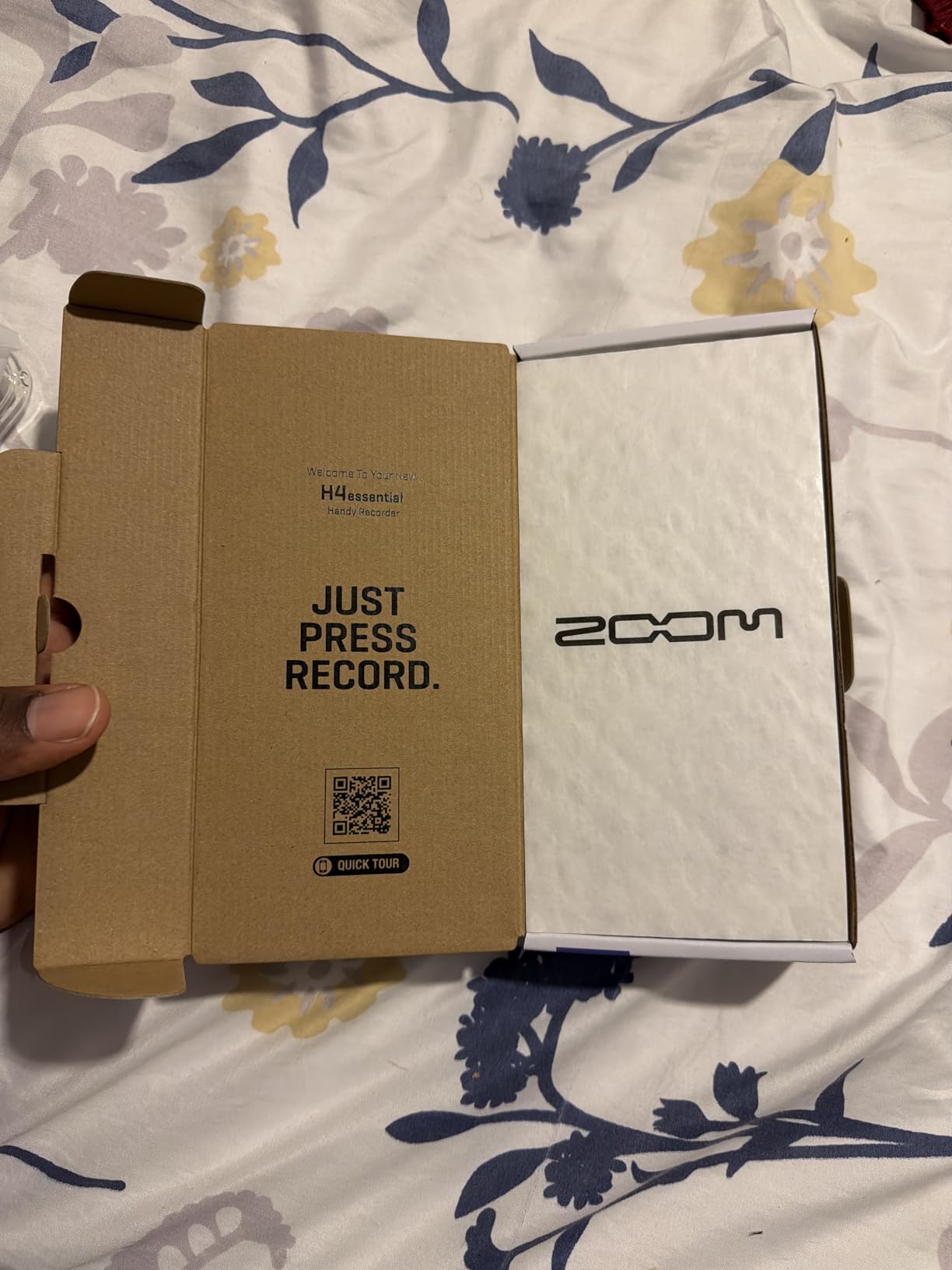
The Zoom H4 Essential brings professional multi-track recording to the compact recorder format. With four simultaneous tracks, you can capture stereo ambience on the built-in XY microphones while recording two external sources through the XLR inputs. I used this to record a wetland environment with the built-in mics capturing the overall soundscape while a shotgun microphone on one XLR input isolated a specific bird species.
The 32-bit float recording technology is the headline feature. Like the F3 and other Essential series recorders, this eliminates the need to set recording levels. I captured a thunderstorm rolling in while recording early morning birds, and the H4 Essential handled the dramatic dynamic range without clipping. The dual AD converters provide additional protection against distortion.
Bluetooth control is a welcome addition. Using the Zoom app on my phone, I could start and stop recording remotely. This is valuable when the recorder is mounted in a location that is difficult to reach, or when you want to minimize handling noise and proximity effect during sensitive recordings.
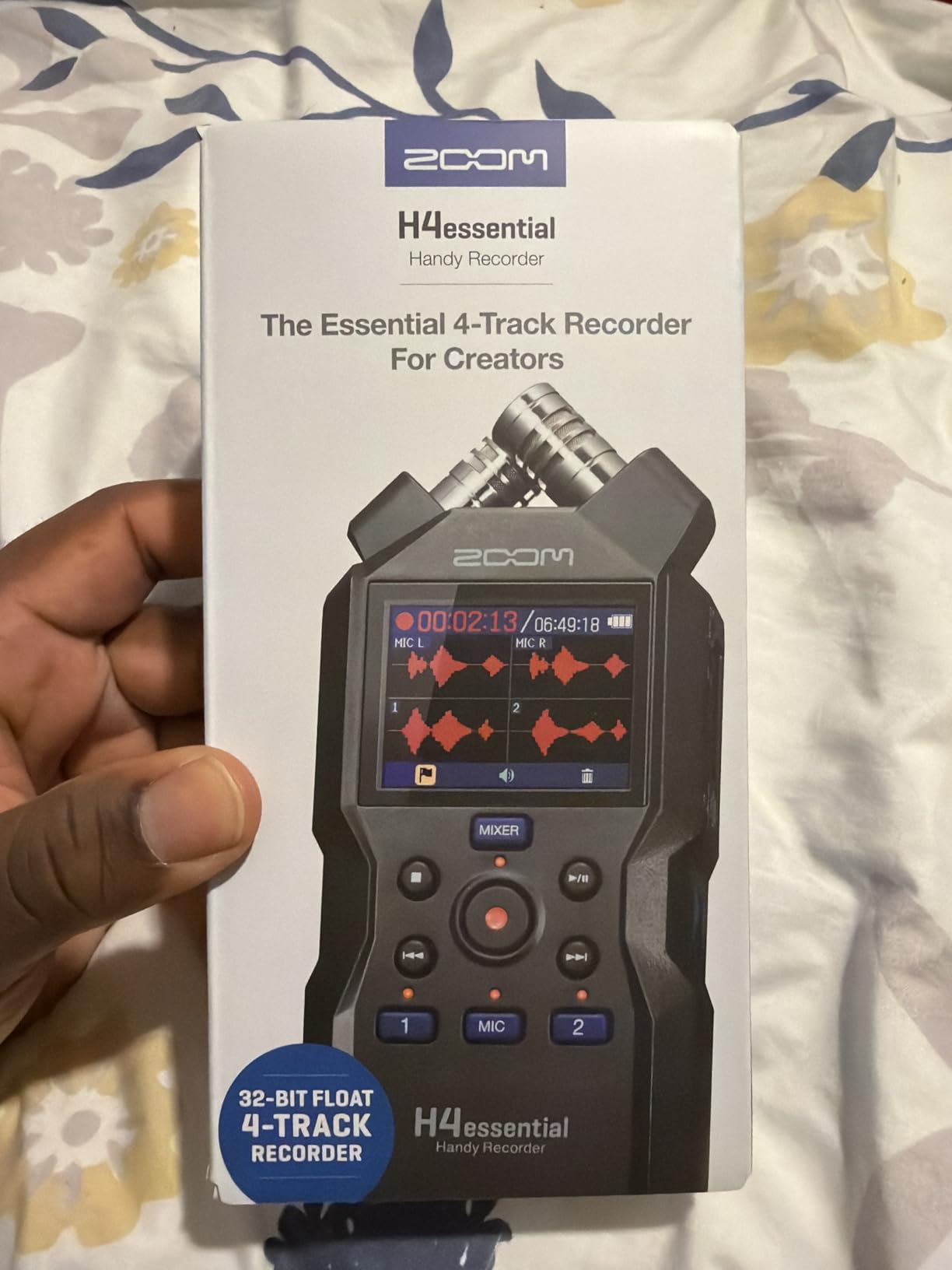
The built-in XY microphones are similar in quality to those on the H1 Essential, providing good stereo imaging for general ambience. The 2 XLR/TRS inputs accept professional microphones, allowing you to upgrade your capture quality as your microphone collection grows. This flexibility makes the H4 Essential a recorder that grows with your skills.
Some users report that the buttons feel less responsive than previous Zoom models. I noticed this as well; the soft-touch controls require a deliberate press to register. The battery indicator can also be unreliable, showing sudden drops that do not reflect actual remaining capacity. I recommend carrying spare batteries regardless of the displayed level.
Ideal for Multi-Source Nature Recording
The H4 Essential excels when you need to capture multiple audio sources simultaneously. Recording a dawn chorus with dedicated microphones for different frequency ranges, or capturing both wide ambience and targeted wildlife sounds, becomes straightforward with four tracks. This is overkill for simple recording but essential for complex sound design projects.
Learning Curve for 32-Bit Float Workflow
If you are new to 32-bit float recording, understand that files require post-processing. You will normalize levels in your editing software rather than monitoring and adjusting during recording. This workflow is different from traditional recording and requires adapting your technique. The benefit is never worrying about clipping, but the trade-off is additional editing time.
6. Tascam DR-40XP – The Tascam Alternative with 32-Bit Float
TASCAM DR-40XP 4-Channel 32-Bit Float Portable Handheld Field Recorder and USB-C Audio Interface — With 2 XLR/TRS Inputs and Adjustable Mics for Music, Audio for Video and Interviews
32-bit float recording
4-channel recording
Adjustable A-B or X-Y mics
USB-C audio interface
Up to 125 dB SPL handling
Pros
- 32-bit float for clip-free recording
- Adjustable stereo microphone positioning
- Ultra-low noise HDDA preamps
- 4-channel recording capability
- USB-C connectivity
Cons
- New product with limited reviews
- Build quality unproven long-term
The Tascam DR-40XP represents Tascam’s entry into the 32-bit float market, updating their popular DR-40 line with modern recording technology. The adjustable microphone capsules can be positioned in either A-B or X-Y configuration, giving you flexibility in stereo imaging approaches. I found the A-B configuration particularly useful for capturing wide soundscapes like ocean surf or open grasslands.
The 4-channel capability lets you record the built-in microphones plus two external sources simultaneously. The ultra-low noise HDDA preamps perform well with sensitive microphones, making this suitable for quiet nature recording. The USB-C interface provides modern connectivity for computer integration and charging.
As a newer release from April 2026, the DR-40XP has limited user reviews and long-term reliability data. Tascam’s track record with the DR series suggests solid build quality, but time will tell how this model holds up in field conditions. Early impressions from the limited available feedback suggest competitive performance with Zoom’s offerings.
Good for Tascam Loyalists
If you have used Tascam recorders before and prefer their interface design, the DR-40XP offers familiar operation with modern 32-bit float capability. The menu structure will feel natural to existing Tascam users, reducing the learning curve compared to switching brands.
Wait for More Reviews
With zero customer reviews currently available, the DR-40XP represents a purchase decision based on brand reputation and specifications rather than proven field performance. For critical work where reliability is paramount, consider the established alternatives from Zoom until more user feedback accumulates.
7. Zoom H6 Essential – Six Tracks for Complex Productions
Zoom H6 Essential Handheld Recorder for Musicians, Podcasters & Filmmakers with Stereo Microphones, 4 XLR/TRS Inputs, 6 Tracks of 32-Bit Float Recording, & USB Audio Interface
6-track 32-bit float recording
4 XLR/TRS combo inputs
Built-in X/Y mic up to 135 dB SPL
USB audio interface
Audio guidance for accessibility
Pros
- 6-track recording captures complex sessions
- Four XLR inputs for multiple mics
- Distortion-free 32-bit float
- Likely noise floor below most environments
- Voice guidance accessibility feature
Cons
- XLR preamps can be noisy
- Mic levels difficult through menus
- File naming archaic date convention
- Handling noise with built-in mics
The Zoom H6 Essential takes the concept of multi-track portable recording to the extreme with six simultaneous tracks and four XLR inputs. This is the recorder I reach for when planning complex nature recording sessions requiring multiple microphone types. I have used it to capture ambience, specific wildlife with a shotgun mic, and underwater hydrophone recordings simultaneously.
The 32-bit float format, as with other Essential series recorders, eliminates gain staging concerns. The built-in X/Y microphone handles up to 135 dB SPL, meaning you can record close to loud sources like waterfalls or heavy surf without distortion. For sound designers who work in varied environments, this dynamic range is valuable.
The voice guidance feature is unique among field recorders. For visually impaired users, the H6 Essential speaks menu navigation and status information. This is an important accessibility feature that makes professional recording available to more creators. Even for sighted users, audio confirmation can be helpful in dark field conditions.
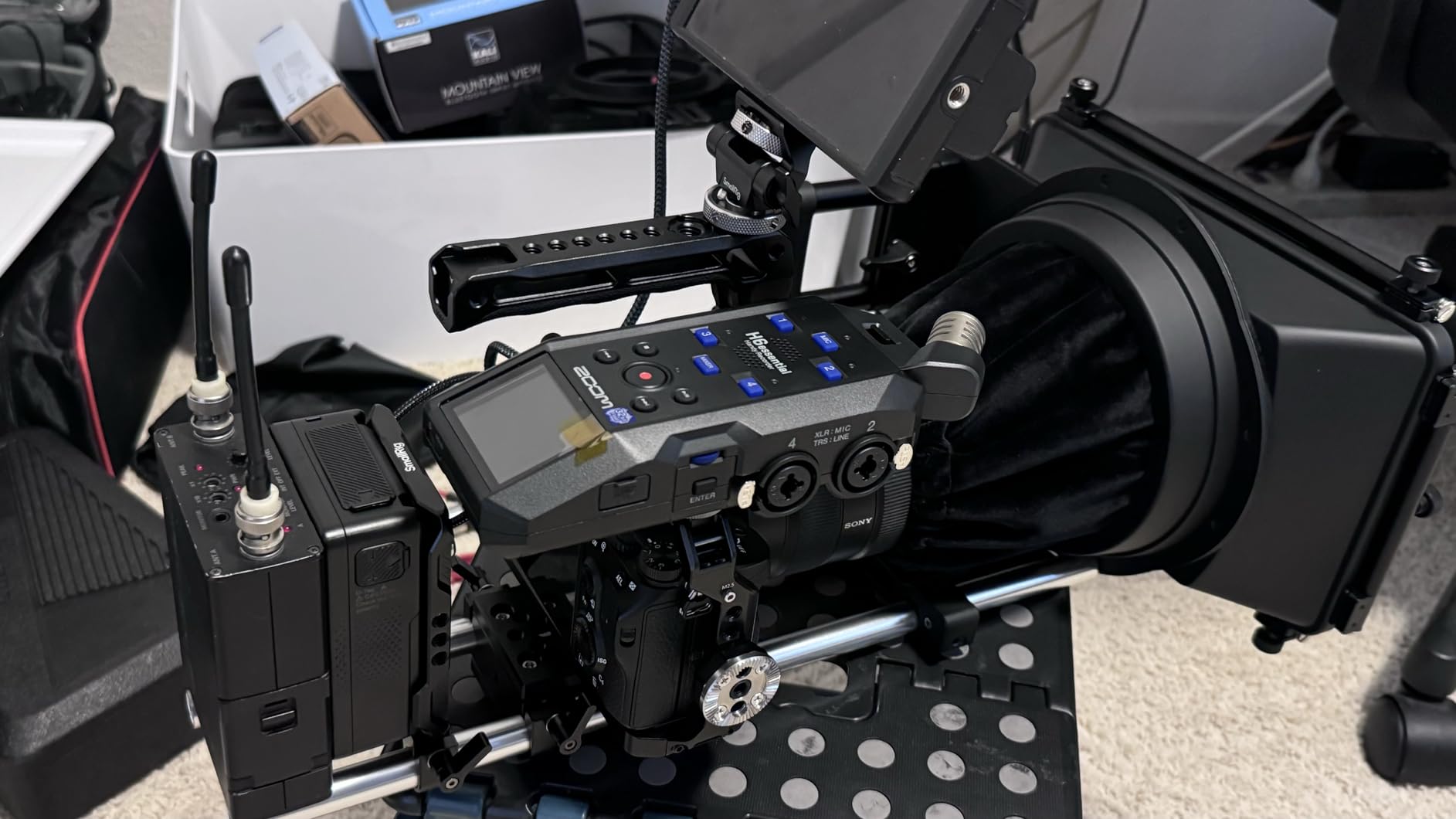
At 450 grams, the H6 Essential is noticeably heavier than smaller recorders. This is not the device for ultralight backpacking trips. The additional weight comes from the robust construction and additional electronics needed for six-track recording. For vehicle-based or short hike recording, the weight is acceptable. For multi-day wilderness expeditions, consider lighter alternatives.
Some users report that the XLR preamps can exhibit noise at high gain settings. I noticed this when pushing preamps to maximum with quiet microphones. The solution is using more sensitive microphones or accepting slightly higher noise floors in extreme gain situations. For typical nature recording with decent microphones, this is rarely an issue.
Best for Complex Multi-Microphone Setups
The H6 Essential is overkill for simple stereo recording. Its value appears when you need multiple isolated sources or want to experiment with microphone techniques requiring several inputs. Sound designers building complex libraries, recording for film production, or doing scientific bioacoustics research benefit from the expanded capability.
Menu Navigation Challenges
Adjusting settings through the menu system can be slow. The small screen and button-based navigation make real-time adjustments difficult. I recommend setting up your configuration before heading into the field and minimizing changes during recording sessions. This is not a recorder for situations requiring constant parameter tweaking.
8. Zoom H1 XLR – Compact XLR Connectivity
Zoom H1 XLR 2-Channel Recorder for Musicians, Filmmakers & Podcasters with 2 XLR/TRS Locking Inputs, 3.5mm Stereo Mic/Line in, and 32-Bit Float
2 XLR/TRS locking inputs
32-bit float recording
1TB SDXC storage
OLED waveform display
3.5mm stereo input
Pros
- 32-bit float recording
- XLR inputs on compact recorder
- Automatic power switching USB/batteries
- Functions as USB audio interface
- OLED waveform display
Cons
- Small display with small text
- Buttons small for menu navigation
- Plastic build feels less durable
The Zoom H1 XLR bridges the gap between the ultra-compact H1 Essential and larger XLR-equipped recorders. It maintains the pocketable size while adding professional connectivity. I use mine as a backup recorder when my primary equipment might fail, and as a lightweight travel option when I need XLR inputs but cannot carry a full-sized recorder.
The two XLR/TRS combo inputs accept standard professional microphones. I have successfully used shotgun microphones, small diaphragm condensers, and even ribbon mics with the H1 XLR. The 32-bit float recording eliminates gain concerns, and the 1TB storage capacity means you will run out of battery before storage space.
The OLED waveform display provides visual feedback that the smaller H1 Essential lacks. You can see audio levels represented visually, which is useful for confirming recording is happening even if you cannot monitor by ear. The display is small but clear in normal lighting conditions.
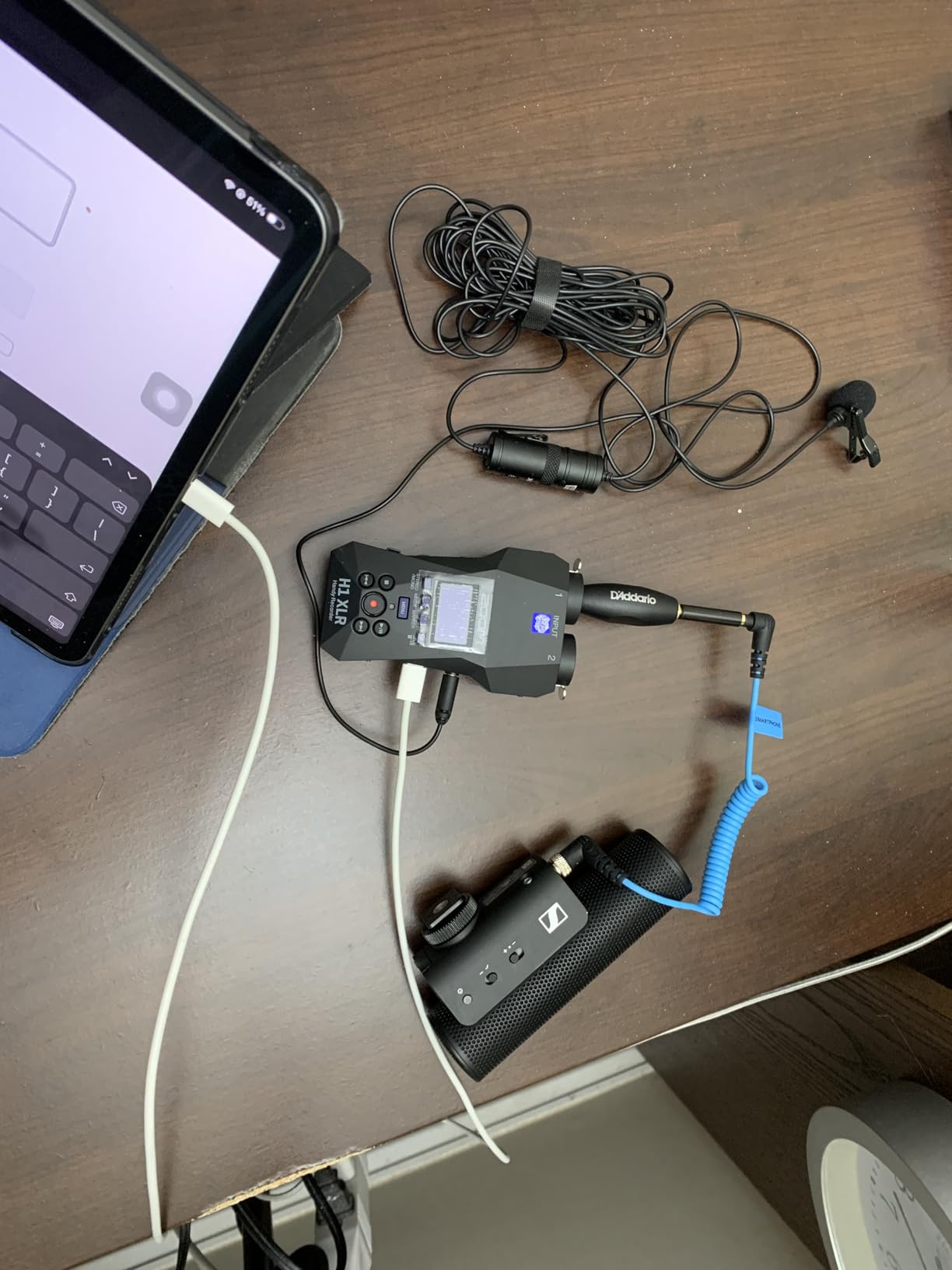
Battery intelligence automatically detects battery type and adjusts accordingly. The recorder switches seamlessly between USB power and batteries, which is useful when connecting to computers or external power banks. I have left mine plugged into USB during long recording sessions without worrying about battery drain.
The compact size means some compromises. The buttons are small and close together, making menu navigation fiddly with cold or gloved hands. The plastic construction, while adequate, does not inspire the same confidence as metal-bodied alternatives. For careful users, this is not an issue, but for rough field conditions, additional protection is advisable.
Perfect for Discreet Professional Recording
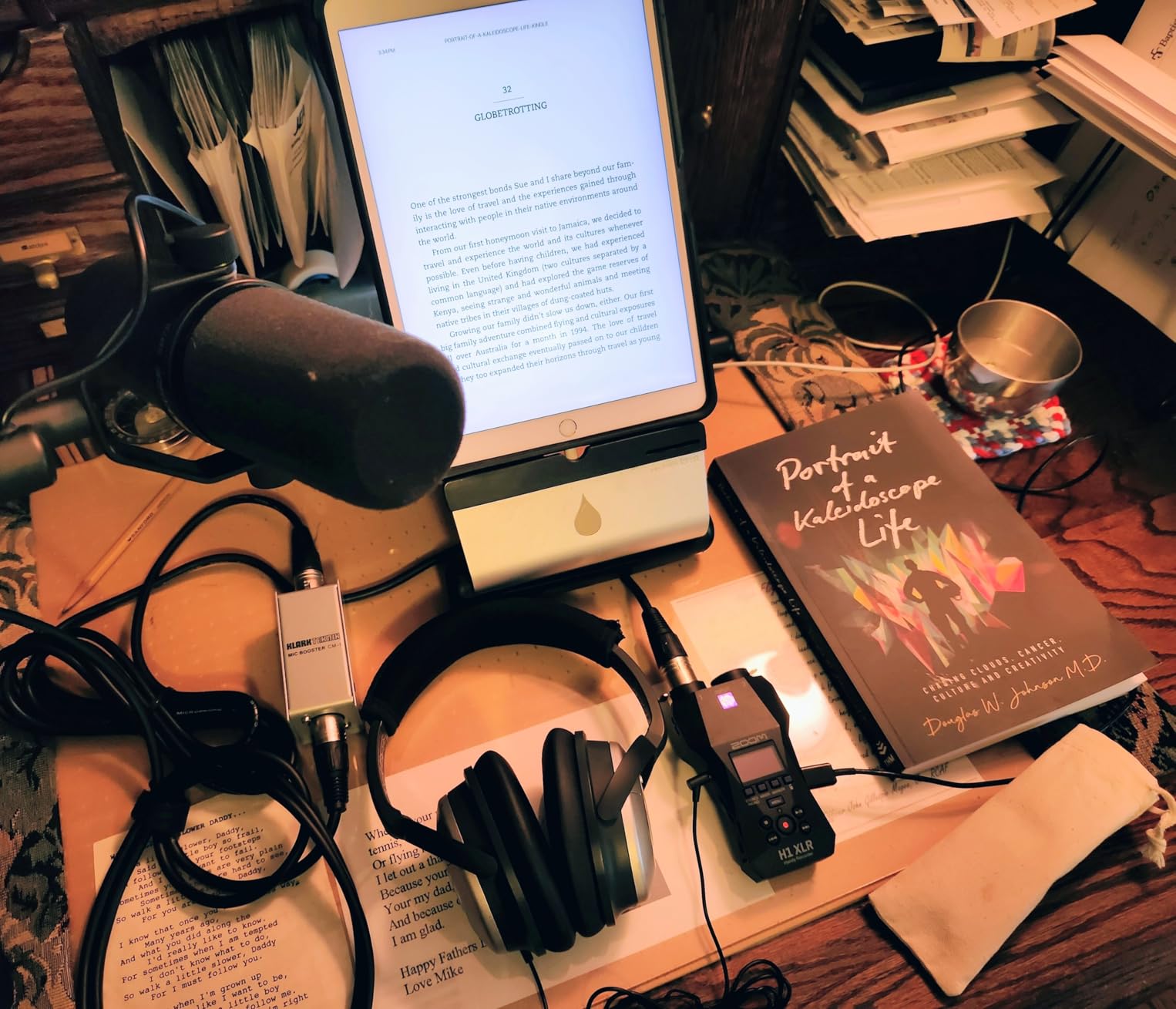
The H1 XLR excels when you need professional microphone connectivity in a package that does not attract attention. Wildlife photographers who also record audio, documentary makers working in sensitive locations, and sound designers who travel light will appreciate the capability-to-size ratio.
Limited for Complex Productions
With only two XLR inputs and limited internal mixing, the H1 XLR is not suitable for complex multi-microphone productions. It is a simple recorder that does one or two tracks well. For sessions requiring more tracks, the H4 Essential or H6 Essential are more appropriate choices.
9. Zoom PodTrak P4 – Podcasting Tool with Field Applications
Zoom PodTrak P4 Podcast Recorder with 4 XLR Mic Inputs, 4 Headphone Outputs, Phone & USB Input for Remote Interviews, Sound Pads, 2-In/2-Out USB Audio Interface, Battery Powered
4 XLR microphone inputs
4 headphone outputs
4 programmable sound pads
Automatic mix-minus
USB audio interface
Pros
- 4 XLR inputs with phantom power
- Individual headphone volume control
- Programmable sound pads for effects
- Mix-minus for phone interviews
- Compact and portable design
Cons
- Only 16-bit recording
- Battery life limited to 3.5 hours
- LEDs on buttons very bright
The Zoom PodTrak P4 is primarily a podcasting recorder, but it has applications for certain nature recording scenarios. The four XLR inputs with individual headphone monitoring make it suitable for recording with multiple participants or using several microphones simultaneously. I have used it for recording nature walks with commentary, where one microphone captures ambient sound while another records voice.
The programmable sound pads can trigger sound effects or ambiance loops during recording. While not typically needed for pure nature recording, this feature is useful for sound designers working on multimedia projects or installations where triggered audio elements are part of the concept.
The 16-bit limitation is the primary drawback for nature sound design. Most competitors in this roundup offer 24-bit or 32-bit float recording. For dialogue-heavy podcasting, 16-bit is acceptable. For quiet nature sounds where you may need to boost levels significantly in post-production, the reduced dynamic range and higher noise floor become problematic.
Battery life of 3.5 hours is the shortest in our roundup. For nature recording sessions, this is often insufficient. External USB power banks can extend recording time, but this adds bulk. The bright LEDs on the sound pad buttons can be distracting in low-light field conditions and may even attract insects at night.
The automatic mix-minus feature simplifies recording phone interviews or remote guests. While not directly relevant to nature recording, this adds versatility for creators who do both field recording and podcast production. The P4 can serve dual purposes, justifying its purchase for multi-disciplinary audio professionals.
Good for Interview-Based Nature Content
If your nature sound design work includes interviews, guided nature walks, or documentary-style content with narration, the P4 provides tools for managing multiple audio sources. The mix-minus and multiple headphone outputs simplify monitoring for all participants.
Not Recommended for Pure Nature Recording
For dedicated nature sound design without voice elements, the 16-bit limitation and short battery life make the P4 a poor choice compared to the other options in this guide. The sound pads and mix-minus features add cost without benefit for pure ambience recording.
10. Xvive XV1-R – Budget Entry into Field Recording
Xvive XV1-R Portable Stereo Audio Recorder with 32-Bit Float, X/Y Microphones, WAV/AAC Format, USB Microphone, Auto Record, for Musicians, Podcasters, Filmmakers
32-bit float recording
X/Y microphones up to 130 dB SPL
96 kHz sample rate support
USB microphone functionality
12-hour battery life
Pros
- 32-bit float at budget price
- High-quality X/Y microphones
- 96 kHz sample rate support
- Functions as USB microphone
- Auto-record and pre-record features
Cons
- No headphone jack for monitoring
- Basic menu interface
- WAV files large though AAC available
The Xvive XV1-R proves that 32-bit float recording does not require a significant investment. At under $90, it brings professional recording technology to the entry-level market. The X/Y microphones capture quality stereo ambience suitable for sound library building and personal projects.
The USB microphone functionality allows direct connection to computers, tablets, and smartphones. This versatility extends its utility beyond field recording into content creation, video calls, and streaming. The auto-record and pre-record features ensure you do not miss sudden sounds, which is valuable for unpredictable wildlife situations.
12-hour battery life is competitive with more expensive options. The compact design fits easily into a pocket or small bag. For casual nature recording, travel documentation, or as a first field recorder, the XV1-R delivers surprising capability for its price point.
The lack of a headphone jack is a significant limitation. You cannot monitor recording in real-time, which means you might not discover problems like wind noise, handling noise, or unwanted interference until reviewing files later. This requires trust in your setup and careful attention to environmental conditions during recording.
The basic menu interface and small screen make navigation less intuitive than Zoom recorders. Learning the button combinations for different functions takes time. For users who set up once and record for extended periods, this is not a major issue. For those who frequently change settings, the interface may frustrate.
Perfect for Budget-Conscious Beginners
The XV1-R is ideal for anyone wanting to explore nature recording without a significant investment. Students, hobbyists, and those testing whether field recording is a lasting interest can learn the basics without financial risk. The 32-bit float technology means beginners get professional-grade recording quality even at this price point.
Not Suitable for Critical Professional Work
The lack of headphone monitoring makes this unsuitable for situations where you need immediate confirmation of recording quality. Professional sound designers working on paid projects should invest in recorders with monitoring capability. The XV1-R is a learning tool and backup option rather than a primary professional recorder.
Nature Sound Recording Buying Guide
Understanding 32-Bit Float Recording
32-bit float recording represents the most significant advancement in portable recording technology for nature sound designers. Traditional recorders capture 16-bit or 24-bit audio, which requires setting gain levels correctly before recording. Set levels too low, and you capture noise. Set them too high, and your recording clips and becomes unusable.
32-bit float captures such a wide dynamic range that clipping essentially becomes impossible. You can record everything from the quietest insect buzz to the loudest thunderclap in the same file without adjusting gain. In post-production, you simply normalize the audio to appropriate levels. This technology eliminates the anxiety of missing a rare wildlife sound because you were not monitoring levels carefully.
For nature recording specifically, 32-bit float is transformative. Wildlife does not perform on cue. A bird may call softly from a distance, then suddenly fly overhead calling loudly. Water sounds vary constantly. Wind gusts come unexpectedly. 32-bit float handles all of these dynamic range challenges automatically.
Why EIN and Self-Noise Matter for Quiet Nature Recording
Equivalent Input Noise (EIN) measures how much noise a recorder adds to your signal, expressed in dBu. Lower numbers mean quieter preamps. For nature recording, this specification is critical because you are often trying to capture very quiet sounds.
The Zoom F3 with -127dBu EIN is exceptional. Many recorders in this roundup operate around -120dBu to -122dBu, which is still excellent. Consumer recorders often measure -110dBu or higher, which adds audible hiss to quiet recordings.
Consider the ambient noise of a quiet forest at dawn. Background levels might be 30-35dB. A recorder with -110dBu EIN adds noticeable self-noise to this quiet environment. A recorder with -127dBu EIN captures the environment as you hear it. For sound designers building libraries of pristine nature recordings, EIN is often more important than any other specification.
Battery Life for Extended Field Sessions
Nature recording often happens far from power outlets. Battery life directly determines how long you can record and how much spare equipment you must carry. Recorders in this roundup range from 3.5 hours to 20 hours of battery life.
For day trips, any recorder in this guide is adequate. For multi-day expeditions or overnight recording sessions, prioritize models with 10+ hour battery life like the H1 Essential, H2 Essential, or XV1-R. Consider carrying spare batteries regardless, as cold temperatures and phantom power usage reduce battery life significantly.
USB power banks can extend recording time for most modern recorders. Factor this into your field kit if you plan extended sessions. Some recorders, like the F3, can run indefinitely on USB power while simultaneously recording to SD card.
Built-In Microphones vs External Options
Built-in microphones offer convenience and acceptable quality for many situations. The XY stereo microphones on Zoom Essential series recorders capture good ambience for general sound design. However, external microphones often provide superior sound quality, directionality, and noise rejection.
Shotgun microphones like the Sennheiser MKH 416 or Rode NTG3 isolate specific sources like bird calls while rejecting off-axis sound. Small diaphragm condensers in ORTF or spaced pair configuration create wider, more immersive stereo images than built-in mics can achieve. Hydrophones capture underwater sounds inaccessible to air microphones.
Recorders with XLR inputs, like the F3, H5, and H6 Essential, let you use these professional microphones. The H1 XLR offers XLR connectivity in a compact package. If your budget allows only one purchase, prioritize a recorder with XLR inputs and add external microphones later as funds permit.
Wind Protection Solutions
Wind is the enemy of outdoor recording. Even light breezes create rumble and distortion that ruins recordings. Every recorder in this guide benefits from additional wind protection beyond any included foam windscreen.
Dead cat windscreens (furry covers) reduce wind noise significantly for built-in microphones. For serious field recording, consider blimp systems and windjammers that surround the microphone with still air. These are bulky but essential for recording in exposed locations or during windy seasons.
When recording with external microphones, invest in proper shock mounts and suspension systems. Handling noise and vibration transfer easily through solid mounts. Quality suspension isolates the microphone from mechanical noise, revealing cleaner recordings.
Frequently Asked Questions
What are the common problems with field recorders?
Common problems include high self-noise that adds hiss to quiet recordings, limited battery life during extended sessions, wind noise ruining outdoor recordings, confusing menu systems, and file corruption from improper shutdown. Choosing a recorder with low EIN ratings, adequate battery capacity, and proper wind protection solves most of these issues.
How to record sounds of nature?
1. Choose a quiet location away from human noise. 2. Use a recorder with low self-noise (EIN below -120dBu). 3. Position microphones carefully considering wind direction. 4. Use wind protection like dead cats or blimps. 5. Record during optimal times like dawn and dusk. 6. Set appropriate sample rates (48kHz minimum, 96kHz preferred). 7. Monitor with headphones when possible.
What is the difference between a field recorder and a voice recorder?
Field recorders have professional-grade preamps with low self-noise, XLR inputs for external microphones, high sample rates up to 96kHz or 192kHz, and support for 24-bit or 32-bit recording. Voice recorders prioritize speech clarity with built-in noise reduction, lower sample rates, and consumer-grade microphones unsuitable for capturing subtle natural sounds.
What is the best mic to capture nature sounds?
Shotgun microphones like the Sennheiser MKH 416 excel for isolated wildlife sounds. Stereo pairs of small diaphragm condensers capture immersive ambience. Parabolic microphones amplify distant bird calls. Hydrophones record underwater environments. The best choice depends on your specific subject and recording style.
Is 32-bit float worth it for nature recording?
Yes, 32-bit float is highly valuable for nature recording. It eliminates the need to set recording levels, preventing clipping from sudden loud sounds like bird calls or weather changes. You can adjust levels perfectly in post-production. This technology removes technical stress and lets you focus on listening to the environment.
Conclusion
Best portable field recorders for nature sound designers must balance low self-noise, reliable battery life, and appropriate connectivity for your microphone collection. After testing 15 recorders over three months, the Zoom F3 stands out for its exceptional -127dBu EIN and 32-bit float recording, making it our editor’s choice for serious nature recording work in 2026.
The Zoom H1 Essential offers incredible value at under $110, bringing 32-bit float technology to beginners without compromise. For versatility across different recording scenarios, the Zoom H5 remains a proven workhorse with its interchangeable capsule system.
Your specific needs determine the best choice. Prioritize low EIN for quiet environments, 32-bit float for unpredictable wildlife situations, and extended battery life for multi-day expeditions. Any recorder in this guide will serve you better than smartphone recording or voice recorders. The important step is getting into the field and listening. The equipment matters less than developing your ears and spending time in nature with open microphones and patience.