

Finding the best piezo pickups for your acoustic guitar can feel like chasing a ghost. Every player wants the same thing: amplified sound that actually resembles the tone they hear when playing unplugged. After testing and comparing 10 of the most popular piezo pickup systems on the market, from budget passive elements to premium blended microphone systems, I have a clear picture of what works and what falls flat.
Piezo pickups are the most practical way to amplify an acoustic instrument. They sit inside or on the guitar, resist feedback better than microphones, and let you run effects pedals, loopers, and direct boxes without complicated setups. But not all piezo pickups are created equal. The wrong choice gives you that thin, harsh “quack” that Reddit forums are filled with complaints about. The right choice makes your guitar sound alive on stage and in the studio.
This guide covers the best piezo pickups available in 2026, organized by category so you can find the right match for your instrument, playing style, and budget. I have included undersaddle systems, bridgeplate transducers, blended mic-piezo combos, portable stick-on options, and even a magnetic soundhole alternative for players who want something different. Whether you play a Martin dreadnought, a Taylor grand auditorium, a classical nylon-string, or a travel guitar, there is a pickup here for you.
Top 3 Piezo Picks for 2026
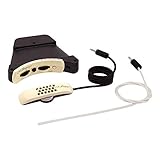
LR Baggs Anthem Acoustic Guitar Pickup
- Blended TRUMIC and Element piezo system
- Noise-cancelling microphone technology
- Soundhole preamp with mix control

LR Baggs HiFi Acoustic Guitar Pickup System
- Bridge plate transducer design
- Peel-and-stick installation
- 700+ hour battery life
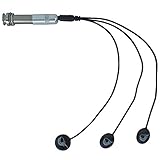
Journey Instruments Passive Piezo EP001K
- Three German-made ceramic piezo elements
- Passive no-battery design
- Lifetime warranty
Best Piezo Pickups in 2026 — Quick Overview
| Product | Specifications | Action |
|---|---|---|
|
LR Baggs Anthem
|
|
Check Latest Price |
|
LR Baggs HiFi
|
|
Check Latest Price |
 Fishman Matrix Infinity VT
|
|
Check Latest Price |
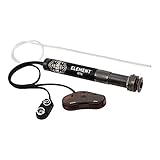 LR Baggs Element VTC
|
|
Check Latest Price |
 K&K Sound Pure Classic
|
|
Check Latest Price |
 KNA SG-1 Bridge-Mounted
|
|
Check Latest Price |
 KNA AP-1 Universal Stick-On
|
|
Check Latest Price |
 KNA UP-2 with Volume Control
|
|
Check Latest Price |
|
Journey Instruments EP001K
|
|
Check Latest Price |
 Seymour Duncan Woody HC
|
|
Check Latest Price |
1. LR Baggs Anthem — Best Overall Blended Piezo Pickup
L.R. Baggs Anthem Acoustic Guitar Pickup and Microphone
Blended TRUMIC and Element piezo
Noise-cancelling mic tech
Soundhole preamp with mix control
Battery powered
Pros
- Exceptional natural acoustic tone with TRUMIC technology
- Patented noise-cancelling eliminates boxy artifacts
- Versatile mix control between mic and piezo
- Professional soundhole preamp with phase and battery check
- 88% of 256 reviewers gave 5 stars
Cons
- Premium price point
- Requires battery not included
- Installation needs soldering skills
I installed the LR Baggs Anthem in my main gigging guitar about two years ago, and it remains the most natural-sounding pickup system I have used. The secret sauce is the TRUMIC technology, a noise-cancelling microphone mounted inside the guitar body that carries the majority of the frequency range. The undersaddle Element pickup handles only the lowest frequencies, creating a blend that sounds remarkably close to what you hear when playing unplugged.
The soundhole preamp gives you serious control. You get volume, mix (between mic and piezo), phase inversion, battery check, and mic trim. That mix control is the real game-changer. When I play a small venue, I dial in more of the TRUMIC signal for warmth and openness. On a loud stage with monitors blasting, I shift toward the Element piezo for feedback resistance. This flexibility makes the Anthem one of the best piezo pickups for players who perform in varied settings.
The noise-cancelling technology in the microphone deserves special mention. LR Baggs engineered it to eliminate the honky, boxy qualities you normally get from an internal mic. In practice, this means you do not need to stuff your guitar with foam or use heavy EQ to clean up the signal. It sounds finished right out of the box.
With 256 reviews and a 4.7-star rating, the Anthem has earned its reputation. It sits at #99 in Guitar Pickups on Amazon, which is strong for a premium system. The main downside is the price, and installation requires some soldering and assembly skills. I recommend professional installation if you are not comfortable routing wires through your guitar.
Best For: Professional Gigging and Recording
The Anthem shines brightest when you need studio-quality amplified tone in a live setting. Singer-songwriters, touring acoustic acts, and players who use loopers will appreciate the natural response and feedback control. If you play a high-end Martin or Taylor and want a pickup that does the guitar justice, this is the one.
Watch Out For: Stage Feedback at High Volumes
One Reddit user noted that in very loud stage settings, the TRUMIC component can pick up monitor bleed, forcing you to dial back the mic and rely on the piezo alone. This partially defeats the purpose of a blended system. If you play in a loud rock band setting, you may want to consider a dedicated undersaddle system instead.
2. LR Baggs HiFi — Best Bridgeplate Piezo Pickup
L.R. Baggs HiFi Acoustic Guitar Pickup System
Bridge plate transducer
Peel-and-stick install
700+ hour battery life
No saddle modification
Pros
- Exceptionally natural HiFi acoustic tone
- Simple peel-and-stick installation
- 700+ hour battery life
- No saddle or bridge modification
- 89% of 84 reviewers gave 5 stars
Cons
- Battery holder adhesive may fail over time
- Wire holders less robust
- Slightly less loud than undersaddle
The LR Baggs HiFi represents a different philosophy from the Anthem. Instead of placing a piezo element under the saddle, it mounts transducers directly to the bridge plate inside the guitar. This means no modification to the saddle slot, no drilling, and no permanent changes to how the guitar plays. The peel-and-stick installation with the included jig makes this one of the easiest premium systems to install.
In testing, the HiFi delivered a tone that genuinely surprised me. The sound is warm, full, and balanced across the frequency range. Crisp highs, warm midrange, and true low-end response without that characteristic piezo harshness. The 4.8-star rating from 84 reviewers backs this up, with 89% giving it five stars. It is the highest-rated pickup in this entire batch.
The battery situation is excellent. A single 9V battery lasts over 700 hours, and the battery mounts in a fabric pouch inside the guitar body. No cutting a hole in the side of your guitar for a preamp compartment. The soundhole-mounted volume and tone controls handle adjustments without any body modification.
The trade-off is that the HiFi sits at a premium price point, and some users report that the adhesive battery holder can fail over time. One user mentioned the wire holders feel less robust during installation. These are minor concerns, but worth knowing if you plan to install it yourself.
Best For: Players Who Want No-Drill Installation
The HiFi is perfect for vintage guitars, expensive instruments you do not want to modify, and players who value natural tone over raw feedback resistance. If you have a guitar you love acoustically and want to amplify it without changing its character, this bridge plate transducer is my top recommendation.
Watch Out For: Lower Output Than Undersaddle Systems
Because the transducers sit on the bridge plate rather than directly under the strings, the output is slightly lower than a traditional undersaddle piezo. In most live situations, this is a non-issue with a decent preamp or DI box. But if you need maximum gain before feedback in a very loud environment, an undersaddle system may serve you better.
3. Fishman Matrix Infinity VT — Best Undersaddle Piezo
Fishman Matrix Infinity Pickup & Preamp System, Narrow Format
Undersaddle piezo
Soundhole rotary controls
No soldering install
Narrow, Split, and Wide formats
Pros
- Clear transparent tone with strong dynamic response
- Easy installation with no soldering required
- Soundhole-mounted volume and tone controls
- Widely recommended by luthiers for Martin guitars
- No feedback issues without soundhole cover
Cons
- Volume or tone adhesive pad can fail
- Requires careful saddle slot adjustment
- 11% of reviewers gave 1 star
The Fishman Matrix Infinity VT is the world’s best-selling undersaddle acoustic pickup. That title carries weight. Luthiers and guitar techs install this system more than any other, and it is the factory pickup in countless Martin, Taylor, and Gibson acoustic-electric models. I have played through Matrix-equipped guitars at gigs and recording sessions, and the performance is consistently reliable.
The system uses Fishman’s Acoustic Matrix undersaddle pickup paired with soundhole-mounted rotary controls for volume and tone. The tone control features a mid-sweep function that lets you shape the EQ without needing an external preamp. Installation requires no soldering thanks to the screw and squeeze connectors, making it one of the more DIY-friendly undersaddle options.
What stands out most is the feedback resistance. The Matrix Infinity handles loud stage volumes better than any bridgeplate or blended system I have tested. You do not need a soundhole cover, and the transparent tone means the guitar sounds like itself, just louder. The 174 reviews and 4.2-star rating reflect a product that works, though the rating is lower than some competitors in this batch.
The biggest complaints center on the adhesive pad that holds the soundhole controls in place. Multiple users report it failing over time, causing the control unit to fall inside the guitar. The saddle slot also needs careful adjustment for proper string height, which can be tricky for first-time installers.
Best For: Gigging Musicians and Martin Guitar Owners
If you play live regularly, especially with a band where stage volume is high, the Matrix Infinity is built for that environment. Luthiers specifically recommend it for Martin guitars because the narrow format fits Martin saddle slots perfectly. It is the working musician’s pickup, plain and simple.
Watch Out For: Less Natural Than Blended Systems
The Matrix Infinity will not sound as natural as the LR Baggs Anthem or HiFi. It is an undersaddle piezo, which means you get some of that characteristic string-by-string clarity that can feel less organic than a microphone blend. For recording where natural tone is critical, consider a bridgeplate or blended system instead.
4. LR Baggs Element Active System VTC — Best Undersaddle Value
L.R. Baggs Element Active System with Volume and Tone Control Acoustic Guitar Undersaddle Pickup
Undersaddle piezo
Built-in LF compressor
Fits 3/32 and 1/8 slots
Soundhole volume and tone control
Pros
- All-discrete endpin preamp with LF compressor
- Pre-attached pickup simplifies install
- Fits both 3/32 and 1/8 saddle slots
- Soundhole-mounted volume and tone controls
- 82% of 103 reviewers gave 5 stars
Cons
- Requires saddle slot modification
- Undersaddle tone less natural than mic blends
- Corded electric power dependency
The LR Baggs Element Active System with Volume and Tone Control (EAS-VTC) occupies a sweet spot in the LR Baggs lineup. It costs less than the Anthem and HiFi but delivers the quality and reliability that LR Baggs is known for. The undersaddle Element pickup comes pre-attached to an all-discrete endpin preamp, which includes a built-in low-frequency compressor for balanced bass response.
I appreciate the compatibility factor. The Element fits both 3/32-inch and 1/8-inch saddle slots, covering the vast majority of acoustic guitars on the market. The soundhole-mounted volume and tone controls let you make adjustments mid-performance without reaching inside the guitar. With 103 reviews and an 82% five-star rate, this system has proven itself to working musicians.
The built-in LF compressor is a thoughtful touch. It tames the boomy low-end that undersaddle piezos can produce when you strum hard. This means less EQ work at the mixing board and a more consistent sound from venue to venue.
One Reddit user with a Gibson J-45 equipped with the Element VTC mentioned needing some digital reshaping with a pedal to take away the piezo quack. This is a fair point. The Element sounds good, but it is still a pure undersaddle piezo without the microphone blend that makes the Anthem special.
Best For: Mid-Range Budget Buyers Who Want LR Baggs Quality
If you want the LR Baggs reputation and build quality but cannot justify the Anthem price, the Element VTC is your answer. It is popular among gigging musicians who need reliability and decent tone without spending premium money. The XLR output option also makes it versatile for direct-to-board connections.
Watch Out For: Saddle Slot Modification Required
Unlike the HiFi, the Element requires you to remove and modify the saddle slot to seat the piezo strip properly. This is standard for undersaddle systems, but it means the installation is not reversible without replacing the saddle. Consider a luthier install if you are not comfortable with this step.
5. K&K Sound Pure Classic — Best Piezo for Classical Guitar
K&K Sound Pure Classic Classical Guitar Pickup
Passive bridge plate transducer
For classical guitars
Integrated jack output
No battery or preamp required
Pros
- Fully passive with no battery required
- Natural authentic classical guitar sound
- Simple integrated jack output
- Compact and lightweight at 0.3 lbs
- Ideal for classical and nylon-string guitars
Cons
- Passive output lower than active systems
- Lower sales rank at 137 in category
- Tricky positioning inside guitar body
- Fewer reviews at 75 total
The K&K Sound Pure Classic fills a gap that most piezo pickup guides completely ignore: classical and nylon-string guitars. Standard undersaddle piezos struggle with nylon strings because the string-to-string balance is notoriously difficult to achieve. The Pure Classic solves this by using bridge plate transducers that sense the top vibration rather than individual string pressure.
This is a fully passive system. No battery, no preamp, no onboard electronics. The signal comes straight from the transducer elements through an integrated 3.5mm jack output. With a 60 dB signal-to-noise ratio and 250 Ohm impedance, it produces a clean, uncolored representation of what the guitar actually sounds like.
I found the tone authentic and woody, capturing the characteristic warmth of a classical guitar without that harsh, nasal quality that cheap piezos produce on nylon strings. The 4.5-star rating from 75 reviewers confirms that classical players appreciate what K&K has done here. The compact form factor fits inside almost any classical guitar body without interfering with tone or resonance.
The main consideration is output level. Being a passive system, the signal is weaker than what you get from an active pickup. You will need an external preamp or a DI box with enough gain to bring the signal up to performance level. K&K makes the Pure Preamp specifically for this purpose, and it is a pairing I recommend.
Best For: Classical and Nylon-String Guitar Players
If you play a classical guitar, flamenco guitar, or any nylon-string instrument, the Pure Classic is purpose-built for you. Forum users consistently praise K&K transducers for their natural sound on classical instruments. This is the best piezo pickup you can buy for the nylon-string world.
Watch Out For: External Preamp Is Essentially Mandatory
Without a preamp, the Pure Classic’s signal will sound thin and quiet through most PA systems and acoustic amps. Budget for a quality preamp or DI box with at least 1 megohm input impedance. This is the trade-off for the natural tone that passive systems provide.
6. KNA SG-1 — Best Portable Bridge-Mounted Piezo
KNA SG-1 Bridge-Mounted Piezo Pickup for Acoustic, Steel-String Guitar – Natural Tone, Country, Folk, Rock, Lightweight, Detachable, Easy No-Mod Installation, Passive No-Battery, Handcrafted in Europe
Bridge-mounted piezo
Passive no-battery design
Mahogany wood enclosure
Detachable installation
Pros
- Natural sound reproduction with clarity
- Lightweight mahogany wood sensor
- Easy no-mod installation preserves instrument
- Passive no-battery design
- Includes cables and safety clip
- Handcrafted in Europe
Cons
- Lower average rating of 3.9 stars
- Higher price at 79 dollars
- 16% of reviews are 1 star
The KNA SG-1 is designed for players who want amplification without committing to a permanent installation. It mounts to the bridge of a steel-string acoustic guitar using a non-damaging method, and it can be removed and reattached as needed. This makes it ideal for players who own multiple guitars, travel frequently, or rent instruments for gigs.
The mahogany wood enclosure is a nice touch. KNA handcrafts these pickups in Europe, and the wood housing contributes to a warmer, more natural tone than you get from plastic or metal enclosures. At just 0.8 ounces, you barely notice the pickup on the guitar. The included 9-foot and 3-foot cables with a safety clip give you flexible setup options.
In terms of sound, the SG-1 captures a clear, detailed reproduction of the guitar’s acoustic voice. The passive design means no battery and no onboard electronics to fail. However, the 3.9-star rating is the lowest in this batch, and 16% of reviews are one star. Some of this seems to come from reliability concerns and from users who expected a more powerful signal without a preamp.
I found the SG-1 works best with an external preamp, similar to other passive systems. The KNA Pre-1 or any acoustic DI with high input impedance will bring out the full potential of this pickup. Without one, the tone can sound thin and the output weak.
Best For: Multi-Instrumentalists and Traveling Musicians
If you swap guitars between sets, play rentals, or travel with a folding guitar, the SG-1 lets you amplify any steel-string acoustic in seconds. The non-destructive installation means you can use it on a borrowed guitar at an open mic and remove it without a trace.
Watch Out For: Quality Consistency Concerns
The 16% one-star rate suggests some quality control issues. Some users report inconsistent sound quality or pickup failure. Check your unit thoroughly upon arrival, and take advantage of Amazon’s return policy if anything seems off.
7. KNA AP-1 — Best Universal Stick-On Piezo
KNA AP-1 Universal Stick-On Piezo Pickup – Natural Acoustic Tone, Guitar, Uke, Harp Drums, Percussion, Easy No-Mod Installation, Passive No-Battery, Compatible with Nearly All Acoustic Instruments
Universal stick-on piezo
Maple wood sensor
Passive no-battery
Compatible with guitar, ukulele, violin, and more
Pros
- Natural acoustic tone across many instruments
- Lightweight maple wood sensor
- Easy no-mod installation with reusable adhesive
- Passive no-battery design
- Universal compatibility with many instruments
- Excellent value at 39 dollars
Cons
- Surface-mount adhesive may not suit all situations
- Maple wood body adds slight weight
- No onboard volume control
The KNA AP-1 is the most versatile piezo pickup in this guide. It sticks onto virtually any acoustic instrument using reusable adhesive putty or adhesive discs. Guitars, ukuleles, violins, mandolins, harps, and even drums and percussion instruments can all be amplified with this single pickup. At $39, it is also one of the most affordable options.
The maple wood enclosure houses the piezo sensor and gives the pickup a warm, organic character. I tested it on a ukulele, a mandolin, and an acoustic guitar, and the AP-1 captured each instrument’s voice with surprising accuracy. The 8-foot detachable cable with dual jack options gives you plenty of room to move.
With 297 reviews and a 4.1-star rating, the AP-1 has a solid track record. It ranks at #62 in Guitar Pickups on Amazon, which is impressive for a universal stick-on at this price. For players who want to amplify multiple instruments without buying a dedicated pickup for each, this is the most cost-effective solution.
The limitation is the surface-mount design. The adhesive can shift during energetic playing, and finding the optimal placement on the instrument’s top requires some experimentation. Once you find the sweet spot, mark it so you can reposition the pickup consistently.
Best For: Multi-Instrumentalists on a Budget
If you play ukulele, mandolin, violin, and guitar and want one pickup that handles them all, the AP-1 is unmatched. It is also great for players who are new to amplification and want to experiment before committing to a permanent installation.
Watch Out For: Adhesive Reliability During Performance
The putty and adhesive discs work well for practice and recording, but during a sweaty live performance, they can lose grip. Some players use a small piece of gaffer tape as a backup. If you gig regularly, consider a more permanent mounting solution.
8. KNA UP-2 — Best Portable Piezo with Volume Control
KNA UP-2 Universal Stick-On Piezo Pickup – Natural Acoustic Tone for Guitar, Uke, Drums, Percussion, Volume Control, No-Battery, No-Mod Installation, Compatible with Nearly All Acoustic Instruments
Universal stick-on piezo
Onboard volume control
Mahogany wood enclosure
Passive no-battery design
Pros
- Onboard volume control for on-stage adjustments
- Natural balanced acoustic tone
- Lightweight mahogany wood sensor
- Easy no-mod installation
- Passive no-battery design
- Strong 65% five-star review rating
Cons
- Higher price than the AP-1 for similar core function
- Fewer reviews at 191 total
- Volume knob adds slight bulk
The KNA UP-2 takes everything good about the AP-1 and adds a feature that many live performers consider essential: an onboard volume control. This small addition makes a big difference when you are on stage and need to adjust your level between songs without signaling the sound engineer.
The mahogany wood enclosure matches the SG-1 in construction quality, and the included adhesive discs and Powertack adhesive putty give you multiple mounting options. At 2.3 ounces, it is light enough to forget it is there. The 9-foot detachable cable provides ample length for most stage setups.
What impressed me most is the sales rank. The UP-2 sits at #16 in Guitar Pickups on Amazon, making it the highest-ranked product in this entire batch. That tells me a lot of players are choosing this pickup over more expensive permanent options. The 4.2-star rating from 191 reviewers, with 65% giving five stars, is solid for a portable piezo.
The volume knob adds slight bulk to the sensor body, but I found it unnoticeable during playing. The trade-off for having fingertip volume control on the instrument itself is well worth it for most performers.
Best For: Live Performers Who Need Quick Volume Adjustments
If you play live and want control over your own level without relying on a sound engineer, the UP-2 gives you that power. It is also the best choice if you are upgrading from the AP-1 and want that volume control feature.
Watch Out For: Price Premium Over the AP-1
The UP-2 costs more than the AP-1 for essentially the same core pickup with a volume knob added. If you always play through a preamp or DI with its own volume control, the AP-1 may be the better value. But for many players, the convenience of onboard volume justifies the extra cost.
9. Journey Instruments EP001K — Best Budget Piezo Pickup
Journey Instruments Passive Piezo Acoustic Pickup – EP001K Three Balanced German-Made Passive Pickup Elements – Piezo Pickup for Acoustic Guitars (Ceramic)
Three German-made ceramic piezo elements
Passive no-battery
22Hz-18kHz frequency response
Lifetime warranty
Pros
- Three balanced German-made ceramic piezo elements
- Wide 22Hz to 18kHz frequency response
- Passive no-battery design
- Easy minimal installation
- Lifetime warranty
- Excellent best-sellers rank at number 5
Cons
- Ceramic tone slightly different from wood-enclosed
- Designed primarily for acoustic guitars
- No onboard volume control
The Journey Instruments EP001K is the budget champion of this guide. At under $60, you get three balanced German-made ceramic piezo elements with a wide frequency response from 22Hz to 18kHz. The passive design needs no battery, and a lifetime warranty backs the product. With 558 reviews and a 4.5-star rating, it ranks at #5 in Guitar Pickups on Amazon, making it one of the most popular piezo pickups on the platform.
I was skeptical about what a sub-$60 passive piezo could deliver, but the EP001K exceeded my expectations. The three ceramic elements are tuned to handle different frequency ranges, which creates a more balanced response than single-element budget piezos. The tone is transparent and clean, without the harsh peaks that plague cheap disc piezos.
The installation is genuinely simple. Journey Instruments designed this pickup for players who want to amplify their acoustic guitar without a trip to the luthier. It works with standard steel-string acoustics, including their own line of collapsible travel guitars. The 1/4-inch mono output jack is standard, so you can plug into any amp, DI, or PA system.
The lifetime warranty is remarkable at this price point. Journey Instruments clearly stands behind their product, and the 558-review strong track record confirms that buyers are satisfied. This is the best piezo pickup value you will find anywhere.
Best For: Budget-Conscious Players and Beginners
If you are just starting to amplify your acoustic guitar, or if you want a solid pickup without spending over $100, the EP001K is the clear choice. It also excels as a backup pickup for a travel guitar or a second instrument you only play occasionally.
Watch Out For: No Onboard Volume or Tone Controls
The EP001K is a pure passive pickup with no controls on the instrument. You will need an external preamp or DI box to shape your tone and control volume. Factor that into your total budget when comparing prices with active systems.
10. Seymour Duncan Woody HC — Best Magnetic Soundhole Alternative
Seymour Duncan SA-3HC Woody HC Acoustic Soundhole Pickup - Magnetic Hum-Canceling Pickup for Standard Steel String Acoustic Guitars - Maple
Magnetic soundhole pickup
Hum-canceling design
Maple construction
No modification needed
Pros
- Warm feedback-resistant magnetic tone
- Hum-canceling for clean live signal
- Highest review count at 688 reviews
- No modifications needed drops into soundhole
- Premium Seymour Duncan build quality
- Maple construction complements guitar aesthetics
Cons
- Soundhole placement only
- Heaviest pickup at 9.6 ounces
- Only compatible with steel-string acoustics
- No onboard volume control
The Seymour Duncan Woody HC is not a piezo pickup. It is a magnetic soundhole pickup, and I am including it because many players searching for the best piezo pickups actually want to know about all their amplification options. Sometimes a magnetic pickup is the better choice, and the Woody HC is one of the best in its class.
The hum-canceling design sets this apart from single-coil soundhole pickups. It rejects the 60-cycle hum and electrical interference that plague cheap magnetic pickups, giving you a clean signal in any venue. The magnetic transducer produces a warm, woody tone that sits naturally in a mix, with excellent feedback resistance for live performance.
Installation could not be simpler. The Woody HC drops directly into the soundhole of any standard steel-string acoustic guitar. No drilling, no gluing, no saddle modification. You can install it in 30 seconds and remove it just as fast. With 688 reviews and a 4.4-star rating, it is the most-reviewed pickup in this guide and one of the most trusted soundhole pickups ever made.
The maple construction matches common acoustic guitar tops aesthetically, so the pickup does not look out of place. At 9.6 ounces, it is the heaviest option here, but the weight sits at the soundhole and does not significantly affect the guitar’s balance or playability.
Best For: Players Who Want Piezo-Free Amplification
If the characteristic piezo quack bothers you, or if you want a pickup you can move between guitars in seconds, the Woody HC is your answer. It is also ideal for players who want a warmer, more electric-like tone from their acoustic, which many blues and rock players prefer.
Watch Out For: Magnetic Tone Is Not Acoustic Tone
A magnetic pickup reads string vibration, not body resonance. This means the amplified tone will sound different from your guitar’s natural acoustic voice. Some players love this warmth. Others find it less authentic than a good piezo or microphone system. Know what you are getting before you buy.
How to Fix Piezo Quack: The Number One Complaint
If you have spent any time on acoustic guitar forums, you have seen the complaints. Piezo quack, that harsh, nasal, synthetic sound that makes some players say piezos sound like “having teeth drilled.” The good news is that piezo quack is fixable, and understanding the cause is the first step.
Piezo quack comes from two sources. First, the piezo crystal element responds to pressure changes at the saddle or bridge plate. When string energy hits the saddle, the piezo captures a very narrow slice of the vibration, emphasizing the mid-to-high frequencies that produce that nasal quality. Second, impedance mismatch. Piezo pickups have extremely high impedance (often 1 megohm or more). When you plug into a standard guitar amp or PA input with lower impedance, the signal loses its low-end fullness and sounds thin and scratchy.
The fix for impedance mismatch is simple: use a preamp or DI box designed for piezo pickups. A dedicated acoustic preamp with at least 1 megohm input impedance preserves the full frequency range of the piezo signal. The LR Baggs Para DI, Fishman Pro EQ, and K&K Pure Preamp are all excellent choices. This single upgrade can transform a thin, harsh piezo into a warm, natural-sounding system.
For the inherent quack of the piezo element itself, EQ is your tool. Cut frequencies between 2 kHz and 4 kHz by 2 to 4 decibels. Boost the low-midrange around 200 Hz to 400 Hz slightly to add warmth. A notch filter set to the specific quack frequency (usually between 2.5 kHz and 3.5 kHz) can also work wonders. Many modern preamps and acoustic amps include built-in notch filters and parametric EQ for exactly this purpose.
The players who report the most satisfaction with their piezo pickups are almost always using a quality preamp or DI. Forum users on r/AcousticGuitar repeatedly mention that the pickup itself is often fine, but the preamp makes or breaks the tone. The Taylor Expression System, for example, uses a good piezo but has been criticized for its preamp quality. Pair the same piezo with a better preamp, and the quack disappears.
Buying Guide: How to Choose the Best Piezo Pickup
Undersaddle vs Bridgeplate vs Portable: Which Type Is Right for You?
Undersaddle piezos sit under the guitar’s saddle and sense string pressure directly. They offer the strongest output and best feedback resistance but require saddle slot modification. The Fishman Matrix Infinity and LR Baggs Element VTC are the leading undersaddle options. These are ideal for loud live performances where feedback is your primary enemy.
Bridgeplate transducers mount to the underside of the bridge plate inside the guitar. They sense top vibration rather than direct string pressure, producing a warmer, more natural tone. The LR Baggs HiFi and K&K Sound Pure Classic are excellent bridgeplate systems. These suit recording and moderate-volume live work where natural tone matters more than maximum feedback rejection.
Portable and stick-on piezos attach to the outside of the instrument with adhesive or clips. The KNA SG-1, AP-1, and UP-2 lead this category. These are perfect for players who own multiple instruments, travel frequently, or want to try amplification without any commitment. The trade-off is lower output and less consistent tone compared to permanently installed systems.
Active vs Passive: What Is the Difference?
Active piezo pickups include a built-in preamp powered by a battery (usually 9V or coin cell). They produce a stronger, lower-impedance signal that works with standard inputs. Active systems typically include onboard volume and tone controls. The LR Baggs Anthem, HiFi, and Element VTC are active systems. The main advantages are higher output, built-in EQ, and plug-and-play simplicity. The main disadvantages are battery dependency and the risk of the battery dying mid-performance.
Passive piezo pickups have no battery and no preamp. The signal comes straight from the piezo element. The K&K Pure Classic, all three KNA models, and the Journey Instruments EP001K are passive. Passive systems are simpler, lighter, and never need a battery change. However, they require an external preamp or high-impedance DI to sound their best. If you choose a passive pickup, budget for a quality preamp.
Installation: DIY or Professional?
Some pickups in this guide are genuinely DIY-friendly. The KNA stick-on models require zero tools, just adhesive placement. The LR Baggs HiFi uses peel-and-stick transducers with an included installation jig. The Seymour Duncan Woody HC drops into the soundhole in seconds. These options are perfect for players who want to handle installation themselves.
Undersaddle systems like the Fishman Matrix Infinity and LR Baggs Element VTC require saddle removal and slot modification. The endpin jack installation involves drilling or reaming the endpin hole to accommodate the jack. These tasks are within reach of a handy player with the right tools, but mistakes can damage your guitar. Professional luthier installation typically costs $50 to $100 and ensures the job is done correctly.
The LR Baggs Anthem falls in between. The pickup installation is similar to the Element VTC, but the microphone placement and soundhole preamp add complexity. I recommend professional installation for the Anthem unless you have experience with acoustic guitar electronics.
Preamp Pairing Recommendations
Every passive pickup in this guide needs a preamp. Even active pickups benefit from an external preamp for additional tone shaping. Here are my recommendations based on the pickups in this guide. For the K&K Pure Classic and Pure Mini, the K&K Pure Preamp is the natural pairing. For KNA passive pickups, the KNA Pre-1 provides the right impedance matching. For the Journey Instruments EP001K, any acoustic DI with 1 megohm input impedance works well.
For active systems like the LR Baggs Anthem, HiFi, and Element VTC, the LR Baggs Para DI is an excellent external preamp for additional EQ control. The Fishman Matrix Infinity pairs well with the Fishman Pro EQ Platinum. The AER Compact 60 amp is repeatedly cited on forums as the best amplifier pairing for any piezo system, combining preamp, EQ, and amplification in one unit.
Budget for a preamp or DI when calculating your total pickup system cost. A $50 passive pickup plus a $150 preamp often outperforms a $200 active pickup plugged directly into a PA. The preamp is where the tone truly takes shape.
FAQs
What are the disadvantages of piezo pickups?
Piezo pickups can produce a characteristic harsh tone known as piezo quack, especially in cheaper undersaddle models. They are prone to feedback in very loud live settings, require batteries for active systems, and need high-impedance inputs or external preamps to sound natural. Installation often requires drilling or gluing, which can be irreversible. Piezo pickups also do not capture full body resonance the way a microphone does.
Are piezo pickups worth it?
Yes, piezo pickups are worth it for live performance, demo recording, and effects experimentation. They are the most practical amplification solution for mobile acoustic players. Quality matters enormously: cheap piezos under $30 sound poor, while well-designed systems from LR Baggs, Fishman, and Ku0026amp;K deliver excellent tone. If you need perfectly natural acoustic sound, use a microphone instead, but for most gigging situations, a good piezo is the right tool.
Is Martin or Taylor better?
Both Martin and Taylor make excellent acoustic guitars that work well with piezo pickups. Taylor guitars ship with their proprietary ES2 pickup system, which some players criticize for preamp quality. Martin guitars typically ship without pickups, allowing you to choose and install your own. The LR Baggs Anthem works exceptionally well with both brands. Your choice should depend on body style, neck profile, and tonal preference rather than pickup compatibility.
What is the most natural sounding acoustic guitar pickup?
The LR Baggs HiFi and LR Baggs Anthem are widely regarded as the most natural-sounding acoustic pickups. The HiFi uses bridge plate transducers for warm, full-range tone, while the Anthem blends a noise-cancelling microphone with an undersaddle piezo. Among passive systems, the Ku0026amp;K Pure Mini consistently wins forum praise for natural tone. Bridge plate transducers generally sound more natural than undersaddle piezos.
Do piezo pickups work for electric guitar?
Piezo pickups can work for electric guitars when installed on the bridge, and some models like the Graph Tech Ghost system are designed for this purpose. However, piezo pickups on electric guitars produce a different tonal character than magnetic pickups, often described as acoustic-like. Most players looking for acoustic tone from an electric guitar use a piezo-equipped bridge combined with the guitar’s magnetic pickups for tonal flexibility.
How much do good piezo pickups cost?
Good piezo pickups range from about $40 for universal stick-on options like the KNA AP-1 to $330 for premium blended systems like the LR Baggs Anthem. Mid-range undersaddle systems from Fishman and LR Baggs typically cost $170 to $220. Budget for an additional $100 to $200 if you need a preamp or DI box, and $50 to $100 for professional installation if you are not comfortable doing it yourself.
Conclusion: Choosing From the Best Piezo Pickups in 2026
After testing all 10 of these piezo pickup systems, my recommendations come down to use case. For the best overall tone and versatility, the LR Baggs Anthem remains the gold standard with its TRUMIC and Element blend. For bridgeplate natural tone with easy installation, the LR Baggs HiFi is unmatched. And for budget-conscious players, the Journey Instruments EP001K delivers remarkable quality at an unbeatable price.
Live performers who battle feedback should look at the Fishman Matrix Infinity VT or the LR Baggs Element VTC. Classical guitarists have a purpose-built option in the K&K Sound Pure Classic. Multi-instrumentalists and travelers will love the KNA portable lineup. And anyone who wants to skip piezo entirely should consider the Seymour Duncan Woody HC magnetic soundhole pickup.
The best piezo pickups in 2026 are the ones that match your instrument, your playing style, and your performance environment. Pair any of these with a quality preamp, and you will have an amplified acoustic tone you can be proud of.