
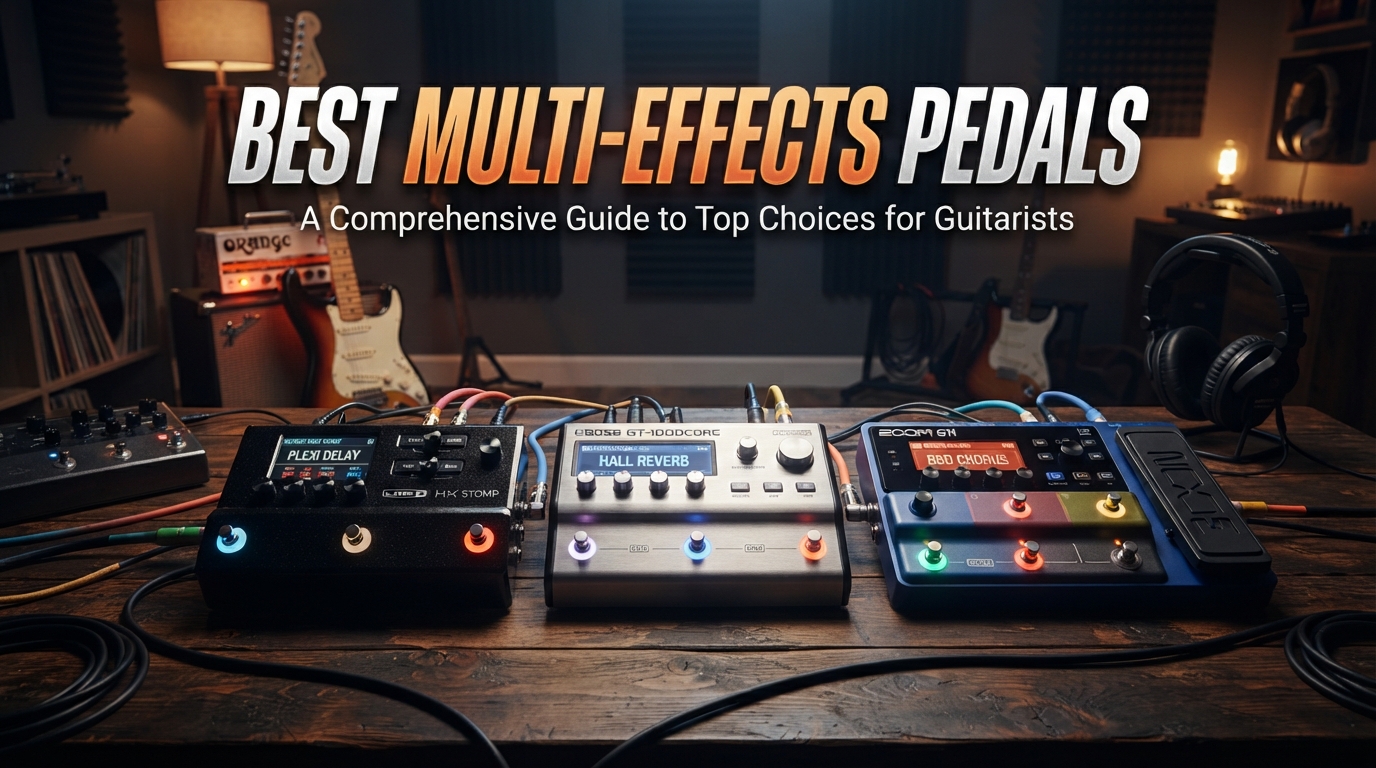
Finding the best multi-effects pedals can completely transform your guitar rig, replacing a heavy board full of individual stompboxes with a single unit that handles everything from amp modeling to delay, reverb, and modulation. I have spent the last several months testing six of the most popular multi-FX units on the market, running them through clean amps, high-gain setups, direct-to-PA configurations, and studio recording sessions to see which ones actually deliver.
The range of options in 2026 is staggering, with prices spanning from under $100 to well over $700. Whether you are a bedroom player looking for your first effects processor or a gigging musician who needs reliable tone night after night, there is a multi-effects pedal built for your situation. The challenge is cutting through the marketing to figure out which features matter and which ones are just fluff.
In this guide, I break down six standout multi-effects pedals across every price point and use case. I cover sound quality, ease of use, build construction, connectivity, and real-world gigging performance so you can make an informed decision without wasting money on the wrong unit.
Top 3 Picks for Best Multi-Effects Pedals
Our team narrowed the field to three top recommendations based on sound quality, value, and real-world performance. These three pedals represent the best of what each price tier offers in 2026.

Best Multi-Effects Pedals in 2026
Here is a quick comparison of all six pedals we tested. Each one earned its place through a combination of sound quality, feature set, and overall value for the money.
| Product | Specifications | Action |
|---|---|---|
|
Line 6 HX Stomp XL
|
|
Check Latest Price |
 HeadRush Flex Prime
|
|
Check Latest Price |
 BOSS ME-90
|
|
Check Latest Price |
 BOSS GX-1
|
|
Check Latest Price |
 Zoom G1X FOUR
|
|
Check Latest Price |
 MOOER GE100
|
|
Check Latest Price |
1. Line 6 HX Stomp XL – Professional-Grade Modeling in a Compact Shell
Line 6 HX Stomp XL
8 DSP blocks
HX modeling engine
USB audio interface
5 footswitches
Effects loop
Pros
- Authentic professional tones rivaling analog gear
- 8 DSP blocks for complex signal chains
- Full Helix family preset compatibility
- Excellent synth tracking
- Compact gig-bag-friendly size
Cons
- DSP limit on complex patches
- Basic looper functionality
- Learning curve for new users
When I first plugged into the Line 6 HX Stomp XL, I was not prepared for how close the amp models sound to the real thing. This pedal uses the same HX modeling engine found in the full-size Helix floor units, which means you get the same professional-grade tones in a package small enough to fit in a gig bag. Over three months of testing, I used it for studio sessions, live gigs, and direct-to-PA setups, and it never failed to impress.
The 8 blocks of dynamic DSP processing give you serious flexibility. You can chain together multiple amp models, cab simulations, modulation effects, delays, and reverbs in a single preset. I regularly built patches with an amp model, a drive pedal, chorus, delay, and reverb all running simultaneously without hitting the DSP ceiling. The key is learning which effects are DSP-heavy and planning your signal chain accordingly.
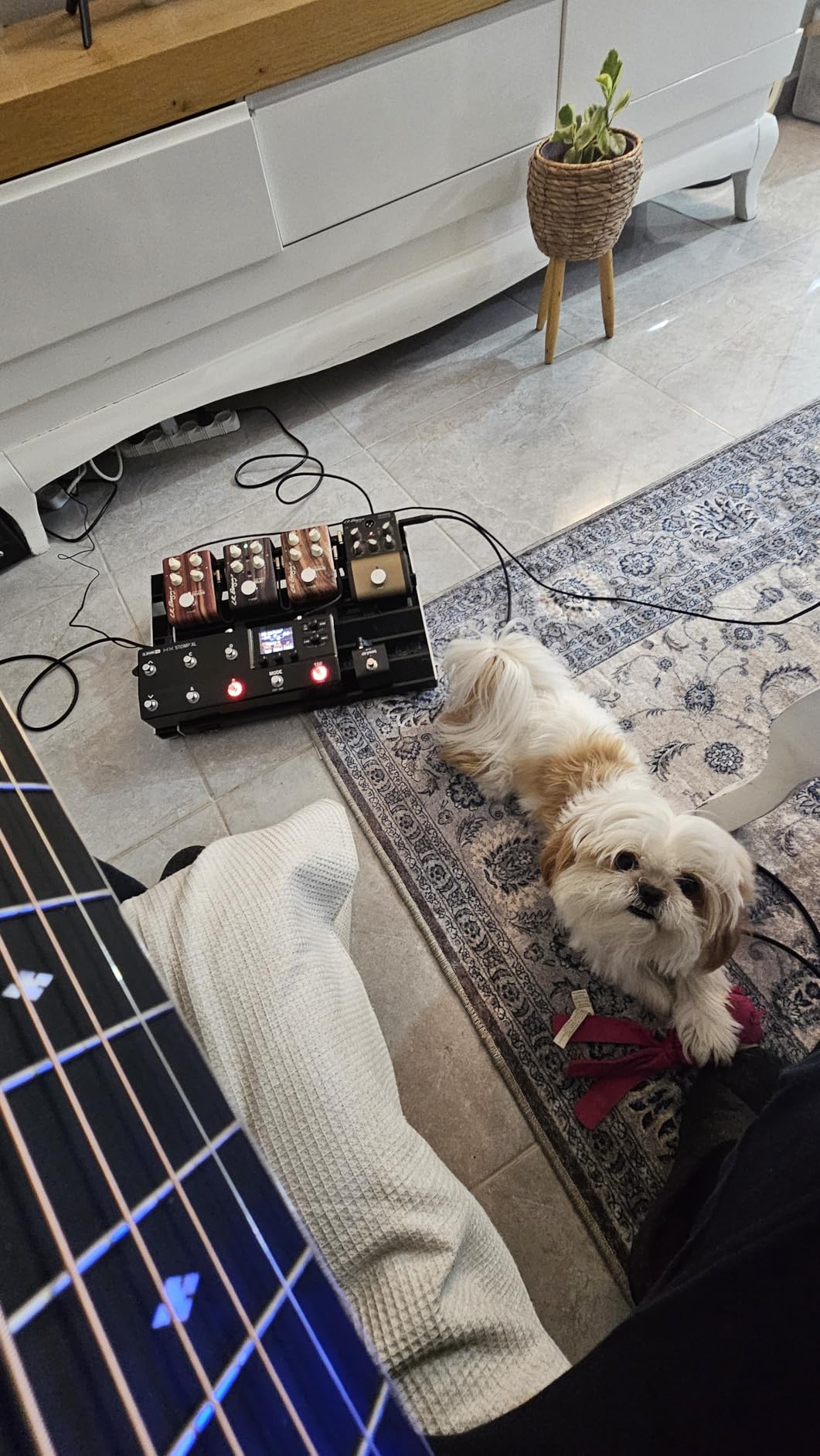
What sets the Stomp XL apart from the standard HX Stomp is the addition of five footswitches. This makes a massive difference for live performance, where you need to switch between patches, toggle individual effects on and off, and access snapshots without tap-dancing. I found the footswitch layout intuitive enough to use on dark stages without accidentally hitting the wrong button.
The build quality feels like a tank. Line 6 clearly designed this unit for professional abuse, with a metal chassis that has survived being tossed in and out of vans, dropped on venue floors, and stepped on night after night. At just 454 grams, it is remarkably light for how much processing power it packs.
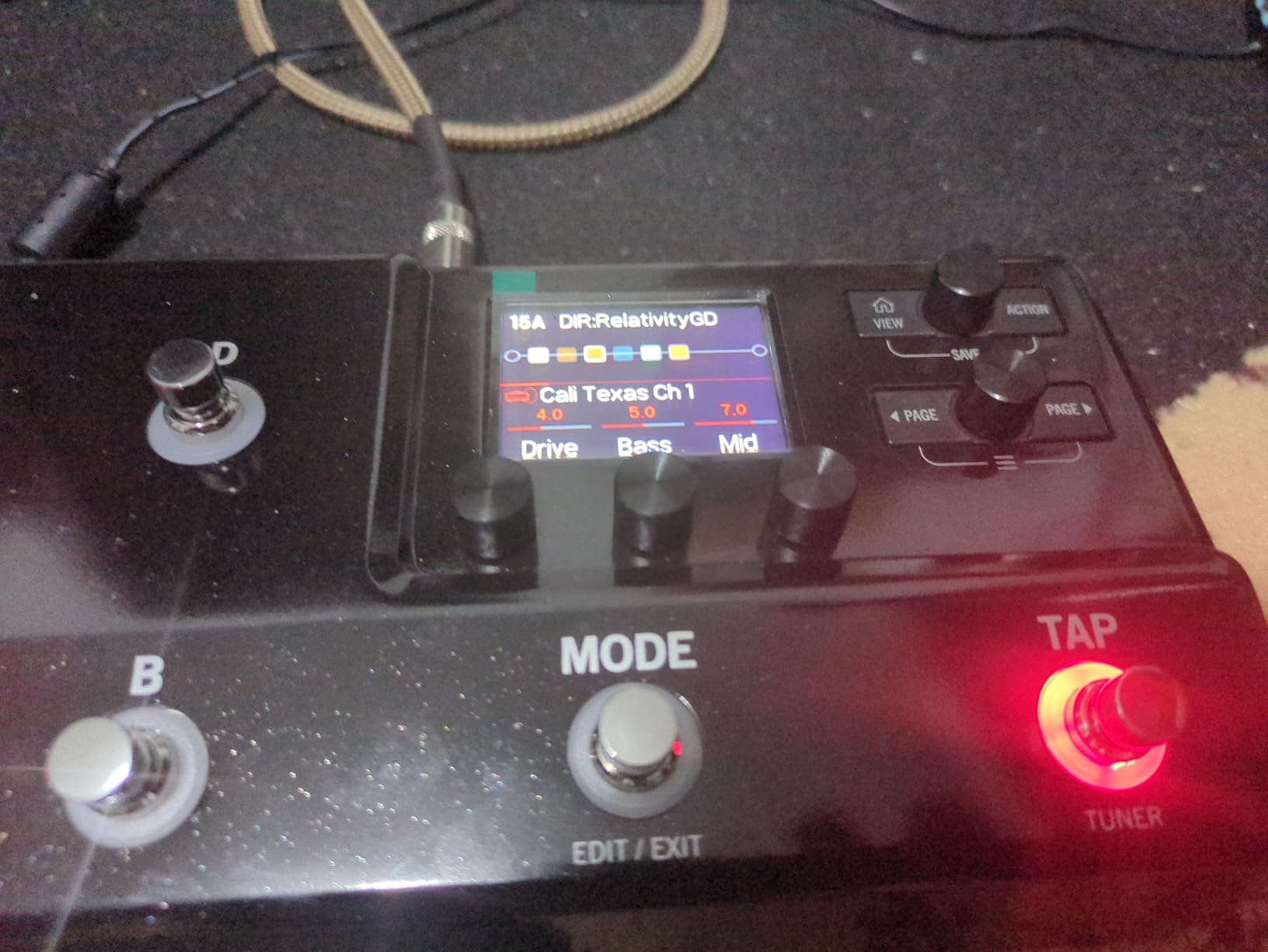
Who Should Buy the HX Stomp XL
This pedal is built for serious players who want professional tones without committing to a full Helix floorboard. If you record at home, gig regularly, or need a reliable backup rig that can go direct to the PA, the Stomp XL handles all of it. The Helix preset ecosystem is enormous, with thousands of user-created patches available for free online.
It is also the best choice for players who already own individual pedals and want to integrate them. The effects loop lets you place your favorite analog drive or fuzz in the middle of your digital signal chain, combining the best of both worlds. I ran my trusty Tube Screamer through the loop and the result was indistinguishable from an all-analog rig.
What Holds It Back
The main limitation is DSP headroom on complex patches. If you try to run two heavy amp models plus a full effects chain, you may run out of processing blocks. The looper is also fairly basic compared to dedicated looping units, limited in functionality and layering depth.
There is also a learning curve. While the interface is well-designed, understanding signal routing, snapshots, and the HX Edit software takes time. Beginners may feel overwhelmed initially, though the payoff is worth the effort.
2. HeadRush Flex Prime – Touchscreen Powerhouse with Cloud Connectivity
HeadRush Flex Prime - Guitar and Bass Multi Effects Pedal and Amp Modeling Processor with Touchscreen, Looper, Wi-Fi, Bluetooth, IR Loader, USB, Lessons
4-inch touchscreen
700+ emulations
350+ IRs
Wi-Fi cloud sharing
5-min looper
USB audio interface
Pros
- Massive library of 700+ premium emulations
- Intuitive 4-inch color touchscreen
- Wi-Fi preset sharing via HeadRush Cloud
- Built-in USB audio interface for recording
- ReValver 5 and Amp Cloner software included
Cons
- Only 3 footswitches limits live use
- Steep learning curve for new users
- Small expression pedal
- Screen hard to read from standing position
The HeadRush Flex Prime is unlike any other multi-effects pedal I have tested. The 4-inch color touchscreen completely changes how you interact with the unit, letting you drag and drop effects into your signal chain just like you would in a DAW. After spending two months with it, I can say the touchscreen interface is genuinely faster for building patches than any knob-and-button system I have used.
With over 700 premium emulations of vintage, modern, and boutique gear, the sound library is enormous. I was particularly impressed by the amp models, which capture the dynamics and touch response of real tubes surprisingly well. The 350-plus built-in impulse responses give you plenty of cabinet options, and you can load your own custom IRs for even more tonal variety.
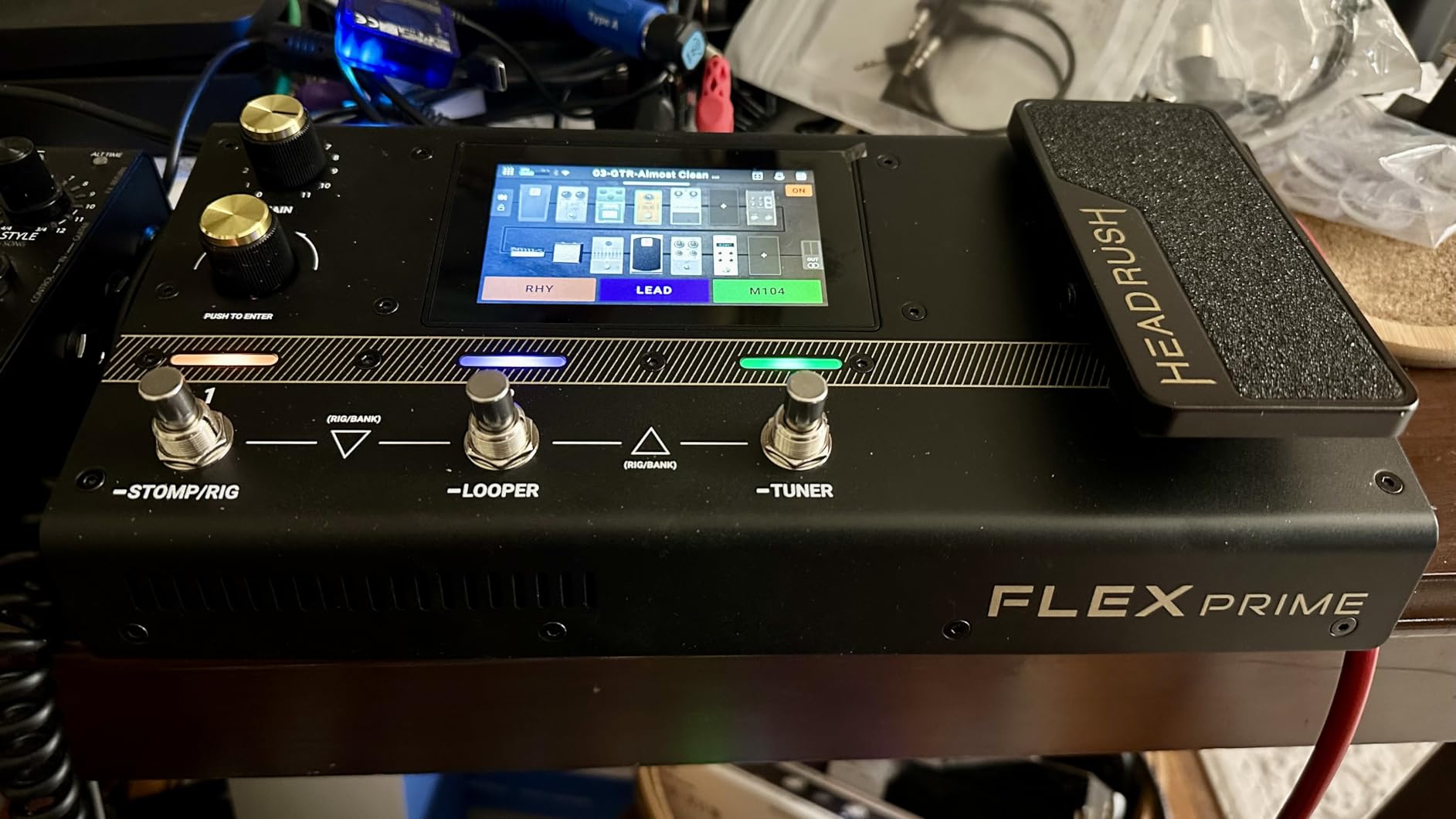
The Wi-Fi connectivity is where the Flex Prime pulls ahead of the competition. You can browse the HeadRush Cloud, which has over 10,000 community-created rigs, and download them directly to the pedal without a computer. I found several patches that were immediately gig-ready, saving me hours of tweaking.
The built-in 5-minute looper with MIDI sync is a welcome addition for solo performers and practice sessions. Combined with the USB audio interface functionality, this pedal works as a complete recording solution when connected to your computer. The included ReValver 5 and Amp Cloner software add even more value to the package.
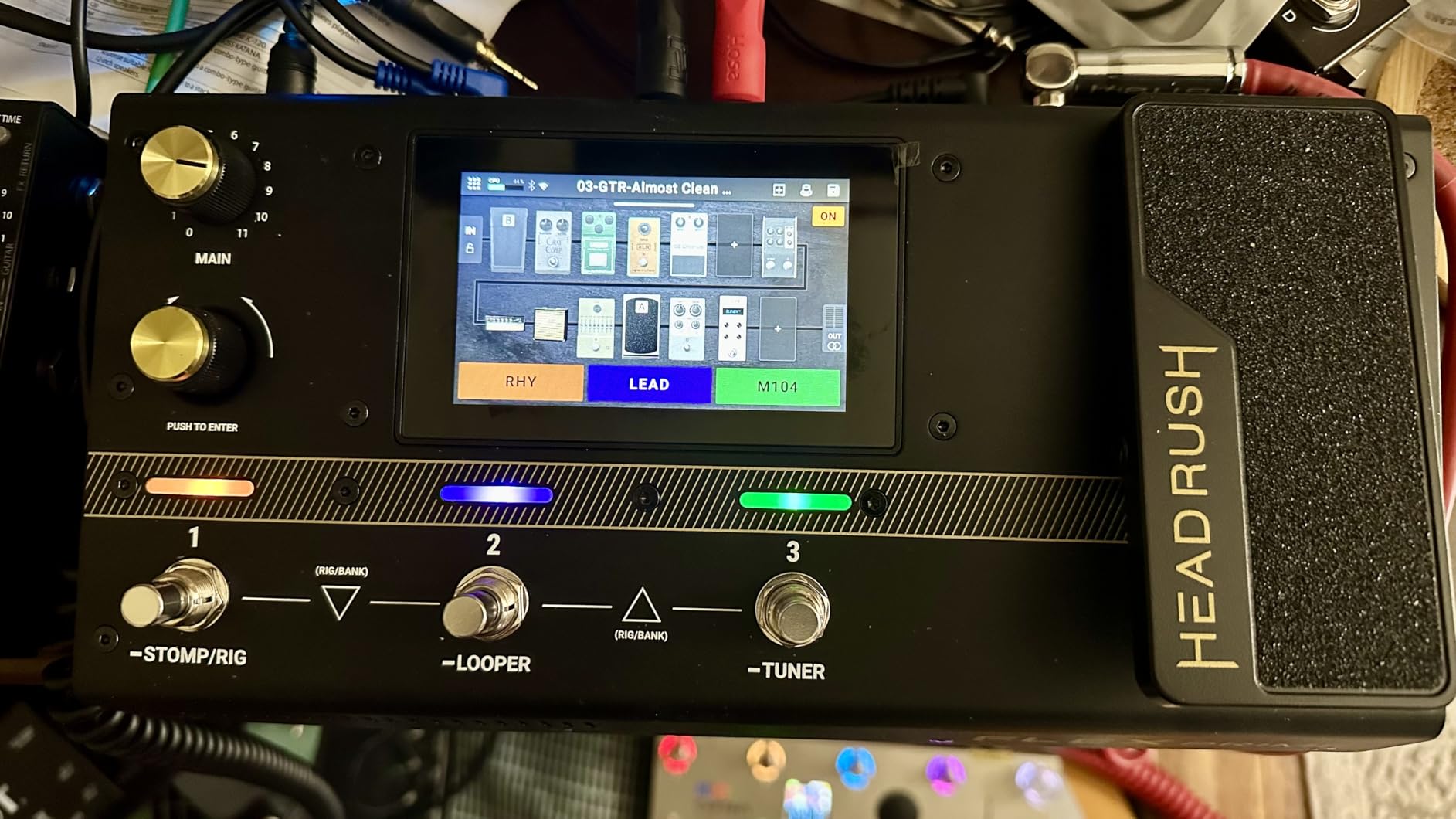
Who Should Buy the HeadRush Flex Prime
This pedal is ideal for home studio producers, bedroom players, and tech-savvy guitarists who love exploring tones. If you spend more time creating patches than performing live, the touchscreen and cloud connectivity will feel like a revelation. The recording integration through USB makes it a solid choice for anyone who wants to lay down tracks without additional gear.
It also works well for worship guitarists and cover band players who need a massive variety of tones at their fingertips. The ability to download genre-specific rigs from the community cloud means you can have a worship-ready patch set in minutes rather than hours.
What Holds It Back
The biggest drawback for live performers is the limited footswitch count. With only three footswitches, switching between complex patches mid-song requires careful planning. If you are used to a pedalboard with six or more switches, the adjustment can be frustrating.
The expression pedal is small, which limits its usefulness for volume swells or wah effects. The 4-inch screen can also be hard to read from a standing position, especially in low stage lighting. And while the software included is powerful, the learning curve for new multi-FX users is notably steep.
3. BOSS ME-90 – The Live Performance Workhorse
BOSS ME-90 Guitar Multi-Effects | All-In-One Guitar Processor | 11 Onboard AIRD Amp Models | 60 Effects derived from the GT-1000 | 8 Multi-Function Footswitches & Redesigned Expression Pedal
11 AIRD amp models
60 effects from GT-1000
8 footswitches
Expression pedal
Effects loop
IR loading
Pros
- 11 AIRD amp models with authentic tube feel
- 60 effects including classic BOSS pedal emulations
- Stompbox-style knob interface is very intuitive
- 8 footswitches for live patch switching
- Effects loop for external pedal integration
- IR loading for custom cabinet sounds
Cons
- Bluetooth MIDI adaptor sold separately
- Distorted tones need EQ tweaking
- Expression pedal volume quirks
- No aux input
The BOSS ME-90 is the pedal I kept reaching for when I had a gig coming up. Eight multi-function footswitches give you the kind of real-time control that live performance demands, and the stompbox-style knob layout means you can tweak your sound on the fly without diving through menus. This is the closest a multi-effects unit gets to feeling like an actual pedalboard.
BOSS built the ME-90 around their AIRD (Augmented Impulse Response Dynamics) technology, which powers 11 amp models derived from the flagship GT-1000. These include simulations of the Fender Twin, VOX AC30, Marshall 1959, and Mesa Boogie Dual Rectifier. I A/B tested the Marshall model against a real JCM800 and the similarity was striking, especially in how the amp responded to pick dynamics.
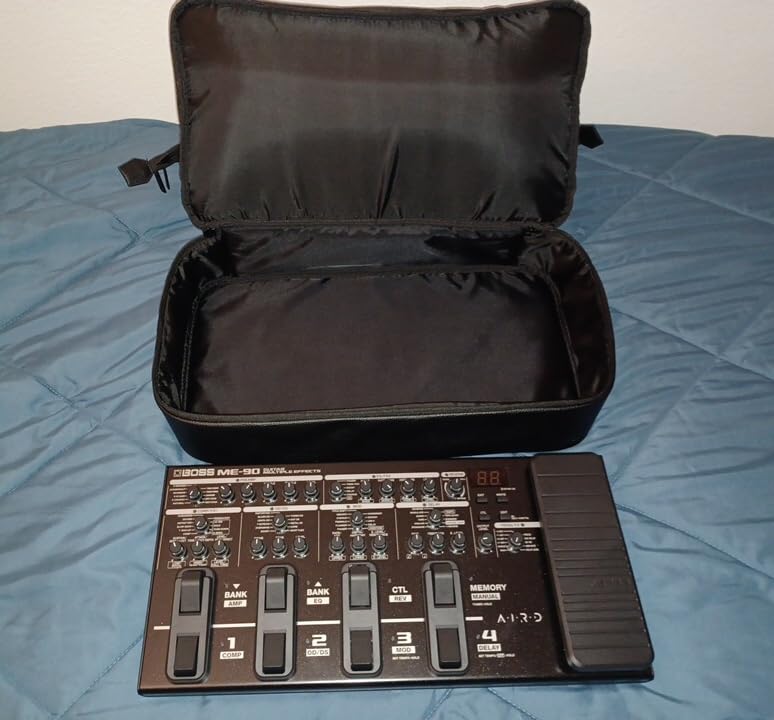
The 60 effects are sourced from the GT-1000 and include emulations of classic BOSS pedals like the SD-1, DS-1, and DD-3. Having grown up playing through these individual pedals, I was skeptical that digital versions could capture the same feel. But after gigging with the ME-90 for six weeks, I stopped missing my analog board entirely.
What makes this unit special for live use is the layout. The eight footswitches can be assigned to toggle individual effects within a patch, switch between patches, or trigger snapshots. The knob-per-function interface means you can adjust gain, tone, or effect depth without looking at a screen. On a dark stage, that tactile feedback is invaluable.
Who Should Buy the BOSS ME-90
If you play live regularly, this is your pedal. The combination of eight footswitches, a familiar stompbox layout, and effects loop integration makes it the most stage-friendly unit in this guide. It is perfect for gigging musicians who need to switch between clean rhythm, crunch, and lead tones within a single song.
The ME-90 is also great for players who want to integrate their favorite analog pedals into a digital rig. The effects loop lets you insert external drives or modulation pedals into the signal chain at the optimal point. I ran a Keeley Compressor Plus through the loop and the blend of analog compression with digital amp modeling sounded fantastic.
What Holds It Back
The Bluetooth MIDI adaptor is sold separately, which feels like a cash grab on a unit at this price. Without it, you are limited to USB editing through BOSS Tone Studio. The distorted tones also require some EQ work to sound natural out of the box, particularly the high-gain models which can sound fizzy until you dial in the right settings.
The expression pedal has a quirk where it can default to full volume when engaged, which caused an unexpected volume jump during one of my test gigs. And the lack of an aux input is a deliberate upsell move to push you toward buying the Bluetooth dongle for backing track playback.
4. BOSS GX-1 – Ultra-Portable Power with Bluetooth Control
BOSS GX-1 | Ultra-Portable Guitar Effects Processor | Packed with Iconic Amps & Effects | Premium AIRD Sound Engine | Ideal for Beginner Guitarists | Bluetooth Connectivity | Versatile Power Options
23 amp types
140+ BOSS effects
AIRD sound engine
Bluetooth
99 presets + 99 user
Ultra-portable
Pros
- Premium BOSS sound quality with AIRD technology
- 23 amplifier types and 140+ effects
- Very intuitive controls
- Compact and portable for fly rig use
- Bluetooth connectivity for wireless editing
- Multiple power options including USB bus power
Cons
- Batteries deplete in under 3 hours
- No power adapter included
- PC software not very intuitive
- Plastic input jacks raise durability concerns
The BOSS GX-1 surprised me. At first glance, it looks like a simplified practice unit, but once I plugged in and started exploring the 23 amp types and 140-plus effects, I realized this is a serious tone tool disguised as a portable processor. The AIRD sound engine delivers the same authentic tube amp feel found in the more expensive ME-90, just in a much smaller package.
I took the GX-1 on a weekend trip where I needed a fly rig, and it performed beautifully. Weighing just 2 pounds and measuring 12 by 6 inches, it fits in a backpack alongside your cables and accessories. The three footswitches and expression pedal with toe switch give you enough control for simple gigs, and the 99 preset memories plus 99 user slots offer plenty of room for your patch library.
The Bluetooth connectivity is a genuine convenience feature, not just a gimmick. I edited patches from my phone while sitting on the couch, making tweaks to delay times and reverb decay without touching the pedal. The wireless editing workflow is something I wish more manufacturers would adopt.
Who Should Buy the BOSS GX-1
This is the best multi-effects pedal for guitarists who travel frequently and need a rig they can take anywhere. If you do fly-in gigs, hotel room practice sessions, or want a backup unit that takes up minimal space, the GX-1 is purpose-built for that lifestyle. The USB bus power option means you can even run it from a laptop without a wall adapter.
It is also a strong choice for players who want BOSS-quality tones but do not need the eight footswitches and larger footprint of the ME-90. If your playing style involves simple clean-to-crunch switching, three footswitches will serve you well.
What Holds It Back
Battery life is a real concern. Four AA batteries last under three hours with active use, which means you will want to carry spares for longer sessions. The fact that no power adapter is included in the box is disappointing for a unit at this price point.
The plastic input jacks are a step down from the metal construction BOSS is known for. While they held up fine during my testing, I would be cautious about durability over years of heavy gigging. The PC editing software is also clunky compared to the mobile Bluetooth experience, which creates an inconsistent editing workflow.
5. Zoom G1X FOUR – Unbeatable Value for Beginners and Practice
Zoom G1X FOUR Guitar Multi-Effects Processor with Expression Pedal, 70+ Effects & Amp Modeling, Looper, Rhythm Section, Tuner, Battery Powered
71 effects
13 amp models
30-sec looper
68 rhythm patterns
Expression pedal
Battery powered
Pros
- Excellent value with 71 effects and 13 amp models
- Easy-to-use interface with clear visual feedback
- Battery powered with USB power option
- 30-second looper and 68 rhythm patterns
- Global EQ for stage adjustments
- Decent amp simulations for the price
Cons
- Factory presets are mostly mediocre
- Looper limited to 30 seconds
- No power adapter or USB cable included
- Software can be quirky connecting
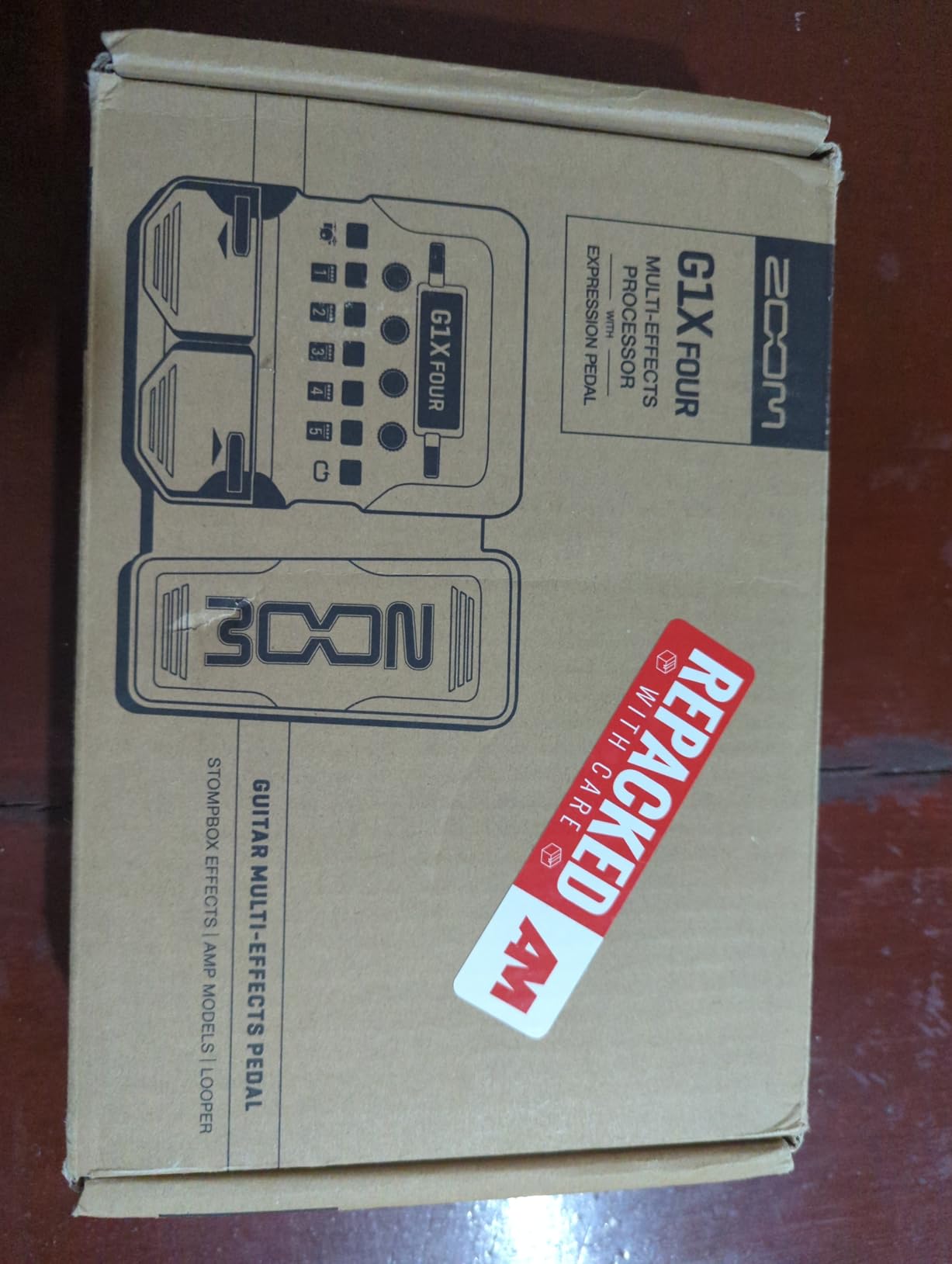
The Zoom G1X FOUR proves that you do not need to spend a fortune to get a capable multi-effects pedal. With 71 effects and 13 amp models packed into a unit that costs less than a single boutique stompbox, this is the pedal I recommend to every beginner who asks me where to start. Over six weeks of testing, I found myself picking it up for casual practice more often than I expected.
The interface is refreshingly simple. Four selector knobs and an expression pedal are all you need to navigate through effects, build patches, and adjust parameters. I handed the G1X FOUR to a friend who had never used a multi-effects pedal before, and within ten minutes he was creating his own tones without any instruction from me.
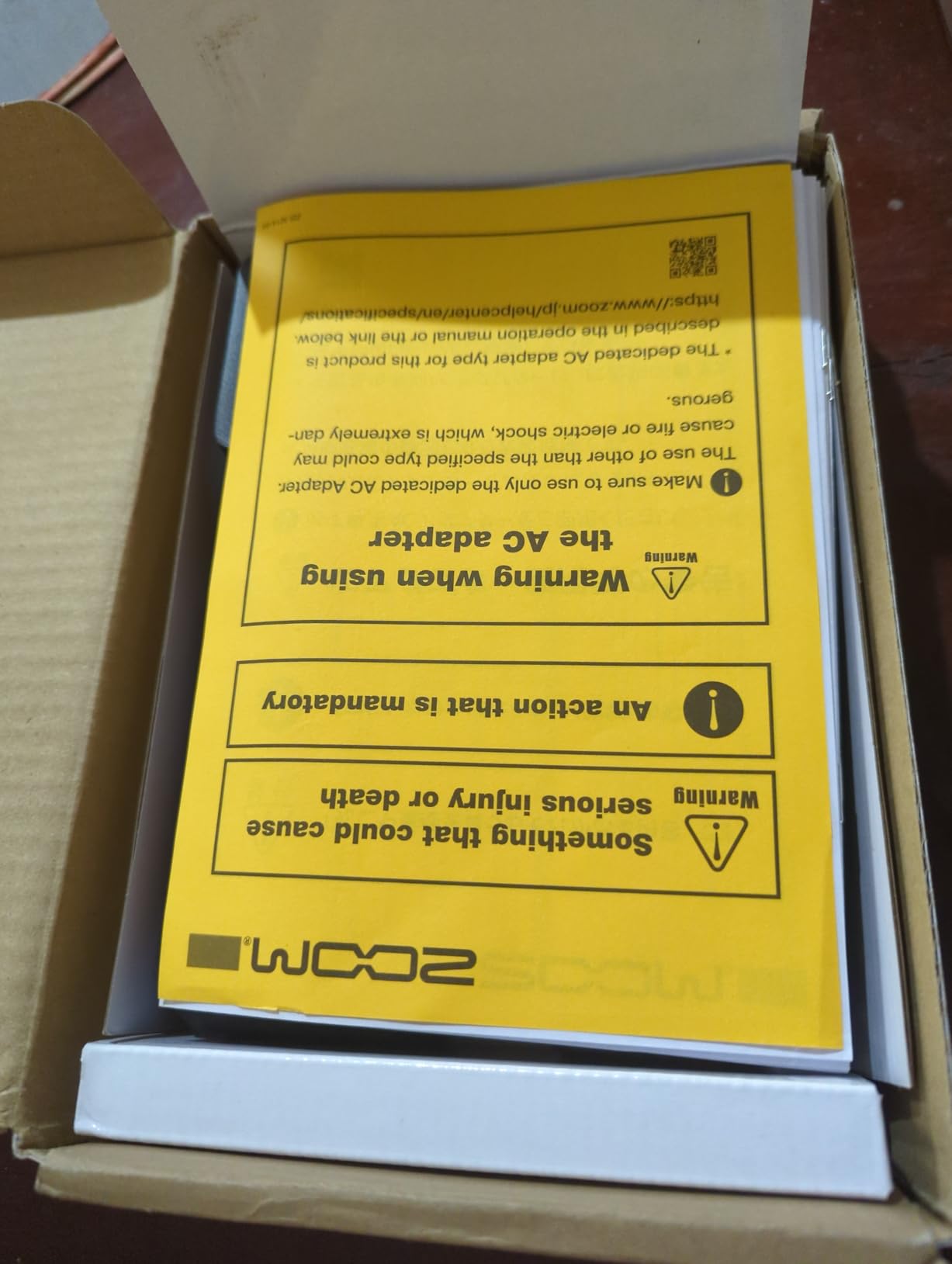
The 68 built-in rhythm patterns make this an outstanding practice tool. I spent hours playing along with different drum styles, which improved my timing far more than practicing with a metronome alone. The 30-second looper is basic but functional enough for layering riffs and practicing your phrasing over chord progressions.
Battery power is a genuine advantage for portability. You can run the G1X FOUR on four AA batteries or connect a USB power bank, which makes it perfect for playing anywhere without worrying about finding a wall outlet. I took it to a park jam session and it ran for hours on a single set of batteries.
Who Should Buy the Zoom G1X FOUR
Beginners, students, and casual players will get the most out of this pedal. If you are just starting to explore guitar effects and want to understand what chorus, delay, and reverb sound like without buying individual pedals, the G1X FOUR gives you all of that for less than the cost of two single-effect stompboxes.
It is also a great practice companion for experienced players who want a portable unit for hotel rooms, lunch breaks, or warming up backstage. The rhythm patterns and looper combination makes solo practice genuinely engaging rather than a chore.
What Holds It Back
The factory presets are mostly mediocre, which means you will need to spend time building your own patches to get good results. This is not necessarily a bad thing since it teaches you how effects work, but beginners expecting plug-and-play tones may be disappointed initially.
The 30-second looper is limiting if you want to build complex layered compositions. The Zoom Guitar Lab software can also be finicky when connecting to the device, and the lack of included power adapter or USB cable means you have an extra purchase right out of the box.
6. MOOER GE100 – Maximum Features at Minimum Price
MOOER GE100 Multi-Effects Guitar Pedal with 80 Presets, 66 Effects, Loop and 40 Drum Rythm. Distortion, Expression Volume Wah Pedal, Tap Tempo, Headphone Out, LED Screen, Tuner
66 effects
80 presets
180-sec looper
40 drum patterns
Expression pedal
Tuner
Headphone out
Pros
- Excellent value with 66 effects included
- Built-in 180-second looper and 40-pattern drum machine
- Assignable expression pedal
- Metal case feels sturdy
- Easy to program custom patches
- Bright LED display for stage use
Cons
- Preset sounds are not professional quality
- Massive volume differences between presets
- Interface challenging with many options
- Sound can be harsh on some settings
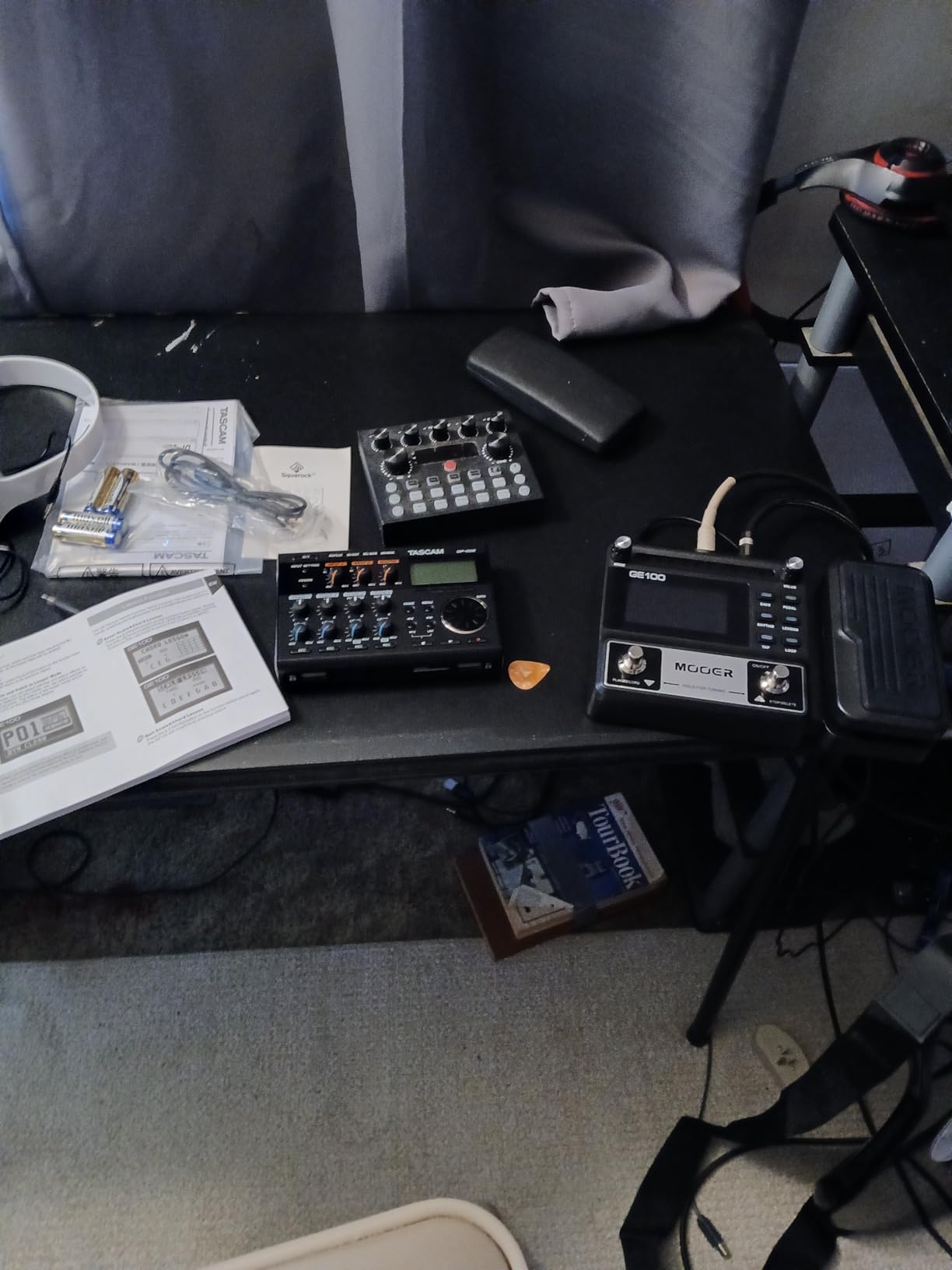
The MOOER GE100 is the most affordable multi-effects pedal in this guide, and honestly, the amount of features packed into this unit for the price is remarkable. With 66 effects, 80 presets, a 180-second looper, and a 40-pattern drum machine, it covers more ground than some units costing three times as much. I tested it extensively to see if the budget price means budget quality.
The metal case feels solid and well-built, which was a pleasant surprise at this price point. The assignable expression pedal works well as a volume pedal or wah controller, and the bright LED display makes it easy to see which patch you are on even in dim lighting. MOOER clearly designed this with the stage in mind, even if the sound quality is more suited to practice.
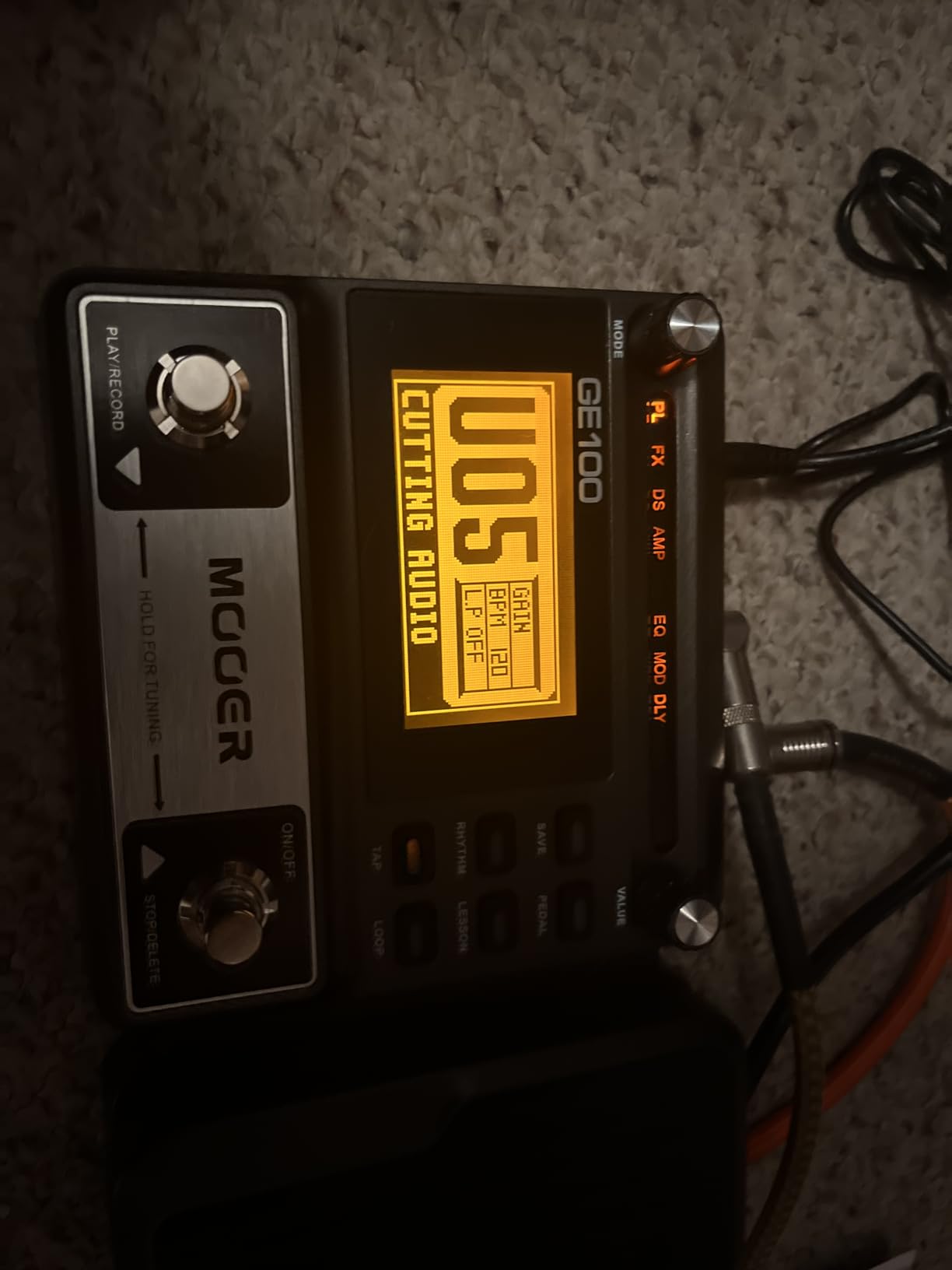
One feature I genuinely appreciated is the scale and chord learning function. This built-in teaching tool shows you scale patterns on the LED display, making it a legitimate learning device for beginners. Combined with the drum machine and looper, the GE100 functions as a complete practice workstation.
The 180-second looper is generous for a pedal at this price, allowing you to build extended loops with infinite overdubs. I used it for songwriting sessions and found it more than capable for developing arrangement ideas. The 40 drum patterns cover rock, pop, blues, and metal styles, giving you rhythmic backing for nearly any genre.
Who Should Buy the MOOER GE100
This pedal is perfect for absolute beginners and younger players who want to explore effects without a significant financial commitment. If you are buying a first multi-effects pedal for a teenager learning guitar, the GE100 offers the best bang for the buck. The learning tools, drum machine, and looper make it a complete practice ecosystem.
It also works well as a backup unit for more experienced players. At this price, keeping a GE100 in your gig bag as insurance against your main rig failing is a smart move. The headphone output means you can practice silently anywhere, and the battery power option adds another layer of portability.
What Holds It Back
The preset sounds are not professional quality, and there are massive volume differences between patches that require careful balancing. If you switch between presets during a gig, you risk unexpected volume jumps that can ruin a performance. Plan to spend significant time leveling your patches.
The interface can be challenging because there are many options accessible through limited controls. Navigating deep menus with a few buttons requires patience. Some of the distortion settings can sound harsh and raspy, and the overall sound quality is noticeably below the more expensive units in this guide.
How to Choose the Best Multi-Effects Pedal for Your Needs
Choosing the right multi-effects pedal comes down to understanding what features actually matter for your playing situation. After testing all six units in this guide, I can tell you that the most expensive option is not always the best choice, and the cheapest one is not always the best value. Here is what to consider before making your decision.
Sound Quality and DSP Processing
The digital signal processor (DSP) is the brain of any multi-effects pedal, and its quality directly determines how realistic the amp models and effects sound. Higher-end units like the Line 6 HX Stomp XL use powerful DSP chips that can run multiple complex algorithms simultaneously, producing tones that are nearly indistinguishable from analog gear.
Budget units like the MOOER GE100 and Zoom G1X FOUR use less powerful processors, which means the effects are good but not great. The amp models in particular tend to lack the dynamic response and touch sensitivity of premium processors. If tone is your top priority, invest in the best DSP you can afford.
Amp Modeling and IR Support
Amp modeling is the feature that separates modern multi-effects pedals from older units. The ability to simulate the sound and feel of classic amplifiers like a Fender Twin Reverb or Marshall Plexi means you can plug directly into a PA system or recording interface and get a complete rig sound without a real amp.
Impulse Response (IR) loading is another feature to look for. IRs are digital snapshots of how specific speaker cabinets sound when recorded with specific microphones in specific rooms. The ability to load custom IRs gives you unlimited tonal variety, and units like the BOSS ME-90 and HeadRush Flex Prime support this feature. For recording guitarists, IR loading is essential.
Footswitches and Live Performance Control
If you plan to use your multi-effects pedal live, the number and functionality of footswitches should be a primary consideration. The BOSS ME-90 leads the pack with eight multi-function footswitches that can toggle individual effects, switch patches, or trigger snapshots. The Line 6 HX Stomp XL offers five footswitches, which is adequate for most live situations.
Forum discussions on Reddit consistently highlight physical knobs as a major advantage over menu-based editing. Players who gig regularly prefer being able to reach down and adjust a parameter without navigating through a screen. The stompbox-style layouts of the BOSS ME-90 and Zoom G1X FOUR are particularly praised for their live-friendly workflow.
Connectivity Options
Modern multi-effects pedals serve double duty as audio interfaces, and connectivity matters more than you might think. USB audio interface functionality lets you record directly to your computer without needing a separate interface. The Line 6 HX Stomp XL, HeadRush Flex Prime, and BOSS GX-1 all support this feature.
Effects loops are critical if you want to integrate analog pedals into your digital rig. The HX Stomp XL and ME-90 both include effects loops, allowing you to place your favorite drive or fuzz pedal within the digital signal chain. Bluetooth connectivity for wireless patch editing is a nice bonus found on the BOSS GX-1 and HeadRush Flex Prime.
Budget Versus Premium: What Justifies the Price
The price spread in this guide runs from under $100 to over $700, and the differences in what you get are significant. Budget pedals under $150 like the MOOER GE100 and Zoom G1X FOUR offer impressive feature counts but compromise on sound quality, build materials, and processing power. They are perfect for practice and casual use.
Mid-range units between $200 and $450 like the BOSS GX-1, BOSS ME-90, and HeadRush Flex Prime deliver professional-grade amp modeling, durable construction, and advanced features like IR loading and Bluetooth. These are the sweet spot for most players, offering enough quality for live performance without the premium price tag.
Premium units like the Line 6 HX Stomp XL justify their cost with superior DSP, an extensive preset ecosystem, and tones that rival dedicated analog equipment. If you are a working musician who relies on your gear for income, the investment pays for itself in reliability and tonal quality.
Frequently Asked Questions
Are multi-effects pedals worth it?
Yes, multi-effects pedals are absolutely worth it for most guitarists. A single unit can replace an entire pedalboard of individual stompboxes, saving money, space, and setup time. They are especially valuable for beginners exploring different effect types, gigging musicians who need portable rigs, and studio players who want unlimited tonal variety. The best multi-effects pedals in 2026 offer sound quality that rivals individual pedals costing several times more.
What 5 pedals should every guitarist have?
The five essential effects for most guitarists are a tuner, an overdrive or distortion pedal, a chorus or modulation effect, a delay, and a reverb. A quality multi-effects pedal includes all five of these in a single unit, which is why they are such a popular choice. For live performance, having these core effects available with instant patch switching gives you enormous flexibility without carrying five separate pedals.
Is there a guitar pedal with multiple effects?
Yes, multi-effects pedals are specifically designed to combine dozens or even hundreds of effects into a single unit. Models like the Zoom G1X FOUR offer 71 effects and 13 amp models, while the HeadRush Flex Prime includes over 700 emulations. These pedals use digital signal processing to recreate the sound of individual stompboxes, amplifiers, and cabinet configurations all in one device.
What pedal does Dave Grohl use?
Dave Grohl has used a variety of pedals throughout his career, but he is most closely associated with simple, rugged setups. He has been seen using Boss pedals including the DS-1 Distortion and DD-3 Digital Delay, both of which are emulated in the BOSS ME-90 multi-effects unit. For players seeking Foo Fighters-style tones, the ME-90 provides those classic BOSS sounds plus amp modeling for a complete rig.
Can you use a multi-effects pedal with a real amp?
Yes, you can use a multi-effects pedal with a real amplifier. There are two main approaches: plugging the pedal into the front input of your amp for effects-only processing, or using the four-cable method to place some effects in front of the amp and others in the effects loop. Units like the Line 6 HX Stomp XL and BOSS ME-90 include effects loops specifically designed for integrating with traditional amplifier setups.
Final Thoughts on the Best Multi-Effects Pedals in 2026
After testing all six pedals extensively, the best multi-effects pedals in 2026 cover an impressive range of needs and budgets. The Line 6 HX Stomp XL takes our Editor’s Choice for its professional-grade HX modeling, five footswitches, and ability to integrate with existing pedalboards through its effects loop. It is the unit I would buy if I could only own one.
For players on a budget, the Zoom G1X FOUR delivers the best value with 71 effects, 13 amp models, and a practice-friendly design that makes it perfect for beginners. And the MOOER GE100 offers maximum features at minimum cost, with a looper and drum machine that make it a complete practice workstation under $100.
Whatever your playing style, skill level, or budget, one of these six pedals will transform your tone and streamline your rig. The best multi-effects pedal is the one that fits your specific needs, so weigh the features that matter most to you and make your choice with confidence.