
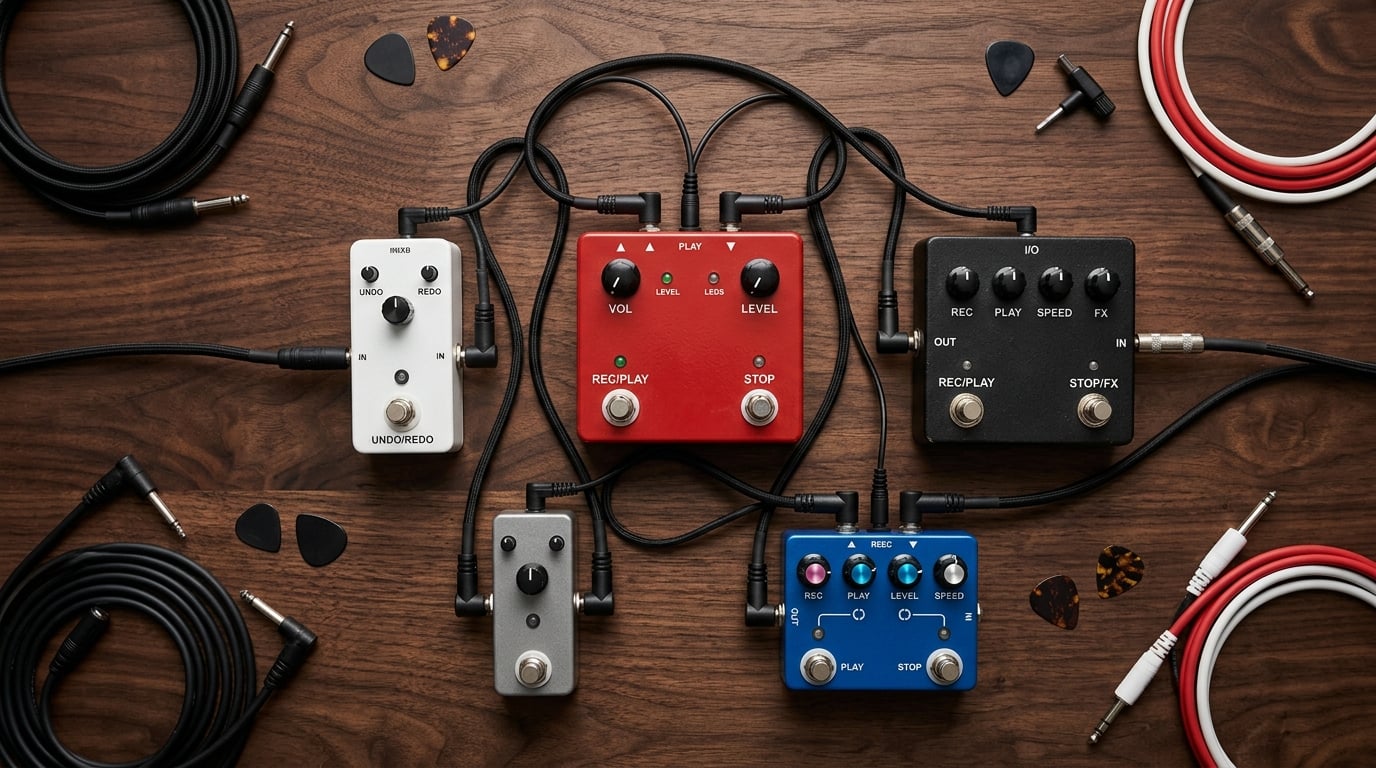
A looper pedal records a short phrase of your playing and plays it back in a continuous loop, letting you layer additional parts on top. I have spent the last several months testing 12 of the best looper pedals on the market across practice sessions, home recording, and live gigs to find out which ones are actually worth your money. Whether you are a beginner looking for your first loop station or a seasoned performer upgrading to a multi-track workstation, this guide covers every price point and use case.
Our team compared budget options under $50 alongside flagship units pushing $700, evaluating sound quality, ease of use, build reliability, and real-world performance. The best looper pedals in 2026 balance clean 32-bit audio, enough memory for complex arrangements, and footswitch layouts that make sense when you are standing on a stage. Below you will find our top three picks, a full comparison table, detailed reviews of all 12 pedals, a buying guide, and answers to the questions guitarists ask most.
If you have ever wondered whether a looper is worth it, the short answer is yes. Loopers transform solo practice into a full-band experience, make songwriting faster by letting you hear chord progressions instantly, and give solo performers the ability to build entire songs live. Even a $40 budget looper can change how you practice. Let us get into the picks.
Top 3 Picks for Best Looper Pedals in 2026


Best Looper Pedals in 2026: Full Comparison
| Product | Specifications | Action |
|---|---|---|
|
BOSS RC-5 Loop Station
|
|
Check Latest Price |
 BOSS RC-1 Loop Station
|
|
Check Latest Price |
|
TC Electronic Ditto Looper
|
|
Check Latest Price |
 TC Electronic Ditto+ Looper
|
|
Check Latest Price |
 BOSS RC-10R Rhythm Loop Station
|
|
Check Latest Price |
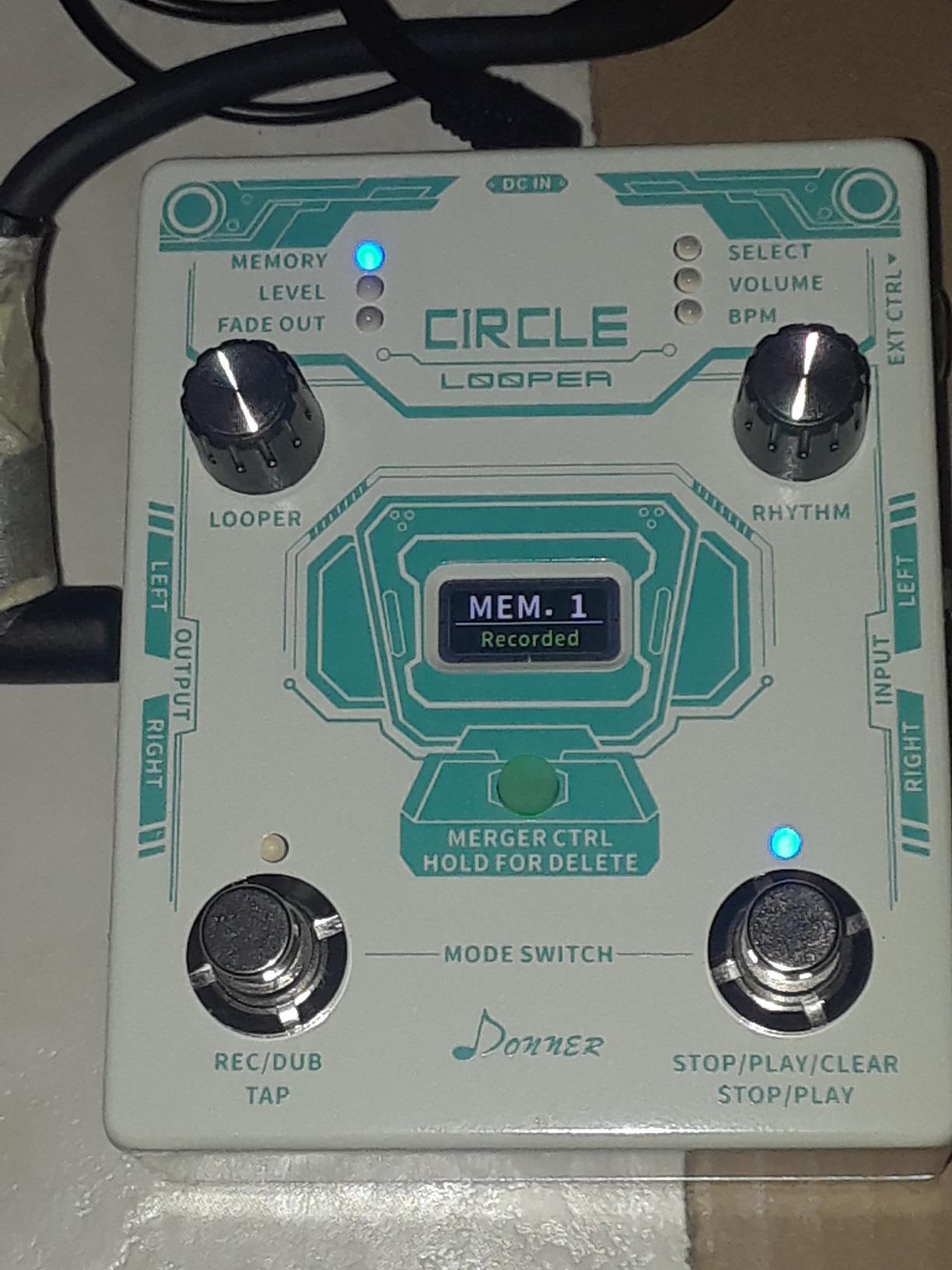
 Donner Circle Looper
|
|
Check Latest Price |
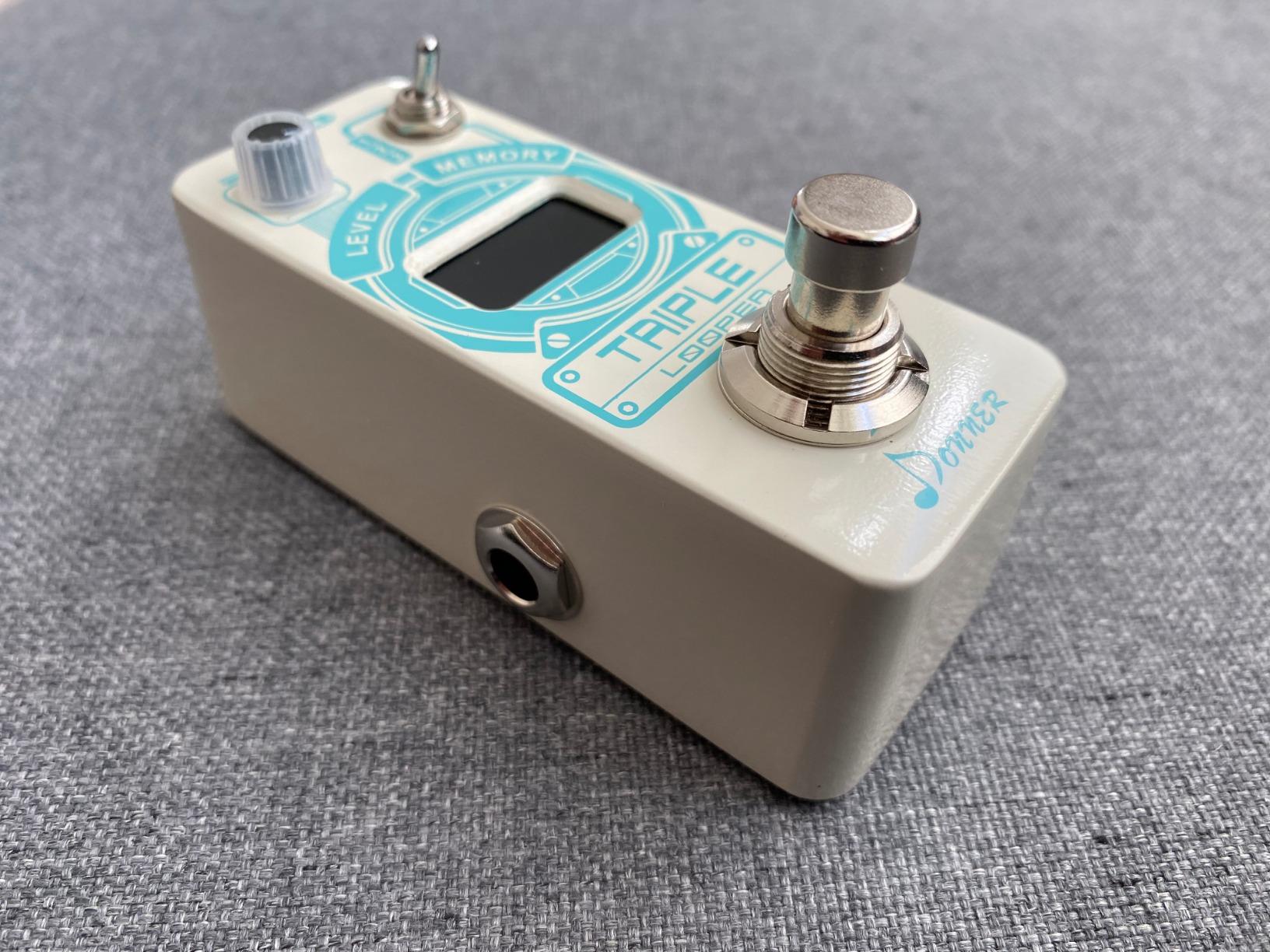
 Donner Triple Looper
|
|
Check Latest Price |
 LEKATO Looper 9 Loops
|
|
Check Latest Price |
 LEKATO Mini Looper
|
|
Check Latest Price |
 MXR Clone Looper
|
|
Check Latest Price |
1. BOSS RC-5 Loop Station: Best Overall Looper Pedal
BOSS RC-5 Loop Station | Advanced Looping Features in a Compact Pedal | 32-Bit AD/DA and 32-bit Floating-Point Processing | 13 Hours Record Time | Multi-Color LCD | MIDI/IO & USB Connectivity
32-bit AD/DA processing
13 hours stereo recording
99 phrase memories
57 built-in rhythms
Pros
- Class-leading 32-bit sound quality with zero degradation
- 57 built-in rhythms and 7 drum kits for practice
- 99 phrase memories with 13 hours of recording time
- Full MIDI I/O and USB connectivity
- Compact Boss build with 5-year warranty
Cons
- Steep learning curve for advanced features
- No power switch on the unit
- 9V batteries drain in just a couple hours
The BOSS RC-5 is the looper I keep coming back to as my top pick. After testing it for several weeks across practice sessions and home recording, it hits the sweet spot between simplicity and power that most guitarists need. The 32-bit AD/DA conversion produces loops that sound identical to your original signal, with no muddy buildup even after stacking multiple overdubs.
I was genuinely surprised by how much the 57 built-in rhythms changed my practice routine. Instead of looping a chord progression and jamming aimlessly, I could dial in a rock drum pattern or a blues shuffle and practice soloing with proper rhythmic backing. The 7 drum kits all sound natural, not like a cheap metronome. With 99 phrase memories and 13 hours of total recording time, you will never run out of storage space.
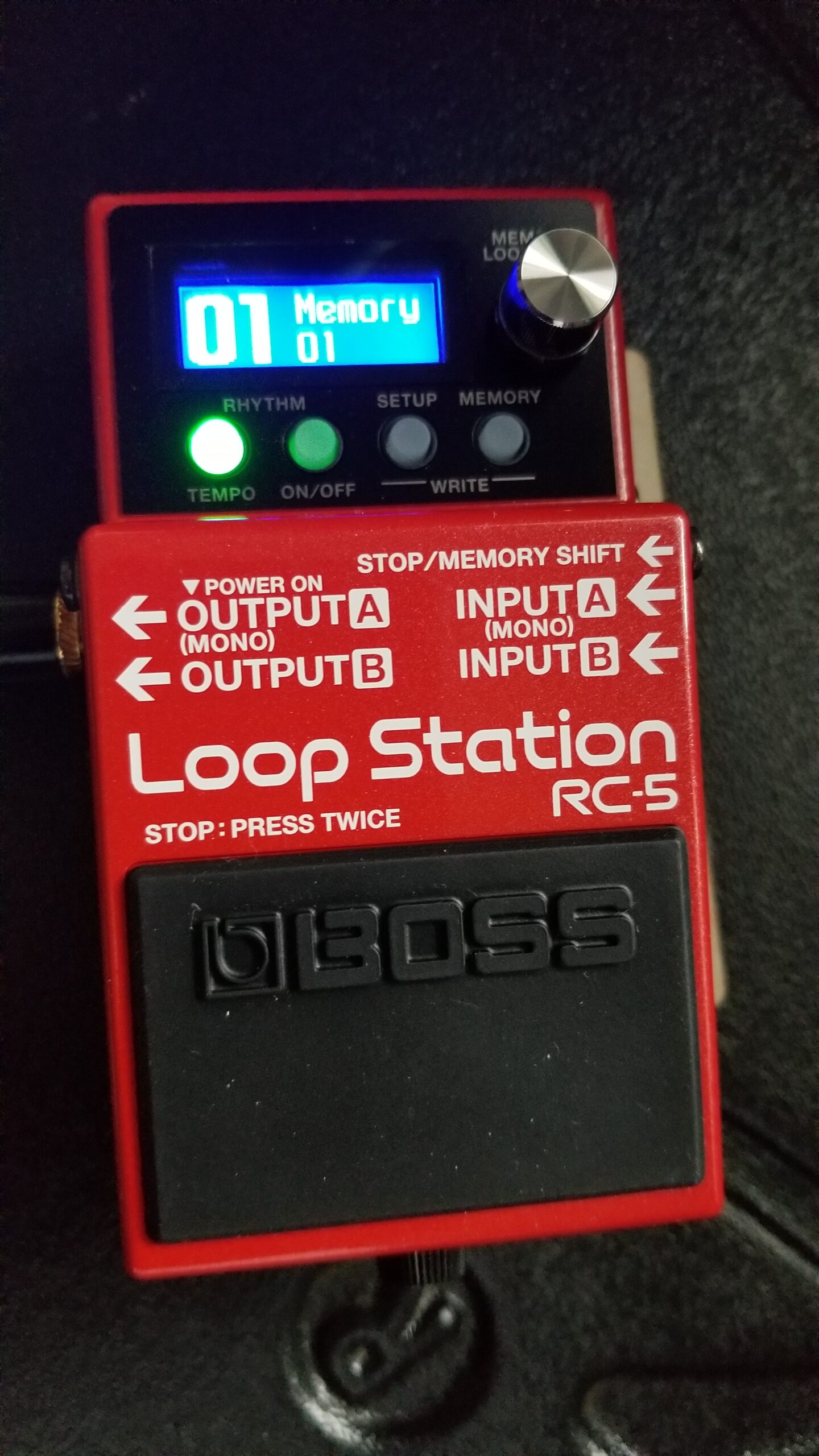
The multi-color LCD display is a significant upgrade over older Boss loopers. It shows your current phrase number, loop position, and rhythm status at a glance. The reverse function opens up creative possibilities for ambient and experimental players. MIDI I/O via mini TRS jacks means you can sync the RC-5 with drum machines, DAWs, or other pedals in your rig.
On the downside, the learning curve is real. The menus are deep, and finding specific settings takes time. There is no power switch, so you unplug the cable to turn it off. Battery life is short at just a couple hours, so plan on using the included AC adapter. Despite these minor gripes, the RC-5 is the best compact looper pedal available in 2026.
Who should buy the BOSS RC-5
This pedal is perfect for intermediate to advanced guitarists who want professional sound quality, built-in rhythms, and MIDI sync without stepping up to a full workstation. It is the best looper pedal for guitarists who practice at home and occasionally gig.
Who should skip it
Absolute beginners who have never used a looper may find the menu system overwhelming. If you just want the simplest possible record-and-play experience, the TC Electronic Ditto or Boss RC-1 are better starting points for less money.
2. BOSS RC-1 Loop Station: Best Entry-Level Boss Looper
BOSS RC-1 Loop Station Pedal | Industry Standard Simple Looper for Guitar, Bass, Keyboards & More | 24-Segment LED Indicator | 12 Minutes of Record Time | Record, Playback, Overdub, Undo & Redo Loops
12 min recording
24-segment LED
Stereo looping
Battery or AC power
Pros
- Legendary Boss build quality and reliability
- 12 minutes of recording time beats most simple loopers
- 24-segment LED ring shows loop position clearly
- Stereo looping capability
- Works with guitar bass and keyboards
Cons
- Power adapter not included
- Only one memory slot no saved loops
- Higher price than budget alternatives
- Learning curve for footswitch commands
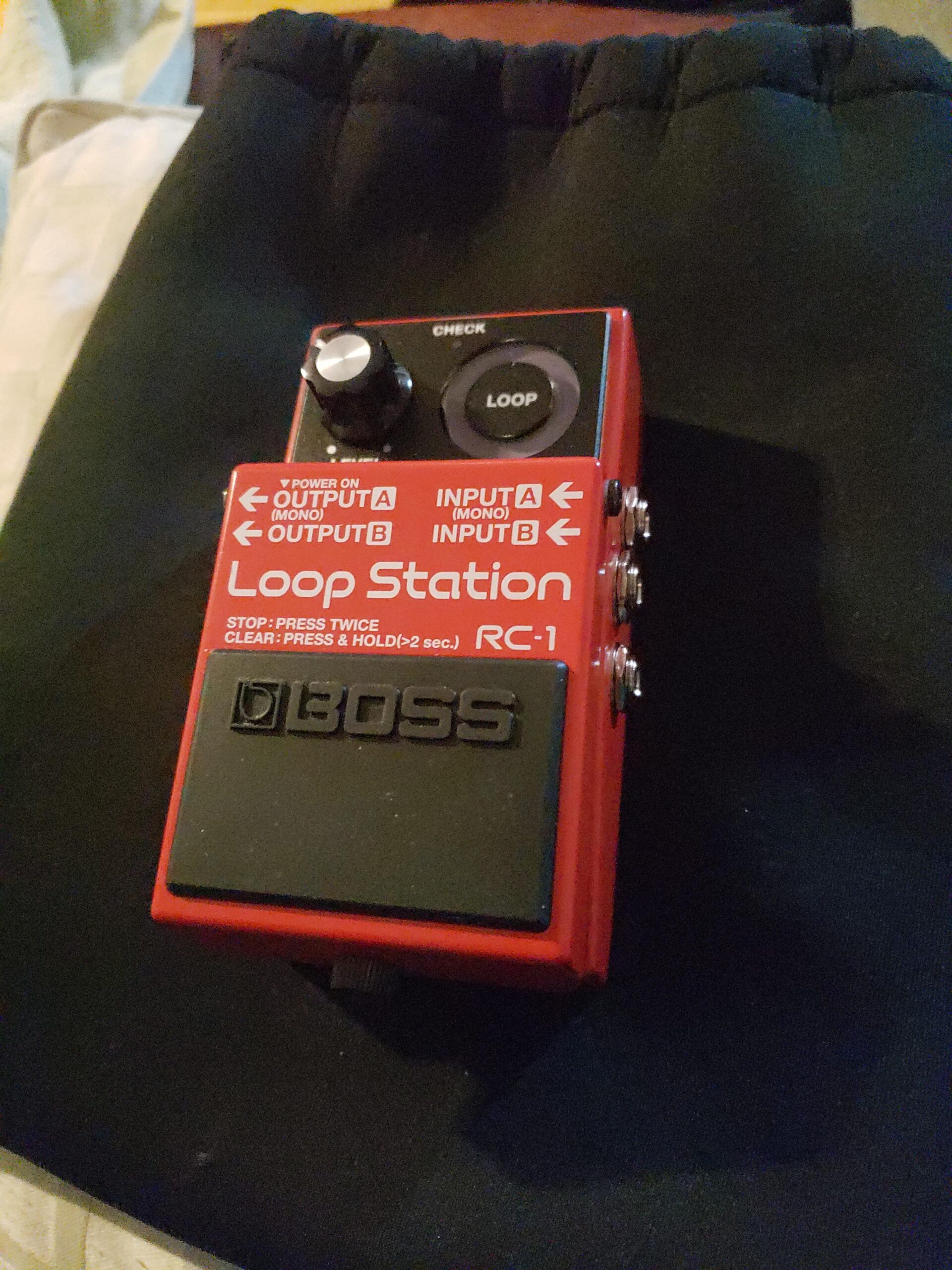
The BOSS RC-1 is the industry-standard entry-level looper pedal. I tested it as a benchmark against the budget options, and it immediately became clear why Boss dominates this category. The build quality is tank-like, the footswitch feels indestructible, and the sound is clean and transparent. With nearly 3,800 reviews and a 4.6-star average, the community consensus backs up what my ears told me.
The standout feature is the 24-segment LED ring that wraps around the footswitch. It gives you a visual representation of where you are in the loop at all times, which is incredibly helpful when you are learning to time your overdubs. Most simple loopers give you no visual feedback at all, so this puts the RC-1 ahead.
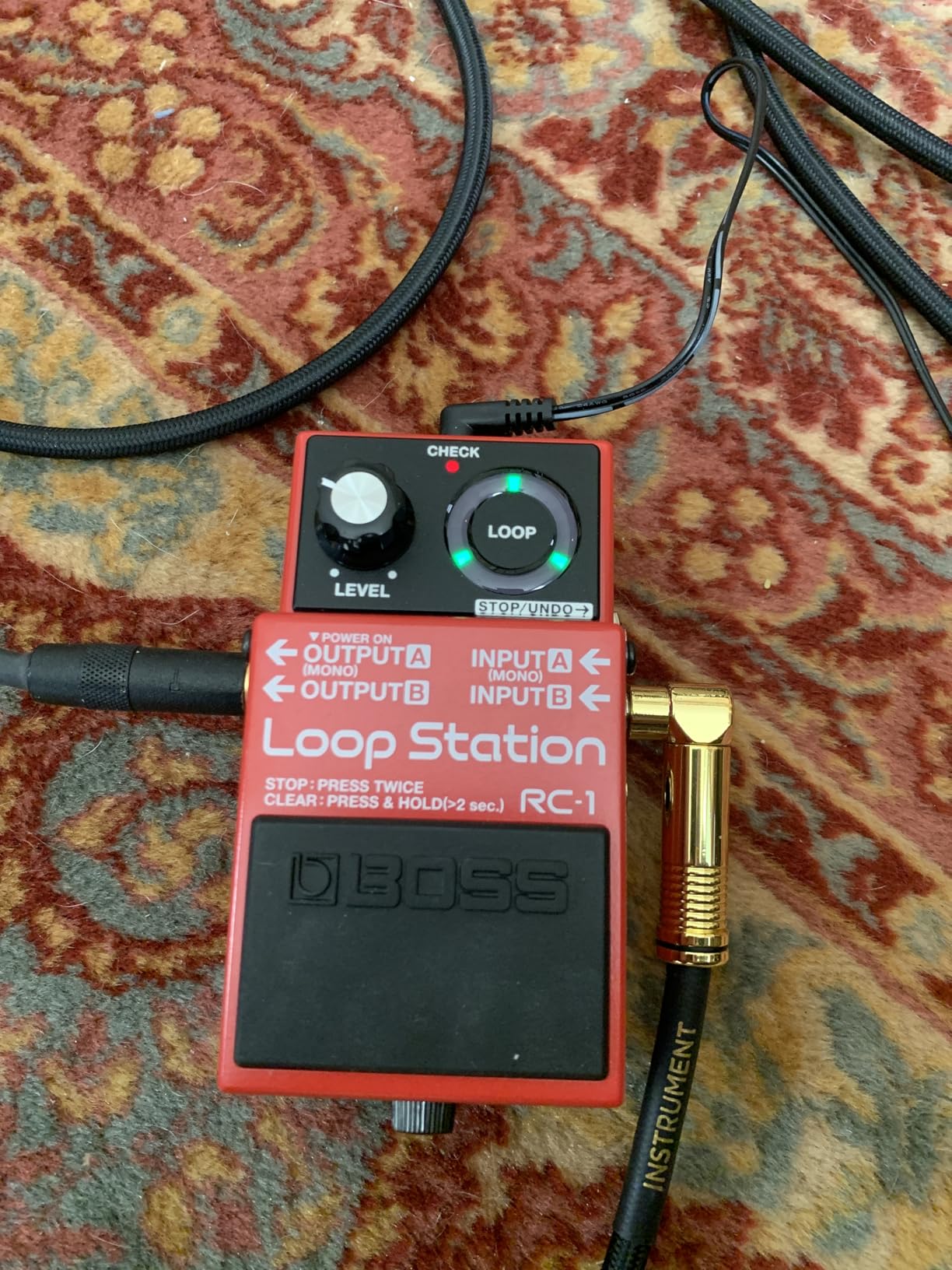
You get 12 minutes of recording time, which is more than enough for most practice scenarios. The stereo looping capability means you can route two instruments or use stereo effects. Undo and redo functions let you fix mistakes without starting over. The level knob controls loop volume independently of your dry signal.
The main limitation is the single memory slot. When you record a new loop, the old one is gone. There is no way to save and recall multiple loops. The power adapter is also not included, which is frustrating at this price point. But if you want a reliable, no-nonsense looper from the most trusted brand in the business, the RC-1 delivers.
Who should buy the BOSS RC-1
Beginners and intermediate players who want Boss reliability and stereo looping without the complexity of advanced models. It is the safest first looper purchase you can make.
Who should skip it
If you need multiple saved loops, built-in rhythms, or USB connectivity, the RC-5 or RC-500 are better investments. The single memory slot will frustrate players who want to build a library of loops.
3. TC Electronic Ditto Looper: Best Simple Looper Pedal
TC Electronic DITTO LOOPER Highly Intuitive Looper Pedal with 5 Minutes of Looping Time, Analog-Dry-Through and True Bypass
5 min loop time
True bypass
Analog dry-through
Unlimited overdubs
Pros
- Exceptionally transparent sound quality
- Analog-Dry-Through preserves original signal
- True bypass for clean signal chain
- Simple one-button operation learned in minutes
- Compact design fits any pedalboard
Cons
- Only 5 minutes of loop time
- No quantization timing must be precise
- No display or visual feedback
- Single button challenging for live use
The TC Electronic Ditto Looper is the cult favorite that refuses to go away. I plugged it in expecting a basic looper and was blown away by how transparent it sounds. The Analog-Dry-Through design means your original guitar signal passes through untouched while only the looped audio is processed digitally. This preserves your tone in a way that cheaper loopers simply cannot match.
Operation could not be simpler. One press to record, one press to play the loop, one press to overdub. Double-tap to stop. Hold to erase. The soft-touch footswitch feels great underfoot and makes precise timing easier than stiff mechanical switches. With 2,722 reviews at 4.4 stars, the Ditto has earned its reputation as one of the best looper pedals for guitarists who value simplicity.
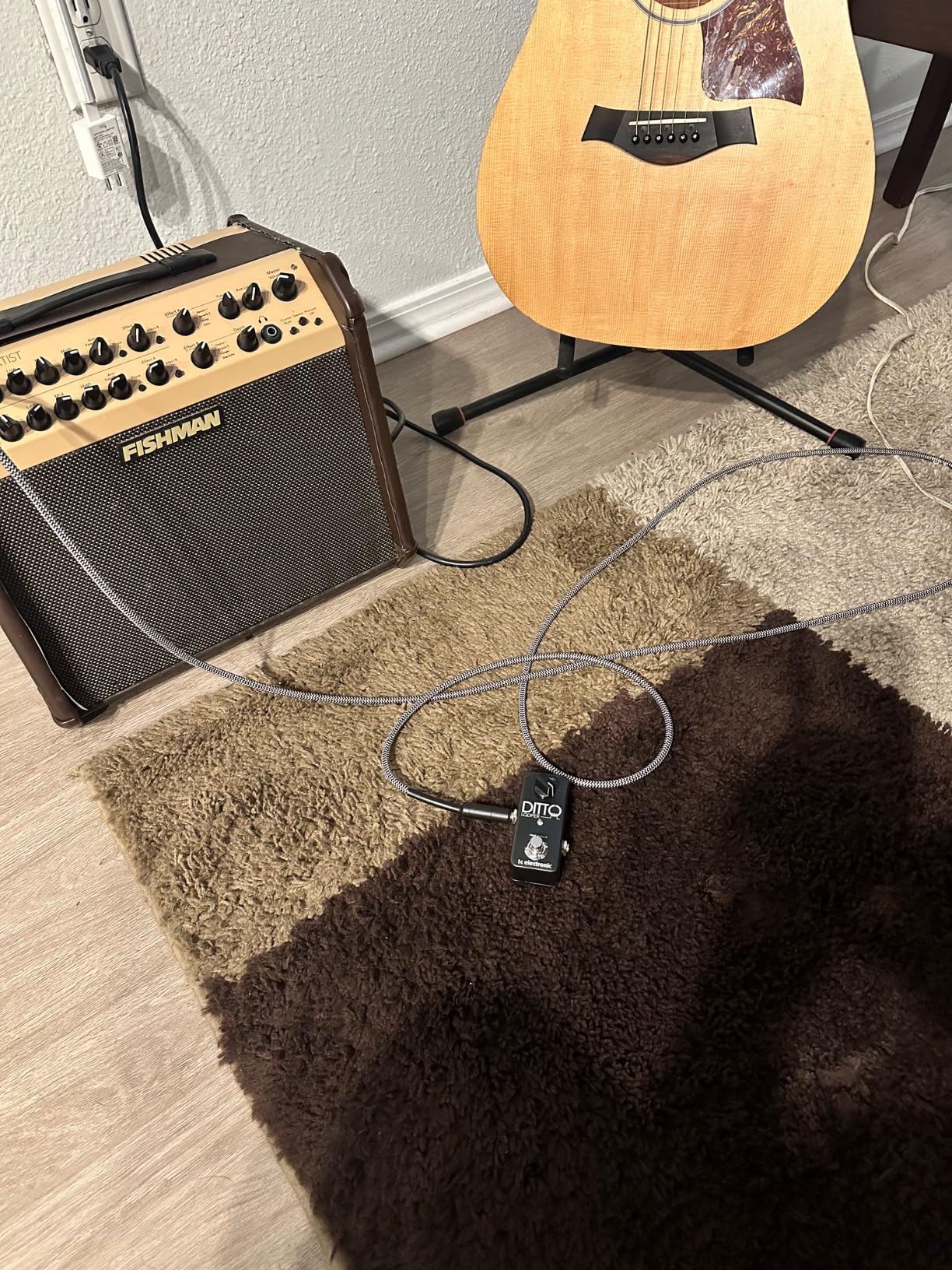
The 5-minute loop time is the main constraint. For practice and songwriting, it is usually enough. But if you want to build long, evolving soundscapes or record extended backing tracks, you will hit the wall. There is also no quantization, meaning your loops must be timed perfectly or they will drift out of phase over time.
No display means no visual feedback on loop position. You learn to feel the loop rather than see it, which some players prefer and others find disorienting. For live performance, the single-button design gets tricky when you need to switch quickly between record, overdub, and stop. But as a practice tool and songwriting companion, the Ditto is hard to beat at this price.
Who should buy the TC Electronic Ditto
Guitarists who want the simplest possible looper with audiophile sound quality. It is the best looper pedal for beginners who want something they can learn in five minutes.
Who should skip it
Live performers who need multiple saved loops, visual feedback, or longer recording times should look at the Boss RC-5 or RC-500 instead. The single-button design is not ideal for stage use.
4. TC Electronic Ditto+ Looper: Best for Practice Sessions
TC Electronic Ditto+ Looper Pedal
99 memory slots
24-bit sound
Extended looping mode
1-knob control
Pros
- 99 memory slots for storing loops
- Extended looping mode for creative expansion
- 24-bit sound quality with no degradation
- USB for pre-loading backing tracks
- Simple 1-knob design
Cons
- No included manual for extended mode
- Stop function unreliable for live use
- Level knob has limited range
- Cycling through 99 banks is tedious
The TC Electronic Ditto+ takes everything great about the original Ditto and adds the features players asked for. I tested it head-to-head with the original Ditto and found the upgrades meaningful for anyone who uses loops regularly. The 99 memory slots are the headline feature, letting you save entire libraries of chord progressions, riffs, and backing tracks.
The extended looping mode is a creative tool that lets you expand your loop in real time. You can record a short phrase and then extend it into a longer structure without re-recording. This is particularly useful for songwriting when you want to sketch out verse-chorus structures quickly. The 24-bit sound quality is pristine, with no audible degradation even after stacking many layers.
USB connectivity lets you load WAV files onto the pedal, so you can use it as a practice tool with pre-recorded backing tracks. The 1-knob design keeps everything simple, though cycling through 99 banks by foot takes patience. The hi-resolution display shows your current slot and loop status clearly.
The biggest complaint from users is the lack of documentation. The extended mode instructions are not included in the box, and you have to search online to find them. The stop function, which requires a fast double-click, can be unreliable in live situations. For home practice, these issues are minor. For gigging, they matter more.
Who should buy the TC Electronic Ditto+
Practice-focused guitarists and songwriters who want multiple saved loops, USB import, and extended mode in a compact form. It is ideal for bedroom players building a library of practice loops.
Who should skip it
Live performers should be cautious due to the finicky stop function. If you need reliable live performance, the Boss RC-5 offers similar features with more robust footswitch control.
5. BOSS RC-10R Rhythm Loop Station: Best Looper Pedal with Drums
BOSS RC-10R Rhythm Loop Station | Song-Based Looping & Dynamic Rhythms in a Small Footprint | 280 Preset Styles | 16 Versatile Drum Kits | 2-Track Operation | Expanded Control Support | Full MIDI I/O
280 rhythm styles
6 hours record
2-track operation
16 drum kits
Pros
- 280 preset rhythm styles with fills and transitions
- 16 high-quality drum kits from Boss Roland library
- 6 hours of stereo recording with 32-bit processing
- Two-track serial operation for song parts
- Full MIDI I/O for external sync
Cons
- Steep learning curve for advanced features
- No bass in drum patterns
- Auto fill-in every 4 or 8 bars can be intrusive
- Rubber feet tend to peel off over time
The BOSS RC-10R is the looper I recommend to anyone who wants rhythm backing built in. This is not just a looper with a basic metronome. It packs 280 preset rhythm styles drawn from the Boss and Roland sound libraries, each with intro fills, transition fills, and endings. I spent two weeks using the RC-10R for daily practice, and the drum patterns completely transformed my routine.
The two-track serial operation lets you build performances with two independent song parts, like a verse and a chorus. You can switch between them on the fly, and the rhythm follows your transitions. This is the closest thing to having a drummer in the room with you. The 16 drum kits cover everything from acoustic rock kits to electronic beats.
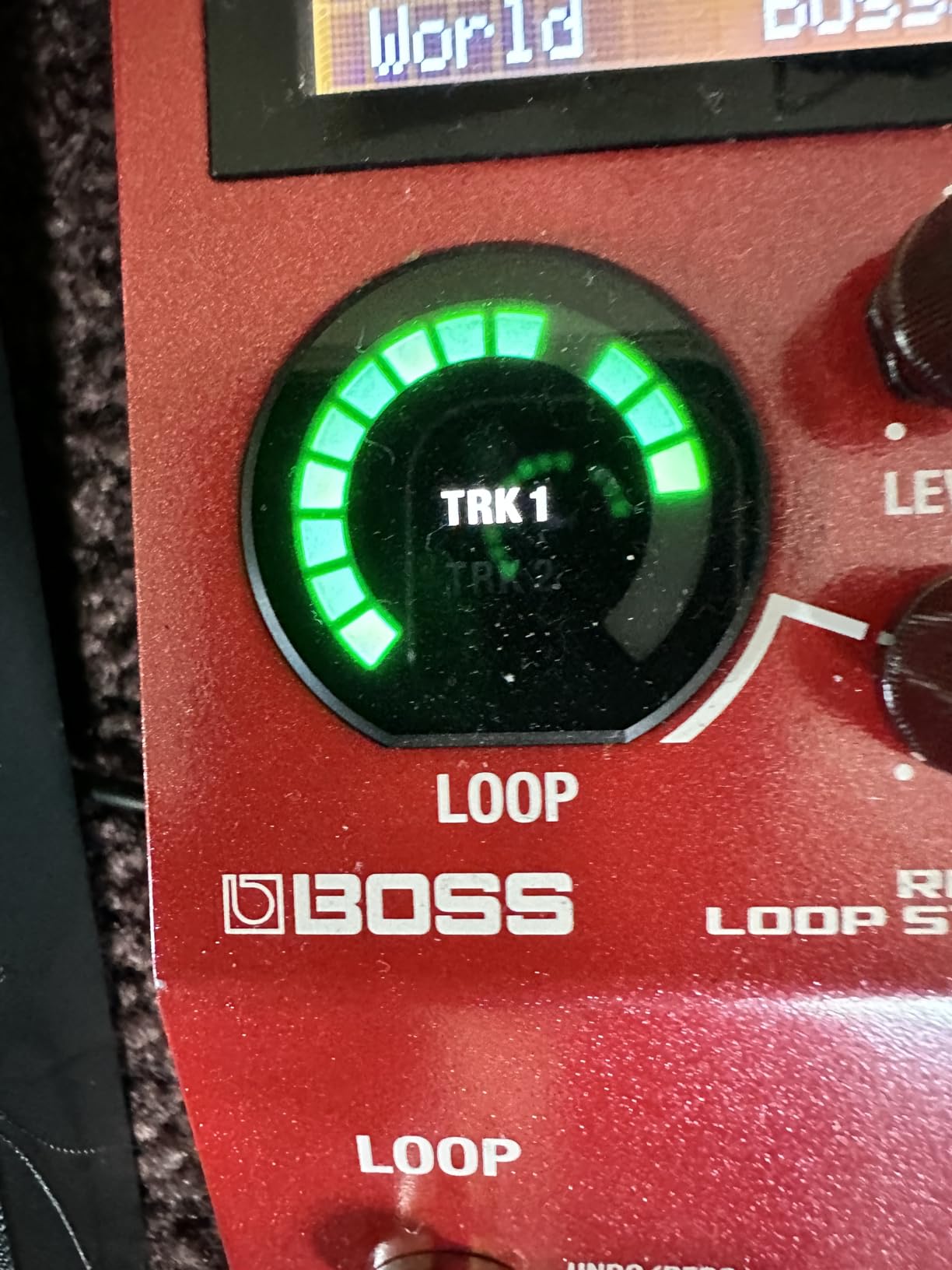
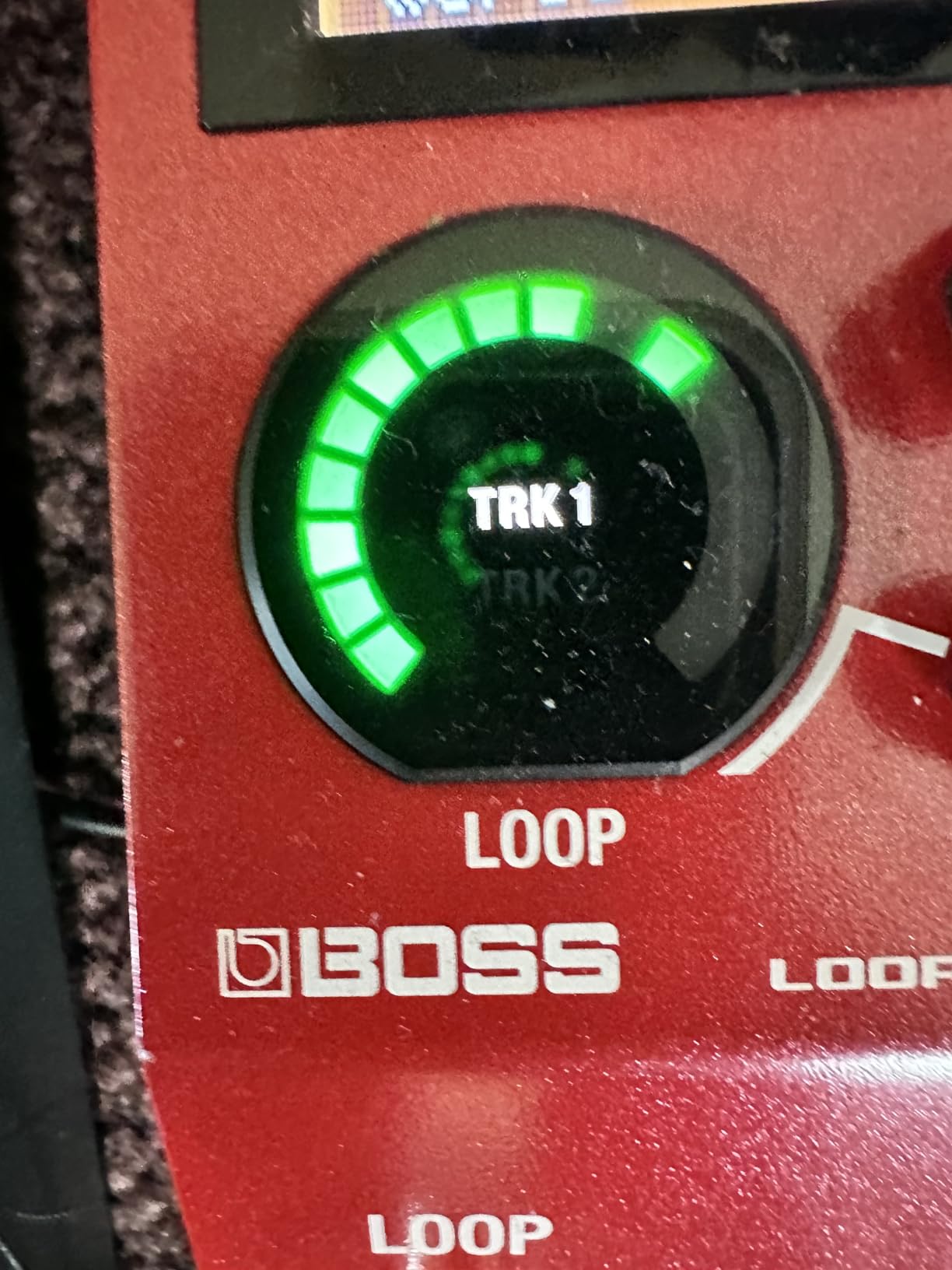
Sound quality is excellent thanks to 32-bit AD/DA processing. You get 6 hours of recording time and 99 phrase memories, which is more than enough for any application. The two circular LED indicators show loop and rhythm status independently, so you always know where you are.
The learning curve is the main barrier. With 280 rhythm styles, assignable parameters, and two-track management, there is a lot to learn. The drum patterns lack bass parts, which some users find limiting. The auto fill-in feature can feel intrusive if it triggers at the wrong moment. But for solo performers and teachers, the RC-10R is a powerful tool.
Who should buy the BOSS RC-10R
Solo performers, guitar teachers, and practice-focused players who want realistic drum backing with their loops. It is the best looper pedal with drums for players who want a song-based workflow.
Who should skip it
If you do not need built-in rhythms, the RC-5 offers similar looping features for less money. The RC-10R only makes sense if you will use the rhythm features regularly.
6. Donner Circle Looper: Best Budget Looper Pedal with Drums
Donner Circle Looper Pedal Drum Machine, 2 in 1 Drum Looper Stereo Guitar Loop Pedals, 40 Slots 160 mins Loop with 110 Drum Grooves, Tap Tempo, Fade Out
110 drum grooves
40 memory slots
160 min total
Stereo I/O
Pros
- 2-in-1 looper and drum machine at an unbeatable price
- 110 drum grooves across 11 music styles sound realistic
- 40 memory slots with 160 minutes total capacity
- Stereo inputs and outputs are truly independent
- USB import and export with editor software
Cons
- No power on/off switch
- USB software unreliable especially on Mac
- 4-minute loop limit per slot
- Stopping defaults to dub mode causing accidental recordings
The Donner Circle Looper stunned me with how much it offers for the price. A looper with 110 drum grooves, stereo I/O, 40 memory slots, and a screen for under $100 is remarkable value. I tested it alongside the Boss RC-3 and RC-5, and while it does not match their sound quality, it gets close enough that the savings are hard to ignore.
The 110 drum grooves span 11 musical styles, from rock and blues to funk and metal. They are surprisingly realistic for a budget unit, though they lack the depth and nuance of the Boss rhythm library. The 10 metronome settings are useful for precision practice. With 40 memory slots and 4 minutes per slot, you have plenty of room for practice loops and song ideas.
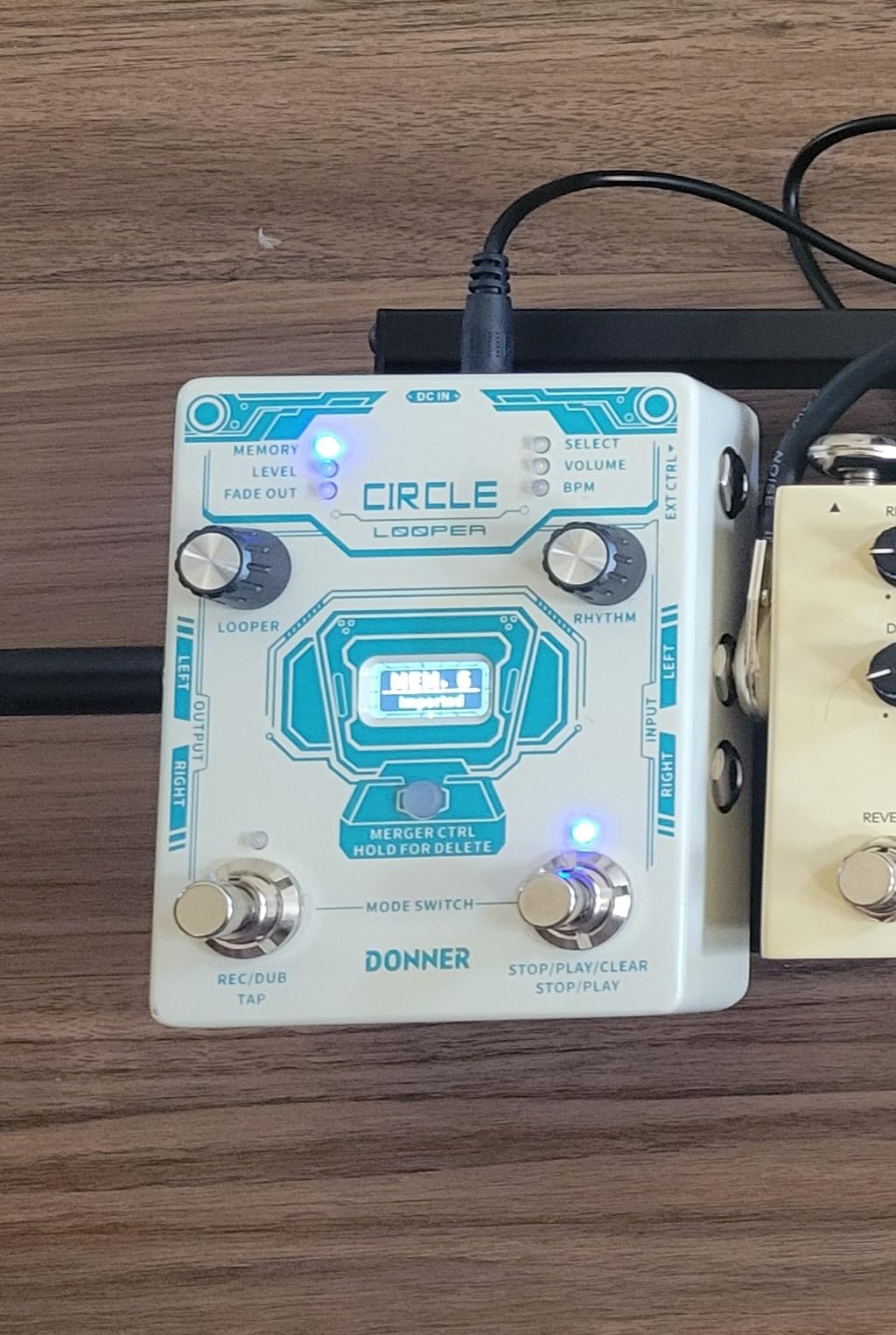
The stereo inputs and outputs are genuinely independent, which is rare at this price. The bright screen shows loop mode, time progress, and timing information. Tap tempo and fade-out functions add performance flexibility. The loop auto-rounds to the nearest bar, which helps keep your timing clean even if your footswitch press is slightly off.
The downsides are typical of budget gear. There is no power switch, so you unplug the adapter to turn it off. The USB editor software can be unreliable, especially on Mac. The default-to-dub behavior when stopping can cause accidental recordings if you are not careful. But for the price, the Donner Circle is the best cheap looper pedal with drums available.
Who should buy the Donner Circle Looper
Budget-conscious players who want drum backing and stereo looping without spending Boss money. It is the best budget looper pedal with drums for practice and home recording.
Who should skip it
If you need reliable USB file management or professional-grade sound quality, invest in the Boss RC-10R or RC-5. The Donner is great value but has compromises.
7. Donner Triple Looper: Best Budget Multi-Slot Looper
Donner Triple Looper Guitar Pedal, 90 mins Looping Time Loop Pedal with Screen, 3 Loops Looper Pedal with Unlimited Overdubs Undo/Redo
3 loop slots
90 min total
LCD screen
Auto-save
Pros
- 3 independent loop slots with 30 minutes each
- LCD screen with visual time progress indicator
- Unlimited overdubs with undo redo
- Loops auto-save when powered off
- True bypass preserves original tone
- Compact metal enclosure
Cons
- Some quality control issues with chirping sounds
- Slight signal volume reduction
- Power supply not included
- Occasional factory test recordings on device
The Donner Triple Looper gives you three independent loop slots and 90 minutes of total recording time for a remarkably low price. I was skeptical given the budget positioning, but the built-in LCD screen with its visual progress ring won me over. Being able to see your loop position on a budget looper is a feature usually reserved for units twice the price.
Each of the three slots holds 30 minutes of recording, which is generous. The unlimited overdubs with undo and redo work as expected, and loops auto-save when the pedal loses power. That auto-save feature is something even some premium loopers get wrong. True bypass keeps your signal chain clean when the looper is off.
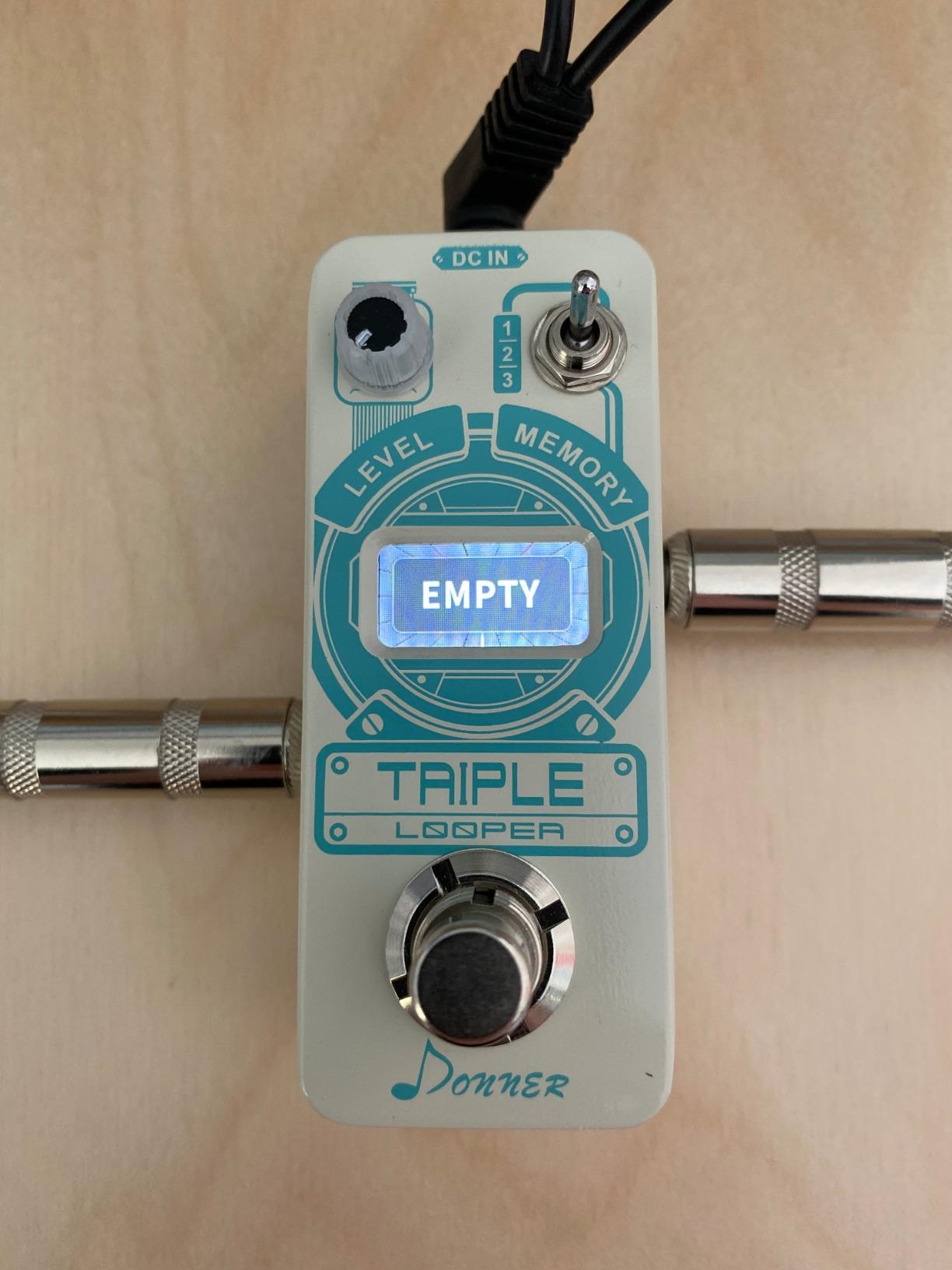
Sound quality is decent but not exceptional. There is a slight volume reduction compared to higher-end loopers, and a minority of users report chirping or beeping sounds during recording. These quality control issues are the trade-off for the low price. My test unit performed without issues, but it is worth noting.
The single-footswitch design puts a lot of functions on one button, which requires learning the tap patterns. Some users found pre-saved recordings on their device from factory testing, which is annoying but easily fixed by erasing. For the price, the Triple Looper delivers excellent value if you get a good unit.
Who should buy the Donner Triple Looper
Beginners and budget players who want multiple loop slots and a visual display. It is one of the best looper pedals for beginners who need more than a single loop but cannot justify Boss pricing.
Who should skip it
Players who need consistent quality control and pristine sound should spend more on the Boss RC-5 or TC Electronic Ditto. The Donner is good value but carries some risk.
8. LEKATO Looper Pedal 9 Loops: Best Value Budget Looper
LEKATO Looper Guitar Pedal Guitar Loop Pedal Tuner Pedal 9 Loops 40 Minutes Record Time Unlimited Overdubs for Electric Guitar Bass (Black)
9 loop slots
40 min total
Built-in tuner
48K 24-bit audio
Pros
- 9 loop slots with 40 minutes total recording time
- 48K 24-bit uncompressed audio quality
- Built-in high-sensitivity tuner
- USB import and export of WAV files
- Solid metal construction with LED progress indicator
Cons
- Bright LED display can be intense
- Sound quality below premium brands
- Power supply not included
- Learning curve for footswitch patterns
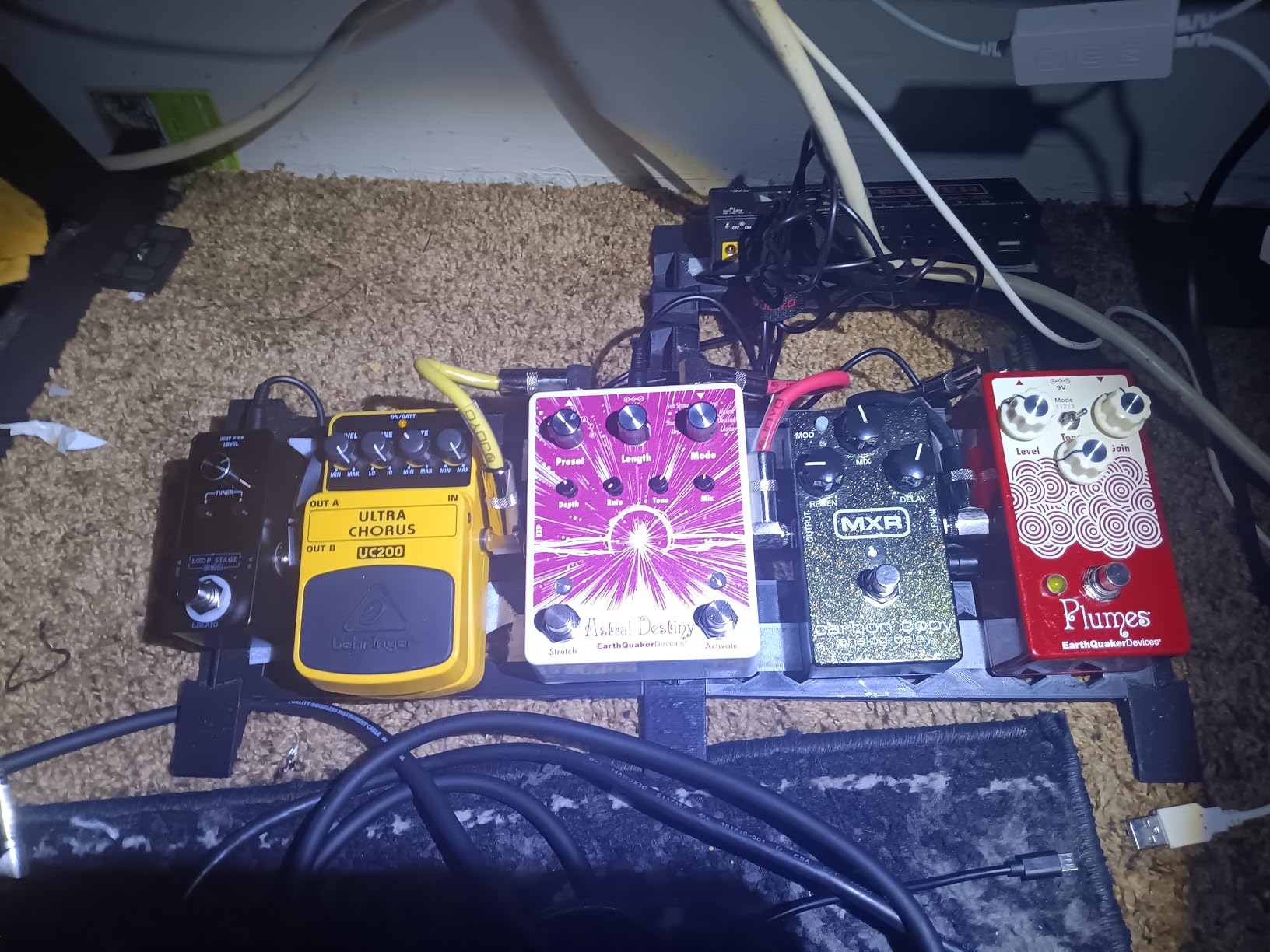
The LEKATO 9 Looper is the budget champion that keeps surprising me. Nine loop slots, 40 minutes of recording time, a built-in tuner, USB file transfer, and 48K/24-bit audio for under $50 is almost unbelievable value. With nearly 2,800 reviews at 4.4 stars, it is the number one bestseller in the guitar loopers category on Amazon.
I tested the built-in tuner against my pedal tuner and found it accurate enough for casual use. It is not a replacement for a dedicated tuner, but as a bonus feature on a budget looper, it saves pedalboard space. The 48K/24-bit audio quality is clean for the price, though side-by-side with the Boss RC-5, there is a noticeable difference in clarity and headroom.
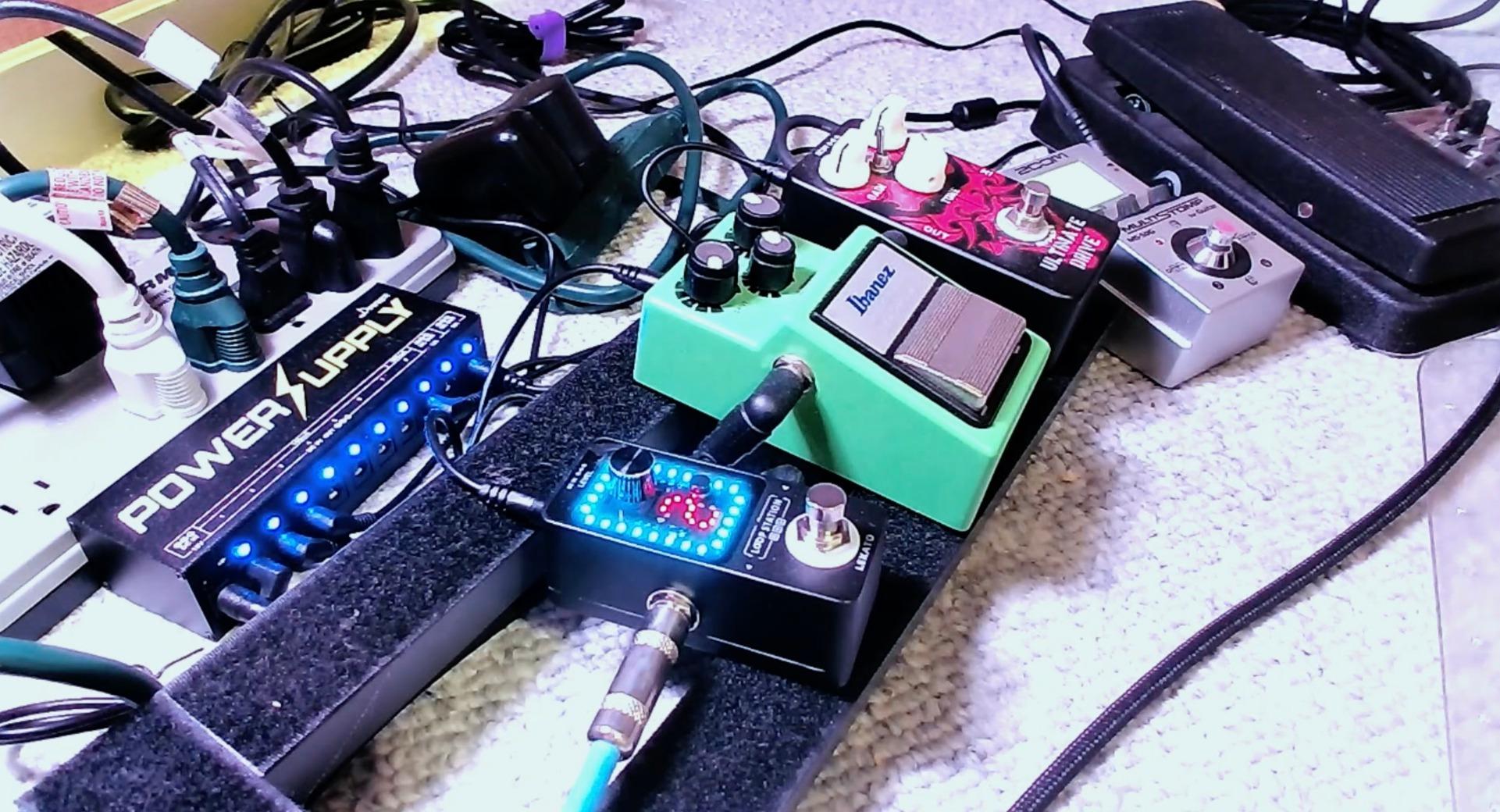
The USB connection lets you import and export WAV loop files, which means you can back up your loops or load backing tracks. The LED loop progress indicator helps you track your position visually. Unlimited overdubs with record, undo/redo, stop, and erase commands are all accessible via foot, though the command patterns take practice to memorize.
The bright LED is genuinely intense. Several users cover it with tape to avoid being blinded on stage. The power supply is not included, which adds a few dollars to your total cost. But these are minor complaints for a pedal that delivers this much functionality at this price point.
Who should buy the LEKATO 9 Looper
Budget players, beginners, and anyone who wants maximum features per dollar. It is the best value looper pedal on the market and a fantastic first looper for new players.
Who should skip it
Tone-conscious players who need premium audio quality should look at the TC Electronic Ditto or Boss RC-5. The LEKATO is great value but the sound quality difference is noticeable to trained ears.
9. LEKATO Mini Looper: Best Ultra-Budget Looper Pedal
LEKATO Guitar Looper Effect Pedal Loop Pedal 5 Minutes Looping Time Looper Pedal ONE Looper Unlimited Overdubs
5 min loop
24-bit audio
Ultra-compact
USB WAV transfer
Pros
- Ultra-compact size fits any pedalboard
- 24-bit uncompressed audio quality
- USB for WAV file import and export
- Unlimited overdubs
- Solid aluminum alloy construction
Cons
- Only 5 minutes of looping time
- No power adapter included
- Button press noise audible in loop
- Battery drains quickly
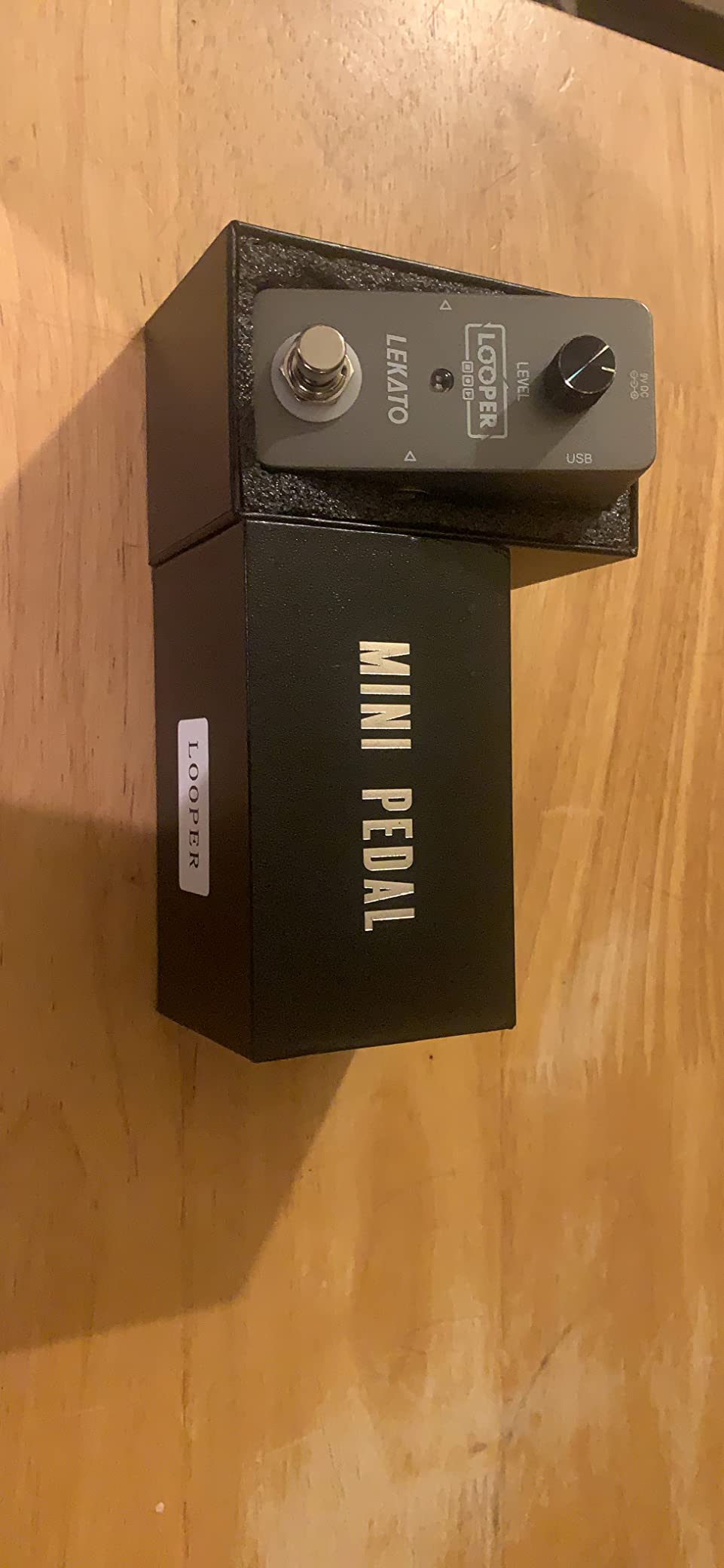
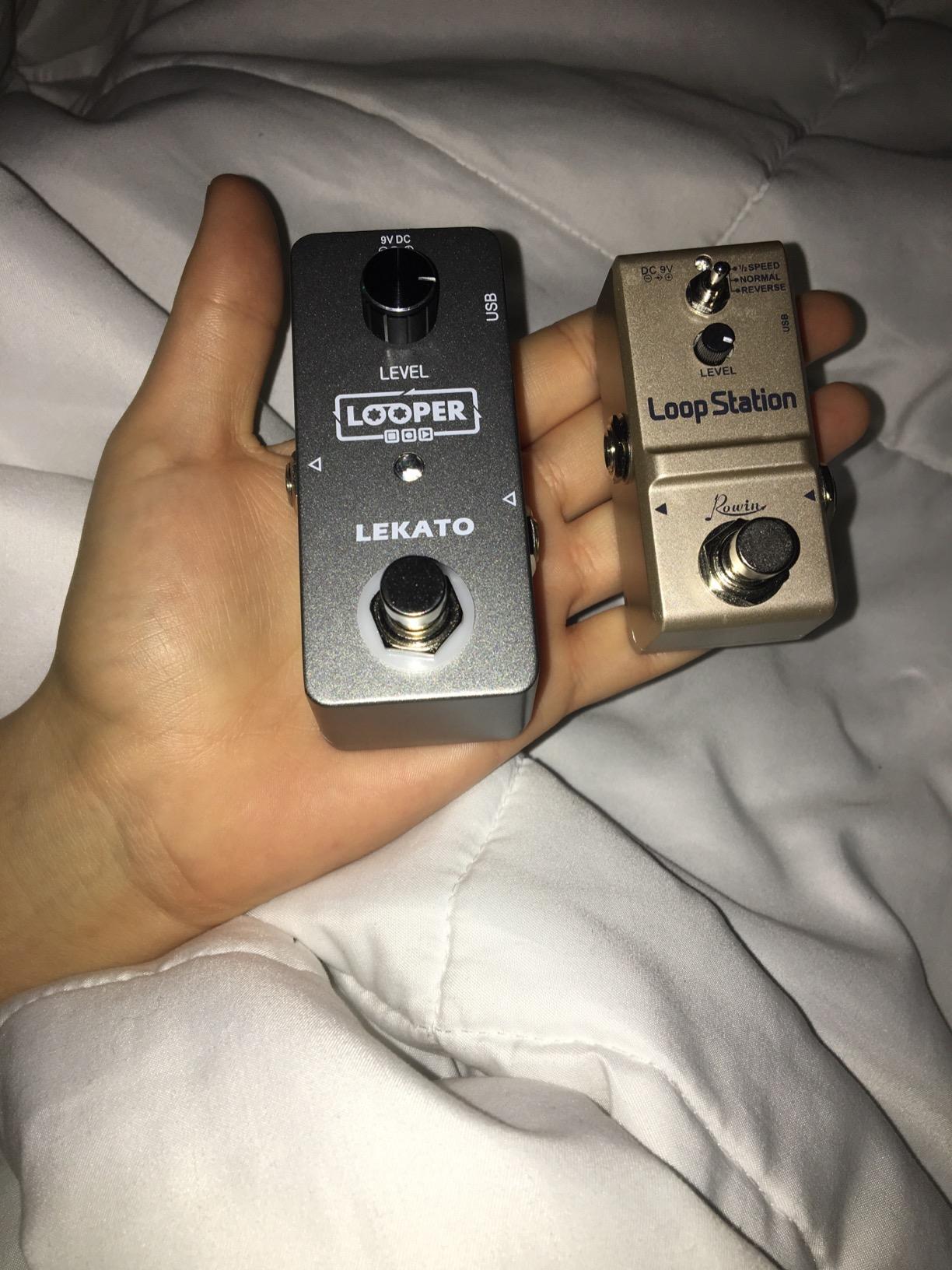
The LEKATO Mini Looper is the smallest and cheapest pedal in this roundup. At roughly two inches square, it takes up almost no pedalboard space. I tested it as an emergency backup looper and was impressed by how capable it is for such a tiny, inexpensive unit. If you are on the tightest possible budget, this is your entry point into looping.
You get 5 minutes of looping time with unlimited overdubs, 24-bit uncompressed audio, and USB connectivity for WAV file transfer. The Analog-Dry-Through design preserves your original signal. For basic record, overdub, and play functionality, it does the job. The aluminum alloy construction feels solid for the price.
The 5-minute limit is the obvious constraint. For short riffs and chord progressions, it works fine. For longer arrangements, you will need something with more memory. The single footswitch handles record, undo/redo, stop, and erase, but the command patterns take practice.
Some users report that the physical click of the footswitch is audible in the loop recording. This is a known issue with budget loopers and can be minimized by placing the pedal on a soft surface. Battery life is poor, so plan on using a power supply. At this price, these compromises are expected.
Who should buy the LEKATO Mini Looper
Guitarists on the tightest budget or those who need a tiny secondary looper for a crowded pedalboard. It is the best looper pedal under $50 for basic practice needs.
Who should skip it
Anyone who needs more than 5 minutes of loop time, reliable build quality, or clean footswitch operation should spend slightly more on the LEKATO 9 Looper or TC Electronic Ditto.
10. MXR Clone Looper Pedal: Best Creative Compact Looper
MXR® Clone Looper™ Pedal
6 min loop
Reverse and half-speed
88.2kHz storage
Exp jack expandable
Pros
- Excellent sound quality in a compact pedal
- Reverse double-speed and half-speed functions
- 88.2kHz loop storage handles high-gain distortion
- Expandable with MXR tap tempo and volume pedal
- Solid MXR build quality
Cons
- Complex button mapping with steep learning curve
- Stop function plays back audio before clearing
- Some early failure and defect reports
- Button modes layered on top of modes
The MXR Clone Looper brings MXR’s legendary build quality to the looper category. I was drawn to it because of the reverse, double-speed, and half-speed functions, which make it one of the best looper pedals for creative and experimental players. The 88.2kHz loop storage rate is higher than most competitors, which means it handles high-gain distortion signals without artifacts.
The reverse function instantly flips your loop backwards for ambient and psychedelic textures. Half-speed drops your loop an octave down at half tempo, creating heavy, doom-laden soundscapes. Double-speed does the opposite, producing chipmunk effects and rapid rhythmic patterns. These creative tools set the Clone Looper apart from basic record-and-play units.
The expandability is another plus. The expression jack accepts an MXR DVP volume pedal for foot-controlled output level, or an MXR tap tempo switch for play-once mode. This lets you integrate the Clone Looper into a larger performance setup without needing a separate controller.
The two-button design packs enormous functionality but creates a steep learning curve. The button modes are layered, meaning a long press, short press, or double press all do different things depending on context. Some users experienced early failures or defects, which is concerning for a pedal at this price. The stop function has a quirk where it plays back audio before clearing, which can be jarring during live use.
Who should buy the MXR Clone Looper
Creative and experimental guitarists who want reverse, half-speed, and double-speed manipulation in a compact pedal. It is the best compact looper pedal for players who treat looping as a creative tool.
Who should skip it
Players who want straightforward operation should avoid the Clone Looper. The complex button mapping is frustrating if you just want simple record-and-play functionality. Some users report reliability issues, so check warranty coverage.
11. BOSS RC-500 Loop Station: Best Mid-Range Dual-Track Looper

BOSS RC-500 Loop Station | Advanced Two-Track Looper with Onboard Mixing & Deep Control Options | Class-Leading Sound Quality | 16 Versatile Drum Kits | 13 Hours Record Time | Expanded Control Support
Dual-track looping
13 hours record
16 drum kits
Loop FX built-in
Pros
- Dual-track looping with independent control
- 13 hours of stereo recording with 99 memories
- 16 drum kits and 57 preset rhythms
- 9 assignable footswitches with MIDI support
- Loop FX include repeat scatter shift and vinyl flick
Cons
- No rubber feet unit slides around
- Effects somewhat limited
- Serial track mode requires matching measures
- Steep learning curve with nested menus
The BOSS RC-500 is what I recommend to players who have outgrown a single-track looper but do not need the full workstation power of the RC-600. The dual-track design lets you record two independent loops and control them separately. You can run them in parallel mode for layering or serial mode for verse-chorus song structures.
The 32-bit AD/DA processing delivers the same transparent sound quality as the RC-5 and RC-600. With 13 hours of recording time and 99 phrase memories, storage is never an issue. The 16 drum kits and 57 preset rhythms provide excellent backing for practice. The Loop FX, which include repeat, scatter, shift, and vinyl flick, add creative texture options that go beyond basic looping.
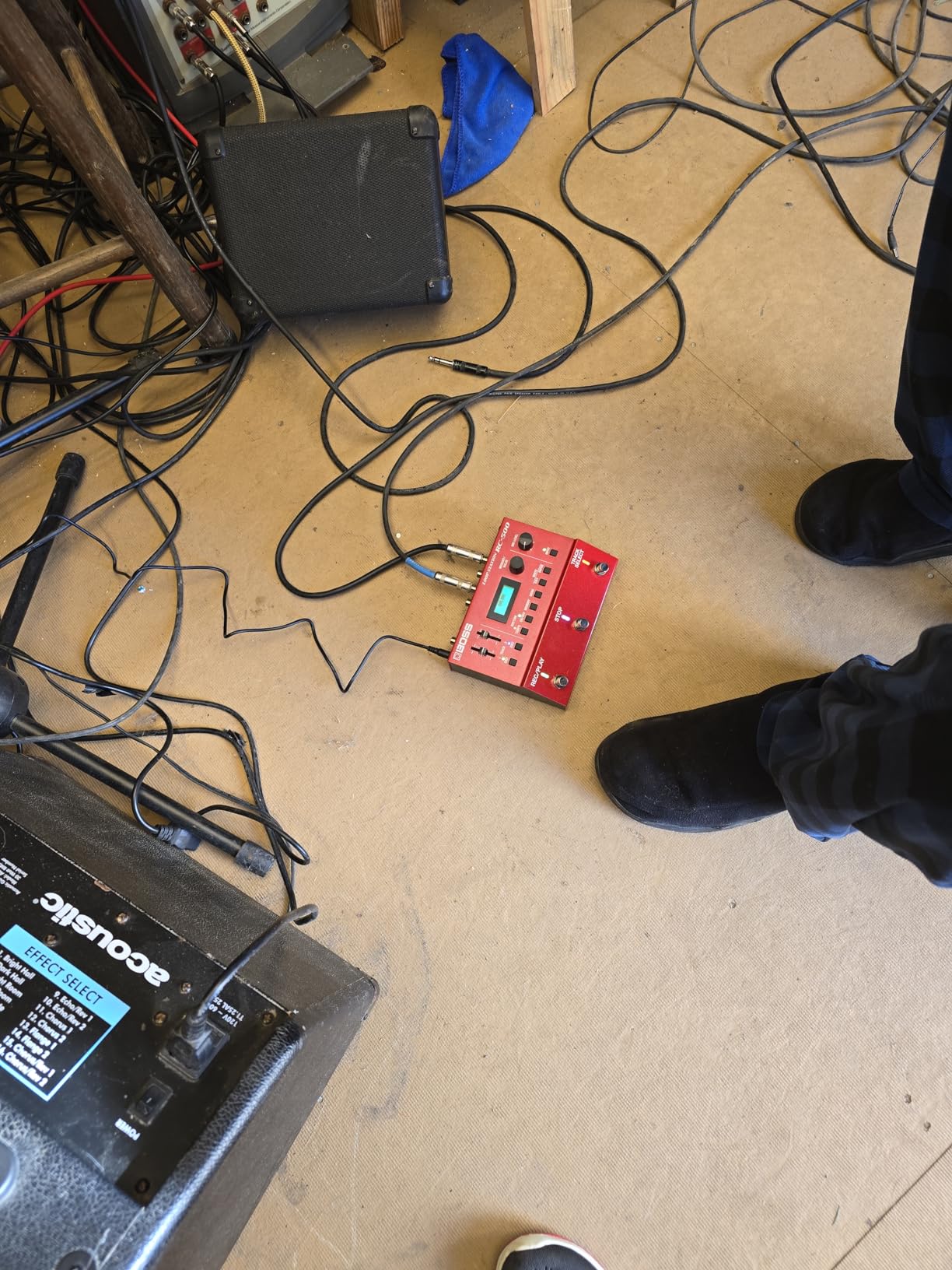
The nine freely assignable footswitches are the key advantage over the RC-5. You can customize what each switch does, assigning functions like track select, rhythm start and stop, undo, redo, and more. This flexibility makes the RC-500 suitable for live performance where you need quick access to multiple controls. Full MIDI I/O via mini TRS jacks enables external control from a controller or DAW.
The main complaints are minor but worth noting. There are no rubber feet on the bottom, so the unit slides around on smooth floors. The effects are somewhat limited compared to dedicated effects pedals. Serial track mode requires both loops to have the same number of measures, which constrains creative arrangements. The menu system has nested layers that take time to learn.
Who should buy the BOSS RC-500
Intermediate to advanced players who need dual-track looping, assignable footswitches, and built-in rhythms. It is the perfect middle ground between the RC-5 and RC-600 for serious looping musicians.
Who should skip it
If you only need basic looping, the RC-5 is simpler and cheaper. If you need more than two tracks, the RC-600 offers six stereo tracks for ambitious arrangements.
12. BOSS RC-600 Loop Station: Best Looper Pedal for Live Performance
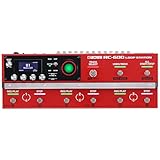
BOSS RC-600 Floor-Based Loop Station for Looping Musicians | Evolved Features & Customizable Functions | Next-Generation Sound Quality | Massive Onboard Effects Options | Unmatched Real-Time Control
6 stereo tracks
102 FX types
9 footswitches
Floor-based design
Pros
- Six simultaneous stereo phrase tracks for maximum layering
- 49 Input FX and 53 Track FX types up to 4 at once
- Nine freely assignable footswitches with three modes
- 32-bit AD/DA and floating-point processing
- Included power supply and floor-based design
Cons
- Very steep learning curve with complex menus
- Nine buttons with three modes overwhelming for new users
- High price point prohibitive for casual users
- May be overkill for basic looping needs
The BOSS RC-600 is the flagship. Six stereo tracks, 102 effects types, nine assignable footswitches, and a floor-based design built for the stage. I tested it in a live performance scenario and it handled everything I threw at it. This is the looper that Ed Sheeran-style performers and professional looping musicians aspire to.
The six stereo tracks give you enormous creative freedom. You can dedicate tracks to guitar, vocals, percussion, keys, and whatever else you need. Each track can be independently controlled, muted, or soloed. The 49 Input FX and 53 Track FX types, usable up to four at once per section, mean you can process your signal and your loops with professional-grade effects without external pedals.
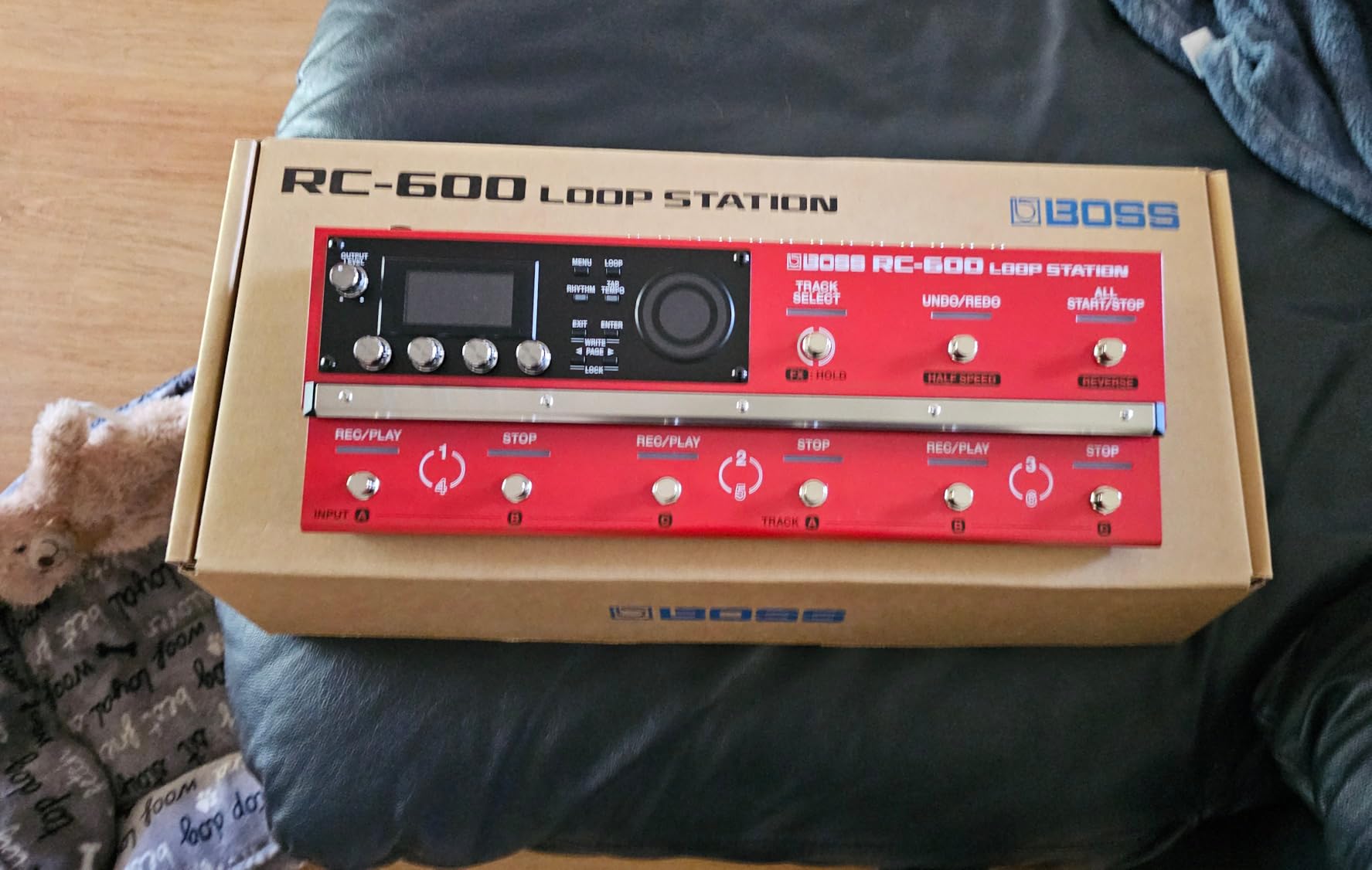
The nine footswitches each have three modes, giving you 27 control points. Every switch is freely assignable, so you can configure the RC-600 to match your performance workflow. Full MIDI I/O, USB connectivity, and the included power supply make this a complete workstation right out of the box.
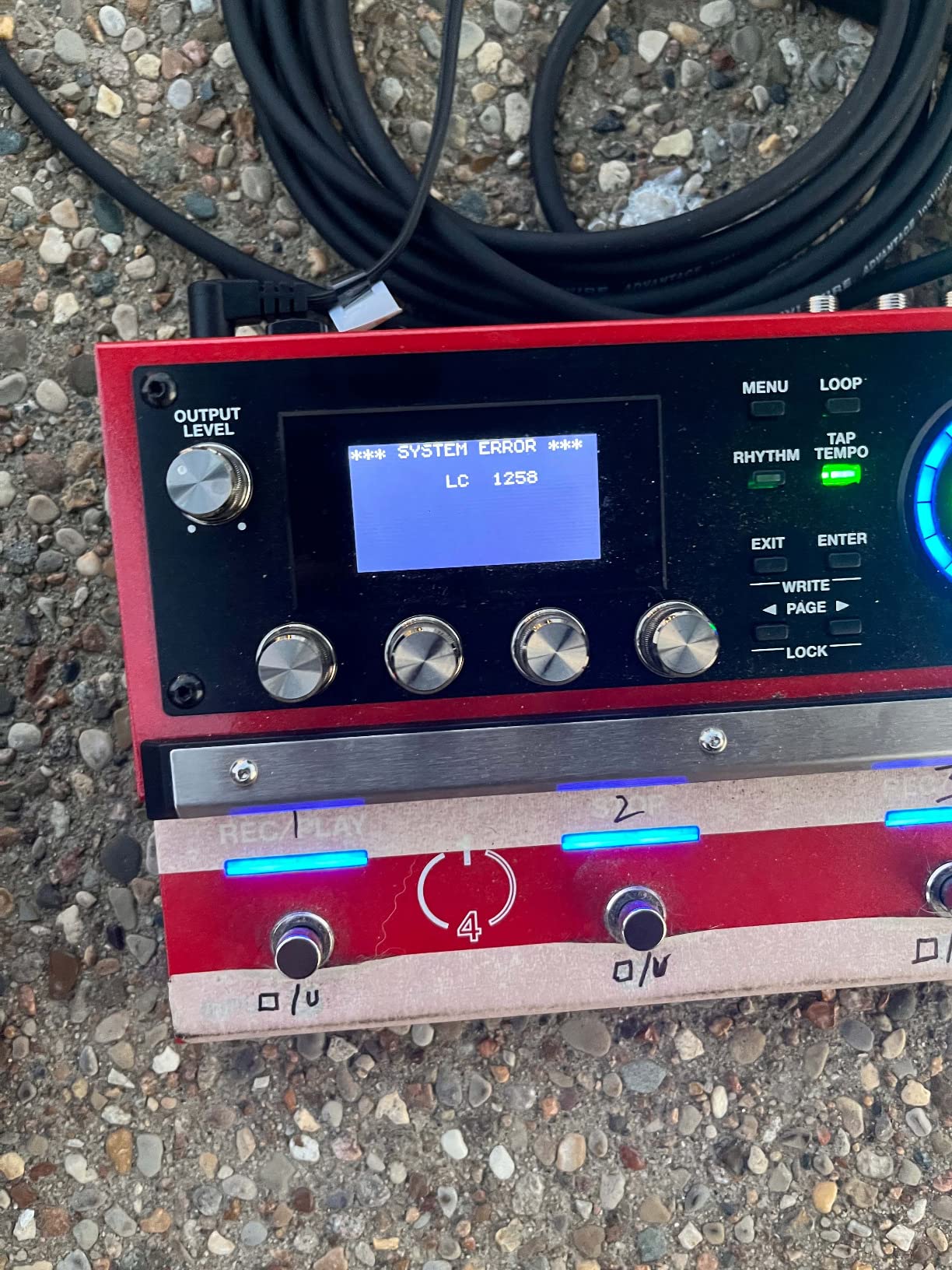
The complexity is the trade-off. The menu system is deep and multi-layered. Learning to navigate it efficiently takes hours of study and practice. Some users feel the complexity detracts from the joy of playing, as you spend more time managing settings than making music. At this price point, it is a serious investment that only makes sense for dedicated looping performers.
Who should buy the BOSS RC-600
Professional looping musicians, solo performers building complex arrangements live, and multi-instrumentalists who need maximum track count and effects. It is the best looper pedal for live performance bar none.
Who should skip it
Casual players, practice-focused guitarists, and anyone intimidated by complex menus should avoid the RC-600. It is overkill for basic looping and the learning curve will frustrate casual users.
How to Choose the Best Looper Pedal for Your Needs
Choosing the right looper pedal comes down to matching features to your actual needs. After testing all 12 pedals in this roundup, I identified the key factors that matter most when making a purchase decision. Use this guide to narrow down your options based on how you plan to use your looper.
Loop Time and Memory
Loop time is the total recording capacity of the pedal. Budget loopers like the LEKATO Mini offer 5 minutes, which is fine for short riffs and practice phrases. Mid-range pedals like the Boss RC-5 and RC-500 offer 13 hours, which is effectively unlimited for any real-world use. If you plan to record long backing tracks or build extended compositions, prioritize pedals with longer loop times and multiple memory slots. The Boss RC-5 offers 99 phrase memories, meaning you can save and recall 99 different loops at will.
Audio Quality and Bit Depth
Audio quality is measured in bit depth and sample rate. Budget loopers typically use 24-bit processing at 44.1kHz, which is acceptable for practice. Premium Boss loopers use 32-bit AD/DA conversion with 32-bit floating-point processing, which produces noticeably cleaner loops with better headroom. The difference becomes obvious when you stack many overdubs. Cheap loopers accumulate noise and mud with each layer, while 32-bit loopers stay transparent. If you care about sound quality, the Boss RC-5, RC-500, and RC-600 are the benchmarks.
Built-In Rhythms and Drums
Some loopers include built-in drum patterns and rhythm tracks. The Boss RC-10R leads this category with 280 preset rhythm styles and 16 drum kits. The Boss RC-5 and RC-500 each offer 57 rhythms with 7 and 16 drum kits respectively. The Donner Circle Looper provides 110 drum grooves at a fraction of the Boss price. If you practice alone and want rhythmic backing, these features are incredibly valuable. If you already have a drum machine or play with a drummer, you can save money by choosing a looper without built-in rhythms.
Footswitch Design and Live Usability
The footswitch layout determines how easy the looper is to use in real time. Single-footswitch loopers like the TC Electronic Ditto are simple but require memorized tap patterns for different functions. Multi-switch pedals like the Boss RC-500 and RC-600 assign dedicated functions to each switch, making live performance much easier. If you plan to gig with your looper, prioritize pedals with multiple footswitches and assignable functions.
True Bypass vs Buffered Bypass
True bypass means the looper passes your guitar signal through untouched when the pedal is off, preserving your tone. Buffered bypass adds a small buffer to the signal, which can help drive long cable runs but may slightly color your tone. Most guitarists prefer true bypass for maintaining signal purity. All the pedals in this roundup use true bypass except where noted.
Connectivity: USB, MIDI, and Stereo
USB connectivity lets you transfer loop files to and from a computer for backup or sharing. MIDI I/O allows syncing the looper with drum machines, DAWs, or other pedals for tight timing. Stereo inputs and outputs enable routing two instruments or using stereo effects. The Boss RC-5, RC-500, and RC-600 all offer USB and MIDI. Budget loopers like the LEKATO and Donner models offer USB but lack MIDI.
Signal Chain Placement
Where you place your looper in your signal chain affects how it captures and plays back your sound. Most players put the looper after their modulation and time-based effects but before delay and reverb. This way, the loop captures your effected sound but delay and reverb tails continue to ring naturally over the loop. Experiment with placement to find what works best for your rig. Reddit users in the r/guitarpedals community frequently debate this topic, and the consensus is that placement is a personal choice that depends on your specific setup.
Frequently Asked Questions About Looper Pedals
What is the easiest looper pedal to use?
The easiest looper pedal to use is the TC Electronic Ditto Looper. It has a single footswitch and one knob, with intuitive LED indicators: red for recording and green for playback. Double-tap to stop. No complicated menus or settings to navigate, making it perfect for beginners who have never used a looper before.
Is it worth getting a looper pedal?
Yes, a looper pedal is absolutely worth it for most guitarists. Loopers help with practice by letting you solo over chord progressions, speed up songwriting by hearing arrangements instantly, and enable solo live performance with layered accompaniment. Even a budget looper like the LEKATO 9 Looper at under $50 adds significant value to your playing.
What does Ed Sheeran use for looping?
Ed Sheeran uses his own brand of looper pedals called Sheeran Loopers, including the Looper X and Looper X Workstation models. He popularized live looping by building entire songs from layered guitar and vocal loops during solo performances using just an acoustic guitar and a foot-controlled looper.
What famous musicians use looper pedals?
Famous musicians who use looper pedals include Ed Sheeran with his Sheeran Loopers brand, KT Tunstall who uses Boss RC series pedals, Jacob Collier known for complex multi-layered looping, and many singer-songwriters and experimental artists. Loopers are popular among solo performers who want to create full-band arrangements live.
Where should I place my looper in my signal chain?
Most guitarists place the looper pedal after modulation effects like chorus and phaser but before delay and reverb. This lets the loop capture your core tone and modulation while allowing delay and reverb tails to ring naturally over the loop. Experiment with placement based on your specific pedalboard and tone preferences.
Final Thoughts on the Best Looper Pedals in 2026
After testing all 12 pedals, my top recommendation for most guitarists is the BOSS RC-5 Loop Station. It delivers class-leading 32-bit sound quality, 13 hours of recording, 99 memories, built-in rhythms, and MIDI connectivity in a compact, reliable package. For budget-conscious players, the LEKATO 9 Looper offers unbeatable value with nine loop slots and a built-in tuner. And for live performers building complex arrangements, the BOSS RC-600 is the ultimate looping workstation.
The best looper pedals in 2026 cover every need and budget, from the $35 LEKATO Mini to the flagship BOSS RC-600. Whatever your skill level or musical goals, there is a loop station on this list that will transform how you practice, write, and perform. Pick the one that matches your needs and start building layers.