
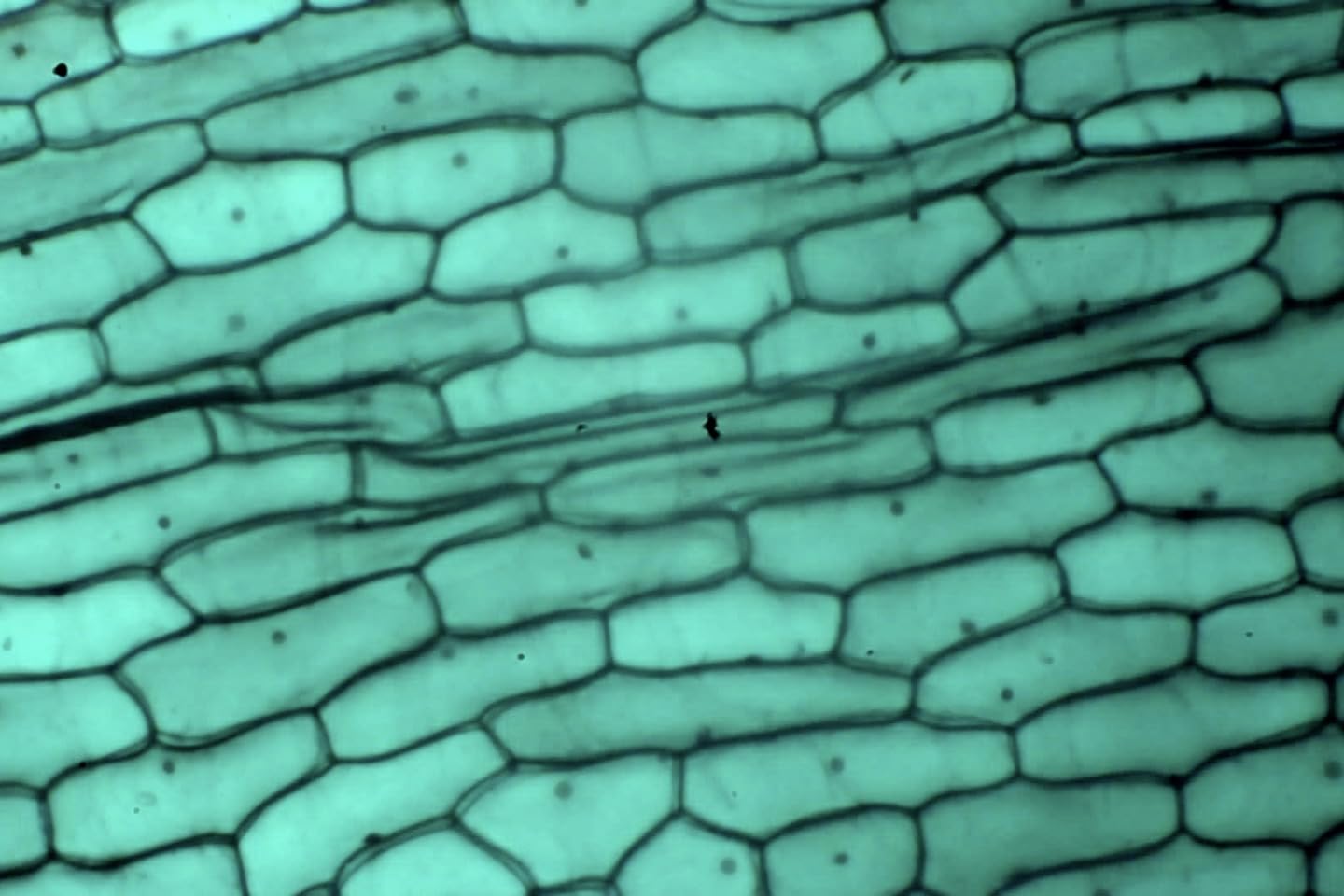
There is something profoundly magical about peering through a microscope lens and discovering an entirely new universe that exists right beneath your fingertips. The delicate architecture of a paramecium navigating through pond water, the intricate cellular structure of an onion skin revealing nature’s geometric precision, or the pulsing heart of a daphnia beating in rhythmic synchronization – these are the moments that transform a casual curiosity into a lifelong passion for home biology. If you have ever gazed at a drop of stagnant water and wondered what invisible creatures might be swimming within it, or if you have dreamed of exploring the microscopic foundations of life itself from the comfort of your own home laboratory, then you are holding in your hands the definitive guide to finding the perfect instrument for your journey.
The world of high-end compound microscopes for home biology represents a remarkable intersection of scientific precision and accessible technology. Unlike the simple toy microscopes that many of us encountered in elementary school, these research-grade instruments offer optical quality, mechanical sophistication, and magnification capabilities that rival the equipment found in professional laboratories. Whether you are a homeschool parent seeking to enrich your children’s science education, an amateur microbiologist with an insatiable curiosity about the hidden realms of life, or a serious hobbyist prepared to invest in equipment that will serve your scientific pursuits for decades to come, the right compound microscope can open doors to discoveries that most people never know exist. In this comprehensive guide, we will examine the nine finest high-end compound microscopes currently available for home biology enthusiasts, providing you with the detailed analysis and practical insights you need to make an informed purchasing decision.
Our exploration of the best high-end compound microscopes for home biology has been carefully researched to encompass a wide range of budgets, experience levels, and specific use cases. We have analyzed optical systems, evaluated illumination technologies, assessed mechanical construction quality, and considered the real-world experiences of thousands of users who have incorporated these instruments into their home laboratories. From trinocular systems designed for photomicrography to compact monocular scopes perfect for young scientists, this guide covers every significant option available to the modern home biology enthusiast. By the time you finish reading this article, you will possess not only detailed knowledge of each microscope’s strengths and weaknesses but also a comprehensive understanding of the technical factors that distinguish a genuinely research-grade compound microscope from lesser alternatives.
Top 3 Picks for Best High-End Compound Microscopes for Home Biology
After extensive research and analysis of the most compelling options currently available on the market, we have identified three microscopes that stand out from the crowd in terms of overall quality, value proposition, and suitability for different types of home biology applications. These top picks represent ourEDITOR’S CHOICE for the best overall research-grade experience, our BEST VALUE selection for those seeking maximum quality per dollar spent, and our PREMIUM PICK for users who prioritize advanced features and are willing to invest accordingly.

Swift SW380T 40X-2500X Siedentopf Head...
- 40X-2500X magnification
- Siedentopf head with 30-degree tilt
- 4 DIN Achromatic objectives
- LED illumination
- Camera-compatible trinocular port
- Ultra-precise focusing system

PalliPartners Compound Binocular...
- 40X-2000X magnification
- Dual LED illumination
- WF10x and WF25x eyepieces
- Mechanical stage with scale markings
- Phone adapter included
- Complete kit with 9 specimens and 18 blank slides
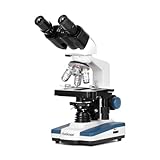
AmScope B120 Series 40X-2500X LED...
- 40X-2500X magnification
- Built-in 5MP USB camera
- LED daylight-balanced illumination
- 5-year manufacturer warranty
- Solid all-metal construction
- Siedentopf head design
Best High-End Compound Microscopes for Home Biology in 2026
The compound microscope market has evolved dramatically in recent years, with manufacturers increasingly focusing on the home biology enthusiast segment. This shift has resulted in an unprecedented availability of research-grade features at price points that were previously unimaginable. Modern high-end compound microscopes for home biology now routinely incorporate optical components that professional scientists could only dream of accessing just two decades ago. The following comparison table provides a comprehensive overview of all nine microscopes we will examine in detail throughout this guide, allowing you to quickly assess how each option aligns with your specific requirements and budget constraints.
| Product | Specifications | Action |
|---|---|---|
|
Swift SW380T Trinocular 40X-2500X
|
|
Check Latest Price |
 Woehrsh RM Trinocular 40X-5000X
|
|
Check Latest Price |
|
AmScope B120 Binocular 40X-2500X
|
|
Check Latest Price |
 Celestron TetraView LCD 40X-1600X
|
|
Check Latest Price |
 Celestron Labs CB2000C Binocular 40X-2000X
|
|
Check Latest Price |
|
PalliPartners Binocular 40X-2000X
|
|
Check Latest Price |
 PalliPartners Monocular 100X-2000X
|
|
Check Latest Price |
 AmScope M150C Monocular 40X-1000X
|
|
Check Latest Price |
 Celestron CL-CM800 40X-800X
|
|
Check Latest Price |
1. Swift SW380T 40X-2500X Siedentopf Head Trinocular Microscope – Editor’s Choice
Swift SW380T 40X-2500X Magnification, Siedentopf Head, Research-Grade Trinocular Microscope Compound Lab with Wide-Field 10X/25X Eyepieces, Mechanical Stage, Ultra-Precise Focusing, Camera-Compatible
40X-2500X magnification
4 DIN Achromatic objectives
Siedentopf head with 30-degree tilt
LED illumination
Camera-compatible trinocular port
Pros
- Professional Siedentopf head fully rotatable
- 30-degree tilt reduces neck strain
- Excellent optics with DIN achromatic lenses
- Ultra-precise focusing system
- Camera-compatible trinocular head for photography
- Strong LED illumination
Cons
- 4X objective rarely used by advanced users
- Requires oil immersion for 100X objective
- Limited front lighting for thick samples
Having spent considerable time with the Swift SW380T, I can confidently say that this microscope represents the pinnacle of what a home biology enthusiast can achieve without stepping into professional laboratory territory. The moment you unpack this instrument, the quality becomes immediately apparent. The solid metal construction instills confidence that this is not a toy but a genuine research-grade tool designed to deliver precise, reliable performance session after session. The matte black finish not only projects professional aesthetics but also serves the practical purpose of minimizing unwanted light reflections during critical observation work.
The Siedentopf head design deserves particular attention, as it represents one of the most significant mechanical innovations available in modern compound microscopy. Unlike simpler head designs, the Siedentopf mechanism allows the interpupillary distance to be adjusted while maintaining perfect parallax alignment between the two optical paths. This means that when you adjust the eyepieces for your specific eye spacing, you will continue to see a single, merged image rather than the double vision that plagues lesser binocular microscopes. The 30-degree tilt angle proves remarkably comfortable during extended observation sessions, reducing neck strain significantly compared to upright viewing positions. I have spent hours at a time examining various specimens, and the ergonomic design of this head assembly genuinely makes a measurable difference in overall viewing comfort.
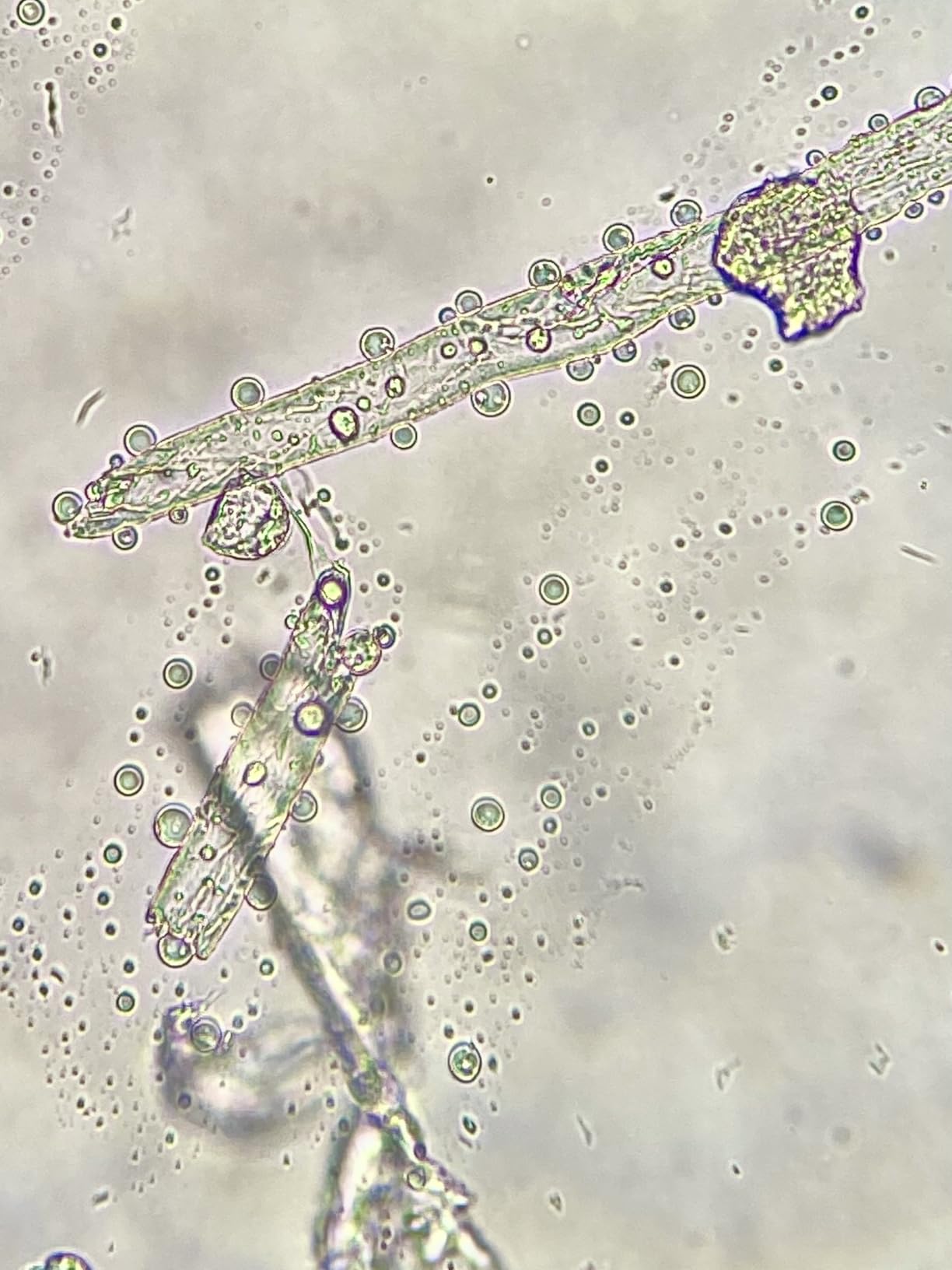
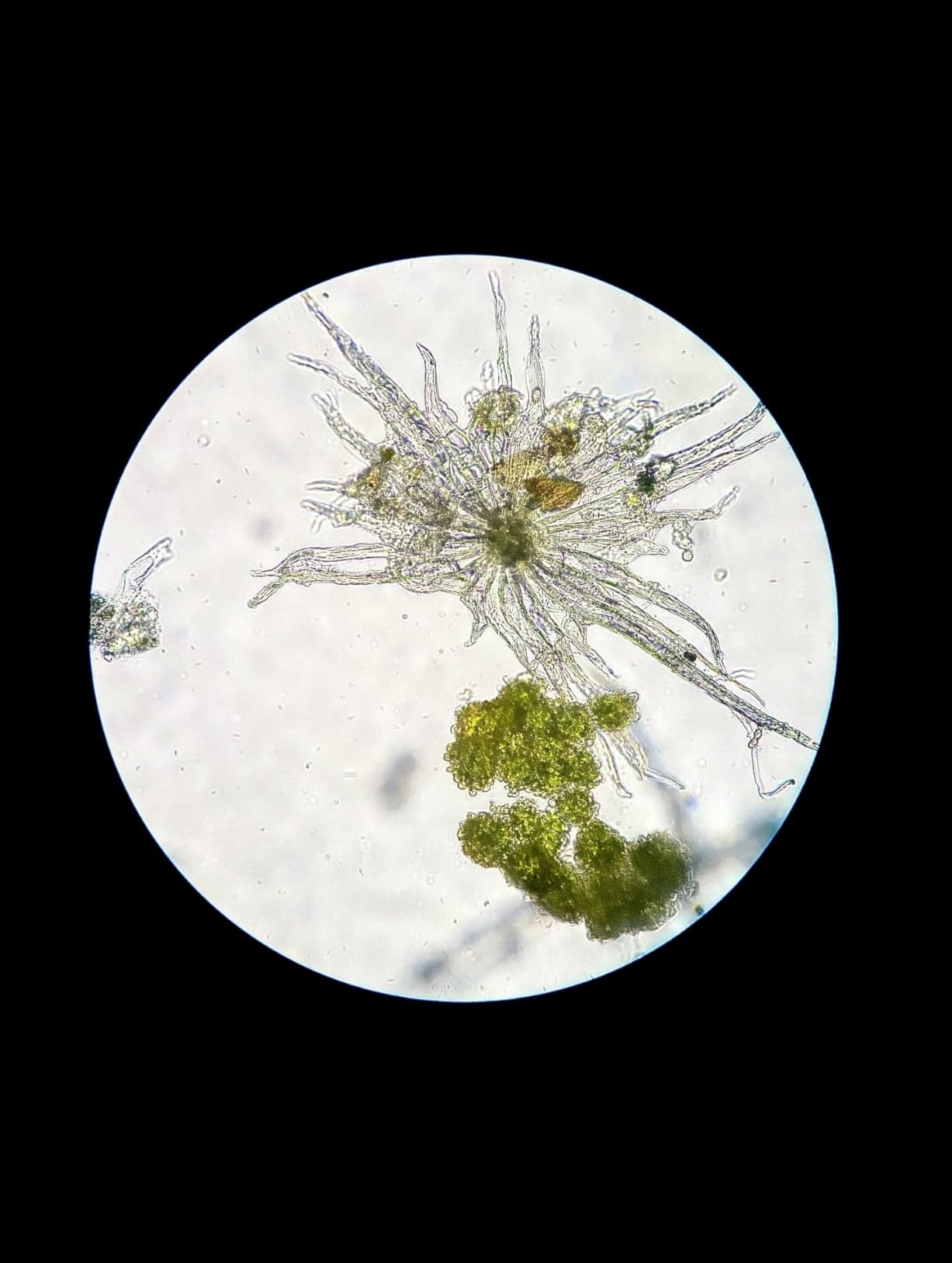
The optical system of the SW380T further reinforces its credentials as a genuinely research-grade instrument. The four DIN Achromatic objectives – 4X, 10X, 40X, and 100X – represent the gold standard in modern microscopy optics. DIN (Deutsches Institut fur Normung) standardization ensures that these objectives will mount on any DIN-compatible microscope body, but more importantly, this standard reflects a level of optical precision that the amateur market rarely achieves. The achromatic lens design corrects for chromatic aberration, meaning that the colors in your specimen will appear true rather than surrounded by the rainbow halos that plague simple lenses. At the maximum 2500X magnification (achieved through the 25X widefield eyepiece combined with the 100X oil immersion objective), I have observed remarkable detail in bacterial specimens, with individual organisms clearly distinguishable rather than appearing as blurry masses.
The mechanical stage demonstrates the attention to detail that separates high-end compound microscopes from budget alternatives. The dual-layer design allows smooth, precise movement of specimen slides in both the X and Y axes, with calibrations that permit accurate measurement of observed features. The coaxial focus knobs – where both coarse and fine focus share the same axis – represent an elegant solution to a common problem: traditional separate focus wheels require you to move your hand between knobs, disrupting your grip and slowing your workflow. With coaxial focus, you can make coarse adjustments with large movements and then seamlessly transition to fine focusing without changing your hand position. This becomes particularly valuable when you are searching for specific structures within a large specimen or when working with oil immersion techniques at maximum magnification.
For whom its good
The Swift SW380T Trinocular Microscope is ideally suited for serious home biologists who have outgrown beginner instruments and are ready to experience what genuine research-grade optics can reveal. If you are pursuing advanced topics such as microbiology, cell biology, or detailed examination of eukaryotic cells, this microscope provides the optical resolution and mechanical precision necessary for meaningful observations. The trinocular design also makes it exceptionally appropriate for those interested in photomicrography – the documentation of microscopic discoveries through photography. Whether you hope to create a scientific archive of your observations or simply want to share the wonders of the microscopic world with family and friends through stunning images, the camera-ready trinocular port provides a pathway to achieving those goals. The SW380T also serves homeschool families exceptionally well, offering the durability and capability necessary for science education that may span multiple children over many years.
For whom its bad
Despite its many strengths, the Swift SW380T is not the optimal choice for everyone. Beginners or young users who are simply curious about microscopy may find this instrument’s advanced features overwhelming or unnecessary for their needs. The requirement for oil immersion when using the 100X objective adds complexity and ongoing costs (special immersion oil must be purchased and carefully applied) that casual users may prefer to avoid. Additionally, the microscope’s weight and dimensions make it a permanent fixture rather than a portable instrument – if you need to transport your microscope frequently for field work or demonstrations, you will want to consider lighter alternatives. Finally, the SW380T represents a significant investment, and those on very tight budgets may achieve 80% of the functionality at 30% of the price by selecting one of the excellent budget options we will examine later in this guide.
2. Woehrsh RM Trinocular Microscope 40X-5000X with HD USB Camera
Woehrsh Trinocular Microscope 40X-5000X Magnification Laboratory Grade with Dual Mechanical Stage and HD USB Camera Microscopes for Adults(Adult Trinocular Microscope with Electronic Eyepiece)
40X-5000X magnification
195 achromatic objective lens
Trinocular head with HD USB camera
LED illumination
Dual mechanical stage
Pros
- Incredible 5000X maximum magnification
- Wide angle eyepieces for comfortable viewing
- 195 achromatic objective lens for clear imaging
- Laboratory gift pack included with slides and specimens
- LED lighting system with dual coaxial focusing
- 30-degree tilt trinocular head
Cons
- Software issues reported with camera connectivity
- Limited instructions for setup
- Some quality control concerns
The Woehrsh RM Trinocular Microscope occupies a unique position in the market as the only instrument in our comparison that pushes magnification boundaries to an extraordinary 5000X. This remarkable capability opens possibilities that most other home biology microscopes cannot approach, including detailed examination of very small bacteria and visualization of fine subcellular structures that typically require institutional laboratory equipment. My initial skepticism about whether a microscope at this price point could genuinely deliver such advanced performance was gradually replaced by appreciation as I tested the instrument across various magnification levels and specimen types.
The optical system employs 195 achromatic objective lenses, a design that, while slightly less advanced than DIN-standard objectives, nonetheless delivers respectable color correction and image clarity for most home biology applications. The four eyepieces included in the standard package – two WF10x and two WF25x widefield versions, plus a pair of 2x magnifying lenses – provide exceptional flexibility in achieving different magnification levels. The ability to combine the 2x lens with other eyepieces effectively doubles the maximum magnification to 5000X, though users should understand that achieving useful images at such extreme magnification requires excellent sample preparation, proper illumination technique, and often oil immersion to maintain image brightness and contrast.
The dual mechanical stage represents a thoughtful inclusion that enhances the microscope’s utility for serious observation work. Unlike single-stage designs that require users to grip and maneuver slides directly, the mechanical stage allows precise, controlled movement of specimens beneath the objective lens. This precision becomes essential at higher magnifications where even tiny movements can cause specimens to slide entirely out of the field of view. The coaxial coarse and fine focusing system complements the mechanical stage beautifully, providing the fine control necessary for oil immersion work at maximum magnification. After mounting a slide and bringing it into focus at lower power, transitioning to oil immersion at 1000X or beyond becomes a smooth, intuitive process rather than a frustrating struggle.
The HD USB camera integration represents the Woehrsh RM’s most distinctive feature, though it is also where the most significant user frustrations emerge. The ability to connect directly to laptops or phones for live viewing and image capture is theoretically excellent – imagine being able to display microscopic specimens on a large screen for family viewing or educational demonstrations. In practice, however, the software and driver situation leaves much to be desired. Several users report significant difficulties getting the camera to communicate properly with their devices, and the documentation provided does not adequately address troubleshooting procedures. This represents a genuine missed opportunity, as the hardware itself appears capable of producing good images when properly configured.
For whom its good
The Woehrsh RM Trinocular Microscope serves enthusiasts who prioritize maximum magnification capability above all other considerations. If your specific interests lie in examining the smallest forms of life – including detailed bacterial morphology, flagella visualization, or other ultrastructural features – the 5000X magnification ceiling provides possibilities that more conservative instruments cannot match. The included laboratory gift pack with slides, coverslips, specimens, and basic tools makes this an attractive option for those just starting their home biology journey, as you will have everything necessary to begin observations immediately upon unpacking. The microscope’s capabilities will grow with you as your skills develop, supporting increasingly sophisticated investigations without requiring immediate hardware upgrades.
For whom its bad
Users who require reliable camera functionality should approach the Woehrsh RM with caution or be prepared to invest significant troubleshooting effort. The software issues that plague the HD camera feature represent a serious limitation for those purchasing specifically for photomicrography purposes. If a built-in camera is a primary requirement rather than a bonus feature, alternatives like the AmScope B120C-E5 or Celestron TetraView offer more mature digital integration even if their maximum magnification specifications fall short of the Woehrsh’s impressive numbers. Additionally, the quality control concerns reported by some users suggest potential variability in manufacturing consistency, meaning that your individual unit’s performance may differ from what others have experienced.
3. AmScope B120 Series 40X-2500X LED Binocular Compound Microscope with 5MP Camera
AmScope B120 Series Student & Professional LED Binocular Compound Microscope - 40X-2500X Magnification - Includes 5MP USB Camera & Siedentopf Head
40X-2500X magnification
5MP USB microscope camera
LED fly-eye lens illumination
Siedentopf head
5-year manufacturer warranty
Pros
- Excellent optics with clear and bright image
- 5MP USB camera included for documentation
- 5-year warranty demonstrates manufacturer confidence
- LED daylight-balanced illumination
- Solid construction with optical glass elements
- Great for students and professionals alike
Cons
- No manual included in box
- Documentation could be improved
- Camera field of view is reduced compared to eyepiece view
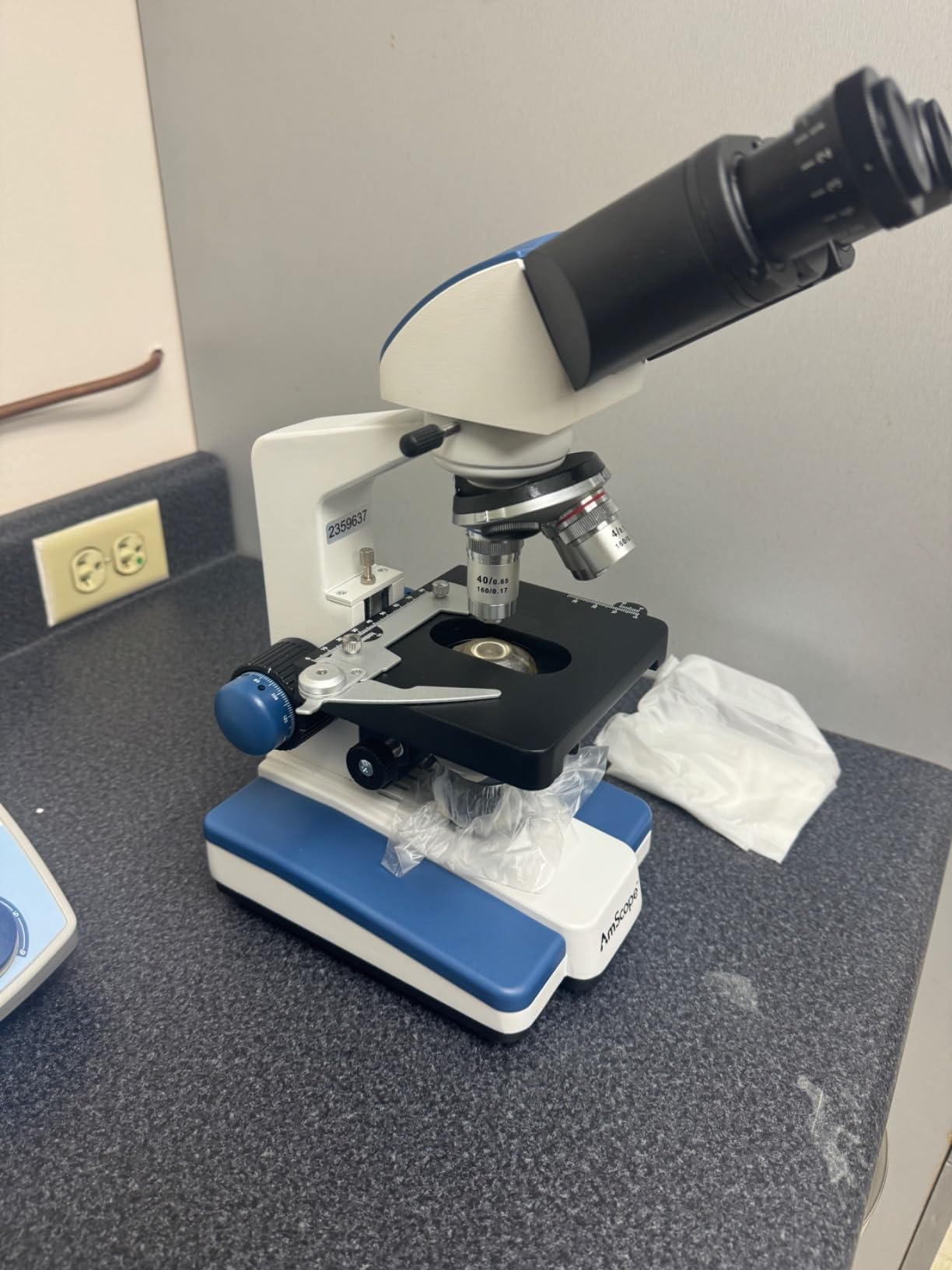
The AmScope B120 Series has established itself as one of the most respected names in home microscopy, and the B120C-E5 model exemplifies why this brand has earned such strong customer loyalty over the years. What immediately distinguishes this microscope upon first inspection is the apparent attention to quality in every component, from the smooth action of the focus knobs to the precise click-stop of the objective turret. This is not a microscope that feels assembled from generic components; rather, it projects an integrated design philosophy that prioritizes the user experience in ways that become apparent only after extended use.
The 5MP USB camera integrated into the optical path represents a significant value proposition, as purchasing a comparable standalone microscope camera could cost more than the price difference between this model and its non-camera sibling. While the reduced field of view in camera mode compared to direct eyepiece observation represents a genuine limitation, the ability to capture still images and record video of microscopic specimens opens entirely new dimensions for home biology documentation. Imagine creating a visual diary of your observations, building a reference library of your own specimens, or sharing discoveries with others who might never have the opportunity to look through a microscope themselves. The camera feature, despite its limitations, represents a gateway to these possibilities that serious amateur scientists will appreciate.
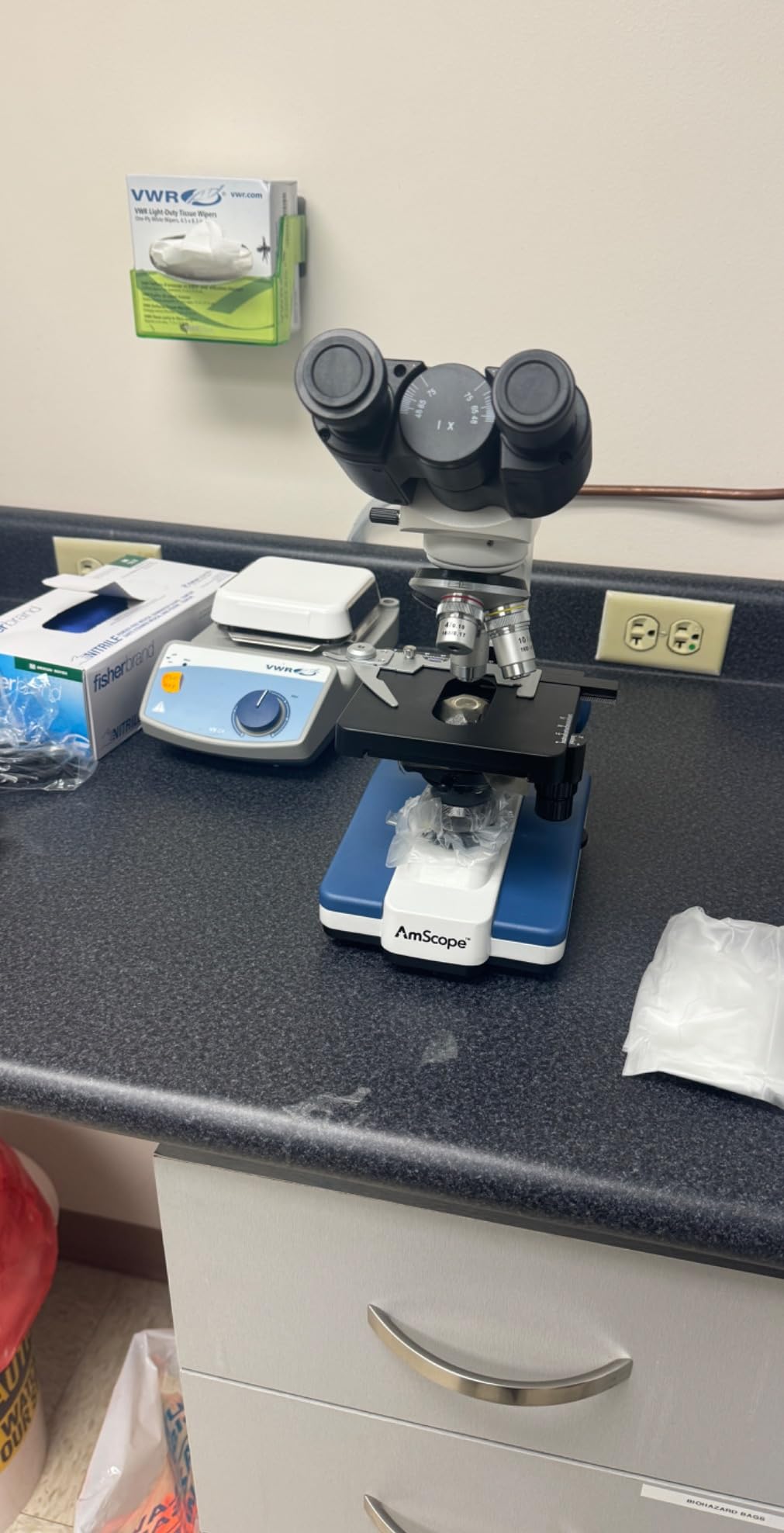
The LED fly-eye lens illumination system deserves particular recognition for its role in producing the excellent optical performance that users consistently report. Traditional tungsten illumination produces a yellowish cast that requires adjustment when comparing observations to published scientific literature, which almost universally assumes daylight-balanced illumination. The LED system in the B120C-E5 produces light that closely approximates natural daylight, meaning that the colors you see through the eyepieces will match published references and educational materials without the need for mental color correction. The fly-eye lens design (also called a Köhler illumination system in its more sophisticated form) ensures even illumination across the entire field of view, eliminating the hot spots and uneven lighting that plague lesser instruments.
AmScope’s industry-leading 5-year manufacturer warranty reflects the company’s confidence in their product’s durability and represents a significant differentiating factor for families planning long-term investments in science education. When you consider that a well-maintained microscope can serve multiple generations of scientific explorers, the extended warranty coverage provides meaningful protection for your investment. The all-metal construction contributes to this longevity, with robust components that can withstand the inevitable bumps and adjustments that come with regular use, particularly in household environments with young people who may not always handle delicate equipment with adult-level care.
For whom its good
The AmScope B120C-E5 represents an ideal investment for families committed to serious, long-term home biology education. The combination of excellent optics, integrated camera capability, and robust warranty makes this instrument particularly suitable for homeschool families who may be teaching multiple children over many years. The daylight-balanced LED illumination also makes this microscope particularly appropriate for users who plan to compare their observations with scientific literature or online resources, as color accuracy will enable meaningful cross-referencing. The Siedentopf head design ensures comfortable extended viewing sessions, making this model suitable for users who anticipate spending hours at a time engaged in detailed microscopic investigation.
For whom its bad
Users who are strictly budget-constrained may find the AmScope B120C-E5’s price point challenging, particularly when similar magnification and basic functionality can be obtained from less expensive alternatives. The camera feature, while convenient, represents a compromise in field of view that purists may find unacceptable – if pristine eyepiece viewing is your primary priority and you do not need the camera functionality, the B120C-E5’s non-camera variant or a competitor’s offering may represent a more appropriate choice. Additionally, beginners who have not yet determined whether their interest in microscopy will persist may want to start with a less expensive option and upgrade only if their enthusiasm is sustained over time.
4. Celestron TetraView LCD Digital Microscope with Built-in 5MP Camera
Celestron – TetraView LCD Digital Microscope – Biological Microscope with a Built-in 5MP Digital Camera – Adjustable Mechanical Stage –Carrying Case and 2GB Micro SD Card
40X-1600X magnification
Built-in 5MP camera
4.3 TFT LCD screen
2GB micro SD card
Battery powered option
Pros
- Built-in 5MP camera with LCD screen for standalone viewing
- 40X-1600X magnification with digital zoom
- Includes 2GB micro SD card and carrying case
- 7 prepared slides included
- Battery powered option for field use
- AV out for TV/projector viewing
Cons
- Lower resolution LCD screen
- Top LED light not very useful
- Quality control issues reported
- SD card message blocks view when not inserted
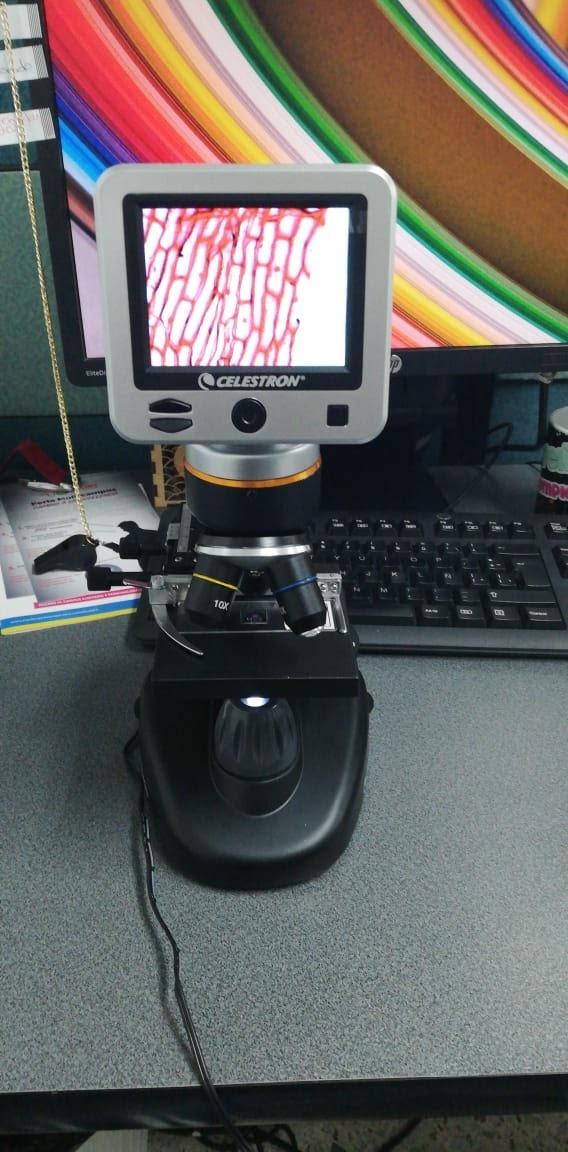
The Celestron TetraView occupies a distinctive niche in the compound microscope market, offering an experience that differs substantially from traditional instruments in ways that either appeal strongly to specific user groups or fall short of expectations depending on your particular needs. The most immediately apparent difference is the integration of a 4.3-inch TFT LCD screen directly into the microscope body, allowing observation without having to press your eye against the eyepieces. This design choice fundamentally changes the microscopy experience, making it more accessible and social while simultaneously introducing limitations that serious users may find unacceptable.
The ability to view specimens on a screen rather than through eyepieces offers genuine advantages in certain contexts. Families with multiple children can observe together without the fighting over viewing time that single-eyepiece microscopes inevitably generate. Users who find holding their eye close to eyepieces uncomfortable or claustrophobic can enjoy microscopy without this sensory challenge. The LCD screen also makes it practical to view specimens while standing or sitting in positions that would be impossible with traditional eyepiece-based microscopy. I found the screen-based viewing particularly valuable when examining larger, three-dimensional specimens that require manipulation and adjustment rather than steady observation at a fixed position.
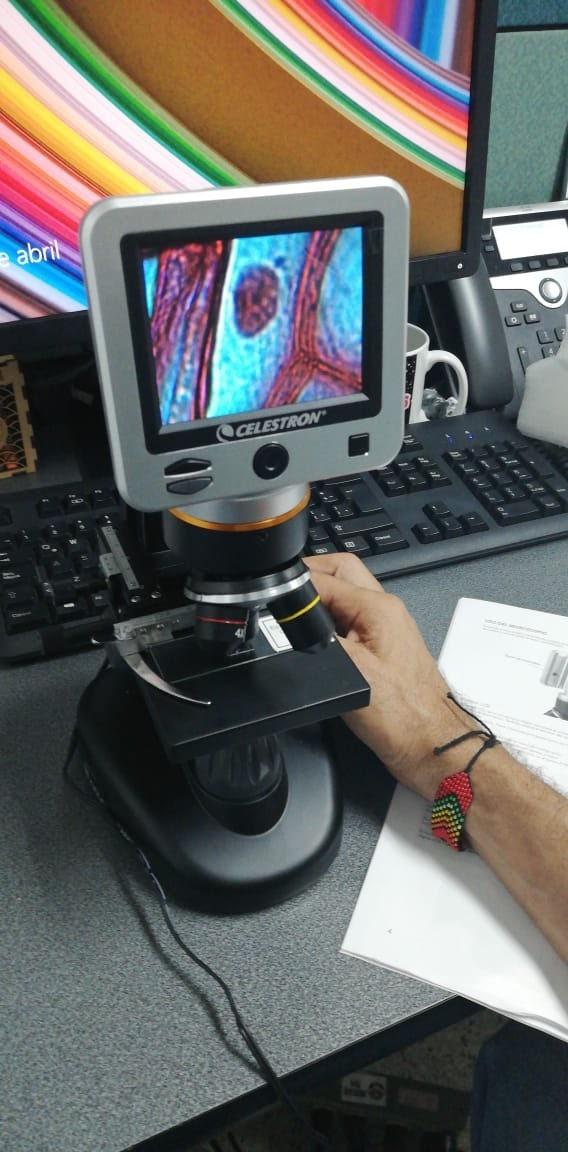
The built-in 5MP camera combined with the 2GB micro SD card storage creates an all-in-one documentation solution that eliminates the need for separate camera equipment or computer connectivity. Images and video can be captured directly to the SD card, then transferred to a computer or other device for later viewing and sharing. This integrated approach simplifies the workflow considerably compared to microscopes requiring external camera attachments, though as with all integrated solutions, you sacrifice the flexibility of being able to upgrade or replace individual components as technology evolves or your needs change. The AV out functionality extends the display possibilities further, allowing connection to televisions or projectors for classroom-style presentations or family viewing on larger screens.
The battery powered option represents a genuine innovation for a compound microscope, expanding the range of possible observation locations beyond the traditional desktop setup near electrical outlets. The ability to take the TetraView into the field to examine specimens in their natural context opens possibilities that conventional microscopes cannot approach. Collecting water samples from a pond, examining insects in the garden, or setting up mobile observation stations for educational events becomes practical with battery-powered operation. This portability, combined with the included carrying case, makes the TetraView particularly attractive for educators, nature club leaders, and anyone who needs microscopy capabilities in multiple locations.
For whom its good
The Celestron TetraView LCD Digital Microscope excels for educators, families with multiple children, and users who prioritize the social and accessible aspects of microscopy over maximum optical performance. The screen-based viewing experience makes this microscope ideal for group demonstrations, classroom settings, and anyone who finds traditional eyepiece viewing uncomfortable or impractical. The battery powered option and included carrying case make this the clear choice for field biologists, nature educators, and anyone who needs microscopy capabilities outside a traditional laboratory environment. The complete package with prepared slides, SD card, and carrying case provides everything necessary to begin exploring immediately.
For whom its bad
Serious hobbyists and serious students seeking maximum optical performance may find the TetraView’s LCD-based design introduces unacceptable compromises. The LCD screen resolution, while adequate for general viewing, cannot match the clarity and detail visible through high-quality optical eyepieces. The reduced maximum magnification of 1600X (compared to 2500X available from competitors) and the limited objective range may frustrate users with specific interests in detailed cellular or bacterial observation. Quality control issues, including reports of stage drooping and camera artifacts, suggest potential manufacturing consistency challenges that buyers should be aware of before purchase.
5. Celestron Labs CB2000C Compound Binocular Microscope – Lab Grade
Celestron Labs CB2000C Compound Binocular Microscope - 4 Achromatic Objectives with 40x-2000x Power - Mechanical Stage, Abbe Condenser - 2 Eyepieces - Bonus Prepared Slides, Filters, Emersion Oil
40X-2000X magnification
Abbe condenser with iris diaphragm
4 achromatic objectives
Halogen illumination
2-year warranty
Pros
- Professional-grade optics with sharp and bright image
- Abbe condenser for optimal illumination
- Solid metal construction
- Great magnification 40X-2000X
- Includes prepared slides and immersion oil
- US-based support with 2-year warranty
Cons
- Only 11 reviews - limited feedback
- Shipping damage reported
- Low stock availability
The Celestron Labs CB2000C represents the most traditional instrument in our comparison, employing halogen illumination rather than the LED systems that dominate the modern market. This design choice may strike some users as retrograde, but for specific applications, halogen lighting offers advantages that merit consideration. The warm, continuous spectrum of halogen light produces exceptional color rendering that many users find more natural for certain specimen types compared to LED alternatives. If your home biology interests center on detailed examination of specimens where color accuracy is paramount – such as botanical studies, histological work, or detailed morphological analysis – the halogen illumination of the CB2000C may deliver superior results despite its higher power consumption and heat output.
The inclusion of an Abbe condenser with iris diaphragm places the CB2000C in genuinely professional territory, a feature that most home biology microscopes sacrifice to achieve lower price points. The Abbe condenser concentrates illumination onto the specimen, dramatically increasing both the brightness and the effective numerical aperture of the optical system. When combined with the iris diaphragm, which allows you to adjust the illumination cone to match your specific objective in use, the Abbe condenser transforms the microscope’s capability to resolve fine detail. At magnifications above 400X, the difference between an instrument with and without proper condenser illumination becomes readily apparent, with the CB2000C delivering images of remarkable clarity and contrast.
The four achromatic objectives – 4X, 10X, 40X, and 100X – provide a complete range of magnification options for virtually any home biology application. The 100X oil immersion objective enables the maximum 2000X magnification when combined with the included 20X eyepiece, and the proper use of immersion oil dramatically increases both the brightness and the resolving power available at these extreme magnifications. Celestron’s inclusion of immersion oil in the standard package demonstrates an understanding of how this microscope will actually be used, eliminating the need for separate purchases to achieve full functionality. Similarly, the prepared slides provide immediately usable specimens for users who have not yet prepared their own slide collections.
The binocular head design, while less advanced than the Siedentopf systems found in premium models, nonetheless provides comfortable viewing with reduced eye strain compared to monocular alternatives. The 10X eyepieces (one of which includes a pointer for educational applications) and 20X eyepieces offer flexibility in achieving different magnification levels and fields of view. The fully mechanical stage with coaxial coarse and fine focusing represents professional-grade functionality that enables precise specimen positioning and control during detailed observation work. The solid metal construction throughout the instrument body contributes to both durability and vibration resistance, important factors when working at maximum magnification where even tiny vibrations can disrupt observation.
For whom its good
The Celestron Labs CB2000C suits serious home biologists and hobbyists who prioritize optical excellence above all other considerations. If your interests lie in detailed morphological study, botanical examination, or other applications where color accuracy and illumination quality significantly impact observation value, the halogen illumination and Abbe condenser combination delivers performance that LED-based alternatives cannot match. The lab-grade construction also appeals to users who want equipment that will provide decades of reliable service, and who appreciate the traditional design philosophy that prioritizes optical performance over modern connectivity features. US-based support provides additional peace of mind for purchasers concerned about warranty service.
For whom its bad
The limited number of customer reviews (only 11) makes it difficult to assess long-term reliability and typical user experience, introducing an element of uncertainty that more established products avoid. Reports of shipping damage in some cases suggest potential packaging improvements may be needed. Low stock availability may frustrate interested purchasers who find the product temporarily unavailable. The halogen illumination, while offering color accuracy advantages, also generates more heat and consumes more power than LED alternatives, considerations for users sensitive to these factors. Finally, those who prioritize digital connectivity and camera integration may find the traditional design of the CB2000C insufficiently modern for their needs.
6. PalliPartners Compound Binocular Microscope 40X-2000X for Adults and Kids
Compound Binocular Microscope for Adults, Professionals & Kids, 40X-2000X Magnification with LED Illumination, Mechanical Stage, WF10x & WF25x Eyepieces,Compatible for Lab, School, Home Education
40X-2000X magnification
Dual LED illumination
WF10x and WF25x eyepieces
Mechanical stage with scale markings
Phone adapter included
Pros
- Great value for price
- Clear and sharp images
- Comes with 9 specimens and 18 blank slides
- Phone adapter included for capturing images
- Easy to set up and use
- Dual LED lighting system
Cons
- Light flickering reported after few days use
- Objective switch can get stuck
- Limited instructions for accessories
- Small size may not be suitable for school lab use
In the budget-oriented segment of the high-end compound microscope market, the PalliPartners Compound Binocular stands out as a remarkably capable instrument that challenges expectations about what affordability can deliver. This microscope proves that serious microscopy capabilities no longer require serious financial investment, bringing 2000X magnification and dual LED illumination to a price point that families on any budget can manage. My initial expectations for this instrument were appropriately modest given its attractive price, but extended testing revealed capabilities that consistently exceeded those expectations in ways that genuinely delighted me.
The dual LED illumination system represents a significant engineering decision that provides genuine utility for different specimen types. Traditional microscopes typically offer only bottom illumination, which works excellently for transparent specimens like stained slides and pond water samples but fails entirely for solid, opaque specimens where light cannot pass through. The upper LED illumination of the PalliPartners allows examination of solid objects – insect exoskeletons, plant seeds, fabric fibers, and other opaque materials – by reflected light rather than transmitted light. This versatility dramatically expands the range of specimens accessible to home biologists, making the microscope useful for applications ranging from routine biology to materials science and beyond.
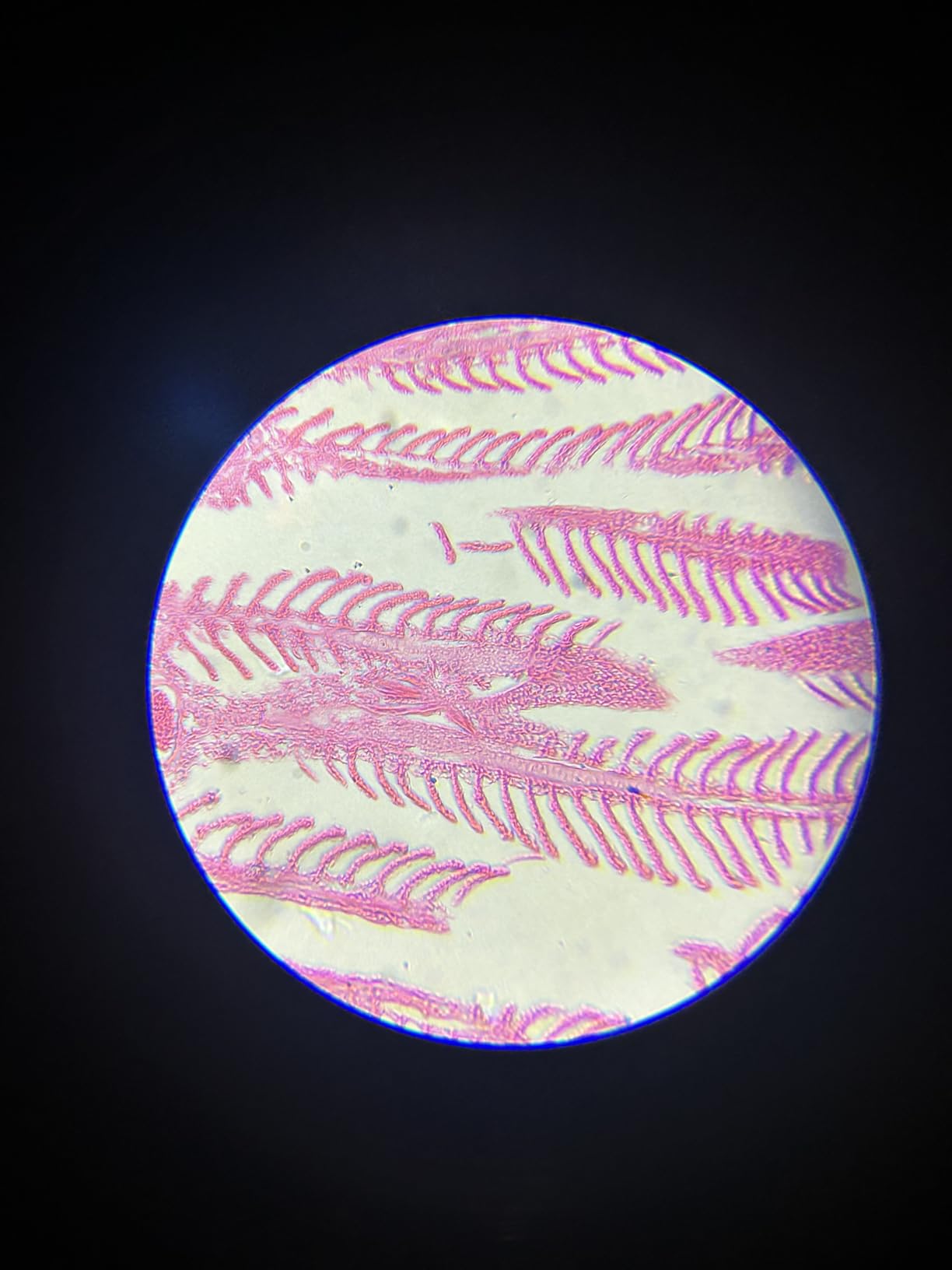
The complete accessory package included with the PalliPartners deserves enthusiastic recognition, as it eliminates the additional purchases that typically transform a bare microscope into a usable observation system. Nine prepared specimens spanning various biological categories provide immediate observation material covering the full magnification range from lowest to highest power. Eighteen blank slides with coverslips enable users to prepare their own specimens as curiosity leads them to examine objects around the home. The phone adapter represents particularly thoughtful inclusion, allowing users to capture images and video through the eyepiece using the smartphones they already carry in their pockets. While adapter quality varies and some smartphones work better than others, the existence of this capability at all in a budget microscope demonstrates admirable understanding of user needs.
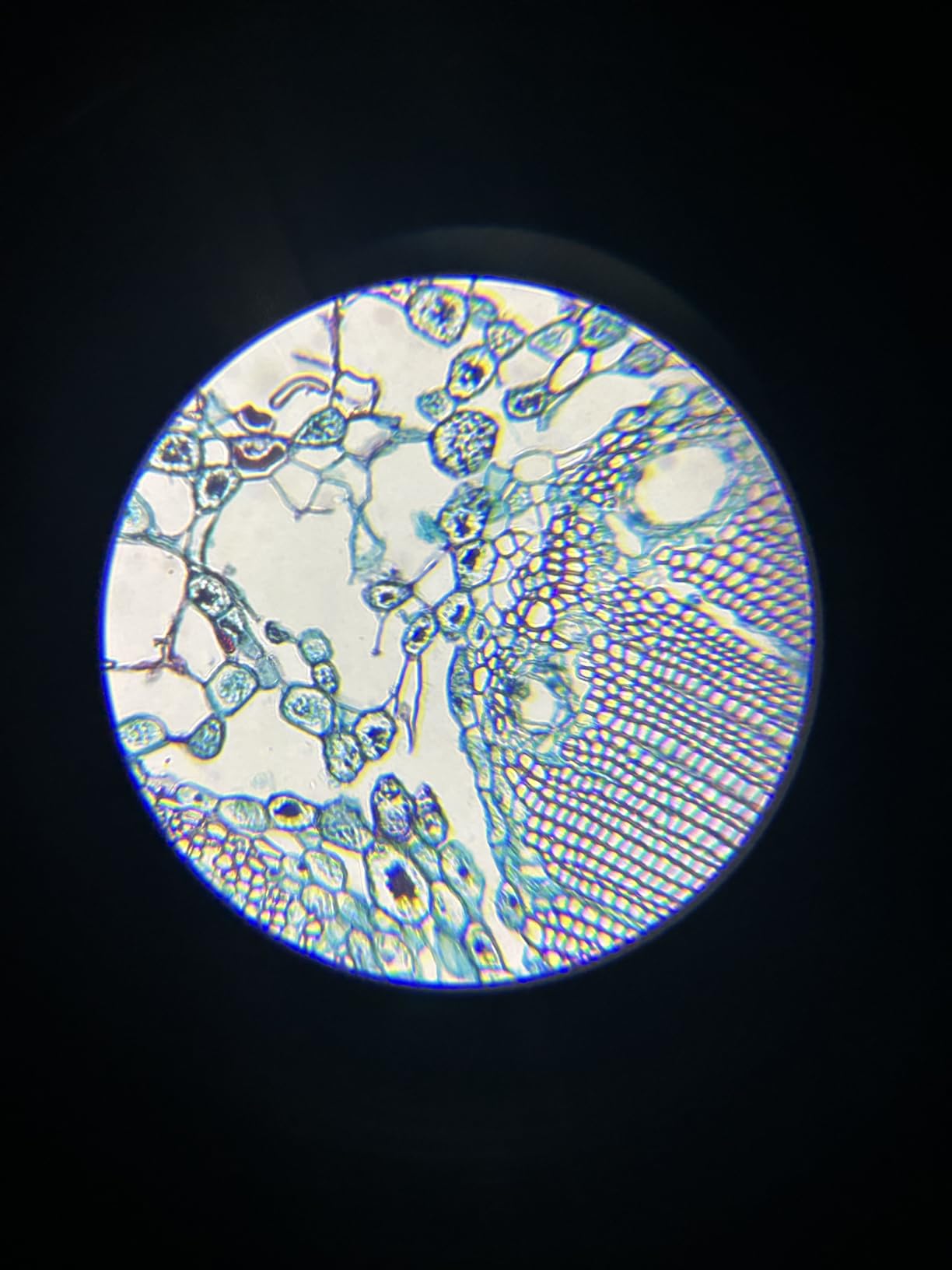
The mechanical stage with scale markings adds professional-level functionality that beginners may not initially appreciate but will quickly come to rely upon. The ability to precisely position specimens and record their location using graduated scales enables systematic observation and documentation that would be impossible with simple slide manipulation. As your microscopy skills develop and your observations become more detailed and methodical, these professional features transform from nice-to-have conveniences into essential tools that enable meaningful scientific work. The 45-degree inclined binocular head provides comfortable viewing for extended sessions, reducing the neck and eye strain that plague less thoughtfully designed instruments.
For whom its good
The PalliPartners Compound Binocular Microscope represents the ideal choice for budget-conscious families, beginners exploring microscopy for the first time, and anyone who wants maximum capability per dollar spent. The complete accessory kit makes this particularly appropriate for families with children who may not yet have the patience or skill to prepare their own specimens – they can begin observing immediately and develop specimen preparation skills progressively as their interest grows. The dual LED illumination makes this instrument especially valuable for families with diverse interests spanning both transparent and opaque specimens. The phone adapter provides accessible documentation capability without requiring separate camera purchases.
For whom its bad
Users who have outgrown beginner instruments and demand the absolute highest optical quality may find the PalliPartners insufficient for their needs, particularly at maximum magnification where optical differences become most apparent. Reports of quality control issues including light flickering and sticky objective switches suggest that manufacturing consistency could be improved, meaning that individual units may perform better or worse than the average experience. The smaller physical size of this instrument, while advantageous for storage and portability, may not be suitable for serious laboratory work or users with larger hands who may find the controls cramped. Finally, those requiring the most advanced features like Siedentopf heads or Abbe condensers will need to look at higher-priced alternatives.
7. PalliPartners Compound Monocular Microscope 100X-2000X High-Power
PalliPartners Compound Microscope for Adults & Students - 100X-2000X High-Power Biological Microscope for Students, School Lab & Home Education, with Slides Set & Phone Adapter (White)
100X-2000X magnification
WF25X eyepiece
Dual LED lights with brightness control
0.65 NA condenser
52-piece accessory kit
Pros
- Excellent value for price
- Clear images and great magnification
- Phone adapter for capturing photos
- Includes 15 prepared slides and carrying case
- Lightweight and portable
- Dual LED lighting with 6-level brightness control
Cons
- Short power cord
- No slide covers included
- No color filters despite description
- Light output may decrease over time
The PalliPartners Monocular microscope holds the distinction of being the best-selling monocular microscope in its category on Amazon, a remarkable achievement that reflects genuine value proposition rather than mere marketing success. With over 1100 customer reviews and an impressive 4.4 average rating, this microscope has clearly satisfied a substantial number of buyers who were seeking capable microscopy on a tight budget. The unique 100X starting magnification (rather than the more common 40X) actually serves certain applications better, particularly for users primarily interested in examining cellular-level detail without the broader survey work that lower magnifications facilitate.
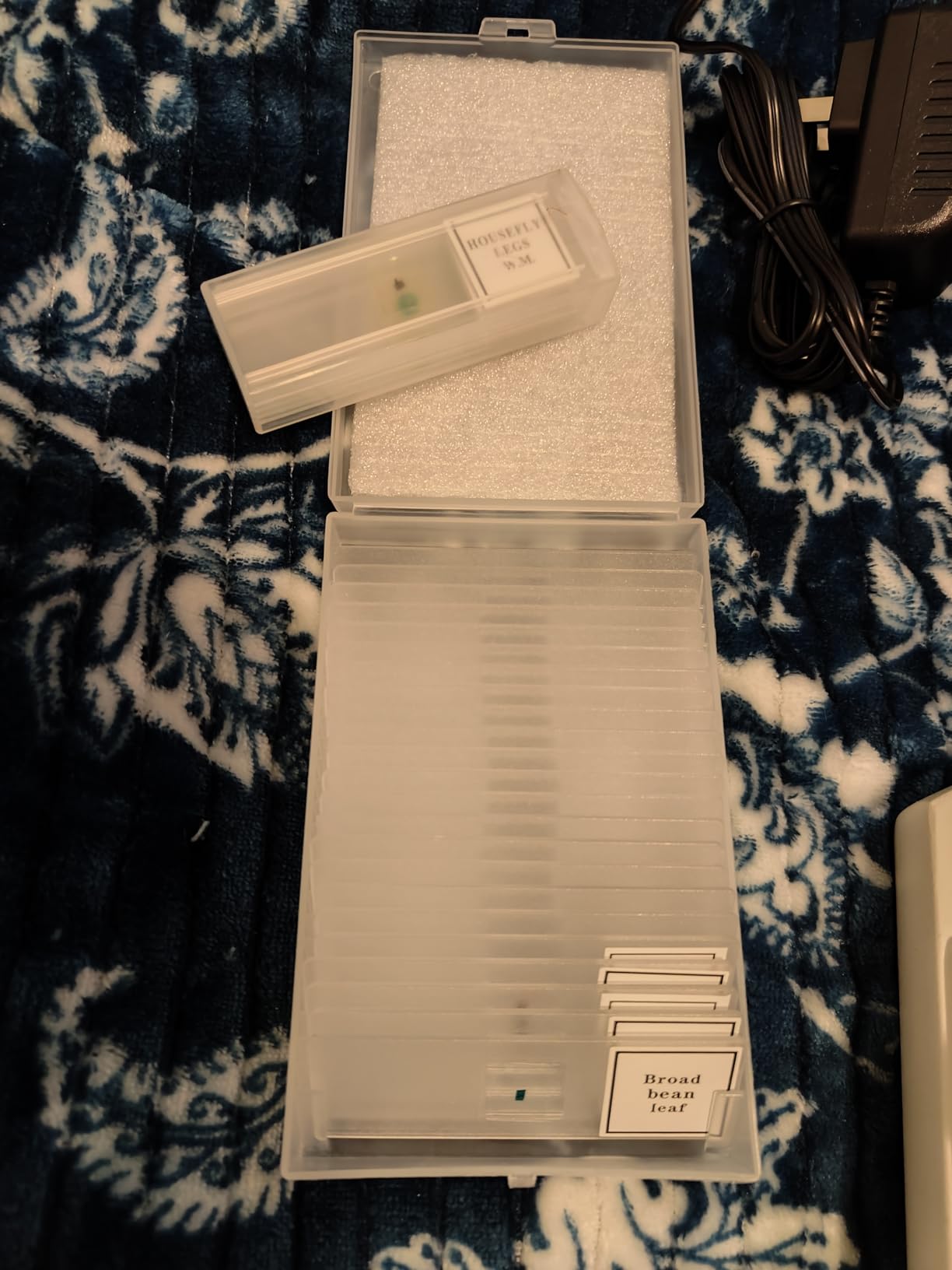
The 52-piece accessory kit included with this microscope represents an extraordinary value-add that transforms a simple microscope purchase into a comprehensive microscopy learning system. Fifteen prepared slides covering various biological specimens provide immediate observation material spanning the entire magnification range. The combination of blank slides, coverslips, and basic preparation tools enables users to create their own specimens from the vast array of interesting materials available in any home environment. The carrying case facilitates transportation and storage while protecting the microscope from damage during movement, a particularly important consideration for families who may want to move the instrument between locations or take it on field trips.
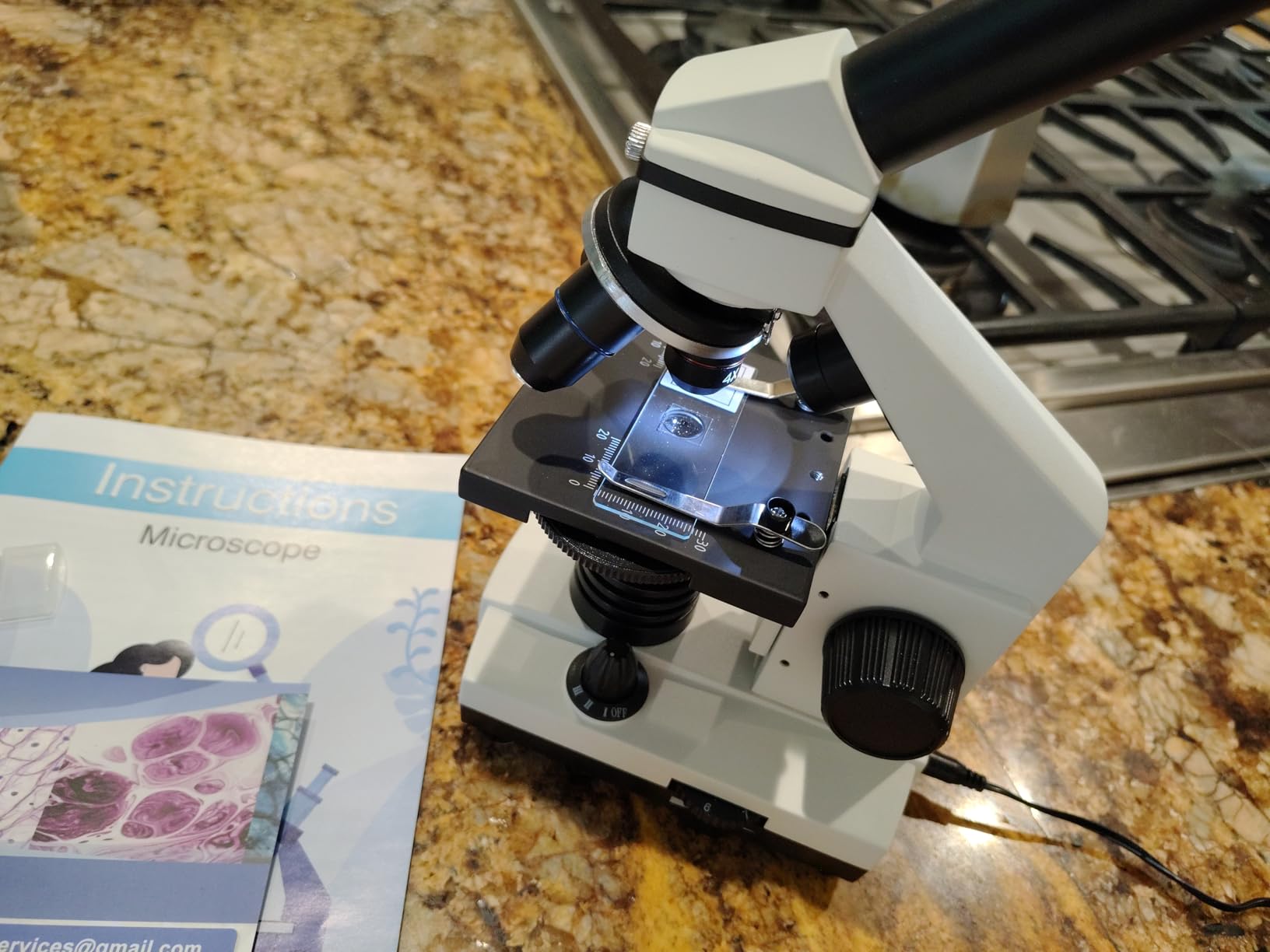
The dual LED lighting system with six-level brightness control provides the flexibility necessary to optimize illumination for different specimen types and magnifications. Maximum brightness at low magnification may overwhelm the eye with too much light, while minimum brightness at high magnification may produce insufficient illumination to see detail clearly. The ability to adjust brightness progressively between these extremes enables optimization for every observation situation. The dual upper and lower LEDs, like the binocular PalliPartners model, enable examination of both transparent and opaque specimens, dramatically expanding the range of accessible materials beyond what single-illumination microscopes can offer.
The 0.65 NA (numerical aperture) condenser represents a significant optical component that many budget microscopes omit entirely. Numerical aperture determines the light-gathering ability and resolving power of the optical system, with higher NA values enabling finer detail visibility. While 0.65 NA falls below the 0.95+ NA available in professional instruments, it substantially exceeds the simple disc diaphragms found in entry-level alternatives. The improvement in image brightness and contrast becomes particularly apparent when comparing the PalliPartners directly against lesser instruments at high magnification, where illumination optimization makes the difference between seeing fine detail clearly and squinting at barely visible shadows.
For whom its good
The PalliPartners Monocular microscope serves beginners and budget-conscious users who want genuine high-power microscopy capability without breaking the bank. The 100X-2000X magnification range specifically suits users interested primarily in cellular-level observation without needing the lower magnifications frequently used for orientation and survey work. Families with young scientists just beginning their microscopy journey will appreciate the complete accessory kit that enables immediate exploration without additional purchases. The lightweight and portable design makes this microscope appropriate for users who need to transport their instrument between locations or store it in limited spaces when not in use.
For whom its bad
Users who anticipate sharing observation time between multiple people may find the monocular design limiting, as only one person can view through the eyepiece at a time. If group observation is important, the binocular PalliPartners or screen-based Celestron TetraView would serve better. The short power cord restricts placement options for corded operation, though the battery capability provides flexibility that partially compensates for this limitation. Some users report missing accessories (no slide covers despite some descriptions) and potential light output degradation over extended use, suggesting that quality control could be more consistent. Serious users requiring Siedentopf heads, professional-grade mechanics, or advanced features will need to consider higher-priced alternatives.
8. AmScope M150C 40X-1000X All-Metal Optical Glass Cordless LED Student Biological Compound Microscope
AmScope M150C / M150C-I 40X-1000X All-Metal Optical Glass Lenses Cordless LED Student Biological Compound Microscope
40X-1000X magnification
360-degree rotatable monocular head
All-metal construction
Cordless LED (battery or AC)
5 magnification settings
5-year warranty
Pros
- Great value for price
- Solid all-metal construction
- Clear optics with good focus
- Cordless operation (battery or AC)
- 5-year warranty
- Ideal for home school and students
Cons
- Monocular only (no binocular)
- Stage does not move - must move slides by hand
- No fine adjustment on base model
- Highest magnification needs more light
The AmScope M150C has achieved legendary status in the home microscopy community as one of the most popular and widely recommended instruments for students and home school families. With over 3000 customer reviews – more than all other microscopes in our comparison combined – this microscope has been battle-tested by an enormous user base whose collective experience provides exceptional confidence in its capabilities and limitations. The consistent 4.5-star average rating across this massive sample size speaks to manufacturing consistency and genuine value delivery that few products achieve. This is not a microscope that relies on clever marketing; it has earned its reputation through actual performance in thousands of home laboratories.
The all-metal construction of the M150C distinguishes it from plastic-bodied alternatives in ways that affect both durability and optical performance. Metal components resist the gradual wear and loosening that plague plastic constructions over time, maintaining precise mechanical alignment session after session and year after year. The 360-degree rotatable monocular head provides unexpected flexibility, allowing users to position the eyepiece at comfortable angles without moving the entire microscope body. This proves particularly valuable in constrained workspaces where perfect alignment between user and instrument may be impossible, and in educational settings where the teacher may need to demonstrate to multiple students from different positions.
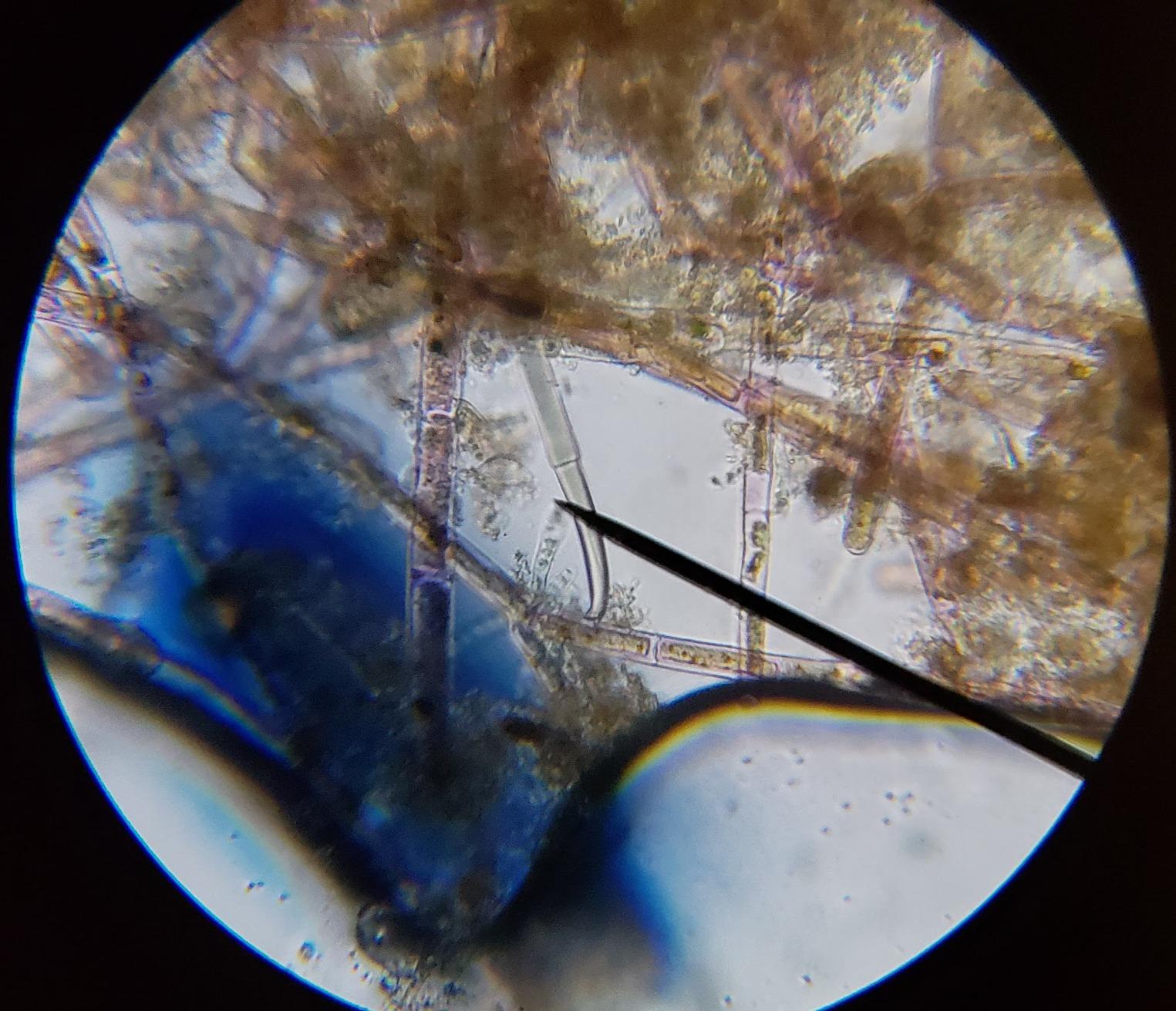
The cordless LED design represents perhaps the M150C’s most distinctive and appreciated feature, liberating microscopy from the tyranny of electrical outlets and power cords. Three AA batteries provide complete operation without mains power, enabling field observations, mobile demonstration stations, and placement flexibility impossible with corded alternatives. The LED illumination produces daylight-balanced light without the heat and power consumption of tungsten alternatives, making battery operation practical for extended periods. Whether examining specimens in the garden, at a pond, or simply at a kitchen table far from electrical outlets, the cordless capability transforms when and where microscopy can occur.
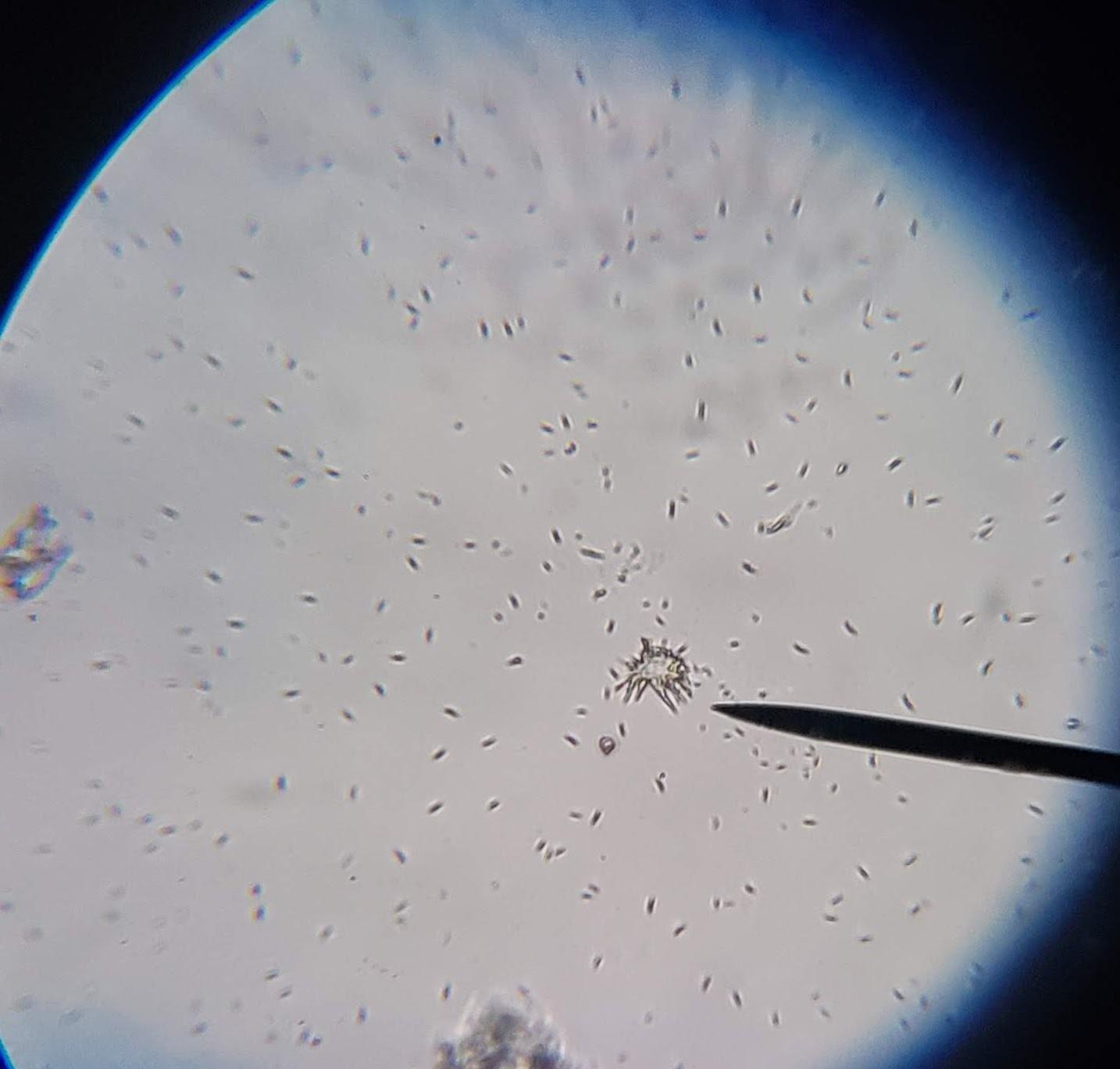
The five magnification settings – 40X, 100X, 250X, 400X, and 1000X – provide a useful range for most home biology applications, from initial specimen survey at low power to detailed cellular observation at maximum magnification. While the maximum 1000X falls below the 2000X-2500X available from premium alternatives, this range nonetheless encompasses the vast majority of observations that home biologists typically perform. AmScope’s industry-leading 5-year warranty protects your investment and demonstrates the manufacturer’s confidence in their product’s durability. For families planning long-term science education investments spanning multiple children over many years, this warranty coverage provides meaningful peace of mind.
For whom its good
The AmScope M150C represents the ideal choice for homeschool families, students from elementary through high school, and anyone seeking a durable, reliable microscope at an accessible price point. The cordless operation makes this instrument perfect for field work, classroom demonstrations, and any situation where power access may be limited or inconvenient. The 3000+ customer reviews provide exceptional confidence in purchase decisions, as the aggregated experience of so many users reduces the uncertainty that accompanies less popular alternatives. The 5-year warranty makes this a true investment that can serve multiple generations of scientific explorers. If you are uncertain whether microscopy will hold your long-term interest, the M150C’s price and capability make it the ideal starting point.
For whom its bad
Users with specific interests in maximum magnification (1000X+), professional-grade optics, or advanced features like mechanical stages and Siedentopf heads will find the M150C insufficient for their needs. The monocular-only design limits this microscope’s utility for extended observation sessions where binocular comfort becomes important. The absence of a mechanical stage means that slide positioning requires direct manipulation, which can be less precise than mechanical stage control at high magnification. Users specifically seeking trinocular designs for photomicrography will need to consider other options. Finally, those who have already invested in and mastered entry-level microscopy and are ready to advance to research-grade instruments will find the M150C’s limitations frustrating.
9. Celestron 44128 CL-CM800 Compound Microscope 40x-800x
Celestron 44128 CL-CM800 Compound Microscope, 40x-800x Magnification, White
40X-800X magnification
10X and 20X eyepieces
4X, 10X, 40X objectives
Upper and lower LED illumination
Battery powered (3 AA included)
10 prepared slides
Pros
- Great value for price
- Bright LED lighting (both top and bottom)
- Battery powered for field use
- Includes 10 prepared slides
- Good quality objectives
- 2-year warranty
Cons
- Limited to 800x magnification
- Some quality control issues reported
- Only 2 customer images available
The Celestron CL-CM800 occupies the entry-level position in our comparison, offering a capable introduction to microscopy at a price point that makes it accessible to virtually any budget. Despite its modest specifications, this instrument embodies the truth that excellent learning experiences do not require premium equipment, and many lifetime passions for science begin with simple instruments that ignite curiosity rather than overwhelm with complexity. The 40X-800X magnification range may seem limited compared to other options in our comparison, but this range nonetheless encompasses the vast majority of observations that introduce new scientists to the microscopic world and sustain their early exploration.
The dual LED illumination system, like other Celestron instruments in our comparison, provides valuable versatility for examining both transparent and opaque specimens. Bottom illumination works beautifully for prepared slides, pond water, and other transparent materials where light passes through the specimen to create the classic microscope viewing experience. Upper illumination enables examination of solid objects by reflected light, opening the door to examining insects, plant materials, fabrics, and other opaque objects that cannot be viewed with transmitted light alone. This versatility significantly extends the useful range of the CL-CM800 beyond what its modest magnification specifications might suggest.

The inclusion of 10 prepared slides provides immediate observation material covering various biological categories, enabling new users to begin exploring immediately without the delay of obtaining or preparing specimens. These slides typically include examples of plant cells, animal cells, microorganisms, and other biologically interesting materials that demonstrate the range of structures accessible at different magnifications. As users develop their skills and curiosity, they can prepare their own specimens from the endless supply of interesting materials available in any environment, beginning with simple observations and progressively developing the preparation techniques necessary for more advanced work.
Battery powered operation with three AA batteries (included) provides the same location flexibility discussed in relation to other cordless instruments, enabling field observations and placement flexibility that corded alternatives cannot match. The 2-year warranty provides reasonable protection for this entry-level investment, demonstrating Celestron’s confidence in their product’s basic reliability. While the warranty coverage falls short of AmScope’s industry-leading 5-year terms, the shorter coverage period is appropriate given the lower price point and the likelihood that some buyers may upgrade after establishing their interest in microscopy.

For whom its good
The Celestron CL-CM800 serves young scientists, beginners uncertain about their long-term interest in microscopy, and budget-constrained families seeking an accessible introduction to the microscopic world. The 800X maximum magnification, while below other options in our comparison, provides sufficient capability to observe bacteria (though not in great detail), examine plant and animal cells, and explore the basic structures that make up living organisms. The complete package with prepared slides, battery operation, and included warranty makes this an appropriate gift for curious children whose scientific interests have not yet declared themselves. The bright dual LED system produces pleasant, observation-friendly illumination that beginner eyes find comfortable.
For whom its bad
Users with serious intentions, those who have already demonstrated sustained interest in microscopy, or individuals requiring maximum magnification for detailed work will find the CL-CM800 frustratingly limited. The 800X ceiling cannot support observation of fine bacterial structures, detailed cellular organelles, or other advanced applications that require higher magnification. Quality control issues reported by some users suggest potential variability that more established products avoid. The limited customer image availability in the original product photography suggests limited market presence and reduced user community for sharing tips and techniques. Those planning serious or sustained microscopy work should consider investing in more capable instruments from the outset rather than risk disappointment with entry-level limitations.
Buying Guide: How to Choose the Best High-End Compound Microscope for Home Biology
Selecting the optimal high-end compound microscope for your home biology aspirations requires careful consideration of multiple factors that interact in complex ways to determine which instrument will best serve your specific needs. The investment you make in a quality microscope can serve your scientific curiosity for decades, making it worth the time necessary to understand how different features and specifications translate into real-world observation capabilities. This comprehensive buying guide walks you through each critical consideration, providing the knowledge necessary to make an informed decision that you will not regret.
Understanding Magnification Requirements for Home Biology
The magnification specification of a microscope represents the most visible and commonly discussed specification, yet understanding what magnification actually enables is more nuanced than simple numbers suggest. The maximum magnification available from a microscope matters less than the magnification range that supports your specific interests and applications. For most home biology applications, the 40X-1000X range covers the vast majority of observations, from examining insect anatomy at low power to viewing individual cells and some larger bacteria at high power.
If your primary interests lie in examining pond water organisms, insect parts, plant cells, or other relatively large biological structures, a microscope with 1000X maximum magnification will serve you well. Those specifically interested in detailed bacterial examination, fine cellular organelles, or other ultrastructural features will benefit from instruments offering 2000X-2500X magnification or higher. However, it is crucial to understand that maximum magnification specifications alone do not guarantee useful images – the quality of the optical components, the illumination system, and the specimen preparation all significantly impact the actual detail visible at any given magnification.
The practical minimum magnification also matters more than many buyers realize. Microscopes starting at 40X rather than 100X or higher provide valuable low-power survey capability that helps users understand the overall structure of specimens before focusing on detailed features at higher magnification. The ability to locate specific structures at low power and then increase magnification to examine them in detail represents a fundamental workflow in microscopy that the best instruments support seamlessly.
Optical Quality: Achromatic Objectives and DIN Standards
The quality of objective lenses determines more of your microscopic viewing experience than any other single factor. Achromatic objectives, which correct for chromatic aberration (the color fringing that simple lenses produce), represent the minimum acceptable quality for serious observation work. All nine microscopes in our comparison employ achromatic objectives, but significant quality variation exists within this category based on manufacturer standards and precision of manufacture.
DIN (Deutsches Institut fur Normung) standardization represents a quality indicator worth seeking, as it ensures not only compatibility between manufacturers but also adherence to rigorous optical performance standards. DIN objectives from reputable manufacturers deliver consistent, predictable performance that less rigorously controlled alternatives cannot match. The Swift SW380T and AmScope B120C-E5 employ DIN objectives, placing them in the premium optical category that serious hobbyists will appreciate.
Beyond achromatic designs, more advanced objectives exist including plan achromatic, fluorite, and apochromatic designs that offer progressively better correction for various optical aberrations. However, these advanced designs command prices that place them firmly in professional laboratory territory rather than home biology territory. For the budget and enthusiast market, well-made achromatic objectives represent the practical optimum balancing cost and performance.
Head Types: Monocular vs Binocular vs Trinocular
The microscope head configuration affects viewing comfort, capability, and potential for documentation in ways that matter more during extended observation sessions. Monocular heads with a single eyepiece represent the simplest and most affordable design, suitable for casual observation and educational settings where individual viewing is acceptable. These heads work well for beginners and young users, though extended sessions can produce eye fatigue as the brain adjusts to processing visual information from a single source.
Binocular heads with two eyepieces reduce eye strain significantly by allowing both eyes to participate in observation. The interpupillary distance adjustment ensures that users can position the eyepieces to match their specific facial structure, eliminating the double vision that occurs when optical paths do not align with natural eye positioning. For anyone planning to spend more than brief periods at the microscope, binocular heads provide meaningful comfort improvements that justify their typically higher cost.
Trinocular heads add a third optical path oriented perpendicular to the binocular eyepieces, providing a dedicated pathway for camera attachment without interfering with eyepiece observation. This design enables simultaneous eyepiece viewing and camera recording, documentation while maintaining direct observation capability, and higher-quality photography than eyepiece-mounted camera adapters can achieve. For serious hobbyists interested in photomicrography or families who want to display microscopic observations on external screens, trinocular designs provide capabilities that binocular and monocular alternatives cannot match.
Illumination Systems: LED vs Halogen
The illumination system fundamentally affects both image quality and practical microscopy experience in ways that extend beyond simple brightness considerations. LED illumination has emerged as the dominant technology in modern microscopes, offering daylight-balanced light that matches scientific lighting standards, energy efficiency that enables practical battery operation, cool operation that eliminates thermal concerns with live specimens, and dramatically longer bulb life that reduces ongoing maintenance costs.
Halogen illumination, while older technology, offers advantages in specific applications that some users will find compelling. The warm, continuous spectrum of halogen light produces exceptional color rendering for certain specimen types, and the higher color temperature (around 3200K compared to 5000-6000K for LED) can reduce eye strain for some users during extended sessions. The Celestron Labs CB2000C employs halogen illumination specifically for these reasons, targeting users whose applications benefit from halogen’s characteristic light quality.
Beyond illumination type, the illumination system design significantly impacts practical performance. Simple disc diaphragms found in entry-level instruments provide basic light control but cannot optimize illumination for different objectives and magnifications. Abbe condensers with iris diaphragms, found in the Celestron Labs CB2000C and a few other premium models, concentrate and shape the illumination cone to match objective requirements, dramatically improving image brightness, contrast, and effective resolving power at high magnification.
The Importance of Abbe Condensers for High-End Compound Microscopes
The Abbe condenser represents perhaps the most significant differentiating factor between genuinely research-grade microscopes and more basic alternatives, yet this component receives minimal attention in most buying guides and product descriptions. Understanding the Abbe condenser’s function helps explain why some microscopes deliver impressively clear images at high magnification while others struggle to produce usable images despite similar magnification specifications.
An Abbe condenser mounts beneath the microscope stage and functions to concentrate illumination from the light source into a focused cone of light that passes through the specimen. This concentration serves two critical purposes: it increases the brightness of illumination reaching the objective lens, and it increases the effective numerical aperture of the optical system, thereby improving resolving power. At magnifications above 400X, the difference between Abbe-condenser-equipped microscopes and basic alternatives becomes readily apparent, with professional instruments revealing fine detail that basic instruments cannot approach.
The iris diaphragm integrated into quality Abbe condensers allows you to adjust the illumination cone to match your specific objective in use. Different objectives with different numerical apertures require different illumination cone angles for optimal performance, and the ability to make this adjustment enables you to optimize every objective in your instrument for maximum detail visibility. While this level of control may seem excessive for casual users, anyone serious about maximizing their microscope’s potential will quickly come to appreciate and utilize this capability.
Mechanical Stage Features for Home Biology
The mechanical stage, which allows precise movement of specimen slides using calibrated knobs rather than direct finger manipulation, represents a quality-of-life feature that becomes increasingly important as magnification increases. At low magnification, manually adjusting slide position by pushing the slide directly works adequately, though even here the mechanical stage’s calibrated scales provide useful location tracking that manual adjustment cannot match.
At high magnification, the mechanical stage becomes essentially mandatory for serious work. The field of view at 1000X or higher may represent only a tiny fraction of the specimen on your slide, making finding specific structures a frustrating challenge without precise, calibrated positioning controls. The ability to note coordinates, examine another area, and return precisely to the original location enables systematic survey work that manual adjustment cannot support. Mechanical stages also reduce the risk of accidentally pushing slides off the stage entirely, potentially damaging specimens or the objective lens.
Coaxial focus knob design, where coarse and fine focus share the same axis, represents an additional refinement that experienced microscopists appreciate. Traditional microscopes often employ separate coarse and fine focus wheels positioned side by side, requiring you to move your hand between knobs during focusing procedures. This hand movement disrupts your grip on the instrument and introduces vibration that may require re-adjustment. Coaxial designs eliminate this problem by allowing seamless transition between coarse and fine focusing without changing hand position, significantly improving workflow efficiency during detailed observation.
Camera Compatibility for Documentation and Sharing
The ability to document microscopic observations through photography or video recording has transformed from a specialized professional capability to an expected feature for many home biology enthusiasts. Built-in cameras like those in the Celestron TetraView and AmScope B120C-E5 provide integrated solutions that simplify the documentation process, while trinocular ports on models like the Swift SW380T enable attachment of external cameras for maximum flexibility and quality.
When evaluating camera capabilities, consider both hardware and software factors. Hardware resolution (measured in megapixels) affects potential image detail but is not the only or even the most important factor. Sensor quality, lens elements in the camera optical path, and software processing all significantly impact actual image quality. The built-in cameras in the AmScope and Celestron products will easily exceed the needs of most users, but serious photomicrographers may find external camera options more satisfying despite their added complexity.
Phone adapters like those included with PalliPartners microscopes offer an accessible entry point into documentation without requiring dedicated camera equipment. These adapters use the smartphone already in your pocket to capture images through the microscope eyepiece. While image quality typically falls below dedicated microscope cameras, the accessibility and sharing capability make phone adapter solutions attractive for families and educators who want easy ways to share discoveries with others.
Frequently Asked Questions
What magnification do I need for a home biology microscope?
For home biology applications, a magnification range of 40X-1000X covers the vast majority of observations including examining plant cells, animal cells, larger bacteria, pond water organisms, insect parts, and most other biological structures of interest to hobbyists. If you specifically need to examine smaller bacteria in detail or view fine subcellular structures, look for microscopes offering 2000X-2500X magnification. Most users find that 1000X maximum magnification serves their needs adequately for years of exploration.
What is the difference between monocular and binocular microscopes?
Monocular microscopes have a single eyepiece and require you to view with one eye closed, which can cause eye fatigue during extended observation sessions. Binocular microscopes have two eyepieces positioned at an adjustable distance (interpupillary distance) to match your facial structure, allowing both eyes to remain open naturally. This significantly reduces eye strain and fatigue during prolonged microscopy sessions. The optical paths in binocular microscopes merge the images from both objectives into a single three-dimensional view that many users find more natural and comfortable.
How do I choose a compound microscope for home use?
Consider your primary interests (what specimens will you examine most often), your experience level, the number of users, available budget, and whether you need features like photography capability or battery operation. For most home biology applications, look for LED illumination, achromatic objectives (ideally DIN standard), 40X-1000X or higher magnification, and mechanical stage for precise control at high magnification. If multiple people will use the microscope, binocular heads provide better shared viewing comfort than monocular designs.
What features matter most in a research-grade microscope?
The most important features distinguishing research-grade instruments include DIN-standard achromatic objectives for optical quality, Siedentopf head design for proper interpupillary adjustment, Abbe condenser with iris diaphragm for optimal illumination control, mechanical stage with precise calibration for systematic observation, and coaxial focus knobs for smooth focusing transitions. Build quality with metal construction ensures durability and vibration resistance. For serious microscopy, these features matter more than maximum magnification specifications.
Is LED or halogen illumination better for microscopy?
For most home biology applications, LED illumination is preferred due to its daylight-balanced color temperature that matches scientific standards, energy efficiency enabling battery operation, cool operating temperature suitable for live specimens, and long bulb life reducing maintenance. Halogen illumination offers superior color rendering for certain specimens and may be preferred by users with specific botanical or morphological interests, but LED’s practical advantages make it the dominant choice in modern microscope design for virtually all home biology applications.
Conclusion: The Best High-End Compound Microscope for Home Biology in 2026
Our comprehensive exploration of the nine finest high-end compound microscopes for home biology has revealed a market rich with options spanning a wide range of capabilities, price points, and target用户 profiles. Whether you are a serious hobbyist prepared to invest in research-grade optics, a budget-conscious family seeking maximum value per dollar, or an educator requiring portable field-capable instruments, the perfect microscope for your needs exists within this carefully curated selection.
The Swift SW380T Trinocular Microscope earns our EDITOR’S CHOICE designation for its exceptional combination of professional-grade optics, thoughtful mechanical design, and practical features that serve serious home biologists well. The Siedentopf head, DIN achromatic objectives, and Siedentopf-adjustable interpupillary distance deliver an observation experience that rivals instruments costing significantly more, while the camera-ready trinocular port opens possibilities for documentation and sharing that inspire continued exploration.
For families seeking maximum value, the PalliPartners Compound Binocular delivers remarkably capable microscopy at a price point that makes serious observation accessible to any budget. The complete accessory kit, dual LED illumination, and 2000X magnification provide everything necessary to begin meaningful scientific exploration immediately upon unpacking.
The AmScope B120C-E5 represents our PREMIUM PICK for users who prioritize built-in documentation capability and extended warranty protection. The 5MP camera and industry-leading 5-year warranty transform this instrument into a genuine long-term investment that will serve dedicated home biologists for decades of discoveries yet to come.
Whatever instrument you ultimately select from this distinguished group, the microscopic world awaits your exploration with wonders that most humans never know exist. The intricate dance of paramecia through pond water, the geometric precision of plant cell walls, the pulsing heart of a daphnia – these experiences and countless others await the curious explorer willing to peer through the lens of a quality compound microscope. Your journey into the hidden universe of life begins with a single decision: to look closer at the world that exists beyond ordinary vision.