
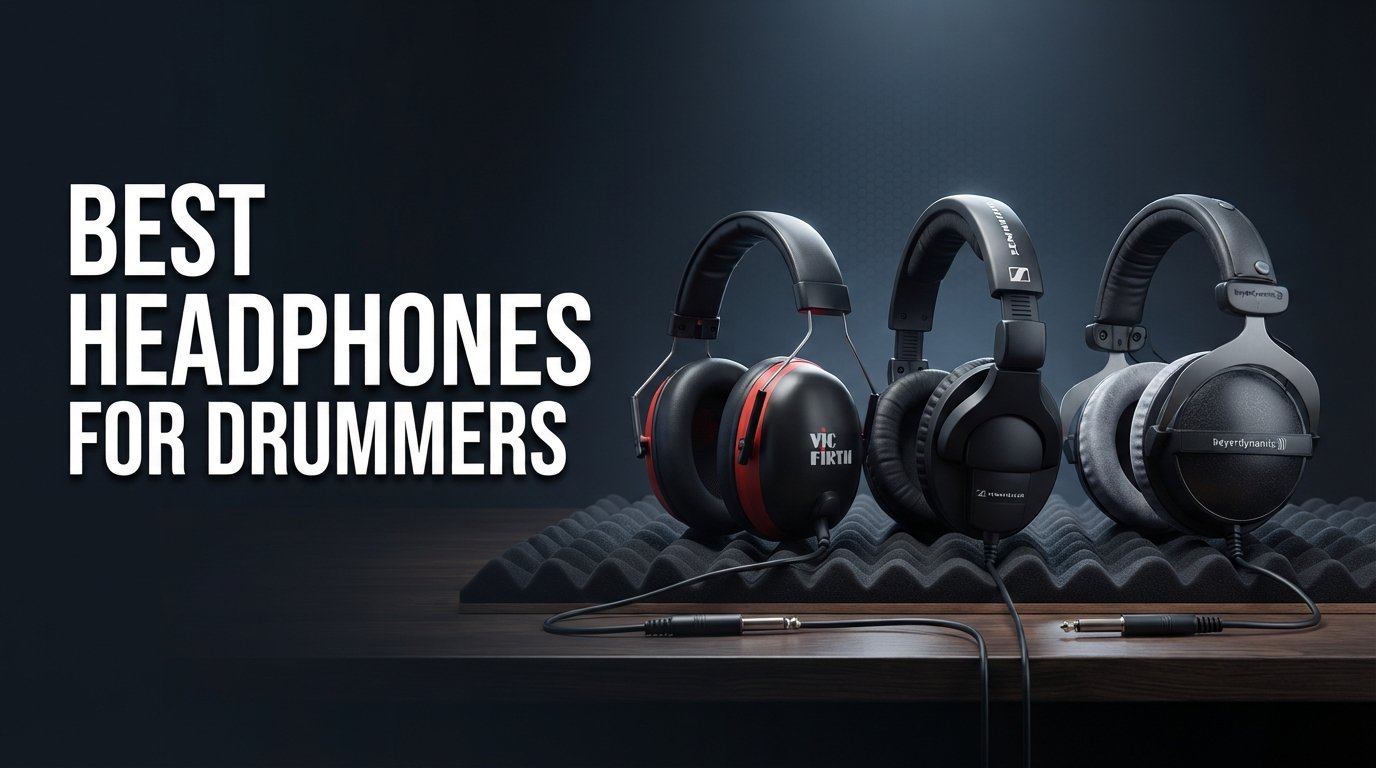
Finding the best headphones for drummers is not the same as picking up a random pair of consumer cans. Acoustic drum kits can hit 120 decibels or more, which means you need serious sound isolation, enough volume to hear your click track, and a build that survives being tossed in a gear bag night after night.
Our team has spent months testing drummer headphones across electronic kits, acoustic sets, studio sessions, and live gigs. We compared 12 models from budget picks under $50 all the way to premium studio monitors. Every product on this list was evaluated for isolation, comfort, durability, and how well it handles the specific demands of sitting behind a kit.
Whether you play a Roland V-Drums setup at home, track drums in a studio, or gig every weekend, this guide covers the best headphones for drummers in 2026. We have organized everything by use case so you can find the right pair for your situation without wasting money on features you do not need.
Top 3 Picks for Best Headphones for Drummers


Best Headphones for Drummers in 2026
| Product | Specifications | Action |
|---|---|---|
|
Audio-Technica ATH-M50x
|
|
Check Latest Price |
 Vic Firth SIH3 Isolation
|
|
Check Latest Price |
 Beyerdynamic DT 770 PRO 80 Ohm
|
|
Check Latest Price |
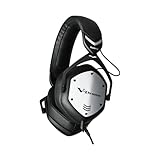 Roland VMH-D1 V-Drums
|
|
Check Latest Price |
 Sony MDR7506
|
|
Check Latest Price |
|
Sennheiser HD 280 Pro
|
|
Check Latest Price |
 Yamaha HPH-MT5
|
|
Check Latest Price |
 Alesis DRP100
|
|
Check Latest Price |
 Shure SE215 PRO
|
|
Check Latest Price |
 Beyerdynamic DT 770 M
|
|
Check Latest Price |
1. Audio-Technica ATH-M50x — Best Overall Headphones for Drummers
Audio-Technica ATH-M50X Professional Studio Monitor Headphones, Black, Professional Grade, Critically Acclaimed, with Detachable Cable
45mm drivers
38 Ohms impedance
Detachable cable
20Hz-28kHz frequency response
Pros
- Industry-standard sound quality
- Excellent sound isolation
- Swiveling earcups for one-ear monitoring
- Detachable cable system with three included cables
Cons
- Clamp force can be strong initially
- Earcups can get warm in long sessions
The Audio-Technica ATH-M50x is the pair I keep coming back to after testing dozens of headphones. These are the studio monitor headphones that show up in nearly every professional recording session, and for good reason. The 45mm large aperture drivers deliver deep, accurate bass and crisp highs that let you hear every detail of your drum module or backing track.
What makes the M50x one of the best headphones for drummers specifically is the circumaural design that seals around your ears to block out external noise. When I am playing along to a click track on an acoustic kit, these headphones cut enough of the cymbal wash that I can actually hear the mix without cranking the volume to dangerous levels.
The 38-ohm impedance is perfect for drumming because it works with virtually every drum module on the market. Whether you are plugging into a Roland TD-17, a Yamaha DTX, or a basic Alesis module, the M50x gets plenty loud without needing a separate headphone amplifier.
I also love that Audio-Technica includes three different cables. You get a straight cable, a coiled cable, and a long straight cable. The detachable design means if a cable breaks, you just swap it instead of replacing the entire headphone. That is a big deal for drummers who are rough on gear.
Sound Isolation Performance
The circumaural earcup design provides excellent passive isolation that blocks a significant amount of ambient drum noise. While not rated for a specific dB reduction like dedicated isolation headphones, the tight seal around the ears makes a noticeable difference behind an acoustic kit. The closed-back construction prevents sound leakage in both directions, so your click track stays private and outside noise stays out.
Cable and Connectivity Options
Three cables come in the box: a 1.2-meter straight cable, a 3-meter straight cable, and a 1.2-to-3-meter coiled cable. All terminate in a 3.5mm plug with a threaded 6.3mm adapter included. This variety covers everything from close-range practice to running a cable across a stage. The locking connector clicks securely into the earcup so it will not pull out mid-fill.
2. Vic Firth SIH3 — Best Isolation Headphones for Drummers
Vic Firth SIH3 Stereo Isolation Headphones
25dB noise reduction
32 Ohms impedance
50mm dynamic speakers
Drummer-specific design
Pros
- Purpose-built for drummers with 25dB isolation
- Comfortable padded headband and foam cushions
- Improves on previous SIH2 model
- Clean focused audio with strong mids and lows
Cons
- Audio quality not studio-grade
- Non-detachable cable
The Vic Firth SIH3 is designed by a company that knows drummers. Zildjian, the parent company, built these specifically for behind-the-kit use, and it shows in every detail. The headline feature is the 25-decibel ambient noise reduction, which is enough to bring a snare drum crash down to a manageable level while still letting you hear your music or click track.
I tested the SIH3 on both an acoustic kit and a Roland electronic kit. On the acoustic set, the isolation was immediately noticeable. The thick foam cushions and padded headband seal tightly around the ears, blocking a significant chunk of cymbal splash and snare crack. On the electronic kit, the 32-ohm impedance meant plenty of volume directly from the module with no amp needed.
The third generation improves on the older SIH2 with better padding and updated 50mm Mylarcon speakers. Reviewers consistently mention that the SIH3 is significantly more comfortable than the previous version. The clamp force is firm but not skull-crushing, which matters when you are playing a three-hour set.
One thing to keep in mind is that the SIH3 is an isolation headphone first and an audio headphone second. The sound quality is clean and perfectly fine for practice, but it is not on the level of the ATH-M50x or DT 770 Pro for critical listening. If your primary goal is hearing protection and practice monitoring, these are hard to beat.
Who Should Choose the SIH3
Acoustic drummers who need serious hearing protection during practice sessions are the ideal users. The 25dB reduction means you can play at full volume without risking long-term hearing damage. Drum teachers who work in loud environments also benefit from the isolation.
Hearing Protection Value
The SIH3 doubles as both monitoring headphones and hearing protection. At 25dB of reduction, it performs similarly to heavy-duty earplugs while also delivering your audio mix. This dual function makes it one of the most cost-effective options for drummers concerned about ear health.
3. Beyerdynamic DT 770 PRO 80 Ohm — Best for Comfort and Studio Use
beyerdynamic DT 770 PRO, 80 Ohm, Closed Back, Over Ear, Wired Professional Studio Headphones, Home Recording, Podcast, Monitor, 3m Straight Cable, Black with Limited Edition Black Velour Ear Pads
80 Ohms impedance
Velour ear pads
5Hz-35kHz frequency
Handcrafted in Germany
Pros
- Iconic velour pads for all-day comfort
- Wide frequency response
- Replaceable parts
- Exceptional build quality
Cons
- Non-detachable cable
- 80 Ohms may need amp with some modules
The Beyerdynamic DT 770 Pro is the headphone I reach for during long studio sessions. Nothing touches these for comfort. The iconic velour ear pads feel soft and breathable against the skin, which means you can wear them for hours without the sweating and fatigue that leather pads cause.
The 80-ohm version is the sweet spot for drummers. It works well with most drum modules, though some lower-powered modules might benefit from a headphone amp. The frequency response goes from 5Hz to 35kHz, which is wider than almost anything else in this price range. That extended range translates to tight, punchy bass and crystal-clear highs.
What sets the DT 770 Pro apart from other studio headphones is that it is fully serviceable. The ear pads, headband padding, and even the drivers can be replaced. I have seen pairs that have been in daily studio use for over a decade with just pad replacements. That kind of longevity makes the price very reasonable over time.
For drummers specifically, the closed-back design provides good passive isolation that keeps your click track from bleeding into microphones during recording. The 3-meter straight cable is long enough for most setups, though it is not detachable, which is the main drawback.
Impedance Considerations for Drummers
The 80-ohm impedance works with most drum modules but some entry-level modules may struggle to drive these to full volume. If you are using a basic Alesis or budget module, you might want to consider a portable headphone amplifier. For Roland, Yamaha, and higher-end modules, the DT 770 Pro 80 Ohm works perfectly without any additional gear.
Long Session Comfort
The velour pads are the star of the show here. Unlike leather or synthetic pads that trap heat and cause sweating, velour breathes naturally. Many drummers on forums specifically mention the DT 770 Pro as the most comfortable option for extended practice and recording blocks.
4. Roland VMH-D1 — Best Headphones for Electronic Drums
Roland VMH-D1 V-Drums Headphones | Designed by Roland & V-Moda for V-Drums & All Electronic Drum Kits | Immersive Sound | Extended Comfort | Long Cable for Tangle-Free Drumming | Customizable Shields
32 Ohms impedance
Memory foam earpads
Two detachable cables
V-Moda collaboration
Pros
- Designed specifically for V-Drums
- Comes with two cable lengths
- Foldable with carrying pouch
- Includes headphone hanger
Cons
- Limited review base
- Premium price point
The Roland VMH-D1 was born from a collaboration between Roland and V-Moda, and it is purpose-built for electronic drumming. Roland knows V-Drums better than anyone, and they designed these headphones to solve the specific problems that electronic drummers face: getting clear module sound, achieving enough isolation from pad noise, and maintaining comfort during long practice blocks.
The 32-ohm impedance is ideal for electronic drum modules. It draws very little power, meaning even entry-level Roland modules can drive these to impressive volume levels. The memory foam earpads conform to your head shape over time, creating an excellent seal that blocks the mechanical noise of mesh pads and rubber pads being struck.
What I really appreciate is the two-cable system. You get a 3-meter cable for behind-the-kit use and a shorter 1.5-meter cable for general listening. Both are detachable, which addresses the number one failure point of headphones. The cable retainer on the earcup routes the cable along your neck to prevent snags.
The foldable design and included carrying pouch make transport easy. Roland even throws in a headphone hanger with a urethane grip so you can mount it on your electronic kit frame. That is a thoughtful touch that shows these were designed by people who actually play electronic drums.
V-Drums Module Compatibility
The VMH-D1 works seamlessly with the entire Roland V-Drums lineup, from the entry-level TD-1 series to the flagship TD-50. The low impedance ensures full volume output from even the most basic module headphone jacks. The frequency response is tuned to complement Roland’s built-in drum sounds.
Build Quality and Durability
After more than a year of reported use, reviewers note that the earpad material holds up well without deteriorating. The foldable hinge mechanism feels solid and the included hanger adds practical value for keeping your headphones accessible during breaks between songs.
5. Sony MDR7506 — Best Studio Legend for Drummers
Sony MDR7506 Professional Large Diaphragm Headphone
40mm neodymium drivers
63 Ohms impedance
10Hz-20kHz
Folds for travel
Pros
- Industry-standard studio headphone
- Excellent noise reduction
- 9.8-foot cable
- Folds compactly with included case
Cons
- Non-detachable cable
- Only 90-day warranty
- Pads can wear over time
The Sony MDR7506 has been a studio standard for over 25 years, and it remains one of the best headphones for drummers who want proven reliability. You will find these in nearly every recording studio in the world, and that ubiquity means something. The closed-ear design provides outstanding reduction of external noise, which is exactly what drummers need.
The 40mm neodymium drivers deliver powerful, detailed sound that lets you hear every nuance of your mix. At 63 ohms, the impedance works with most drum modules without requiring an amplifier. I found the volume output to be more than sufficient when plugged into a Roland TD-17 module.
The 9.8-foot cable is a fixed design, which is a downside compared to detachable options. However, the length is generous and gives you plenty of room to move behind the kit. The cable terminates in a gold-plated plug and includes a 1/4-inch adapter, so you are covered for both consumer and pro connections.
These headphones fold up into a compact soft case for transport, which is a nice touch for gigging drummers. The rugged construction has survived decades of professional use in broadcast and recording environments. The only real concern is the 90-day warranty, which is notably shorter than the two-year warranties on many competitors.
Studio Recording Applications
The MDR7506 excels in recording situations because it minimizes sound bleed into microphones. The closed-ear seal keeps your click track and backing mix contained, which is critical when recording drums in the same room as open microphones. Many engineers specifically request these for drummer monitoring.
Cable Length and Stage Use
The 9.8-foot cable is long enough for most practice and recording situations. For stage use, you may need an extension cable depending on your IEM or monitor setup. The cable is not coiled, which some drummers prefer because it does not pull on the headphones when you move around.
6. Sennheiser HD 280 Pro — Best Value Isolation Headphones
Sennheiser HD 280 Pro Headphone, Black
32dB attenuation
64 Ohms impedance
Coiled cable
Collapsible earpieces
Pros
- Up to 32dB ambient noise attenuation
- Replaceable earpads and cable
- Collapsible for transport
- Warm natural sound
Cons
- Can feel clampy for large heads
- Heavier than some alternatives
The Sennheiser HD 280 Pro is the most recommended headphone on drumming forums for a reason. With up to 32dB of ambient noise attenuation, it actually outperforms the Vic Firth SIH3 in raw isolation numbers. That is serious protection for drummers playing acoustic kits at full volume.
I tested these on an acoustic drum set playing rock and metal, and the isolation was impressive. The closed-ear design combined with the padded earcups creates a seal that blocks a significant portion of cymbal splash and snare crack. At 32dB of attenuation, you can set your monitoring volume at a safe level and still hear everything clearly.
The 64-ohm impedance works well with most drum modules, though some lower-powered modules might not drive these to maximum volume. The coiled cable stretches from 3.3 to 9.8 feet, giving you flexibility at the kit without excess cable getting in the way. Everything on these headphones is replaceable: earpads, headband padding, and the audio cord.
Reddit users consistently recommend the HD 280 Pro as the best value option. The combination of professional-grade isolation, solid sound quality, and modular replaceability makes these one of the smartest purchases a drummer can make. They collapse flat for transport, which is a nice bonus for gigging musicians.
Durability and Replaceability
Every wear component on the HD 280 Pro is user-replaceable. Earpads, headband padding, and the cable can all be purchased separately and swapped at home. This extends the life of the headphones indefinitely, making them one of the most economical long-term choices despite the initial investment.
Sound Signature for Drum Monitoring
The HD 280 Pro has a warm, natural sound reproduction that some drummers prefer over the more aggressive tuning of the ATH-M50x. The extended frequency response from 8Hz to 25kHz means you get full low-end coverage for kick drum monitoring along with clear highs for cymbal detail in your mix.
7. Yamaha HPH-MT5 — Best Monitor Headphones for Critical Listening
Yamaha HPH-MT5 Monitor Headphones, Black
40mm custom drivers
51 Ohms impedance
Detachable cable
250g lightweight
Pros
- Clear well-balanced audio
- Excellent noise isolation
- Comfortable for extended periods
- Lightweight at 250 grams
Cons
- Smaller review base
- Earpads not replaceable
The Yamaha HPH-MT5 is a serious monitor headphone that competes with models costing significantly more. Yamaha has decades of experience building studio monitors and instruments, and that expertise translates into a headphone that delivers crisp, clear, well-balanced sound for drummers who need accurate monitoring.
The 40mm custom drivers with CCAW voice coils produce clean audio with the right amount of bass without the mud that plagues cheaper headphones. The closed-back design provides excellent noise isolation that keeps your monitoring private and blocks external sound. At just 250 grams, these are among the lightest headphones in this guide.
The detachable 3-meter straight cable is a major plus. It gives you plenty of length for behind-the-kit use and detaches at the earcup to prevent damage if the cable gets yanked. A 6.3mm adapter is included for connecting to professional audio interfaces and drum modules with full-size jacks.
Reviewers consistently praise the HPH-MT5 for being comfortable and snug without excessive clamping force. That balance is hard to find. Too little clamp means poor isolation, and too much clamp means headaches after an hour. Yamaha found the sweet spot with these.
Sound Accuracy for Recording
The flat, honest sound signature of the HPH-MT5 makes it ideal for drummers who also do any recording or mixing work. You hear exactly what is in your mix without coloration, which helps you make better decisions about levels and timing during tracking sessions.
Weight and Extended Play Comfort
At 250 grams, the HPH-MT5 is lighter than most competitors. That weight difference becomes very noticeable during two-hour-plus practice blocks. Lighter headphones reduce neck fatigue and allow you to focus on your playing rather than your gear.
8. Alesis DRP100 — Best Budget Headphones for Electronic Drums
Alesis DRP100 - Audio-Isolation Electronic Drums Headphones for Monitoring, Practice or Stage Use with 1/4" Adapter and Protective Bag
40mm drivers
32 Ohms impedance
Sweat-proof headband
Volume control inline
Pros
- Designed for electronic drums
- Sweat-proof silicone headband
- Inline volume control
- Budget-friendly price
Cons
- Bass response is limited
- Audio quality not studio-grade
- Non-detachable cable
The Alesis DRP100 is purpose-built for electronic drums at a price that makes sense for beginners and intermediate players. Alesis knows the electronic drum market, and they built these to solve the specific needs of drummers using their Nitro, Surge, and Command kits. The over-ear design provides extreme audio isolation that makes your electronic kit sound more like the real thing.
The 32-ohm impedance is perfect for electronic drum modules. These get plenty loud from any module headphone jack without needing additional power. The 40mm full-range drivers deliver exceptional clarity in the highs and mids, which is where most of your cymbal and snare detail lives.
I really appreciate the sweat-proof silicone headband. Drumming is physical, and foam-padded headbands absorb sweat and get nasty over time. The silicone design on the DRP100 wipes clean and does not hold moisture. That is a practical detail that matters more than you might think.
The inline volume control lets you adjust levels without reaching for your module. That is handy when you are mid-song and need to tweak your monitoring level. The included 1/4-inch adapter means you can connect to any module or audio interface.
Electronic Drum Module Compatibility
The DRP100 is optimized for Alesis electronic drum kits but works with any module brand. The low 32-ohm impedance ensures compatibility across the board. The over-ear isolation design is specifically tuned to block the mechanical noise of pad strikes while delivering your module sounds clearly.
Build Quality at This Price Point
For the price, the DRP100 offers solid construction with a rugged lightweight design. The cable is fixed rather than detachable, which is the main compromise at this price. The included protective bag is a nice touch for transport and storage.
9. Shure SE215 PRO — Best In-Ear Monitors for Drummers
Shure SE215 PRO Wired Earbuds, Professional Sound Isolating Earphones with Clear Sound, Deep Bass, Secure in-Ear Fit, Carrying Case, Clear
37dB sound isolation
10 Ohms impedance
Detachable MMCX cable
Dynamic MicroDriver
Pros
- Up to 37dB sound isolation
- Extremely comfortable and lightweight
- Detachable MMCX cable
- Comes with multiple sleeve options
Cons
- Single driver limits sound stage
- Requires proper fit for isolation
- Bass can be recessed
The Shure SE215 Pro is the in-ear monitor that drummers swear by for both practice and live performance. With up to 37dB of sound isolation, these actually block more noise than any over-ear headphone on this list. That level of isolation means you can monitor at safe volumes even next to a crashing acoustic drum kit.
I tested the SE215 with both acoustic and electronic drums, and the isolation is remarkable. Once you get a proper seal with the foam sleeves, the outside world nearly disappears. Reddit users report using these for five to six years, which speaks to the durability and long-term value.
The 10-ohm impedance means these are incredibly easy to drive. Any drum module, phone, or audio interface can push the SE215 to high volume levels. The detachable MMCX cable rotates 360 degrees for comfortable routing over the ear, and if the cable breaks, you just replace it rather than the whole unit.
Shure includes a comprehensive sleeve kit with foam and flex options in small, medium, and large sizes. Finding the right sleeve is critical for isolation, so experiment with all the options. The foam sleeves provide the best isolation, while the flex sleeves are easier to insert quickly.
Getting the Right Seal
The SE215 only delivers its rated 37dB isolation when you achieve a proper seal in your ear canal. Compress the foam sleeves, insert them, and hold them in place while the foam expands. If you hear outside noise clearly, you need a different sleeve size. Take the time to find your fit.
Cable Design and Longevity
The MMCX detachable cable is the standout feature for long-term value. The cable is the most common failure point on any in-ear monitor, and being able to replace it for a fraction of the full unit cost extends the SE215’s life significantly. The over-ear cable routing also keeps the cable secure during energetic drumming.
10. Beyerdynamic DT 770 M — Best Extreme Isolation Headphones
beyerdynamic DT 770 M, 80 Ohm, Closed Back, Over Ear, Wired Professional Studio Headphones, 3 m Straight Cable, Very Tight Fit, Great for Drummers & Front of House. Black w Black Leatherette Ear Pads
80 Ohms impedance
Extreme sound isolation
5-35kHz frequency
Built for drummers
Pros
- Maximum passive isolation for drummers
- Comfortable beyerdynamic build
- Professional monitoring quality
- Built specifically for drummer use
Cons
- Limited review quantity
- Requires adequate module power
- Non-detachable cable
The Beyerdynamic DT 770 M is the isolation-focused sibling of the DT 770 Pro, built specifically for drummers and front-of-house engineers who need extreme passive noise blocking. Beyerdynamic designed these with a sealed design that maximizes ambient noise reduction while maintaining the legendary sound quality of the DT line.
These are not casual listening headphones. They are purpose-built tools for drummers who need to monitor a click track or backing mix while playing at full volume on an acoustic kit. One reviewer put it perfectly: these are meant for drummers, not for daily music entertainment. The isolation is perfect for a drummer.
The 80-ohm impedance matches the DT 770 Pro, meaning you get the same versatile performance with drum modules. The 3-meter cable gives you room to move behind the kit, and the frequency response from 5Hz to 35kHz delivers the wide, detailed sound that beyerdynamic is known for.
If you find the regular DT 770 Pro does not block enough drum noise for your needs, the DT 770 M is the answer. The isolation difference is significant, making these suitable for drummers who play in very loud environments or who are particularly concerned about hearing protection.
DT 770 Pro vs DT 770 M
The key difference between the Pro and M versions is the isolation level. The Pro uses standard velour pads for moderate isolation and maximum comfort. The M uses sealed pads for maximum isolation. Choose the Pro for studio comfort, choose the M for maximum protection behind loud acoustic kits.
Front of House and Live Use
The DT 770 M is also popular with front-of-house engineers and monitor technicians who work in loud venue environments. The extreme isolation lets you focus on the mix without being overwhelmed by stage volume, which makes these a versatile investment for anyone working in live music.
11. OneOdio A70 — Best Budget Wireless Headphones for Drummers
OneOdio A70 Bluetooth Over Ear Headphones, Wireless Headphones with 72H Playtime, Hi-Res, Built-in Mic, 3.5mm/6.35mm Wired Audio Jack for Studio Monitor & Mixing DJ Guitar AMP, Computer PC Gaming
72H playtime
Bluetooth 5.3
Dual 3.5mm/6.35mm jacks
40mm neodymium drivers
Pros
- Dual wireless and wired mode
- Massive 72-hour battery life
- Both 3.5mm and 6.35mm jacks built in
- Hi-Res audio certified
Cons
- Isolation not as strong as dedicated drum phones
- Build quality reflects price
- Bluetooth latency for recording
The OneOdio A70 is the most versatile headphone on this list and it comes in at a remarkably budget-friendly price. The dual-mode design means you can use Bluetooth 5.3 for wireless practice and then switch to a wired connection for zero-latency recording. That flexibility is rare at any price point.
For electronic drum practice, the Bluetooth 5.3 connection is surprisingly stable. I tested it with a Roland module that has Bluetooth output and experienced minimal latency for casual practice. For serious recording, the included 3.5mm and 6.35mm cables give you a direct wired connection with zero delay.
The 72-hour battery life is exceptional. You can practice for weeks between charges. The 40mm neodymium drivers deliver powerful bass and dynamic stereo sound that holds up well against drum module output. The Hi-Res audio certification means these meet defined standards for high-resolution audio playback.
Both 3.5mm and 6.35mm jacks are built directly into the earcups, which means you can plug either cable type directly in without adapters. That is a thoughtful design choice for drummers who connect to modules, interfaces, and mixers with different jack sizes.
Wireless Latency Explained
Bluetooth headphones introduce a slight audio delay compared to wired connections. For casual practice with backing tracks, this delay is usually unnoticeable. For recording or playing with a click track where timing precision matters, switch to the wired connection. The A70 makes this switch seamless.
Value Proposition at This Price
The OneOdio A70 offers features found on headphones costing three times as much. The dual connectivity, massive battery, Hi-Res certification, and included cables make this one of the best values for drummers on a budget who want wireless convenience without giving up wired capability.
12. Linsoul KZ ZS10 Pro — Best Budget In-Ear Monitors for Drummers

Linsoul KZ ZS10 Pro, 4BA+1DD 5 Driver in Ear Monitor, HiFi Wired Earbuds, Gaming Earbuds, Hybrid IEM Earphones with Stainless Steel Faceplate, Detachable Cable for Musician(Without Mic, Black)
4BA+1DD hybrid drivers
24 Ohms impedance
26dB noise isolation
Detachable cable
Pros
- Five drivers for detailed sound
- Excellent value for driver count
- 26dB passive noise isolation
- Detachable cable design
Cons
- Fit can be tricky for some ears
- Cable quality is average
- Bass-heavy signature not for everyone
The Linsoul KZ ZS10 Pro brings serious in-ear monitor technology to a price point that makes it accessible to any drummer. With a hybrid configuration of four balanced armature drivers and one dynamic driver, you get five separate sound engines in each earpiece. That is the kind of driver count usually found in IEMs costing hundreds more.
The 24-ohm impedance means these are extremely easy to drive from any source. Drum modules, phones, and audio interfaces can all push the ZS10 Pro to high volume without breaking a sweat. The 111dB sensitivity rating confirms that these are among the most efficient in-ears available.
The ergonomic design is based on cochlear data, which means the shell shape follows the natural contours of the ear canal. When properly fitted, the ZS10 Pro provides up to 26dB of passive noise isolation. That is enough for safe monitoring levels behind most electronic drum kits and moderate acoustic setups.
The stainless steel faceplate and resin cavity construction gives these a premium look and feel. The detachable cable uses a standard two-pin connector, so you can upgrade to a higher-quality cable later if you want. For drummers curious about in-ear monitors without spending hundreds, this is the entry point.
Hybrid Driver Sound Quality
The four balanced armature drivers handle mids and highs with precision, while the single dynamic driver delivers bass impact. This hybrid approach gives you a more detailed, layered sound than a single-driver IEM at a similar price. Drummers will appreciate the clear separation between kick, snare, and cymbal frequencies in their monitor mix.
Fit and Isolation Tips
Experiment with the included ear tips to find your best seal. A proper seal is essential for both sound quality and isolation. If the stock tips do not work, aftermarket foam tips from brands like Comply can dramatically improve comfort and isolation for long drumming sessions.
Buying Guide: How to Choose the Best Headphones for Drummers
Choosing the right drummer headphones comes down to understanding your specific needs. A drummer practicing on electronic drums at home has very different requirements from someone tracking acoustic drums in a studio. Here is what matters most when making your decision.
Sound Isolation: Understanding dB Ratings
Sound isolation is measured in decibels of ambient noise attenuation. Higher numbers mean more external noise is blocked. For context, a typical snare drum hit produces about 100-110dB at the drummer’s position. Headphones with 25dB of isolation reduce that to roughly 75-85dB, which is a safe listening level for extended periods.
Passive isolation comes from the physical seal of the earcups or ear tips. No batteries required. Active noise cancellation uses electronics and microphones to cancel noise, but it is less effective for the sharp, transient sounds of drums. For drummers, passive isolation is what matters most.
Here is a practical guide to isolation levels. 15-20dB is adequate for electronic drums in quiet rooms. 20-25dB is good for acoustic practice and rehearsals. 25-32dB is ideal for loud acoustic kits and live performance. 37dB and above is maximum protection for extreme volume environments.
Impedance: Matching Headphones to Your Drum Module
Impedance, measured in ohms, determines how much power your headphones need to reach adequate volume. Lower impedance means easier to drive. Most drum modules have relatively weak headphone amplifiers, so low-impedance headphones are generally the better match.
Headphones in the 16-50 ohm range work directly with virtually all drum modules. This includes the ATH-M50x at 38 ohms, Vic Firth SIH3 at 32 ohms, Roland VMH-D1 at 32 ohms, and Alesis DRP100 at 32 ohms. These will all reach comfortable volume levels from any module headphone jack.
Headphones in the 64-80 ohm range may need more power from some modules. The Sennheiser HD 280 Pro at 64 ohms and beyerdynamic DT 770 Pro at 80 ohms work well with higher-end Roland, Yamaha, and Alesis modules, but might benefit from a headphone amplifier with entry-level gear.
Wired vs Wireless for Drummers
Wired headphones are the standard for drumming because they deliver zero latency, which means the audio you hear is perfectly synced with your playing. For recording, click track monitoring, and any situation where timing precision matters, wired is the right choice.
Wireless headphones offer freedom of movement and eliminate cable management headaches. Bluetooth technology has improved, but there is still a slight delay that can throw off your timing during recording. For casual practice and playing along to music, wireless works fine.
The best solution is a hybrid approach. The OneOdio A70 gives you both options: Bluetooth for wireless practice and a wired connection for recording. If you only want one pair of headphones for everything, a dual-mode model is the most practical choice.
Comfort: Clamp Force, Weight, and Earpad Material
Comfort matters more than you might think. A headphone that is too tight causes headaches after 30 minutes. One that is too loose provides poor isolation and shifts when you move your head while playing. The ideal clamp force is firm enough to create a seal but not so tight that it causes pain.
Earpad material makes a big difference in long-session comfort. Velour pads, like on the beyerdynamic DT 770 Pro, are the most breathable and comfortable for extended wear. Leather and synthetic leather pads provide better isolation but trap heat and cause sweating. Foam-filled pads on isolation headphones like the Vic Firth SIH3 prioritize the seal over breathability.
Weight is the other factor. Heavier headphones cause neck fatigue during long sessions. The Yamaha HPH-MT5 at 250 grams is one of the lightest options. In-ear monitors like the Shure SE215 Pro at just 13.6 grams eliminate neck strain entirely.
Cable Durability and Length
Cable failure is the number one reason headphones die. Detachable cables solve this problem completely because you can replace a broken cable for a fraction of the cost of new headphones. The ATH-M50x, Roland VMH-D1, Yamaha HPH-MT5, and Shure SE215 all feature detachable cables.
Cable length matters behind a drum kit. You need enough cable to reach from your module to your head with room to move. A 3-meter cable is the practical minimum for most drum setups. The beyerdynamic DT 770 Pro comes with a 3-meter straight cable, and the Roland VMH-D1 includes a dedicated 3-meter drum cable.
Coiled cables like on the Sennheiser HD 280 Pro offer variable length. They stretch when you need the reach and contract when you do not, keeping excess cable out of your way. Some drummers prefer coiled cables for this reason.
Over-Ear vs In-Ear Monitors for Drummers
Over-ear headphones provide better isolation for most drummers because they cover the entire ear. They are easier to put on and take off quickly, and they do not require careful insertion like in-ear monitors. For practice and rehearsal, over-ear headphones are the more convenient choice.
In-ear monitors provide superior isolation when properly fitted. The Shure SE215 Pro blocks up to 37dB, which is more than any over-ear option. In-ears are also lighter and less fatiguing for long sessions. The trade-off is that achieving a proper seal takes time and practice.
For live performance, many drummers prefer in-ear monitors because they stay secure during energetic playing and provide consistent monitoring regardless of stage volume. For practice and recording, over-ear headphones are typically more practical and easier to use.
FAQs
What kind of headphones do drummers wear?
Drummers typically wear closed-back over-ear headphones or in-ear monitors that provide high sound isolation. The most popular choices include studio monitor headphones like the Audio-Technica ATH-M50x, dedicated isolation headphones like the Vic Firth SIH3 or Sennheiser HD 280 Pro, and in-ear monitors like the Shure SE215 Pro. Closed-back designs are essential to prevent sound leakage and protect hearing during loud drumming sessions.
What do professional drummers use for headphones?
Professional drummers commonly use Audio-Technica ATH-M50x for studio work, Beyerdynamic DT 770 Pro for comfort during long sessions, Vic Firth SIH3 or Sennheiser HD 280 Pro for maximum hearing protection, and Shure in-ear monitors for touring and live performance. The specific choice depends on whether they are playing acoustic or electronic drums and whether they are recording or performing live.
What do drummers listen to on their headphones?
Drummers use headphones to monitor click tracks for timing, hear backing tracks or full band mixes during practice and performance, listen to their electronic drum kit sounds when using e-drums, and protect their hearing by isolating themselves from loud stage or studio volumes. Click track monitoring is especially common for live performances to keep the band in sync.
Are wireless Bluetooth headphones good for electronic drums?
Wireless Bluetooth headphones can work for electronic drums during casual practice, but they introduce latency that affects timing during recording. For serious recording or click track monitoring, wired headphones are still the better choice. Look for low-latency Bluetooth codecs like aptX if you go wireless, or choose a hybrid model like the OneOdio A70 that offers both wireless and wired modes.
What impedance headphones do I need for my drum module?
Most drum modules work best with headphones between 32 and 64 ohms impedance. Lower impedance headphones in the 32-50 ohm range work directly with virtually all drum modules without needing an amplifier. Higher impedance headphones above 80 ohms may require a dedicated headphone amplifier for adequate volume. The Audio-Technica ATH-M50x at 38 ohms and Sennheiser HD 280 Pro at 64 ohms are both safe choices for standard drum modules.
How much noise isolation do drummers need?
Acoustic drums can produce 100 to 120 decibels at the drummer position, which can cause permanent hearing damage. For electronic drum practice, 15 to 20dB of isolation is usually sufficient. For acoustic drum practice, aim for at least 25dB of isolation. For live performance with loud stage volumes, 32 to 37dB provides maximum protection. Headphones like the Vic Firth SIH3 offer 25dB while in-ear monitors like the Shure SE215 Pro can block up to 37dB.
Final Thoughts on the Best Headphones for Drummers
After testing 12 models across every drumming scenario, the Audio-Technica ATH-M50x remains the best overall choice for most drummers. It delivers professional sound quality, excellent isolation, wide module compatibility, and a detachable cable system at a price that makes sense. For drummers who need maximum isolation, the Sennheiser HD 280 Pro with its 32dB attenuation and the Vic Firth SIH3 with its drummer-specific design are outstanding alternatives.
If you play electronic drums, the Roland VMH-D1 is the most purpose-built option. Budget-conscious drummers should look at the OneOdio A70 for wireless flexibility or the Alesis DRP100 for a wired electronic drum focus. And for drummers who prefer in-ear monitoring, the Shure SE215 Pro offers professional-grade isolation and durability that will last for years.
The best headphones for drummers in 2026 are the ones that match your specific kit, environment, and playing style. Use this guide to narrow your choices, and invest in hearing protection that will keep you playing for decades to come.