
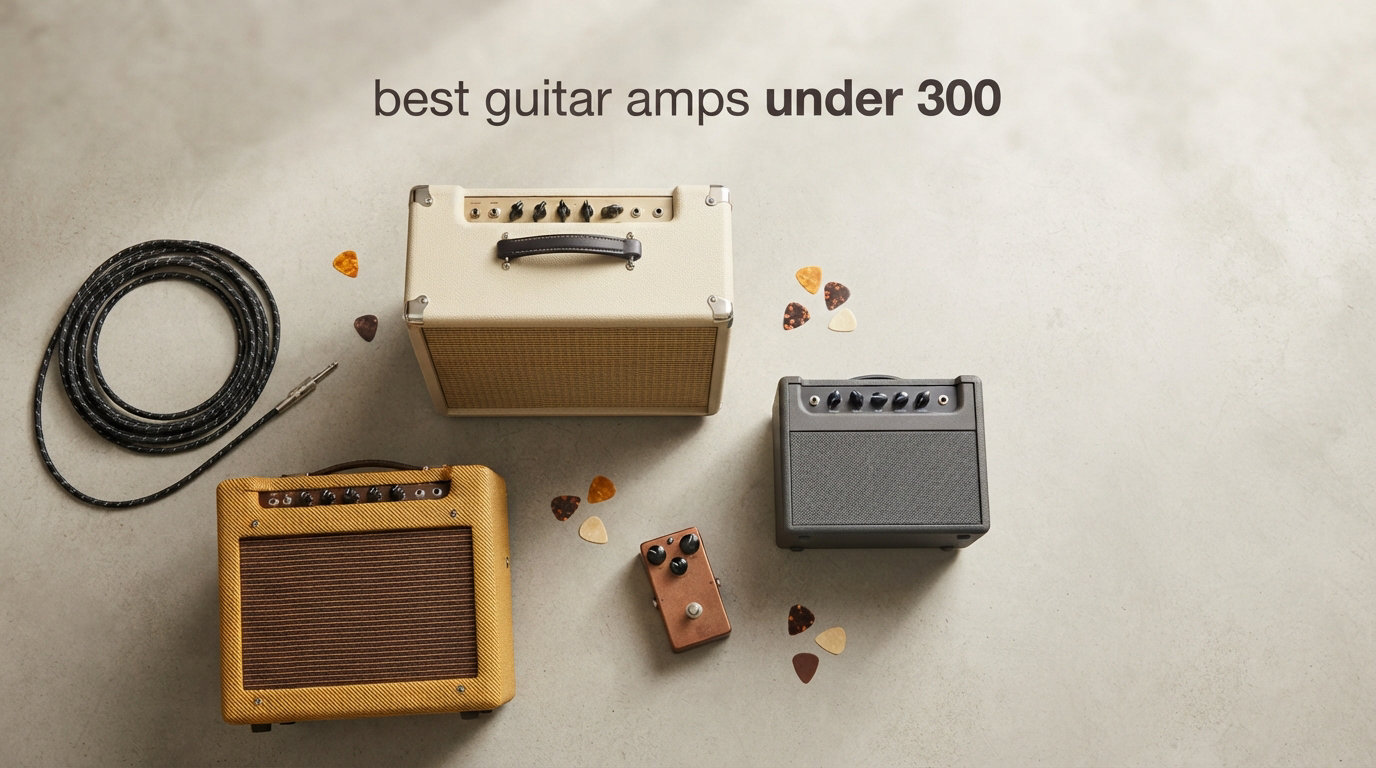
I have spent the better part of three years chasing great tone without emptying my bank account, and the best guitar amps under 300 have genuinely surprised me. Back when I started playing, anything in this price bracket sounded thin and fizzy through a tiny speaker. That has changed fast.
Today’s sub-$300 bracket covers everything from real tube circuits to smart amps with AI tone generation. You can walk away with a Fender modeling combo, an Orange solid-state workhorse, or a pocket-sized Positive Grid unit that doubles as a Bluetooth speaker. The hard part is not finding a decent amp, it is picking the right one for your style.
Our team pulled together 10 of the strongest options on the market for 2026, ranging from a $79 Marshall practice combo to a $279 feature-loaded smart amp. We focused on real ownership details: how each one sounds at apartment volumes, whether it records cleanly over USB, and how long it stays fun after the honeymoon phase. Let’s get into the picks.
Top 3 Picks for Best Guitar Amps Under $300


Best Guitar Amps Under $300 in 2026
| Product | Specifications | Action |
|---|---|---|
|
Fender Mustang LT25
|
|
Check Latest Price |
 Boss Katana Mini
|
|
Check Latest Price |
|
Positive Grid Spark 2
|
|
Check Latest Price |
 Orange Crush 20
|
|
Check Latest Price |
 Marshall MG15GFX
|
|
Check Latest Price |
 Fender Frontman 10G
|
|
Check Latest Price |
 Marshall MG10G
|
|
Check Latest Price |
 Vox VT20X
|
|
Check Latest Price |
 Monoprice 5W Tube Amp
|
|
Check Latest Price |
 Positive Grid Spark GO
|
|
Check Latest Price |
1. Fender Mustang LT25 – Best Overall Digital Modeling Combo
Fender Mustang LT25 Guitar Amp, 25-Watt Combo Amp, with 2-Year Warranty, 30 Preset Effects with USB Audio Interface for Recording
25W digital modeling
8 inch Fender speaker
30 presets with color display
USB recording
Stereo headphone out
Pros
- Excellent tone quality for a practice amp
- 30 presets with 30 customizable slots
- Easy-to-use color display interface
- USB connectivity for recording
- Great value for beginners and intermediates
Cons
- Dated mini-USB connector
- Slightly digital character at high gain
- Distortion presets may not satisfy metal players
I have logged more hours on the Fender Mustang LT25 than any other amp on this list, and it keeps winning me over. The 1.8-inch color display makes preset browsing feel modern, and the 30 factory presets actually cover useful ground instead of throwing 99 random sounds at you. Plug in, scroll to a clean Twin-style patch, and the tone is warm, full, and unmistakably Fender.
Where the LT25 shines for me is silent practice and home recording. The stereo headphone output is genuinely stereo, not a mono fold-back, and the USB connection lets you track directly into a DAW without an interface. I have recorded demo guitar parts at midnight with no complaints from neighbors, and the takes sounded clean enough to keep.
The wood cabinet is a nice touch at this price too. Many competitors use cheap plastic enclosures that resonate badly, but the LT25 feels solid and looks the part sitting on a desk or shelf.
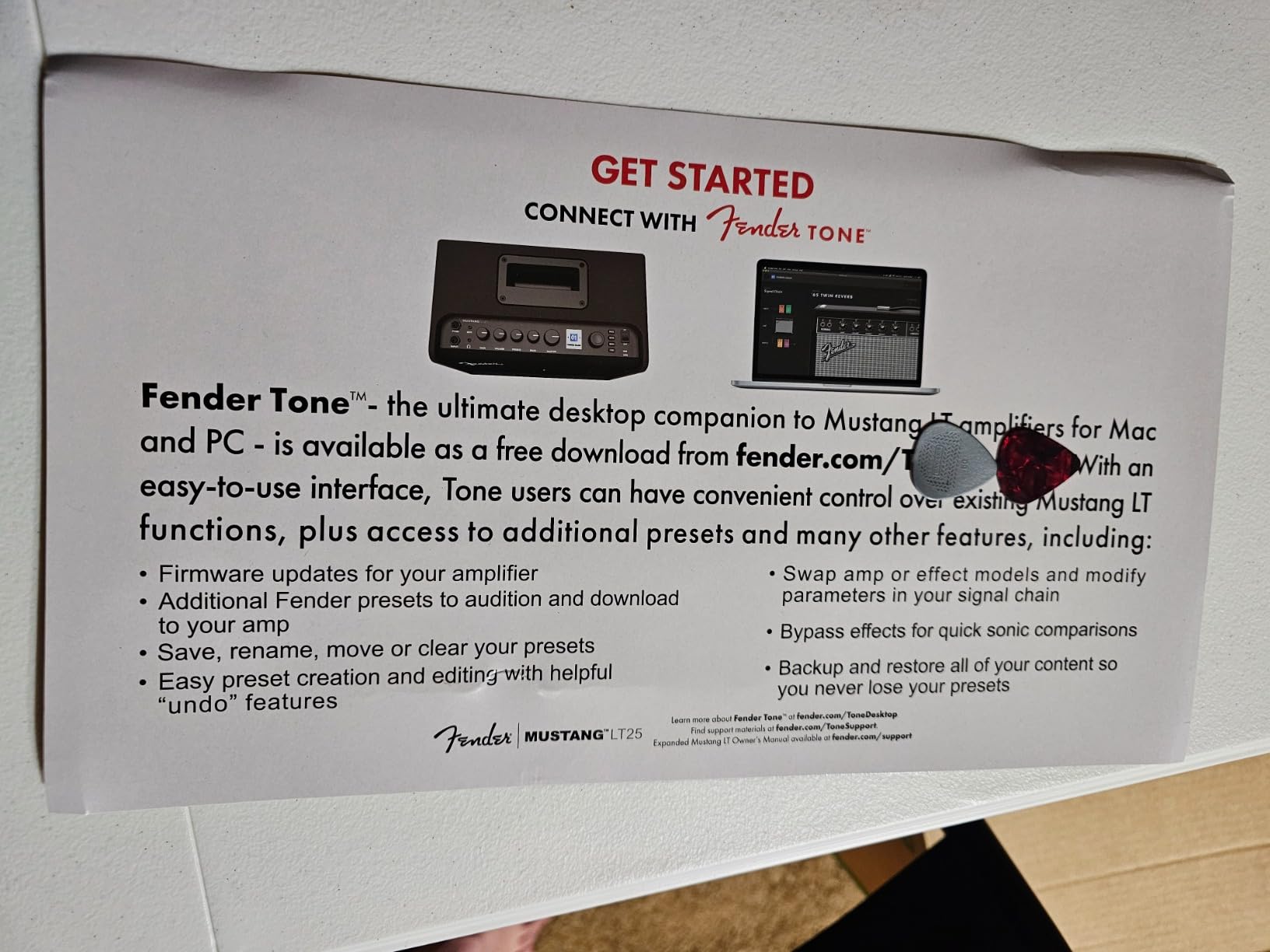
On the technical side, the LT25 is a 25-watt digital modeling amp running through an 8-inch Fender Special Design speaker. The 30 presets span clean, crunch, and high-gain voices, and you get 30 more empty slots for your own tweaks. Pair it with the free Fender Tone Desktop app and you can deep-edit amp models, effects chains, and EQ curves.
The biggest weakness is high-gain territory. Metal players will find the distortion presets slightly fizzy and digital-sounding compared to a dedicated high-gain amp. The mini-USB port is also dated, and I have had to dig through drawers to find a cable more than once.
Ideal for Bedroom Players and Beginners
If you are starting out, want one amp that covers blues, rock, country, and clean pop tones, and value easy recording over USB, the LT25 is hard to beat. The interface is friendly enough that a complete beginner can dial in a usable tone in under five minutes.
Intermediate players who want a quiet, reliable practice rig with deep editing options will also feel at home here. The Fender Tone app opens up far more control than the front panel suggests.
Who Should Skip It
Hard rock and metal players chasing tight, modern high-gain tones should look elsewhere. The LT25 handles classic rock crunch well, but it loses composure when you push into modern metal territory. Gigging musicians who need stage-ready volume should also look at larger options.
2. Boss Katana Mini – Best Ultra-Portable Practice Amp
Boss Katana Mini - 7-Watt Combo Amp Ultra-Compact and Travel-Ready
7W solid state
4 inch speaker
3 amp types: Brown, Crunch, Clean
Built-in tape delay
Battery powered
Aux input
Pros
- Great sound quality for its size
- Ultra-compact and lightweight
- Three versatile amp types
- Smooth pleasing distortion
- Battery powered for true portability
Cons
- No power supply included
- No reverb (only delay)
- Not suitable for full band practice
- Headphone jack on back is inconvenient
The Boss Katana Mini is the amp I toss in a backpack when I travel, and it never stops impressing people who hear it for the first time. For something the size of a small lunchbox, the sound is full, punchy, and surprisingly loud. Plug a Telecaster into the Clean channel with the tape delay dialed in and you get instant ambient warmth that fills a hotel room.
What makes the Katana Mini special is the analog multi-stage gain circuit. Unlike cheap digital practice amps that sound thin and processed, this thing has a genuine analog feel. The Brown channel pushes into smooth, sustained lead tones that hold together even at higher gain settings.
Battery power is the killer feature. Six AA batteries give you hours of playtime anywhere, and the aux input lets you jam along with tracks from your phone. It is the definition of grab-and-go practice.
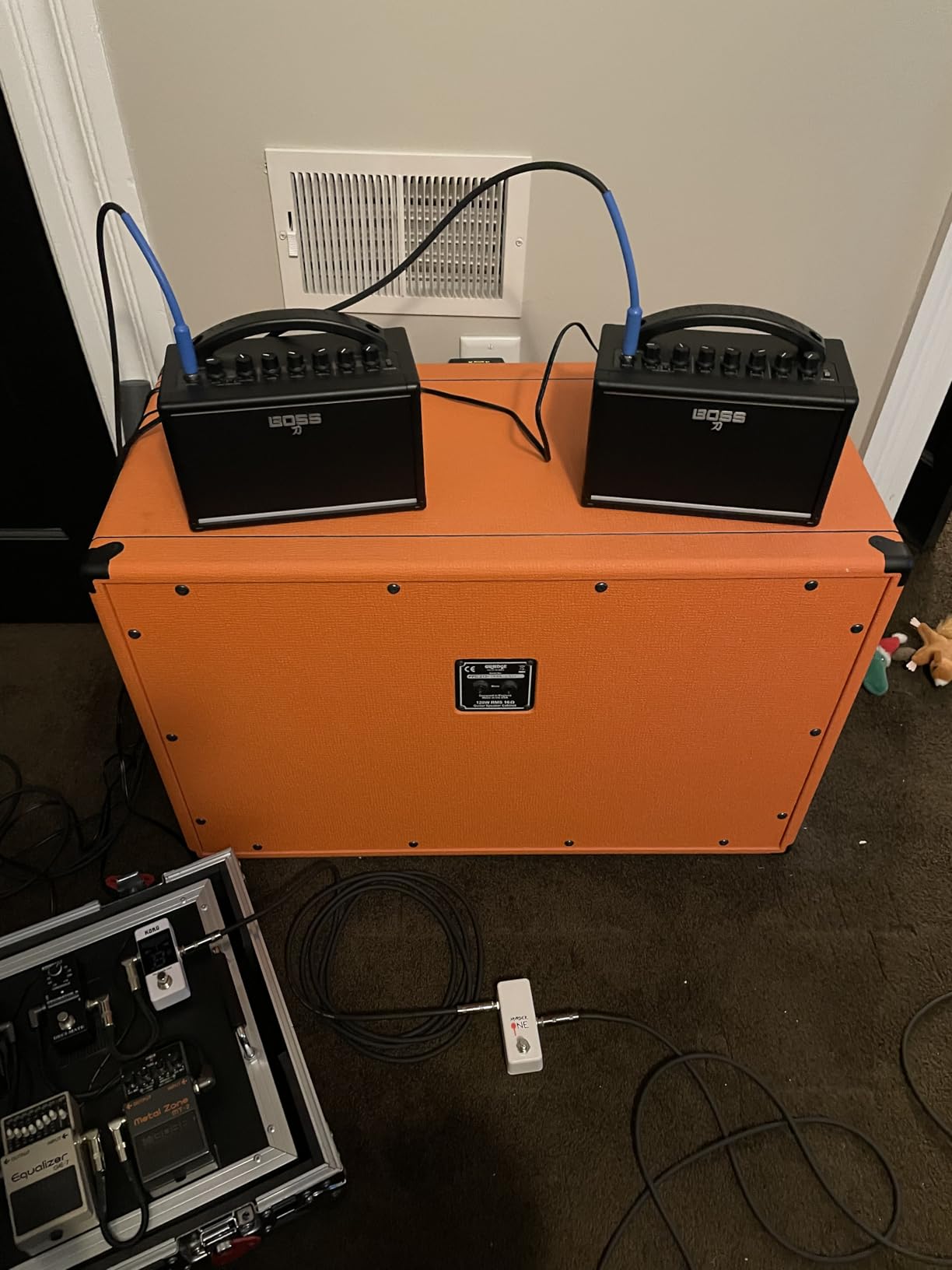
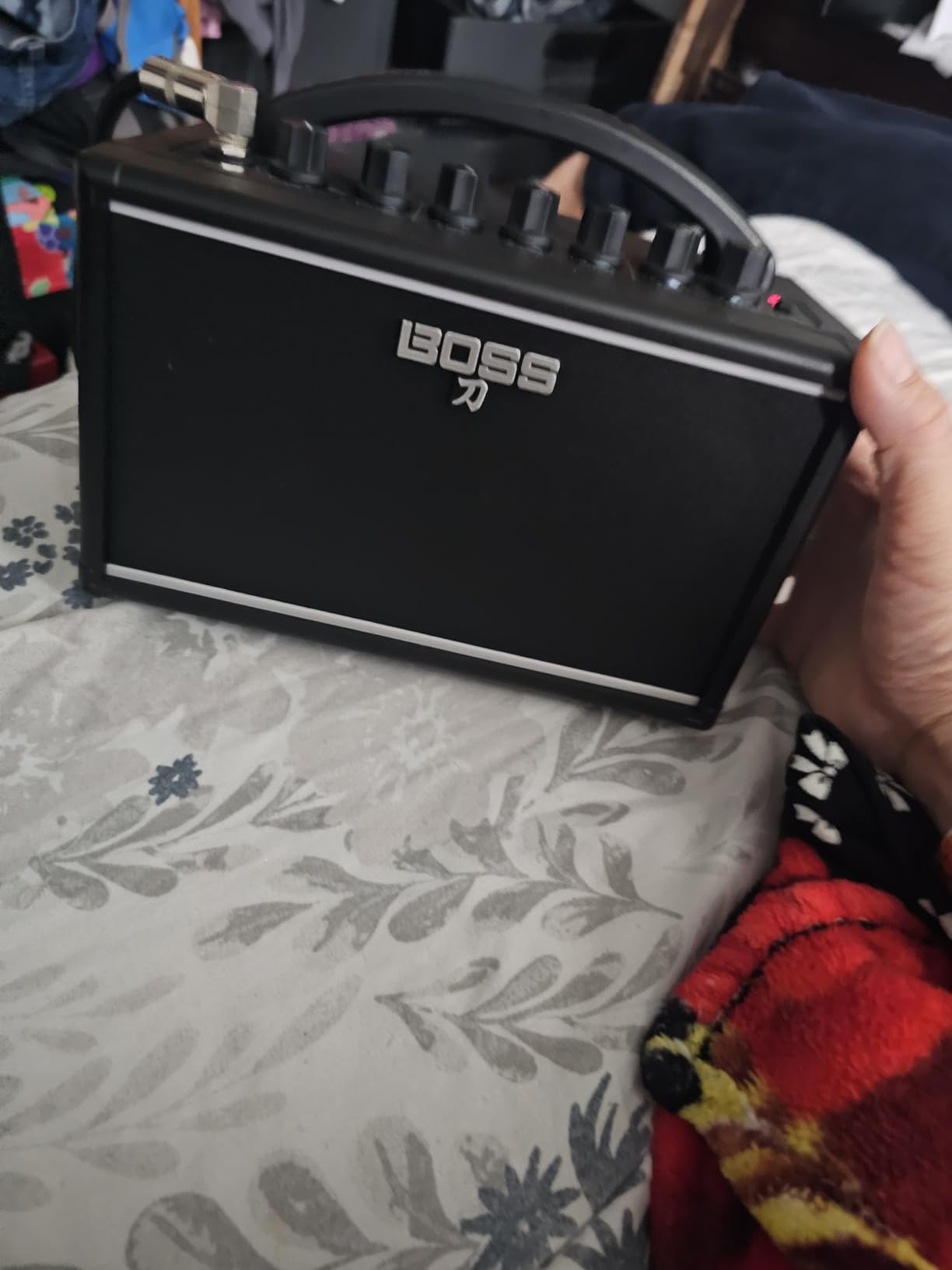
Technically, the Katana Mini is a 7-watt solid-state amp through a 4-inch speaker. You get three amp types (Brown, Crunch, Clean), a three-band analog tone stack, and a built-in tape-style delay. There is no reverb, which is a real omission for ambient players, but the delay adds enough space to feel musical.
The biggest annoyance is that Boss does not include a power supply. You will need to buy a 9V adapter separately, and some users report hum with cheap aftermarket adapters. Stick with a quality regulated supply and you are fine.
Ideal for Travel and Couch Practice
If you want an amp you can literally play anywhere, the Katana Mini is your answer. It is perfect for hotel rooms, park benches, office lunch breaks, or just practicing on the couch without firing up your main rig. Beginners who want a no-fuss first amp also benefit from the simple three-knob layout.
Who Should Skip It
Anyone expecting to play with a drummer will be disappointed. Seven watts through a 4-inch speaker cannot keep up with acoustic drums, let alone a full band. Players who need reverb or multiple effects should also look at a modeling amp instead.
3. Positive Grid Spark 2 – Best Smart Amp With AI Features
Positive Grid Spark 2 50W Smart Guitar Practice Amp & Bluetooth Speaker with Built-in Looper, AI Features & Smart App for Electric, Acoustic, & Bass Guitar
50W Sonic IQ audio
Angled FRFR speakers
Built-in looper with drum patterns
AI tone generation
Bluetooth streaming
Optional battery
Pros
- Excellent sound quality with 50W of power
- Bluetooth doubles as speaker
- AI tone generation works surprisingly well
- Comprehensive app with amp models and effects
- Built-in looper and drum patterns
Cons
- Battery sold separately (adds cost)
- Foot switch sold separately
- App reliance for full functionality
- Some effects quality is poor
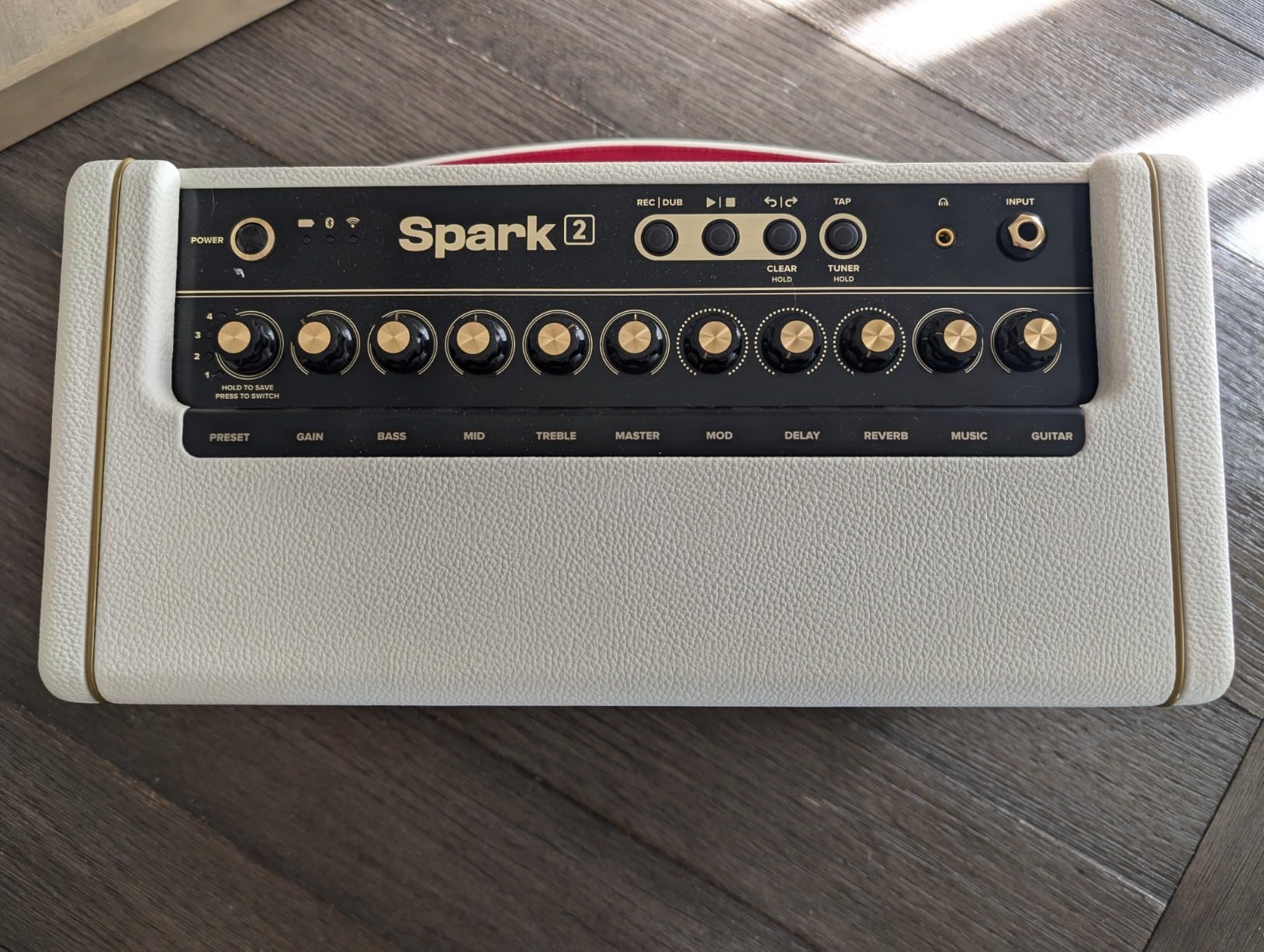
The Positive Grid Spark 2 is the amp I recommend to friends who want one device that does everything, and the 50 watts of Sonic IQ power fill a room in a way no other amp in this price bracket manages. The angled FRFR speakers project sound up toward your ears, which sounds like a small detail until you play one and realize how much clarity you have been missing.
The standout feature for me is the AI tone generation. Type something like “warm jazz chorus with slapback delay” into the Spark app and it builds a custom signal chain in seconds. It is not perfect every time, but when it nails the description, it feels like magic. The built-in Creative Groove Looper with hundreds of drum patterns also turns solo practice into a full-band experience.
Bluetooth streaming means the Spark 2 doubles as a genuinely good speaker for music. I have used it for backyard gatherings and people consistently ask where the sound is coming from.
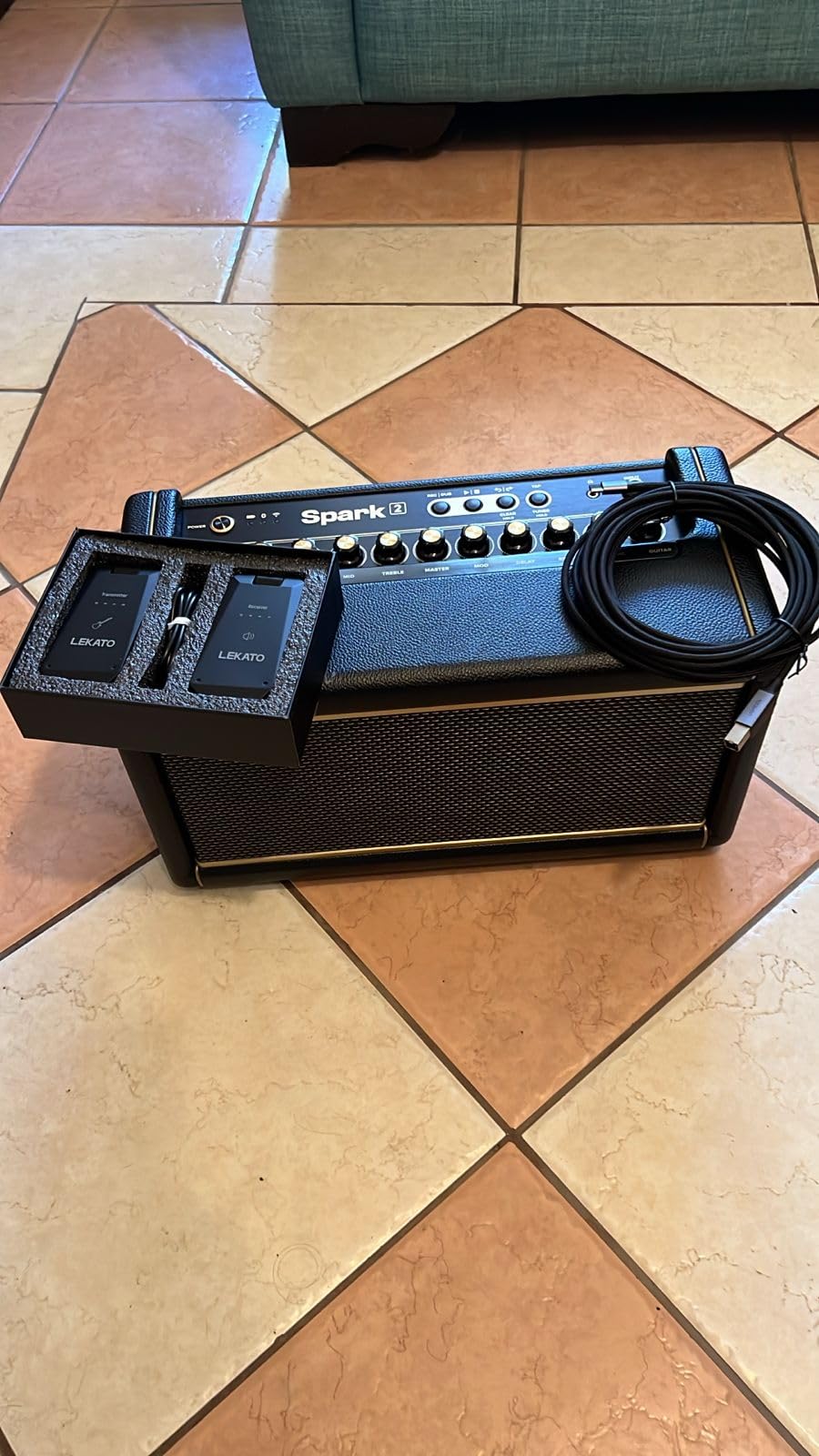
Under the hood, the Spark 2 runs upgraded DSP with HD amp models and improved tube emulation. The app gives you access to a massive library of amps, effects, and community-created tones. USB-C connectivity handles recording and firmware updates cleanly.
The catch is the ecosystem tax. The battery pack for portable use is sold separately, and the Spark Control X footswitch for live preset switching is another add-on. By the time you accessorize, you may creep past $300. Some users also report that certain effects like phaser sound weak compared to the amp models.
Ideal for Tech-Savvy Players and Home Studios
If you love tweaking tones in an app, want a practice amp that doubles as a Bluetooth speaker, and appreciate features like Auto Chords and Smart Jam, the Spark 2 is purpose-built for you. It is also a strong pick for home recording since the USB-C output is clean and reliable.
Players who practice with backing tracks or drum loops will get enormous value from the built-in looper and groove patterns. It turns solo practice into something genuinely fun.
Who Should Skip It
Players who want a traditional amp experience with physical knobs and no app dependency may find the Spark 2 frustrating. If you just want to plug in, turn a few dials, and play without touching your phone, look at the Orange Crush 20 or Marshall MG15GFX instead.
4. Orange Crush 20 – Best Solid-State Amp for British Rock Tone
Orange Crush 20 20W 8" 2-Channel Guitar Amplifier and Speaker Combo, Orange
20W solid state
8 inch speaker
Twin channel (Clean and Dirty)
High gain preamp
3-band EQ
CabSim headphone out
Pros
- Excellent British tone with rich midrange
- Impressive volume for 20W
- Two channels with separate controls
- Takes pedals very well
- Iconic Orange build quality
Cons
- No built-in reverb
- No direct out for recording
- Power switch on back is inconvenient
- No built-in tuner
The Orange Crush 20 is the amp I reach for when I want raw, analog attitude without menu diving. That signature Orange midrange punch comes through even at bedroom volumes, and the dirty channel has a grainy, aggressive character that sits beautifully in rock and alternative mixes. It does not try to model twenty different amps. It just sounds like an Orange, and that focused personality is its strength.
I have run pedals into the front of the Crush 20 extensively, and it takes them better than any solid-state amp I have tried at this price. Overdrive pedals, fuzz boxes, and modulation all sit naturally on top of the clean channel without getting muddy or harsh.
The CabSim-loaded headphone output is a real highlight. Plug in headphones and you get a speaker-emulated signal that sounds full and recorded, not thin and direct. It makes silent practice genuinely enjoyable.
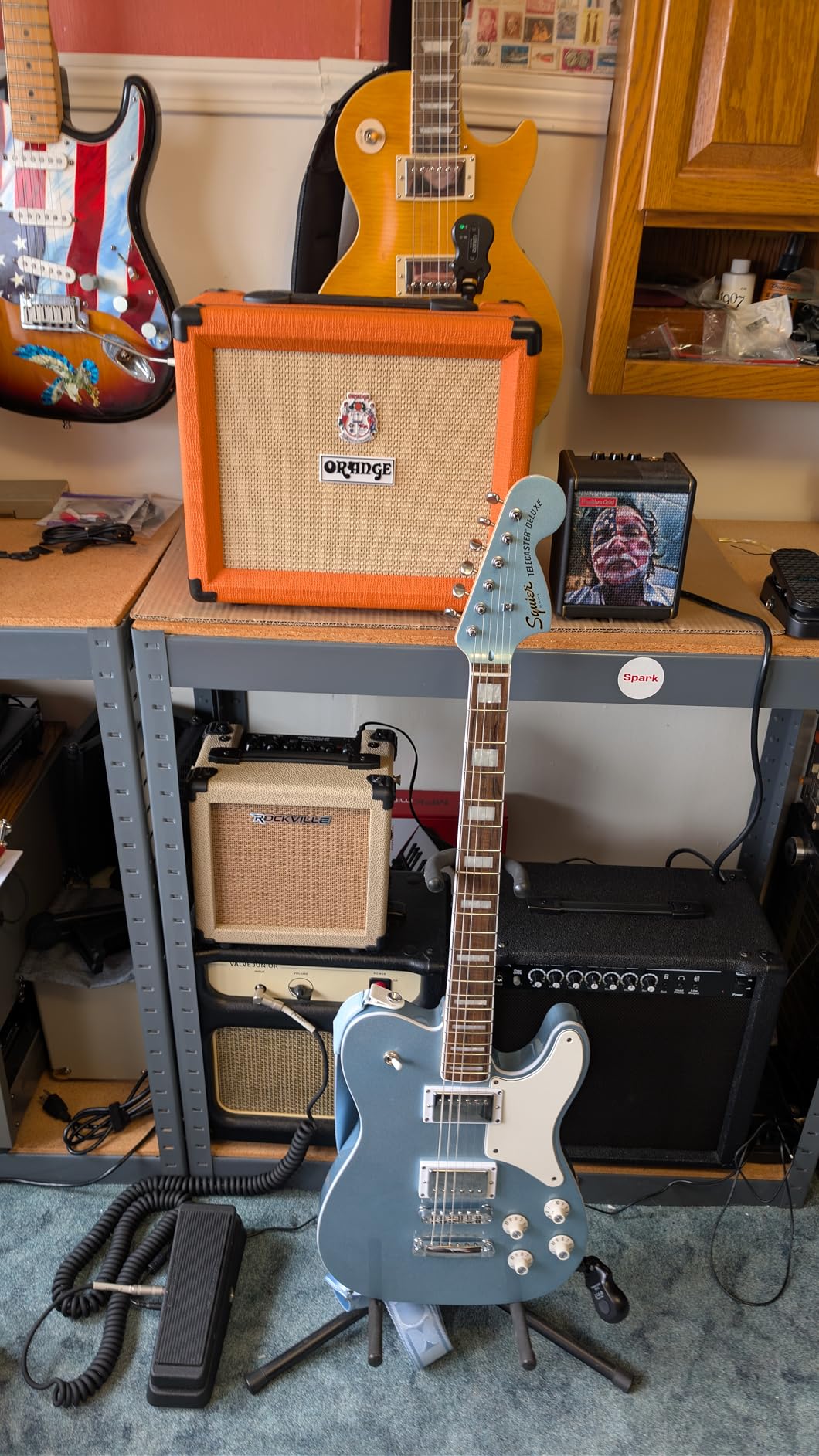
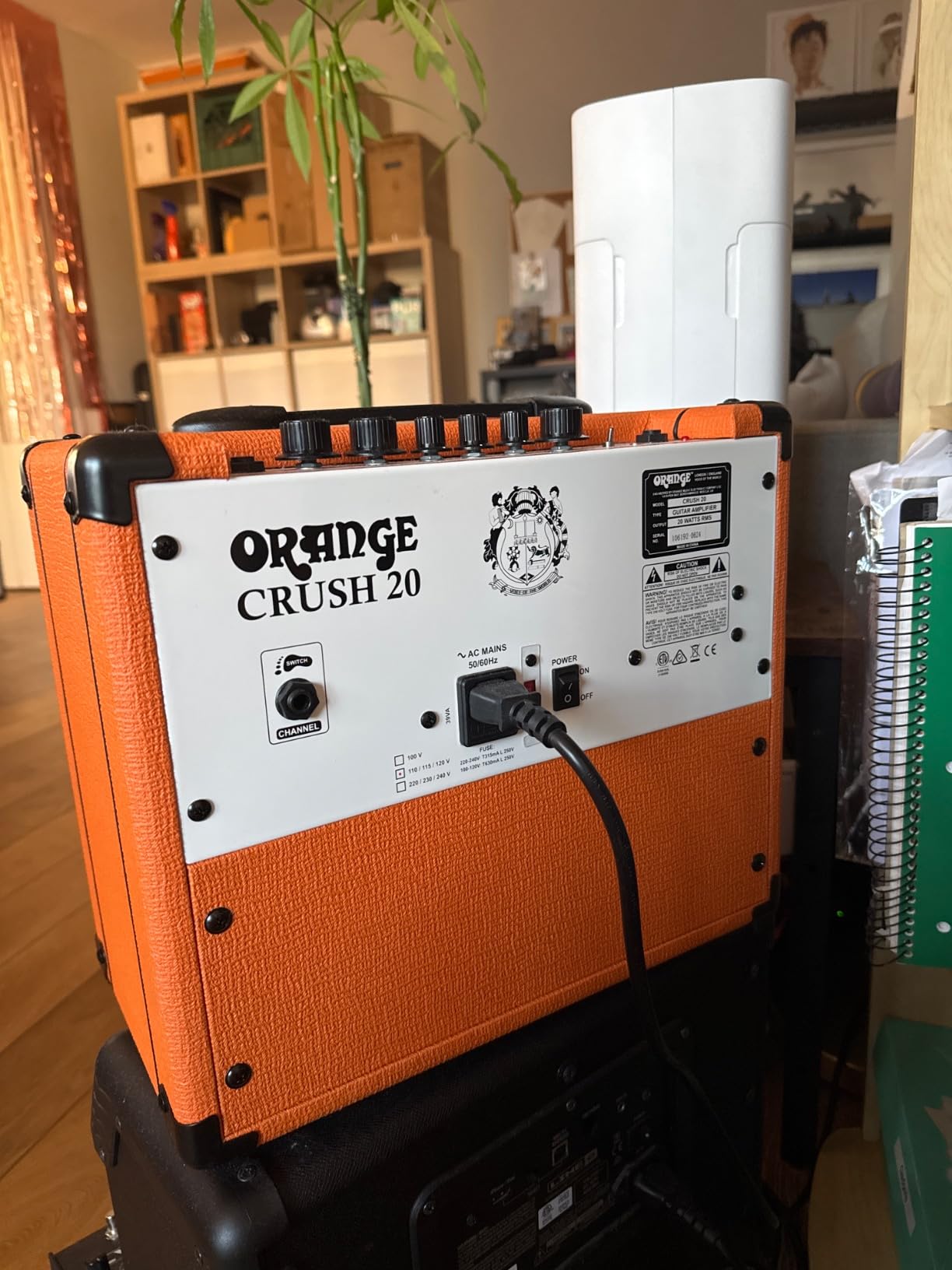
Technically, the Crush 20 delivers 20 watts through an 8-inch speaker with a twin-channel layout. The clean channel has its own volume, while the dirty channel adds gain and volume controls. A global three-band EQ shapes both channels. A footswitch input lets you toggle channels on the fly.
The omissions are real, though. There is no built-in reverb (you need the Crush 20RT for that), no USB or direct recording output, and no tuner. If those features matter to you, the Fender Mustang LT25 covers more ground for a similar price.
Ideal for Rock and Alternative Guitarists
If your heroes play through Orange stacks and you want a piece of that sound at practice volume, the Crush 20 is the most authentic path. It is also a superb pedal platform, which makes it ideal for players who already own a few stompboxes and want a clean, responsive foundation.
Who Should Skip It
Players who want built-in effects, recording connectivity, or multiple amp models should look elsewhere. The Crush 20 is intentionally simple, and if you need versatility over character, the Mustang LT25 or Spark 2 are better fits.
5. Marshall MG15GFX – Best Multi-Channel Practice Amp
Marshall MG Gold Series, MG15GFX 15W Guitar Combo Amplifier
15W solid state
8 inch Marshall speaker
4 channels: Clean, Crunch, OD1, OD2
Built-in digital FX
Dedicated reverb
3-band EQ
Pros
- Classic Marshall tone in compact form
- Four channels offer good versatility
- Built-in digital effects are usable
- Simple operation without app required
- Good value for the price
Cons
- Foot switch required for tuner access (sold separately)
- Overdrive only fully usable at max gain
- No full manual included
- Stock speaker may need upgrading
The Marshall MG15GFX is the amp I recommend when someone specifically wants the Marshall look and sound without spending four figures. The black tolex, gold piping, and script logo give it genuine stage presence on a bedroom shelf, and the four-channel layout covers everything from clean pop to thick modern metal.
I appreciate that Marshall kept the operation old-school. No app, no firmware updates, no Bluetooth pairing. You turn physical knobs, save four presets, and play. For players who find smart amps overwhelming, this is refreshingly direct.
The built-in effects are surprisingly usable. The chorus and delay stand out as genuinely musical, and the dedicated reverb control with Studio and Spring types gives you real flexibility without menu navigation.
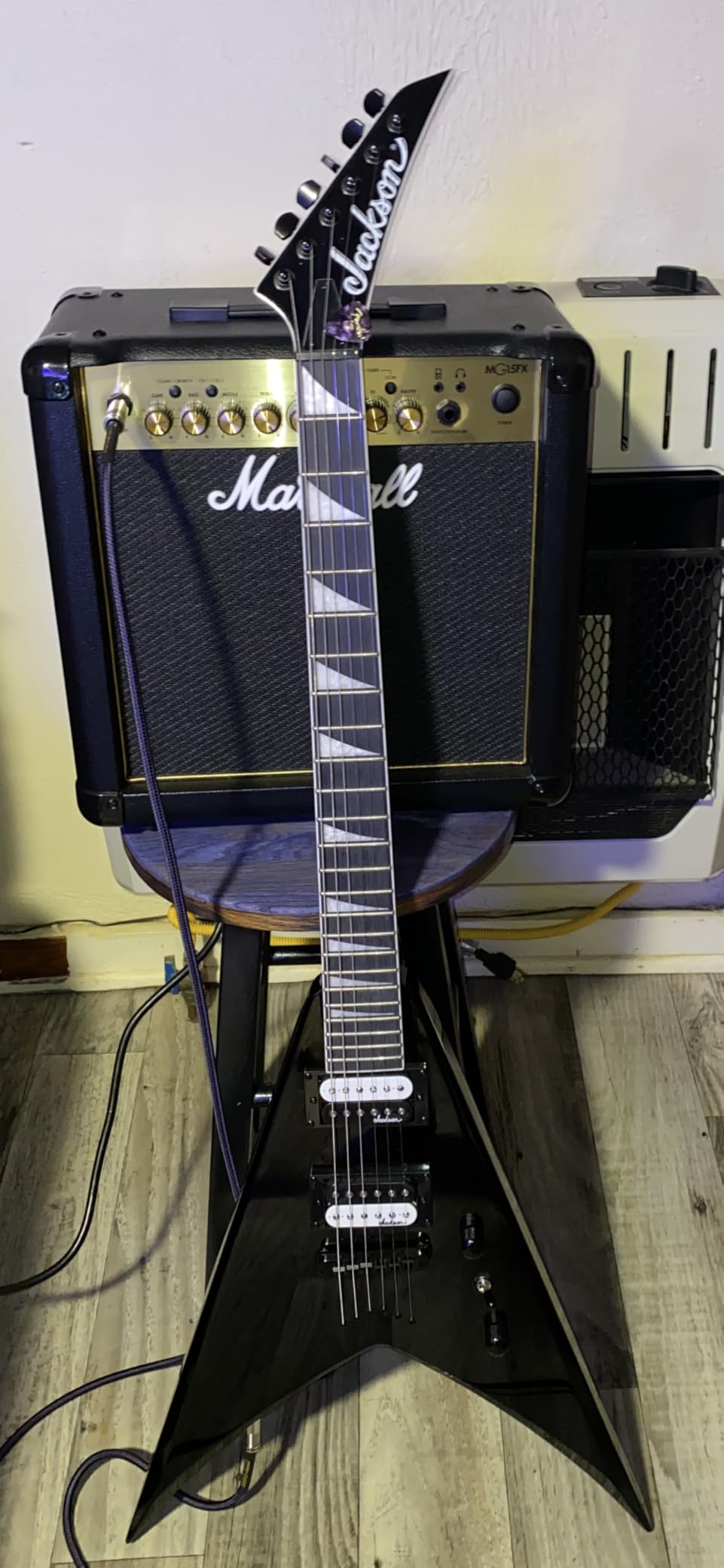
Under the hood, the MG15GFX is a 15-watt solid-state amp pushing an 8-inch Custom Marshall speaker. The four channels (Clean, Crunch, OD1, OD2) cover a wide tonal range, and you can store four user presets for quick recall. The 3.5mm headphone output and MP3/line-in handle silent practice and backing tracks.
The main weakness is the overdrive channel, which only opens up fully at maximum gain. Below that, it can sound compressed and lifeless. The stock speaker is also a known bottleneck, and some owners swap it for a Celestion to unlock better tone.
Ideal for Players Who Want the Marshall Experience
If brand identity matters to you and you want an amp that looks and sounds like a Marshall should, the MG15GFX delivers. It is also a strong pick for players who want multiple gain stages and built-in effects without touching a phone app.
Who Should Skip It
Players focused on home recording should note the lack of USB output. Tone purists who dislike solid-state character may also prefer the Monoprice tube amp for genuine tube warmth at a similar price point.
6. Fender Frontman 10G – Best Starter Amp on a Tight Budget
Fender Frontman 10G Guitar Amp, 10 Watts, with 2-Year Warranty, 6 Inch Fender Special Design Speaker, 5.75Dx10.25Wx11H Inches
10W solid state
6 inch Fender speaker
Gain control with overdrive switch
2-band EQ
Aux input
Headphone output
Pros
- Excellent clean tones
- Great value for a practice amp
- Compact and portable
- Perfect for beginners
- Headphone output for silent practice
- Takes pedals well on clean channel
Cons
- Built-in overdrive sounds compressed
- Only treble and bass EQ (no mids)
- Not suitable for competing with drums
- No included guitar cable
The Fender Frontman 10G is the amp most guitarists start with, and there is a reason it has racked up over 13,000 reviews. For the price, the clean channel is genuinely excellent, with that classic Fender sparkle and chime that makes single-coil pickups sing. I have recommended this amp to dozens of first-time players and not one has been disappointed.
The mid-60s black panel styling gives it real character too. It looks like a Fender should, with silver grille cloth and classic control labels. For a bedroom or dorm room, it is a handsome little amp.
Where the Frontman 10G struggles is dirt. The built-in overdrive switch works, but it sounds compressed and somewhat artificial. The fix is simple: stay on the clean channel and use a pedal for dirt. The Frontman takes pedals beautifully on the clean setting.
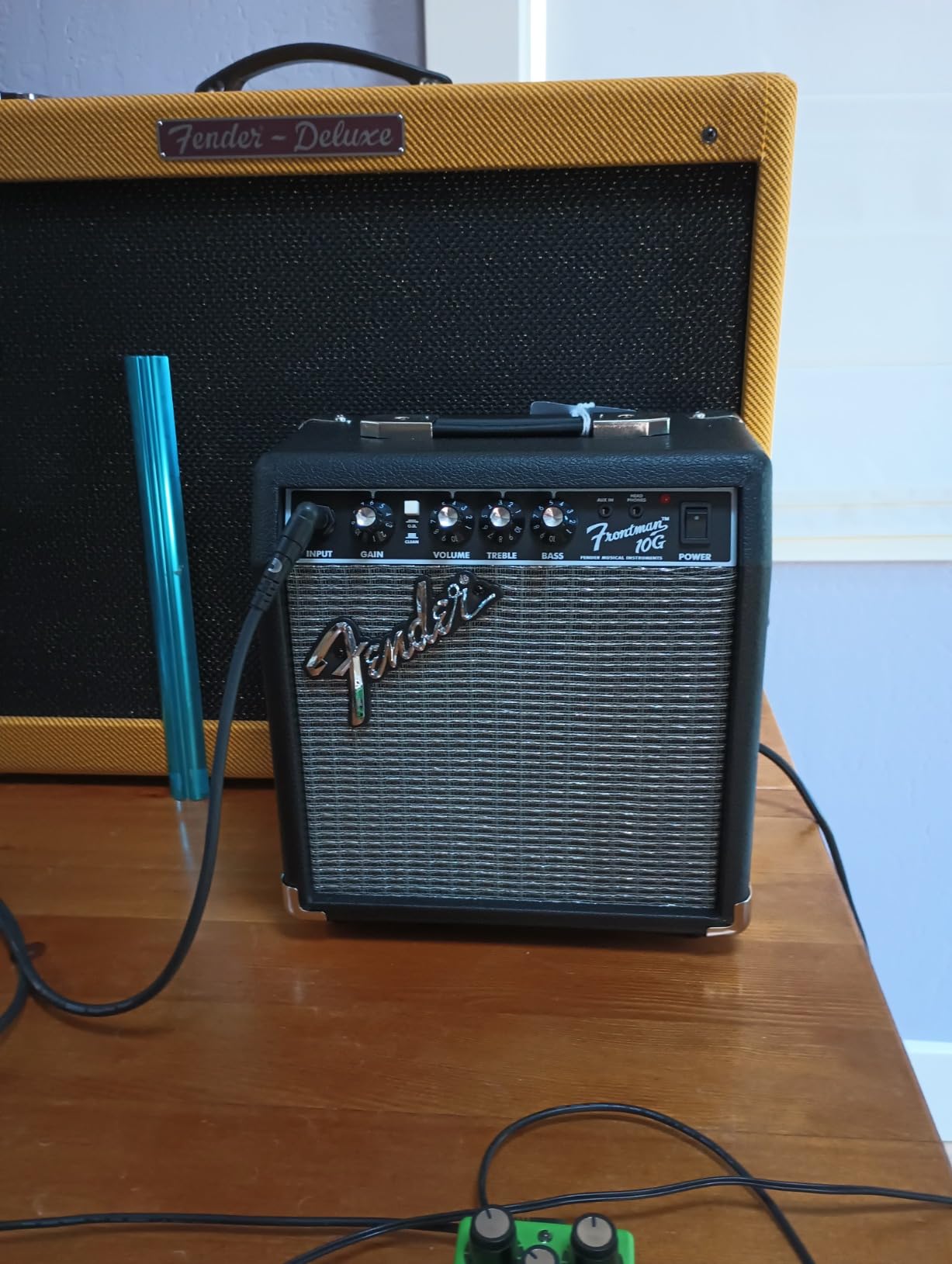
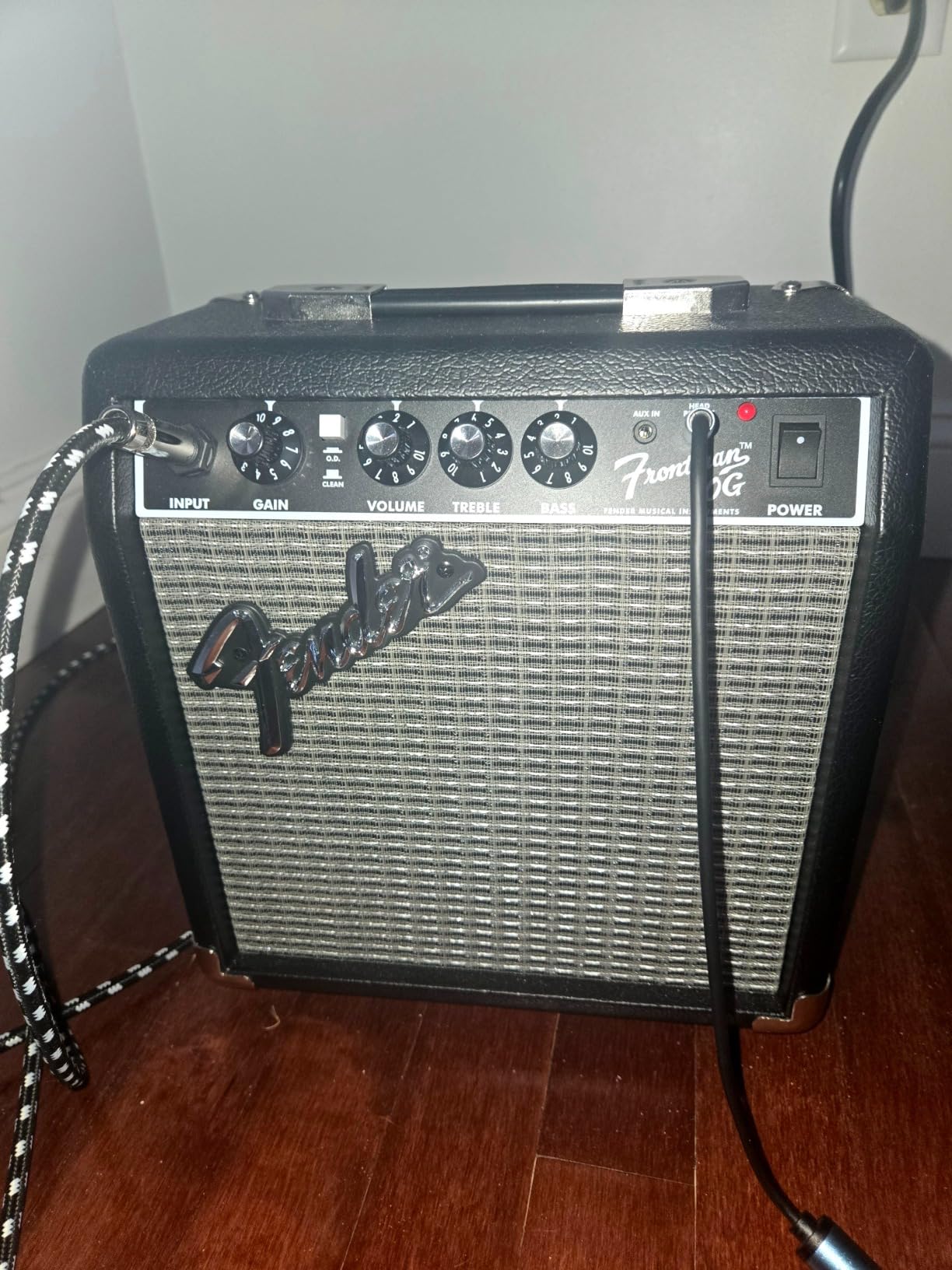
Technically, the Frontman 10G is a 10-watt solid-state amp with a 6-inch Fender Special Design speaker in a closed-back cabinet. The closed-back design improves low-end response compared to open-back practice amps. Controls include gain, volume, treble, and bass, plus a push-button overdrive switch.
The 2-band EQ is limiting. Without a mid control, dialing in certain tones is tricky, and you may fight the EQ when switching guitars with different pickup outputs. The aux input and headphone output cover the basics for silent practice and backing tracks.
Ideal for Absolute Beginners
If you are buying your first electric guitar and need an amp that just works, the Frontman 10G is the safest choice on this list. The clean tone is genuinely good, the controls are dead simple, and the price leaves room in your budget for a quality cable and picks.
Who Should Skip It
Anyone who needs built-in effects, recording connectivity, or enough volume to play with others should step up to the Mustang LT25 or another feature-rich option. The Frontman is a clean-tone practice amp, not a versatile tool.
7. Marshall MG10G – Best Compact Marshall for Apartments
Marshall Amps Guitar Combo Amplifier (M-MG10G-U)
10W solid state
6.5 inch speaker
2 channels
3-band EQ
Headphone jack
Aux input
Compact portable design
Pros
- Unmistakable Marshall tone
- Excellent sound quality for size
- Great value
- Lightweight and portable
- Headphone jack for silent practice
- Clean and distortion channels
Cons
- Some users stuck on dirty channel
- Not suitable for larger venues
- Basic feature set
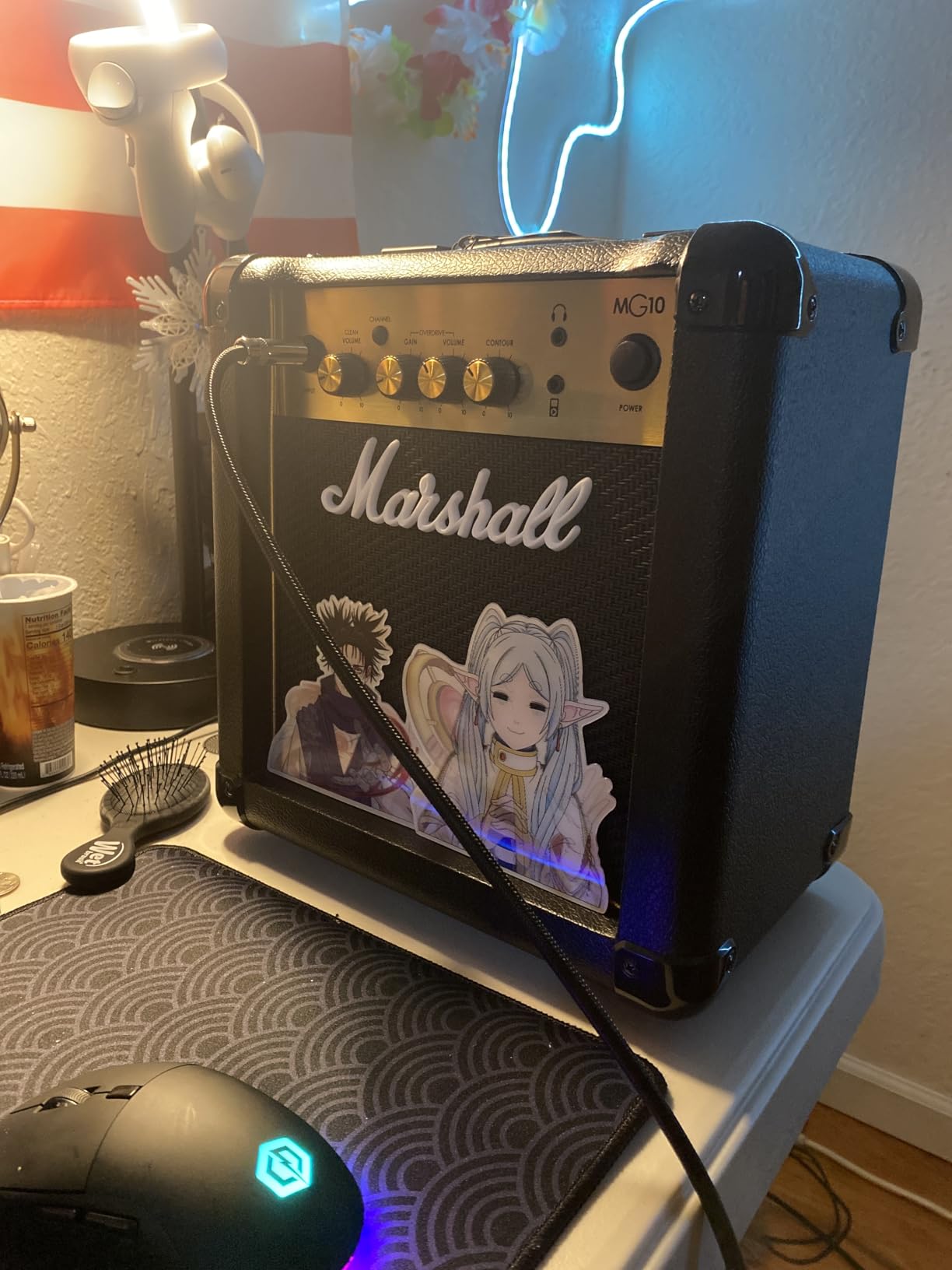
The Marshall MG10G is the amp I plug in when I want Marshall character without waking the house. At 10 watts through a 6.5-inch speaker, it is louder than you would expect but still apartment-friendly. The clean channel is clear and balanced, and the dirty channel delivers that signature Marshall grind at practice volumes.
What surprises me most is how full the MG10G sounds for its size. Marshall clearly tuned the cabinet and speaker to work together, and the result is a punchy, present tone that does not feel thin or boxy.
The straightforward control layout is a plus. Gain, volume, and a three-band EQ give you everything you need and nothing you do not. No menus, no apps, no firmware. Just plug in and play.
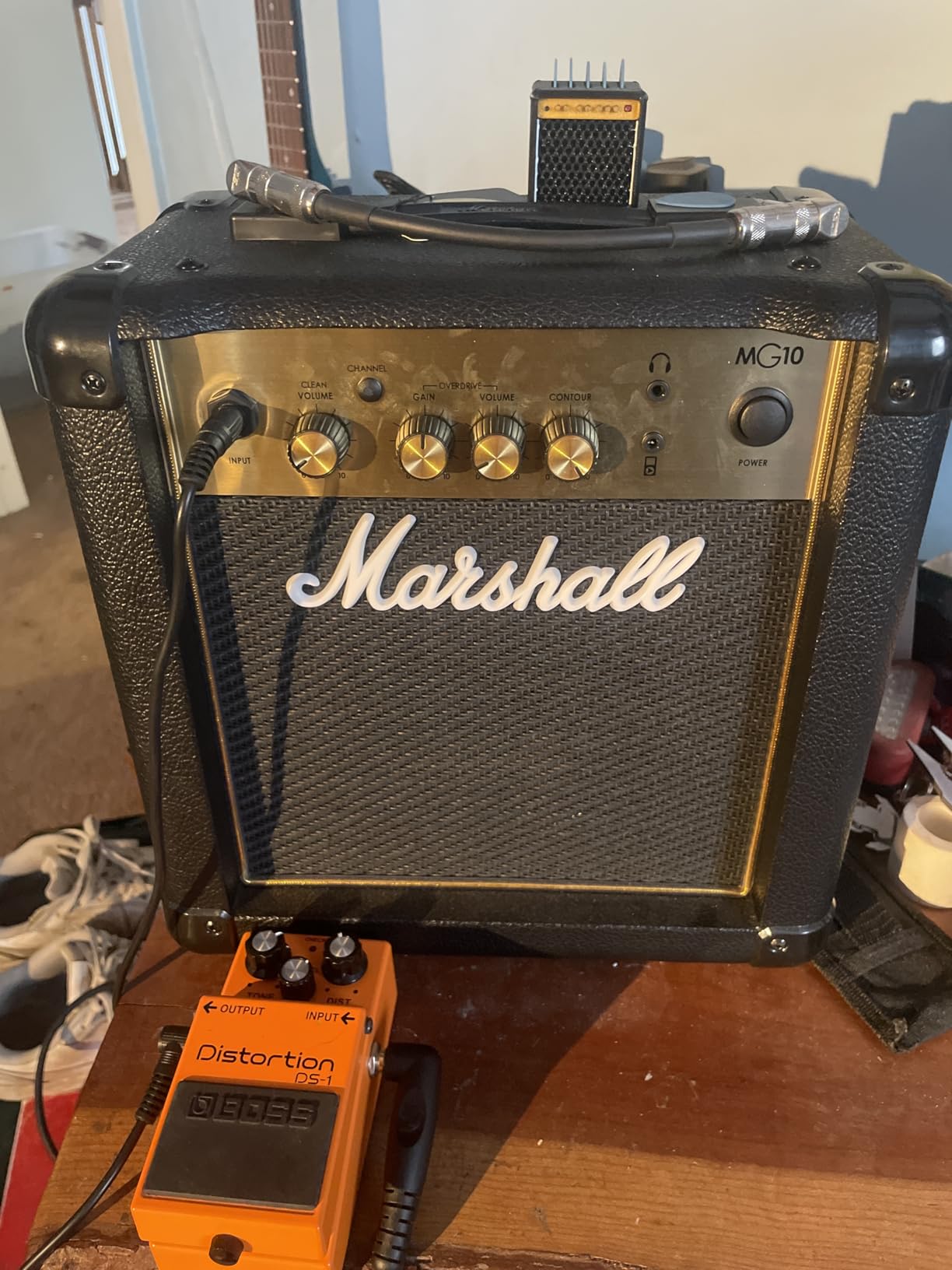
Under the hood, the MG10G is a 10-watt solid-state amp with two channels (clean and distortion), a 6.5-inch speaker, and a 3-band EQ. The headphone jack handles silent practice, and the aux/iPhone input lets you jam along with backing tracks from your phone.
The main limitation is volume. This is a bedroom and small-jam amp, not a stage tool. Some users have also reported a fault where the amp gets stuck on the dirty channel, though this appears to be a quality control issue rather than a design flaw.
Ideal for Practice and Small Spaces
If you want Marshall tone in the smallest possible package and have no plans to gig, the MG10G nails it. It is perfect for apartments, dorms, and offices where volume needs to stay controlled but tone still matters.
Who Should Skip It
Players who need stage volume, built-in effects, or recording features should look at the MG15GFX or another option. The MG10G is intentionally basic, and that is both its charm and its limitation.
8. Vox VT20X – Best Hybrid Modeling Amp With Tube Preamp
Vox VT20X 1x8 inch 20-watt Modeling Guitar Combo Amplifier w/ DSP and Hybrid Design
20W hybrid with tube preamp
VET modeling technology
8 inch speaker
USB connectivity
Built-in tuner
Tone Room software
4-band EQ
Pros
- Amazing value undercutting competitors
- Authentic tube-like tones from hybrid design
- Tone Room software expands capabilities
- Extensive preset library
- Responsive to guitar volume knob
- Great for clean and high-gain
Cons
- Volume spike when changing presets
- No DAW interface for direct recording
- Stock speaker limitations
- Construction feels lightweight to some users
The Vox VT20X is the amp I recommend to players who want tube-like responsiveness without paying tube-amp prices. The hybrid design pairs a real tube in the preamp section with digital modeling, and the result is a tone that reacts to your picking dynamics and volume knob in a way pure digital amps cannot match. Roll back your guitar volume and the tone cleans up naturally, just like a tube amp.
The Tone Room software is what unlocks the VT20X’s full potential. Connect over USB and you gain access to deep editing of dozens of amp models and effects. I have spent hours building custom patches that rival tones from amps costing five times more.
The built-in tuner is a small but genuinely useful feature that saves desk space and keeps you from needing a separate pedal or clip-on tuner.
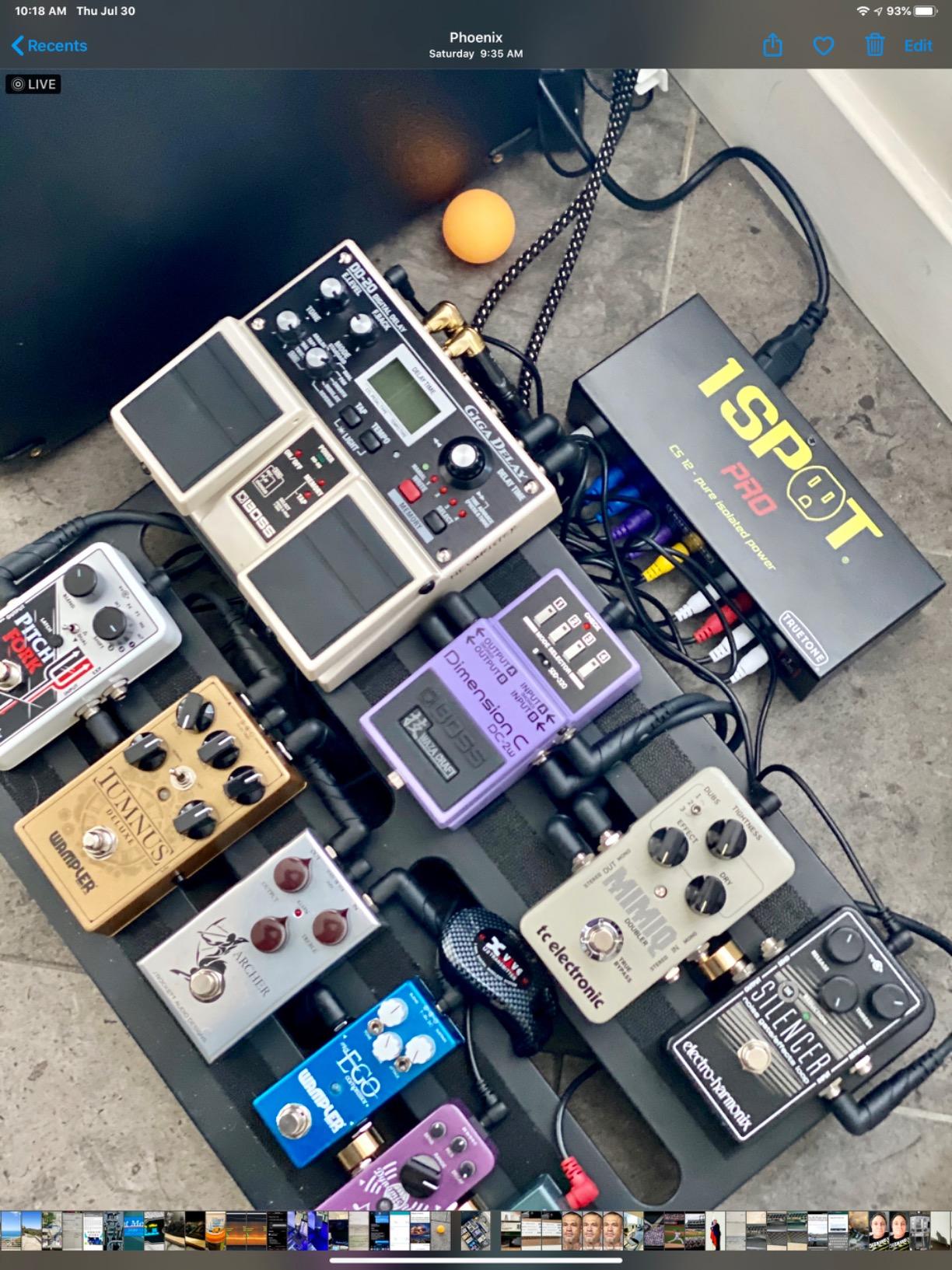
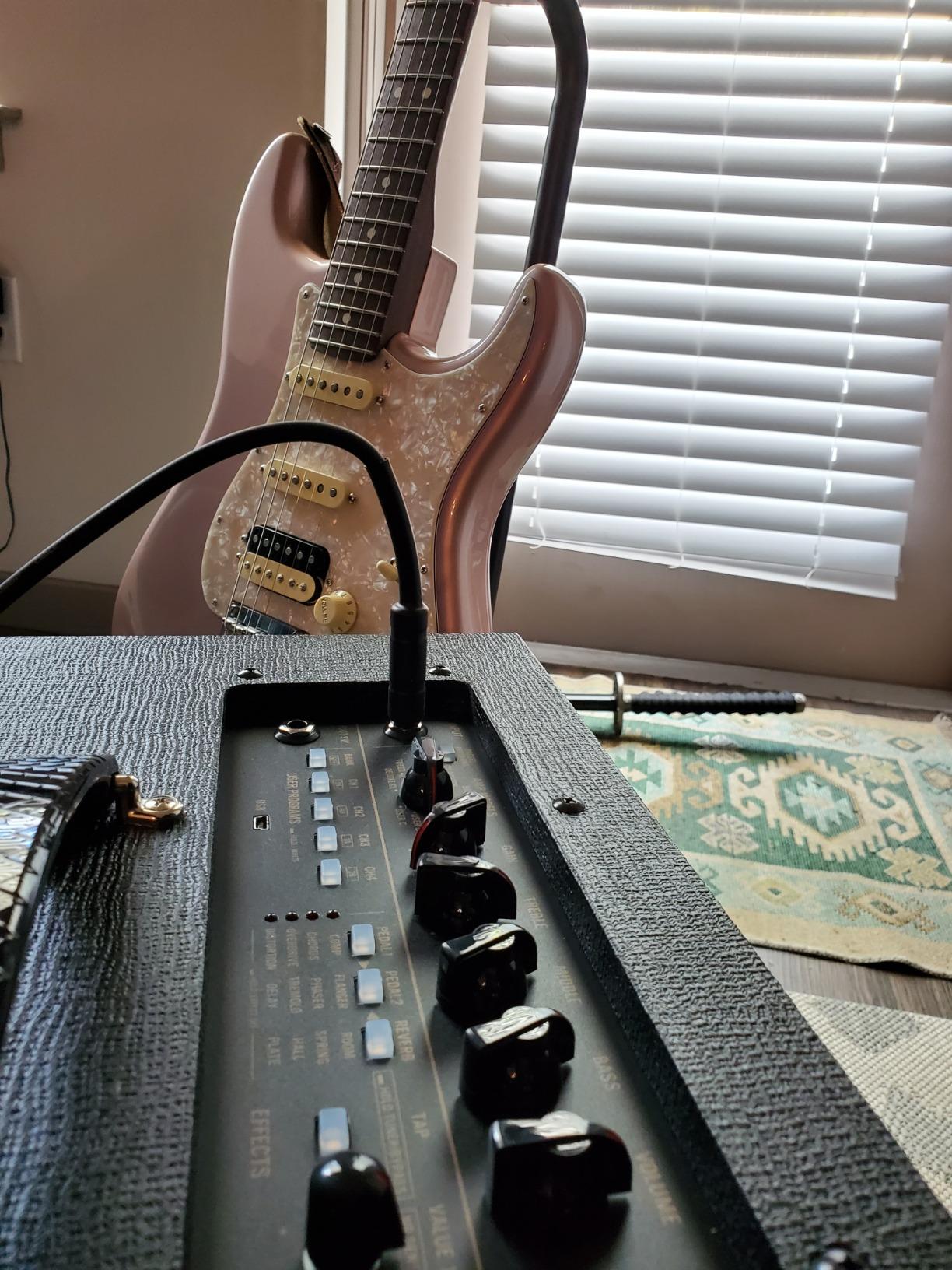
Technically, the VT20X is a 20-watt hybrid modeling amp with a tube preamp (Valvetronix technology), VET (Virtual Element Technology) modeling, and an 8-inch Vox speaker. Connectivity includes USB for editing and a headphone jack for silent practice. The amp is compatible with optional VFS2 and VFS5 footswitches for live preset switching.
The biggest annoyance is the volume spike when switching between presets. If you go from a quiet clean patch to a loud high-gain one, the jump can be jarring. There is also no direct DAW interface for clean recording, which limits its usefulness as a studio tool.
Ideal for Tone Enthusiasts on a Budget
If you care about dynamic responsiveness and want an amp that feels alive under your fingers, the VT20X delivers tube-like behavior at a modeling-amp price. It is also a strong pick for players who enjoy deep editing and building custom tones in software.
Who Should Skip It
Players who want a simple plug-and-play experience may find the Tone Room software dependency frustrating. Those who need clean USB recording should also look at the Fender Mustang LT25 or Positive Grid Spark 2 instead.
9. Monoprice Stage Right 5W Tube Amp – Best True Tube Amp Under 300
Monoprice 1x8 Guitar Combo Tube Amplifier with Celestion Super 8 Inch Speaker - Tan / Beige 5-Watt, 12AX7 Preamp, For All Electric Guitars - Stage Right Series
5W all-tube design
12AX7 preamp tube
6V6GT power tube
Celestion Super 8 speaker
1W/5W power switch
Low and high inputs
External speaker out
Pros
- Fantastic tube amp value
- Warm full clean tones with sparkle
- Natural tube breakup at volume
- Celestion speaker quality
- Takes pedals extremely well
- 1W mode perfect for apartments
Cons
- No headphone jack
- No aux input
- No reverb
- Stock speaker can be limiting
- Quality control issues in some units
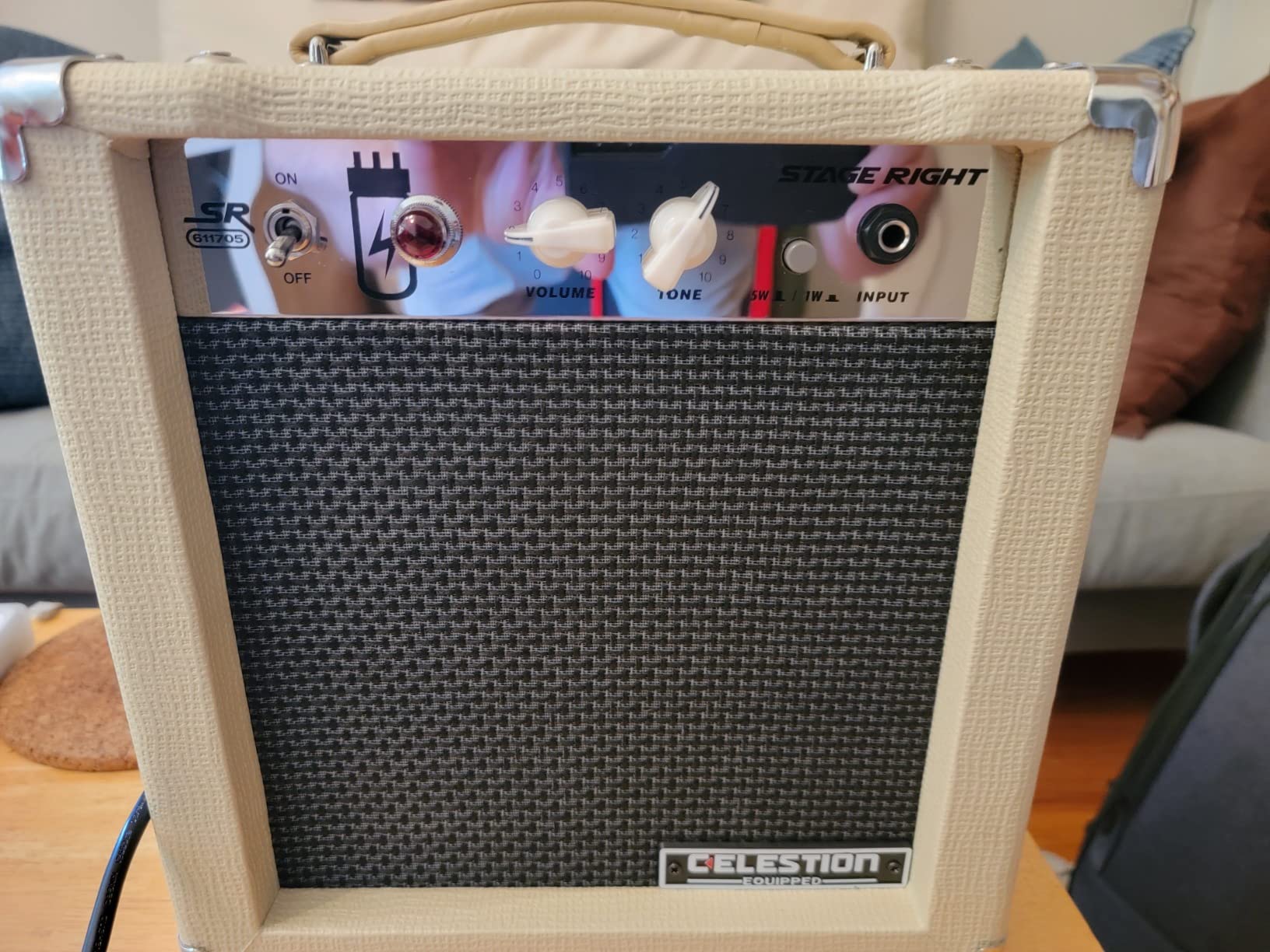
The Monoprice Stage Right 5W tube amp is the amp I show people when they do not believe you can get real all-tube tone under $300. With a 12AX7 preamp tube and a 6V6GT power tube driving a Celestion Super 8 speaker, this is a genuine tube circuit, not a modeling approximation. The clean tone is warm, full, and sparkly in a way that solid-state amps at this price simply cannot replicate.
Push the volume and the amp breaks up naturally into creamy, singing overdrive. This is the sound that made tube amps legendary, and it is happening in a $200 combo on your desk.
The 1W/5W power switch is the feature that makes this amp practical for home use. Switch to 1 watt and you get full power-amp breakup at conversation volume, perfect for apartment dwellers who want tube grit without eviction.
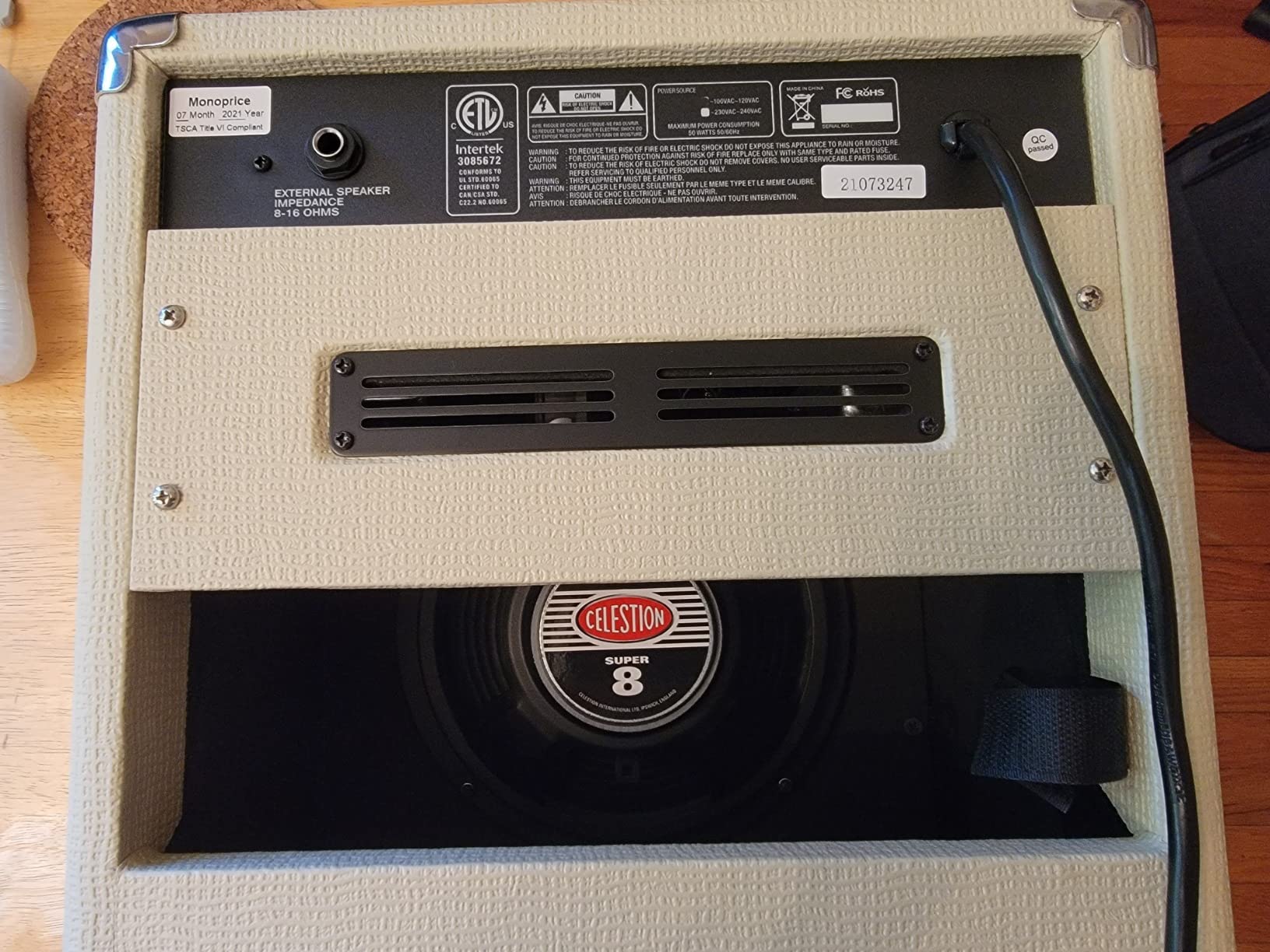
Technically, the Stage Right is a 5-watt all-tube combo with a 12AX7 preamp tube, a 6V6GT power tube, and a Celestion Super 8 GBA-15 speaker. It offers low and high inputs (the high input is easier to overdrive), volume and tone controls, and an external speaker output for cabinet expansion. Frequency response runs from 80Hz to 10kHz.
The omissions are significant. There is no headphone jack, no aux input, and no reverb. The power cord is hardwired and only three feet long, which limits placement options. Some users have reported quality control issues like loose screws or tolex trimming imperfections.
Ideal for Tube Tone Purists
If you have always wanted a tube amp but could not justify the cost, the Monoprice Stage Right is your entry point. It is perfect for players who value organic tone and natural breakup over features and connectivity. Pair it with a reverb pedal and a good overdrive and you have a remarkably versatile rig.
Who Should Skip It
Players who need silent practice, recording connectivity, or built-in effects should look elsewhere. The Stage Right is a pure, simple tube amp with no concessions to modern convenience, and that will frustrate anyone who expects headphone jacks and USB outputs.
10. Positive Grid Spark GO – Best Pocket-Sized Smart Amp
Positive Grid Spark GO 5W Ultra-Portable Smart Guitar Amp, Headphone Amp & Bluetooth Speaker with Smart App for Electric Guitar, Acoustic or Bass
5W ultra-portable
33 amps and 43 effects
ToneCloud 50,000+ tones
Smart Jam AI
Auto Chords
Bluetooth streaming
USB-C rechargeable
8 hour battery
Pros
- Incredibly portable fits in pocket
- Surprisingly big full sound
- Excellent Bluetooth speaker
- App provides massive customization
- Great headphone amp quality
- 8-hour battery life
- Smart Jam feature is useful
Cons
- App interface may not appeal to all
- Some features require additional payment
- Bluetooth reconnection can be slow
- Reverb through speaker is weak
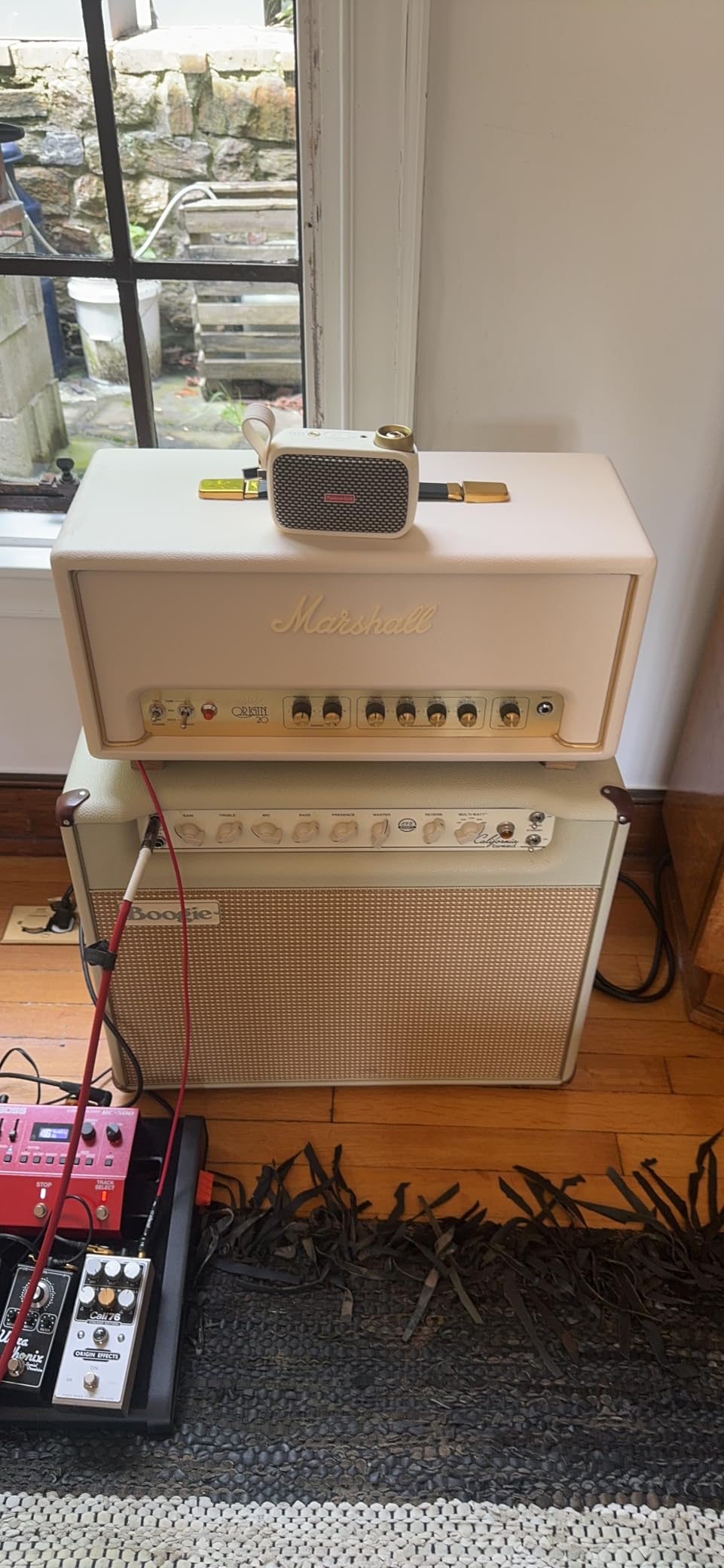
The Positive Grid Spark GO is the amp that lives in my guitar case, and it has changed how I practice on the go. Smaller than a paperback book, it packs 33 amp models and 43 effects into a metal housing that weighs just over a pound. The sound that comes out of this tiny box genuinely surprises everyone who hears it for the first time.
The Smart Jam feature is where the Spark GO earns its smart designation. The AI learns your playing style and generates a bass and drum backing track that matches your tempo and feel. It is like having a patient bandmate in your pocket, ready to jam whenever you are.
The ToneCloud community gives you access to over 50,000 user-created tones. Want the exact tone from a famous recording? Chances are someone has already built it and shared it.
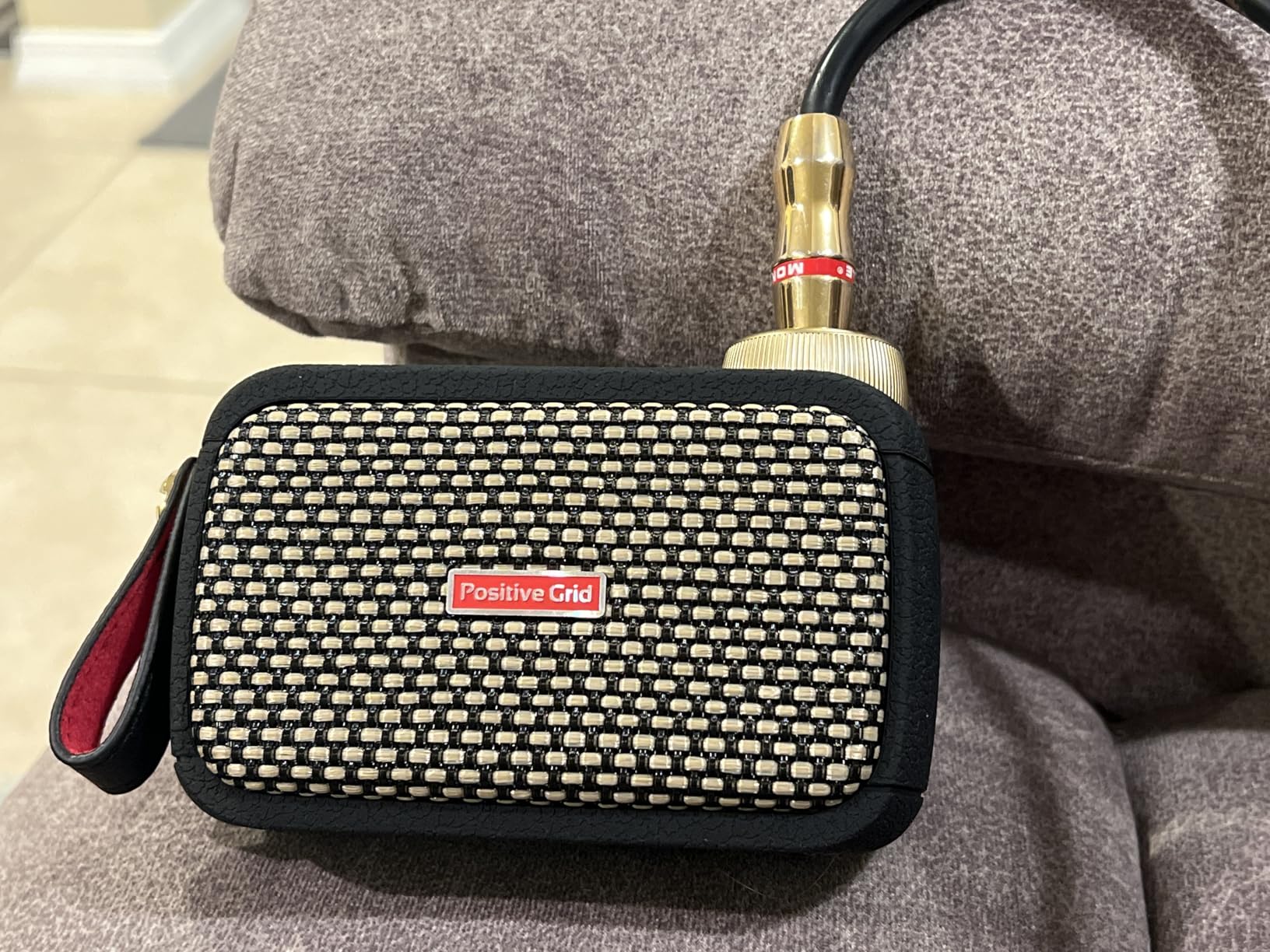
Under the hood, the Spark GO is a 5-watt digital modeling amp with computational audio, Bluetooth streaming, and USB-C charging. The internal battery runs up to 8 hours on a charge, and four hardware preset buttons let you recall your favorite tones without the app.
The Auto Chords feature analyzes any song from your music library and displays the guitar chords in real time, which is a fantastic learning tool. As a Bluetooth speaker, the Spark GO also delivers quality audio for casual listening.
Ideal for Traveling and On-the-Go Practice
If you want an amp you can carry anywhere, practice silently with headphones, and use as a Bluetooth speaker when you are not playing guitar, the Spark GO is unmatched. It is also a fantastic learning tool thanks to Auto Chords and Smart Jam.
Who Should Skip It
Players who need room-filling volume or want a traditional amp experience should look at full-size options. The Spark GO is a personal practice tool, not a stage or jam-ready amp.
How to Choose the Best Guitar Amp Under $300?
Choosing the right amp in this price range comes down to matching the amp’s strengths to your playing situation. Here is how I think about it after testing all 10 of these options.
Match Wattage to Your Space
Wattage determines how loud and clean your amp stays at volume. For bedroom practice, 5 to 15 watts is plenty. The Monoprice tube amp at 5 watts (or 1 watt on the low setting) fills a bedroom and breaks up beautifully without disturbing neighbors. For jamming with a drummer, you need at least 20 watts, and the Orange Crush 20 and Vox VT20X handle that duty well.
The Positive Grid Spark 2 at 50 watts is the loudest amp on this list and the only one that could realistically handle a small gig or rehearsal with a full band. If you plan to perform live, that extra headroom matters.
Understand Tube, Solid-State, and Modeling
Tube amps like the Monoprice Stage Right use vacuum tubes to amplify the signal. They deliver warm, dynamic tone with natural breakup, but they are heavier, more fragile, and lack modern features like headphone jacks. Tube tone is the gold standard for many players.
Solid-state amps like the Orange Crush 20 and Marshall MG10G use transistor circuitry. They are reliable, lightweight, and affordable, with a cleaner, more consistent sound. Modern solid-state designs have closed the tone gap significantly, and many players cannot tell the difference at practice volumes.
Modeling amps like the Fender Mustang LT25 and Positive Grid Spark 2 use digital processing to emulate dozens of amp types. They offer the most versatility, built-in effects, and recording connectivity. The tradeoff is that some players feel modeling lacks the organic responsiveness of tubes, though the Spark 2’s upgraded DSP has narrowed this gap considerably.
Prioritize Connectivity Features
Think about how you actually practice and record. If silent practice matters, every amp on this list except the Monoprice tube amp has a headphone output. For home recording, the Fender Mustang LT25, Positive Grid Spark 2, and Vox VT20X all offer USB connectivity for tracking directly into a DAW without an audio interface.
The Positive Grid Spark GO and Spark 2 both offer Bluetooth for wireless audio streaming and app control. If you hate cables and want to control your tone from a phone or tablet, those are the models to focus on.
Consider Speaker Size and Cabinet Design
Speaker size affects tone more than most players realize. The 4-inch speaker on the Boss Katana Mini is never going to produce deep bass, but it is remarkably clear for practice. The 6-inch and 6.5-inch speakers on the Fender Frontman and Marshall MG10G are adequate for bedroom use. The 8-inch speakers on the Mustang LT25, Orange Crush 20, Marshall MG15GFX, Vox VT20X, and Monoprice tube amp deliver noticeably fuller tone with better low-end response.
Cabinet design also matters. The Fender Frontman’s closed-back design improves bass projection, while the angled FRFR speakers on the Spark 2 project sound upward toward your ears for better clarity.
FAQs
What is a good guitar amp for under $300 that are solid-state or modeling?
The Fender Mustang LT25 at $179.99 is the best solid-state modeling amp under $300, offering 30 presets, USB recording, and an 8-inch speaker in a wood cabinet. The Positive Grid Spark 2 at $279 is the best feature-rich smart modeling amp with AI tone generation and Bluetooth. Both deliver excellent tone quality and versatility for the price.
What is the best tube amp I can buy under $300?
The Monoprice Stage Right 5W Tube Amp at $199.99 is the best true tube amp under $300. It features a 12AX7 preamp tube, a 6V6GT power tube, and a Celestion Super 8 speaker for genuine all-tube tone. The Vox VT20X at $279.99 is the best hybrid option, combining a real tube preamp with digital modeling for tube-like responsiveness with modern versatility.
Which guitar amp is best for home practice under $300?
For home practice, the Fender Mustang LT25 is the top pick thanks to its silent headphone output, USB recording, and easy preset management. The Boss Katana Mini is best for ultra-portable practice, while the Positive Grid Spark GO fits in your pocket for practice anywhere. All three offer headphone jacks for apartment-friendly silent practice.
What size guitar amp do I need for home use?
For home practice, 5 to 15 watts through a 6 to 8-inch speaker is ideal. This covers bedroom volumes cleanly without disturbing neighbors. The Monoprice tube amp offers a 1W mode for apartment-friendly tube breakup, while the Fender Mustang LT25 at 25 watts has plenty of clean headroom for home use. Anything over 30 watts is overkill for a bedroom unless you plan to gig.
How do I choose between solid-state and tube amps?
Choose solid-state if you want reliability, lightweight design, built-in effects, and silent practice features at a low price. Choose tube if you prioritize organic tone, natural dynamic response, and warm breakup characteristics. Modeling amps combine solid-state reliability with digital emulation of tube tones, offering the best of both worlds for players who want versatility. At under $300, the Monoprice Stage Right is the only true tube option.
Final Thoughts on the Best Guitar Amps Under $300
After testing all 10 of these amps extensively, the best guitar amps under 300 come down to what you value most. The Fender Mustang LT25 wins overall for its unbeatable combination of tone, presets, USB recording, and value. The Positive Grid Spark 2 is the smart-amp champion if you want AI features and Bluetooth in a powerful 50-watt package. And the Boss Katana Mini remains the king of grab-and-go practice at a price that leaves room for accessories.
For tube purists, the Monoprice Stage Right delivers real all-tube tone at a price that should not exist. For rock and alternative players, the Orange Crush 20 serves up British attitude that punches well above its weight. And for travelers, the Positive Grid Spark GO puts a full modeling rig in your pocket.
Pick the amp that matches your space, your style, and your workflow. Any one of these ten will serve you well through 2026 and beyond.