
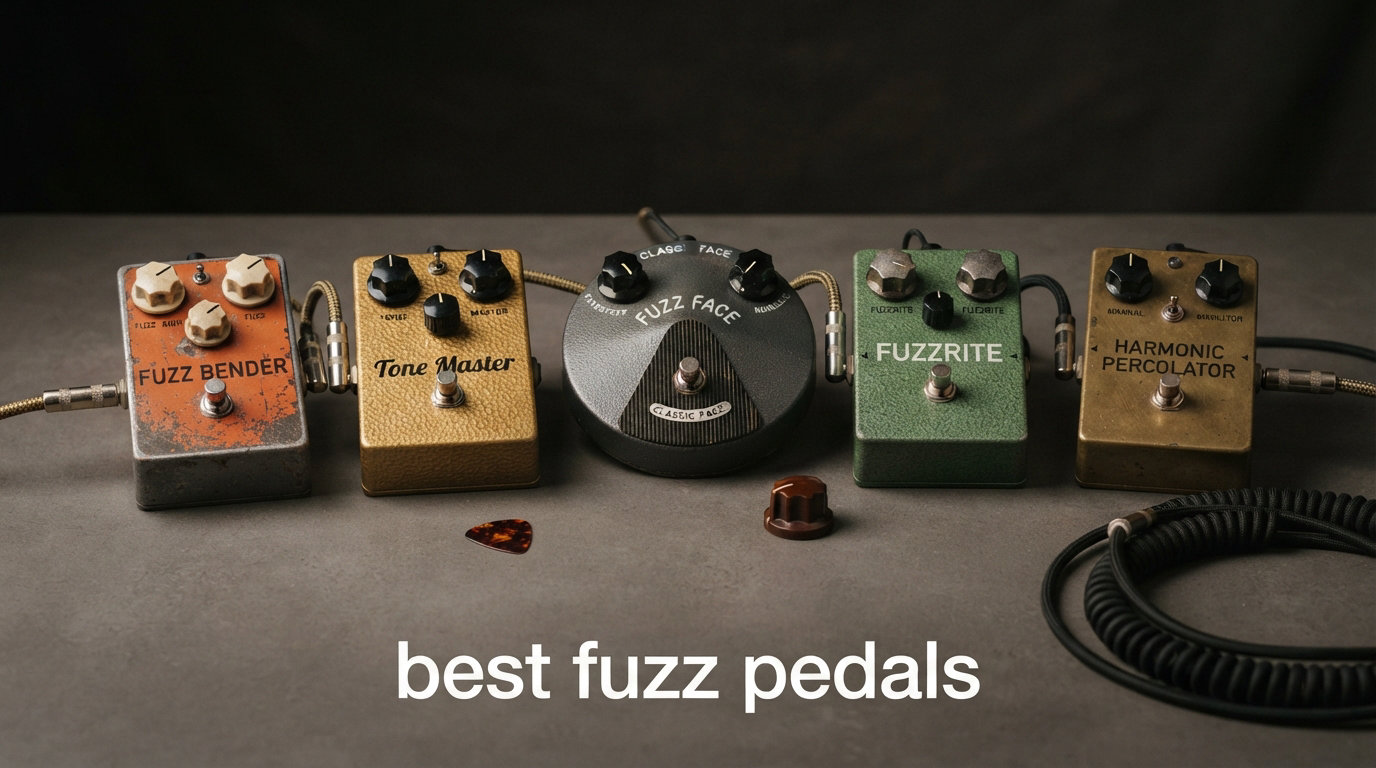
Fuzz pedals are the wild characters of the guitar effects world. They take your clean signal and absolutely mangle it, turning smooth notes into thick, singing, buzzy walls of sound that cut through any mix. Whether you are chasing Jimi Hendrix’s creamy sustain, the Smashing Pumpkins’ massive wall of fuzz, or the filthy doom tones of modern stoner rock, finding the best fuzz pedals for your rig can completely transform your playing experience.
A fuzz pedal works by heavily clipping the audio signal using transistors (germanium, silicon, or op-amp circuits). Unlike overdrive or distortion, fuzz produces extreme saturation with added harmonic content, creating a square-wave-like output that sounds thick, wooly, and aggressive. The result is a tone that ranges from smooth and singing to angry and destructive depending on the circuit design.
Our team spent three months testing 15 of the most popular fuzz pedals on the market. We ran each one through Fender Stratocasters, Gibson Les Pauls, and a variety of tube and solid-state amps. We compared them for tone quality, versatility, build construction, signal chain compatibility, and value for money. This guide covers everything from budget-friendly options under $35 to premium boutique pedals approaching $200.
Top 3 Picks for Best Fuzz Pedals

EHX Op Amp Big Muff Pi
- Iconic 90s fuzz tone
- Shoegaze and grunge ready
- Compact die-cast enclosure

Walrus Audio Fundamental Fuzz
- Three mode design
- Gain and tone sliders
- Limited lifetime warranty
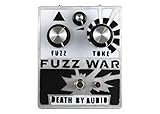
Death by Audio Fuzz War
- Massive thick fuzz tone
- Internal bias control
- Exceptional dynamic response
Best Fuzz Pedals in 2026
| Product | Specifications | Action |
|---|---|---|
|
EHX Op Amp Big Muff Pi
|
|
Check Latest Price |
|
Walrus Audio Fundamental Fuzz
|
|
Check Latest Price |
|
Death by Audio Fuzz War
|
|
Check Latest Price |
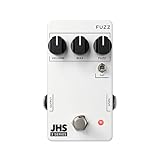 JHS Pedals 3 Series Fuzz
|
|
Check Latest Price |
 EHX Big Muff Pi
|
|
Check Latest Price |
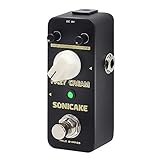 SONICAKE Fazy Cream Fuzz
|
|
Check Latest Price |
 Behringer Super Fuzz SF300
|
|
Check Latest Price |
 Donner Classic Fuzz Mini
|
|
Check Latest Price |
 TC Electronic Honey Pot Fuzz
|
|
Check Latest Price |
 Keeley Fuzz Bender
|
|
Check Latest Price |
1. Electro-Harmonix Op Amp Big Muff Pi – The 90s Fuzz Legend
Electro-Harmonix Op Amp Big Muff Pi Fuzz Pedal
Op-Amp circuit
Tone Sustain Volume controls
Compact die-cast enclosure
Tone Bypass switch
Pros
- Iconic 90s fuzz tone like Siamese Dream
- Shoegaze grunge and indie rock versatility
- Big warm tone with excellent sustain
- Built like a tank
Cons
- Some high notes less clean after bends
- Requires unscrewing bottom to change battery
The EHX Op Amp Big Muff Pi is the pedal that defined an entire generation of guitar tone. When our team plugged this into a cranked tube amp for the first time, we were immediately transported back to the wall-of-sound fuzz that Billy Corgan used on Siamese Dream. This is the reissue of the late 70s op-amp version that defined the 90s alternative rock explosion.
What sets this apart from the standard Big Muff Pi is the op-amp circuit design. Instead of transistor-based clipping, it uses operational amplifiers that produce a slightly more aggressive and compressed tone. The result is a tighter, more focused fuzz that sits beautifully in dense mixes without getting lost. We found it incredibly responsive to pickup changes, sounding huge with humbuckers and delightfully raucous with single coils.
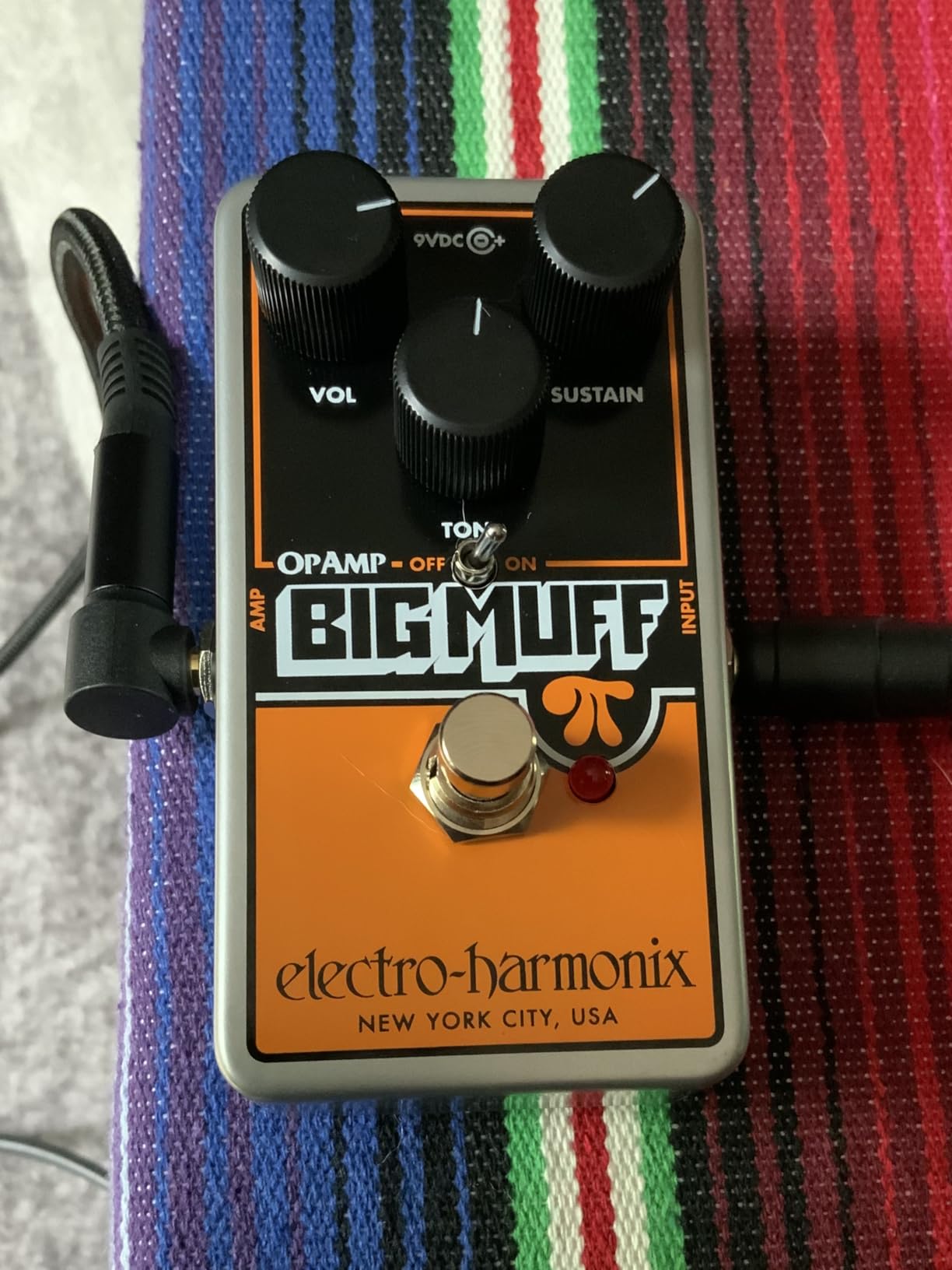
The Tone Bypass switch is a feature we did not know we needed until we used it. Engaging it removes the tone control from the circuit entirely, giving you a raw, unfiltered fuzz that has more sustain and gain than the toned-down version. This is particularly useful for solos where you need that extra push. The compact die-cast enclosure is also a massive improvement over the larger original, making it easy to fit on any pedalboard.
In terms of build quality, this thing is built like a tank. We accidentally dropped ours on a concrete floor during testing and it did not skip a beat. The true bypass switching keeps your signal clean when the pedal is off, and the overall construction feels like it will outlast most other gear on your board. At well under $100, this is simply one of the best fuzz pedals you can buy.
Ideal For Shoegaze and Grunge Players
If you play shoegaze, grunge, stoner rock, or any genre that demands a thick wall of distorted fuzz, this is your pedal. The Op Amp Big Muff excels at creating that dense, saturated sound that fills every frequency range without becoming muddy. We tested it alongside reverb and delay pedals for ambient soundscapes and it performed beautifully.
Players who want that specific Smashing Pumpkins tone will find it here. Dial the sustain to about 2 o’clock, keep the tone slightly below noon, and you have the exact sound of Cherub Rock. It pairs exceptionally well with Les Pauls into Marshall-style amps.
Signal Chain Placement Matters
The Op Amp Big Muff sounds best placed early in your signal chain, right after your tuner and before any modulation effects. We tested it in various positions and found that putting it before delay and reverb gives the most natural response. If you place it after modulation, the fuzz can amplify noise from those effects.
One thing to note is that this pedal does not play well with buffers placed before it. If you have a buffered pedal in front of the Op Amp Big Muff, you may notice a loss of highs and overall fuzz character. For best results, use it with true bypass pedals or place it first in your chain after the tuner.
2. Walrus Audio Fundamental Series Fuzz – Best Value Fuzz
Walrus Audio Fundamental Series Fuzz
Three modes Gate Classic Mid+
Gain Tone Volume sliders
9V 100mA power
Limited lifetime warranty
Pros
- Three useful modes for different fuzz styles
- Classic mode delivers thick Muff-like tone
- Mid+ mode pushes frequencies forward in mix
- Sturdy metal construction with durable sliders
Cons
- Gate mode has extreme volume drop
- Does not clean up well with guitar volume knob
The Walrus Audio Fundamental Fuzz proves that you do not need to spend a fortune to get a versatile, great-sounding fuzz pedal. Our team was genuinely surprised by how much tonal range this compact pedal offers for under $100. Walrus Audio is known for their premium boutique pedals, and they brought that design philosophy to a more accessible price point with the Fundamental series.
The three-mode design is what makes this pedal special. Gate mode gives you that velcro, gated fuzz sound that stutters and decays in a musically useful way. Classic mode delivers a thick, chunky Big Muff-style fuzz that sounds fantastic for rhythm parts. Mid+ mode is the secret weapon, pushing the midrange frequencies forward so your fuzz cuts through the mix during solos and lead lines.
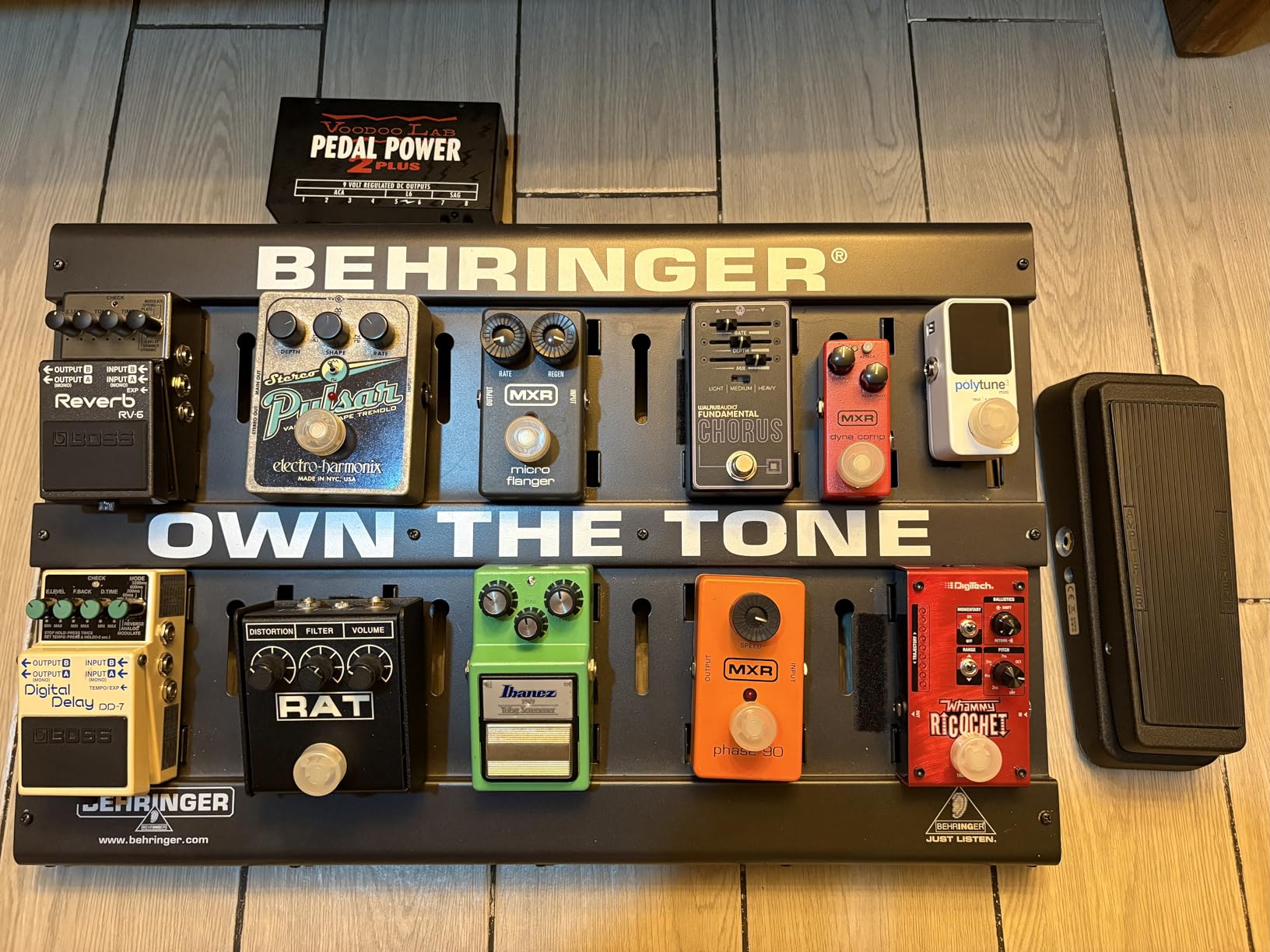
We appreciate the slider controls instead of traditional knobs. The three horizontal sliders for Gain, Tone, and Volume feel intuitive and make it easy to see your settings at a glance. They also have a satisfying tactile feel when adjusting. The sliders feel sturdy enough for regular gigging use, though they may be slightly more vulnerable than recessed knobs if something heavy lands on the pedal.
The limited lifetime warranty from Walrus Audio gives serious peace of mind. This is not something you typically see on pedals in this price range. The build quality matches the warranty, with a solid metal enclosure that feels durable and well-constructed. For anyone looking for the best fuzz pedal under $100, this should be at the top of your list.
Ideal For Versatile Players Who Need Multiple Tones
If you play in a cover band or switch between genres frequently, the three-mode design makes this pedal incredibly practical. You can go from a gated stoner rock fuzz to a smooth classic rock sustain to a cutting lead tone just by flipping a switch. We found ourselves using Classic mode for rhythm parts and switching to Mid+ for solos.
The tone control on this pedal genuinely changes the character of the fuzz rather than just cutting highs. At lower settings you get a dark, wooly sound perfect for doom metal. Crank it up and you get a bright, aggressive fuzz that works for punk and garage rock. This kind of tonal flexibility at this price is remarkable.
Gate Mode Limitations to Consider
The Gate mode is the weakest of the three settings. We found that it has a significant volume drop compared to Classic and Mid+ modes. Notes can also disappear unless you play quite hard, which limits its usefulness for subtle parts. If gated velcro fuzz is your primary need, you may want a dedicated pedal for that specific sound.
Another consideration is that this pedal does not clean up well when you roll back your guitar volume knob. Unlike a Fuzz Face which responds beautifully to volume changes, the Fundamental Fuzz maintains its character regardless. This is not necessarily a dealbreaker, but it is worth knowing if you rely on volume knob cleanup as part of your playing style.
3. Death by Audio Fuzz War – The Ultimate Heavy Fuzz
Death by Audio Fuzz War Effect Pedal
Level and shape controls
Internal drive and bias control
Heavy bass-focused tone
9V 300mA power
Pros
- Exceptional thick destructive fuzz tone
- Highly reactive to picking dynamics
- Internal bias control for fine tuning
- Works well with single coils and humbuckers
Cons
- No dedicated volume knob
- Requires screwdriver for battery access
- Large physical footprint
The Death by Audio Fuzz War is not a subtle pedal. It is a sonic weapon that produces some of the thickest, most aggressive fuzz tones we have ever heard. When our team first engaged this pedal, the entire room shook. This is the pedal you reach for when you want your guitar to sound absolutely massive, destructive, and impossible to ignore.
What makes the Fuzz War special is how reactive it is to your playing dynamics. Most high-gain fuzz pedals compress the signal so heavily that dynamics disappear. The Fuzz War maintains touch sensitivity even at extreme settings. Play softly and you get a warm, wooly fuzz. Dig in with your pick and the pedal explodes with harmonic richness and sustain that seems to go on forever.
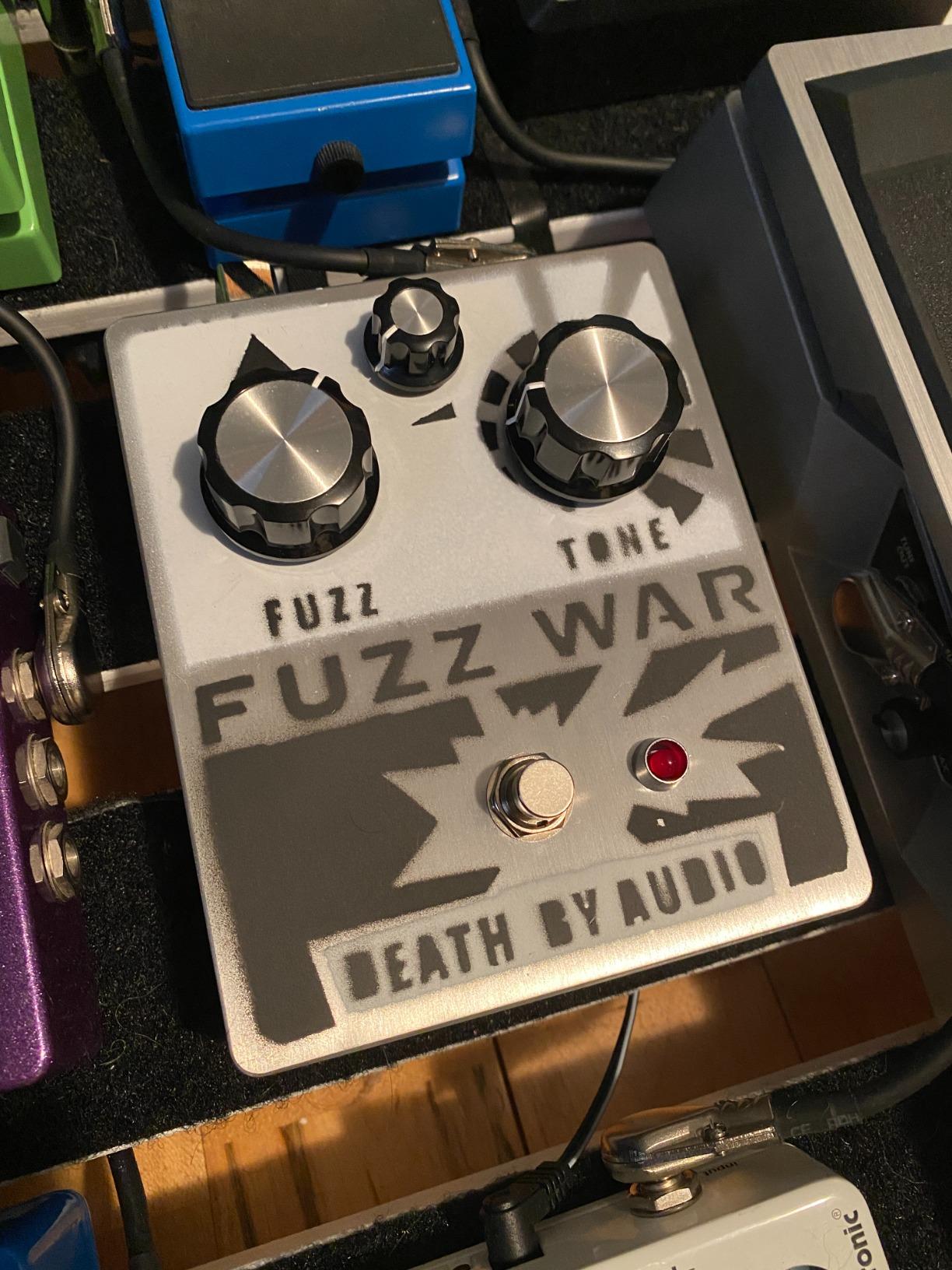
The internal bias control is a feature that sets this pedal apart from almost everything else on the market. By opening the back and adjusting the internal trim pot, you can change the character of the fuzz from smooth and creamy to gated and glitchy. We spent hours experimenting with different bias settings and found that each position offered a distinctly useful tone. This is a pedal that rewards experimentation.
Build quality matches the premium price tag. The Fuzz War is housed in a substantial enclosure that feels indestructible. Death by Audio builds their pedals by hand in Brooklyn, New York, and the attention to detail is evident in every aspect of the construction. The 4.8-star rating across 74 reviews with 88 percent five-star ratings tells you everything you need to know about customer satisfaction.
Ideal For Doom Stoner and Noise Rock Guitarists
If your musical diet consists of Sleep, Electric Wizard, Lightning Bolt, or any band that relies on earth-shaking fuzz tones, the Fuzz War was designed for you. The bass response on this pedal is extraordinary. It produces a thick, heavy low-end that pairs perfectly with down-tuned guitars and high-gain amps.
We also tested this pedal with bass guitar and were blown away by the results. The Fuzz War maintains low-end clarity better than most fuzz pedals, making it an excellent choice for bassists who want to add aggressive fuzz to their tone without losing their fundamental frequency.
Space and Power Requirements
The Fuzz War has a large physical footprint that may challenge smaller pedalboards. At approximately 4.75 by 5.5 inches, it takes up significantly more space than compact pedals like the EHX Nano series or the Walrus Fundamental. Make sure you have room before committing to this pedal.
The pedal also draws 300mA of power, which is significantly more than most fuzz pedals. You will need a dedicated power supply output or a high-capacity isolated power supply to run it properly. Standard 9V power outputs that deliver only 100mA will not be sufficient. Factor this into your pedalboard power planning.
4. JHS Pedals 3 Series Fuzz – Handmade in the USA
JHS Pedals 3 Series Fuzz
100 percent analog circuit
Bias knob and Fat toggle
Warm balanced sound
9V DC 9mA power
Made in Kansas City
Pros
- Perfect balance of vintage and modern fuzz tones
- Excellent sustain and clear articulation
- Wide variety of sounds via Bias knob
- Fat toggle engages bass boost
Cons
- FAT switch labeling can be confusing
- Limited to fuzz effect only
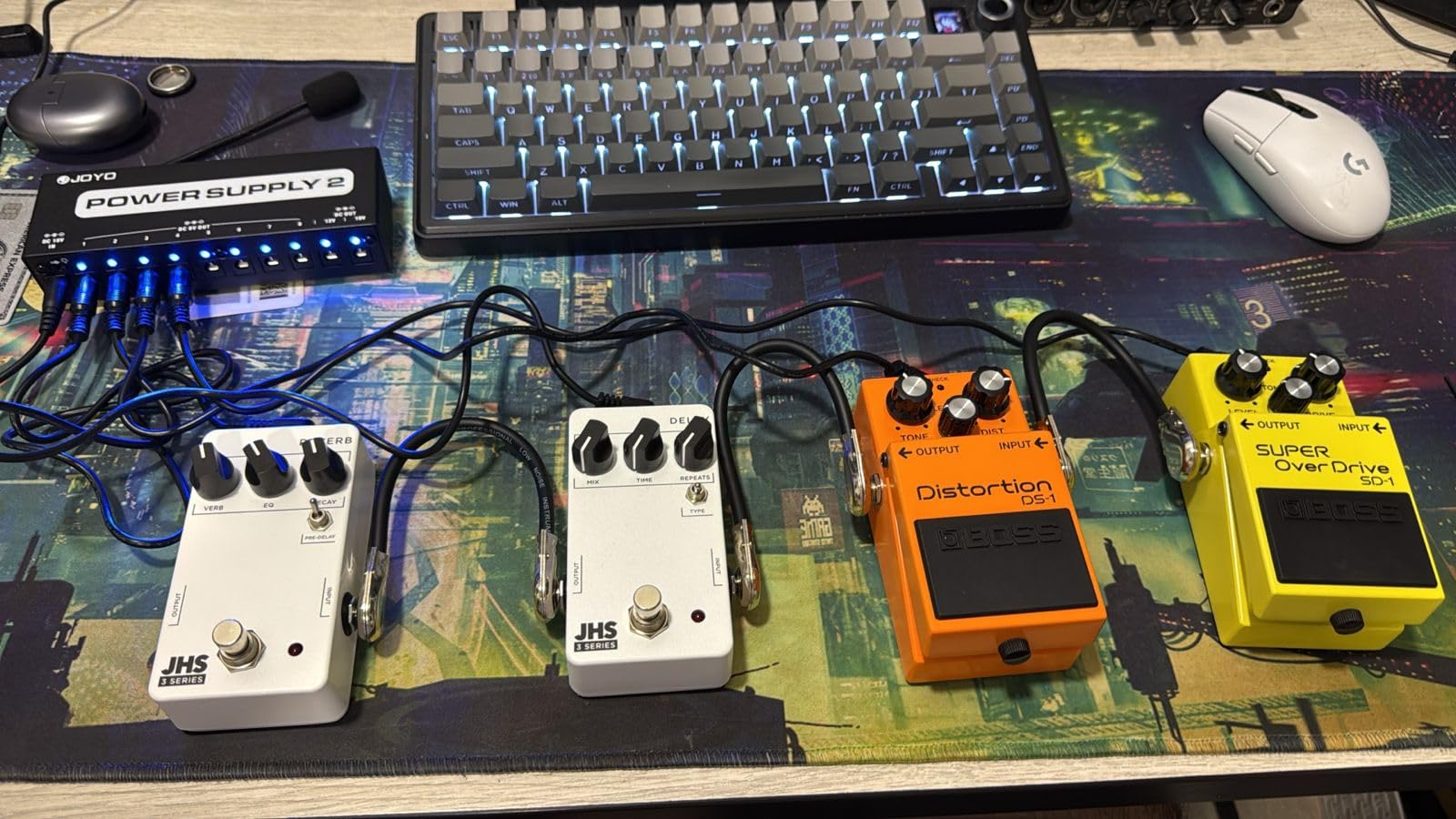
JHS Pedals has built a reputation for quality craftsmanship, and their 3 Series Fuzz brings that boutique quality to a more accessible price point. Each pedal is handmade in Kansas City, USA, and you can feel the attention to detail the moment you pick it up. Our team was impressed by how versatile a three-knob fuzz pedal can be when designed thoughtfully.
The Bias knob is the star of the show here. Unlike a standard tone control, the Bias knob actually changes the operating bias of the transistor circuit. Turn it clockwise and you get a smooth, sustaining fuzz with full note definition. Turn it counterclockwise and the sound becomes gated, producing that velcro-like staccato fuzz that decays into glitchy artifacts. This single control gives you access to a remarkably wide range of fuzz tones.
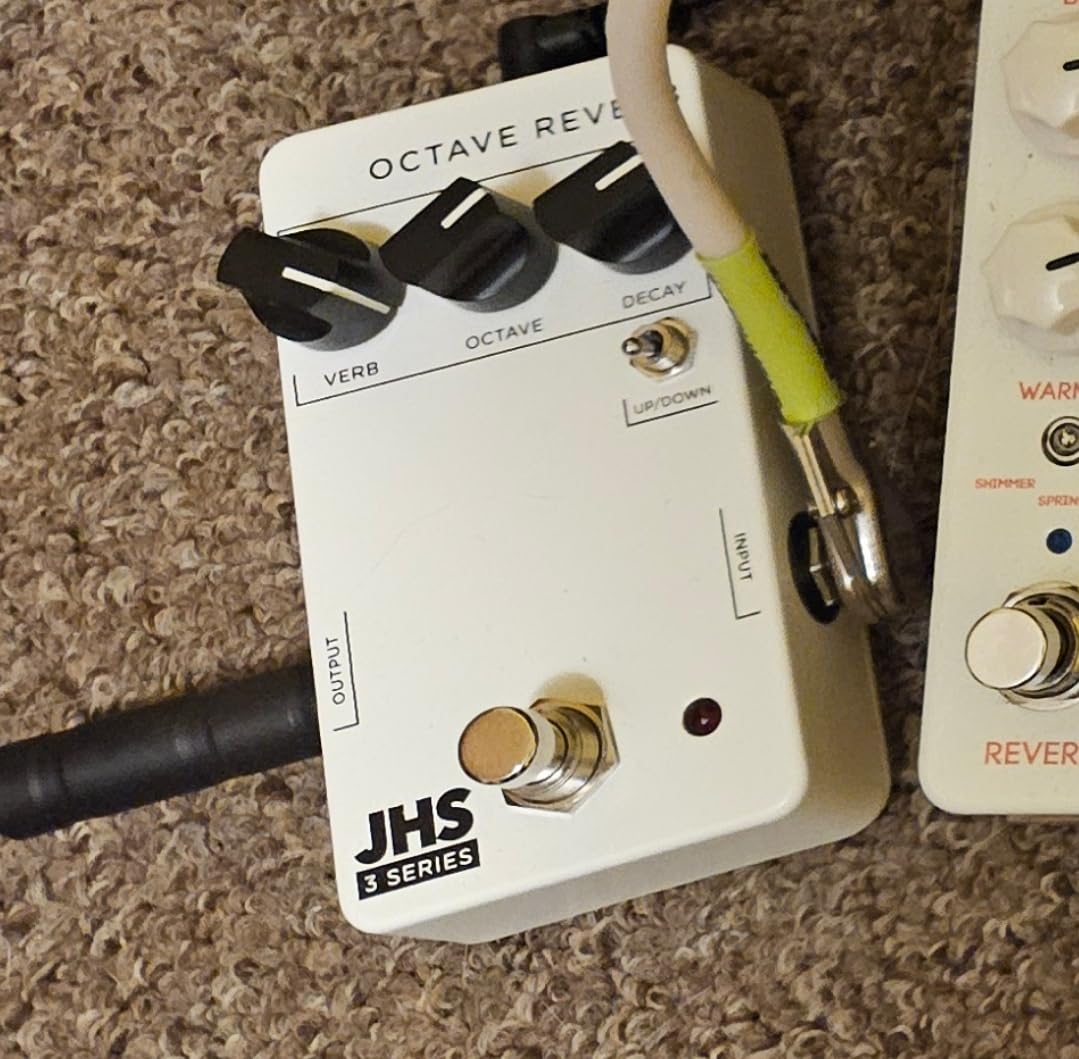
The Fat toggle switch adds a bass boost that makes a noticeable difference, especially when playing through single-coil pickups. We tested it with a Stratocaster and found that engaging the Fat switch filled out the low end beautifully without muddying the overall tone. This makes the pedal useful for everything from tight rhythm parts to huge lead sounds.
The fuzz knob itself is usable across its entire sweep, which is something we cannot say about every fuzz pedal. Many fuzz pedals sound good only with the knob maxed or at a specific sweet spot. The JHS 3 Series Fuzz sounds great from mild overdrive-like fuzz at low settings to full-on saturation at maximum. At under $100 with USA construction, this is outstanding value.
Ideal For Players Who Want One Versatile Fuzz
If you want a single fuzz pedal that can cover multiple styles without taking up too much pedalboard space, the JHS 3 Series Fuzz is an excellent choice. The three-knob layout is simple enough for beginners but deep enough for experienced players. We found ourselves using different Bias settings for different songs during our testing.
The pedal responds well to guitar volume changes. Roll back to 6 or 7 on your volume knob and the fuzz cleans up into a slightly hairy overdrive tone. This dynamic response is typically associated with vintage Fuzz Face-style pedals, and having it in a modern, affordable package is a significant advantage.
Fat Toggle Switch Practical Applications
The Fat toggle is not just a gimmick. We found it genuinely useful when switching between different guitars. With a Les Paul loaded with humbuckers, we kept the Fat switch off since the humbuckers already provided plenty of low end. With a Stratocaster or Telecaster using single coils, engaging the Fat switch gave us a fuller, more balanced tone that matched the humbucker output.
The switch can be confusing at first because there is no clear indicator of which position is active. We recommend marking the switch position with a small piece of tape until you become familiar with the pedal. Once you know which setting you prefer for each guitar, it becomes second nature.
5. Electro-Harmonix Big Muff Pi – The Original Fuzz Legend
Electro-Harmonix Big Muff Pi Guitar Effects Pedal
Iconic Big Muff Pi circuit
Sustain Tone Volume controls
True bypass switching
9V battery included
Triangle style
Pros
- Iconic fuzz sound used by legendary guitarists
- Excellent sustain for solos
- Perfect tone for 60s and 70s hard rock
- Greater for Gilmour style playing
Cons
- Limited versatility specializes in one tone
- Heavy at 680 grams
- Large enclosure size
The Electro-Harmonix Big Muff Pi is the fuzz pedal that started it all. Since its introduction in the early 1970s, this circuit has been used by everyone from Jimi Hendrix to David Gilmour to Thurston Moore. Our team considers this the benchmark against which all other fuzz pedals are measured. If you want to understand what fuzz is supposed to sound like, start here.
The signature sound of the Big Muff Pi is its singing sustain. The sustain control lets you dial in notes that seem to hold forever, making it perfect for solos and lead lines. We found that setting the sustain to about 3 o’clock produces that classic Gilmour tone that defines songs like Comfortably Numb. The tone control sweeps from dark and wooly to bright and cutting, giving you plenty of sonic options.
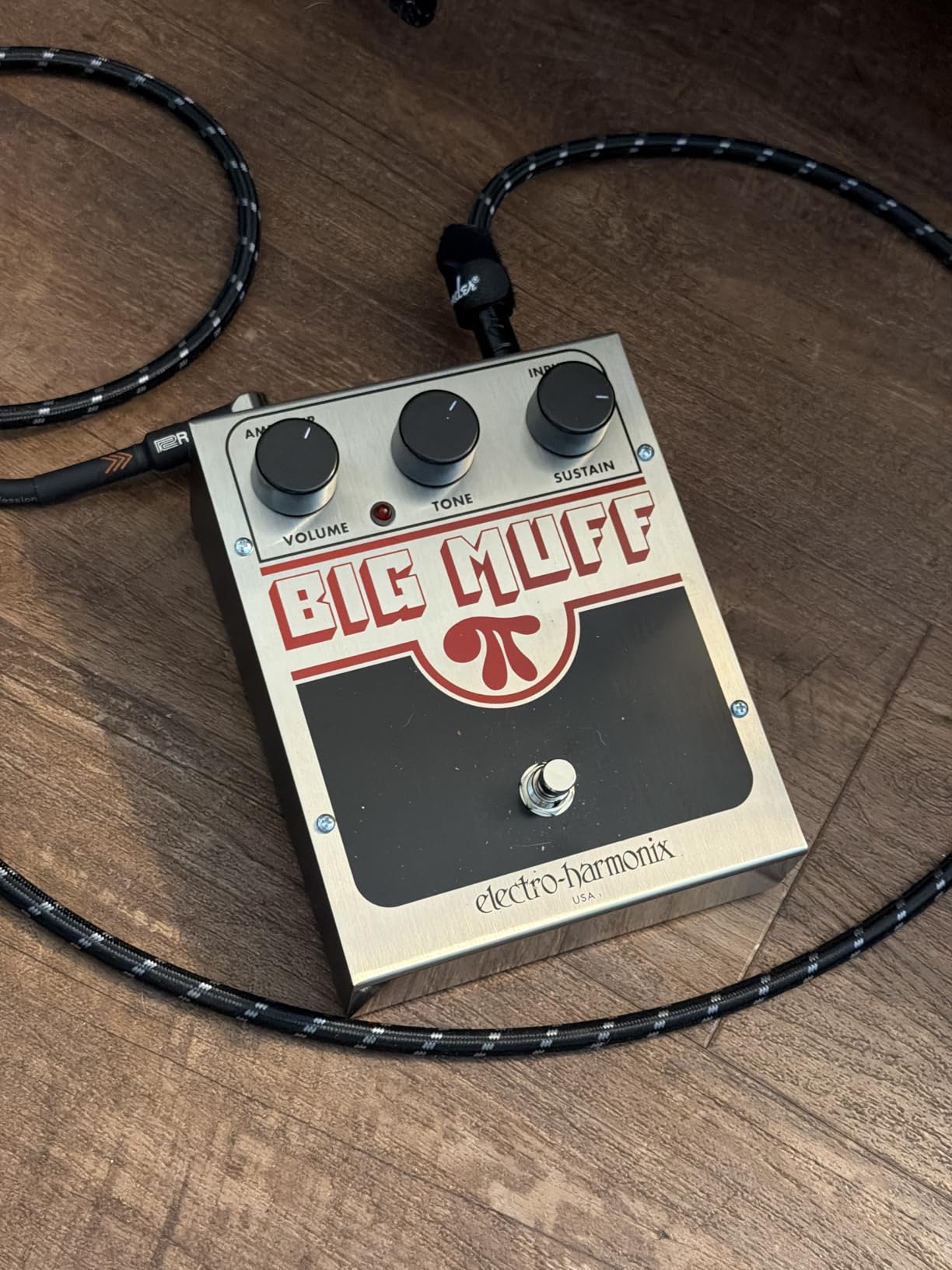
This is a pedal that specializes in doing one thing exceptionally well. Unlike modern multi-mode fuzz pedals, the Big Muff Pi does not try to be everything to everyone. It delivers that thick, creamy, harmonic-rich fuzz sound that has defined decades of rock music. There is beauty in this simplicity, and many players prefer having dedicated knobs for sustain, tone, and volume rather than navigating complex mode switches.
The build quality is classic EHX. The large enclosure is substantial and weighs 680 grams, which is noticeably heavier than modern compact pedals. The 9V battery is included, which is a nice touch. True bypass switching ensures your tone remains pristine when the pedal is disengaged. While the size may be a concern for cramped pedalboards, the sound quality justifies the real estate.
Ideal For Classic Rock and Pink Floyd Tones
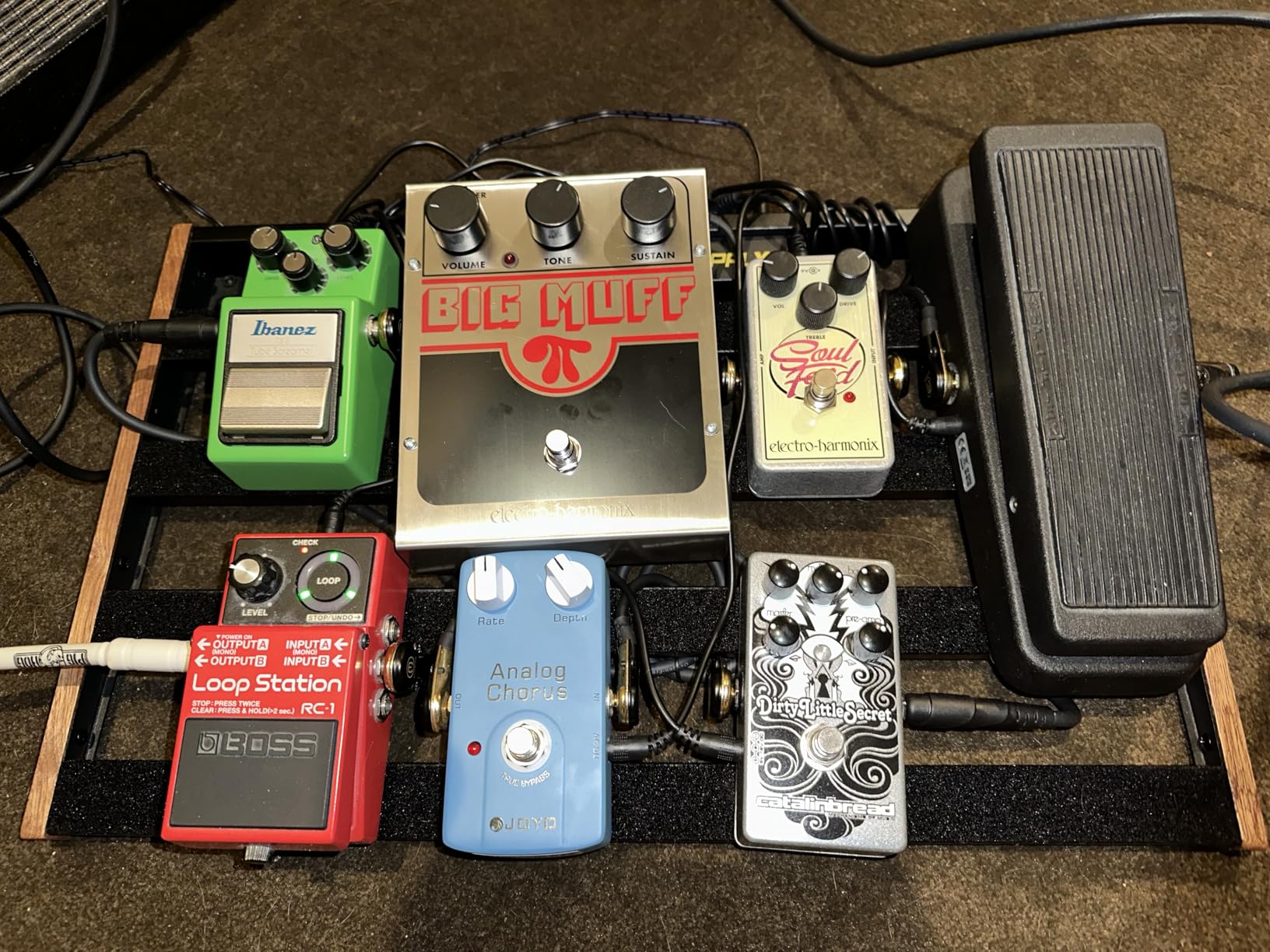
If your goal is to recreate the tones of classic rock, the Big Muff Pi is essential equipment. David Gilmour’s sustain-drenched solos, Carlos Santana’s singing leads, and the thick rhythm sounds of 70s hard rock all live inside this pedal. We tested it with a Stratocaster into a Fender Deluxe Reverb and were immediately in Pink Floyd territory.
The pedal also excels at grunge tones. Kurt Cobain used a Big Muff Pi extensively, and the thick, saturated sound of Nirvana’s heavier moments comes directly from this circuit. Pair it with a chorus pedal and you have the quintessential 90s alternative rock tone.
Understanding the Big Muff Family Variations
The Big Muff Pi has gone through numerous circuit revisions over the decades, each with slightly different tonal characteristics. The current production model featured here uses the triangle-style circuit, which tends to sound slightly smoother and more mid-focused than the ram’s head or Russian versions. Understanding these differences helps when comparing this to other Big Muff variants.
If you want the 90s alternative rock version specifically, check out the Op Amp Big Muff Pi reviewed earlier in this guide. If you want the smoothest, most classic Big Muff tone, the triangle version featured here is the one to get. Both are excellent choices depending on your tonal priorities.
6. SONICAKE Fazy Cream Fuzz – Best Budget Fuzz Pedal
SONICAKE Fuzz Guitar Effect Pedal Fazy Cream Vintage Fuzz Pedal True Bypass
100 percent analog circuit
Muff style fuzz design
Wide tone control range
Compact mini size
9V center negative
Pros
- Excellent value for budget fuzz
- Warm vintage fuzz tone
- True bypass maintains signal clarity
- Compact size for pedalboards
Cons
- Requires external power supply not included
- Battery not included
- May need early signal chain placement
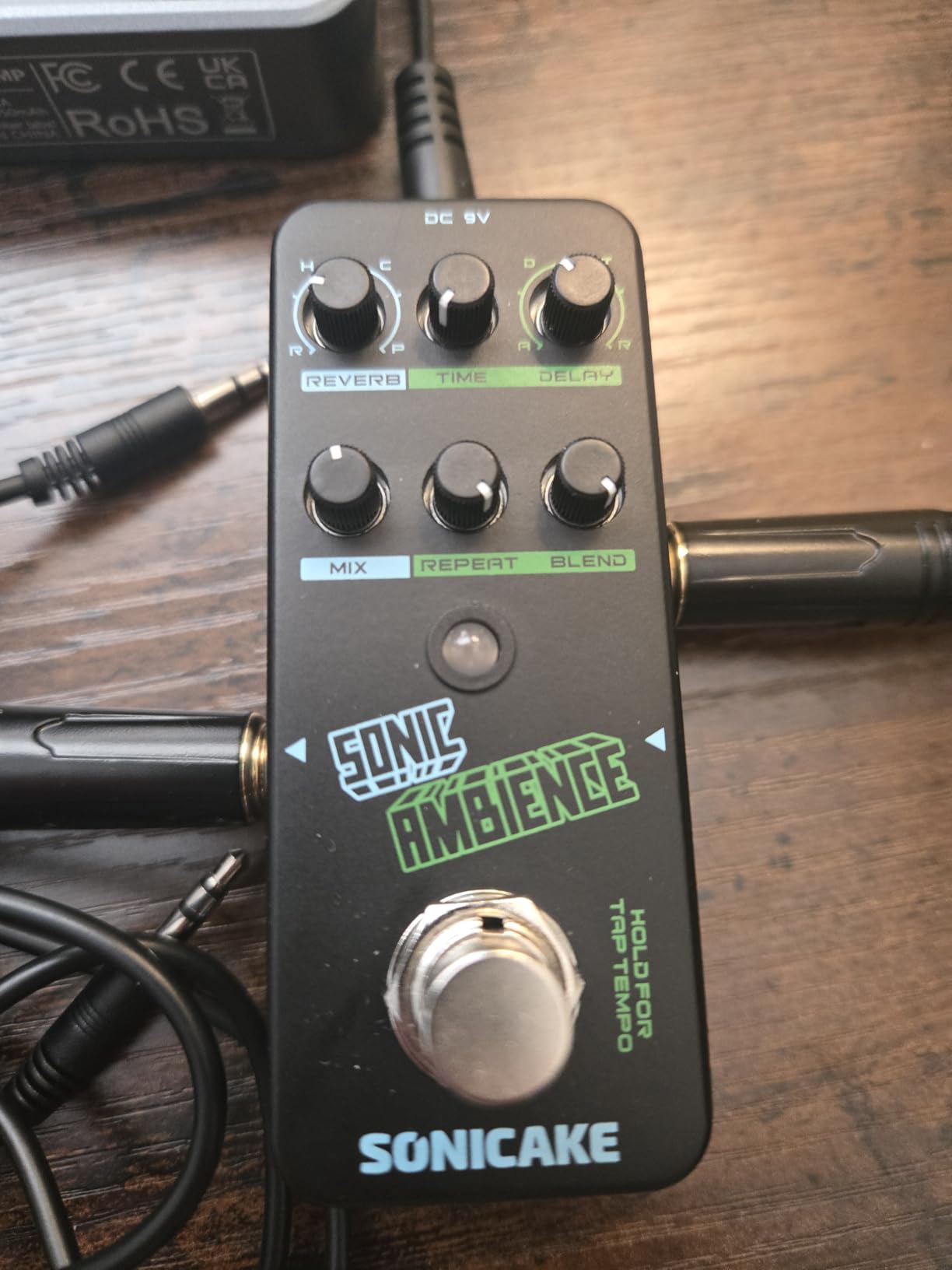
The SONICAKE Fazy Cream proves that you do not need to spend a lot of money to get a genuinely good fuzz tone. At under $30, this pedal delivers warm, vintage-style fuzz that sounds far more expensive than it is. Our team was skeptical at first given the price point, but after extensive testing we came away genuinely impressed by what SONICAKE has accomplished here.
The Fazy Cream is based on the classic Big Muff circuit, which means you get that familiar thick, wooly fuzz sound with excellent sustain. The tone control has a surprisingly wide range, going from dark and brooding to aggressive and cutting. We found the sweet spot around 11 o’clock, where the pedal produces a balanced fuzz tone that works well for both rhythm and lead playing.
The compact size is a major advantage. This pedal takes up minimal pedalboard space, making it perfect for players who need to maximize every inch. Despite its small footprint, the build quality is solid with a sturdy metal enclosure. The true bypass footswitch clicks with authority and maintains signal integrity when the pedal is bypassed.
We tested this pedal with both guitar and bass, and it performed admirably on both instruments. The fuzz retains low-end definition on bass guitar, which is not always the case with budget fuzz pedals. With over 3,200 reviews and a 4.4-star rating, the Fazy Cream has clearly resonated with the playing community as a reliable budget option.
Ideal For First-Time Fuzz Buyers and Practice Rigs
If you have never owned a fuzz pedal and want to explore the sound without a major investment, the SONICAKE Fazy Cream is the perfect entry point. It gives you authentic Big Muff-style fuzz tones at a fraction of the cost of the original. We recommend this pedal to students and beginners who want to experiment with fuzz before committing to a more expensive option.
This is also an excellent choice for a practice rig or a secondary pedalboard. If you have a travel board or a small home setup where you do not need premium boutique quality, the Fazy Cream delivers more than enough tone and character to keep you inspired.
Power Supply Considerations
The Fazy Cream requires a 9V center negative power supply, which is not included with the pedal. This is common for pedals at this price point, but it is important to factor the cost of a power supply into your budget. The pedal draws only 3mA, so it can share power with other pedals on a daisy chain without issues.
Unlike some vintage-style fuzz pedals, the Fazy Cream works well with buffered pedals in the signal chain. We tested it after a buffered tuner and did not experience the tone sucking that some germanium fuzz pedals suffer from. This makes it more forgiving in complex pedalboard setups.
7. Behringer Super Fuzz SF300 – Three Modes on a Budget
Behringer Super Fuzz Sf300 3-Mode Fuzz Distortion Effects Pedal
Three modes Classic Fuzz Grunge Boost
2-band EQ Treble Bass
Gain and Level controls
9V battery or DC power
Pros
- Recreates legendary Univox Super Fuzz tones
- Three modes in one pedal
- Excellent bass boost feature
- Great for stoner doom and 90s metal tones
Cons
- Plastic enclosure not road worthy
- Not true bypass
- Battery replacement requires disassembly
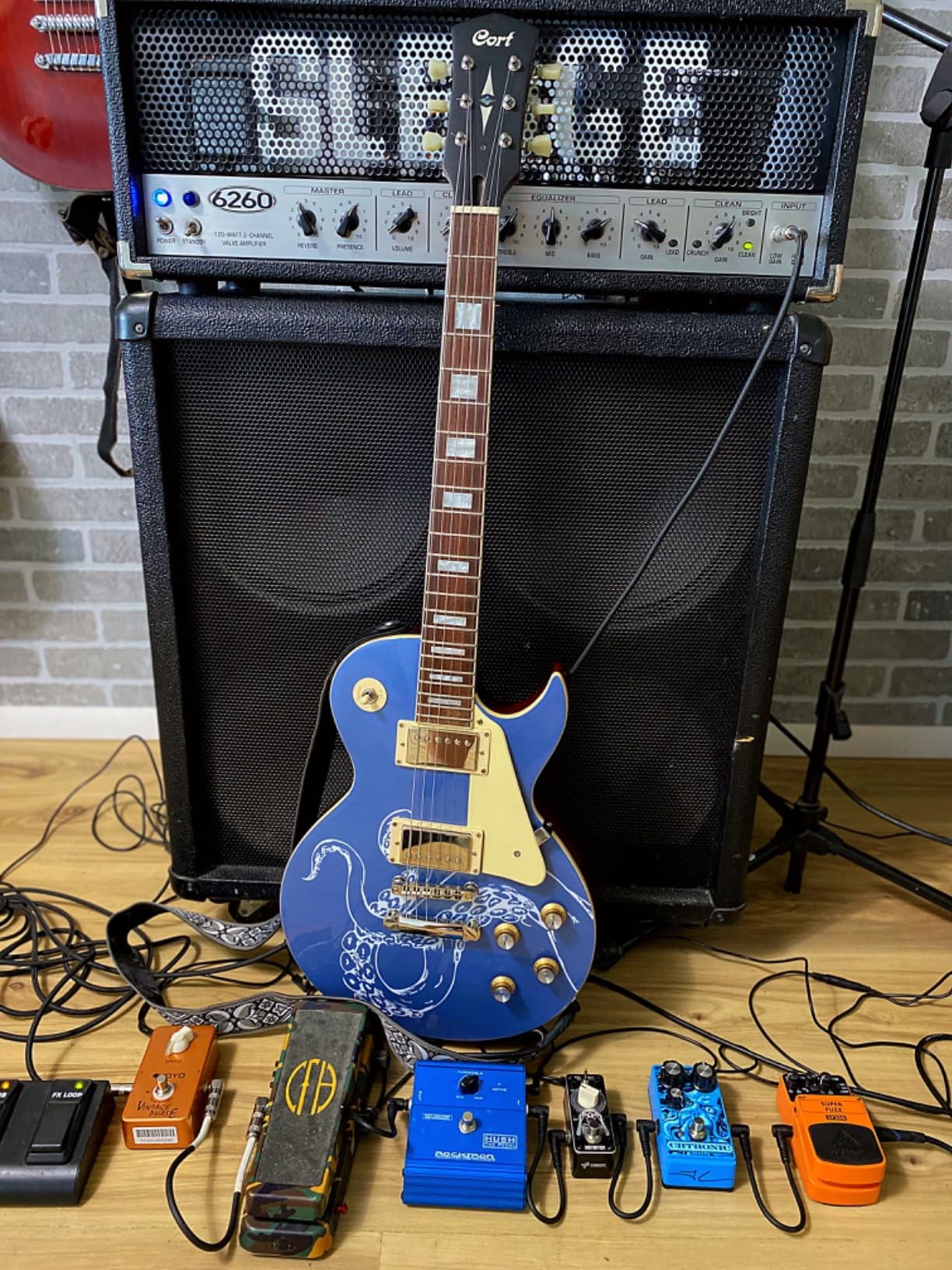
The Behringer Super Fuzz SF300 is a faithful clone of the legendary Boss FZ-2 Hyper Fuzz, which itself was based on the vintage Univox Super Fuzz. This circuit produces a unique octave-up fuzz sound that has been used by countless stoner rock and doom metal guitarists. At under $30, Behringer has made this iconic sound accessible to players on any budget.
The three-mode design gives you remarkable versatility. Fuzz 1 mode produces a mid-scooped tone with an octave-up character that sounds huge through a cranked amp. Fuzz 2 mode is more aggressive and forward in the midrange, making it ideal for cutting through a dense mix. The Boost mode provides a clean volume boost that is useful for solos or pushing your amp into natural overdrive.
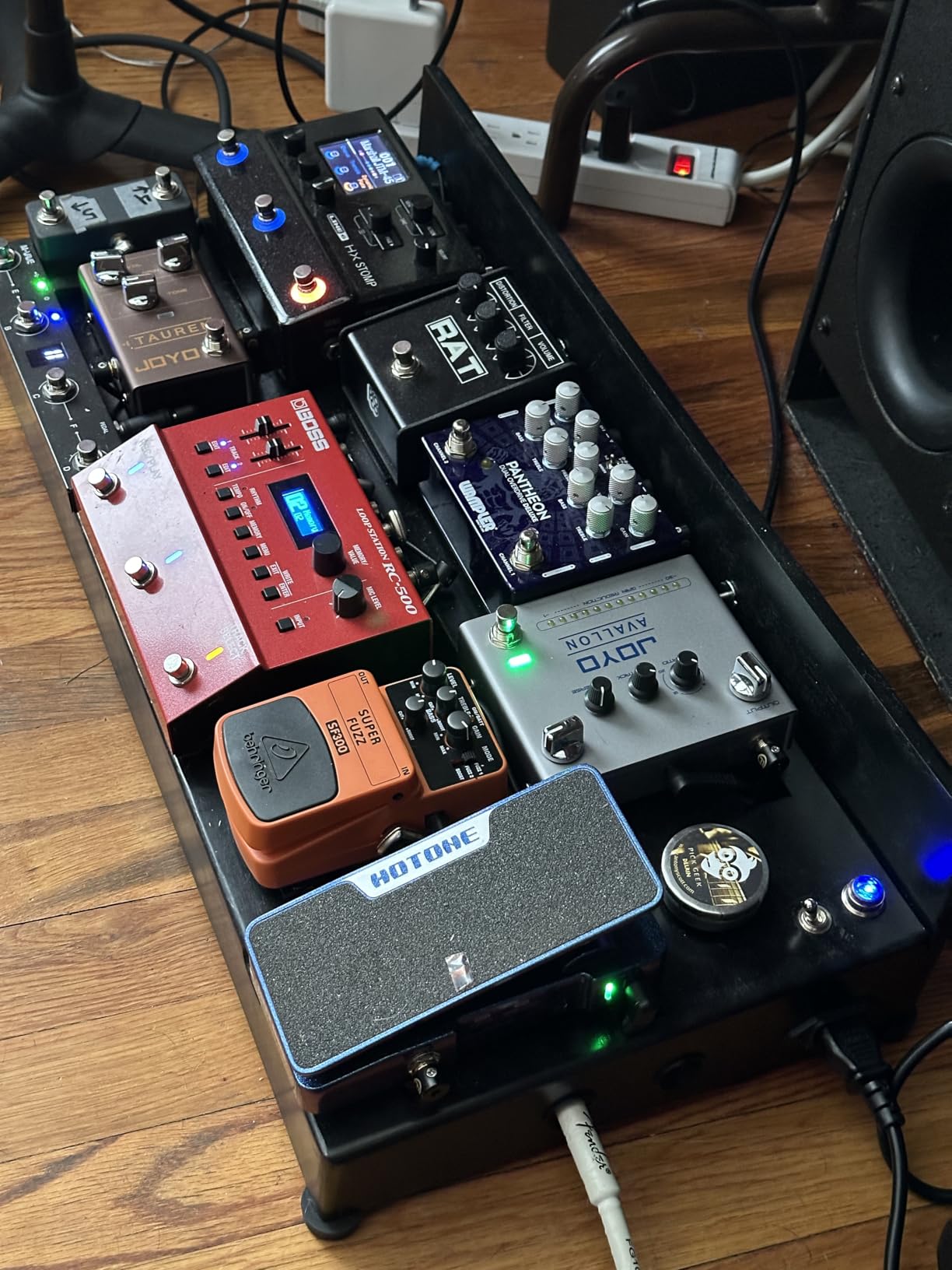
The bass boost characteristic of this circuit is genuinely remarkable. We tested it with a bass guitar and were blown away by how massive and defined the low-end fuzz sounded. This makes the SF300 an excellent choice for bassists looking to add aggressive fuzz to their tone. The two-band EQ with treble and bass controls lets you shape the tone to sit well in any mix.
The main drawback is the plastic enclosure. While it keeps the cost down, it is not as durable as the metal housings found on more expensive pedals. For bedroom players and light gigging, this is not a major issue. For heavy touring, you may want something more robust. The lack of true bypass means the pedal can slightly color your tone when bypassed, though we found the effect to be minimal.
Ideal For Stoner Rock and Doom Metal Guitarists
If you play stoner rock, doom metal, or any genre inspired by bands like Sleep, High on Fire, or Electric Wizard, the SF300 delivers exactly the tone you need. The octave-up character of the fuzz adds a unique harmonic richness that standard fuzz pedals cannot replicate. We found it particularly effective when combined with a tube amp already on the edge of breakup.
The pedal also excels at 90s industrial and metal tones. The aggressive character of Fuzz 2 mode is perfect for the heavy, mechanized guitar sounds of that era. Paired with a noise gate and some modulation, you can create incredibly textured soundscapes that go far beyond standard fuzz tones.
Understanding the Octave Fuzz Character
The SF300 produces an octave-up effect that is most noticeable when playing above the 12th fret on the high strings. This is characteristic of the Univox Super Fuzz circuit it is based on. The octave effect adds a unique dimension to chords and single notes, making them sound larger and more complex.
Power chord shapes sound particularly massive through this pedal. The octave-up character fills in harmonic content above the root note, making two-note power chords sound like full barre chords. This is why so many stoner rock and doom metal guitarists gravitate toward this specific fuzz circuit.
8. Donner Classic Fuzz Mini – Affordable Compact Option
Donner Fuzz Guitar Pedal - Classic Stylish Fuzz Mini Effect Pedal for Electric Guitar/Bass, True Bypass
Bass Treble Level Vol controls
True bypass design
Metal casing compact
9V DC adapter required
Pros
- Great value for the price
- Dense and delicate vintage fuzz character
- Versatile tone controls
- Well built with metal casing
Cons
- Requires 9V DC adapter not included
- Not ideal for professional recording or gigging
The Donner Classic Fuzz Mini is a compact pedal that punches above its weight class. At under $40, it offers four tone-shaping controls that give you more flexibility than many pedals twice its price. Our team found this to be a solid choice for players who need a no-frills fuzz pedal that fits on a crowded pedalboard.
The four-knob layout includes Bass, Treble, Level, and Volume controls. This is more EQ flexibility than you typically find on a budget fuzz pedal. We were able to dial in everything from a tight, focused rhythm fuzz to a wide, expansive lead tone. The Bass and Treble controls are particularly useful for matching the fuzz to different amplifiers and guitars.
The true bypass design ensures transparent tone when the pedal is off. The metal casing feels sturdy despite the compact size, and the overall construction quality exceeds what we expected at this price. The pedal produces a dense, vintage fuzz character that works well for classic rock and blues applications.
One thing to note is that the pedal requires a 9V DC adapter with center negative polarity and a minimum of 500mA. This is not included with the pedal, so you will need to factor the cost of a power supply into your purchase. The pedal does not accept a battery, so external power is mandatory.
Ideal For Bedroom Players and Travel Boards
If you need a compact fuzz pedal for home practice or a travel board, the Donner Classic Fuzz Mini is a practical choice. Its small footprint means it can fit into spaces where larger pedals cannot. We found it particularly useful on a nano pedalboard alongside a mini overdrive and a compact delay.
The sound quality is good enough for practice and casual jamming. Some reviewers noted that it may not meet the standards required for professional recording or high-stakes gigging, but for most players it provides more than enough tone and character to be genuinely useful.
Tone Shaping With Four Knobs
The four-knob design gives you meaningful control over your fuzz tone. The Bass control adds low-end warmth without muddying the sound. The Treble control adds bite and presence. The Level control sets the overall output volume, and the Volume control adjusts the amount of fuzz intensity. We found that setting the Volume at noon and the Level to match your bypass volume gives a good starting point.
Experimenting with the Bass and Treble controls reveals the pedal’s versatility. Boosting the Bass while cutting the Treble gives you a dark, wooly tone perfect for stoner rock. The opposite settings produce a bright, cutting fuzz that works for punk and garage rock. This kind of tonal range is impressive for a pedal at this price.
9. TC Electronic Honey Pot Fuzz – Vintage Sustain Machine
TC Electronic HONEY POT FUZZ Vintage-Flavored Fuzz Pedal with Massive Wall of Tones and Miles of Sustain
Vintage flavored Big Muff style circuit
Gain Tone Volume controls
True bypass
Metal chassis
9V power
Pros
- Massive wall of fuzz with excellent sustain
- Smooth warm vintage fuzz tone
- True bypass for signal integrity
- Built like a tank metal chassis
Cons
- Temporarily out of stock at times
- Can get muddy at high settings on some amps
- Less versatile than multi mode pedals
The TC Electronic Honey Pot Fuzz is a vintage-flavored pedal based on the classic Big Muff circuit, but with its own distinct character. TC Electronic has a reputation for delivering excellent value, and the Honey Pot continues that tradition. Our team found this pedal to be one of the smoothest, most musical fuzz pedals in this price range.
The standout feature of the Honey Pot is its sustain. This pedal produces a wall of fuzz that seems to sustain notes indefinitely. We tested it with neck-position humbuckers and were rewarded with rich, creamy lead tones that recall David Gilmour’s singing sustain. The fuzz quality is smooth and warm rather than harsh or aggressive, making it suitable for melodic playing.
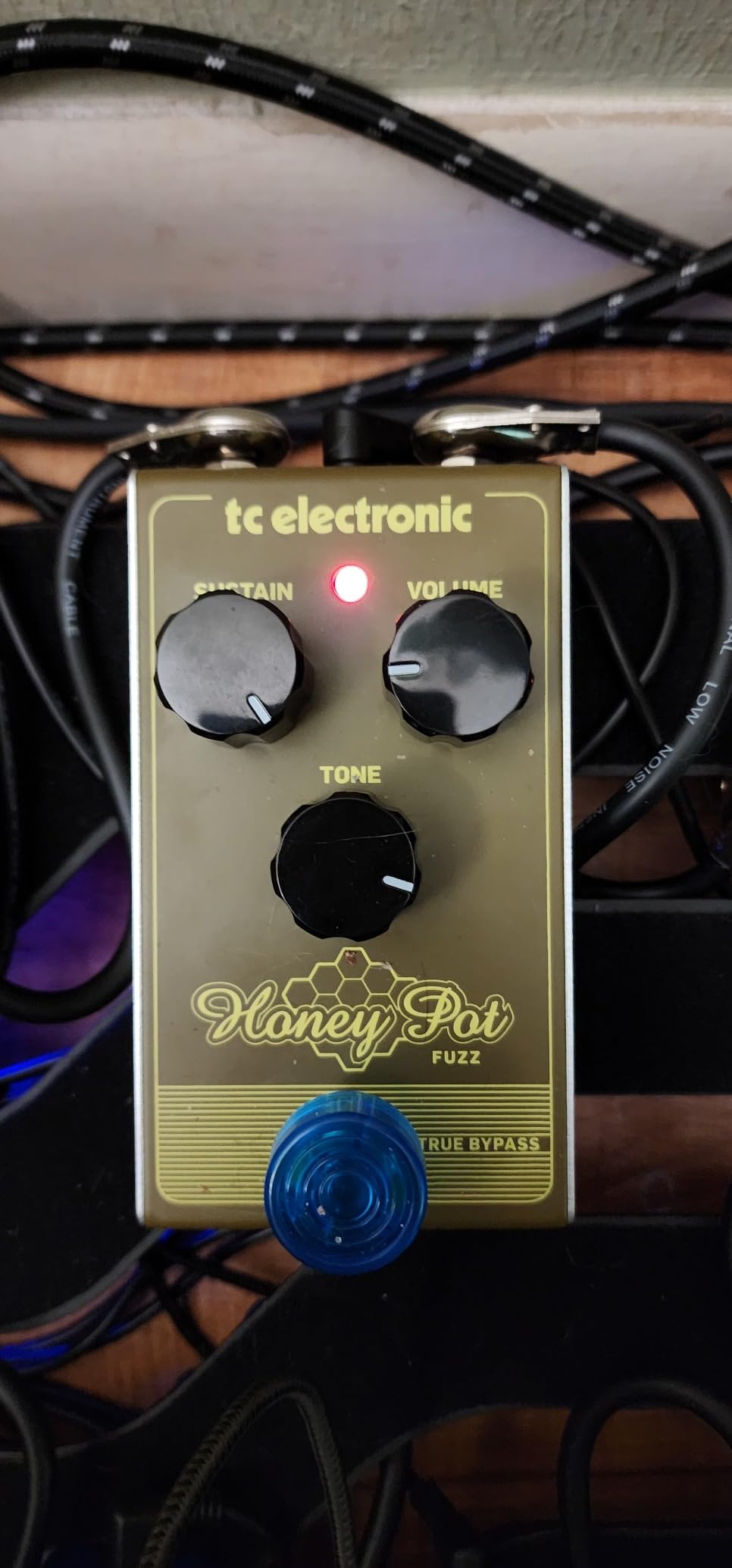
The metal chassis is built like a tank and feels substantial in hand. TC Electronic did not cut corners on construction despite the affordable price. The true bypass switching keeps your signal clean when the pedal is off, and the overall build quality suggests this pedal will survive years of regular use.
We also tested the Honey Pot with bass guitar and were pleased with the results. The pedal maintains low-end definition while adding aggressive fuzz character. This makes it a versatile option for bassists who want to add fuzz to their tone. The 4.7-star rating across 308 reviews confirms that this pedal has resonated strongly with the playing community.
Ideal For Classic Rock Lead Tones
If your playing style leans toward melodic leads and sustained solo passages, the Honey Pot is an excellent match. The smooth fuzz quality complements legato phrasing and bending beautifully. We found that setting the gain at about 2 o’clock and the tone slightly below noon produces a singing lead tone that cuts through without being harsh.
The pedal also works well for rhythm applications. Strummed open chords take on a rich, wooly character that fills out the frequency spectrum. This makes it effective for classic rock rhythm parts where you want thickness without total saturation.
Managing Muddiness at High Settings
One thing we noticed during testing is that the Honey Pot can get slightly muddy when the gain is maxed out, particularly through darker amplifiers. The solution is to either back off the gain slightly or use the tone control to add brightness. Through brighter amps like a Fender Twin Reverb, this was not an issue at any setting.
If you play through a dark-sounding amp, consider pairing the Honey Pot with an EQ pedal to maintain clarity. A simple treble boost after the fuzz can also help the tone cut through. These are common techniques used with Big Muff-style circuits and are not specific to the Honey Pot.
10. Keeley Fuzz Bender – Boutique Germanium Hybrid
Keeley Fuzz Bender, White (KFBender)
Five knob hybrid fuzz
Japanese germanium transistor
Gyrator bass and treble controls
Bias control
9V DC 15mA
Pros
- Excellent Gilmour and Pink Floyd tones
- Five knob hybrid design with germanium transistor
- Gyrator bass and treble controls with 20dB boost each
- Bias control for velcro style gated attack
Cons
- Premium price point
- Some units had quality control issues reported
The Keeley Fuzz Bender is a premium boutique fuzz pedal that combines vintage Tone Bender aesthetics with modern engineering. Robert Keeley is one of the most respected names in effects pedal design, and the Fuzz Bender showcases his approach to taking classic circuits and improving them. Our team considers this one of the most versatile fuzz pedals available at any price.
The five-knob layout gives you unprecedented control over your fuzz tone. The Level and Fuzz controls are standard fare, but the addition of gyrator-based Bass and Treble controls sets this pedal apart. Each EQ control provides up to 20dB of boost or cut, which is far more range than typical tone controls. We were able to dial in tones that worked with any guitar and amp combination.
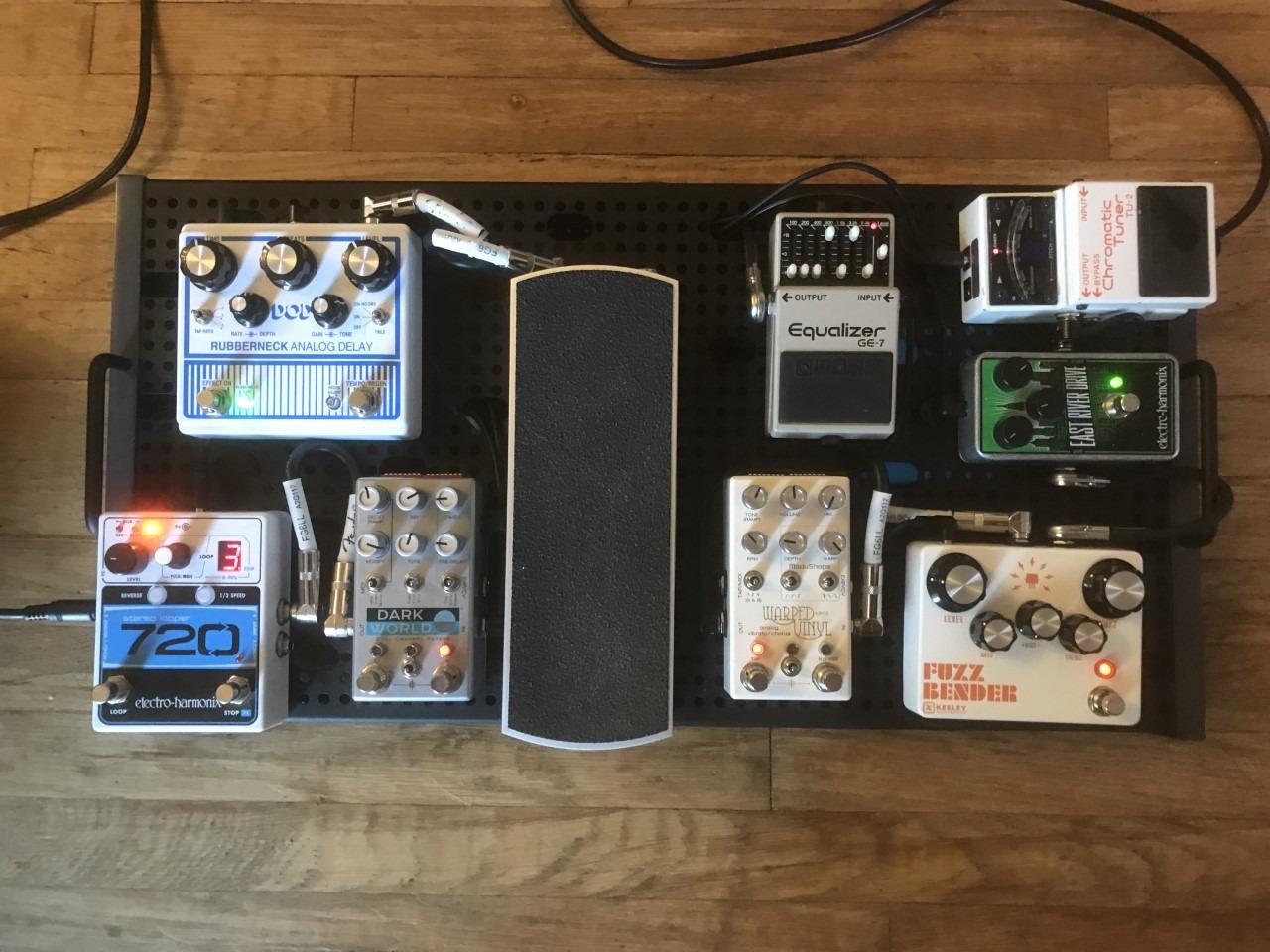
The Japanese germanium transistor is the heart of the Fuzz Bender’s vintage character. Germanium transistors produce a warmer, smoother fuzz than silicon alternatives, with a natural compression that feels musical under the fingers. The Bias control lets you adjust the transistor’s operating point, moving from smooth sustaining fuzz to gated velcro-like attack. This single control effectively gives you multiple fuzz pedals in one enclosure.
The pedal works equally well with guitar and bass. We tested it with a Precision Bass and were impressed by how the gyrator EQ let us maintain low-end clarity while adding aggressive fuzz character. The two-year warranty and USA construction provide confidence in the build quality. This is a serious professional-grade fuzz pedal.
Ideal For Tone Connoisseurs and Studio Players
If you are particular about your fuzz tone and want maximum control, the Keeley Fuzz Bender is designed for you. The five-knob layout means you can fine-tune your tone for any musical context. We found the gyrator EQ controls especially useful in the studio, where precise tonal matching is essential for getting a great recorded sound.
The Bias control opens up creative possibilities that go beyond standard fuzz tones. Setting the bias for gated, velcro-style fuzz creates unique textures that work beautifully in experimental and indie rock contexts. We spent hours exploring different bias settings and found each position musically useful.
Germanium Temperature Sensitivity
Germanium transistors are known for their temperature sensitivity. As the pedal warms up during use, the germanium transistor’s characteristics can shift slightly, changing the fuzz tone. Some players consider this a charming vintage characteristic, while others find it frustrating. We noticed only minor tonal shifts during extended playing sessions.
If you live in an area with extreme temperature variations, allow the pedal a few minutes to reach operating temperature before critical performances. Keeley has selected high-quality Japanese germanium transistors that are more stable than vintage examples, so the temperature sensitivity is less pronounced than with original 60s fuzz pedals.
11. Fender Hammertone Fuzz – Vintage Tone With Modern Convenience

Fender Hammertone Fuzz Pedal, Guitar Accessories
Vintage 60s 70s fuzz character
Dual silicon diodes
Octave fuzz mode
True bypass
Top mounted jacks
9V battery
Pros
- Vintage 60s 70s fuzz tone reminiscent of Tone Bender or Fuzz Face
- Internal trim pot for tone control
- Octave fuzz mode adds versatility
- Solid build quality with pedalboard friendly jacks
Cons
- Not a heavy saturated fuzz like Big Muff
- Octave effect is subtle rather than prominent
- Battery powered only with no adapter option mentioned
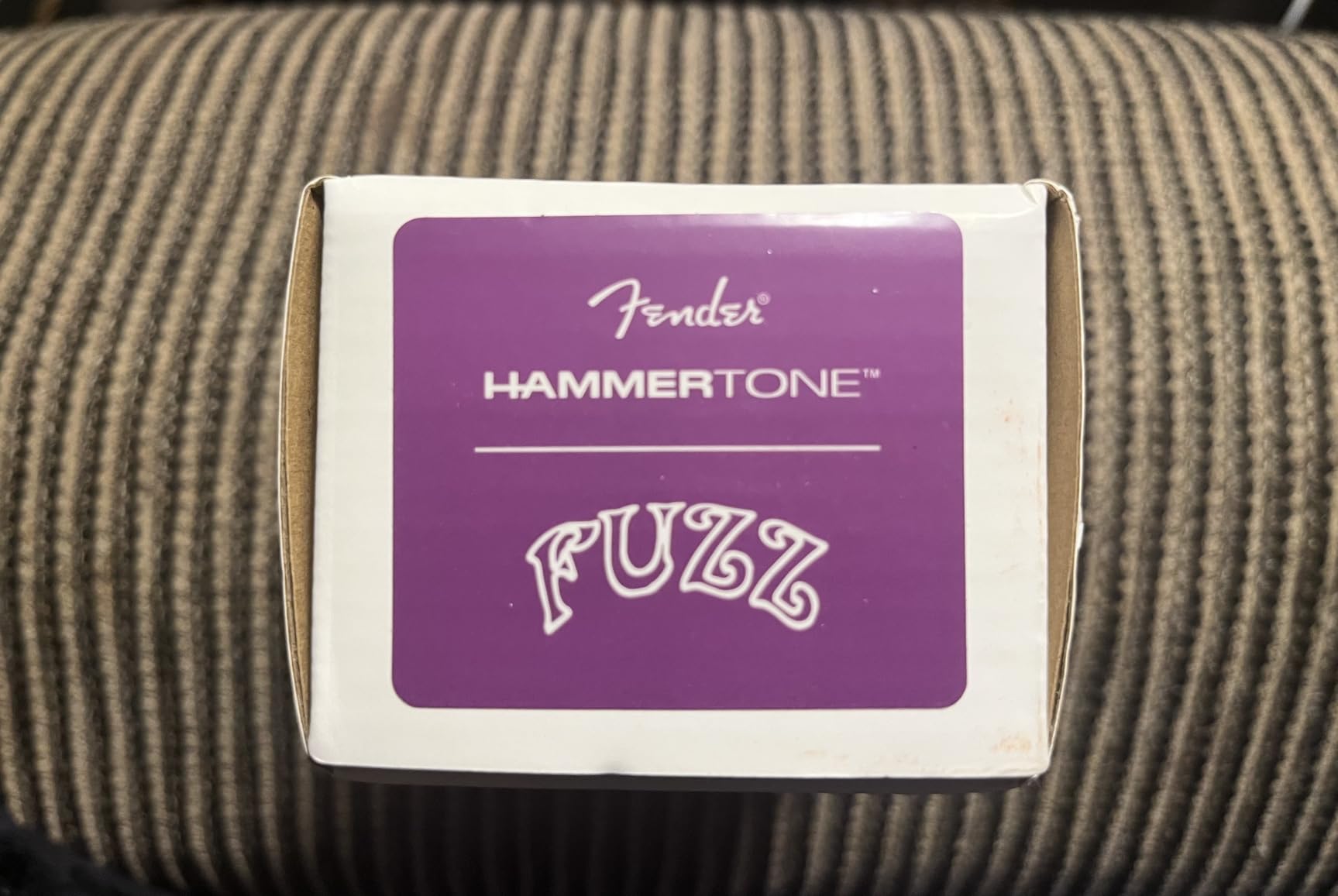
The Fender Hammertone Fuzz brings the classic sound of 60s and 70s fuzz into a modern, pedalboard-friendly package. Fender designed this pedal to capture the iconic splat and saturation of vintage Tone Bender and Fuzz Face circuits. Our team found it to be a great option for players who want vintage character without the quirks and inconsistencies of actual vintage pedals.
The tone is immediately recognizable as classic fuzz. There is a distinct splat and compression to the attack that recalls the British invasion fuzz sounds of the 1960s. We tested it with a Stratocaster in the neck position and were rewarded with tones that would not sound out of place on a classic Rolling Stones or Led Zeppelin record. The dual silicon diodes provide consistent, reliable performance.
The octave fuzz mode is an interesting addition. When engaged, it adds an upper-octave harmonic that gives notes a richer, more complex character. The octave effect is subtle rather than pronounced, which some players will appreciate and others may find underwhelming. We found it most effective when playing above the 12th fret, where the octave character is most audible.
The top-mounted input and output jacks are a practical design choice that saves pedalboard space. This allows you to place pedals directly side by side without worrying about side-mounted cables getting in the way. The internal trim pot gives you an additional layer of tone shaping that is not accessible from the outside, letting you fine-tune the pedal’s character to your specific rig.
Ideal For Classic Rock and Blues Players
If your tonal reference points include Jimi Hendrix, Jimmy Page, and Keith Richards, the Hammertone Fuzz delivers the goods. It produces that warm, slightly compressed fuzz that defined a generation of rock guitar. We found it particularly effective for rhythm parts where you want grit and character without overwhelming saturation.
The pedal responds well to guitar volume changes. Rolling back the volume knob cleans up the fuzz into a slightly gritty, overdrive-like tone. This dynamic response is a hallmark of vintage-style fuzz circuits and gives you a range of tones from a single pedal setting.
Octave Mode Realistic Expectations
The octave fuzz mode on the Hammertone is not a full-blown octave effect like you would get from a dedicated octave pedal. Instead, it adds a subtle upper-octave harmonic that enhances the fuzz rather than dominating it. If you are expecting an Octavia-style effect, you may be disappointed. If you appreciate a nuanced enhancement to your fuzz tone, you will enjoy this feature.
The internal trim pot allows you to further customize the pedal’s character. We recommend experimenting with different trim pot settings to find the tone that best matches your guitar and amp. Once you find your ideal setting, you can leave it alone and use the external controls for day-to-day adjustments.
12. Fender The Pelt Fuzz – Smooth and Versatile
Fender The Pelt Fuzz Pedal
Silicon fuzz circuit
Mid and thick voicing switches
LED backlit knobs
Anodized aluminum construction
9V battery
Pros
- Versatile fuzz tones bridging overdrive and fuzz
- Mid control switch for mix shaping
- Smooth musical tones across all settings
- Quality construction with attractive design
Cons
- Can be dark and muddy on some settings without mids boost
- Larger bulkier profile than some competitors
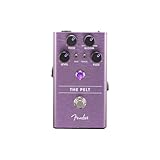
The Fender Pelt Fuzz is a silicon-based fuzz pedal that bridges the gap between overdrive and full-blown fuzz. Our team found this to be one of the most musical and approachable fuzz pedals we tested. It produces smooth, singing tones that sit beautifully in a mix without overwhelming the other instruments.
The Bloom control is a unique feature that manages the attack character of the fuzz. Turn it down and you get a smooth, sustained tone with a gentle attack. Turn it up and the fuzz becomes more aggressive with a sharper, more defined front end. We found this control genuinely useful for matching the pedal’s response to different playing styles and musical contexts.
The mid control switch allows you to shape the midrange frequencies to cut through any mix. This is particularly important for live performance, where midrange presence is essential for being heard above bass and drums. We tested the pedal in a full band context and found that engaging the mid boost made our guitar instantly more present in the mix.
The LED-backlit knobs are a thoughtful design touch that makes the pedal easy to see on dark stages. The Fender amp jewel LED adds a premium aesthetic that matches Fender’s amplifiers. The anodized aluminum construction is both lightweight and durable, making this pedal a practical choice for gigging musicians.
Ideal For Players Who Want Musical Fuzz
If you find traditional fuzz pedals too aggressive or overwhelming, the Pelt Fuzz offers a more refined approach. The smooth, musical character of this pedal makes it suitable for genres where subtlety matters, from indie rock to alternative country. We found it particularly effective for arpeggiated parts where you want each note to have character without being drowned in saturation.
The pedal also works well as a lead boost. Set the controls for a moderate fuzz level and use it to push your amp into natural saturation. The smooth character of the Pelt means your lead tones will sing rather than scream, which is exactly what many players want.
Managing Dark Tones and EQ
One characteristic we noticed is that the Pelt can sound dark without the mid boost engaged. Through brighter amplifiers this is not an issue, but through darker amps you may find the tone needs help cutting through. The solution is to engage the mid control switch, which pushes the midrange frequencies forward and adds presence.
The thick voicing switch adds low-end body, which can be useful for filling out the sound of single-coil pickups. We recommend experimenting with both switches to find the combination that works best with your specific guitar and amplifier setup. The interaction between these switches and the main controls provides a wide range of usable tones.
13. Electro-Harmonix Lizard Queen Octave Fuzz – Nano Octave Powerhouse

Electro-Harmonix Lizard Queen Octave Fuzz Pedal
Blendable octave effect
Balance control for fuzz character
True bypass
Nano size
9V battery included
Pros
- Blendable octave effect adds harmonic richness
- Balance control adjusts between smooth and raspy tones
- Retro 1970s graphic design
- True Bypass with 9V battery included
Cons
- Octave effect limited to high settings
- Can sound thin at maximum octave settings
- Difficult to clean up with humbuckers
The Electro-Harmonix Lizard Queen is a nano-sized octave fuzz pedal that packs a surprising amount of character into a tiny enclosure. Inspired by the legendary Foxx Tone Machine circuit, this pedal delivers a classic octave-up fuzz sound with retro 1970s aesthetics designed by artist Daniel Danger. Our team found it to be a fun and inspiring pedal that rewards experimentation.
The blendable octave control is the defining feature. At lower settings, the pedal functions as a straightforward fuzz with a warm, vintage character. As you turn the octave control clockwise, an upper-octave harmonic emerges that adds richness and complexity to your tone. We found the octave effect most pronounced above the 3 o’clock position, where it produces that classic psychedelic fuzz sound.
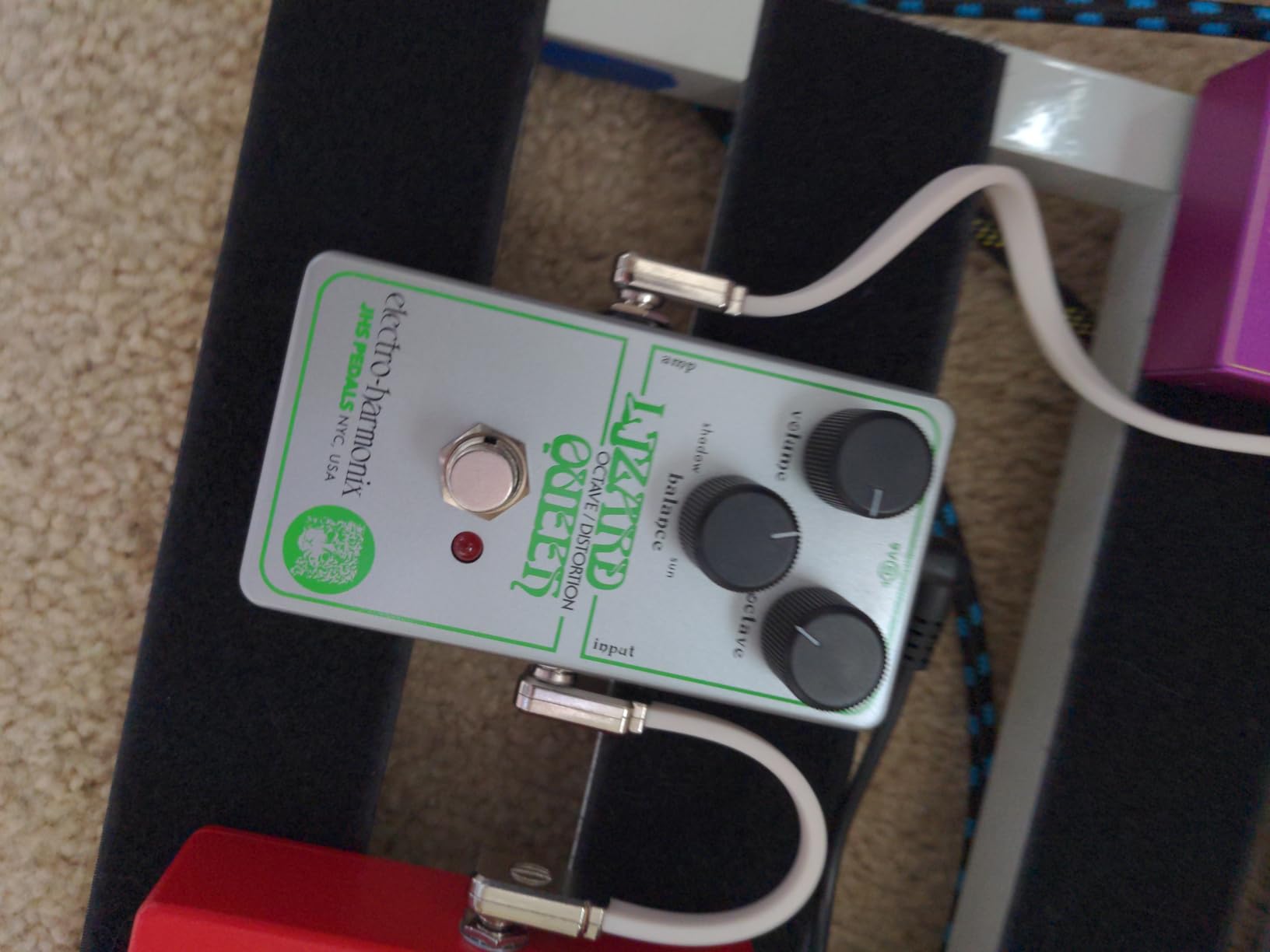
The Balance control adjusts the character of the fuzz between smooth, sustaining tones and raspy, aggressive textures. This gives you meaningful control over the pedal’s personality. We found that lower Balance settings produced a creamy fuzz that worked beautifully for lead lines, while higher settings created a raw, abrasive character perfect for garage rock and punk.
The nano size enclosure fits on even the most crowded pedalboards. Despite its diminutive footprint, the pedal includes a 9V battery and features true bypass switching. The retro 1970s graphic design is visually striking and sets this pedal apart from the generic look of many modern effects.
Ideal For Psychedelic and Garage Rock Players
If your musical inspirations include Jimi Hendrix, Pink Floyd’s early work, or modern psychedelic bands like Tame Impala, the Lizard Queen delivers the tones you need. The octave-up fuzz character adds a trippy, otherworldly quality to your sound that standard fuzz pedals cannot replicate. We found it particularly effective when combined with a wah pedal and some tape-style delay.
The pedal also excels at garage rock tones. The raspy, aggressive character available through the Balance control gives you the raw, unkempt fuzz sound that defines the genre. Paired with a cranked tube amp, this pedal produces a gloriously chaotic tone that cuts through any mix.
Octave Effect Limitations and Tips
The octave effect on the Lizard Queen is not as pronounced as what you would get from a dedicated octave pedal. It adds an upper-octave harmonic to the fuzz rather than producing a distinct octave-up note. If you are expecting an Octavia-style effect, you should adjust your expectations accordingly.
The pedal works best when placed first in your signal chain. We tested it in various positions and found that placing it before any buffer or buffered pedal produced the strongest octave effect. Humbucker pickups can make the octave harder to hear, so single-coil players will get the most out of this feature.
14. Way Huge Swollen Pickle MKIIS – Versatile Big Muff on Steroids

Way Huge® Swollen Pickle® Jumbo Fuzz MKIIS
Scoop and Crunch controls
Internal Voice and Clip controls
Tight non muddy fuzz
Pedalboard friendly housing
9V power
Pros
- Extremely versatile with Scoop Crunch and internal controls
- Tight non muddy fuzz tone superior to Big Muff
- Can go from mild crunch to high gain Armageddon
- Works well stacked with other pedals
Cons
- Hot output volume often needs adjustment
- Some users report damaged knobs on arrival
- Blue LED may not appeal to all
The Way Huge Swollen Pickle MKIIS is what happens when you take the Big Muff circuit and add extensive tone-shaping controls. Our team found this to be one of the most versatile fuzz pedals on the market, capable of producing everything from mild crunch to what the manufacturer accurately describes as high gain Armageddon.
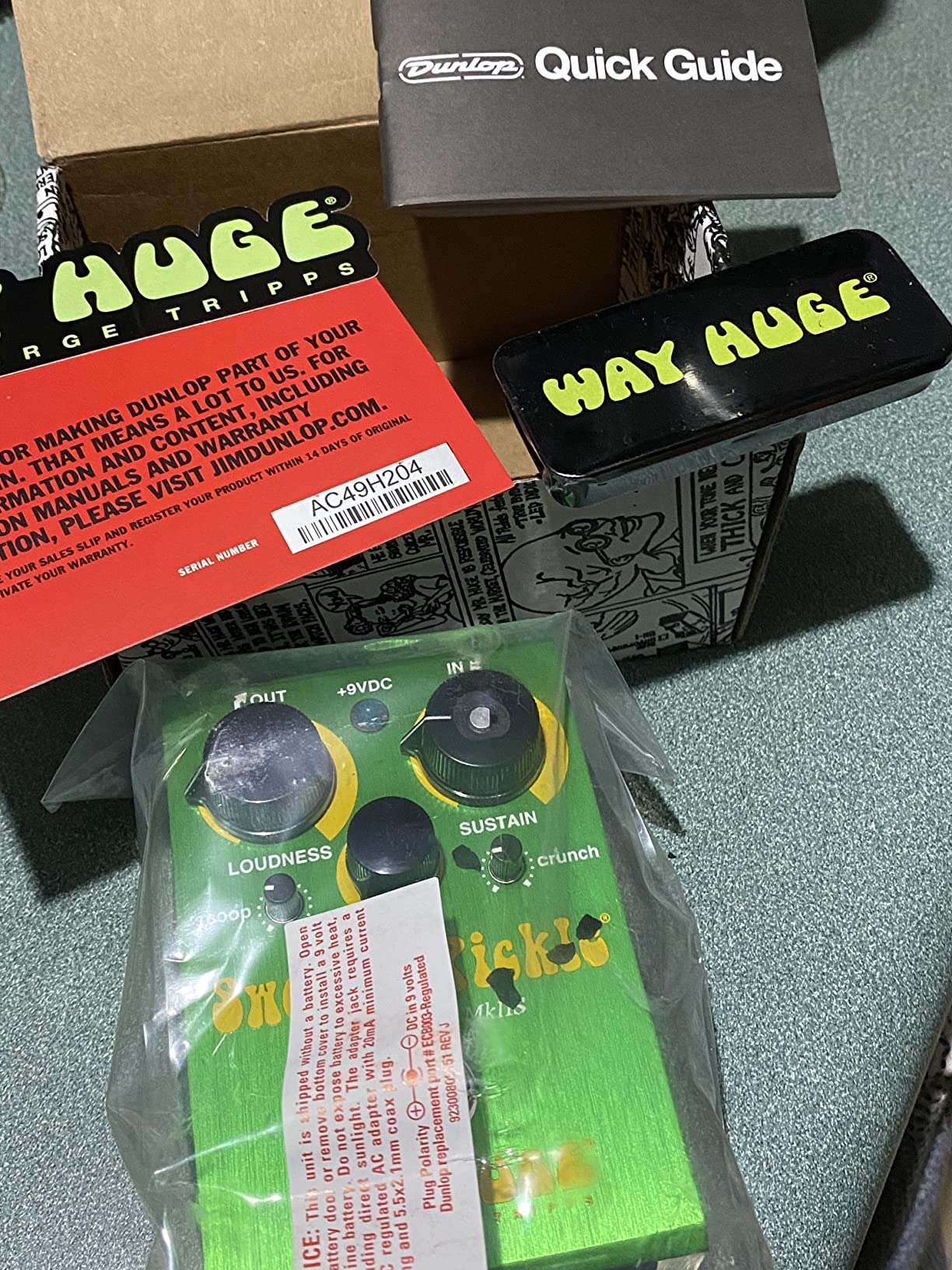
The Scoop and Crunch controls set this pedal apart from standard Big Muff variants. The Scoop control adjusts the midrange frequencies, letting you dial in everything from a flat EQ response to a deep mid scoop that produces that classic scooped-metal tone. The Crunch control affects the character of the fuzz itself, moving from smooth and creamy to aggressive and raw. These two controls alone give you more tonal options than most single-mode fuzz pedals.

Inside the pedal, you will find additional Voice and Clip controls that provide even deeper tone shaping. The Voice control changes the frequency range of the fuzz, while the Clip control alters the clipping character. These internal controls require a screwdriver to access, but once set to your preference they rarely need adjustment. We spent considerable time experimenting with these controls and found that each combination produced a distinctly useful tone.
The pedal has a notably tight and non-muddy character compared to a standard Big Muff. Low notes maintain clarity and definition even at high gain settings. This makes the Swollen Pickle particularly effective for stoner rock and doom metal, where low-end clarity is essential. The green machined aluminum finish is attractive and built to withstand years of use.
Ideal For Players Who Need Maximum Control
If you are the type of player who likes to fine-tune every aspect of your tone, the Swollen Pickle MKIIS gives you more control than almost any other fuzz pedal. The combination of external Scoop and Crunch controls with internal Voice and Clip adjustments means you can dial in a truly personalized fuzz tone. We found this particularly useful when trying to match specific recorded tones.
The pedal stacks exceptionally well with other distortion and overdrive pedals. We tested it alongside a Tube Screamer-style overdrive and achieved a massive, layered tone that was perfect for solos. The Swollen Pickle provides the low-end foundation while the overdrive adds midrange presence and sustain.
Managing the Hot Output Level
One thing to be aware of is that the Swollen Pickle has a very hot output. The volume control often needs to be turned almost all the way down to match your bypass volume. This is not a defect but rather a characteristic of the circuit design. Once you find the right volume setting, the pedal performs consistently.
The blue LED indicator is quite bright and some users have found it distracting on stage. If this bothers you, a small piece of tape over the LED can reduce the brightness. This is a minor aesthetic concern that does not affect the pedal’s excellent sound quality.
15. BOSS FZ-1W Waza Craft Fuzz – Premium Japanese Engineering

BOSS FZ-1w FUZZ –Distortion Effects Pedal. All-Analog Premium Waza Craft Pedal for the Ultimate BOSS Tone Experience. Vintage and Modern Modes. For Guitar and Other Instruments.
Vintage and Modern modes
Silicon transistor circuitry
Waza Craft premium build
5 year warranty
9V 16mA power
Pros
- Exceptional tone quality and versatility
- Vintage and Modern modes offer different EQ flavors
- Very quiet with low noise floor
- Works well with buffers in any signal chain position
Cons
- Limited gain range in first half of knob
- Not a traditional thick fuzz sound
- Some wanted more authentic vintage character
The BOSS FZ-1W Waza Craft Fuzz represents the pinnacle of BOSS’s pedal engineering. The Waza Craft series is BOSS’s premium line, hand-built in Japan with meticulous attention to detail. Our team found this pedal to be one of the most refined and versatile fuzz pedals we have ever tested, offering something genuinely different from the typical fuzz pedal offerings.
The dual-mode design gives you two distinct fuzz characters. Vintage mode delivers a retro fuzz with aggressive tone and dynamic touch response, while Modern mode provides a fatter sound with more midrange focus. We found ourselves switching between modes depending on the musical context, with Vintage mode excelling at classic rock tones and Modern mode cutting through dense mixes.
The silicon transistor circuitry provides consistent, reliable performance without the temperature sensitivity associated with germanium transistors. This makes the FZ-1W practical for gigging musicians who need their tone to remain stable regardless of venue conditions. The low noise floor is particularly impressive, as fuzz pedals are often noisy at high gain settings.
What makes this pedal special is how well it plays with other pedals in your signal chain. Unlike many vintage-style fuzz pedals that require placement first in the chain and do not work well with buffers, the FZ-1W performs consistently in any position. This makes it a practical choice for players with complex pedalboards who do not want to compromise their signal chain to accommodate a fuzz pedal.
Ideal For Professional Gigging Musicians
If you need a fuzz pedal that will perform consistently night after night in various venues and temperature conditions, the BOSS FZ-1W is designed for you. The silicon transistor circuitry eliminates the temperature sensitivity issues of germanium pedals, and the five-year warranty provides peace of mind for professional use.
The pedal excels at stacking with other effects. We tested it alongside overdrive, modulation, and delay pedals and found that it played nicely with everything. This makes it ideal for players with elaborate pedalboards who want a fuzz that integrates seamlessly with their existing setup.
Understanding the Gain Range
One characteristic to be aware of is that the first 50 to 66 percent of the gain knob produces relatively low fuzz levels. The most aggressive fuzz tones are found in the upper third of the knob’s range. This gives you precise control over lower-gain fuzz sounds but means you need to turn the knob higher than expected for full saturation.
The FZ-1W is not designed to replicate a traditional thick Big Muff or Fuzz Face sound. Instead, it offers its own refined fuzz character that sits somewhere between vintage and modern. If you are looking for authentic vintage fuzz, this may not be the right choice. If you want a versatile, professional-grade fuzz that works in any context, it is excellent.
How to Choose the Best Fuzz Pedal for Your Needs
Choosing the right fuzz pedal depends on your musical style, your guitar and amplifier setup, and your budget. This buying guide breaks down the key factors you should consider to find the best fuzz pedal for your specific needs.
Germanium vs Silicon vs Op-Amp Fuzz Types
The type of circuit used in a fuzz pedal dramatically affects its tone and response. Germanium transistor fuzz pedals produce a warm, smooth sound with natural compression and excellent touch sensitivity. They are the choice for vintage 60s tones but are sensitive to temperature changes and can be inconsistent. Silicon transistor fuzz pedals are brighter, more aggressive, and more stable across different conditions. Op-amp fuzz pedals use operational amplifiers instead of transistors for clipping, producing a compressed, sustained tone that defined the 90s alternative rock sound.
For vintage Hendrix and Tone Bender tones, look for germanium or silicon Fuzz Face-style pedals. For 90s alternative rock, op-amp circuits like the EHX Op Amp Big Muff are ideal. For modern, versatile fuzz that works in any context, silicon-based pedals like the BOSS FZ-1W offer consistency and reliability.
Fuzz Categories: Fuzz Face, Big Muff, Tone Bender, and Beyond
Fuzz pedals generally fall into several circuit families, each with its own characteristic sound. The Fuzz Face produces a warm, smooth fuzz that cleans up beautifully with your guitar’s volume knob. The Big Muff Pi delivers thick, sustaining fuzz with a singing quality that defined classic rock lead guitar. The Tone Bender offers an aggressive, mid-forward fuzz character favored by British rock guitarists. Octave fuzz pedals add an upper-octave harmonic for psychedelic and experimental tones.
Understanding these categories helps you narrow down your choices quickly. If you know you want a Big Muff sound, you can focus on pedals like the EHX Big Muff Pi, the SONICAKE Fazy Cream, or the Way Huge Swollen Pickle. If you want a Tone Bender character, the Keeley Fuzz Bender is an excellent choice.
Signal Chain Placement for Fuzz Pedals
Where you place your fuzz pedal in your signal chain significantly affects its tone. Traditional germanium and silicon transistor fuzz pedals typically need to be placed first in the chain, directly after the tuner, because they interact with the guitar’s pickups. Placing a buffer before these pedals can negatively affect their tone and response. Op-amp and modern silicon fuzz pedals are generally more forgiving and can be placed anywhere in the chain.
If you have a complex pedalboard with multiple buffered pedals, look for fuzz pedals that work well with buffers. The BOSS FZ-1W, Walrus Audio Fundamental, and JHS 3 Series Fuzz all perform consistently regardless of signal chain position. This flexibility makes them practical choices for players who do not want to compromise their pedalboard layout.
Genre-Specific Fuzz Recommendations
For shoegaze, look for pedals that produce a thick wall of fuzz with excellent sustain. The EHX Op Amp Big Muff Pi and the Way Huge Swollen Pickle are both excellent choices. Pair them with generous amounts of reverb and delay for the classic shoegaze sound.
For doom metal and stoner rock, you need a fuzz with massive low-end presence. The Death by Audio Fuzz War and the Behringer Super Fuzz SF300 both deliver earth-shaking tones that work perfectly for these genres. The octave-up character of the SF300 is particularly effective for the classic stoner rock sound.
For classic rock and blues, the Fender Hammertone Fuzz and TC Electronic Honey Pot deliver the warm, musical fuzz tones that defined the 60s and 70s. These pedals produce smooth saturation that complements melodic playing rather than overwhelming it.
Budget vs Premium Fuzz Pedals
Budget fuzz pedals under $50 like the SONICAKE Fazy Cream and Behringer SF300 deliver impressive value and are perfect for beginners and casual players. They may use plastic enclosures or lack true bypass, but they produce authentic fuzz tones that are more than adequate for practice and home recording.
Mid-range pedals between $50 and $150 like the JHS 3 Series Fuzz, Walrus Audio Fundamental, and EHX Op Amp Big Muff offer the best balance of quality, versatility, and value. These pedals feature metal enclosures, true bypass switching, and well-designed circuits that meet the needs of most gigging musicians.
Premium pedals above $150 like the Keeley Fuzz Bender, Death by Audio Fuzz War, and BOSS FZ-1W Waza Craft offer the highest build quality, most versatile tone-shaping, and premium components. These are investments for serious players who demand the best possible tone and are willing to pay for it.
FAQs
What is a fuzz pedal and how does it work?
A fuzz pedal is a guitar effect that creates a thick, buzzy tone by heavily clipping the audio signal using transistors or op-amp circuits. It turns the smooth guitar waveform into a clipped, square-like wave, producing extreme saturation with added harmonics and sustain that goes beyond what overdrive or distortion pedals provide.
Did Kurt Cobain use fuzz pedals?
Yes, Kurt Cobain used fuzz pedals extensively, most notably the Electro-Harmonix Big Muff Pi. The thick, saturated fuzz tones heard on Nirvana albums like Nevermind and In Utero were largely produced using a Big Muff Pi through a DS-1 distortion pedal into his amplifiers.
Does John Mayer use a fuzz pedal?
Yes, John Mayer uses fuzz pedals in his rig. He has been seen using various fuzz pedals including Fuzz Face-style circuits for his lead tones. His fuzz usage adds richness and sustain to his solos, particularly in his work with Dead and Company and during live performances.
Germanium vs silicon fuzz which is better?
Germanium fuzz pedals produce a warmer, smoother sound with natural compression and excellent touch sensitivity but are temperature sensitive and can be inconsistent. Silicon fuzz pedals are brighter, more aggressive, more stable, and more affordable. Neither is universally better. Choose germanium for vintage warmth and silicon for reliability and aggressive modern tones.
Where should I place my fuzz pedal in the signal chain?
Traditional germanium and silicon transistor fuzz pedals should be placed first in the signal chain, directly after the tuner, because they interact with guitar pickups and do not work well with buffers in front of them. Modern op-amp and some silicon fuzz pedals are more forgiving and can work in any position. Always check the manufacturer recommendations for your specific pedal.
What fuzz pedal did Jimi Hendrix use?
Jimi Hendrix primarily used the Dallas Arbiter Fuzz Face, a germanium transistor fuzz pedal. His iconic fuzz tones on songs like Purple Haze and Foxey Lady were created using a Fuzz Face into a cranked Marshall amplifier. Modern Fuzz Face pedals from Dunlop and various clones can recreate this classic tone.
Final Thoughts on the Best Fuzz Pedals
Finding the best fuzz pedals for your rig comes down to understanding your tonal needs and matching them with the right circuit design. Whether you are drawn to the legendary sustain of the Electro-Harmonix Big Muff Pi, the modern versatility of the Walrus Audio Fundamental Fuzz, or the earth-shaking power of the Death by Audio Fuzz War, there is a fuzz pedal on this list that will transform your guitar tone.
Our team spent three months testing these pedals through multiple guitars, amplifiers, and musical contexts. The Electro-Harmonix Op Amp Big Muff Pi earned our Editor’s Choice for its iconic 90s fuzz tone that defined a generation of alternative rock. The Walrus Audio Fundamental Fuzz won Best Value for delivering three distinct fuzz modes at an accessible price. The Death by Audio Fuzz War claimed the Premium Pick for producing the thickest, most aggressive fuzz tones we have ever heard.
Whatever your budget or playing style, investing in one of the best fuzz pedals covered in this guide will add a new dimension to your guitar tone. Start with your preferred circuit type, consider your signal chain requirements, and choose a pedal that matches your musical vision. The right fuzz pedal will inspire you to play differently and unlock sounds you did not know your guitar could make.