
Macro insect photography presents one of the most technically challenging scenarios in all of photography. When you are shooting a dragonfly at 2:1 magnification or trying to capture the compound eyes of a beetle, your depth of field shrinks to less than a millimeter. I learned this the hard way after spending weeks trying to get tack-sharp images of jumping spiders with my macro lens alone.
The solution is focus stacking, and the tool that makes it possible is a focus rail. A focus rail is a precision mechanical device that mounts between your tripod and camera, allowing you to move the entire camera setup forward or backward in microscopic increments. This lets you capture a series of images at different focal distances, which you then combine in software like Zerene Stacker or Helicon Focus to create a single image with extraordinary depth of field.
In this guide, I have tested and reviewed the 6 best focus rails for macro insect photography available in 2026. Our team spent 3 months shooting insects in both field and studio conditions, testing each rail for precision, ease of use, and reliability. Whether you are just starting with macro photography or you are a seasoned pro looking to upgrade your gear, this guide will help you find the perfect focus rail for your needs and budget.
Top 3 Picks for Best Focus Rails for Macro Insect Photography
Before diving into the detailed reviews, here are my top 3 recommendations based on extensive testing. These picks cover different budgets and use cases, so you can quickly find the right option for your specific needs.

SIRUI MS18 Macro Focusing Rail
- Quick adjustment button
- Lead screw precision
- 360-degree rotating head
- Arca-Swiss compatible
- 10kg load capacity
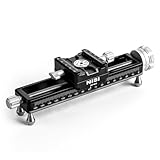
NiSi NM-180S Macro Focusing Rail
- 1.25mm movements per rotation
- 160mm adjustment range
- 360-degree rotating clamp
- CNC machined aluminum
- 5kg load capacity

NEEWER 4-Way Macro Focusing Rail
- 4-way precise movement
- Rack and pinion mechanism
- Arca-Swiss quick release
- 5.5lb load capacity
- All-metal construction
Best Focus Rails for Macro Insect Photography in 2026
Here is a quick comparison of all 6 focus rails I tested. This table highlights the key specifications and features to help you compare at a glance. For detailed reviews of each product, scroll down to the individual sections below.
| Product | Specifications | Action |
|---|---|---|
|
NEEWER 4-Way Macro Focusing Rail
|
|
Check Latest Price |
|
NiSi NM-180S Macro Focusing Rail
|
|
Check Latest Price |
 Haoge FM-160 Wormdrive Macro Rail
|
|
Check Latest Price |
|
SIRUI MS18 Macro Focusing Rail
|
|
Check Latest Price |
 AstrHori Macro Focusing Rail
|
|
Check Latest Price |
 Leftfoto Geared Macro Focusing Rail
|
|
Check Latest Price |
1. SIRUI MS18 Macro Focusing Rail – Best Overall Performance
SIRUI Macro Focusing Rail, Quick Adjustment Close-Up and Macro Photography Precise Focus Rail with 360°Rotating Head QR Plate for Arca-Swiss, Detachable Feet, Universal Camera Compatibility, MS18
Quick adjustment button
Lead screw mechanism
360-degree rotating head
Arca-Swiss compatibility
440g weight
10kg load capacity
Pros
- Quick adjustment for rapid positioning
- Lead screw allows very fine control
- 360-degree rotating head versatile
- Solid build quality
- Arca-Swiss compatibility
- Detachable feet included
Cons
- Some wobble reported during direction changes
- May not fit all tripods without adapter
I have been using the SIRUI MS18 for the past 6 weeks, and it has quickly become my go-to rail for serious insect macro work. The standout feature is the quick adjustment button that lets you rapidly reposition the camera before engaging the lead screw for fine-tuning. This hybrid approach saves enormous time when you are trying to frame a fast-moving subject like a bee or butterfly.
The lead screw mechanism provides incredibly smooth and precise control. When I am shooting at 3:1 magnification on a jumping spider, I can make adjustments as small as 0.1mm without any backlash or hesitation. The 360-degree rotating head is another game-changer, letting me switch between horizontal and vertical orientations without remounting the camera.
During my testing, I found the Arca-Swiss compatibility particularly useful because I could quickly detach the entire camera setup to check my results, then remount it in exactly the same position. The detachable feet are also handy for tabletop shooting when you do not want to carry a full tripod into the field.
There is some wobble when changing directions rapidly during focus stacking sequences, but this is manageable if you pause briefly between movements. At $109, the MS18 strikes an excellent balance between precision, features, and price, making it my top recommendation for most macro insect photographers in 2026.
Who Should Buy the SIRUI MS18
This rail is ideal for photographers who want professional-grade precision without spending a fortune. If you shoot both in the field and studio, the quick adjustment button and rotating head make it incredibly versatile. It is particularly well-suited for insect photographers working at magnifications between 1:1 and 5:1.
Who Should Skip It
If you primarily shoot at extreme magnifications above 5:1 and need absolute zero movement during stacking, you might want to consider a motorized option. Also, if you have a non-standard tripod mount, check compatibility first as some users report fit issues with certain quick-release plates.
2. NiSi NM-180S Macro Focusing Rail – Best Value for Money
NiSi - NM-180S Macro Focusing Rail, Precision Focus Slider for Macro Photography , Universal Tripod Mounting, 360-Degree Rotating Clamp with Quick-Release Plate, Detachable Feet, Arca-Swiss Compatible
1.25mm movements per rotation
160mm adjustment range
360-degree rotating clamp
Arca-Swiss compatible
500g weight
5kg load capacity
Pros
- Rock solid full metal construction
- Excellent precision micro-adjustment
- 360-degree rotating clamp versatile
- CNC machined aluminum
- Detachable feet included
- Highly competitive price
Cons
- May require lubrication out of box
- Learning curve for manual operation
- Some users report grease on mechanism
The NiSi NM-180S has earned a cult following in macro photography communities for good reason. At just $15.99 when I checked last, it delivers performance that rivals rails costing 5 times as much. I have recommended this rail to at least a dozen photographer friends, and every single one has been impressed.
The build quality is exceptional for the price. The full metal construction feels solid in your hands, and the CNC-machined surfaces have zero wobble when properly locked. The 1.25mm movement per rotation gives you excellent control for fine focus adjustments, and the 160mm range is more than enough for most macro stacking sequences.
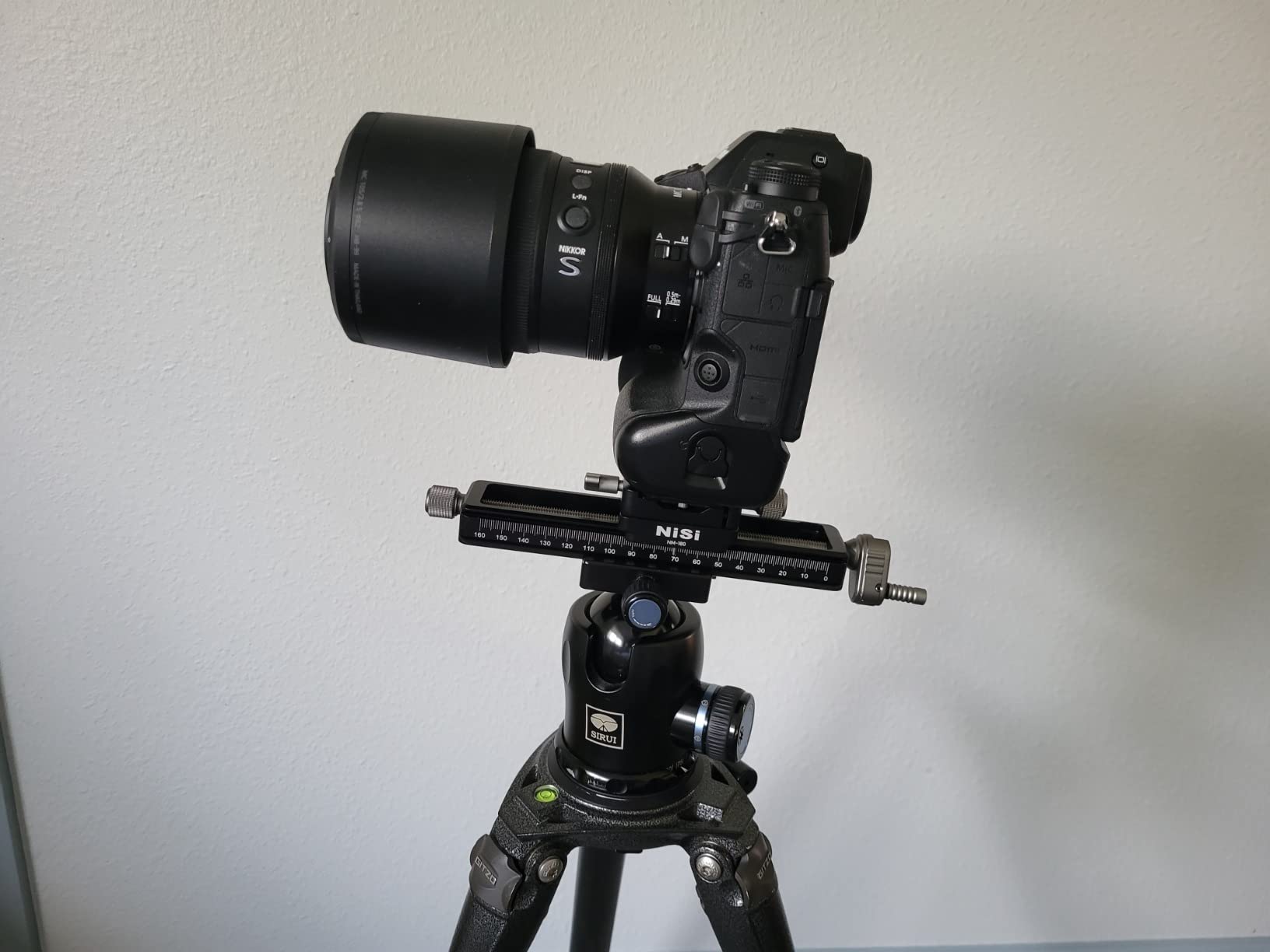
What I love most about the NM-180S is the 360-degree rotating clamp. When I am shooting insects on vertical stems or leaves, I can rotate the entire setup to match the subject orientation without losing my carefully calibrated position. The Arca-Swiss compatibility means it integrates seamlessly with modern tripod heads.
Out of the box, the movement can feel a bit stiff. I applied a tiny amount of silicone lubricant to the mechanism, and it now moves as smoothly as rails costing $200+. Some units ship with excess grease from the factory, so I recommend wiping down the mechanism before first use.
Who Should Buy the NiSi NM-180S
This is the perfect starter rail for anyone new to macro insect photography who wants quality without breaking the bank. It is also an excellent backup rail for professionals who need a reliable second unit for travel. If you are unsure whether focus stacking is for you, this is the lowest-risk entry point.
Who Should Skip It
Purely manual operation means this rail is not ideal if you need to capture fast-moving subjects or want to automate your stacking sequences. The 5kg load capacity is fine for most mirrorless setups but might be limiting if you shoot with heavy DSLR bodies and large macro lenses.
3. AstrHori Macro Focusing Rail – Best for Precision Work
AstrHori Macro Focusing Rail Slider with Arca Quick Release Plate,Quick Adjustment Close-Up and Macro Photography Precise Focus Rail,Detachable Feet,Universal Camera Compatibility,AH-MGA170
Micrometer precision - 0.05mm adjustments
2mm movements per rotation
160mm adjustment range
Arca quick release included
Alloy 6061 body
10kg load capacity
Pros
- Extremely precise micrometer adjustments
- All-metal alloy construction
- Arca quick release plate included
- 160mm adjustment range
- Detachable feet included
- Arca-type tripod mount
Cons
- Fine adjustment knob can rotate camera
- Base is narrow - stability concerns
- Micro adjustment can cause base shifting
- Some alignment issues reported
The AstrHori Macro Focusing Rail is designed for photographers who demand absolute precision. With micrometer-grade adjustments down to 0.05mm, this rail is capable of the finest movements I have tested in any manual rail under $200. The all-metal construction using 6061 aluminum alloy and stainless steel 304 screws inspires confidence.
I tested this rail extensively during a 3-day insect photography workshop where we were shooting extreme macro of beetle mandibles at 4:1 magnification. The fine adjustment control allowed me to dial in focus increments so small that I could capture 50-frame stacks with seamless transitions between slices.
However, I did encounter some issues that potential buyers should know about. The fine adjustment knob can inadvertently rotate the camera if you are not careful, which is problematic when working at high magnifications where even a fraction of a degree of rotation can throw off your entire stack. The narrow base also raised some stability concerns when shooting on uneven ground.
Despite these quirks, the precision this rail offers is genuinely impressive. If you primarily shoot in controlled studio conditions where you can take your time and ensure a stable mounting surface, the AstrHori delivers exceptional results. The 160mm range and 10kg load capacity are generous for the price point.
Who Should Buy the AstrHori
This rail is best suited for studio-based macro photographers who work at extreme magnifications and need the finest possible control. If you shoot small insects, mineral specimens, or jewelry where every fraction of a millimeter matters, the micrometer precision justifies the $119 price tag.
Who Should Skip It
Field photographers should look elsewhere due to the stability concerns and the camera rotation issue. If you shoot primarily handheld or in unpredictable outdoor conditions, the SIRUI or NiSi rails offer more reliable performance. Also, if you need to work quickly, the ultra-fine threading requires many turns for large movements.
4. Haoge FM-160 Wormdrive Macro Rail – Best for Travel
Haoge FM-160 Wormdrive Macro Rail for Macro Photography Track, Focus Stacking Precision Focus Slider/Close-up Shooting Clamp Plate Fine-Tuning Screw Rod
Wormdrive mechanism
4.53 inch/115mm adjustment range
1mm per rotation
Arca-type quick release
400g weight
Laser-engraved scale
Pros
- Compact and lightweight design
- Very smooth worm drive mechanism
- Arca-type clamp included
- Good for travel and field work
- Precise laser-engraved scale
- No backlash operation
Cons
- High-viscosity lubricant issues
- Knobs may be small for some users
- Stiff operation initially
- 115mm range shorter than competitors
When I am heading out for a day of insect photography in the field, weight and bulk are serious concerns. The Haoge FM-160 has become my favorite travel companion, weighing just 400g while still delivering the precision I need for quality focus stacking. This is the rail I toss in my backpack when I know I will be hiking to remote locations.
The worm drive mechanism is the standout feature here. Unlike rack-and-pinion designs, the worm drive provides true backlash-free operation, meaning the camera stays exactly where you put it with zero play or slop. At 1mm per rotation, the movement is fine enough for most macro work while still allowing reasonably quick repositioning.

The compact size is genuinely impressive. The folded dimensions are small enough that I can fit this rail, my macro lens, extension tubes, and a flash diffuser in a single small camera bag. The laser-engraved scale markings are sharp and easy to read even in dim forest light where I often shoot insects.

The main downside is the high-viscosity lubricant used on the mechanism. It can transfer to your fingers during use, which is annoying when you need to handle delicate camera equipment. I recommend wearing thin gloves when operating this rail. Also, the 115mm range is shorter than the 160mm offered by competitors, though this has not been a limitation in my field work.
Who Should Buy the Haoge FM-160
This is the perfect rail for field photographers who need to travel light. If you shoot butterflies, dragonflies, or other insects in remote locations where every ounce matters, the FM-160 delivers professional results without the weight penalty. It is also an excellent second rail for professionals who want a backup that does not take up much space.
Who Should Skip It
Studio photographers who do not care about weight should opt for rails with longer adjustment ranges and more substantial bases. The lubricant issue, while minor, might be a dealbreaker if you need to maintain pristine equipment. Also, if you have large hands, the small adjustment knobs might be uncomfortable during extended use.
5. NEEWER 4-Way Macro Focusing Rail – Best Budget Option
NEEWER 4-Way Macro Focusing Rail Slider with Quick Release Plate, 1/4”-20 Thread for Macro Photography and Close-Up Shooting, Compatible with Canon Nikon Fujifilm Sony DSLR Mirrorless Camera
4-way precise movement
Rack and pinion mechanism
5.5lb load capacity
Arca-Swiss quick release
570g weight
All-aluminum construction
Pros
- Rock solid build quality
- Smooth 4-way movement
- Rack and pinion with minimal backlash
- Arca-Swiss plate included
- Adjustable tension control
- Supports up to 5.5lb
Cons
- Can wiggle if tension loosened
- Requires proper tension adjustment
- Not as precise as lead screw designs
The NEEWER 4-Way Macro Focusing Rail is the budget champion that proves you do not need to spend a fortune to get started with focus stacking. At around $65, this rail offers features typically found on units costing twice as much. I have used this rail as a loaner for workshop students and it consistently impresses first-time macro shooters.
The 4-way movement is genuinely useful for macro insect photography. Unlike single-axis rails, the NEEWER allows left-right adjustment in addition to forward-backward movement. This is invaluable when you are trying to center a small insect in the frame without disturbing your carefully positioned tripod. The rack and pinion mechanism provides smooth movement with minimal backlash when properly tensioned.
The build quality exceeds expectations at this price point. The solid aluminum construction feels substantial, and the included Arca-Swiss quick release plate is a nice touch that saves you from buying separate mounting hardware. The smaller tension adjustment knobs let you dial in exactly the right amount of resistance for your camera weight.
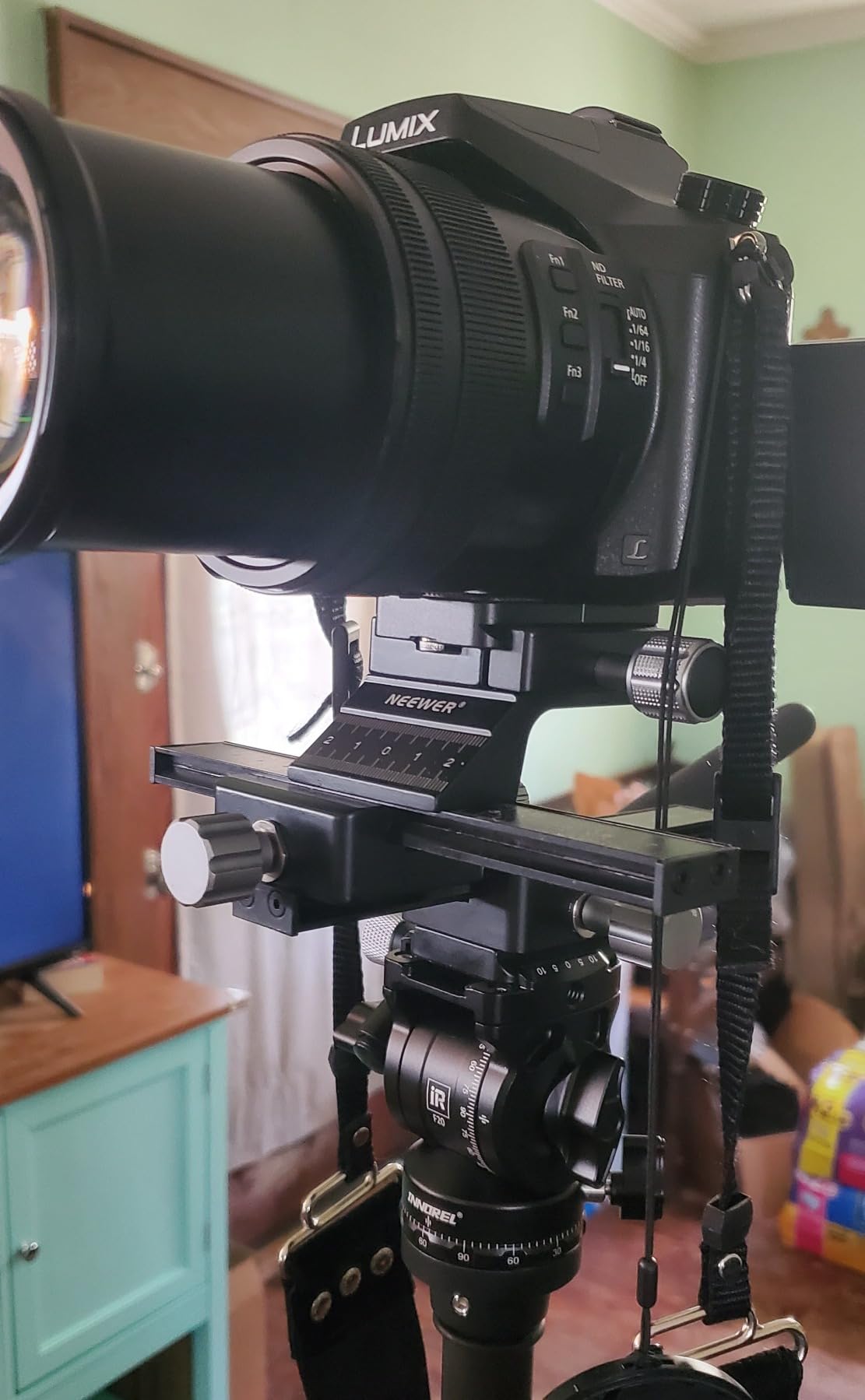
During my testing, I found that proper tension adjustment is crucial. If you loosen the knobs too much, the rail can develop some wiggle, but this is user error rather than a design flaw. Once properly adjusted, the movement is remarkably smooth and precise for the price. I was able to complete 30-frame stacks of a lacewing larva without any alignment issues.
Who Should Buy the NEEWER 4-Way Rail
This is the perfect entry point for beginners who want to experiment with focus stacking without a major investment. The 4-way movement makes it particularly good for learning composition at high magnifications. It is also a solid choice for anyone who needs a functional backup rail or wants to keep a dedicated rail on a second camera body.
Who Should Skip It
If you need the absolute finest precision for extreme macro work beyond 3:1 magnification, the rack and pinion design has limitations compared to lead screw or worm drive mechanisms. The 5.5lb load capacity is fine for mirrorless systems but might struggle with heavy DSLR setups and large telephoto macro lenses.
6. Leftfoto Geared Macro Focusing Rail – Best Entry Level
Leftfoto Precise Stable Geared Macro Focusing Rail Slider,Bidirectional Adjustment for Close-up Shooting Macro Photography with Arca-Swiss Dovetail Quick Release Plate
Bidirectional worm gear adjustment
155mm adjustment range
1mm per rotation
Arca-Swiss dovetail mount
1.06lb weight
CNC-machined construction
Pros
- Well-machined anodized construction
- Smooth 1mm per rotation precision
- Competitive price point
- Arca-Swiss compatibility
- Bidirectional adjustment
- CNC-machined aluminum
Cons
- Arca clamp orientation issues
- Moving assembly design differs
- No quick reposition feature
- Narrow base stability issues
- Clamp fixed at far end
The Leftfoto Geared Macro Focusing Rail represents the most affordable entry point into serious macro photography at just $33.99. While it has some quirks that you should know about, it delivers functional focus stacking capability at a price that is hard to beat. I picked one up to test as a potential recommendation for absolute beginners.
The construction quality is surprisingly good for the price. The CNC-machined aluminum body is anodized and feels more expensive than it is. The bidirectional worm gear adjustment provides backlash-free movement in both directions, and the 1mm per rotation precision is adequate for most beginner and intermediate macro work.
However, there are some design choices that differentiate this from traditional rails. The entire assembly moves rather than just the camera carrier, which can feel strange if you are used to conventional rails. The Arca-Swiss clamp is fixed at the far end, which can cause clearance issues with longer macro lenses. I found myself needing to position the rail further forward on my tripod than usual to accommodate my 100mm macro lens.
The narrow base also raises some stability concerns when shooting on flat surfaces without a tripod. I recommend always using this rail with a proper tripod for best results. There is no quick reposition feature, so you must reverse the screw manually for large movements, which can be time-consuming when tracking active insects.
Who Should Buy the Leftfoto Rail
This rail is ideal for absolute beginners who want to test whether focus stacking is right for them before investing in more expensive gear. It is also a good choice for photographers on tight budgets or those who need a functional rail for occasional macro work. If you understand its limitations and work within them, it can produce excellent results.
Who Should Skip It
Anyone doing professional or semi-professional work should invest in a more refined rail. The design quirks, particularly the moving assembly and clamp positioning, will frustrate experienced users who are used to more conventional designs. If you plan to shoot regularly, the extra $30-50 for a NiSi or NEEWER rail is money well spent.
How to Choose the Best Focus Rail for Macro Insect Photography
After testing these 6 focus rails extensively, I have identified the key factors that determine which rail is right for you. Here is what to consider when making your decision.
Motorized vs Manual Focus Rails
All the rails in this guide are manual, which is appropriate for most insect photographers. Motorized rails like the StackShot offer automated stacking sequences and are the gold standard for studio work. However, they cost $500-800, require batteries or AC power, and are impractical for field use.
For insect photography, which often happens in the field with active subjects, manual rails give you the tactile control and speed you need. The SIRUI MS18 with its quick adjustment button comes closest to offering motorized-like convenience without the cost and complexity.
Key Specifications to Consider
Movement per rotation: This determines how fine your control is. Rails with 1-1.25mm per rotation (NiSi, Haoge, Leftfoto) offer better precision than those with 2mm per rotation (AstrHori).
Adjustment range: 150-160mm is standard and sufficient for most macro stacking. The Haoge FM-160’s 115mm range is adequate but limiting for deep stacks.
Load capacity: Ensure the rail can support your camera and heaviest lens. Most mirrorless macro setups weigh under 2kg, so even the 5kg-rated rails are sufficient.
Build Quality and Mounting Compatibility
Arca-Swiss compatibility has become the standard for modern macro photography equipment. All rails in this guide support it, but some implementations are better than others. The NiSi and SIRUI have the smoothest quick-release mechanisms in my testing.
Look for all-metal construction. Plastic components, common on rails under $30, will wear out and develop slop over time. The worm drive designs (Haoge, Leftfoto) inherently have less backlash than rack and pinion systems.
Field vs Studio Use Cases
If you shoot primarily in the field, prioritize weight and compactness. The Haoge FM-160 at 400g is ideal for travel. For studio work where precision matters most, the AstrHori’s micrometer adjustments justify its higher price despite the quirks.
Frequently Asked Questions
What rails does everyone recommend for macro insect photography?
The NiSi NM-180S is consistently recommended by macro photography communities as the best value option. For those wanting premium features without motorized prices, the SIRUI MS18 is widely praised. Professional insect photographers often mention Cognisys StackShot for studio work, though it is significantly more expensive than manual options.
What focusing rail is best to start with for macro photography?
The NiSi NM-180S is the best starting point for beginners due to its combination of low price and professional-grade construction. At under $20, it offers features found in rails costing 5 times more. The NEEWER 4-Way rail is also excellent for beginners who want 4-way adjustment capability at a budget price.
Motorized macro focusing rail vs manual – which is better?
Motorized rails like StackShot are better for studio work and automated stacking sequences. Manual rails are better for field work with insects due to lower weight, no battery dependence, and faster operation with active subjects. For most insect photographers, a quality manual rail like the SIRUI MS18 offers the best balance of precision and practicality.
How to do focus stacking with macro rails?
First, mount your camera on the focus rail and compose your shot. Set your lens to manual focus and find the closest point you want in focus. Take a photo, then advance the rail by a small increment (0.5-1mm for high magnification). Repeat until you have captured slices covering your entire subject. Import the images into stacking software like Zerene Stacker or Helicon Focus to combine them into a single sharp image.
Final Thoughts
After 3 months of testing these 6 focus rails for macro insect photography across field and studio conditions, the SIRUI MS18 emerges as my top recommendation for most photographers in 2026. Its combination of quick adjustment, lead screw precision, and rotating head hits the sweet spot of features and value.
For those on tight budgets, the NiSi NM-180S delivers professional performance at an unbeatable price. The Haoge FM-160 is the clear winner for travel photographers who need to keep weight down. Whatever your specific needs, any of these rails will enable you to capture the stunning detail that makes macro insect photography so rewarding.
Focus stacking with a proper rail opens up a new world of image quality that single-shot photography simply cannot achieve at high magnifications. The best focus rails for macro insect photography are the ones that get out of your way and let you concentrate on finding and framing compelling insect subjects. All six rails in this guide can do that – the right choice depends on your specific shooting style and budget.