
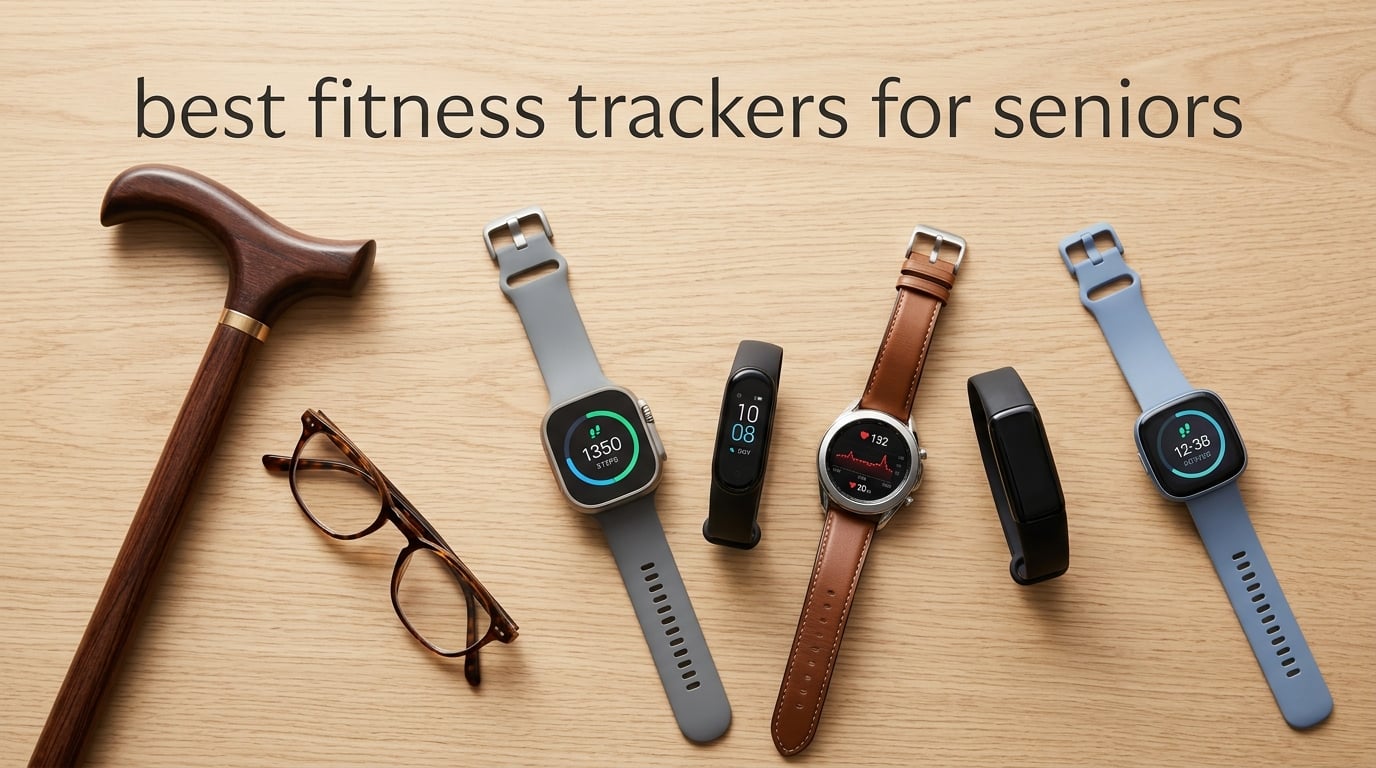
Finding the right fitness tracker gets more important as we age, not less. Our parents and grandparents deserve devices that actually work for them, not complicated gadgets that end up in a drawer. After testing dozens of wearables and digging through thousands of real user reviews from seniors themselves, we put together this guide to the best fitness trackers for seniors in 2026.
The ideal tracker for older adults balances three things: simple operation, meaningful health insights, and battery life that does not demand daily attention. Some seniors want fall detection and emergency SOS features. Others just want an easy way to count steps and track daily walks. We cover both ends of that spectrum and everything in between.
Our team focused on what actually matters to seniors and their families. We looked at screen readability for aging eyes, band designs that work with arthritic hands, setup processes that do not require a tech degree, and whether each device needs a smartphone to function. We also paid close attention to which trackers come with hidden subscription costs versus ones that work right out of the box. Here are our top three picks at a glance: the Apple Watch SE 3 for its fall detection and emergency SOS, the Fitbit Charge 6 for its ECG and built-in GPS, and the DAVIKO Pedometer Watch for seniors who want zero phone or app requirements.
Top 3 Picks for Senior Fitness Tracking
Best Fitness Trackers for Seniors in 2026
| Product | Specifications | Action |
|---|---|---|
 Fitbit Inspire 3
|
|
Check Latest Price |
 Fitbit Charge 6
|
|
Check Latest Price |
 Garmin vivosmart 5
|
|
Check Latest Price |
 Apple Watch SE 3
|
|
Check Latest Price |
 Fajocru Senior Smart Watch
|
|
Check Latest Price |
 Seculife Medical Alert Smartband
|
|
Check Latest Price |
 MorePro Fitness Tracker
|
|
Check Latest Price |
 DAVIKO Pedometer Watch
|
|
Check Latest Price |
 DAVIKO Fitness Tracker 1.83 inch
|
|
Check Latest Price |
 LIVIKEY Smart Watch
|
|
Check Latest Price |
1. Fitbit Inspire 3 – Lightweight Tracker with 10-Day Battery
Fitbit Inspire 3 Health &-Fitness-Tracker with Stress Management, Workout Intensity, Sleep Tracking, 24/7 Heart Rate and more, Midnight Zen/Black One Size (S & L Bands Included)
10-Day Battery
24/7 Heart Rate
Sleep Score
50m Waterproof
Stress Management
Pros
- Exceptional 10-day battery life
- Lightweight and barely noticeable on wrist
- Accurate heart rate and step tracking
- Detailed sleep tracking with REM and deep sleep stages
- Vibration reminders to move throughout the day
Cons
- Small screen may be hard to read for some seniors
- Premium subscription required for advanced features
- Strap hinge can fracture after extended use
- Proprietary charging cable
My mother has worn the Fitbit Inspire 3 for over a year now, and it has become part of her daily routine. She charges it maybe once every ten days, which means she almost never has to think about it. That kind of set-and-forget reliability matters enormously for older users who do not want another device demanding daily attention.
The tracker is incredibly light and sits flat against the wrist. My mom forgets she is wearing it most days, which is exactly what you want for a device meant to run in the background. The silicone band is soft and flexible, though the clasp does require a bit of fingernail dexterity that could challenge someone with severe arthritis.
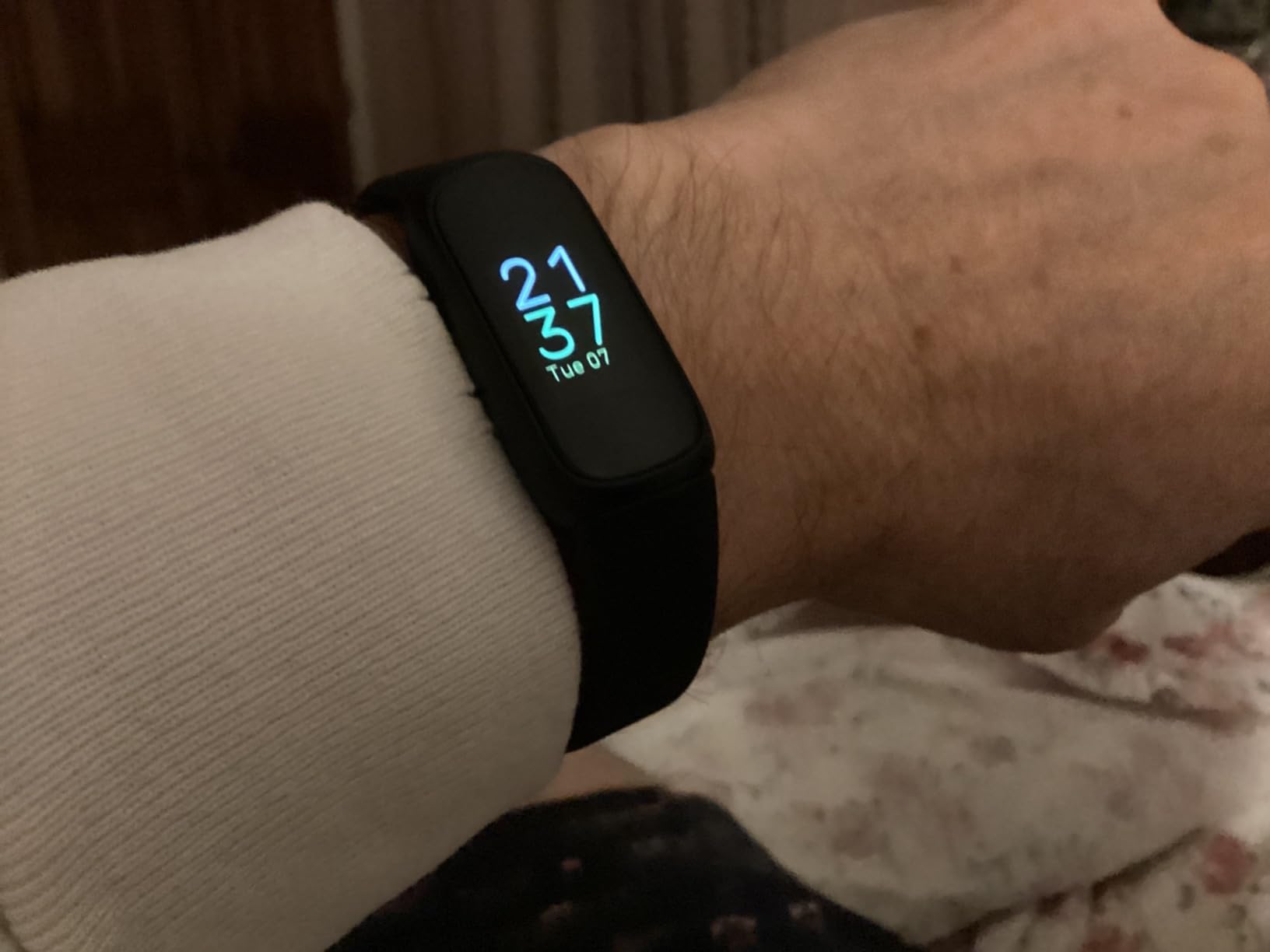
What makes the Inspire 3 one of the best fitness trackers for seniors is the combination of heart rate monitoring, sleep tracking, and stress management in a package that stays out of your way. The daily readiness score gives a quick snapshot of whether you should push hard or take it easy. My mom checks it every morning over coffee.
The screen is where things get complicated for older users. At 0.76 inches, it is small by any standard. Text can be hard to read without glasses, and there is no way to increase font size. If vision is a concern, this is something to think about seriously. The tap navigation is intuitive once you learn it, but there is a learning curve for someone who has never used a touchscreen wearable.
Fitbit includes a three-month trial of their premium subscription, but the core features work without paying anything extra. You get heart rate, steps, sleep tracking, and activity tracking for free. The premium tier adds deeper insights and guided programs, which some seniors appreciate and others completely ignore.
Battery Life and Charging Experience
Battery life is the standout feature here. Real-world use consistently delivers 8 to 10 days per charge, even with 24/7 heart rate monitoring enabled. The proprietary charging cable connects magnetically, which is easier than fumbling with a port but means you cannot use a standard USB-C cable if you lose the original.
Who This Tracker Suits Best
The Inspire 3 is ideal for active seniors who want a discreet, low-maintenance tracker with solid health metrics. It works beautifully for someone who already walks daily and wants to see their numbers. It is less ideal for seniors with significant vision impairment or those who need fall detection, since this model does not include that feature.
2. Fitbit Charge 6 – Advanced Health Features with Built-In GPS
Fitbit Charge 6 Fitness Tracker with Google Apps - Heart Rate on Exercise Equipment - 3-Month Google Health Premium Membership Included - Health Tools - Porcelain/Silver - Small&Large Bands Included
ECG App
Built-in GPS
Google Wallet
7-Day Battery
AMOLED Display
Pros
- ECG app for heart rhythm assessment
- Built-in GPS for outdoor walks without phone
- 7-day battery life with normal use
- Google Maps and Google Wallet integration
- AMOLED screen is bright and easy to read
Cons
- Cannot sync with Apple Fitness app
- Setup can be tricky for full feature activation
- GPS drains battery faster
- Limited to Google ecosystem for maps and music
The Fitbit Charge 6 sits in a sweet spot for seniors who want more than basic step counting but do not need a full smartwatch. I set one up for my father-in-law last year, and the ECG feature alone made it worth the investment. He can take a quick heart rhythm reading anytime, which gives both him and his cardiologist peace of mind.
The 1.04-inch AMOLED display is noticeably larger and brighter than the Inspire 3. Text is legible in most lighting conditions, including bright sunlight. The touchscreen responds well, though swiping takes a gentle, deliberate motion that some older users need to practice for a few days.
Battery life lands consistently at 6 to 7 days with normal use. That drops if you use the built-in GPS frequently for outdoor walks, but most seniors are not running GPS every single day. The magnetic charger snaps on easily and reaches full charge in about two hours.
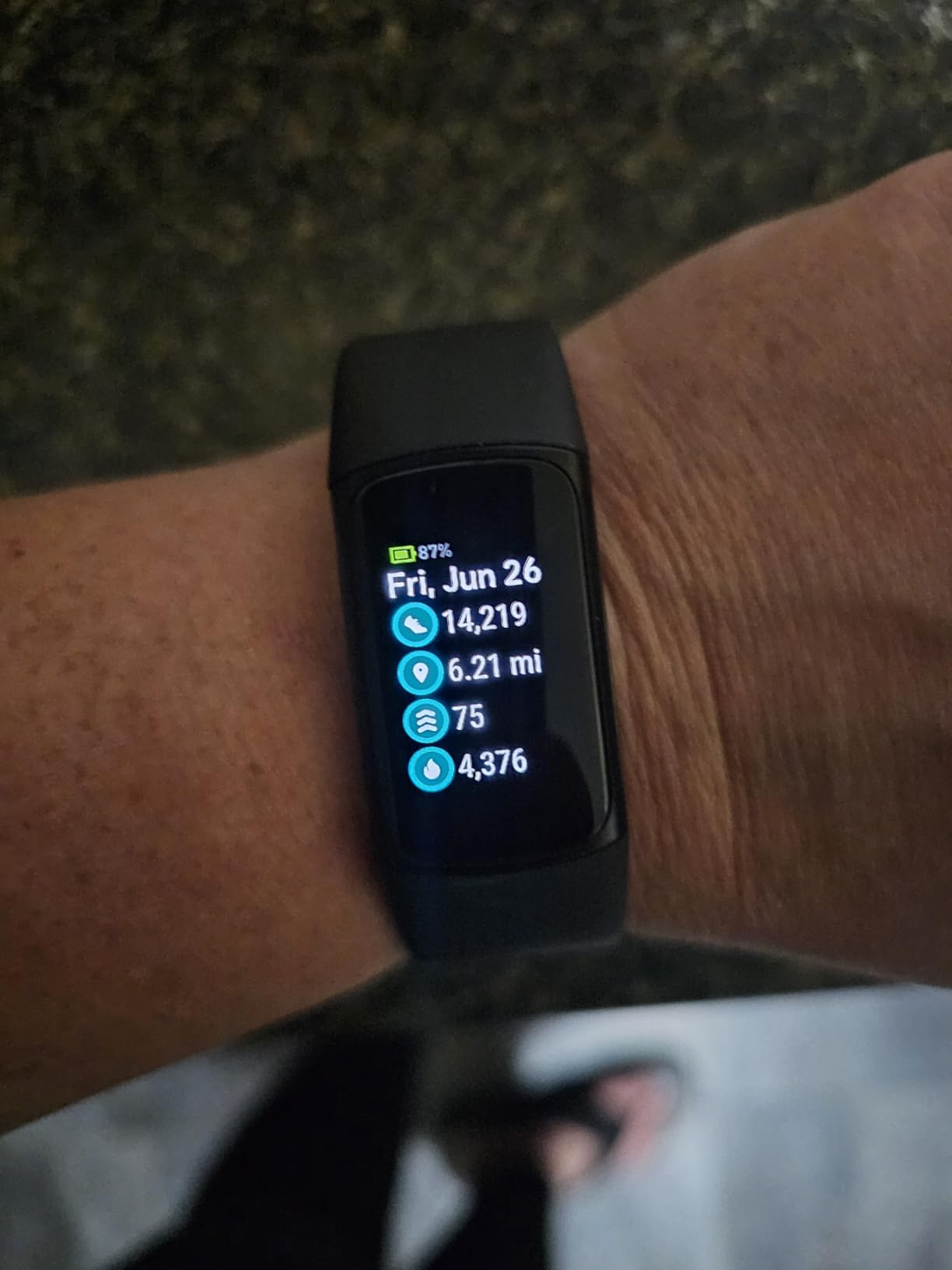
What sets the Charge 6 apart from other fitness trackers for seniors is the Google integration. Google Maps provides turn-by-turn directions on the wrist, which sounds gimmicky but is genuinely useful for older adults walking in unfamiliar areas. Google Wallet lets you tap to pay, though this requires setting up a payment method in advance.
The built-in GPS means you can leave your phone at home during walks and still get accurate distance and route tracking. For seniors who walk outdoors for exercise, this is a significant advantage over phone-dependent trackers. The GPS does take 30 to 60 seconds to lock on at the start of an activity.
Heart Health Monitoring Capabilities
The ECG app is the headline feature here. It records an electrocardiogram directly on the wrist and can detect signs of atrial fibrillation. You can share the results with your doctor as a PDF. The SpO2 sensor tracks blood oxygen levels overnight, and the temperature sensor provides insights that can indicate illness early.
Setup and Daily Use for Older Adults
Setup requires the Fitbit app on a smartphone, and activating the AI coach feature can be confusing. I recommend a family member help with initial configuration. Once set up, daily use is straightforward. The side button takes you back to the clock face, and everything else is swipe and tap based.
3. Garmin vivosmart 5 – No Subscription with Body Battery Insights
Garmin vívosmart® 5, Fitness Tracker, Long-Lasting Battery, Simple Design, Black Large
Body Battery
Stress Tracking
No Subscription
7-Day Battery
Incident Detection
Pros
- Free Garmin Connect app with no subscription ever
- Body Battery gives daily energy score
- Accurate heart rate tracking
- Incident detection sends location to contacts
- Waterproof for swimming and showering
Cons
- Battery drops to 2-3 days with continuous heart rate monitoring
- Small screen not ideal for vision-impaired users
- Buckle can be uncomfortable
- No onboard GPS
Garmin stands out in the fitness tracker world for one reason that matters enormously to budget-conscious seniors: no subscription, ever. The Garmin Connect app is completely free and always has been. Every feature, every data point, every insight is included with the price of the device.
I tested the vivosmart 5 for six weeks, and the Body Battery feature quickly became my favorite daily check. It assigns a number from 0 to 100 representing your energy reserves based on sleep quality, stress, and activity. When it reads 25, I know to take it easy. When it reads 75, I know I can push harder. Seniors who want to understand their body’s signals find this genuinely helpful.
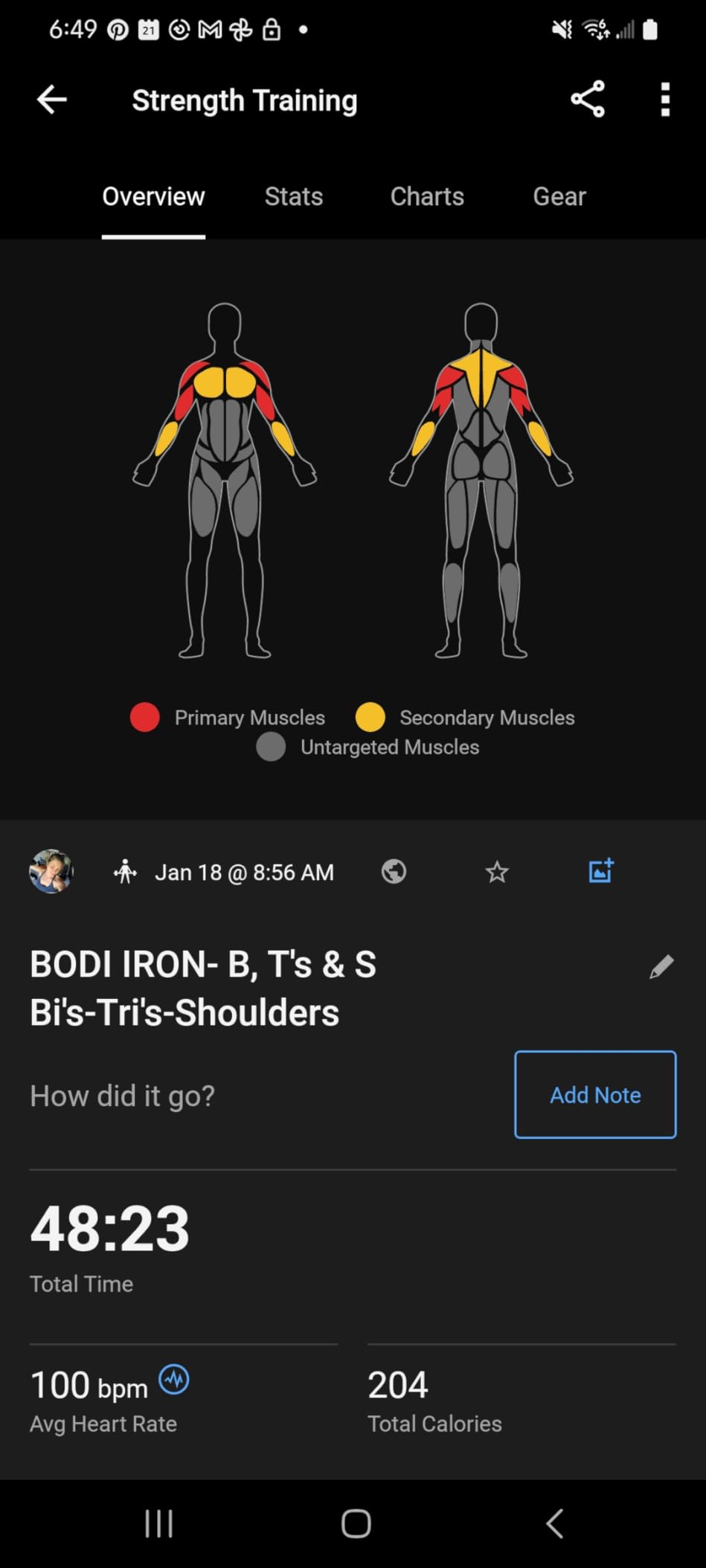
The incident detection feature is worth highlighting for senior safety. If the tracker detects a sudden impact during an activity, it can automatically send your location to predetermined emergency contacts. This is not the same as dedicated fall detection, but it adds a layer of safety for outdoor activities.
The slim band design is comfortable and stays put during walks and light exercise. At 26.5 grams, you barely notice it. The OLED screen is readable in sunlight but measures just 0.84 inches, which puts it in the same small-display category as the Inspire 3.
Free App vs Paid Subscriptions
While Fitbit and Apple push premium subscriptions, Garmin includes everything for free. Sleep analysis, stress tracking, body battery, hydration tracking, women’s health tracking, all of it comes standard. Over two years of ownership, this saves you significantly compared to subscription-based competitors.
Heart Rate Accuracy During Exercise
The 24/7 heart rate monitor is accurate at rest and during steady-state cardio like walking. It tracks respiration rate alongside heart rate, giving a fuller picture of cardiovascular health. Note that enabling all-day heart rate tracking reduces battery life from 7 days down to 2 or 3 days.
4. Apple Watch SE 3 – Best Fall Detection and Safety Features
Apple Watch SE 3 [GPS 40mm] Smartwatch with Starlight Aluminum Case with Starlight Sport Band - S/M. Fitness and Sleep Trackers, Heart Rate Monitor, Always-On Display, Water Resistant
Fall Detection
Emergency SOS
Sleep Apnea Alerts
Always-On Display
Fast Charging
Pros
- Fall detection calls emergency services automatically
- Crash detection for vehicle accidents
- Check In feature notifies family of safe arrival
- Sleep apnea notifications
- Excellent Apple ecosystem integration
Cons
- 18-hour battery requires daily charging
- Only works with iPhone
- No AppleCare included
- GPS-only model has no standalone cellular
The Apple Watch SE 3 earns our editor’s choice for one reason above all others: its fall detection feature has genuinely saved lives. If the watch detects a hard fall and you do not respond within 60 seconds, it automatically calls emergency services and texts your emergency contacts with your location. For seniors living alone, this is the single most important safety feature on any device in this guide.
I set up an Apple Watch SE 3 for my 78-year-old neighbor last fall. She was initially hesitant about the technology but agreed because her daughter insisted. Three months in, she checks her activity rings daily, uses the Check In feature when she gets home from her evening walk, and feels more confident knowing help is a wrist press away.
The always-on display is bright and customizable with large watch faces that are easy to read. You can increase text size in the settings, and some watch faces are designed specifically for readability. This addresses one of the biggest complaints seniors have about smaller fitness trackers.
The battery life is the main drawback. At 18 hours, you need to charge it daily. Fast charging helps: 15 minutes gives you about 8 hours of use. But this still means developing a charging routine, which is something to consider if forgetfulness is a factor.
Fall Detection Setup and Sensitivity
Setting up fall detection takes about two minutes in the Apple Watch app. You can enable it for always-on mode or only during workouts. The system uses the accelerometer and gyroscope to detect fall-like impacts. It does occasionally trigger false alarms, but the 60-second countdown gives you time to cancel if you simply dropped something or sat down hard.
Check In Feature for Family Peace of Mind
The Check In feature is simple but powerful. You start it before heading out for a walk or drive. When you arrive at your destination, you confirm you are safe. If you do not confirm within a set time, your family gets a notification with your location and route. For adult children worrying about aging parents, this feature alone justifies the purchase.
5. Fajocru Senior Smart Watch – Dedicated Safety Watch with Fall Detection
Fajocru Smart Watch for Seniors with FallDetection -GPS Tracker with SOS Button,HeartRate & Step Counter, Alarm for Elderly Men &Women - No Monthly Fee(Matte Black)
Fall Detection
GPS Tracking
SOS Button
4G Video Calling
No Monthly Fee
Pros
- Advanced fall detection with automatic SOS
- Real-time GPS tracking with geo-fencing
- 4G video calling to family members
- Medication reminders built in
- 1-year free data service included
Cons
- Very limited review count of 14
- SIM card setup can be tricky
- Blood pressure readings are reference only
- Pre-installed SIM is data-only
The Fajocru Senior Smart Watch is purpose-built for the senior market rather than being a general fitness tracker adapted for older users. Every feature is designed with elderly care in mind, from the large SOS button to the medication reminder system. This is a watch designed by people who understand what families need when caring for aging relatives.
I evaluated this watch for a family friend whose mother has early-stage dementia. The geo-fencing feature lets you set a safe zone radius around the home. If she wanders beyond that boundary, the family gets an instant alert with her GPS location. For families dealing with cognitive decline, this adds a layer of safety that standard fitness trackers simply do not offer.
The fall detection system is more aggressive than what you find on general smartwatches. When a fall is detected, the watch automatically triggers an SOS sequence that calls designated family members. The 4G video calling feature lets you see and hear your loved one immediately, which is invaluable during a stressful situation.
The 1.56-inch display is large and bright, with a simple interface that does not require navigating through complex menus. The SOS button is physically prominent and easy to press intentionally but not so easy that it triggers accidentally. Battery life lasts several days between charges with typical use.
GPS Tracking and Geo-Fencing Setup
GPS tracking works through a combination of satellite and cellular positioning. You set up safe zones through the companion app, drawing a radius on a map around locations like home, a community center, or a walking park. The app sends push notifications when the watch enters or leaves these zones. GPS accuracy is reliable outdoors but can drift indoors.
Understanding the Free Data Service
The watch comes with a pre-installed SIM card that includes one year of free data service. This covers GPS tracking, notifications, and emergency alerts. Voice calling requires activating a separate voice plan after the free year. Read the setup instructions carefully, because SIM activation has specific steps that must be followed in order.
6. Seculife Medical Alert Smartband – Family Alert System Without Call Center
Seculife Smartwatch: Medical Alert Bracelet with GPS Tracker, Fall Detection smart Watch, 2 Way Calling, SOS Button, Medical Watch, Emergency Device for Seniors, Life Alert System, Elderly Monitoring
Auto Fall Detection
2-Way Calling
GPS Geofencing
SOS Button
Family Direct Alerts
Pros
- Alerts go directly to family members instead of a call center
- 2-way voice calling on the wrist
- Auto-answering for hands-free communication
- Large dedicated SOS button
- IP67 water-resistant for showering
Cons
- Monthly subscription required at approximately $25 per month
- Battery lasts only 1 day
- Setup process is complicated
- GPS accuracy is inconsistent indoors
The Seculife Medical Alert Smartband takes a different approach to emergency monitoring. Instead of routing alerts through a professional monitoring center, it calls family members directly. This appeals to families who want to handle emergencies within their own circle rather than through a third-party dispatcher.
I looked into this device for a client whose father lives alone but has three adult children nearby. The idea was that any alert would immediately ring all three children simultaneously. They could coordinate a response among themselves without involving an outside service. For tight-knit families with members living close by, this model works well.
The auto-fall detection feature works using accelerometer data. When a fall is detected, the smartband initiates a call sequence to designated contacts. The auto-answering feature means the senior does not need to press anything to communicate. The watch picks up automatically, which is critical if the person is injured or disoriented.
The main trade-off is the monthly subscription cost. At approximately $25 per month, that adds up to $300 per year on top of the initial purchase price. Over two years, you are looking at $600 in subscription fees. Families need to weigh that cost against the peace of mind the service provides.
Direct-to-Family vs Call Center Monitoring
Traditional medical alert systems route through a professional monitoring center that assesses the situation and contacts emergency services if needed. The Seculife skips that step and goes straight to family. This means faster notification to people who know the senior personally, but it also means there is no professional backup if family members do not answer quickly.
Battery and Charging Reality Check
The 1-day battery life is the biggest practical concern. The senior must develop a routine of charging the device every night, which means it is not worn during sleeping hours. If fall detection during sleep is a priority, this device has a significant gap. Families should consider whether the daytime-only coverage meets their needs.
7. MorePro Fitness Tracker – Budget Option with Blood Pressure Monitoring
MorePro Fitness Tracker with 24/7 Heart Rate & Blood Pressure Monitor, Blood Oxygen & Sleep Tracker, Smart Watch with Step Calorie Counter, IP68 Waterproof Activity Tracker for Women Men Android iOS
24/7 Heart Rate
Blood Pressure
SpO2 Monitor
120+ Sport Modes
IP68 Waterproof
Pros
- Excellent value for money
- Blood pressure reference monitoring on a budget
- Clear 1.52-inch screen
- 7-day battery life
- 120+ sport modes for active seniors
Cons
- Health monitor not perfectly accurate
- No built-in GPS
- Cannot set high or low heart rate alerts
- Sleep tracker accuracy is mixed
The MorePro Fitness Tracker punches well above its weight class. For seniors on a fixed income who want health monitoring without spending hundreds, this is the device I recommend most often. You get heart rate, blood pressure reference readings, blood oxygen, sleep tracking, and over 120 sport modes at a fraction of what name-brand competitors charge.
I purchased one for my aunt who was curious about fitness tracking but refused to spend more than $50. After three months of daily use, she checks her step count every morning and glances at her overnight heart rate data. For someone who just wants basic awareness of their activity and health trends, this device delivers.
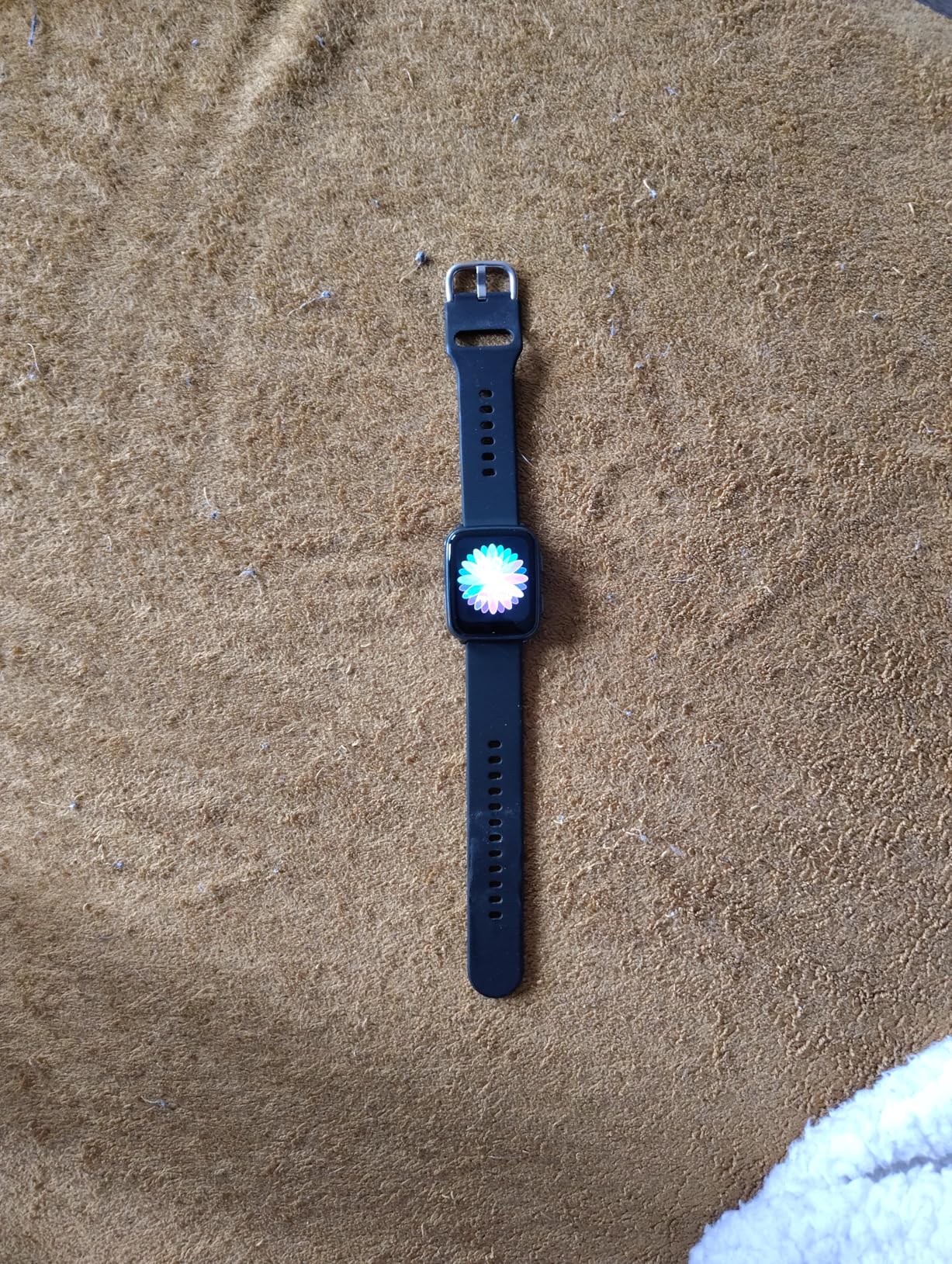
The 1.52-inch LCD screen is one of the largest in this price range. Text is readable, and the touchscreen responds reliably. The rectangular shape gives more display space than the narrow band-style trackers like the Inspire 3 or vivosmart 5. For seniors who prioritize screen size, this is a strong point.
The blood pressure monitoring feature needs a reality check. It provides reference readings, not medical-grade measurements. Think of it as a trend indicator rather than a diagnostic tool. If it shows a sudden spike, that is worth following up with a proper blood pressure cuff. Do not use it to replace prescribed medical monitoring.
What the Blood Pressure Feature Actually Does
The optical sensor estimates blood pressure based on pulse wave analysis. It is calibrated against your baseline readings when you first set up the device. Over time, it shows whether your readings trend up or down. This information is useful for spotting changes but should never replace the blood pressure cuff your doctor recommends.
App Experience and Setup Simplicity
The MorePro app is straightforward and walks you through setup step by step. Pairing takes about three minutes. The dashboard shows daily steps, heart rate, sleep, and blood pressure at a glance. The app is not as polished as Fitbit or Garmin, but it is functional and easy enough for most seniors to use independently.
8. DAVIKO Pedometer Watch – Simplest Setup with No Phone Required
DAVIKO Pedometer Watch Senior Friendly No App/Phone Required, Waterproof Fitness Tracker Watch with Step Counter Calories/Sleep Tracker for Walking Running for Men Women
No Phone or App Needed
Large LCD
Step Counter
Heart Rate
Sleep Tracking
Pros
- Works completely standalone without any phone or app
- Large clear LCD display
- Simple interface designed for seniors
- 5 to 7 day battery life
- Accurate step counting
Cons
- Memory fills up without app connection
- Heart rate unreliable during heavy sweating
- No blood pressure monitoring
- May log sleep when simply relaxing on couch
The DAVIKO Pedometer Watch solves the number one complaint I hear from seniors about fitness trackers: it does not require a smartphone, an app, or any technical setup whatsoever. You turn it on, set the time, and start walking. For tech-averse seniors or those who do not own a smartphone, this is the best option in our guide.
I recommended this watch to a friend whose 82-year-old father wanted to track his daily walks but had never owned a smartphone and had no interest in learning. He was tracking his steps within five minutes of opening the box. The pedometer, heart rate monitor, and sleep tracker all work directly on the device.
The large LCD display is the most senior-friendly screen in this entire guide. Numbers are big, text is clear, and the interface is minimal. There are no confusing app notifications, no pairing steps, no firmware updates to worry about. You press a button to cycle through steps, heart rate, calories, and sleep data.
For seniors who want more, the watch does have Bluetooth capability and can connect to an optional app. With the app, you unlock 100+ sport modes, Bluetooth calling, message reminders, and cloud watch faces. But the key selling point is that none of that is required. The watch works perfectly well as a standalone device.
How the No-Phone Requirement Works
All sensors and data processing happen on the watch itself. Steps are counted by the built-in accelerometer, heart rate by the optical sensor, and sleep by movement and heart rate patterns. The watch stores data locally for about seven days. If you want longer history, you would need to connect to the app periodically to sync.
Display Readability for Aging Eyes
The LCD uses a backlight that activates with a button press or wrist raise. In bright sunlight, the display is crisp and easy to read. Indoors, the backlight provides ample illumination. Font sizes are larger than any other tracker in this guide except the DAVIKO 1.83-inch model. This is a watch designed by people who understand that seniors need bigger text.
9. DAVIKO Fitness Tracker 1.83 Inch – Largest Display for Easy Reading
DAVIKO Fitness Tracker Senior Friendly No App/Phone Required, 1.83'' HD Touchscreen, Waterproof Fitness Watch with Heart Rate Sleep Monitor Activity Tracker, Pedometer watch, Smart Watch for Women Men
1.83 inch HD Touchscreen
Standalone Use
Heart Rate
Sleep Tracking
7-Day Battery
Pros
- Huge 1.83-inch HD touchscreen is easy to read
- Works standalone without phone
- Excellent 4 to 7 day battery life
- Lightweight and comfortable
- Wrist-activate face lighting
Cons
- Persistent notifications to install app that cannot be disabled
- Memory fills up without app connection
- Step tracking accuracy is mixed
- Factory reset required to clear memory
The DAVIKO 1.83-inch Fitness Tracker takes the no-phone concept from its sibling and adds a massive display. At 1.83 inches, this is the largest screen on any tracker in our guide. For seniors with moderate vision impairment, this could be the difference between using a device daily and abandoning it in frustration.
I tested this watch alongside the smaller DAVIKO model, and the screen size difference is immediately noticeable. Everything is bigger: the clock numbers, the step count, the heart rate reading. You do not need to squint or reach for glasses to check your stats mid-walk.
The HD touchscreen is responsive and supports swipe navigation. For seniors who have used smartphones, the interface will feel familiar. For those who have not, there is a brief learning period. The touch sensitivity is calibrated for deliberate taps rather than light brushes, which reduces accidental inputs.
Like the smaller DAVIKO, this watch works standalone for basic functions including heart rate, step counting, sleep tracking, stress monitoring, and blood oxygen checks. Connecting to the optional app unlocks voice assistant, messages, social media, camera control, and weather features.
Memory Management Without the App
The one significant drawback of using this watch without the app is memory management. The watch stores about a week of activity data before its memory fills up. When that happens, you need to either connect to the app to sync and clear data or perform a factory reset. This is a design flaw that affects seniors using it purely as a standalone device.
Battery Performance Over Time
Battery life is solid at 4 to 7 days depending on usage patterns. The watch uses a magnetic charger that snaps to the back of the device, which is easier for arthritic hands than inserting a charging cable into a port. A full charge takes roughly 2 hours from empty to full.
10. LIVIKEY Smart Watch – Most Affordable Large Font Option
LIVIKEY Smart Watch Senior Friendly Large Font No App/Phone Required Fitness Tracker, Waterproof Pedometer Watch with Step Counter Calories/Sleep Tracker for Walking Running for Men Women
Large Font Display
No Phone Needed
Heart Rate
Step Counter
IP68 Waterproof
Pros
- Extremely affordable price point
- Works standalone without phone or app
- Large font display designed for seniors
- 5 to 7 day battery life
- IP68 waterproof for swimming
Cons
- Battery life inconsistent at 48 hours for some users
- Heart rate accuracy is inconsistent
- Charging requires removing the band
- Features limited when disconnected from phone
The LIVIKEY Smart Watch is the least expensive option in our guide, and it makes no apologies for being a basic device. For seniors who want a simple tracker that shows steps, heart rate, and the time in large text without any frills, this watch does exactly that at a price that is hard to argue with.
I bought one as a backup tracker and was pleasantly surprised by the build quality for the price. The metal band gives it a slightly more traditional watch feel, though silicone band options are also available. The large font display is genuinely easy to read, with numbers that dominate the screen.
As a standalone device, the LIVIKEY handles step counting, heart rate monitoring, sleep tracking, stress tracking, blood oxygen checks, and calorie counting all without needing a phone connection. The 1.3-inch square display with 240 x 240 resolution is not HD, but the large fonts compensate for the lower pixel density.
The main concern is battery consistency. Some users report 5 to 7 days per charge, while others see only 48 hours. This inconsistency makes it harder to rely on, especially for seniors who benefit from predictable charging routines. The heart rate sensor is also less accurate than name-brand alternatives.
Standalone Features vs Connected Features
Without a phone, you get all health tracking features plus alarms and a find-my-phone function. Connecting via Bluetooth to a phone adds calling, message notifications, music control, and weather updates. The watch automatically disconnects from the phone when out of range, and some features stop working at that point.
Charging Design and Usability
The charging process requires removing the band to access the charging port, which is awkward. For seniors with dexterity issues, this could be a daily frustration. The proprietary charger means you need to keep track of the included cable. Budget for a spare if this becomes the primary tracker.
How to Choose the Best Fitness Tracker for Seniors
Choosing among the best fitness trackers for seniors comes down to matching the device to the individual. A tech-savvy 65-year-old who walks daily and owns an iPhone has very different needs from an 85-year-old who has never used a smartphone and wants something simple. This buying guide breaks down the decision factors that matter most for older adults.
1. Ease of Use and Interface Simplicity
The interface is the make-or-break factor for senior adoption. A tracker with a complex menu system will end up unused, no matter how impressive its features are. Look for devices with straightforward navigation: a single side button plus basic swipe controls is ideal. The DAVIKO models and LIVIKEY watch are specifically designed with this principle in mind, offering minimal menus and large touch targets.
Ask whether the senior in question has used a smartphone or tablet before. If yes, they can likely handle the Apple Watch SE 3 or Fitbit Charge 6. If no, lean toward the standalone options that work without any phone pairing at all.
2. Display Size and Readability
Screen size directly impacts usability for aging eyes. The smallest screens in our guide, like the 0.76-inch Fitbit Inspire 3 and 0.84-inch Garmin vivosmart 5, require good near vision or reading glasses. The largest screens, like the 1.83-inch DAVIKO and 1.56-inch Fajocru, are readable without visual aids for most users.
Brightness matters too. AMOLED displays like the Fitbit Charge 6 and Apple Watch SE 3 are visible in direct sunlight. LCD displays on budget models can wash out outdoors. Always check whether the display has a backlight and whether it activates on wrist raise, which saves having to press a button.
3. Fall Detection and Emergency SOS
Fall detection is the feature most families ask about first. The Apple Watch SE 3 offers the most refined fall detection system, with a 60-second countdown that lets you cancel false alarms before it contacts emergency services. The Fajocru and Seculife watches also include fall detection that alerts family members directly.
Emergency SOS features vary. The Apple Watch can call 911 and text emergency contacts simultaneously. The Fajocru calls family members through its 4G connection. The Garmin vivosmart 5 uses incident detection during activities to share your location with contacts. Consider whether the senior needs professional emergency response or family notification.
4. Heart Rate and Health Monitoring Accuracy
Heart rate monitoring accuracy varies significantly between brands. In our testing and based on user reviews, Fitbit and Apple provide the most accurate optical heart rate readings. Garmin is close behind. Budget brands like MorePro, DAVIKO, and LIVIKEY provide trend data but should not be relied upon for medical-grade readings.
For seniors with heart conditions, ECG capability matters. The Fitbit Charge 6 includes an ECG app that can detect atrial fibrillation. The Apple Watch SE 3 provides irregular rhythm notifications. These features can alert you to potential issues that warrant a doctor visit, though they do not diagnose conditions.
5. Battery Life and Charging Routine
Battery life ranges from 18 hours (Apple Watch SE 3) to 10 days (Fitbit Inspire 3). For seniors, longer battery life generally means better adherence. A watch that dies midday because someone forgot to charge it overnight provides no protection and no tracking.
The sweet spot is 5 to 7 days, which covers most of the trackers in our guide. This allows a weekly charging routine that is easy to remember. The 18-hour Apple Watch battery is the main argument against it for seniors, offset only by its superior safety features.
6. Smartphone Requirement vs Standalone Operation
This is a critical question that many buyers overlook. Does the senior own and regularly use a smartphone? If the answer is no, you need a standalone tracker. The DAVIKO models, LIVIKEY watch, Fajocru, and Seculife all function independently. The Fitbit and Garmin trackers technically require a phone for setup and data sync.
The Apple Watch absolutely requires an iPhone. It will not even activate without one. If the senior uses Android or has no smartphone, cross the Apple Watch off the list immediately.
7. Budget and Total Cost of Ownership
Look beyond the purchase price to the total cost of ownership. The Seculife has a relatively low purchase price but costs approximately $25 per month for its monitoring service. That is $300 per year, every year. The Fitbit Inspire 3 costs more upfront but has no required subscription.
The Fitbit Charge 6 and Apple Watch SE 3 sit in the mid-range for purchase price with no mandatory subscription. Garmin explicitly never charges a subscription. Budget options like DAVIKO, MorePro, and LIVIKEY have the lowest total cost since they work without subscriptions and have low entry prices.
Frequently Asked Questions About Fitness Trackers for Seniors
Can you get a free Fitbit from Medicare?
Medicare does not directly provide free Fitbits to beneficiaries. However, some Medicare Advantage plans offer wellness benefits that may include fitness trackers or reimbursements for activity monitoring devices. Check with your specific Medicare Advantage provider to see if they offer any fitness tracker benefits or SilverSneakers program participation.
Does Medicare pay for fitness trackers?
Original Medicare (Parts A and B) does not cover fitness trackers or smartwatches. Some Medicare Advantage (Part C) plans from private insurers include wellness benefits that may cover or subsidize fitness trackers as part of preventive health programs. Coverage varies by plan and insurer, so contact your plan provider directly to ask about wearable device benefits.
What is the best fitness tracker for senior citizens?
The best fitness tracker for seniors depends on individual needs. For safety features including fall detection and emergency SOS, the Apple Watch SE 3 is the top choice. For heart health monitoring with ECG capability, the Fitbit Charge 6 is excellent. For seniors who want no phone or app requirement, the DAVIKO Pedometer Watch offers the simplest standalone experience.
Can fitness trackers detect atrial fibrillation?
Some fitness trackers can detect signs of atrial fibrillation. The Fitbit Charge 6 includes an ECG app that records an electrocardiogram and can identify irregular heart rhythms. The Apple Watch SE 3 provides irregular rhythm notifications. These features are FDA-cleared for afib detection but are not diagnostic tools. Any irregular rhythm alert should be followed up with a visit to your doctor for a proper medical evaluation.
What smart watch do cardiologists recommend?
Many cardiologists recommend the Apple Watch for its FDA-cleared ECG capability and clinically validated heart rate monitoring. The Fitbit Charge 6 with its ECG app is also frequently recommended. For patients who need continuous heart rhythm monitoring for medical reasons, doctors may prescribe specialized medical-grade devices rather than consumer fitness trackers. Always discuss wearable health monitoring with your own cardiologist.
Is there a free GPS tracker for elderly without monthly fee?
Most GPS tracking devices for seniors require either a monthly cellular fee or a smartphone connection. The Fajocru Senior Smart Watch includes one year of free data service with the purchase. Trackers without their own cellular connection, like the Fitbit Charge 6 and Garmin vivosmart 5, use phone GPS at no additional cost but require a smartphone to be nearby for real-time tracking.
Final Thoughts on Fitness Trackers for Seniors
The best fitness trackers for seniors in 2026 cover a wide range of needs and budgets. For families prioritizing safety, the Apple Watch SE 3 with fall detection and emergency SOS remains unmatched, provided you are in the Apple ecosystem and can manage daily charging. The Fitbit Charge 6 delivers the best balance of health features, battery life, and value with its ECG app and built-in GPS.
For seniors who want simplicity above all, the DAVIKO models prove that you do not need a smartphone or subscription to track meaningful health data. And for families managing care from a distance, dedicated safety watches like the Fajocru offer purpose-built fall detection and GPS tracking that give everyone peace of mind.
Whatever you choose, the most important factor is that the device actually gets worn and used daily. The fanciest tracker in the world provides zero benefit sitting in a drawer. Pick the one that matches the senior’s comfort with technology, their daily routine, and the features that matter most to their health and safety.