
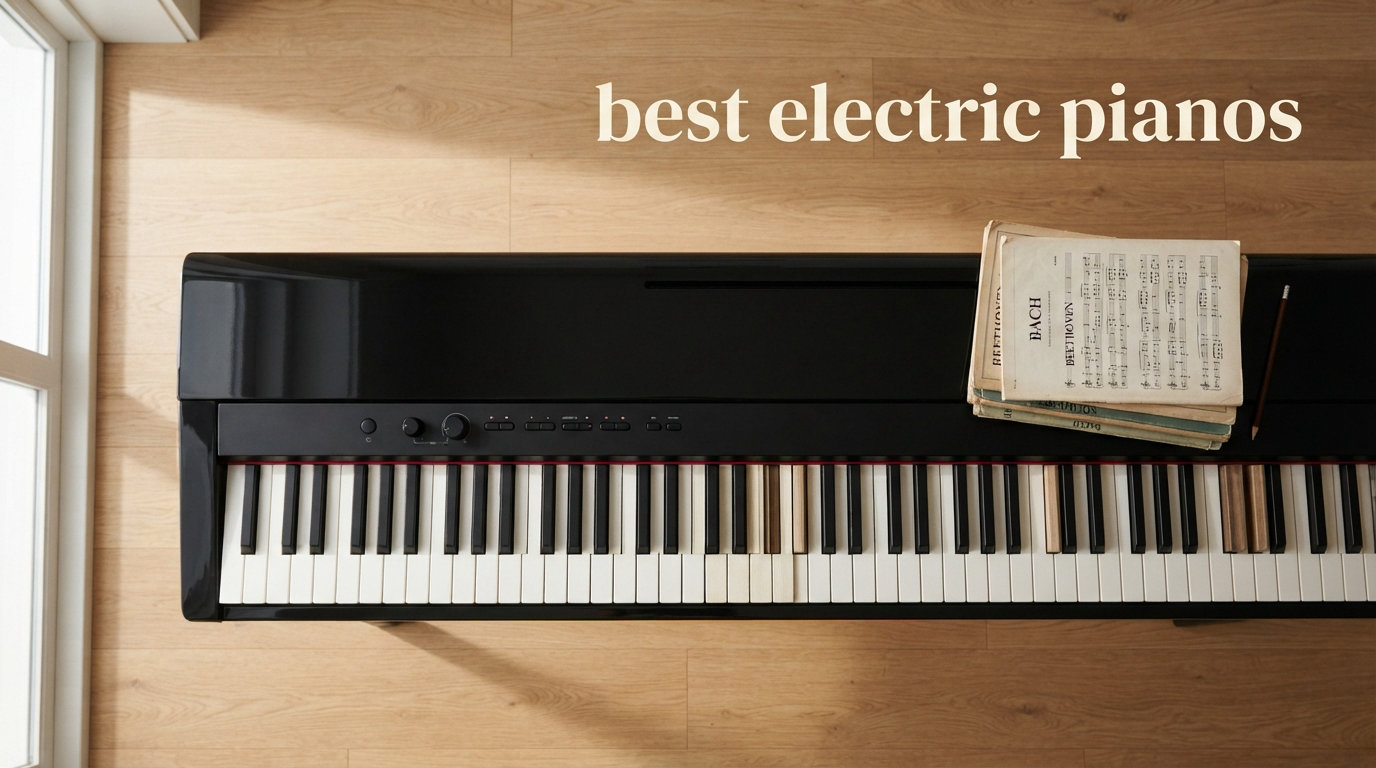
Finding the best electric pianos in 2026 means sorting through dozens of brands, key actions, sound engines, and price points. I have spent months playing through the most popular models from Yamaha, Roland, Casio, Kawai, Donner, and Alesis to figure out which ones are actually worth your money.
The right choice depends on your skill level, your budget, and where you plan to play. A beginner practicing in a dorm room needs something very different from a gigging musician heading to shows every weekend. That is why this guide covers everything from ultra-budget picks under $300 to premium stage pianos that rival the feel of an acoustic grand.
Every piano on this list has 88 keys, which is the standard for anyone serious about learning or performing. I prioritized models with weighted or semi-weighted hammer action because that is what builds proper finger technique. I also looked at polyphony (how many notes can sound at once), built-in speaker quality, connectivity options like Bluetooth MIDI and USB, and real long-term owner feedback from thousands of reviews. Whether you want the best electric pianos for beginners or a stage-ready instrument for professional use, you will find your match below.
Top 3 Picks for Best Electric Pianos


Best Electric Pianos in 2026
| Product | Specifications | Action |
|---|---|---|
|
Yamaha P71 88-Key Digital Piano
|
|
Check Latest Price |
|
Yamaha P45 88-Key Digital Piano
|
|
Check Latest Price |
 Roland FP-10 88-Note Digital Piano
|
|
Check Latest Price |
 Roland FP-30X 88-Note Digital Piano
|
|
Check Latest Price |
 Casio PX-870 Privia Digital Piano
|
|
Check Latest Price |
 Yamaha DGX-670B 88-Key Digital Piano
|
|
Check Latest Price |
 Casio Privia PX-S1100 Digital Piano
|
|
Check Latest Price |
 Donner DEP-20 88-Key Digital Piano
|
|
Check Latest Price |
|
Alesis Recital 88-Key Digital Piano
|
|
Check Latest Price |
|
Kawai ES520 88-Key Digital Piano
|
|
Check Latest Price |
1. Yamaha P71 88-Key Weighted Action Digital Piano
YAMAHA P71 88-Key Weighted Action Digital Piano with Sustain Pedal and Power Supply (Amazon-Exclusive)
88-Key Graded Hammer Standard
10 Voices Including Yamaha Grand
USB Connectivity
25 lbs Portable Design
Amazon-Exclusive Model
Pros
- Weighted keys replicate acoustic piano feel
- Rich Yamaha grand piano sound with deep bass
- Compact and portable at only 25 lbs
- USB to host for DAW and learning apps
- Dual Mode for layering two voices
- Excellent value with over 6600 reviews
Cons
- Included sustain pedal is basic and slides easily
- Built-in speakers lack high-frequency clarity
- Limited to 10 voices
I set up the Yamaha P71 in my practice space and was immediately struck by how much piano you get for the money. This Amazon-exclusive model is the number one best seller in Home Digital Pianos, and after playing it for several weeks I understand why. The graded hammer standard action gives you heavier resistance in the lower register and lighter keys up top, which is exactly how a real acoustic grand feels.
The Yamaha grand piano voice is the star here. It has that warm, full-bodied tone Yamaha is famous for, with surprising bass resonance for a slim 25-pound slab. I connected it to GarageBand via USB and it worked flawlessly as a MIDI controller for recording sessions. The one-button operation makes it incredibly simple to use, which is perfect if you just want to turn it on and play without diving through menus.
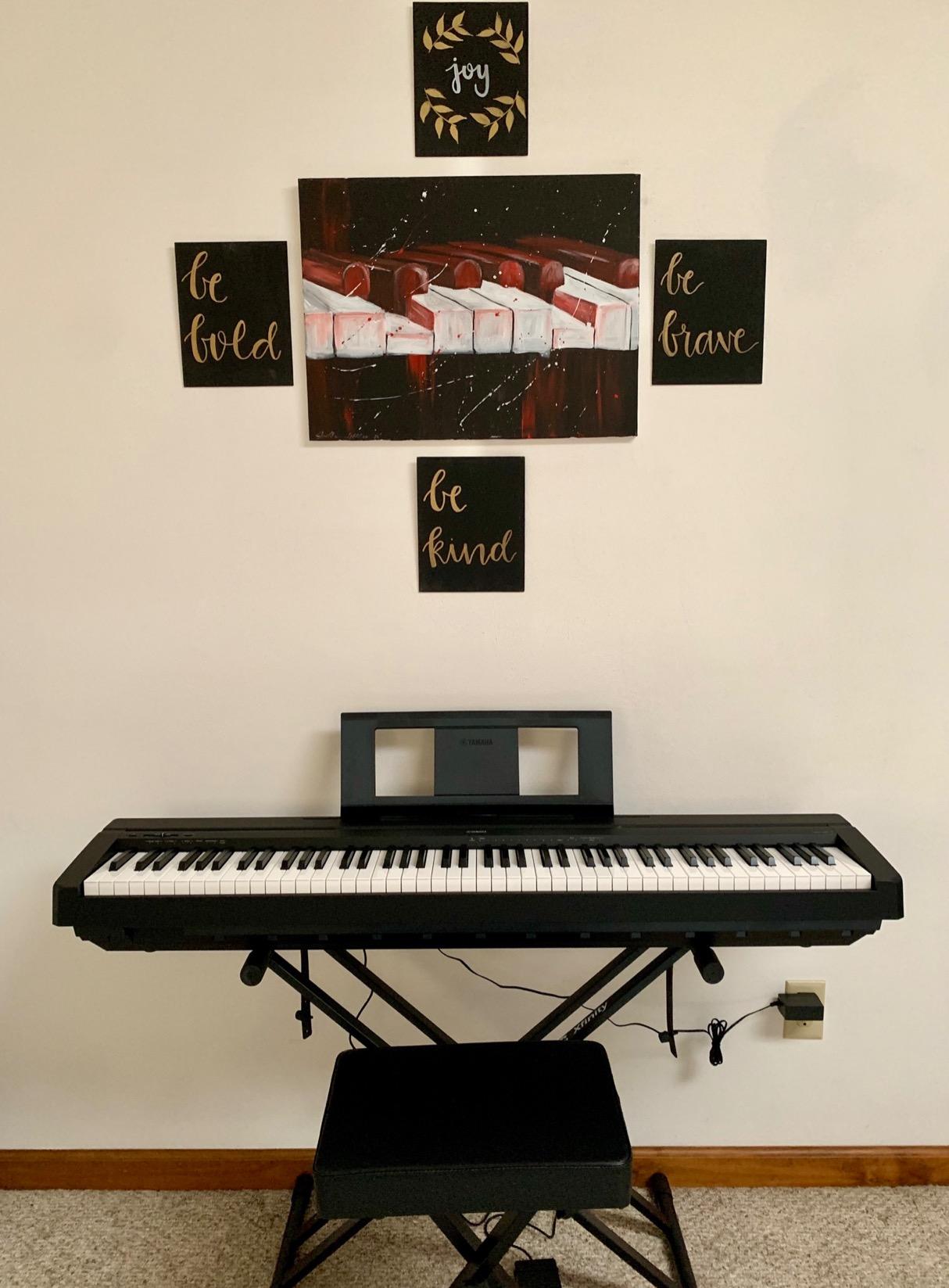
Where the P71 shows its budget nature is the speaker system. The built-in speakers sound fine for practice at moderate volume but they struggle with high frequencies and complex passages. Plug in a decent pair of headphones and the sound opens up dramatically. I also found the included sustain pedal to be the weakest link. It slides around on hard floors and feels flimsy underfoot.
For anyone worried about longevity, I read through hundreds of reviews from owners who have had this piano for four to six years with zero issues. The build quality is solid and the key action holds up over time. The touch sensitivity is adjustable across three levels, so you can dial in the response that matches your playing style.
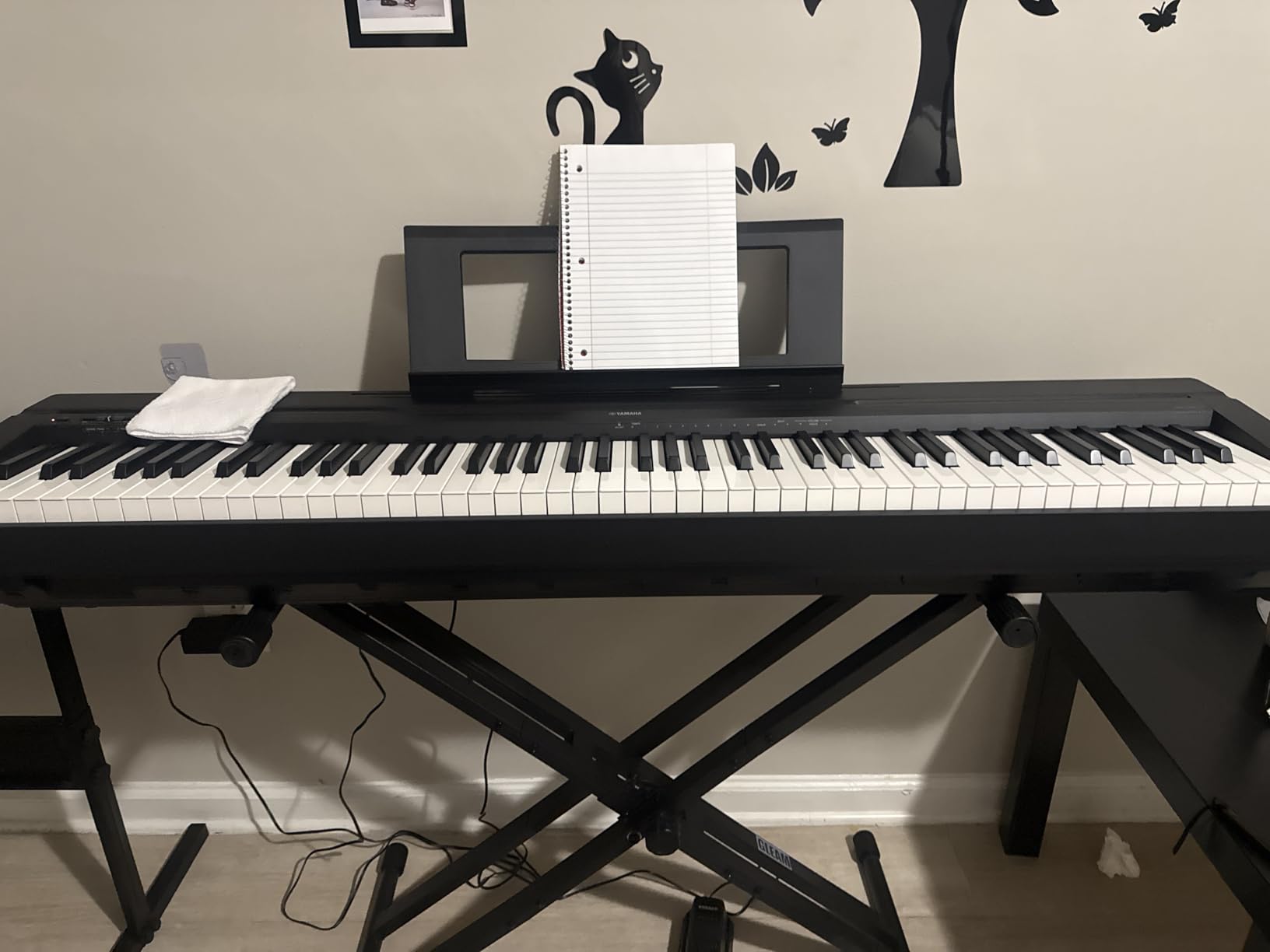
Who Should Buy the Yamaha P71
This is the piano I recommend most often to beginners and returning players who want quality without overspending. If you are starting lessons, coming back after years away from the keyboard, or need a reliable practice instrument for a child, the P71 hits the sweet spot of authentic feel and sound at a price that will not cause anxiety.
It is also a great fit for apartment dwellers and students. At 25 pounds and barely 6 inches tall, it fits on any desk or X-stand and moves easily between rooms. The headphone jack means you can practice at 2 AM without waking anyone.
Limitations to Consider Before Buying
The P71 is not the right choice if you need a wide variety of instrument sounds. With only 10 voices it is strictly a piano-first instrument. If you want strings, brass, synths, and accompaniment patterns, look at the Yamaha DGX-670B or the Donner DEP-20 instead.
It also lacks Bluetooth connectivity, so if wireless MIDI matters to you, the Roland FP-10 or FP-30X are better options in a similar price range. And serious classical students who need escapement simulation and the most realistic key action should consider stepping up to the Roland or Kawai models.
2. Yamaha P45 88-Key Weighted Portable Digital Piano
Yamaha 88-Key Weighted Portable Digital Piano Keyboard with Music Rest, Sustain Foot Switch, Built-in Speakers, USB Connectivity, Black (P45B)
88-Key Graded Hammer Standard
10 Voices
Split Mode
USB to Host
Built-in Speakers
Pros
- Authentic graded weighted key action
- Rich and detailed piano tone
- Compact and truly portable design
- Split Mode for dual playing zones
- USB connectivity for computer use
- Built-in speakers for immediate practice
Cons
- Basic sustain foot switch included
- Keys may click after years of heavy use
- Limited to 10 instrument voices
The Yamaha P45 is essentially the sibling of the P71, and in my testing the two felt nearly identical under my fingers. Both share the same graded hammer standard action, the same 10 voices, and the same compact chassis. The P45 is the non-Amazon-exclusive version, which means you can find it at any music retailer and sometimes at a better price during sales.
I appreciate how Yamaha kept the interface dead simple here. There is one button to change voices and a couple of function shortcuts. No LCD screen, no deep menus. You turn it on, select your sound, and start playing. For beginners who get overwhelmed by technology, this is a breath of fresh air. The built-in speakers are adequate for bedroom practice, though I still recommend headphones for the best listening experience.
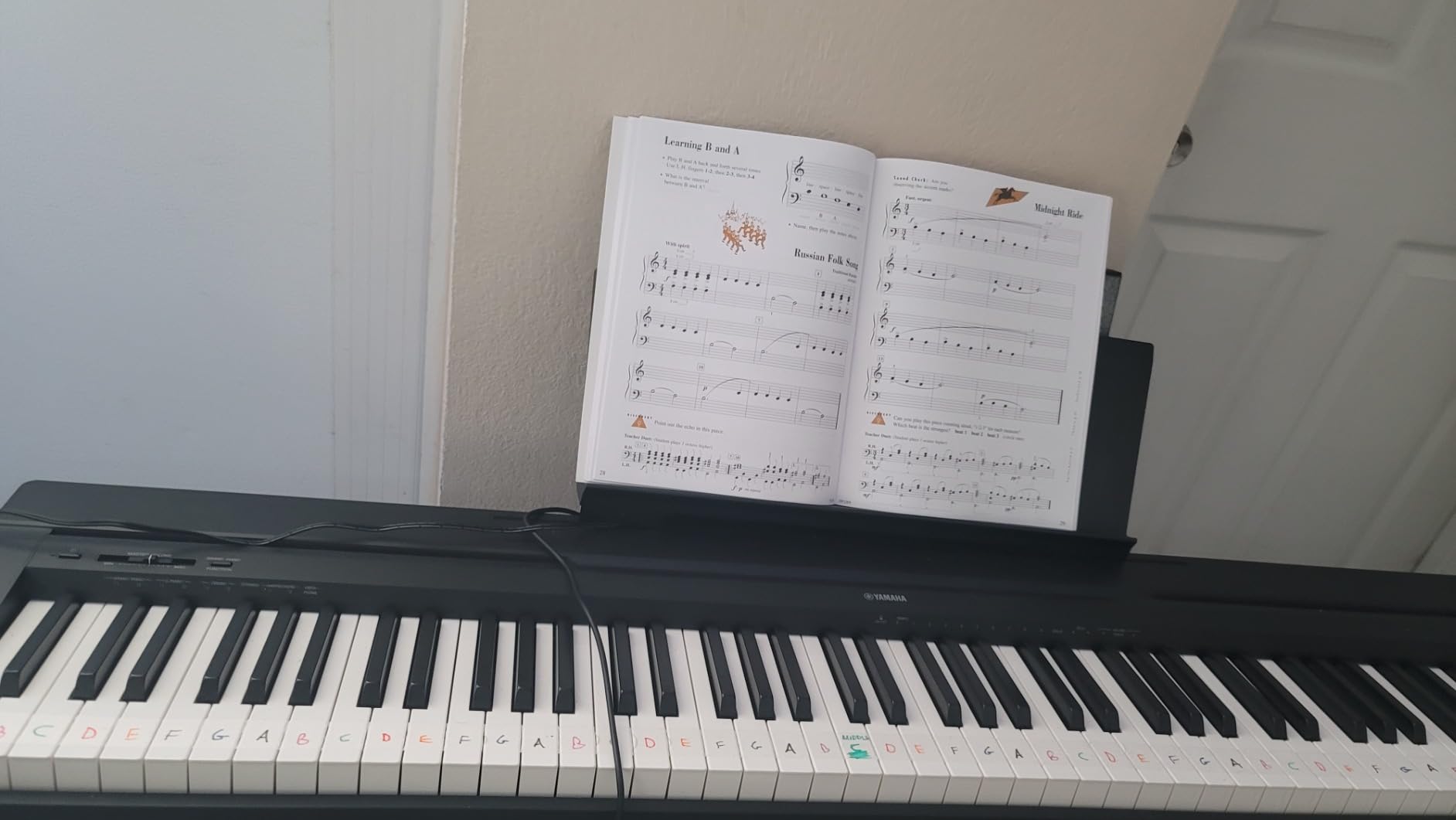
The matte finish on the keys is a nice touch that prevents slipping during long practice sessions. I found the action slightly stiffer than some acoustic pianos I have played, but that is common in this price range and actually helps build finger strength. The matte key caps also hide fingerprints and wear better over time than glossy alternatives.
One thing I noticed when using the P45 as a MIDI controller is that the velocity sensitivity felt slightly reduced compared to standalone mode. This is a known quirk that some users report. If you plan to use it primarily for music production, test your DAW velocity curves and adjust accordingly.
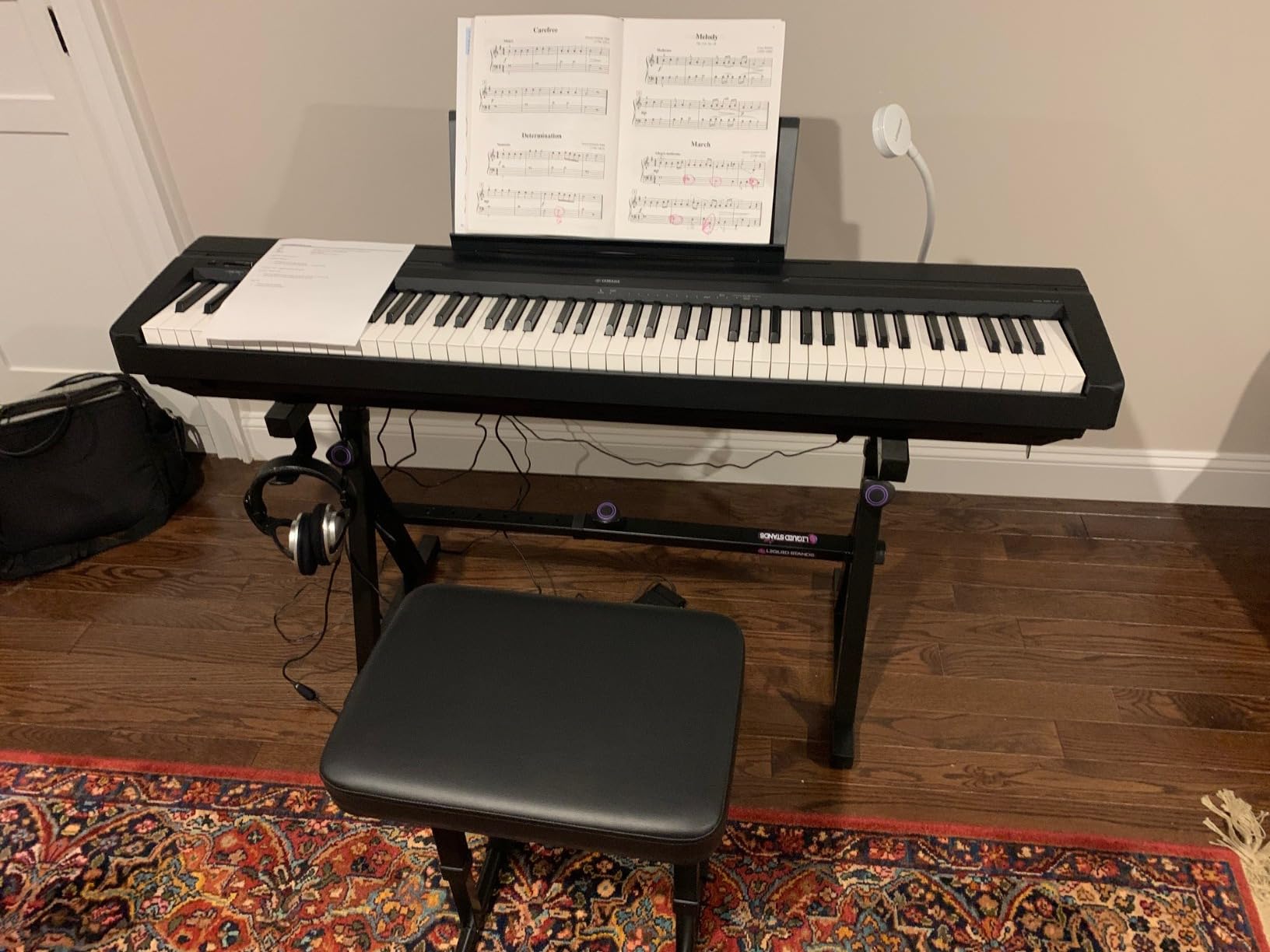
Who Should Buy the Yamaha P45
The P45 is perfect for beginners and intermediate players who want the reassurance of the Yamaha brand without paying for features they will not use. It is the kind of piano you can buy once and rely on for years of daily practice without any fuss.
It is also ideal for piano teachers who need a portable instrument for house calls or studio lessons. The Split Mode lets you divide the keyboard into two zones, which is great for demonstrating passages to a student sitting beside you.
Limitations to Consider Before Buying
If you already own the P71, there is no reason to switch to the P45 since they are functionally the same instrument. The P45 also shares the same weaknesses: limited voices, basic pedal, and speakers that are fine but not impressive.
Players who want to connect wirelessly to learning apps should look elsewhere. There is no Bluetooth on the P45. You will need a USB cable to connect to a computer, tablet, or phone for app-based learning.
3. Roland FP-10 Compact 88-Note Digital Piano
Roland FP-10 | Compact 88-Note Digital Piano | SuperNATURAL Piano Tones | Authentic Acoustic Feel Keyboard | Great for Beginners & Experienced Players | Bluetooth & MIDI Connectivity
88-Note PHA-4 Keyboard with Ivory Feel
SuperNATURAL Piano Sound Engine
Bluetooth MIDI
96-Note Polyphony
22W Speakers
Pros
- PHA-4 action with ivory-feel keys is best in class
- SuperNATURAL sound engine delivers rich responsive tone
- Bluetooth MIDI for wireless app integration
- Twin Piano mode for teacher and student
- Quiet key action for apartment practice
Cons
- Built-in speakers sound nasal without headphones
- Headphone jack located at rear
- No onboard recording feature
- Sustain pedal is lightweight and slides
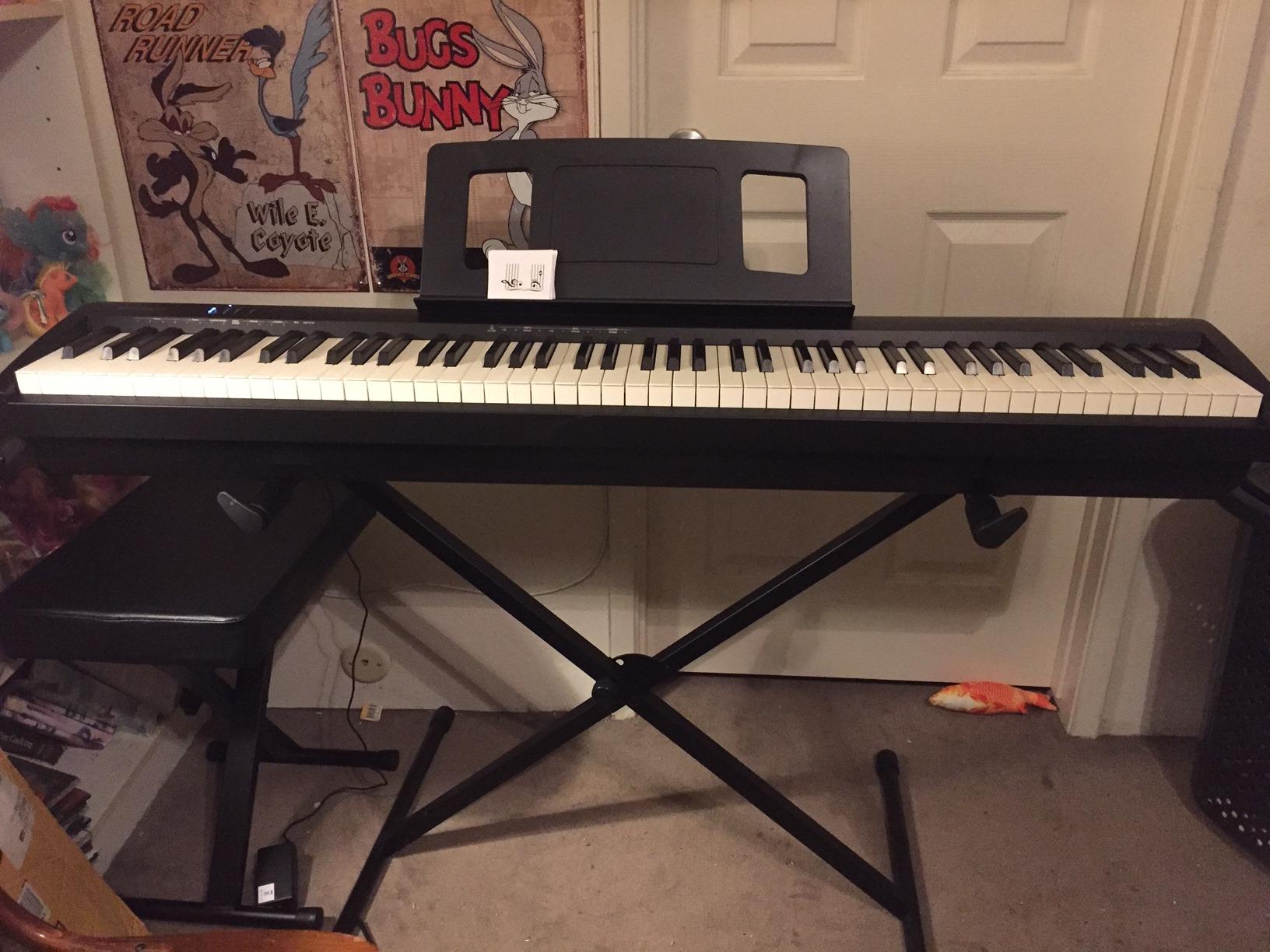
The Roland FP-10 is the model I recommend when someone asks for the most acoustic-like key action under $500. Roland’s PHA-4 Standard keyboard with its ivory-feel textured key tops is genuinely impressive at this price. I ran through Chopin nocturnes, jazz standards, and some heavy-handed rock passages, and the action responded consistently across all dynamics.
The SuperNATURAL Piano sound engine is the same technology Roland uses in their more expensive instruments. It produces a rich, breathing tone that responds naturally to your touch velocity. Play softly and you get a delicate, mellow sound. Dig in and the tone brightens with that characteristic Roland bite. I found the four piano variations give you enough tonal variety without overwhelming you with options.
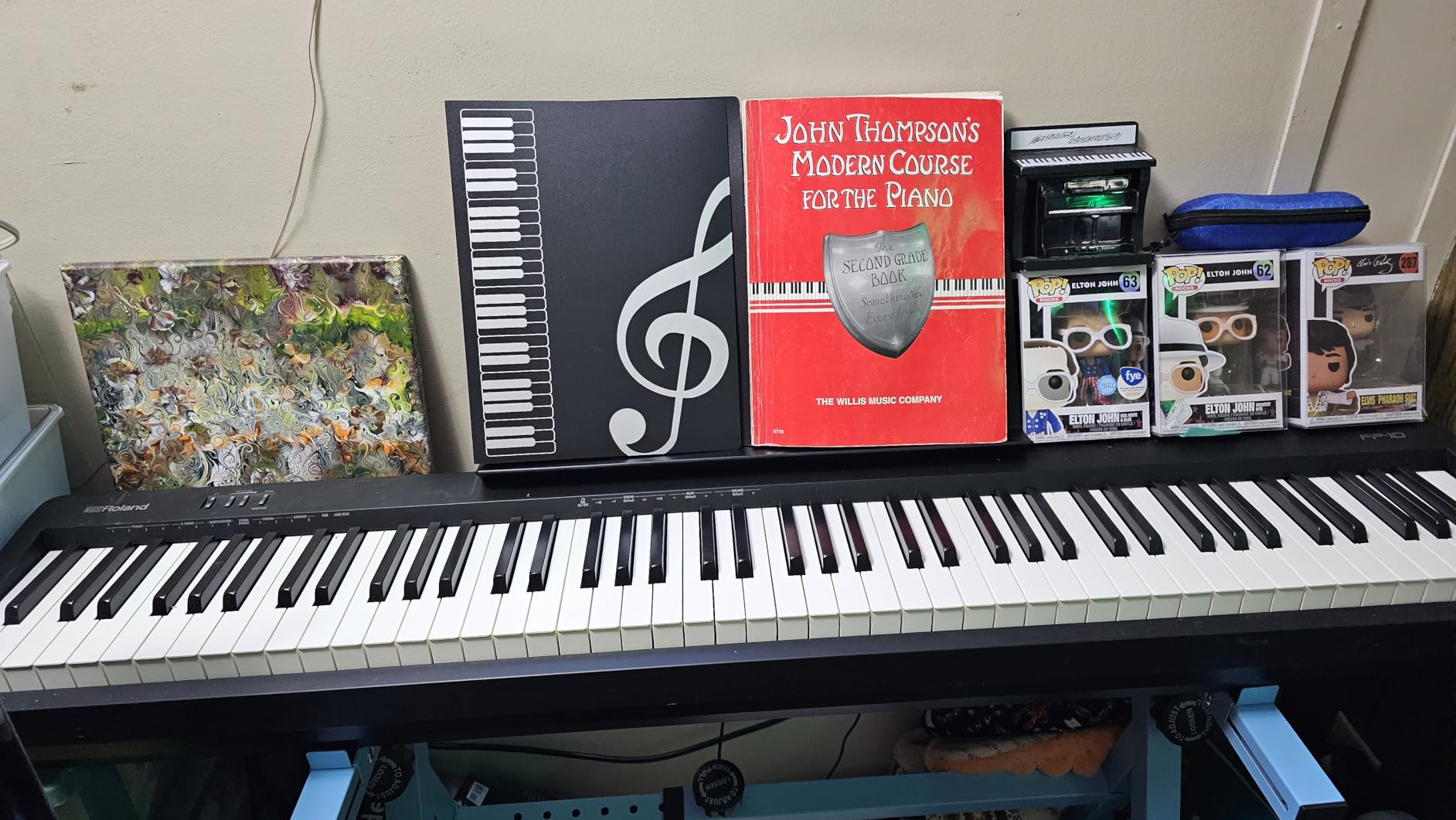
Bluetooth MIDI is the feature that sets the FP-10 apart from the Yamaha P45 and P71. I connected it wirelessly to the Roland Piano Partner 2 app on my phone and to FlowKey for interactive lessons. No cables, no adapters, no fuss. If you learn best with apps, this is a major advantage.
The built-in speakers are the weakest part of the FP-10 package. They sound somewhat nasal and compressed compared to the FP-30X. Through headphones the piano sounds gorgeous, but the speakers will leave you wanting more. Roland also placed the headphone jack at the rear of the unit, which is an annoying design choice for anyone who plugs and unplugs frequently.
Who Should Buy the Roland FP-10
This is my top pick for beginners who care about authentic key action and want to learn with apps. The PHA-4 action builds proper technique from day one, and Bluetooth MIDI makes connecting to learning software effortless.
It is also excellent for apartment practice. The key action is notably quiet compared to competitors, which means less mechanical noise traveling through walls and floors. The Twin Piano mode splits the keyboard into two identical ranges so a teacher and student can sit side by side.
Limitations to Consider Before Buying
The speakers are the biggest drawback. If you plan to play without headphones regularly, the extra money for the FP-30X is worth it for the better sound system alone. The FP-10 also lacks any onboard recording, which some learners find useful for tracking their progress.
The included DP-2 sustain pedal is a common complaint across nearly every Roland FP review. It is lightweight, slides on hard floors, and does not offer the half-pedaling response that more serious players want. Budget for a proper piano-style sustain pedal.
4. Roland FP-30X Slim and Stylish 88-Note Digital Piano
Roland FP-30X | Slim & Stylish 88-Note Digital Piano | Rich Tone & Authentic Ivory-Feel | Built-In Powerful Amplifier & Stereo Speakers | Onboard Sounds | Bluetooth & MIDI Connectivity | Black
PHA-4 Standard Keyboard with Ivory Feel
Enhanced SuperNATURAL Sound
22W Stereo Speakers
Bluetooth Audio and MIDI
Desktop Optimization Mode
Pros
- Enhanced SuperNATURAL engine with richer expression than FP-10
- Powerful 22-watt stereo speakers fill the room
- Bluetooth audio and MIDI for wireless everything
- Desktop mode optimizes sound for table placement
- Wide variety of onboard sounds across genres
Cons
- Bottom-facing speakers underwhelm on carpet
- Key bed can make noise during late-night playing
- No line output for direct audio recording
- Higher price than FP-10
The Roland FP-30X is the piano I kept reaching for during extended testing sessions. It sits in that sweet spot where the key action is good enough for serious practice, the sound engine is rich enough to keep you engaged, and the feature set covers everything from casual playing to DAW integration. I consider it the best all-around portable digital piano in this guide.
The enhanced SuperNATURAL sound engine is a noticeable step up from the FP-10. The tonal transitions across dynamics feel smoother, and there is more harmonic detail in the sustain. Roland also packed in a wider variety of sounds including electric pianos, organs, strings, and synthesizers. For players who like to explore different genres, this variety keeps things inspiring.
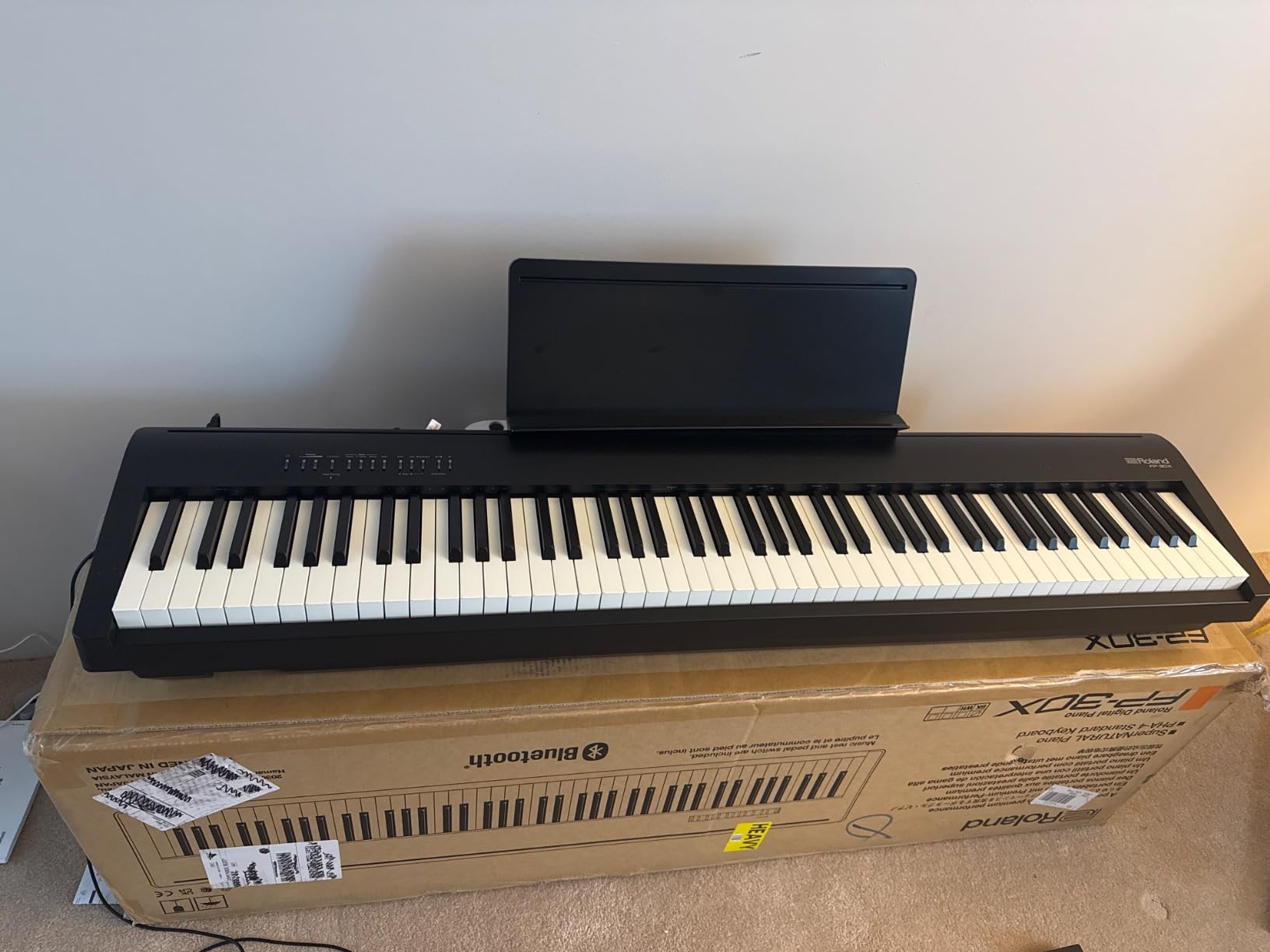
The 22-watt stereo speaker system is a massive upgrade over the FP-10. In my testing, the FP-30X filled my living room with full, balanced sound that made me forget I was playing a portable slab. Roland includes a clever desktop optimization mode that adjusts the EQ when the piano is sitting on a table instead of a stand. This is a thoughtful feature that no other manufacturer offers at this price.
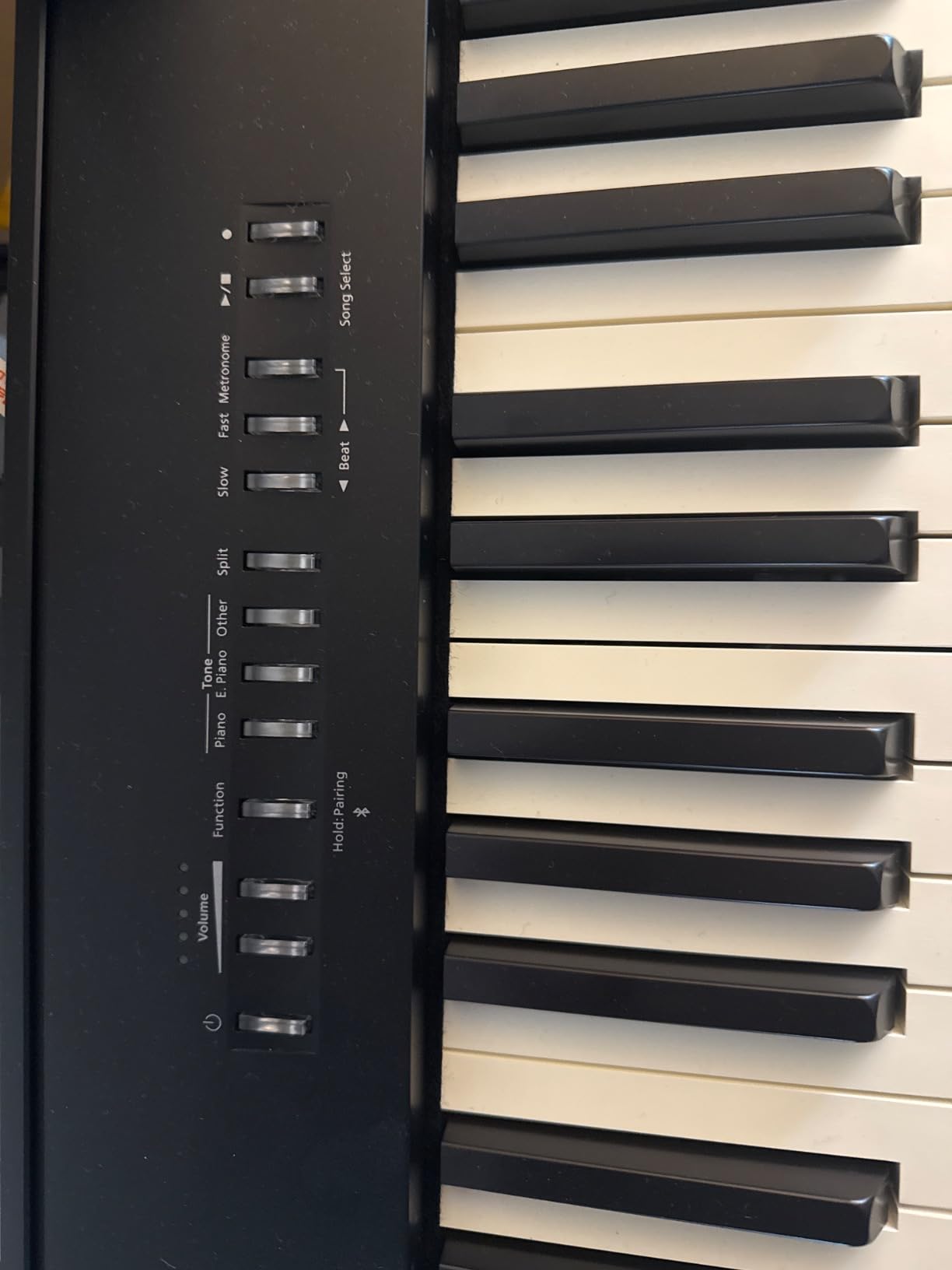
I tested the Bluetooth audio feature by streaming backing tracks from my phone while playing along. Being able to go fully wireless for both audio playback and MIDI data is genuinely liberating. No cable clutter on the floor, no adapters to lose. The USB Type A and B ports give you wired options for DAW use when you want the lowest latency.
Who Should Buy the Roland FP-30X
This is the piano I recommend for intermediate players who have outgrown their first instrument and want something that will last for years. The action, sound, and connectivity all punch above the price tag.
It is also ideal for home studio owners. The MIDI controller functionality combined with the wide sound palette makes it equally useful as a standalone performance instrument and as a controller for virtual instruments in your DAW.
Limitations to Consider Before Buying
The bottom-facing speakers are designed to bounce sound off the surface below the piano. On hardwood or tile this works beautifully. On thick carpet the sound gets absorbed and loses presence. If your practice space is carpeted, consider a hard surface mat under the piano.
There is no dedicated line output for connecting to external amplifiers or audio interfaces. You get MIDI over USB and headphone out, but no separate line-level audio output. For most players this is fine, but recording musicians may find it limiting.
5. Casio PX-870 Privia Digital Piano Bundle
Casio PX-870 Privia Digital Piano - Black Bundle with Furniture Bench, Headphones, Instructional Book, Online Lessons, Instructional DVD, and Austin Bazaar Polishing Cloth
88 Scaled Weighted Hammer Action Keys
4-Speaker 40W Sound System
String and Damper Resonance
Wooden Cabinet with Key Cover
Bundle with Bench and Headphones
Pros
- Scaled weighted hammer action with ebony and ivory textures
- Powerful 40W four-speaker system with deep resonance
- Sympathetic string resonance and damper resonance modeling
- Stylish wooden cabinet with sliding key cover
- USB flash drive recording capability
- Bundle includes bench headphones and lessons
Cons
- Assembly instructions are notoriously difficult
- Heavy at 106 lbs and not portable
- Bundle headphones tend to break
- Settings do not persist between power cycles
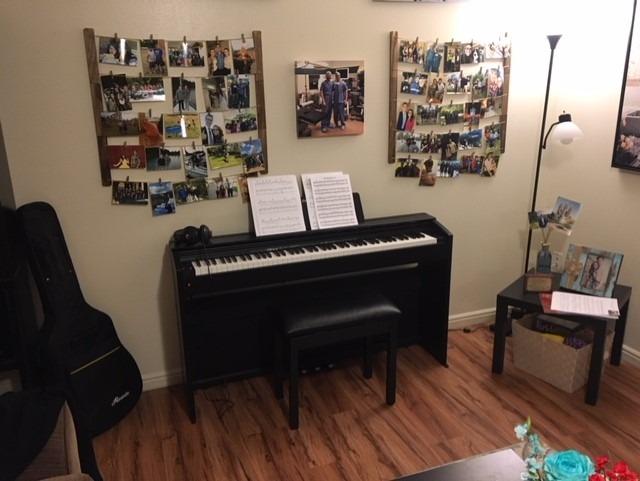
The Casio PX-870 is the console-style piano I recommend when someone wants a piece of furniture that also happens to be an excellent instrument. Unlike the portable slabs on this list, the PX-870 comes in a wooden cabinet with a sliding key cover that looks at home in a living room, study, or teaching studio. It weighs over 100 pounds, so plan to set it up once and leave it there.
The key action is where the PX-870 truly shines. Casio uses scaled weighted hammer action with simulated ebony and ivory key textures that feel premium under your fingers. I had a piano teacher friend try it blindfolded and she guessed it was a model costing twice as much. The keys have a satisfying resistance that builds strength without being exhausting.
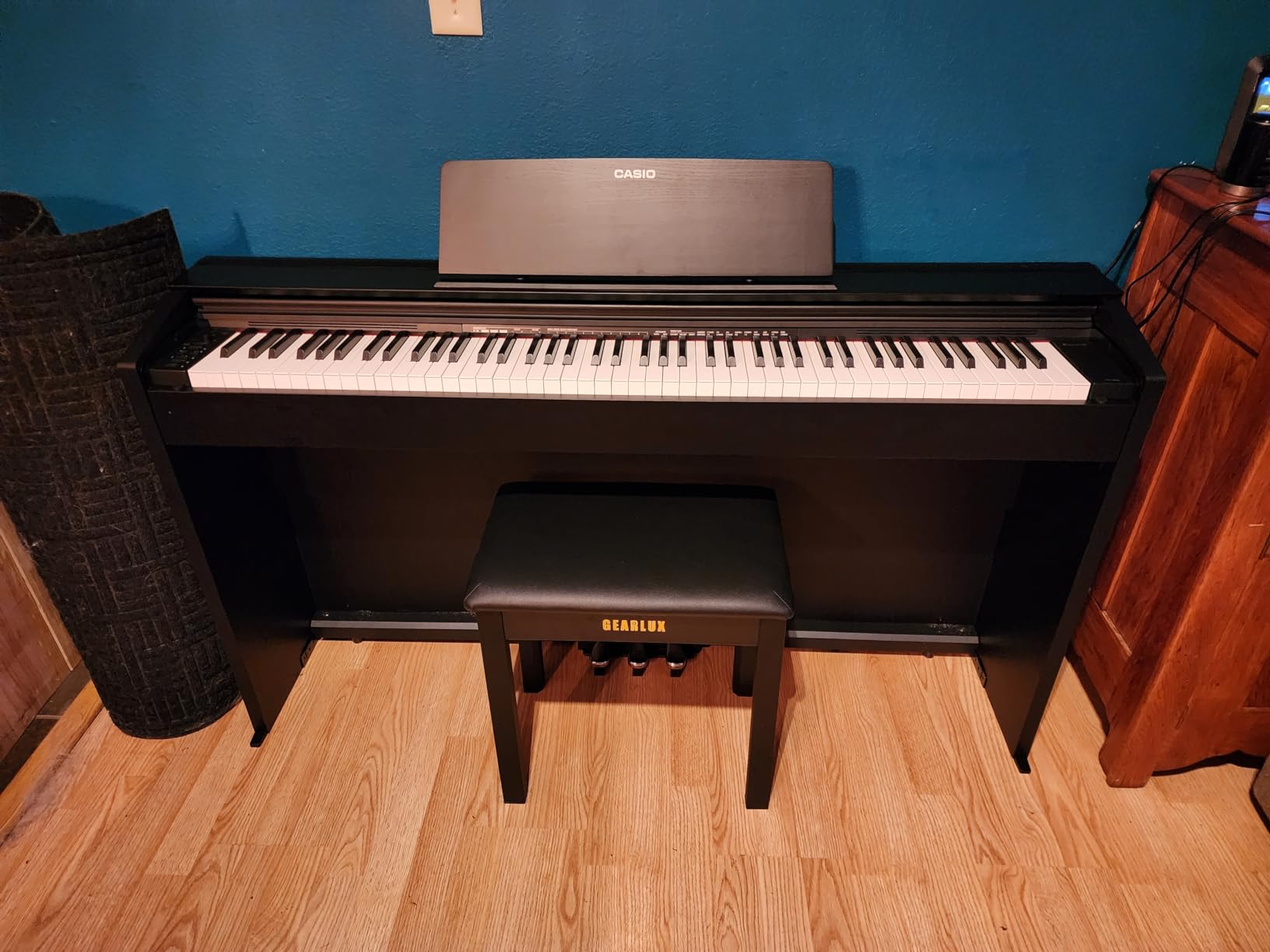
The four-speaker, 40-watt sound system is the most powerful on this list. It produces a wall of sound that fills a large room with ease. The sympathetic string resonance and damper resonance modeling add layers of realism that make the sound behave like a real acoustic piano. When you hold the sustain pedal and play a chord, you can hear the sympathetic vibrations of the unplayed strings.
Casio includes 19 tones total, with the main piano sound being the clear standout. There are also electric pianos, organs, and strings that sound respectable for casual use. The USB flash drive recording feature lets you capture your performances as audio files without needing a computer.
Who Should Buy the Casio PX-870
This is the piano I recommend for families and dedicated home practitioners who want a permanent setup. The cabinet design, powerful speakers, and realistic action make it feel like a real piece of the home rather than a temporary practice tool.
It is also excellent for intermediate to advanced students who need sympathetic resonance and damper modeling to properly practice pedaling technique. These acoustic simulation features are usually found on much more expensive instruments.
Limitations to Consider Before Buying
The assembly process is a well-known pain point. Multiple reviewers describe the instructions as poorly translated and confusing. Plan for a patient afternoon with two people, or consider paying for assembly service if available.
At 106 pounds this piano is not going anywhere once assembled. If you need portability for gigs, lessons at different locations, or frequent moves, look at the Roland FP-30X or Casio PX-S1100 instead. The PX-870 is a stay-at-home instrument.
6. Yamaha DGX-670B 88-Key Weighted Digital Piano
Yamaha DGX-670B, 88-Key Weighted Digital Piano with Sustain Foot Switch and Music Rest, Black - Furniture Stand Sold Separately
88-Key Weighted Action with Graded Hammer
CFX Stereo Sampling Grand Piano
630 Voices and 263 Accompaniment Styles
Bluetooth and USB
Microphone Input
Pros
- CFX Concert Grand sampling for flagship Yamaha tone
- Massive library of 630 instrument voices
- 263 automatic accompaniment styles create full band feel
- Adapted Style adjusts accompaniment to your playing
- Color display with direct access button
- Microphone input for singing while playing
Cons
- Heavy at 67.7 lbs not truly portable
- Key bed lacks escapement simulation
- Only double sensors not triple
- Limited to 3 simultaneous voices
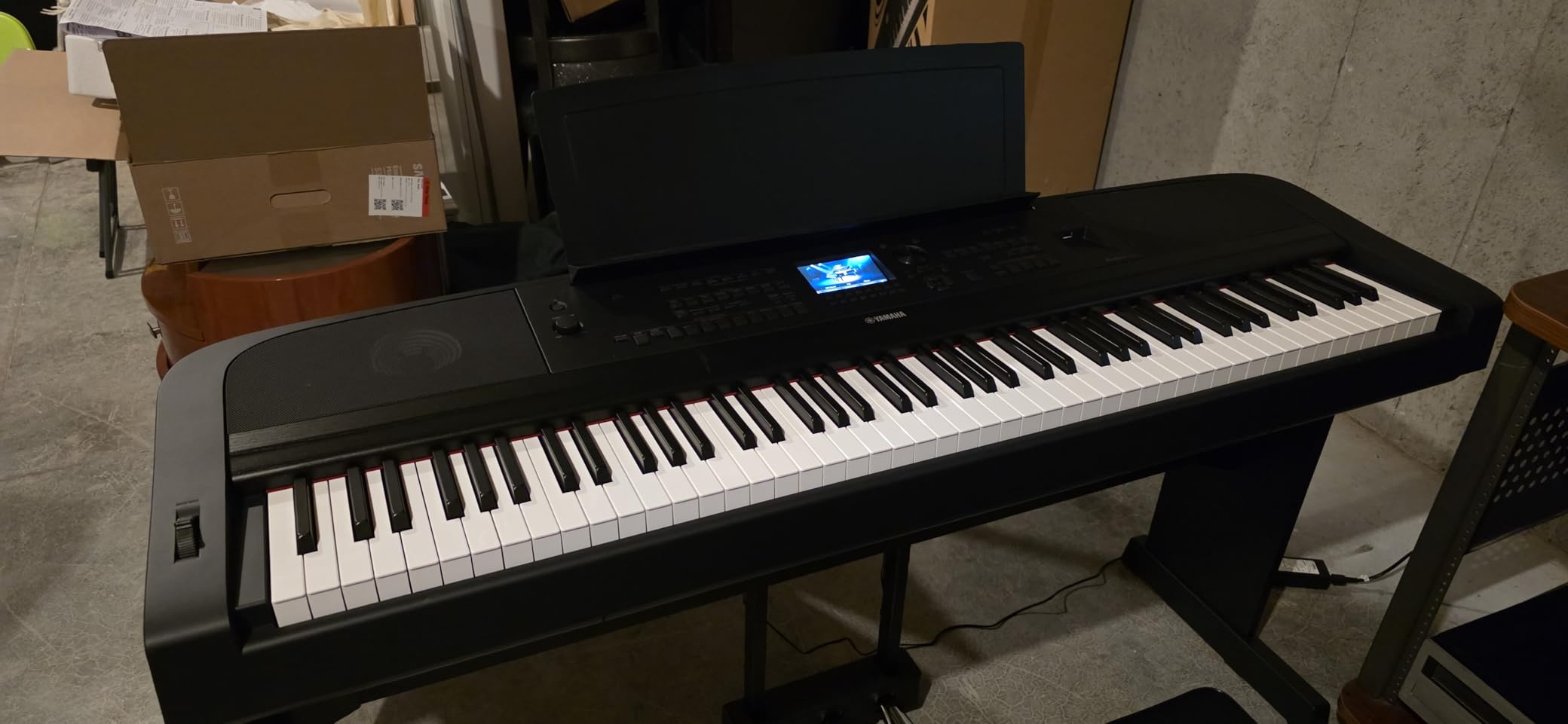
The Yamaha DGX-670B is the most feature-rich piano in this guide, and it is the one I recommend when someone wants a single instrument that can do everything. With 630 voices and 263 automatic accompaniment styles, this is equal parts digital piano and portable arranger workstation. I spent hours exploring the accompaniment styles, each of which creates a full backing band that follows your left-hand chords.
The flagship feature is the CFX Stereo Sampling, which reproduces the sound of Yamaha’s CFX Full Concert Grand. This is the same piano that wins international competitions, and hearing it through the DGX-670B’s speakers is genuinely moving. The bass is deep and authoritative, the midrange is clear and present, and the highs sparkle without harshness.
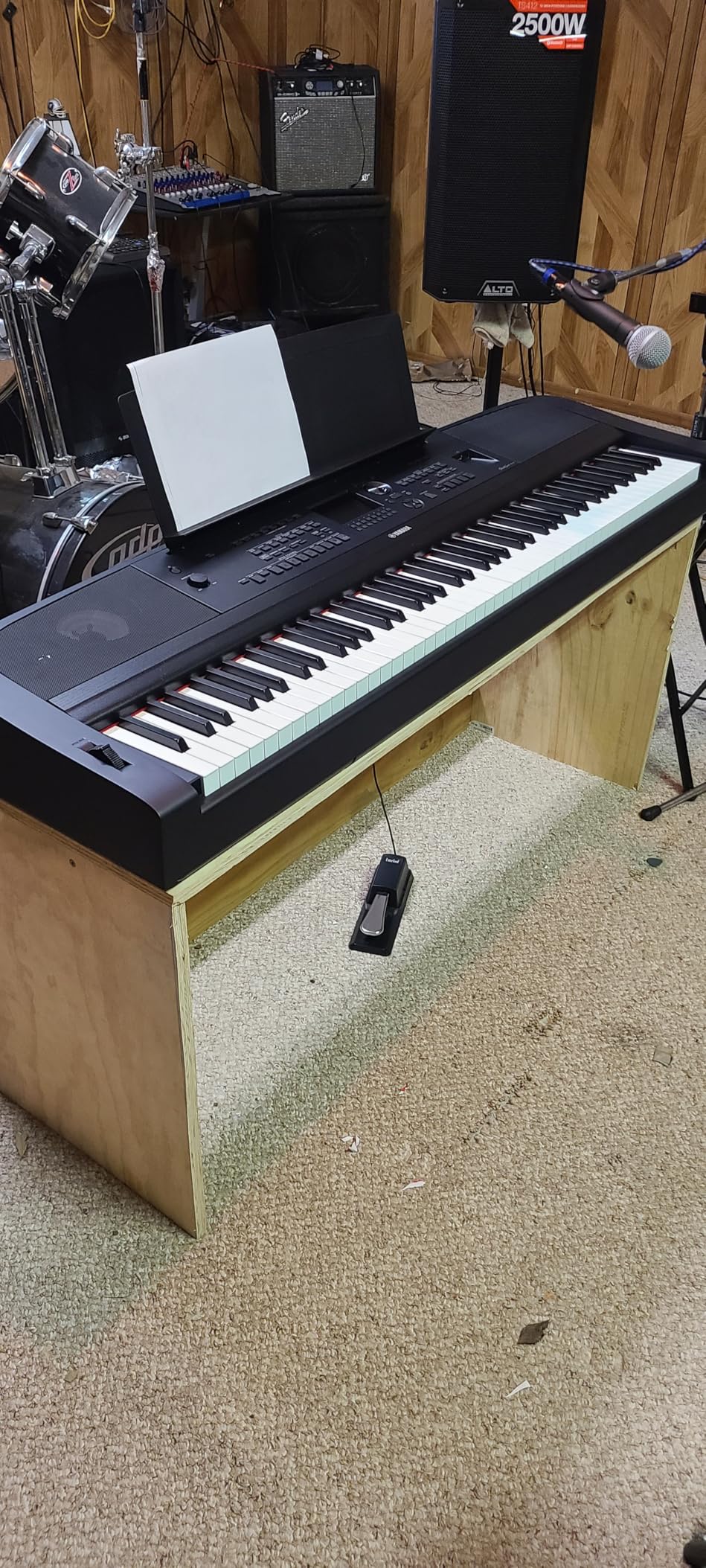
The Adapted Style feature is remarkably smart. As I played harder, the accompaniment intensified with more instruments joining the arrangement. Play softly and it strips back to a gentler texture. This dynamic response makes practicing feel like playing with a real band rather than a static backing track.
I also appreciate the color display and direct access button. With 630 voices you need a way to navigate efficiently, and Yamaha’s interface is logical once you learn the category system. The microphone input is a fun bonus for singers who want to accompany themselves.
Who Should Buy the Yamaha DGX-670B
This is the piano for players who get bored playing solo and want musical accompaniment. The 263 accompaniment styles cover rock, R&B, jazz, country, Latin, and more. If you enjoy playing along with backing tracks, this instrument generates them for you in real time.
It is also ideal for multi-instrumentalists and songwriters. The 630 voices give you access to organ patches, string sections, synth leads, and bass sounds. Combined with USB connectivity to your DAW, this piano serves as the hub of a home recording setup.
Limitations to Consider Before Buying
At 67.7 pounds and over 5 feet wide, this is not a grab-and-go instrument. The furniture stand is sold separately, so factor that into your budget. If portability is a priority, the Roland FP-30X is a better fit.
The key action lacks escapement simulation, which advanced classical players may miss. It uses double sensors rather than the triple sensors found on premium Kawai models, which means slightly less nuance in very soft playing. For most players this will not be noticeable.
7. Casio Privia PX-S1100 88-Key Ultra-Portable Digital Piano
Casio Privia PX-S1100 – 88-Key Touch-Responsive Weighted Digital Piano | Ultra-Portable | Superior Sound | German Grand Tone, Bluetooth, Casio Music Space App | Gloss Black Finish
88-Key Touch-Responsive Weighted Action
German Grand Piano Tone
Ultra-Portable at Under 25 lbs
Bluetooth Audio and MIDI
Battery Powered Operation
Pros
- Ultra-slim design is 43 percent smaller than previous Privia models
- German grand piano tone with enhanced resonance
- Bluetooth audio and MIDI via included adapter
- Battery powered for true portability
- Illuminated touch controls for sleek interface
- Casio Music Space app integration
Cons
- Interface not intuitive without the app
- Does not store patches or custom settings
- 2.5mm headphone jack is non-standard
- Onboard speakers adequate but not exceptional
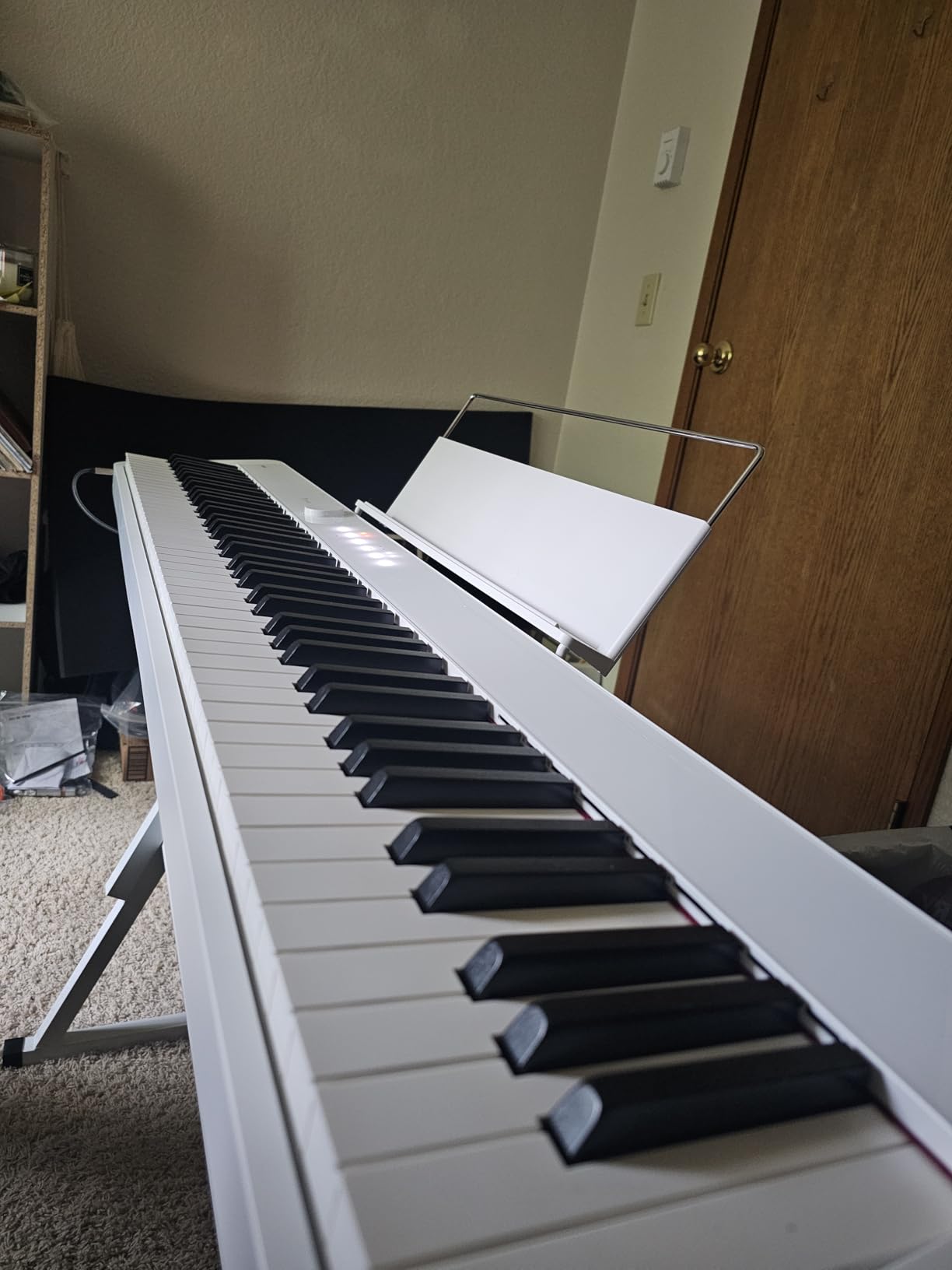
The Casio Privia PX-S1100 is the piano I grab when I need to practice somewhere other than my studio. At under 25 pounds and barely 9 inches deep, it is the most portable full-size weighted piano on this list. Casio managed to shrink the Privia line by 43 percent compared to previous generations while keeping the full 88-key weighted action intact.
The German grand piano tone is a new addition to this generation and it sounds fantastic. I compared it side by side with the Yamaha P71 and found the Casio held its own with richer string resonance and a more complex decay. The illuminated touch-sensitive controls on the front panel give the PX-S1100 a sleek, modern look with no physical buttons cluttering the surface.
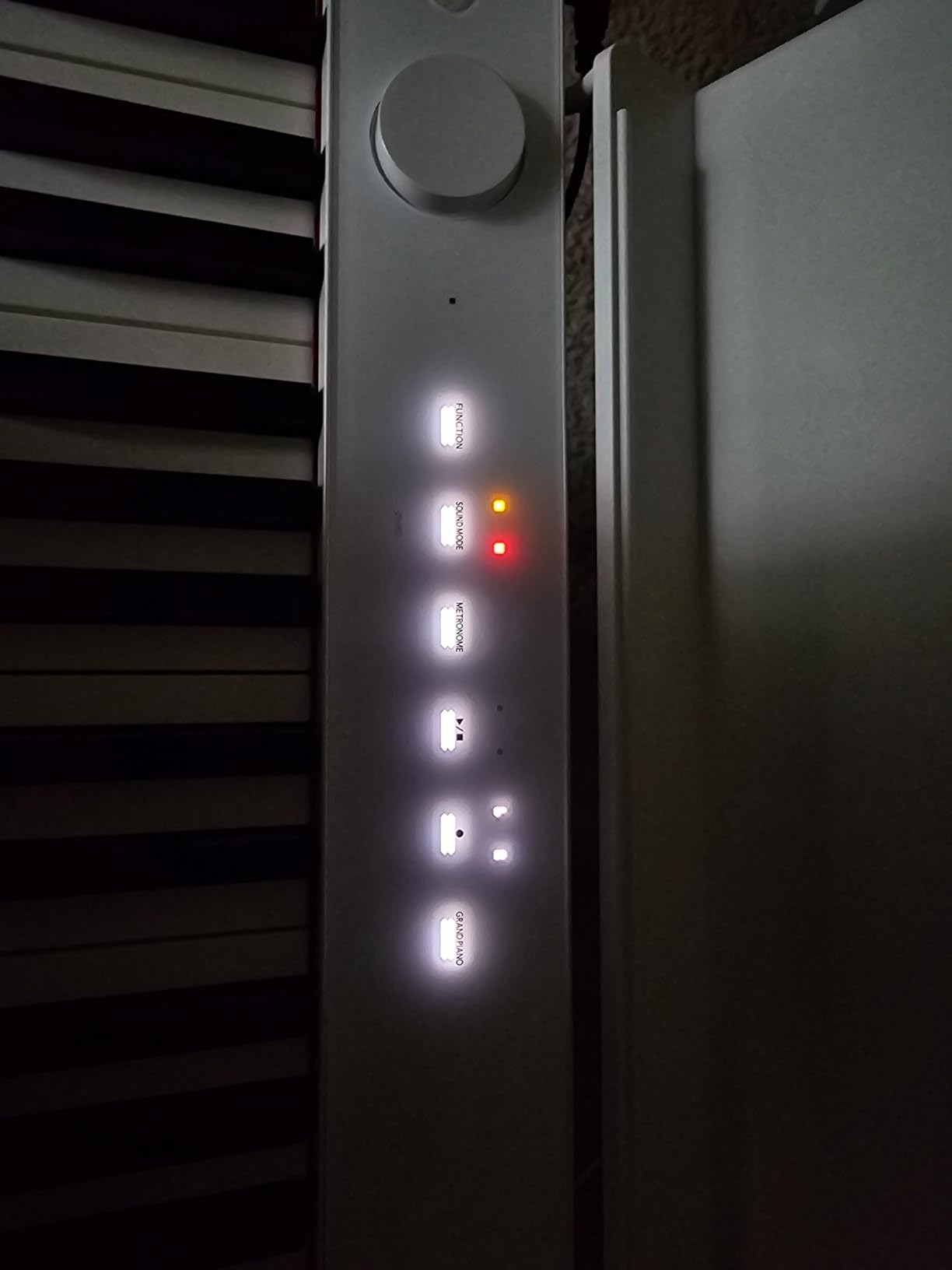
Battery power is the killer feature here. With six AA batteries, you can play anywhere without searching for an outlet. I took it to a park for an outdoor practice session and it performed flawlessly. The included WU-BT10 Bluetooth adapter enables wireless audio streaming and MIDI connectivity, so you can play along with songs from your phone without any cables.
The Casio Music Space app is genuinely useful once you get past the learning curve. It provides a visual interface for sound selection, lesson features, and a MIDI recorder. My main frustration was that the PX-S1100 does not store patches or settings, so every time you power cycle you start from defaults.
Who Should Buy the Casio PX-S1100
This is the best electric piano for gigging musicians who need to carry their instrument to shows, rehearsals, and lessons. The slim profile fits in a backpack-style gig bag, and battery power means you are never dependent on venue wiring.
It is also ideal for students in dorm rooms or small apartments where space is at a premium. When not in use, it slides behind a door or under a bed. The gloss black finish looks sharp enough to display proudly.
Limitations to Consider Before Buying
The 2.5mm headphone jack is a frustrating non-standard choice. You will need an adapter for most headphones, or use Bluetooth headphones via the WU-BT10 adapter. Plan accordingly.
The onboard speakers are functional but not impressive. They are fine for practice at your desk, but for performance or room-filling sound you will want external amplification. Some users have also reported quality control issues with faulty keys or speaker crackling, so test yours thoroughly when it arrives.
8. Donner DEP-20 Beginner Digital Piano with Stand and Pedals
Donner DEP-20 Beginner Digital Piano 88 Key Full Size Weighted Keyboard, Portable Electric Piano with Furniture Stand, 3-Pedal Unit
88 Full-Sized Hammer Action Keys
238 Tones
128-Note Polyphony
50W Dual Amplifiers
Includes Furniture Stand and 3-Pedal Unit
Pros
- Complete package with furniture stand and 3-pedal unit included
- 238 tones cover wide range of instruments
- 128-note polyphony handles complex passages
- Two 25W amplifiers deliver powerful sound
- Backlit LCD screen showing chord names
- Two front headphone jacks for teaching
Cons
- Key action is heavy and may fatigue some players
- Sound quality falls short of premium brands
- Music stand struggles with thick books
- Some quality variability between units
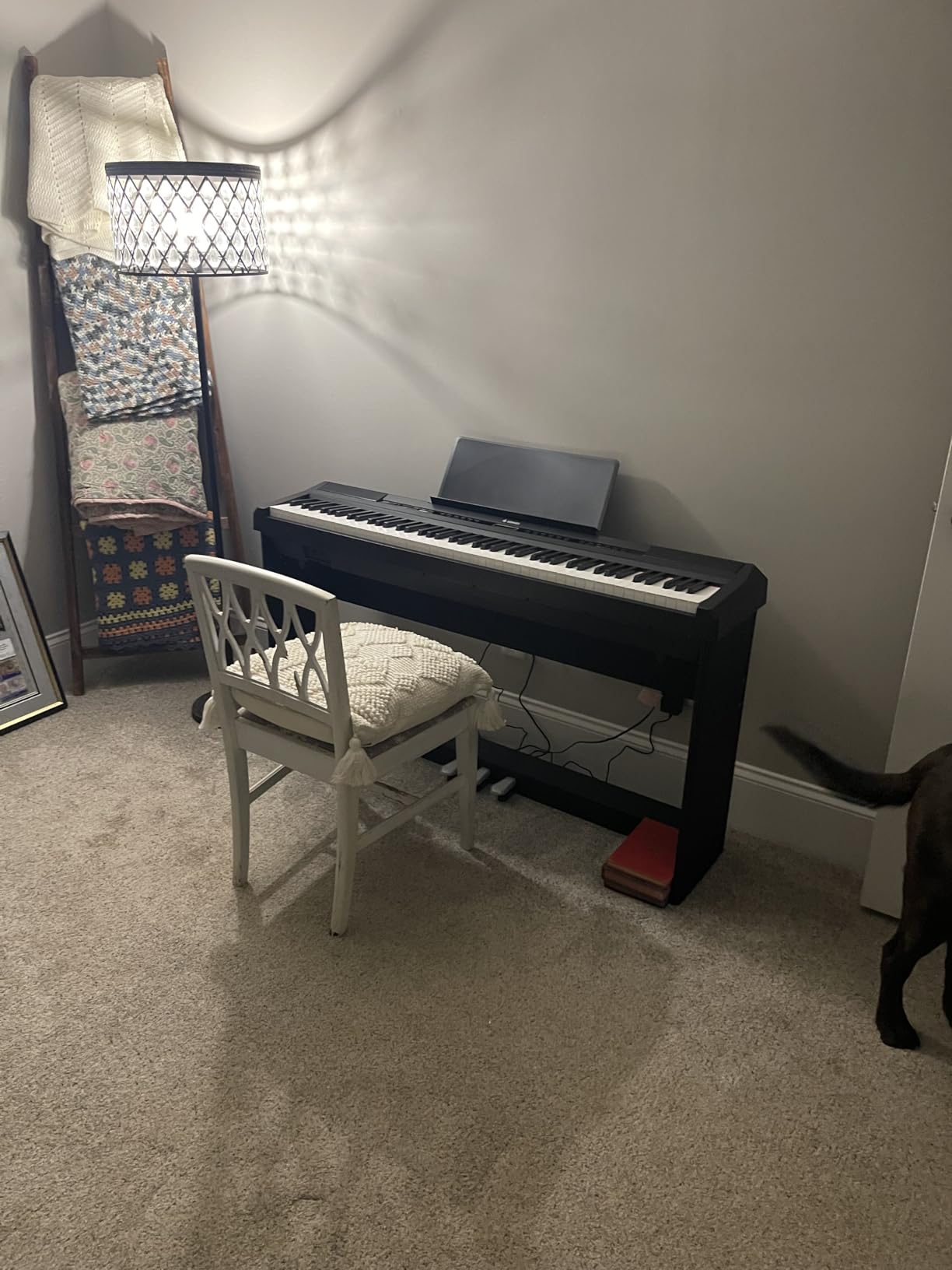
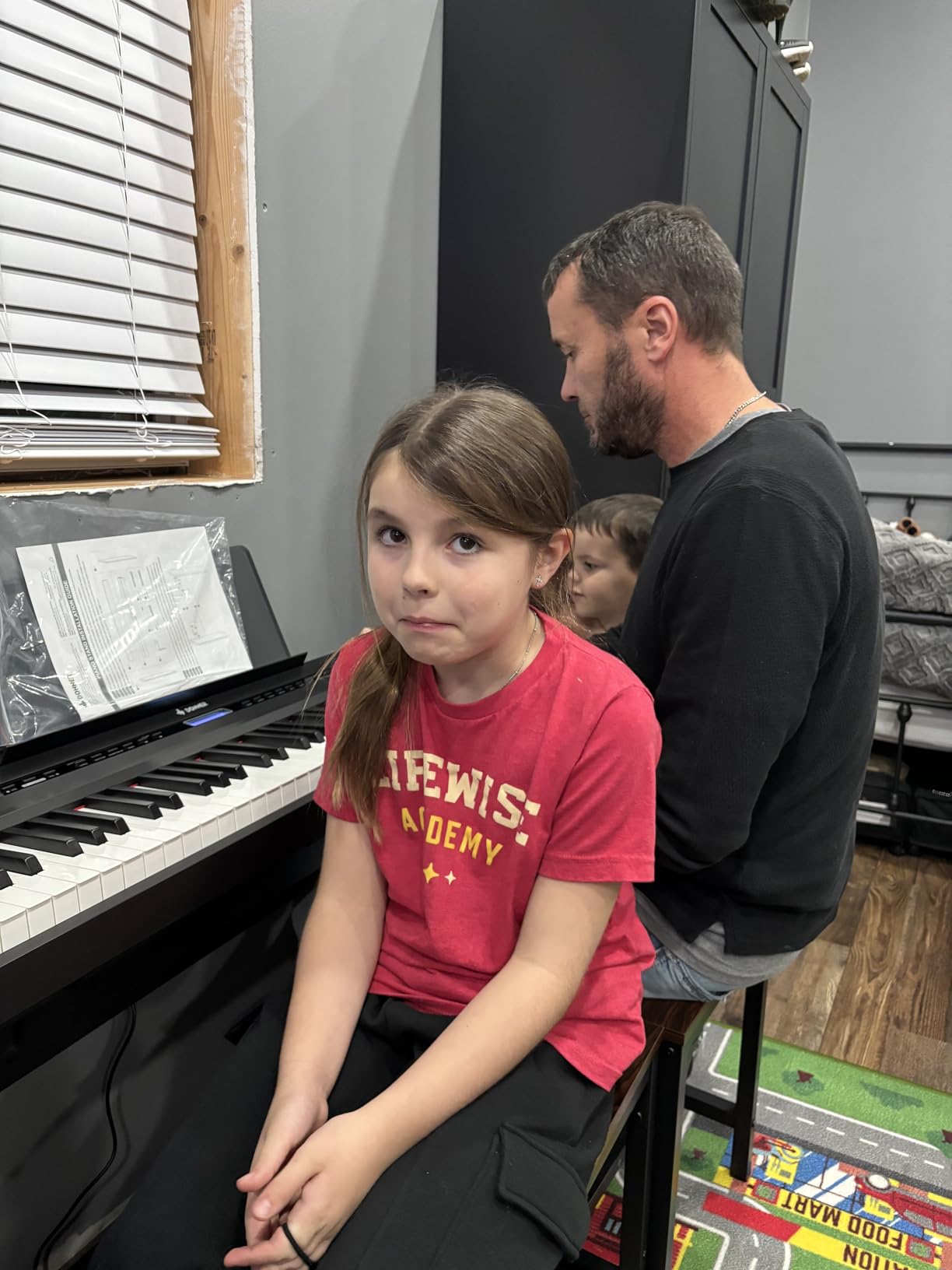
The Donner DEP-20 is the value champion of this guide. For what many brands charge for a bare keyboard, Donner includes the piano, a furniture stand, and a full 3-pedal unit with sustain, sostenuto, and soft pedals. I was skeptical about the quality at this price, but after assembly and extended playing I came away impressed by what Donner has achieved.
The 88 hammer action keys have adjustable touch response across multiple sensitivity levels. I found the default setting quite heavy, more resistant than the Yamaha P71 or Roland FP-10. For players with strong fingers this builds excellent technique. For absolute beginners or younger students, you may want to reduce the touch sensitivity to lighten the action.
The 238 tones cover everything from acoustic and electric pianos to ukulele, drums, bass, and synthesizer sounds. The quality varies significantly across these tones, with the acoustic piano being the strongest and some of the World instrument sounds being less convincing. The 128-note polyphony ensures that complex passages with sustain pedal do not cut notes off prematurely.
The backlit LCD screen is a feature that Yamaha and Roland omit at this price. It displays chord names when you play them, which is genuinely helpful for beginners learning music theory. The two headphone jacks on the front panel make this an excellent teaching instrument.
Who Should Buy the Donner DEP-20
This is the piano I recommend for budget-conscious beginners who want a complete package with nothing else to buy. The included stand and 3-pedal unit mean you are ready to play the moment assembly is complete.
It is also a strong choice for families with multiple students. The dual headphone jacks let a parent and child practice together silently, and the 238 tones provide enough variety to keep kids engaged and exploring.
Limitations to Consider Before Buying
The sound quality, while good for the price, does not match Yamaha, Roland, or Casio. The piano tone lacks the depth and complexity of the SuperNATURAL or CFX engines. If sound quality is your top priority, save up for the Roland FP-30X.
The heavy key action is a double-edged sword. It builds strength and technique, but it can be fatiguing for extended sessions and may discourage very young beginners. Some users have also reported quality variability between units, so purchase from a retailer with a solid return policy.
9. Alesis Recital 88-Key Beginner Digital Piano
Alesis Recital - 88 Key Digital Piano Keyboard with Semi-Weighted Keys, 2x20W Speakers, 5 Voices, Split, Layer and Lesson Mode, FX and Piano Lessons
88 Semi-Weighted Keys
5 Voices
128-Note Polyphony
Split Layer and Lesson Modes
Battery Powered
15.65 lbs
Pros
- Full 88-key piano at an unbeatable entry price
- Semi-weighted keys with adjustable touch response
- Split Layer and Lesson modes for beginners
- Dual 20W speakers with clear sound
- Battery powered for ultimate portability
- Includes Skoove and Melodics lesson subscriptions
- Only 15.65 pounds ultra lightweight
Cons
- Semi-weighted keys not fully weighted
- Music stand too small for thick books
- Interface requires memorized key combinations
- Organ and synth sounds less realistic
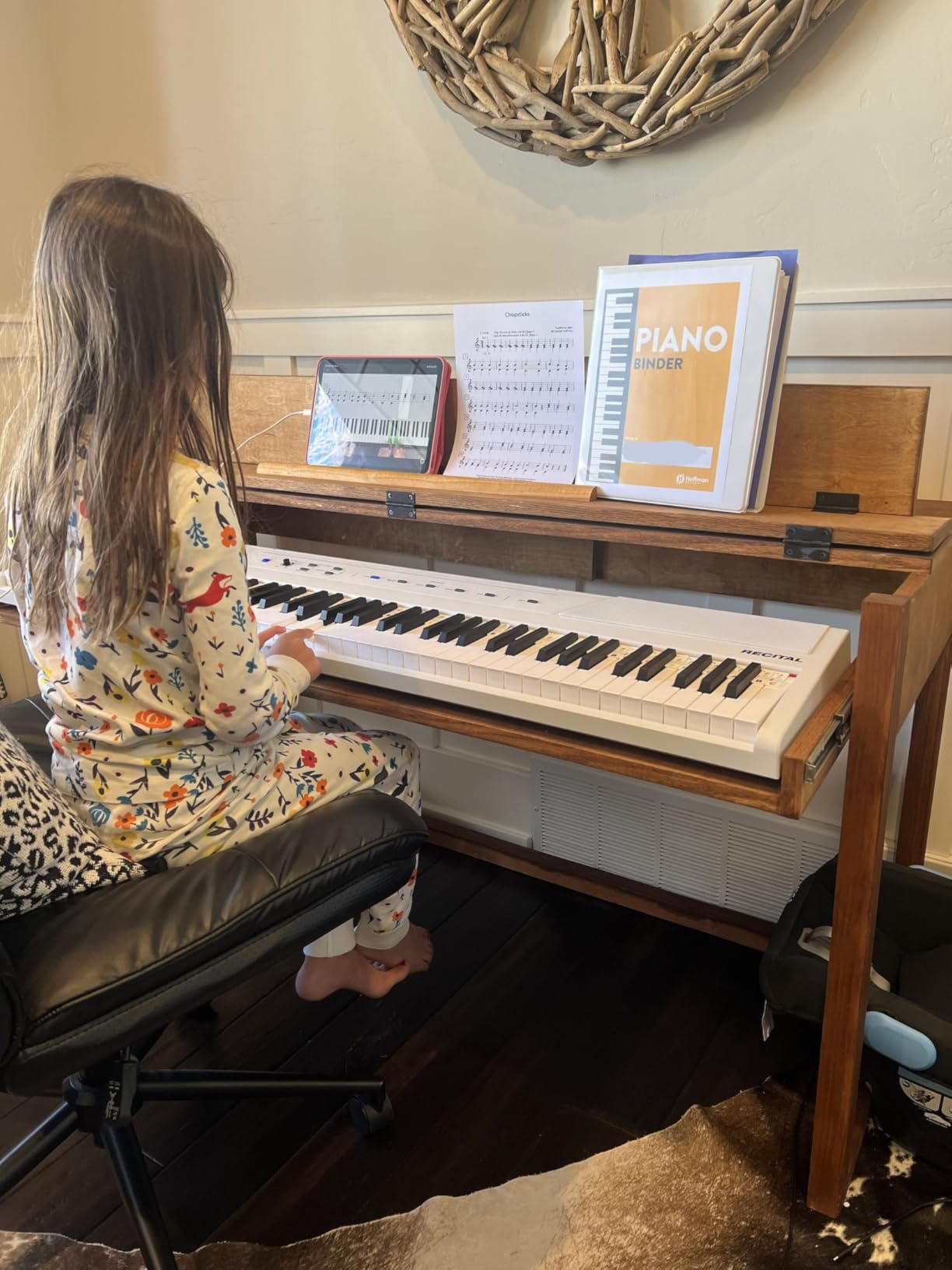
The Alesis Recital is the most affordable full 88-key digital piano I recommend, and with over 11,600 reviews it is also the most proven. I include it for the player who absolutely cannot spend more but still wants the full 88-key range to learn properly. At just 15.65 pounds, it is the lightest piano on this list by a wide margin.
The keys are semi-weighted rather than fully weighted, which means they have some resistance but not the hammer-action feel of the Yamaha or Roland models. This is actually an advantage for very young beginners who lack finger strength, and for players coming from unweighted keyboards who are not ready for heavy action. The touch response is adjustable so you can dial in the sensitivity that works for your playing style.
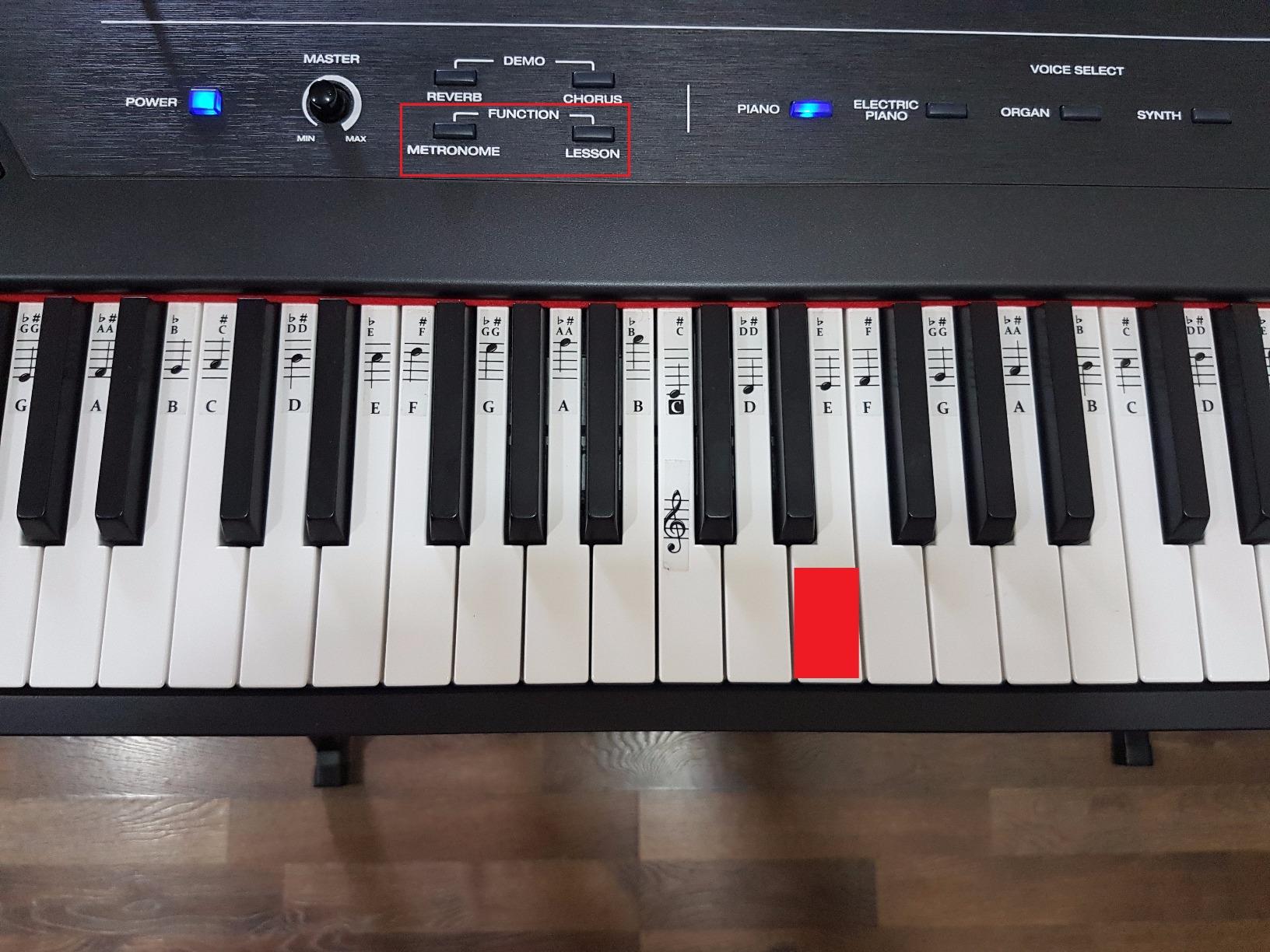
The five voices cover the essentials: acoustic piano, electric piano, organ, synth, and bass. The acoustic piano is the strongest of the group, with a clean, present tone that works well for practice. The built-in Chorus and Reverb effects add space and dimension to the sound. The 128-note polyphony is generous at this price and prevents note dropout during sustained passages.
I found the Lesson Mode particularly well-implemented. It splits the keyboard into two identical zones with the same pitch range, so a teacher can demonstrate on one side while the student mirrors on the other. The included Skoove premium subscription gives you three months of structured lessons, which is valuable added value.
Who Should Buy the Alesis Recital
This is the piano I recommend for absolute beginners and children who are just starting their musical journey. If you are not sure whether piano is a long-term commitment, the Recital lets you test the waters without a major investment.
It is also ideal for travelers and digital nomads. At 15.65 pounds with battery power, you can practice in hotel rooms, at campsites, or anywhere life takes you. The RCA outputs let you connect to external speakers for bigger sound.
Limitations to Consider Before Buying
The semi-weighted keys are the biggest compromise. They will not build the same finger strength and technique as fully weighted hammer action. If you or your child is serious about classical piano study, invest in a weighted model like the Yamaha P71 or Roland FP-10.
The interface relies on key combinations rather than dedicated buttons, which means you will need to keep the manual handy until you memorize the functions. There is no LCD screen to guide you. The music stand is also too small for thick method books.
10. Kawai ES520 88-Key Digital Piano with Speakers
Kawai ES520 88-key Digital Piano with Speakers - White
Responsive Hammer Compact II Action
192-Note Polyphony
40W Onkyo Stereo Speakers
Bluetooth MIDI
2-Year Warranty
Pros
- Responsive Hammer Compact II action feels incredibly realistic
- Outstanding piano sound quality best in price range
- 40-watt Onkyo speaker system delivers powerful clear sound
- 192-note polyphony for complex classical pieces
- Bluetooth MIDI for wireless connectivity
- Intuitive layering interface just press two sounds
- 2-year warranty
Cons
- Limited review count on Amazon only 23 ratings
- Higher price point than most competitors
- Not Prime eligible
- Some prefer Roland FP series action
The Kawai ES520 is the premium pick in this guide, and it is the piano I recommend when sound quality and key action realism are the top priorities. Kawai is one of the most respected acoustic piano manufacturers in the world, and they bring that expertise to their digital instruments. The ES520 earned a 4.9-star rating from owners, which is the highest on this list.
The Responsive Hammer Compact II action is the closest thing to a real acoustic piano I have played in a portable digital instrument at this price. Each key has a graduated weight that mimics the mechanical hammer system of an acoustic piano. The action is responsive enough to capture the subtlest dynamic nuances, from the softest pianissimo to aggressive fortissimo passages.
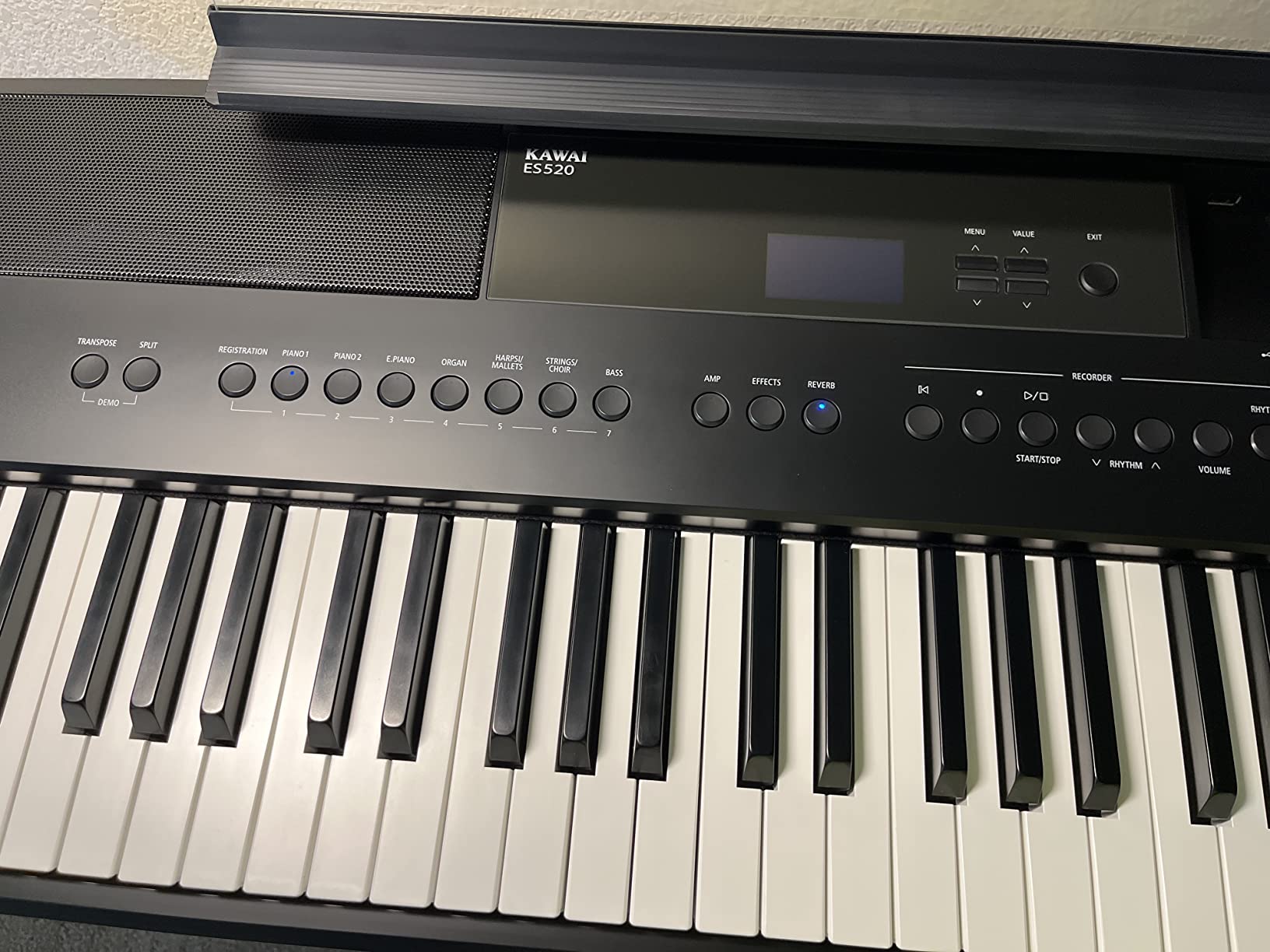
The 40-watt Onkyo stereo speaker system is co-engineered with Onkyo, a legendary audio brand. The result is a sound that is fuller, warmer, and more detailed than anything else on this list. I played Beethoven sonatas, Debussy preludes, and Bill Evans transcriptions, and each style sounded authentic and engaging through the onboard speakers.
The 192-note polyphony is the highest in this guide alongside the Casio PX-870. This matters most for advanced players who use heavy sustain pedaling and layer multiple sounds. Even in the densest passages with full chords and sustain, no notes drop off. The Bluetooth MIDI connectivity lets you connect wirelessly to apps and DAW software.
Who Should Buy the Kawai ES520
This is the piano I recommend for advanced students, classical pianists, and anyone who refuses to compromise on sound and touch. If you have played acoustic pianos for years and need a digital instrument that does not feel like a compromise, the ES520 delivers.
It is also ideal for piano teachers who need a professional-quality instrument for studio lessons. The sound quality and action are good enough to demonstrate advanced techniques, and the dual headphone jacks enable silent teaching.
Limitations to Consider Before Buying
The price is significantly higher than every other portable piano on this list. If you are a beginner, this level of quality is more than you need right now. The Yamaha P71 or Roland FP-10 will serve you well for years before you need to consider upgrading.
The Amazon review count is very low at just 23 ratings, which reflects Kawai’s niche market positioning rather than a quality issue. The ES520 is widely praised in piano forums and professional reviews. Check specialized retailers if Amazon stock is limited.
Buying Guide: How to Choose the Best Electric Piano?
Choosing from the best electric pianos means understanding the features that actually affect your playing experience. I have broken down the key factors below so you can make an informed decision based on your specific needs and budget.
Key Action and Touch Sensitivity
Key action is the single most important factor in how realistic an electric piano feels. There are three main types you will encounter. Semi-weighted keys, like those on the Alesis Recital, have some resistance but use springs rather than hammers. Fully weighted hammer action, found on the Yamaha P71 and Roland FP-30X, uses actual hammer mechanisms to replicate the feel of acoustic piano keys. Premium actions like Kawai’s Responsive Hammer Compact II add graded weighting, meaning keys are heavier in the bass register and lighter in the treble, exactly like a real grand piano.
Touch sensitivity determines how the piano responds to your playing velocity. Look for models with adjustable sensitivity levels so you can match the response to your touch. The best electric pianos also simulate escapement, the subtle resistance click you feel on acoustic piano keys just before the hammer strikes.
Polyphony: How Many Notes Can Sound at Once
Polyphony refers to the maximum number of notes a piano can produce simultaneously. This matters more than beginners realize. When you use the sustain pedal and play flowing arpeggios, each note continues to ring even as new notes are added. A piano with 64-note polyphony may start cutting off earlier notes during complex passages.
I recommend a minimum of 96 notes of polyphony for beginners, 128 for intermediate players, and 192 or higher for advanced classical repertoire. The Roland FP-10 offers 96 notes, the Donner DEP-20 and Alesis Recital both provide 128, and the Kawai ES520 leads with 192 notes.
Sound Engine and Piano Tones
The sound engine is the technology that produces the piano tone. Most digital pianos use sampling, which means they record actual acoustic pianos and play back those recordings based on your key velocity. Premium models add physical modeling, which mathematically calculates the sound in real time for more natural variation.
Yamaha uses their CFX Stereo Sampling on the DGX-670B, capturing the sound of their flagship concert grand. Roland uses SuperNATURAL Piano modeling on the FP-10 and FP-30X, which combines sampling with behavioral modeling for more responsive dynamics. Kawai uses Harmonic Imaging with their EX Concert Grand samples. Each brand has a distinct tonal character, so listen to comparison videos if you cannot try them in person.
Built-in Speakers vs Headphone Practice
Built-in speaker quality varies enormously across price points. Budget models like the Roland FP-10 and Alesis Recital have adequate speakers that work for practice but lack depth and clarity. Mid-range models like the Roland FP-30X with its 22-watt system and the Casio PX-870 with its 40-watt four-speaker array deliver genuinely room-filling sound.
Every piano on this list has a headphone jack for silent practice. I cannot overstate how valuable this is for apartment dwellers, students in shared housing, and parents of young children. The best electric pianos sound even better through headphones because you hear the full frequency range without room acoustics interfering.
Connectivity: USB, Bluetooth, and MIDI
Modern digital pianos offer multiple connectivity options. USB to Host connectivity, found on every piano in this guide, lets you connect directly to a computer for use with DAW software like GarageBand, Logic, or Ableton. This turns your piano into a MIDI controller for recording and music production.
Bluetooth MIDI is increasingly common and eliminates the need for cables. The Roland FP-10, FP-30X, Casio PX-S1100, Yamaha DGX-670B, and Kawai ES520 all support Bluetooth. This is especially valuable for connecting to learning apps like FlowKey, Simply Piano, and Piano Marvel without dongles or adapters.
Portable vs Console Design
Portable digital pianos are slim slabs designed to sit on an X-stand or table. They typically weigh between 15 and 50 pounds and are easy to move between rooms or take to gigs. Examples include the Yamaha P71, Roland FP-30X, and Casio PX-S1100.
Console digital pianos come in wooden cabinets designed to stay in one place. They offer more powerful speaker systems, integrated stands, and sometimes built-in music desks and pedal boards. The Casio PX-870 is the console option in this guide. Choose portable if you need flexibility, console if you want a permanent home setup.
Budget Tiers and What to Expect
Under $500, expect fully weighted 88-key pianos with basic sound engines and limited voices. The Yamaha P71, Roland FP-10, Donner DEP-20, and Alesis Recital all fall in this tier. These are excellent starter instruments that will serve beginners well for years.
Between $500 and $1000, you get better sound engines, more powerful speakers, and additional features like Bluetooth and recording. The Roland FP-30X, Casio PX-S1100, and Yamaha DGX-670B represent the sweet spot of value and capability.
Above $1000, pianos offer premium key actions, advanced resonance modeling, and studio-quality sound engines. The Casio PX-870 and Kawai ES520 are the premium picks in this guide, delivering experiences that approach acoustic piano realism.
FAQs
Which electric piano is most like a real piano?
The electric pianos that feel closest to a real acoustic piano are those with wooden hammer actions and escapement simulation. Top recommendations include the Kawai ES520 with its Responsive Hammer Compact II action, the Roland FP-30X with its PHA-4 ivory-feel keys, and the Casio PX-870 with its scaled weighted hammer action and sympathetic string resonance. These models replicate the mechanical resistance and tonal complexity of acoustic piano keys.
How much should a good electric piano cost?
A good electric piano typically costs between $400 and $1400. Entry-level models with weighted keys start around $400 to $500, including the Yamaha P71 and Roland FP-10. Mid-range pianos with better actions and sound engines run $650 to $800, like the Roland FP-30X and Yamaha DGX-670B. Premium models with advanced hammer actions cost $800 to $1400, including the Casio PX-870 and Kawai ES520. For beginners, $400 to $650 is sufficient for a quality instrument.
Are electric pianos worth it?
Yes, electric pianos are worth it for most players. They offer consistent touch and tuning regardless of environment, silent practice with headphones, recording capabilities, and portability. Modern digital pianos from Yamaha, Roland, Casio, and Kawai closely replicate acoustic piano feel through weighted hammer actions and advanced sound modeling. They cost less than acoustic pianos, require no tuning, and take up less space. The main drawback is lower resale value compared to acoustic instruments.
Which digital piano is closest to an acoustic?
The digital pianos closest to an acoustic are the Kawai ES520 with its Responsive Hammer Compact II action and 192-note polyphony, the Casio PX-870 with its scaled weighted hammer action and four-speaker soundboard system, and the Roland FP-30X with its PHA-4 keyboard and SuperNATURAL sound engine. Look for features like graded hammer weighting, escapement simulation, string resonance modeling, and damper resonance for the most authentic acoustic experience.
Do I need 88 keys or will fewer keys work?
For serious piano study, 88 keys are strongly recommended. Classical and advanced repertoire regularly uses the full keyboard range. Every piano in this guide has 88 keys. However, if you primarily play pop, rock, or electronic music, 61 or 76 keys may be sufficient. Just know that upgrading later means buying a new instrument, so starting with 88 keys is the safer long-term investment.
Conclusion
After testing all ten of these instruments, my top recommendation depends entirely on who you are. For beginners and budget-conscious buyers, the Yamaha P71 delivers the best combination of authentic weighted action, Yamaha sound quality, and proven reliability with over 6,600 positive reviews. It is the safest purchase you can make.
For players who want the best all-around portable piano, the Roland FP-30X earns my editor’s choice with its enhanced SuperNATURAL sound engine, powerful 22-watt speakers, Bluetooth connectivity, and desktop optimization mode. And for those who refuse to compromise on sound and touch realism, the Kawai ES520 stands above the rest with its Responsive Hammer Compact II action and Onkyo speaker system.
The best electric pianos in 2026 cover a wide range of prices and features, but they all share one thing in common: they make playing music accessible, enjoyable, and genuinely rewarding. Pick the one that matches your skill level, budget, and playing space, and you will have an instrument that brings you joy for years to come.