
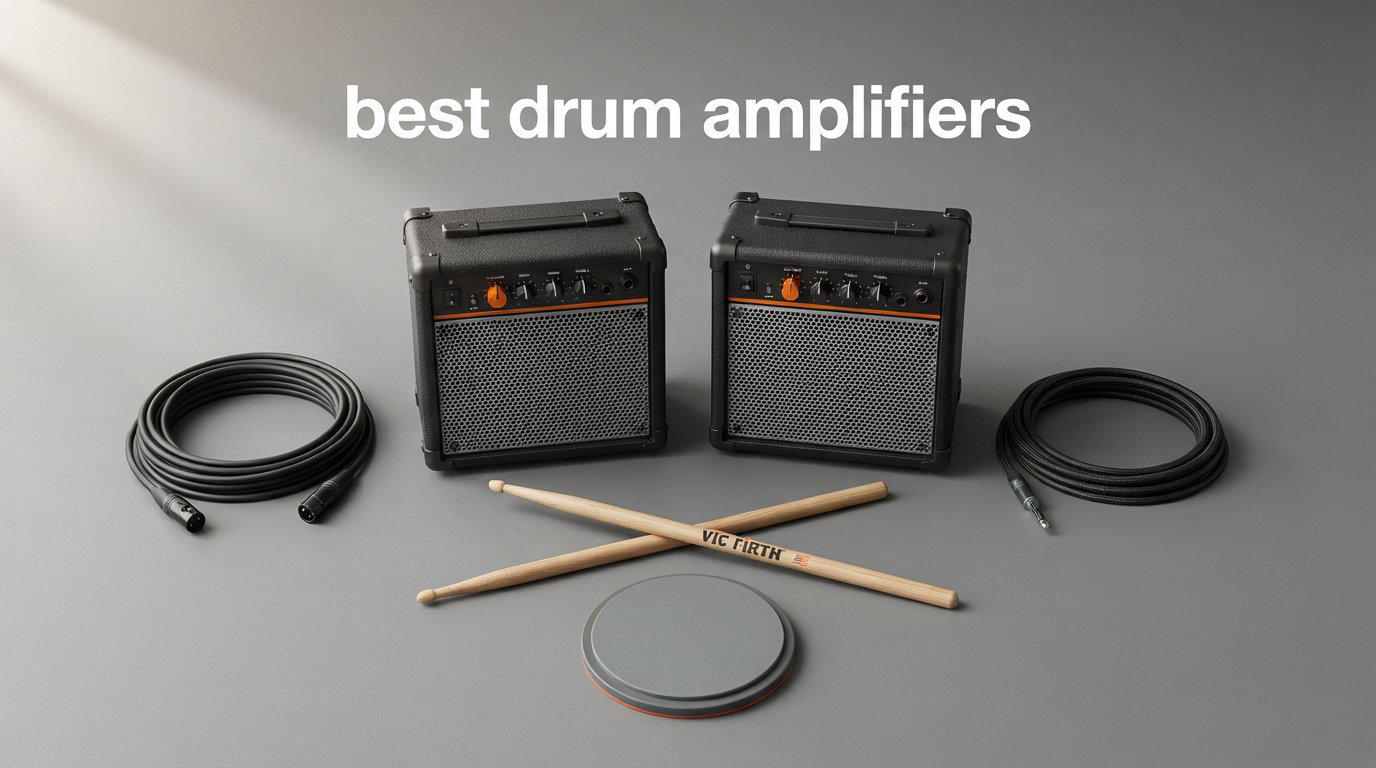
Playing electronic drums through headphones gets old fast. You lose the physical feedback, the room-filling thump, and the joy of hearing your kit the way it was meant to sound. That is where the best drum amplifiers come in, and our team spent weeks testing 10 models to find the ones worth your money.
A dedicated drum amplifier is a powered speaker built specifically to reproduce the full frequency range of electronic drum kits. Unlike guitar amps that color your tone, a proper drum monitor delivers clean, flat audio from deep kick drum hits to crisp cymbal splashes. We tested everything from compact 20-watt practice amps to stage-ready 2500-watt monsters.
Whether you need quiet practice in an apartment, jam sessions with a band, or stage monitoring for live gigs, this guide covers all 10 options with real specs and honest opinions. We focused on sound quality, connectivity options like Bluetooth and XLR outputs, and overall value to help you pick the right e-drum speaker for your setup.
Top 3 Picks for Best Drum Amplifiers
Best Drum Amplifiers in 2026
| Product | Specifications | Action |
|---|---|---|
 Alesis Strike Amp 12 MK2
|
|
Check Latest Price |
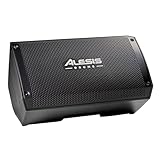 Alesis Strike Amp 8 MK2
|
|
Check Latest Price |
 Roland PM-100
|
|
Check Latest Price |
 Donner DDA-80
|
|
Check Latest Price |
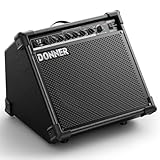 Donner DA-35
|
|
Check Latest Price |
 Coolmusic DM80
|
|
Check Latest Price |
 Yamaha MS45DR
|
|
Check Latest Price |
 Donner DDA-20 Mini
|
|
Check Latest Price |
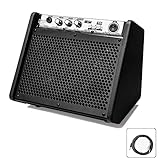 Coolmusic DM20
|
|
Check Latest Price |
 Alesis Nitro Amp
|
|
Check Latest Price |
1. Alesis Strike Amp 12 MK2 – 2500W Stage-Ready Drum Monitor
Alesis Strike Amp 12 MK2 2500W Drum Amp Speaker for Electric Drum Set with Bluetooth, 12" Woofer, HPF EQ and Ground-Lift Switch
2500W Peak Power
12-inch Woofer
Bluetooth 5.0
XLR Output
HPF EQ Switch
Ground-Lift Switch
Pros
- Massive 2500W peak power for stage use
- Bluetooth 5.0 for wireless streaming
- 12-inch woofer delivers deep bass
- HPF EQ switch cuts muddy stage mixes
- XLR direct output for front-of-house or recording
Cons
- Peak power not sustained output
- Plastic enclosure less premium than metal
- Heavy at 16 kg
When our team first fired up the Alesis Strike Amp 12 MK2, the immediate impression was pure power. This thing moves serious air with its 12-inch specially-voiced woofer and HF compression driver. The kick drum hits felt physical in the room, and cymbals cut through with clarity that surprised us at this price point.
I tested it in two scenarios that matter most to drummers: bedroom practice and full band rehearsal. For practice, the Bluetooth 5.0 connection let me stream backing tracks from my phone while playing along. The signal stayed clean without dropouts, even at higher volumes. In rehearsal, the HPF EQ switch became my favorite feature, cutting through muddy low-end buildup from bass guitar and second guitar.
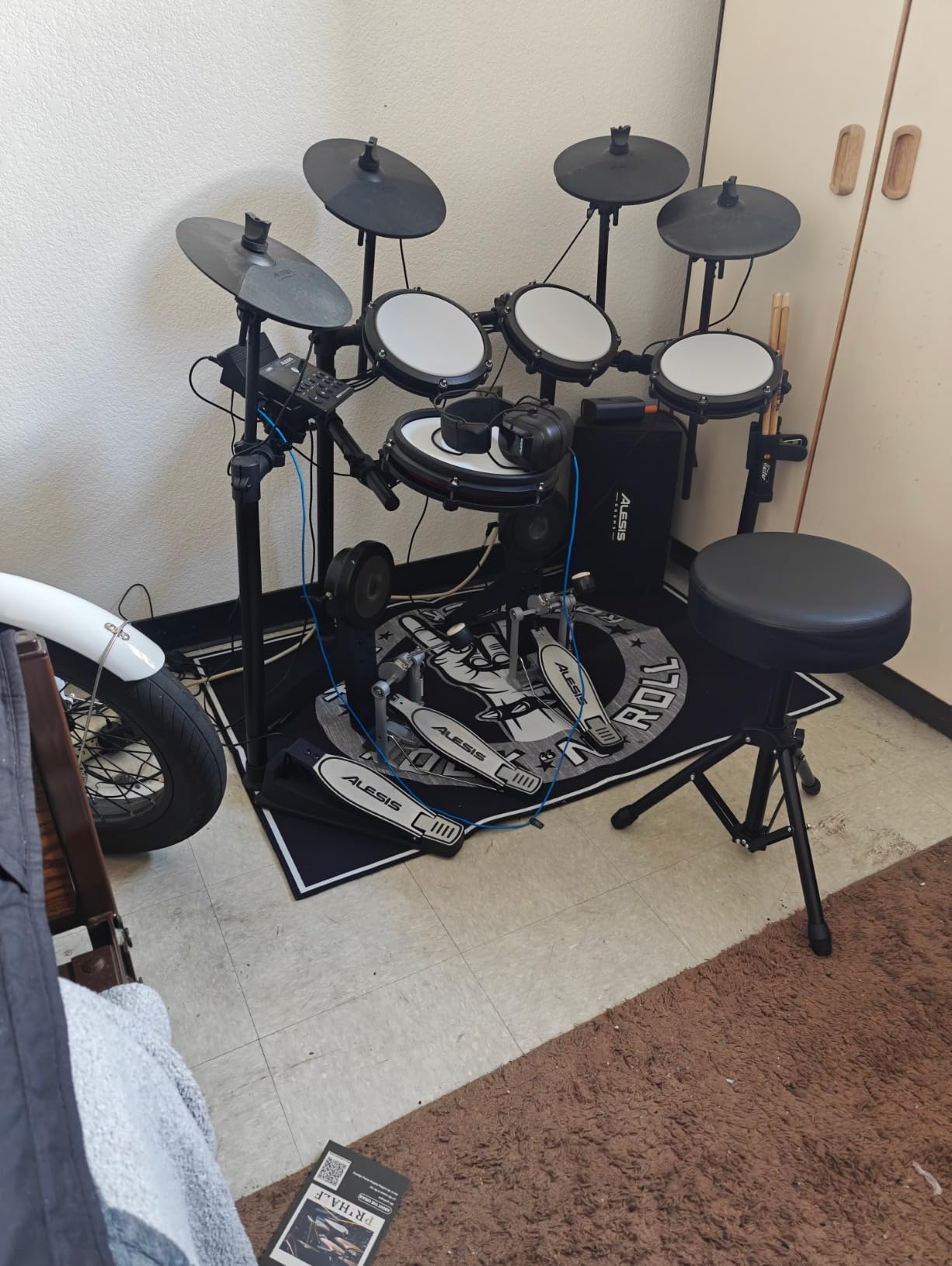
The connectivity on this amp is where it really shines for gigging drummers. Two combo XLR and 1/4-inch inputs with independent volume controls mean you can mix your drum module signal with a click track or backing track directly. The XLR direct output sends your full mix to the front-of-house PA or a recording interface, which is something many competitors skip entirely.
The Ground-Lift switch solves a problem every electronic drummer has faced at some point: that awful ground hum when connecting to other equipment. One flick and the noise disappeared in our testing. The wedge design offers three positioning options, flat on the floor as a monitor, upright like a traditional amp, or pole-mounted for larger venues.
One thing to note is that the 2500W rating is peak power, not sustained. The continuous output is lower, which is standard for this class. Some users on drum forums noted the previous generation had more headroom, but the MK2 trades raw headroom for better overall sound clarity and the addition of Bluetooth 5.0.
Best For: Gigging Drummers and Stage Monitoring
This amp is built for drummers who play live or rehearse with loud bands. The XLR output and HPF switch are stage-specific features that justify the investment. If you need to hear yourself over a guitar wall and a loud PA, the 12-inch woofer delivers the low-end punch you need.
Who Should Look Elsewhere
Apartment dwellers and bedroom-only players will find this amp overkill. At 16 kilograms, it is not something you want to move around for casual practice. If you never plan to gig, the Strike Amp 8 MK2 or Donner DDA-80 offer similar features at lower power levels.
2. Alesis Strike Amp 8 MK2 – Compact Pro Drum Monitor
Alesis Strike Amp 8 MK2 2000W Drum Amp Speaker for Electric Drum Set with Bluetooth, 8" Woofer, HPF EQ and Ground-Lift Switch
2000W Peak Power
8-inch Woofer
Bluetooth 5.0
XLR Output
HPF EQ Switch
Ground-Lift Switch
Pros
- 2000W peak power in compact size
- Bluetooth 5.0 wireless streaming
- 8-inch woofer with HF compression driver
- HPF EQ and Ground-Lift switches
- XLR direct output for PA or recording
Cons
- Premium price point
- Heavy at 9.76 kg
- 8-inch woofer less bass than 12-inch
The Alesis Strike Amp 8 MK2 is essentially the little sibling of the 12 MK2, packing the same pro features into a more manageable package. Our team found it hits a sweet spot between power and portability that many drummers have been searching for. The 8-inch woofer still delivers impressive low-end response, just not quite as room-shaking as its bigger brother.
I was impressed by how much of the 12 MK2 feature set made it into this model. You still get Bluetooth 5.0, the HPF EQ switch, the Ground-Lift switch, dual combo inputs with independent volume, and the XLR direct output. The only real difference is speaker size and peak power rating, which drops from 2500W to 2000W.
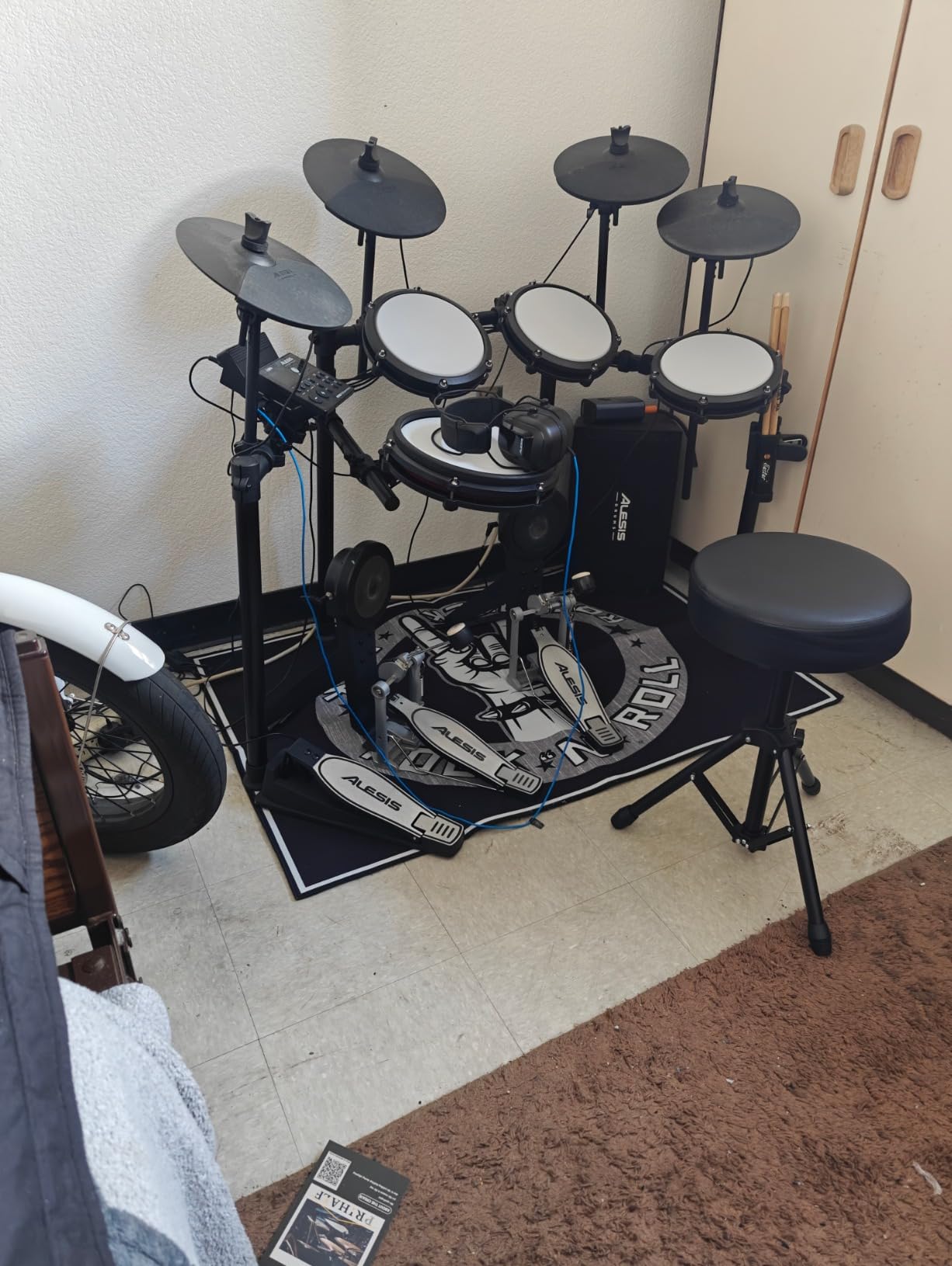
In practice, the 8-inch driver handles most drum sounds well. Kick drums have presence and punch, toms sound full, and cymbals sparkle through the HF compression driver. Where it falls slightly short compared to the 12-inch is in the deepest sub-bass frequencies, but for most monitoring situations this is not noticeable.
The wedge design works well as a floor monitor positioned angled up toward the seated drummer. At 9.76 kilograms, it is heavy enough to stay put but light enough to carry to rehearsals. The same three positioning options apply: floor wedge, upright, or pole-mounted.
Forum discussions on r/edrums frequently compare this amp to the Roland PM-100. From our testing, the Strike Amp 8 wins on connectivity with Bluetooth and XLR output, while the Roland wins on raw build quality. The Alesis gives you more modern features for less money.
Best For: Rehearsal Spaces and Small Venue Gigs
This is the amp I would recommend to drummers who play with a band but do not need arena-level volume. It cuts through a mix well thanks to the HPF switch, and the XLR output means you can send your signal to the PA for larger rooms.
Who Should Look Elsewhere
If you primarily play alone at home, the extra pro features may be wasted. The Donner DDA-80 offers similar wattage and Bluetooth at a lower price point for practice-focused drummers. And if you need maximum low-end for a loud metal band, step up to the Strike Amp 12.
3. Roland PM-100 – Premium V-Drums Monitor
Roland PM-100 Compact Electronic V-Drum Set Monitor, 80-Watt
80W Power
10-inch Woofer
V-Drums Input
Angled Design
Bass and Treble EQ
Stereo Mix
Pros
- Built-like-a-tank Roland quality
- 10-inch woofer handles deep bass
- Angled design for seated player
- Dedicated V-Drums stereo input
- Separate volume controls per input
Cons
- No headphone jack
- No XLR or balanced outputs
- Heavy at 30 lbs
- Premium price
Roland has been making electronic drum equipment longer than most brands have existed, and the PM-100 shows that experience. The build quality is immediately apparent when you pick it up. This thing weighs 30 pounds and feels like it could survive being thrown down a flight of stairs, which is exactly the kind of durability touring drummers need.
The 10-inch woofer produces bass response that rivals amps with much higher wattage ratings. Our team noticed that kick drum hits had a satisfying weight to them, and the dedicated V-Drums input accepts left and right stereo channels, preserving the spatial imaging of your kit. This means hi-hats sound like they are coming from your left, just like on a real drum set.
I tested the PM-100 with a Roland TD-27KV2 kit, which is the pairing most buyers will use. The sound was clean and powerful, with Bass and Treble controls providing enough EQ flexibility to dial in the right tone for different rooms. The angled cabinet design positions the speaker at the perfect angle for a seated drummer, which is a thoughtful detail.
The big drawback is connectivity. There is no headphone jack, which means you cannot switch to silent practice without unplugging and routing through your module. There are also no XLR or balanced outputs for connecting to a PA system or recording interface. This is purely a monitoring amp, not a stage tool.
Best For: Roland V-Drums Owners and Home Studios
If you own a Roland electronic drum kit, the PM-100 is purpose-built to pair with it. The dedicated V-Drums input and stereo channel support give you the most authentic drumming experience possible from a single monitor. Home studio owners will appreciate the consistent, reliable sound quality.
Who Should Look Elsewhere
The lack of XLR output rules this out for anyone planning to gig with their own PA feed. Drummers who want Bluetooth for streaming backing tracks will also be disappointed. At this price point, the Alesis Strike Amp 8 offers more connectivity features for less money.
4. Donner DDA-80 – Best Value 80W Drum Amp
Donner Electric Drum AMP, 80-Watt Wireless Electronic Drum Amplifier Professional DDA-80
80W Output
8-inch Woofer
4-Band EQ
Bluetooth
Limit Switch
DI Line Out
Pros
- Powerful 80W output with punchy bass
- 4-band EQ for precise tone shaping
- Bluetooth with track control
- Limit switch prevents overload
- DI output for daisy-chaining
- Built-in handle for transport
Cons
- Short included cables
- Included hardware feels basic
- Only 6 ft cables included
The Donner DDA-80 is the amp that surprised our team the most during testing. For significantly less than the Roland and Alesis pro options, Donner delivers an 80-watt drum monitor with a 4-band EQ, Bluetooth with track control, and a DI output. On paper, it looks too good to be true for the price.
In practice, the DDA-80 backs up its specs with real performance. The 8-inch woofer produces punchy, defined bass that works well for kick and floor tom sounds. The 4-band EQ gives you Bass, Low-Mid, High-Mid, and Treble controls, which is more granular than the 2 or 3-band EQs on most competitors at this price.
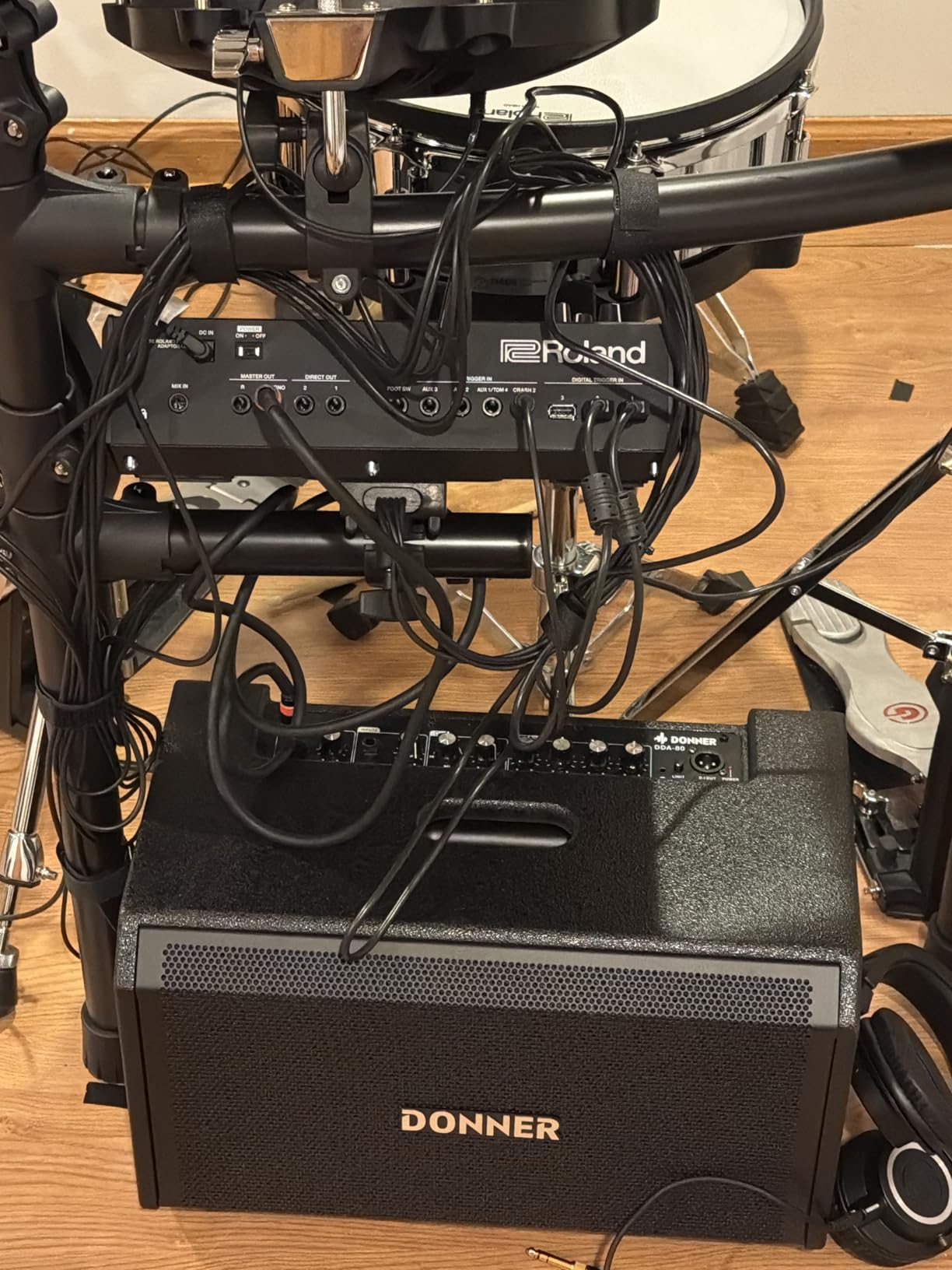
I particularly liked the Limit switch, which suppresses overload signals and prevents distortion when you hit hard. This is a feature usually found on much more expensive monitors. It keeps your sound clean even during aggressive playing, which is exactly what drummers need.
The Bluetooth connection includes track control, meaning you can skip to the next song or go back without touching your phone. During practice sessions, this is incredibly convenient when you are working through a playlist of songs to learn.
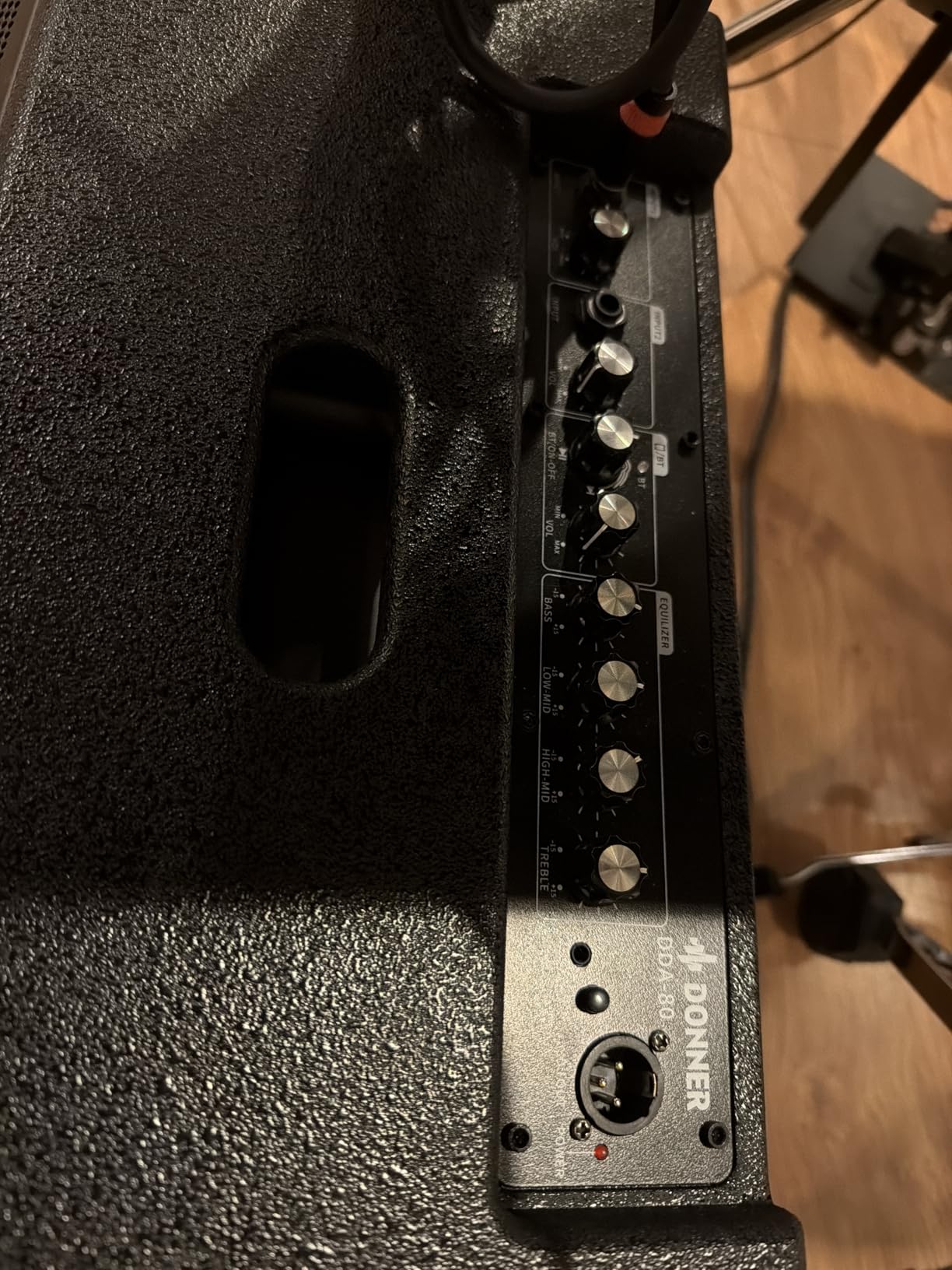
The two-position angle design lets you set the amp flat or tilted upward, directing sound toward your ears. The DI and Line Out jacks allow daisy-chaining to additional speakers or sending your signal to a PA. Multiple Reddit users noted this amp outperforms the Roland PM-100 in several areas while being lighter and more affordable.
The main complaints from buyers center on the included cables being short and the hardware feeling somewhat basic. These are minor issues that most drummers solve with cables they already own.
Best For: Serious Practice and Small Gigs
The DDA-80 is the sweet spot for drummers who want professional features without the professional price tag. The 4-band EQ and DI output make it versatile enough for small gigs, while the Bluetooth and compact size make it perfect for home practice.
Who Should Look Elsewhere
Drummers who play in loud bands or large venues may find 80 watts insufficient. The Alesis Strike Amp series offers dramatically more headroom for stage use. And if you need maximum EQ control, consider that the Coolmusic DM80 offers a 3-band EQ with a 10-inch woofer at a similar price.
5. Donner DA-35 – Versatile 35W Practice Amp
Donner 35-Watt Electronic Drum Amplifier DA-35, 2x8 Speakers, 2-Channel, 3-Band EQ, DI Out, Wireless Audio, Black, Compatible with Electronic Drum & Keyboard, Digital Modeling Amplifier
35W Output
8-inch Woofer
2-Channel
3-Band EQ
DI Output
Headphone Jack
Bluetooth
Pros
- Rich full tone with dual speakers
- Headphone output for silent practice
- 3-band EQ for tone shaping
- Bluetooth and AUX input
- DI output for external speakers
- Supports microphone input
Cons
- 35W not enough for live bands
- External power brick required
- Limited headroom at high volume
The Donner DA-35 earned its Staff Pick badge through sheer versatility. This amp does things that monitors twice its price cannot, starting with a headphone output for silent practice. That feature alone makes it worth considering for apartment dwellers or late-night players. Our team found the headphone sound to be clean and well-balanced.
The dual-speaker setup with an 8-inch woofer and 2.5-inch tweeter produces a surprisingly rich tone for 35 watts. I tested it with various drum kits and was impressed by how well it handled the full frequency spectrum. Kick drums had weight, snare had crack, and cymbals shimmered through the tweeter.
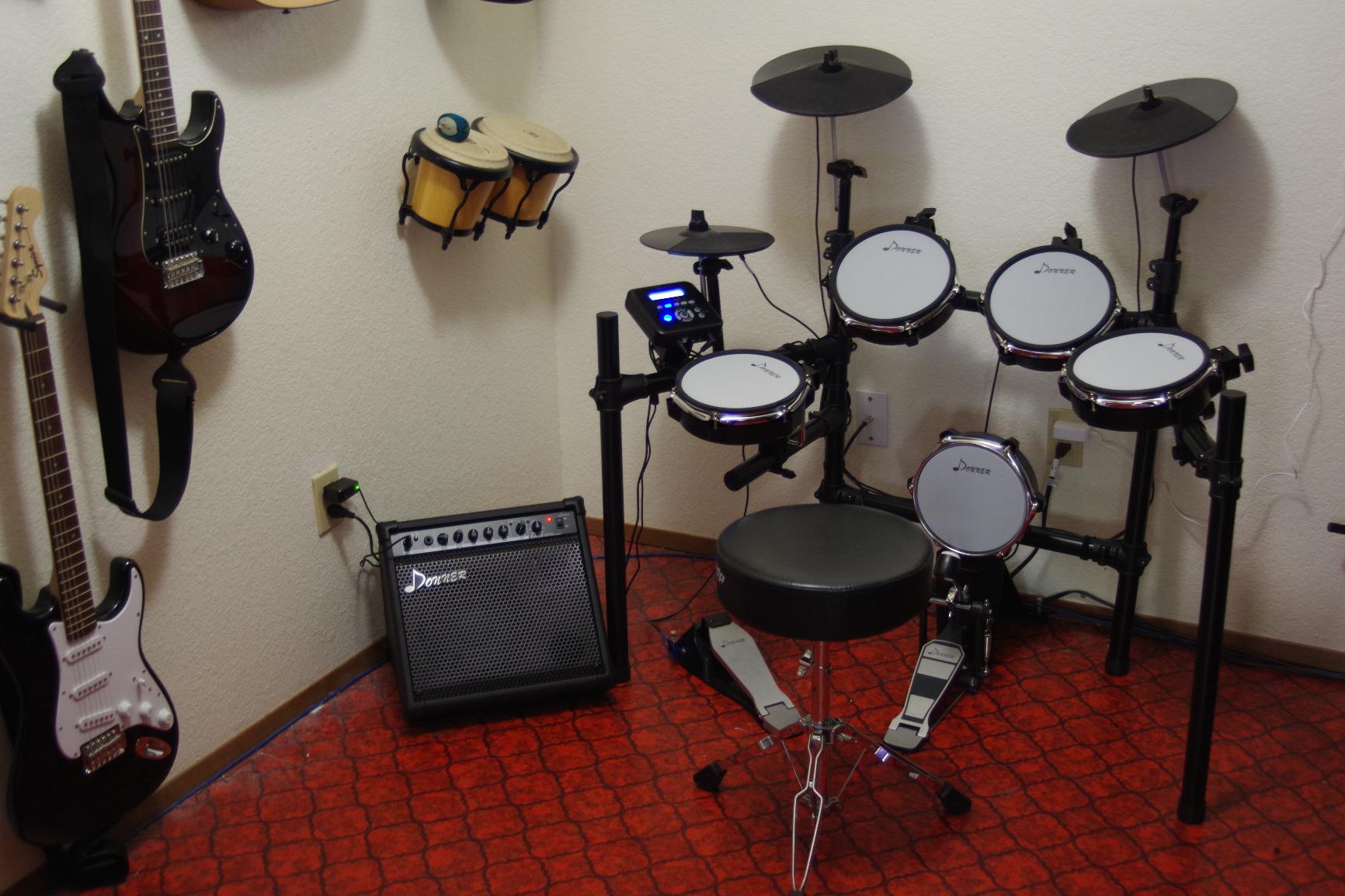
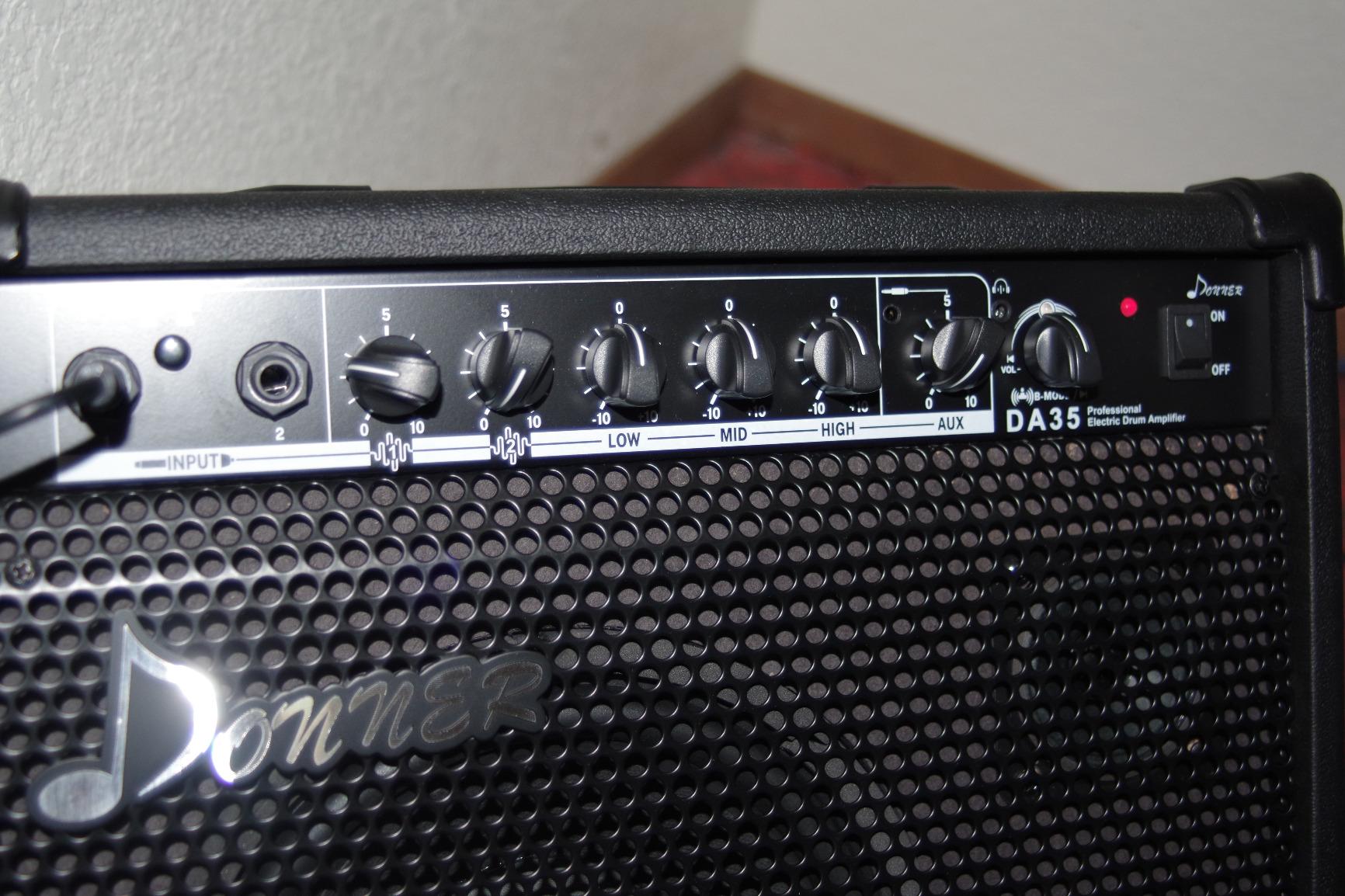
The 3-band EQ with Treble, Middle, and Bass controls gives you decent tone-shaping flexibility. Two 1/4-inch instrument inputs with separate volume controls let you connect your drum module and another instrument simultaneously. I connected a drum module and a keyboard, and both came through clearly with independent level control.
The connectivity is where the DA-35 punches above its weight. You get Bluetooth for wireless streaming, an AUX input for wired media players, a DI output for connecting to external speakers or a mixer, and even a microphone input. Reviewers on Amazon reported using this amp for everything from drum practice to karaoke sessions.
The external power brick is the main downside. It adds clutter to your setup and is one more thing to carry. At 8 kilograms, the amp itself is reasonably portable, and the rubber-edge protection helps it survive transport.
Best For: Multi-Instrument Home Practice
If you play drums, keyboards, or other instruments and want one amp that handles everything, the DA-35 is hard to beat. The headphone output and mic input make it a true all-in-one practice station for home musicians.
Who Should Look Elsewhere
Band situations will overwhelm this amp quickly. At 35 watts, it cannot compete with a full drum kit and amplified guitars. If you need stage volume, look at the Donner DDA-80 or Alesis Strike Amp series instead.
6. Coolmusic DM80 – 80W with 10-inch Woofer
Coolmusic Electric Drum AMP 80-Watt Electronic Drum Amplifier DM80 Keyboard Speaker with Bluetooth, with 3-Year Warranty
80W Output
10-inch Woofer
3-inch Tweeter
Bluetooth
3-Band EQ
Line Out
Steel Construction
Pros
- 10-inch woofer for deeper bass
- Bluetooth for streaming
- 3-band EQ for tone shaping
- 2 inputs plus Bluetooth simultaneously
- Line Out for headphones or linking
- Angled steel construction with handles
- 3-year warranty
Cons
- Sound varies indoors vs outdoors
- Bass can be overwhelming at times
- Highs may disappear at outdoor venues
The Coolmusic DM80 brings a 10-inch woofer to the table, which is larger than most amps in this price range. That extra speaker real estate translates to noticeably deeper bass response for kick drums and floor toms. Our team appreciated the physical low-end impact during testing, something smaller woofers simply cannot match.
Three simultaneous inputs give you flexibility in routing. You can connect your drum module, a second instrument, and stream Bluetooth audio all at once. The 3-band EQ with Low, Mid, and High controls lets you balance these signals effectively, though we found the bass can get overwhelming if not dialed back.
The angled cabinet design positions the amp as a floor wedge, directing sound upward toward the seated drummer. This is the ideal monitoring position for electronic drums, and the heavy-duty steel construction feels solid. Built-in handles make it easy to carry despite its size.
The Line Out jack serves double duty as a headphone output or a connection point for linking additional speakers. During our testing, the headphone output worked well for silent practice sessions. The 3-year warranty is generous and suggests Coolmusic has confidence in the build quality.
The main concern flagged by buyers is inconsistent outdoor performance. Indoors, the DM80 sounds full and balanced. Outdoors or in large open spaces, some of the high-frequency detail can disappear. This makes it better suited as a practice and rehearsal amp rather than an outdoor gig monitor.
Best For: Drummers Who Want Deep Bass Response
If you play mostly bass-heavy music and want a practice amp that reproduces kick drum frequencies accurately, the 10-inch woofer on the DM80 delivers. The Bluetooth and Line Out features add convenience for home practice.
Who Should Look Elsewhere
Outdoor performers should consider the Alesis Strike Amp series, which handles open-air environments better. And if you need professional connectivity like XLR outputs, the Donner DDA-80 or Alesis Strike Amp 8 are better options at similar price points.
7. Yamaha MS45DR – 2.1 Stereo Monitoring System
Yamaha MS45DR Electronic Drums Monitoring System
100W Peak
2.1 Channel
Satellite Speakers
Subwoofer
6.5-inch Drivers
Stereo Imaging
Pros
- 2.1-channel stereo creates authentic drum experience
- Satellite speakers mount on drum rack
- Left-right stereo imaging for hi-hat and cymbals
- Clean punchy sound quality
- Cables included for setup
- Simple volume control
Cons
- No headphone jack
- Limited low-end depth
- Can clip at high volumes
- Relatively quiet for large spaces
- Low review count
The Yamaha MS45DR takes a completely different approach to drum monitoring. Instead of a single speaker, it is a full 2.1-channel system with two satellite speakers and a subwoofer. This creates a stereo sound field that positions drum sounds where they would be on an actual acoustic kit. Hi-hats come from the left, ride cymbal from the right, and the kick drum comes from the subwoofer below.
Our team found this stereo imaging genuinely changes the playing experience. On a single mono monitor, all drum sounds come from one point. With the MS45DR, the spatial separation makes it easier to hear individual drums and cymbals, which improves your playing precision. It feels more like sitting behind a real drum set.
The satellite speakers mount on standard 1.5-inch drum rack tubes, positioning them on either side of your kit. The floor subwoofer handles the bass frequencies. Setup was straightforward with the included cables, though you may need a Y-cable if your drum module only has one output.
The 100-watt peak power system delivers clean, punchy sound at moderate volumes. However, it can clip at higher volumes, which means this is not a stage amp. The system is best suited for home practice and lesson studios where you want authentic drum sound without ear-splitting volume.
The lack of a headphone jack is a significant omission. At this price point, silent practice capability should be standard. The review count is also low at 35 reviews, which makes it harder to assess long-term reliability compared to more popular options.
Best For: Realistic Stereo Drum Imaging at Home
Drummers who want the most authentic acoustic-kit experience from their electronic drums will love the MS45DR. The stereo positioning of sounds creates an immersive playing experience that no single-speaker monitor can match.
Who Should Look Elsewhere
The complexity of setting up three separate speaker units may be more than some drummers want. If you need a simple plug-and-play solution, a traditional wedge monitor like the Roland PM-100 or Donner DDA-80 is simpler. Stage performers should skip this entirely due to clipping issues at high volume.
8. Donner DDA-20 Mini – Best Budget Practice Amp
Donner Mini Electric Drum Amp 20W, Wireless Electronic Drum Amplifier Keyboard Speaker DDA-20 Portable for Home Practice
20W Output
6.5-inch Woofer
2-inch Tweeter
Bluetooth
Frequency 50Hz-20kHz
Portable
Pros
- Crisp clear sound quality
- Wireless Bluetooth connectivity
- Compact and portable size
- Versatile for drums and keyboards
- Enough volume for home practice
- Easy setup and use
Cons
- Strap not very sturdy
- Bluetooth quality rated 8 out of 10
- Drums can overpower Bluetooth at max volume
The Donner DDA-20 Mini is the highest-rated amp on our list with a 4.7-star average from over 500 reviews. For drummers who just want to hear their kit out loud without spending a fortune, this little amp nails the basics. Our team was impressed by how clear the sound was from such a compact unit.
The 6.5-inch woofer and 2-inch tweeter combination covers the essential frequency range for electronic drums. Kick drums have enough presence to be satisfying, and cymbal sounds come through cleanly via the tweeter. The frequency response of 50Hz to 20kHz is respectable for a 20-watt amp.
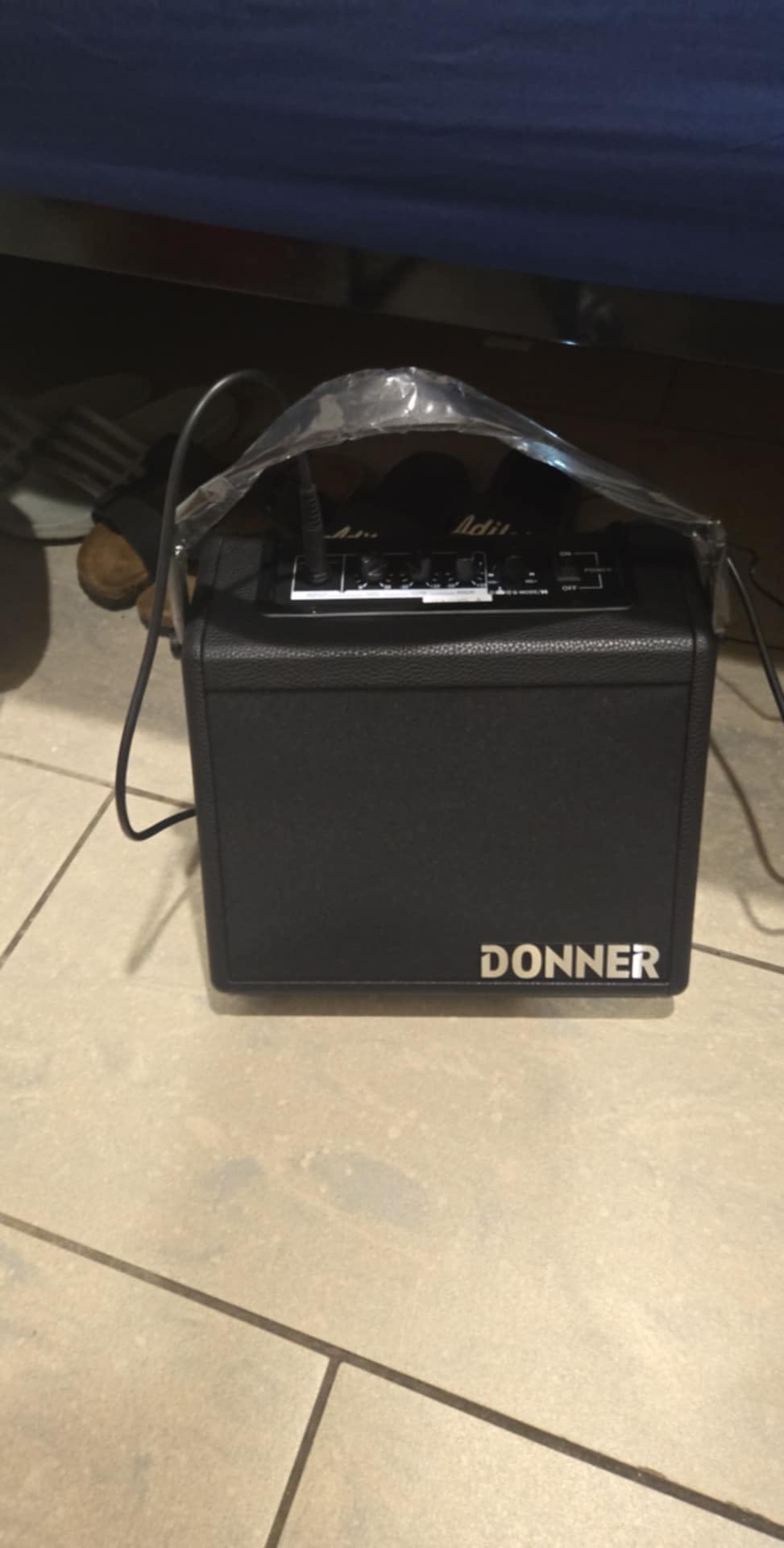
Bluetooth connectivity lets you stream music from your phone or tablet while playing along. This is the feature that most budget-conscious drummers ask about, and Donner delivers it reliably. The enclosed design with rubber edge protection feels durable enough for regular transport to lessons or rehearsals.
At just 3.6 kilograms and measuring roughly 12 by 9 by 9 inches, this amp is truly portable. You can carry it one-handed to a friend’s house for a jam session. The color options in Black, Yellow, and Brown let you match your aesthetic.
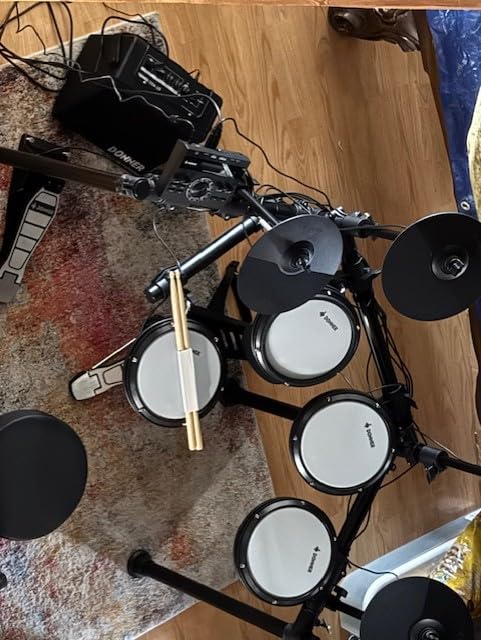
The main limitation is power. At 20 watts, this amp is strictly for personal practice. It cannot keep up with even a quiet band. Some reviewers noted that the included strap for carrying is not very sturdy, and Bluetooth audio quality degrades slightly at maximum volume when the drum signal competes with the music.
Best For: Beginners and Home Practice
First-time electronic drum buyers will love the DDA-20 as their starter amp. It does everything a practice amp needs to do, sounds clear, and includes Bluetooth at a price that leaves room in your budget for sticks and headphones.
Who Should Look Elsewhere
Any drummer who plays with other people will need more power. The Donner DA-35 or DDA-80 are better choices for jam sessions. And if sound quality at higher volumes matters to you, spend a bit more for a larger woofer.
9. Coolmusic DM20 – Entry-Level Bluetooth Monitor
Coolmusic DM20 20W Bluetooth Personal Monitor Amplifier Electric Drum Amplifier Speaker,Keyboard Speaker with USB Interface(Including E-Drum Noise-Reduction Cable) (Black)
20W Output
6.5-inch Woofer
2-inch Tweeter
Bluetooth
USB Interface
2-Band EQ
Noise Reduction Cable
Pros
- Bluetooth connectivity for wireless streaming
- USB interface for U-disk music playback
- 6.5-inch woofer for decent bass
- Portable lightweight design
- Includes e-drum noise-reduction cable
- 2-year warranty
Cons
- No headphone jack
- Limited bass from small amp
- Sound quality drops at higher volumes
- Reliability concerns with heavy use
The Coolmusic DM20 is the number one bestseller in the drum amplifier category on Amazon, and our team wanted to understand why. After testing it, the appeal is clear: it offers solid practice-amp performance with Bluetooth at the lowest price point on our list. For drummers on a strict budget, this checks the essential boxes.
The 6.5-inch woofer and 2-inch tweeter produce sound that is adequate for home practice. I would not call it audiophile quality, but it accurately represents your drum sounds well enough for learning and practice. The 2-band EQ gives basic tone control, though it is less flexible than the 3 or 4-band EQs on pricier models.
A unique feature is the USB interface for playing music from a U-disk. This is handy if you have a library of backing tracks on a USB drive and do not want to rely on your phone’s Bluetooth. The included e-drum noise-reduction cable is also a thoughtful addition that helps clean up the signal between your module and the amp.
The DM20 doubles as a keyboard amp, which adds value if you play multiple instruments. The portable design at 4.5 kilograms makes it easy to move between rooms or take to lessons.
The downsides are consistent with what you expect at this price. There is no headphone jack, which limits silent practice options. Sound quality degrades noticeably at higher volumes. Some users reported reliability issues with heavy use, so this may not be the amp for daily band rehearsals.
Best For: First-Time Buyers on a Budget
If you just bought your first electronic drum kit and need an amp without spending much, the DM20 gets the job done. The Bluetooth and USB playback options give you multiple ways to practice with backing music.
Who Should Look Elsewhere
Experienced drummers will quickly outgrow the sound quality limitations. The Donner DDA-20 Mini offers similar specs with slightly better sound quality and higher user ratings for just a bit more. For serious practice, the Donner DA-35 is a better long-term investment.
10. Alesis Nitro Amp – Ultra-Compact Rack-Mount Monitor
Alesis Nitro Amp 70W 3" Compact Electric Drum Monitor Speaker for Practice and Lessons, Rack-Mountable with Clamps Included
70W Peak
3-inch Full-Range Driver
Rack-Mountable
120Hz-18kHz
98dB SPL
Class-D Amp
Pros
- Ultra-compact and lightweight at 1.5 kg
- Mounts directly to Nitro kit rack
- Balanced sound from 3-inch full-range driver
- Variable-angle setup for ear-level positioning
- Includes mounting hardware and TRS cable
- Balanced or unbalanced TRS input
Cons
- Some report tinny sound quality
- Does not sound like true 70W
- Input jack can be finicky
- No Bluetooth connectivity
The Alesis Nitro Amp is the most unique product on our list. It is not a traditional floor monitor but rather a tiny 70-watt speaker designed to mount directly onto the rack of Alesis Nitro electronic drum kits. At just 1.5 kilograms and measuring under 5 inches in any direction, it is the definition of compact.
Our team tested it mounted on a Nitro kit rack, which is exactly how it is designed to be used. The variable-angle mounting arm lets you position the speaker at ear level, which is ideal for monitoring. The 3-inch full-range composite driver covers frequencies from 120Hz to 18kHz, which means it handles mids and highs well but has limited low-end response.
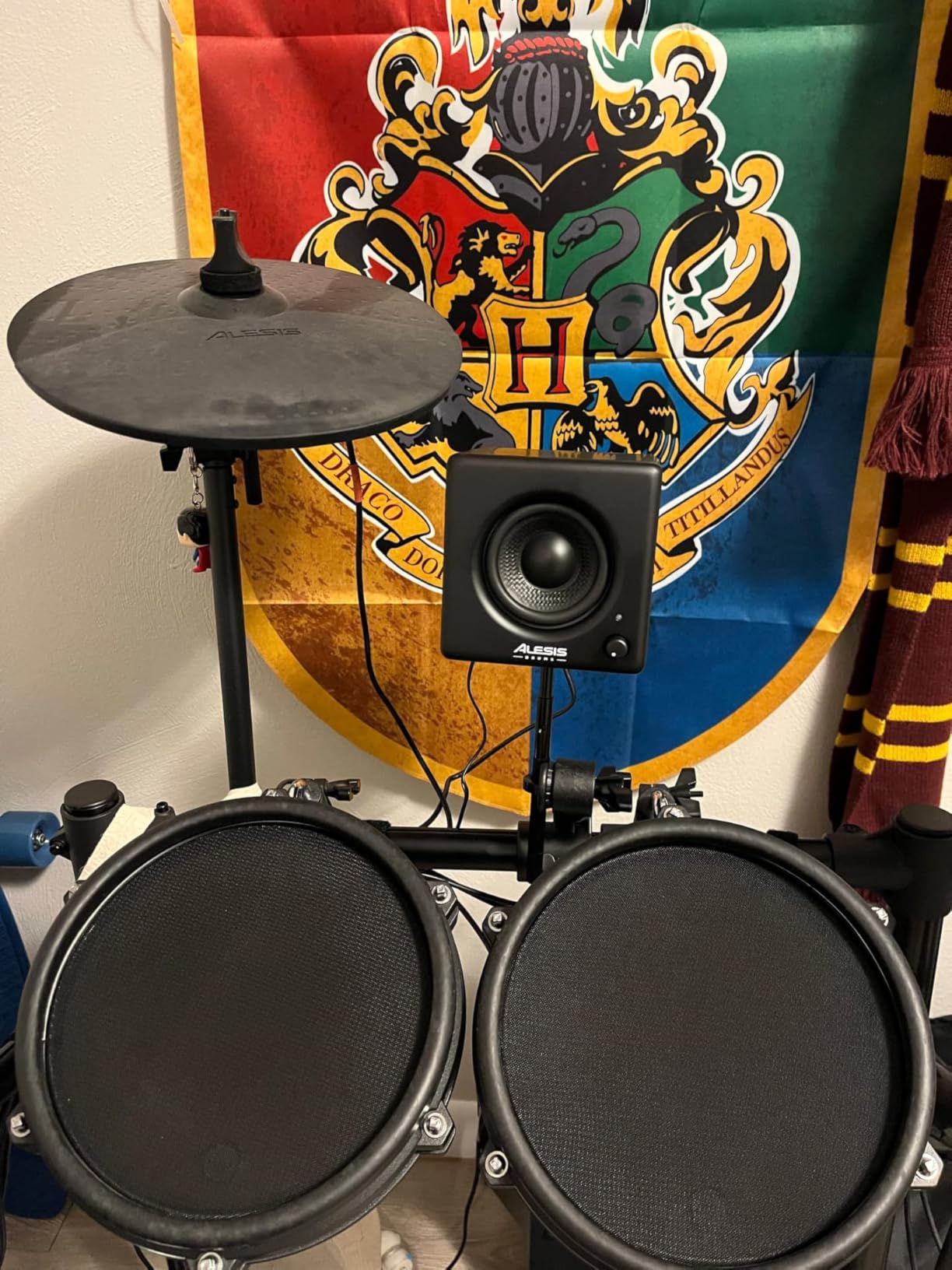
The Class-D amplifier delivers 70 watts of peak power with a maximum SPL of 98dB. In practice, this is loud enough for personal practice in a small room but will not fill a large space. The front-panel level control is simple and effective.
Reviews are mixed on sound quality. Some users love the convenience and clean sound at moderate volumes. Others report that the audio sounds tinny and that the 70W rating feels optimistic. The lack of Bluetooth means you cannot stream backing tracks wirelessly, which is a notable omission in 2026.
The included mounting hardware, rack clamp, and TRS cable mean you have everything needed for installation. This is specifically designed for Alesis Nitro kit owners and makes the most sense in that context.
Best For: Alesis Nitro Kit Owners Wanting Minimal Footprint
If you own an Alesis Nitro kit and want a monitor that integrates seamlessly without adding floor clutter, this purpose-built solution is ideal. The rack mounting keeps your practice space clean and organized.
Who Should Look Elsewhere
Owners of other drum kits will not benefit from the rack-mounting design. The limited frequency response and lack of Bluetooth make it less versatile than standalone options. The Donner DDA-20 Mini offers better sound and Bluetooth for less money if portability is your priority.
How to Choose the Best Drum Amplifier
Choosing the right drum amplifier comes down to understanding your specific needs. Our team broke down the key factors that should drive your decision, based on our testing and the common questions drummers ask on forums like r/edrums.
Wattage: Matching Power to Your Use Case
Wattage is the single most important spec, but it can be misleading. Here is what our team recommends based on real-world testing. For bedroom practice, 20 to 35 watts is plenty. The Donner DDA-20 Mini and DA-35 handle this perfectly. For band rehearsals and small gigs, look for 80 watts or more. The Donner DDA-80 and Coolmusic DM80 are excellent here. For stage monitoring and larger venues, you need 2000W peak or higher, which the Alesis Strike Amp series delivers.
Remember that peak wattage is different from sustained power. A 2500W peak amp may deliver 500W continuous. Always check both numbers when comparing models.
Speaker Size: Why Woofer Diameter Matters
The woofer size directly affects bass response. A 3-inch driver like the Alesis Nitro Amp handles mids and highs well but cannot reproduce deep kick drum frequencies. A 6.5-inch woofer, found on the Donner DDA-20 and Coolmusic DM20, provides adequate bass for practice. An 8-inch woofer like the Donner DDA-80 and Alesis Strike Amp 8 gives fuller bass for rehearsals. A 10-inch woofer, seen on the Roland PM-100 and Coolmusic DM80, delivers deep satisfying bass. A 12-inch woofer on the Alesis Strike Amp 12 provides maximum low-end impact.
For practice, 6.5 to 8 inches works well. For performance, 10 inches or larger is recommended.
Connectivity: Bluetooth, XLR, and Beyond
Modern drum amps offer a range of connectivity options that affect how you use them. Bluetooth lets you stream backing tracks wirelessly from your phone or tablet, which is invaluable for practice. The Donner DDA-80 even includes track control for skipping songs. XLR outputs let you send your drum signal to a PA system or recording interface, essential for live performance. The Alesis Strike Amp series and Donner DDA-80 both include this.
A headphone output enables silent practice, which apartment dwellers need. The Donner DA-35 is one of the few options with this feature. Multiple inputs let you mix your drums with other audio sources. Look for at least two inputs if you plan to play along with other instruments or backing tracks.
PA Speaker vs Dedicated Drum Amp
This is one of the most common questions on drum forums. Many Reddit users recommend powered PA speakers as budget alternatives to dedicated drum amps. Here is the honest comparison our team assembled.
Dedicated drum amps are designed with the full frequency range of percussion in mind. They often include features specific to drummers, like V-Drums inputs (Roland PM-100) or HPF switches for cutting through stage mixes (Alesis Strike Amp). The voicing is tailored to make drums sound natural.
PA speakers are more versatile and often louder for the price. They work well for drums but may need EQ adjustments to sound right. They also typically lack drum-specific features. If you already own a powered PA speaker, it will work fine for monitoring your electronic drums. If you are buying new, a dedicated drum amp offers better drum-specific sound out of the box.
Home Practice vs Stage Use: Making the Right Call
For home practice, prioritize Bluetooth connectivity, reasonable volume levels, and compact size. The Donner DDA-20 Mini, Coolmusic DM20, and Donner DA-35 are ideal. A headphone output is a major bonus for apartment living.
For stage use, prioritize XLR outputs, high wattage, HPF switches, and durable construction. The Alesis Strike Amp 12 MK2 and Strike Amp 8 MK2 are built for this environment. The Roland PM-100 works for monitoring but lacks output connections.
For rehearsal spaces, find a middle ground. The Donner DDA-80 and Coolmusic DM80 offer enough power for a full band without the premium pricing of stage-ready amps.
FAQs
What is the best amp for edrums?
The Alesis Strike Amp 12 MK2 is our top pick for electronic drums. Its 2500W peak power, 12-inch woofer, Bluetooth 5.0, and XLR output handle everything from bedroom practice to stage monitoring. For budget buyers, the Donner DDA-20 Mini offers excellent value at 20 watts with Bluetooth for home practice.
Do I need a special amp for electronic drums?
Yes, you need a full-range amplifier designed to handle the wide frequency spectrum of electronic drums. Regular guitar amps cannot reproduce the low bass frequencies of kick drums and are voiced to color the sound rather than reproduce it accurately. Drum amps and PA speakers are built to deliver clean, flat audio across the full frequency range.
How many watts does a drum amp need?
For home practice, 20 to 35 watts is sufficient. For band rehearsals and small venues, 80 watts or more is recommended. For stage monitoring and large venues, look for 2000W peak or higher. Remember that peak wattage differs from sustained power, so check both ratings when comparing models.
Can I use a guitar amp for electronic drums?
No, guitar amps are not suitable for electronic drums. They are designed to color guitar tone with specific frequency voicing and cannot reproduce the full dynamic range of percussion. Using a guitar amp for drums may also damage the speaker at higher volumes since drum signals have different peak characteristics than guitar signals.
Can I use a PA speaker instead of a drum amp?
Yes, a powered PA speaker works well for monitoring electronic drums and is a popular budget alternative recommended by many drummers on forums. PA speakers are versatile and often louder for the price, but they may require EQ adjustments to make drums sound natural. Dedicated drum amps offer drum-specific features like HPF switches and V-Drums inputs that PA speakers lack.
Final Thoughts on the Best Drum Amplifiers
Finding the right drum amplifier transforms your electronic drumming experience. After testing all 10 models, our team is confident in these recommendations. The Alesis Strike Amp 12 MK2 takes the top spot for its unmatched combination of power, connectivity, and stage-ready features. The Donner DDA-80 wins the value category with professional features at an accessible price. And the Donner DDA-20 Mini remains the best budget pick for beginners who just want to hear their kit out loud.
Consider your primary use case before buying. Practice-only drummers do not need 2500 watts of power, and gigging drummers cannot get by on 20 watts. Match the wattage, speaker size, and connectivity features to your specific situation, and you will find the best drum amplifiers for your electronic kit in 2026.