
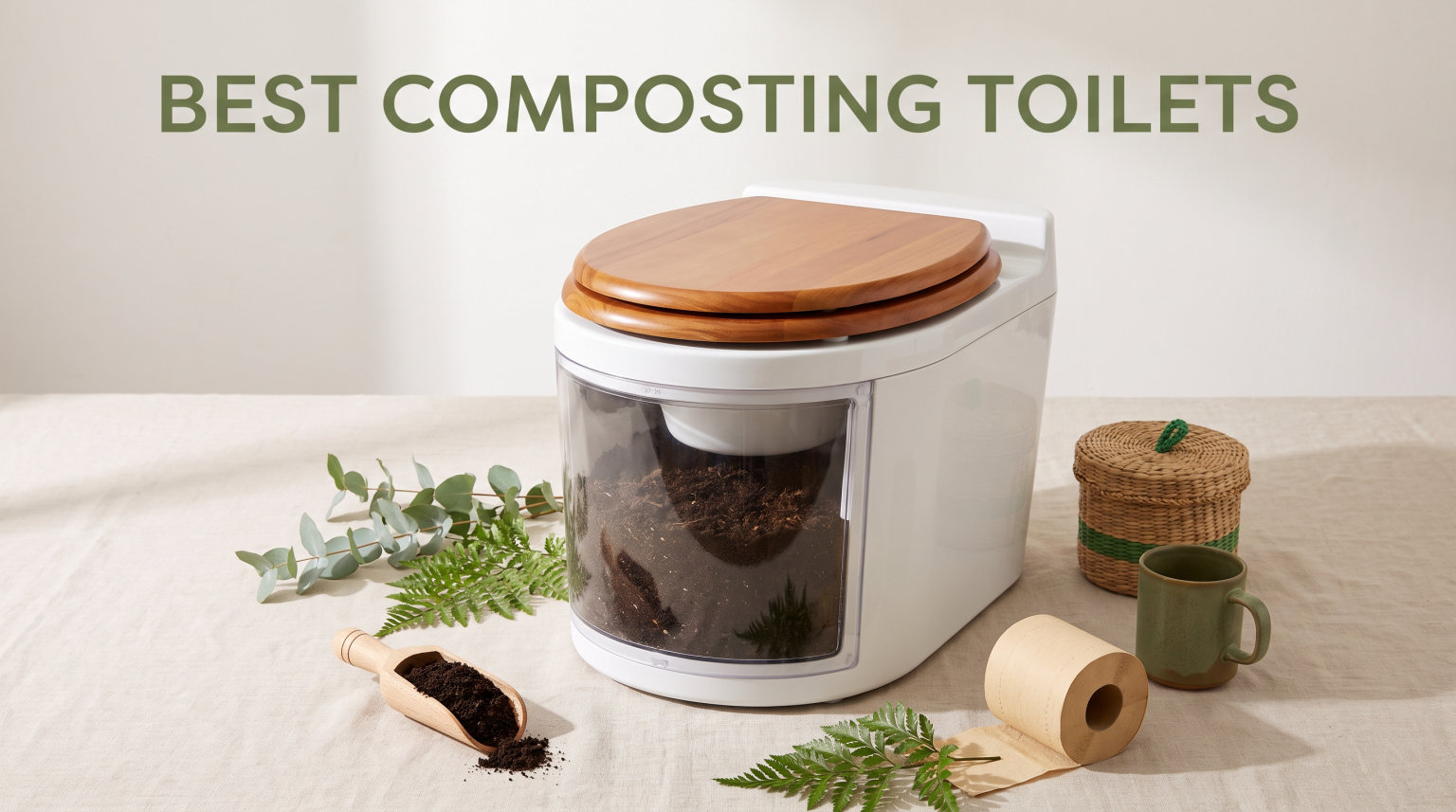
Finding the best composting toilets means sorting through dozens of models that all promise odorless, waterless, hassle-free operation. I have spent months researching, comparing specs, and digging through hundreds of real user reviews from off-grid forums, van life communities, and tiny house owners to separate the ones that actually deliver from the ones that fall flat.
A composting toilet is a waterless waste management system that uses natural aerobic decomposition to turn human waste into safe, nutrient-rich compost. It separates liquids from solids, uses ventilation to evaporate moisture, and relies on bulking material like peat moss or coco coir to feed the bacteria that break everything down. No plumbing, no septic system, no sewer hookup required.
Whether you are building out a Sprinter van, setting up an off-grid cabin, living full-time in a tiny house, or just want a backup toilet for your home, the right composting toilet can save you up to 30,000 gallons of water per year. The wrong one will leave you dealing with smells, constant emptying, and frustrating maintenance cycles. In this guide, I cover the 10 best composting toilets available in 2026, breaking down capacity, power requirements, odor control, and real-world usability for each model.
Top 3 Picks for Best Composting Toilets
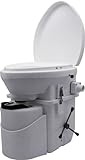
Nature's Head Composting Toilet
- Self-contained
- Urine diverting
- 5-year warranty
- Built-in 12V fan

NOMAD by OGO Portable Toilet
- No electricity needed
- 12 lbs portable
- Urine diverting
- Bag system

Best Composting Toilets in 2026
| Product | Specifications | Action |
|---|---|---|
|
Nature's Head Composting Toilet
|
|
Check Latest Price |
 OGO Origin Composting Toilet
|
|
Check Latest Price |
|
Separett Villa Compost Toilet
|
|
Check Latest Price |
|
NOMAD by OGO Portable Toilet
|
|
Check Latest Price |
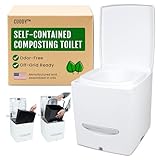 Cuddy Composting Toilet
|
|
Check Latest Price |
 Dry Flush Toilet by modiwell
|
|
Check Latest Price |
 TRELINO Evo S Composting Toilet
|
|
Check Latest Price |
 TRELINO Evo M Composting Toilet
|
|
Check Latest Price |
 Thinktank Waterless Toilet
|
|
Check Latest Price |
 Separett Tiny Compost Toilet
|
|
Check Latest Price |
1. Nature’s Head Self Contained Composting Toilet – Spider Handle Design
Nature's Head Self Contained Composting Toilet with Close Quarters Spider Handle Design
Self-contained
Urine diverting
5-year warranty
28 lbs
12V fan
Granite finish
Pros
- Completely odorless operation with built-in fan
- Huge capacity for 2 people full-time 4-6 week cycle
- Easy 15-minute installation
- Solid heavy-duty construction survives abuse
- Excellent 5-year warranty and customer service
Cons
- Expensive at over $1000
- Urine jug needs daily emptying for 2+ people
- Trap door flap difficult to clean and stains
The Nature’s Head is the gold standard that every other composting toilet gets compared against, and after reading through 1,100+ reviews, I understand why. This is the toilet that full-time off-grid homesteaders, liveaboards, and van lifers consistently point to when someone asks for a recommendation that will not let them down.
What sets it apart is the simplicity of the design. The urine diverting bowl separates liquids from solids immediately, the built-in 12V fan creates negative pressure that pulls all odor out through the vent hose, and the spider handle agitator mixes the compost with a quick crank. Two people using it full-time only need to empty the solids chamber every 4-6 weeks, and the whole process takes about 5 minutes.
I was genuinely impressed by the durability reports. One user literally ran over their Nature’s Head with a van and it still worked. The polyethylene construction is heavy-duty, and the 5-year warranty backs it up with responsive customer service that ships replacement parts quickly.
The downsides are real though. At over $1,000, it is a serious investment. The urine jug needs daily emptying for two or more people, which gets old fast. The trap door flap stains over time and is awkward to clean in the tight spaces around it. Some users also report that the plastic surface becomes pitted after years of use despite regular cleaning.
Best Suited For Full-Time Off-Grid Living
This toilet shines brightest for permanent installations in tiny homes, cabins, and RVs where two people need a reliable daily-use solution. The 4-6 week emptying cycle means you are not constantly managing waste, and the vent fan handles odor so effectively that multiple users confirm zero smell even in small spaces.
It also works exceptionally well in cold climates since there is no water to freeze and no winterization needed. If you want one toilet that will serve you for years without major issues, this is the one to beat.
Installation and Ventilation Requirements
Installation takes about 15 minutes for anyone reasonably handy. You need a 12V power source for the fan and a vent hole through your wall or roof for the exhaust hose. The toilet mounts to the floor with four screws, and the vent hose connects with a simple push-fit fitting.
The fan runs continuously on very low power draw, making it solar-compatible for off-grid setups. If the fan stops running for any reason, you will notice odor within hours, so having a reliable power source is non-negotiable for this unit.
2. OGO Origin Composting Toilet – Electric Agitator for Van Life
OGO Origin Composting Toilet – 12V Electric Agitator, Urine Diverting RV Toilet for Van Life, Tiny Home & Boat – 15" Compact, Odorless Off-Grid Toilet, No Black Tank
15x16 footprint
Electric agitator
Urine diverting
2.4 gal bottle
12V
28 lbs
Pros
- Smallest footprint on market fits Sprinter and Transit vans
- Push-button electric agitator no manual cranking
- Completely odorless urine diversion
- Modern sleek design
- Built in USA
Cons
- Motor failures reported after a few months
- Urine jug is opaque cannot see fill level
- No 110V adapter included
- Mixer flap can stick
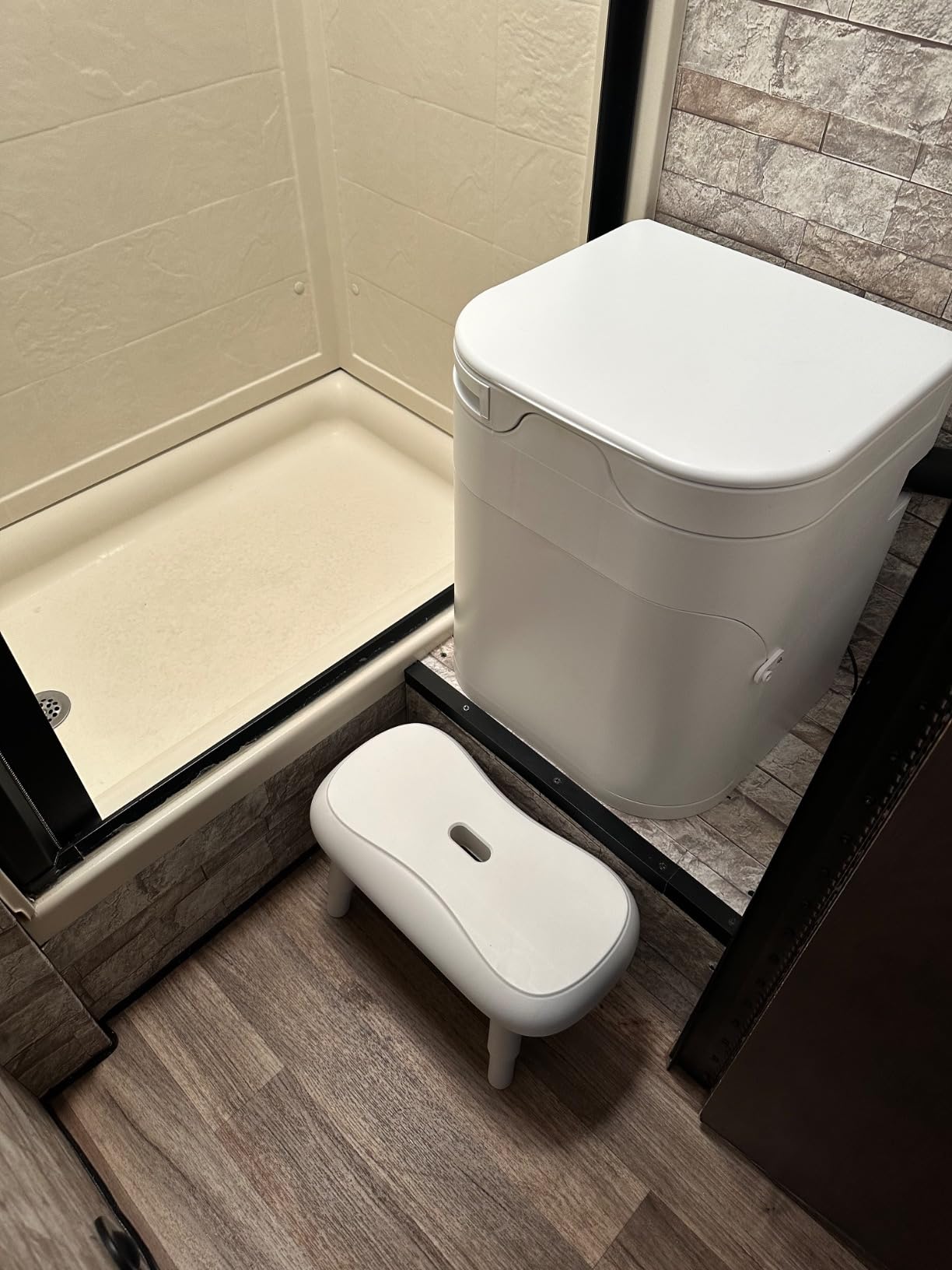
The OGO Origin solved the biggest complaint people have about composting toilets in tight van builds: the side-mounted crank handle that steals precious legroom. With a push-button electric agitator and the smallest footprint on the market at 15 by 16 inches, this toilet was designed specifically for Sprinter and Transit conversions where every inch matters.
I love the modern Scandinavian aesthetic that makes it look like a regular appliance rather than a plastic box. The urine diverting design with the 2.4-gallon bottle keeps odors at bay, and users consistently report completely smell-free operation when the system is maintained properly.
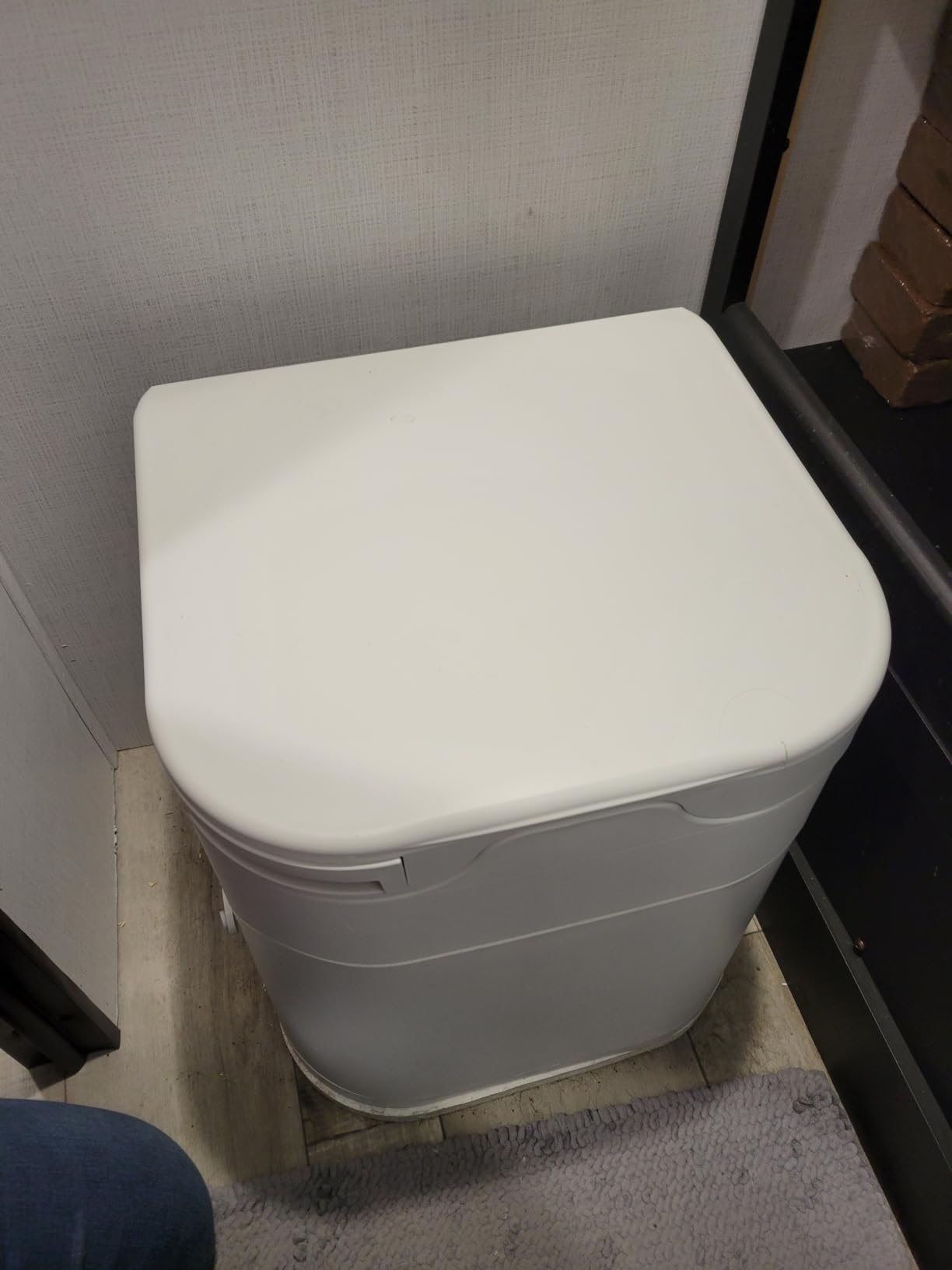
However, the OGO Origin has some quality control issues that potential buyers need to know about. Multiple users report motor failures after just a few months of use, and the plastic flap mechanism arrives broken on some units. The 13% one-star rating is notably higher than competitors and reflects these reliability concerns.
The opaque urine jug is a frustrating design choice since you cannot see when it is full. You also need to buy a separate 110V adapter if you want to run it off standard wall power, which adds to the already premium price tag. On the positive side, OGO’s customer service gets consistent praise for being responsive and helpful when issues arise.
Ideal for Tight Van Builds and Small Spaces
If you are building out a Sprinter, Transit, or Promaster van and space is your primary constraint, the OGO Origin is hard to beat. The 15 by 16 inch footprint fits where Nature’s Head and Separett Villa simply cannot go. The electric agitator means no awkward crank handle blocking your walkway.
Just be aware that the reliability concerns mean you should keep the contact information for OGO customer support handy. Many users who experienced motor or flap issues had them resolved quickly through warranty service.
Power and Electrical Considerations
The OGO runs on 12V power with low draw, making it compatible with standard van electrical systems and solar setups. The push-button agitator motor draws a brief surge of power each time you activate it, so factor that into your battery capacity calculations.
You will need to wire it into your van’s 12V system since no standard wall plug is included. Plan to purchase the 110V adapter separately if you want the option to run it off shore power when parked at an RV hookup.
3. Separett Villa Urine-Separating Compost Toilet – No Additives Needed
Separett Villa Urine-Separating Compost Toilet | No Additives or Mixing Needed | High-Capacity Design | For Homestead, Schoolie, Cottage Use
Urine separating
No additives or mixing
Wall-mounted
34 lbs
Odorless fan
High capacity
Pros
- Completely odorless when fan runs
- No additives or compost medium needed
- Looks like a normal toilet
- Very easy to empty just lift bucket
- Few moving parts easy to repair
Cons
- Installation instructions can be vague
- Urine drain stains and needs bleach soaking
- Vent pipe sizing mismatch with standard fittings
- Seat can loosen over time
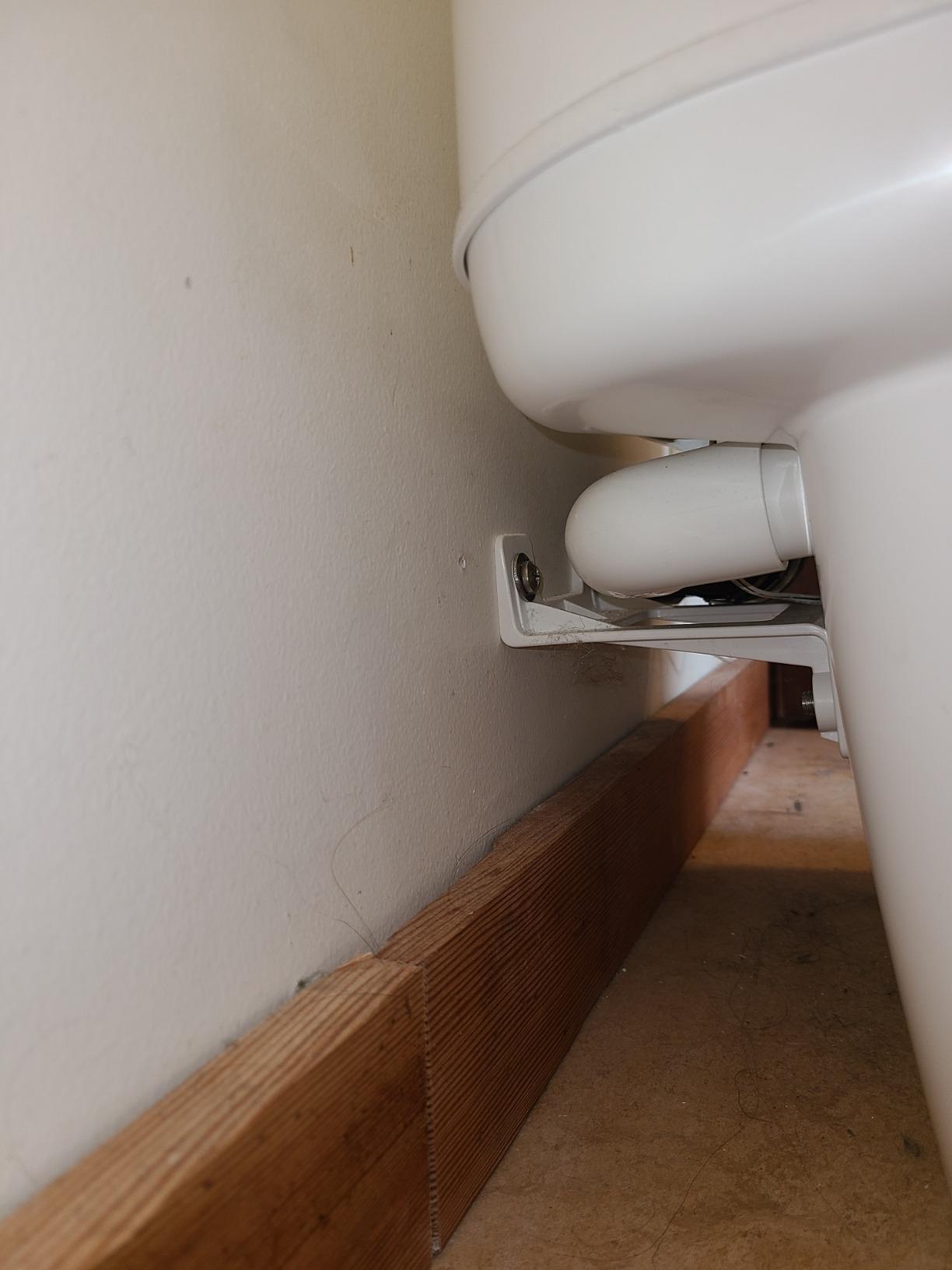
The Separett Villa takes a fundamentally different approach to composting toilets. Instead of mixing bulking material inside the unit, it simply separates urine from solids and collects the solids in a compostable bag. The actual composting happens outside in your compost pile or bin, which means the toilet itself stays remarkably clean and maintenance-free.
This no-additive design is what drew me to the Villa initially. You never need to buy peat moss, coco coir, or any bulking agent. You just use the toilet, tie off the bag when full, and carry it to your outdoor composting area. Multiple users describe it as the cleanest, lowest-maintenance composting toilet they have owned.
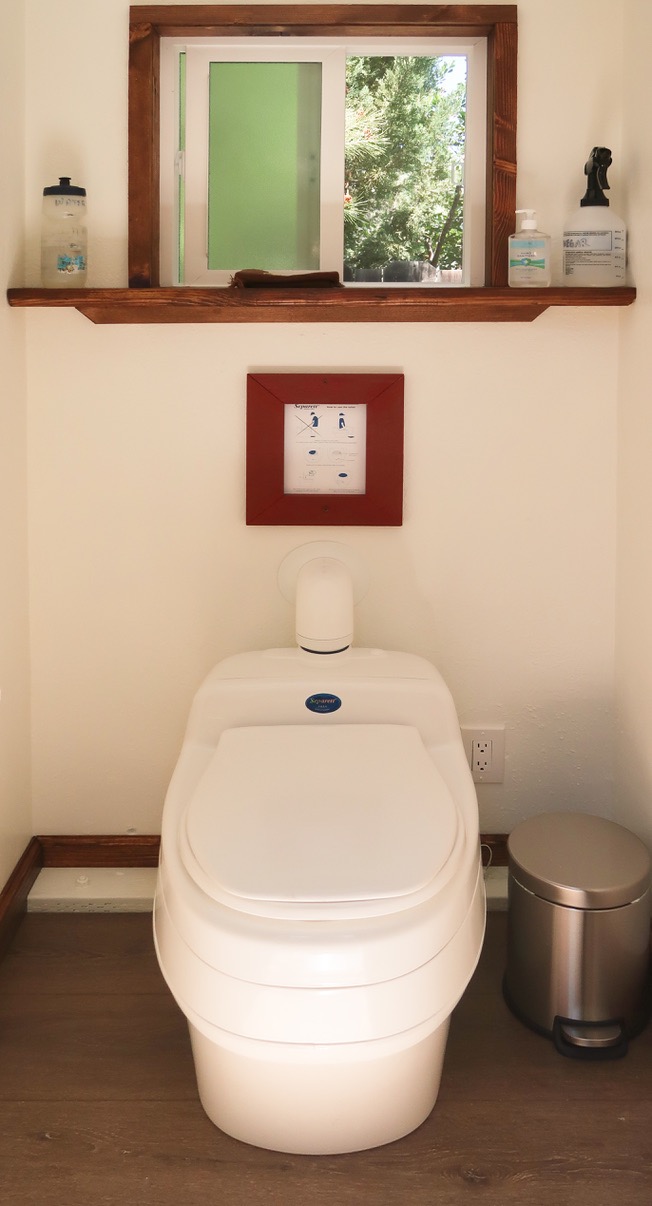
The aesthetics deserve special mention because the Villa genuinely looks like a regular household toilet. At normal toilet height with a clean white finish, guests often do not realize it is a composting toilet until told. This makes it an excellent choice for guest cabins, tiny homes where appearance matters, and residential settings.
The main frustrations center on installation. The included vent pipe does not fit standard SCH 40 PVC fittings, which means extra trips to the hardware store. The urine drain tube stains over time and requires periodic bleach soaking to clean. The flap that covers the waste opening can also stick open instead of closing automatically, which is both an odor issue and an aesthetic problem.
Best for Home Use and Guest Cabins
If you want a composting toilet that looks and feels like a normal bathroom fixture, the Separett Villa is your best option. It is ideal for full-time residential use, guest cabins, and cottages where appearance and comfort matter. The no-additive system means guests do not need instructions about adding scoops of peat moss.
Weekly emptying for a two-person household is the typical cycle, and the bag system makes disposal straightforward. Just carry the sealed bag to your outdoor compost pile and let nature finish the job.
Composting Process After Emptying
Unlike self-contained units that partially compost inside the toilet, the Villa collects raw waste and does the composting externally. This means you need a dedicated outdoor composting area where bags can sit for 6-12 months to fully decompose before use as soil amendment.
This external composting approach is actually more hygienic since the toilet interior stays cleaner, but it requires planning for where and how you will manage the outdoor compost pile. Many users build a simple wooden bin with a lid for this purpose.
4. NOMAD by OGO Portable Compost Toilet – No Electricity Needed
NOMAD by OGO Portable Compost Toilet – Camping Toilet for Truck Campers, Hunting Blinds, Car Camping, Primitive Camping & Boating, No-Electric, Waterless, Odor-Free Fits 8 Gallon Bags
No electricity
12 lbs portable
Urine diverting
Bag system
15.4x13x12.4 in
Pros
- Truly portable no electricity or plumbing
- Lightweight at 12 lbs
- Most affordable composting toilet
- Works with standard 8-gallon bags
- LED light on urine bottle
Cons
- Very low to the ground strains knees
- Urine container seal issues can spill
- Biodegradable bags disintegrate when moist
- Hinge can break under pressure
The NOMAD by OGO is the most affordable entry point into composting toilets that I have found, and it strips away every feature you do not absolutely need. No fan, no electric agitator, no built-in composting chamber. What you get is a well-designed urine diverting seat that sits on top of a bag-lined container, and honestly, that simplicity is its biggest strength.
At just 12 pounds and 15.4 by 13 by 12.4 inches, this toilet fits in truck beds, car trunks, rooftop tents, and hunting blinds. It is the toilet I would choose for primitive camping, overland trips, and mobile use where you need a real toilet solution but have no power source. The urine diverting system keeps odors manageable without any fan or ventilation.
The trade-offs become apparent quickly though. The seat height is only 12.4 inches, which is low enough to strain your knees when standing up. The urine container does not seal properly with the rubber gasket, leading to potential spills during transport. The biodegradable bags can disintegrate when they get moist, which creates exactly the kind of mess you bought a toilet to avoid.
Despite these issues, 53% of users give it five stars because for the price, there is nothing else that comes close. If you need a portable, no-power composting toilet for occasional use rather than daily full-time living, the NOMAD delivers tremendous value.
Best for Occasional and Mobile Use
This is not a daily-driver toilet for full-time van life. It is best understood as a camping and mobile solution for truck campers, hunting blinds, boat trips, and weekend adventures. The bag system means you tie off and pack out waste rather than managing a composting chamber.
For hunters, boaters, and overlanders who need a real toilet in remote locations without power, the NOMAD fills a gap that no other product on this list addresses at this price point.
Managing the Bag System
The NOMAD uses standard 8-gallon bags that are widely available, which is a major advantage over proprietary cartridge systems. You add a layer of coco coir or sawdust to the bottom, use the toilet, and tie off the bag when full or at the end of your trip.
The included coco coir starter and spray bottle get you going right away. Be aware that the biodegradable bags can weaken with moisture, so some users switch to heavier-duty bags for transport and only compost the contents later.
5. Cuddy Composting Toilet – Compact Self-Contained Design
Compo Closet Cuddy Composting Toilet – Odorless, Waterless & Self-Contained for RVs, Vans, Boats, Tiny Homes & Off-Grid | 3.9 Gal, 12V Fan, Carbon Filter, No Chemicals, Easy Clean
3.9 gal capacity
12V fan
Carbon filter
LED fill indicator
ABS plastic
Manual mixer
Pros
- Zero odor confirmed by multiple users
- Very easy to empty solids bin lifts by handle
- LED light alerts when to empty
- Sealed no-spill urine valve
- Patent-pending two-plate drop zone
Cons
- Fan does not vent outside traps moisture
- Moisture buildup causes mildew
- Needs 9V battery not included
- Some users need vent modifications
The Cuddy by Compo Closet brings some genuinely innovative design features to the composting toilet space. The patent-pending two-plate drop-zone cover prevents cross-contamination between urine and solids, the LED light alerts you when the urine bottle needs emptying, and the sealed liquids bottle uses a no-spill valve that actually works.
I was drawn to the Cuddy because of its compact footprint and the thoughtfulness of the design. The manual mixer handles aeration without an electric motor, the solids bin lifts out by a bottom handle for hygienic disposal, and the whole unit can operate vented or unvented depending on your setup.
The problem that drags the Cuddy down is moisture management. The built-in fan circulates air internally rather than venting outside, which means moisture gets trapped inside the unit. Multiple users report mildew smells developing, soggy compost consistency in humid conditions, and the need to modify the unit with external venting to make it work properly.
This is especially problematic for full-time van dwellers in humid climates where moisture is already a battle. The toilet works beautifully in dry climates and well-ventilated spaces, but buyers in humid environments should plan to add an external vent pipe from day one.
Best for Dry Climates and Well-Ventilated Spaces
If you live in an arid climate or have excellent ventilation in your van or tiny home, the Cuddy’s innovative features make it a compelling choice. The LED fill indicator alone solves a problem that plagues nearly every other composting toilet on this list.
For humid environments, plan to spend extra time and money modifying the ventilation system. Several users have successfully added external vent pipes and drain holes to resolve the moisture issues, but that adds complexity to the installation.
Understanding the Two-Plate System
The Cuddy’s two-plate drop-zone cover is its standout feature. When not in use, a plate covers the solids area entirely. When you sit down, your weight shifts the plate to open the solids compartment while keeping the urine diversion channel separate. This prevents liquids from contaminating the solids bin and vice versa.
This design is more hygienic than single-flap systems and reduces the cleaning frequency significantly. Users consistently praise how clean the interior stays compared to traditional composting toilet designs.
6. Dry Flush Toilet by modiwell – Truly Odorless Bag Sealing System
Modiwell Dry Flush Toilet – Waterless, Odorless, Self-Contained | Rechargeable Portable Toilet for RVs, Van, Boat, Tiny House, Off-Grid | Easier to Use Than Composting or Incinerator Toilets
Rechargeable battery
70-100 uses per charge
Sealed waste bags
17 lbs
350 lb capacity
Stainless steel legs
Pros
- Genuinely odorless sealed bag system
- Rechargeable battery no wiring needed
- Compact and portable
- Excellent customer service
- Soft-close lid comfortable height
Cons
- E4 error code requires power cycling
- Battery can drain quickly on some units
- Liner can leave residual urine
- Expensive ongoing bag costs
The Dry Flush Toilet by modiwell is technically not a composting toilet, but it solves the same problem in a completely different way. Instead of composting waste with bulking material and bacteria, it seals each use in an individual waste bag with a one-click flush mechanism. The sealed bag is genuinely odor-free, and you never see or handle raw waste.
For users who are put off by the maintenance requirements of traditional composting toilets, the Dry Flush system is the closest thing to a normal toilet experience I have found. You press a button, the waste gets wrapped and sealed, and you carry the sealed cartridge to a trash receptacle when full. No bulking material, no vent fans, no composting chambers to manage.
The rechargeable 5200mAh battery delivers 70-100 uses per charge, which means you can use it for a week or more between charges depending on household size. The stainless steel legs support up to 350 pounds, and the soft-close lid and comfortable seat height make it feel like a real bathroom fixture.
The trade-off is ongoing consumable costs. Each flush uses a portion of the waste bag roll and a coagulant pouch, which adds up over time. Some users report approximately $0.75 per flush in material costs. There are also occasional E4 error codes that require power cycling the unit mid-flush, and the liner design can leave residual urine if not aimed properly.
Best for Users Who Want Zero Maintenance
If the idea of managing compost, adding bulking material, and emptying chambers sounds like too much work, the Dry Flush is your answer. It is ideal for part-time van lifers, weekend cabin owners, and anyone who wants a no-touch, no-smell, no-maintenance toilet solution.
Just budget for the ongoing cost of replacement bag rolls and coagulant pouches. Over years of full-time use, these consumables will exceed the initial purchase price of the toilet.
Environmental Considerations
The sealed bag system means waste goes to a landfill rather than being composted and returned to the soil. This is the main environmental trade-off compared to true composting toilets. The bags are designed to be sealed, not biodegradable, which means waste does not break down in the landfill.
For users whose primary motivation is sustainability and returning nutrients to the soil, a traditional composting toilet like the Nature’s Head or Separett Villa is a better fit. For users whose priority is convenience and hygiene, the Dry Flush wins.
7. TRELINO Composting Toilet Evo S – Lightweight German Engineering
TRELINO Composting Toilet Evo S White, Portable Toilet for Camping & Outdoor, Odorless, 1.2 gal & 1.6 gal Capacity, 13 x 15.4 x 11.7 inches
Lightweight 3.9 kg
No chemicals
1.2 gal urine
1.6 gal solids
330 lb capacity
2-year warranty
Pros
- Odorless separation and drying technology
- Ultra lightweight ideal for tents and vans
- No chemicals or water needed
- Made in Germany quality
- Supports up to 330 lbs
Cons
- Small capacity requires daily emptying
- Urine container has no fill indicator
- Diverter does not work well for all users
- Lid and seat connected difficult to lift
The TRELINO Evo S is the lightest composting toilet on this list at just 3.9 kilograms, and its compact book-sized footprint makes it ideal for solo adventurers and minimal setups. Designed and manufactured in Germany from recyclable ABS plastic, it brings a level of build quality that immediately sets it apart from cheaper plastic alternatives.
I appreciate the no-nonsense approach here. No chemicals, no water, no power source needed. The urine separation and drying technology handles odor control passively through the physical separation of liquids and solids. The 1.2-gallon urine container handles 9-11 uses, and the 1.6-gallon solid waste container handles 6-8 uses before needing to be emptied.
The small capacity is the defining characteristic of the Evo S. This is a daily-empty toilet, not a set-it-and-forget-it solution. Users consistently describe it as better suited for solo use or weekend trips rather than full-time living. The urine container has no fill indicator, so you need to track usage manually or risk overflow.
The urine diverter is another pain point. Multiple users, especially women, report that the diverter does not work well for all body types and requires careful positioning. Some units also arrived damaged or warped, which points to quality control issues in shipping.
Best for Solo Campers and Weekend Use
If you are a solo camper, cyclist, or minimalist van dweller who values weight savings above all else, the Evo S delivers. At under 4 kilograms, it is light enough to carry to a campsite, and the compact size fits in tight tent vestibules and small van bathroom areas.
For couples or families, step up to the Evo M for more capacity. Daily emptying of both containers gets tedious fast when multiple people are using the toilet.
Understanding Separation and Drying Technology
The TRELINO uses a physical urine diverter that channels liquids into a separate container while solids drop into the waste chamber below. The drying aspect comes from the separation itself: without liquid mixing with solids, the solid waste dries out naturally and stops decomposing anaerobically, which eliminates odor.
You add a small amount of coconut coir or sawdust to the solids container to absorb remaining moisture. The system works well in dry climates but can struggle in high humidity where nothing dries out properly.
8. TRELINO Composting Toilet Evo M – More Capacity for Longer Trips
TRELINO Composting Toilet Evo M Gray, Portable Toilet for Camping & Outdoor, Odorless, 1.3 gal & 2.1 gal Capacity, 13 x 15.4 x 14.2 inches
Medium capacity
2.1 gal solids
1.3 gal urine
German made
2-year warranty
4.3 kg
Pros
- More capacity than Evo S
- Well-built and durable
- Odorless when used properly with coconut coir
- Chemical-free waterless operation
- Made in Germany
Cons
- High price for a plastic box
- Urine container prone to spilling
- Lid assembly difficult to remove
- Hinges feel cheap for the price
The TRELINO Evo M is the larger sibling of the Evo S, offering 2.1 gallons of solid waste capacity and 1.3 gallons of urine capacity. That translates to 9-11 urinations and 6-10 defecations before needing to empty, which makes it a more practical option for couples or multi-day trips where daily emptying is not feasible.
The build quality matches the Evo S with the same German-made recyclable ABS plastic construction. It supports up to 330 pounds, operates without chemicals or water, and uses the same urine separation technology. The 2-year manufacturer warranty provides some reassurance for the investment.
The biggest complaint I see across reviews is the price. At over $500, many users feel that a plastic box with a separator should cost significantly less. One long-term user who owned the Evo M for over a year rated it one star due to durability concerns with the hinges and lid assembly. The urine container design is also prone to spilling during the emptying process.
The lid and seat assembly is connected and can be difficult to lift for emptying. Sharp edges on the lid-seat junction have been reported, and the hinges feel cheaper than you would expect at this price point. These are the kinds of details that make the price-to-value ratio harder to justify.
Best for Couples and Multi-Day Van Trips
The Evo M hits a sweet spot for two-person van builds where you want more capacity than the Evo S but do not need the full-size footprint of a Nature’s Head or Separett Villa. The medium capacity means you can go 2-3 days between emptying for two people, which is much more manageable.
It is a good option for weekend warriors and part-time van lifers who want German build quality in a compact form factor. Just be prepared for the premium price tag and some design quirks around the lid assembly.
Coconut Coir vs Sawdust Performance
TRELINO recommends coconut coir as the bulking material, and user experience confirms it performs better than sawdust for odor control and moisture absorption. Coconut coir has a neutral smell, absorbs many times its weight in moisture, and provides the carbon-rich environment that aerobic bacteria need.
Sawdust works in a pinch but tends to be less consistent in particle size and moisture content. If you are using the Evo M, invest in quality coconut coir blocks that you hydrate and fluff before adding to the solids container. It makes a noticeable difference in odor and texture.
9. Thinktank Waterless Toilet – Household Look With Zero Odor
Thinktank Waterless Toilet White
Zero odor
Massive airflow
Patented trap door
23.2x18x19 in
30 lbs
Men can stand
Pros
- Zero odor consistently praised
- Looks and feels like a regular household toilet
- Designed especially for women no aiming required
- Men can stand while using
- Very easy to clean waste in bags
Cons
- Waste bags need rubber band securing inconvenient
- Plastic trap door can break
- Some want larger urine container
- Premium price
The Thinktank Waterless Toilet has the highest rating on this list at 4.6 stars, and after reading through every review, the pattern is clear: this toilet delivers on its zero-odor promise more consistently than any other model I evaluated. The massive airflow system with separate air intake and exhaust pipes creates a ventilation design that simply works.
What makes the Thinktank stand out is its focus on usability for everyone. It is designed especially for women, with no aiming required. Men can stand while using it, which eliminates one of the most common complaints about urine-diverting composting toilets. The patented trap door conceals solid waste from view between uses, which addresses the aesthetic concerns that turn many people off from composting toilets.
The owner Richard gets specific praise across reviews for responsive customer support. When users have questions or need replacement parts, he picks up the phone and solves problems directly. This level of personal support is increasingly rare and adds real value to the purchase.
The downsides are minor but worth noting. The waste bag securing system uses a rubber band mechanism that users find inconvenient compared to a clip or clamp design. The plastic trap door component can break over time, though replacements are available. Some users wish for a larger urine container for multi-person households.
Best for Tiny Homes and Residential Replacement
If you want a composting toilet that genuinely replaces a flush toilet in a tiny home or cabin without anyone noticing the difference, the Thinktank is the strongest candidate. Its residential appearance, household-standard height, and standing-use capability make it the most normal-feeling composting toilet on this list.
The zero-odor performance is verified by every single reviewer, which is remarkable. For residential settings where odor would be a deal-breaker, the Thinktank delivers total peace of mind.
Airflow System and Energy Efficiency
The Thinktank uses a dual-pipe ventilation system with a separate air intake and exhaust. This design means the toilet draws fresh air in from the room and exhausts contaminated air outside without pulling your heated or cooled air out of the living space. This is a significant advantage for energy efficiency compared to single-vent designs.
The system requires two vent pipes through your wall or roof, which means a slightly more complex installation than single-pipe designs. Plan your installation carefully to ensure both pipes have clear paths to the exterior.
10. Separett Tiny Self-Contained Compost Toilet – Smart Sensor Technology
Separett Tiny Self-Contained Urine-Separating Compost Toilet
Built-in sensor
View screen
Dual container
12V/110-240V
18.7 lbs
7.2L capacity
Pros
- Completely odor-free with built-in fan
- Innovative view screen conceals waste
- Built-in urine sensor with red FULL light
- Dual-container easy management
- Designed in Sweden with spare parts
Cons
- Steep price at $999
- Urine container needs emptying every other day for two people
- Urine cap stiff and awkward
- No soft-close lid
The Separett Tiny is the newest model from the Swedish company behind the Villa, and it brings genuinely smart features that no other composting toilet on this list offers. The built-in urine emptying sensor with a red FULL indicator light solves one of the most common problems in composting toilet ownership: knowing when to empty the urine container before it overflows.
The innovative view screen conceals solid waste when the toilet is not in use, which is a more refined approach than the traditional flap door. The dual-container system separates the 2-gallon removable urine container from the solid waste bag, making management straightforward. At 18.7 pounds and 19.6 by 15.7 by 18.5 inches, it is compact enough for RVs and tiny houses on wheels.
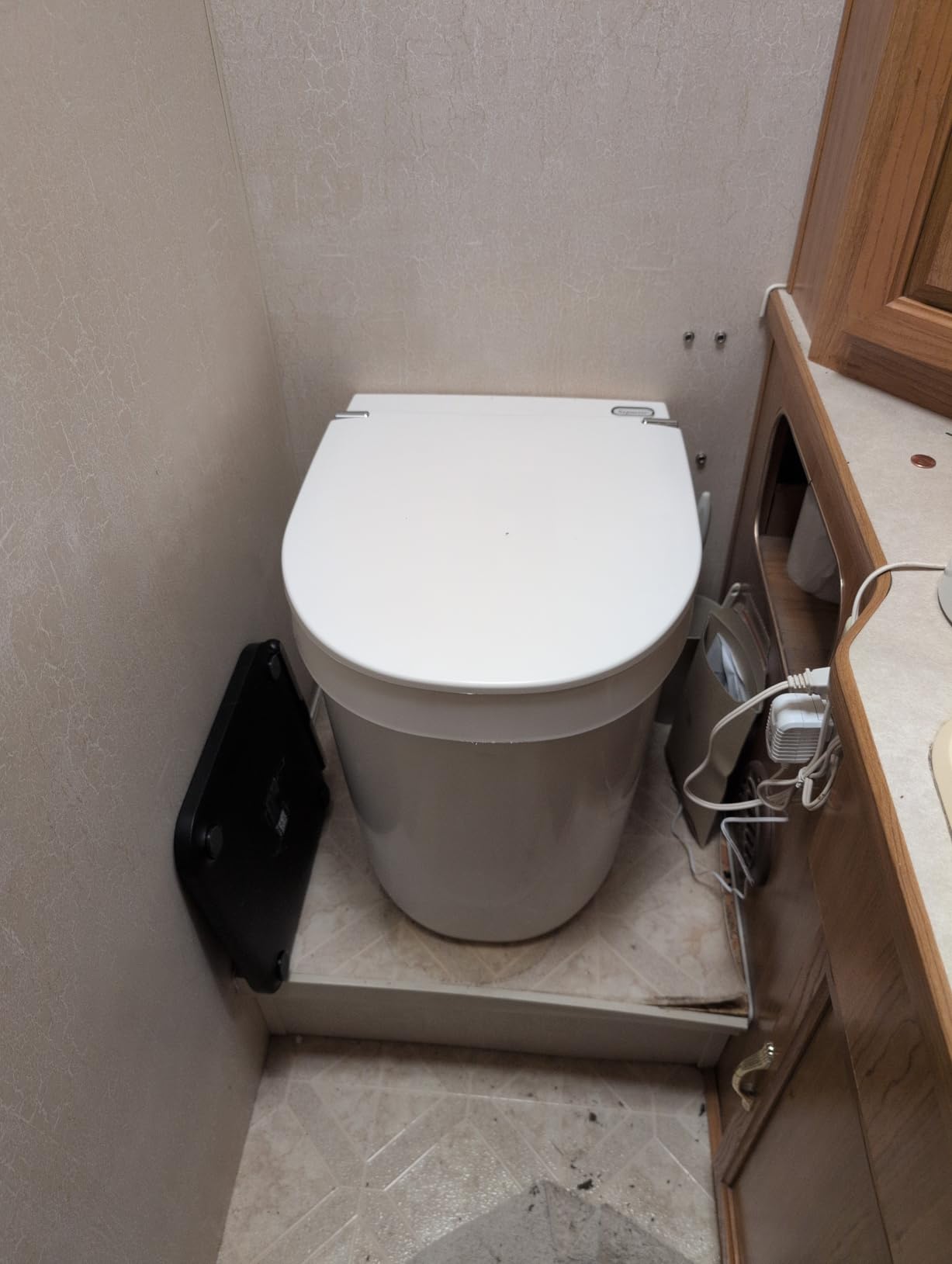
The dual-voltage fan runs on both 12V and 110-240V power, giving you flexibility for van, RV, and cabin installations. The fan is quiet and runs continuously to maintain negative pressure and eliminate odors. Separett’s Swedish design heritage shows in the attention to detail and the comprehensive accessory package included with the unit.
With only 3 reviews so far, all five stars, the Tiny is too new for long-term reliability data. The early feedback is extremely promising, with users praising the odor-free performance, thoughtful design, and Separett’s responsive customer support. The main concern is the steep price at $999 combined with the need to empty the urine container every other day for two-person households.
Best for Tech-Savvy Tiny House Owners
If you appreciate smart design features like fill sensors and view screens, the Separett Tiny brings the most modern composting toilet experience available. It is ideal for new tiny house builds and RV installations where you want the latest technology and are willing to pay for it.
The dual-voltage capability means you can run it off your van’s 12V system on the road and switch to standard wall power when parked at a hookup. This flexibility is unique among the toilets on this list.
What Comes in the Box
The Separett Tiny arrives with an impressive accessory package: solid waste container with lid, urine container with caps, urine bowl grid, sample bioblocks, sample moisture absorber, sample compostable waste bags, installation template, vent pipes, adapters, insect net, rain cap, indoor flashing, silicone strip, and screws. You have everything needed for a complete installation.
This is the most complete package of any toilet on this list. Most competitors include only the basic mounting hardware and leave you to source vent pipes, bulking material, and compostable bags separately. The Tiny’s all-in-one approach saves time and ensures component compatibility.
How We Evaluated These Composting Toilets
Our evaluation process started with a deep dive into hundreds of real customer reviews across Amazon, Reddit communities like r/OffGrid and r/VanLife, and dedicated forums like airforums.com and permies.com. I focused on long-term users who had owned their toilets for months or years, since initial impressions often miss maintenance issues and durability problems.
Each toilet was scored on six core criteria: odor control effectiveness, capacity and emptying frequency, power requirements and flexibility, installation complexity, build quality and durability, and value for money. I weighted odor control and capacity most heavily because these are the two factors that most directly determine daily satisfaction with a composting toilet.
I also paid close attention to the pain points that forum users consistently raise: smell fears, emptying frequency surprises, urine diversion issues for different body types, moisture management problems, and the ongoing cost of consumables like bulking material and replacement bags. These real-world concerns shaped the recommendations and cautions throughout this guide.
Buying Guide: What to Consider Before Buying a Composting Toilet?
Choosing from the best composting toilets requires understanding how each design decision affects your daily experience. Here are the key factors I recommend evaluating before making your purchase.
Urine Diverting vs Non-Diverting Systems
Urine diverting toilets separate liquids from solids at the source using a specially shaped bowl or chute. This separation is critical because mixing urine with solid waste creates anaerobic conditions that produce terrible odors and slow down the composting process. Every toilet on this list uses some form of urine diversion, which tells you how important this feature is.
The quality of the urine diversion varies significantly between models. The Nature’s Head, Separett Villa, and Thinktank all have well-designed diverters that work for most body types. The TRELINO models and OGO NOMAD have more finicky diverters that require careful positioning, especially for women. If multiple people of different body types will use the toilet, prioritize models with proven diversion performance.
Self-Contained vs Centralized Systems
Self-contained composting toilets house everything in one unit: the toilet seat, composting chamber, urine container, and ventilation fan. These are the most common type for vans, RVs, boats, and tiny homes because they are compact and self-sufficient. All ten toilets on this list are self-contained.
Centralized systems use a regular-looking toilet connected by piping to a larger composting unit in a basement or utility room. These can handle higher volumes and serve entire households, but they require significant space and plumbing infrastructure. If you are looking at centralized systems, the Sun-Mar Centrex series is the most popular option, though it is not covered in this roundup.
Power Requirements and Off-Grid Compatibility
Most self-contained composting toilets need 12V power for their ventilation fans, which are essential for odor control. The Nature’s Head, OGO Origin, Cuddy, Separett models, and Thinktank all require continuous 12V power. This is easily handled by van and RV electrical systems, but cabin owners need to plan for solar panels and battery banks.
The NOMAD by OGO and TRELINO models operate without any electricity, relying on passive urine diversion for odor control. These are the best choices for truly off-grid locations with no power source. The Dry Flush toilet uses a rechargeable battery, giving you cordless operation for 70-100 uses between charges.
Capacity and Emptying Frequency
Capacity is the factor that most often catches new composting toilet owners by surprise. A toilet that claims to handle two people full-time might need its urine container emptied daily, even if the solids chamber lasts 4-6 weeks. The urine container is almost always the bottleneck.
For the Nature’s Head and OGO Origin, expect to empty the urine bottle daily for two full-time users. The Separett models and Thinktank have similar urine container cycles. The TRELINO Evo S needs daily emptying of both containers. Plan your installation so that the urine container is easily accessible for daily removal and cleaning.
Bulking Material and Ongoing Costs
True composting toilets need bulking material added to the solids chamber to provide carbon and create air pockets for aerobic bacteria. The most common options are peat moss, coco coir, and sawdust. Coco coir is the most popular choice because it absorbs moisture well, has a neutral smell, and is widely available in compressed bricks.
The Separett Villa and Separett Tiny are notable for requiring no bulking material at all since they collect waste in bags for external composting. The Dry Flush uses proprietary bag rolls and coagulant pouches that cost approximately $0.75 per use. Factor these ongoing costs into your purchasing decision, especially for full-time use.
Odor Control Technology
Odor control is achieved through three mechanisms working together: urine diversion, ventilation, and bulking material. If any one of these fails, you will have odor. The best odor-performing toilets on this list are the Thinktank, Separett Villa, and Nature’s Head, all of which combine effective urine diversion with powerful ventilation fans.
The Cuddy and OGO Origin have had odor complaints related to moisture management and design issues. The TRELINO models rely on passive odor control, which works in dry climates but can struggle in humidity. If odor is your top concern, choose a model with an active ventilation fan that vents to the exterior.
Climate and Winter Use
Composting toilets work in cold climates because there is no water to freeze, but the composting process slows down significantly at low temperatures. The bacteria that break down waste are most active between 60 and 100 degrees Fahrenheit. In winter, the waste may not fully compost inside the toilet and will need more time in an outdoor composting bin.
The Nature’s Head has excellent cold-weather performance reports from users in Alaska and Canada. The TRELINO Evo S has been tested at Alaska cabins during winter. Any toilet with a continuous ventilation fan will pull cold air into your living space, so plan for the energy impact of heating replacement air during winter months.
Legal and Zoning Considerations
Composting toilet legality varies by state, county, and municipality. Many areas have no specific code addressing composting toilets, which creates uncertainty for homeowners. NSF-certified models like the Sun-Mar and BioLet have an easier time getting approved by building inspectors because the certification provides third-party validation of the composting process.
For residential installations, check your local building codes and health department regulations before purchasing. Many users on off-grid forums report successfully getting composting toilets approved by showing NSF certification and explaining the sealed, vented design. For RVs, vans, and boats, composting toilets are generally not regulated the same way as residential installations.
Frequently Asked Questions
What are the drawbacks of a composting toilet?
The main drawbacks of a composting toilet include the need for regular emptying of the urine container (often daily for two people), ongoing costs for bulking material like coco coir or peat moss, a learning curve for proper use especially for guests, potential odor issues if the ventilation system fails, and the requirement for an outdoor composting area to finish the decomposition process. Some users also find the maintenance and handling of waste uncomfortable.
Do you throw toilet paper in a compost toilet?
Yes, you can put toilet paper in a composting toilet. Toilet paper breaks down readily in the composting chamber along with solid waste. Most users recommend using single-ply or biodegradable toilet paper for faster decomposition. Avoid putting wet wipes, feminine hygiene products, or anything with plastic content into the composting chamber since these will not break down.
What is the lifespan of a composting toilet?
A quality composting toilet typically lasts 10 to 20 years with proper maintenance. The Nature’s Head comes with a 5-year warranty and many users report 10+ years of service. TRELINO models include a 2-year warranty. The main components that may need replacement over time are ventilation fans, urine diverter seals, and agitator handles. Most manufacturers sell replacement parts to extend the toilet’s lifespan indefinitely.
How to decompose feces at home?
To decompose human waste at home using a composting toilet, separate urine from solids, add carbon-rich bulking material like coco coir or peat moss to the solids chamber, aerate the mixture regularly with the agitator handle, and maintain proper moisture levels (damp but not wet). Once the solids chamber is full, transfer the partially composted waste to an outdoor compost bin for 6 to 12 months to fully decompose into safe, pathogen-free soil amendment.
How often do you empty a composting toilet?
Emptying frequency depends on the model and number of users. For two people using the toilet full-time, the urine container typically needs emptying every 1 to 3 days, while the solids chamber lasts 4 to 6 weeks on models like the Nature’s Head. Smaller capacity toilets like the TRELINO Evo S may need both containers emptied daily. Part-time users can go much longer between emptying cycles.
Final Thoughts on the Best Composting Toilets
After evaluating all 10 models, the Nature’s Head remains the best overall composting toilet for most people. Its proven track record across 1,100+ reviews, 5-year warranty, massive capacity, and bulletproof construction make it the safest investment for full-time off-grid living, tiny homes, and RVs. It is the toilet I would install in my own cabin without hesitation.
For van builds where space is the primary constraint, the OGO Origin offers the smallest footprint and the convenience of a push-button electric agitator, though you should be aware of the reliability concerns. The Separett Villa wins for home use and guest cabins where you want a toilet that looks and feels normal, with the added benefit of requiring no bulking material or additives.
Budget-conscious buyers should look at the NOMAD by OGO for a portable, no-electricity solution that delivers real value at under $200. For those who want zero maintenance and never want to handle compost, the Dry Flush toilet offers a sealed bag system that is genuinely odorless, though the ongoing consumable costs add up over time.
The best composting toilets in 2026 all solve the same fundamental problem in different ways. Your choice comes down to your specific use case, space constraints, power availability, and tolerance for maintenance. Whatever you choose, proper installation and regular emptying are the keys to a smell-free, hassle-free experience that will serve you for years.