
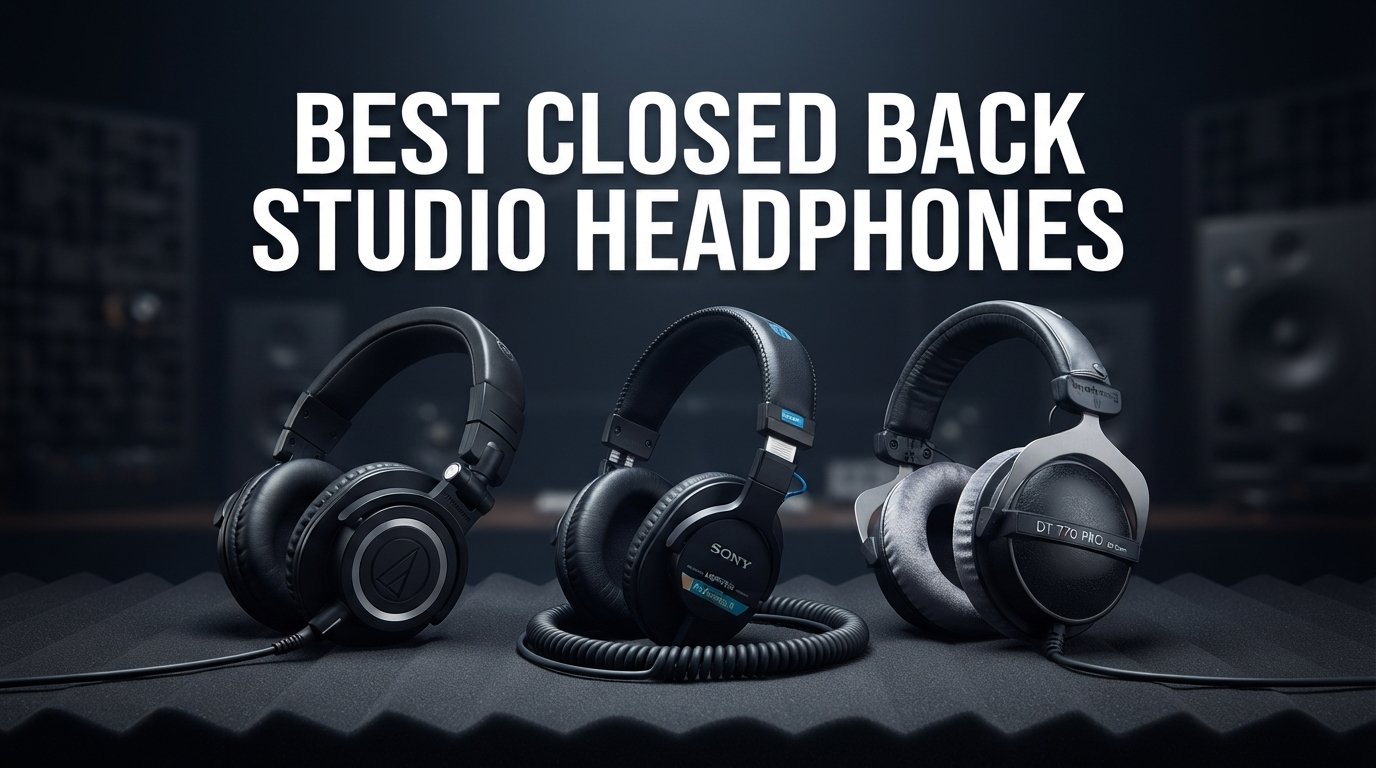
Finding the best closed back studio headphones means balancing sound isolation, frequency response accuracy, and comfort for long recording sessions. Whether you are tracking vocals, mixing a podcast, or monitoring a live broadcast, the right pair of closed-back headphones keeps sound from leaking into your microphones while delivering the detail you need to make confident decisions.
Our team tested 12 of the most popular closed-back studio headphones across tracking, mixing, podcasting, and critical listening scenarios. We compared everything from the $50 budget tier to premium $300+ reference monitors to help you find the right pair for your studio setup and budget in 2026.
Closed-back headphones seal the ear cups completely, which prevents audio bleed into nearby microphones during recording. They also block external noise, making them ideal for tracking in the same room as your speakers. In this guide, we rank all 12 models by use case, cover impedance matching, and explain exactly what to look for when shopping for studio headphones.
Top 3 Picks for Best Closed Back Studio Headphones


Sennheiser HD 280 Pro
- 32dB noise attenuation
- 64 Ohms
- Detachable coiled cable
- Replaceable parts
Best Closed Back Studio Headphones in 2026
| Product | Specifications | Action |
|---|---|---|
|
Audio-Technica ATH-M50X
|
|
Check Latest Price |
|
Sony MDR7506
|
|
Check Latest Price |
 Beyerdynamic DT 770 PRO 80 Ohm
|
|
Check Latest Price |
 Audio-Technica ATH-M40x
|
|
Check Latest Price |
|
Sennheiser HD 280 Pro
|
|
Check Latest Price |
 Audio-Technica ATH-M30x
|
|
Check Latest Price |
 AKG K72
|
|
Check Latest Price |
 AKG K371
|
|
Check Latest Price |
 Shure SRH840A
|
|
Check Latest Price |
 Beyerdynamic DT 700 PRO X
|
|
Check Latest Price |
1. Audio-Technica ATH-M50X – Best Overall for Producers
Audio-Technica ATH-M50X Professional Studio Monitor Headphones, Black, Professional Grade, Critically Acclaimed, with Detachable Cable
45mm large aperture drivers
38 Ohms impedance
20Hz-28kHz frequency response
Detachable cable with 3 included
Foldable with 90-degree swivel earcups
Pros
- Exceptional sound clarity with accurate bass and crisp highs
- Detachable cable system with three cable options
- Excellent sound isolation for loud environments
- Works well without requiring an amplifier
- Outstanding value for the price
Cons
- Headband padding could be more comfortable for very long sessions
- Stock earpads may not suit everyone
- Can expose flaws in poor quality recordings
I have used the ATH-M50X extensively in my home studio for tracking, editing, and casual mixing over the past several years. The first thing that hits you is the clarity. These headphones have a slightly V-shaped sound signature with punchy bass and crisp highs that make it easy to hear every detail in a mix. With over 33,000 reviews and a 4.7-star average, there is a reason these are consistently ranked among the best closed back studio headphones available.
The 45mm large aperture drivers deliver a frequency response of 20Hz to 28kHz, giving you solid low-end extension without muddying the midrange. I found the bass to be accurate and controlled, not boosted to the point of being misleading. The circumaural design contours around the ears and provides excellent passive isolation, which is critical when you are recording vocals next to a live backing track.
One of my favorite features is the detachable cable system. Audio-Technica includes three cables in the box: a short 1.2m straight cable, a coiled 3.0m cable, and a longer straight cable. This means you can swap cables depending on whether you are sitting at a desk or moving around a live room. The 90-degree swiveling earcups make one-ear monitoring easy, which is something DJs and tracking engineers will appreciate.
Build quality feels professional with aluminum components and a foldable design for portability. The M50X does have a slightly tighter clamp out of the box, but it loosens up after a few days of use. At 38 Ohms impedance, you can drive these from a laptop or phone without an external amplifier, which makes them incredibly versatile for mobile recording setups.
Who Should Buy the ATH-M50X
Producers, DJs, tracking engineers, and anyone who wants a single pair of headphones that handles multiple studio tasks well. The M50X excels as an all-rounder that sounds great, isolates well, and travels easily. If you are starting a home studio and want one dependable pair, this is the safe bet.
The M50X also works well for content creators and podcasters who need isolation but want headphones that sound musical rather than clinical. Many users on Reddit note that the M50X is the headphone that made them fall in love with audio production.
Who Should Skip the ATH-M50X
If your primary goal is analytical mixing with the flattest possible frequency response, the ATH-M40x actually offers a more neutral signature at a lower price. The M50X has a slightly enhanced low and high end that some engineers find misleading for critical mixing decisions. Additionally, users with very large ears may find the stock earpads sit on-ear rather than over-ear.
2. Sony MDR7506 – The Industry Standard
Sony MDR7506 Professional Large Diaphragm Headphone
40mm neodymium drivers
63 Ohms impedance
10Hz-20kHz frequency response
9.8ft non-detachable cable
Foldable with carrying case
Pros
- Industry standard trusted by studios worldwide
- Powerful detailed sound with accurate frequency response
- Excellent noise isolation with closed ear design
- Rugged and durable construction
- Great value for professional-grade headphones
Cons
- Cable is not detachable
- Can feel tight during extended wear
- 90-day warranty is relatively short
- Treble can be slightly harsh at higher volumes
The Sony MDR7506 has been the backbone of professional studios since 1991, and it refuses to age. Walk into any broadcast facility, recording studio, or film set, and you will see these headphones everywhere. I have used them for tracking vocals, monitoring field recordings, and editing podcasts, and they consistently deliver the detailed, honest sound that professionals rely on.
The 40mm neodymium drivers produce a frequency response of 10Hz to 20kHz with a characteristically bright top end. Some engineers describe the MDR7506 as slightly harsh in the treble, but this brightness actually helps expose sibilance and high-frequency problems in vocal recordings. If you can make a mix sound good on these, it will translate well to other systems.
Weighing just half a pound, these are among the lightest professional headphones available. The closed ear design provides excellent noise isolation for tracking, and the foldable design with included soft carrying case makes them easy to throw in a backpack. The 9.8-foot cable gives you plenty of room to move around a control room or live recording space.
The biggest downside is the non-detachable cable. If the cable gets damaged, you have to solder a repair or replace the headphones entirely. At this price point, though, many engineers simply buy a second pair as backup. The 90-day warranty is also notably short compared to the 2-year warranties offered by competitors.
Who Should Buy the Sony MDR7506
Broadcasters, film location recordists, vocal tracking engineers, and anyone entering the audio industry. The MDR7506 is the safe, professional choice that every engineer should own at least once. If you work in a shared studio, these are the headphones everyone already knows how to use.
They are also excellent for field recording and location sound thanks to their lightweight design, foldability, and rugged construction. Many film schools require students to purchase MDR7506 headphones as part of their standard kit.
Who Should Skip the Sony MDR7506
If you need a detachable cable for easy replacement, look elsewhere. The MDR7506 also has a slightly bright treble that some find fatiguing during very long mixing sessions. Users with larger heads may find the clamp pressure uncomfortable after a few hours.
3. Beyerdynamic DT 770 PRO 80 Ohm – The Comfort King
beyerdynamic DT 770 PRO, 80 Ohm, Closed Back, Over Ear, Wired Professional Studio Headphones, Home Recording, Podcast, Monitor, 3m Straight Cable, Black with Limited Edition Black Velour Ear Pads
Dynamic drivers
80 Ohms impedance
5Hz-35kHz frequency response
3m straight cable
Velour ear pads handcrafted in Germany
Pros
- Incredibly comfortable velour earpads for all-day wear
- Exceptional balanced sound quality
- Outstanding build quality handcrafted in Germany
- Fully serviceable with replaceable parts
- Excellent sound isolation for studio recording
Cons
- Not portable and bulky
- 80 Ohm version benefits from an amp
- Non-detachable cable
- Can be slightly bright at louder volumes
When our team talks about comfort in studio headphones, the Beyerdynamic DT 770 PRO is always the benchmark. The plush black velour ear pads feel like pillows against your ears, and I have worn these for 8-hour mixing sessions without any fatigue. For engineers who spend full days in the studio, this level of comfort is not a luxury but a necessity.
The sound signature is balanced and detailed with a slightly elevated treble that some describe as the classic Beyerdynamic sound. The frequency response spans 5Hz to 35kHz, giving you deep sub-bass extension and airy highs. The closed-back construction ensures minimal sound leakage, which makes these ideal for vocal tracking and instrument recording.
What sets the DT 770 PRO apart is its serviceability. Every part is replaceable, including the ear pads, headband padding, and even the drivers. Beyerdynamic has been handcrafting these in Germany for decades, and the build quality with metal components feels like it will last a lifetime. This is a headphone you buy once and maintain forever.
The 80 Ohm version is considered the sweet spot for universal studio use. It works with most audio interfaces and headphone amps without requiring massive power. However, if you plan to plug directly into a phone or laptop, you may want the 32 Ohm version instead. The non-detachable 3m cable is long enough for studio use but limits portability.
Who Should Buy the DT 770 PRO
Studio engineers, mixing professionals, and anyone who prioritizes comfort for long sessions. The DT 770 PRO is also a community favorite on Reddit for gaming thanks to its precise directional audio and wide soundstage for a closed-back design. If you want one pair of headphones for both studio work and gaming, this is an excellent choice.
The replaceable parts also make this the most sustainable choice on this list. Instead of throwing away your headphones when the pads wear out, you simply buy replacements and keep going.
Who Should Skip the DT 770 PRO
If you need portable, foldable headphones, the DT 770 PRO is too bulky and does not fold. The non-detachable cable is also a frustration point for users who like to swap cables. Users sensitive to treble may find the elevated highs fatiguing at loud volumes.
4. Audio-Technica ATH-M40x – Best Value for Mixing
Audio-Technica ATH-M40x Professional Studio Monitor Headphone, Black, with Cutting Edge Engineering, 90 Degree Swiveling Earcups, Pro-Grade Earpads/Headband, Detachable Cables Included
40mm drivers
35 Ohms impedance
15Hz-24kHz frequency response
Detachable twist-lock cables
Foldable with 90-degree swivel earcups
Pros
- Most neutral frequency response in the M series
- Reference quality sound at an affordable price
- Detachable cables with twist-lock mechanism
- Does not require an amplifier
- Very solid and durable build quality
Cons
- Stock ear pads may be small for larger ears
- Clamping force can feel slightly tight
- Collapsible design can collapse unintentionally
- No microphone capability
Here is an open secret in the audio community: many engineers prefer the ATH-M40x over the more popular M50x for mixing. The M40x has a flatter, more neutral frequency response that gives you an honest picture of your mix without the bass and treble enhancement of its bigger brother. At a lower price point, it delivers reference-quality monitoring that rivals headphones costing twice as much.
The 40mm drivers with rare earth magnets cover 15Hz to 24kHz, which is slightly narrower than the M50x but actually more accurate for critical listening. I found the midrange to be exceptionally clear, making it easy to hear vocal balance issues and instrument masking problems. For mixing, this neutrality is exactly what you want.
Like the M50x, the M40x features a detachable twist-lock cable system and includes both straight and coiled cables in the box. The 90-degree swiveling earcups allow one-ear monitoring, and the foldable design makes them portable. At 35 Ohms, they are easily driven by smartphones and laptops without an external amplifier.
The main complaint from users with larger ears is that the stock ear pads sit on-ear rather than over-ear. Many owners solve this by purchasing aftermarket ear pads from Brainwavz or Dekoni. The collapsible hinges can also be prone to folding unintentionally when you grab them quickly.
Who Should Buy the ATH-M40x
Mixing engineers, critical listeners, and budget-conscious producers who want the flattest possible frequency response without spending a fortune. If your primary goal is making accurate mixing decisions rather than enjoying music, the M40x is the better choice over the M50x.
The M40x is also the top recommendation on Reddit for beginners who want professional monitoring without breaking the bank. Many experienced engineers recommend starting here and spending the savings on acoustic treatment or plugins.
Who Should Skip the ATH-M40x
If you want a more exciting, musical sound for casual listening alongside studio work, the M50x is the better all-rounder. The M40x is deliberately flat, which is great for mixing but can sound boring for entertainment. Users with larger ears should also factor in the cost of replacement pads.
5. Sennheiser HD 280 Pro – Best Budget Noise Isolation
Sennheiser HD 280 Pro Headphone, Black
Dynamic drivers
64 Ohms impedance
8Hz-25kHz frequency response
Detachable coiled cable
Up to 32dB noise attenuation
Replaceable parts
Pros
- Excellent noise isolation up to 32dB attenuation
- Warm natural sound reproduction
- All parts replaceable for long lifespan
- Collapsible design for portability
- Outstanding value at this price point
Cons
- Stock earpads can wear out over time
- Clamping force may be tight initially
- Treble can be slightly recessed
- Coiled cable can feel heavy
- Build quality feels plasticky
The Sennheiser HD 280 Pro is a studio workhorse known for one standout feature: up to 32dB of passive noise attenuation. That is exceptional for a closed-back headphone at this price, making these ideal for tracking in noisy environments or recording live drums where bleed is a major concern. I have used these in untreated rooms where they effectively shut out the world.
The sound signature is warm and natural, with a slightly recessed treble compared to competitors like the MDR7506 or M50x. Some engineers prefer this because it reduces ear fatigue during long sessions, but others find the highs lack the detail needed for critical mixing decisions. The frequency response covers 8Hz to 25kHz, which is solid for a budget model.
What I appreciate most about the HD 280 Pro is the replaceable parts philosophy. The earpads, headband padding, and audio cord are all easily replaceable, which means these headphones can last for many years. The detachable coiled cable extends to 3.3 meters, giving you room to move around a studio space.
The build quality is mostly plastic, which keeps the weight down but does not feel as premium as metal-built alternatives. The clamping force can be aggressive out of the box, so I recommend stretching the headband over a box overnight before first use. Once broken in, they become comfortable enough for extended sessions.
Who Should Buy the Sennheiser HD 280 Pro
Tracking engineers, drummers, podcasters working in noisy environments, and anyone who needs maximum noise isolation on a budget. If you record in an untreated room or share space with other musicians, the 32dB attenuation of the HD 280 Pro is hard to beat at this price.
These are also a favorite for DJ monitoring and broadcast work where ambient noise is a constant challenge. The collapsible design and detachable cable make them practical for gigging and location work.
Who Should Skip the Sennheiser HD 280 Pro
If you need detailed treble response for critical mixing, the recessed highs may mask important information. The plastic build quality may also disappoint users coming from metal-frame headphones. The coiled cable adds noticeable weight compared to straight cables.
6. Audio-Technica ATH-M30x – Best Budget Studio Entry
Audio-Technica ATH-M30x Professional Studio Monitor Headphones, Black
40mm drivers
38 Ohms impedance
20Hz-20kHz frequency response
Detachable single-side cable
Collapsible design
Aluminum construction
Pros
- Excellent build quality with aluminum construction
- Greater sound isolation in loud environments
- Clear mid-range detail ideal for monitoring
- Comfortable circumaural fit
- Collapsible and portable design
Cons
- 38 ohm impedance may benefit from a headphone amp
- Not water resistant
- May cause clamp pressure for glasses wearers
- Limited soundstage width
The ATH-M30x is the entry point into Audio-Technica’s professional M-series lineup, and it offers remarkable value for beginners setting up their first home studio. At under $80, you get the same aluminum construction, rare-earth magnet drivers, and professional design language as the more expensive M40x and M50x models.
The 40mm drivers are tuned for enhanced mid-range definition, which makes these particularly good for vocal monitoring and podcast editing. The frequency response covers 20Hz to 20kHz, which is standard for this price tier. While the bass and treble are not as extended as the M50x, the midrange clarity is genuinely impressive for the cost.
I found the circumaural design comfortable for moderate-length sessions, and the collapsible design makes them easy to store in a backpack. The single-side cable exit reduces tangling, and the detachable cable means you can replace it if it gets damaged. At 38 Ohms, they work fine with most devices without requiring an amplifier.
The main limitation is the narrower soundstage compared to the M40x and M50x. For critical mixing, you may eventually want to upgrade, but for tracking, podcasting, and content creation, the M30x delivers more than enough detail to get the job done.
Who Should Buy the ATH-M30x
Beginners, podcasters, content creators, and anyone building a home studio on a tight budget. The M30x gives you professional-grade construction and monitoring capability without requiring a significant investment. It is the best entry point into serious studio headphones.
Students and podcasters who need reliable isolation for vocal recording will find these more than capable. They are also a solid backup pair for engineers who already own premium headphones.
Who Should Skip the ATH-M30x
If you plan to do serious mixing or mastering, invest the extra money in the M40x for its flatter frequency response. The M30x has a narrower soundstage and less detail in the highs and lows. Glasses wearers may also find the clamp pressure uncomfortable.
7. AKG K72 – Best Ultra-Budget Option
AKG Pro Audio K72 Over-Ear, Closed-Back, High-Sensitivity, High Output 40mm drivers, Studio Professional Headphone. Also Great for Portable Devices. Black.
40mm drivers
32 Ohms impedance
16Hz-20kHz frequency response
Fixed cable with 6.35mm adapter
112dB sensitivity
Lightweight plastic construction
Pros
- Excellent price-to-performance ratio for budget monitoring
- Very comfortable and lightweight for extended wear
- Impressive sound quality with good bass extension
- Good sound isolation for closed-back design
- Works well with portable devices
Cons
- Build quality feels cheap and plasticky
- Stereo jack not gold-plated can cause crackle
- Benefits from a headphone amp
- Sound isolation not as strong as premium options
At under $50, the AKG K72 is the most affordable option on this list, and it punches well above its weight class. These are the headphones I recommend to friends who are just dipping their toes into music production and are not ready to invest in premium gear. AKG’s reputation for studio audio means you are getting a legitimate monitoring tool, not a toy.
The 40mm drivers deliver a frequency response of 16Hz to 20kHz with surprisingly good bass extension for the price. The acoustic chamber design between the ear cup and hinge provides decent isolation, though not at the level of the Sennheiser HD 280 Pro. For tracking in a reasonably quiet home studio, the isolation is more than adequate.
At 32 Ohms and 112dB sensitivity, the K72 is incredibly easy to drive from any device. You will not need a headphone amplifier to reach comfortable listening levels, which makes these perfect for mobile recording setups with a phone or tablet. The lightweight design keeps them comfortable for extended sessions.
The trade-off is build quality. The all-plastic construction feels cheap, and the non-gold-plated stereo jack can develop crackle issues over time. The cable is fixed rather than detachable, so you cannot easily replace it. However, at this price point, these compromises are entirely expected.
Who Should Buy the AKG K72
Absolute beginners, students, and anyone who needs functional studio monitoring for the lowest possible price. The K72 is the gateway headphone that lets you start producing music without a significant upfront investment. It is also a good choice for equipping a multi-person studio on a budget.
Schools and community studios that need multiple pairs of headphones for group work will find the K72 practical and cost-effective. The lightweight design suits younger users and beginners.
Who Should Skip the AKG K72
If you can stretch your budget to the ATH-M30x or Sennheiser HD 280 Pro, you will get significantly better build quality and sound. The K72 is a starter headphone that you will likely outgrow as your ears develop. Professional engineers will find the detail and isolation insufficient for serious work.
8. AKG K371 – Best Harman Target Curve Accuracy
AKG Pro Audio K371 Wired Over-Ear, Closed-Back, Foldable Professional Recording Studio Headphones, Studio Monitor Mixing, Podcast, DJ Stereo Headsets, Black
50mm titanium-coated drivers
32 Ohms impedance
5Hz-40kHz frequency response
Detachable mini-XLR cable
Foldable with carrying pouch
114dB sensitivity
Pros
- Exceptional frequency response with titanium-coated drivers
- Accurate neutral sound tuned to AKG reference curve
- Highly portable foldable design
- Replaceable ear pads
- High sensitivity means easy to drive
Cons
- Build quality feels primarily plastic
- Ear pads may feel less premium
- Cable connectors can feel less robust
- Some report slight high-frequency harshness
The AKG K371 is engineered to match the Harman target curve, which is widely regarded as the scientifically validated standard for natural headphone sound. If you want the most accurate frequency response in a closed-back design without spending premium money, this is the headphone that the audio science community consistently recommends.
The 50mm titanium-coated drivers deliver an impressive 5Hz to 40kHz frequency response, which is among the widest on this list. The bass extends deep without being bloated, the midrange is clear and present, and the highs are detailed without being harsh. For mixing on closed-back headphones, the K371 is one of the few models that translates well to speakers.
I appreciate the foldable design with the included carrying pouch, which makes the K371 surprisingly portable for a full-size studio headphone. The mini-XLR to 3.5mm cable system is professional-grade, and AKG includes multiple cable options in the box: a 3m coiled cable, a 3m straight cable, and a 1.2m straight cable.
The main criticism is the plastic build quality, which feels less premium than the price suggests. Some users also report that the cable connectors can become loose over time. However, the ear pads are replaceable, and the sound quality more than justifies the investment for accuracy-focused engineers.
Who Should Buy the AKG K371
Mixing engineers, audio enthusiasts, and anyone who values scientifically accurate sound reproduction. The K371 is the headphone recommended by measurement-focused communities like Reddit’s r/oratory1990 and r/headphones for its Harman target compliance.
If you mix on headphones and need your mixes to translate to speakers, the K371’s neutral tuning makes it one of the most reliable closed-back options available. It is also a great upgrade path from budget models.
Who Should Skip the AKG K371
If you prioritize premium build materials over measurement accuracy, the all-plastic construction may disappoint. Users who prefer a more exciting, V-shaped sound signature may find the K371 too analytical. The lower review count means less community feedback compared to established models.
9. Shure SRH840A – Best for Critical Monitoring
Shure SRH840A Professional Over-Ear Wired Studio Headphones for Recording, Mixing & Monitoring - Closed-Back Circumaural Design with Detachable Cable, Black
40mm dynamic drivers
40 Ohms impedance
5Hz-25kHz frequency response
Detachable locking cable
Collapsible with carrying case
258g lightweight
Pros
- Accurate and balanced professional sound
- Excellent build quality and durability
- Very comfortable for long recording sessions
- Detachable locking cable
- Greater sound isolation in studio environments
Cons
- Pricier than some alternatives
- Stock cable is short for some setups
- Ear pads can get warm during long sessions
- Fewer customer reviews than competitors
The Shure SRH840A is the updated version of the popular SRH840, refined with modern materials and a refreshed design. Shure built these for recording, editing, mixing, and content creation, and the tailored frequency response delivers controlled bass, detailed mids, and extended highs. I found the sound to be precise and balanced, making it easy to identify problem frequencies in a mix.
The 40mm dynamic drivers cover 5Hz to 25kHz, giving you solid sub-bass presence without overwhelming the midrange. What sets the SRH840A apart is the controlled bass response that does not bleed into the lower mids, which is a common issue with lesser closed-back designs. This makes it particularly well-suited for mixing bass-heavy genres like electronic and hip-hop.
Comfort is excellent thanks to the wide padded headband and plush ear cushions. At 258 grams, these are lightweight enough for all-day sessions. The collapsible design and included carrying case make them practical for engineers who work in multiple locations. The detachable locking cable ensures a secure connection that will not accidentally pull out.
The closed-back circumaural construction provides good isolation for studio environments, though not quite at the level of the Sennheiser HD 280 Pro’s 32dB rating. The included threaded 1/4-inch adapter is a nice touch for professional audio interfaces. At $169, these sit in the mid-range tier but compete with more expensive options.
Who Should Buy the Shure SRH840A
Critical monitoring engineers, mixers, and content creators who need precise, balanced sound reproduction. The SRH840A is particularly good for identifying problem frequencies and making surgical EQ decisions. If you work on detailed audio restoration or forensic audio, the clarity here is exceptional.
Voice-over artists and podcasters who want professional-grade monitoring with a carrying case for location work will also appreciate the SRH840A’s portability and isolation.
Who Should Skip the Shure SRH840A
If you want a more exciting sound for casual listening alongside studio work, the SRH840A is deliberately neutral and analytical. The stock cable is relatively short, which may require an extension for some studio setups. With fewer reviews than established models, there is less long-term reliability data.
10. Beyerdynamic DT 700 PRO X – Best Premium Closed-Back
beyerdynamic DT 700 PRO X Closed-Back Studio Headphones with Stellar.45 Driver for Recording and Monitoring on All Playback Devices
STELLAR.45 drivers
48 Ohms impedance
5Hz-40kHz frequency response
Detachable cables included
Velour ear pads
German engineered
Pros
- Outstanding build quality with German engineering
- Exceptional detail and clarity with STELLAR.45 drivers
- Excellent sound isolation
- Comfortable velour pads and memory-foam headband
- Easy to drive without external amp
- Superior tight controlled bass
Cons
- Significant investment at this price
- Does not fold flat
- Strong clamp pressure out of the box
- Headband covering may come unglued
- Velour pads can get warm
The Beyerdynamic DT 700 PRO X is the modern evolution of the legendary DT 770 platform, featuring the new STELLAR.45 driver technology developed in Heilbronn, Germany. Our team found this to be the most detailed and refined closed-back headphone on this list, with a level of clarity that justifies the premium price for serious professionals.
The STELLAR.45 drivers deliver a frequency response of 5Hz to 40kHz with tight, controlled bass that never sounds muddy. The transient response is exceptional, meaning fast drum hits and percussive transients are reproduced with startling accuracy. For mixing and mastering, this level of detail helps you hear compression artifacts and timing issues that lesser headphones mask.
At 48 Ohms impedance, the DT 700 PRO X is designed to work with all playback devices without requiring an external amplifier. This is a significant improvement over the DT 770 PRO, which needed amping for optimal performance. Beyerdynamic includes two detachable cables (1.8m and 3m) with gold-plated connectors and a threaded 1/4-inch adapter.
The velour ear pads and memory-foam headband provide the same legendary comfort as the DT 770 PRO. The replaceable ear pads and headband pad ensure long-lasting durability. The main known issue is that the headband leatherette covering can come unglued after extended use, though this is cosmetic rather than functional.
Who Should Buy the DT 700 PRO X
Professional mixing and mastering engineers who need the highest level of detail and clarity in a closed-back design. If you have outgrown the DT 770 PRO or M50x and want a premium upgrade that does not require an amplifier, the DT 700 PRO X is the logical next step.
These are also ideal for location recording and broadcast monitoring where audio quality is non-negotiable. The German engineering and replaceable parts mean this is a decade-long investment.
Who Should Skip the DT 700 PRO X
If you are on a budget, the DT 770 PRO 80 Ohm delivers 80 percent of the performance at less than half the price. The strong clamp pressure out of the box also requires a break-in period. Users who need foldable headphones for travel will find the non-folding design inconvenient.
11. Sony MDR-M1 – Best Wideband Reference Monitor

Sony MDR-M1 Professional Reference Closed Monitor Headphones
40mm dynamic drivers
50 Ohms impedance
5Hz-80kHz frequency response
Detachable dual-plug cables
216g ultralight
Stainless steel construction
Pros
- Ultra-wideband frequency response for detailed monitoring
- High sound isolation closed acoustic structure
- Comfortable and lightweight at 216g
- Durable stainless steel build with detachable cables
- Easy to maintain with replaceable earpads
Cons
- Expensive compared to competitors
- Wired only with no wireless option
- May require external amplifier due to 50 Ohm impedance
- Folding not supported
The Sony MDR-M1 is Sony’s newest professional reference monitor headphone, developed in collaboration with renowned industry engineers. With an astonishing frequency response of 5Hz to 80kHz, it offers the widest bandwidth of any headphone on this list. While human hearing tops out around 20kHz, the extended range contributes to phase accuracy and transient detail in the audible band.
Weighing just 216 grams, the MDR-M1 is the lightest full-size professional headphone in this lineup. The closed acoustic structure provides high sound isolation for tracking, and the soft thick earpads remain comfortable through long sessions. I found the sound to be faithful and uncolored, living up to Sony’s reference monitor designation.
The detachable cable system uses a screw-in plug adapter that supports both 6.3mm and 3.5mm stereo jacks, and Sony includes two cable lengths in the box. The earpads are user-replaceable, which extends the product lifespan significantly. The stainless steel construction feels premium and durable.
At 50 Ohms impedance, the MDR-M1 may benefit from an external amplifier when used with low-power devices. This is not a headphone you plug into a phone for casual listening. It is a professional tool designed for audio interfaces, headphone amplifiers, and dedicated studio monitoring chains.
Who Should Buy the Sony MDR-M1
Professional engineers who want the widest possible frequency response and the newest monitoring technology from Sony. The MDR-M1 is the modern successor to the MDR-7506 legacy, designed for studios that demand cutting-edge reference monitoring. It is ideal for high-resolution audio production and immersive audio formats.
If you work with high-sample-rate audio (96kHz and above) and want headphones that can reproduce the full bandwidth, the MDR-M1’s 80kHz upper limit is a technical advantage over standard 20kHz models.
Who Should Skip the Sony MDR-M1
If you want the proven reliability and lower price of the MDR-7506, the MDR-M1 is still relatively new with fewer long-term reviews. The 50 Ohm impedance means you may need an amplifier, and the non-folding design limits portability. The premium price places it in competition with the DT 700 PRO X.
12. Shure SRH440A – Best Budget Studio All-Rounder

Shure SRH440A Over-Ear Wired Studio Headphones – Professional Monitoring & Recording Earphones with Accurate Frequency Response, Adjustable Collapsible Design, Black
Dynamic drivers
40 Ohms impedance
10Hz-22kHz frequency response
Detachable locking cable
Collapsible design
254g lightweight
Pros
- Excellent value for professional studio monitoring
- Accurate transparent audio for mixing and critical listening
- Comfortable over-ear design with adjustable headband
- Collapsible and portable design
- Wide device compatibility without needing an amp
- 2-year warranty
Cons
- Narrower frequency response than premium options
- Lower build quality materials
- Fewer category rankings
- Retractable cable mechanism durability concerns
- Less sound isolation than premium options
The Shure SRH440A is the updated version of the classic SRH440, optimized for consistent performance across audio interfaces, mixers, and laptops. At $93, it occupies the sweet spot between ultra-budget options and mid-range professional models. Our team found it to be one of the most transparent-sounding headphones in this price range.
The frequency response covers 10Hz to 22kHz with a balanced, studio-grade signature. The SRH440A does not hype the bass or treble, which makes it reliable for mixing decisions. I found the midrange particularly clean, with vocals and instruments sitting naturally in the mix without coloration.
At 40 Ohms impedance and 102dB sensitivity, these work well with most devices without requiring a dedicated amplifier. The detachable locking cable is a professional feature rarely seen at this price point, and the collapsible design with included carrying case makes them practical for mobile recording.
The lightweight construction (254 grams) and adjustable headband provide all-day comfort. The closed-back over-ear design reduces ambient noise adequately for most home studio environments, though it does not match the isolation of the Sennheiser HD 280 Pro. For the price, the SRH440A delivers exceptional value.
Who Should Buy the Shure SRH440A
Home studio owners, podcasters, and intermediate-level producers who want professional monitoring at an accessible price. The SRH440A is the ideal step up from budget models like the AKG K72 when you need more detail and accuracy for mixing decisions.
Students in audio engineering programs will find these dependable for learning critical listening skills. The transparent sound signature helps you develop accurate mixing habits without the coloration of consumer headphones.
Who Should Skip the Shure SRH440A
If you need maximum noise isolation for tracking in loud environments, the Sennheiser HD 280 Pro is a better choice. The build quality, while functional, uses less premium materials than higher-priced alternatives. Users who want extended frequency response for immersive audio should look at the Sony MDR-M1.
Buying Guide: How to Choose the Best Closed Back Studio Headphones
Choosing the right closed-back studio headphones involves understanding your primary use case, your equipment chain, and the trade-offs between different models. This buying guide covers the key factors that should influence your decision.
Closed-Back vs Open-Back: What Is the Difference
Closed-back headphones seal the rear of the ear cups, preventing sound from escaping and blocking external noise from entering. This makes them essential for recording, where audio bleed into microphones must be eliminated. Open-back headphones vent the rear of the ear cups, producing a more natural, spacious sound but allowing sound to leak in both directions.
For tracking and recording, closed-back is the only practical choice. For mixing and critical listening in a quiet room, open-back headphones often provide a wider soundstage and less ear fatigue. Many engineers own both types and use them for different stages of production.
Impedance and Amplification Explained
Impedance, measured in Ohms, determines how much power your headphones need to reach adequate volume. Low-impedance headphones (16-40 Ohms) work well with phones, laptops, and consumer devices without an amplifier. High-impedance headphones (80 Ohms and above) typically require a dedicated headphone amplifier to reach their full potential.
If you are buying headphones for a simple home studio with an audio interface, look for models in the 32-64 Ohm range. The Audio-Technica ATH-M50x (38 Ohms), Sony MDR7506 (63 Ohms), and AKG K371 (32 Ohms) are all easy to drive. The Beyerdynamic DT 770 PRO 80 Ohm sits at the threshold and benefits from amplification for optimal performance.
Sound Signature and Frequency Response
Frequency response tells you which frequencies a headphone emphasizes or reduces. A flat response is ideal for mixing because it gives you an honest representation of your audio. V-shaped signatures with boosted bass and treble sound exciting but can mislead mixing decisions.
For mixing accuracy, the AKG K371 (Harman target tuned) and ATH-M40x (neutral signature) are the top choices. For tracking and general studio use, slightly enhanced signatures like the ATH-M50x and DT 770 PRO are enjoyable without being wildly inaccurate.
Comfort and Build Quality
Studio sessions can last 8 hours or more, so comfort is critical. Look for headphones with plush ear pads, adjustable headbands, and reasonable clamp pressure. Velour pads (like the Beyerdynamic models) breathe better than leatherette during long sessions. Weight matters too: the Sony MDR-M1 at 216 grams is noticeably lighter than the Sennheiser HD 280 Pro at 590 grams.
Build quality determines longevity. Metal-frame headphones like the ATH-M50x and DT 770 PRO survive years of studio abuse. Plastic models are lighter but may develop creaks or hinge issues over time. Always check whether parts are replaceable before buying.
Replaceable Parts and Longevity
The most sustainable studio headphones are those with user-replaceable parts. Ear pads wear out, cables get snagged, and headbands degrade. Models like the Beyerdynamic DT 770 PRO, Sennheiser HD 280 Pro, and AKG K371 all feature replaceable components that extend their lifespan by years.
Detachable cables are particularly important. A damaged non-detachable cable can render an otherwise perfect pair of headphones useless, as is the case with the Sony MDR7506 and DT 770 PRO. Prioritize models with detachable, locking cables if cable damage is a concern in your workflow.
Use-Case Recommendations
For vocal tracking, the Sennheiser HD 280 Pro and its 32dB isolation prevent backing tracks from bleeding into vocal recordings. For mixing, the AKG K371 and ATH-M40x provide the flattest, most honest sound signatures. For podcasting, the Sony MDR7506 and ATH-M30x offer clear midrange detail for voice work.
For gaming, the Beyerdynamic DT 770 PRO is a community favorite thanks to its wide soundstage and precise imaging. For broadcast and field recording, the lightweight, foldable Sony MDR7506 remains the industry standard. For critical mastering, the Beyerdynamic DT 700 PRO X delivers the detail and clarity needed for professional-level work.
FAQs
What is the best closed back headphones for critical listening?
The Audio-Technica ATH-M50x and Beyerdynamic DT 700 PRO X are the top choices for critical listening, offering exceptional detail, clarity, and accurate frequency response across the full spectrum. The AKG K371 is also excellent for analytical listening due to its Harman target curve tuning.
Which closed-back headphones are best for mixing?
The AKG K371 and Audio-Technica ATH-M40x are the best closed-back headphones for mixing because they offer the flattest, most neutral frequency responses. The K371 is tuned to the Harman target curve for scientifically accurate sound, while the M40x delivers reference-quality monitoring at a lower price point.
Are closed-back headphones good for recording?
Yes, closed-back headphones are essential for recording because they prevent backing tracks from bleeding into vocal and instrument microphones. Models like the Sennheiser HD 280 Pro with up to 32dB noise attenuation are specifically designed to contain audio within the earcups during tracking sessions.
Do I need an amp for closed-back studio headphones?
It depends on the impedance. Low-impedance models (32-64 Ohms) like the ATH-M50x, Sony MDR7506, and AKG K371 work fine without an amplifier. Higher impedance models (80 Ohms and above) like the Beyerdynamic DT 770 PRO 80 Ohm benefit from a dedicated headphone amplifier for optimal volume and sound quality.
What is the difference between open back and closed back headphones?
Closed-back headphones seal the ear cups to prevent sound leakage and block external noise, making them ideal for recording. Open-back headphones vent the rear of the cups for a more natural, spacious soundstage but allow sound to escape, making them unsuitable for tracking but excellent for mixing in quiet rooms.
What are the best closed back studio headphones under $100?
The Sennheiser HD 280 Pro at $82, Shure SRH440A at $93, and Audio-Technica ATH-M30x at $79 are the best closed-back studio headphones under $100. The AKG K72 at $50 is the best ultra-budget option for beginners who need functional monitoring at the lowest possible price.
Conclusion: Which Closed Back Studio Headphones Should You Buy?
The best closed back studio headphones for you depend on your primary use case and budget. For an all-around professional workhorse, the Audio-Technica ATH-M50x remains the top recommendation with its versatile sound, detachable cables, and proven reliability across 33,000+ reviews. For the industry standard that every engineer should own, the Sony MDR7506 has earned its place through decades of professional use.
For mixing accuracy, the AKG K371 and ATH-M40x deliver the flattest frequency responses. For maximum comfort, the Beyerdynamic DT 770 PRO with its velour pads is unmatched. And for budget-conscious producers, the Sennheiser HD 280 Pro offers exceptional noise isolation and replaceable parts at an entry-level price.
Whatever you choose, prioritize sound isolation, comfort for long sessions, and replaceable parts for longevity. The right pair of closed-back studio headphones will serve your production workflow for years to come, and investing in quality monitoring is one of the most impactful upgrades you can make to your studio in 2026.