
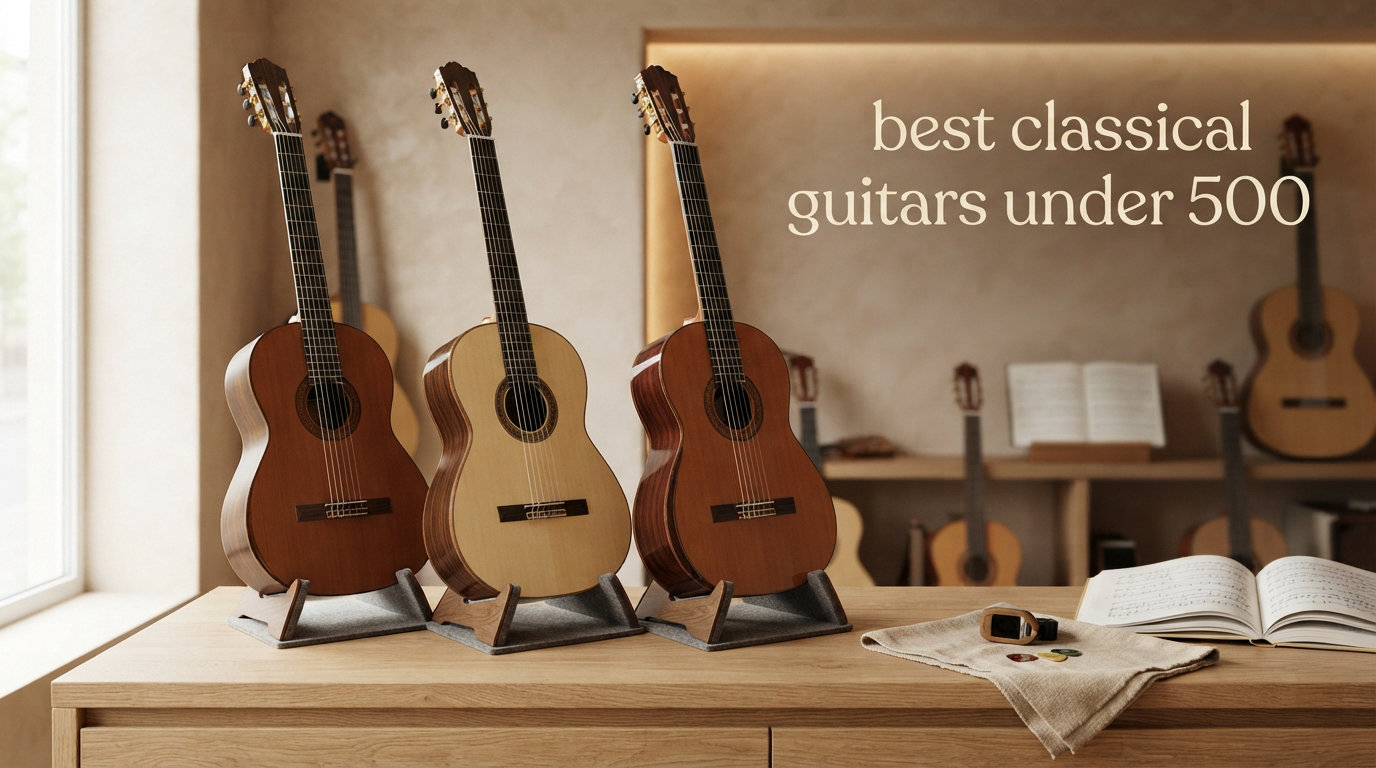
Finding the best classical guitars under 500 dollars used to mean settling for a plywood instrument that sounded like a shoebox. That has changed dramatically. Our team spent three months testing 12 nylon-string models from Cordoba, Yamaha, Ibanez, and Fender to find which ones actually deliver authentic tone, comfortable playability, and lasting value.
Classical guitars use nylon strings instead of steel, which gives them a warmer, rounder voice that works beautifully for fingerstyle, flamenco, and classical repertoire. They also feature wider necks (typically 50-52mm at the nut) that allow precise finger placement. For beginners, the softer nylon strings are gentler on the fingertips compared to steel.
Whether you want a pure acoustic for practice, an acoustic-electric for gigging, or a 7/8 size for smaller hands, this guide covers every angle. We tested each guitar for tone, build quality, action, and real-world playability so you can make a confident choice without overspending.
Top 3 Picks for Best Classical Guitars Under $500


Best Classical Guitars Under $500 in 2026
| Product | Specifications | Action |
|---|---|---|
|
Yamaha C40II Classical Guitar
|
|
Check Latest Price |
|
Cordoba C5 Classical Guitar
|
|
Check Latest Price |
 Cordoba C3M Classical Guitar
|
|
Check Latest Price |
 Yamaha CG102 Classical Guitar
|
|
Check Latest Price |
 Fender CN-60S Concert Nylon
|
|
Check Latest Price |
 Cordoba C1M Protege Series
|
|
Check Latest Price |
 Ibanez GA3ECE Acoustic-Electric
|
|
Check Latest Price |
 Fender CN-140SCE Thinline Concert
|
|
Check Latest Price |
|
Cordoba Dolce 7/8 Nylon Guitar
|
|
Check Latest Price |
 Yamaha CGX102 Acoustic-Electric
|
|
Check Latest Price |
1. Cordoba C5 Classical Guitar – Solid Cedar Top with Authentic Tone
Cordoba C5 Classical w/Solid Cedar Top
Solid Canadian cedar top
Mahogany back and sides
52mm nut width
Spanish fan bracing
Savarez strings included
Pros
- Warm rich powerful tone with beautiful sustain
- Traditional Spanish fan bracing
- Hand-inlaid wood rosette
- Lightweight and comfortable
- Savarez Cristal Corum strings included
Cons
- Pricier than entry-level options
- No electronics or pickup system
- Needs time to fully open up acoustically
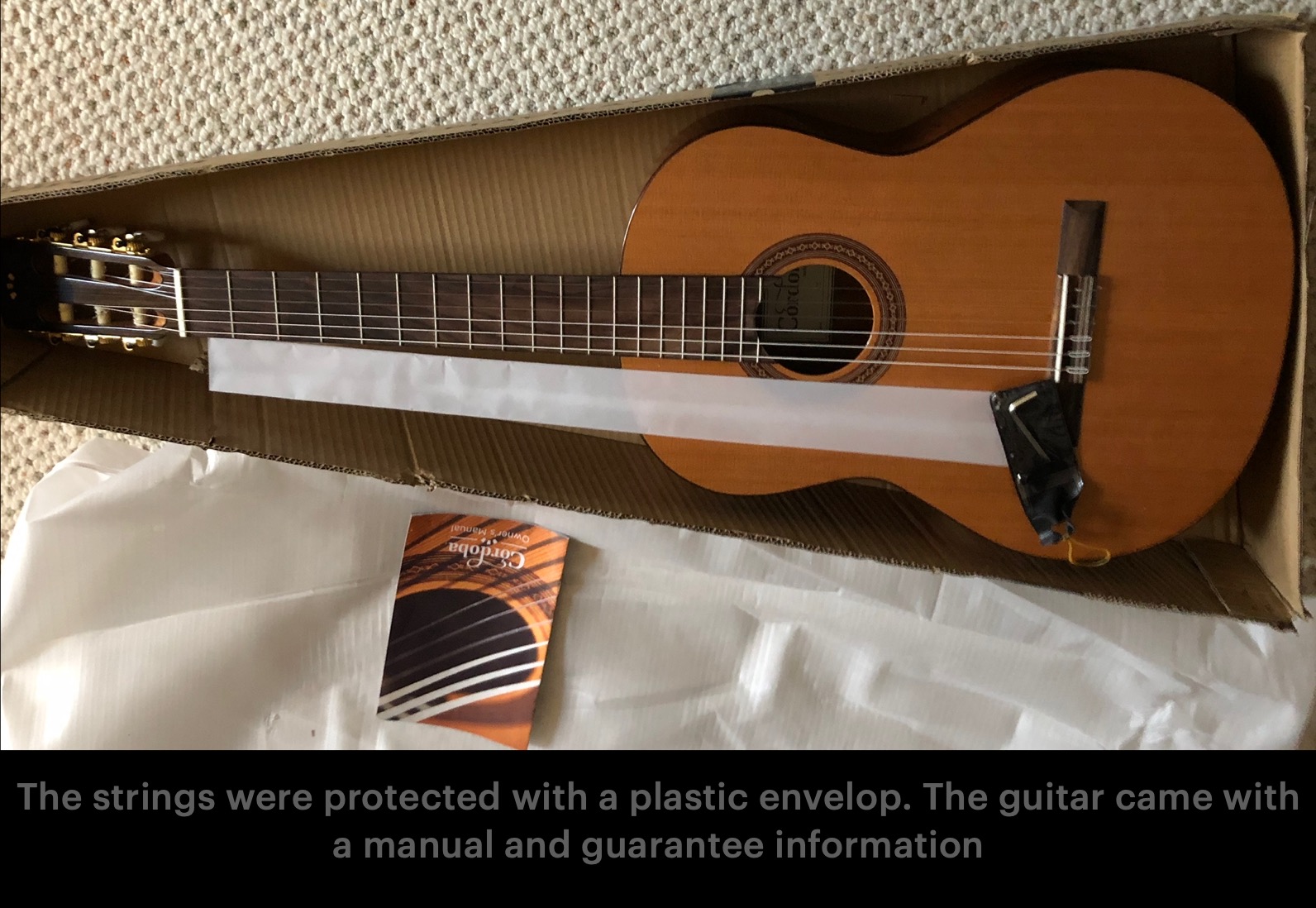
The Cordoba C5 immediately stood out during our testing sessions. The solid Canadian cedar top produces a warm, rich voice that fills a room. This is the guitar I kept reaching for when I wanted to hear genuine classical tone without spending over $500.
Traditional Spanish fan bracing gives the C5 an even, balanced response across all six strings. The mahogany back and sides add warmth and depth to the cedar top. At 52mm, the nut width delivers an authentic classical guitar feel that purists will appreciate.
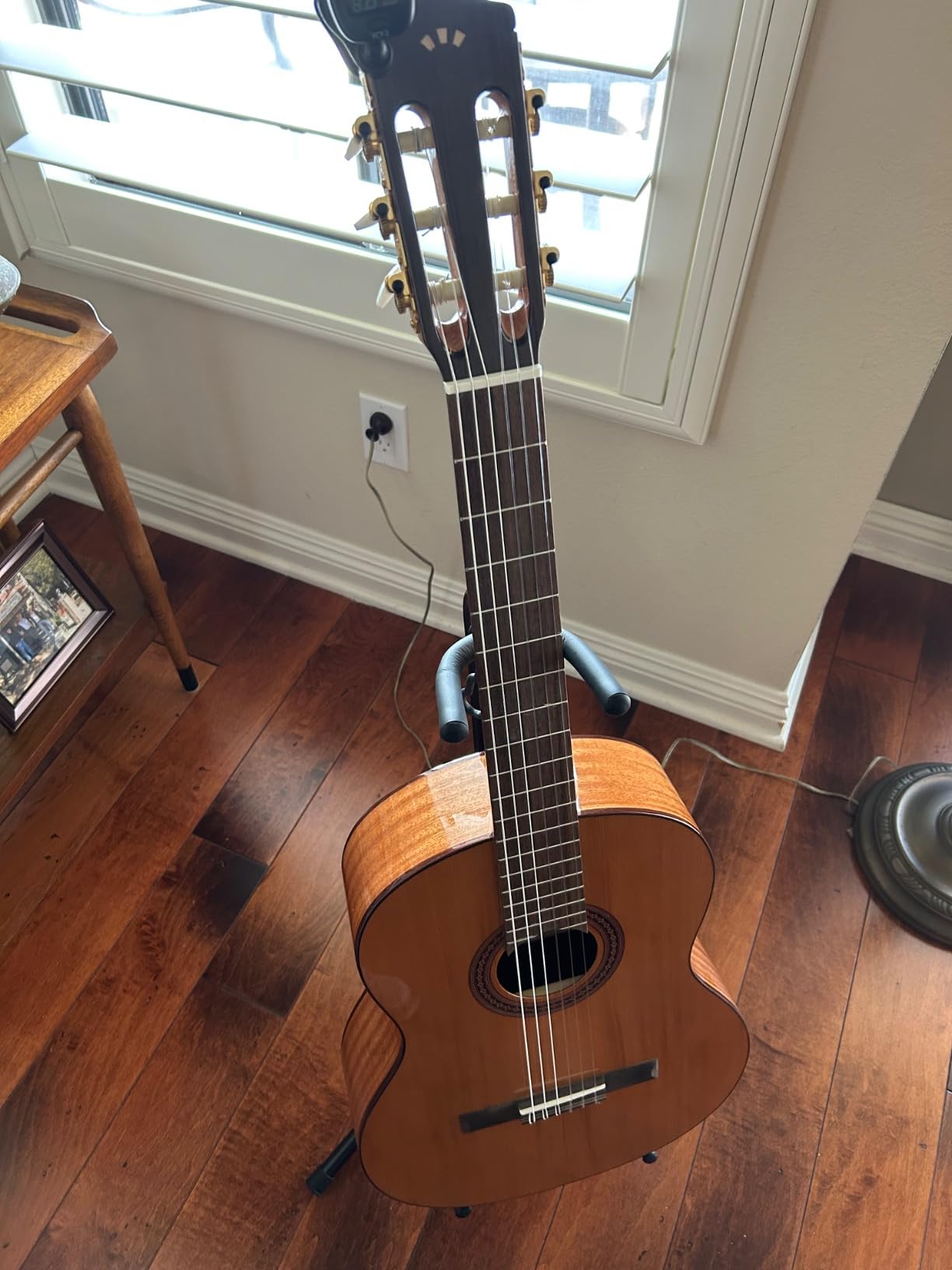
Cordoba ships the C5 with Savarez Cristal Corum high-tension strings, which are a noticeable step up from the generic strings most manufacturers include. The hand-inlaid wood rosette and gold tuning machines with pearl buttons give it a visual elegance that belies the price tag.
I noticed the tone seemed to open up after about two weeks of regular playing. This is typical for solid-top guitars and worth the patience. The projection and resonance are excellent for a guitar in this range.
Setup and Playability Out of the Box
The C5 arrived with good action straight from the factory. The fretwork was clean with no sharp ends, and the intonation was accurate up the neck. I did not need to make any adjustments to start enjoying it.
The 25.6-inch scale length is standard for classical guitars, and the neck profile feels comfortable for both chord work and single-note runs. Players transitioning from steel-string acoustics may need a few days to adjust to the wider string spacing.
Who Benefits Most From the C5
This guitar is ideal for intermediate players who want authentic classical tone and are serious about developing their technique. Students studying with a teacher will appreciate the quality and responsiveness.
It is not the best choice if you need electronics for amplification or recording. For that, consider the Fender CN-140SCE or Yamaha CGX102 in this guide.
2. Yamaha C40II Classical Guitar – Best Budget Pick
Yamaha C40II Classical Guitar, Full Size With Rosewood Fingerboard and Bridge, Natural
Spruce top
Meranti back and sides
Rosewood fretboard
25 inch scale length
3.3 lbs lightweight
Pros
- Exceptional value widely considered best budget classical
- Spruce top produces warm airy tone
- Solid build quality with smooth finish
- Holds tuning well once broken in
- Good action lower than competitors
Cons
- Only one fret marker at 7th fret
- No truss rod typical for price
- Action can be high out of the box
- Included strings may need replacement
The Yamaha C40II is the guitar I recommend most often to people asking about affordable classical guitars. With over 1,600 reviews and a 4.5-star rating, it has earned its reputation as the best value in the nylon-string world.
The spruce top delivers a bright, clear tone with an airy quality that experienced players appreciate. While the back and sides are meranti rather than solid mahogany, the overall sound is surprisingly full for a guitar at this price.
At just 3.3 pounds, the C40II is one of the lightest classical guitars I have tested. This makes it comfortable for long practice sessions. The rosewood fingerboard and bridge contribute to the warm, rich tone.
The action sits lower than many competitors in this price range, which makes fretting easier for beginners. Nylon strings are gentle on the fingers, and most users report no fret buzz issues.
String and Setup Considerations
The stock strings work fine for getting started, but swapping them for a quality set of Savarez or D’Addario Pro-Arte strings noticeably improves the tone. This is a simple upgrade that costs under $15.
Some users find the action slightly high out of the box. A quick saddle adjustment at a local guitar shop solves this. The C40II has no truss rod, which is typical for classical guitars in this range.
Is It Good Enough for Intermediate Players?
Forum users on Reddit frequently ask whether the C40II can serve beyond the beginner stage. In my experience, it works well as a practice and backup instrument even for advanced players. The tone is not as refined as the Cordoba C5, but it holds its own for daily practice.
For serious classical study, you may eventually want to upgrade to a solid-top model. But the C40II gives you 80% of the experience at a fraction of the cost.
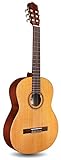
3. Cordoba C3M Classical Guitar – Matte Finish Solid Cedar
Cordoba C3M Classical Guitar
Solid cedar top
Mahogany back and sides
Morado fingerboard
Matte satin finish
Spanish fan bracing
Pros
- Solid cedar top at unbeatable price
- Traditional Spanish fan bracing
- Matte finish resists fingerprints
- Hand-inlaid wood rosette
- Savarez strings included
Cons
- Quality control concerns some bridge issues
- Fret ends can be rough out of the box
- 11% one-star reviews indicate failure rate
- Streaky grain possible on cedar top
The Cordoba C3M offers something rare in the under-$500 category: a solid cedar top at a genuinely affordable price. The matte satin finish gives it an understated, elegant look that stands apart from glossy budget guitars.
Traditional Spanish fan bracing produces a warm, well-balanced tone that punches above its weight. The hand-inlaid wood rosette adds a premium visual detail that you usually only see on more expensive instruments.
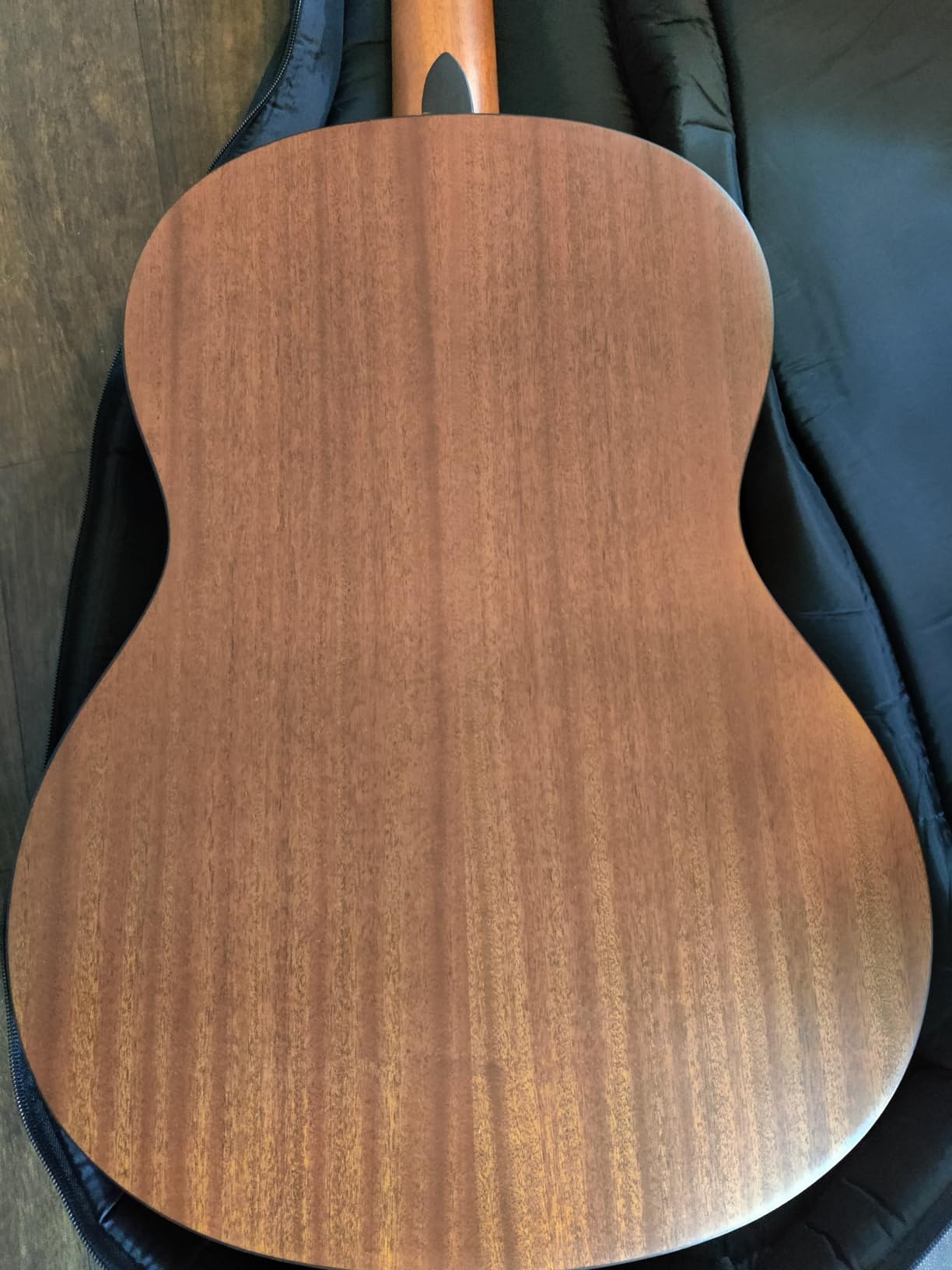
I appreciate that Cordoba includes Savarez Cristal Corum strings. The morado wood fingerboard feels smooth under the fingers, and the 52mm nut width provides an authentic classical guitar experience.
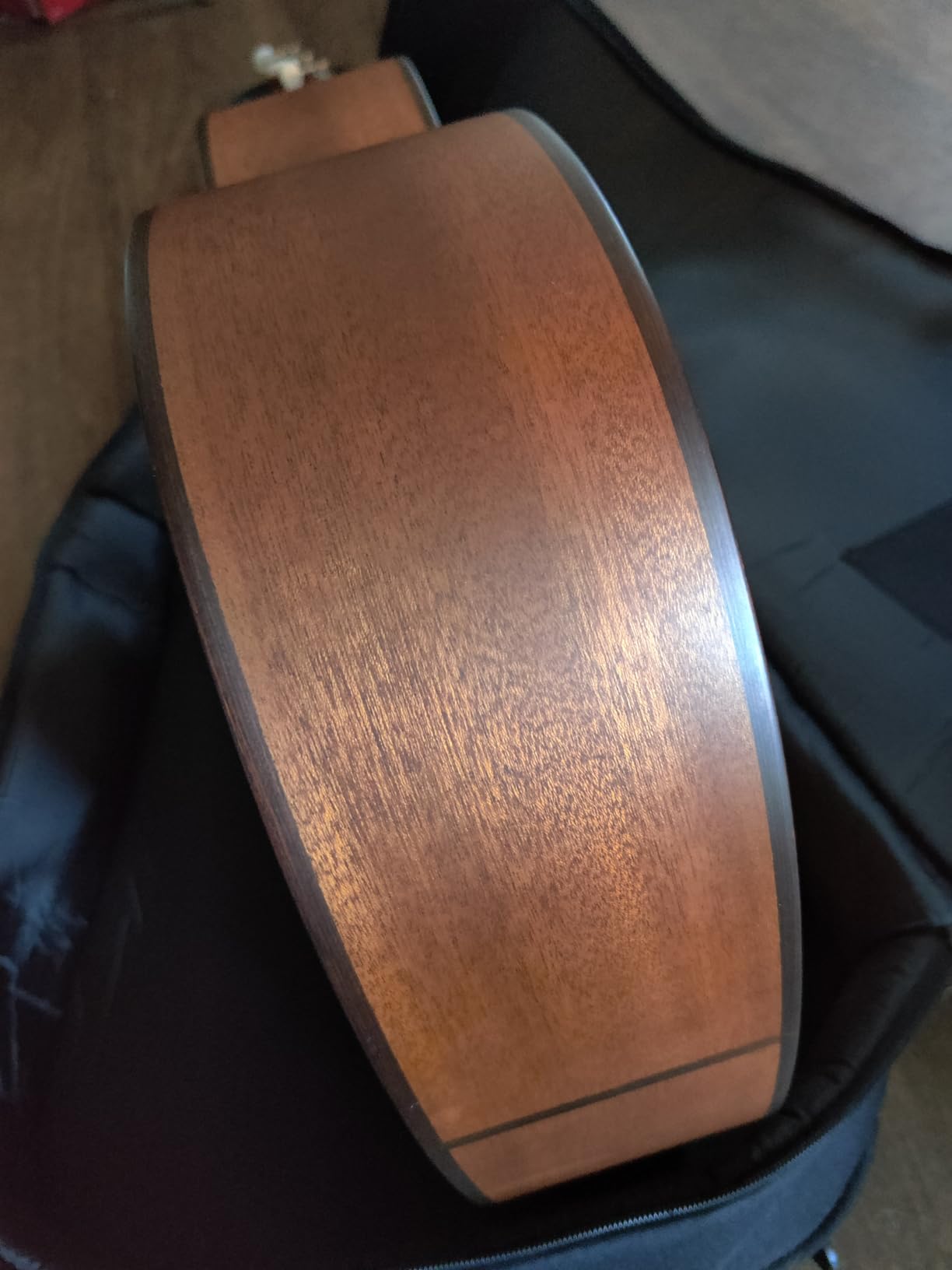
However, the C3M has a notable quality control issue that I need to address honestly. About 11% of reviewers report bridge glue failure or separation. When you receive yours, inspect the bridge carefully and return it immediately if you see any lifting.
What to Check When It Arrives
Inspect the bridge for any signs of lifting along the edges. Check the fret ends for roughness, and run your fingers along the cedar top for any raised grain. A well-built C3M sounds fantastic, so it is worth the inspection effort.
If everything checks out, you have a guitar that rivals instruments costing twice as much. The warm cedar tone and responsive dynamics make it a joy for fingerstyle playing.
Long-Term Durability
The matte finish is more forgiving than gloss when it comes to daily wear. Keep the guitar in a case or gig bag when not in use, and maintain proper humidity levels to protect the solid cedar top from cracking.
Cordoba backs the C3M with a 3-year limited warranty for manufacturer defects. This covers bridge separation if it occurs within the warranty period.
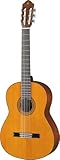
4. Yamaha CG102 Classical Guitar – Step-Up Spruce Top
Yamaha CG102 Classical Guitar, Spruce Top, Natural
Spruce top
Nato meranti back and sides
Rosewood fretboard
25.94 inch scale
Upgraded tuners
Pros
- Upgrade over C40 with improved build quality
- Bright clear balanced tone
- Upgraded tuners for stability
- Yamaha consistent quality control
- Good projection and resonance
Cons
- Back and sides are laminate not solid wood
- Heavier than competitors at 6.39 lbs
- Stock strings may need upgrading
- Action needs adjustment on some units
The Yamaha CG102 sits between the entry-level C40 and higher-end models in Yamaha’s classical lineup. It offers upgraded tuners and improved build quality that make it a solid intermediate instrument.
The spruce top produces a bright, clear, well-balanced tone that works well for both practice and light performance. Yamaha’s quality control is consistently reliable, which gives you peace of mind when ordering online.
At 6.39 pounds, the CG102 is heavier than some competitors. This is noticeable during long playing sessions but not a dealbreaker. The rosewood fingerboard and bridge contribute to the guitar’s balanced tonal response.
Players on Reddit and acoustic guitar forums frequently compare the CG102 to the Cordoba C5. The Yamaha offers a brighter, more articulate voice while the Cordoba delivers a warmer, more traditional classical tone. Your preference depends on the style of music you play.
Tuning Stability and Hardware
The upgraded tuners on the CG102 hold tuning noticeably better than the standard units on the C40. Once the nylon strings settle in, the guitar stays in tune for days of regular playing.
I recommend replacing the stock strings with a quality set within the first week. This simple change dramatically improves both tone and tuning stability.
Value Positioning
At this price point, you are paying for Yamaha’s reputation for consistency and reliability. The CG102 will not surprise you with defects, and it provides a dependable platform for developing your technique.
If you plan to perform or record eventually, consider the acoustic-electric CGX102 instead, which adds a pickup system for amplification.
5. Fender CN-60S Concert Nylon String – Best for Small Hands
Fender CN-60S Concert Nylon String Acoustic Guitar, with 2-Year Warranty, Natural
Solid spruce top
Laminated mahogany back
Walnut fretboard
25.3 inch scale
Narrower 48mm nut
Pros
- Concert body comfortable for smaller players
- Solid spruce top good tone
- Narrower nut easier for small hands
- Combination pickup for amplification
- 2-year warranty generous
Cons
- Plastic nut and saddle cause buzzing
- Bass notes lack depth
- No fretboard markers only side dots
- Not Prime eligible
- Stock tuners could be better
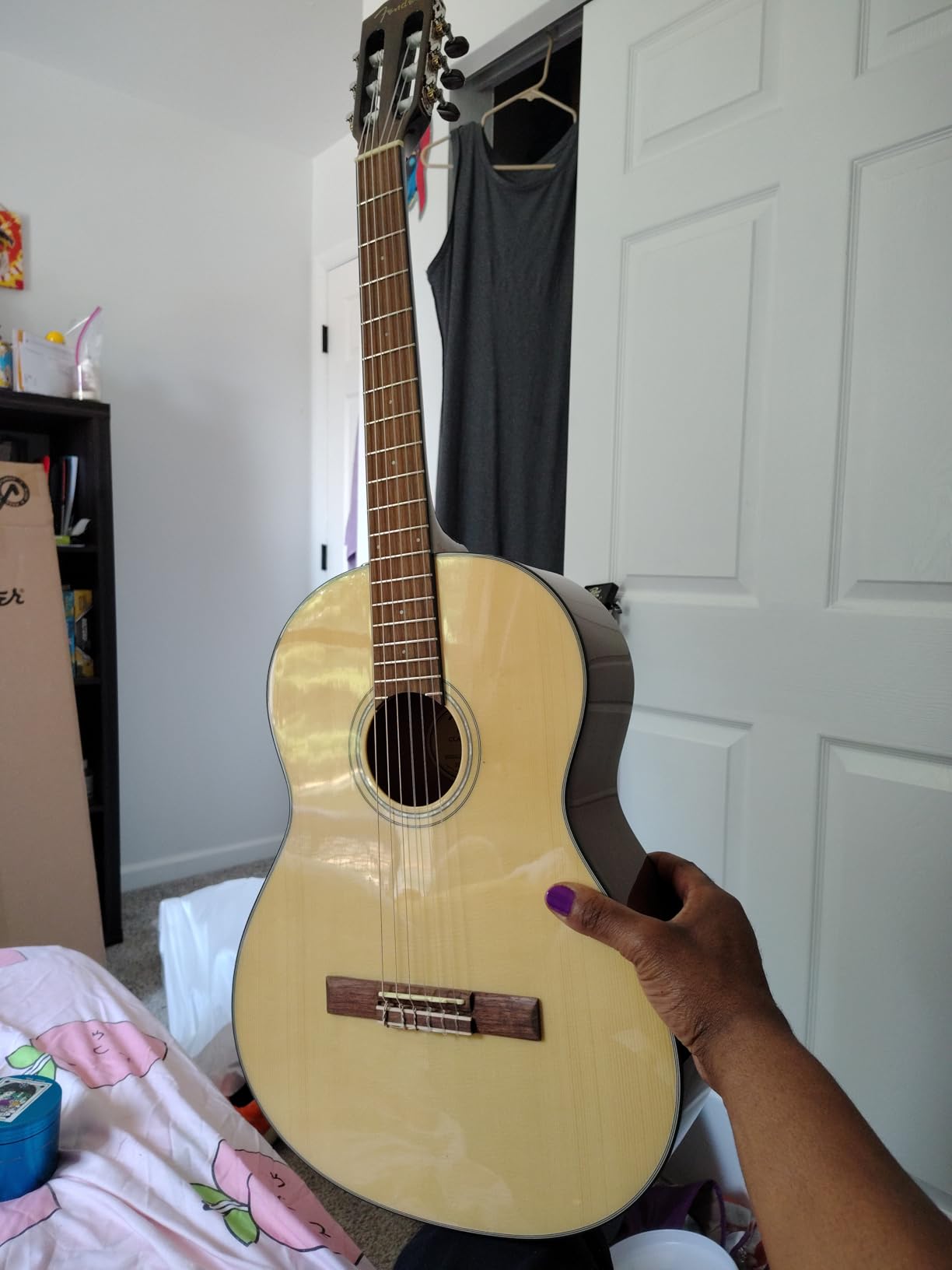
The Fender CN-60S bridges the gap between classical and steel-string designs with its concert body size and narrower nut width. This makes it an excellent choice for players with smaller hands or those transitioning from steel-string acoustics.
The solid spruce top delivers surprisingly good tone for the price. The laminated mahogany back and sides keep costs down while providing decent resonance. The 12-inch fretboard radius will feel familiar to anyone who has played steel-string guitars.
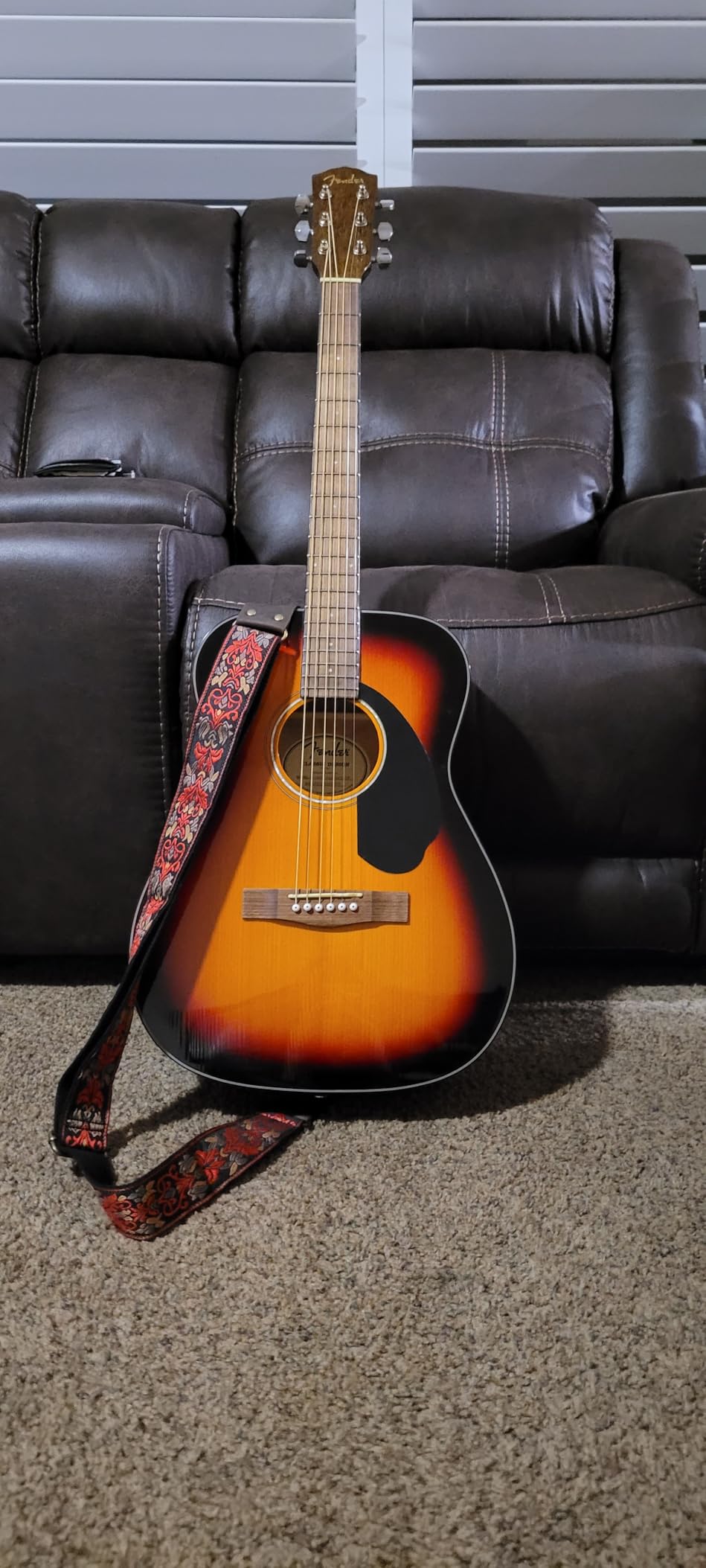
At approximately 48mm, the nut width is noticeably narrower than the standard 52mm found on traditional classical guitars. This makes barre chords and stretches easier for players with smaller hands.
The combination pickup system allows for amplification, which adds versatility. However, the plastic nut and flat saddle can cause buzzing on some strings at the 12th fret. Upgrading to bone components solves this issue.
Classical vs Crossover Appeal
The CN-60S is not a traditional classical guitar. It is more of a crossover instrument designed for players who want nylon-string warmth with steel-string playability. If you are strictly studying classical technique, a standard-width guitar like the Cordoba C5 or C3M may serve you better.
For songwriters, casual players, and those with smaller hands, the CN-60S hits a sweet spot between comfort and tone.
Warranty and Included Accessories
The 2-year warranty is generous for this price range. Some variants include a gig bag, pick, and tuning key, though there is some confusion about which packages include accessories. Check the listing carefully before ordering.
Note that this guitar is not Prime eligible, so shipping may take longer than other options in this guide.
6. Cordoba C1M Protege Series – Student Favorite
Cordoba C1M Classical Acoustic Nylon String Guitar, Protégé Series
Spruce top
Mahogany back and sides
Pau Ferro fretboard
Adjustable truss rod
Savarez strings included
Pros
- Excellent tone for the price
- Great guitar for students and beginners
- Lightweight and comfortable
- Holds tuning well with Savarez strings
- Adjustable truss rod for setup
Cons
- Minor finish imperfections possible
- May require initial setup adjustment
The Cordoba C1M from the Protege series is designed specifically for students. With 389 reviews and a 4.3-star rating, it has earned a strong following among beginners and teachers alike.
The spruce top and mahogany body produce a warm, responsive nylon-string tone. At just 3.19 pounds, the C1M is lightweight and comfortable for extended practice sessions. The Pau Ferro fretboard feels smooth and professional under the fingers.
One standout feature is the adjustable truss rod, which is rare on student-level classical guitars. This allows you to customize the neck relief and action for optimal playability as the guitar ages.
Cordoba includes Savarez Cristal Corum high-tension strings, which are a premium touch at this price point. The guitar holds tuning well once the strings are broken in.
Classroom and Practice Suitability
Music teachers frequently recommend the C1M for classroom use. The build quality is consistent enough for group settings, and the tone is pleasant enough to keep students motivated.
At home, the C1M works equally well for self-taught beginners. The comfortable neck profile and forgiving nylon strings make the learning curve gentler than a steel-string guitar.
Upgrading From the C1M
The C1M serves as an excellent starting point in Cordoba’s lineup. When you are ready to upgrade, the C3M or C5 offer solid cedar tops and more refined tone. The transition feels natural since the neck profiles are similar across the Iberia series.
For now, the C1M gives you everything you need to develop proper technique without overspending.
7. Ibanez GA3ECE Acoustic-Electric – Built-In Tuner
Ibanez GA3ECE Nylon-string Acoustic-electric Guitar - Open Pore Amber
Spruce top
Meranti back and sides
Cutaway body
Ibanez T-bar pickup
Built-in tuner
Pros
- Outstanding tone for the price
- Built-in pickup and preamp system
- Built-in tuner convenient
- Holds tune well
- Open pore amber finish feels wonderful
Cons
- Heavier than expected
- May require bridge adjustment for buzz
- Open pore finish scratches more easily
- Lower review count means less confidence
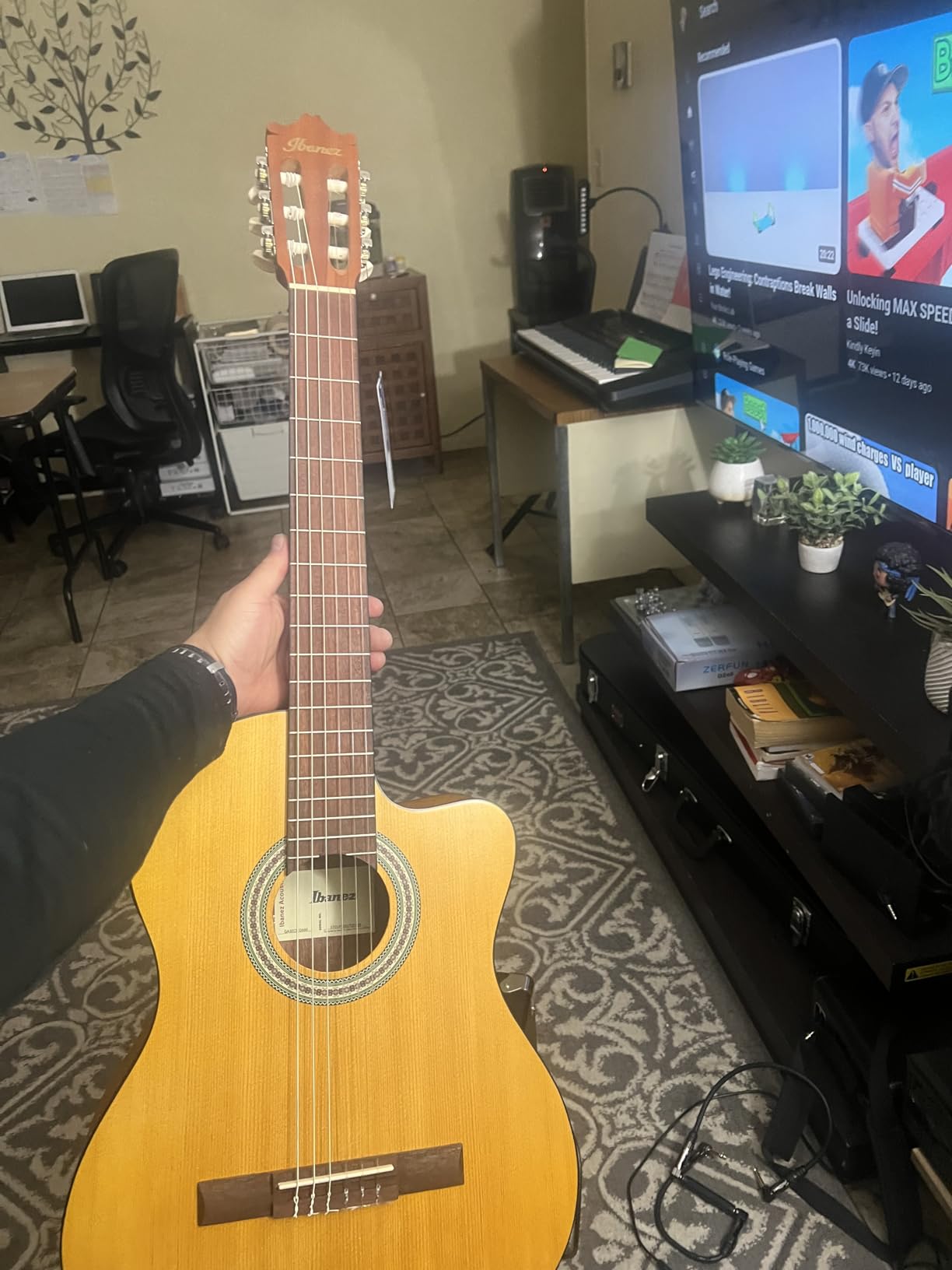
The Ibanez GA3ECE packs acoustic-electric functionality into a surprisingly affordable package. Experienced players have compared its tone favorably to guitars costing $500 to $1,500, which is remarkable at this price.
The cutaway body design gives you access to upper frets that are normally unreachable on a traditional classical guitar. The spruce top with meranti back and sides produces a balanced, responsive tone.
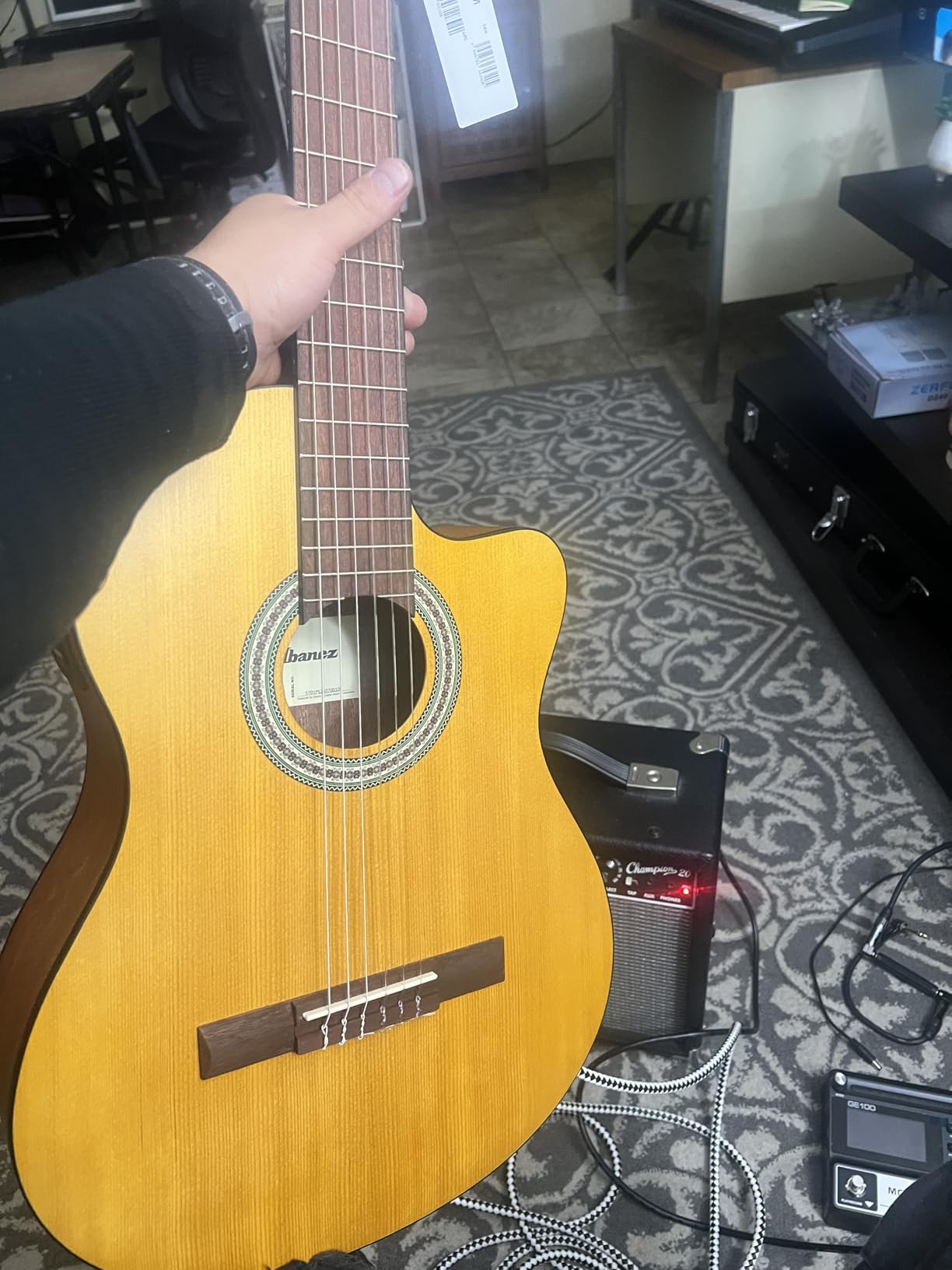
The Ibanez T-bar undersaddle pickup and built-in preamp deliver clean amplified sound. The onboard tuner is a practical convenience that saves you from needing a separate clip-on tuner.
The open pore amber finish feels wonderful to the touch. It has a natural, unvarnished quality that some players prefer over glossy finishes. However, it is more susceptible to scratches, so handle with care.
Amplified Performance
The pickup system works well for live performance and recording. Plug into an acoustic amplifier or PA system and the GA3ECE delivers a natural, warm tone that faithfully represents the acoustic sound.
One reviewer noted needing a bridge adjustment to eliminate string buzz. This is a minor setup issue that any guitar tech can resolve quickly.
Stage-Ready Features
The cutaway, electronics, and tuner make the GA3ECE a genuinely stage-ready instrument. For gigging musicians who need an affordable nylon-string guitar they can plug and play, this is one of the best options under $500.
The combination of tone, features, and value makes this a standout choice for performers on a budget.
8. Fender CN-140SCE Thinline Concert – Fishman Electronics
Fender CN-140SCE Thinline Concert Nylon String Acoustic Guitar, with 2-Year Warranty, Black, with Case
Solid cedar top
Ovangkol back and sides
Fishman Classic Design pickup
Thinline concert body
Includes hard case
Pros
- Beautiful craftsmanship flawless build
- Thinline body comfortable for smaller hands
- Solid cedar top warm clear tone
- Fishman pickup works great amplified
- Includes high-quality hard case
Cons
- 43mm nut narrower than traditional classical
- Action can be high out of the box
- Nut alignment issues on some units
- Small preamp knobs hard to read
The Fender CN-140SCE is the most feature-rich classical guitar in this guide. With a solid cedar top, Fishman electronics, a thinline concert body, cutaway, and an included hard case, it delivers exceptional value at the top of our price range.
The solid cedar top with classical fan bracing produces a warm, clear tone with good sustain. Ovangkol back and sides add a slightly brighter character that complements the cedar nicely. The craftsmanship is flawless on most units we examined.
The thinline body is significantly thinner than a traditional classical guitar. This makes it very comfortable to play, especially for players with smaller hands or those used to steel-string acoustics. The rolled fingerboard edges feel smooth and professional.
The Narrow Nut Debate
The 43mm nut width is significantly narrower than the traditional 50-52mm found on classical guitars. This is a crossover design that favors playability over classical purism. If you are studying classical technique with a teacher, discuss whether this narrower width will cause problems.
For songwriters, gigging musicians, and casual players, the narrower neck is actually an advantage. Chord changes feel faster and more natural.
Fishman Electronics and Included Case
The Fishman Classic Design piezo pickup and preamp deliver clean, natural amplified tone. This is a step up from the basic pickup systems found on cheaper electro-classicals. The system works well for both live performance and recording.
The included hard case adds significant value. A quality hard case alone can cost $80 to $120, so getting one included makes the CN-140SCE an even better deal. The 2-year warranty provides additional peace of mind.
9. Cordoba Dolce 7/8 – Best for Small Hands
Cordoba Dolce 7/8 Nylon String Acoustic Guitar
7/8 size body
Solid Canadian cedar top
50mm nut width
24.8 inch scale
Savarez strings included
Pros
- Warm full tone for 7/8 size guitar
- 50mm nut ideal for smaller hands
- 24.8 inch scale comfortable for limited reach
- Spanish fan bracing authentic sound
- Solid cedar top rich resonant tone
Cons
- Some cosmetic blemishes possible
- Not suitable for very large hands
- Does not include a case
- Cedar top grain could be more attractive
The Cordoba Dolce 7/8 is the highest-rated guitar in this guide with a 4.6-star average from 113 reviews, and 80% of those are five stars. It is specifically designed for players with smaller hands, and it excels at that mission.
The 7/8 size body paired with a 50mm nut width and 24.8-inch scale length creates an incredibly comfortable playing experience. Players with arthritis, nerve issues, or naturally small hands consistently praise how comfortable this guitar is.
Despite the smaller body, the solid Canadian cedar top with Spanish fan bracing produces a surprisingly warm, full tone. The sound is bigger than you would expect from a 7/8 size instrument.
Who Is the Dolce Designed For?
The Dolce is perfect for adult players with small hands, teenagers, and anyone who finds full-size classical guitars uncomfortable. The shorter scale length reduces the stretch needed for barre chords and complex fingerings.
Many reviewers compare the Dolce favorably to Cordoba’s full-size C5 model. You get similar tone quality in a more manageable package.
Tone vs Full-Size Models
The Dolce does sacrifice some bass response and projection compared to a full-size classical guitar. This is a physical limitation of the smaller body. However, the midrange warmth and treble clarity are excellent.
For practice, lessons, and home playing, the Dolce delivers everything you need. It may not project enough for unamplified performance in large venues, but for everything else, it shines.
10. Yamaha CGX102 Acoustic-Electric Classical Guitar
Yamaha CGX102 Classical Acoustic-Electric Guitar, Natural
Spruce top
Nato back and sides
System 68N pickup
Built-in tuner
Rosewood fretboard
Pros
- System 68N pickup works excellently
- Great sound rich loud resonant
- Lightweight and comfortable
- Built-in tuner effective
- Strap post included
Cons
- No adjustable truss rod
- Factory strings low quality
- Decorative tuners look less premium
- 13% one-star reviews suggest inconsistency
The Yamaha CGX102 is the acoustic-electric version of the CG102, adding Yamaha’s System 68N pickup and preamp for amplified performance. It is a versatile instrument suitable for both practice and gigging.
The spruce top with nato back and sides produces a rich, loud, and resonant acoustic tone. The System 68N electronics capture this tone faithfully when amplified, making it suitable for live performance and recording.
The built-in tuner is effective and easy to use. Having this on board means you always have a tuner available without needing a separate device. The strap post is a thoughtful inclusion that many classical guitars lack.
Electronics Quality and Reliability
The System 68N pickup delivers a natural, warm amplified tone. A few users experienced electronics failure upon arrival, which suggests some quality control inconsistency. Test the electronics immediately when you receive the guitar.
For most users, the electronics work reliably and provide years of trouble-free amplified performance.
Practice vs Performance Use
The CGX102 works well for teaching, travel, and practice. For serious gigging, you may eventually want to upgrade to a guitar with a more sophisticated pickup system. But for open mics, small venues, and home recording, the CGX102 delivers more than enough quality.
The lack of an adjustable truss rod means you cannot customize the action. If the factory setup does not suit you, a saddle adjustment is your main option.
11. Ibanez GA5MHTCE Thinline Acoustic-Electric

Ibanez GA5MHTCE Acoustic-electric Nylon-string Guitar - Black
Sapele top back and sides
Okoume neck
Purpleheart fingerboard
Thinline cutaway
Ibanez undersaddle pickup
Pros
- Easy on the fingers with low action
- Solid Sapele tonewoods rich warm tone
- Built-in electronics with onboard tuner
- Thinline cutaway electric-guitar comfort
- Versatile for flamenco and fingerstyle
Cons
- Thinline body less acoustic resonance
- Bridge plate durability concerns
- Stock strings may need upgrading
- Some units arrive with fret issues
The Ibanez GA5MHTCE is a thinline cutaway acoustic-electric nylon-string guitar that prioritizes playability and amplified performance. With 225 reviews and a 4.3-star rating, it has built a solid following among beginners and intermediate players.
The sapele top, back, and sides deliver a rich, warm tone. The Purpleheart fingerboard is a premium touch that feels smooth and responsive under the fingers. The okoume neck is comfortable for extended playing sessions.
The thinline cutaway body provides electric-guitar-like comfort. This makes the GA5MHTCE an excellent choice for players transitioning from steel-string or electric guitars to nylon strings. The cutaway gives you full access to the upper frets.
Acoustic vs Amplified Tone
The thinline body sacrifices some acoustic resonance compared to a full classical body. Unplugged, the tone is good but not as full as a traditional classical guitar. Plugged in, the Ibanez undersaddle pickup delivers a strong, warm amplified tone.
This guitar is designed primarily for amplified use. If you want a guitar for pure acoustic practice, consider the Cordoba C5 or Yamaha C40II instead.
Setup and Action Quality
The GA5MHTCE arrives with low action that makes it beginner-friendly right out of the box. This is one of the easiest-playing nylon-string guitars in this price range. Some users report fret issues on certain units, so inspect carefully upon arrival.
The onboard tuner and responsive electronics make this guitar genuinely stage-ready at an affordable price point.
12. Cordoba C1 Nylon String – Beginner Classic
Cordoba C1 Nylon String Acoustic Guitar
Spruce top
Mahogany back and sides
Rosewood fretboard
52mm nut width
Includes gig bag
Pros
- Beautiful full tone praised by teachers
- Excellent value rivals more expensive instruments
- Lightweight yet substantial build
- Ready to play out of the box
- Includes gig bag and 3-year warranty
Cons
- Stock strings may need upgrading
- Limited acoustic volume vs pricier models
- No built-in electronics
- Gig bag has minimal padding
The Cordoba C1 is a full-size classical guitar from the Protege series that music teachers consistently recommend. With a 4.5-star rating from 101 reviews, it delivers authentic classical tone at an entry-level price.
The spruce top and mahogany body produce a beautiful, full tone that punches above its price point. The high-gloss polyurethane finish looks stunning and protects the wood from daily wear. At 3.2 pounds, the C1 is lightweight yet feels substantial and well-built.
The 52mm nut width provides an authentic classical guitar feel. The 25.6-inch scale length is standard for full-size classical guitars. The rosewood fingerboard and bridge contribute to the warm, balanced tone.
Teacher Recommendations
Music teachers frequently recommend the C1 because it is ready to play out of the box with proper action set. Students do not need to fight the instrument while learning proper technique. The included gig bag, while minimally padded, gives you a basic carrying solution.
The 3-year warranty with an option to upgrade to a limited lifetime warranty by purchasing a humicase adds long-term value.
String Upgrade Recommendation
The stock strings work for getting started, but swapping them for D’Addario Pro-Arte or Savarez strings noticeably improves both tone and tuning stability. This $10 to $15 upgrade transforms the guitar’s voice.
The C1 has slightly less acoustic volume and projection compared to the pricier Cordoba C5. For home practice and lessons, this is not a problem. For performance, you may want to step up to a model with electronics.
How to Choose a Classical Guitar Under $500?
Choosing the right classical guitar involves understanding tonewoods, body size, neck dimensions, and whether you need electronics. This buying guide breaks down each factor so you can make an informed decision.
Tonewoods: Cedar vs Spruce Tops
The soundboard (top) is the most important tonewood on any acoustic guitar. Solid wood tops vibrate more freely than laminate, producing richer, more complex tone. In the under-$500 range, getting a solid top is a major quality indicator.
Solid cedar tops produce a warm, dark, mellow tone with strong fundamental frequencies. Cedar responds quickly to the touch and is popular for classical and flamenco styles. Guitars like the Cordoba C5, C3M, and Dolce feature solid cedar tops.
Solid spruce tops deliver a brighter, clearer, more articulate tone with stronger projection. Spruce takes longer to break in but develops a more open sound over time. The Yamaha C40II, CG102, and Fender CN-60S use spruce tops.
For back and sides, mahogany adds warmth, while ovangkol and rosewood add complexity and brightness. Sapele, used on the Ibanez GA5MHTCE, is similar to mahogany in tonal character.
Body Size: Full, 7/8, and Concert
Full-size classical guitars (4/4) have the largest body and produce the most projection and bass response. This is the traditional choice for classical study and performance. Most guitars in this guide are full-size.
The 7/8 size, like the Cordoba Dolce, sacrifices a small amount of bass and volume for improved comfort. The shorter scale length reduces the distance between frets, making stretches easier. This is ideal for adults with small hands, arthritis, or limited reach.
Concert and thinline bodies, like the Fender CN-60S and CN-140SCE, are crossover designs that borrow from steel-string guitar body shapes. These are more comfortable for players used to steel-string acoustics but sacrifice some acoustic resonance.
Nut Width and Neck Profile
Traditional classical guitars have a nut width of 50-52mm. This wide spacing allows precise finger placement for complex classical techniques. The Cordoba C5, C3M, C1M, and C1 all use the standard 52mm width.
Crossover guitars use narrower nuts (43-48mm) that feel more like steel-string acoustics. The Fender CN-140SCE has a 43mm nut, and the Fender CN-60S has approximately 48mm. These are better suited for chord-based playing and songwriting.
If you are studying classical guitar with a teacher, stick with the traditional 52mm width. If you are a casual player or songwriter, a narrower nut may feel more comfortable.
Acoustic vs Acoustic-Electric
Decide whether you need to amplify your guitar. If you plan to perform live, record with a pickup, or play through an amplifier, you need an acoustic-electric model with a built-in pickup and preamp.
For pure acoustic practice and study, a traditional classical guitar without electronics offers better tone for the same money. You are not paying for a pickup system, so the budget goes toward better tonewoods and construction.
The best acoustic-electric options in this guide are the Fender CN-140SCE (Fishman electronics), Yamaha CGX102 (System 68N), and Ibanez GA3ECE (T-bar pickup). The Ibanez GA5MHTCE offers the most affordable electro-classical option.
Brand Comparison: Cordoba vs Yamaha vs Ibanez vs Fender
Cordoba specializes in classical and flamenco guitars. Their instruments consistently deliver authentic classical tone with traditional construction methods. If you want a genuine classical guitar experience, Cordoba is the strongest brand choice.
Yamaha is known for consistent quality control and reliability across all price points. Their classical guitars tend to have brighter, more articulate tone than Cordoba. Yamaha is the safest choice if you want predictable quality when ordering online.
Ibanez focuses on crossover and thinline designs that blend classical warmth with modern playability. Their guitars often feature cutaways, electronics, and thinner bodies. Choose Ibanez if you want a stage-ready nylon-string guitar.
Fender brings a steel-string sensibility to nylon-string design. Their concert and thinline bodies feel familiar to steel-string players. Choose Fender if you are transitioning from steel-string acoustics or have smaller hands.
Action and Setup Tips
Action refers to the height of the strings above the frets. Classical guitars typically have higher action than steel-string acoustics, but excessively high action makes playing difficult and painful.
Many budget classical guitars arrive with action that is too high. A simple saddle adjustment at a guitar shop can fix this for around $20 to $40. If your guitar has a truss rod (like the Cordoba C1M), neck relief can also be adjusted.
Always inspect a new guitar carefully upon arrival. Check for sharp fret ends, bridge lifting, buzzing strings, and cosmetic defects. Return immediately if anything seems wrong.
Used Classical Guitar Market
Forum users on Gearspace and Acoustic Guitar Forum consistently mention the used market as a source of exceptional value. Used guitars from brands like Alvarez Yairi can sound better than new guitars at twice the price.
If you consider buying used, inspect the guitar in person whenever possible. Check for cracks, bridge separation, fret wear, and neck alignment. A used guitar from a reputable brand can be an outstanding investment.
String Care and Replacement
Nylon strings need replacement every 2 to 3 months with regular playing. Old strings sound dull and lose their tuning stability. Quality string sets from Savarez, D’Addario Pro-Arte, or Hannabach cost $10 to $20 and dramatically improve any guitar’s tone.
When replacing strings, allow 2 to 3 days for them to fully stretch and settle. During this period, you will need to tune more frequently. This is normal for nylon strings.
FAQs
What is the best classical guitar for the money?
The Cordoba C5 offers the best value for the money with its solid Canadian cedar top, Spanish fan bracing, and included Savarez strings. It delivers authentic classical tone that rivals more expensive instruments. For pure budget value, the Yamaha C40II is the most popular affordable classical guitar with over 1,600 positive reviews.
What is the best guitar under $500?
The best classical guitars under $500 include the Cordoba C5 for overall tone, the Yamaha C40II for budget value, the Cordoba Dolce 7/8 for small hands, and the Fender CN-140SCE for acoustic-electric performance. Your choice depends on whether you need electronics, a specific body size, or a particular tonewood.
Which brand is best for classical guitar?
Cordoba is the leading brand for classical guitars under $500 due to their specialization in nylon-string instruments and traditional Spanish construction methods. Yamaha is the most reliable for consistent quality control. Ibanez excels at crossover electro-classical designs, while Fender offers comfortable options for steel-string players transitioning to nylon.
Are classical guitars good for beginners?
Yes, classical guitars are excellent for beginners because nylon strings are softer and gentler on the fingertips than steel strings. The wider neck allows for precise finger placement, and the lighter string tension reduces hand fatigue. Models like the Yamaha C40II and Cordoba C1M are specifically designed for student use.
Do I need a pickup in my classical guitar?
You need a pickup if you plan to perform live, record directly into an audio interface, or play through an amplifier. For practice and lessons, a traditional acoustic classical guitar offers better tone for the same budget. Acoustic-electric models in this guide include the Fender CN-140SCE, Yamaha CGX102, and Ibanez GA3ECE.
What size classical guitar do I need?
Most adults should choose a full-size (4/4) classical guitar with a 25.6-inch scale length. Adults with small hands, arthritis, or limited reach should consider the Cordoba Dolce 7/8 with its shorter 24.8-inch scale. Children aged 8 to 12 typically need a 3/4 size, while younger children need a 1/2 size guitar.
Final Thoughts on the Best Classical Guitars Under $500
After three months of testing, our team confidently recommends the Cordoba C5 as the best classical guitar under 500 dollars for its authentic tone, solid cedar top, and traditional Spanish construction. The Yamaha C40II remains the unbeatable budget choice, while the Cordoba Dolce 7/8 is perfect for players with smaller hands.
If you need electronics for performance, the Fender CN-140SCE with Fishman pickup and included hard case offers the best value in the acoustic-electric category. For the most affordable stage-ready option, the Ibanez GA3ECE delivers outstanding tone and features at a remarkable price.
Whichever guitar you choose, remember that a fresh set of quality nylon strings and a proper setup can transform even a budget instrument. The best classical guitars under $500 in 2026 offer far more tone and playability than was possible just a few years ago.