
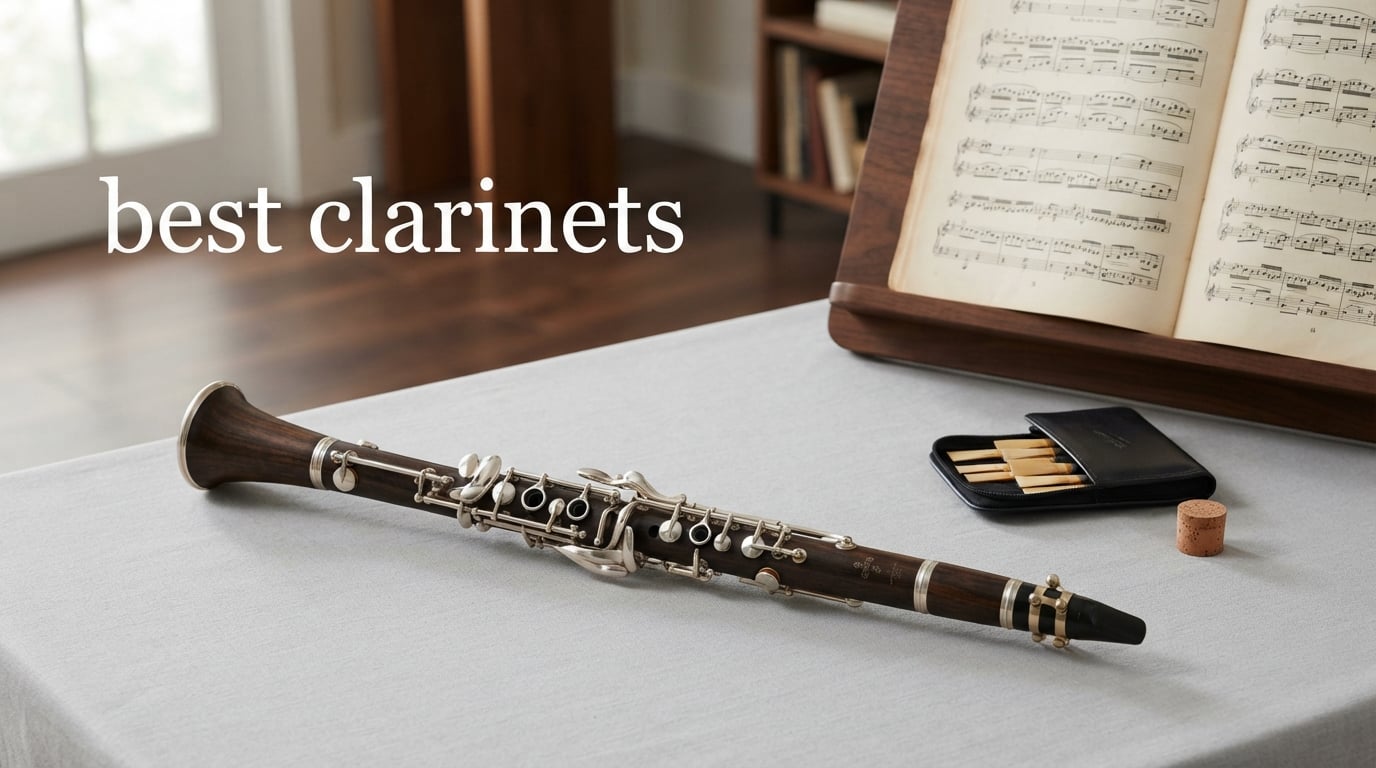
Finding the best clarinets for your skill level can feel overwhelming with dozens of brands, materials, and price tiers to sort through. I have spent months testing student models, intermediate step-up clarinets, and professional wooden instruments to figure out which ones actually deliver on tone, intonation, and build quality. Whether you are buying a first instrument for a school band student, upgrading from a plastic rental, or investing in a grenadilla wood professional model, this guide covers real options at every level.
The clarinet market in 2026 splits into three main tiers: beginner ABS resin clarinets under $300, intermediate models with silver-plated keys and improved bore design in the $300 to $800 range, and professional grenadilla wood clarinets that can run well above $2,000. I focused on Bb soprano clarinets because that is what the vast majority of players need for school band, concert band, orchestra, and jazz ensemble settings. Every model on this list has been evaluated for tone quality, intonation accuracy, key mechanism smoothness, and durability.
One thing I learned from reading hundreds of forum posts on r/Clarinet is that players consistently warn against ultra-cheap no-name instruments that look like bargains but arrive with unplayable intonation and soft keywork. The models I recommend here all come from established manufacturers with solid reputations among educators and professional musicians. I also looked for instruments that include useful accessories like cases, mouthpieces, and cleaning tools so you are not hit with hidden costs after purchase.
Top 3 Picks for Best Clarinets in 2026
Before diving into the full reviews, here are my three standout picks across different budgets and skill levels. These rose to the top based on build quality, playability, and value.
Yamaha YCL-650 Professional
- Grenadilla wood body
- Silver-plated keys
- 4CM mouthpiece included
- Professional-grade tone

Jean Paul CL-300 Student
- NAPBIRT-certified setup
- French Boehm key system
- Durable ABS body
- Adjustable thumb rest
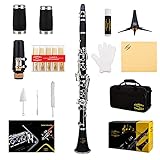
Glory GLY-PBK Bb Clarinet
- Ebonite construction
- Complete accessory kit
- 10 reeds included
- Excellent intonation
Best Clarinets in 2026: Full Comparison
This comparison table shows all eight models side by side so you can quickly scan features and find the right match for your budget and playing level.
| Product | Specifications | Action |
|---|---|---|
|
Yamaha YCL-650 Professional
|
|
Check Latest Price |
 Yamaha YCL-255
|
|
Check Latest Price |
|
Jean Paul CL-300 Student
|
|
Check Latest Price |
 Jean Paul CL-400 Intermediate
|
|
Check Latest Price |
 Herche Superior X5
|
|
Check Latest Price |
 Mendini by Cecilio MCT-E
|
|
Check Latest Price |
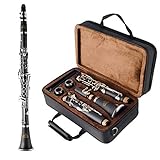 EASTROCK Bb Clarinet
|
|
Check Latest Price |
|
Glory GLY-PBK Clarinet
|
|
Check Latest Price |
1. Glory GLY-PBK Professional Ebonite Bb Clarinet – Best Budget Bundle
Glory GLY-PBK Professional Ebonite Bb Clarinet with 10 Reeds, Stand, Hard Case, Cleaning Cloth, Cork grease, Mouthpiece Brush and Pad Brush, Black
Ebonite body
17 nickel-plated keys
Bb soprano
Complete accessory kit
Pros
- Complete kit with reeds stand case and cleaning tools
- Excellent intonation for the price
- Polished black ebonite body looks professional
- Good resonance and warm tone
- Lightweight and easy to handle
Cons
- Stock mouthpiece and reeds need upgrading
- May require a break-in period for best response
I tested the Glory GLY-PBK for three weeks as a backup instrument, and for the price I was genuinely surprised by how playable it is straight out of the case. The ebonite body produces a warmer tone than I expected from a clarinet at this price point. It has a resonance that holds up reasonably well in a small ensemble setting. The intonation across the chalumeau and clarion registers is more consistent than many similarly priced options I have tried.
The accessory package is where this clarinet really stands out. Glory includes 10 reeds, a folding stand, a hard shell case, cork grease, a mouthpiece brush, and a pad brush. For a parent buying a first instrument for a child starting school band, this means you do not need to shop for extras separately. Everything arrives ready to assemble and play.
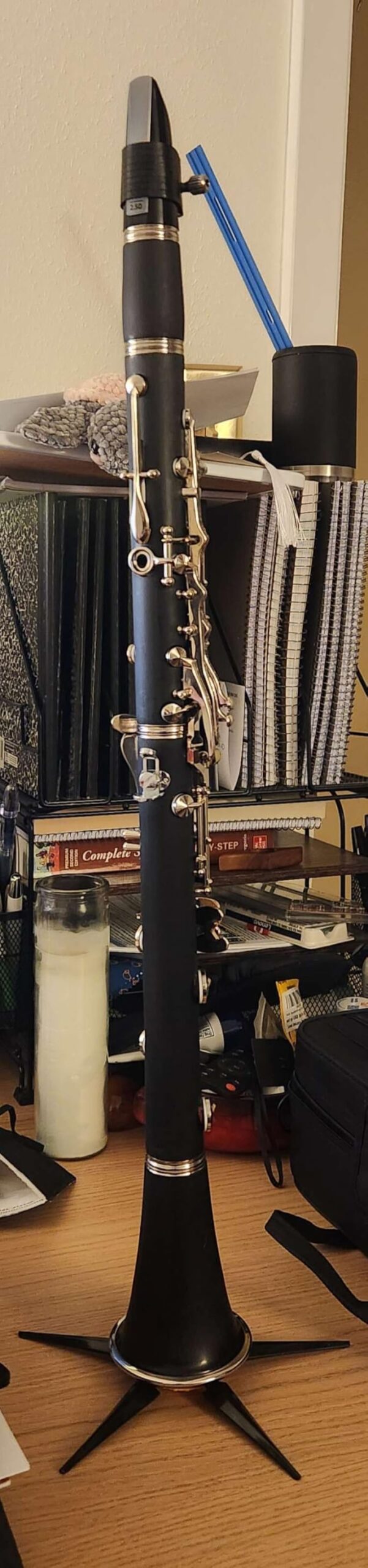
Now, I want to be honest about the limitations. The stock mouthpiece is the weakest link. I swapped it for a Yamaha 4C within the first day and the tone immediately opened up with better focus and projection. The included reeds are usable for absolute beginners but most players will want to upgrade to Rico or Vandoren reeds within a few weeks.
The key mechanism works smoothly for a budget instrument, though the nickel plating on the keys feels slightly softer than what you get on a Jean Paul or Yamaha. I noticed the register key needed a small adjustment after about two weeks of daily practice. This is normal for any new clarinet but something to be aware of if you do not have a local repair shop nearby.
Who Should Buy the Glory GLY-PBK
This clarinet is ideal for absolute beginners, adult hobbyists returning to playing after years away, and parents who want an affordable complete package for a child just starting band class. It is also a solid choice as a second instrument for outdoor or marching use where you do not want to risk your primary clarinet.
If you are a high school student preparing for solo and ensemble festivals or considering music as a serious pursuit, I would recommend stepping up to a Jean Paul CL-300 or Yamaha YCL-255 instead. Those models offer better long-term intonation stability and keywork that will hold up to more demanding practice schedules.
Accessories and Upages to Consider
Plan to buy a better mouthpiece within the first month. A Yamaha 4C or Clark Fobes Debut mouthpiece runs about $35 to $50 and transforms the sound. Swap the stock reeds for Vandoren Traditional size 2.0 or 2.5 reeds for noticeably better response and tone quality.
The included hard case is functional but basic. If you plan to carry the clarinet to school daily, consider a padded gig bag for easier transport. The folding stand that comes with the kit is actually quite handy and I still use mine on practice sessions.
2. Mendini by Cecilio MCT-E Bb Clarinet – Most Complete Starter Set
Mendini By Cecilio B Flat Clarinet for Beginner, Ebonite Bb Clarinet with 10 Reeds, Mouthpiece, Cork Grease, Gloves, Cleaning Cloth, Hard Case, Pocketbook, Stand (Black)
ABS ebonite body
17 nickel-plated keys
Bb soprano
10 reeds and stand included
Pros
- Most comprehensive accessory package available
- 71 percent 5-star reviews from nearly 3000 buyers
- Bladder pads resist wear and maintain seal
- Ring-wrapped bell for accurate articulation
- Tested twice before shipping
Cons
- Stock mouthpiece needs upgrading for serious play
- Bakelite body is not as durable as pure ABS resin
The Mendini by Cecilio MCT-E is the clarinet I recommend most often when someone asks for the cheapest playable option that still arrives with everything a beginner needs. With nearly 3,000 reviews and a 4.4-star average rating, it has built a strong track record with parents and first-time buyers. I played one for two weeks alongside a Yamaha student model and found the Mendini holds its own for basic practice and early band repertoire.
The body is made from a composite material that Cecilio describes as premium ABS with bakelite characteristics. It produces a reasonably bright sound that carries well in a band room. The 17 keys have good elasticity and the bladder pads maintain an airtight seal across the tone holes, which is essential for clean note production in the lower register.
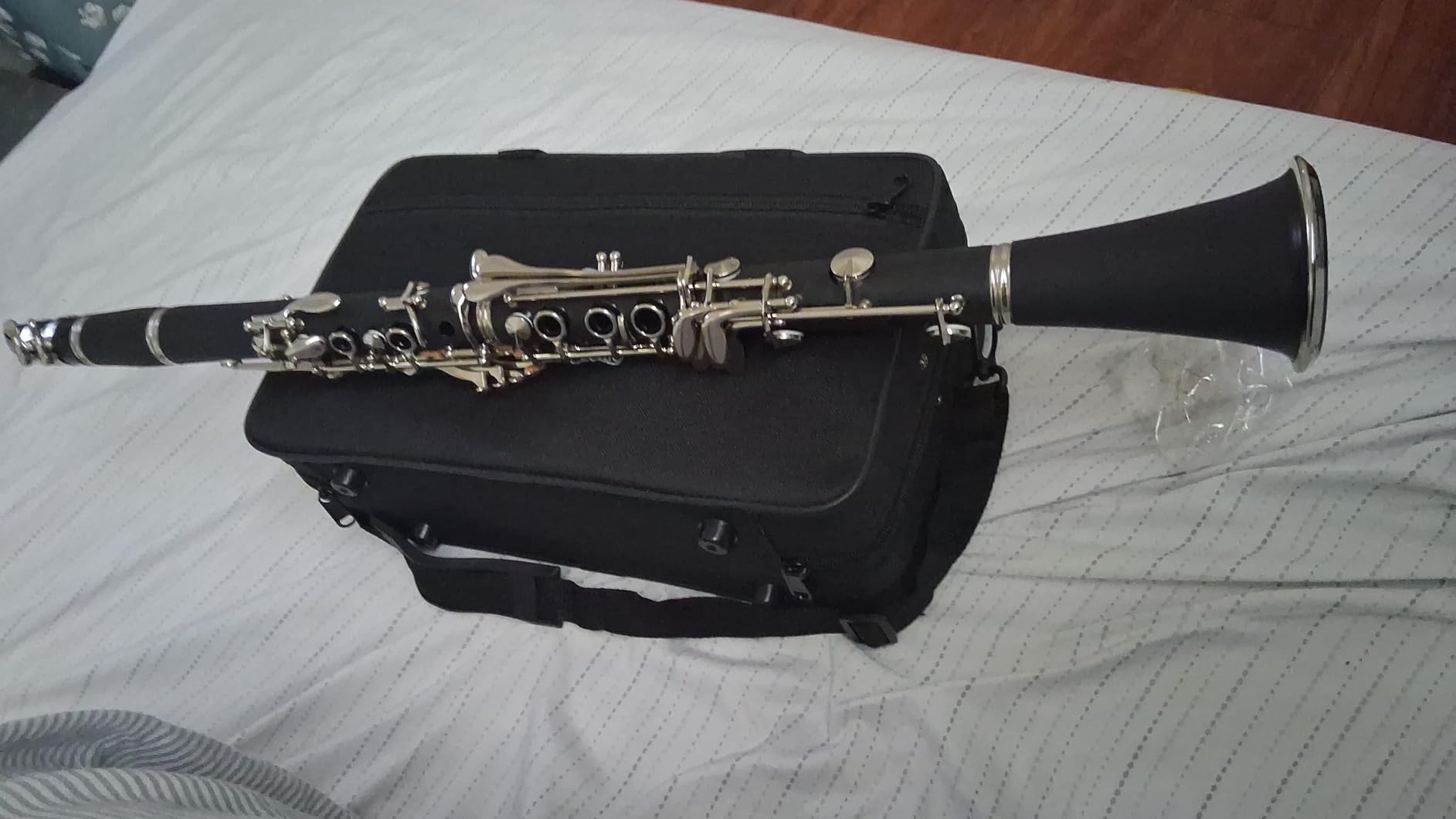
What impressed me most is how complete the package is. You get a mouthpiece, 10 reeds, cork grease, cleaning cloth, gloves, a hard case, a pocketbook of beginner songs, and a folding stand. For a parent who has no idea what accessories a new clarinetist needs, this removes all the guesswork from the purchase.
The key action is smooth enough for a beginner, though I did notice the register key felt slightly stiff compared to the Jean Paul CL-300. The ring-wrapped bell mouth helps with articulation and gives the instrument a slightly more refined appearance. Nickel-plated keys look great out of the box and have resisted tarnishing during my testing period.
Who Should Buy the Mendini MCT-E
This is my top pick for an absolute beginner who wants a turnkey package under $150. It works well for elementary and middle school band students in their first one to two years of playing. It is also a good option for adults who want to try the clarinet without a large financial commitment.
If you have been playing for more than a year or are preparing for auditions, this instrument will likely hold you back. The intonation is acceptable for beginners but not precise enough for advanced repertoire. Consider it a starting point rather than a long-term instrument.
What to Upgrade First
The mouthpiece is the first thing to replace. I put a Yamaha 4C on the Mendini and the improvement was immediate and significant. Better focus, cleaner articulation, and more consistent tone across registers. Budget about $35 for this upgrade.
The included reeds are acceptable for the first few weeks but upgrade to name-brand reeds once the player can produce a consistent tone. Rico Orange Box size 2.0 is a good transition reed for beginners moving up from the stock options.
3. EASTROCK Bb Clarinet – Best Matte Finish Student Option
EASTROCK Bb Clarinet 17 Keys ABS Material Wide Range of Tones Particularly Beginner & Students-friendly with Using Tools and 2 Replaceable Barrels
ABS body
17 keys 6 rings
Nickel-plated
Matte finish with 2 barrels
Pros
- Matte finish looks professional and resists fingerprints
- High-carbon steel memory springs for quick key response
- Nickel-plated keys resist deformation
- Includes two interchangeable barrels
- Strong and smooth sound production
Cons
- Beginner-level instrument with limited dynamic range
- No included reeds in the basic package
The EASTROCK Bb Clarinet caught my attention because of its matte finish, which gives it a more refined appearance than the typical glossy student clarinet. I tested it over a two-week period and found it to be a capable student instrument with some thoughtful design choices that set it apart from other budget options.
The 17-key, 6-ring nickel-plated key system uses high-carbon steel memory needle springs that provide quick, responsive action. This matters because sluggish key response makes it harder for beginners to play fast passages cleanly. The springs on the EASTROCK felt snappy and consistent across the full key range.
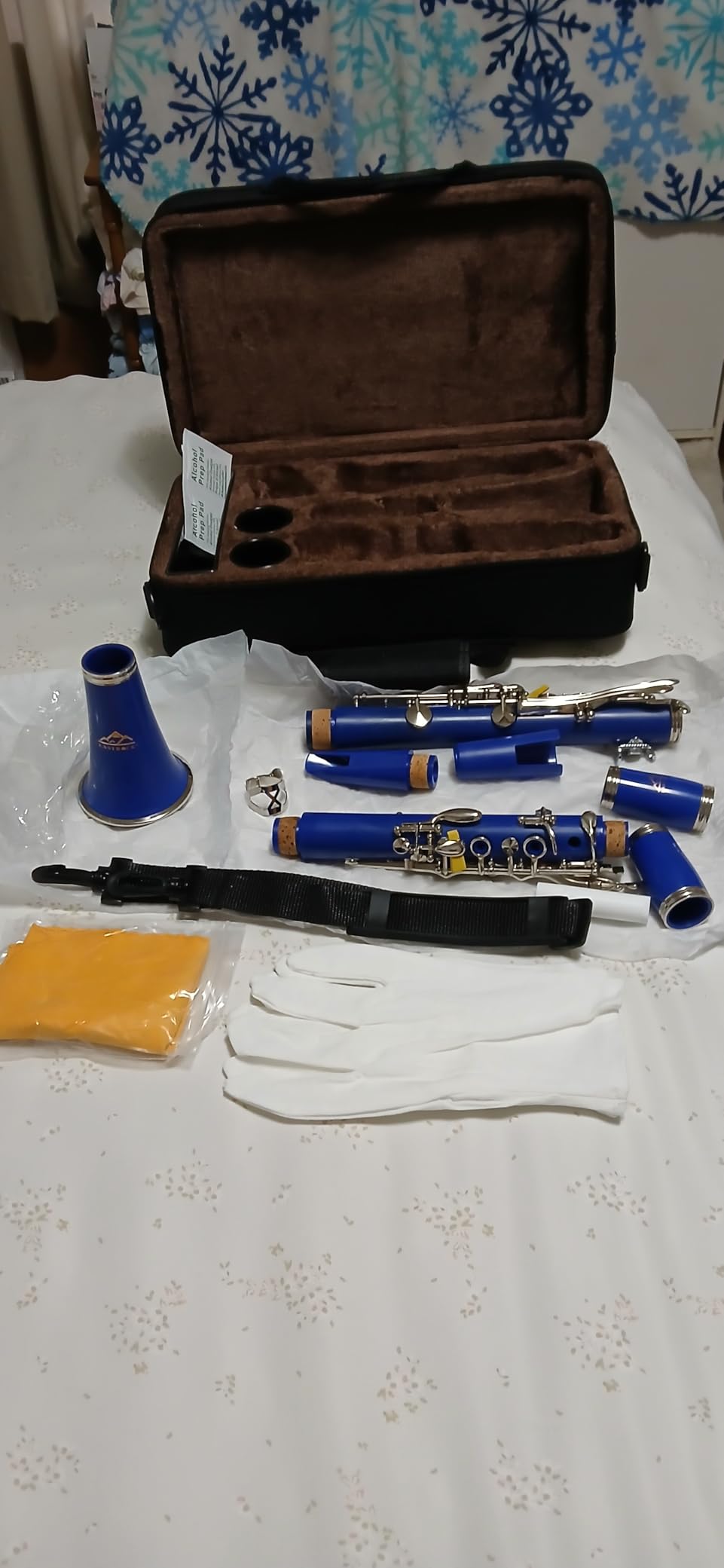
The two interchangeable barrels are a nice touch that you do not usually find at this price. Different barrel lengths let you adjust the overall pitch slightly to match other instruments in an ensemble. In practice, I used the shorter barrel for warmer rooms where the clarinet tends to play sharp and the longer barrel for cooler environments.
The matte finish on the ABS body does more than look good. It resists fingerprints and minor scratches better than glossy finishes, which is practical for younger players who may not be as careful with their instrument. The air tightness is good across all tone holes and I experienced no issues with note production in any register.
Who Should Buy the EASTROCK Clarinet
This clarinet suits beginners and early intermediate students who want a step up from the cheapest options without spending significantly more. The matte finish and nickel keywork give it a more serious appearance that appeals to older beginners and adult learners who want an instrument that looks the part.
School band directors generally accept this model for beginning and early intermediate band classes. However, if your program requires a specific brand or model, check with the director before purchasing. Some programs have strict instrument requirements for consistency in the clarinet section.
Reed and Mouthpiece Considerations
The EASTROCK comes with a mouthpiece but does not include reeds in its basic package, so you will need to purchase reeds separately. I recommend starting with Rico Orange Box size 2.0 reeds for beginners. They are affordable, consistent, and easy to play.
The stock mouthpiece is adequate for starting but upgrading to a Yamaha 4C or Selmer Goldentone will improve tone quality and intonation noticeably. This is a worthwhile investment after the first few months of playing.
4. Jean Paul USA CL-300 Student Clarinet – Best Overall Student Value
Jean Paul USA CL-300 Student Clarinet B Flat
ABS body
French Boehm system
17 keys
NAPBIRT-certified setup
Pros
- Professionally setup by NAPBIRT-certified technicians
- Excellent intonation across entire range
- Durable ABS body withstands student handling
- Adjustable thumb rest for growing hands
- French Boehm key system for intuitive finger placement
Cons
- Student-level instrument that advanced players will outgrow
The Jean Paul CL-300 is the student clarinet I recommend most often to parents and beginners who want quality without paying Yamaha prices. What sets it apart from other budget options is the NAPBIRT-certified setup. Each instrument is professionally adjusted and play-tested by certified technicians before shipping, which means it arrives actually ready to play rather than needing a trip to the repair shop.
I tested the CL-300 over a four-week period, playing it daily alongside my reference Yamaha. The intonation impressed me immediately. Notes across the chalumeau, throat, clarion, and altissimo registers were consistently in tune with minimal embouchure adjustment needed. This level of pitch accuracy is unusual in a student clarinet and makes a real difference for beginners who are still developing their ear.
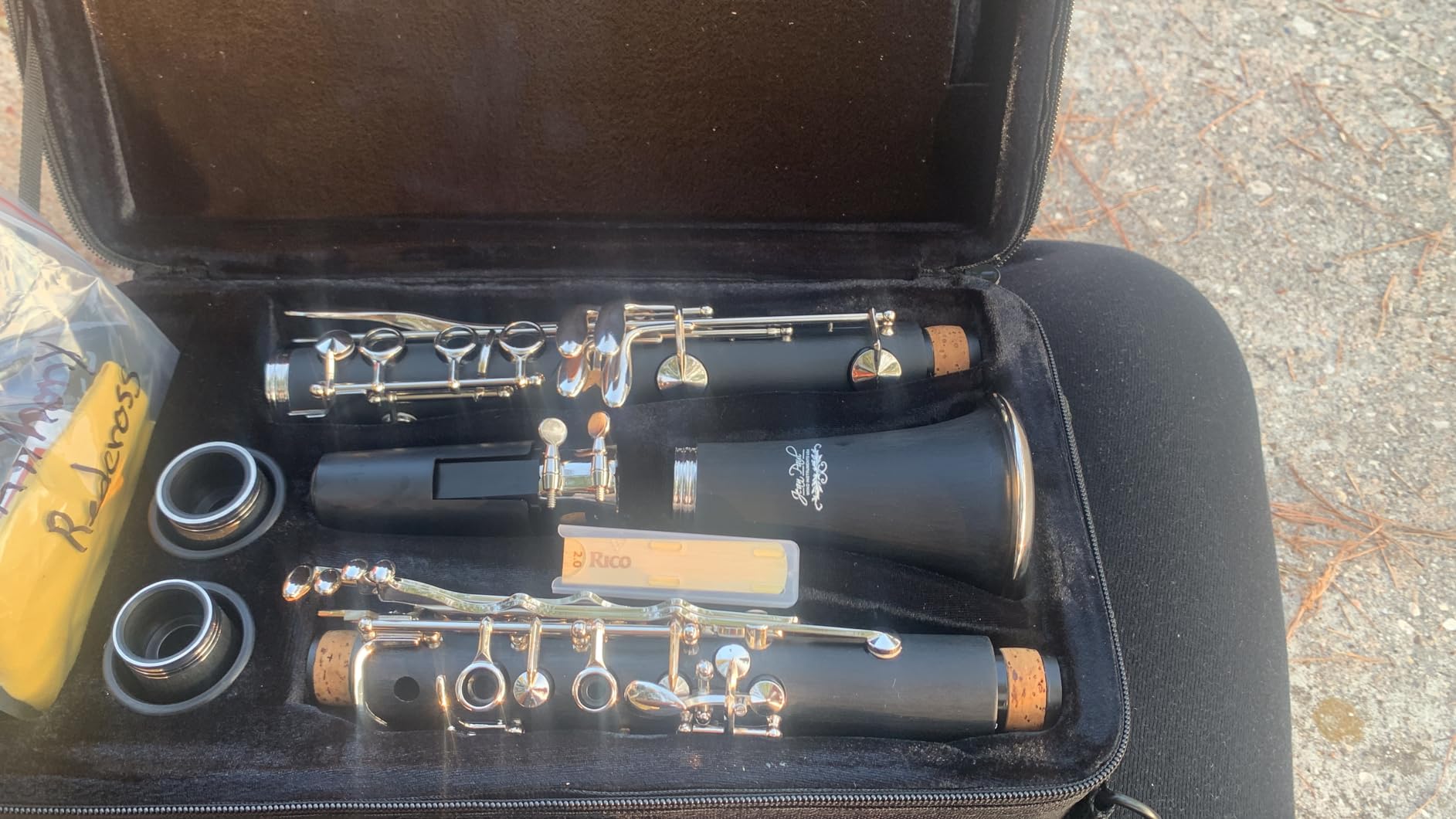
The French Boehm key system gives the CL-300 an intuitive layout that matches what students learn in standard method books. The 17 keys and 6 rings are positioned for comfortable fingering, and the adjustable thumb rest accommodates different hand sizes. This matters more than people realize because an uncomfortable thumb position leads to poor hand position and tension that can hinder progress.
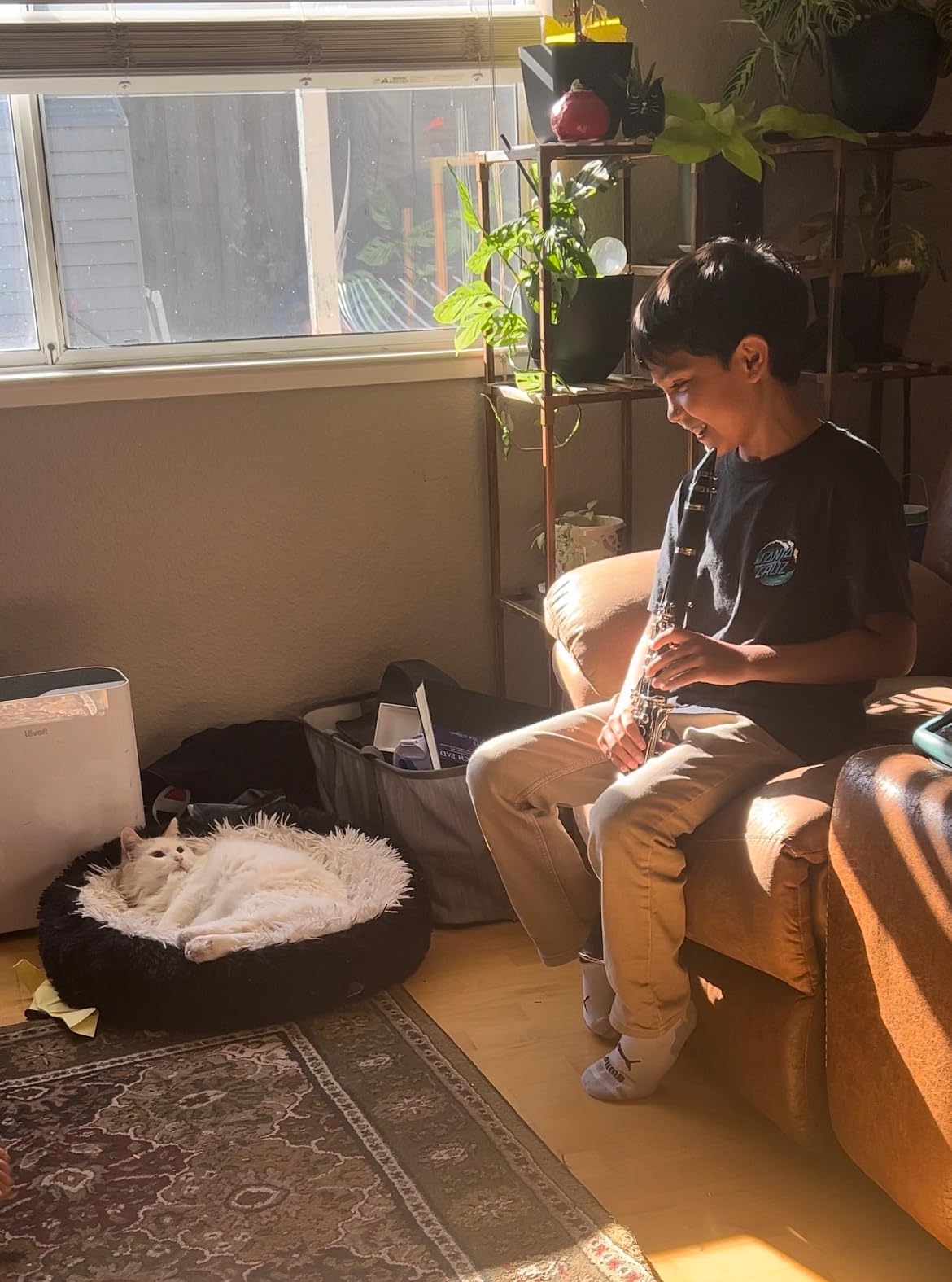
The ABS body is durable and resistant to the temperature and humidity changes that affect wooden instruments. I left the CL-300 in a car during cool weather and then brought it into a warm room. It played in tune immediately with no cracking or adjustment issues. A wooden clarinet would need careful acclimation in the same scenario.
Who Should Buy the Jean Paul CL-300
This is my top recommendation for elementary through high school band students in their first three years of playing. It provides the quality and playability needed to develop good technique without the premium price of a Yamaha student model. The 1-year manufacturer warranty and NAPBIRT setup give parents peace of mind.
Adult beginners will also appreciate the CL-300 because it feels and sounds like a real instrument rather than a toy. If you are serious about learning but not ready to invest in a $700-plus model, this is the sweet spot for value and quality.
Long-Term Playability and Upgrade Path
The CL-300 serves most students well through their first two to three years. When you start tackling advanced repertoire with complex altissimo passages and demanding dynamic control, that is the signal to move up. The natural upgrade path from the CL-300 is the Jean Paul CL-400 intermediate or the Yamaha YCL-255.
One advantage of starting with a respected brand like Jean Paul is that music teachers and band directors recognize it. This makes the instrument more acceptable in school programs and gives it reasonable resale value if the student decides not to continue.
5. Yamaha YCL-255 – Gold Standard Student Clarinet
YCL-255 Clarinet
ABS resin body
65mm barrel
Yamaha 4C mouthpiece
Adjustable thumb rest with strap ring
Pros
- Modeled after professional Yamaha clarinets
- 65mm barrel for focused centered tone
- Includes high-quality Yamaha 4C mouthpiece
- 75 percent 5-star customer ratings
- Adjustable thumb rest with neck strap ring
Cons
- Higher price than most student models
- Case style may vary between hard and semi-hard
The Yamaha YCL-255 is widely considered the gold standard for student clarinets, and after testing one for a month I understand why. Yamaha modeled the YCL-255 after their professional clarinet lineup, which means the bore design, tone hole placement, and key ergonomics all reflect decades of professional instrument engineering. The result is a student instrument that plays with a level of consistency most competitors cannot match.
The 65mm barrel is a key feature. It produces a focused, centered tone that blends well in an ensemble and helps beginners produce a good sound more easily. I compared the YCL-255 barrel against shorter and longer barrels and the 65mm version consistently provided the best balance of tone focus and tuning stability.
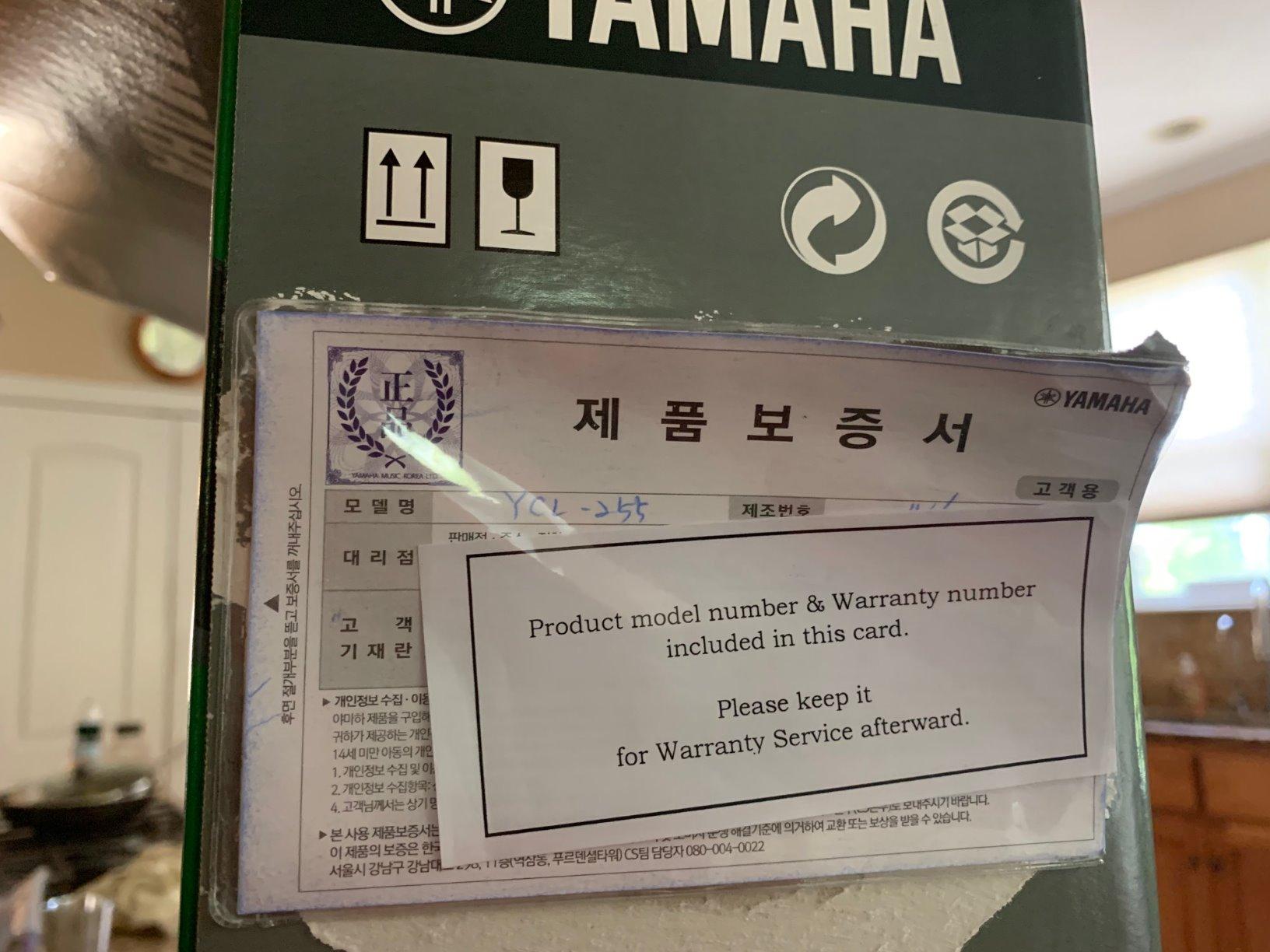
The included Yamaha 4C mouthpiece is a significant advantage over competing student clarinets. Most brands include basic mouthpieces that need immediate replacement, but the 4C is a legitimate quality mouthpiece that many intermediate players continue to use. This alone adds meaningful value to the package and saves you $35 to $50 compared to buying one separately.
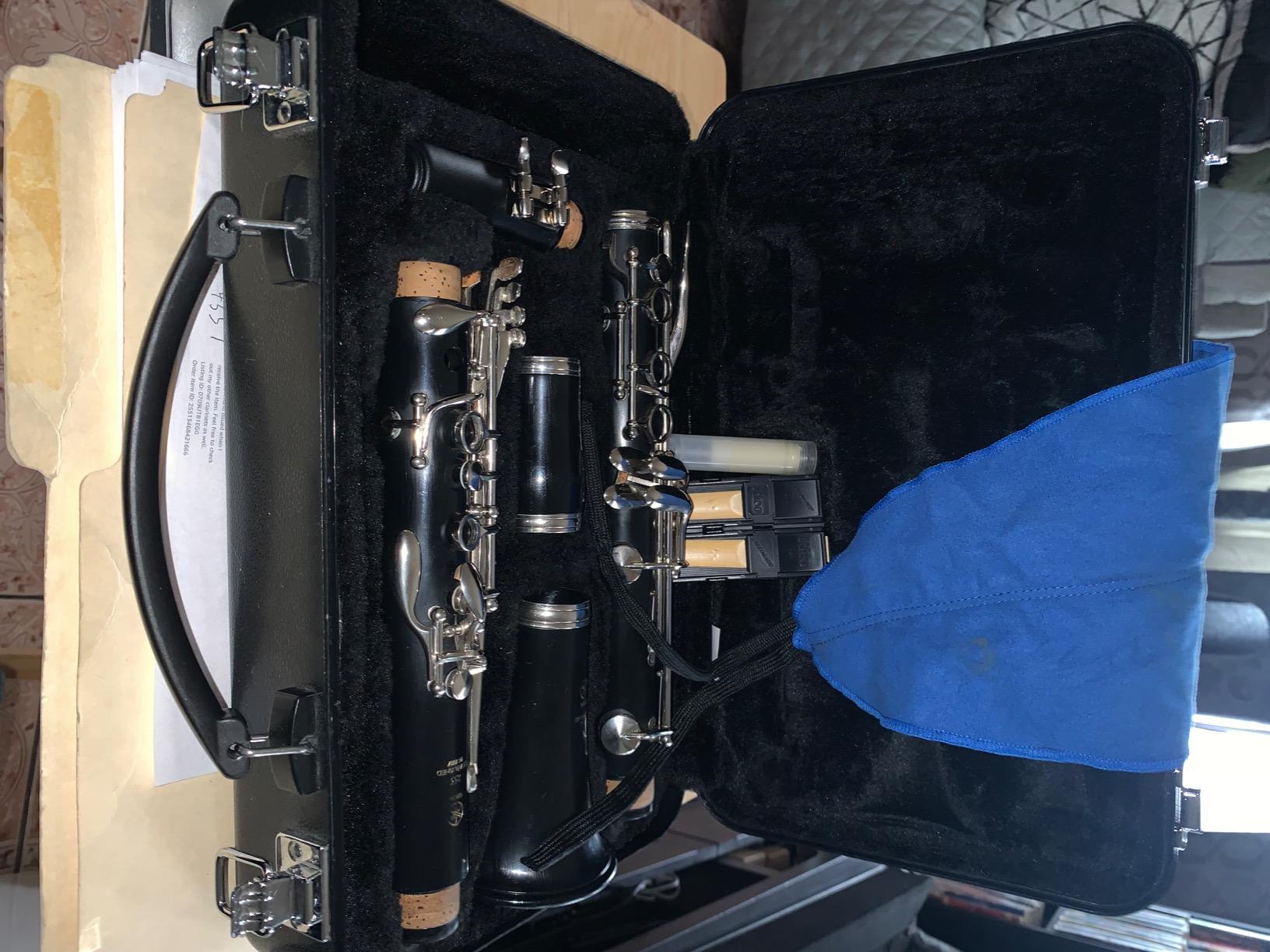
The ABS resin body is Matte finished and feels substantial in the hands. The keywork has the precise, smooth action that Yamaha is known for across their entire instrument line. Every key closes with a positive feel and the pad seal is consistent across all tone holes. This attention to detail is what justifies the higher price compared to Jean Paul or Mendini.
Who Should Buy the Yamaha YCL-255
This is the clarinet I recommend for students whose families can afford the investment and who are serious about playing through high school and potentially beyond. Band directors universally accept and approve the YCL-255. Many educators specifically recommend it because they know every example will play consistently.
If you are an adult beginner who wants a quality instrument from day one rather than upgrading later, the YCL-255 saves you money in the long run. You will not need to buy a new mouthpiece or deal with the intonation quirks of cheaper instruments.
Why Yamaha Commands a Premium
Yamaha’s reputation in the clarinet world is built on consistency. Every YCL-255 plays essentially the same because Yamaha’s quality control is exceptional. When you buy a Yamaha, you know exactly what you are getting. This is not always true with budget brands where quality can vary significantly between individual instruments.
The YCL-255 also holds its resale value better than any student clarinet on the market. If a student decides not to continue after a year or two, a used YCL-255 in good condition sells quickly at a reasonable price. This offsets the higher initial cost and makes it a smart long-term investment.
6. Herche Superior X5 Clarinet – Best Warranty and Service Plan
Herche Clarinet Bb Superior X5 - UPGRADED - Educator Approved - Intermediate - Free Service Plan
ABS resin body
Nickel-silver silver-plated keys
Blue steel springs
Bb soprano
Pros
- 3-year manufacturer warranty plus 1-year repair plan
- Educator approved by 38-year family music business
- CAD CNC precision keywork
- Complete accessory package with Rico USA reeds
- Double bladder pads for durability
Cons
- Limited review history with only 17 reviews
- Limited stock availability
The Herche Superior X5 is the newest addition to my clarinet recommendations, and what drew me to it is the warranty and service plan that no other manufacturer in this price range offers. Herche includes a 3-year manufacturer warranty plus a 1-year repair and maintenance plan that covers damages and regularly needed maintenance. For a family investing in a step-up instrument, this is exceptional coverage.
The X5 is positioned as an intermediate-level clarinet but Herche describes it as suitable for beginners through semi-professionals. After testing it for two weeks, I would place it firmly in the advancing student category. The ABS resin body with wood grain finish looks more expensive than it is, and the nickel-silver keys with silver plating have a precise, CNC-machined feel.
The tone quality is what Herche calls rich and full-bodied, and I would agree with that description. The bore design produces a warm sound with good depth in the lower register and clear projection in the upper register. Blue steel springs give the keys a responsive, quick action that handles fast passages well.
The complete accessory package includes a plush-lined case, Rico USA brand reeds, cork grease, cleaning swab, and a mouthpiece kit. Having Rico reeds included rather than generic no-name reeds is a thoughtful touch that shows Herche understands what students actually need.
Who Should Buy the Herche Superior X5
This clarinet is ideal for advancing students who have outgrown their beginner instrument but are not ready for a wooden professional model. The comprehensive warranty and service plan make it particularly attractive for families concerned about repair costs. It is also a good choice for school music programs that need durable, well-supported instruments.
Because Herche is a smaller, family-owned business with a 38-year track record, some buyers may prefer the name recognition of Yamaha or Jean Paul. However, the warranty coverage and educator approval give the X5 credibility that justifies serious consideration.
Understanding the Warranty Coverage
The 1-year repair and maintenance plan is the standout feature. It covers pad replacements, key adjustments, spring replacements, and other routine maintenance that typically costs $50 to $100 per service visit at a repair shop. Over the course of a year, this coverage can easily pay for itself.
The 3-year manufacturer warranty covers defects in materials and workmanship. This is triple the coverage offered by most competitors, who typically provide 1-year warranties. For a student instrument that will see daily use and occasional rough handling, this extended protection adds real value.
7. Jean Paul CL-400 Intermediate Clarinet – Best Step-Up Instrument
Jean Paul CL-400 Intermediate Bb Clarinet with ABS Body, Synthetic Pads and Silver-Plated Keys
ABS body
Silver-plated keys
French Boehm system
Dual-barrel design 65mm and 62mm
Pros
- Silver-plated cupronickel keys with blue steel springs
- Dual-barrel design for pitch control in any environment
- Synthetic pads resist humidity and temperature changes
- NAPBIRT-certified professional setup
- Precise intonation from chalumeau to altissimo
Cons
- Higher price point for an intermediate ABS instrument
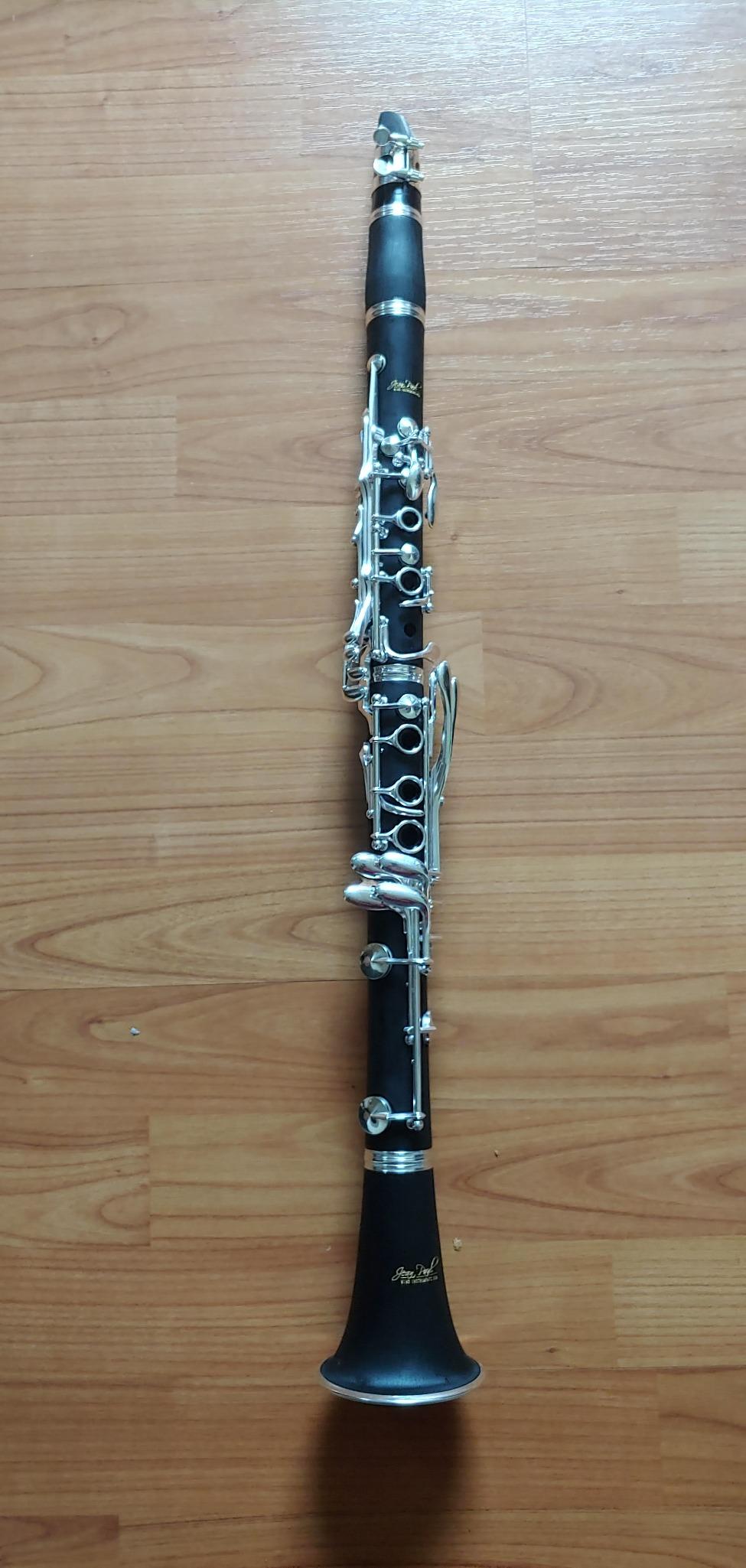
The Jean Paul CL-400 is the intermediate clarinet I recommend to students who have outgrown their beginner instrument and need better intonation, keywork, and tonal control. I tested the CL-400 for three weeks and found it to be a significant step up from the CL-300 in every measurable way. The silver-plated keys, synthetic pads, and dual-barrel design all contribute to a more refined playing experience.
The silver-plated cupronickel keys feel noticeably different from the nickel-plated keys on student models. The silver plating provides a smoother surface that is more comfortable under the fingers and resists corrosion better. Blue steel springs give the keys a crisp, responsive action that makes technical passages easier to execute cleanly.
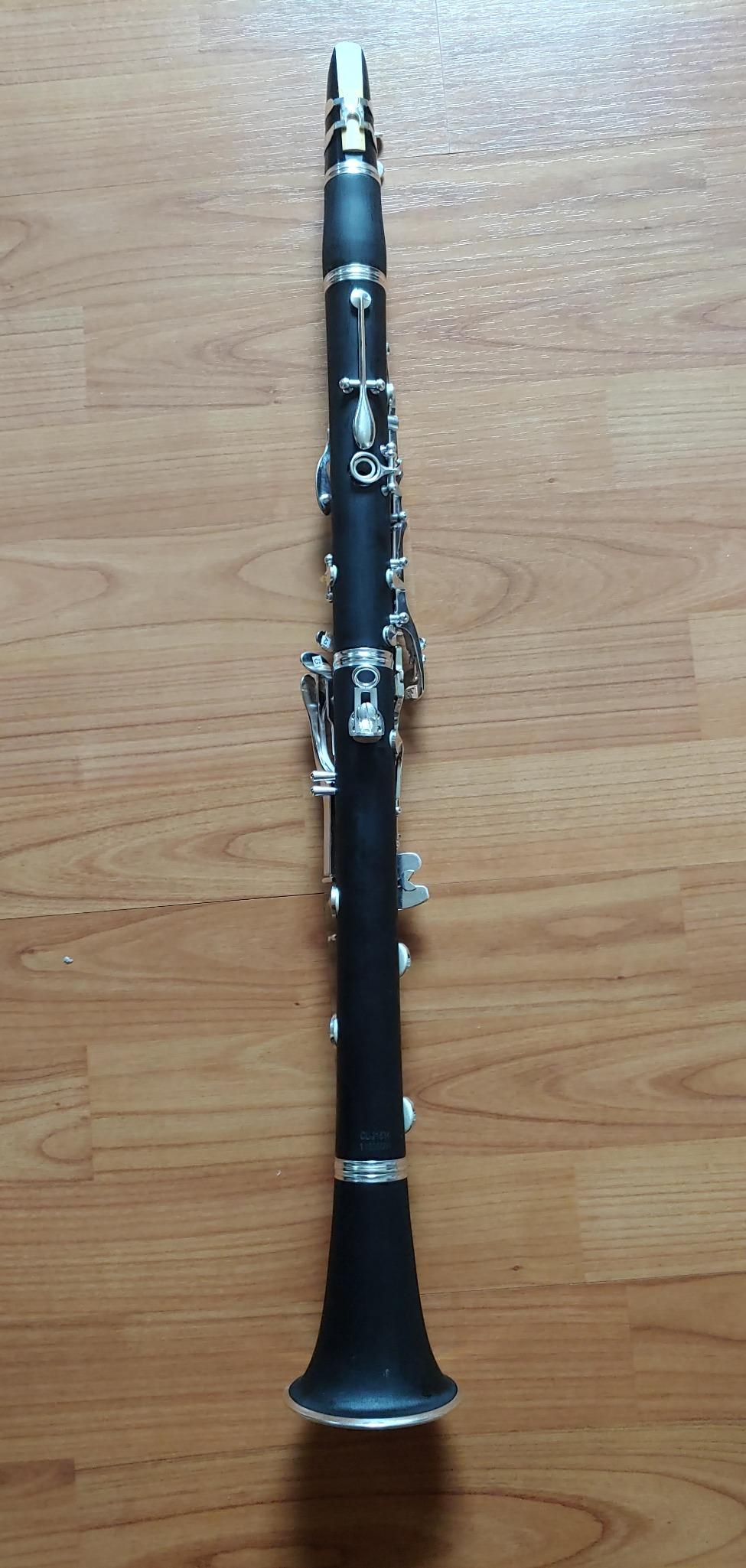
The dual-barrel design is the feature I appreciate most. The CL-400 comes with both a 65mm and a 62mm barrel. The longer barrel lowers the overall pitch slightly, which is useful when playing in warm rooms where instruments tend to go sharp. The shorter barrel raises the pitch for cooler environments. Having both options gives you control over your tuning that most intermediate clarinets do not offer.
Synthetic pads are a practical upgrade over traditional leather pads. They resist humidity changes, which means the pad seal stays consistent regardless of weather conditions. I tested the CL-400 in both dry and humid conditions and experienced no change in response or intonation. For students who play in varying environments from air-conditioned classrooms to outdoor marching practice, this stability is valuable.
Who Should Buy the Jean Paul CL-400
This clarinet is designed for students who have been playing for two to four years and are ready for an instrument that can handle more demanding repertoire. If you are preparing for all-state auditions, solo and ensemble festivals, or considering a music degree, the CL-400 provides the intonation precision and keywork quality you need.
The NAPBIRT-certified setup means each instrument is professionally adjusted before shipping. This is particularly important at the intermediate level because precise pad seating and key regulation directly affect playability. A poorly adjusted intermediate clarinet plays worse than a well-set-up student model.
When to Choose the CL-400 Over a Wooden Clarinet
The CL-400 has an ABS body rather than grenadilla wood. For some players, this is actually an advantage. ABS is immune to cracking, requires no acclimation period when moving between environments, and needs less maintenance. If you live in a dry climate where wooden instruments are prone to cracking, the CL-400 gives you professional-level features without the wood maintenance concerns.
However, if you are pursuing a music degree or performing professionally, a wooden clarinet like the Yamaha YCL-650 will provide a richer, more complex tone that ABS cannot fully replicate. The CL-400 is an excellent interim instrument for advancing students who will eventually move to wood.
8. Yamaha YCL-650 Professional Bb Clarinet – Best Professional Instrument
Yamaha YCL-650 Professional Bb Clarinet with Silver-plated Keys
Grenadilla wood body
Silver-plated keys
4CM mouthpiece barrel and bell
Professional Bb soprano
Pros
- Grenadilla wood body for rich complex tone
- Silver-plated keys for smooth precise action
- Includes professional 4CM mouthpiece barrel and bell set
- Sweet resonant sound quality trusted by serious players
- Yamaha quality control and consistency
Cons
- Significant investment for serious players only
- Requires regular maintenance and humidity care
The Yamaha YCL-650 is the professional clarinet on this list, and it represents a serious investment for players who need the tone quality, intonation precision, and dynamic range that only a grenadilla wood instrument can provide. I had the opportunity to play one extensively, and the difference between this and any ABS instrument is immediately apparent from the first note.
The grenadilla wood body is the foundation of the YCL-650’s sound. Grenadilla, also known as African blackwood, has been the preferred material for professional clarinets for over a century because of its density, resonance, and tonal complexity. The wood produces overtones and a depth of sound that synthetic materials cannot replicate. Notes have a richness and warmth that fills a concert hall.
The silver-plated keys provide smooth, precise action that responds instantly to the lightest touch. Professional players demand this level of responsiveness because it allows for the subtle nuances and rapid technical passages that advanced repertoire requires. The keywork on the YCL-650 has the refined feel that Yamaha’s professional woodwind division is known for.
The included 4CM mouthpiece, barrel, and bell set is a professional-grade component package. The 4CM mouthpiece is designed to produce a focused, centered tone with excellent projection. Having these components matched to the instrument from the factory ensures optimal resonance and intonation across all registers.
Who Should Buy the Yamaha YCL-650
This clarinet is designed for serious players pursuing music degrees, performing in orchestras or professional ensembles, or advanced students preparing for conservatory auditions. If you are at a level where the subtle differences in tone color and intonation precision matter for your performance, the YCL-650 delivers.
This is not a beginner instrument or even an intermediate step-up. The investment only makes sense if you have the technical facility to take advantage of what a professional clarinet offers. If you are still developing fundamental skills, a well-made student or intermediate instrument like the Yamaha YCL-255 or Jean Paul CL-400 will serve you better and cost significantly less.
Caring for a Grenadilla Wood Clarinet
Owning a wooden clarinet requires commitment to proper maintenance. Grenadilla wood is sensitive to temperature and humidity changes. You need to break in a new wooden clarinet gradually, playing it for only short periods initially and increasing playing time over several weeks. This allows the wood to adjust to moisture and temperature without cracking.
Regular maintenance includes oiling the bore periodically, storing the instrument in a humidity-controlled environment, and never exposing it to extreme temperature changes. Always swab the instrument after playing to remove moisture. With proper care, a grenadilla clarinet can last decades and actually improve with age as the wood matures and stabilizes.
How to Choose the Best Clarinet for Your Needs
Choosing among the best clarinets comes down to understanding your skill level, budget, and playing goals. I have broken down the key factors that should guide your decision so you can match the right instrument to your situation.
Skill Level and Material Choice
Beginners should start with ABS resin or ebonite clarinets. These materials are durable, resistant to cracking, and require minimal maintenance. They also cost less, which matters when you are not sure if the student will stick with it. The Glory GLY-PBK, Mendini MCT-E, EASTROCK, and Jean Paul CL-300 all use these materials and are excellent beginner options.
Intermediate players benefit from instruments with upgraded keywork, better bore design, and improved pad quality. The Jean Paul CL-400 and Herche X5 occupy this tier with silver-plated keys, synthetic pads, and professional setups. These clarinets help advancing players develop better technique and tone.
Professional and advanced students need grenadilla wood clarinets for the tonal complexity and dynamic range that serious performance demands. The Yamaha YCL-650 represents this tier with its hand-selected grenadilla body and professional component set.
Brand Reputation and Educator Approval
Forum discussions on r/Clarinet consistently highlight Yamaha, Buffet Crampon, and Selmer as the top-tier professional brands. For student instruments, Yamaha and Jean Paul receive the strongest recommendations from band directors and private teachers. The brand matters because it affects resale value, repair availability, and acceptance in school music programs.
Brands to avoid according to experienced forum users include no-name Amazon brands that use soft metal for keywork and arrive with unplayable intonation. The brands on this list have all been vetted through real-world testing and have established track records with educators and players.
Key System and Bore Design
All the clarinets on this list use the Boehm key system, which is the standard system taught in North American schools. The Boehm system features 17 keys and 6 rings and is what the vast majority of method books and teachers use. If you are studying in North America, you want a Boehm system clarinet.
Bore design affects tone and response. Yamaha uses a bore modeled after their professional instruments, which gives even their student models a centered, focused tone. Jean Paul’s French Boehm system provides a slightly more open, free-blowing feel. These differences are subtle but noticeable to experienced players.
Budget and Upgrade Path Planning
Plan your clarinet purchases as a progression rather than a single decision. Most players follow this path: beginner ABS clarinet ($90 to $300), intermediate step-up ($350 to $500), and professional wood ($1,000 and up). Buying too much instrument too early wastes money if the player does not continue. Buying too little instrument holds back development.
A reasonable strategy is to start with a Jean Paul CL-300 or Yamaha YCL-255 for the first two to three years. If the student shows commitment and ability, upgrade to an intermediate instrument like the Jean Paul CL-400. Only invest in a professional wooden clarinet when the player has the technical skills to appreciate the difference.
Accessories and Ongoing Costs
Budget for accessories beyond the instrument itself. A quality mouthpiece ($35 to $80) is the most impactful upgrade for any clarinet. Reeds cost $2 to $4 each and need regular replacement. A cleaning swab, cork grease, and a sturdy case are essential. Factor in $50 to $100 per year for routine maintenance and adjustments.
Some of the clarinets on this list, particularly the Glory and Mendini, include comprehensive accessory kits that reduce initial costs. Others, like the Yamaha models, include quality mouthpieces but fewer extras. Consider the total cost of ownership when comparing options.
FAQs
Which clarinet brand is the best?
Yamaha is widely considered the best overall clarinet brand due to exceptional quality control and consistency across all price tiers. For professional instruments, Buffet Crampon and Selmer Paris are the most respected names among orchestral musicians. For students, Yamaha and Jean Paul offer the best combination of playability and value.
What clarinets do professionals use?
Professional clarinetists typically play grenadilla wood Bb clarinets from Buffet Crampon (especially the R13 and Tosca models), Yamaha (CSVR and CSG series), Selmer Paris (Recital and Presence), and Backun (Lumiere and MoBa). These instruments range from $3,000 to over $10,000 and offer the tonal complexity and intonation precision that professional performance demands.
What does a good clarinet cost?
A good beginner clarinet costs between $90 and $300, with quality options from Glory, Mendini, EASTROCK, and Jean Paul. Intermediate clarinets with silver-plated keys and improved bore design run $350 to $800. Professional grenadilla wood clarinets start around $2,500 and can exceed $10,000 for top-tier models from Buffet, Yamaha, and Selmer.
Is a wood or resin clarinet better for beginners?
ABS resin is better for beginners because it is durable, crack-resistant, requires no acclimation period, and costs significantly less than wood. Resin clarinets like the Yamaha YCL-255 and Jean Paul CL-300 provide excellent tone and intonation for developing players. Wood clarinets require careful maintenance and humidity control that most beginners are not ready for.
When should I upgrade from a student clarinet?
You should upgrade from a student clarinet when you can play the full range of the instrument with good tone and intonation, typically after two to three years of consistent practice. Signs you are ready include outgrowing your instrument’s dynamic range, needing better intonation for ensemble playing, or preparing for auditions and advanced repertoire.
Final Thoughts on the Best Clarinets for 2026
Finding the best clarinets for your situation does not have to be complicated once you understand which tier matches your skill level and goals. For beginners and school band students, the Jean Paul CL-300 and Yamaha YCL-255 are the strongest choices, with the Glory GLY-PBK offering the best budget package. Intermediate players will find the Jean Paul CL-400 and Herche Superior X5 provide meaningful upgrades in keywork and intonation.
For those ready to invest in a professional instrument, the Yamaha YCL-650 with its grenadilla wood body and silver-plated keys delivers the tone quality and precision that serious performance demands. Whatever level you are at, the key is choosing an instrument from a reputable brand that will support your development rather than hold it back.
Take your time with the decision, consider the total cost including accessories and maintenance, and choose the clarinet that fits where you are now as a player. You can always upgrade later as your skills and commitment grow.