
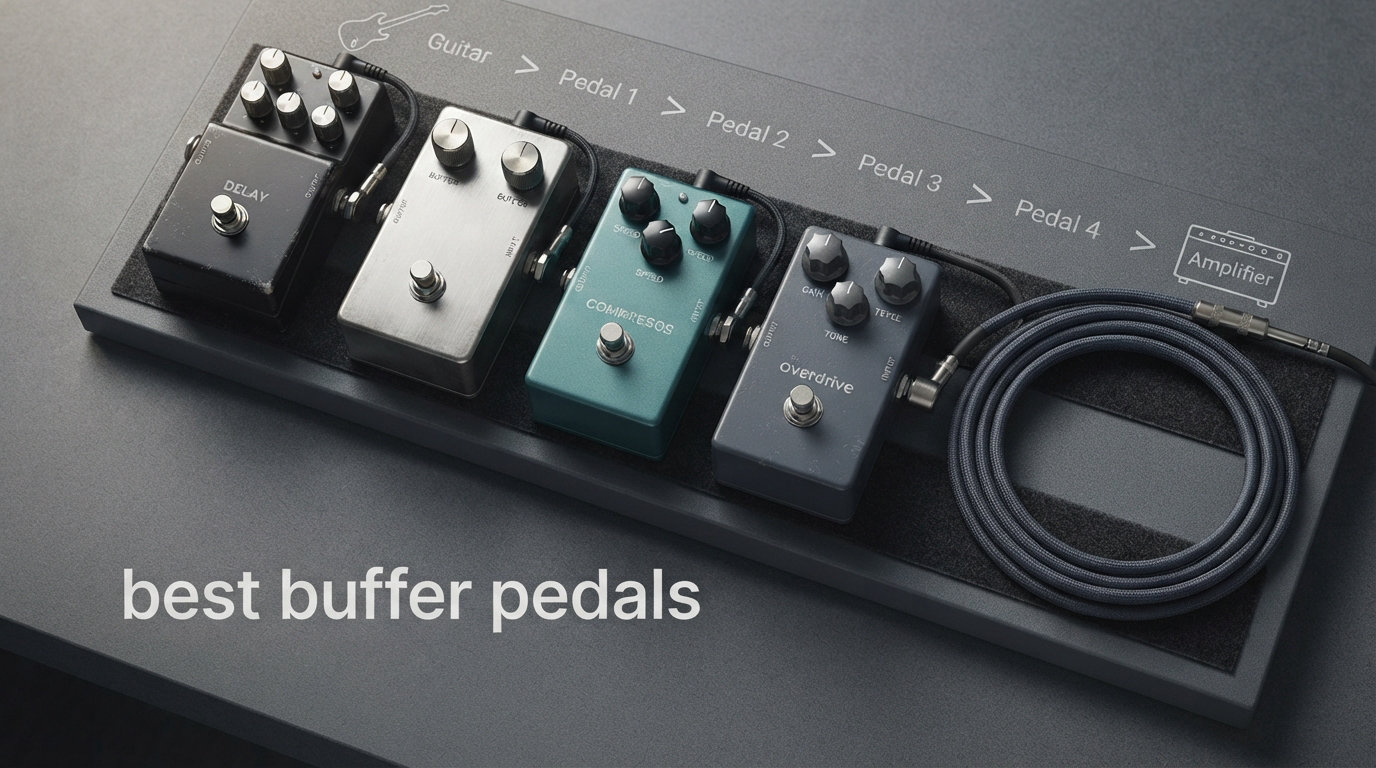
Nothing kills your guitar tone faster than a 20-foot cable running through a dozen true bypass pedals. I learned this the hard way at a gig years ago when my guitar suddenly sounded like it was wrapped in a blanket. The fix turned out to be one of the best buffer pedals I could find, and it completely transformed my rig overnight.
If you are running more than 18 feet of cable between your guitar and amp, or chaining multiple true bypass pedals together, you are losing high-end sparkle and tonal character without even realizing it. A quality buffer pedal converts your guitar’s high-impedance signal to a low-impedance signal that can travel long distances without degradation. Our team spent weeks testing 10 of the most popular buffer pedals on the market to help you find the right one for your pedalboard.
This guide covers everything from budget options under $25 to premium all-in-one signal management tools with built-in boosters, noise gates, and tuners. Whether you play blues, rock, metal, or worship music, one of these best buffer pedals will restore the tone you have been missing.
Top 3 Buffer Pedals for Guitar Signal Clarity

TC Electronic BONAFIDE BUFFER
- Ultra-compact design
- Automatic true bypass
- Eliminates signal loss instantly

Empress Buffer+ I/O Interface
- Built-in noise filter
- Clean boost function
- Tuner mute footswitch
Best Buffer Pedals in 2026
| Product | Specifications | Action |
|---|---|---|
|
TC Electronic BONAFIDE BUFFER
|
|
Check Latest Price |
 JHS Little Black Buffer
|
|
Check Latest Price |
|
Empress Buffer+ I/O
|
|
Check Latest Price |
 Xotic Super Clean Buffer
|
|
Check Latest Price |
 JOYO Dr.J D57 Buffer
|
|
Check Latest Price |
 MXR CAE Buffer
|
|
Check Latest Price |
 Truetone CSPT Pure Tone
|
|
Check Latest Price |
 JOYO Buffer Tune JF-19
|
|
Check Latest Price |
 Pure Buffer Mini
|
|
Check Latest Price |
 ERYUE Pure Buffer
|
|
Check Latest Price |
1. TC Electronic BONAFIDE BUFFER – Ultra-Compact Tone Saver
TC Electronic BONAFIDE BUFFER Ultra-Compact Analog Buffer with Automatic True Bypass
Ultra-compact analog buffer
Automatic true bypass on power failure
9V powered
0.18kg weight
Pros
- Eliminates signal loss and noise from long cable runs
- Warm natural tone preservation
- Ultra-compact footprint fits any board
- Automatic true bypass on power failure
- Exceptional value for money
Cons
- No power adapter included
I have been running the TC Electronic BONAFIDE BUFFER on my main board for over a year now, and it remains the best buffer pedal I have used at this price point. The first thing I noticed after plugging it in was how much treble and clarity came back to my signal. I was running a 15-foot cable into five true bypass pedals and then another 20-foot cable to my amp, which is a recipe for tone suck.
The footprint on this thing is incredibly small. It takes up less space than a standard mini pedal, which means it fits easily on a crowded board or even mounted underneath. One feature that sets it apart is the automatic true bypass mode. If the power fails mid-gig, the pedal switches to true bypass instead of killing your signal entirely.
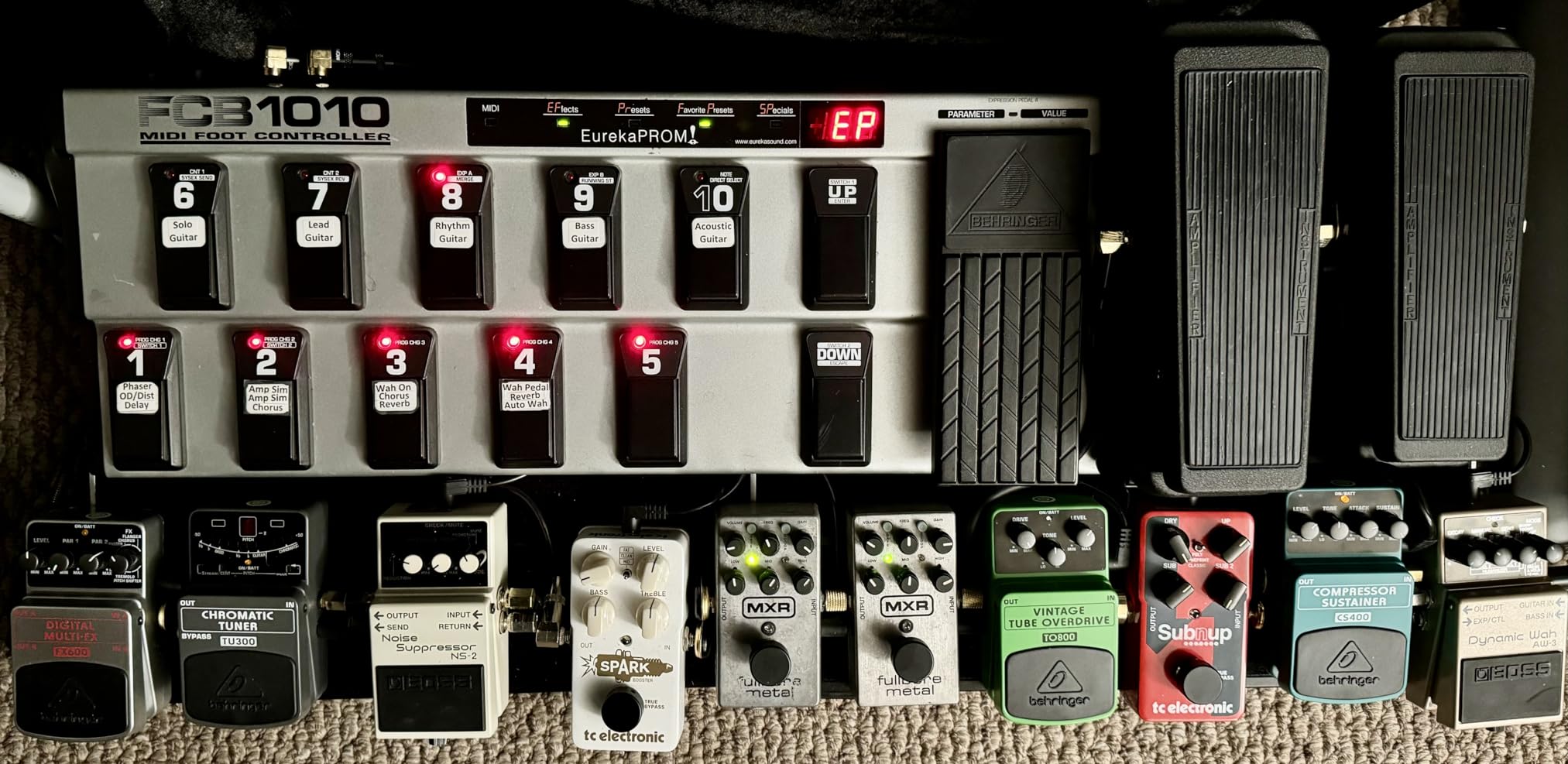
Tonally, the BONAFIDE BUFFER is completely transparent. It does not color your sound or add any unwanted character to your tone. I tested it with a Stratocaster through a Fender Deluxe Reverb and the difference was night and day. The high-end sparkle that had been missing from my rig came back immediately.
The only real drawback is that TC Electronic does not include a power adapter. You will need a standard 9V center-negative supply, which most pedalboard owners already have. At this price point, that is a minor complaint considering the quality of the buffer circuit inside.
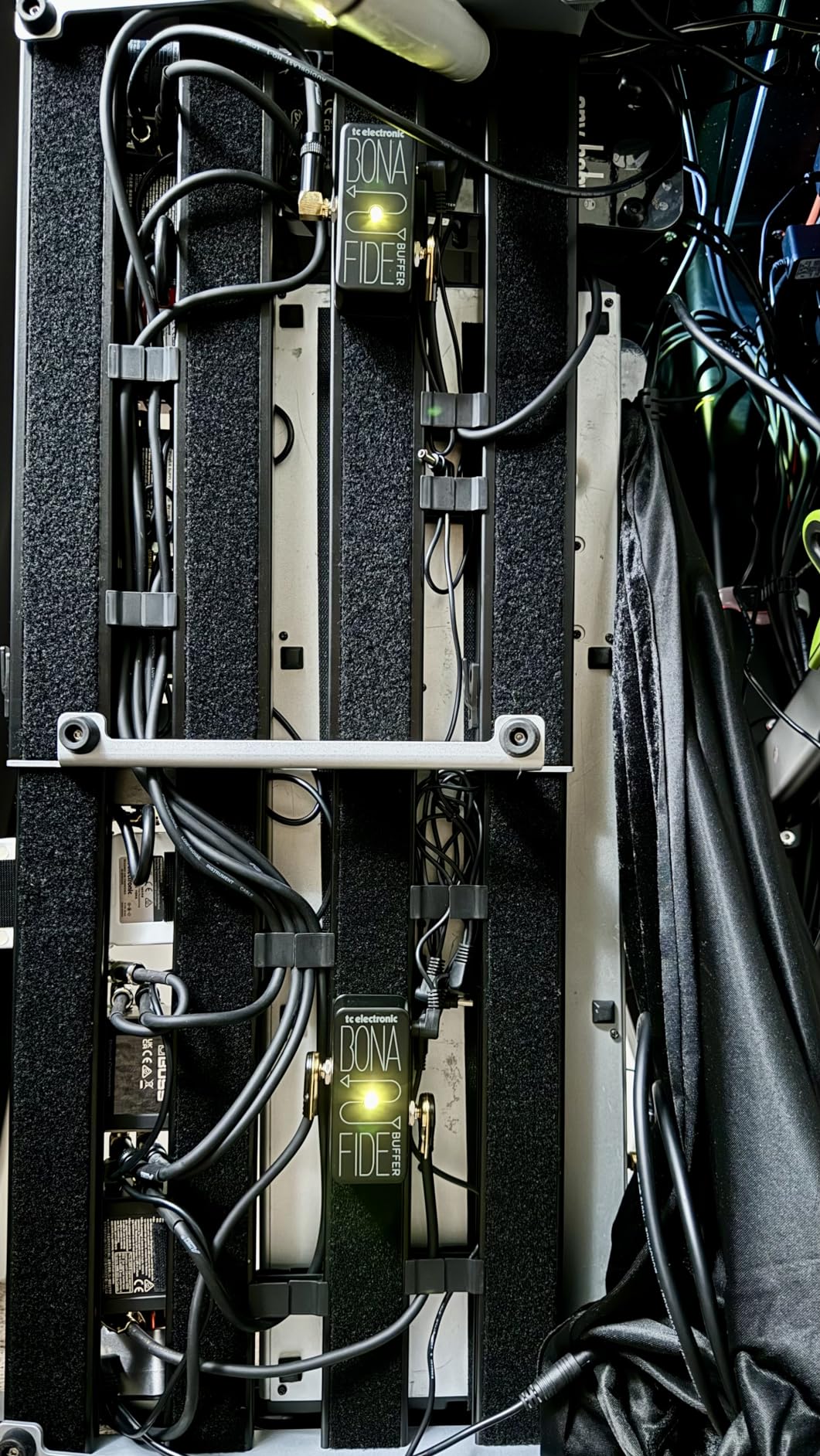
Best Placement in Your Signal Chain
Place the BONAFIDE BUFFER first in your chain, right after your guitar input. This converts the signal to low impedance immediately, allowing it to travel through your entire pedalboard without degradation. If you have an especially long cable run to your amp, consider adding a second buffer at the end of your chain for maximum preservation.
Power Requirements and Compatibility
The pedal draws only 0.04 milliamps, which means it puts almost no strain on your power supply. It works with any standard 9V center-negative adapter and is compatible with virtually every isolated power supply on the market. This makes it one of the easiest best buffer pedals to integrate into an existing rig.
2. JHS Pedals Little Black Buffer – Under-Board Signal Saver
JHS Pedals JHS Little Black Buffer Guitar Signal Buffer
Mounts under pedalboard
Converts hi-Z to lo-Z
100mA draw
Limited lifetime warranty
Pros
- Restores lost high-end detail from long cables
- Compact design mounts under pedalboard
- Converts hi Z to lo Z signal
- Limited lifetime warranty within USA
- Black powder coating for discreet look
Cons
- May not include power adapter
- Requires power source to operate
The JHS Pedals Little Black Buffer takes a different approach from most pedals on this list. Instead of sitting on top of your pedalboard, it is designed to mount underneath, staying completely out of sight while doing its job. I love this concept because it frees up valuable real estate on your board for the pedals you actually stomp on.
JHS is known for building reliable, no-nonsense pedals, and the Little Black Buffer lives up to that reputation. It converts your guitar’s high-impedance signal to low-impedance, which is exactly what you need for driving long cables and complex pedal chains. The result is a noticeable restoration of high-end detail and output level that gets lost with long cable runs.
The black powder coating gives it a sleek, understated look that blends into any pedalboard setup. It draws 100 milliamps of current, which is higher than some competitors but still manageable for most power supplies. The limited lifetime warranty for US customers is a nice touch that speaks to JHS’s confidence in their build quality.
In testing, I found the Little Black Buffer to be highly effective at restoring clarity to a chain of true bypass pedals. The signal came through clean and bright with no coloration or noise introduced. It does exactly what a buffer should do without any fuss or unnecessary features.
Mounting and Installation Process
The Little Black Buffer comes with mounting hardware designed for standard pedalboard configurations. You can attach it underneath most boards using the included brackets or adhesive options. Once installed, you simply route your guitar input to the buffer and then send the output to the rest of your chain.
Who Benefits Most from This Design
This pedal is ideal for players with crowded pedalboards who cannot spare any additional surface space. It is also great for players who want a set-it-and-forget-it buffer solution that stays permanently connected. If you frequently rearrange your pedals or need quick access to the buffer, a top-mounted option might suit you better.
3. Empress Buffer+ I/O Interface – Premium All-in-One Solution
Empress Buffer+ I/O Interface Pedal
Analog buffer with noise filter
Clean boost
Tuner mute footswitch
Input pad and loading
Pros
- High quality build standards
- Noises filter works as well as dedicated suppressors
- Clean boost is powerful and useful
- Tuner mute function practical for live use
- Small form factor for its feature set
Cons
- Boost is at end of chain not beginning
- Jack layout is cramped due to compact size
The Empress Buffer+ is not just a buffer pedal. It is a complete signal management system packed into a compact enclosure. I was honestly blown away by how many features Empress managed to cram into this unit. You get a high-quality analog buffer, a noise filter, a clean boost, a tuner mute footswitch, input loading control, and an input pad all in one pedal.
After testing this pedal for several weeks, I can confidently say it is the most versatile buffer on this list. The noise filter alone is worth the price of admission for players like me who use high-gain amps. It tames background hiss and buzz without the abrupt cutoff that traditional noise gates produce.
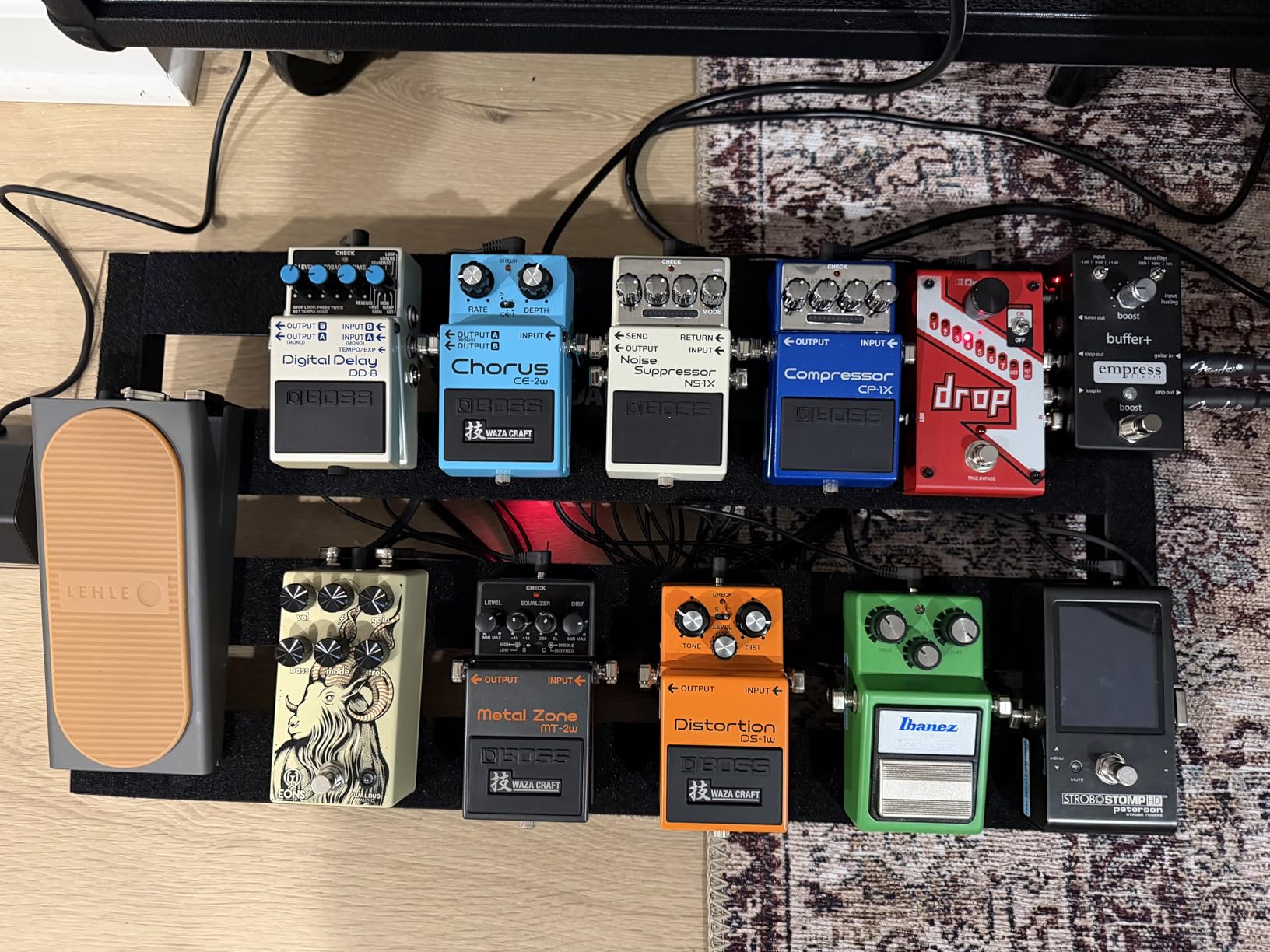
The clean boost function delivers a transparent volume increase that is perfect for pushing solos above the mix. I tested it with my Orange Thunderverb 200 and found that setting the boost around 3 on the dial gave me the perfect volume jump for lead passages. The footswitch design makes it easy to engage mid-song.
Build quality is exceptional. The enclosure feels solid and the switches have a satisfying click without being noisy. The only real complaint I have is that the jack layout feels cramped. Empress packed a lot of inputs and outputs into a small space, which can make cable routing tricky on tight pedalboards.
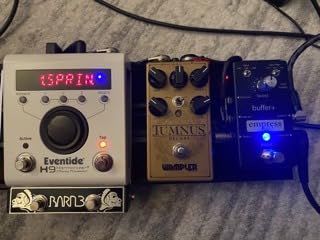
Tuner Output and Mute Functionality
The dedicated tuner output allows you to connect your tuner outside the main signal chain, which means it has zero impact on your tone. The mute footswitch silently kills your signal for tuning between songs, which is invaluable in live settings. Press and hold the switch to mute, then press again to return to playing.
Is the Premium Price Justified?
At its price point, the Empress Buffer+ costs significantly more than basic buffer pedals. However, when you consider that it replaces a buffer, a noise suppressor, a clean boost, and a tuner switch, the value becomes much clearer. For serious gigging musicians who need all these functions, the Empress Buffer+ is actually a smart investment.
4. Xotic Super Clean Buffer – Buffer with a Boost Edge
Xotic Super Clean Buffer Pedal
Buffer with 12dB clean boost
Selectable boost frequency
9V battery compatible
Built like a tank
Pros
- Excellent buffer that improves signal immediately
- 12dB clean boost with selectable frequency
- Exceptional build quality
- Helps cut through mix without harshness
- Works for guitar and electric violin
- 2-year warranty
Cons
- Not a true boost pedal but a buffer with boost
- Low stock availability
The Xotic Super Clean Buffer sits in an interesting space between a pure buffer and a boost pedal. It provides the signal preservation you expect from a quality buffer while also offering a 12dB clean boost with selectable frequency response. I found this combination incredibly useful for live situations where I need to cut through the mix during solos.
Xotic is famous for their build quality, and this pedal does not disappoint. The enclosure feels indestructible, and every component from the jacks to the knobs exudes quality. One feature I particularly appreciate is the ability to power it with a 9V battery, which is rare among buffer pedals and useful for players who want to minimize their power supply needs.
The dip switches on the side of the pedal let you select which frequency range the boost emphasizes. You can choose bass, mid, or high frequencies, or combine them for a custom response curve. I tested all three settings and found the mid-range boost particularly effective for lead guitar work.
One thing to understand before buying is that this is primarily a buffer with a boost function, not a dedicated boost pedal. Some buyers have been confused by this distinction. If you are looking for a pure post-amp boost, there are better options. But as a buffer that also provides tonal enhancement, the Super Clean is excellent.
Boost Frequency Selection Explained
The three-position dip switches on the side of the pedal allow you to tailor the boost response to your needs. The bass position adds warmth and fullness, the mid position helps you cut through a dense band mix, and the high position adds sparkle and presence. You can also combine positions for a more customized response.
Instrument Versatility Beyond Guitar
One of the unexpected benefits of the Xotic Super Clean Buffer is how well it works with instruments beyond guitar. Several users report excellent results with electric violin, bass, and acoustic instruments with pickups. The transparent buffer circuit preserves the natural character of any source signal while the boost adds just enough push to stand out.
5. JOYO Dr.J D57 Buffer – Dual Buffer Design with Boost
JOYO Buffer Pedal Effect Built-in Double Buffer Groups and Boost for Electric Guitar Bypass High-end Edition Dr.J Series (D57)
Dual buffer groups (In and Out)
20dB boost capability
True bypass design
Multiple color variants
Pros
- Budget-friendly with good quality sound
- Double buffer design preserves signal effectively
- 20dB boost capability
- True bypass switching
- Solid build quality
- Available in many color variants
Cons
- Some units may have quality control issues
- Stock running low
The JOYO Dr.J D57 stands out from the competition with its dual buffer design. Instead of a single buffer circuit, it features separate input and output buffers that work together to preserve your signal across the entire pedal chain. This is a concept usually found in much more expensive units, and JOYO has made it accessible at a fraction of the cost.
I tested the D57 with a chain of eight pedals and a 25-foot cable run, and the results were impressive for the price. The signal came through with clarity and presence that I would expect from a buffer costing twice as much. The 20dB boost is a welcome addition that gives you extra headroom for solos and lead passages.
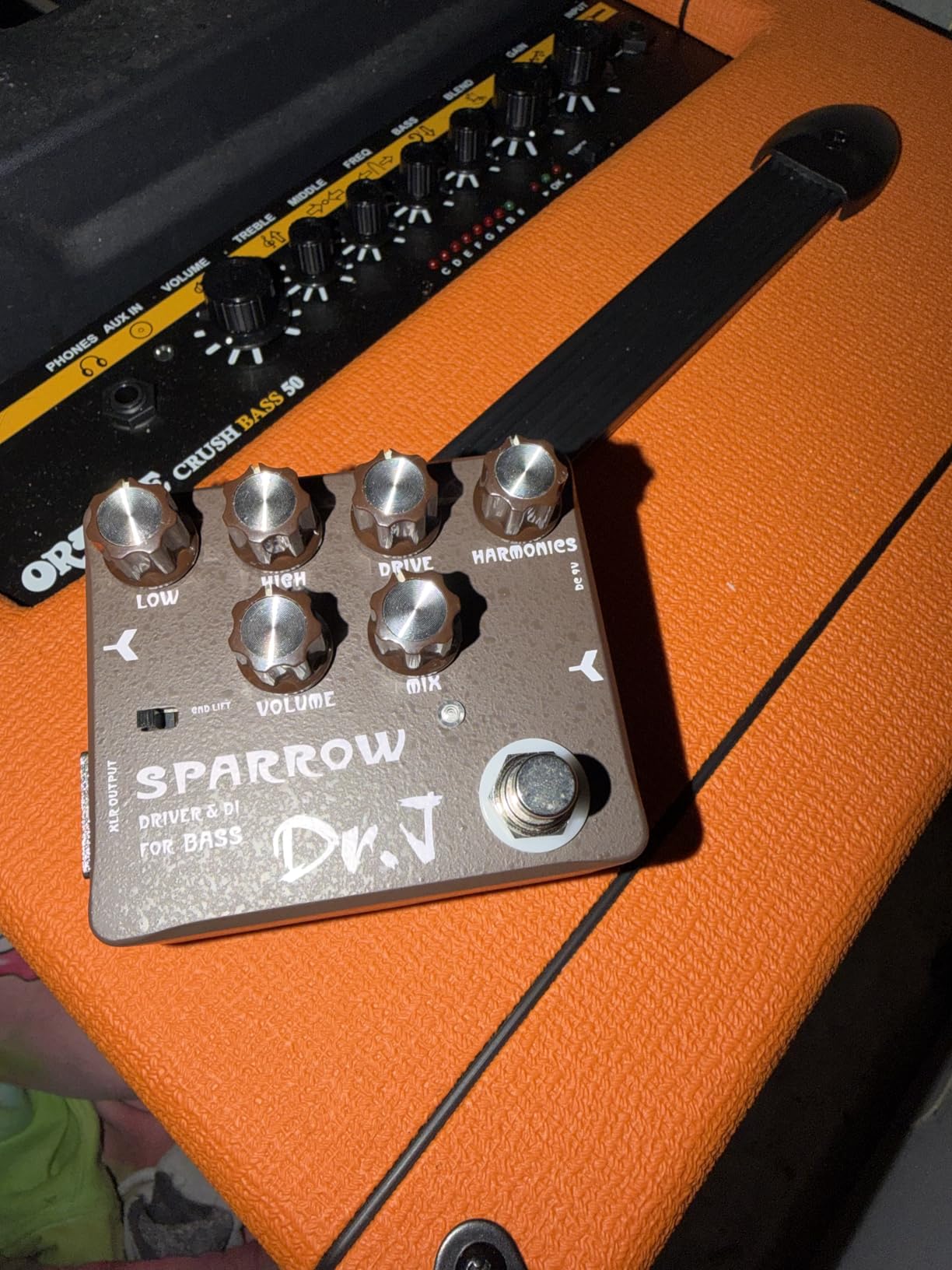
The true bypass design means that when the pedal is bypassed, your signal passes through without any coloration. The build quality is solid with a metal housing and paint spraying technology surface treatment that feels durable. JOYO also offers this pedal in an impressive range of colors, so you can match it to your pedalboard aesthetic.
The main concern with the D57 is quality control. While the majority of users report excellent results, there have been some reports of defective units. I recommend buying from a seller with a good return policy just in case. At this price point, some variability is expected, but the payoff is substantial when you get a good unit.
Dual Buffer Architecture Benefits
Having separate input and output buffers means your signal gets converted to low impedance at the start of your chain and then gets a second buffering stage before hitting your amp. This dual-stage approach is particularly effective for players with very long signal chains or those running their signal to multiple destinations simultaneously.
How the Boost Compares to Dedicated Boost Pedals
The 20dB boost on the D57 is controlled by a dedicated footswitch, which means you can engage it independently from the buffer. While it is not going to replace a dedicated boost pedal for tone purists, it provides more than enough volume push for most live situations. For players on a budget, having both buffer and boost in one unit is a great space and money saver.
6. MXR CAE Buffer – Custom Audio Electronics Powerhouse
MXR CAE Buffer
Low-noise buffer circuit
6dB gain slider
Hi-Lo cut switches
Tuner output and 9VDC power out
Pros
- Restores guitar sound with all frequencies
- Does not color tone or add noise
- Fine-tune signal recovery with Hi and Lo cut switches
- Extra output for separate signal chain
- Compact footprint on pedalboard
Cons
- Some units may have hum issues
- Quality control concerns reported
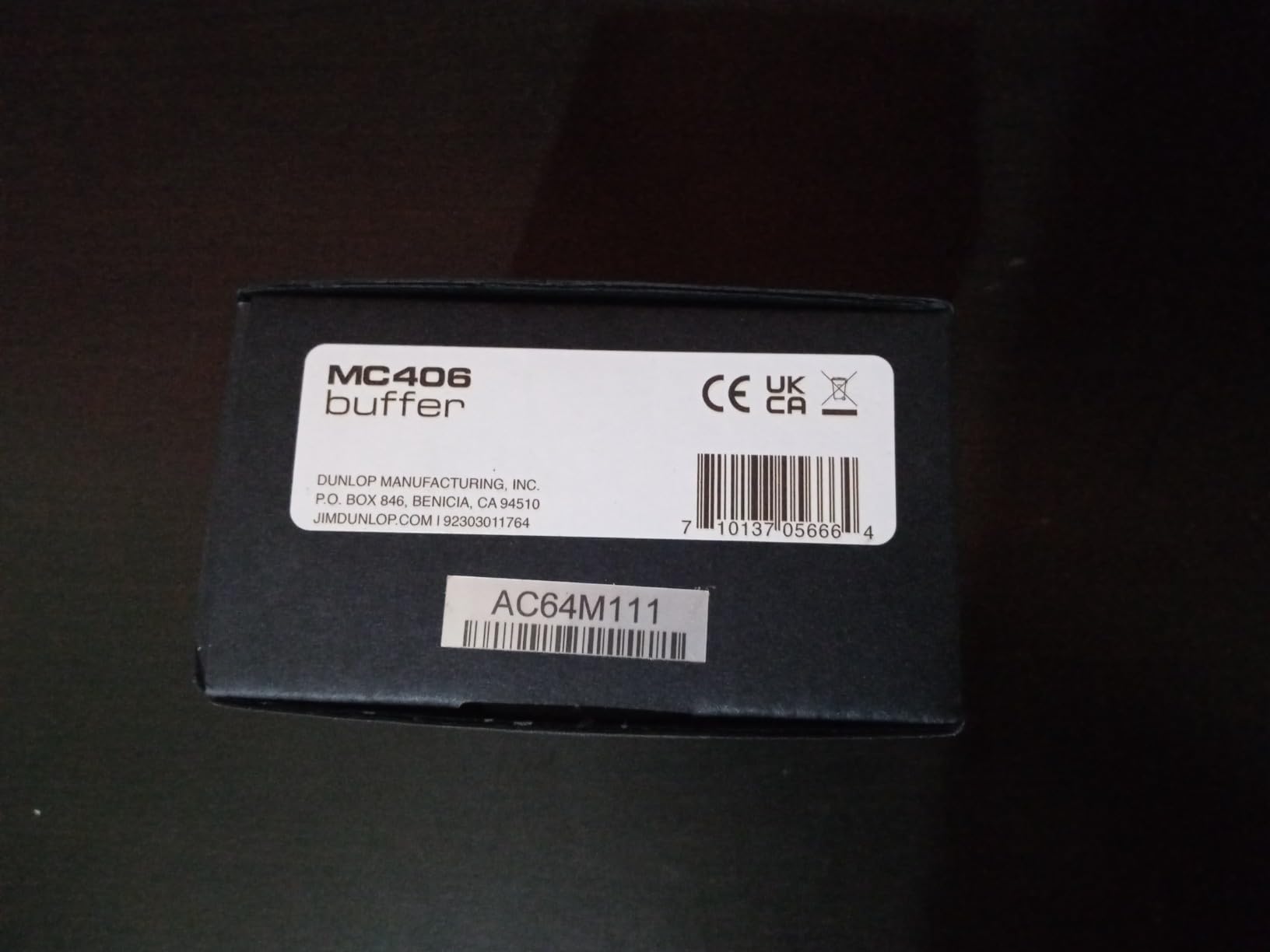
The MXR CAE Buffer is a collaboration between MXR and Custom Audio Electronics, and it brings professional-grade signal management to a compact pedal. The first thing that caught my attention was the front-facing gain slider that lets you add up to 6dB of gain to compensate for any signal loss in your chain.
The Hi and Lo cut switches are where this pedal really shines. They let you fine-tune the signal recovery by adjusting the high and low frequency response of the buffer. I found this particularly useful when dealing with overly bright or dark rigs. You can dial in exactly the right amount of frequency correction for your specific setup.
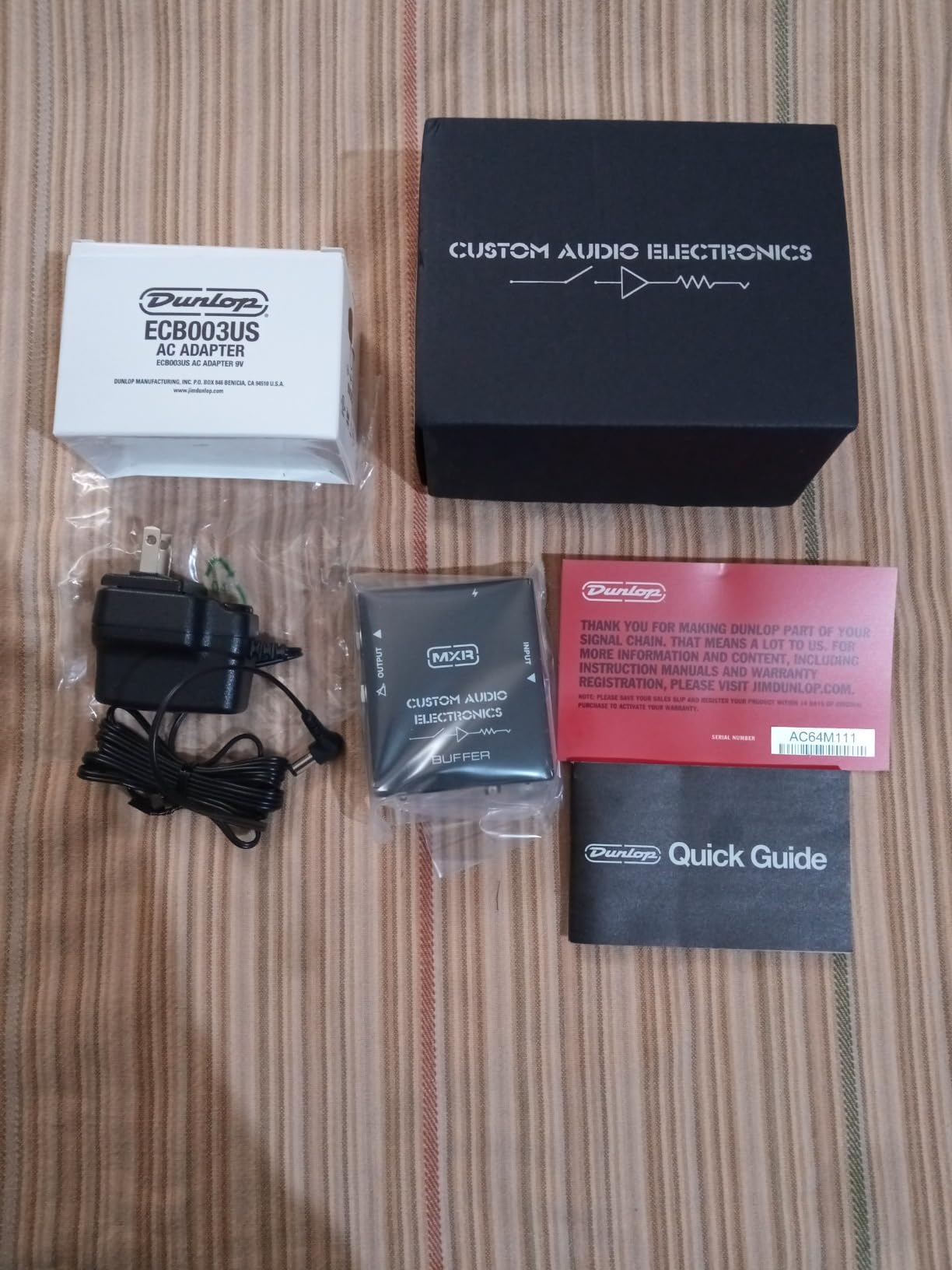
Another standout feature is the extra output jack. You can send your signal to a tuner, a separate effects chain, or a second amp without affecting your main signal path. This is a feature normally found on much more expensive units, and MXR has included it at a reasonable price point.
The pedal also includes a 9VDC power output jack that can power another pedal. This is incredibly useful if you are running low on power supply outputs on your board. The build quality is typical MXR, which means it is built to withstand years of stomping and gigging.
Hi-Lo Cut Switches Practical Application
The Hi cut switch rolls off excessive treble that can make a buffered signal sound harsh, while the Lo switch tightens up the low-end response. In practice, I found that engaging both switches gave me a warmer, more vintage tone that worked beautifully with single-coil pickups. Experiment with different combinations to find what works for your rig.
Using the Power Output Jack Effectively
The 9VDC power output on the MXR CAE Buffer can power one additional pedal that draws up to the specified current. This is perfect for powering a simple overdrive or compressor without needing an extra output on your main supply. Just make sure the pedal you connect does not exceed the current rating to avoid noise issues.
7. Truetone CSPT Pure Tone Buffer – The Famous Buffer Goes Standalone
Truetone CSPT Pure Tone Buffer
Standalone version of famous internal buffer
Compact Custom Shop package
Analog signal path
9V operation
Pros
- Significantly improves tone clarity and brightness
- Compact size takes minimal pedalboard space
- Affordable price point
- Eliminates tone suck from long cable runs
- Works well with true bypass pedals
Cons
- Not unity gain and adds slight bump to gain
- Not ideal for already-buffered setups
- Ships in 3 to 4 days not Prime eligible
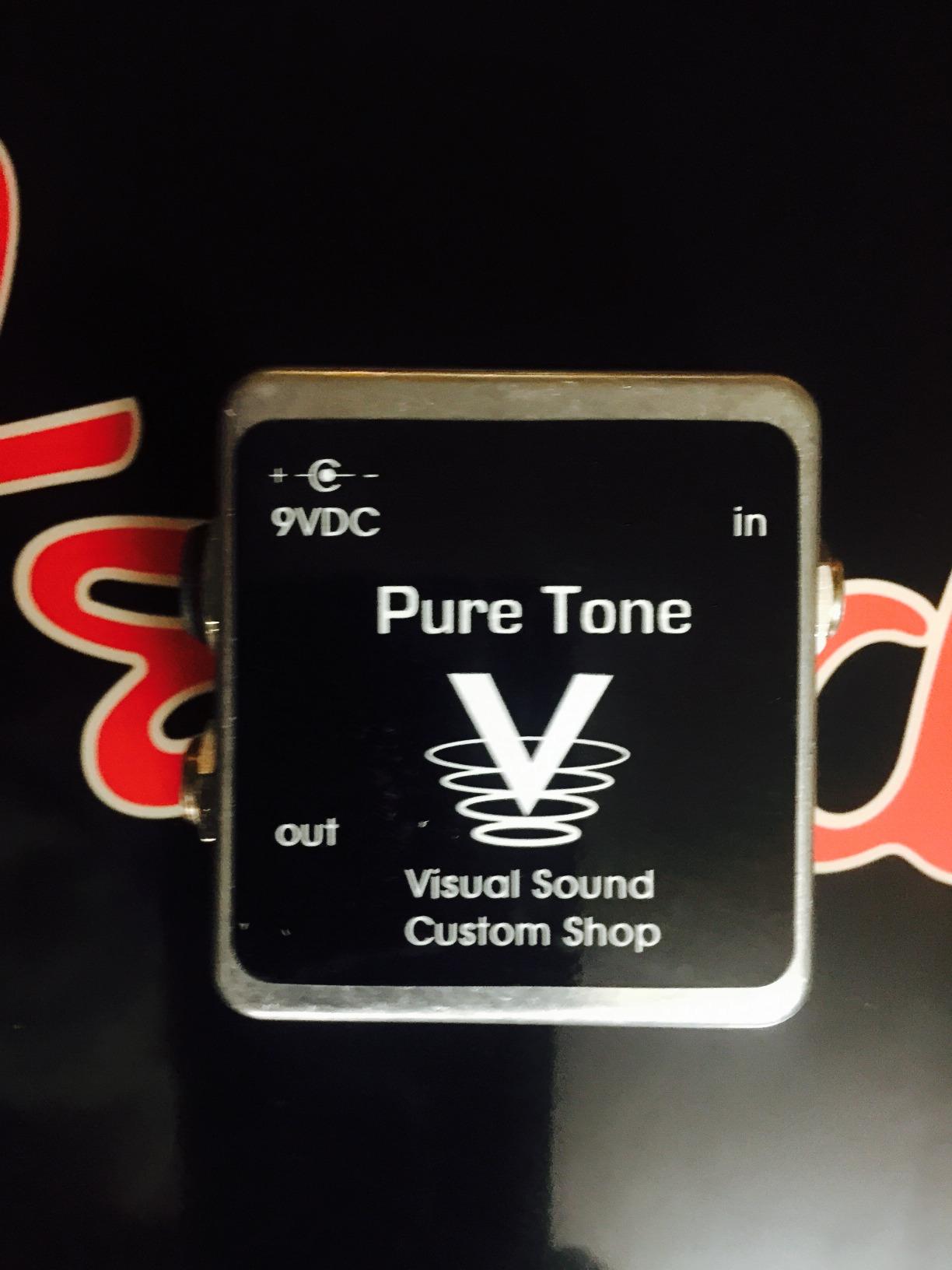
The Truetone CSPT Pure Tone Buffer has an interesting origin story. It is the same buffer circuit that Truetone (formerly Visual Sound) built into their famous multi-effect pedals, now available as a standalone unit. This means you are getting a proven, battle-tested buffer design that has been refined over years of professional use.
I was impressed by how dramatically this little unit improved the clarity and brightness of my signal. Running a Stratocaster through 30 feet of cable and four true bypass pedals, the difference with the CSPT engaged was immediately noticeable. The high-end sparkle that had been missing came back with authority.
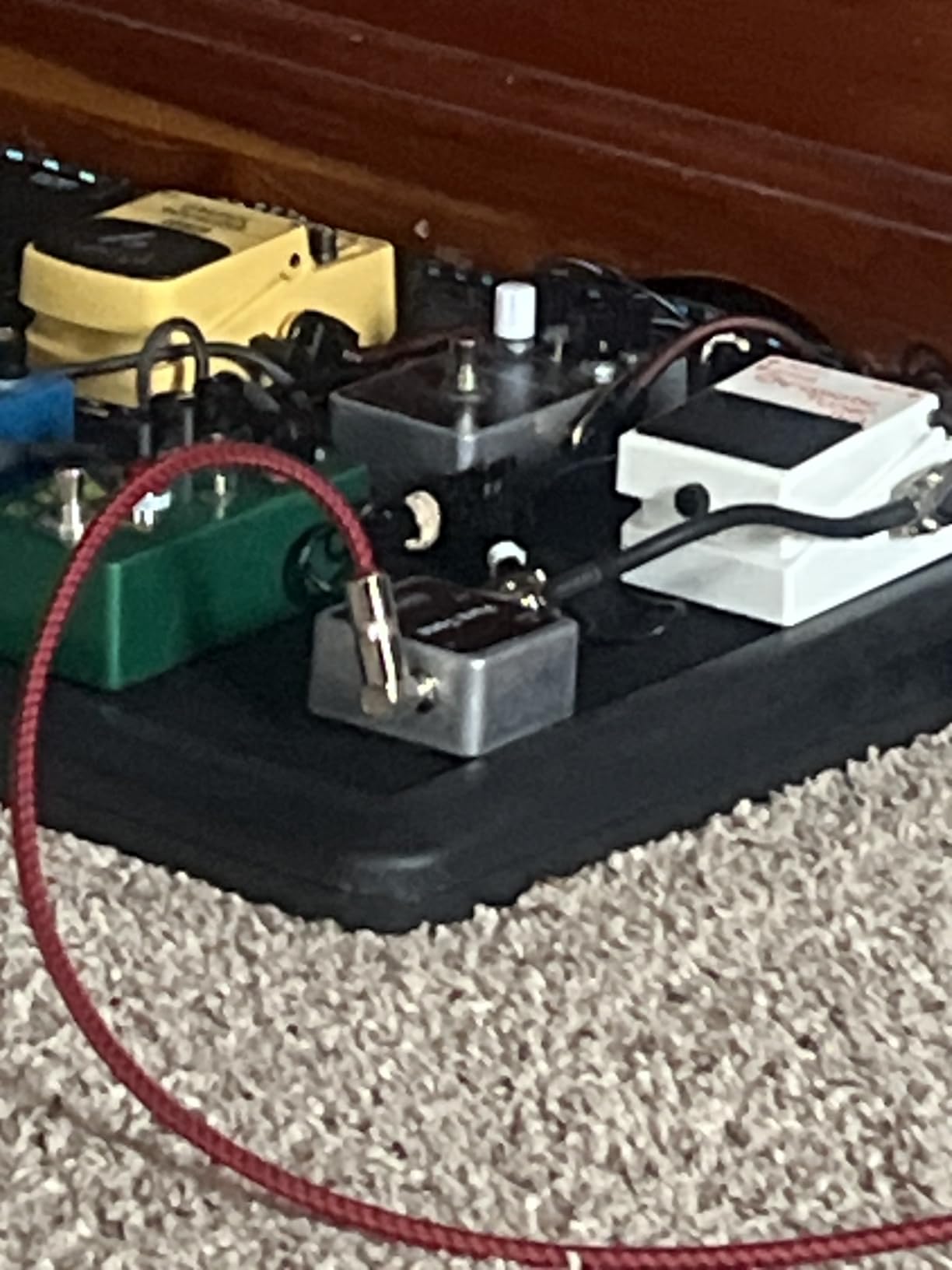
The compact Custom Shop package takes up minimal space on a pedalboard. It is one of the smaller buffers available, which makes it easy to fit into tight spots. The analog signal path ensures that your tone remains natural and uncolored.
One thing to be aware of is that the CSPT is not true unity gain. It adds a slight bump to the overall gain, which some players actually prefer as it gives a subtle push to the signal. If you are running an already-buffered setup, this could cause issues, so consider your full signal chain before adding it.
Comparing to the Internal Buffer Version
The standalone CSPT uses the exact same circuit as the buffers built into Truetone’s pedals. If you have ever played through a Truetone multi-effect pedal and loved how your guitar sounded, the CSPT brings that same quality to any rig. The advantage of the standalone version is that you can place it exactly where you need it in your chain.
Understanding the Gain Characteristic
The slight gain bump on the CSPT is a design choice rather than a flaw. Many players find that the small volume increase helps their guitar sit better in a band mix. However, if you are running multiple buffers or have a very hot signal already, you may want to test the CSPT before committing to make sure it does not overload your input.
8. JOYO Buffer Tune JF-19 – Buffer and Tuner in One
JOYO Buffer & Tuner Guitar Pedal, ±1 Cent Accuracy with LED Display & Analog Buffer Circuit, DC Output, True Bypass (Buffer Tune JF-19)
1-cent tuning accuracy
Built-in analog buffer
LED display
9V DC output for other pedals
Pros
- Excellent tuner accuracy within 1 cent
- Bright LED display visible on stage
- Built-in buffer preserves tone through long cable runs
- DC output powers other pedals
- Good value for combined functionality
Cons
- Some users report high-pitched hum in buffer mode
- Tuning can be slow
- Buffer mode may introduce noise in some setups
The JOYO Buffer Tune JF-19 solves two problems at once by combining a high-precision tuner with an analog buffer circuit. If you are running out of pedalboard space and need both functions, this pedal is a smart choice. The tuner offers plus or minus 1 cent accuracy, which is professional-grade precision.
I tested the tuner against my trusted clip-on tuner and found it to be equally accurate. The large LED display is bright enough to read on a sunlit stage, which is a common pain point with smaller tuner pedals. You can toggle between buffer mode and true bypass mode, giving you flexibility in how you use it.
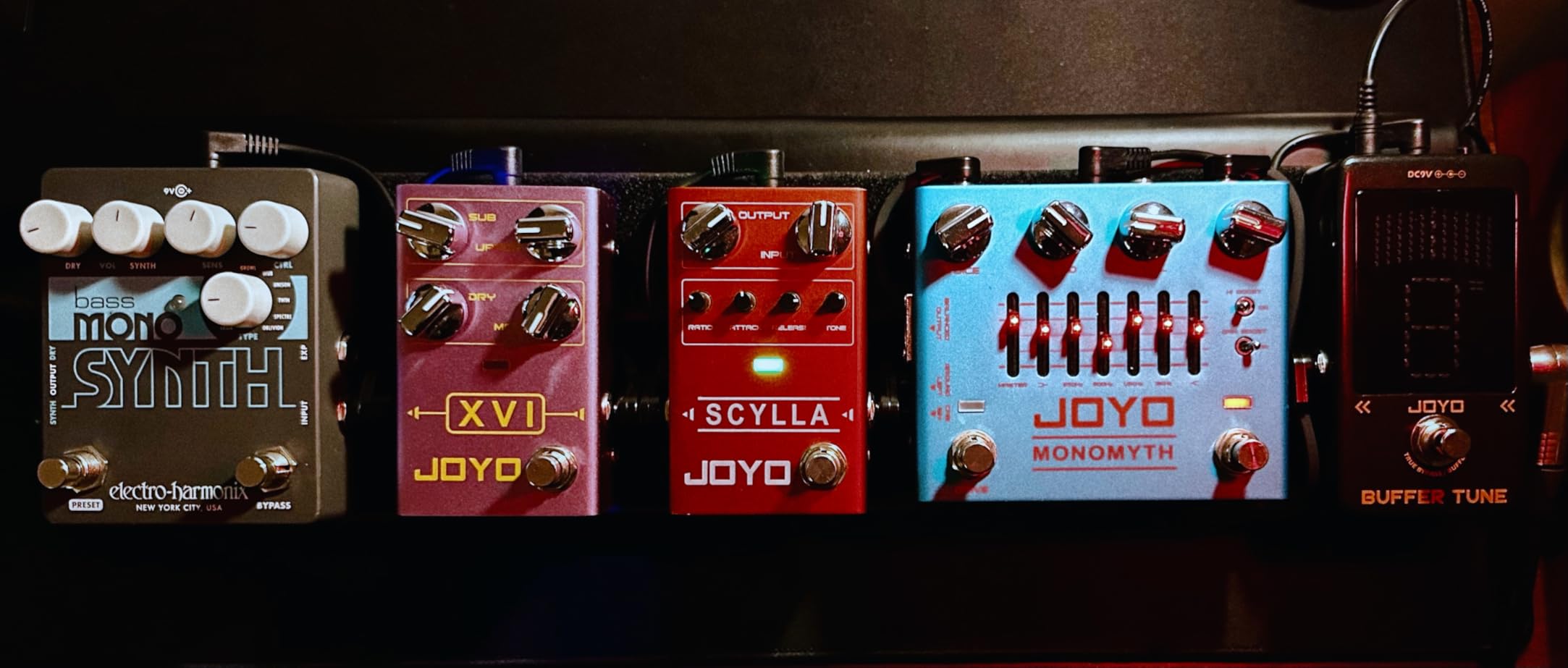
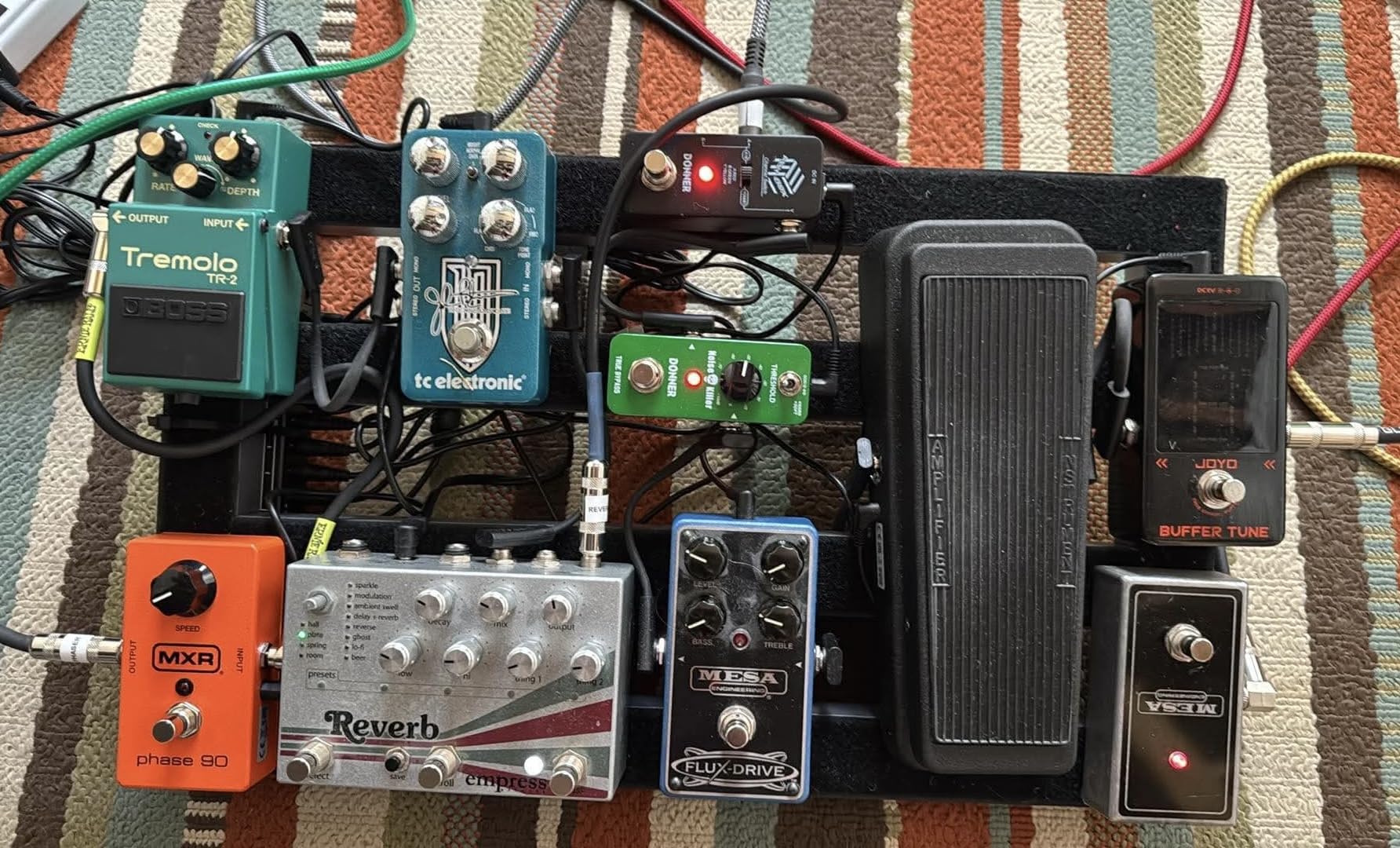
The built-in buffer circuit does a solid job of preserving signal quality through long cable runs. In my testing, it restored clarity and high-end sparkle comparably to dedicated buffer pedals. The dedicated 9V DC output jack is a nice bonus that lets you power another pedal from this unit.
The main concern with the JF-19 is that some users report a high-pitched hum when the buffer is engaged. I experienced this when using a non-isolated power supply, but it disappeared when I switched to an isolated supply. If you are using a quality power source, you should not have this issue.
Buffer Mode vs True Bypass Mode
The JF-19 lets you choose between buffer mode and true bypass mode using a toggle switch. Buffer mode keeps your signal buffered at all times for maximum clarity, while true bypass mode sends your signal straight through when the tuner is not in use. Choose buffer mode if you have long cable runs, and true bypass mode if your chain is already buffered elsewhere.
DC Output Power Chain Capabilities
The dedicated 9V DC output on the JF-19 can power one additional pedal from your chain. This is useful for players who have more pedals than power supply outputs. The current rating is sufficient for most analog pedals, though you should check the requirements of whatever you connect to avoid noise or performance issues.
9. Pure Buffer Mini by LokFy – Smallest Footprint Budget Pick
Pure Buffer Pure Tone Mini Guitar Effect Pedal Effect Bypass Switch
Eliminates cable capacitance
Full metal shell
Compact 1.97 x 1.97 x 1.18 inches
20mA draw
Pros
- Significantly improves tone clarity
- Very affordable price point
- Compact size fits anywhere on pedalboard
- Brings pedals to life after long cable runs
- Simple plug-and-play operation
Cons
- Some units may be defective
- May cause popping noise with other pedals
- Not true bypass design
- Mixed results reported by some users
The Pure Buffer Mini by LokFy is one of the smallest and most affordable buffer pedals available. Measuring just 1.97 by 1.97 by 1.18 inches, it takes up less space than almost any other pedal on your board. If you are tight on real estate and budget, this is a compelling option.
I was skeptical about the quality at this price point, but the full metal shell construction feels surprisingly solid. The pedal does its primary job well, which is eliminating the cable capacitance that causes tone suck in long cable runs. After plugging it in, my signal immediately sounded brighter and more present.
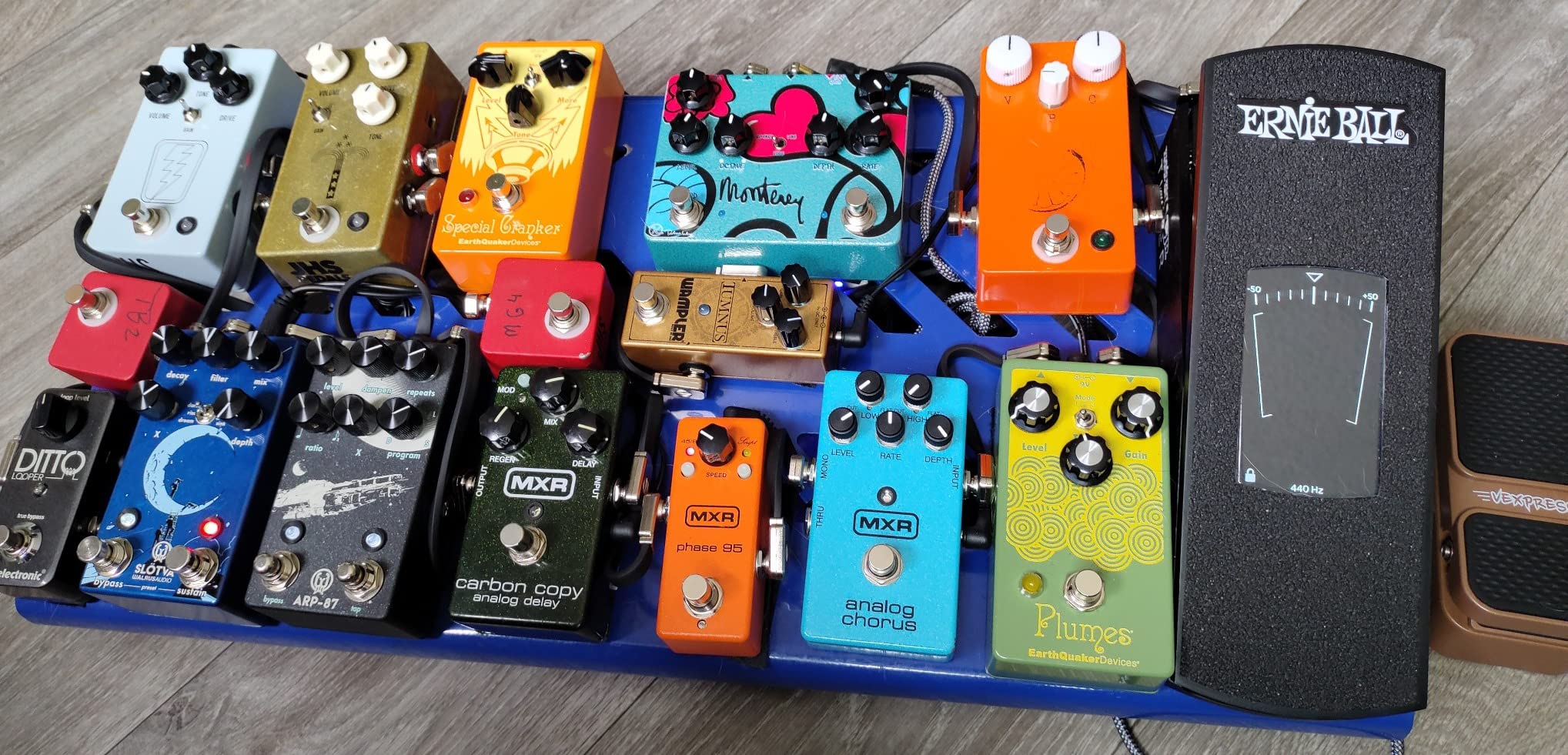
The operation is completely plug and play. There are no controls to adjust. You simply plug your guitar into the input and send the output to the rest of your chain. This simplicity is a double-edged sword because it means you cannot fine-tune the buffer response, but for most players, the default performance is more than adequate.
The main downside is quality control. Some users have received defective units, and there are reports of popping noises when engaging other pedals in the chain. I did not experience these issues in my testing, but they are worth noting. At this price, some variability is expected.
Where to Place the Mini in Your Chain
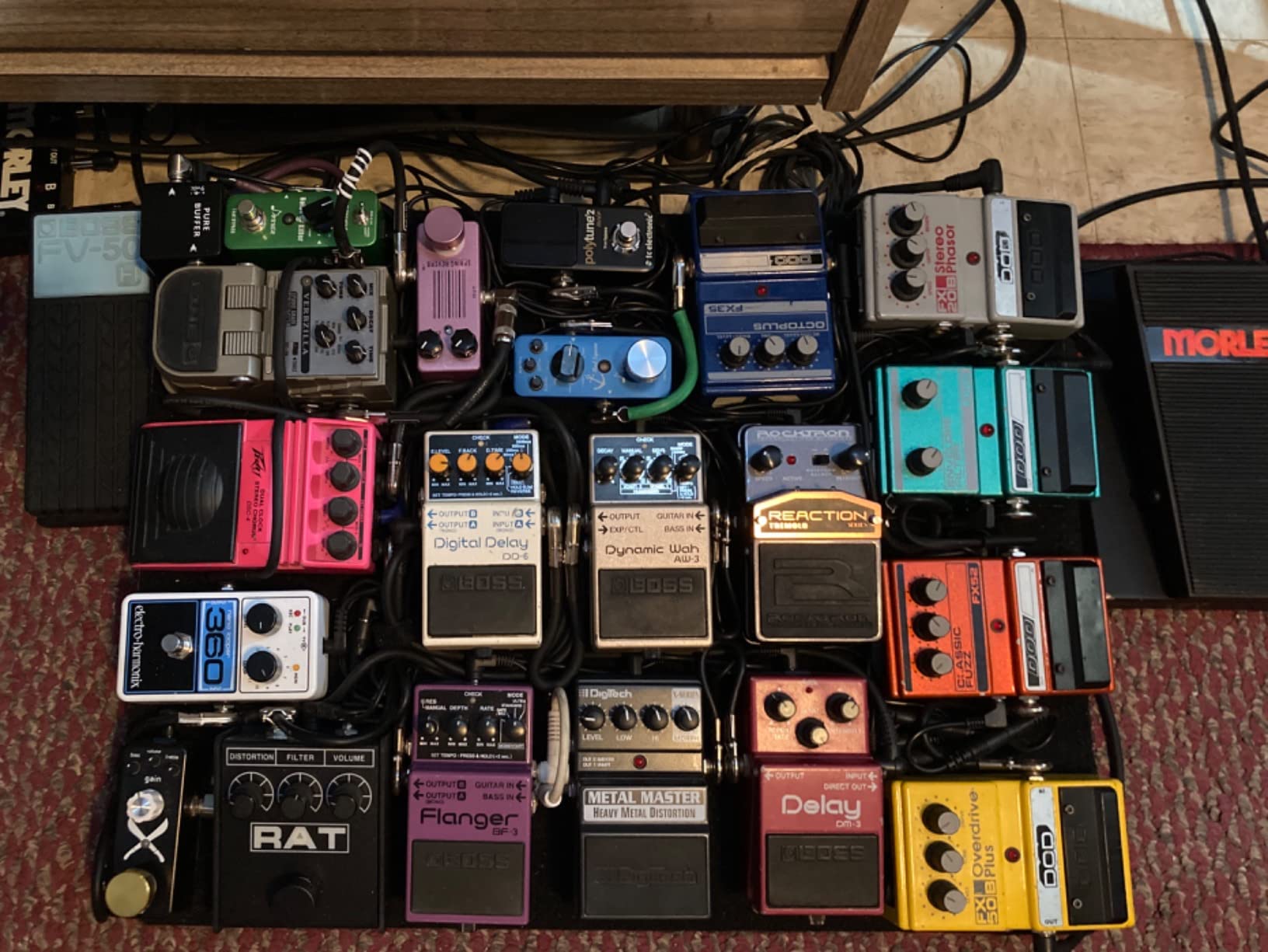
Because of its tiny size, the Pure Buffer Mini can fit in unusual spots on your pedalboard where larger pedals cannot. Place it first in your chain for the best results. The 20mA current draw is low enough that it will not tax your power supply, and the 9V power requirement is standard.
Realistic Expectations at This Price
The Pure Buffer Mini is an entry-level buffer that delivers solid performance for its cost. It will not match the transparency or feature set of premium options like the Empress Buffer+, but it will absolutely improve your tone if you are currently running unbuffered. For players just starting to explore signal management, it is a great first step.
10. ERYUE Pure Buffer – The Budget Champion Endorsed by Pros
ERYUE Effect Pedal Pure Buffer Guitar Buffer Effect Pedal Full Metal Shell
Eliminates cable capacitance
Full metal shell
Compact design
9V DC powered
Pros
- Significant improvement in tone quality
- Very affordable
- Compact full metal shell design
- Restores sound level and quality after long cable runs
- Recommended by JHS Pedals owner Josh Scott
Cons
- Basic opamp-based design
- Limited protection and noise reduction circuitry
- May not satisfy professional studio requirements
The ERYUE Pure Buffer gained notoriety when Josh Scott from JHS Pedals tested it on his YouTube channel and praised its performance. He noted that this budget buffer performs comparably to units costing three times as much, which immediately put it on the radar of tone-conscious players everywhere.
I was curious whether the hype was justified, so I ran the ERYUE through the same testing rig I used for all the other pedals on this list. The results were genuinely surprising. The improvement in tone clarity and signal strength was immediately noticeable, and the pedal held its own against options at twice the price.
The full metal shell construction feels durable and the compact design takes up minimal pedalboard space. It does exactly what a buffer should do, which is eliminate the cable capacitance that robs your tone of high-end sparkle and clarity. The simplicity is part of its appeal.
The main limitation of the ERYUE is its basic design. It uses a simple opamp-based circuit without the advanced protection and noise reduction circuitry found in premium buffers. For most players, this will never be an issue. But if you are running a complex studio rig with multiple gain stages, you might eventually want something more sophisticated.
The JHS Pedals Connection
Josh Scott of JHS Pedals is known for his honest and thorough pedal reviews. When he tested the ERYUE Pure Buffer alongside much more expensive options and found it held its own, it sent ripples through the guitar community. His endorsement carries weight because he has no financial incentive to promote a budget brand over his own products.
Long-Term Reliability Considerations
As a relatively new product with a limited track record, the long-term reliability of the ERYUE Pure Buffer is still being established. The initial reviews are positive, but budget pedals from lesser-known brands sometimes have shorter lifespans than established brands. If you are a touring musician, consider having a backup or choosing a brand with a longer warranty.
How to Choose the Right Buffer Pedal?
Choosing the right buffer pedal depends on your specific rig, playing style, and budget. Here are the key factors to consider when making your decision.
Signal Chain Length Matters Most
The length of your total cable run is the biggest factor in determining whether you need a buffer. As a general rule, if your total cable length exceeds 18 feet from guitar to amp, you will benefit from a buffer. The longer your cable run, the more high-end frequency you lose due to cable capacitance.
Count every cable in your signal path, including patch cables between pedals. A pedalboard with eight pedals and short patch cables can easily add another 6 to 8 feet of effective cable length to your chain.
Buffer vs True Bypass Understanding
True bypass pedals do not buffer your signal, which means they are essentially invisible to your signal chain when bypassed. This sounds good in theory, but it means that every true bypass pedal in your chain contributes to the effective cable length. A buffer converts your signal to low impedance, making it resistant to the capacitance effects of long cable runs.
If you have mostly true bypass pedals and long cables, you need a buffer. If you have pedals that are already buffered (like many Boss pedals), you may not need an additional buffer unless your chain is exceptionally long.
Power Requirements
Most buffer pedals run on standard 9V center-negative power supplies, which is the same as most guitar pedals. Pay attention to the current draw, especially if you are using a daisy-chain power supply. Buffer pedals generally draw very little current, ranging from 0.04 milliamps on the TC Electronic to 100 milliamps on the JHS.
If you are using an isolated power supply, current draw is less of a concern. But if you are daisy-chaining multiple pedals from a single output, make sure the total draw does not exceed the supply rating.
Extra Features to Consider
Some buffer pedals offer features beyond basic signal buffering. The Empress Buffer+ includes a noise filter, clean boost, and tuner mute. The JOYO JF-19 combines a tuner with its buffer. The Xotic Super Clean adds a frequency-selectable boost. Consider whether these extra features would simplify your pedalboard by replacing multiple pedals with one unit.
On the other hand, if you already have dedicated pedals for boosting, tuning, and noise reduction, a simple transparent buffer like the TC Electronic BONAFIDE BUFFER or the Truetone CSPT may be all you need.
FAQs
What does a buffer pedal do?
A buffer pedal converts your guitar’s high-impedance signal to a low-impedance signal, allowing it to travel through long cables and multiple pedals without losing high-end frequencies or tonal clarity. This prevents the tone suck that occurs when cable capacitance drains your signal.
Where should I place a buffer pedal in my signal chain?
Place your buffer pedal first in your signal chain, right after your guitar input. This converts the signal to low impedance immediately so it can travel through your entire pedalboard without degradation. For very long cable runs to your amp, consider adding a second buffer at the end of your chain.
Do I need a buffer if I use true bypass pedals?
Yes, you likely need a buffer if you use multiple true bypass pedals. True bypass pedals do not buffer your signal, which means they add to the effective cable length in your chain. If your total cable run exceeds 18 feet with true bypass pedals, a buffer will restore lost high-end clarity and presence.
Can I use more than one buffer pedal?
Yes, you can use multiple buffer pedals in your signal chain. Many professional setups use one buffer at the beginning and another at the end of the chain for maximum signal preservation. However, too many buffers can accumulate noise and alter your tone, so start with one and add more only if needed.
Will a buffer pedal change my tone?
A quality buffer pedal should be transparent and not color your tone. Its job is to restore the frequencies you have lost to cable capacitance. However, some budget buffers may add slight gain or introduce noise. Premium options like the TC Electronic BONAFIDE BUFFER and Empress Buffer+ are designed to be completely transparent.
Conclusion
Finding the best buffer pedals for your rig does not have to be complicated. The right choice depends on your budget, pedalboard space, and how many extra features you want alongside signal buffering.
For most players, the TC Electronic BONAFIDE BUFFER is the clear winner. It delivers transparent, high-quality buffering at a price that leaves room in your budget for other pedals. The ultra-compact footprint and automatic true bypass on power failure make it a practical choice for any rig.
If you want a premium all-in-one solution, the Empress Buffer+ is worth every penny. The built-in noise filter, clean boost, and tuner mute replace multiple pedals on your board. And for budget-conscious players, the ERYUE Pure Buffer delivers surprisingly capable performance at an unbeatable price.
Whichever buffer pedal you choose, you will immediately notice the difference in clarity, presence, and high-end sparkle. Your guitar will sound the way it was meant to sound, regardless of how many pedals and cables sit between it and your amp. Take the time to assess your signal chain and pick the buffer that fits your needs in 2026.