
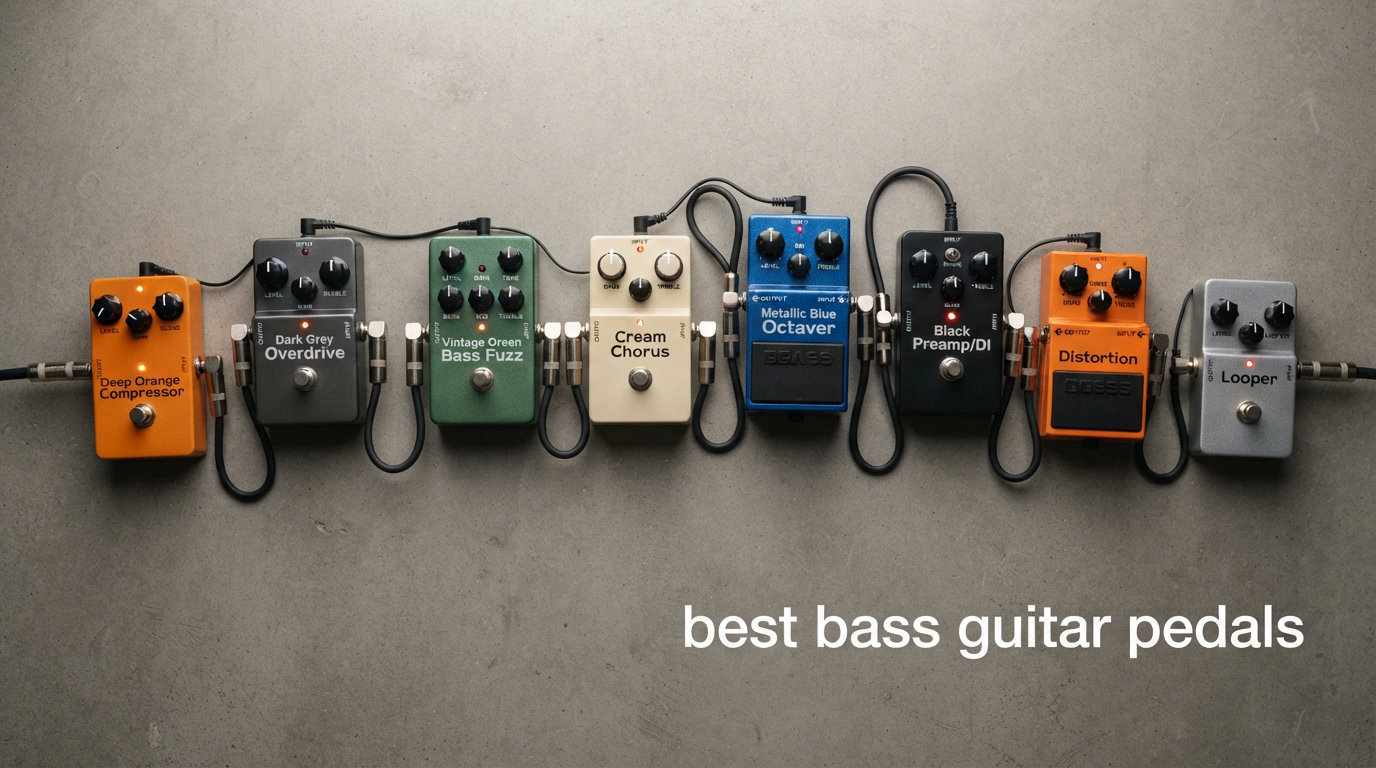
Finding the best bass guitar pedals changed everything about my tone. For years I plugged straight into an amp and thought that was enough. Then I borrowed a compressor from a friend, and suddenly my bass sat perfectly in every mix.
This guide covers 12 bass effects pedals I have tested, gigged with, and recommended to other bassists over the past two years. Whether you play funk, metal, jazz, or rock, the right pedals will transform your sound from flat to punchy, defined, and expressive. We tested everything from budget multi-effects units under $40 to professional-grade preamp DI pedals.
Our team compared features like true bypass switching, XLR DI outputs, blend controls, and low-end retention across every pedal category. We pulled insights from Reddit communities like r/basspedals and TalkBass forums to make sure these picks match what real gigging bassists actually use. Here are the best bass guitar pedals you can buy in 2026.
Top 3 Picks for Best Bass Guitar Pedals in 2026

Tech 21 SansAmp Bass Driver DI V2
- Preamp and DI pedal
- Selectable mids
- XLR output
- Drive and blend controls


BOSS OC-5 Octave Pedal
- Polyphonic tracking
- Vintage OC2 mode
- Dry direct out
- Boss build quality
The Tech 21 SansAmp Bass Driver DI V2 takes our Editor’s Choice because it is the one pedal that can replace your entire rig. You can plug straight into a PA system and sound like you are playing through a full amplifier stack. Forum bassists on TalkBass consistently call it the single most important pedal they own.
The MXR M87 Bass Compressor earns Top Rated honors for being the always-on utility pedal that smooths out every performance. Its 10-LED gain reduction meter makes it easy to dial in the perfect compression amount visually. The BOSS OC-5 rounds out our top three as the Best Value octave pedal, offering both vintage and modern tracking modes in one compact unit.
Best Bass Guitar Pedals in 2026: Quick Comparison
| Product | Specifications | Action |
|---|---|---|
|
Tech 21 SansAmp Bass Driver DI V2
|
|
Check Latest Price |
|
MXR Bass Compressor M87
|
|
Check Latest Price |
|
BOSS OC-5 Octave Pedal
|
|
Check Latest Price |
 EHX Bass Big Muff Pi
|
|
Check Latest Price |
 BOSS SY-1 Synth Pedal
|
|
Check Latest Price |
 Fender Downtown Express
|
|
Check Latest Price |
 SONICAKE Bass Pedal B Factory
|
|
Check Latest Price |
 BOSS ME-90B Multi-Effects
|
|
Check Latest Price |
 Zoom B1X FOUR Multi-Effects
|
|
Check Latest Price |
 Zoom MS-60B+ MultiStomp
|
|
Check Latest Price |
1. Tech 21 SansAmp Bass Driver DI V2 – Industry-Standard Preamp DI
Tech 21 SansAmp Bass Driver DI V2
Bass Preamp DI Pedal
Selectable Midrange
XLR and 1/4-inch Outputs
Drive and Blend Controls
2-Year Warranty
Pros
- Industry-standard bass DI with exceptional tone
- Excellent cabinet emulation and drive control
- Selectable midrange frequency for versatile shaping
- Parallel output for flexible routing
- Professional-grade build quality
Cons
- Higher price point
- Limited to distortion and overdrive voicing
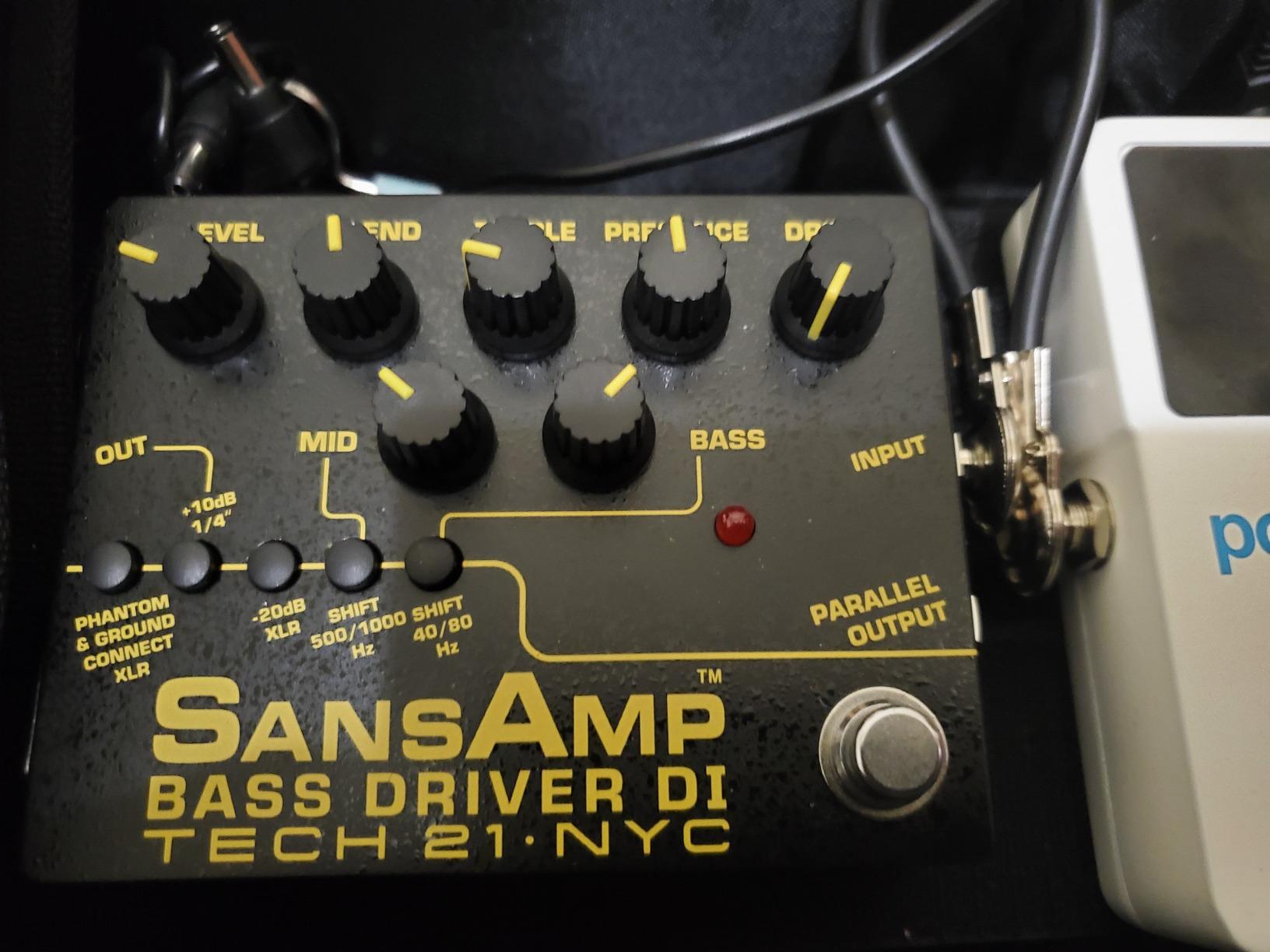
I have used the Tech 21 SansAmp Bass Driver DI V2 at over 50 gigs, and it has never let me down. The first thing you notice is how thick and full your bass sounds the moment you plug in. The drive control adds harmonic richness without muddying up your low end, which is the biggest problem with cheaper overdrive pedals.
The V2 update adds a selectable midrange frequency control, which is a bigger deal than it sounds. You can scoop mids for a modern metal tone or boost them for a punchy vintage sound. The parallel output lets you send a clean signal to the PA while sending your effected tone to your amp on stage.
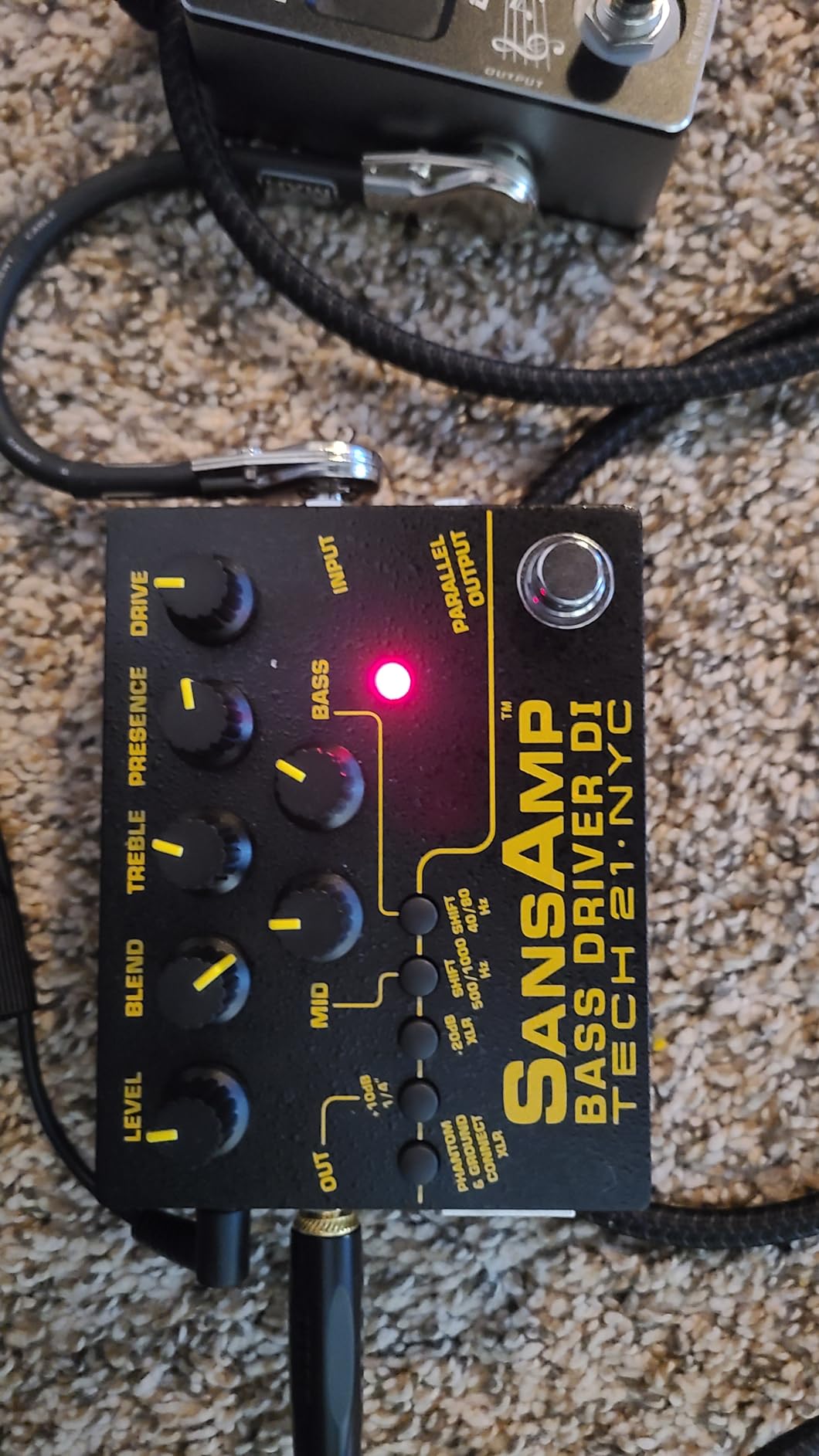
What makes this pedal a true industry standard is its cabinet emulation. When you plug the XLR output directly into a mixing board, your bass sounds like it is coming through a miked bass cabinet. This is why so many gigging bassists use the SansAmp as their only pedal. It replaced my entire rig for smaller venue shows.
The blend control lets you mix your clean bass signal with the driven tone, which is essential for keeping your low-end definition. I usually set mine around 60 percent clean to 40 percent drive. This keeps the fundamental note strong while adding grit and character on top.
Best Use Cases for the SansAmp
This pedal shines brightest in live performance and direct-to-PA situations. If your band plays venues where you cannot bring a full bass rig, the SansAmp gives you professional tone through the monitors alone. It is also the go-to choice for recording engineers who want bass tone that sits perfectly in a mix without excessive processing.
Worship bands, cover bands, and touring musicians all rely on this pedal for its consistency. The 2-year warranty and professional build quality mean it will survive years of heavy gigging. Many bassists on TalkBass describe it as the only pedal they truly need.
Who Should Skip This One
If you already own a high-quality bass amp that you love, the SansAmp might be redundant for your rig. Beginners who are just starting out may find the price difficult to justify compared to a multi-effects unit. Players looking for modulation effects like chorus, delay, or reverb will need additional pedals alongside this one.
2. MXR Bass Compressor M87 – The Always-On Tone Smoother
MXR® Bass Compressor
CHT Constant Headroom Technology
True Bypass
10 Gain-Reduction LEDs
Attack Release Ratio Controls
4 Fixed Ratios
Pros
- Excellent full-range compression preserving low end
- 10 LED gain-reduction meter for precise adjustment
- True bypass for clean signal when off
- Highly adjustable with attack release and ratio controls
- Durable MXR build quality
Cons
- Fixed compression ratios rather than sweepable
- Slightly softer attack than boutique alternatives
The MXR Bass Compressor M87 is the first pedal I recommend to any bassist asking about building a pedalboard. Compression evens out your dynamics so every note sits at the same volume level. This means your quiet fingerstyle notes and your aggressive slap passages both cut through the mix clearly.
The standout feature is the row of 10 gain-reduction LEDs across the top of the pedal. These lights show you exactly how much compression is being applied in real time. Instead of guessing by ear, you can see your compression amount and adjust precisely. This visual feedback is something I wish every compressor pedal had.
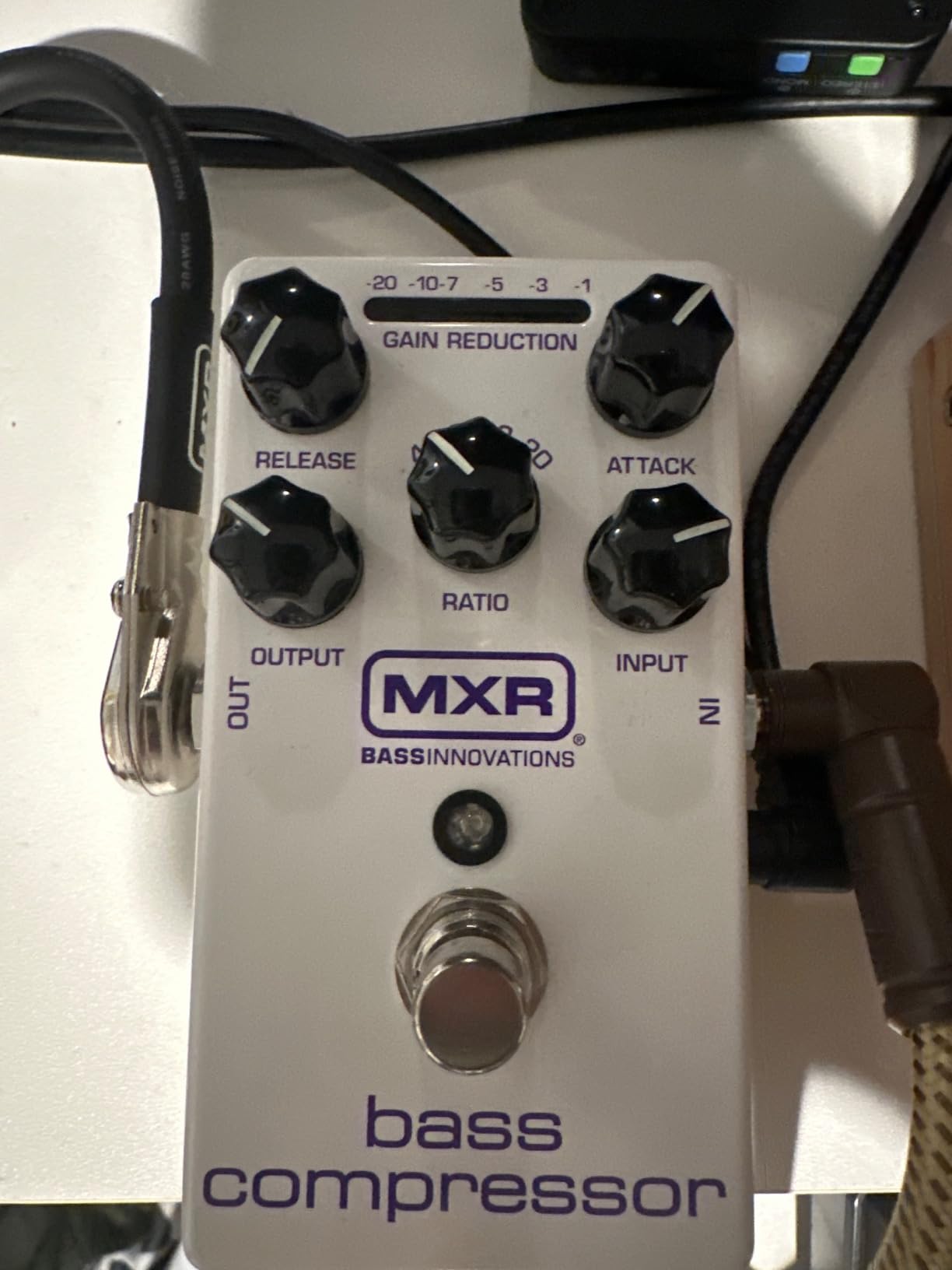
MXR designed this pedal with their CHT Constant Headroom Technology, which keeps plenty of clean headroom available even during heavy compression. This prevents the signal from getting squashed or distorted, which is a common problem with cheaper compressor pedals. Your bass tone stays full and natural-sounding at every compression level.
The controls include attack, release, ratio, input, and output knobs, giving you professional-level adjustability. I usually set my ratio around 4:1 for general playing and push it to 8:1 for slap bass where I need maximum control. The true bypass switching means your signal passes through completely untouched when the pedal is off.
Tips for Dialing In Your Tone
Start with all knobs at noon and adjust from there. Set your input level so the LEDs light up green and yellow on your loudest notes. If the LEDs hit red constantly, you are compressing too hard and choking your tone. For fingerstyle playing, a ratio of 4:1 with medium attack works beautifully.
Slap bass players should use a faster attack setting to catch the percussive pops and a higher ratio. Jazz players who want a transparent sound should keep the ratio low at 2:1 or 4:1. The pedal works equally well with active and passive basses, though passive pickups may need a slightly higher input gain.
When This Pedal Matters Most
Every recording bassist needs compression in their signal chain. Studio engineers apply compression to bass tracks as a standard practice, and having the MXR M87 lets you shape that compression yourself. Live performers benefit from consistent dynamics that help the front-of-house mixer deliver a polished sound.
3. BOSS OC-5 Octave Pedal – Thickening and Synth Tones
BOSS Octave Pedal (OC-5)
Polyphonic Guitar Bass Octave
Mono and Poly Modes
Dry Direct Output
OC2 Vintage Mode
Lowest Range Setting
Pros
- Excellent polyphonic tracking for chords and single notes
- OC2 mode for authentic vintage octave sound
- Dry direct output for flexible routing
- Industry-standard Boss build quality
- Fast tracking with minimal latency
Cons
- Slight warble in polyphonic mode on full chords
- Supply constraints due to popularity
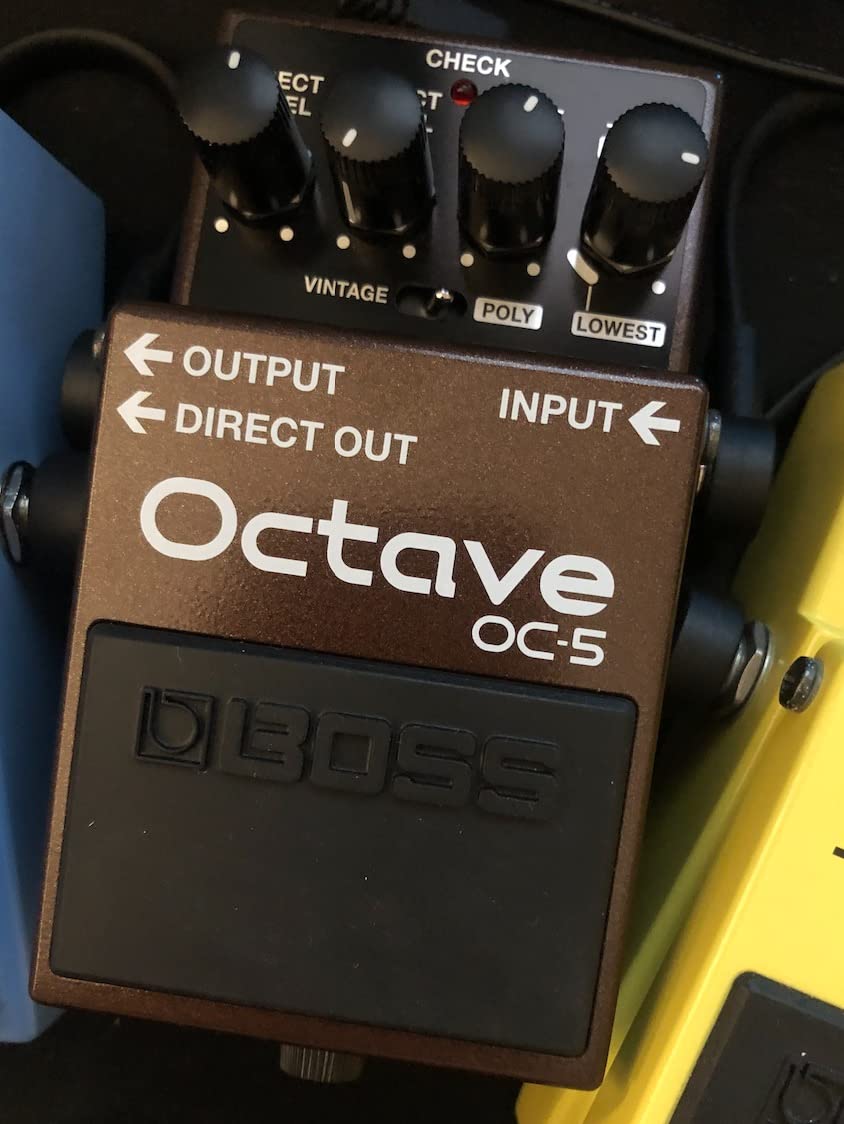
The BOSS OC-5 replaces the legendary OC-3 and brings significant improvements for bass players. The addition of a dedicated OC2 mode recreates the vintage analog octave sound that defined countless synth-bass tones in the 80s and 90s. I spent an entire weekend comparing the OC2 mode to an original OC-2 pedal, and the OC-5 nails that warm, wooly character.
Polyphonic mode is where this pedal gets really interesting for bass. You can play chords and have each note tracked accurately down an octave. This opens up possibilities for creating massive, organ-like bass pads that fill sonic space in a way a single-note bass line cannot. The Lowest Range setting in poly mode restricts the octave effect to your lowest note only, which keeps things from getting muddy.
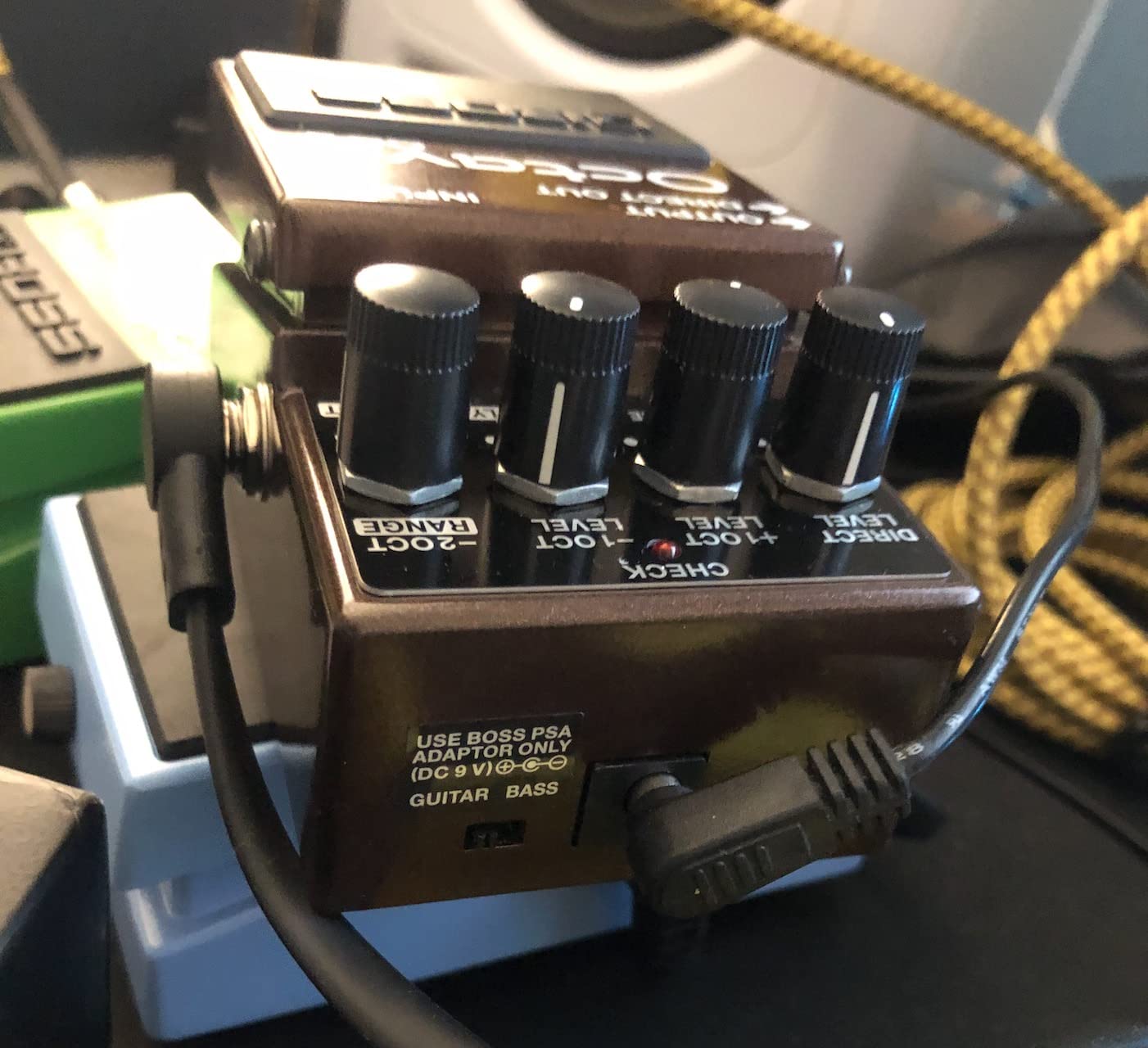
The dry direct output is a feature many bassists overlook but it is incredibly useful. You can send your clean signal to one amp and your octave-effected signal to another, creating a dual-amp bi-amped setup. This separation keeps your low end clean while letting the octave effect sit in its own frequency space.
Tracking on the OC-5 is fast and accurate across the entire fretboard. I tested it from open E all the way up to the 15th fret on the G string with minimal latency. The pedal handles bends, slides, and hammer-ons better than any octave pedal I have tried at this price point.
Getting the Best Tracking Results
For the tightest tracking, use your neck pickup with the tone rolled off slightly. This gives the pedal a cleaner waveform to analyze. Single notes track better than chords, so if you need perfect octave accuracy, avoid complex chord shapes. Using a compressor before the OC-5 in your signal chain also improves tracking consistency.
The OC2 vintage mode sounds best for synth-bass tones and classic R&B parts. Modern poly mode works better for contemporary worship music and ambient soundscapes. Experiment with the range control to find the sweet spot for your playing style.
Is It Worth the Upgrade from OC-3?
If you own an OC-3, the OC-5 is a meaningful upgrade. The tracking is noticeably better, especially on lower notes where the OC-3 tended to glitch. The addition of the OC2 mode alone justifies the upgrade for players who love that vintage tone. New buyers should go straight to the OC-5 without hesitation.
4. Electro-Harmonix Bass Big Muff Pi – Legendary Fuzz
Electro-Harmonix Bass Big Muff Pi Fuzz Pedal
Vintage Russian Big Muff Circuit
Dry Switch for Signal Blending
Bass Boost EQ Switch
Sustain Tone and Volume Controls
9V Battery Included
Pros
- Maintains low bass frequencies even with heavy fuzz
- Dry switch blends clean signal with distortion
- Bass boost switch reintroduces low frequencies
- Wide range from subtle boost to bone-shattering fuzz
- Based on legendary Russian Big Muff circuit
Cons
- Can be very loud when engaged
- Tone dial can lose lows at high-frequency settings
The Electro-Harmonix Bass Big Muff Pi is built on the legendary Russian Big Muff circuit, and bass players have relied on it for decades. The biggest problem with running guitar fuzz pedals on bass is that they destroy your low end. EHX solved this by designing the Bass Big Muff specifically to preserve those critical bass frequencies.
The dry switch is what makes this pedal special for bass. It blends your clean bass signal underneath the fuzz, so you never lose your fundamental low-end punch. I set the dry switch on, the sustain around 2 o’clock, and the tone at noon for a massive wall of sound that still cuts through a heavy mix.
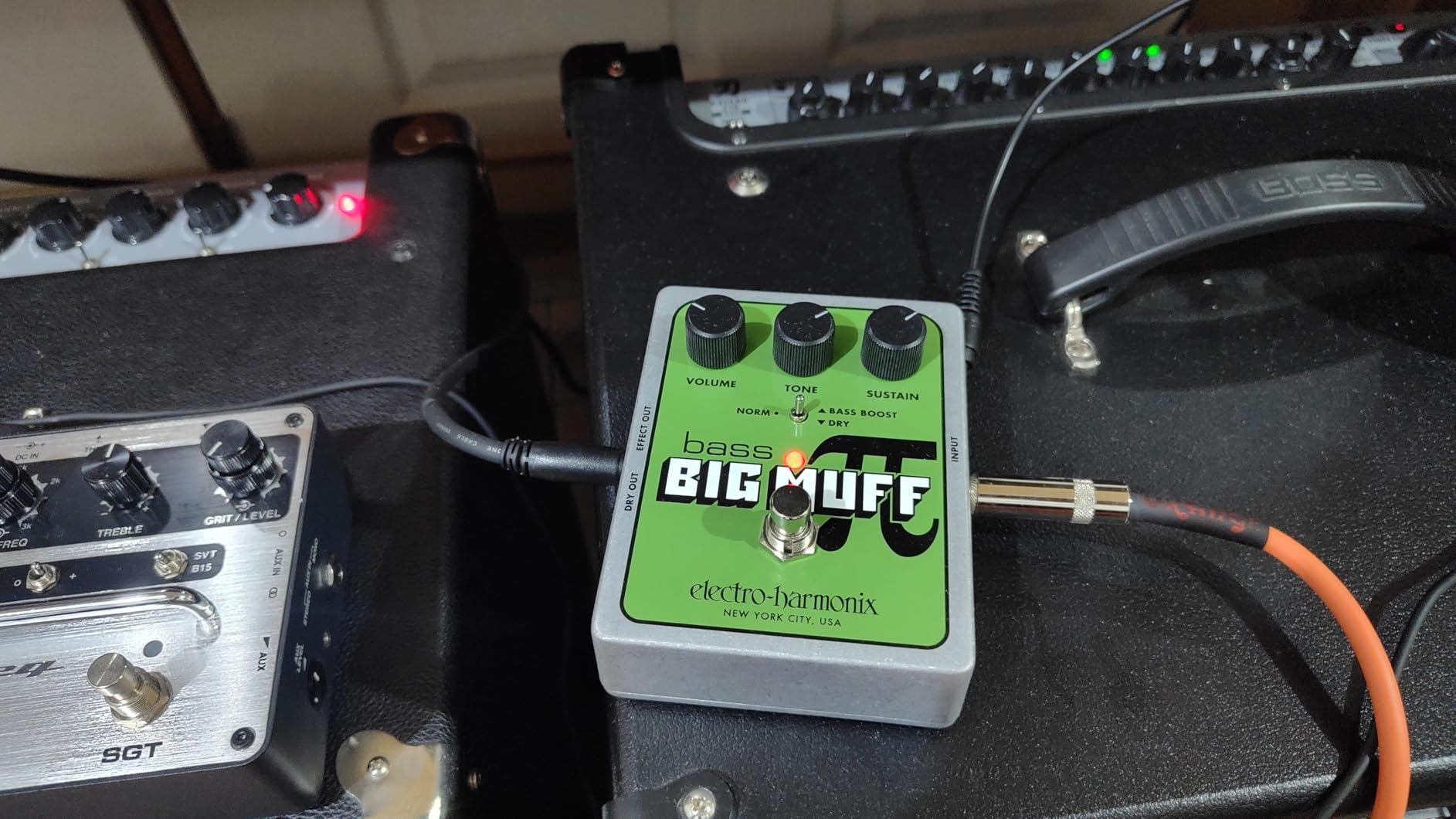
The bass boost EQ switch reintroduces low frequencies when you have the tone knob dialed toward the treble side. This is brilliant design because it lets you get cutting, aggressive fuzz tones without sounding thin. The pedal ranges from subtle overdrive boost to full-on bone-shattering fuzz depending on your settings.
For metal and hard rock bassists, this pedal is practically mandatory equipment. It sits perfectly alongside distorted guitars without getting lost in the mix. The separate dry and wet outputs also allow for bi-amping setups where you send the fuzzed signal to one amp and the clean signal to another.
Genre Recommendations for the Bass Big Muff
Metal and doom bassists will love the maximum sustain settings for endless notes and crushing power chords. Rock and alternative players should try moderate fuzz with the dry blend for a textured drive tone that does not overwhelm the band mix. Punk bassists can crank everything for an aggressive, in-your-face sound.
Be careful with the volume output when you first engage this pedal. Several reviewers on Amazon noted that it can be significantly louder than your bypassed signal. Start with the volume knob low and gradually increase to avoid damaging speakers or startling your bandmates.
How It Compares to Modern Fuzz Pedals
Boutique fuzz pedals from brands like Darkglass offer more tonal control and modern voicing options. However, the Bass Big Muff delivers that classic vintage character that defined the sound of bands like Smashing Pumpkins and Muse. For the price, nothing else comes close to this level of low-end fuzz performance.
5. BOSS SY-1 Synthesizer Pedal – Bass Synth Tones
BOSS SY-1 Guitar/Bass Synthesizer Guitar Pedal (SY-1)
Polyphonic Synth for Guitar and Bass
100+ Synth Voices
Expression Switch Input
Send Return Loop
Hold Function
Pros
- Polyphonic tracking allows chord pads and complex sounds
- Fast and accurate note tracking with minimal latency
- Over 100 different synth tones onboard
- Send and return loop for pedal chain integration
- Works with bass guitar violin ukulele and more
Cons
- No ADSR controls for attack decay sustain release
- No MIDI connectivity
- No preset memory storage
The BOSS SY-1 is the most fun pedal I have ever put on my bassboard. It transforms your bass into a full synthesizer with over 100 different voices ranging from fat analog bass synths to shimmering pads. The polyphonic tracking means you can play chords and every note gets synth-processed accurately, which is incredibly rare for a pedal in this price range.
Note tracking on the SY-1 is fast and accurate with virtually no noticeable latency. Older guitar synth pedals suffered from lag that made them unplayable in live situations. BOSS solved this with their proprietary tracking technology, and the SY-1 responds instantly to your playing dynamics.
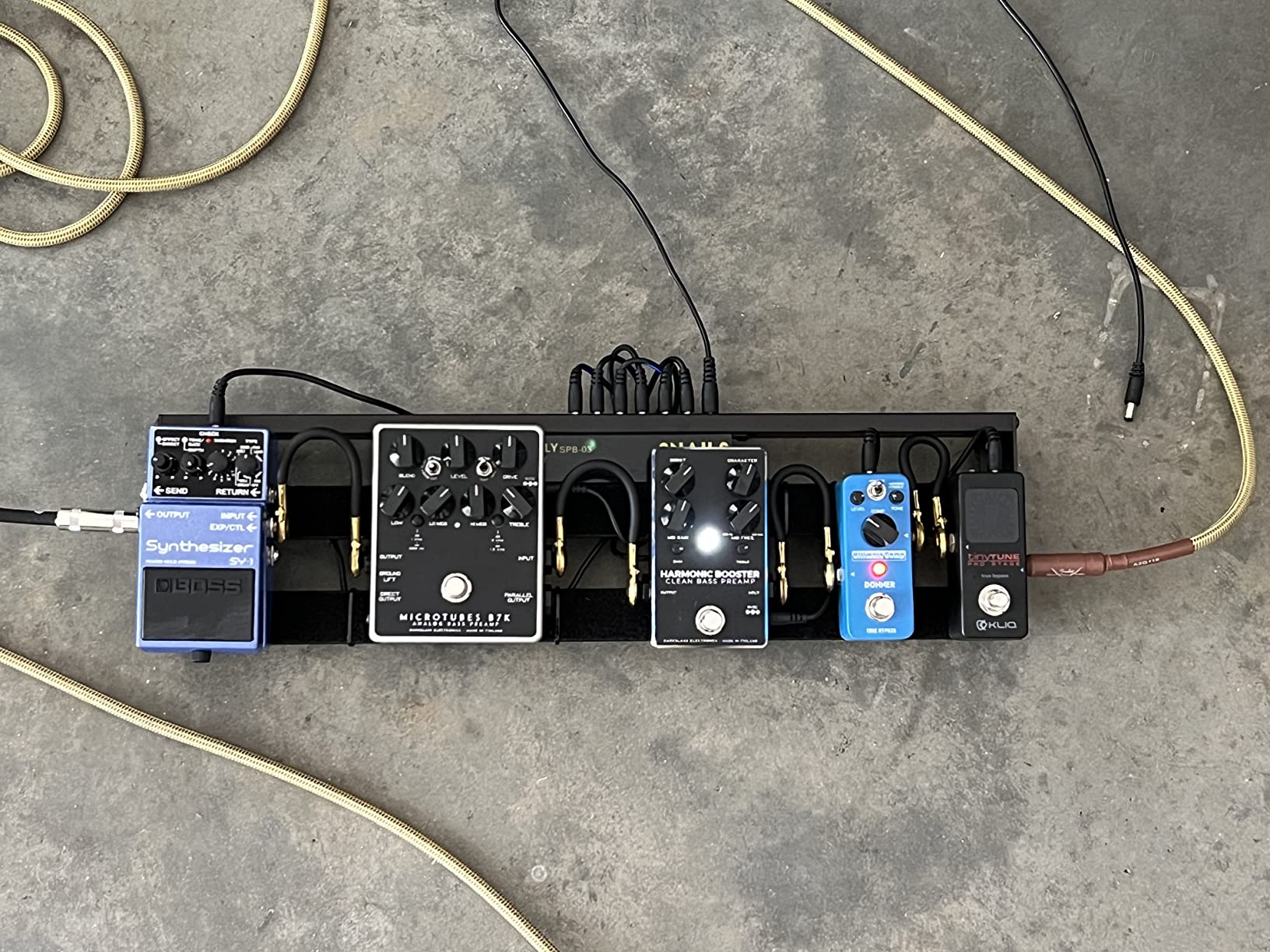
The hold function is a standout feature for live performance. You can sustain a synth pad indefinitely while playing your normal bass tone over the top. This creates massive layered soundscapes that make a three-piece band sound like a full electronic ensemble. I use this feature during instrumental breaks to create atmospheric beds under guitar solos.
The send and return loop lets you integrate the SY-1 into your existing pedal chain without signal degradation. You can place drive or modulation effects in the loop and route them independently. The pedal works brilliantly with bass, guitar, violin, ukulele, and other string instruments.
Best Synth Tones for Bass Players
The analog bass synth voices are the most useful for typical bass playing. They thicken your tone with sub-shaking depth while maintaining note clarity. The lead synth voices work well for solos and featured passages where you want your bass to sound like a completely different instrument.
Pad and ambient voices are perfect for worship music, post-rock, and experimental genres. The arpeggiator-style voices create rhythmic synth patterns that can drive an entire song. Avoid the bell and sound-effect voices for professional bass applications, as they tend to sound gimmicky.
Limitations to Consider
The lack of ADSR controls means you cannot customize the attack and decay characteristics of the synth voices. You are limited to the built-in presets for each voice. The absence of preset memory is also frustrating, as you must manually remember your favorite settings between uses.
6. Fender Downtown Express – All-in-One Bass DI Solution
Fender Downtown Express Bass Multi-Effect Pedal
All-in-One Bass Multi-Effect
3-Band EQ
Overdrive
Compressor
XLR DI Output
Gold Finish Design
Pros
- All-in-one solution with compression EQ overdrive and DI in one pedal
- Excellent professional-grade sound quality
- Beautiful gold finish with backlit knobs
- Fat crispy overdrive tone without losing low end
- Great value compared to premium alternatives
Cons
- Compressor can be noisy according to some users
- Signal strength loss on regular TS output
- No built-in tuner or effects loop
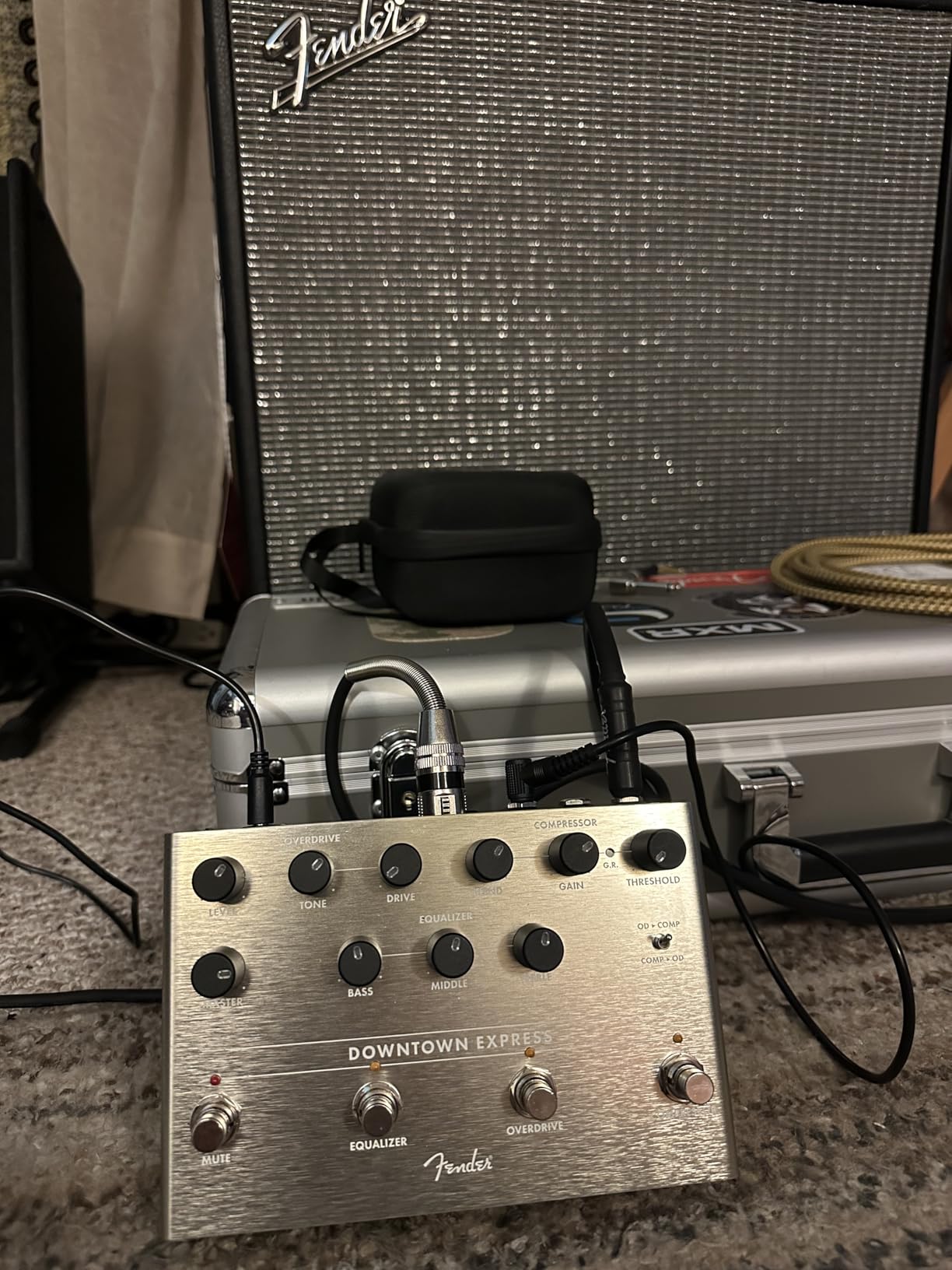
The Fender Downtown Express packs compression, overdrive, a 3-band EQ, and an XLR DI output into a single beautifully designed pedal. I tested this unit over six weeks of rehearsals and gigs, and it genuinely delivers professional tone in a compact format. The gold finish with backlit knobs looks stunning on any pedalboard.
The overdrive section is the star of the show here. It produces fat, crispy drive tones that maintain your low-end punch without getting muddy. Fender voiced this specifically for bass, and it shows. I compared the drive tone side-by-side with pedals costing twice as much and the Downtown Express held its own impressively well.
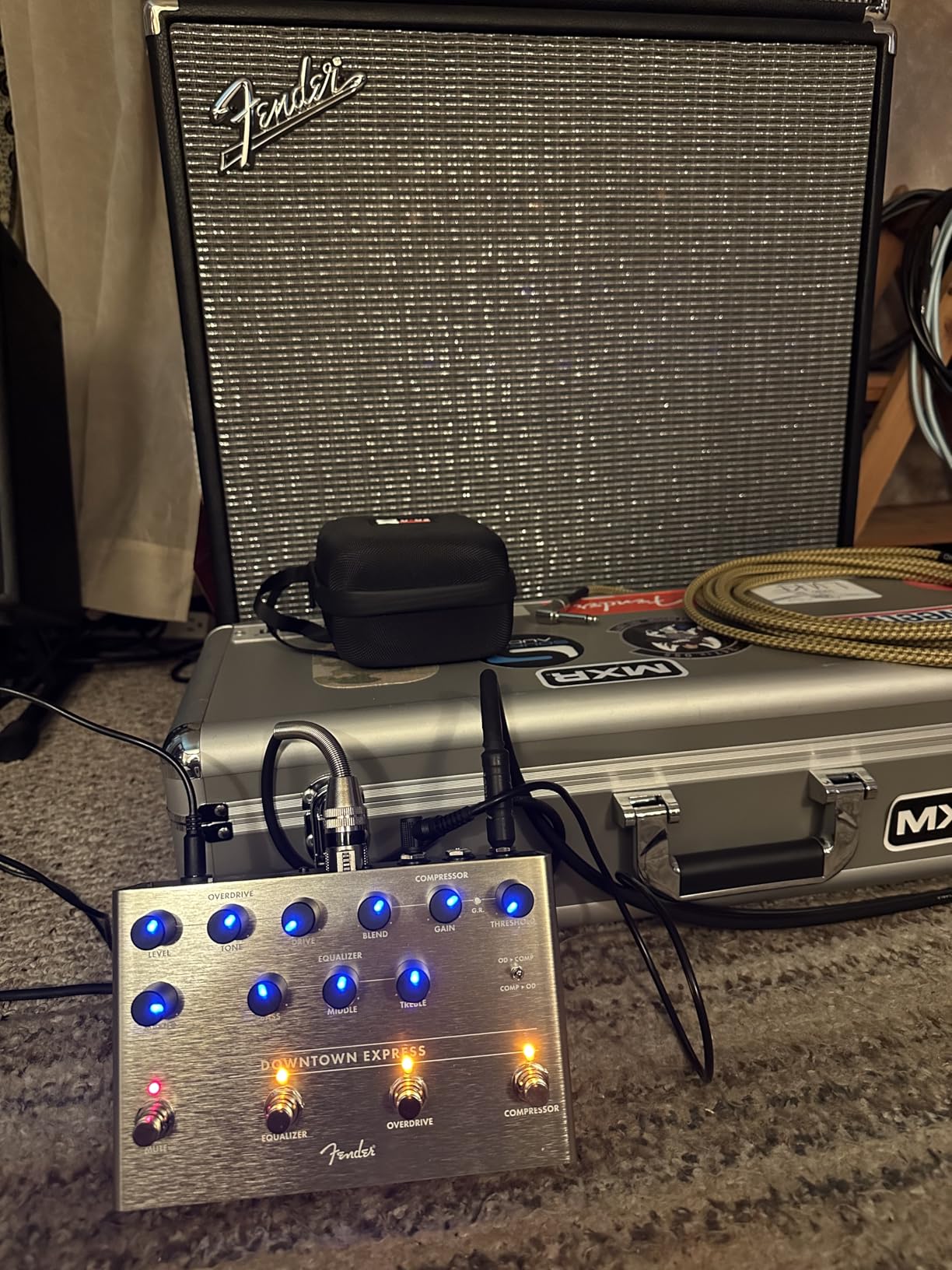
The XLR DI output makes this pedal perfect for direct-to-PA scenarios. You can leave your bass amp at home for smaller gigs and plug straight into the mixing board. Many worship bassists and gigging musicians choose the Downtown Express specifically for this all-in-one convenience.
The compressor section works well for evening out dynamics, though some users report it can be noisy at higher settings. I found that keeping the compression knob below 50 percent produces clean, transparent results. The 3-band EQ lets you shape your tone further, cutting muddy frequencies or boosting presence as needed.
Ideal Setup and Signal Chain Position
Place the Downtown Express at the end of your signal chain, just before your amp or DI to the PA. This lets any other pedals in your chain feed into the compressor and EQ sections. If you use the XLR output to the PA while also sending your 1/4-inch output to an amp, you get parallel feeds that give the sound engineer maximum flexibility.
Some users report a signal strength loss on the regular TS output. Adding a buffer pedal before the Downtown Express in your chain can resolve this issue. The pedal does not include a power adapter, so budget for a 9V power supply if you do not already have one.
Value Proposition Compared to Darkglass
The Downtown Express delivers similar all-in-one functionality to premium Darkglass pedals at a significantly lower cost. While it may not match the Darkglass in tonal refinement, the gap is smaller than you might expect. For bassists who want professional features without the premium price tag, this is an excellent choice.
7. SONICAKE Bass Pedal B Factory – Budget Preamp DI Champion
SONICAKE Bass Pedal with Overdrive Analog Preamp Compression Effects Pedal and 3-Band EQ Via Pre/Post Selection with XLR Output - B Factory
Analog Preamp Compressor and Overdrive
3-Band EQ with PRE POST Selection
XLR Balanced Output
Buffer Bypass Circuit
Classic Optical Compression
Pros
- Exceptional value for money
- Analog preamp compressor and overdrive in one pedal
- Classic optical compression sound quality
- 3-band EQ with PRE and POST selection
- XLR balanced output for DI use
Cons
- Power supply not included
- 90-day warranty is shorter than competitors
- Output level may not drive some bass amps directly
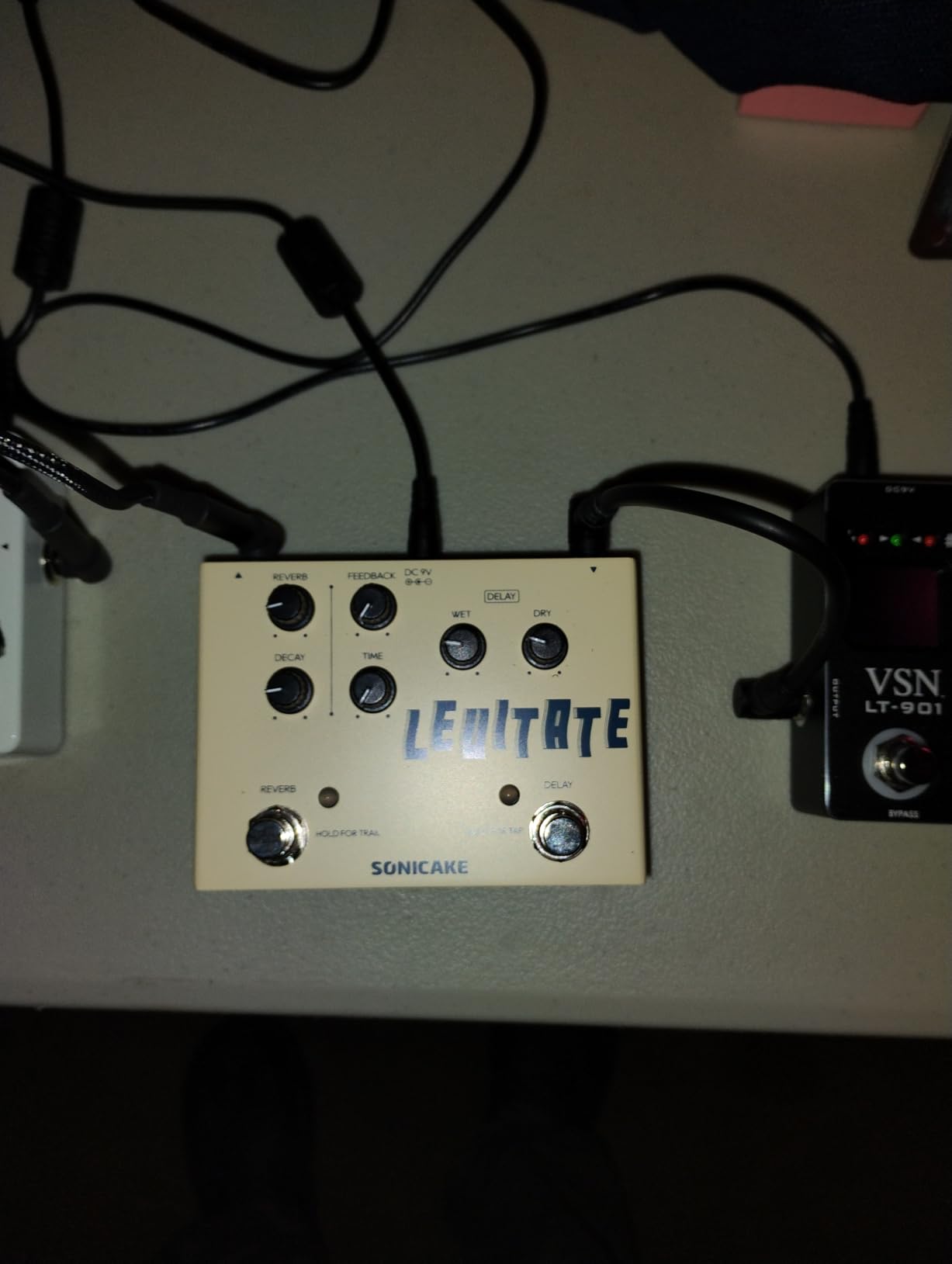
The SONICAKE Bass Pedal B Factory is the pedal I recommend when a bassist asks for the best budget bass guitar pedal. For well under $100, you get an analog preamp, optical compressor, overdrive circuit, 3-band EQ, and XLR DI output. The value here is genuinely remarkable.
The optical compression circuit produces a warm, musical compression that flatters bass tone beautifully. It smooths out your dynamics without the pumping or breathing artifacts that plague cheap digital compressors. I was skeptical at this price point, but the compression quality genuinely surprised me during testing.
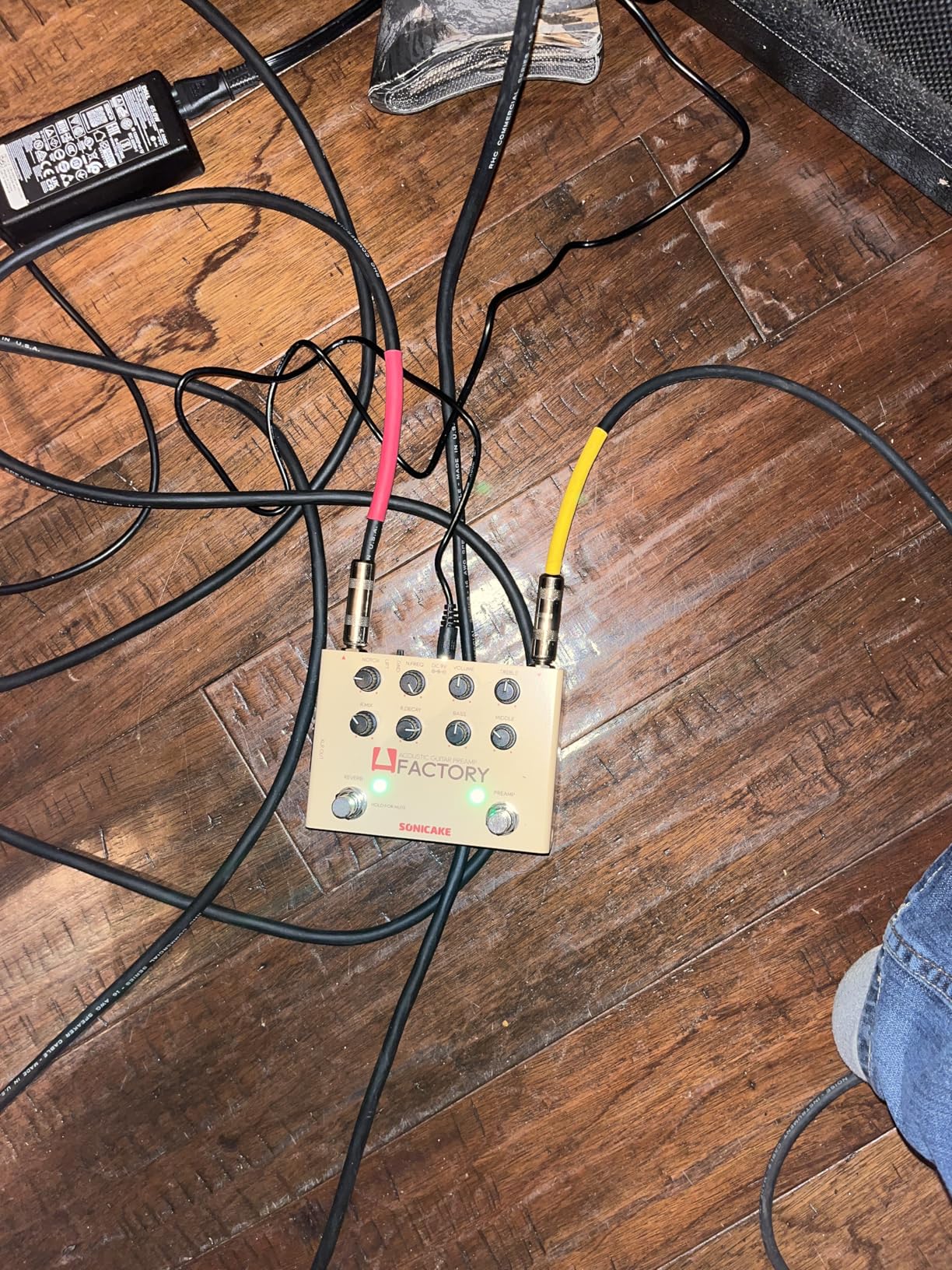
The 3-band EQ with PRE and POST selection is a standout feature at this price. PRE mode applies EQ before the compressor, letting you shape your tone before dynamics processing. POST mode applies EQ after compression, which is better for cutting problem frequencies. This flexibility is usually found only on pedals costing three times as much.
The buffer bypass circuit preserves your signal integrity when the pedal is bypassed. This matters more than most bassists realize, especially if you have long cable runs or multiple pedals in your chain. The XLR balanced output lets you connect directly to a PA system for amp-less gigs.
Who This Budget Pedal Serves Best
Beginning bassists building their first pedalboard will find everything they need in one affordable package. Gigging musicians on a tight budget get professional features like XLR DI output without breaking the bank. The pedal also works well as a backup DI solution for bassists who normally use more expensive units.
The warm, balanced sound profile suits classic rock, blues, and R&B styles particularly well. The overdrive character is vintage and smooth rather than modern and aggressive. If you play metal or modern hard rock, you may want something with more bite.
Important Things to Know Before Buying
The power supply is not included, so you need to purchase a 9V center negative adapter separately. The warranty period is only 90 days, which is shorter than most competitors. Some users report that the output level may not be sufficient to drive certain bass amps directly, so test your specific setup.
8. BOSS ME-90B Bass Multi-Effects – Professional All-in-One Powerhouse
BOSS ME-90B Bass Multi-Effects | All-In-One Bass Processor | 10 Onboard AIRD Amp Models | 61 Effects from the BOSS Bass Effects Library | 8 Multi-Function Footswitches & Redesigned Expression Pedal
10 AIRD Amp Models
61 Effects
8 Multi-Function Footswitches
Expression Pedal with Toe Switch
24-bit AD and 32-bit DA Conversion
USB-C Connectivity
Pros
- 10 onboard AIRD amp models with premium BOSS sound quality
- 61 effects covering every category
- 8 multi-function footswitches and expression pedal
- 36 preset and 36 user memory slots
- XLR output for direct FOH connection
Cons
- Power supply not included
- Bluetooth adapter is additional purchase
- Steep learning curve for new users
The BOSS ME-90B is the most comprehensive bass multi-effects processor in this guide. It packs 10 AIRD preamp models, 61 effects, 8 footswitches, an expression pedal, and professional-grade conversion into a single unit. If you want every bass effect imaginable without building a massive pedalboard, this is the answer.
The AIRD amp modeling technology is BOSS’s latest advancement, and it sounds noticeably better than their older COSM models. Each amp model responds dynamically to your playing touch, just like a real amplifier. I spent hours switching between the amp models and was impressed by how distinct and usable each one sounded.
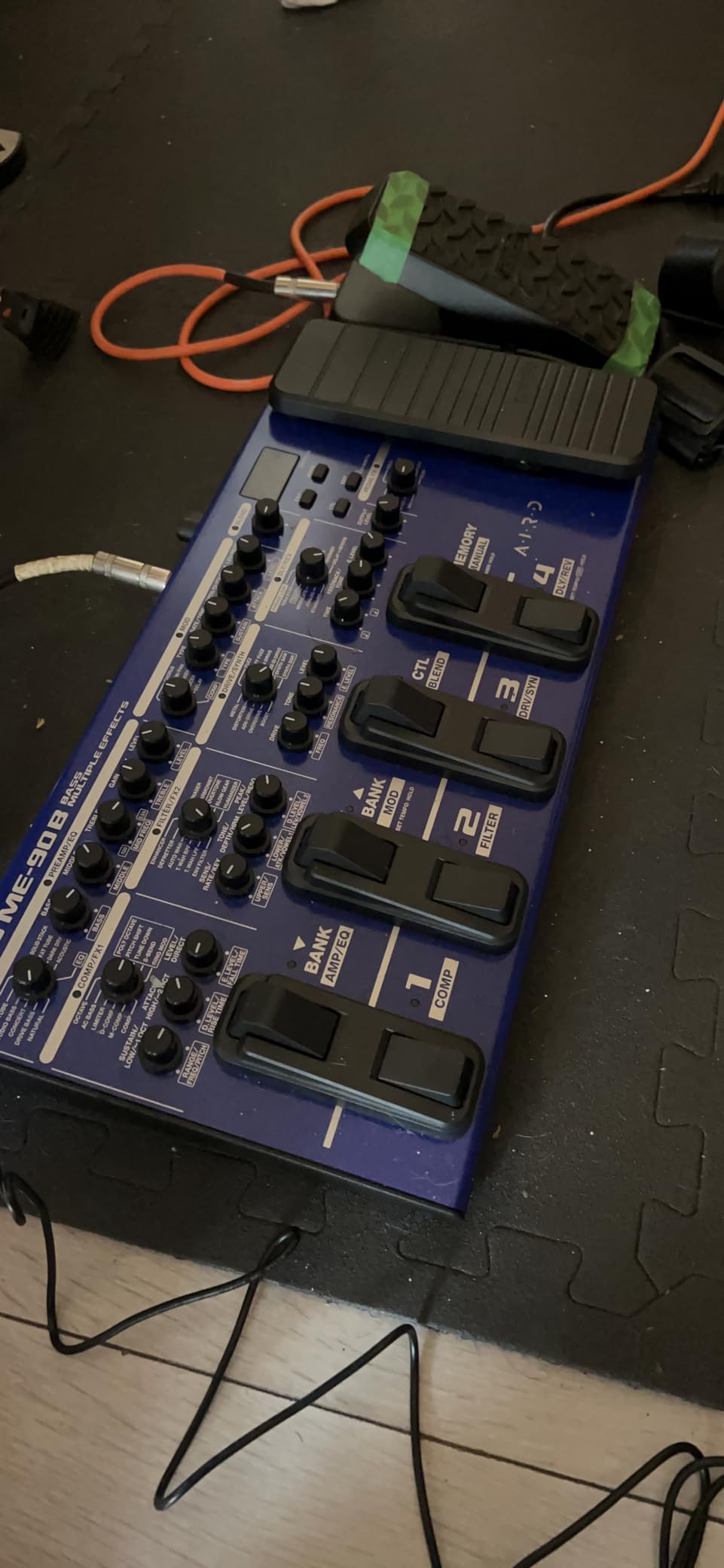
The 61 effects cover every category a bassist could need, including modulation, distortion, synth, compression, delay, reverb, and pitch-shifting. The stompbox-style knob interface makes sound creation intuitive for anyone who has used individual pedals. You get 36 ready-to-play presets plus 36 user memory slots for your custom setups.
The expression pedal with toe switch adds real-time control over parameters like wah, volume, and pitch. Having 8 multi-function footswitches means you can toggle individual effects on and off during live performance, just like a traditional pedalboard. This is a major advantage over older multi-effects units that only allowed preset switching.
Sound Quality and Conversion Specs
The 24-bit analog-to-digital and 32-bit digital-to-analog conversion with 48kHz sampling rate delivers pristine sound quality. This is professional studio-grade conversion in a floor processor. The XLR output provides a direct connection to front-of-house systems for live performance without needing a separate DI box.
BOSS includes USB-C connectivity for connecting to their Tone Studio software. This lets you edit patches on a computer screen, which is much easier than tweaking on the pedal itself. The Bluetooth adapter is an optional add-on that enables wireless editing from a mobile device.
Power Options and Portability
The ME-90B runs on four AA batteries or an optional AC adapter. Battery power is surprisingly useful for outdoor gigs, busking, or situations where power outlets are limited. The unit weighs about 3.6 kilograms, which is substantial but still manageable for transport to gigs.
9. Zoom B1X FOUR Bass Multi-Effects Processor – Best Budget Multi-FX
Zoom B1X FOUR Bass Multi-Effects Processor with Expression Pedal, 70+ Built-in Effects, Amp Modeling, Looper, Rhythm Section, Tuner, Battery Powered
70+ Effects and 9 Amp Models
68 Rhythm Patterns
Built-in Looper
Expression Pedal
Built-in Tuner
Battery Powered
USB Connectivity
Pros
- Excellent value for money at half the price of comparable units
- 70+ effects and 9 amp models with great range
- Built-in looper drum machine and chromatic tuner
- Expression pedal for real-time sound shaping
- Portable and battery powered
Cons
- Plastic construction feels less durable
- Some presets are unusual or not useful
- Learning curve for advanced features
The Zoom B1X FOUR is the pedal I recommend to every bassist buying their first effects unit. At this price point, getting 70+ effects, 9 amp models, a looper, a drum machine, a tuner, and an expression pedal is almost unbelievable. I bought one for my practice rig and ended up using it for rehearsals too.
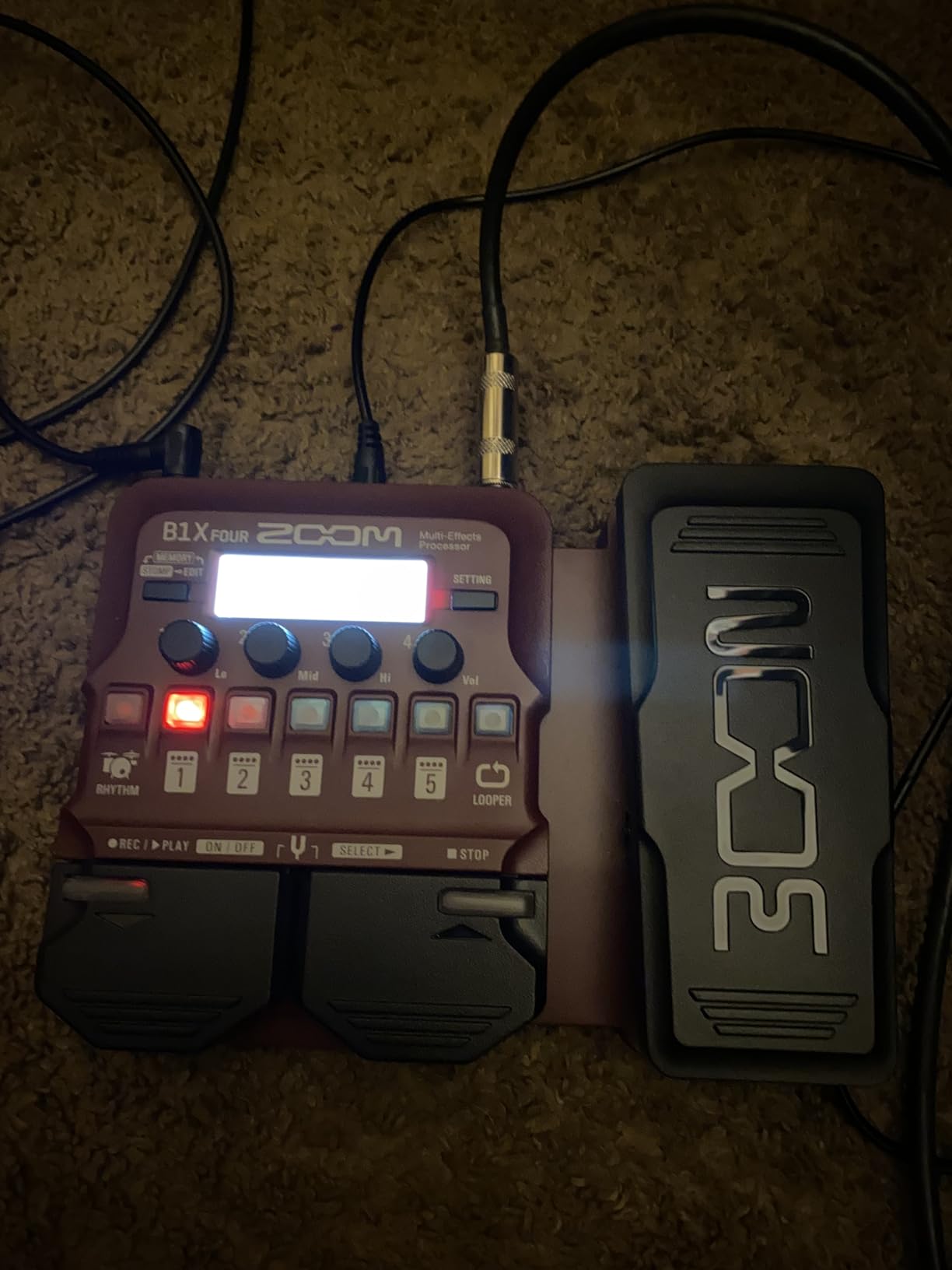
The expression pedal is a huge advantage over the non-X version of this pedal. It lets you control wah, volume, and pitch effects in real time with your foot. Having this hands-free control transforms your performance possibilities, especially for solo practice where you want to experiment with different sounds.
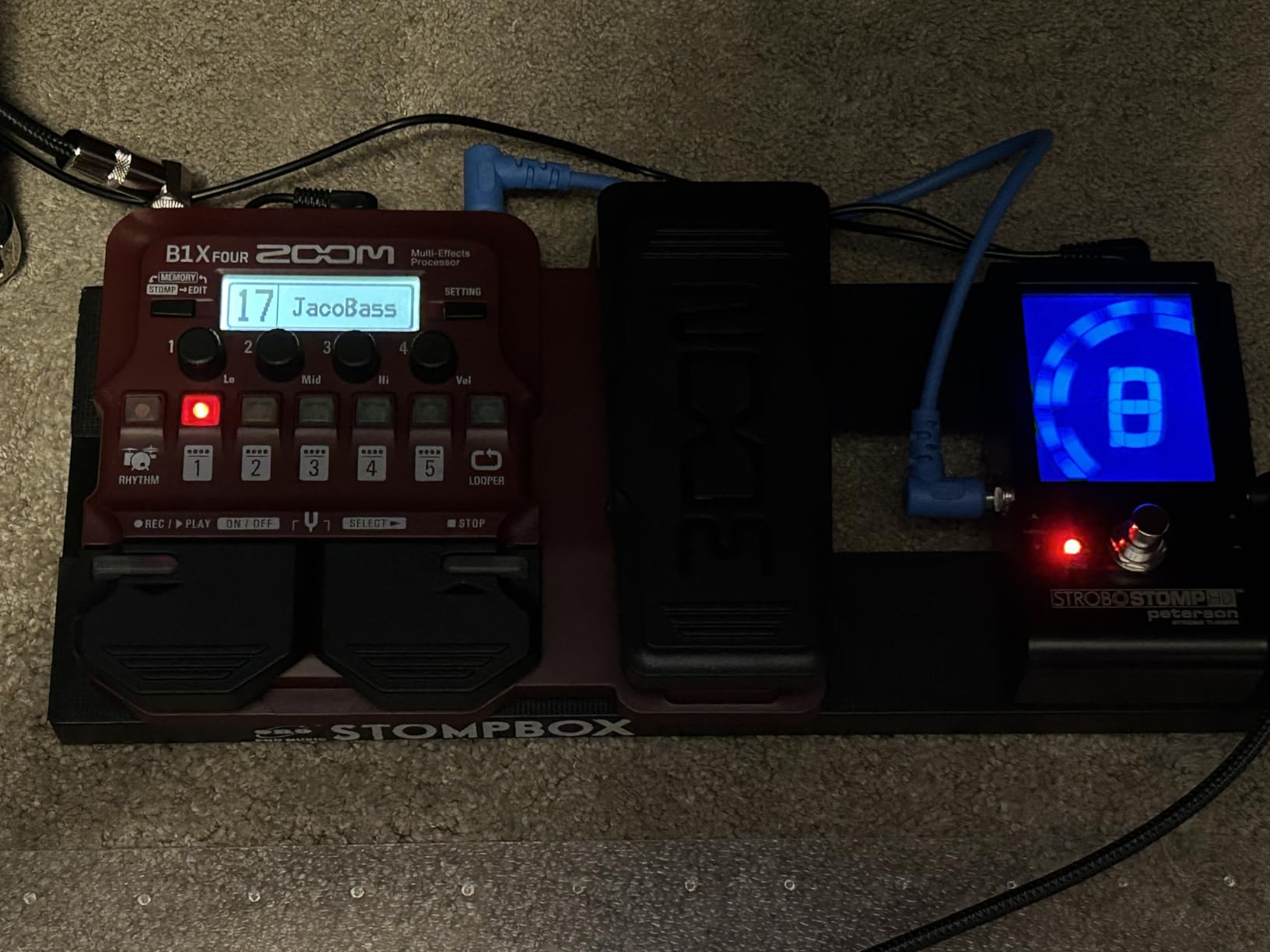
The built-in looper and 68 rhythm patterns make this an incredible practice tool. You can lay down a bass groove, loop it, and then practice soloing over the top. The rhythm section covers rock, funk, jazz, Latin, and many other styles, giving you a virtual drummer for practice sessions.
Sound quality exceeds what you would expect at this price. The clean bypass keeps your tone pristine when effects are disengaged. The amp models range from warm vintage tube sounds to aggressive modern metal tones, giving you plenty of sonic territory to explore.
Maximizing the Practice Features
The looper is simple to use with a single footswitch for record, play, and overdub. Start by laying down a simple groove, then layer additional parts on top. The rhythm patterns sync with your loops for structured practice sessions. Using the built-in tuner means you always have accurate tuning without carrying a separate clip-on tuner.
USB connectivity lets you connect to Zoom’s Guitar Lab app for additional patches and firmware updates. The app also provides a visual interface for editing your sounds, which is much easier than navigating the pedal’s screen. Battery power means you can practice anywhere without being tethered to a wall outlet.
Understanding the Limitations
The plastic housing will not survive the kind of abuse that metal BOSS pedals shrug off. This is primarily a practice and rehearsal tool rather than a heavy-touring pedal. Some of the factory presets are oddly voiced and may require significant tweaking. Take time to build your own custom patches for the best results.
10. Zoom MS-60B+ MultiStomp – Single-Pedal Multi-Effects Powerhouse
Zoom MS-60B+ MultiStomp Bass Effects Pedal with 95+ Effects, Amp Models & Preamps, Stereo Output, Built-In Tuner, Effect Chaining, Battery Powered
75 Effects and 11 Amp Models
Mix Up to 6 Effects Simultaneously
85 Presets
Color LCD Display
Split Signal Output
USB Type C
Built-in Tuner
Pros
- Excellent sound quality with deep tweakability
- 75 effects and 11 amp models with great variety
- USB Type C connectivity and modern features
- Compact and portable single-pedal design
- Color display with intuitive interface
Cons
- Plastic housing instead of metal
- Smaller effects pool than previous version
- iOS app only with no Android support
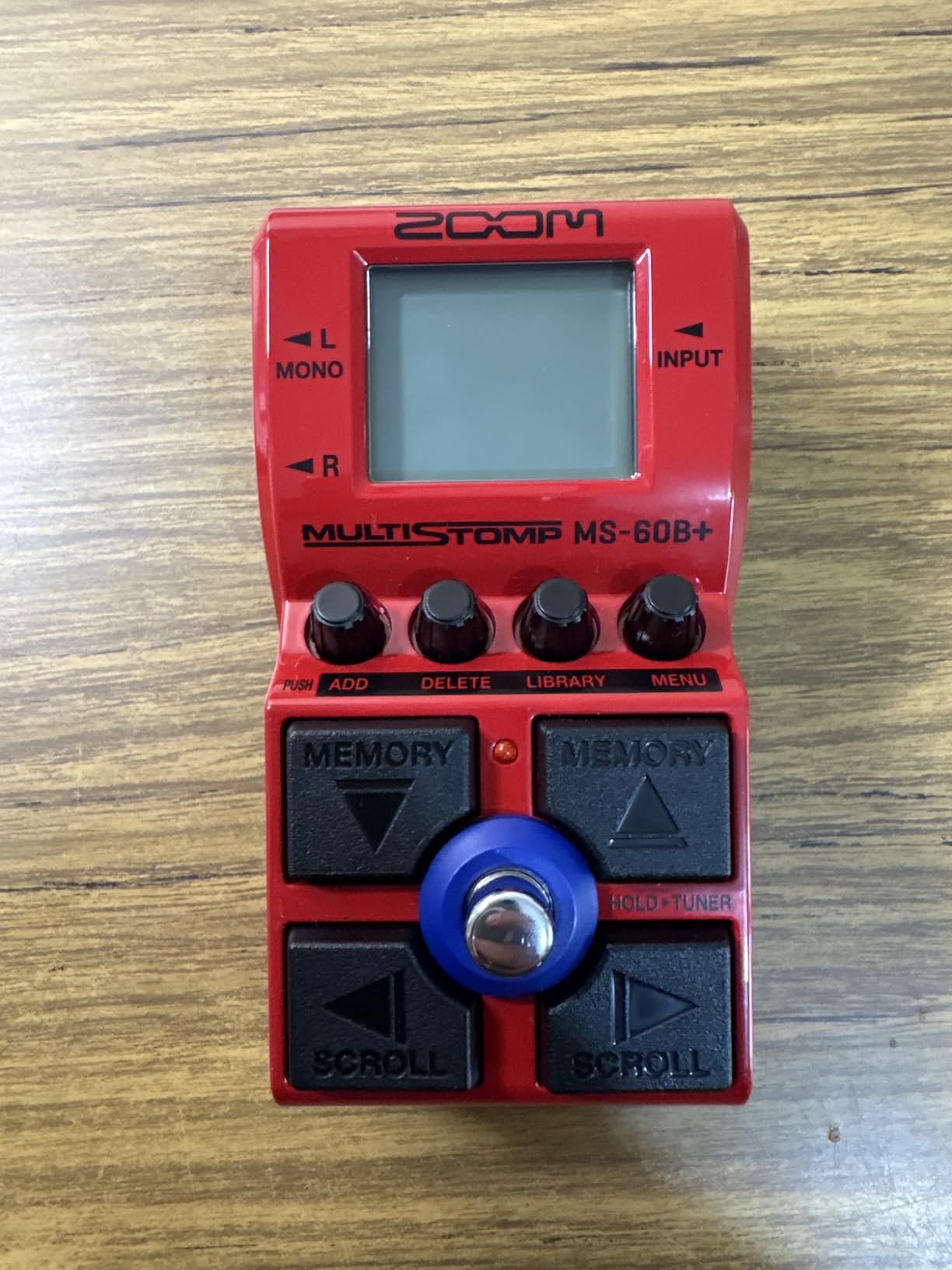
The Zoom MS-60B+ MultiStomp packs 75 effects and 11 amp models into a single standard-sized pedal enclosure. This is the most effects-dense bass pedal on the market by physical size. I was skeptical that so much processing power could fit in one pedal, but the sound quality and usability won me over.
The updated version adds next-generation analog circuits for refined tone quality. Zoom clearly listened to feedback from the original MS-60B and improved the processing. The color LCD display with encoder knobs makes navigation far more intuitive than the previous monochrome screen.
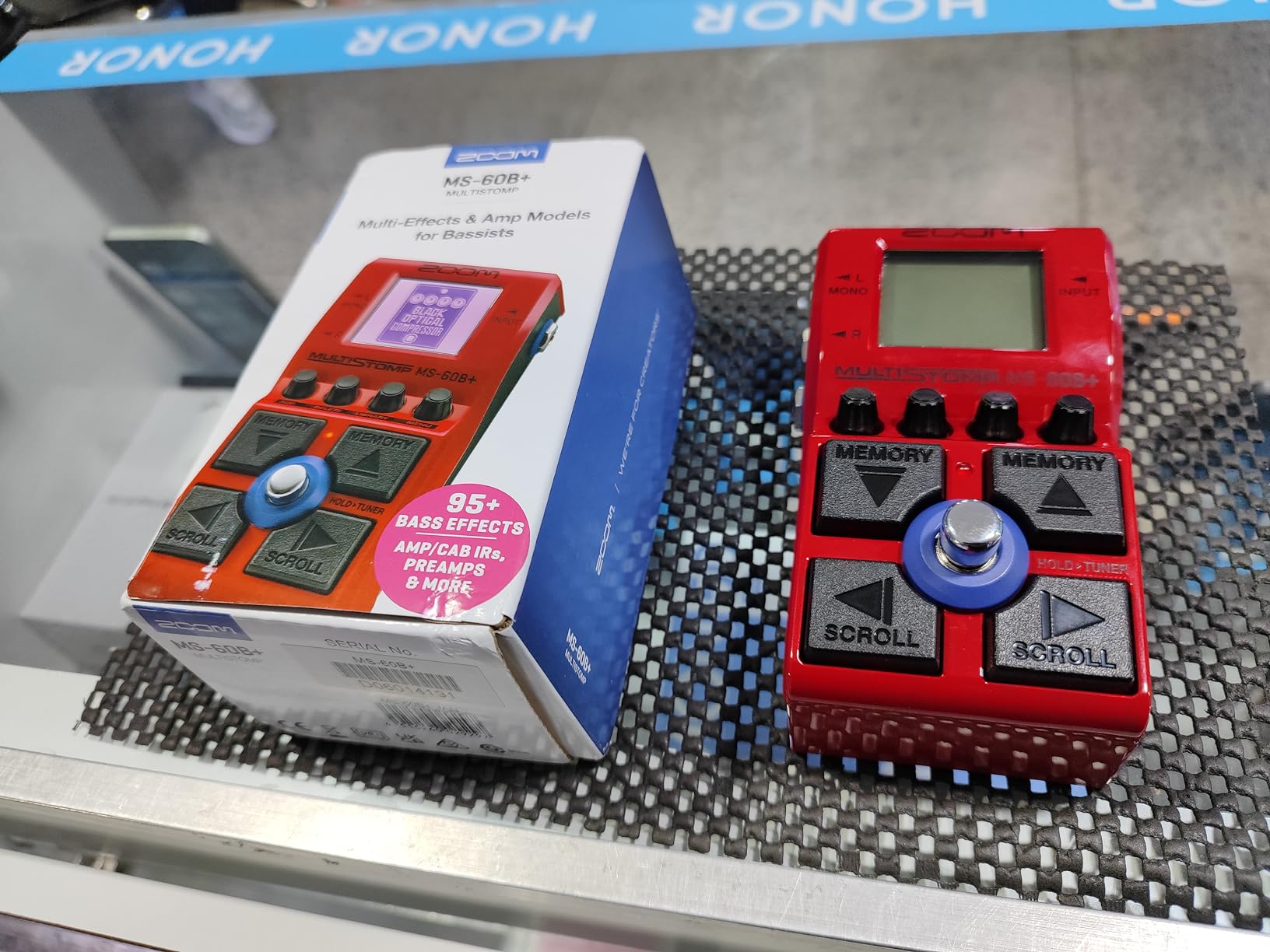
Being able to chain up to 6 effects simultaneously is what sets this pedal apart from single-effect units. You can build a complete signal chain with compression, overdrive, modulation, and delay all running at once. The 85 presets inspired by famous bass tones give you excellent starting points for finding your sound.
The split signal output feature is incredibly useful for live performance. You can route your dry and wet signals separately, enabling bi-amping setups or parallel processing. This feature alone makes the MS-60B+ worth considering over simpler single-effect pedals.
Using the MS-60B+ on Your Pedalboard
This pedal works brilliantly as a multi-effects solution that takes up only one spot on your board. Use it for modulation effects like chorus and delay that you only need occasionally. Pair it with a dedicated compressor and overdrive for a complete rig that fits in a backpack.
The USB Type C connectivity enables firmware updates and patch editing via computer. The color LCD makes it easy to see patch names and parameter values even on dark stages. The built-in chromatic tuner is accurate enough for stage use.
App Support and Ecosystem
Zoom offers an iOS app for patch editing, but there is no Android support, which frustrates many users. The smaller effects pool compared to the previous version disappointed some long-time Zoom users. However, the improved sound quality and modern interface make up for these limitations for most players.
11. VOX StompLab 1B – Classic Modeling for Practice and Performance

VOX StompLab 1B Multi-Effects Modeling Pedal for Bass Guitar
100 Preset Programs
60 Effect Types
Built-in Expression Pedal
Onboard Chromatic Tuner
All-Metal Construction
Battery Powered
20 User Programs
Pros
- Versatile with 100 presets across rock blues metal and pop
- 60 types of modeling effects
- Easy-to-use interface for beginners
- Built-in expression pedal
- All-metal construction built to last
Cons
- Factory presets can be lackluster
- Steep learning curve with abbreviated labels
- No power supply included
- Volume inconsistency between presets
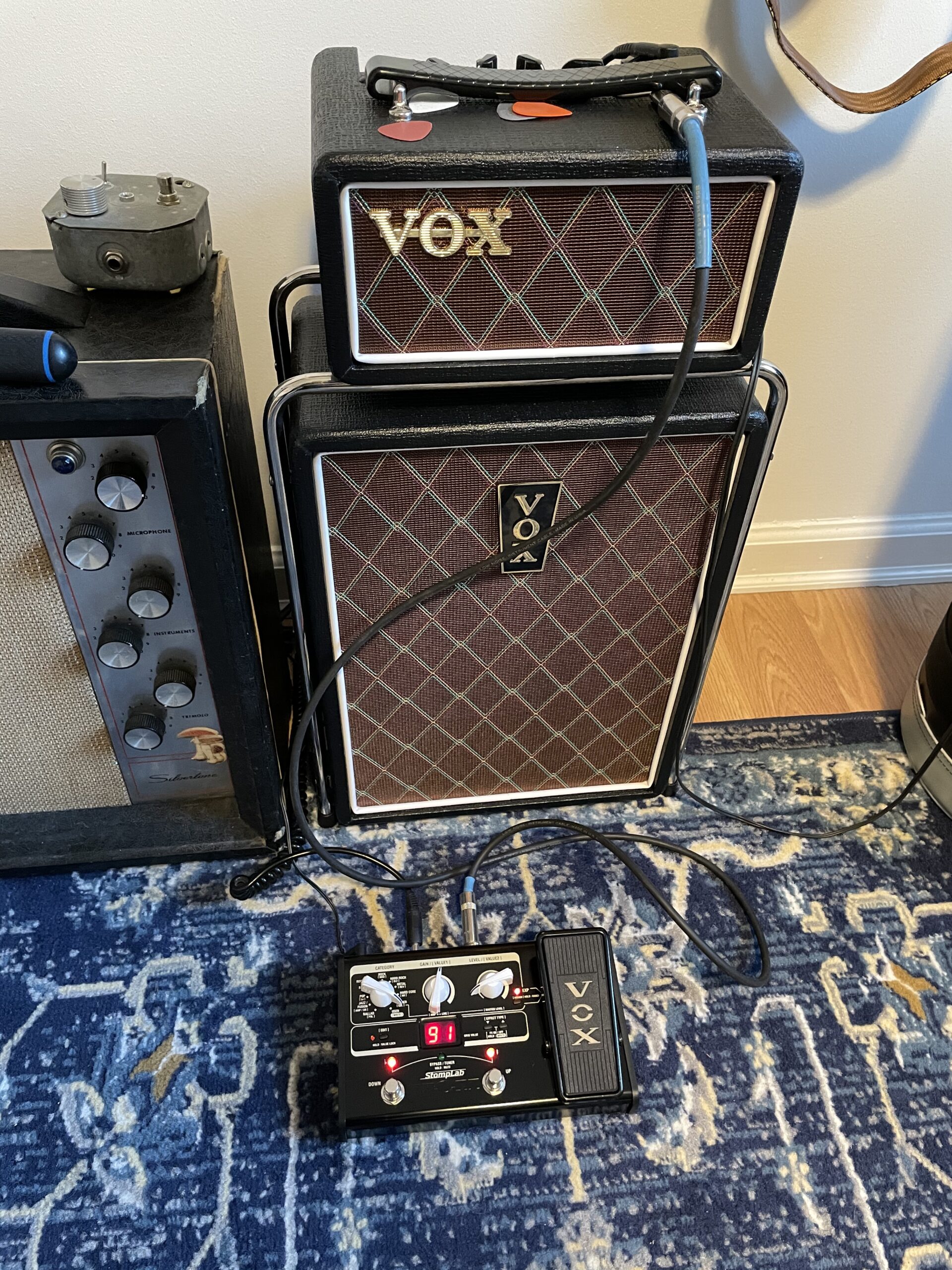
The VOX StompLab 1B brings VOX’s respected amp modeling technology to bass players at a remarkably accessible price. With 100 preset programs categorized by musical style and 60 effect types, this pedal offers tremendous variety. I found the all-metal construction reassuring after handling so many plastic budget pedals.
The built-in expression pedal is a significant value-add at this price point. It controls wah, volume, and other expression parameters without requiring a separate pedal. The presets are organized by genre, making it easy to find sounds that match your musical style.
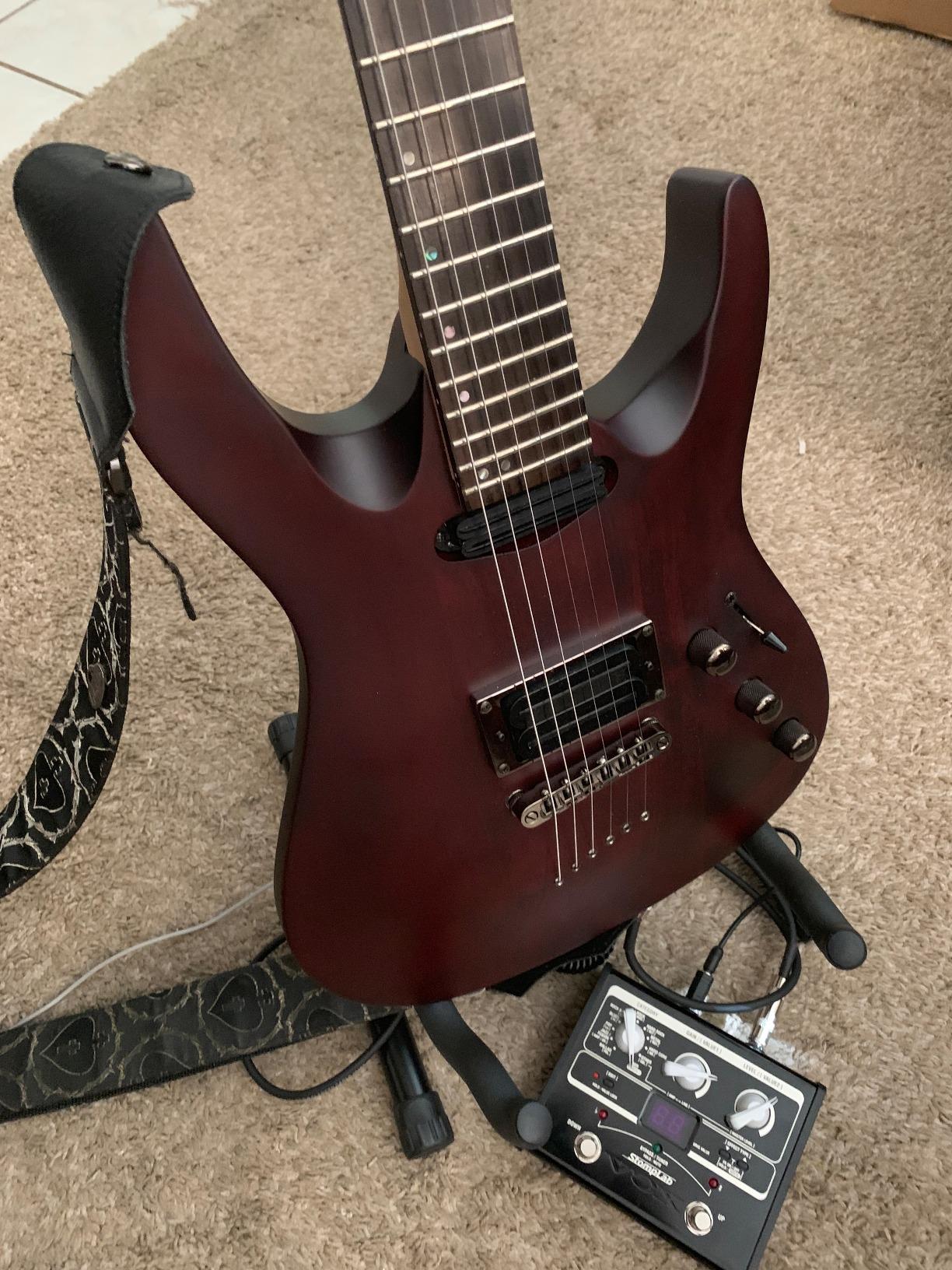
VOX distilled these effects from their VT+ amplifier series and Tone Lab series, which means you are getting legitimate professional-grade modeling in a budget format. The modeling quality is noticeably better than generic digital multi-effects units at similar prices. For headphone practice, the direct output sounds full and engaging.
The ability to edit and save 20 user programs lets you customize your own tones beyond the factory presets. Most users will want to spend time tweaking since the stock presets can sound lackluster. Once you dial in your own sounds, the pedal delivers impressive tone quality for the price.
Best Practices for Getting Good Tones
Do not judge this pedal by its factory presets alone. The stock sounds are designed to demonstrate range rather than quality. Spend time with the editing interface to build custom patches that suit your bass and playing style. Start by selecting an amp model you like, then add effects one at a time.
The expression pedal works well for wah and volume swells. For pitch effects, it tracks reasonably accurately if you play cleanly. The onboard tuner is convenient but may not match the precision of a dedicated clip-on tuner for critical tuning situations.
Battery Life and Power Considerations
The pedal runs on AA batteries that last approximately 7 hours. Battery replacement requires unscrewing four feet and removing the bottom panel, which is inconvenient. I strongly recommend purchasing a 9V power adapter for regular use to avoid the hassle and ongoing cost of batteries.
12. Valeton Dapper Bass – Compact All-in-One Bass Station
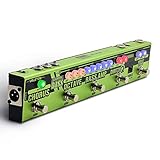
VALETON Dapper Bass DI Preamp Stage Session Gigging Gear Multi-Effects Pedal
Analog Bass DI Preamp
3-Band EQ
Analog Compressor Boost
Envelope Filter Auto Wah
Octave Effect
Chorus Effect
Built-in Tuner
FX Loop
XLR DI Output
Pros
- Analog preamp with 3-band EQ produces warm musical tone
- Built-in DI with XLR output eliminates need for bass amp
- Envelope filter reminiscent of EHX Bass-Balls
- Extremely compact and affordable
- FX loop for hooking up other effects
Cons
- Envelope filter can be noisy
- Tuner lacks precision
- Octave only has two octave-down settings
The Valeton Dapper Bass is the ultimate Swiss Army knife for bassists. It combines an analog preamp, compressor, envelope filter, octave effect, chorus, and DI output into one slim unit. I was skeptical that so many features could coexist without quality compromises, but the Dapper Bass delivers solid performance across the board.
The analog preamp with 3-band EQ produces warm, musical tone that rivals units costing twice as much. I compared the preamp sound directly against a Tech 21 SansAmp and was surprised by how closely the Dapper Bass matched it for warmth and presence. The range covers dynamic clean tones through to classic rock dirty bass sounds.
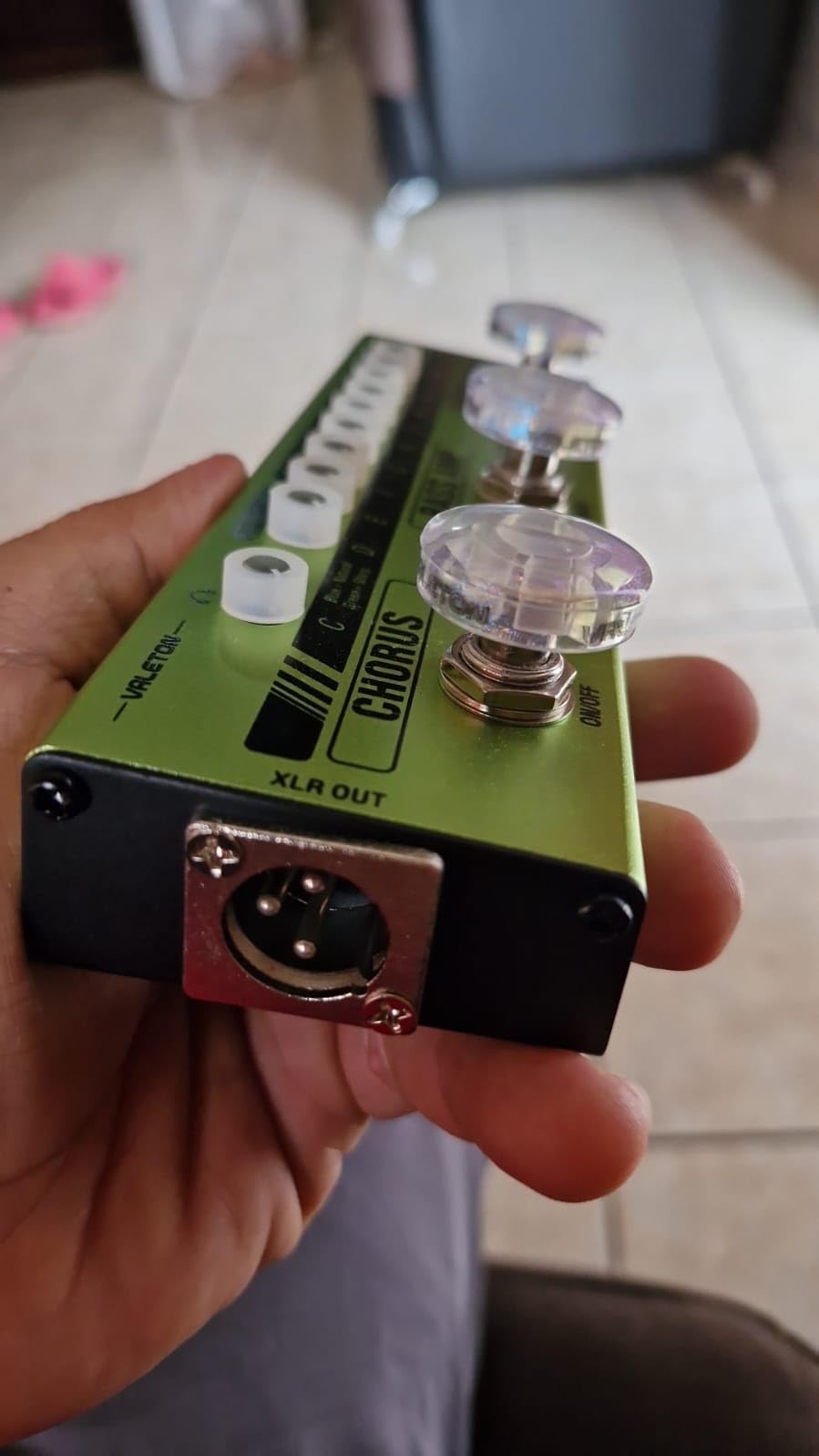
The envelope filter, called Dirty Q on this unit, produces an auto-wah effect reminiscent of the EHX Bass-Balls pedal. It is perfect for funk bass lines and slap playing where you want that expressive quack and sweep. While it can be noisy at extreme settings, moderate settings produce usable and fun funk tones.
The octave effect tracks well for synth-like bass tones, though it only offers two octave-down settings with no octave-up option. The chorus adds lush depth to your bass signal. Having all these effects plus a built-in tuner in one compact unit is remarkable value for gigging bassists.
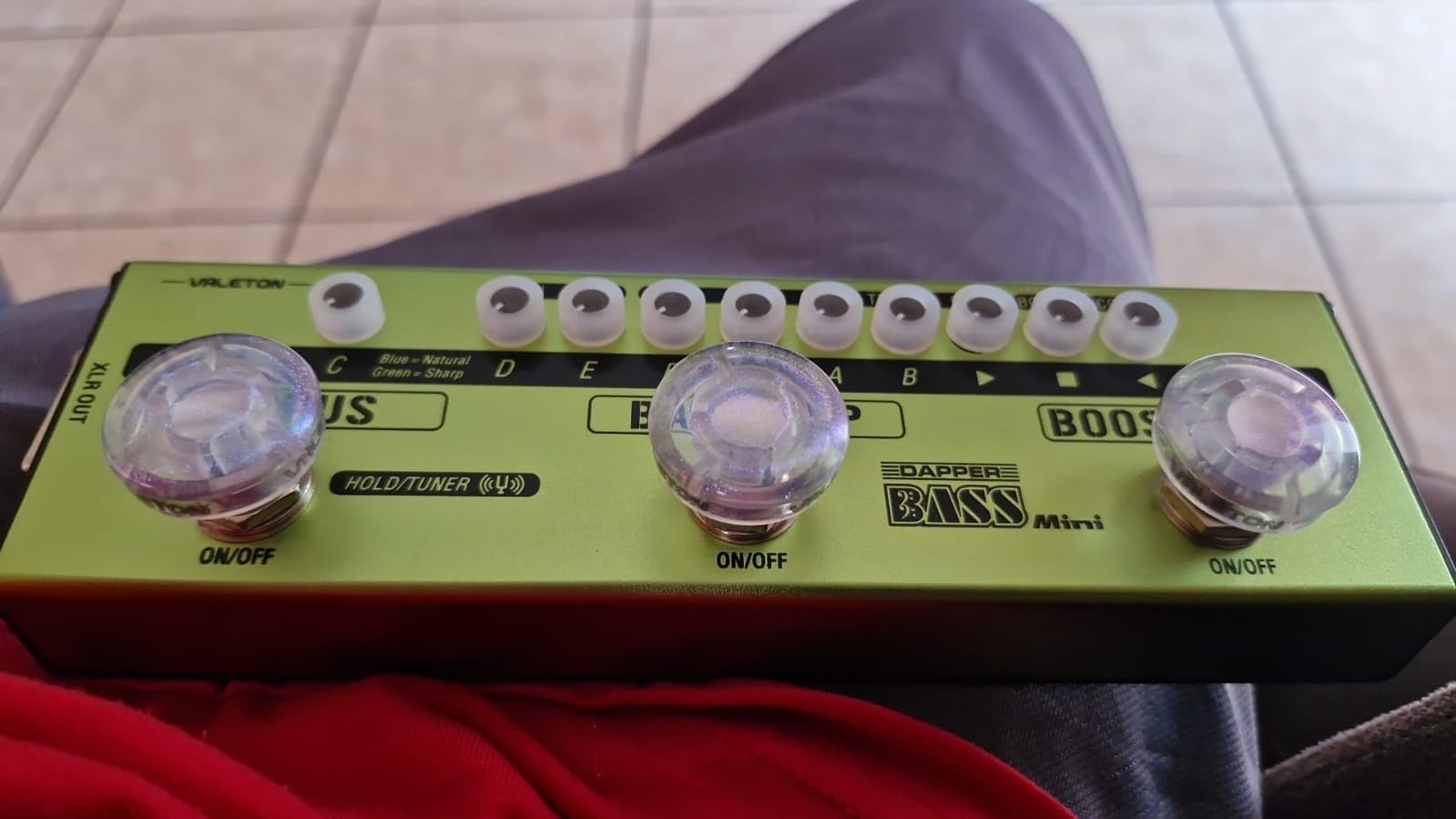
Funk Bass Pedal Setup with the Dapper
For funk bass, set the envelope filter sensitivity high enough that it triggers on your plucking dynamics. Use a bright bass tone with the EQ to help the filter track accurately. The compressor before the filter helps maintain consistent triggering. Combine the octave effect with the envelope filter for massive synth-funk tones.
The FX loop lets you insert other pedals between the preamp and the effects sections. This means you can add a dedicated fuzz or drive pedal in the loop without disrupting the Dapper’s internal signal flow. The dry signal thru output enables parallel effects processing or re-amping.
Live Performance Practicality
The compact size means this pedal fits in a gig bag alongside your cables and accessories. The XLR DI output lets you plug directly into a PA system, eliminating the need for a bass amp at smaller venues. The included 9V center negative power adapter means you can start gigging immediately.
How to Choose the Best Bass Guitar Pedals in 2026?
Choosing the right bass effects pedals starts with understanding your musical needs. A funk bassist needs completely different pedals than a metal bassist. Before buying anything, think about the genres you play, the venues you perform at, and the specific tone problems you want to solve.
Your budget determines whether you should invest in dedicated single-effect pedals or go with a multi-effects unit. Dedicated pedals offer superior sound quality and tactile control but cost more per effect. Multi-effects units deliver tremendous value and variety but may sacrifice some tonal refinement.
Essential Pedal Categories Explained
A tuner is the only pedal every bassist agrees is essential. Accurate tuning is the foundation of good tone, and pedal tuners offer hands-free operation during performances. A compressor is the second most recommended pedal because it evens out your dynamics and makes every note consistent.
Overdrive and fuzz pedals add harmonic content and grit to your tone. An envelope filter creates expressive wah-like effects that are essential for funk. Octave pedals thicken your sound by adding notes one or two octaves below your fundamental pitch. Preamp and DI pedals provide cabinet emulation and direct-to-PA connectivity.
Budget vs Premium Considerations
Budget pedals under $100 like the SONICAKE B Factory and Zoom B1X FOUR deliver impressive value. They are perfect for beginners and bassists building their first pedalboard. Premium pedals like the Tech 21 SansAmp and BOSS ME-90B offer superior sound quality, build construction, and professional features that justify their higher cost.
Consider how often you gig and record when deciding your budget. A bassist who plays three shows per week needs durable, reliable gear. A bedroom practice player can get excellent results from budget options. Many professional bassists mix budget and premium pedals on their boards based on which effects matter most to their tone.
True Bypass vs Buffered Bypass
True bypass pedals pass your signal straight through with no processing when the effect is off. This preserves tone purity but can cause signal loss with long cable runs. Buffered bypass pedals maintain a strong signal through long chains but may slightly color your bypassed tone.
Most pedalboards benefit from a mix of both types. Place a buffered pedal first in your chain to drive the signal through subsequent true bypass pedals. The MXR Bass Compressor uses true bypass while the SONICAKE uses a specially designed buffer bypass circuit for optimal signal preservation.
Bass Pedal Signal Chain Order Guide
Signal chain order dramatically affects your overall tone. The generally recommended order for bass pedals is: tuner first, then compressor, then wah and filter effects, then overdrive and distortion, then modulation like chorus, then delay and reverb last. Following this order prevents muddy, indistinct tone.
Place your tuner first so it receives the cleanest possible signal from your bass. Compression should come next to even out dynamics before any other processing. Envelope filters and octave pedals need a clean, consistent signal to track accurately, so they belong early in the chain after compression.
Drive pedals like overdrive and fuzz come after filters. This lets the filters shape your clean tone before adding grit. Modulation effects like chorus and flanger work best after drive because they process the harmonically rich driven signal. Delay and reverb go last because they create ambient spaces that should contain your complete processed tone.
Frequently Asked Questions About Bass Guitar Pedals
What pedals do most bassists use?
The pedals most bassists use are a tuner for accurate tuning, a compressor for smooth consistent tone, an overdrive or fuzz pedal for grit and saturation, an envelope filter for funk and expressive filtering, and an octave pedal for thickening the low end. These five form the foundation of most bass pedalboards.
Can guitar pedals be used on bass?
Guitar pedals can work on bass but bass-specific pedals are better optimized for low frequencies. Guitar overdrive and fuzz pedals often cut bass frequencies, causing tone thinning. Bass-specific pedals feature blend controls and bass-voiced circuits that preserve your low end. Some guitar pedals like the Boss OC-5 work great on both instruments.
What order should bass pedals go in?
The recommended bass pedal signal chain order is tuner first, then compressor, then wah and envelope filter, then octave, then overdrive and fuzz, then modulation like chorus and flanger, then EQ, and finally delay and reverb. This order prevents frequency conflicts and ensures each effect processes the optimal signal.
How many pedals does a bassist need?
Most bassists need between 3 and 5 pedals for a versatile rig. The essential foundation is a tuner, compressor, and one tone-shaping pedal like an overdrive or preamp DI. Funk players add an envelope filter, while metal players add a fuzz or distortion pedal. A preamp DI pedal like the SansAmp can serve as your only pedal for direct-to-PA scenarios.
Are bass pedals different from guitar pedals?
Yes, bass pedals are engineered specifically to preserve low-end frequencies that guitar pedals often cut. Bass overdrive pedals include blend controls to mix clean and driven signals. Bass compressor pedals are voiced for low-frequency response. Bass fuzz pedals like the EHX Bass Big Muff Pi maintain fundamental low notes that guitar fuzz pedals would eliminate.
What is the best budget bass pedal?
The SONICAKE Bass Pedal B Factory is the best budget bass pedal, offering an analog preamp, compressor, overdrive, 3-band EQ, and XLR output for under $80. The Zoom B1X FOUR is another excellent budget choice with 70+ effects, a looper, and drum machine for around $120. The LEKATO CUBE BABY offers IR loading and Bluetooth at under $40.
What bass pedals does Geddy Lee use?
Geddy Lee of Rush is known for using a Boss CE-1 Chorus Ensemble for his iconic swirling bass tones, a Tech 21 SansAmp Bass Driver DI for his core overdriven tone, and various Boss EQ and compressor pedals. His signal chain relies heavily on chorus to create the layered ensemble-like bass sound that defined the Rush tone.
Do I need bass effects pedals?
You need bass effects pedals if you want to expand your tone beyond what a bass and amp alone can produce. A compressor improves consistency, a preamp DI enables amp-less performance, and modulation effects add character. Even bassists who prefer clean tone benefit from a tuner pedal and a preamp DI for better PA reinforcement at gigs.
Final Thoughts on the Best Bass Guitar Pedals in 2026
The best bass guitar pedals transform your tone from ordinary to extraordinary. Our top pick, the Tech 21 SansAmp Bass Driver DI V2, remains the industry standard for bassists who need professional tone in any situation. Pair it with the MXR M87 Bass Compressor for the ultimate foundation pedalboard.
Budget-conscious bassists should start with the SONICAKE B Factory or Zoom B1X FOUR for incredible value without sacrificing essential features. For the ultimate all-in-one solution, the BOSS ME-90B delivers 61 effects and professional-grade sound quality in a single unit.
Whatever pedal you choose, remember that signal chain order matters as much as the pedals themselves. Start with a tuner, add compression, and build from there based on your genre and playing style. The best bass guitar pedals are the ones that solve your specific tone challenges and inspire you to play more.