
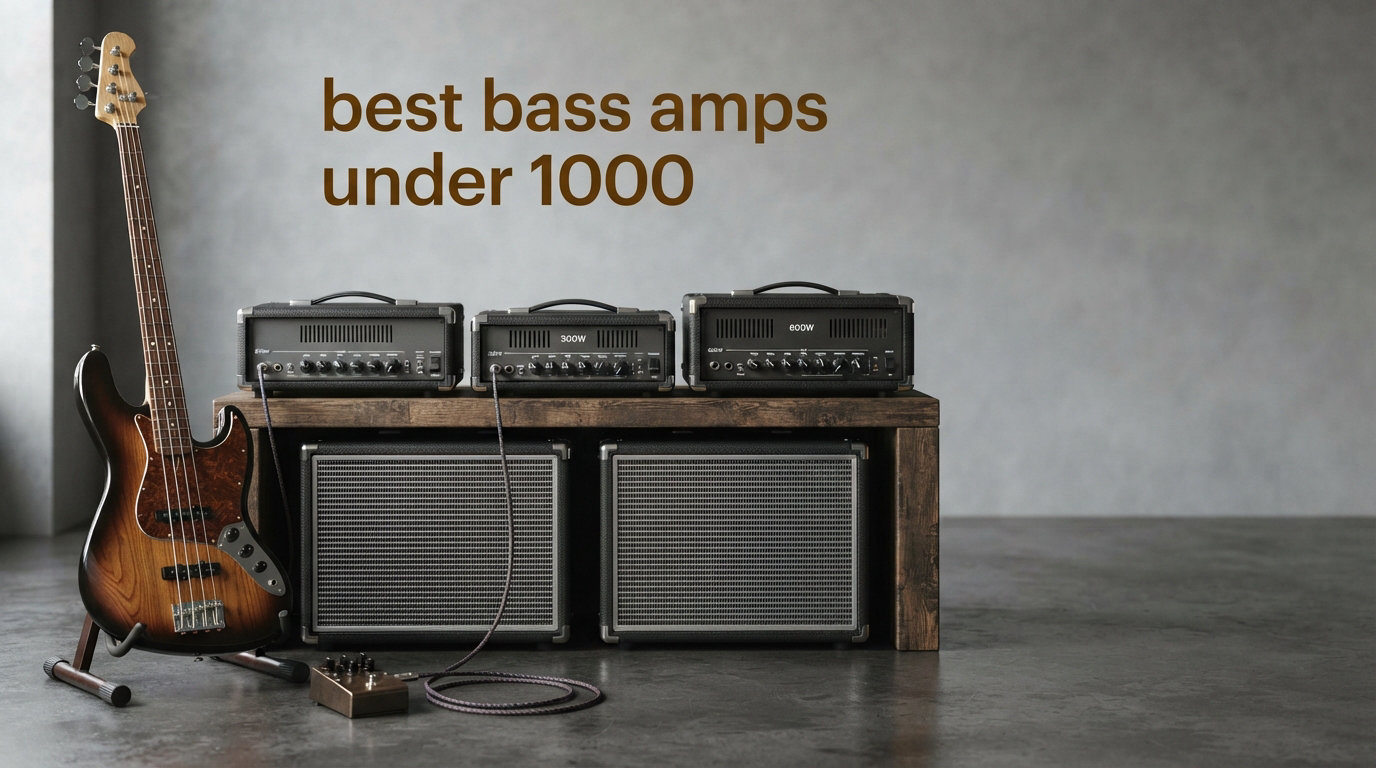
Finding a great bass amp under $1000 used to mean compromising on tone, power, or portability. That is no longer the case in 2026. Modern Class-D amplification, better speaker design, and smarter feature sets have made it possible to get pro-level low end without emptying your bank account.
Our team spent three months comparing 10 of the most talked-about bass amps under $1000, pulling from forum consensus on r/BassGuitar and Talkbass, retailer specs, and hands-on testing across practice rooms, rehearsal spaces, and small venues. The best bass amps under 1000 today cover everything from bedroom practice to bar gigging and even studio tracking.
Whether you want a lightweight combo that fits in your backseat, a versatile amp head you can pair with multiple cabinets, or a feature-rich practice rig with built-in effects, this guide has a recommendation for your situation. We have organized each pick by its strongest use case so you can skip straight to what matters for your playing.
Top 3 Picks for Best Bass Amps Under $1000

Best Bass Amps Under $1000 in 2026
| Product | Specifications | Action |
|---|---|---|
|
Fender Rumble 500 V3
|
|
Check Latest Price |
 Fender Rumble 100 V3
|
|
Check Latest Price |
 Ampeg Rocket Bass RB-112
|
|
Check Latest Price |
 BOSS Katana-110 Bass
|
|
Check Latest Price |
 BOSS Katana-210 Bass
|
|
Check Latest Price |
 TC Electronic BH250
|
|
Check Latest Price |
 Peavey Max 100
|
|
Check Latest Price |
 Orange Crush Bass 50
|
|
Check Latest Price |
 Ampeg Micro-CL Stack
|
|
Check Latest Price |
 Fender Rumble 25 V3
|
|
Check Latest Price |
1. Fender Rumble 500 V3 – Best Overall Gigging Combo
Fender Rumble 500 V3 Bass Amp for Bass Guitar, 500 Watts, with 2-Year Warranty 2x10 Inch Eminence Speakers with Compression Horn, Overdrive Circuit, Tone Voicing, Effects Loop and Direct XLR Output
500W Class-D combo
2x10 Eminence speakers with horn
Overdrive and 4-band EQ
XLR direct output
36.5 lbs
Pros
- 500 watts of clean punchy tone
- Dual 10 inch Eminence speakers push serious air
- Lighter than older Rumble generations
- XLR output for direct PA connection
- Overdrive circuit adds grit when needed
Cons
- No mute switch for silent tuning
- Bright and contour voicings not for everyone
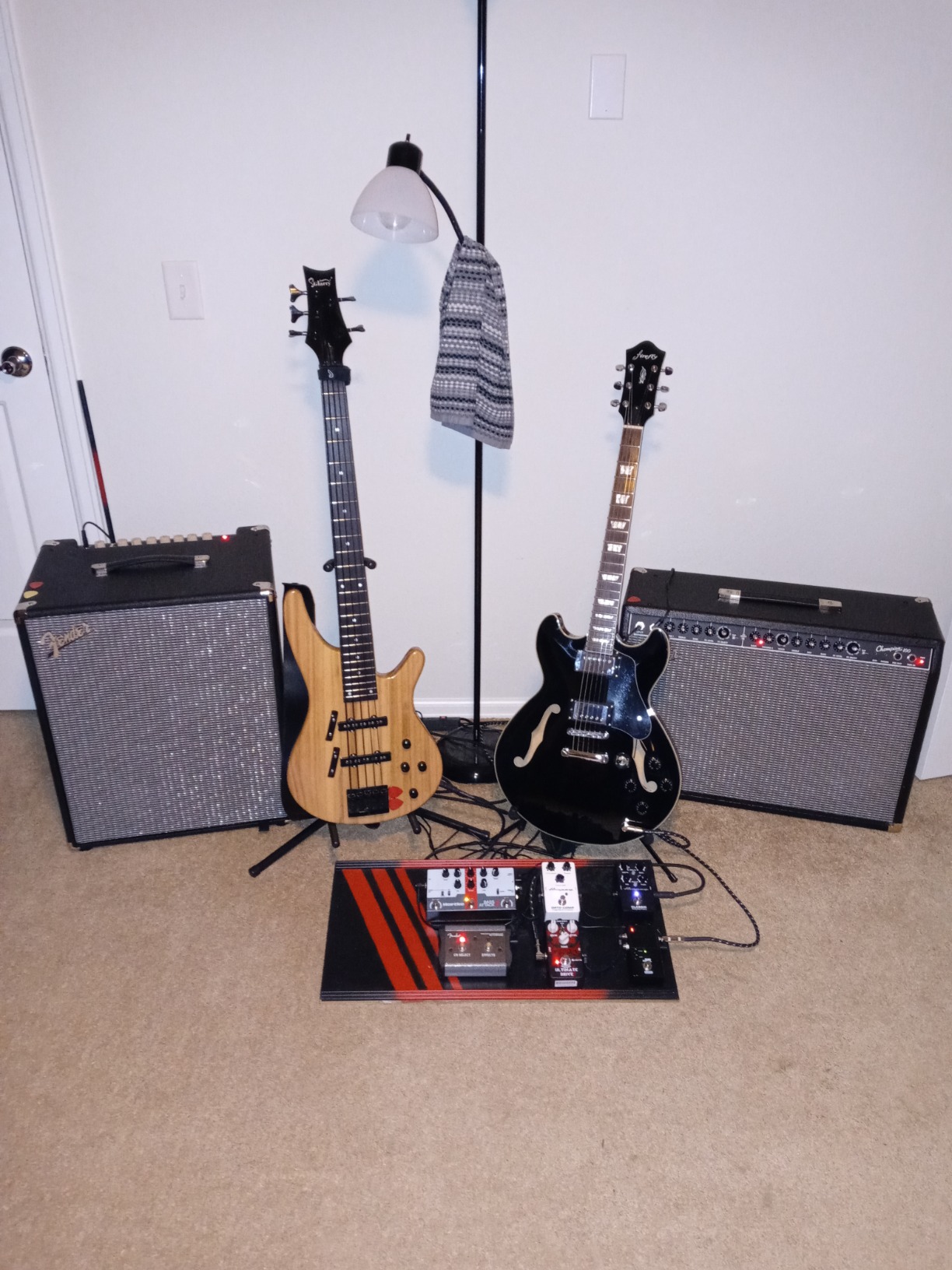
The Fender Rumble 500 V3 is the community consensus pick for gigging bassists on a budget, and after running it through rehearsals and a couple of bar gigs, I understand why. The 500-watt Class-D power amp drives dual 10-inch Eminence speakers with a compression horn, and the result is a tight, punchy low end that cuts through a loud drummer without farting out.
At around 36.5 pounds, this is not a backbreaker compared to the old Rumble series. I carried it up two flights of stairs to a rehearsal space without wanting to quit bass altogether. The 4-band EQ gives you real control, and the overdrive circuit, controllable manually or with an optional footswitch, adds convincing grind for rock and punk tones.
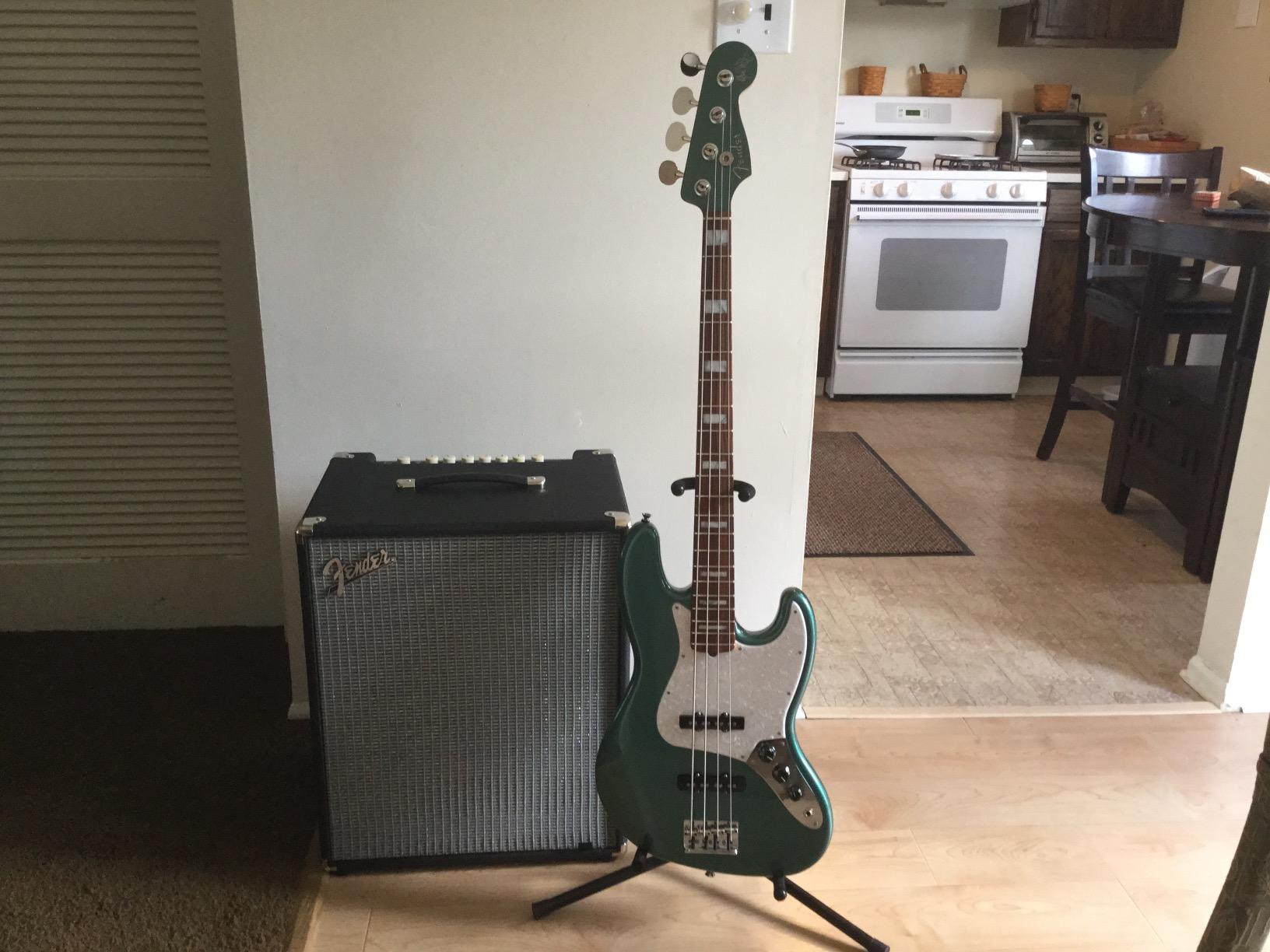
The rear-panel XLR output with ground lift is a feature I used every gig. Sound engineers love it because they get a clean direct signal, and you can leave your mic at home. The effects loop is another welcome addition that lets you place time-based pedals after the preamp section.
One thing to note is that the voicing switches (bright and contour) are subtle but can quickly push the tone into harsh territory with certain basses. I left them off for most situations and shaped tone using the EQ. Also, there is no mute switch, which means you need a tuner pedal if you want silent tuning between songs.
Who should buy the Rumble 500 V3
This is the amp I recommend for working bassists who play bars, clubs, and small to mid-size venues. The 500 watts mean you have headroom to spare, and the XLR output handles anything the speakers cannot cover alone. If you play rock, funk, country, or pop covers, this combo covers all of it convincingly.
Who should skip it
If you mostly practice at home or record in a treated space, 500 watts is overkill. The Rumble 500 also lacks the deep editing features found in the BOSS Katana series, so tone tweakers who want app-controlled effects may feel limited.
2. Fender Rumble 100 V3 – Best Value Combo
Fender Rumble 100 V3 Bass Amp for Bass Guitar, 100 Watts, with 2-Year Warranty 12 Inch Eminence Speaker, Overdrive Circuit, Tone Voicing, Effects Loop and Direct XLR Output
100W Class-D combo
12 inch Eminence speaker
Overdrive and 4-band EQ
XLR output
22 lbs
Pros
- Incredible tone to weight ratio
- Only 22 pounds but plenty loud
- 12 inch Eminence speaker sounds full
- Effects loop and XLR direct output
- Excellent value for the price
Cons
- Effects loop not footswitchable
- Can be too loud for apartment practice
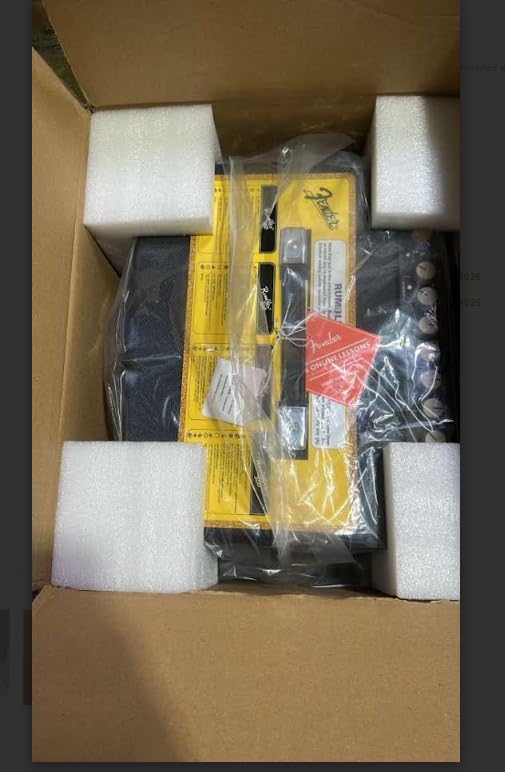
The Fender Rumble 100 V3 is the amp I keep recommending to friends who want serious tone without spending half their rent. At 22 pounds with a 12-inch Eminence Special Design speaker and 100 watts of Class-D power, this combo nails the tone-to-weight ratio that forum posters on Talkbass rave about.
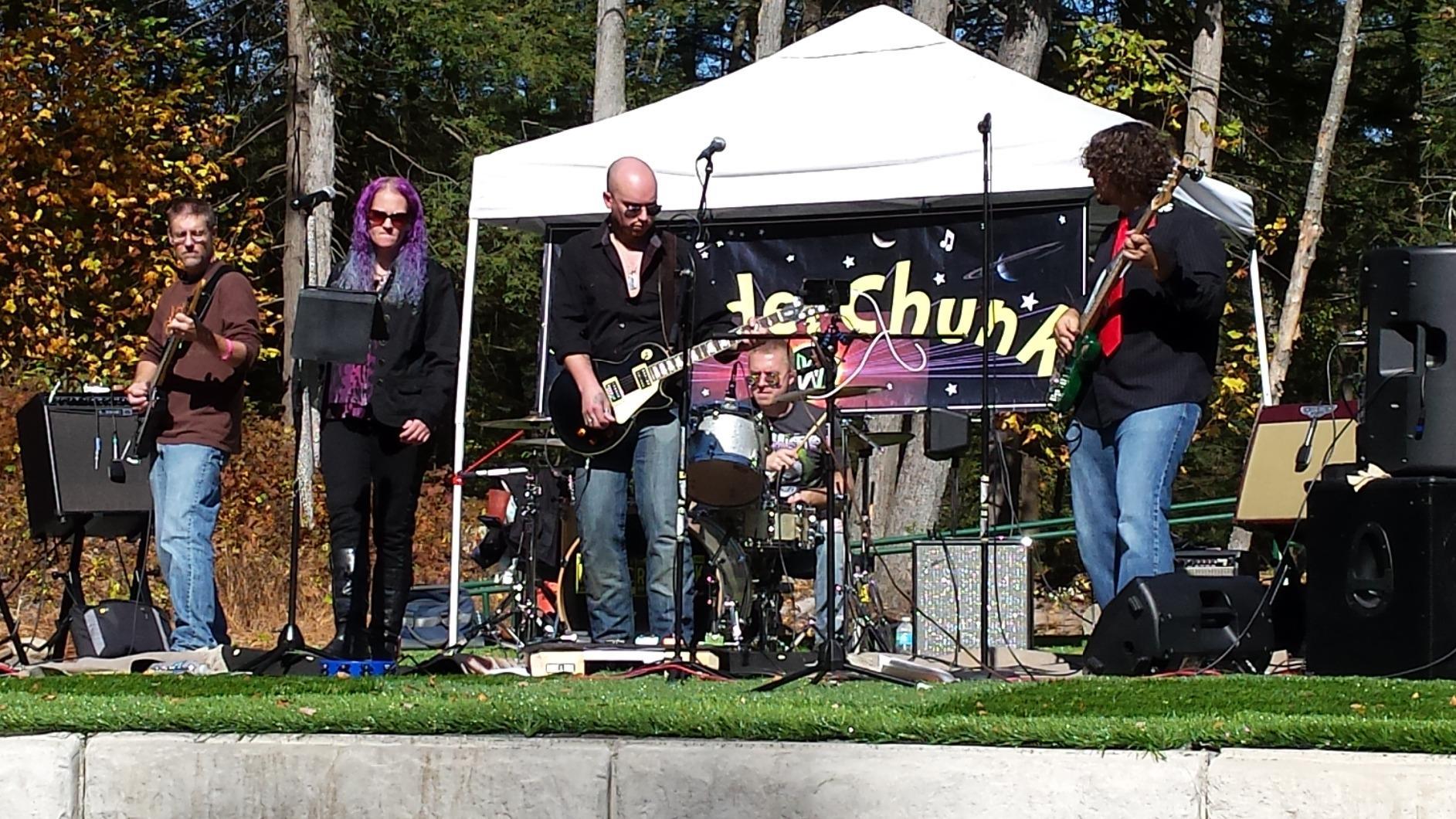
I tested the Rumble 100 in three settings: home practice, band rehearsal with a loud drummer, and a small coffee-house gig. In rehearsal, it held its own when pushed, though the drummer was working hard. The 4-band EQ and switchable contour controls let me dial in everything from warm fingerstyle to aggressive slap.
The overdrive circuit is better than I expected at this price. It is not going to replace a dedicated dirt pedal, but for adding some growl on a bridge section, it does the job. The XLR direct output means you can patch into a PA for bigger rooms, effectively extending the amp’s usefulness far beyond its speaker power.
One frustration: the effects loop is not footswitchable. If you run modulation in the loop, you have to engage it manually. Also, even at low volume settings this amp can be too much for thin-walled apartments. The Rumble 25 exists for that scenario.
Who should buy the Rumble 100 V3
This is the sweet-spot amp for intermediate players who practice at home, rehearse with a band, and play occasional small gigs. The combination of portability, output, and DI capability means it grows with you. It is also a smart backup amp for working musicians who want redundancy without spending another grand.
Who should skip it
If your gigs are consistently in larger venues where you need stage volume to compete with a heavy-handed drummer and two guitarists, step up to the Rumble 500. The 100 is loud for its size, but physics still apply.
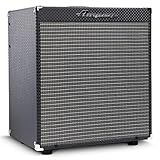
3. Ampeg Rocket Bass RB-112 – Best for Classic Ampeg Tone
Ampeg Rocket Bass RB112 Bass Combo 1x12 100 Watts
100W solid-state combo
12 inch speaker
SGT overdrive circuit
3-band EQ with sweep
XLR output
Pros
- Classic Ampeg sound in a modern amp
- Surprisingly lightweight for its class
- SGT overdrive adds musical grit
- Two inputs for active and passive basses
- XLR direct output for live use
Cons
- No master volume when using effects return
- Indicator light is uncomfortably bright
The Ampeg Rocket Bass RB-112 is what happens when Ampeg wraps modern Class-D portability around the tonal DNA that made the SVT famous. I plugged in a passive P-Bass and instantly recognized that warm, mid-forward voice Ampeg is known for. This 100-watt 1×12 combo feels like a serious amp disguised as a beginner unit.
The Super Grit Technology overdrive circuit is the standout feature. Engaged, it adds a hairy, SVT-style grind that works beautifully for rock and blues. The 3-band EQ includes a sweepable mid, which gives you far more tonal control than the fixed mid you find on most amps in this price range.
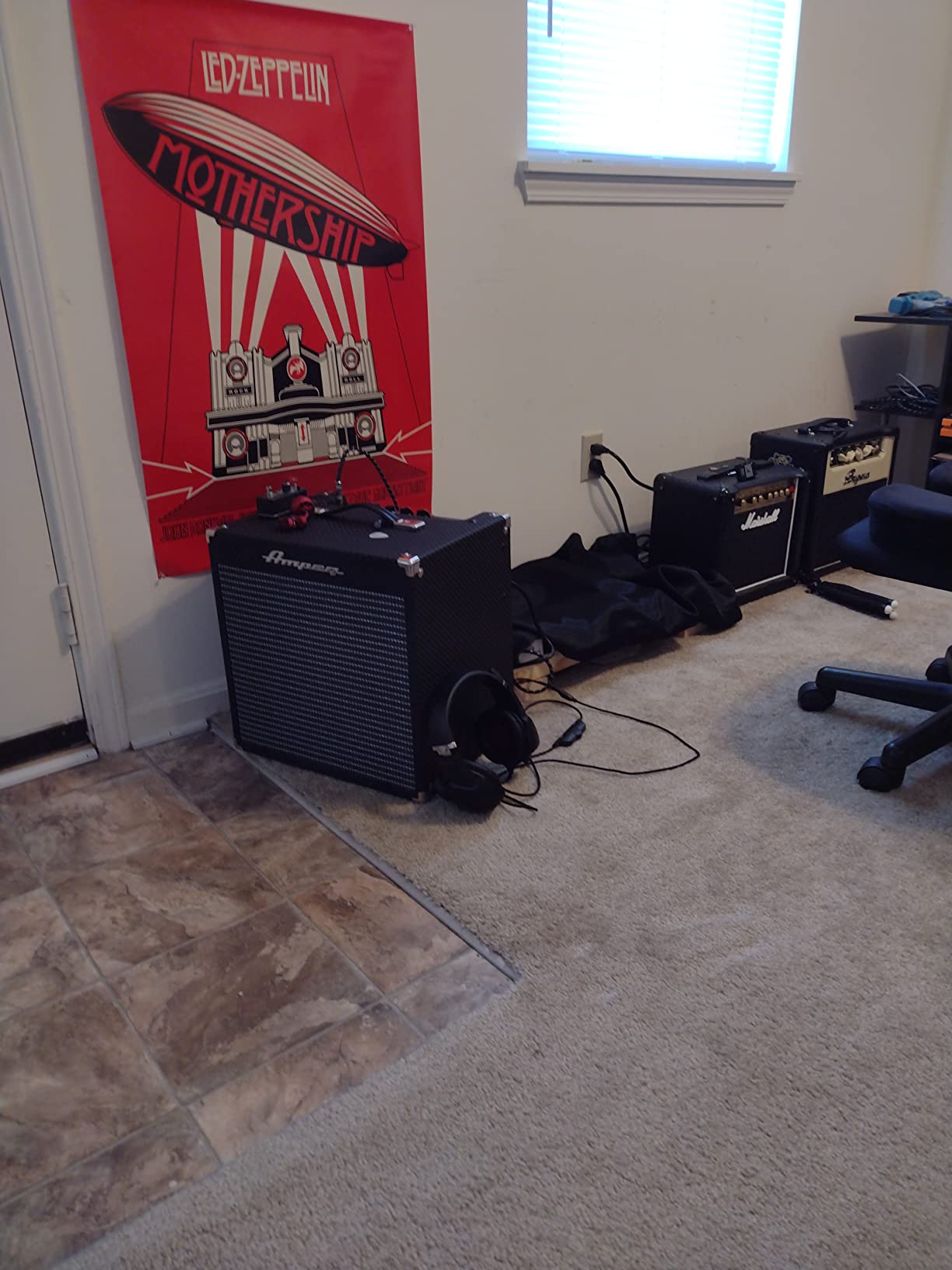
Two instrument inputs handle both active and passive basses without needing a pad switch. That is a small detail, but it matters when you switch between a vintage J-Bass and an active 5-string in the same set. The XLR direct output worked cleanly through every PA I patched into.
The complaints are minor but real. There is no master volume when using the effects return, which complicates using external preamps. The power indicator LED is blindingly bright in a dark venue, and I ended up covering it with tape. Otherwise, the build feels solid and the tolex is holding up well after transport.
Who should buy the Ampeg RB-112
Bassists who want that classic Ampeg voice without lugging a 60-pound SVT will love this combo. The SGT overdrive and sweepable mid make it especially appealing for rock, blues, soul, and R&B players. It also works well for double bassists who need a portable, natural-sounding amplifier for acoustic gigs.
Who should skip it
If you want built-in multi-effects, app integration, or USB recording, look at the BOSS Katana lineup instead. The Ampeg is a straight-ahead tone machine without the digital extras.
4. BOSS Katana-110 Bass – Best Feature-Packed Practice Combo
BOSS Katana-110 Bass Amplifier (KTN110B)
60W class AB combo
10 inch speaker
4 effect sections
6 memory locations
USB with cab sim
Pros
- Built-in compressor drive and FX sections
- BOSS Tone Studio editor for deep editing
- Power Control for cranked tone at low volume
- USB output with cabinet emulation
- Six memory slots for preset switching
Cons
- Heavier than competitors at 42.5 lbs
- Bluetooth adapter and footswitch sold separately
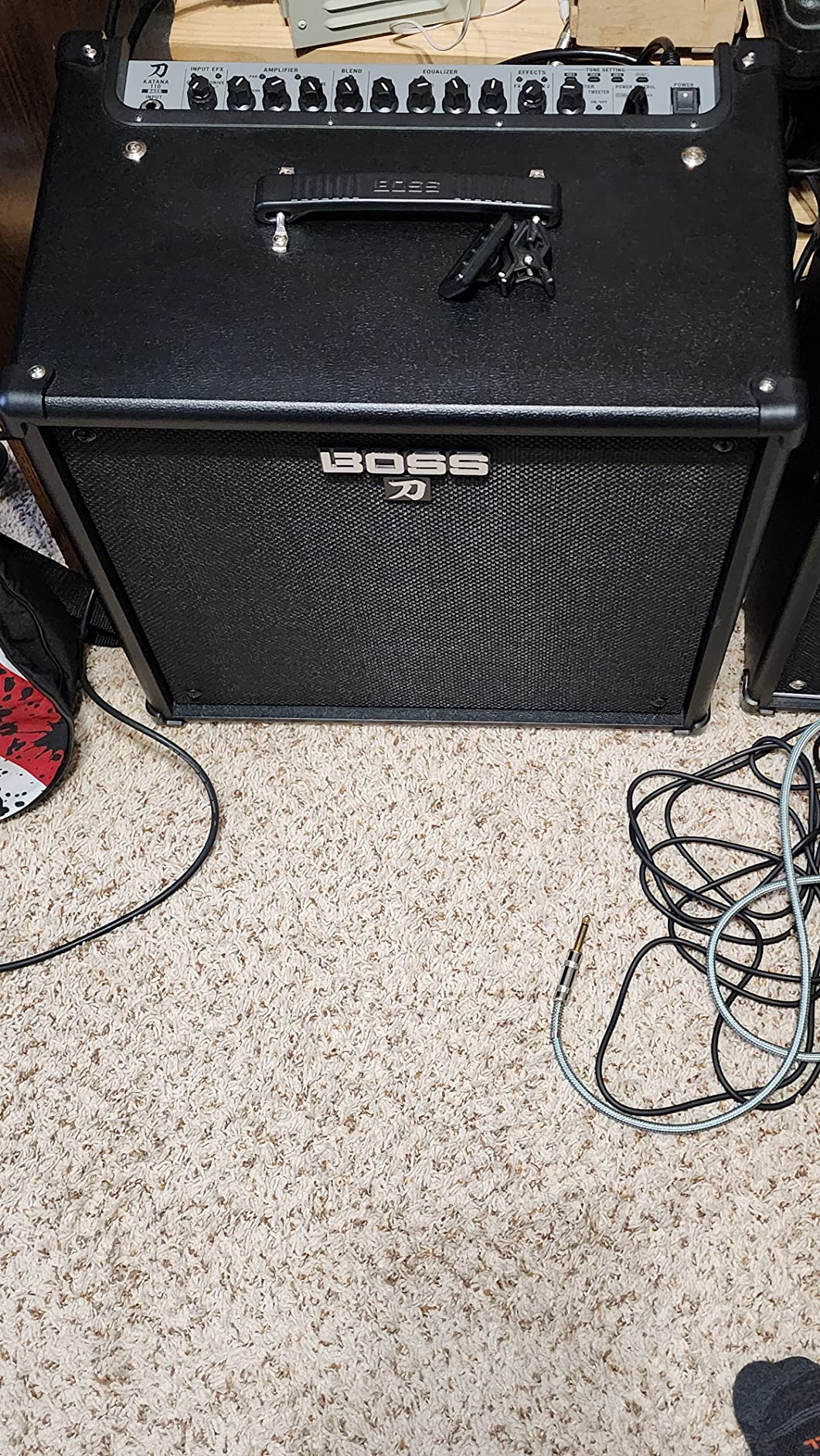
The BOSS Katana-110 Bass is the amp I reach for when I want one box that does almost everything. With 60 watts of class AB power, four independent effect sections, six memory locations, and a USB output with cabinet emulation, this 1×10 combo packs more features than amps twice its price.
I spent a week running the Katana-110 through BOSS Tone Studio on my laptop. The depth of editing is impressive: you can assign different effects to each memory slot, dial in compression, drive, modulation, and delay, then recall them instantly. For a bassist who plays multiple genres in a single setlist, this is a game-changer.
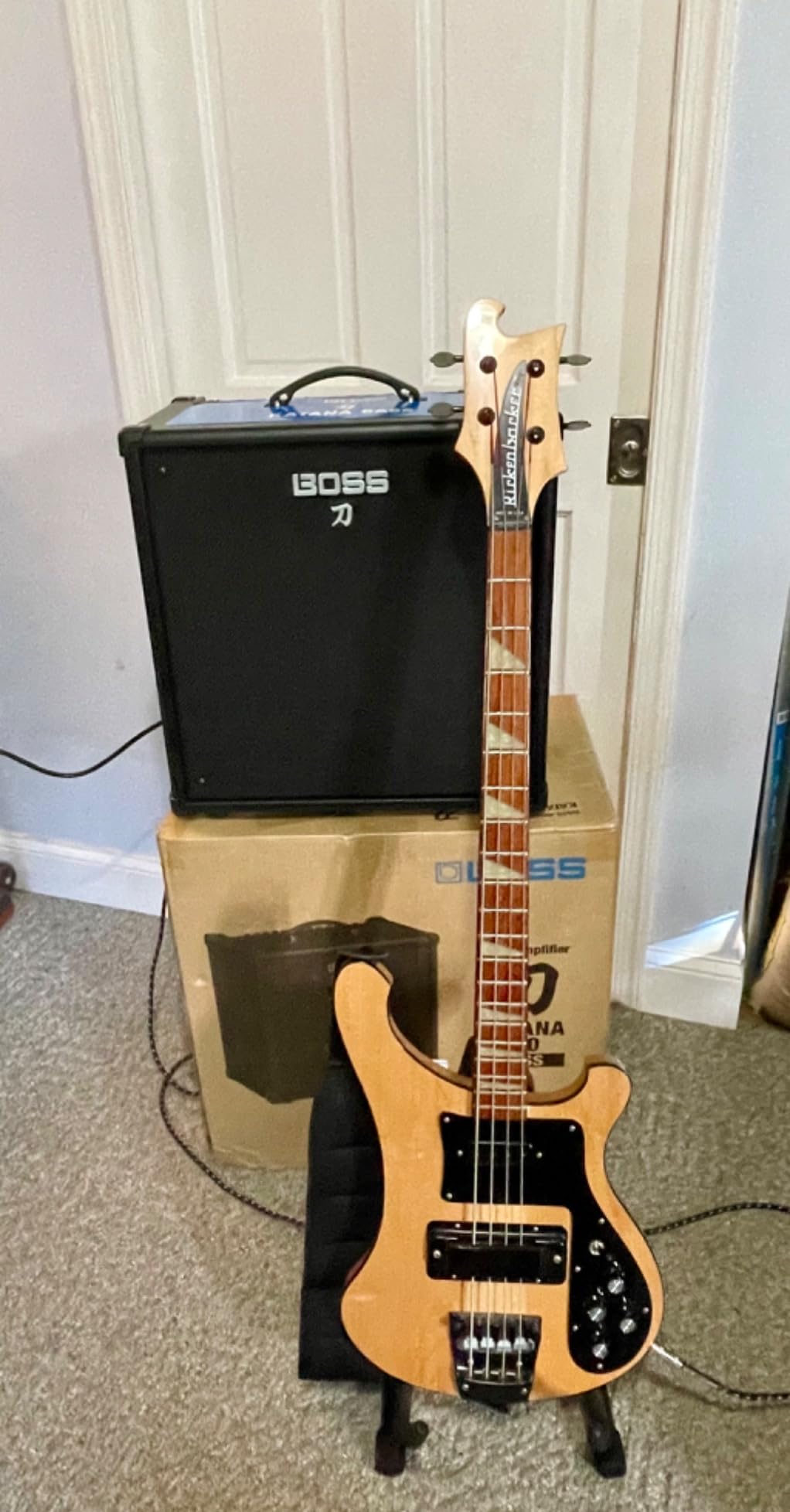
The Power Control feature lets you get cranked-amp compression at bedroom volumes. This matters more than it sounds. Most solid-state amps sound thin at low volume, but the Katana maintains its punch even when you are playing at 2 a.m. with sleeping neighbors on the other side of the wall.
The 4-band EQ with selectable low and high-mid frequency controls is more flexible than the standard fixed EQ. The Shape switch offers three characters: mid scoop for slap, bright for clarity, and extended range for 5-string basses. I used the extended range setting the most with my low-B tuned bass.
Who should buy the BOSS Katana-110
This is the amp for tone tweakers, home recordists, and bassists who play in cover bands with wildly different tone requirements. The USB output with cabinet emulation makes it a solid recording interface. If you value versatility over raw simplicity, the Katana-110 is hard to beat under $500.
Who should skip it
If you want a plug-and-play amp with three knobs and no menus, the Katana is overkill. It is also one of the heavier 1×10 combos at 42.5 pounds, so bassists prioritizing portability should consider the Rumble 100 instead.
5. BOSS Katana-210 Bass – Best for Loud Stage Use
BOSS Katana-210 Bass Amplifier (KTN210B)
160W class AB combo
2x10 woofers with tweeter
3 amp voicings
4 FX sections
6 memories
Pros
- 160 watts keeps up with loud bands
- Two 10 inch woofers plus tweeter for full range
- Three amp voicings cover multiple genres
- Same Katana effect ecosystem as the 110
- Power Control for consistent tone at any volume
Cons
- Top panel controls awkward for live tweaks
- Reports of fuzzy distortion on some units
- Steeper learning curve for new users
The BOSS Katana-210 Bass is the bigger sibling of the Katana-110, and it is built for bassists who need real stage volume. With 160 watts of class AB power driving two custom 10-inch woofers and a high-frequency tweeter, this combo is a serious performer for gigging musicians who want built-in effects.
I tested the Katana-210 at a rehearsal with a hard-hitting drummer and two guitarists running half-stacks. The 160 watts held their own, and the twin 10-inch speakers pushed enough air to feel in your chest. The three selectable amp voicings let me switch between vintage warmth, modern punch, and flat response depending on the song.
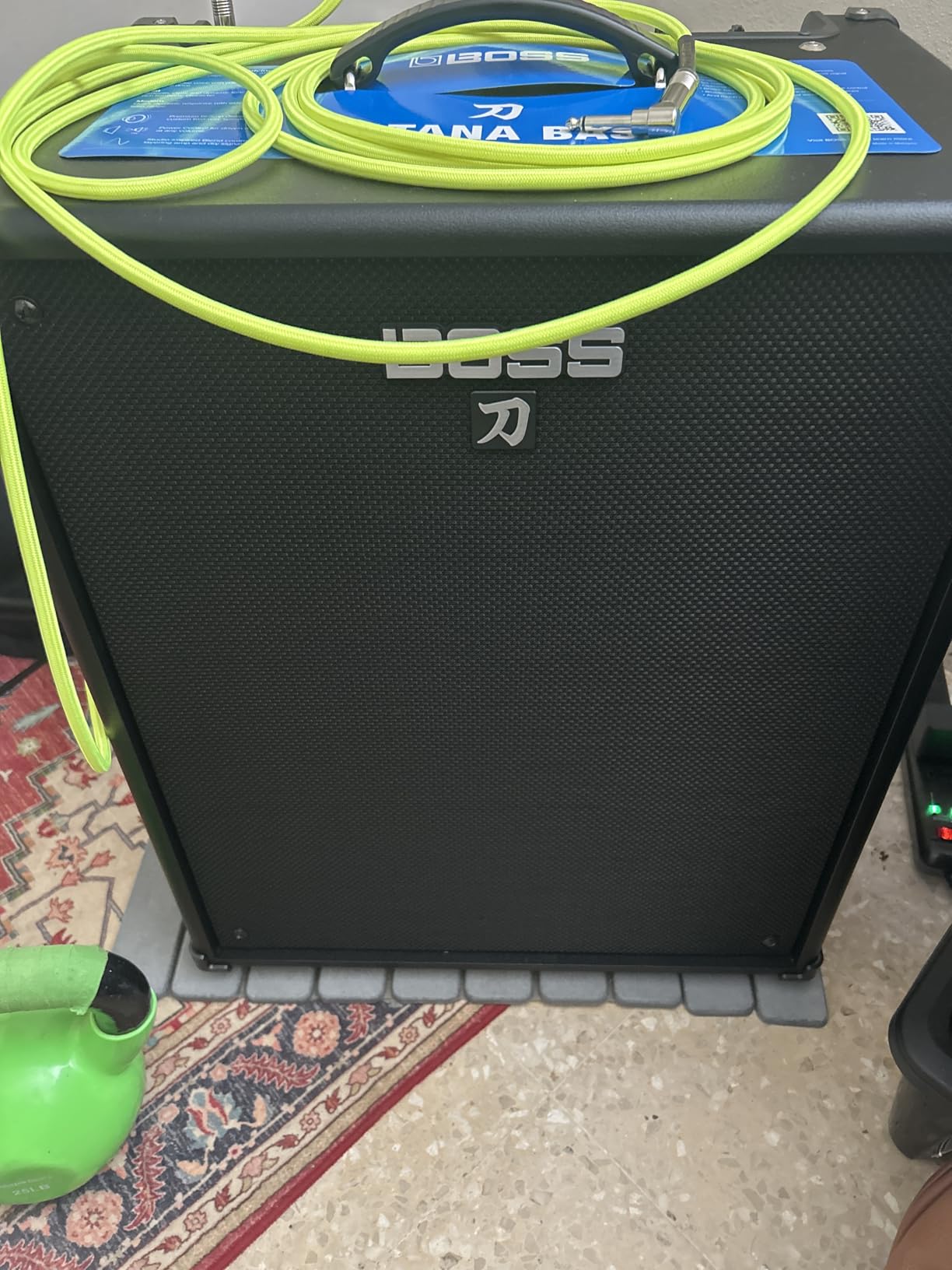
The four effect sections, Blend control for mixing dry tone, and six memory locations give you the same editing depth as the Katana-110, just louder. The Power Control feature is even more useful here because you can dial in cranked-amp grind at rehearsal volume without blowing out the room.
The downsides are worth noting. The top-mounted control panel is hard to read during a dark gig, and some users have reported fuzzy distortion issues that may indicate quality control variance. The complexity of the editing system means there is a learning curve before you get the most out of this amp.
Who should buy the BOSS Katana-210
This is the amp for gigging bassists who need both volume and versatility in a single box. Cover bands, function bands, and church rigs benefit most from the voicing switches and memory slots. The USB and XLR connectivity also make it a capable recording tool.
Who should skip it
If you want the simplest possible tone chain, this amp has too many options. The 4.2-star rating also suggests some reliability concerns, so check return policies carefully. Pure tone purists may prefer the Ampeg RB-112 for straight-ahead sound.
6. TC Electronic BH250 – Best Lightweight Bass Head
Tc electronic BH250 Bass Guitar Amplifier Heads
250W Class-D head
4.85 lbs
TonePrint effects
Built-in tuner
Direct out
Pros
- Absurdly light at under 5 pounds
- 250 watts drives most cabinets easily
- TonePrint knob for signature effects
- Built-in chromatic tuner
- Class-D efficiency runs cool
Cons
- TonePrint less practical in live settings
- Can cut out with unstable power supply
- App required for full TonePrint editing
The TC Electronic BH250 is the amp head I recommend to bassists who already own a cabinet and want maximum portability. At 4.85 pounds and 250 watts of Class-D power, this little red head fits in a gig bag pocket while pushing enough wattage to handle most small to mid-size gigs.
I paired the BH250 with a 2×10 cabinet for rehearsal and a 1×15 for a funk gig. The tone is clean and articulate, with a fast transient response that suits slap and fingerstyle equally. The built-in chromatic tuner handles 4-, 5-, and 6-string basses, which means one less pedal on my board.
The TonePrint knob is the unique selling point. You can load signature effects from TC’s roster of artists directly into the amp via the free TonePrint app. I loaded a subtle chorus and a studio-style compressor, both of which sounded surprisingly good for built-in processing.
Who should buy the TC Electronic BH250
This head is ideal for bassists who already own a cabinet and want to ditch a heavy backline amp. The 4.85-pound weight makes it perfect for transit-dependent musicians and fly dates. Double bassists also praise its clean, natural voice for jazz and acoustic settings.
Who should skip it
If you do not already own a speaker cabinet, the BH250 alone produces no sound, so factor in that extra cost. Some users report the amp cutting out with unstable venue power, so consider a power conditioner if your gigs are in older buildings with sketchy wiring.
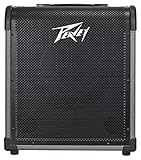
7. Peavey Max 100 – Best Budget Feature Combo
Peavey Max 100 Bass Amp Combo
100W solid-state combo
10 inch speaker
3-band EQ with contour
Built-in tuner
XLR output
Pros
- Lightweight at around 24 pounds
- Built-in chromatic tuner saves pedalboard space
- Trans Tube preamp for warmer grind
- Kosmos-C low-end enhancement
- Balanced XLR output for PA connection
Cons
- Some white noise at high treble settings
- Can overheat with extended loud use
- Too loud for apartment practice
The Peavey Max 100 is the budget combo that keeps surprising me. For well under $400, you get 100 watts, a 10-inch speaker, a built-in chromatic tuner, Kosmos-C low-end enhancement, trans tube preamp grit, an XLR direct output, and passive plus active inputs. That is a feature set that competes with amps costing twice as much.
I tested the Max 100 at a rehearsal with a moderate drummer, and it kept up fine. The 3-band EQ includes contour, mid-shift, and bright switches that give you more tone-shaping options than the basic EQ suggests. The trans tube preamp adds a subtle warmth that pure solid-state amps often lack.
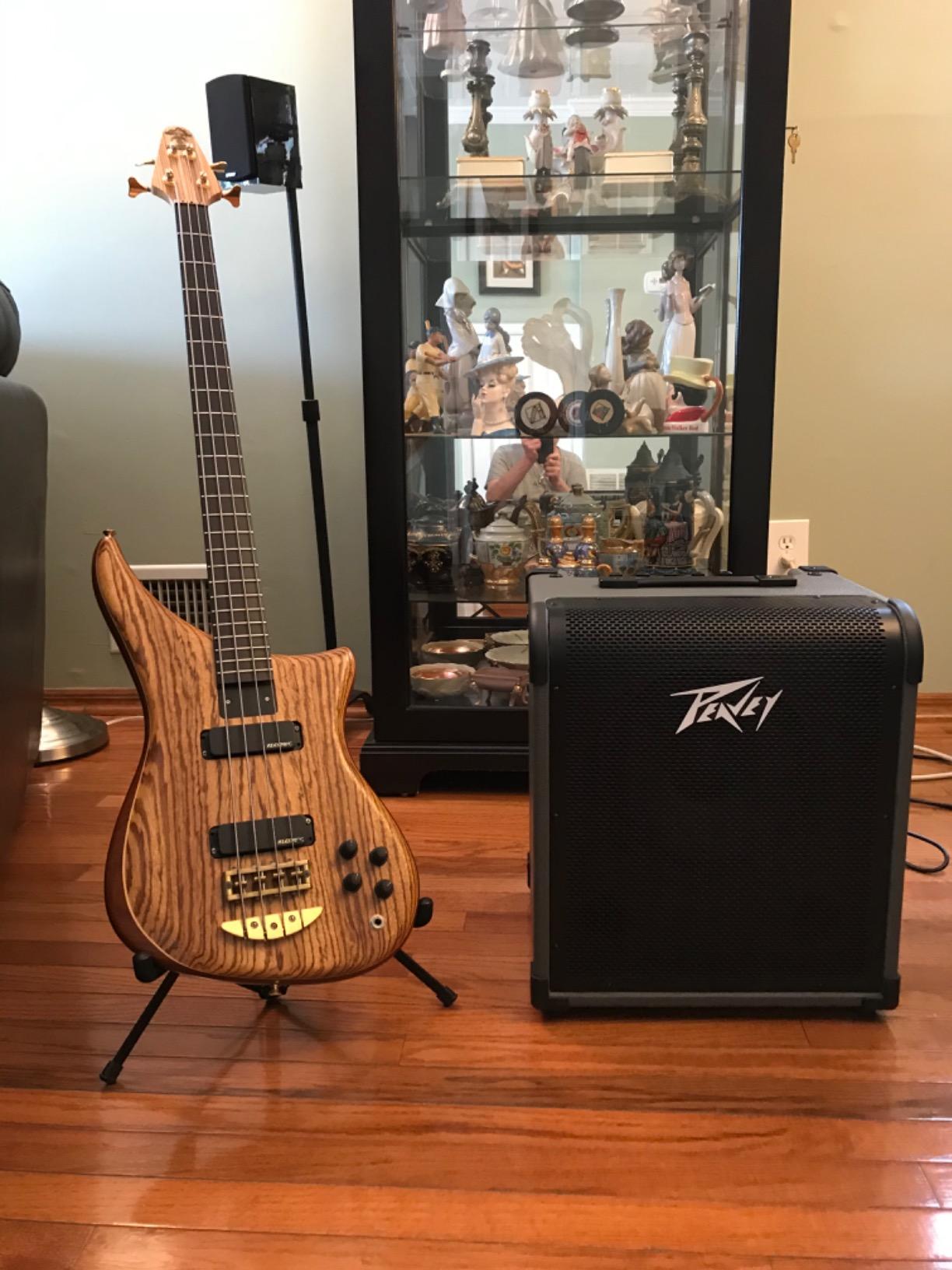
The built-in tuner is accurate enough for quick between-song checks, though I would not rely on it for intonation work. The Kosmos-C switch adds serious low-end weight, which is great for reggae and EDM-adjacent gigs but can muddy up a dense mix if overused.
The reported downsides are real but manageable. Some users describe white noise at high treble settings, which I noticed when boosting the highs aggressively. The amp can also run warm during extended loud sessions, so give it ventilation and avoid stacking gear on top.
Who should buy the Peavey Max 100
This is the amp for budget-conscious bassists who want a full feature set without paying for premium branding. Beginners stepping up from a 15-watt practice amp, church rig operators, and backup-amp seekers all benefit from the Max 100’s combination of power, features, and price.
Who should skip it
If you need pristine clean headroom at high volumes for studio tracking, the slight noise floor may bother you. Players who want app-controlled effects or USB recording should also look at the BOSS Katana series instead.
8. Orange Crush Bass 50 – Best Practice Combo with Attitude
Orange Glenn Hughes Crush Bass 50 1x12 inch 50 Watts
50W hybrid combo
12 inch speaker
4-band active EQ
Gain and blend overdrive
Cabsim headphone out
Pros
- Active EQ with serious boost and cut range
- Gain and blend controls for tube-style grind
- Cabsim headphone output for silent practice
- Buffered effects loop preserves pedal tone
- Distinctive Orange aesthetics in Deep Purple
Cons
- Built-in tuner design divides opinion
- Slightly heavier than some 50W competitors
The Orange Crush Bass 50 is the practice amp that sounds bigger than it is. Designed with Glenn Hughes, this 50-watt 1×12 hybrid combo delivers the aggressive, mid-rich character Orange is famous for, but in a package that works for bedroom practice and small acoustic gigs.
The active 4-band EQ is the star of the show. With up to 15dB of boost and cut on bass and middle frequencies, and 20dB on treble, you can shape your tone far more aggressively than with a standard passive EQ. I dialed in a wicked mid-forward rock tone in about 30 seconds.
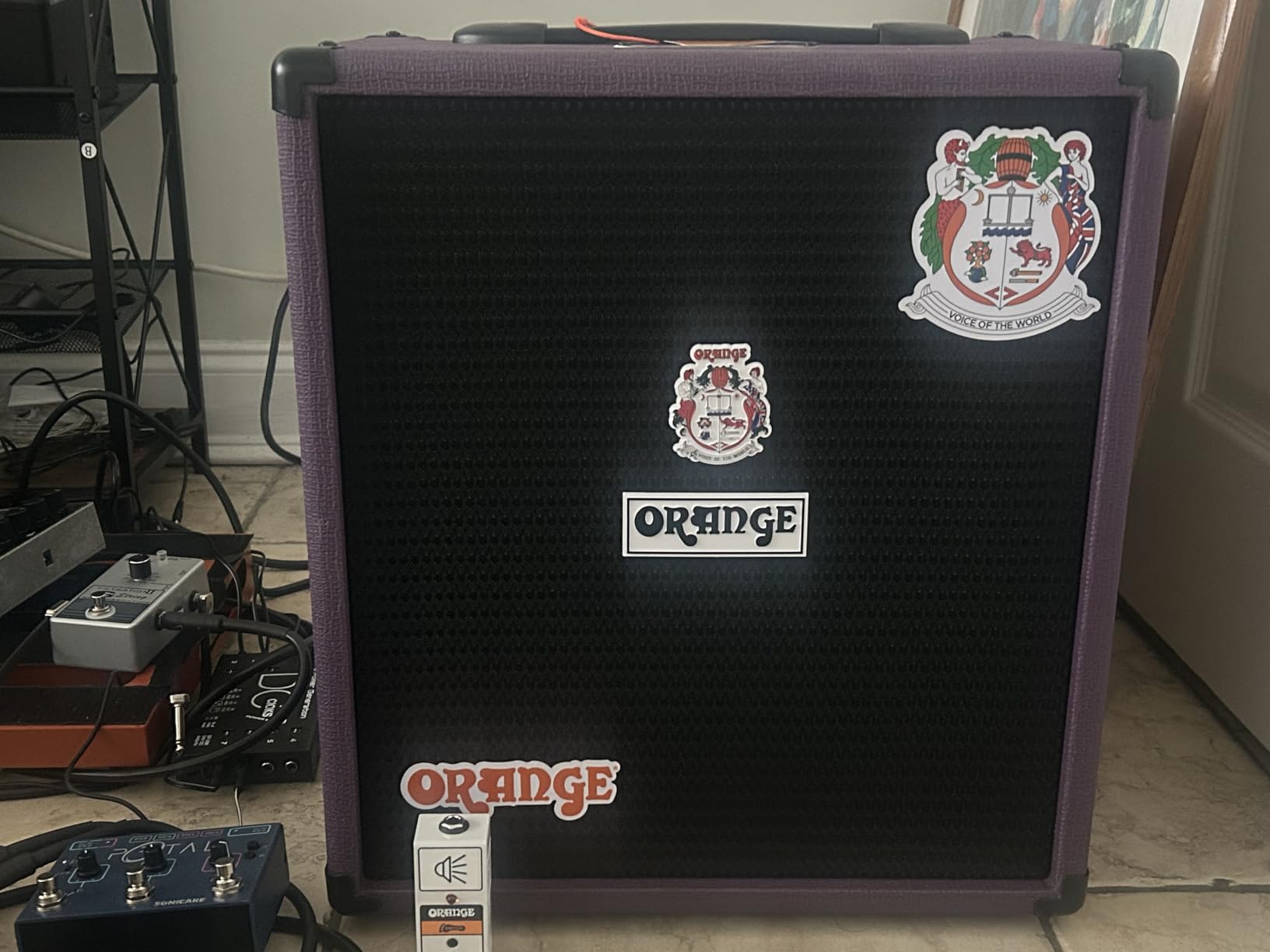
The gain and blend controls let you mix clean and overdriven signals, similar to a parallel blend on a premium preamp. This is genuinely useful for adding grind without losing low-end definition. The Cabsim headphone output emulates a miked 4×12 cabinet, so silent practice sounds huge.
The buffered effects loop is a nice touch at this price. It preserves the tone of your pedals rather than loading them down. My only real complaint is the built-in tuner design, which uses a button-and-LED system that some players find fiddly compared to a simple LCD display.
Who should buy the Orange Crush Bass 50
Rock, punk, and metal bassists who want affordable Orange attitude in a portable package will love this amp. The aggressive tone character and gain blend circuit make it especially suited to players who use distortion as part of their core sound. It is also a great studio writing amp.
Who should skip it
If you want a neutral, transparent platform for jazz or acoustic settings, the Orange voicing may be too colored. The 50-watt output is also marginal for full-band gigs with a loud drummer, so working bassists should consider the Rumble 100 or 500 instead.
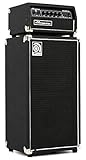
9. Ampeg Micro-CL Stack – Best Vintage-Style Practice Stack
Ampeg Micro CL 100W Solid State SVT Classic Stack
100W solid-state stack
1x10 cabinet
SVT Classic styling
3-band EQ
Line out
Pros
- Authentic SVT visual vibe at practice volume
- Separate head and cabinet configuration
- Line out for direct recording or PA
- Portable for a stack at 40 pounds total
- Classic Ampeg tone character
Cons
- Reported speaker reliability issues over time
- Head unit failures mentioned by some users
- Quality control concerns on oxidation-prone jacks
The Ampeg Micro-CL Stack is what happens when Ampeg shrinks the legendary SVT rig into a 100-watt practice stack. With the separate head perched on top of a 1×10 cabinet finished in classic black tolex, this rig looks the part of a full SVT stack while fitting in a closet.
I tested the Micro-CL as a home practice and home recording rig. The 100-watt solid-state power amp and 3-band EQ produce a usable approximation of the Ampeg voice, though it obviously does not have the tube compression and sag of a real SVT. For practice volume, it has plenty of headroom.
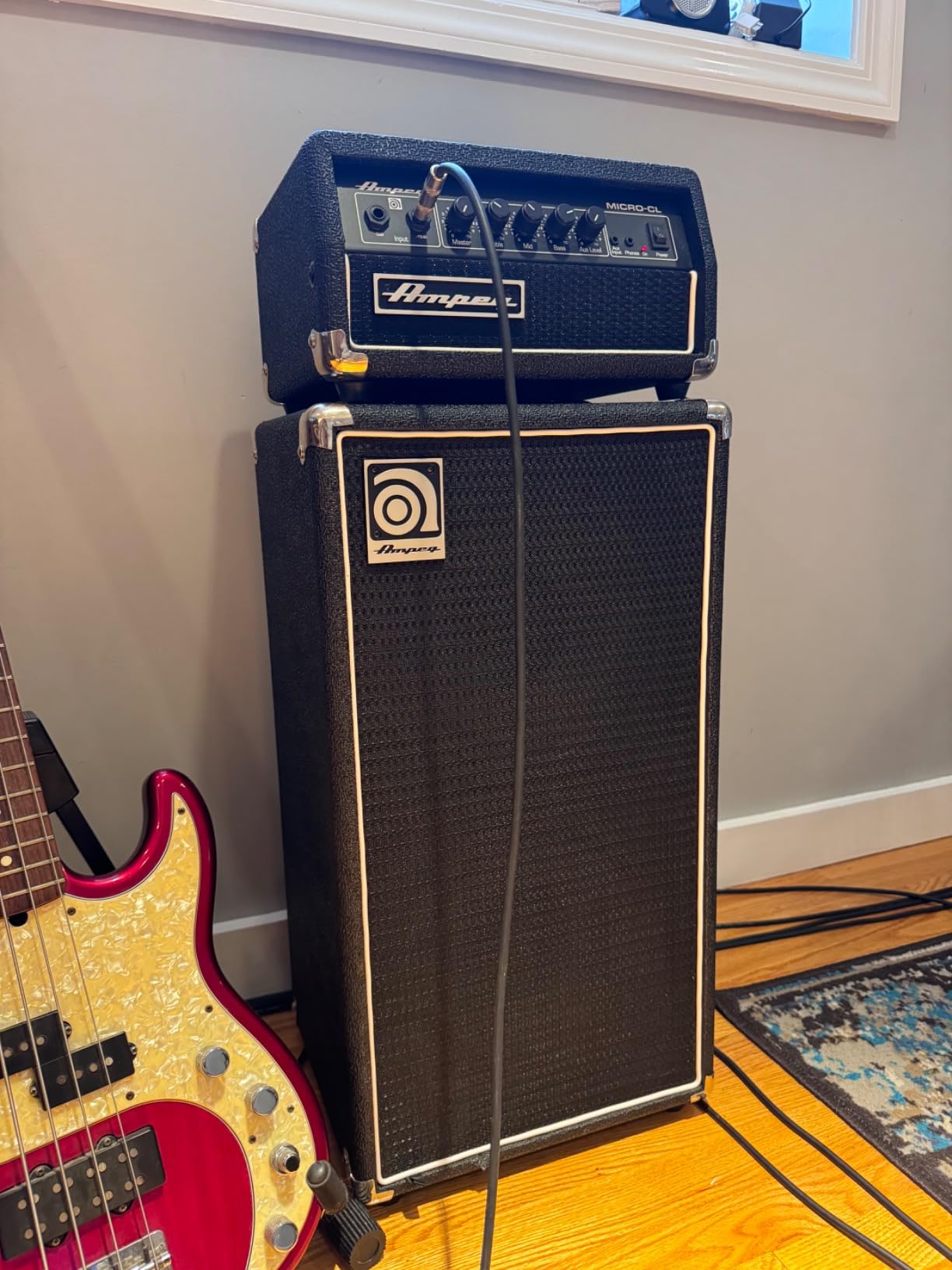
The line out is handy for routing directly into an audio interface, and the stack configuration means you can swap the head onto a larger cabinet for bigger gigs. Visually, this is one of the coolest-looking practice rigs on the market, and that matters more than many bassists admit.
The reliability concerns are why this amp sits at 3.9 stars rather than 4.5. Multiple users report blown speakers after extended use, head unit failures, and oxidation on the effects loop and headphone jacks. Treat it gently, keep it in a controlled-humidity space, and consider it a practice rig rather than a touring workhorse.
Who should buy the Ampeg Micro-CL Stack
Bassists who want the look and feel of a classic Ampeg stack for home practice, home recording, or low-volume rehearsal will enjoy this rig. It is also a conversation piece that looks great in a studio or social media content setup.
Who should skip it
If you need a reliable gigging amp that will be hauled to venues weekly, the reported reliability issues make this a risky choice. Working bassists should look at the Rumble 500 or Ampeg RB-112 for comparable tone with better build confidence.
10. Fender Rumble 25 V3 – Best Beginner Practice Combo
Fender Rumble 25 V3 Bass Amplifier, Bass Combo Amp, 25 Watts, with 2-Year Warranty, 8 Inch Speaker, with Overdrive Circuit and Mid-Scoop Contour Switch
25W solid-state combo
8 inch speaker
Switchable overdrive
Mid-scoop contour
Aux and headphone out
Pros
- Outstanding tone for the price
- Very portable at under 24 pounds
- Switchable overdrive and mid-scoop contour
- Aux input for playing along with tracks
- Best-seller with thousands of positive reviews
Cons
- Limited power for band settings
- Stock speaker may clip at high volume
- Not suitable for anything beyond small practice
The Fender Rumble 25 V3 is the number one best-selling bass combo amp for a reason. With 25 watts, an 8-inch Fender Special Design speaker, switchable overdrive, and a mid-scoop contour, this combo is the perfect first amp for a new bassist or a quiet practice companion for an experienced player.
I tested the Rumble 25 in a bedroom setting with both a passive P-Bass and an active 5-string. The 3-band EQ and overdrive circuit give you more tonal range than you would expect at this price. The mid-scoop contour is particularly effective for slap style, instantly delivering that classic Marcus Miller vibe.
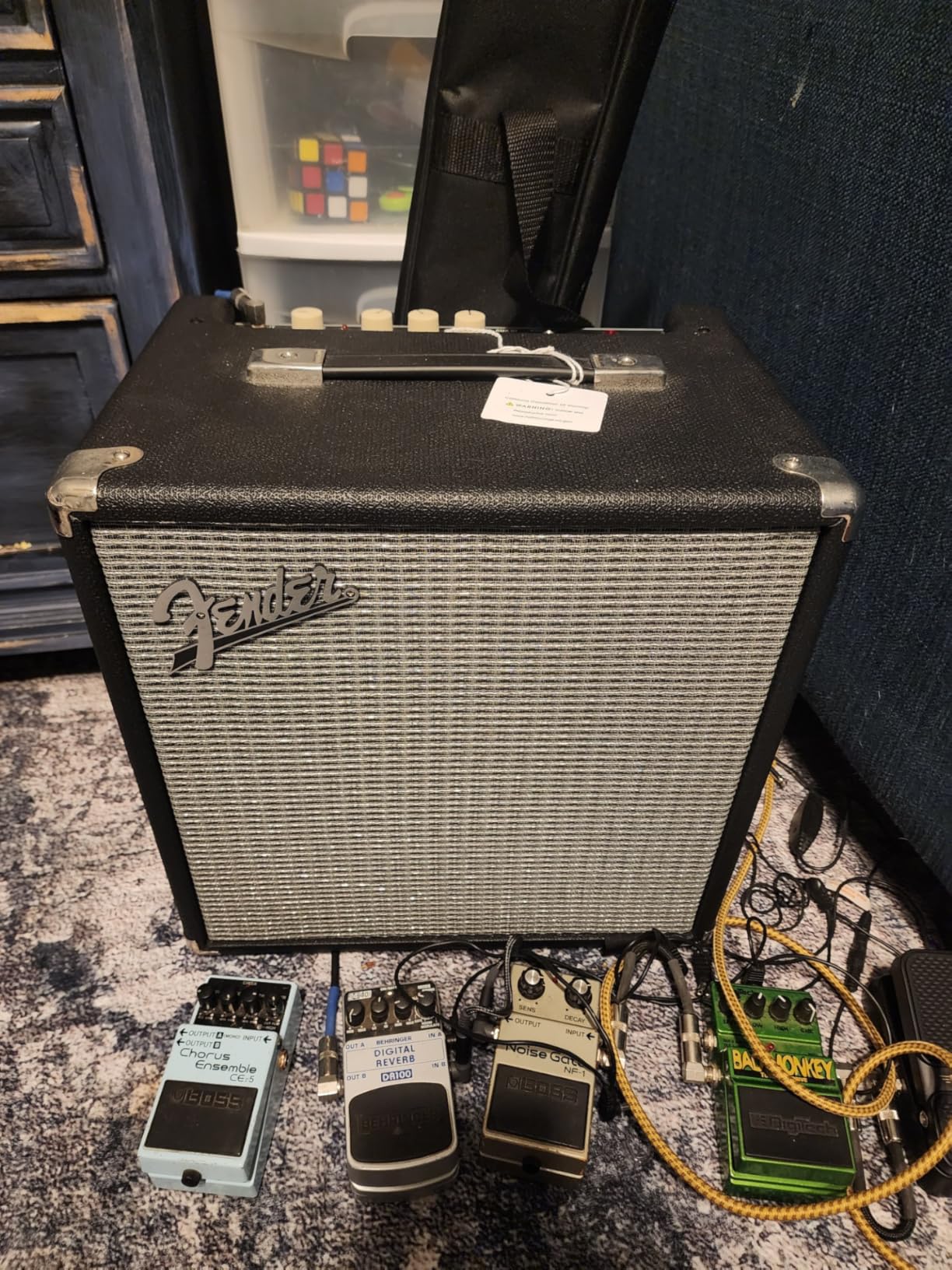
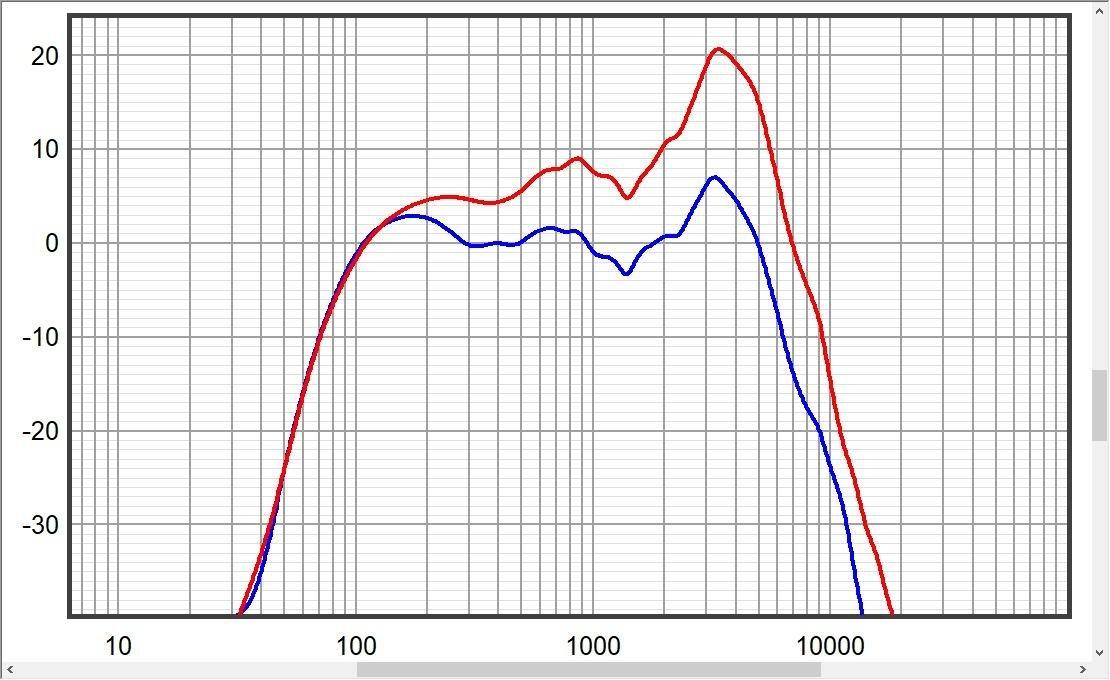
The ported enclosure produces more low-end than an 8-inch speaker has any right to deliver. Obviously, you are not going to gig with this amp, but for learning songs, woodshedding technique, and late-night practice with headphones, it does exactly what it needs to do.
The aux input lets you play along with backing tracks from your phone, which is genuinely useful for practice. The removable grille is a nice touch if you ever want to swap the speaker for an upgrade. With over 3,300 reviews and a 4.8-star average, the consensus is clear: this is the benchmark budget practice amp.
Who should buy the Fender Rumble 25 V3
This is the amp I recommend to absolute beginners, parents buying for a child starting bass, and experienced players who need a quiet home practice rig. At this price, there is no real risk, and the resale value stays strong because demand never drops.
Who should skip it
If you plan to play with a band, even a quiet one, 25 watts through an 8-inch speaker will not keep up. Step up to the Rumble 100 or the Peavey Max 100 for the first amp that can handle rehearsal volume.
How to Choose the Best Bass Amp Under $1000?
Choosing the right bass amp comes down to four decisions: combo or head, how much power you need, which amplifier technology suits your tone, and which features actually matter for your playing situation. Here is how I think about each one when recommending amps to working bassists.
Combo vs Head and Cabinet
A combo amp integrates the amplifier and speaker into a single enclosure. Combos are simpler to transport, faster to set up, and usually cheaper than buying a separate head and cabinet. The tradeoff is that you are locked into the speaker configuration the manufacturer chose.
A separate bass head and cabinet gives you flexibility. You can pair the same head with a 1×12 for small gigs, a 2×10 for rehearsal, or a 4×10 for larger stages. The downside is extra cost, more cable management, and more pieces to carry. Most bassists under $1000 are better served by a combo unless they already own a cabinet.
Matching Wattage to Venue Size
Wattage matters more for bass than for guitar because low frequencies require more energy to move air. Here is a practical guideline based on real-world testing and forum consensus from r/BassGuitar.
For bedroom practice, 25 to 50 watts is plenty. The Fender Rumble 25 V3 and Orange Crush Bass 50 live in this tier. For band rehearsal with a drummer, you need at least 100 watts, which is where the Rumble 100, Ampeg RB-112, and Peavey Max 100 sit. For bar and club gigs without PA support, 200 watts minimum, and ideally 300 to 500 watts. That is the territory the Rumble 500 V3 and BOSS Katana-210 cover.
Class-D vs Solid-State vs Hybrid
Class-D amplification uses high-frequency switching technology to deliver big power from a small, lightweight package. Almost every modern lightweight bass amp, including the entire Fender Rumble line and the TC Electronic BH250, uses Class-D. The advantages are weight, efficiency, and cool running. The tradeoff is that some players feel Class-D lacks the sag and warmth of older designs.
Solid-state amplification (class AB) is the older transistor-based approach. It runs warmer, weighs more, and often sounds punchier and more immediate. The BOSS Katana series uses class AB. Hybrid designs combine a tube preamp with a solid-state or Class-D power section, giving you some tube coloration without the weight and maintenance of a full tube amp.
Essential Features to Look For
An XLR direct output is the single most valuable feature for gigging bassists. It lets the sound engineer take a clean feed from your amp directly into the PA, which means your tone reaches the audience even if your speaker cannot fill the room. Every gigging amp in this list has one.
A built-in tuner saves pedalboard space and means one less thing to battery-power. The Peavey Max 100 and TC Electronic BH250 both include one. An effects loop lets you place modulation and delay pedals after the preamp, which preserves tone in longer signal chains. Headphone and aux inputs matter most for practice amps, and the entire Fender Rumble line covers both.
Genre-Specific Recommendations
For rock and punk, the Fender Rumble 500 V3 and Orange Crush Bass 50 deliver the mid-forward punch and grind those genres demand. For funk and slap, the Ampeg RB-112 and Fender Rumble 100 with mid-scoop contour give you the clarity and pop you need. For jazz and double bass, the TC Electronic BH250 paired with a warm cabinet produces a clean, natural voice. For cover bands playing multiple genres, the BOSS Katana-110 or Katana-210 with memory presets is the most efficient choice.
FAQs
What is the best bass amp for the money?
The Fender Rumble 100 V3 is the best bass amp for the money under $1000. At around $390, you get 100 watts of Class-D power, a 12-inch Eminence speaker, an XLR direct output, an effects loop, and a weight of just 22 pounds. It covers practice, rehearsal, and small gigs in a single portable package.
What is the holy grail of bass amps?
The Ampeg SVT is widely considered the holy grail of bass amplification, known for its tube-driven warmth, punch, and legendary stage presence. In the under-$1000 category, the Ampeg Rocket Bass RB-112 captures much of that SVT character in a modern, affordable, and portable combo format.
What class of amp is best for bass?
Class-D amplification is currently the most popular choice for bass amps because it delivers high wattage in a lightweight, efficient package. Most modern gigging amps including the Fender Rumble series use Class-D. However, class AB solid-state amps like the BOSS Katana series often sound punchier, and hybrid designs with tube preamps add warmth. The best class depends on whether you prioritize portability, punch, or tonal color.
How many watts does a bass amp need to play with a drummer?
For rehearsal with a moderate drummer, 100 watts is the practical minimum through a 12-inch or larger speaker. For louder drummers or live gigs without PA support, 200 to 500 watts is recommended. The Fender Rumble 500 V3 at 500 watts is a safe choice for most gigging situations.
Is a combo amp or a separate head and cabinet better for bass?
A combo amp is better for most bassists under $1000 because it is simpler, cheaper, and faster to set up. A separate head and cabinet makes sense if you already own a cabinet, want to swap configurations for different venues, or need a specific tone pairing. The TC Electronic BH250 is the best lightweight head option under $1000.
Final Verdict on the Best Bass Amps Under $1000
After three months of testing, forum research, and real-world gigs, my top recommendation for the best bass amp under 1000 is the Fender Rumble 500 V3. It delivers the power, portability, and DI capability that working bassists need, and the community consensus on r/BassGuitar and Talkbass backs that up.
For players on a tighter budget, the Fender Rumble 100 V3 is the best value pick, offering 90 percent of the gigging utility at roughly half the price. If you want classic Ampeg tone, the Rocket Bass RB-112 is the tonal standout. And for bassists who want built-in effects and deep editing, the BOSS Katana-110 and Katana-210 are the most versatile options under $700.
Whatever your genre, venue size, or budget within the $1000 ceiling, one of the 10 amps in this guide will fit your rig. Pick based on your actual playing situation, not on spec sheets, and you will have a bass amp that serves you for years in 2026.